Regia / Director: Pietro Germi, 1950

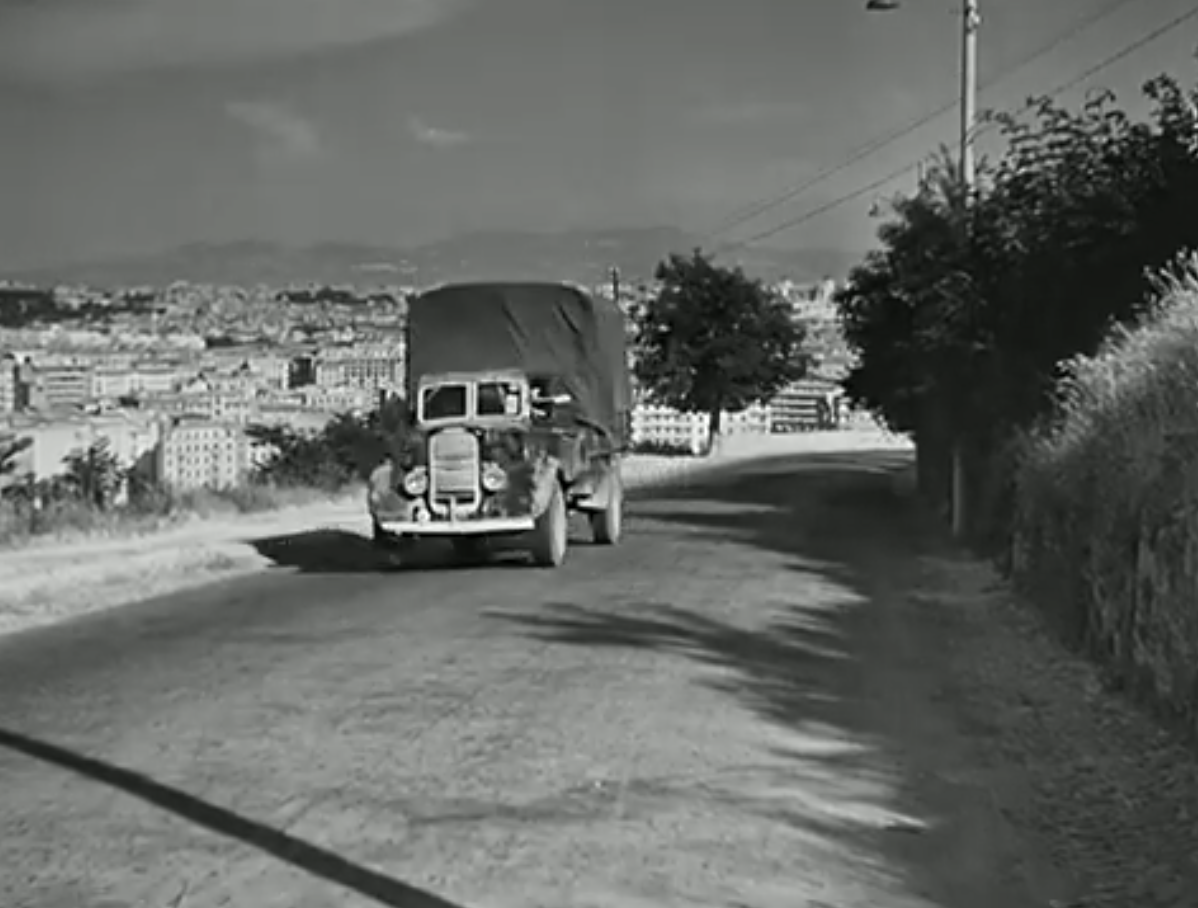
Mentre il camion con i siciliani si allontana da Roma, sentiamo una musica che si tinge di speranza. Gli alberi proiettano lunghe ombre sulla strada.
As the truck with the Sicilians drives away from Rome, we hear music tinged with hope. Trees cast long shadows across the road.
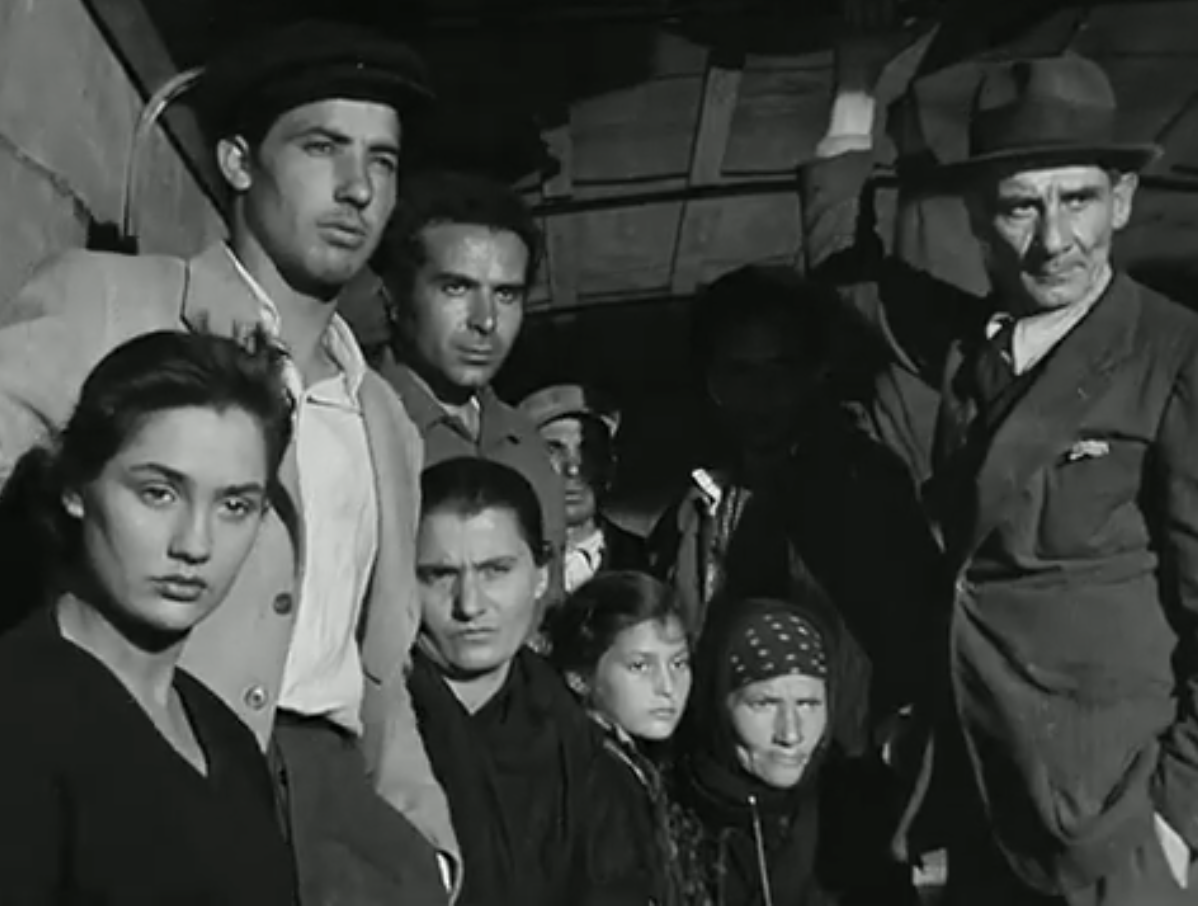

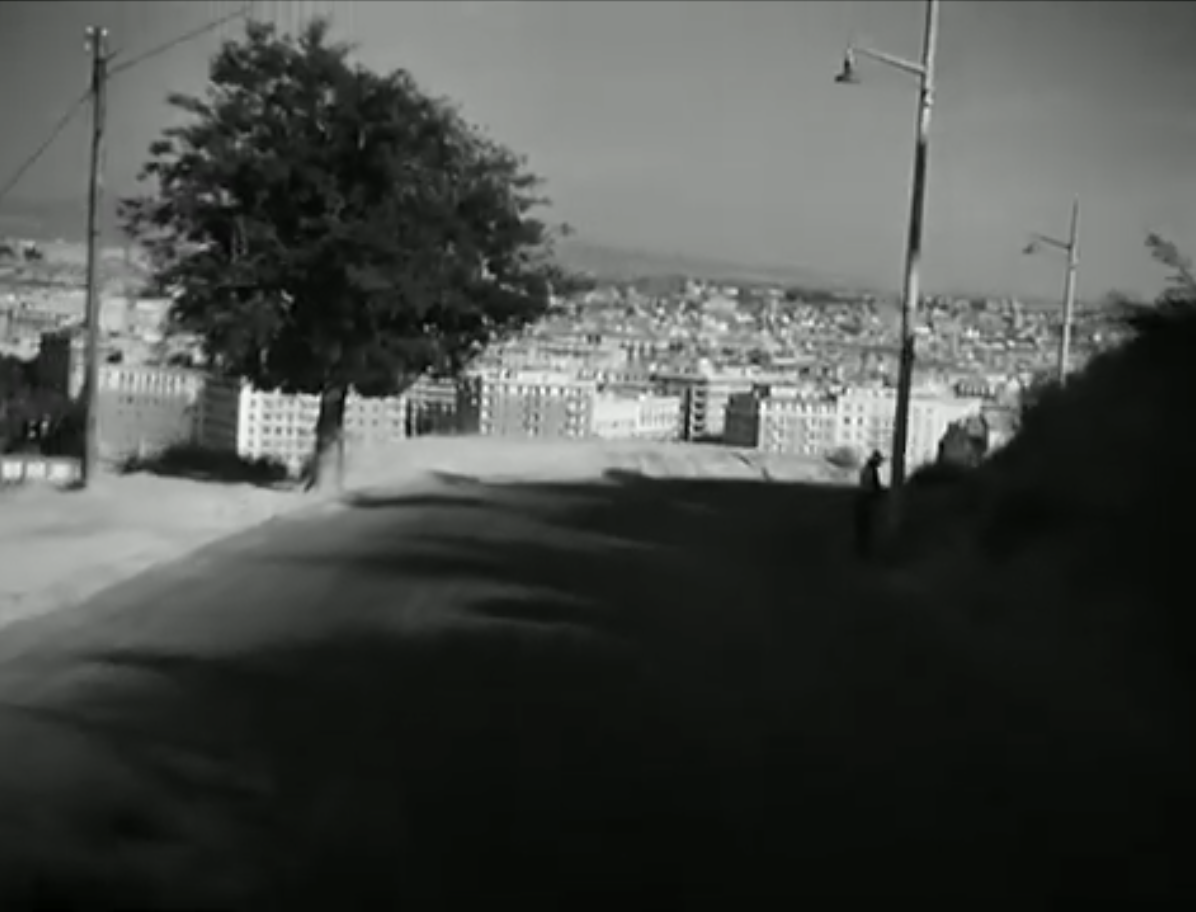
Gli abitanti del villaggio guardano dal retro del camion, stanchi e ansiosi, mentre Roma si allontana.
The villagers watch from the back of the truck, weary and anxious, as Rome recedes.
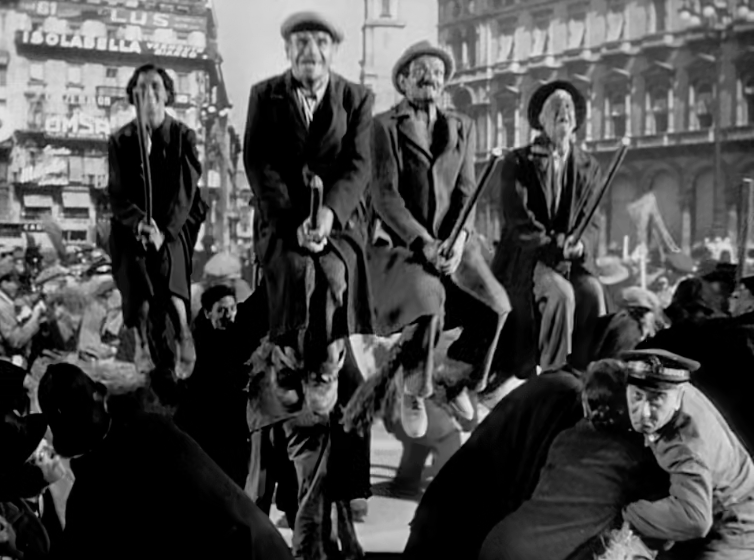
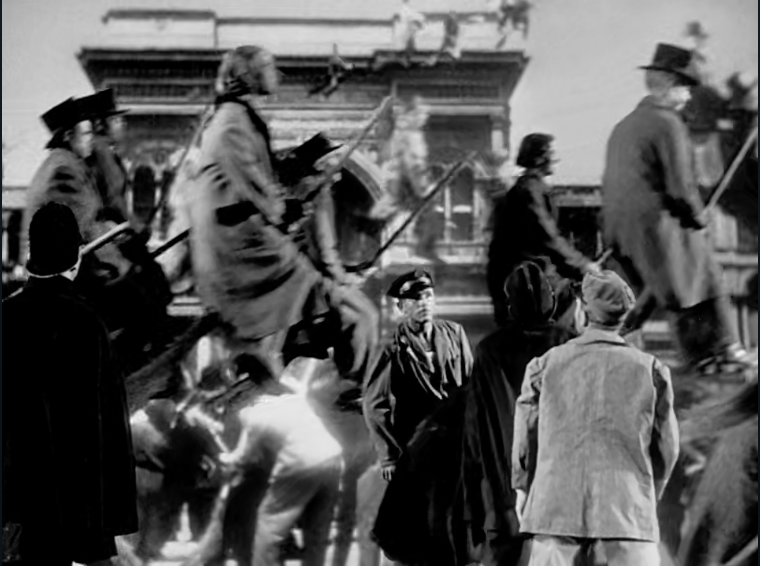
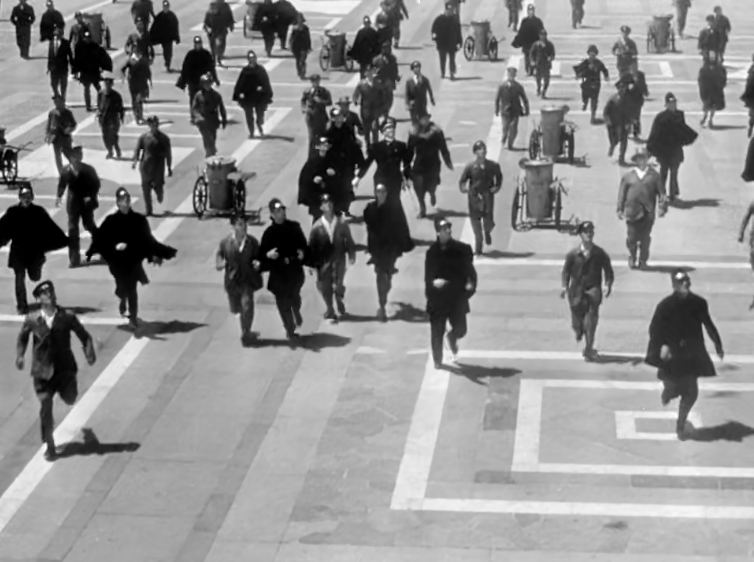
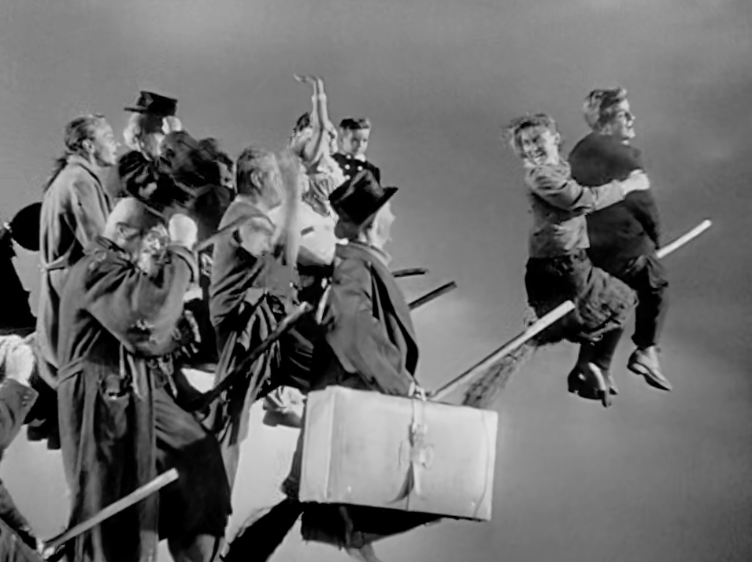
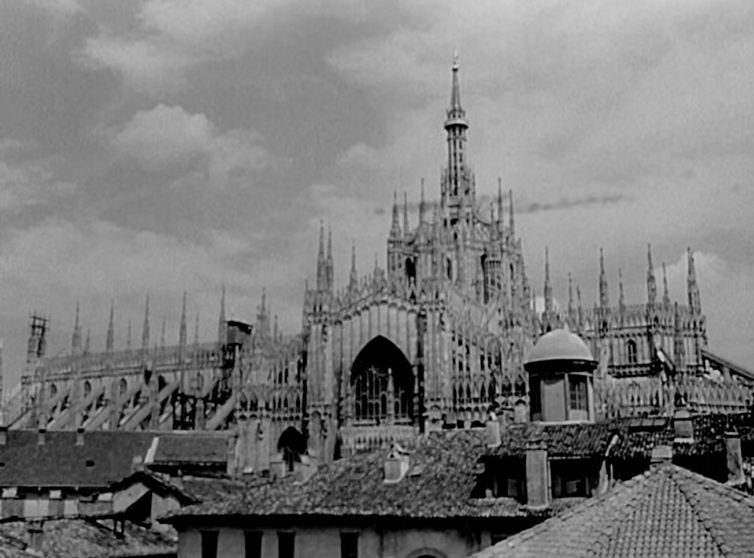
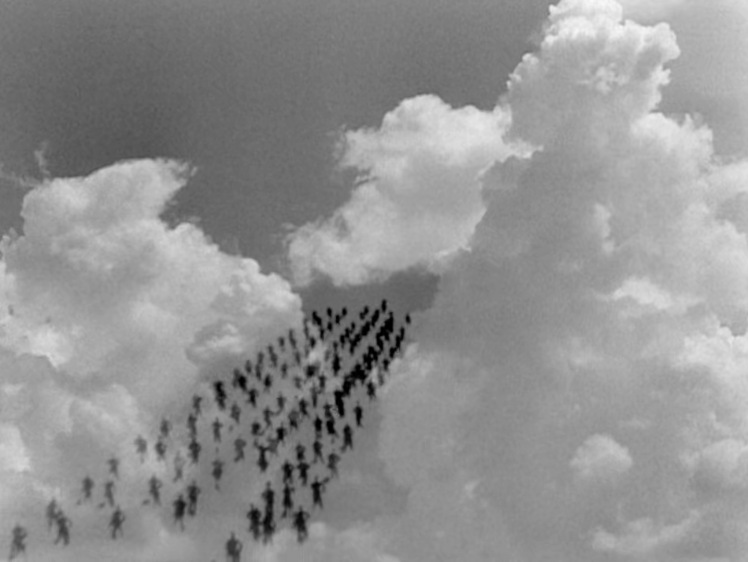
Come i siciliani, anche gli abitanti della baraccopoli di Miracolo a Milano (Vittorio de Sica, 1951) sono costretti a lasciare le loro amate case e sono inseguiti dalla polizia fino a quando non hanno altra scelta che fuggire verso il cielo. Sorridendo, cantano:
Ci basta una capanna
Per vivere e dormir
Ci basta un po' di terra
Per vivere e morir
Like the Sicilians, the shantytown residents in Miracle in Milan are forced to leave their beloved homes and are chased by the police until they have no recourse but to flee to the heavens. Smiling, they sing:
A shack is enough for us
To live and sleep
All we need is a bit of land
To live and die
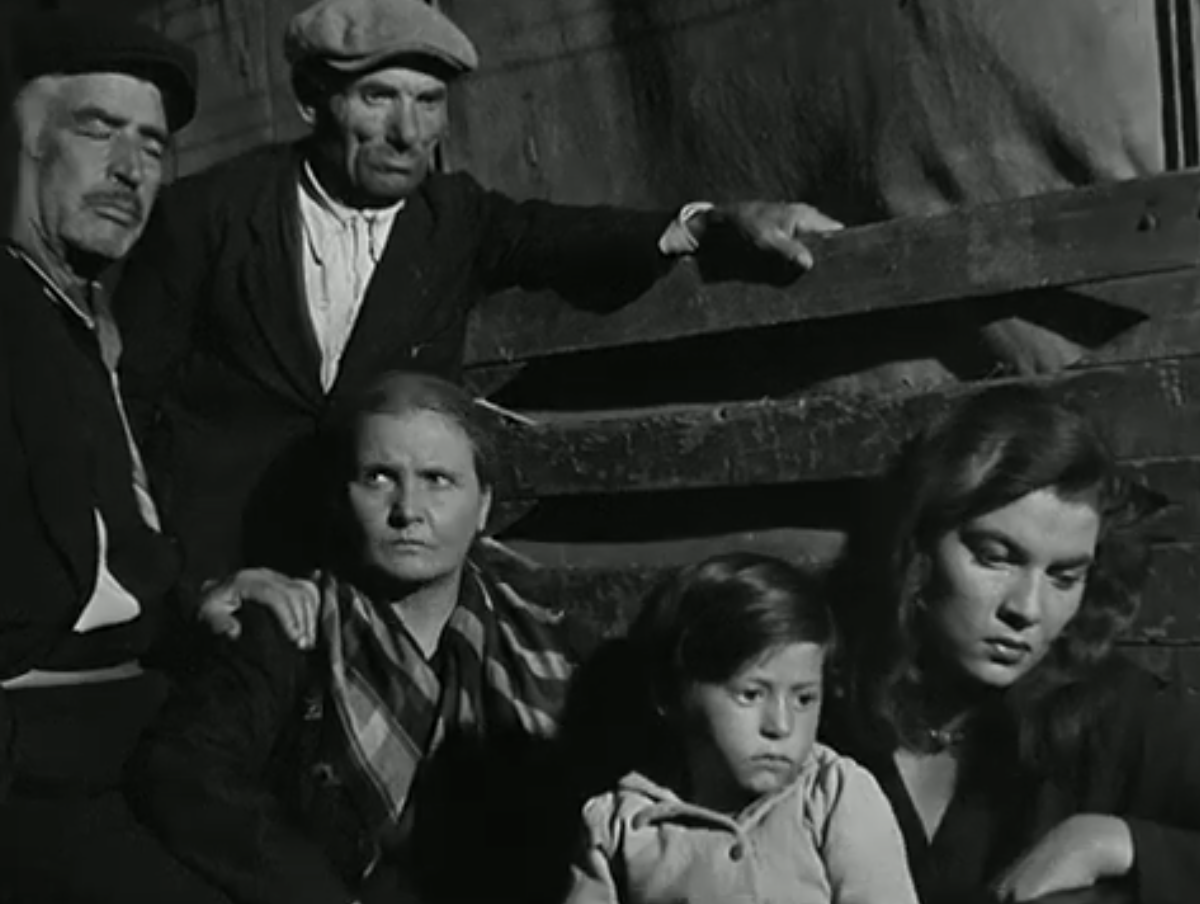
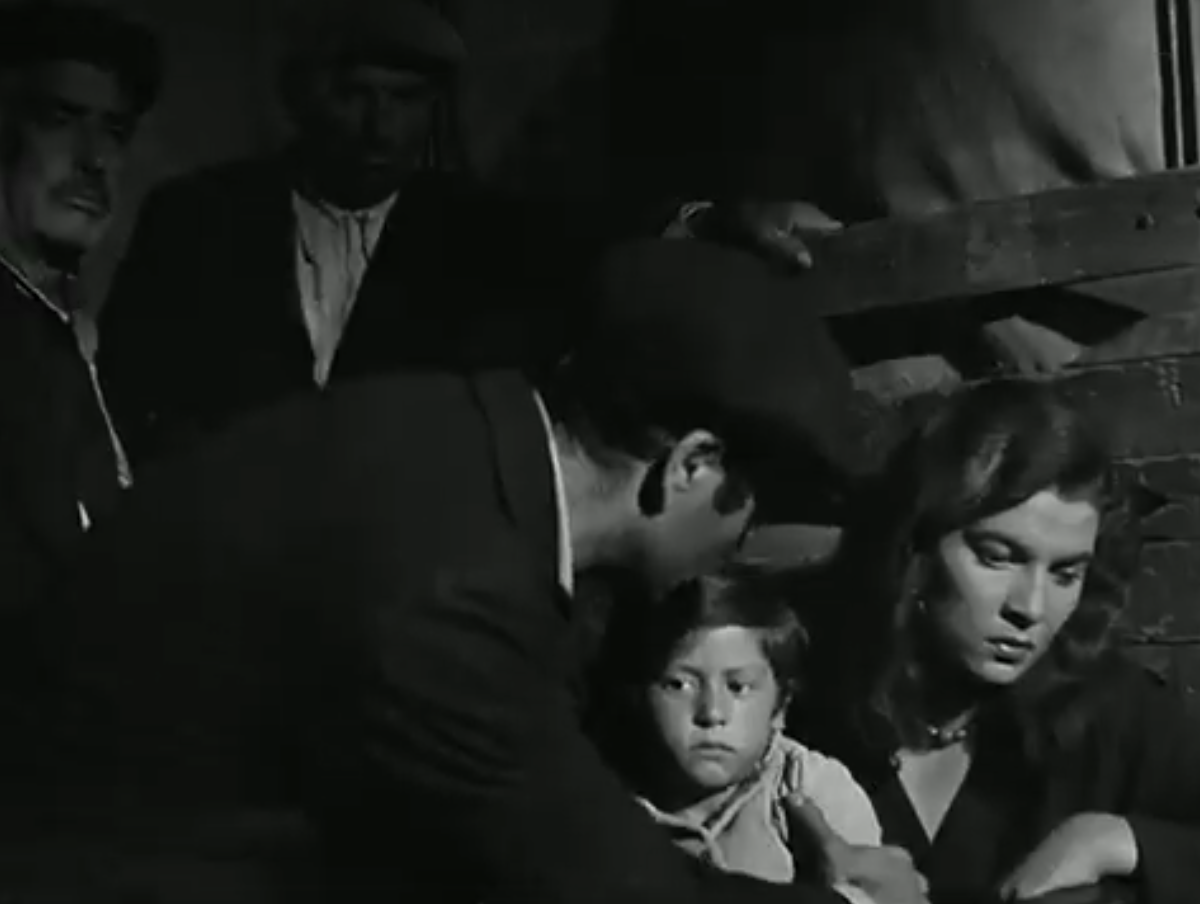
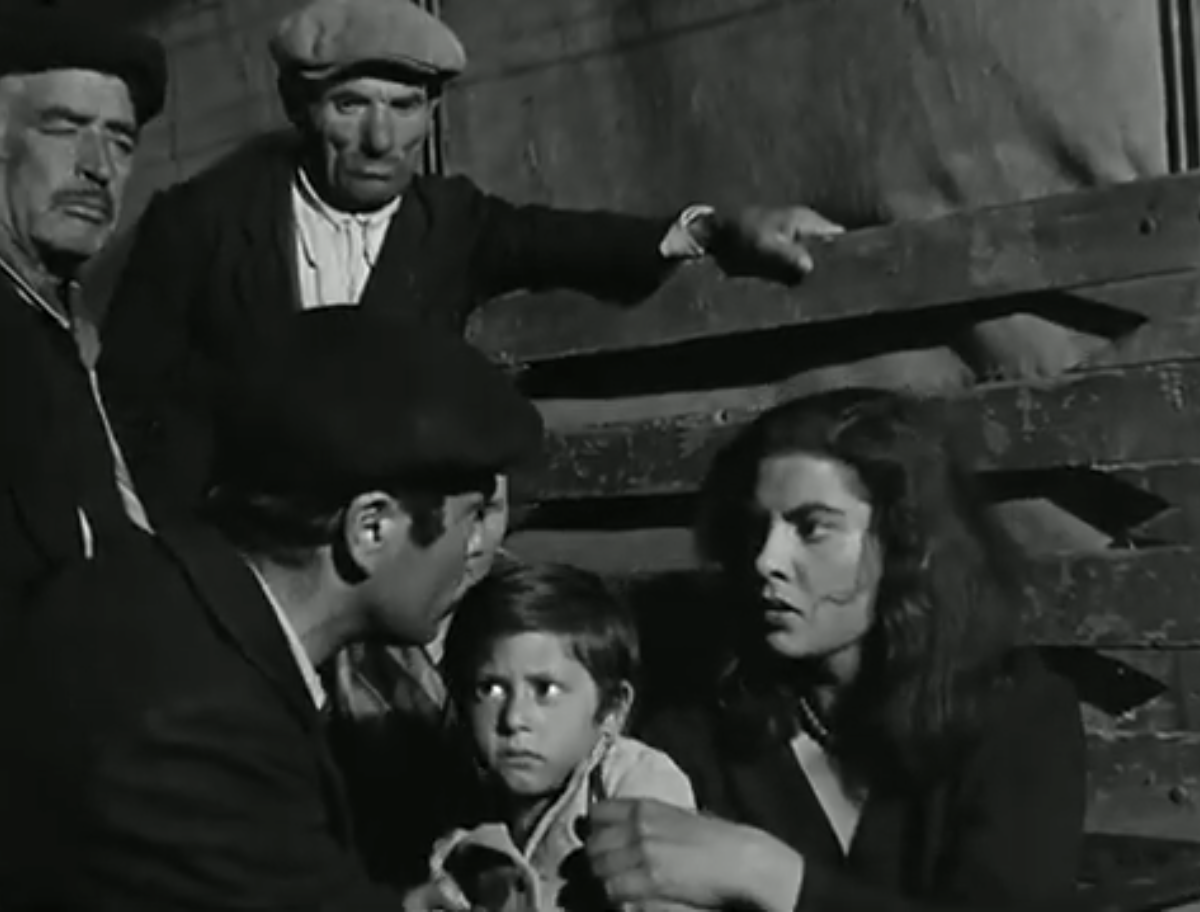
Nel camion, Buda è seduto in grembo a Barbara. Quando Saro lo prova a prendere, lei protesta: “No! Lo lasci!” Gli dà del lei com’è normale per un uomo e una donna che non si conoscono bene.
In the truck, Buda has been sitting in Barbara’s lap. When Saro reaches for him, she protests, “No! Leave him.”
She uses the formal lei, which is normal for a man and woman who don’t know each other well.
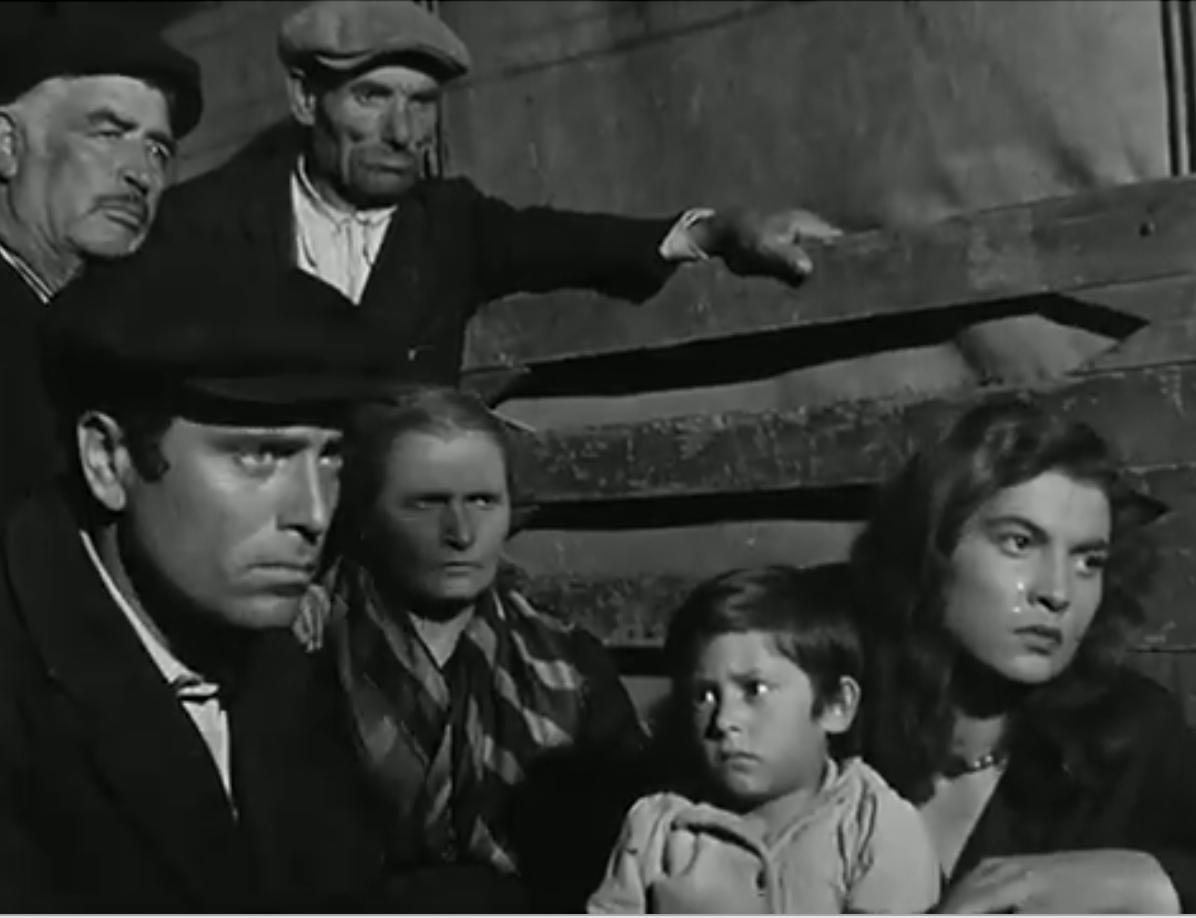
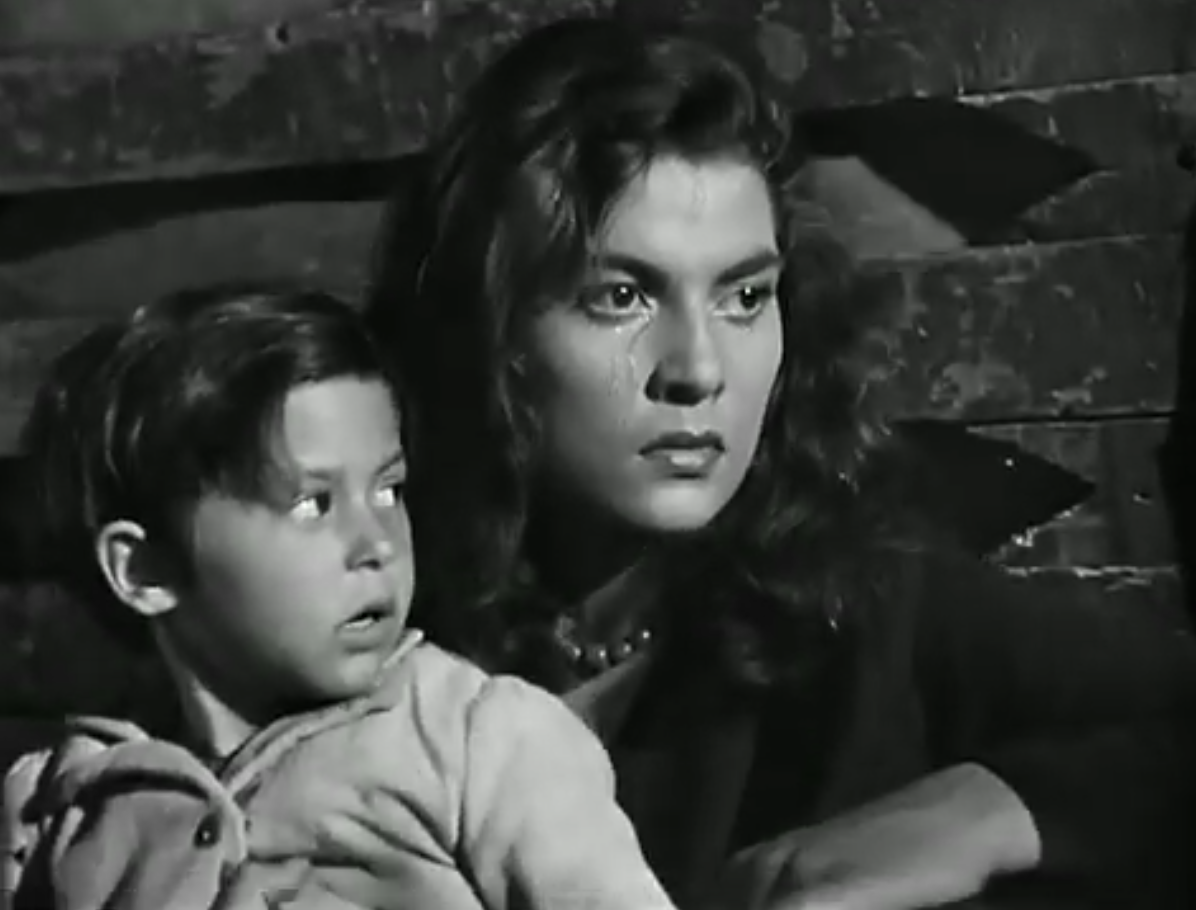
Saro indietreggia. Il viso di Barbara è bagnato di lacrime.
Saro backs away. Barbara’s face is wet with tears.
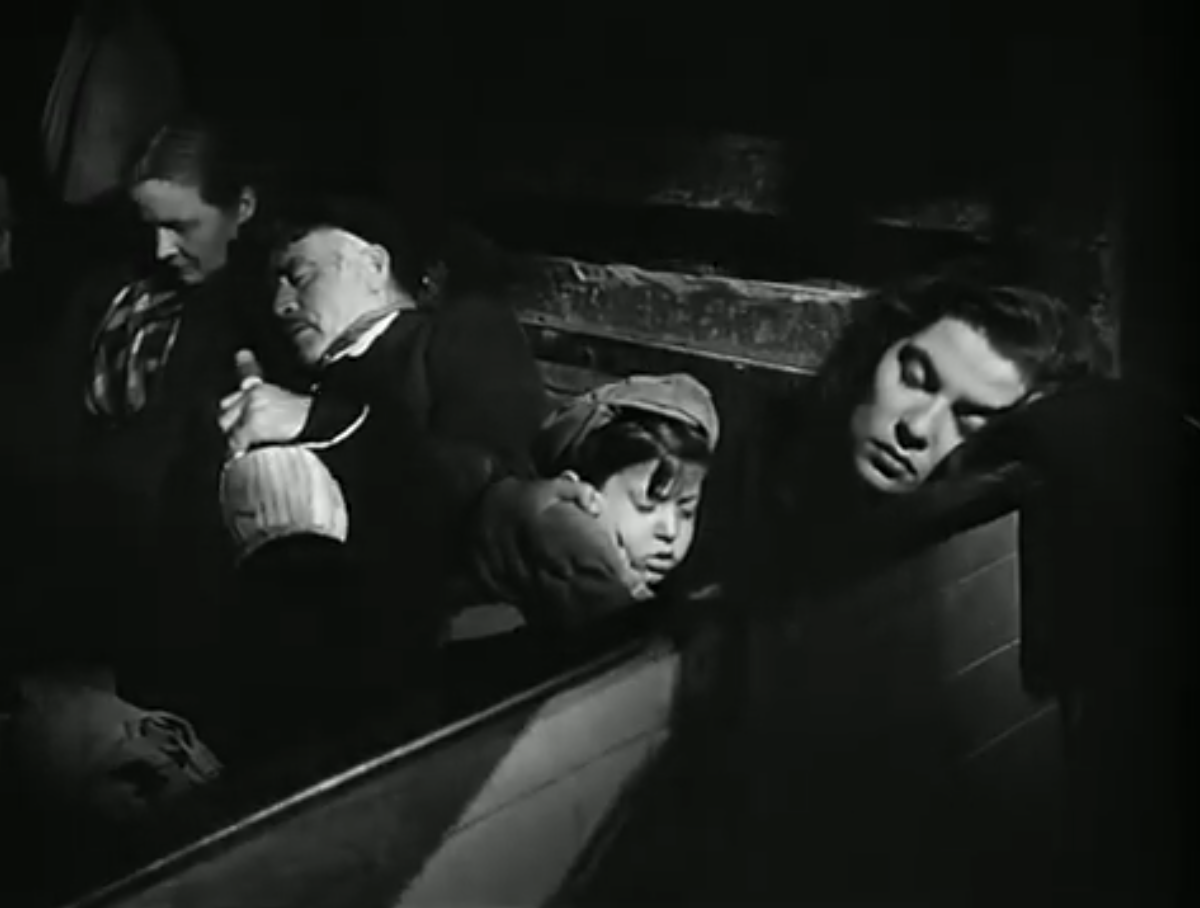
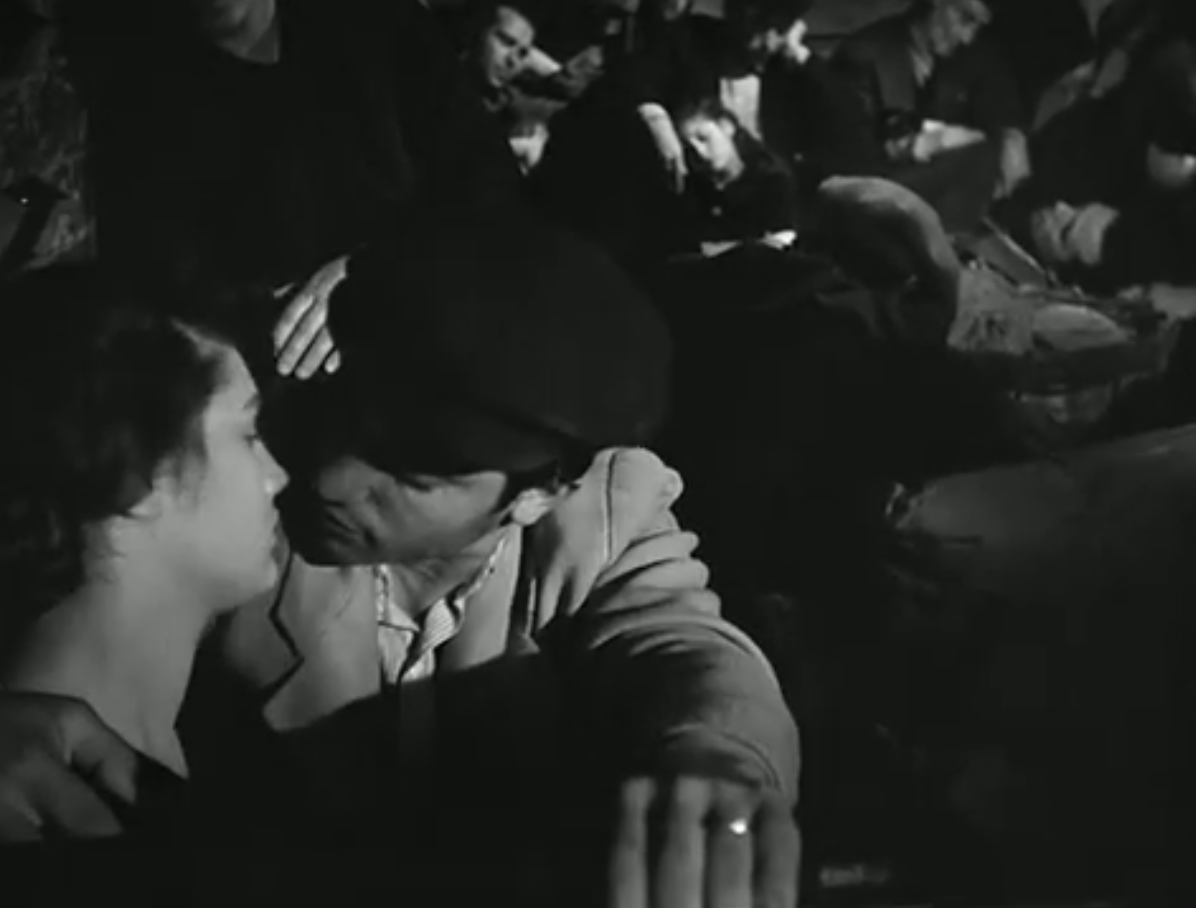
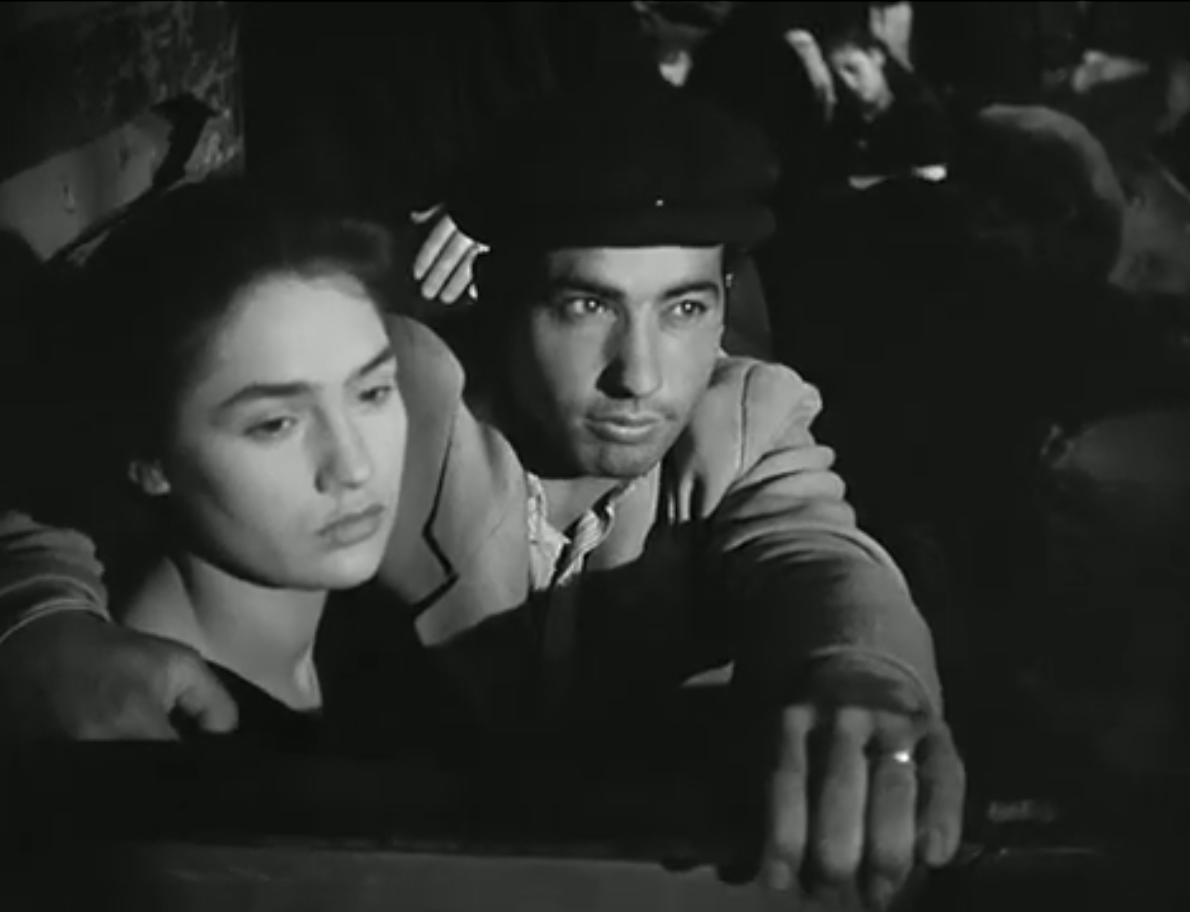
Di notte, gli abitanti del villaggio dormono nel camion. Luca e Rosa si baciano e poi guardano nel buio. La fede nuziale di Luca brilla sul suo dito.
At night, the villagers sleep in the truck. Luca and Rosa kiss and then gaze into the darkness. Luca’s wedding ring glints on his finger.
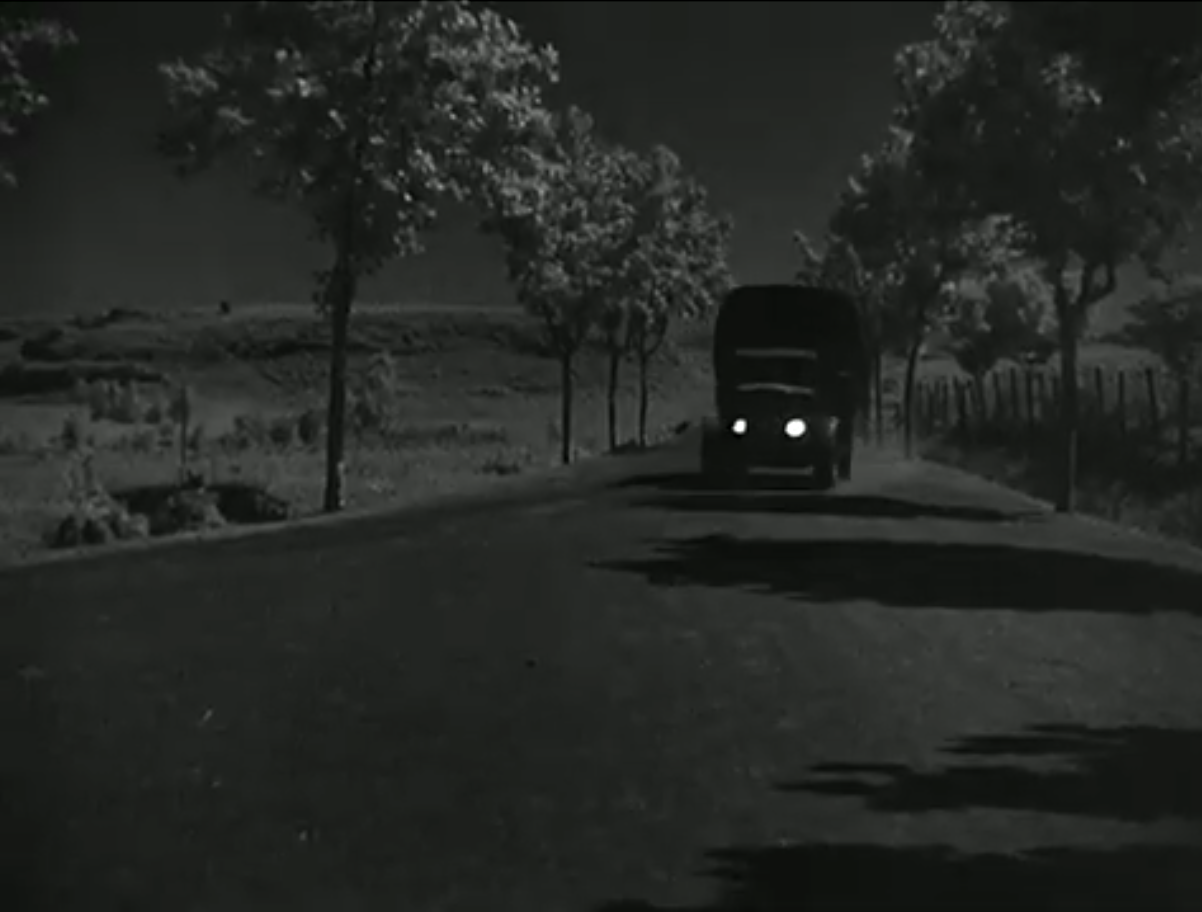
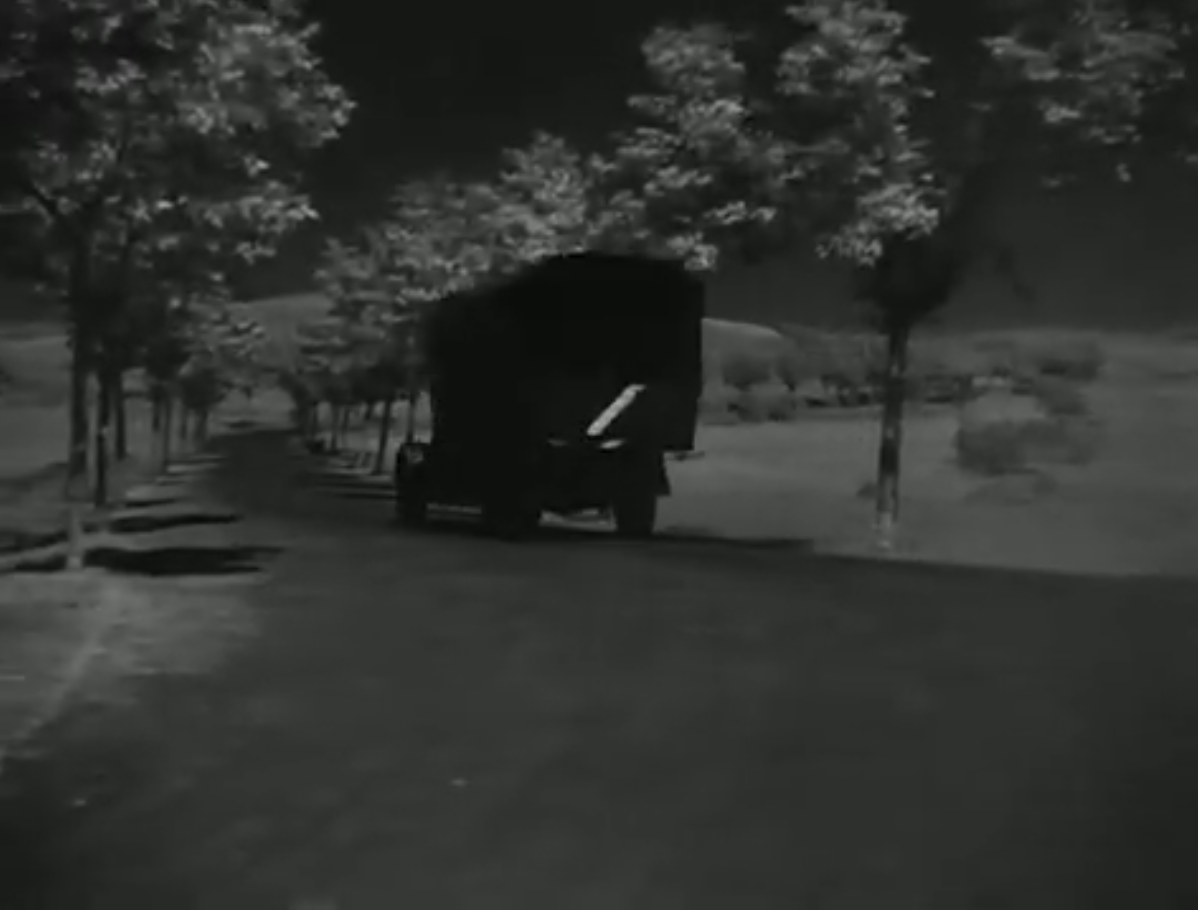
I fari del camion penetrano l'oscurità.
The truck’s headlights pierce the darkness.
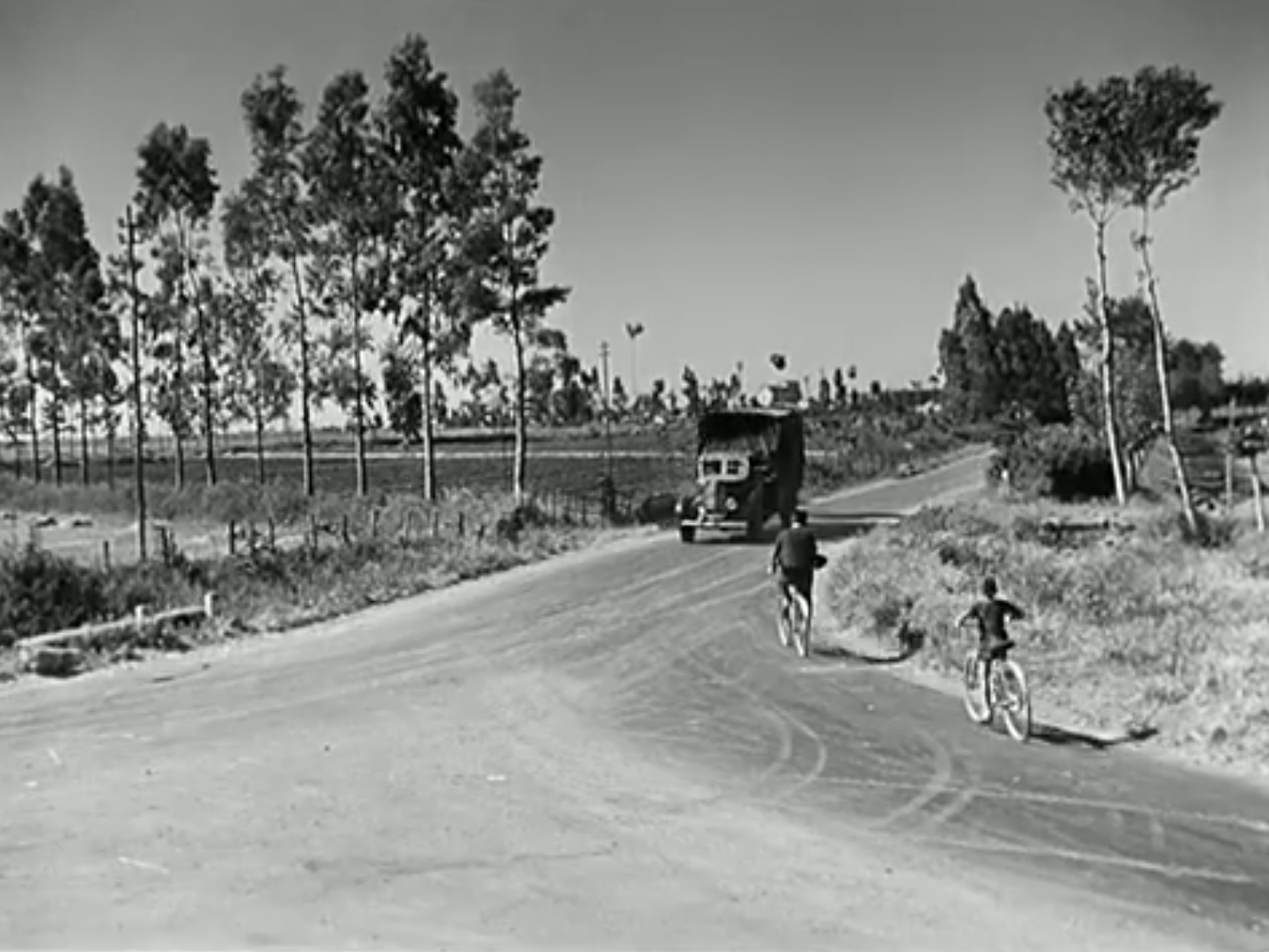
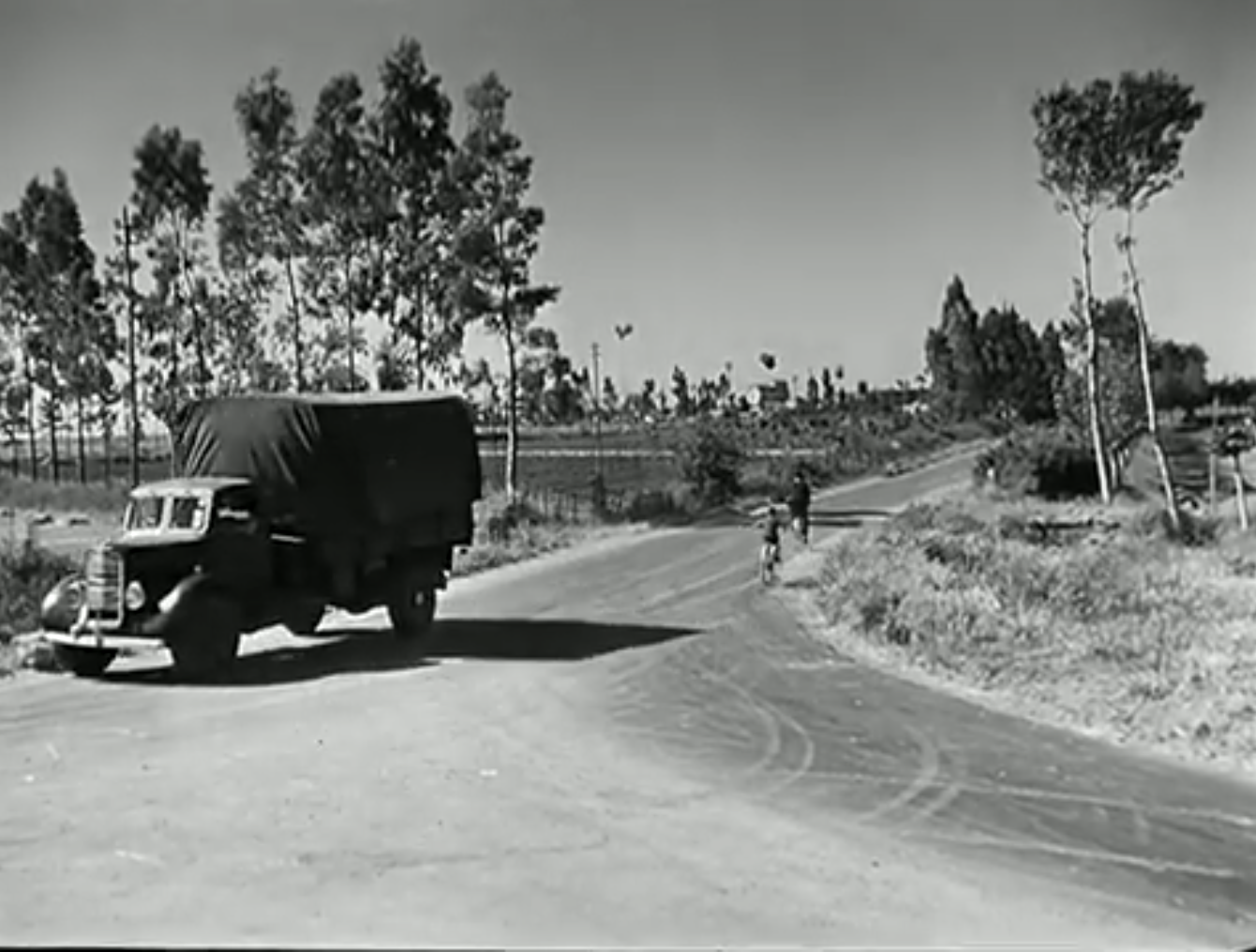
Luce del giorno: una musica piena di speranza suona e poi finisce quando il camion si ferma vicino a una fila di alberi in un paesaggio tipico della regione Emilia. Due figure passano in bicicletta.
Daylight: Hopeful music plays and then ends as the truck stops by a line of trees in a landscape typical of the Emilia region. Two figures cycle past.
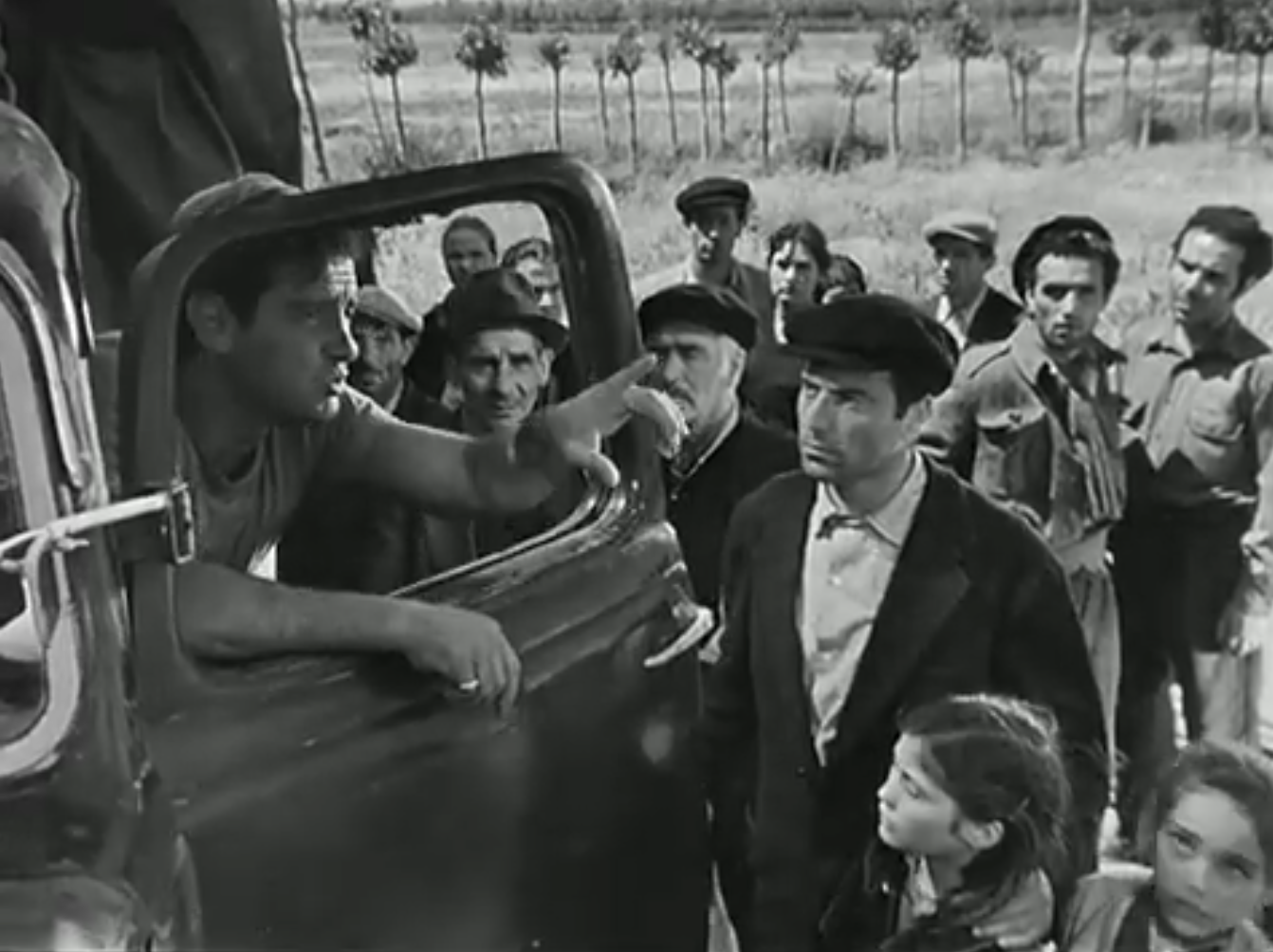
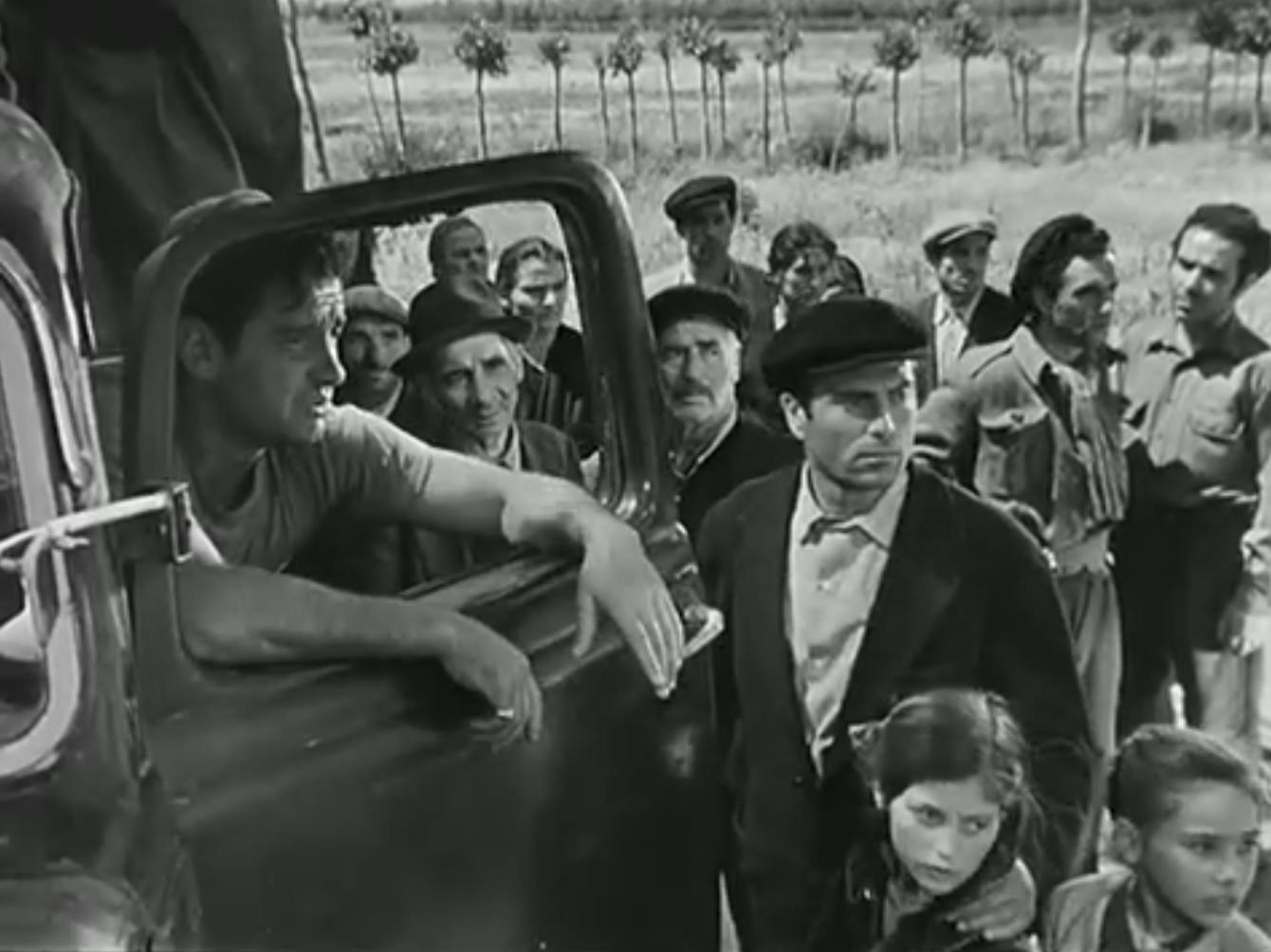
Mentre i viaggiatori osservano, l'autista si sporge dalla sua cabina e indica: “Laggiù c'è San Querceto. Si fermano anche i treni diretti”.
“Quanto è lontano?” chiede Saro.
“Circa venti chilometri”.
As the travelers look on, the driver leans out of his cab and points: “San Querceto is over there. The express trains stop there too.”
“How far is it?” asks Saro.
“Around twelve miles.”
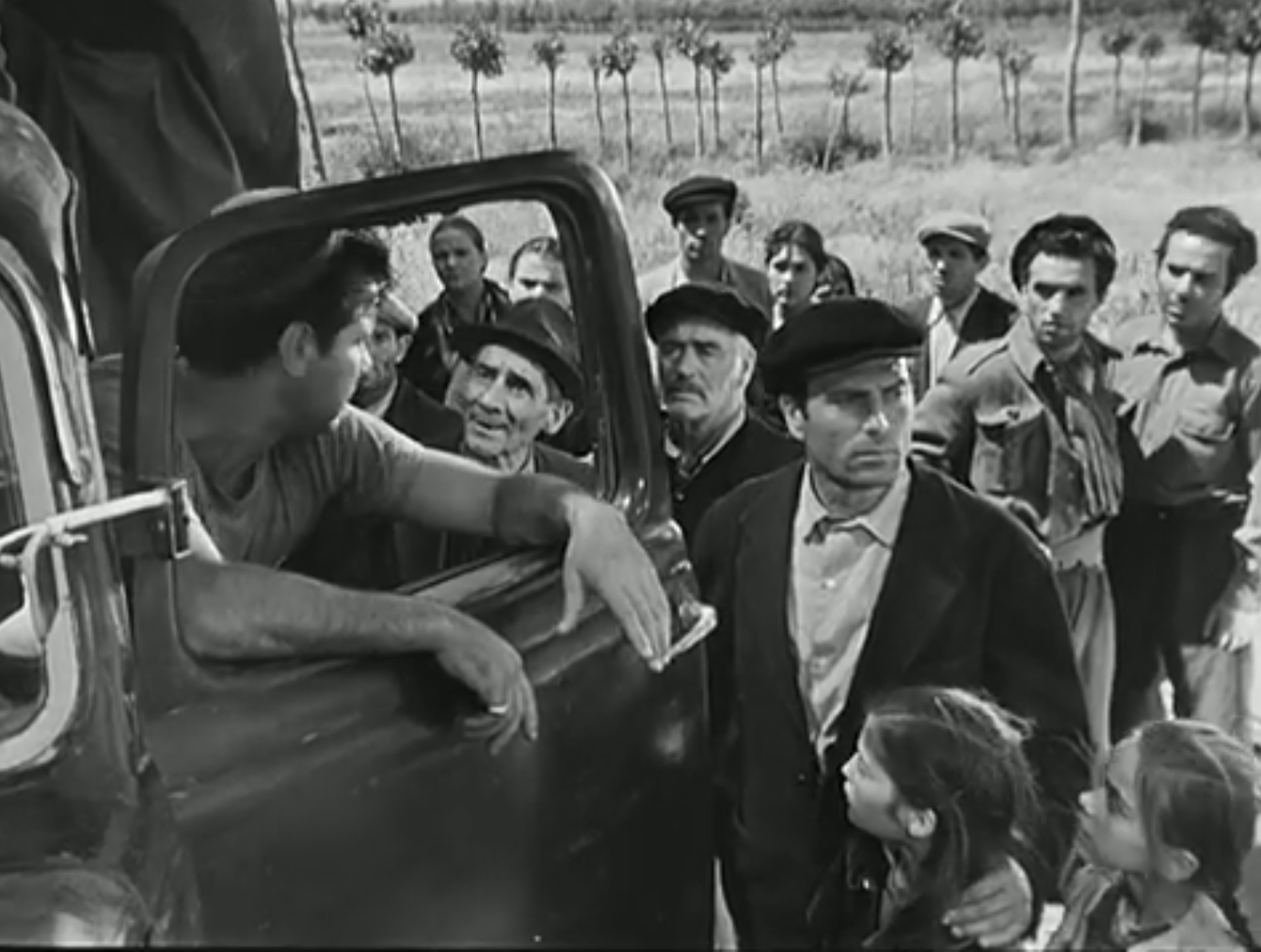
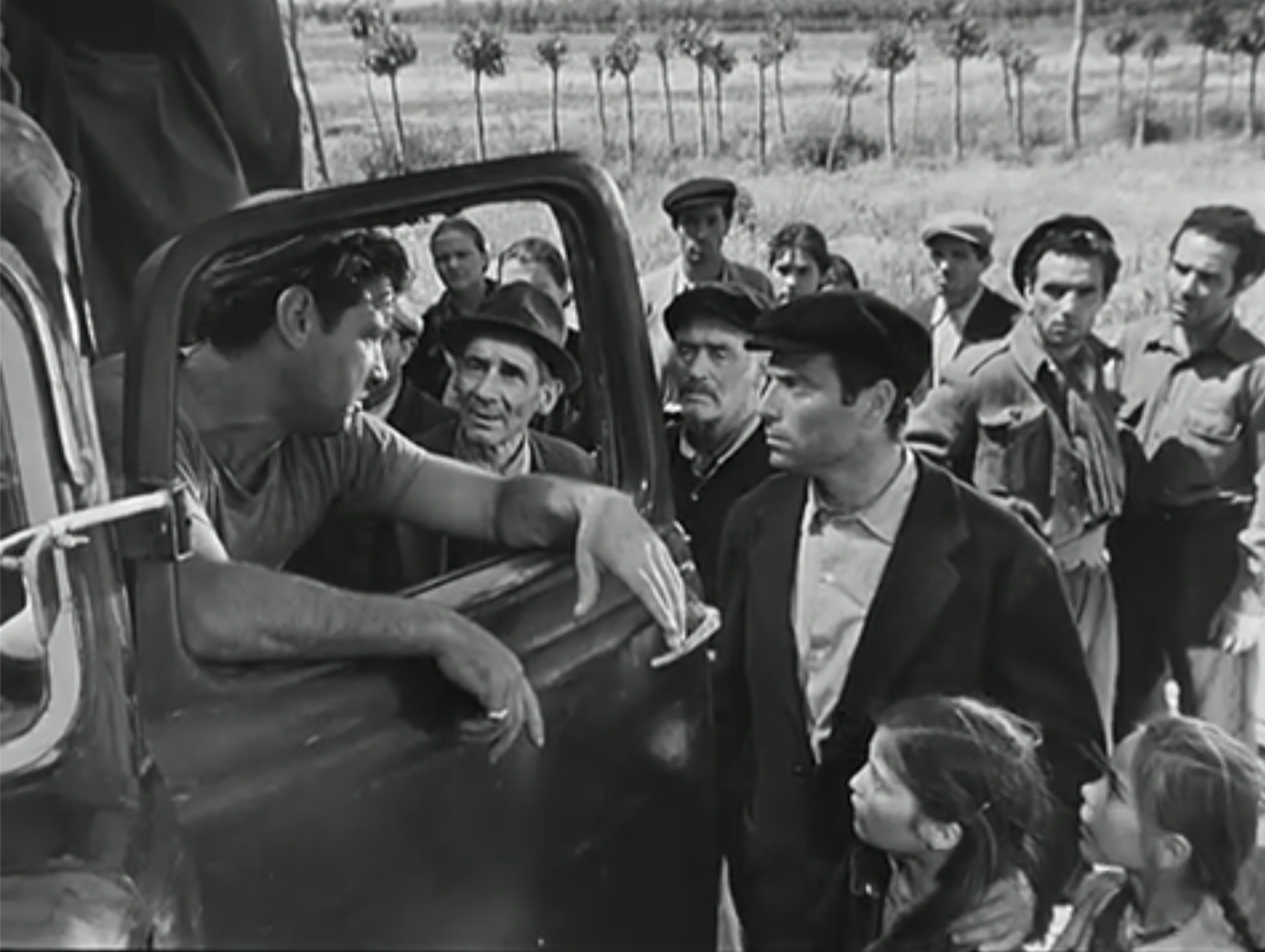
“Venti chilometri?!” esclama il Ragioniere.
“Vi ci avrei portato io, ma sono già in ritardo”.
“Twelve miles?!” exclaims the Accountant.
“I would have taken you there myself, but I’m already late.”
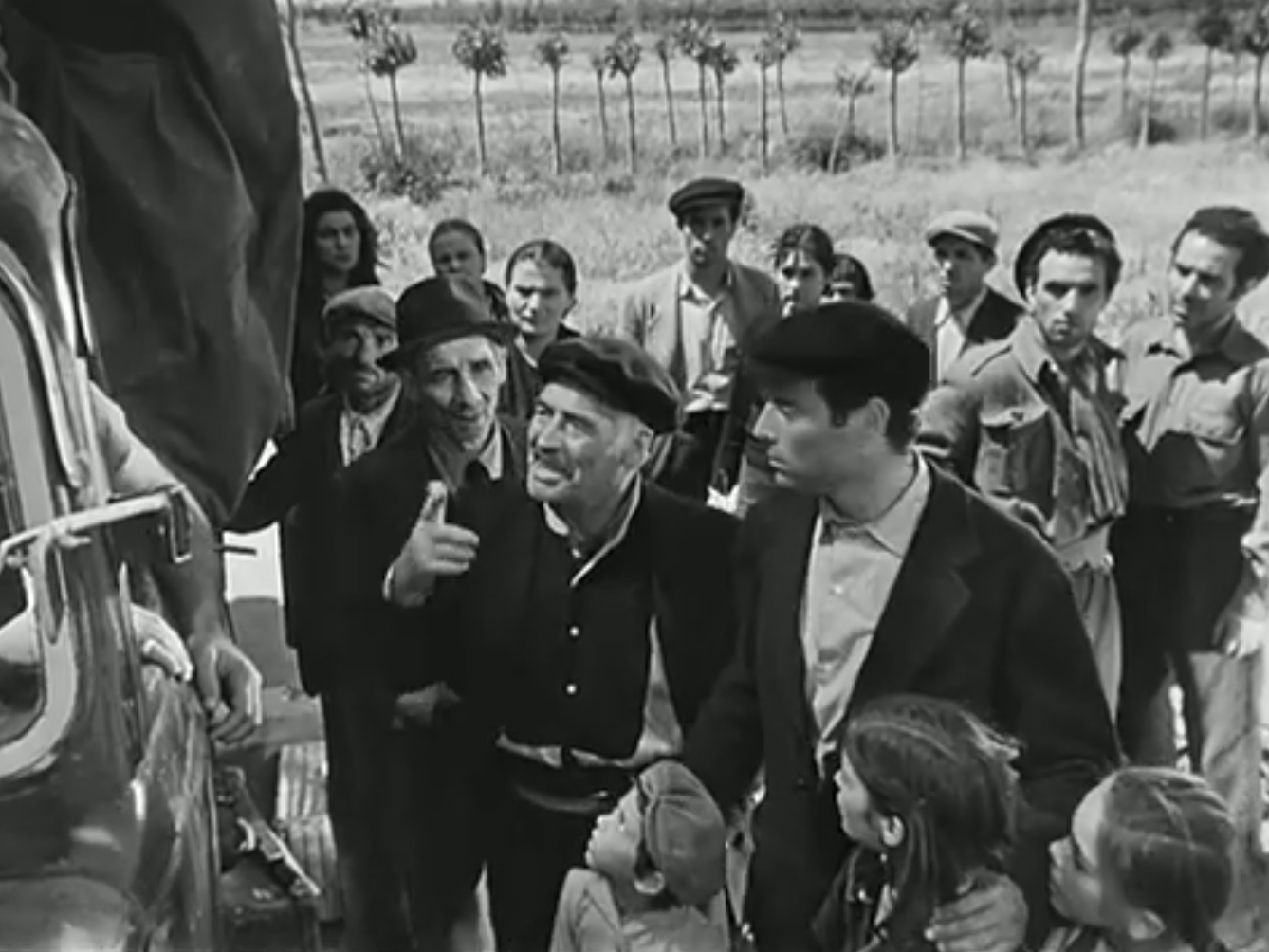

Chiudendo la portiera, dice: “In quattro ore ci arrivate se avete buone gambe”.
“Le gambe sono buone” – dice Misciu – “È la benzina che manca”. Ridono e si stringono la mano.
Closing the door, he says, “You can get there in four hours if you have good legs.”
“The legs are good,” says Misciu. ”But we have no gas.” They laugh and shake hands.
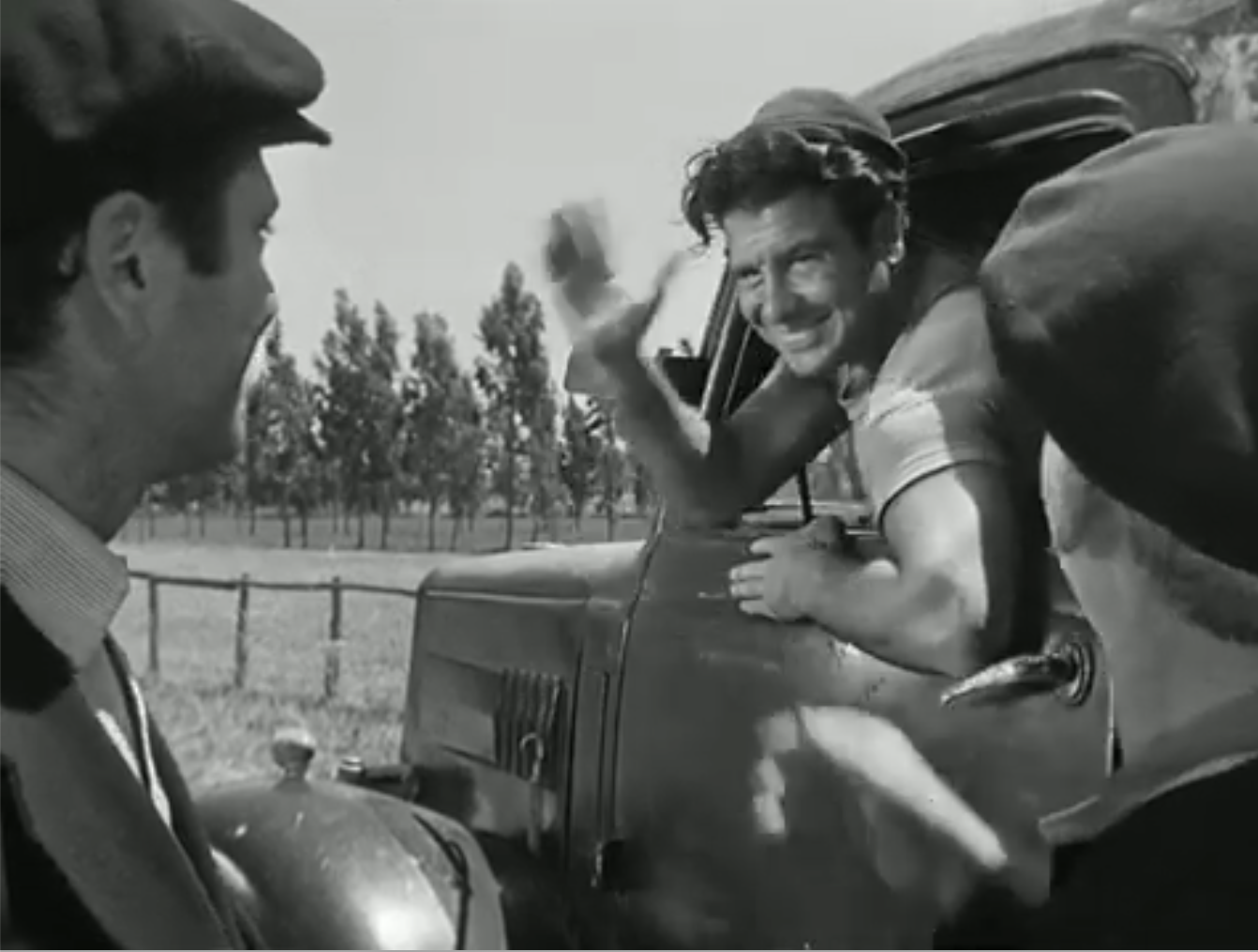
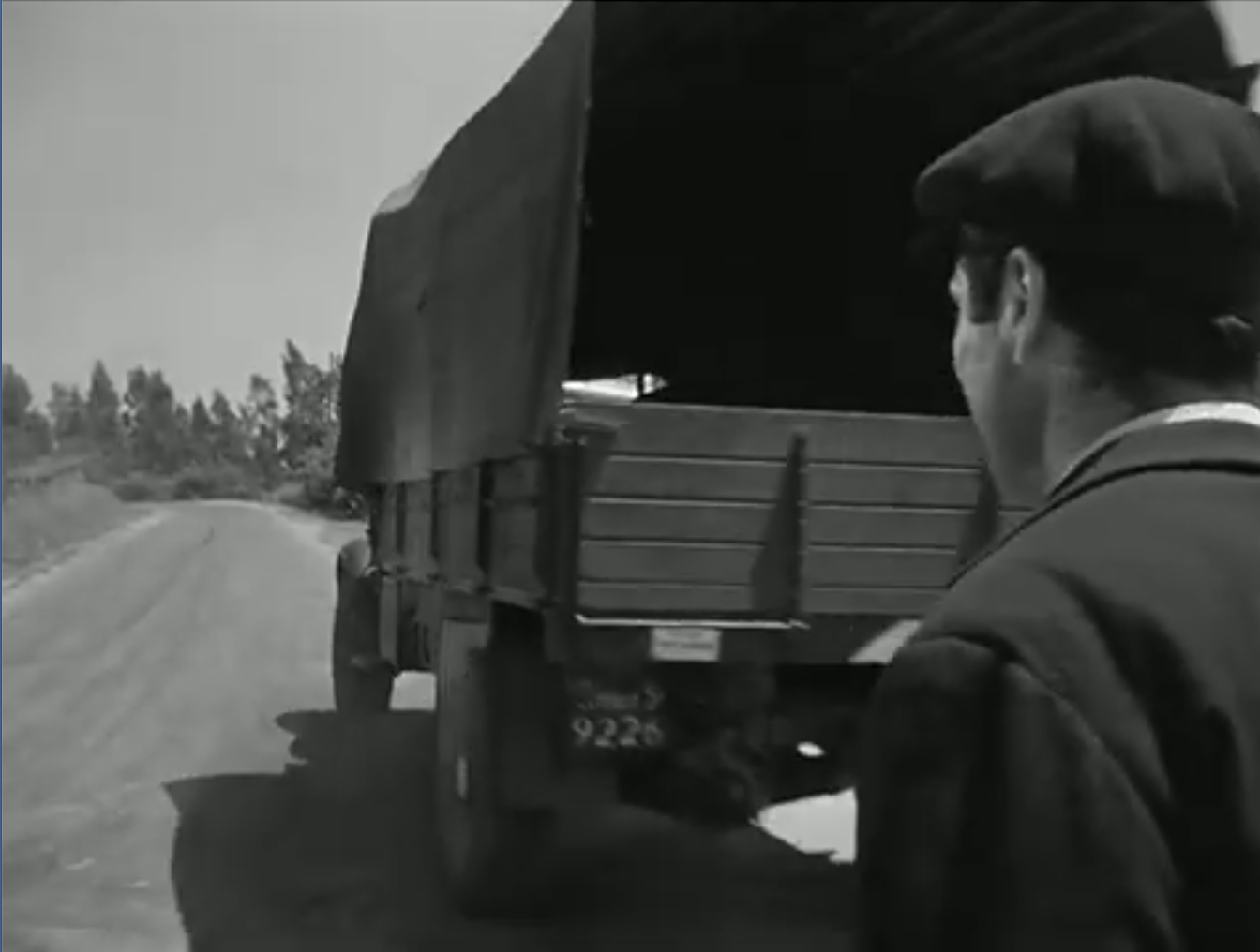
Mentre l'autista parte, resta solo il rumore delle cicale.
As the driver takes off, there is only the sound of cicadas.
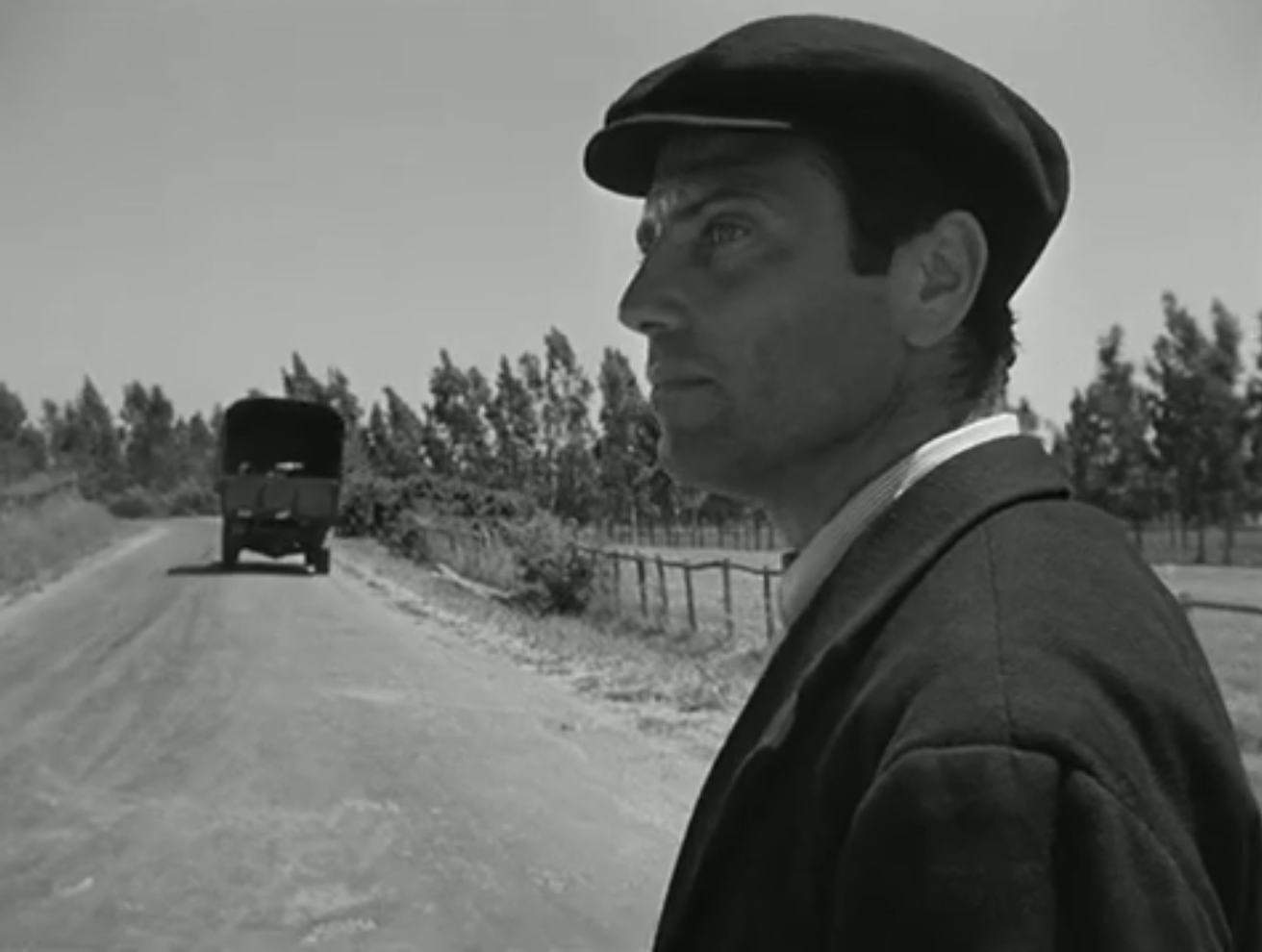
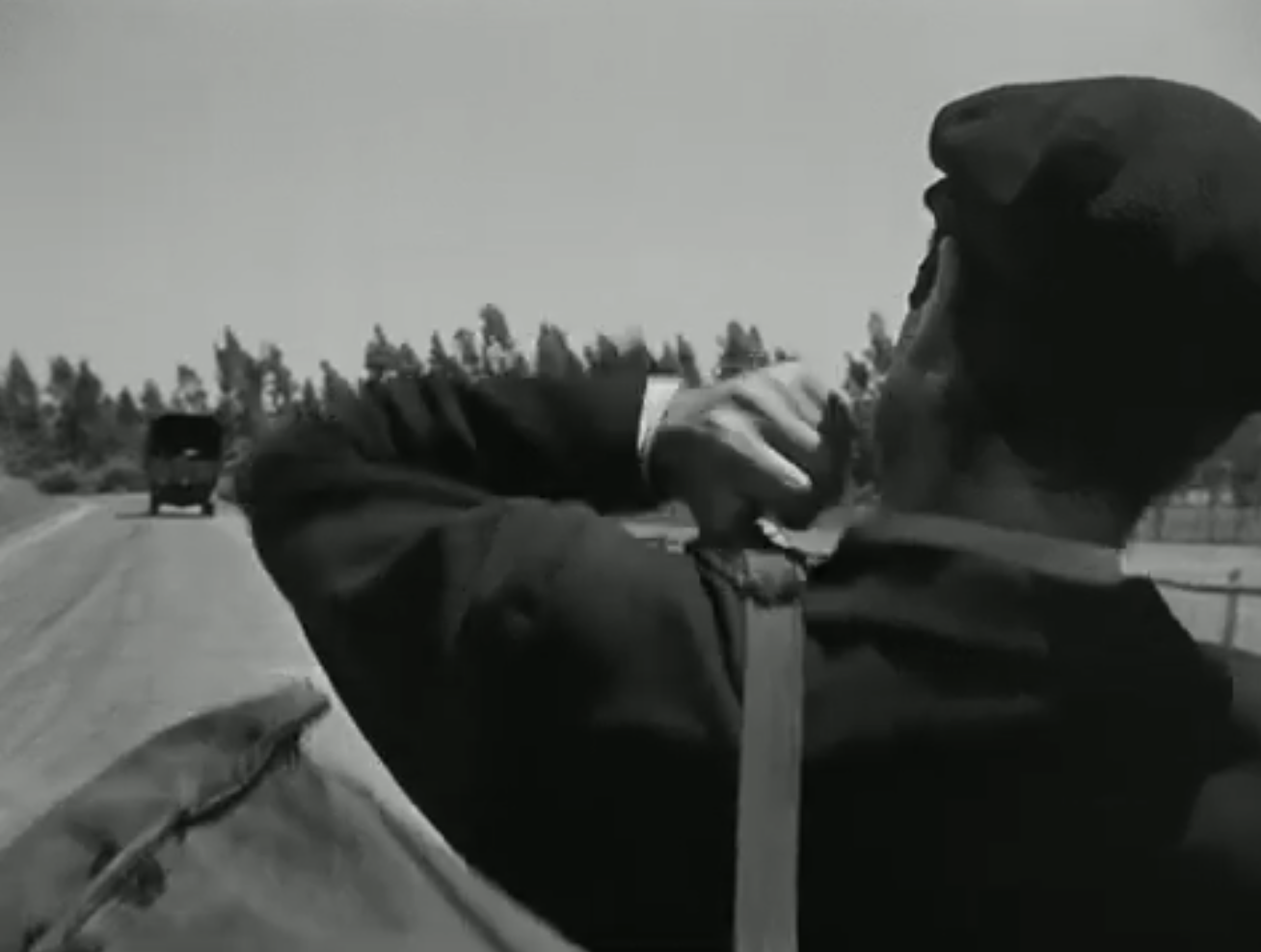

Dopo aver riflettuto per un attimo, Saro si mette in spalla lo zaino: “Andiamo”. Nell'inquadratura, sembra parte del paesaggio, intrappolato tra terra e cielo, come gli alberi e i pali della recinzione.
After a moment to reflect, Saro shoulders his pack: “Let’s go.” In the shot, he seems part of the landscape, trapped between earth and sky, like the trees and the fence posts.
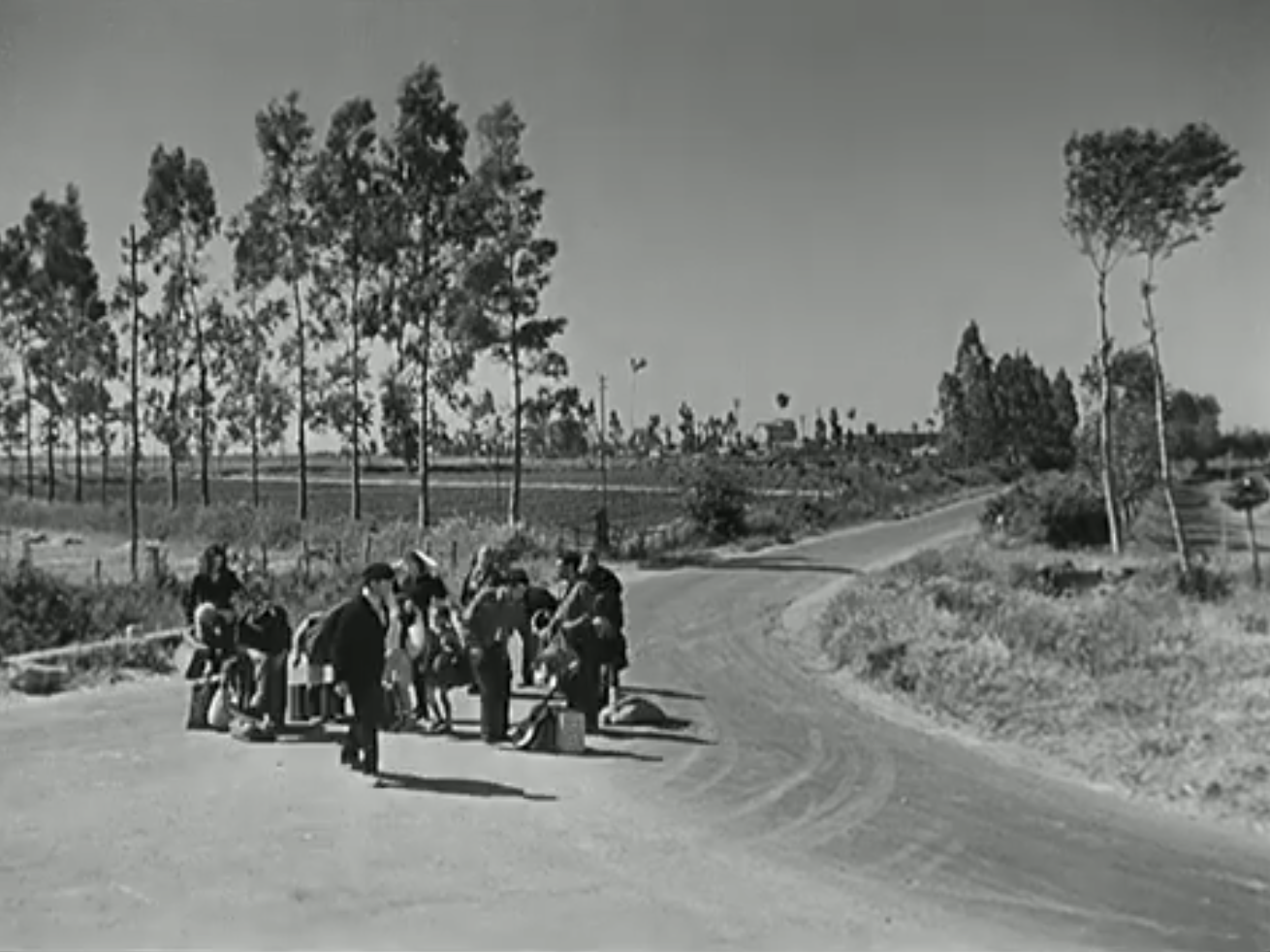
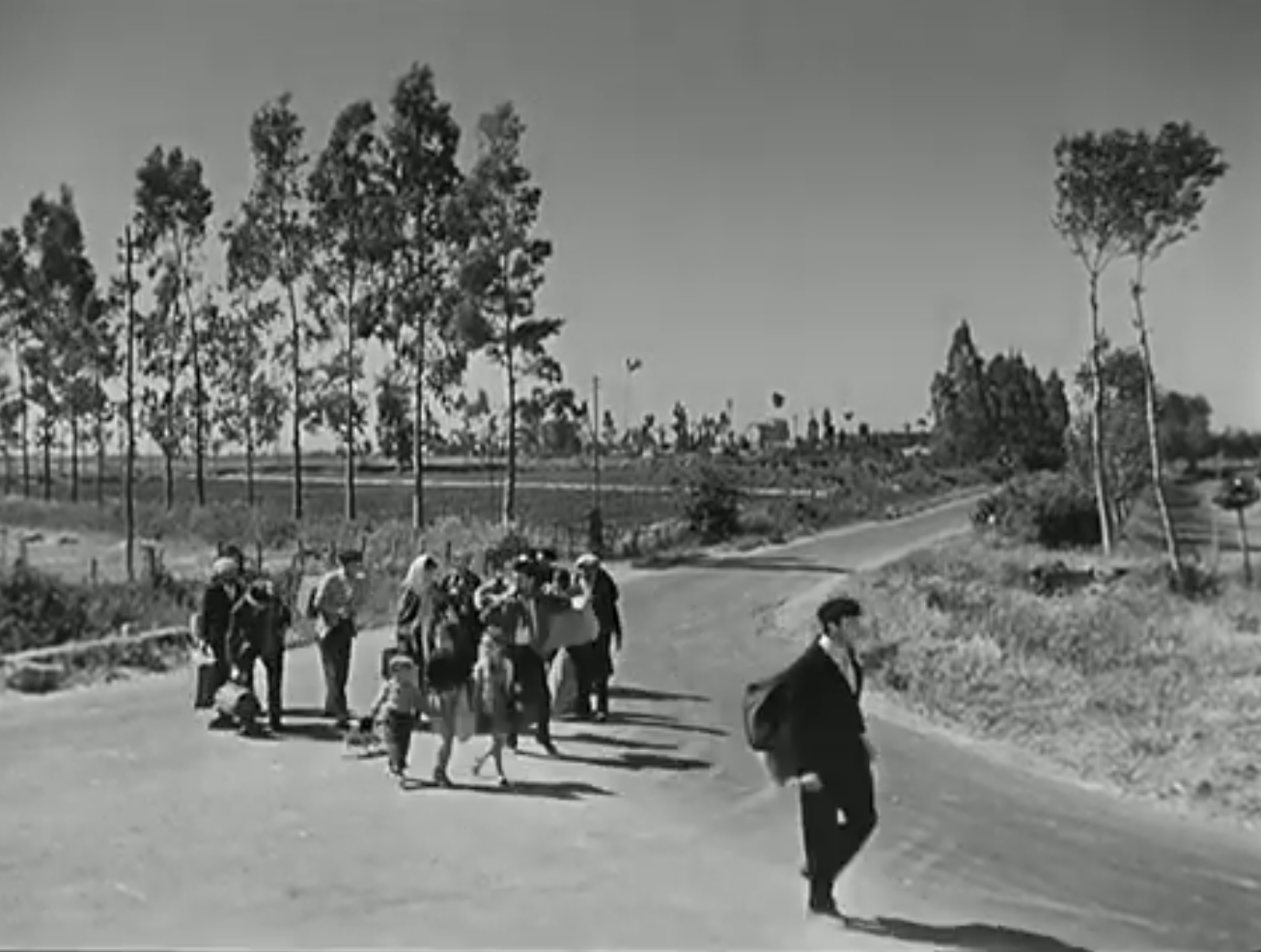
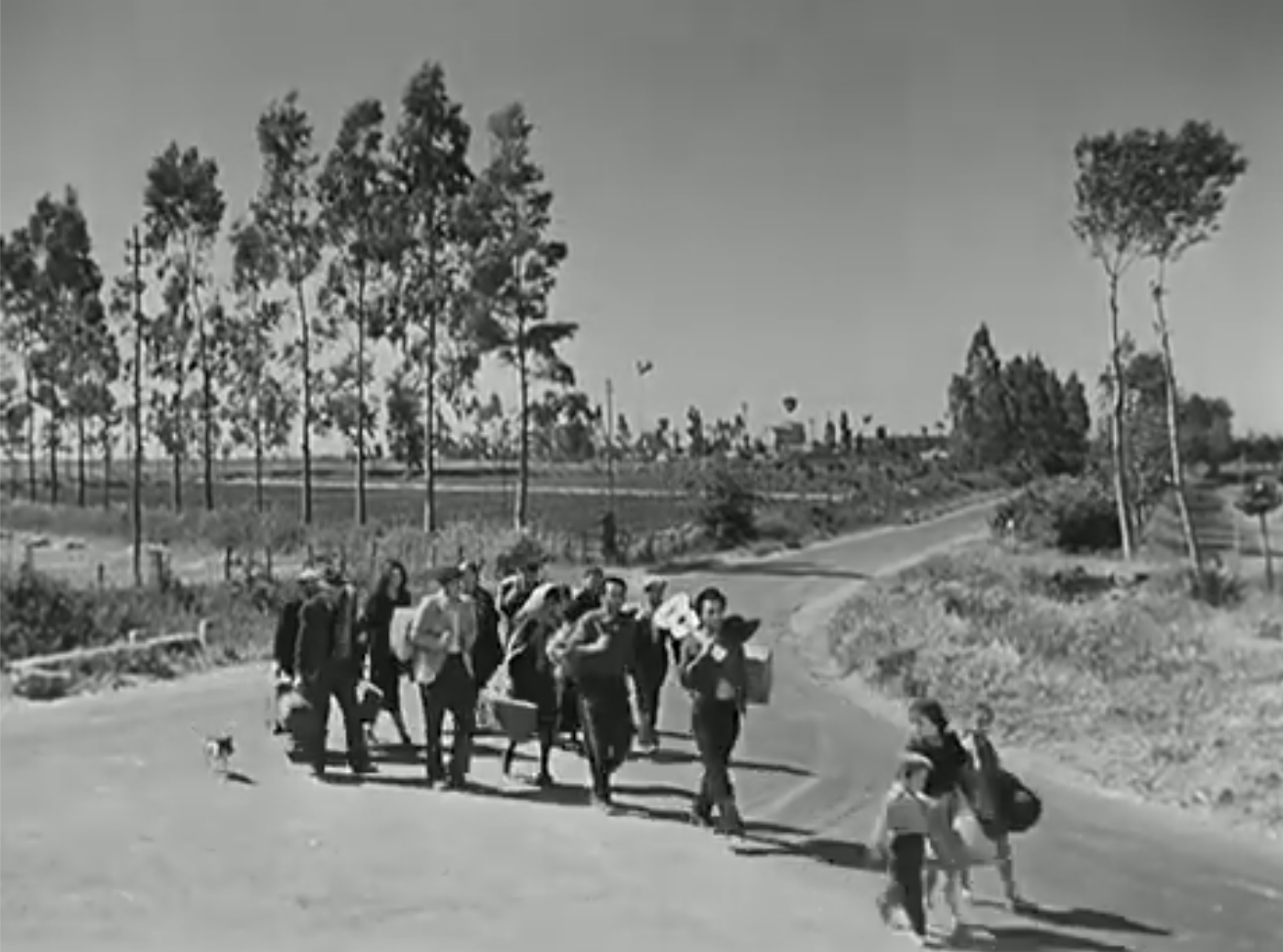
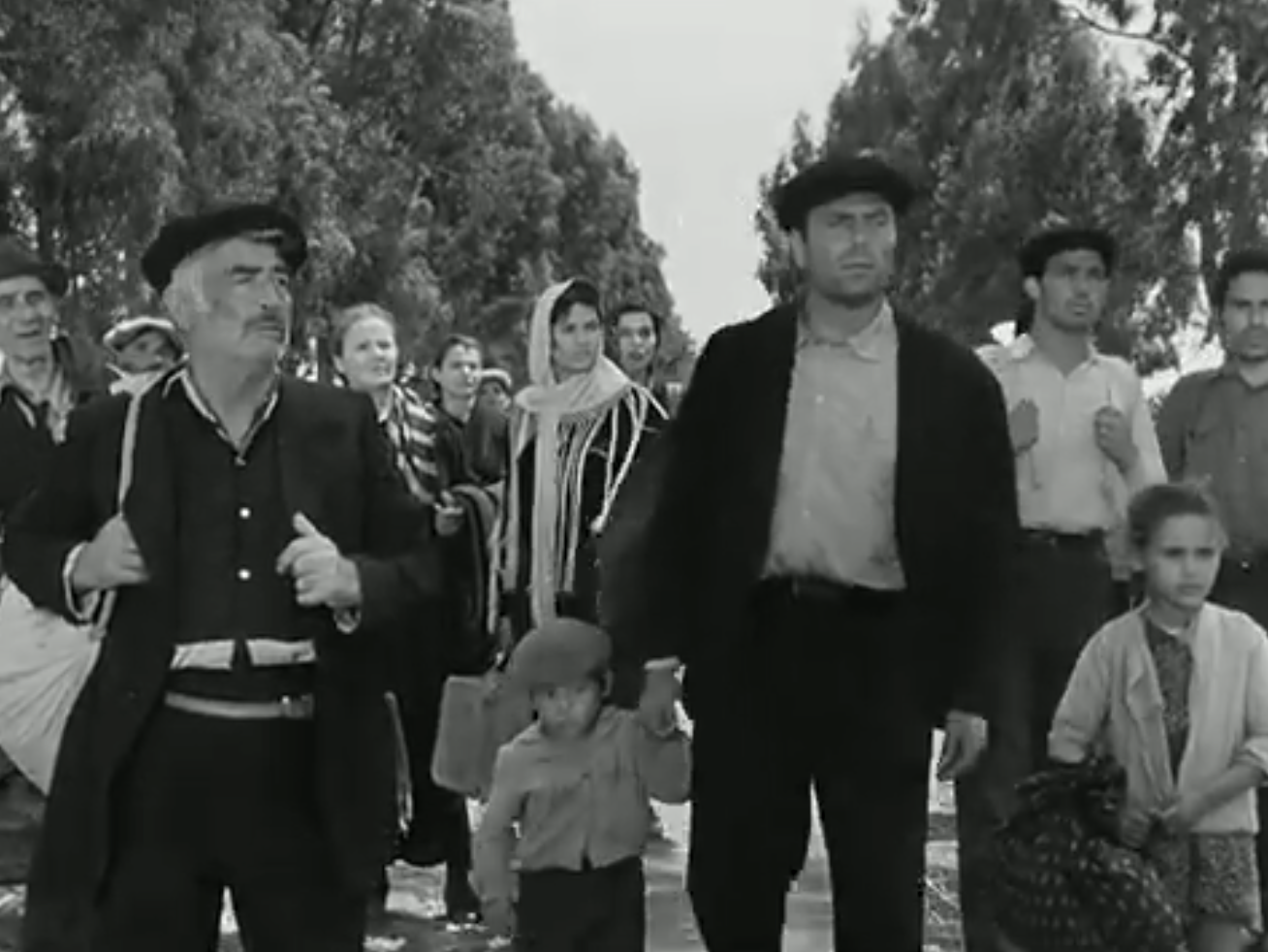
I siciliani raccolgono i bagagli e iniziano a camminare, mentre il cane del Ragioniere trotterella al suo fianco.
The Sicilians pick up their luggage and start walking, as the Accountant’s dog trots alongside.
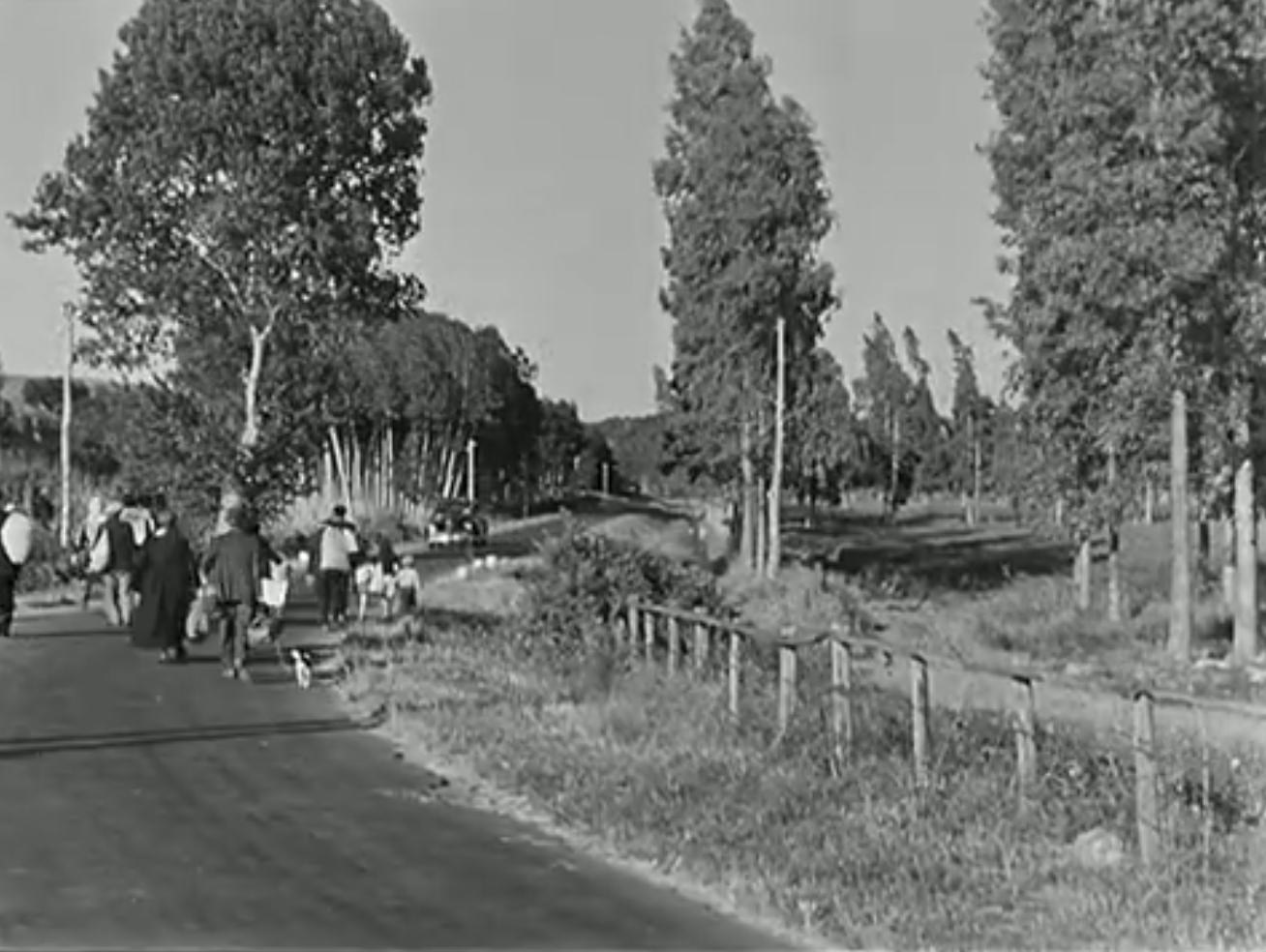
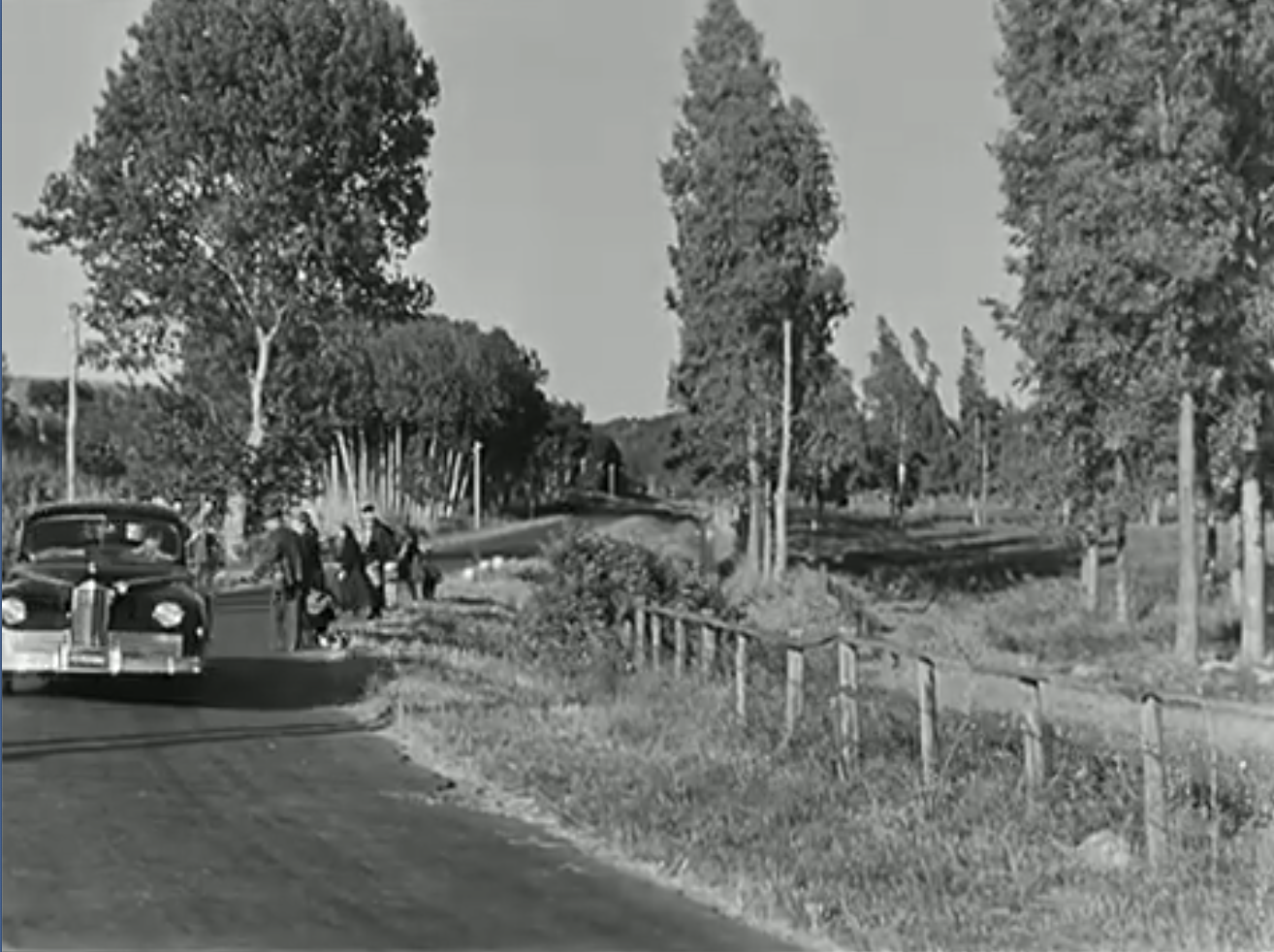
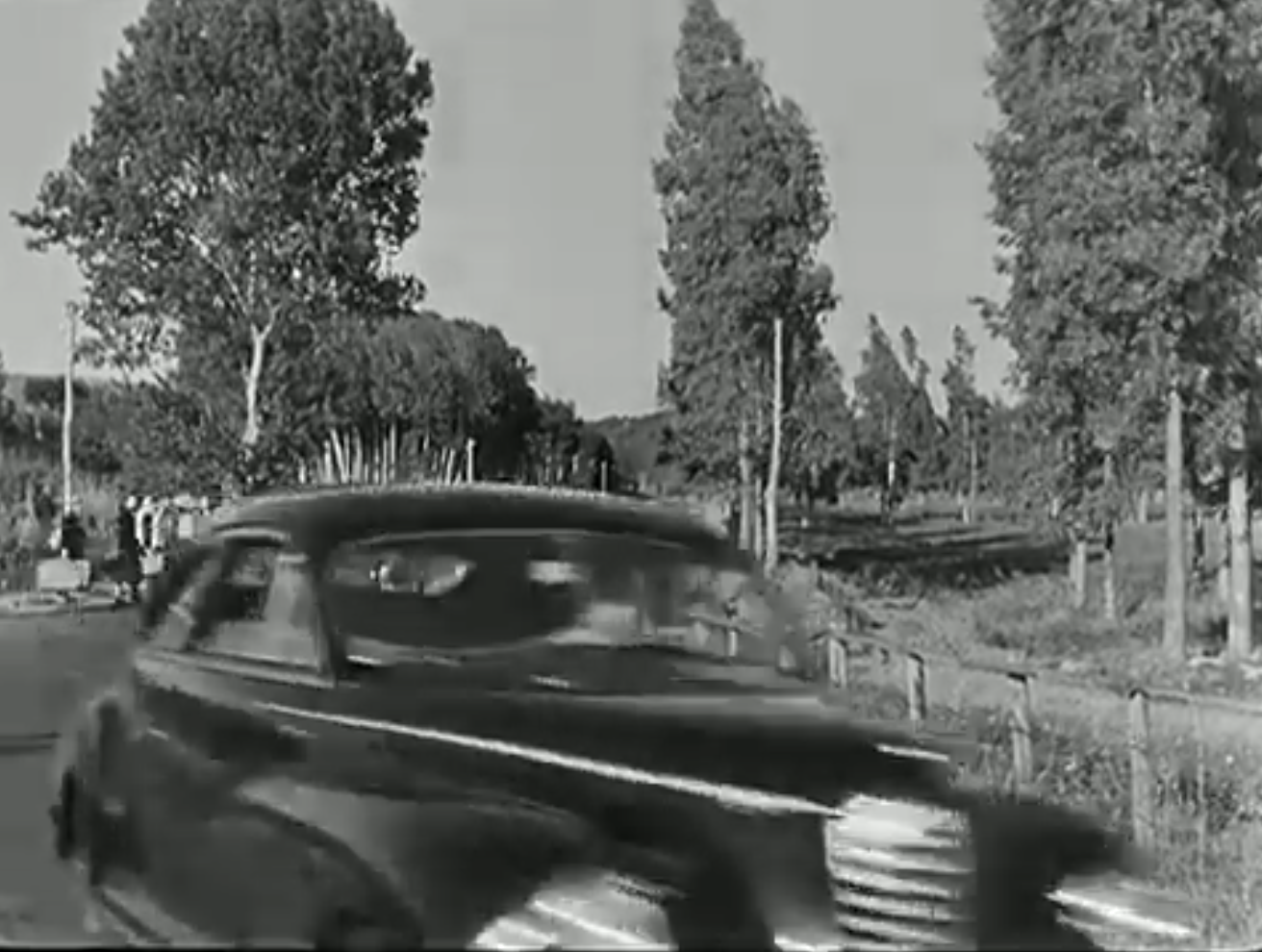
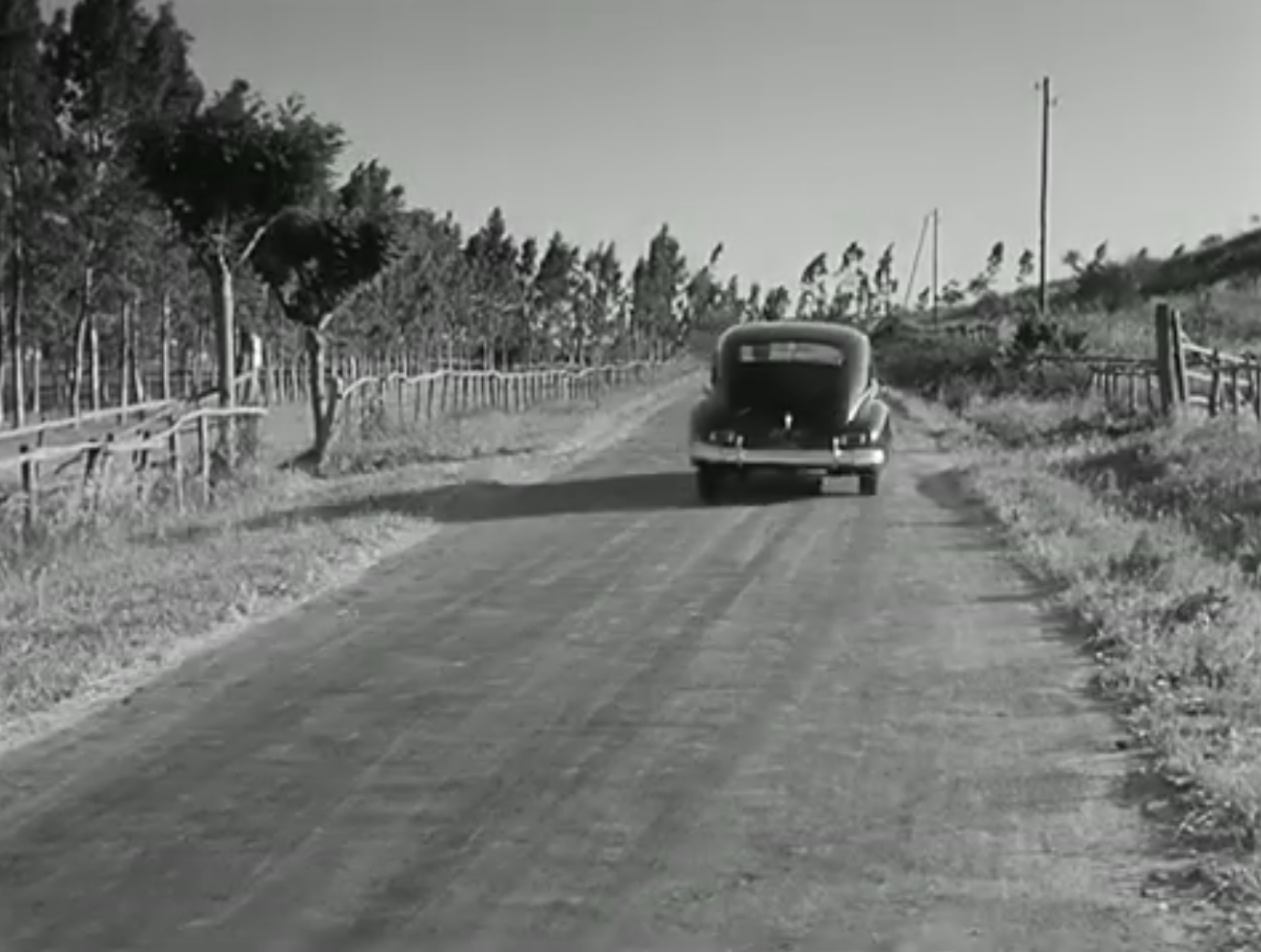
Più tardi, un'auto si avvicina ad alta velocità e, con forti colpi di clacson, costringe gli abitanti del villaggio ad abbandonare la strada .
Later, a car approaches at high velocity and, with loud blasts of the horn, forces the villagers off the road.
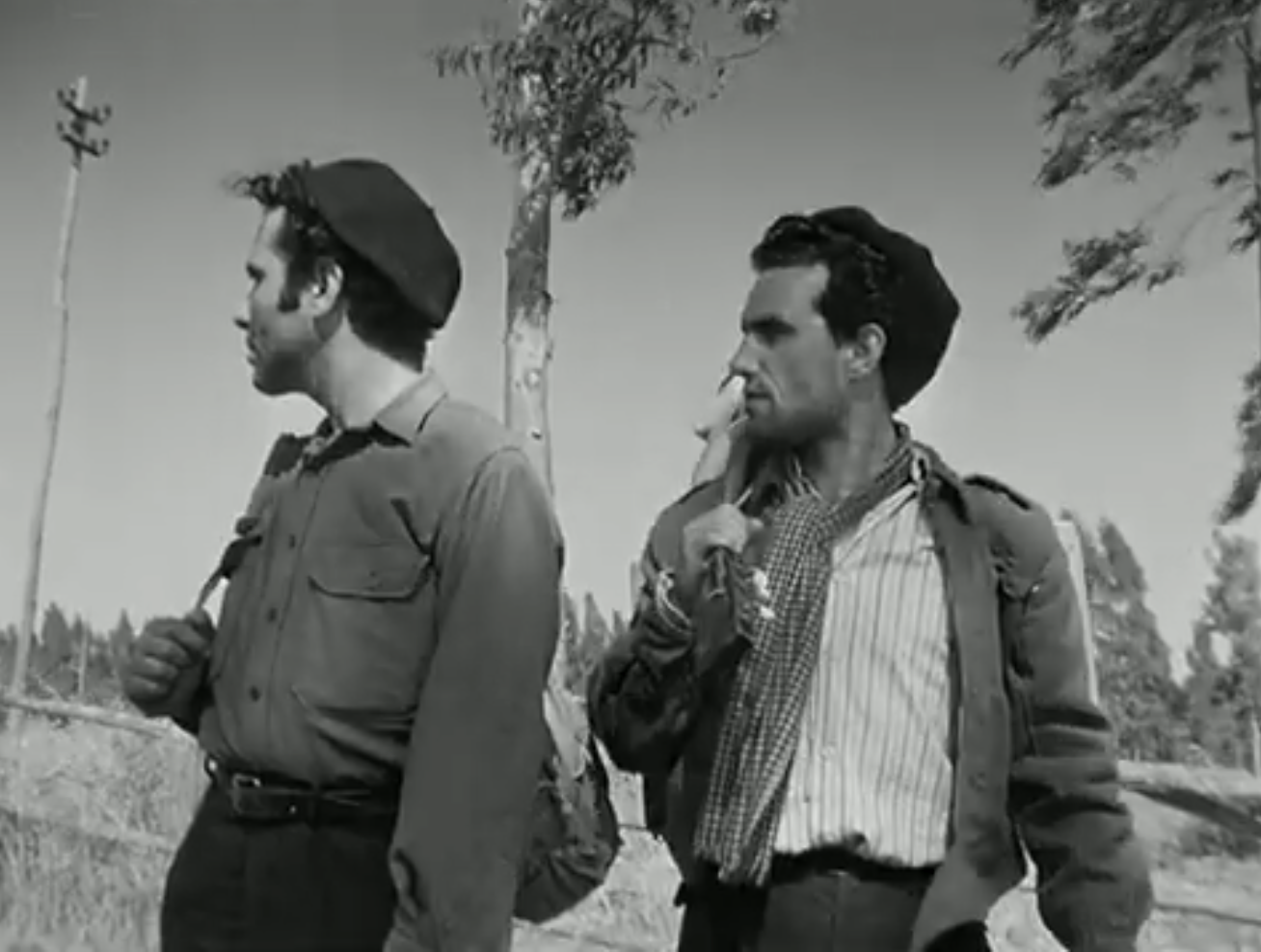
Brasi e Mommino la guardano sfrecciare via.
Brasi and Mommino watch it speed off.
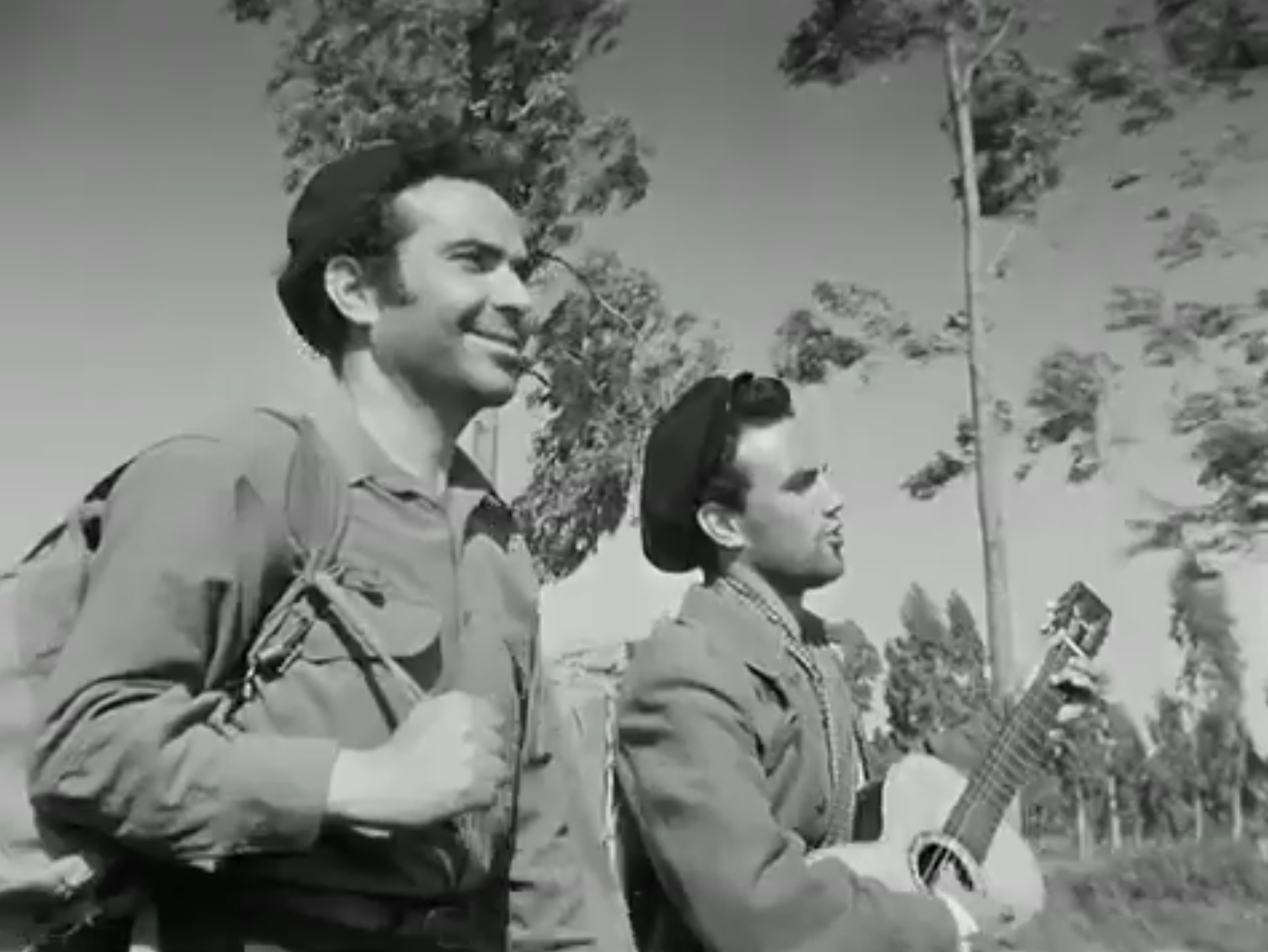
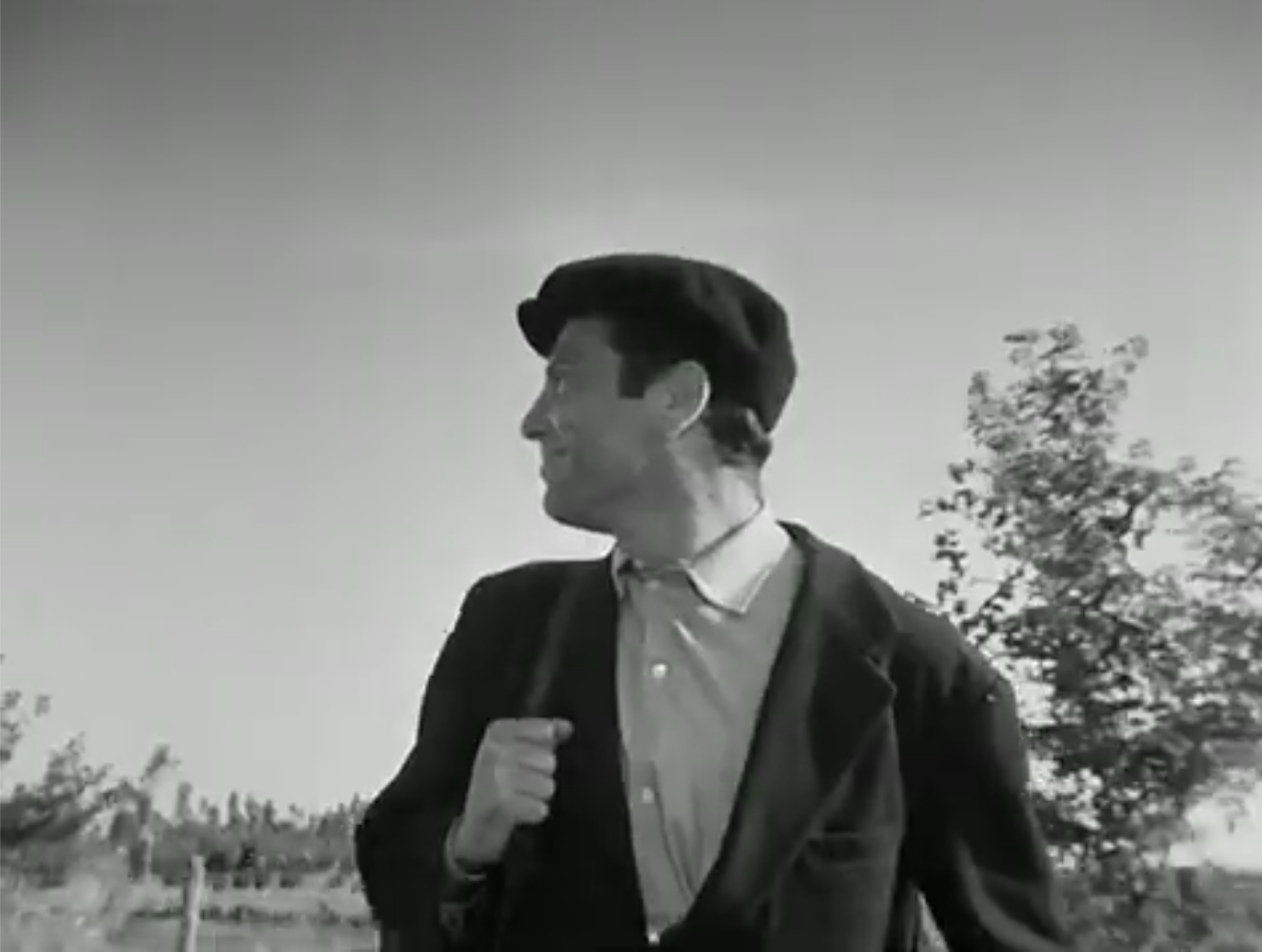
Mommino si toglie la chitarra dalla schiena e inizia a cantare “Vitti' na crozza” di nuovo, mentre Saro si guarda indietro, sorridendo.
Mommino pulls the guitar from his back and begins to sing “Vitti’ na crozza” again as Saro looks back, smiling.
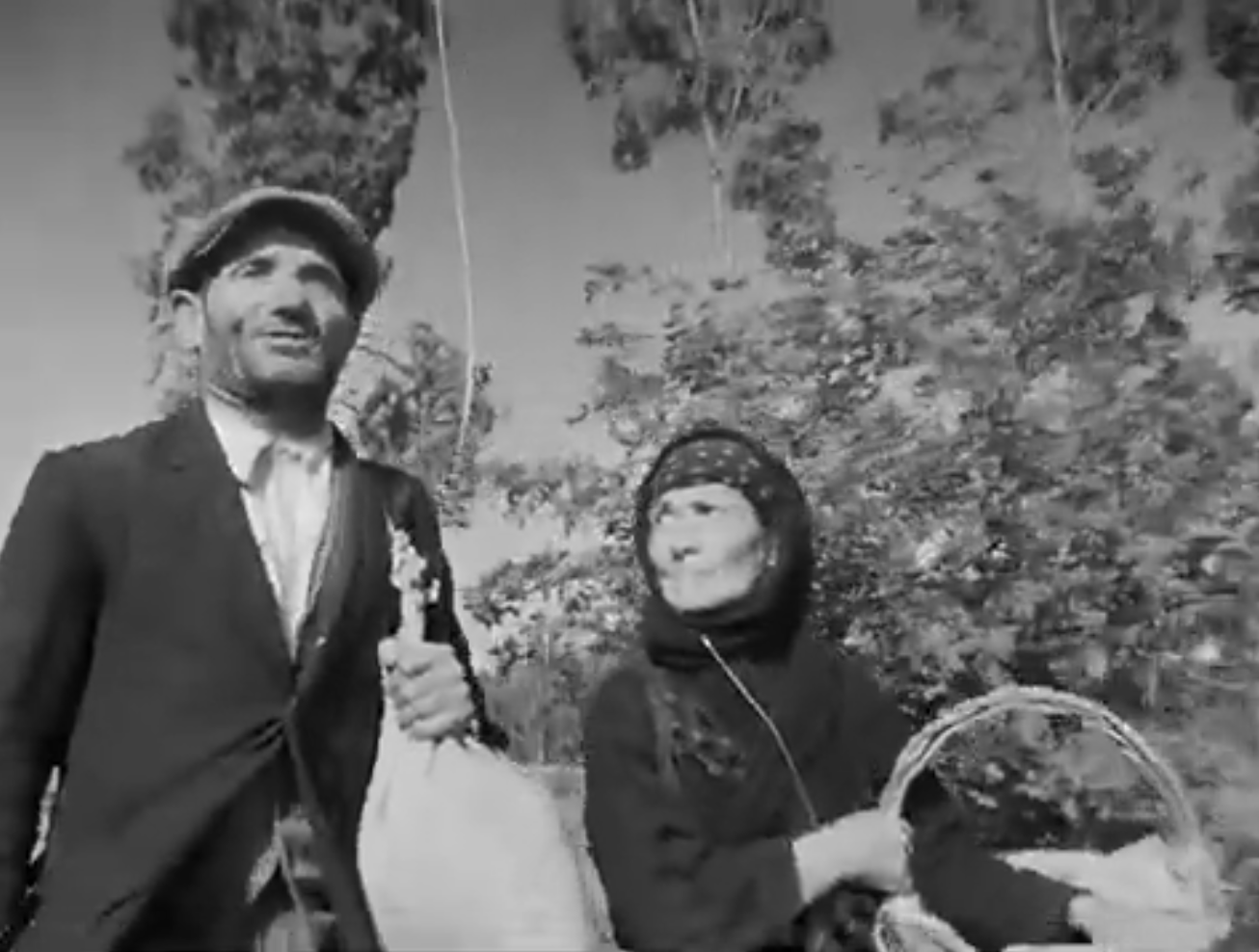
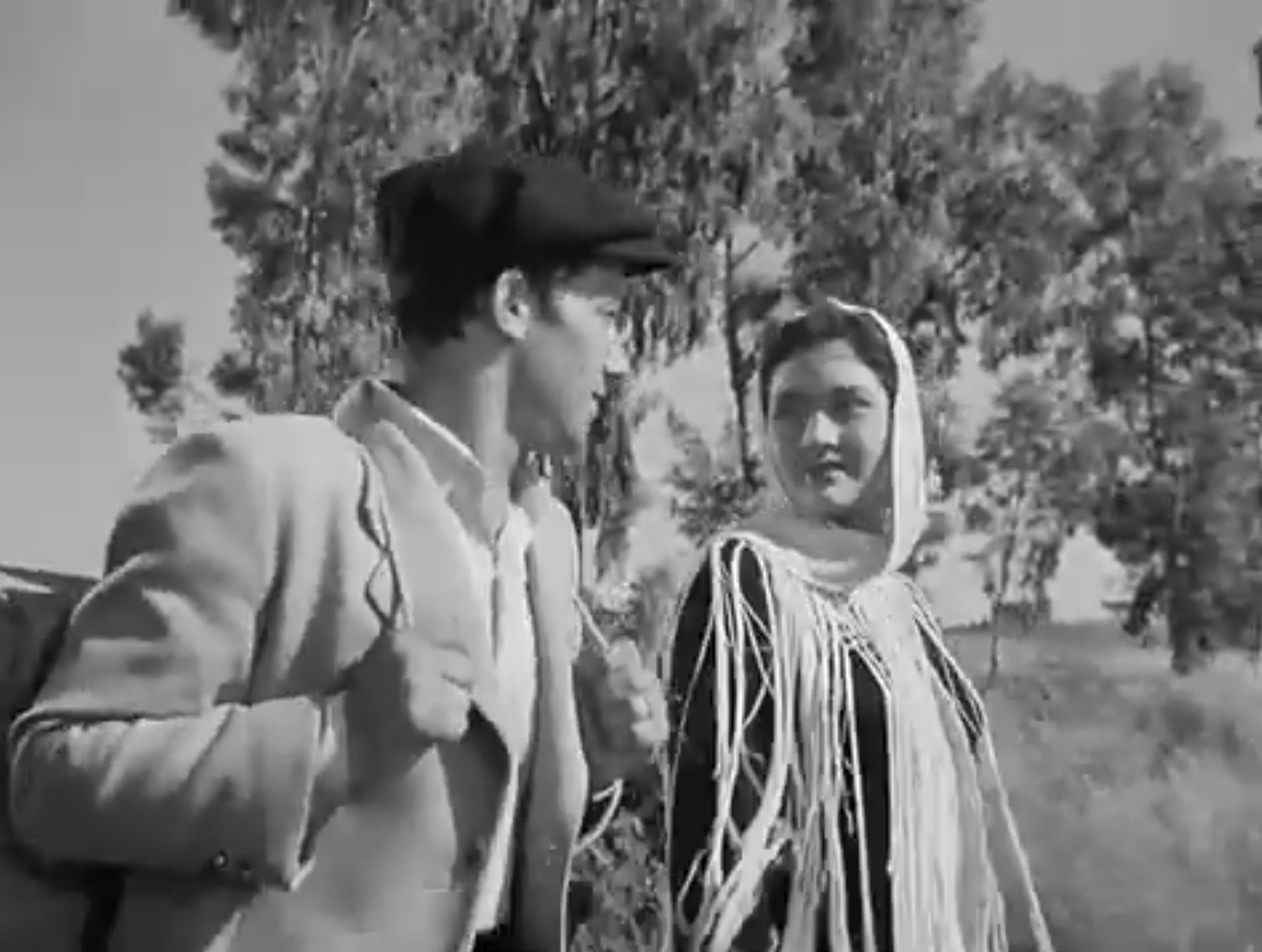
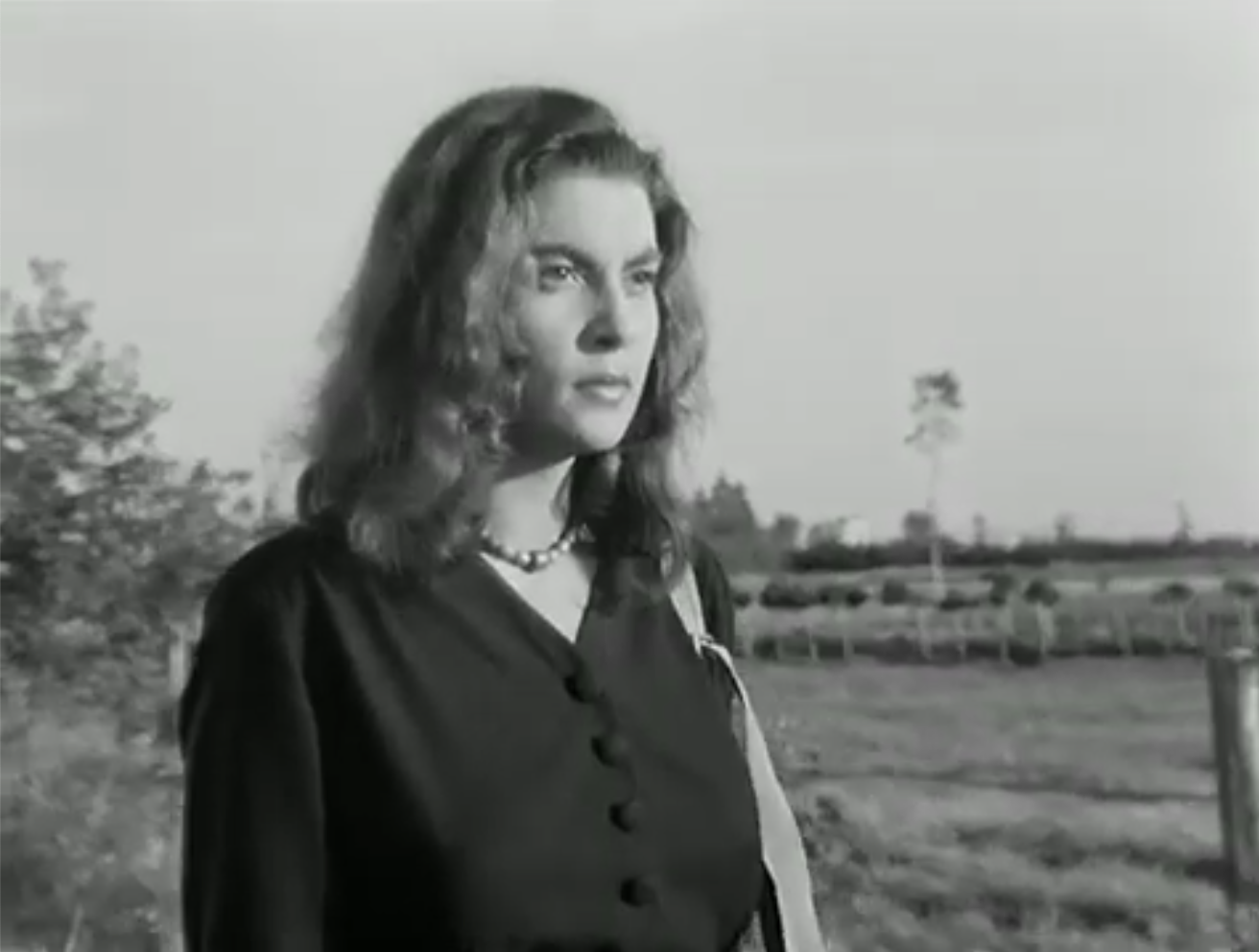
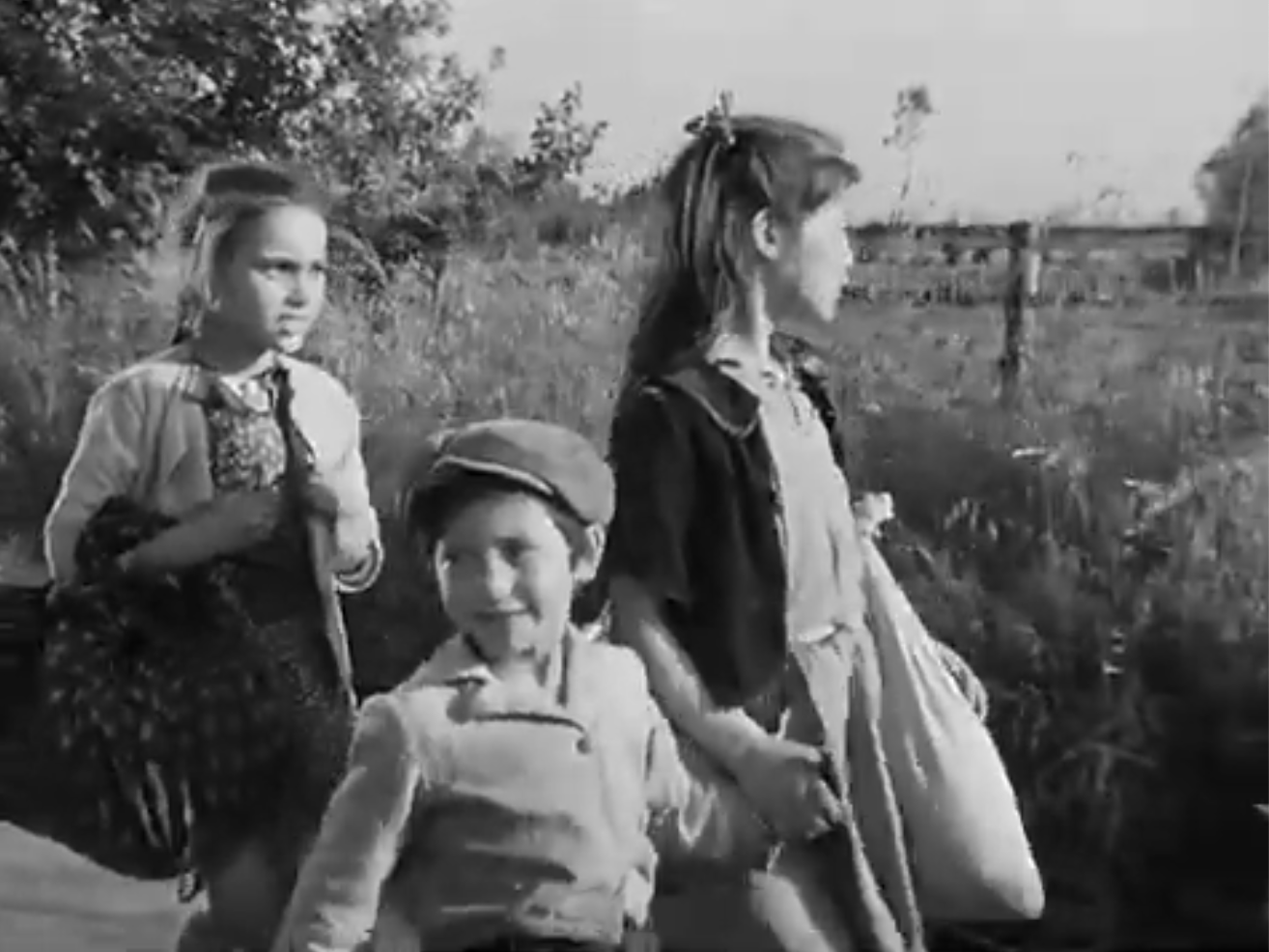
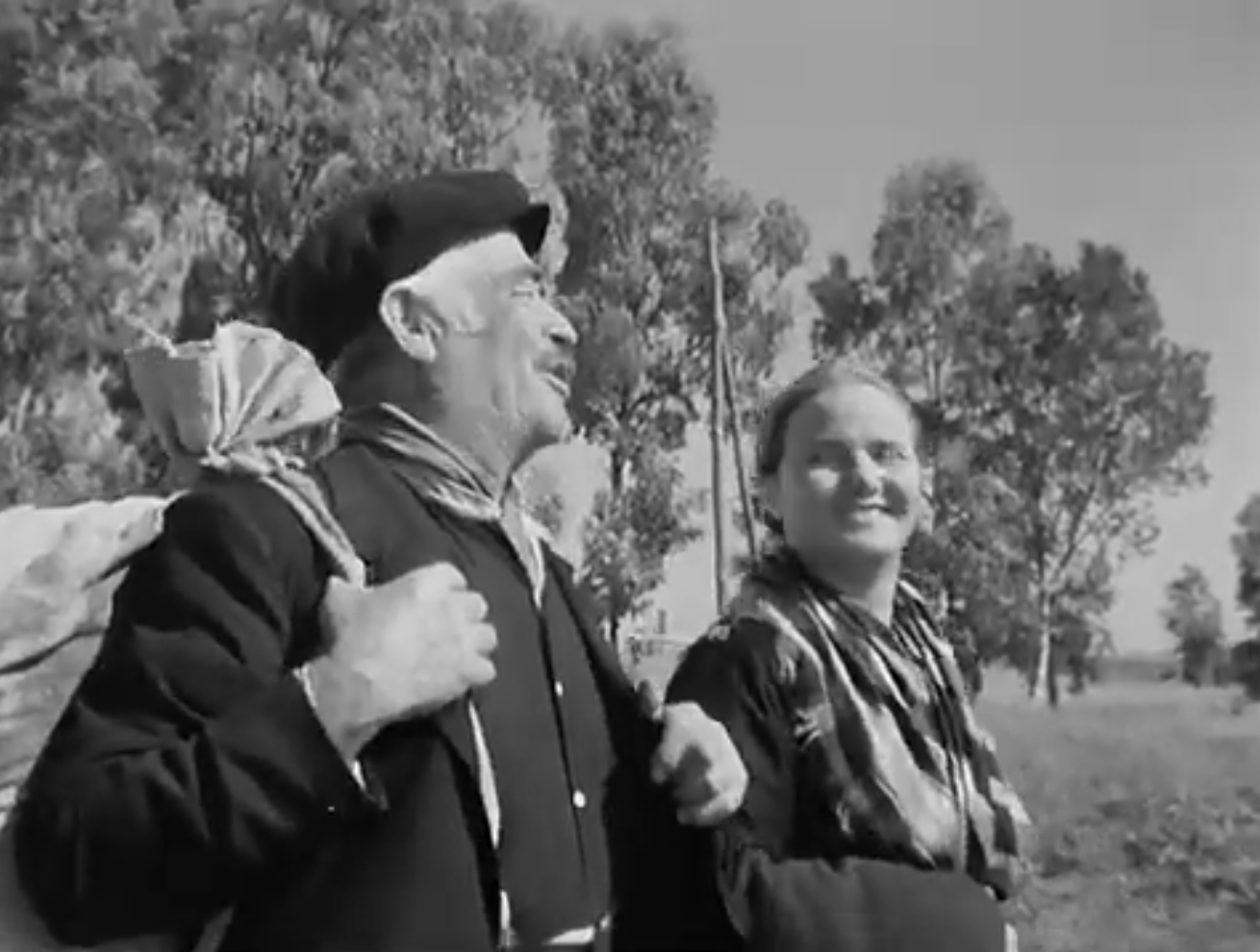

Gli altri abitanti del villaggio si uniscono a loro, momentaneamente liberi dalle loro preoccupazioni… tranne Barbara.
The villagers join in, momentarily freed of their worries – except Barbara.
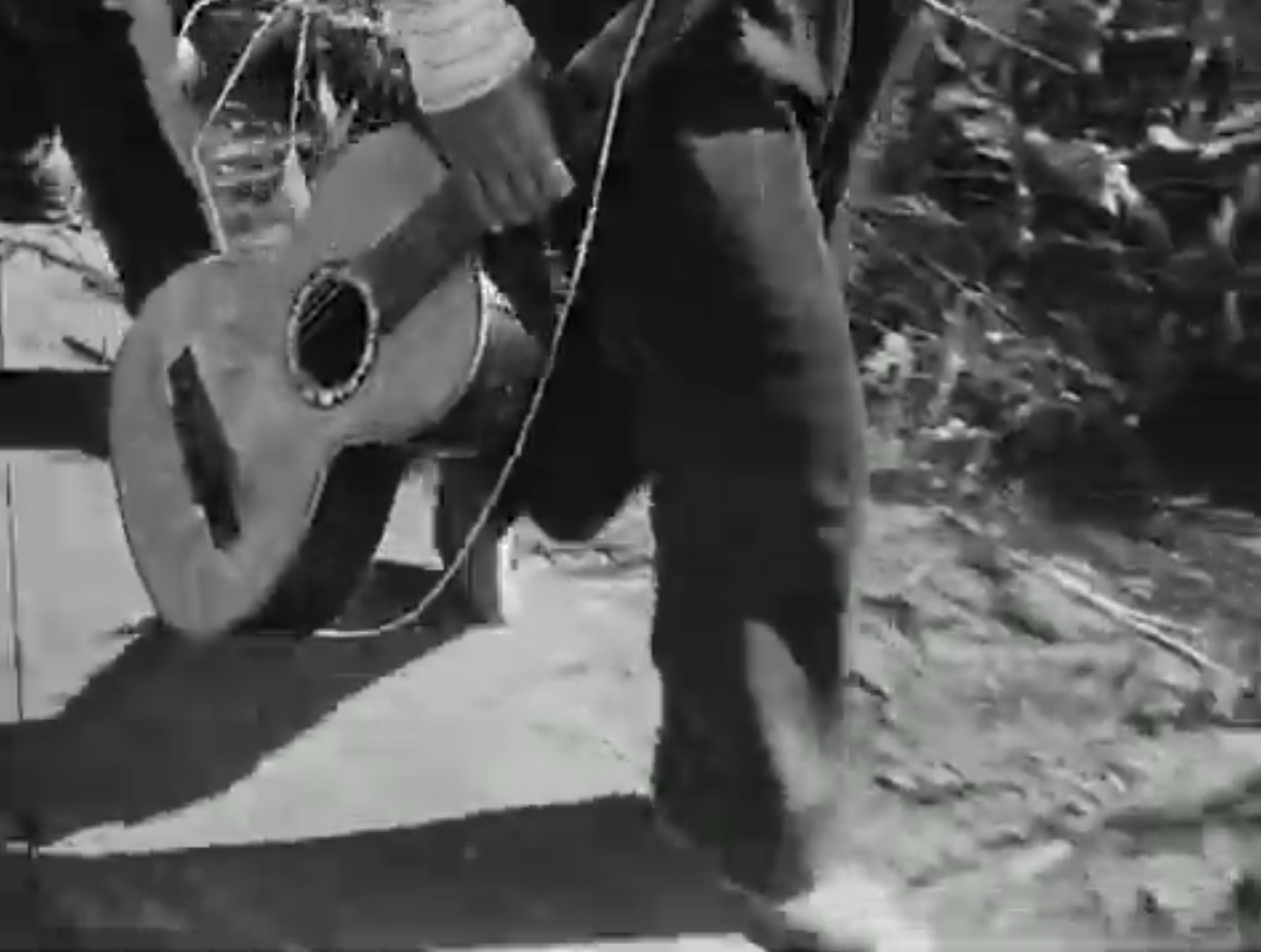
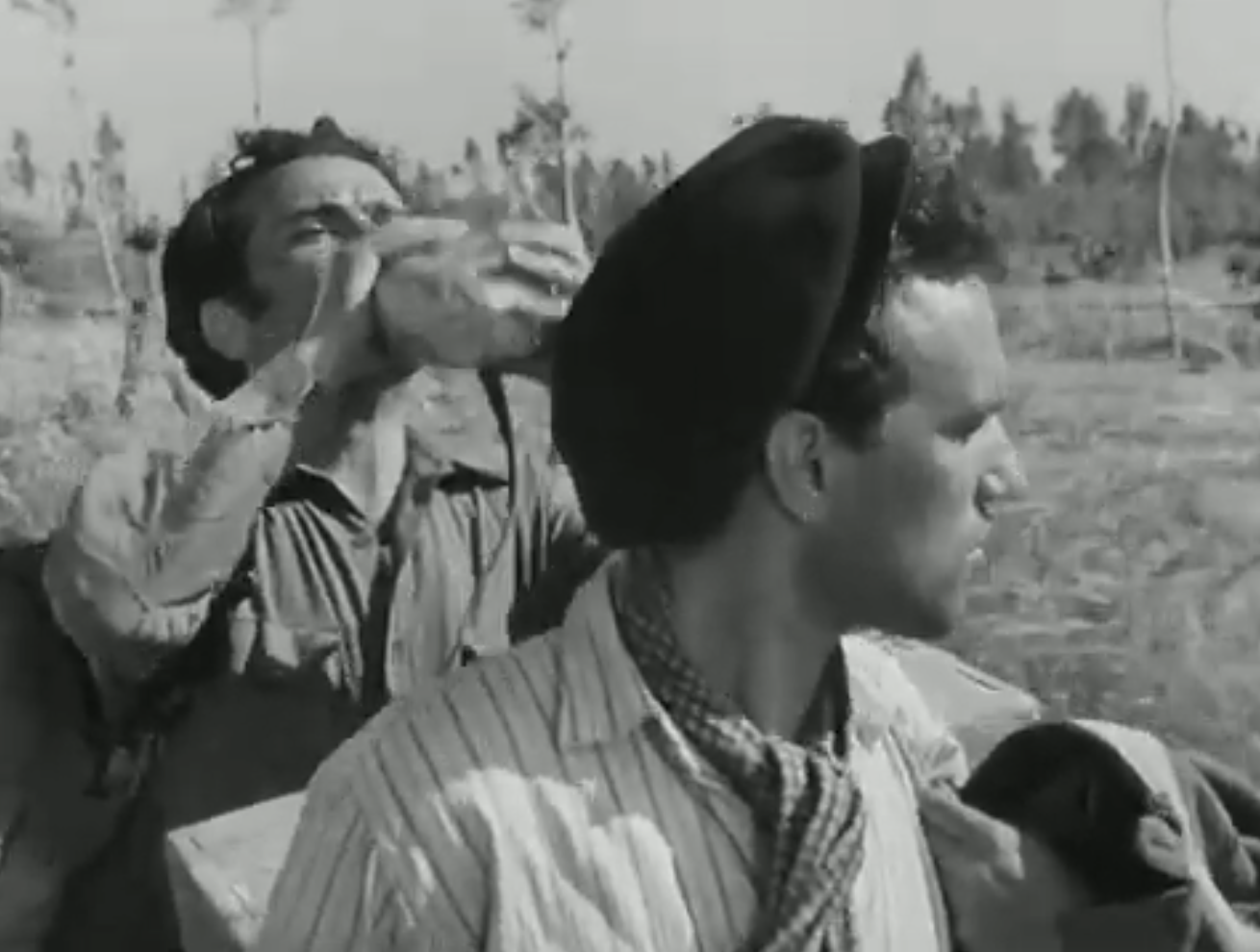
Finita la canzone, la camminata continua, nel caldo feroce. Frasico beve un grande sorso d'acqua.
Song over, the trek continues, in the fierce heat. Frasico takes a great gulp of water.
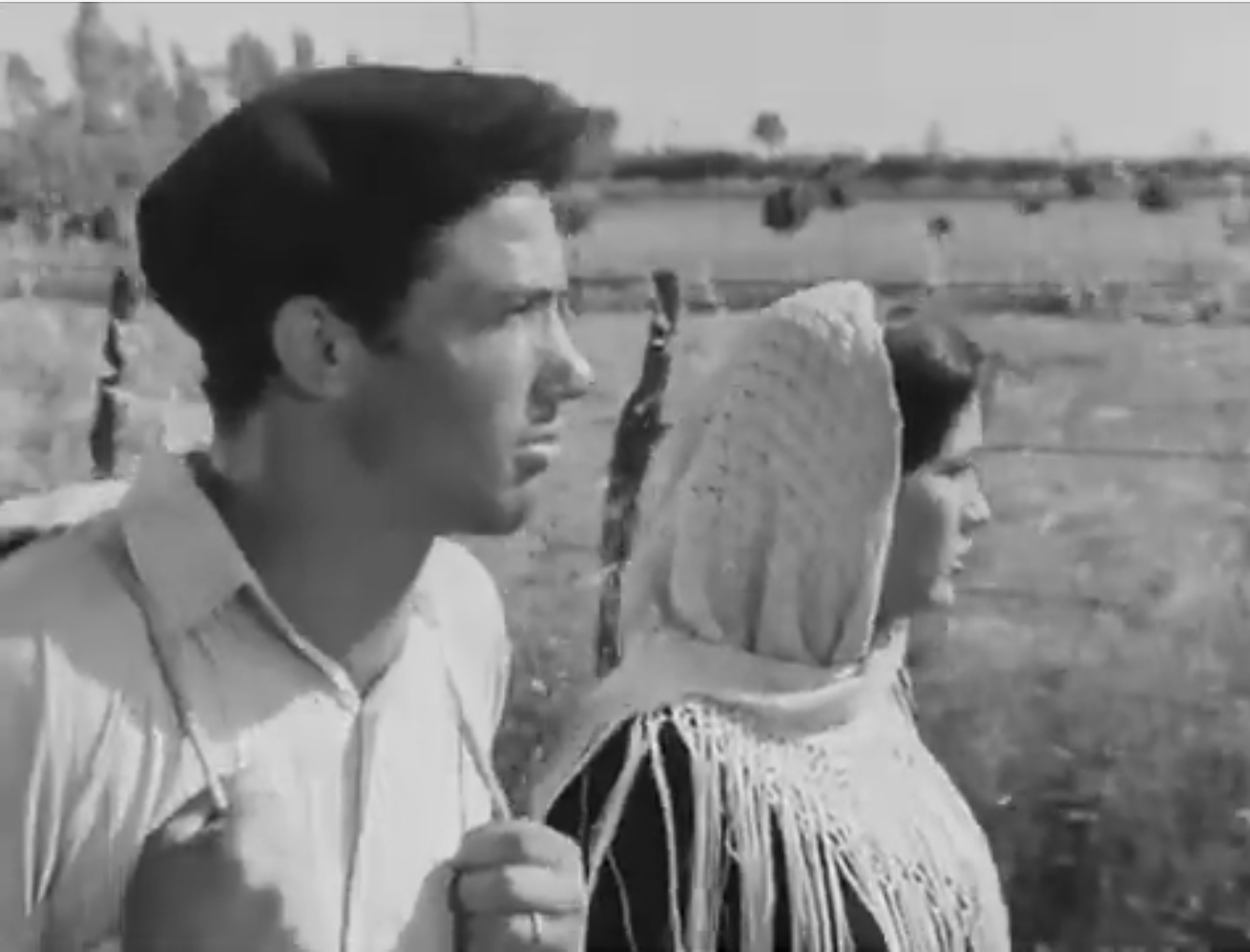
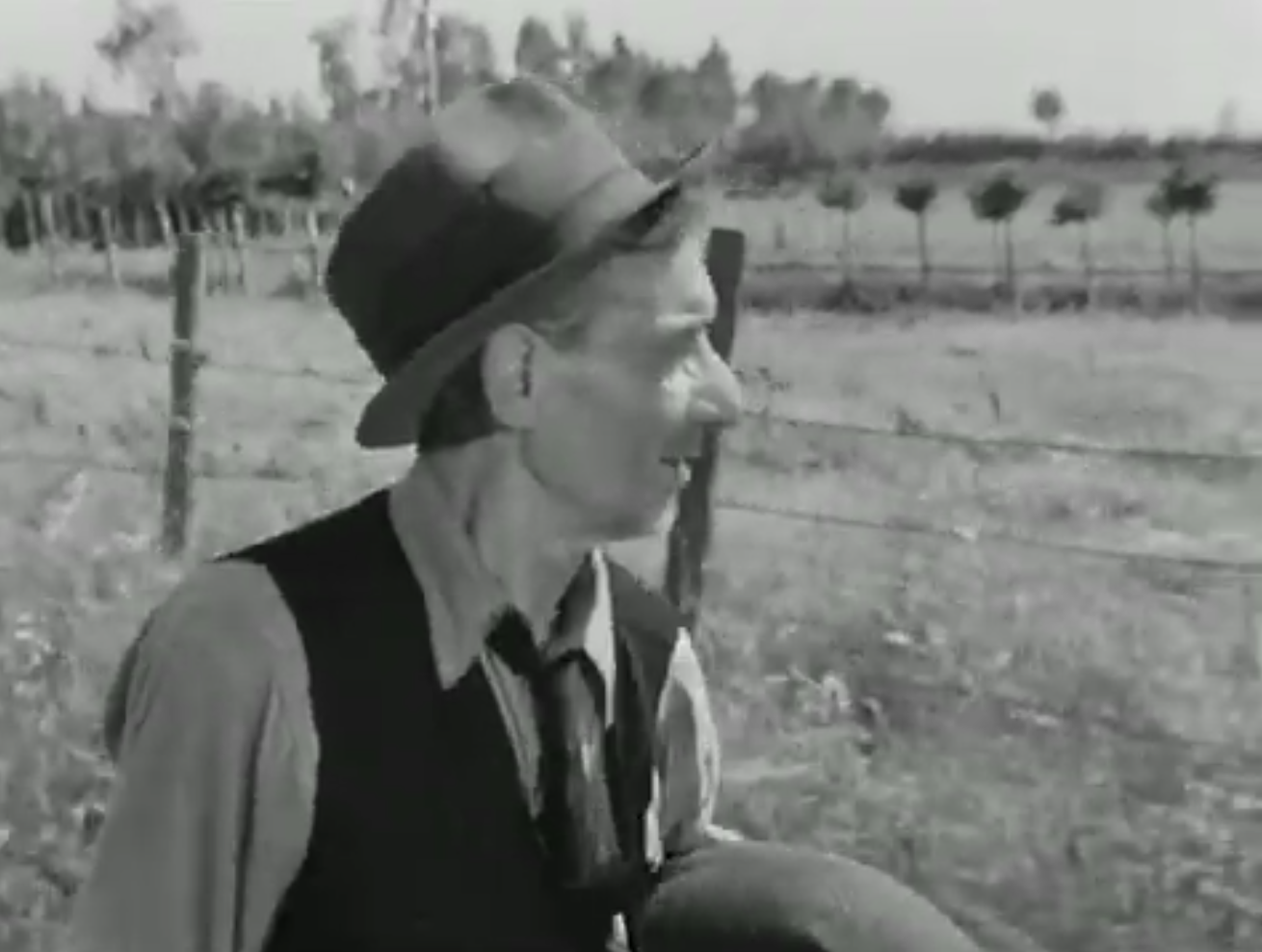
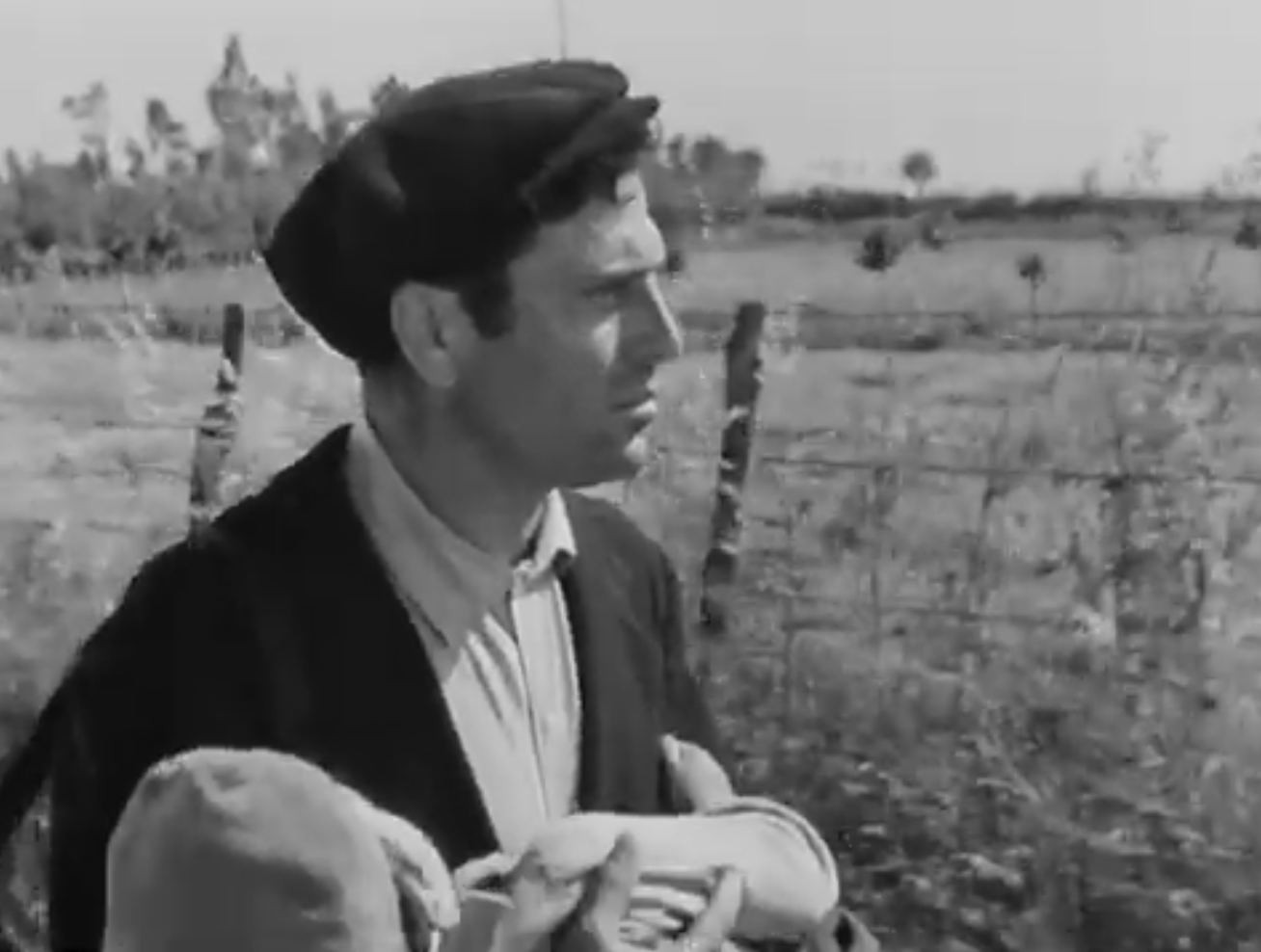
Alberi e pali di recinzione senza fine. Il Ragioniere si è tolto la giacca e si è allentato la cravatta.
Trees and fence posts without end. The Accountant has taken off his jacket and has loosened his tie.
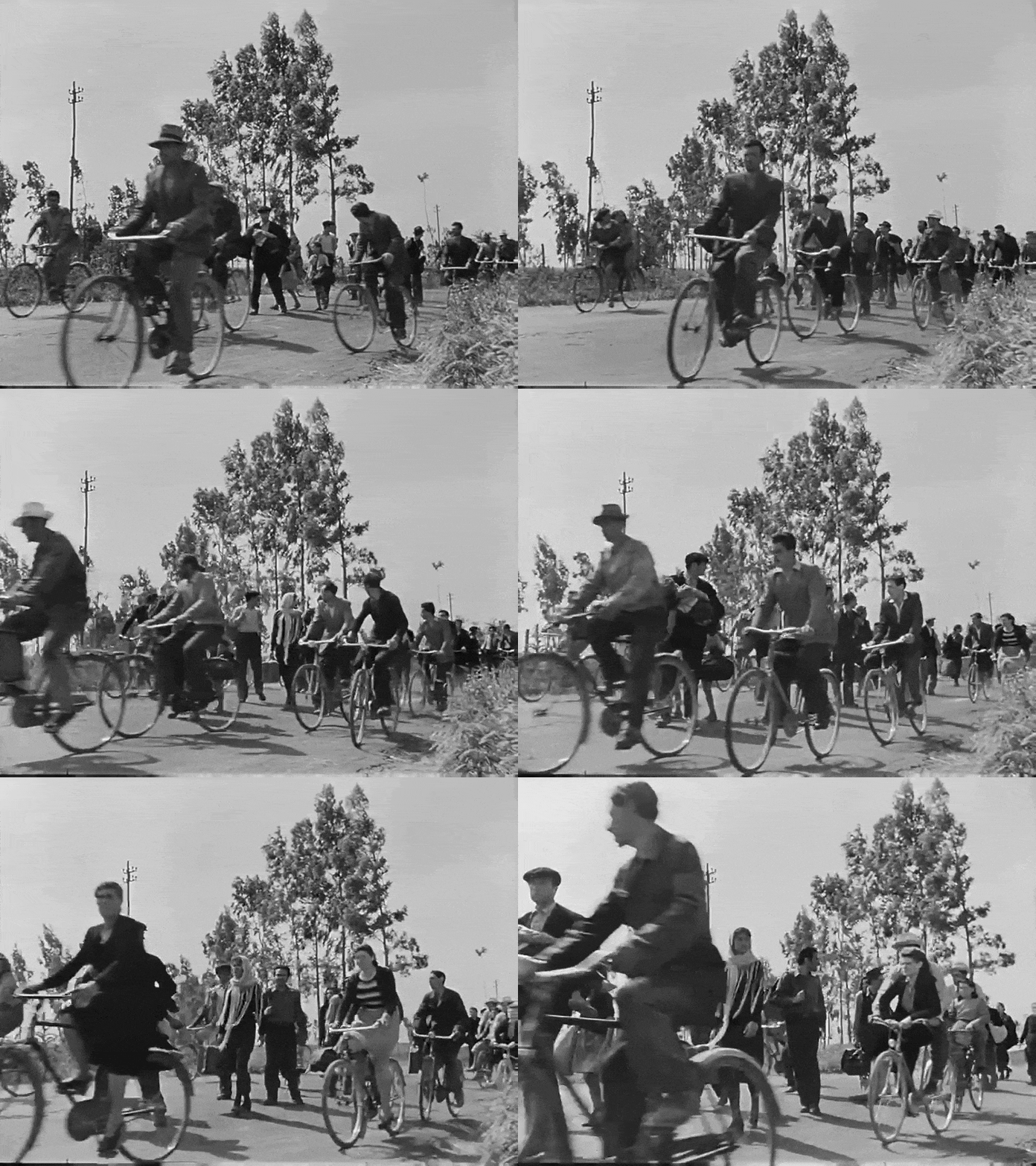
Con il tintinnio dei loro campanelli, dei ciclisti passano di corsa in una lunga fila, allungando il collo per guardare i contadini del Sud.
With the ding-ding of their bells, cyclists hurry past in a long line, craning their necks to look at the peasants from the South.
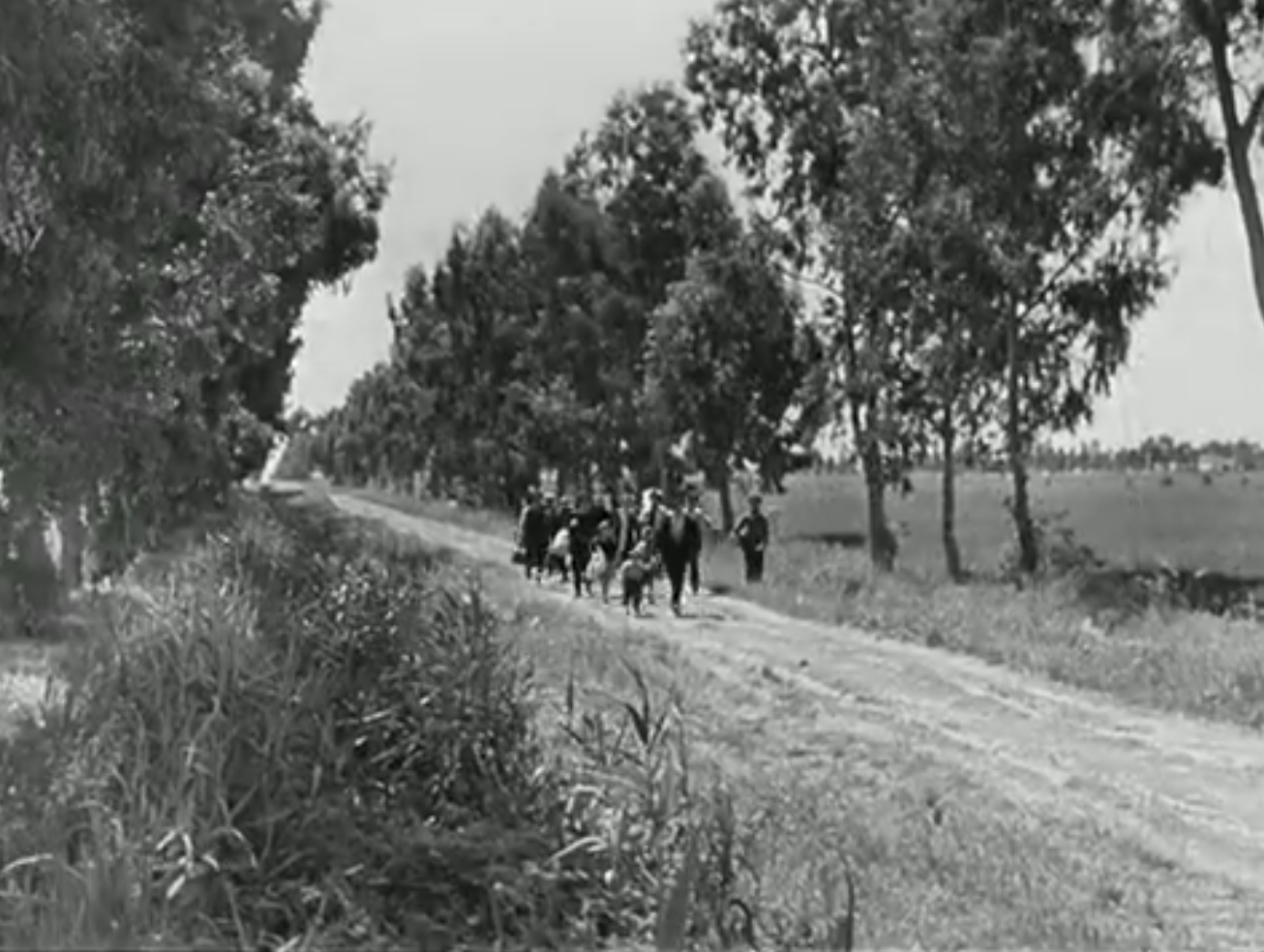
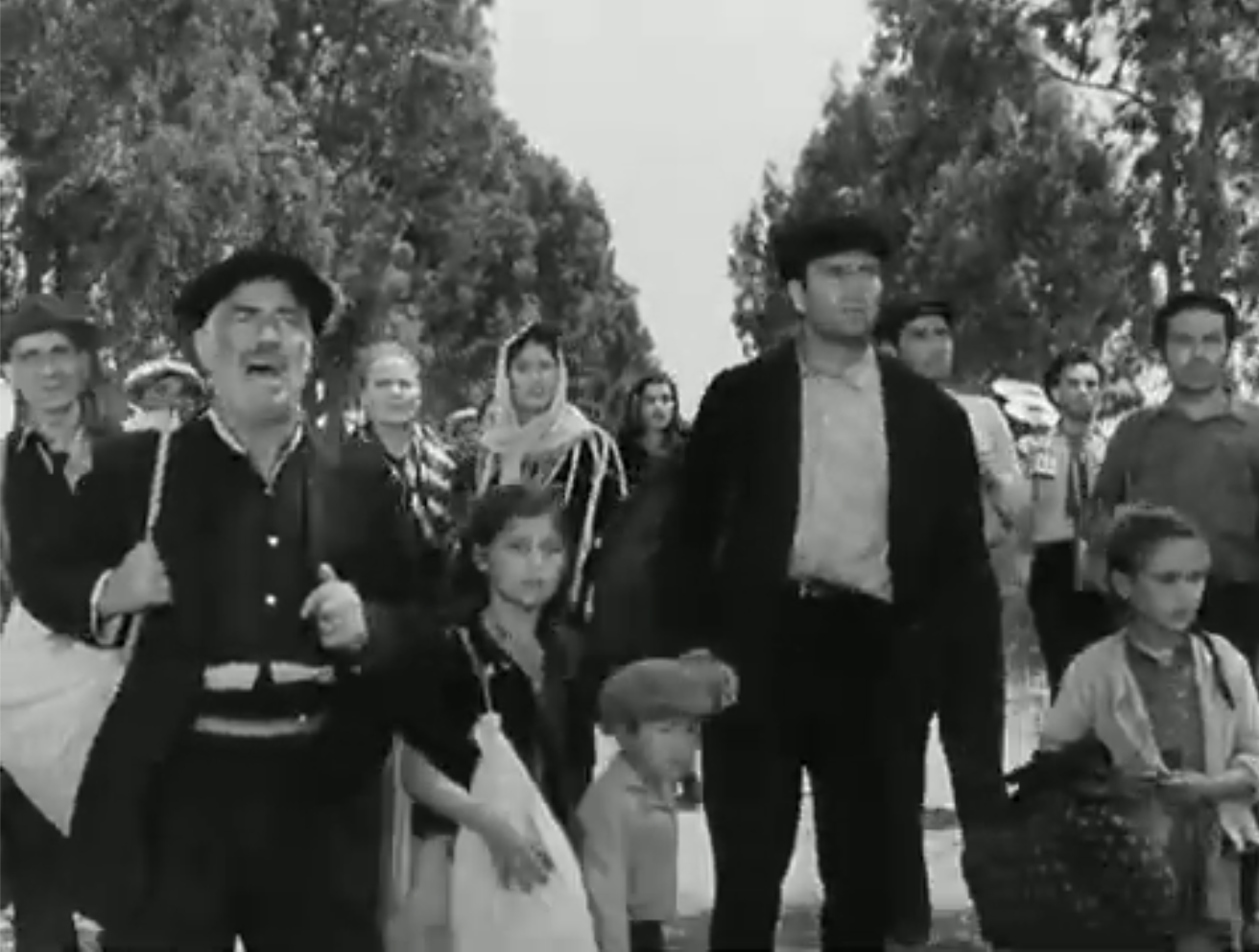

Più tardi, notando un uomo con un forcone in una fattoria, Misciu grida: “Ehi!”
Later, spying a man with a pitchfork on a farm, Misciu yells, “Hey!”
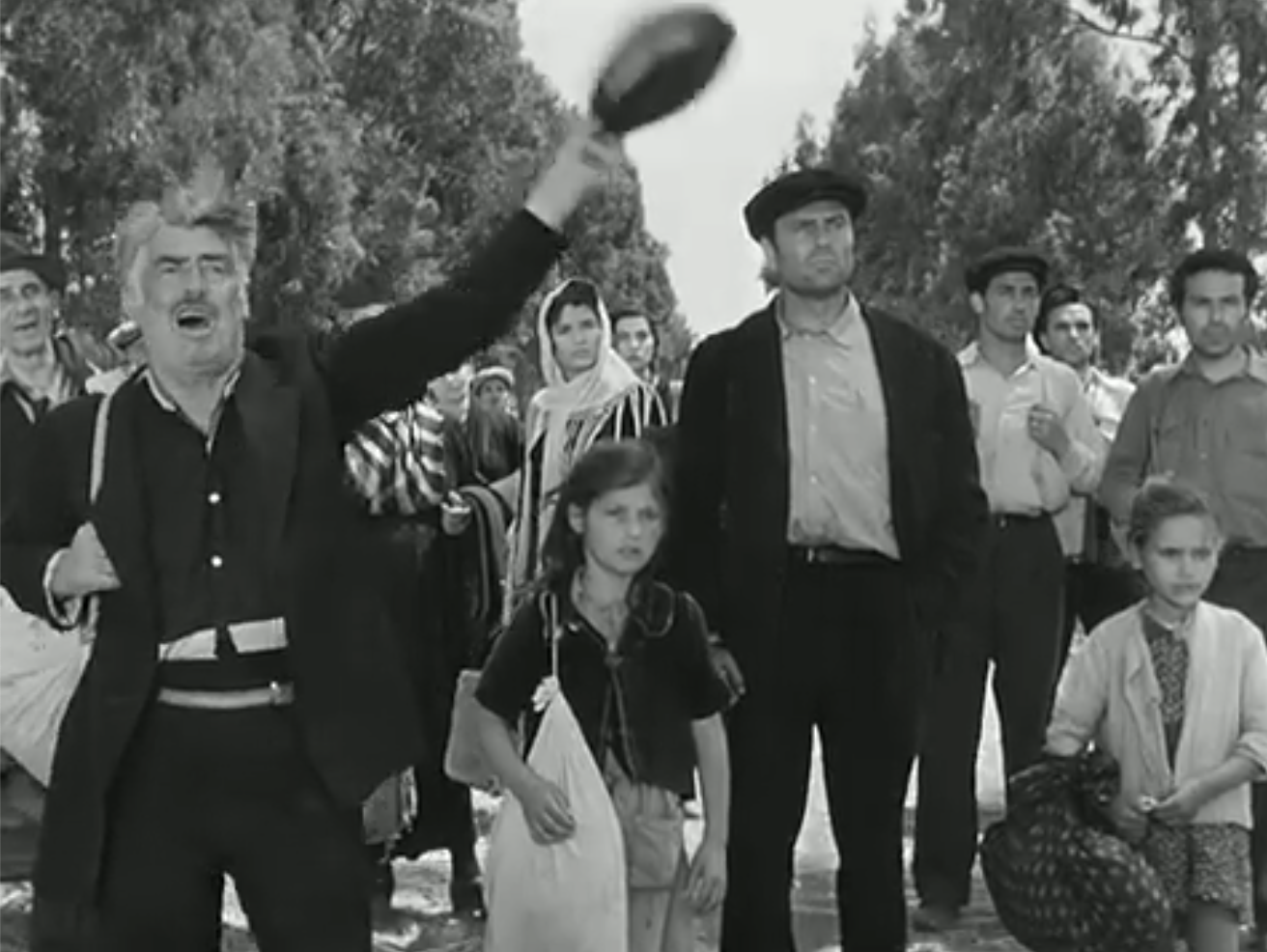
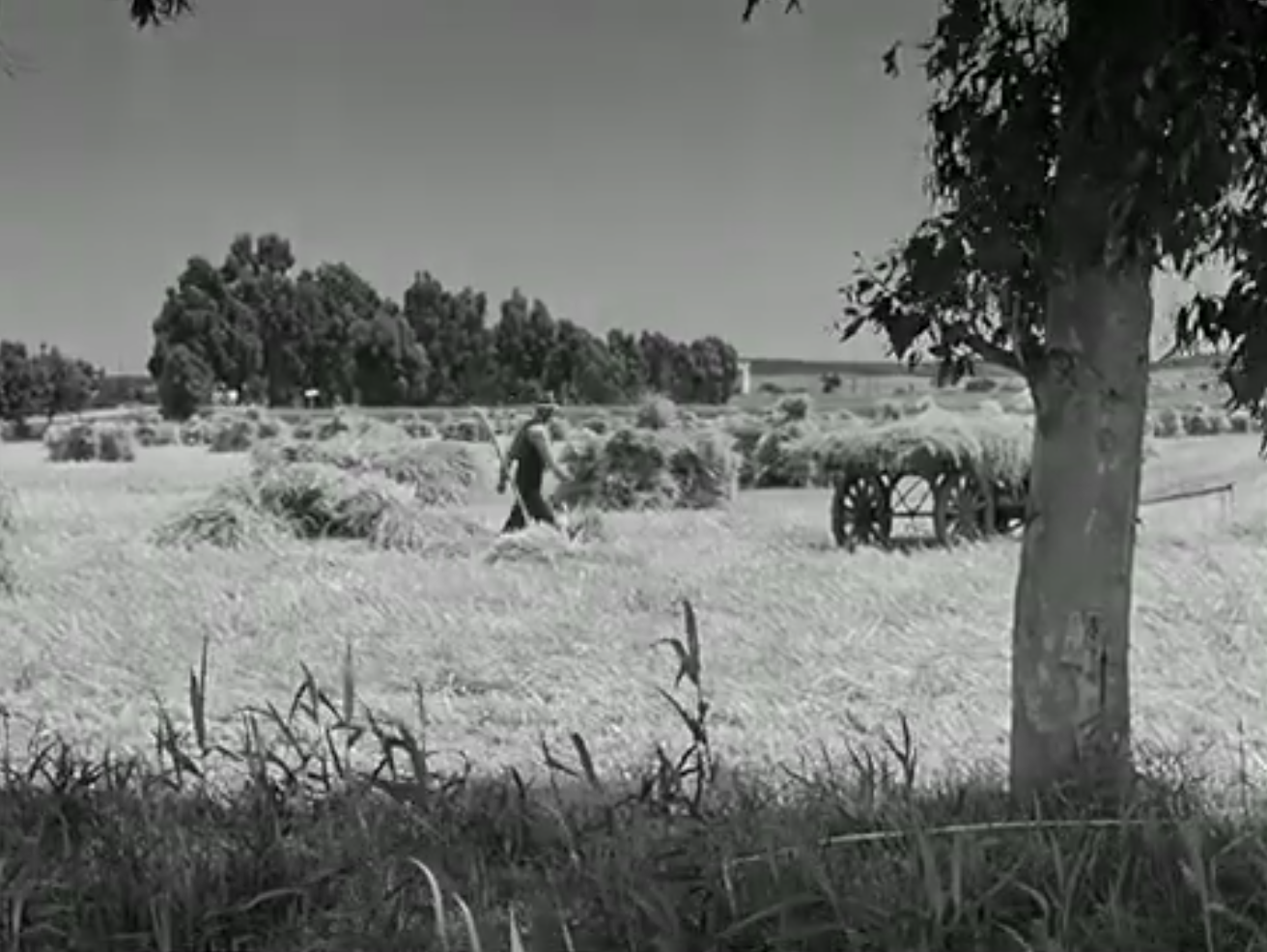
Agita il cappello e grida di nuovo: “Ehiiiiiiiii!”
L'uomo infila il forcone in un mucchio di fieno e se ne va camminando.
He waves his cap, yelling again, “Heeeeeyyyy!”
The man sticks his pitchfork in a pile of hay and walks away.
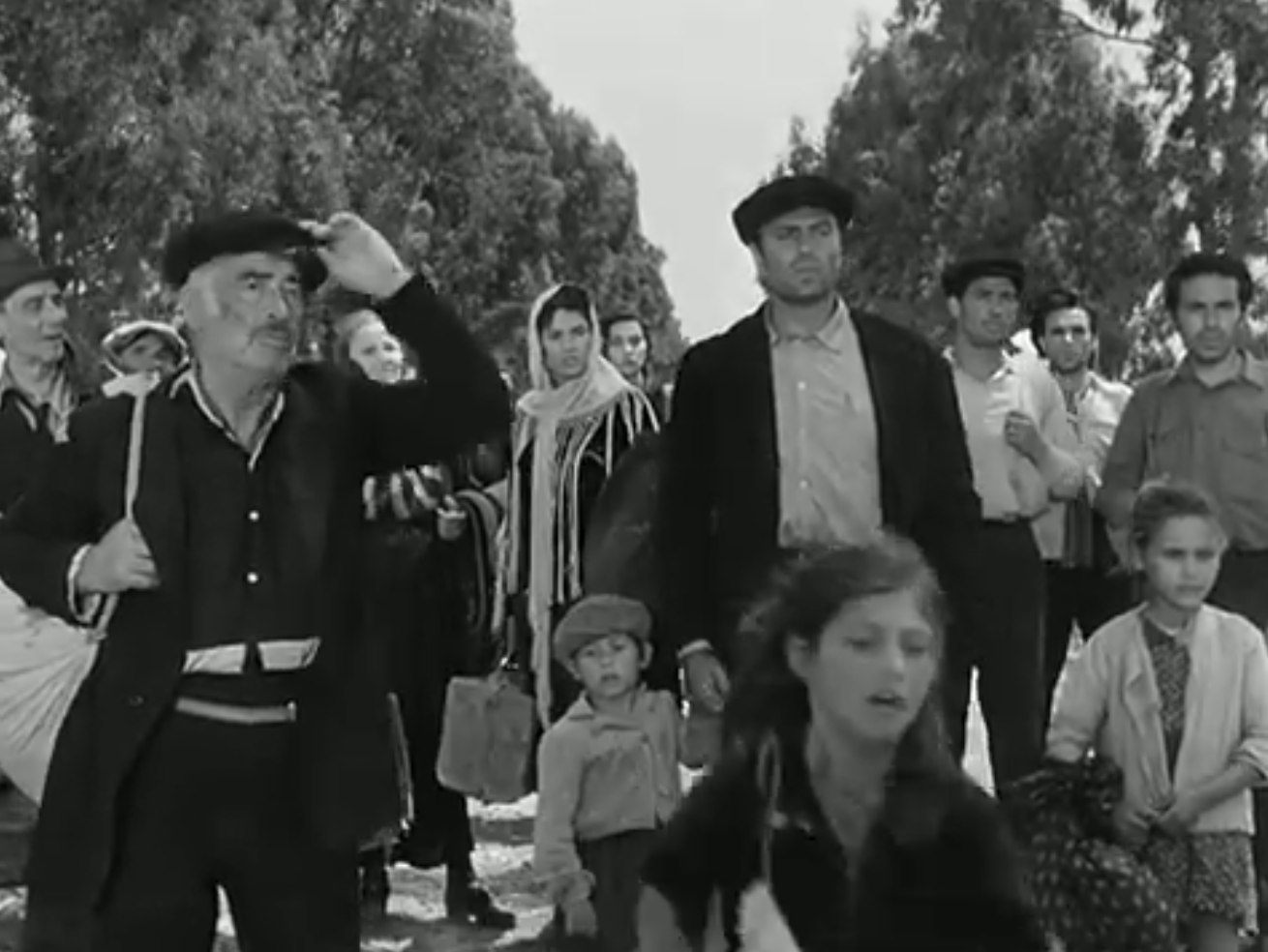
“Vado io a chiamarlo”, dice Michelina e corre via.
“Michelina!” esclama Saro, ma la lascia andare.
“I’m going to call him,” Michelina says, and runs off.
“Michelina!” exclaims Saro, but he lets her go.
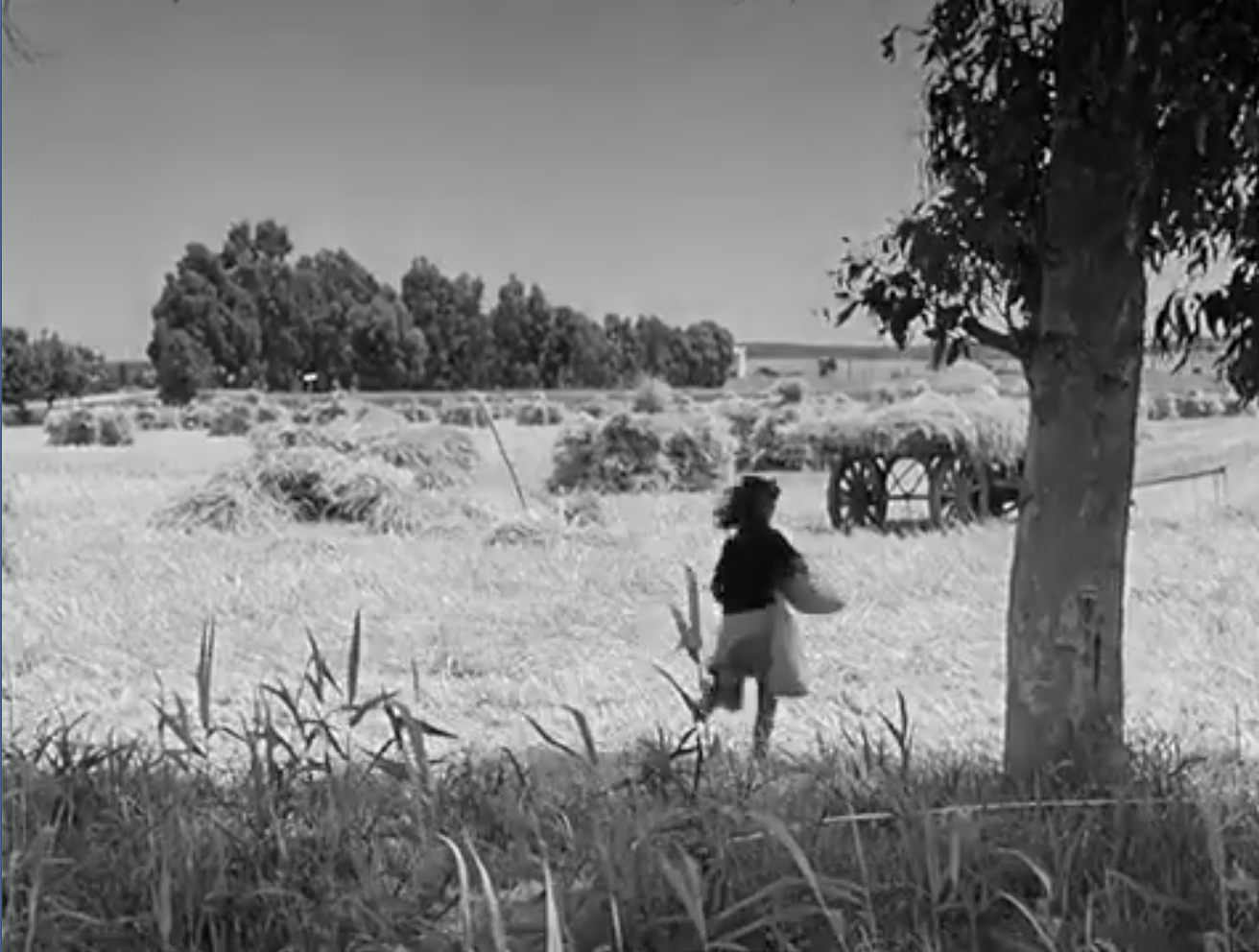
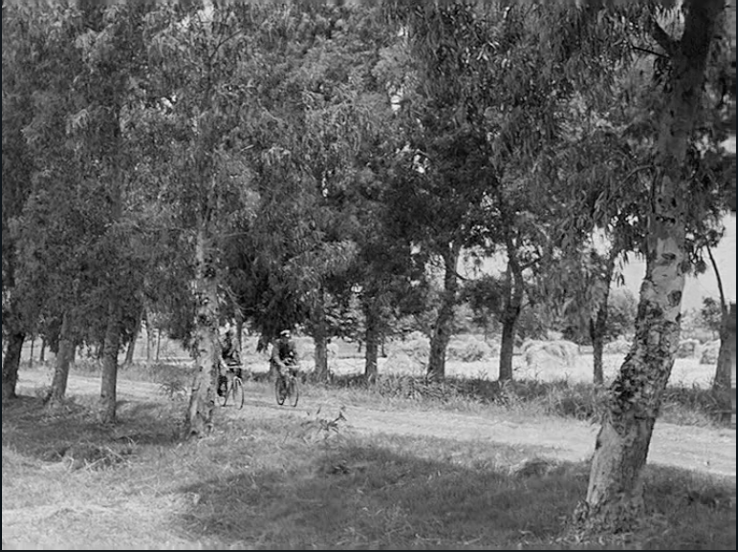
Mentre Michelina corre nel campo, portando le sue borse, appaiono due Carabinieri in bicicletta.
As Michelina runs into the field, carrying her two bags, two Carabinieri on bicycles appear.
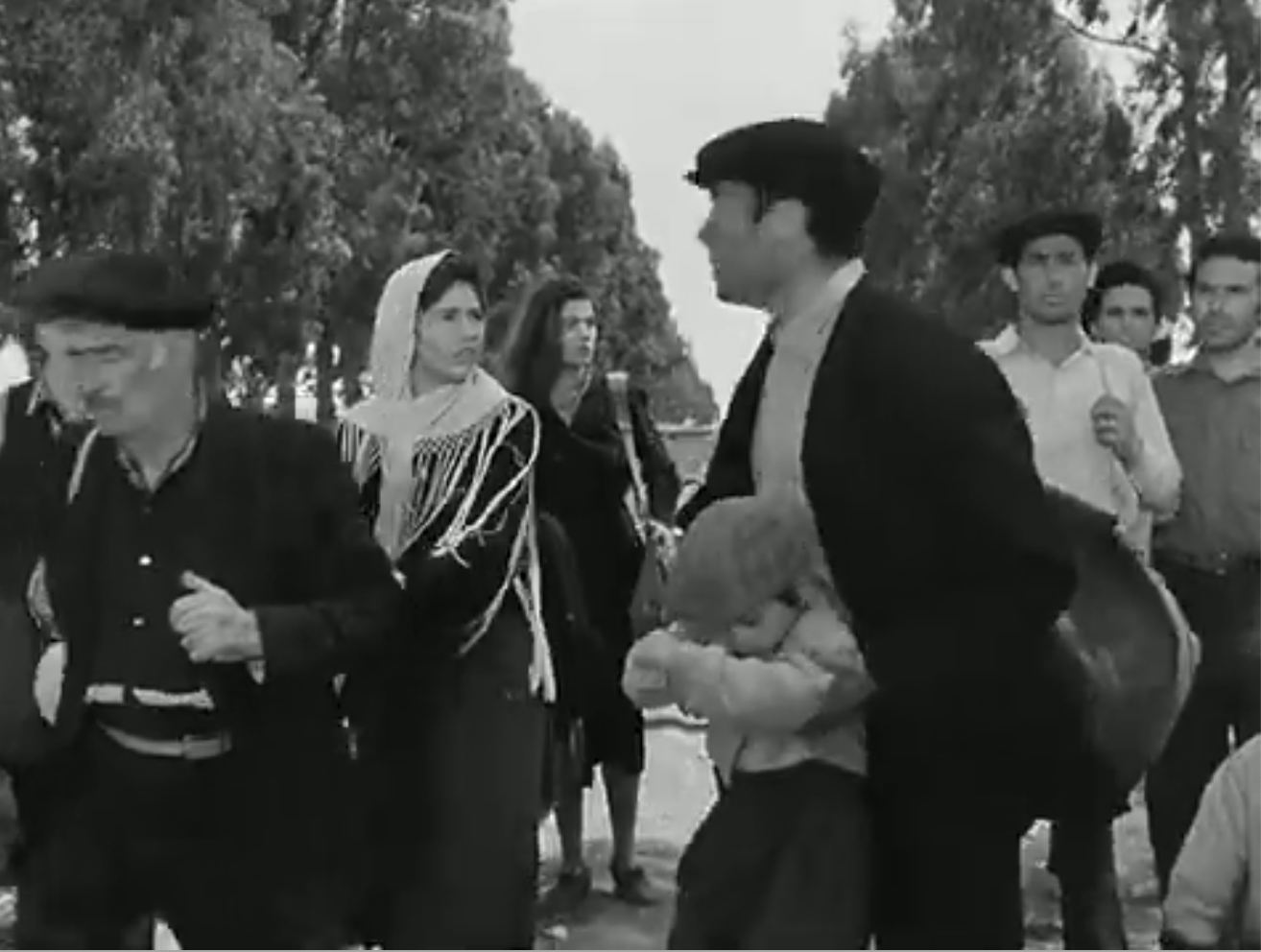
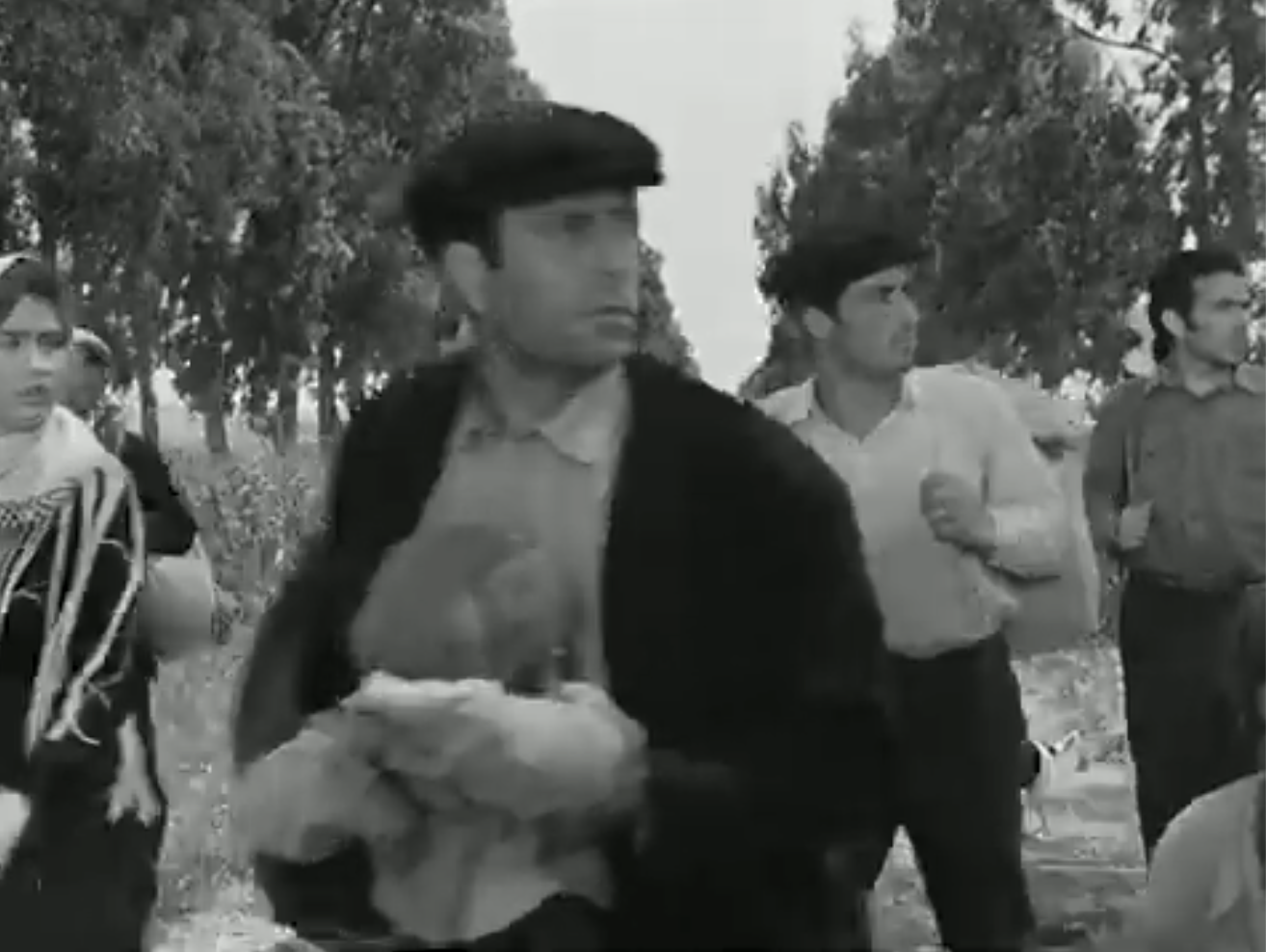
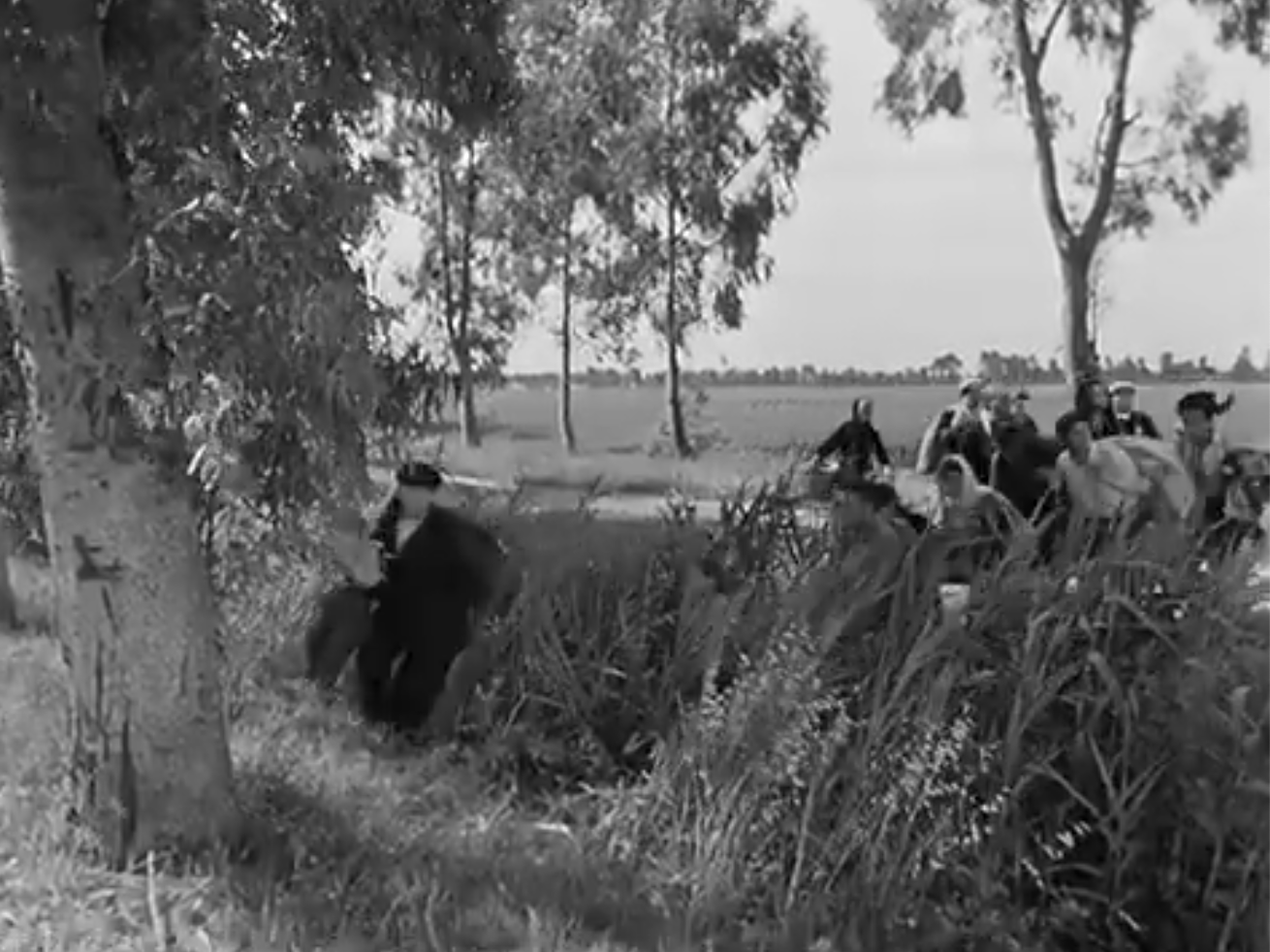
Saro prende Buda e avverte: “I Carabinieri!” Tutti si affrettano a lasciare la strada.
Saro picks up Buda and warns, “Carabinieri!” They all bustle off the road.
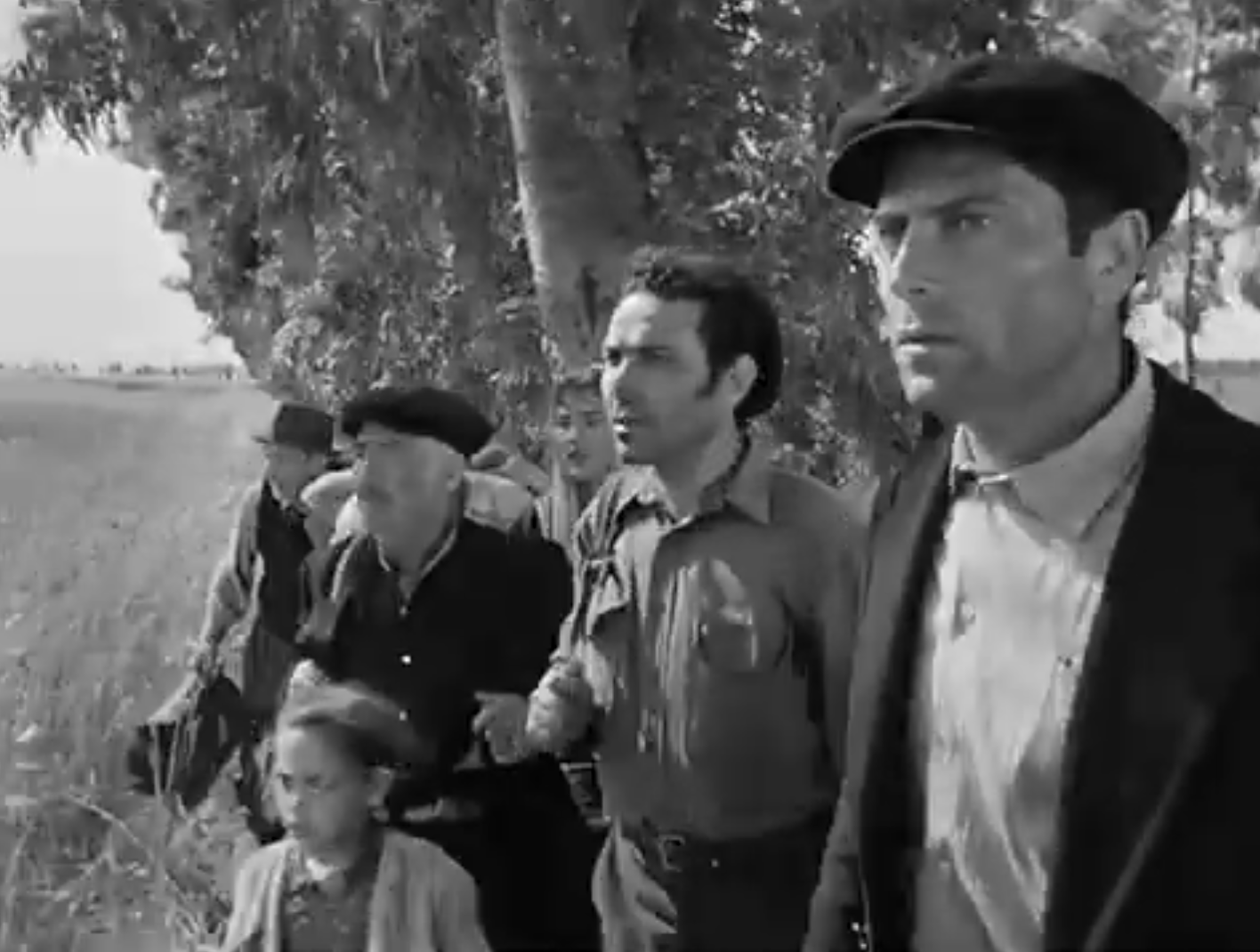
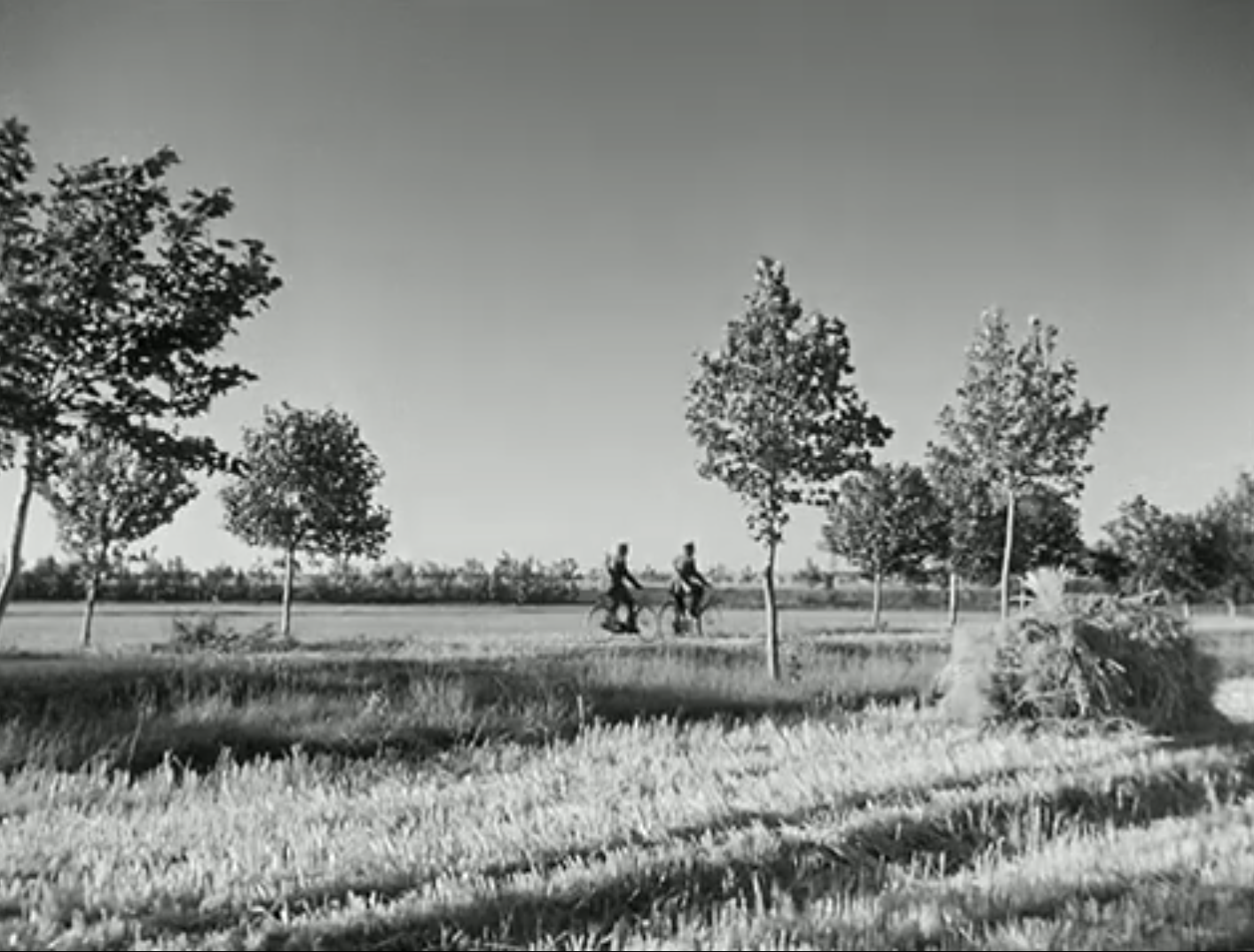
Con ansia, guardano i Carabinieri allontanarsi, ignari.
Anxiously, they watch the Carabinieri ride away, oblivious.
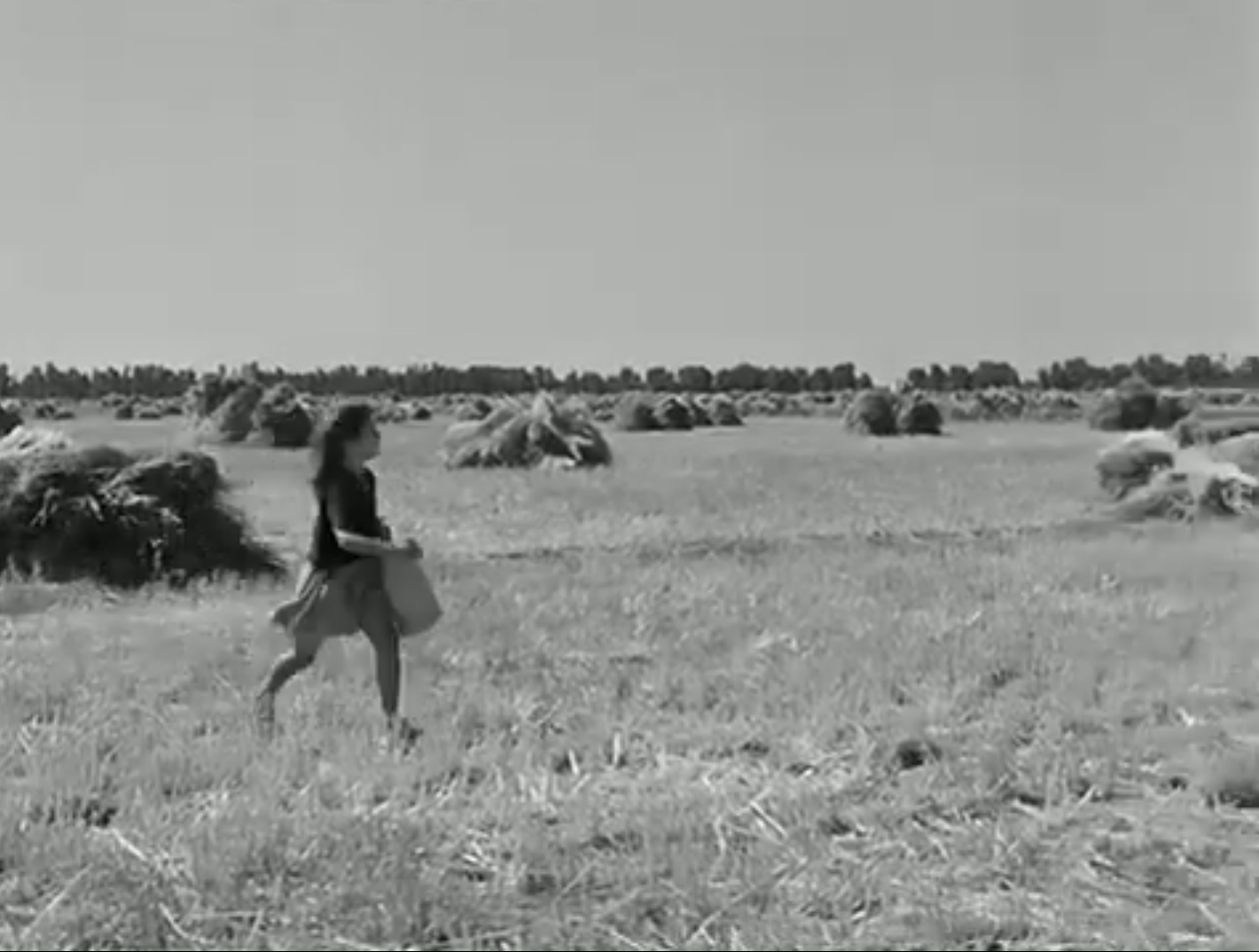
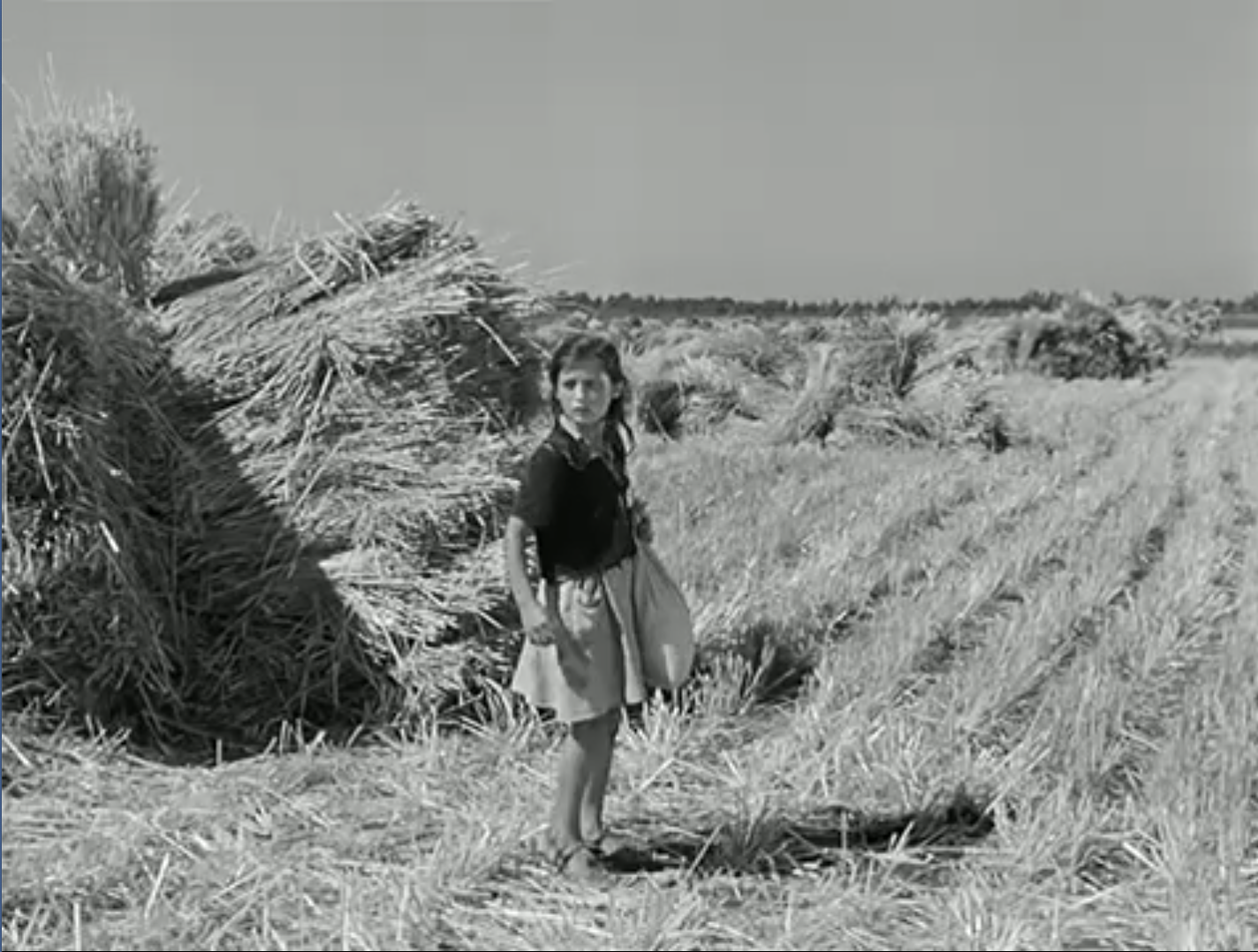
Michelina si trova tra i pagliai, senza vedere nessuno.
Michelina stands among haystacks, seeing no one.
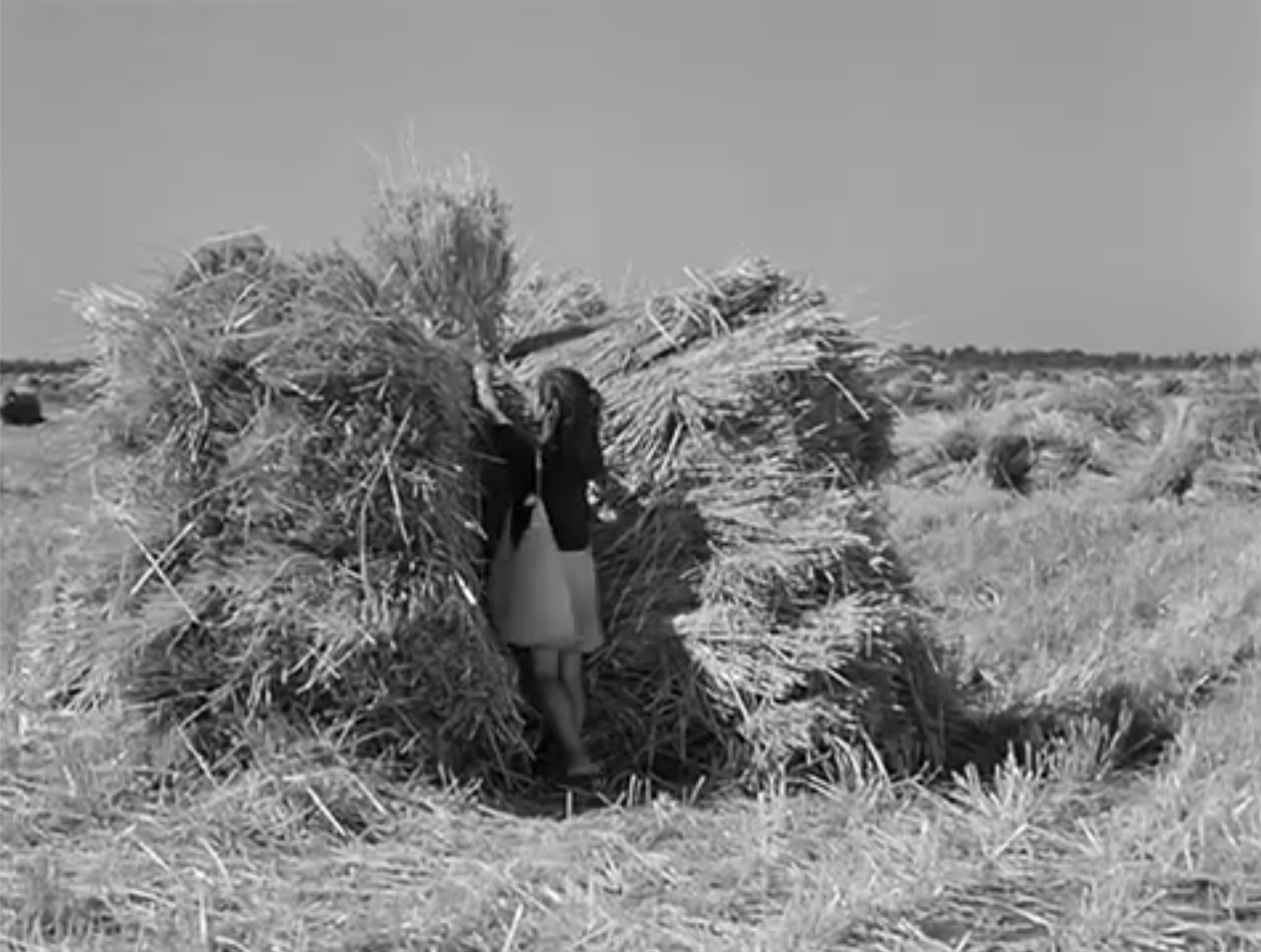
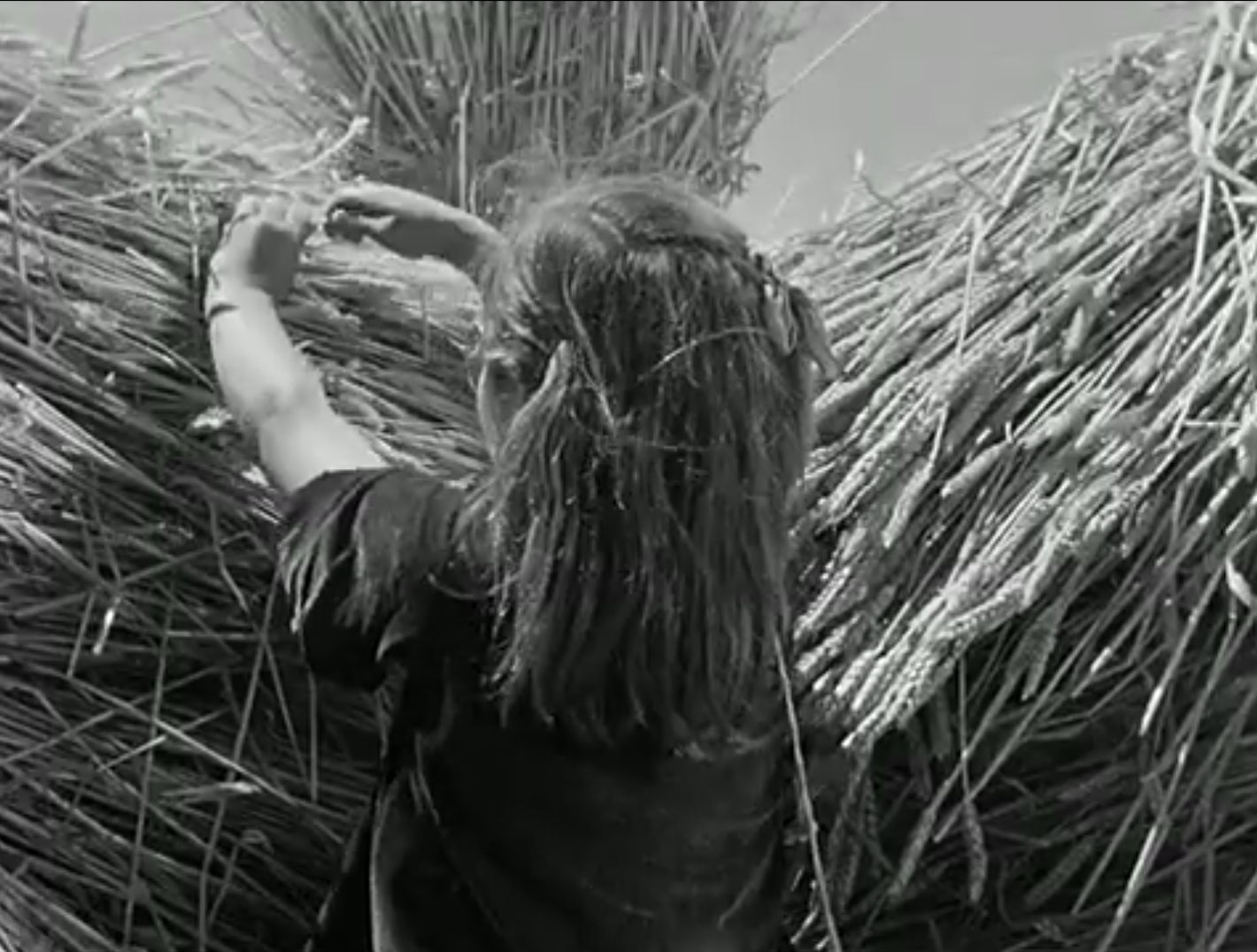

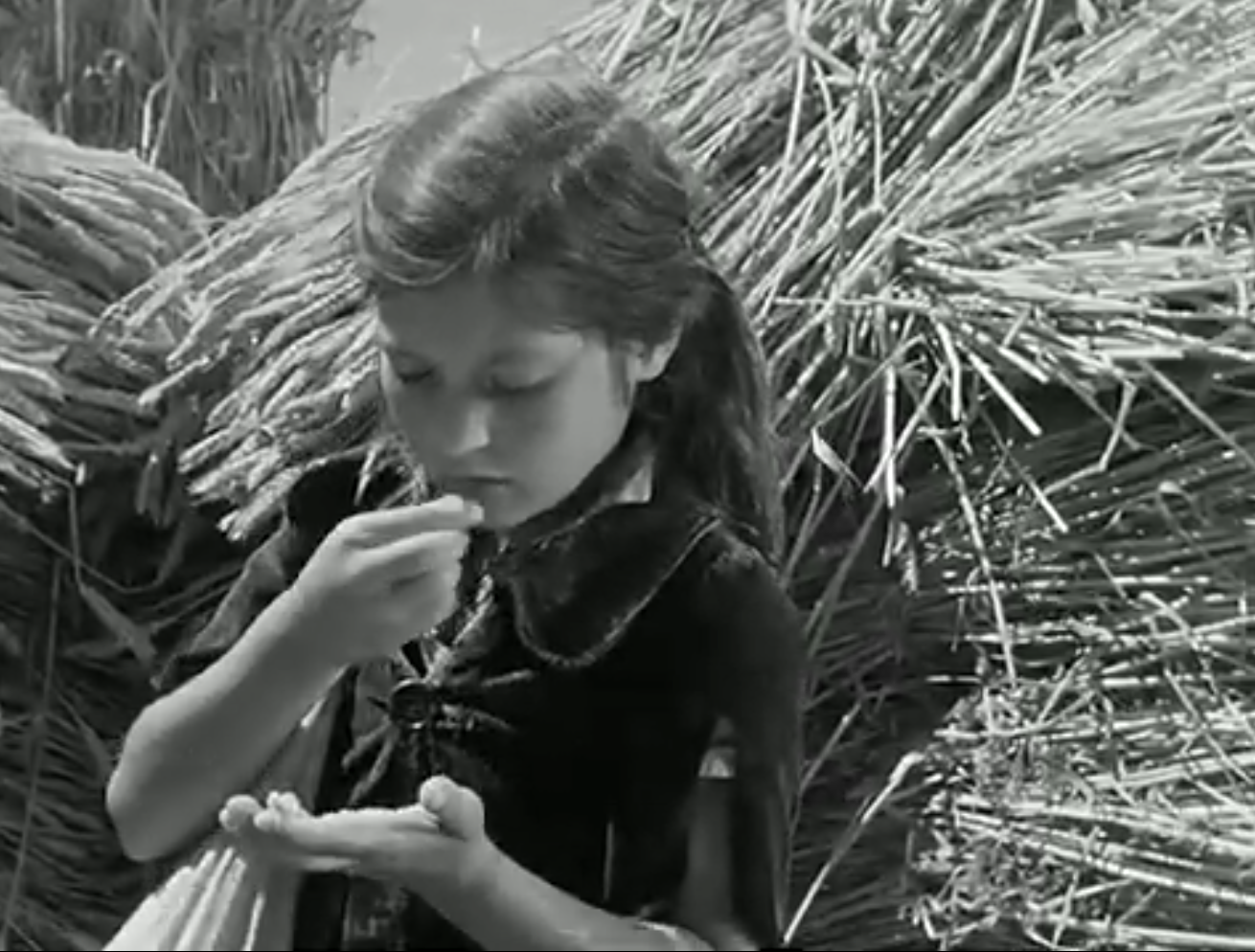
Si avvicina a una pila e strappa i chicchi dal fieno. Li sbriciola tra le mani e li assaggia.
She reaches up into a stack and plucks kernels from the hay. She crumbles them between her hands and tastes them.
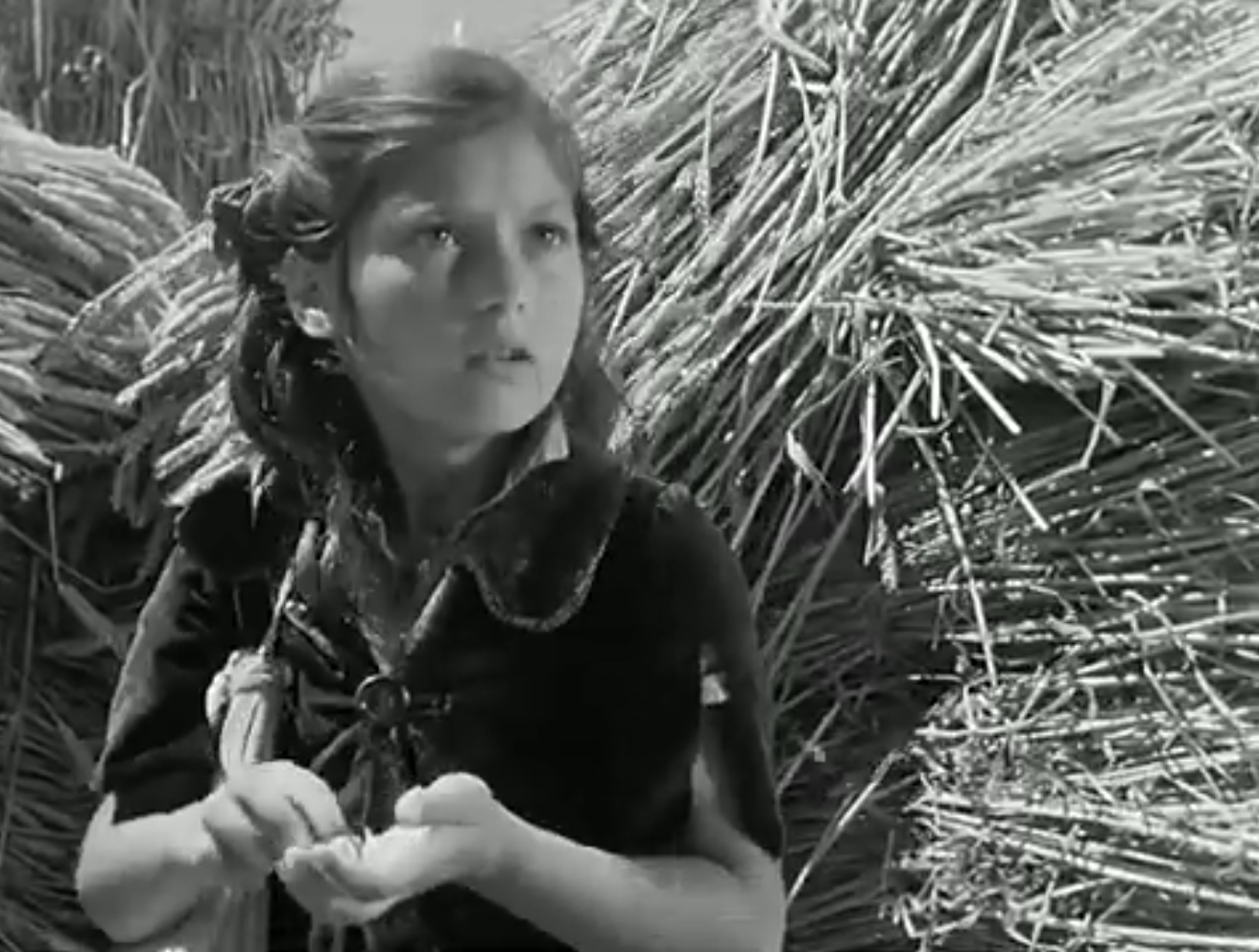
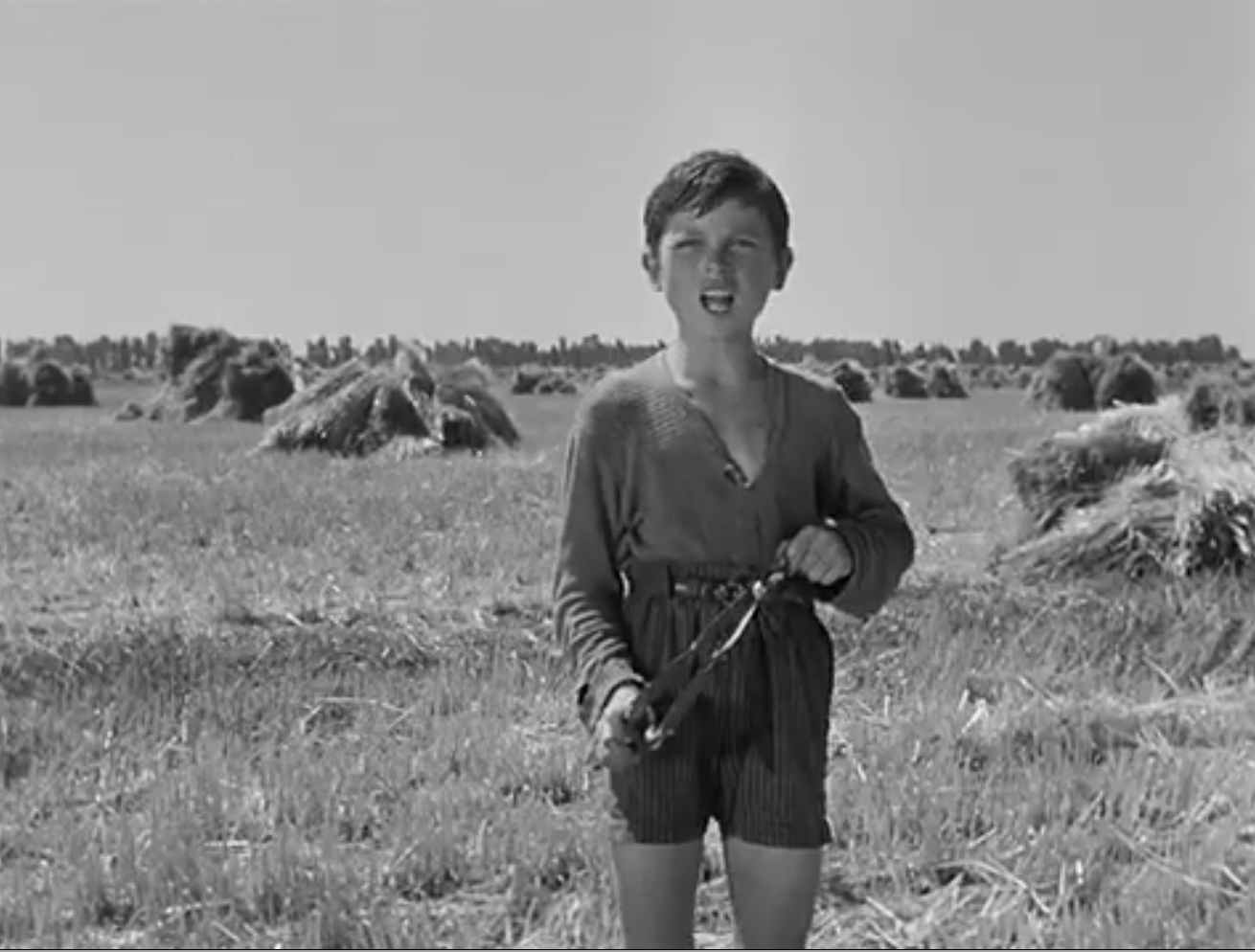
Un suono improvviso la spaventa. “Cosa fai?” – grida un ragazzo con una fionda – “Non è roba tua!”
A sudden sound startles her. “What are you doing?” shouts a boy with a slingshot. “That’s not your stuff!”
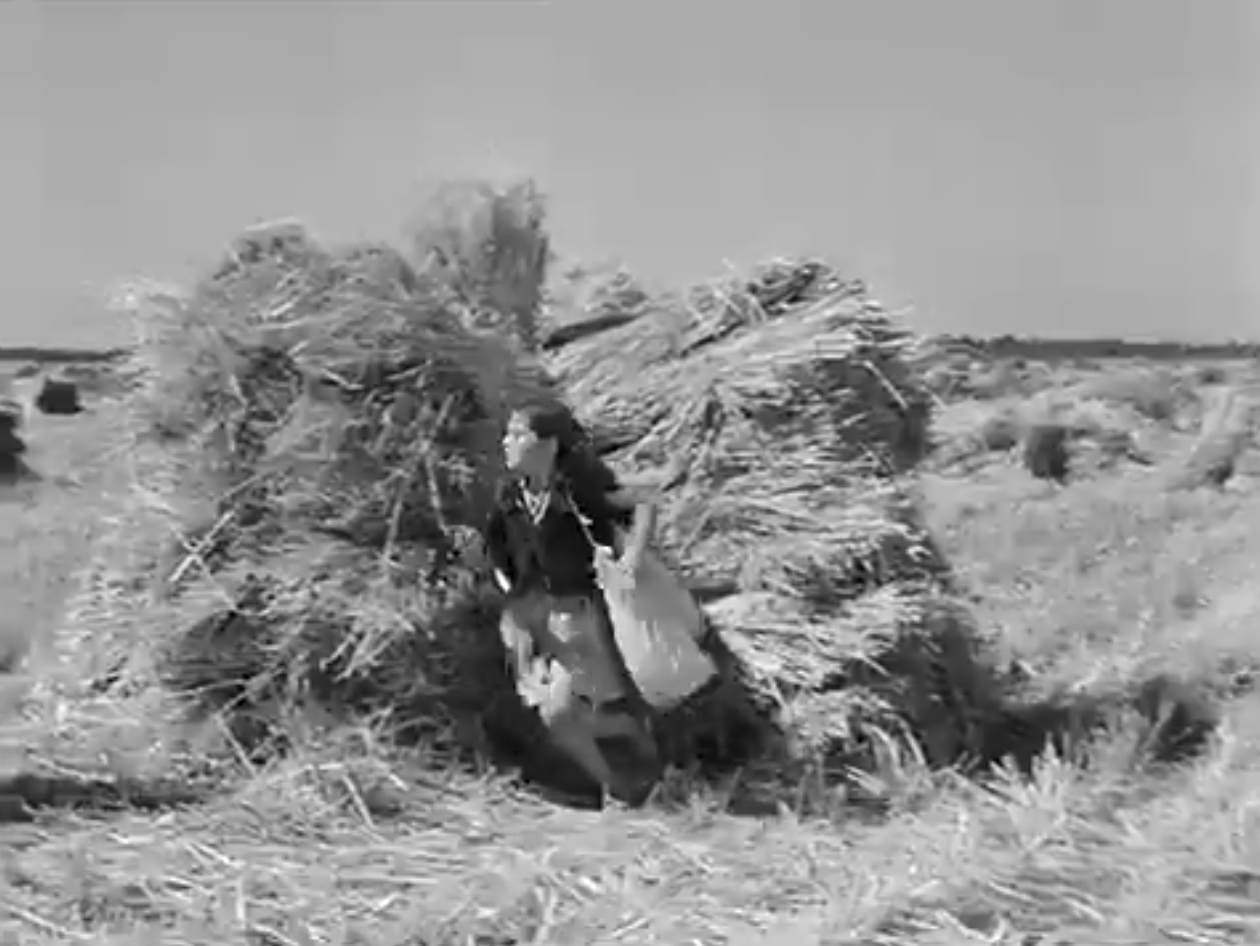
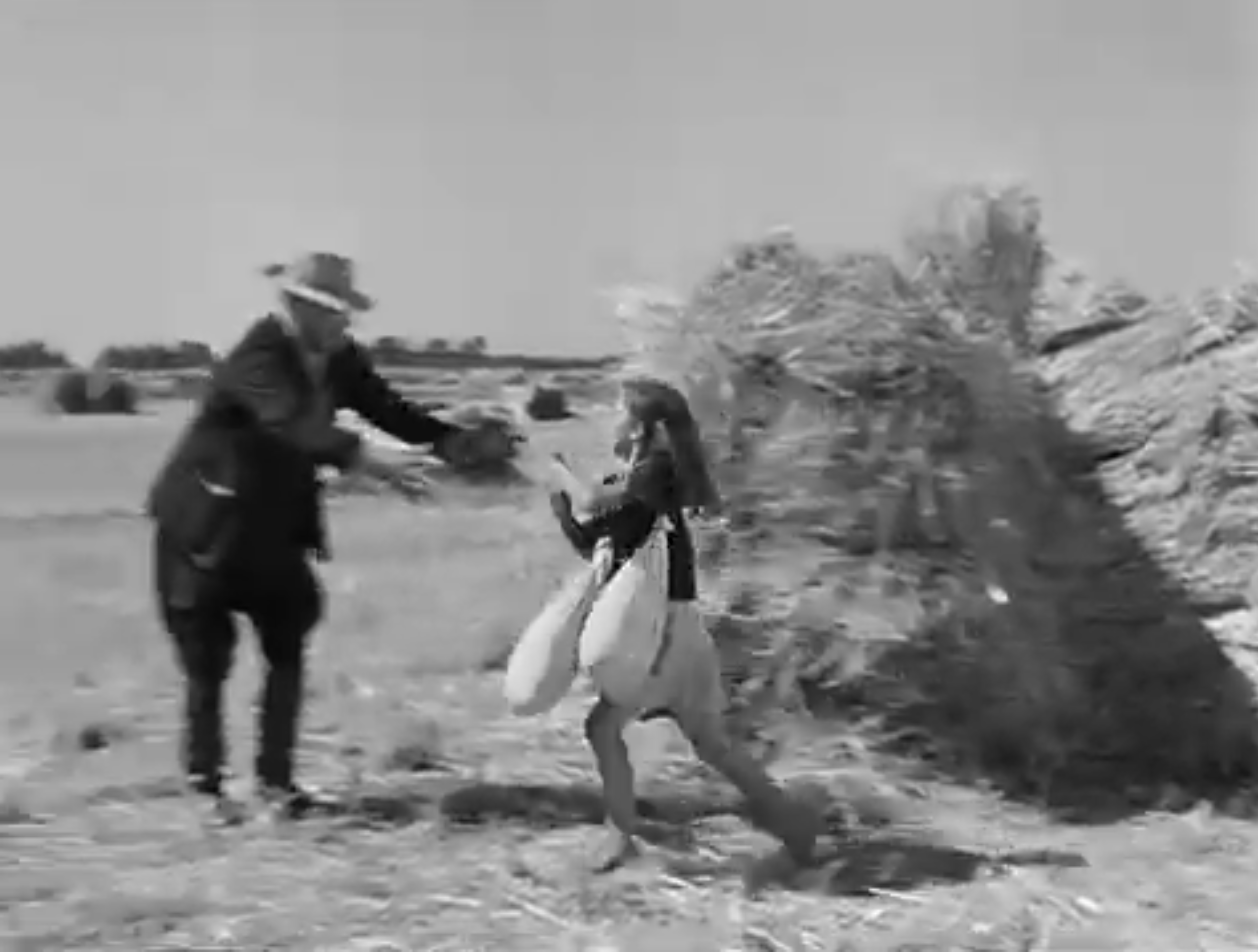
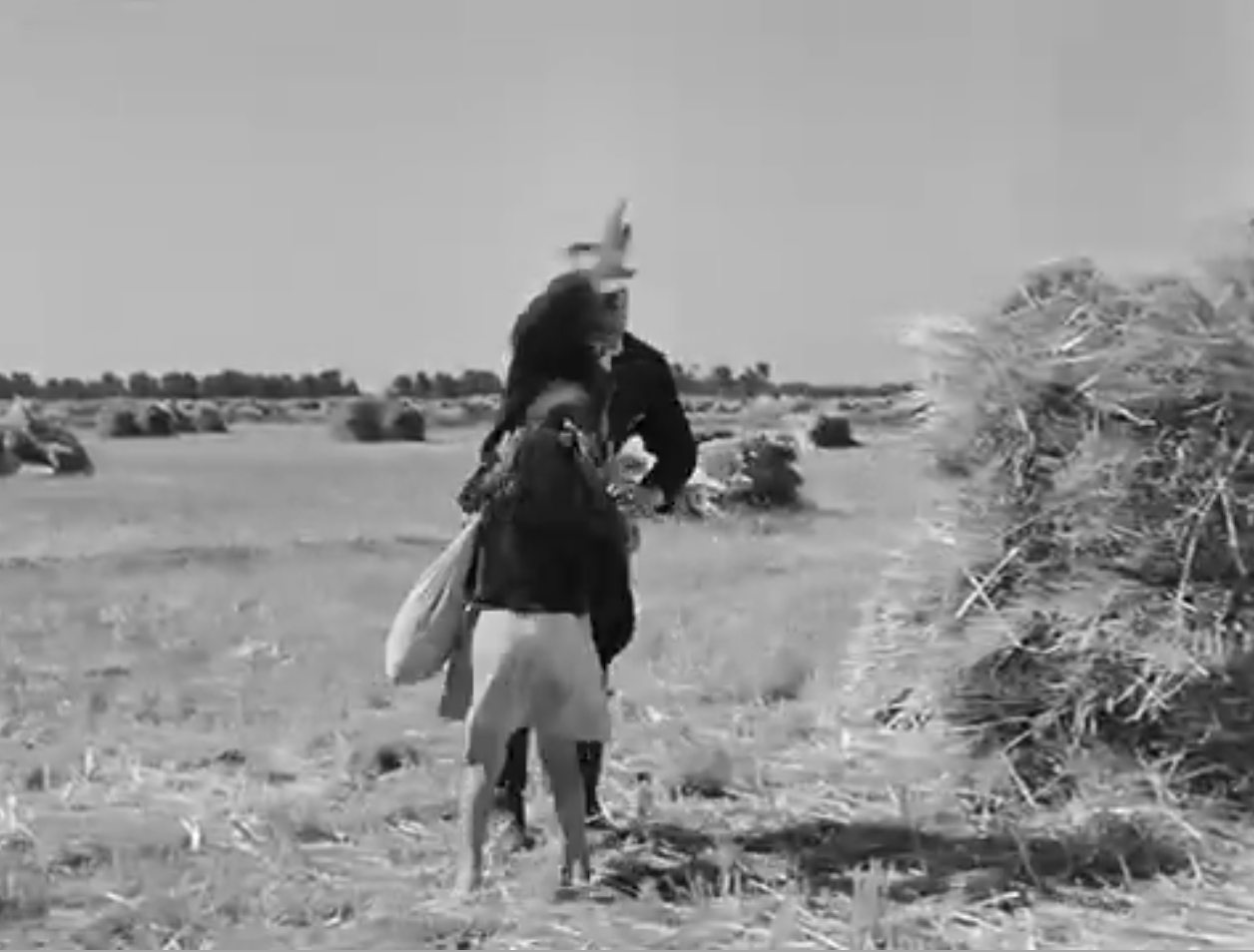
Lei corre, dritta tra le braccia di un uomo con un cappello e una giacca scura. “Dove corri?” Lui agita la mano verso il ragazzo: “Fermo tu!”
She runs – straight into the arms of a man in a hat and dark jacket. “Where are you running?” He waves his hand to the boy: “Stay still!”
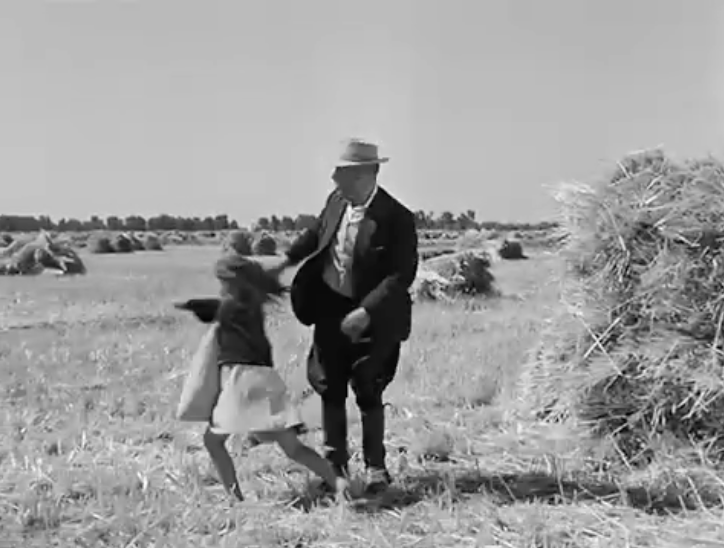
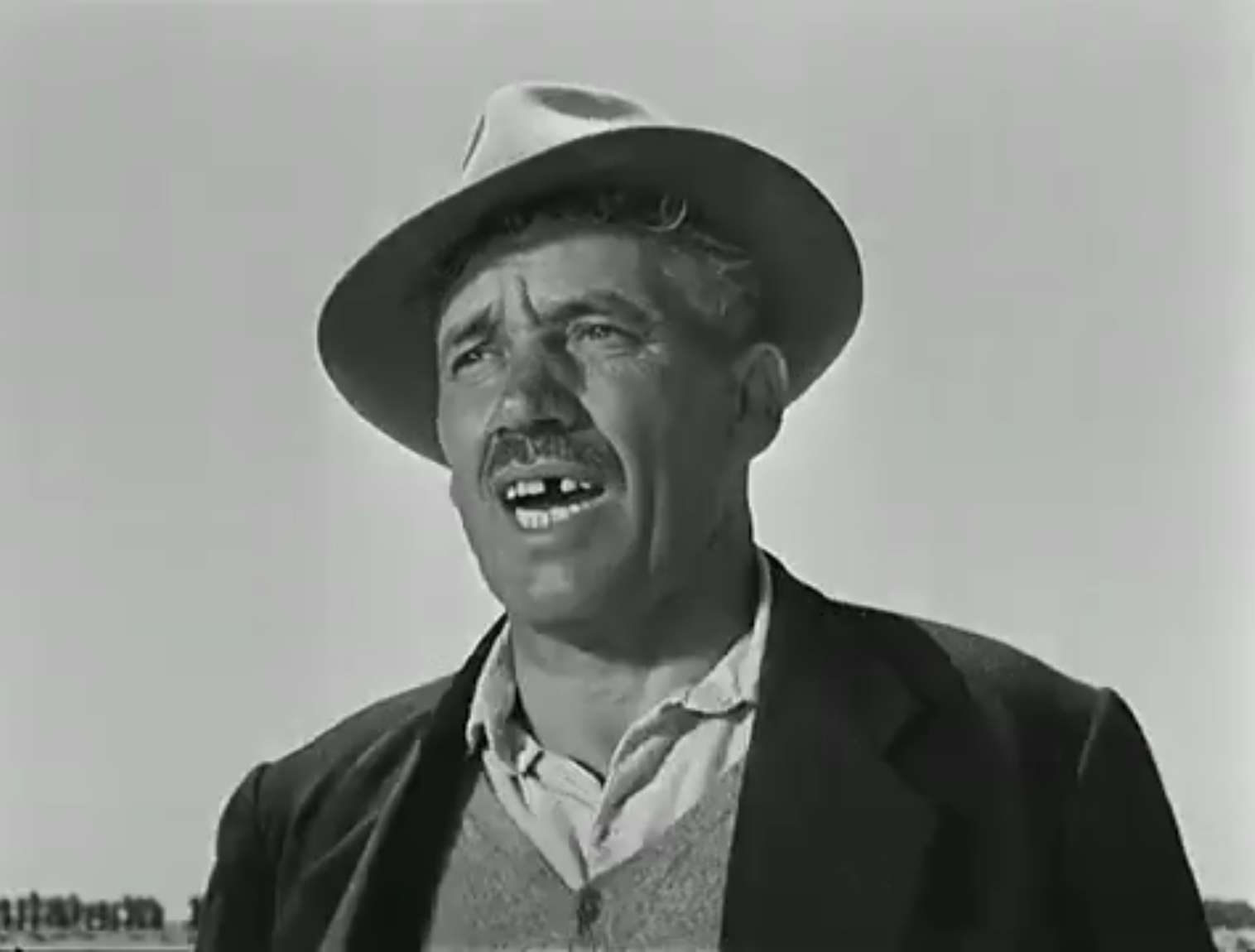
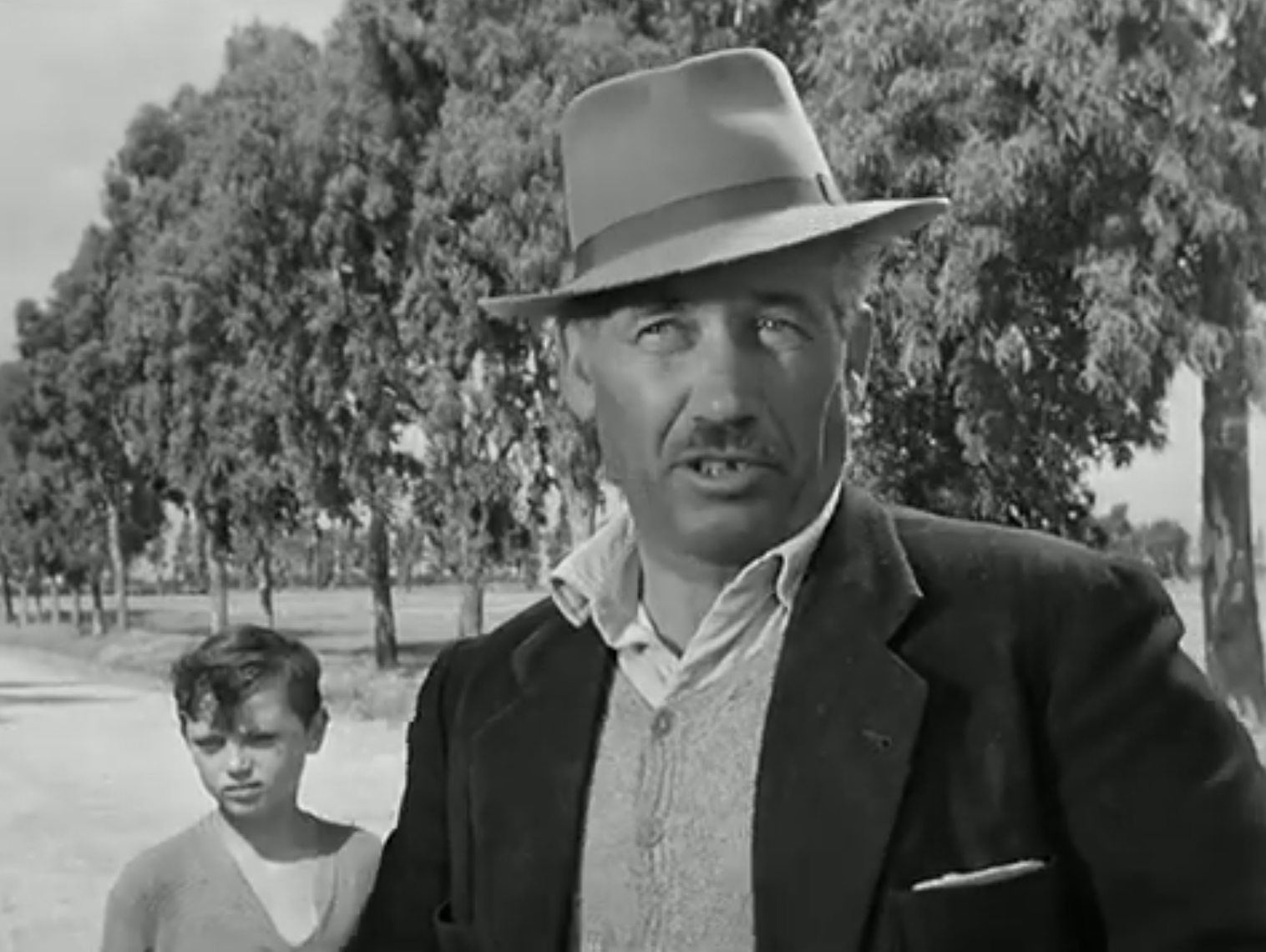
Liberandosi, Michelina scappa via. “Dove vai?” chiede di nuovo l’uomo. Notiamo lo spazio tra i suoi denti.
Breaking free, Michelina runs away. “Where are you going?” the man asks again. We notice the gap in his teeth.
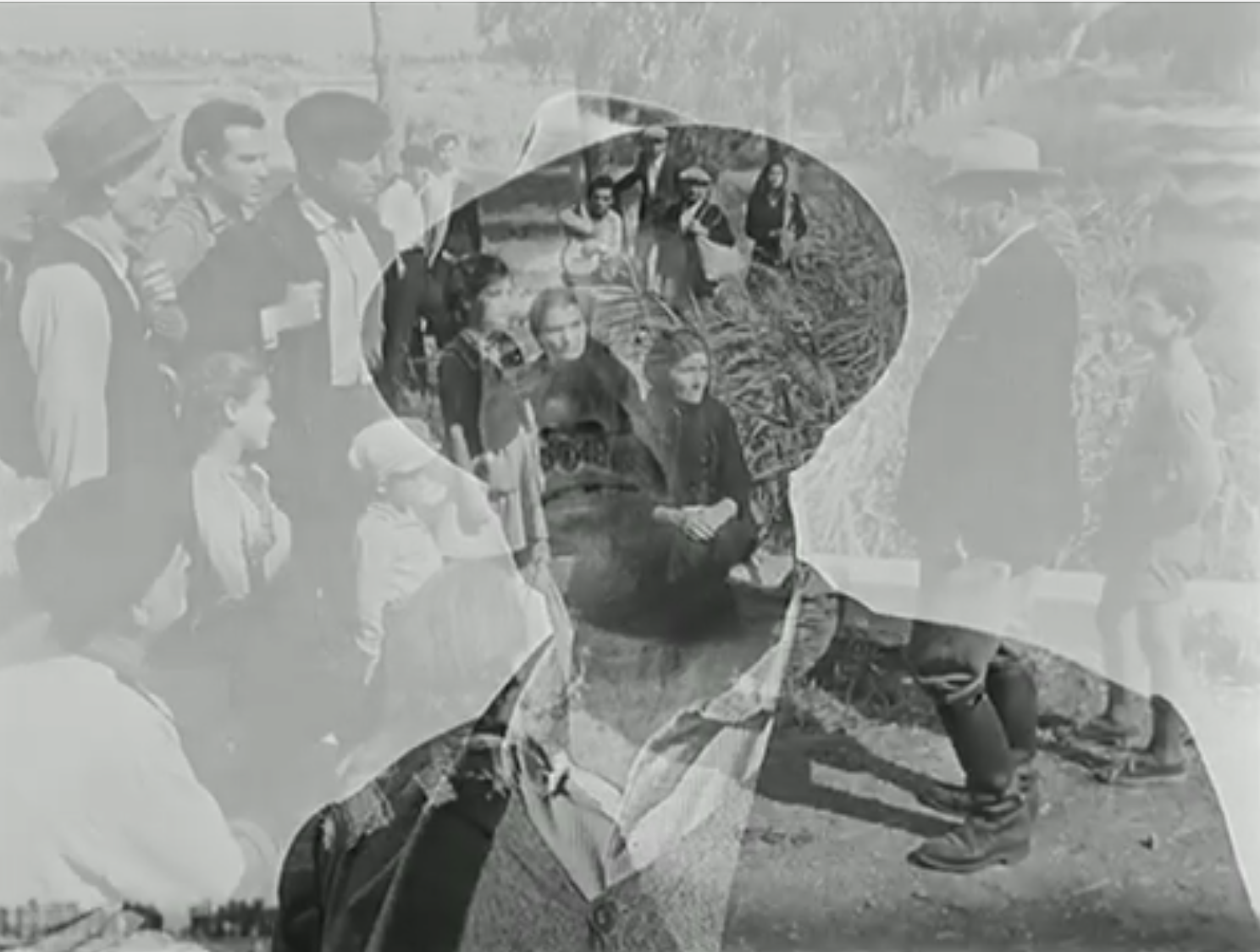
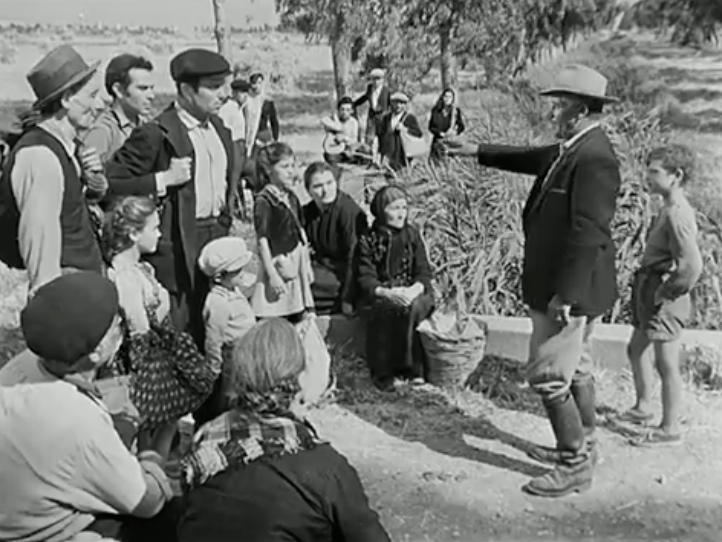
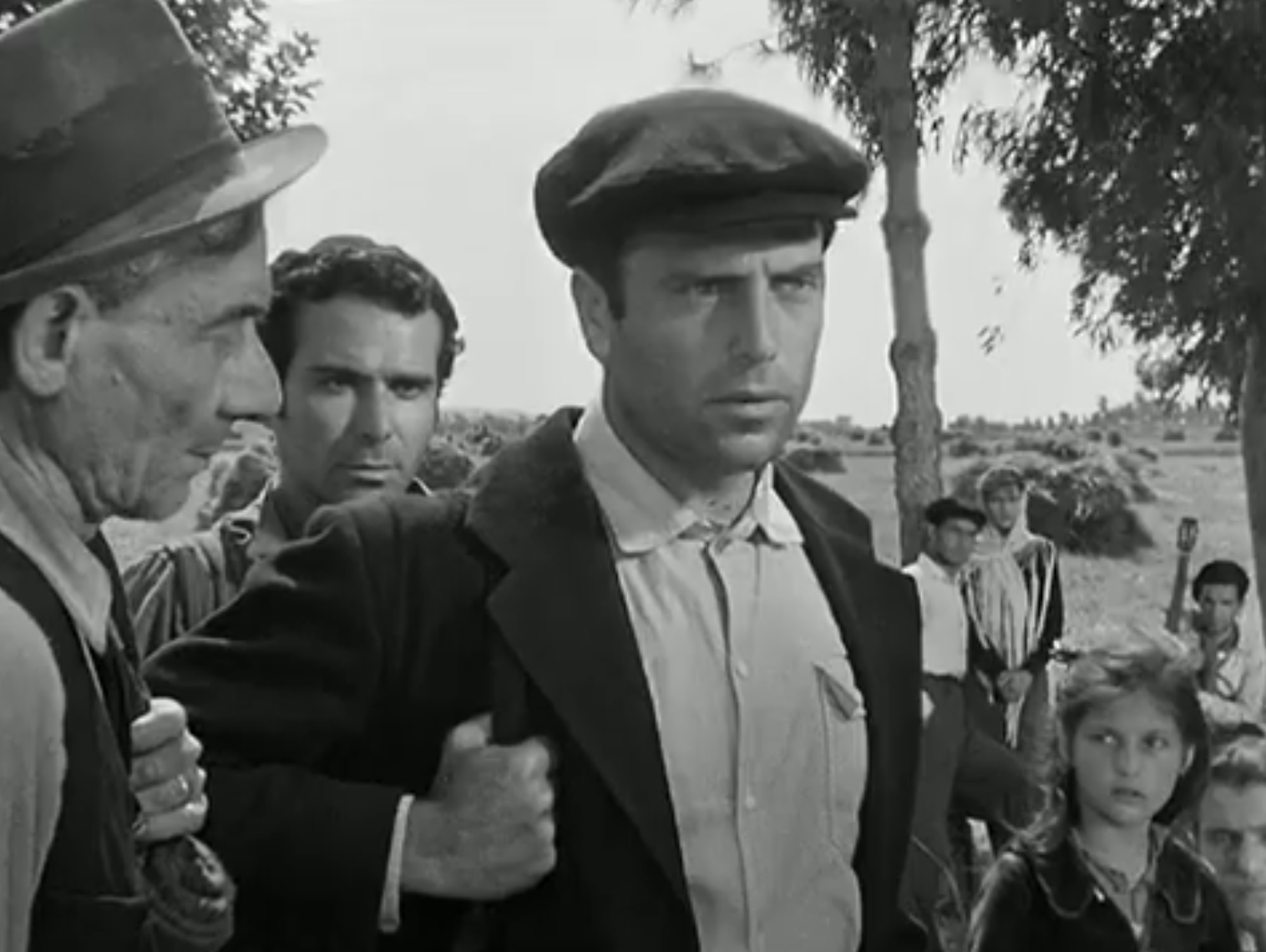
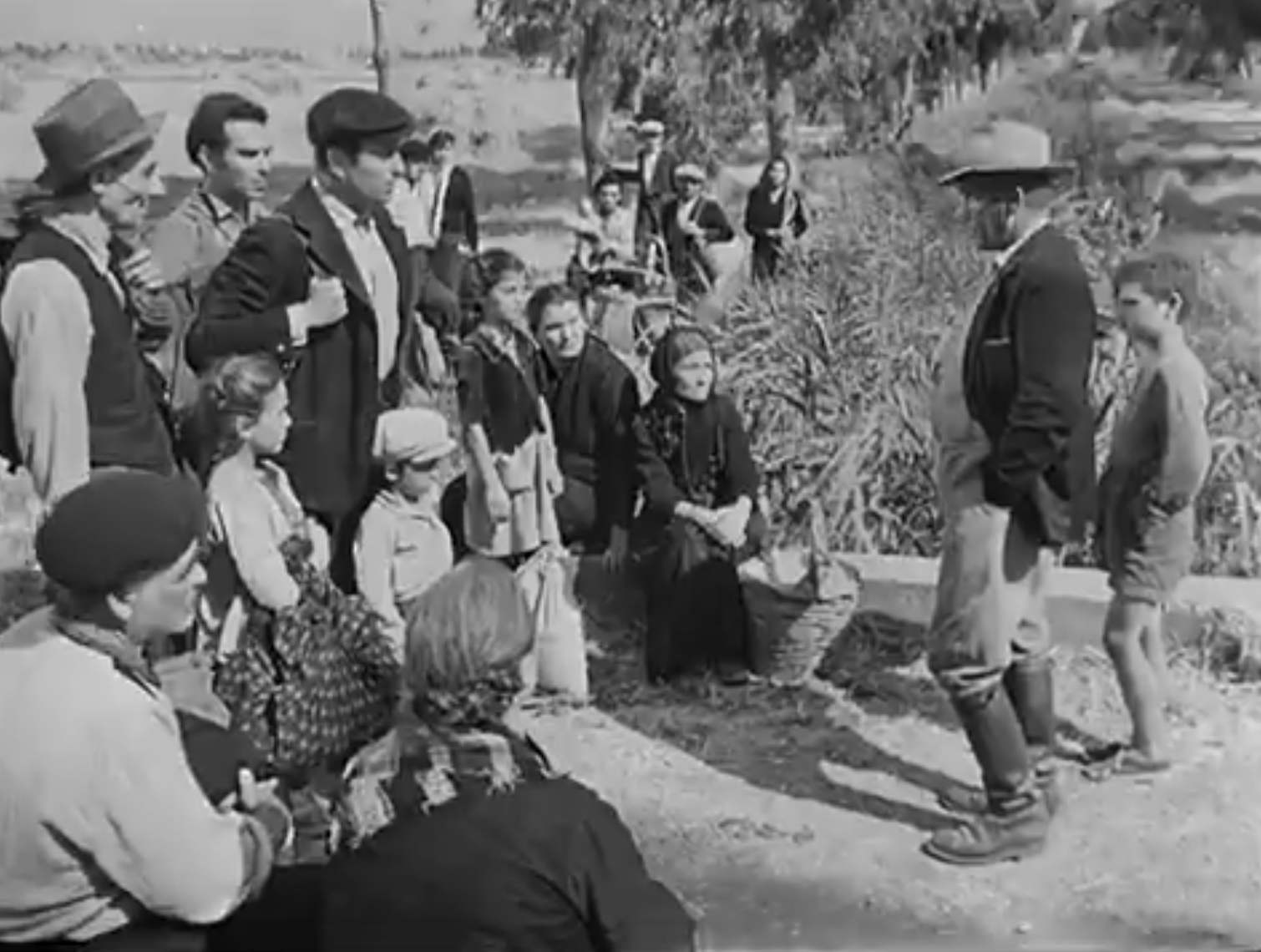
Una dissolvenza ci fa avanzare nel tempo. I viaggiatori ascoltano la proposta dell'uomo: “Dalla Sicilia. E per andare in Piemonte si passa di qui? Io i documenti non ve li chiedo”. Il ragazzo con la fionda osserva. “Se volete lavorare con me, mille lire agli uomini, cinquecento alle donne e cinquecento ai bambini. Perché è un lavoro facile. Lo può fare anche lei”, dice, indicando Michelina.
A dissolve moves us forward in time. The travelers listen to the man’s proposition: “From Sicily. And you come this way to go to Piedmont? I won’t ask you for any papers.” The boy with the slingshot watches. “If you want to work with me, it’s one thousand lira for the men, five hundred for the women and five hundred for the children. Because it’s an easy job. Even she can do it,” he says, indicating Michelina.
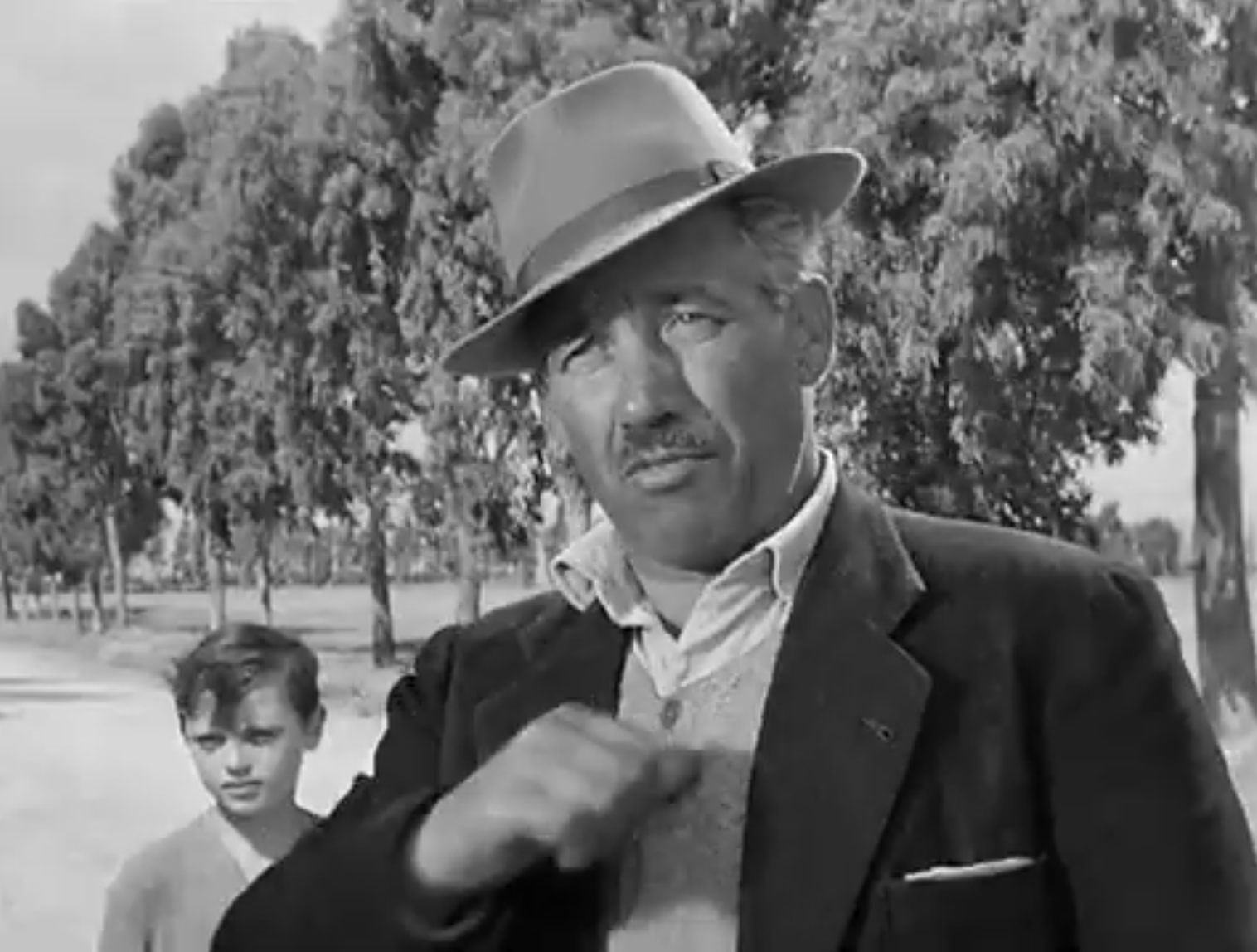
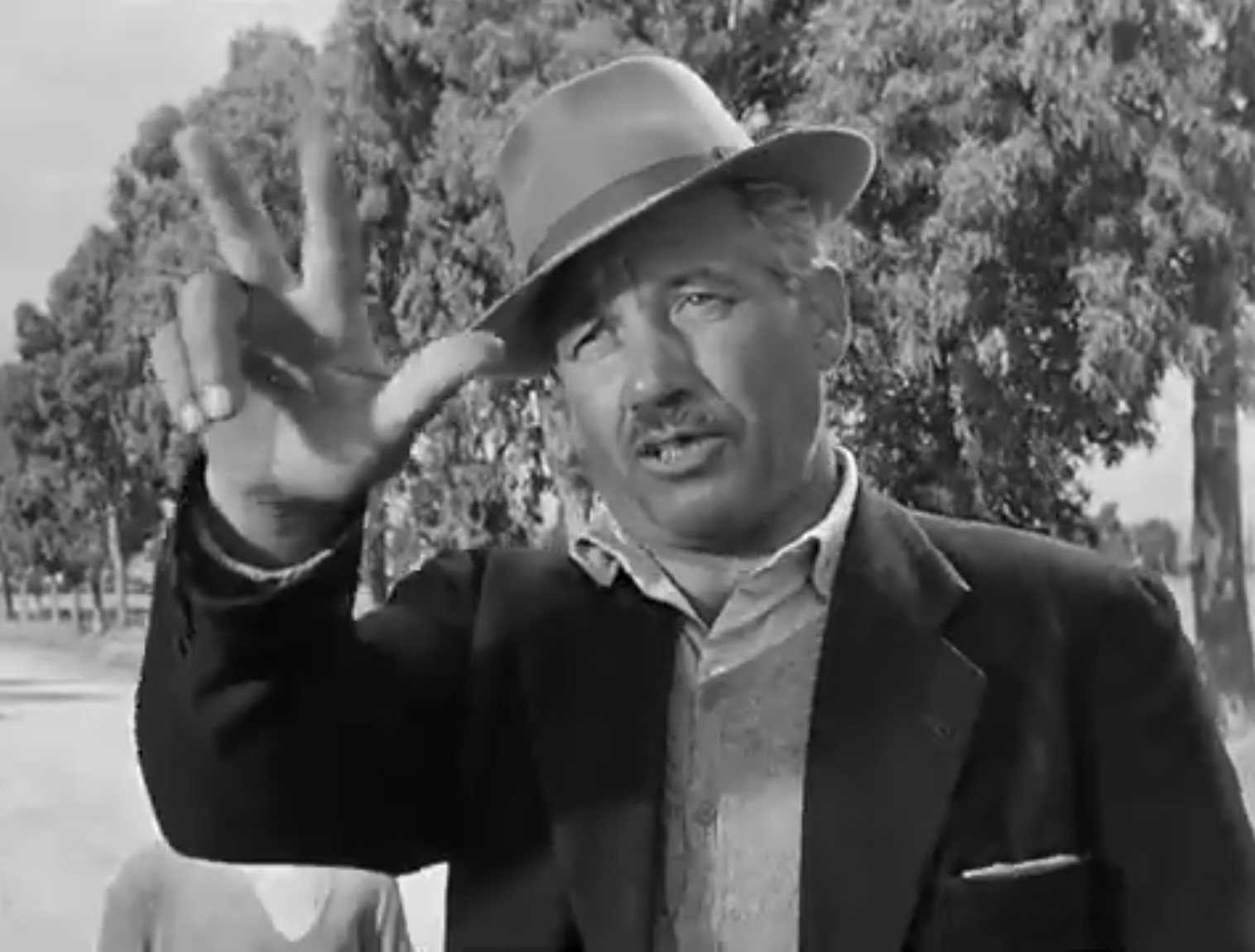
“Più mangiare e dormire. E chi lavora con me” – indica il petto con il pollice – ‘“mangia tre volte al giorno”. Alza il pollice e due dita.
“Room and board included. And those who work with me” – he points to his chest with his thumb – “eat three times a day.” He holds up his thumb and two fingers.
“Per quanto tempo?” chiede Saro.
“Beh, una settimana, dieci giorni”. Il Fattore alza le spalle. “Poi, con un po' di soldi in tasca, ve ne andate dove volete".
“For how long?” asks Saro.
“Well, a week, ten days.” The Farmer shrugs. “Then with a little money in your pockets, you can go wherever you want.”

“Va bene, accettiamo”.
“Andiamo, allora!”
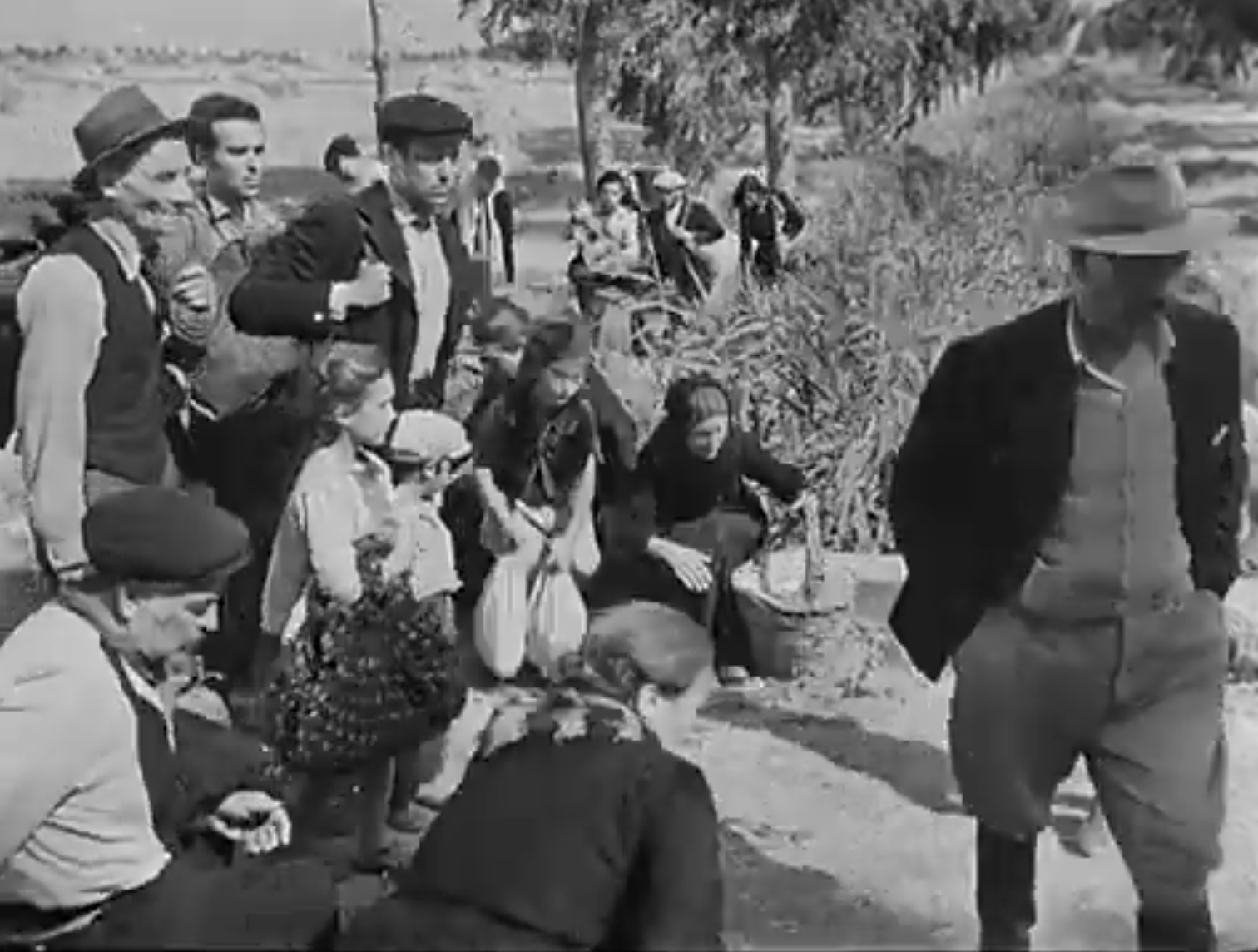
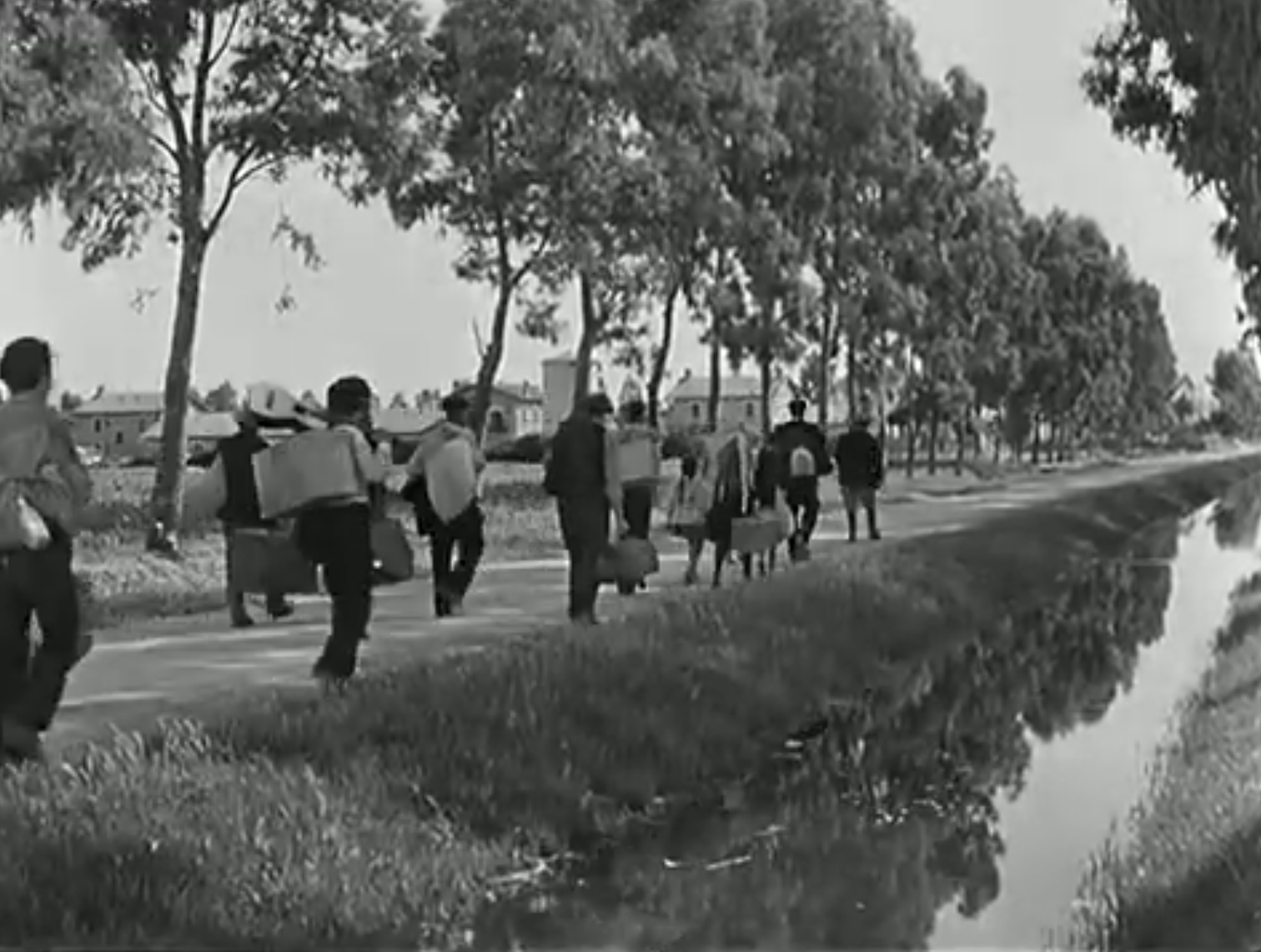
La musica leggera e piena di speranza risuona di nuovo. Il gruppo segue il Fattore, portando ancora le pesanti borse. La fila di alberi alti si riflette nel fosso della strada.
Senza una casa, stanchi, continuano a camminare, grati di poter tirare il fiato durante il loro lungo e incerto viaggio.
“Okay, we accept.”
“Let’s go, then!”
The light, hopeful music plays again. The group follows the Farmer, still carrying their heavy bags. The line of tall trees casts a reflection in the roadside ditch.
Without a home, tired, they keep walking, grateful for being able to take a breath in their long, uncertain journey.
FINE PARTE 15
Ecco Parte 16 of this cineracconto. Subscribe to receive a weekly email newsletter with links to all our new posts.