Regia: Mira Nair (2001)
Italian title: Matrimonio indiano


Ria sta guardando la foto di suo padre, un uomo barbuto con l'aria di un professore universitario. "Mi manchi tanto, papà", dice e mette un tika* – un punto rosso – sul vetro che copre la foto, tra le sopracciglia di lui. Poi unisce le mani in preghiera. Li guardiamo mentre sono avvolti nel fumo dell'incenso che brucia.
* Il tika è un segno religioso applicato sulla fronte, non un ornamento come il bindi. Qui è usato per accogliere e onorare gli ospiti così come per dimostrare memoria e rispetto per il defunto padre di Ria.
Ria is gazing at the photo of her father, a bearded man with the look of a college professor. “I miss you so much, Papa,” she says and puts a tika* – a dot of red – on the glass covering the picture, between his eyebrows. Then puts her hands together in prayer. We watch as they are enfolded in smoke from burning incense.
*The tika is a religious mark applied on the forehead, not an ornament like the bindi. Here it is used to welcome and honour guests as well as to demonstrate remembrance and respect for Ria’s late father.


Quando arriva Aditi, lei e sua madre mettono un altro tika sulla foto.
When Aditi arrives, she and her mother put another tika on the photo.


Attraverso una zanzariera, vediamo Tej che entra insieme ad altri parenti, sorridendo a tutti. Sembra sicuro del suo posto in famiglia.
Le donne si riuniscono attorno alla fotografia di Surinder. Guardando il ritratto del morto, Lalit sembra in agonia.
Through a screen, we see Tej, who enters along with other relatives, smiling at everyone. He seems confident of his place in the family.
The women gather around the photograph of Surinder. Looking at the portrait of the dead man, Lalit seems in agony.


Tej dice: "Lalit, esco a ricevere gli ospiti".
"No!" – risponde Lalit, scuotendo la testa – "No. Non voglio che tu lo faccia – non posso farlo. Non posso. Mi dispiace".
Tej says, “Lalit, I’ll just go out to receive the guests.”
“No!” replies Lalit, shaking his head. “No. I don’t want you to — I can’t do this. I can’t. I’m sorry.”


"Lalit…" inizia Tej. Sua moglie, Vijaya – la sorella di Lalit – è in piedi al suo fianco.
Ma Lalit lo interrompe. "Non ti voglio nemmeno qui. Per favore. Non posso permettere questo. Non posso. Lasciate entrambi la mia casa e la mia famiglia e andatevene".
Vijaya prova a discutere con lui, ma lui non ascolta. "Non voglio dire altro. Per favore. Per favore, non peggiorare la situazione".
“Lalit –” begins Tej. His wife, Vijaya – Lalit’s sister – is standing at his side.
But Lalit cuts him off. “I don’t even want you here. Please. I cannot allow this. I cannot. Both of you just leave my home and my family and go.”
Vijaya tries to argue with him, but he won’t listen. “I don’t want to say anymore. Please. Please don’t make it worse.”


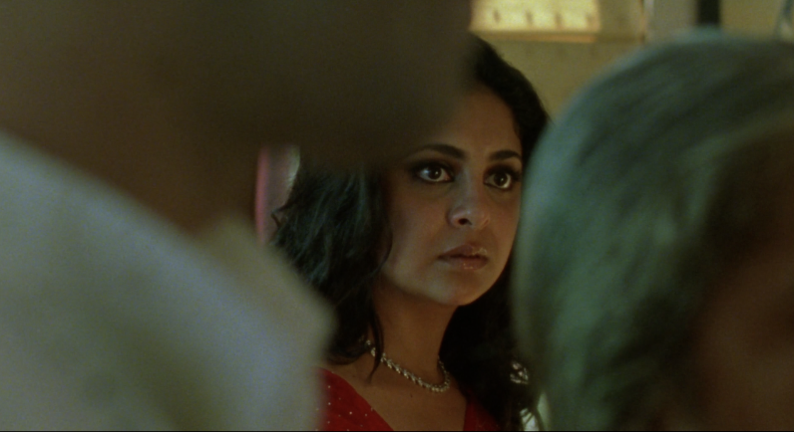

Vijaya ci riprova: "Per una cosa così piccola..."
"No, no, non voglio dire niente. Per favore, non peggiorare la situazione".
Gli altri membri della famiglia osservano in un silenzio stupito.
Vijaya tries again, “For such a small thing…”
“No, no, I don’t want to say anything. Please don’t make it worse.”
The other family members watch in stunned silence.


"Questi sono i miei figli e li proteggerò anche da me stesso, se necessario. Per favore vattene”, finisce, mettendo le mani in posizione di preghiera.
“These are my children and I will protect them even from myself if I have to. Please go,” he finishes, putting his hands in prayer position.
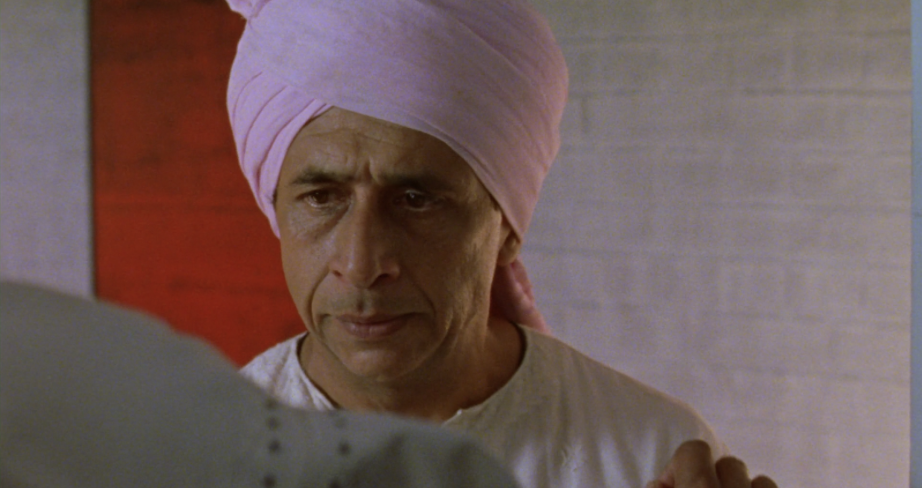


Tej allunga la mano per toccare la spalla di Lalit, ma Lalit indietreggia, con gli occhi abbassati. Rassegnato, Tej rimuove il suo turbante rosa. Guarda Ria, poi Lalit e se ne va.
Tej extends his hand to touch Lalit’s shoulder, but Lalit backs off, eyes downcast. Resigned, Tej removes his pink turban. He looks at Ria, then at Lalit, and leaves.


Lalit va da Ria, prende la sua testa tra le mani e le bacia la fronte.
Lalit goes to Ria, takes her head in his hands and kisses her forehead.


Finalmente! Il matrimonio di Aditi e Hemant!
Sta piovendo a dirotto fuori. Sotto la tettoia nuziale rossa di Lalit, costruita da Dubey e dai suoi uomini, suona una banda di ottoni. I musicisti sono vestiti con berretti rossi e giacche bianche. I tavoli coperti con tovaglie rosse aspettano i Verma e i loro ospiti.
E, vicino, un'altra cerimonia sta per avere luogo. Su una passerella di legno, incorniciata da fogliame, Dubey regge il suo ombrello rosso per proteggere Alice dalla pioggia.
Finally! Aditi and Hemant’s wedding!
It is pouring outside. Under Lalit’s red wedding canopy, built by Dubey and his men, a brass band plays. The musicians are dressed in red caps and white jackets. Tables covered by red tablecloths await the Vermas and their guests.
And, close by, another ceremony is about to take place. On a wooden footbridge, framed by foliage, Dubey holds up his red umbrella to protect Alice from the rain.


La pioggia è torrenziale. Sul grande prato della casa dei Verma è arrivata la notte, ma le luci della festa punteggiano gli alberi e i cespugli, le strutture sono decorate con tessuti vivaci, c’è musica: è una festa!
I membri della famiglia della sposa stanno sotto la tenda nuziale e guardano nell'oscurità, aspettando la famiglia dello sposo. Temporaneamente protetti dalla tettoia, gli uomini portano ombrelli chiusi. Pimmi tiene tra le mani un vassoio di candele.
Alla fine, molte persone arrivano ballando, una colonna di ospiti in sari e turbanti rosa, mani che si muovono nell'aria. Da sotto la tettoia, si alza un grido: "I parenti acquisiti inzuppati sono qui!"
The rain is torrential. On the great lawn of the Vermas’ house, night has come, but festive party lights dot the trees and bushes, the structures are decorated with vivid fabric, there’s music: it’s a celebration!
The bride’s family members stand under the bridal tent, looking out into the darkness waiting for the family of the groom. Temporarily protected by the canopy, the men carry folded umbrellas. Pimmi holds a tray of candles in her hands.
Finally, many people come dancing towards them, a column of guests in saris and pink turbans, hands waving in the air. From under the canopy, a cry goes up: “The soaked in-laws are here!”


Hemant, in un turbante bianco inghirlandato di calendule, arriva su un cavallo coperto con un tessuto a lustrini, protetto da un enorme ombrello.
Qualcuno urla: "Famiglia Verma, venite avanti!" Aprendo i loro ombrelli, gli uomini partono, facendo coincidere il loro movimento con il ritmo della musica. "Inzuppatevi, dannati idioti!” continua la voce.
Hemant, in a white turban garlanded with marigolds, arrives riding a horse outfitted in spangled cloth, protected by an enormous umbrella.
Someone yells, “Verma family, forge ahead!” Unfolding their umbrellas, the men take off, matching their motion to the rhythm of the music. “Get drenched, bloody fools!” the voice continues.


Sulla passerella, Alice e Dubey stanno sotto un ombrello coperto di calendule, si guardano l'un l'altra intensamente. Mentre la musica tradizionale suona sommessamente, Dubey le porge una collana. "Dovrei mettermela?" chiede Alice. Lui dice di sì, e lei lo fa. Nonostante l'ombrello, sono inzuppati, proprio come la famiglia di Hemant.
On the bridge, Alice and Dubey stand under an umbrella draped with marigolds, regarding one another intently. As traditional music plays quietly, Dubey holds out a necklace. “Should I put it on?” Alice asks. He says yes, and she does. Despite the umbrella, they’re soaking wet, just like Hemant’s family.


Smontato da cavallo, Hemant viene portato di corsa alla tettoia sotto gli ombrelli traslucidi degli uomini Verma, mentre gli ospiti gli lanciano allegramente petali.
Dismounted from the horse, Hemant is rushed to the canopy under the Verma men’s translucent umbrellas, while the guests cheerfully toss flower petals at him.


Dubey tiene Alice in uno stretto abbraccio, mentre la pioggia le scorre sulla guancia. Una voce – uno degli uomini di Dubey – dice: "Congratulazioni per il matrimonio, signor e signora Dubey!" Quindi c'è un secondo matrimonio in questo monsone!
In un campo lungo vediamo i tre testimoni lanciare fiori agli sposi, attraverso la torrenziale cascata di pioggia.
Dubey holds Alice in a close embrace, while rain streams across her cheek. A voice – one of Dubey’s men – says, “Congratulations on the wedding, Mr. and Mrs. Dubey!” So there is a second wedding in this monsoon!
In a long shot, we see the three witnesses throw blossoms at the bride and groom, through the torrential cascade of rain.


Alla festa dei Verma, la banda si ferma e viene sostituita dalla musica tradizionale. La folla balla in un grande festeggiamento comune, le braccia si muovono nell'aria. Dubey e Alice sono trascinati nel canto e nella danza, generosamente invitati da Lalit che dice: "Sotto il tuo tendone!" – il tendone che Dubey ha messo su per sua figlia. Lalit e Dubey si abbracciano; Lalit balla con Alice. Le differenze di classe sono dimenticate in questo momento celebrativo unificante.
At the Vermas’ party, the band stops and is replaced by traditional music. The crowd dances in one big communal celebration, arms waving in the air. Dubey and Alice are pulled into the singing and dancing, generously invited by Lalit who says, “Under your own tent!” – the tent that Dubey put up for his daughter. Lalit and Dubey hug; Lalit dances with Alice. Class differences are forgotten in this unifying celebratory moment.


Aditi ed Hemant mettono ghirlande l’uno al collo dell’altra. Sullo sfondo vediamo Lalit che sorride nel suo turbante rosa.
Improvvisamente, una figura alta emerge dalla pioggia: è il fratello di Rahul, Umang, che arriva in ritardo e vestito con una camicia casual di stile occidentale. Qualcosa di lui cattura l'attenzione di Ria: percepiamo l’eccitazione di una nuova storia d'amore.
Aditi and Hemant put garlands around each other’s necks. In the background, we see Lalit, smiling in his pink turban.
Suddenly, a tall figure emerges from the rain: it’s Rahul’s brother Umang, arriving late and in a casual Western-style shirt. Something about him catches Ria’s eye: we sense the stirring of a new romance.


In due giorni, i preparativi per il matrimonio hanno portato sfide inaspettate ai Verma: non ultima, una rivelazione che avrebbe potuto fare a pezzi la famiglia. Ma, nella sua disperazione, Lalit si è rivolto a Pimmi per essere confortato, rafforzando il loro legame; e, infine, ha scelto di proteggere coloro che nella sua famiglia erano più vulnerabili, nonostante i costi finanziari e sociali.
Ria, a sua volta, incoraggiata dal gesto dello zio, sembra guarire, mentre Aditi, il cui matrimonio ha provocato tante terribili complicazioni, ha abbracciato la scelta alla quale si opponeva e ha iniziato una vita con suo marito.
E Dubey e Alice? Hanno trovato l'amore!
In two days, the preparations for the wedding have brought unexpected challenges to the Vermas: not least, a revelation that could have broken the family apart. But, in his despair, Lalit reached out to Pimmi for comfort, strengthening their bond; and, at last, he chose to protect those in his family who were most vulnerable, despite the financial and social costs.
Ria, in turn, buoyed by her uncle’s gesture, seems to be healing, while Aditi, whose wedding provoked such agonizing complications, has embraced the choice that she resisted and has begun a life with her husband.
And Dubey and Alice? They have found love!
FINE PARTE 17
This cineracconto just tells the story of Monsoon Wedding in a simple way, to make it accessible to Italian language students. For a deeper understanding of the film, listen to Steven Benedict’s fascinating podcast where he discusses hyperlinked cinema, intersectionality and this multi-stranded story of an extended family in diaspora, that gathers for a wedding.
This is the final installment of this cineracconto. Subscribe to receive a weekly email newsletter with links to all our new posts. Vertigo grammar exercises about the film are posted below.
VERTIGO A. Comparativo e Io ti salverò!
VERTIGO B. Imperativo e Io ti salverò!
VERTIGO C. Verbi preposizionali e Io ti salverò!