Regia: Mario Monicelli (1960)
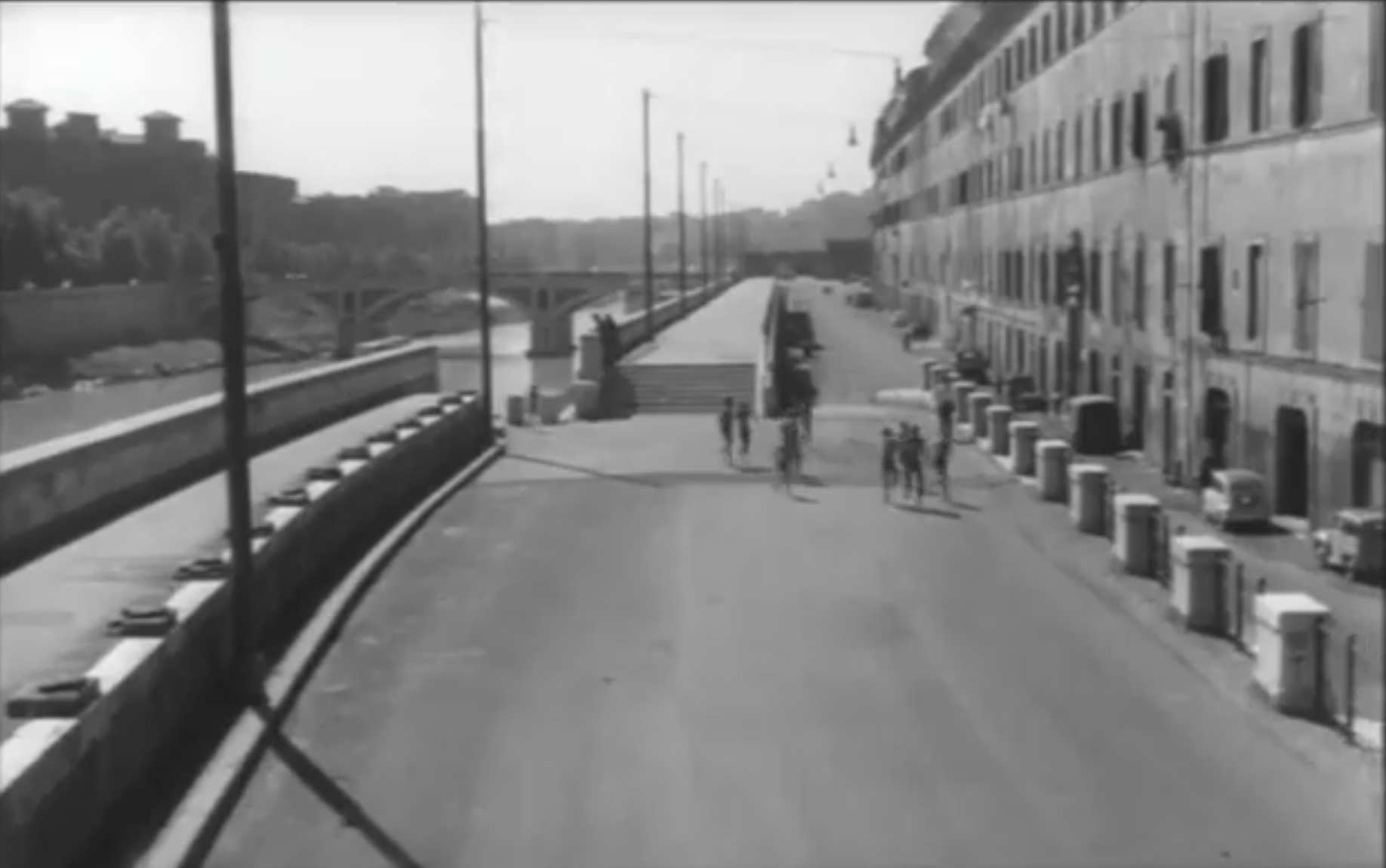
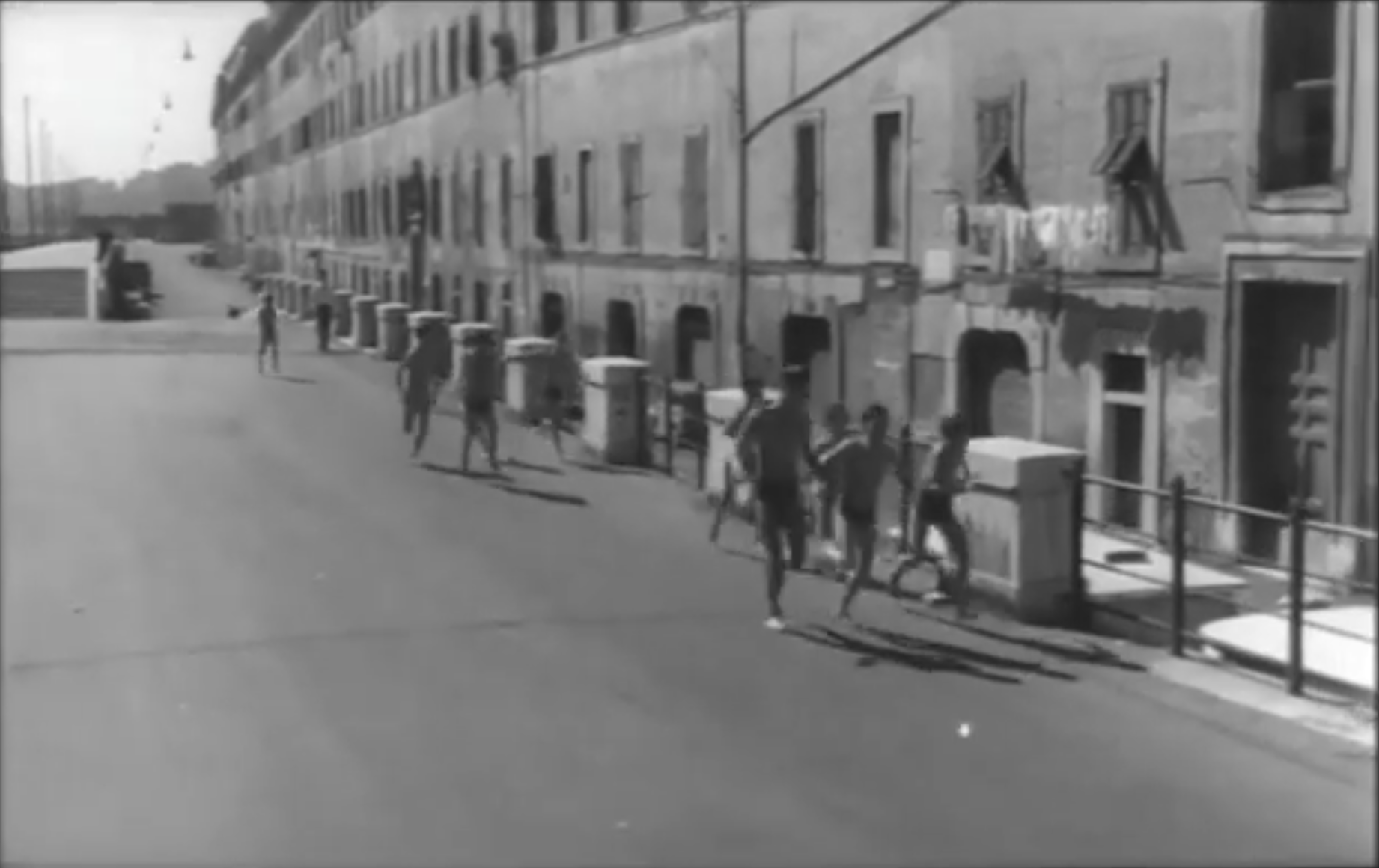
Un gruppo di bambini in costume da bagno corre lungo una strada accanto al fiume Tevere, urlando e scherzando. Sono ancora bagnati dalla loro nuotata. È una giornata di sole estiva.
A group of little boys in swimming trunks runs along a roadway beside the Tiber river, yelling and fooling around. They’re still wet from their swim. It’s a sunny summer’s day.
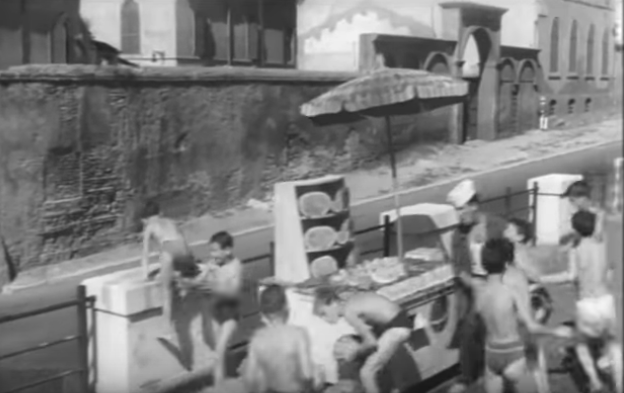
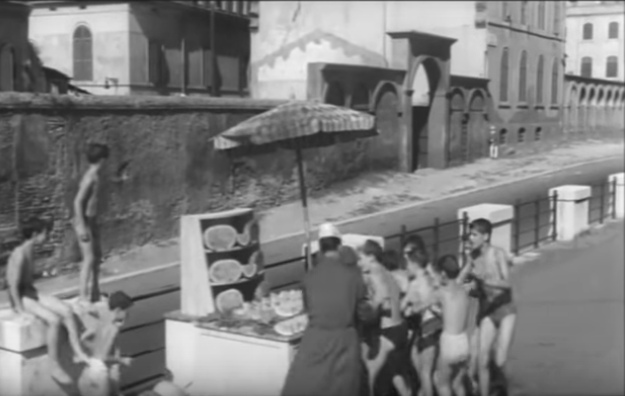
Si abbattono su un chiosco di cocomeri come uno stormo di uccelli eccitati, afferrando i frutti sotto un parasole frangiato. "Buoni, ragazzini, state buoni!" – li rimprovera il venditore – “Posate le angurie! Mi volete rovinare? Giù le mani! Va via!"
They descend on a watermelon stand like a flock of excited birds, grabbing at the fruit under a fringed sunshade. “Behave, kids, behave yourselves!” the vendor scolds. “Put the watermelons down! You want to ruin me? Hands off! Go away!”
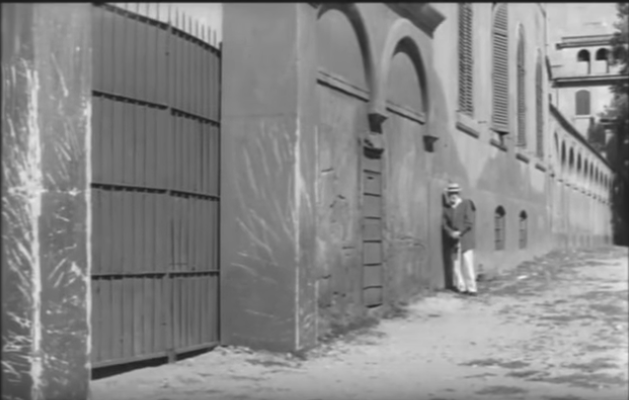
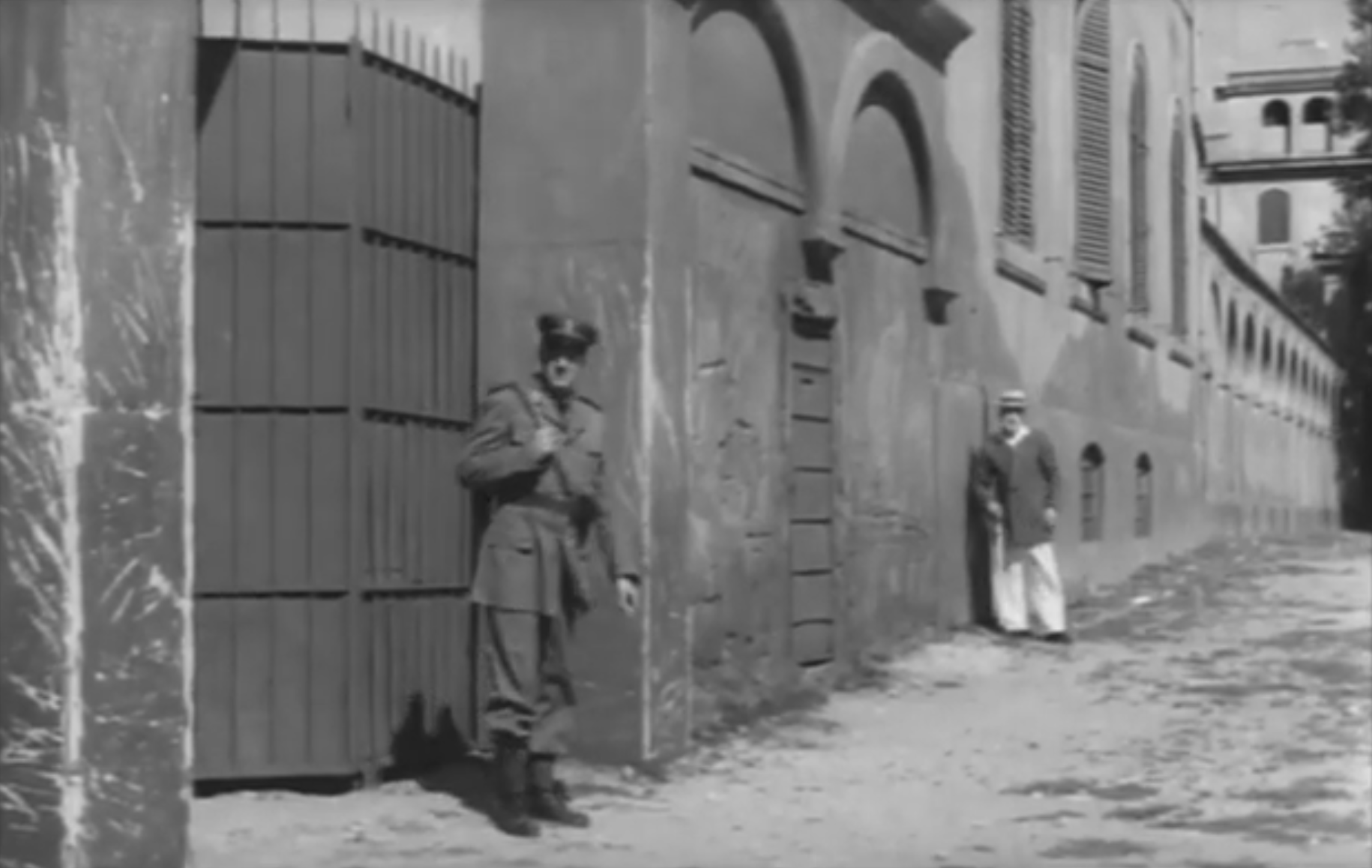
Dietro di loro, vediamo una figura in pantaloni bianchi e un cappello di paglia spavaldo: è Umberto, appoggiato a un monumentale muro di pietra.
Si apre una pesante porta di metallo ed emerge una guardia in uniforme.
Behind them, we see a figure in white pants and a jaunty straw hat: it’s Umberto, leaning against a monumental stone wall.
A heavy metal door opens and a uniformed guard emerges.
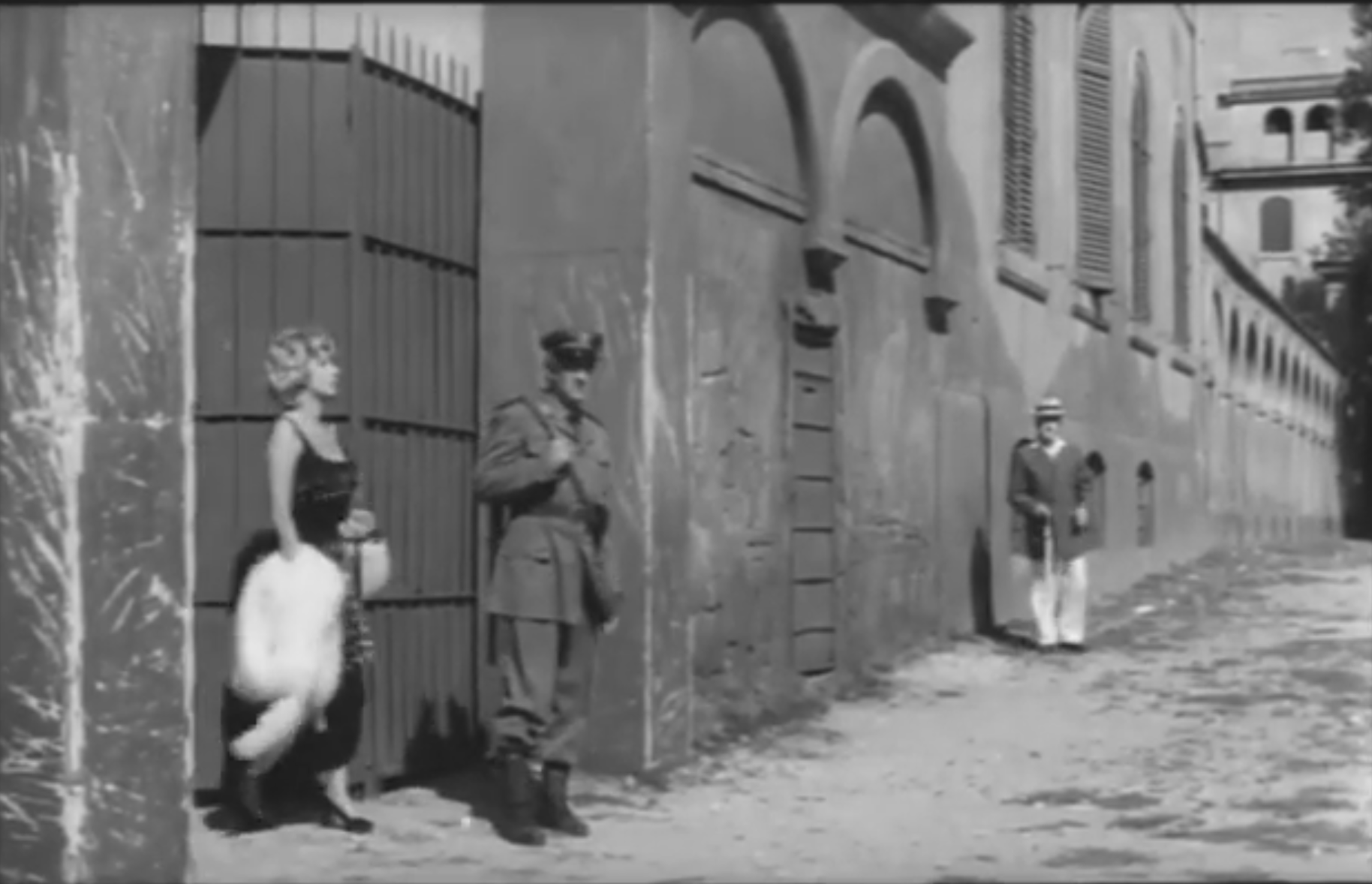
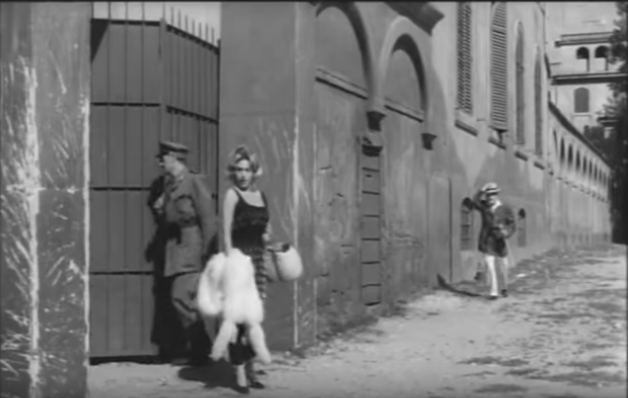
Alle sue spalle, appare Gioia, che indossa gli abiti di Capodanno: il vestito pieno di lustrini e le scarpe coi tacchi alti. Porta con sé la pelliccia bianca e un piccolo cestino intrecciato.
Uno dei bambini urla: "Guarda quella pazza!"
Behind him, Gioia appears, wearing the clothes from New Year’s Eve: the spangly dress and high heels. She’s carrying the white fur and a small woven basket.
One of the kids calls out, “Look at that madwoman!”
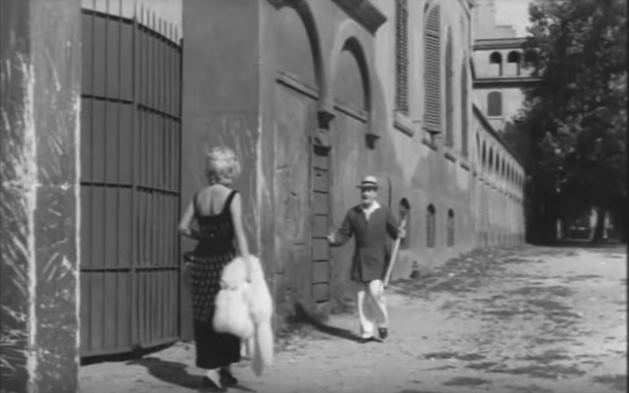
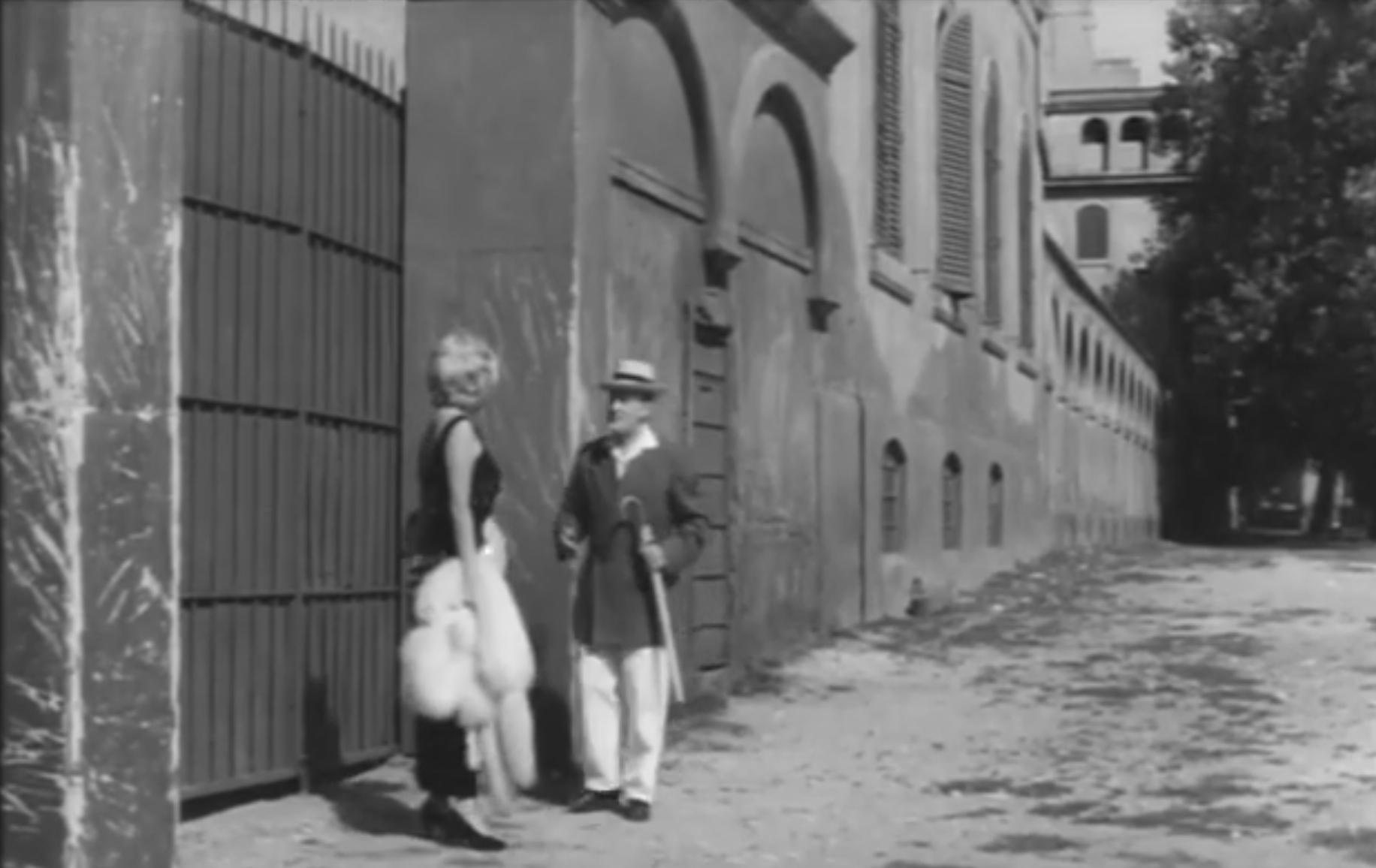
Umberto le corre incontro, nel suo modo affrettato, le ginocchia leggermente piegate. Vediamo che porta un ombrello – in questa magnifica giornata estiva romana.
“Tortorella!” grida, con estremo piacere.
"Umbe’", dice lei piano, con esitazione.
"Ho saputo dall'avvocato e sono venuto", spiega lui.
"Bravo".
"Ma come…?" inizia, indicando ciò che lei indossa.
Umberto runs towards her, in his scurrying fashion, knees slightly bent. We see that he’s carrying an umbrella – on this glorious Roman summer day.
“Tortorella!” he yells out, in extreme delight.
“Umbe’,” she says quietly, with hesitation.
“I heard from the lawyer and I came,” he explains.
“Good.”
“But how…?” he begins, indicating what she’s wearing.
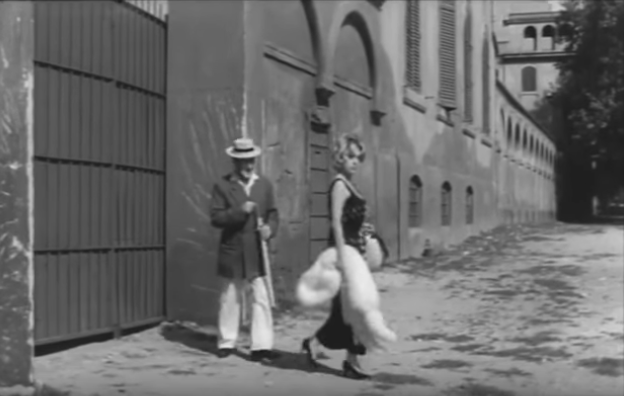
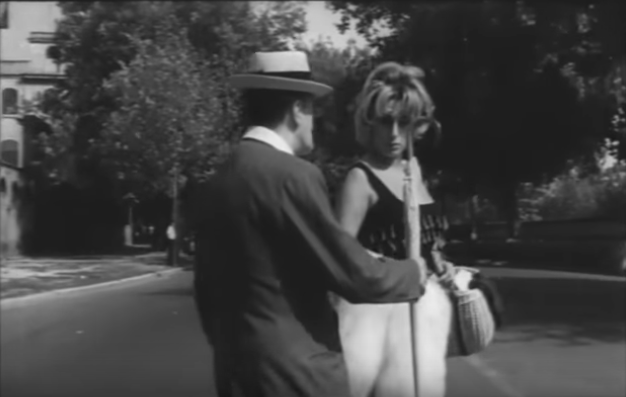
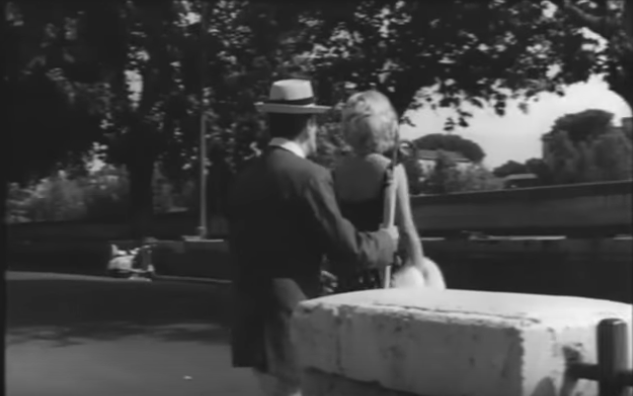
"Ma che?!" sbotta lei, allontanandosi.
Le ha portato un ombrello come regalo. “Ti ricordi quel buono omaggio che ci hanno dato alla festa al Milleluci?” – spiega – “Tieni, l’ho comprato per te, con lo sconto”. Glielo porge, chiedendole: "Indovina cos'è?"
“Un ombrello – da uomo. Non potevi farti dare qualcos'altro?" chiede lei, delusa.
"C'era solo questo, un thermos e una mazza da polo”.
“But what?!” she snaps at him, walking away.
He’s brought her the umbrella as a gift. “Remember that gift certificate they gave us at the Milleluci party?” He explains, “Here, I bought it for you, with the discount.” He hands it to her, asking, “Can you guess what it is?”
“An umbrella – for men. Couldn’t you get something else?” she asks, disappointed.
“There was only this, a thermos and a polo bat.”
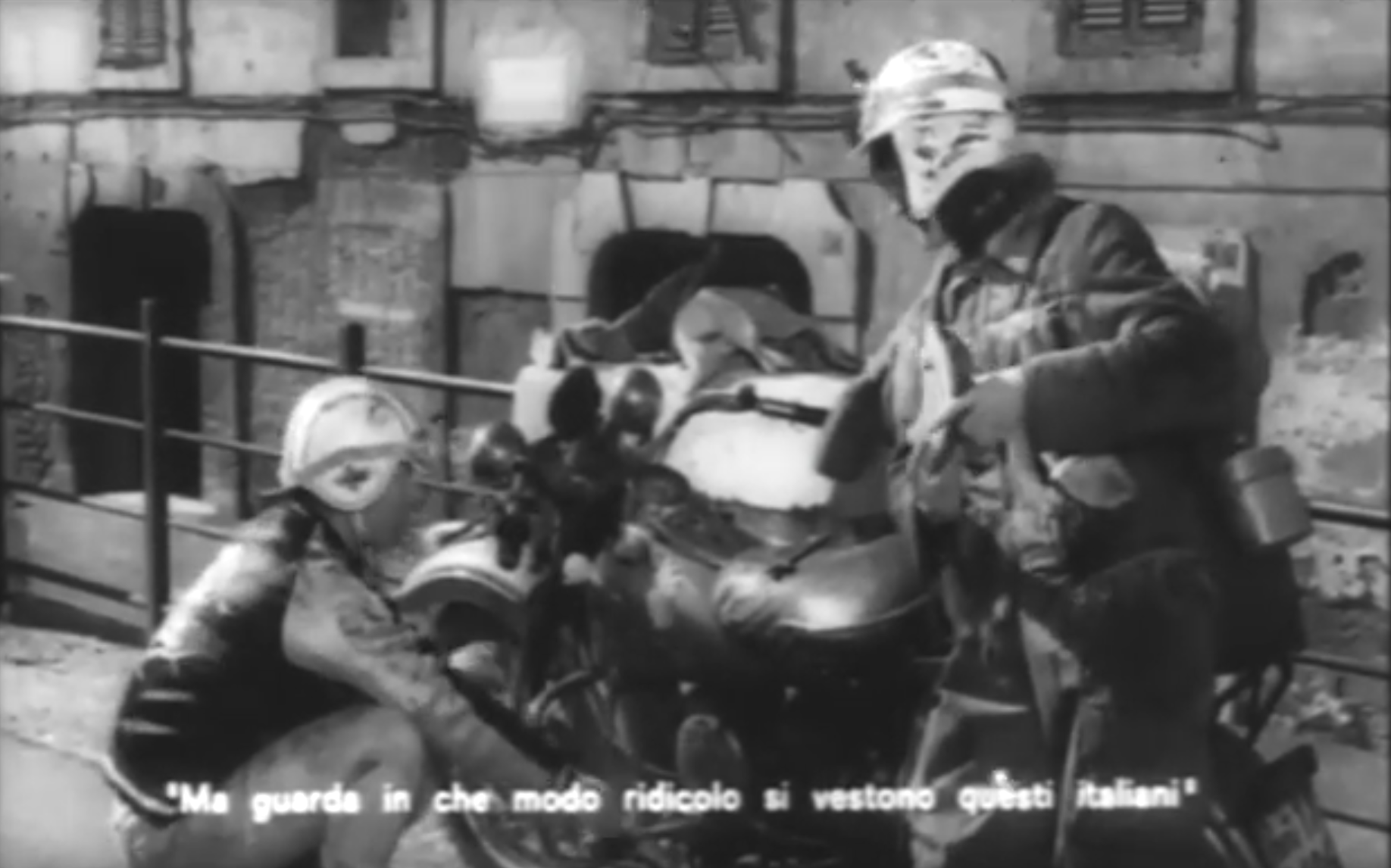
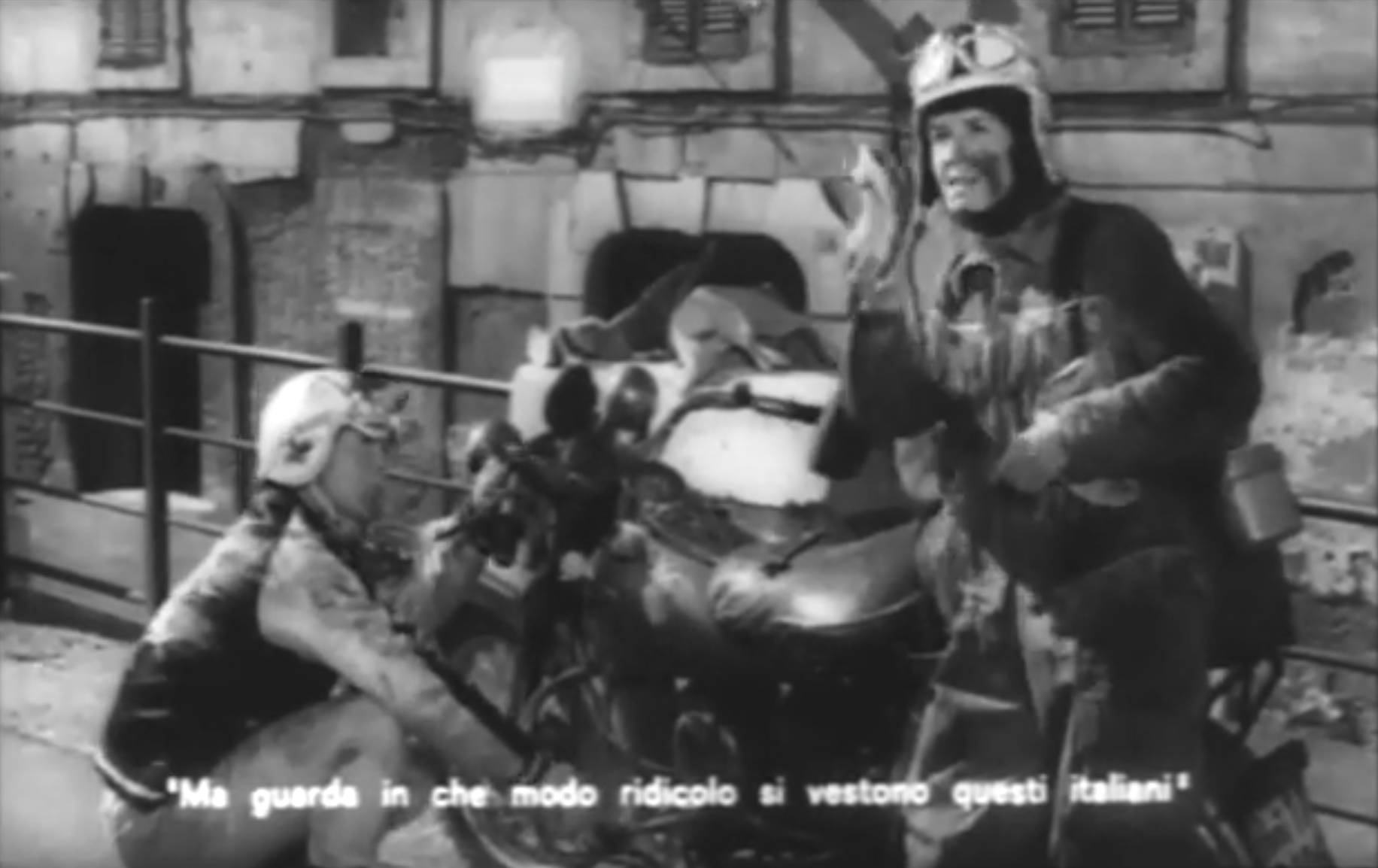
La macchina da presa taglia su due motociclisti che stanno osservando la nostra coppia. Indossano caschi e abiti di pelle sporchi, hanno del grasso sulle loro facce. La donna si sporge verso il suo compagno e dice, in inglese: "Oh, Richard, guarda in che modo buffo vestono questi italiani!"
The camera cuts away to two motorcycle riders, who are observing our pair. They’re wearing helmets and dirty leather outfits, with grease on their faces. The woman leans over to her companion and says, in English, “Oh, Richard, look at the funny way these Italians dress!”
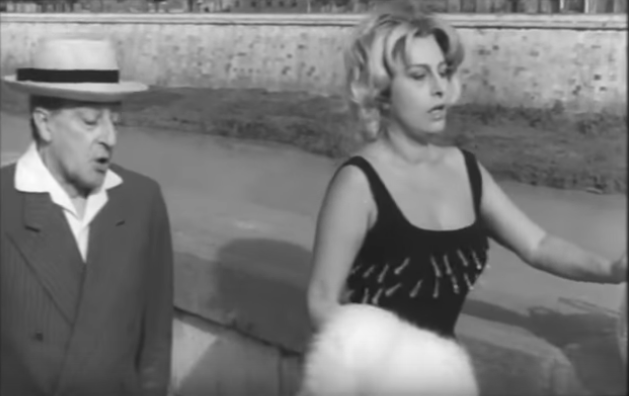
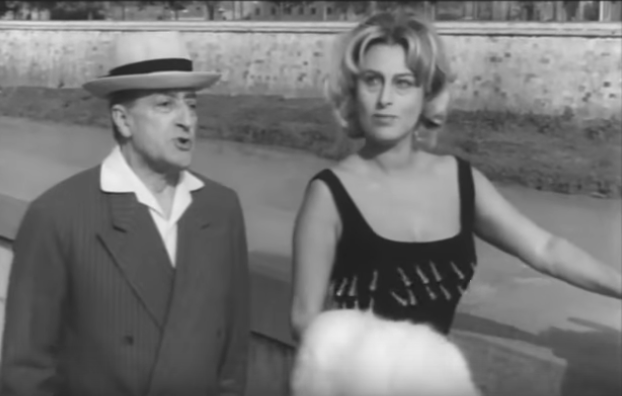
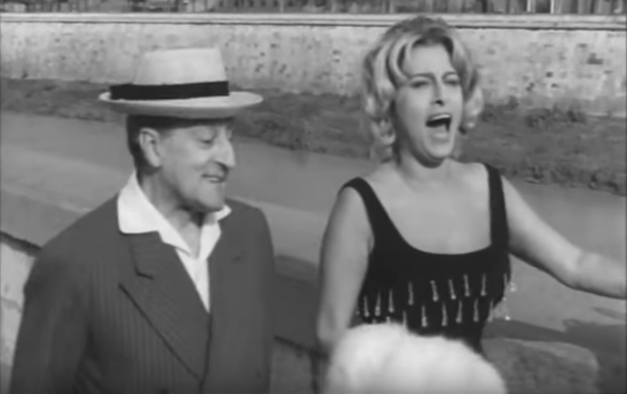
Tenendo il passo di Gioia, Umberto dice: “Ero venuto anche per dirti che ho cominciato un lavoretto a Cinecittà. Un film mitologico. Ci sto lavorando da giorni. Faccio lo schiavo di un'antica nave romana”. A questo punto, Gioia emette una sonora risata con la bocca spalancata. Sta riprendendo il suo spirito.
Keeping pace with Gioia, Umberto says, “I also came to tell you that I started a little job at Cinecittà. A mythological film. I’ve been working on it for days. I’m a slave on an ancient Roman ship.” At this, Gioia lets out a hearty laugh with her mouth wide open. She’s getting her spirit back.
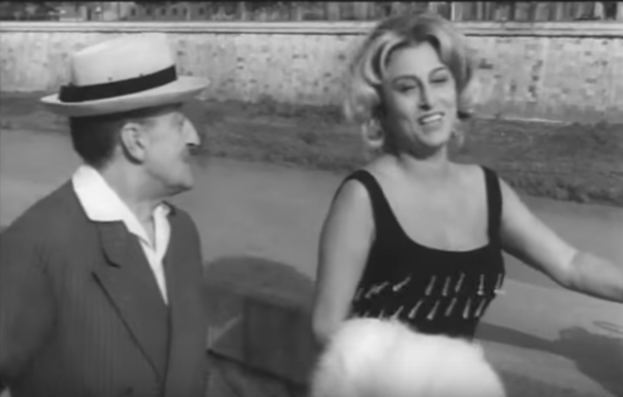
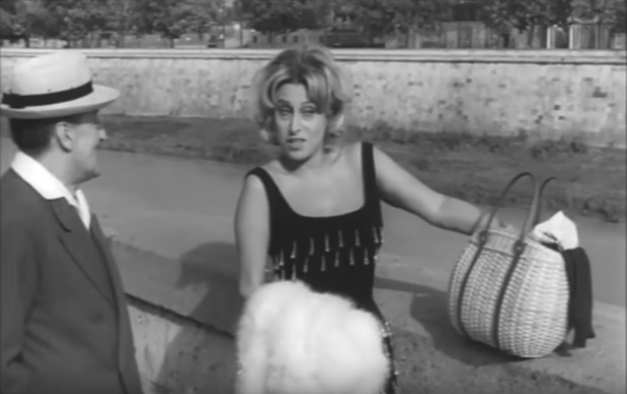
"Sì!" – continua lui – "Mi sarebbe piaciuto poter lavorare con te un’altra volta”.
“Che bello che sarai! Non so, Umberto mio, perché...” Si ferma e appoggia il cestino sul muro di pietra, portando ancora la sua pelliccia. “Perché chissà gli impegni... So che mi hanno cercato. Un sacco di telefonate a casa..."
“Yes!” he goes on. “I would have liked to be able to work with you again.”
“How handsome you must be! I don’t know, Umberto, dear, because…” She stops and rests the basket on the stone wall, still carrying her fur. “Because who knows my commitments... I know they are looking for me. Loads of phone calls at home...”
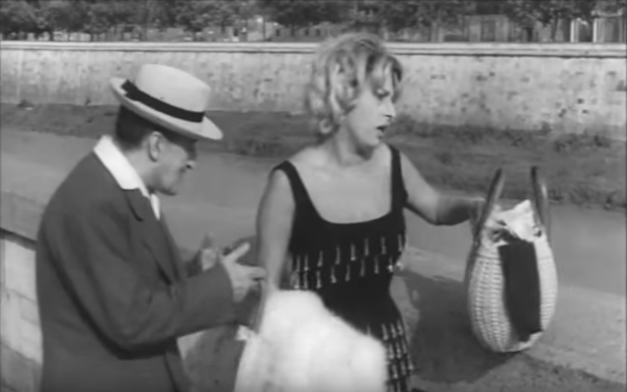
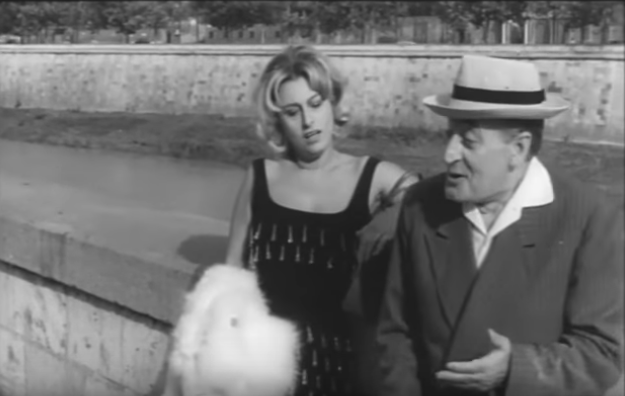
"Fa così caldo che non ce la faccio più, eh", dice lei bruscamente.
Lui le chiede: "Mi dici perché sei vestita così?"
"Perché? Che giorno è oggi?"
"Ferragosto,* no?"
Gioia risponde: “Chi te l'ha detto? Oggi è il primo gennaio! Per me l'anno comincia oggi. Sì sì".
*Ferragosto è una festa celebrata in Italia ogni 15 agosto. L'intero Paese chiude – le attività commerciali sono chiuse, tranne che alcuni ristoranti e bar – e tutti si dirigono verso la spiaggia. Se l'aveste perso allora, vi divertirete a leggere il nostro cineracconto su Il sorpasso (Dino Risi, 1962), un iconico road movie che si svolge a Ferragosto.
“It’s so hot that I can’t stand it,” she says abruptly.
He asks her, “Why are you dressed like that?”
“Why? What day is it today?”
“Ferragosto,* no?”
Gioia replies, “Who told you that? Today is January first! For me, the year begins today. Yes, indeed.”
*Ferragosto is a holiday celebrated in Italy every August 15. The whole country shuts down – businesses are closed, except for restaurants and bars – and everyone heads to the beach. If you missed it at the time, you’ll enjoy reading our cineracconto about Il sorpasso, an iconic road movie that takes place over Ferragosto.
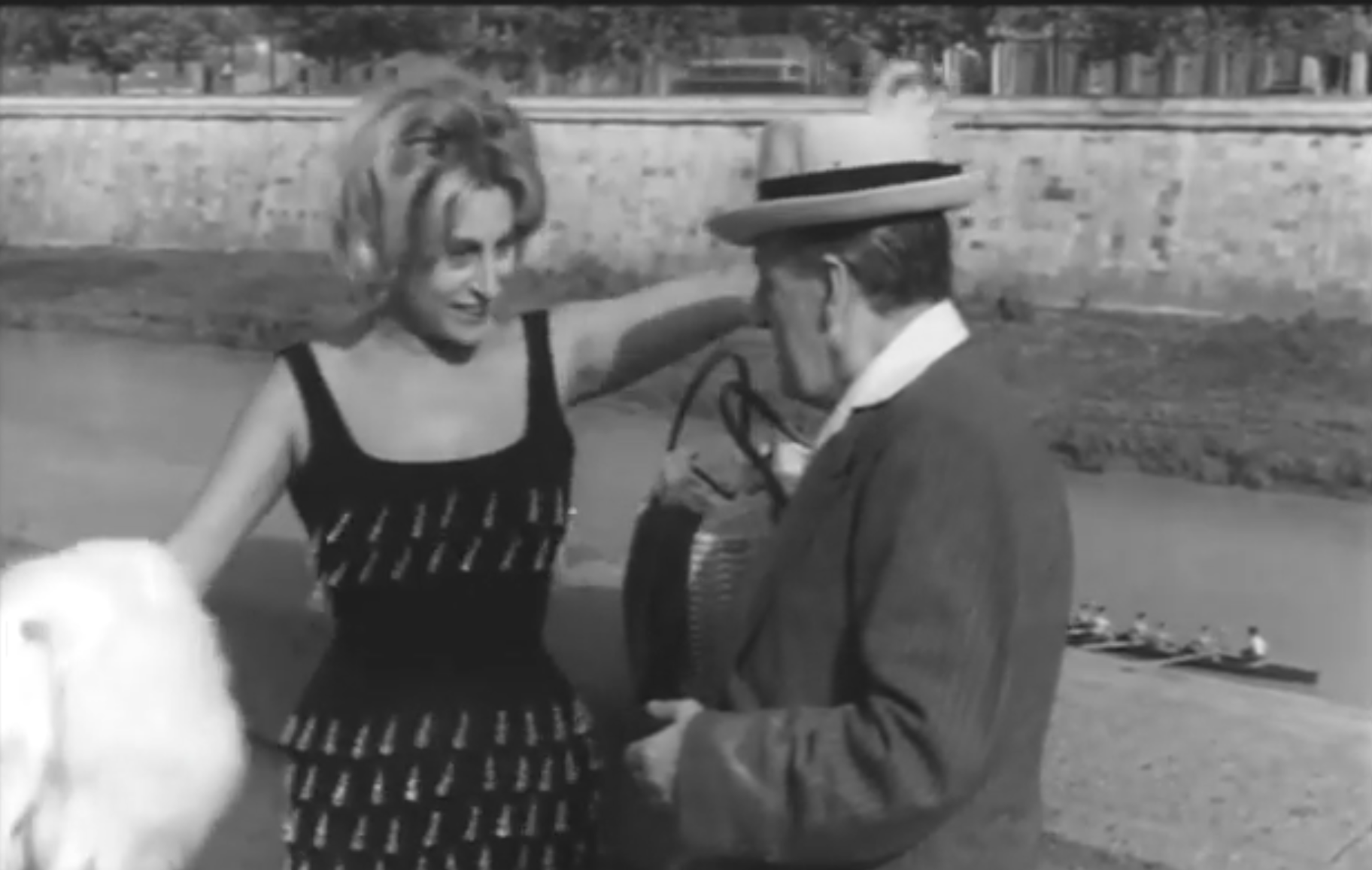
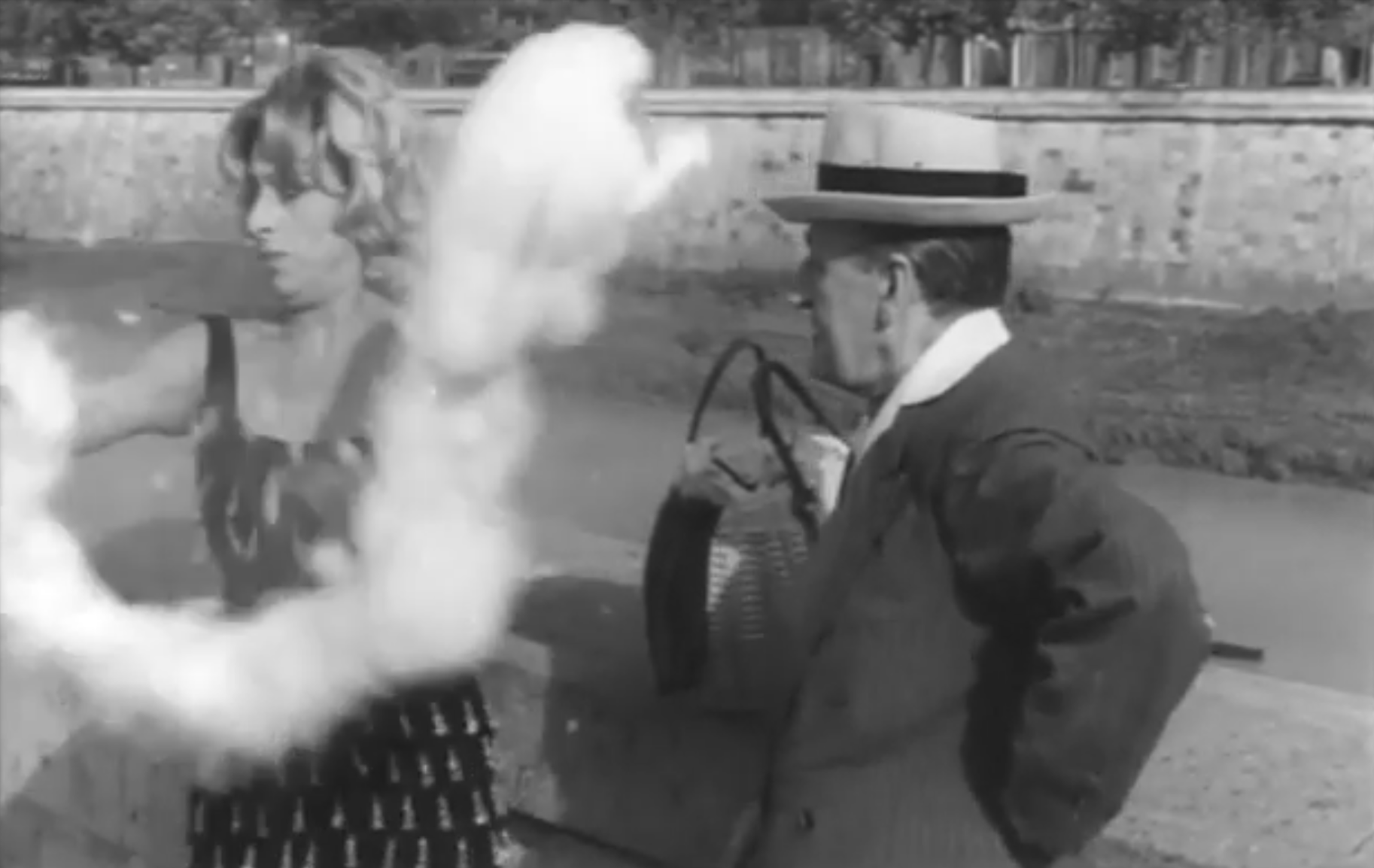
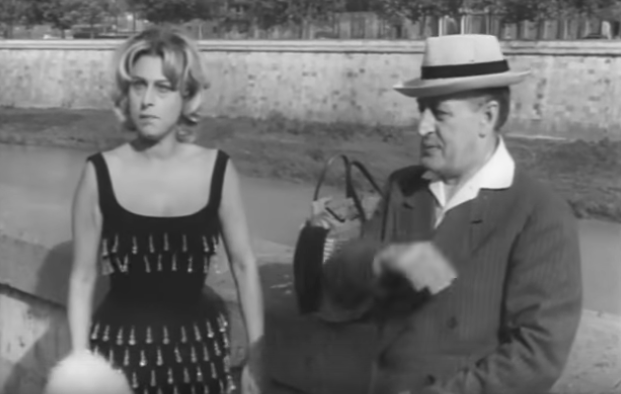
Lei continua:, "Così sono entrata e così esco!" e fa uno shimmy, facendo muovere i suoi lustrini. Quindi scuote la sua pelliccia, che sparge in aria una grande nuvola di lanugine bianca.
Umberto si spolvera la giacca.
"Accidenti a loro!" – dice lei – "L’hanno fatta tarlare!"
She continues, “This is how I went in and this is how I go out!” and she gives a shimmy, setting her spangles in motion. Then she shakes her fur, which scatters a great cloud of white fluff into the air.
Umberto dusts off his jacket.
“Damn them!” she says. “They let it get moth-eaten!”
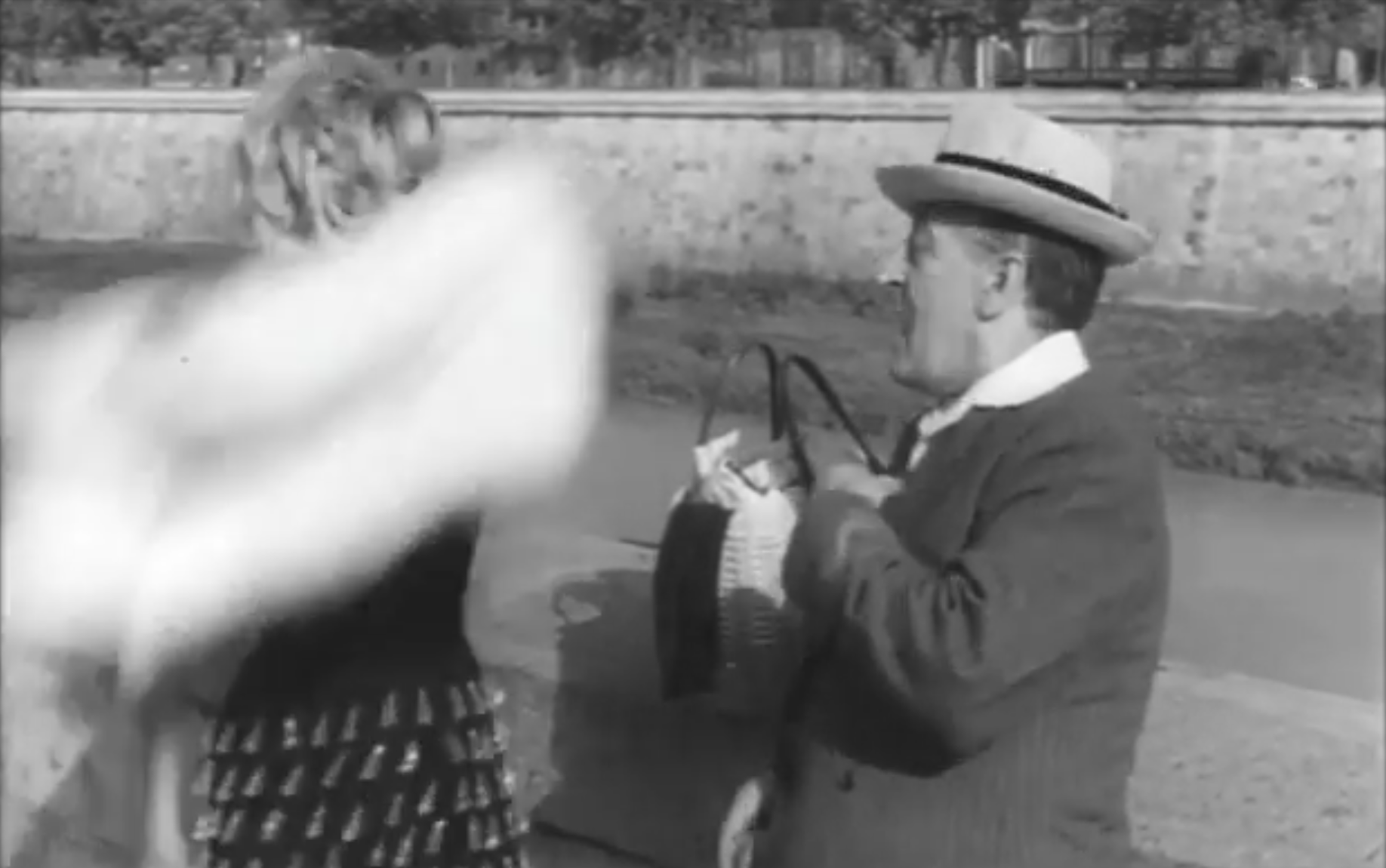
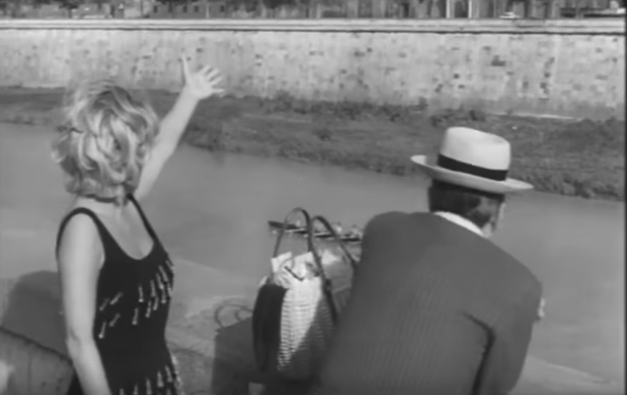
Poi ride. "Ma chi se ne frega! Vola!" urla gettando la sua pelliccia nel fiume.
"Cosa fai?!"
“Me ne compro una nuova!"
Then she laughs. “Who gives a damn! Fly!” she yells, throwing her fur into the river.
“What are you doing?!”
I’ll buy a new one!”
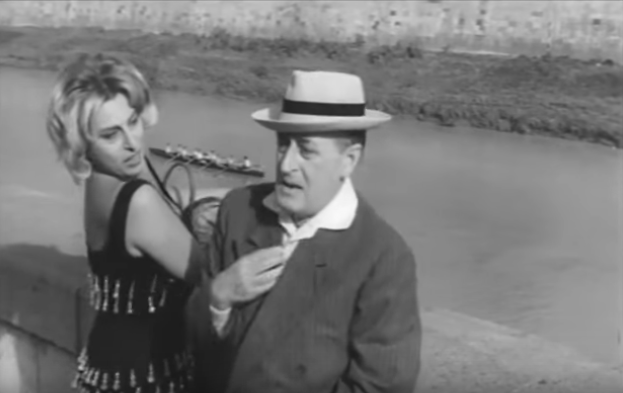
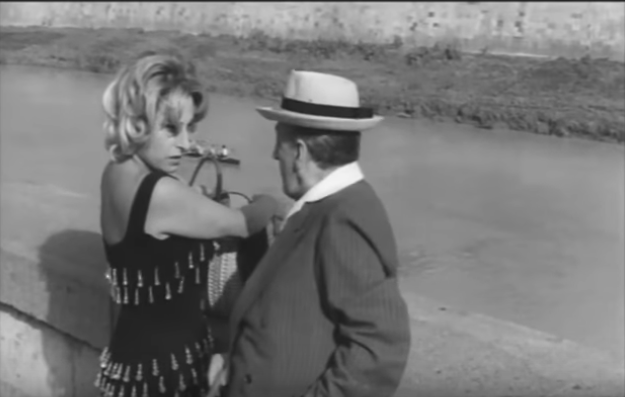
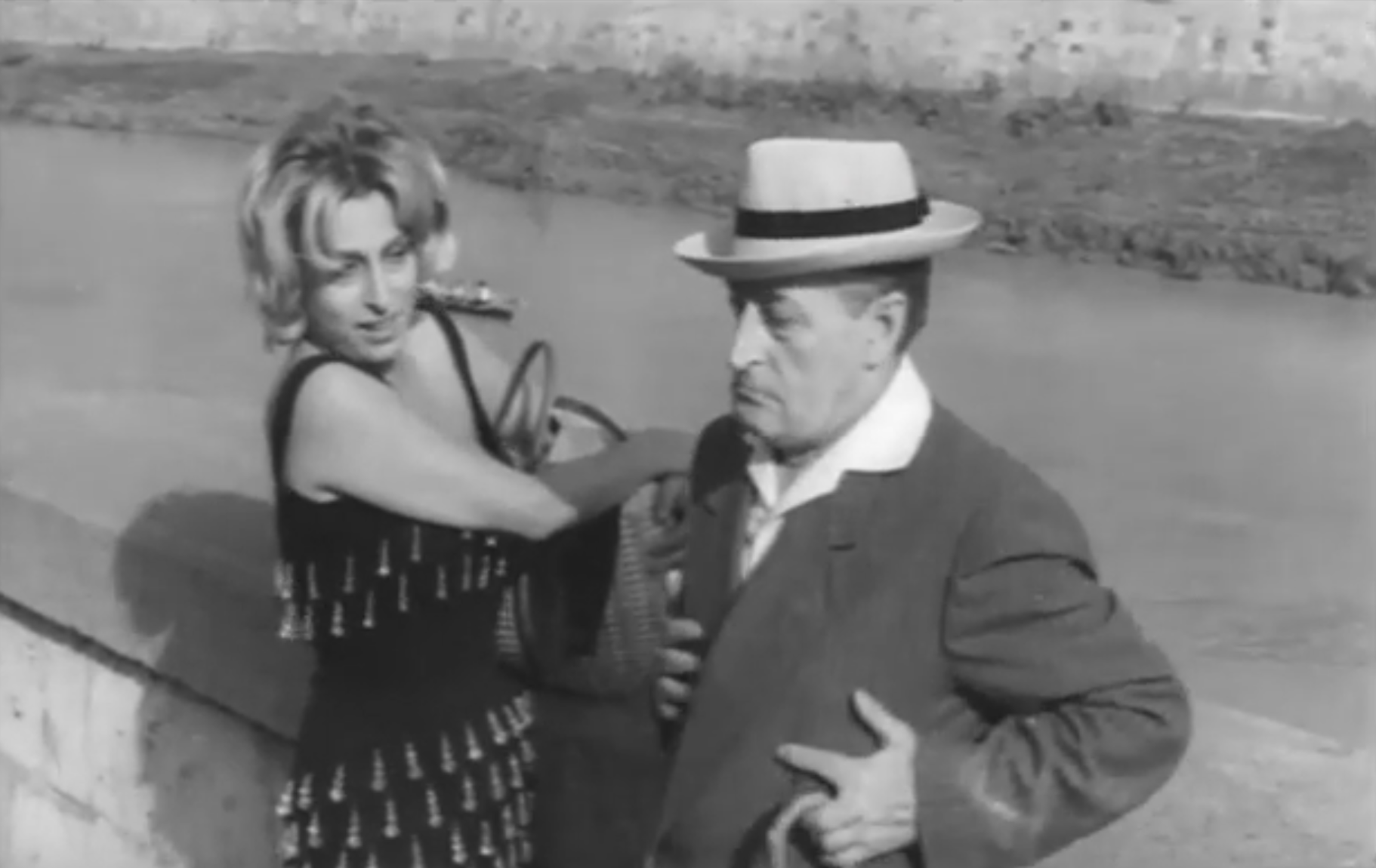
"Sento che le cose si mettono bene, Umbe’!" – gli dice lei – "Guarda quei ragazzi in barca!" In basso, alcuni giovani stanno remando sul fiume. "Hai visto che fusti?"
Guardandolo dalla testa ai piedi, aggiunge: "Beh, dico, non lo so, sono quelli che dovrebbero lavorare nella nave, non tu!"
Leggermente offeso, lui si dà qualche pacca sul petto, controllando la sua forma.
“I sense that things are going to go well, Umbe’!” she tells him. “Look at those boys in the boat!” Down below, some young men are rowing on the river. “Have you seen those hunks?”
Looking him up and down, she adds, “Well, I’d say, I don’t know, they’re the ones who should be working on the ship, not you!”
Slightly offended, he pats himself on the chest, checking his form.
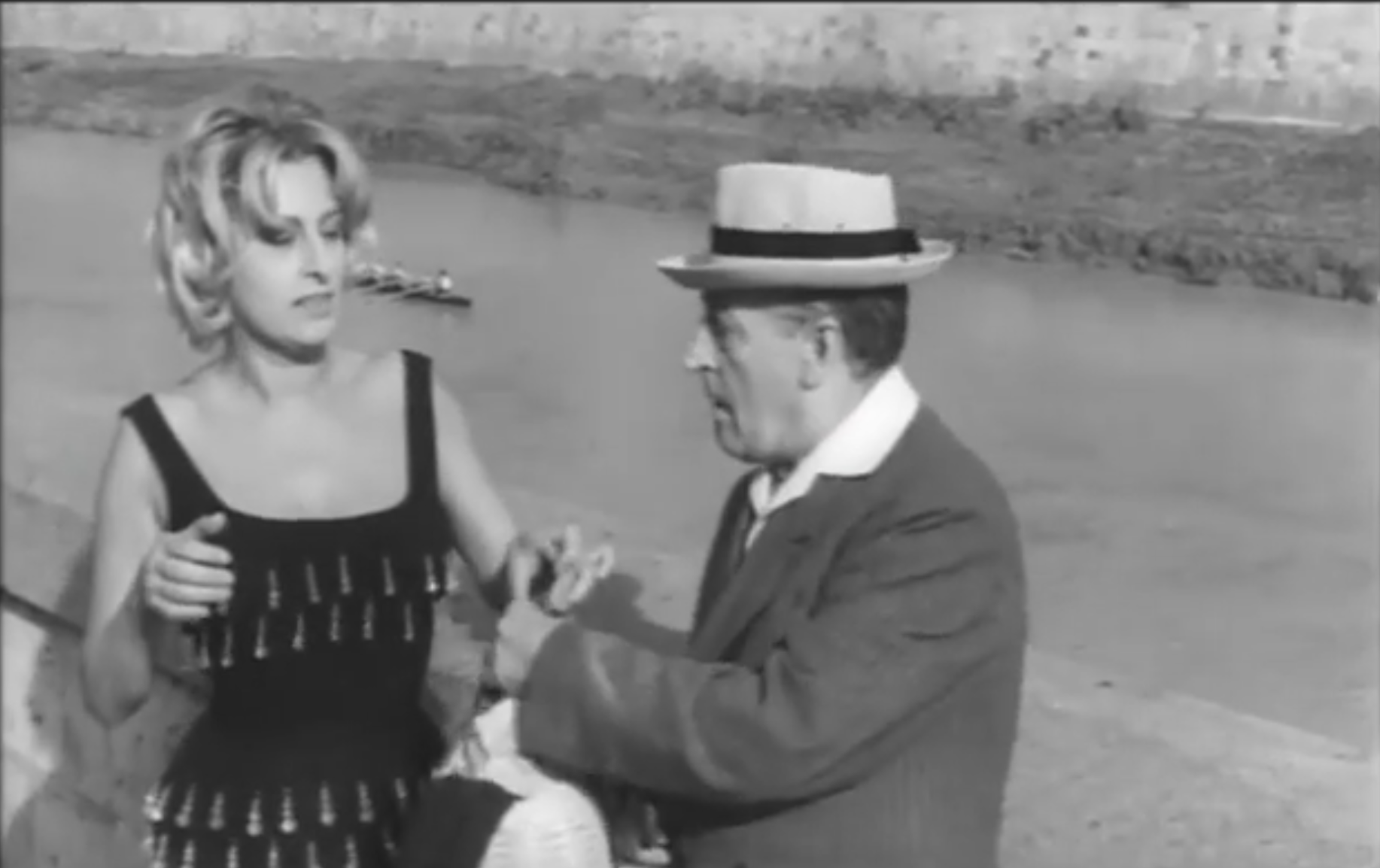
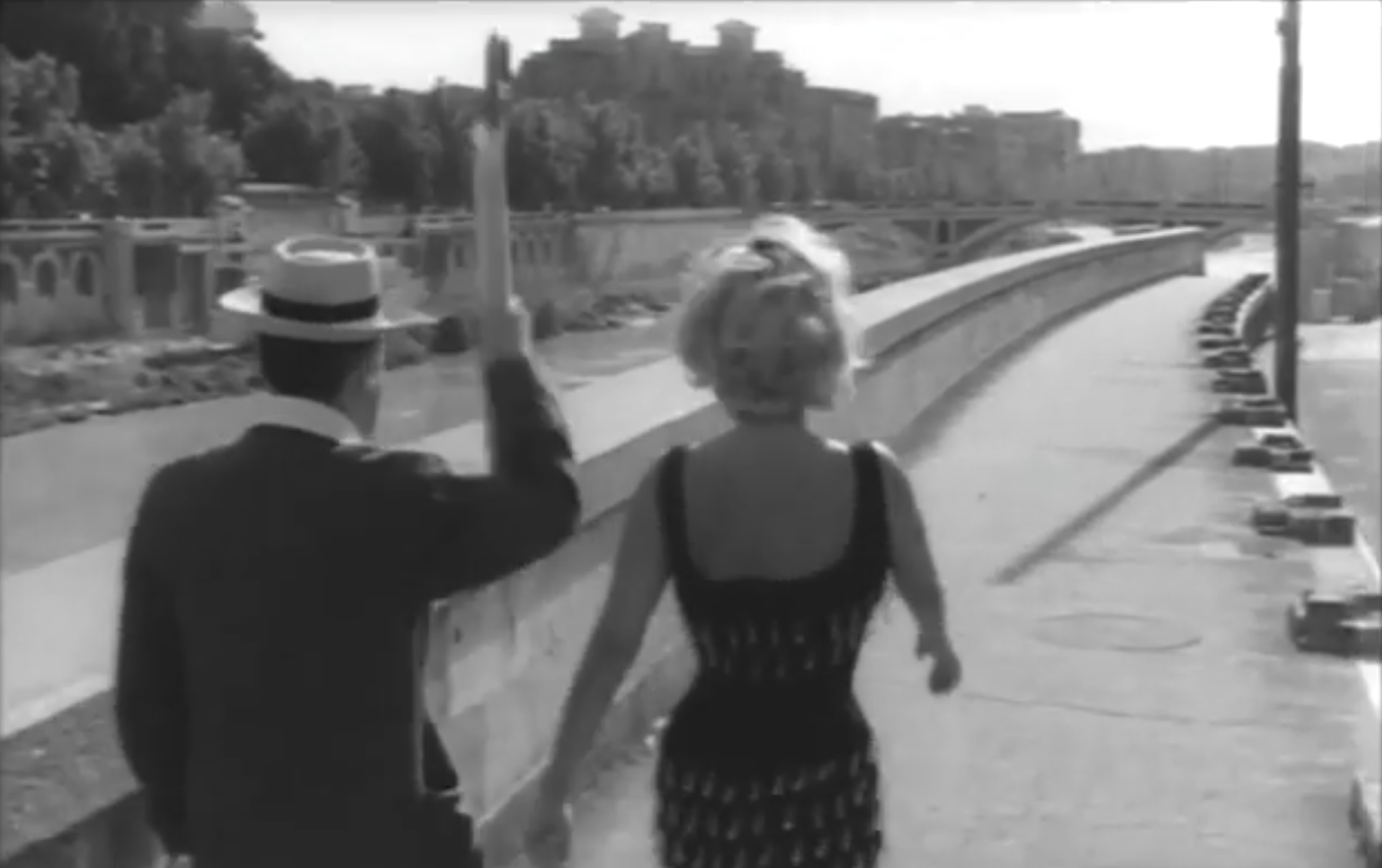
Lei ride e gli porge il cestino. "Andiamo! Cammina, schiavo! Anno nuovo, vita nuova! Accidenti, che caldo!"
"Sì hai ragione!"
Continuano a camminare. "Basta con la miseria!" proclama Umberto, sollevando l'ombrello.
She laughs and hands him the basket. “Let’s go! Walk, slave! New year, new life! Damn, how hot it is!”
“Yes, you’re right!”
They walk on. “Enough with misery!” proclaims Umberto, raising the umbrella.
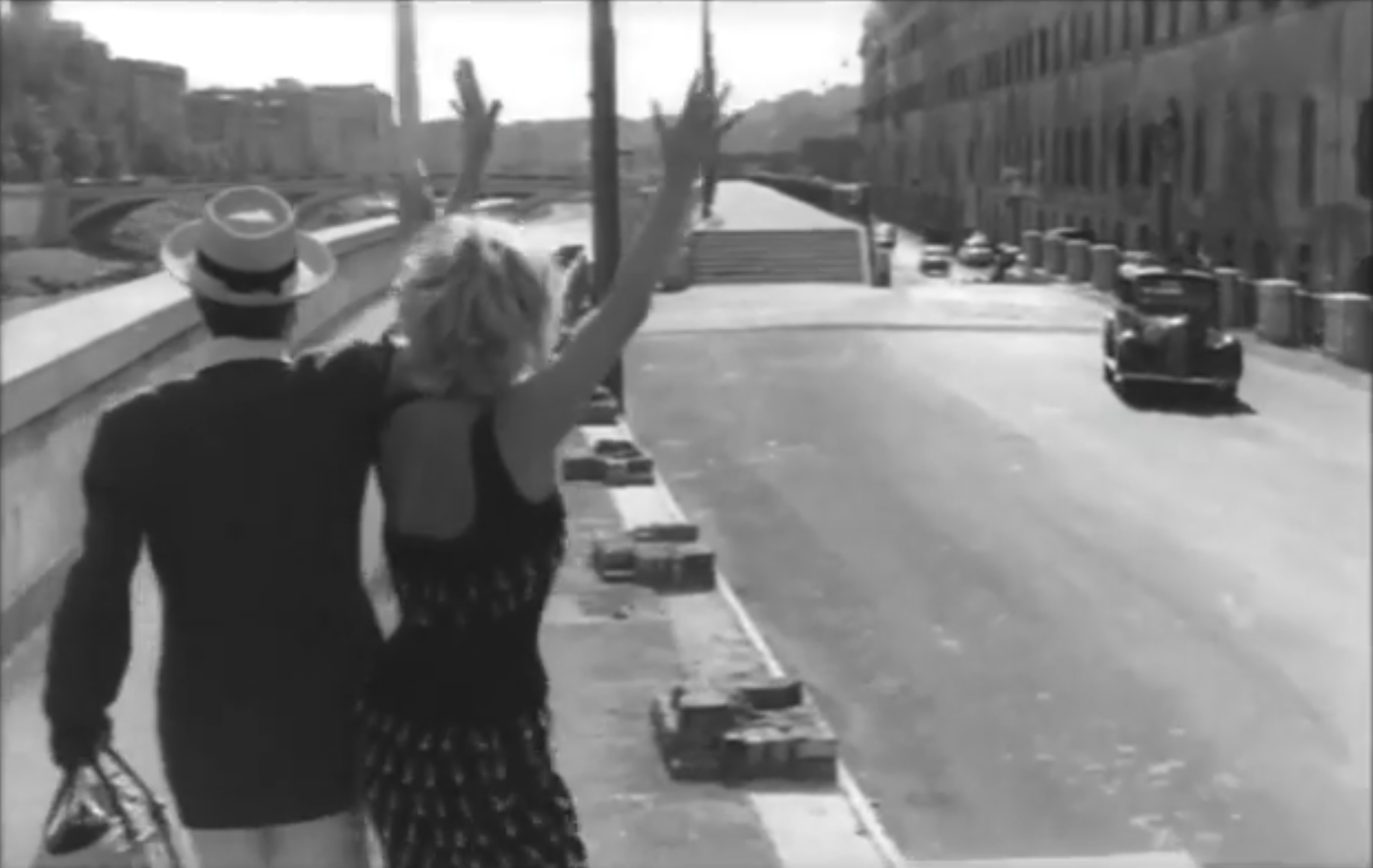
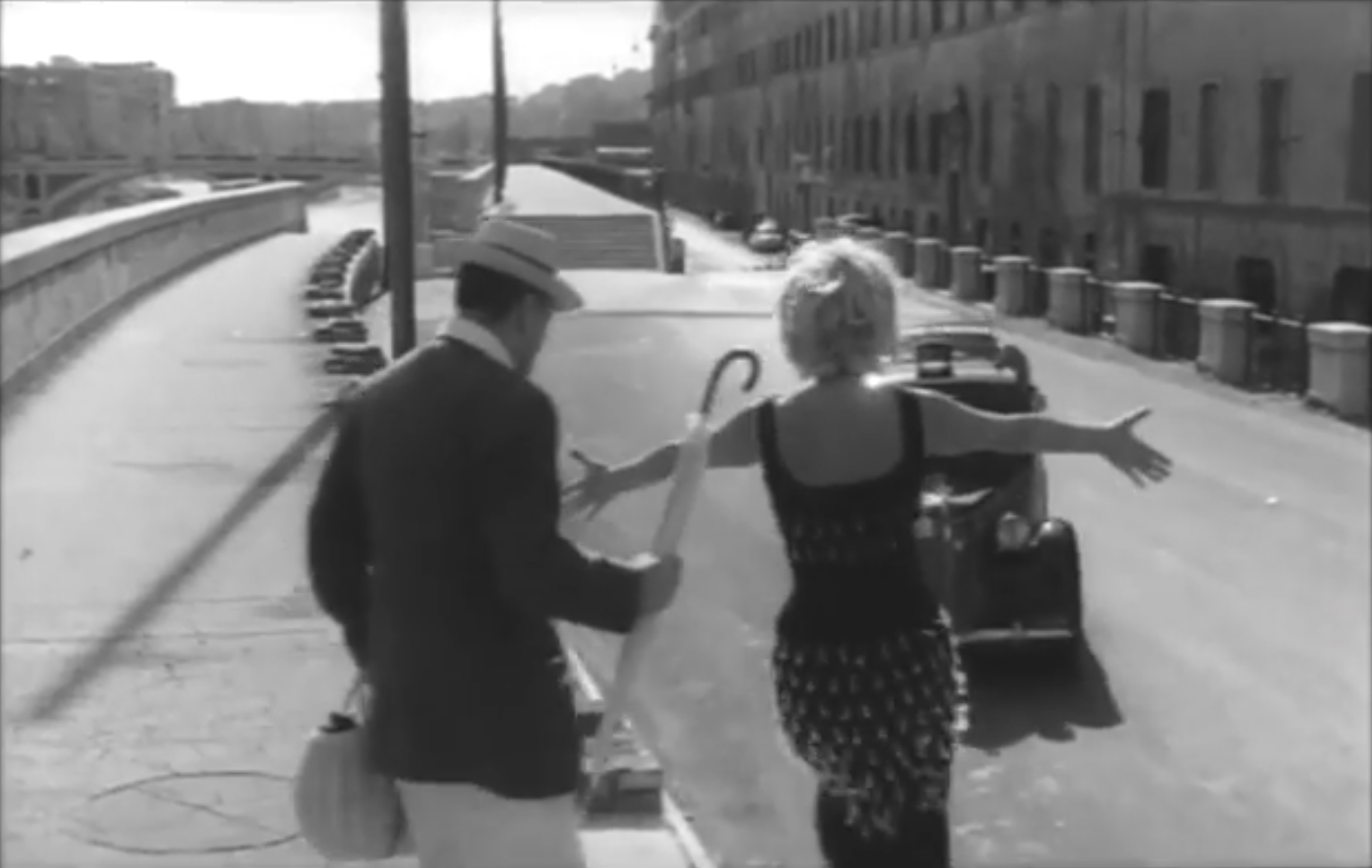
Chiamano un taxi in avvicinamento, gridando allegramente: "Taxi! Taxi!"
Gioia allarga le braccia.
Umberto esclama: "Usiamo le ultime riserve".
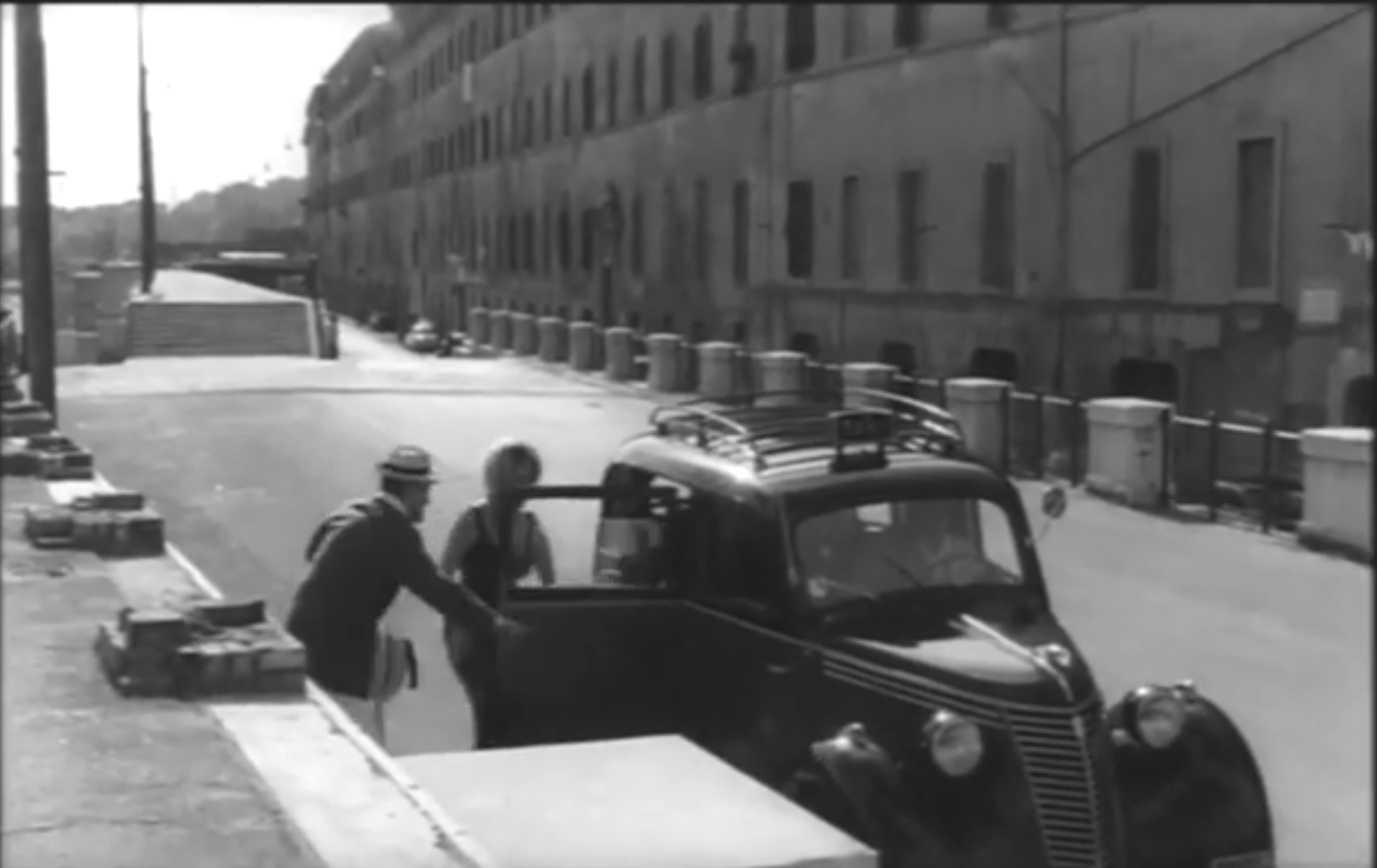
Poi, sempre gentiluomo, apre la portiera per lei. "Prego, signora, si accomodi!"
"Oh grazie mille!" Lei entra.
They hail an approaching taxi, calling out happily, “Taxi! Taxi!”
Gioia spreads wide her arms.
Umberto exclaims, “Let’s use the last of our reserves.”
Then, ever the gentleman, he opens the door for her. “Please, ma’am, have a seat!”
“Oh, thank you so much!” She gets in.
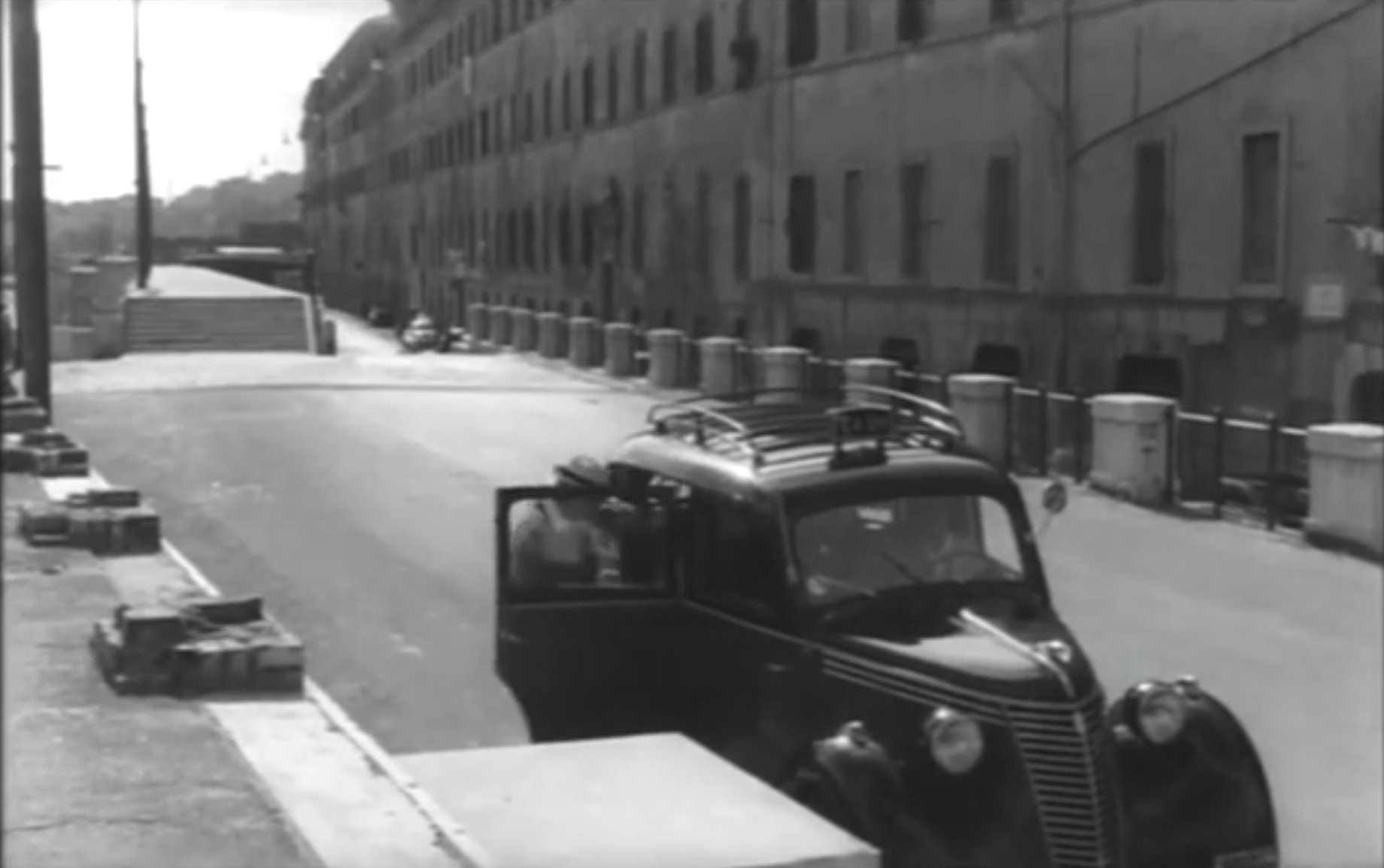
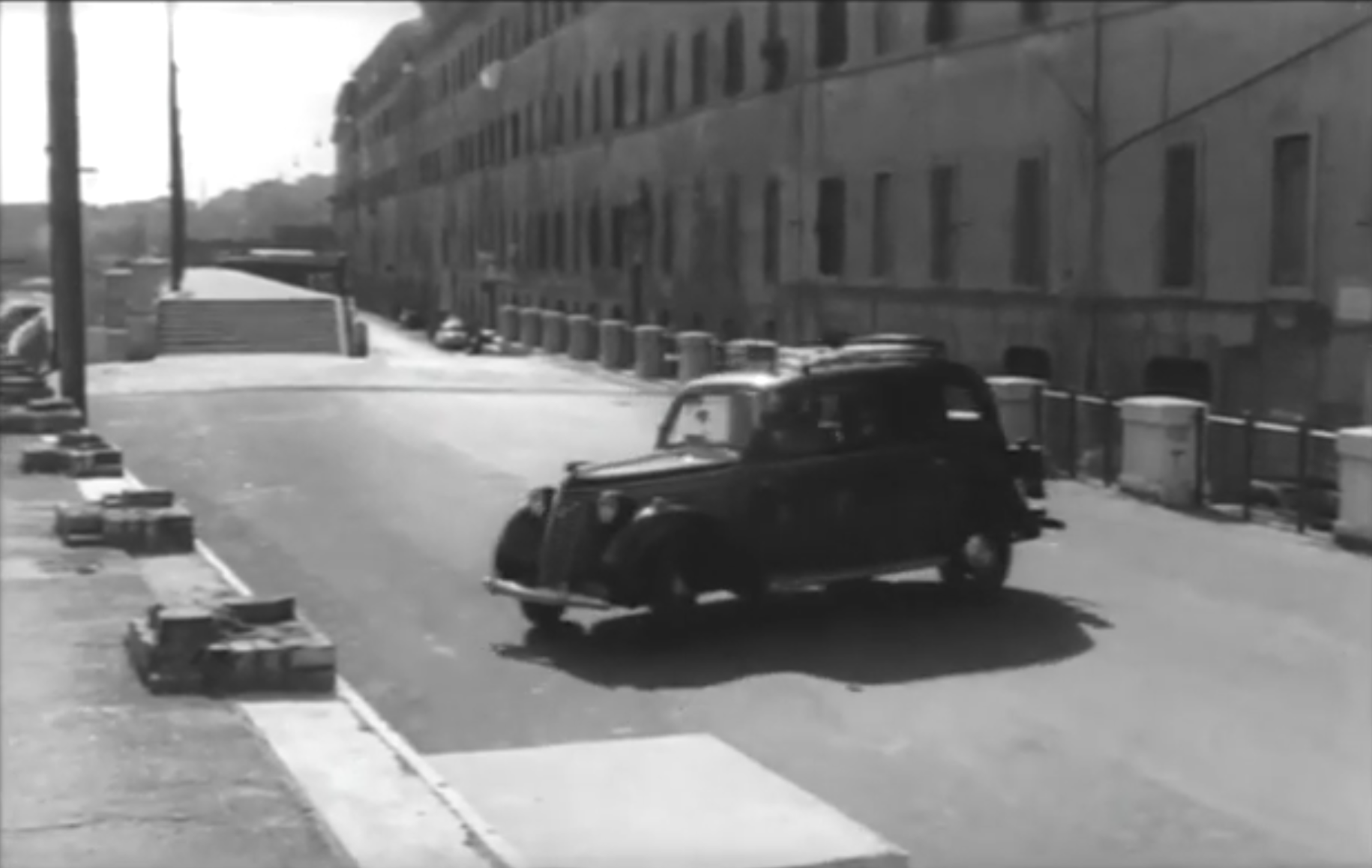
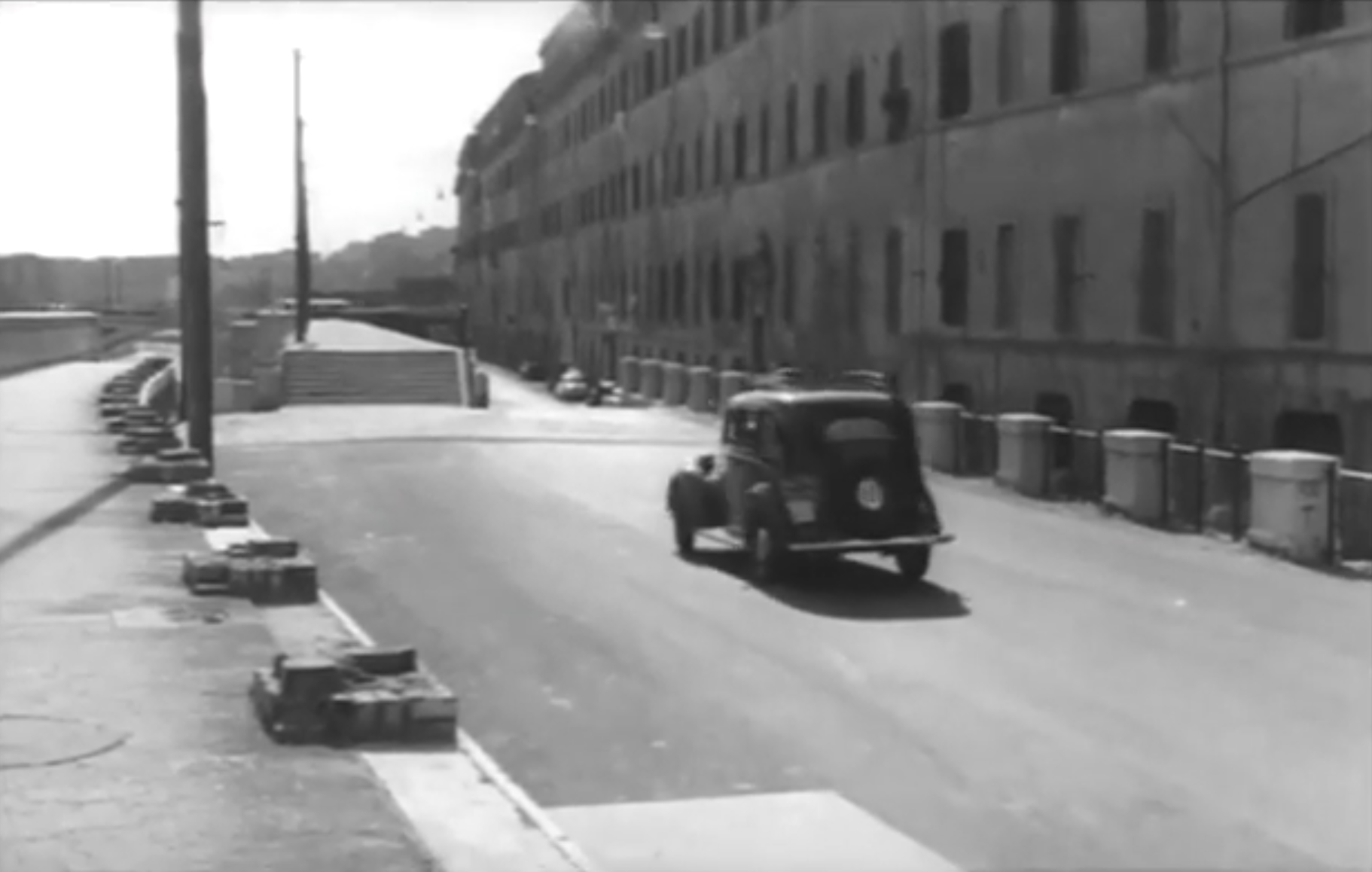
"Vengo anch’io!" Sale anche Umberto. Chiude la portiera e vediamo il taxi girarsi e andarsene.
“I’m coming, too!” Umberto gets in too. He closes the door and we see the taxi turn around and take off.
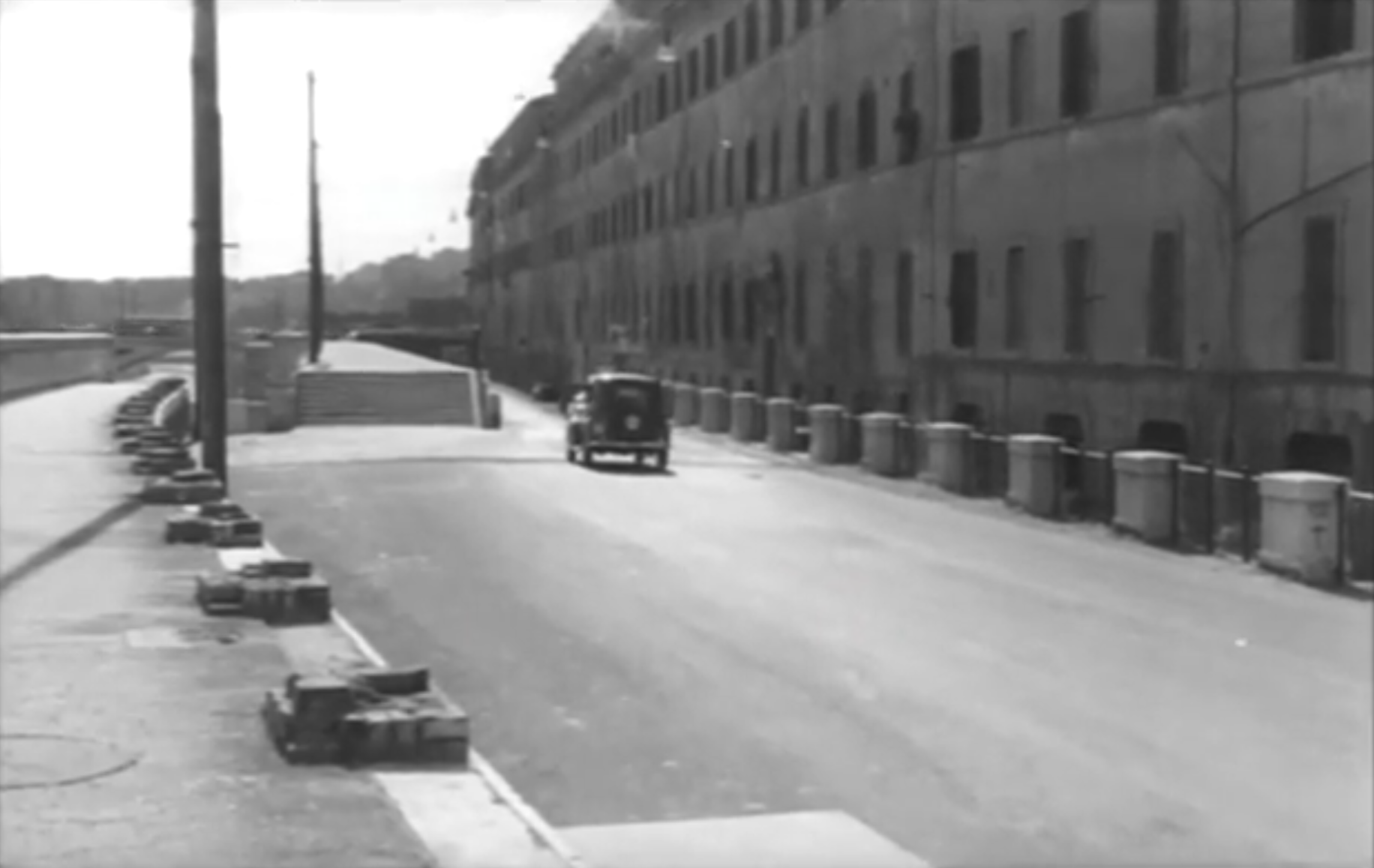
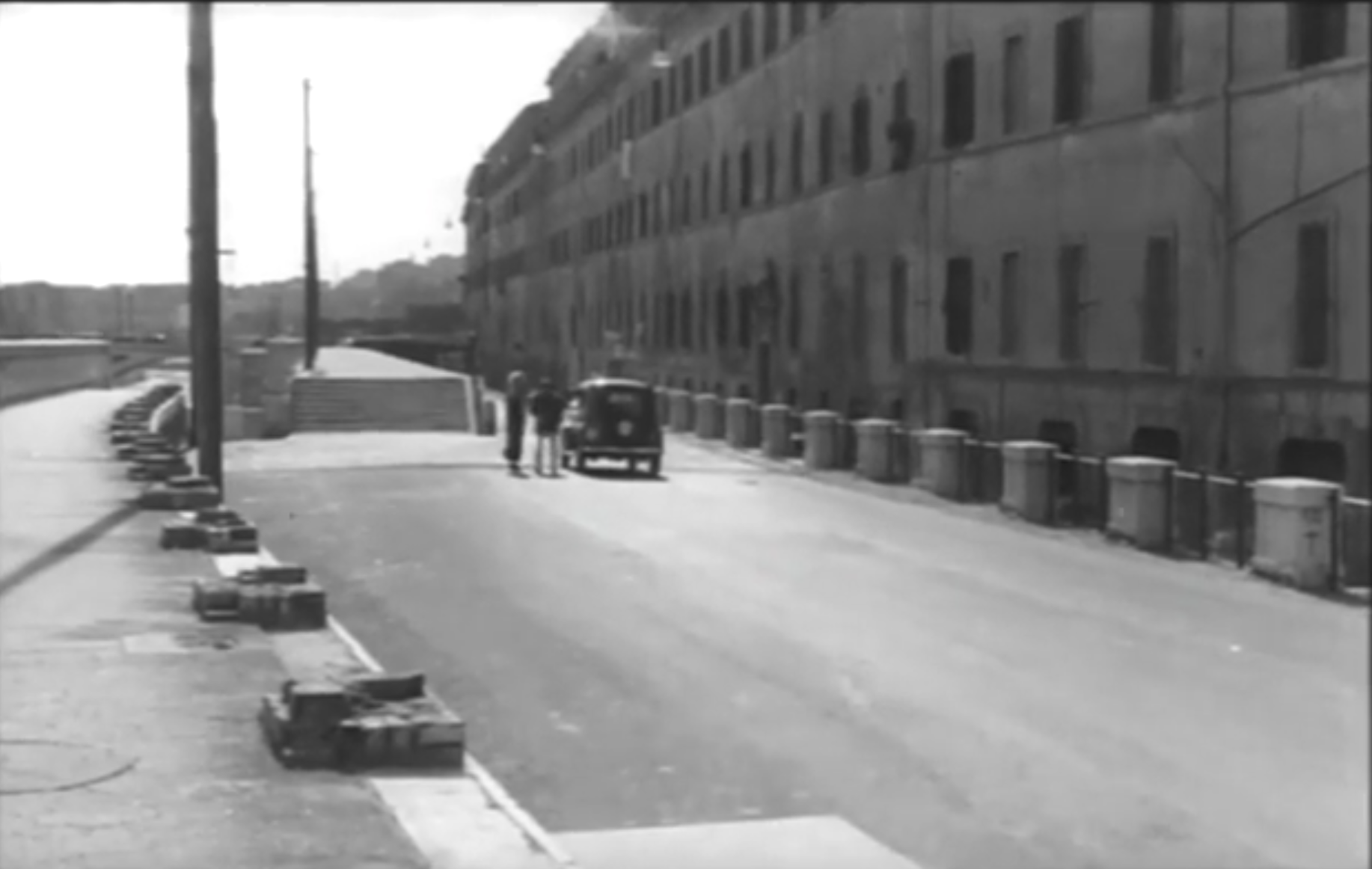
Ma, dopo un momento, il taxi si ferma di colpo. Si apre una portiera e esce Gioia, seguita da Umberto. Restano sulla strada mentre il veicolo parte.
But, after a moment, the taxi screeches to a halt. A door opens, and out comes Gioia, followed by Umberto. They stand in the road as the vehicle leaves.
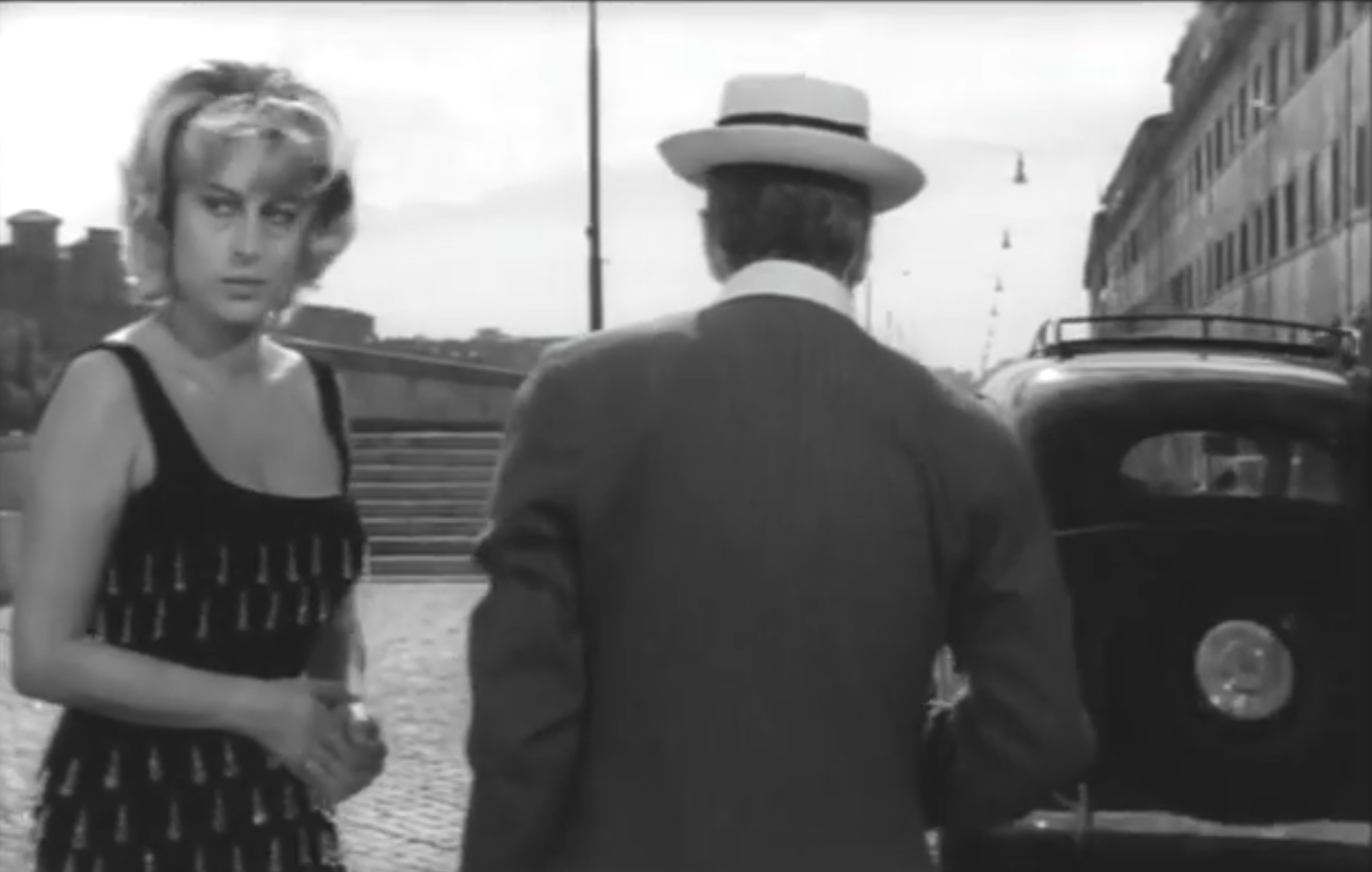
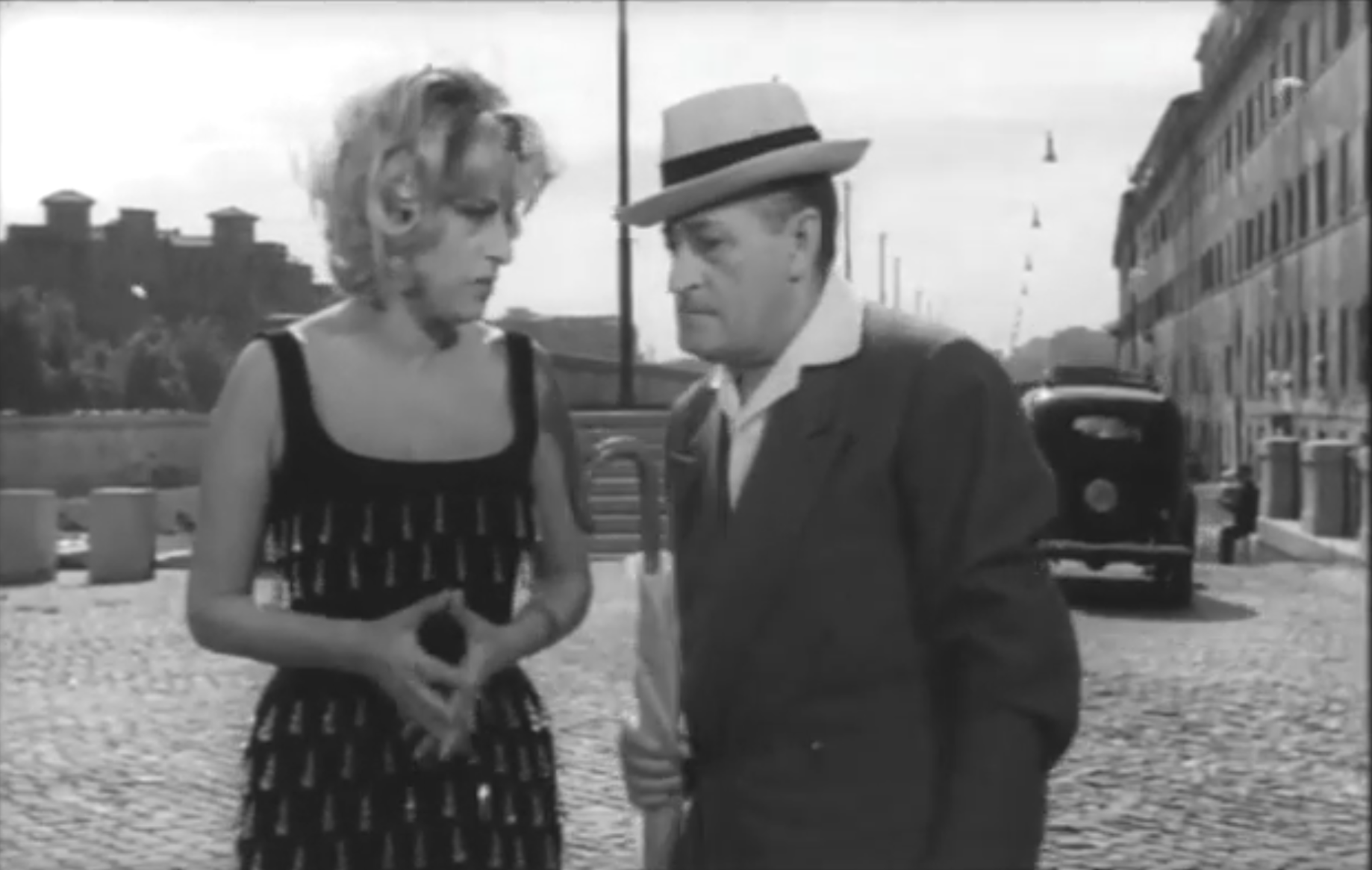
"Allora", dice lei, le mani unite davanti alla vita nel gesto che vuol dire ‘non c’è speranza’. "Sei il solito morto di fame, amico mio. Se non hai una lira perché dire ‘Basta con la miseria!’ ‘Usiamo le ultime riserve!’?”
"Credevo ne avessi tu".
"Io?" ribatte, incredula.
“So,” she says, hands together at her waist in a gesture that means ‘this is hopeless.’ “You’re the same old bum, my dear. If you don’t have a lira, why say ‘Down with misery!’ ‘Let’s use our last reserves!’?”
“I thought you had some.”
“Me?” she counters, incredulous.
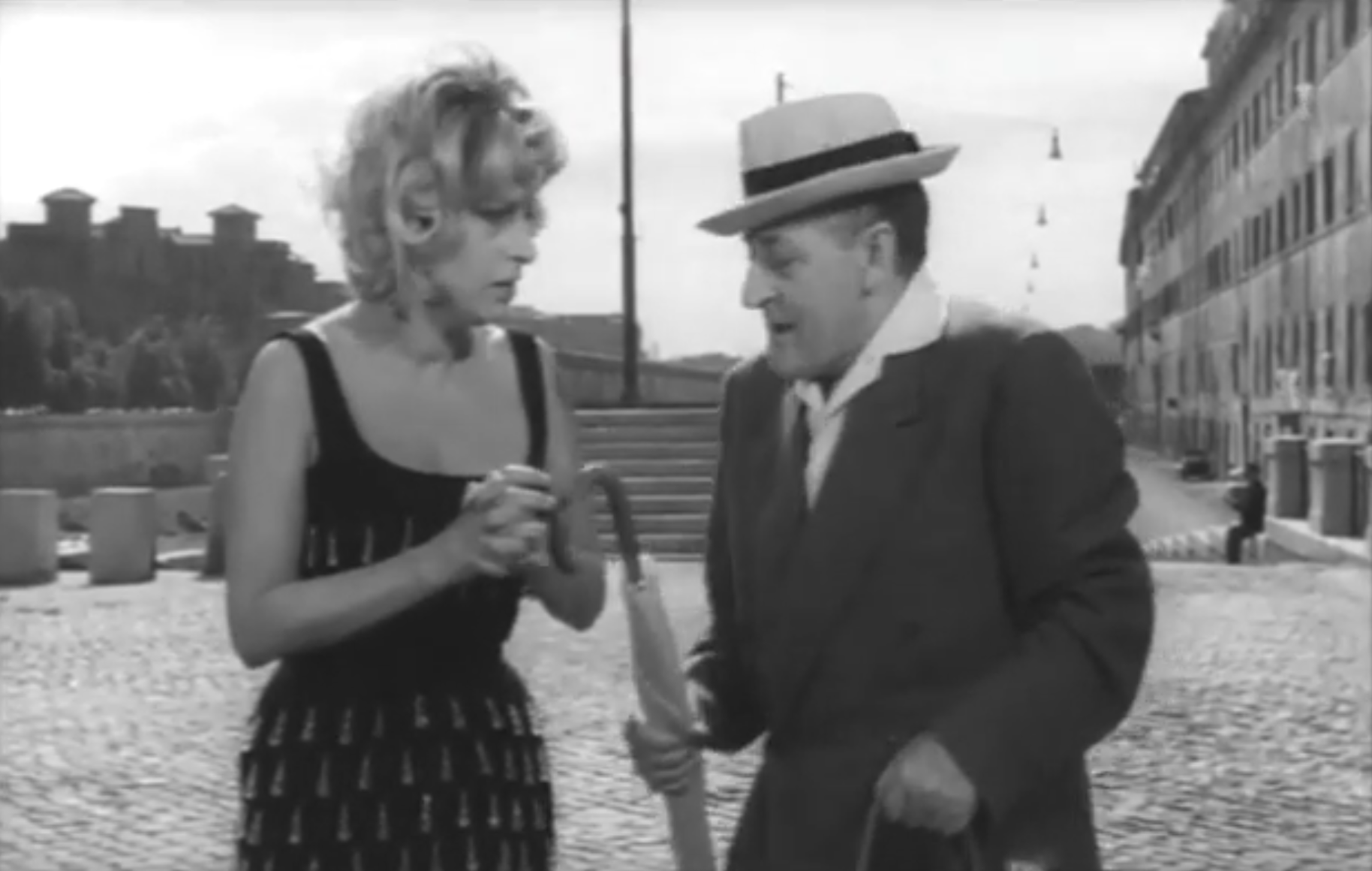
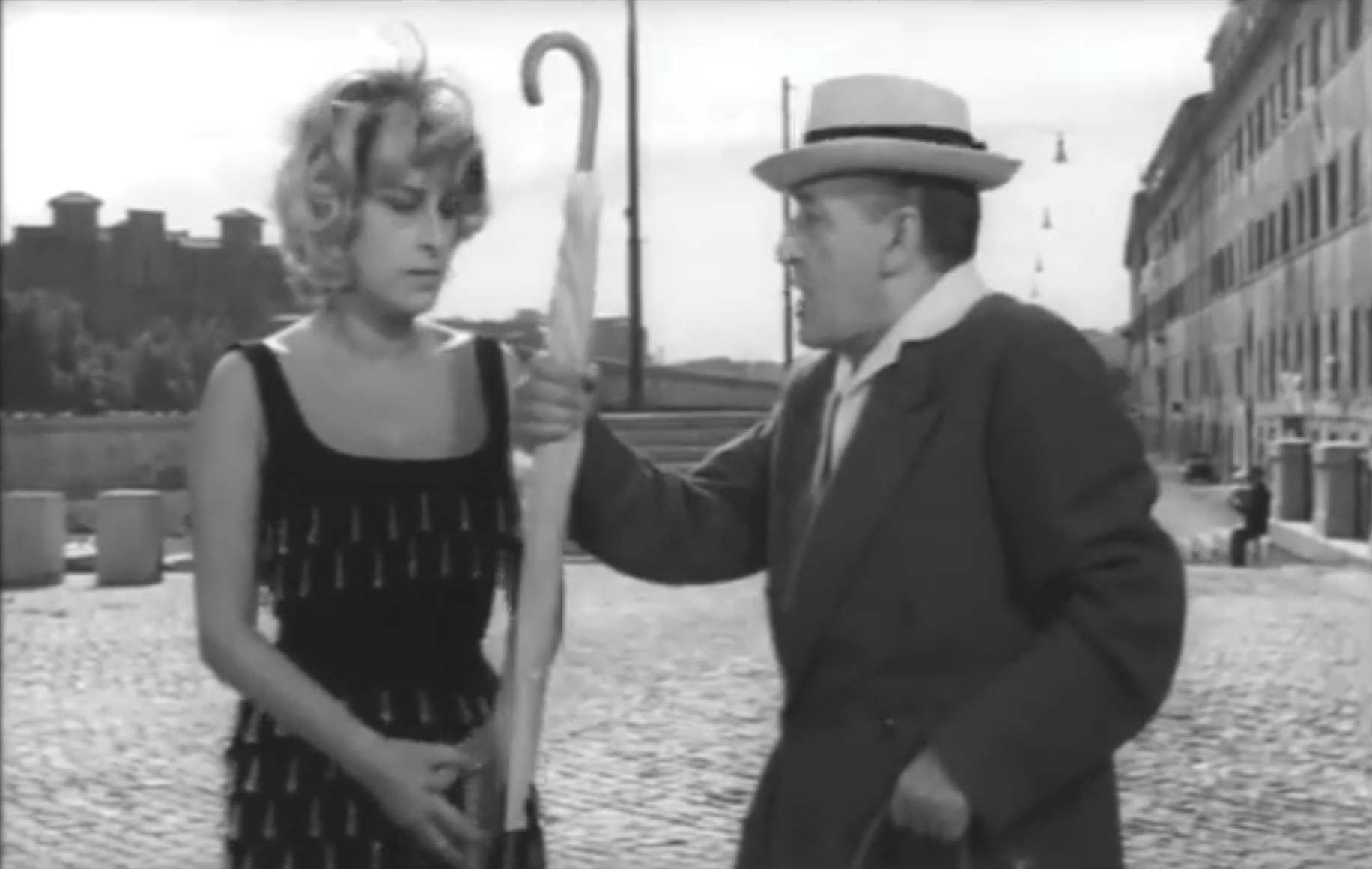
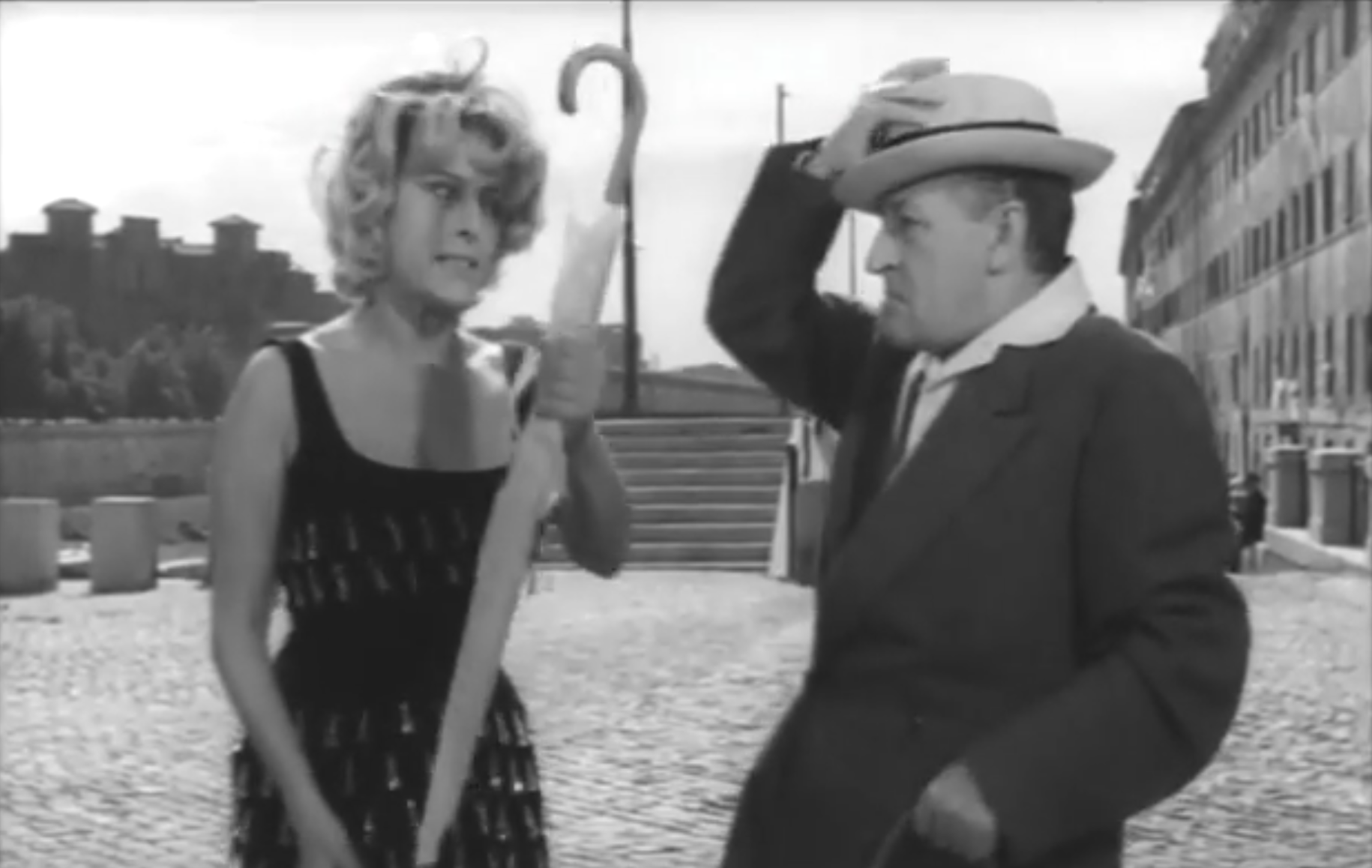
Lui scrolla le spalle. "Ho fatto una spesa rilevante per il parapioggia” dice lui, usando una parola troppo sofisticata per l'occasione, come fa spesso.
Lo solleva per mostrarlo e lei lo afferra e lo scuote contro di lui. "Io te lo darei in testa questo parapioggia!" dice rabbiosamente.
He shrugs. “I made a significant expenditure for the raincover,” he says, using a word too sophisticated for the occasion, as he often does.
He holds it out to show her and she grabs it and shakes it at him. “I’d beat you on the head with this raincover!” she says angrily.
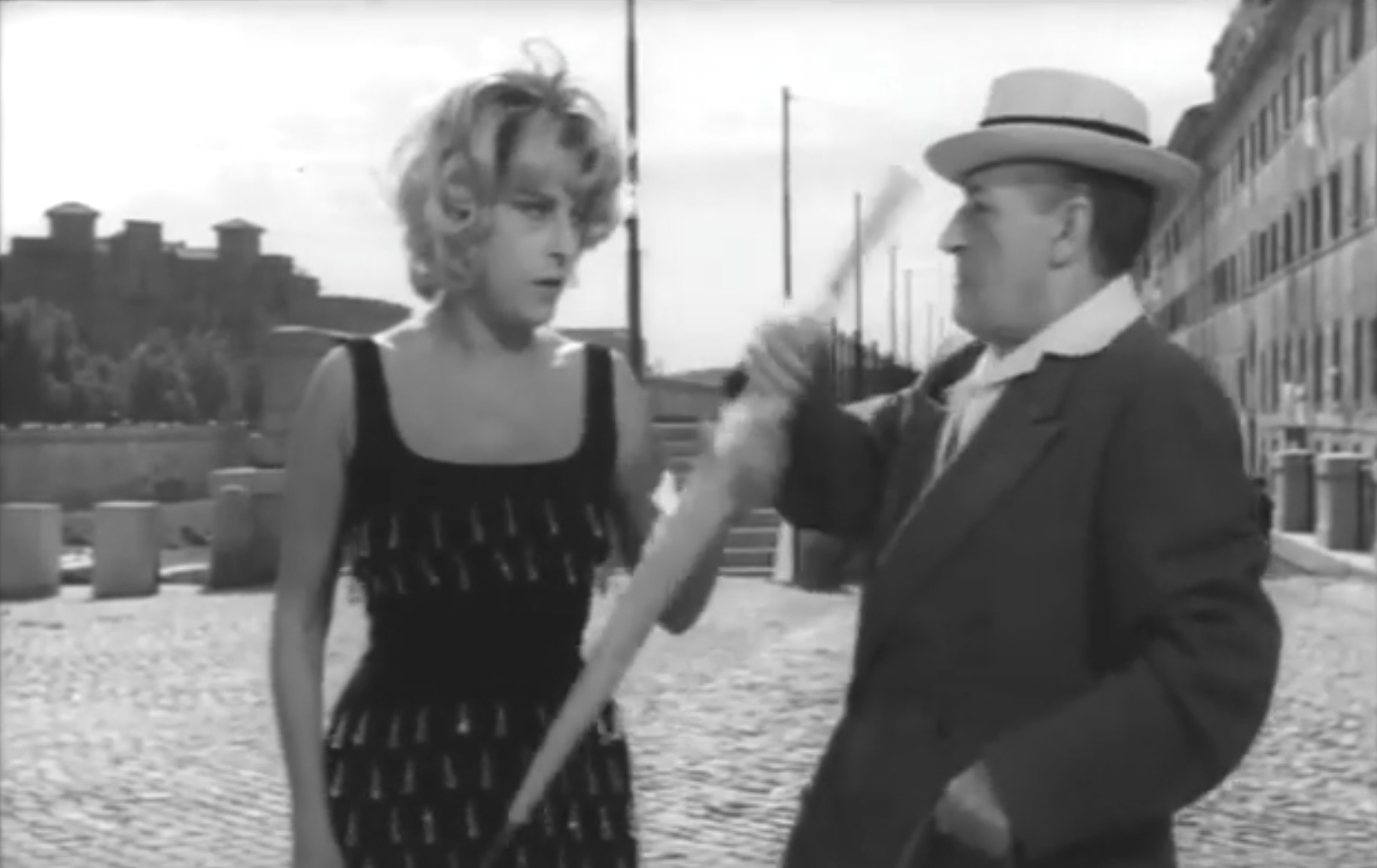
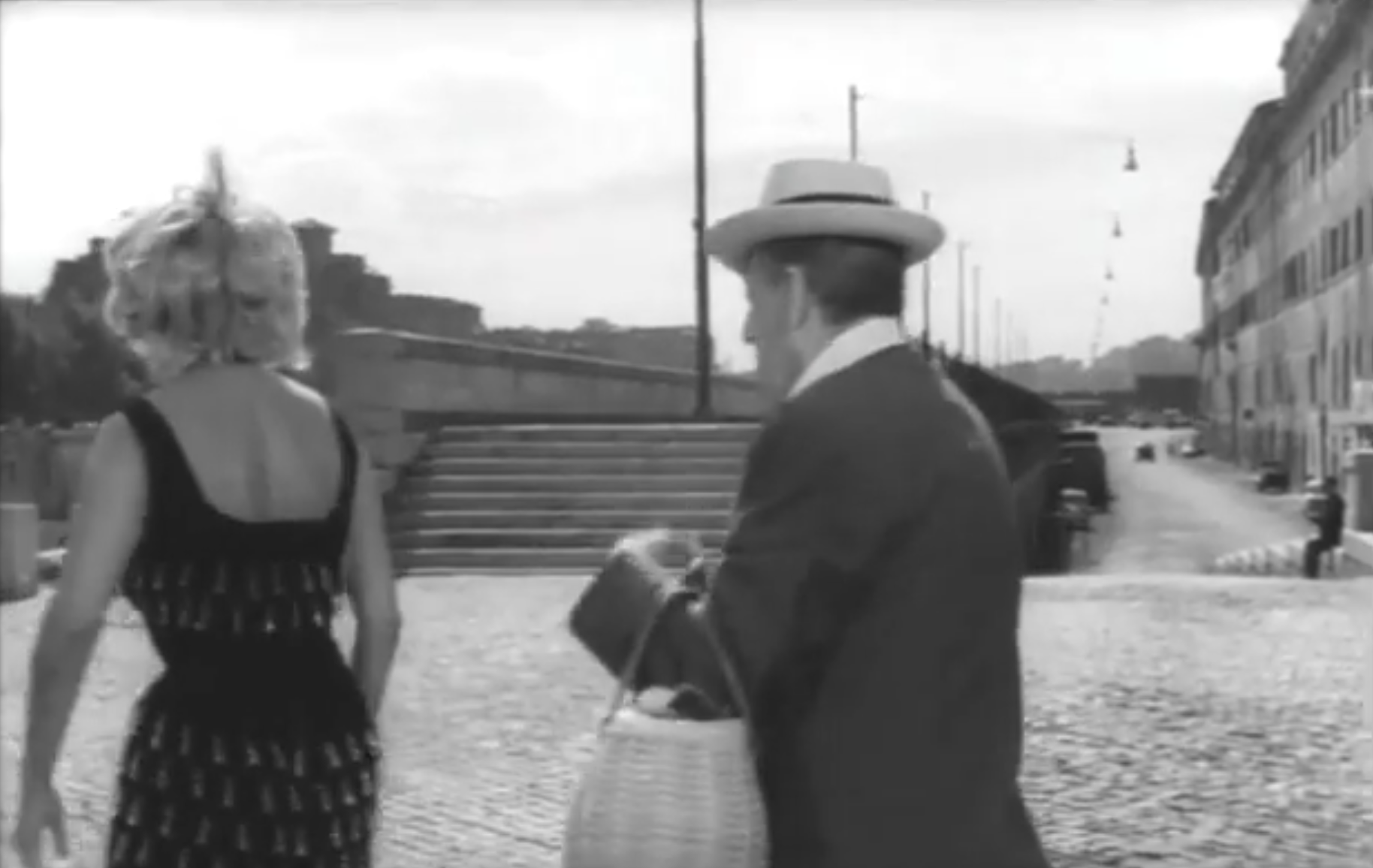
Glielo restituisce: "Aprilo, almeno ci ripariamo dal sole".
She hands it back to him: “Open it, at least we’ll protect ourselves from the sun.”
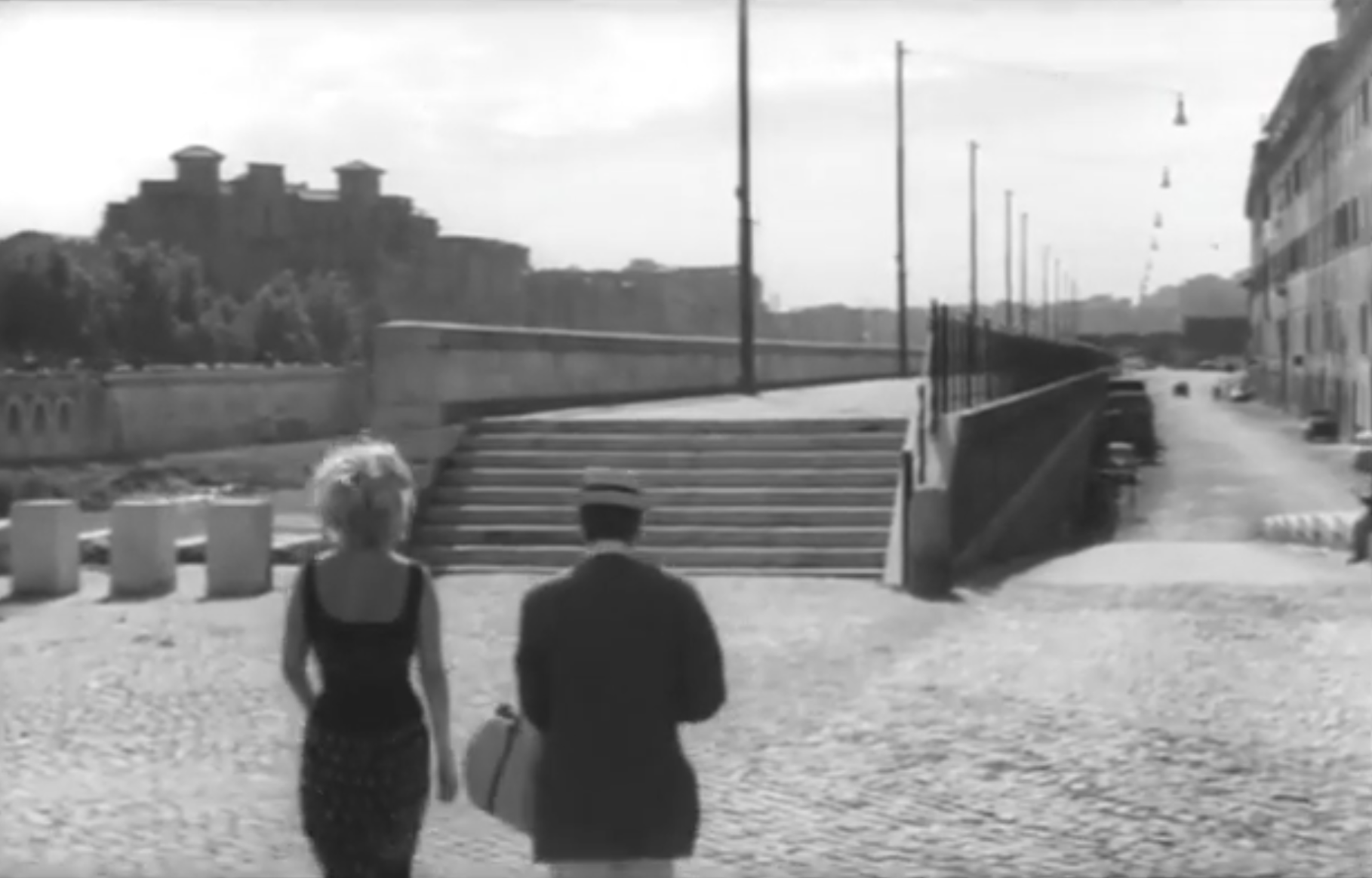
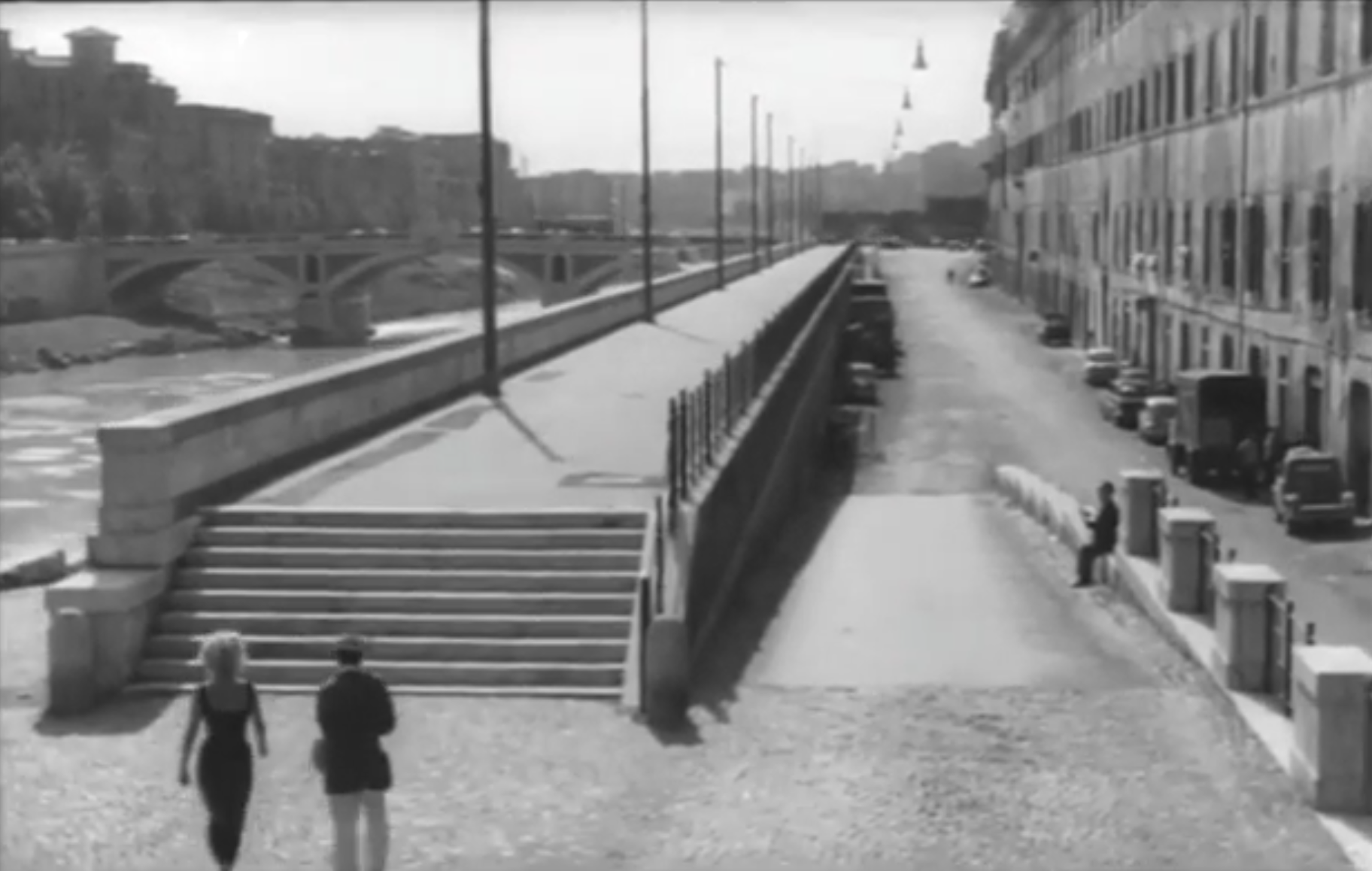
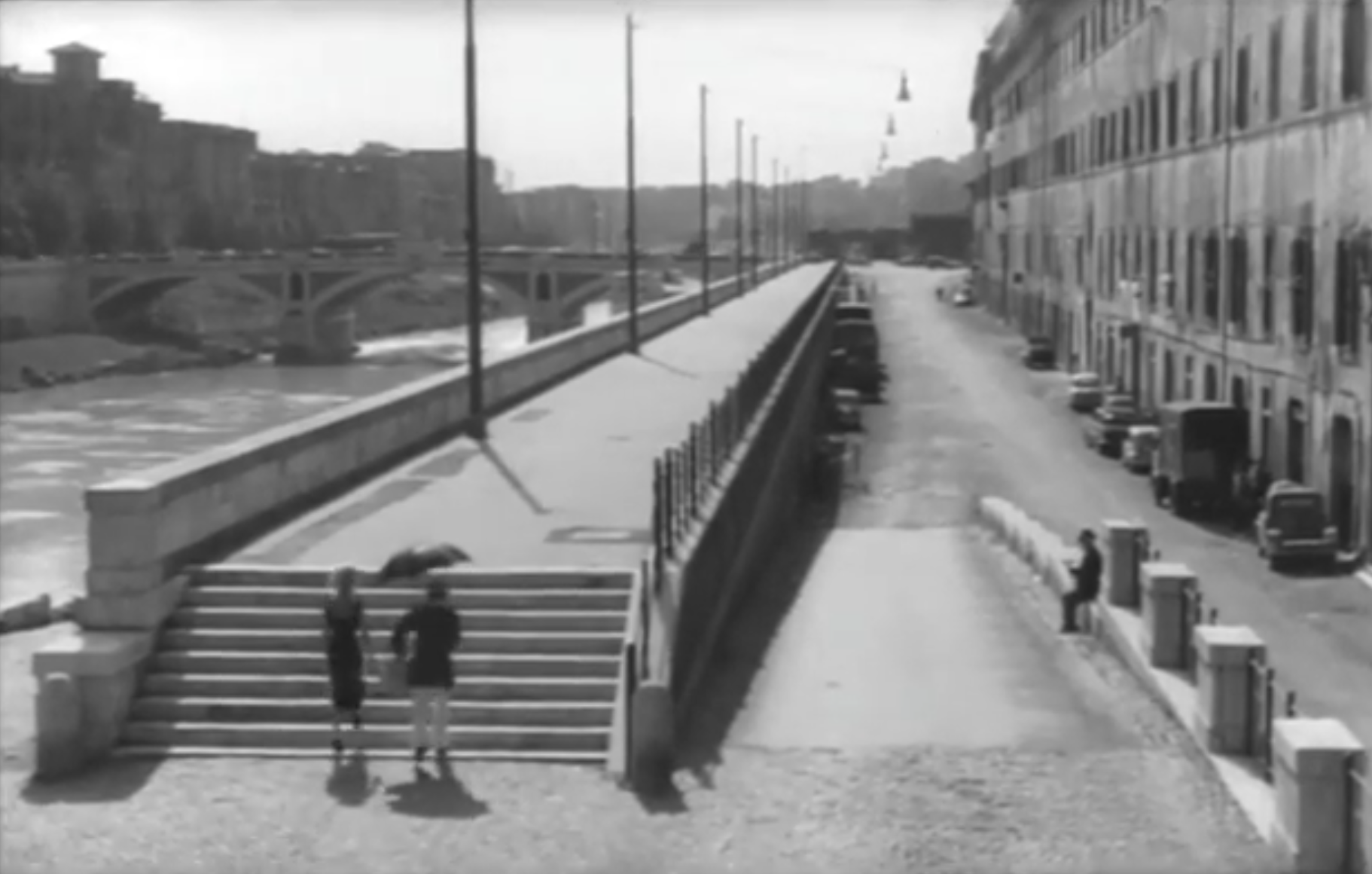
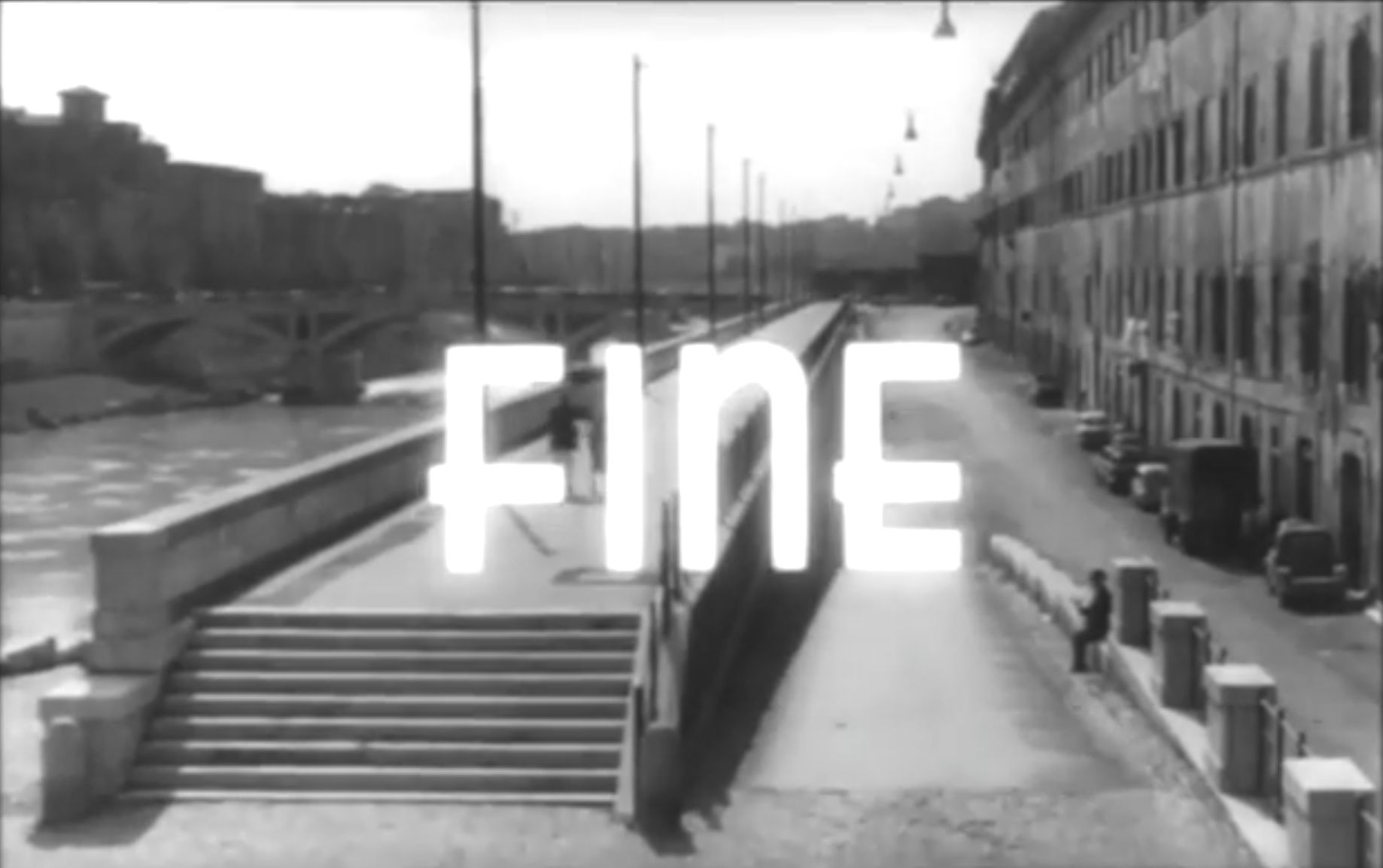
Mentre si mettono in cammino, la musica esuberante che ha dato il via al film riprende.
"Mannaggia, Umberto!" urla lei. Si avvicinano ai gradini che portano a un lungofiume, che si allontana in diagonale attraverso l’inquadratura, chiamando i nostri personaggi al futuro.
Umberto apre l'ombrello e, insieme, iniziano il nuovo anno di Gioia.
As they set out on their walk, the exuberant music that began the film strikes up again.
“Damn it, Umberto!” she yells. They approach the steps that lead to a riverside walkway, which recedes diagonally across the frame, calling our characters on to the future.
Umberto opens the umbrella and, together, they begin Gioia’s New Year.
FINE PARTE 23
This is the final installment of our cineracconto about Risaste di Gioia. A Vertigo grammar exercise has been posted below. Subscribe to receive a weekly email newsletter with links to all our new posts.
VERTIGO Grammar exercise: Italian gestures e Io ti salverò!
For help doing the exercise, go to the page on this blog called “La stanza di Père Jules” where there are gifs from the film showing you how the gestures look in action!