Regia: Roberto Rossellini, 1945
Sceneggiatura: Sergio Amidei & Federico Fellini
Fotografia: Ubaldo Arata
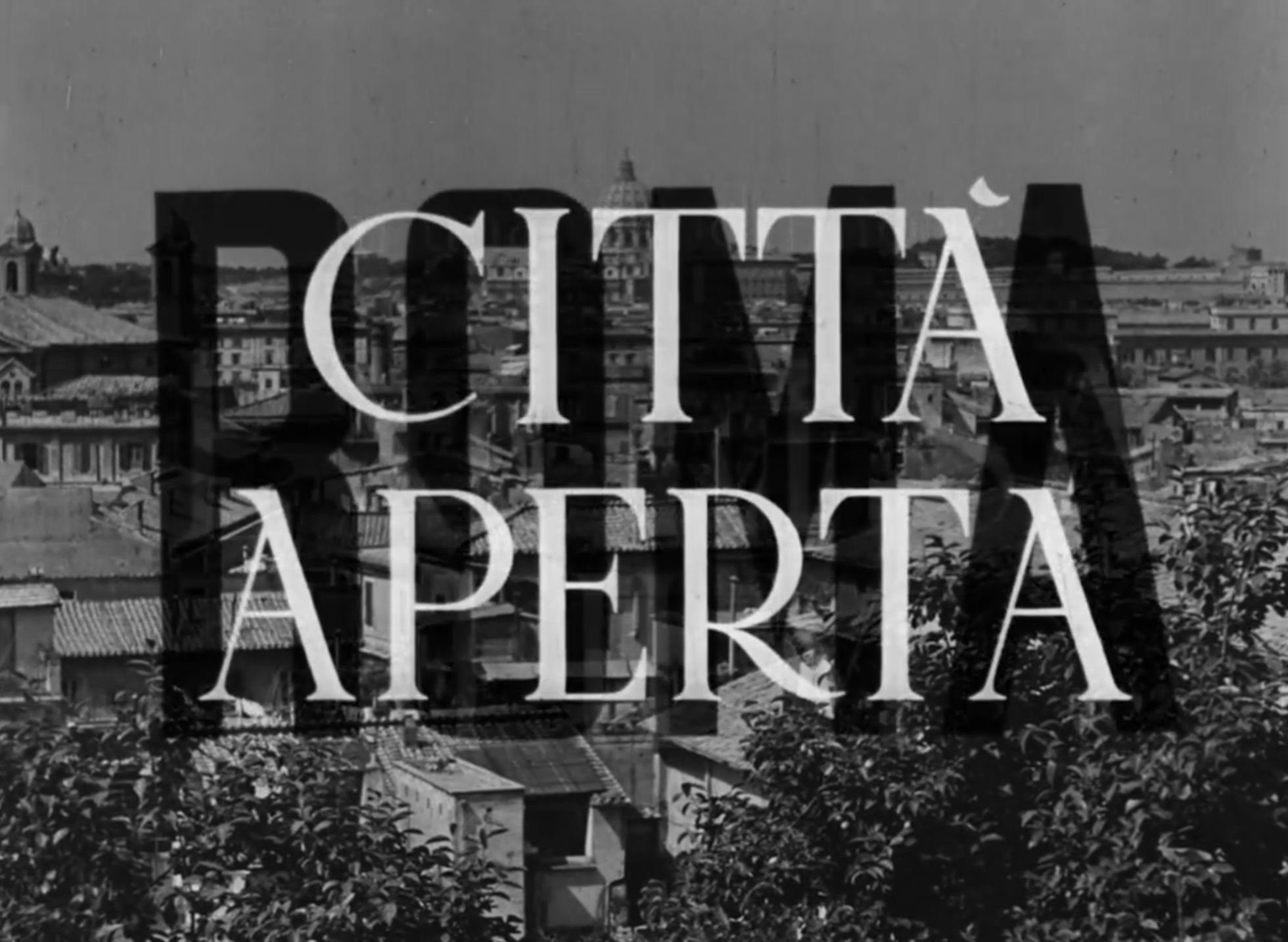
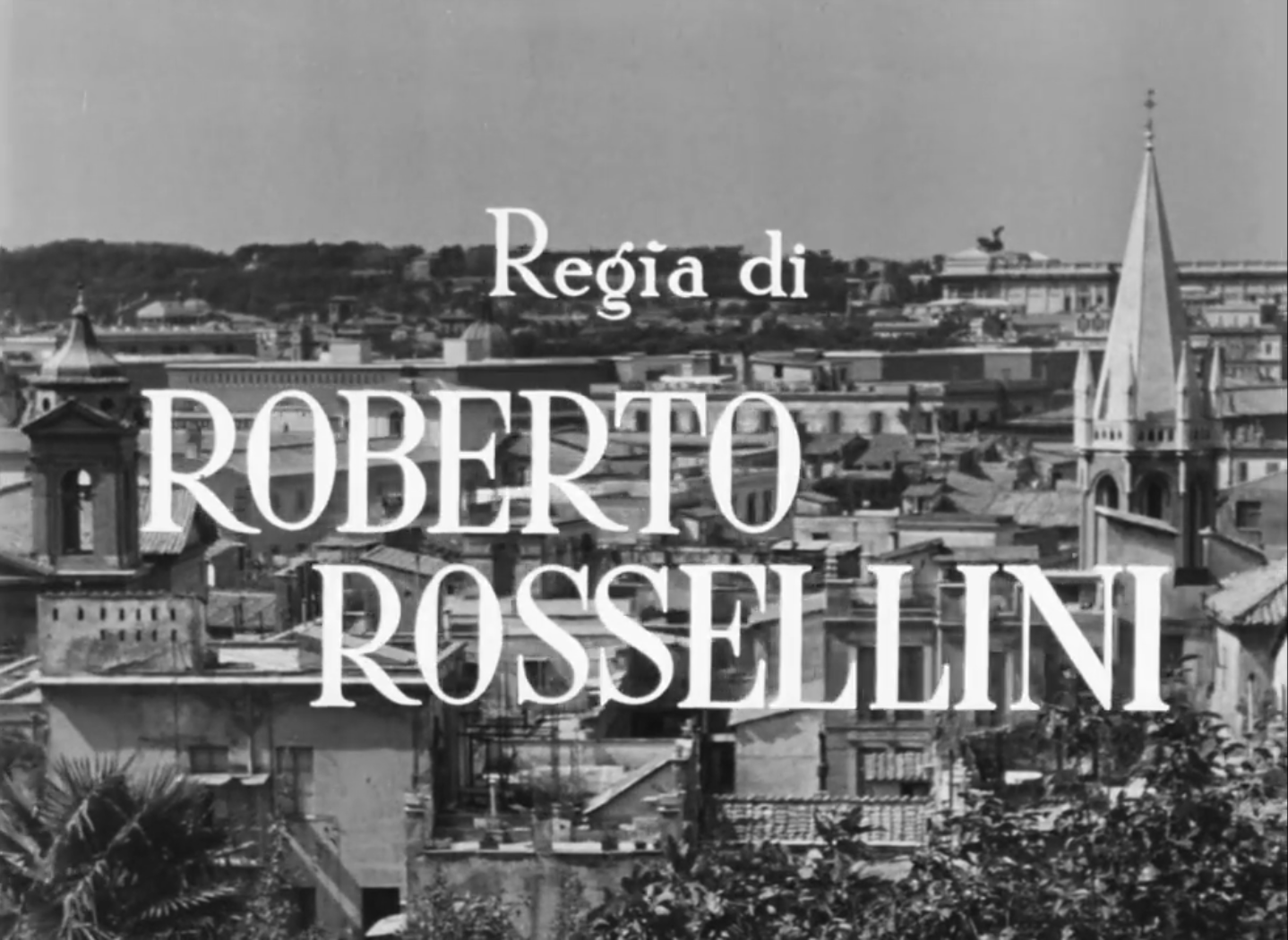
Mentre appaiono i titoli di apertura, la macchina da presa fa una panoramica sui tetti di Roma intorno a Piazza di Spagna, partendo dalla cupola della Basilica di San Pietro. Una cupa musica orchestrale cede il posto alle voci di soldati tedeschi che cantano un inno di battaglia. È il 1945, durante i nove mesi di occupazione nazista.
Gli eventi del film si basano, in parte, sulle esperienze di guerra di Teresa Gullace (trasformata nel personaggio di Pina, interpretato da Anna Magnani).
As the opening titles appear, the camera pans over the rooftops of Rome around Piazza di Spagna, beginning at the dome of Saint Peter's Basilica. Somber orchestral music gives way to the voices of German soldiers singing a battle hymn. It is 1945, during the nine months of Nazi occupation.
The events of the film are based, in part, on the wartime experiences of Teresa Gullace (transformed into the character Pina, who is played by Anna Magnani).
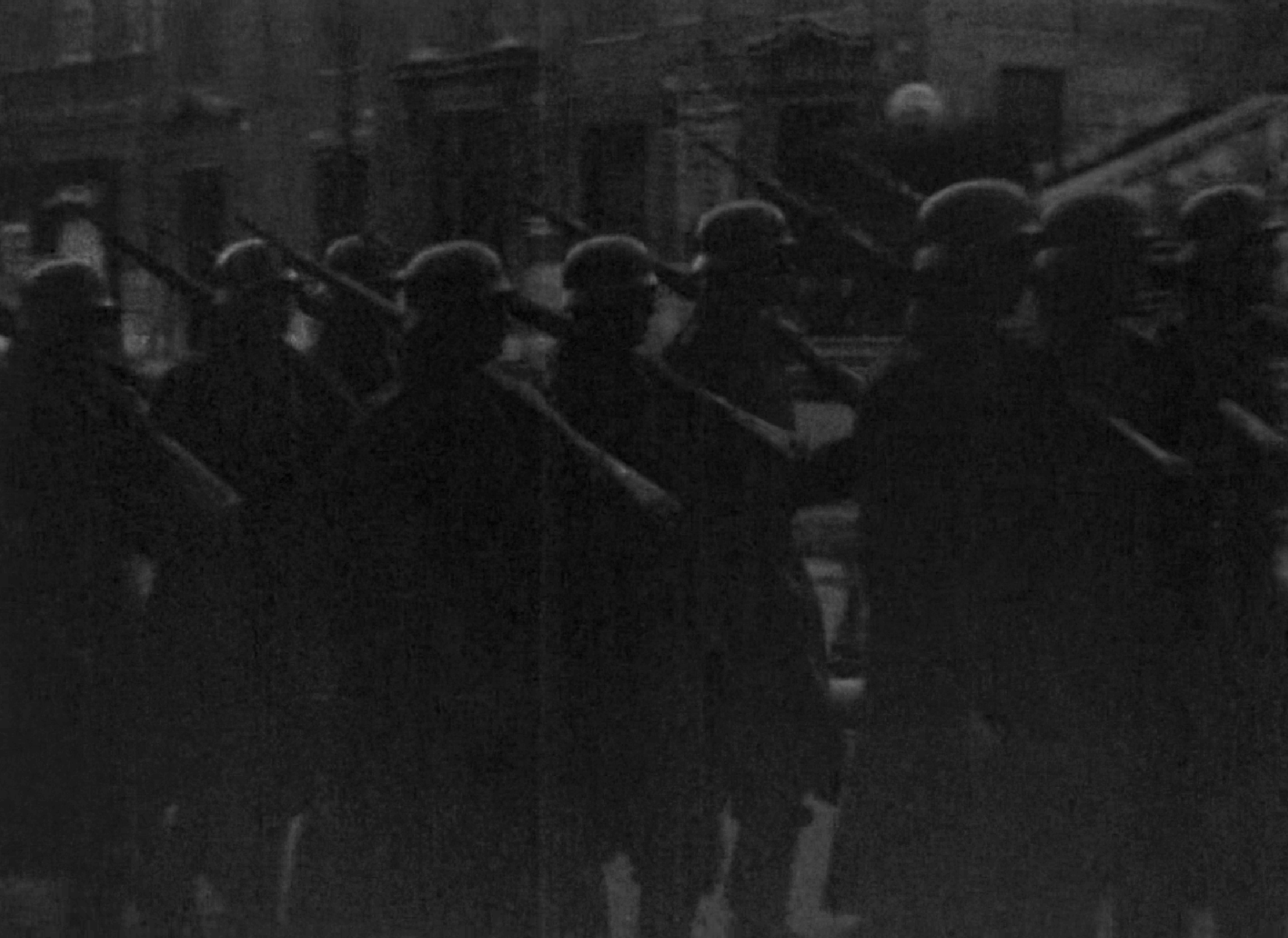
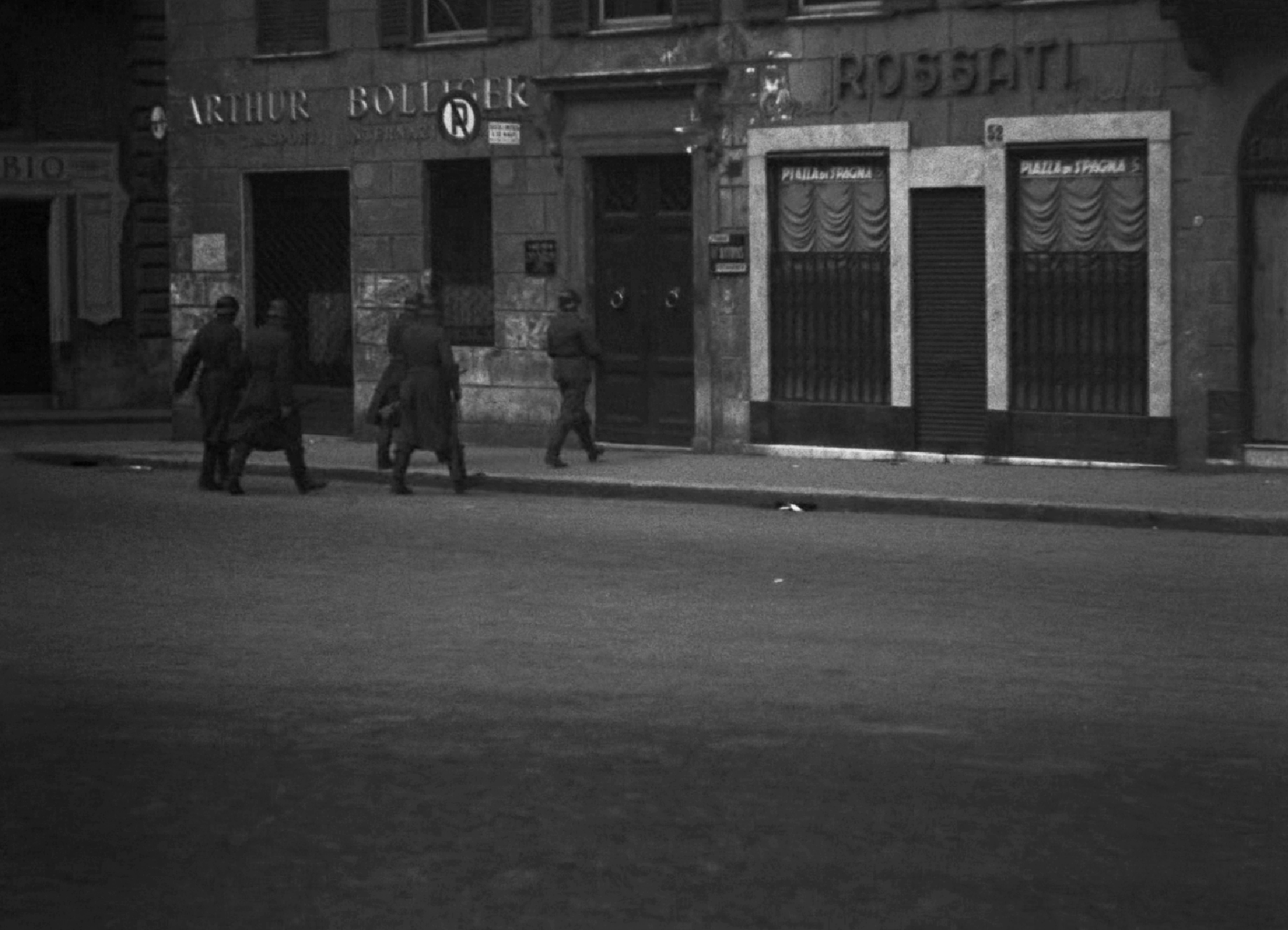
Marciando per le strade di Roma, i tedeschi sono figure scure nella notte. A malapena li riconosciamo – e nemmeno gli abitanti del luogo li riconoscono, anche se sono molto consapevoli della presenza degli invasori.
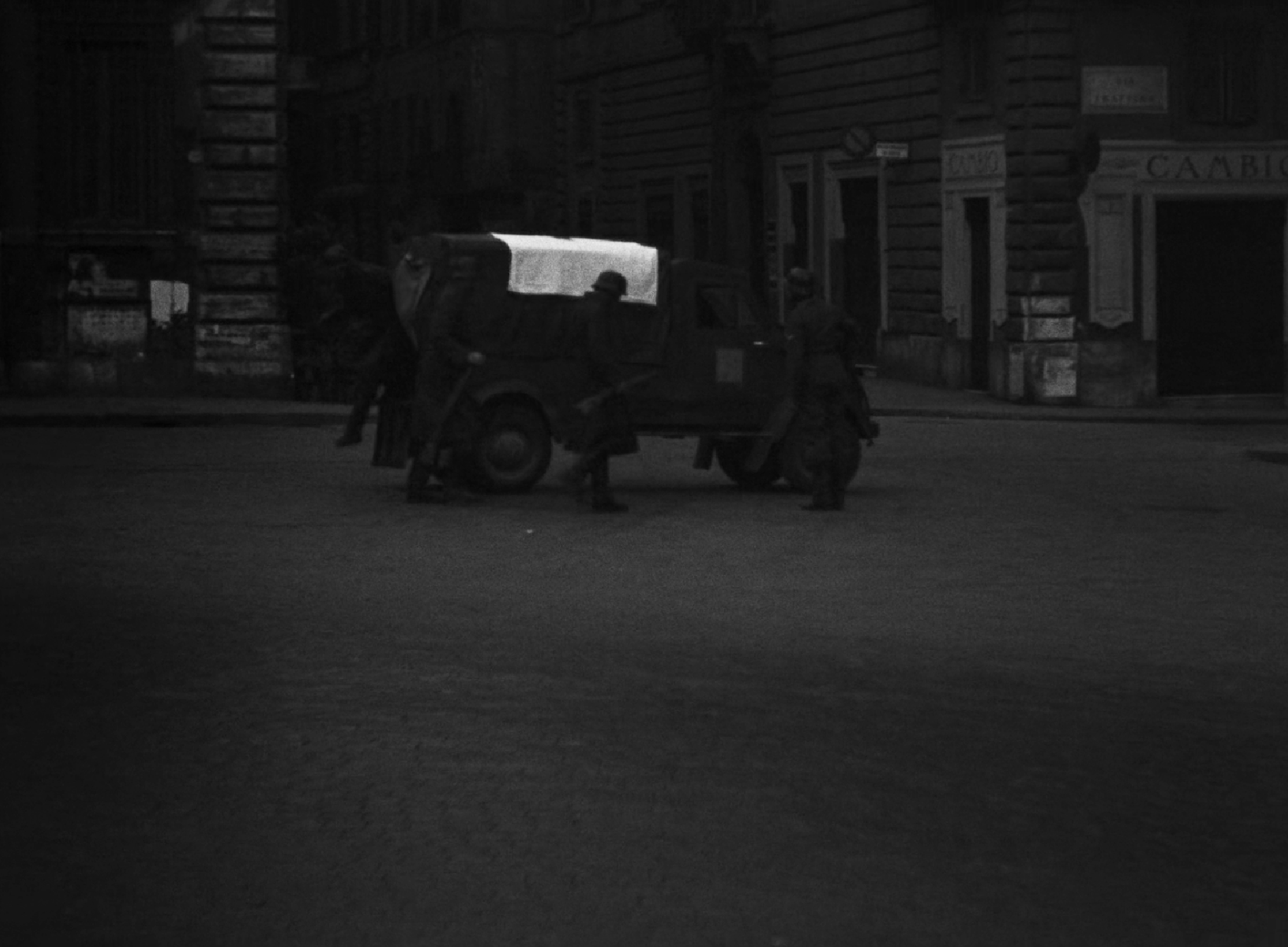
Un camion si ferma davanti a un edificio residenziale. I soldati emergono da sotto la sua copertura bianca. Mentre suona una musica di suspense, battono sulla porta d'ingresso.
Marching through the streets of Rome, the Germans are shadowy figures in the night. We can barely make them out – nor can the local residents, though they are very aware of the invaders’ presence.
A truck stops in front of a residential building. Soldiers emerge from under its white cover. As suspenseful music plays, they pound on the front door.
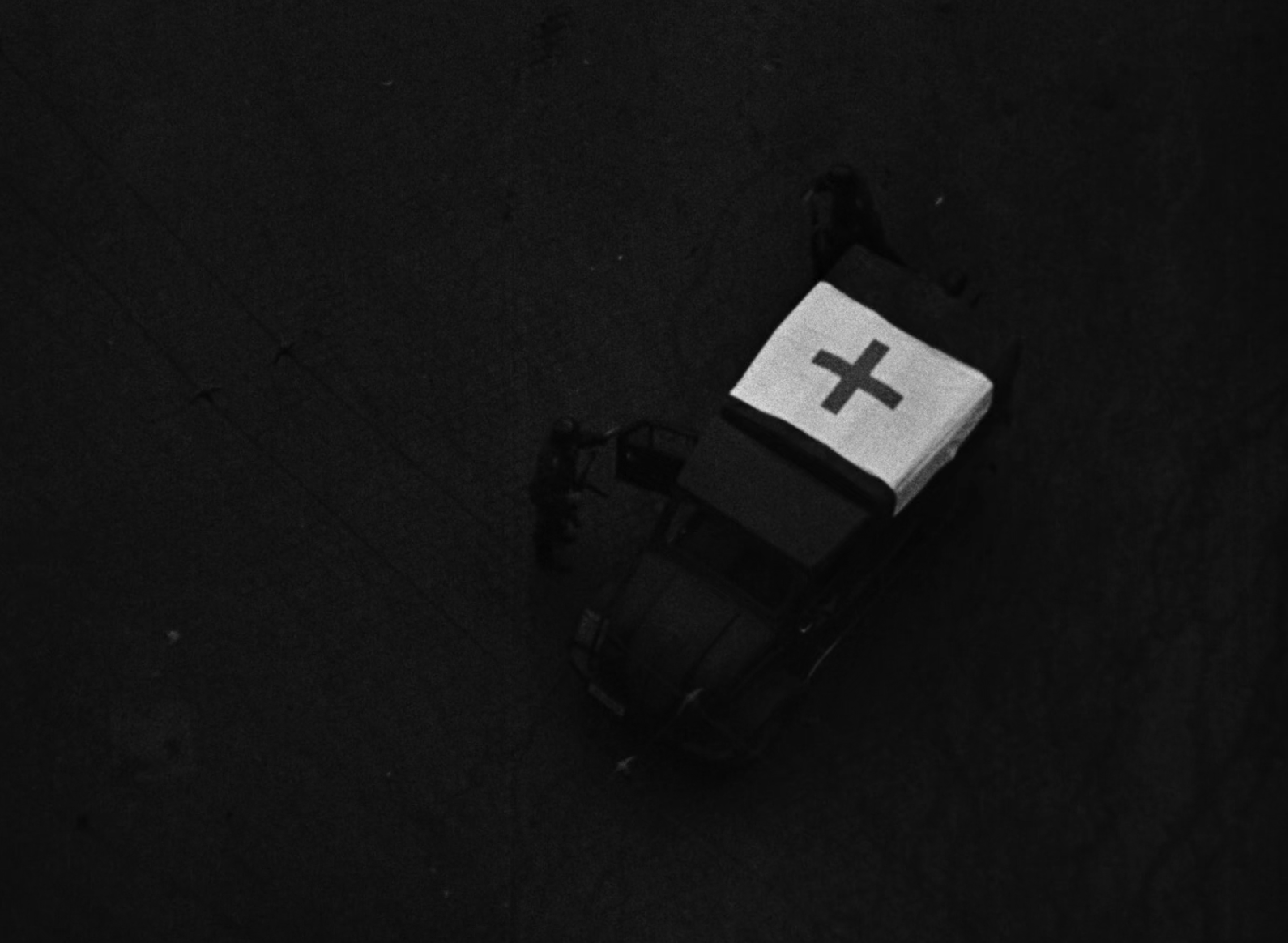
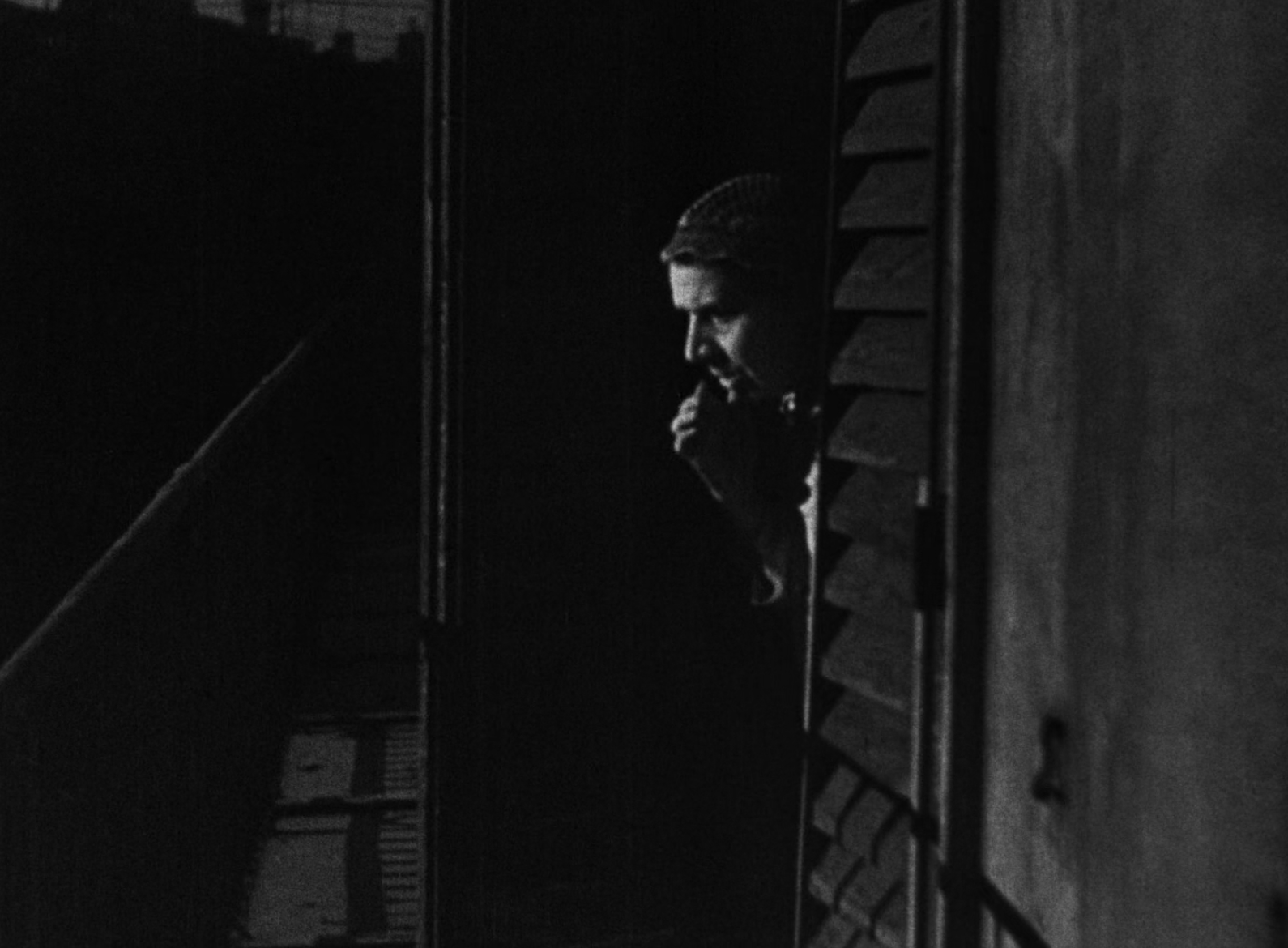
Al piano di sopra, una porta si apre un po’ e il suono di Radio Londra, una trasmissione radiofonica,* si diffonde nel balcone. Una donna sbircia fuori. Guardando giù in strada, vede il camion, che mostra chiaramente una grande croce rossa.** "Oh, Gesù!" dice la donna, e torna velocemente dentro, chiudendo la porta.
*Come parte della propaganda degli Alleati in tempo di guerra, la BBC ha trasmesso questi programmi in lingua inglese nell'Europa occupata.
**La croce rossa identifica (falsamente) il camion come veicolo per il trasporto dei feriti e quindi lo protegge dai bombardamenti dall'aria.
Upstairs, a door cracks open, and the sound of London Calling Europe, a radio broadcast,* drifts out onto the balcony. A woman peeks out. Looking down into the street, she sees the truck, which clearly displays a big red cross.** “Oh, Jesus!” the woman says, and goes quickly back inside, shutting the door.
*As part of the Allies’ wartime propaganda outreach, the BBC broadcast these English-language programs to occupied Europe.
**The red cross identifies the truck (falsely) as a vehicle to transport the wounded and thus protects it from being bombed from the air.
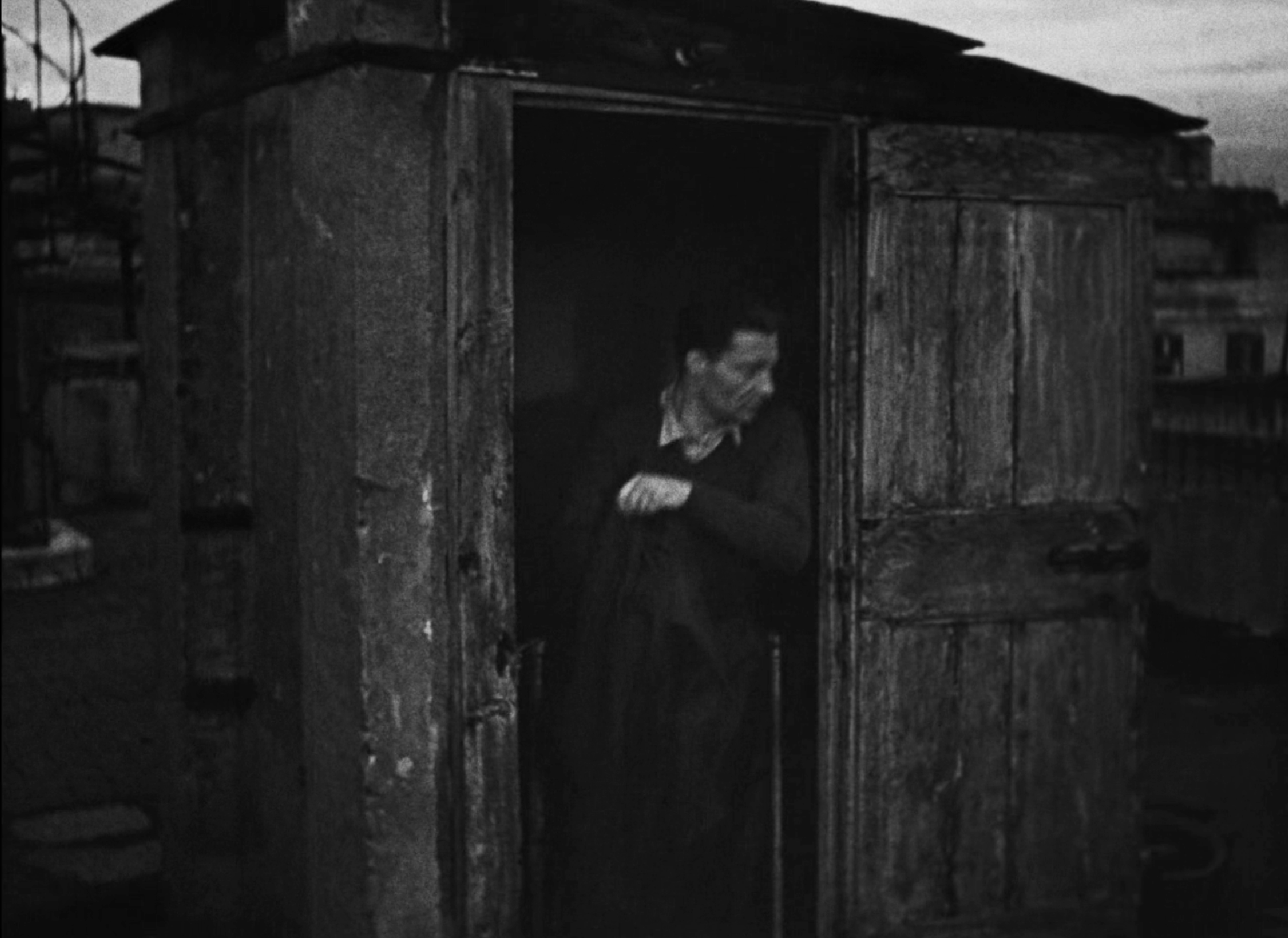
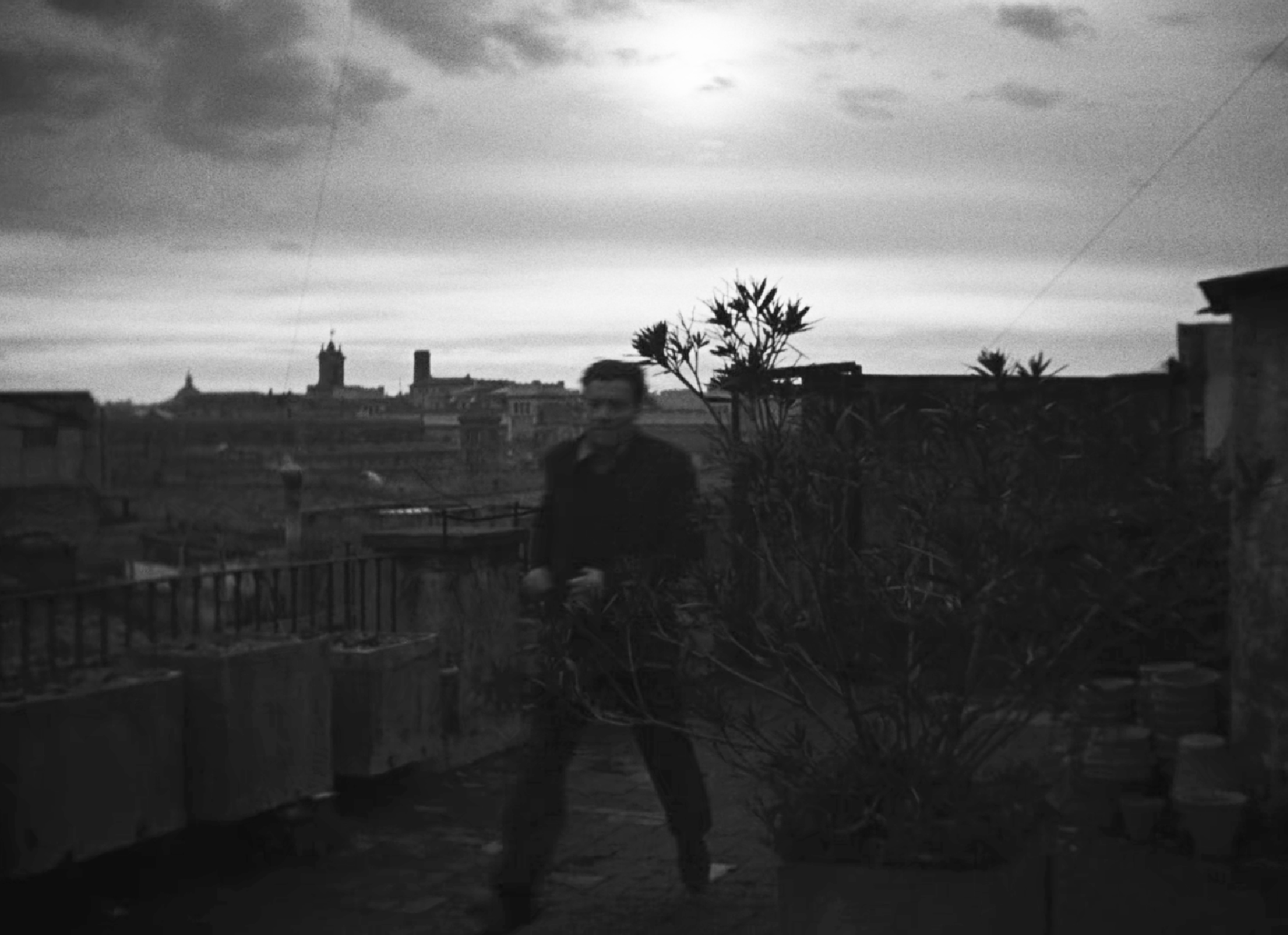
Un uomo esce da una porta sul tetto mettendosi la giacca. É Giorgio Manfredi (Marcello Pagliero). Chiude la porta e corre dall’altra parte del tetto. La luce si sta raccogliendo prima dell'alba, e il profilo della città è una fila di sagome geometriche: palazzi e una spruzzata di foglie.
A man emerges from a rooftop door, putting on his jacket. He is Giorgio Manfredi. He shuts the door and runs across the roof. Light is gathering before the dawn, and the skyline is a line of geometric silhouettes: buildings and a spray of leaves.
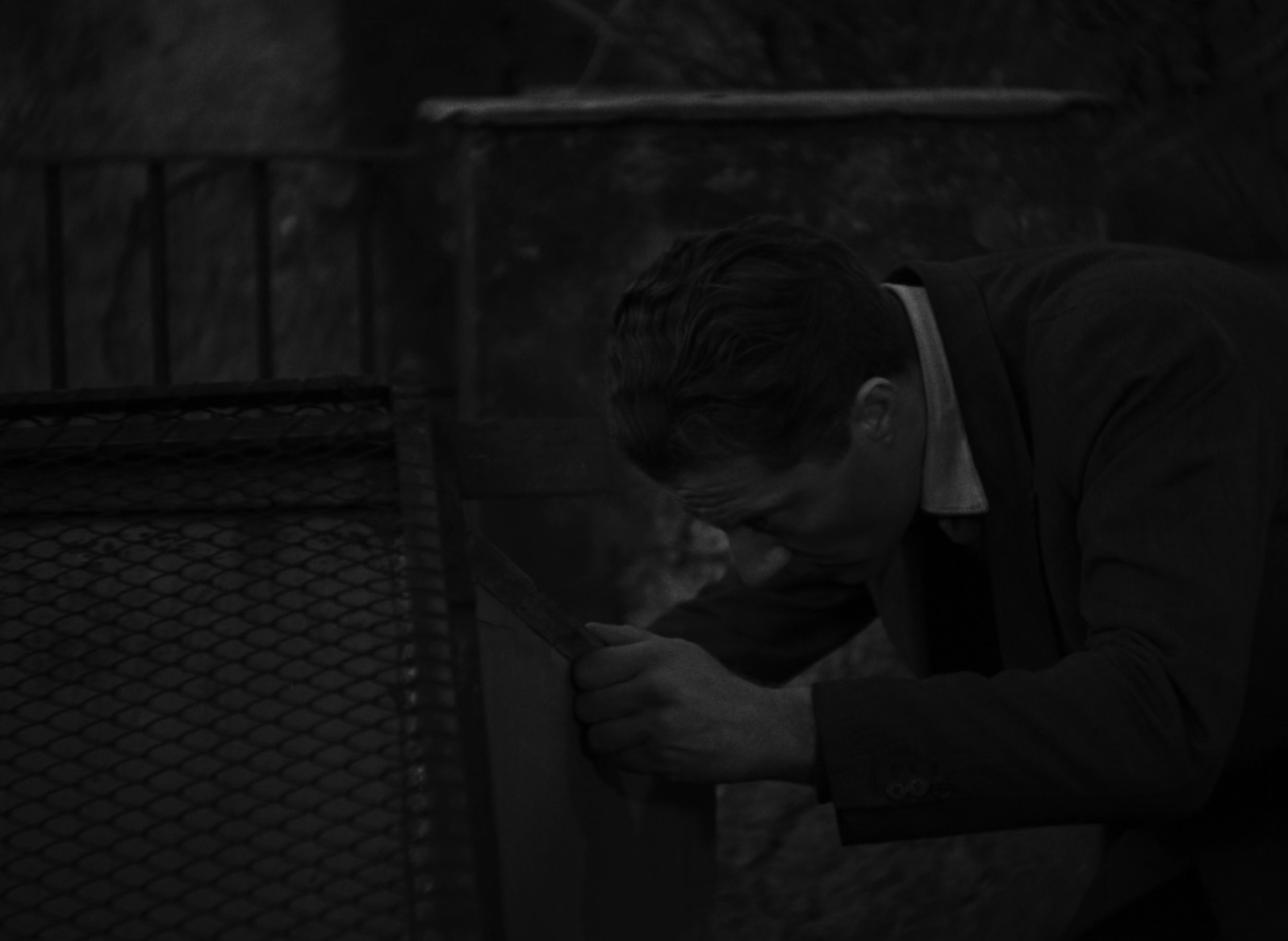
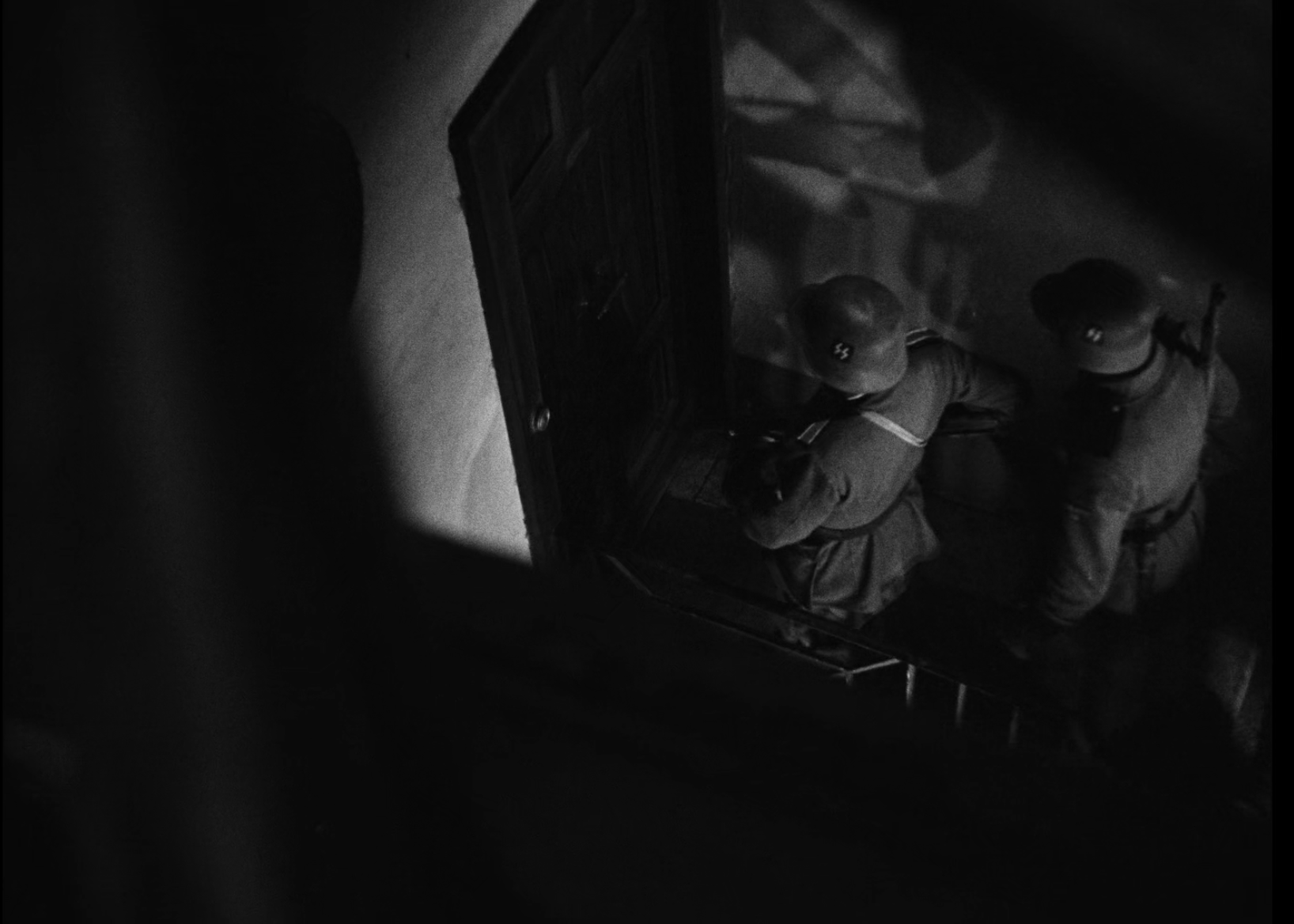
Guardando giù, Marcello vede i soldati tedeschi alla porta.
Looking down, Marcello sees the German soldiers at the door.
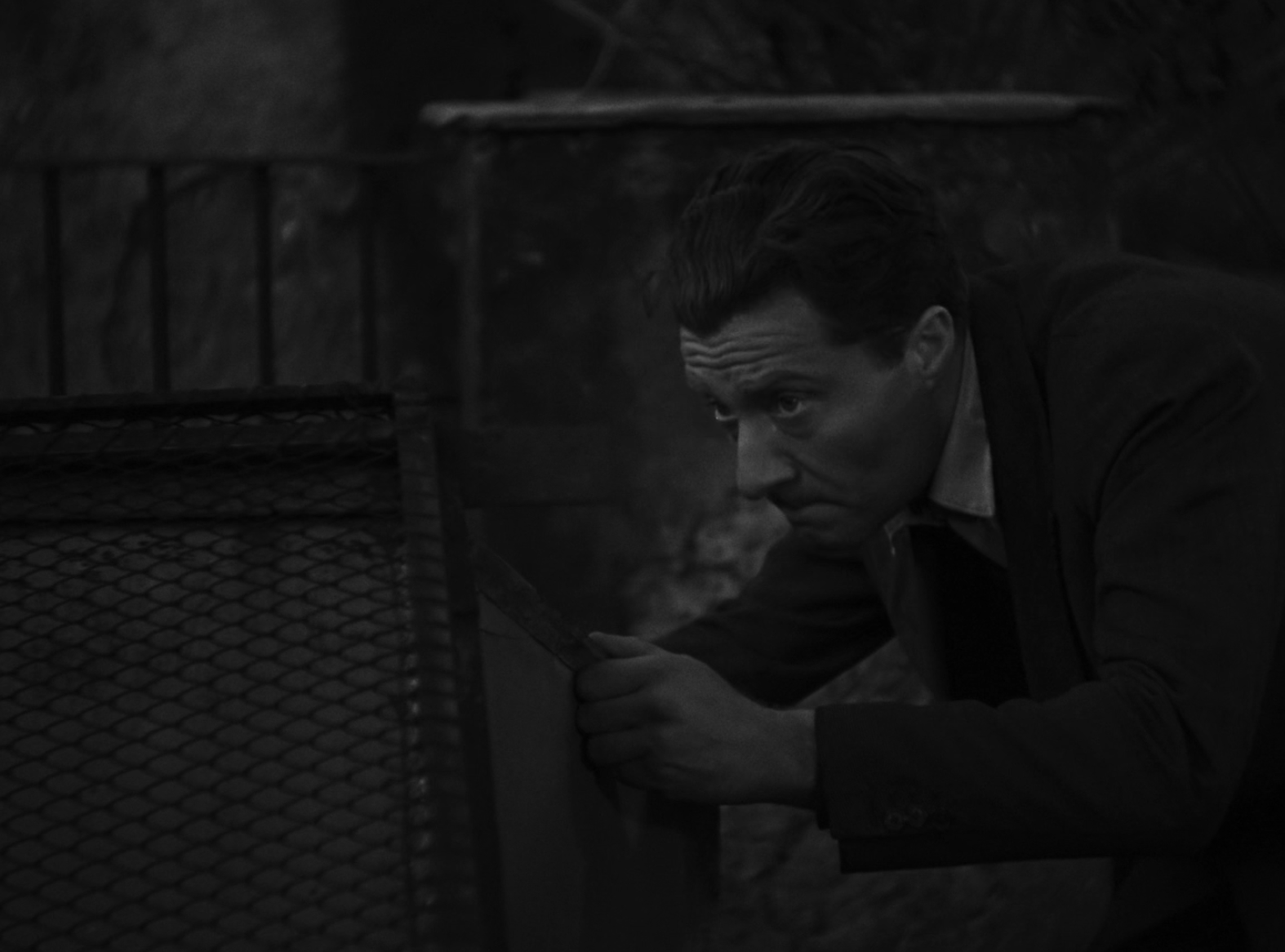
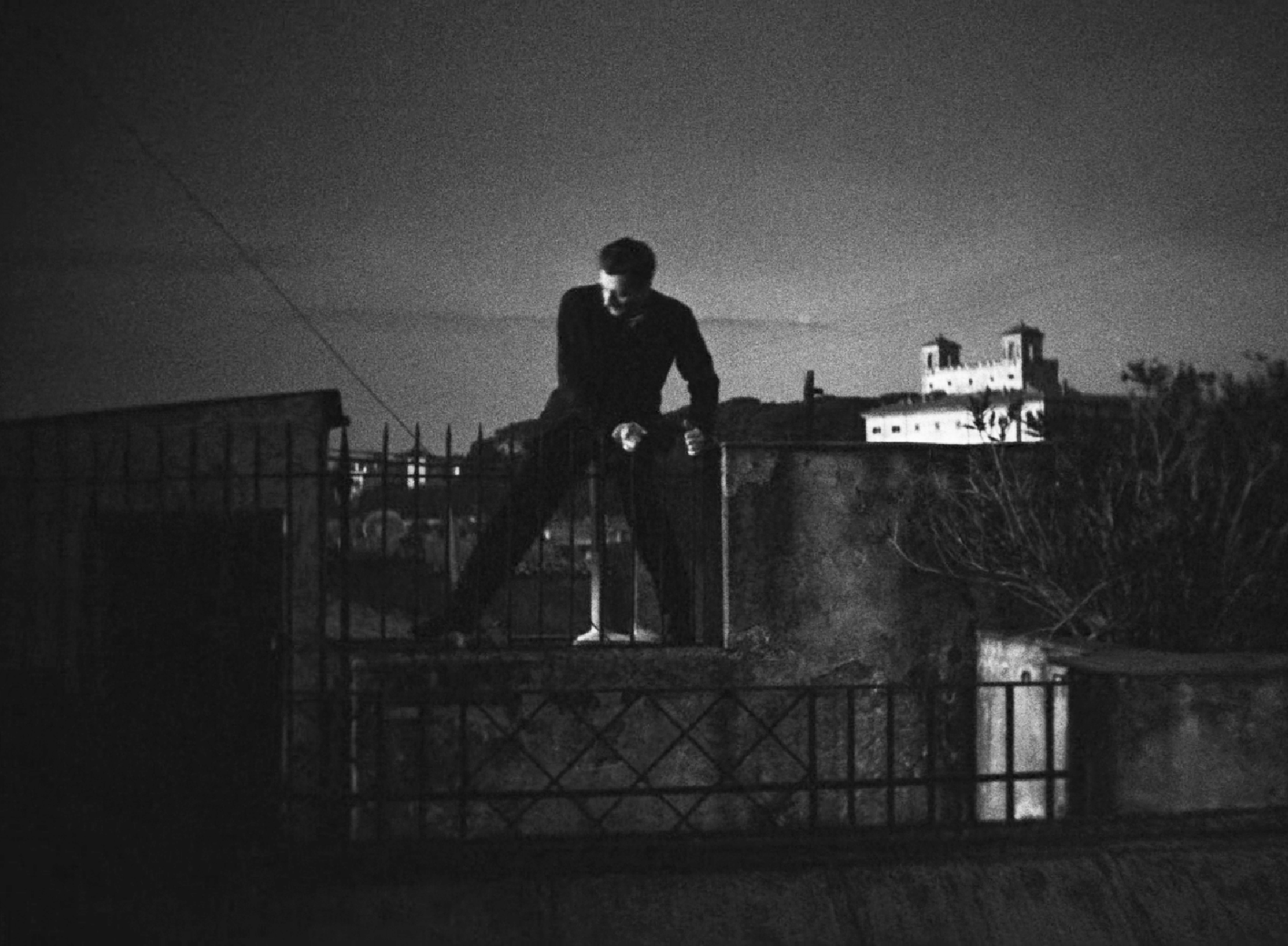
Dopo un attimo di riflessione, Marcello parte di corsa, saltando da un tetto all'altro. L'alba evidenzia i vecchi edifici di pietra nel buio persistente.
After a moment’s thought, Marcello takes off running, jumping from one rooftop to another. The dawn highlights the old stone buildings in the lingering dark.
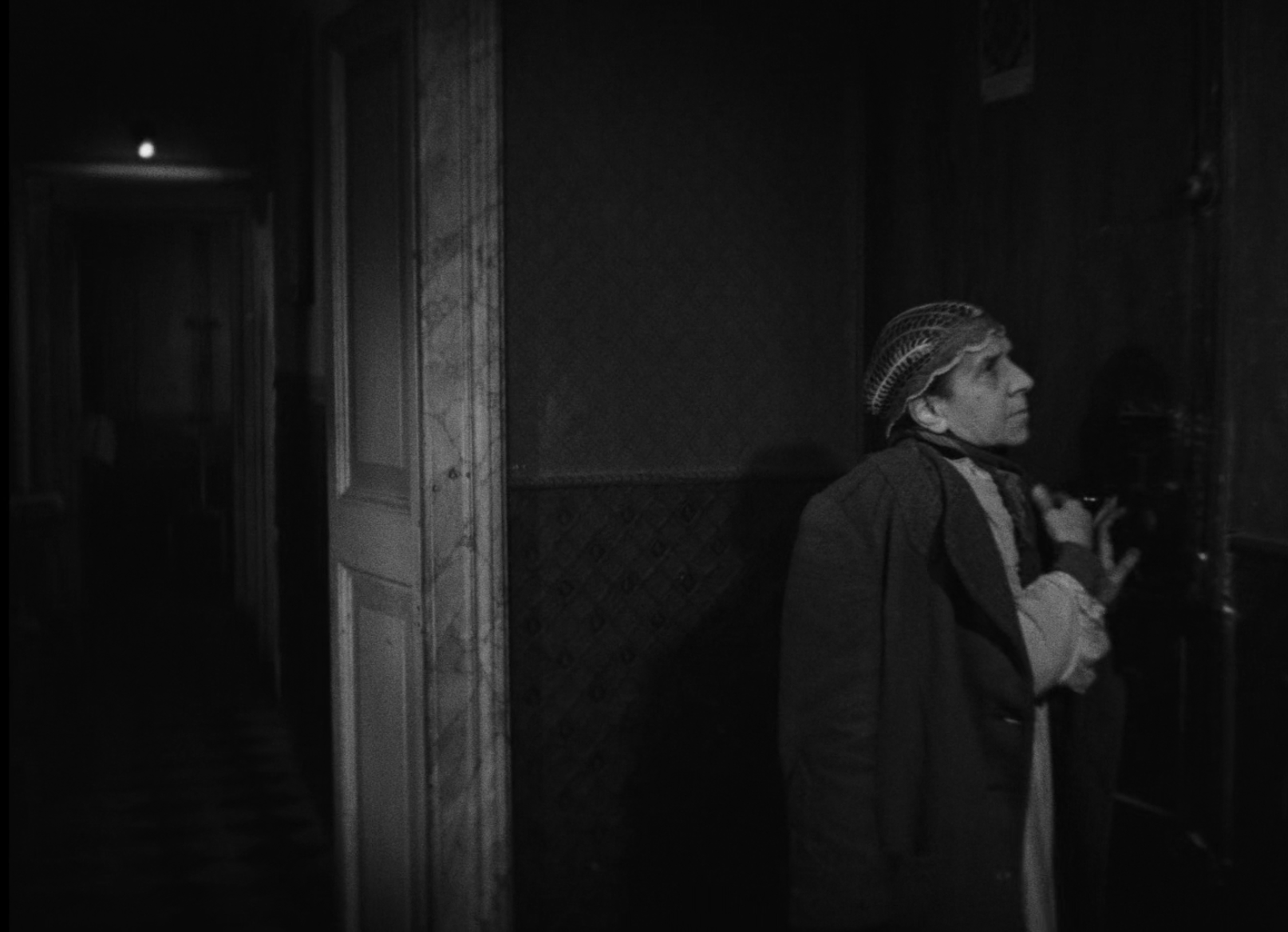
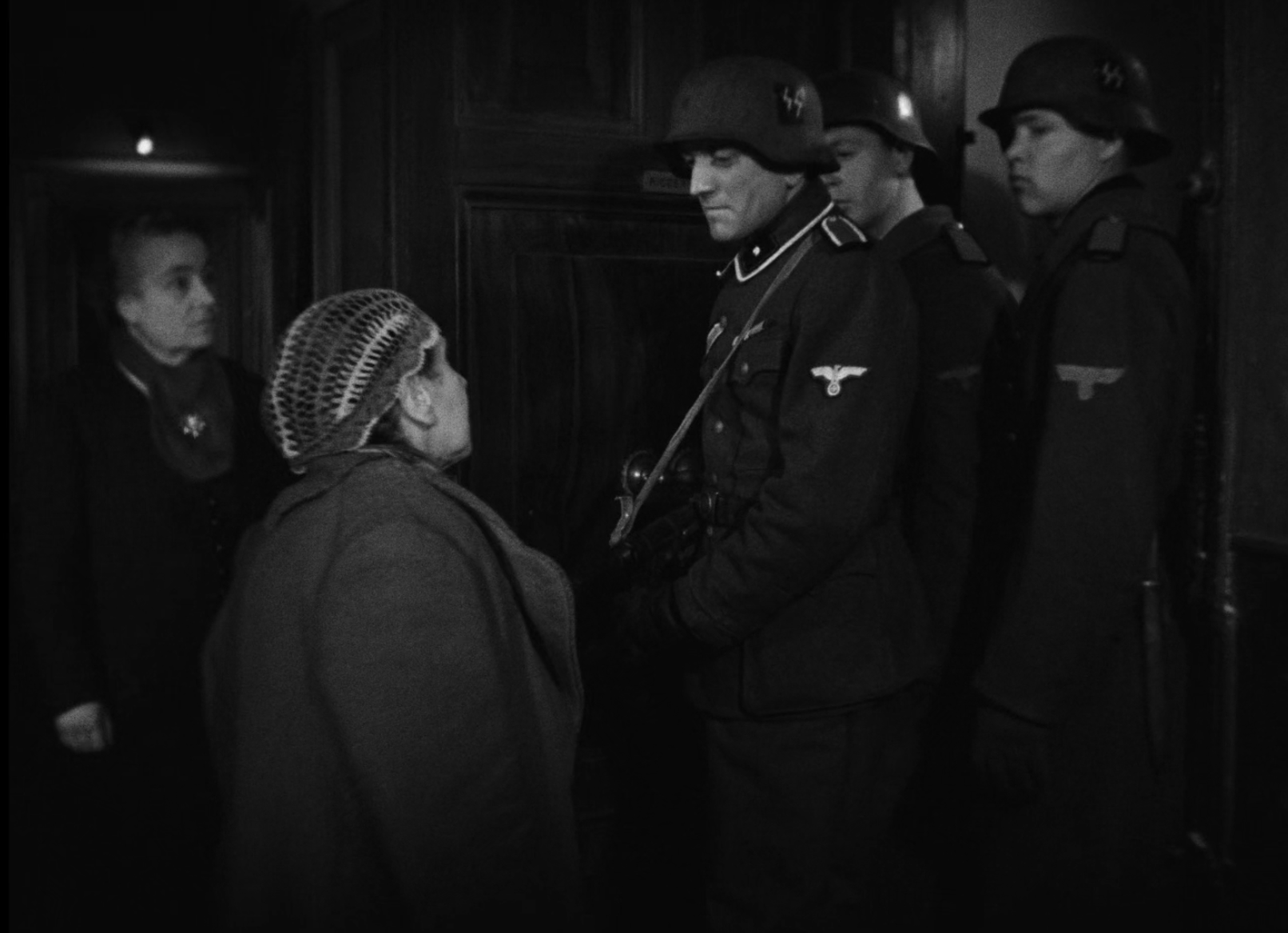
In risposta al bussare dei soldati, la donna che prima aveva sbirciato fuori dalla porta del balcone grida: "Vengo! Vengo!" Lei è la governante. Si è messa un cappotto di lana sopra la sua camicia da notte. Facendo il segno della croce, apre la porta e i soldati delle SS si fanno strada con forza.
Puntandole contro il fucile, uno chiede: "L’Ingegnere Giorgio Manfredi?
"Non c'è".
"Dov'è?"
Un'altra donna appare, dicendo: "Non sappiamo. Non viene sempre a dormire a casa”. Questa deve essere la padrona di casa.
In response to the soldiers’ knocking, the woman who had peeked out the balcony door earlier calls out, “I’m coming! I’m coming!” She is the maid. She has thrown a wool overcoat over her nightgown. Crossing herself, she opens the door, and SS soldiers force their way in.
Pointing his gun at her, one asks, “Engineer Georgio Manfredi?”
“He’s not here.”
“Where is he?”
Another woman appears, saying, “We don’t know. He doesn’t always come to sleep at home.” This must be the landlady.
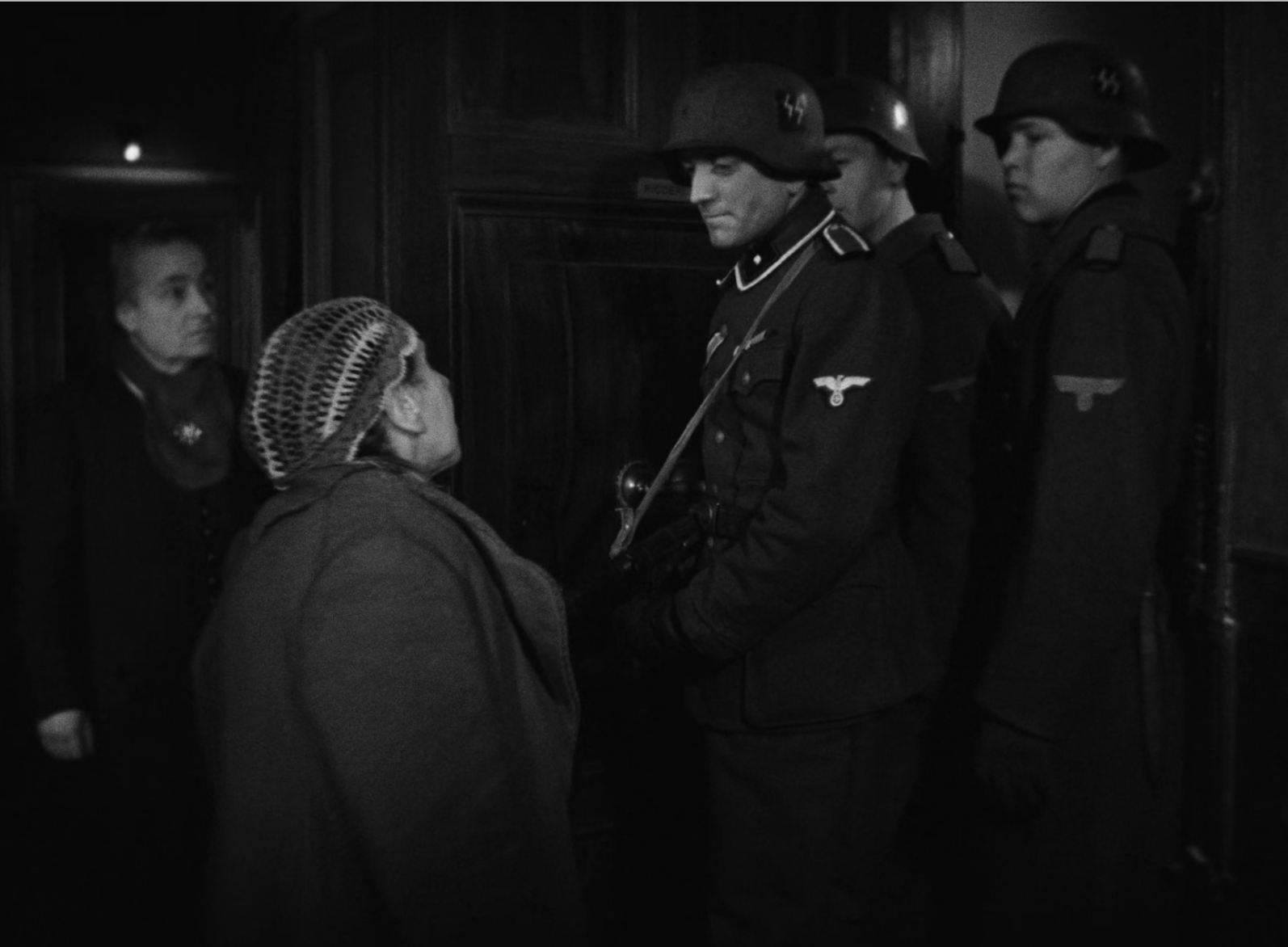
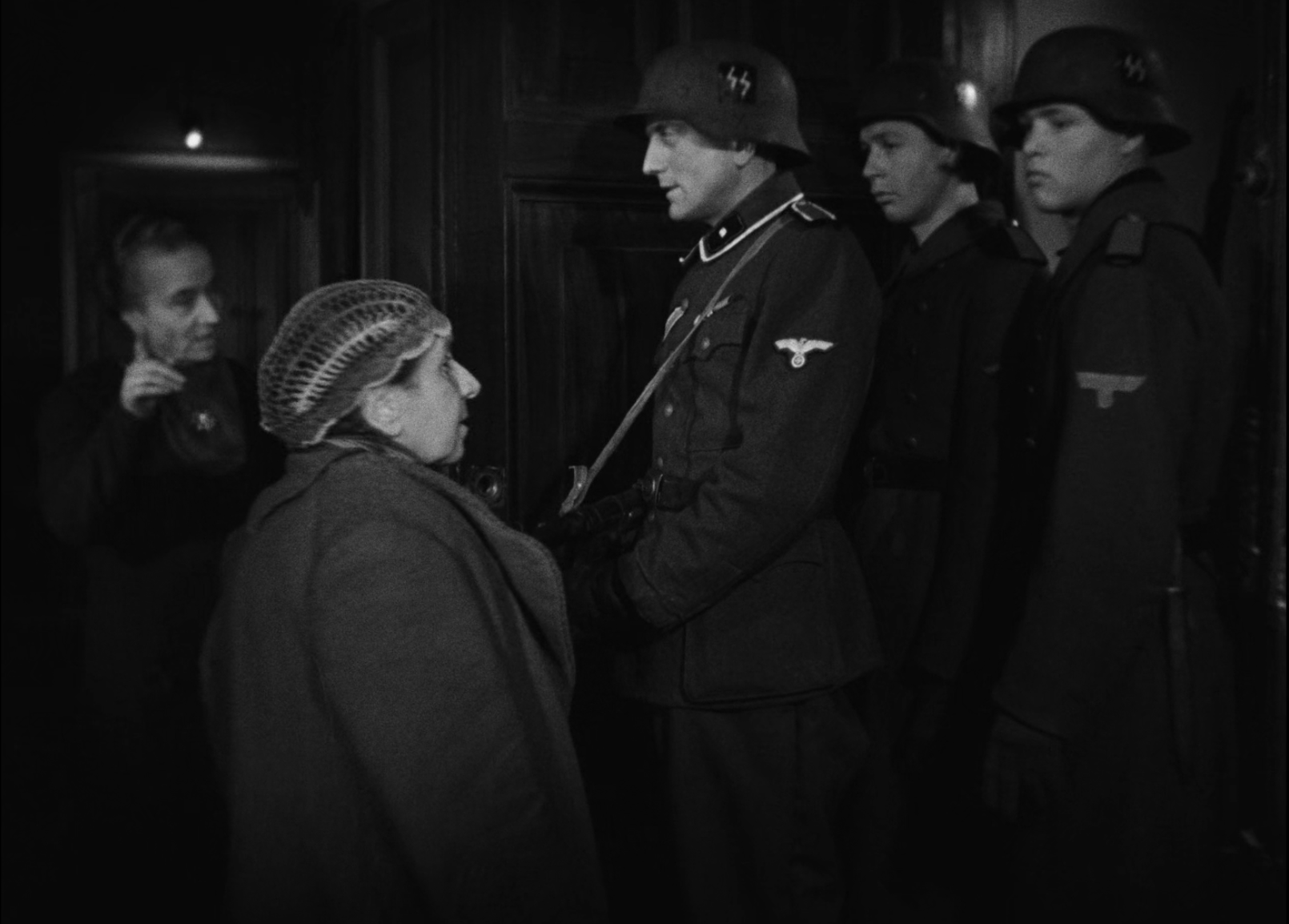
“E dove va?”
“Non lo so. Sa com'è. É un giovanotto scapolo!”
“Già. Qual è la sua camera?”
La padrona di casa indica. “Da quella parte”.
“Where does he go?”
“I don’t know. You know how it is. He’s a young bachelor!”
“Of course. Which is his room?”
The landlady points. “That way.”
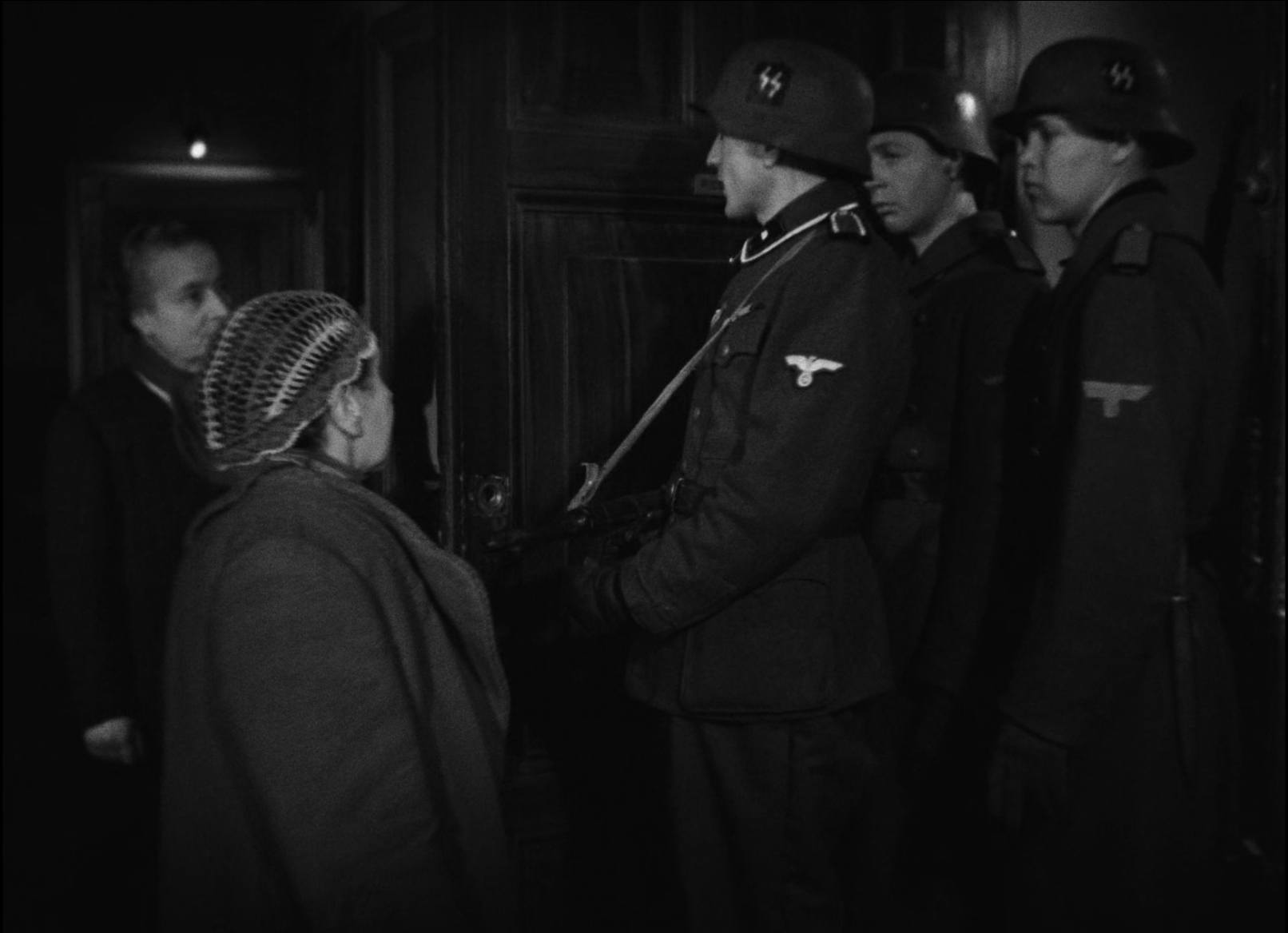
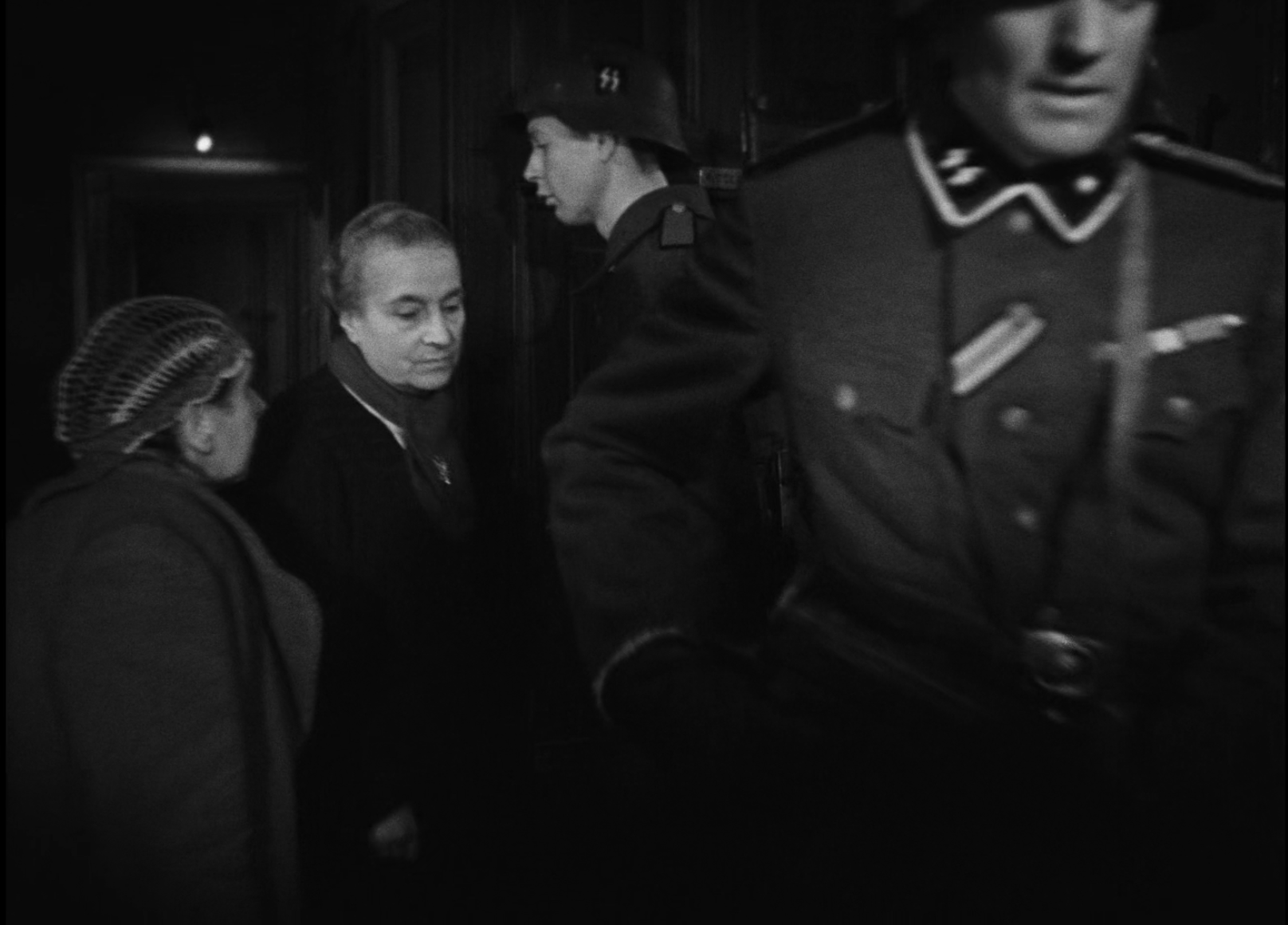
"Controllate la stanza!" ordina in tedesco ai due soldati. Va nella stanza di Giorgio, con la padrona di casa che lo segue.
“Search the room!” he orders the two soldiers in German. He goes to Giorgio’s room, with the landlady following.
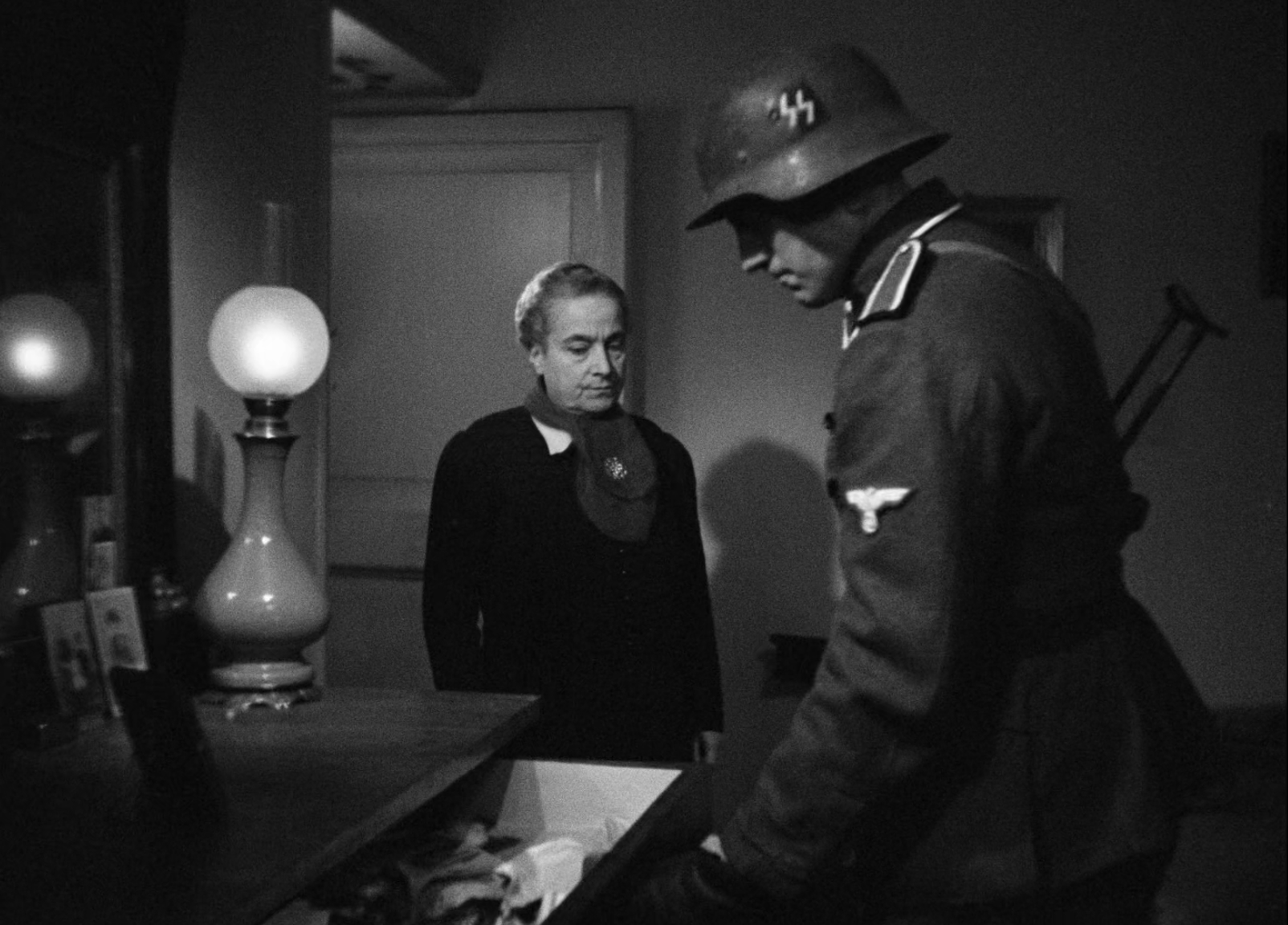
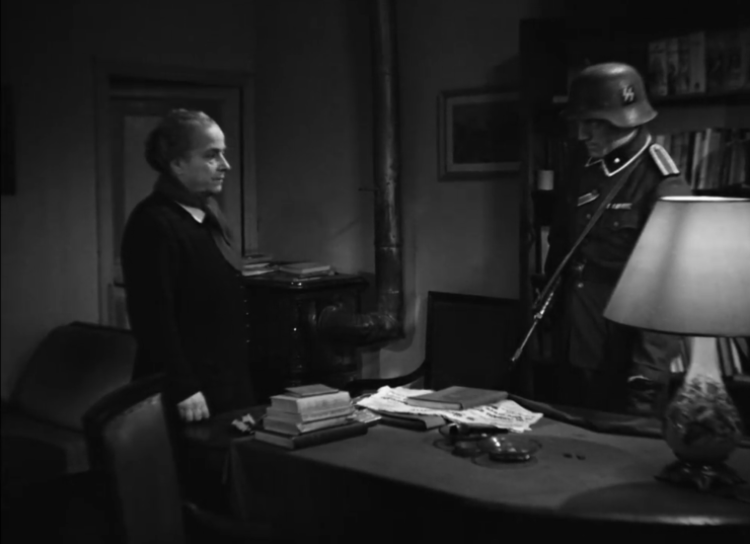
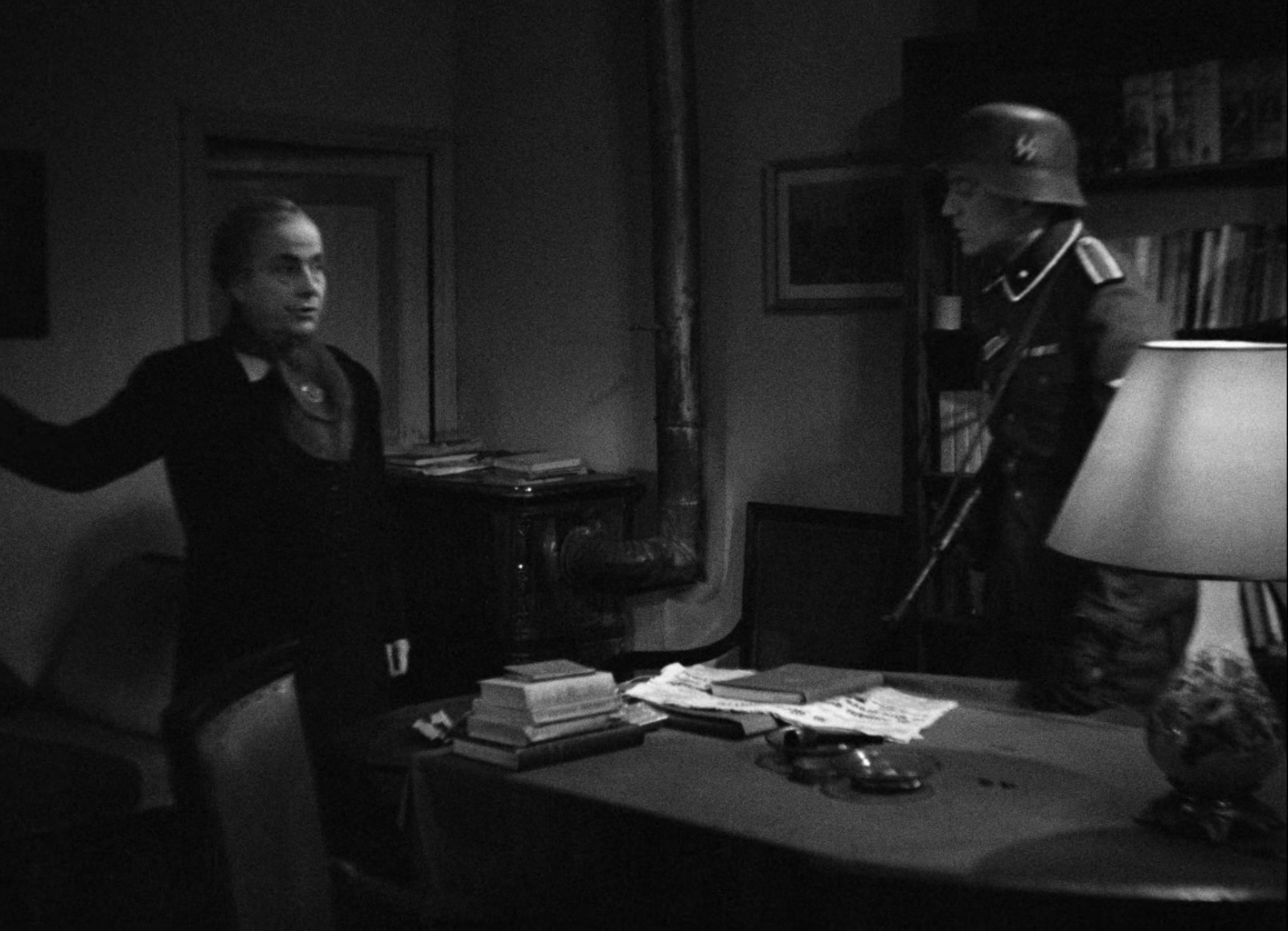
Lei accende la luce quando entrano nella stanza.
“Viene molta gente a trovarlo?” chiede il capo.
“Una volta sì, ma da un pezzo non viene più nessuno”.
“Già naturalmente!” risponde lui, mentre cerca in una cassettiera. Si avvicina alla scrivania e guarda nel cassetto. “Quanti altri pensionanti ha?”
“Due”.
Improvvisamente sentiamo un telefono che squilla. “Dov'è il telefono?” chiede il tedesco.
“In fondo al corridoio”, dice lei, indicando, e lui si precipita a rispondere.
She turns on the light as they enter the room.
“Do a lot of people come to see him?” the man in charge asks.
“Once before, yes, but no one has come for a while.”
“Yes, of course,” he replies, as he searches through a dresser. He walks over to the desk and looks in the drawer. “How many other lodgers do you have?”
“Two.”
Abruptly, we hear a telephone ringing. “Where’s the phone?” the German demands.
“End of the hallway,” she says, pointing, and he rushes out to answer it.
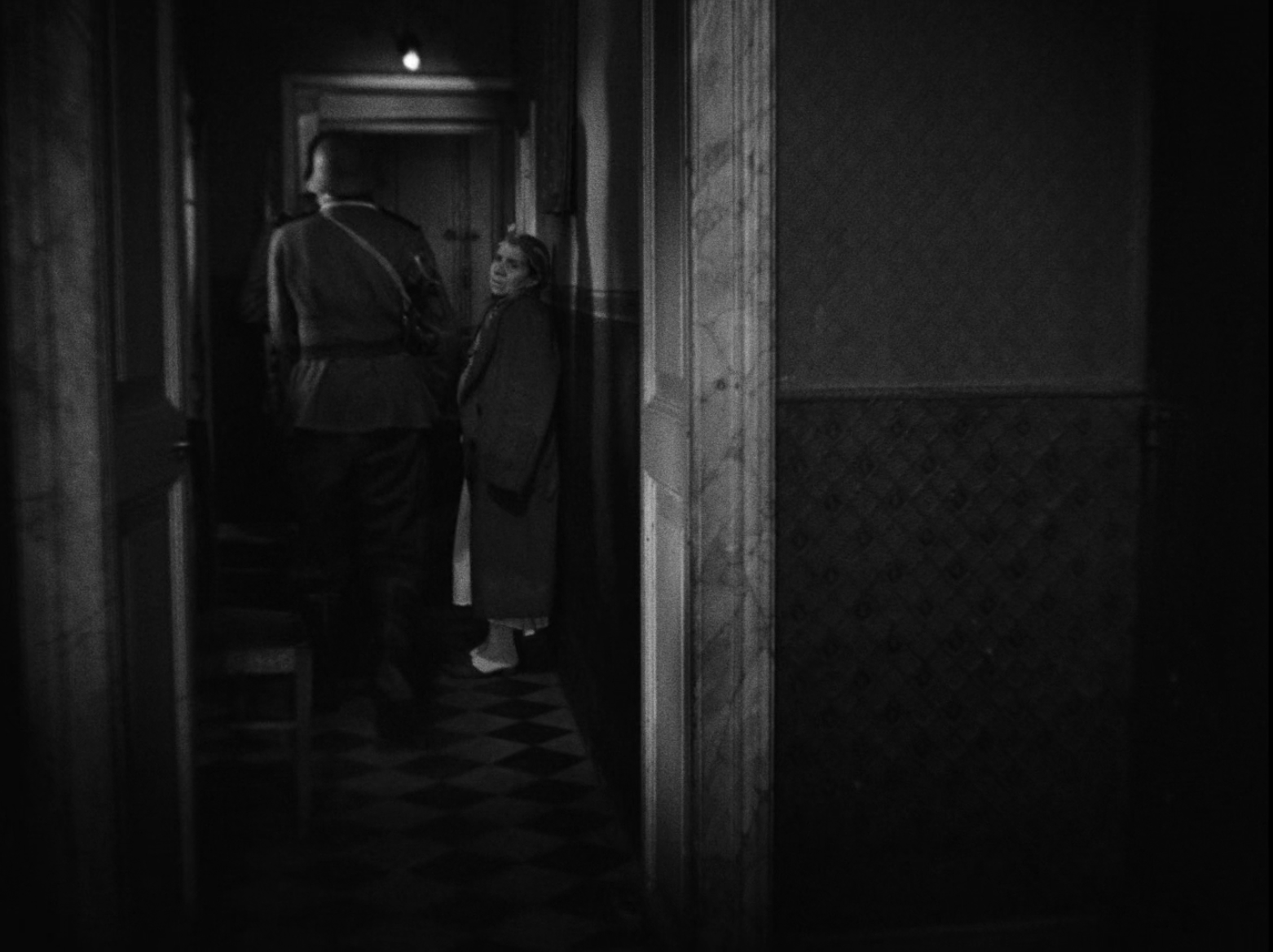
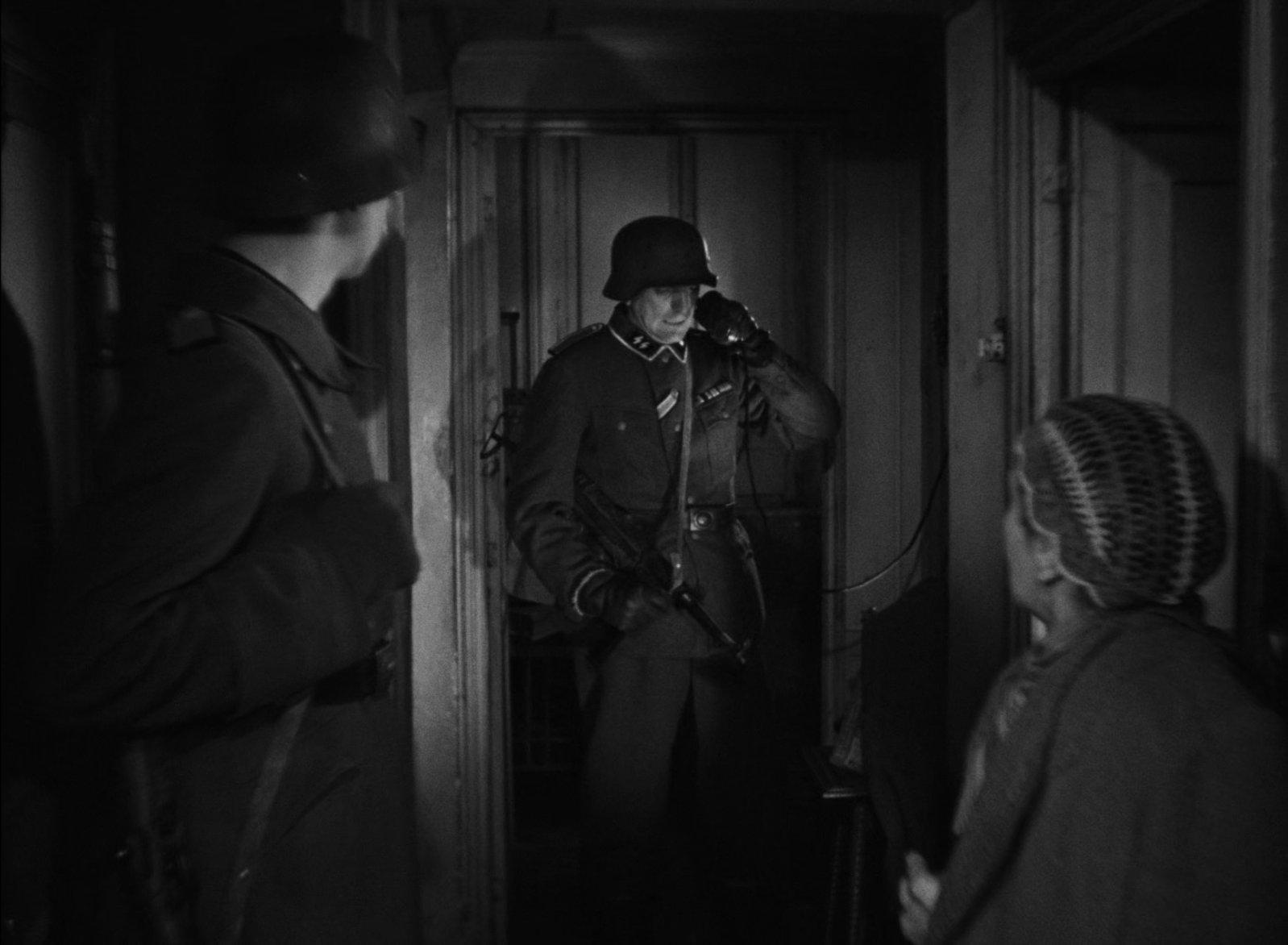
Nel corridoio, la governante sta per rispondere al telefono, ma l’uomo delle SS dice bruscamente: “Ferma! Rispondo io!”
Lei si allontana. Lui risponde al telefono.”Hallo?” chiede, alla tedesca, poi passa all'italiano: “Pronto!”
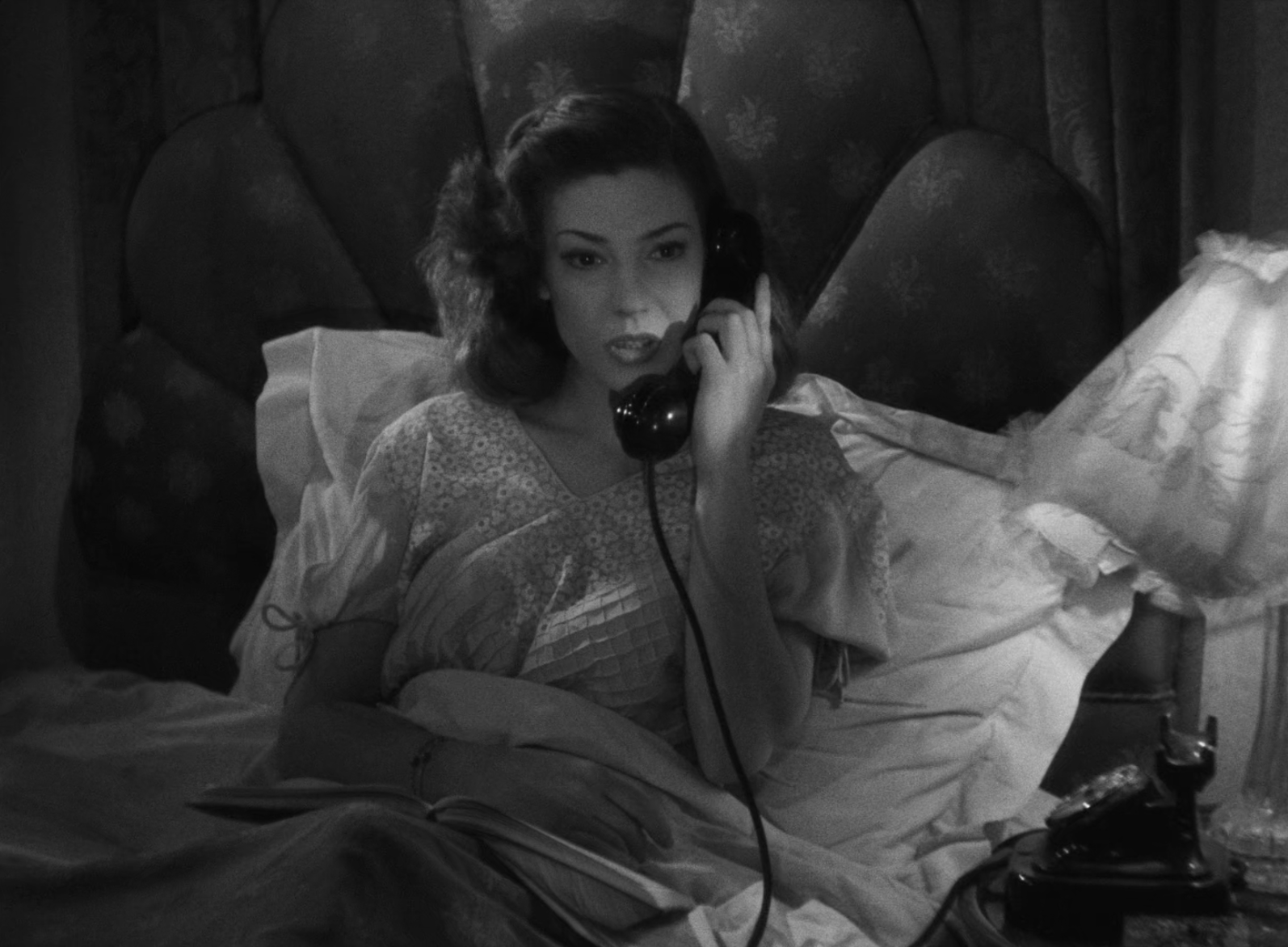
Vediamo chi c’è all’altro capo: una giovane donna, seduta a letto, in camicia da notte. "C'è Giorgio? Ma sì, l'ingegnere Manfredi?” Lei fa una pausa. "Ma con chi parlo?"
In the hallway, the housekeeper is about to answer the phone, but the SS man says sharply, “Stop! I’ll answer it!”
She stands back. He picks up the phone. “Hallo?” he asks, in the German style, then switches to Italian: “Pronto!”
We see who’s at the other end: a young woman, sitting in bed, wearing a nightgown. “Is Giorgio there? The engineer Manfredi?” She pauses. “Who am I speaking to?”
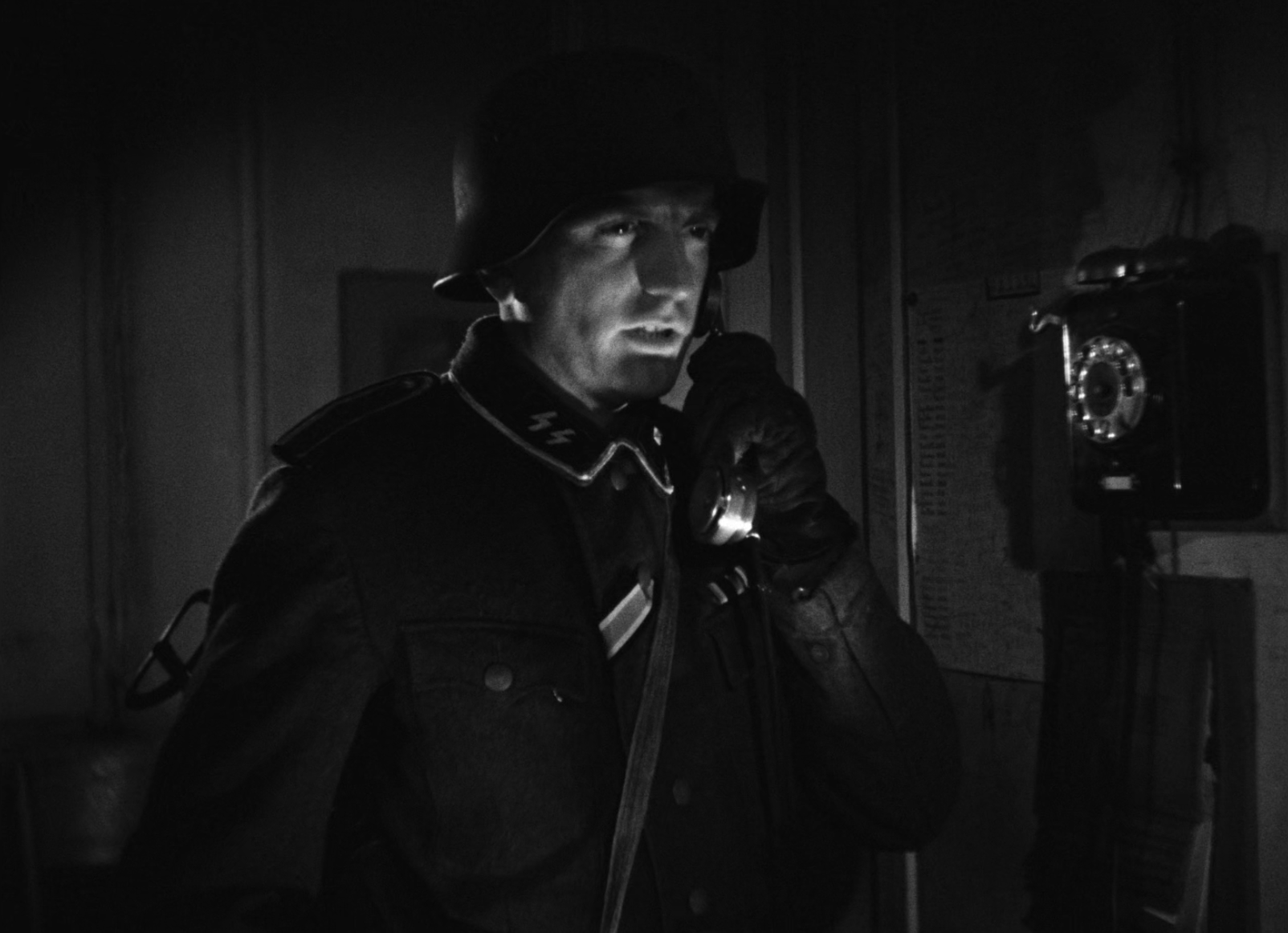
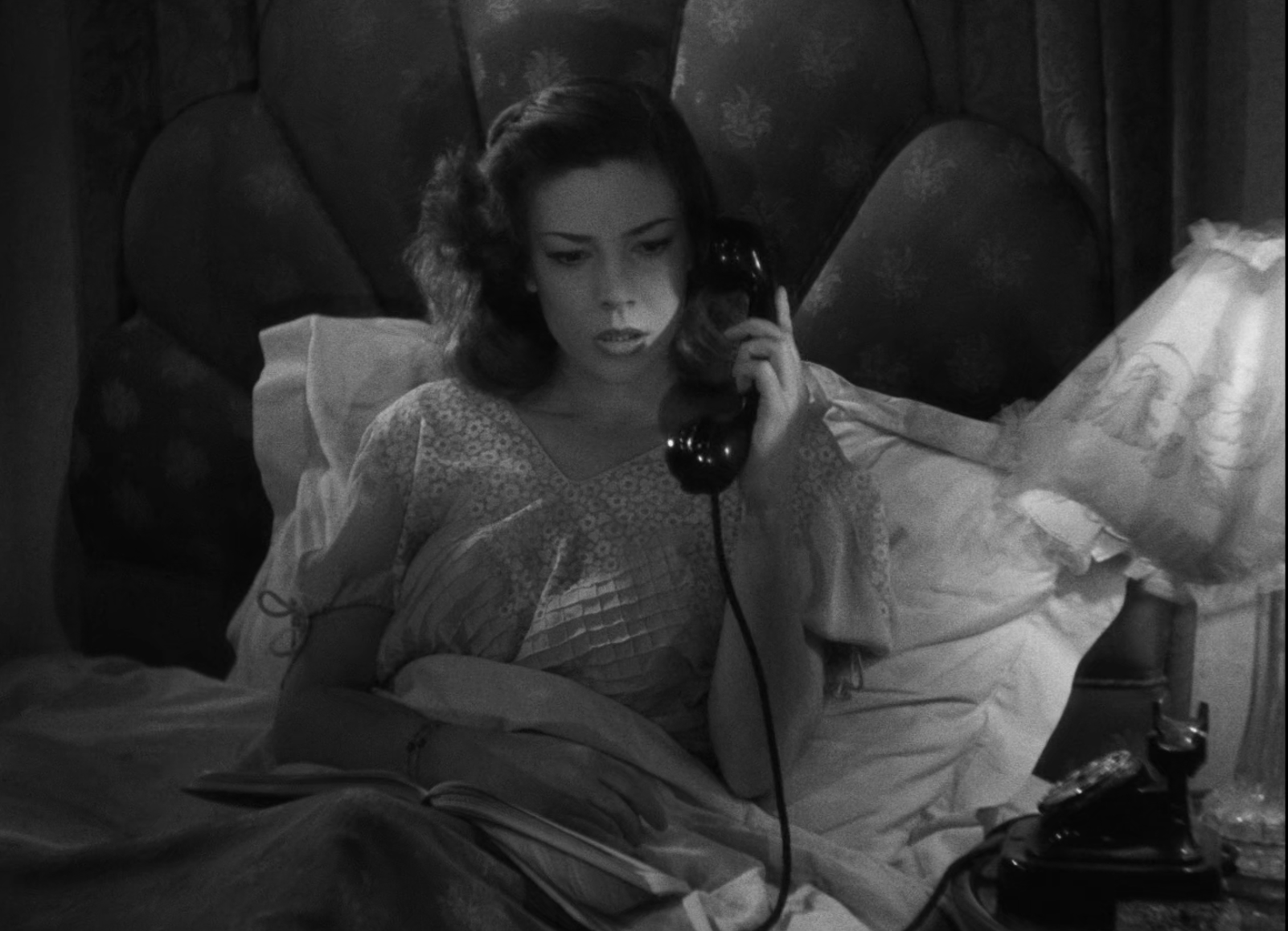
“Sono un amico dell'ingegnere”, risponde l'ufficiale scontrosamente.
“Che amico?” chiede lei, iniziando ad insospettirsi.
“Con chi parlo?” chiede lui con tono autoritario.
Con uno sguardo preoccupato, la donna riaggancia il telefono, senza rispondere.
“I’m a friend of the engineer,” the officer answers gruffly.
“What friend?” she asks, beginning to get suspicious.
“Who am I speaking to?” he demands in an authoritarian tone.
Looking worried, the woman hangs up the phone, without replying.
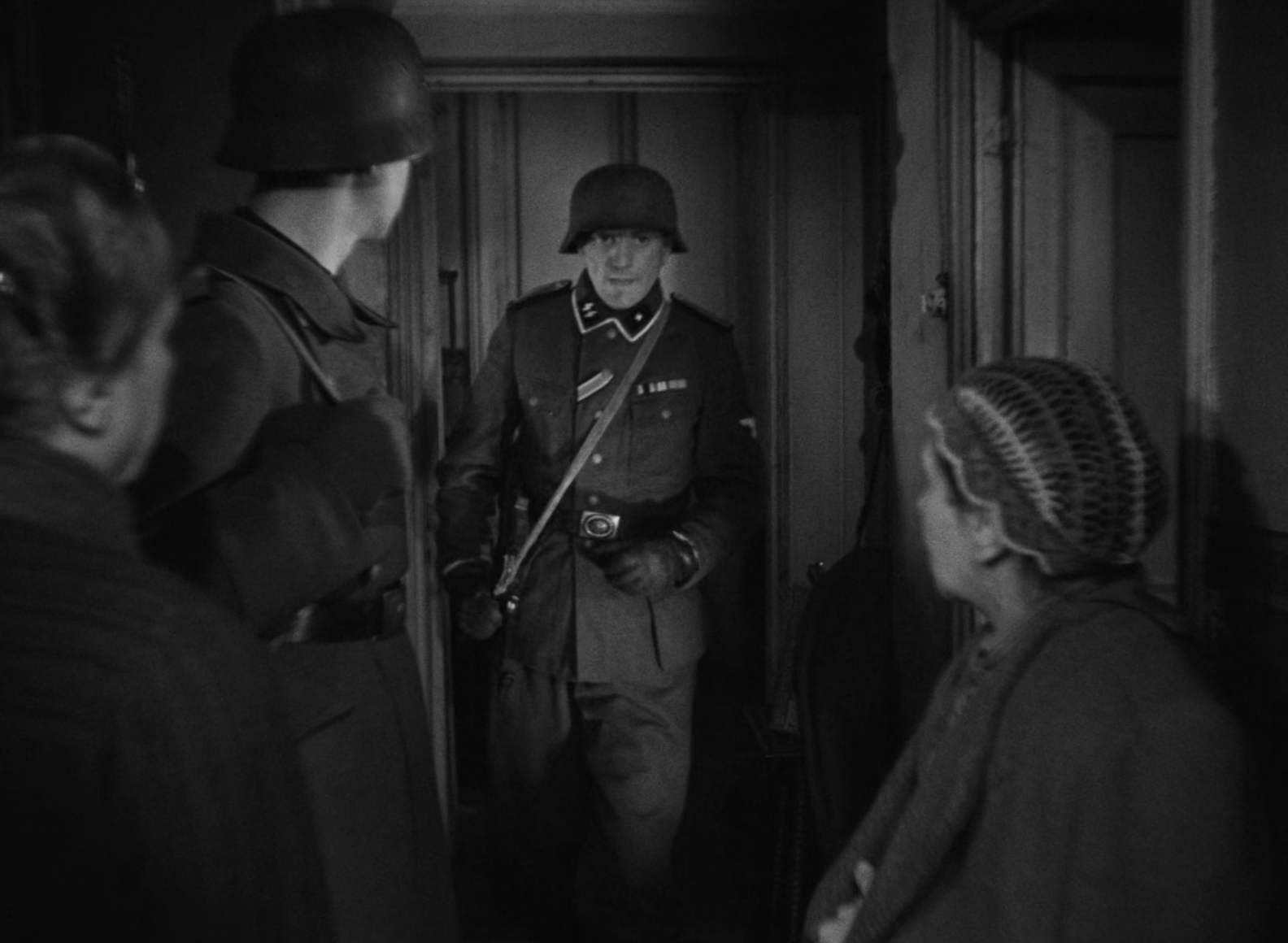
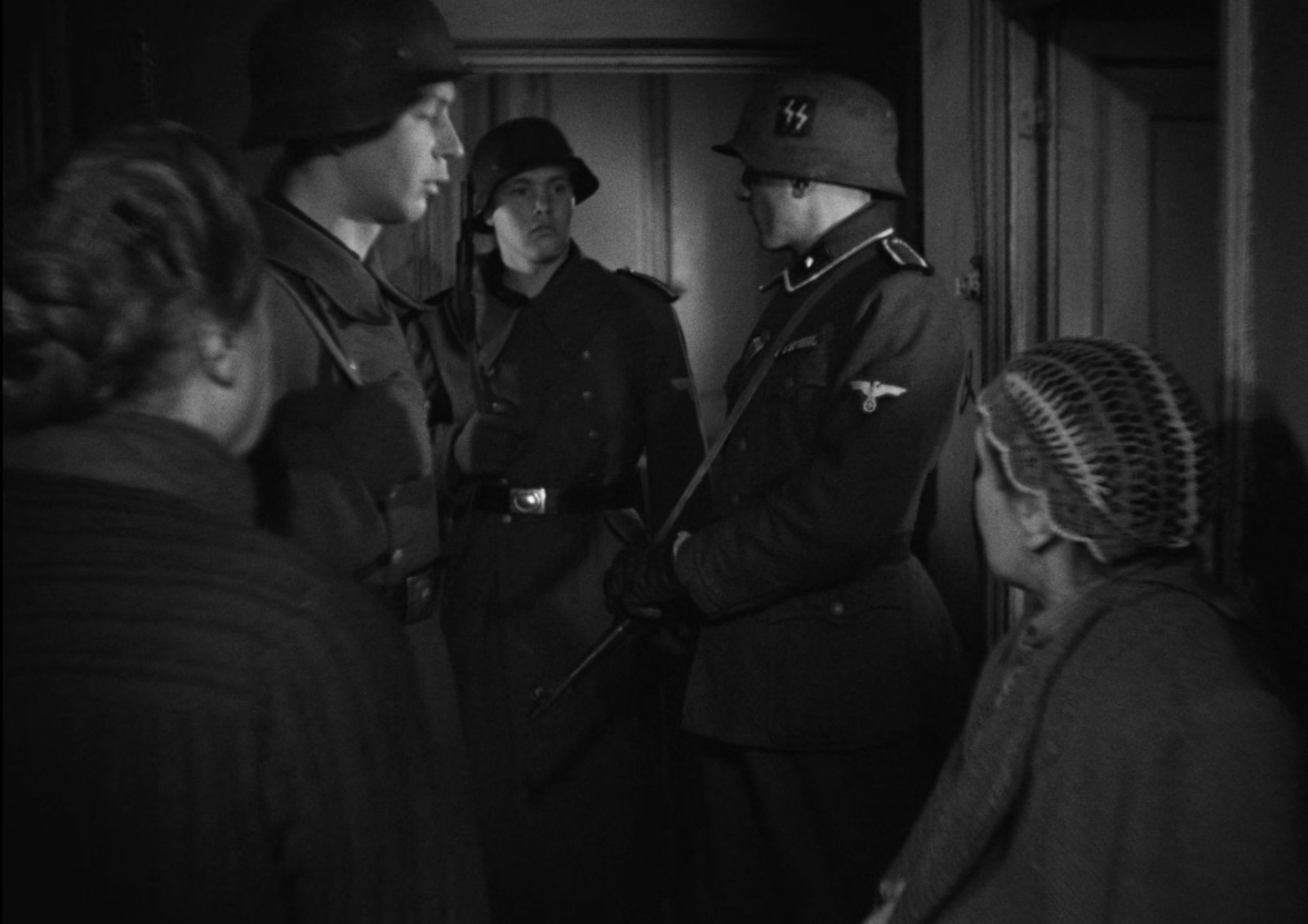
Anche il soldato riaggancia. "Era una donna" – dice – "Chi è?"
"E che ne so io, mica l'ho vista".
Rivolgendosi a un subordinato, chiede, in tedesco: "Trovato qualcosa?”
Il giovane soldato salta sull'attenti. "No, niente”.
The soldier hangs up the phone too. “That was a woman,” he says. “Who is she?”
“How should I know? I didn’t even see her.”
Turning to a subordinate, he asks, in German, “Find anything?”
The young soldier jumps to attention. “No, nothing.”
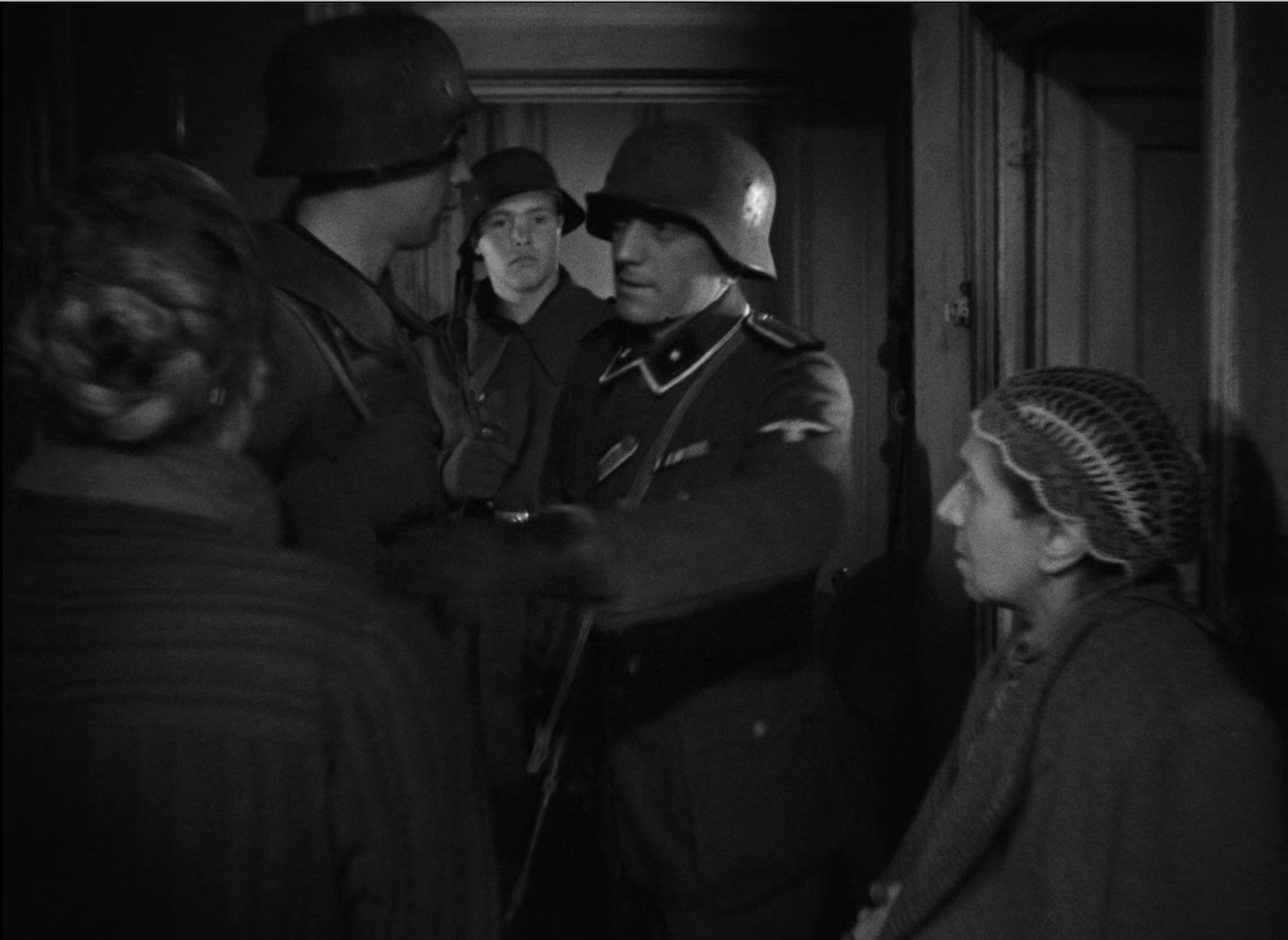
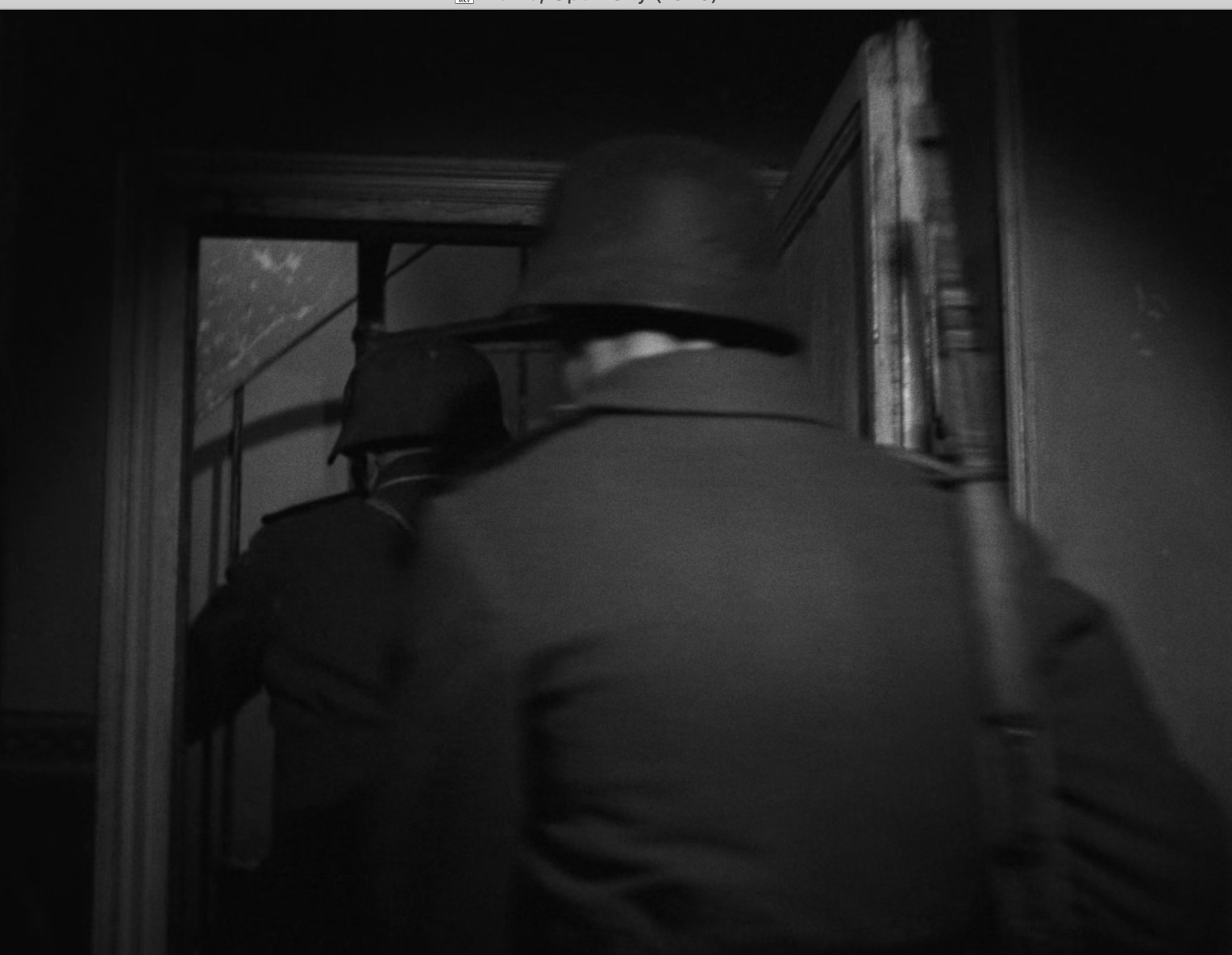
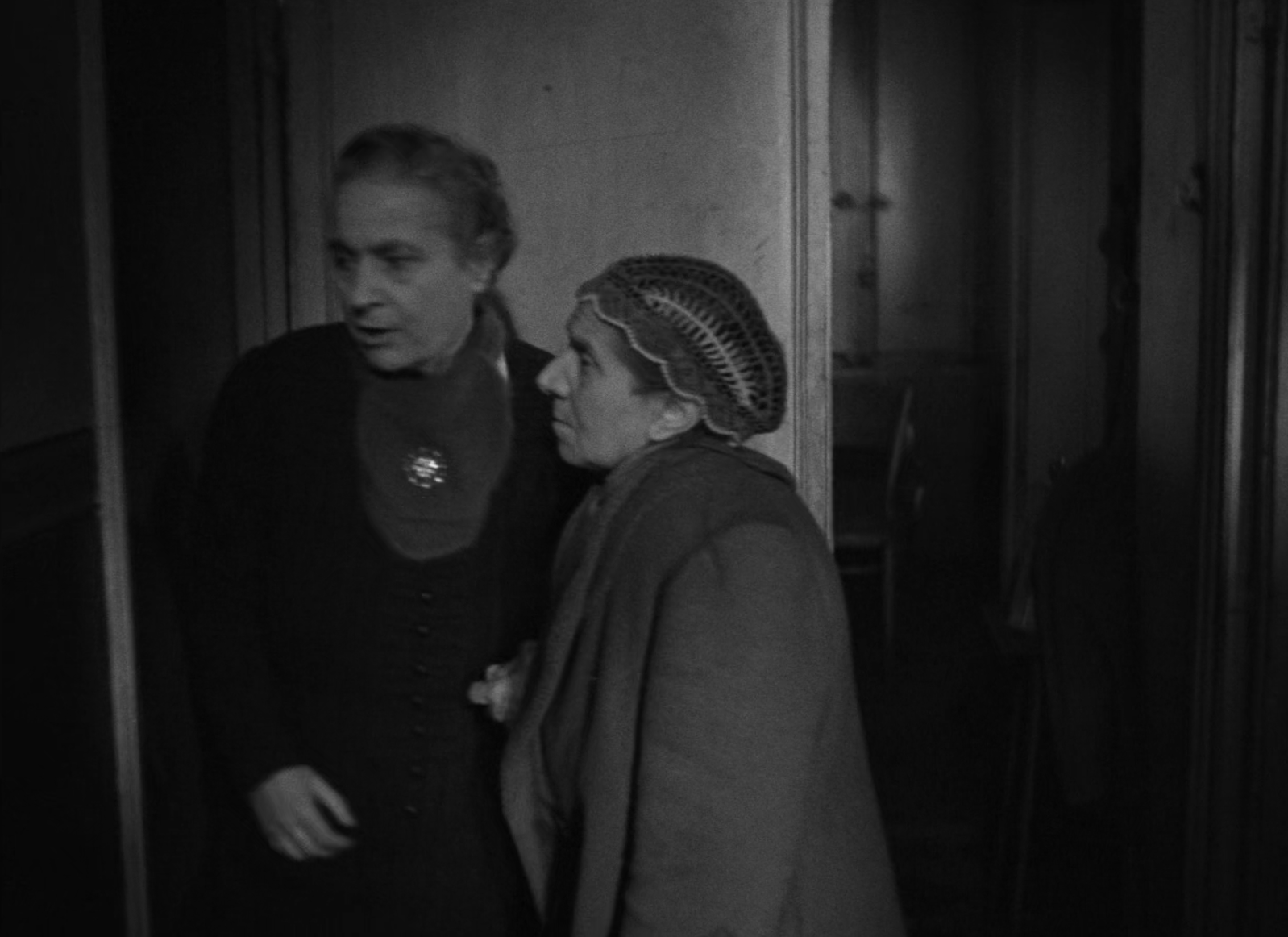
"Quella porta?" chiede l'ufficiale alla padrona di casa.
"È la terrazza".
"Ah! La terrazza!" Si avvicina e la apre. Sale le scale oltre la soglia, mentre gli altri soldati lo seguono.
"Calma mi raccomando!" – dice la padrona di casa alla governante, che risponde: "Gesù!”
“That door?” the officer asks the landlady.
“It’s the terrace.”
“Ah! The terrace!” He walks over and opens it. He climbs the stairs beyond the doorway, as the other soldiers follow him.
“Keep calm, please!” the landlady tells the maid, who responds, “Jesus!”
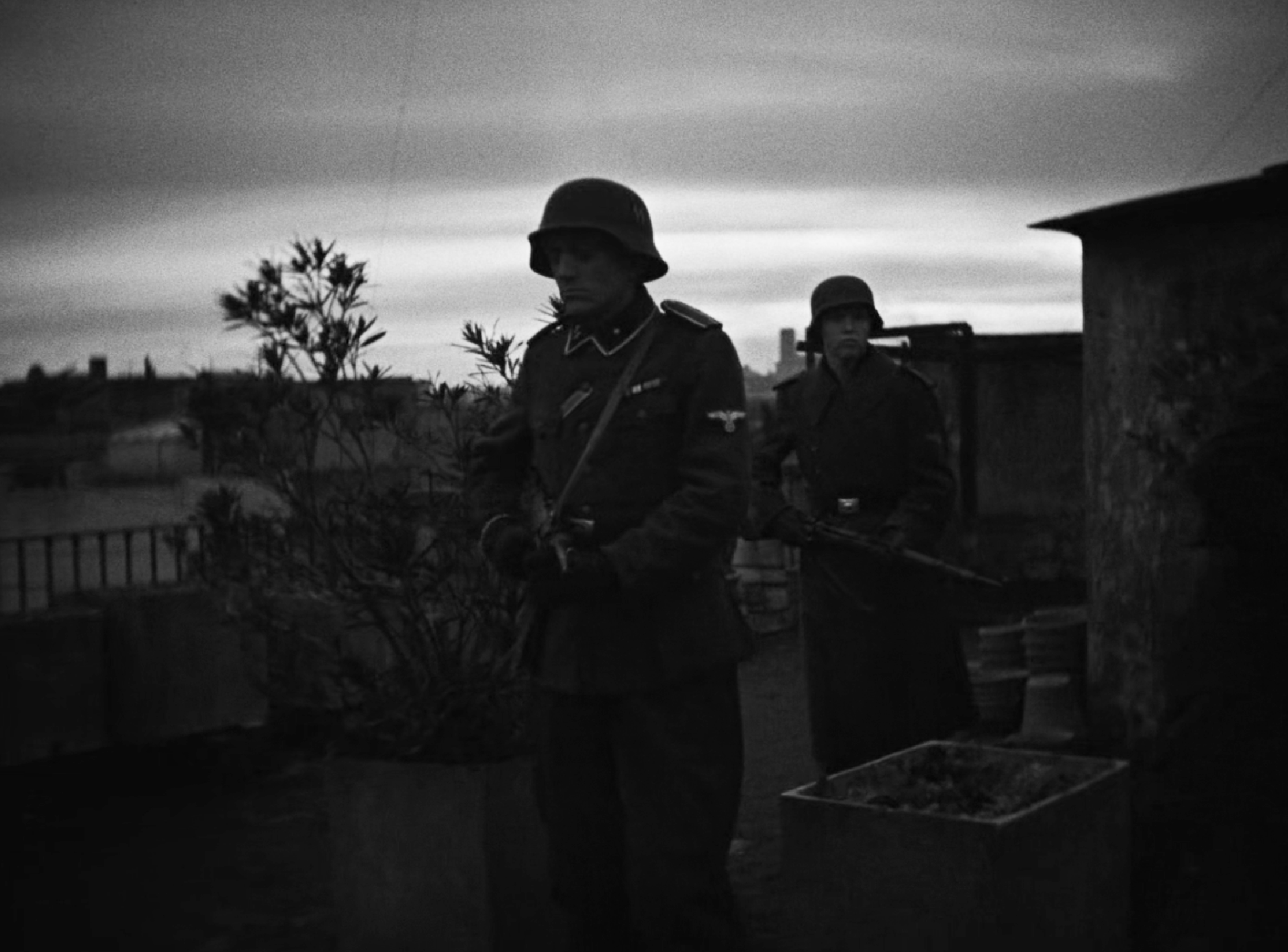
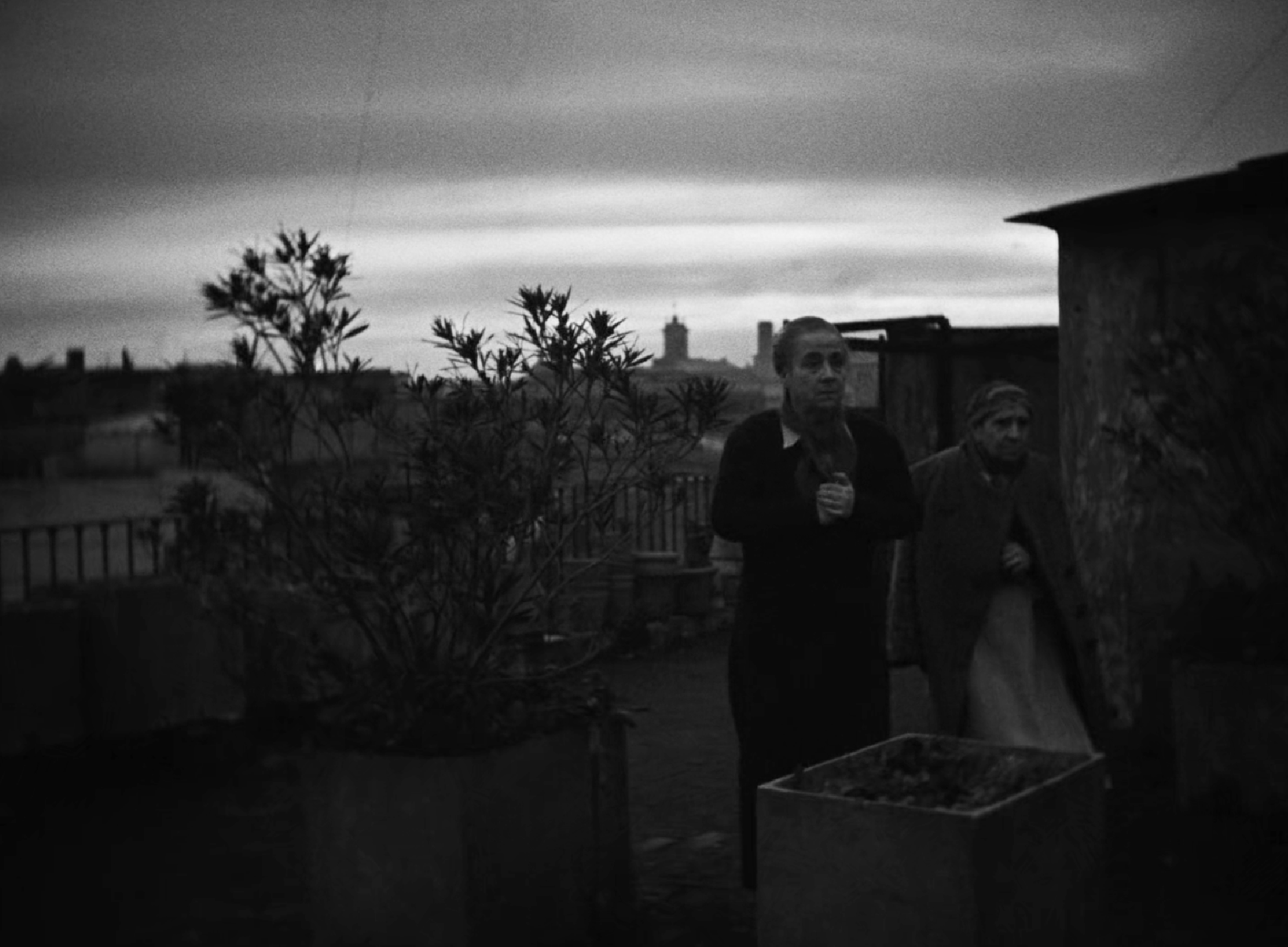
Vediamo le sagome dei soldati che attraversano la terrazza sul tetto, le due donne che li seguono. Due piante in vaso posano come calligrafie contro il cielo mezzo illuminato.
We see the soldier’s silhouettes crossing the rooftop terrace, the two women following behind. Two potted plants stand like calligraphy against the half-lit sky.
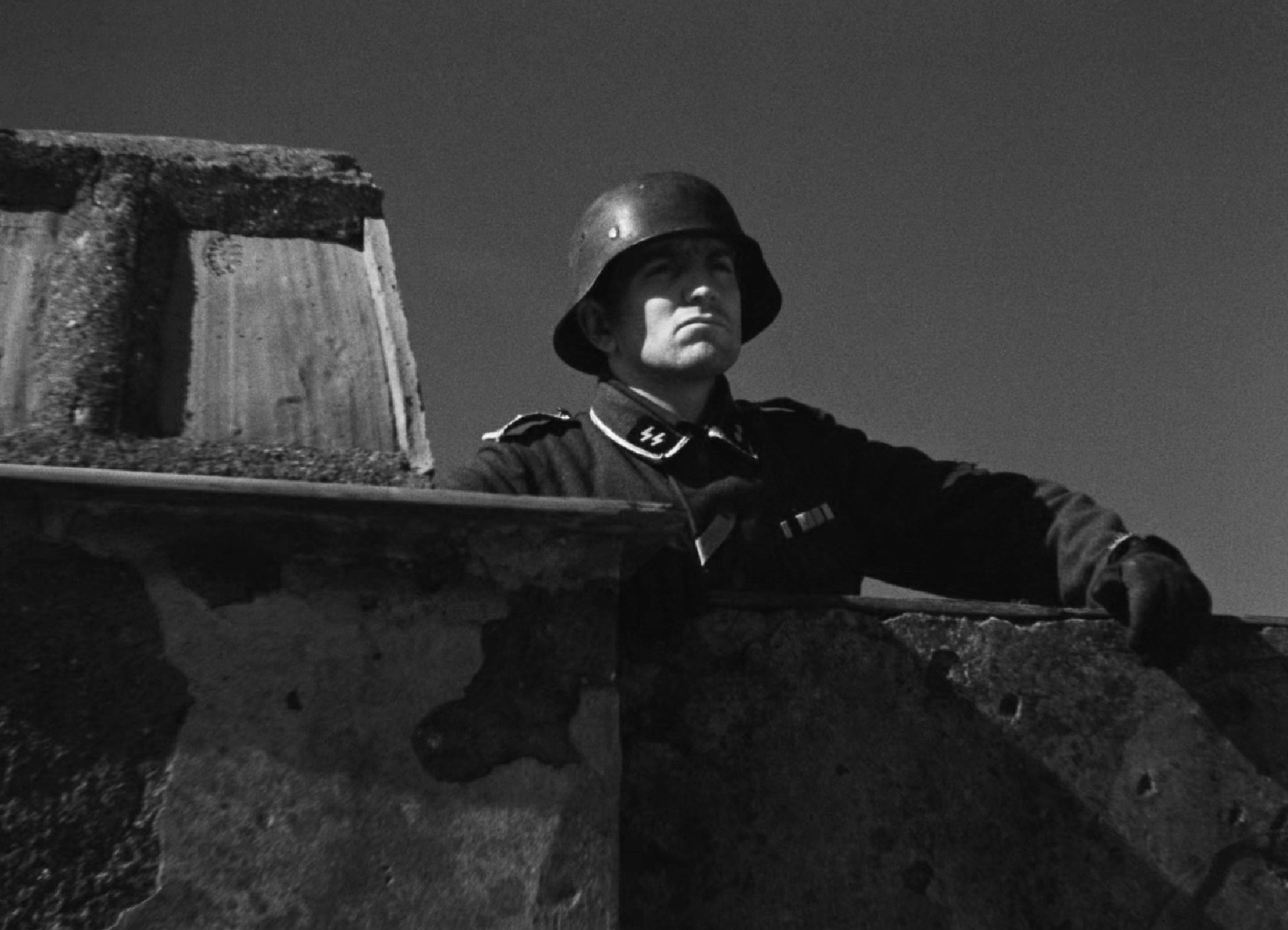
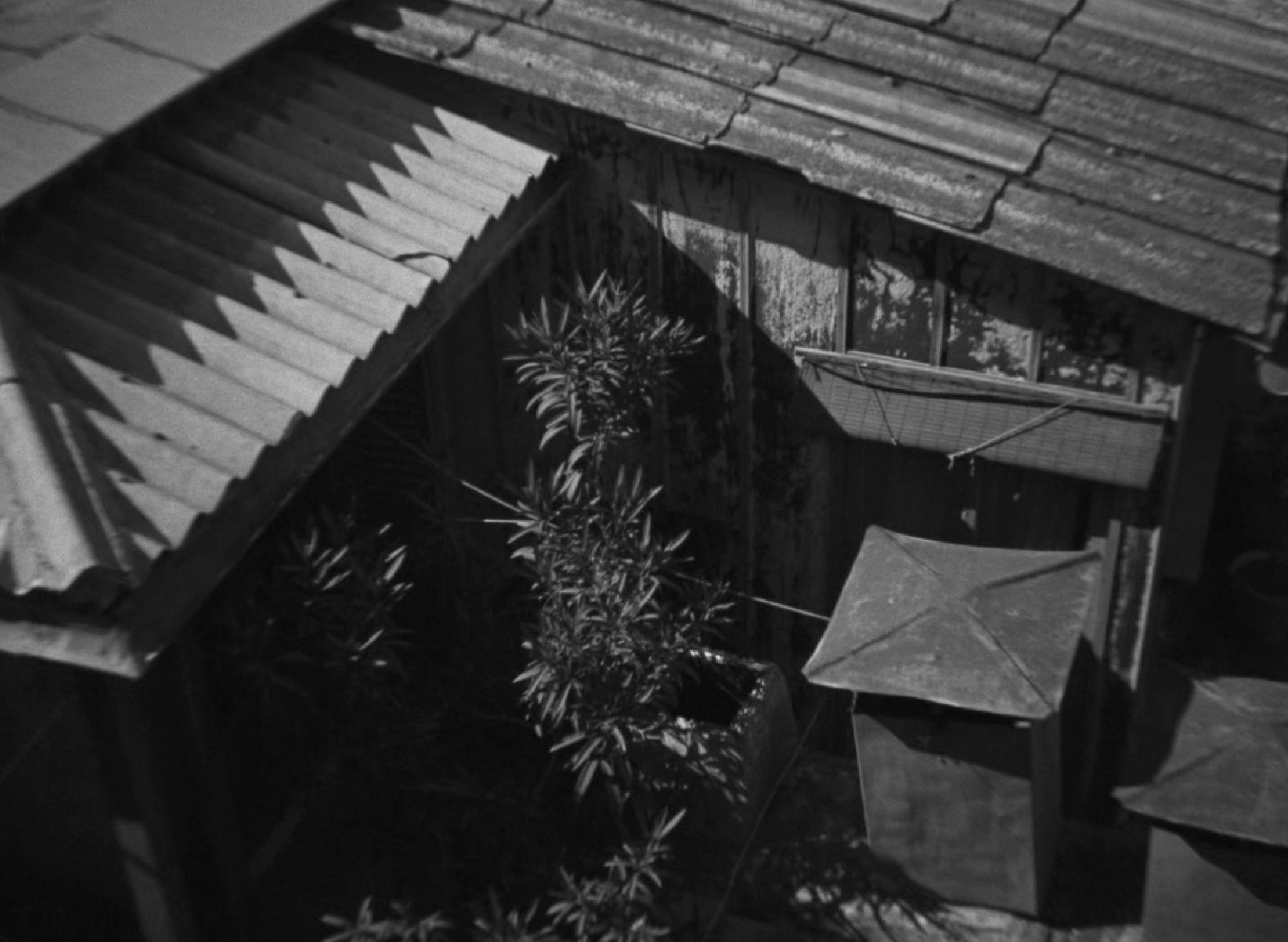
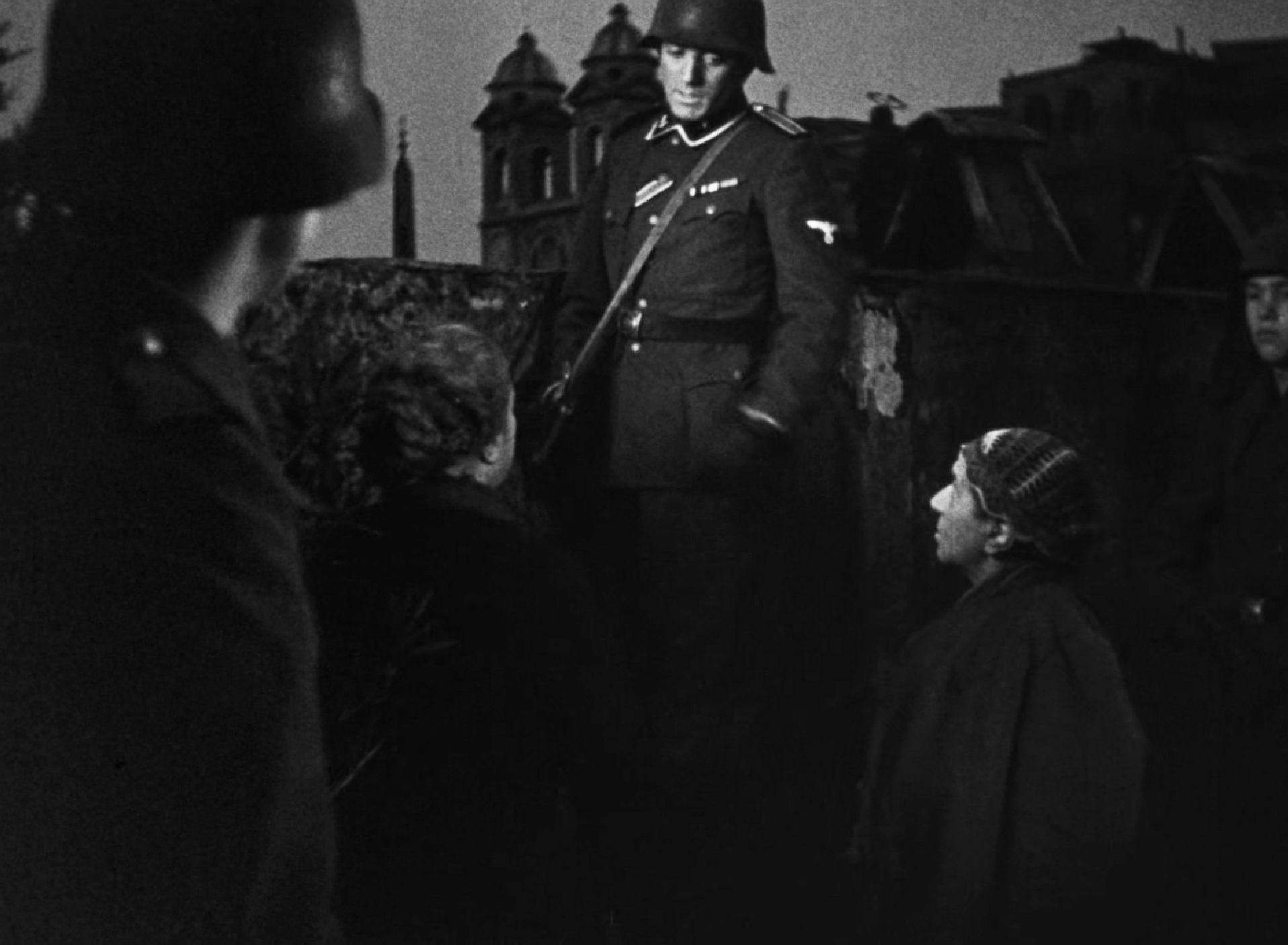
Solenne, con l’elmetto, l'ufficiale fissa fra i tetti, cercando di capire come l'ingegnere sia riuscito a fuggire. Notando il tetto di un edificio vicino, chiede alle donne: “Chi abita là?”
“C'è l'ambasciata di Spagna”.
“Ah”. Non si aspetta che l'ingegnere si stia nascondendo nell'ambasciata di un alleato tedesco.
E così siamo in mezzo alle cose: gli invasori che bussano nella notte, a caccia di chi potrebbe resistere. Incontreremo presto gli altri personaggi della storia: una vedova che sta per sposarsi; il suo giovane figlio, coinvolto in attività clandestine; e un prete simpatizzante con i partigiani.
Come vedremo, i tedeschi hanno la loro forza bruta e la loro arroganza, ma i romani di questo quartiere hanno una comunità affiatata che non si arrenderà facilmente.
Solemn, helmeted, the officer stares across the rooftops, trying to understand how the engineer made his escape. Noticing the roof of a nearby building, he asks the women, “Who lives there?”
“That’s the Spanish embassy.”
“Ah.” He does not expect that the engineer would be hiding out in the embassy of a German ally.
And so we are in the midst of things: the invaders knocking in the night, hunting for those who might resist. We’ll soon meet the other players in the story: a widow about to be married; her young son, involved in clandestine activities; and a priest sympathetic to the partisans.
As we’ll see, the Germans have their brute strength and their arrogance, but the Romans of this neighborhood have a tight-knit community that will not readily surrender.
FINE PARTE 1
Ecco Parte 2 of this cineracconto! Subscribe to receive a weekly email newsletter with links to all our new posts.