Regia: Roberto Rossellini, 1945
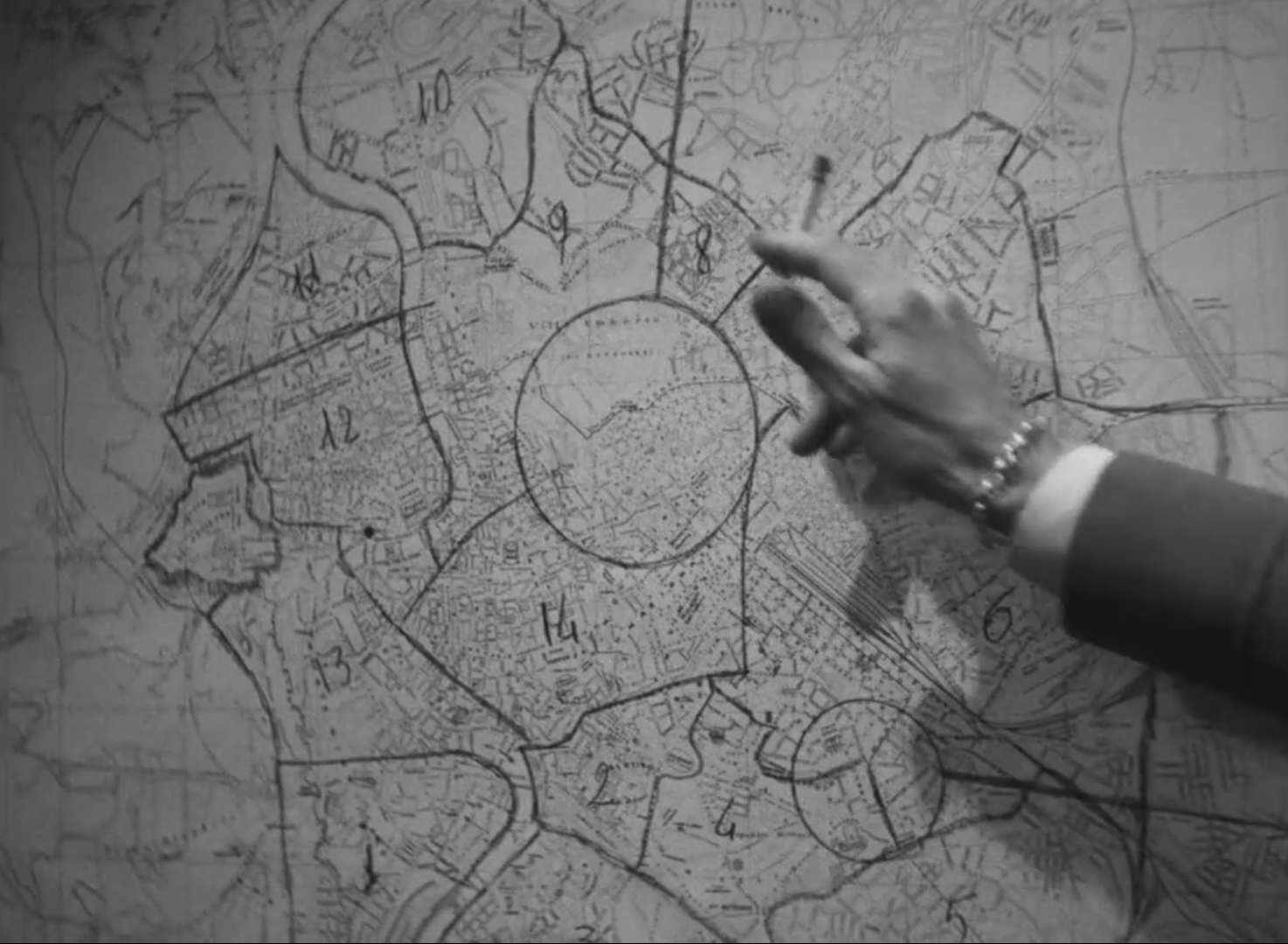
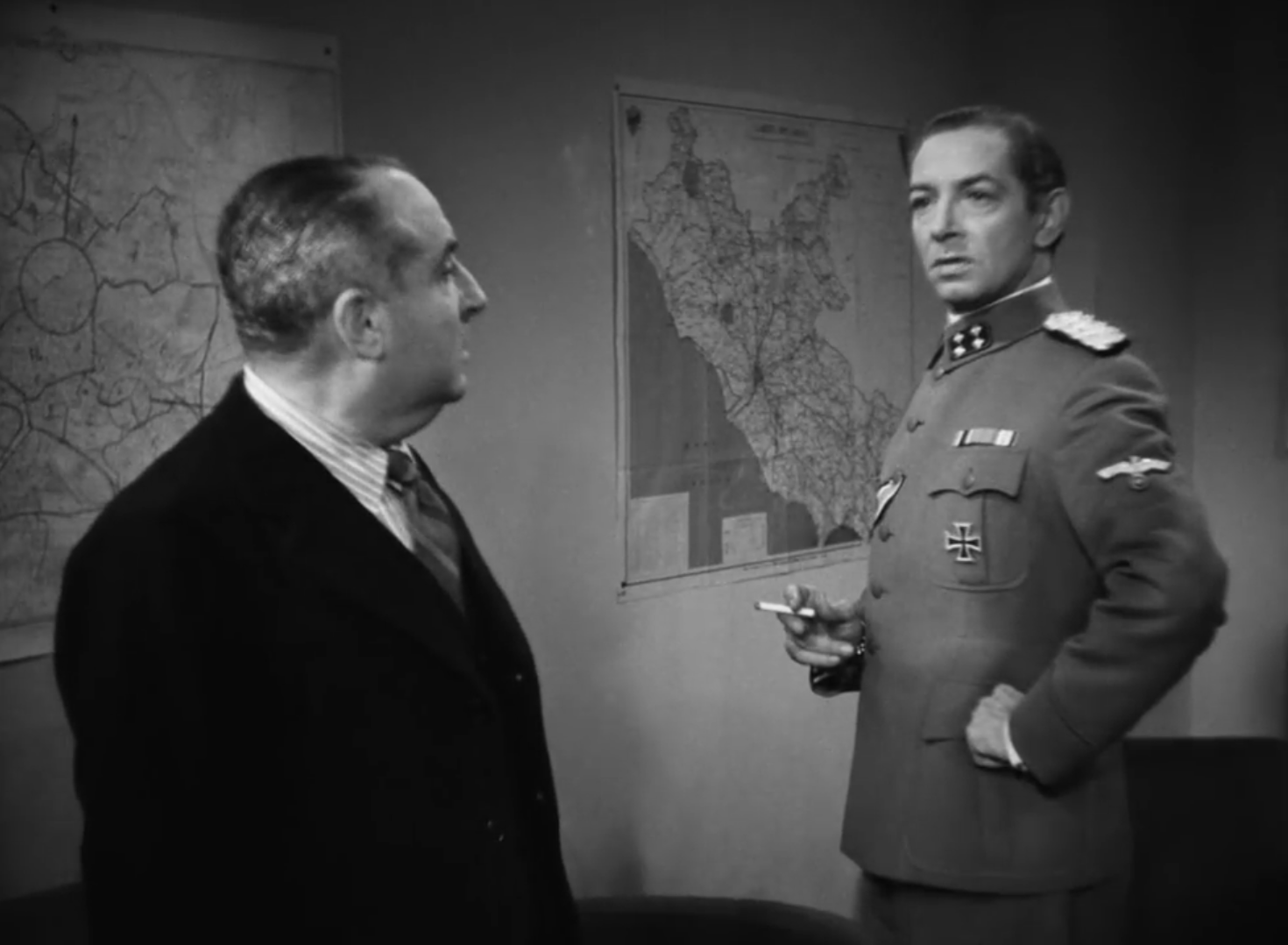
Una mano che tiene una sigaretta accesa punta il dito su una mappa di Roma. "La città verrà divisa in quattordici settori", dice una voce, mentre la mano gesticola. A parlare è il maggiore Bergmann (Harry Feist), il comandante locale delle SS. Sulla mappa vediamo i confini che dividono i settori.
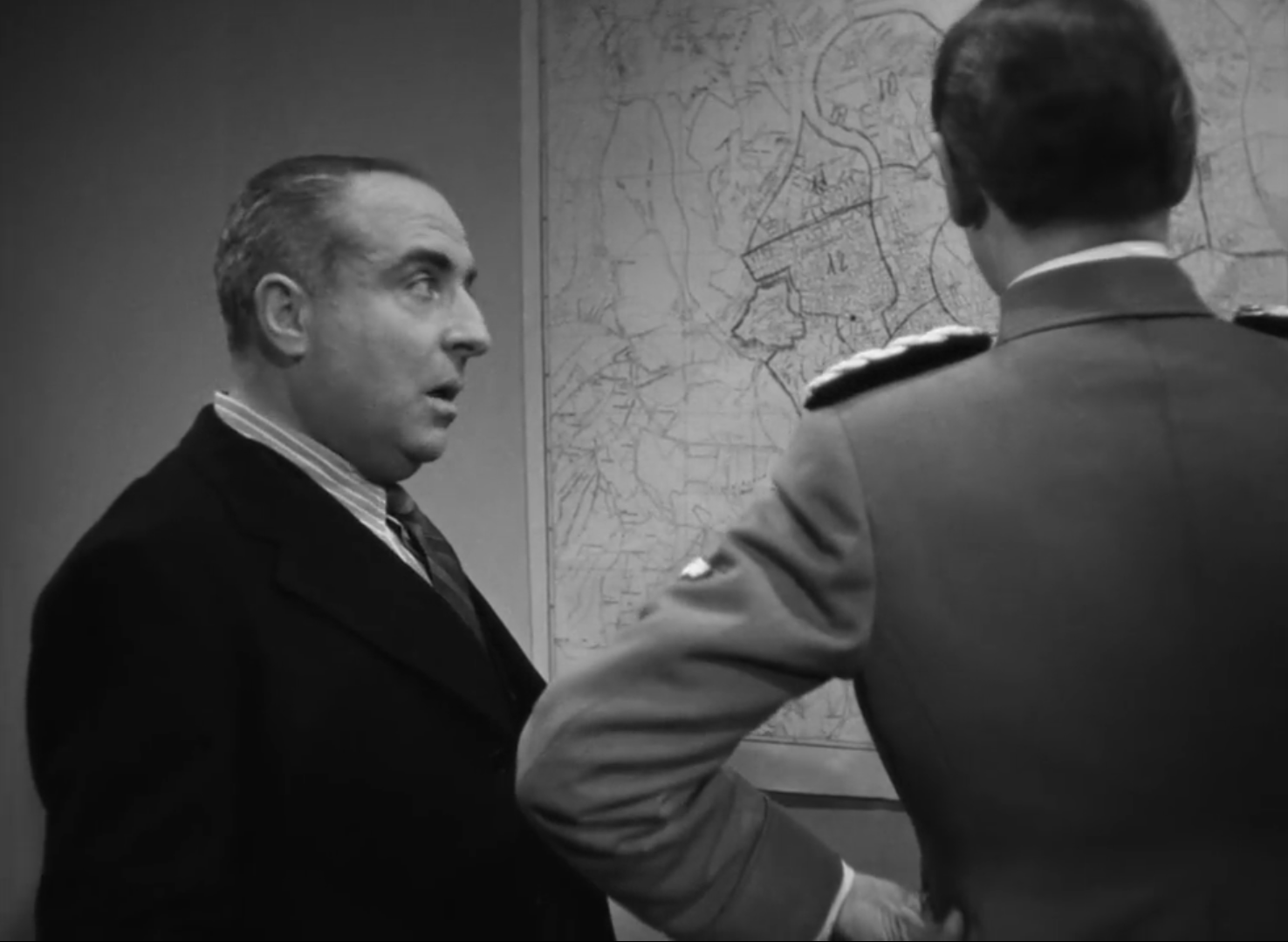
Mentre la macchina da presa si allontana, il capo della polizia di Roma (Carlo Sindici) entra nell'inquadratura. Bergmann continua: "Il Piano Schroder che noi abbiamo già applicato in diverse città europee permette il rastrellamento chiurgico di grandi masse di uomini con l'impiego di minime forze".
“Ah!” annuisce il questore.
A hand holding a lit cigarette points at a map of Rome. “The city will be divided into fourteen sectors,” a voice says, as the hand gestures. The speaker is Major Bergmann, the local SS commander. On the map, we see the boundaries dividing the sectors.
As the camera pulls back, the Roman Police Commissioner enters the frame. Bergmann continues, “The Schroder Plan, which we have already implemented in various European cities, permits the surgical dragnet of large numbers of men with a minimum force.”
“Ah!” The Commissioner nods.
Bussano alla porta. "Entra", dice Bergmann, in tedesco.
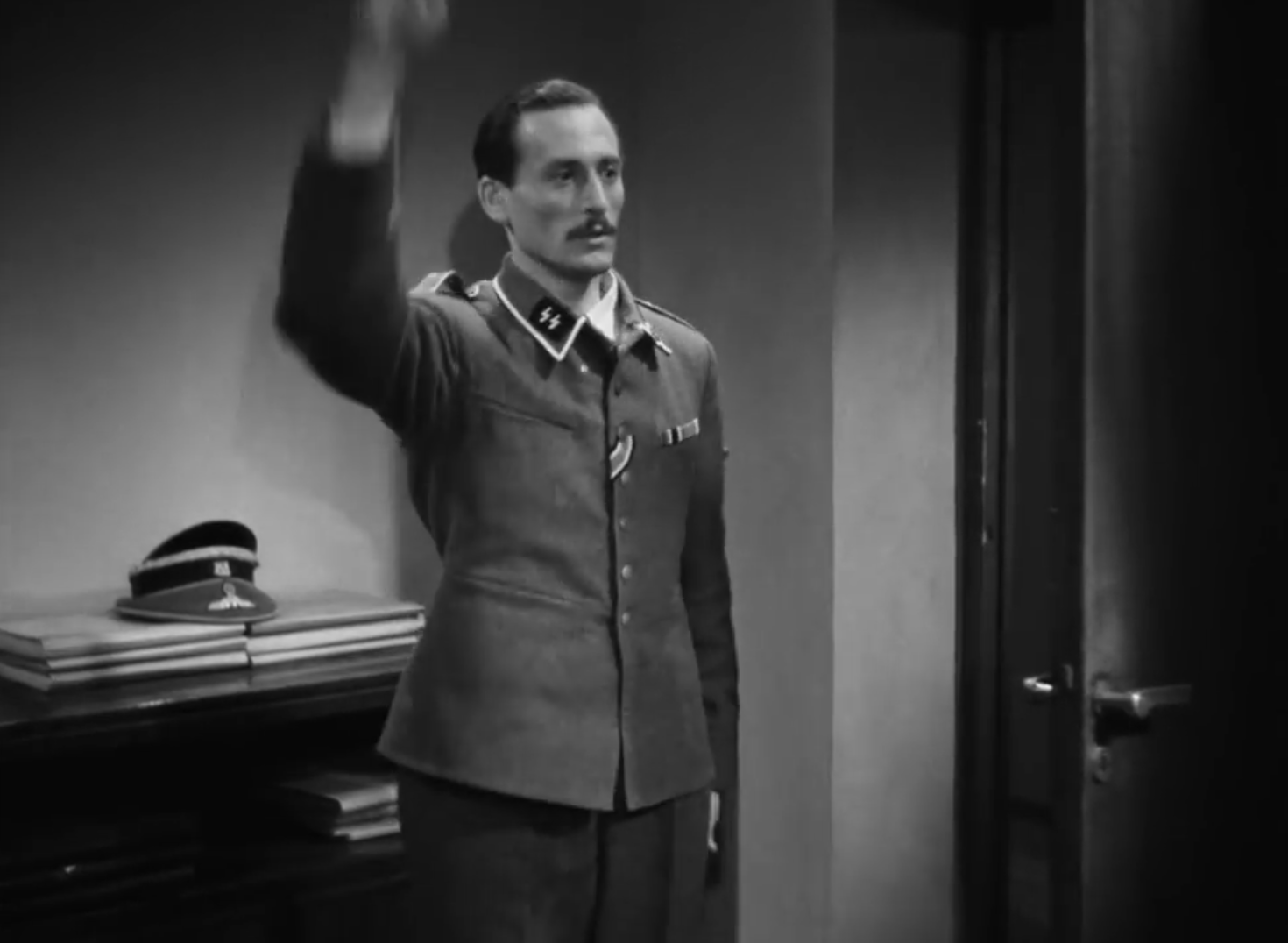
Un soldato entra e fa il saluto nazista. "Ha telefonato il sergente Bauer, signore. Non hanno trovato la persona in questione".
"No? È strano”.
There’s a knock at the door. “Come in,” Bergmann says, in German.
A soldier enters and gives the Nazi salute. “Sergeant Bauer phoned, sir. They didn’t find the person in question.”
“No? That’s odd.”
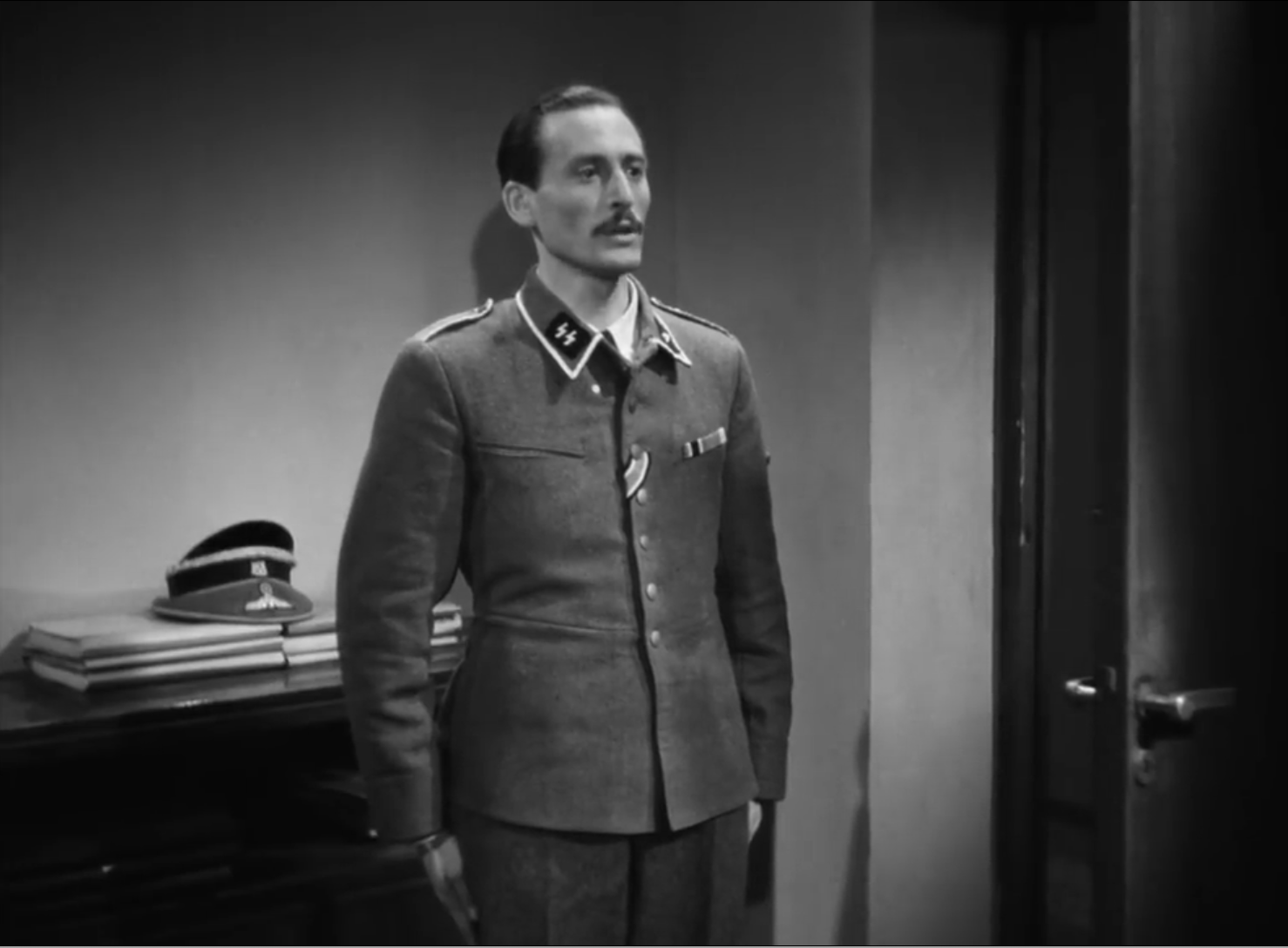

"La padrona di casa e la governante erano lì. Le portiamo qui?"
"No, non è necessario. Grazie”.
Il soldato saluta ancora una volta e se ne va.
“The landlady and the housekeeper were there. Shall we bring them in?”
“No, that’s not necessary. Thank you.”
The soldier salutes once again and leaves.
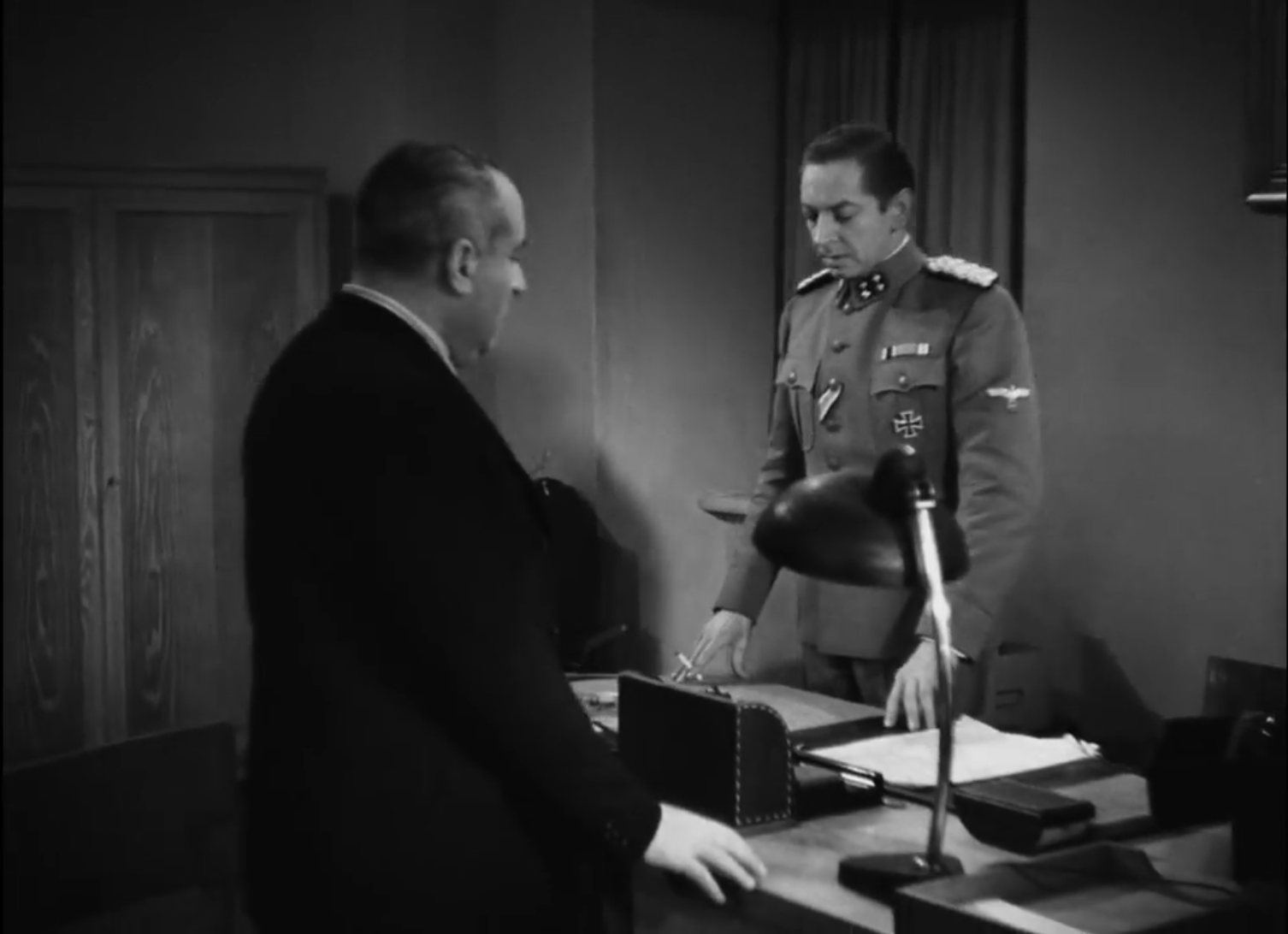
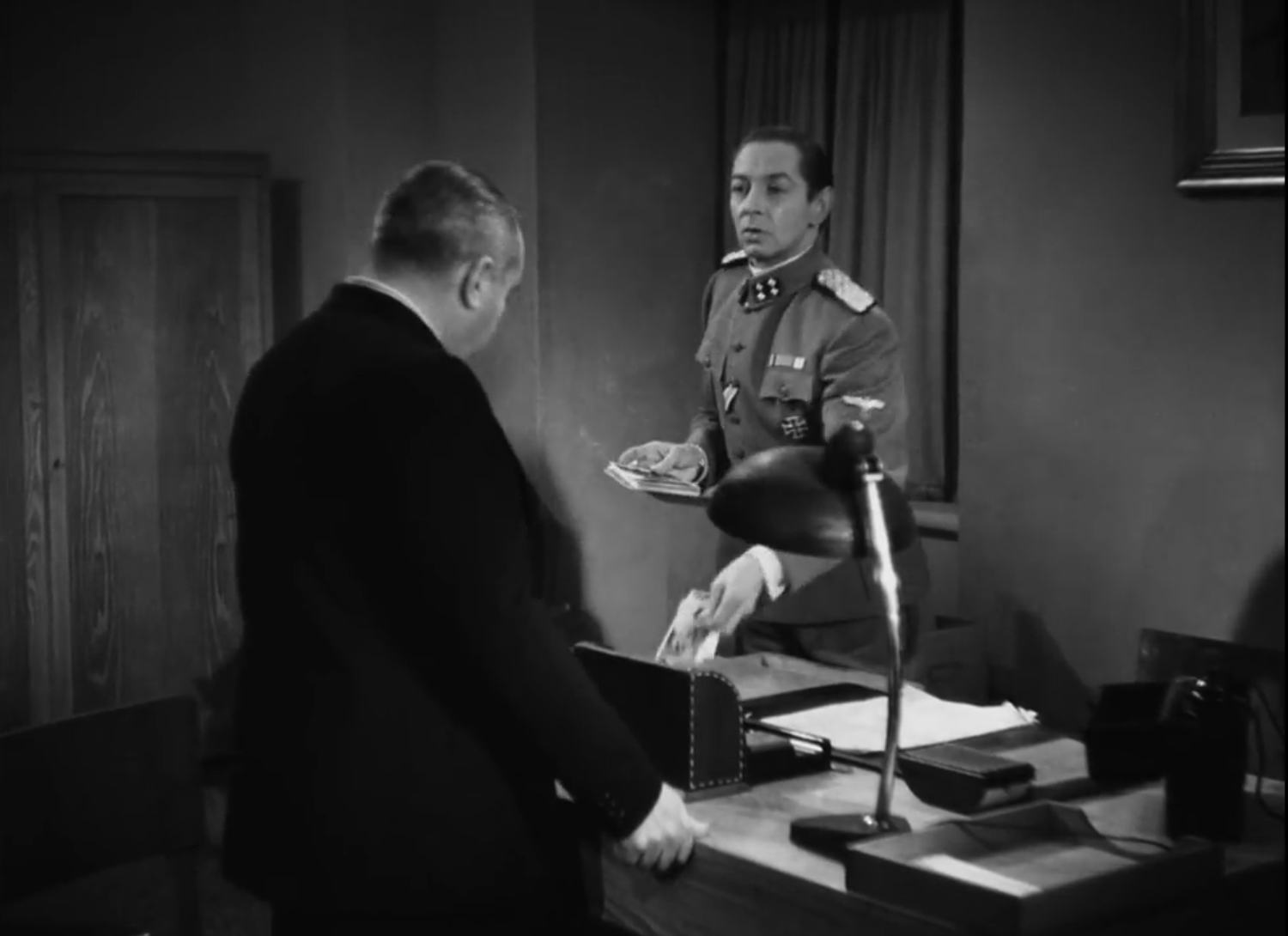
Bergmann cammina verso la sua scrivania.
"Una notizia spiacevole?" chiede il questore.
"Una persona ha mancato ad un appuntamento".
"Una persona importante?"
"Spero”. Apre un cassetto, tira fuori delle fotografie e ne passa una al questore. "Li conosce?"
Bergmann walks to his desk.
“Unpleasant news?” asks the Police Commissioner.
“Someone missed an appointment.”
“An important person?”
“I hope so.” He opens a drawer, takes out some photographs, and passes one to the Commissioner. “Do you know them?”
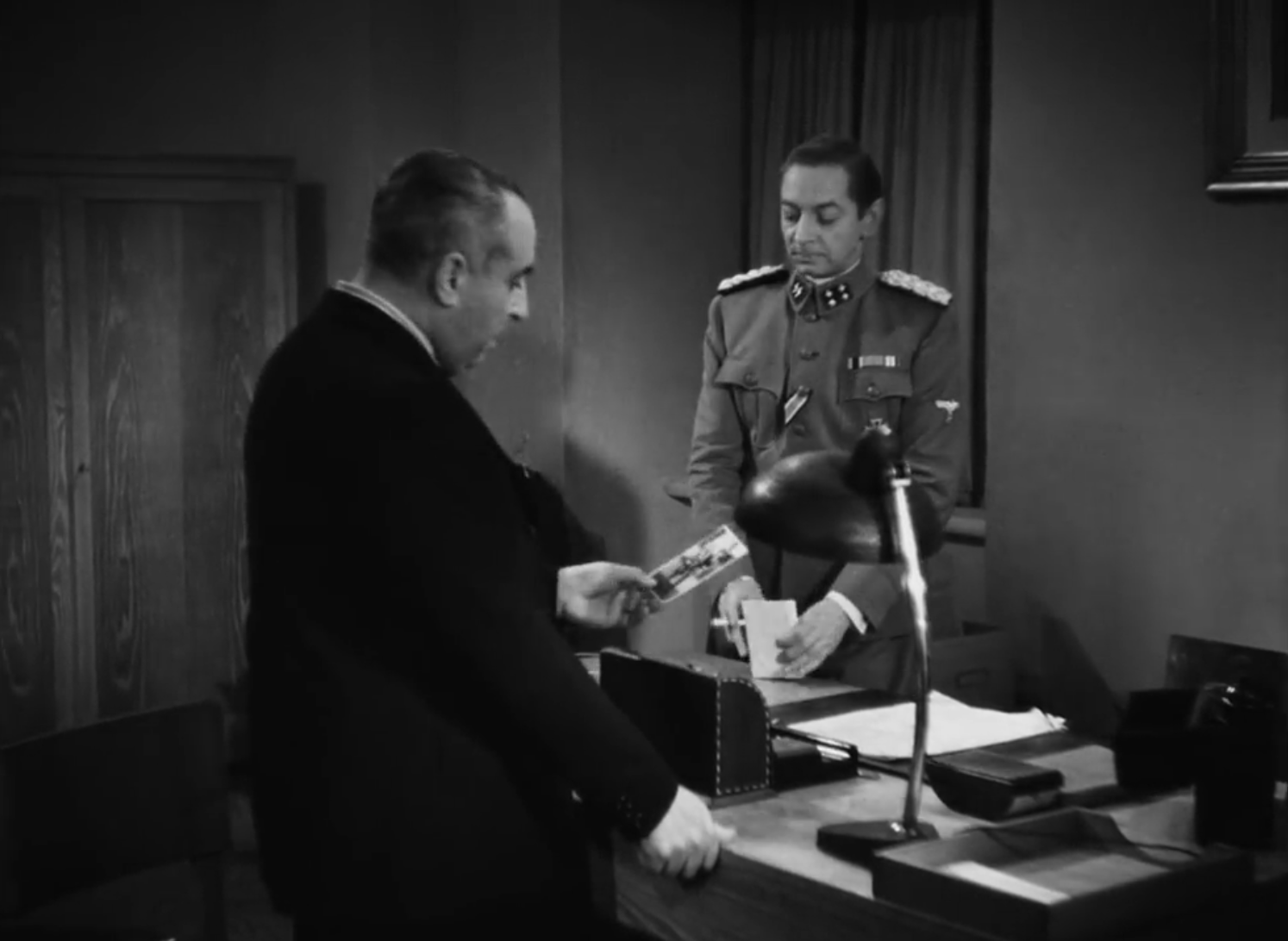
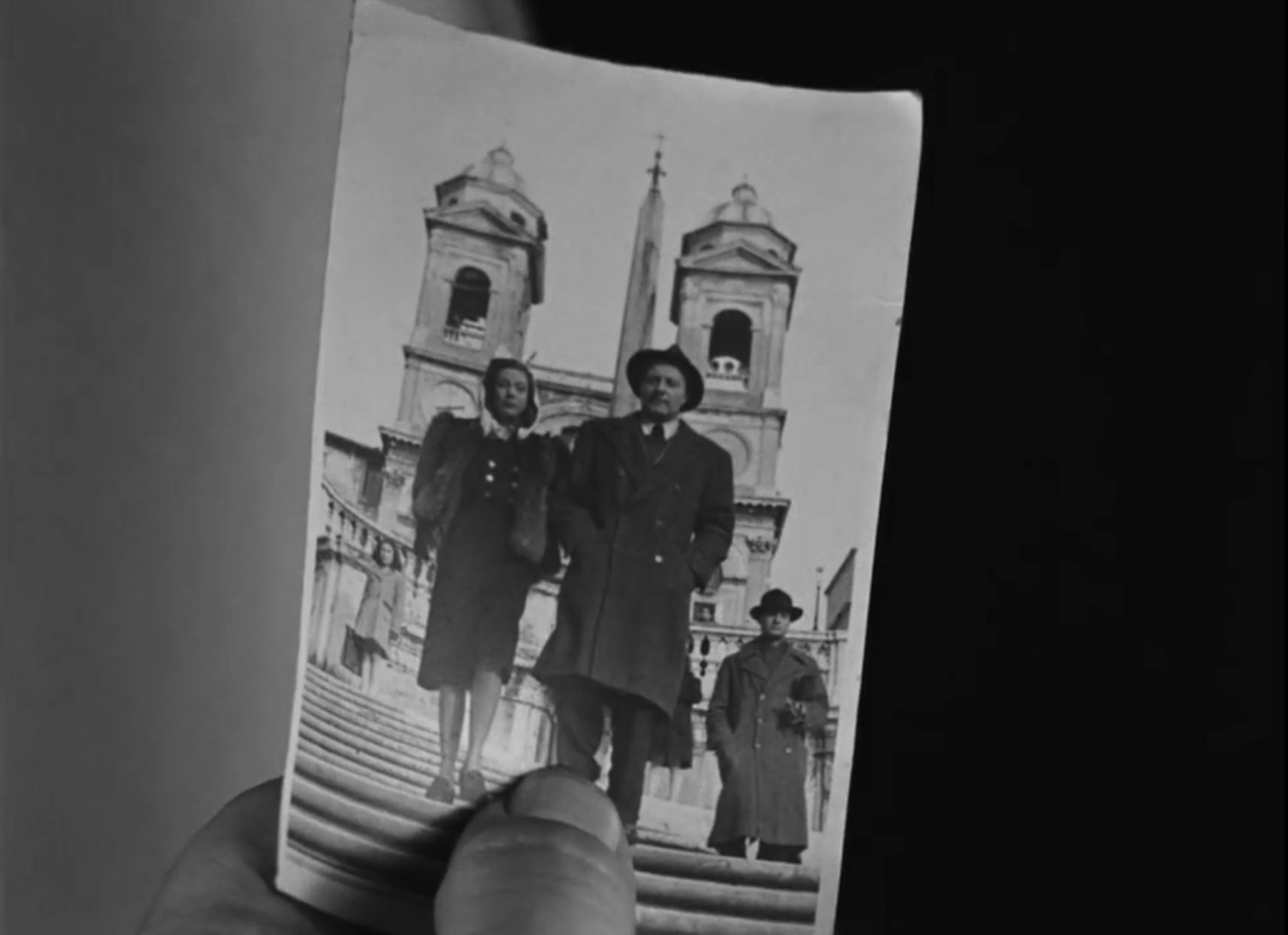
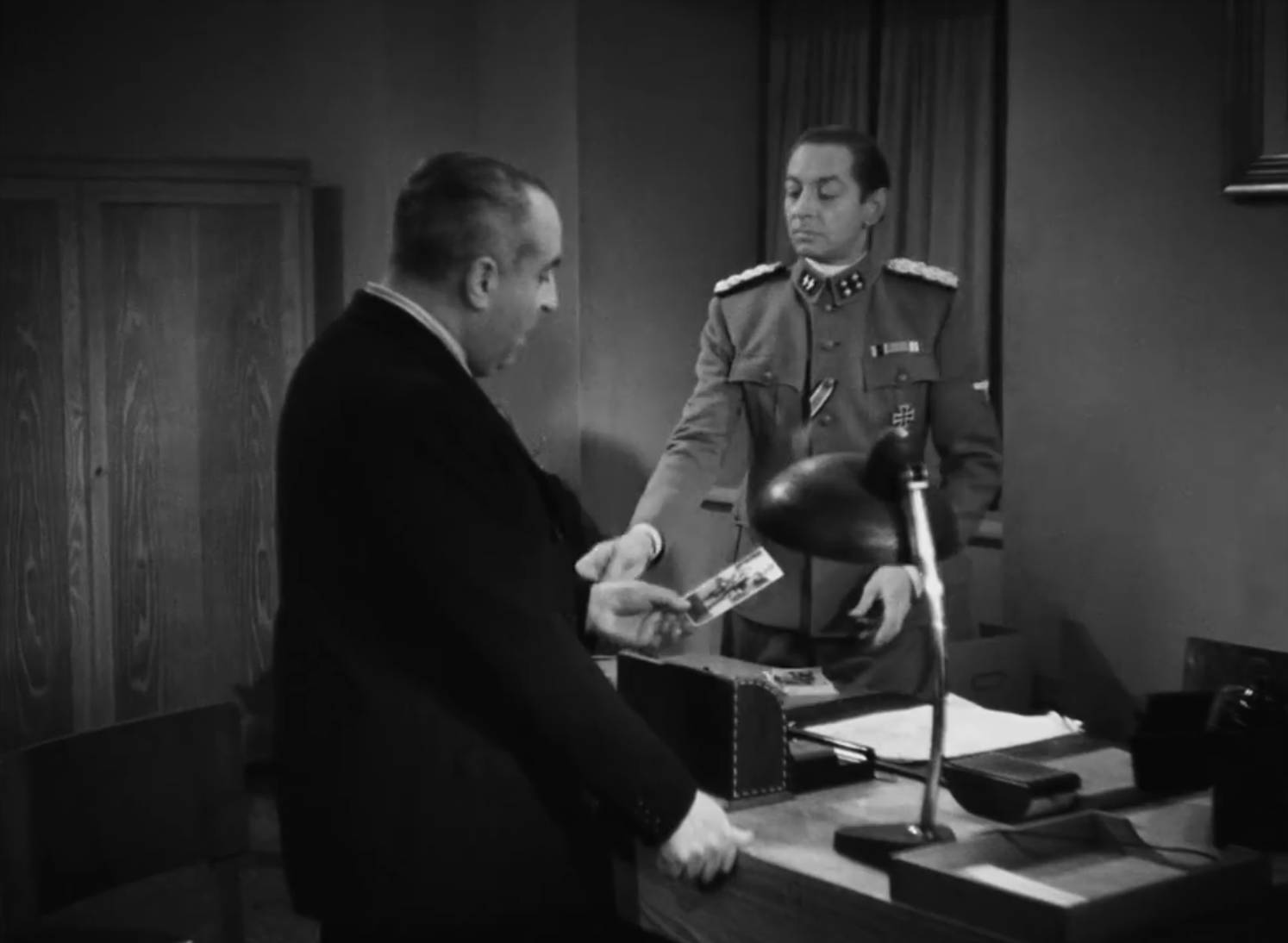
Il questore tiene in mano la fotografia. Mostra un uomo e una donna in piedi sulla scalinata di Piazza di Spagna. La chiesa di Trinità dei Monti incombe dietro di loro.
"No" – risponde – "Chi sono?”
The Commissioner holds up the photograph. It shows a man and woman standing on the stairs of Piazza di Spagna. The church of the Trinità dei Monti looms behind them.
“No,” he replies. “Who are they?”
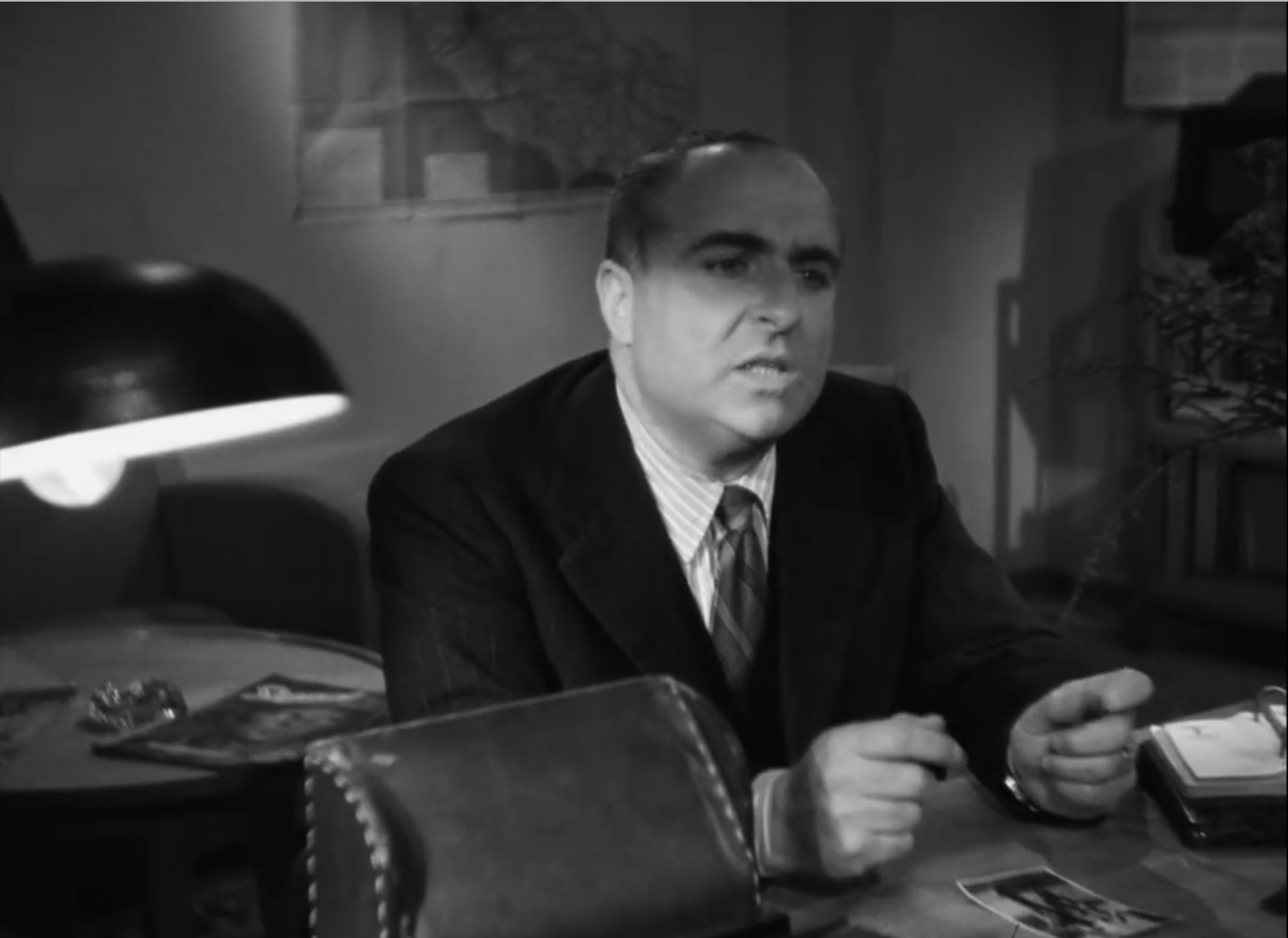
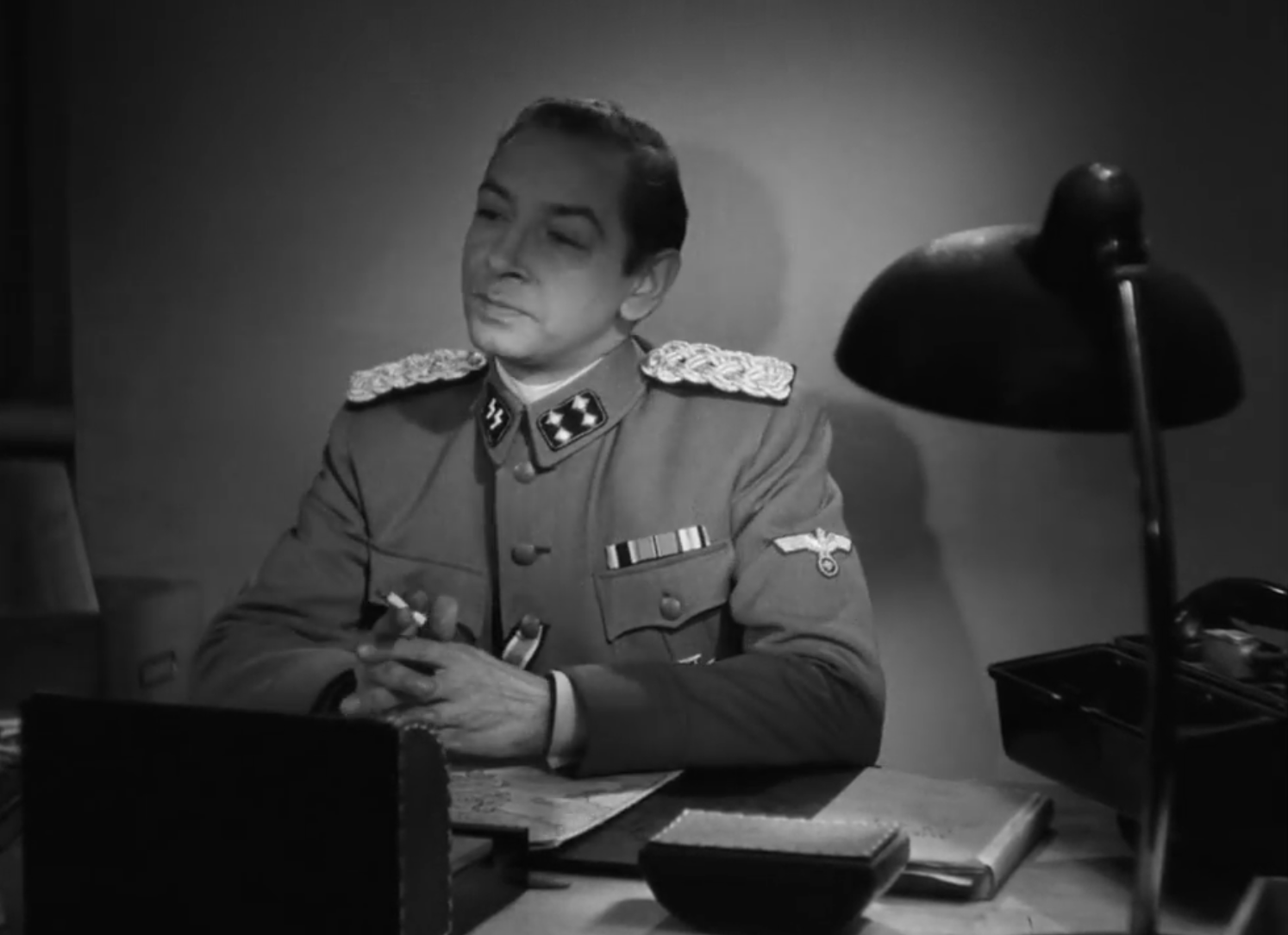
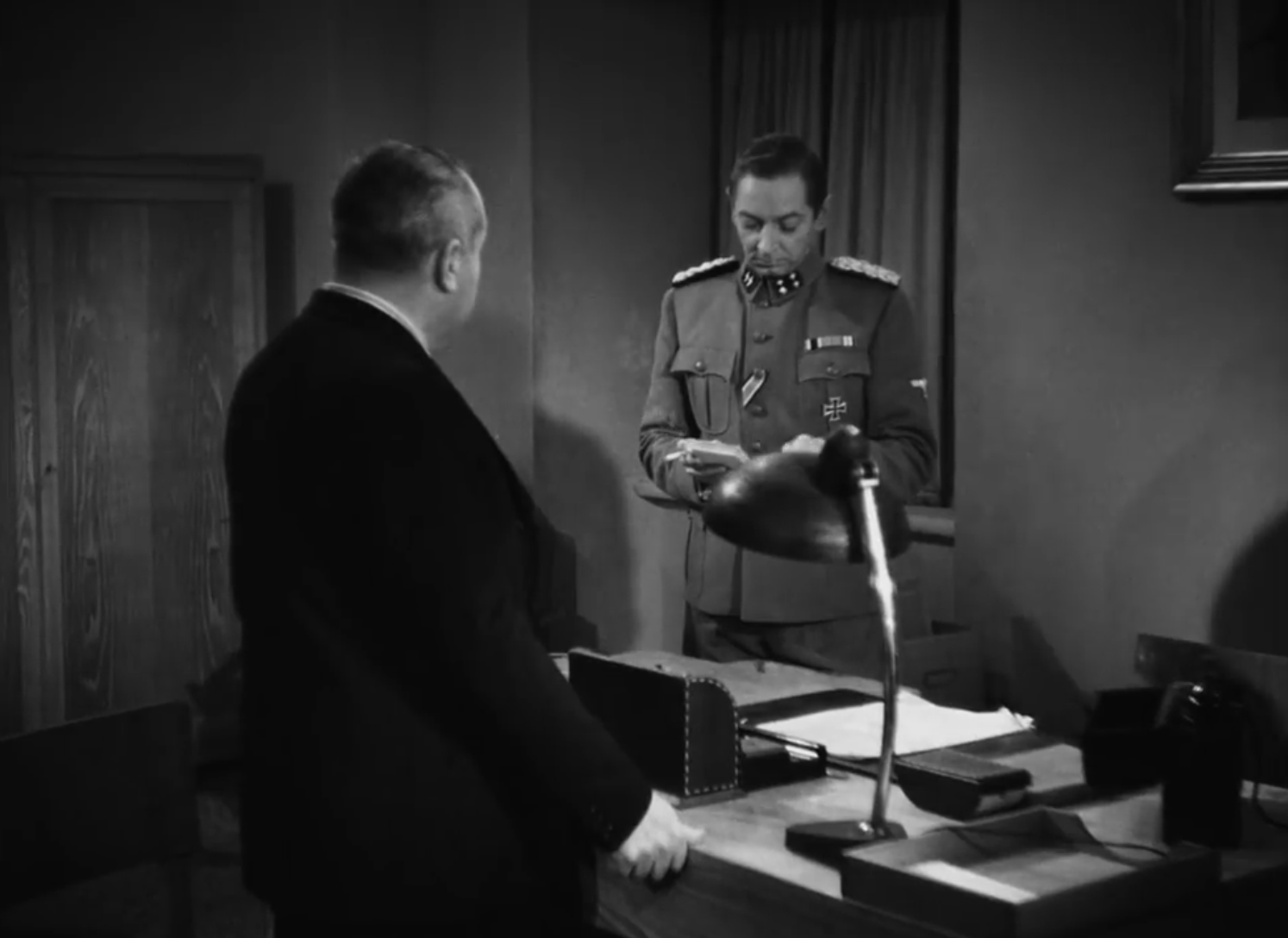
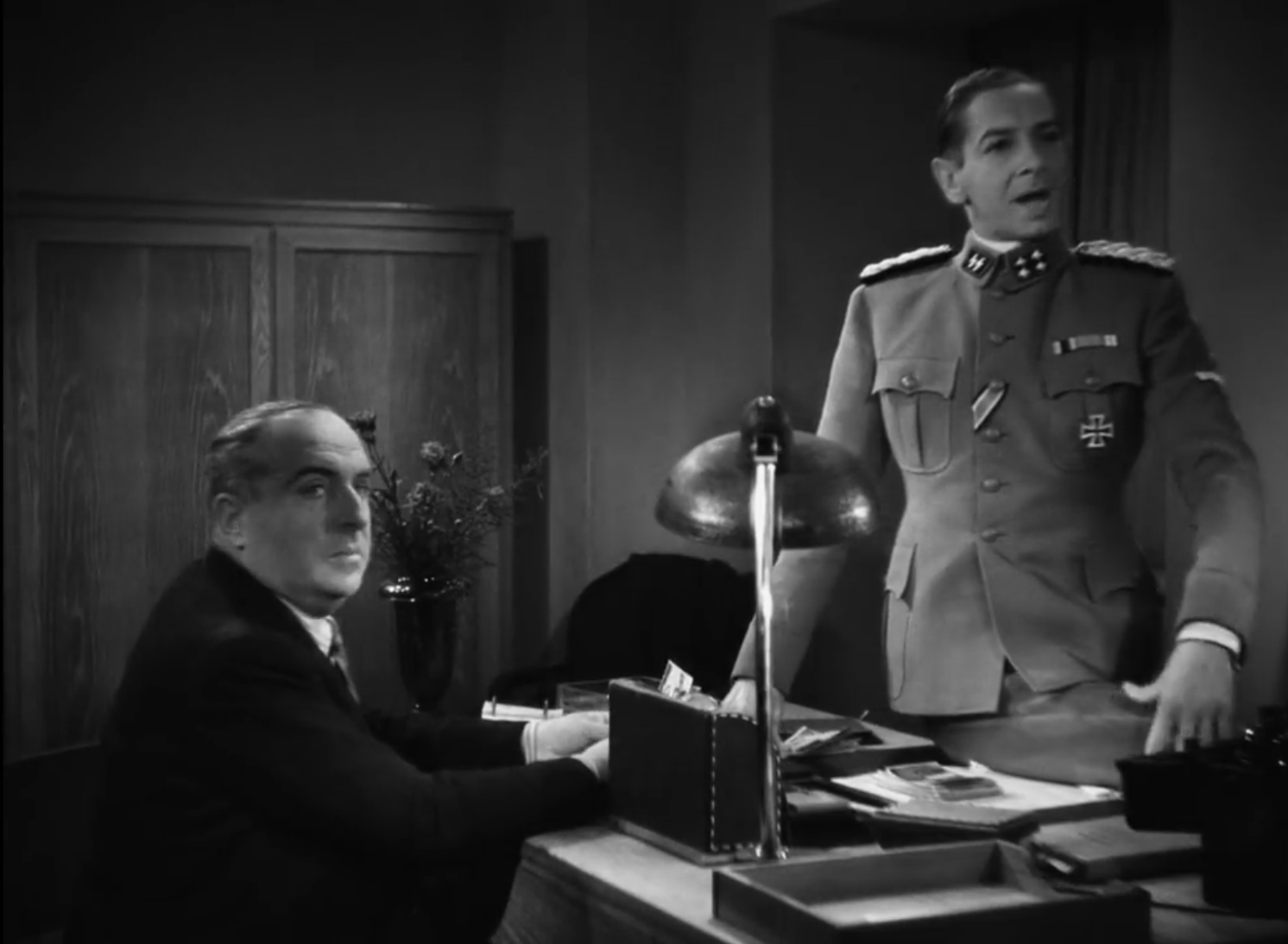
I due uomini si siedono, uno di fronte all'altro, alla scrivania di Bergmann. La lampada da tavolo illumina le figure, mentre gran parte della stanza rimane in ombra. "Lui si fa chiamare ingegnere Manfredi".
“Manfredi?”
“Ja”, conferma l’altro in tedesco.
"Ci è stato segnalato questo nome. Pare che sia uno dei capi della giunta militare del Comitato di Liberazione Nazionale”.
"Ho le mie buone ragioni per credere che sia proprio lui".
The two men sit down, facing each other across Bergmann’s desk. The desk lamp illuminates the figures, while much of the room remains in shadow. “He goes by the name of Manfredi, engineer.”
“Manfredi?”
“Ja,” the other man confirms in German.
“That name was brought to our attention. It seems he’s one of the heads of the military council of the National Liberation Committee.”
“I have good reason to believe it’s the same man.”
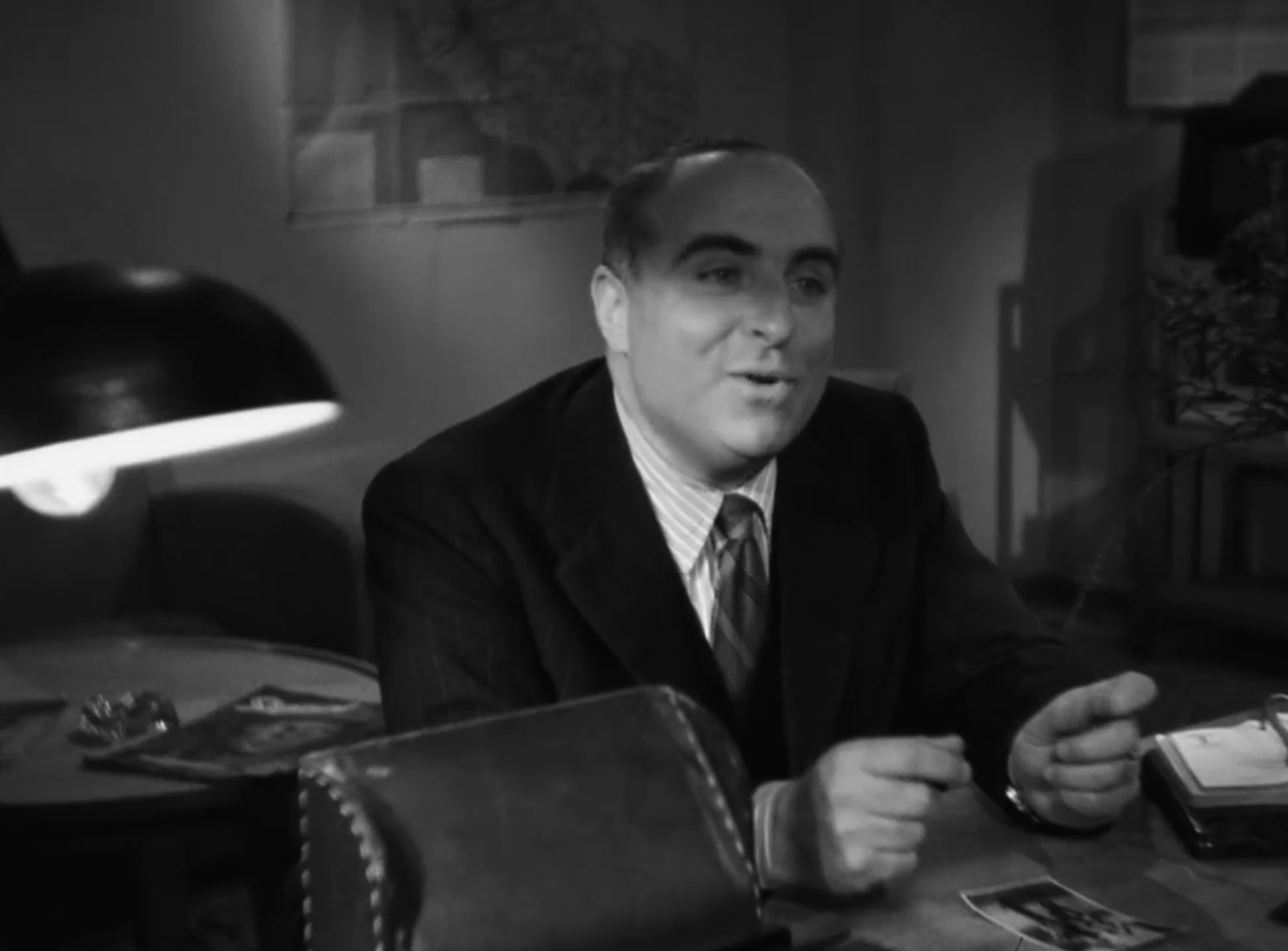
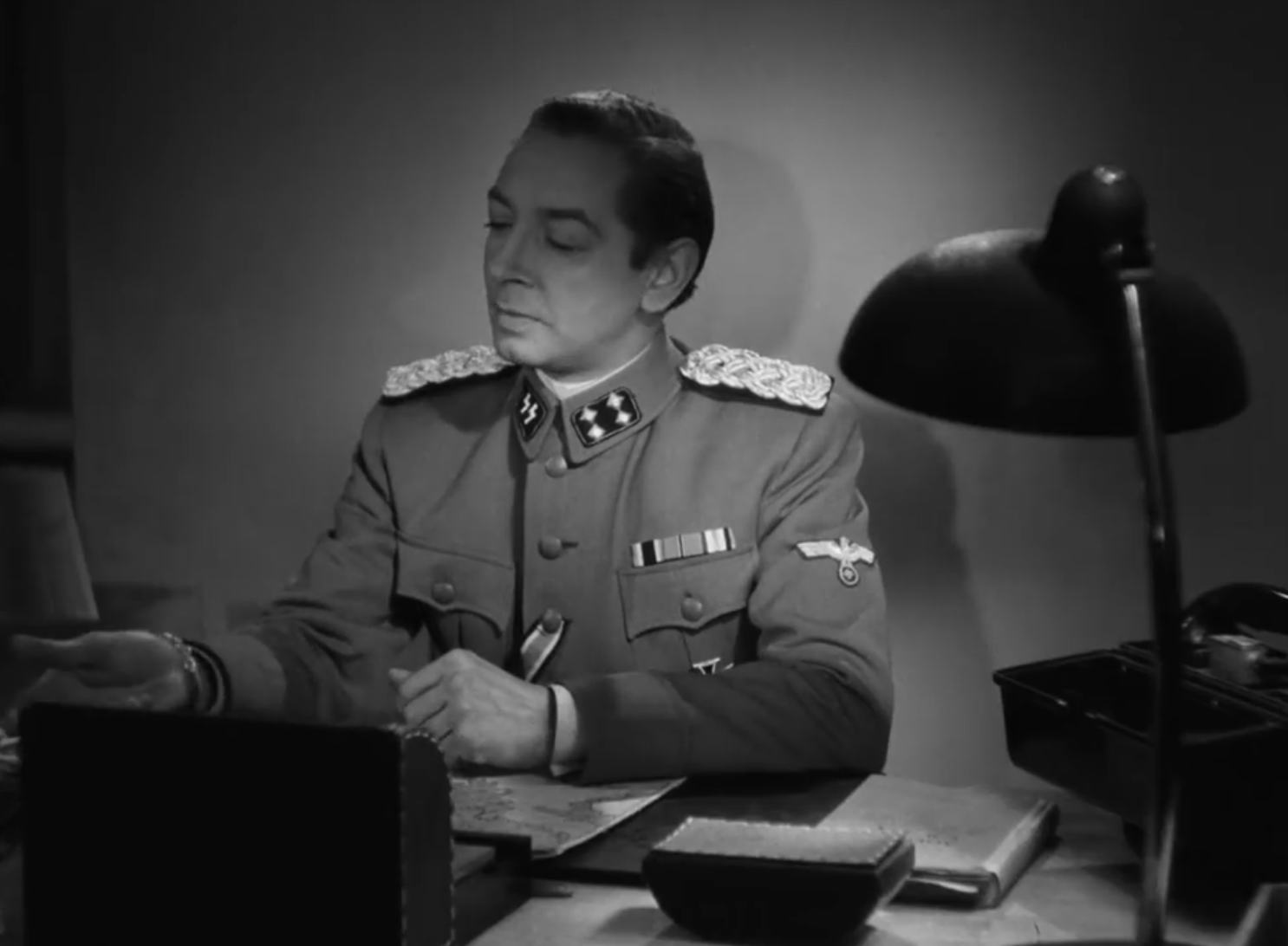
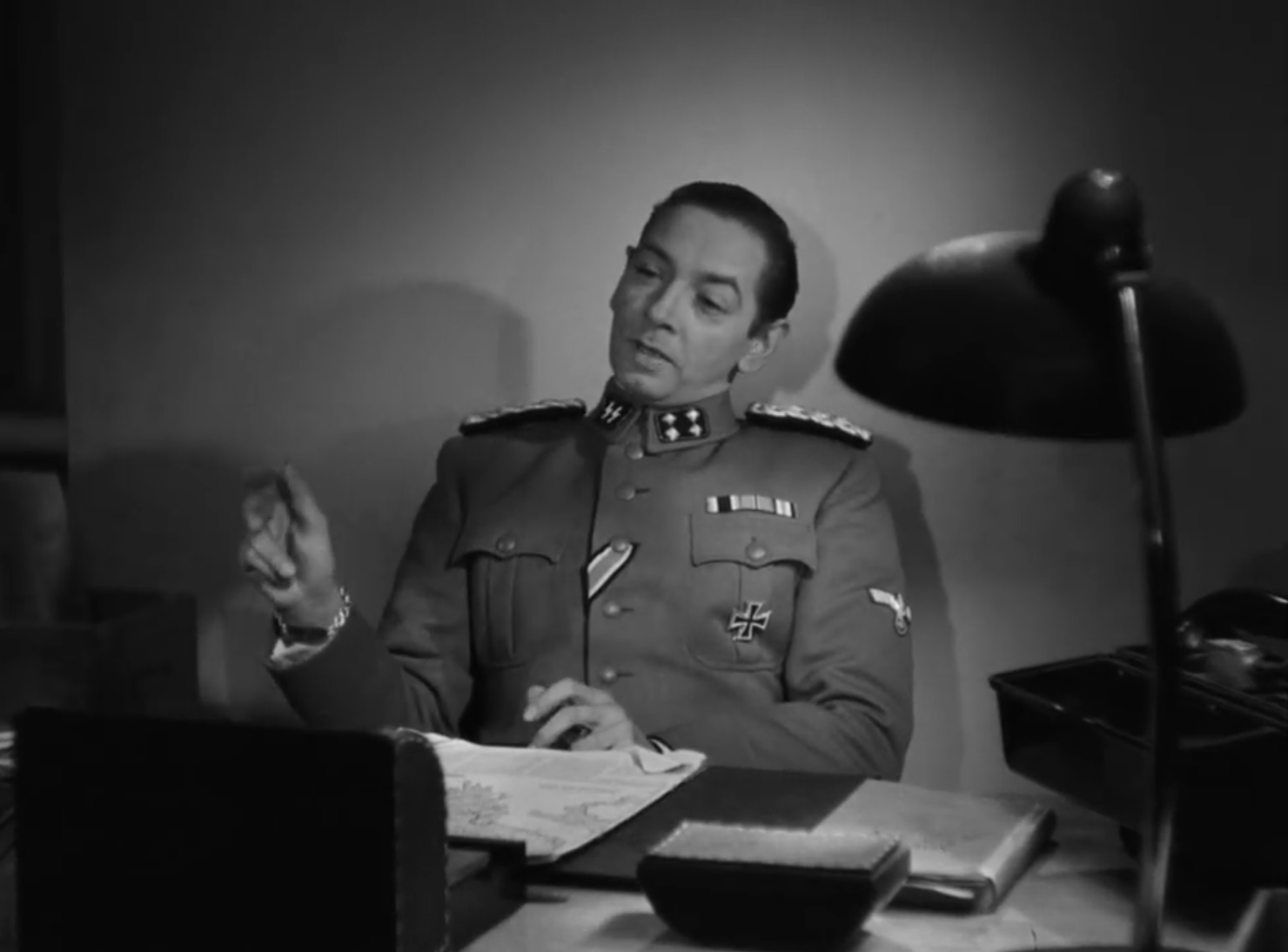
"Ma lei come lo ha pescato?"
"L'ho incontrato qui su questo tavolo", risponde Bergmann, gesticolando. Si piega all'indietro. "Tutte le sere io faccio una lunga passeggiata per le vie di Roma senza uscire dal mio ufficio".
“How did you spot him?”
“I met him while sitting right here at this desk,” Bergmann answers, gesturing. He leans back. “Every evening I take a long stroll through the streets of Rome, without leaving my office.”
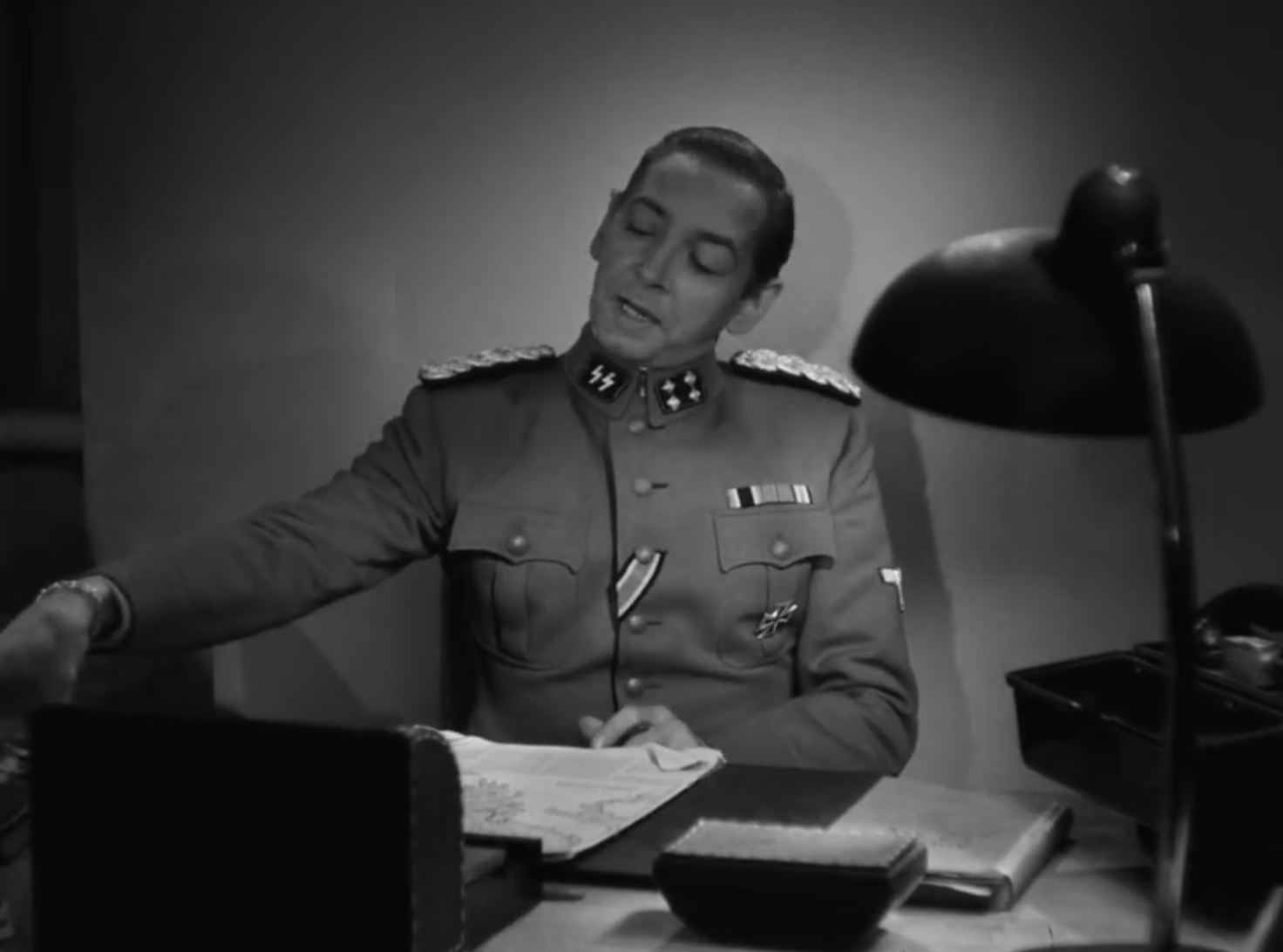
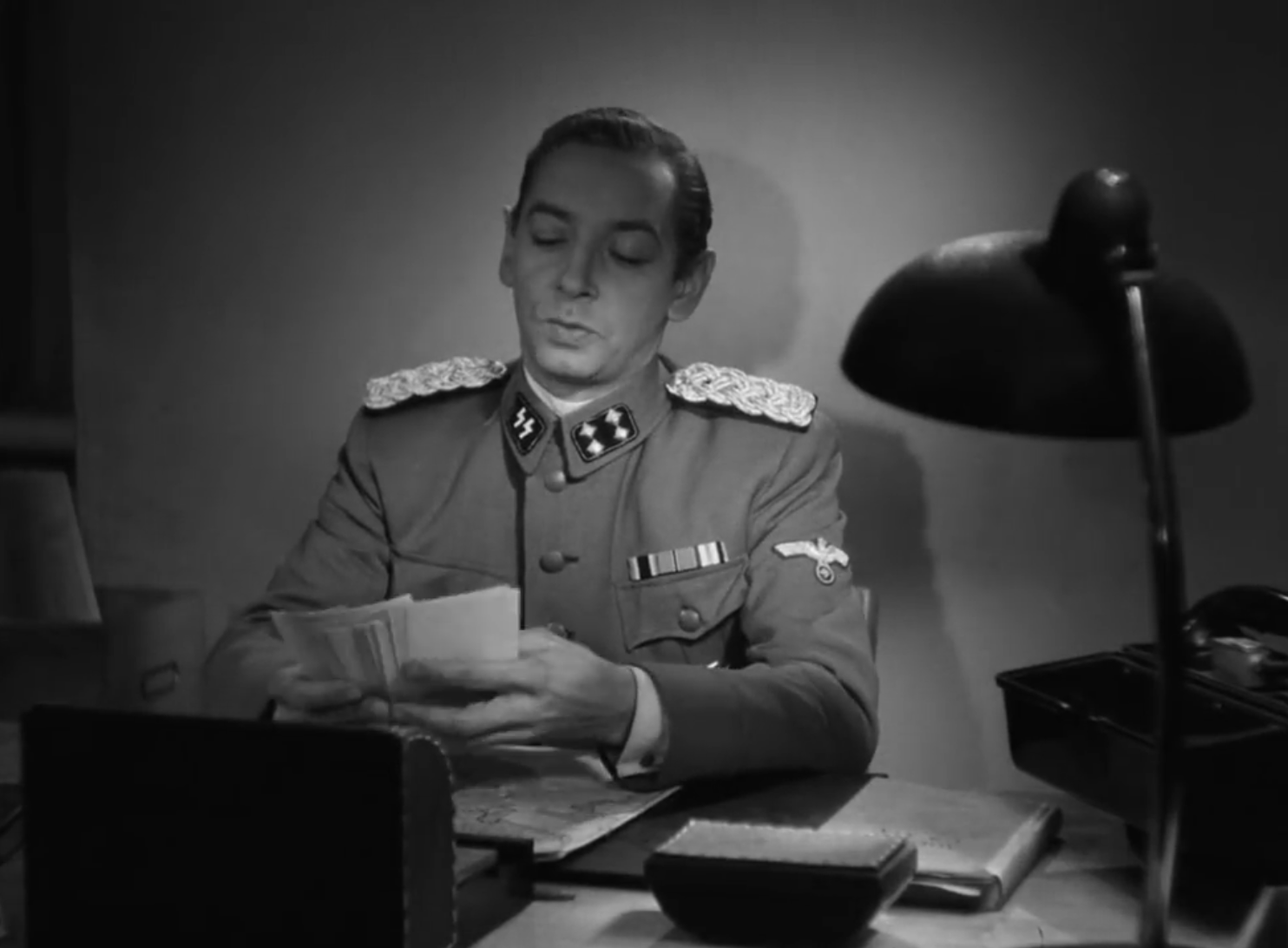
"Io amo molto questo genere di fotografie che prende la gente quasi di sorpresa", dice soddisfatto, raccogliendo una pila di immagini sulla sua scrivania. “Si fanno incontri molto interessanti”.
“I really love this sort of photograph that catches people almost unaware,” he says contentedly, reaching for a pile of images on his desk. “One has such interesting encounters.”
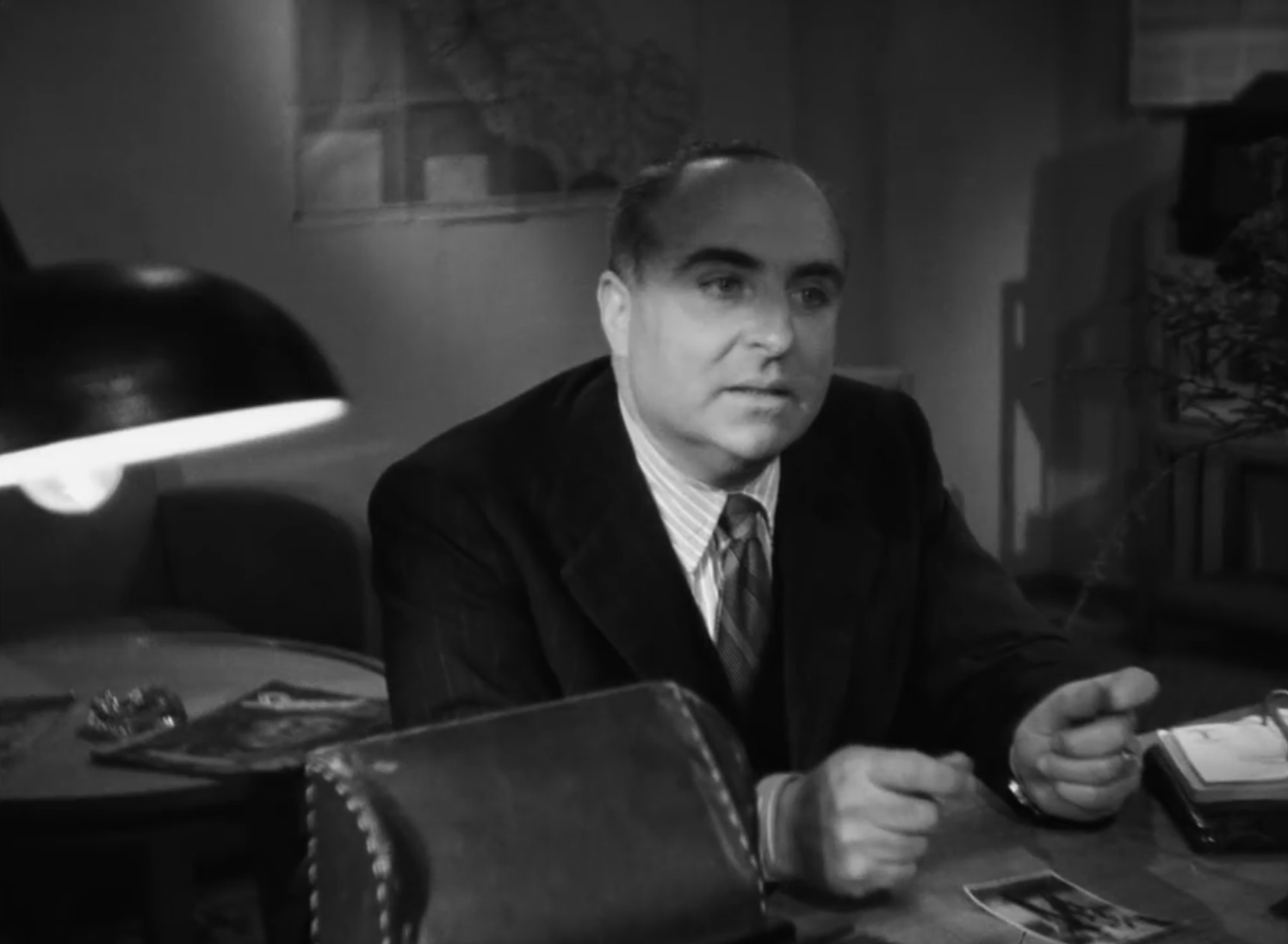
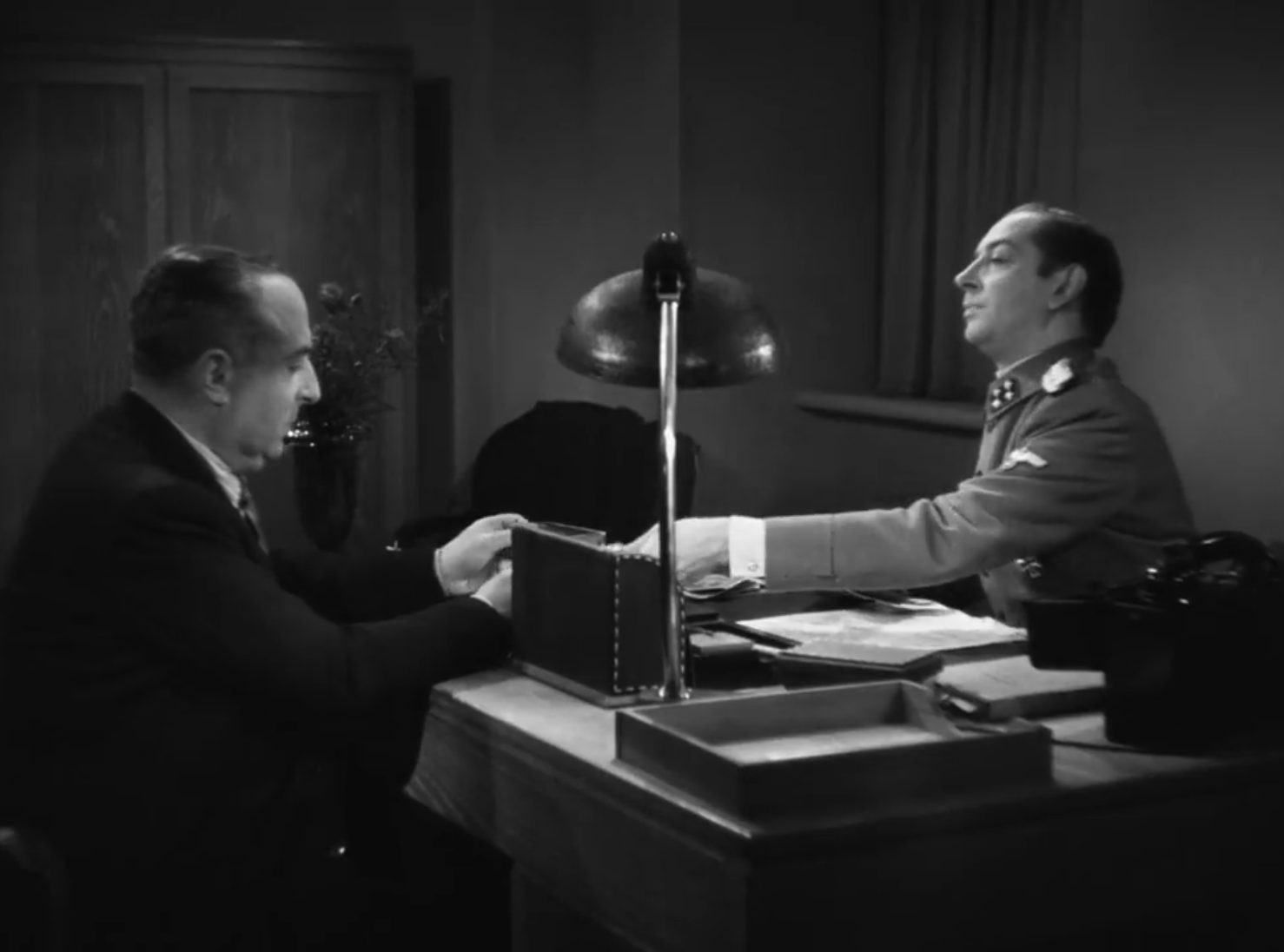
“Qualche tempo fa, per esempio, mi sono imbattuto nel signor Manfredi e la sua piccola amica".
Il questore sta ascoltando attentamente. Sporgendosi verso un cassetto alla sua sinistra, Bergmann tira fuori un altro mucchio di fotografie. "Mi sono detto: ‘Io quest'uomo l'ho già visto da qualche parte!’ Guardate, per esempio, questo gruppo". Passa la foto attraverso la scrivania.
“Some time ago, for example, I came across Mr. Manfredi and his little girlfriend.”
The Commissioner is listening attentively. Reaching into a drawer on his left, Bergmann pulls out another pile of photographs. “I told myself, ‘I’ve seen this man someplace.’ Look at this group, for example.” He hands the photo across the desk.
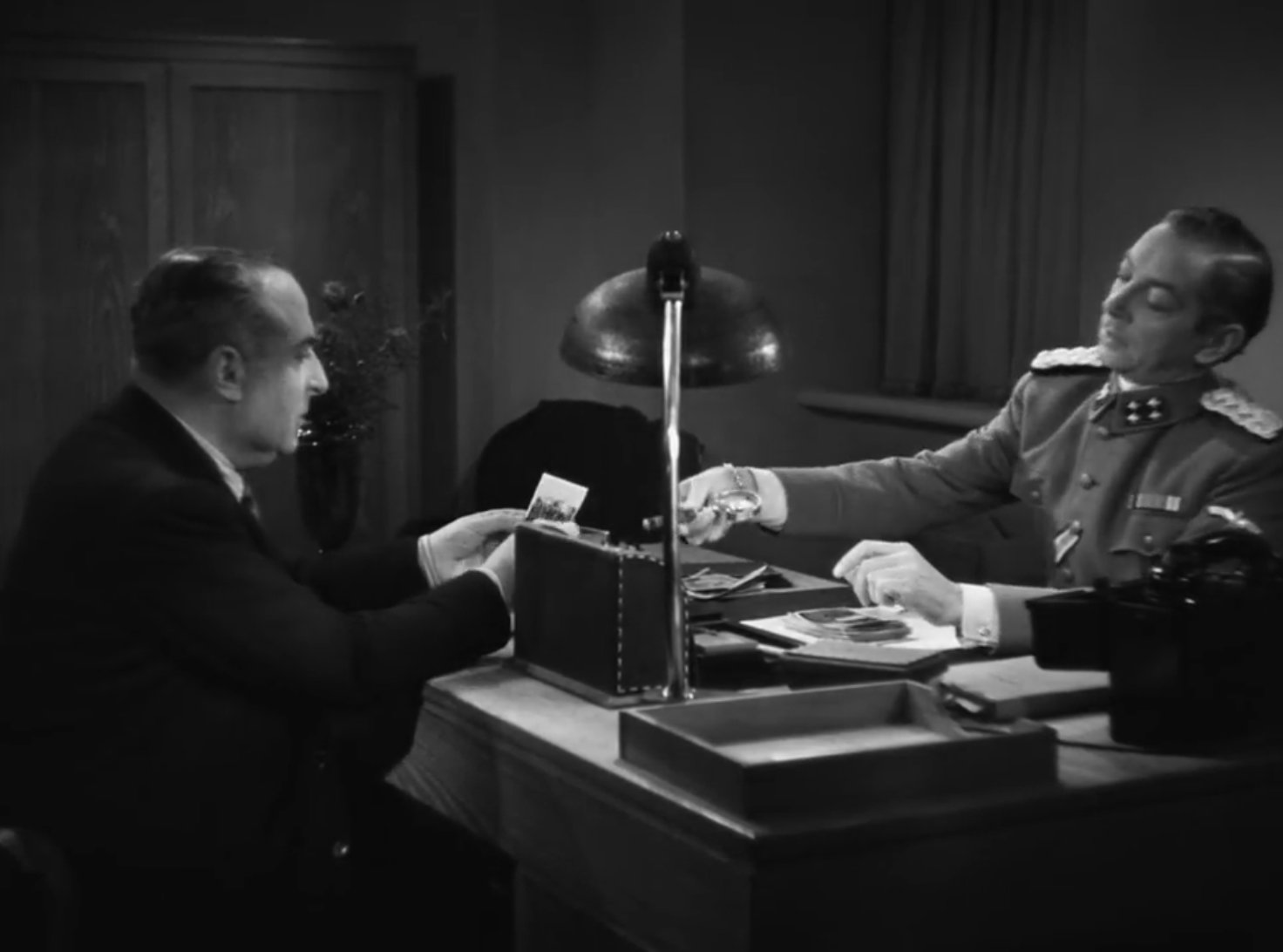
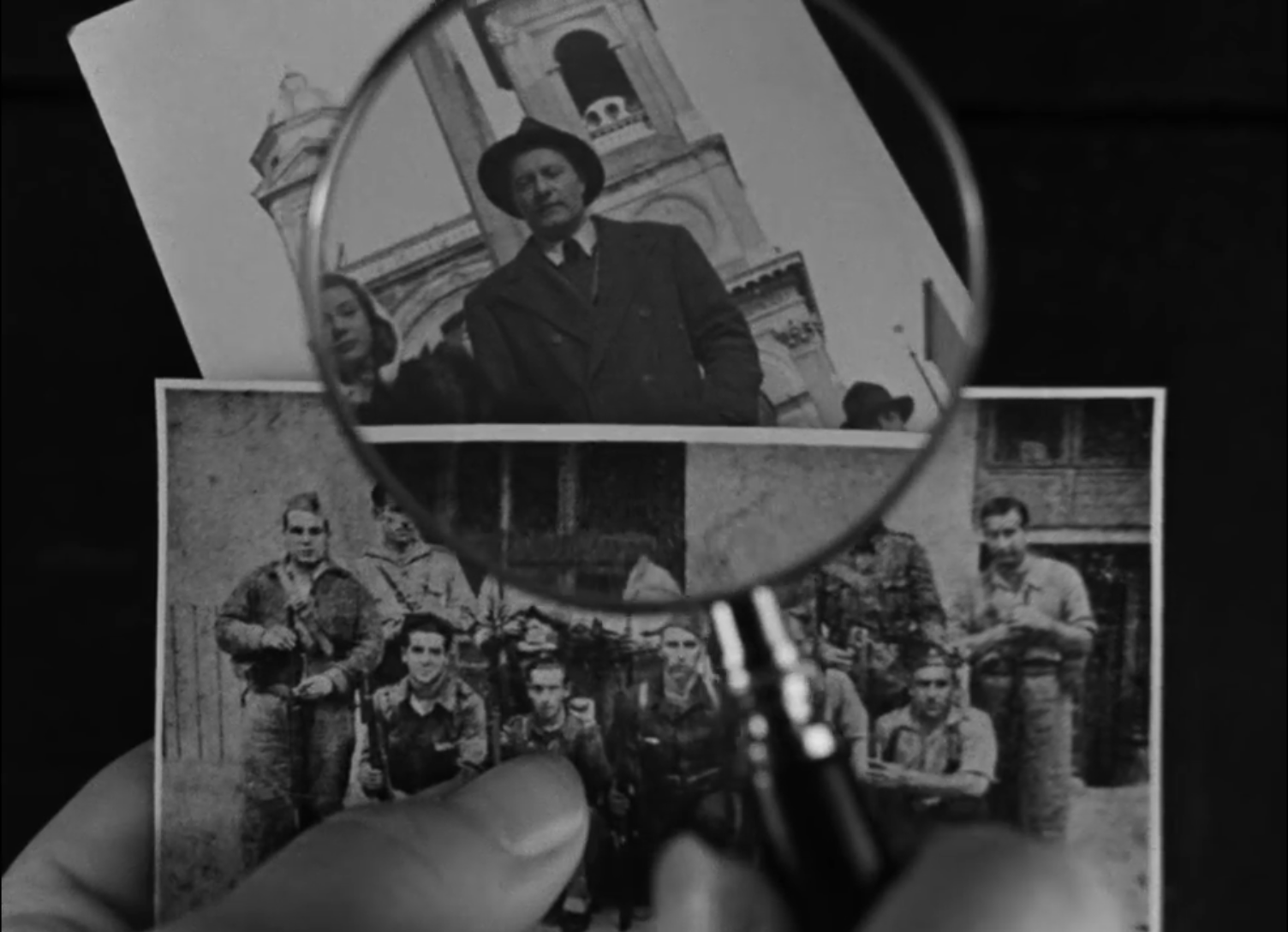
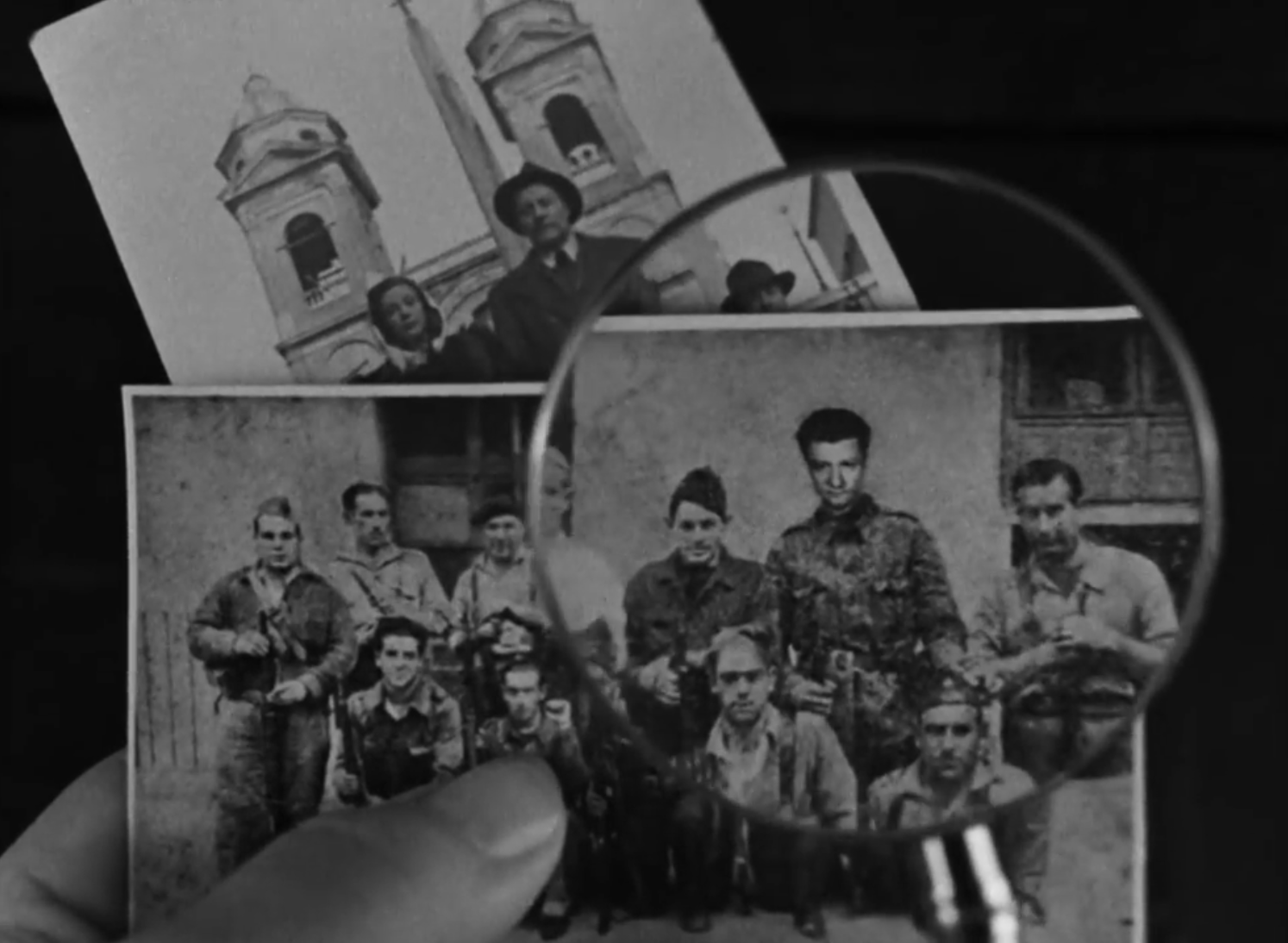
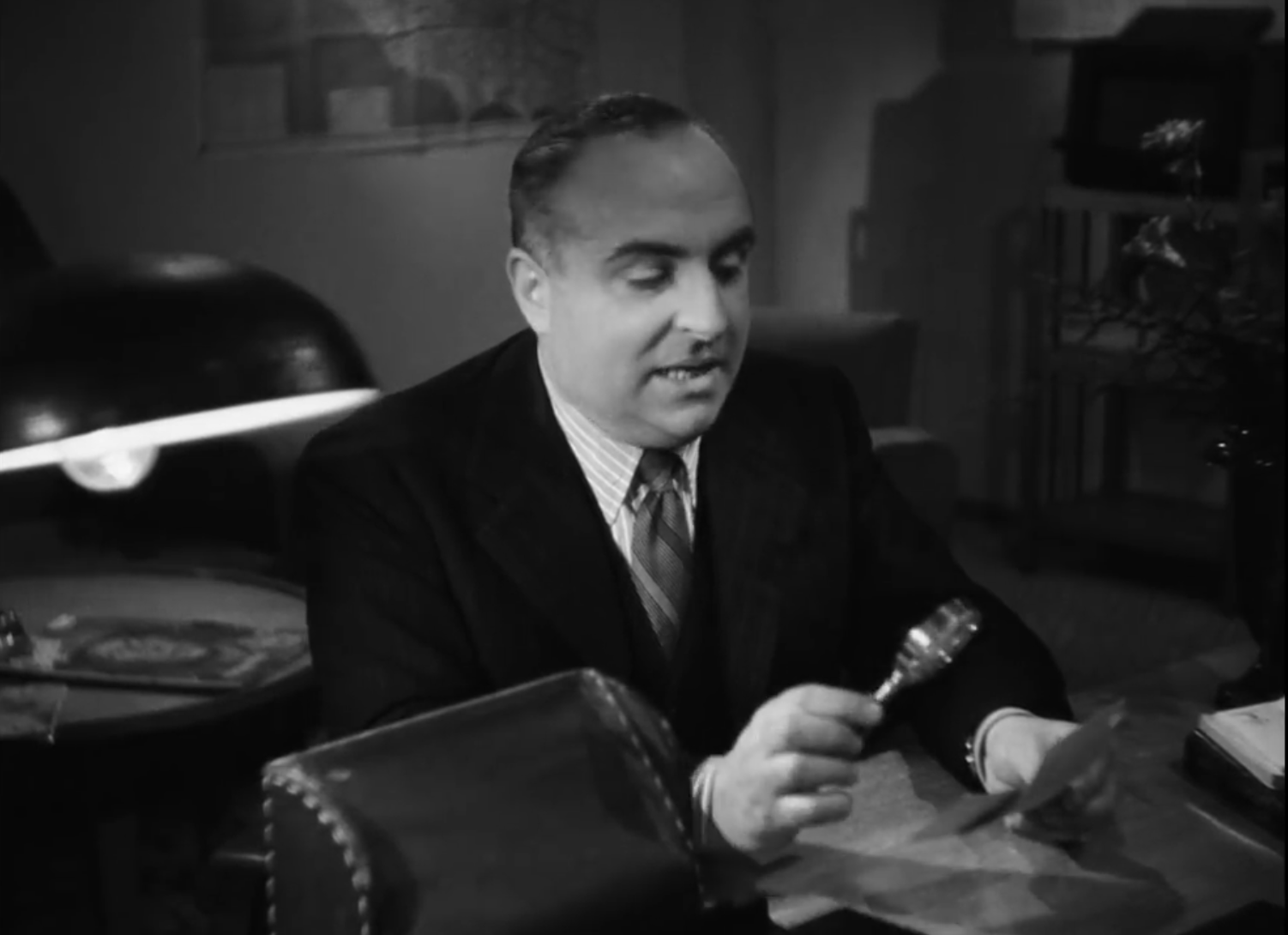
"Il secondo da sinistra. Ho ricevuto questa fotografia da Berlino", spiega, porgendogli una lente d'ingrandimento. "Credo di non sbagliare, vero?" Vediamo la lente d’ingrandimento ingrandire la figura in ogni immagine, mentre il questore fa il confronto.
“The second from the left. I received these from Berlin,” he explains, handing him a magnifying glass. “I don’t think I’m wrong, am I?” We see the magnifying glass enlarge the figure in each image, as the Commissioner makes the comparison.
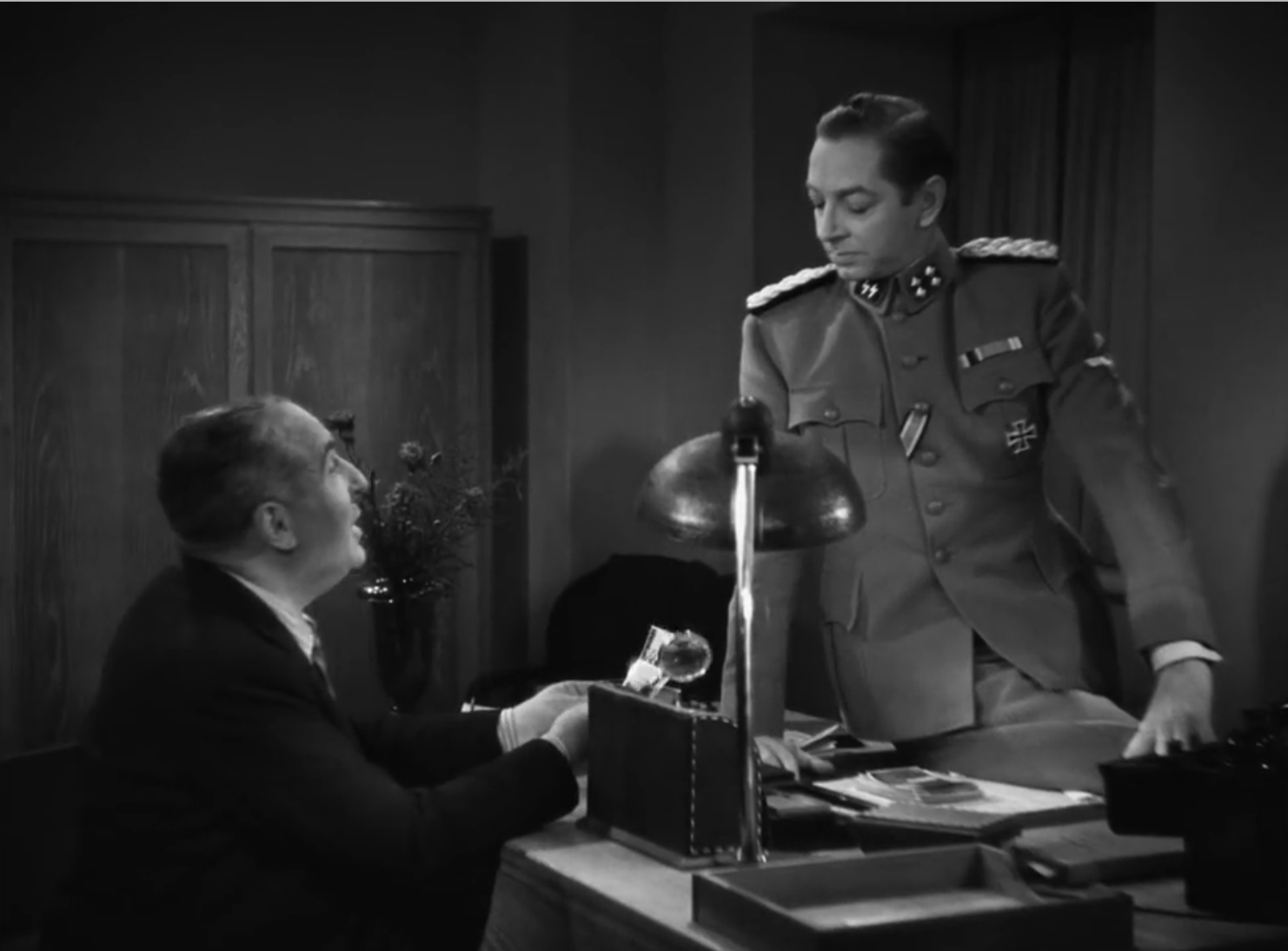
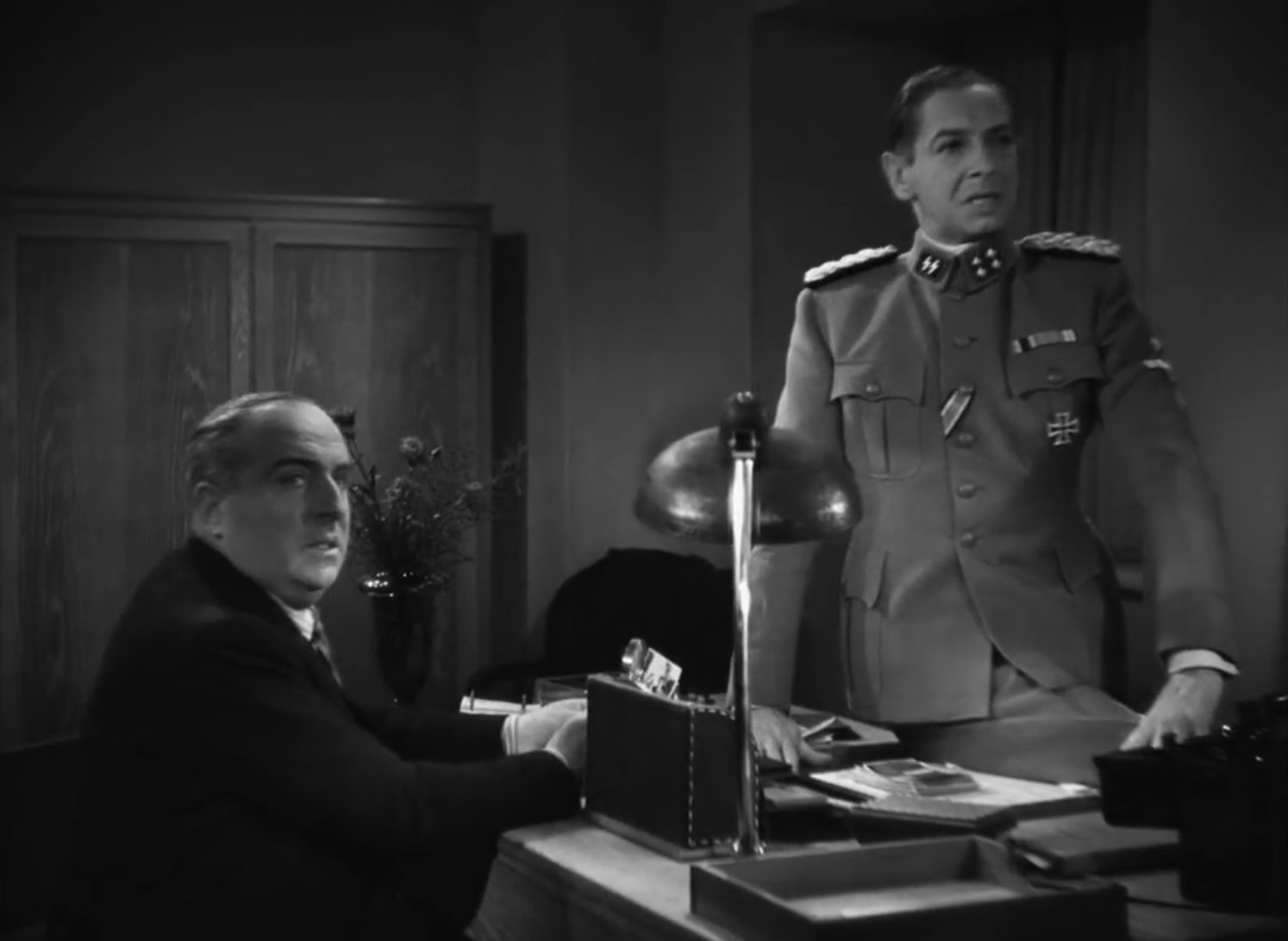
"Macché sbagliare!" dice. "È lui. Sono la stessa persona!"
Sono interrotti da un urlo agonizzante che viene da un'altra stanza.
"Ma che noia!" – Bergmann si alza in piedi – "Scusi".
"Prego".
“Not at all!” he says. “It’s him. They are the same person!”
They’re interrupted by an agonized howl from another room.
“How tiresome!” Bergmann stands. “Excuse me.”
“Of course.”
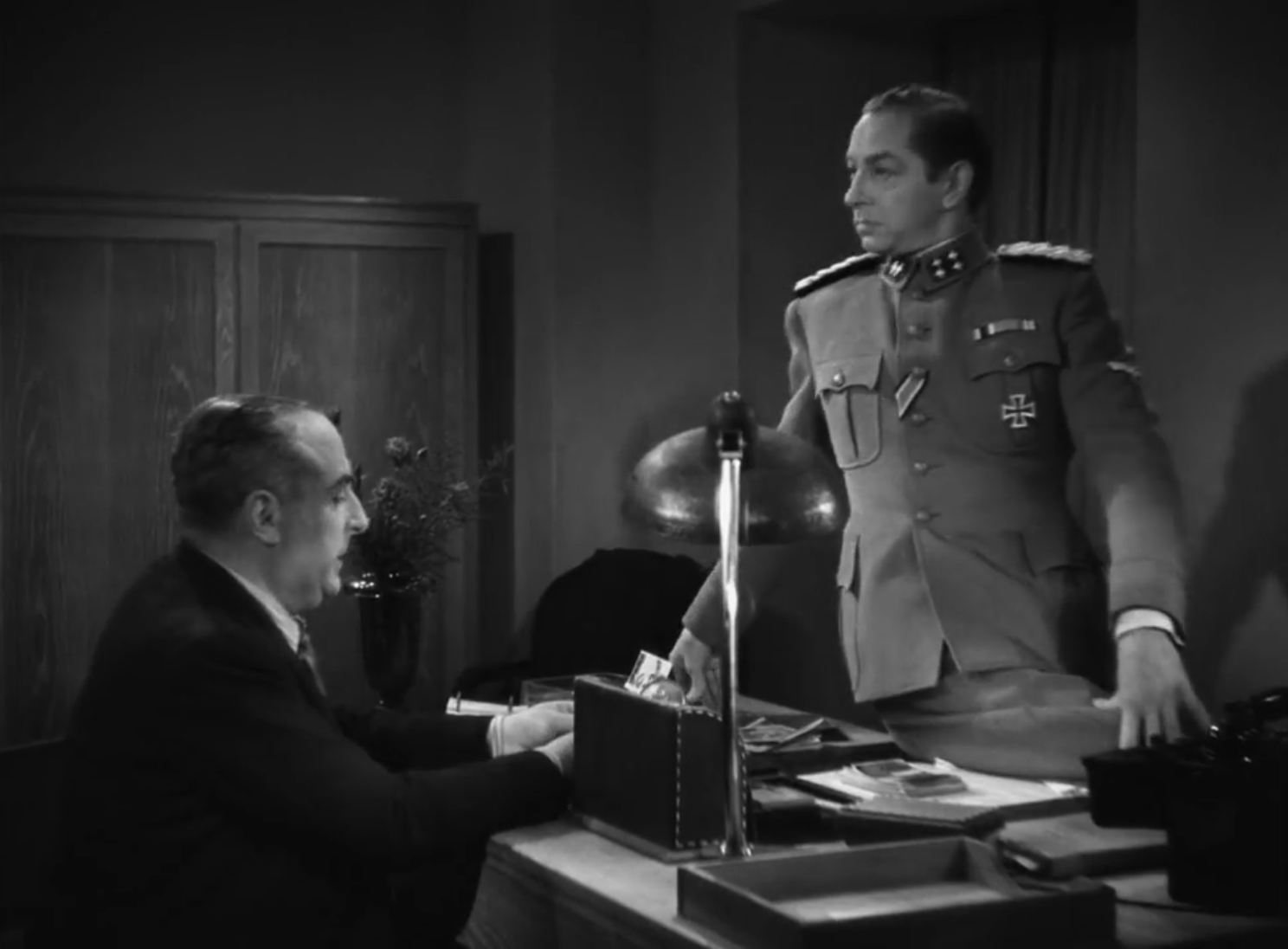
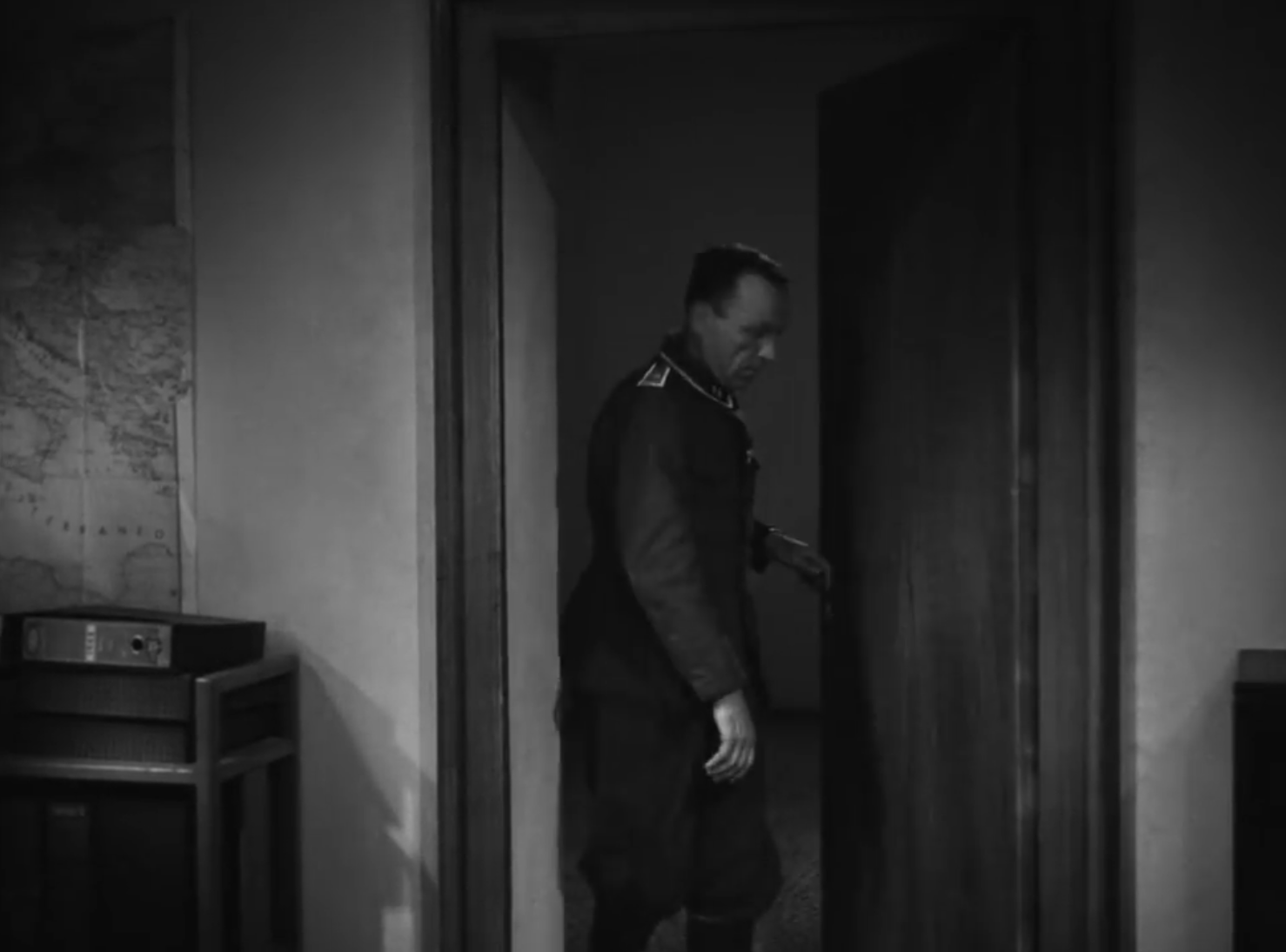
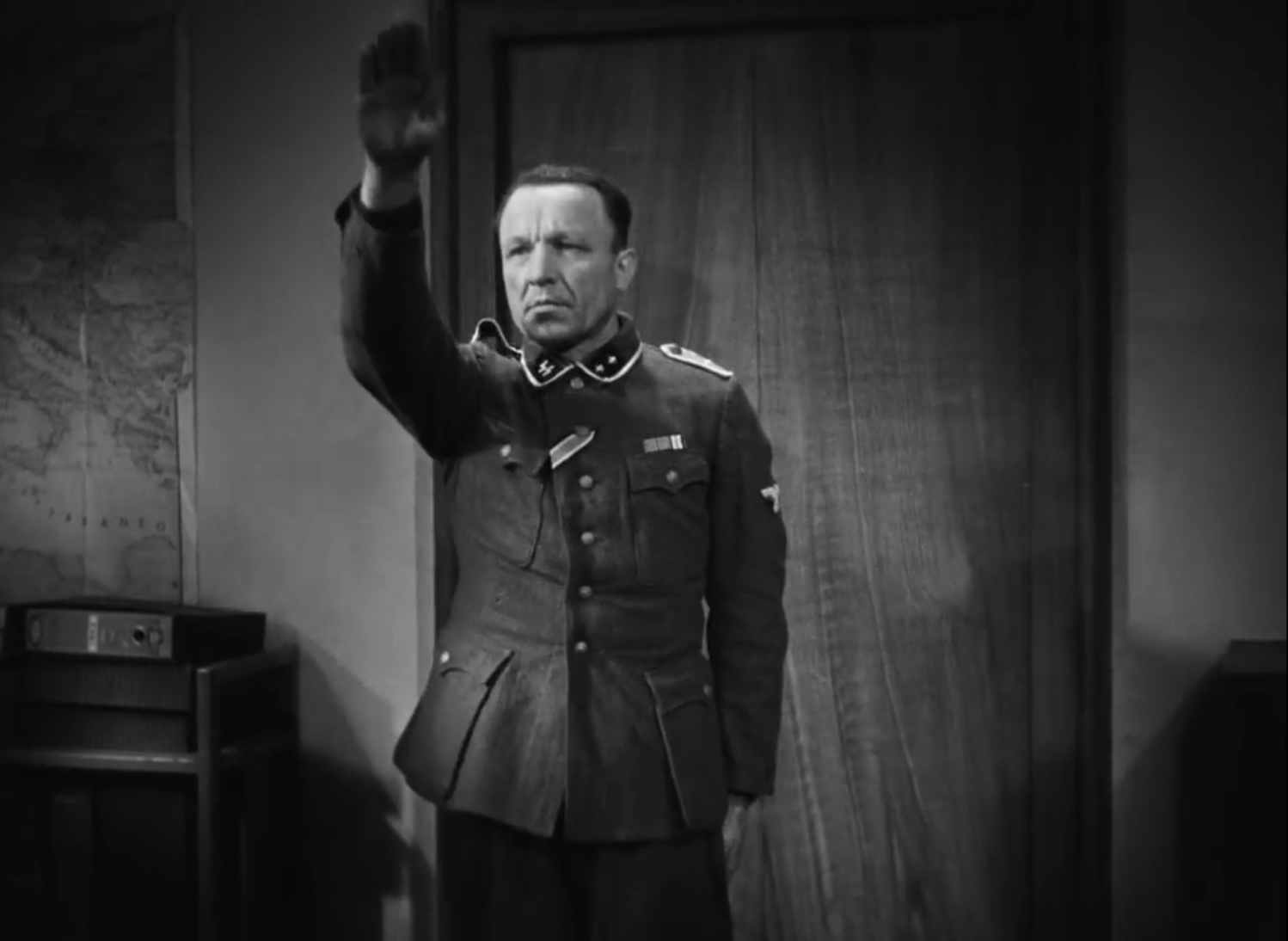
Il maggiore preme un pulsante sulla sua scrivania mentre le grida di dolore continuano. Un soldato entra nella stanza e fa il saluto nazista.
The Major presses a button on his desk as the cries of pain continue. A soldier enters the room and gives the Nazi salute.
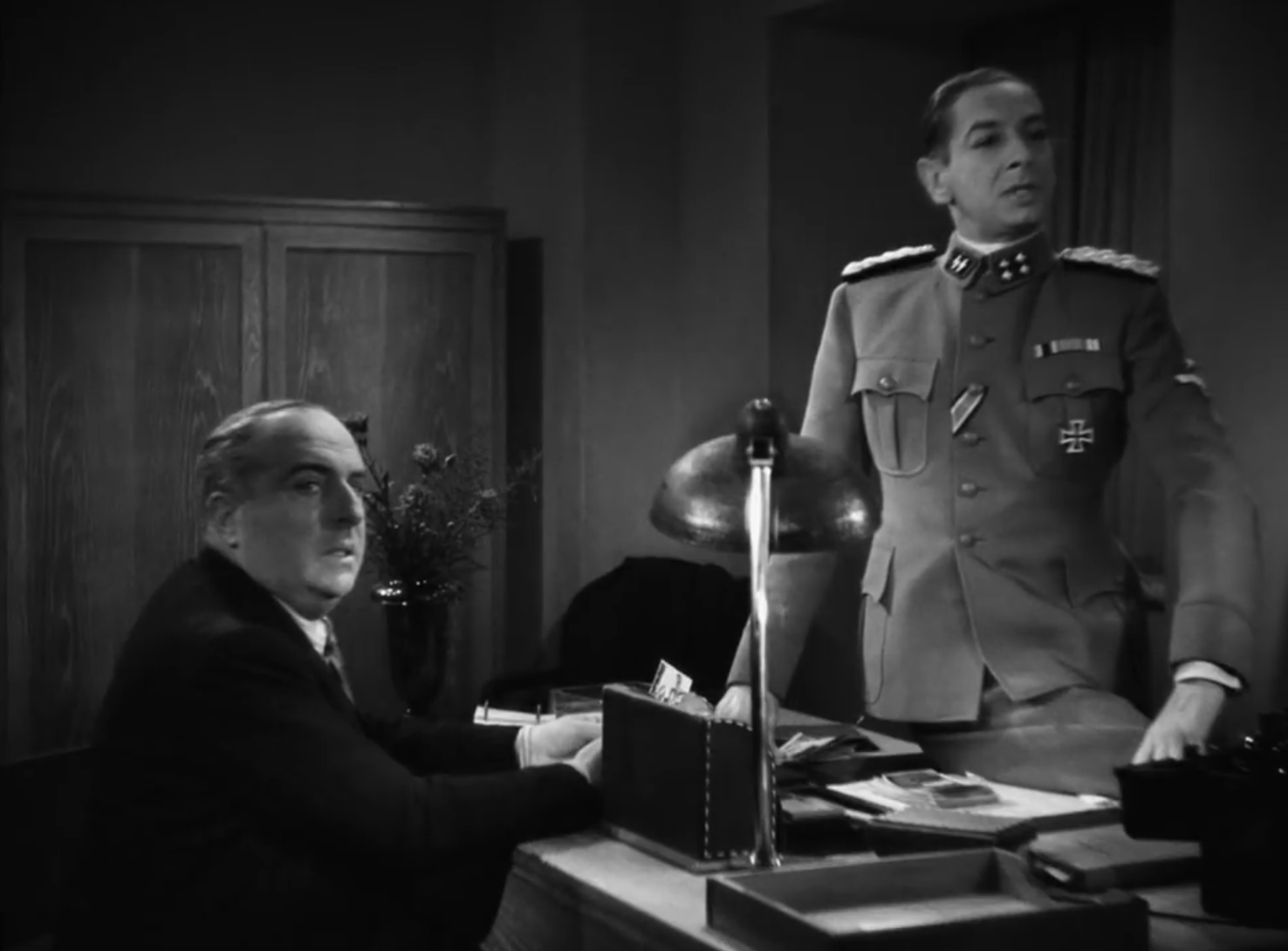
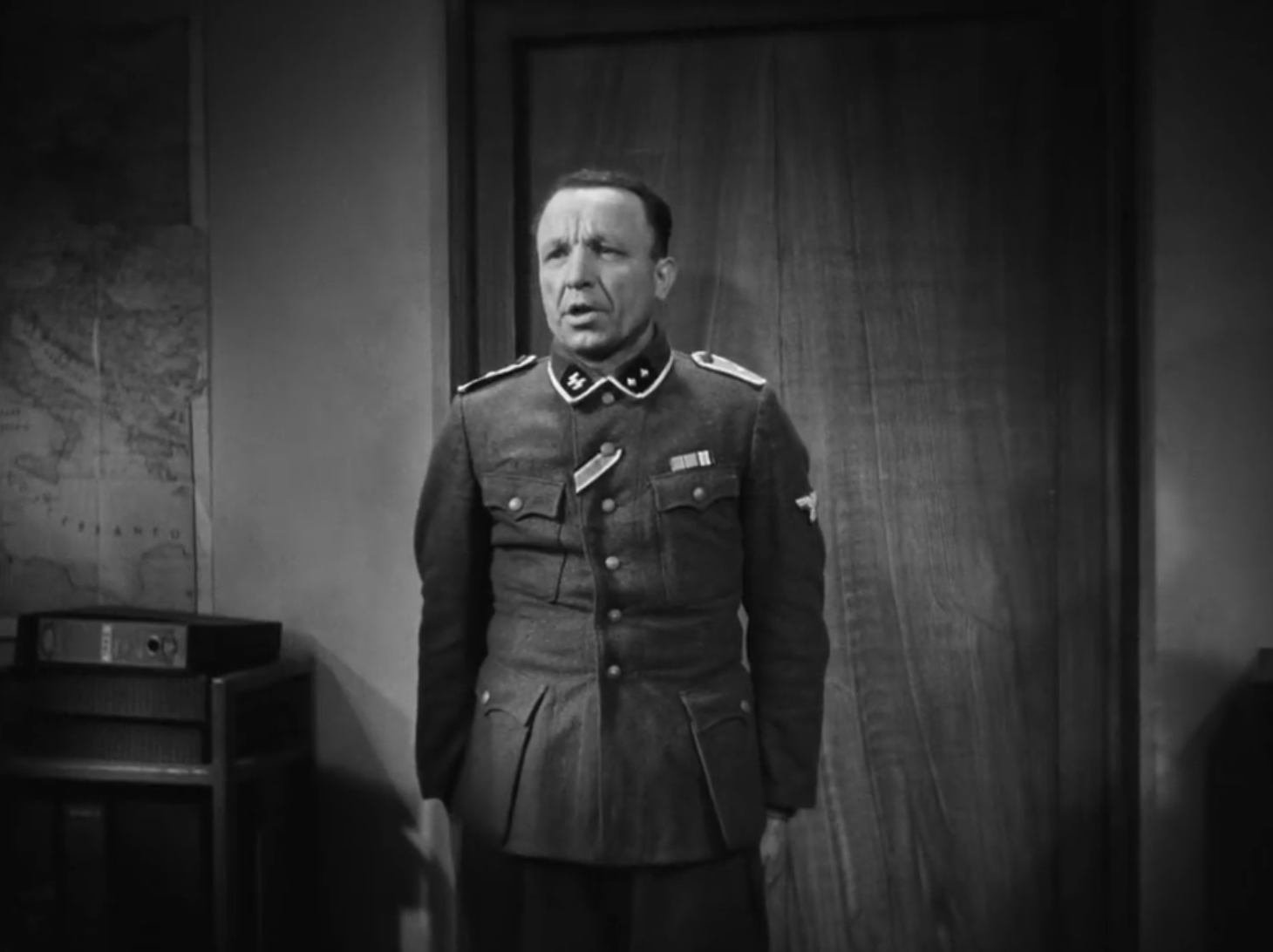
"Cos'è tutto questo rumore?" chiede Bergmann severamente.
"Mi perdoni, maggiore. Stiamo interrogando quel professore –"
“What’s all that noise?” Bergmann demands.
“Forgive me, Major. We’re interrogating that professor –”
"Va bene, ma fallo stare zitto”. Il soldato se ne va.
"Quanto gridano questi italiani!" si lamenta Bergmann con il questore italiano, che risponde, tornando alla sua lente d'ingrandimento: "Già".
“Fine, but keep him quiet.” The soldier leaves.
“How these Italians scream!” Bergmann complains to the Italian Police Commissioner, who responds, returning to his magnifying glass, “Indeed.”
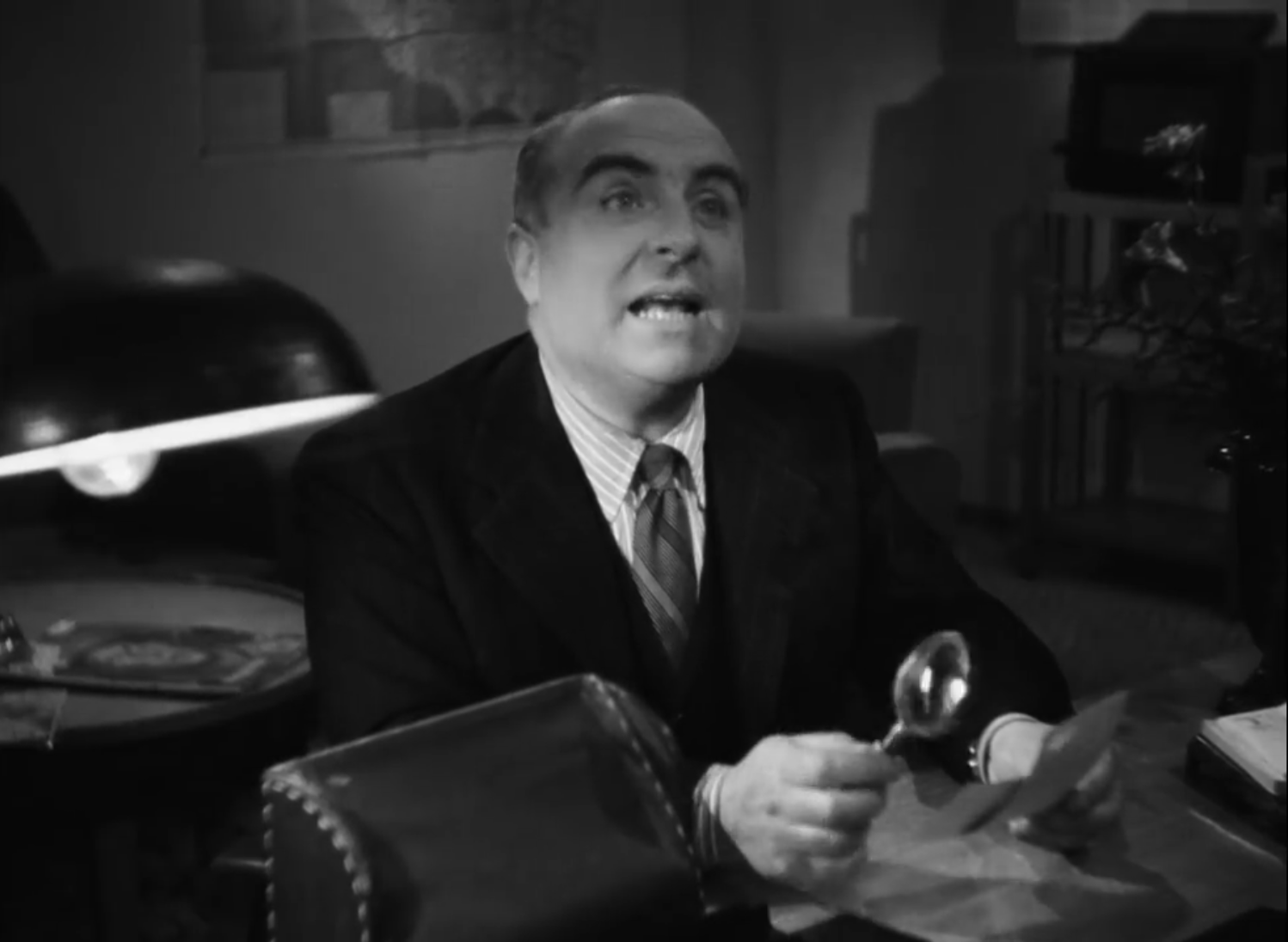
Poi alza lo sguardo all'improvviso. "E la ragazza chi è?"
"Una certa Marina Mari, attrice di cabaret”. Il volto del tedesco è una maschera di disgusto.
Then he looks up suddenly. “And who’s the girl?”
“A certain Marina Mari, a cabaret performer.” The German’s face is a mask of disgust.
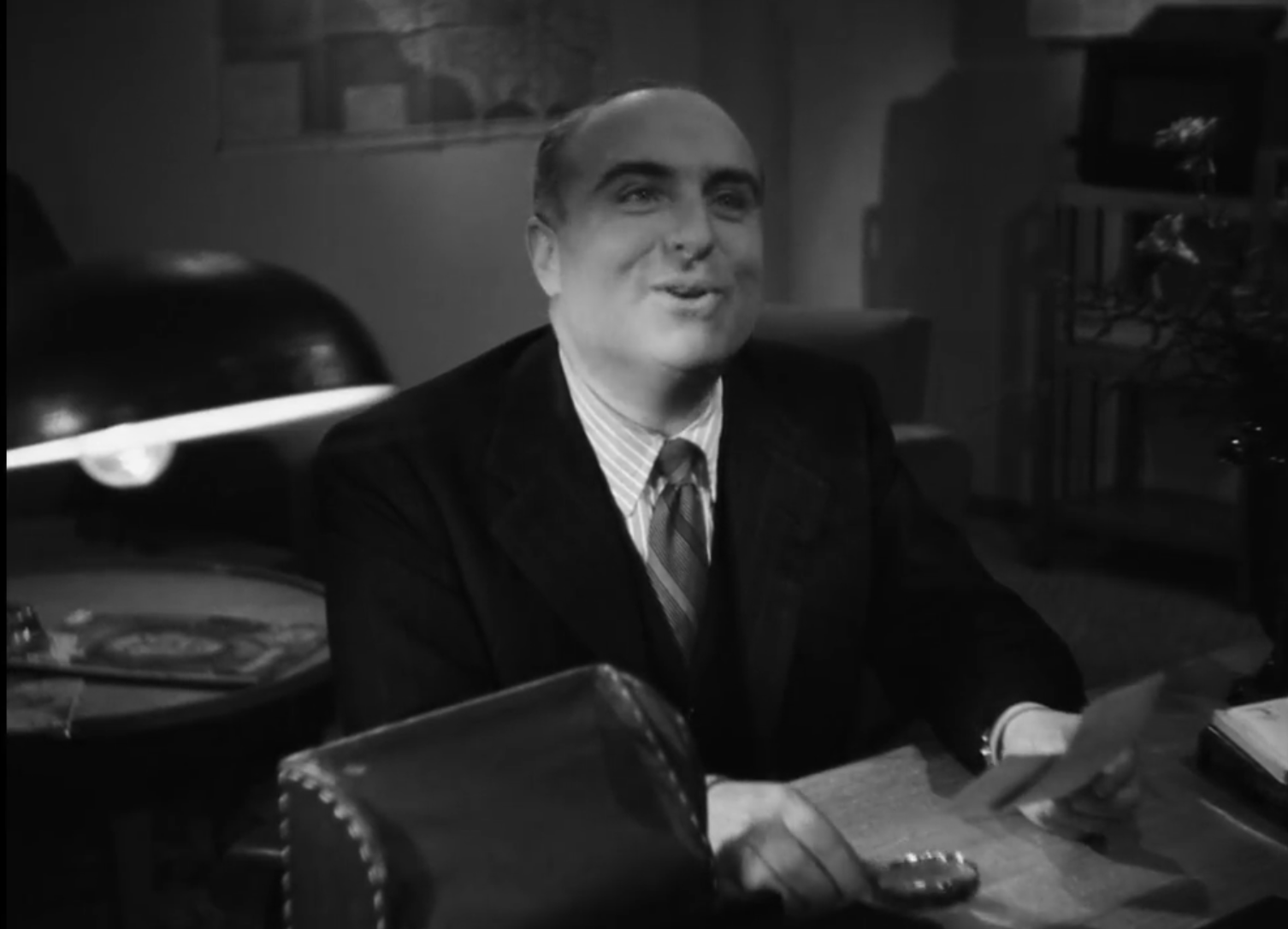
"Ah, sì. La conosco. L'ho vista. Carina!" Alla luce della lampada, l'italiano guarda il tedesco con gioia.
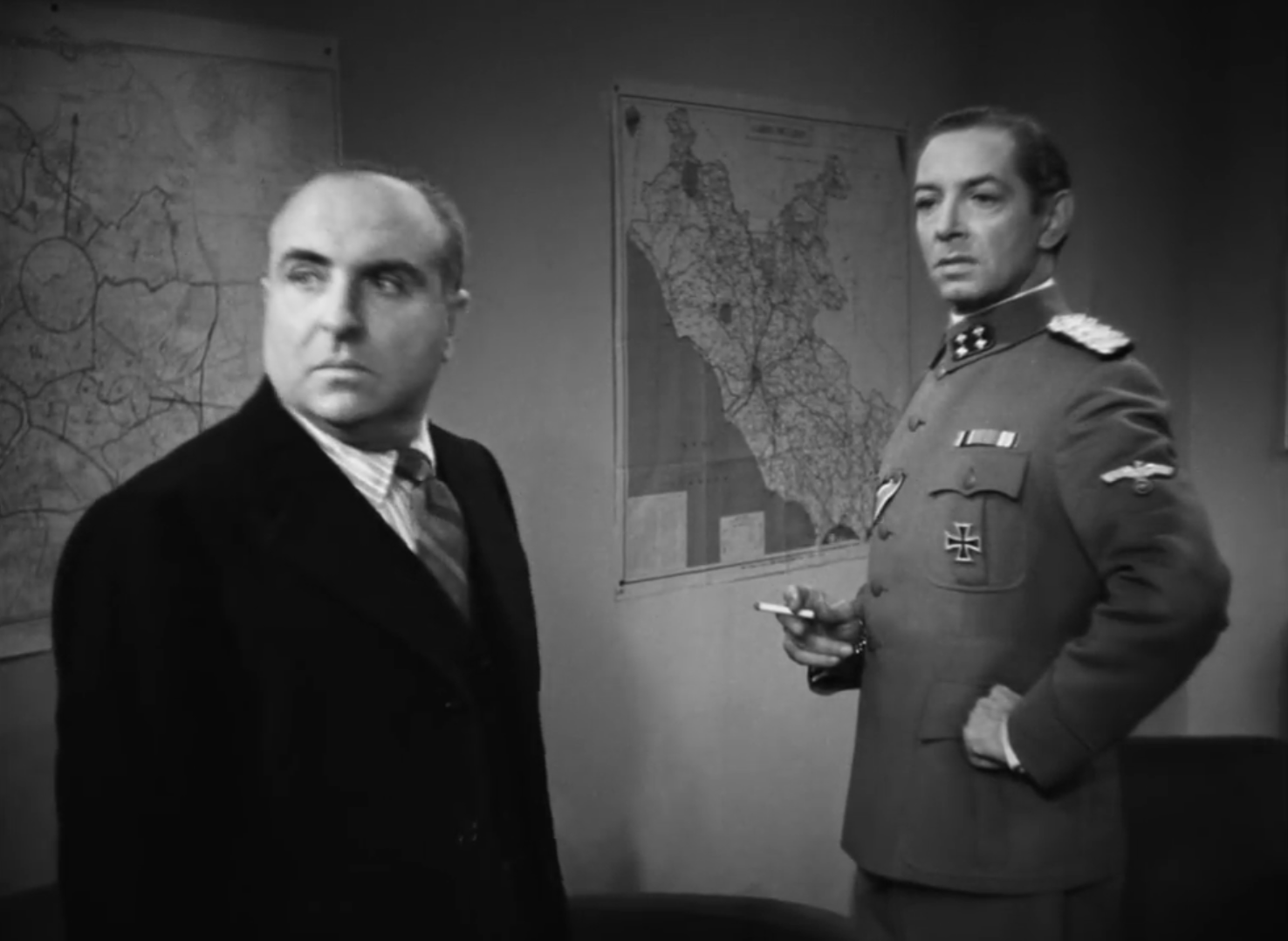
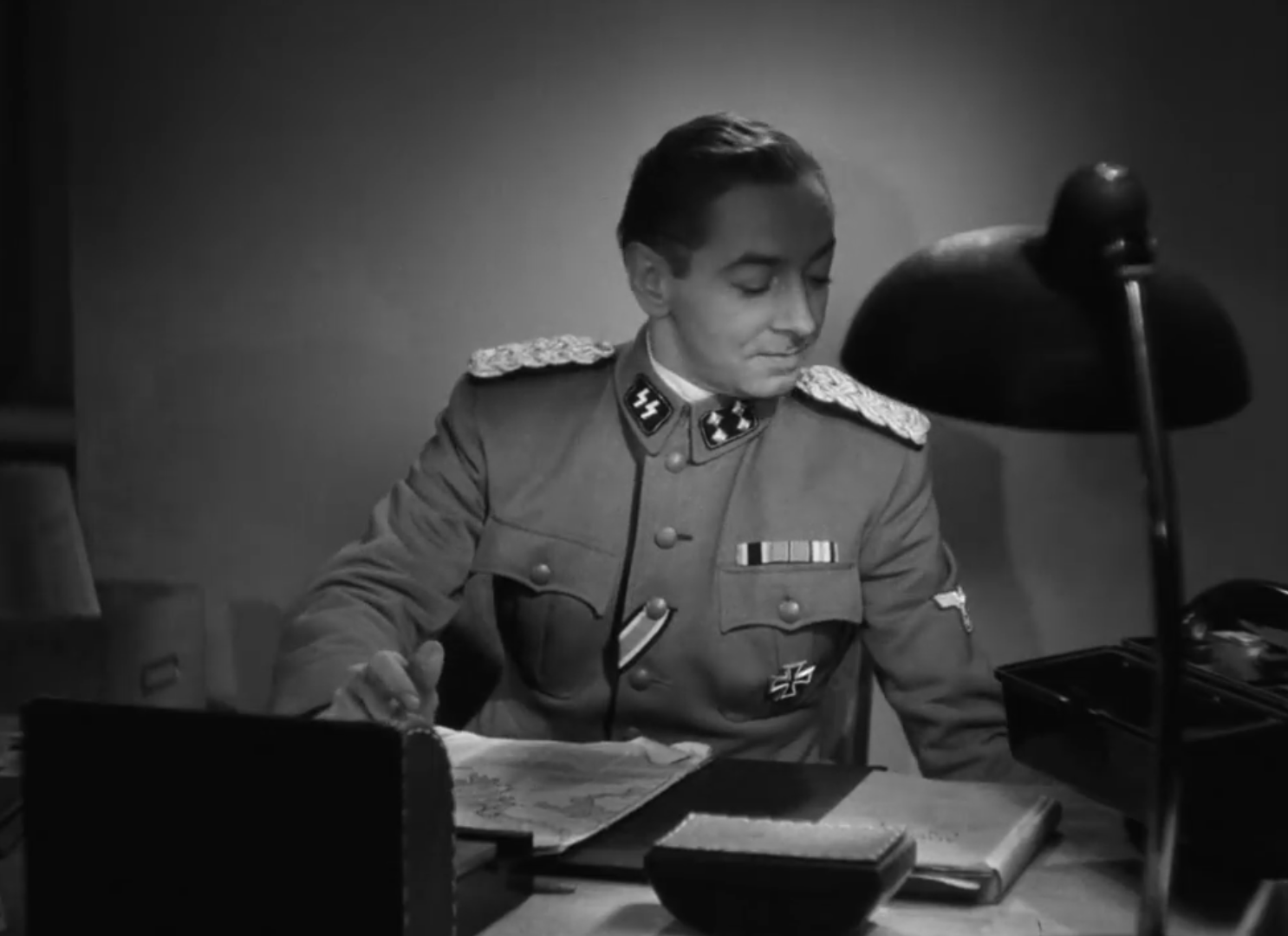
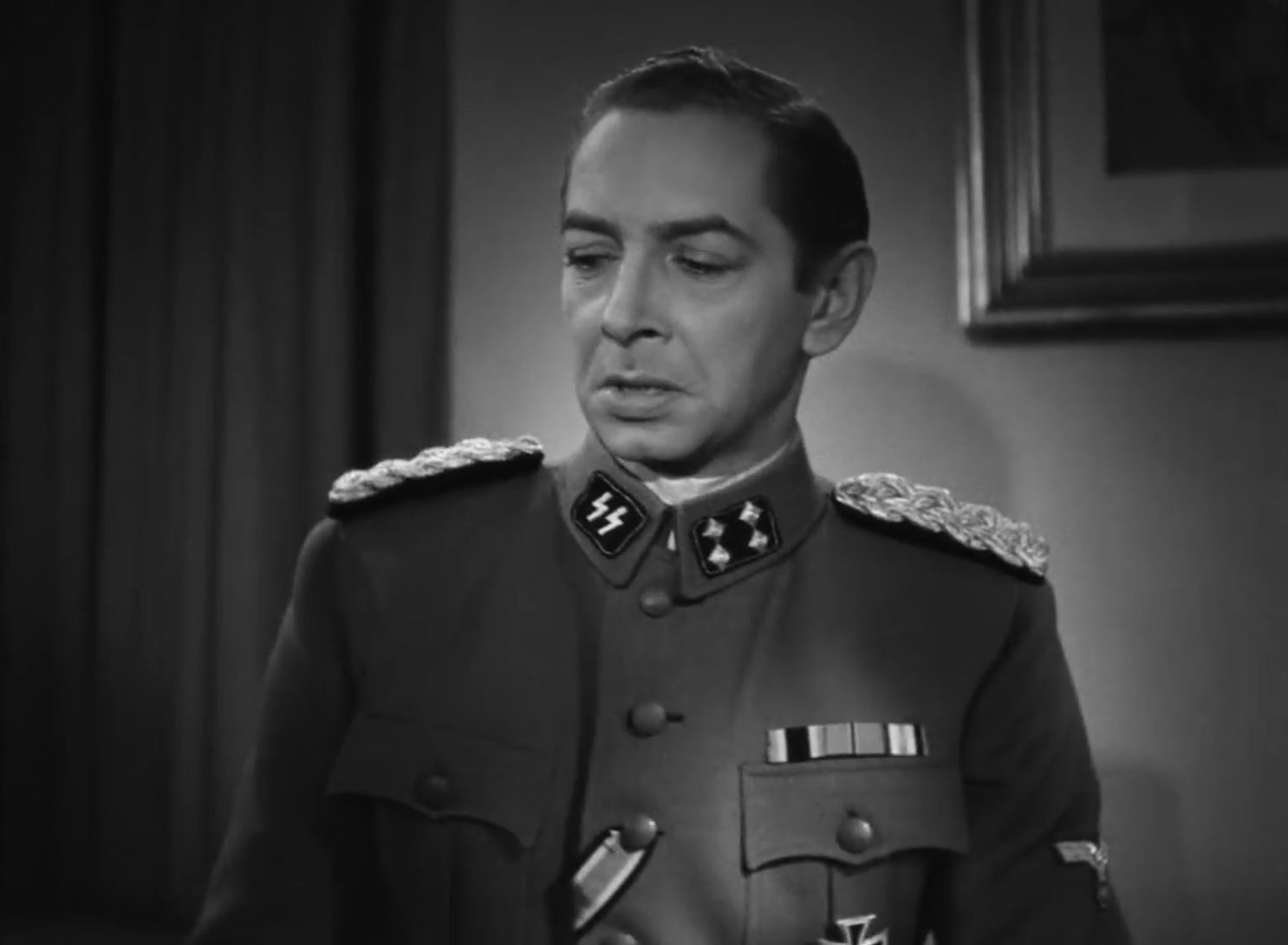
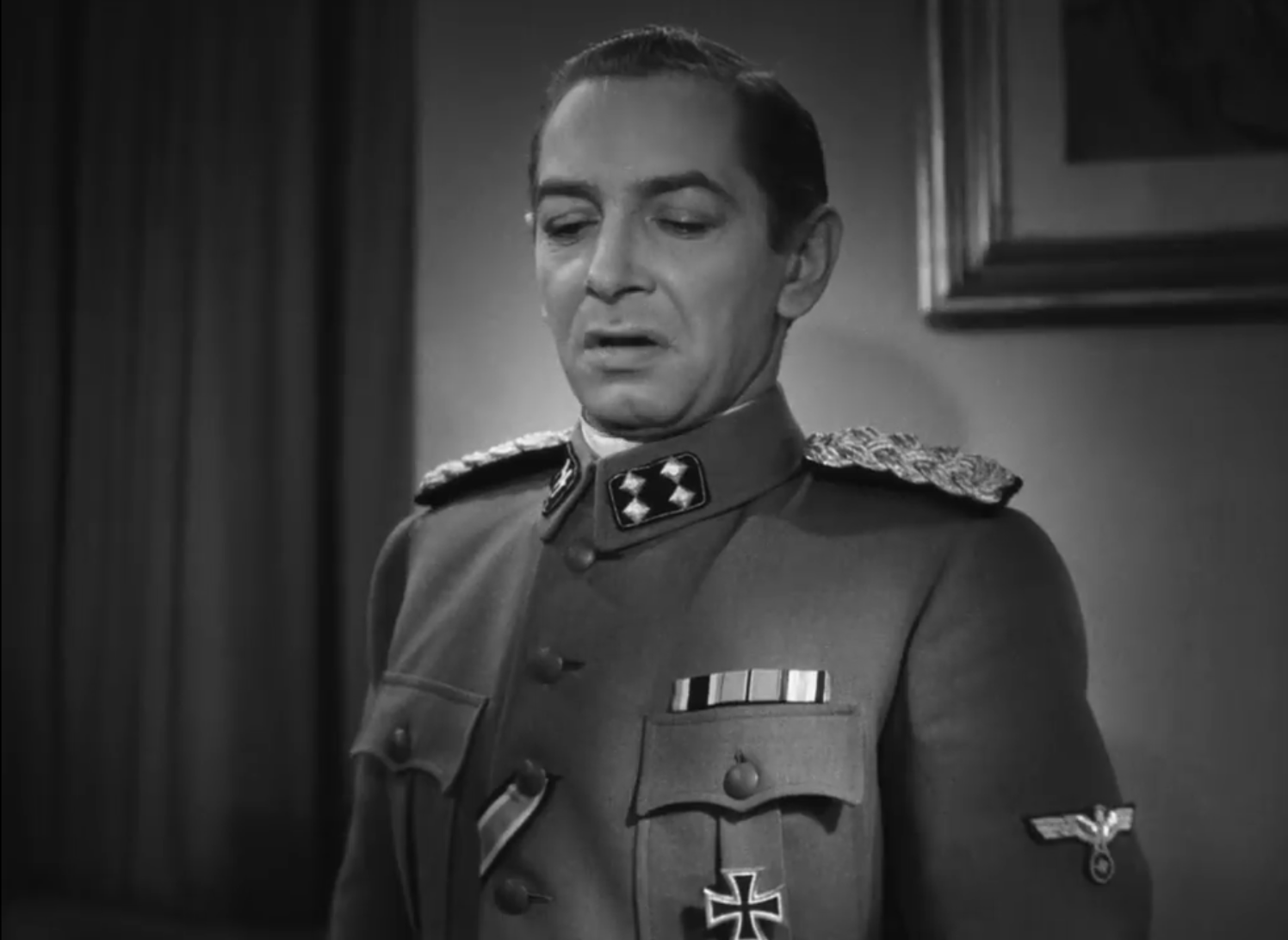
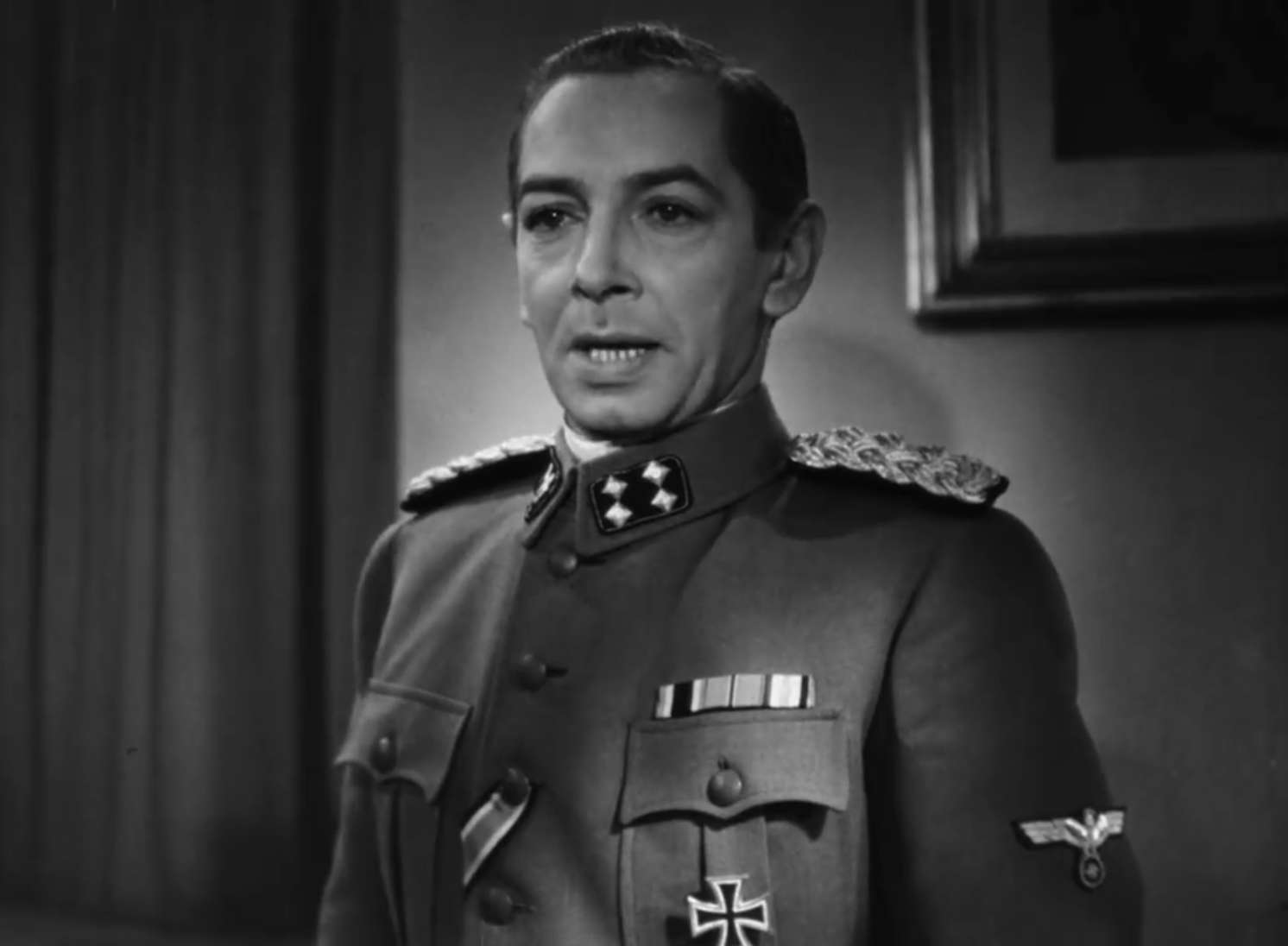
"Molto carina..." Mentre la macchina da presa inquadra il maggiore, la luce illumina l'aquila d'argento, le spalline intrecciate, la fila di medaglie e la croce di ferro: i simboli del suo potere.
“Oh, yes, I know who she is. I’ve seen her. Pretty!” In the lamplight, the Italian gazes at the German with delight.
“Very pretty…” As the camera frames the Major, the light illuminates the silver eagle, the braided epaulettes, the row of medals, and the iron cross: the symbols of his power.
FINE PARTE 2
Ecco Parte 3 of this cineracconto! Subscribe to receive a weekly email newsletter with links to all our new posts.