Regia: Roberto Rossellini, 1945
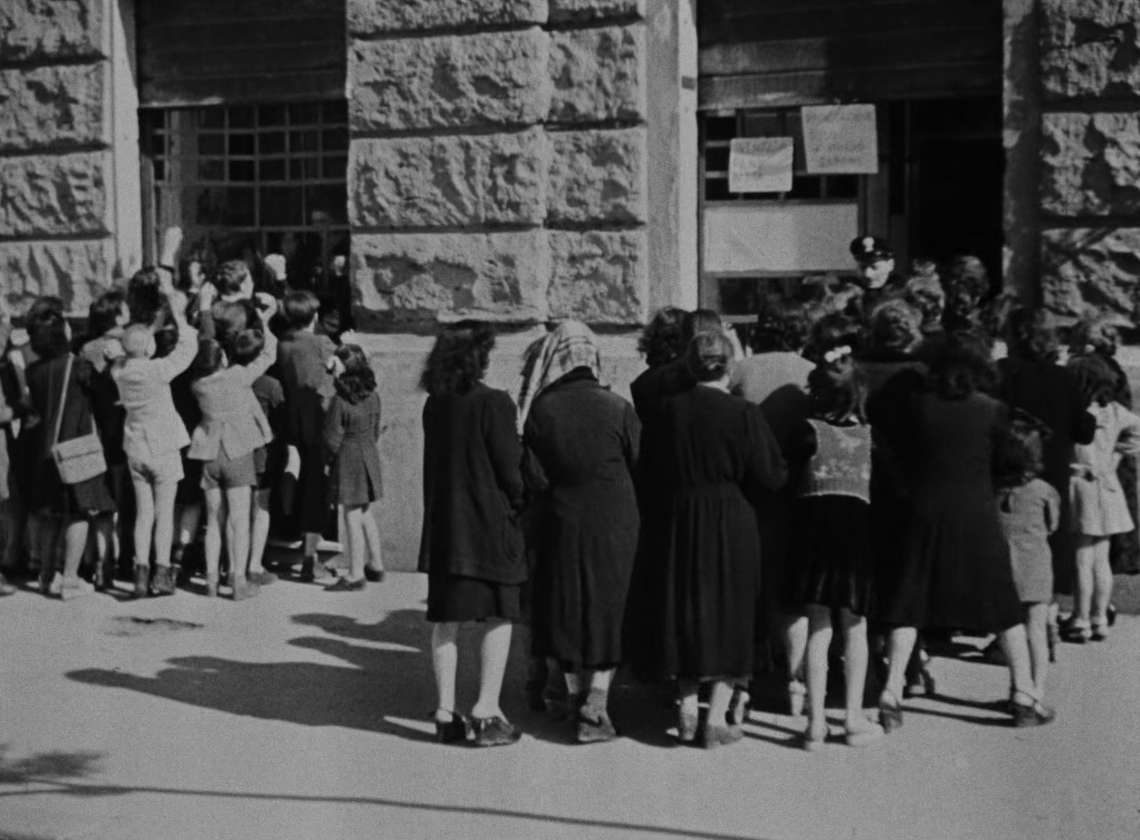
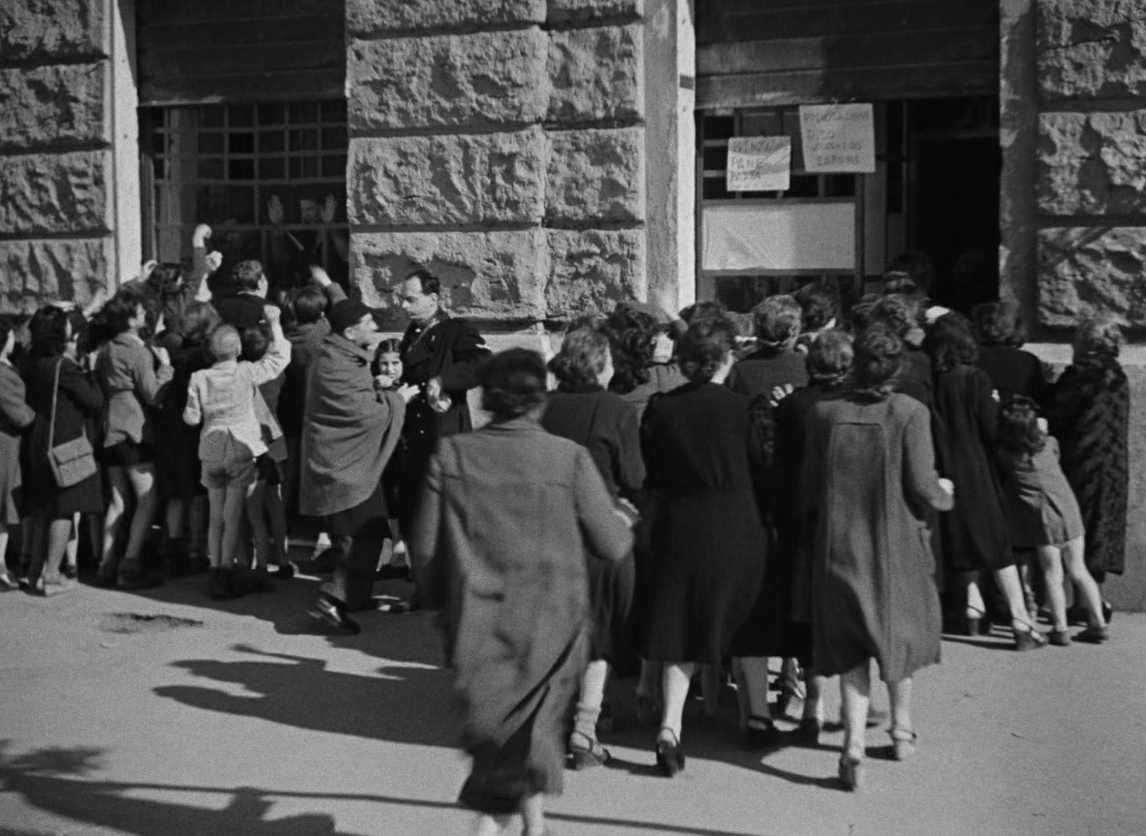
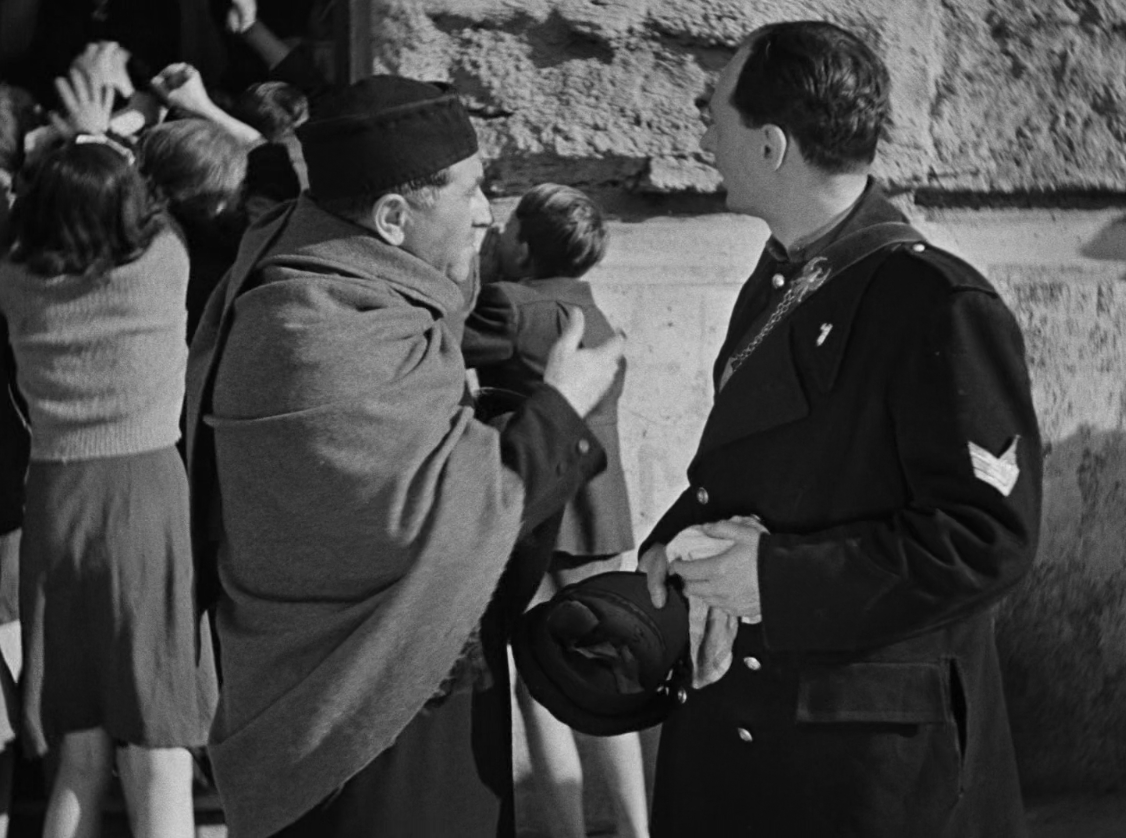
In un panificio con muri monumentali in pietra, vediamo due gruppi rumorosi di donne e bambini. Stanno gridando con rabbia. Il sole proietta le loro lunghe ombre sul marciapiede.
Un poliziotto in uniforme è in piedi accanto al muro del panificio. "Piano, piano! Calma, calma!" grida. Ma poi se ne va, lamentandosi: "Non ce la faccio più".
Si toglie il cappello e si asciuga il sudore dal viso. Vediamo un uomo che si avvicina a lui.
At a bakery with monumental stone walls, we see two clusters of boisterous women and children. They’re shouting angrily. The sun casts their long shadows on the sidewalk.
A uniformed policeman stands at the bakery wall. “Calm down! Take it easy!” he calls out. But then he walks away, complaining, “I can’t take it anymore.”
He takes off his cap and wipes the sweat off his face. We see a man approach him.
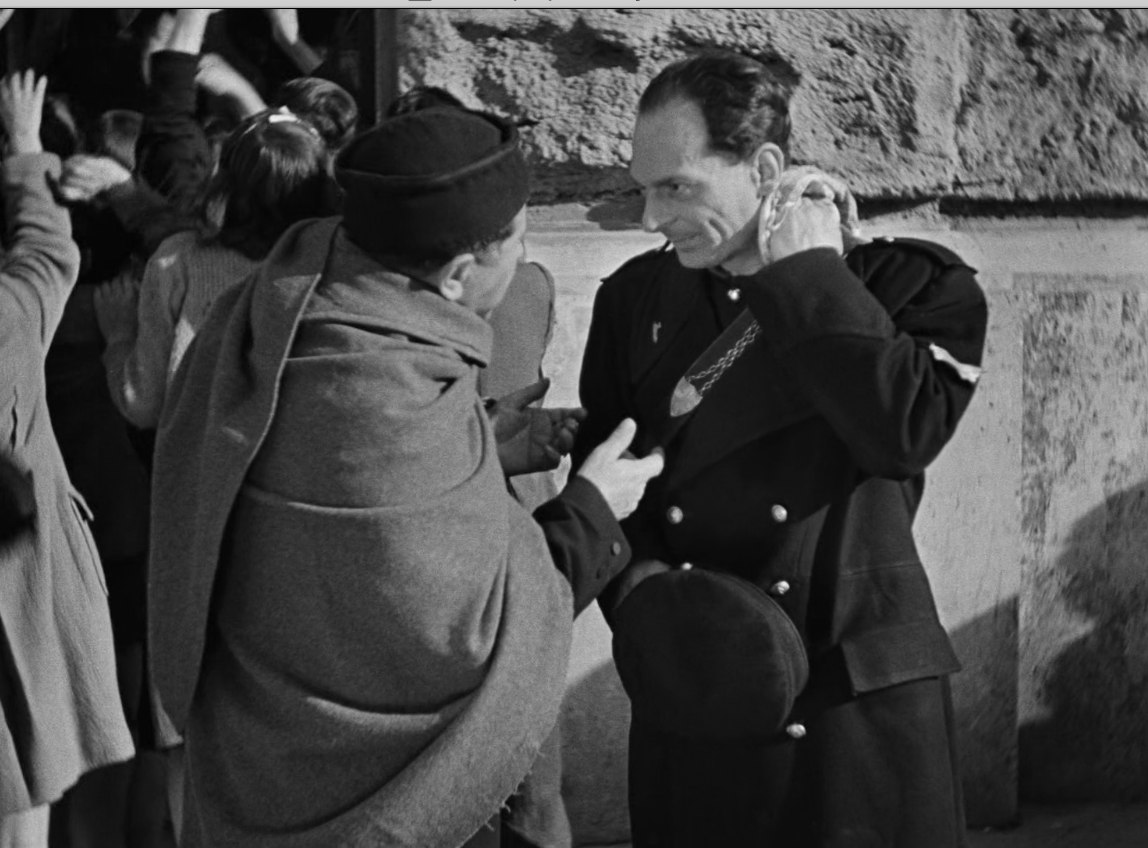
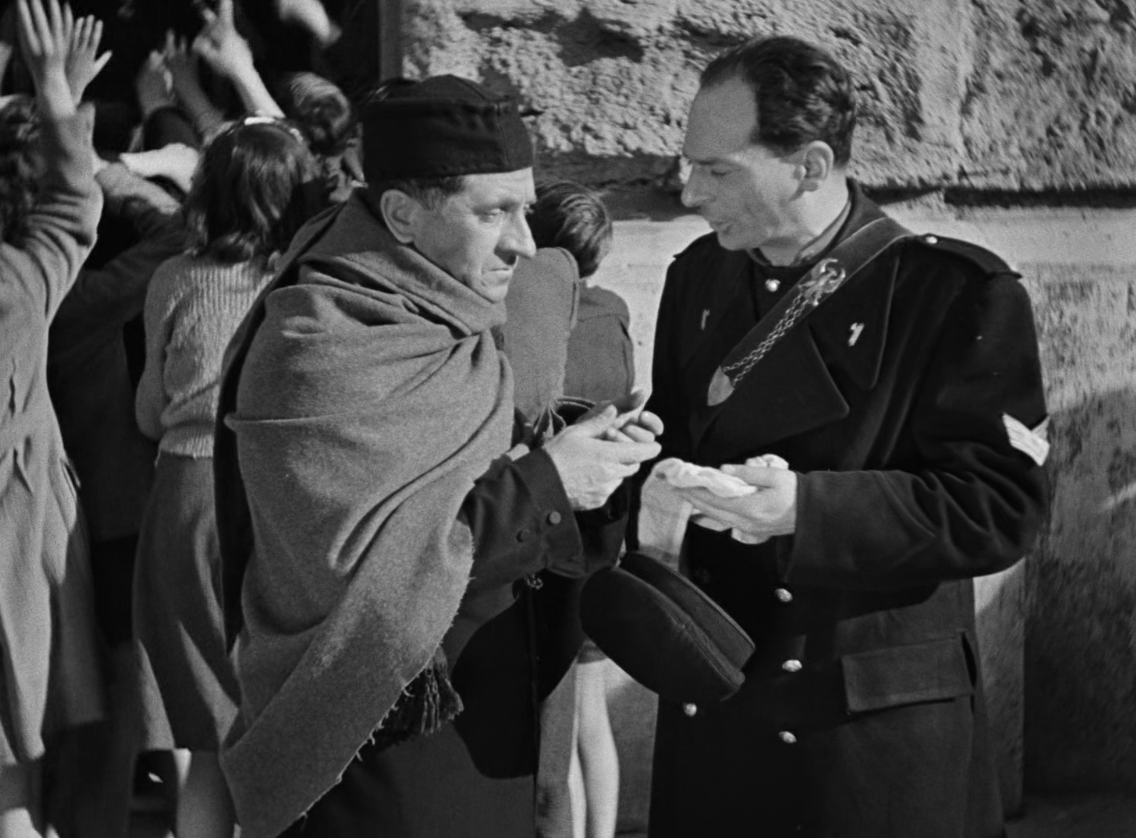
L'uomo è avvolto strettamente in una coperta e indossa un cappello nero. "Ma che succede?" chiede.
"Ma non lo vede? Hanno assaltato il forno!" Le donne affamate stanno rubando il pane.
"E lei che fa?"
L'agente fa un gesto indicando quello che indossa. "Io, purtroppo, sono in uniforme".
The man is wrapped tightly in a blanket, and wearing a black hat. “What’s going on?” he asks.
“Don’t you see? They’ve stormed the bakery!” The hungry women are stealing bread.
“What about you?”
The officer gestures down at what he’s wearing. “Unfortunately, I’m in uniform.”
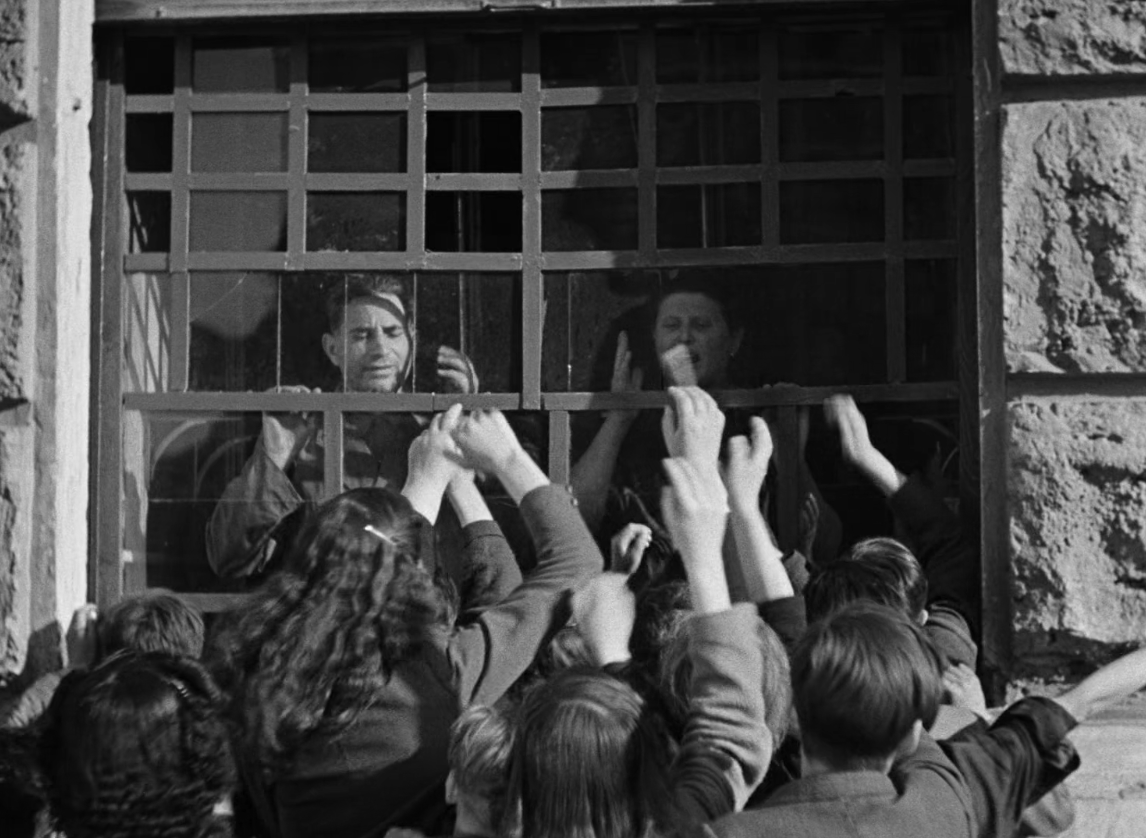
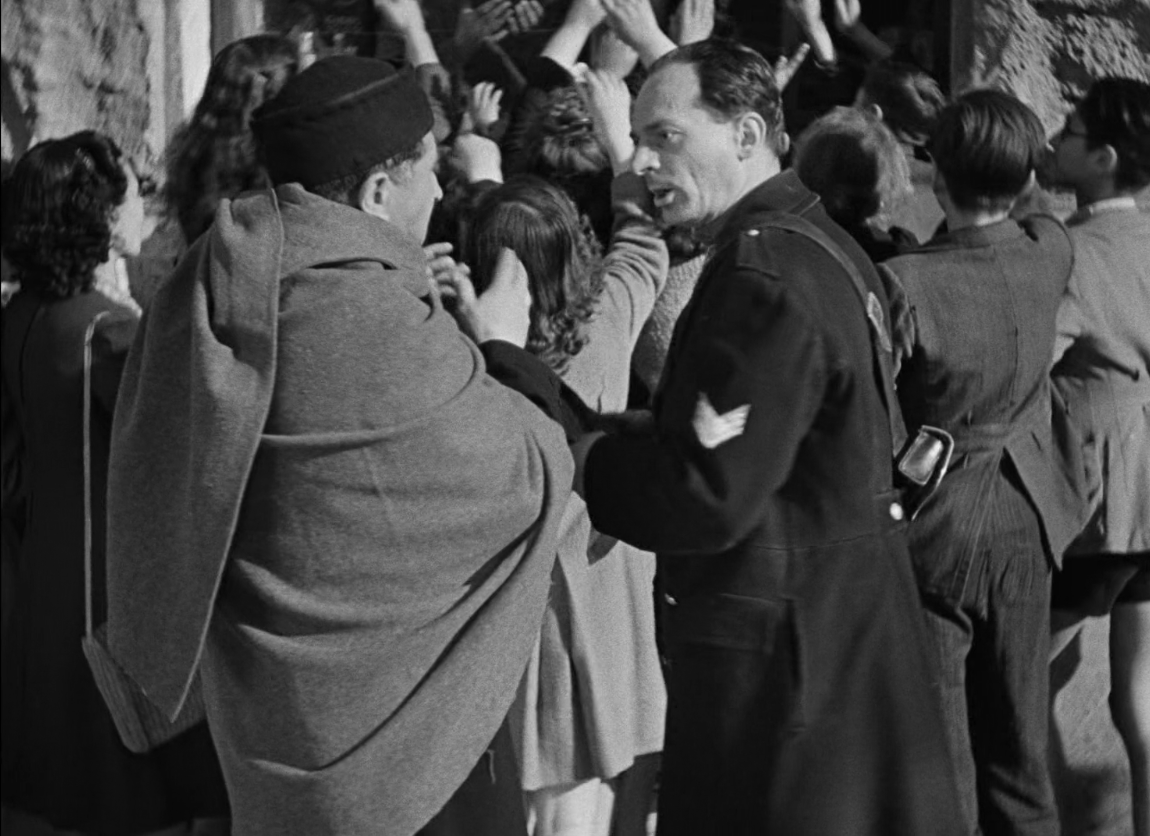
Una voce urla da fuori campo – "Brigadiere!"* – e l'agente si volta. È il panettiere, che si trova al sicuro dietro una finestra sbarrata, con la moglie. Fuori, le donne agitano i pugni; una brandisce un bastone.
Il brigadiere risponde: "Non posso fare niente! Questa è una rivolta!"
Poi si gira verso l'altro uomo. "Io sono impotente", dice.
L’altro uomo commenta: “Lo so! Lo so! Ma con 100 grammi al giorno…”**
*Un funzionario di pubblica sicurezza durante il fascismo. Oggi sarebbe un agente di polizia.
**Durante la guerra, il governo italiano dava una razione di 100 grammi di pane – circa tre o quattro fette – al giorno a persona.
A voice calls from off-screen – “Sergeant!”* – and the officer looks over. It’s the baker, who’s standing safely behind a barred window, with his wife. Outside, the women shake their fists; one wields a stick.
The Sergeant calls back, “I can’t do anything! This is a riot!”
Then he turns back to the other man. “I’m powerless,” he says.
The other man comments: “I know! I know! But just four ounces a day…”**
*A public safety officer during the time of Fascism. Today he would be a police officer.
**During the war, the Italian government allotted a ration of 100 grams of bread – about three or four slices – per day per person.
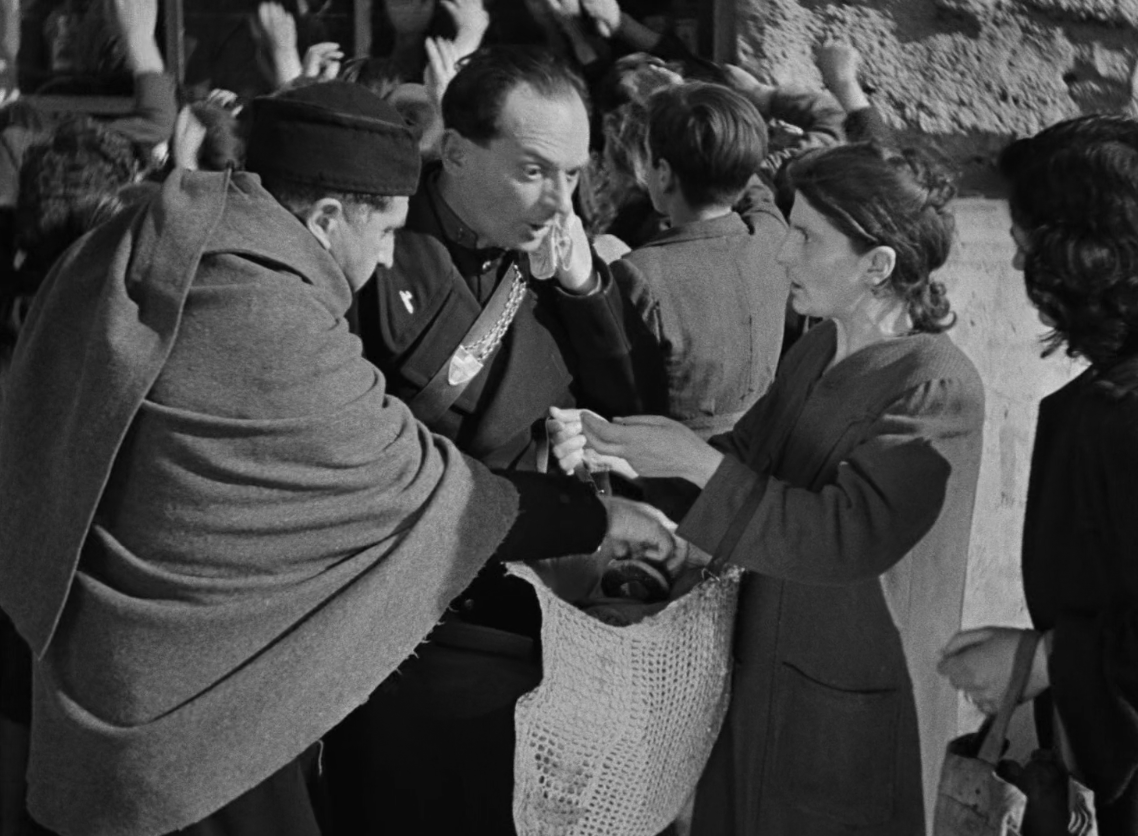
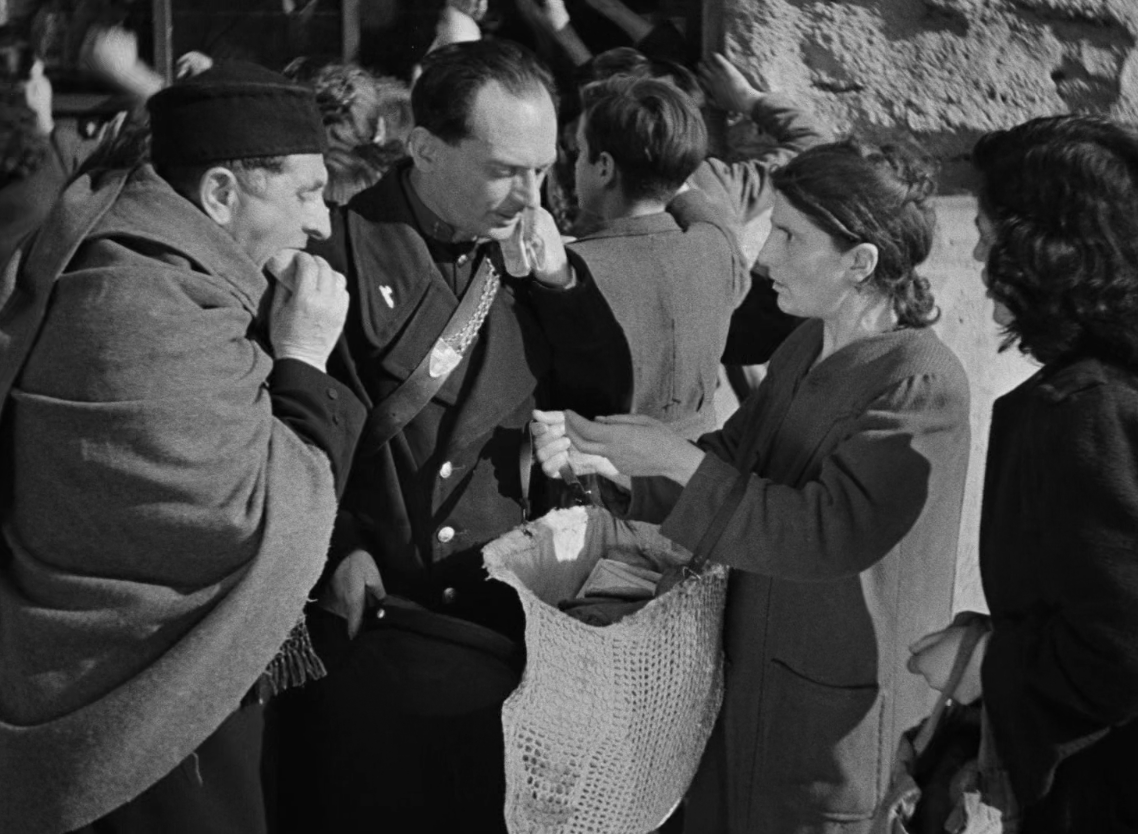
Una donna si avvicina, tenendo la borsa aperta. "Brutta carogna! Pure i pasticcini aveva!” – dice – “Guardate qua!"
Inosservato, l'uomo nella coperta tira fuori un pasticcino dalla borsa della donna e ne prende un boccone. Chiude gli occhi per gustare il momento. “Sono buoni!”
A woman approaches, holding her bag open. “Dirty rat! He even had pastries,” she says. “Look here!”
Unnoticed, the man in the blanket pulls a pastry out of the woman’s bag and takes a bite out of it. He closes his eyes to savor the moment. “They are great!”
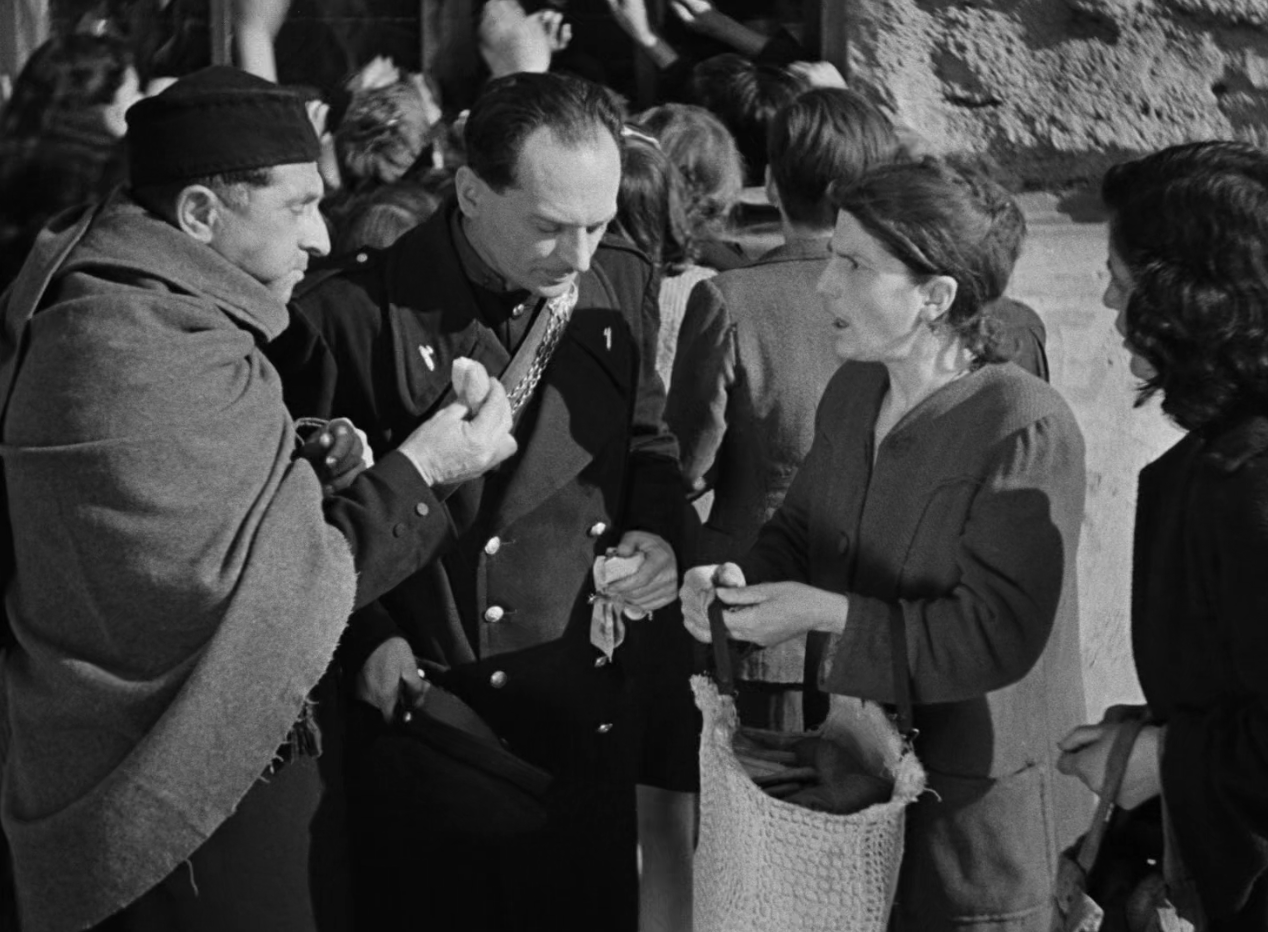
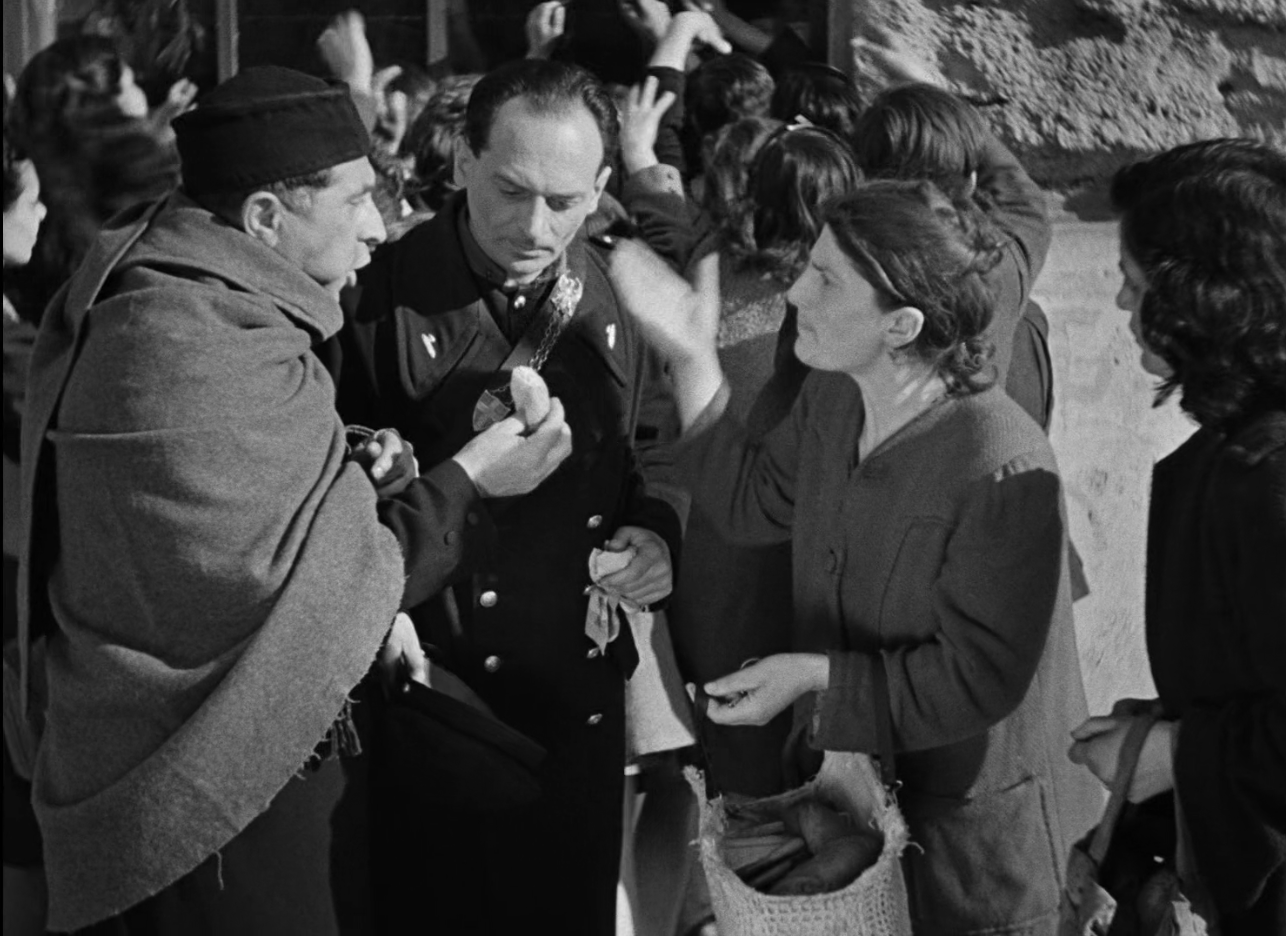
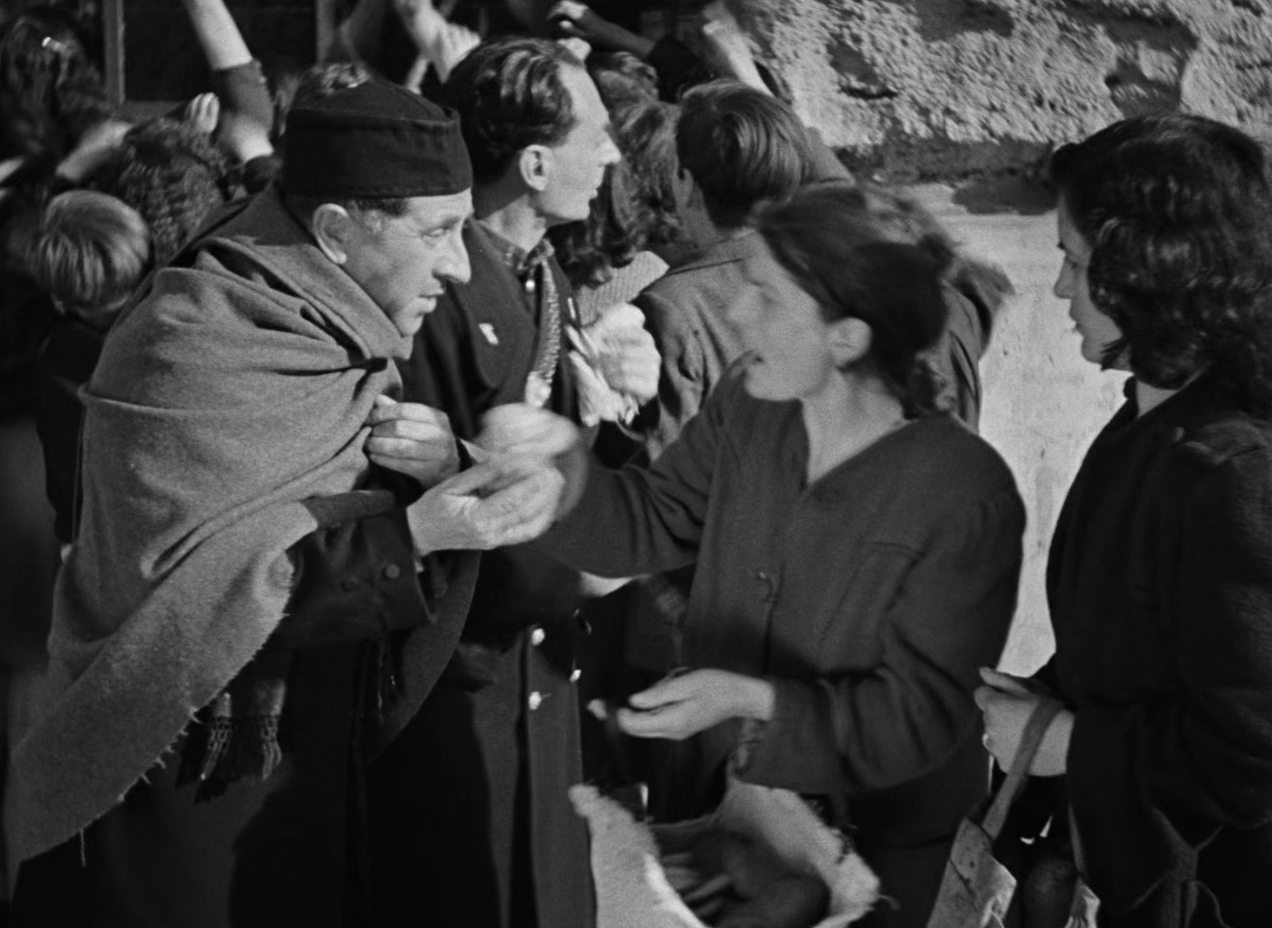
Una seconda donna si fa avanti, lamentandosi: "E poi diceva che non aveva farina!”
La prima, vedendo l'uomo che mastica il pasticcino, gli dice con durezza: "Agostino, perché non te li vai a prendere da te!”
"Io mica posso! Io sono sacrestano! Poi vado a finire all'inferno".
"Beh! Allora i pasticcini te li mangerai in paradiso!" dice afferrando il dolce e andando via.
A second woman steps up, complaining, “And he said he didn’t have flour!”
The first, seeing the man chewing on the roll, says sharply, “Agostino, why don’t you go and get some for yourself!”
“I can’t! I’m a sexton. I’d end up in hell.”
“Fine! So you’ll get to eat your pastries in heaven!” she says, snatching the roll out of his hand and leaving.
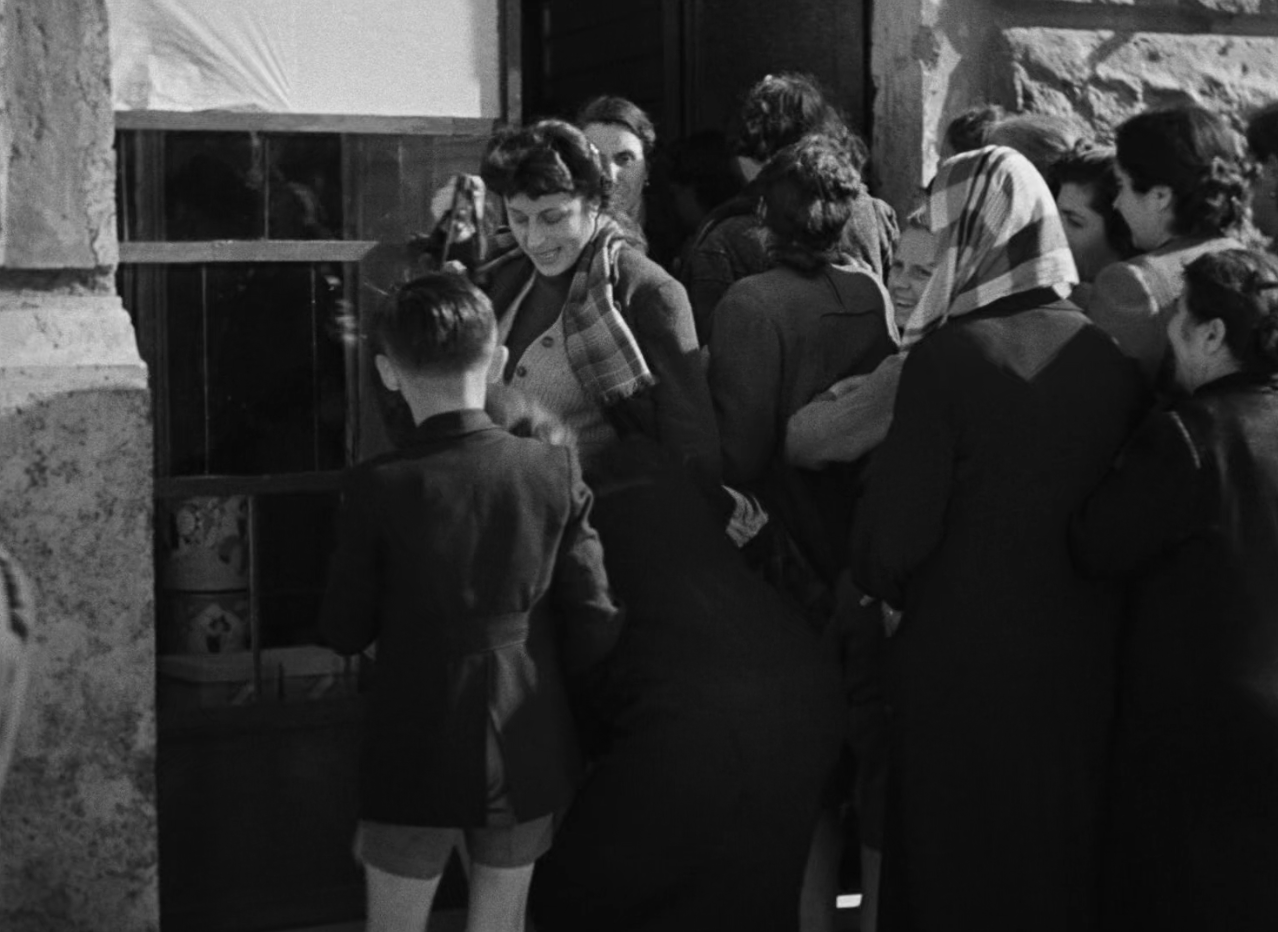
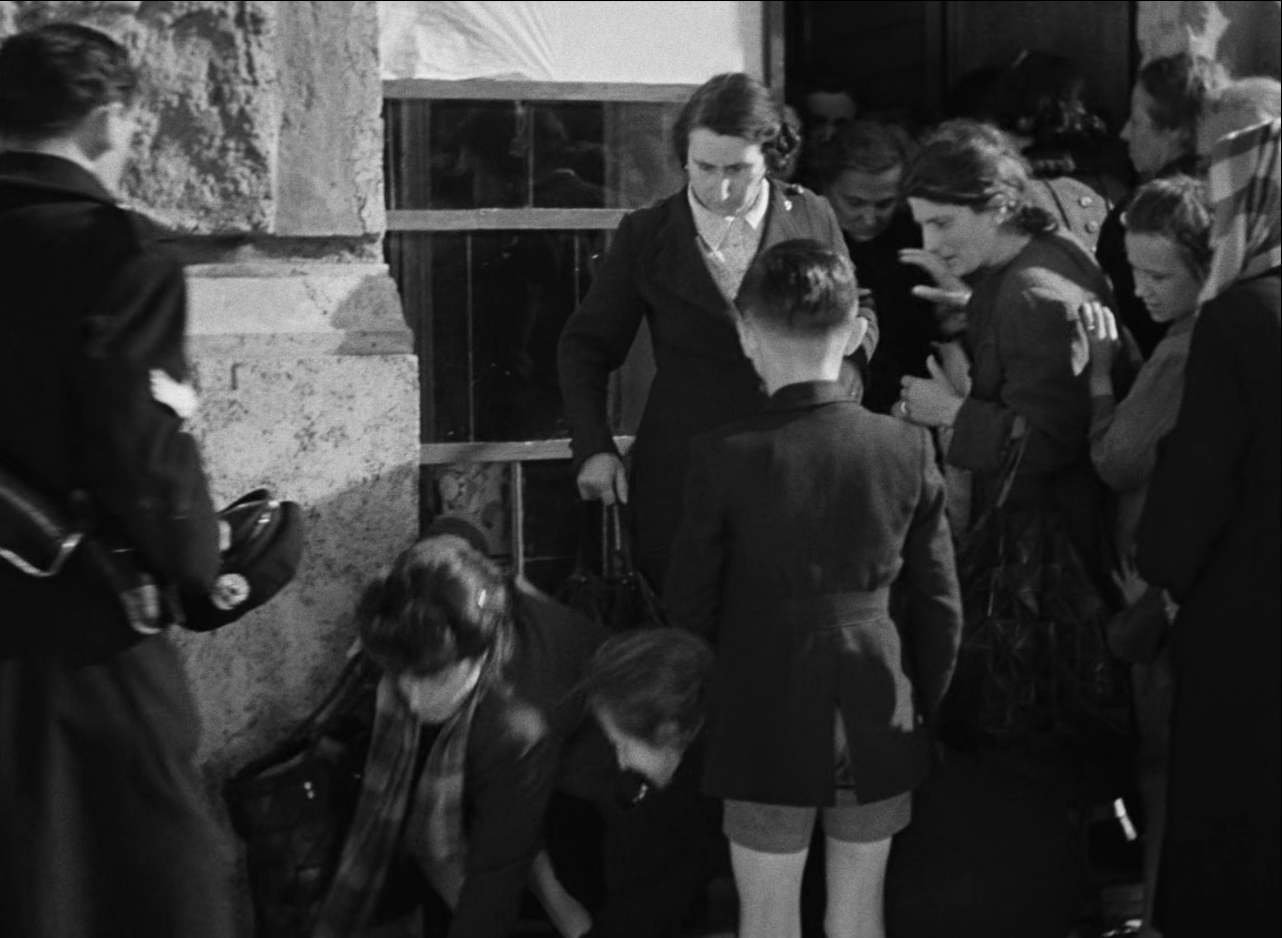
Un nuovo personaggio – Pina (Anna Magnani)* – si fa strada spingendo fuori dal panificio. Spinta su tutti i lati dalla folla, fa cadere una pagnotta. "E lasciate stare!" esclama, mentre si china per raccoglierla. Di nuovo in piedi, deve appoggiarsi all'edificio, come se fosse stordita.
*Il personaggio di Pina è ispirato alla storia vera di Teresa Gullace.
A new character – Pina* – pushes her way out of the bakery. Jostled on all sides by the crowd, she drops a loaf of bread. “Leave me alone!” she exclaims, as she stoops to pick it up. Upright again, she has to lean against the building, as if dizzy.
*Pina’s character is based upon the real story of Teresa Gullace.
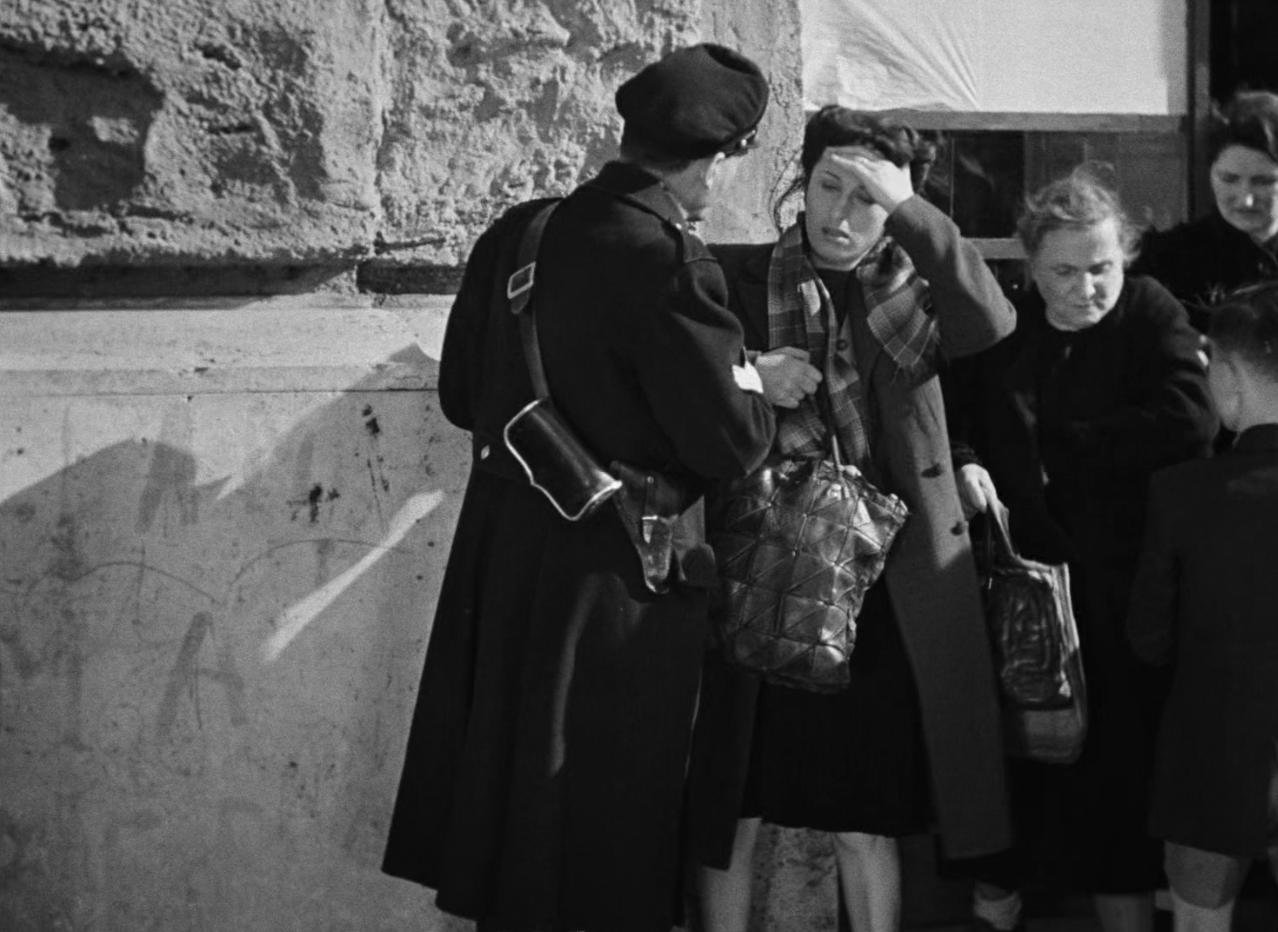
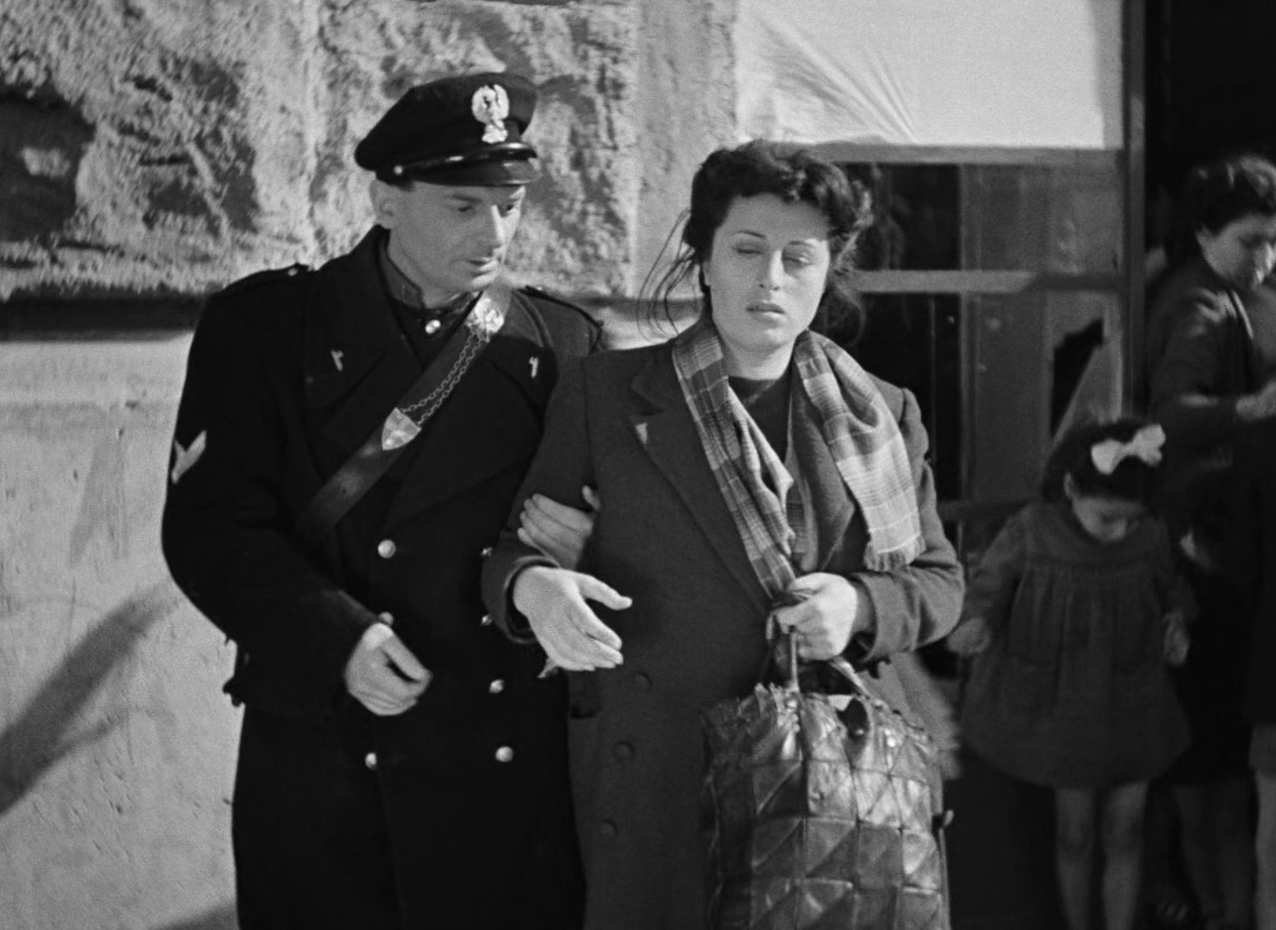
L'agente va da lei, preoccupato. "Signora Pina, ma è una pazzia!" – dice – "Nel suo stato!"
"Devo morire di fame?" risponde, ancora senza fiato.
Lui le prende il braccio e iniziano a camminare.
The police officer goes to her, concerned. “Signora Pina, this is crazy!” he says. “In your condition!”
“Should I starve to death?” she replies, still out of breath.
He takes her arm and they start to walk.
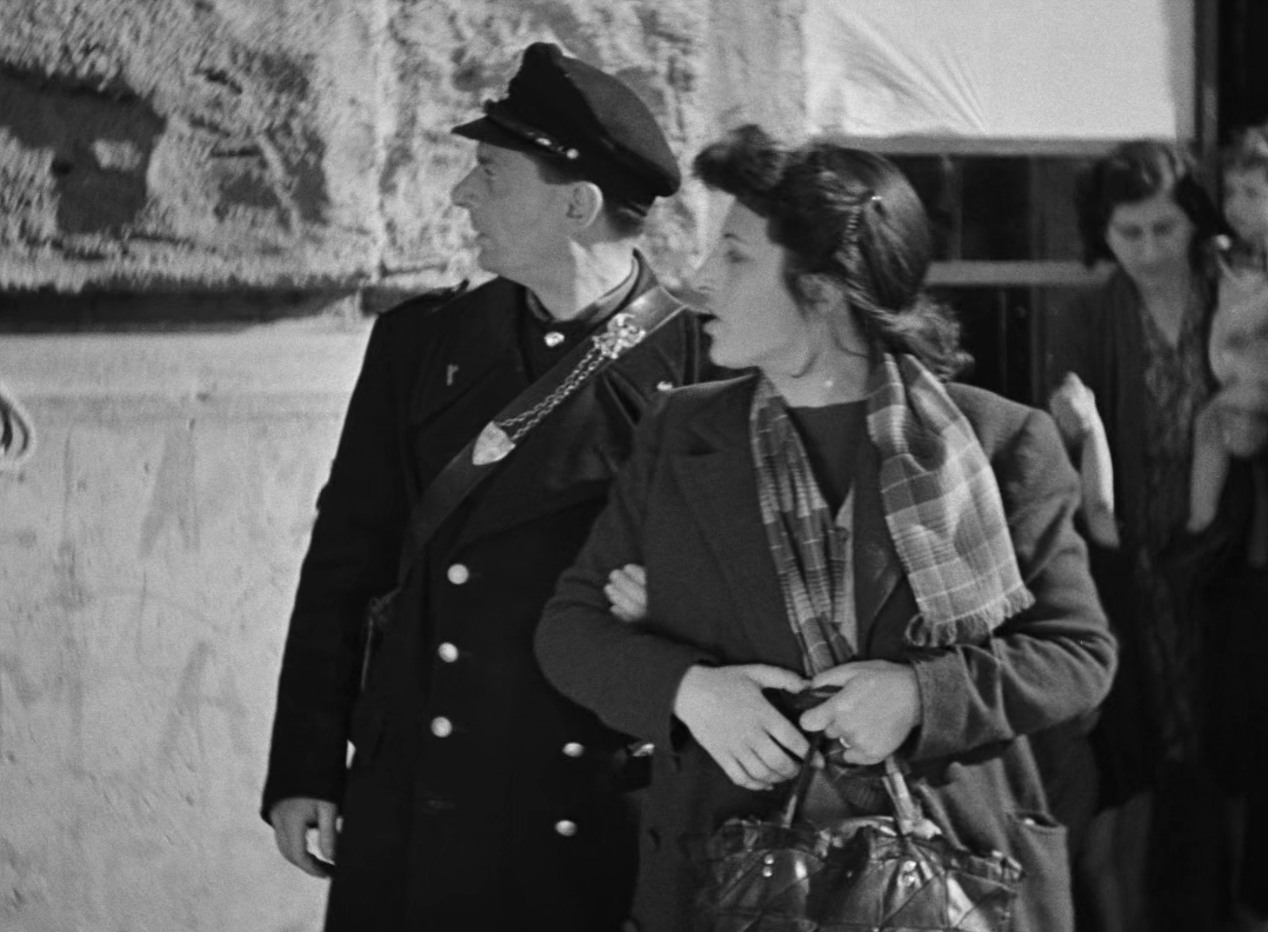
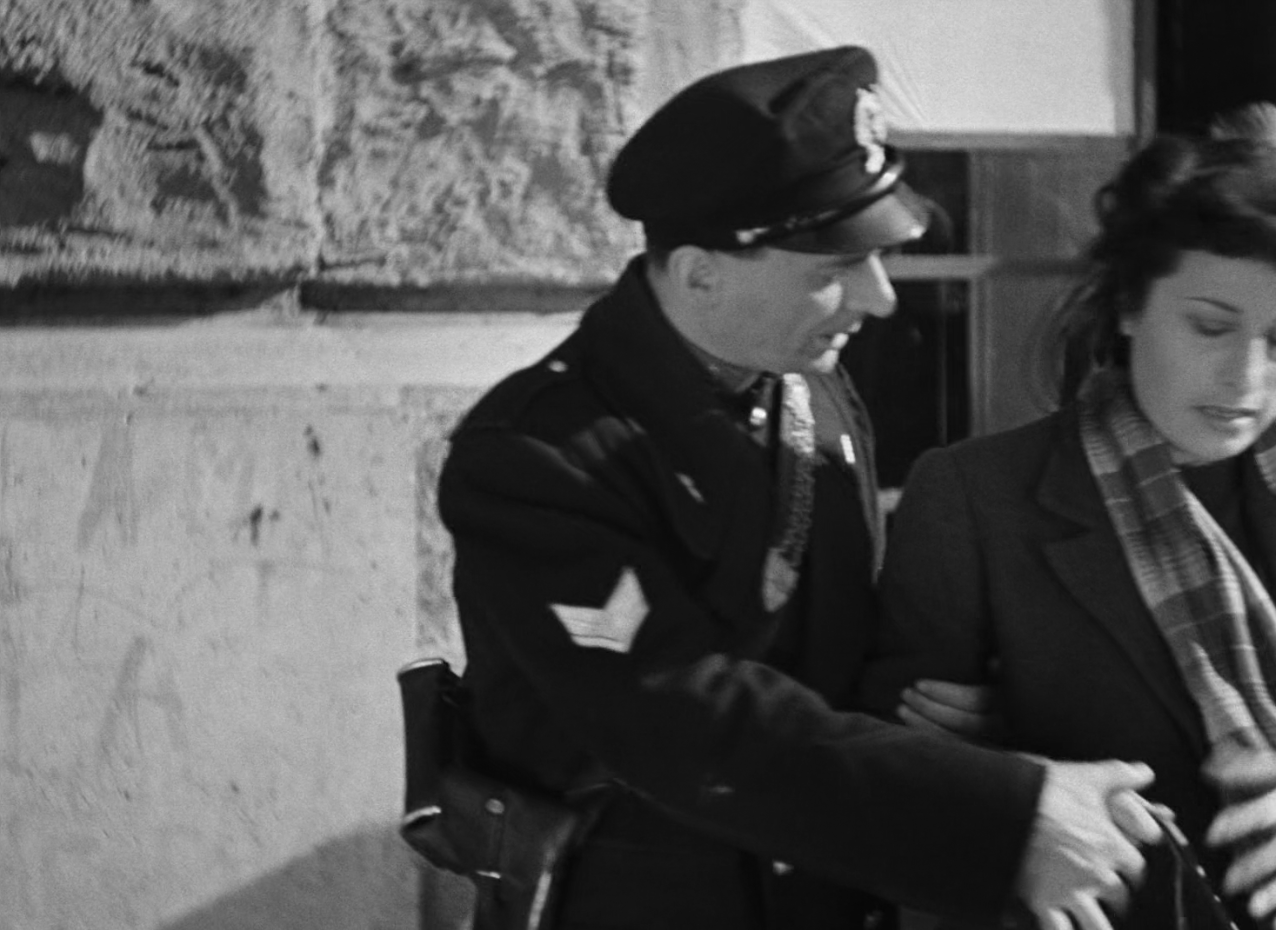
"Brigadiere, aiuto!" urla qualcuno.
"Ma va a morire ammazzata!" grida Pina in risposta. Lei avrà l'agente di polizia tutto per sé.
"L’accompagno a casa", dice lui tenendole ancora il braccio.
“Sergeant, help!” someone calls.
“Go get yourself killed!” yells Pina in response. She will have the police officer all to herself.
“I’ll see you home,” he says, still holding her arm.
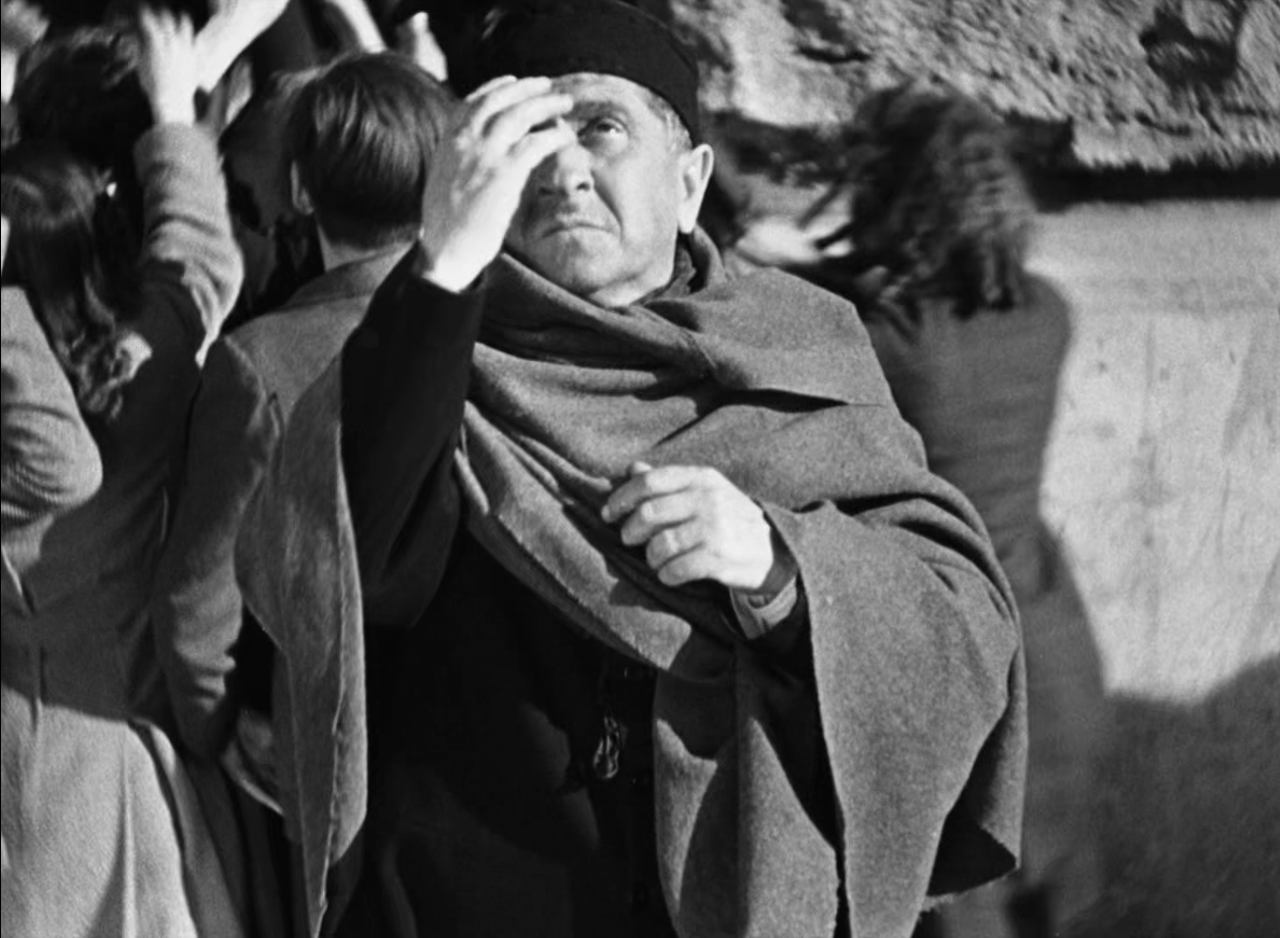
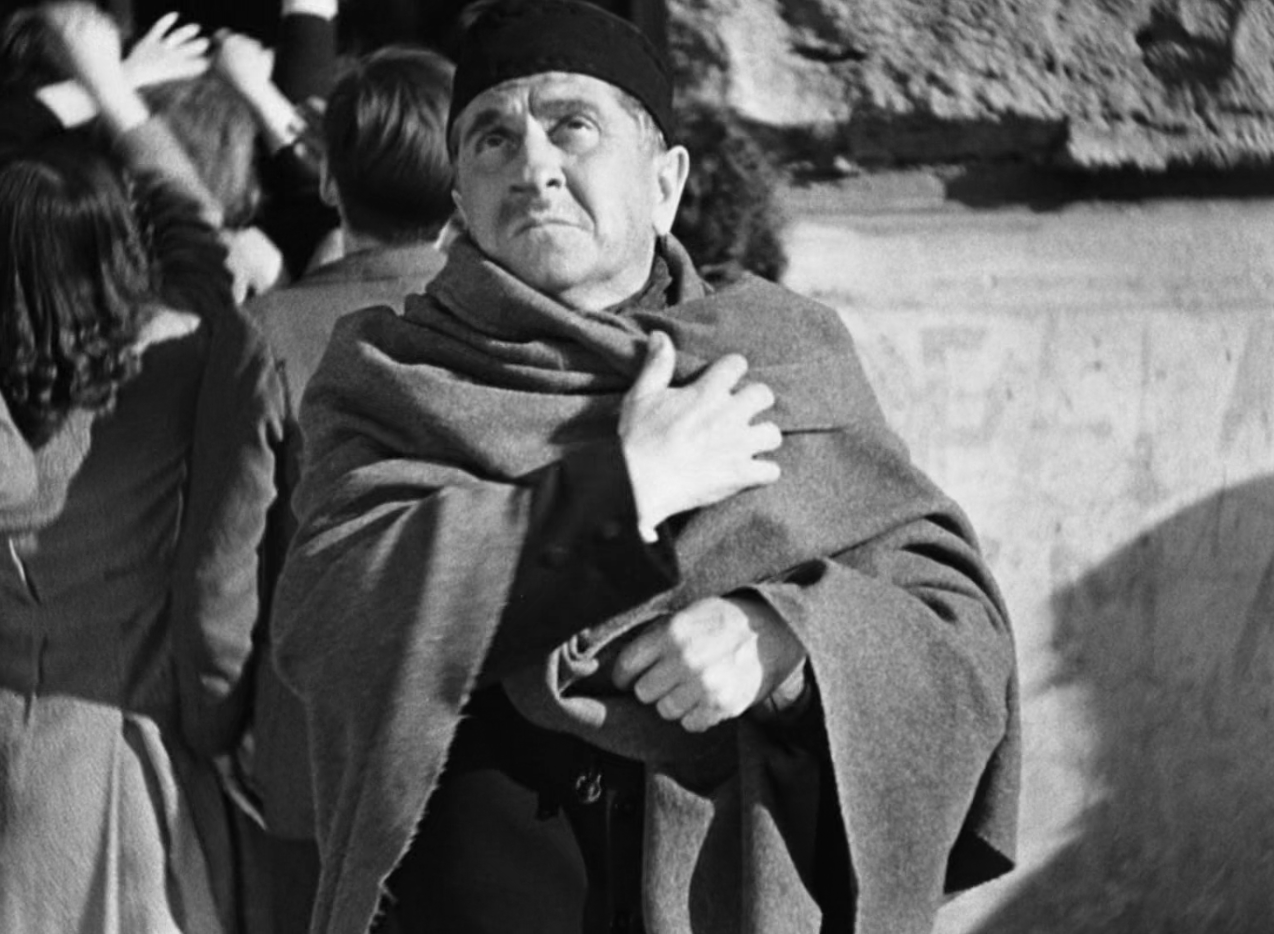
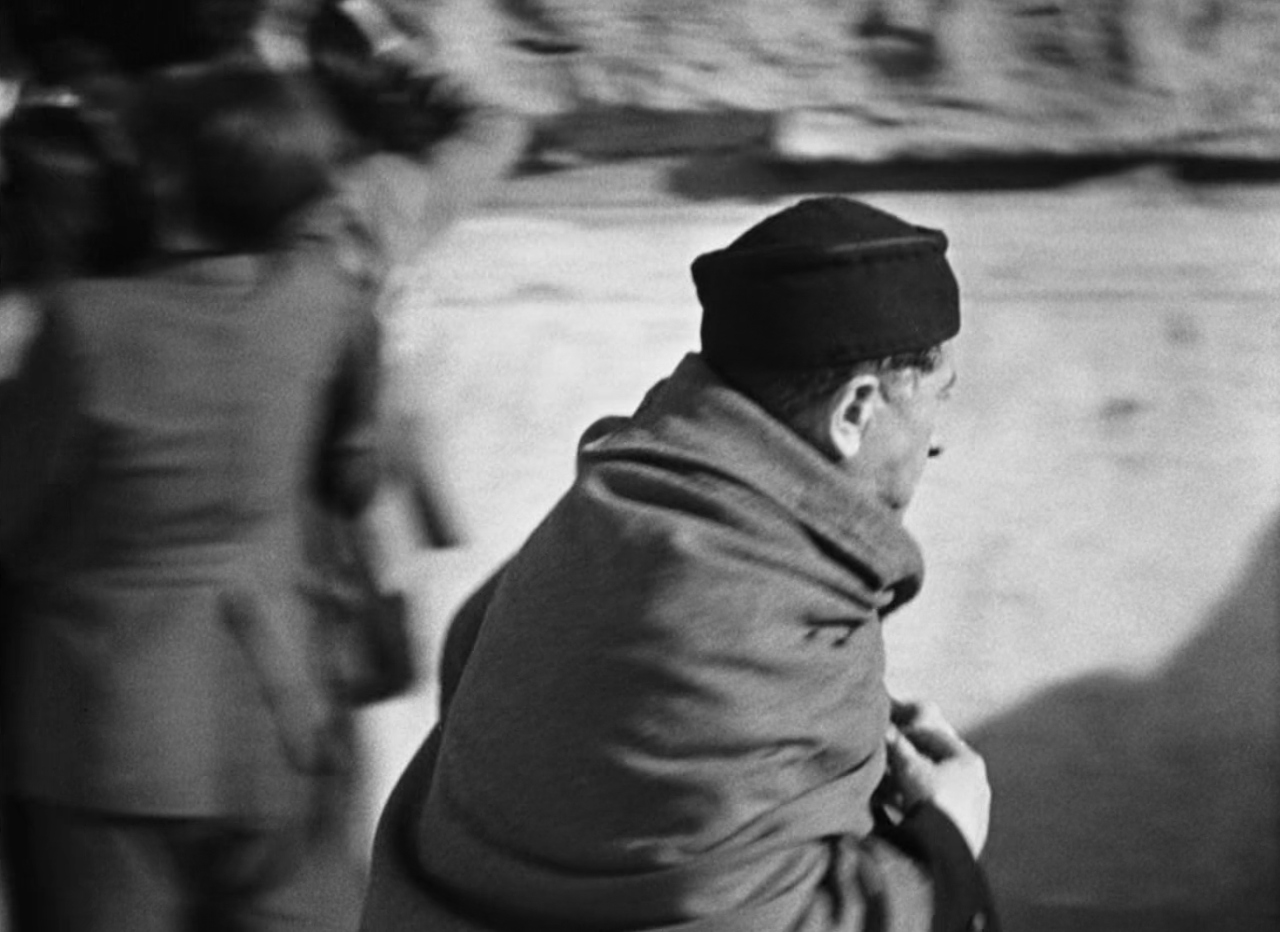
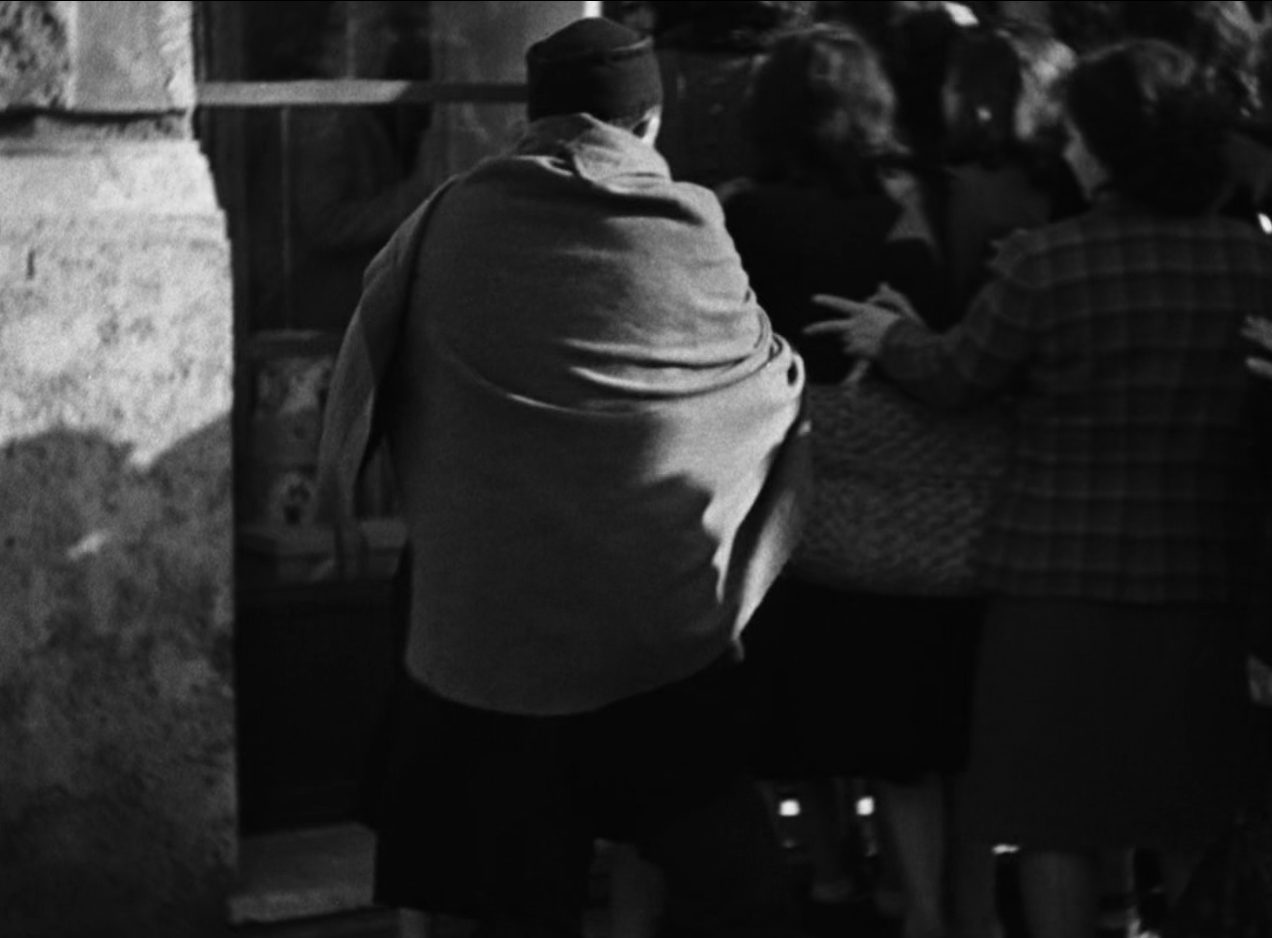
Le urla continuano: "Pane! Pane!"
Il sacrestano guarda il cielo, si fa il segno della croce e si unisce alla folla per prenderne un po' per sé.
The yelling continues: “Bread! Bread!”
The sexton looks up at the sky, makes the sign of the cross, and joins the crowd to get some for himself.
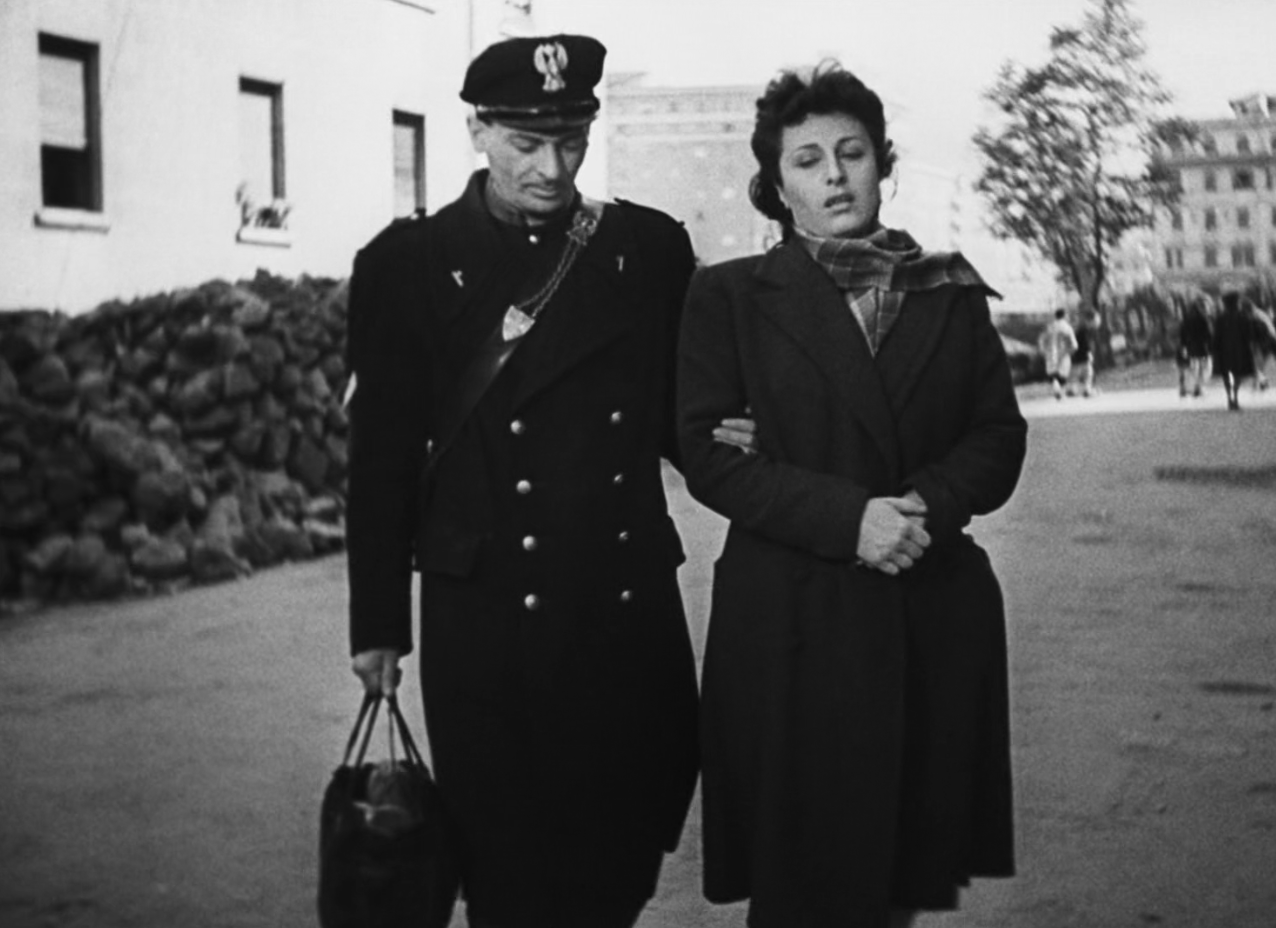
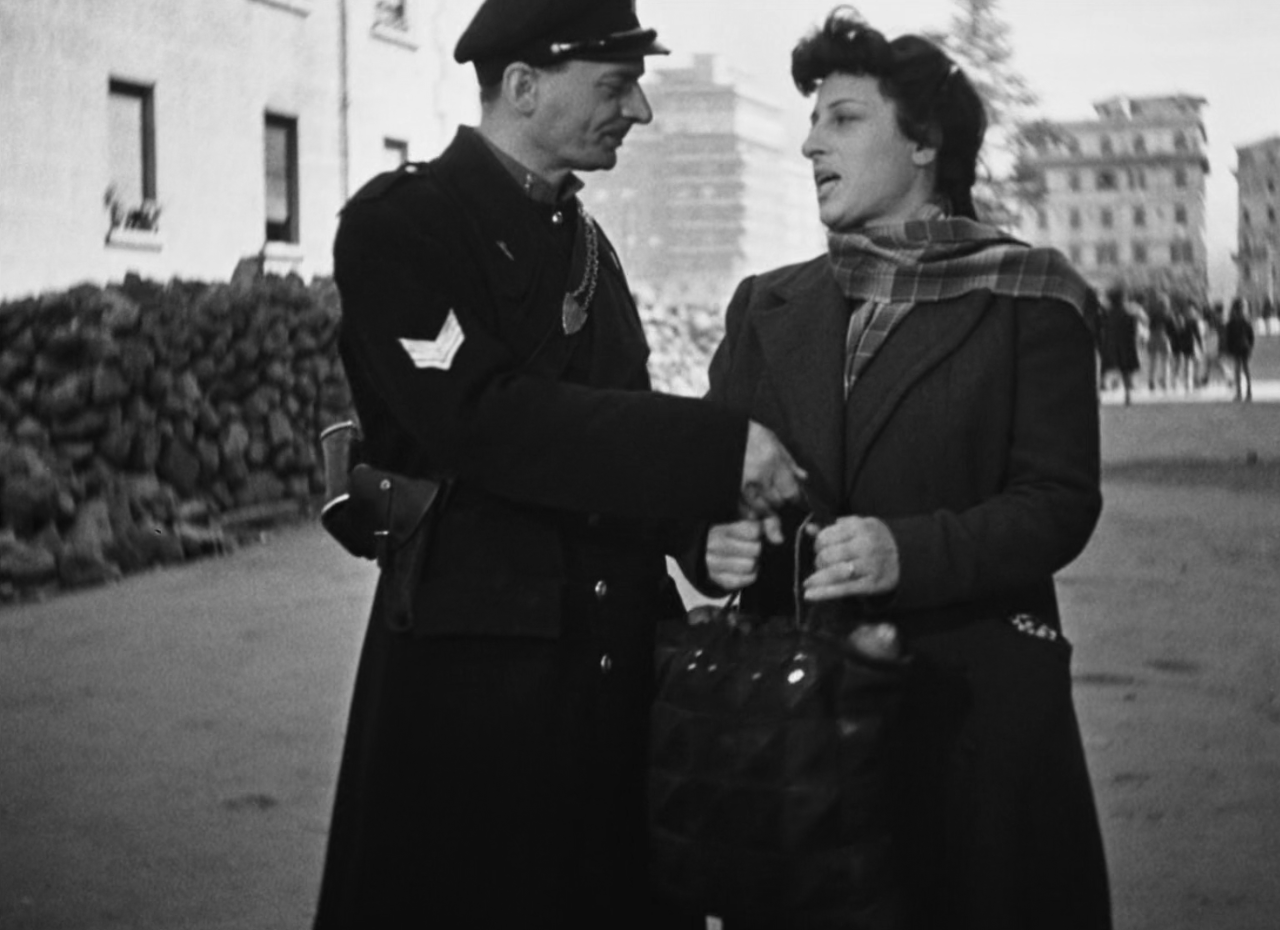
Davanti al palazzo di Pina, il brigadiere le consegna la sua borsa. “Eccoci arrivati”.
"Grazie tante", dice lei, sembrando esausta. Sullo sfondo, si elevano condomini isolati.
"Vuole che gliela porti fino a su?" chiede lui riferendosi alla borsa piena di pane saccheggiato.
“No”.
"È pesante", insiste.
In front of Pina’s building, the Sergeant hands Pina her bag. “Here we are.”
“Thanks,” she says, looking exhausted. In the background, isolated apartment buildings rise up.
“Shall I carry it up?” he asks referring to the bag full of looted bread.
“No,” she replies.
“It’s heavy,” he insists.
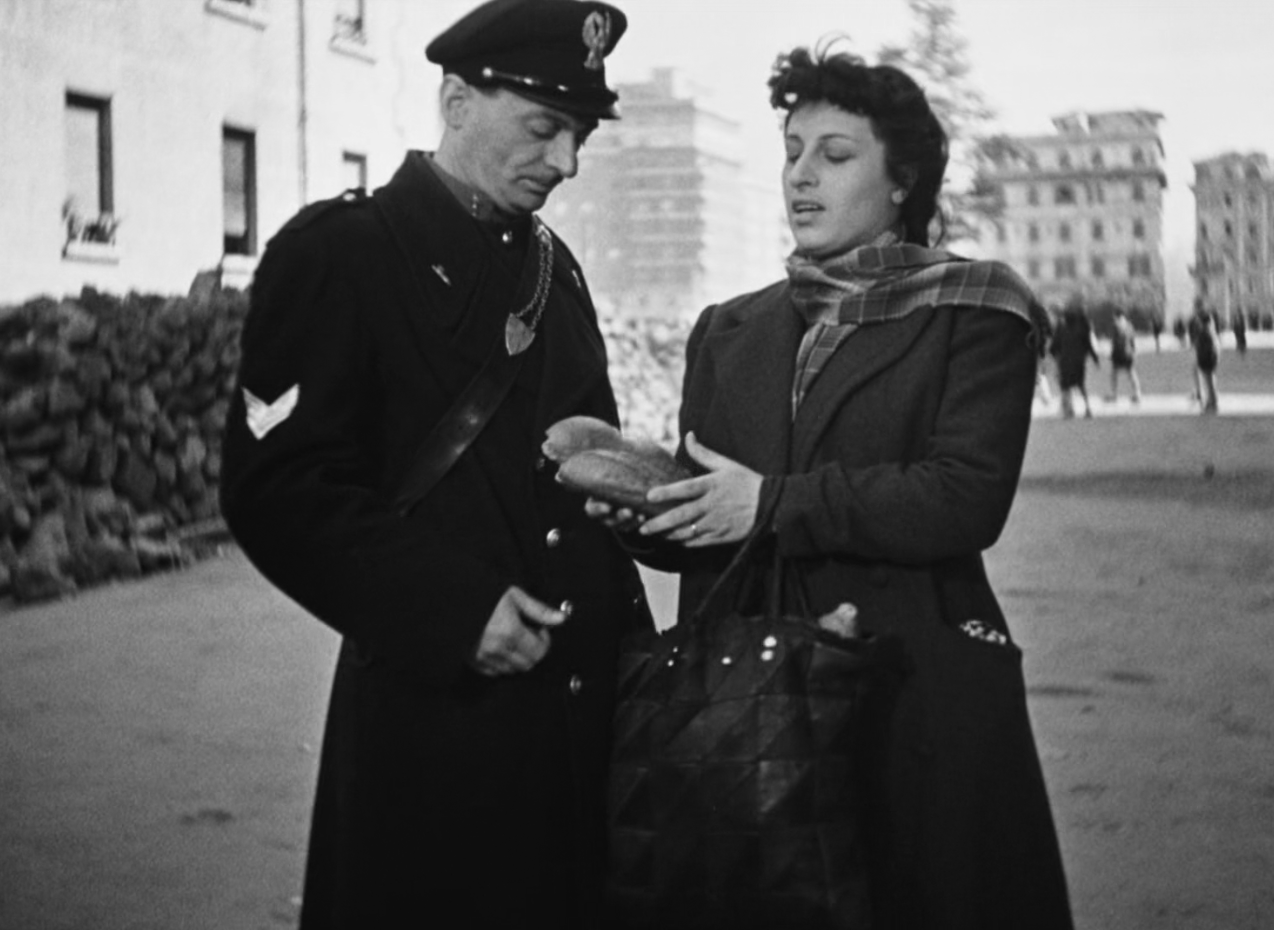
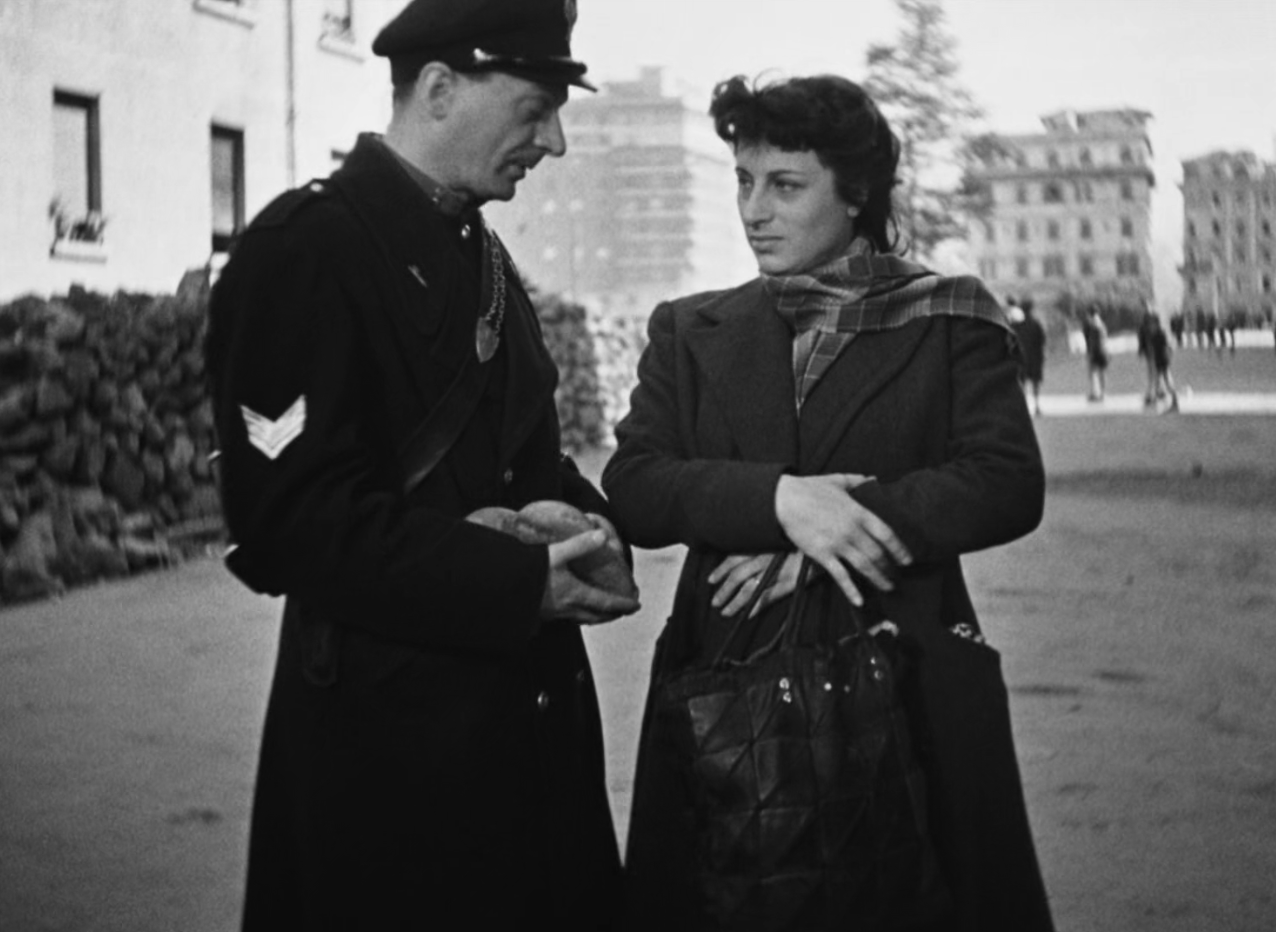
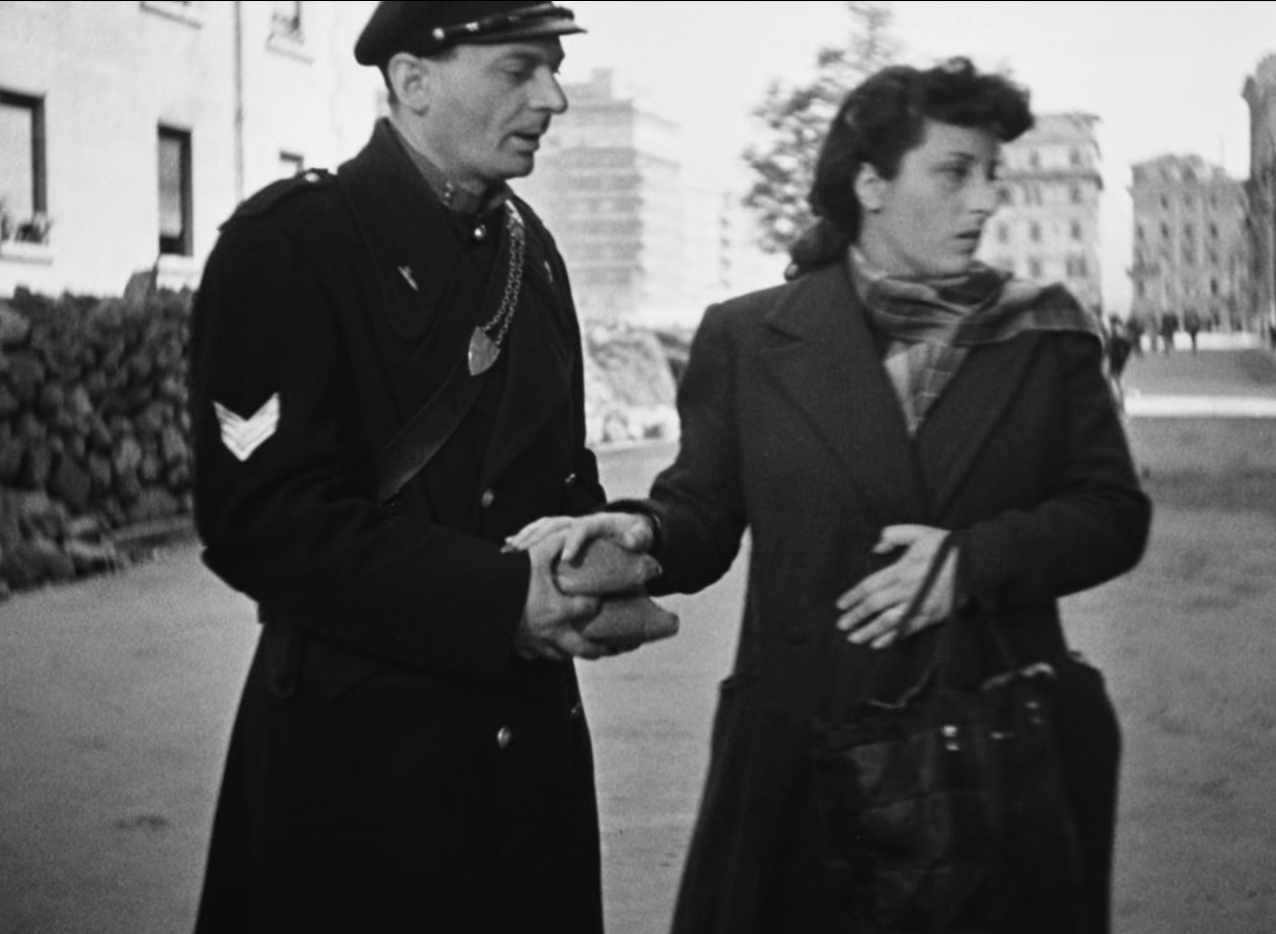
Con uno sguardo rassegnato, lei gli porge due piccole pagnotte. "Ecco, così pesa meno".
"Veramente non dovrei" – dice lui con un po' di vergogna – "Ma ho fame da tanto".
Lei mette la mano sopra quella di lui per rassicurarlo.
With a resigned look, she hands him two small loaves of bread. “Here, this way it will be lighter.”
“Actually, I shouldn’t,” he says, a little bit ashamed. “But I’ve been starving for quite a while.”
She puts her hand over his to reassure him.
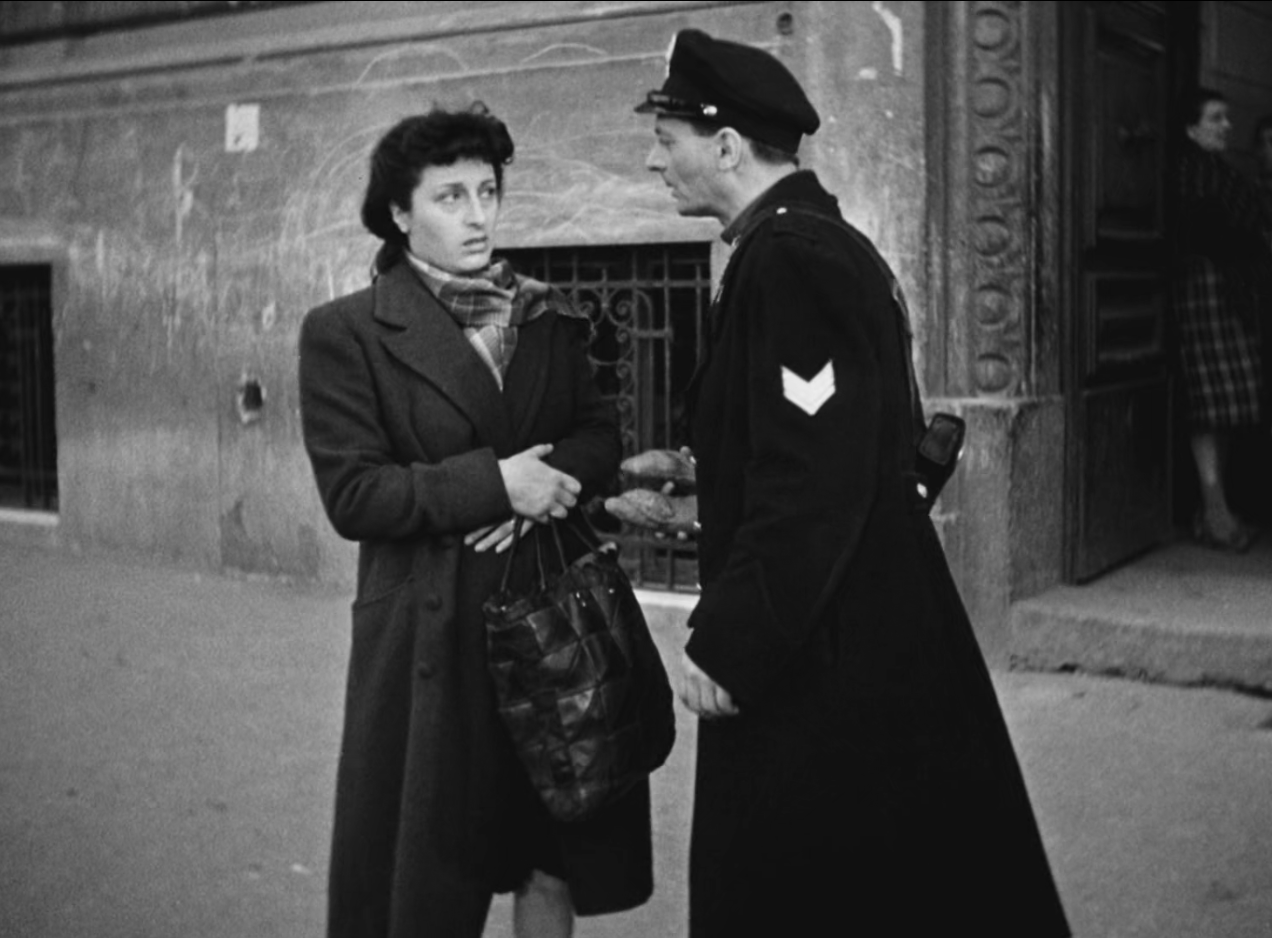
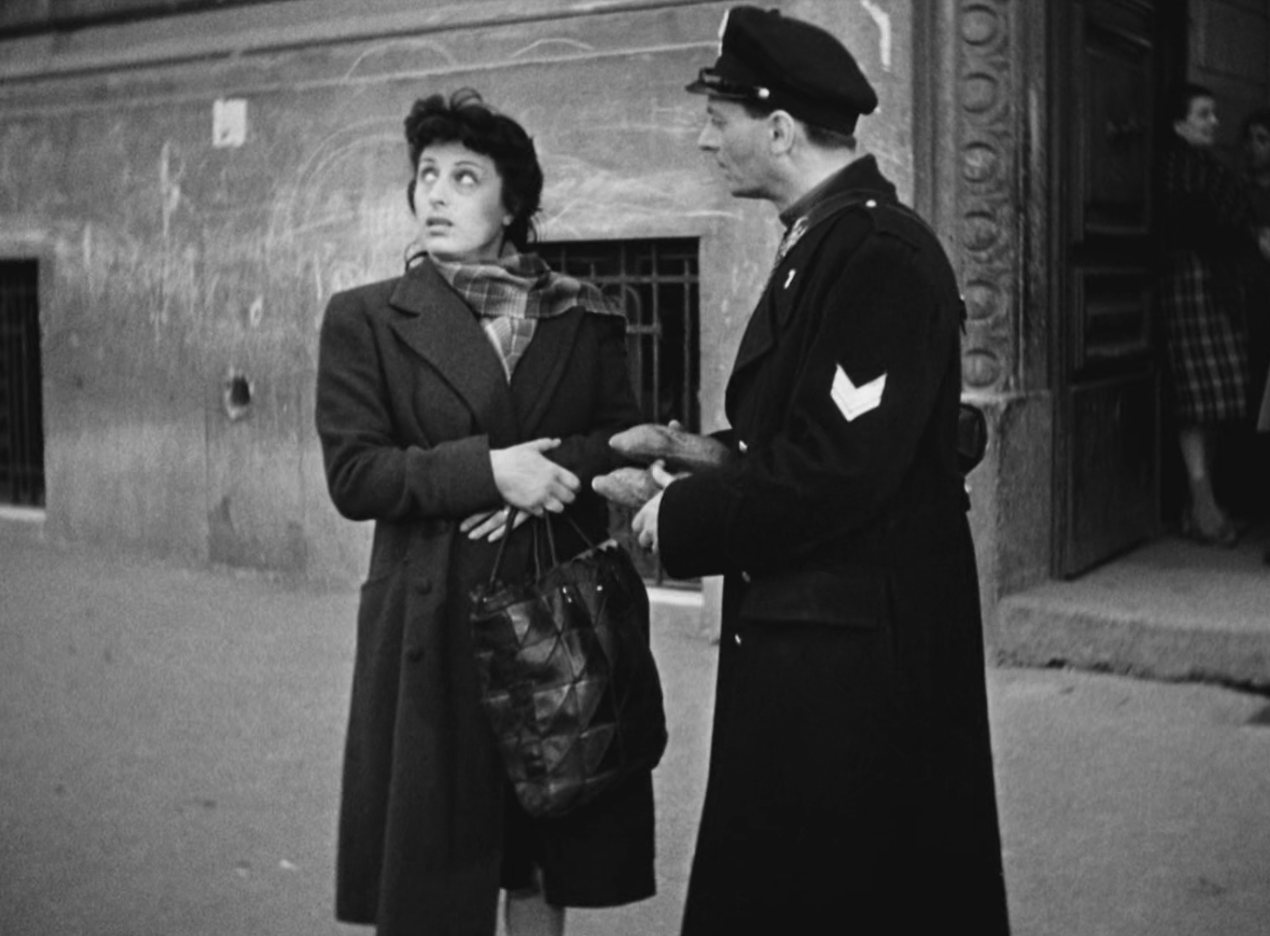
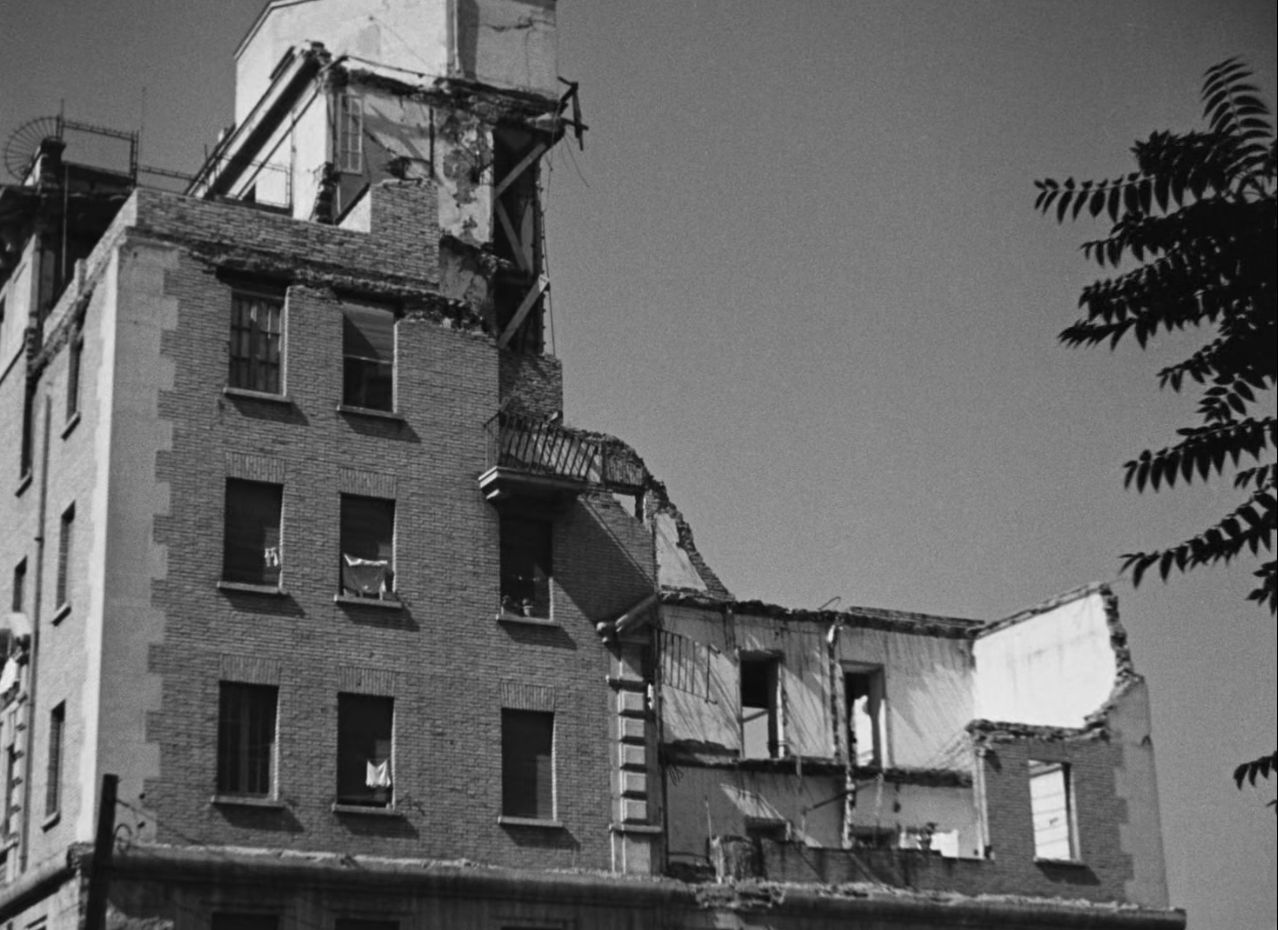
Si avvicinano all'edificio. "Signora Pina, ma che dice lei? Esisteranno veramente questi americani?" Da un bel po' di tempo si aspetta l'arrivo di un esercito di liberazione.
Lei getta gli occhi su un edificio bombardato dall'altra parte della strada. "Pare di sì".
"Già”.
They walk closer to the building. “Signora Pina, what do you think? Do these Americans really exist?” They have been expecting an army of liberation for quite a while.
She casts her eyes up at a bombed-out building across the street. “It looks that way.”
“True.”
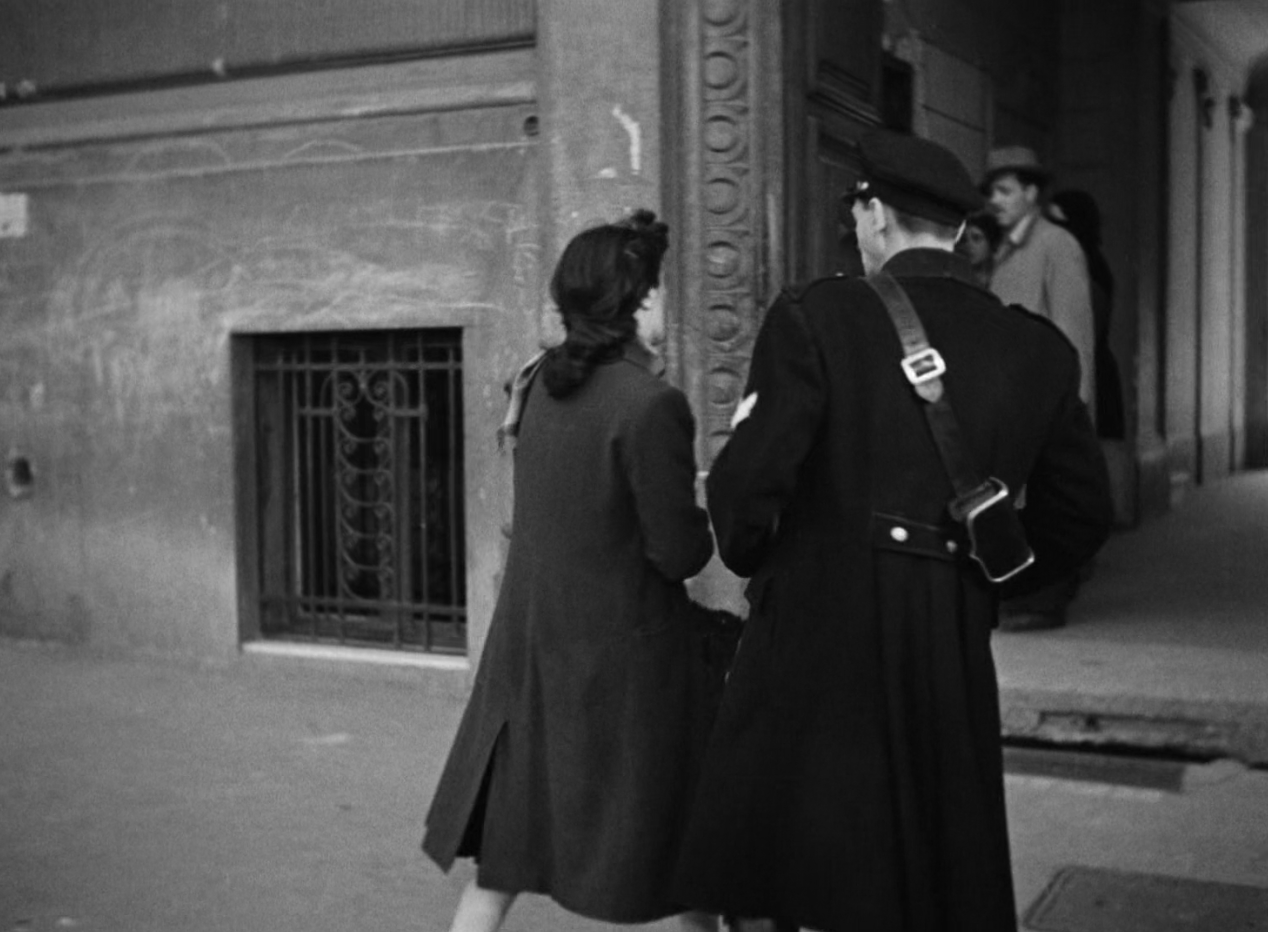
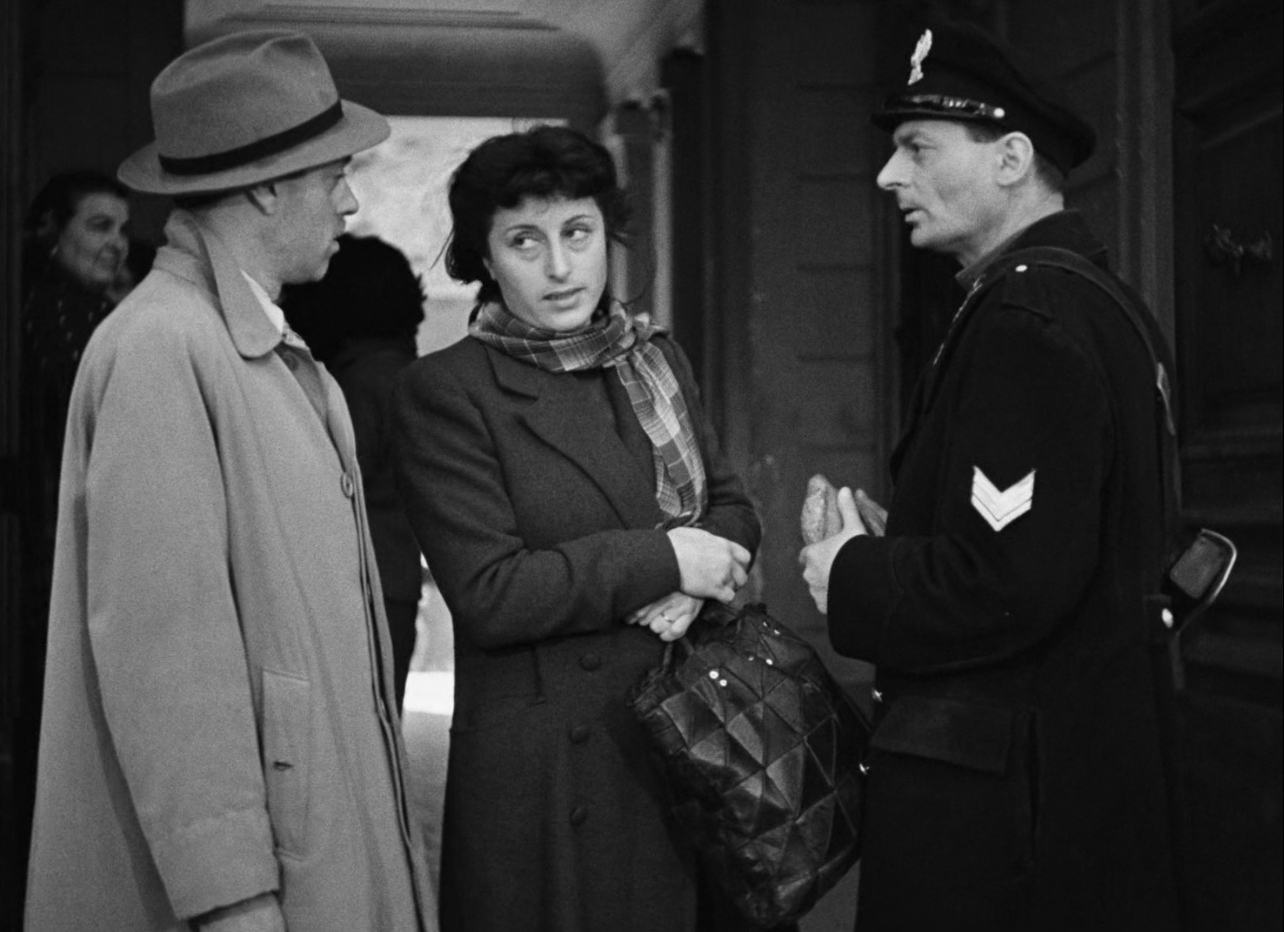
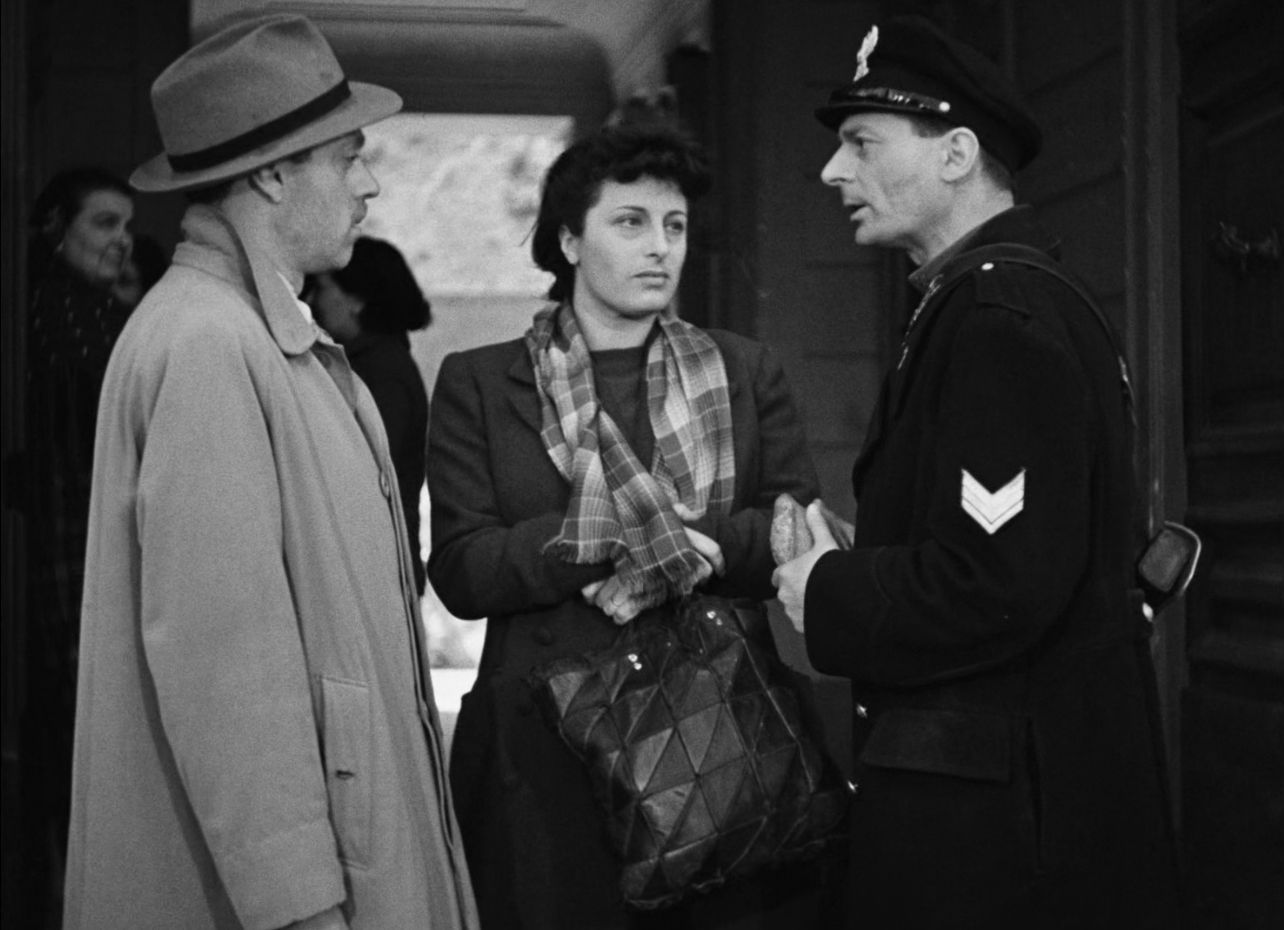
Mentre camminano, un uomo con un impermeabile e un fedora rovinato chiede: "Signora Pina le vuole le uova a sedici lire?”
"Piantala và", risponde stancamente Pina.
"Come si permette in mia presenza? Questa è borsa nera!" dice il brigadiere.
As they walk, a man wearing a trenchcoat and a battered fedora inquires, “Signora Pina, how about eggs for sixteen lira?”
“Come on, stop this,” Pina replies wearily.
“How dare you in my presence? That’s black market!” says the Sergeant.
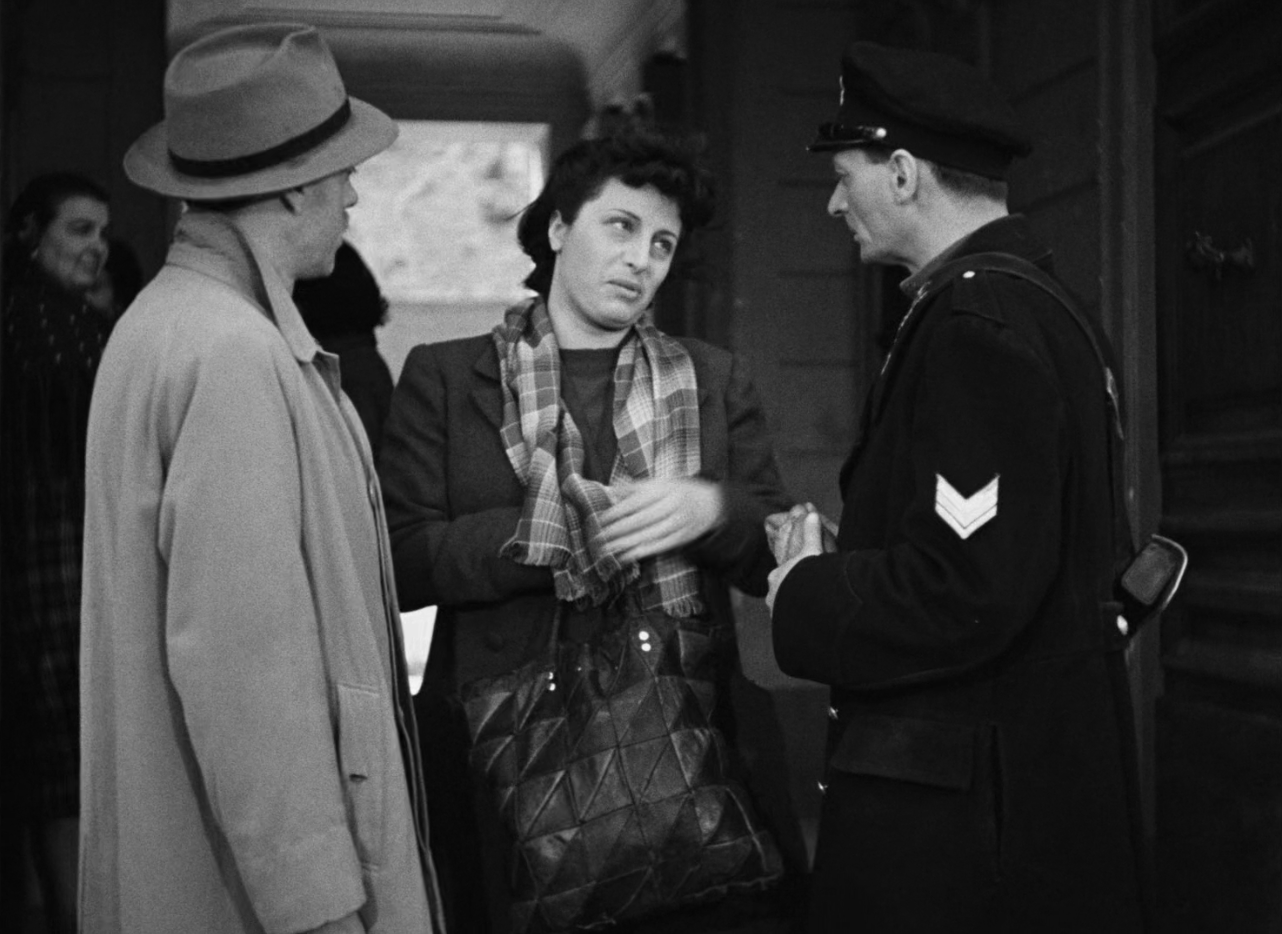
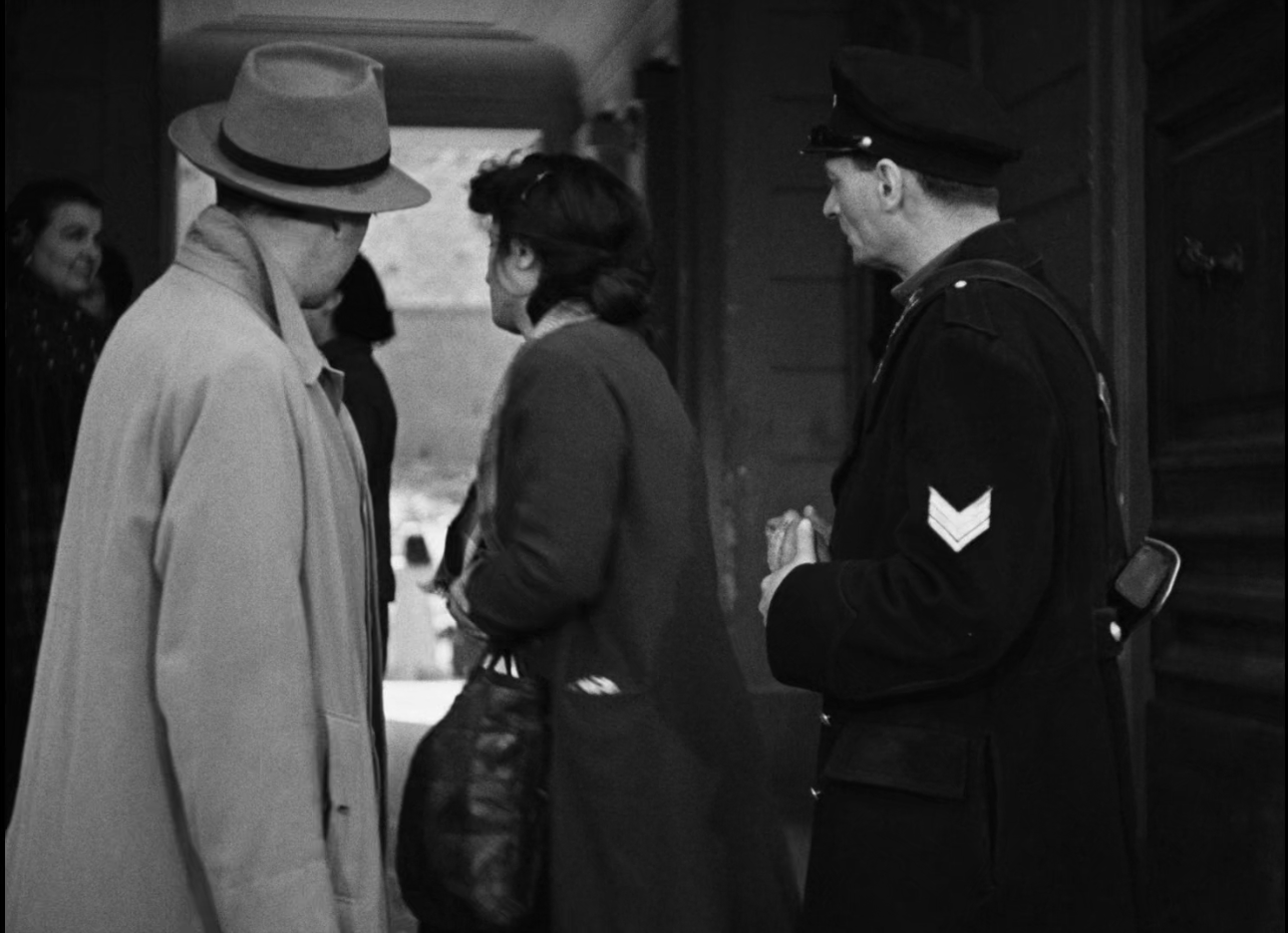
Pina ride. “Brigadiere, lasci perdere che è meglio! Arrivederci!” Si dirige all'interno.
Pina laughs. “Sergeant, save your breath, it will be better! See you!” She heads inside.
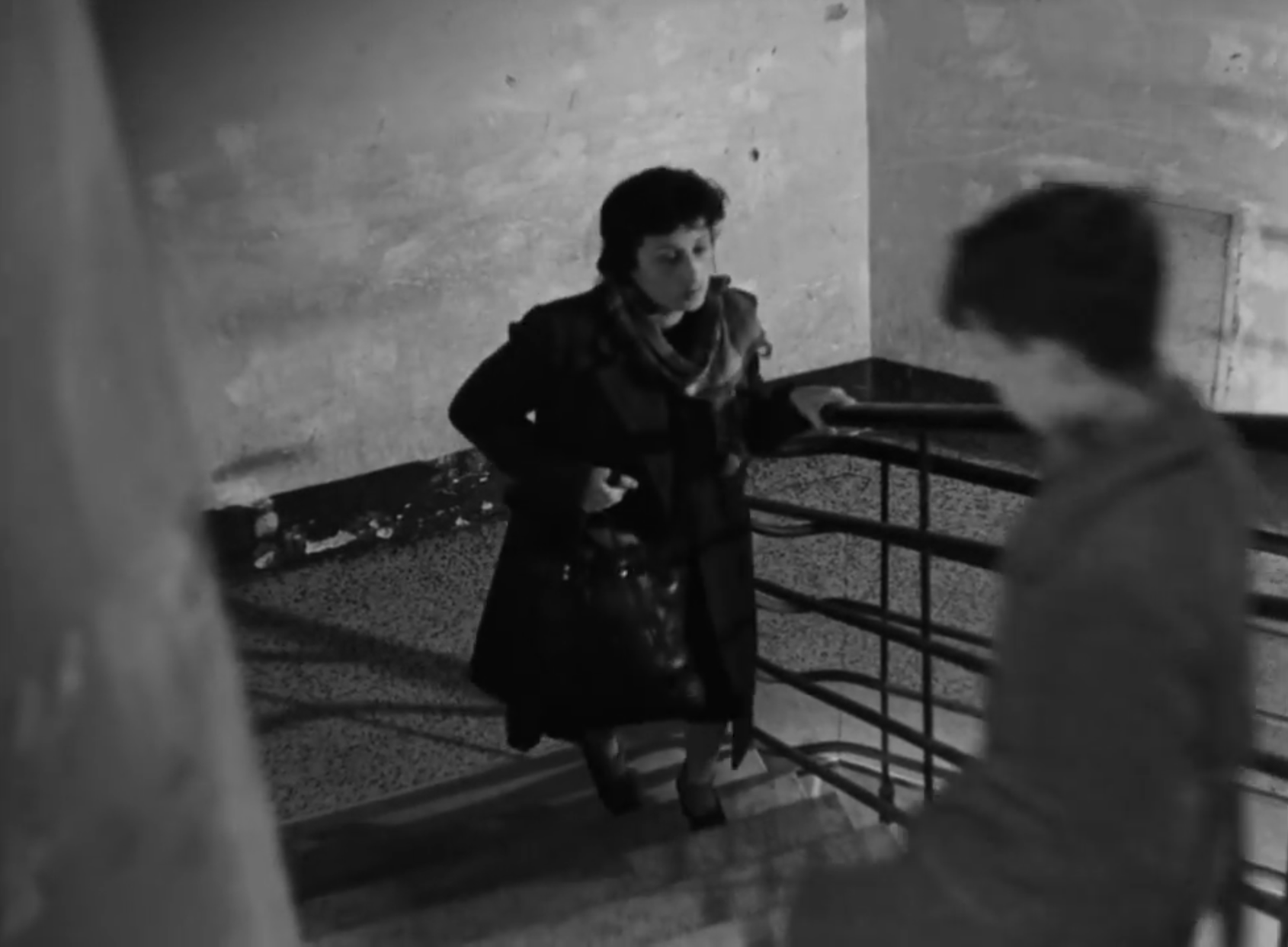
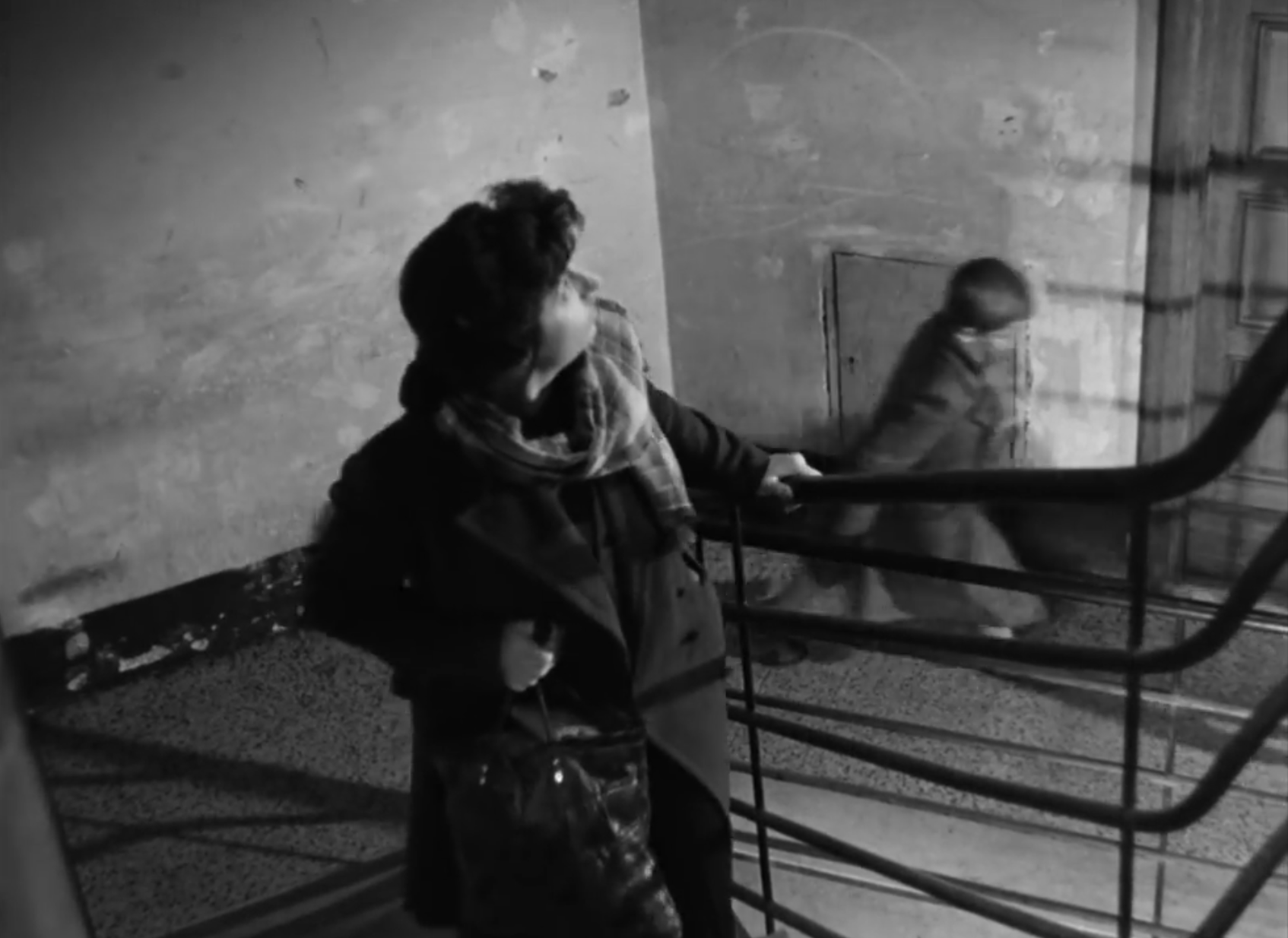
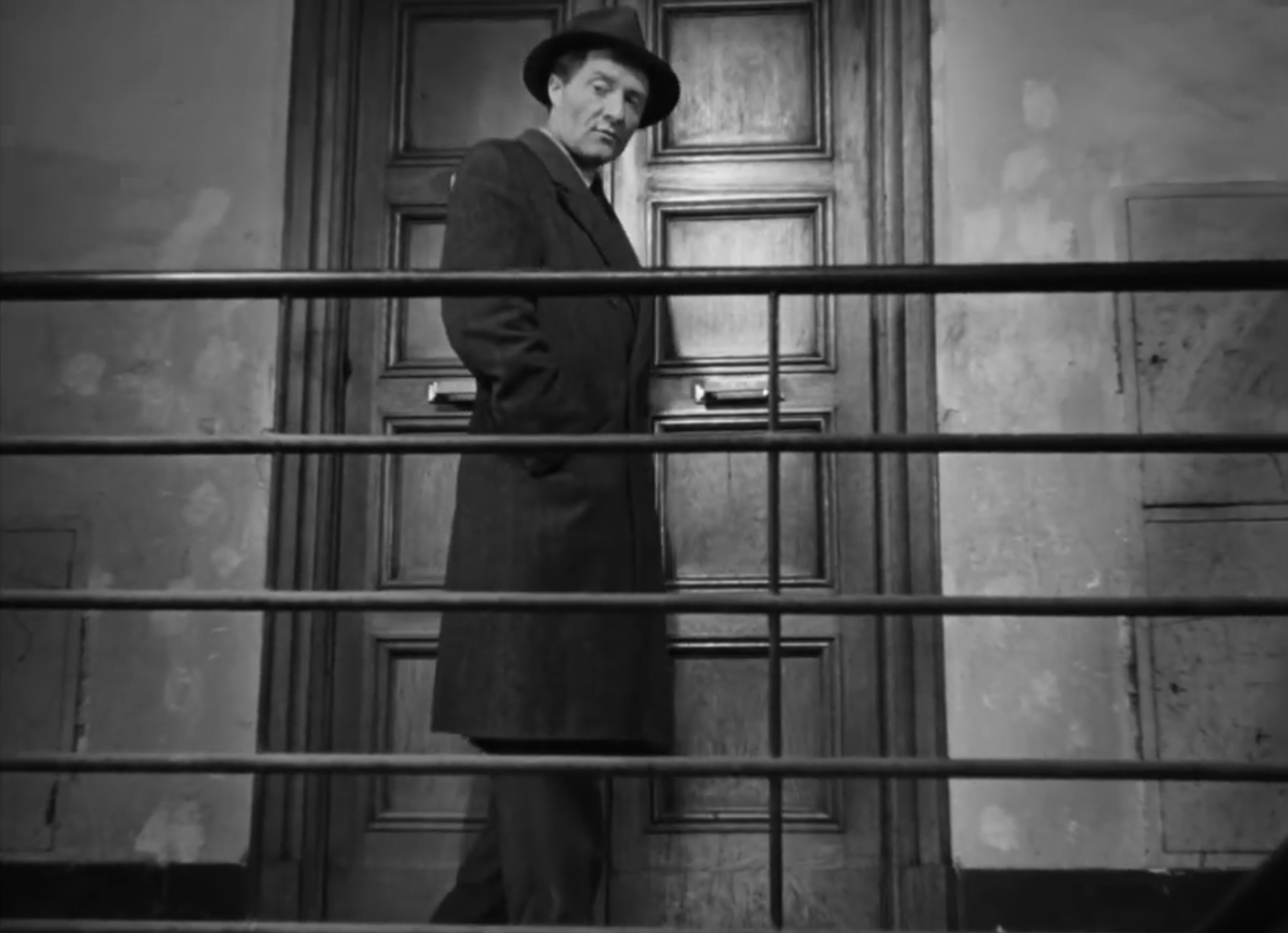
Salendo le scale, ancora con un aspetto esausto, Pina supera alcuni ragazzi. Alzando lo sguardo, vede un uomo in piedi davanti alla sua porta: è l'ingegnere Manfredi, che è fuggito dalle SS nella scena di apertura.
"Chi cerca?" gli chiede lei.
"Scusi, abita qui Francesco il tipografo?"
"Sì ma adesso non c'è".
"Non sa mica dov'è andato?"
Climbing the stairs, still looking exhausted, Pina passes a few boys. Looking up, she sees a man standing at her door: it's the engineer Manfredi, who fled from the SS in the opening scene.
“Who are you looking for?” she asks him.
“Excuse me, does Francesco the printer live here?”
“Yes, but he’s out now.”
“Do you have any idea where he went?”
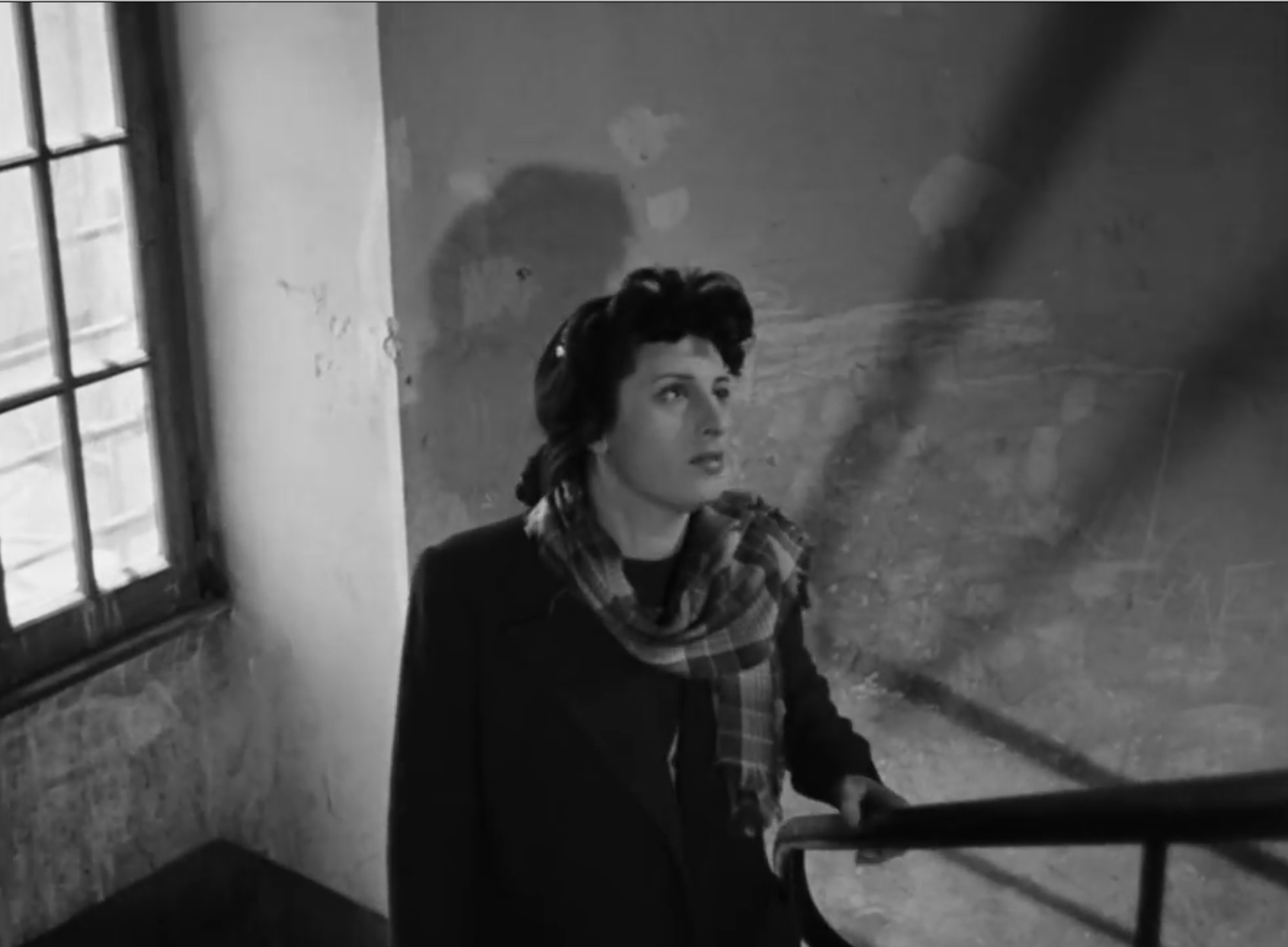
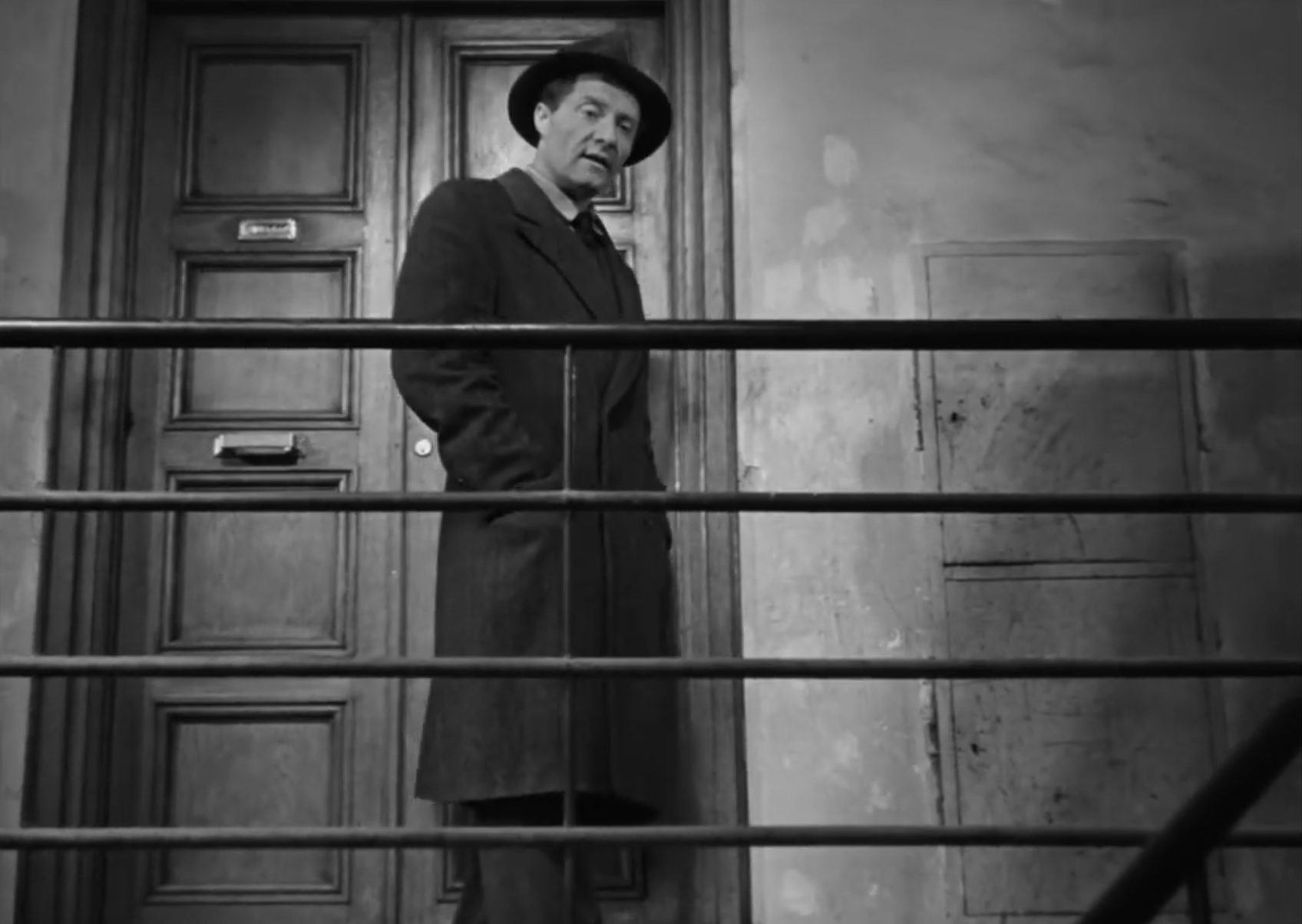
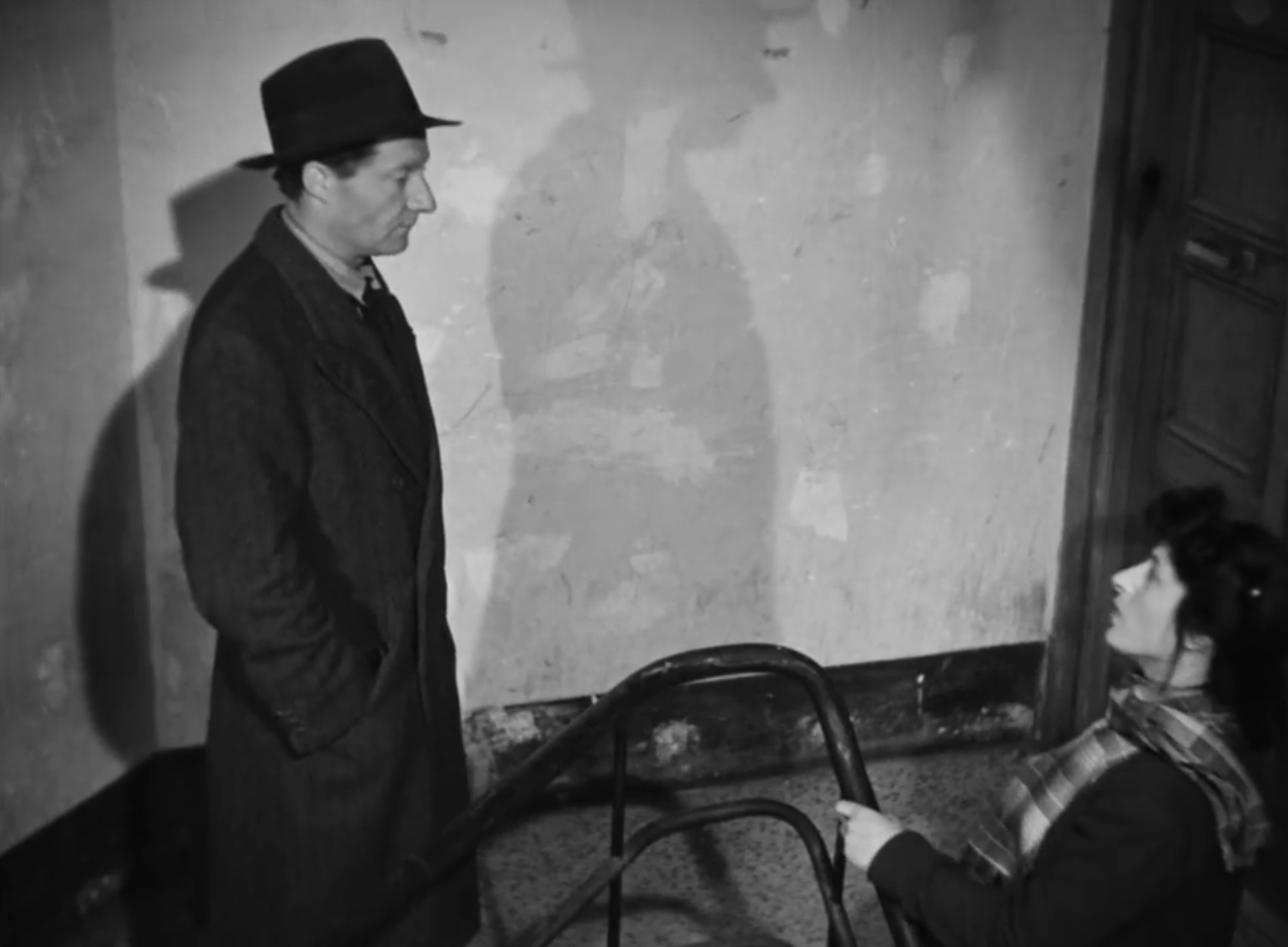
Con fatica, lei sale ancora qualche gradino. "E che ne so, sarà andato per i fatti suoi", risponde.
"Scusi, lei chi è?” chiede lui.
"Ma scusi a lei che gliene frega?" risponde lei bruscamente. Ha quasi raggiunto il pianerottolo dove si trova Manfredi. Lui proietta due ombre incombenti sul muro: un ricercato.
Wearily, she climbs a few more stairs. “I have no idea, that’s his business” she replies.
“Excuse me, but who are you,” he asks.
“Excuse me, what the hell do you care?” she replies brusquely. She’s almost reached the landing where Manfredi stands. He casts two looming shadows on the wall: a wanted man.
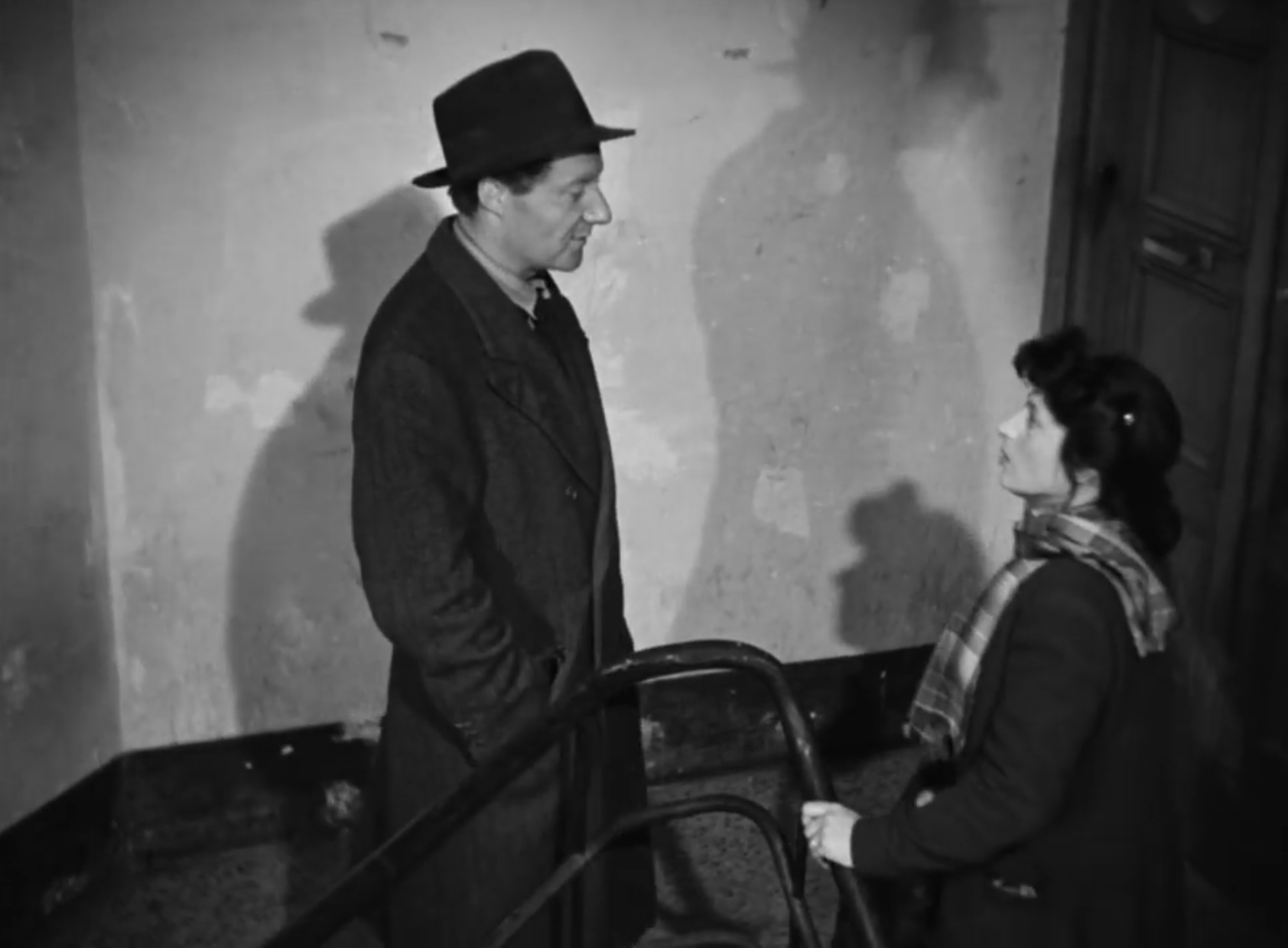
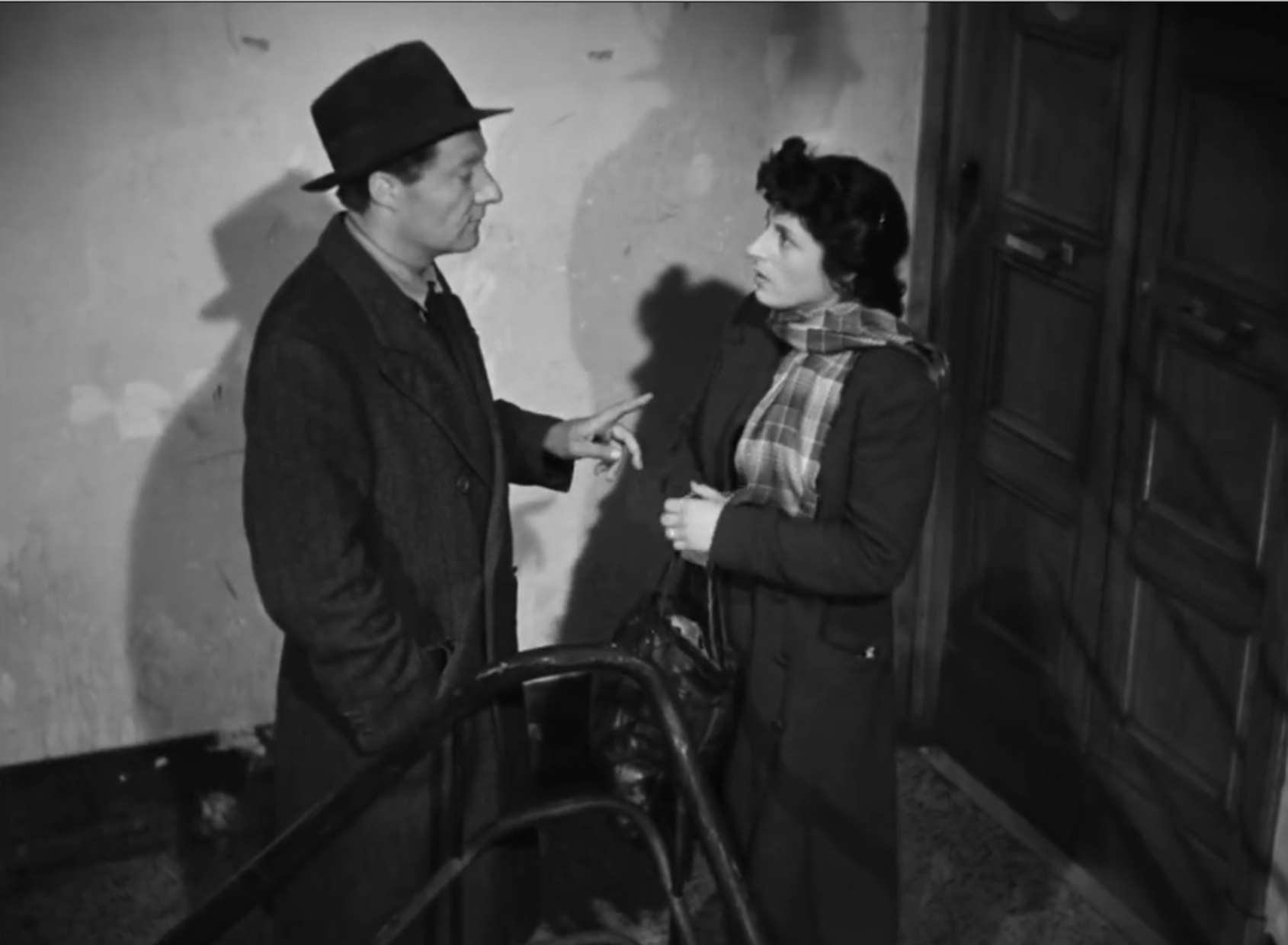
"Ho capito. Lei è la signora Pina!" Sorride leggermente.
"E lei come lo sa?" La sua sciarpa a quadri drappeggiata sulla spalla, Pina lo guarda dritto in faccia, con la testa inclinata, curiosa.
"Francesco mi parla sempre di lei".
"Ma lei è..."
Lui la ferma con un movimento della mano. "Un amico".
“I see. You are signora Pina.” He smiles slightly.
“How do you know?” Her plaid scarf draped over her shoulder, Pina faces him directly, her head tilted, curious.
“Francesco always talks to me about you.”
“Oh, so you’re –”
He stops her with a motion of his hand. “A friend.”
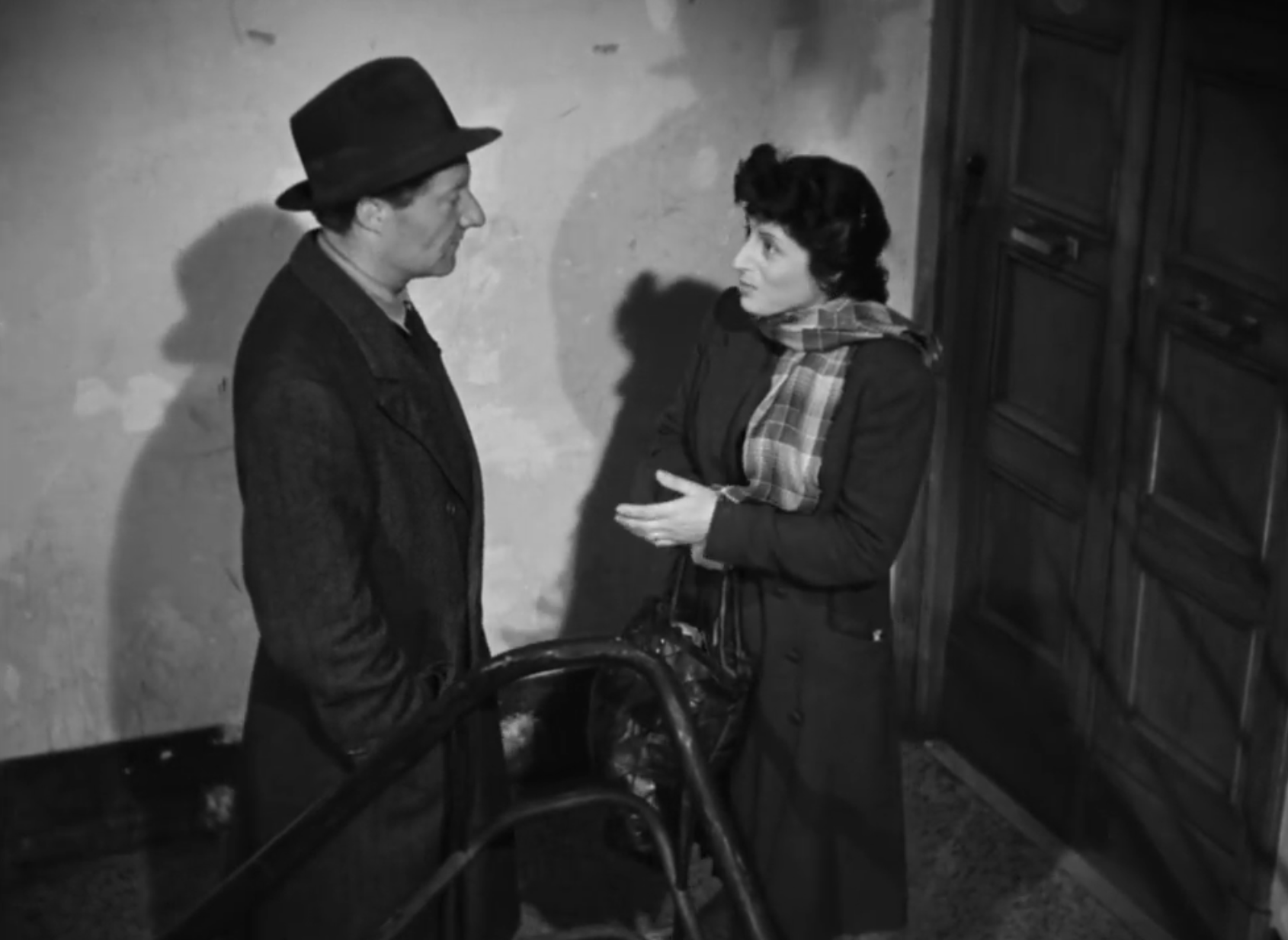
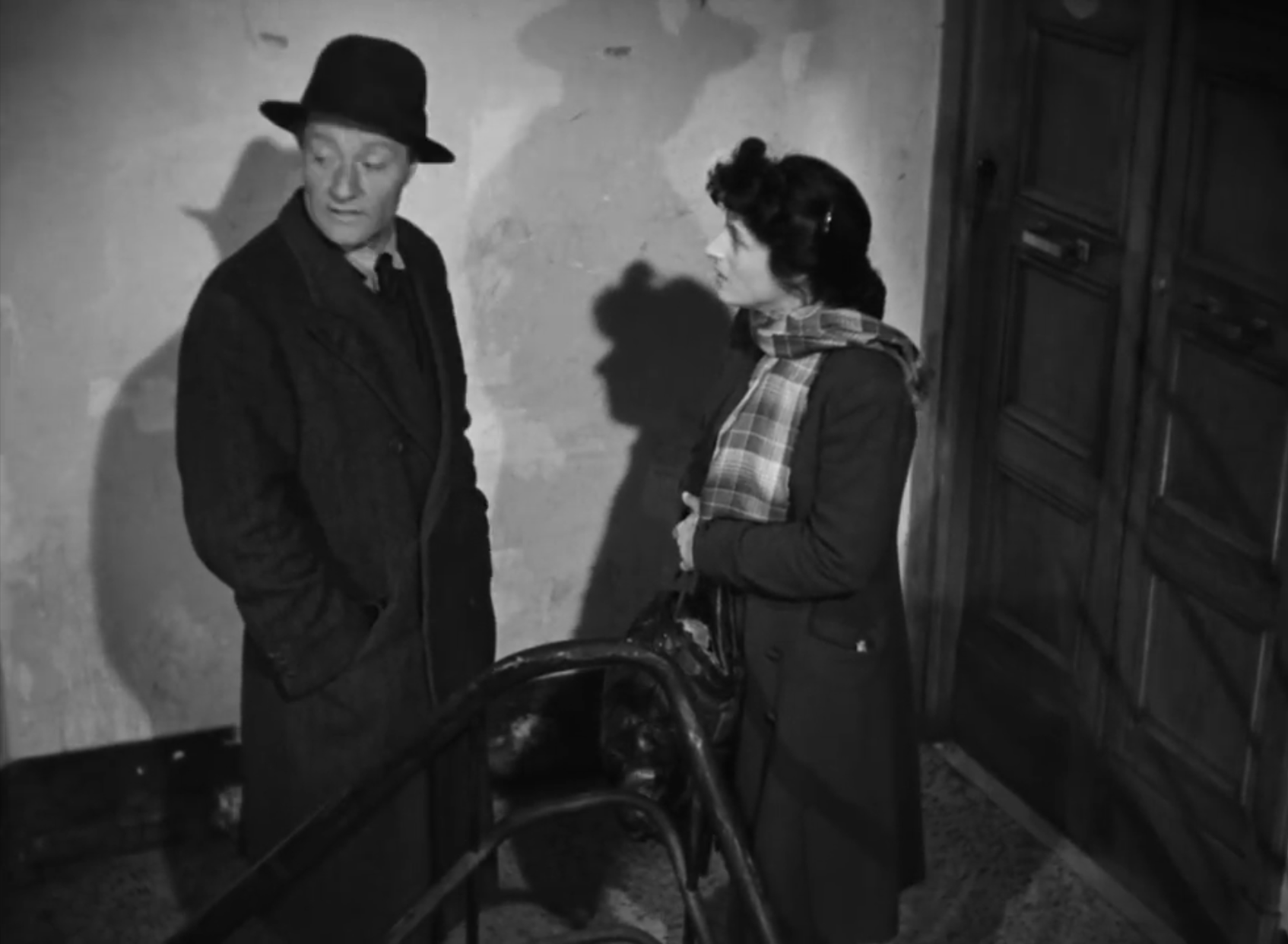
"Che stupida! L'avevo presa per un poliziotto!"
Lui è divertito. "Me ne sono accorto”.
"Mi dica! Che desidera?" chiede.
"Dovrei entrare in casa di Francesco", dice con un gesto della testa.
“Oh, how stupid! I took you for a cop!”
He’s amused. “I realized that.”
“Tell me! What would you like?” she asks.
“I need to get into Francesco’s apartment,” he says, with a gesture of his head.
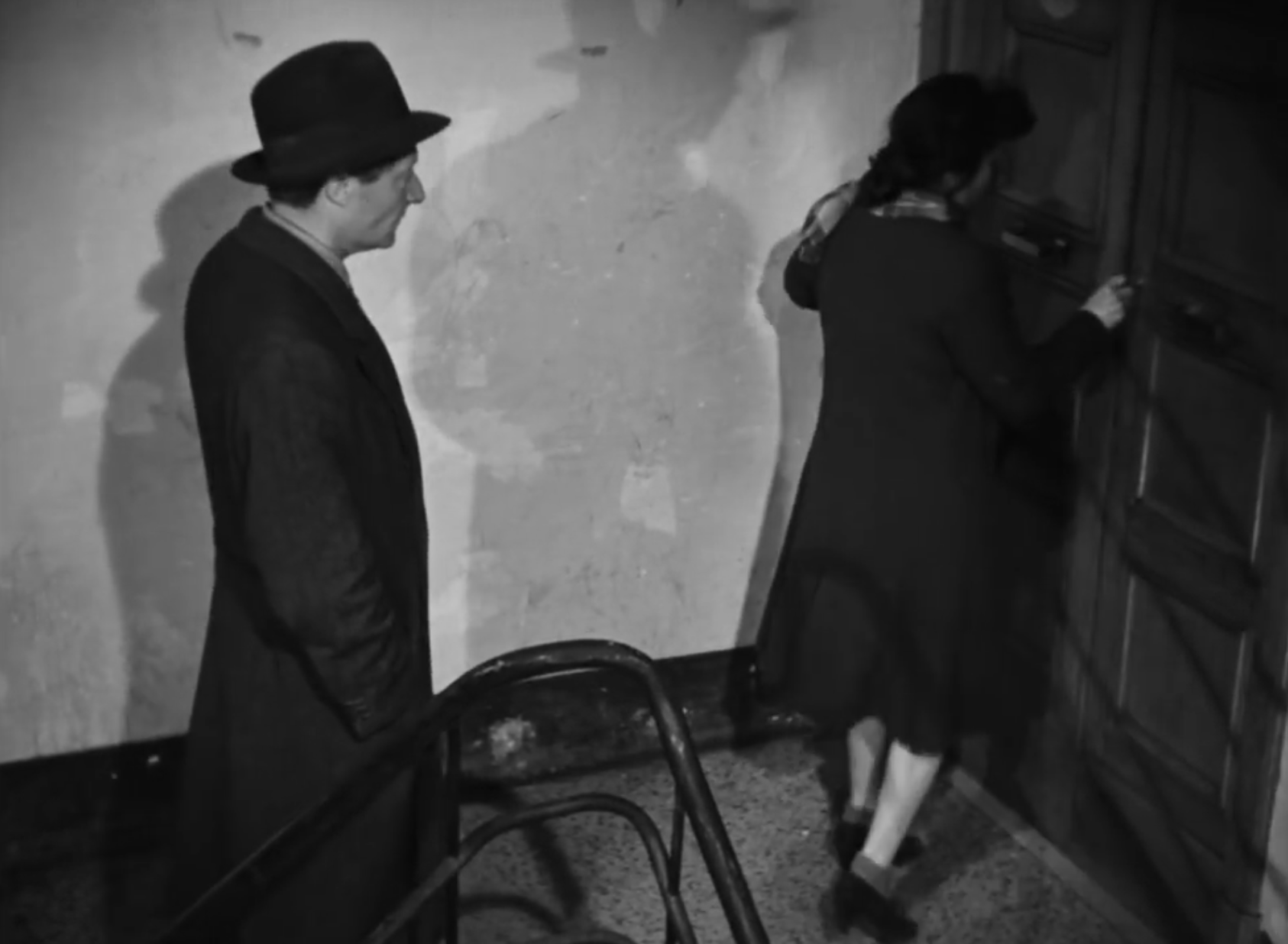
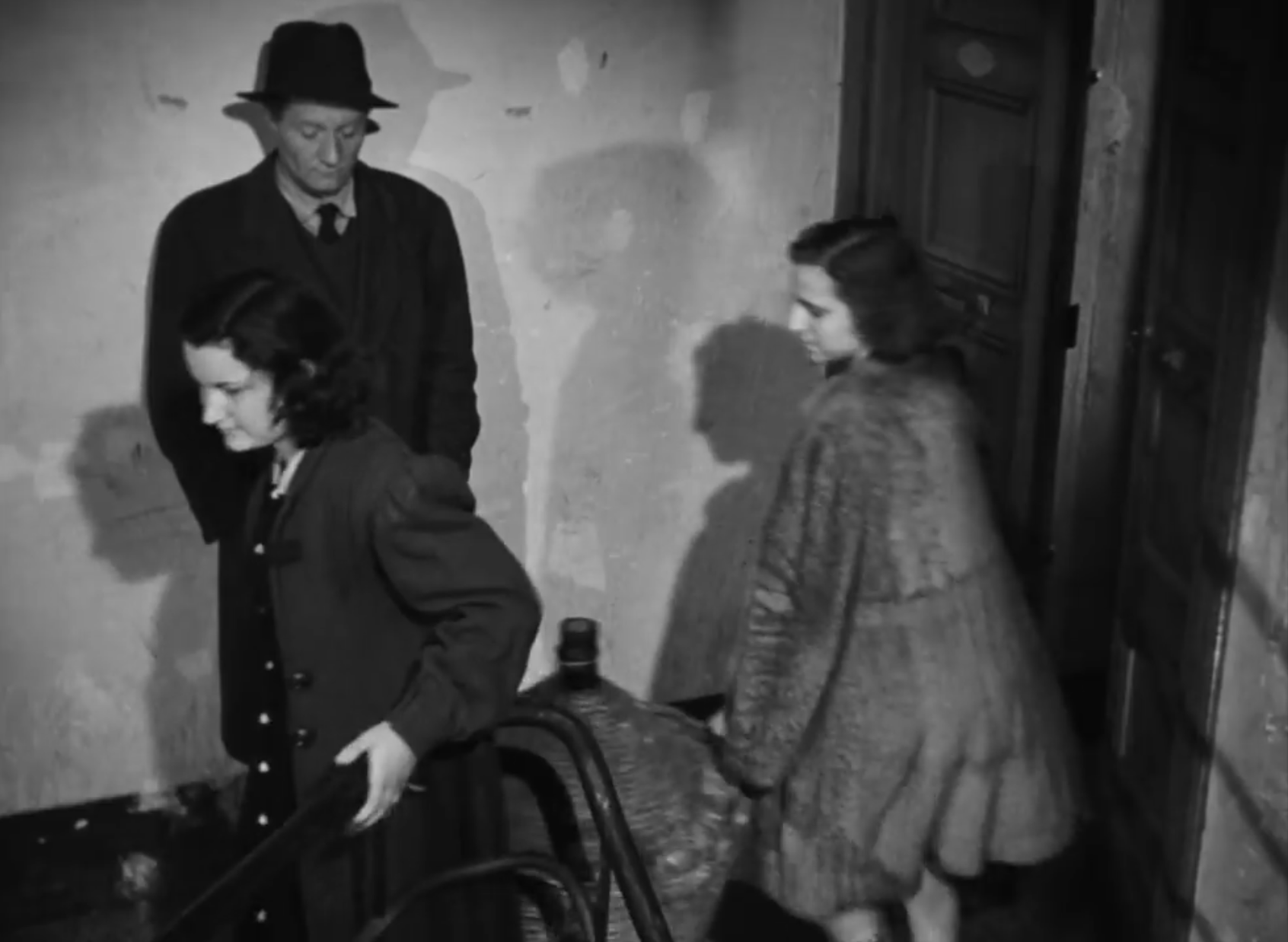
"Le apro subito. Prendo la chiave". Lei entra dentro. Aspettando, Manfredi si fa indietro per far passare alcune vicine. Le donne portano una damigiana. Questa è un enorme contenitore tradizionale per il vino. Anche se durante la guerra, chissà cosa potrebbe esserci dentro...
“I’ll open it for you right away. I’ll get the key.” She goes inside. Waiting, Manfredi stands back to let some neighbors pass. The women are carrying a damigiana. That is a huge traditional container for wine. Though during wartime, who knows what could be in it…
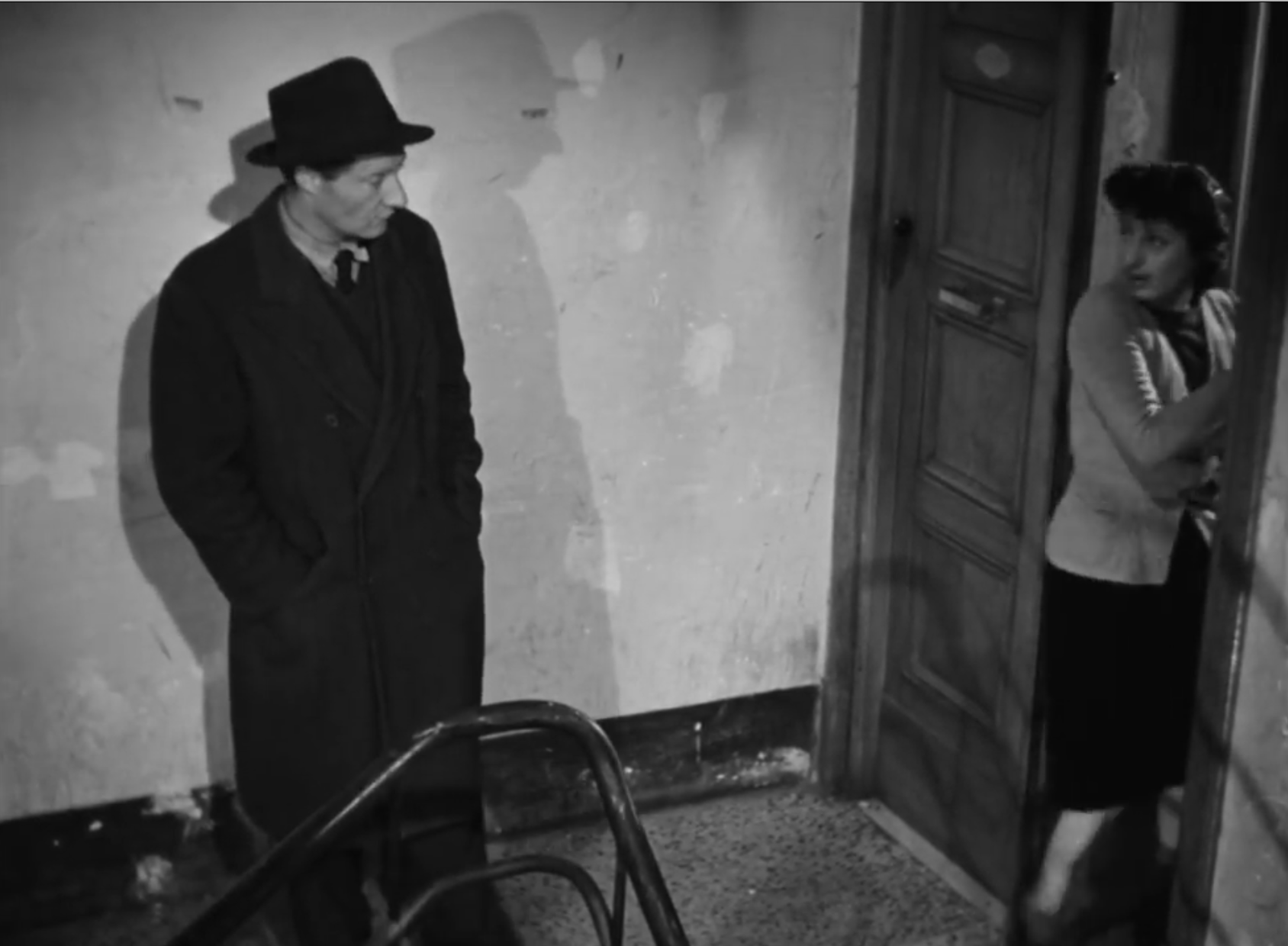
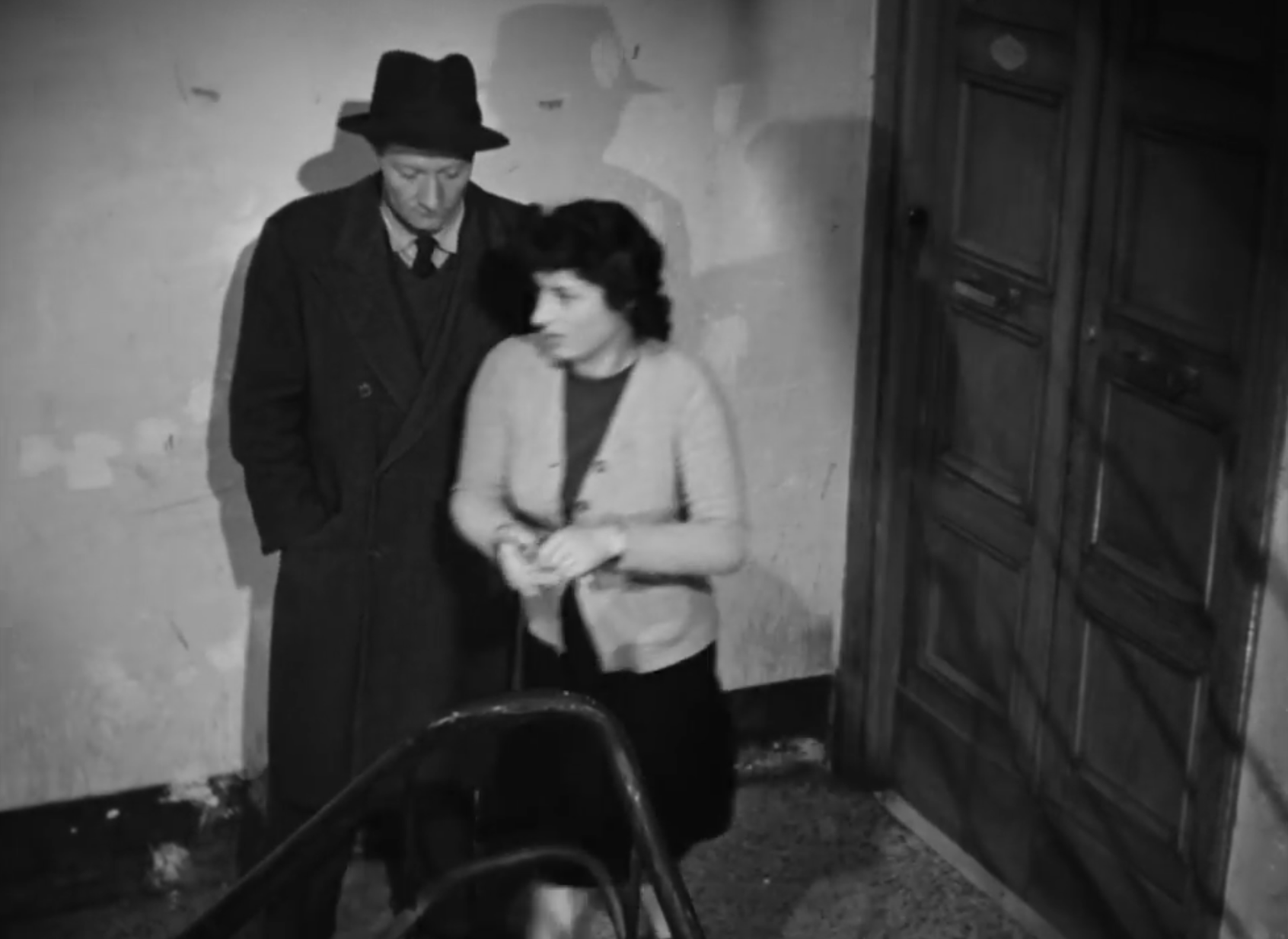
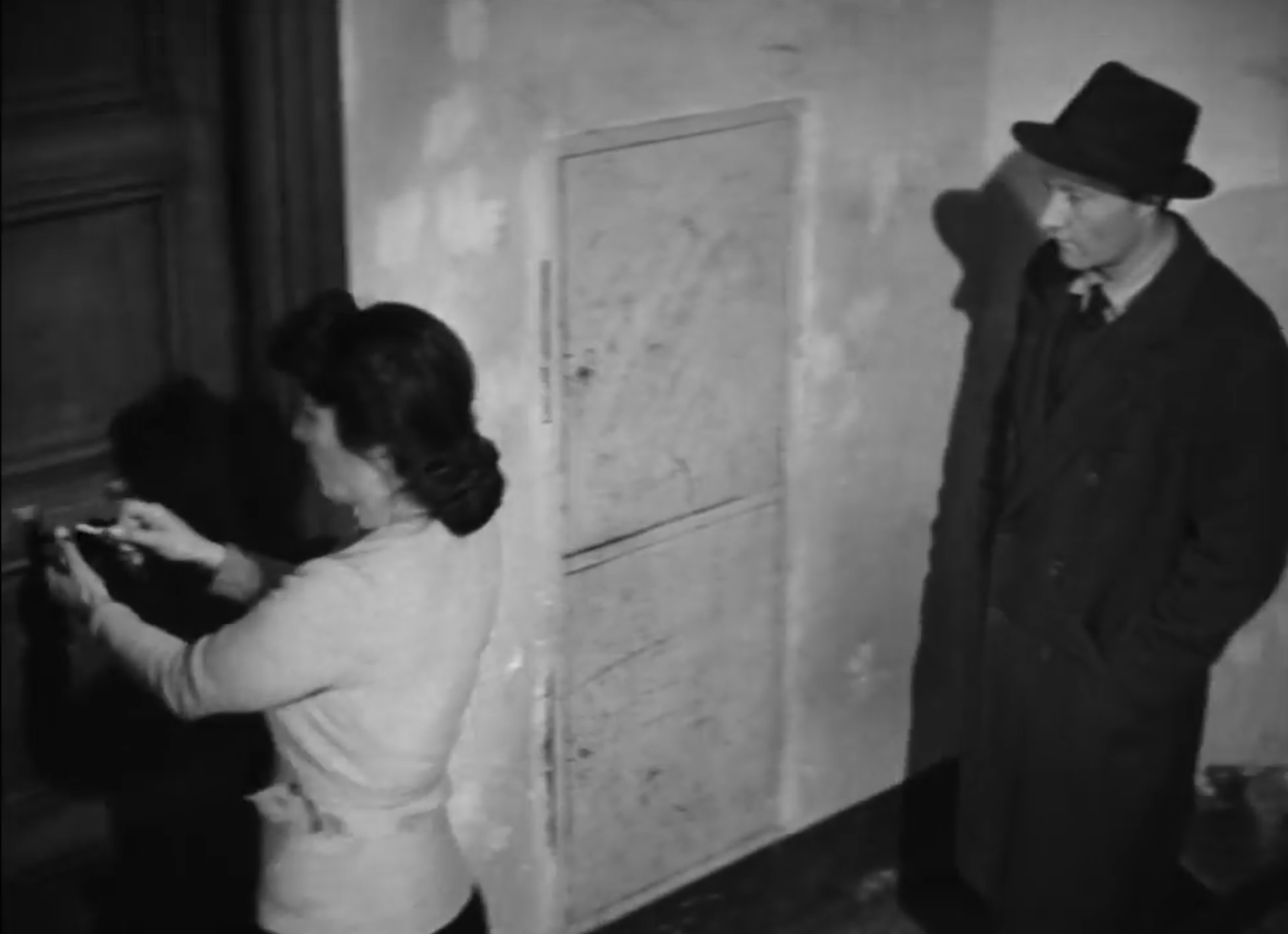
Pina ritorna con la chiave e si scusa per il ritardo. Dice: “Si accomodi!” e lo conduce all'appartamento di Francesco, che si trova proprio di fronte.
Pina returns with the key and apologizes for the delay. She says, “This way!” and leads him to Francesco’s apartment, which is directly opposite.
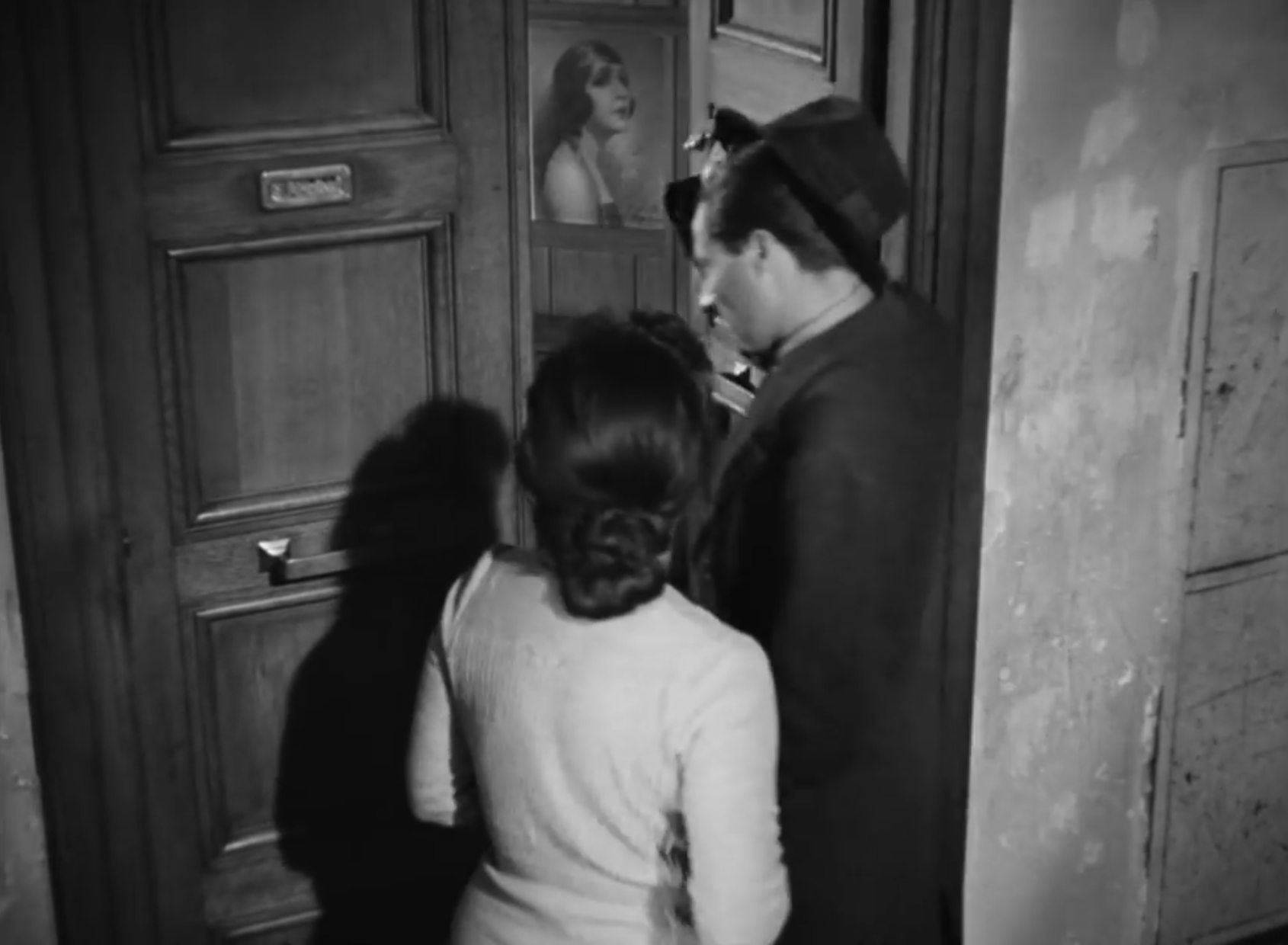
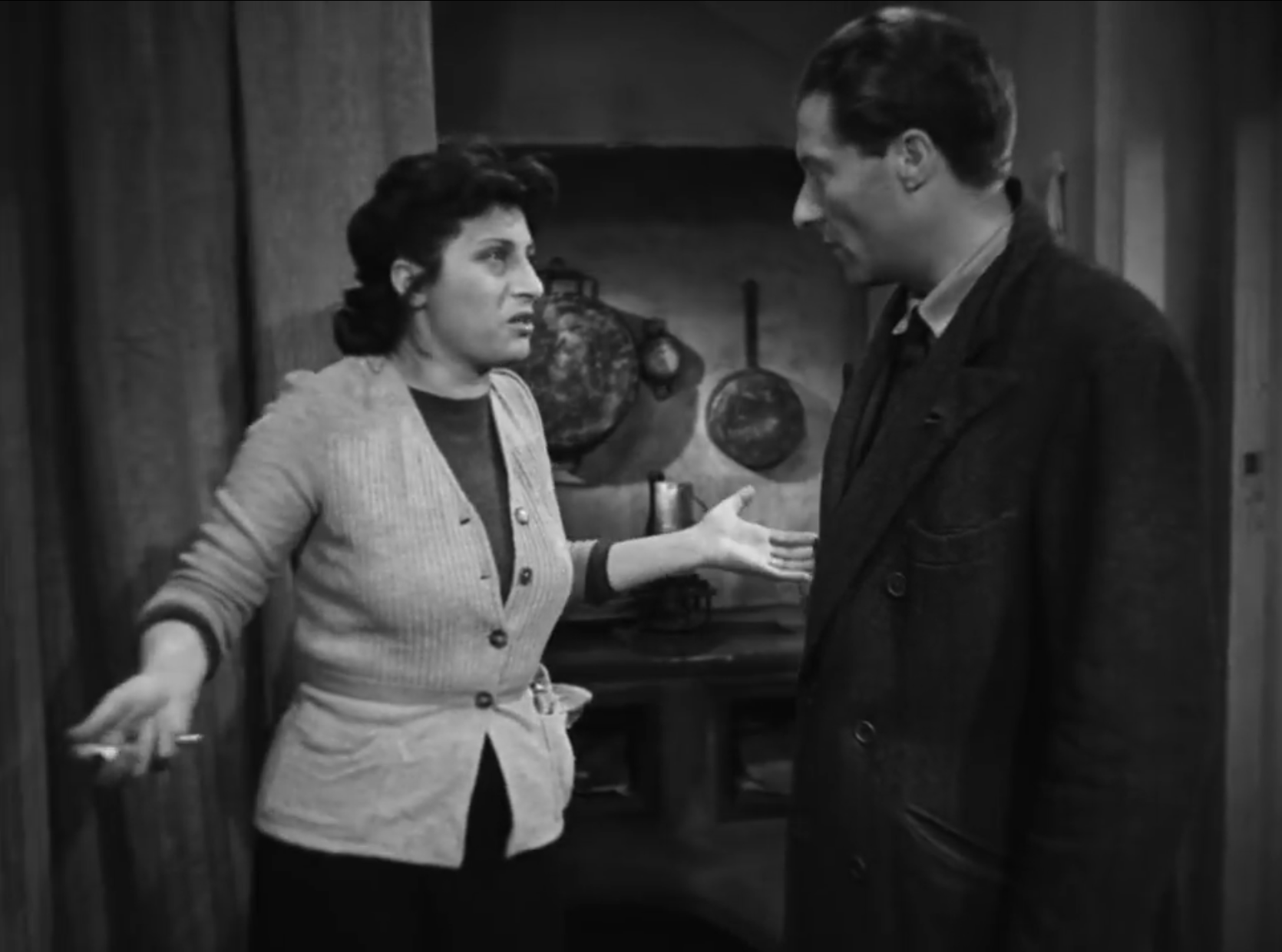
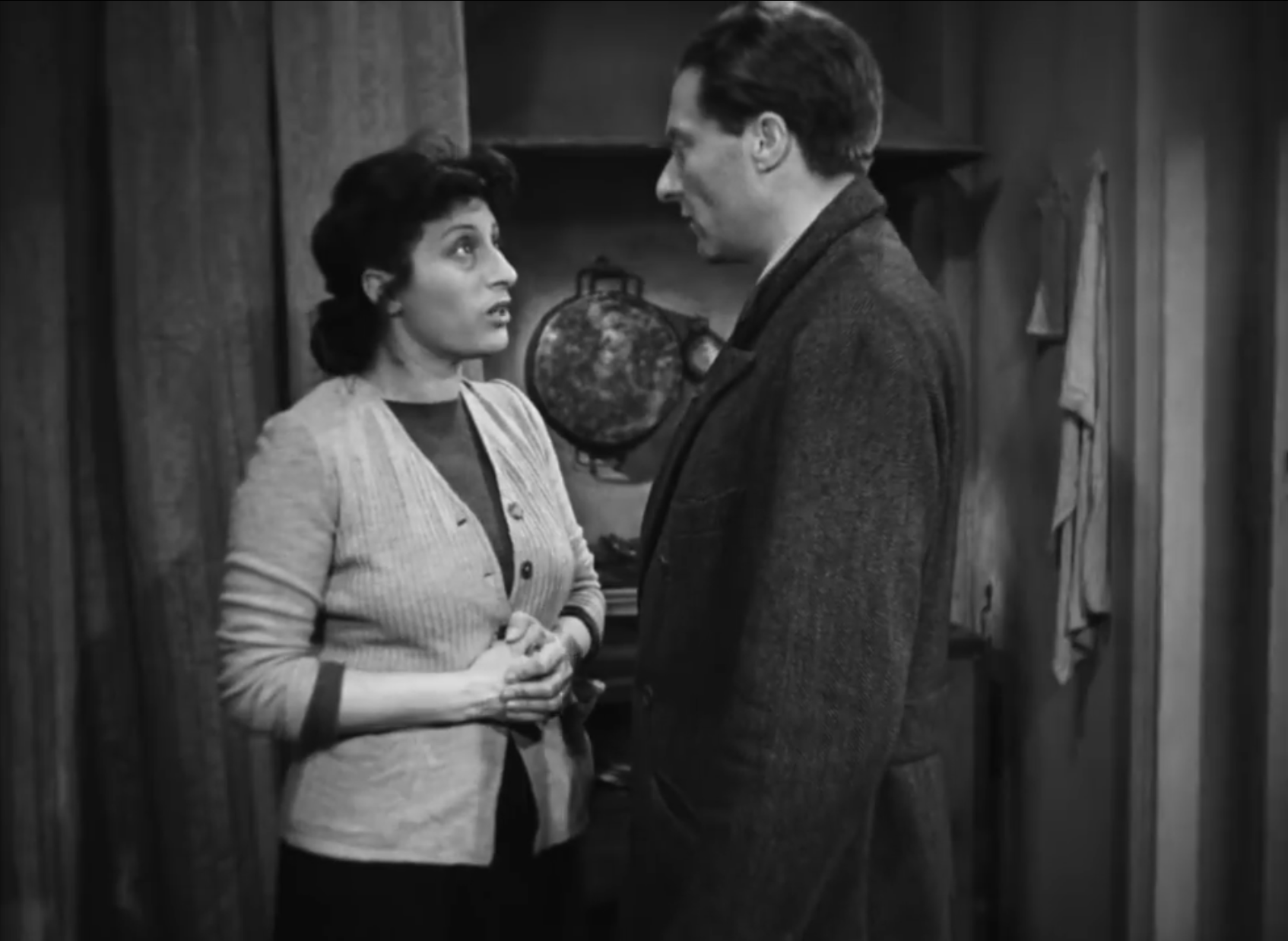
Entrano e Pina inizia: "Trova tutto in disordine, tutto sporco ma proprio non ci si fa..."
Lui la interrompe. "Lasci stare, non importa. Senta, lei conosce Don Pietro, il parroco di San Clemente?" Lei annuisce. "Vorrei parlargli".
"Ci vado io”.
"No, lei no".
"Ci mando il ragazzino mio".
"Sì, così è meglio".
"Mi aspetti di là". Indica l'altra stanza.
“Sì, grazie”.
They enter and Pina begins, “You see it’s a mess, everything is dirty but it’s impossible to manage...”
He cuts her off. “It doesn’t matter. Listen, do you know Don Pietro, the parish priest at San Clemente?” She nods. “I’d like to speak to him.”
“I’ll go get him.”
“No, not you.”
“I’ll send my little boy.”
“Yes, that way is better.”
“Wait for me there.” She gestures towards the other room.
“Yes, thank you.”
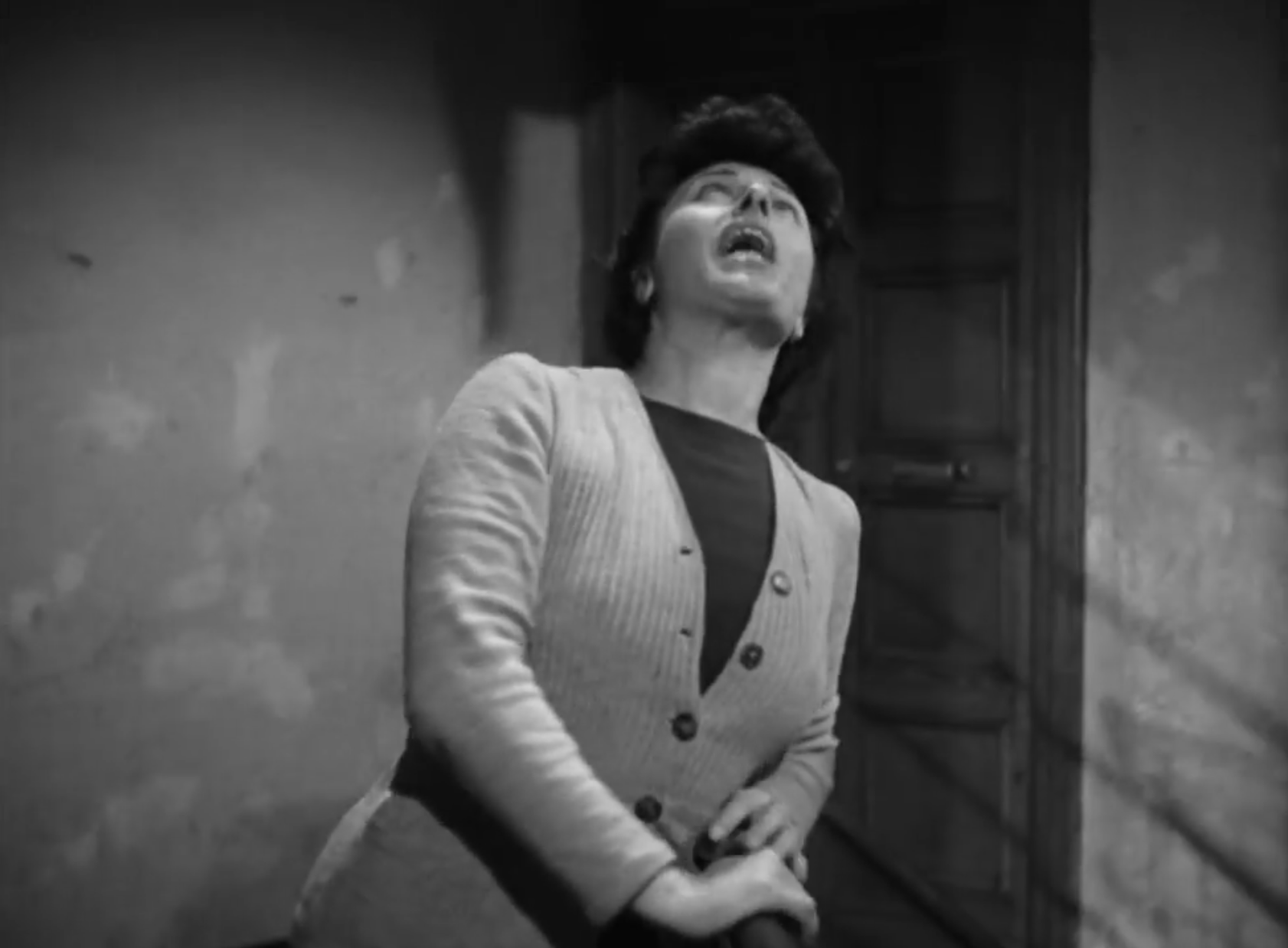
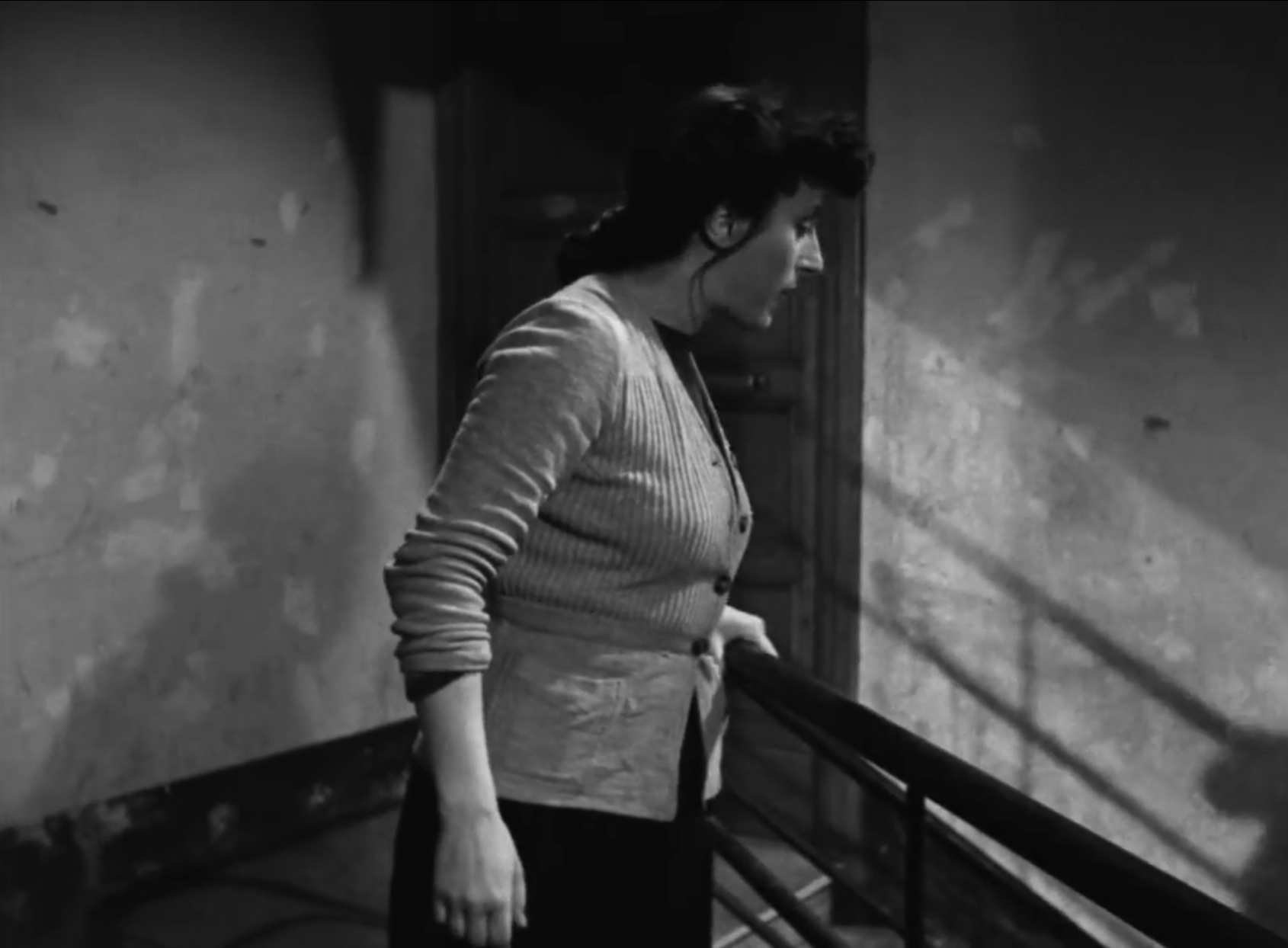
Pina va alle scale, si appoggia a una ringhiera e guarda in alto, urlando: "Marcello!” Dopo una pausa prova di nuovo: "Marcello! Marcello!” Lei sa esattamente dove si trova.
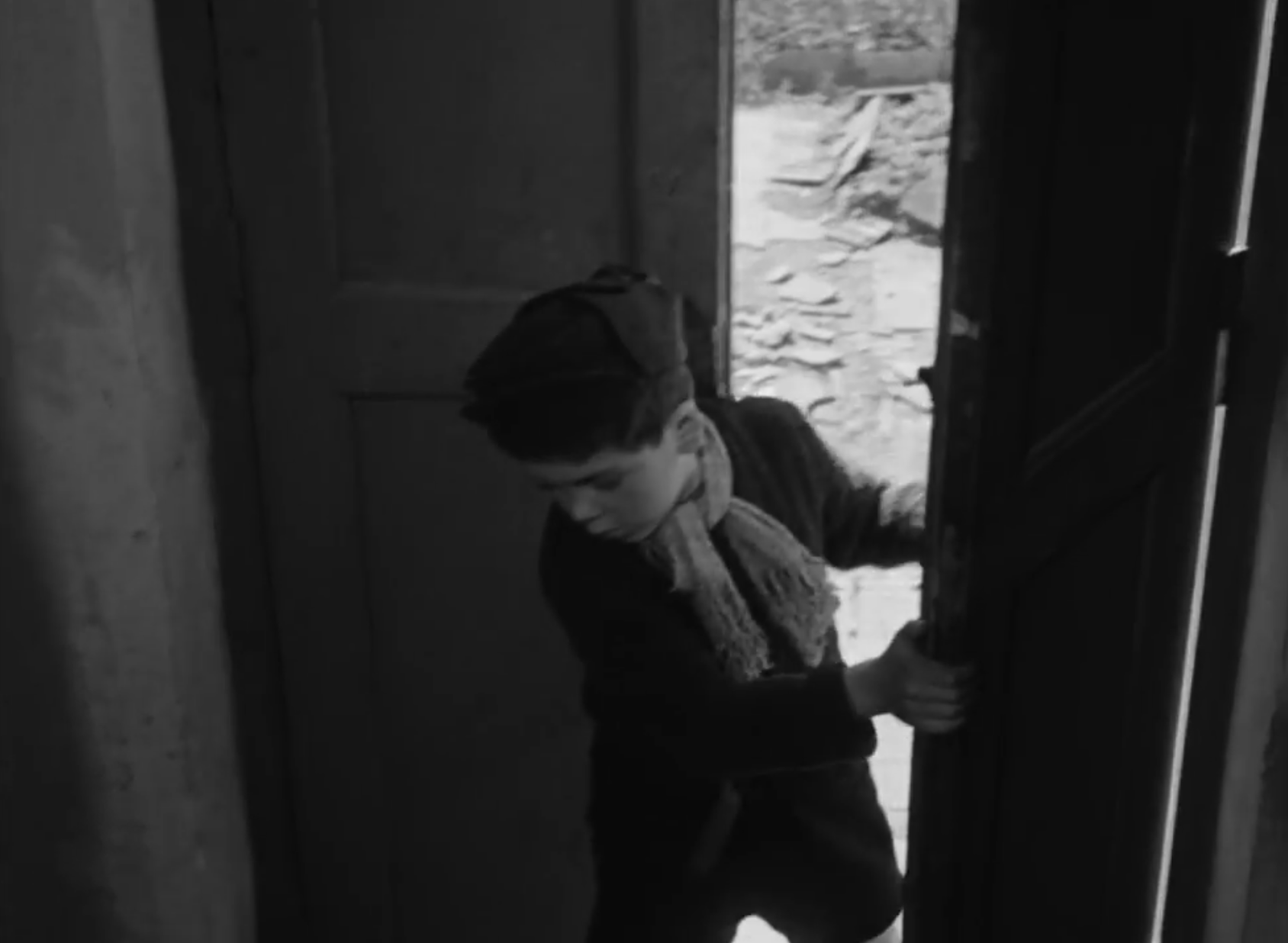
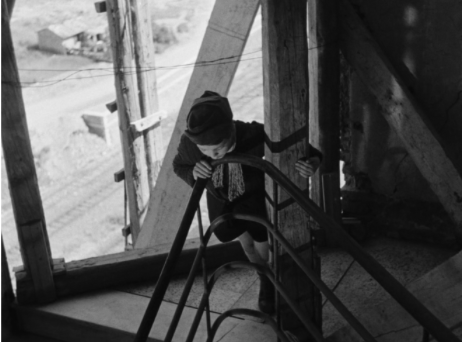
Marcello (Vito Annicchiarico) entra nell'edificio da una porta sul tetto. Ha circa dieci anni. Corre in cima alle scale, dove è incorniciato in una bella composizione di forme geometriche astratte, buio e luce.
"Che vuoi?" grida.
"Vieni giù un momento!”
"Non posso”.
Pina goes to the stairway, leans on a bannister and looks up, calling, “Marcello!” After a pause she tries again, “Marcello! Marcello!” She knows exactly where he is.
Marcello enters the building from a rooftop doorway. He’s about ten. He runs to the top of the stairs, where he’s framed in a beautiful composition of abstract geometric shapes, darkness and light.
“What do you want?” he yells.
“Come down a minute!”
“I can’t.”
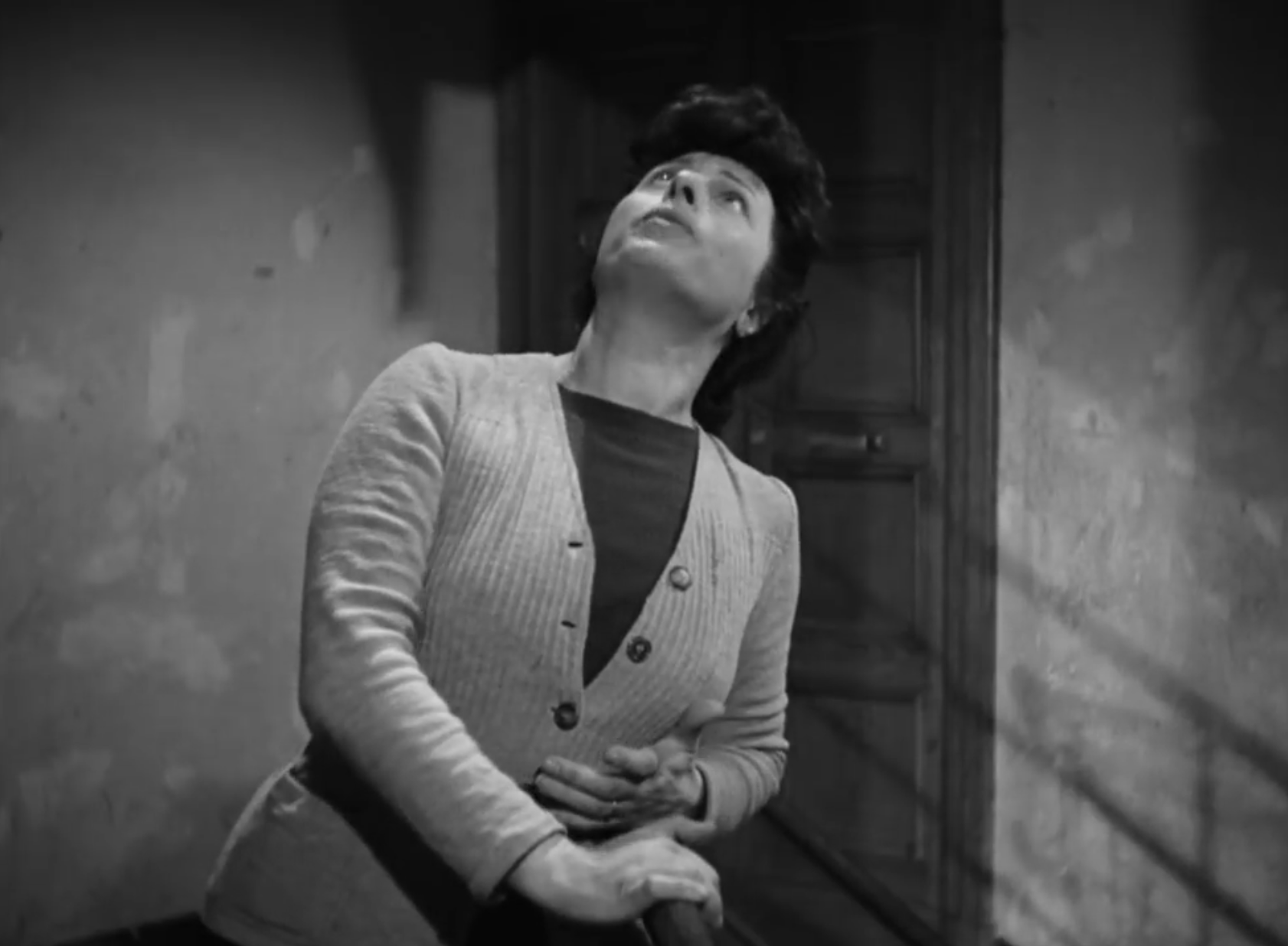
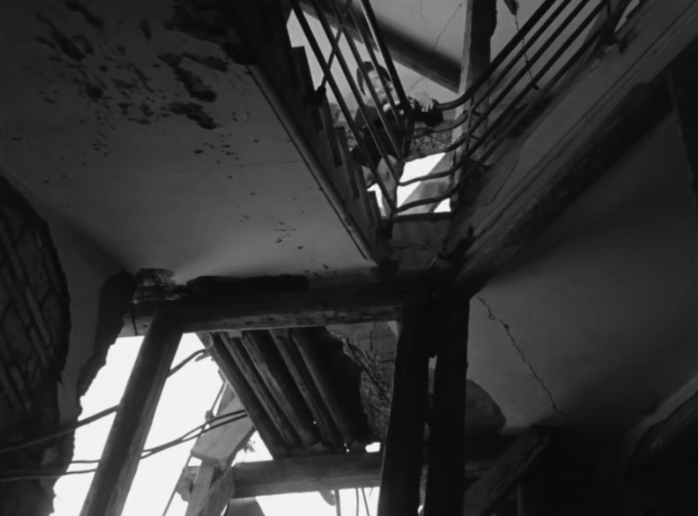
"Devi andare da Don Pietro, sbrigati!"
"Ora ho da fare!" risponde bruscamente il bambino con un'aria di importanza.
"Vieni giù subito ti ho detto!"
Si arrende. "Uffa!" borbotta e comincia a scendere le scale.
“You have to go to Don Pietro’s, quick!”
“I have things to do now!” the kid retorts with an air of importance.
“I said get down here now!”
He gives up. “What a bore!” he mutters and starts down the stairs.
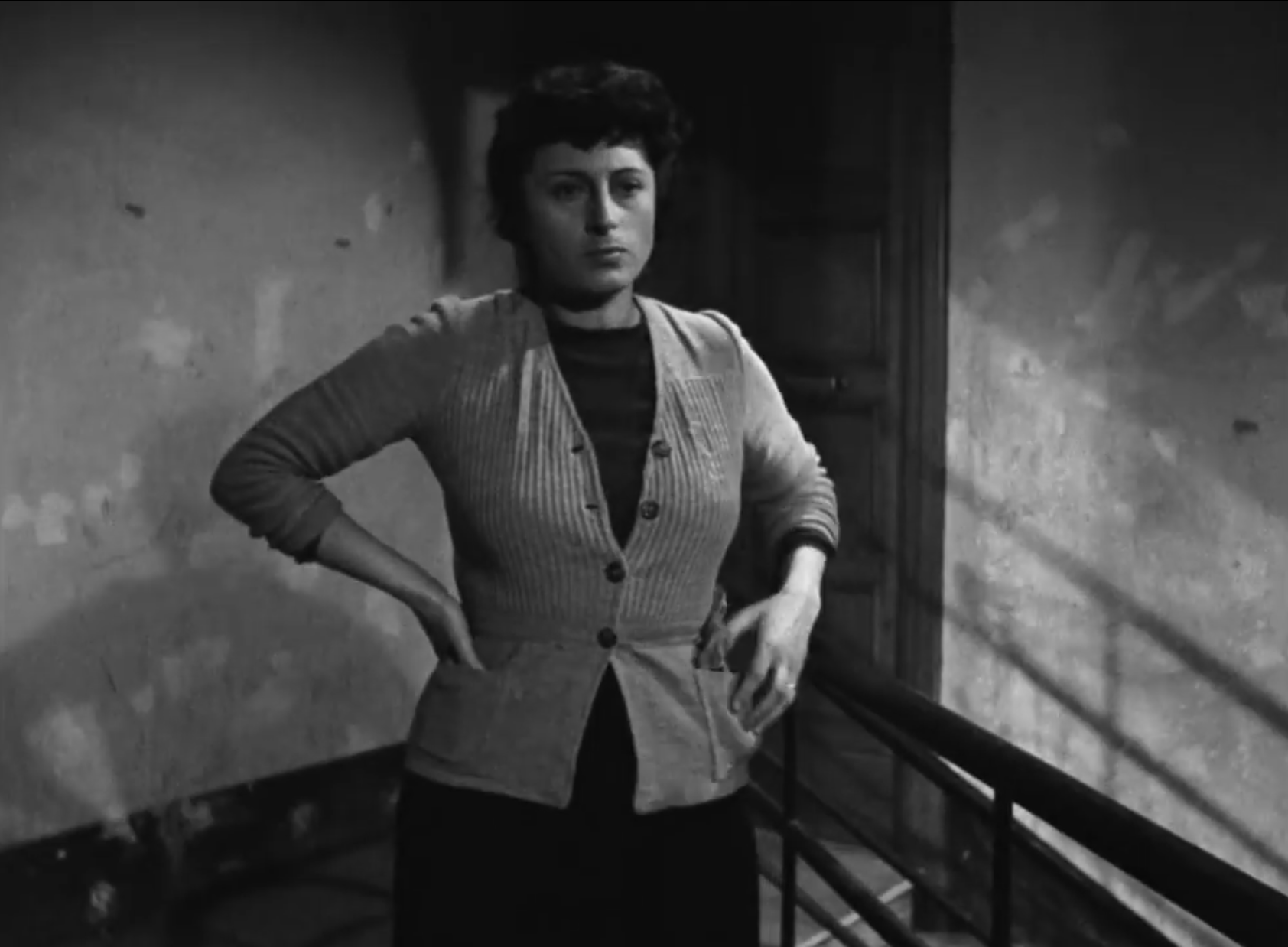
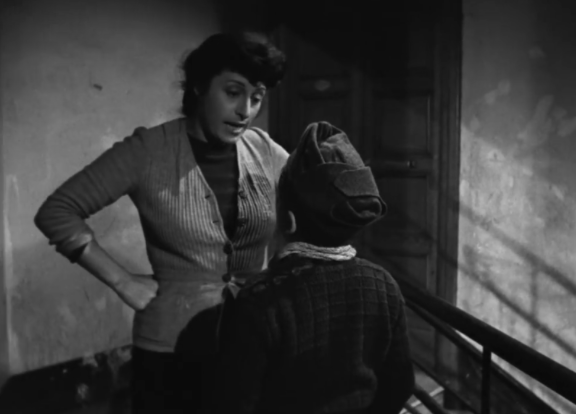
Mani sui fianchi, labbra serrate, Pina aspetta arrabbiata sul pianerottolo che Marcello scenda. Quando arriva, lo rimprovera: "Ti ho detto tante volte che non devi stare da Romoletto. È pericoloso!"
Hands on hips, lips pressed tightly together, Pina waits angrily on the landing for Marcello to come down. When he arrives, she scolds him, “I’ve told you so many times not to go up to Romoletto’s. It’s dangerous.”
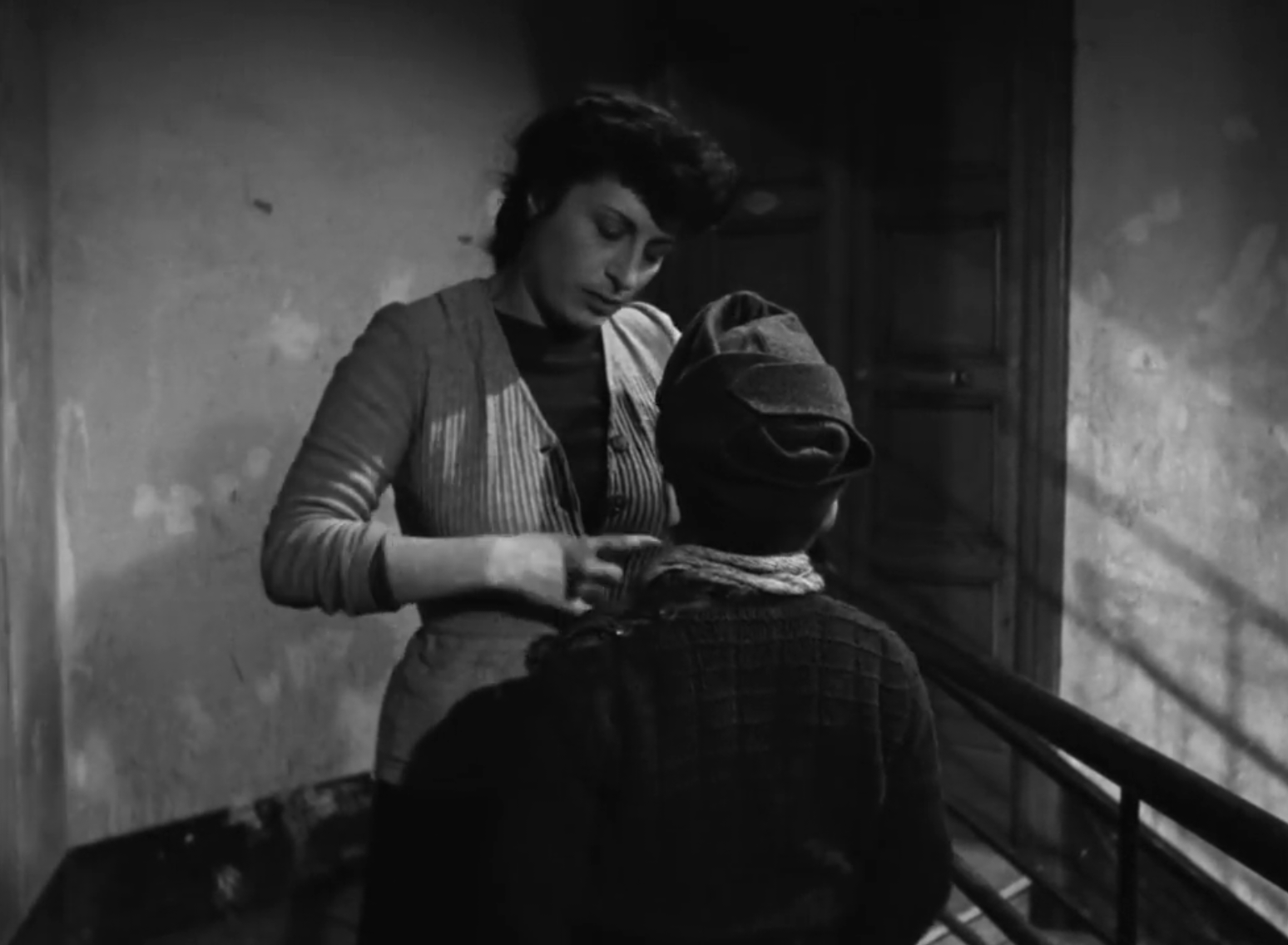
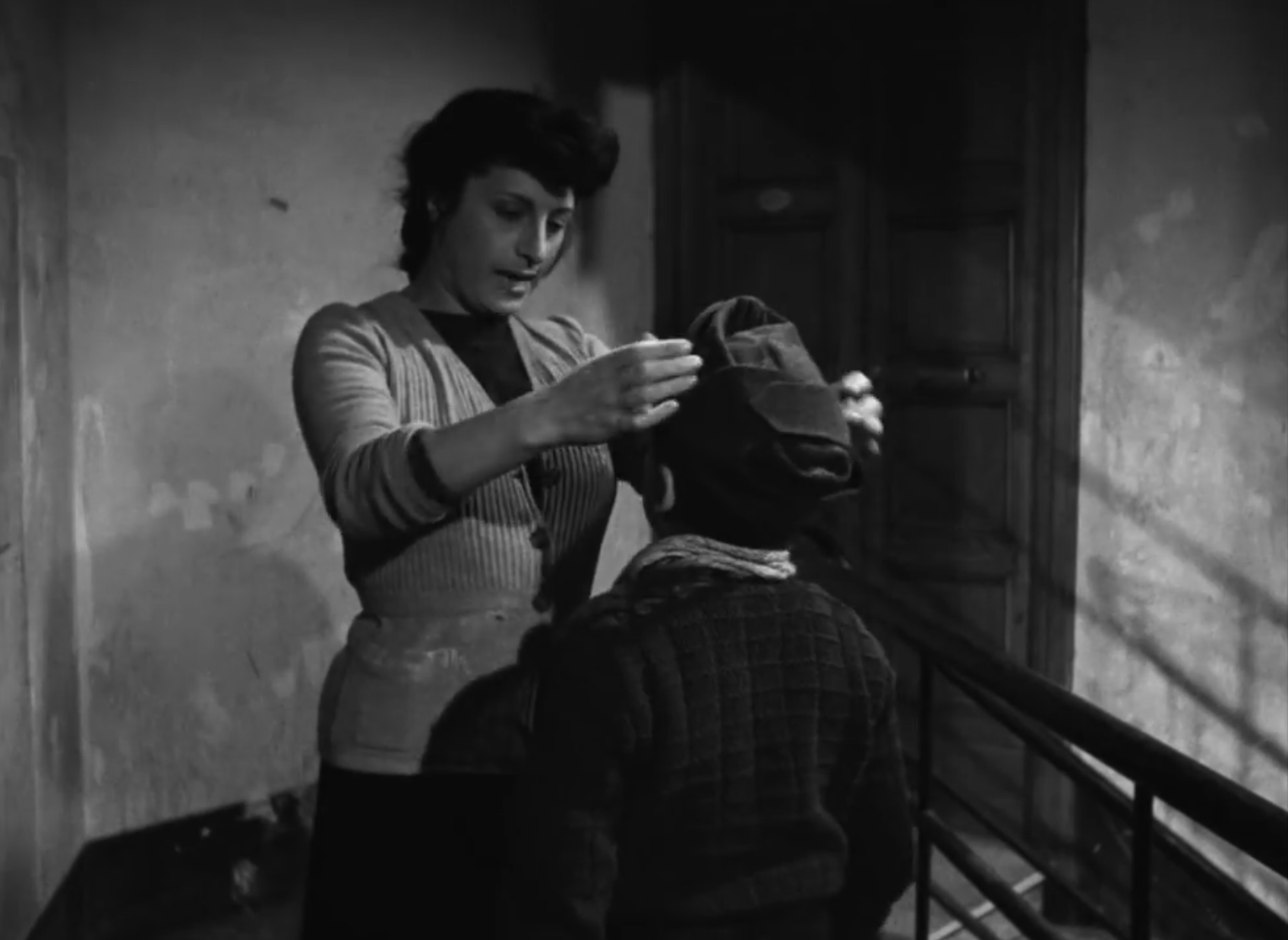
Gesticola verso le scale e dice: "Vai da Don Pietro, cammina!"
"Che gli devo dire?"
Lei gli aggiusta il cappello. "Gli devi dire che deve venire qui subito. Sbrigati!" Gli dà una piccola spinta.
She gestures at the stairs and says, “Go get Don Pietro, get going!”
“What should I tell him?”
She straightens his hat. “You should tell him to come here right away. Move it!” She gives him a little push.
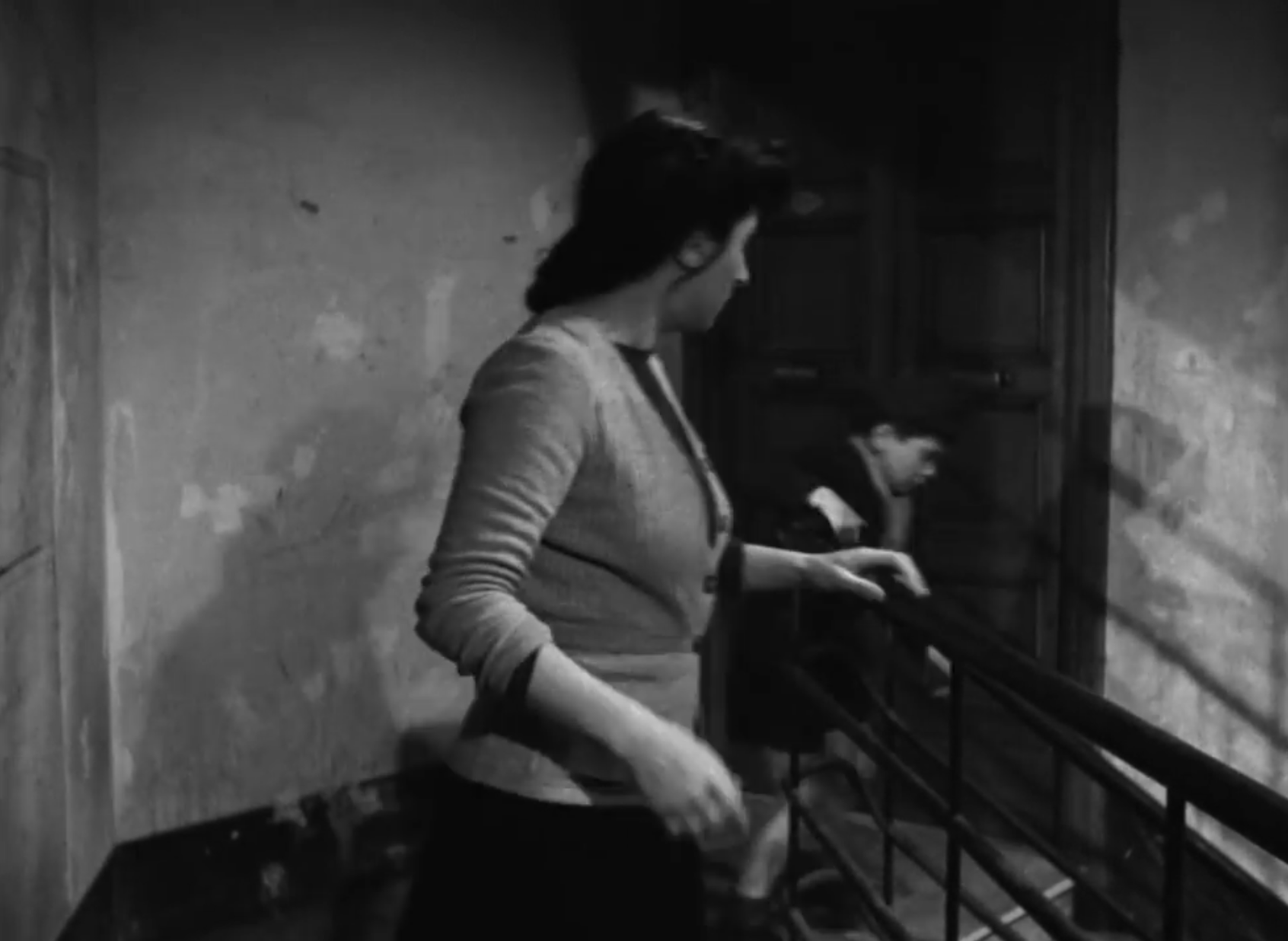
"E non ti perdere per strada!" aggiunge lei mentre lui se ne va di corsa nella città occupata.
Preferirebbe stare da Romoletto, anche se è pericoloso, facendo le cose che fanno i ragazzi in tempo di guerra...
“And don't dawdle,” she adds as he hurries off, out into the occupied city.
He’d rather be at Romoletto’s place, even if it’s dangerous, doing the things that boys will do in wartime…
FINE PARTE 3
Ecco the link to Parte 4 of this cineracconto! Check back then – or subscribe to receive a weekly email newsletter with links to all our new posts.