Regia: Roberto Rossellini, 1945
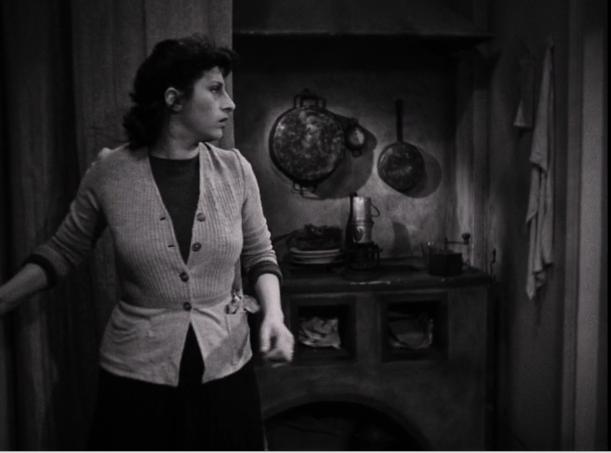
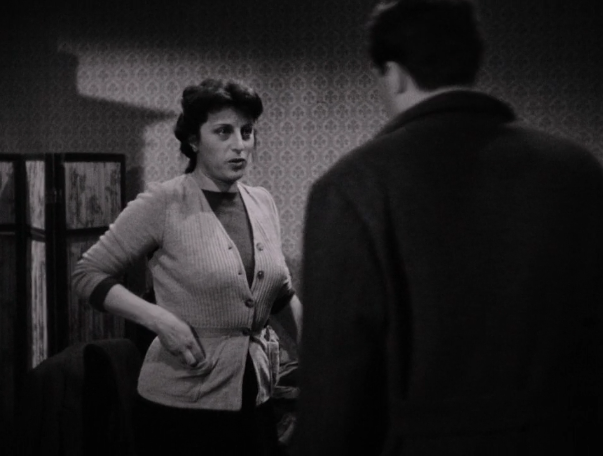
Pina torna nell'appartamento di Francesco, dove Manfredi la aspetta. Su richiesta di lui, ha mandato il figlio a prendere il prete.
"È andato. Don Pietro sarà qui fra poco".
"Grazie”.
Pina returns to Francesco’s apartment, where Manfredi waits for her. At his request, she’s sent her son to fetch the parish priest.
“He’s gone. Don Pietro will be here shortly.”
“Thanks.”
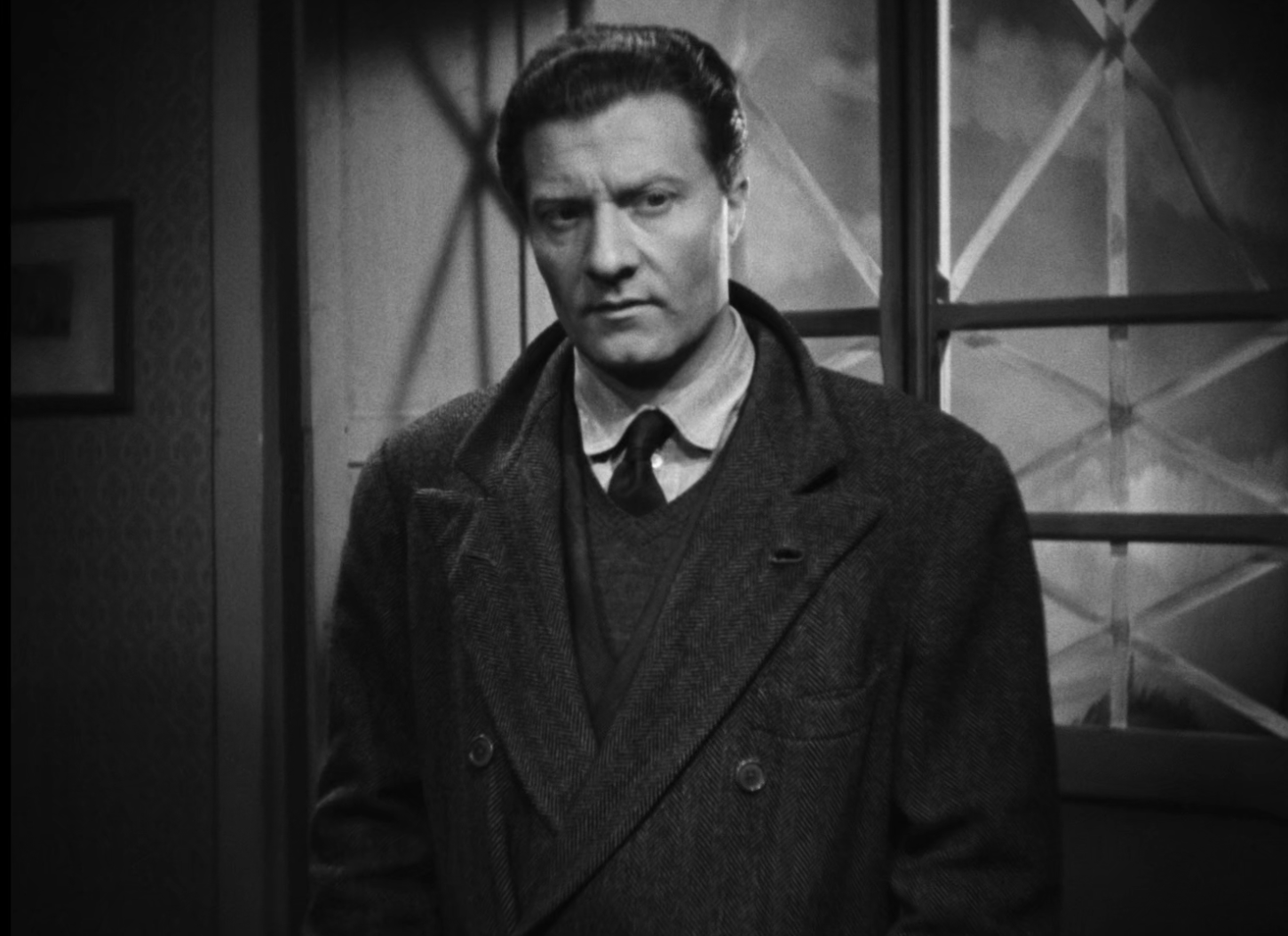
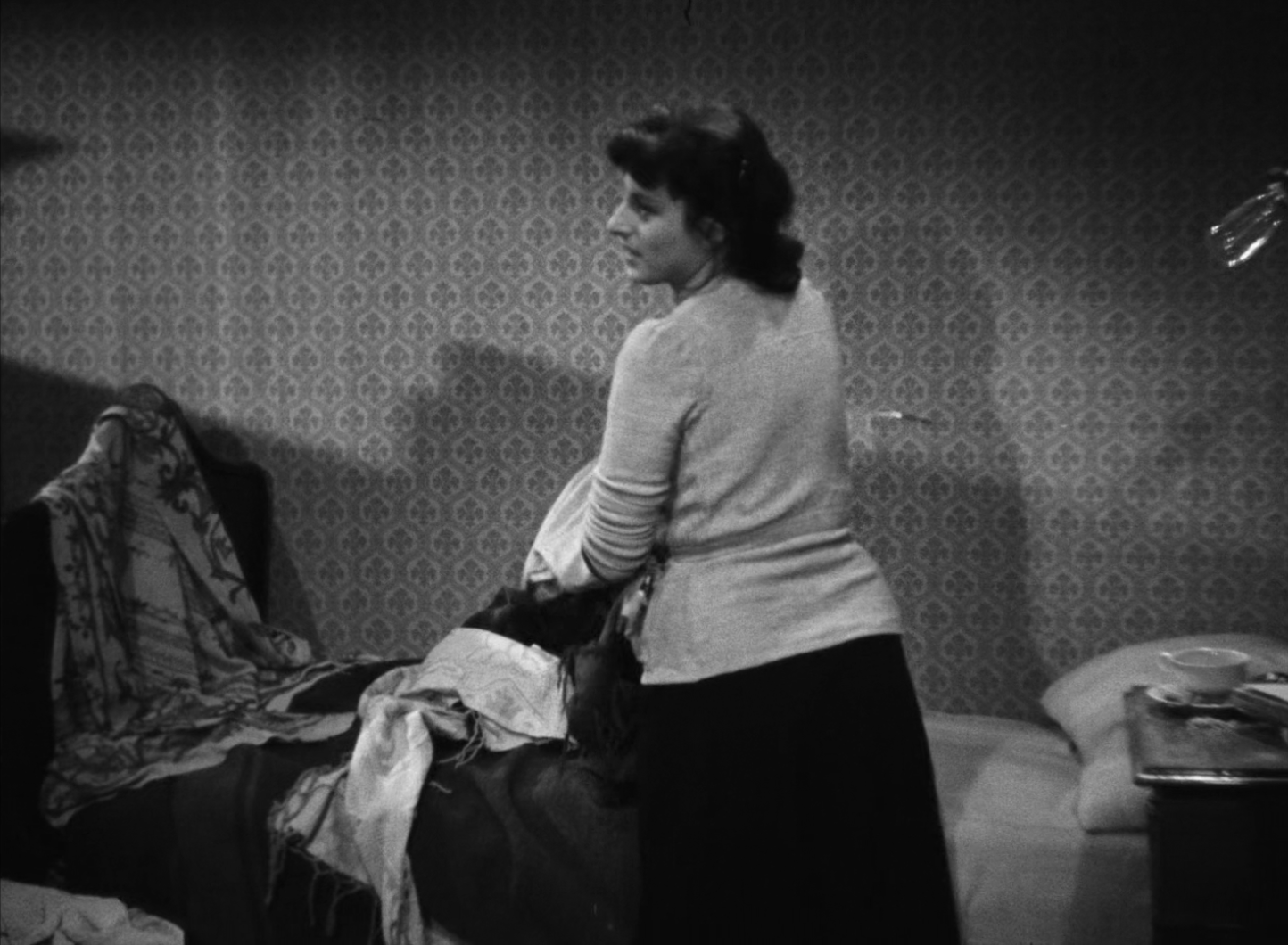
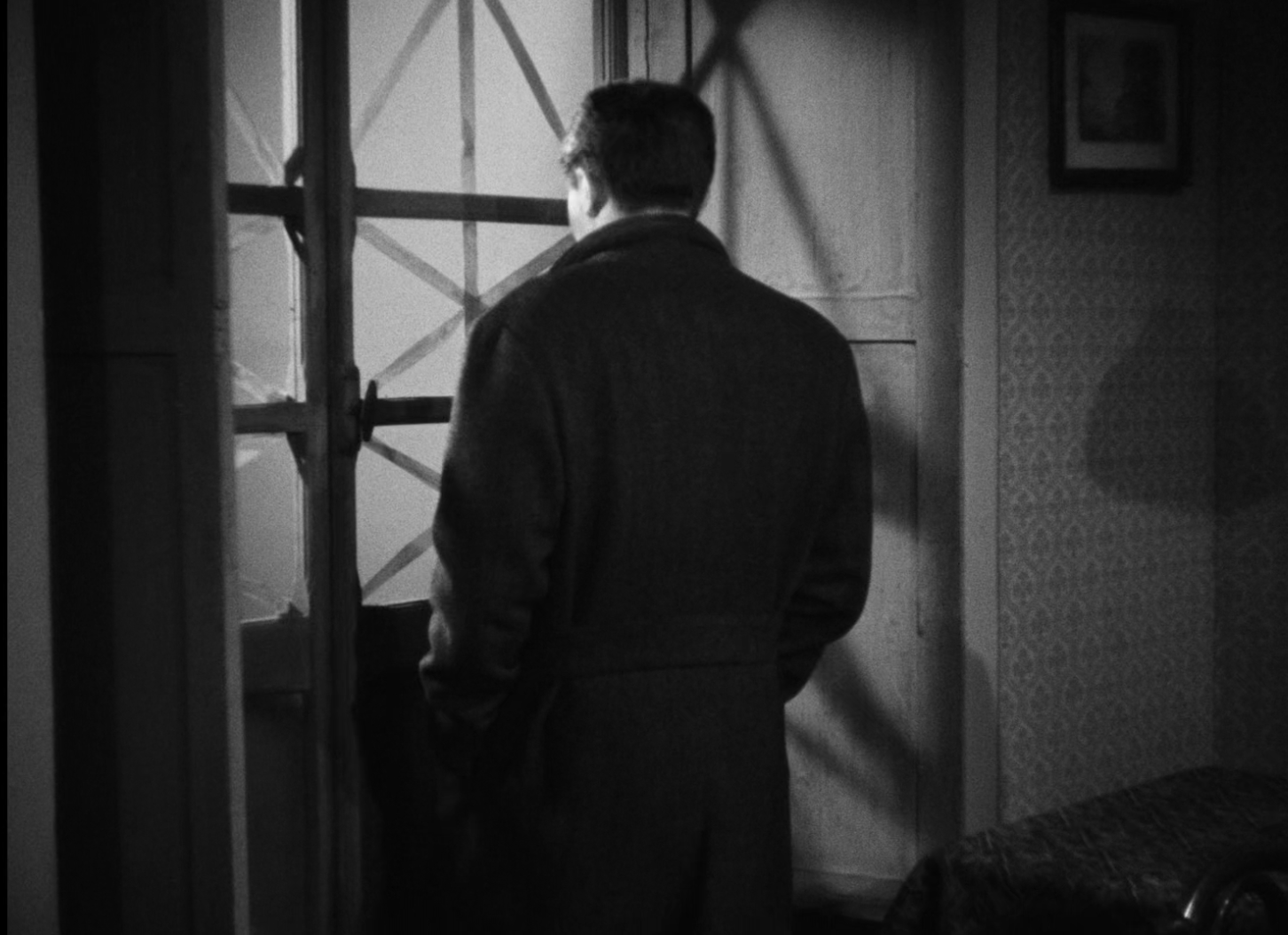
Sulla finestra dietro Manfredi, vediamo del nastro adesivo bianco che è stato applicato per proteggere il vetro durante i bombardamenti. Mentre piega una pila di vestiti, Pina dice a Manfredi: "Stamattina abbiamo assaltato una panetteria".
"Ah, sì?"
Lei fa una risatina. "È la seconda della settimana”.
On the window behind Manfredi, we see the white tape that’s been applied to protect the glass during bombing raids. As she folds a pile of clothes, Pina tells Manfredi, “We stormed a bakery this morning.”
“Oh, yes?”
She gives a little chuckle. “The second one this week.”
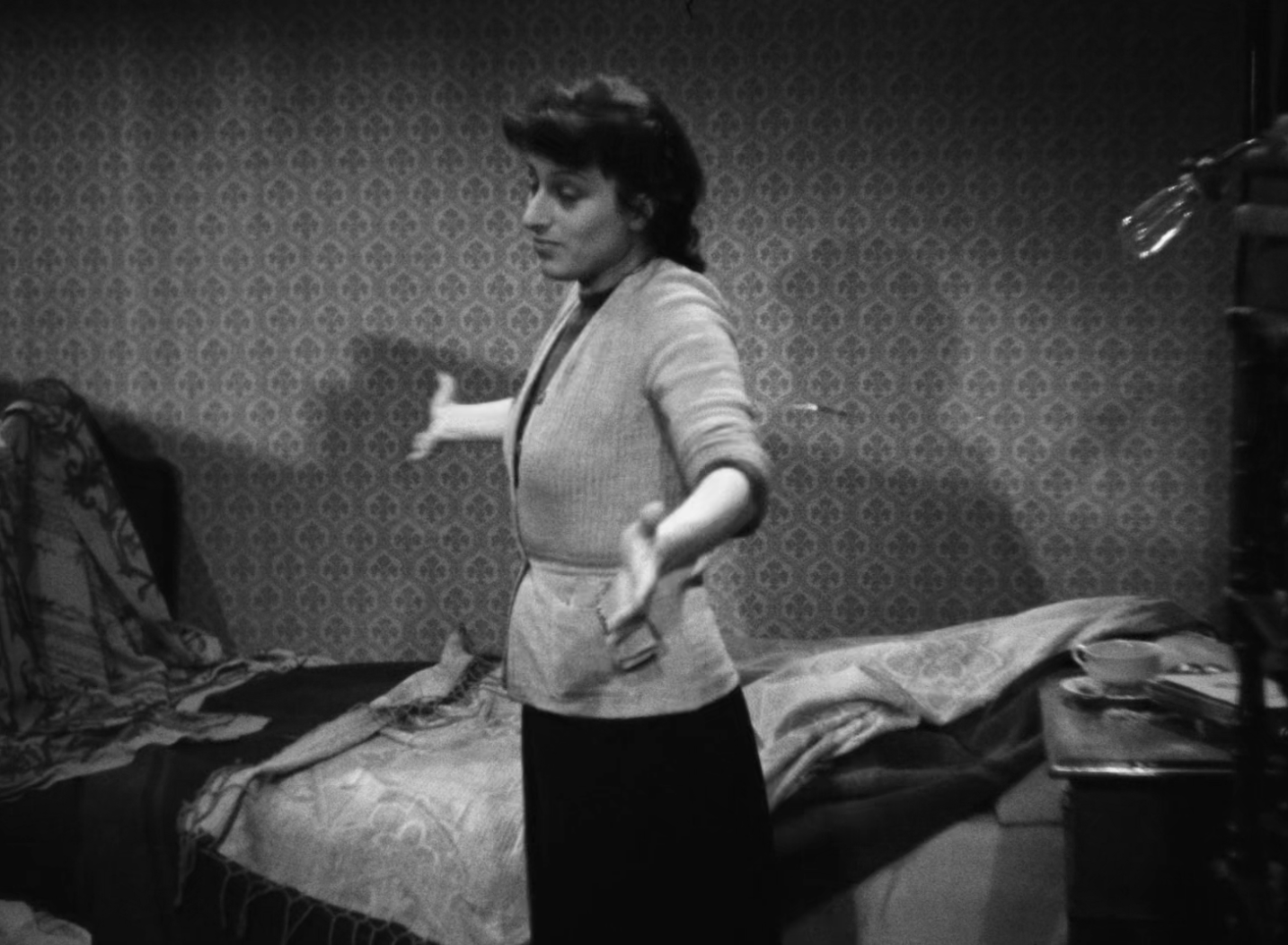
"Come vanno le donne?" chiede lui.
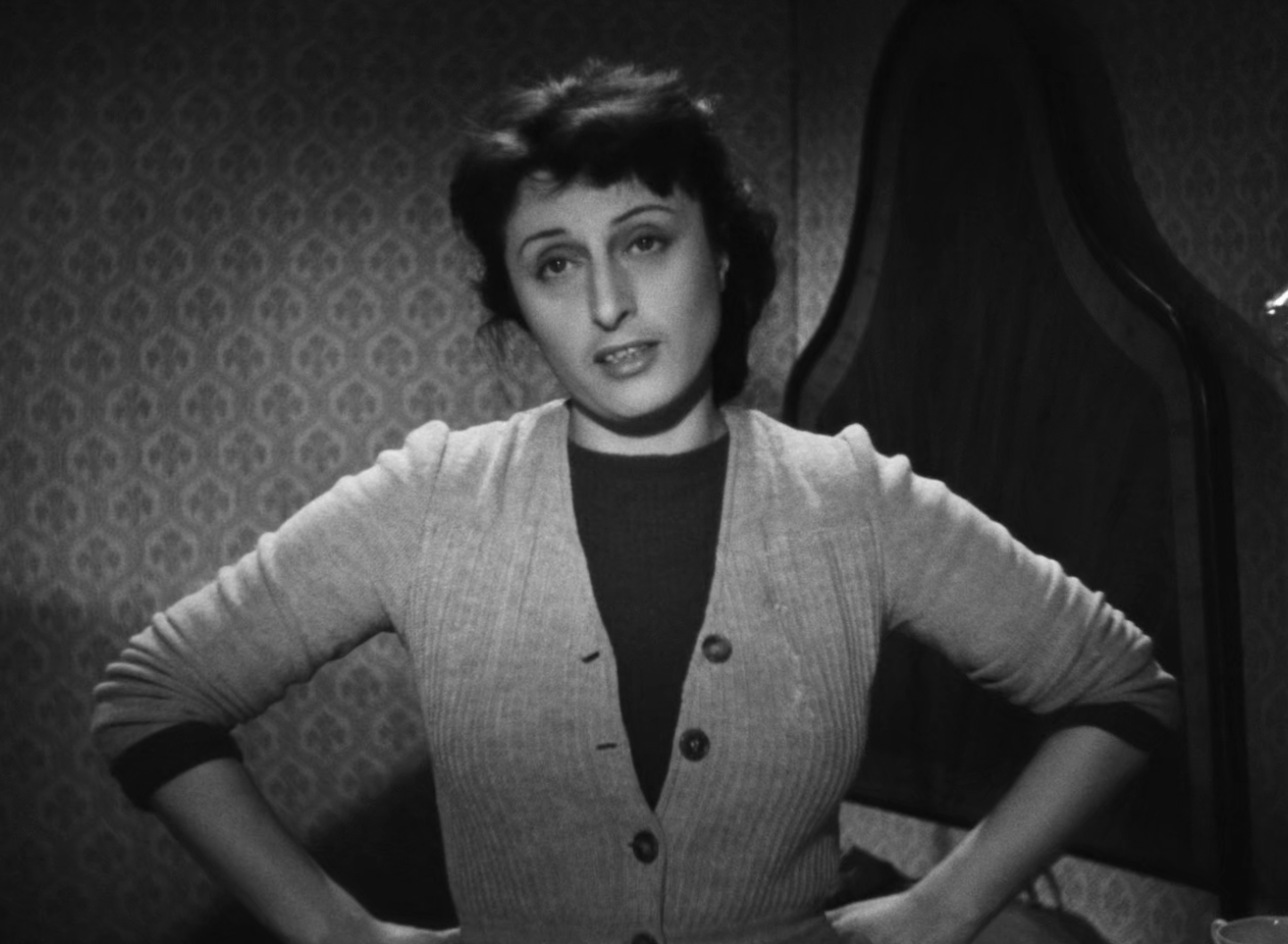
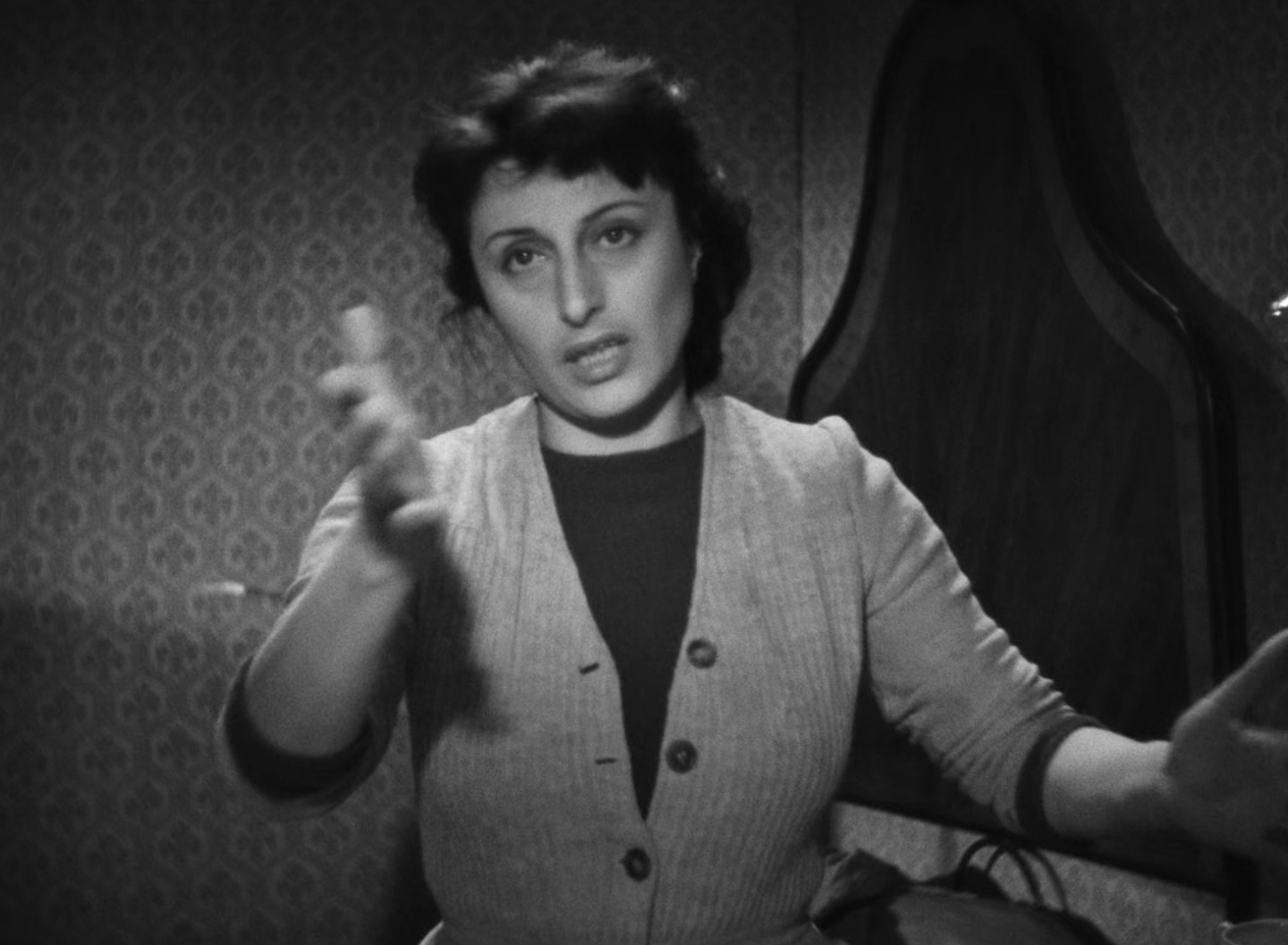
Lei apre le braccia, alzando le spalle. "Qualcuna lo sa perché lo fa, ma la maggior parte afferra più pane che può". Con le mani sui fianchi, scuote la testa. "Qualcuna stamattina ha rubato un paio di scarpe e una bilancia!"
In tutta questa scena la Magnani* usa la sua voce, il suo viso e tutto il suo corpo per esprimere un'ampia varietà di emozioni.
*Questo è il modo degli italiani di riferirsi alle loro grandi star femminili del cinema e ad altre celebrità. (Ci sono anche usi regionali: al nord è usato per riferirsi a qualsiasi donna conosciuta; per esempio, in Lombardia e in Veneto è usato anche per i maschi, con ‘il’.)
“How are the women doing?” he asks.
She opens her arms wide, shrugging. “Some know why they’re doing it, but most just grab all the bread they can.” Hands on hips, she shakes her head. “This morning, someone filched a pair of shoes and a scale.”
Throughout this scene, la Magnani* uses her voice, her face and her whole body to express a wide range of emotion.
*This is Italians’ way of referencing their great female movie stars and other celebrities. (There are regional uses as well: in the north, it’s used for referring to any known female; for example, in Lombardy and Veneto, it’s also used for males, with ‘il.’)
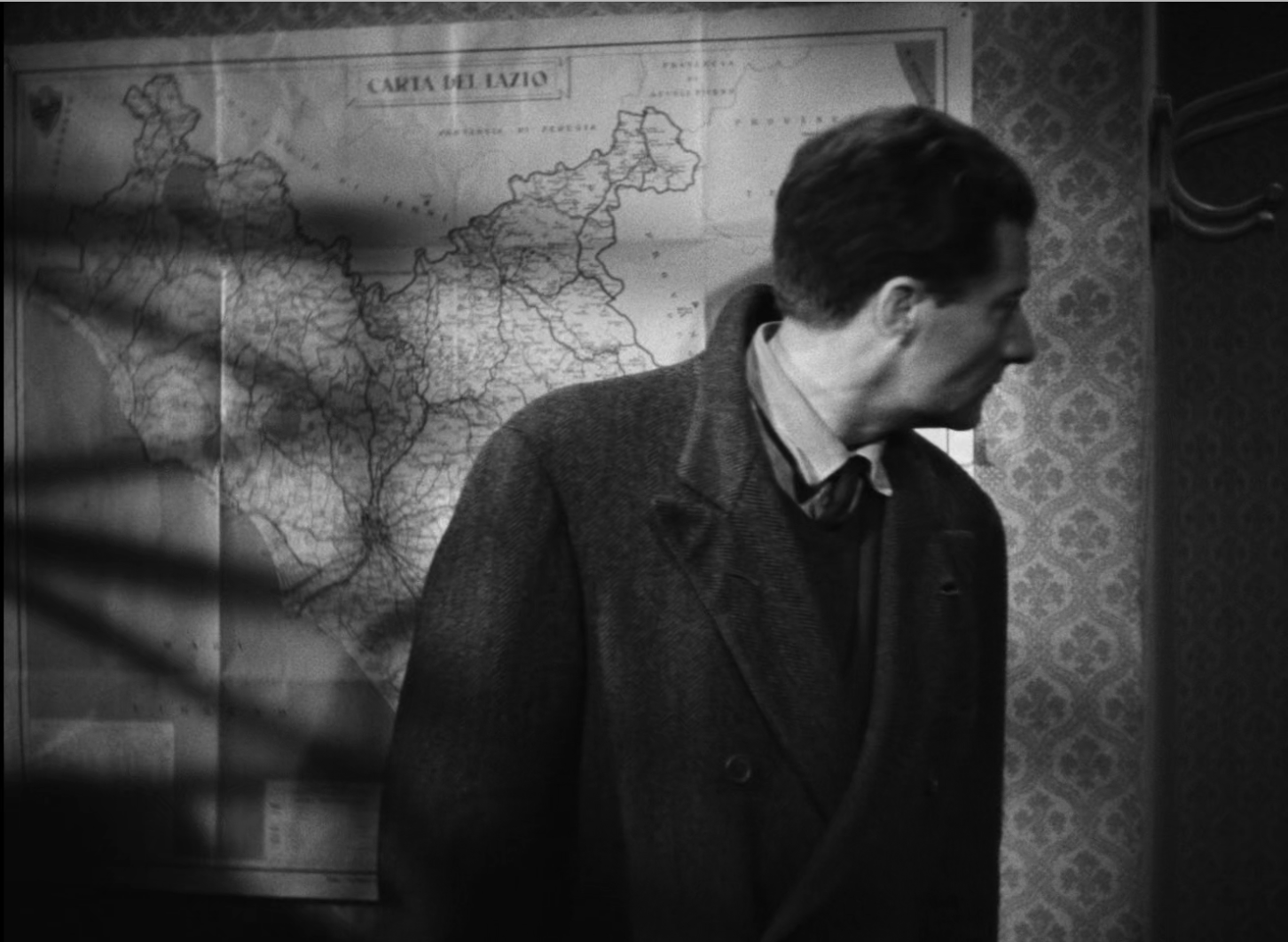
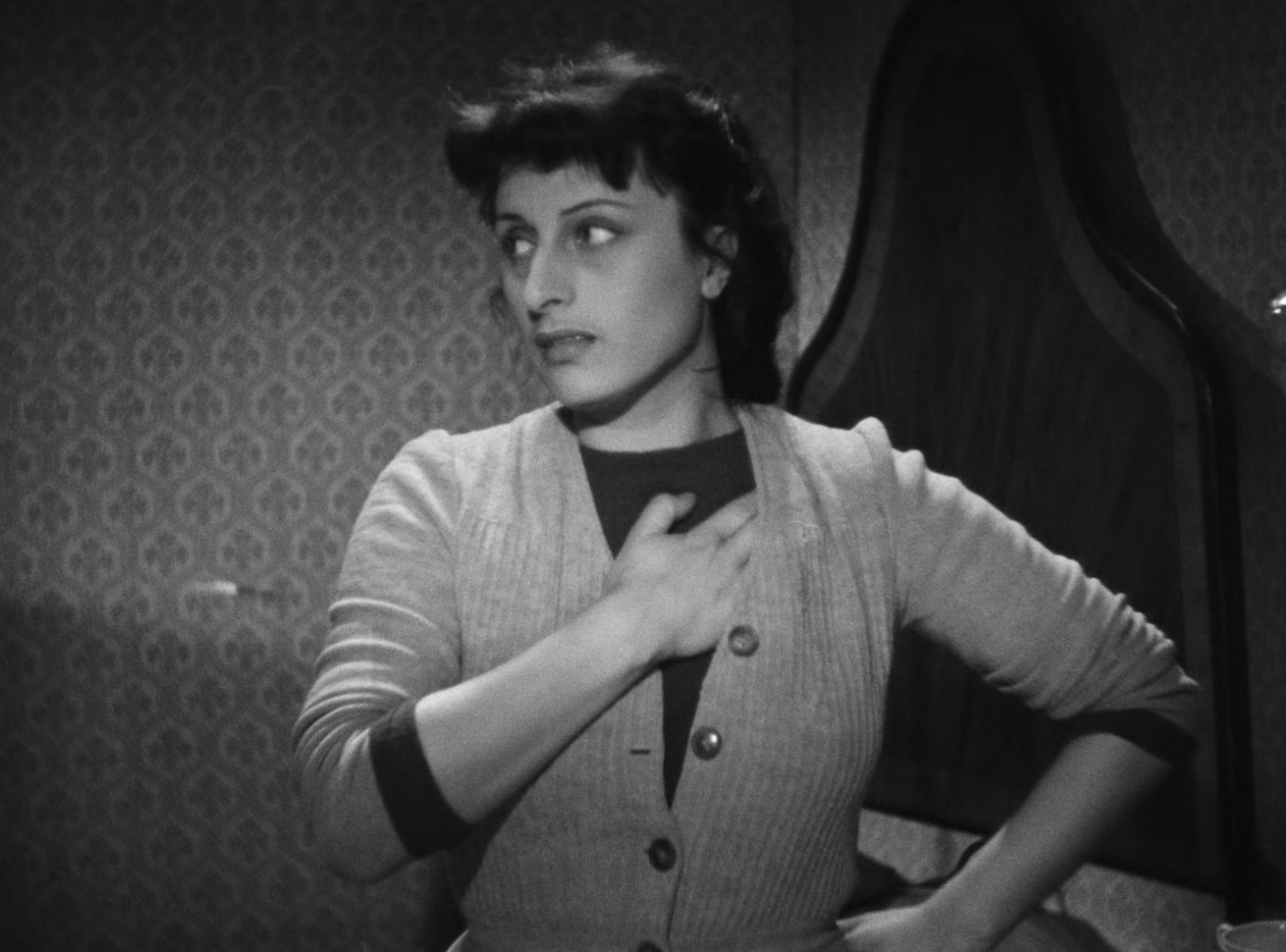
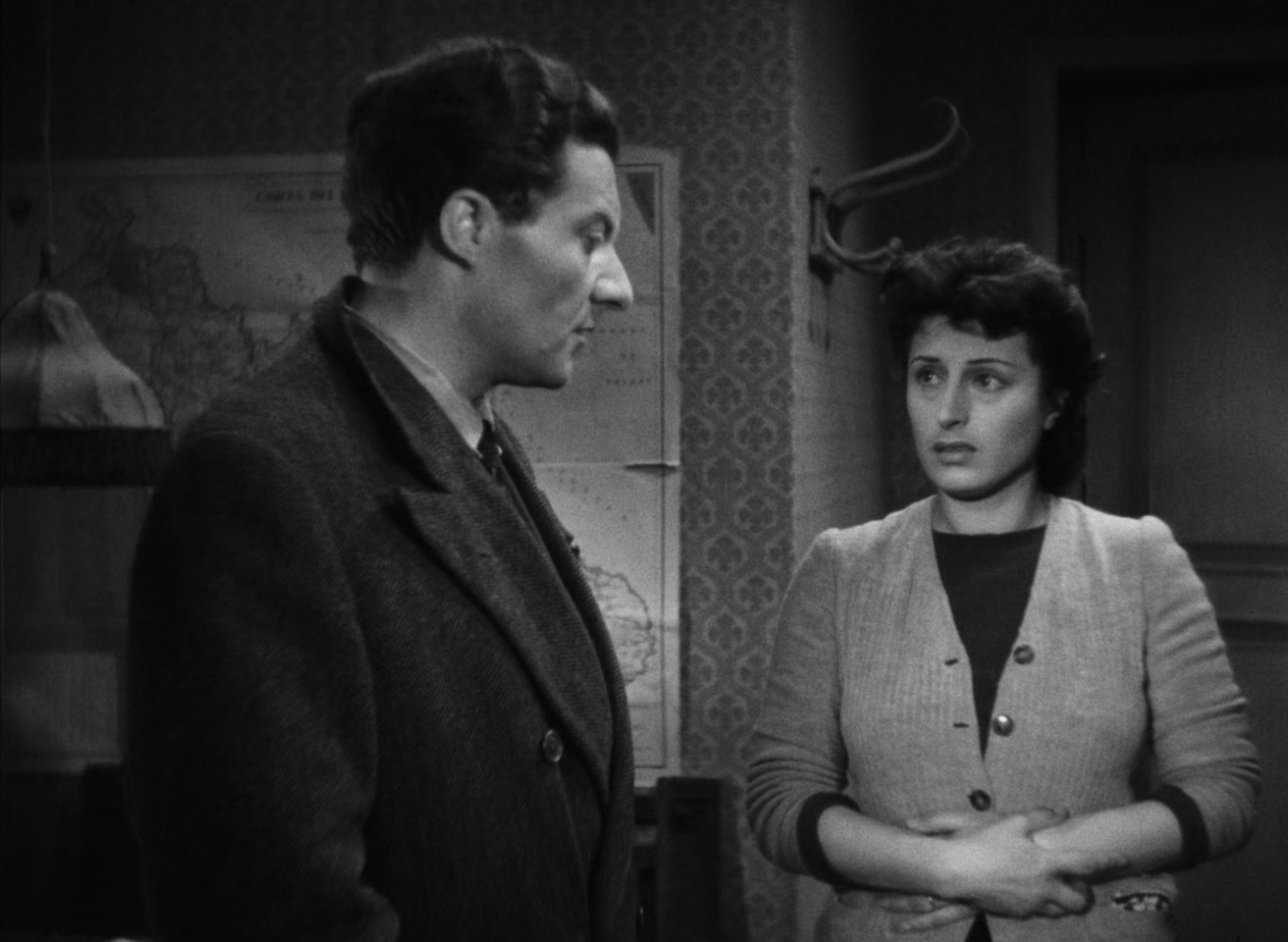
Da un'altra stanza, sentiamo una voce forte: "Io vorrei sapere chi si è fregata le calze mie!” Entrambi si girano a guardare. Dietro Manfredi vediamo una mappa del Lazio, la regione di cui Roma è la città principale.
From another room, we hear a loud voice: “I’d like to know who stole my stockings!” Both turn to look. Behind Manfredi, we see a map of Lazio, the region of which Rome is the principal city.
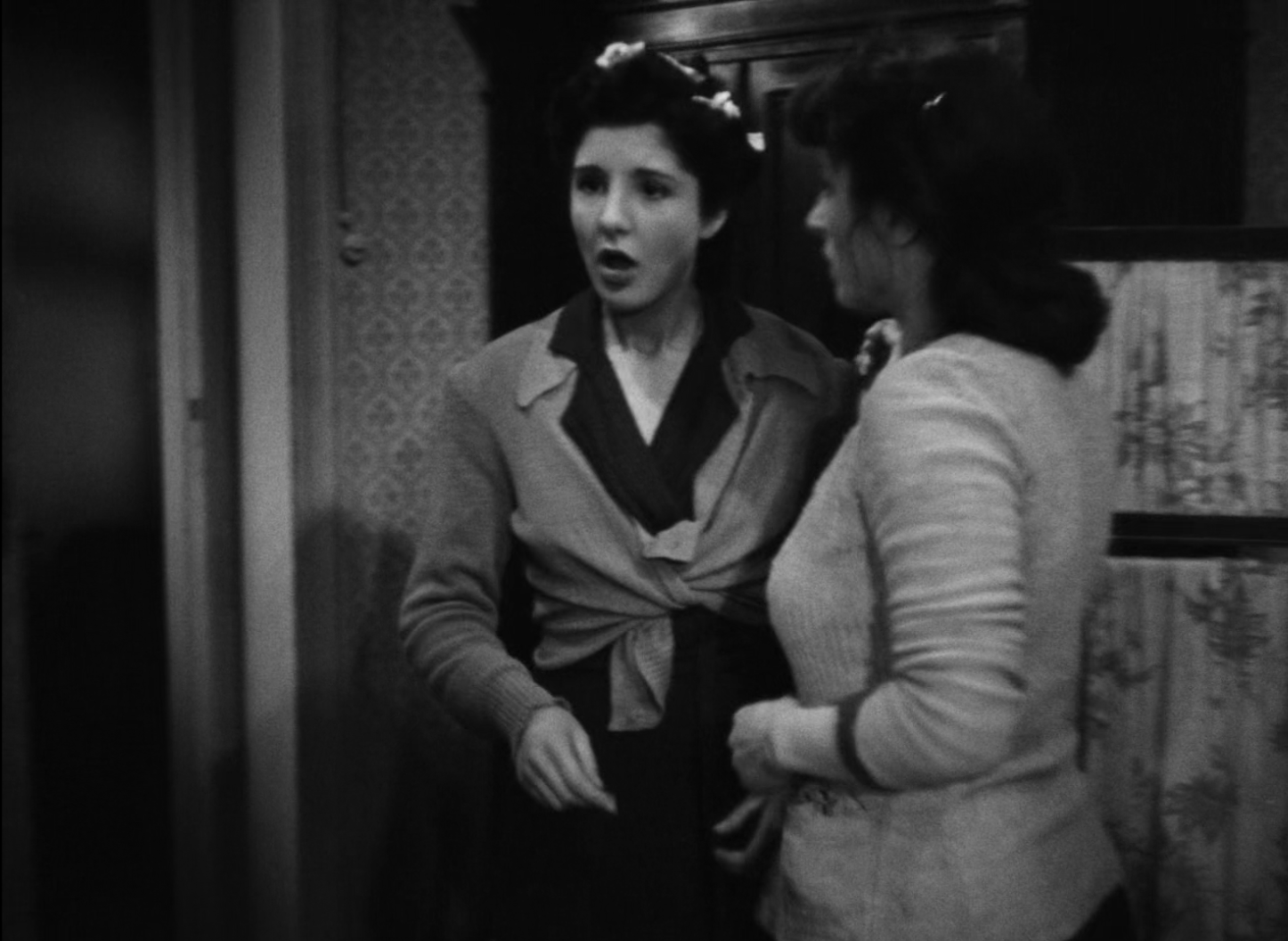
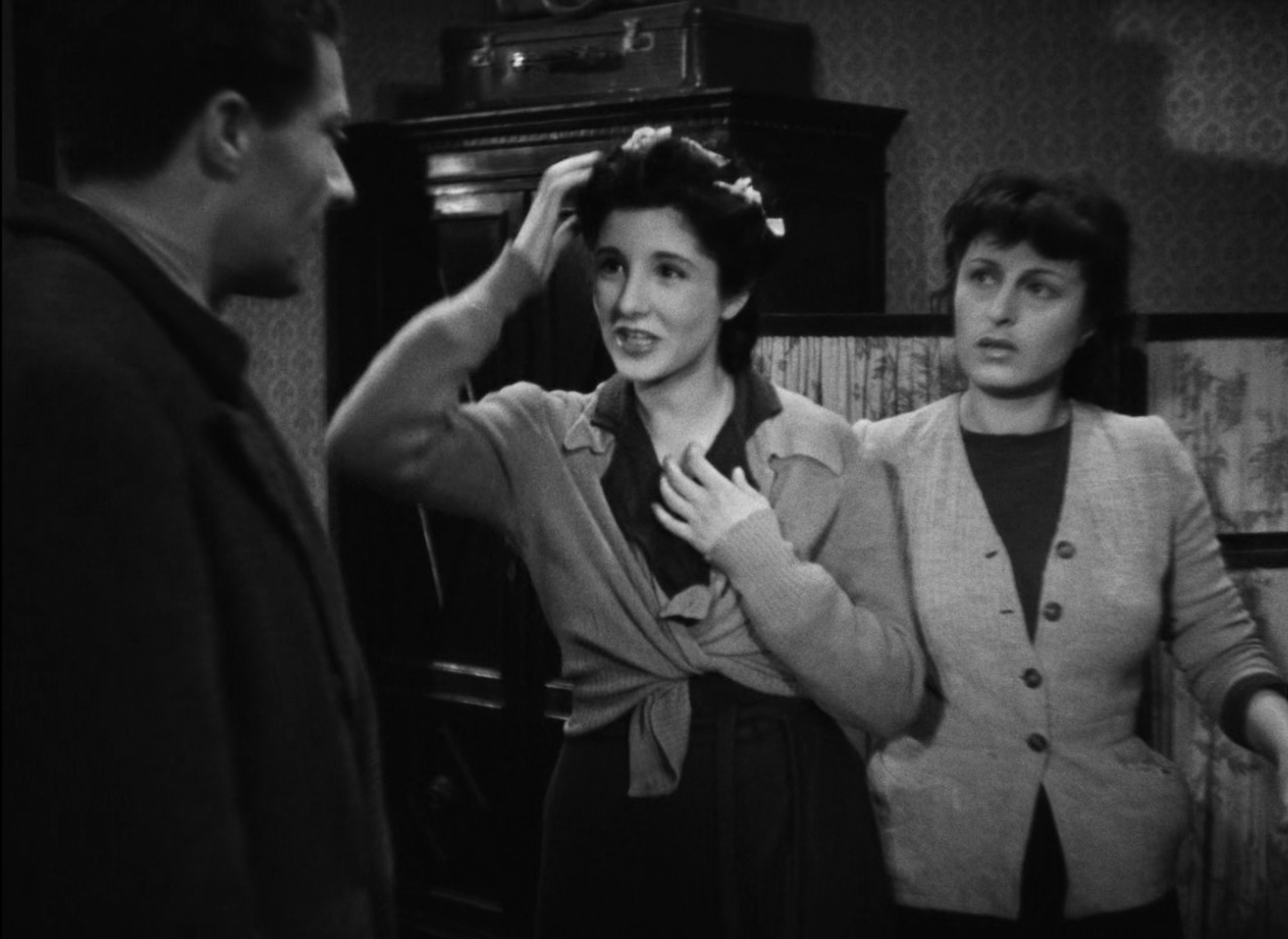
"Scusi tanto", dice Pina, aprendo le braccia ancora una volta.
Una giovane donna – la sorella di Pina, Lauretta (Carla Rovere) – entra, ancora parlando. Quando vede il visitatore, esclama: "Oh, Ingegnere!"*
"Buongiorno!"
"Buongiorno! Come mai qui? È venuto a cercare me?”
Pina guarda, sembra confusa.
"Sì, sì" – dice – "Appunto..."
*Come abbiamo visto in questo film, in Italia, le persone sono spesso indicate con i loro titoli professionali (come ingegnere e architetto) e – come in questo caso – anche chiamate direttamente in questo modo.
“I’m so sorry,” Pina says, throwing her arms open yet again.
A young woman – Pina’s sister, Lauretta – enters, still talking. When she sees the visitor, she exclaims, “Oh, Engineer!”*
“Hello!”
“Hello! What are you doing here? Did you come looking for me?”
Pina looks on, seeming confused.
“Yes,” he says. “Actually...”
*As we’ve seen in this film, in Italy, people are often referred to by their professional titles (engineer and architect) and – as in this instance – even addressed directly that way.
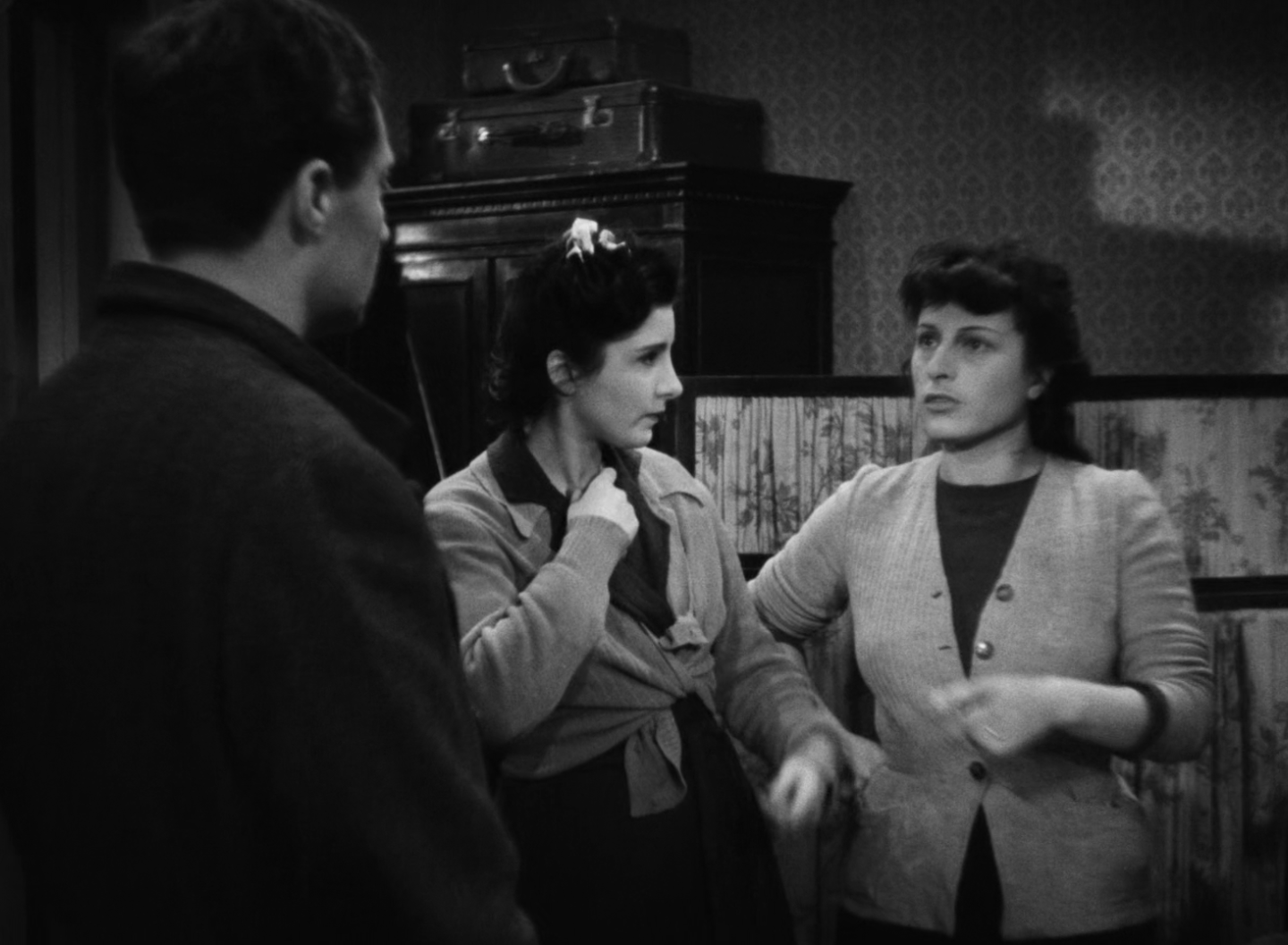
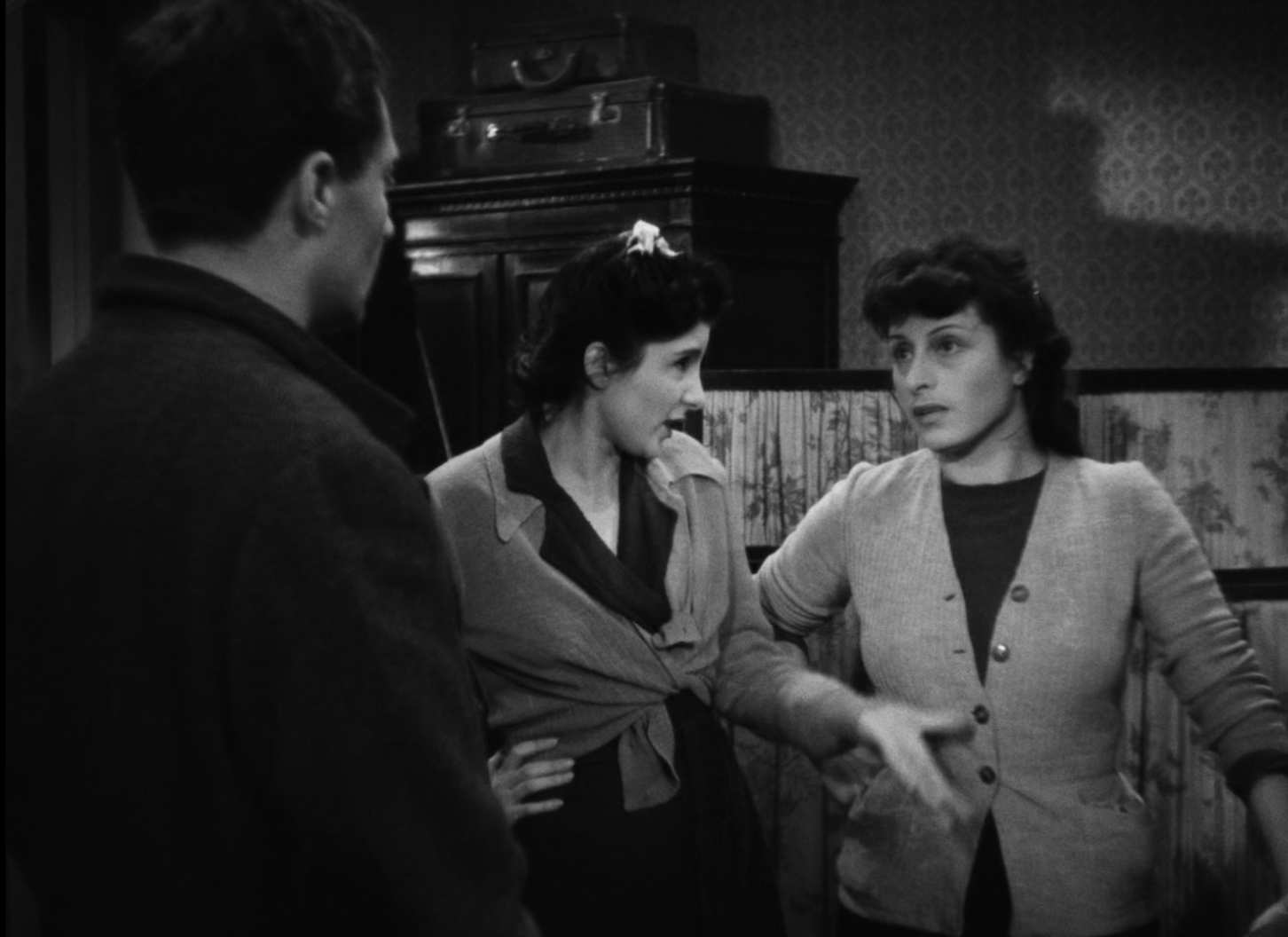
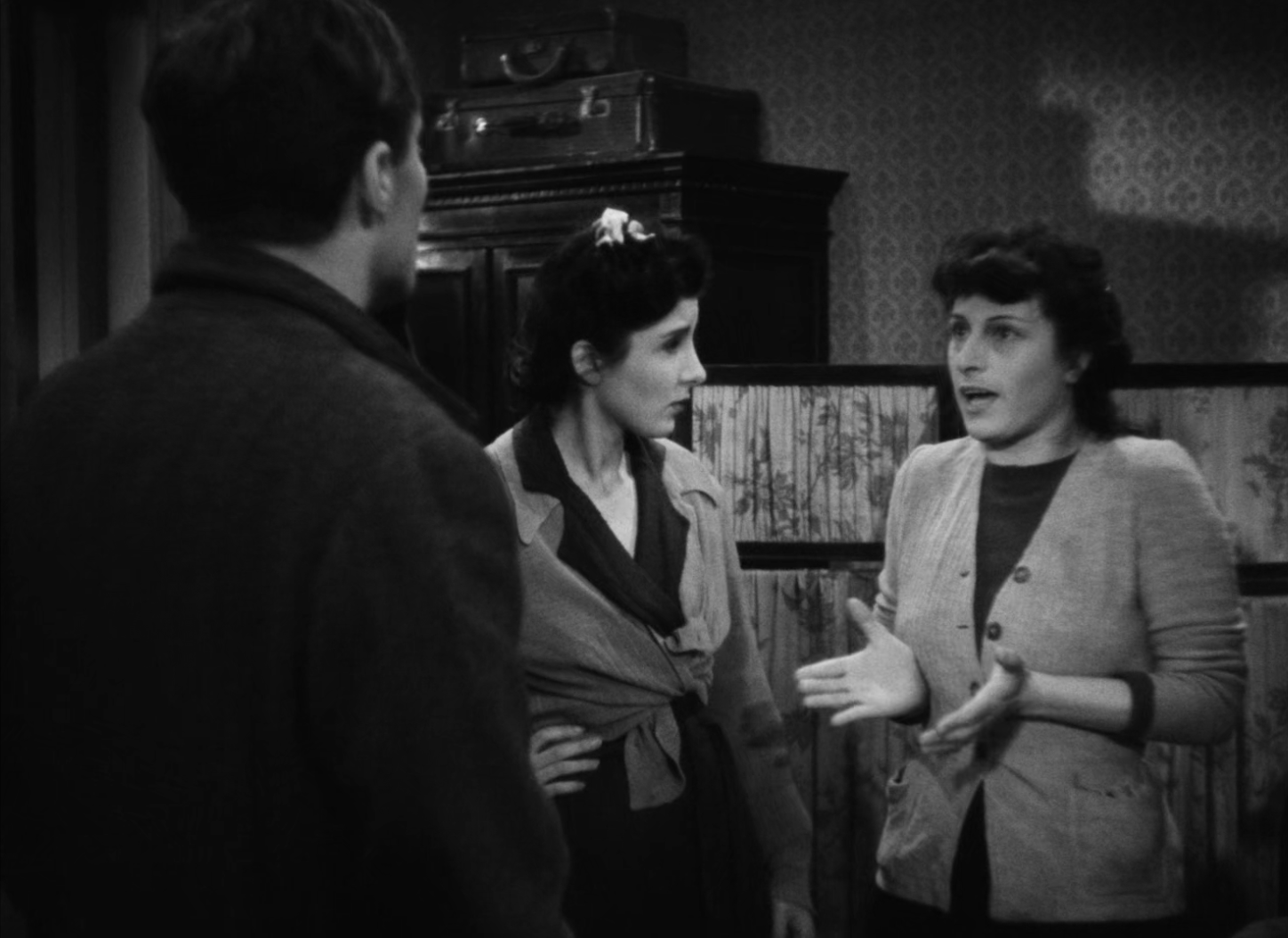
Pina spiega: "Ho incontrato il signore per le scale e l'ho fatto entrare qui. Ho pensato che –"
"Me lo potevi dire subito!"
Le sorelle cominciano a litigare.
Pina explains, “I met the gentleman on the stairs and let him in here. I thought that –”
“You could have let me know right away!”
The sisters begin to bicker.
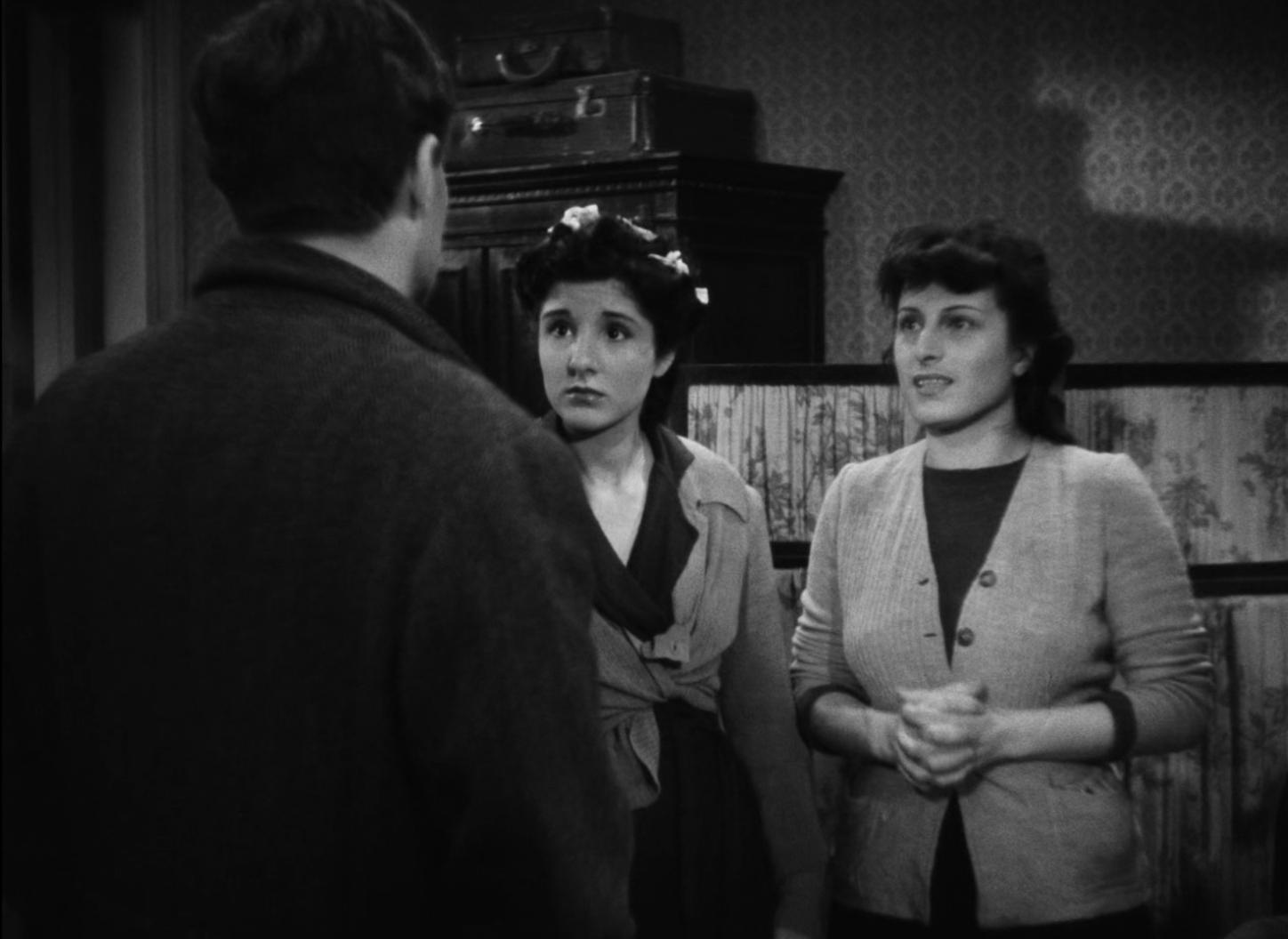
Ma quando Manfredi comincia a parlare, rivolgono la loro attenzione a lui. "No, non importa" – dice lui – "Volevo soltanto chiederle un favore”.
Lauretta dice che andrà a cambiarsi – ha i capelli legati con i bigodini di stoffa – ma Manfredi la interrompe: "No va benissimo così". Scusandosi con Pina, prende Lauretta per un braccio e la porta in disparte.
But when Manfredi starts to speak, they turn their attention to him. “It doesn’t matter,” he says. “I only wanted to ask a favor.” Lauretta says that she’ll go change – she has her hair tied up in rag curlers – but Manfredi cuts her off: “You’re fine like that.” Excusing himself to Pina, he takes Lauretta by the arm and leads her aside.
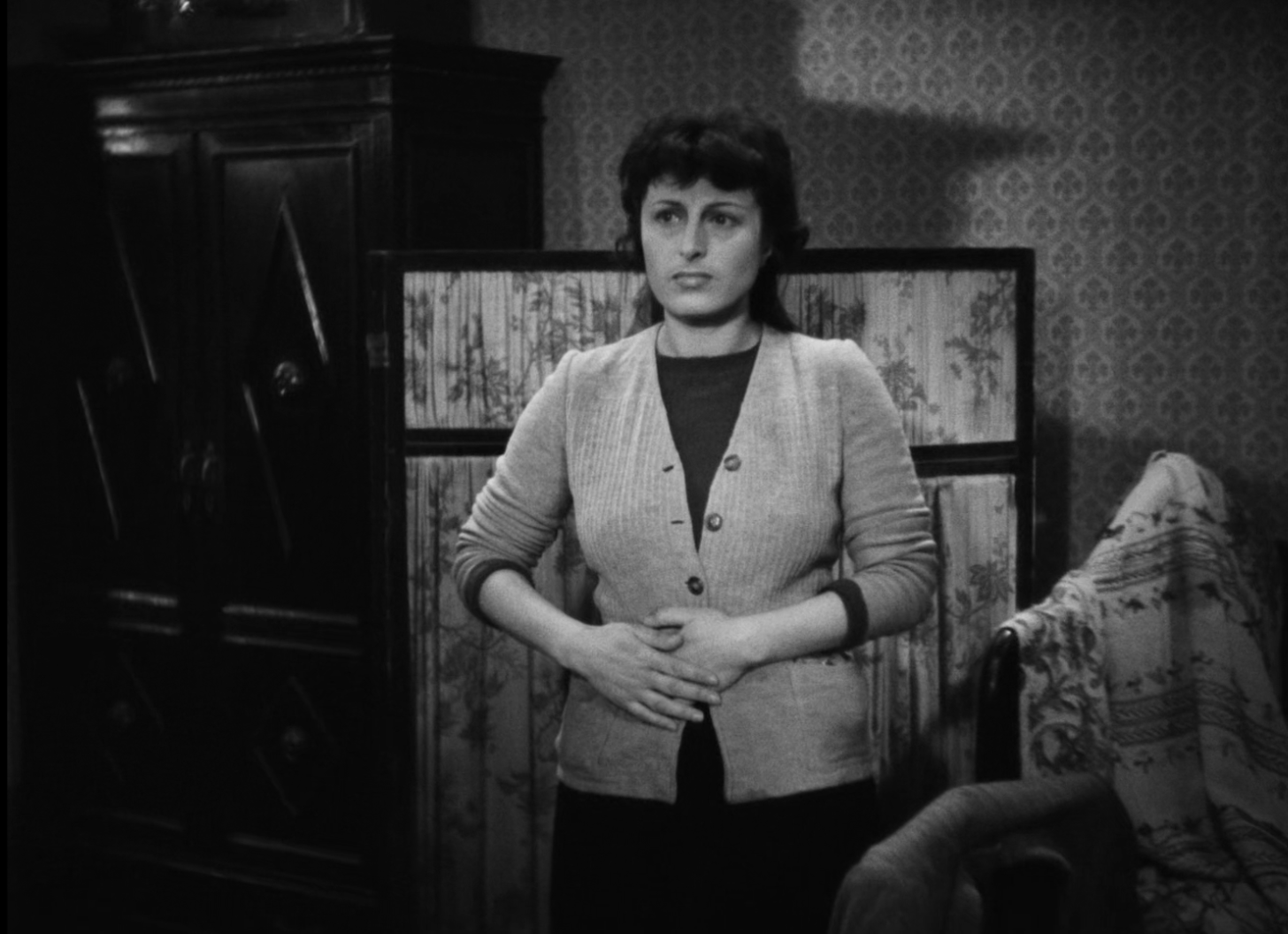
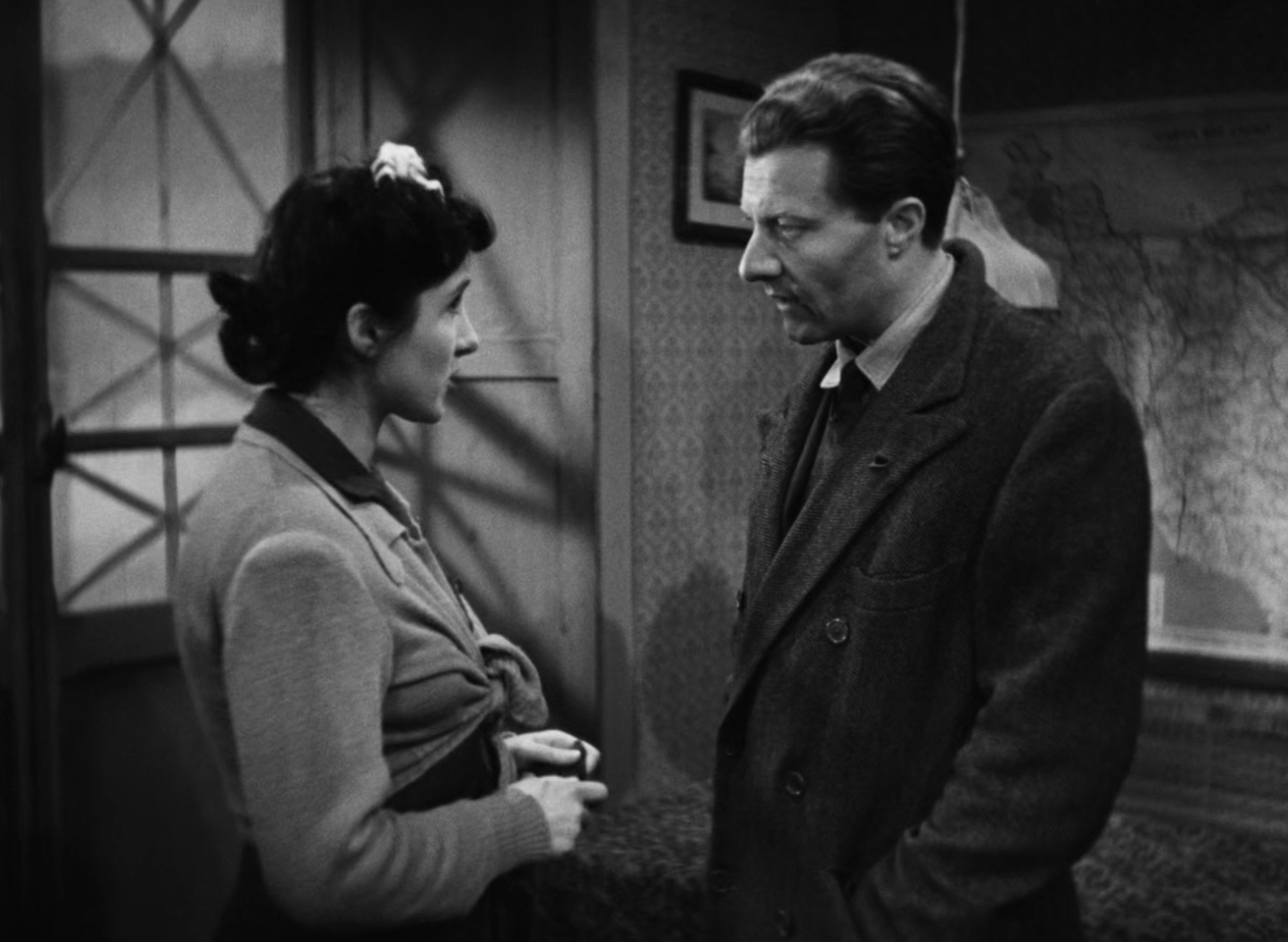
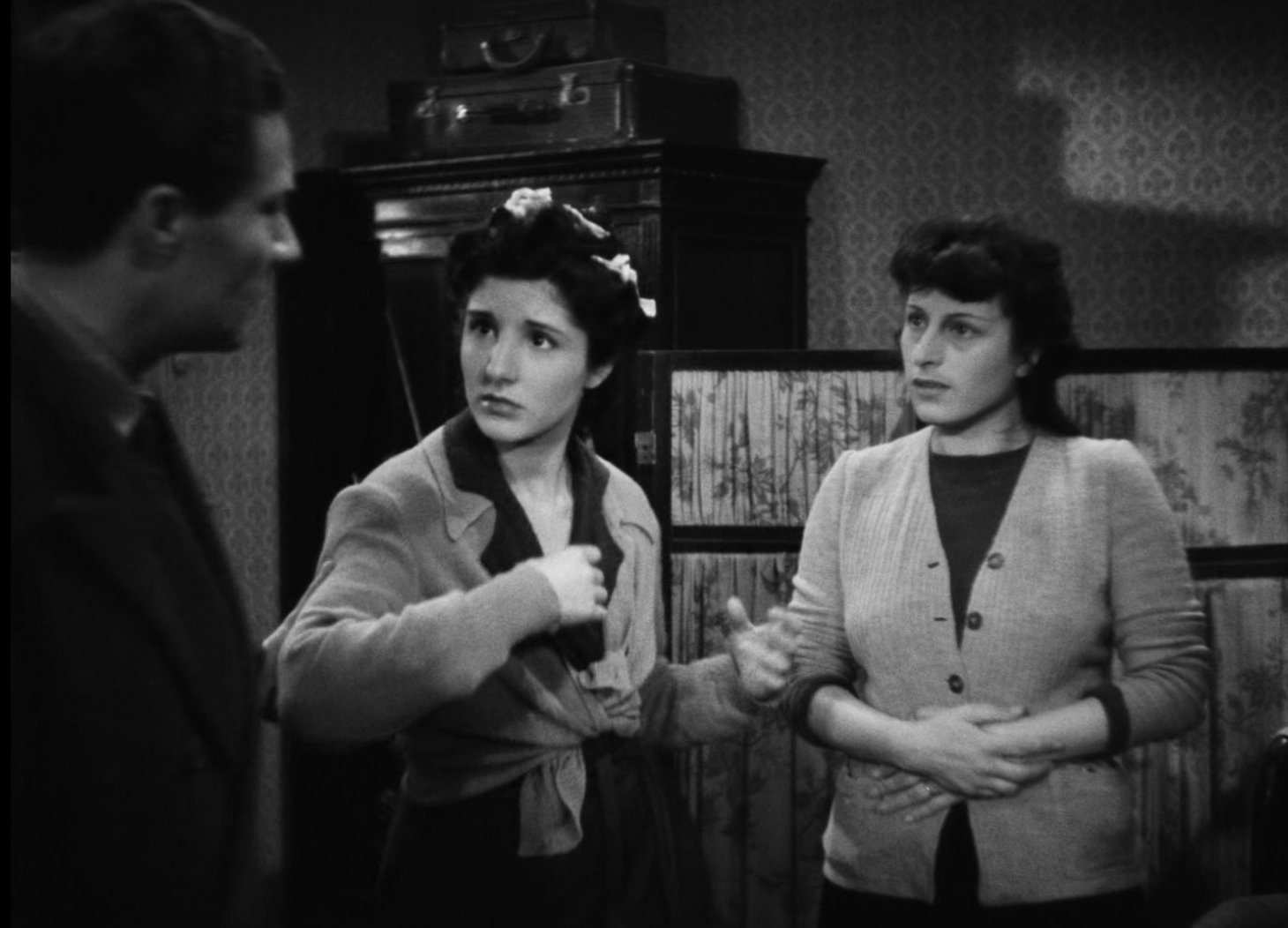
Pina guarda cautamente, con le mani incrociate sulla pancia. Nell'immagine, i rettangoli di un paravento la incorniciano nell'immagine.
"Senta, Lauretta lei vede Marina, vero?" chiede lui.
"Sì, dopo pranzo, al teatro".
"Le dica per favore che io per qualche giorno non potrò vederla. Se mi sarà possibile telefonerò".
"Va bene. E niente altro?"
"No, nient'altro”.
Pina looks on warily, her hands folded across her stomach. In the image, the rectangles of a folding screen frame her in the image.
“Listen, Lauretta, you see Marina, right?” he asks.
“Yes, after lunch, at the theater.”
“Please tell her that I can’t see her for a few days. I’ll phone her if I can.”
“Okay. Anything else?”
“No, nothing else.”
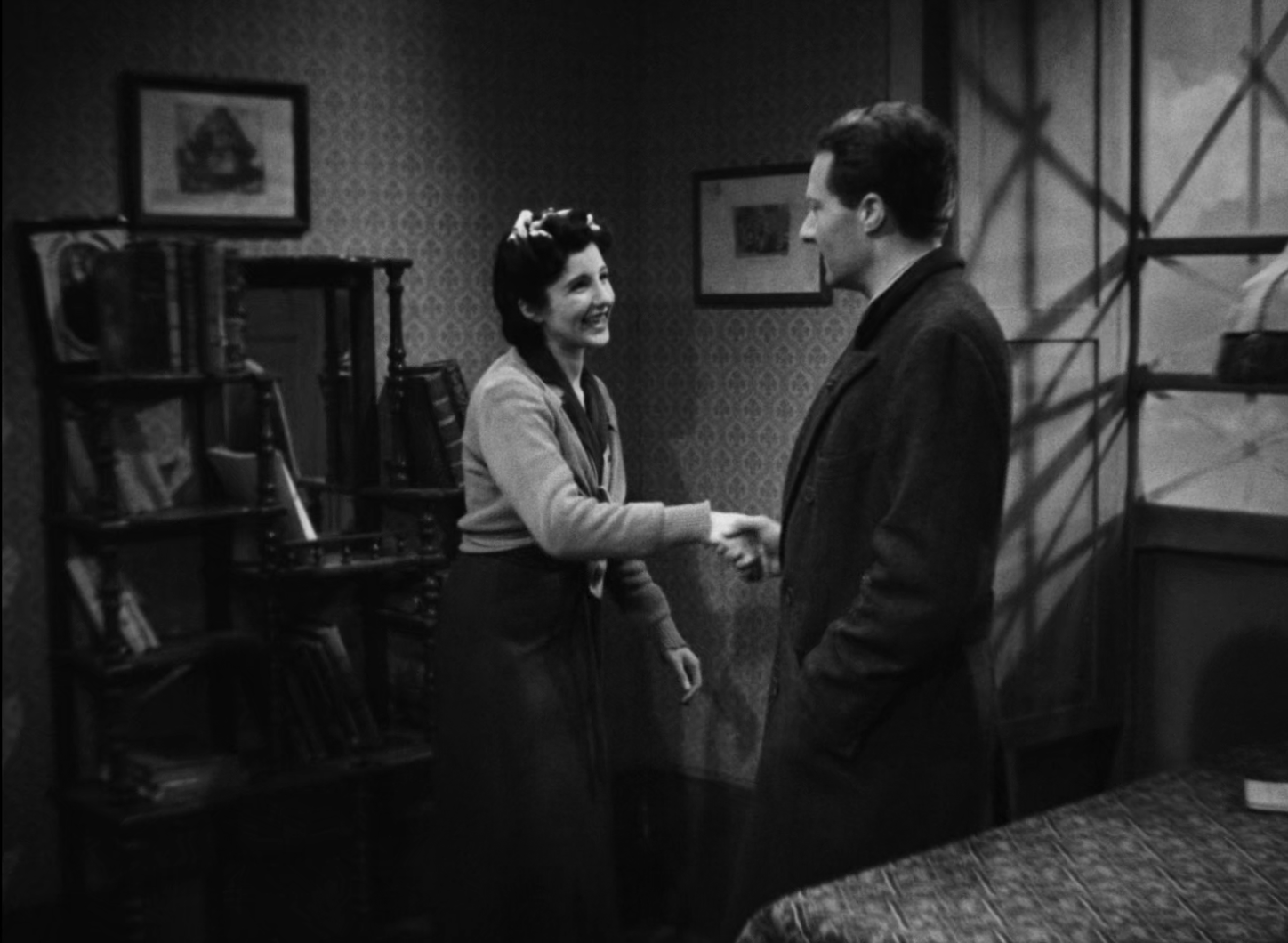
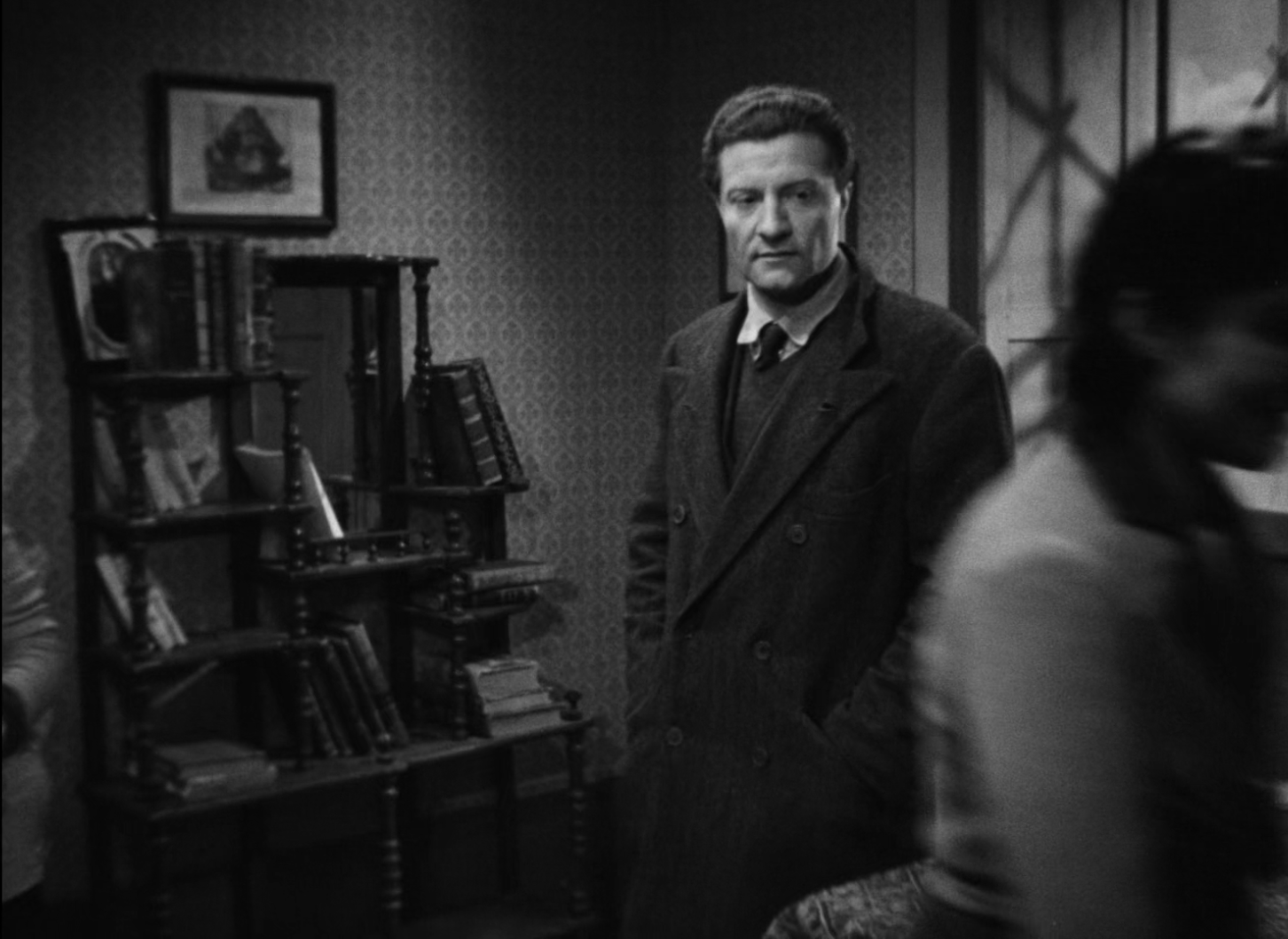
“Arrivederci, Ingegnere, e mi scusi!” Si stringono la mano e lei lascia la stanza.
“Goodbye, then, Engineer, and sorry!” They shake hands and she leaves the room.
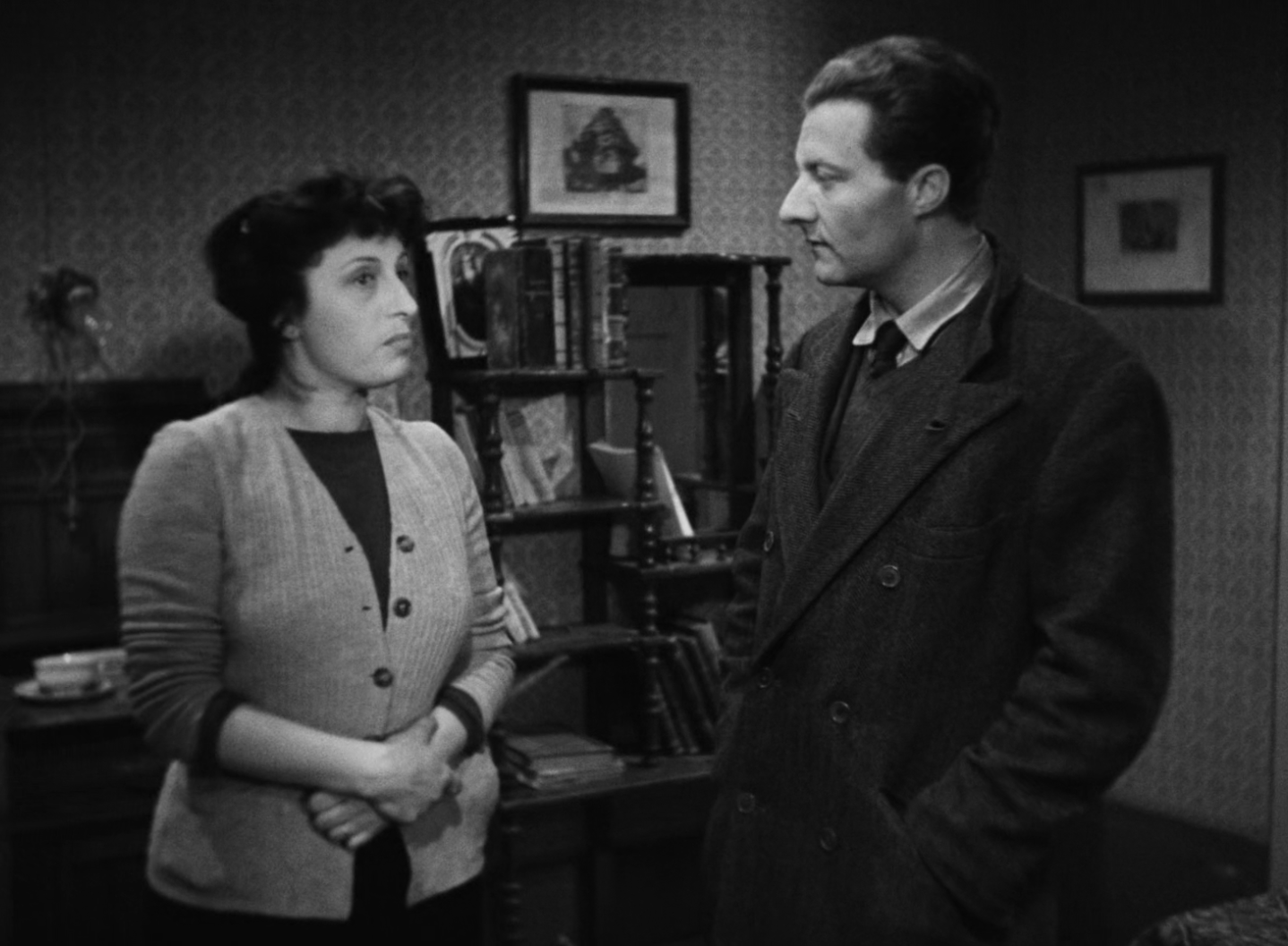
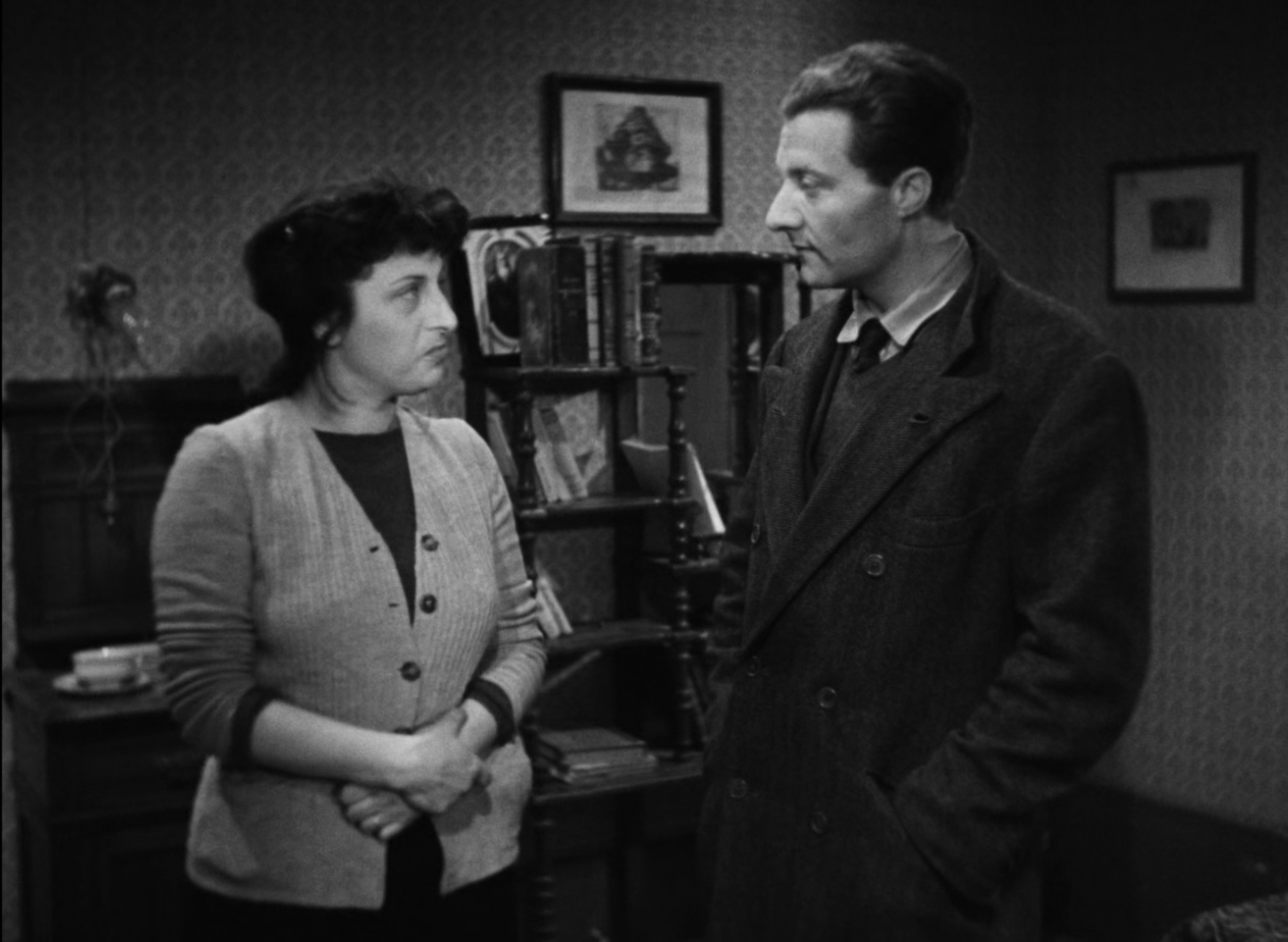
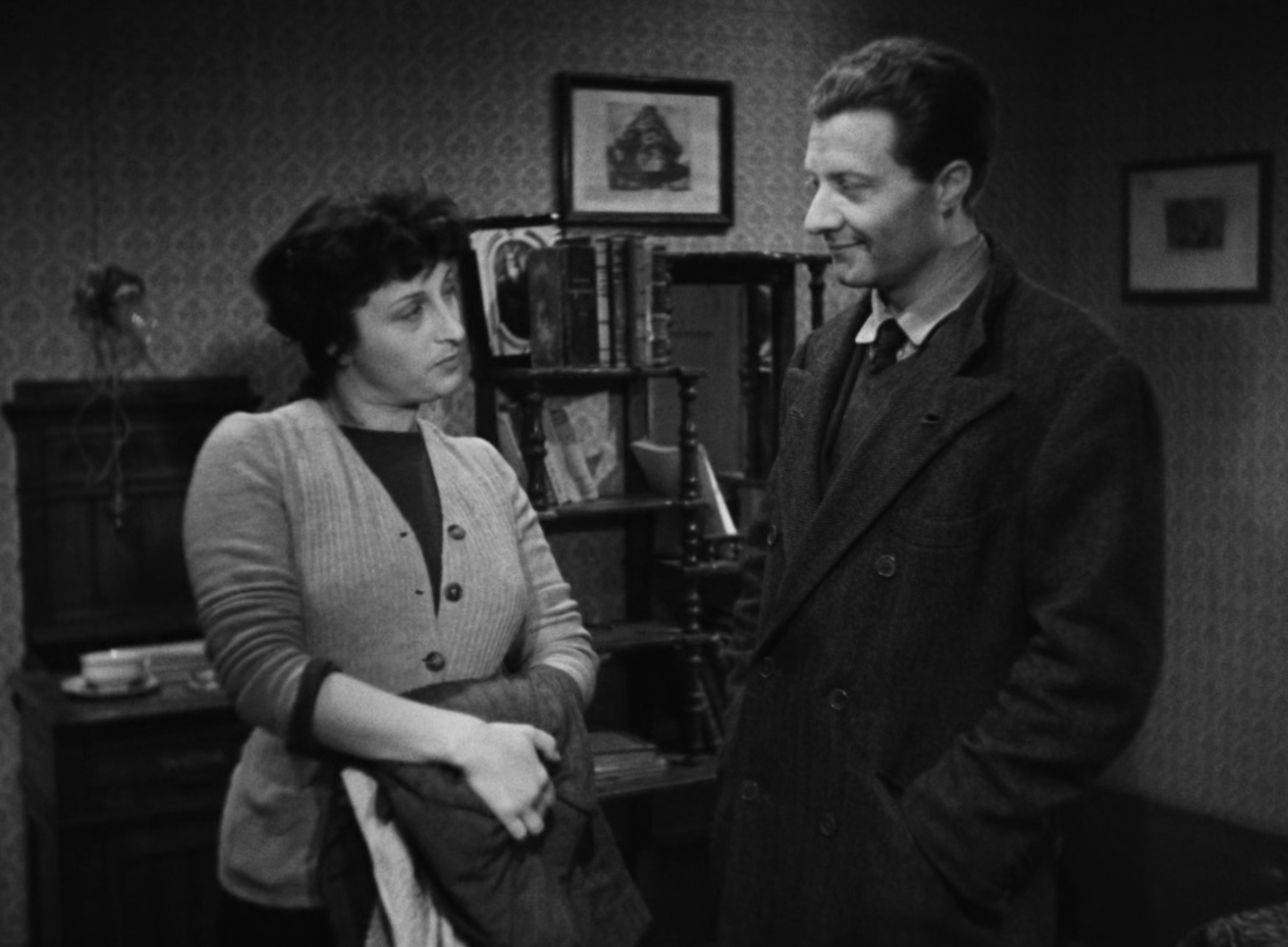
"Abita con lei quella?" chiede Manfredi a Pina.
"È mia sorella".
"Ah, sua sorella!"
“Si meraviglia lei, eh? Chissà quante bugie le avrà raccontato, che abita chissà dove… Si vergogna di noi perché dice che fa l'artista e noi siamo poveri operai”. Mentre parla Pina raccoglie i vestiti, mettendo in ordine la stanza.
"Ah-ah".
"Io non farei cambio con lei", gli assicura Pina.
"Ah, lo capisco".
"Mica perché è cattiva. È stupida", dice, alzando le sopracciglia.
“Does she live with you?” Manfredi asks Pina.
“She’s my sister.”
“Oh! Your sister!”
“Yes, surprised, huh? I wonder what lies she’s told you, that she lives who knows where… She’s ashamed of us because she says she’s an artist and we are ‘starving workers.’” While she talks, Pina gathers clothes, tidying the room.
“Uh-huh.”
“But I wouldn’t trade places with her,” Pina assures him.
“I get it.”
“Not at all because she’s bad. She’s stupid,” she says, raising her eyebrows.
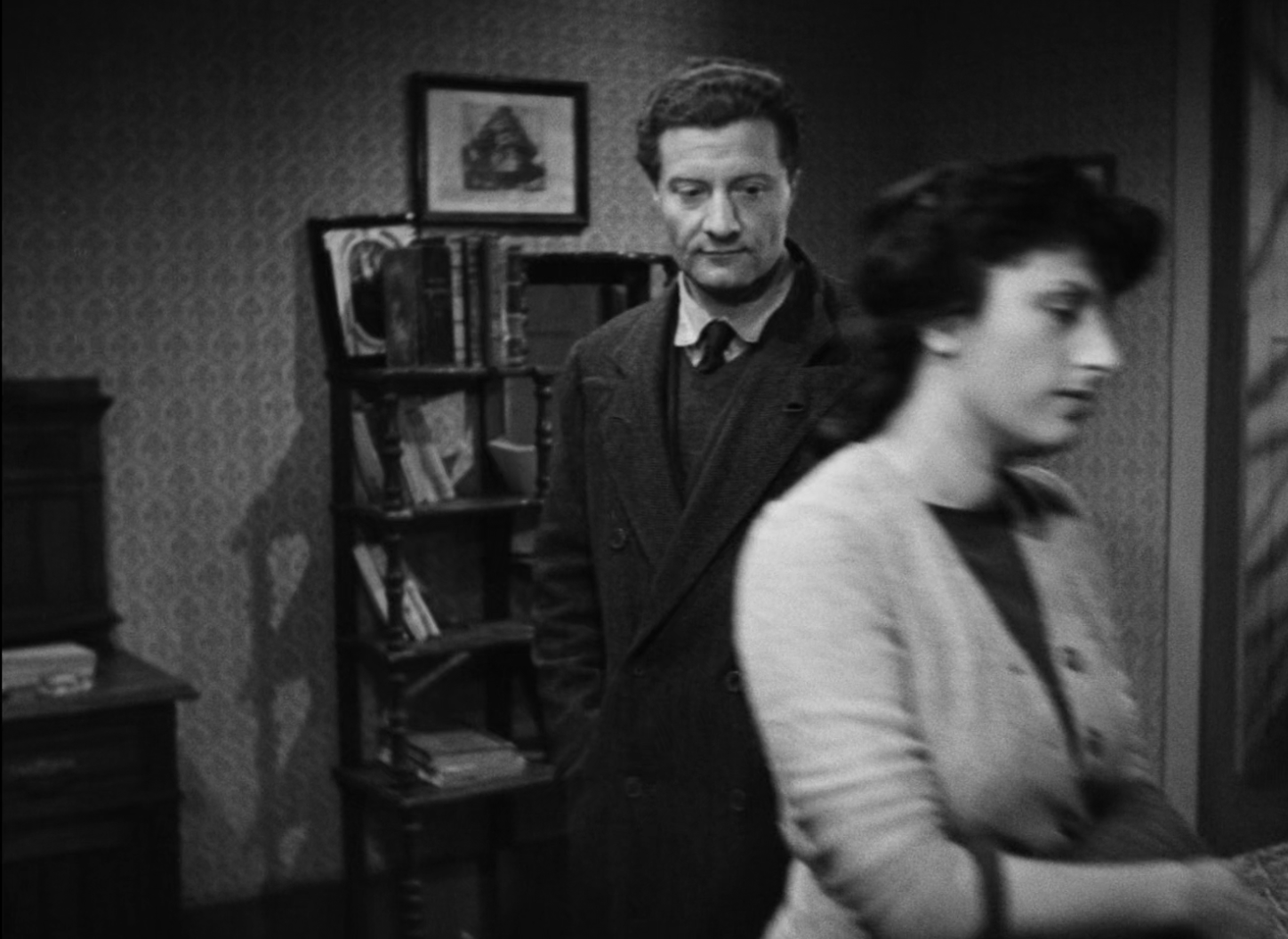
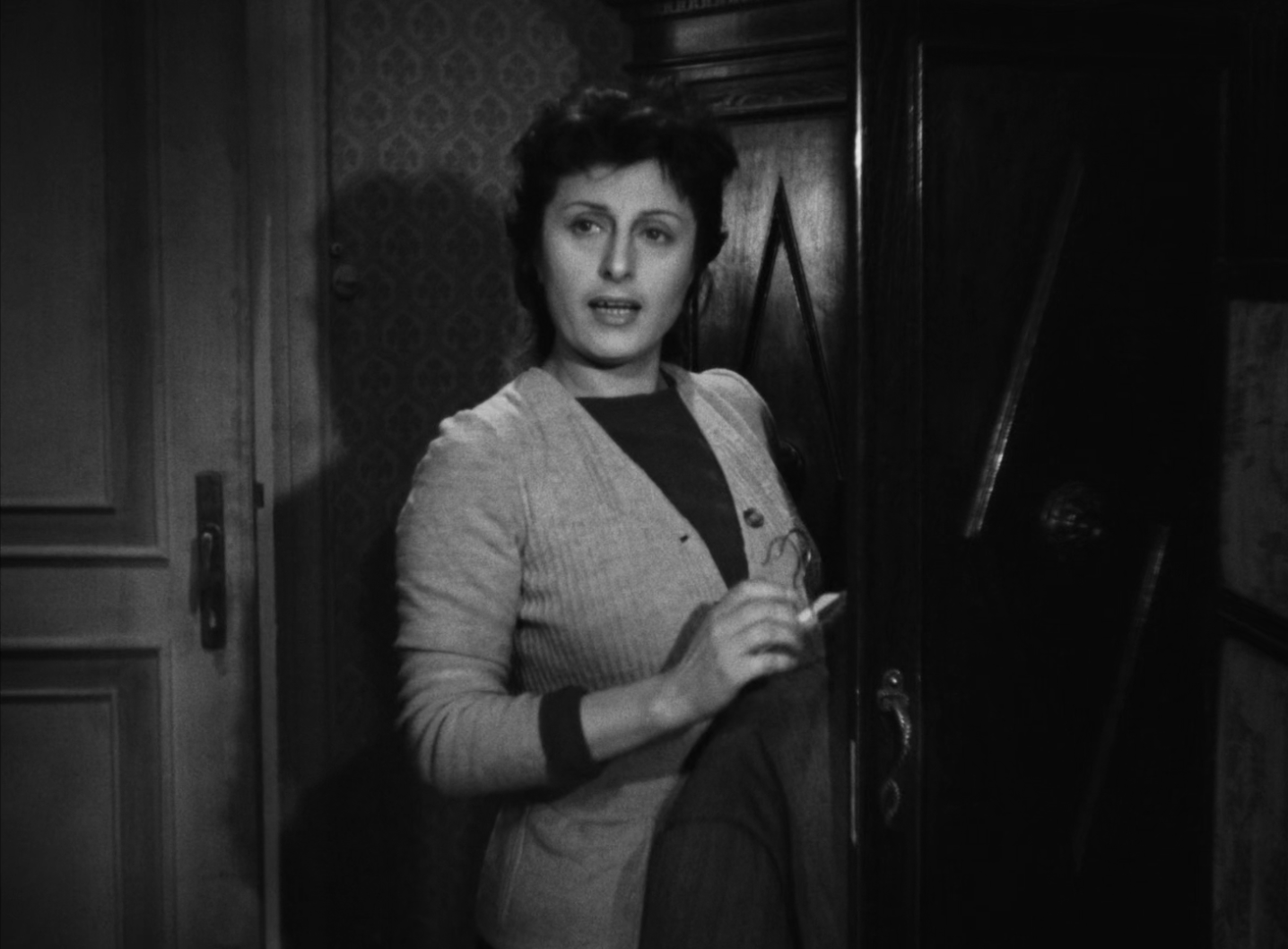
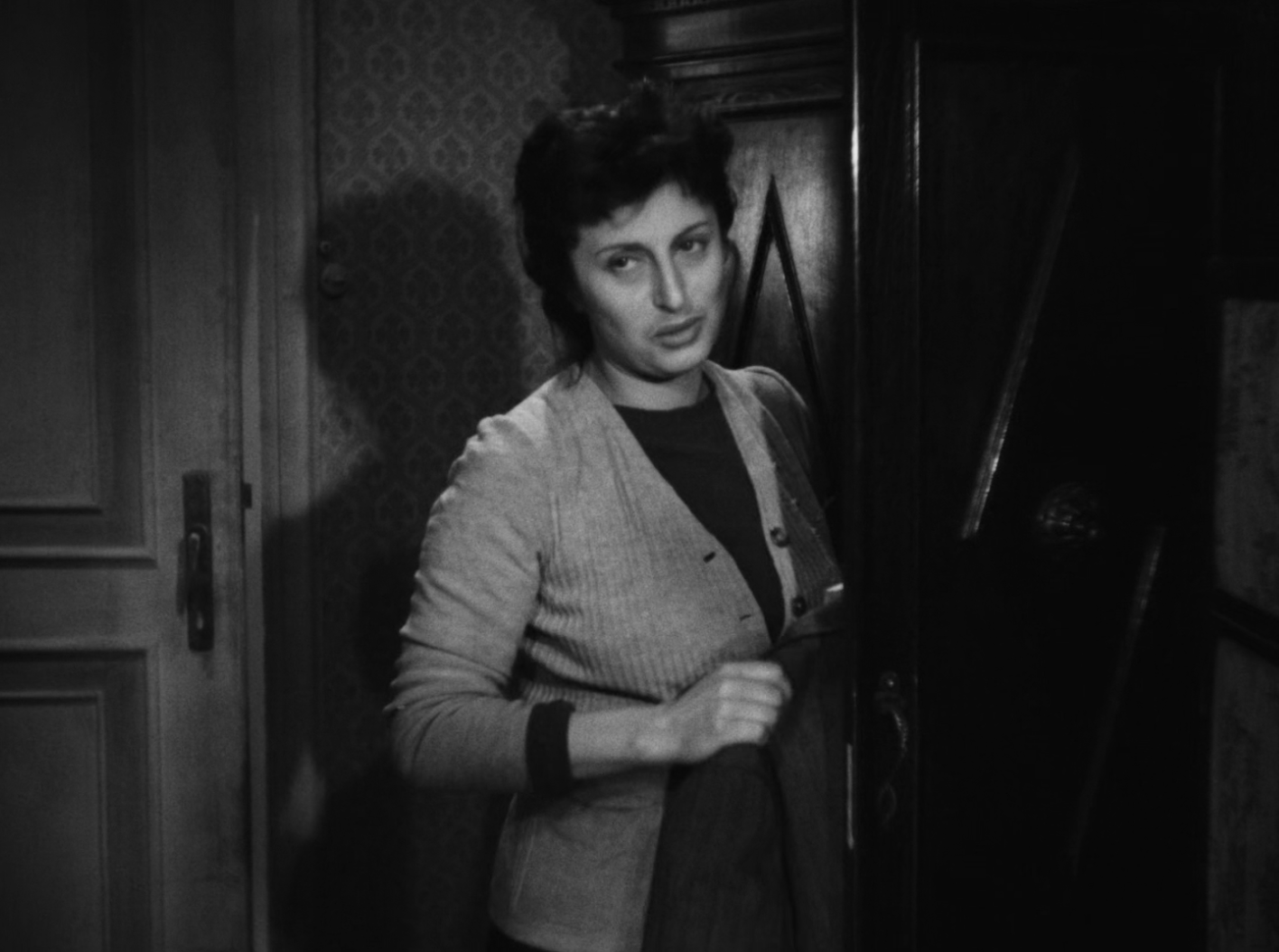
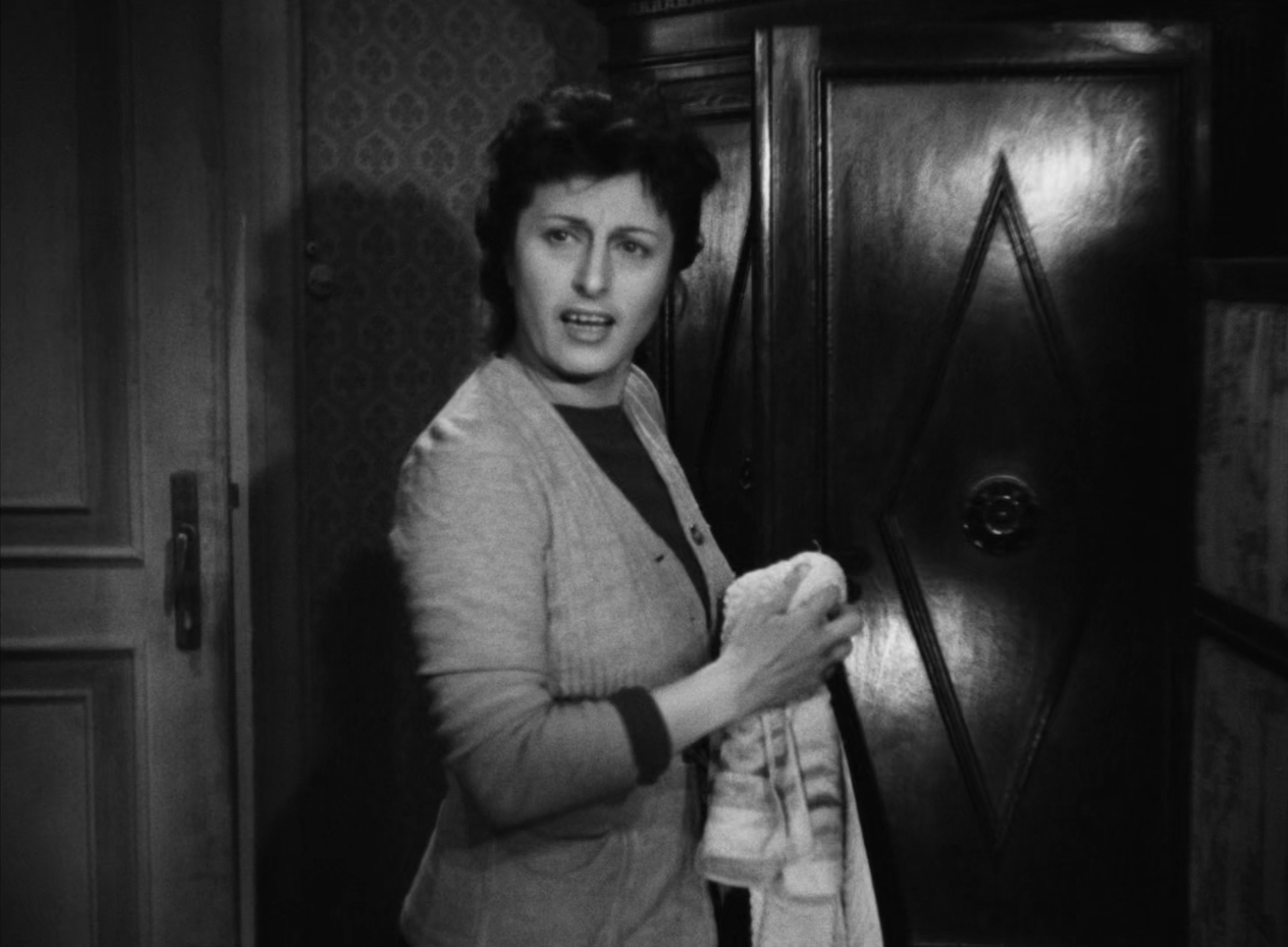
Attraversa la stanza per appendere dei vestiti. "Ma... Lei come la conosce Lauretta?" All'inizio lui non risponde, così lei si scusa: "Scusi tanto. Sono indiscreta".
She walks across the room to hang up some clothes. “But… how do you know Lauretta?” At first he doesn't answer, so she apologizes, “Please excuse me. I’m being nosy.”
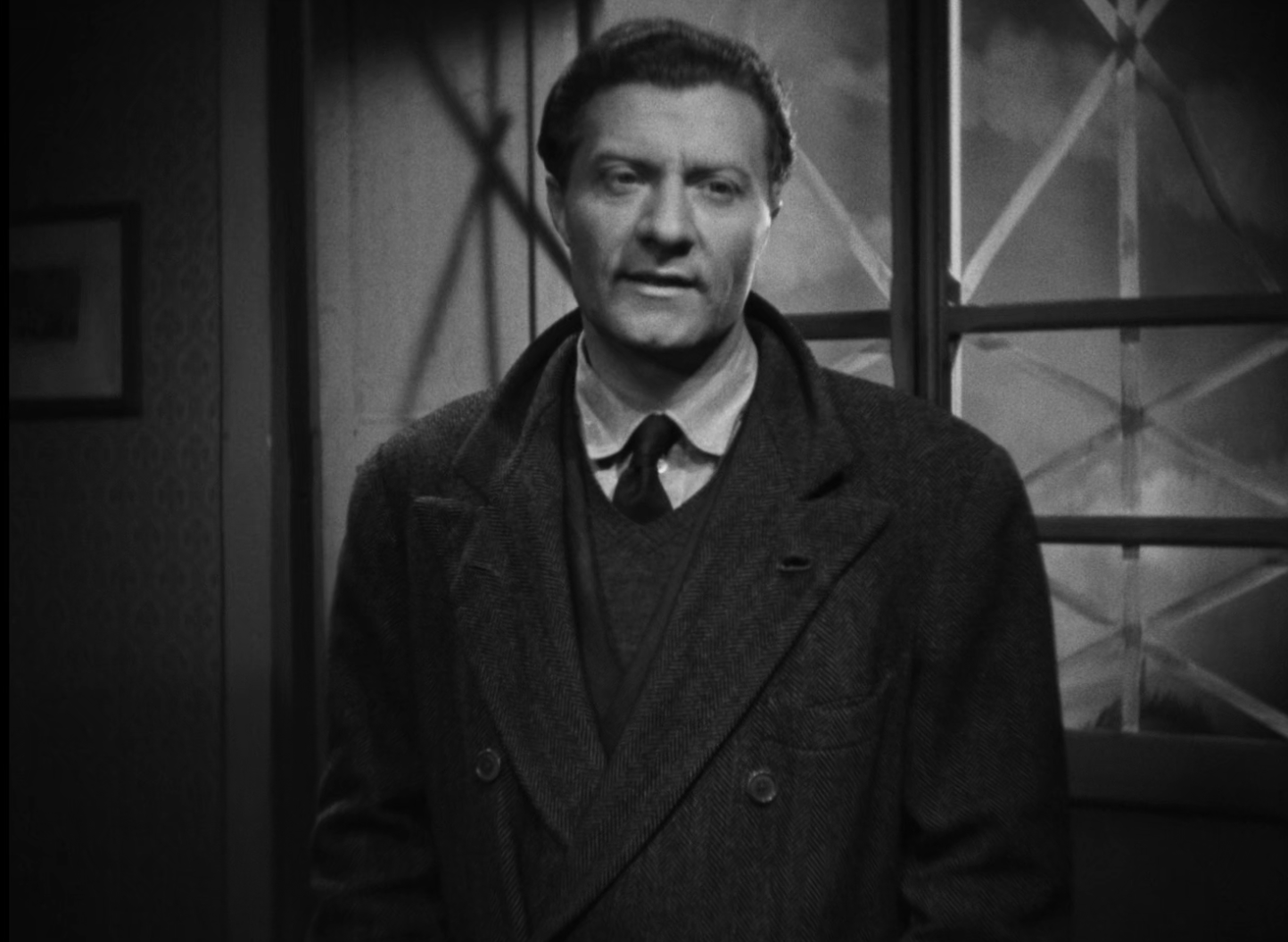
“No! Lauretta è molto amica di una ragazza che io conosco”.
“Chi, Marina?”
“No! Lauretta is a good friend of a girl I know.”
“Who, Marina?”
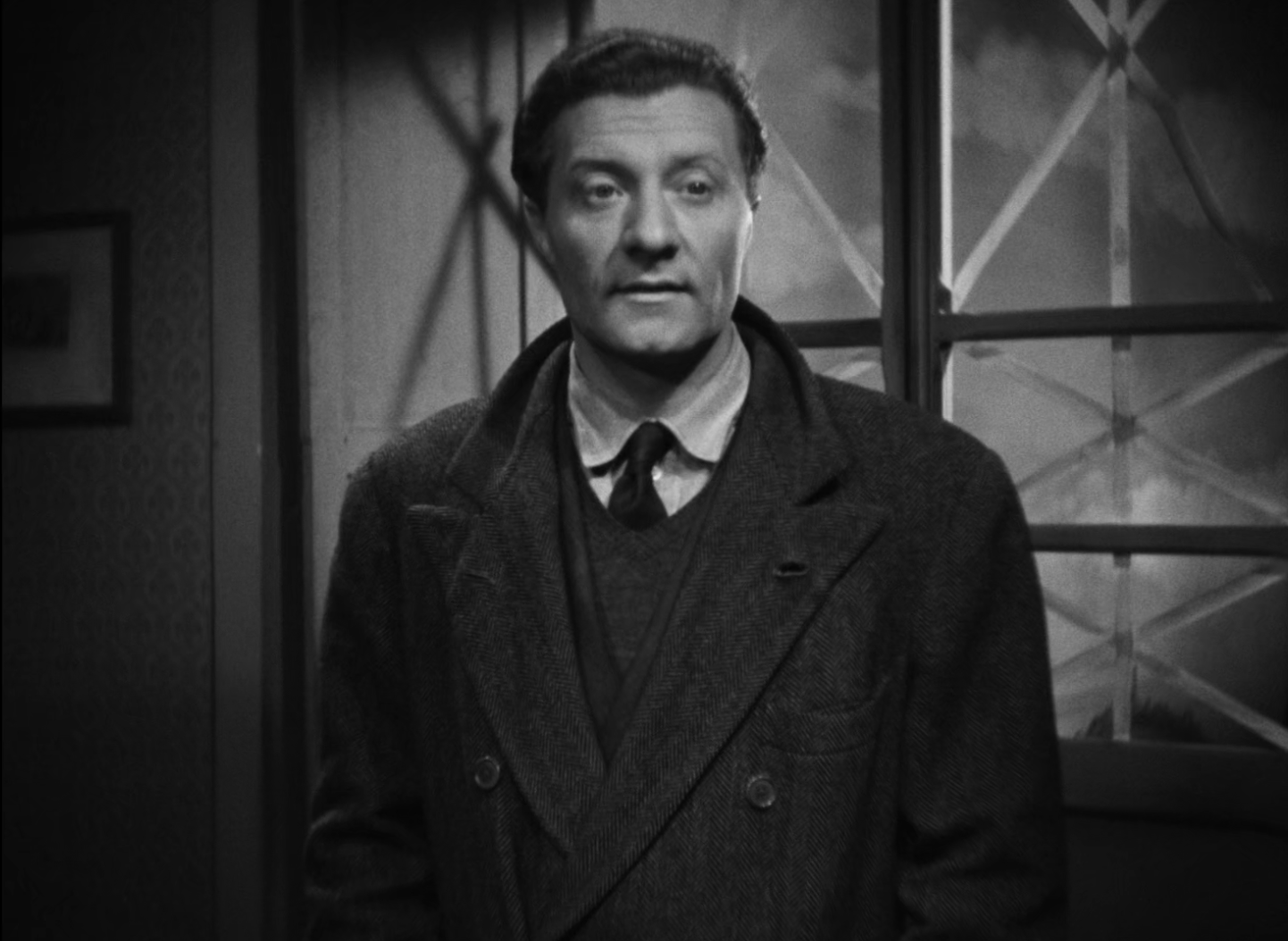
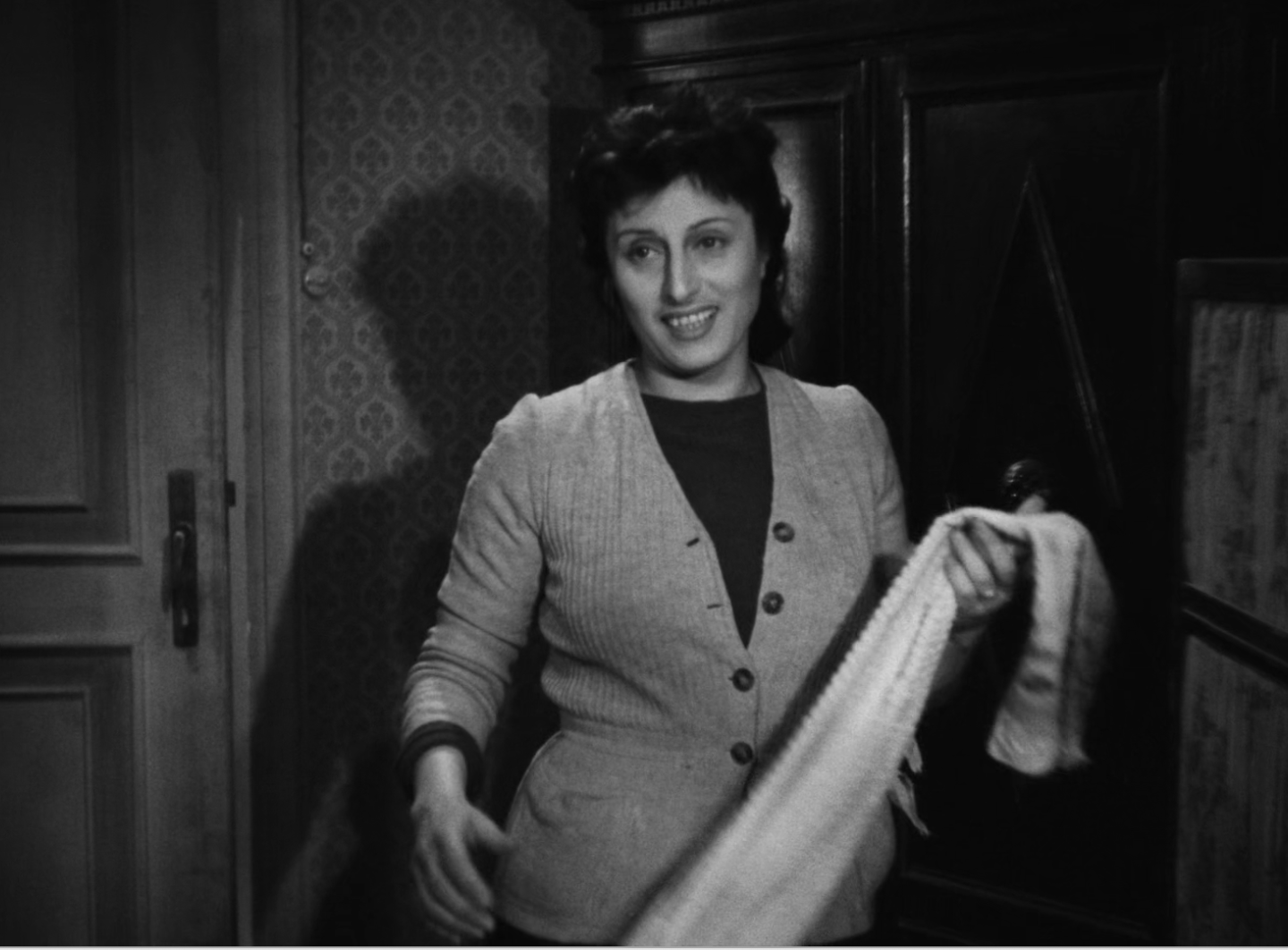
“Ah, la conosce?”
“Oh… Da quando è nata!” Pina risponde con un sorriso. “La madre faceva la portiera in via Tiburtina, dove mio padre aveva un negozio. Lei e Lauretta si può dire che sono cresciute insieme”.
“Ah, do you know her?”
“Oh… Since she was born!” Pina answers with a smile. “Her mother was a concierge on Tiburtina Road near my father’s shop. She and Lauretta you could say they grew up together.”
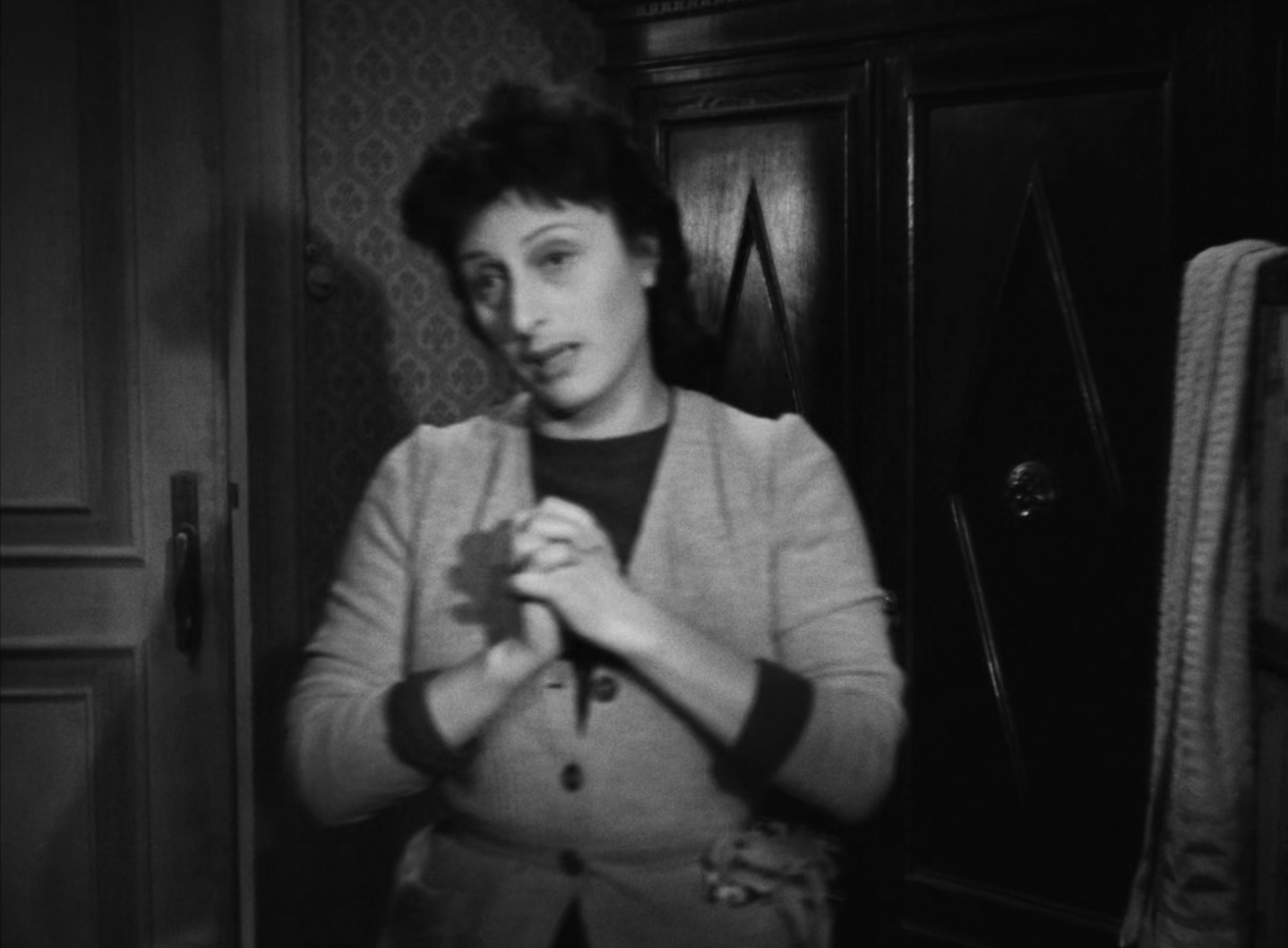
“Ma” – aggiunge – “Mi raccomando non dica niente a Marina di quello che le ho detto, mi raccomando proprio!”
“Non dubiti. E poi io non la vedrò più”.
“E perché?”
“But,” she adds. “Please don’t say anything to Marina about what I said, I beg you!”
“Don’t worry about it. And anyway, I won’t be seeing her again.”
“Why is that?”
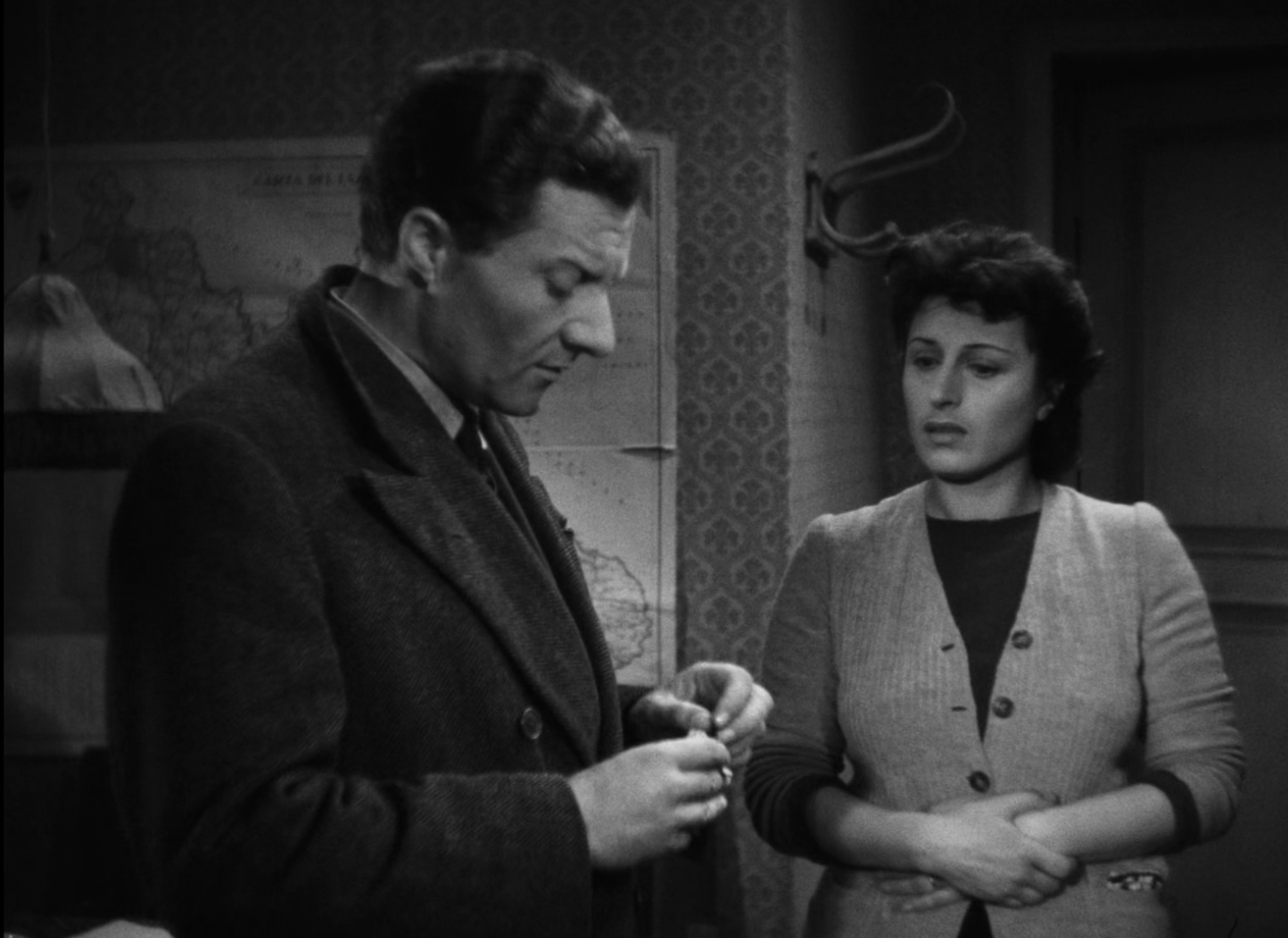
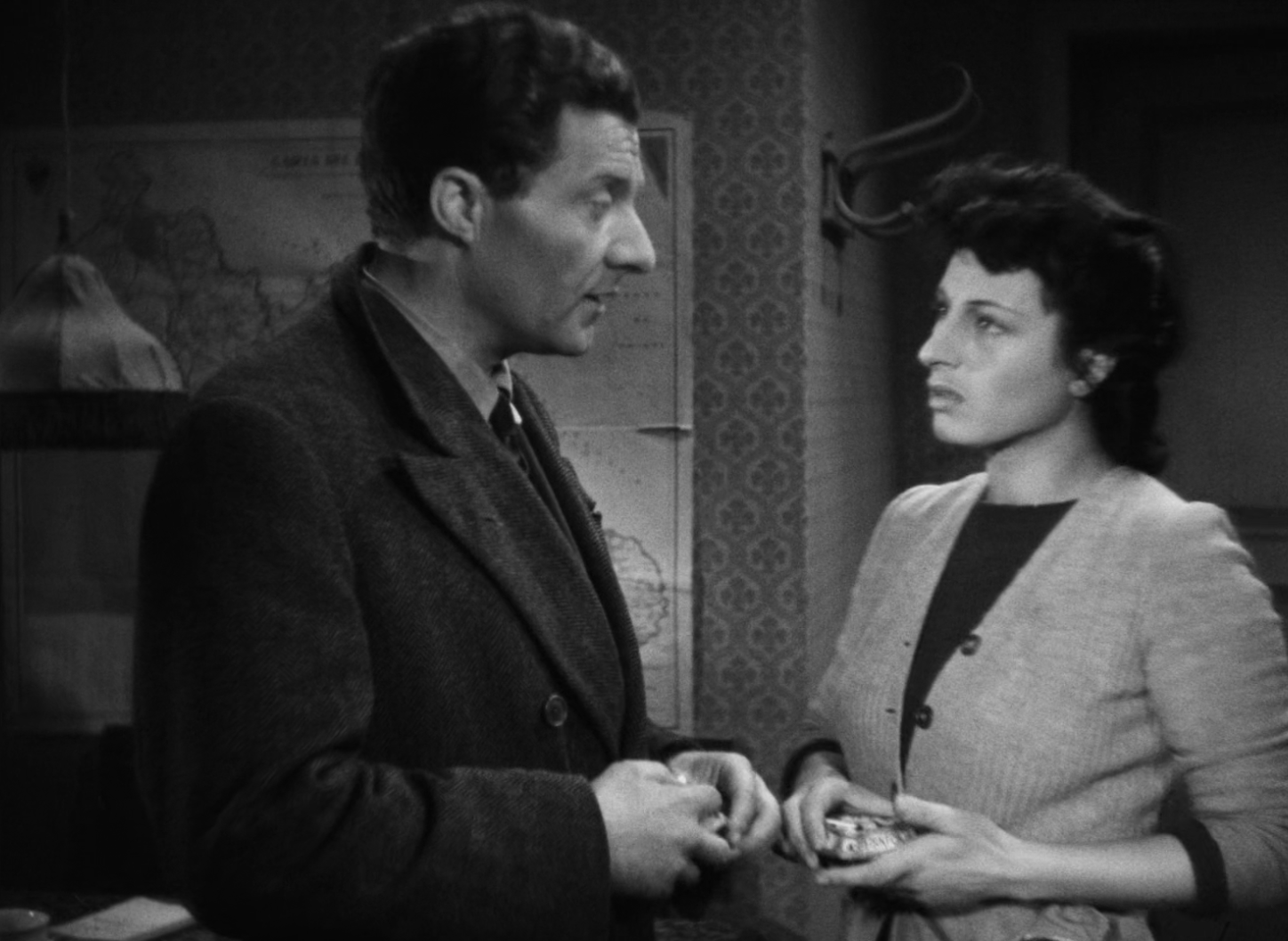
“Non so perché ma sento che è una cosa che deve finire” – Manfredi guarda in basso, serio – “Comunque, è durata anche troppo”.
“La conosce da molto tempo?”
“Sì, da quattro mesi. Io ero appena arrivato a Roma. Lei veniva a mangiare in una piccola trattoria vicino a piazza di Spagna. Un giorno hanno dato l'allarme dei bombardamenti aerei e tutti sono scappati. Siamo rimasti soli. Lei rideva. Non aveva paura”.
“I don’t know why, but I feel it’s time to end it.” Manfredi looks down, serious. “It’s gone on too long, anyway.”
“Have you known her for long?”
“Yes, for four months. I’d just arrived in Rome. She used to eat in a little trattoria near piazza di Spagna. One day, the air-raid alarm went off and everyone ran. Just she and I were left. She just laughed. She wasn’t scared at all.”
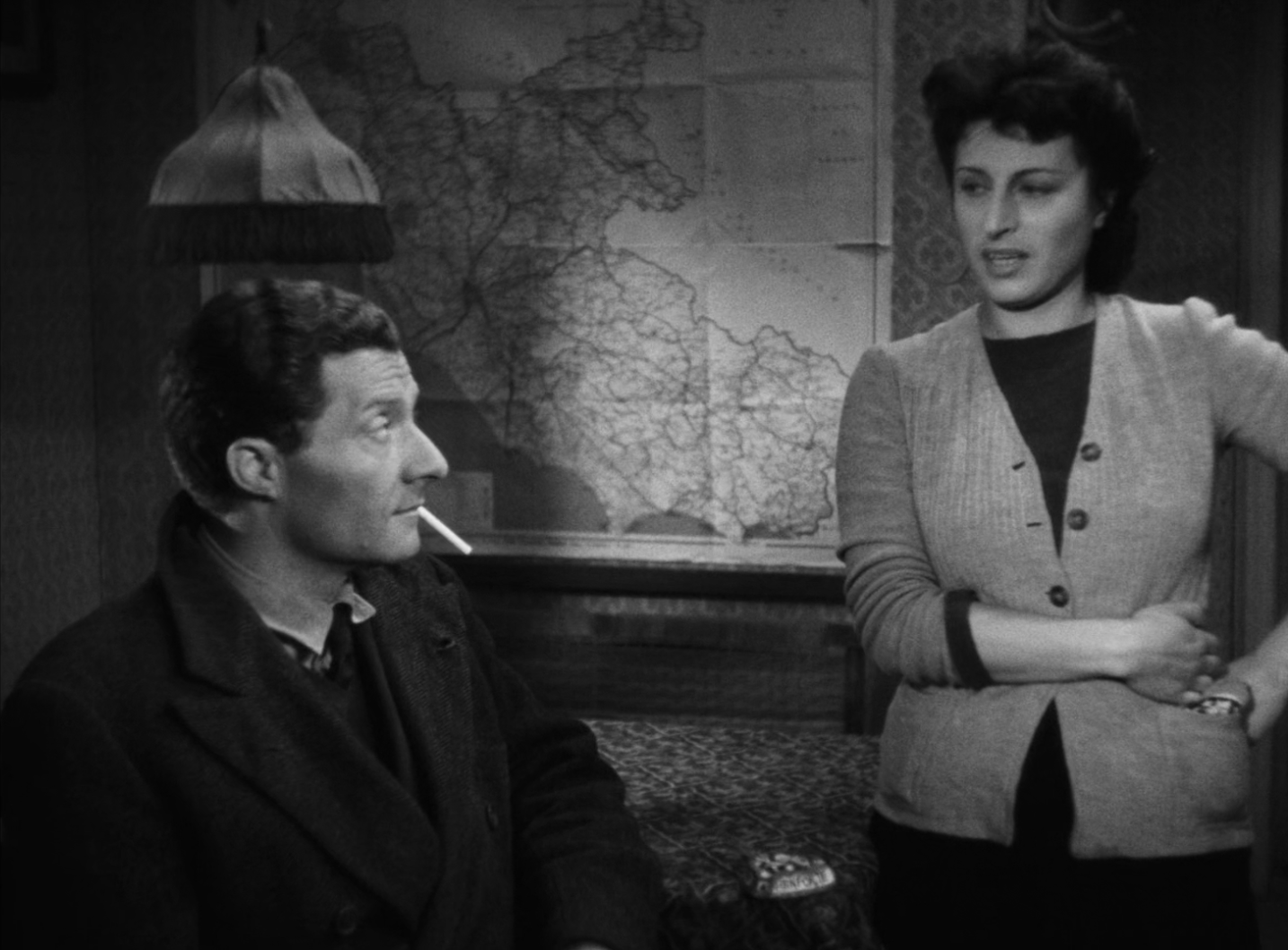
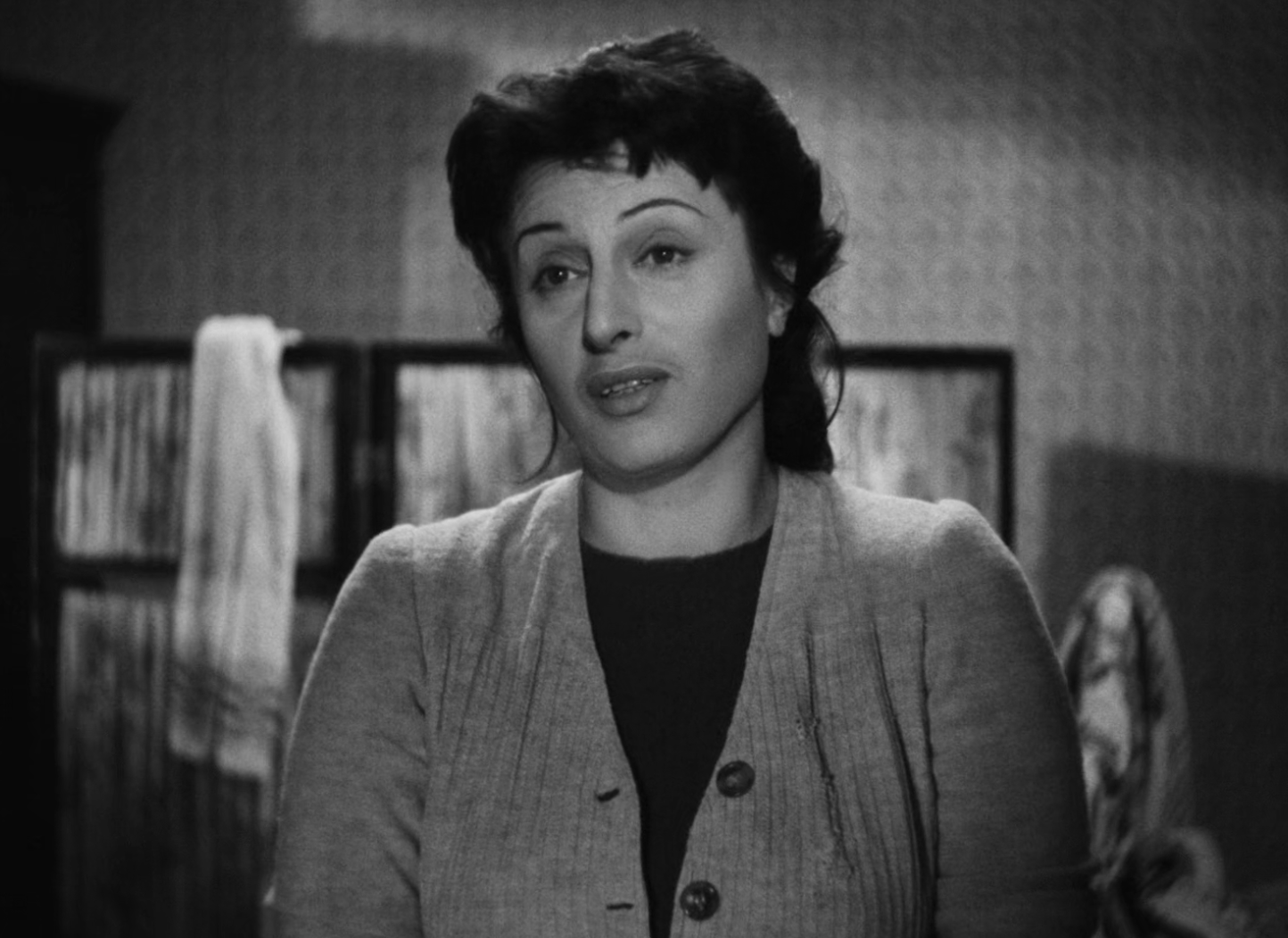
“E si è innamorato…” indovina Pina con un sorriso.
“Già. Succede”.
“Ah, succede”, concorda lei, annuendo, mentre lui accende una sigaretta.
“Ma non è una donna per me”, dice. Si alza in piedi e si dirige verso la finestra incollata. “Forse, se l'avessi conosciuta prima, quando era a via Tiburtina”, riflette lui.
“Beh, che c’entra? Una donna può cambiare, soprattutto quando è innamorata”.
“And you fell in love,” guesses Pina with a smile.
“Exactly. It happens.”
“Yes, it happens,” she agrees, nodding, as he lights a cigarette.
“But she’s not the woman for me,” he says. He stands and walks to the taped-up window. “Maybe if I’d met her before, when she was on Tiburtina Road,” he muses.
“Well, what does that have to do with it? A woman can change, especially when she’s in love.”
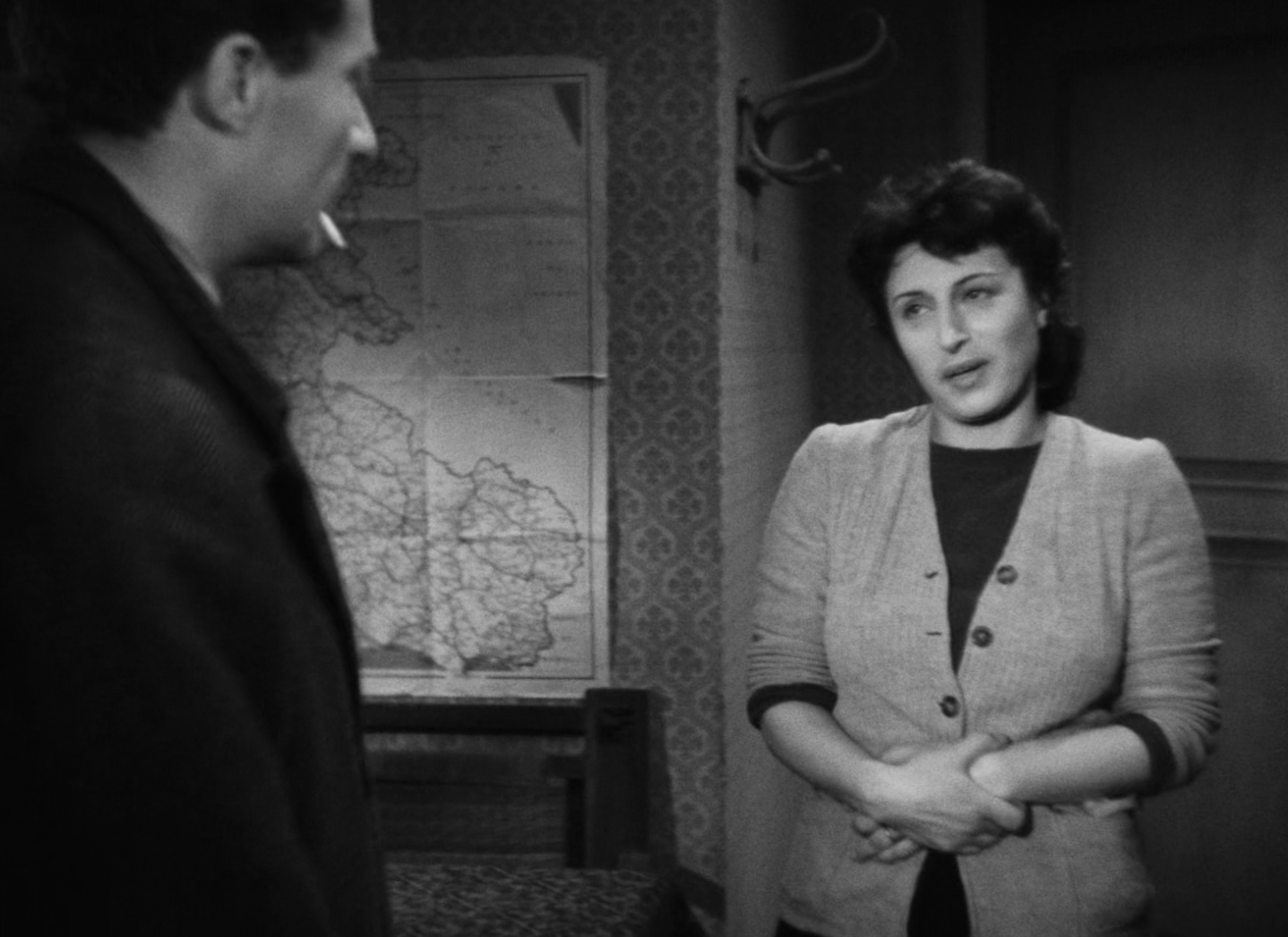
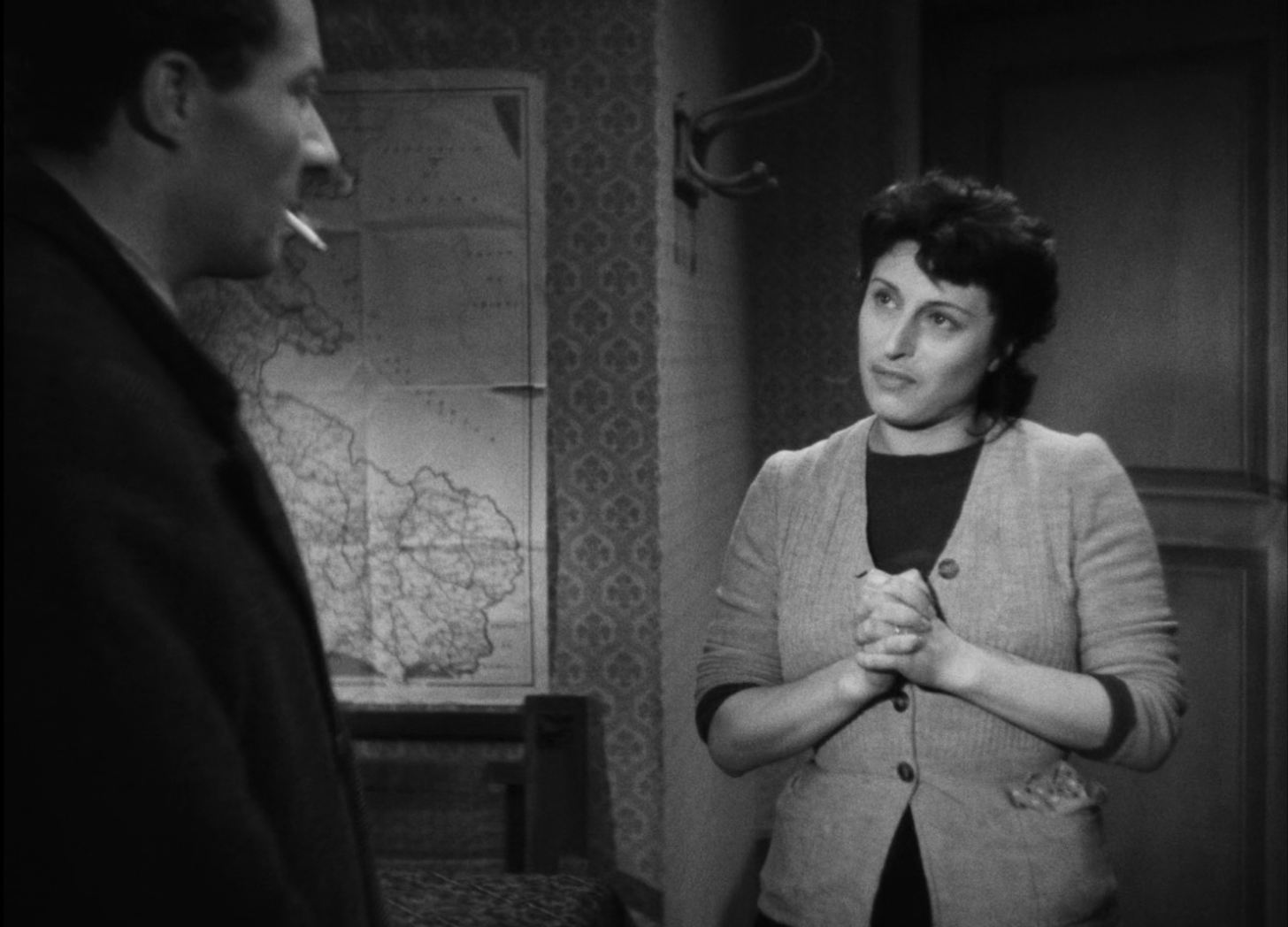
Lui si volta verso Pina. "Chi le dice che sia innamorata?" le chiede bruscamente.
"Perché non dovrebbe esserlo?" Poi si rende conto di qualcosa. "Dio mio!" – esclama, unendo le mani insieme – "Non le ho chiesto nemmeno se vuole un caffè! Lo vuole?"
"No, non si disturbi!"
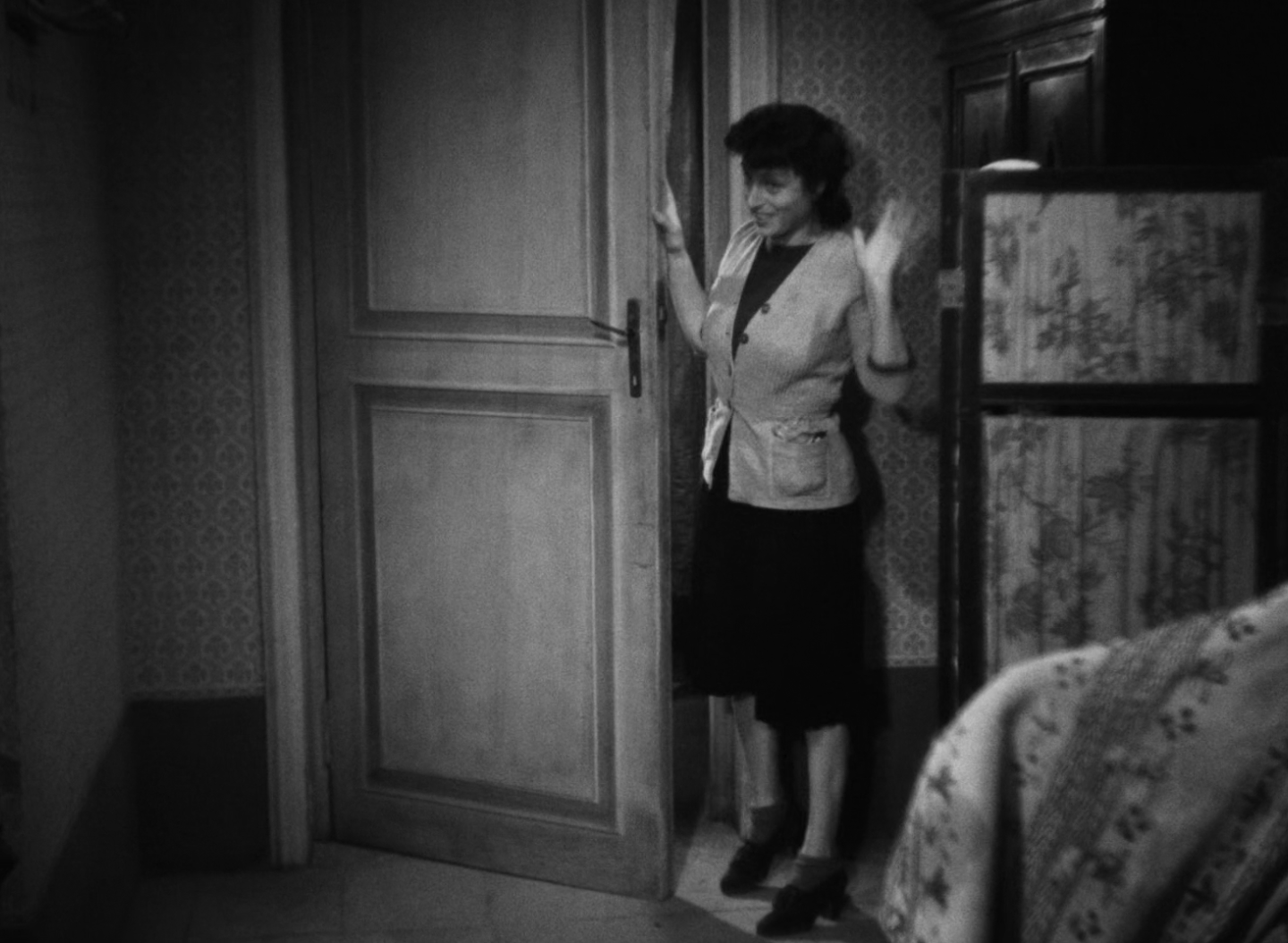
“Ma per carità, un momento, lo faccio subito!” Si dirige verso la porta.“Guardi: è caffè per modo di dire, eh?”
He turns back towards Pina. “Who says she’s in love?” he challenges her.
“Why shouldn’t she be?” Then she realizes something. “Heavens!” she exclaims, clasping her hands together, “I didn’t even offer you coffee! Would you like some?”
“No, don’t bother!”
“Oh, for goodness sake, it’ll only take a moment!” She walks to the door. “Mind you, it’s ‘coffee’ only in a manner of speaking.”
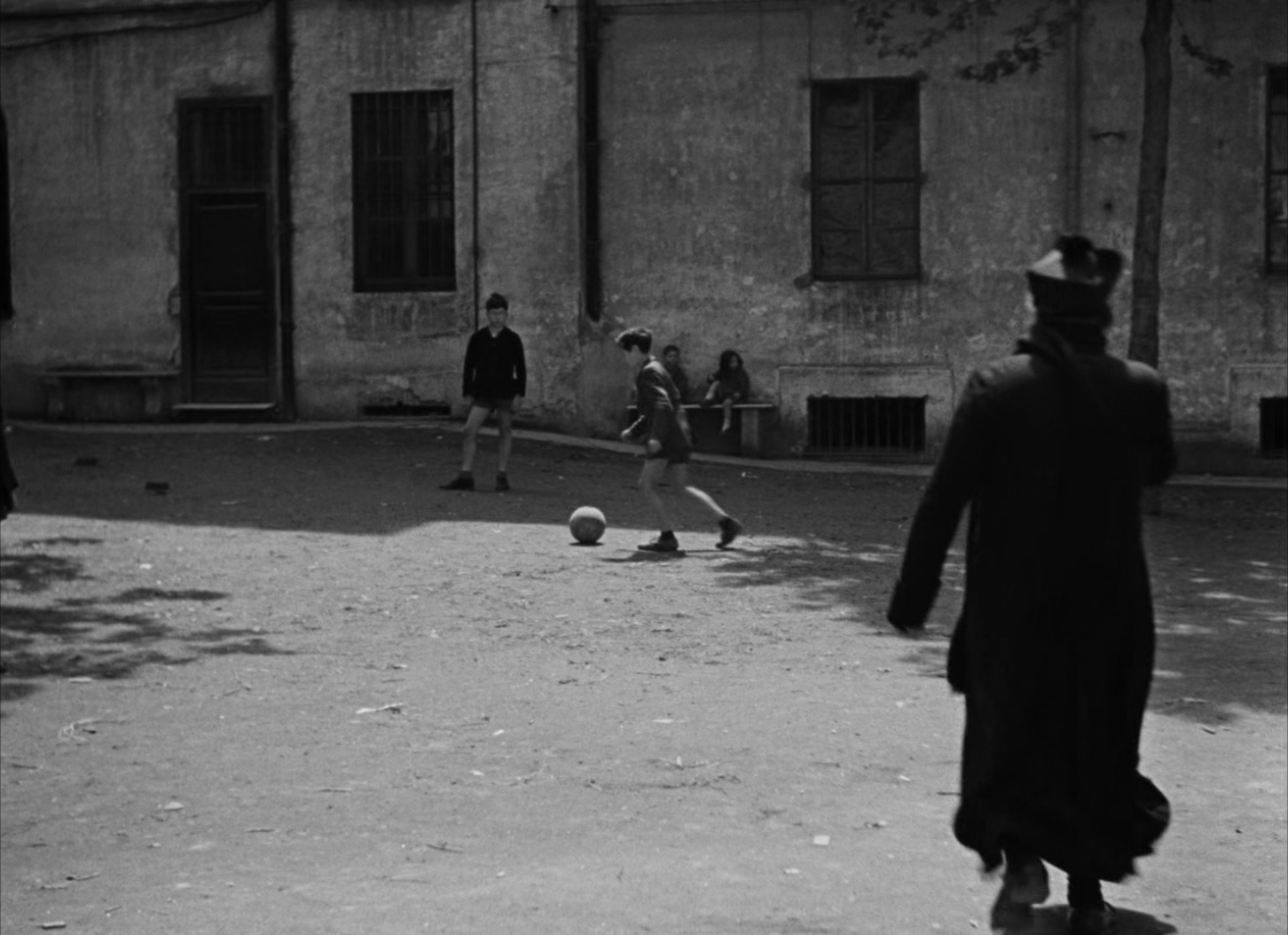
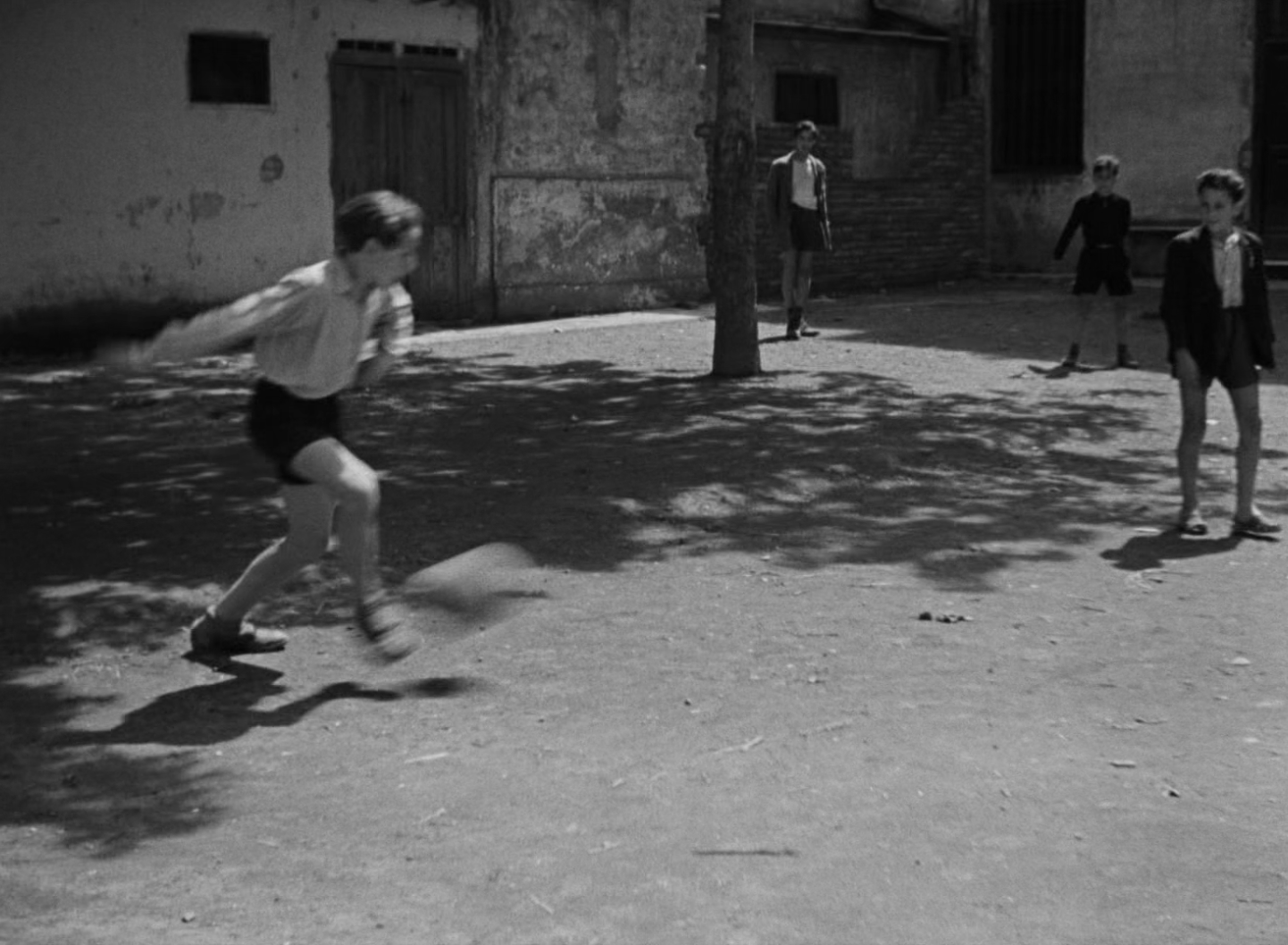
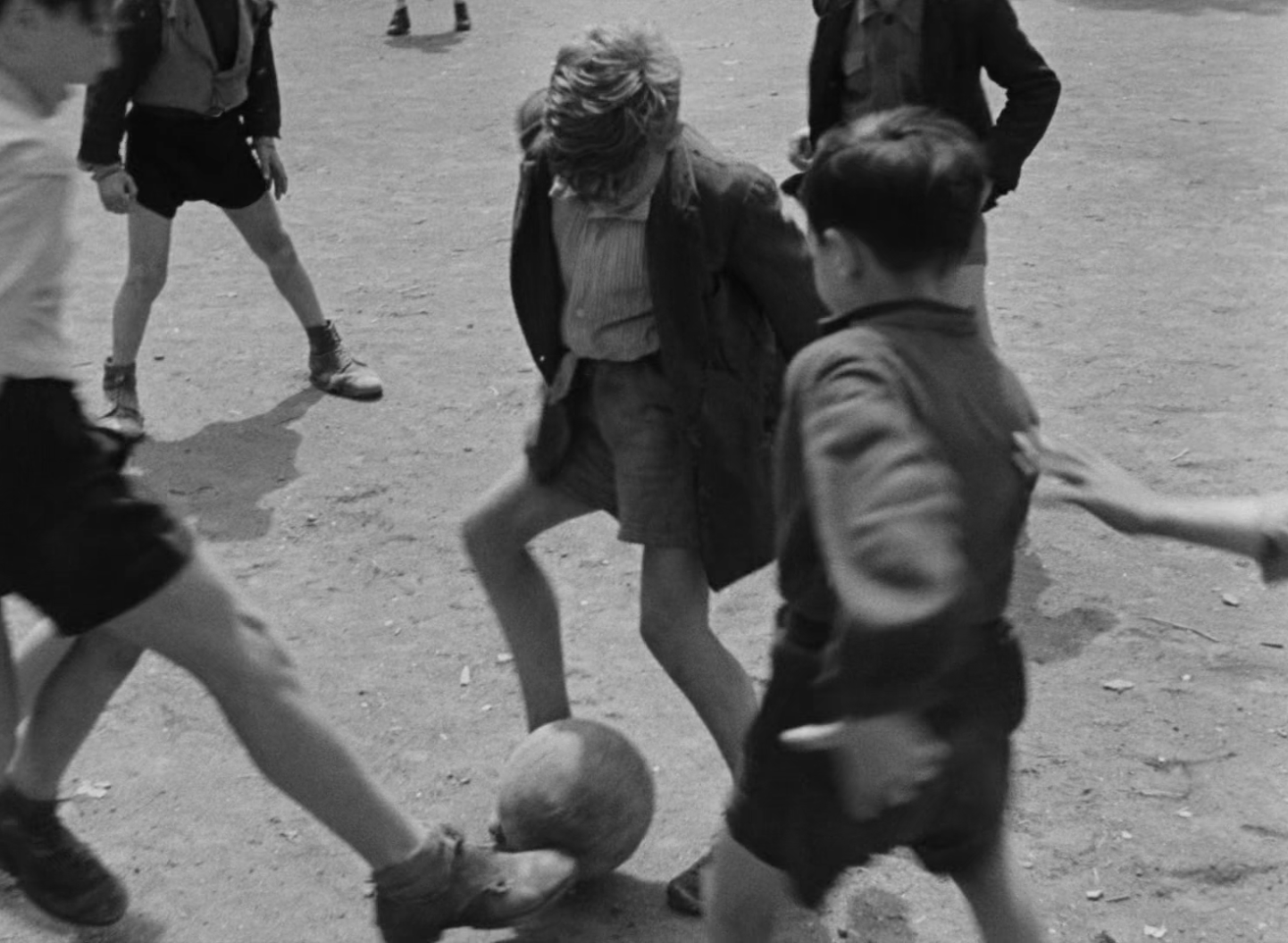
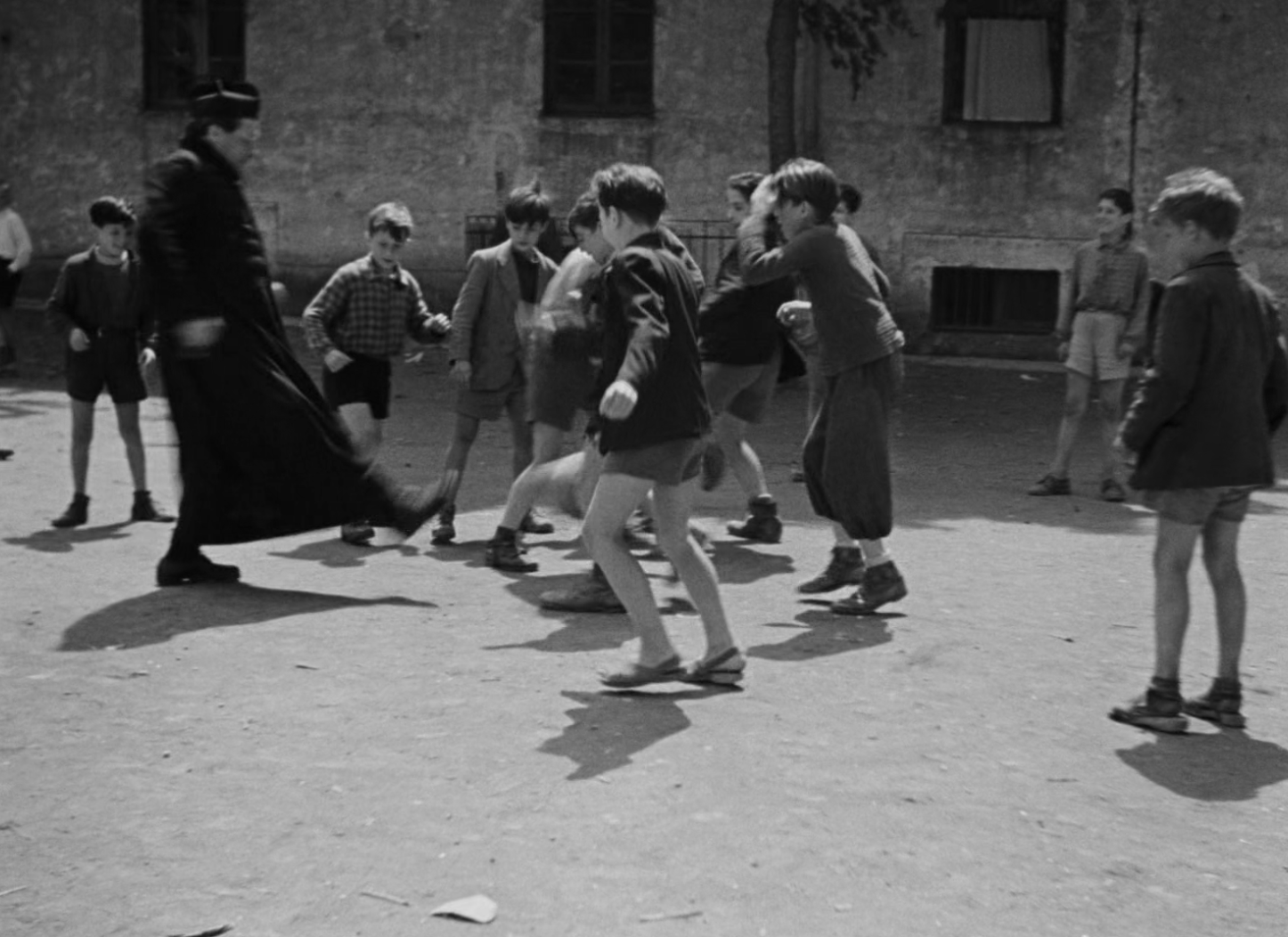
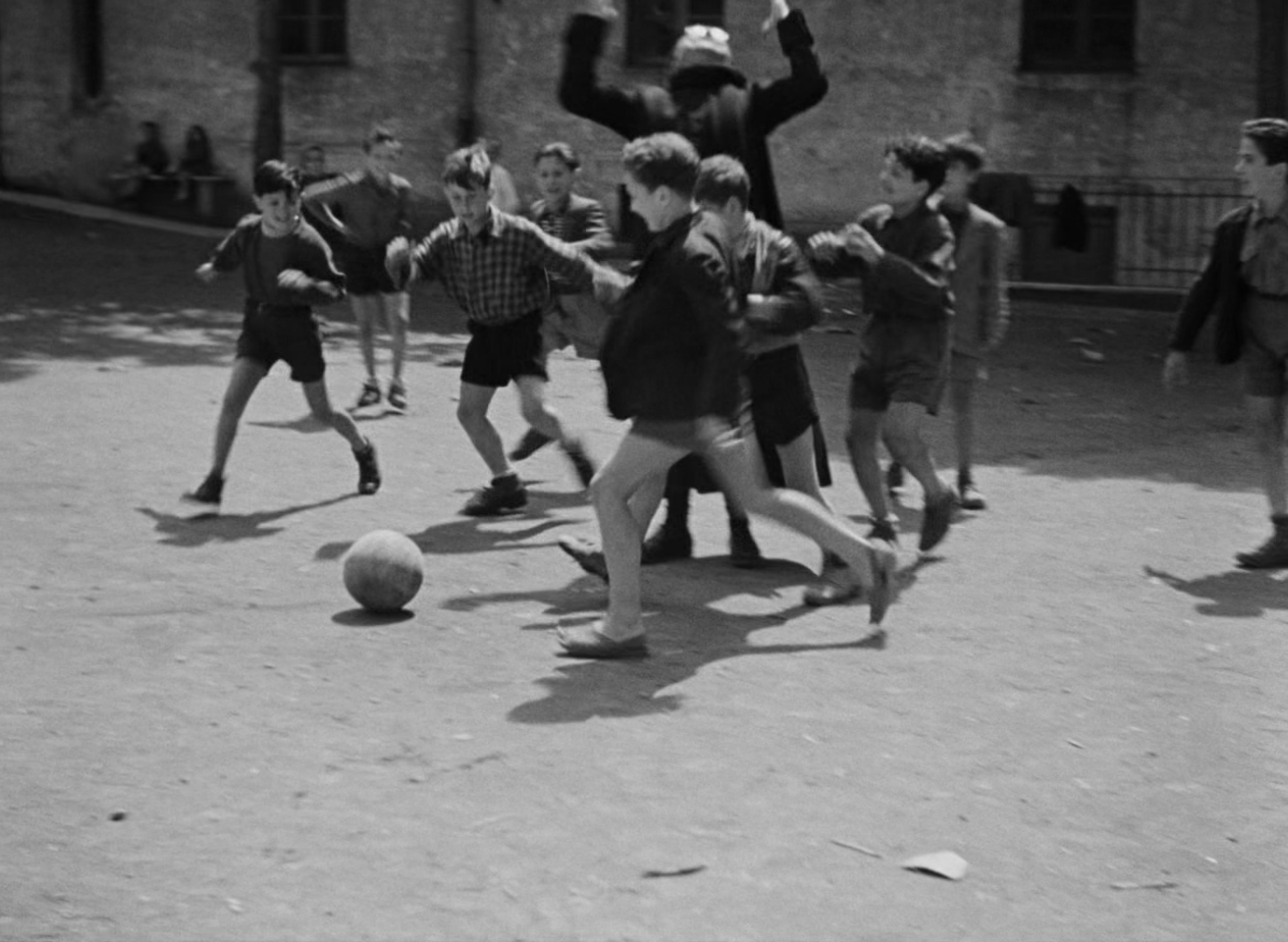
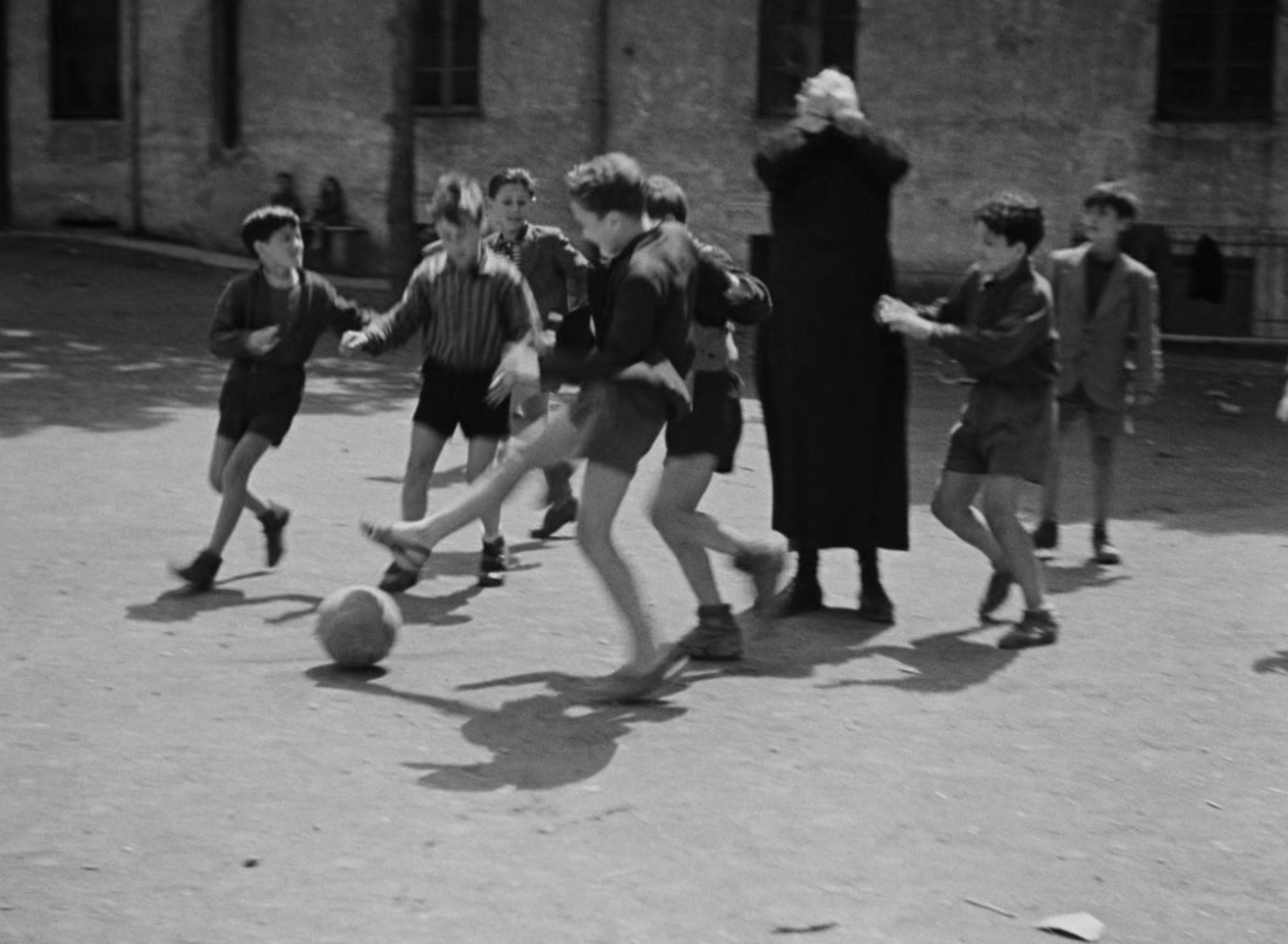
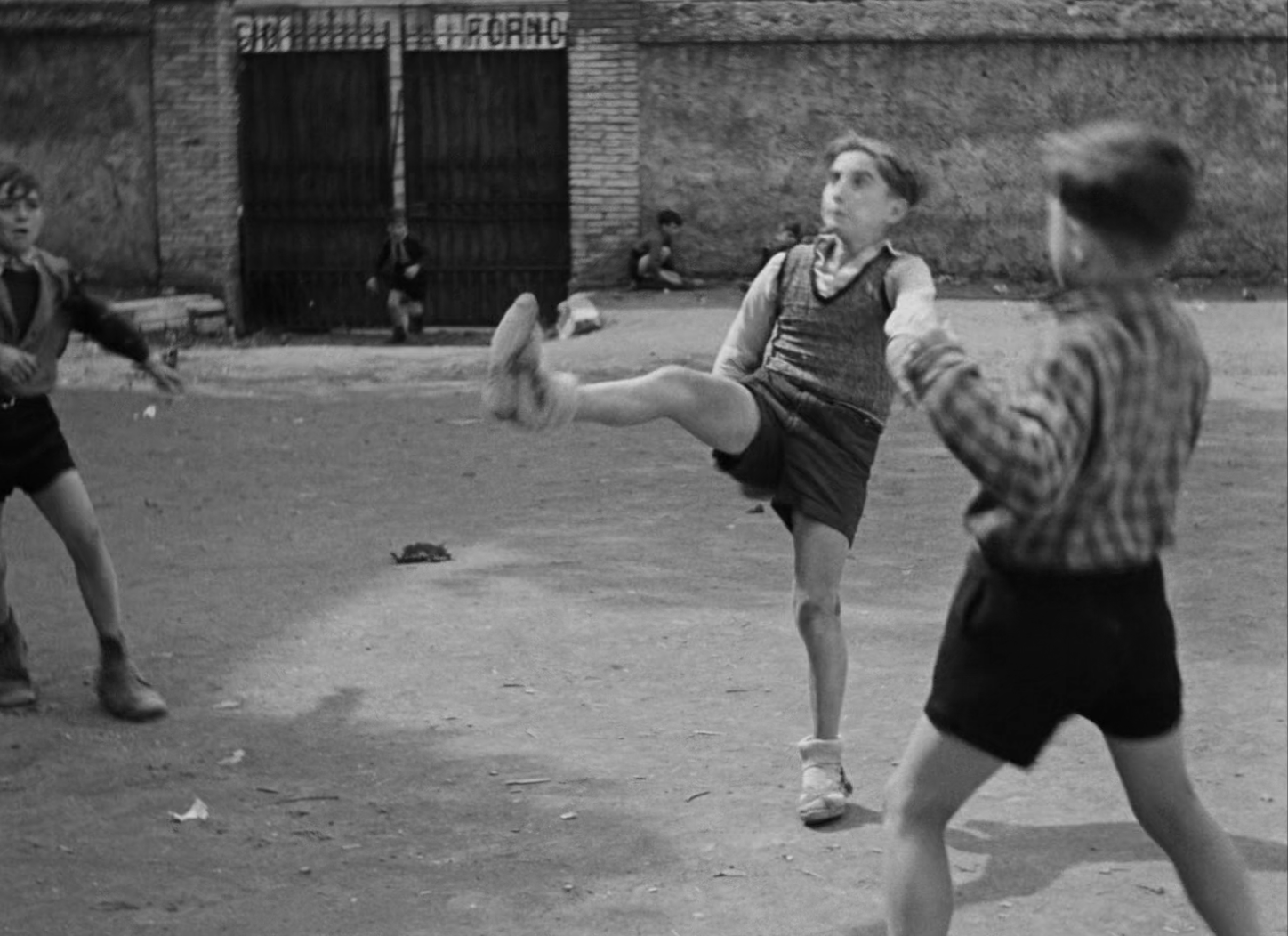
Nel cortile della chiesa è in corso una partita di calcio molto caotica. Mentre i bambini si spingono e si urtano, proiettano a terra delle ombre nere.
Nella sua lunga tonaca, Don Pietro (Aldo Fabrizi)* corre avanti e indietro con i bambini. Sopra le loro urla e le loro incitazioni, grida: "Non gridate! Cos’è questa confusione?!”
*Il personaggio di Don Pietro è ispirato alla storia vera di Don Giuseppe Morosini.
In the church courtyard, a very chaotic game of soccer is underway. As the children push and shove each other, they cast black shadows on the ground.
In his long robe, Don Pietro* runs back and forth with the kids. Over their yelling and cheering, he shouts, “No yelling! What is all this ruckus?!”
*Don Pietro’s character is based upon the real story of Don Giuseppe Morosini.
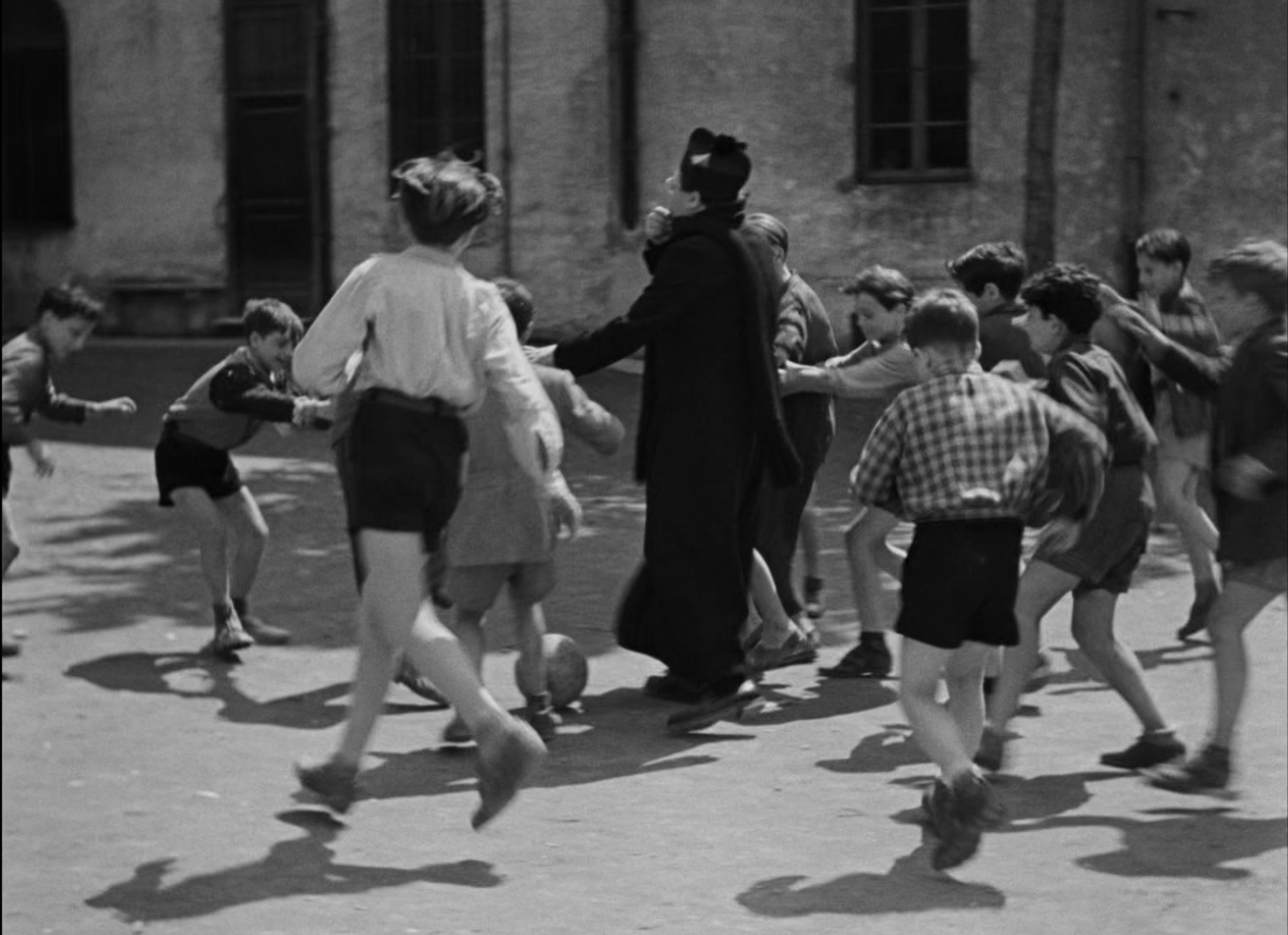
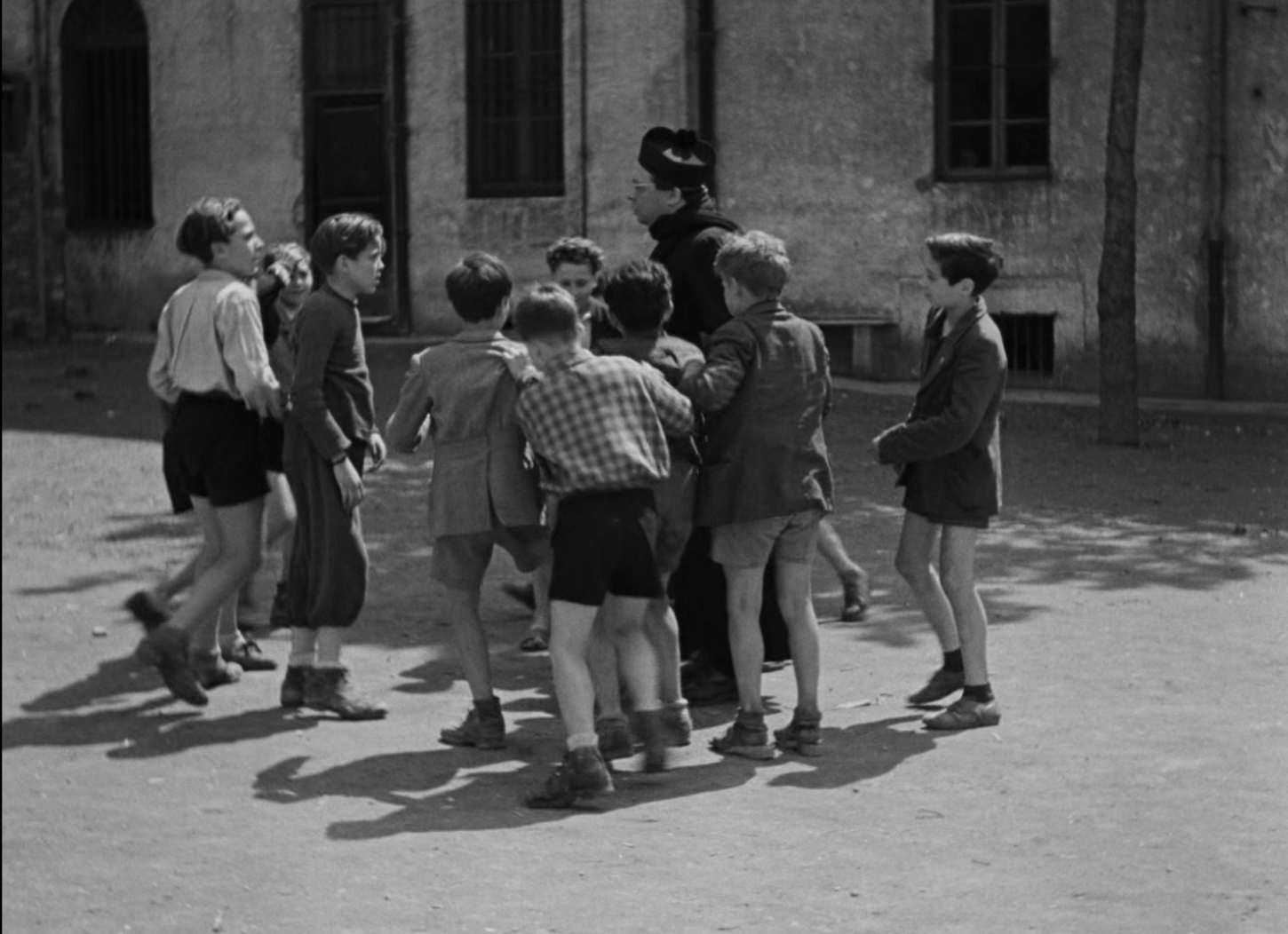
Perdendo finalmente la pazienza, soffia forte nel suo fischietto, e i bambini si mettono intorno a lui. Lui si rivolge a uno di loro. "Ti ho detto tante volte che non devi fare il gioco pesante!”
Losing his patience at last, he blows hard on his whistle, and the boys gather around him. He addresses one of them. “I told you many times before that you shouldn’t play roughly!”
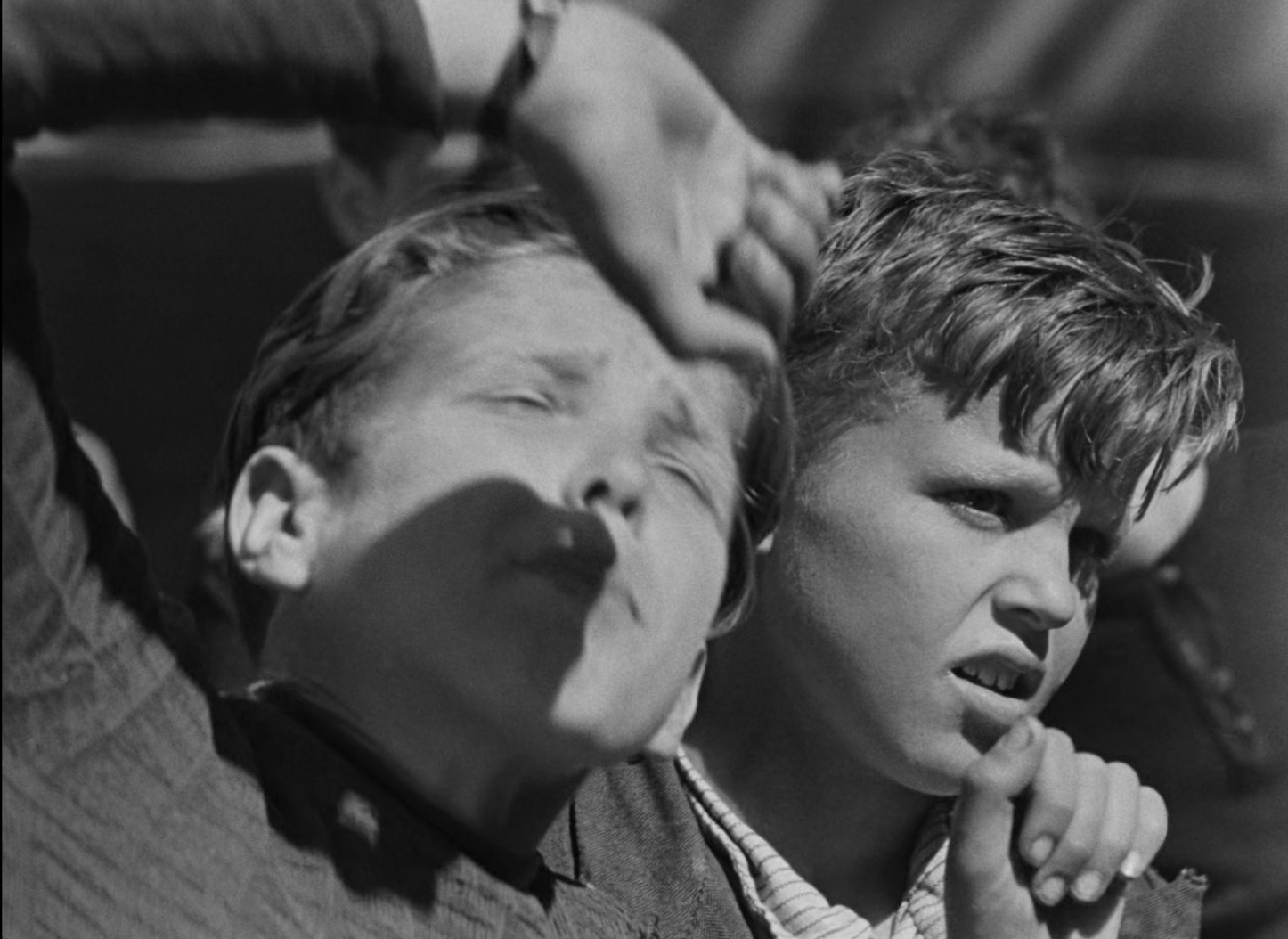
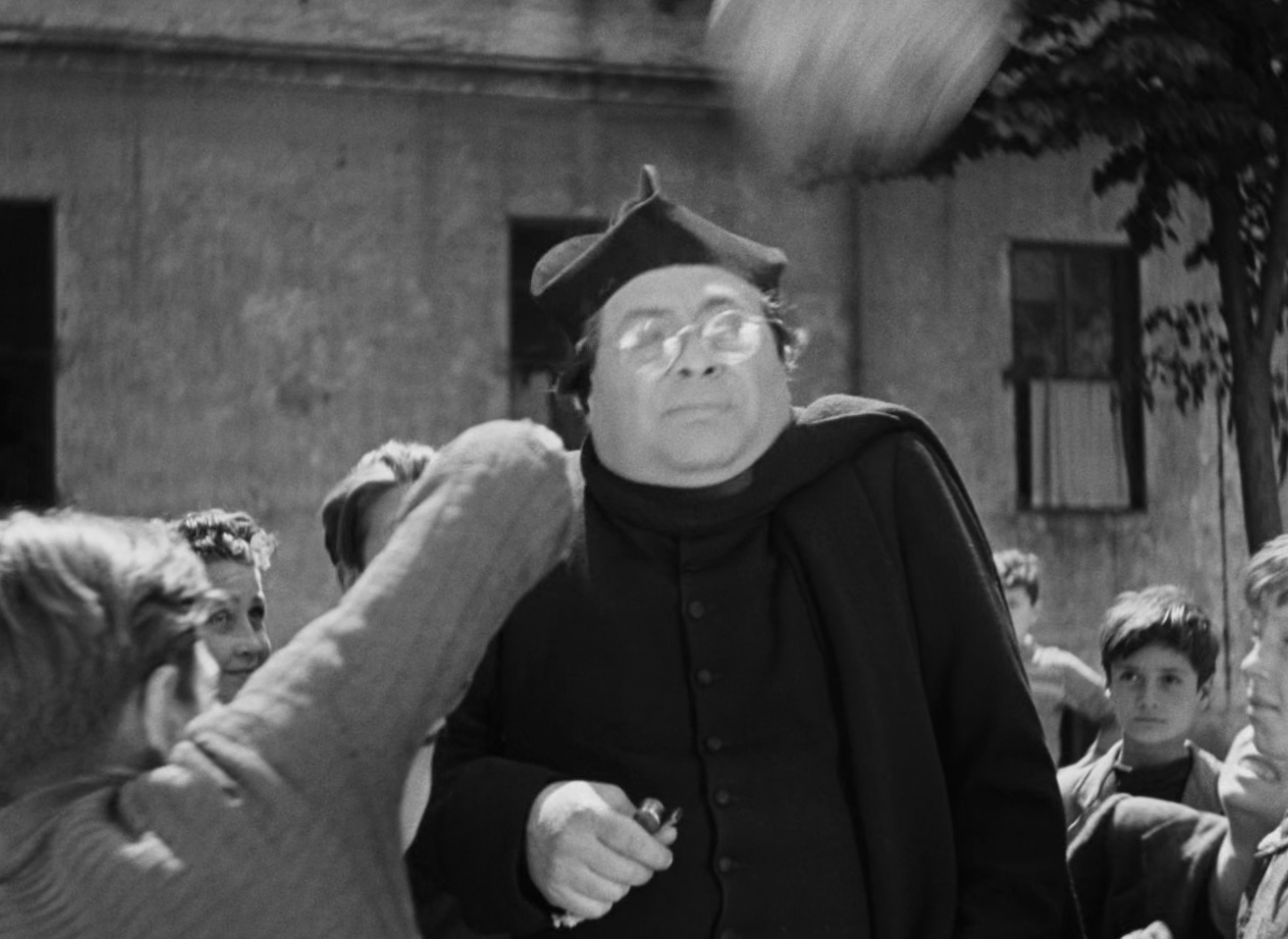
Mentre parla a uno di loro, un altro lancia la palla, forte, in aria. Un altro ragazzo urla: "Attento, Don Pietro!” Ovviamente, la palla colpisce il prete proprio in testa.
As he speaks to one of them, another kicks the ball, hard, up in the air. Another boy yells, “Look out, Don Pietro!” Sure enough, the ball hits the priest right in the head.
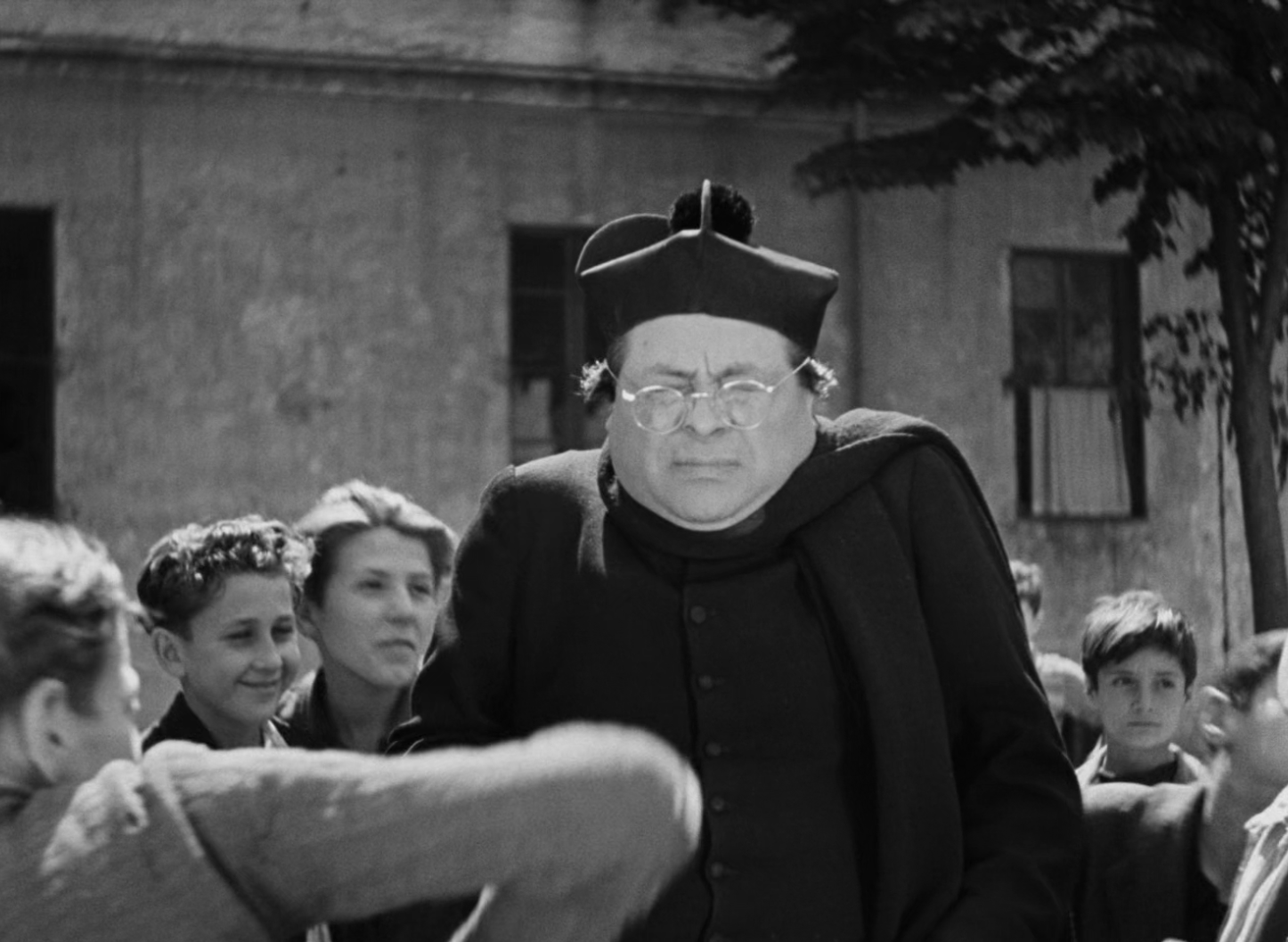
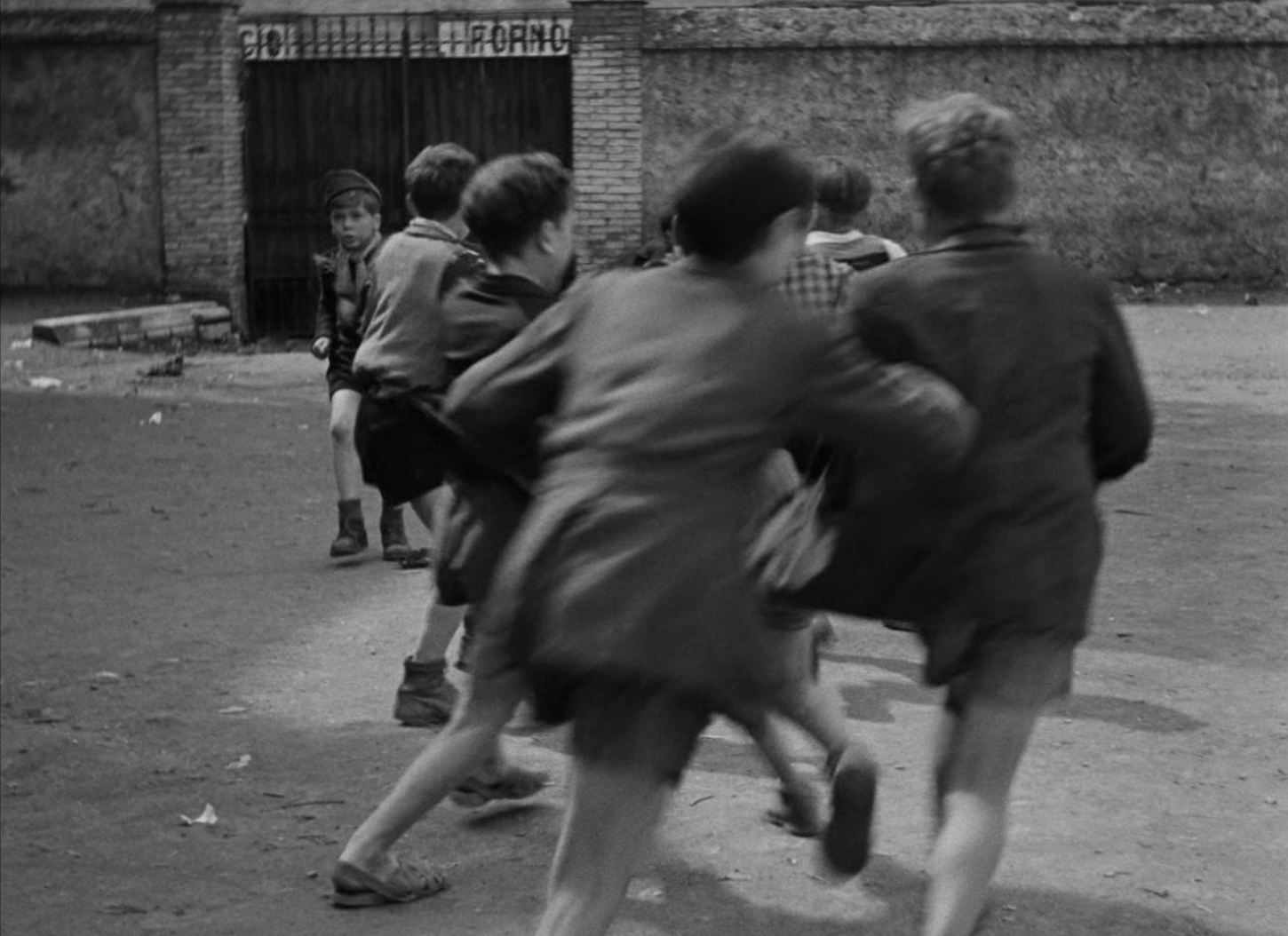
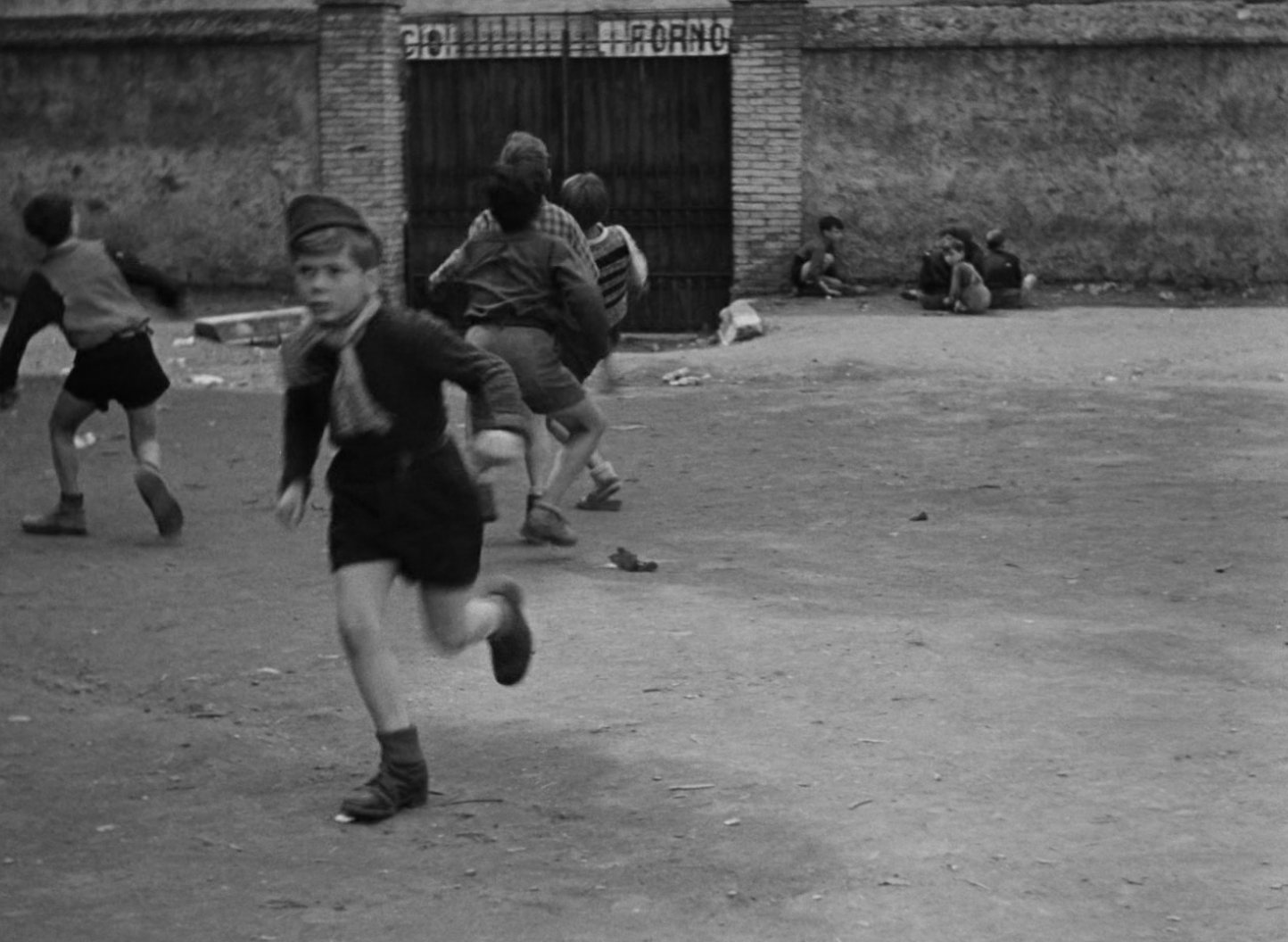
Lui fa una smorfia, ma non ci sono danni. I bambini ridono e ricominciano la loro partita. È allora che Marcello, il figlio di Pina, arriva di corsa, con una sciarpa legata al collo.
He winces, but there’s no damage done. The kids laugh and resume their game. That’s when Marcello, Pina’s son, comes running up, a scarf tied around his neck.
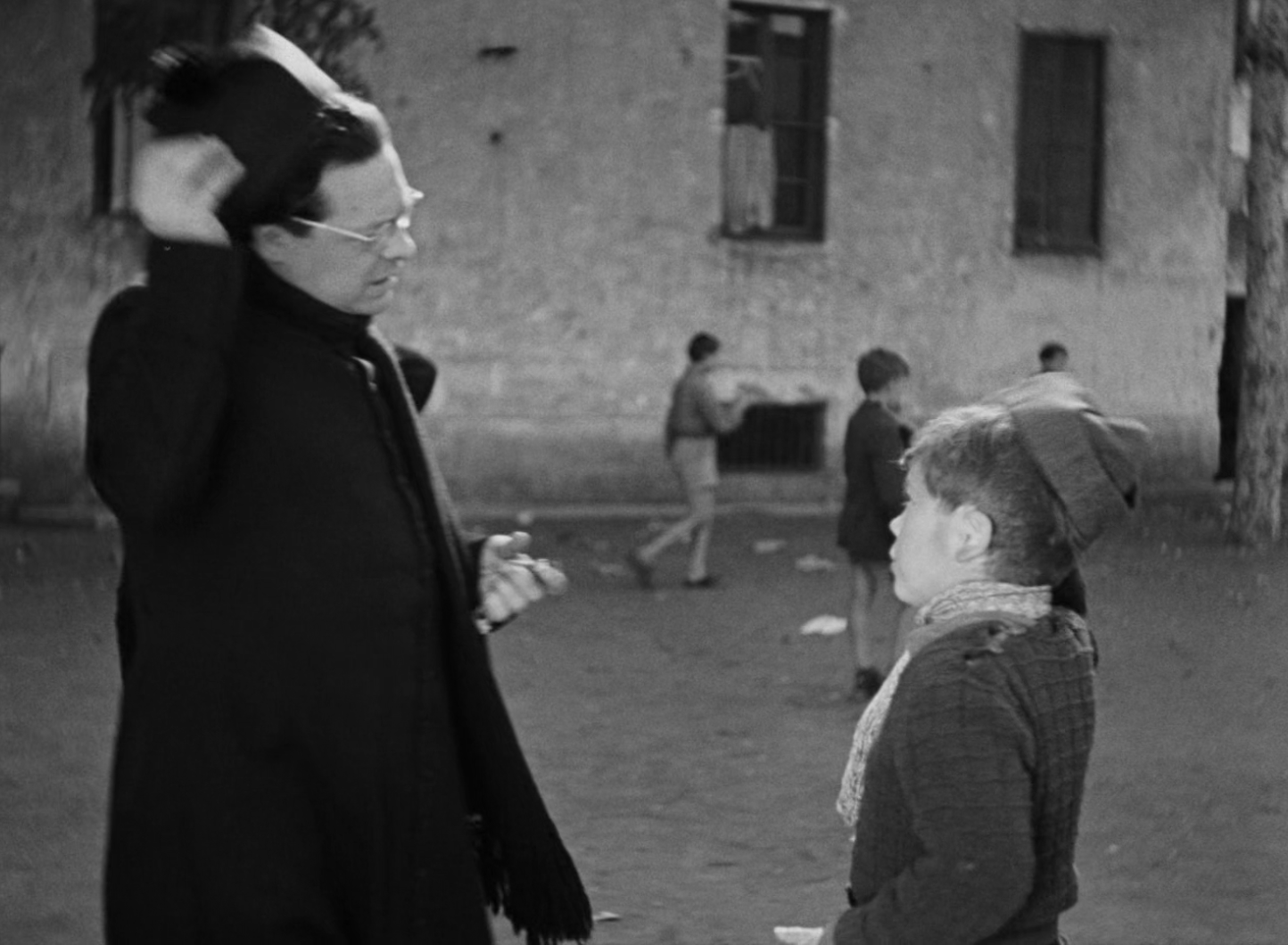
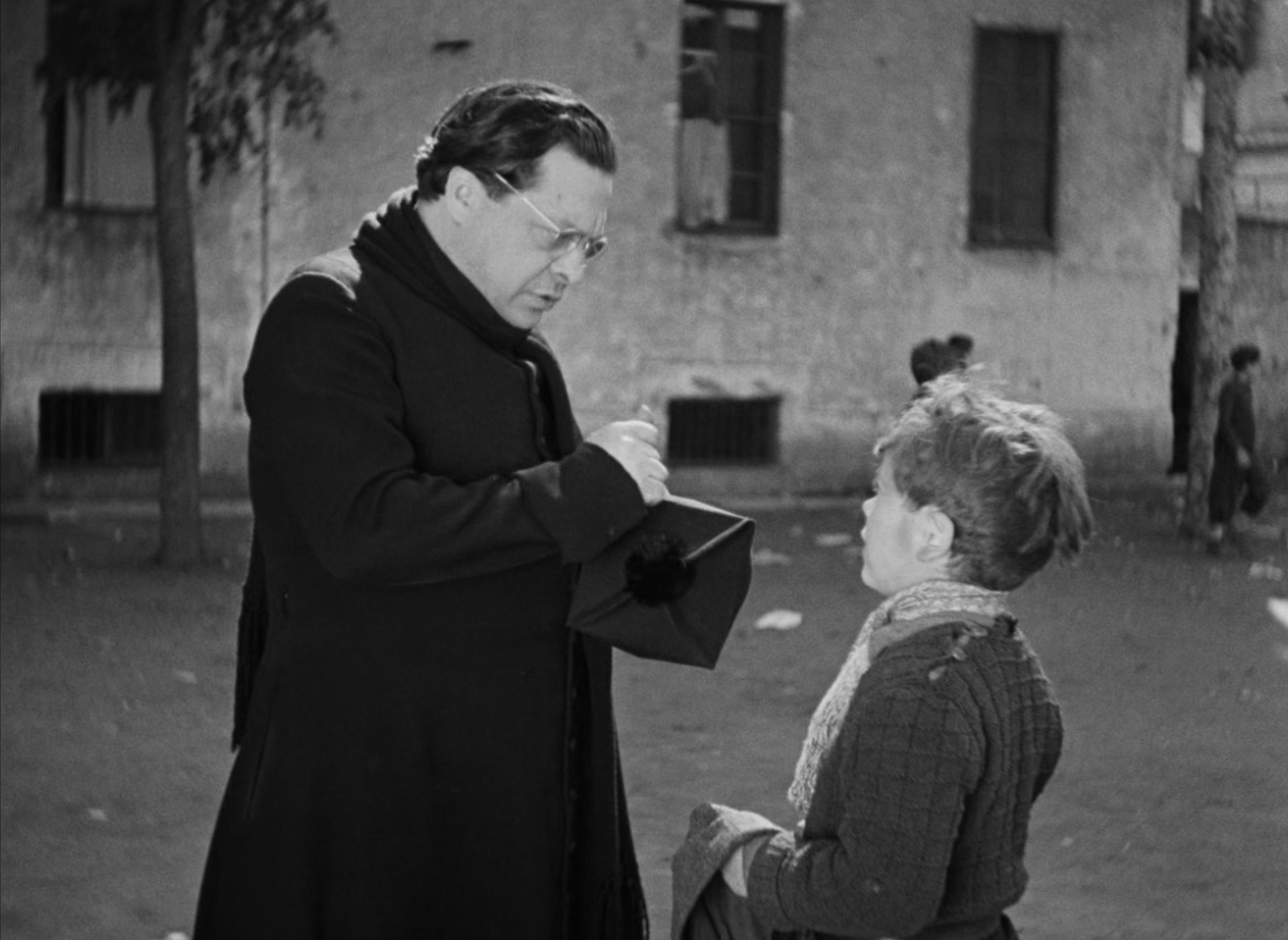
Educatamente, si tolgono entrambi il cappello. "Ah, sei tu" – dice don Pietro – “È un miracolo vederti all'oratorio”.
“Ci sono venuto perché mi ha mandato mia madre”.
“Ha fatto bene. Farà bene anche a te”.
Politely, they both take off their hats. “Oh, it’s you,” says Don Pietro. “It’s a miracle to see you at the parish.”
“I came here because my mother sent me.”
“She did the right thing. It will do you good, too.”
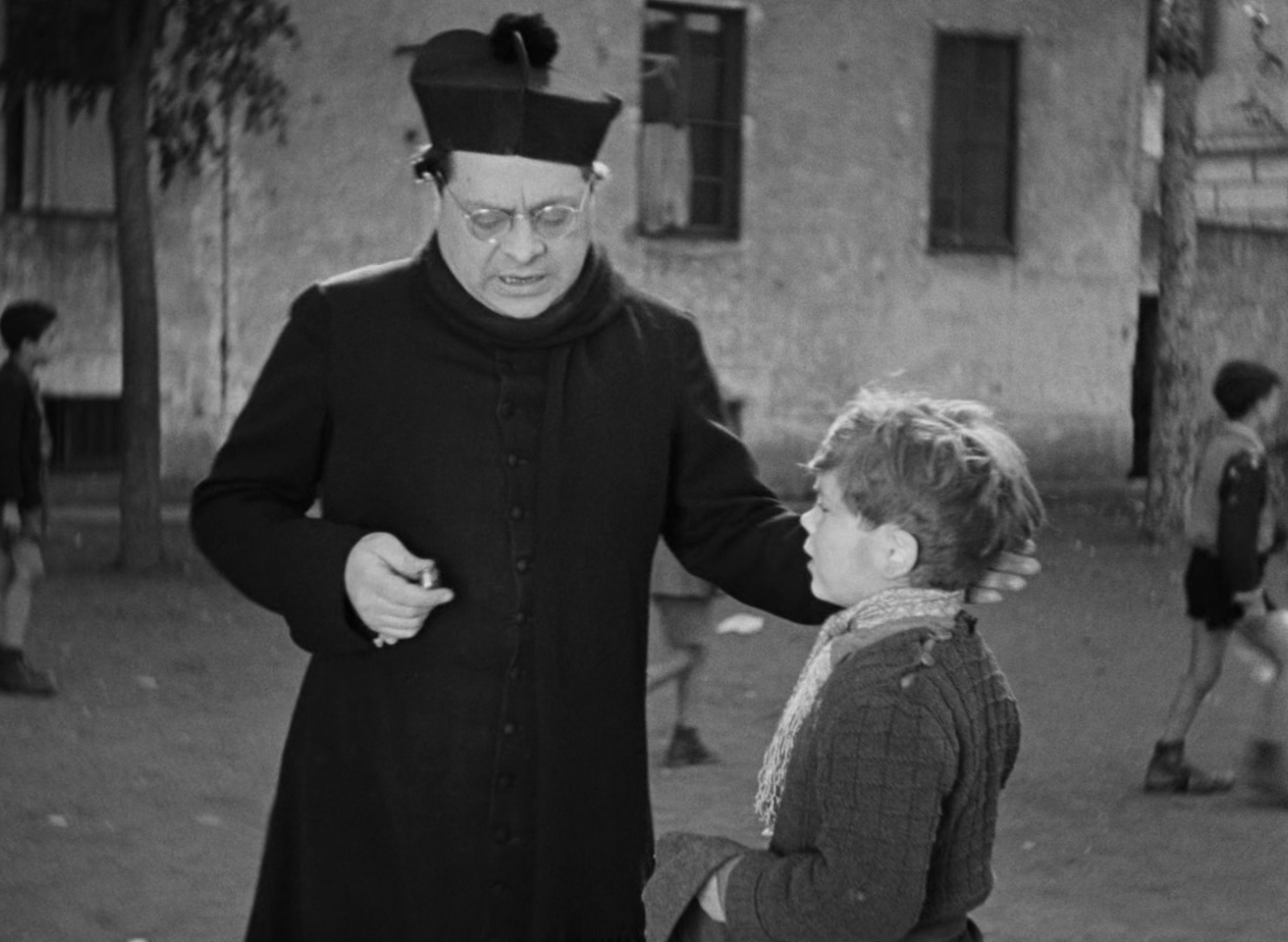
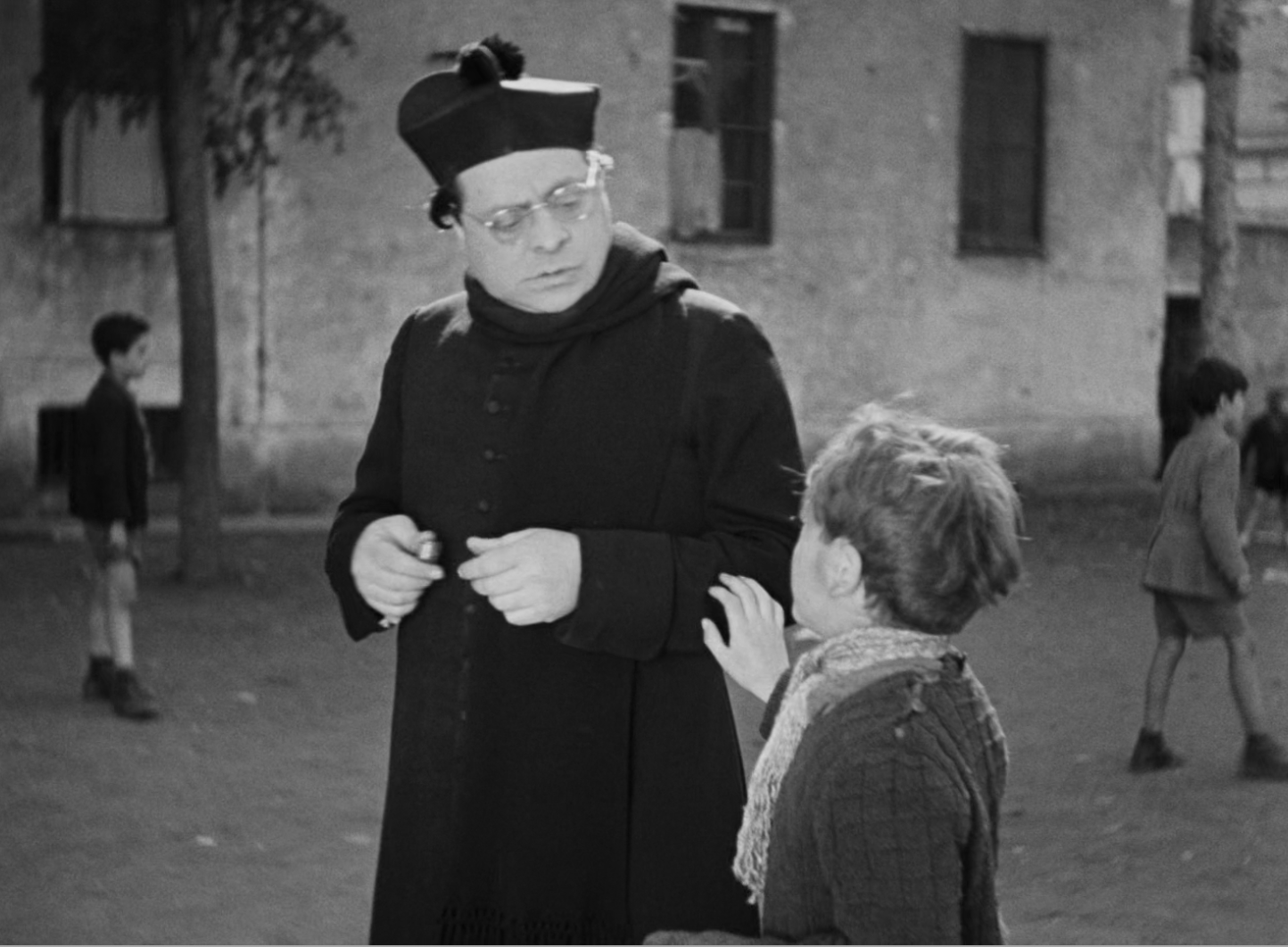
Ma ha capito male. Mette la mano sul collo del ragazzo per condurlo con sé, ma Marcello lo ferma. “Don Pietro, mi faccia finire di parlare”.
But he has misunderstood. He puts his hand on the boy’s neck to lead him, but Marcello stops him. “Don Pietro, let me finish talking.”
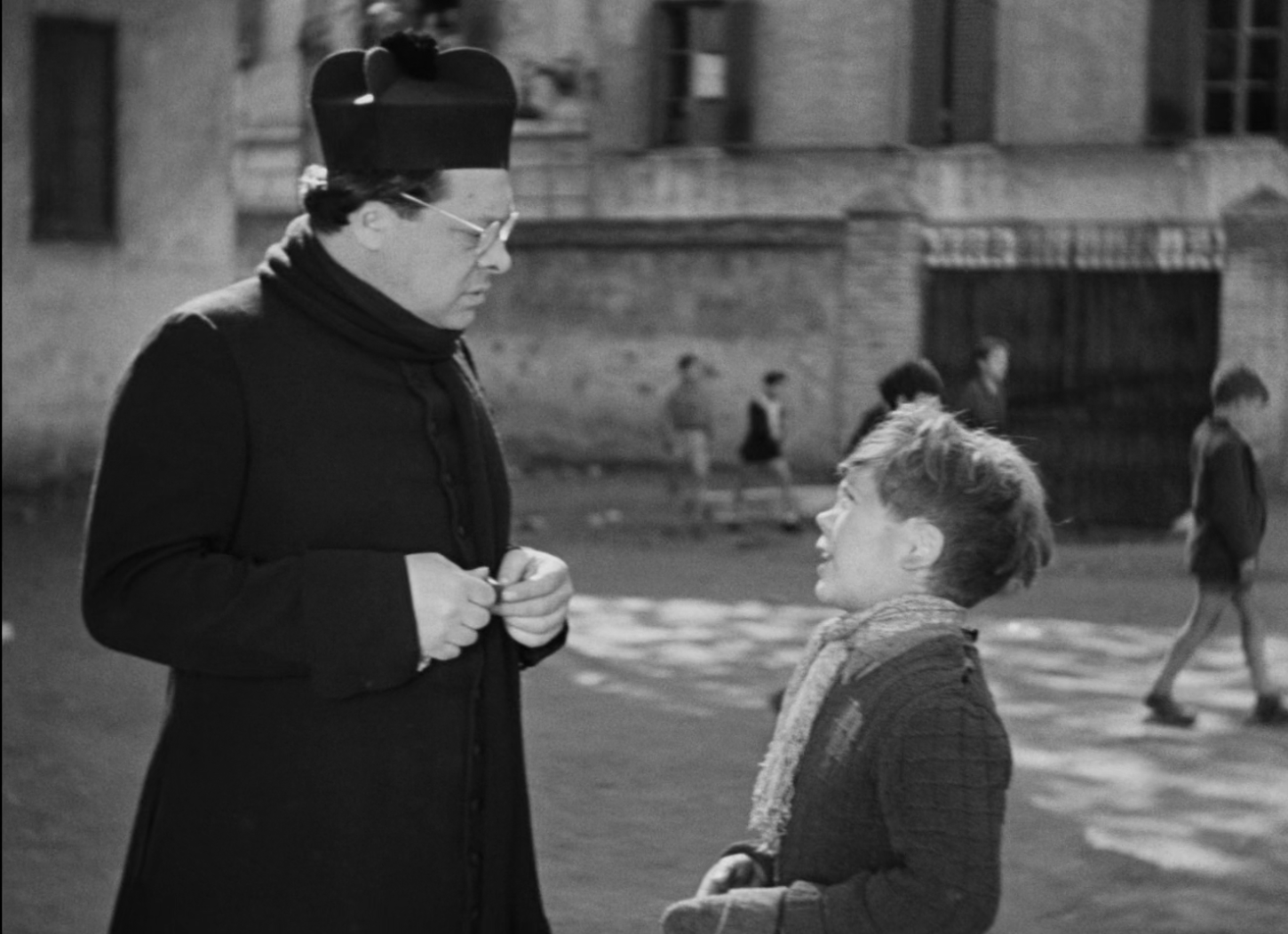
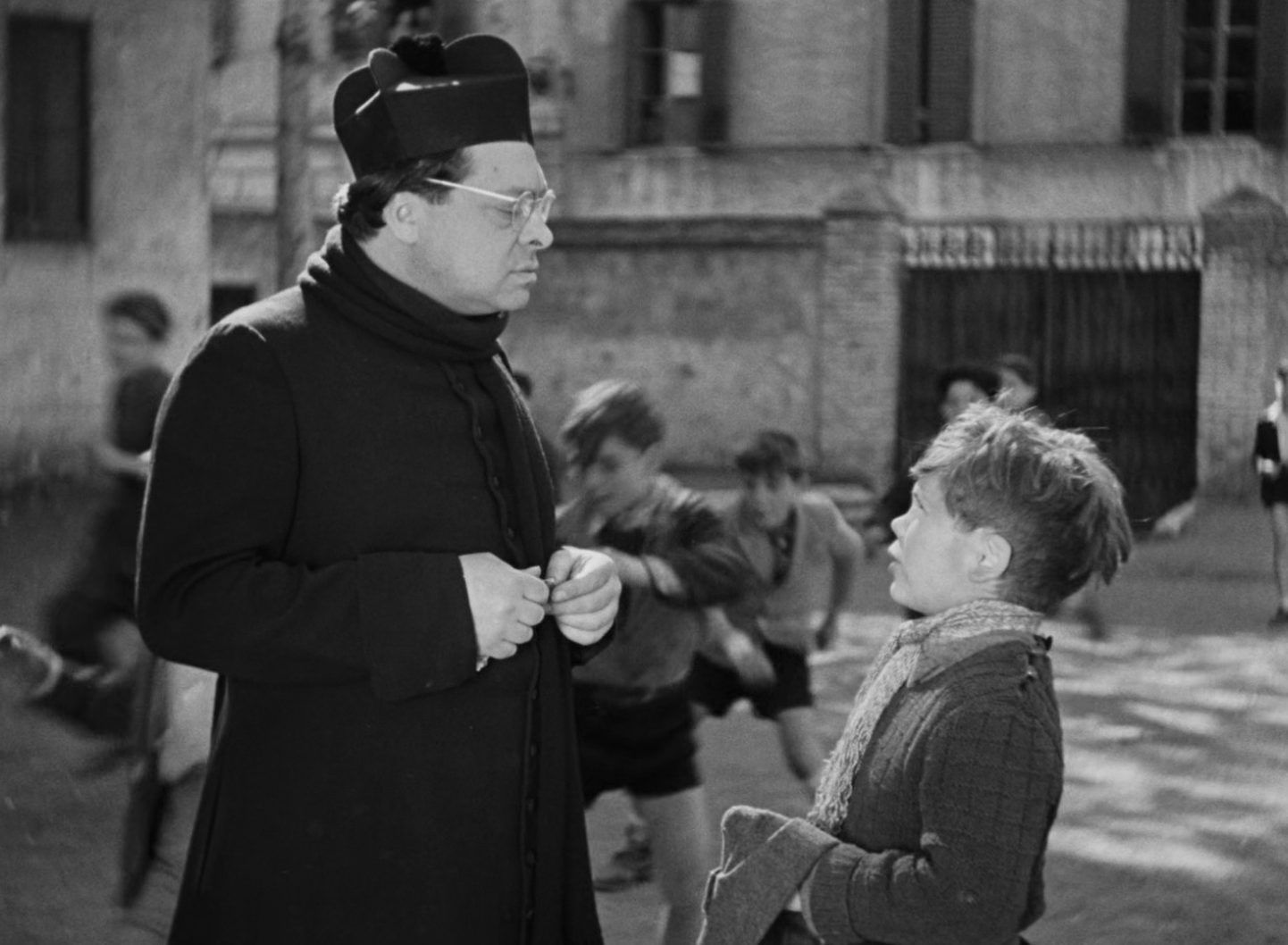
Si guardano, nel bel mezzo del tumulto della partita di calcio. Il ragazzo guarda seriamente il prete dal basso verso l’alto. “Dice che deve venire subito a casa nostra. È una cosa importante”.
Don Pietro lo osserva dubbiosamente attraverso i suoi occhiali. “Cosa?”
“Io non lo so. Mia madre ha fatto la misteriosa. Ma ci deve essere qualcuno a casa di Francesco”.
They look at each other, amid the tumult of the soccer game. The boy looks up earnestly at the priest. “She says to come to our house quickly. It’s something important.”
Don Pietro observes him dubiously. “What?”
“I don’t know. My mom acted mysterious. But there must be someone in Francesco’s apartment.”
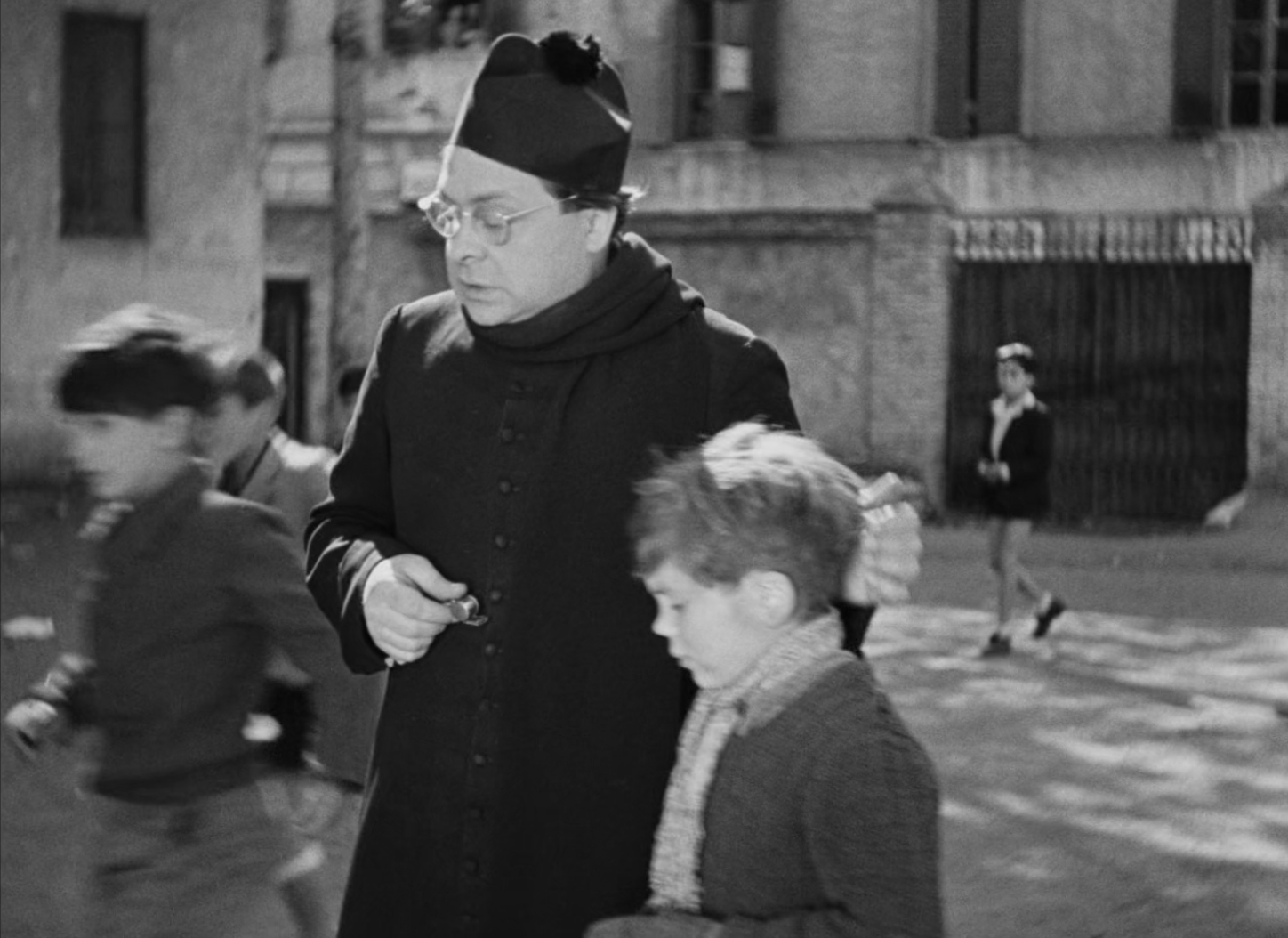
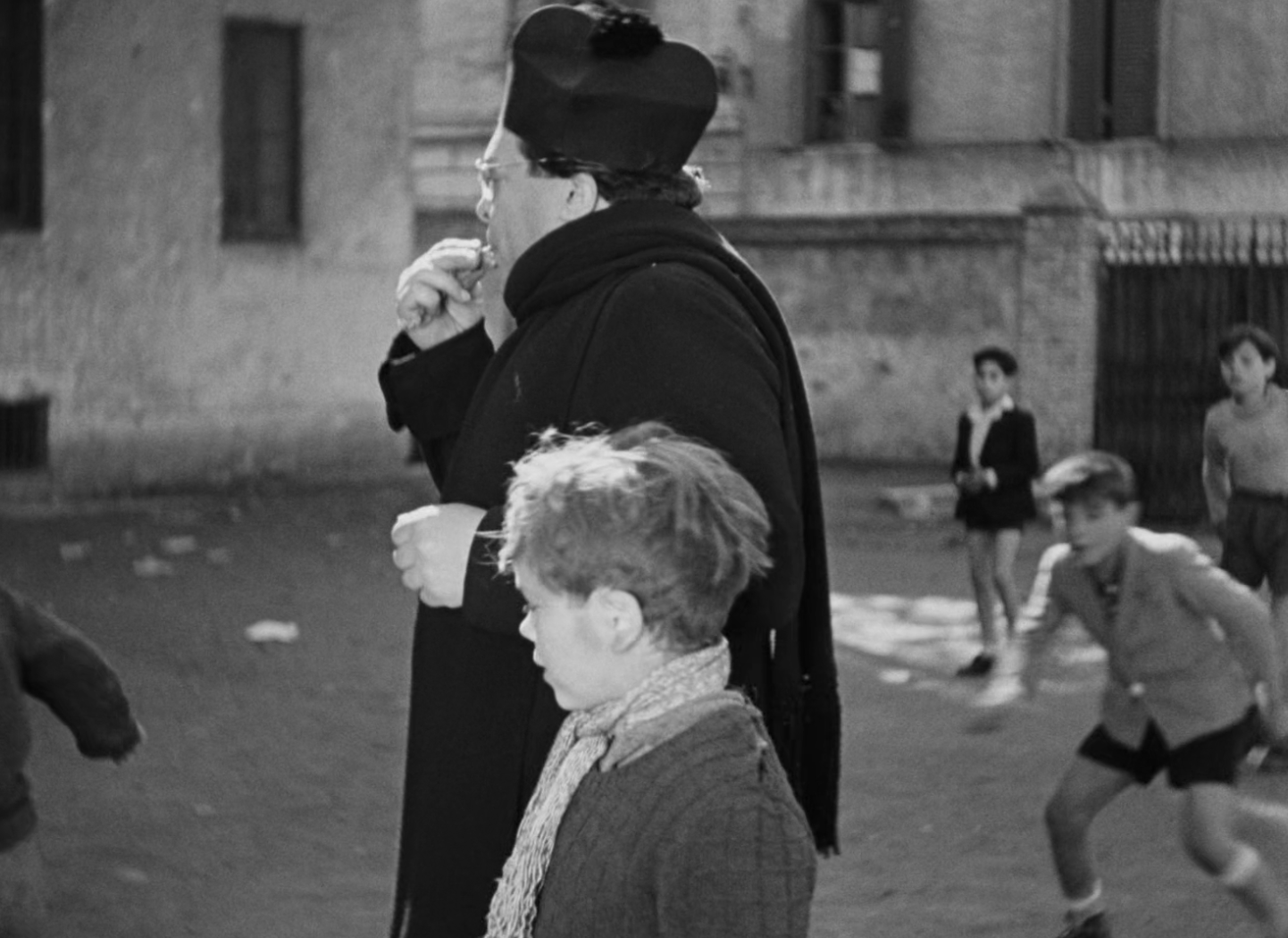
"Va bene. Andiamo”. Mette la mano sulla nuca del ragazzo e iniziano a camminare. Ma prima di andarsene, il prete fischia di nuovo.
“All right. Let’s go.” He puts his hand on the nape of the boy’s neck and they begin walking. But before he leaves, the priest blows his whistle again.
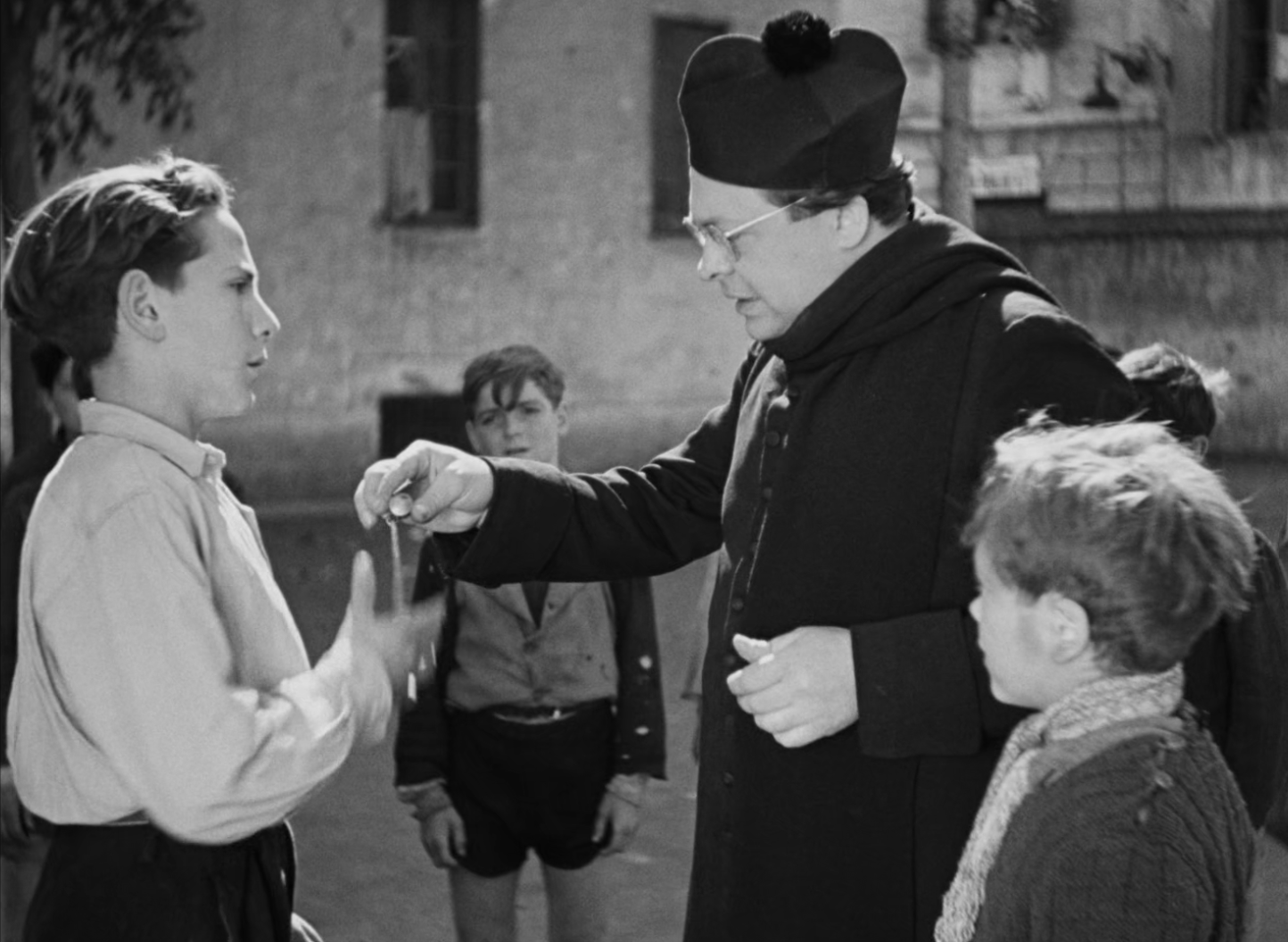
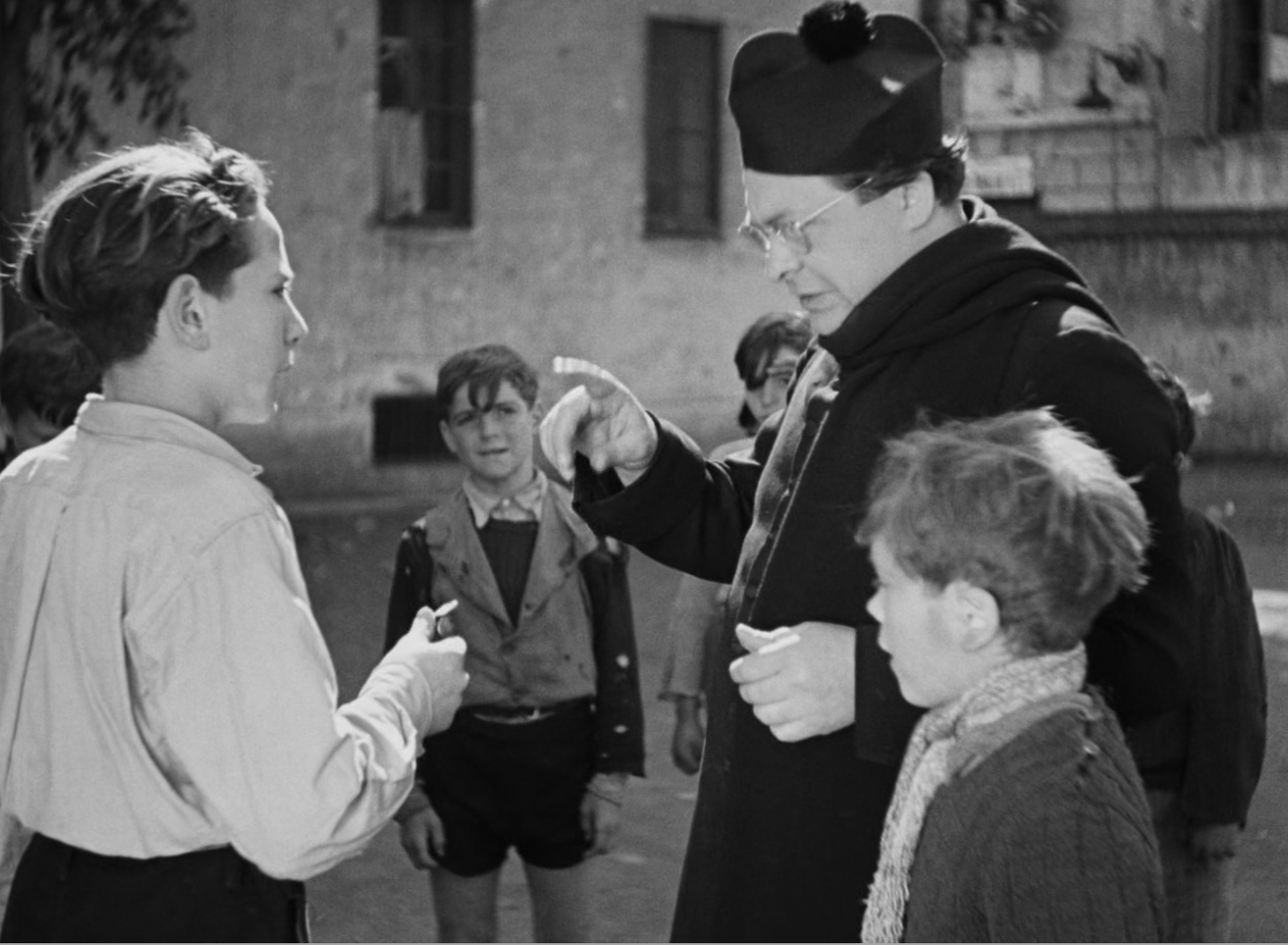
I bambini si riuniscono intorno. Don Pietro chiama uno dei ragazzi più grandi: "Gilberto, senti. Adesso verrà Agostino”. Gli consegna il fischietto. “Tu dirigi il gioco”. E aggiunge, puntando il dito: “Mi raccomando non fate i cattivi”.
The boys gather around. Don Pietro calls one of the older boys, “Gilberto, listen. Agostino will be here soon.” He hands over the whistle. “You run the game.” He adds, pointing a finger, “Please, behave yourselves.”
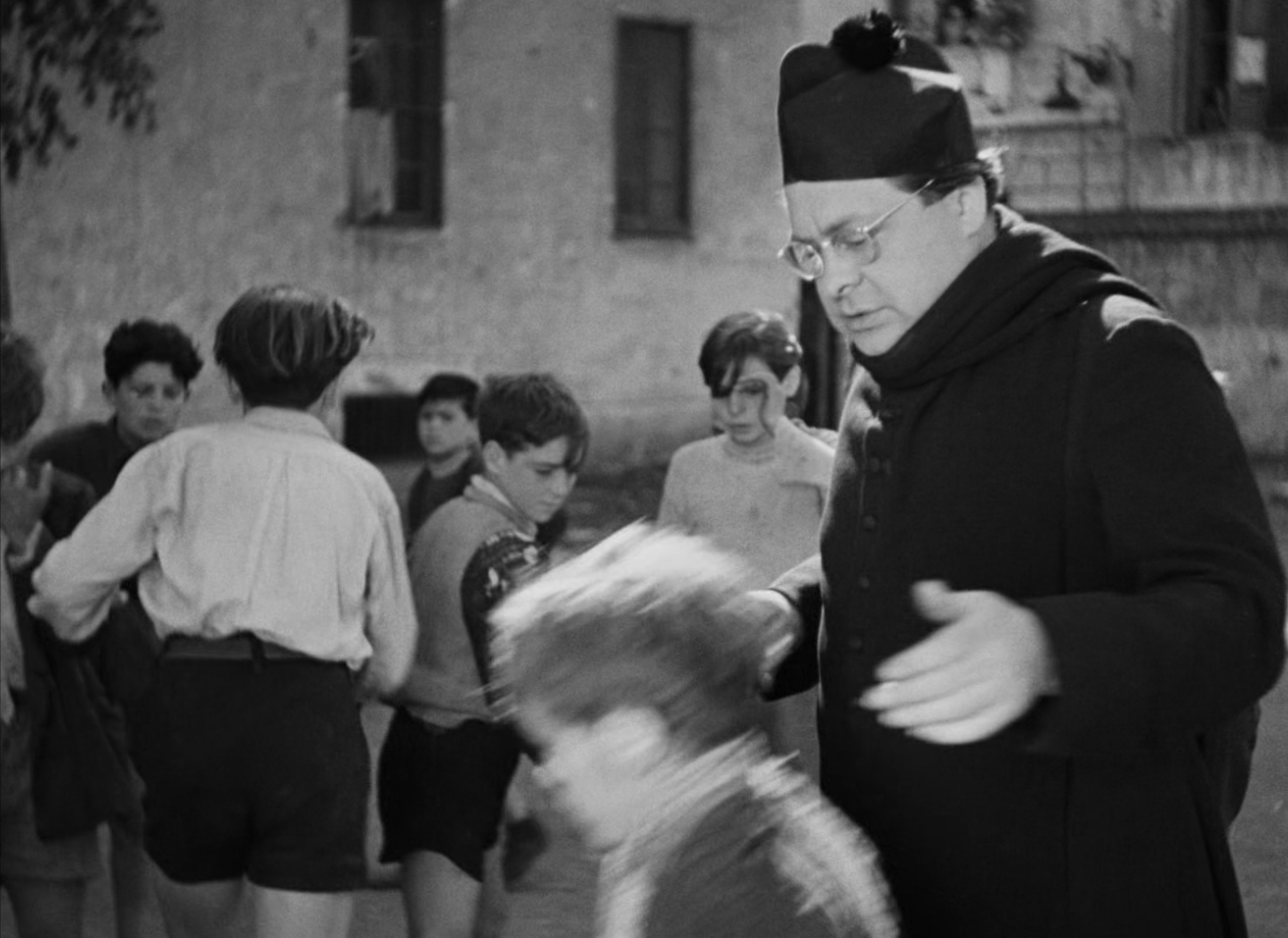
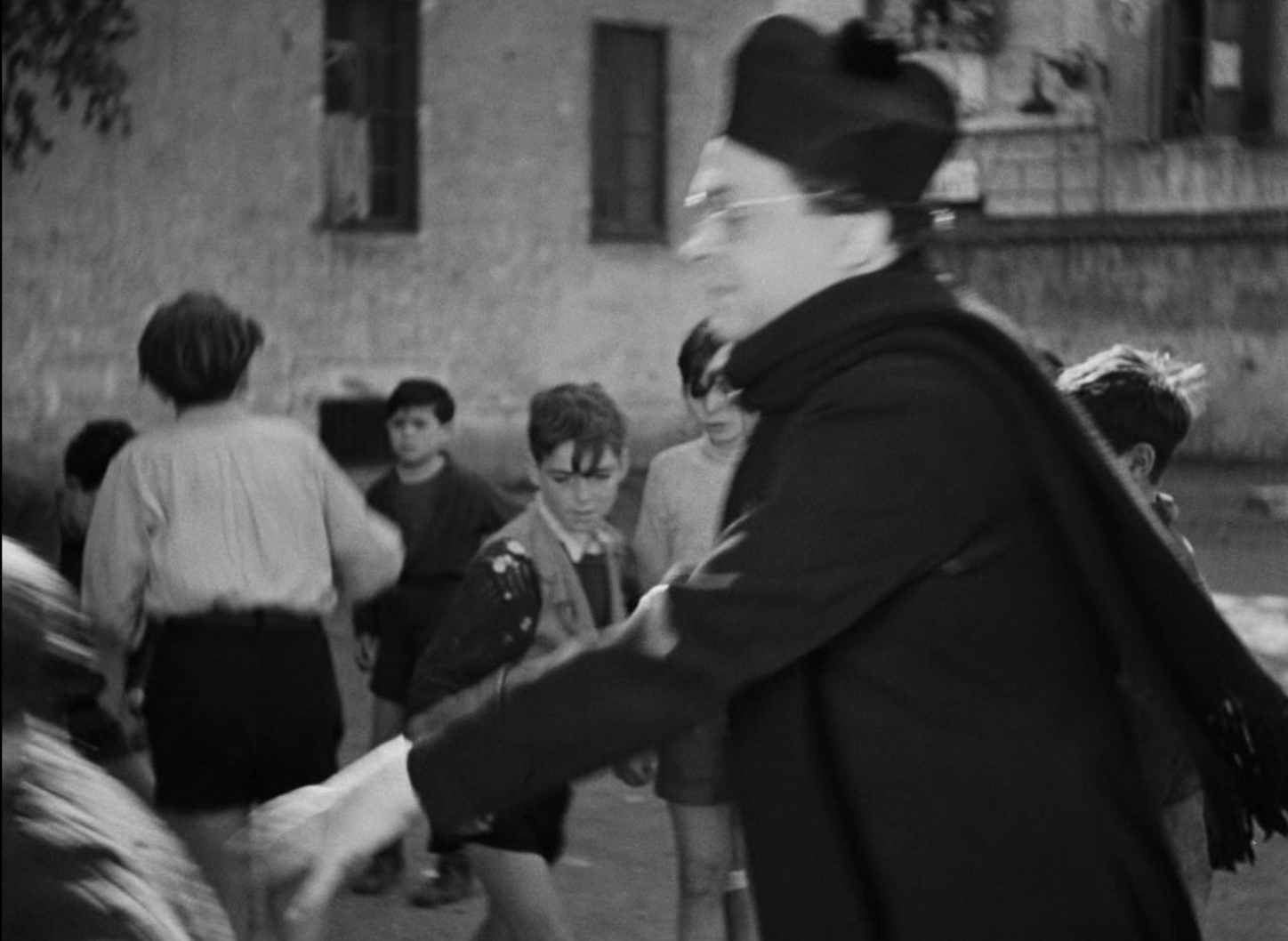
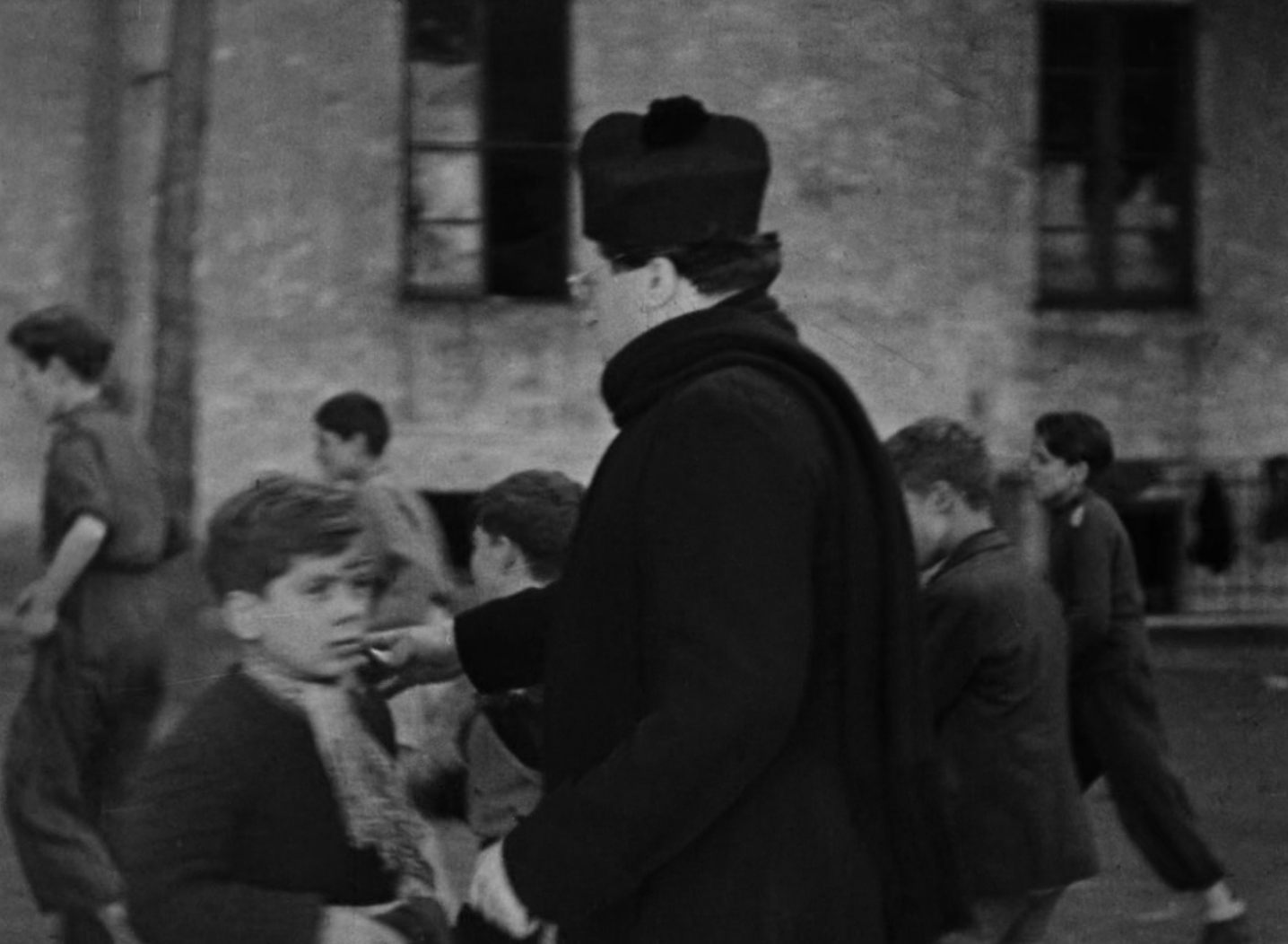
Allunga la mano verso Marcello, ma il ragazzo se ne va di corsa. "Vieni qua", dice il prete con fermezza, ma senza ostilità. "Possibile che devi scappare sempre?"
He reaches out his hand to Marcello, but the boy takes off. “Come here!” the priest says firmly, but without hostility. “Why are you always running off?”
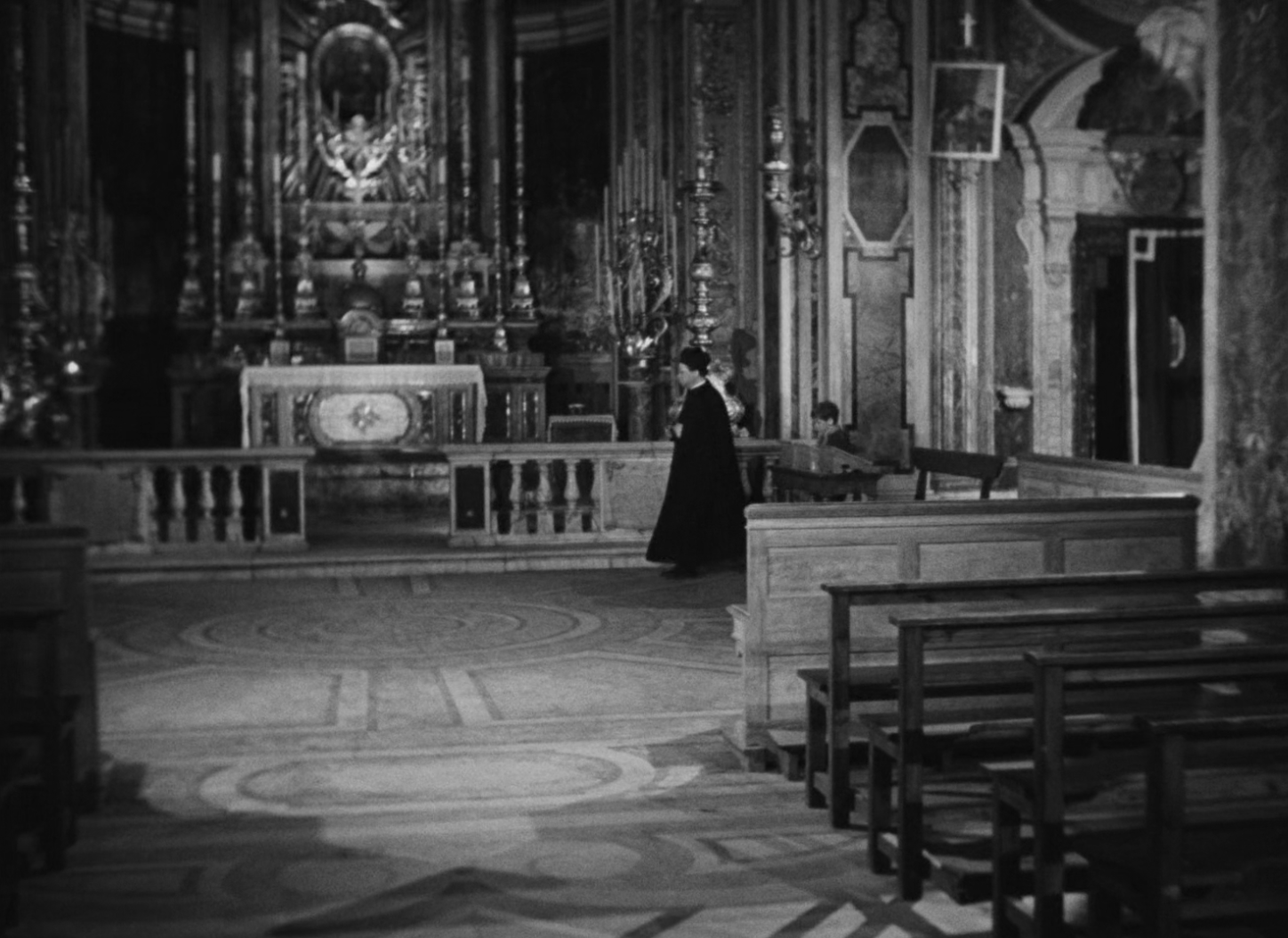
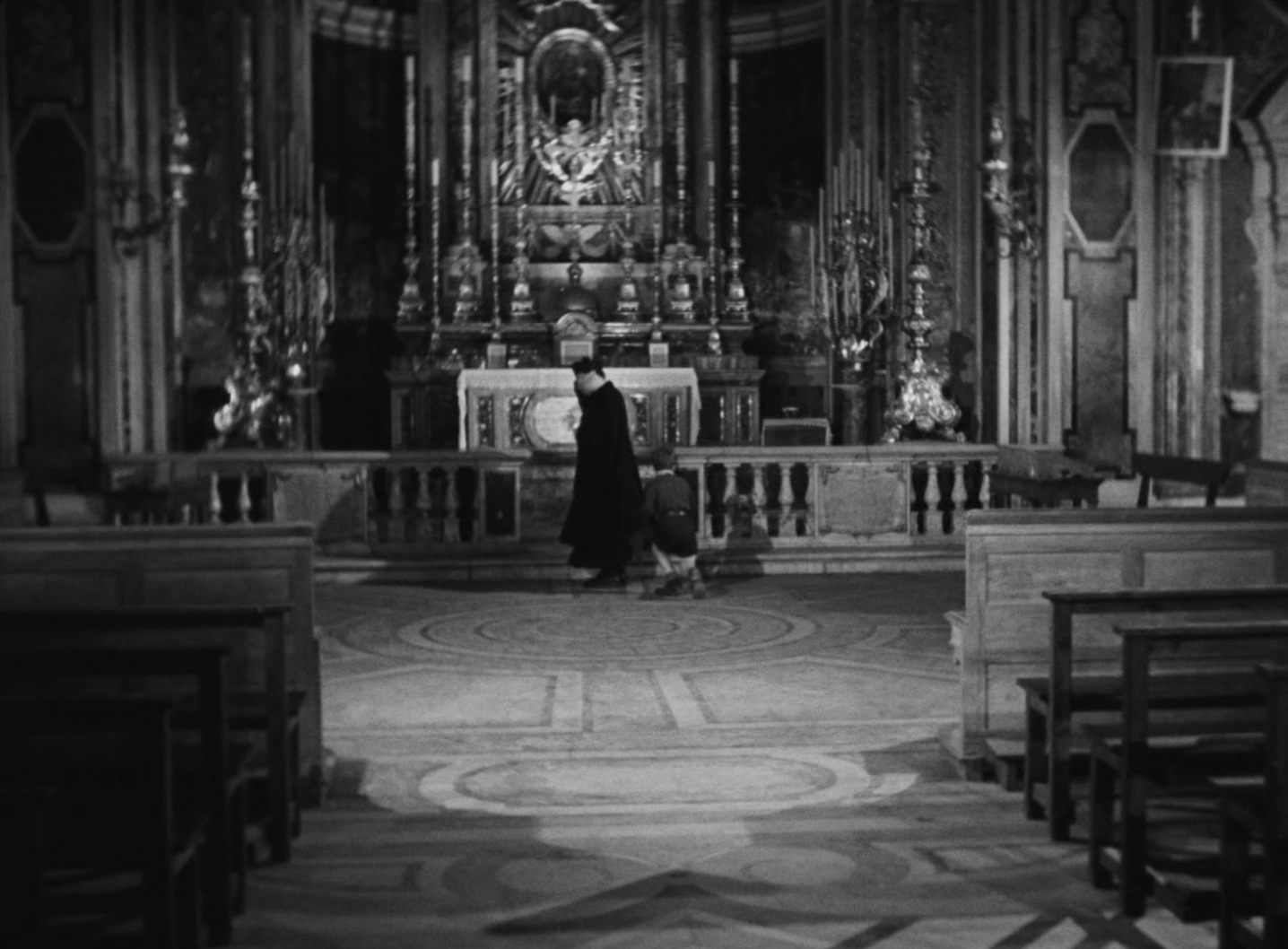
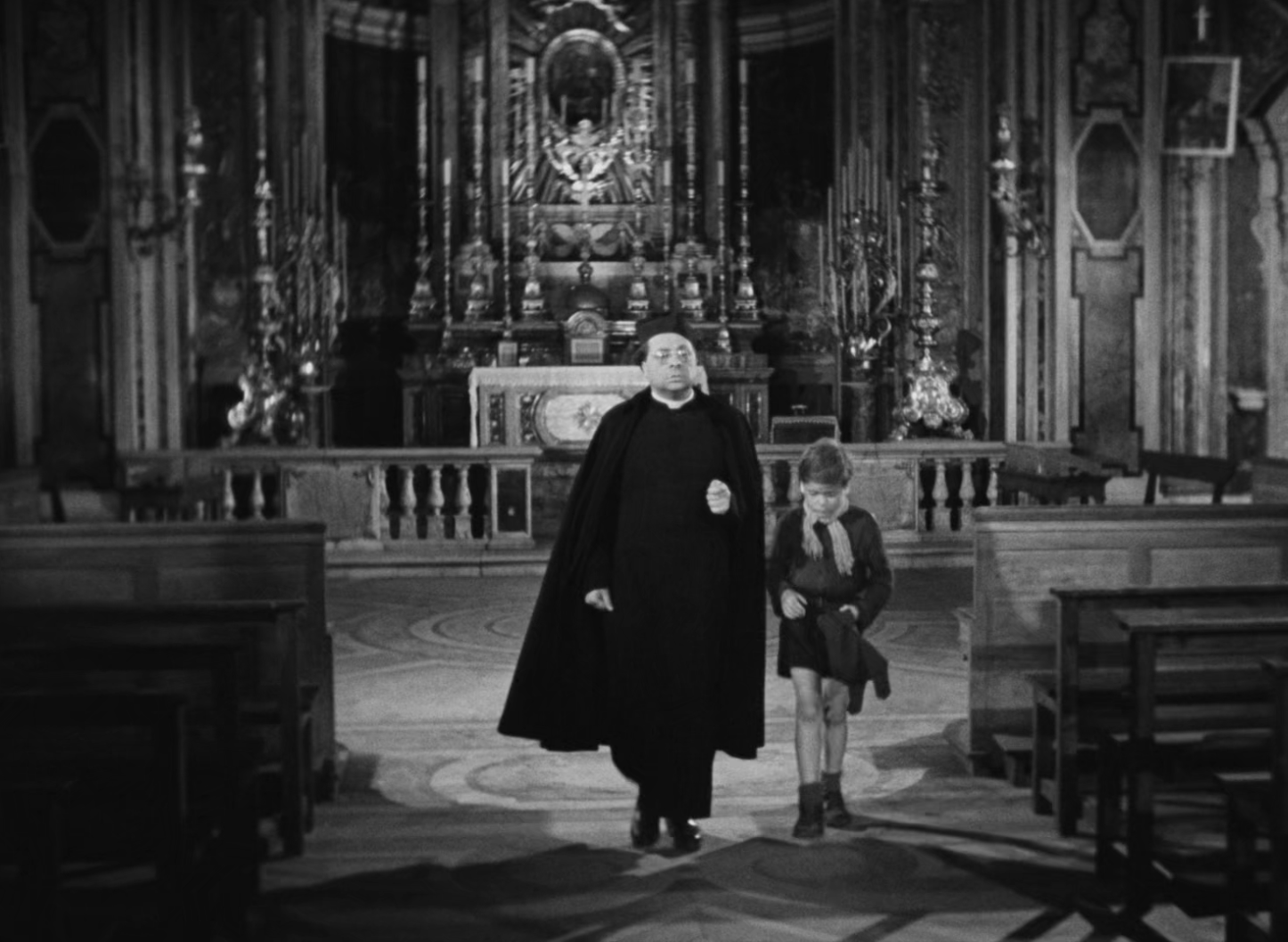
Lasciano il cortile insieme ed entrano in chiesa. Passando davanti all'altare, si genuflettono e si fanno il segno della croce – prima il prete, poi il bambino. Poi camminano lungo la navata, Marcello con il cappello in mano.
They leave the courtyard together and enter the church. Passing the altar, they genuflect and cross themselves – first the priest, then the little boy. Then they walk up the church aisle, Marcello holding his hat in his hands.
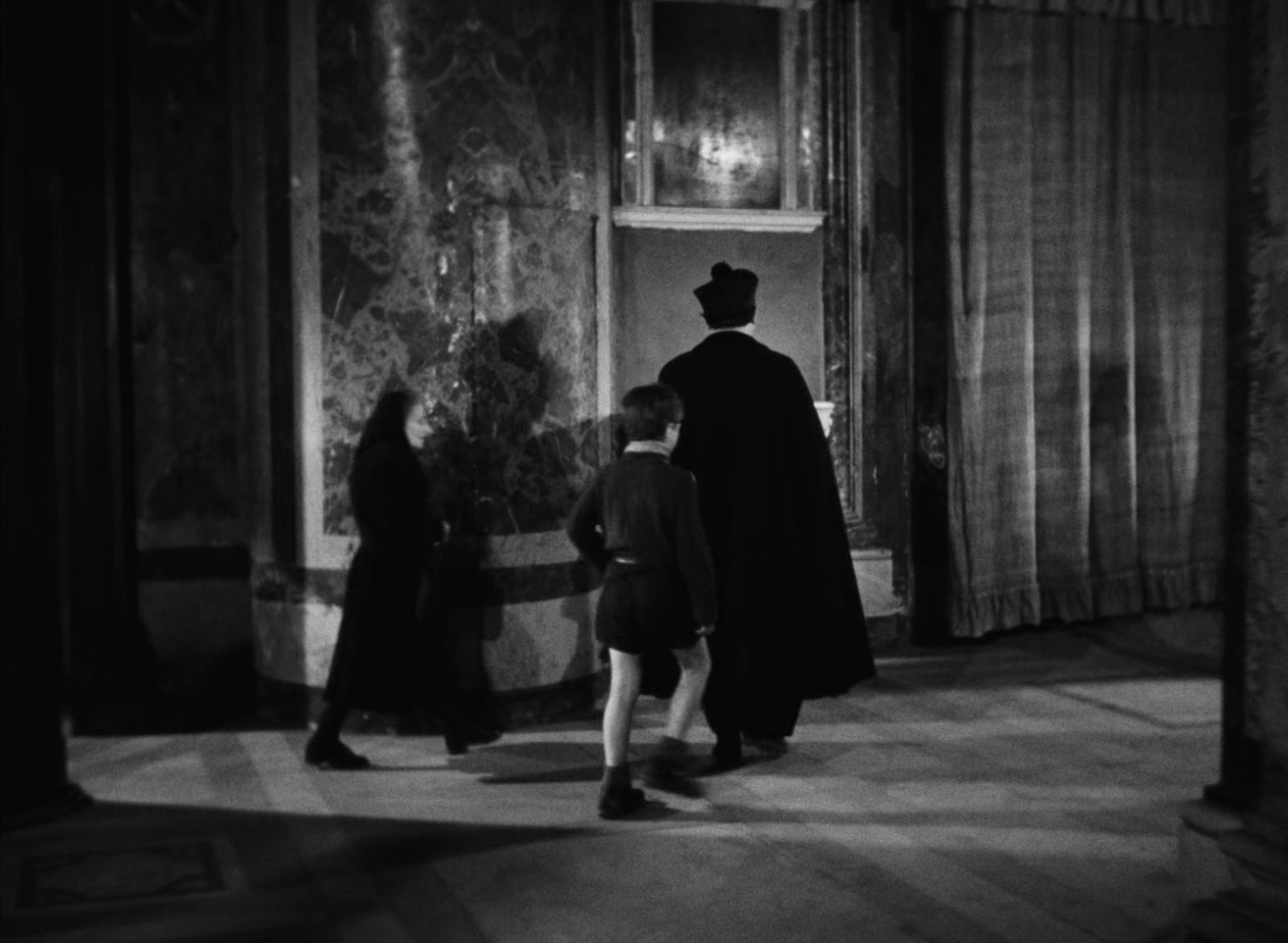
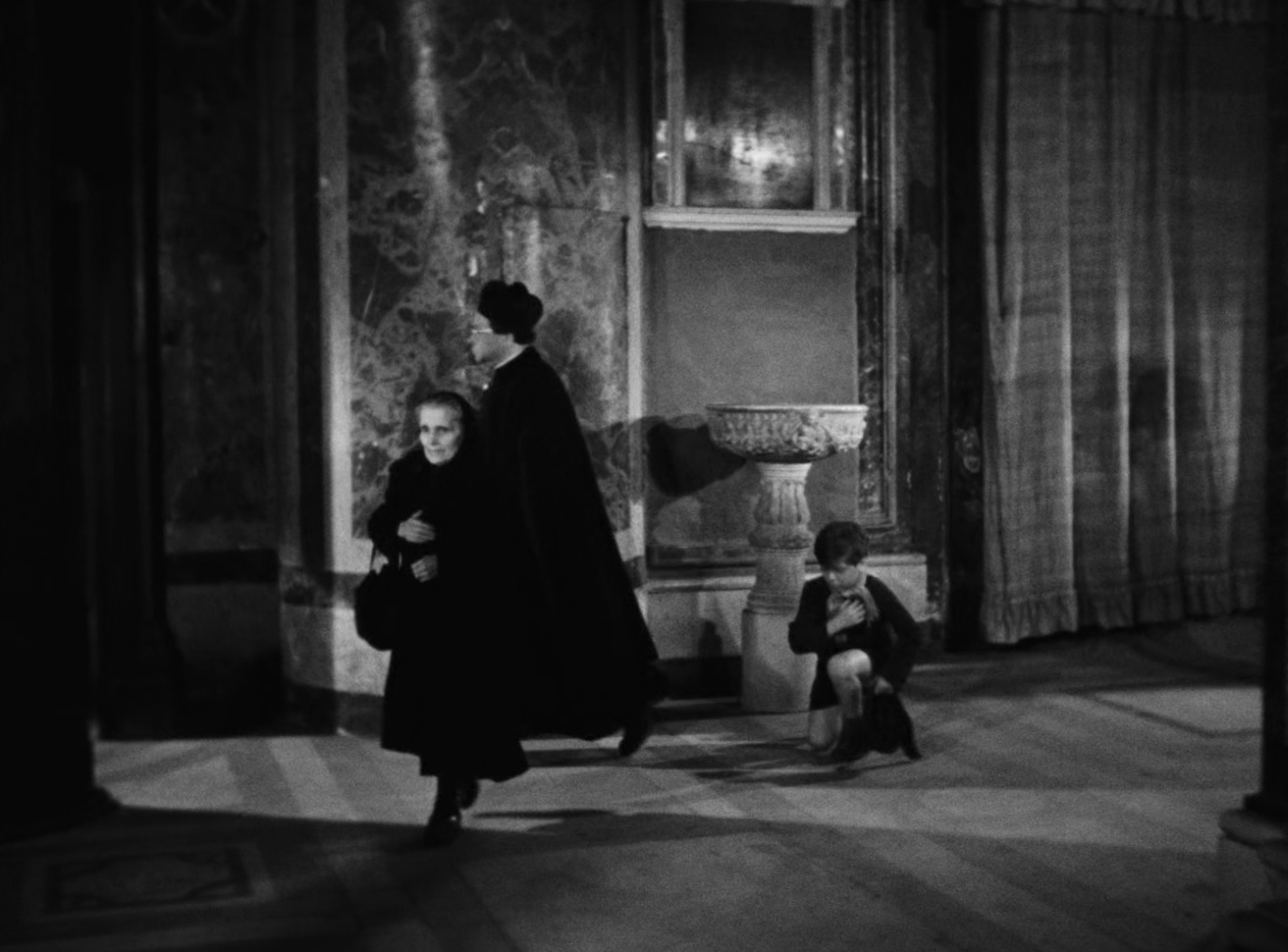
Passando la fonte dell'acqua santa all'uscita, immergono le dita e si benedicono ancora una volta, a turno. Una fedele anziana entra e incrocia il loro cammino, ma Don Pietro non si ferma a parlare con lei.
Passing the font of holy water on their way out, they dip their fingers and bless themselves once more, each in turn. An elderly congregant enters and crosses their path, but Don Pietro does not stop to talk with her.
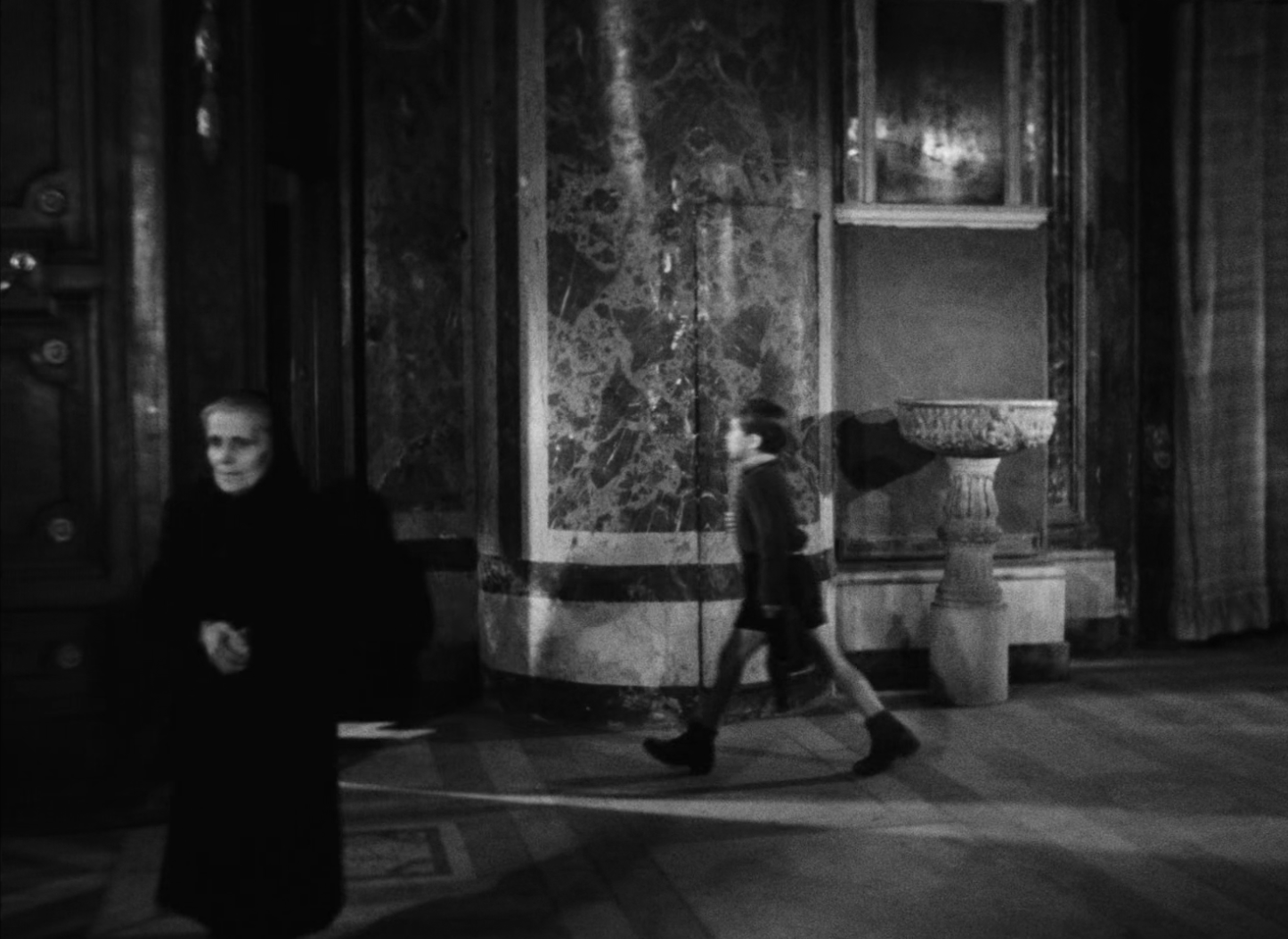
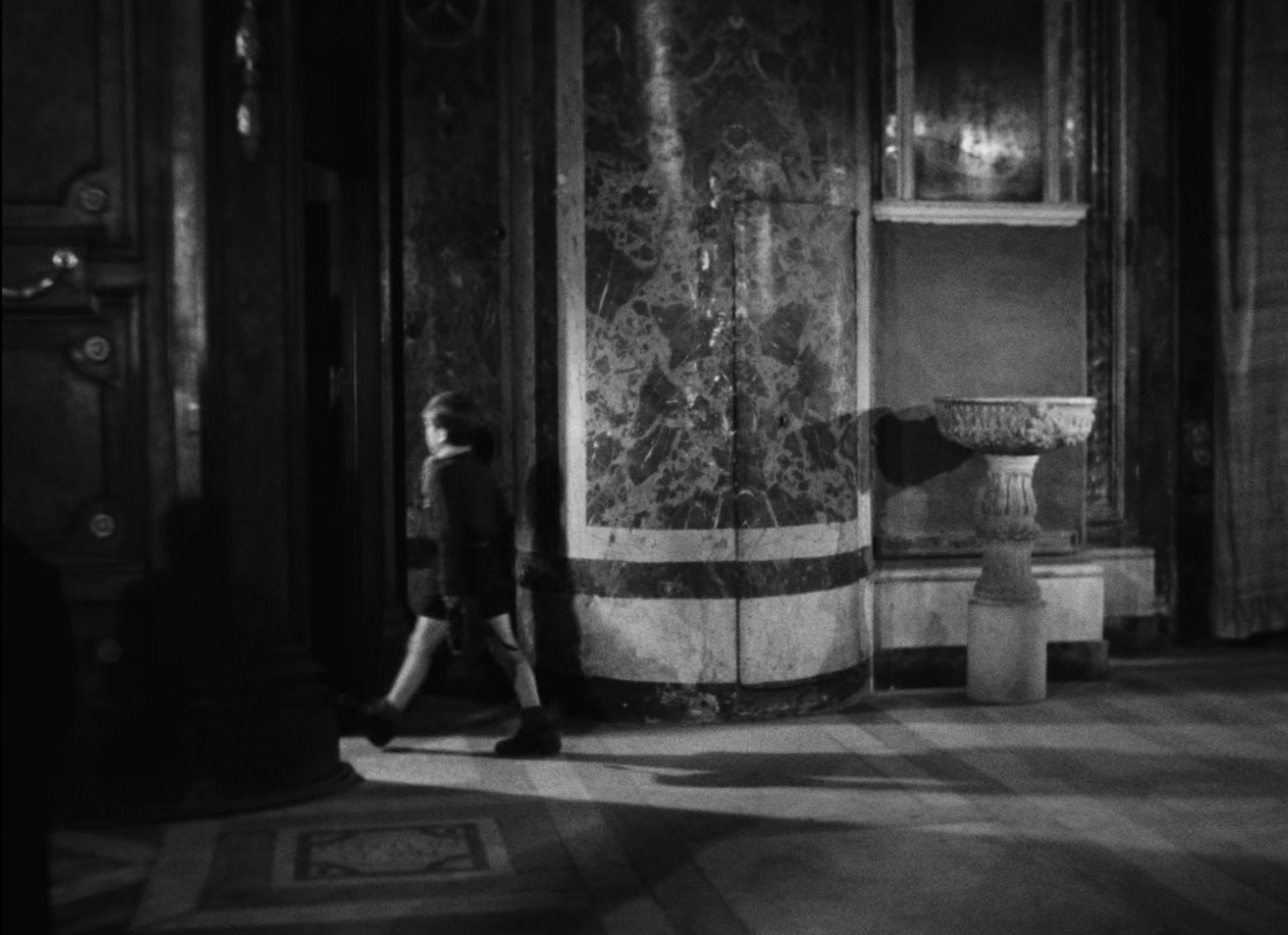
Marcello e Don Pietro lasciano la sicurezza della chiesa e si avventurano per le strade di Roma, che è, per ordine del suo Governo, una città aperta: non si difenderà dall'occupazione straniera, per evitare perdite di vite umane e danni alle proprietà. Ma, in realtà, è una città sotto assedio.
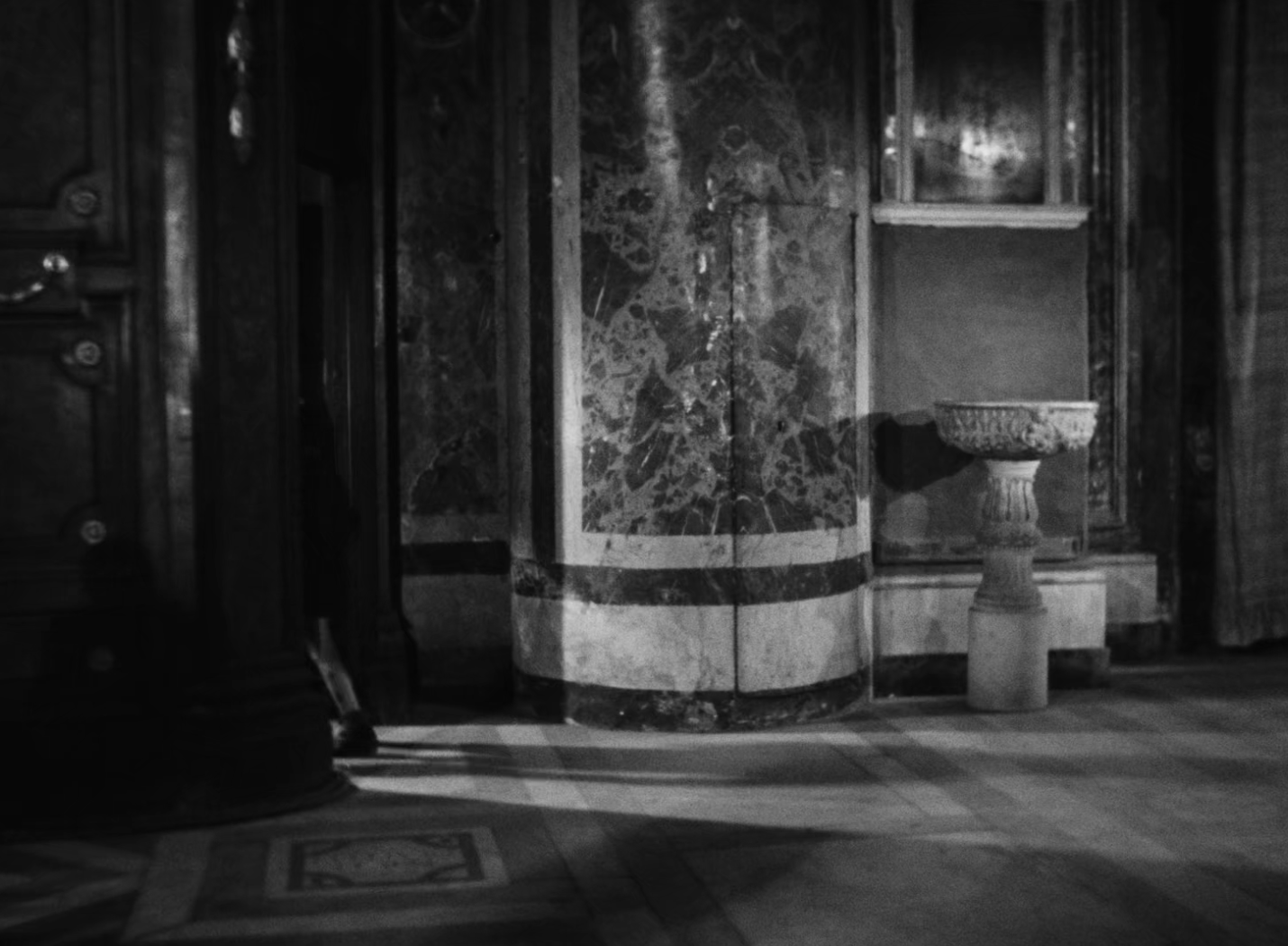
Dopo che se ne sono andati, la macchina da presa si ferma un attimo sulla cupa calma e sulla quiete dell'antica chiesa.
Marcello and Don Pietro leave the sanctuary of the church and venture out onto the streets of Rome, which is, by order of its government, an open city: it will not defend itself against foreign occupation, to prevent loss of life and injury to property. But, in fact, it is a city under siege.
After they have gone, the camera stops a moment on the somber calm and quiet of the ancient church.
FINE PARTE 4
Ecco Parte 5 of this cineracconto! Subscribe to receive a weekly email newsletter with links to all our new posts.