Regia / Director: Vittorio De Sica, 1944
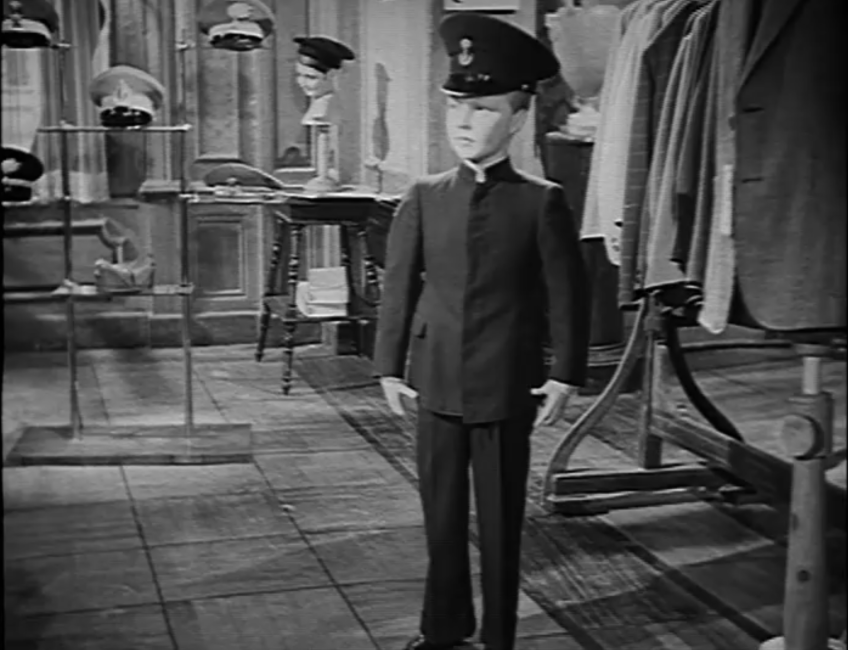
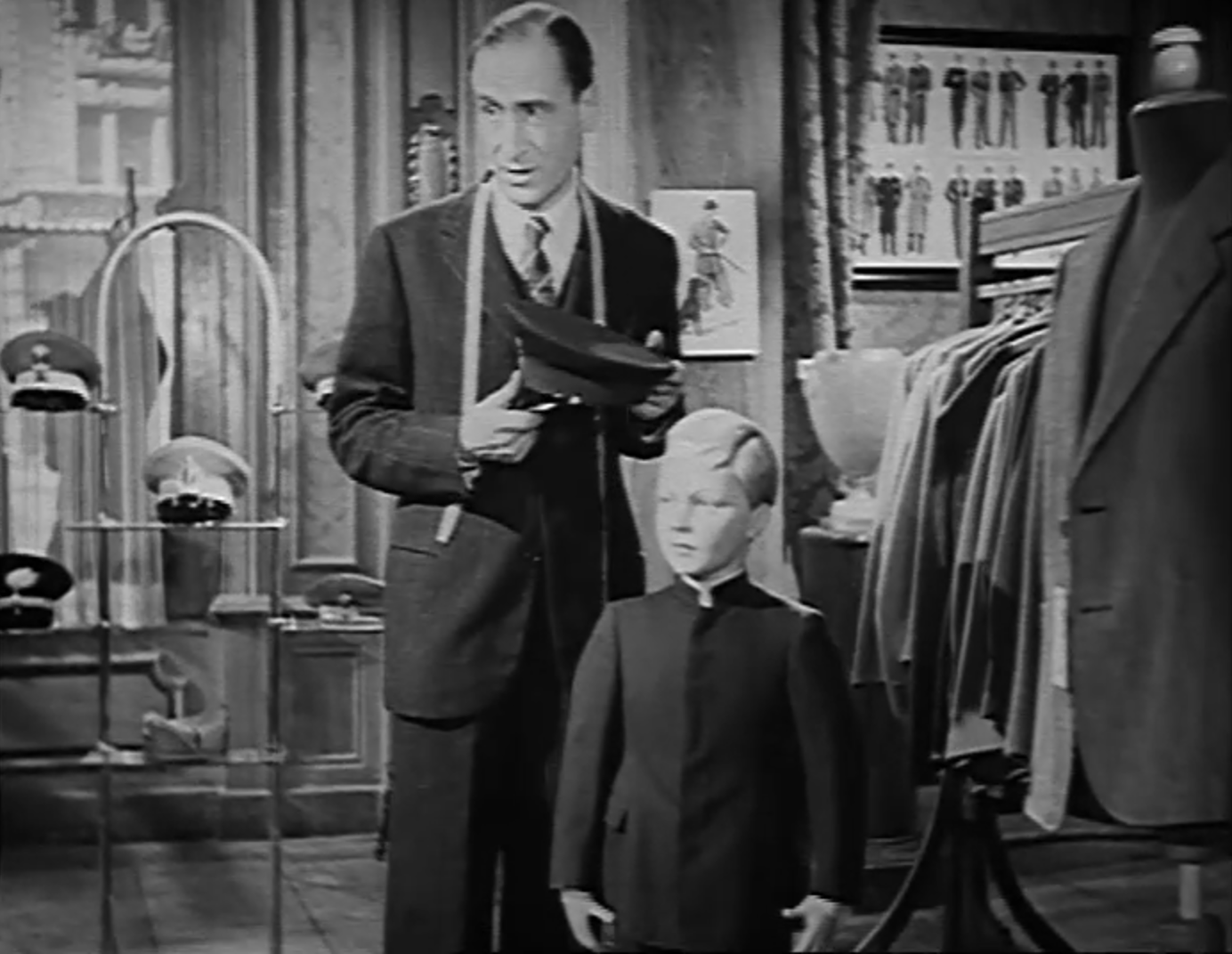
Siamo in una sartoria. Il sarto, in giacca e cravatta con un metro a nastro al collo, prende il berretto con visiera da un manichino vestito con l’uniforme della scuola in stile militare. "Sa, ragioniere" – dice – "Ho pensato di lasciarlo un po’ più largo. I bambini crescono rapidamente".
"È vero", risponde Andrea, fuori campo.
We’re in a tailor’s shop. The tailor, in a suit and tie with a measuring tape around his neck, takes the peaked cap from a mannequin dressed in military-style school uniform. “You know, sir,” he says. “I thought I’d leave it a little loose. Kids grow quickly.”
“That’s true,” Andrea replies, off-screen.
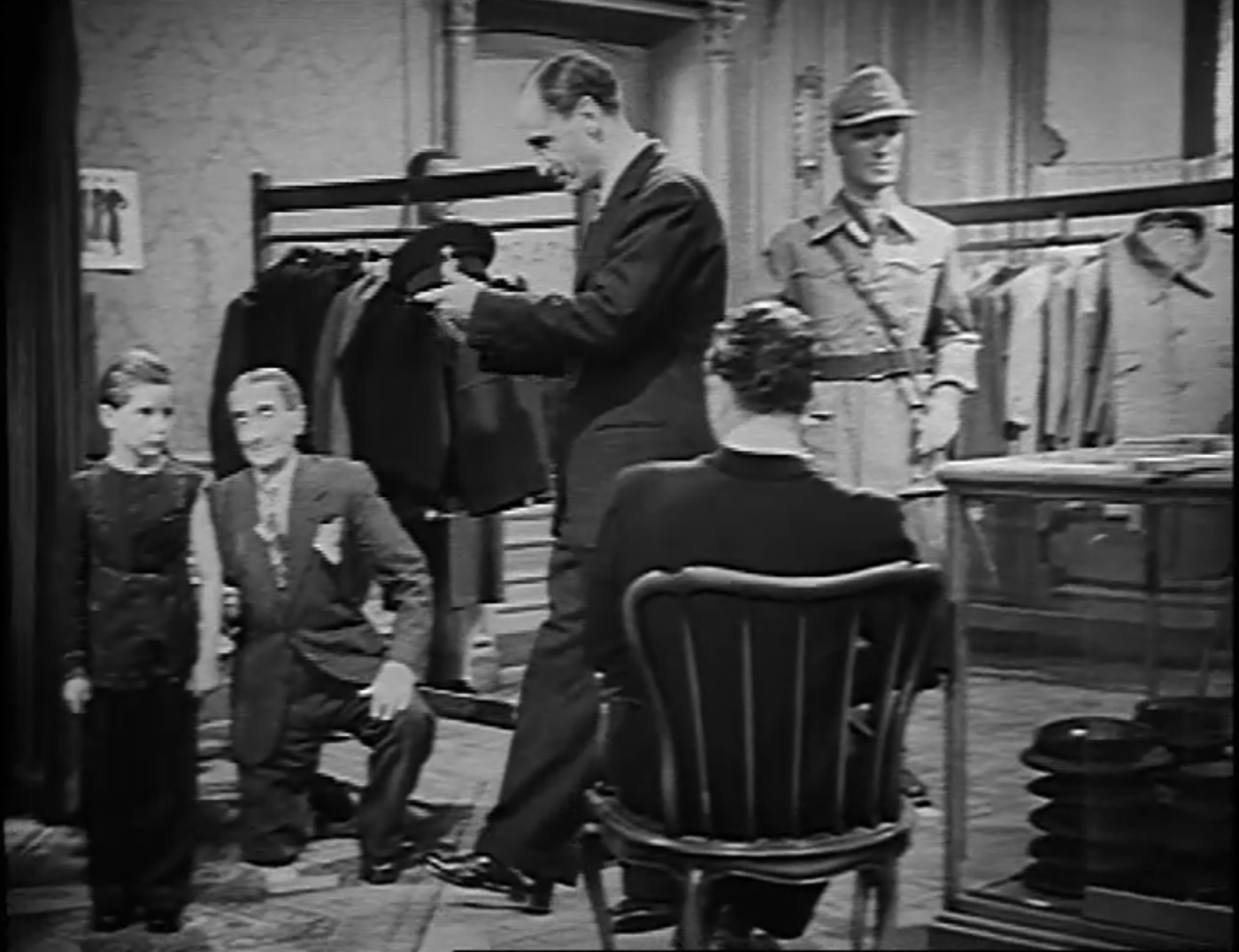
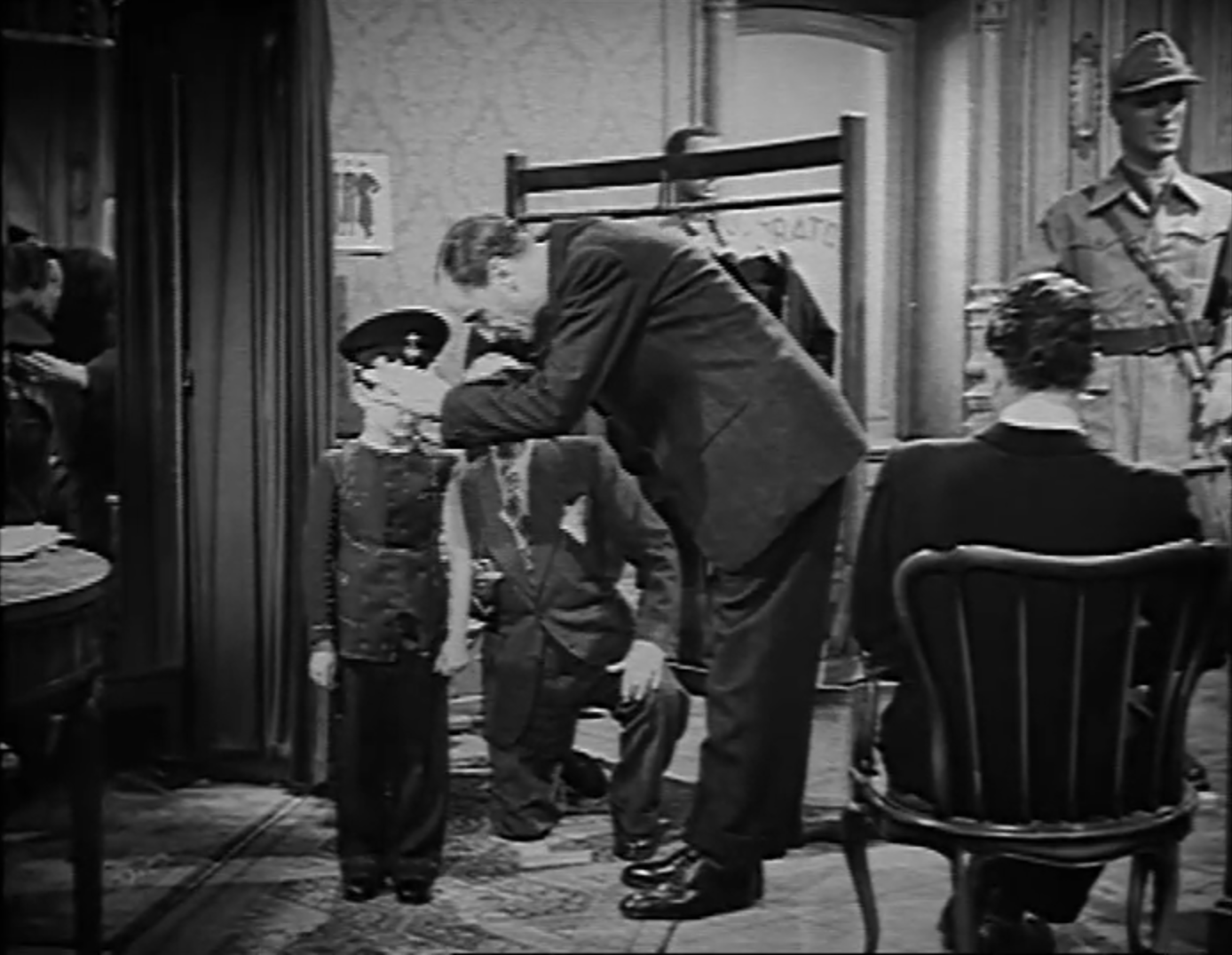
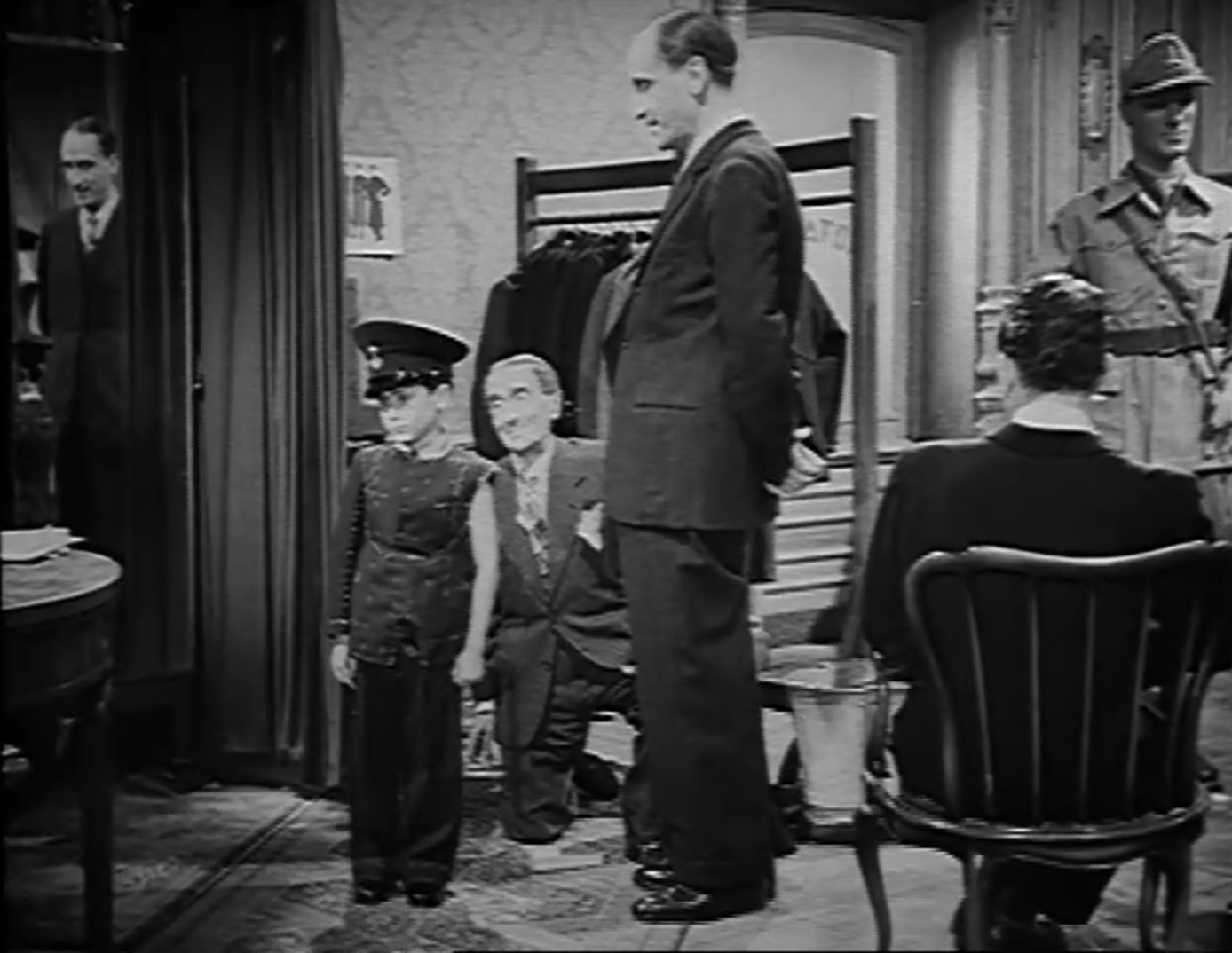
"Così l’anno prossimo gli andrà ancora bene". Si avvicina a Pricò, alla cui uniforme manca una manica. "Illustre allievo…" Gli mette il berretto in testa. "… l’uniforme ora è completa".
“This way it will still fit him next year.” He walks over to Pricò, whose uniform lacks a sleeve. “My illustrious student –” He puts the cap on Pricò’s head. “– the uniform is now complete.”
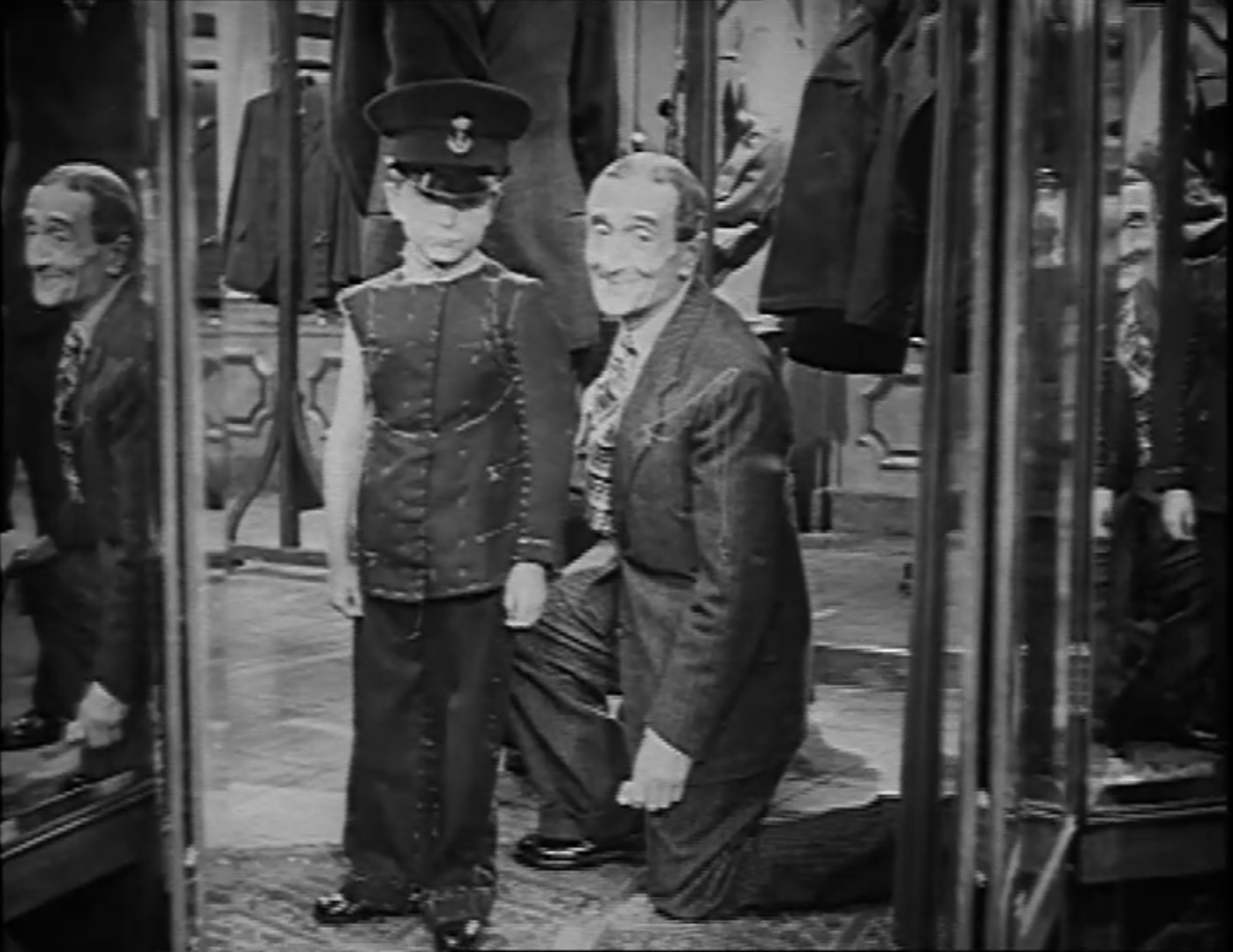
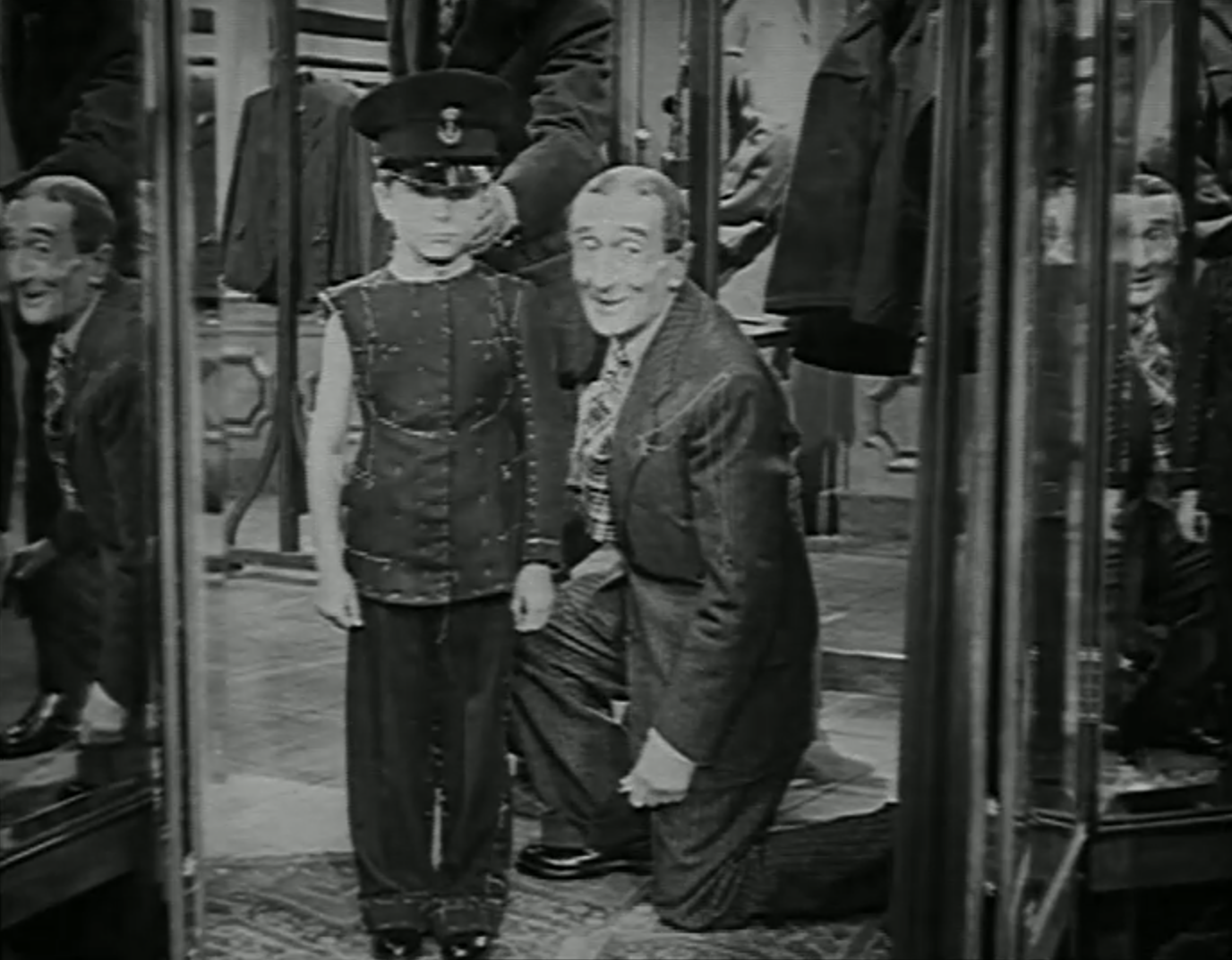
Pricò si volta a guardarsi allo specchio. "Bello, eh?" dice un assistente inginocchiato, sorridendo. Pricò non sorride.
Il sarto accarezza la guancia di Pricò.
Pricò turns to looks in the mirror. “Beautiful, isn’t it?” says a kneeling assistant, smiling. Pricò is not smiling.
The tailor pats Pricò’s cheek.
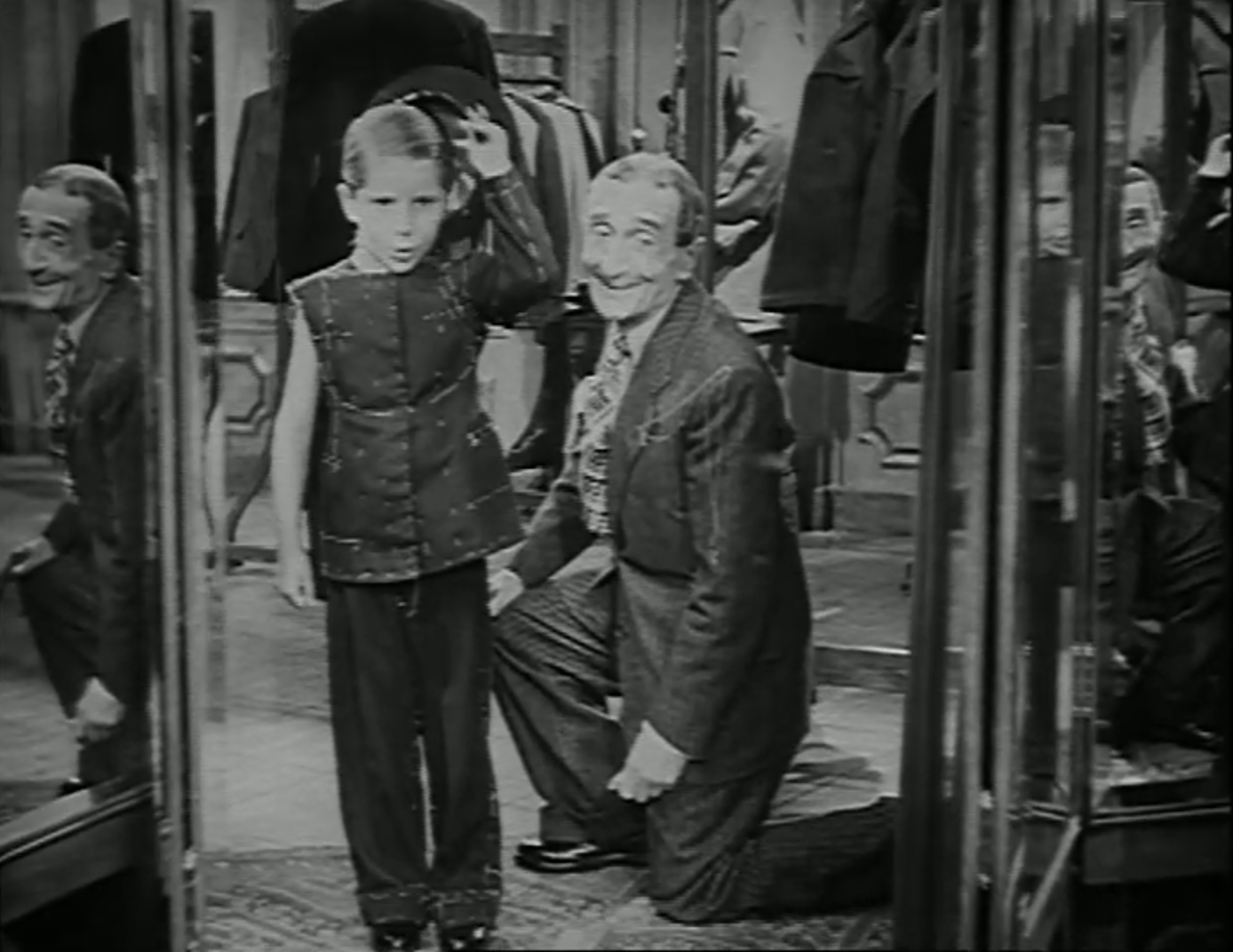
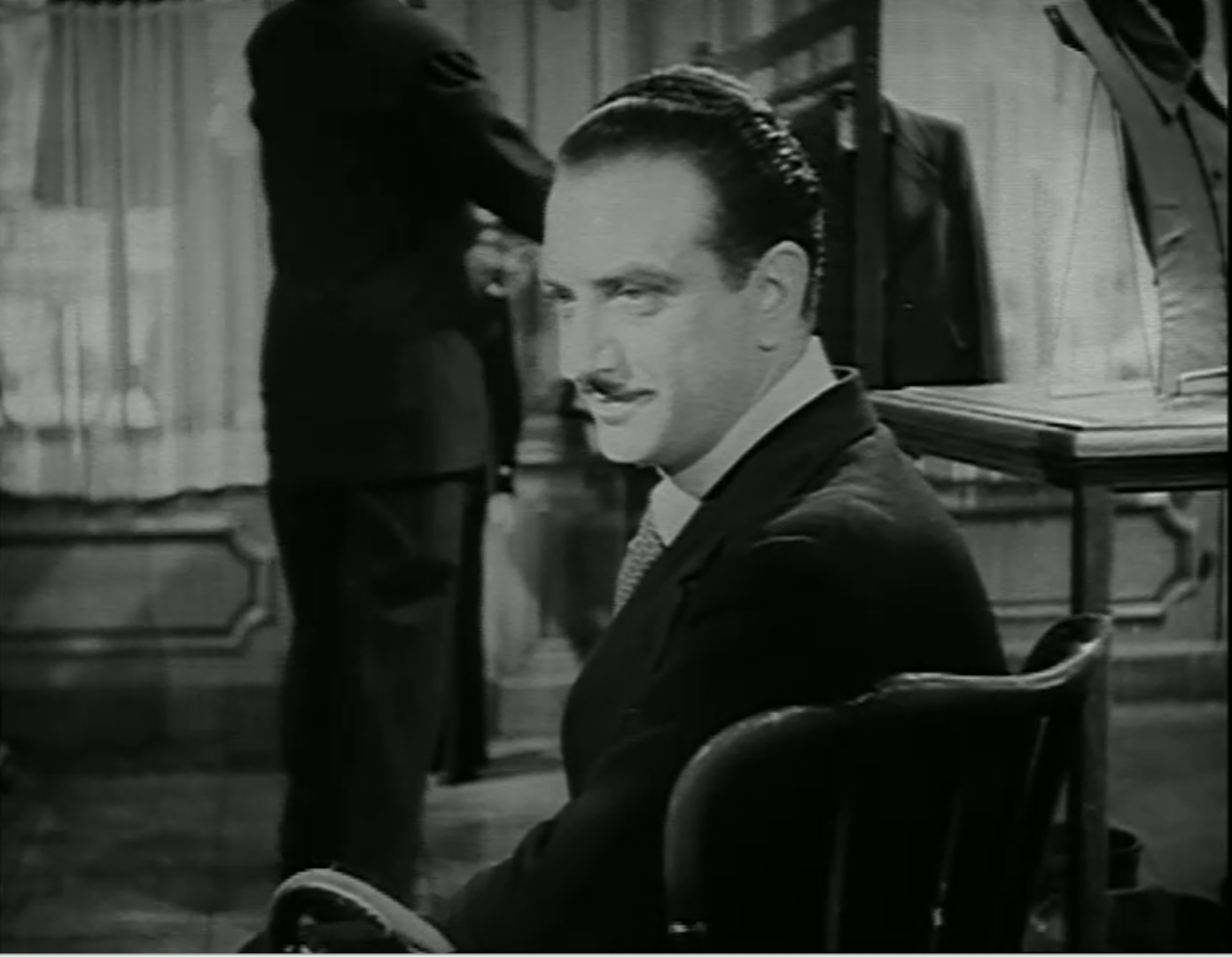
"Questo non mi piace", dice Pricò, togliendo il berretto.
"Ma come non ti piace?" chiede Andrea con una risatina.
“I don’t like this,” Pricò says, removing the cap.
“What do you mean, you don’t like it?” Andrea chuckles.
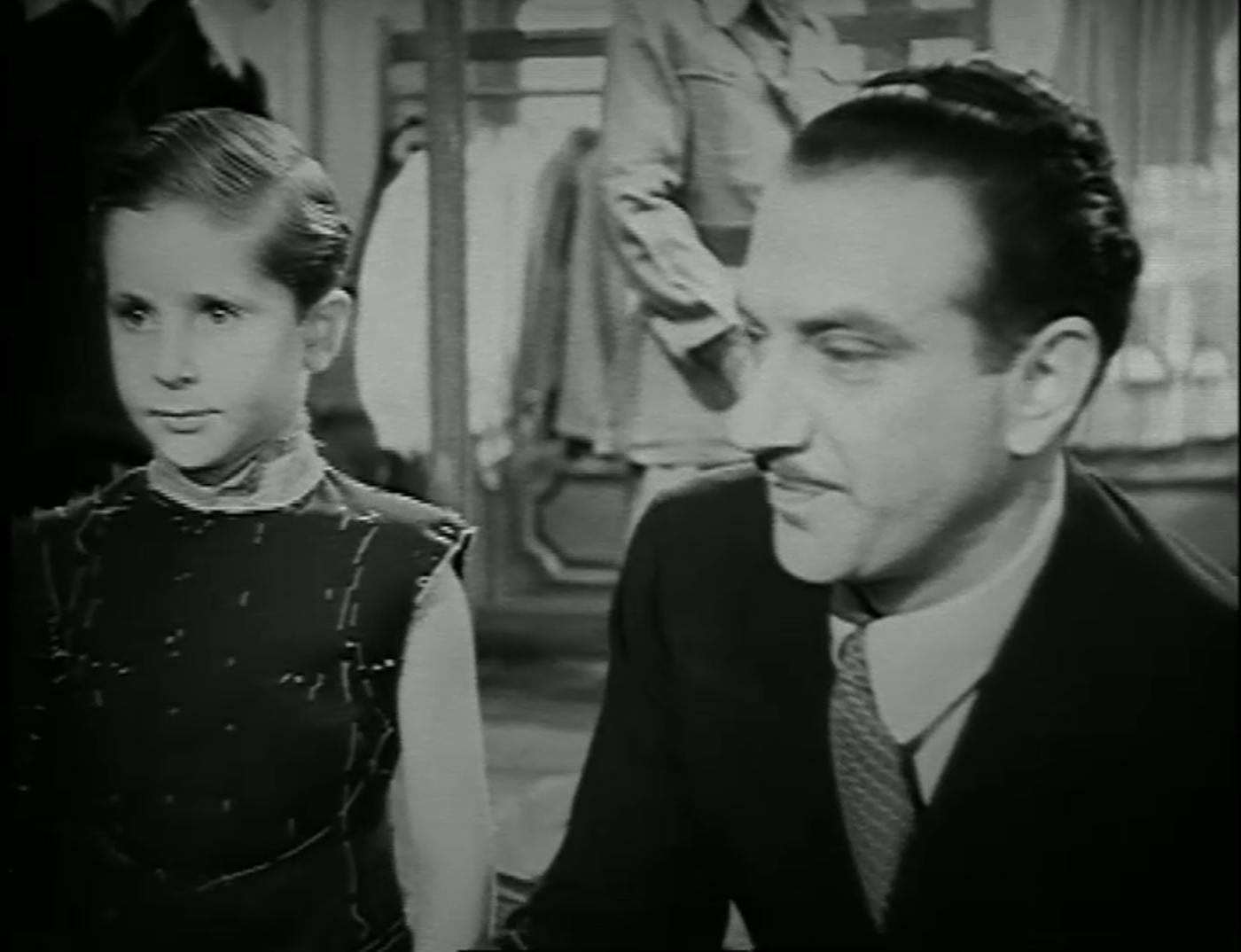
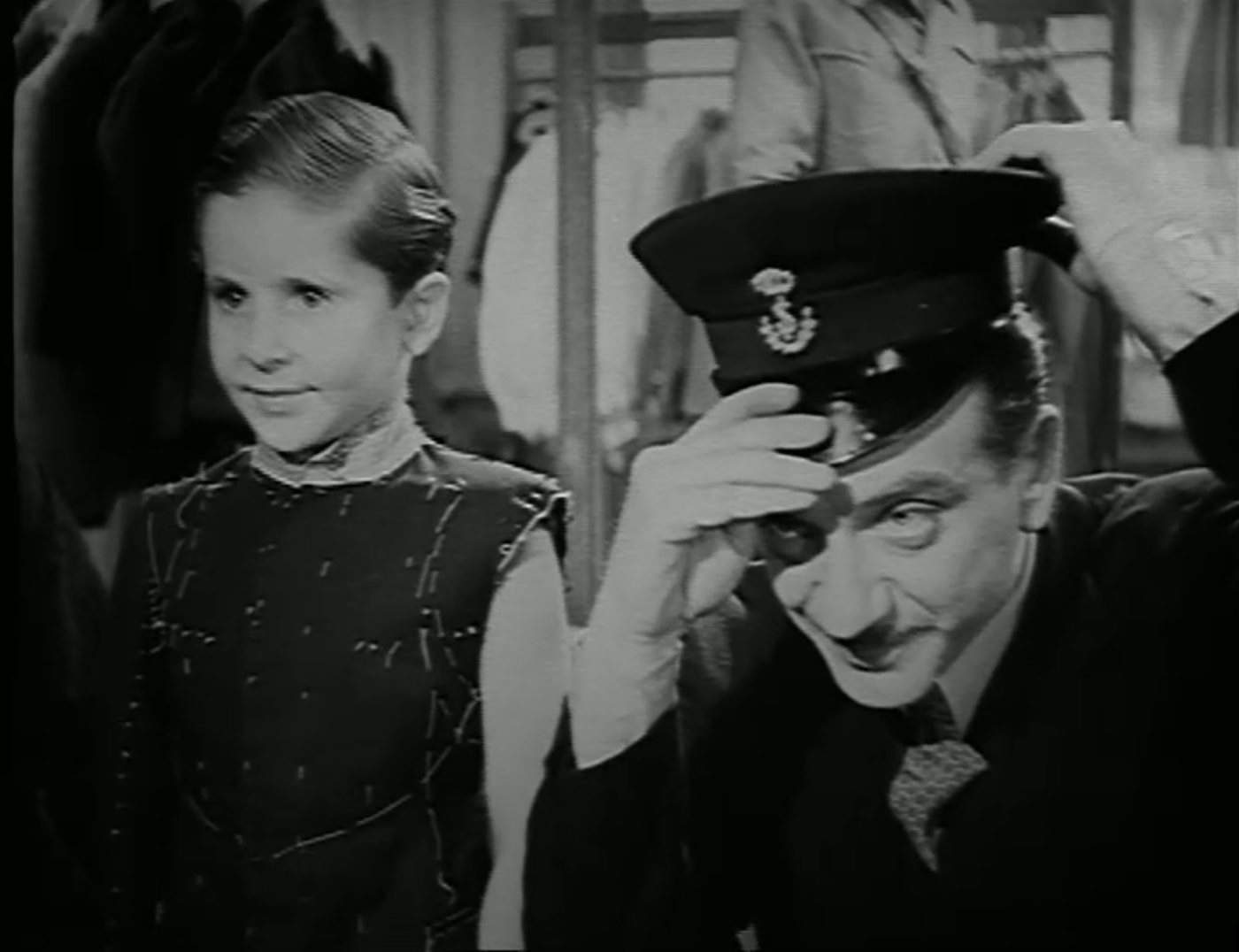
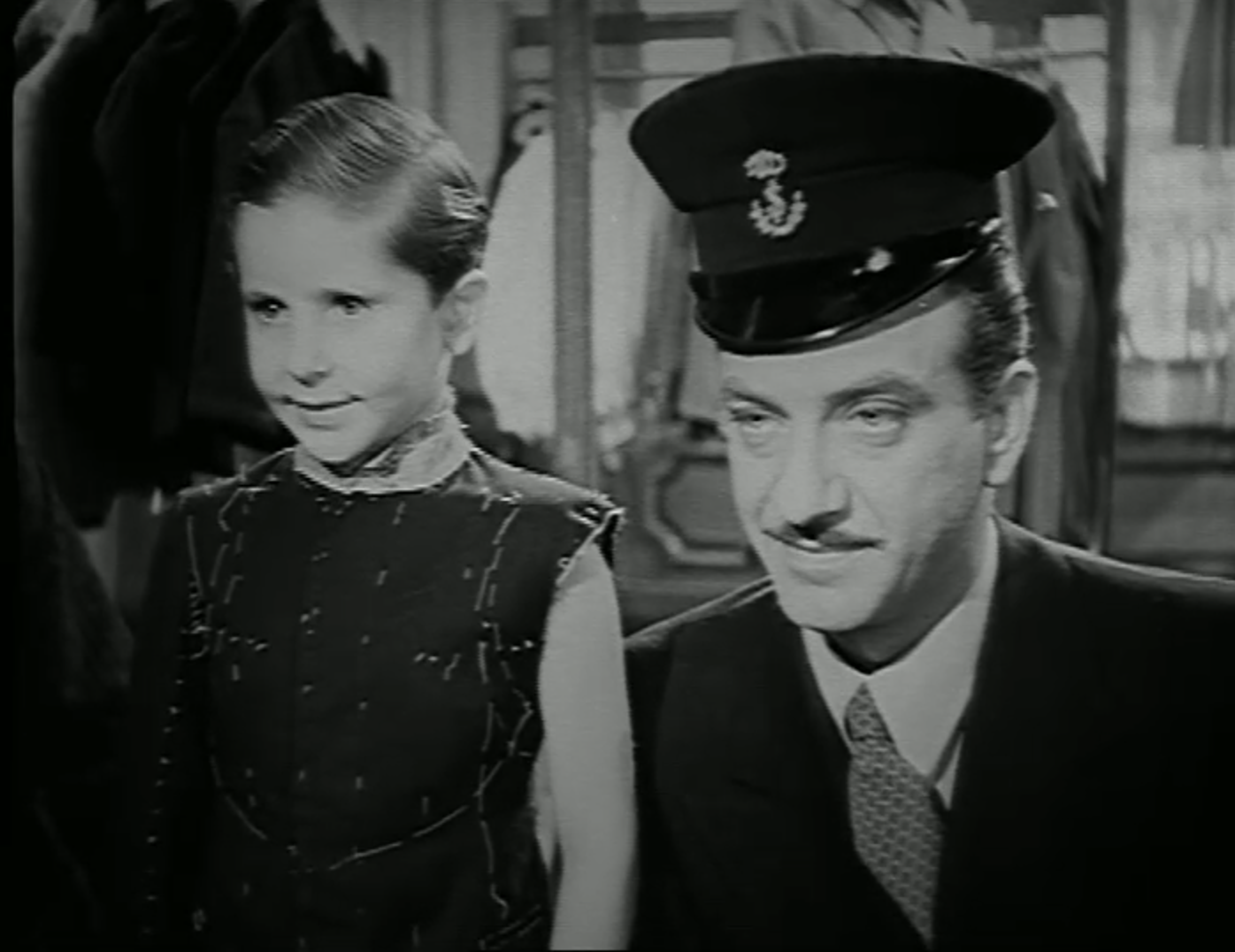
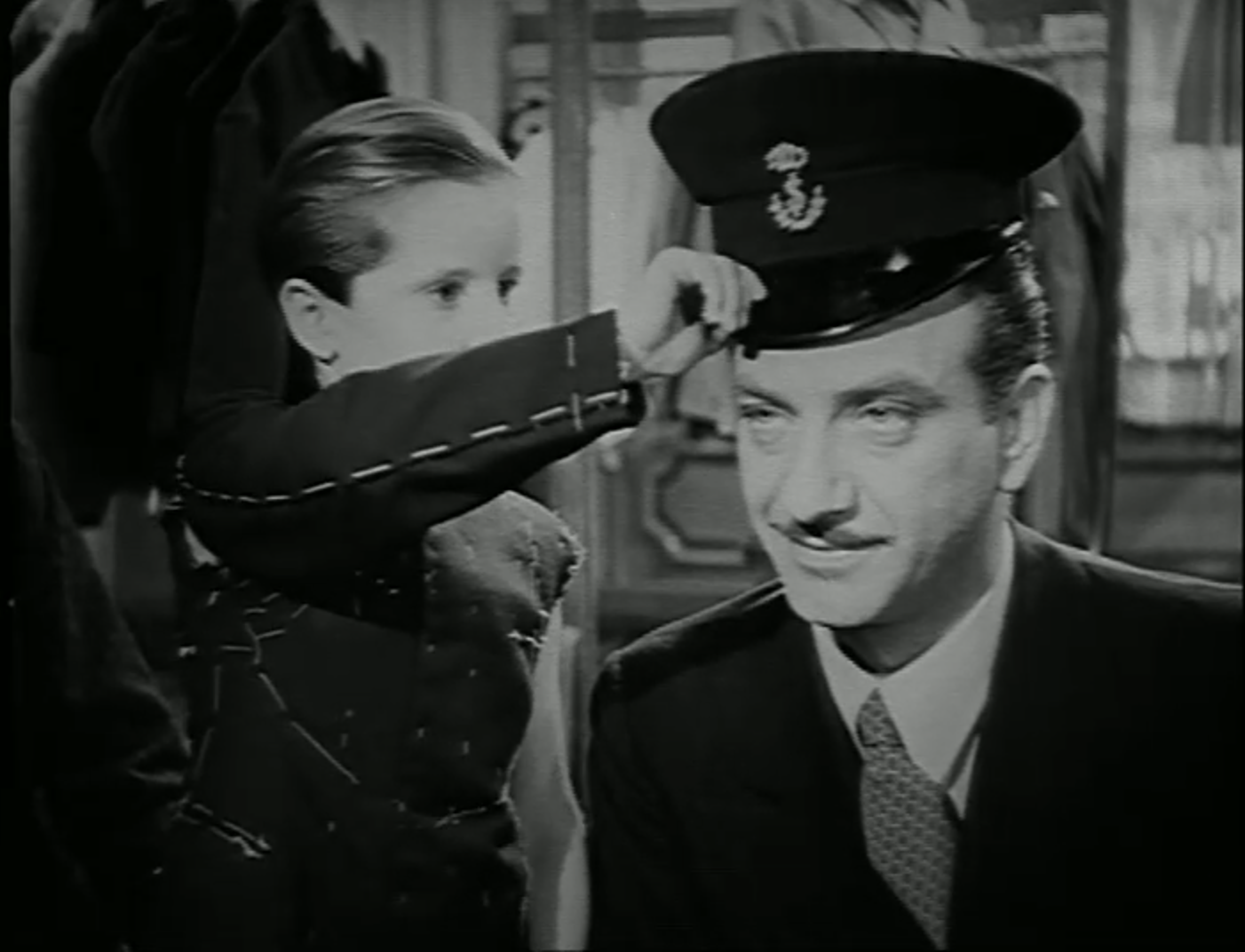
"È così bello. Quando ero piccolo come te, a me hanno messo un berretto così”. Andrea si mette il cappellino sulla testa e Pricò sorride. “Ero tanto felice. Perché non te lo vuoi mettere?"
“It’s so nice. When I was little like you, they put a hat like this one on me.” Andrea puts the tiny hat on his own head, and Pricò smiles. “I was so happy. Why don’t you want to put it on?”
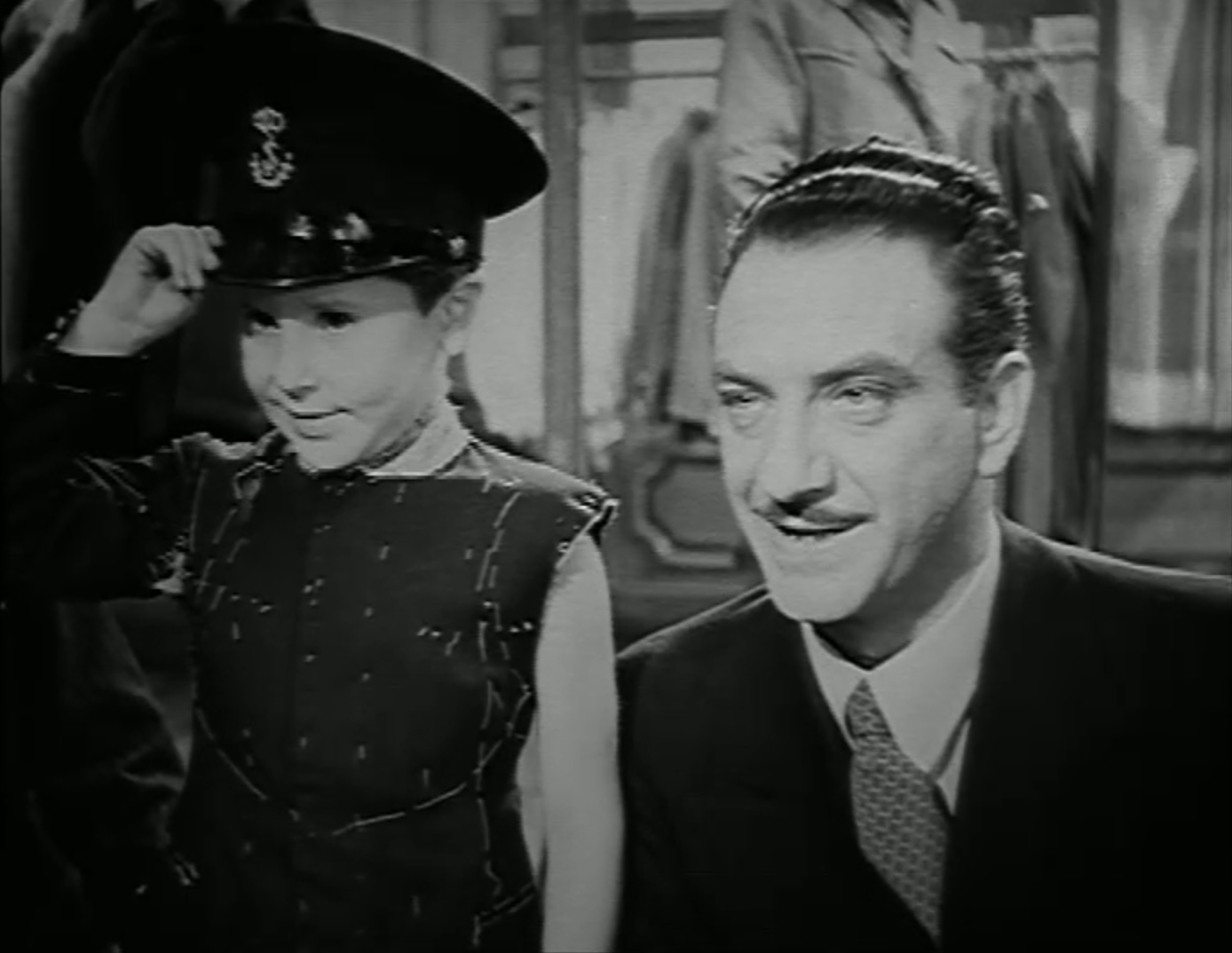
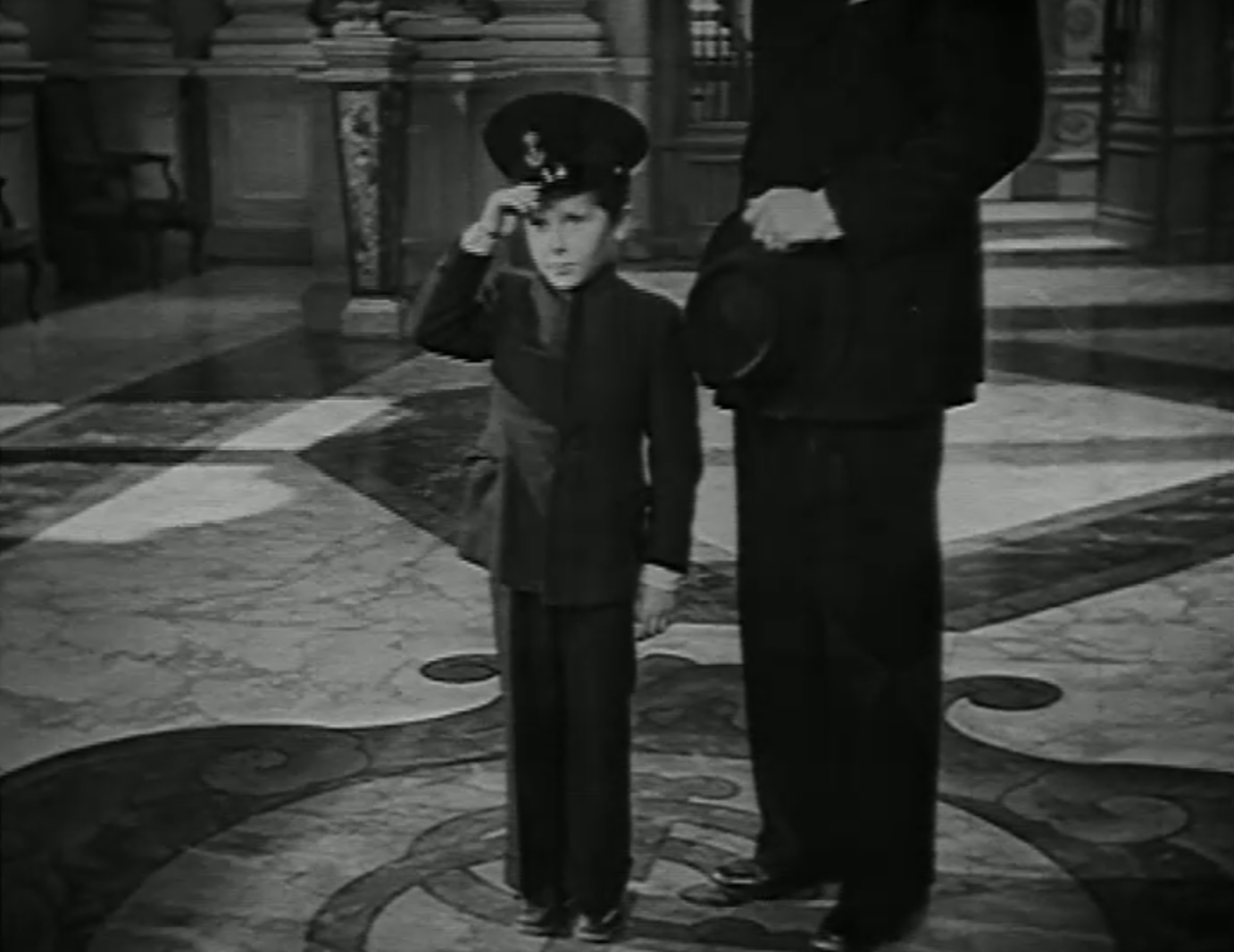
Dopo averci riflettuto un attimo, Pricò prende il cappello e se lo mette, continuando a sorridere. "Vedi come ti sta bene?" dice suo padre.
E dopo, Pricò si presenta nella sua nuova scuola. In un taglio di corrispondenza, lo vediamo con la mano sulla visiera.
After thinking it over a moment, Pricò takes the hat and puts it on, still smiling. “See how good it looks on you?” his father says.
And later, Pricò presents himself at his new school. In a match cut, we see him with his hand on the visor.
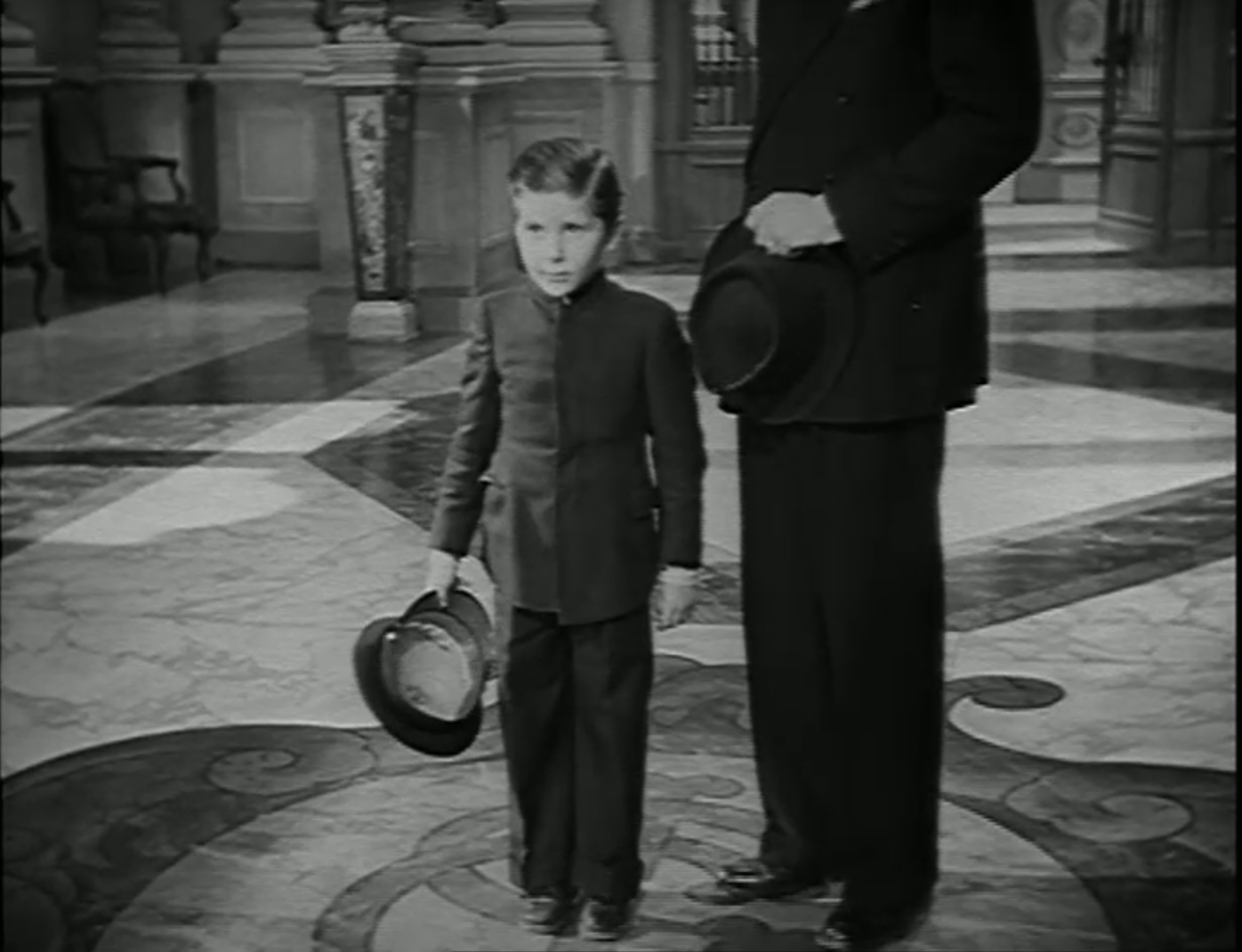
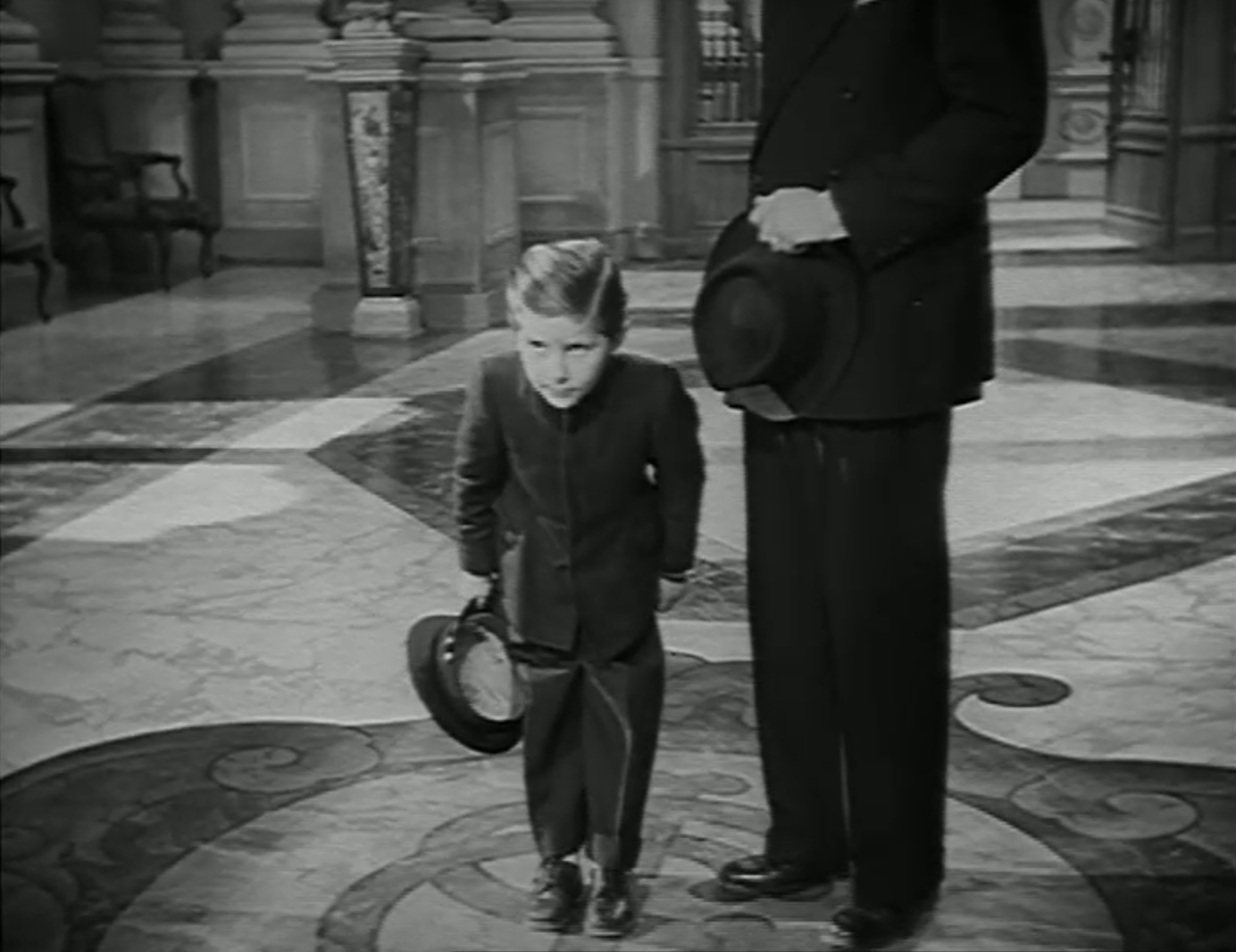
Si toglie il cappello e fa un inchino. "Bravo! Mi fa piacere conoscerti", dice il direttore da fuori campo.
Removing the hat, he bows. “Good boy! I’m glad to meet you,” says the director from off-screen.
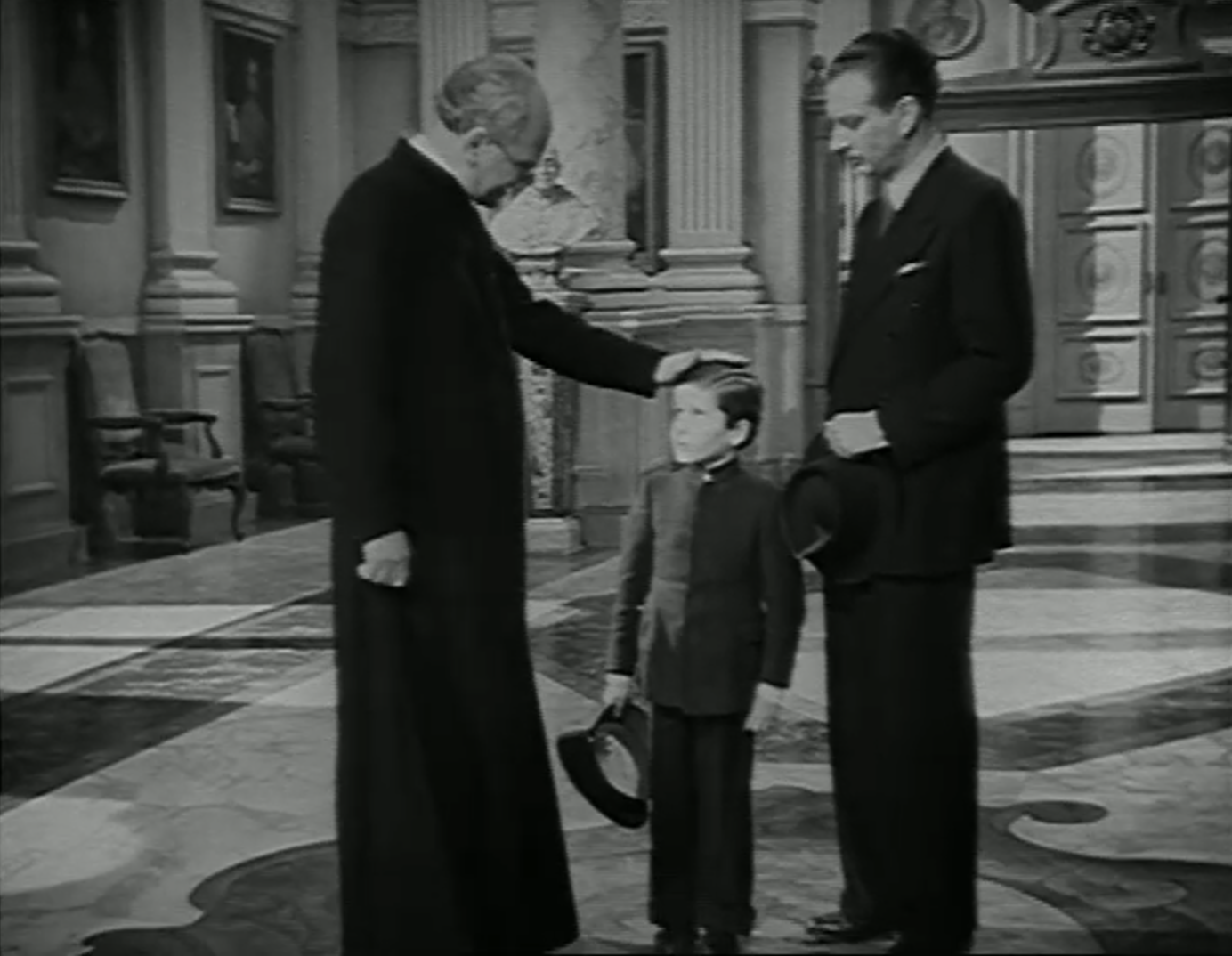
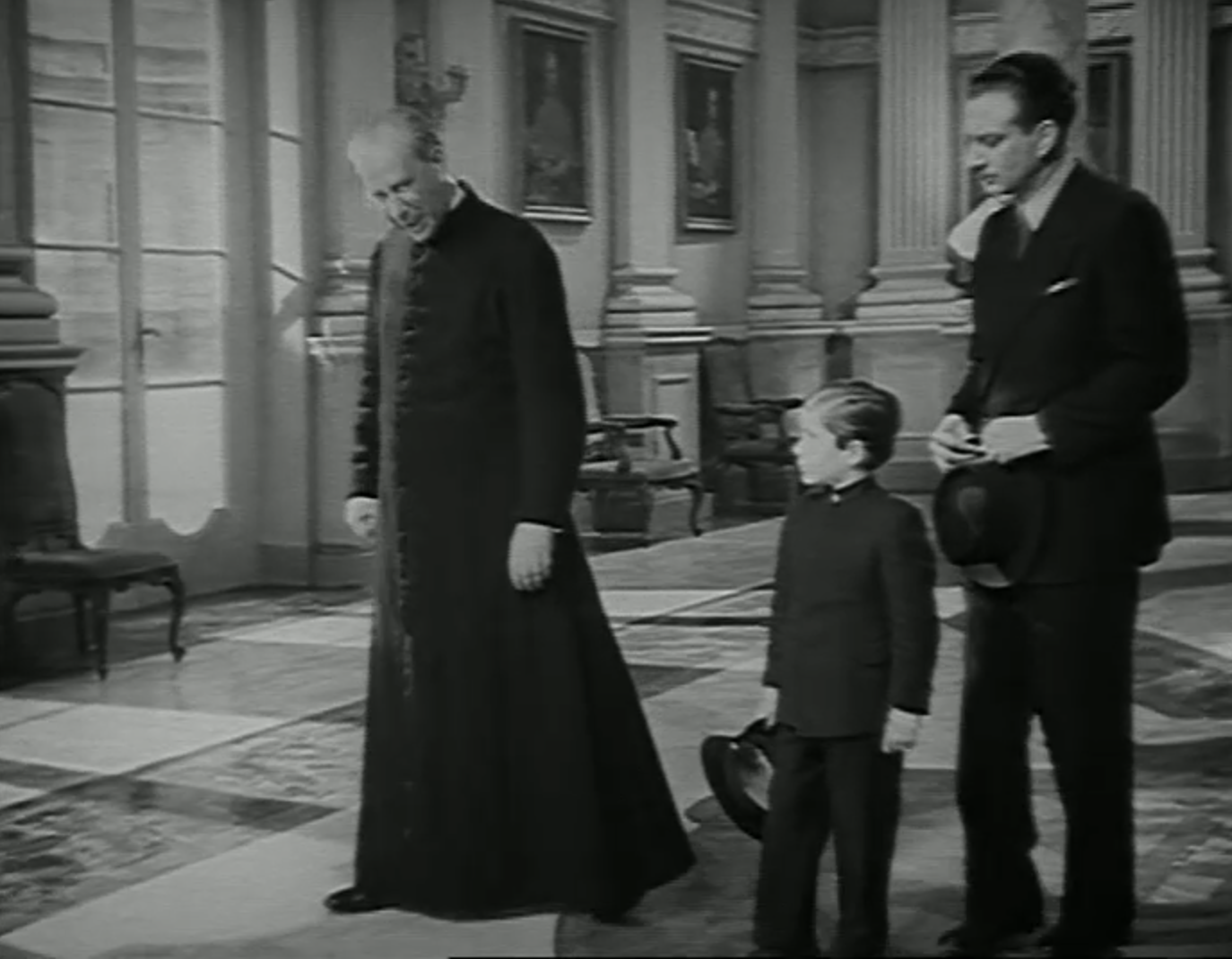
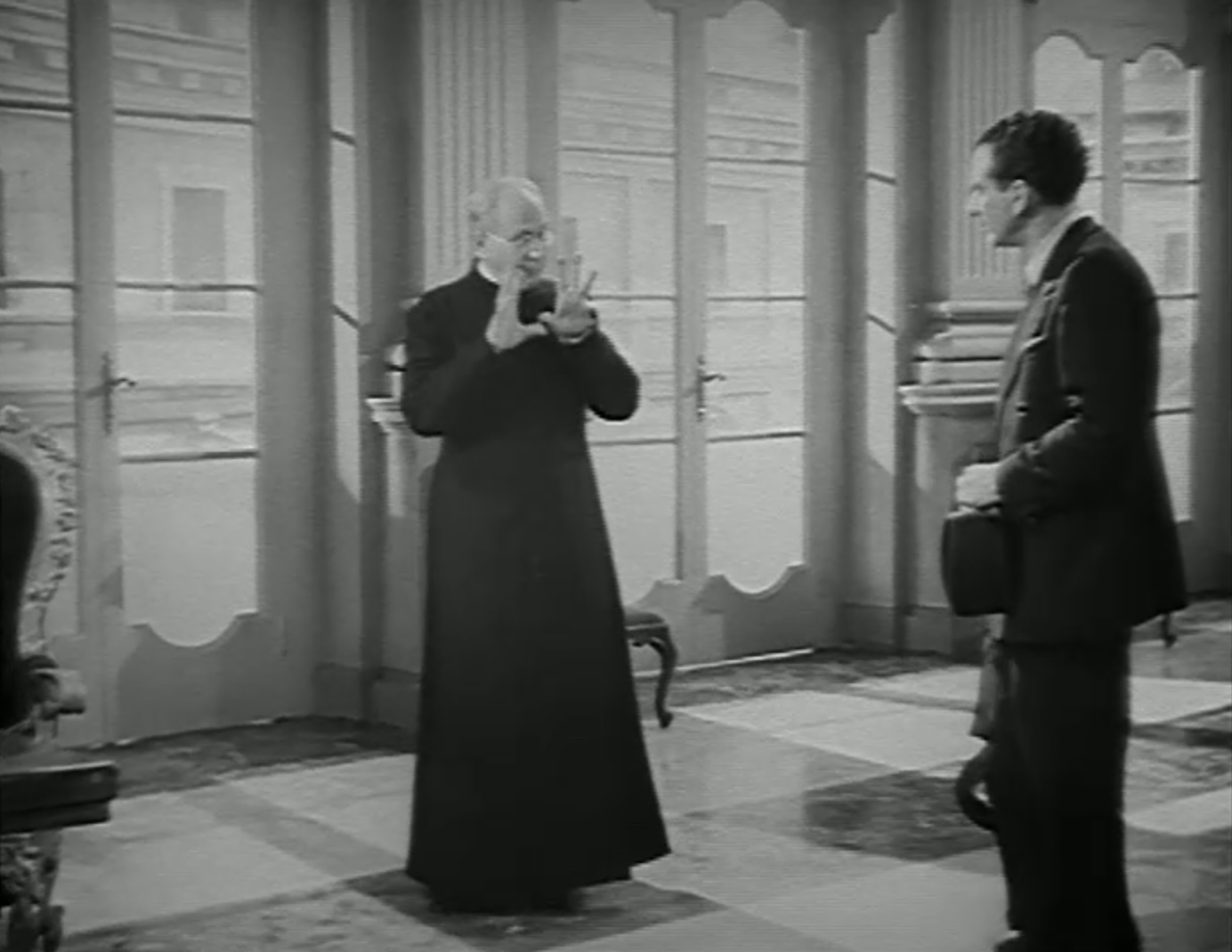
La macchina da presa si allontana: il direttore (Olinto Cristina) è un prete. Si avvicina e accarezza la testa di Pricò. "Vedrai, starai benissimo qui. Ancora non sono finite le vacanze, ma a giorni arriveranno i tuoi compagni. E sono ragazzi proprio come te".
The camera pulls back: the director is a priest. He walks over and strokes Pricò’s head. “You’ll see, you’ll love it here. Vacation isn’t over yet, but in a few days, your classmates will join you. And they are just like you.”
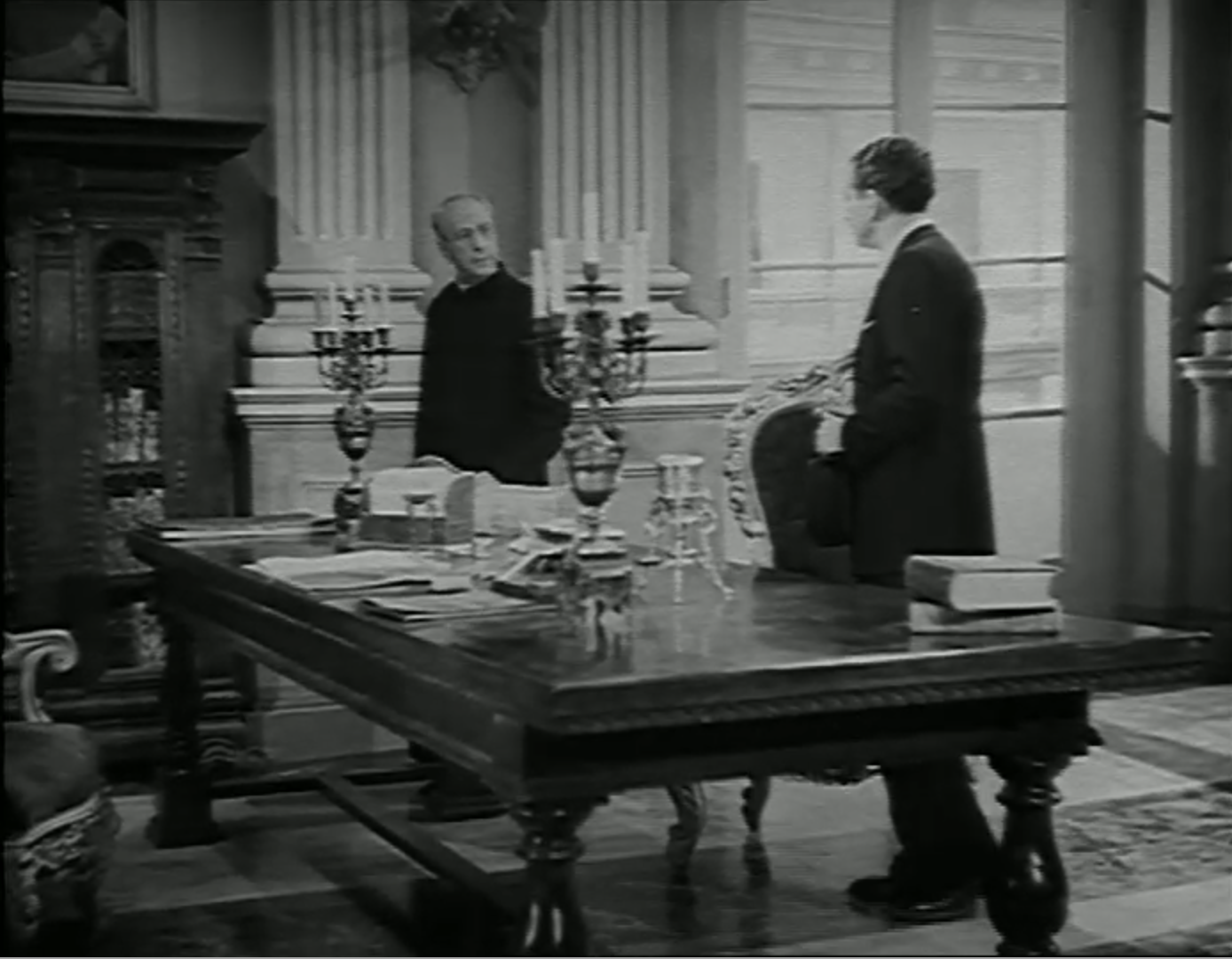
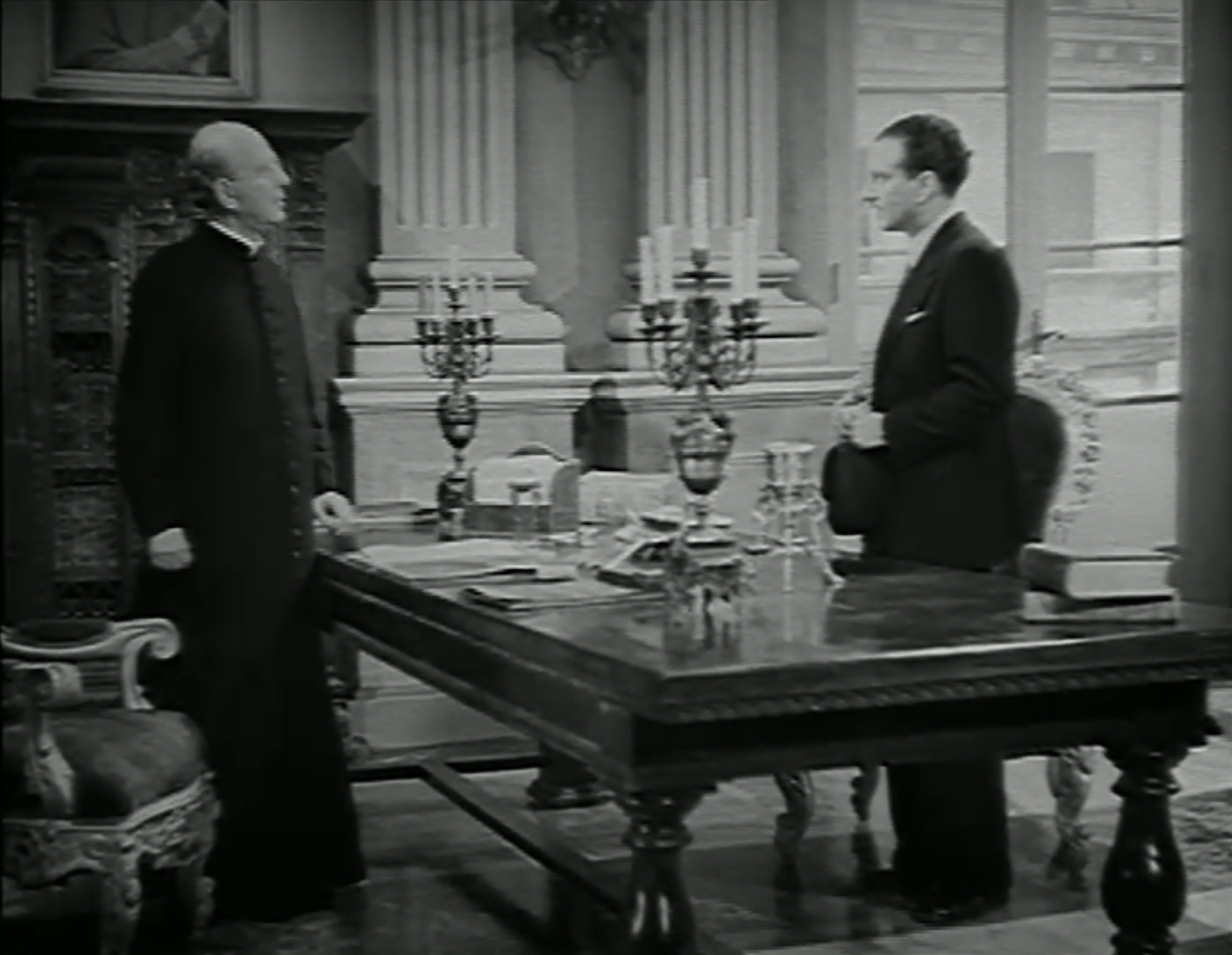
Andrea segue il direttore fino alla sua scrivania e gli dice: "Volevo pregarla, signor direttore, di avere una cura quasi paterna del mio bambino. È un po’ troppo sensibile e ha bisogno di molto affetto".
"Non si preoccupi. Qui si troverà come… come in famiglia”.
"È proprio questo di cui ha bisogno: una famiglia".
Andrea follows the director to his desk, saying, “I wanted to ask you, sir, to please take special care of my little boy. He’s a little too sensitive, and he needs a lot of affection.”
“Don’t worry. Here he will find himself as … as in a family.”
“That’s exactly what he needs: a family.”
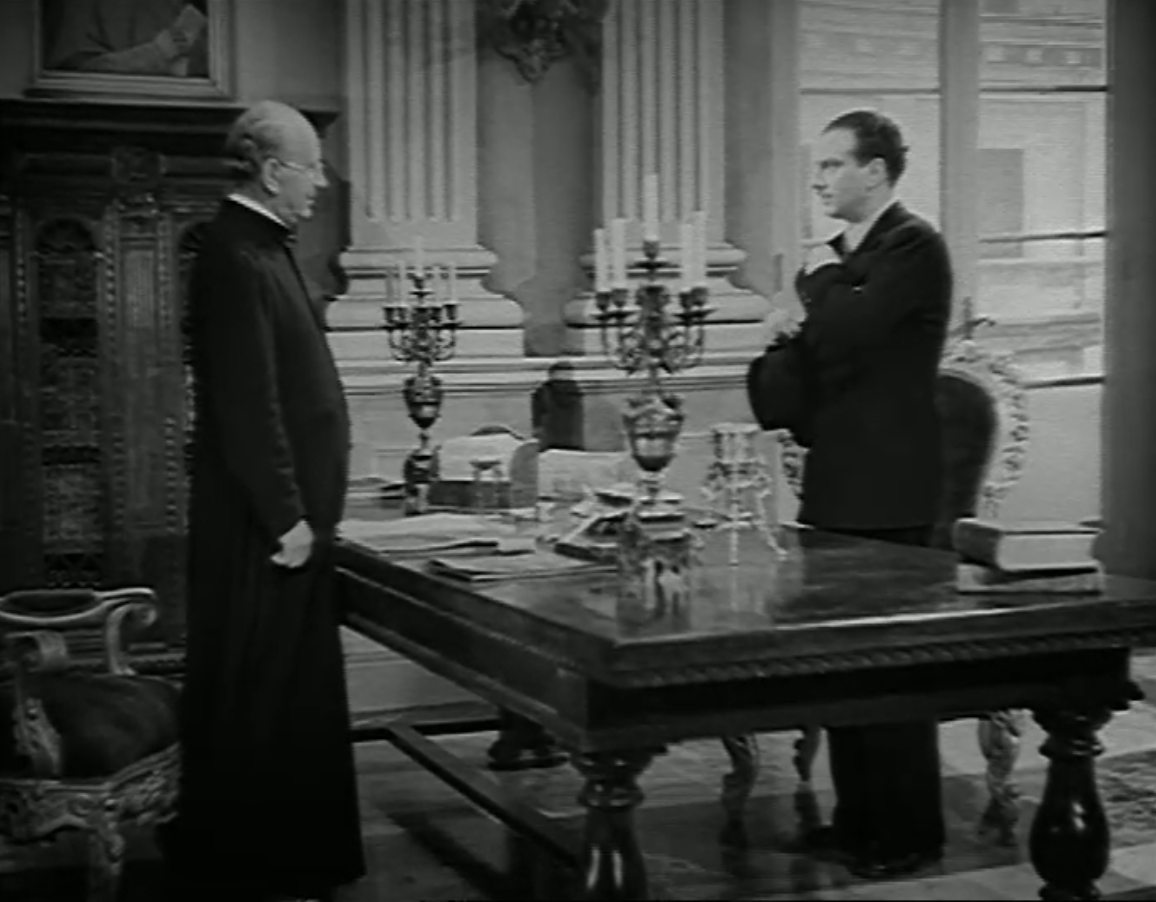
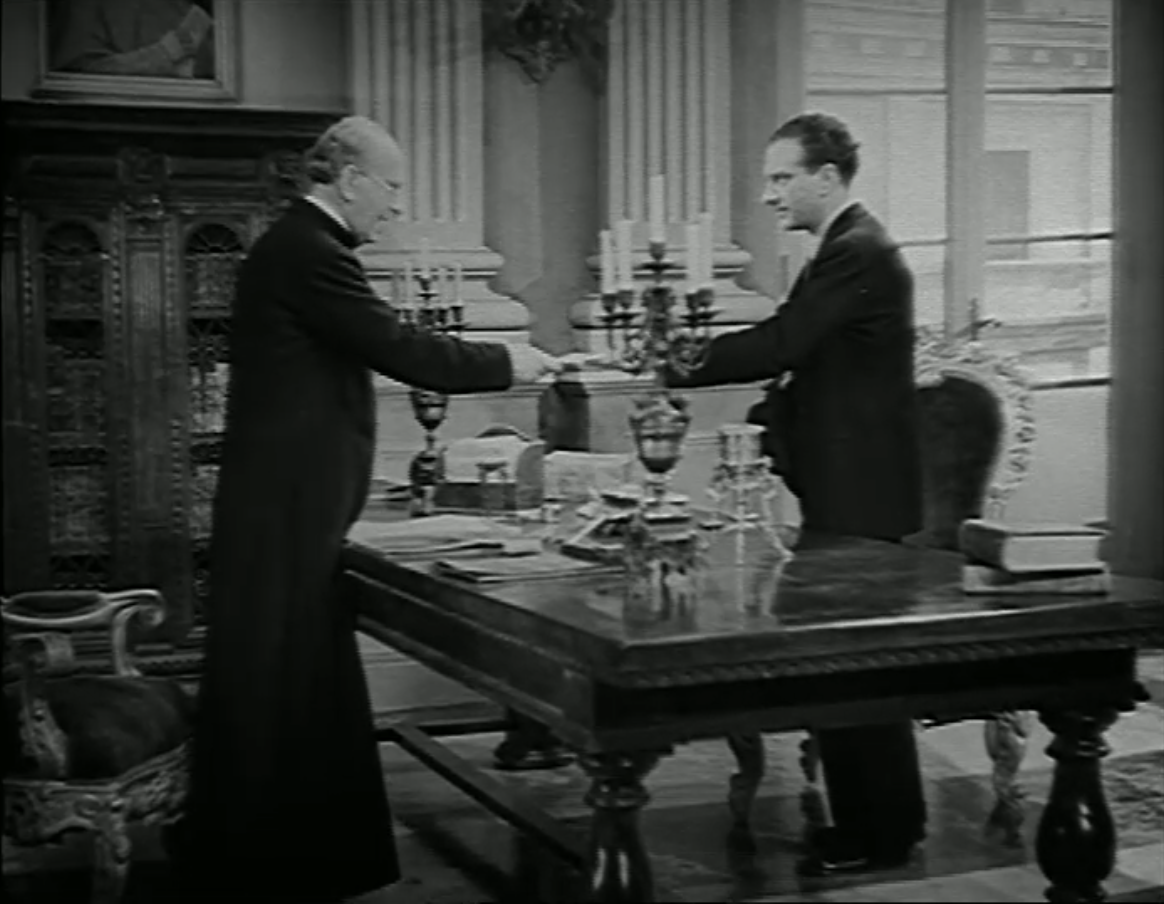
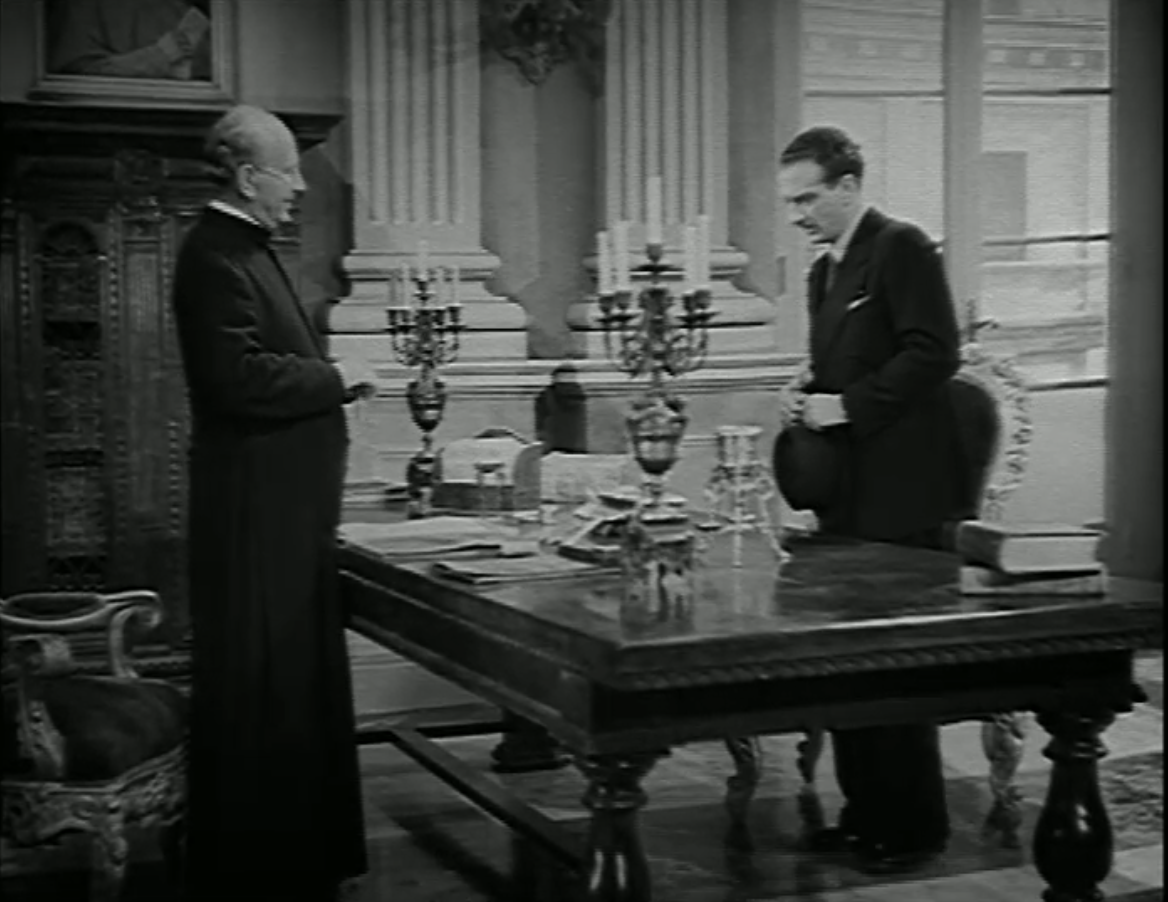
Andrea infila la mano in tasca: "Ecco i documenti".
"Va bene".
Andrea reaches into his pocket: “Here are the documents.”
“All right.”
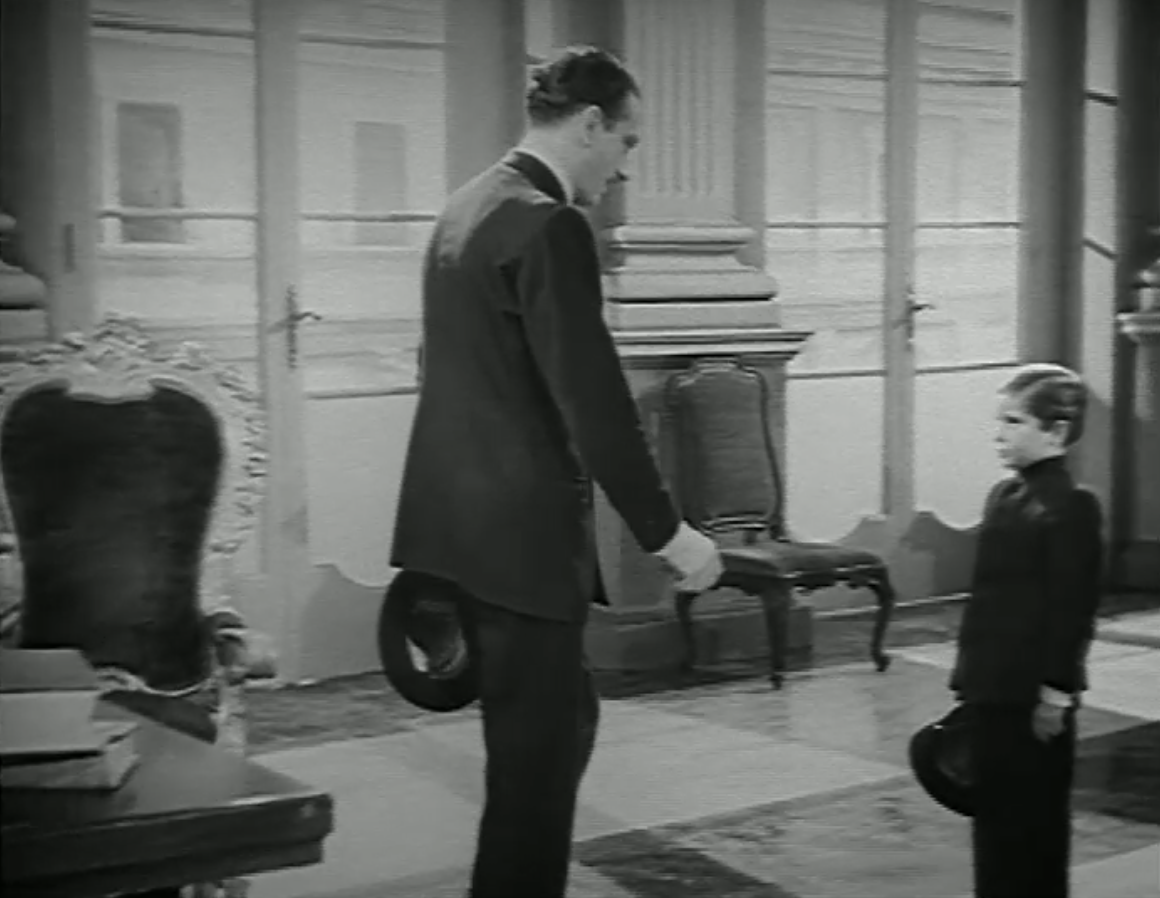
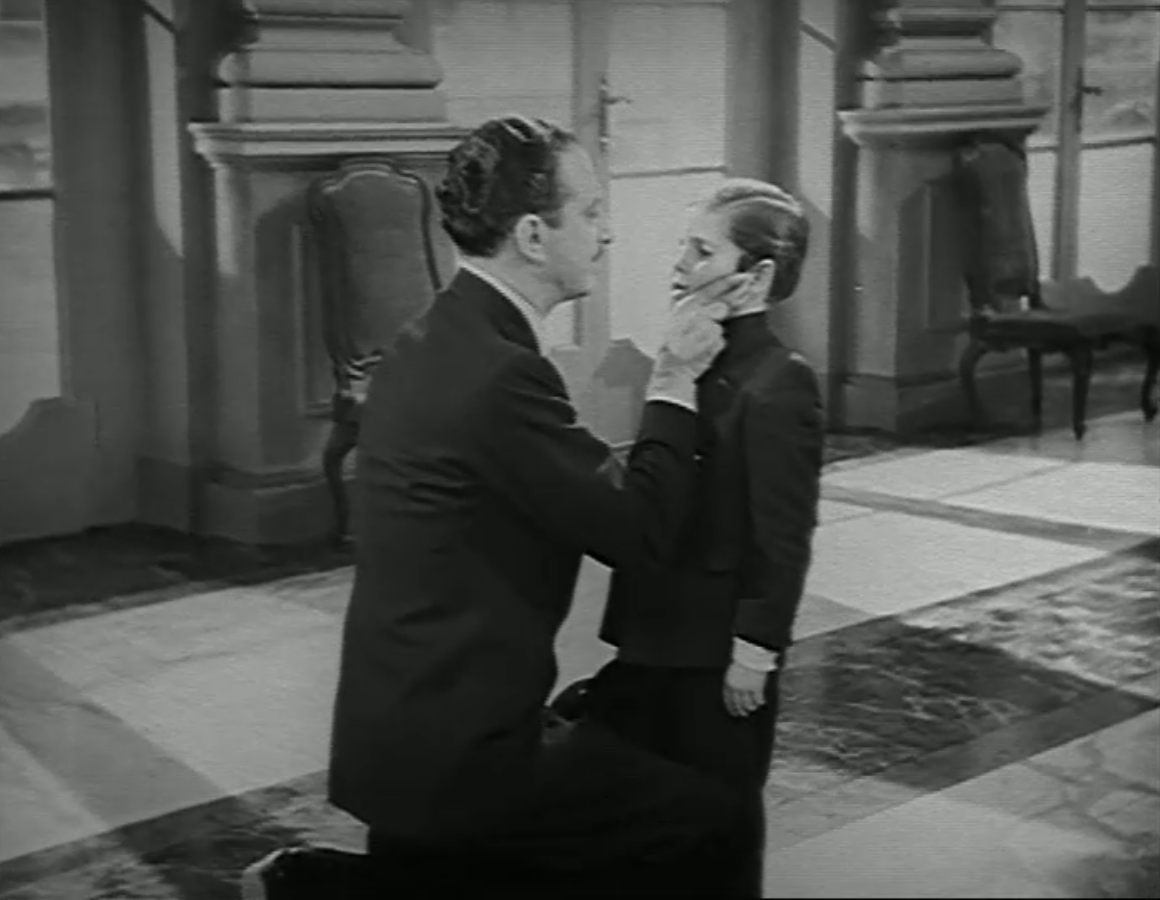
Mentre Andrea si avvicina a suo figlio, che sta rigido nella sua uniforme, risuona una musica solenne. Andrea si inginocchia e stringe il viso di Pricò tra le mani. "Sta’ buono, eh?"
As Andrea goes to his son, who’s standing stiffly in his uniform, solemn music plays. Kneeling, Andrea clasps Pricò’s face in his hands. “Behave, okay?”
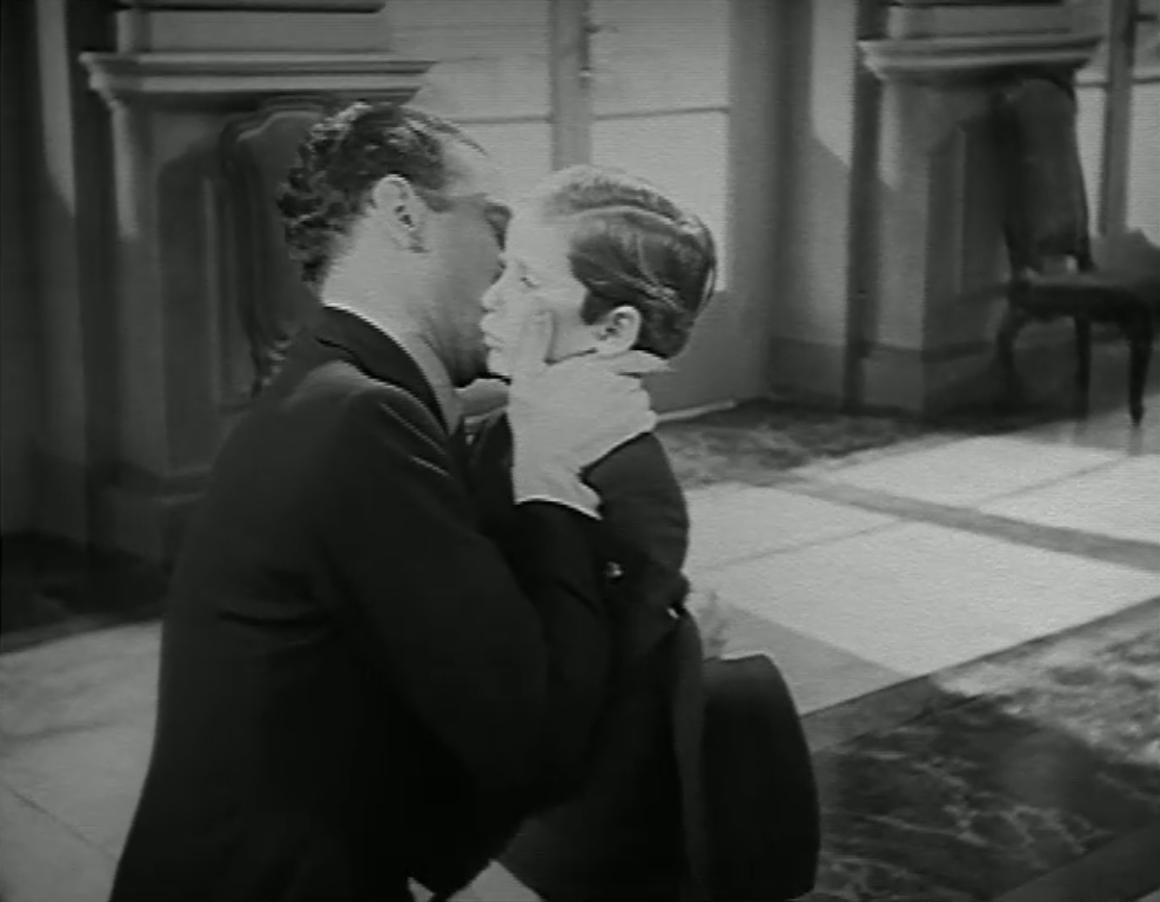
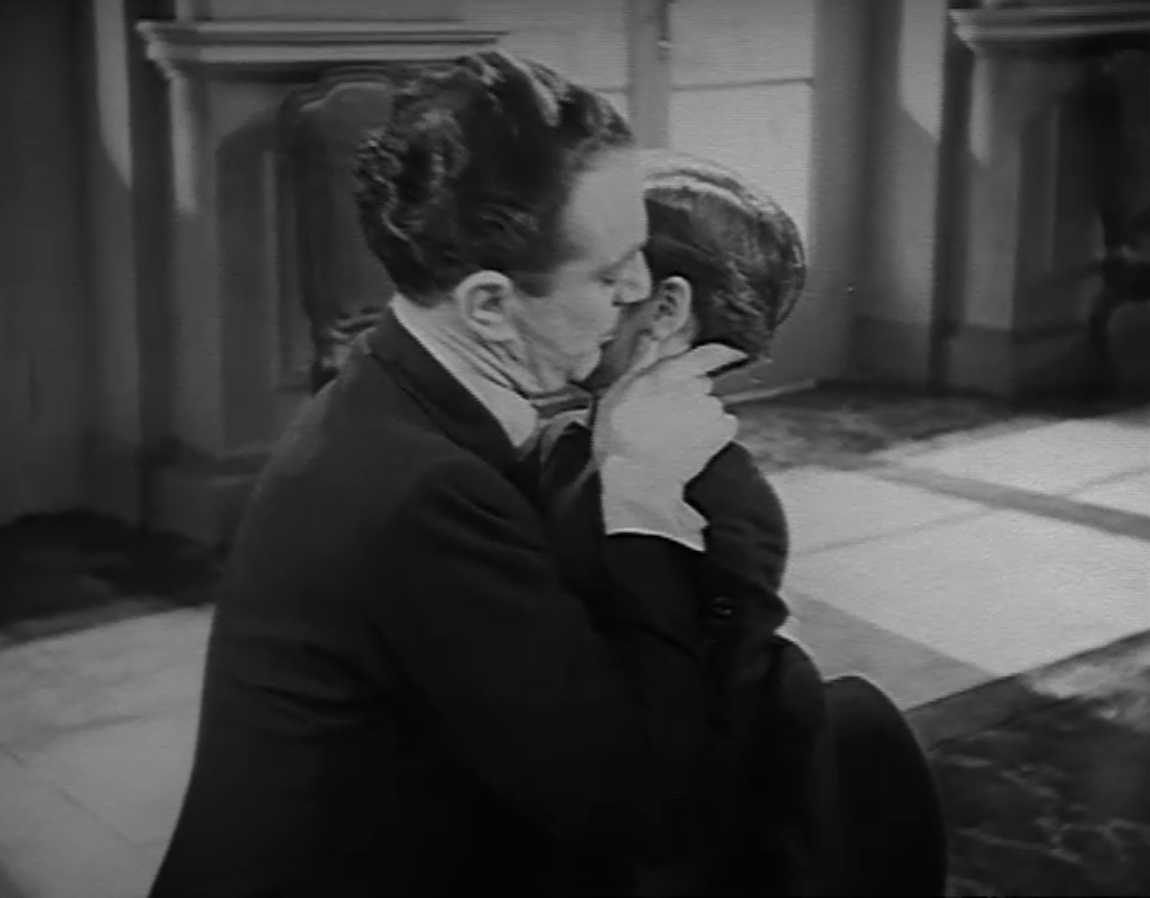
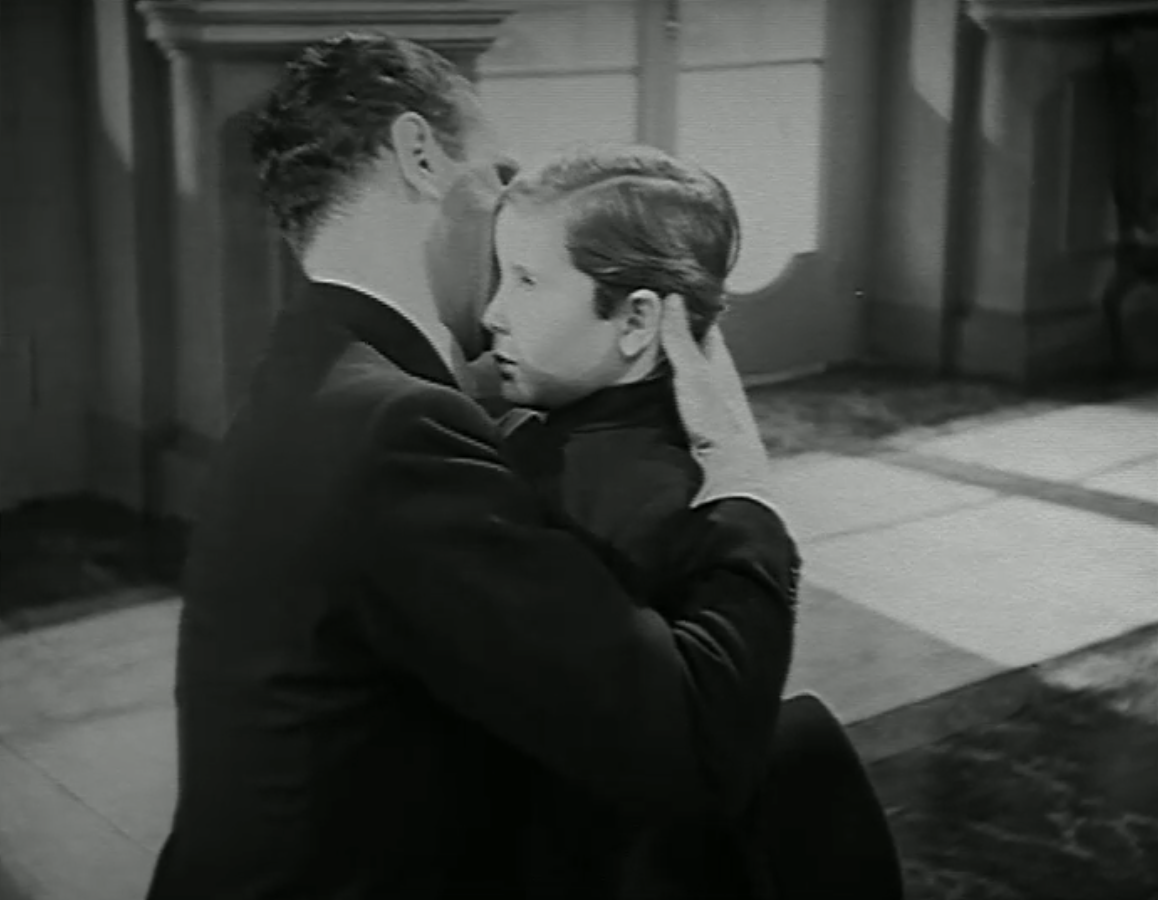
Andrea bacia il viso del bambino, da una parte all’altra, dalla fronte al mento, e Pricò inizia a piangere.
Andrea kisses the boy’s face, from side to side, from forehead to chin, and Pricò begins to cry.
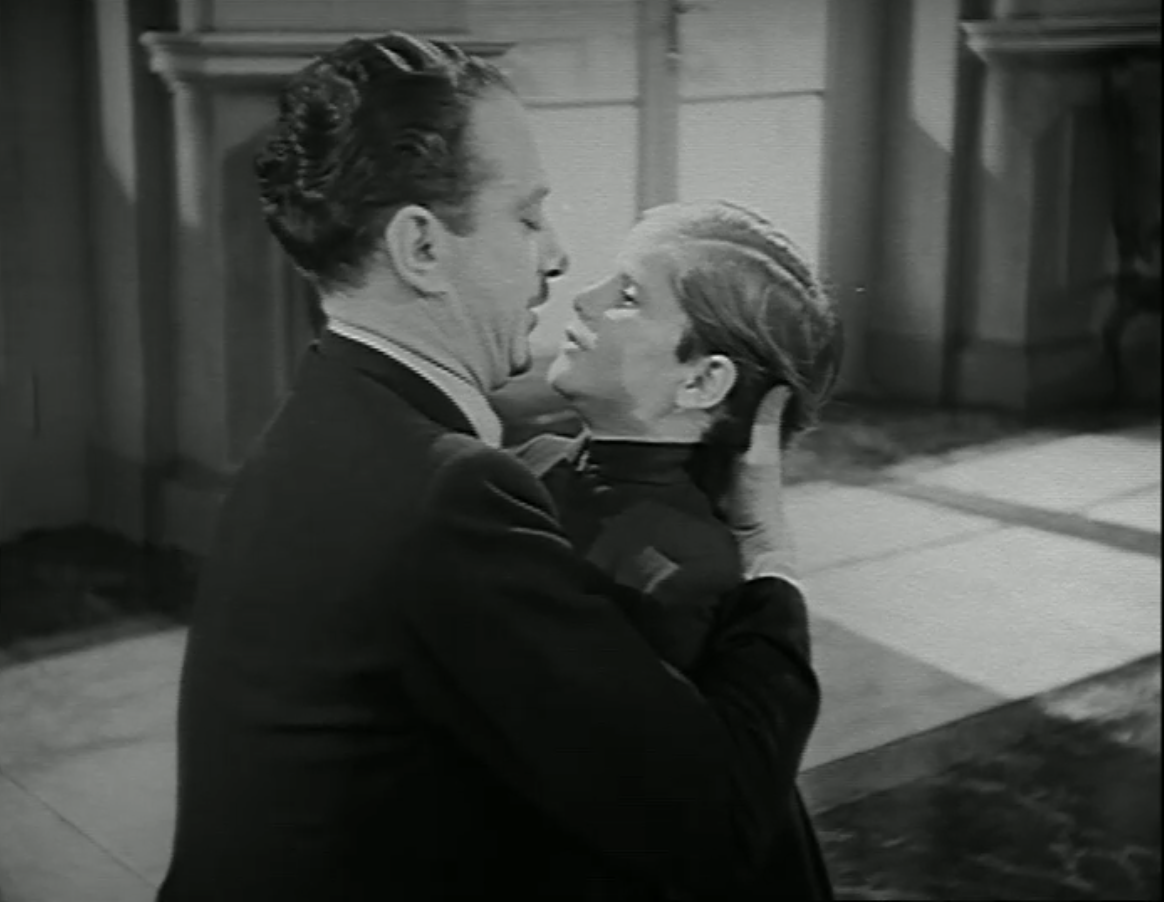
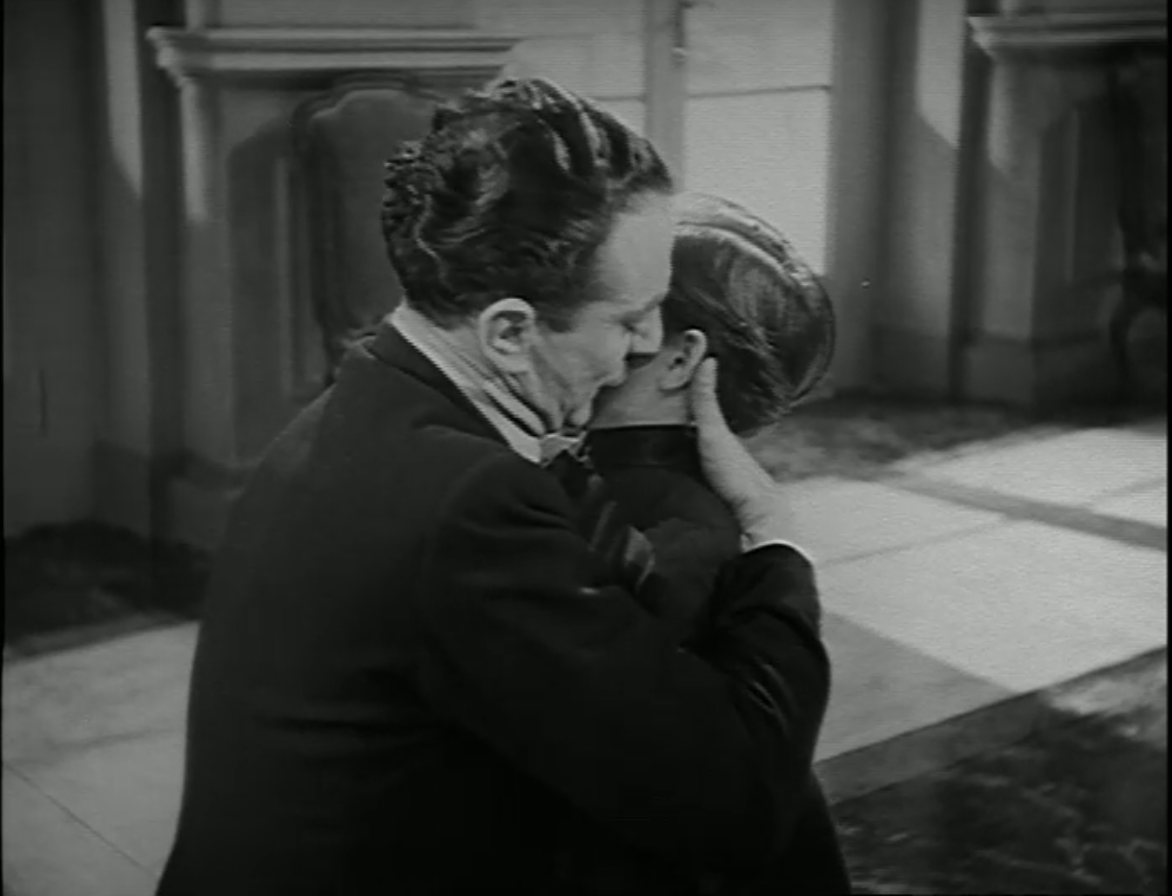
"Sii contento", sussurra Andrea, baciandolo di nuovo.
“Be happy,” Andrea whispers, kissing him again.
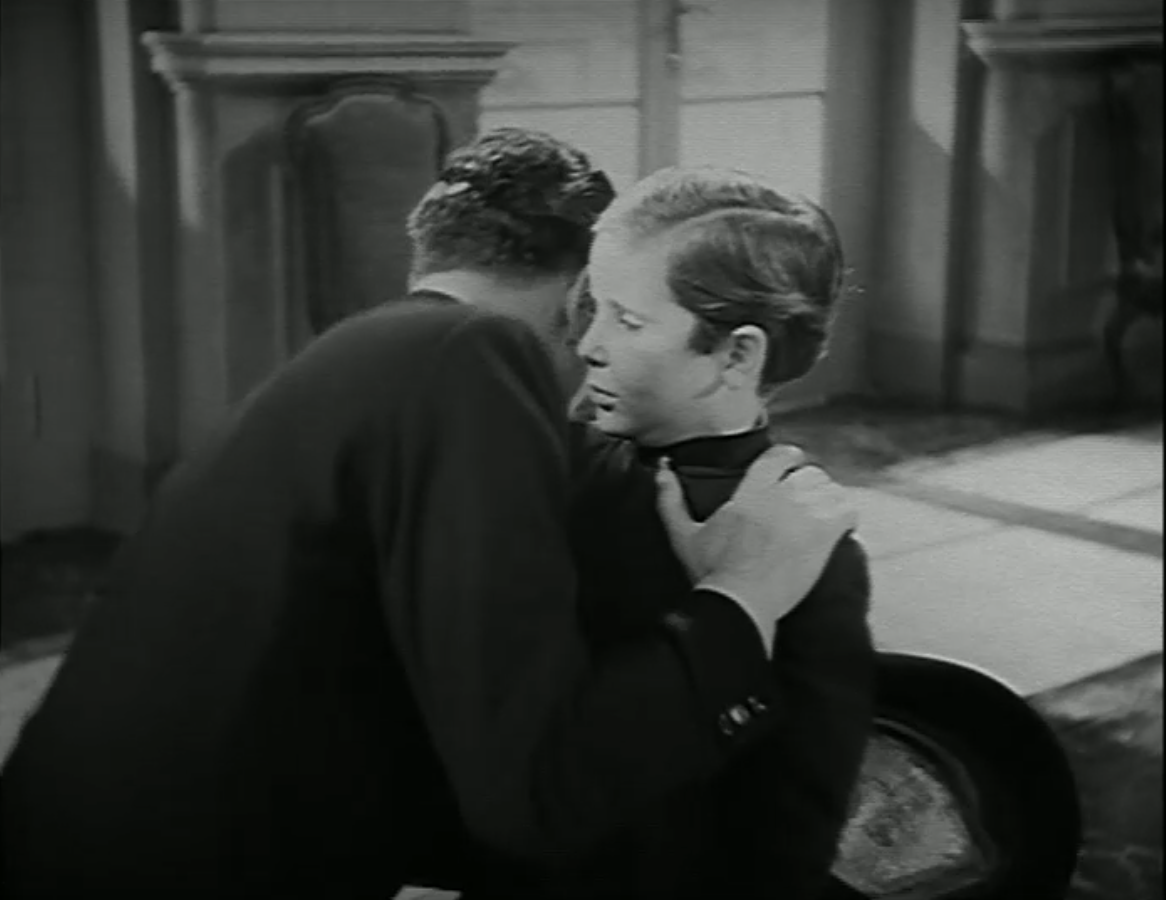
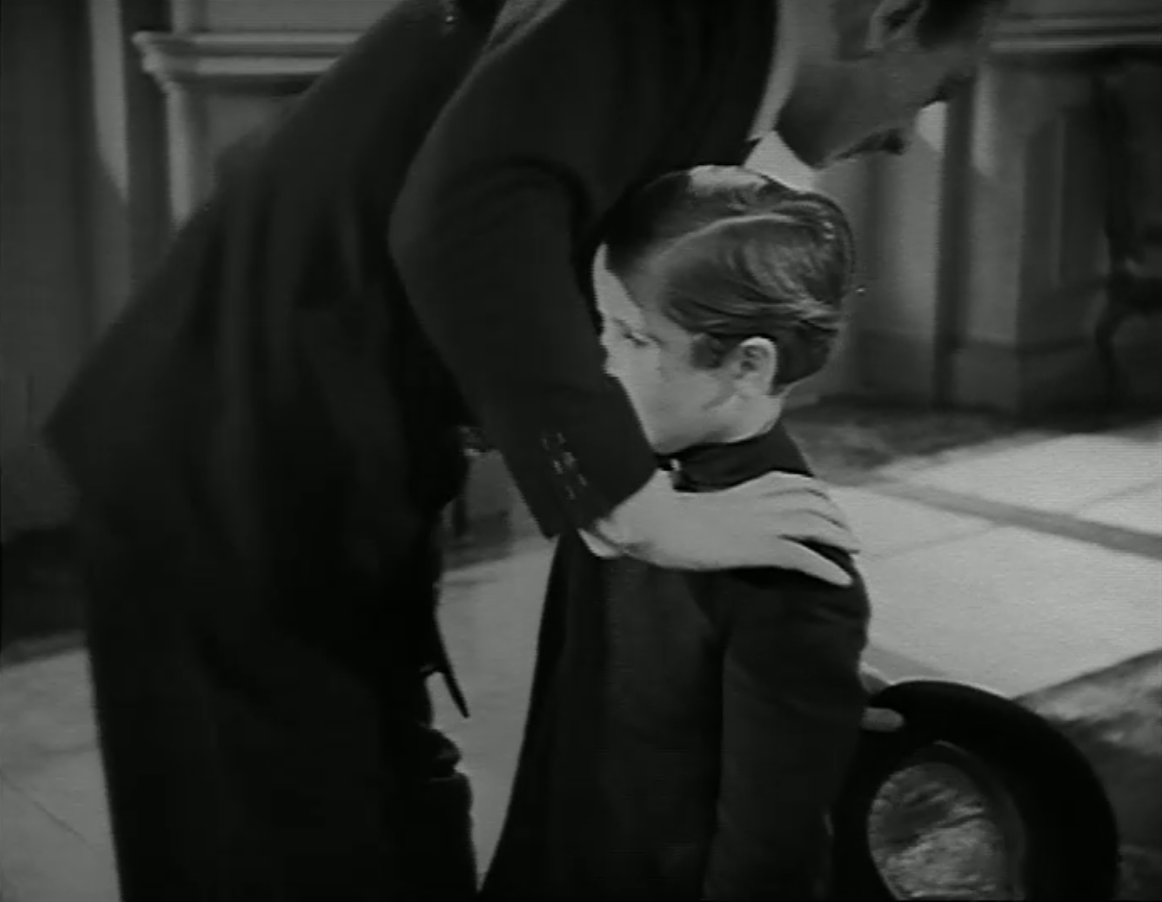
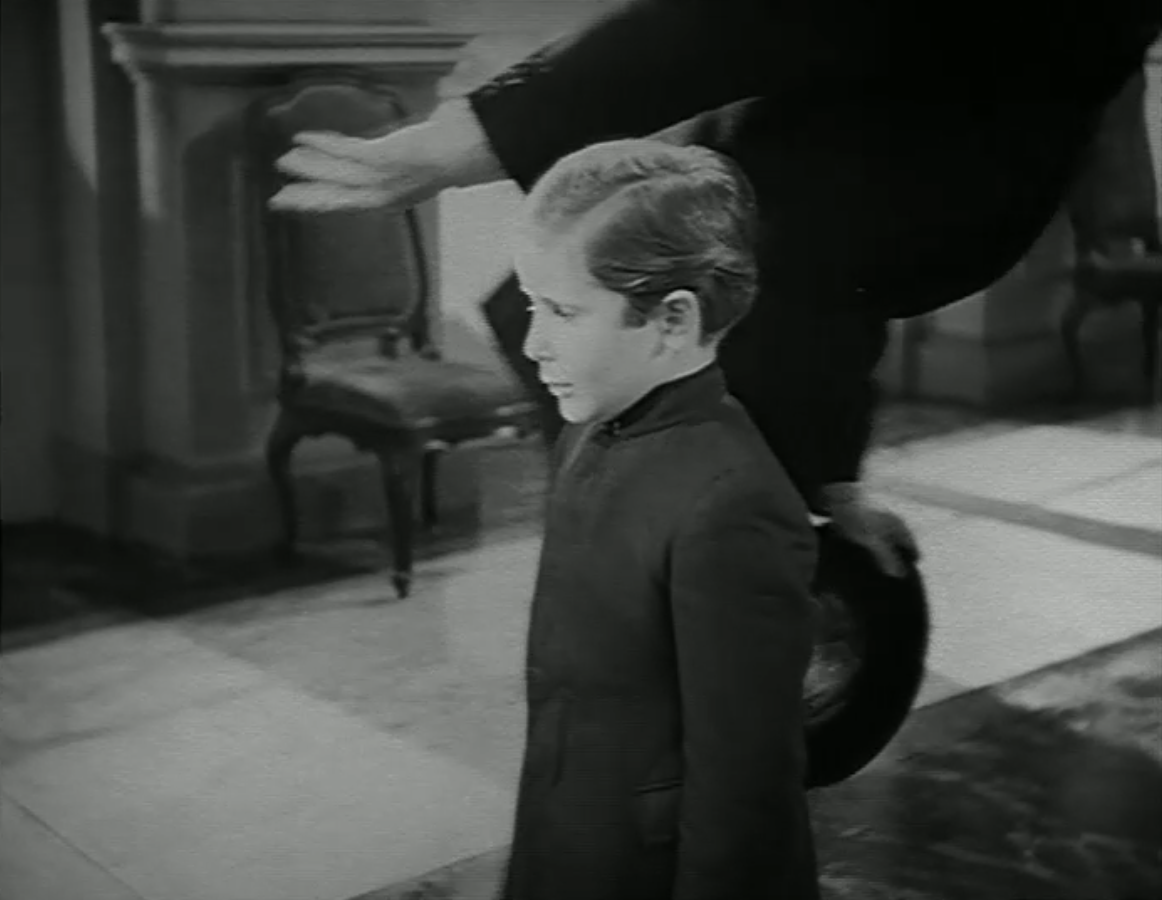
Andrea si alza all'improvviso ed esce dalla stanza senza voltarsi indietro.
Andrea stands suddenly and leaves the room, not looking back.
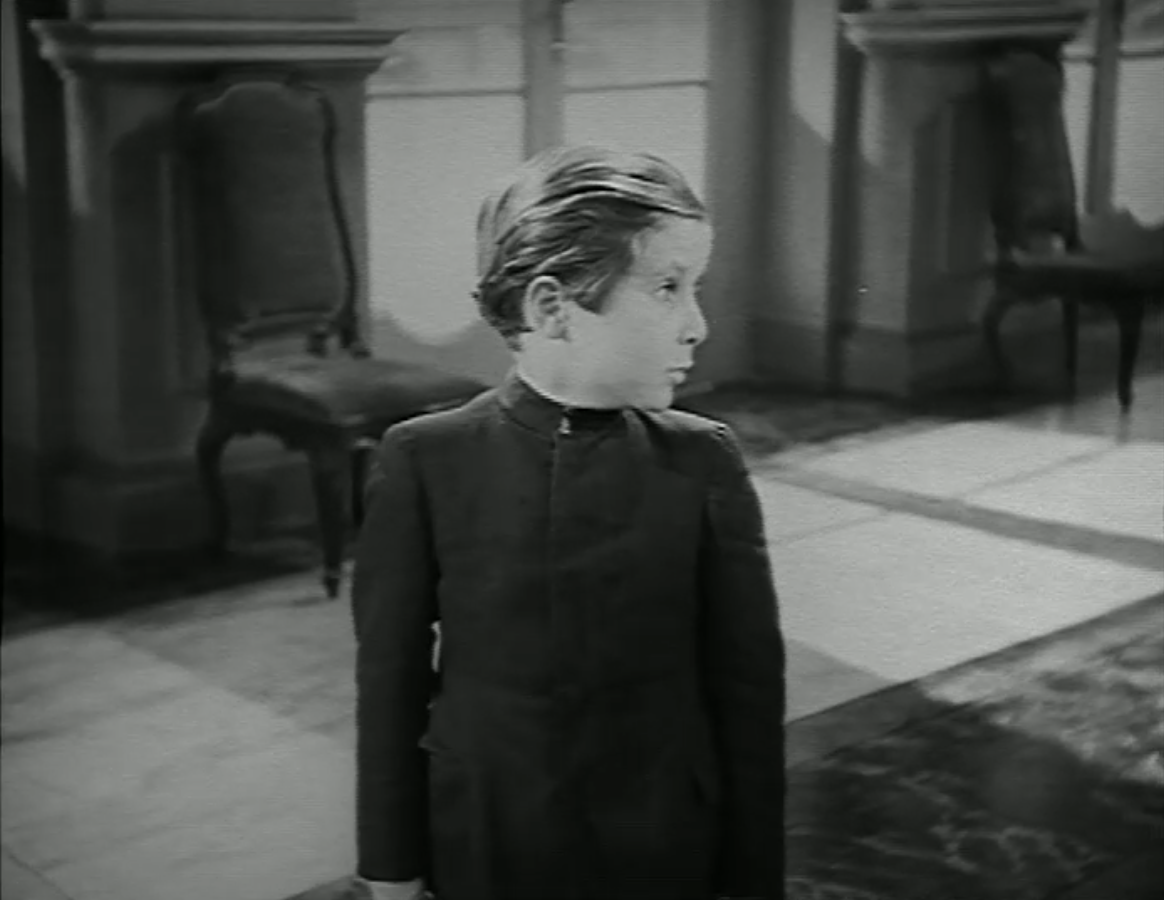
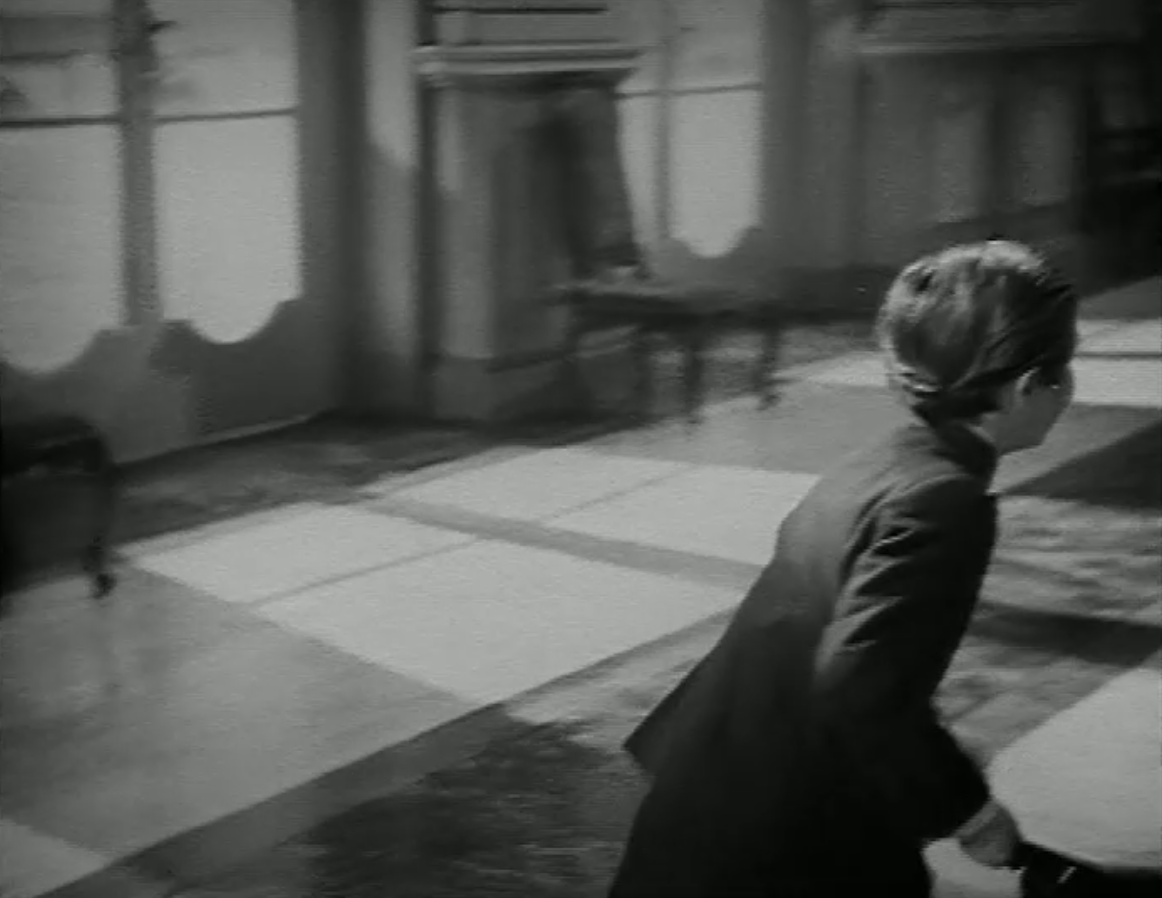
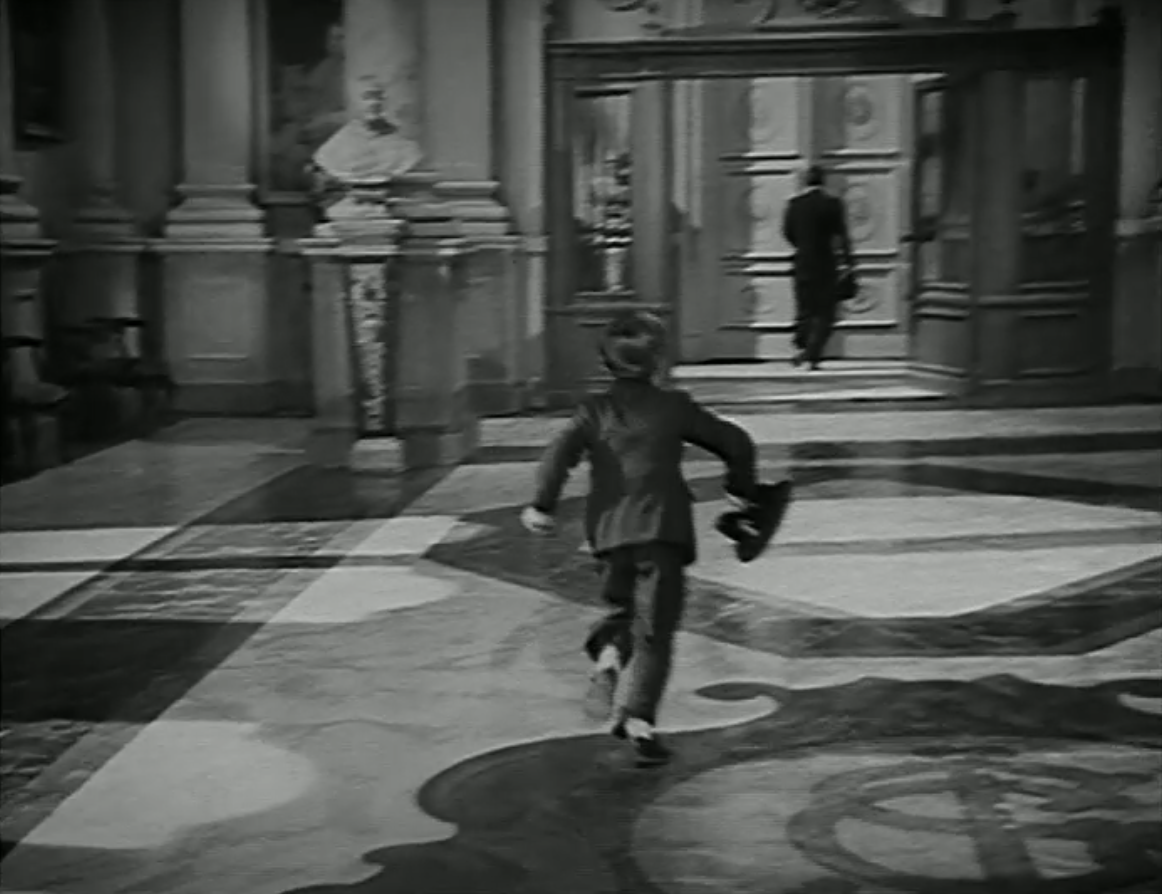
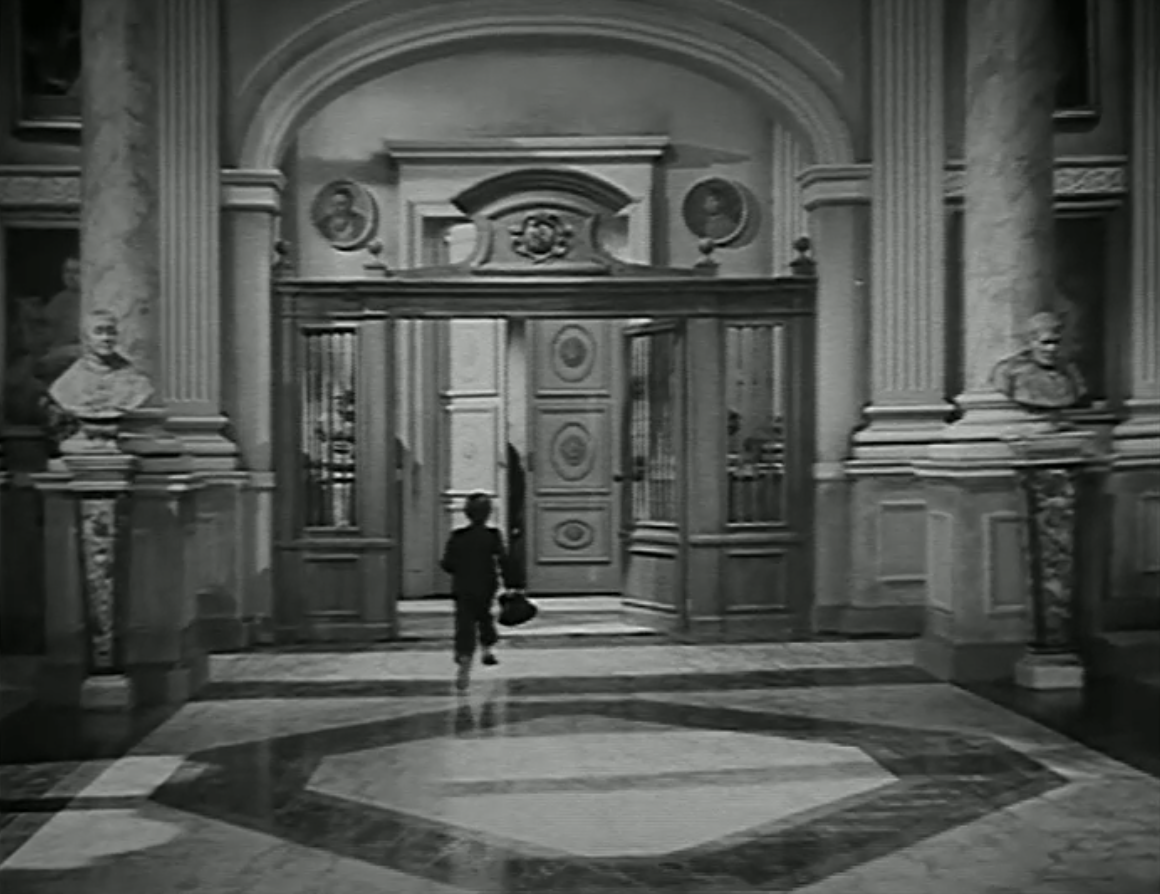
Sempre sull’attenti, Pricò gira la testa. Mentre suo padre se ne va, Pricò grida: "Papà!" e gli corre dietro.
Still at attention, Pricò turns his head. As his father is leaving, Pricò shouts, "Daddy!” and runs after him.
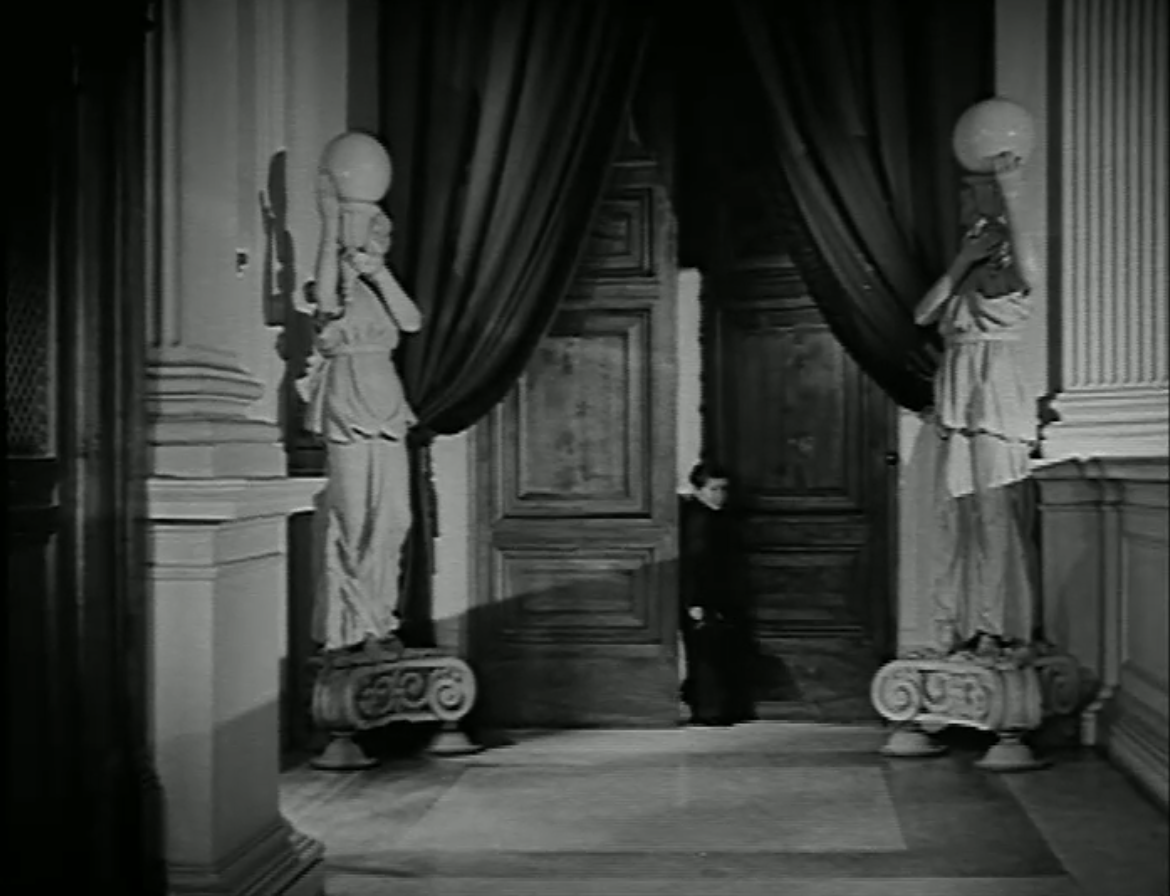
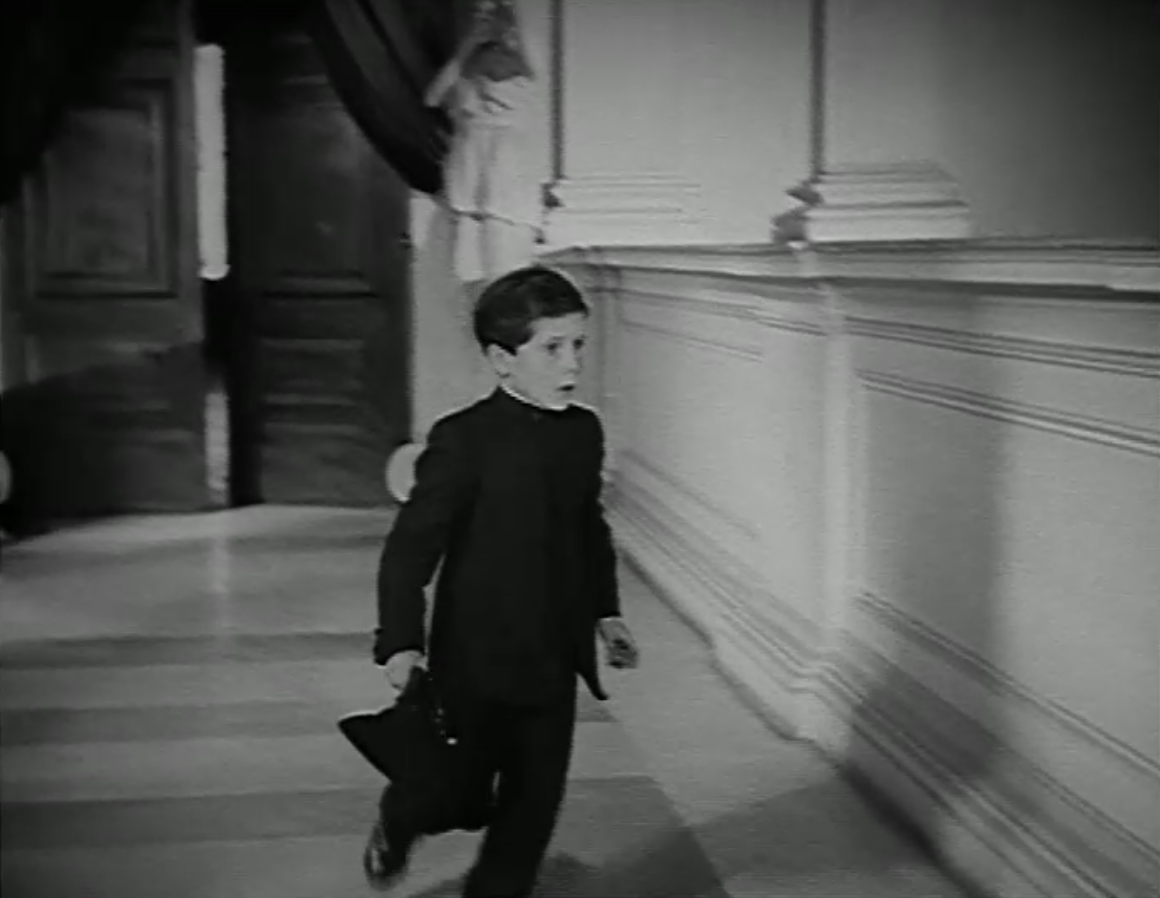
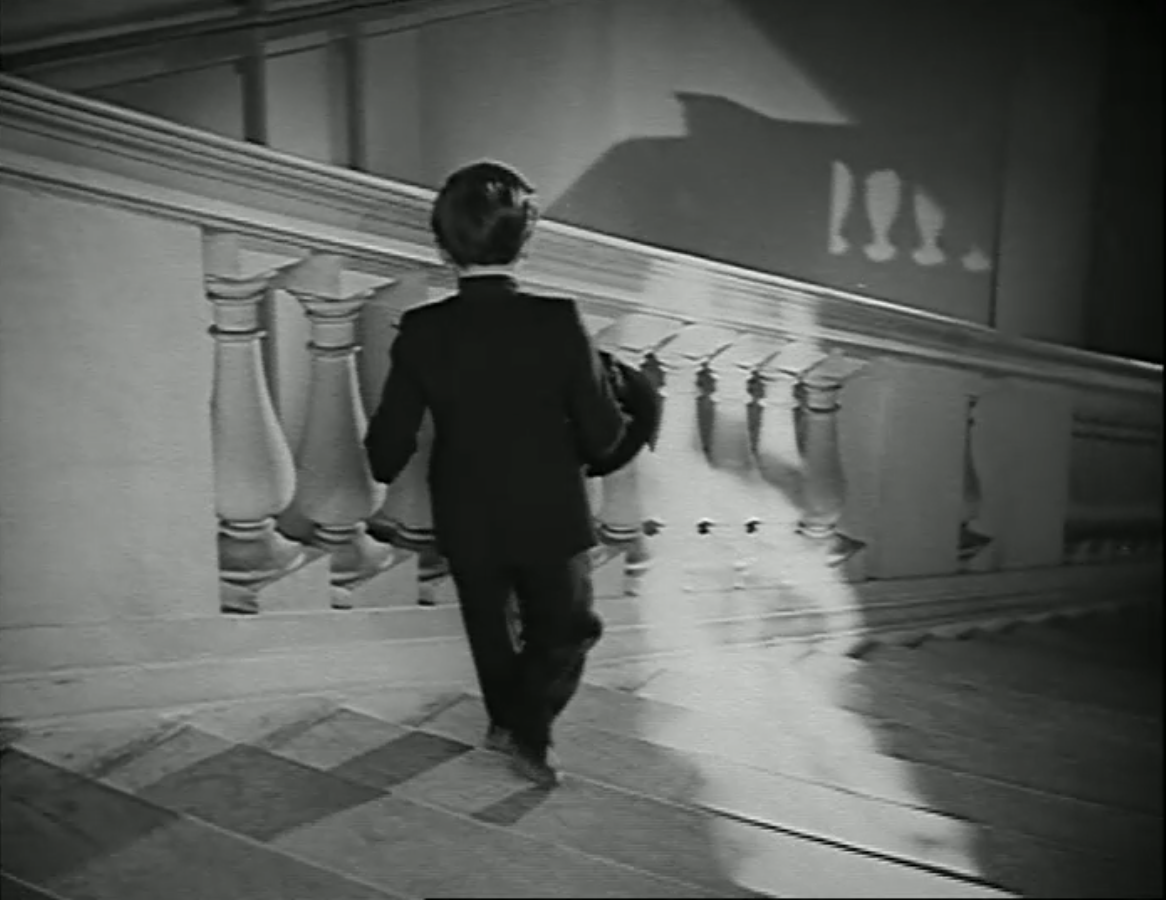
Con il berretto in mano, corre verso le scale.
Cap in hand, he runs to the stairs.
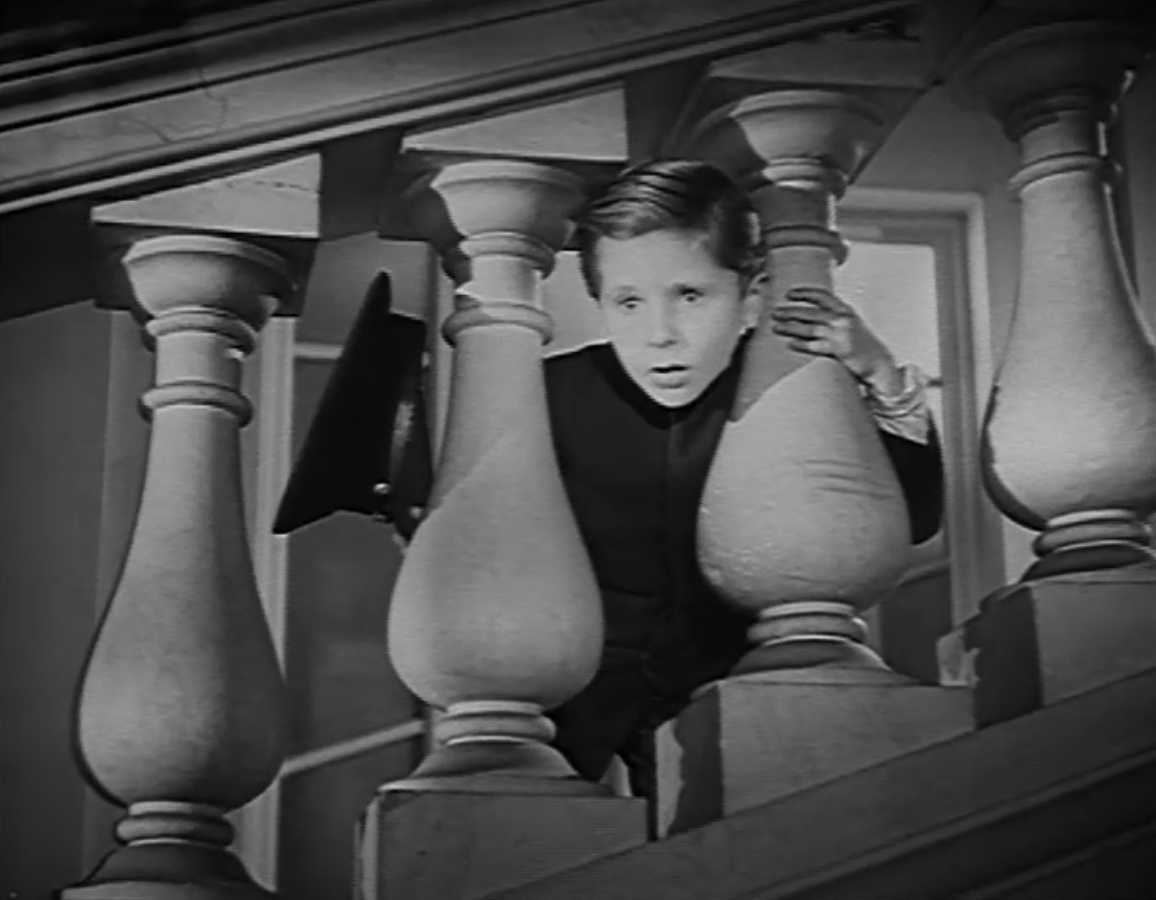
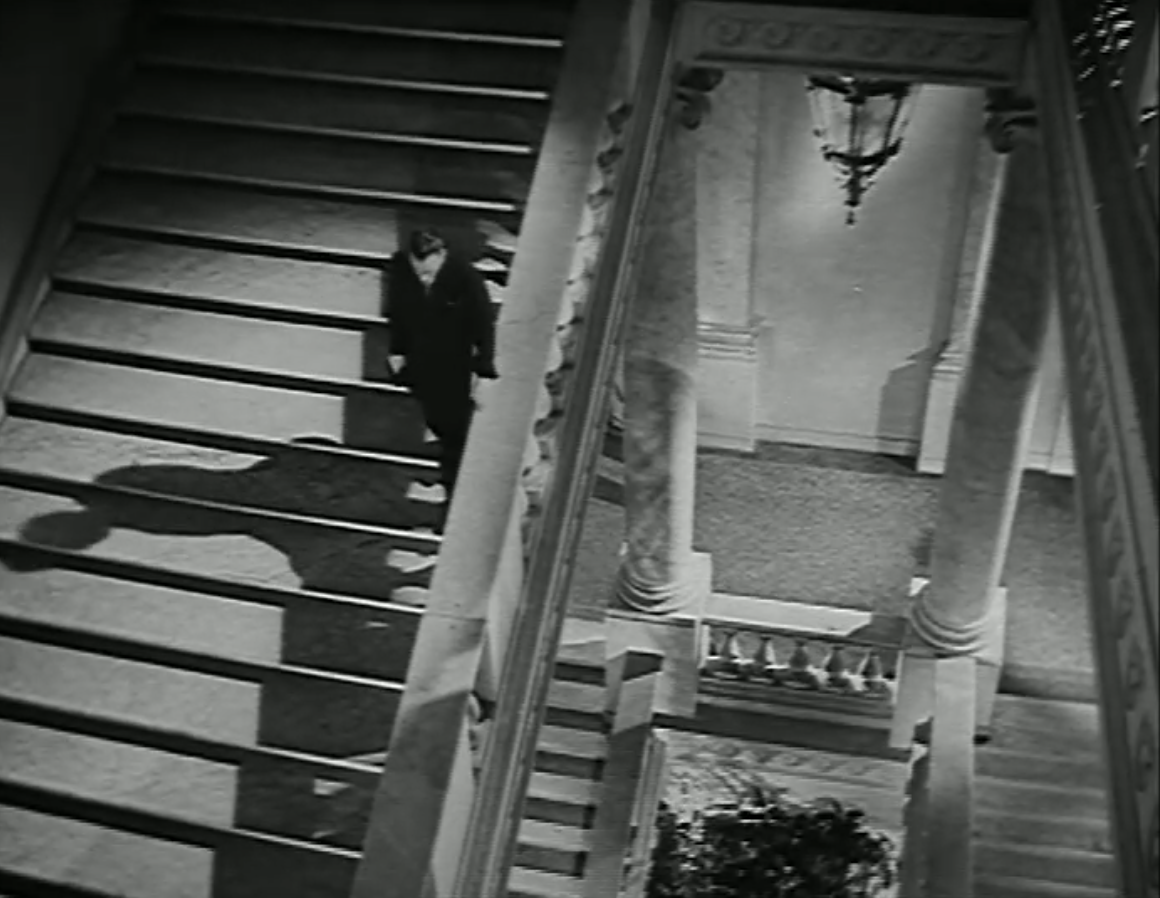
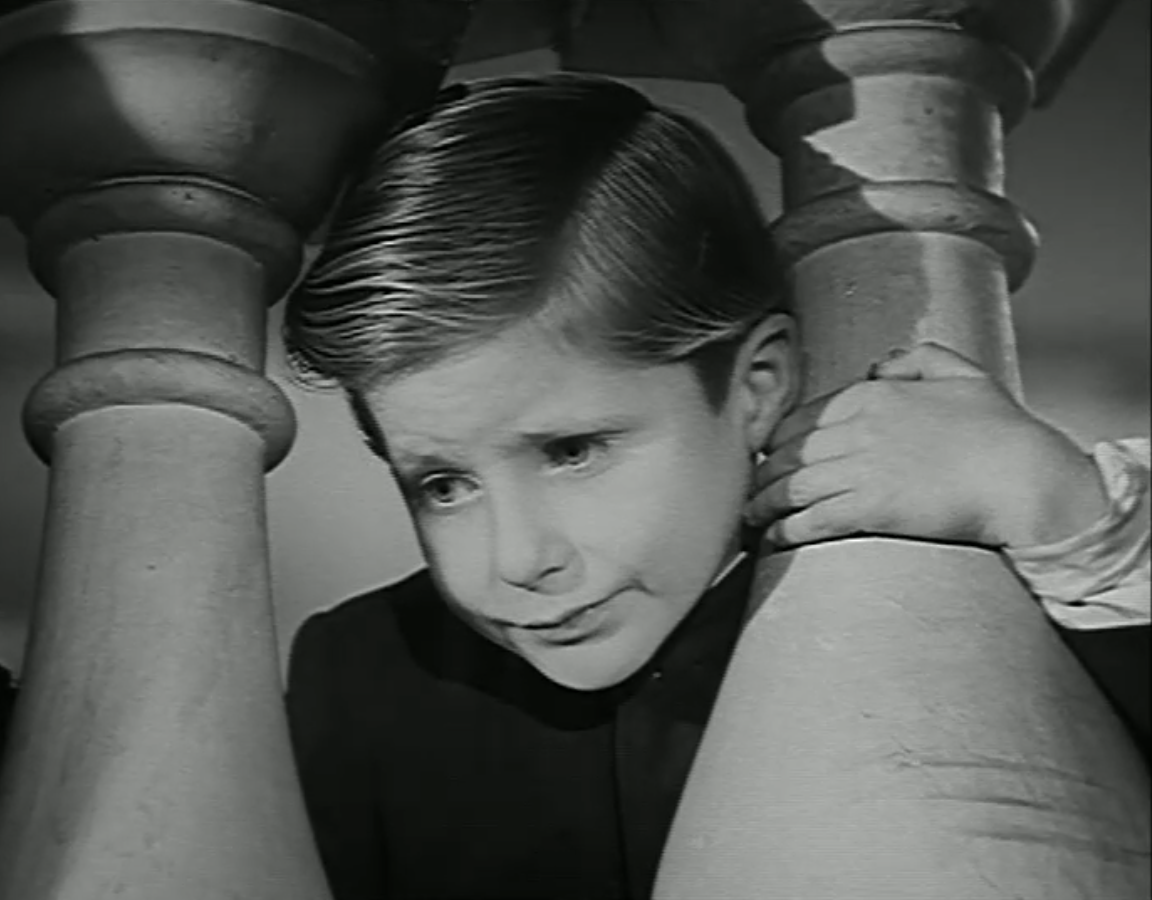
Guardando giù dalle scale, vede suo padre. "Papà!" Il suo grido risuona negli spazi enormi.
Looking down from the stairs, he sees his father. “Daddy!” His cry echoes in the enormous space.
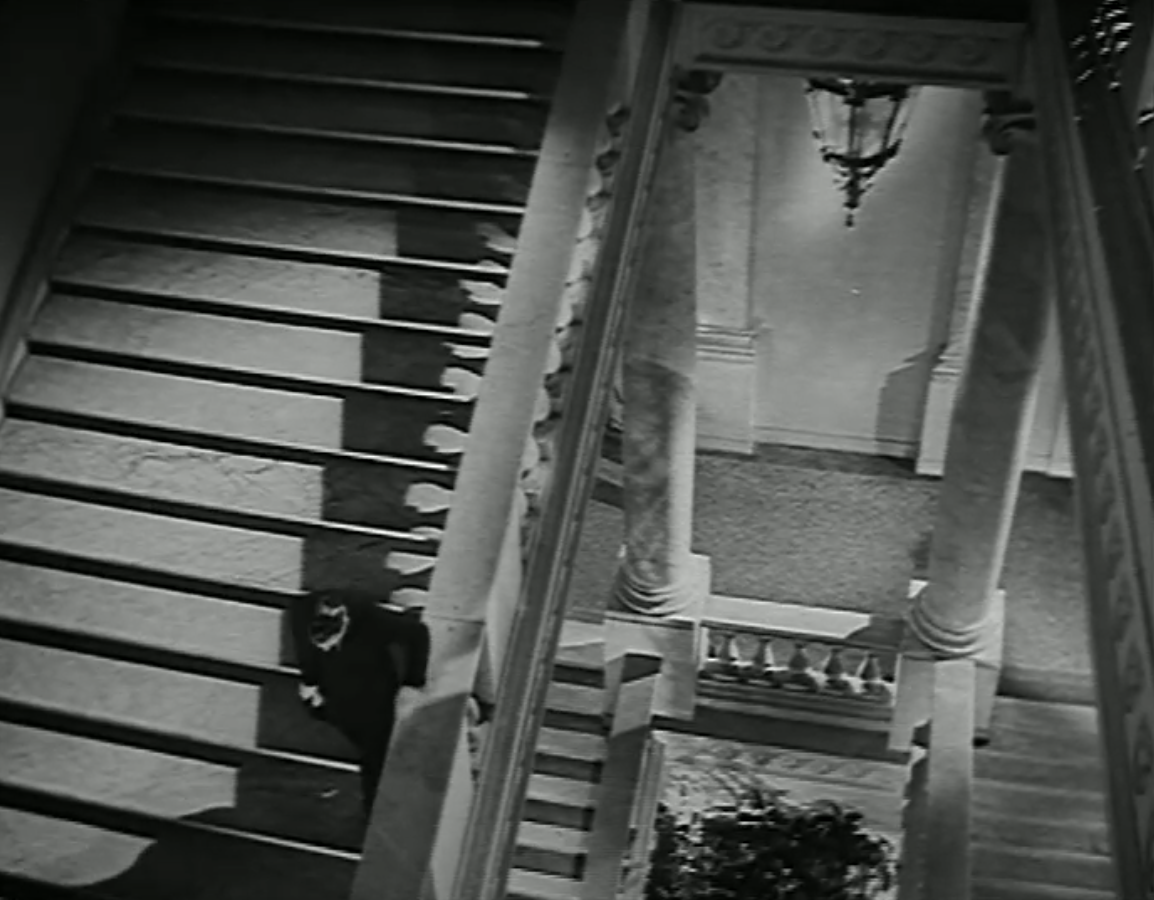
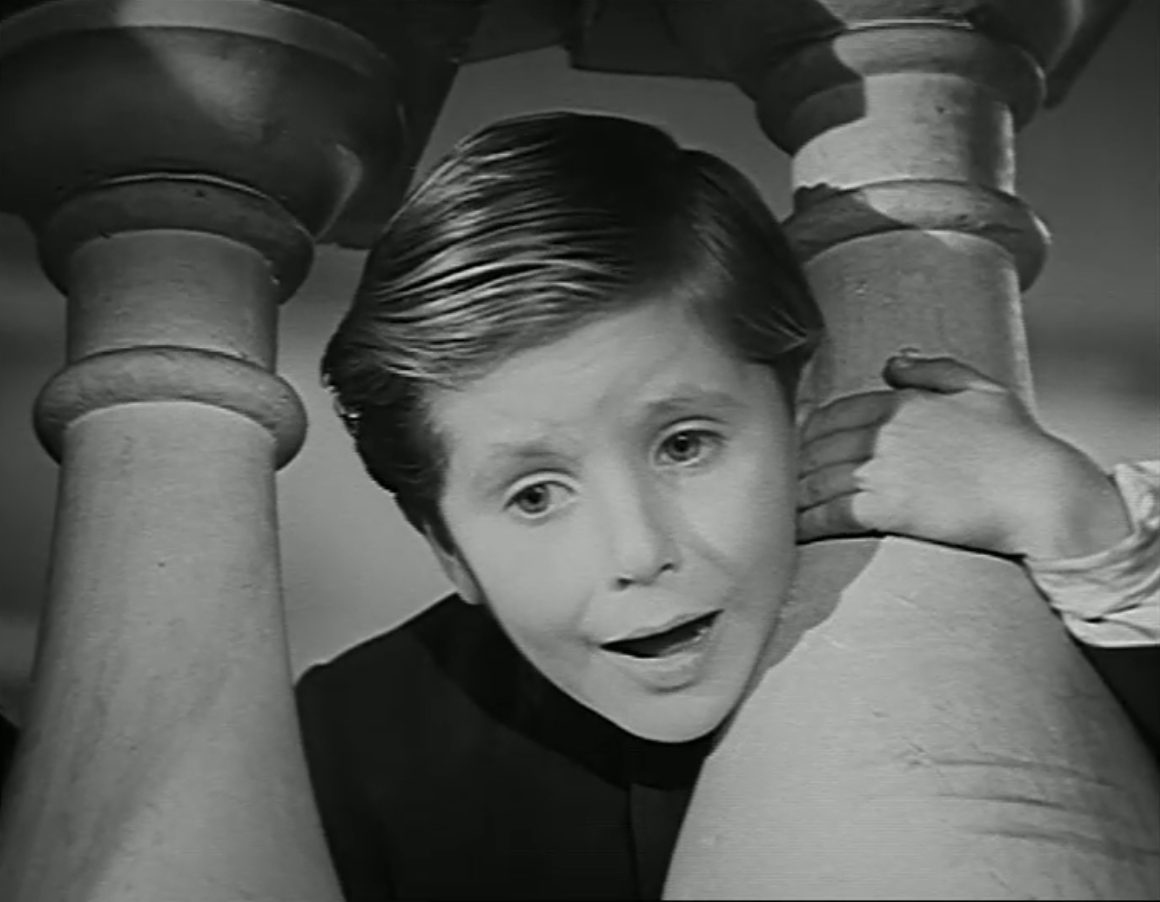
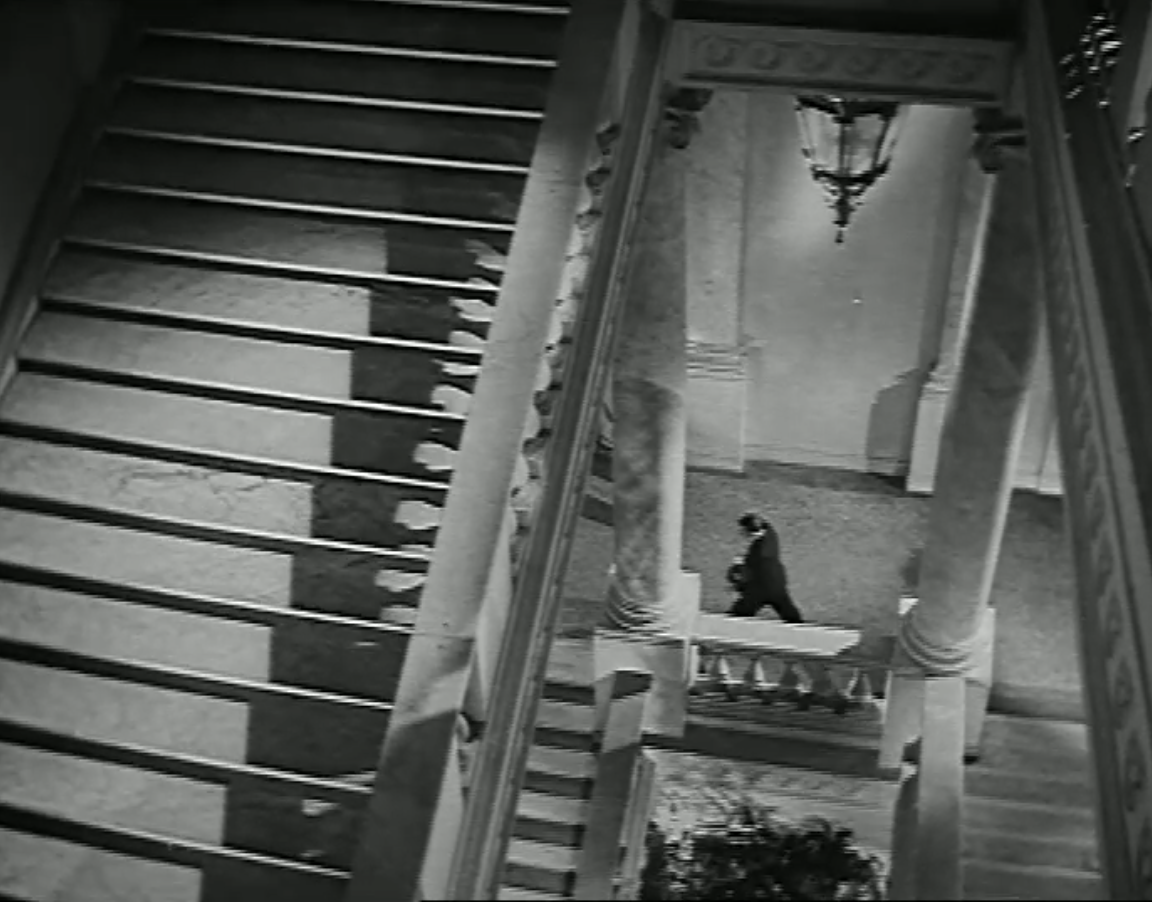
Andrea si ferma un attimo, come per controllare le proprie emozioni, poi riprende a camminare. "Papà!"
Andrea stops a moment, as if to control his feelings, and then walks on. “Daddy!”
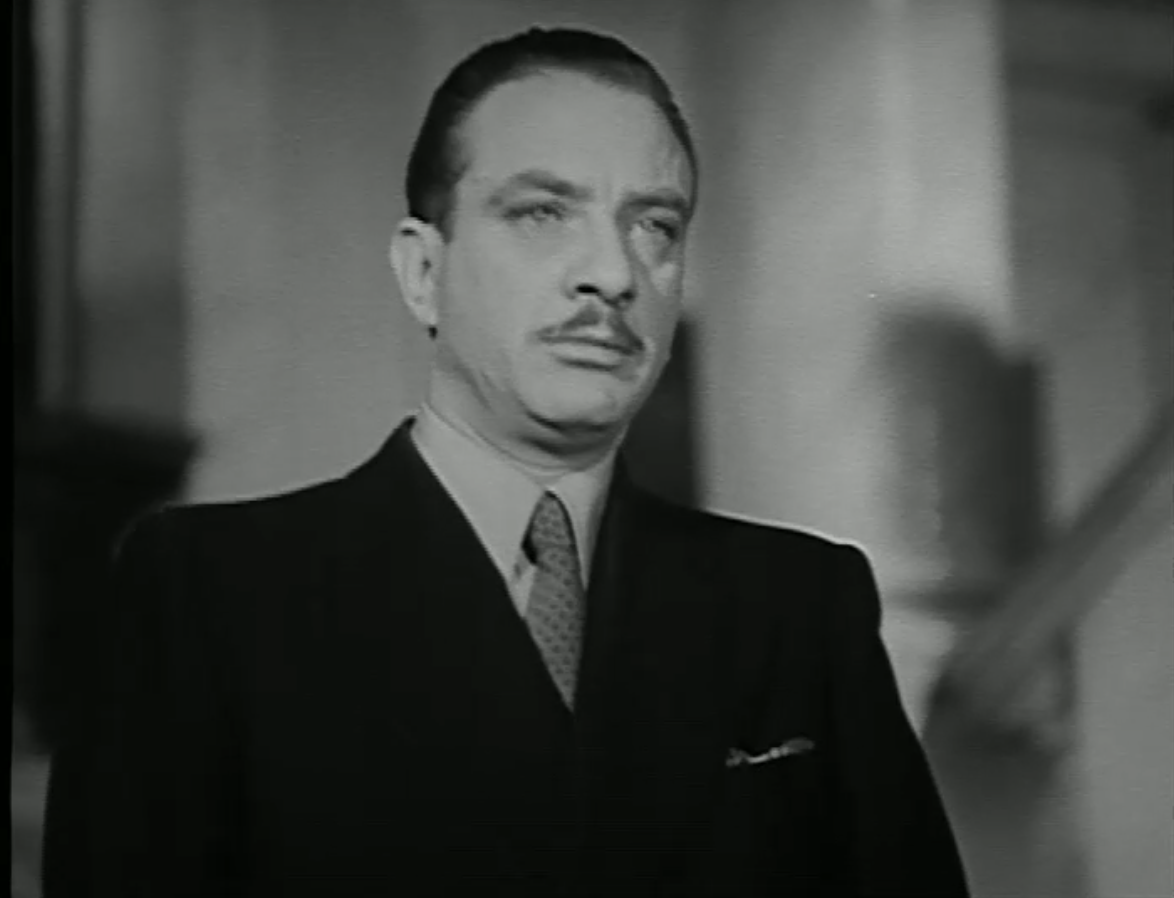
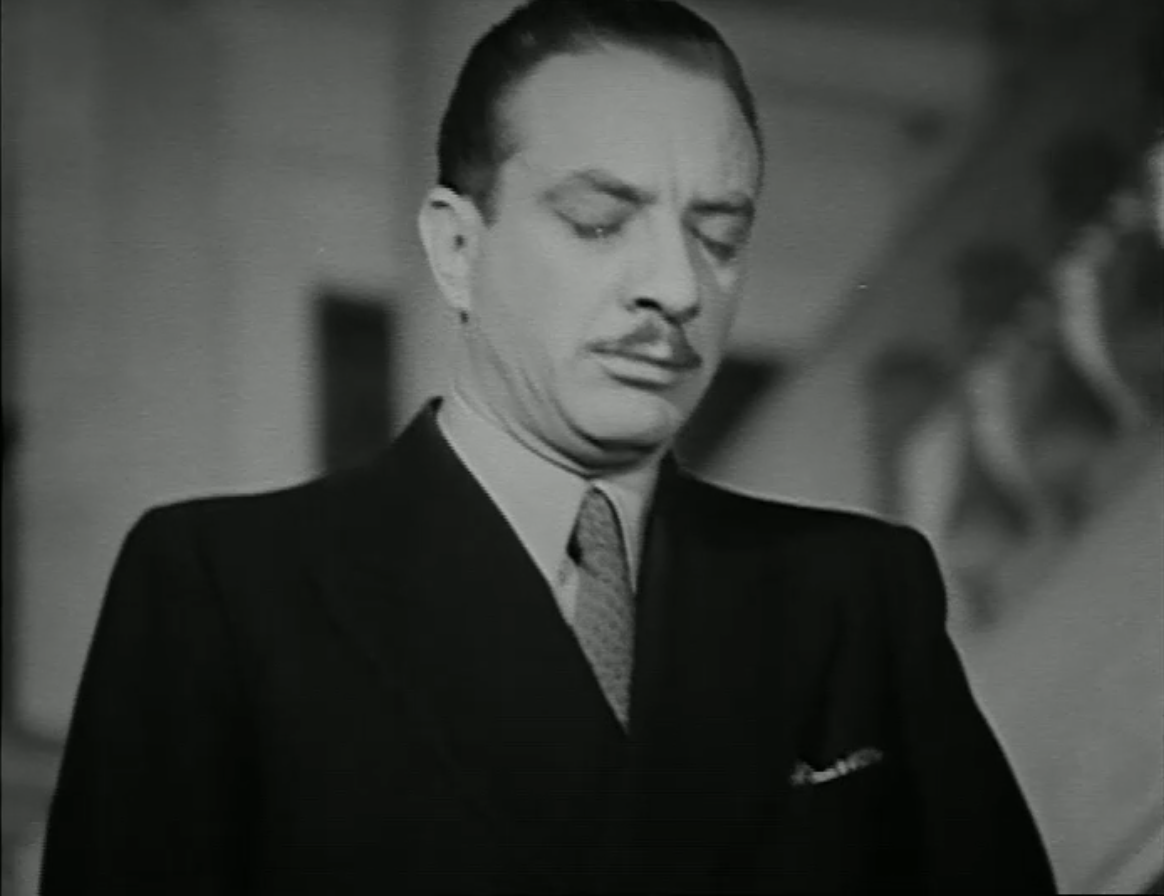
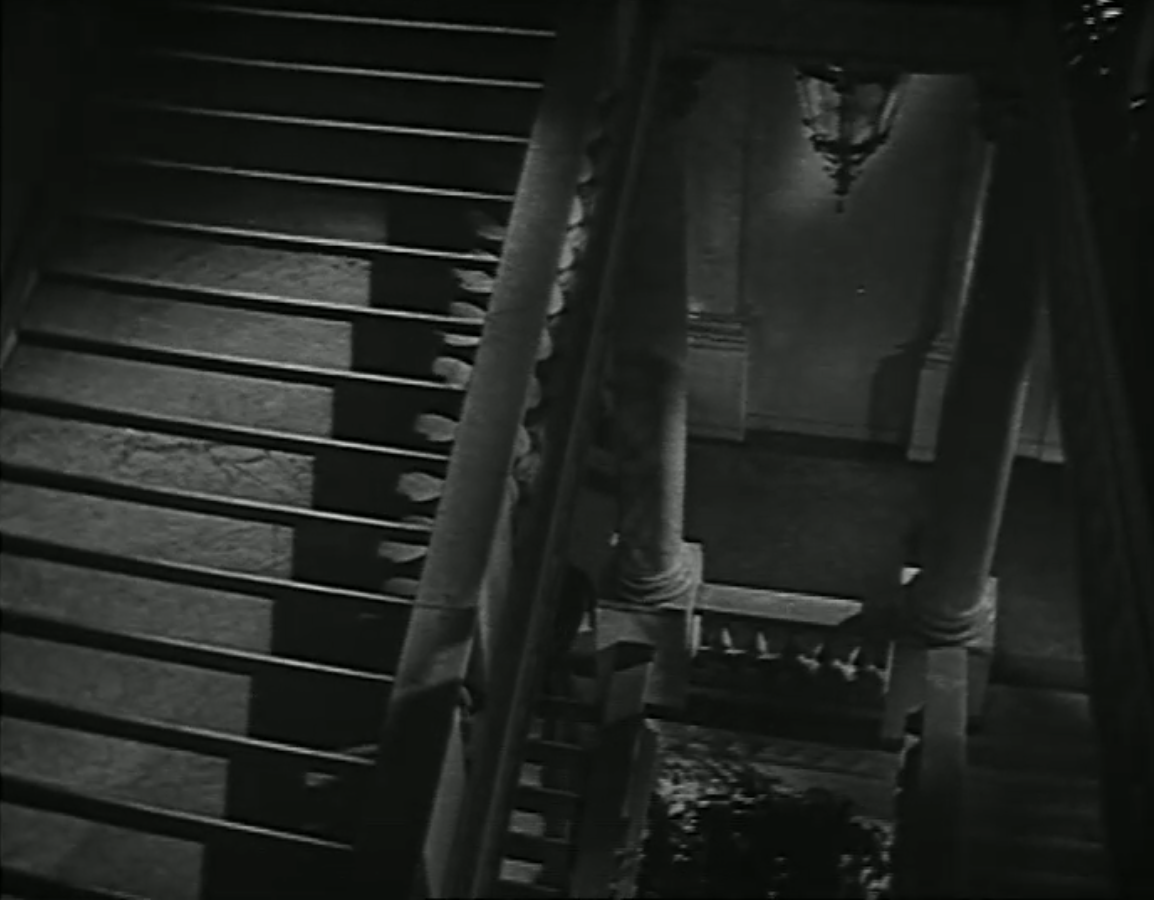
Vediamo il volto di Andrea, rigato dalle lacrime. Dopo vediamo le scale e lo schermo si oscura.
We see Andrea’s face, streaked with tears. Then we see the stairs and the screen goes dark.
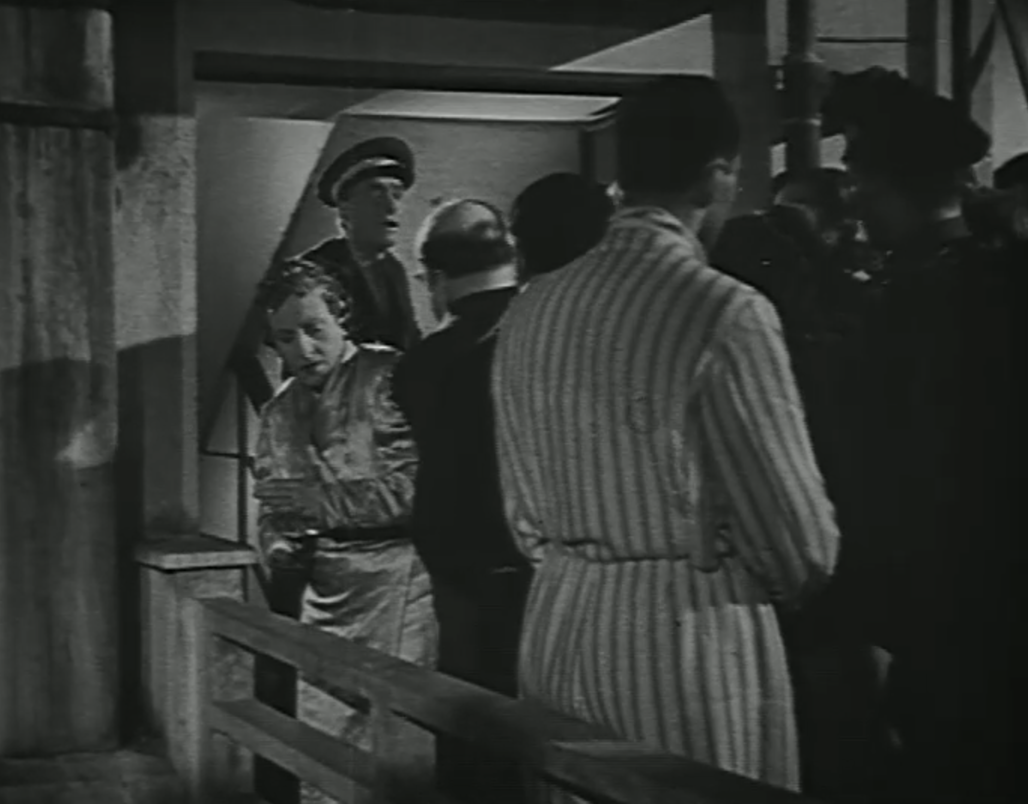
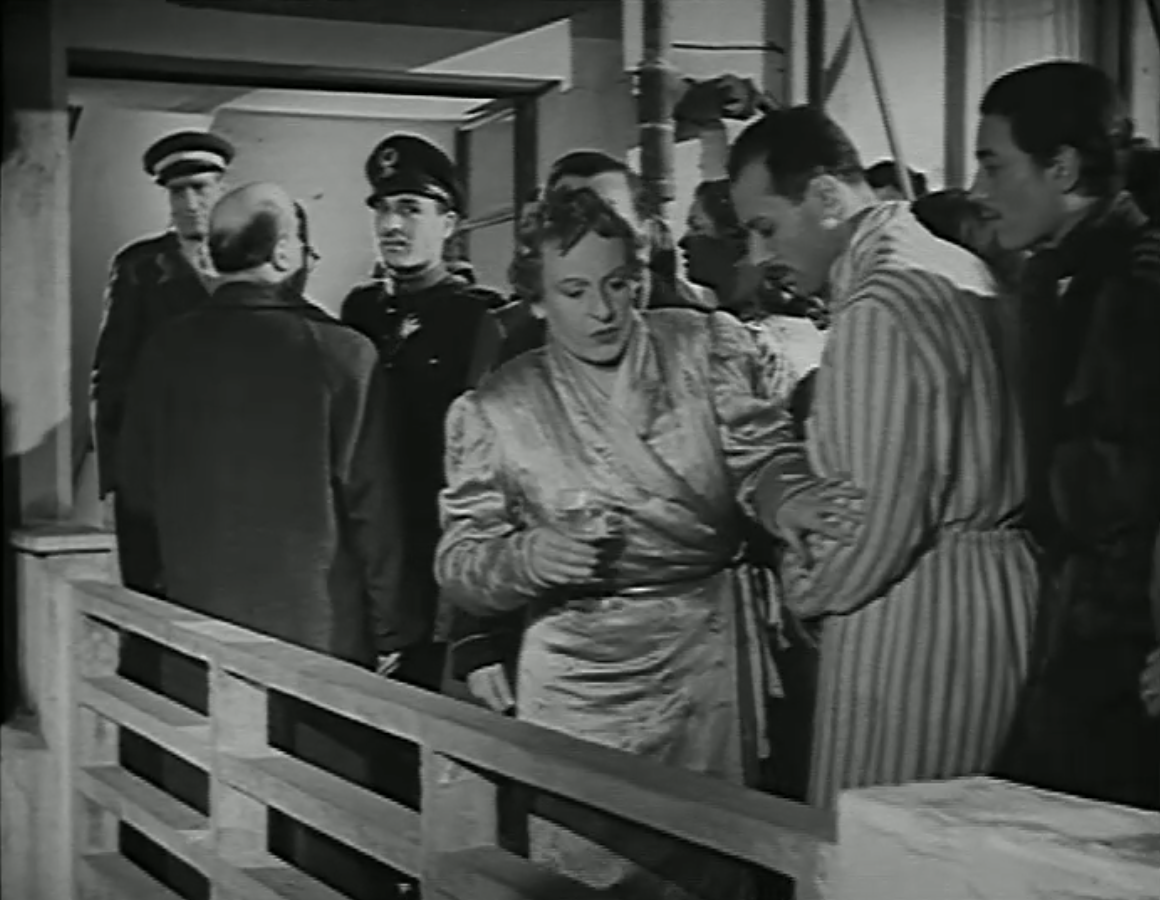
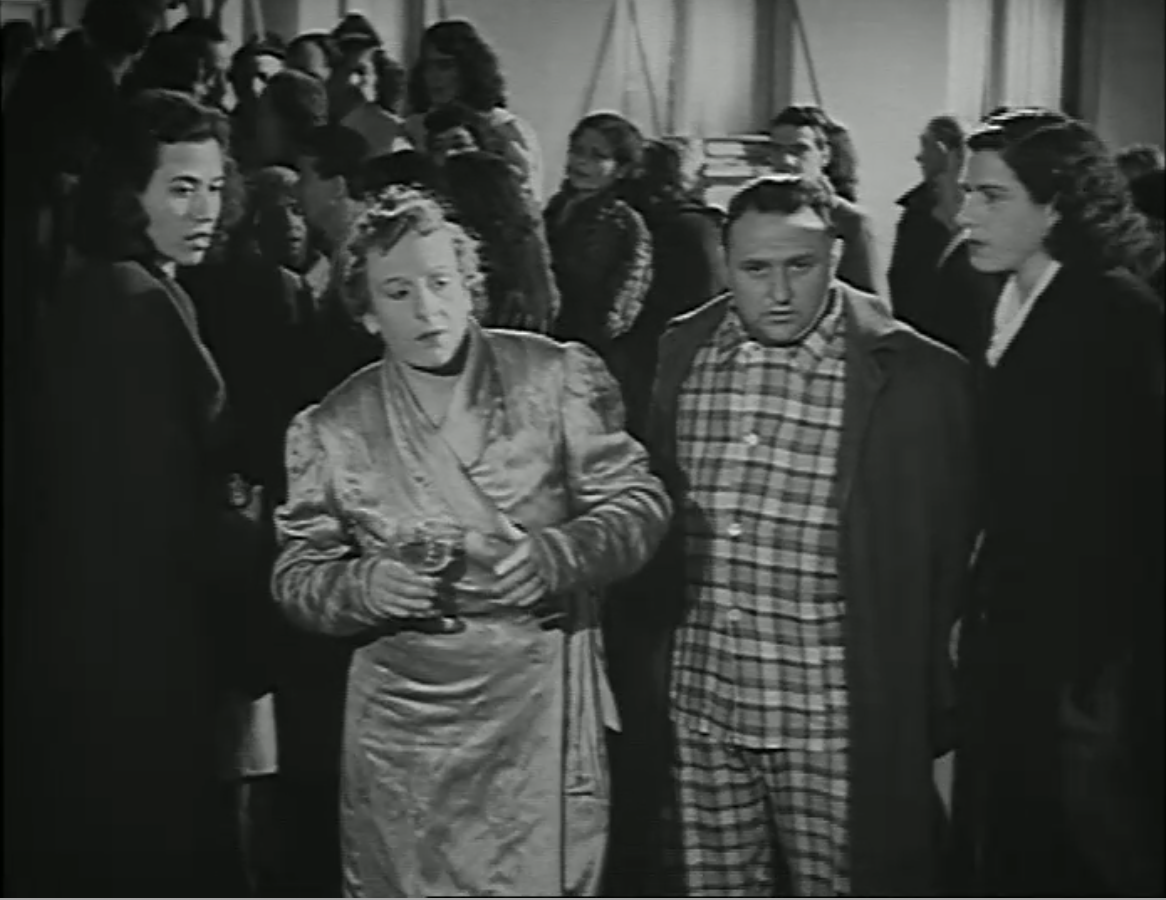
Tra un mormorio di voci, una folla di residenti – per lo più in pigiama – si è radunata davanti al palazzo di Andrea. La signora Resta si fa strada tra la folla.
Amid a murmur of voices, a crowd of residents – mostly in nightclothes – has gathered outside Andrea’s building. Signora Resta makes her way through the crowd.
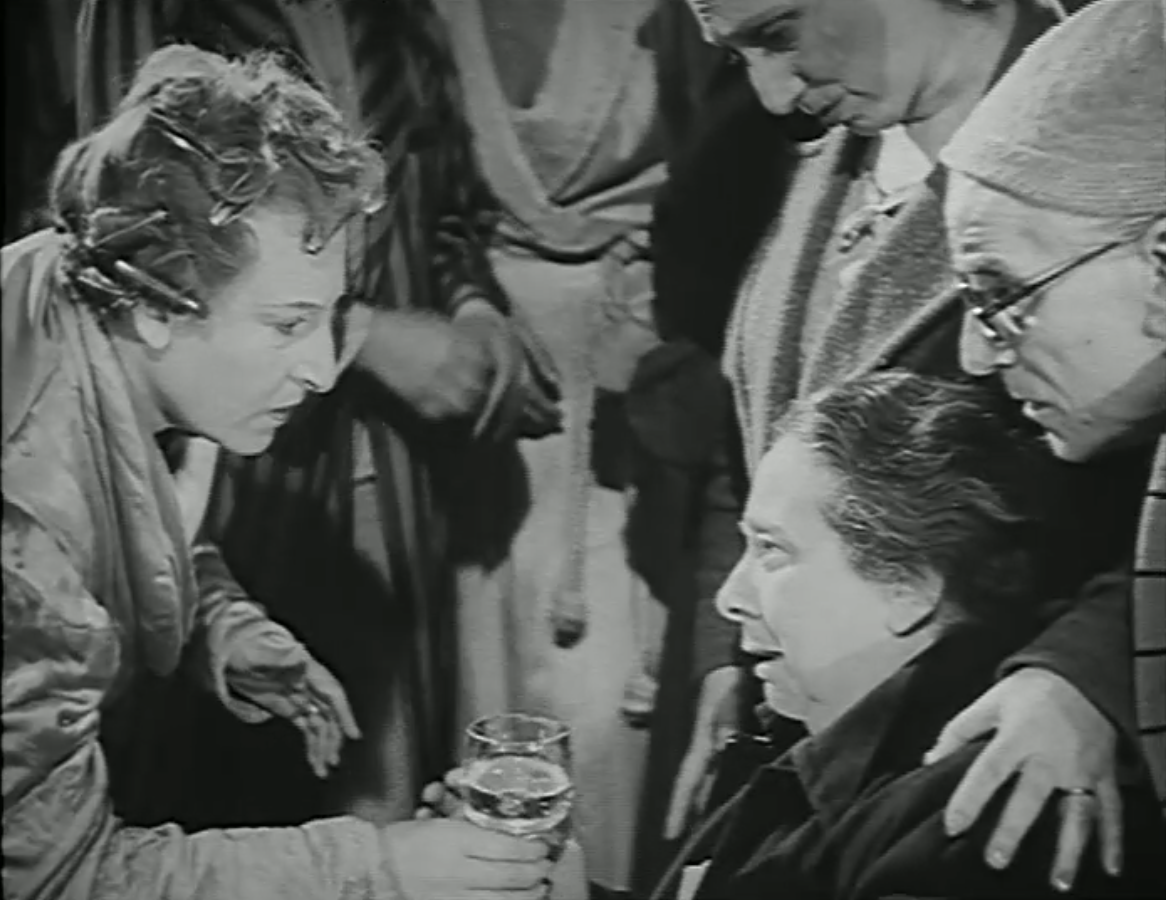
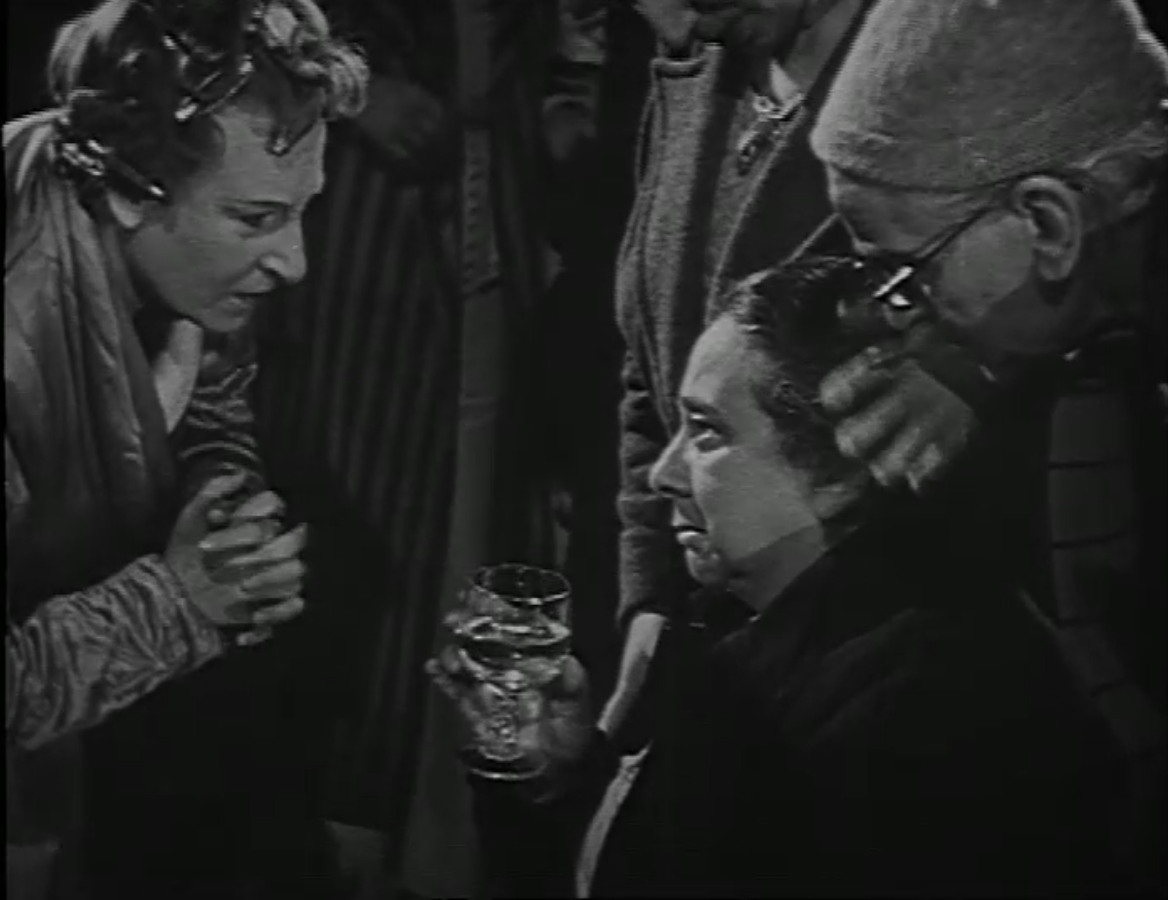
Quando raggiunge Agnese, le porge un bicchiere. "Su, un po’ d’acqua".
Seduta, pallida, Agnese dice: "Poveretto. Che brutta fine". Singhiozza. "Povero ragioniere".
When she reaches Agnese, she hands her a glass. "Drink up, a little water.”
Seated, pale, Agnese says, “Poor man. What a horrible end.” She sobs. “Poor accountant.”
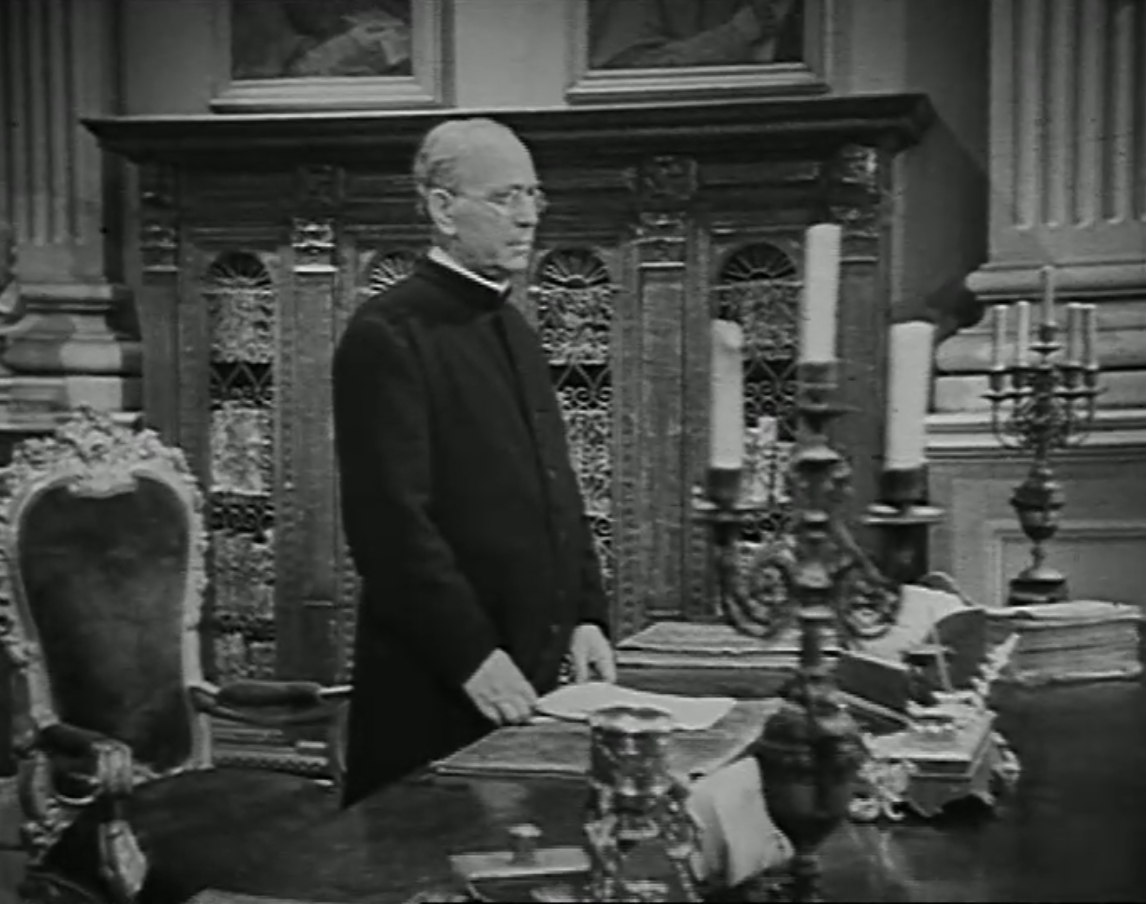
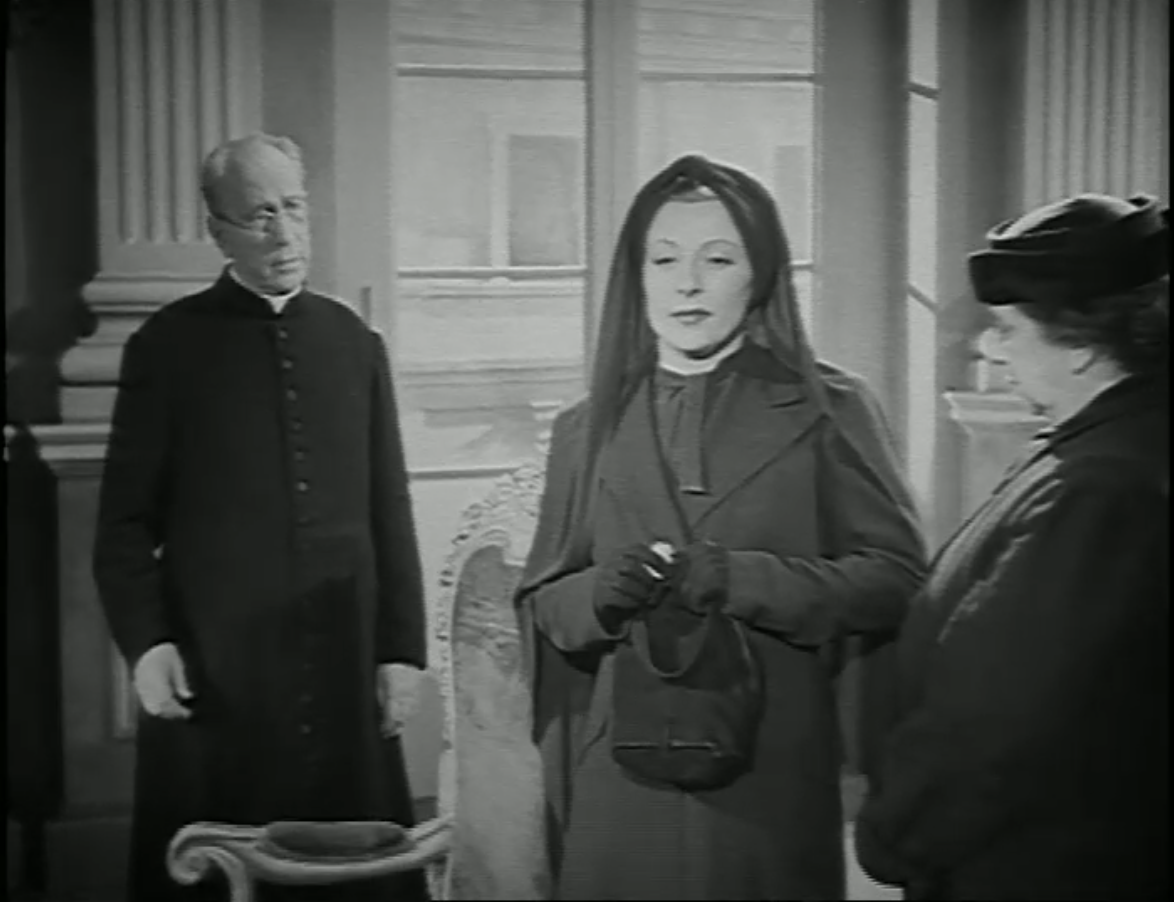
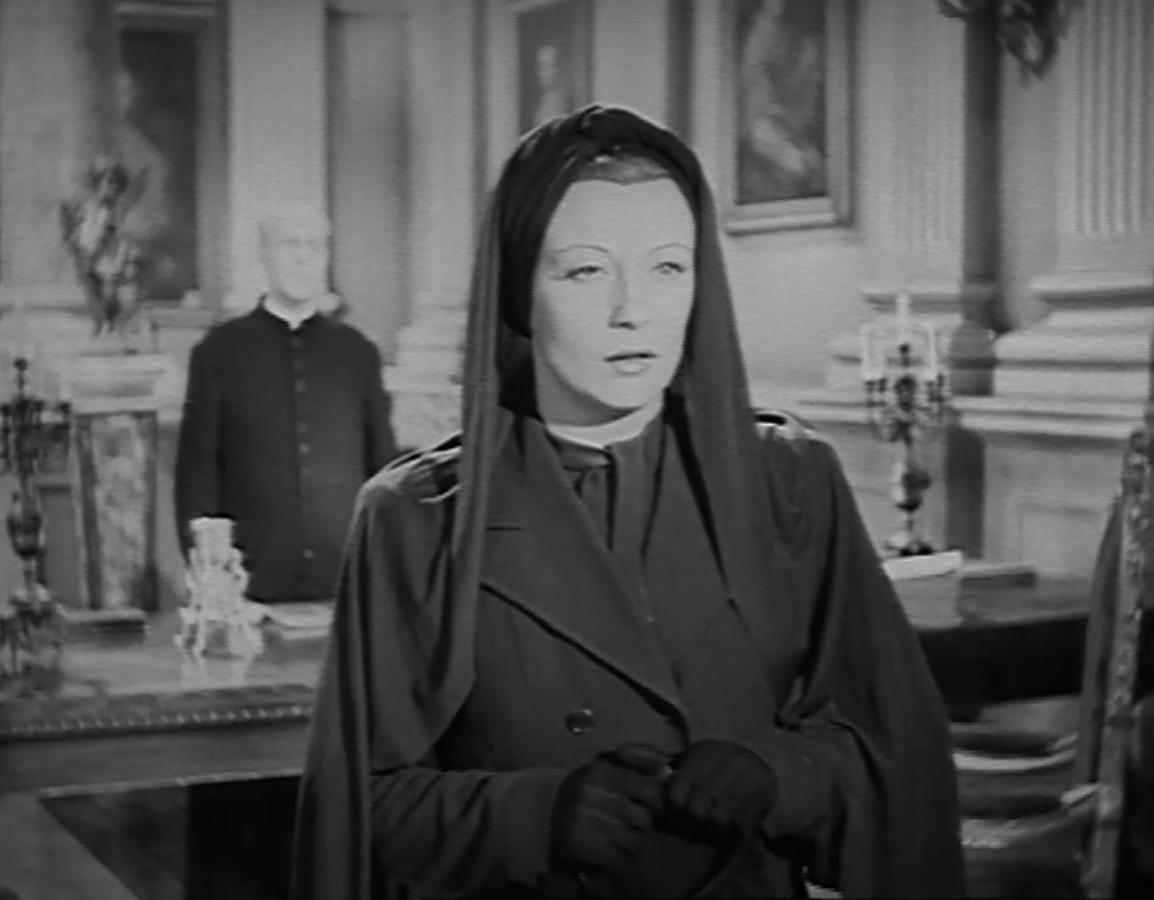
Il direttore è in piedi dietro la sua scrivania. "È una cosa veramente dolorosa". Si avvicina a Nina e Agnese, entrambe vestite di nero. "Bisogna, signora, che lei controlli le sue emozioni".
The director stands behind his desk. “It‘s a truly painful thing.” He walks towards Nina and Agnese, both dressed in black. “You’ll have to get your emotions under control, ma’am.”
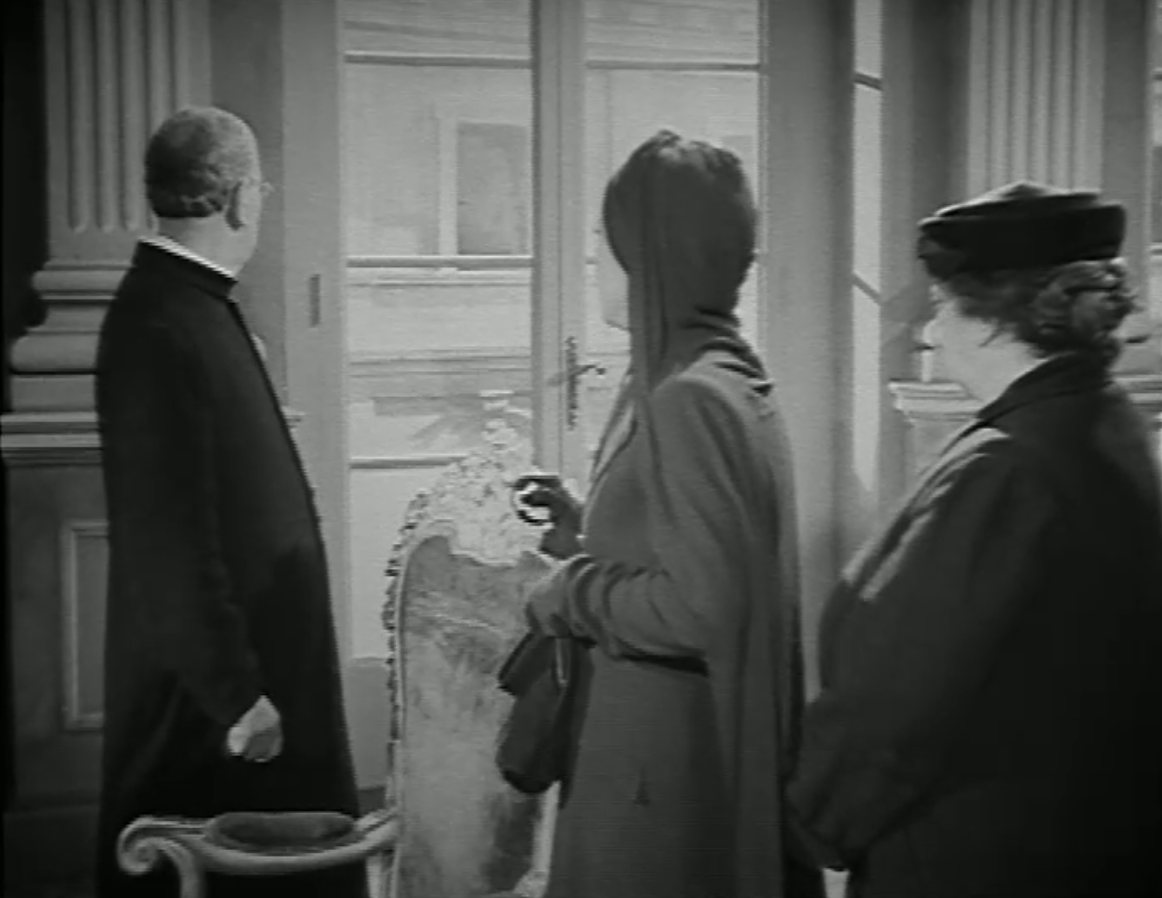
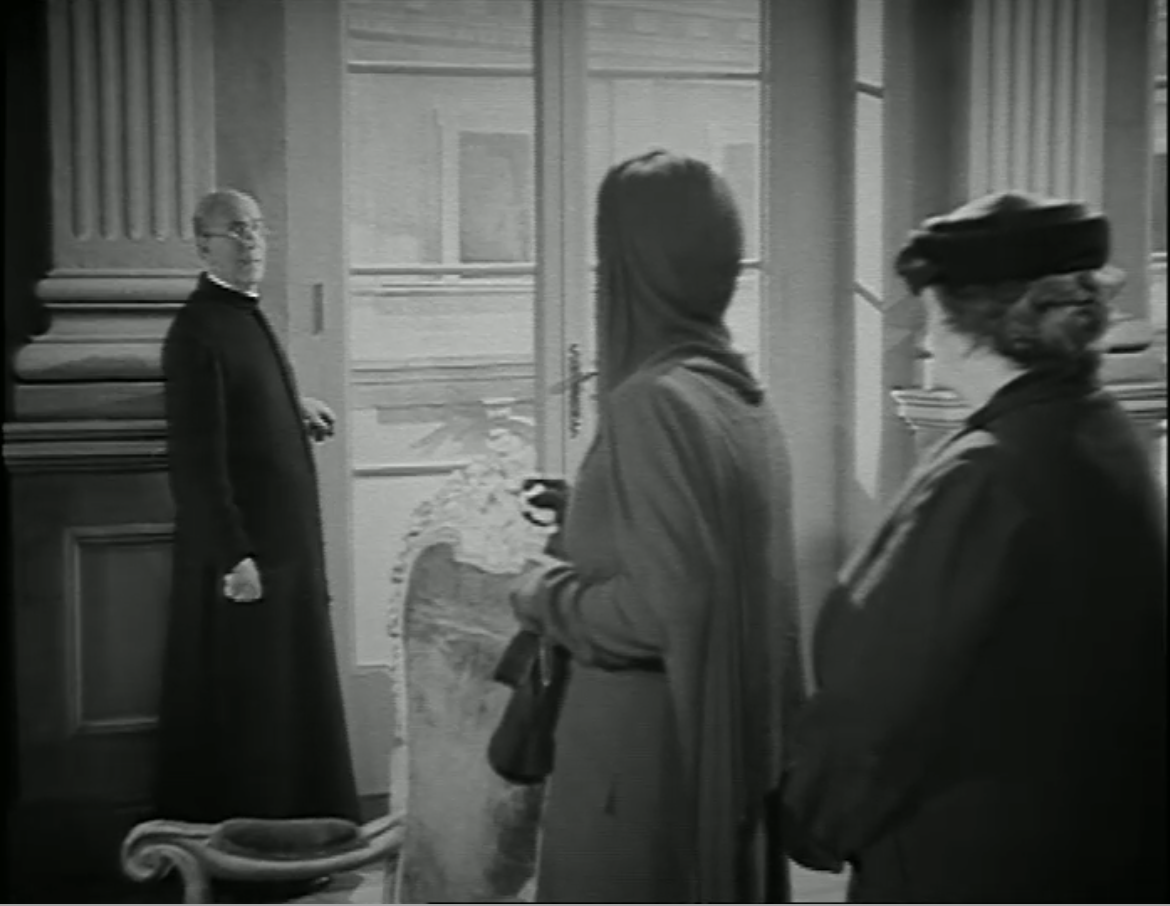
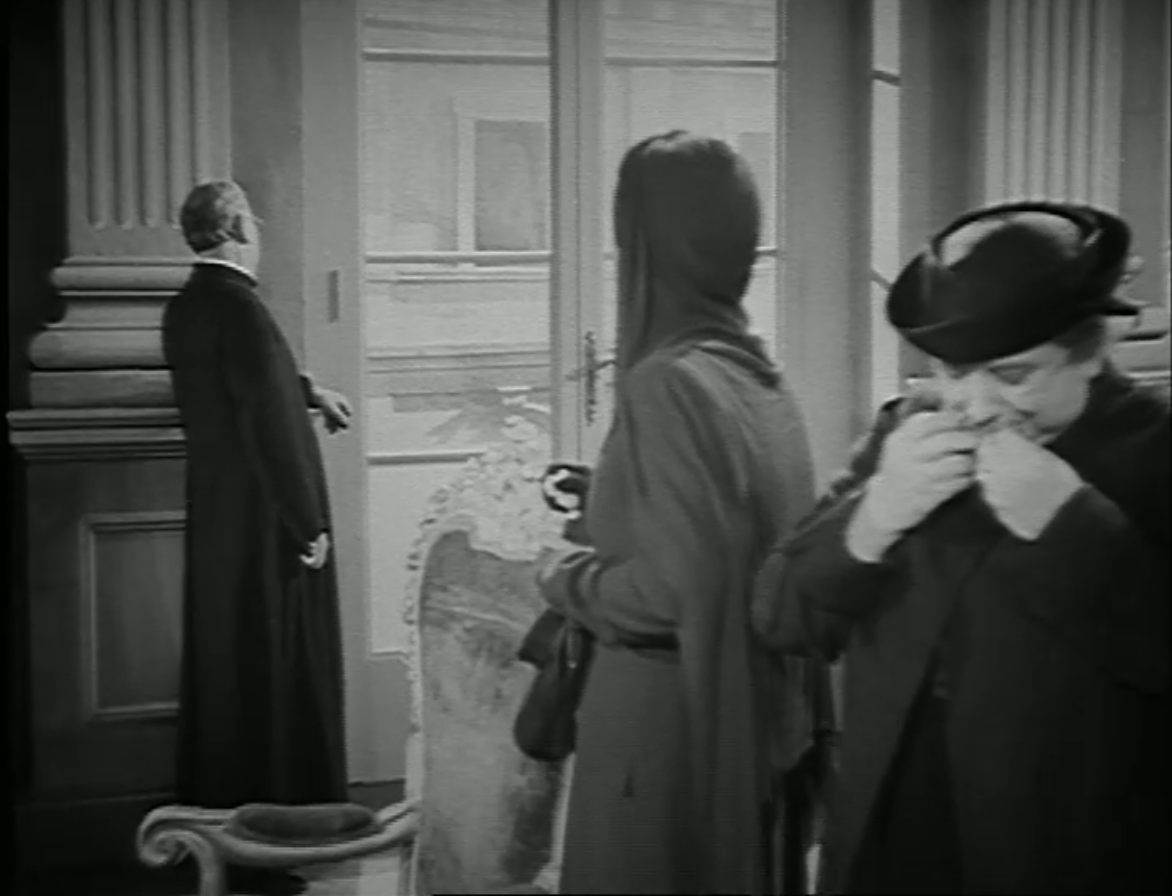
Il direttore si avvicina e guarda attraverso le porte a vetri. "Ecco padre Michele, a cui il bambino si è affezionato". Agnese inizia a singhiozzare.
The director walks over and looks through the glass doors. “Here comes Father Michele, to whom the boy has grown attached.” Agnese begins to sob.
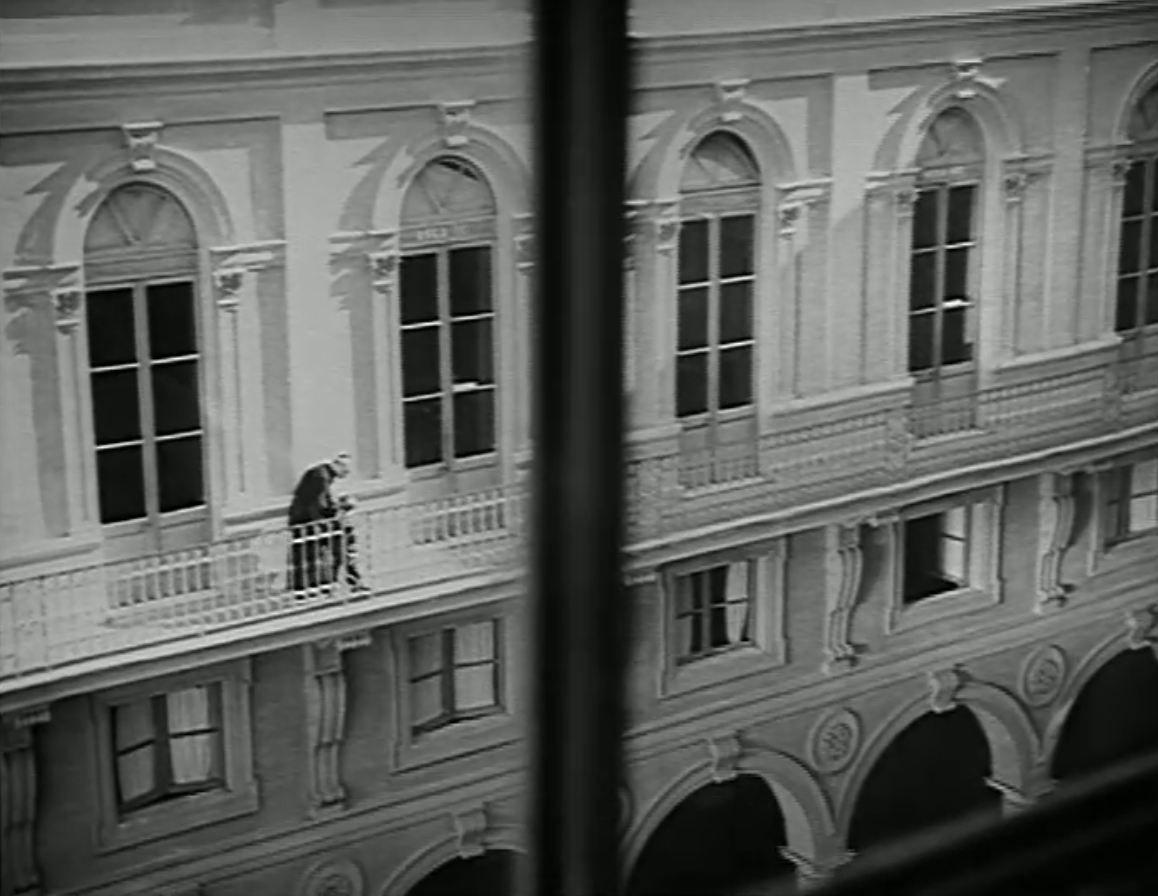
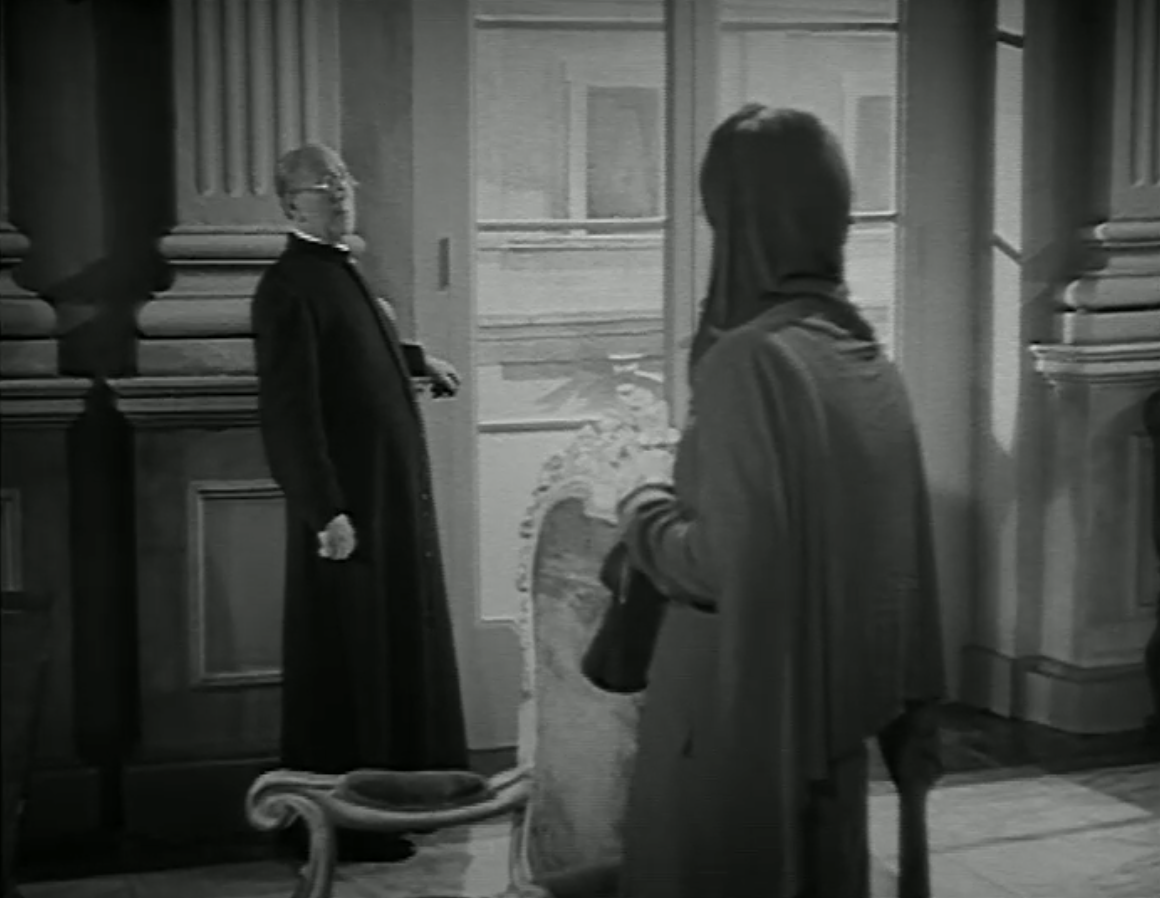
Vediamo padre Michele e Pricò che camminano lungo un balcone, mentre il direttore continua: "Avrà trovato le parole adatte per prepararlo alla triste notizia". Si rivolge a Nina: "È un colpo terribile per un bambino".
We see Father Michele and Pricò walking along a balcony, as the director continues, “I’m sure he’s found the right words to prepare him for the sad news.” He turns to Nina. “It’s a terrible blow for a child.”
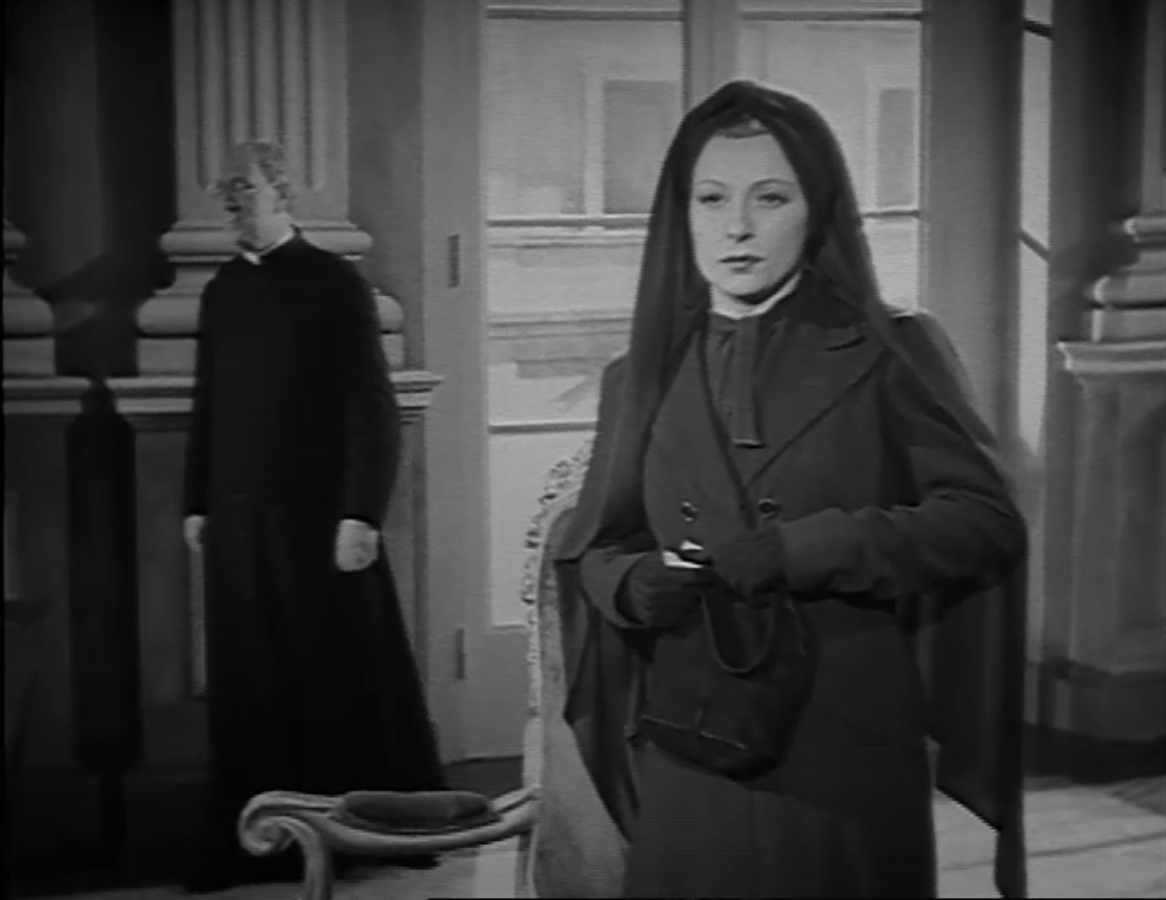
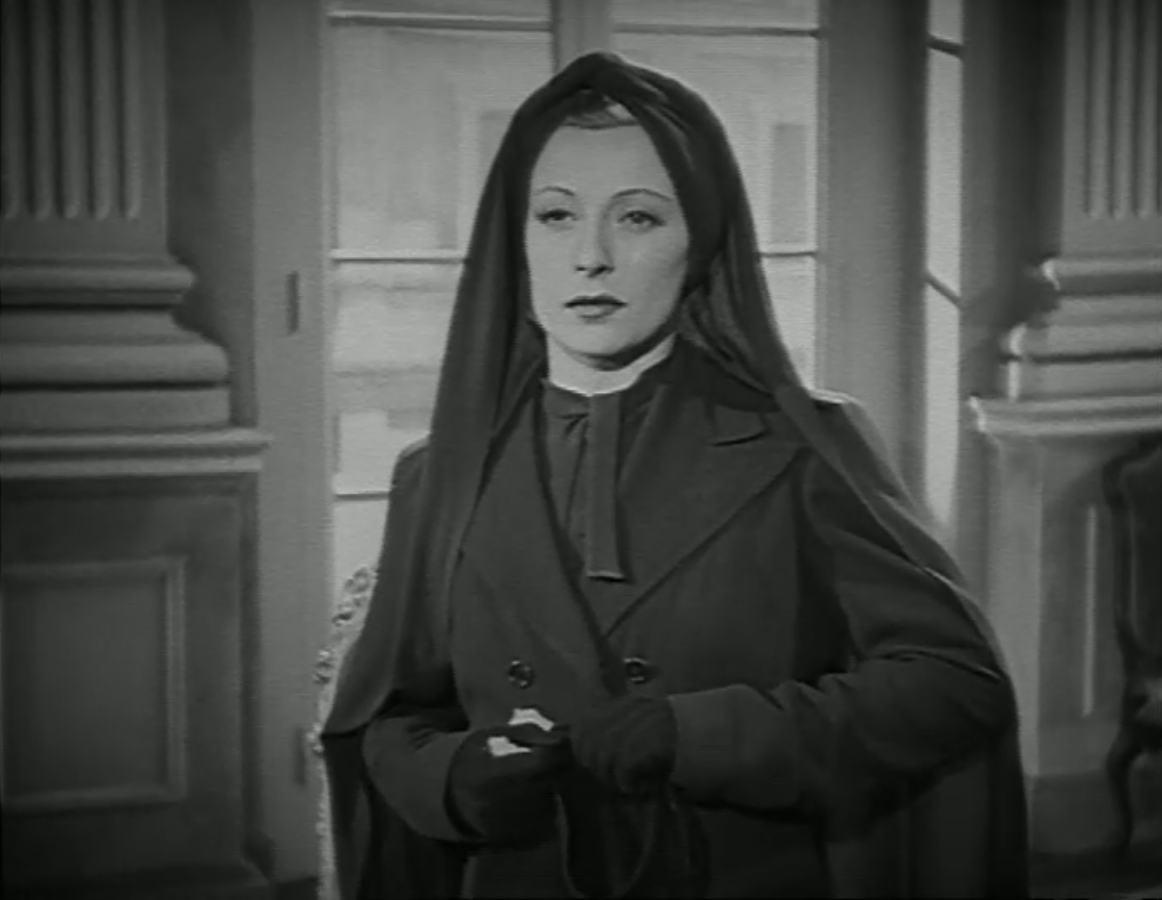
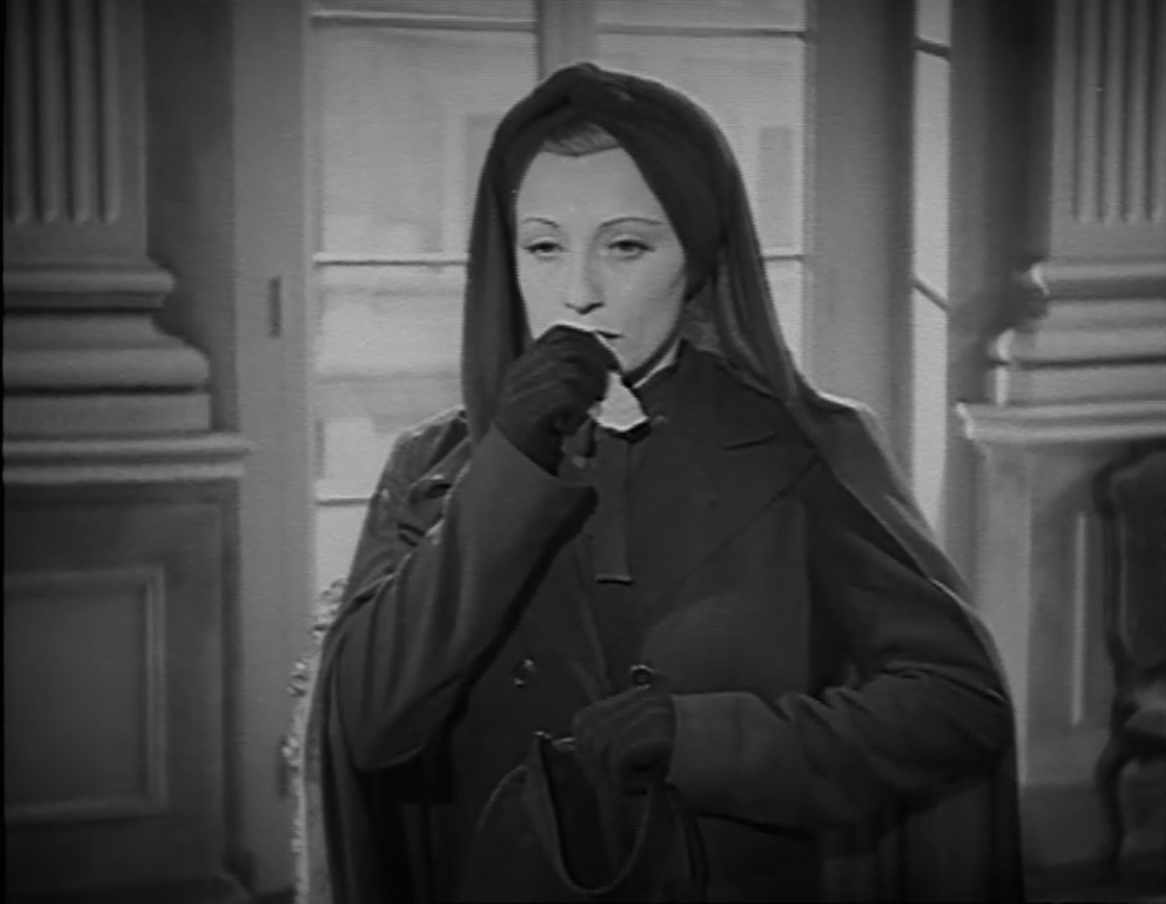
La macchina da presa zooma su Nina. Le lacrime le rigano le guance. Se le asciuga con un fazzoletto bianco che tiene nella mano guantata di nero. "Sono cose che possono influire su tutta la vita".
The camera zooms in on Nina. Tears run down her cheeks. She wipes them with a white handkerchief in her black-gloved hand. “These things can affect one’s entire life.”
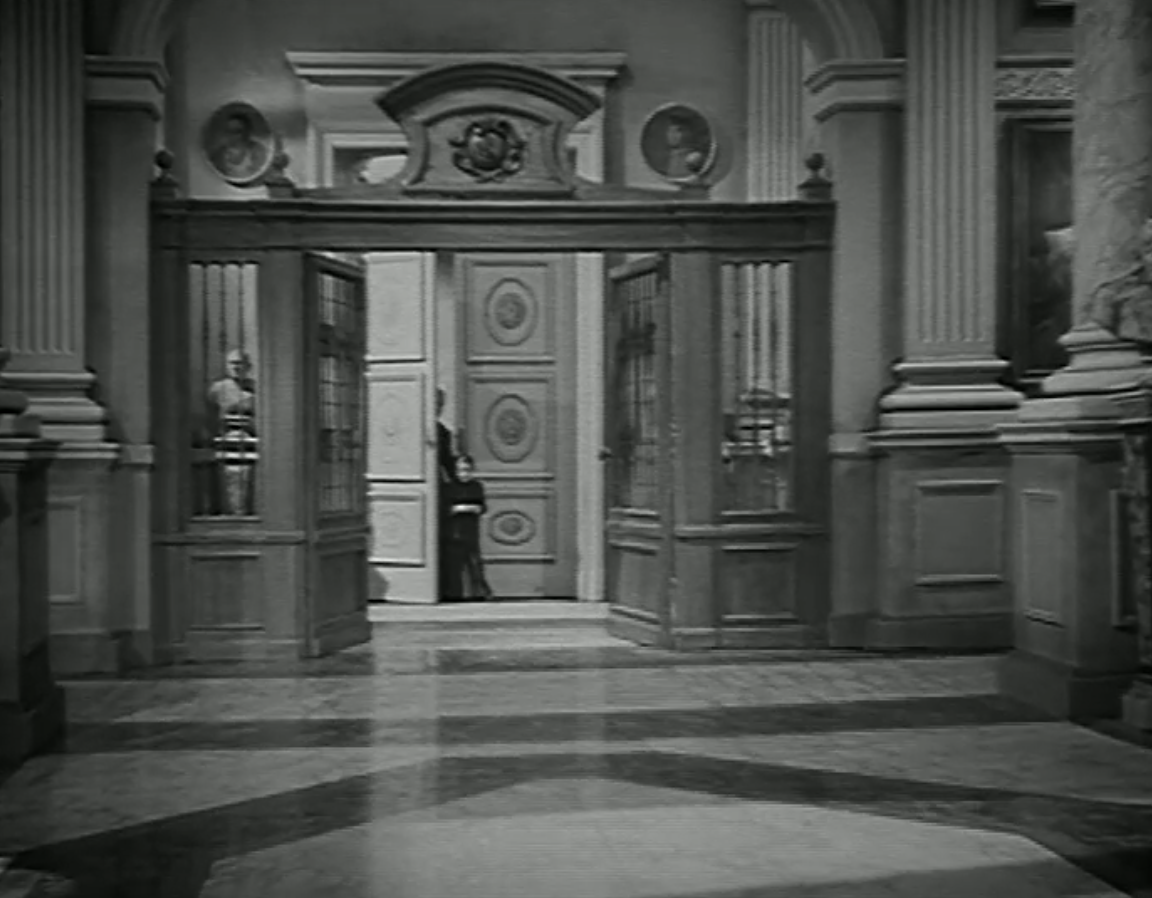
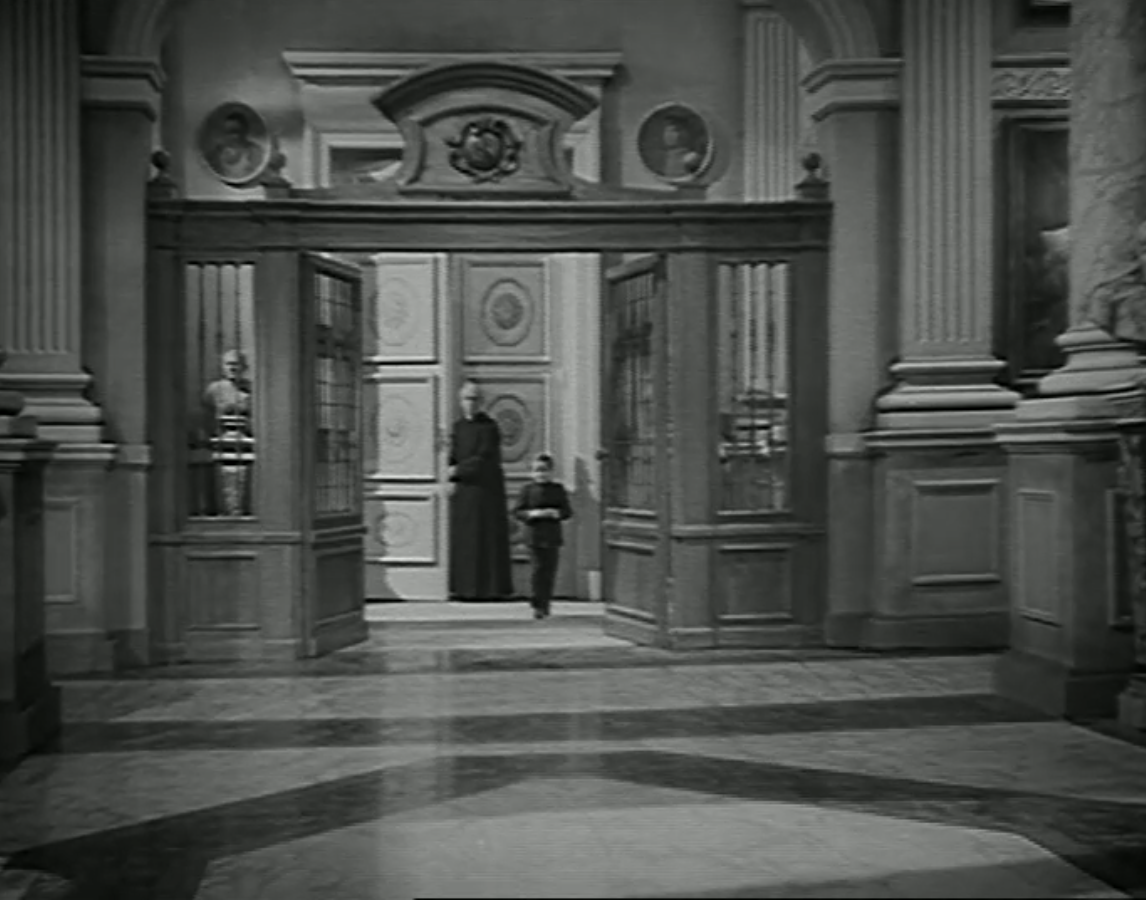
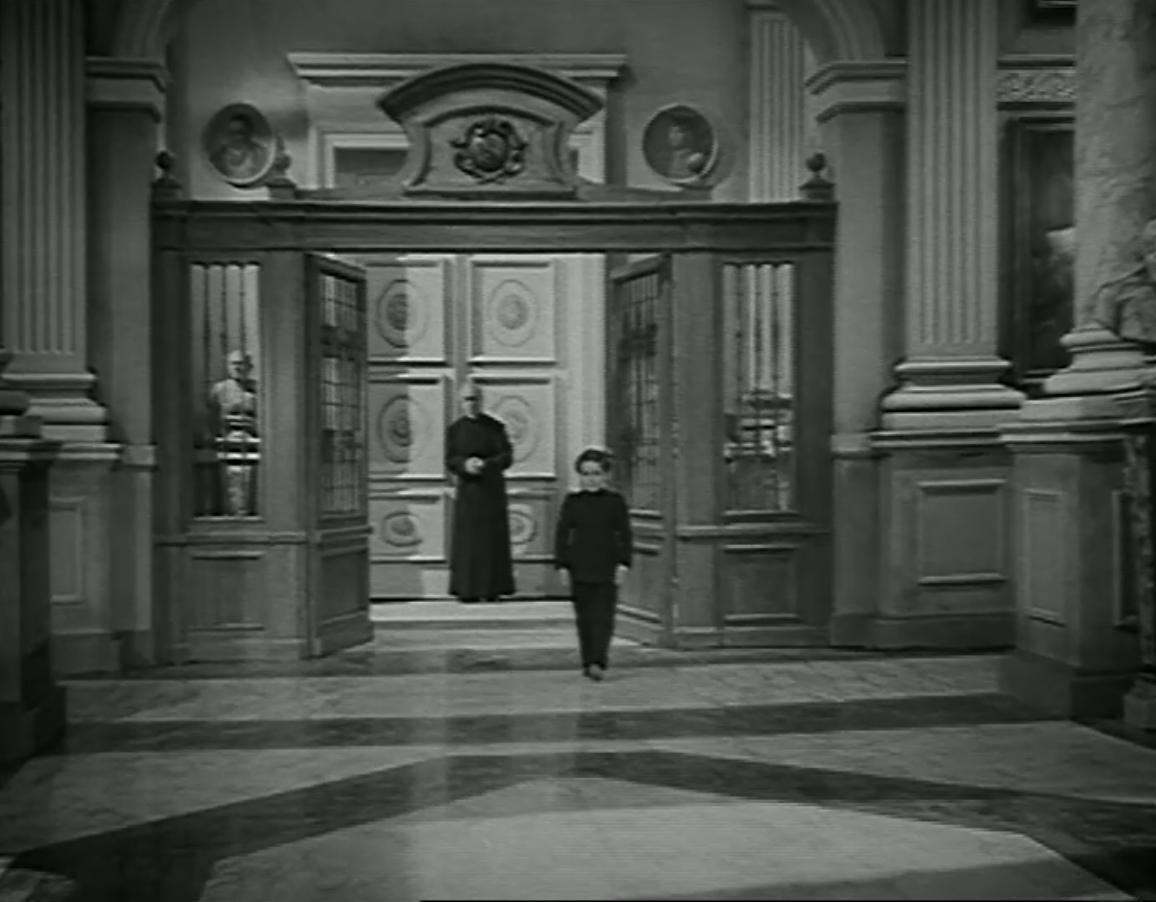
La porta si apre ed entra Pricò: una figura minuscola in uno spazio immenso. La musica solenne riprende.
The door opens, and Pricò comes in: a tiny figure in a vast space. The solemn music resumes.
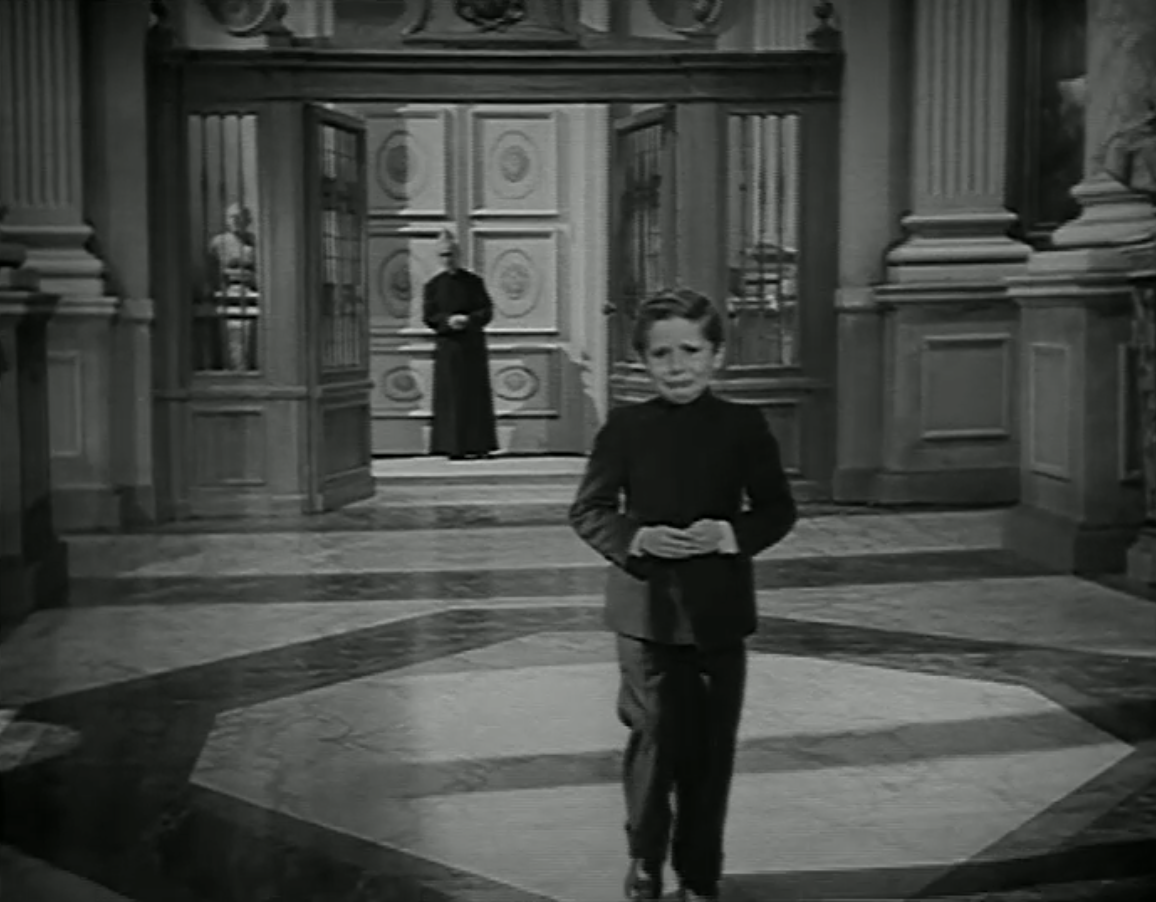
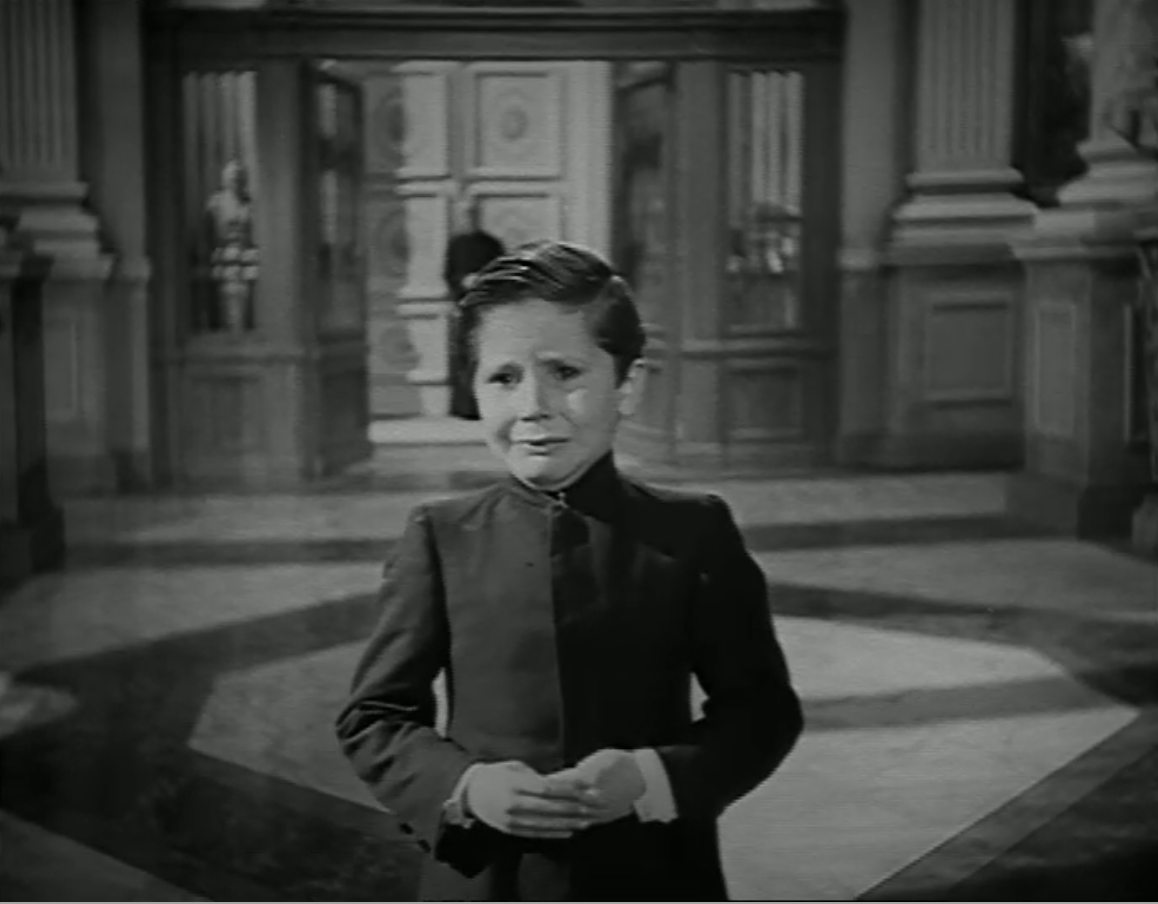
Nina lo osserva: singhiozzando, lui avanza a piccoli passi.
Nina watches him: sobbing, he takes small steps.
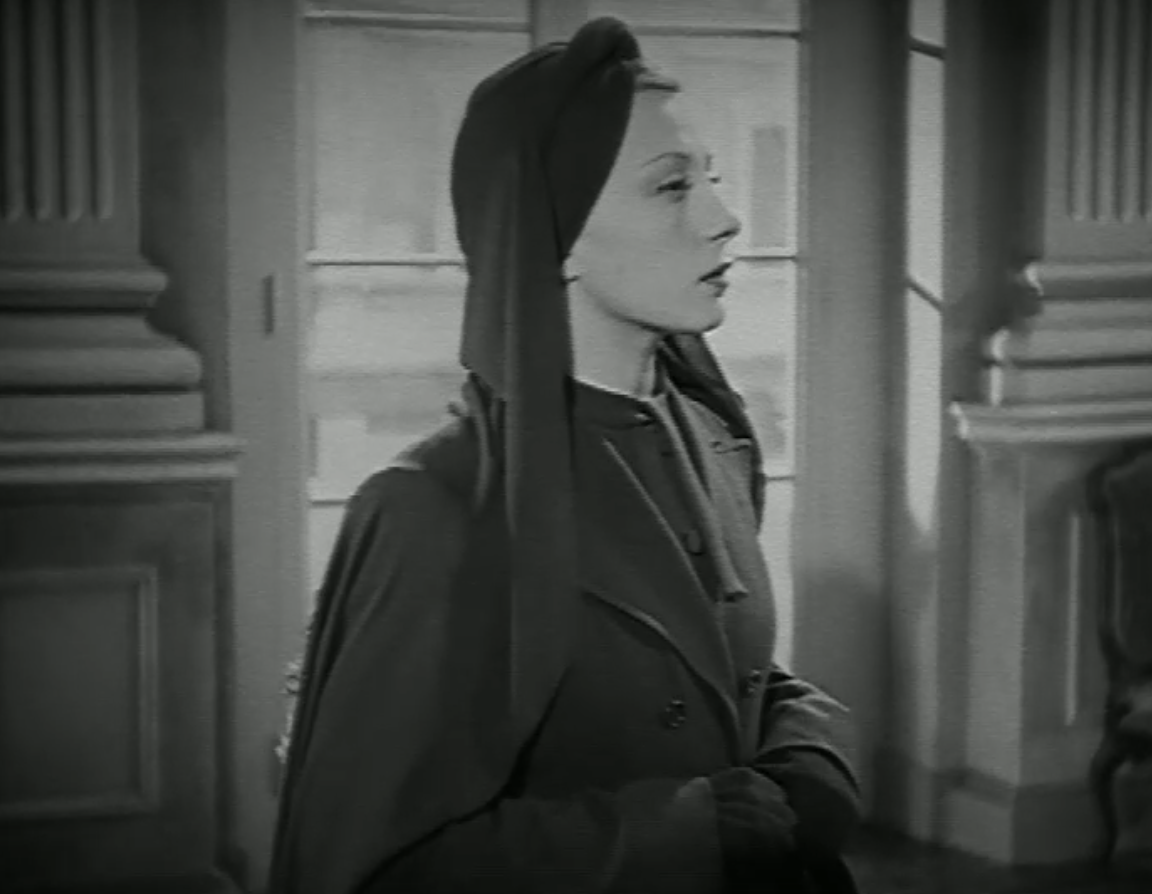
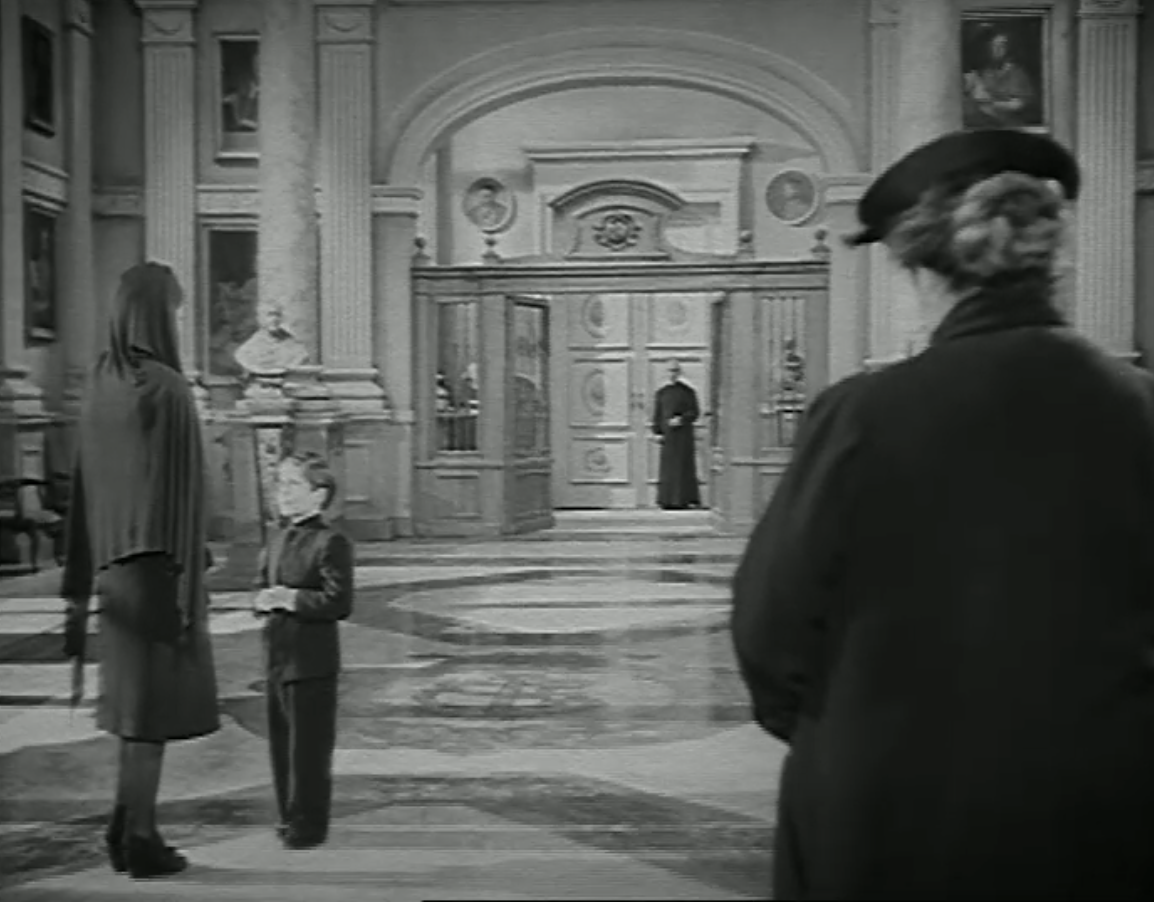
Nina gli va incontro e lui si ferma davanti a lei.
Nina walks towards him, and he stops in front of her.
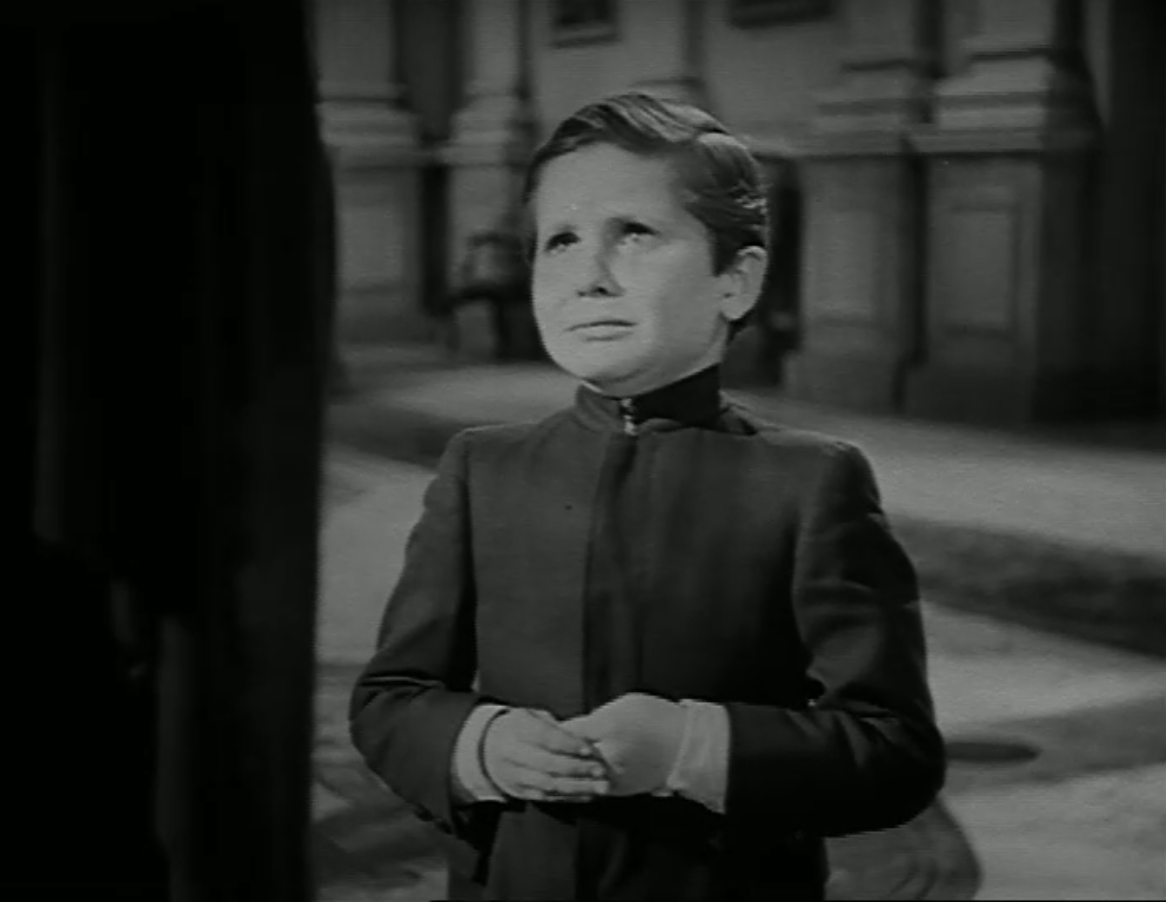
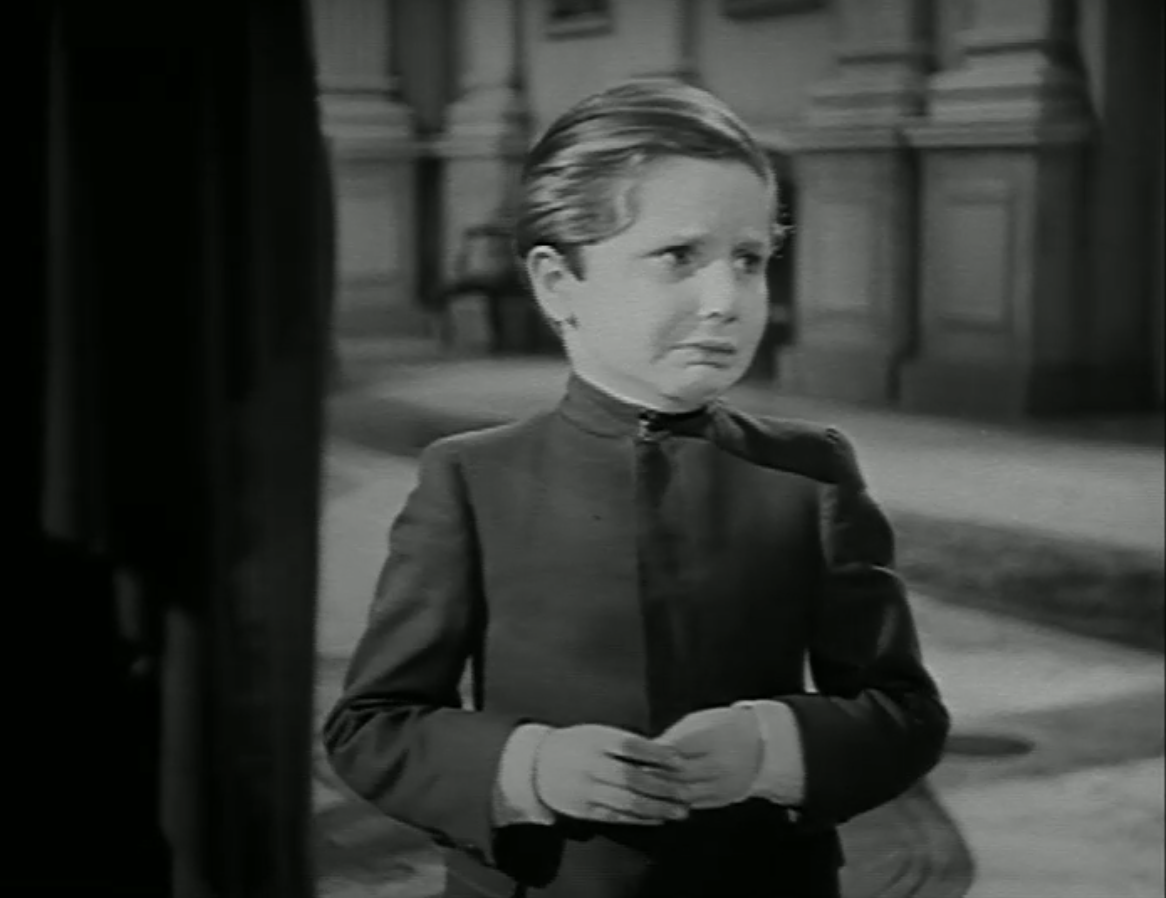
Lui alza lo sguardo verso di lei, poi si volta verso Agnese, con il volto contorto dal dolore.
He looks up at her, then turns to Agnese, his face contorted with sorrow.
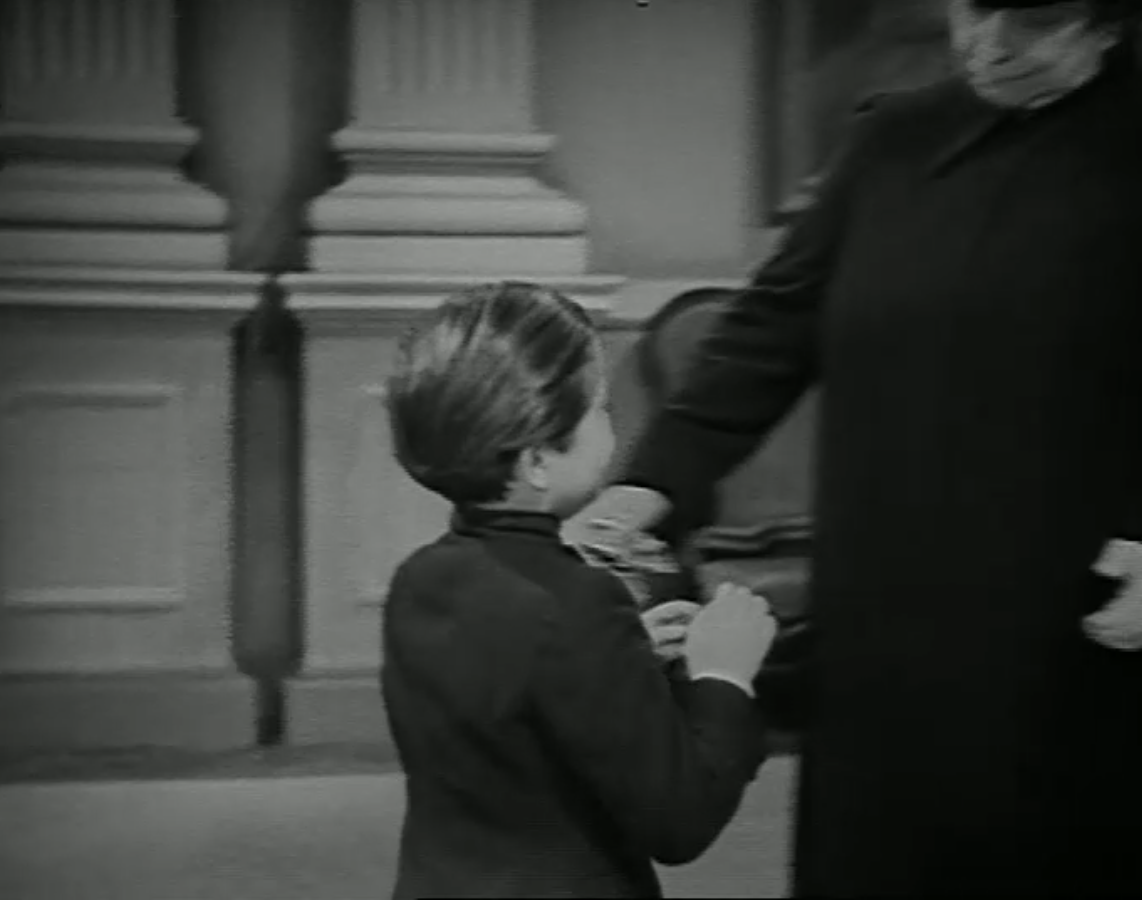
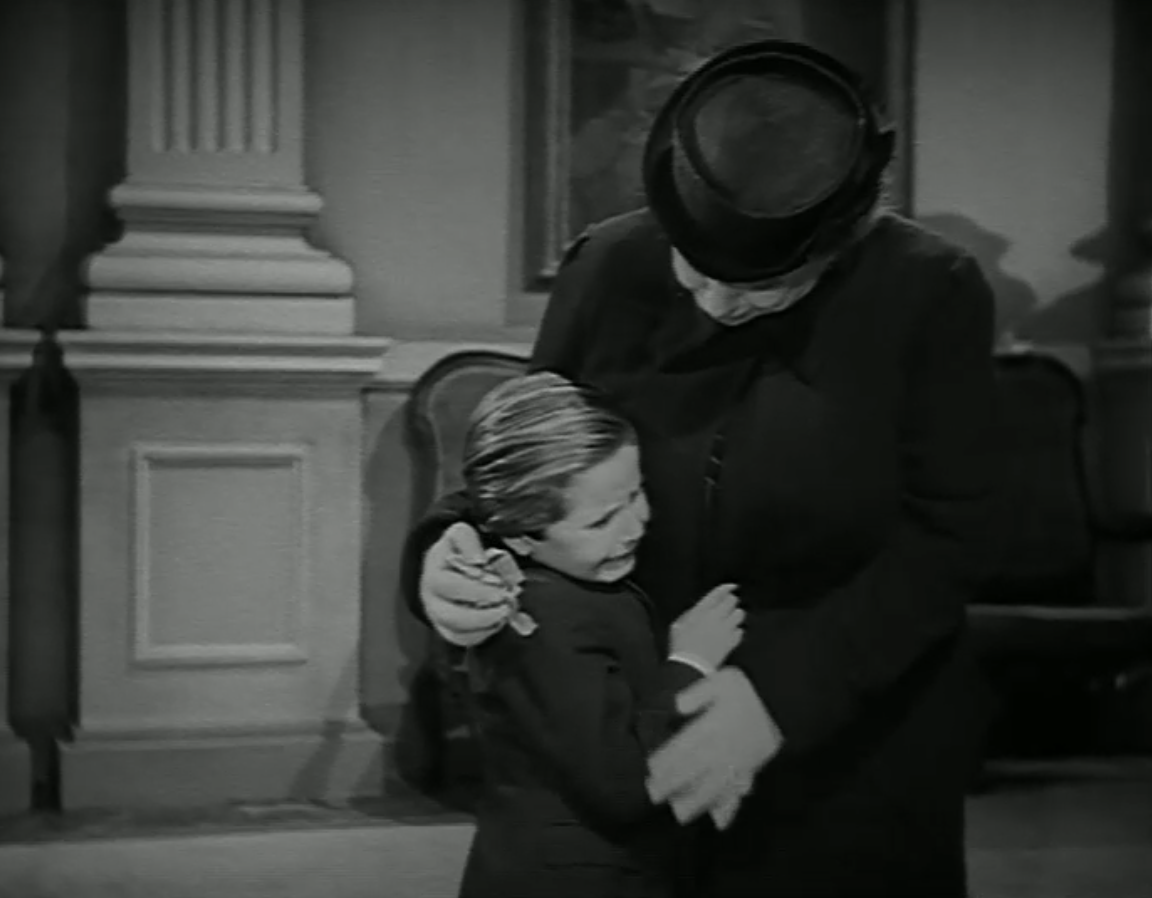
Si avvicina alla governante, che lo abbraccia.
He walks to the housekeeper, who embraces him.
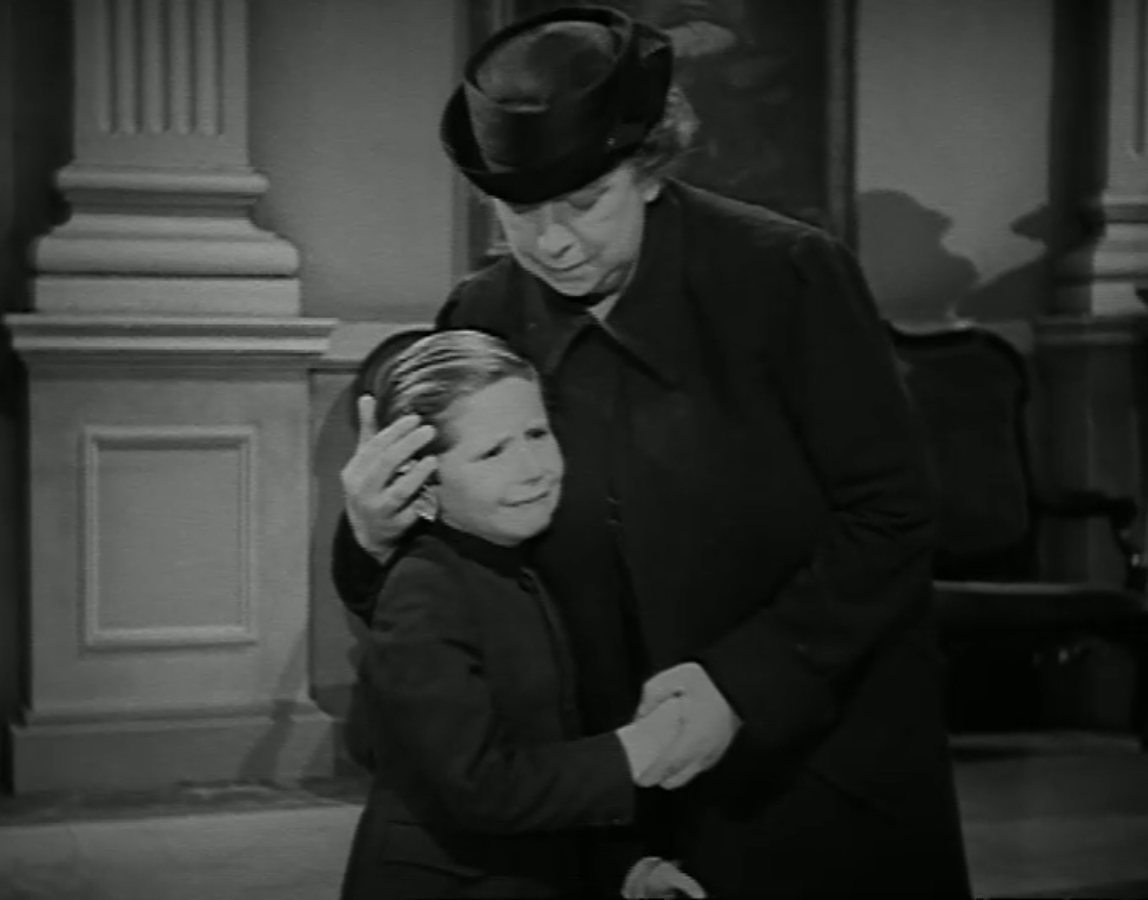
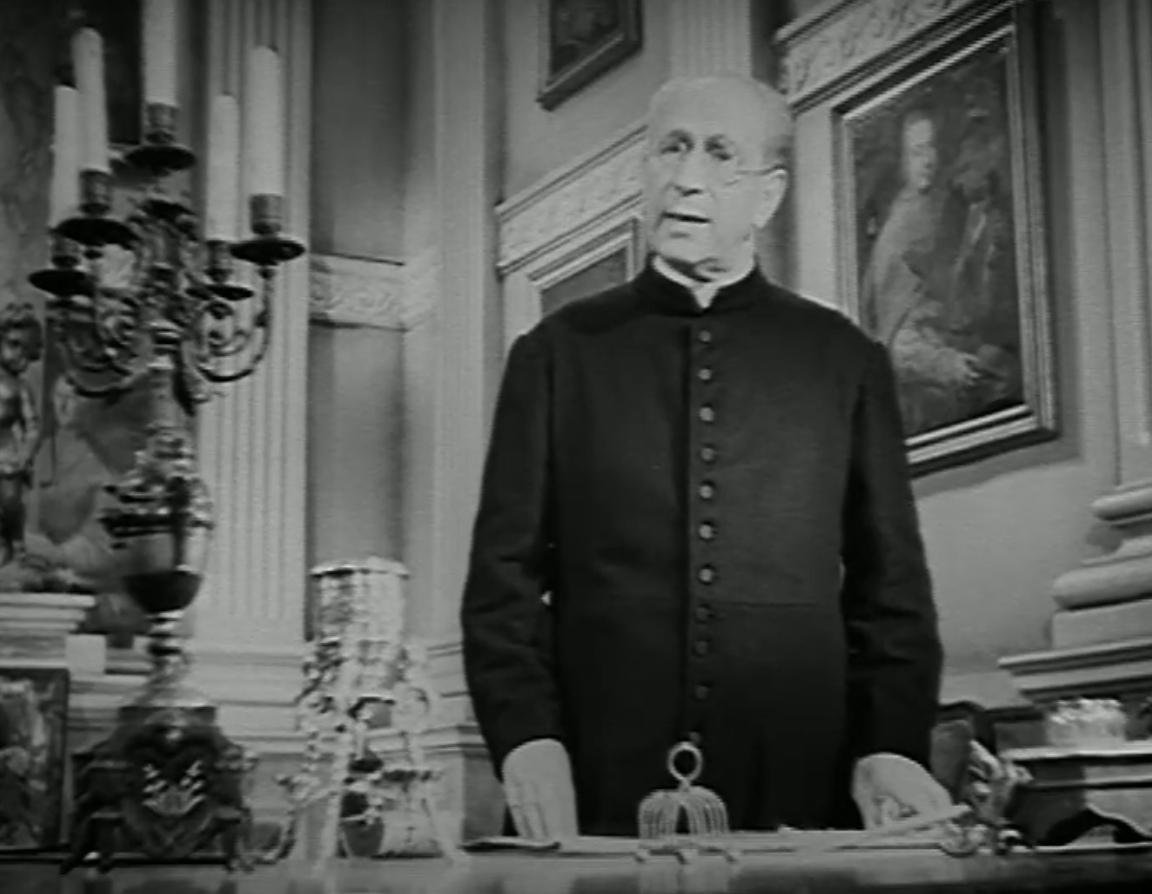
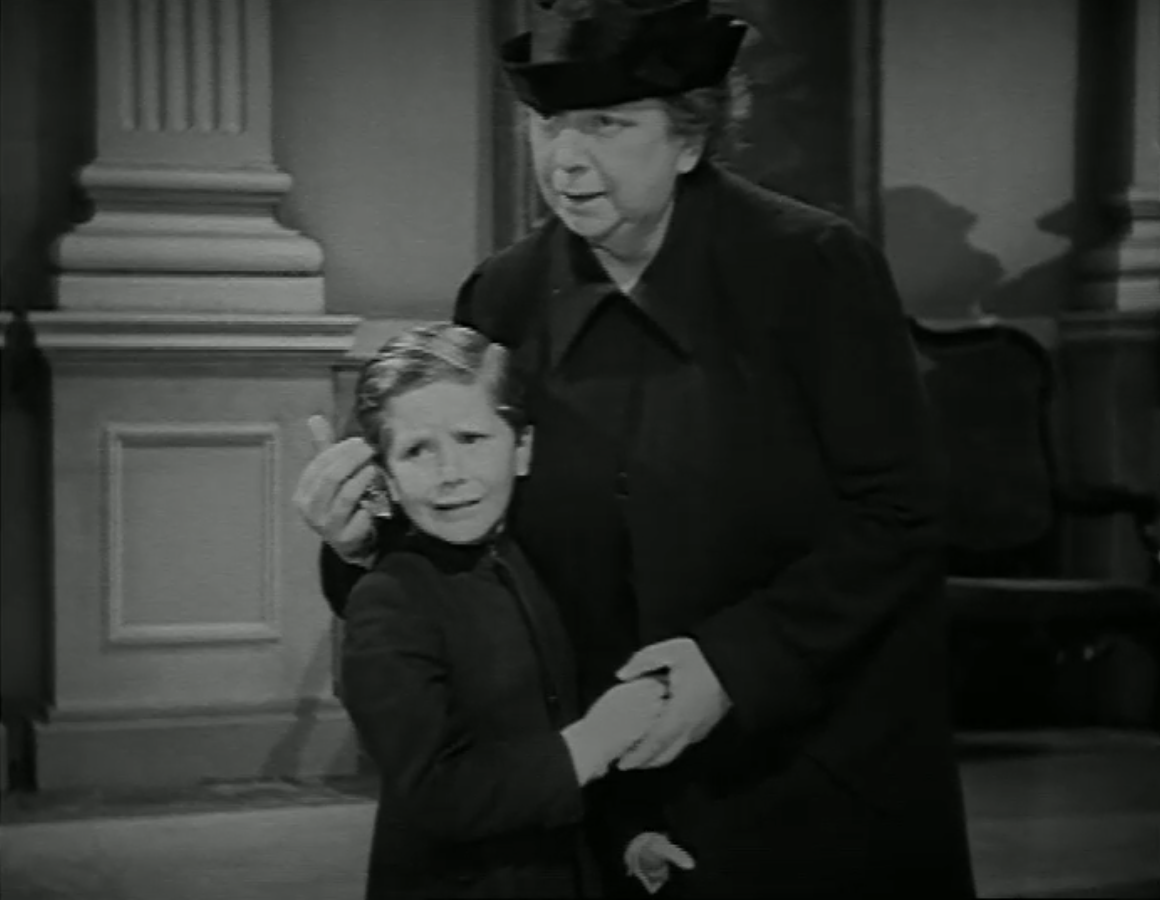
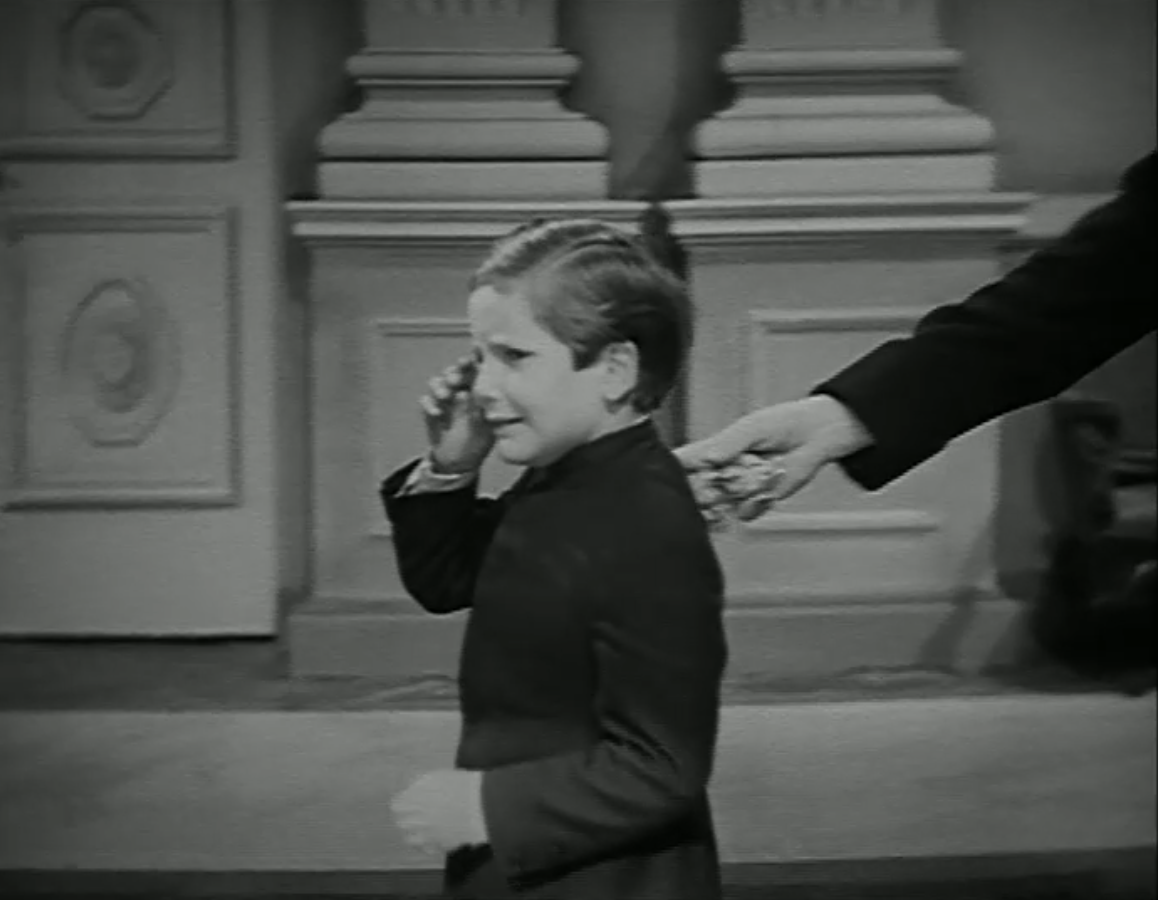
"Vai" – dice il direttore – "vai dalla mamma".
Dandogli un leggero colpetto, Agnese sussurra: "Va’ dalla mamma".
“Go,” the director says, “Go to your mom.”
Nudging him gently, Agnese whispers, “Go to Mommy.”
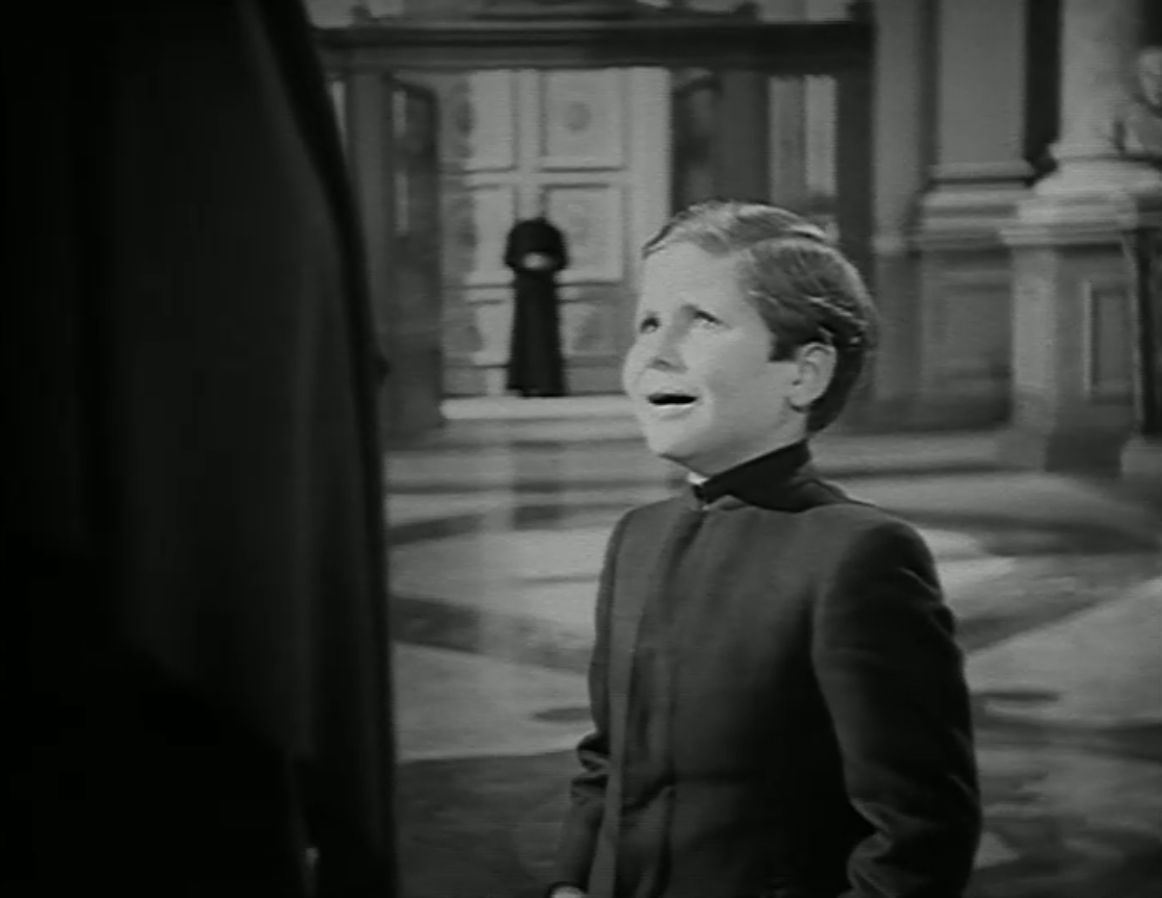
Si avvicina a Nina e alza lo sguardo, in lacrime. Sullo sfondo, padre Michele osserva la scena.
"Pricò", dice lei.
He walks to Nina and looks up, crying. In the background, Father Michele looks on.
“Pricò,” she says.
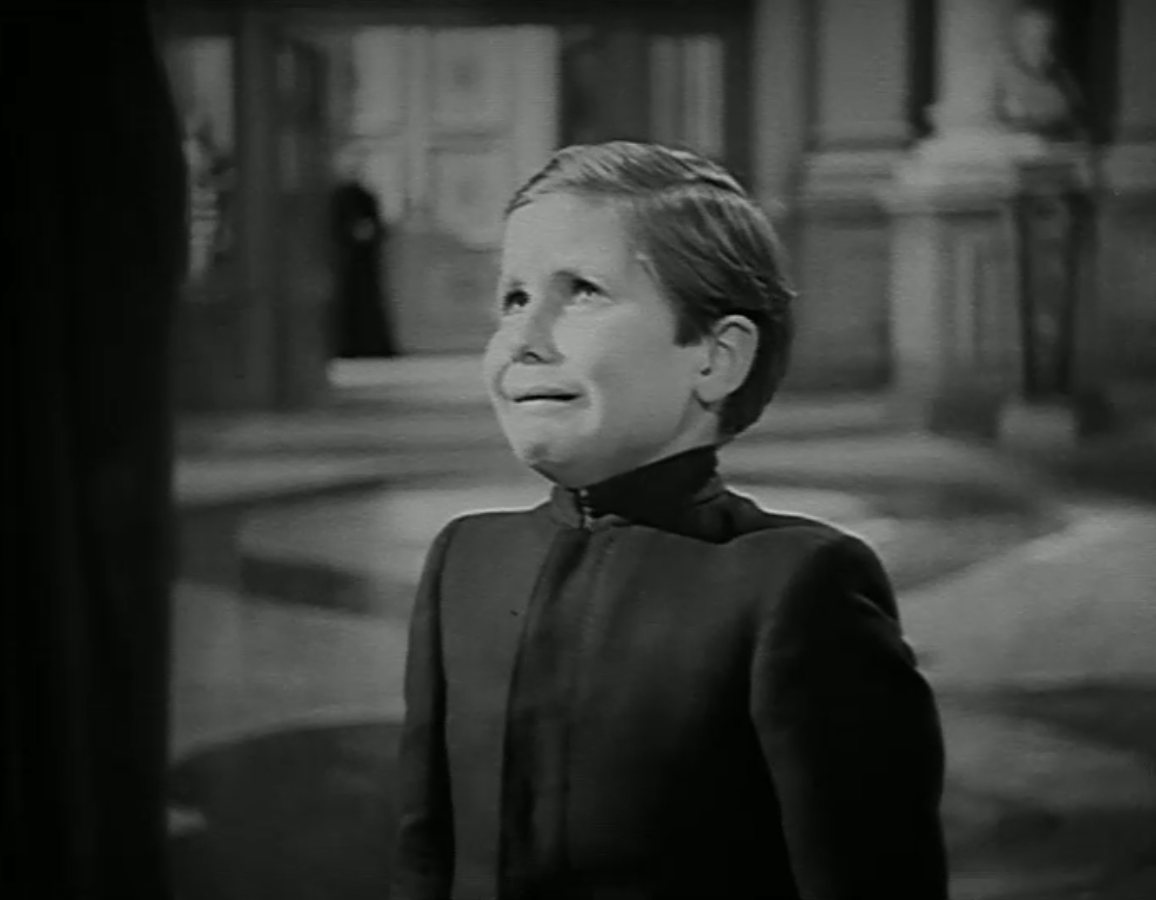
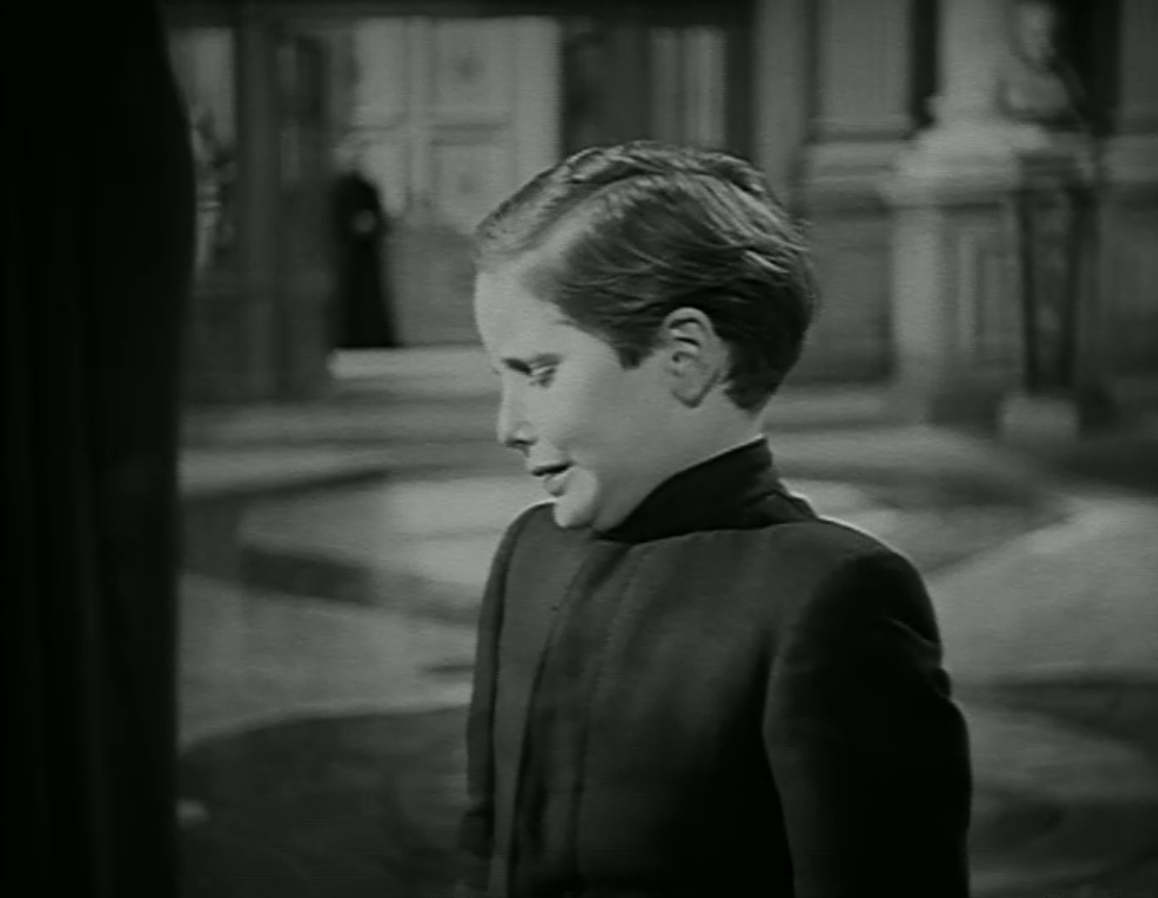
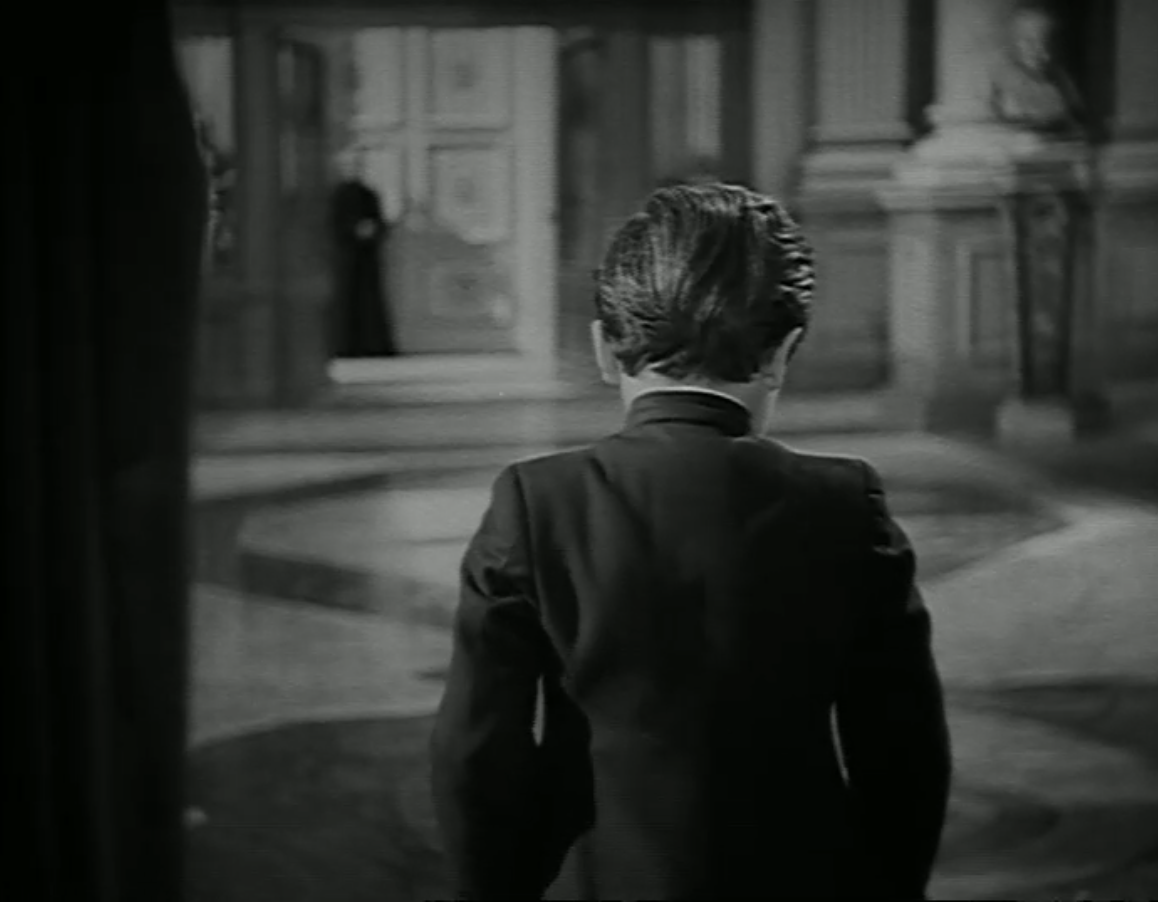
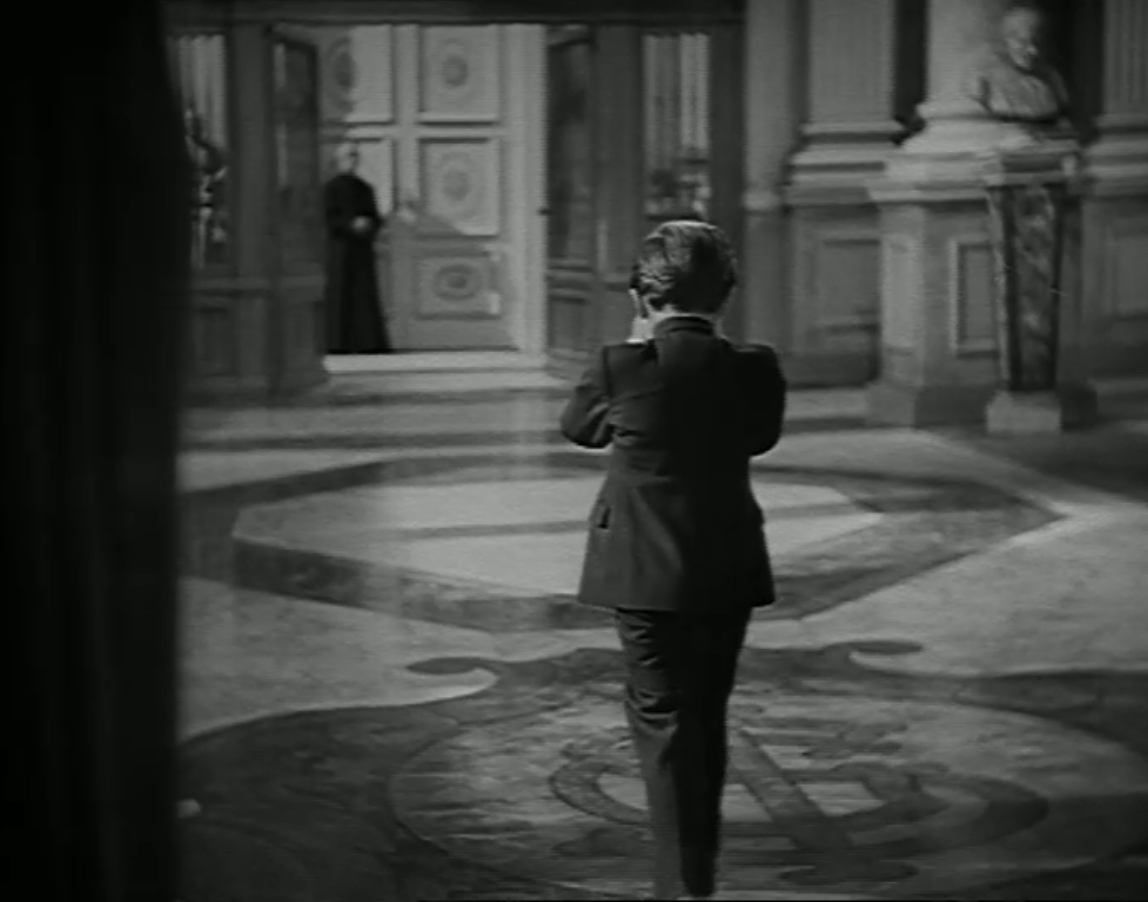
Ma lui abbassa lo sguardo e si allontana con passo deciso, asciugandosi le guance con le mani.
But he looks down, and walks decisively away, wiping his cheeks with his hands.
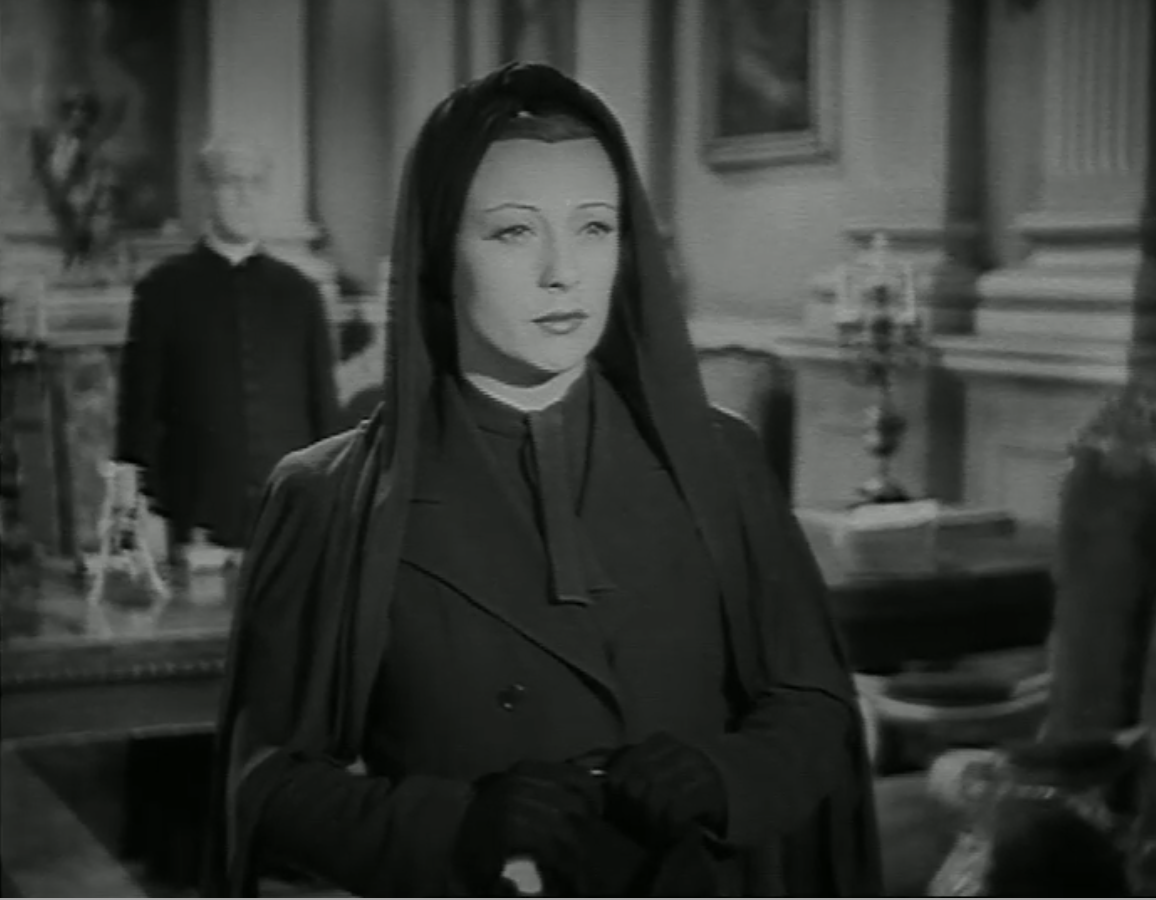
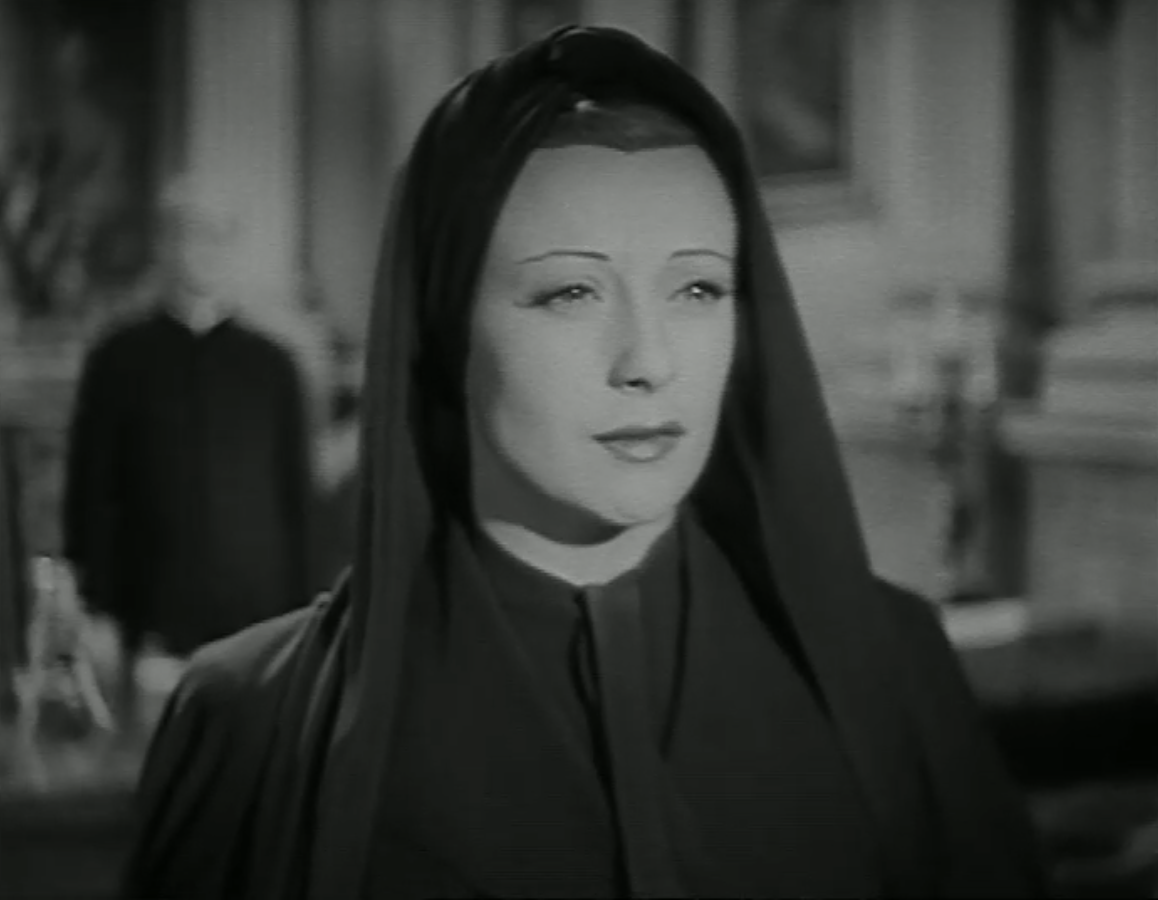
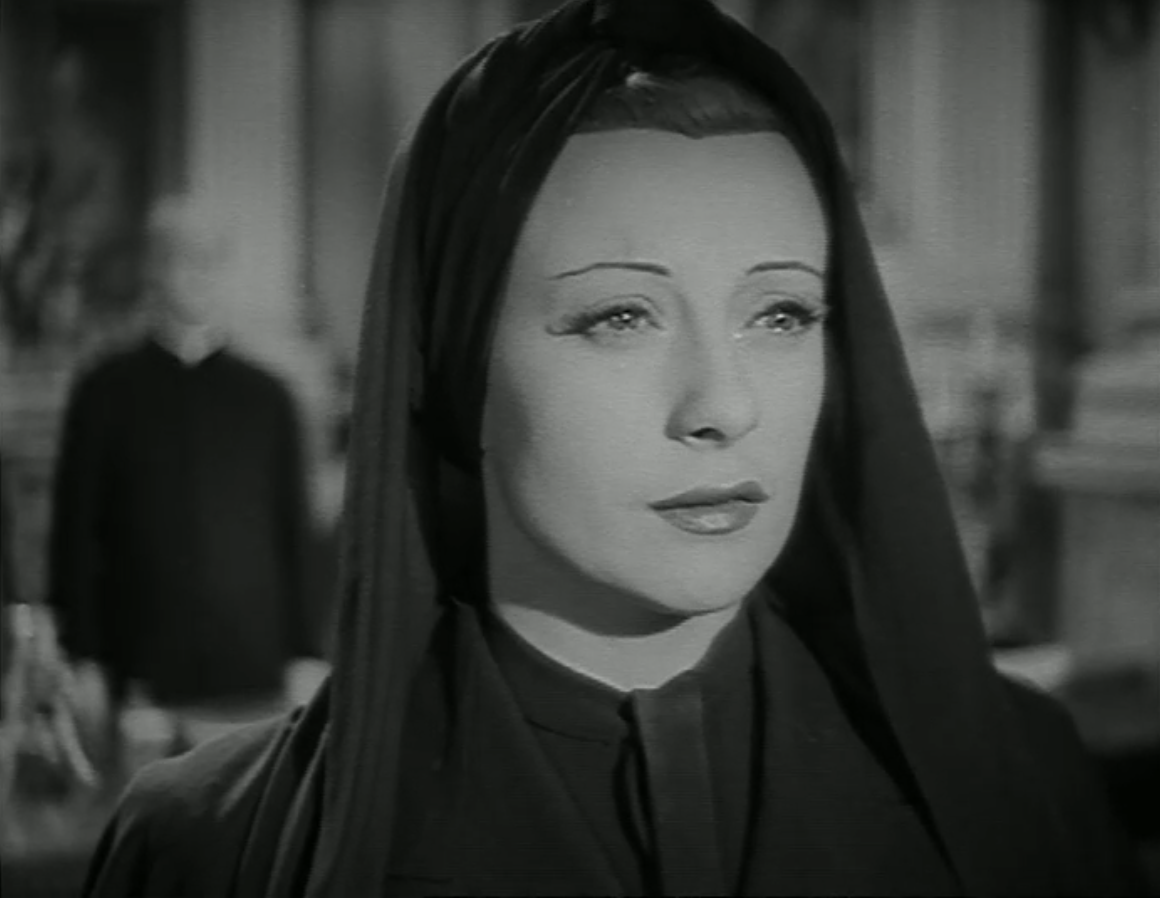
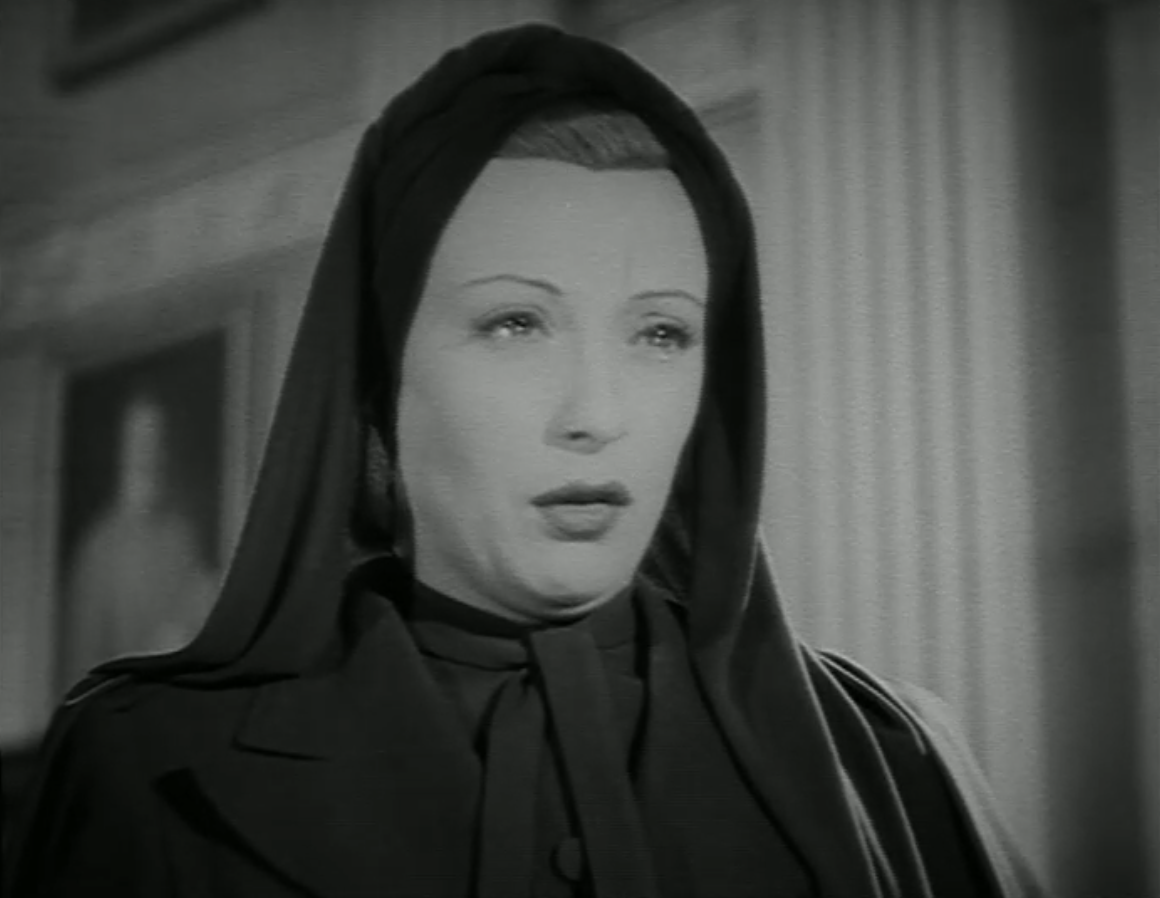
La macchina da presa zooma su Nina con il velo da vedova.
The camera zooms in on Nina in her widow’s veil.
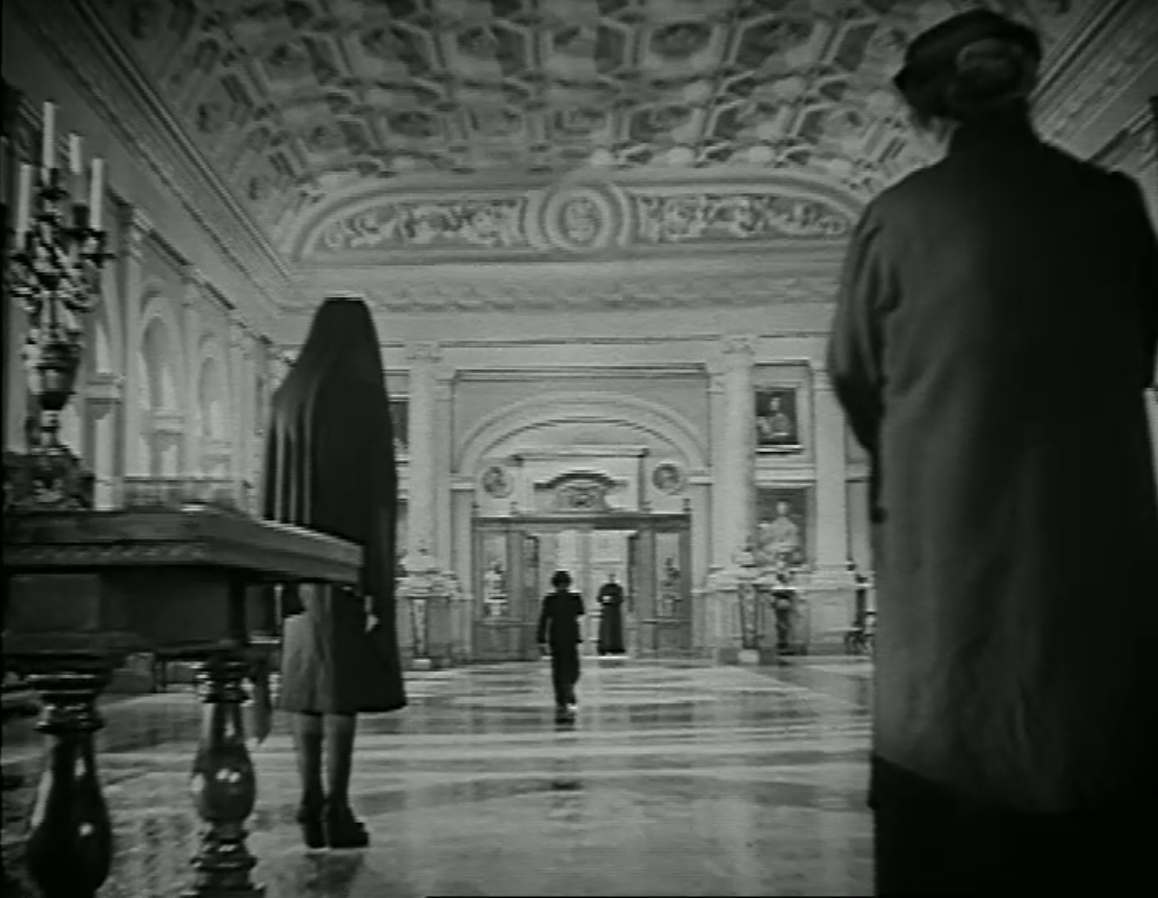
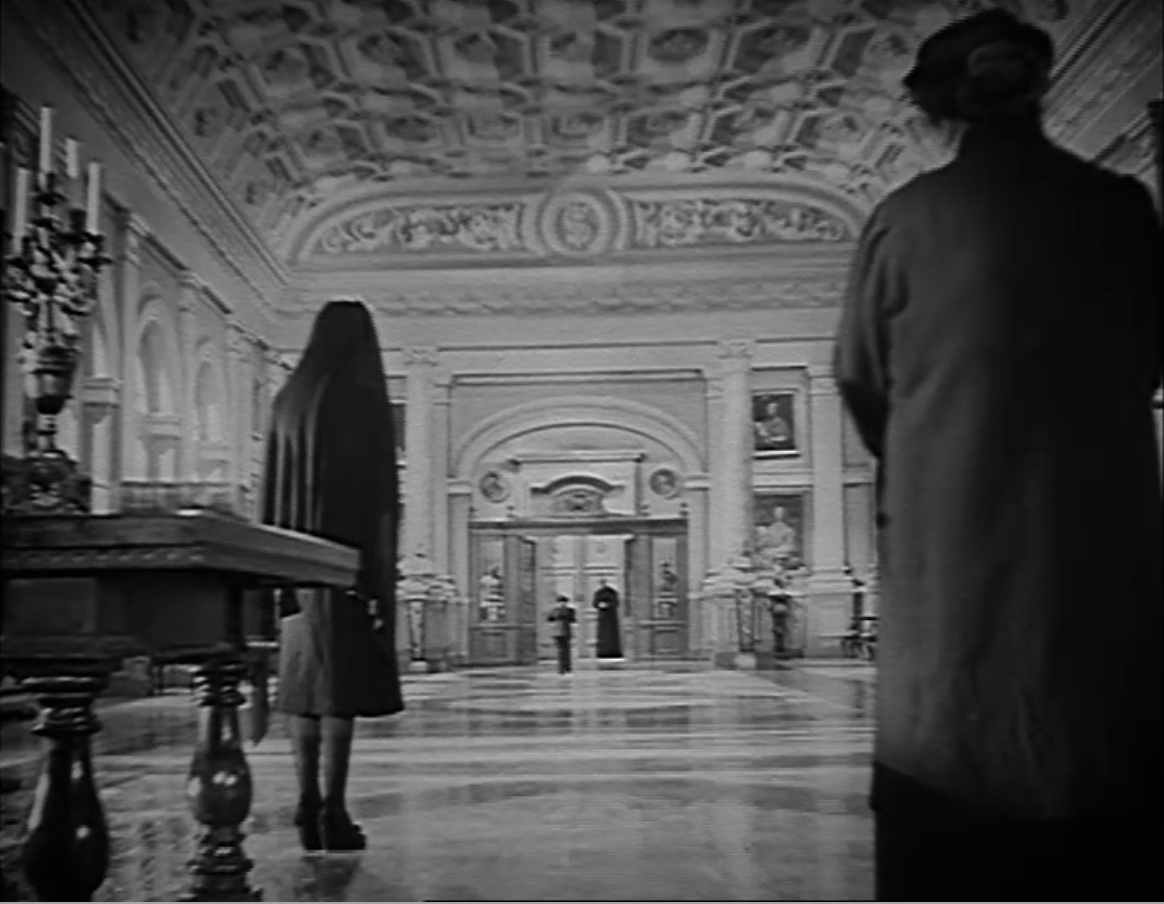
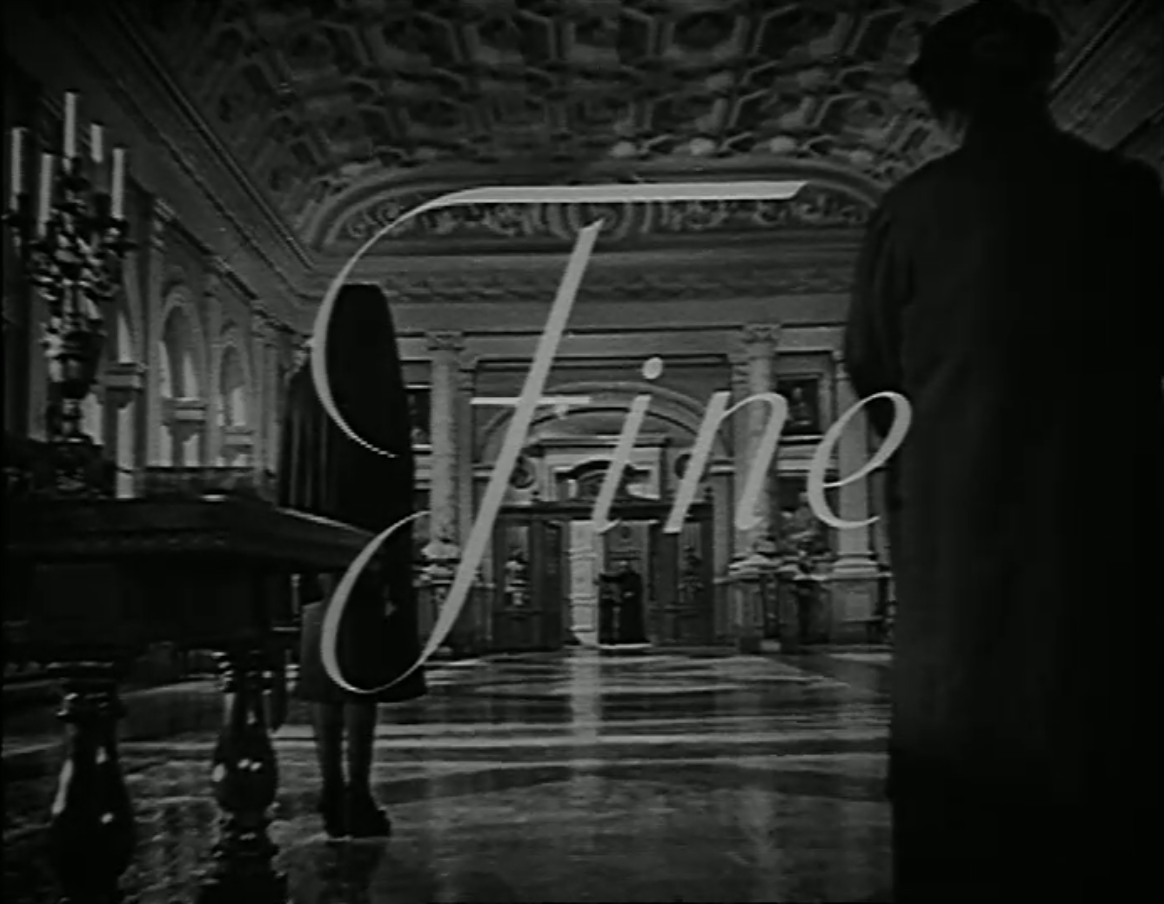
In un campo lungo, vediamo Pricò attraversare lentamente questa vasta stanza. Sua madre lo osserva immobile, finché padre Michele non apre l’enorme porta: Fine.
In a long shot, we see Pricò slowly cross this vast room. His mother watches motionless, until Father Michele opens the enormous door: The End.
FINE PARTE 17
This is the final puntata of this cineracconto. The next cineracconto – on Padre Padrone (Paolo Taviani and Vittorio Taviani, 1977) will be posted on Saturday, November 1. Subscribe to receive a weekly email newsletter with links to all our new posts.