Regia / Director: Vittorio De Sica, 1944
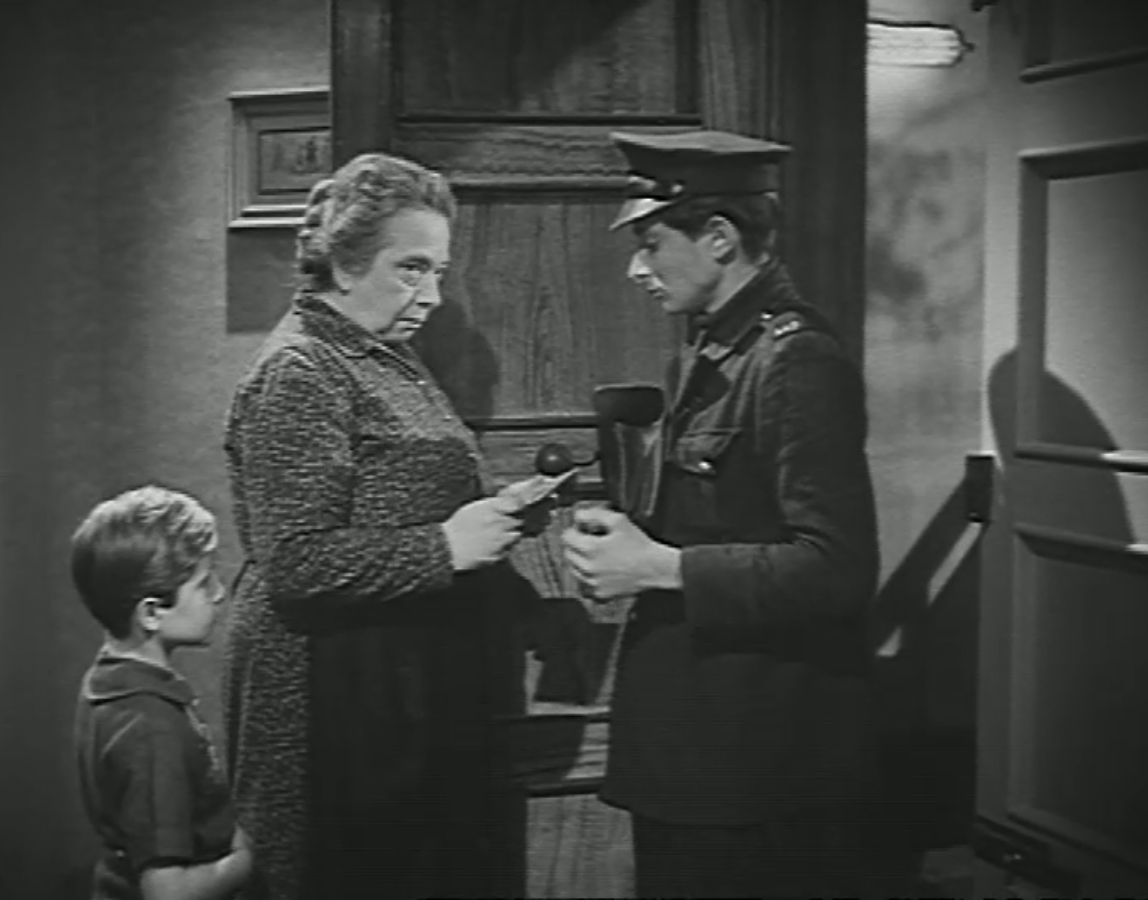
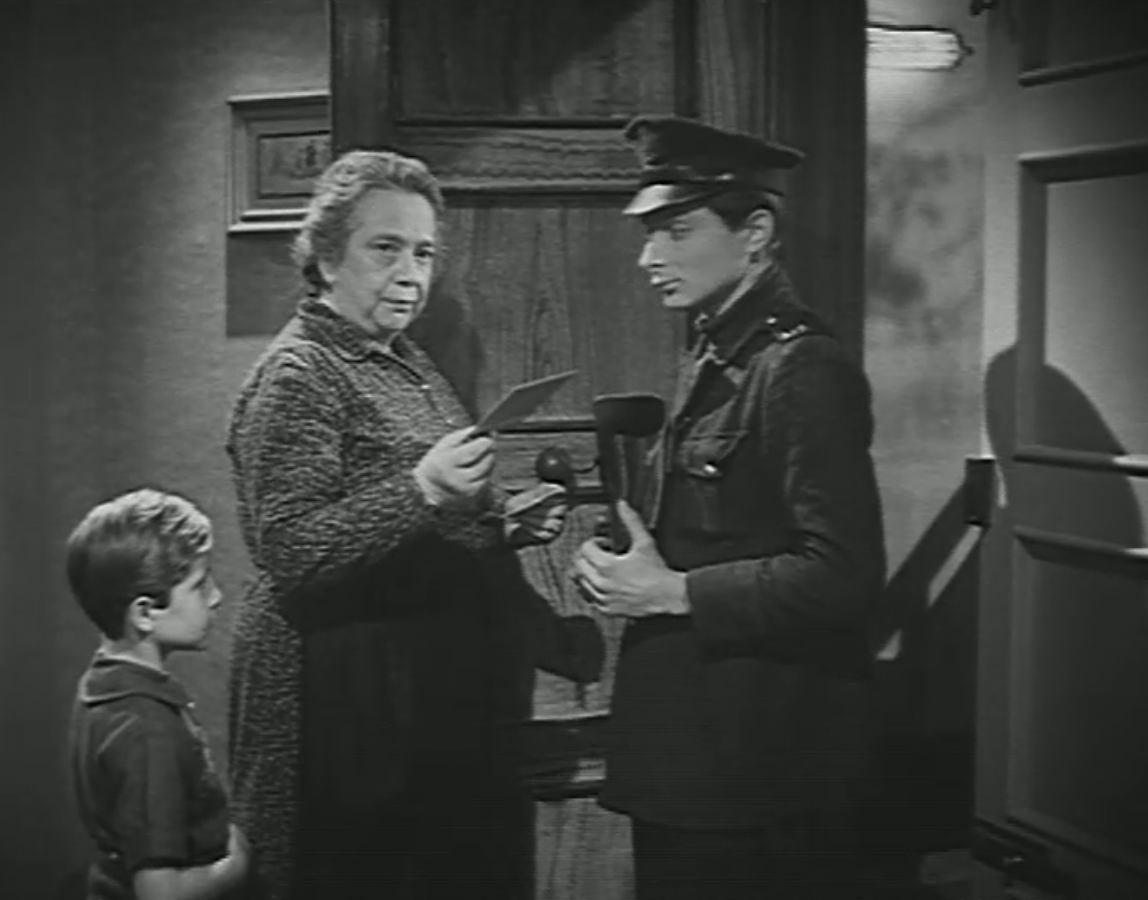
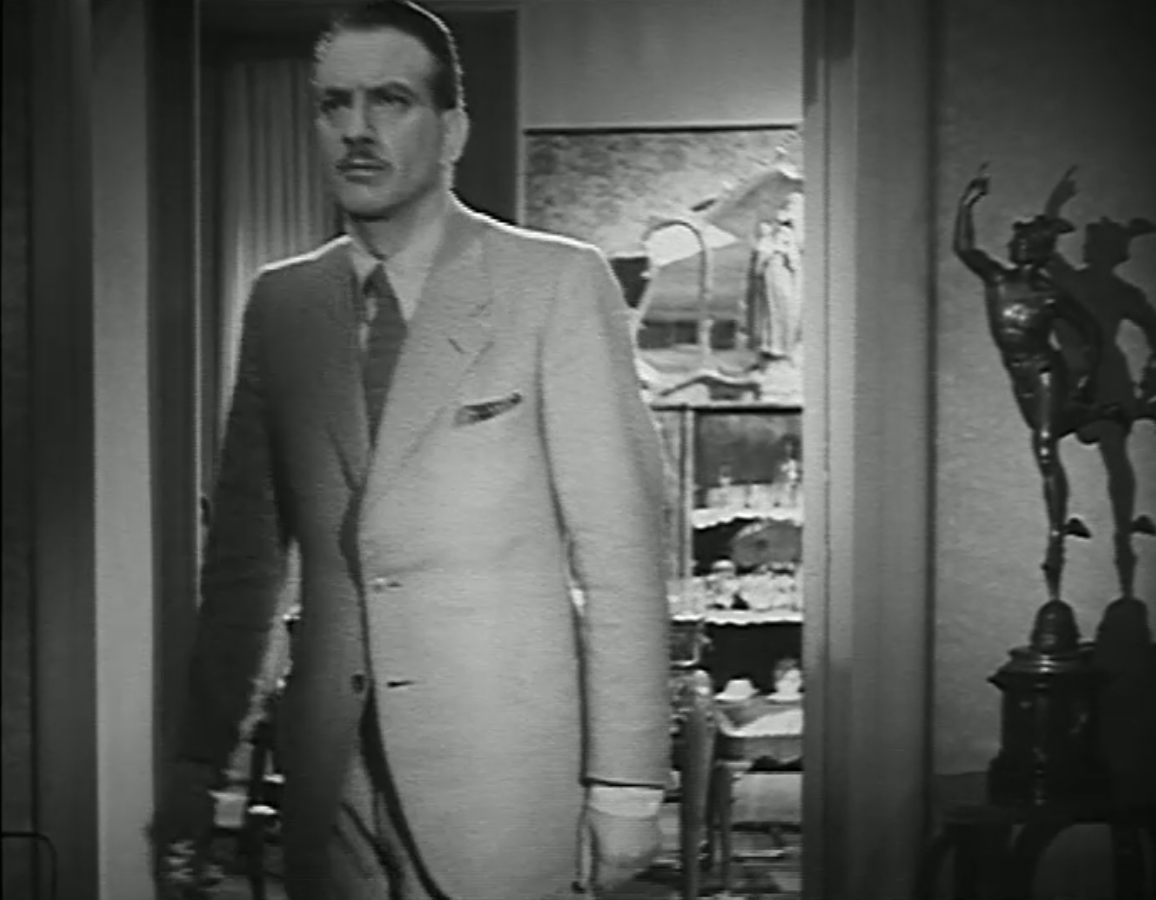
"È per lei", dice Agnese, mostrando il telegramma appena arrivato. Andrea si avvicina per dare uno sguardo.
“It’s for you,” Agnese says, showing the telegram that’s just arrived. Andrea comes to take a look.
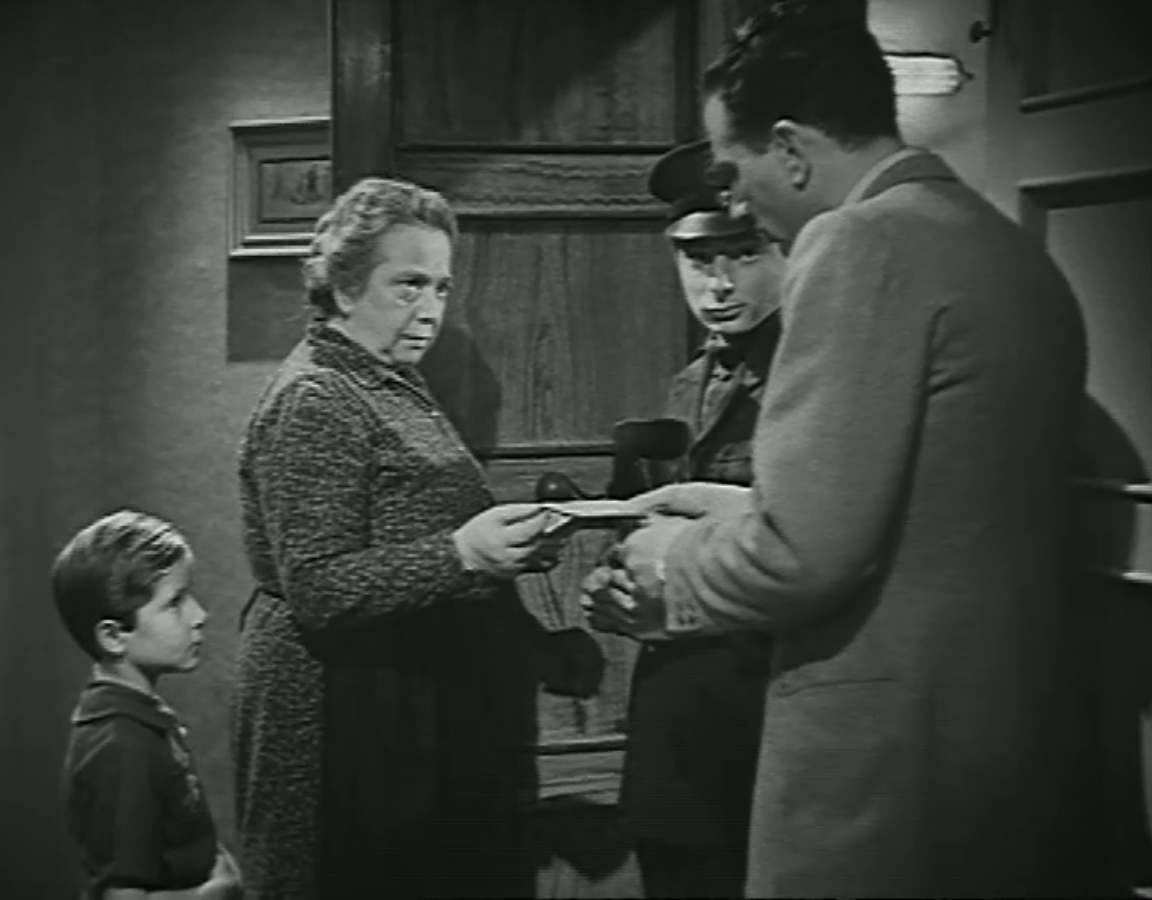
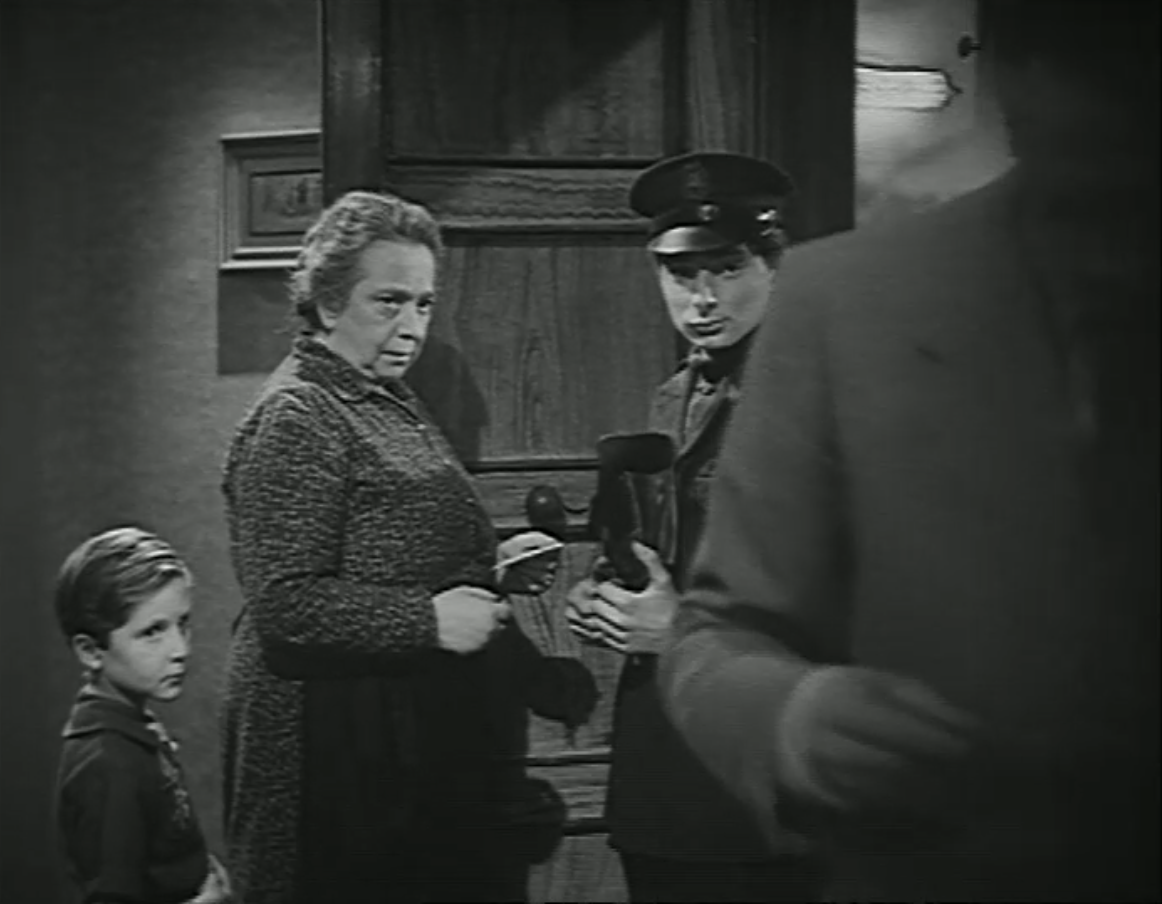
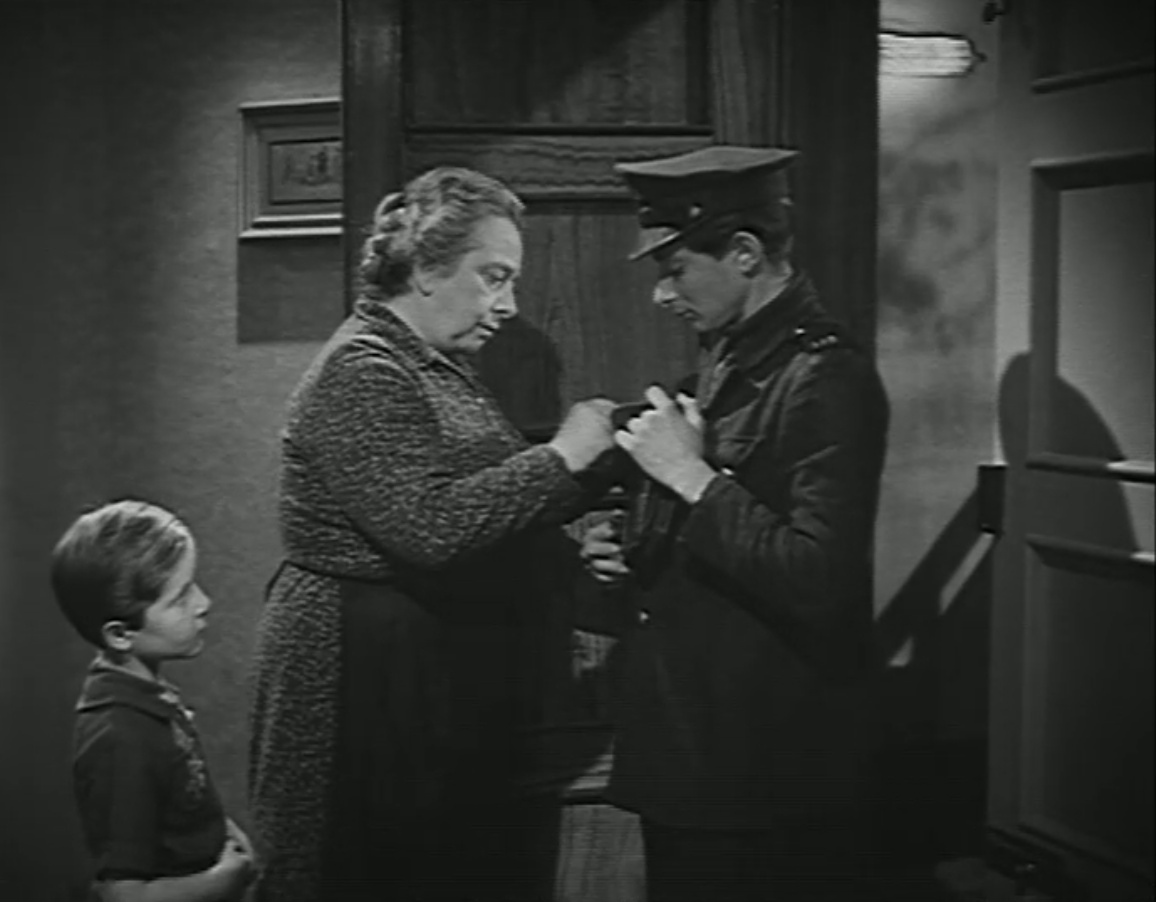
Lui prende il telegramma e Agnese ne firma la ricevuta.
He takes the telegram, and Agnese signs for it.
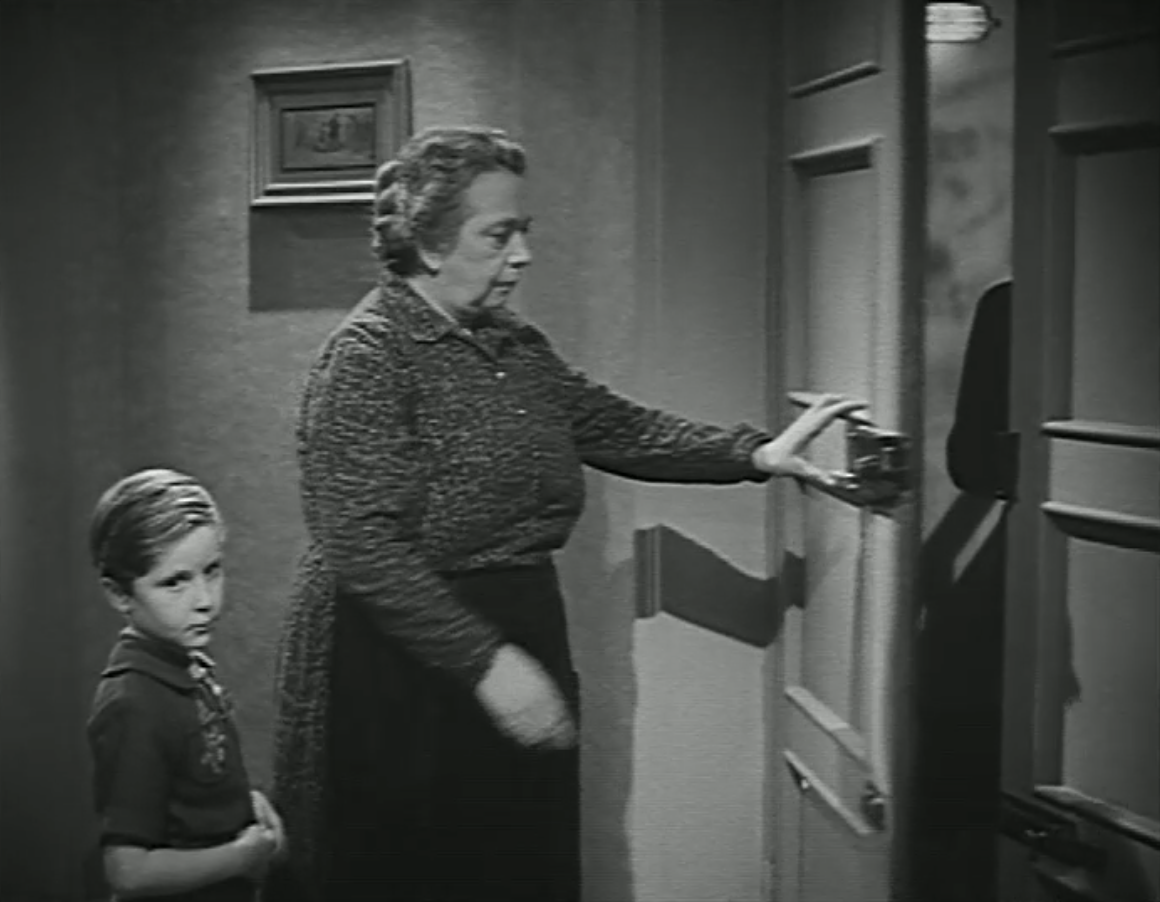
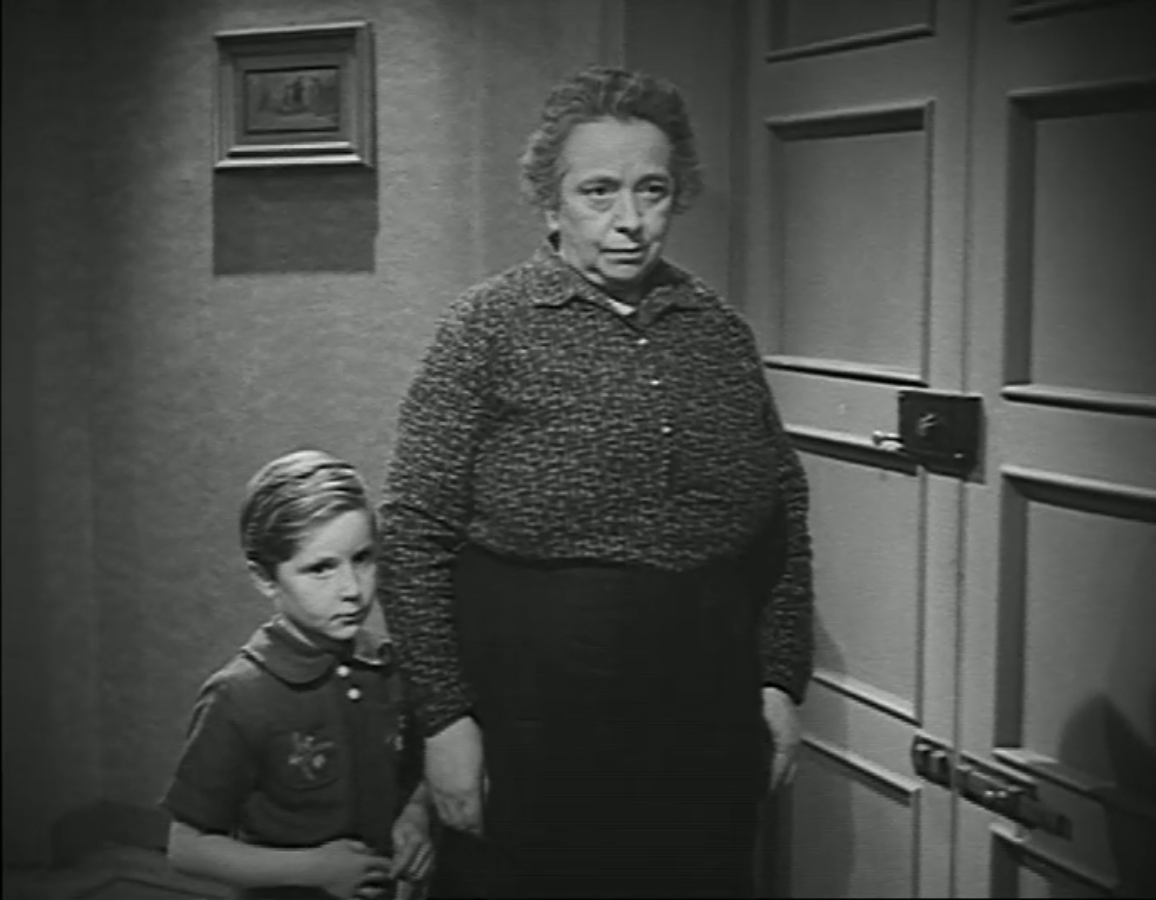
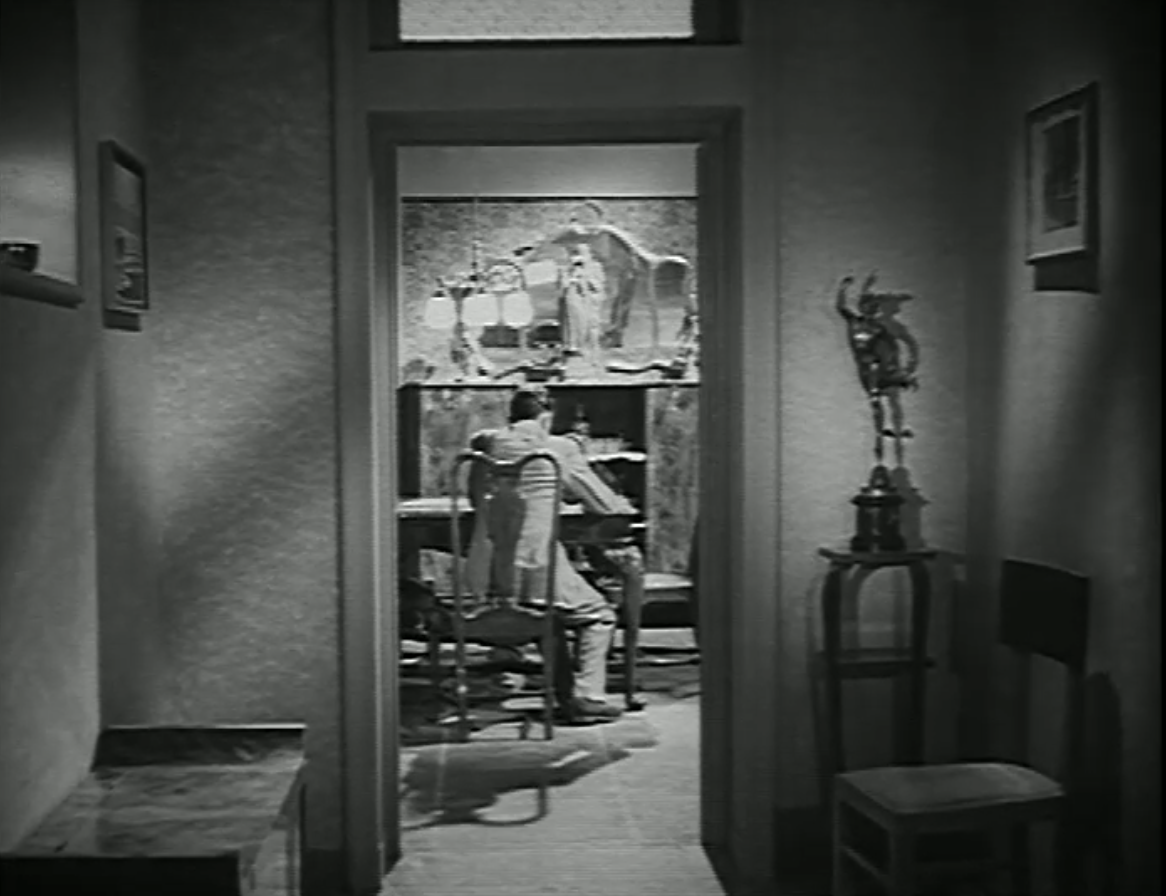
Dopo aver chiuso la porta alle spalle del corriere, lei e Pricò fissano stoicamente verso la sala da pranzo, dove Mercurio continua a fare la guardia. Andrea è seduto al tavolo. Dalla radio risuona una musica allegra.
After she closes the door behind the messenger, she and Pricò gaze stoically toward the dining room, where Mercury still stands guard. Andrea is sitting at the table. Cheerful music plays on the radio.
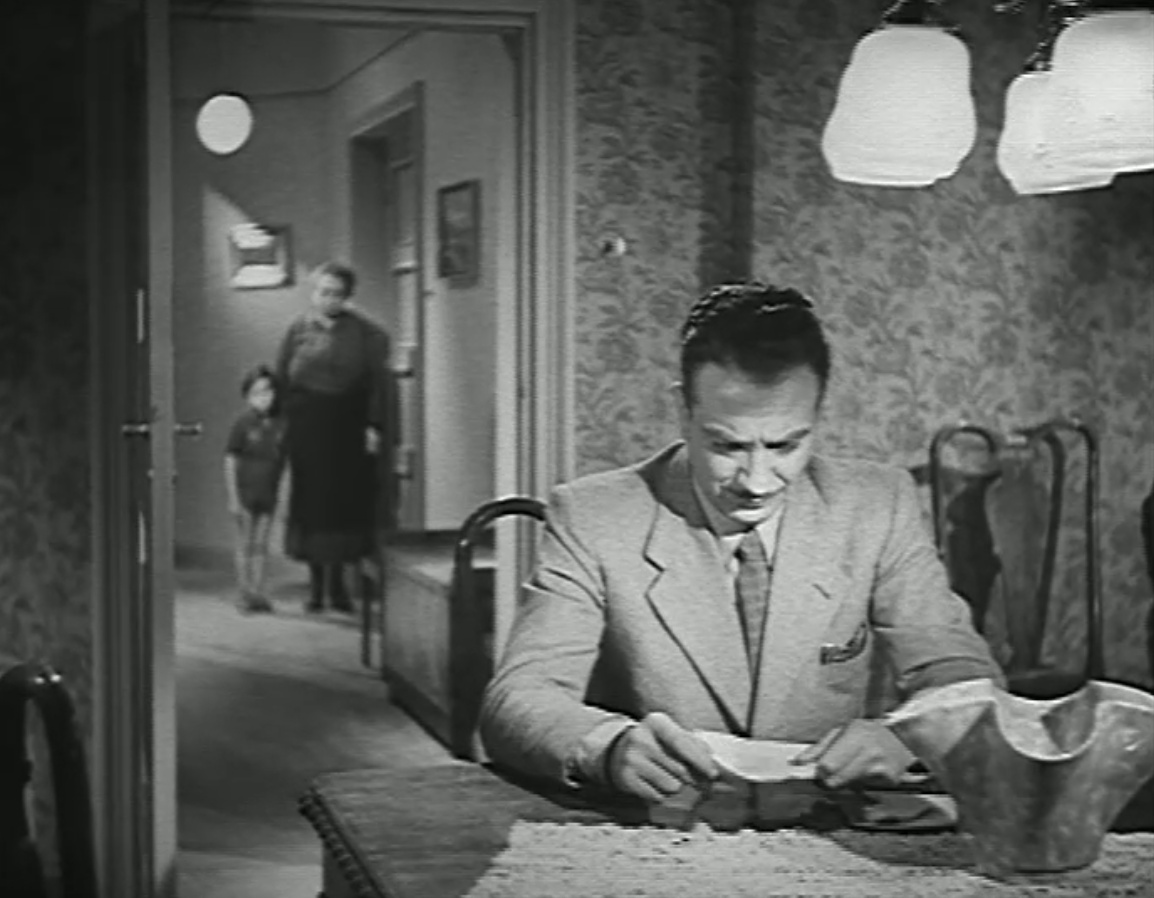
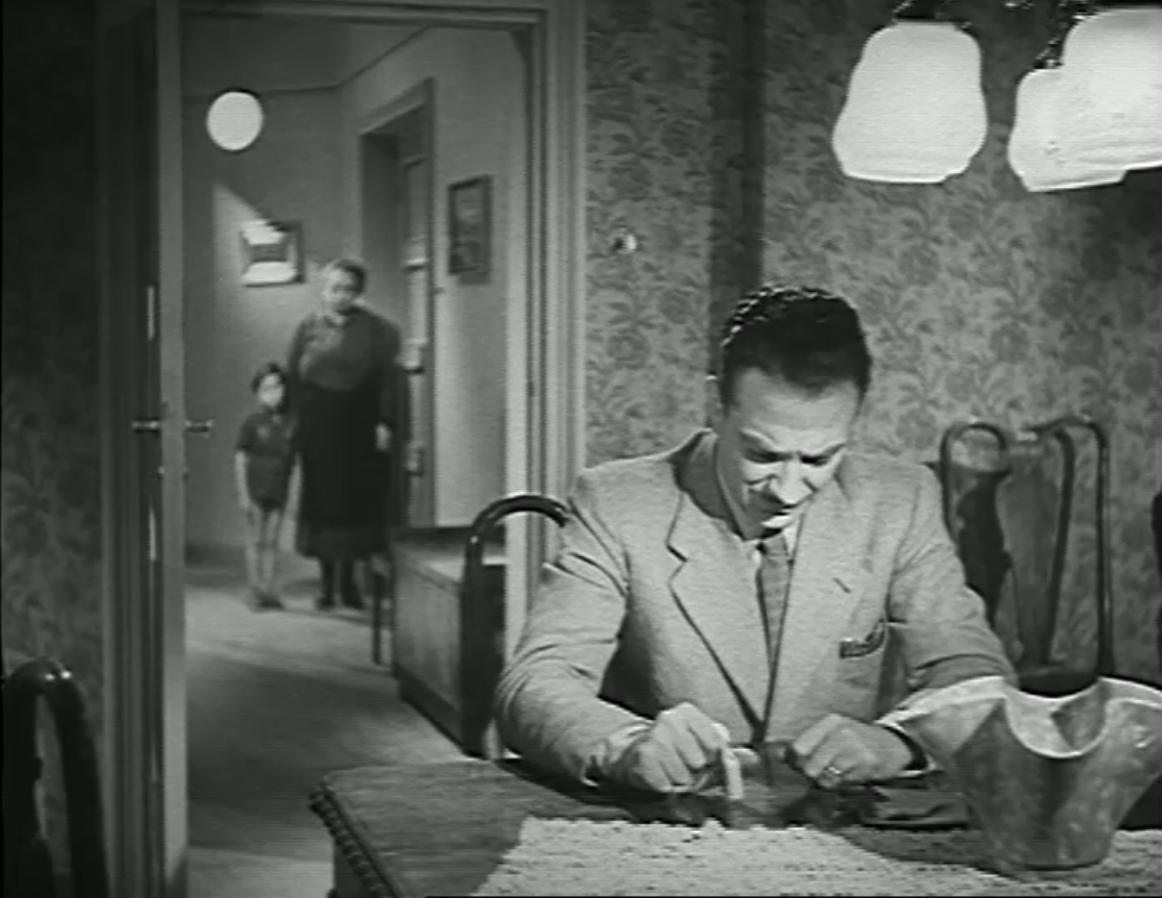
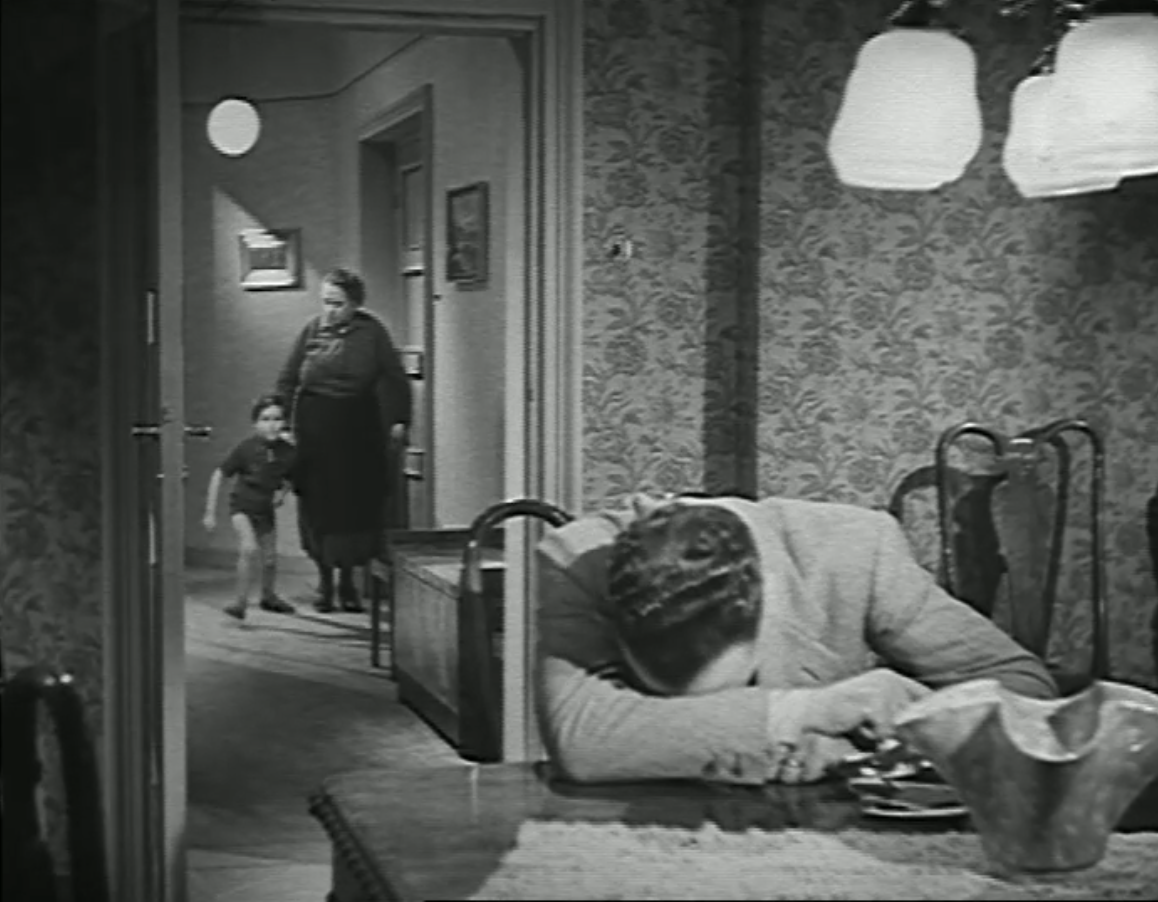
Mentre Agnese e Pricò osservano Andrea, lui accartoccia il foglio e poi appoggia la testa sul braccio.
As Agnese and Pricò watch Andrea, he crumples the paper, and then rests his head on his arm.
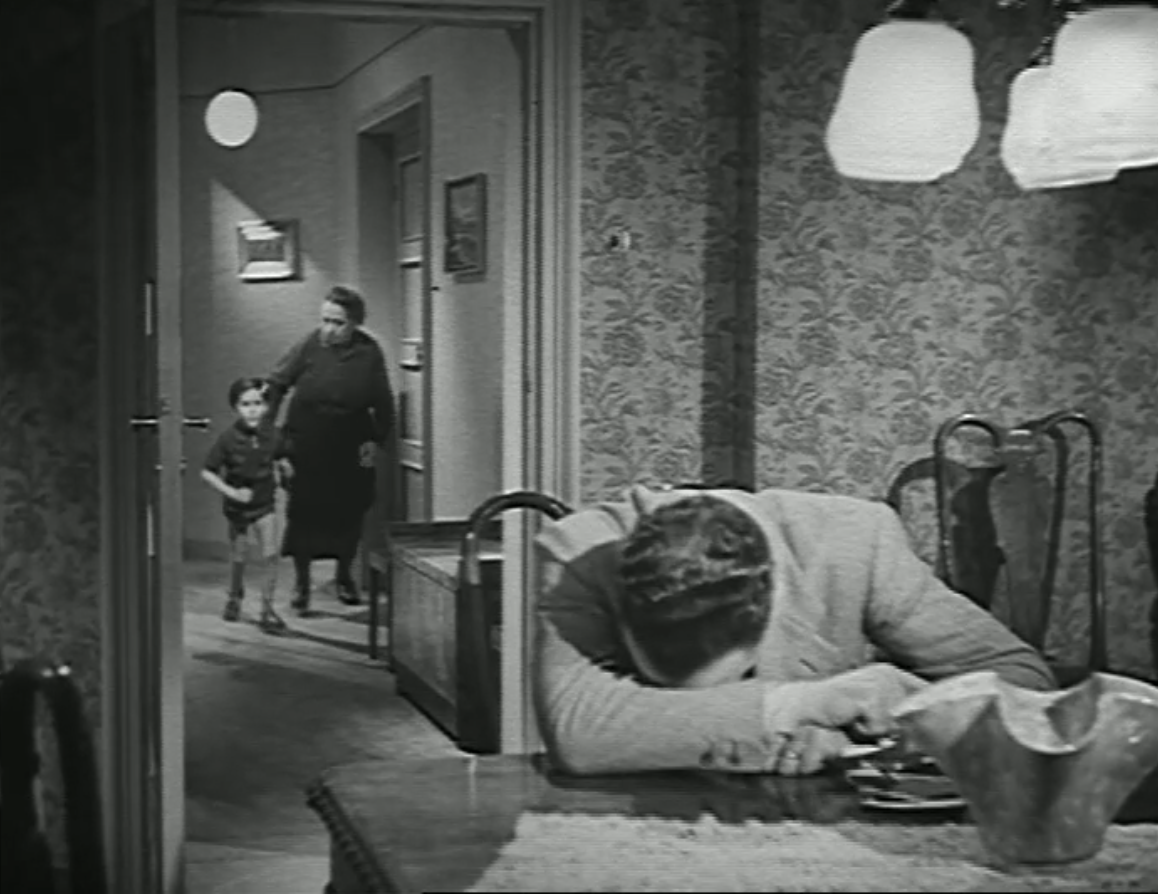
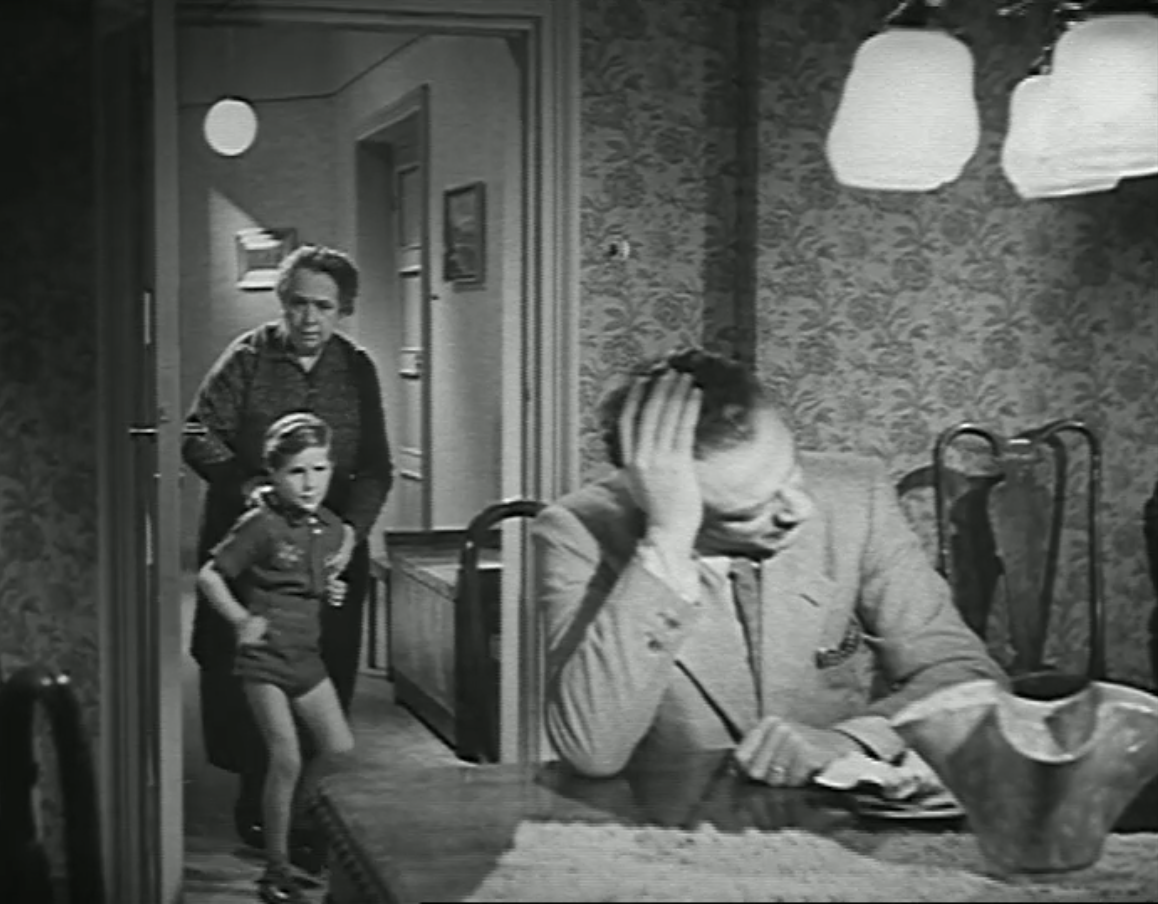
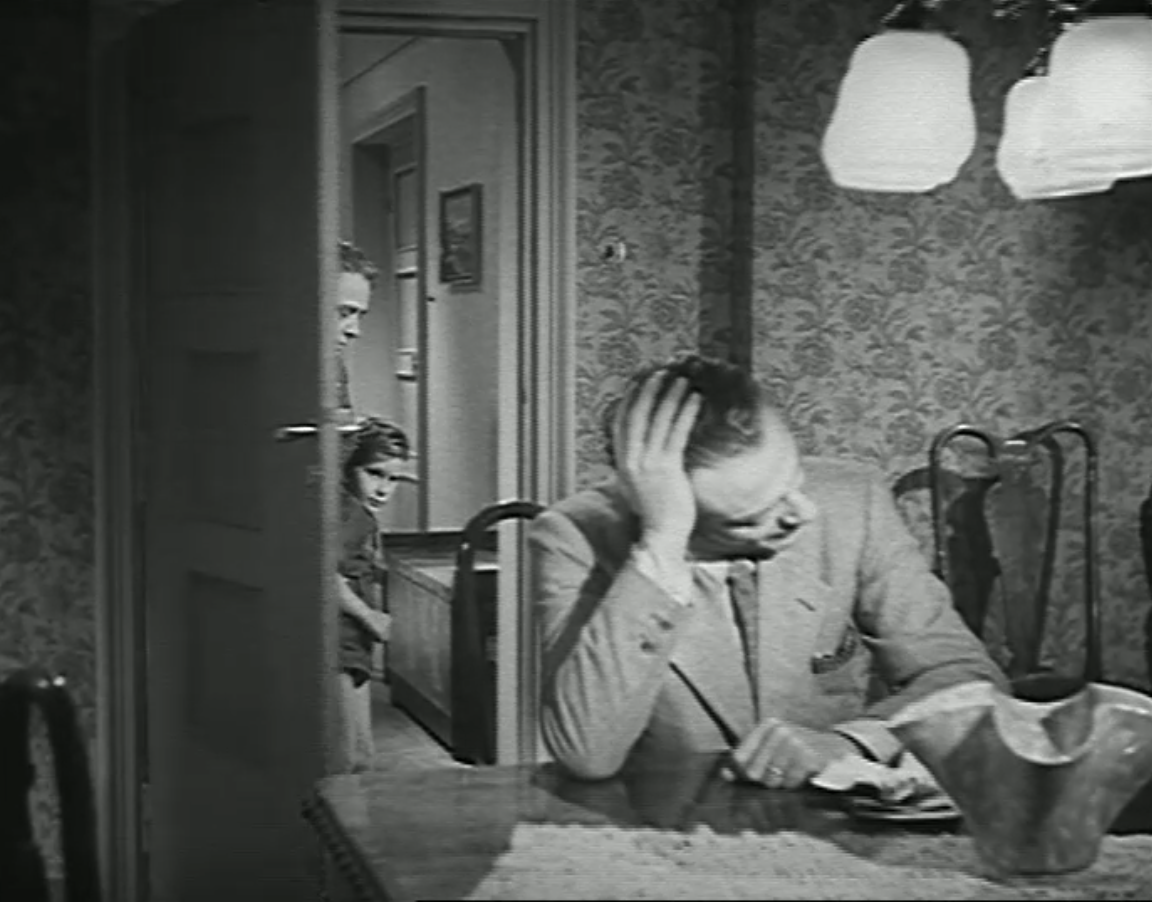
Pricò corre verso di lui. "Papà!" Ma Agnese lo tira indietro e chiude la porta.
Pricò runs toward him. “Papa!” But Agnese pulls him back and closes the door.
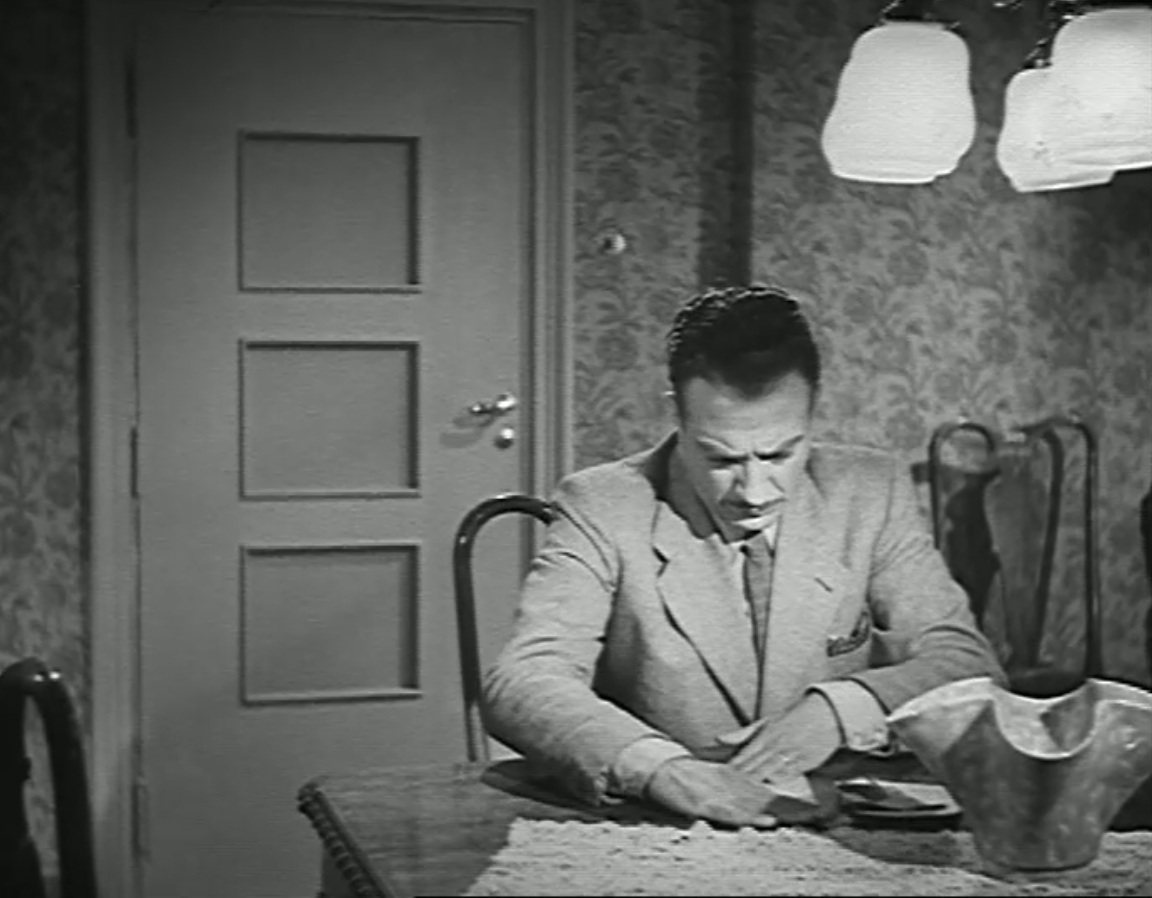
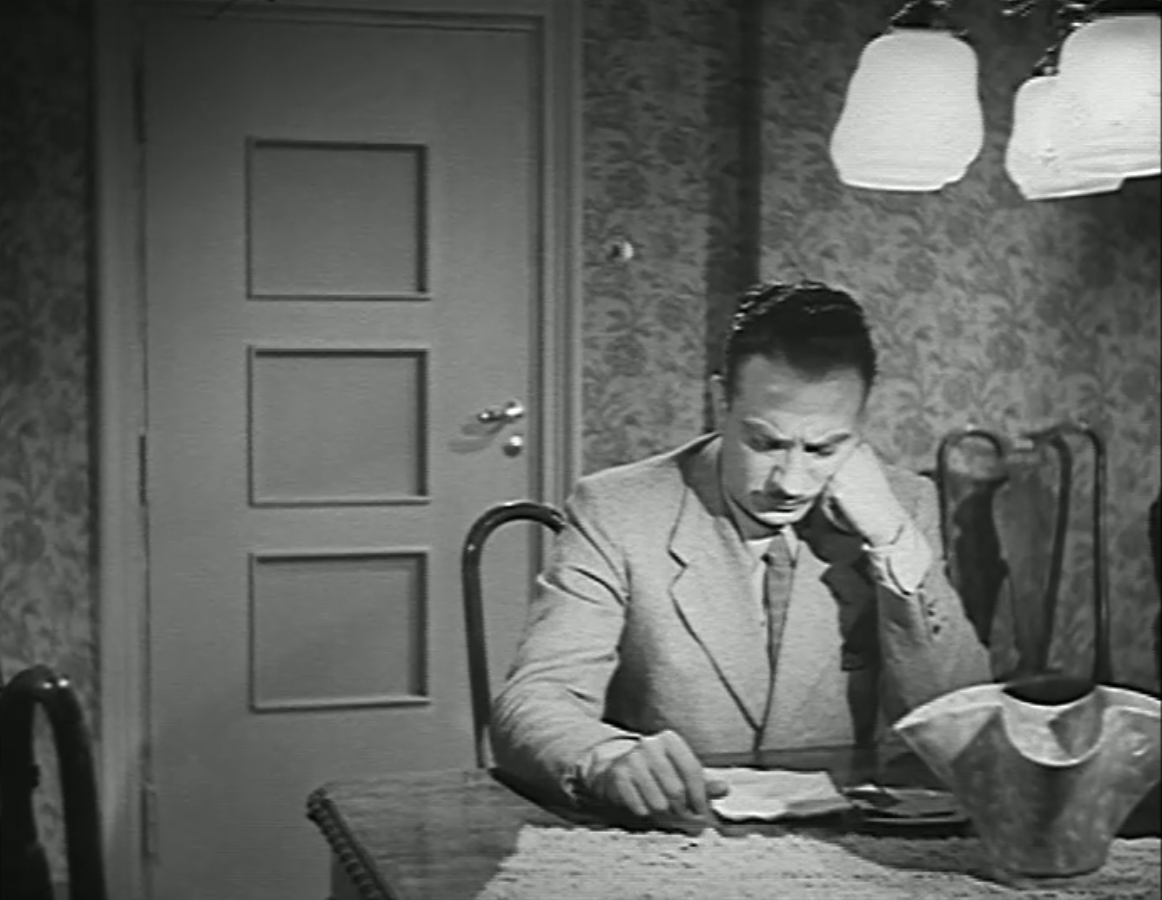
Con aria accigliata, Andrea apre il foglio sgualcito, lo distende e lo rilegge. Mentre legge, dalla radio si sente una voce che inizia a cantare: “Maramao perchè sei morto? Pan e vin non ti mancava. L'insalata era nell’orto e una casa avevi tu.”*
*La canzone “Maramao, perché sei morto?” (composta da Mario Panzeri e Virgilio Panzuti, 1937, e interpretata dal Trio Lescano, composto da tre sorelle ebree olandesi-ungheresi), sembra raccontare la storia di un gatto di nome Maramao, che è scappato dalle comodità di casa. Apparentemente, una semplice canzone per bambini. Invece questa canzone appartiene al genere della “fronda”, dove musica spensierata, testi romantici, e metafore animali, venivano utilizzati per criticare il regime fascista senza attirare l’attenzione della censura. Potete leggere ulteriori informazioni sulla canzone qui. Una versione completa è disponibile su YouTube qui.
Frowning, Andrea opens the crumpled paper, smooths it out, reads it again. As he reads, a voice begins singing over the radio: “Maramao, why did you die? You had plenty of bread and wine. There was salad in the garden, and you had a home of your own.”*
*The song "Maramao, Why Did You Die?" (composed by Mario Panzeri and Virgilio Panzuti, 1937, and performed by Trio Lescano, composed of three Dutch-Hungarian Jewish sisters) seems to tell the story of a cat named Maramao, who ran away from the comforts of home: a simple children’s song. But it belongs to the fronda genre, in which lighthearted music and romantic lyrics, along with animal metaphors, are used to express criticism of the Fascist regime without attracting the attention of the censors. You can read more about the song here. A complete version is on Youtube here.
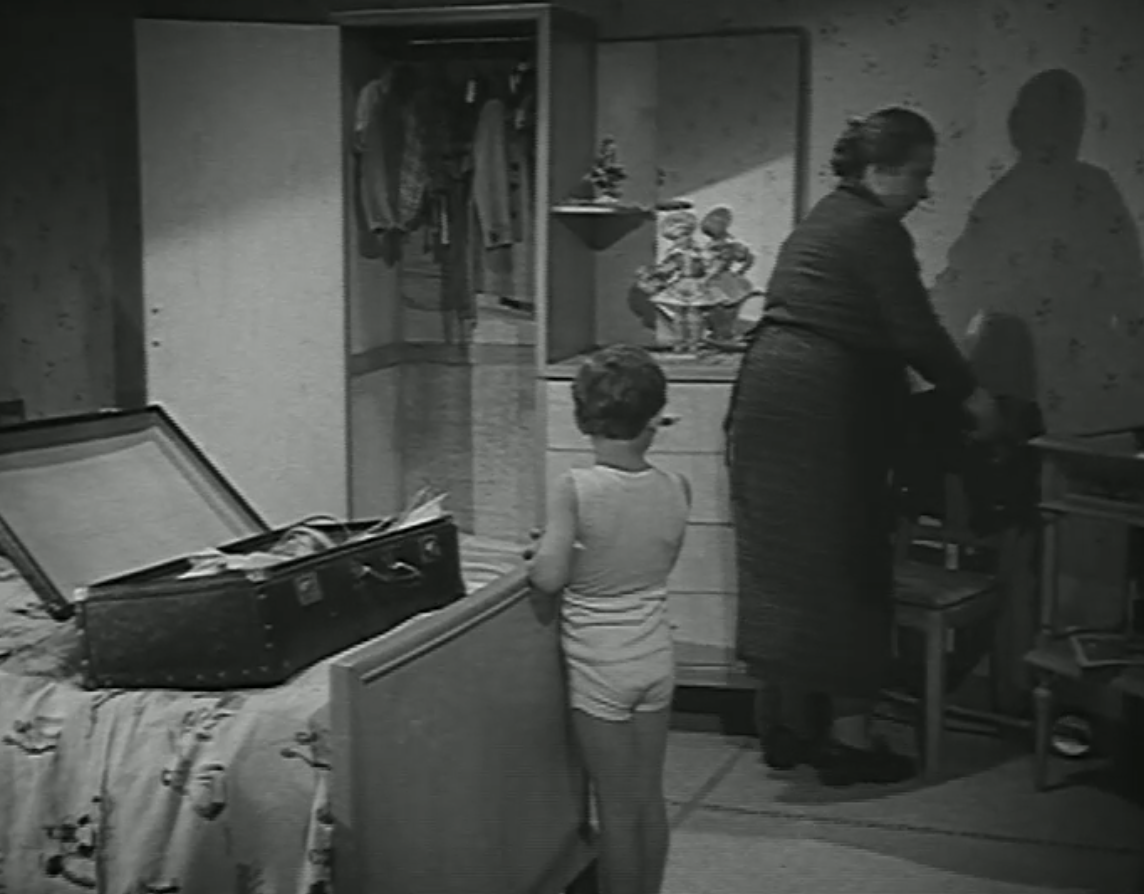
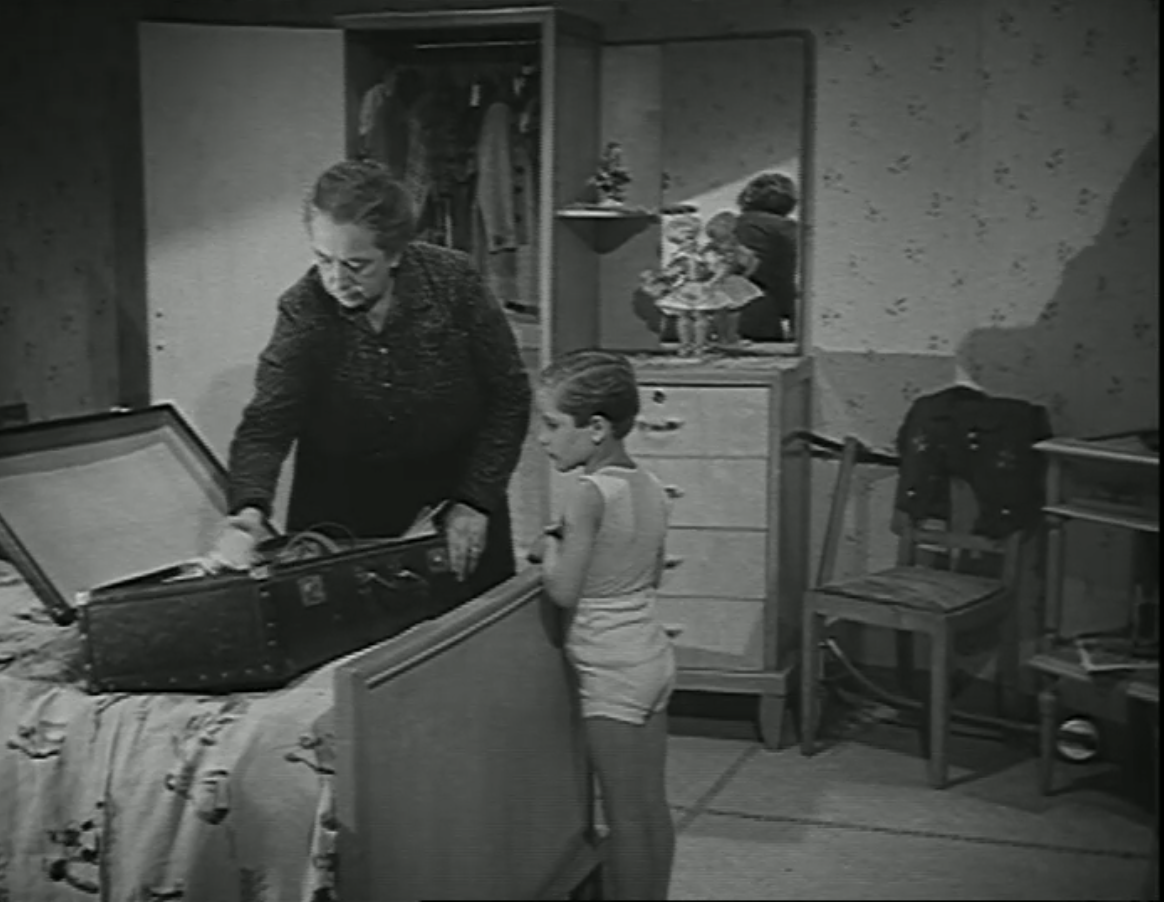
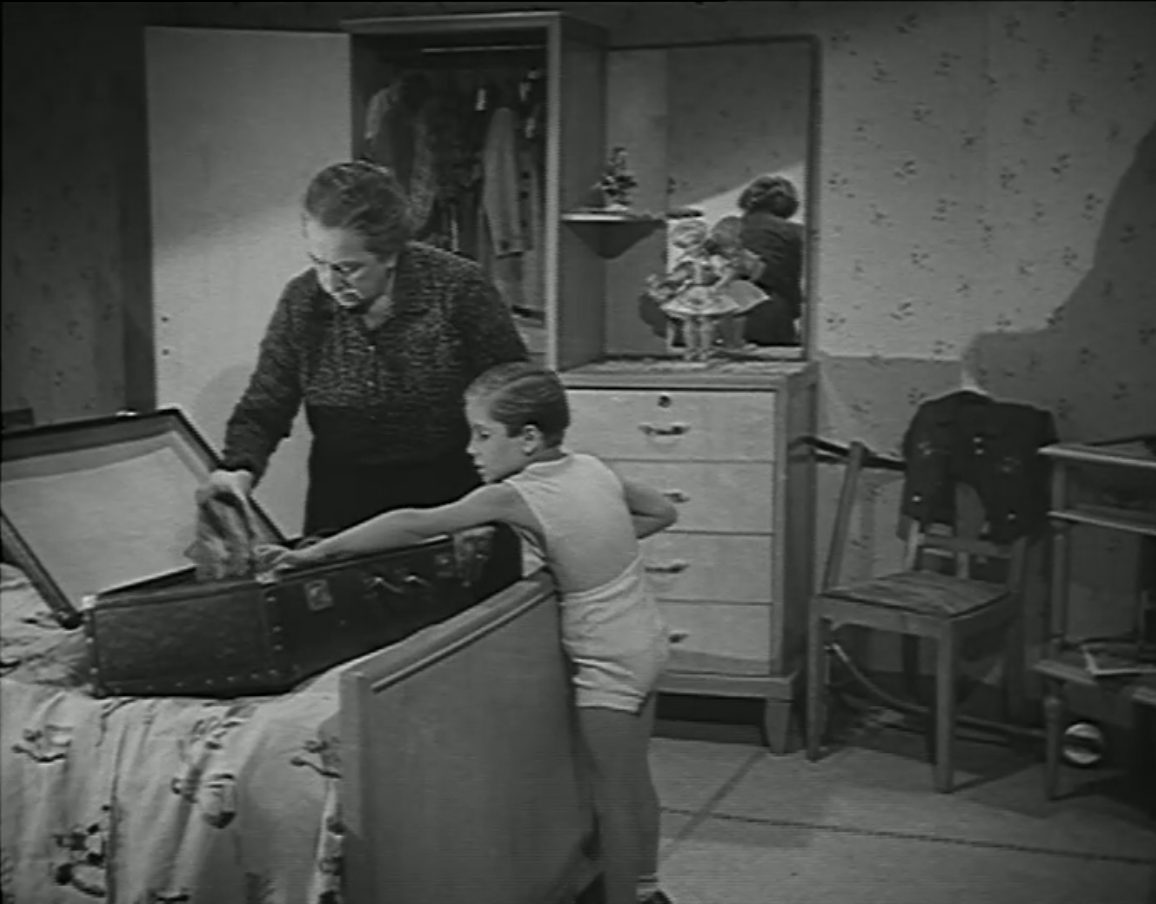
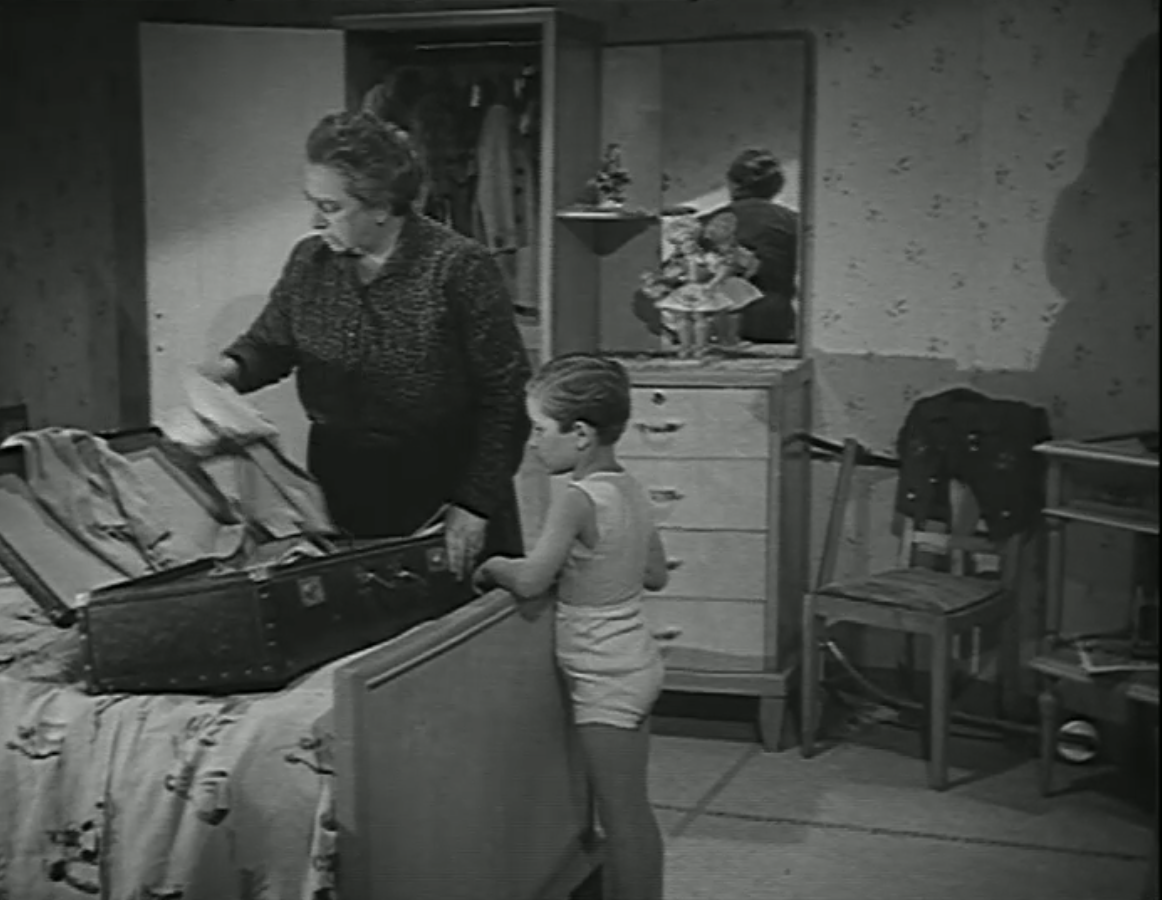
Nella cameretta di Pricò, Agnese svuota la valigia. "E il pigiamino dov’è?"
Lui indica: "La mamma lo ha messo sotto".
In sottofondo, la canzone continua: Ma la porta è sempre chiusa e tu non rispondi più.
In Pricò’s bedroom, Agnese unpacks the suitcase. “Where are your jammies?”
He points. “Mommy put them on the bottom.”
In the background, the song continues: “But the door is always closed, and you don’t answer anymore.”
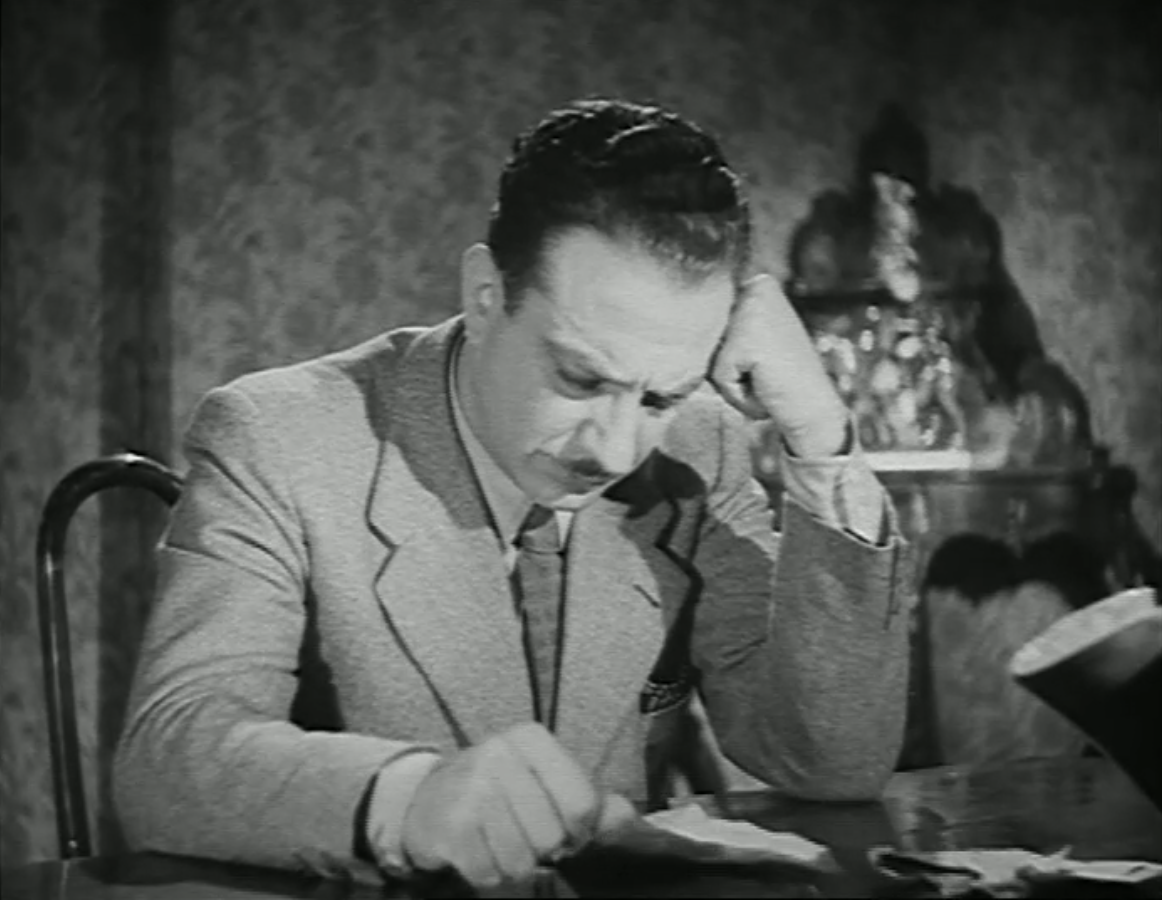
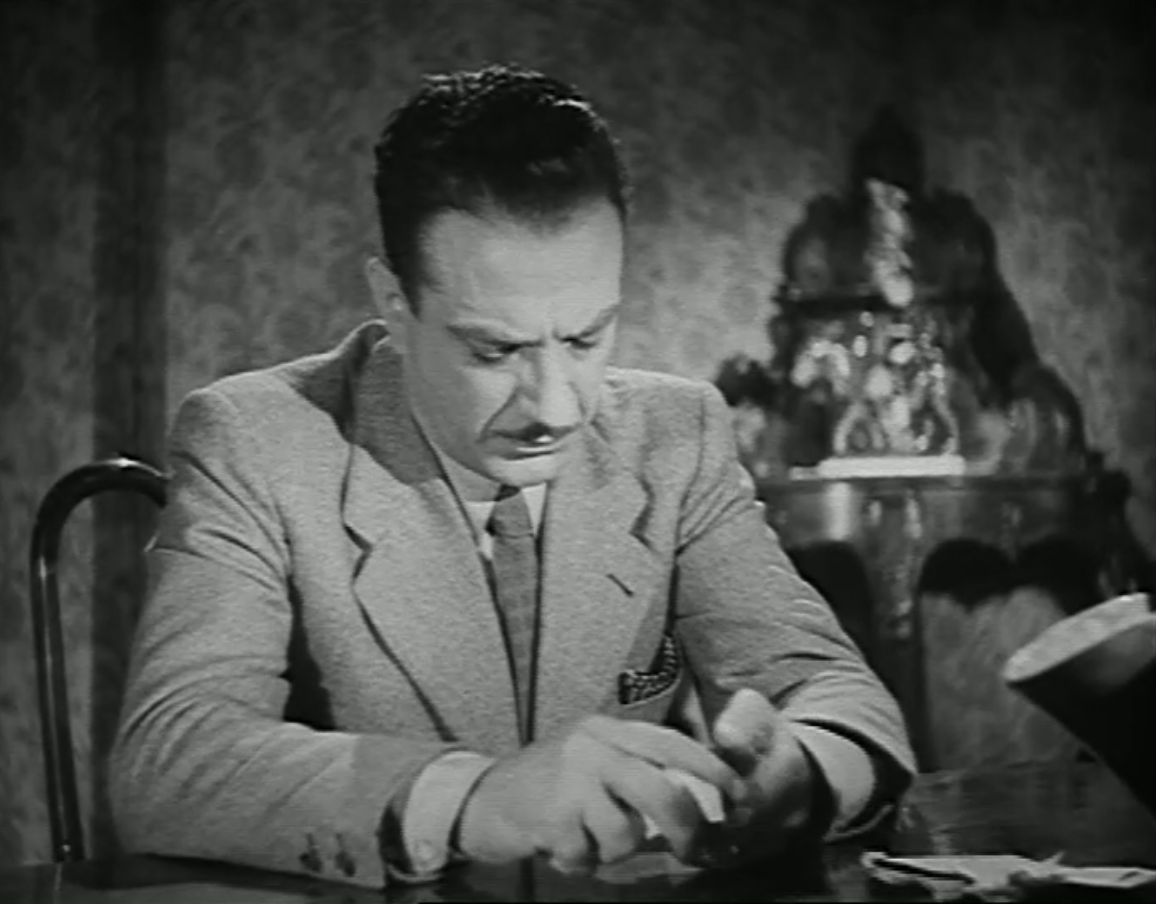
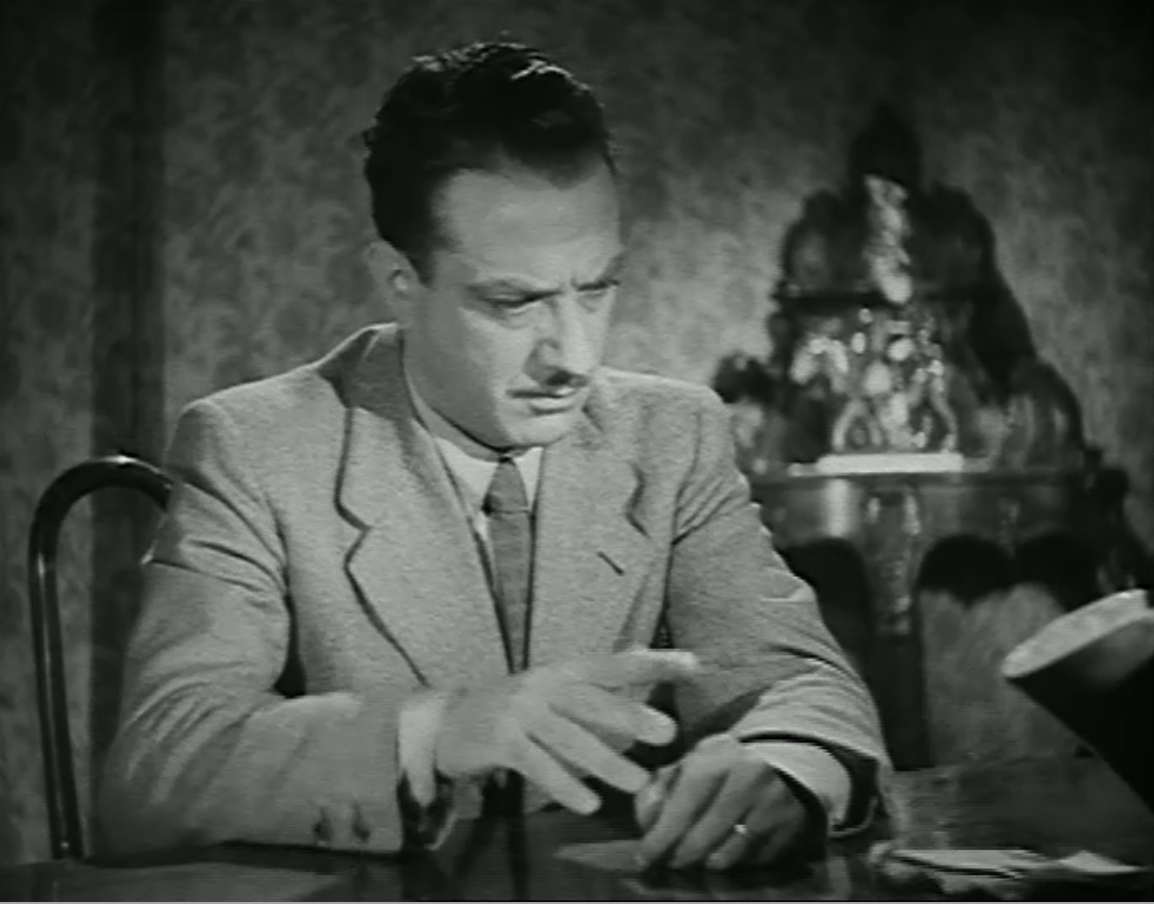
Andrea accartoccia di nuovo il telegramma e lo getta via.
Maramao, Maramao, fanno i mici in coro…
Andrea crumples the telegram again, and tosses it away.
Maramao, Maramao, the kitties sing in chorus…
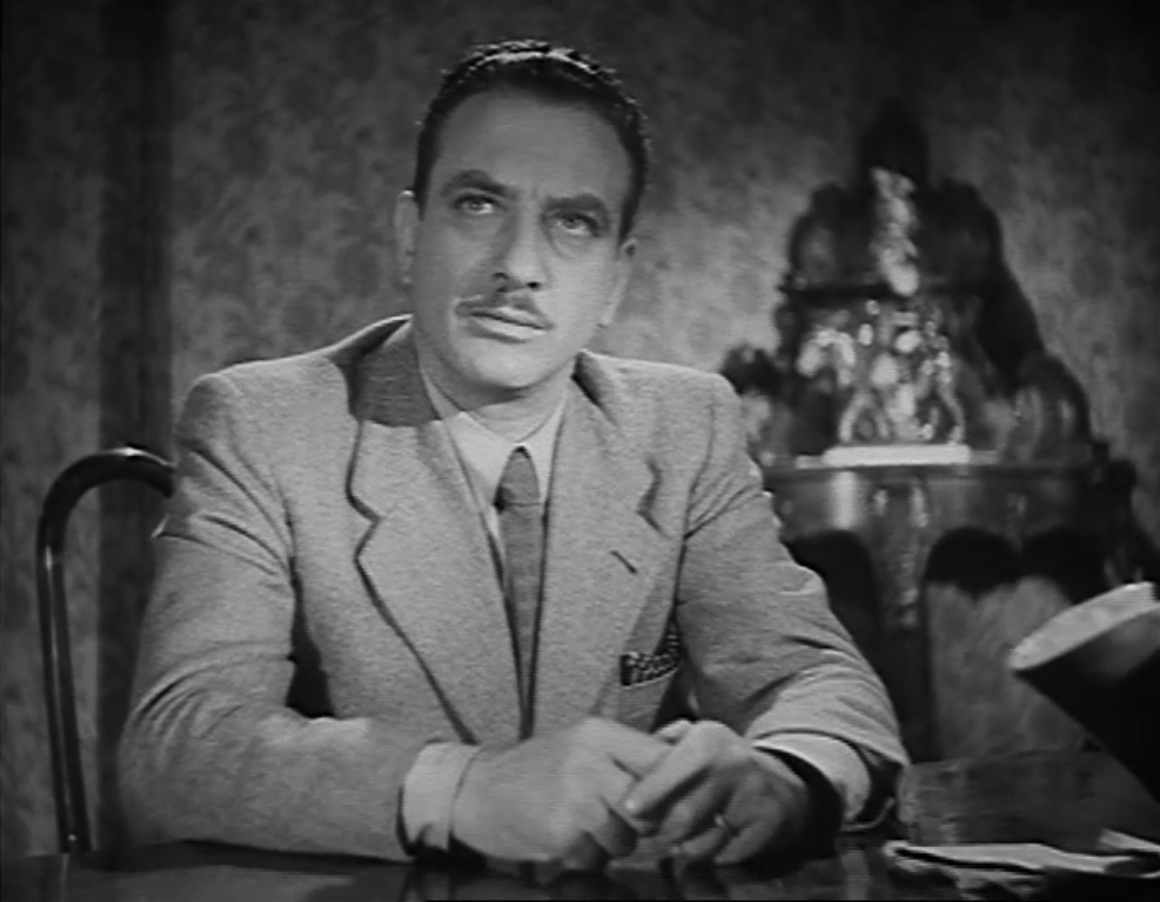
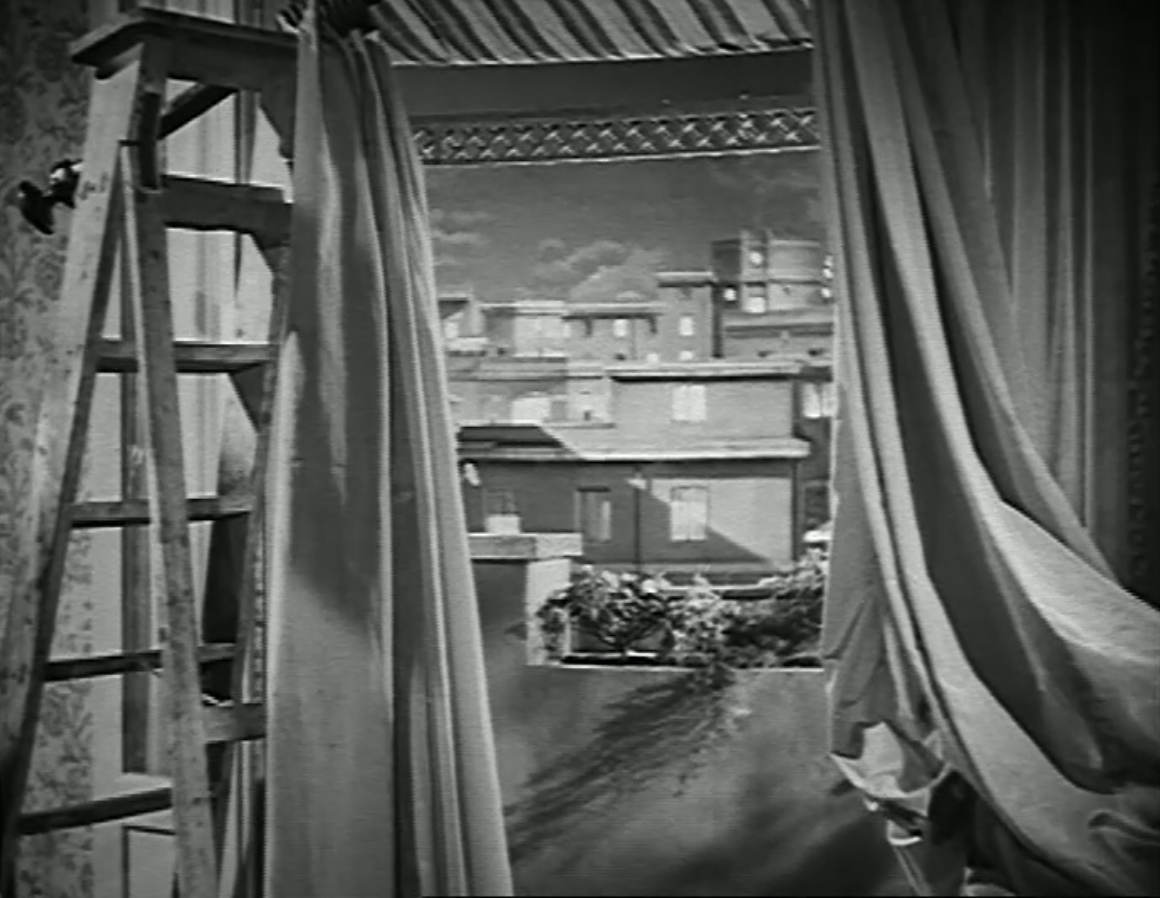
Mentre la musica allegra continua a suonare, Andrea guarda fuori dalla finestra che è incorniciata dalle nuove tende e dalla scala a pioli. Fuori, le finestre illuminate risplendono sulle case che si levano lungo la collina.
As the cheerful music still plays, Andrea looks out the window which is framed by the new curtains and the stepladder. Outside, lighted windows shine brightly in the houses that rise up the hill.
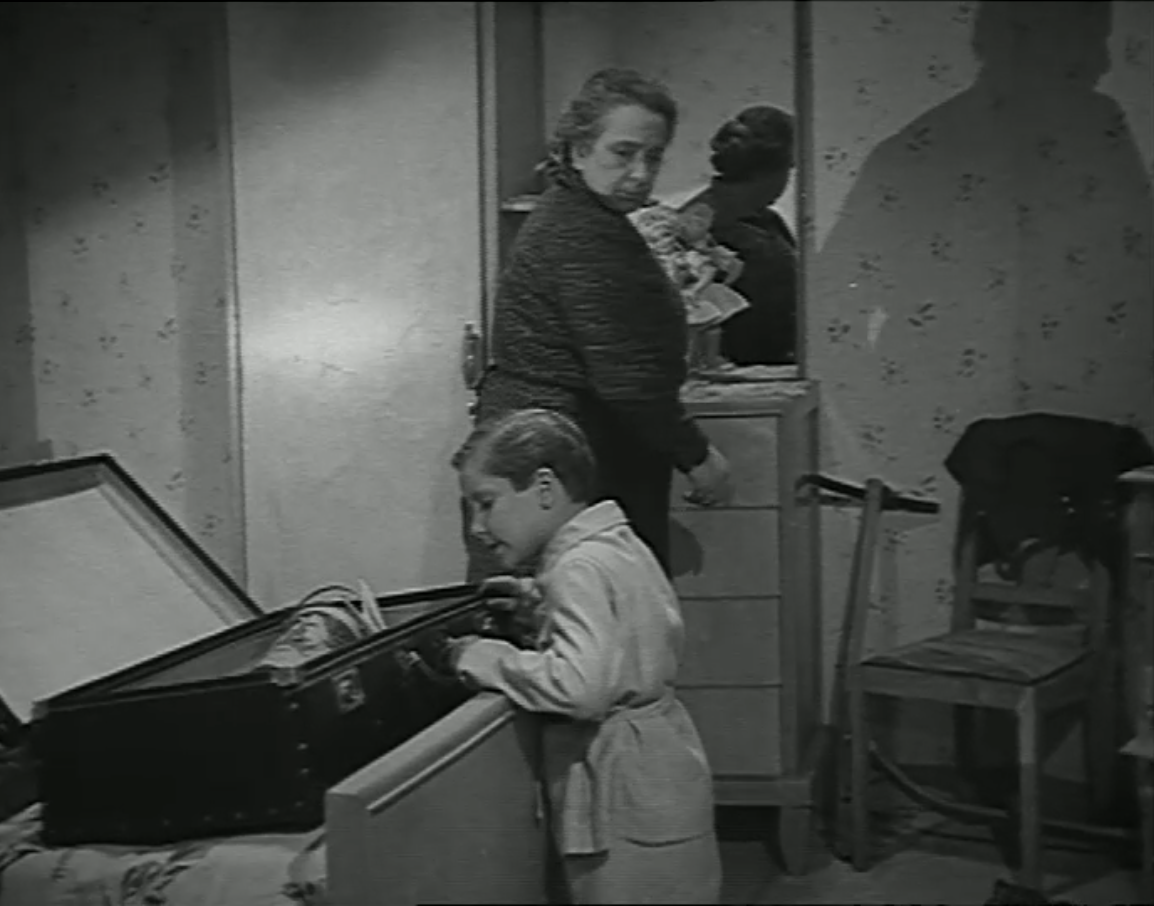
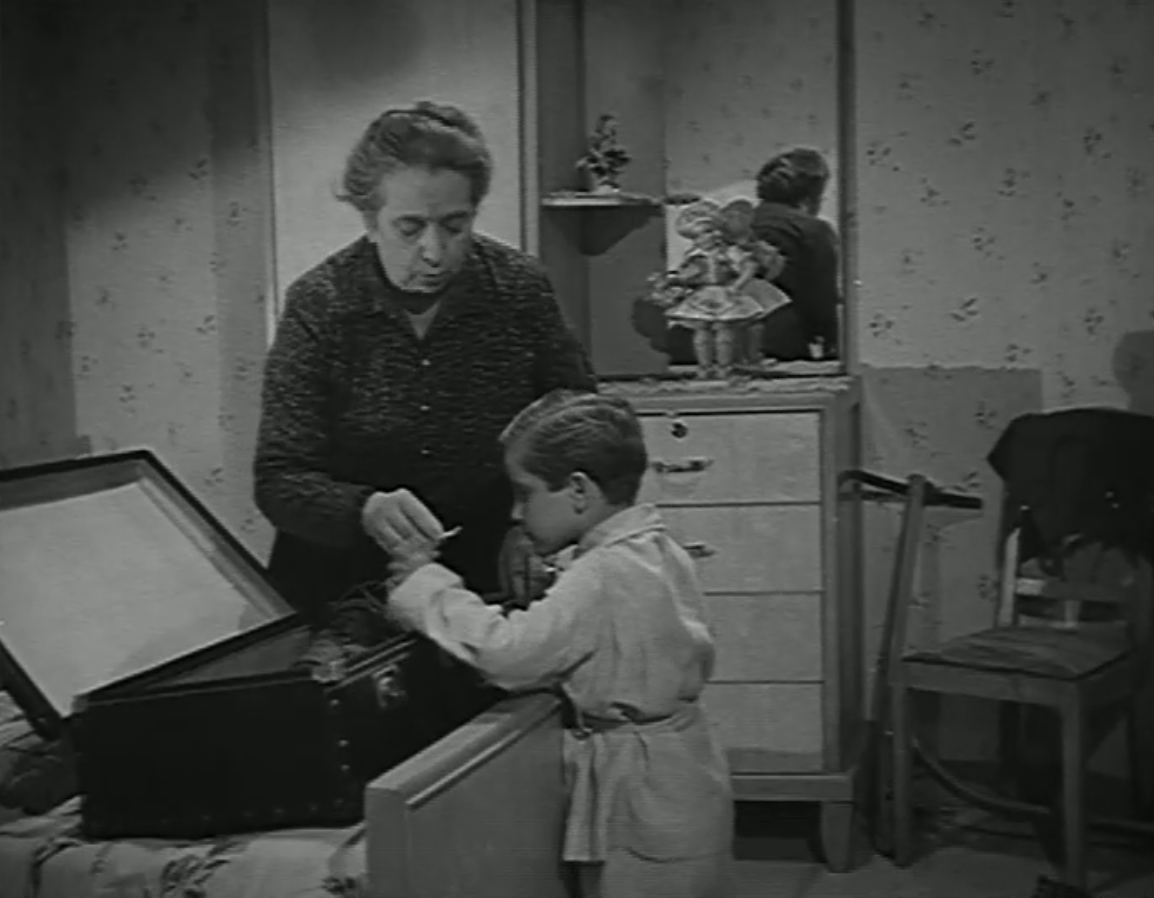
In pigiama, Pricò chiede: "Dov’è la stella?"
"Eccola qui. Sbrigati, su, e vai a letto". La posa di Agnese si riflette nello specchio e nella sua ombra sulla parete.
Wearing his pajamas, Pricò asks, “Where’s the starfish?”
“Here it is. Hurry up, come on, and go to bed.” Agnese’s pose is reflected in the mirror and her shadow on the wall.
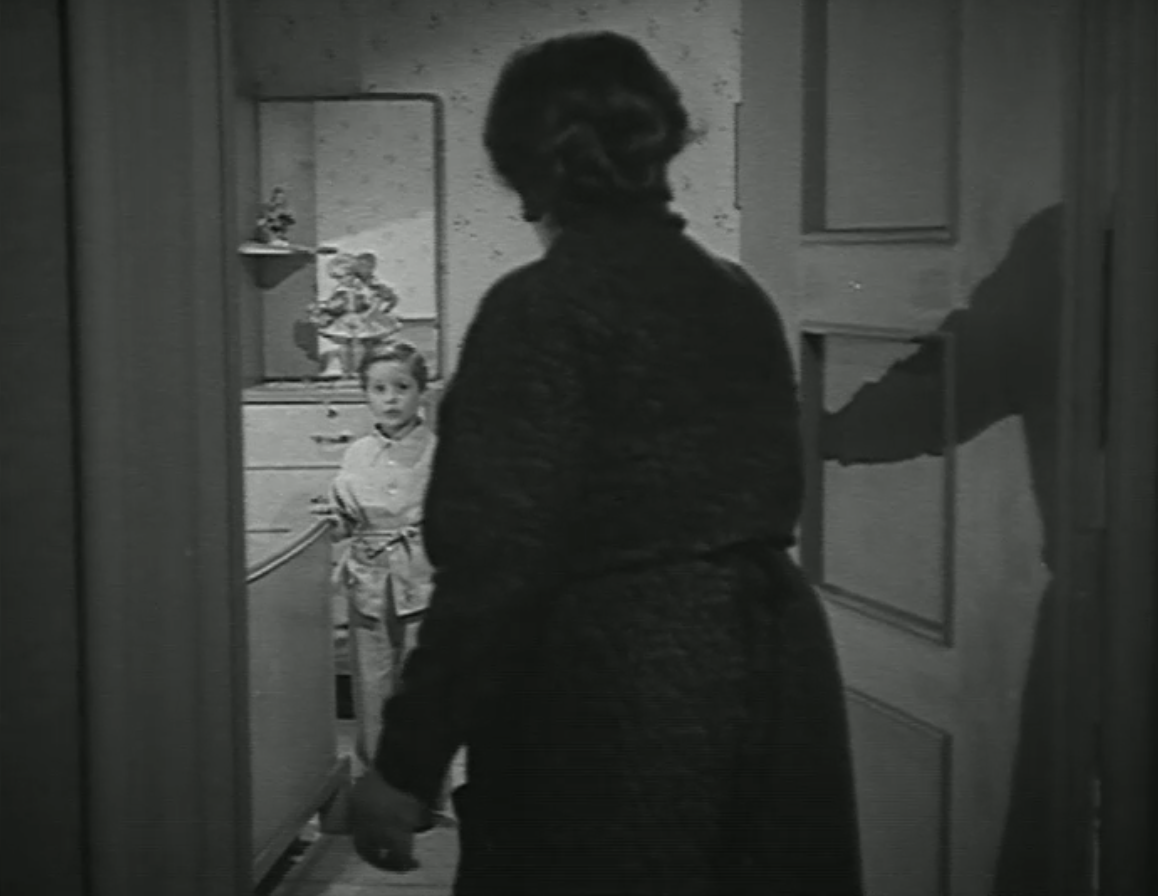
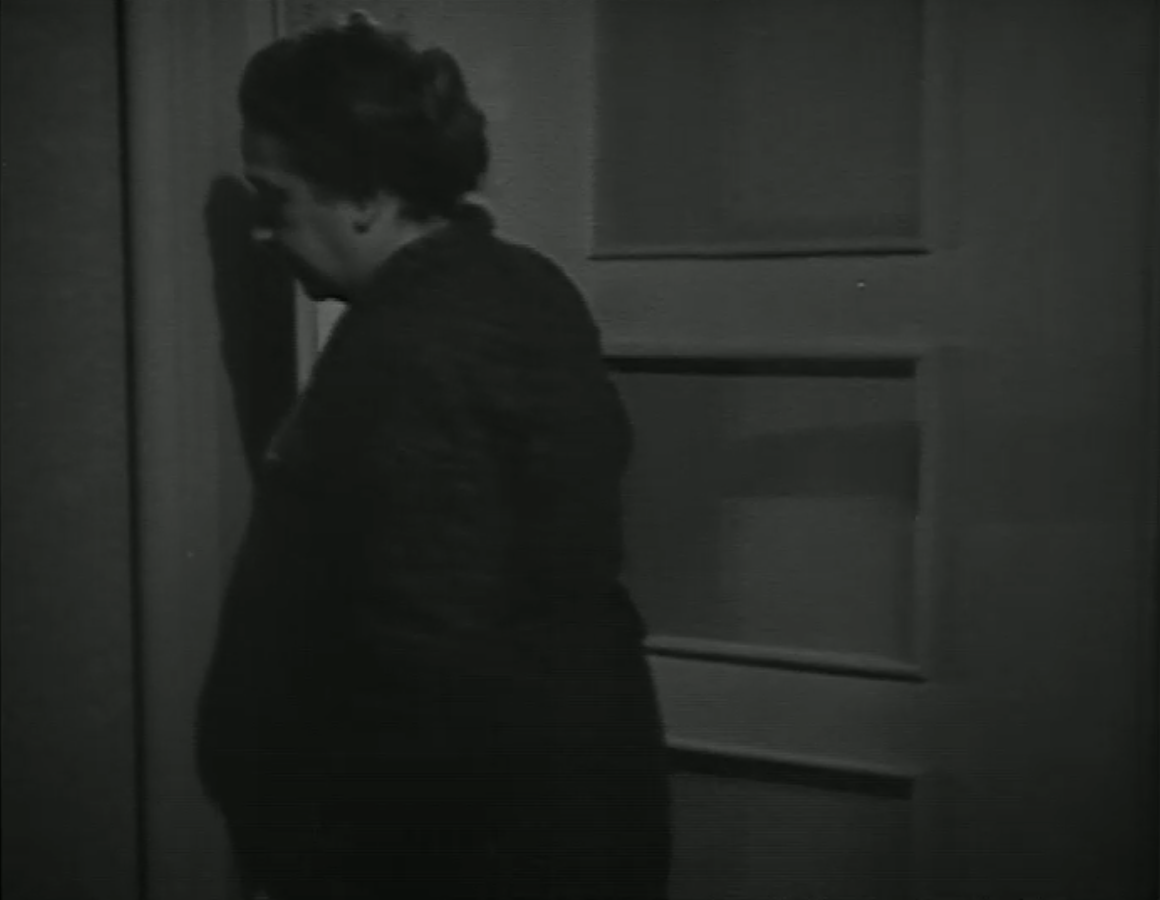
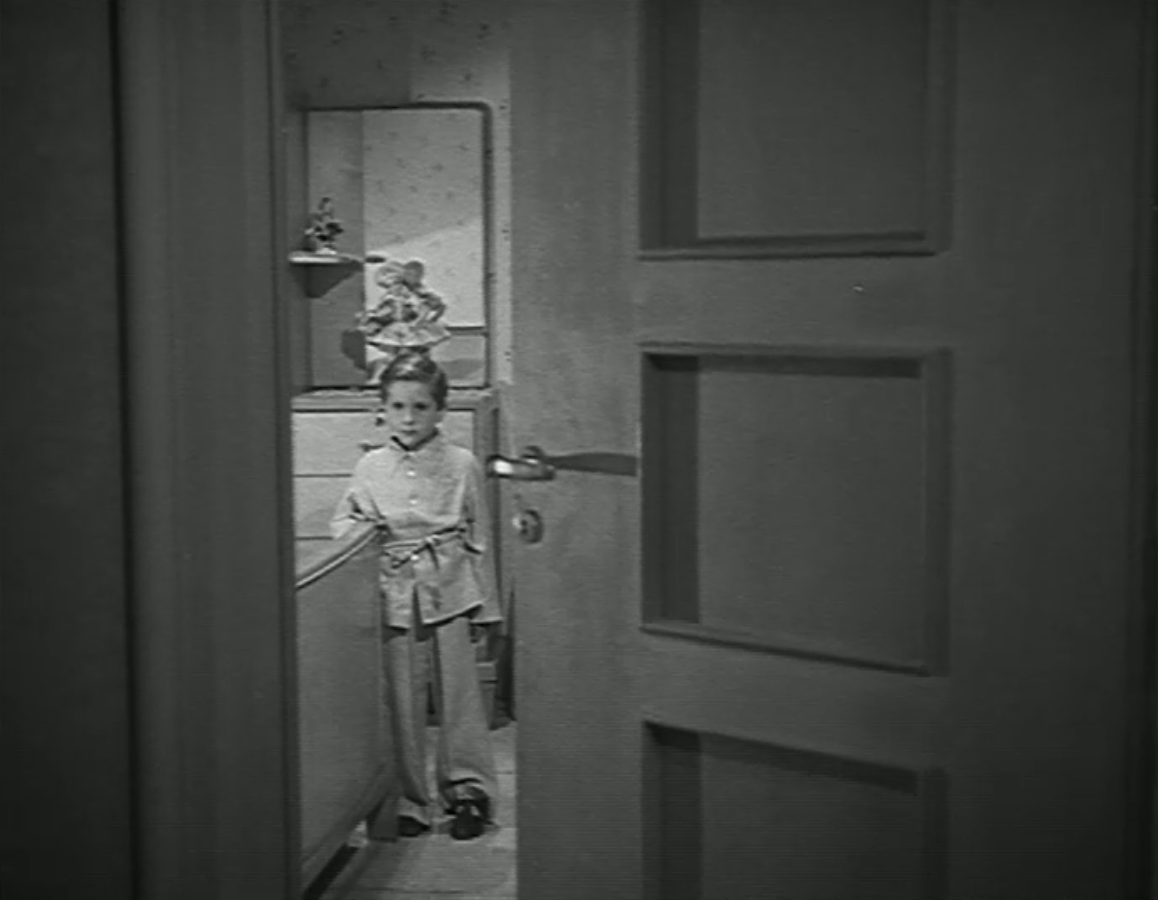
Mentre lei se ne va, Pricò le grida: “Non chiudere la porta!”
“Sì, ma stai tranquillo. Vai a letto”. Lascia la porta socchiusa.
Stasera, nessuno ha rimboccato le coperte a Pricò. Persino la cameriera a casa della nonna gliele avrebbe rimboccate.
As she is leaving, Pricò calls out to her, “Don’t shut the door!”
“All right, but settle down. Go to bed.” She leaves the door ajar.
Tonight, no one has tucked Pricò in. Even the maid at his grandma’s house would have tucked him in.
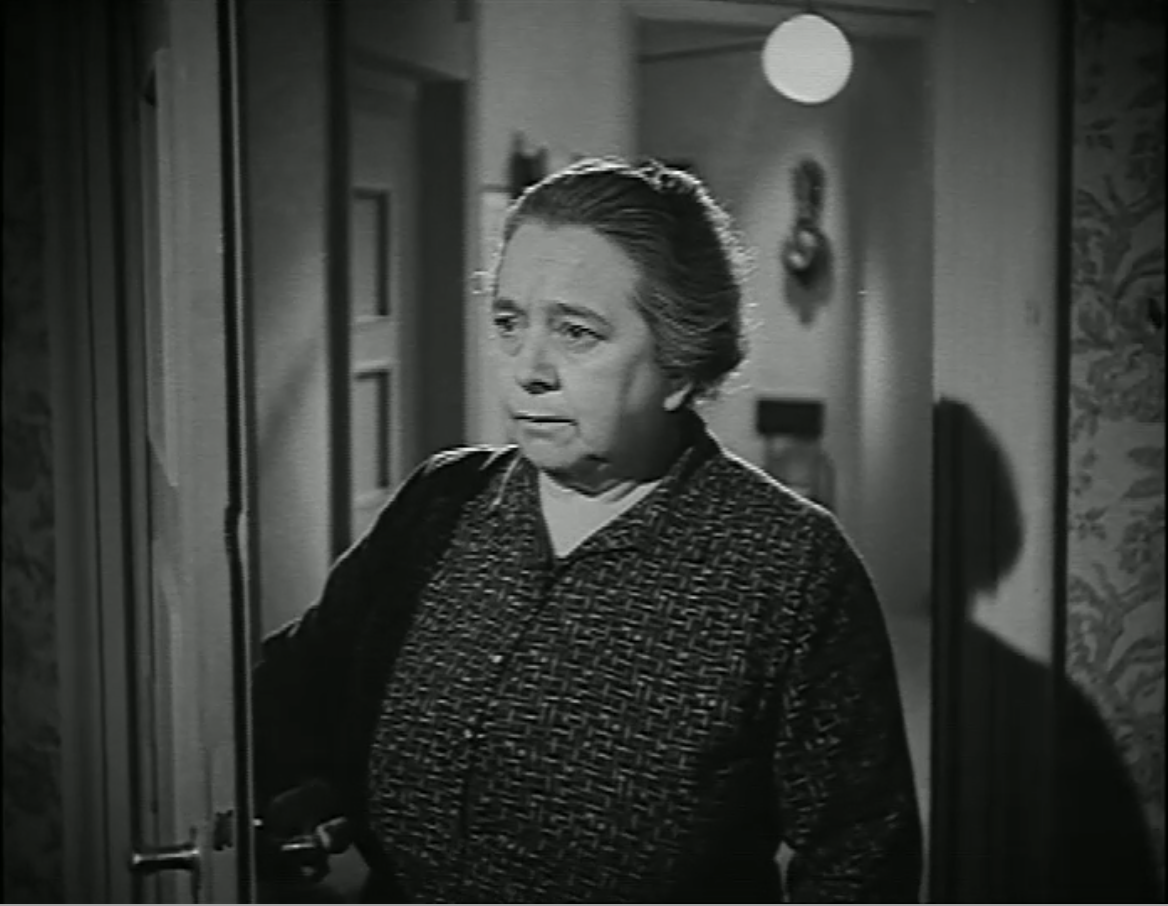
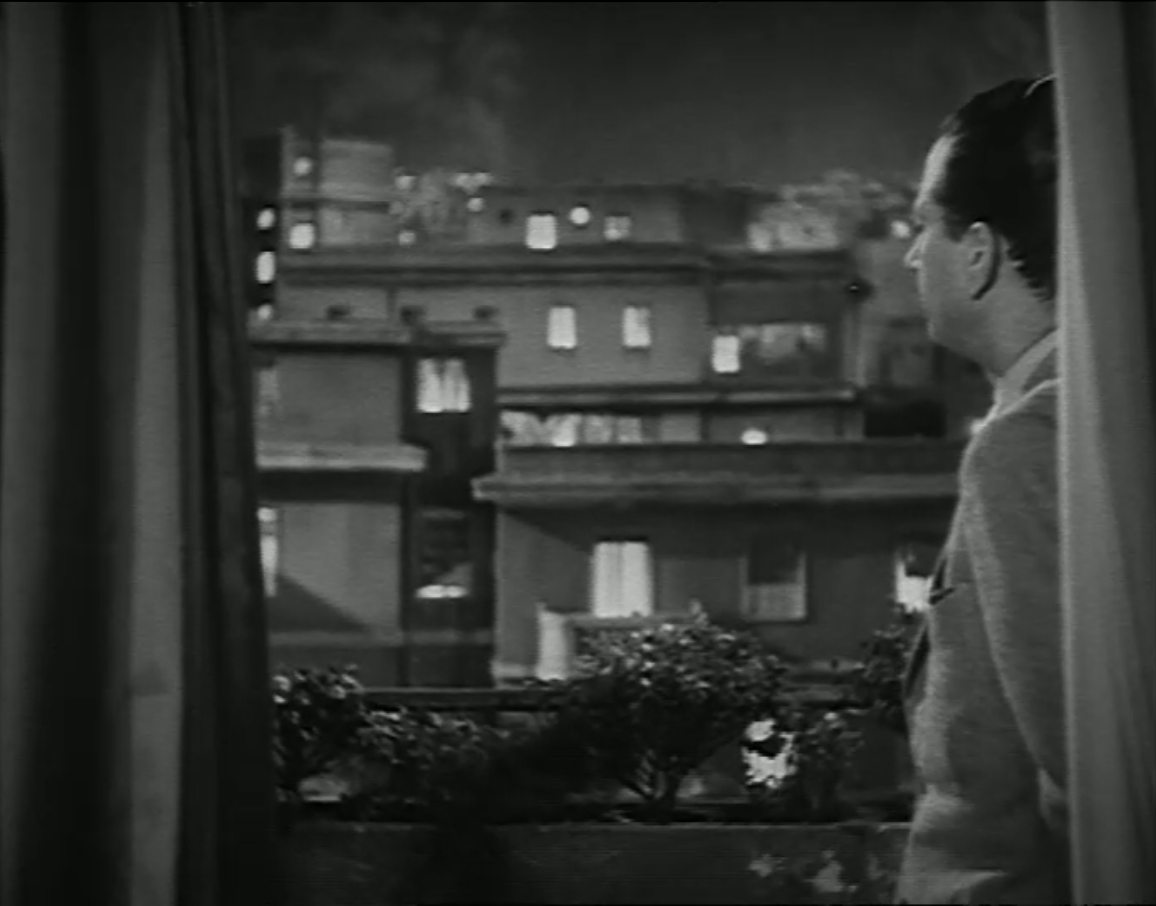
Nella sala da pranzo, Andrea è sul balcone e fissa le finestre illuminate dall’altra parte della strada mentre scende il buio. Agnese si affaccia per un attimo.
In the dining room, Andrea is on the balcony, staring at the lit windows across the way as darkness falls. Agnese looks in for a moment.
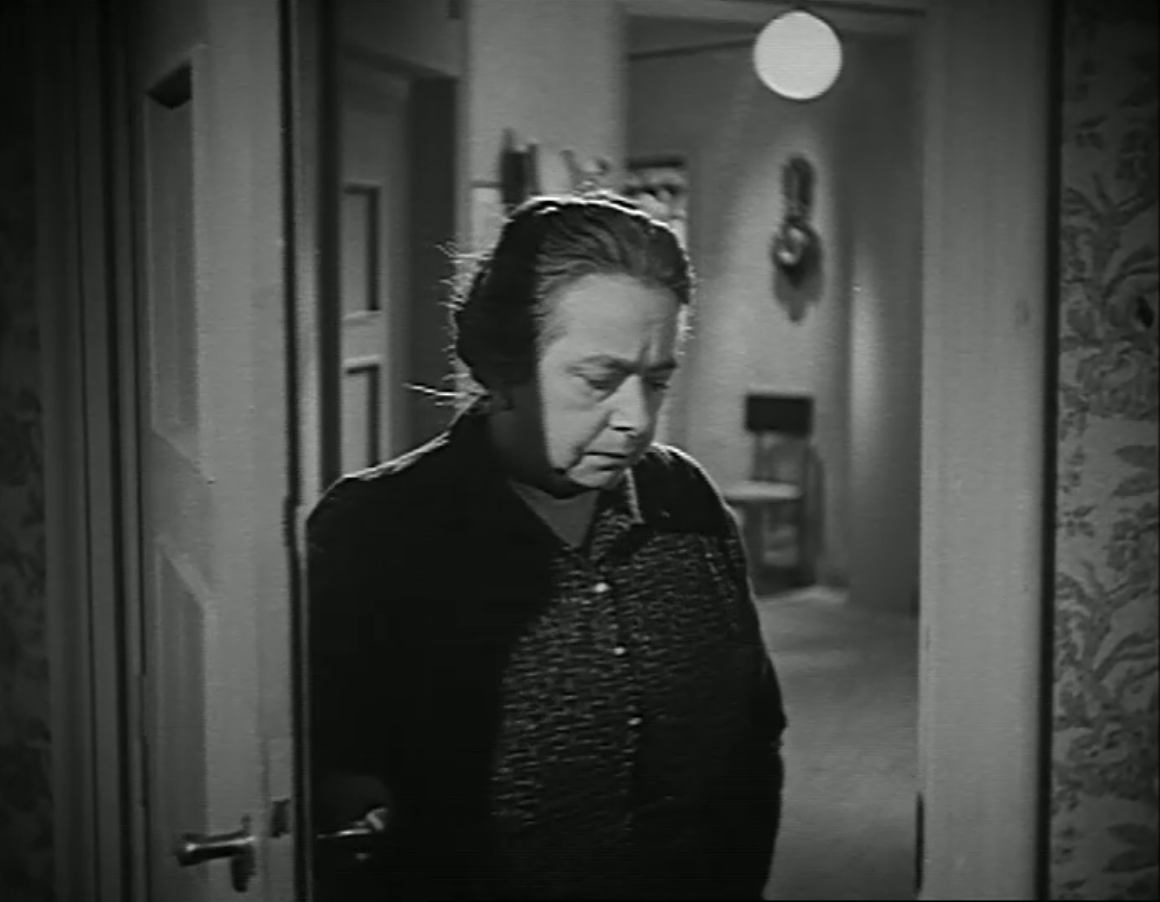
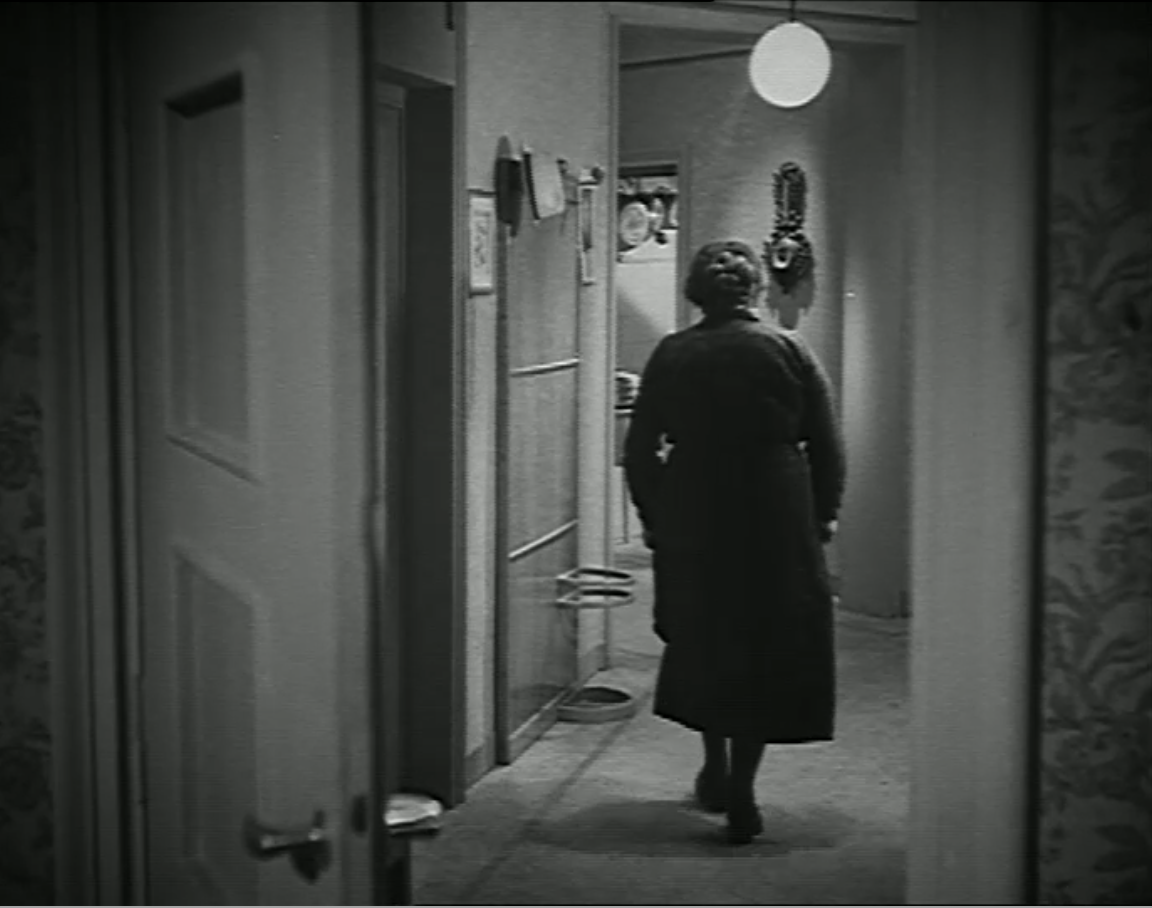
Si avvicina con aria preoccupata verso la cucina.
She walks worriedly toward the kitchen.
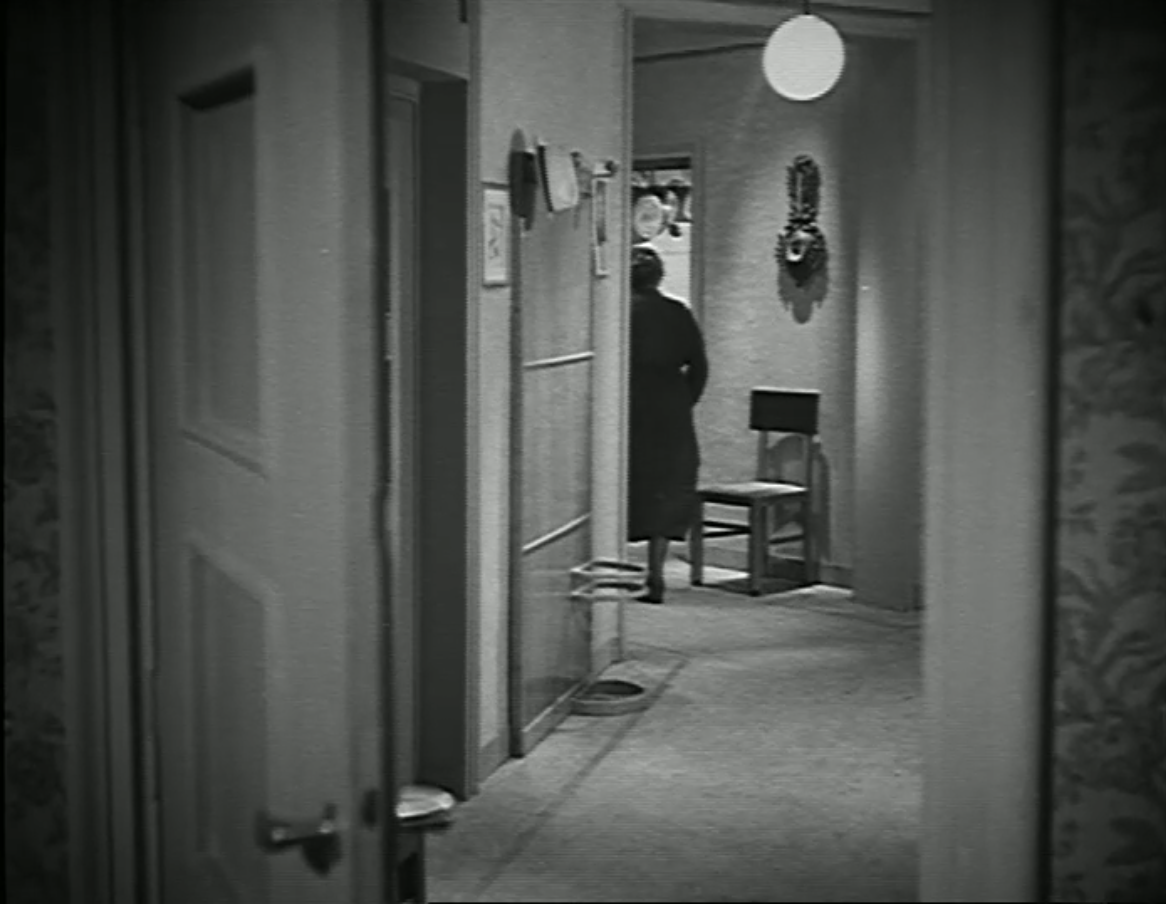
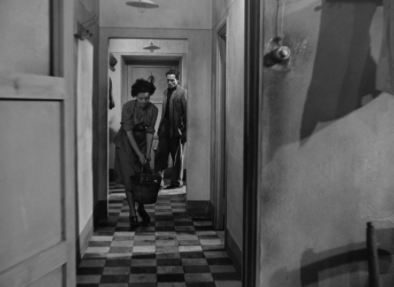
Ci viene in mente una scena tratta da Ladri di biciclette, che Vittorio De Sica (con un direttore della fotografia diverso) ha girato solo pochi anni dopo.
In entrambi i casi, De Sica confina i personaggi all’interno di uno stretto corridoio, riempiendo l’inquadratura con altri rettangoli che ne limitano lo spazio. Sulla destra, Maria fatica a trasportare un secchio d’acqua, mentre Antonio la osserva, rimuginando sulla sua bicicletta data in pegno.
We’re reminded of a shot from Bicycle Thieves, which Vittorio De Sica (with a different cinematographer) made just a few years later.
In both cases, De Sica confines the characters within a narrow hallway, filling the frame with other rectangles that constrain the space. On the right, Maria struggles to carry a bucket of water, while Antonio watches, brooding on his pawned bicycle.
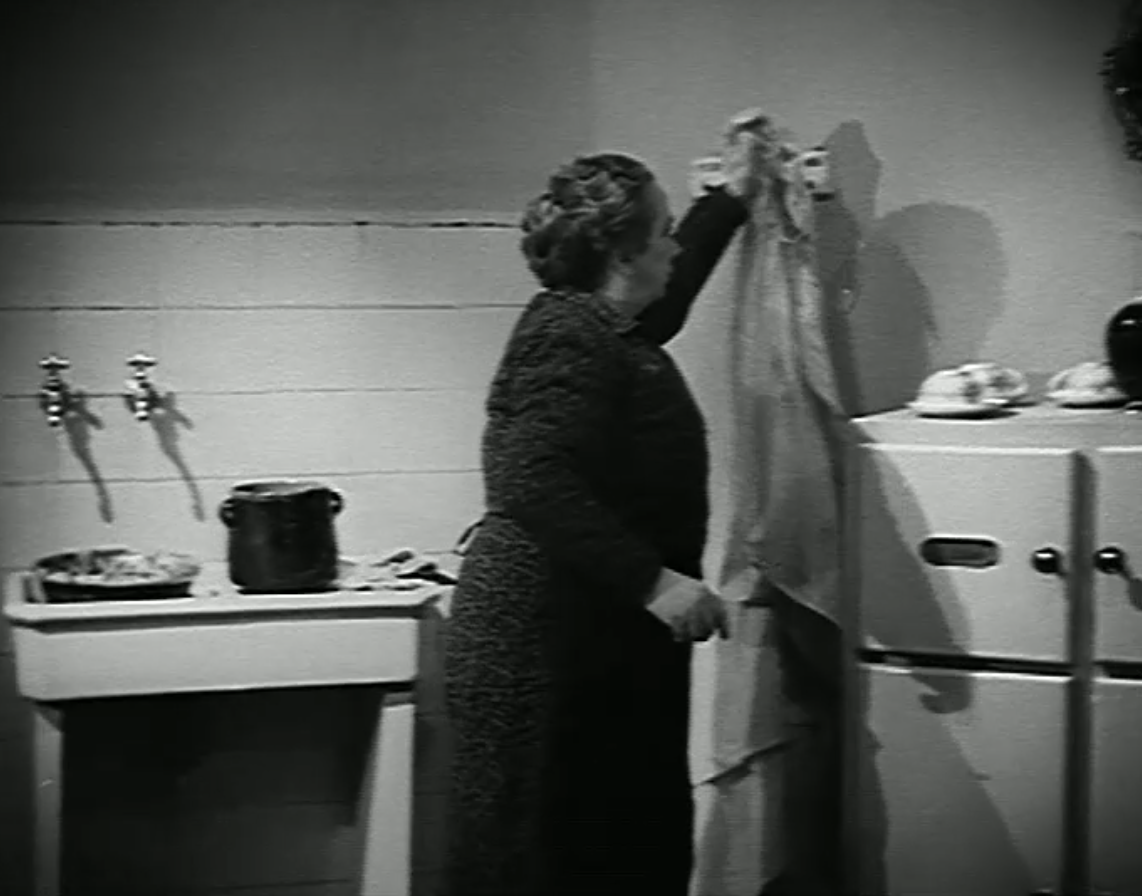
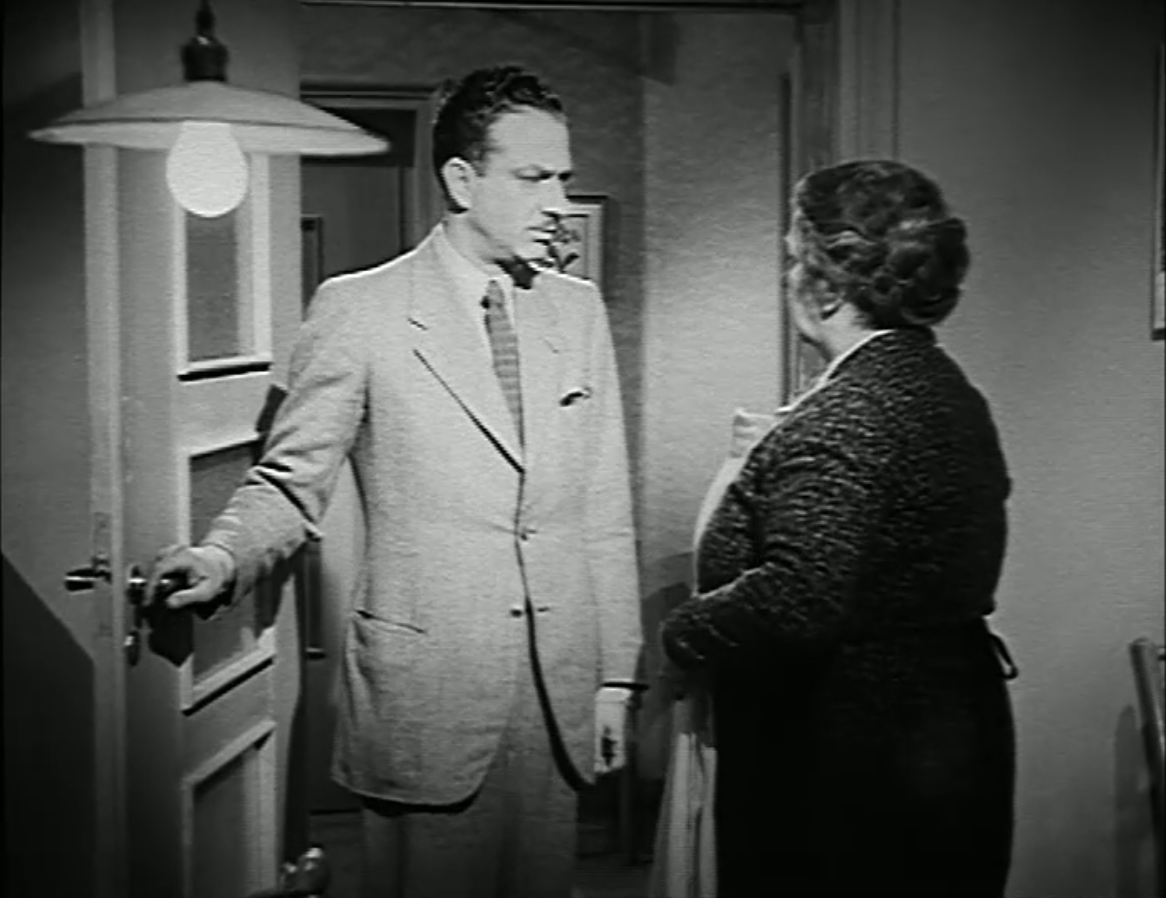
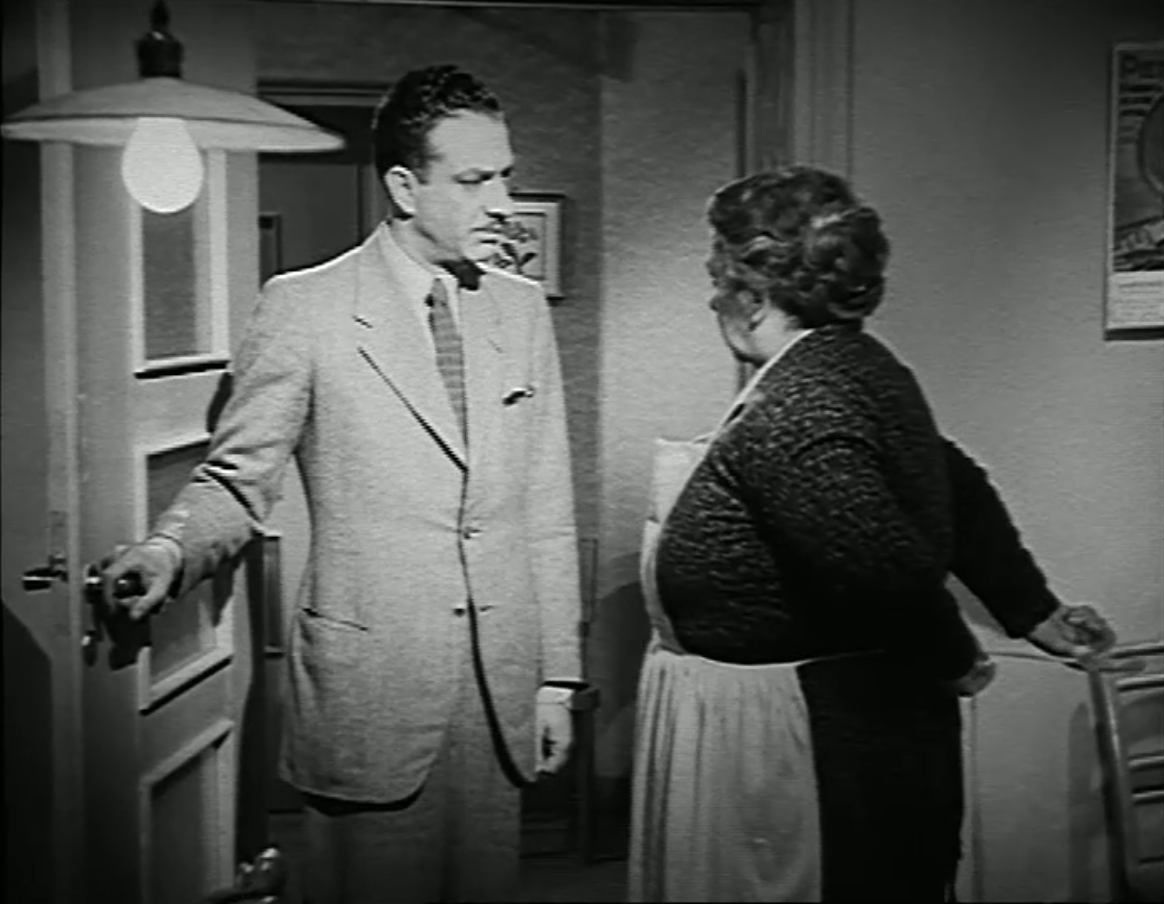
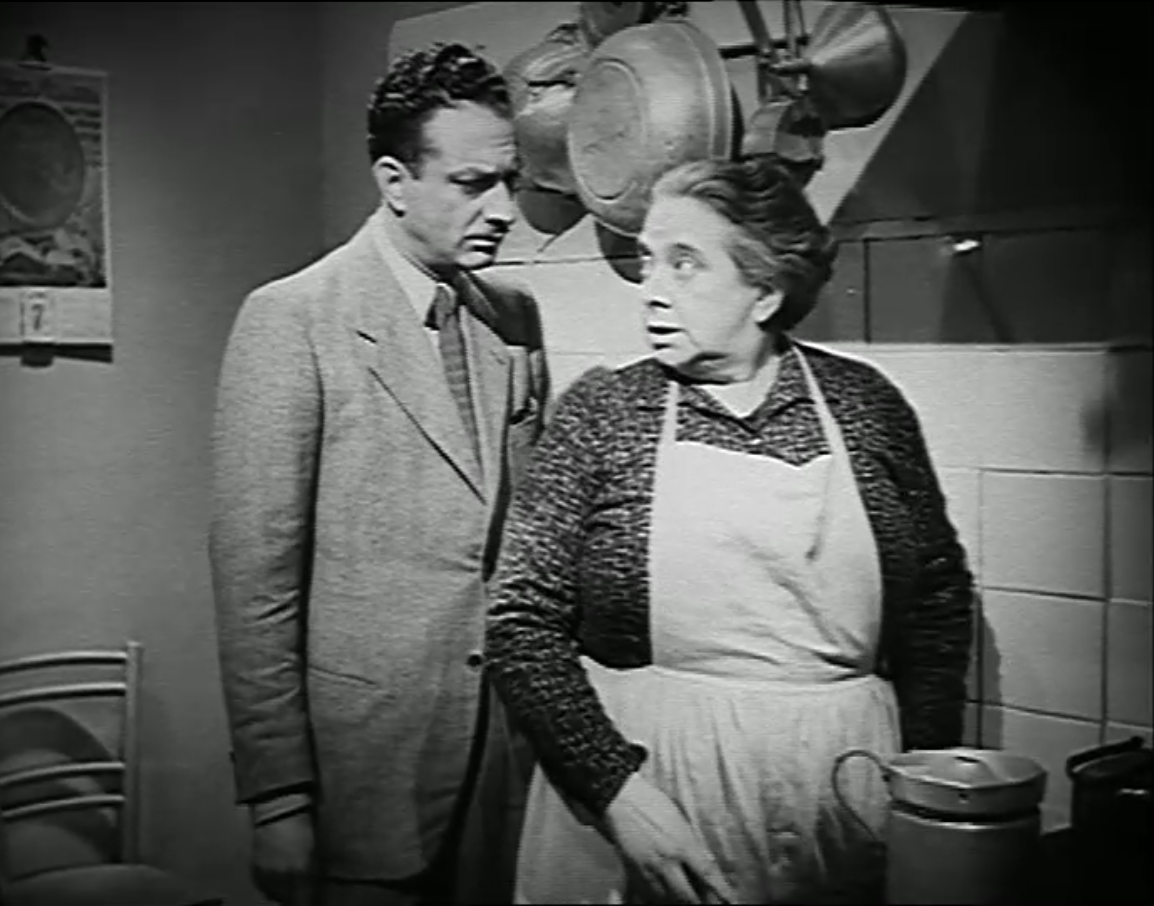
Andrea entra in cucina proprio mentre Agnese si sta mettendo il grembiule.
"Come hai trovato Pricò?" chiede lui.
"Bene. Per fortuna, sta bene".
"E ora? Come facciamo con lui?"
"Oh… Non si preoccupi. Starà benissimo con me".
Andrea comes into the kitchen as Agnese is putting on her apron.
“How did you find Pricò?” he asks.
“Fine. Fortunately, he’s fine.”
“And now? What are we going to do with him?”
“Oh… Don’t worry. He’ll be fine with me.”
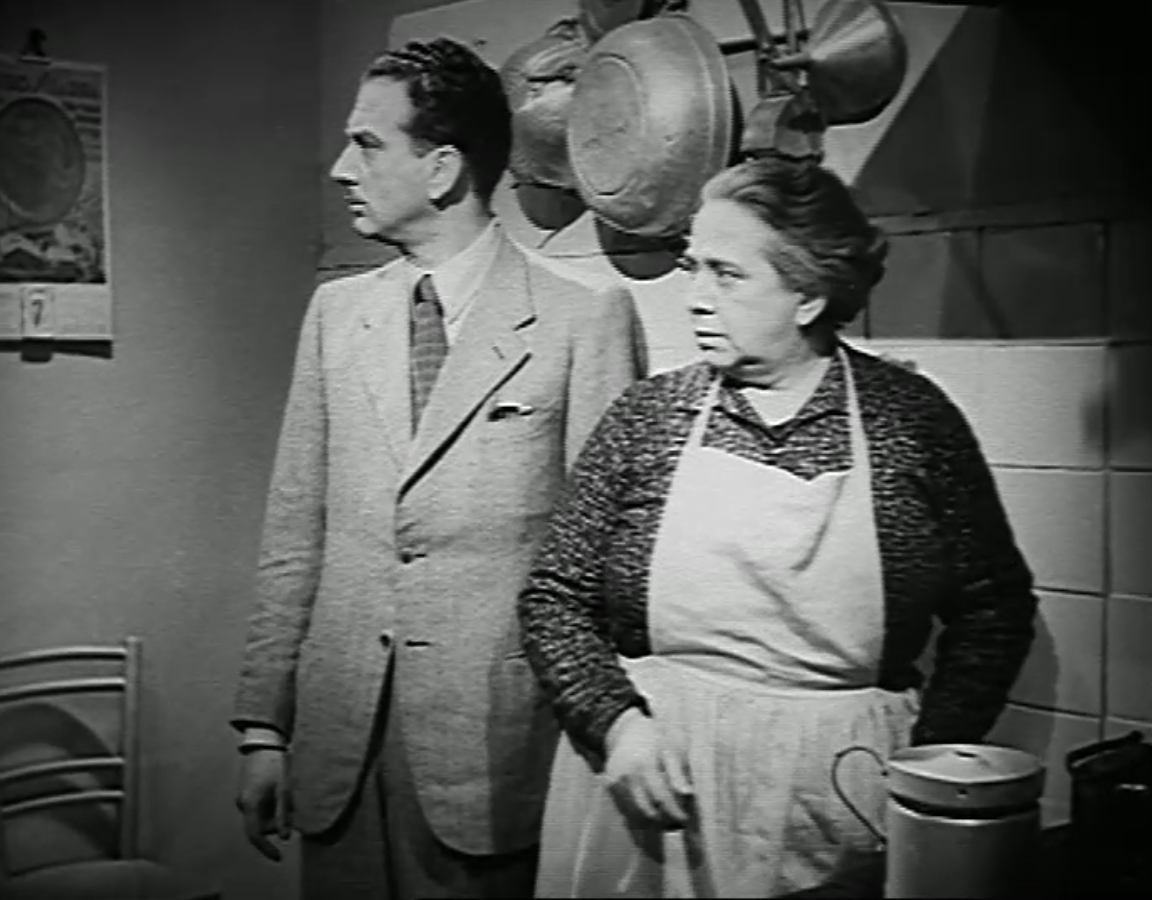
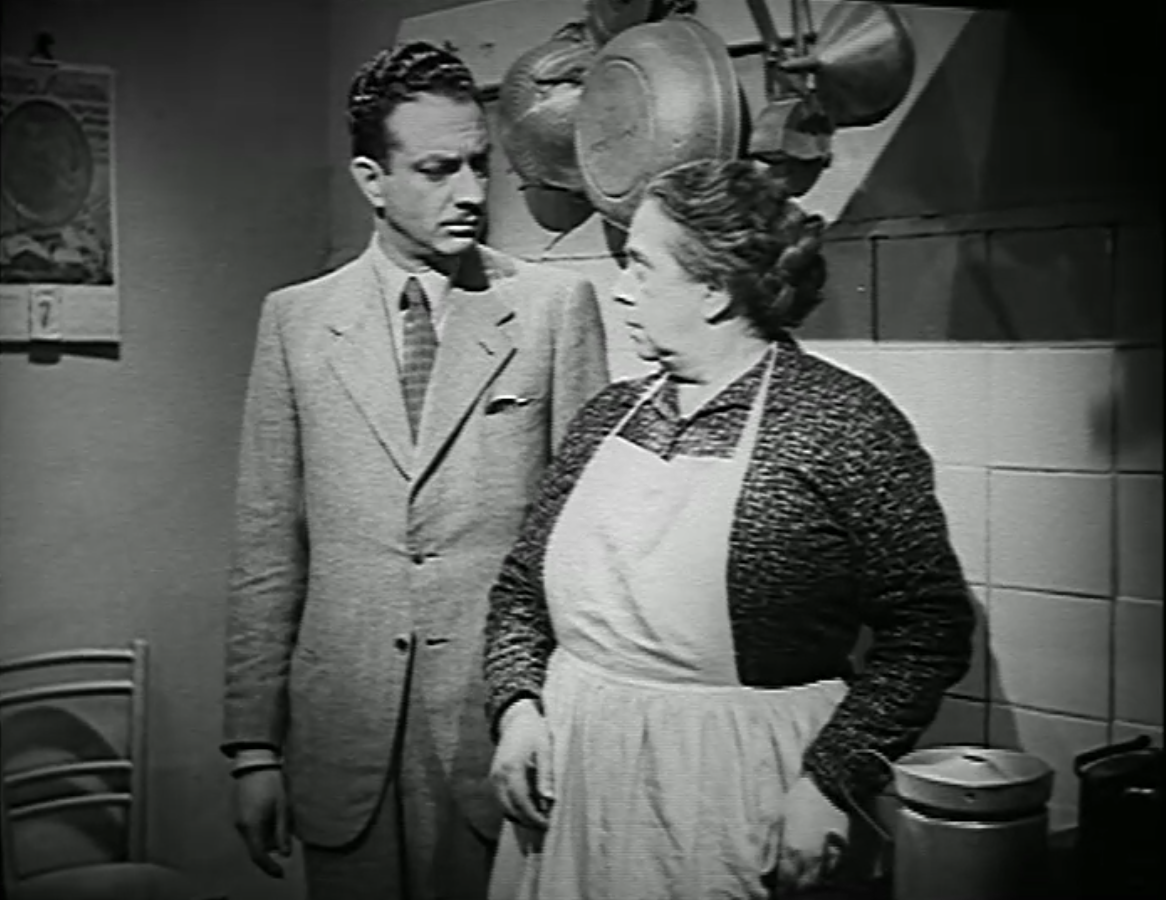
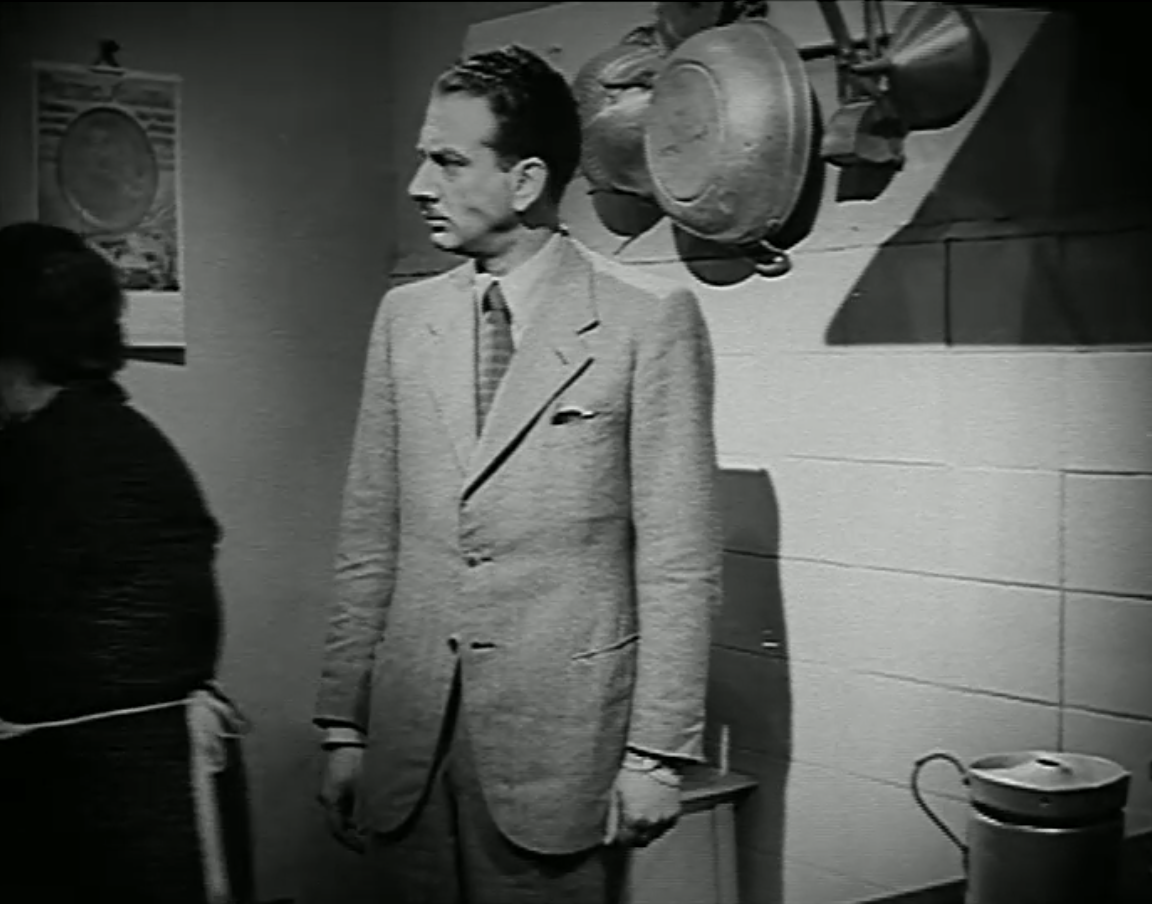
Si sente un colpo improvviso alla porta ed entrambi si voltano verso di essa. Si scambiano uno sguardo preoccupato, poi Agnese va ad aprire.
There’s a sudden knock and they both turn toward the door. They exchange a troubled glance, then Agnese goes to answer.
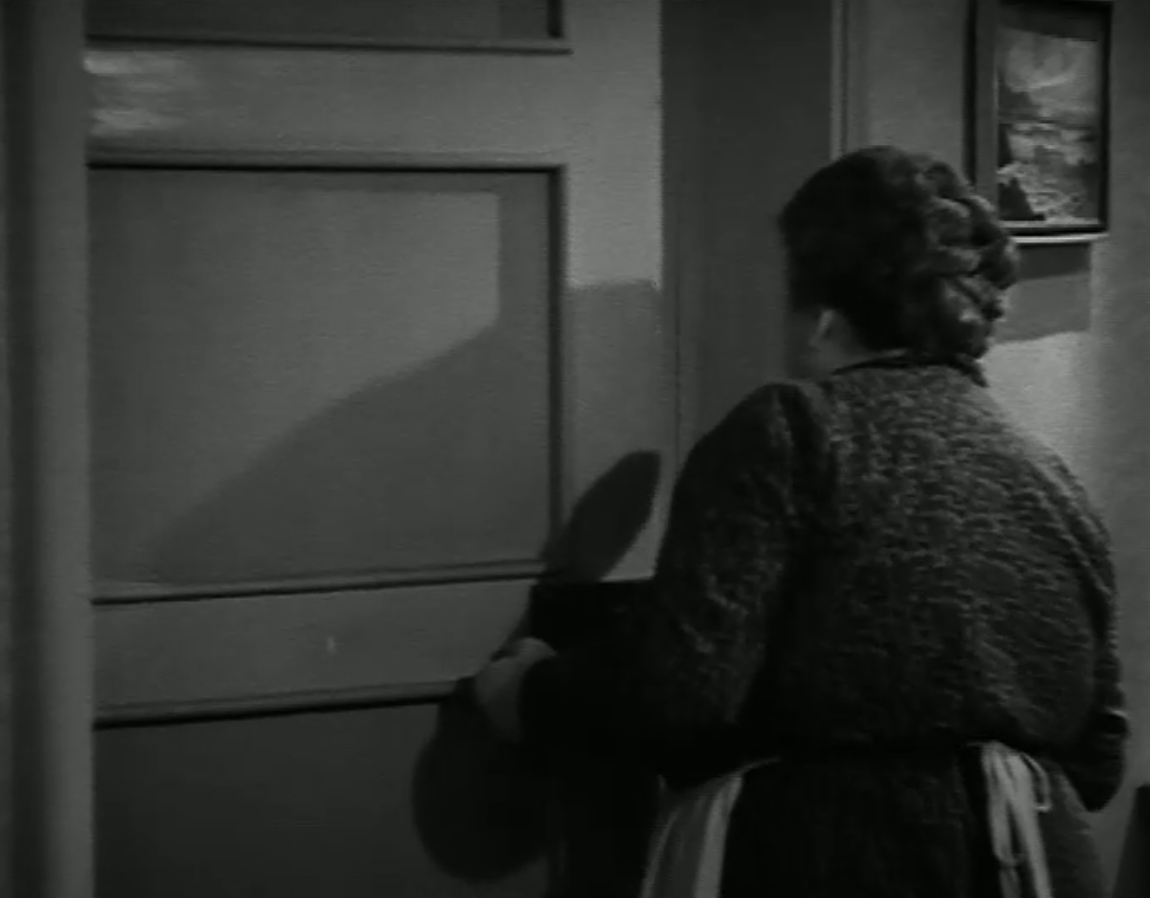
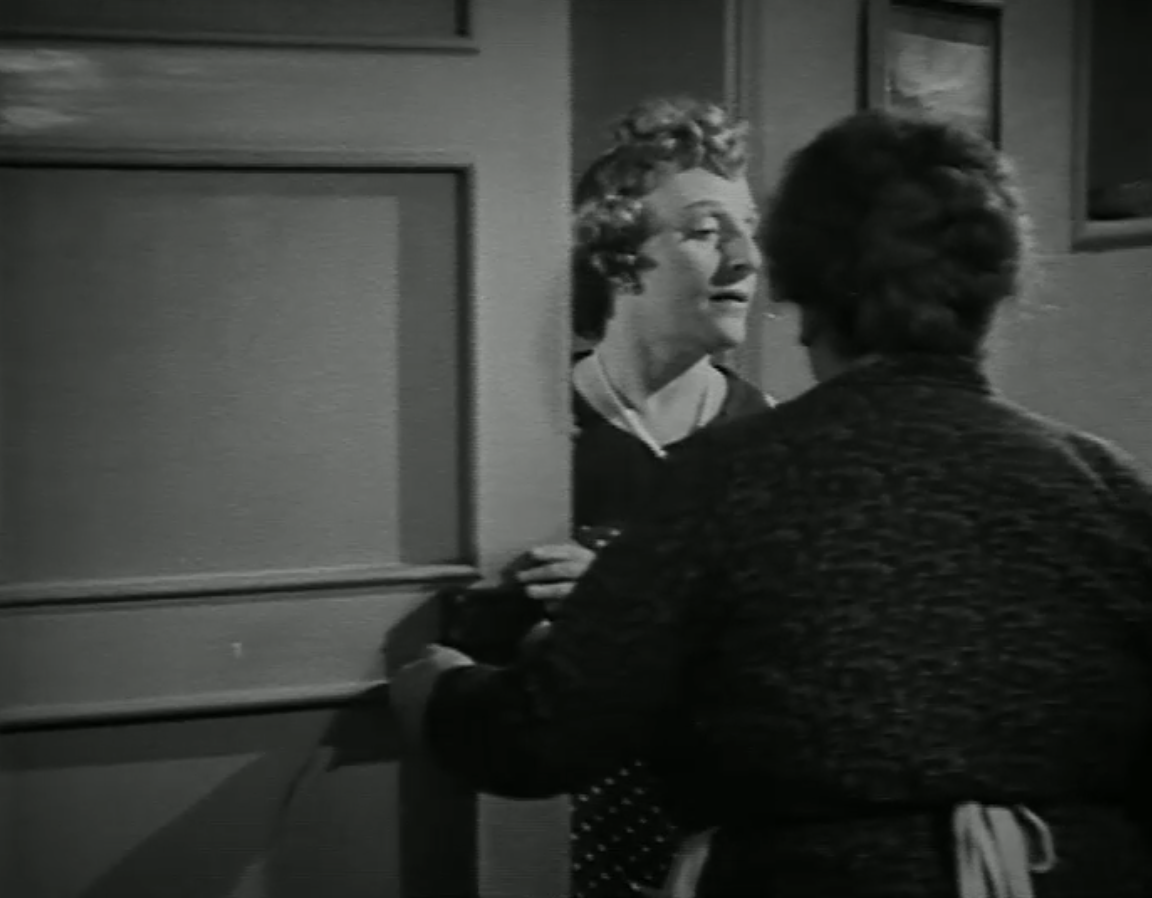
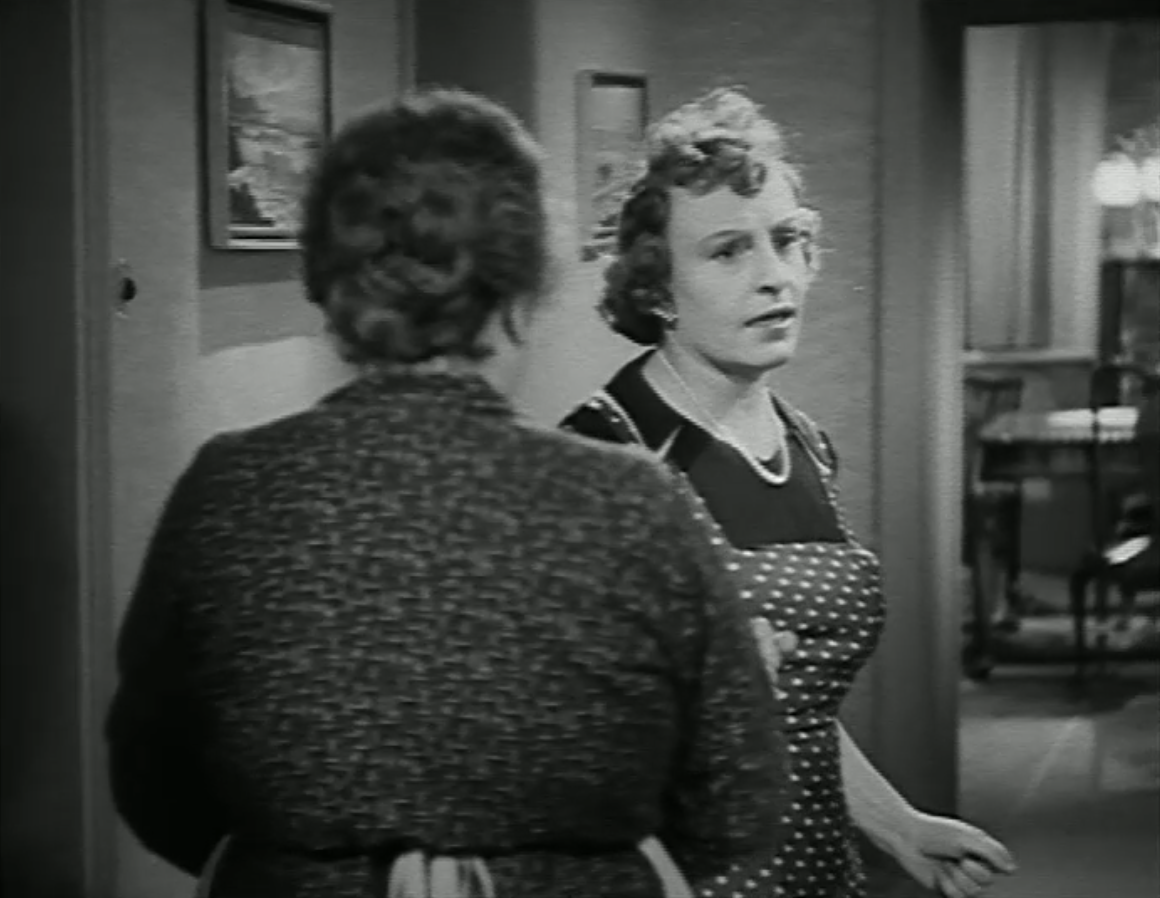
Quando Agnese apre la porta, la signora Resta entra senza essere invitata e si guarda intorno. "Scusate, Agnese, potreste darmi un po’ di sale grosso?"
When Agnese opens the door, Signora Resta pushes her way in and looks around. “Excuse me, Agnese, could you give me some coarse salt?”
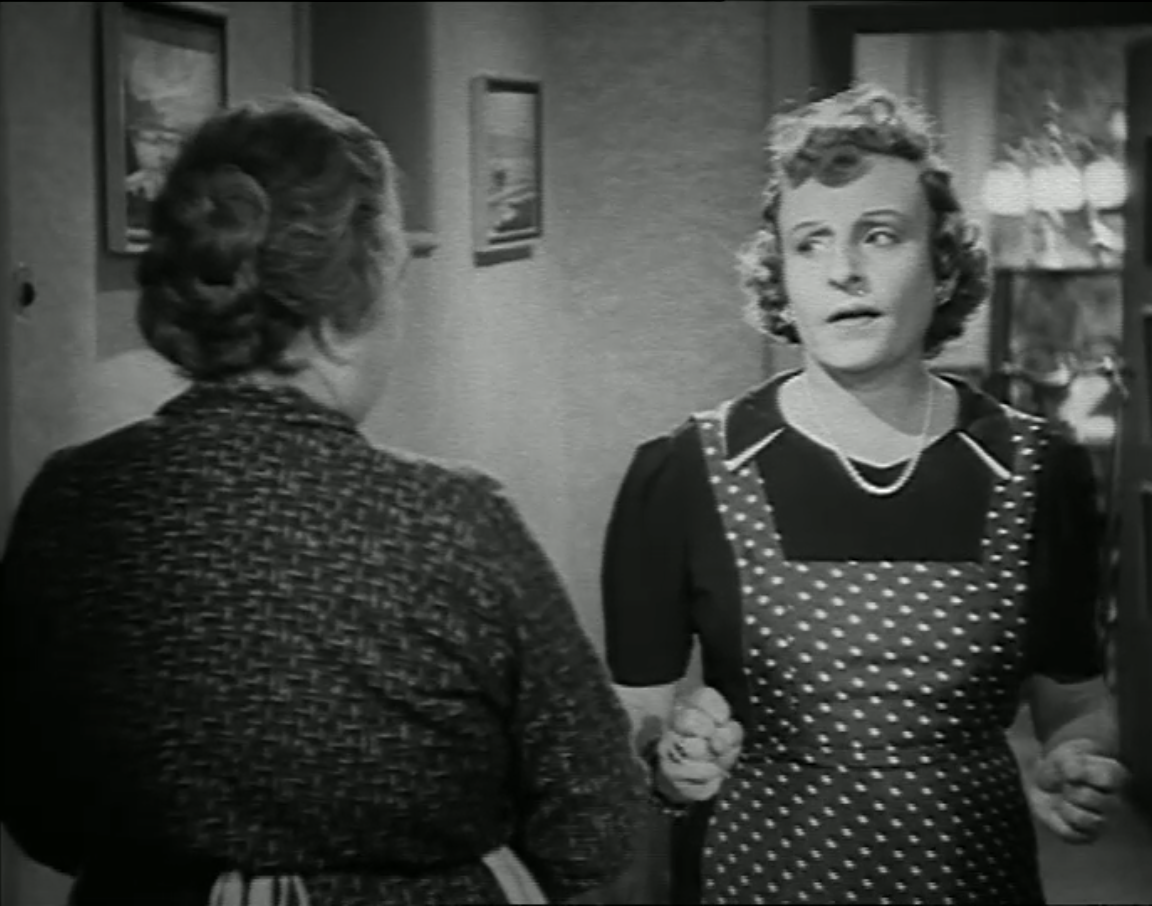
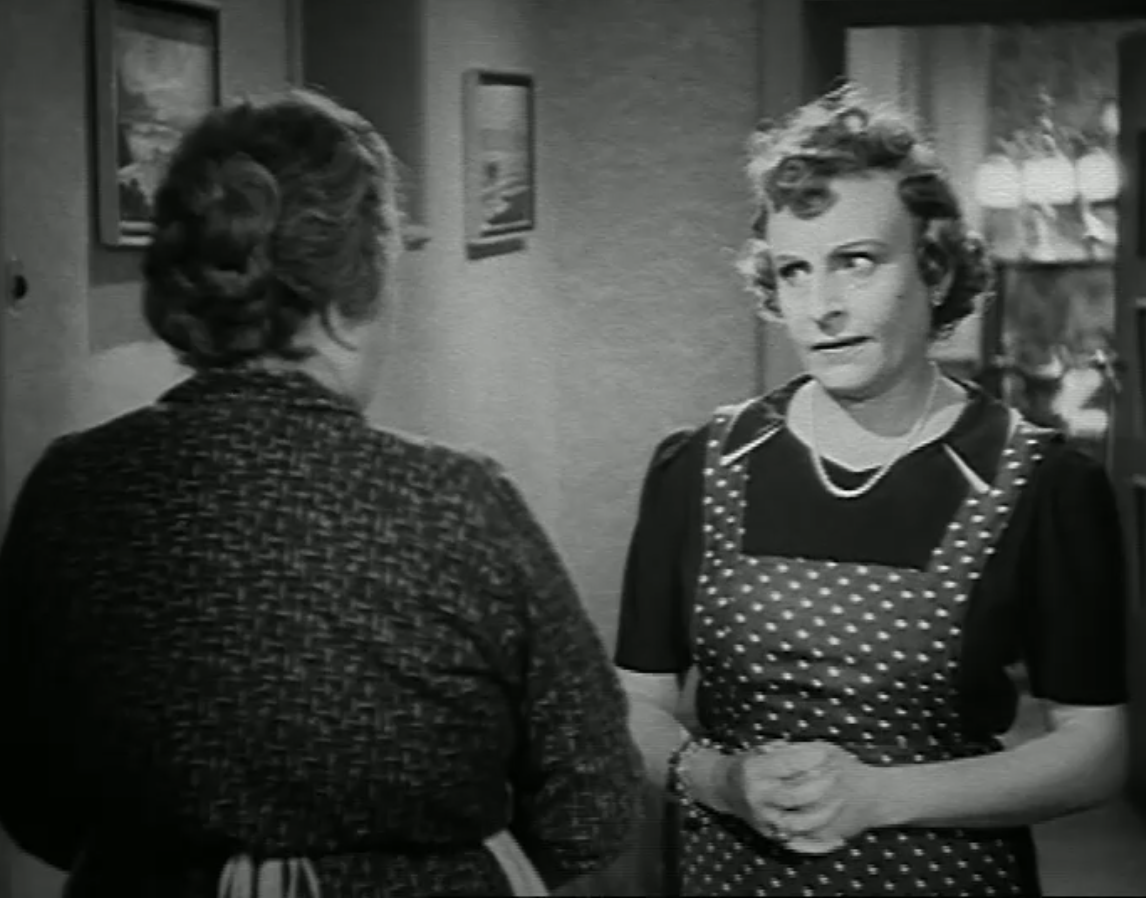
"Mi dispiace, non ne ho".
"Ditemi, Agnese, la signora Nina è tornata?"
“Sorry, I don’t have any.”
“Tell me, Agnese, did Signora Nina come back?”
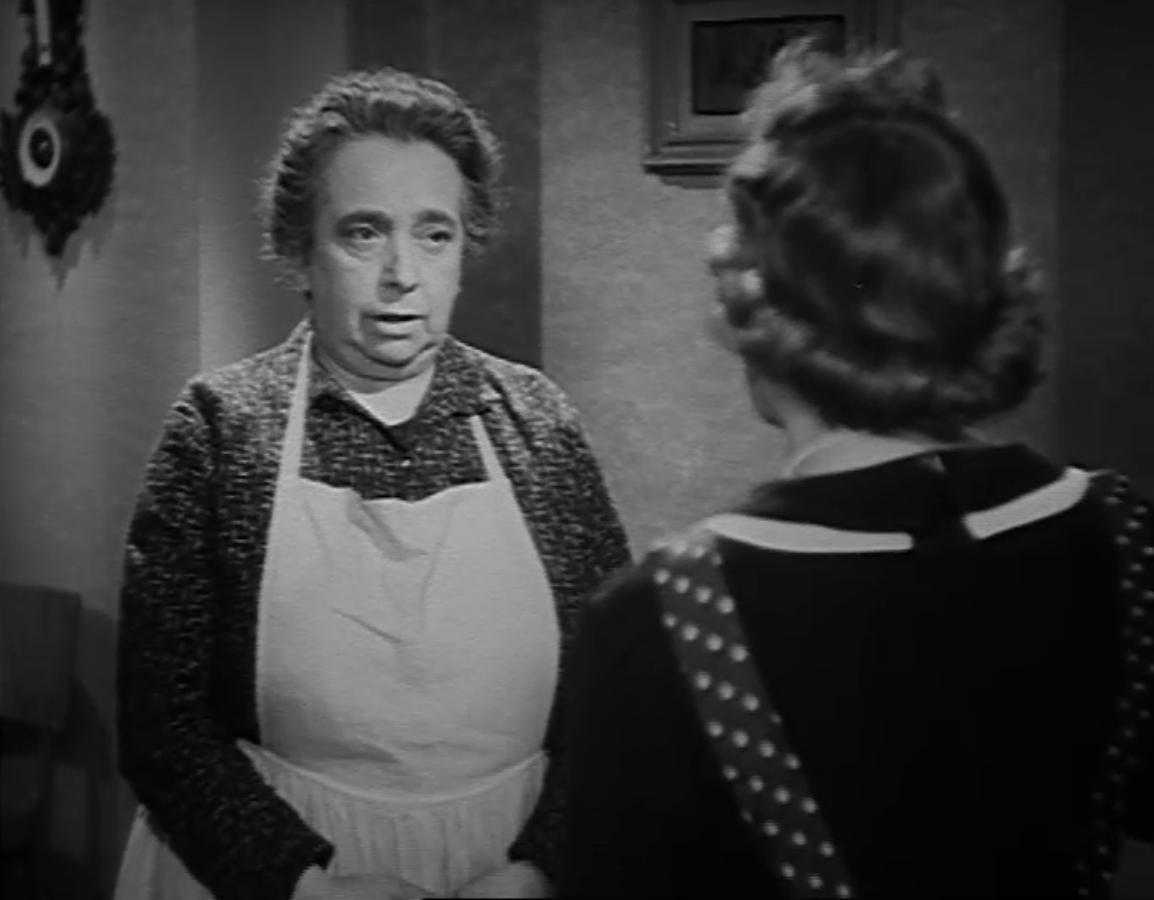
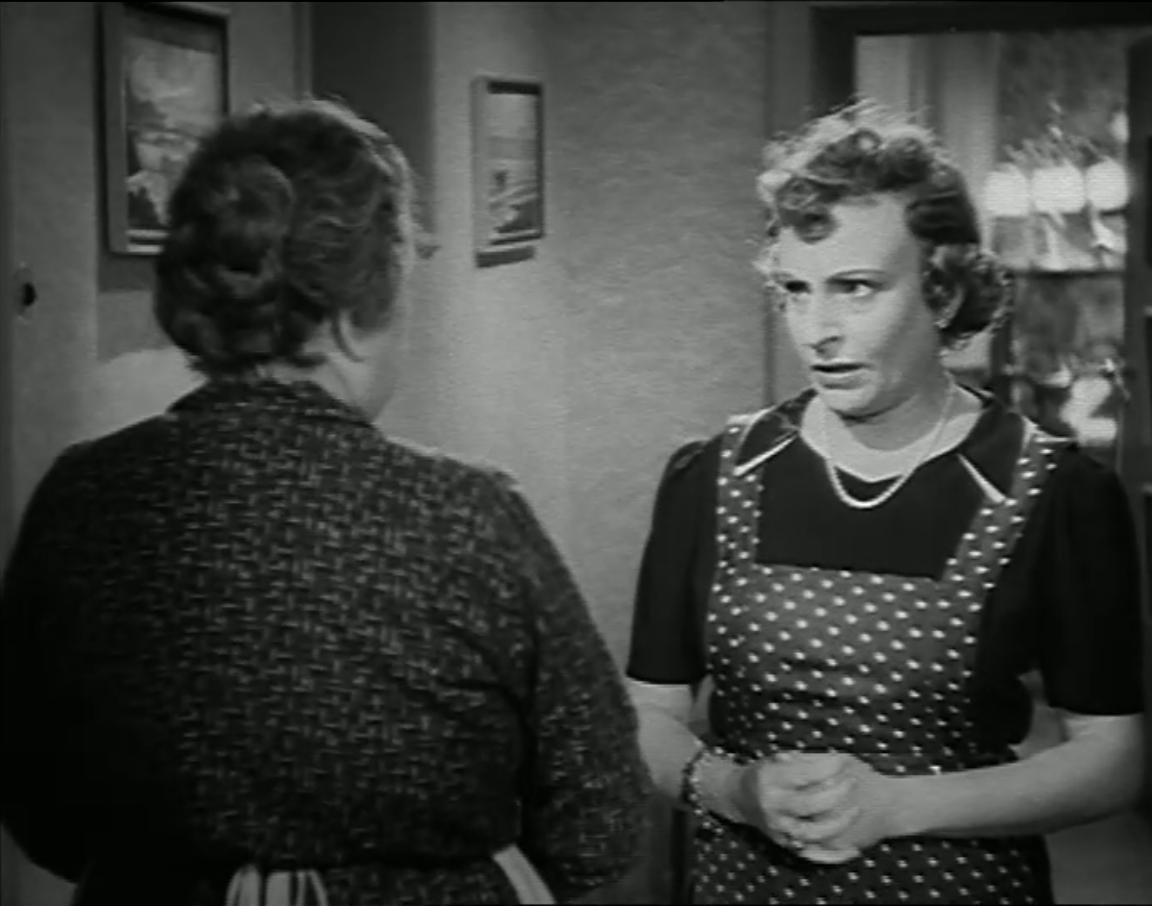
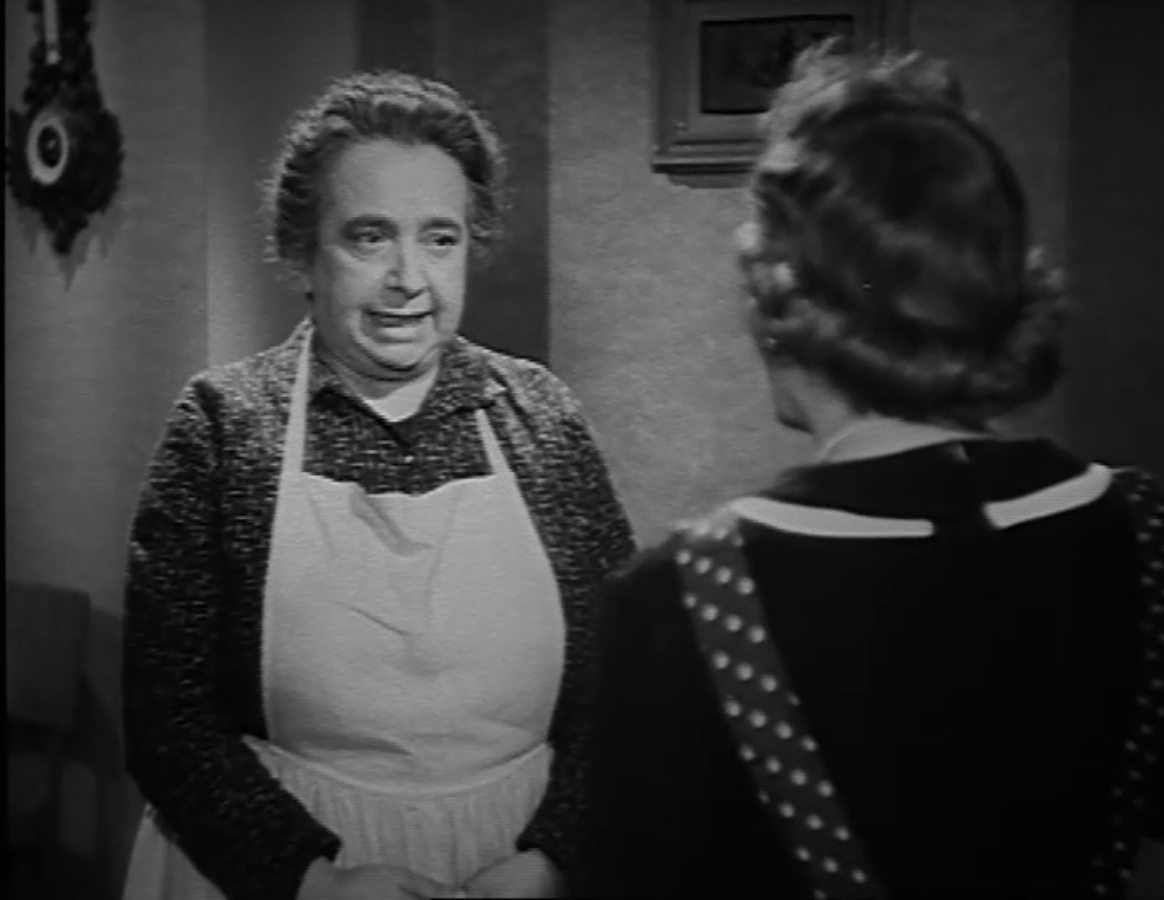
"Sì, è tornata".
"È tornata…?"
"Ma è dovuta andare dalla sorella, la signora Berelli. Buonanotte".
"Ah, dalla sorella?"
“Yes, she’s back.”
“She’s back…?”
“But she had to go to her sister’s place, Signora Berelli. Good night.”
“Oh, her sister’s place?”
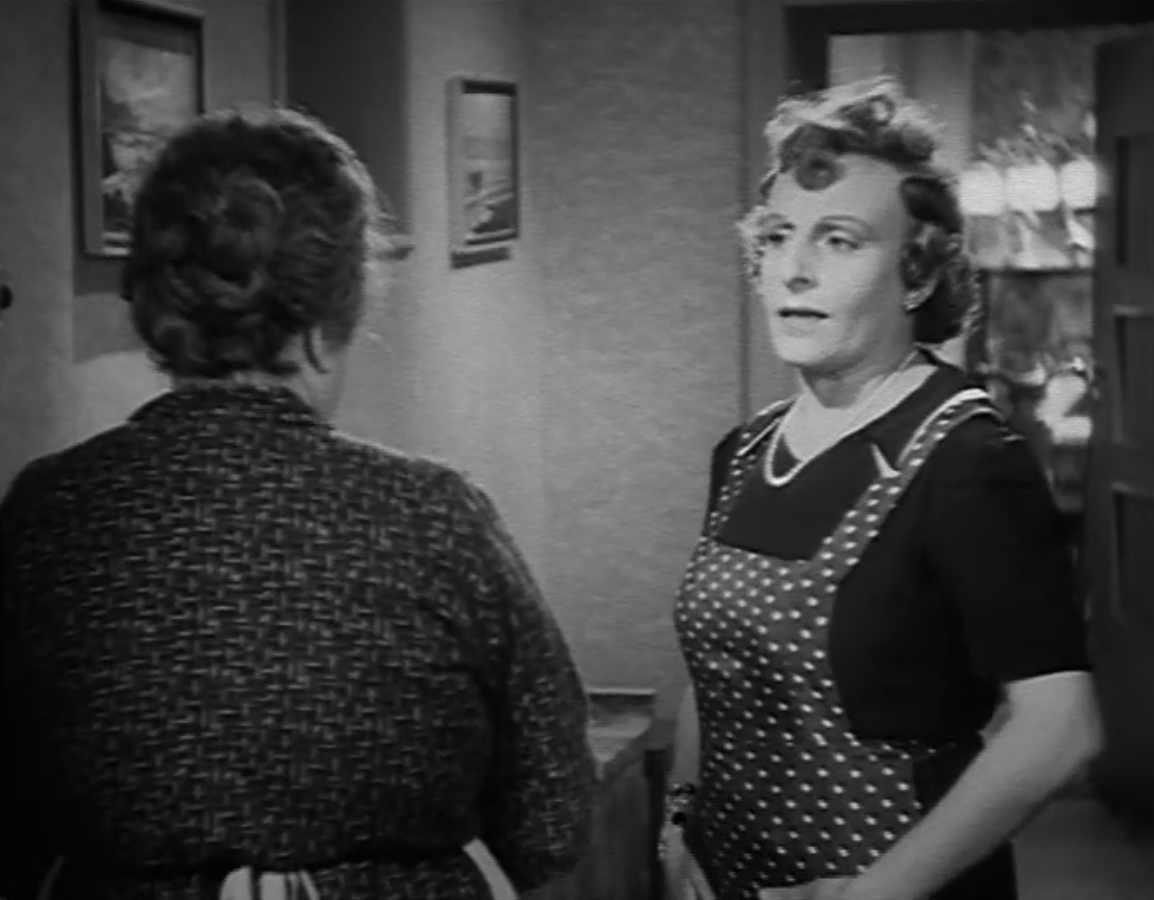
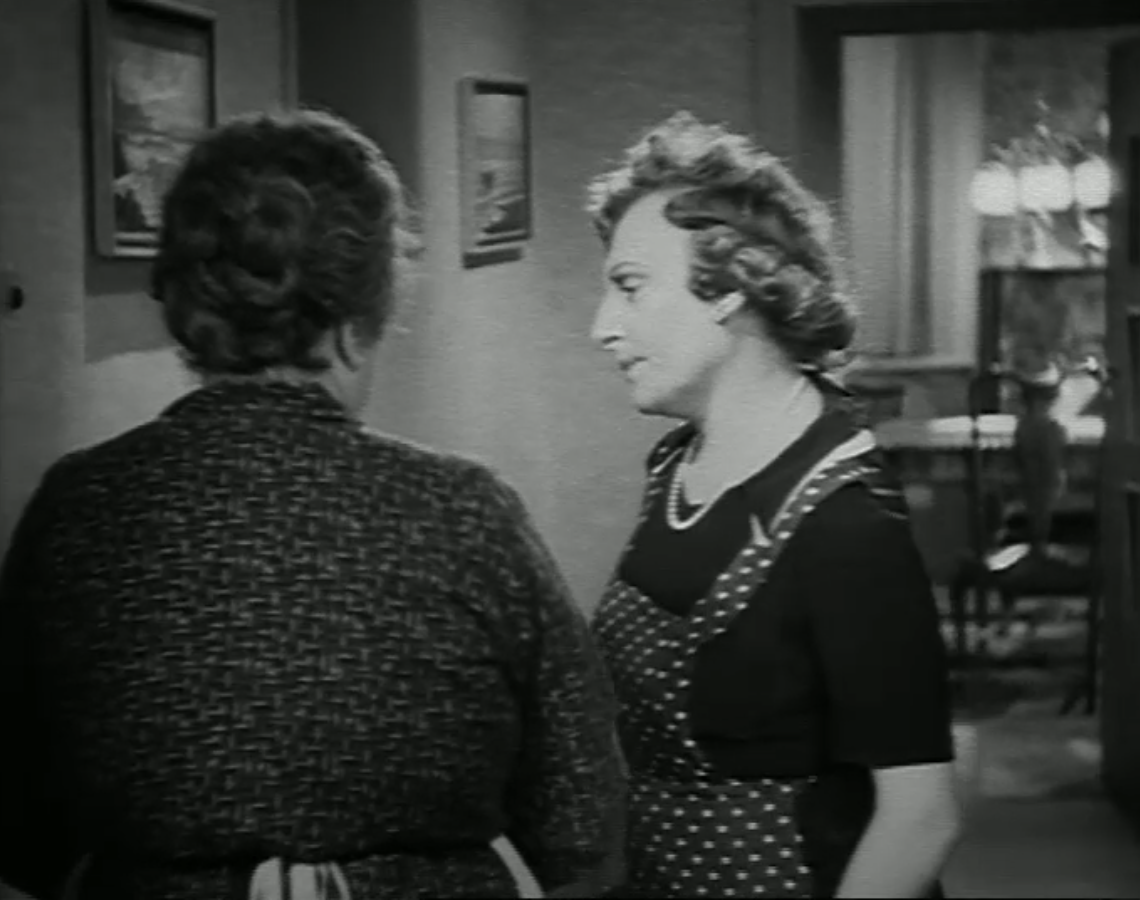
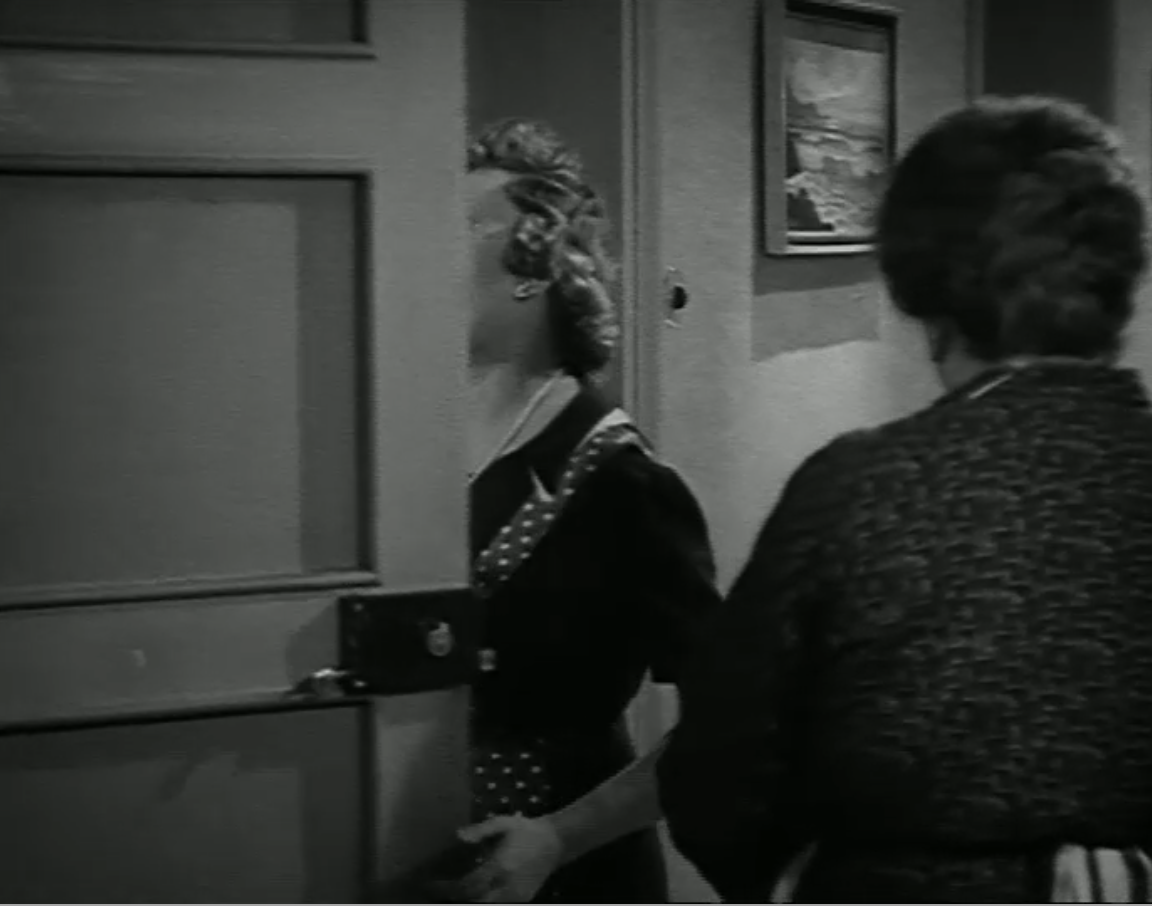
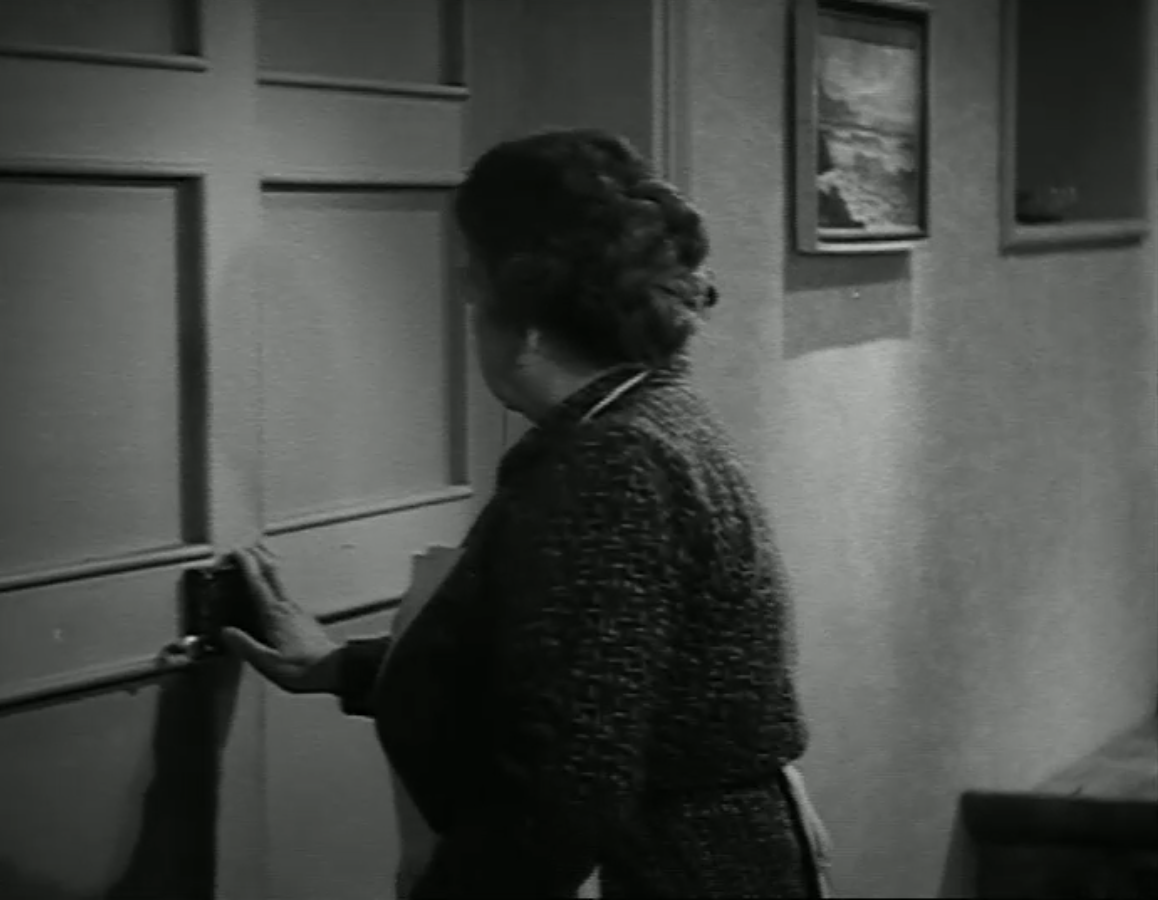
“Buonanotte”, dice la vicina, e se ne va. Agnese chiude la porta con un tonfo.
“Good night,” the neighbor says, and leaves. Agnese shuts the door with a bang.
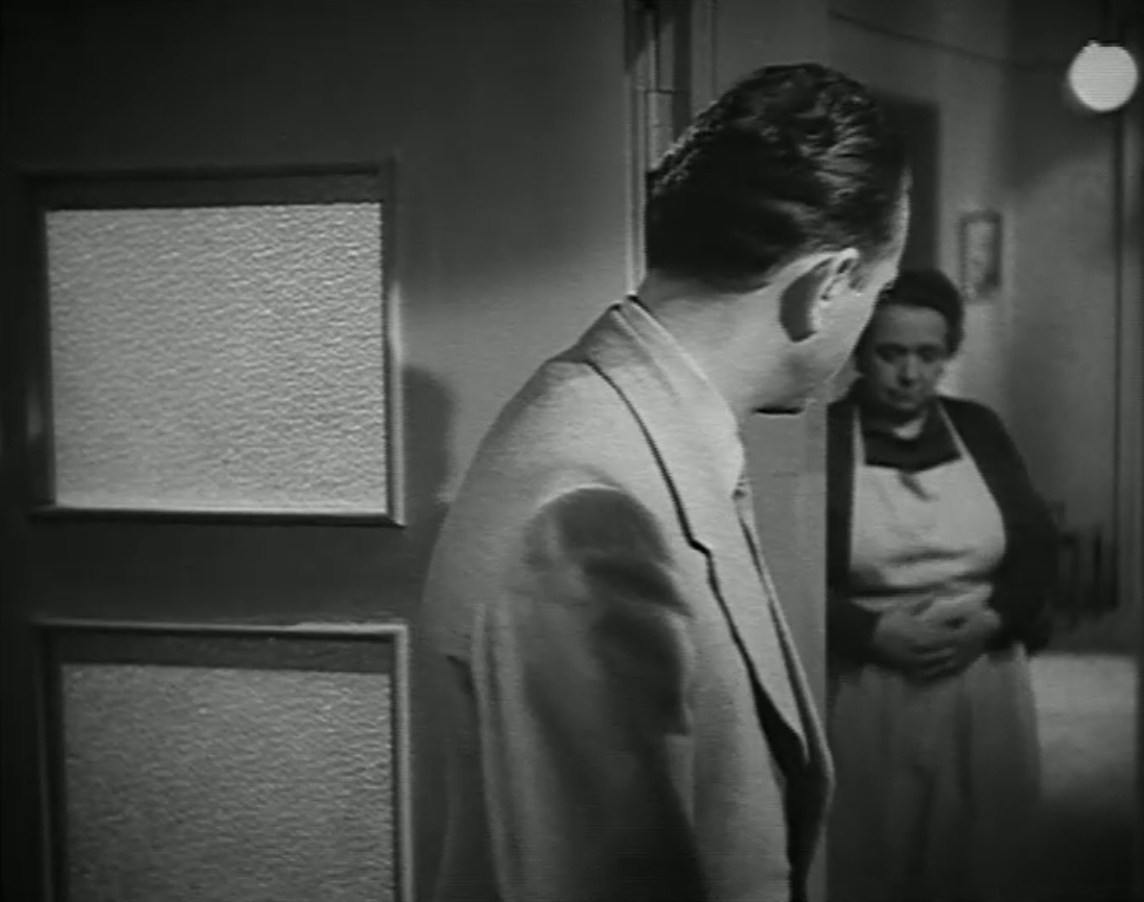
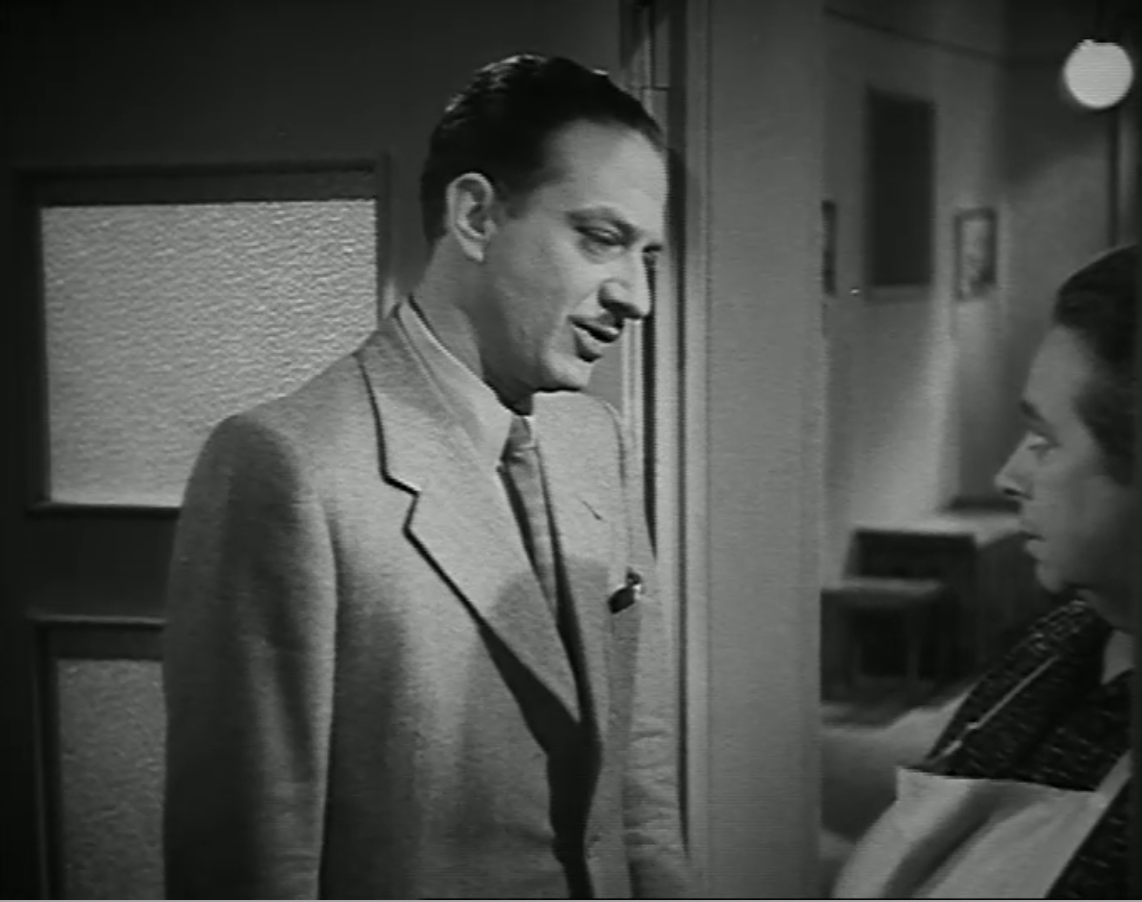
Sulla porta della cucina, Andrea chiede: "Come vuoi che il bambino rimanga qui?"
At the kitchen door, Andrea asks, “How do you expect the boy to stay here?”
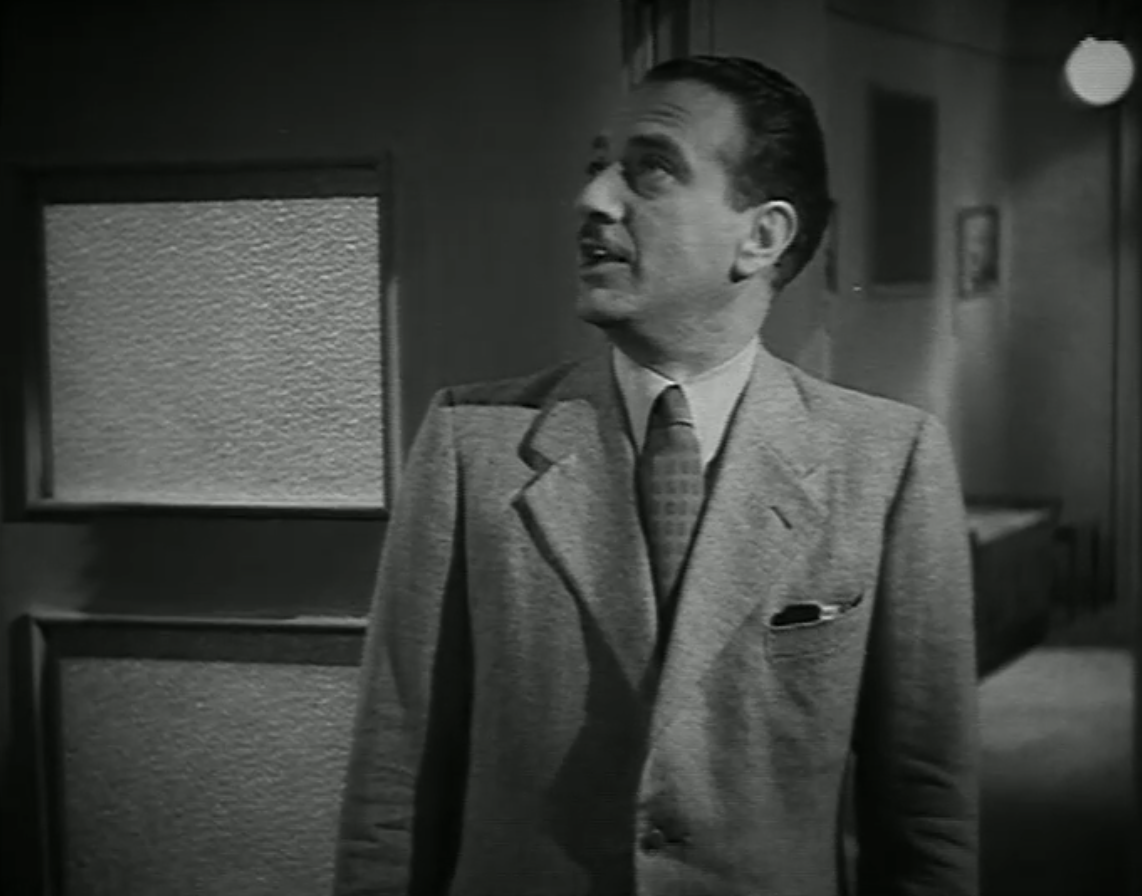
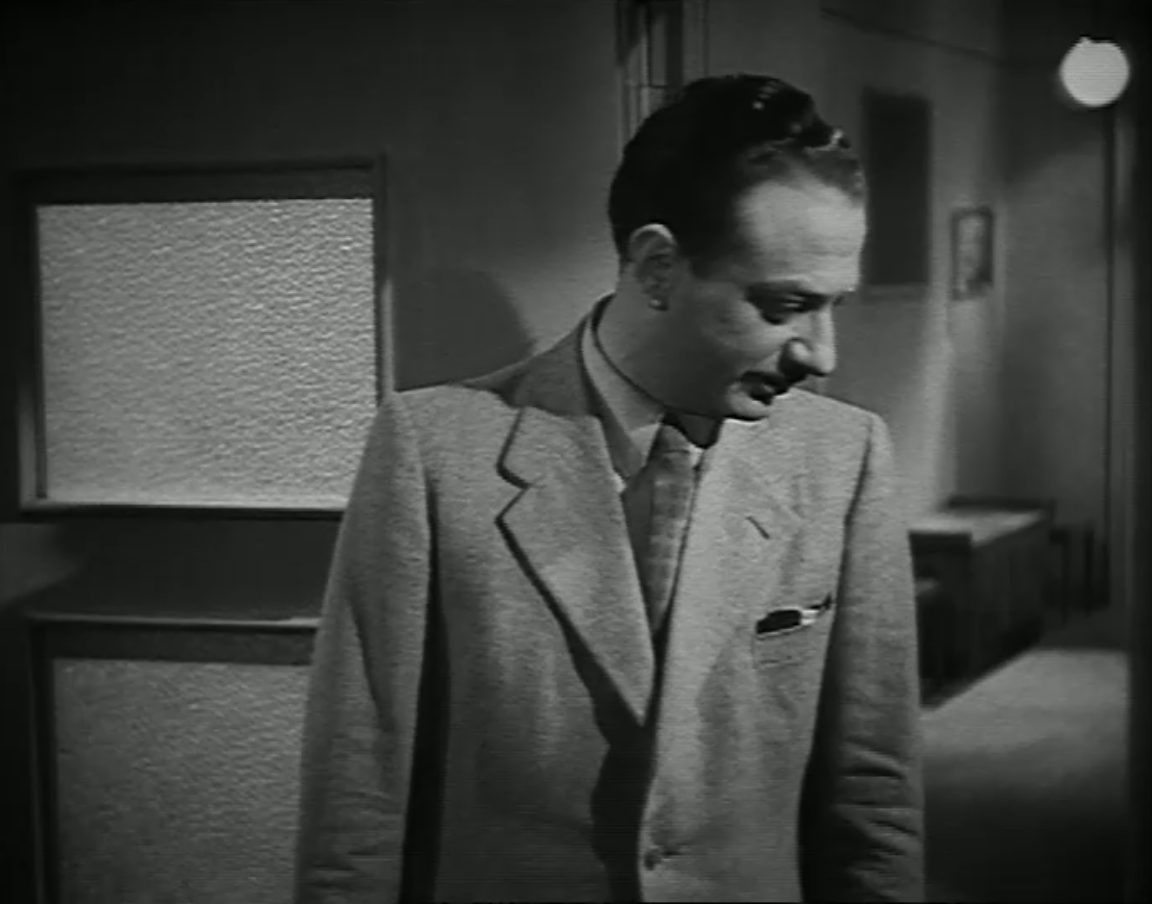
Guardando in alto e in basso, dice: "È già cominciato un cinema, dal primo all’ultimo piano".
Looking up and down, he says, “A movie has already started, from the first to the top floor.”
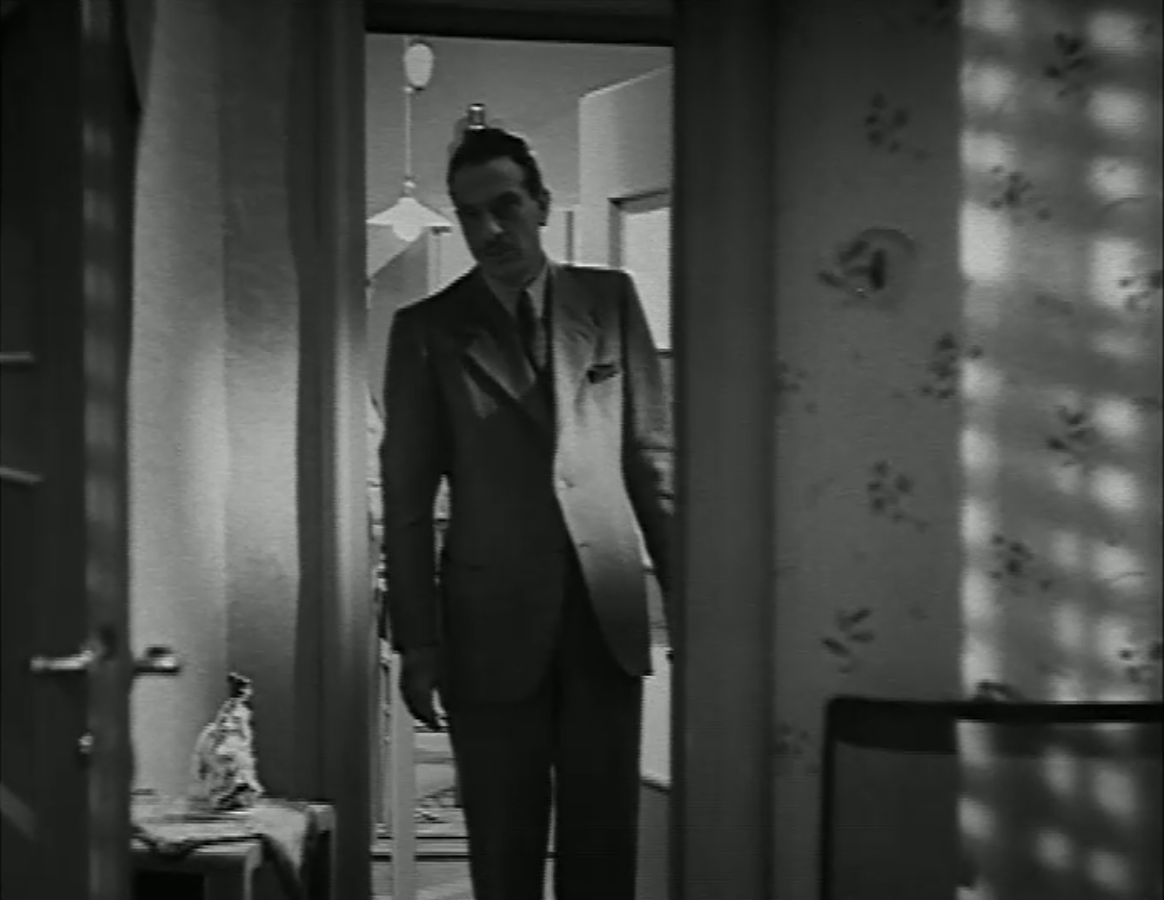
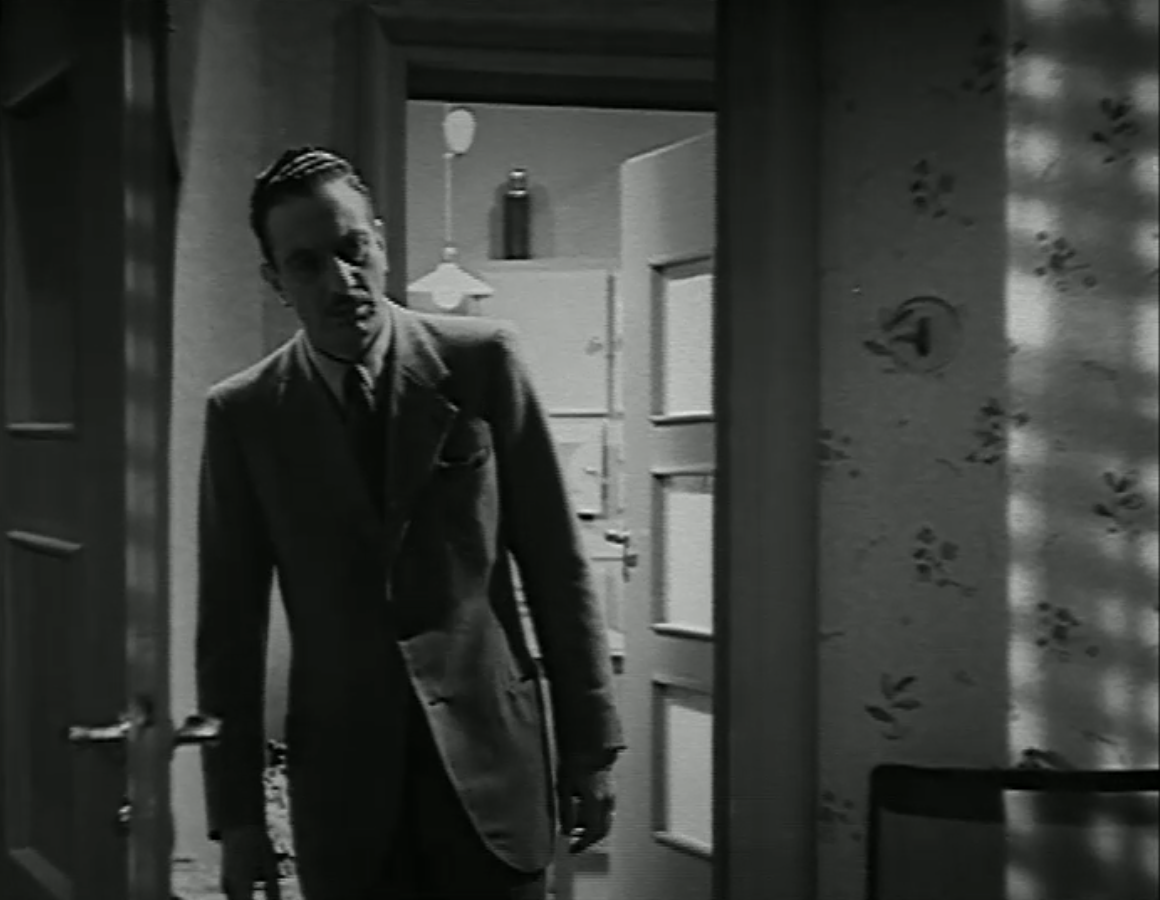
Va a vedere come sta Pricò, nella camera da letto buia. Ma il bambino non è a letto.
He goes to see how Pricò is, in the darkened bedroom. But the boy isn’t in bed.
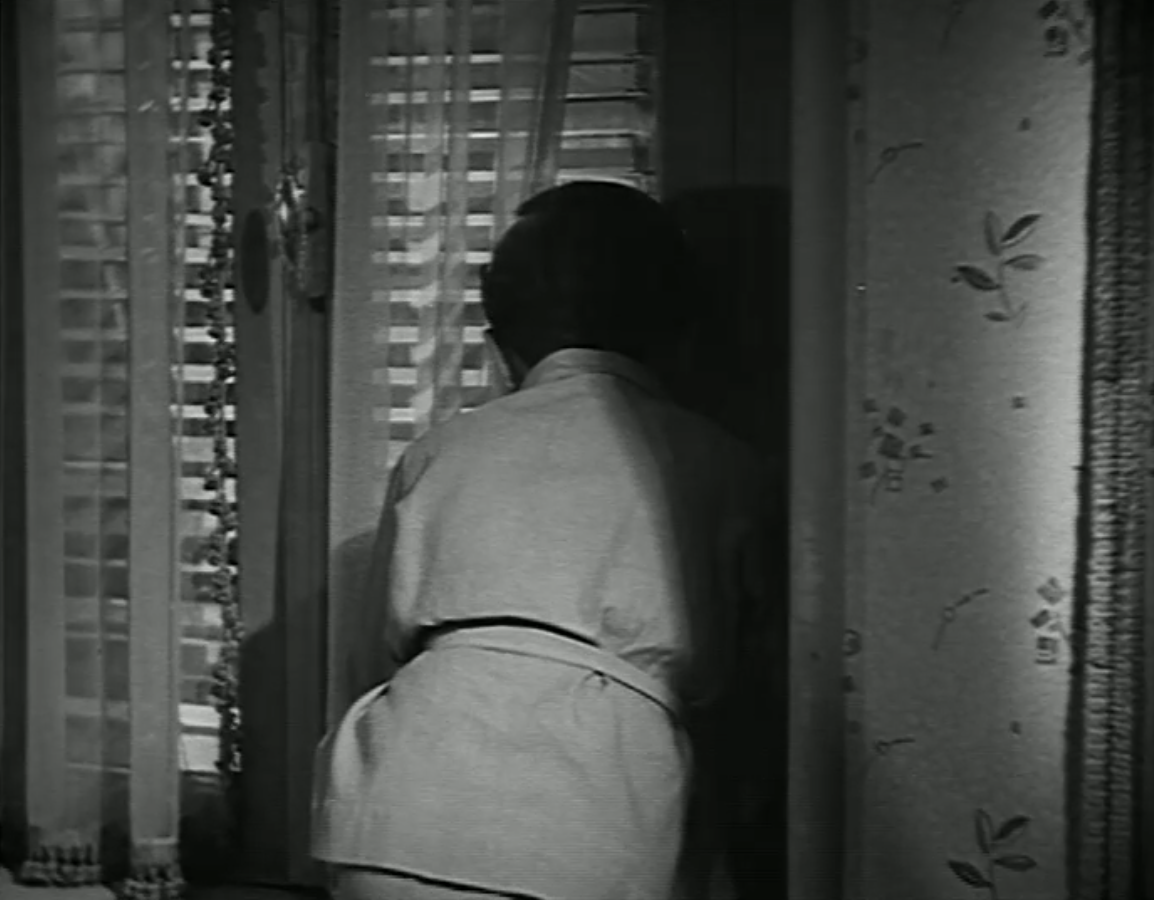
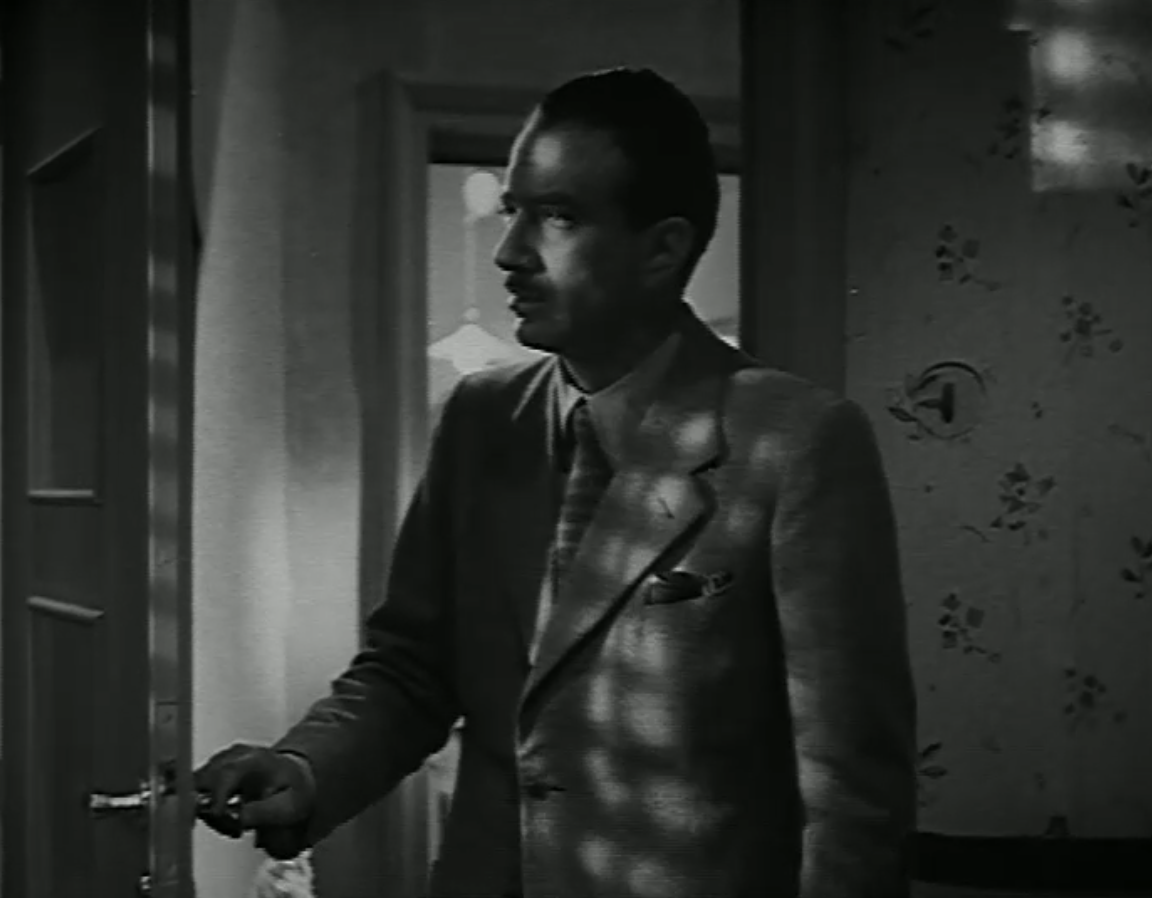
È al davanzale della finestra e guarda fuori. "Pricò". Un disegno di luci proveniente dalle veneziane si riflette sul viso e sulla giacca di Andrea.
He’s at the windowsill, looking out. “Pricò.” A pattern of light from the venetian blinds falls on Andrea’s face and coat.
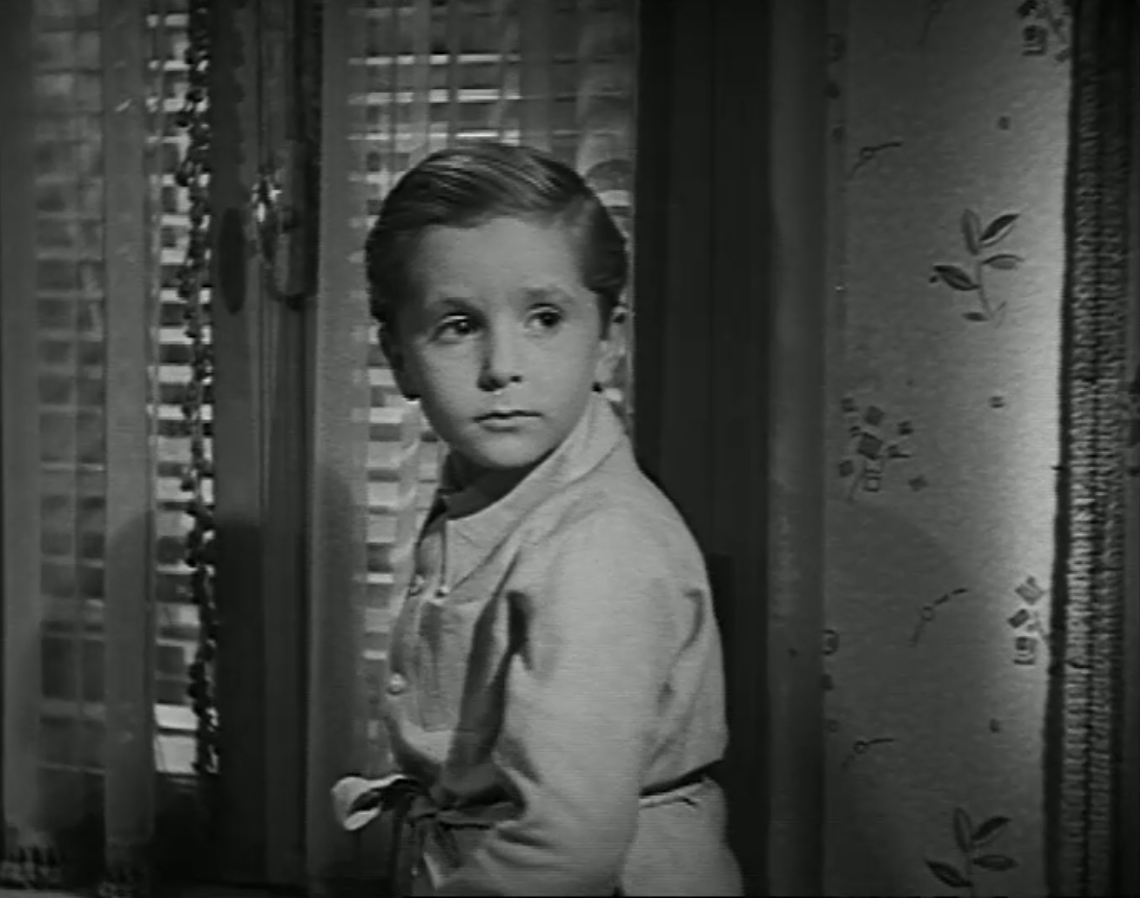
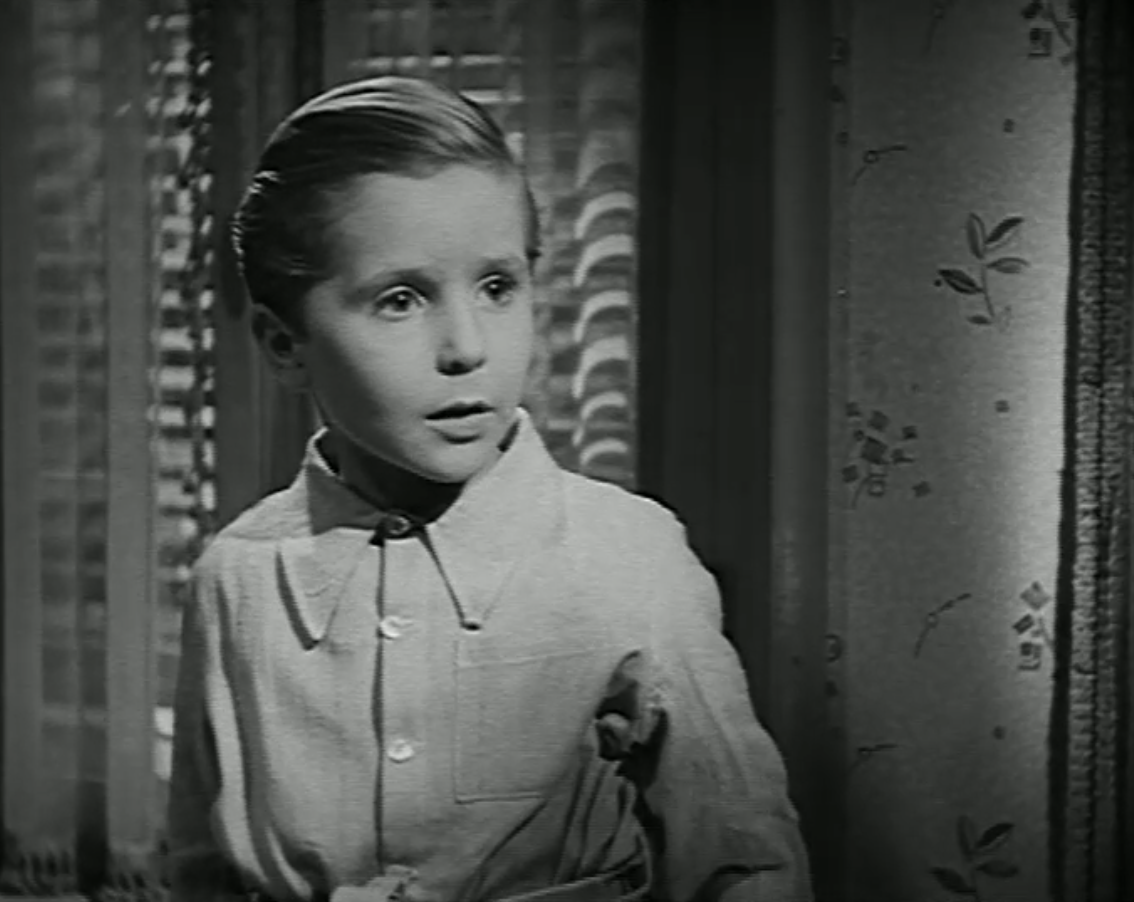
"Papà", dice Pricò, voltandosi dalla finestra.
“Papa,” says Pricò, turning away from the window.
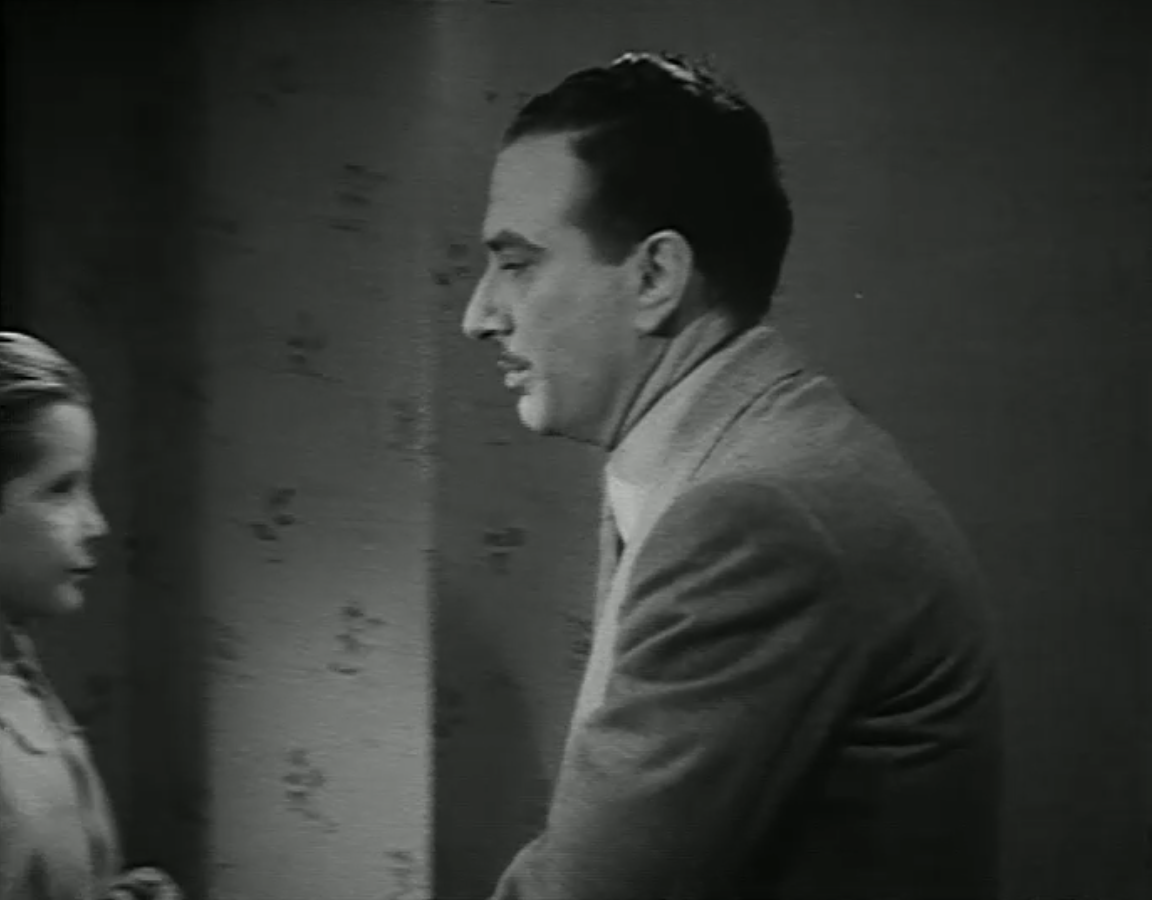
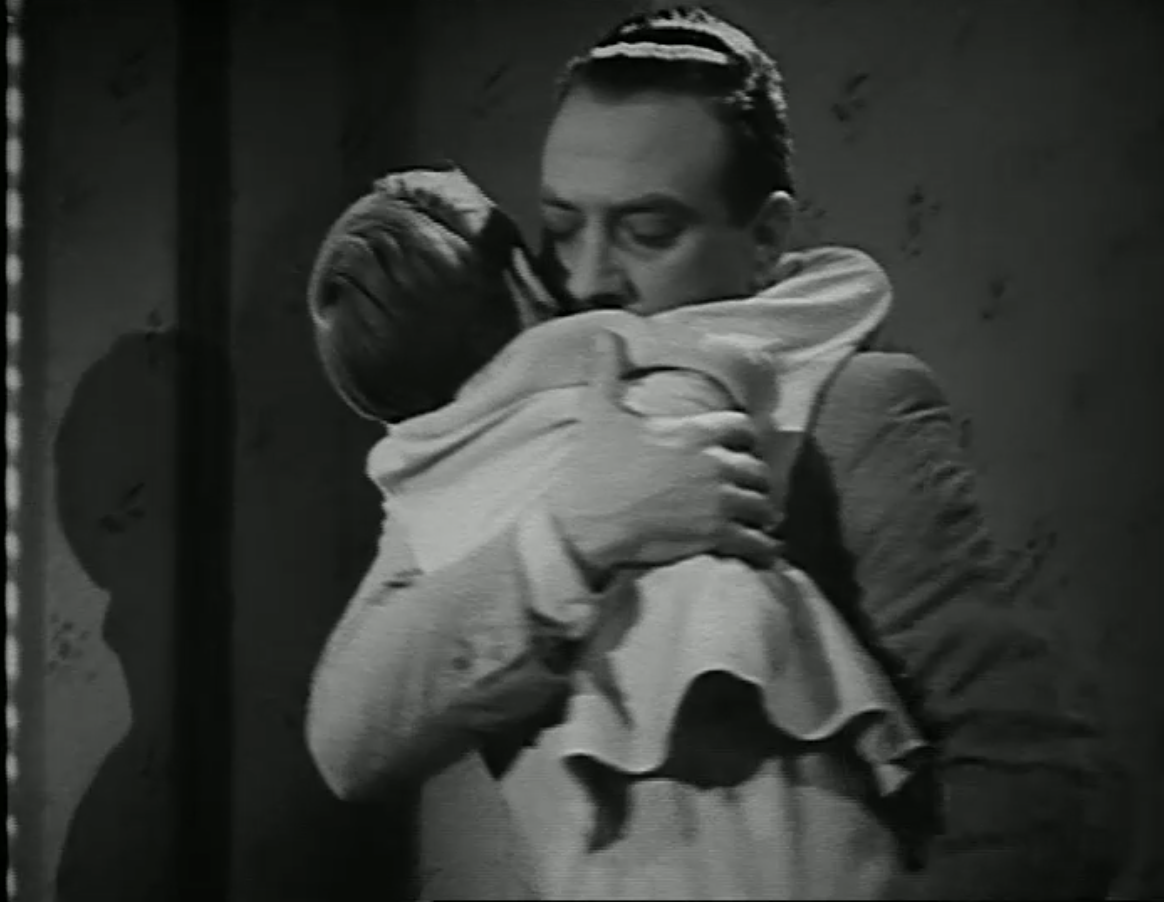
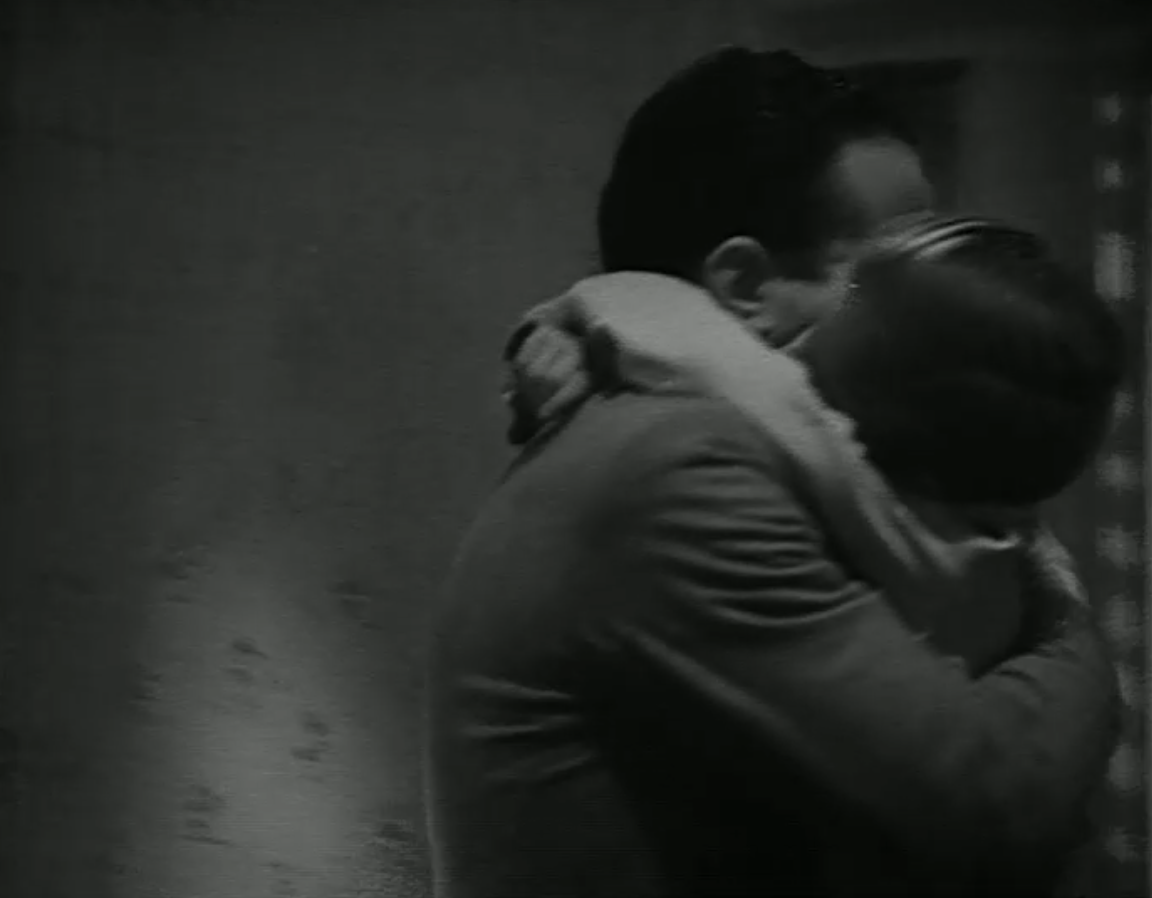
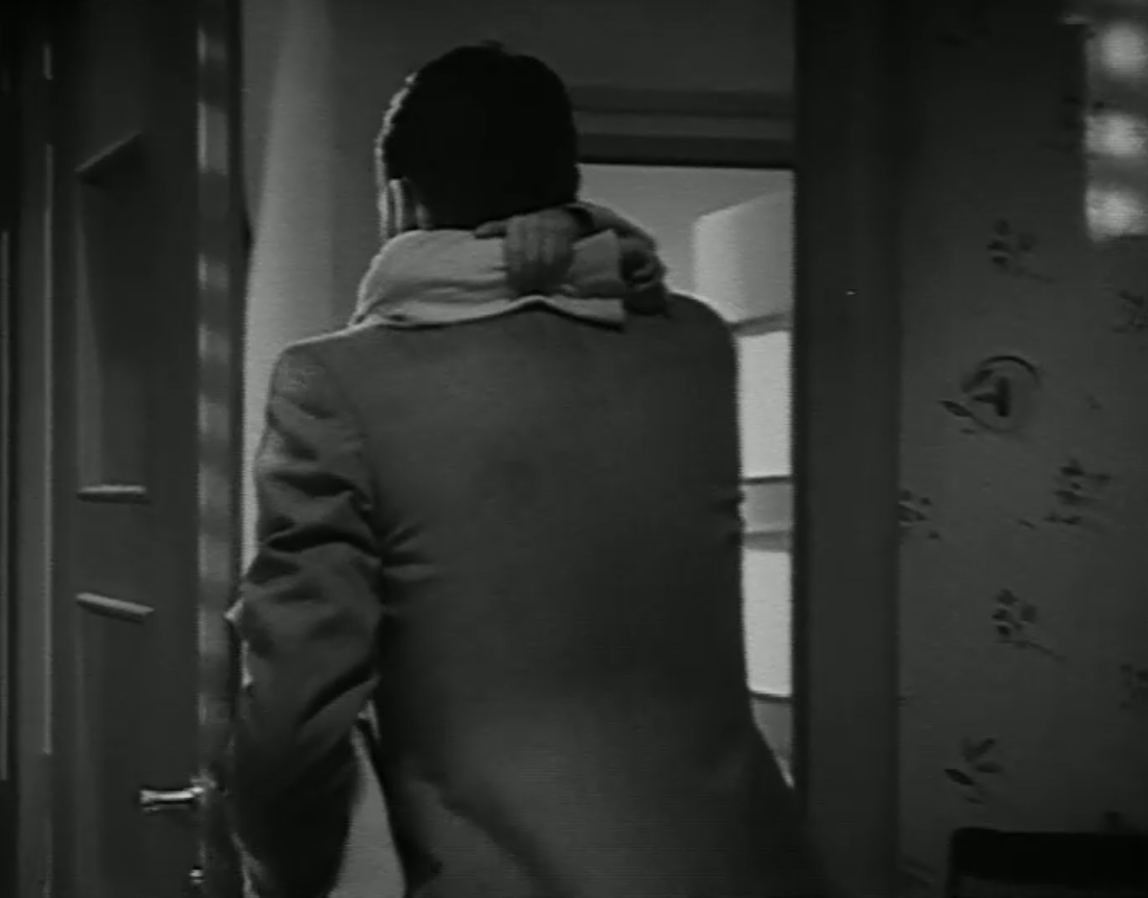
"Vieni. Vieni con me", dice Andrea, abbracciando il bambino. "Non lasciarmi solo!" Porta Pricò fuori dalla stanza.
“Come. Come with me,” Andrea says, embracing the boy. “Don’t leave me alone!” He carries Pricò out of the room.
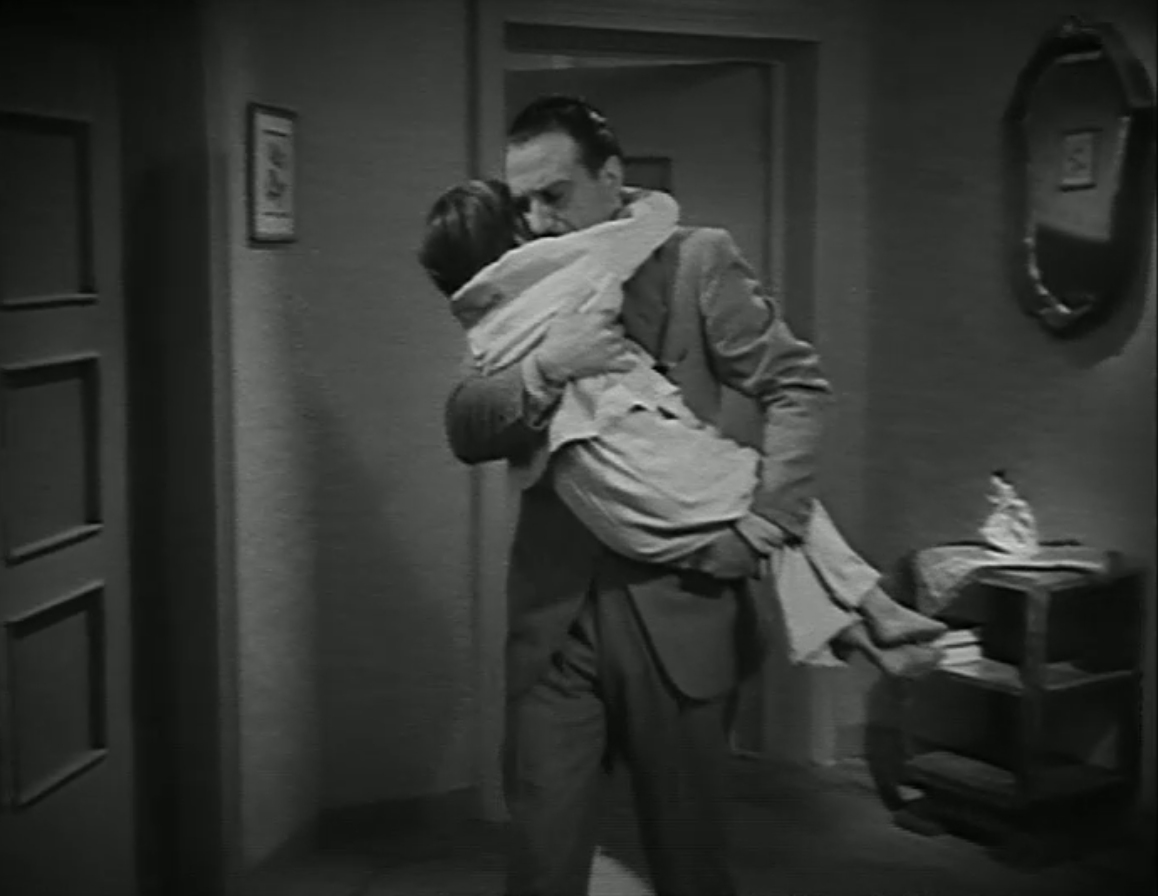
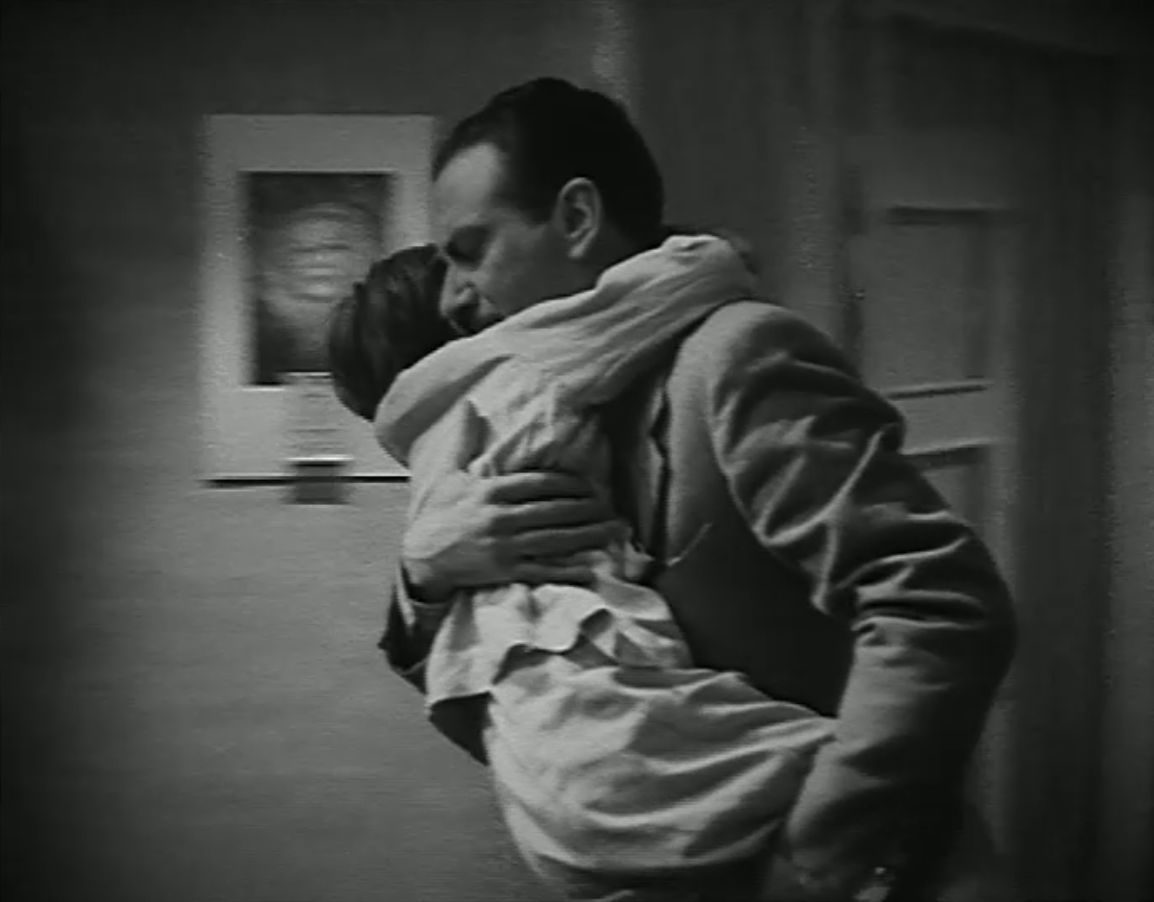
Tenendo stretto Pricò, prosegue lungo il corridoio. "Non posso rimanere solo".
Holding Pricò tight, he continues down the hallway. “I can’t be alone.”
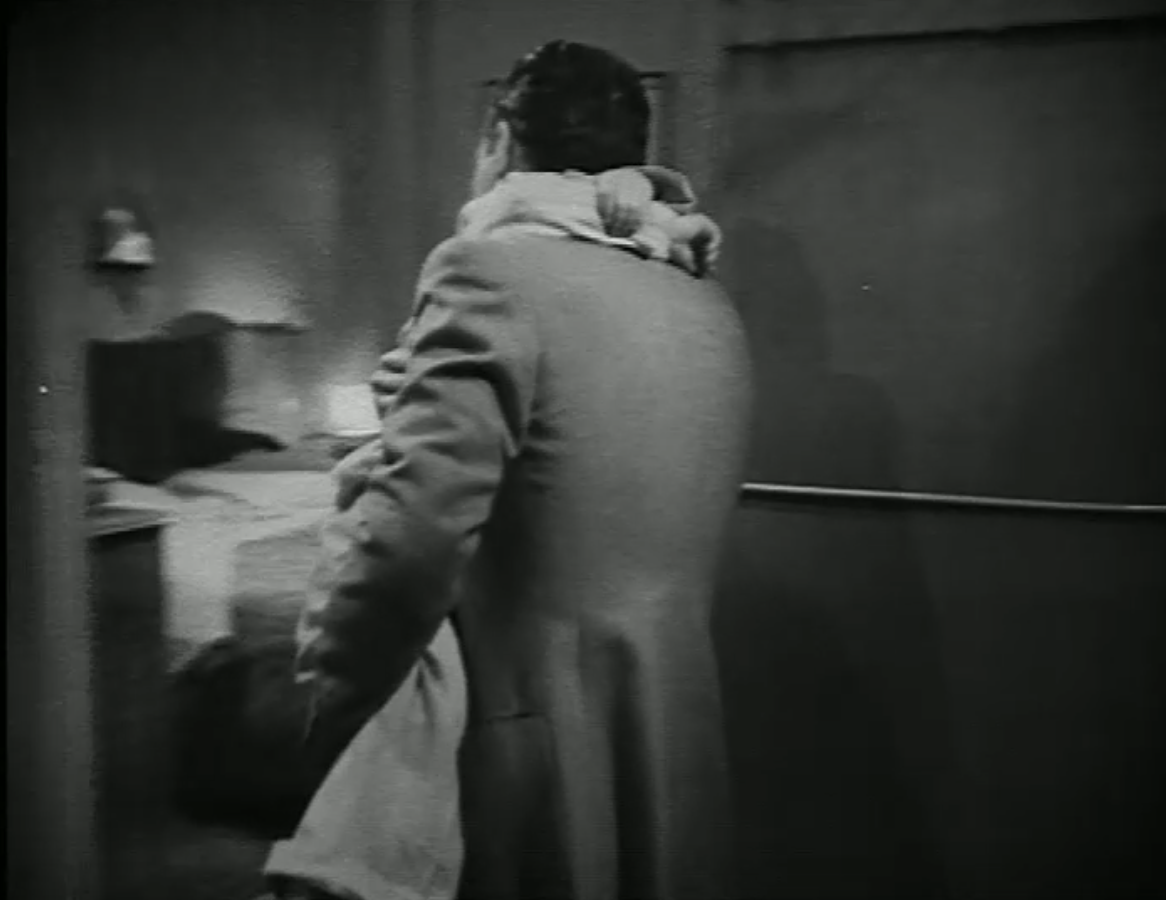
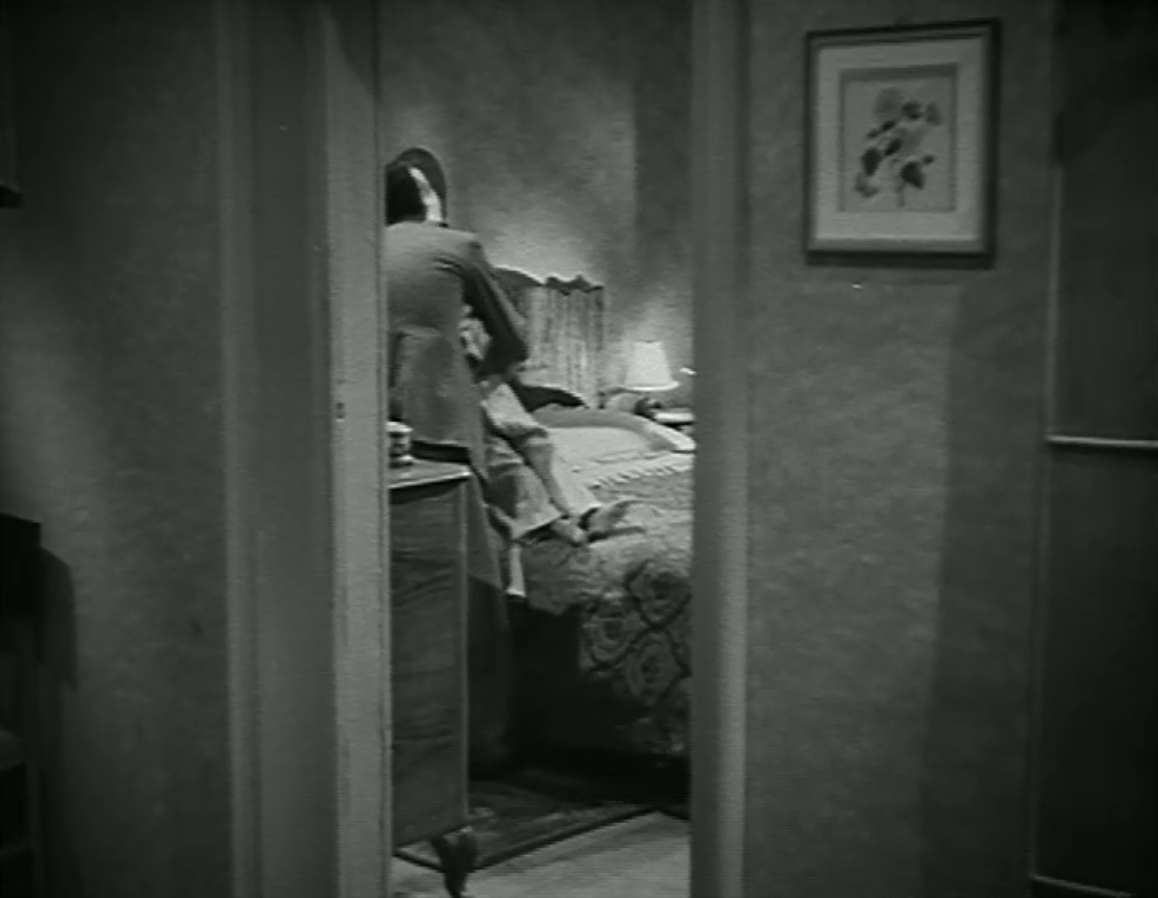
Comincia una melodia malinconica di violino, mentre Andrea entra nella propria camera da letto e mette Pricò sul letto.
Plaintive violin music begins, as Andrea enters his own bedroom and sets Pricò down on the bed.
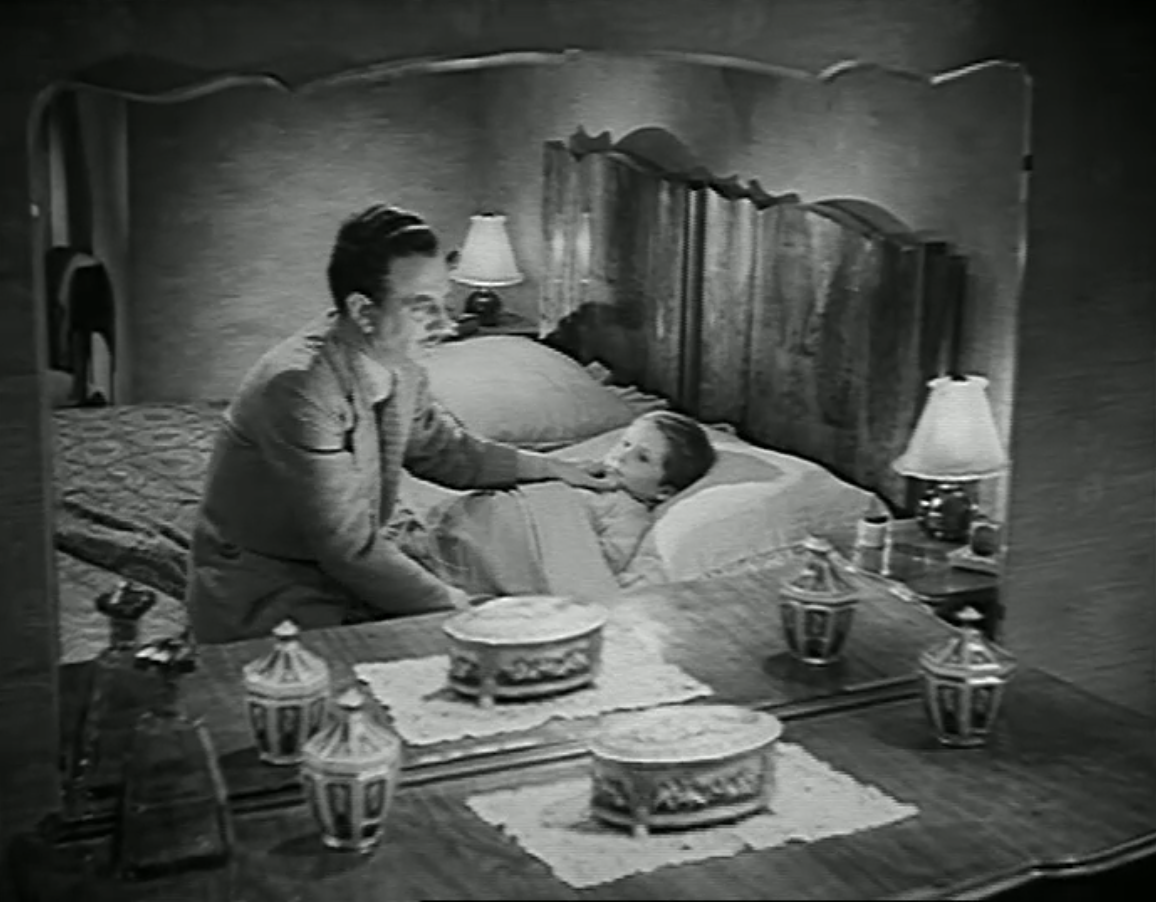
Nello specchio della toeletta, dove gli oggetti di Nina sono disposti con cura, vediamo Andrea seduto accanto al figlio, che lo guarda con affetto. "Papà…" dice Pricò, come per confortare entrambi.
In the mirror of the dressing table, where Nina’s possessions are tidily arranged, we see Andrea sitting close to his son, who gazes up lovingly. “Papa…” Pricò says, as if to comfort both of them.
FINE PARTE 16
Ecco Parte 17 of this cineracconto! Subscribe to receive a weekly email newsletter with links to all our new posts.