Regia: Mira Nair (2001)
Italian title: Matrimonio indiano


"Come ci sei riuscito?" – chiede Lalit – "Ho mandato Rahul a prendervi all'aeroporto. Mi ha detto che il volo era in ritardo.
"No, non era in ritardo. Nessuno era lì all'aeroporto e quindi abbiamo preso un taxi e siamo venuti".
"Avete dovuto prendere un taxi?!" Lalit è indignato per il fatto che suo cognato abbia avuto un così scarso benvenuto all'aeroporto.*
"Non c’è problema", lo rassicura Tej.
“How did you manage?” Lalit asks. “I sent Rahul to fetch you at the airport. He told me the flight was late.”
“No, it was not late. Nobody was there at the airport and so we took a cab and came.”
“You had to take a cab?!” Lalit is outraged that his brother-in-law had such a poor welcome at the airport.
“It’s okay,” Tej assures him.
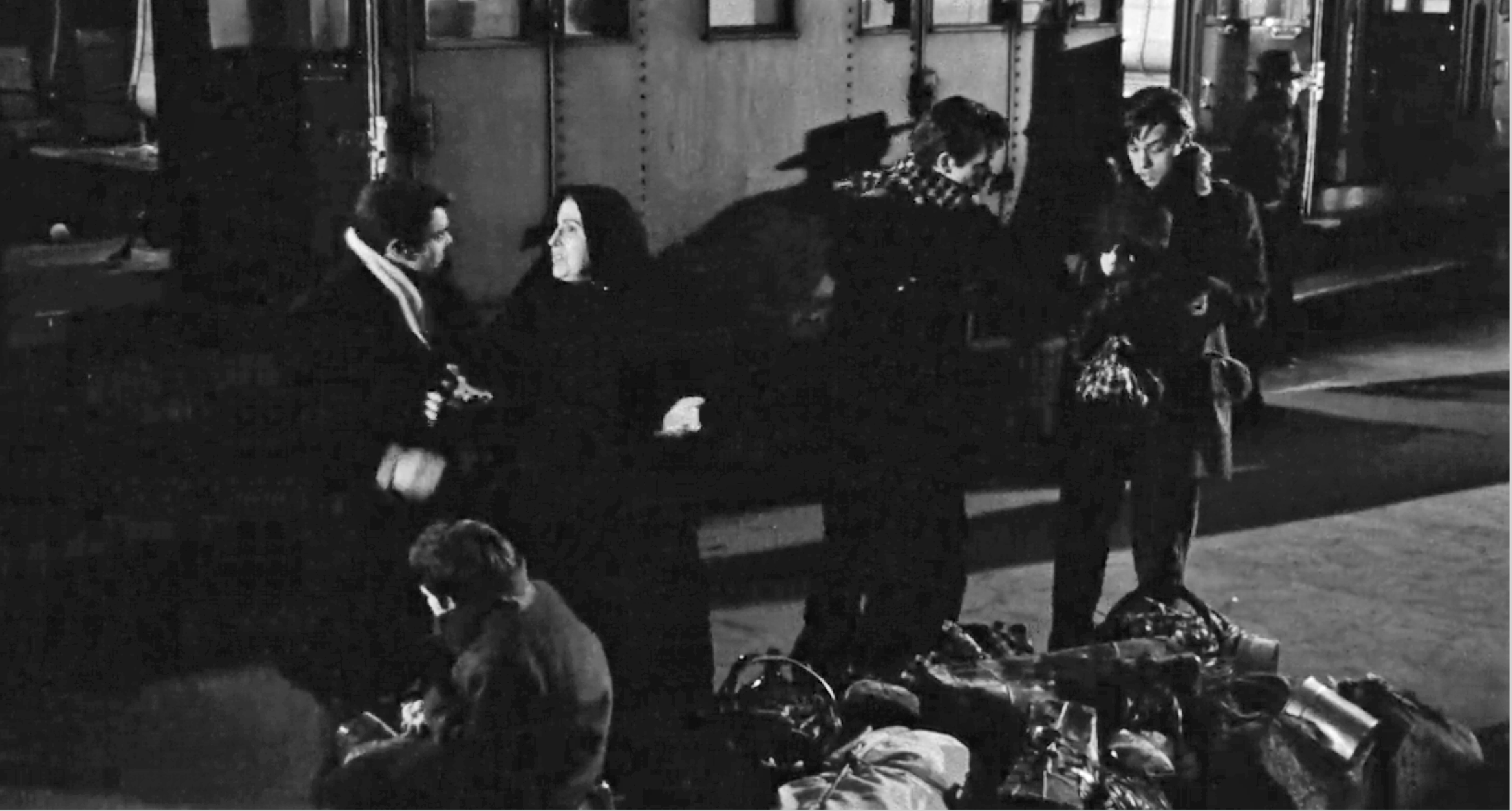

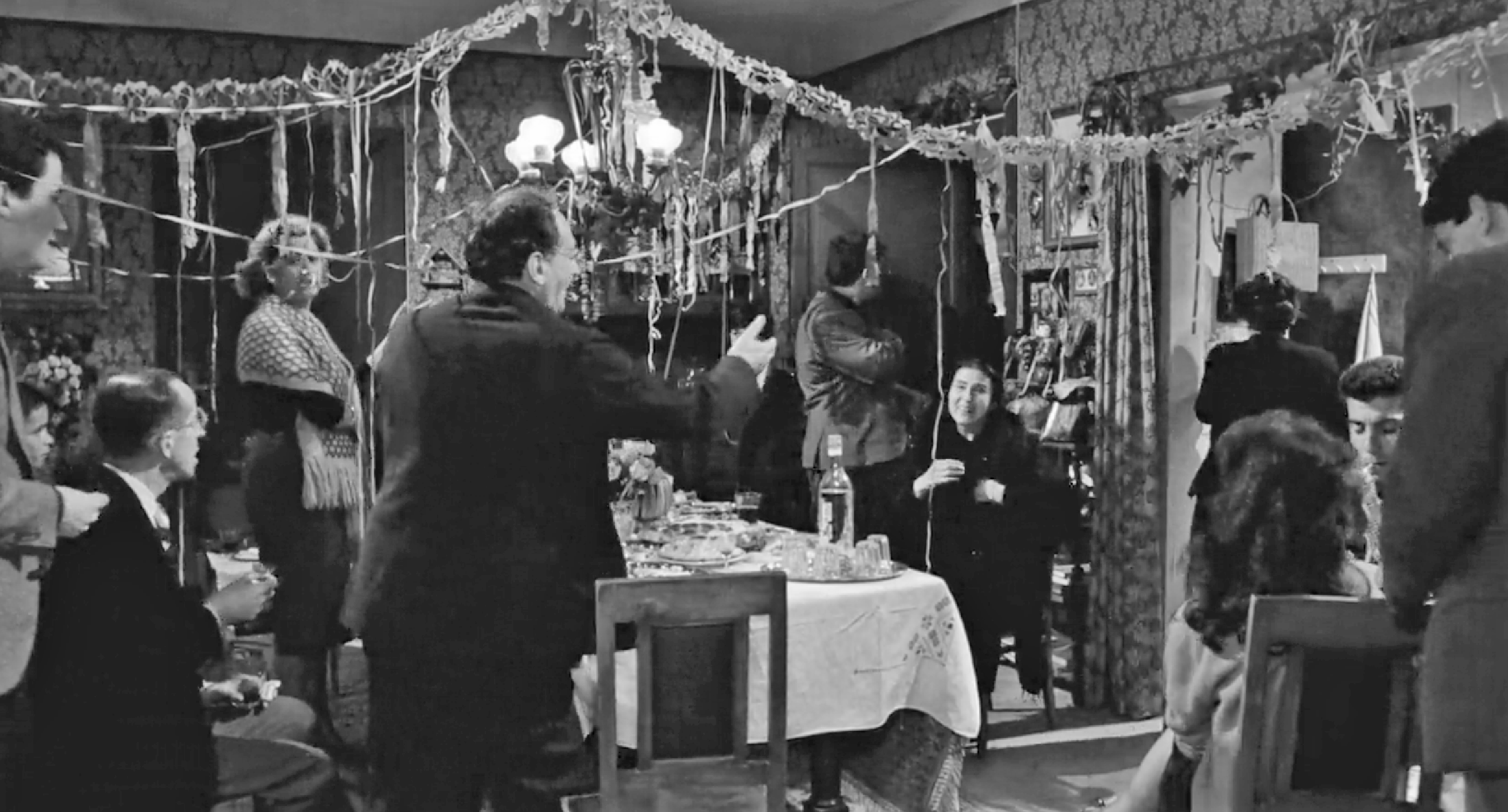

Viaggiatori che arrivano dopo un lungo viaggio e che non trovano nessuno ad aspettarli: una scena simile apre Rocco e i suoi fratelli, un altro film che affronta le sfide di una famiglia in diaspora. In quel caso, Rosaria, la madre della famiglia, non riesce a credere che suo figlio Vincenzo non sia alla stazione ferroviaria di Milano per dare il benvenuto a lei e agli altri suoi figli, che sono appena arrivati dal sud. Per caso, quei viaggiatori si ritrovano presto a una festa di fidanzamento. Ma nella festa di Milano scoppiano dei conflitti, mentre a Delhi un oscuro segreto cova sotto la superficie.
Travelers who arrive after a long journey and don’t find anyone waiting for them: a similar scene opens Rocco and His Brothers, another film dealing with the challenges of a family in diaspora. In that case, Rosaria, the mother of the family, can’t believe that her son Vincenzo is not at the Milan railroad station to welcome her and her other sons , who have just arrived from the South. Coincidentally, those travelers soon find themselves at an engagement party. But in the Milan party conflicts erupt, while in Delhi a dark secret festers beneath the surface.


Ma Lalit si rivolge a suo nipote. "Mamma mia, Rahul, idiota. Ti ho mandato all'aeroporto e tu mi hai detto che il loro volo era in ritardo? Che razza di idiota".
Rahul sembra sconvolto. Sua madre, Shashi, rimprovera Lalit: "Ha lavorato giorno e notte. Lui non conosce l'India".
Ma Lalit non è d'accordo. "Incapace numero uno".
But Lalit turns to his nephew. “Goodness, Rahul, you idiot. I sent you to the airport and you tell me their flight was late? What a complete idiot.”
Rahul looks upset. His mother, Shashi, reproaches Lalit: “He’s been working day and night. He doesn’t know India.”
But Lalit disagrees. “Number One most stupid duffer.”*
*Duffer means idiot in British English.

Profondamente offesa, Shashi mormora in Punjabi: "Chiama mio figlio idiota, poi lo chiama incapace. Chi si crede di essere?"
Greatly offended, Shashi mutters in Punjabi, “Calls my son an idiot, then calls him a duffer. Who does he think he is?”


Inosservata, Alice lotta con le enormi valigie degli ospiti.
Ria siede da sola, con uno sguardo afflitto e inquieto. Declina l'offerta di dolcetti da un vassoio con un leggero movimento della testa.
Unnoticed, Alice struggles with the guests’ huge suitcases.
Ria sits alone, with a pained and haunted look. She declines the offer of treats from a platter with a gentle movement of her head.


Lalit spiega a Mohan: "Questo è Tej Puri. È sposato con mia sorella, Vijaya. Dopo che mio fratello maggiore, Surinder, è morto, Tej è diventato il capofamiglia. Si è davvero preso cura di noi".
Finora, tutti in questa festa hanno parlato inglese, ma Tej saluta la nonna in hindi, dicendo “Namaste”.*
* In India, è consueto salutare gli altri con il gesto indù del namaste: un piccolo inchino, con le mani giunte all’altezza del cuore, come in preghiera. Letteralmente significa "mi inchino al divino in te". Ma al giorno d'oggi è solo un comune saluto rispettoso. Naturalmente, questo gesto si ritrova anche in un'emoji comunemente usata per esprimere gratitudine.
Lalit explains to Mohan, “This is Tej Puri. He’s married to my sister, Vijaya. After my older brother, Surinder, passed away, Tej has been the head of the family. He has really looked after us.”
So far, everyone at this party has been speaking English, but Tej greets the grandmother in Hindi, saying, “Namaste.”*
* In India, it is customary to greet others with the Hindu namaste gesture: a small bow, with hands pressed together up at the heart, as if in prayer. Literally, it means, “I bow to the divine in you.” But nowadays, it is just a common, respectful greeting. Of course, this gesture is also found in a commonly used emoji to express gratitude.


Poi qualcuno attira la sua attenzione. “Ria! Sei tu?"
Vediamo il volto riluttante di lei in parte oscurato da Alice, che sta servendo cibo agli ospiti. Una presenza invisibile, Alice sta facendo funzionare questa festa.
Then someone catches his eye. “Ria! Is that you?”
We see her unwilling face partly obscured by Alice, who is serving food to the guests. An invisible presence, Alice is keeping this party functioning.


"Vieni qui, vieni qui, vieni qui", ripete Tej. Alla fine, Ria si alza e si avvicina a lui, guardando in basso, senza incontrare il suo sguardo.
Lui le bacia la fronte e si allontana per guardarla. Dice: "Dio ti benedica. Stai davvero bene".
“Come here, come here, come here,” Tej repeats. At last, Ria stands up and approaches him, looking down, without meeting his gaze.
He kisses her forehead and stands back to look at her. He says, “God bless. You look really good.”


Con la mano le alza il mento in modo che lei debba guardarlo. Sembra arrabbiata, i suoi occhi pieni di lacrime. Lui le dà una pacca sulla testa.
With his hand, he raises her chin so that she has to look at him. She looks angry, her eyes filled with tears. He gives her a pat on the head.


All'esterno, l'organizzatore di eventi P.K. Dubey e il suo gruppo stanno mangiando e ridendo. Dubey sta raccontando di un cliente che, anche se al verde, ha insistito su un tema “Casa Bianca” per il matrimonio di sua figlia.
Outside, event planner P.K. Dubey and his crew are eating and laughing. Dubey is telling about a client who, although broke, was insistent on a “White House” theme for his daughter’s wedding.


Mentre gli uomini ridono raucamente, Alice si avvicina esitante da dietro. Chiama Dubey, che risponde scortesemente, senza nemmeno voltarsi a guardarla.
"Abbiamo bisogno di altro ghiaccio", gli dice in hindi.
"Cosa?"
"Ghiaccio!" esclama in inglese.
As the men laugh raucously, Alice approaches hesitantly from behind. She calls Dubey, who answers rudely, without even turning to look at her.
“We need more ice,” she tells him in Hindi.
“What?”
“Ice!” she exclaims in English.


Dubey dice con impazienza ai suoi uomini in hindi: "Gliel'ho detto una volta, gliel’ho detto mille volte, avranno bisogno di ghiaccio. Non ascoltano mai". Poi continua a mangiare, lasciando Alice in piedi lì.
Dubey says impatiently to his men in Hindi, “I’ve told them once, I’ve told them a thousand times, they will need ice. They never listen.” Then he continues to eat, leaving Alice standing there.


"E adesso che c’è?" le chiede bruscamente, senza nemmeno degnarsi di darle un'occhiata.
"Ha bisogno di acqua?"
“Eh?”
"Acqua?" ripete lei indicando la grande bottiglia vuota a terra accanto a lui.
“Now what?” he asks brusquely, not even bothering to glance at her.
“Do you need some water?”
“Eh?”
“Water?” she repeats pointing to the big empty bottle on the ground at his side.


Sembra sorpreso. Allunga il braccio, raccoglie la bottiglia e la guarda accigliato. Si gira e guarda Alice per la prima volta. "Eccola", dice, porgendole la bottiglia con uno sguardo perplesso.
He seems surprised. He reaches and picks up the bottle, and regards it, frowning. He turns and looks at Alice for the first time. “Here,” he says, handing her the bottle with a puzzled look.


Lei sta per andare via ma gli fa un'ultima domanda: "Acqua del frigo o acqua del rubinetto?"
Quando lui si gira verso di lei sembra quasi sbalordito o commosso.* "Acqua del frigorifero", dice sommessamente.
* In India, ai lavoratori non viene chiesta la loro preferenza. L'acqua del frigorifero – un sollievo in quel clima caldo – è per gli ospiti e la normale acqua di rubinetto è per i lavoratori.
She is about to leave, but she asks one last question: “Fridge water or tap water?”
When he turns back to her, he seems almost awed or touched.* “Fridge water,” he says quietly.
*In India, workers are not asked their preference. Fridge water – a relief in that hot weather – is for guests and normal tap water for workers.


Lei oscilla la testa, mostrando di avere compreso il suo desiderio.*
"Grazie", aggiunge lui in inglese come segno di cortesia. Qualcosa lo ha toccato. Alice.
*Gli indiani usano normalmente questo gesto come segno di intesa o di accordo.
She wobbles her head, showing that she acknowledges his wish.*
“Thank you,” he adds in English as a sign of courtesy. Something has touched him. Alice.
*Indians commonly use this gesture as a sign of comprehension or agreement.


Quando Dubey si rivolge di nuovo al suo piccolo gruppo, è calmo e pensieroso, per una volta.
Qualcuno inizia improvvisamente a cantare una canzone d'amore:
"Gli occhi si incontrano, lasciando cadere un indizio,
Seduto pigramente, trovo un'ancora per la vita"
When Dubey turns back to his little group, he is subdued and pensive, for once.
Someone breaks into a love song:
"The eyes meet, dropping a hint,
Sitting idly, I find an anchor to life"


Gli altri si uniscono, prendendolo in giro.
Dubey ordina: "Zitti, stronzi!" e tutti ridono.
The others join in, teasing him.
Dubey orders, “Shut up, you assholes!” and they all laugh.


Tornando alla festa, Alice è di nuovo invisibile. L’inquadratura di lei è così veloce che ci chiediamo persino se l'abbiamo vista.
La famiglia dello sposo è andata via, ma Lalit e i suoi parenti sono ancora riuniti attorno a un tavolo. Lui offre un sigaro a Tej, che rifiuta.
"L'America fa smettere tutti di fumare",si lamenta Lalit.
Back at the party, Alice is invisible again. The shot of her is so quick that we wonder ourselves whether we even saw her.
The groom’s family has left but Lalit and his relatives are still gathered around a table. He offers a cigar to Tej, who declines.
“America makes everyone quit smoking,” complains Lalit.


Rahul, seduto accanto ad Ayesha, le tocca leggermente la mano. Più di un amore sta fiorendo in questa storia!
Rahul, seated next to Ayesha, lightly touches her hand. More than one romance is blooming in this story!


Quando qualcuno dice: "I Rai sono così colti", Lalit protesta, ricordando i ‘cubettini’ di Mohan. Lui dice: "Parli un po' di inglese e diventi una famiglia molto colta". Aggiunge con disprezzo: "Mohan Rao", storpiando il cognome dei suoi futuri suoceri.
When someone says, “The Rais are so cultured,” Lalit protests, recalling Mohan’s rocky-olies. He says, “Speak a little English and you become a very cultured family.” He adds with disdain, “Mohan Rao,” mispronouncing his future in-laws’ last name.


Cambiando argomento, Lalit dice a Tej: "Volevo parlarti dei piani di Ria" e la convoca: "Ria, vieni qui per favore". Continua: "Ria vuole studiare in America. Speravamo che potessi darci qualche consiglio". Ria sembra abbattuta.
Changing the subject, Lalit tells Tej, “I wanted to talk to you about Ria’s plans” and summons her: “Ria, come here please.” He continues, “Ria wants to study in America. We were hoping you could perhaps give us some advice.” Ria looks downcast.


Una delle zie chiede: "Cosa vuoi fare, Ria?"
"Sto facendo domanda per i programmi di scrittura creativa".
"Vuole diventare una scrittrice", conferma Lalit con orgoglio.
"Molto bene", risponde Tej, oscillando la testa.
One of the aunts asks, “What do you want to do, Ria?”
“I’m applying for creative writing programs.”
“She wants to become a writer,” confirms Lalit proudly.
“Very good,” answers Tej, wobbling his head.


La nonna chiede a Ria: "Da dove pensi che verrà il denaro?"
"Il mio stipendio da insegnante?" suggerisce lei.
"Falle capire” – dice la nonna a Lalit – “Perché non può essere come Aditi e fare la cosa giusta al momento giusto?"
The grandmother asks Ria, “Where do you think the money will come from?”
“My teacher’s salary?” she suggests.
“Make her understand,” the grandmother tells Lalit, “Why can’t she be like Aditi and do the right thing at the right time?”


Lalit replica Lalit: "Ci sono molti soldi nella scrittura di questi tempi".
Uday interviene: "Quella ragazza che ha vinto il Booker Prize è diventata una milionaria da un giorno all’altro. Solo un libro!"*
Con la mano di Ria appoggiata leggermente sulla sua spalla, Lalit dice: "Chi lo sa, potrebbe succedere".
* Si riferisce a Arundhati Roy, l'autrice indiana che ha vinto il premio Man Booker per la narrativa nel 1997 per il suo romanzo “Il Dio delle piccole cose”.
Lalit counters, “There’s lots of money in writing these days.”
Uday chimes in, “That girl who won the Booker Prize became an overnight millionaire. Just one book!”*
With Ria’s hand resting lightly on his shoulder, Lalit says, “Who knows, it might happen.”
*She is referring to Arundhati Roy, the Indian author who won the Man Booker Prize for Fiction in 1997 for her novel The God of Small Things.


"Ria, devi andare negli Stati Uniti" – aggiunge Shashi – "Sai, anche Umang è lì". Umang è suo figlio.
Ci sono grida di gioia in tutta la stanza.
Tej dice: "Devi darci il suo numero di telefono".
Sashi esclama: "Lui viene qui stasera!" – e aggiunge – "Noi speriamo che Ria e Umang si piacciano".
"Due matrimoni in uno!" scherza Uday.
“Ria, you must go to the States,” adds Shashi. “You know, Umang is also there.” Umang is her son.
There are cries of delight through the room.
Tej says, “You must give us his phone number.”
Shashi exclaims, “He’s coming here tonight!” And she adds, “We are hoping that Ria and Umang will like each other.”
“Two weddings in one!” jokes Uday.


Poi Uday inizia a cantare e le persone attorno al tavolo si coprono le orecchie o ridono in silenzio.
Then Uday begins singing and the people around the table cover their ears or laugh quietly.


Suo fratello Lalit inizia una canzone diversa e presto tutti cantano e battono le mani, inclusa Ria. All'inizio, Uday sembra un po' ferito, ma poi si unisce anche lui.
His brother Lalit starts a different song and soon everyone is singing and clapping, including Ria. At first, Uday looks a little hurt, but then he joins in, too.


Con tutti distratti, Aditi esce di nascosto dalla stanza e prende il telefono, che si trova proprio accanto al cesto di noci che Hemant ha portato in dono. Il cesto splende di oro e rosso nella parte inferiore dell’inquadratura.
Mentre si allontana per fare la chiamata in privato, suo padre la raggiunge. Le mette una dupatta* sulla testa e la tiene prigioniera per un momento.
*Una dupatta è una grande sciarpa multiuso.
With everyone distracted, Aditi slips out of the room and picks up the phone, which sits right next to the basket of nuts that Hemant brought as a gift. The basket glows golden and red at the bottom of the frame.
As she walks away to make her call in privacy, her father catches up with her. He puts a dupatta over her head and holds her captive for a moment.*
*A dupatta is a large, multi-purpose scarf.

Ma lei fugge e lascia la stanza, passando accanto ai cugini che stanno celebrando il suo fidanzamento con una canzone.
But she escapes and leaves the room, walking past the cousins who are celebrating her engagement with a song.


Quando scopre che il suo fratellino sta guardando la TV proprio nella stanza che lei ha scelto, gli dice severamente "Varun: fuori".
"Qual è il tuo problema?"
Lei lo afferra per la camicia e lo solleva dal divano, chiedendo: "Non posso avere un po’ di maledetta privacy in casa mia?"
Mentre lei lo spinge via, lui protesta: "È anche casa mia, sai".
When she finds that her little brother is watching TV in the room that she has chosen, she says sternly, “Varun: out.”
“What’s your problem?”
She grabs him by his shirt and lifts him off the couch, demanding, “Can’t I have a little bloody privacy in my own house?”
As she pushes him away, he protests, “It’s my house, too, you know.”


Varun lascia la stanza e lei chiude la porta dietro di lui. Fuori, la festa è in pieno svolgimento e nessuno si preoccupa dell'assenza di Aditi.
Varun leaves the room and she shuts the door behind him. Outside, the party is in full swing, and no one is concerned about Aditi’s absence.


Varun si unisce alla festa con una faccia triste. Da fuori campo, suo padre chiede: "Varun, cosa ti è successo?" Ria gli lancia uno sguardo interrogativo.
Varun joins the party with a sad face. From off-screen, his father asks, “Varun, what happened to you?” Ria gives him a questioning look.
FINE PARTE 5
Ecco Parte 6 of this cineracconto! Subscribe to receive a weekly email newsletter with links to all our new posts.