Regia: Roberto Rossellini, 1945
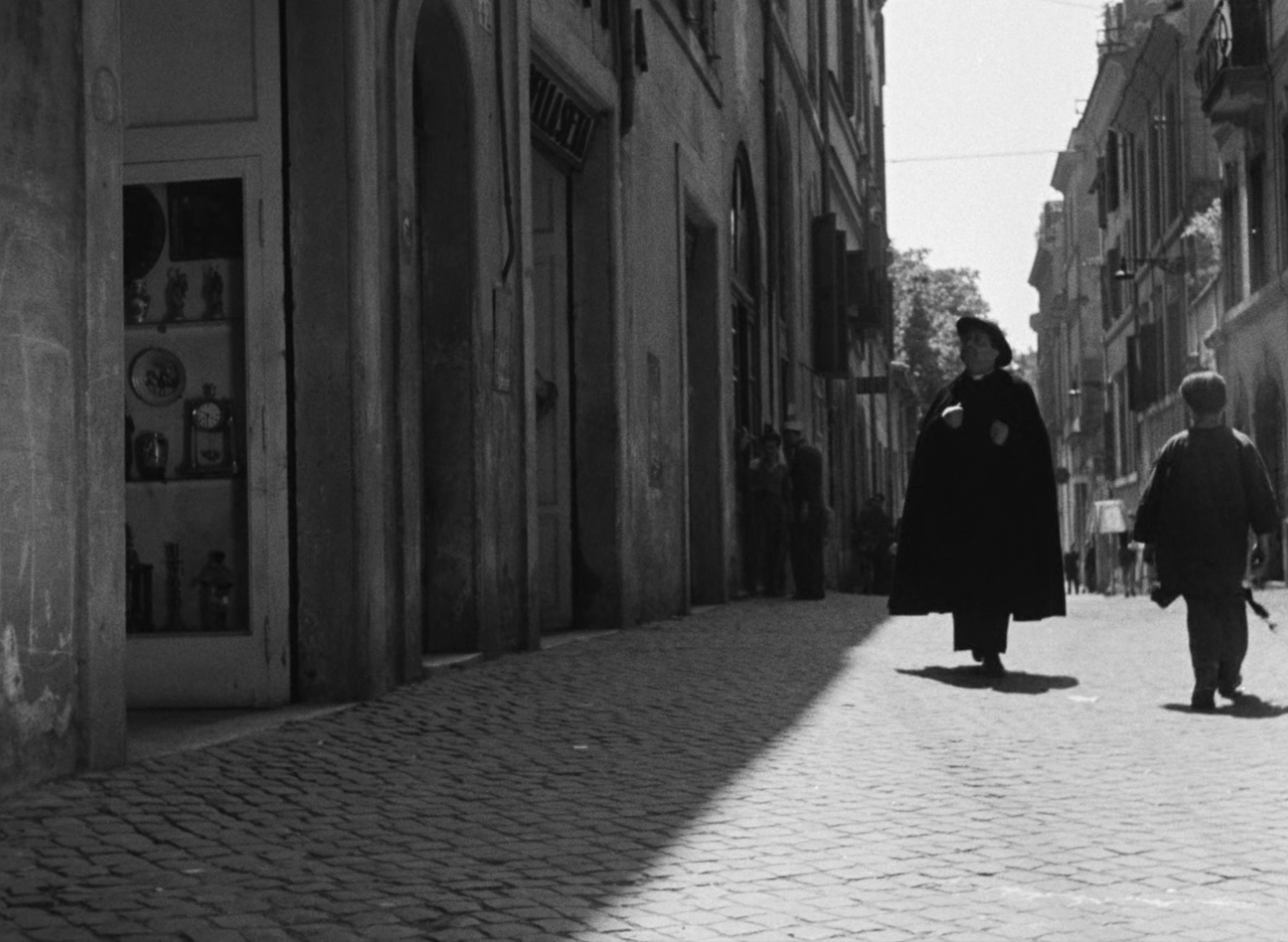
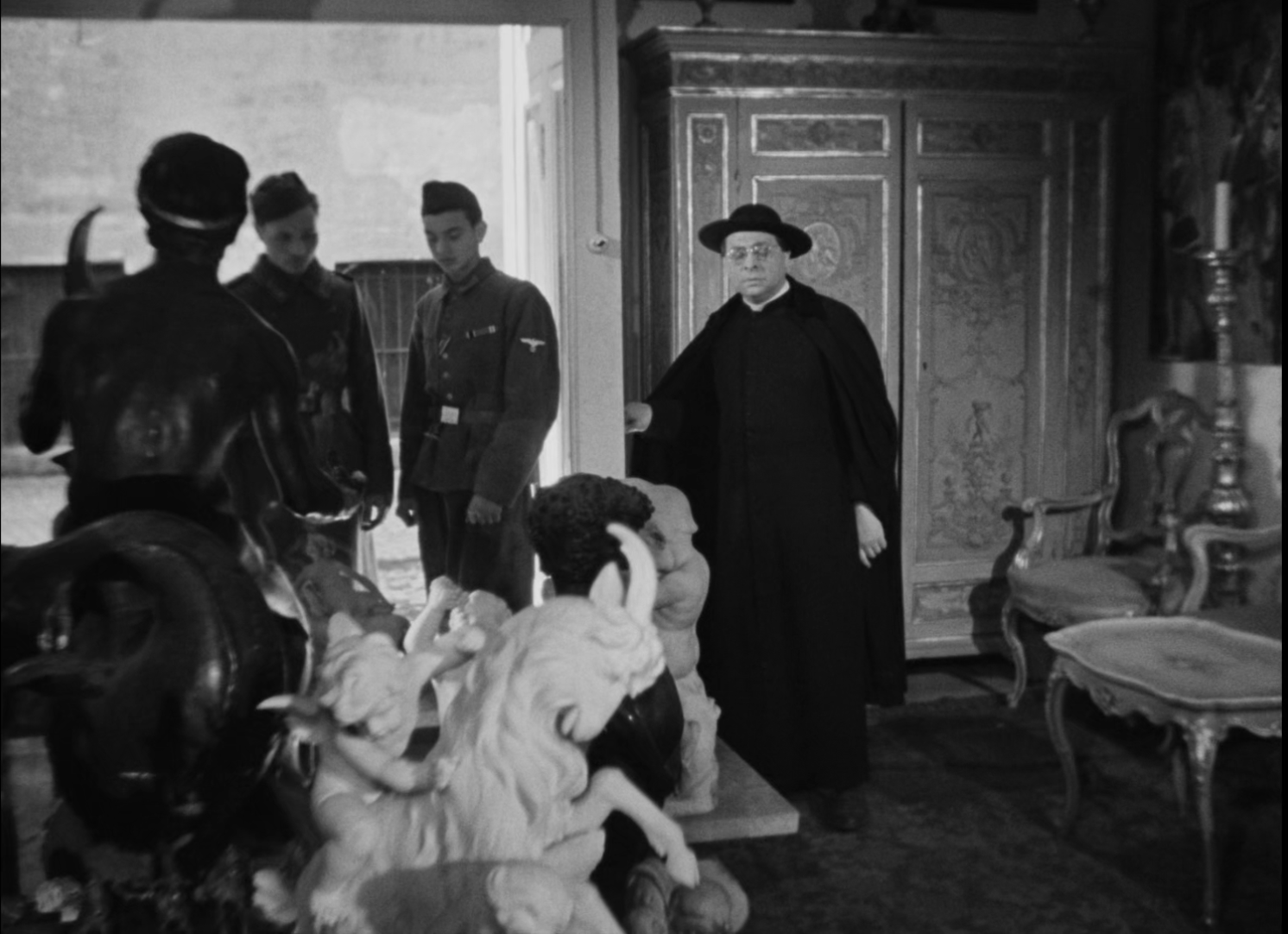
Vediamo Don Pietro camminare su una strada di ciottoli. Entra in un negozio di antiquariato. All'interno, visti in sagoma, due soldati tedeschi stanno in piedi a parlare.
We see Don Pietro walking along a cobblestone sidewalk. He enters an antique store. Inside, seen in silhouette, two German soldiers stand talking.
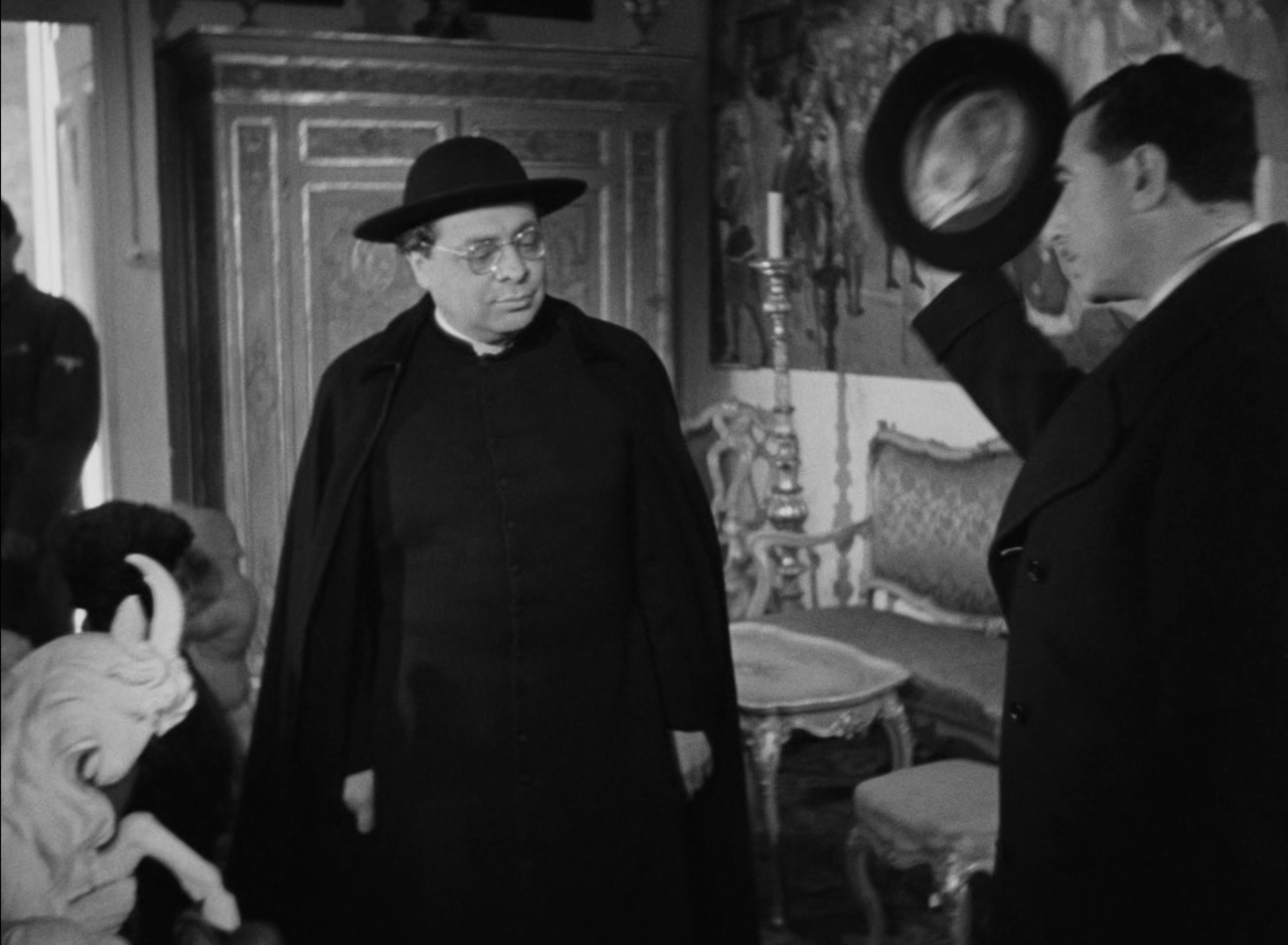
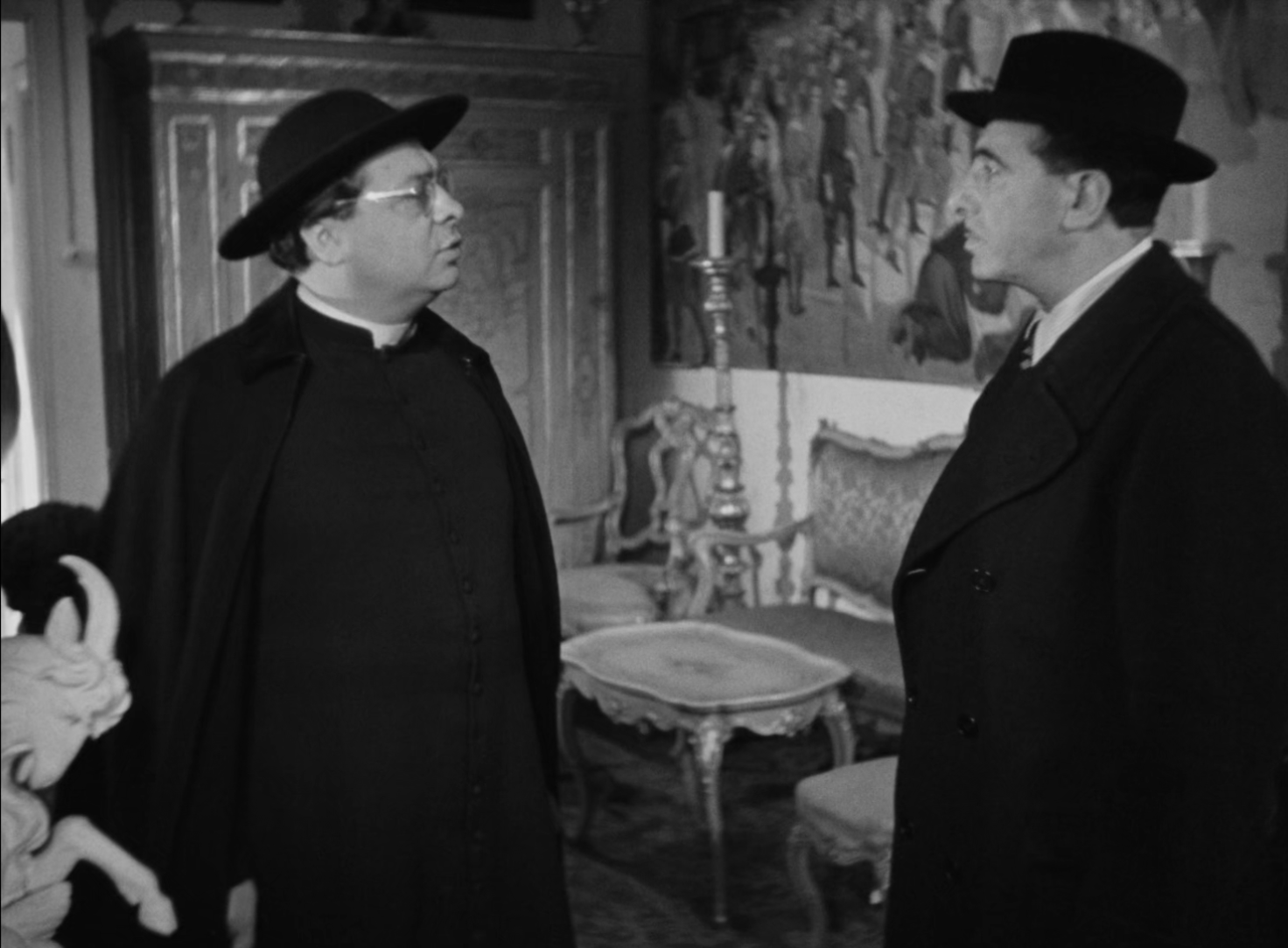
Un venditore saluta il prete, che lo saluta levandosi il suo fedora. “Buongiorno, Reverendo”.
“Buongiorno”.
“Desidera?”
“Non avreste per caso un Sant'Antonio Abate?”
“Mi dispiace, ne avevamo tempo fa ma non si vende. Avrei però un San Rocco”.
“Grazie, non mi interessa”.
"Come? Non le interessa un santo come San Rocco?”
A salesman greets the priest, tipping his fedora. “Hello, Father.”
“Hello.”
“What would you like?”
“Would you happen to have a statue of Saint Anthony the Abbot?”
“Sorry, we had some a while ago, but it doesn’t sell much. But I happen to have a Saint Rocco.”
“Thanks, I’m not interested.”
“What? Not interested in a saint like Saint Rocco?”
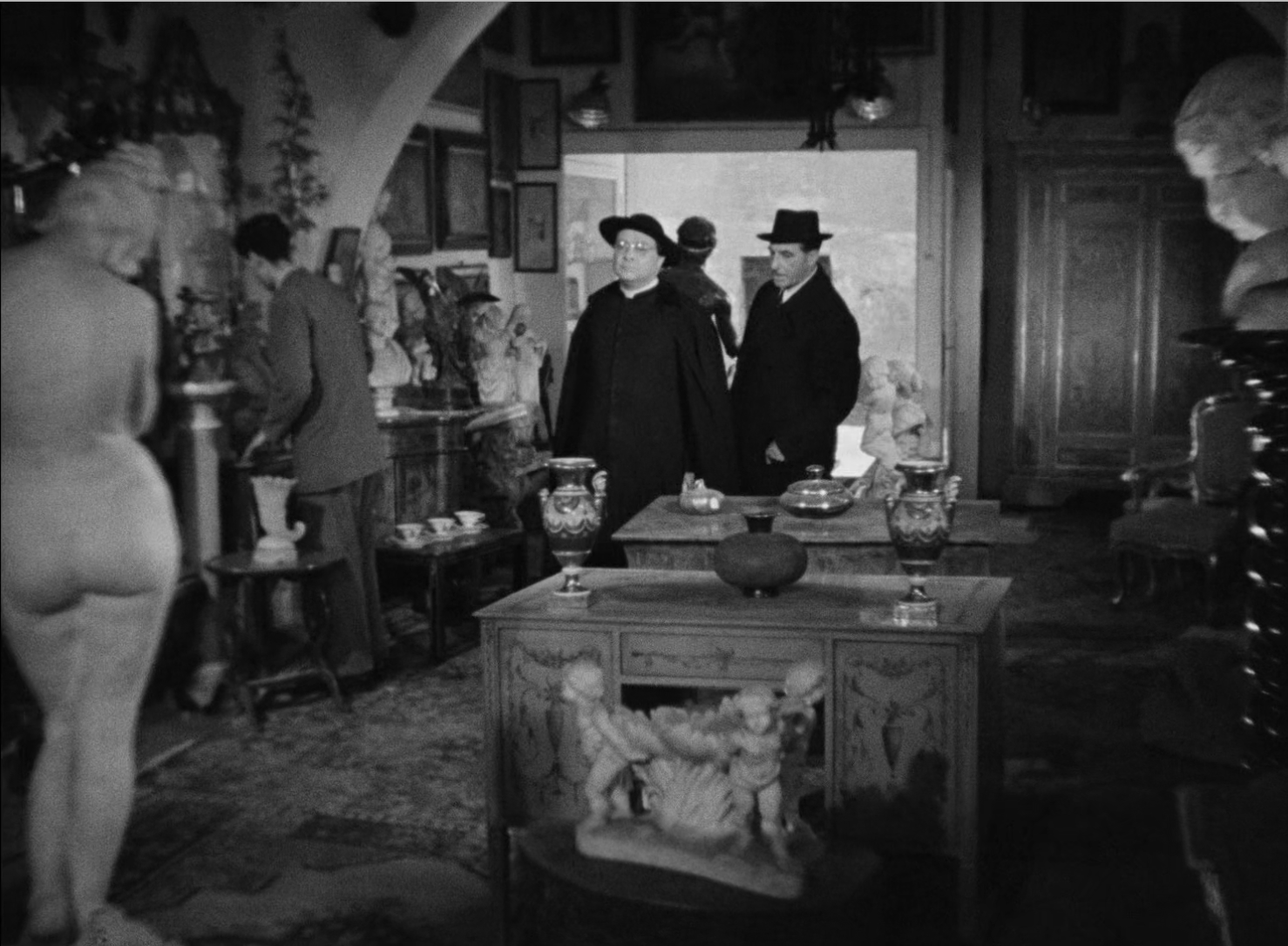
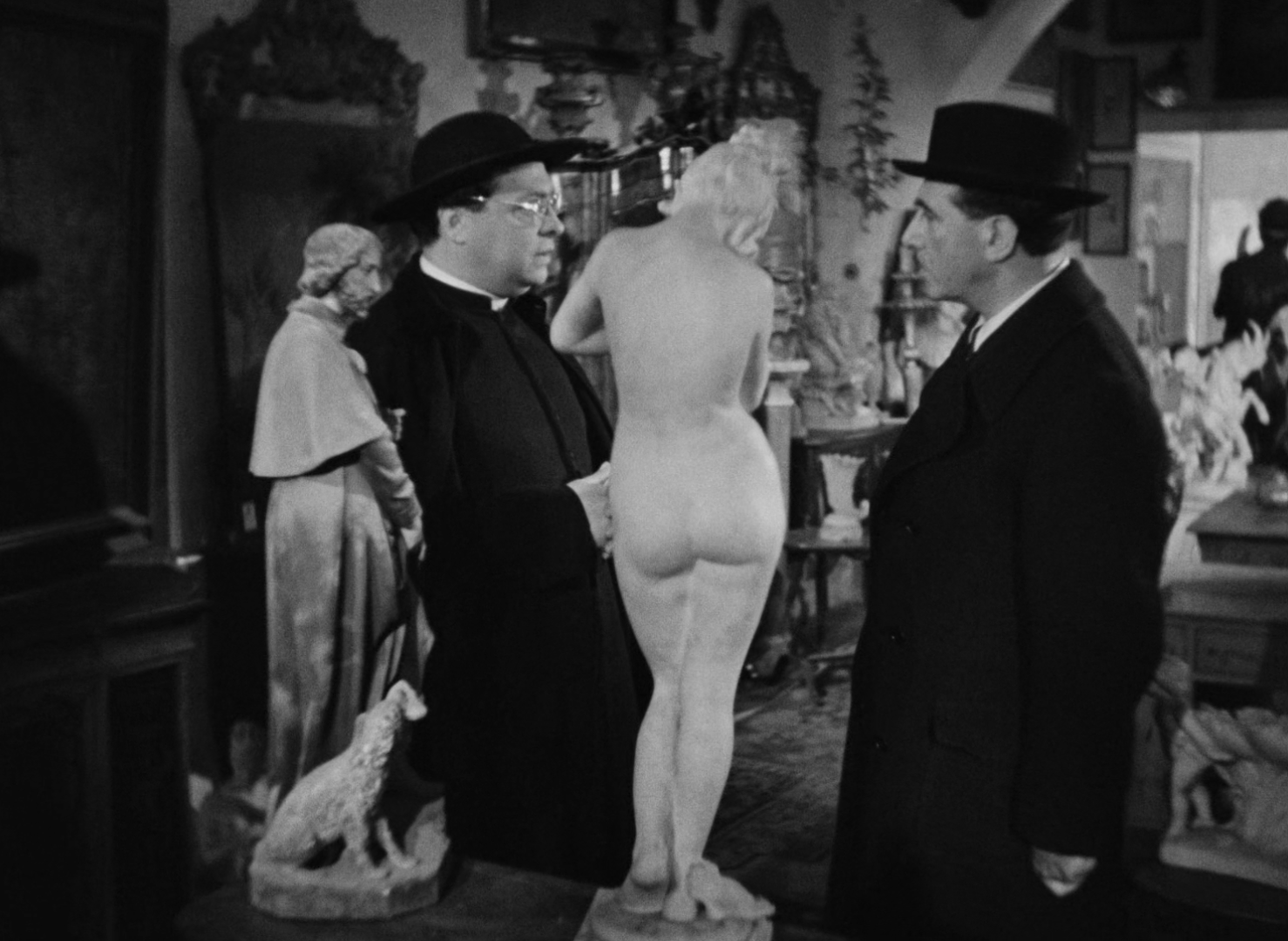
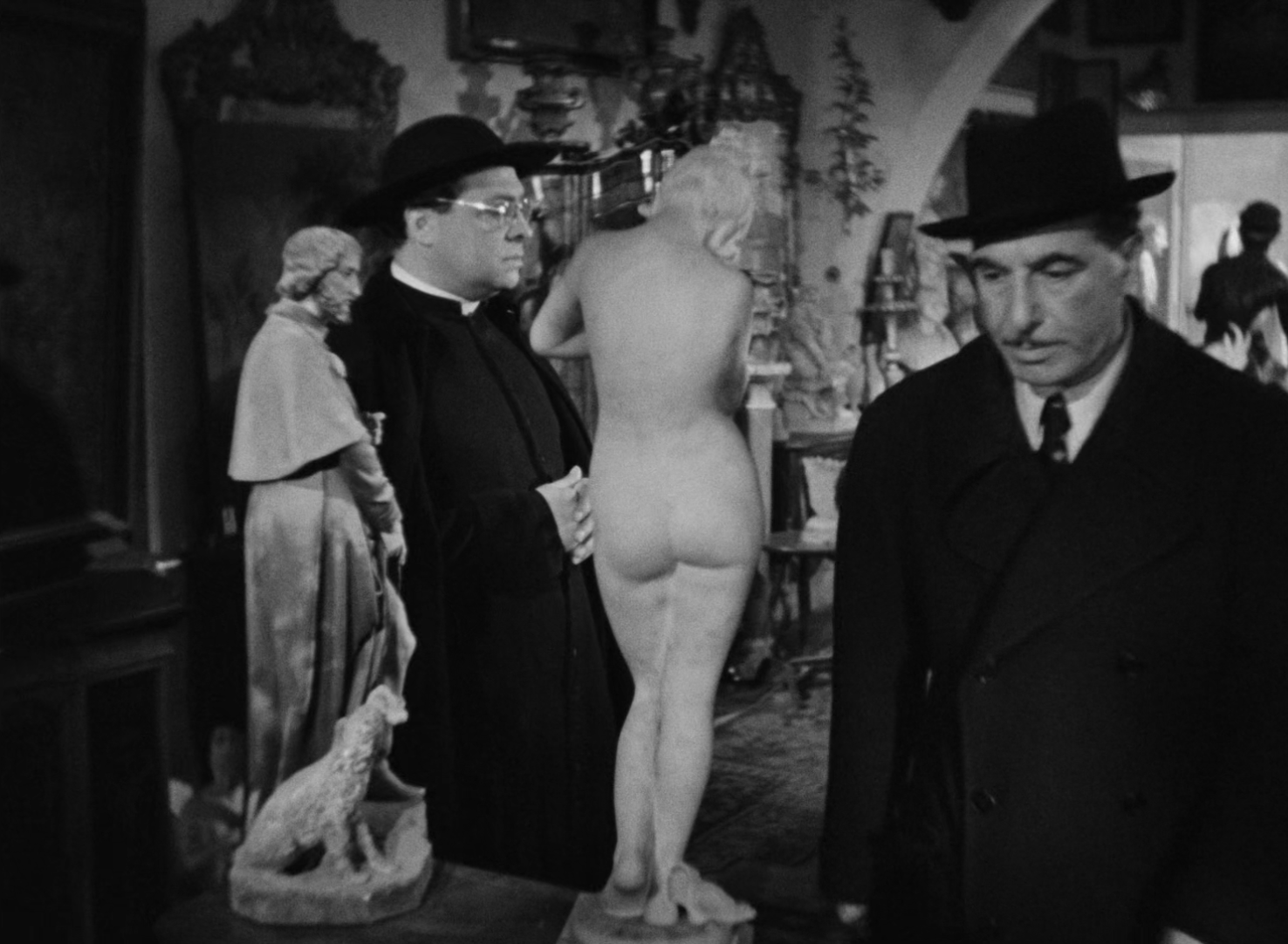
“Si accomodi. Venga a vedere”. Camminano fino al retro del negozio. “Venga pure. É anche bello, sa”.
Per un attimo, il profilo del prete, con cappello a falda larga, è incorniciato dalla finestra.
“Vediamo”.
San Rocco sta umilmente in piedi con un cane accanto.
"Glielo do per poco", dice il venditore. Nell'inquadratura, i due uomini sono separati dalla statuetta di una donna nuda.
“Io dovrei parlare con Francesco. Mi manda ‘L'uomo dalle scarpe strette’”.
L'uomo annuisce. "Attenda un momento". Si allontana.
“Step inside. Come and see.” They walk to the back of the shop. “Come along. It's a beauty, too, you know.”
For a moment, the priest’s outline, with broad-brimmed hat, is framed by the window.
“Let’s have a look.”
Saint Rocco stands humbly with a dog next to him.
“I’ll give you a good price,” says the salesman. In the shot, the two men are separated by the statuette of a naked woman.
“I need to speak to Francesco. The man with the tight shoes sent me.”
The man nods. “Wait a moment.” He steps away.
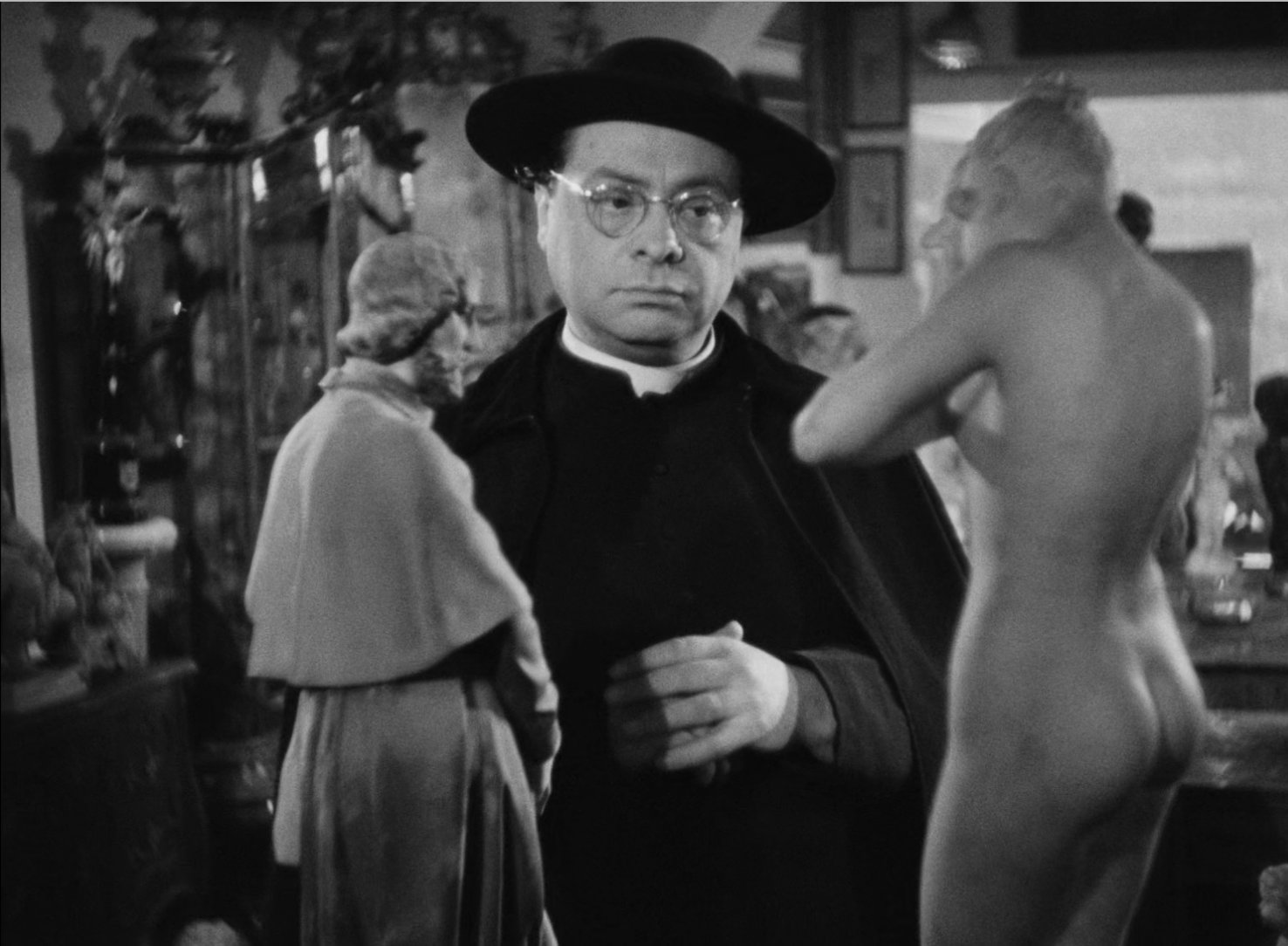
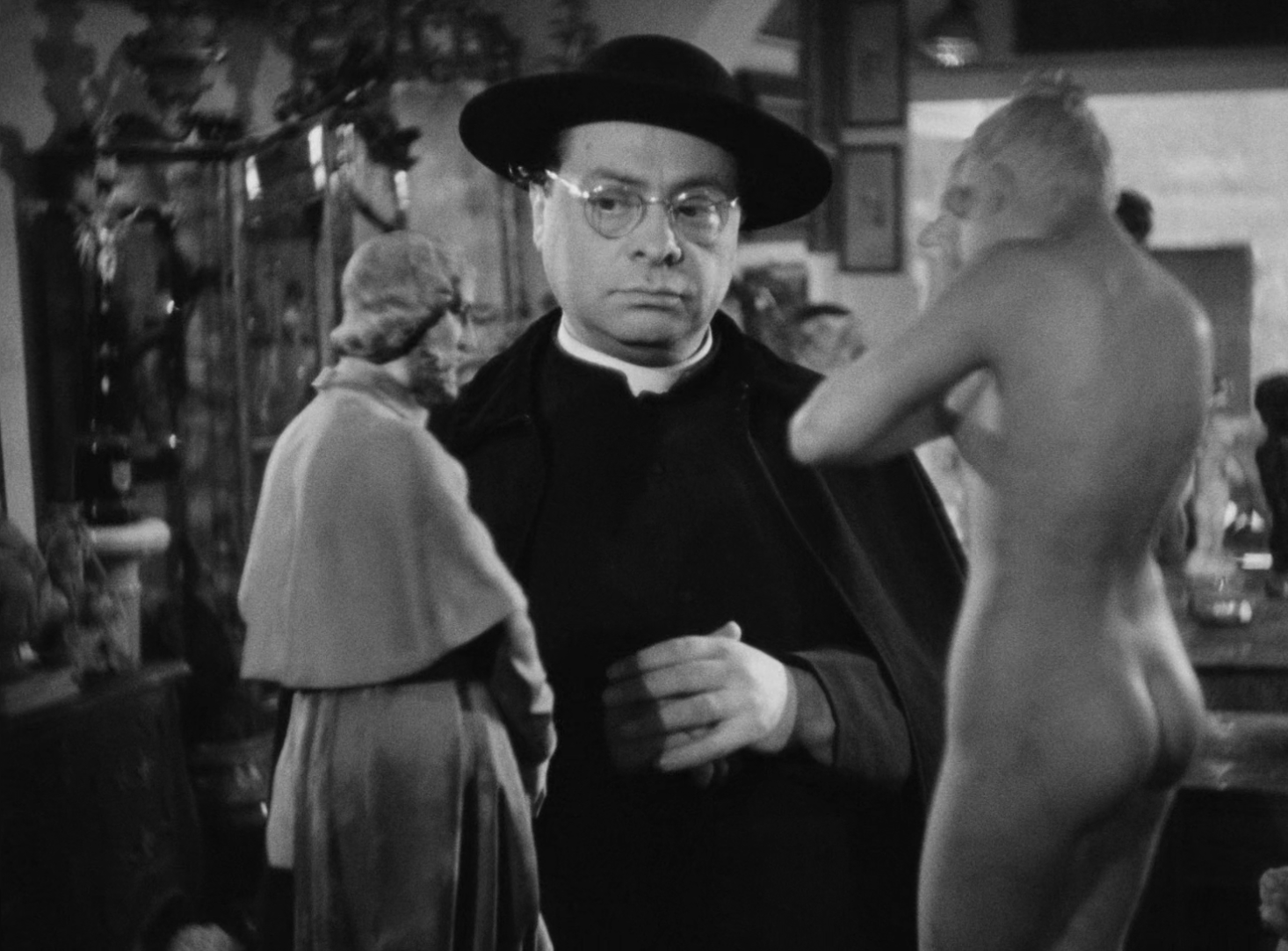
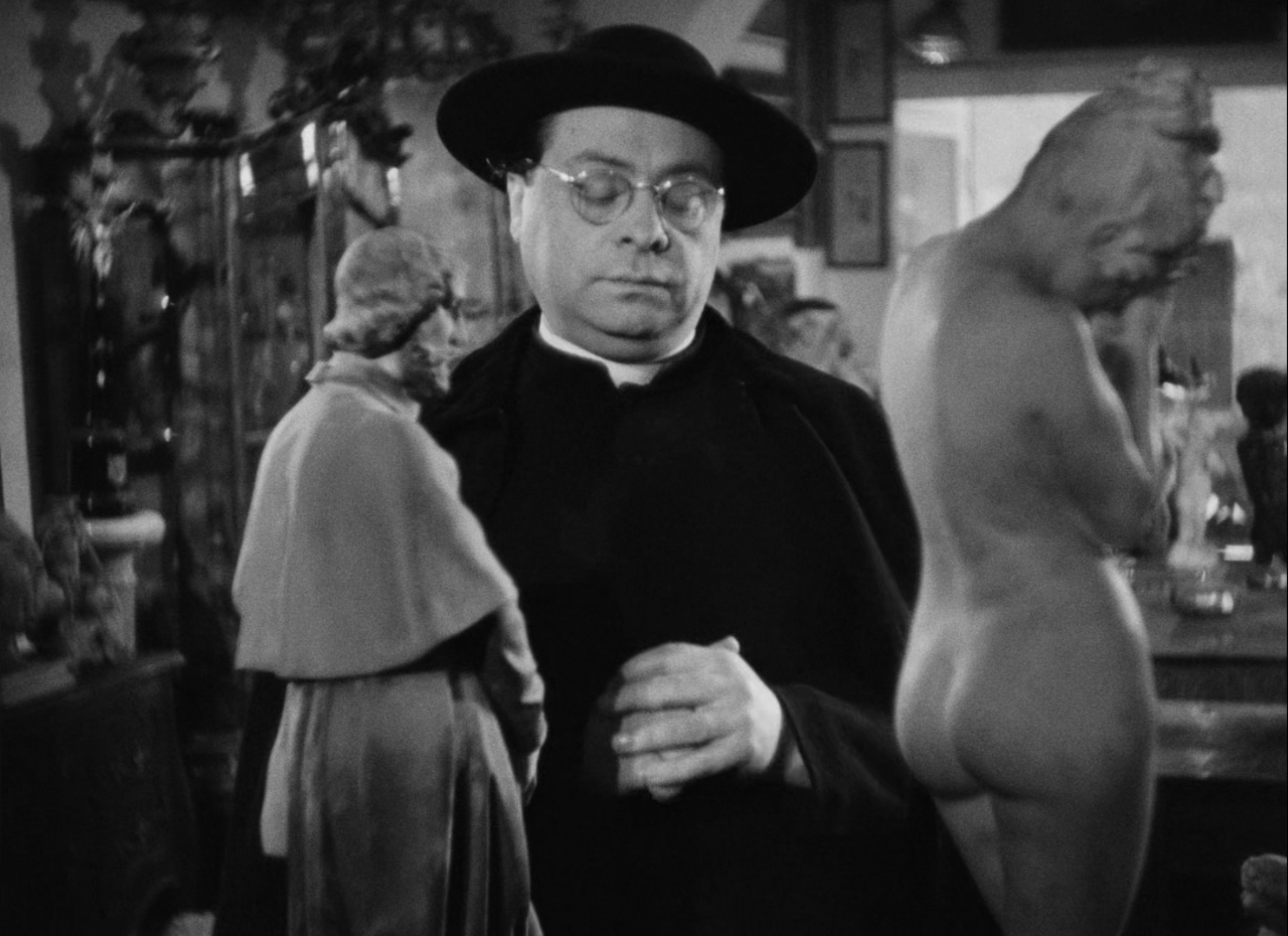
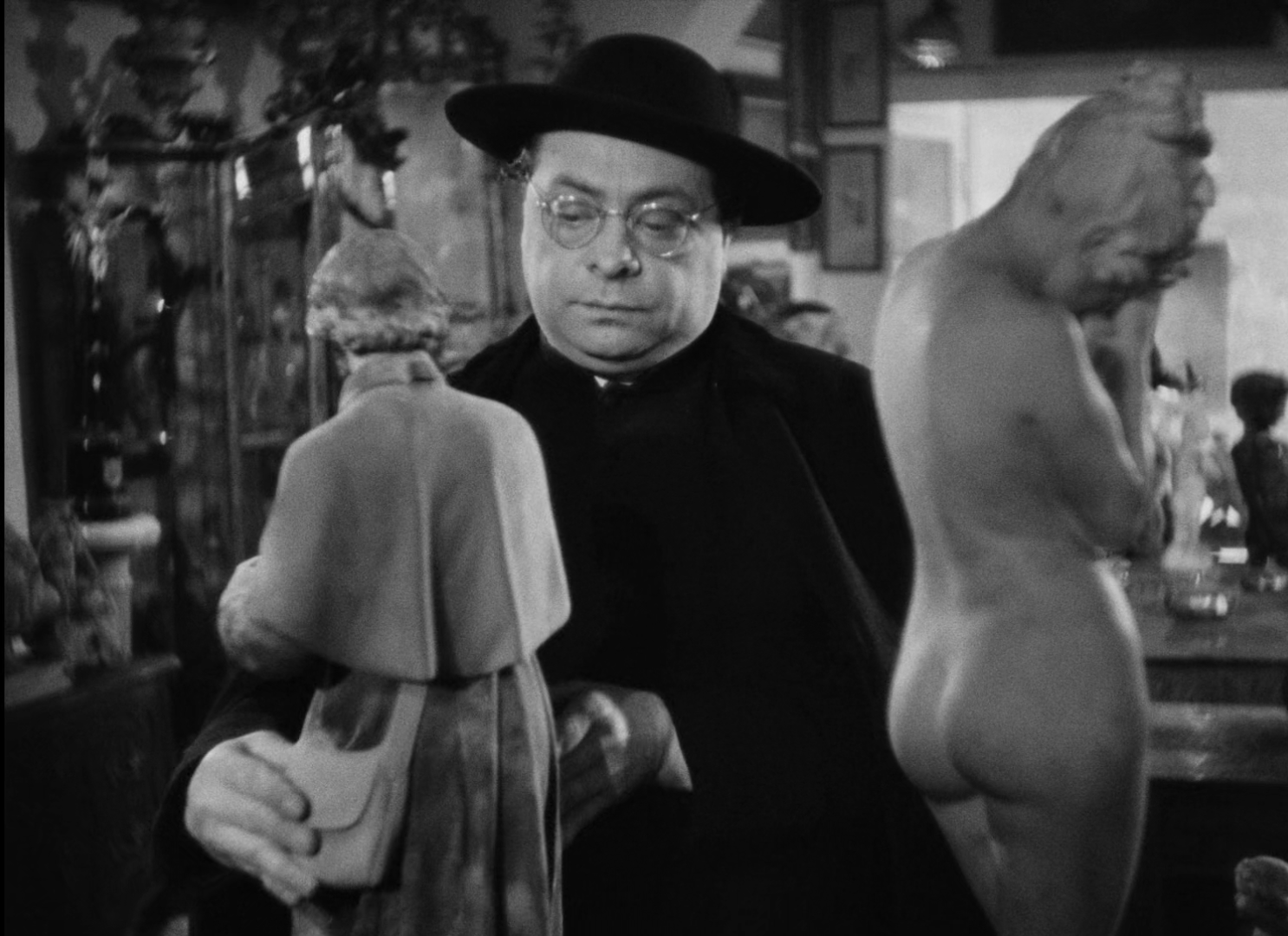
Il prete rimane con la donna nuda e il santo. Dà un’occhiata all'uno, poi all'altra. Infine gira la donna dall’altra parte. Si riposa un attimo, mani incrociate sul petto, occhi chiusi. Poi, aprendoli, si rende conto di non aver fatto abbastanza: gira San Rocco in modo che la nudità non sia più nel suo campo visivo.
The priest is left with the naked woman and the saint. He glances at one, then the other. Finally he turns the woman away. He stands in repose for a moment, hands crossed across his chest, eyes closed. Then, opening them, he realizes he hasn’t done quite enough: he turns Saint Rocco so that the nakedness is no longer in his line of view.
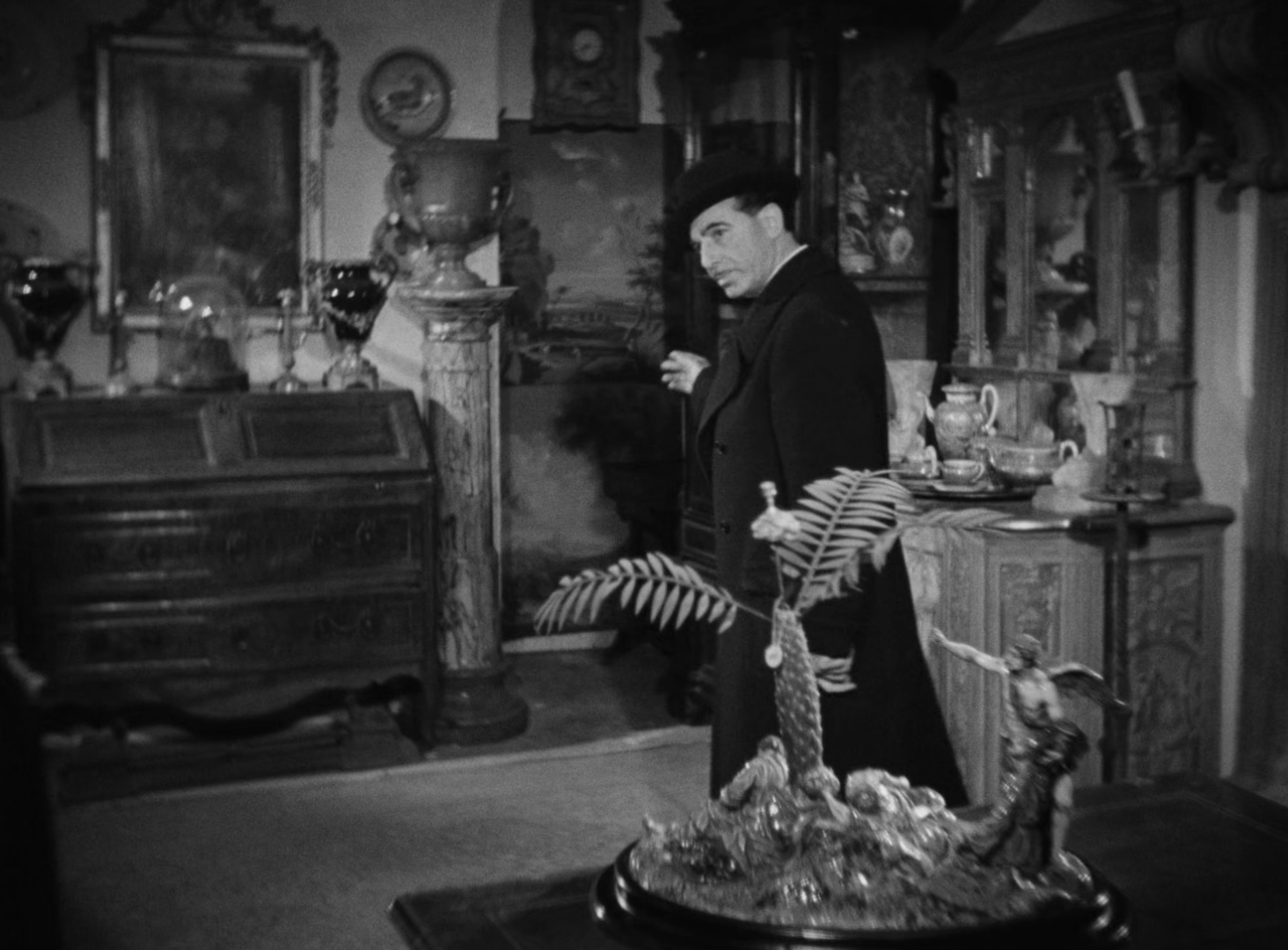
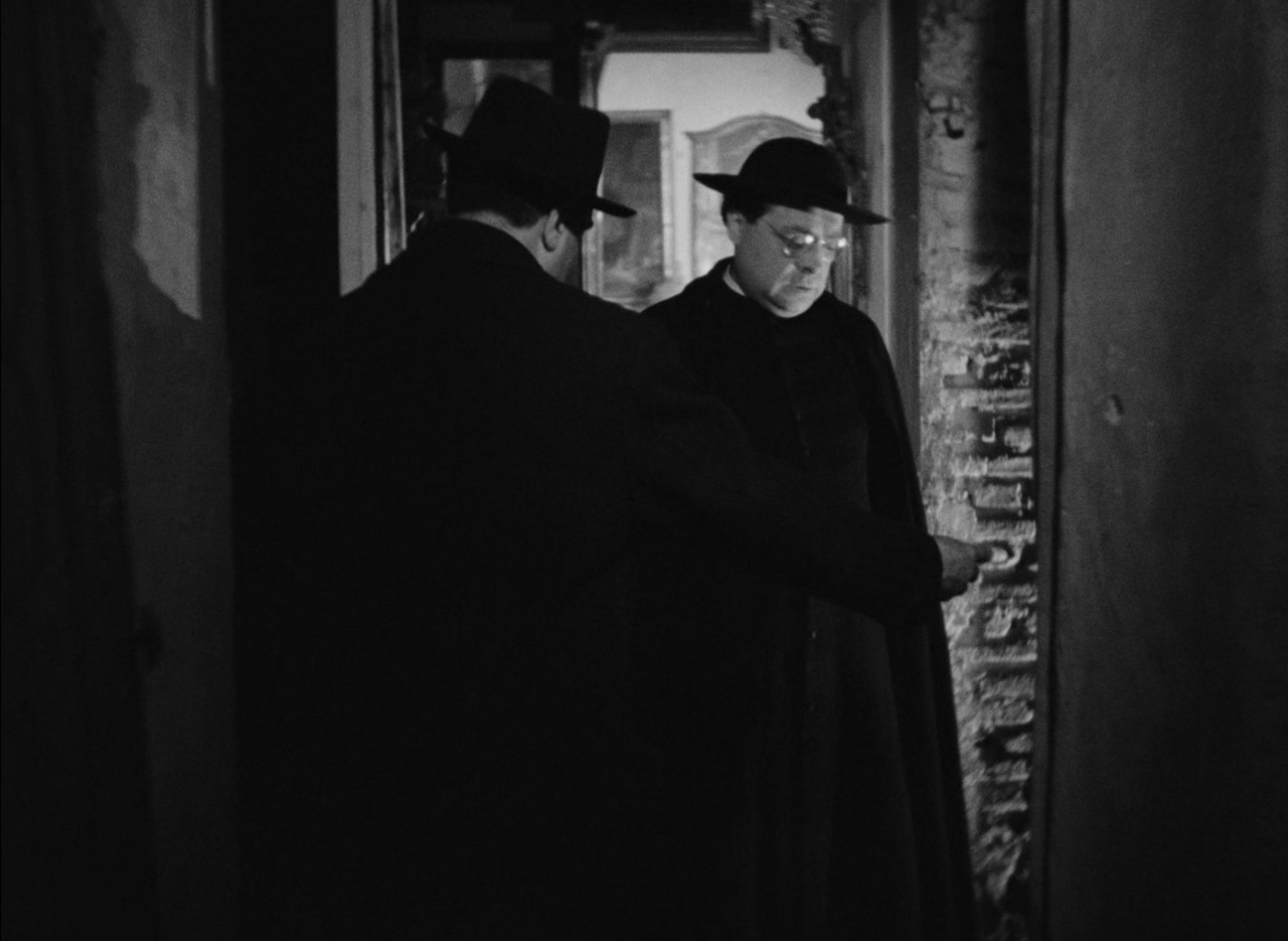
Il venditore guida Don Pietro verso una porta sul retro del negozio. "Giù per questa scala", dice.
The salesman guides Don Pietro to a door at the back of the store. “Down these stairs,” he says.
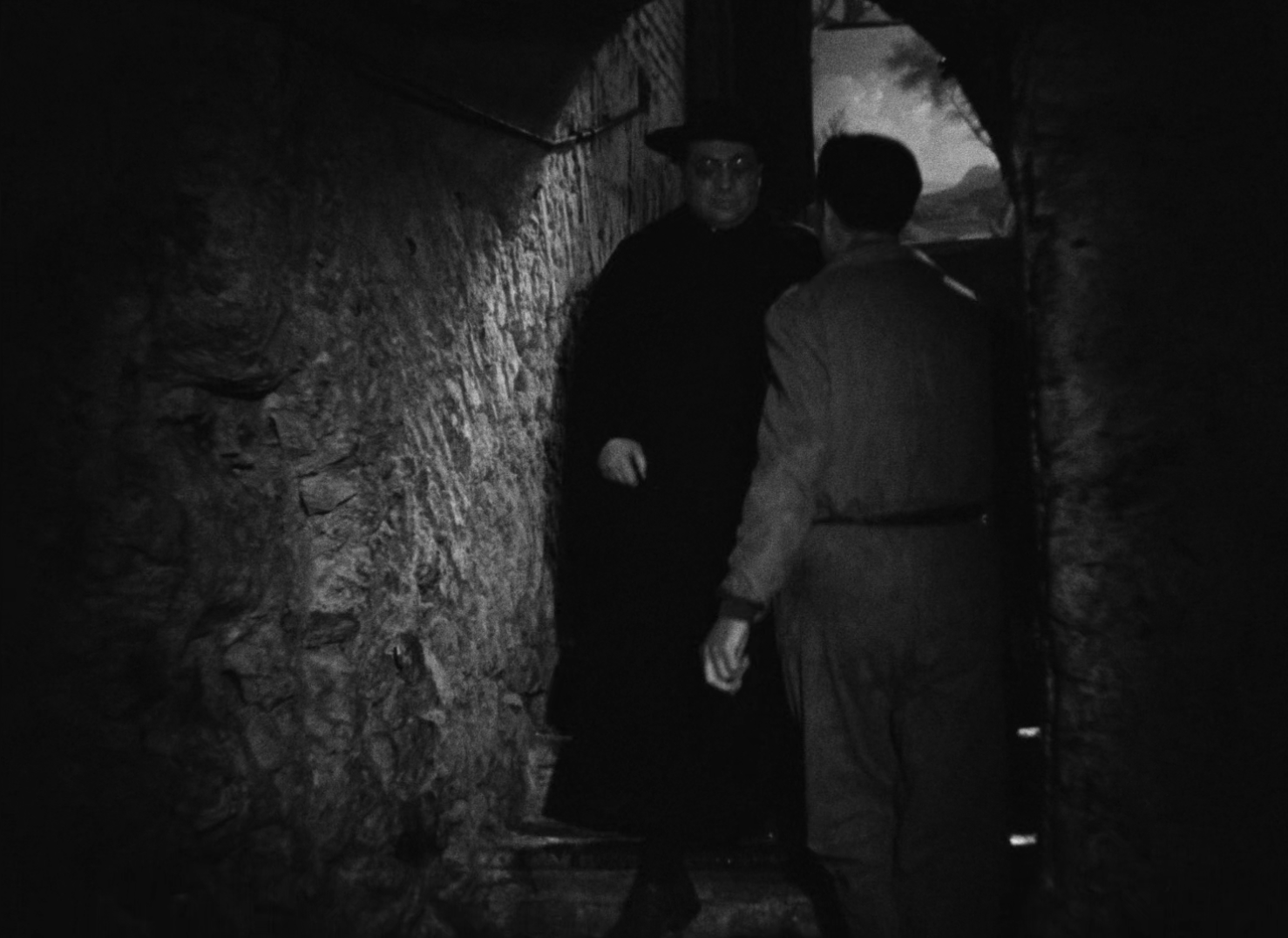
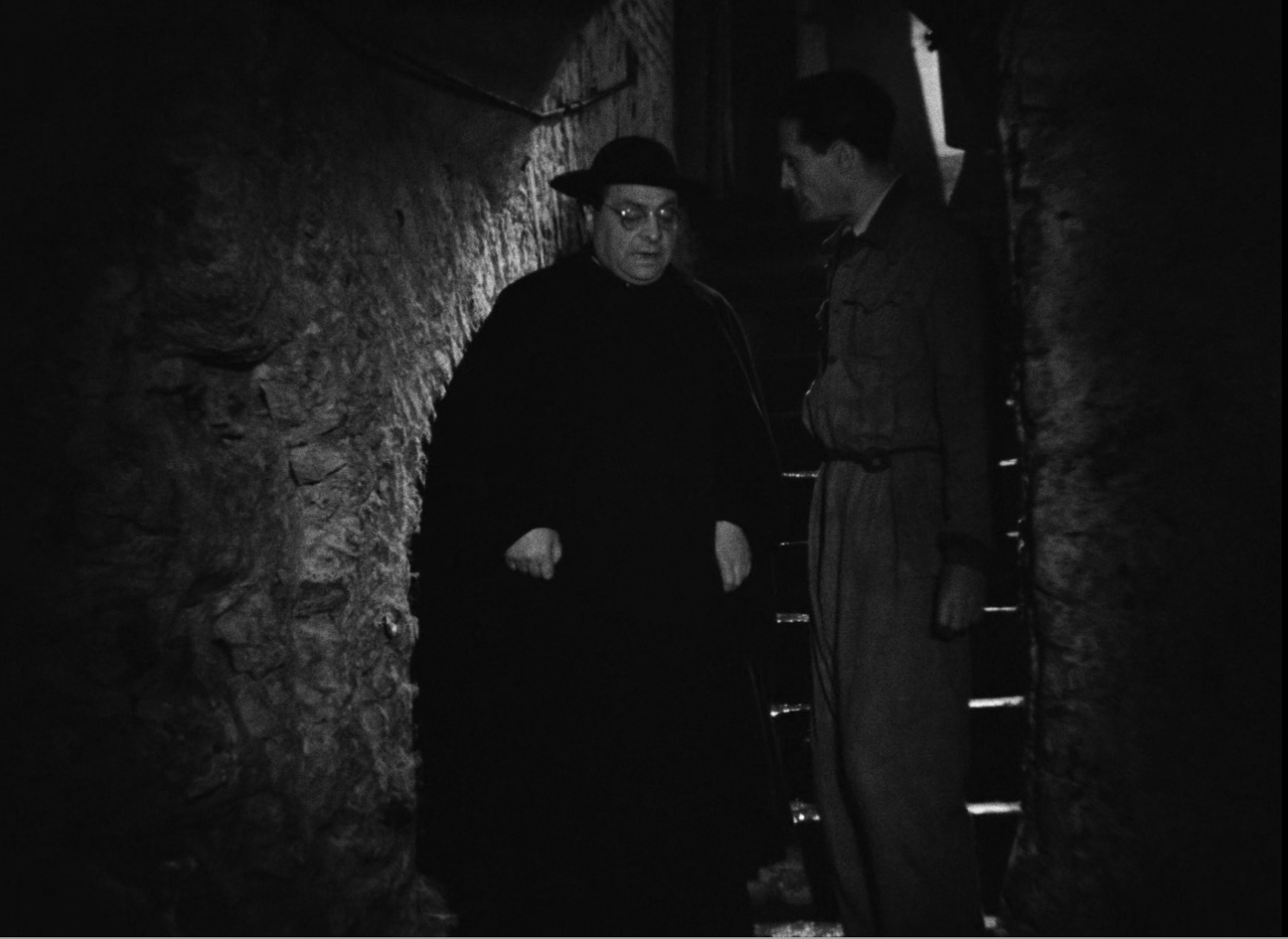
Sulla scala ombrosa, il prete incontra Francesco, il tipografo, il fidanzato di Pina, che gli dice: "È lei Don Pietro! Ma che è successo?”
"Niente di grave grazie al cielo, poteva succedere però". Scendono le scale insieme. "La notte scorsa le SS sono state da Manfredi".
“Questo lo abbiamo saputo. Ma lui dove sta?”
"A casa tua”.
"Mia?”
"Sì, gli ha aperto la Pina. Ci resterà per qualche giorno”.
On the shadowy stairway, the priest encounters Francesco, the printer, Pina’s fiance, who says, “It’s you, Don Pietro! But what has happened?”
“Nothing serious, thank heavens, but it could have been.” They walk down the stairs together. “The SS were at Manfredi’s last night.”
“We learned about it. Where is he?”
“At your place.”
“My place?’
“Yes, Pina let him in. He’ll stay there for a few days.”
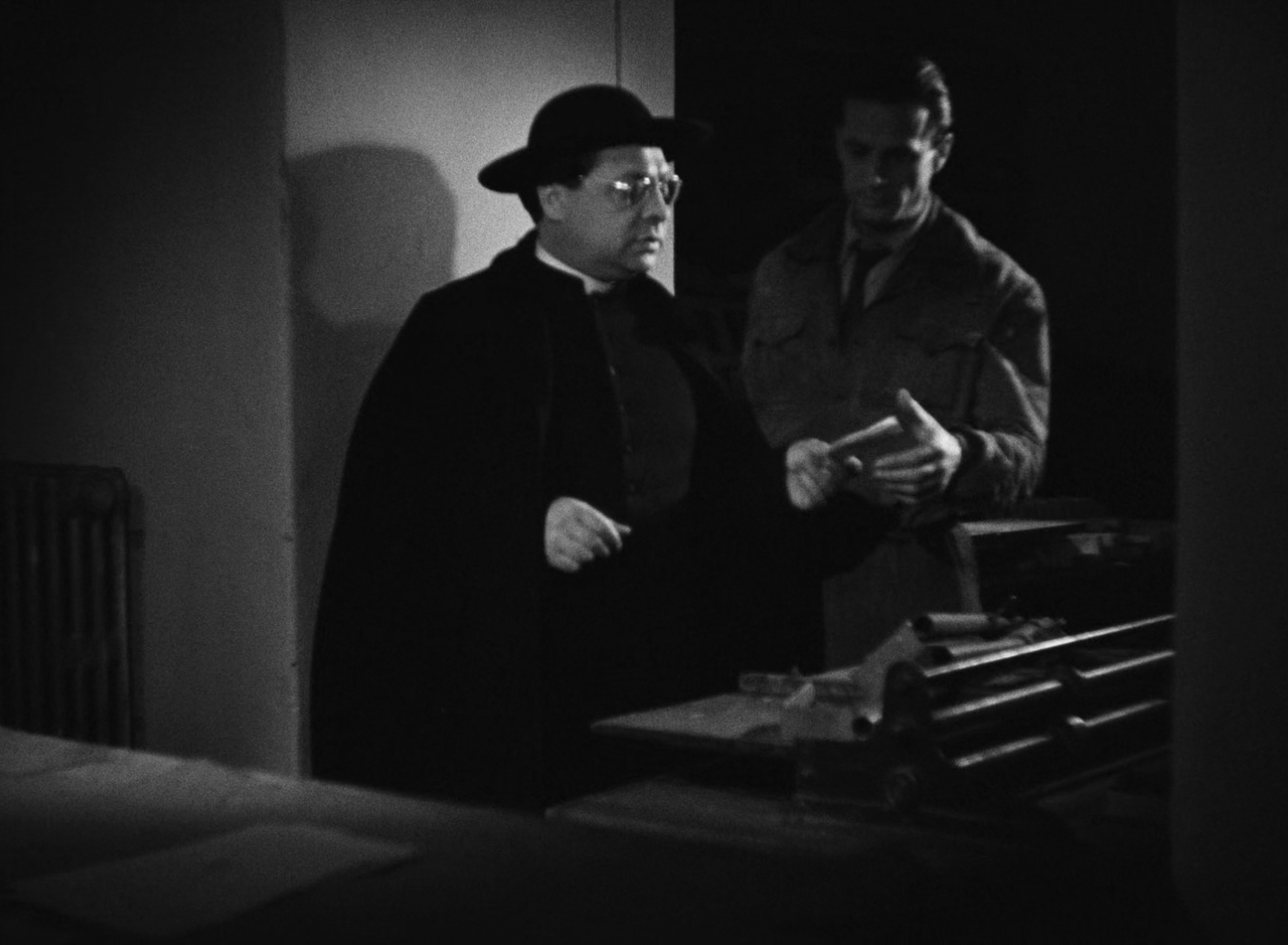
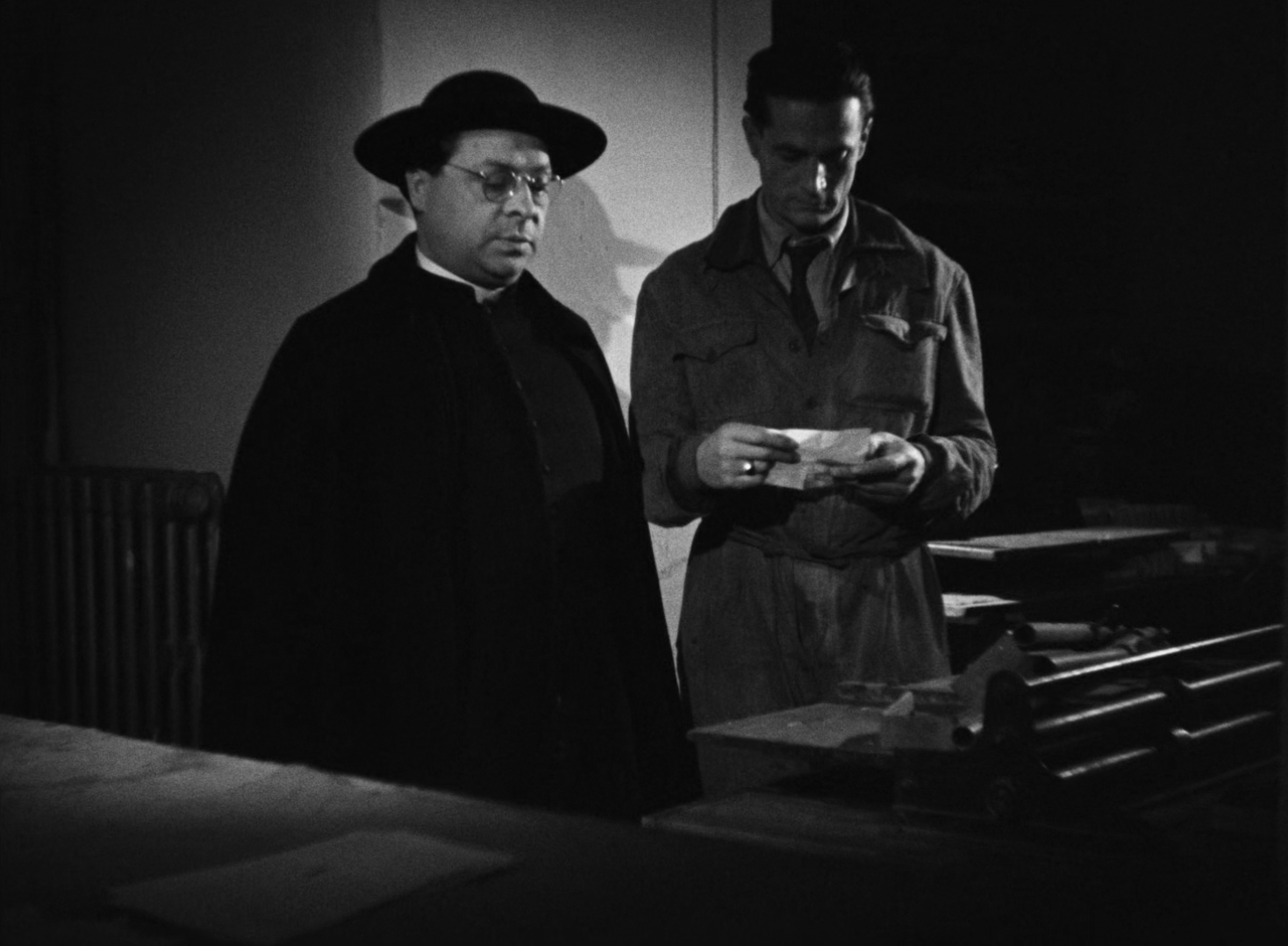
Quando entrano in un'altra stanza, Don Pietro consegna un foglio di carta a Francesco. “Mi ha consegnato questo biglietto”. Francesco lo apre. “Io volevo mandare Manfredi dai monaci francescani” – spiega il prete – “Sarebbe stato più sicuro.. Ma lui non vuole. Dice che sarebbe troppo isolato”.
As they enter another room, Don Pietro hands a piece of paper to Francesco. “He gave me this note.” Francesco opens it. “I wanted to send Manfredi to the Franciscan monks,” the priest explains. “He’d be safer there. But he doesn’t want that. He says he’d be too isolated.”
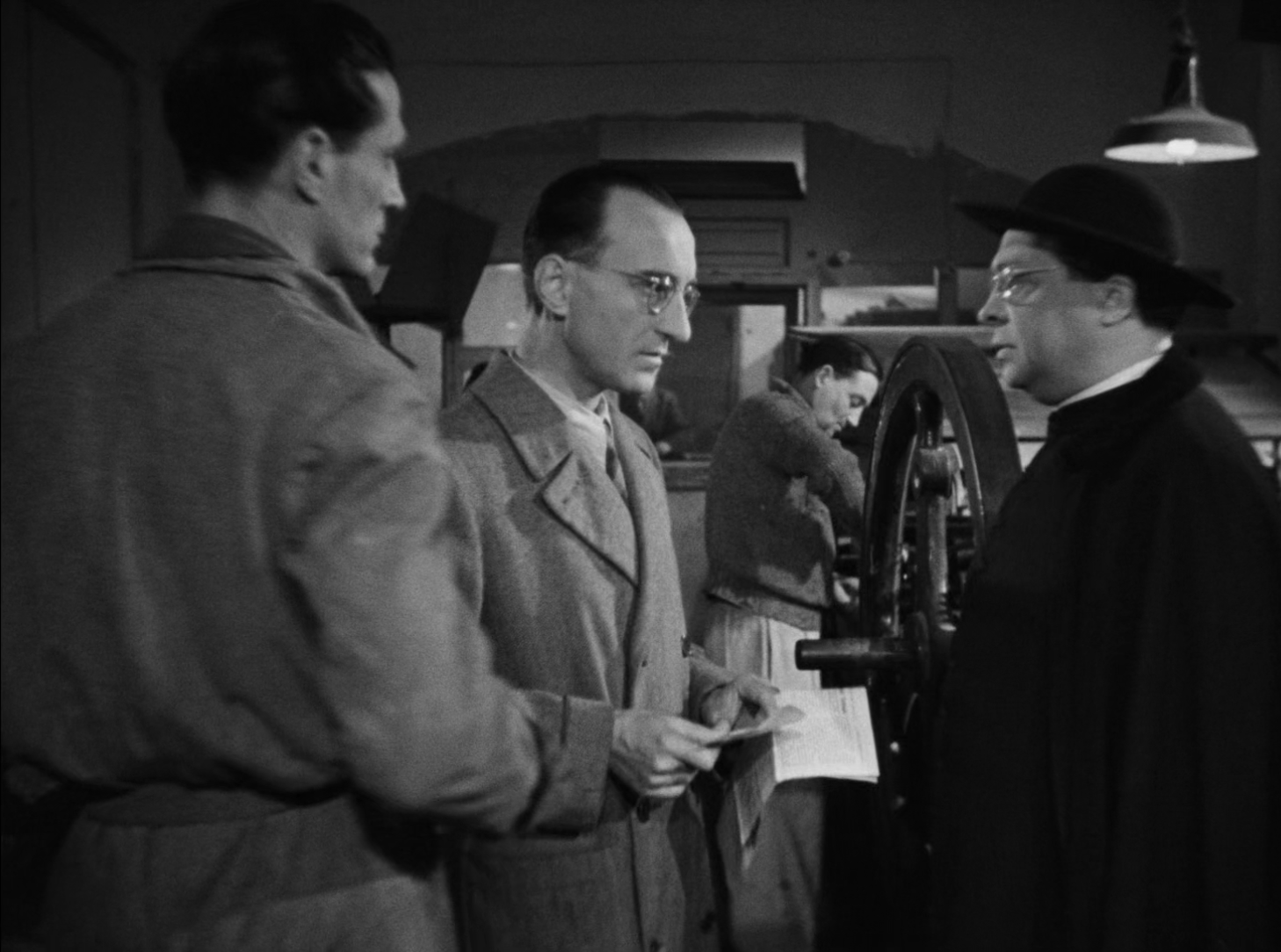
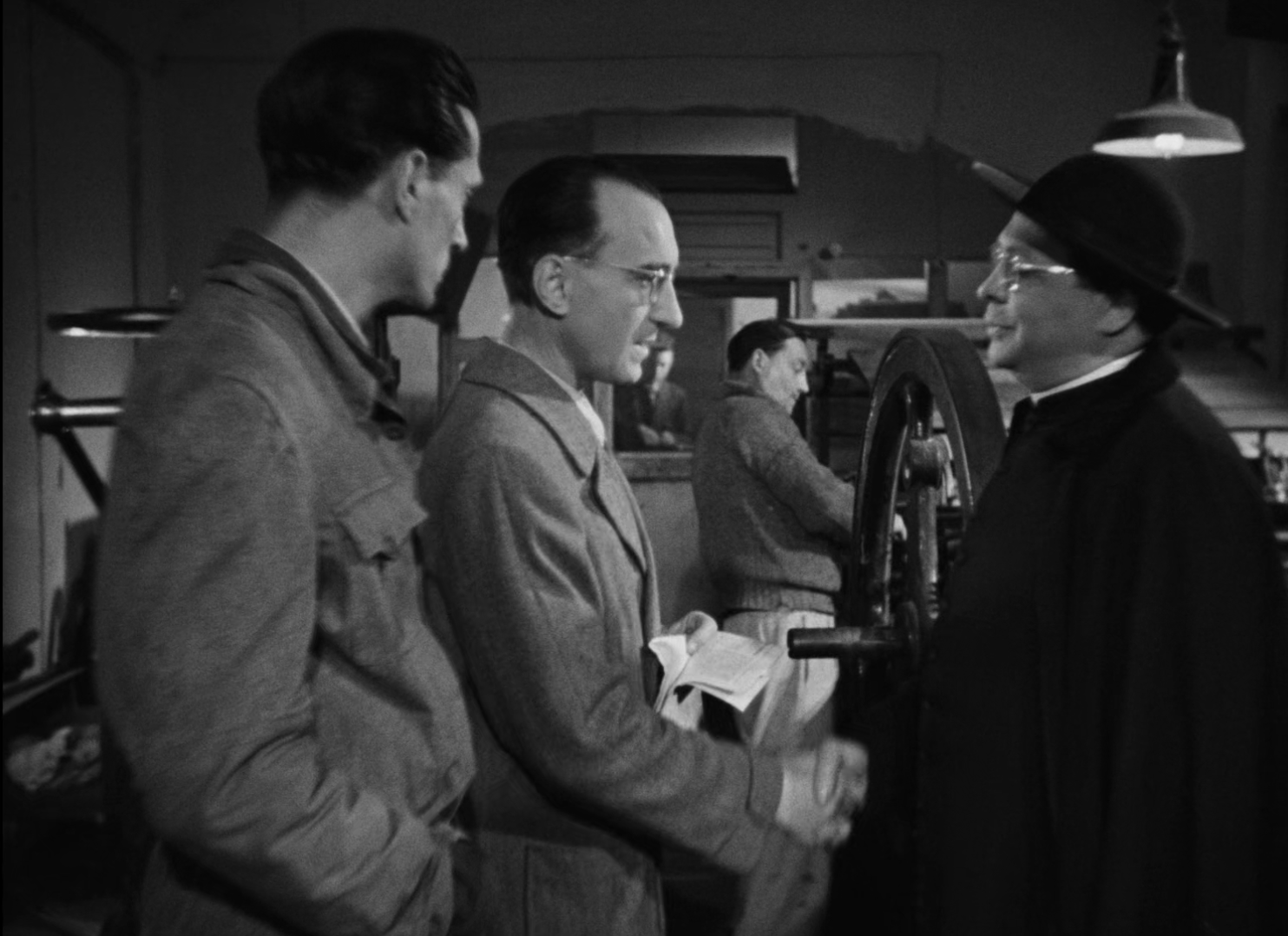
"È giusto", dice un terzo uomo. Sullo sfondo, vediamo macchine da stampa.
“Già, ma adesso per lui è più pericoloso lavorare se l'hanno segnalato”.
L’uomo spiega: “Lo so, Reverendo, ma siamo pochi e se tutti entrano in convento…”
“Capisco”.
Francesco dice: “Scusi. Permette, Don Pietro? Il nostro direttore”.
“Molto lieto di conoscerla”, dice il prete. Si stringono la mano.
“Anche io. Ho sentito molto parlare di lei”.
“Questo è male… per la mia modestia e per la mia salute”.
“Lei ha fatto e fa molto per tutti noi. La ringrazio”.
Nonostante le differenze tra il Vaticano e la resistenza comunista, Don Pietro, seguendo la sua coscienza, è un attivo sostenitore dei partigiani. Dice semplicemente: "È mio dovere aiutare chi ha bisogno di aiuto”.
“It’s true,” says a third man. In the background, we see printing presses.
“Right, but it is more dangerous for him to work now that he’s been identified.”
The man explains, “I know, Father, but there are few of us and if everyone went into monasteries…”
“I understand.”
Francesco says, “Excuse me. May I, Don Pietro? This is our editor.”
“Very pleased to meet you,” says the priest. They shake hands.
“Same here. I’ve heard a lot about you.”
“That’s bad for my modesty – and my health.”
“You have done and do a lot for all of us. I thank you.”
In spite of the differences between the Vatican and the communist resistance, Don Pietro, following his conscience, has been an active supporter of the partisans. He says simply, “It’s my duty to help those in need.”
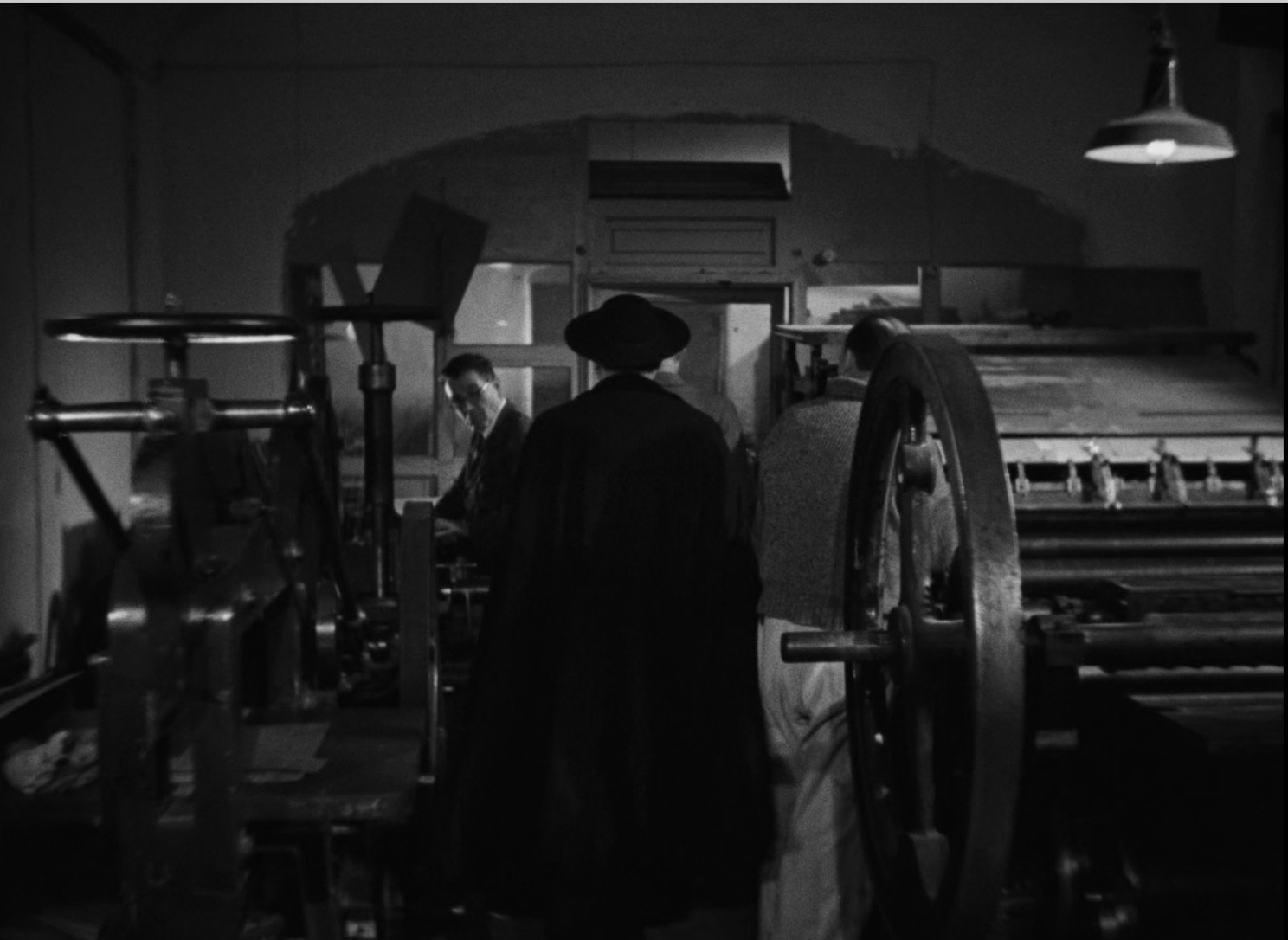
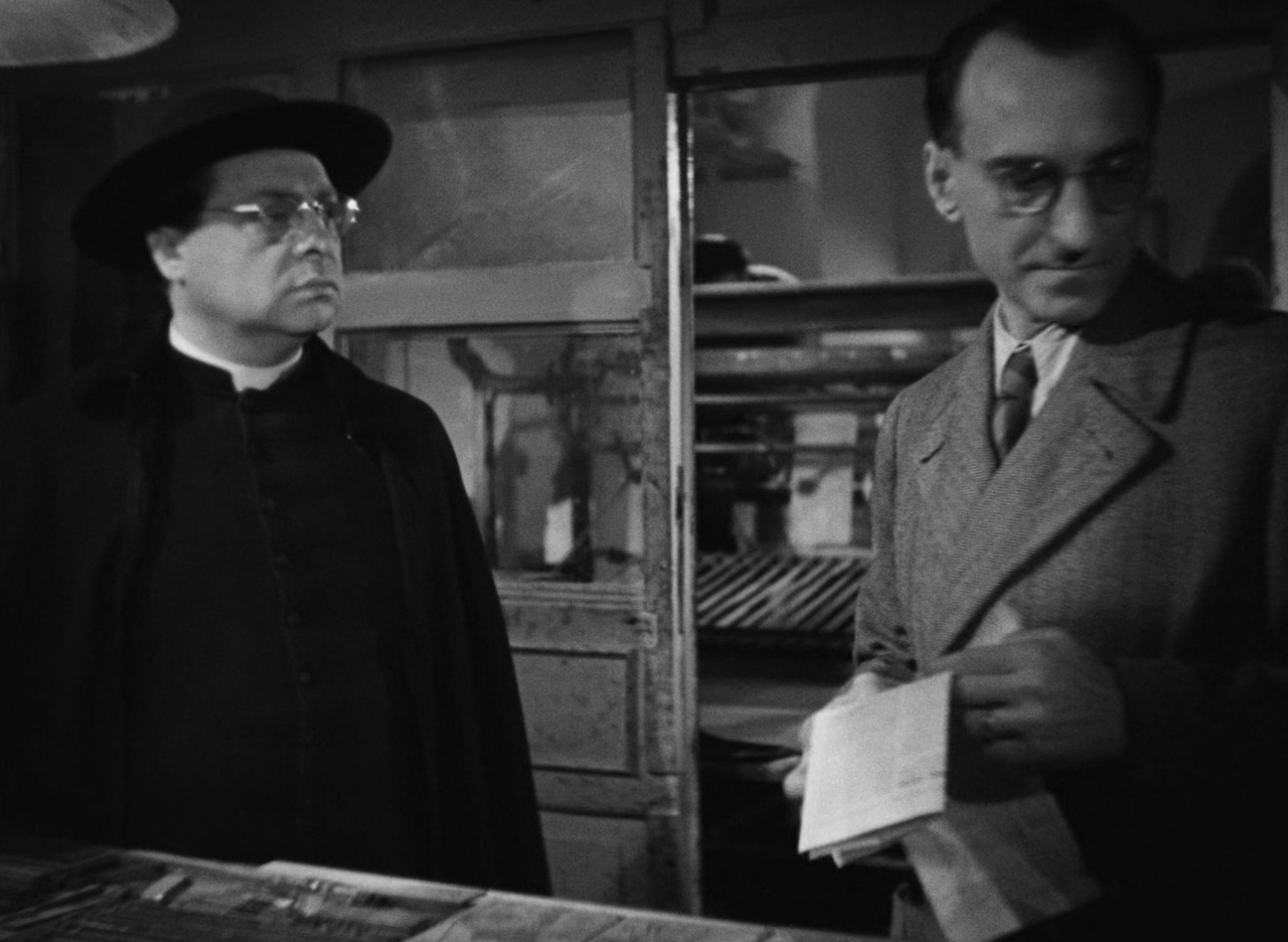
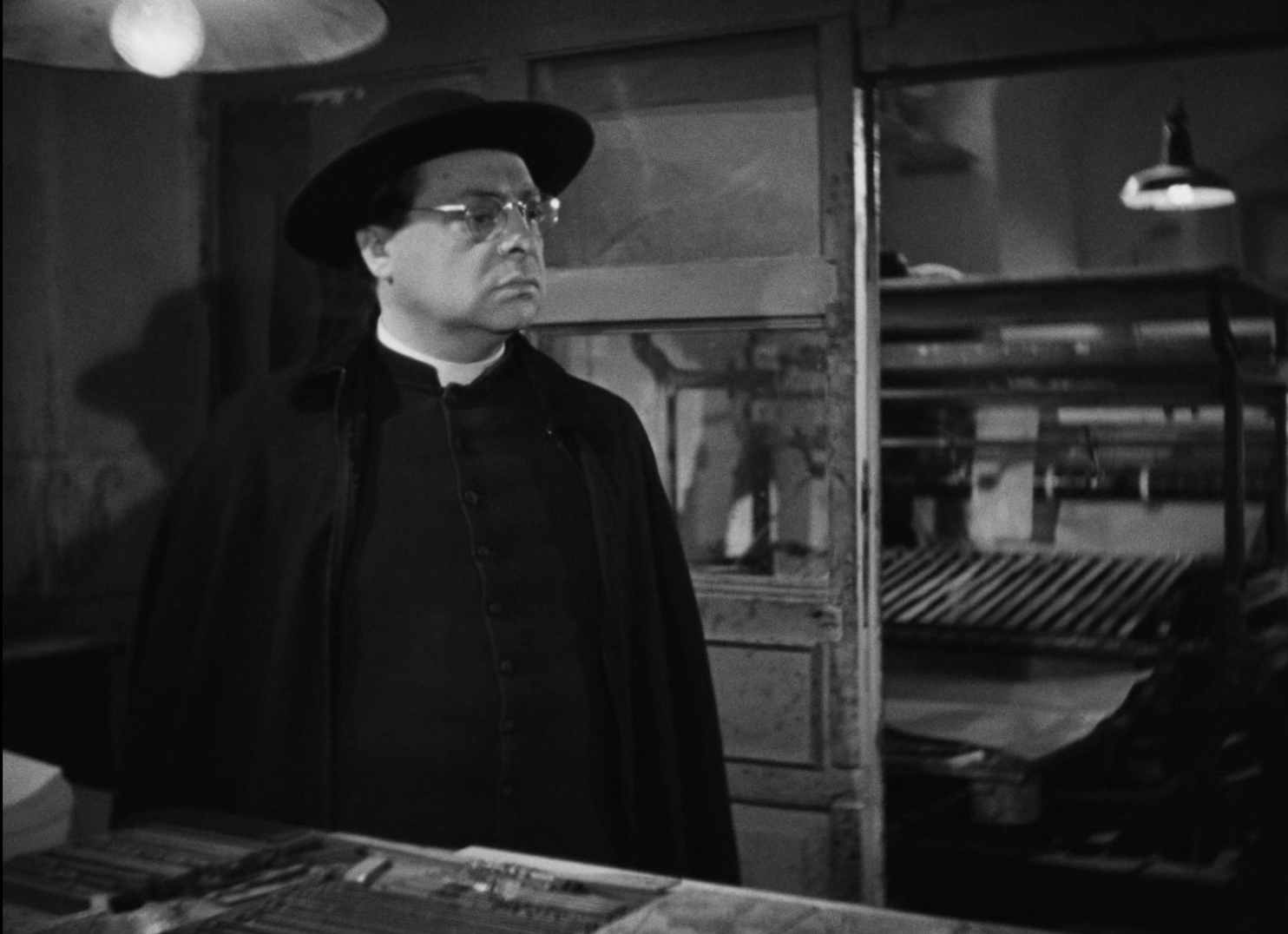
Don Pietro segue il direttore nel suo ufficio e poi aspetta pazientemente mentre il denaro viene recuperato per i partigiani.
Don Pietro follows the editor to his office and then waits patiently while the money is retrieved for the partisans.
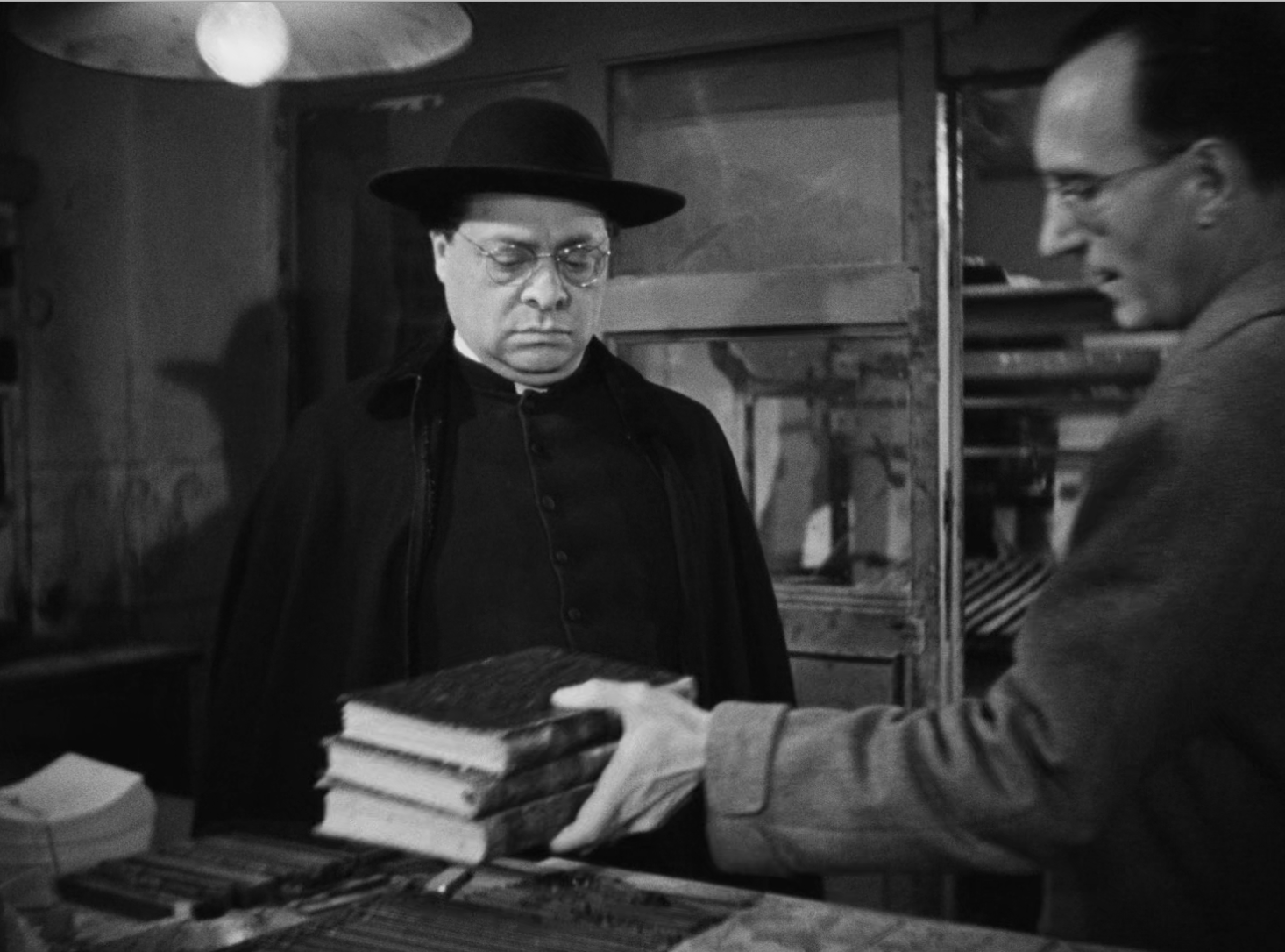
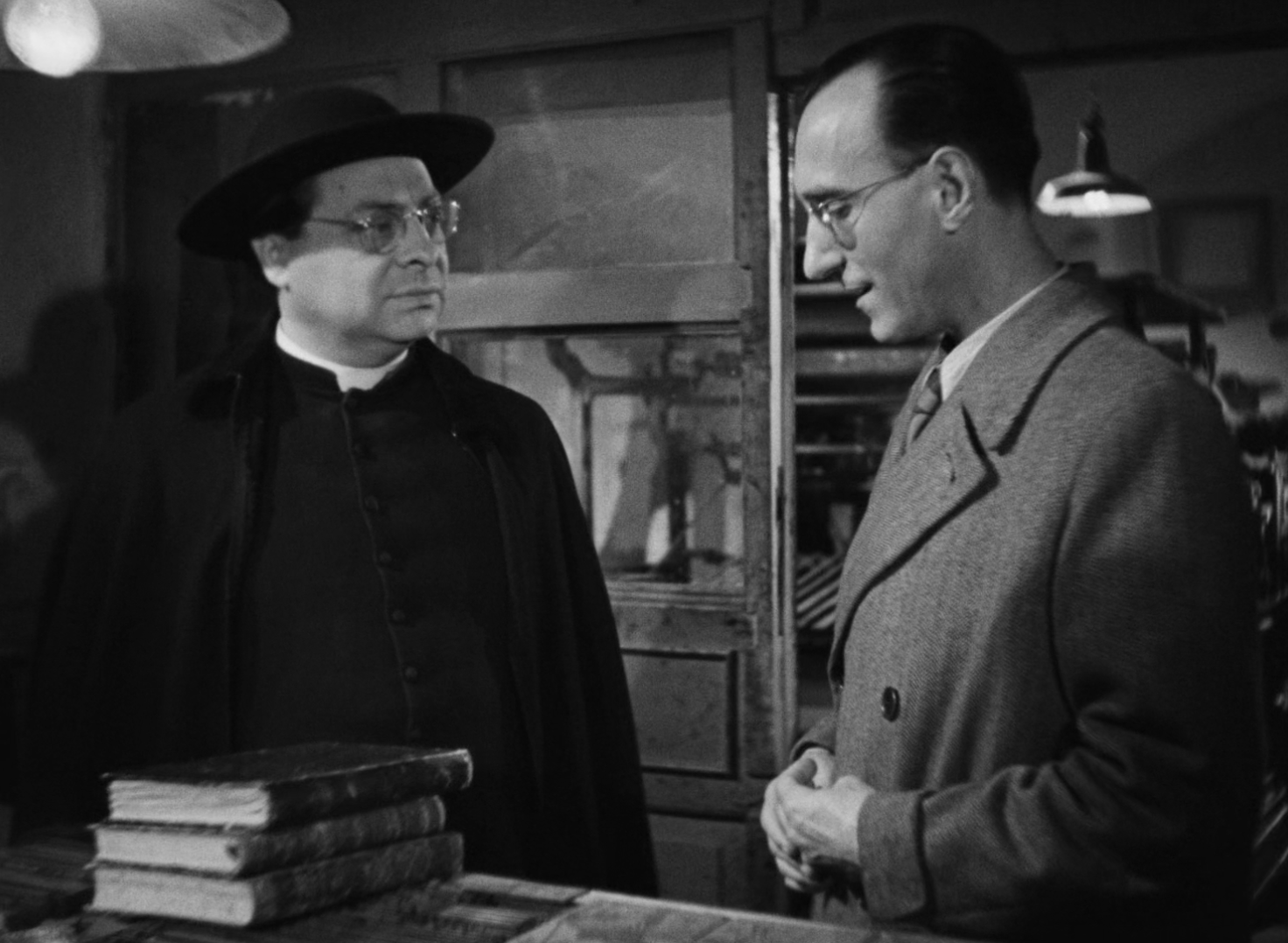
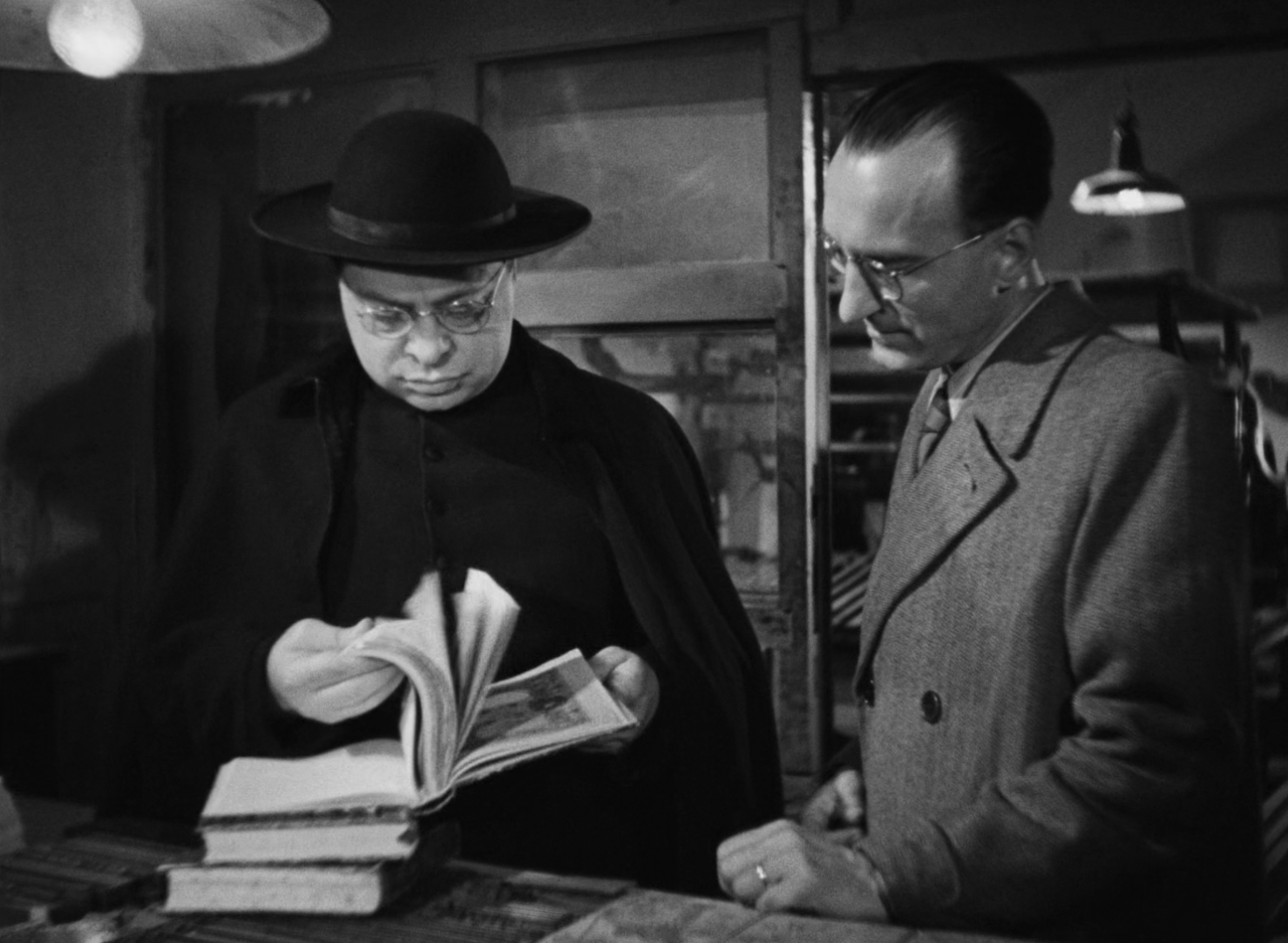
Il direttore ritorna con tre libri e mette la pila davanti al prete. “Ecco, reverendo”.
“Eh, Manfredi mi aveva detto che si trattava di soldi”.
“Sono libri, ma non c'è molto da leggere”, dice il direttore, con un sorriso.
“Come…?” Apre un libro e comincia a guardare le pagine. Ogni pagina è una banconota.
The editor returns with three books, setting the stack down in front of the priest. “Here you are, Father.”
“But Manfredi told me it would be money.”
“They are books, but there’s not much to read,” the editor says, with a smile.
“What...?” He opens a book and begins to look at the pages. Every page is a banknote.
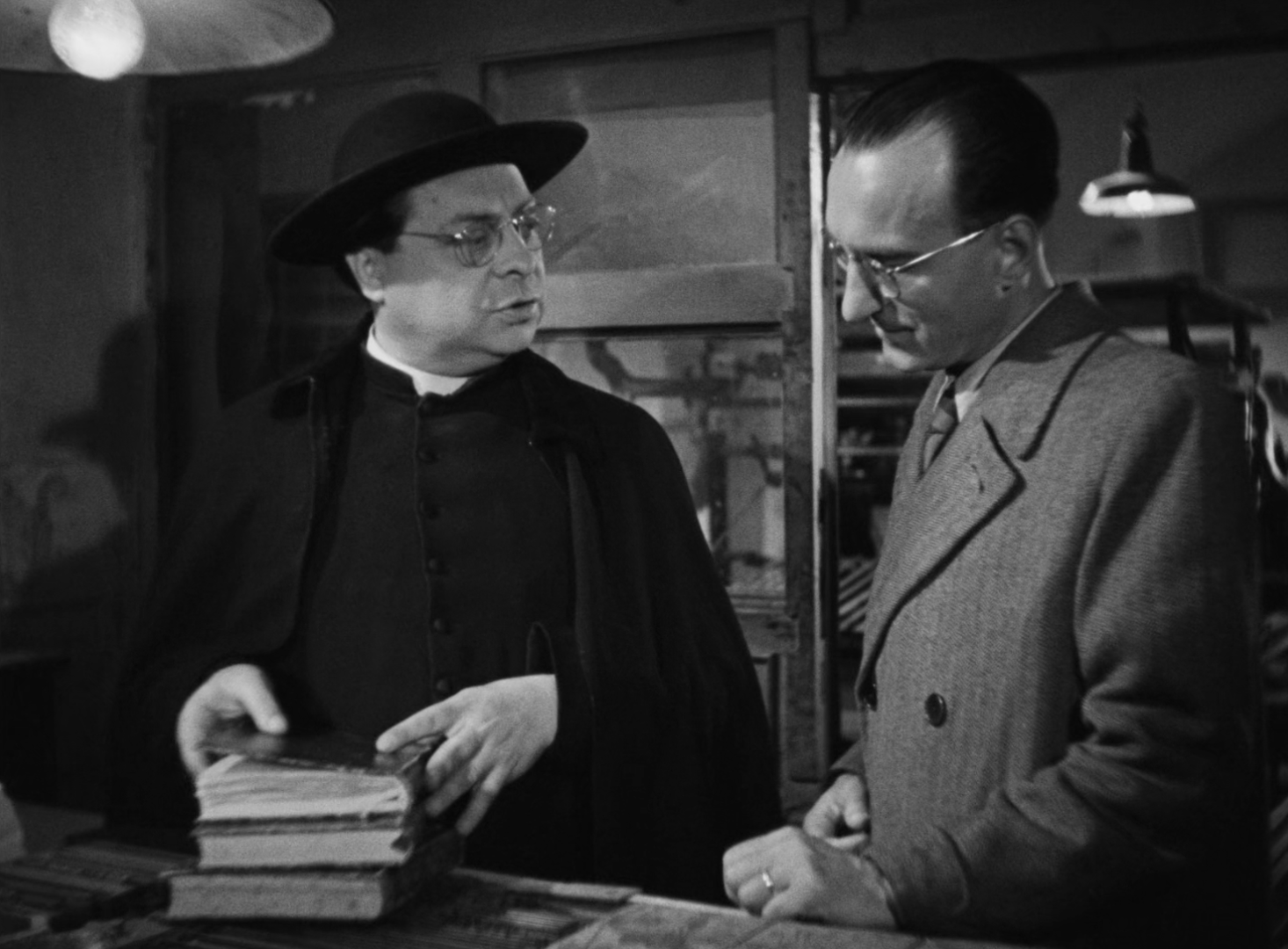
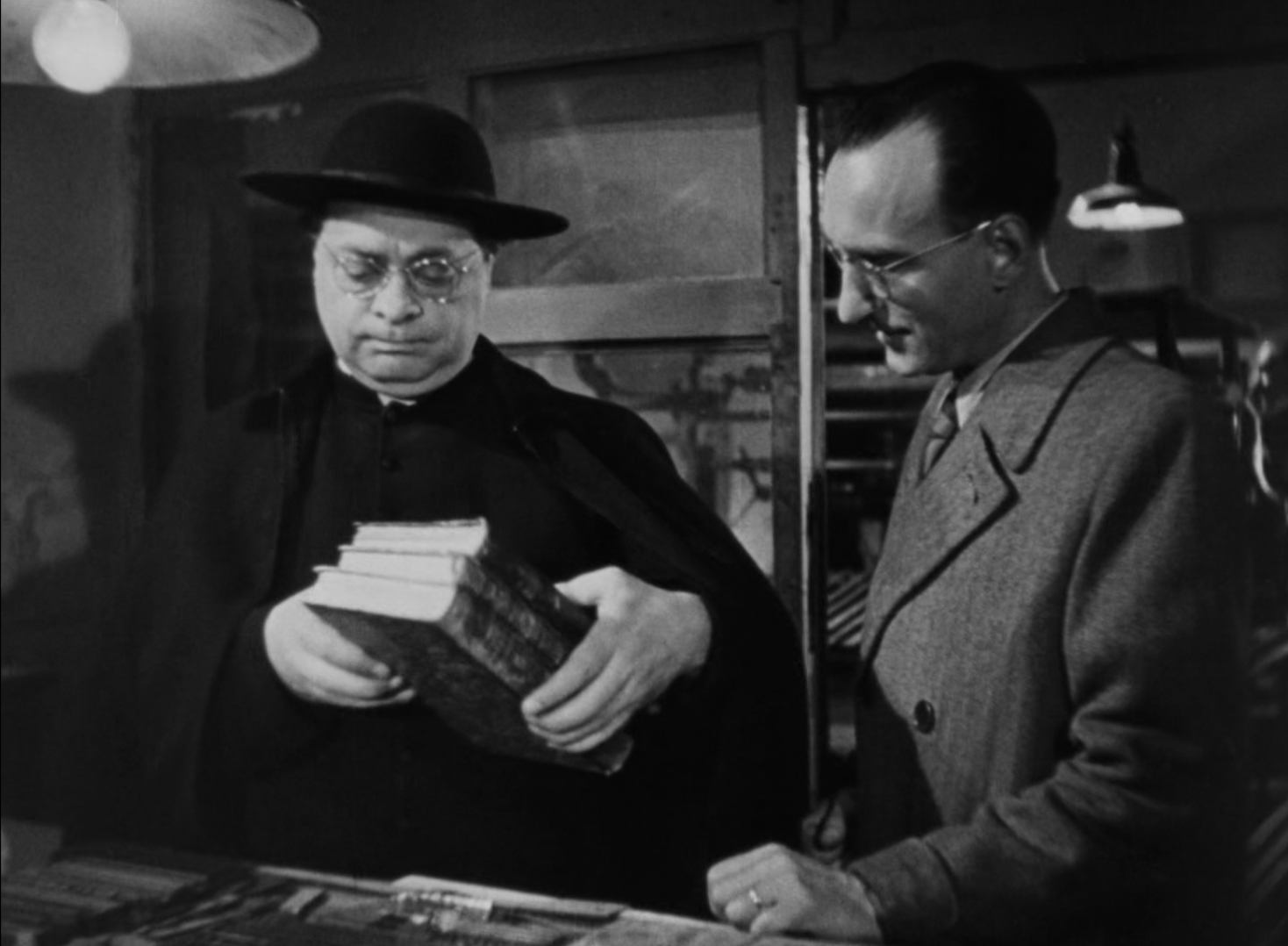
“Tutti così?” Don Pietro sembra divertito dall'ingegnosità di questo metodo.
“Sono mille pagine”.
“Un milione di lire”.
“Esatto”.
Il prete solleva i libri, labbra chiuse come a reprimere l’ansia.
“Is it all like that?” Don Pietro seems amused by the ingenuity of this method.
“A thousand pages.”
“One million lira.”
“Precisely.”
The priest picks up the books, lips compressed as if suppressing his anxiety.
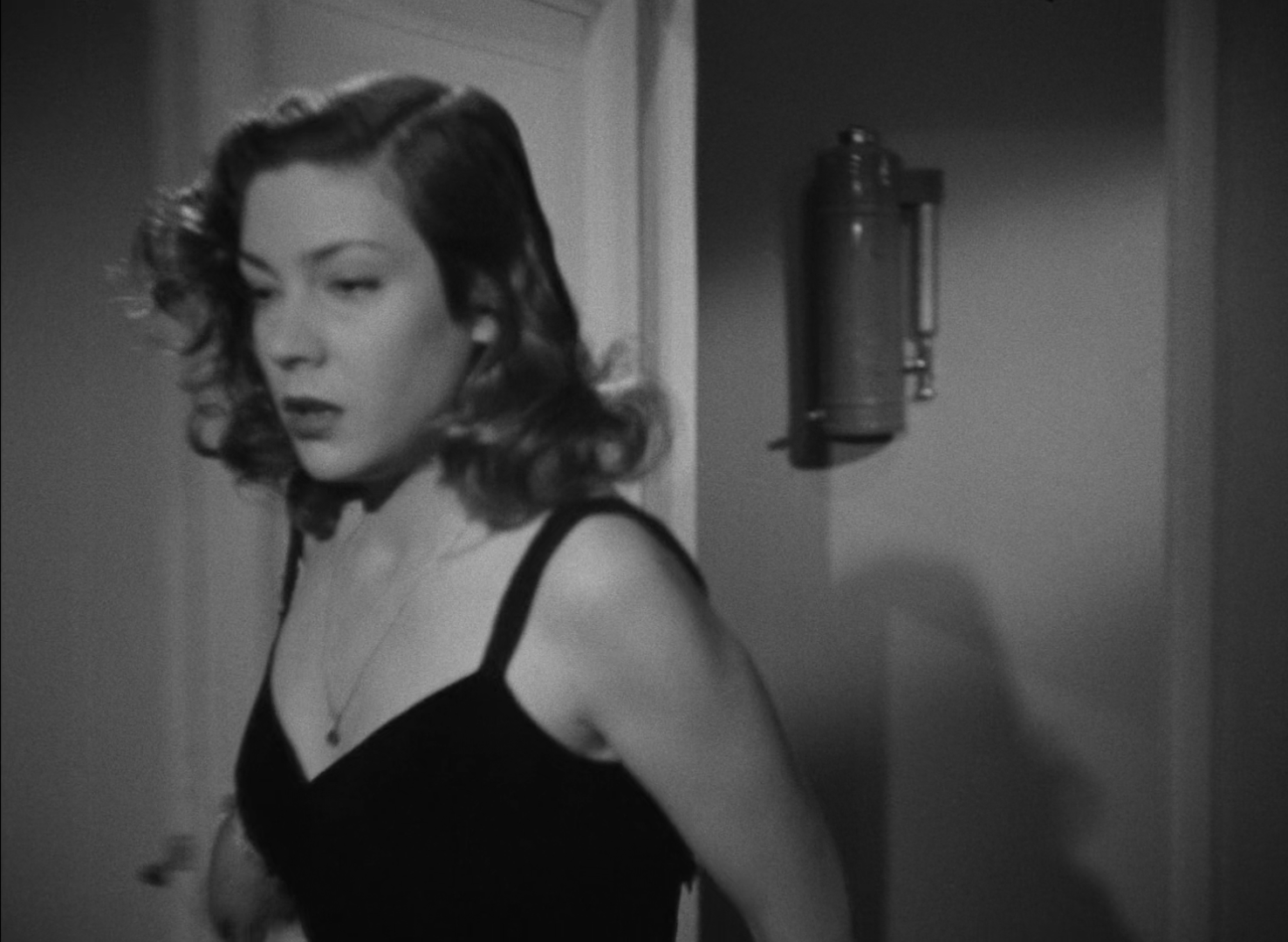
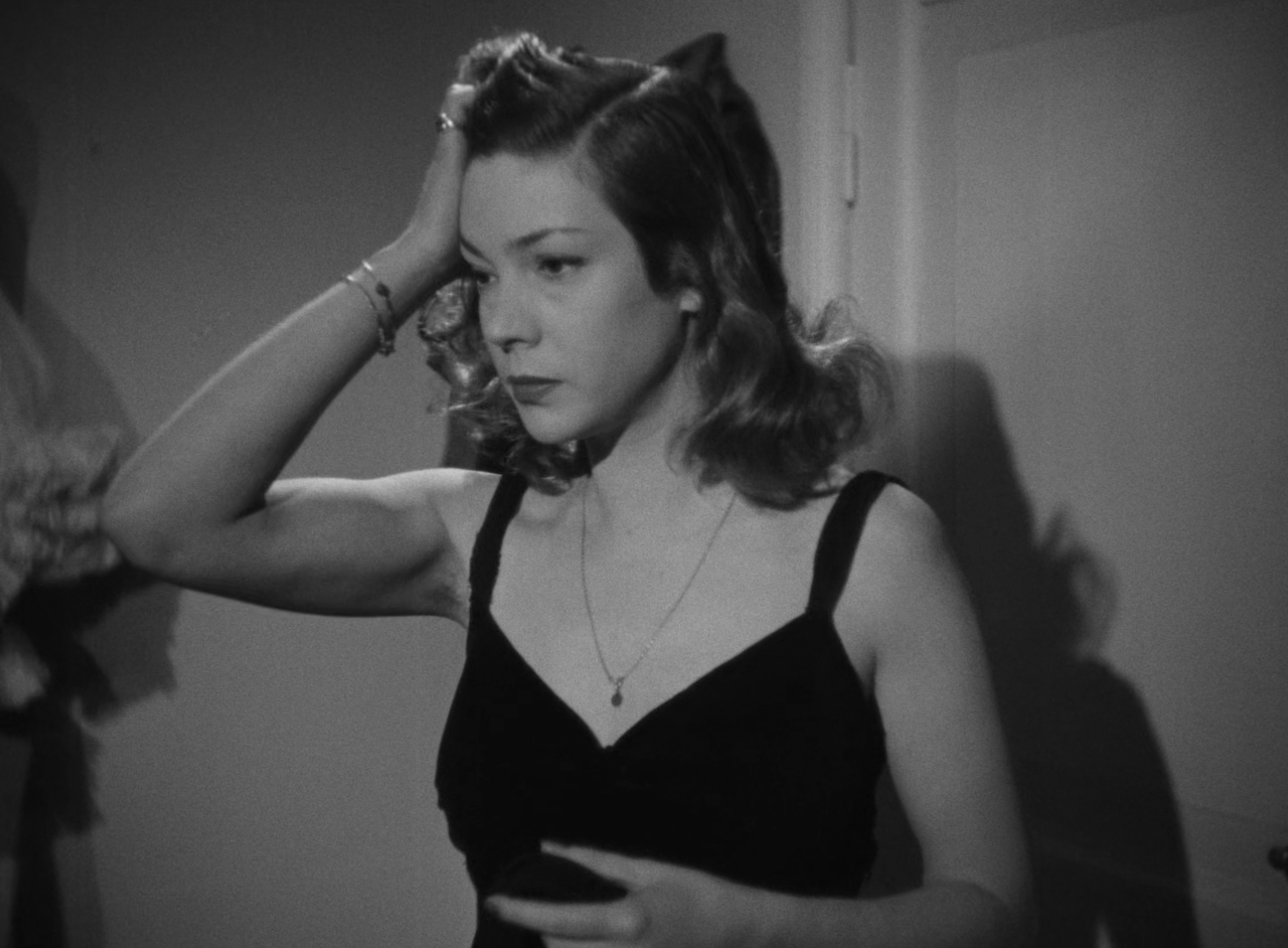
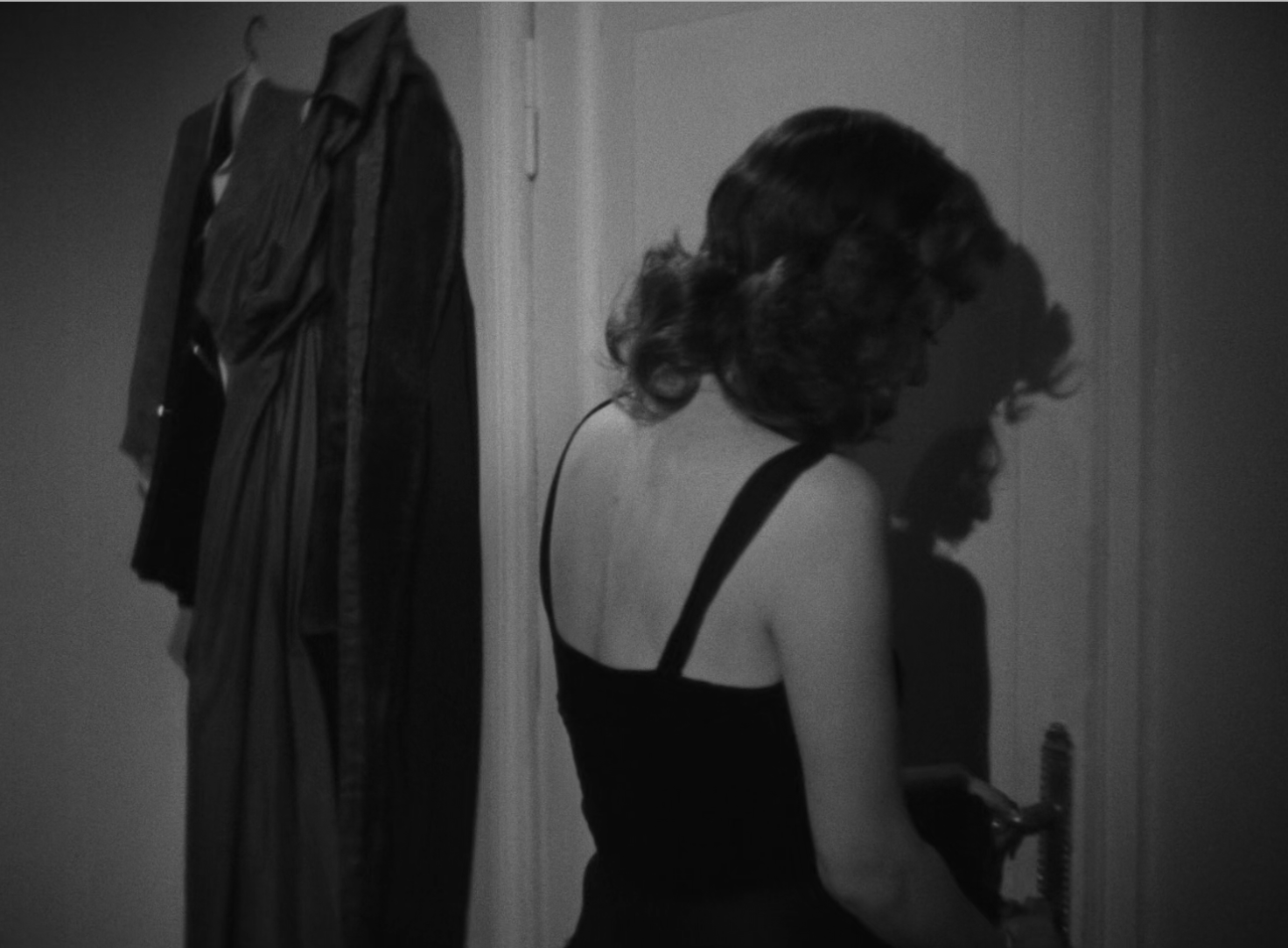
La scena successiva si apre su una giovane donna con un vestito scollato, sembra preoccupata: è Marina, la ragazza di Manfredi. L'ultima volta che l'abbiamo vista lo stava chiamando e ha risposto un ufficiale delle SS.
Entra nel camerino del locale dove lavora; sentiamo suonare musica da ballo. Chiude la porta dietro di sé.
Dopo un attimo, si gira e la chiude a chiave.
The next scene opens on a young woman in a low-cut dress, looking worried: it’s Marina, Manfredi’s girlfriend. The last time we saw her, she was calling him and an SS officer answered.
She walks into her dressing room at the club where she works; we hear dance music playing. She closes the door behind her.
After a moment, she turns back and locks it.
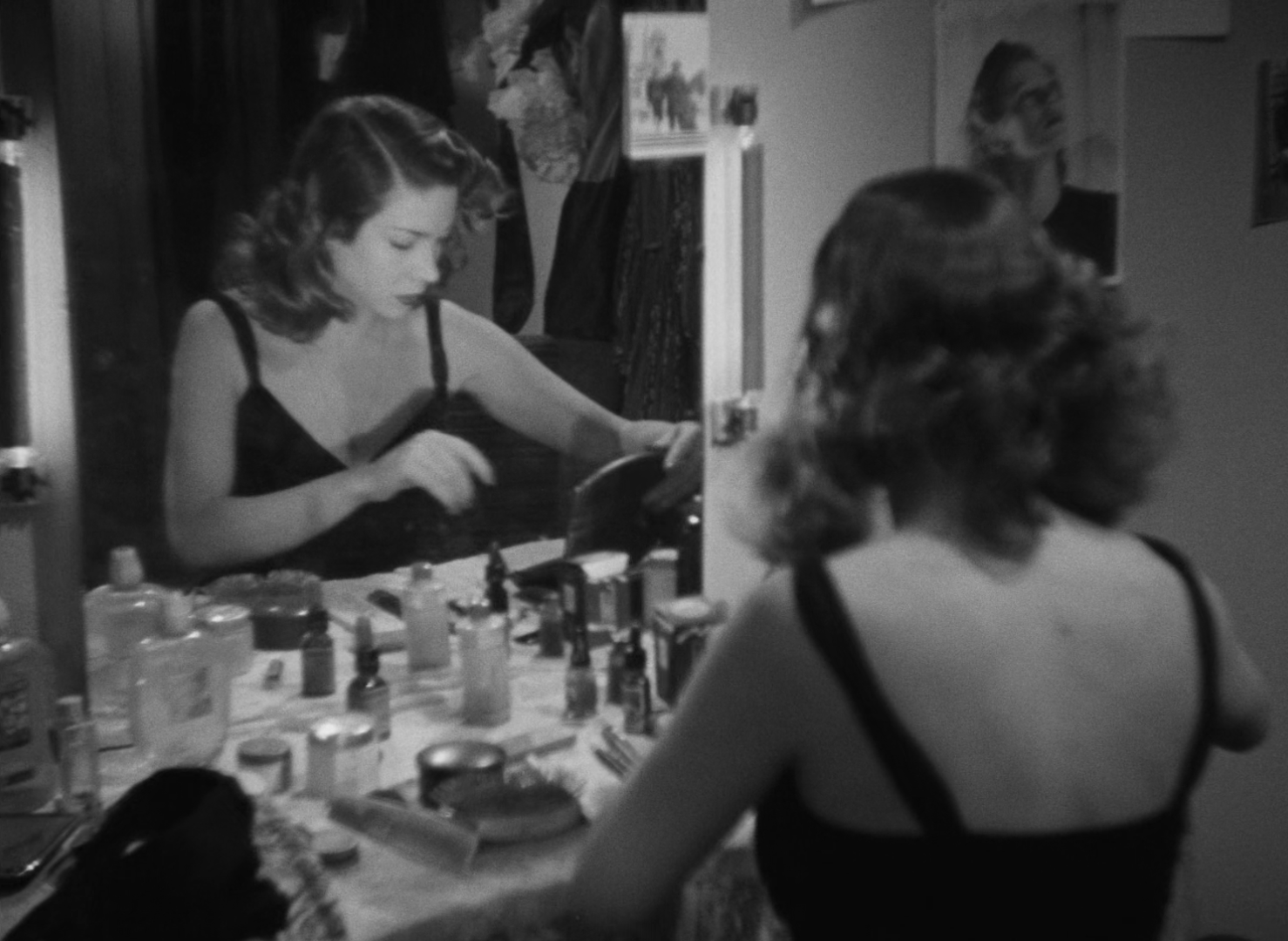
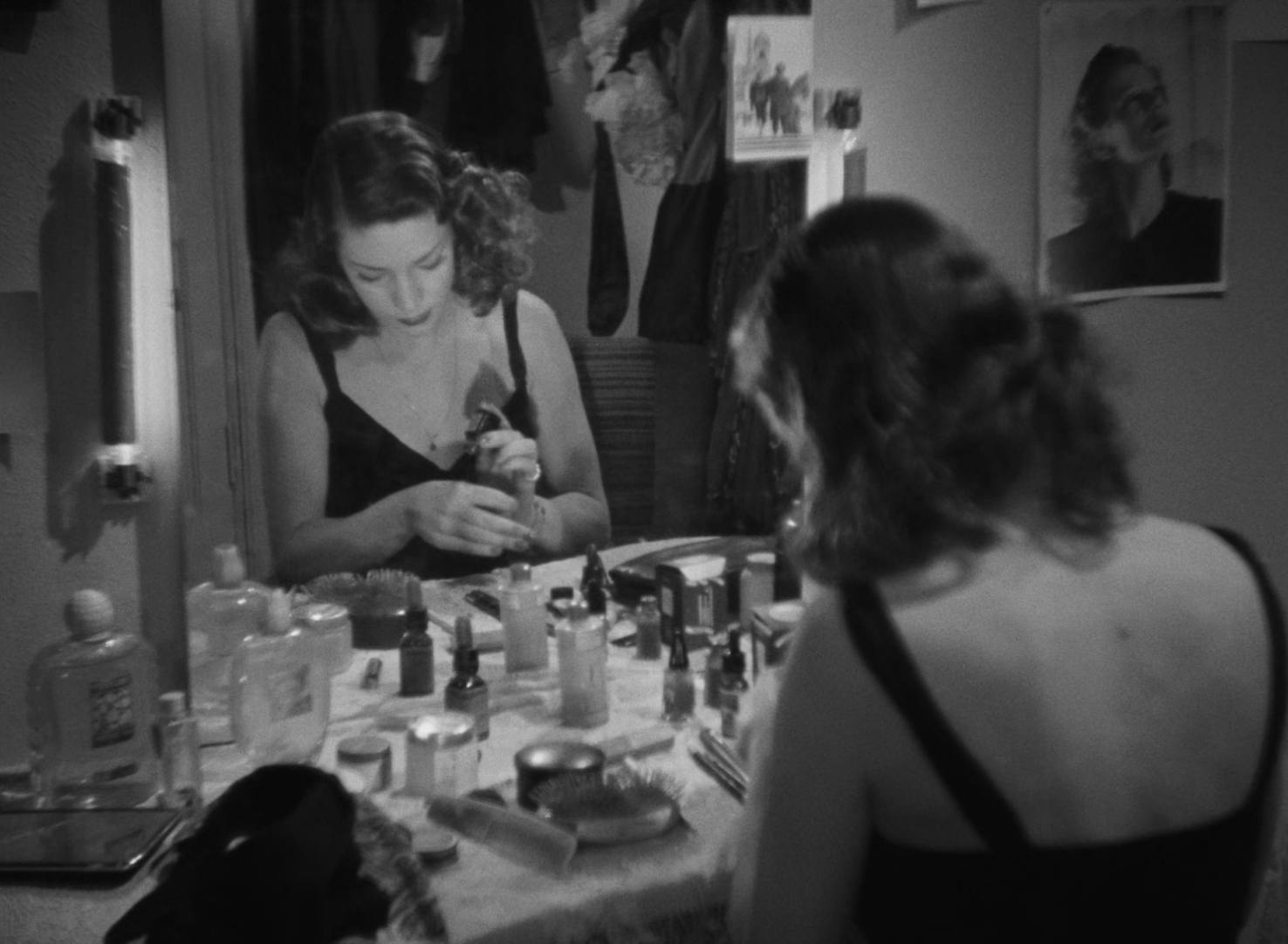
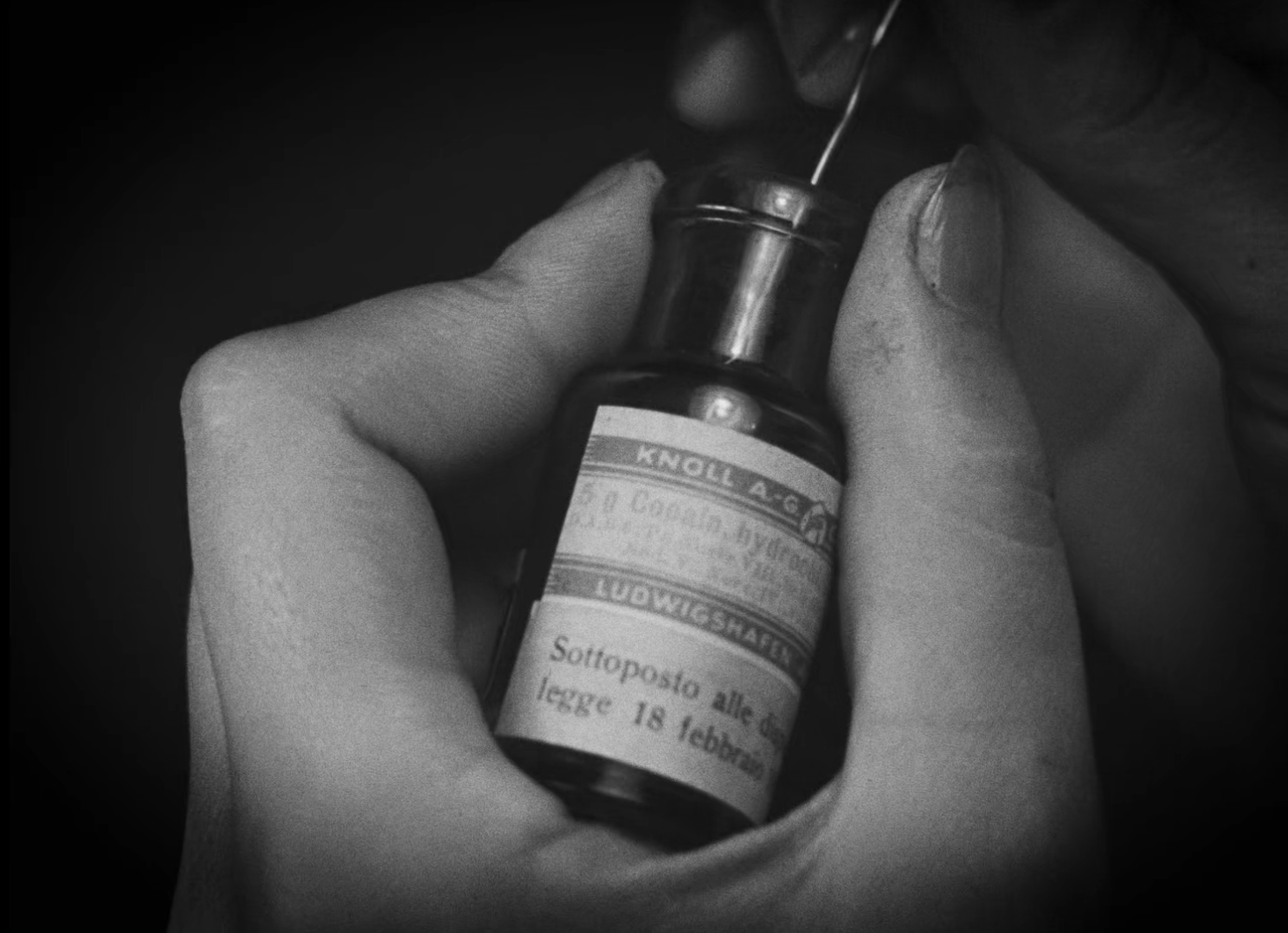
Marina si siede alla sua toeletta, piena di cosmetici e prodotti di bellezza. Prende dalla sua borsa la bottiglietta di un farmaco e lo scuote sopra la mano: vuoto. Cerca invano di raschiare via quello che può. Dal primo piano della bottiglietta capiamo: lei è dipendente dalla cocaina.
Marina sits at her dressing table, which is littered with cosmetics and beauty products. She takes a medicine bottle out of her purse and shakes it out onto her hand: empty. She tries vainly to scrape out what she can. In the close-up of the bottle we see: she is addicted to cocaine.
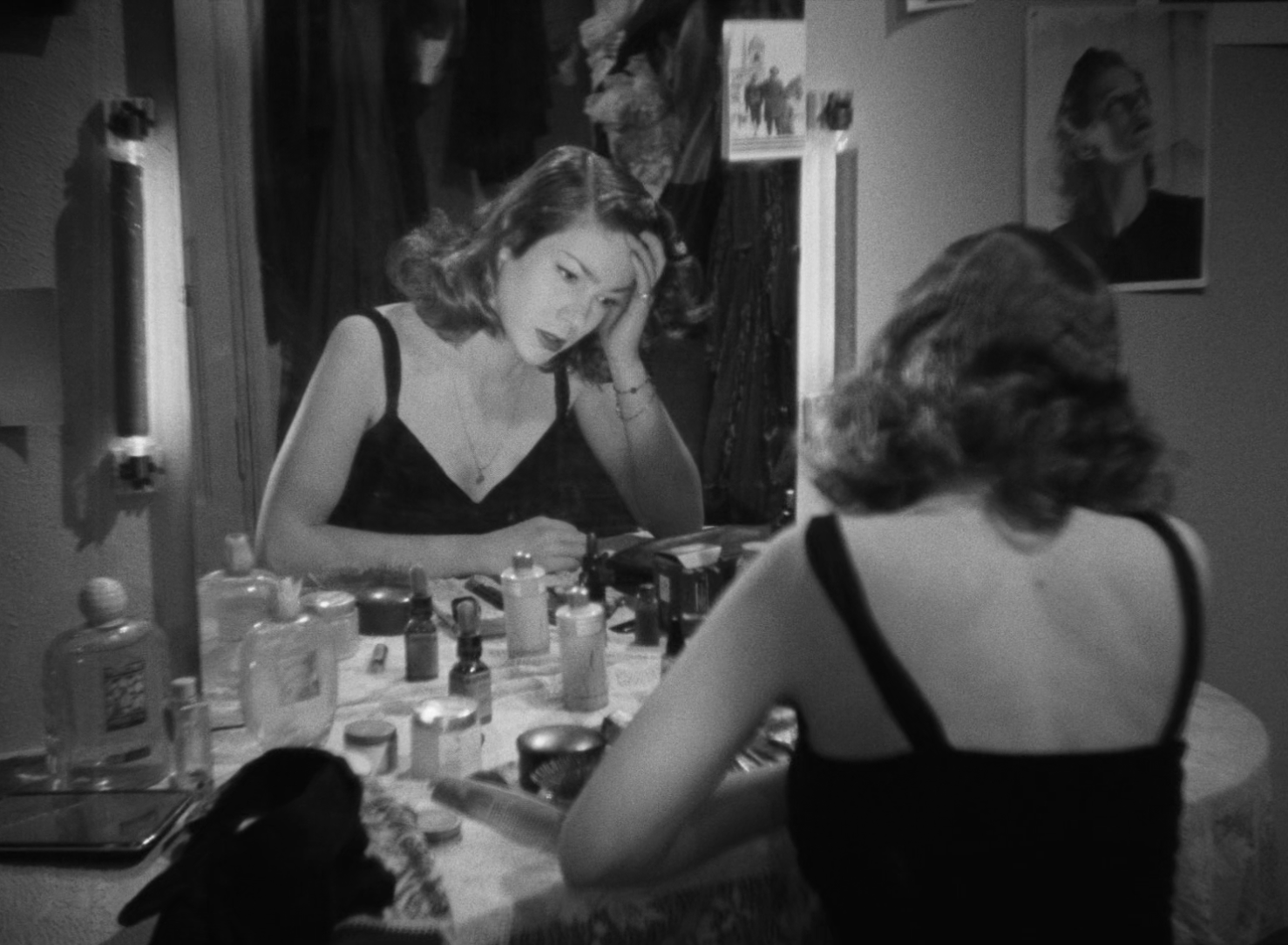
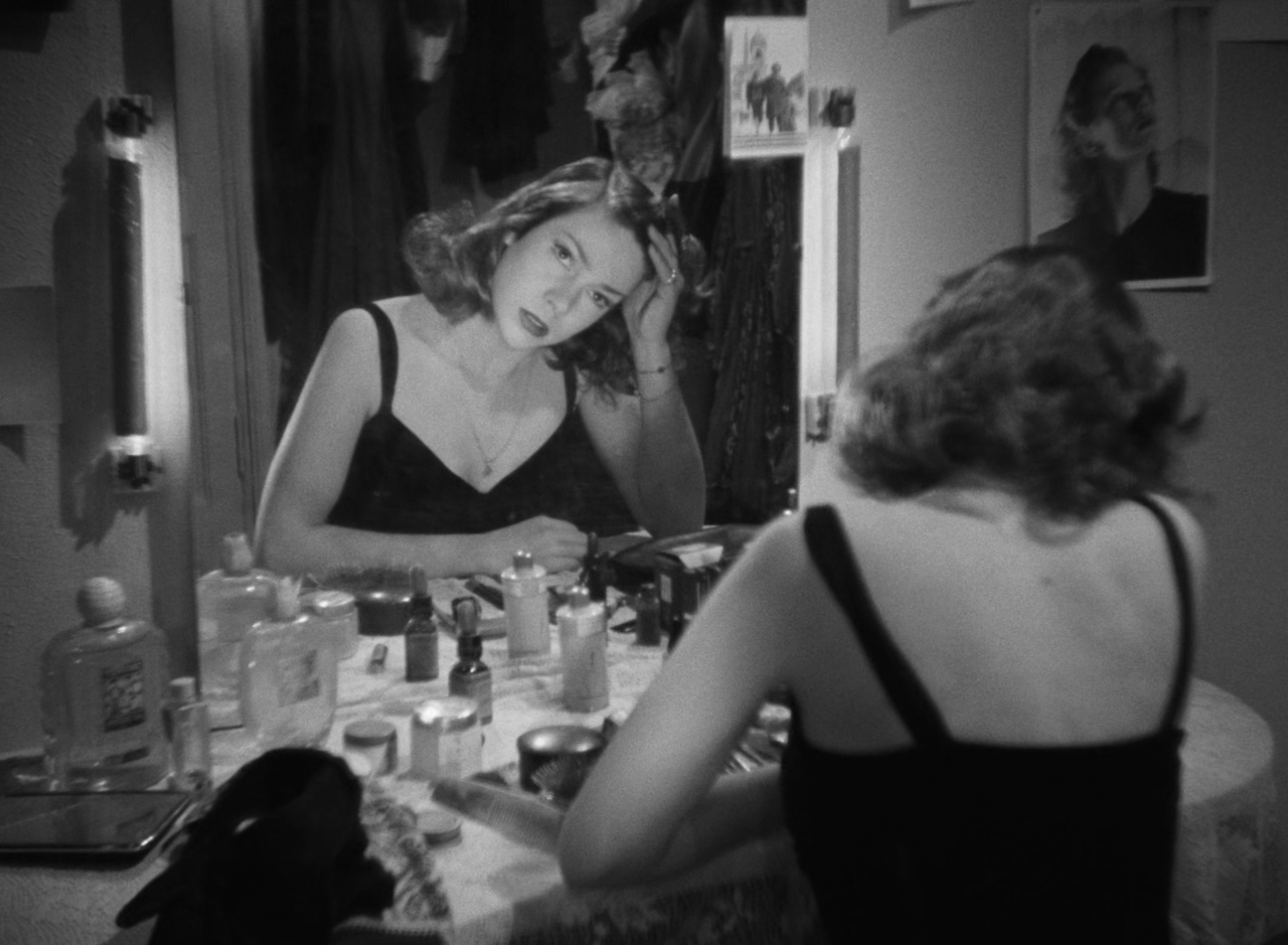
Butta giù la bottiglietta e appoggia la testa sulla mano, frustrata. Guardando lo specchio, fissa brevemente negli occhi lo spettatore. In sottofondo, sentiamo finire la canzone e c'è un leggero applauso.
She tosses the bottle down and leans her head on her hand, frustrated. Looking at the mirror, she gazes briefly into the eye of the spectator. In the background, the song ends and there’s some light applause.
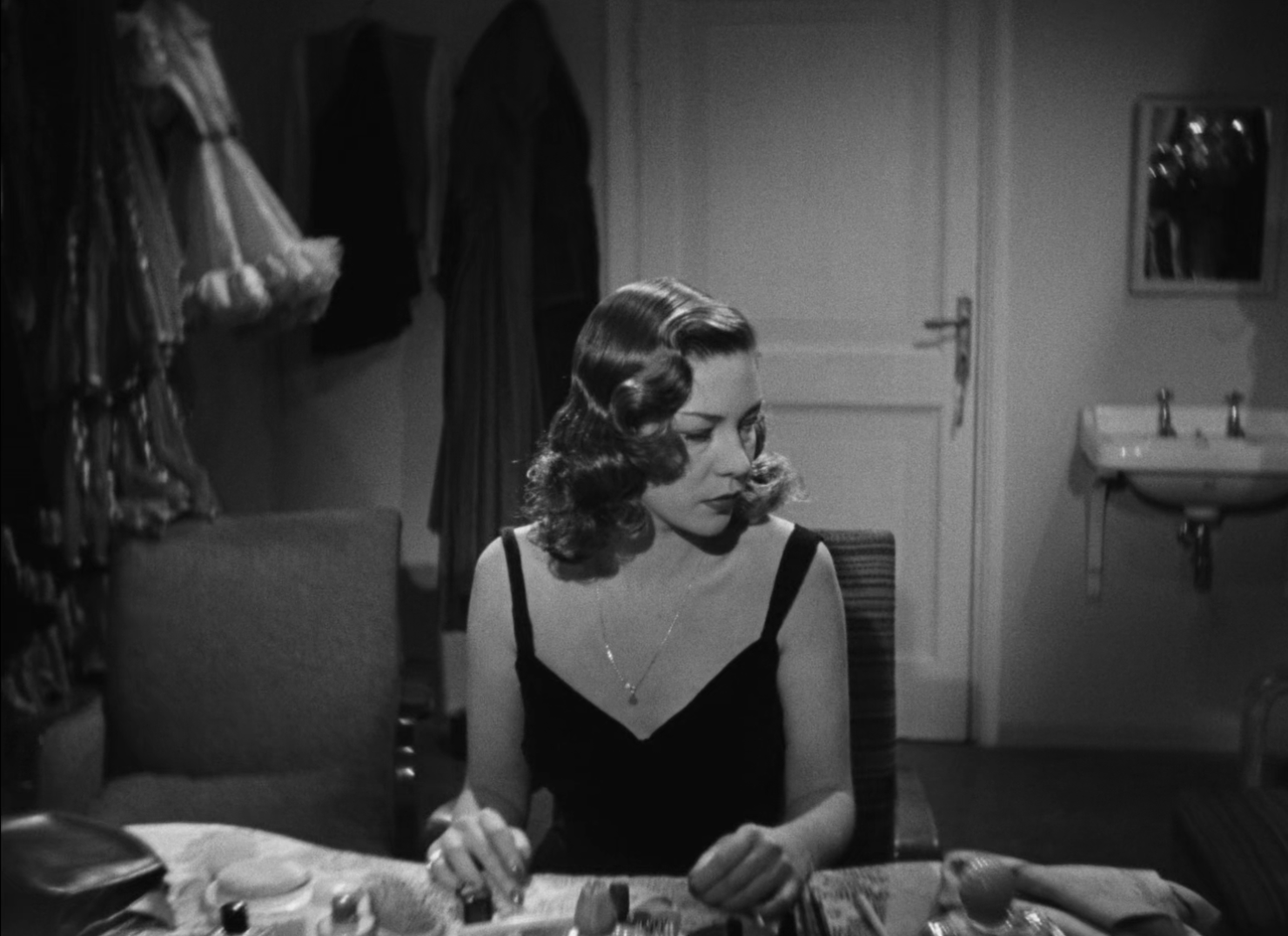
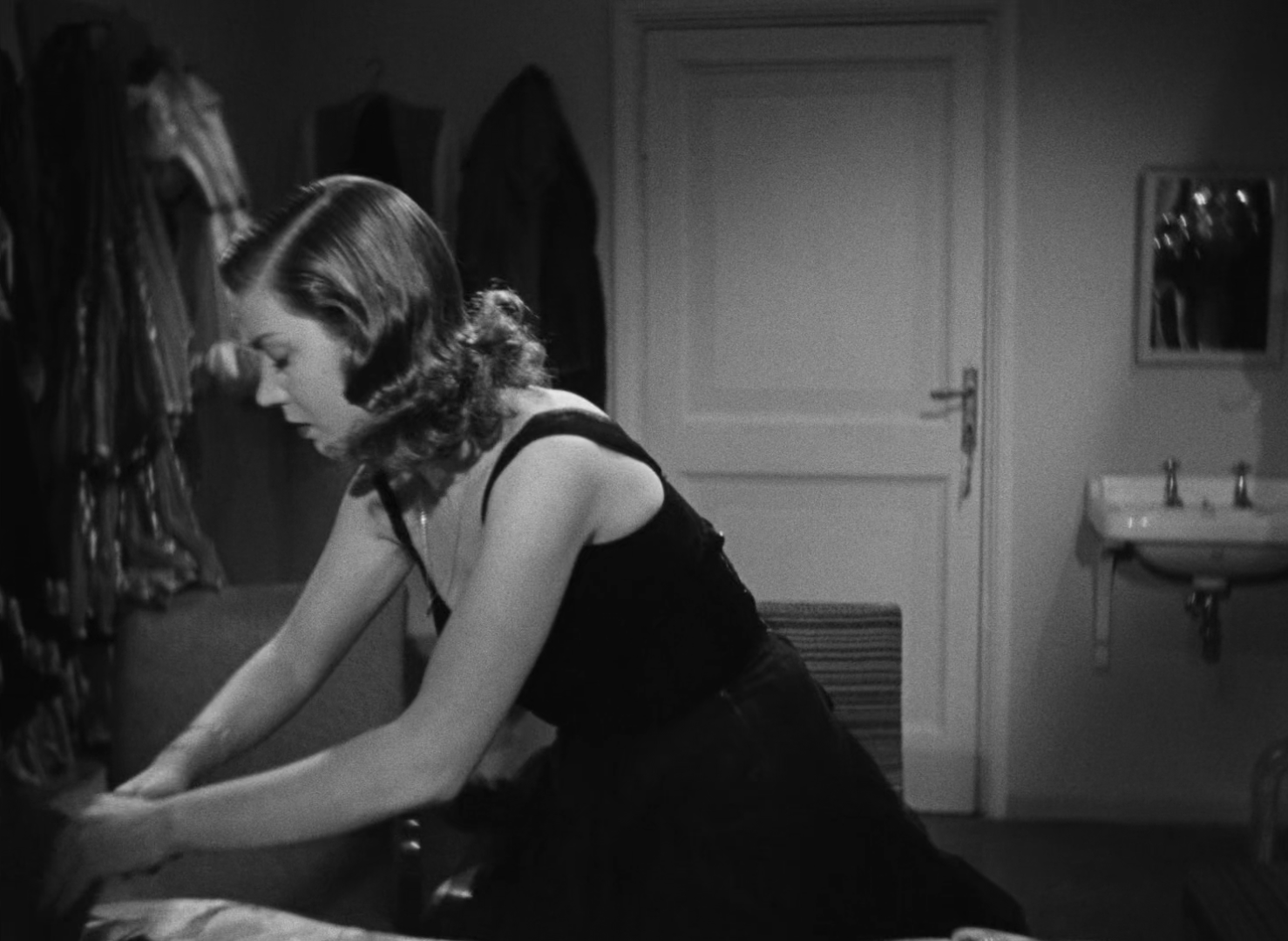
Qualcuno bussa piano alla porta.
Lei chiede: “Chi è?”
La voce di una donna risponde: “Marina, sono io. Apri!”
Marina si alza e nasconde il farmaco.
There’s a soft knock at the door.
She asks, “Who is it?”
A woman’s voice replies, “Marina, it’s me. Open up!”
Marina gets up and hides the medicine bottle.
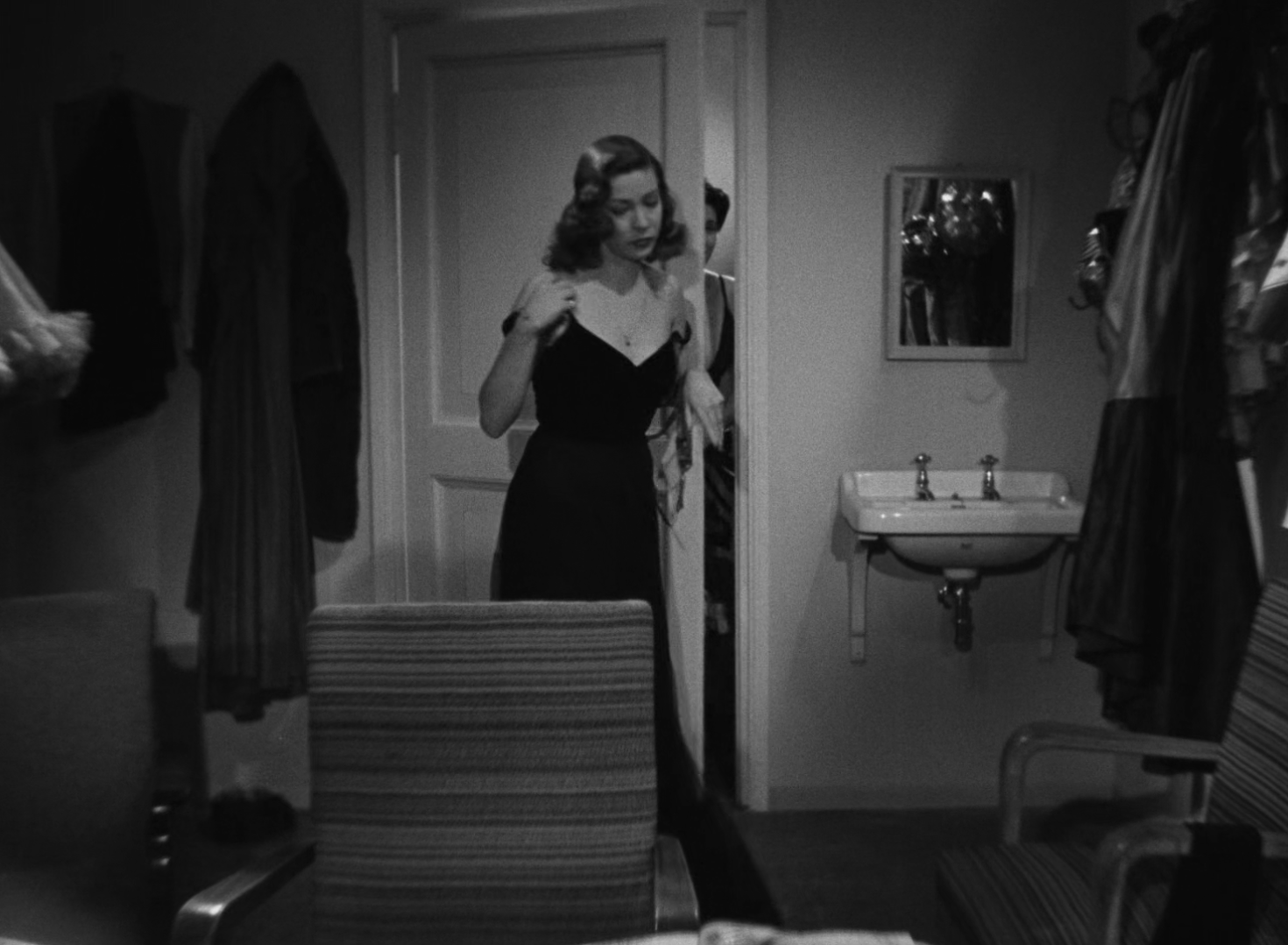
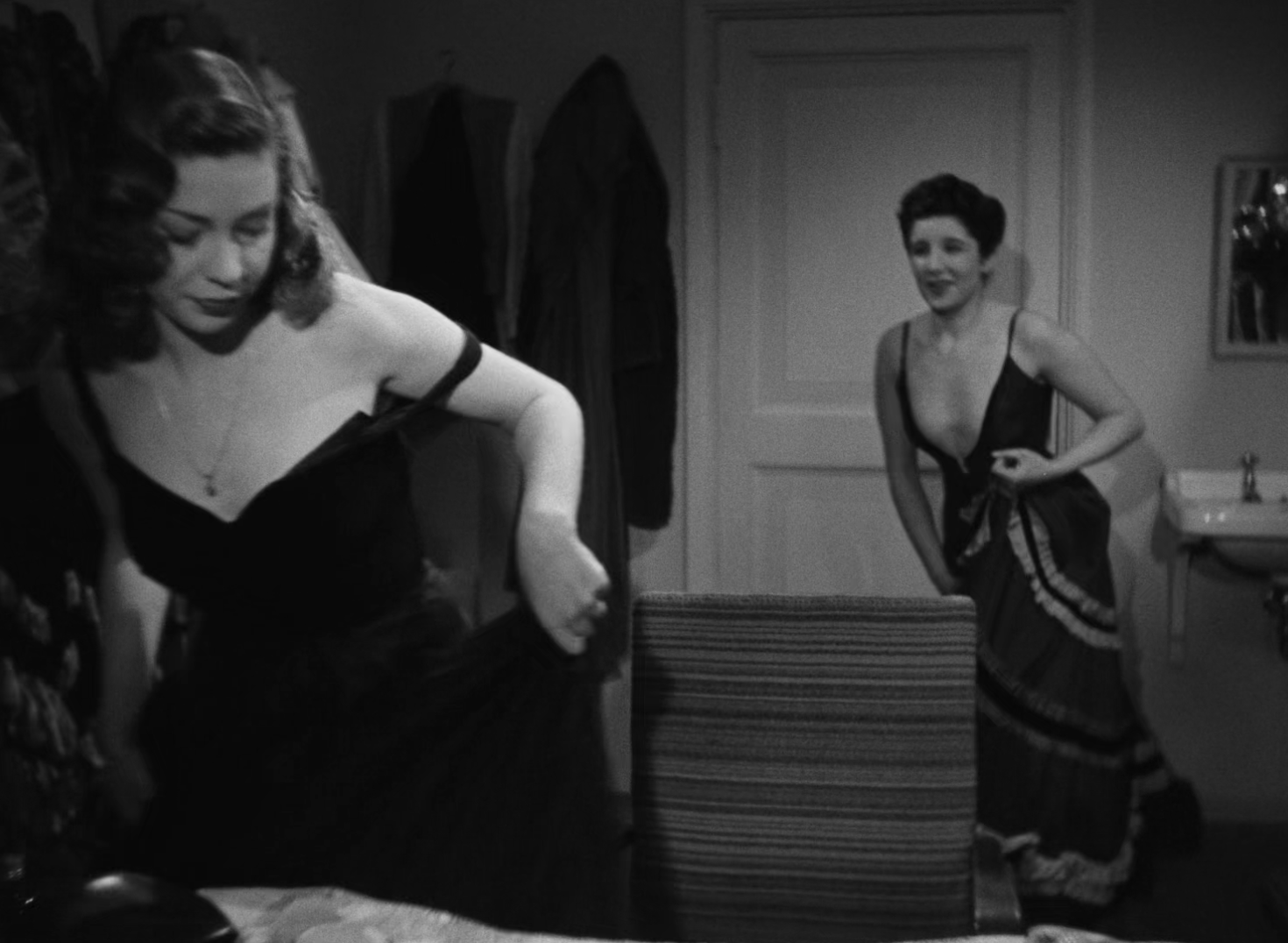
Quando apre la porta, vediamo un'altra ragazza, molto truccata, in un vestito ancora più scollato. È Lauretta, la sorella di Pina.
"Ciao!" – dice allegramente – "Indovina chi ho visto stamattina?" Marina ha voltato le spalle: Lauretta non ha idea di quello che sta passando.
When she opens the door, we see another woman, heavily made up, in an even lower-cut dress. It’s Lauretta, Pina’s sister.
“Ciao!” she says gaily. “Guess who I saw this morning?” Marina has turned her back: Lauretta has no idea what she’s going through.
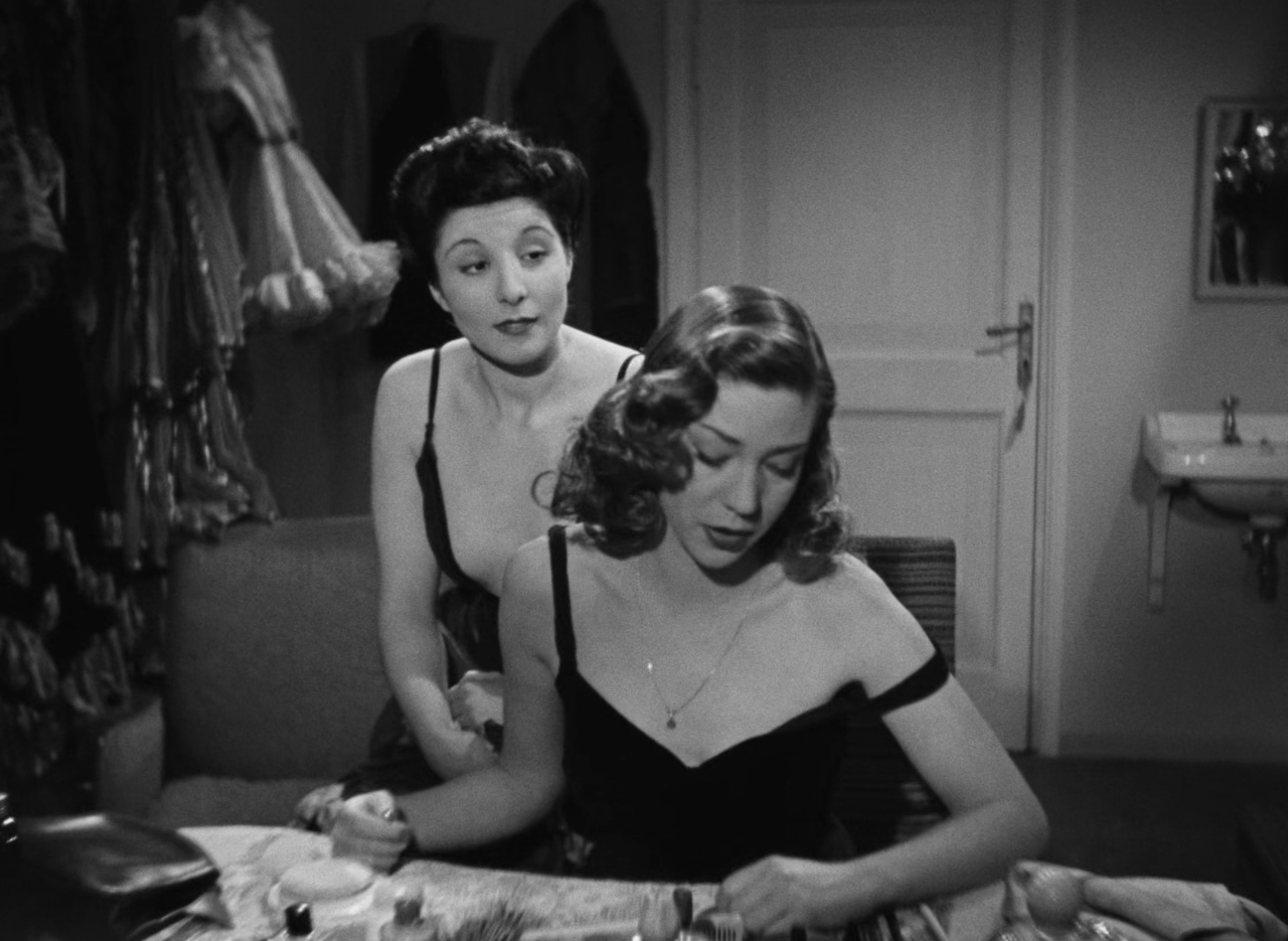
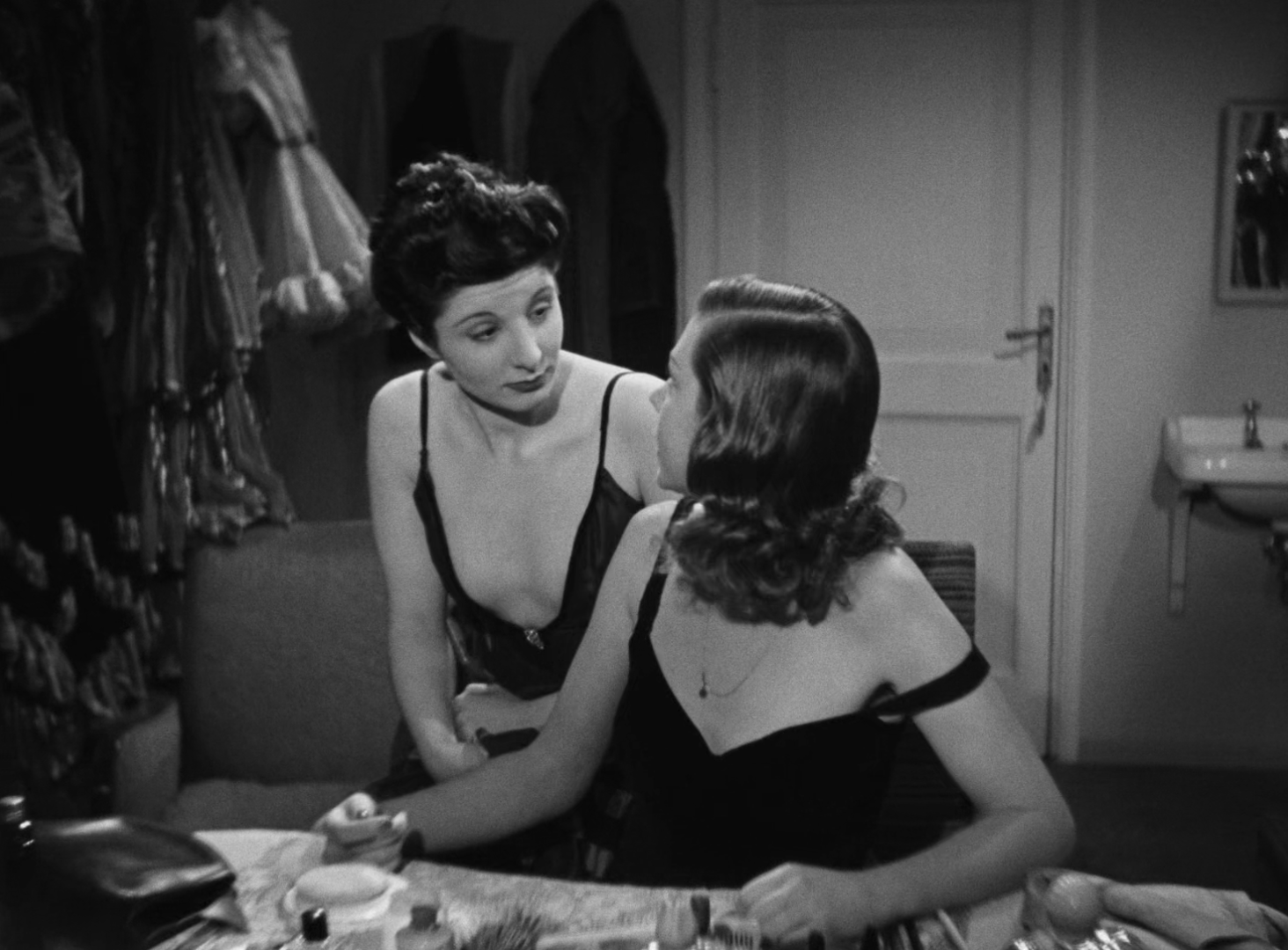
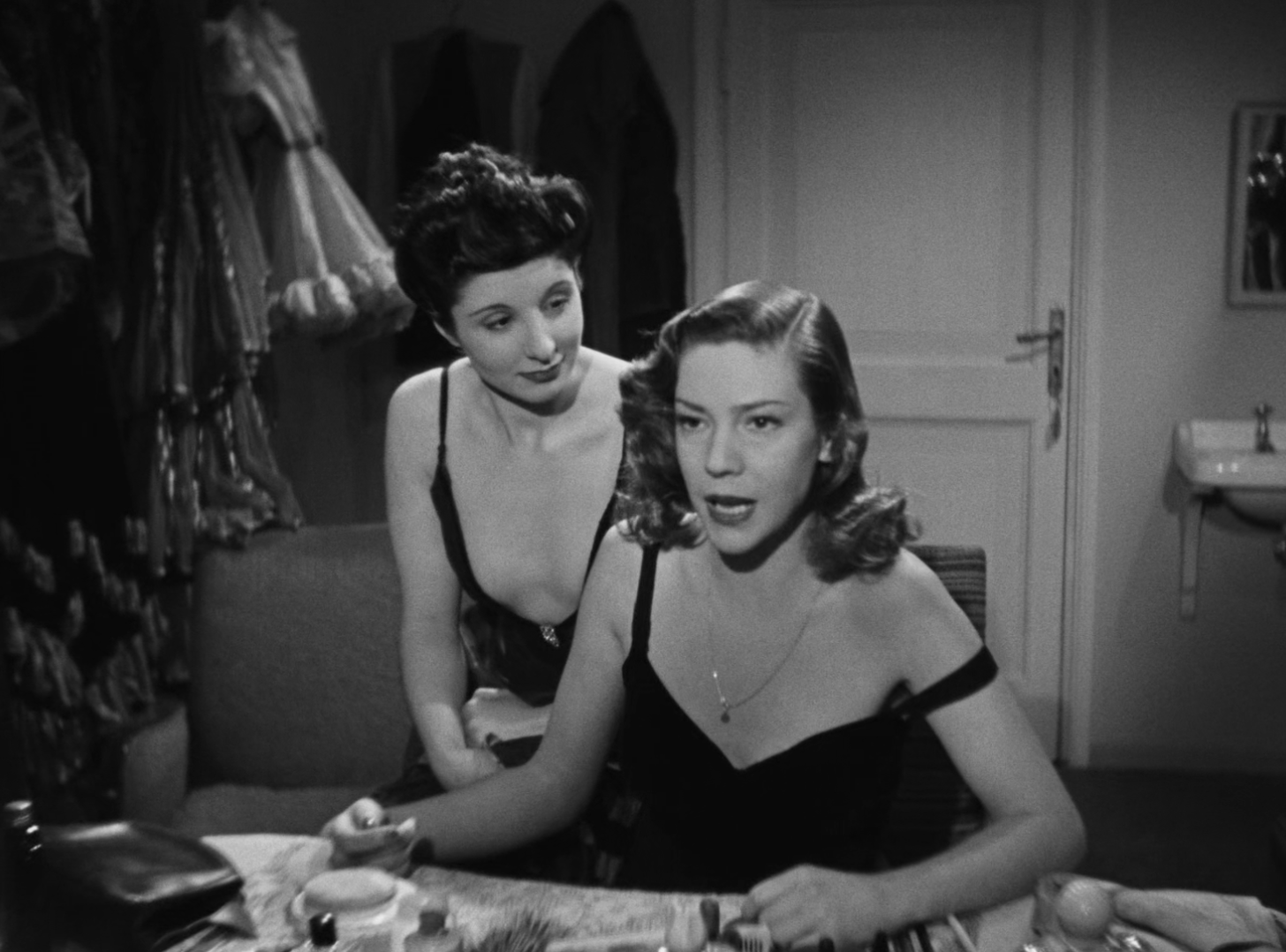
“Che vuoi che me ne importi?”
“Manfredi!” continua Lauretta, appoggiata felicemente alla sedia di Marina. “È venuto da me”.
“Da te? Dove?”
“A casa mia!” Lauretta sembra molto soddisfatta. Marina guarda la sua amica e poi il suo riflesso nello specchio, incredula.
“What do you think I care?”
“Manfredi!” Lauretta goes on, leaning happily on Marina’s chair. “He came to my place.”
“Your place? Where?”
“My house!” Lauretta seems very satisfied. Marina looks at her friend and then at her own reflection in the mirror, disbelieving.
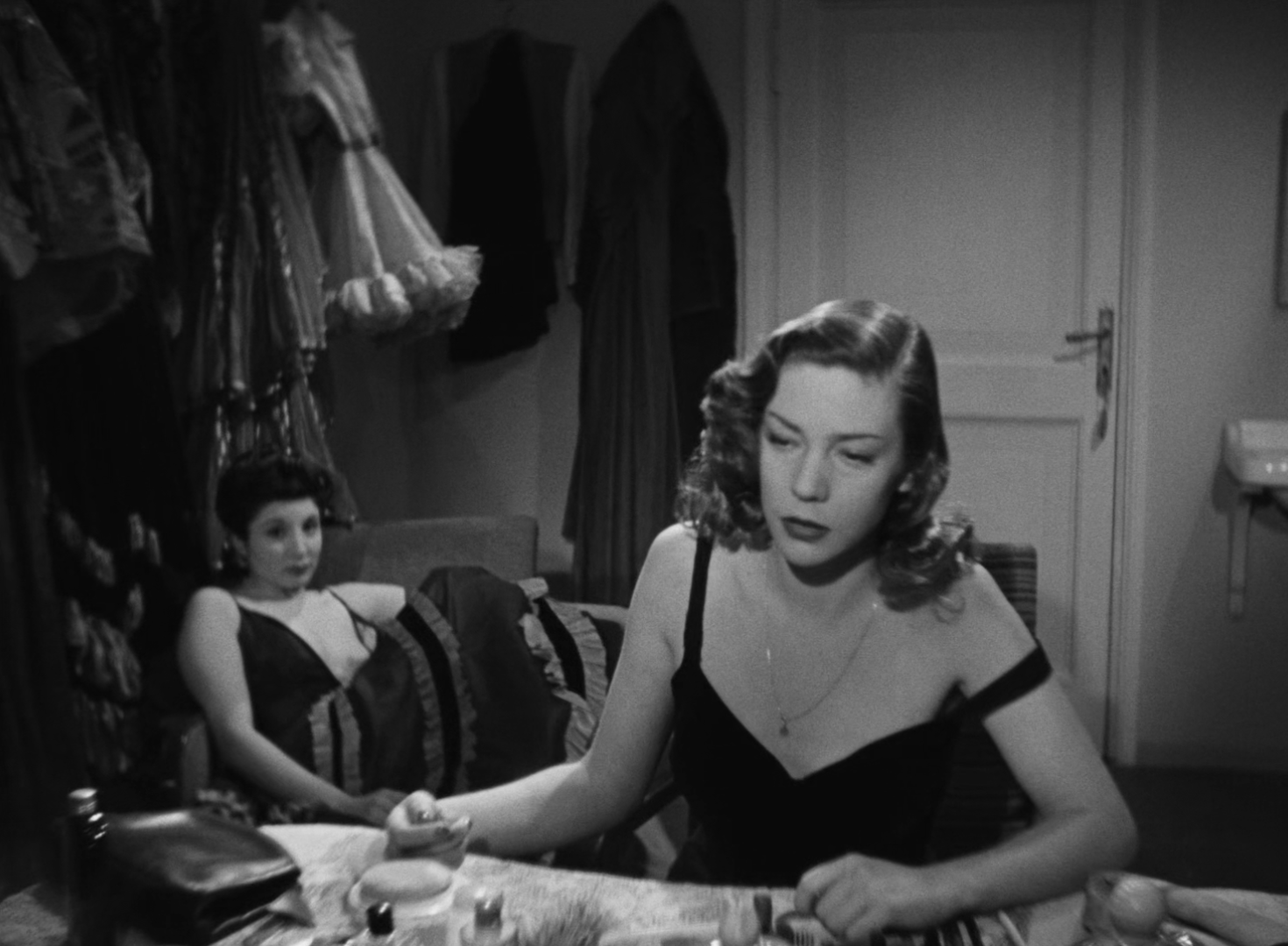
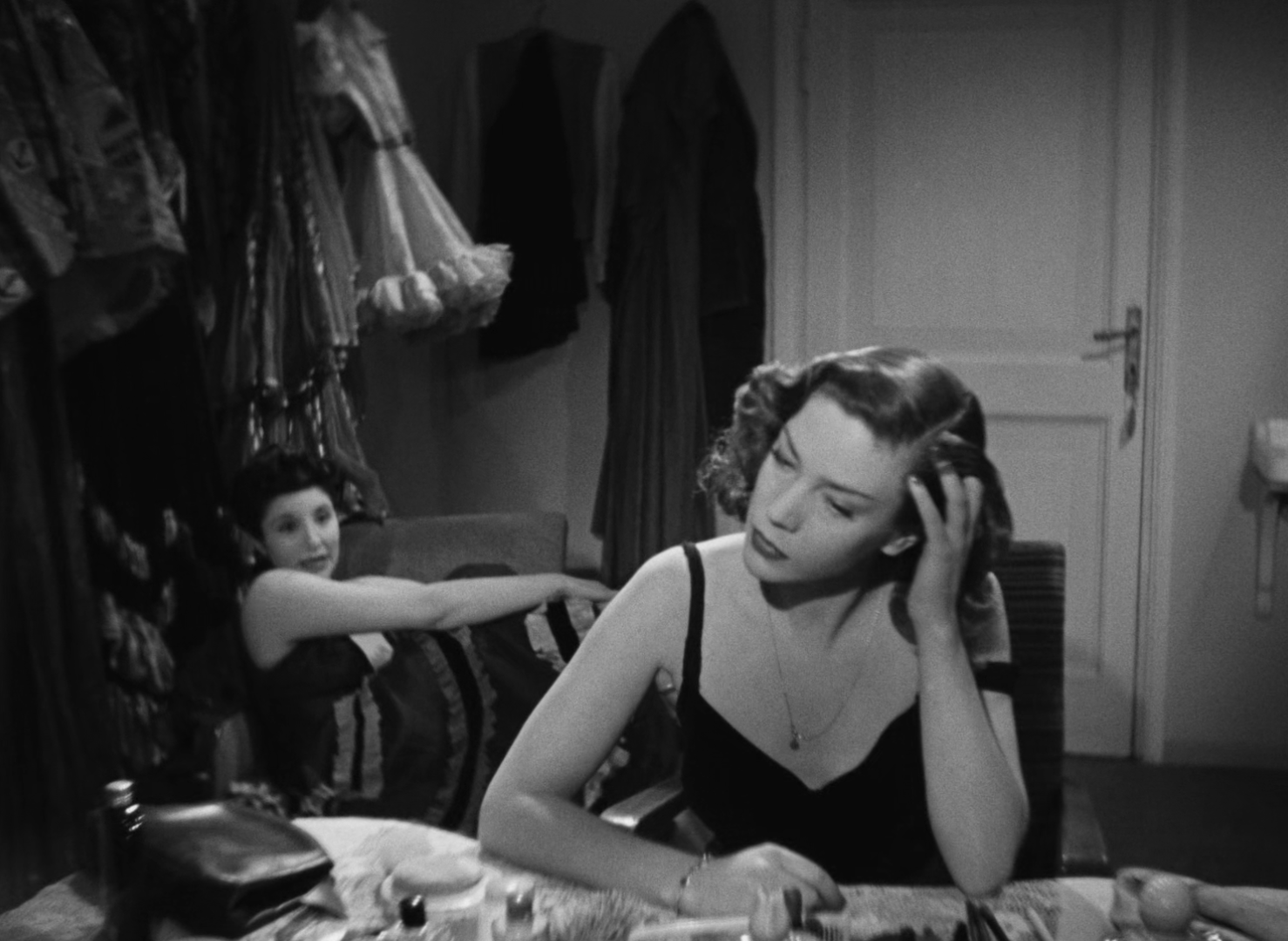
Guardandola allo specchio, Marina dice: "Ma perché è venuto? Cosa voleva?"
"Mi ha chiesto di avvertirti che per qualche giorno non potrà farsi vedere". Lauretta si lascia cadere su una sedia.
"Non ti ha detto altro?”
“No”.
“Ma come? Non ti ha spiegato?”
“No, ti dico! Io non gli ho domandato altro. Ero in vestaglia, figurati, coi bigodini...” Marina è silenziosa, di nuovo con la testa sulla mano, e Lauretta continua a chiacchierare. “Non ti cambi? Fra poco tocca a te”.
Watching her in the mirror, Marina says, “But why did he come? What did he want?”
“He asked me to tell you that he won’t be able to see you for a few days.” Lauretta flops down in a chair.
“He didn’t tell you anything else?”
“No.”
“What? He didn’t explain?”
“No, I’m telling you! And I didn’t ask him anything. Imagine, I was in my bathrobe and curlers!” Marina is quiet, head in hand again, so Lauretta chatters on. “Aren’t you going to change? You’re on soon.”
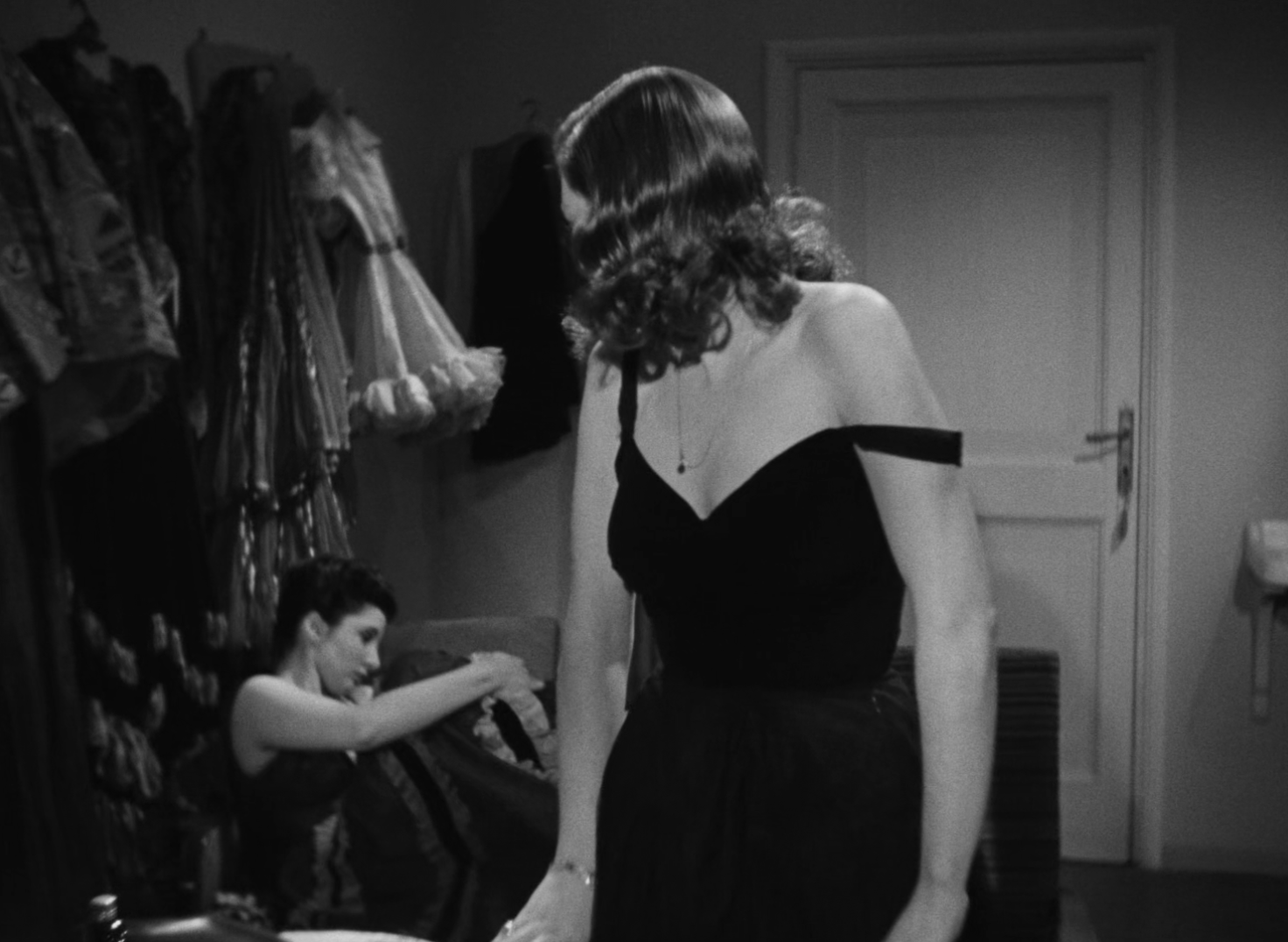
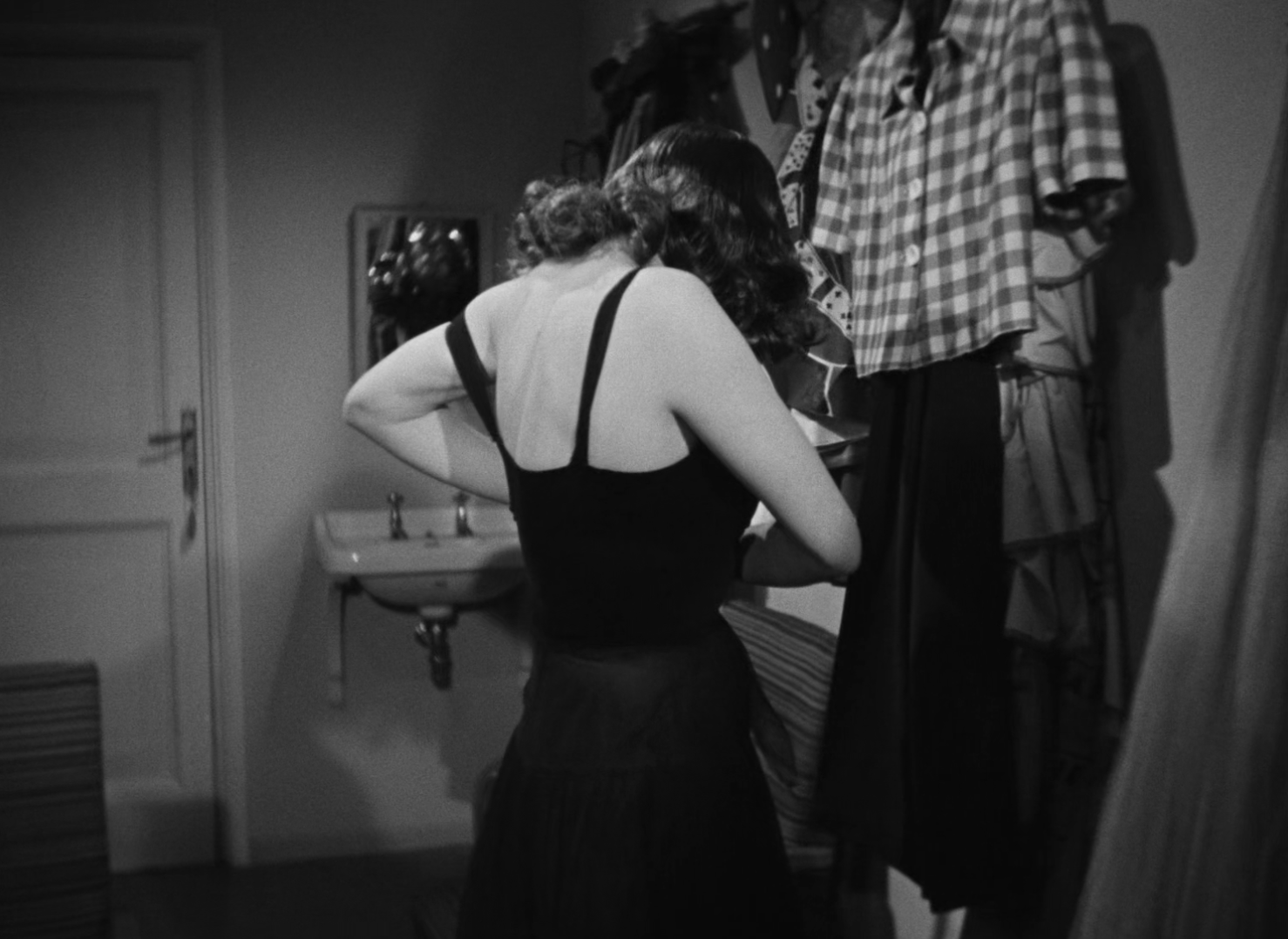
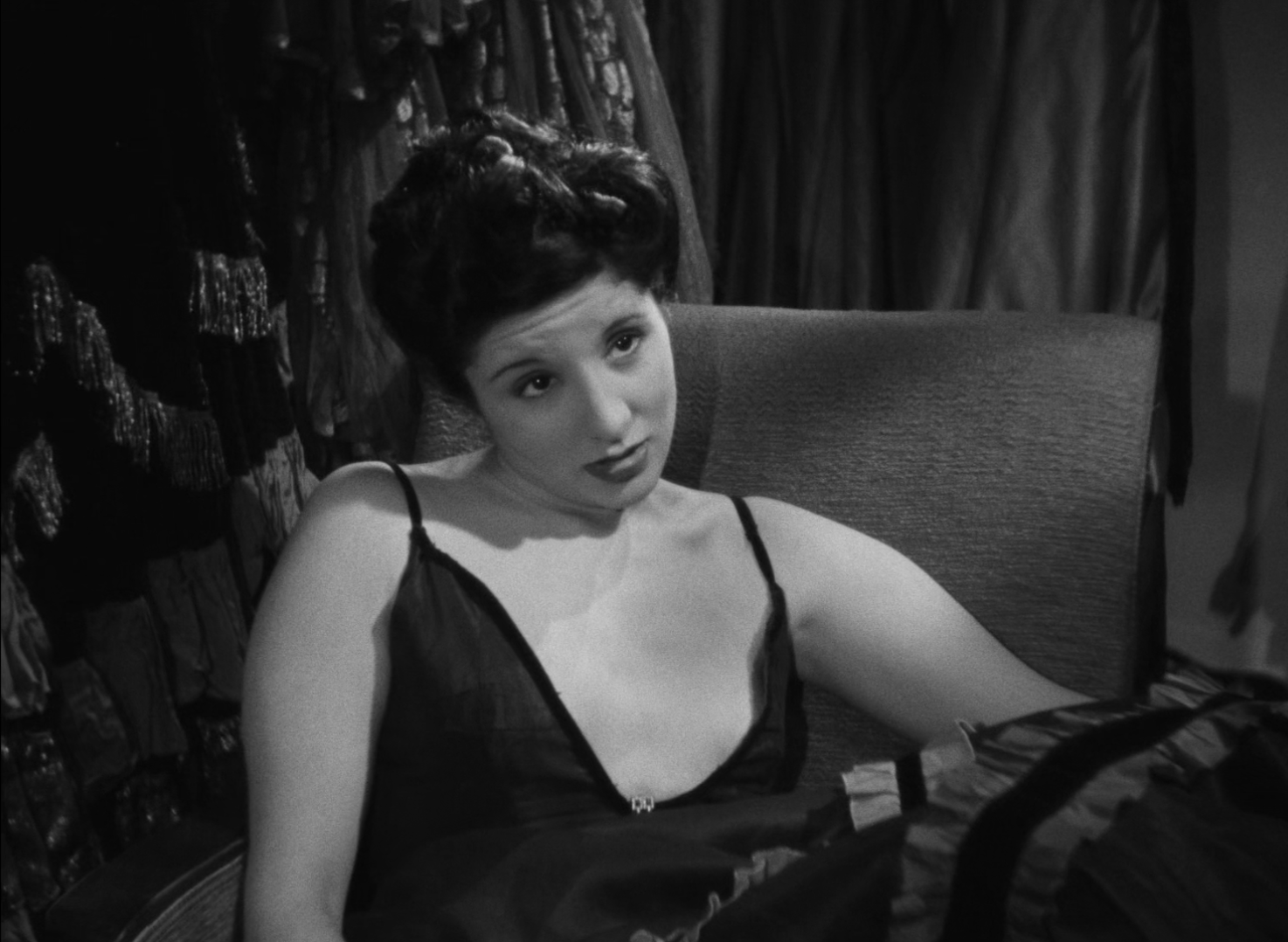
Marina si alza in piedi. “Come sapeva dove abitavi?” chiede voltando la testa verso Lauretta.
“Già, come lo sapeva…? Glielo avrai detto tu!”
“Io non gliel'ho mai detto”. Marina attraversa la stanza per cambiarsi.
“Beh, cosa vuoi che ti dica? Io non andavo a dirglielo di sicuro. Non faccio sapere alla gente dove abito”. In primo piano, vediamo lo sguardo implorante di Lauretta quando dice: “A proposito, Marina, io in quella casa non ci posso più stare… Se non ti dispiace verrei ad abitare da te finché non trovo un'altra camera”.
Marina stands up. “How did he know where you live?” she asks, looking over her shoulder at Lauretta.
“Yeah, how did he know…? You must have told him.”
“I never told him.” Marina steps across the room to change.
“Well, what do you want me to say? I certainly wasn’t going to tell him. I don’t tell people where I live.” In close-up, we see Lauretta’s imploring look as she says, “Speaking of which, Marina, I can’t take it in that house much longer. If you don’t mind, I’ll come to stay with you until I find another room.”
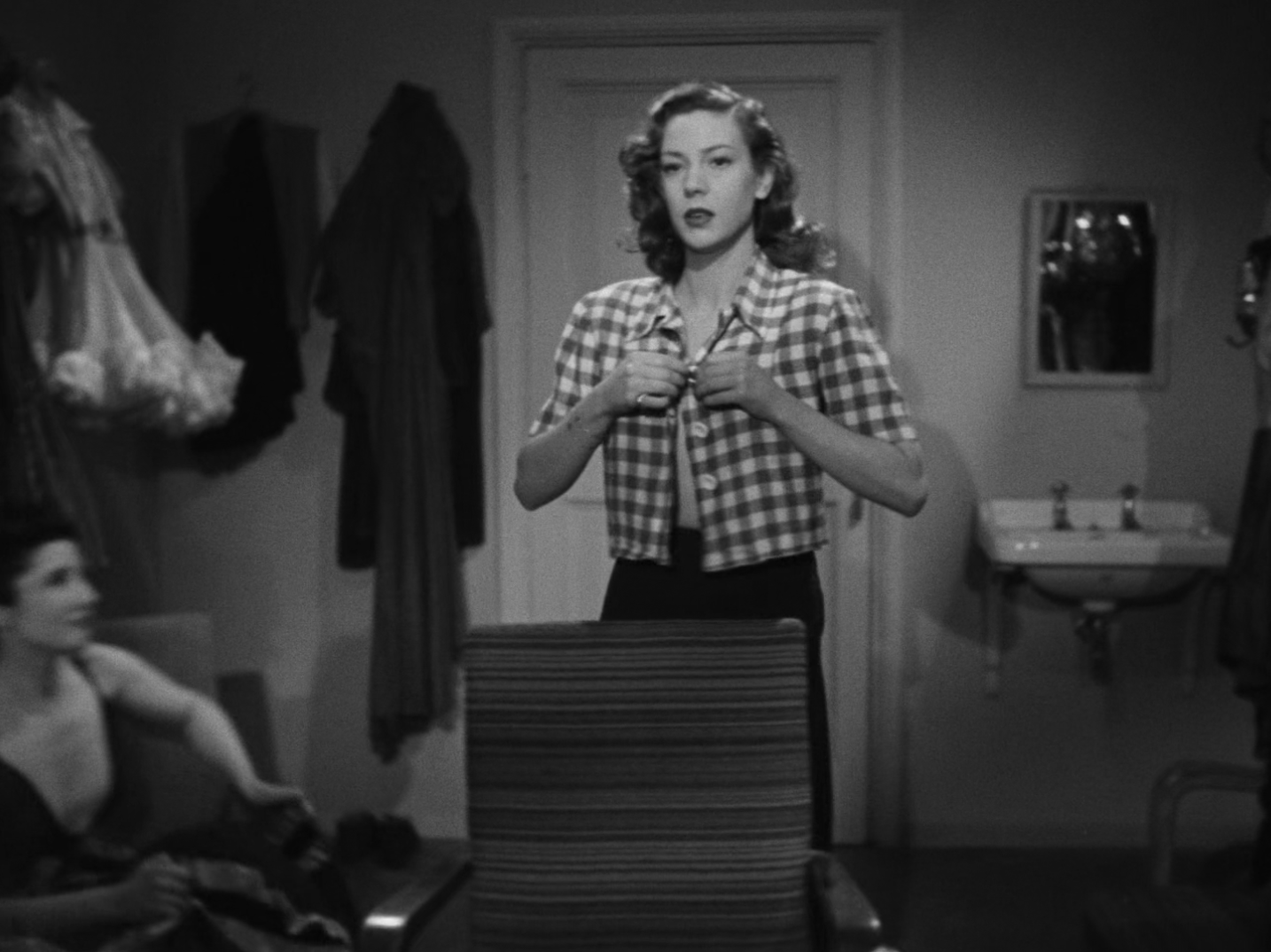
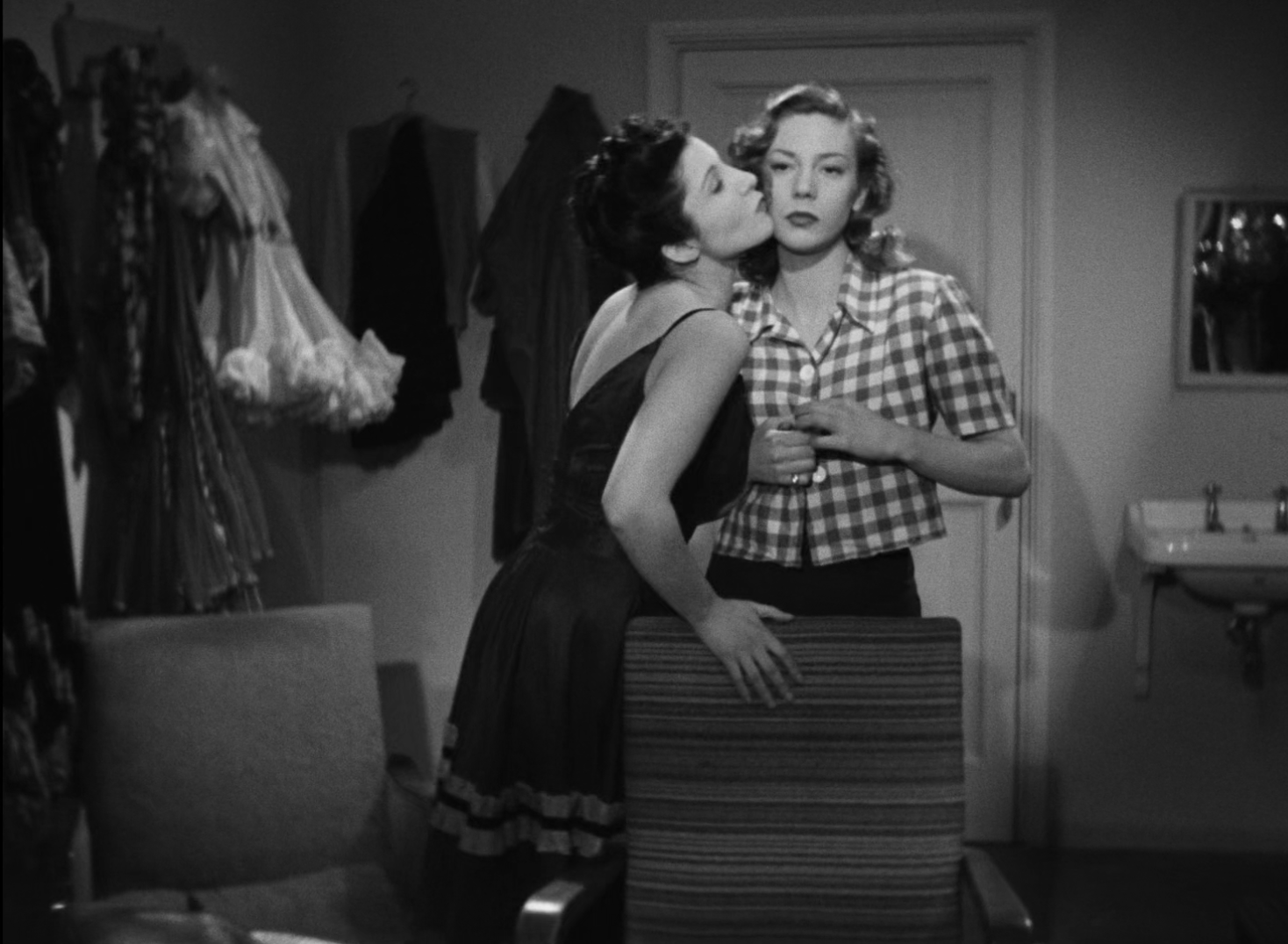
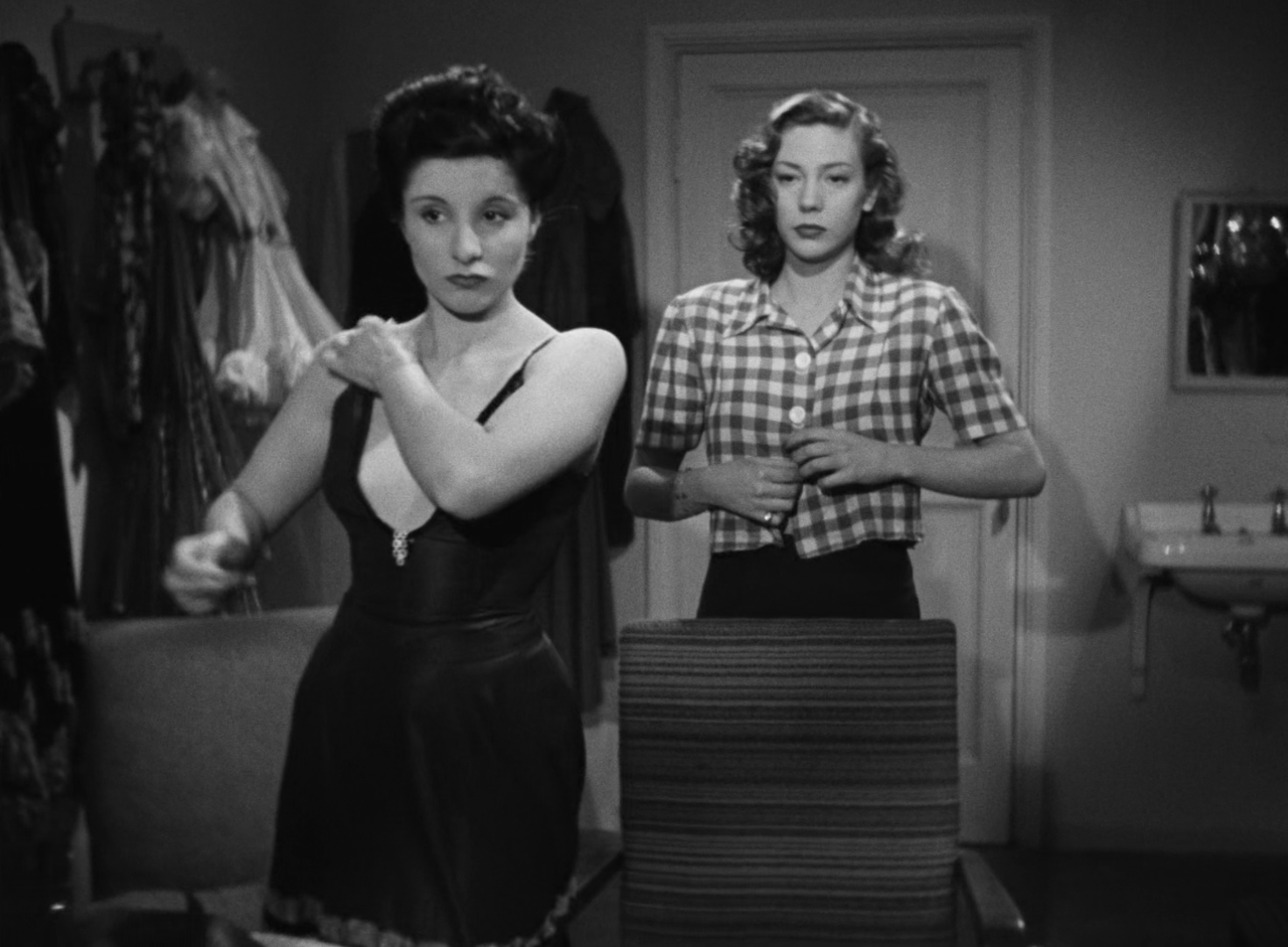
“Ma sì!” risponde Marina guardandosi allo specchio mentre si cambia il vestito. “Vieni quando vuoi. Te l'ho detto tante volte”.
“Sei un tesoro”, dice Lauretta e si sporge per baciare Marina, che non risponde. Le due donne stanno per un attimo in piedi fianco a fianco, guardandosi allo specchio.
“Of course!” Marina answers, looking at herself in the mirror as she changes her outfit. “Come when you want. I’ve told you many times.”
“You’re a sweetheart,” says Lauretta and leans over to kiss Marina, who doesn’t respond. The two women stand side by side for a moment, gazing at themselves in the mirror.
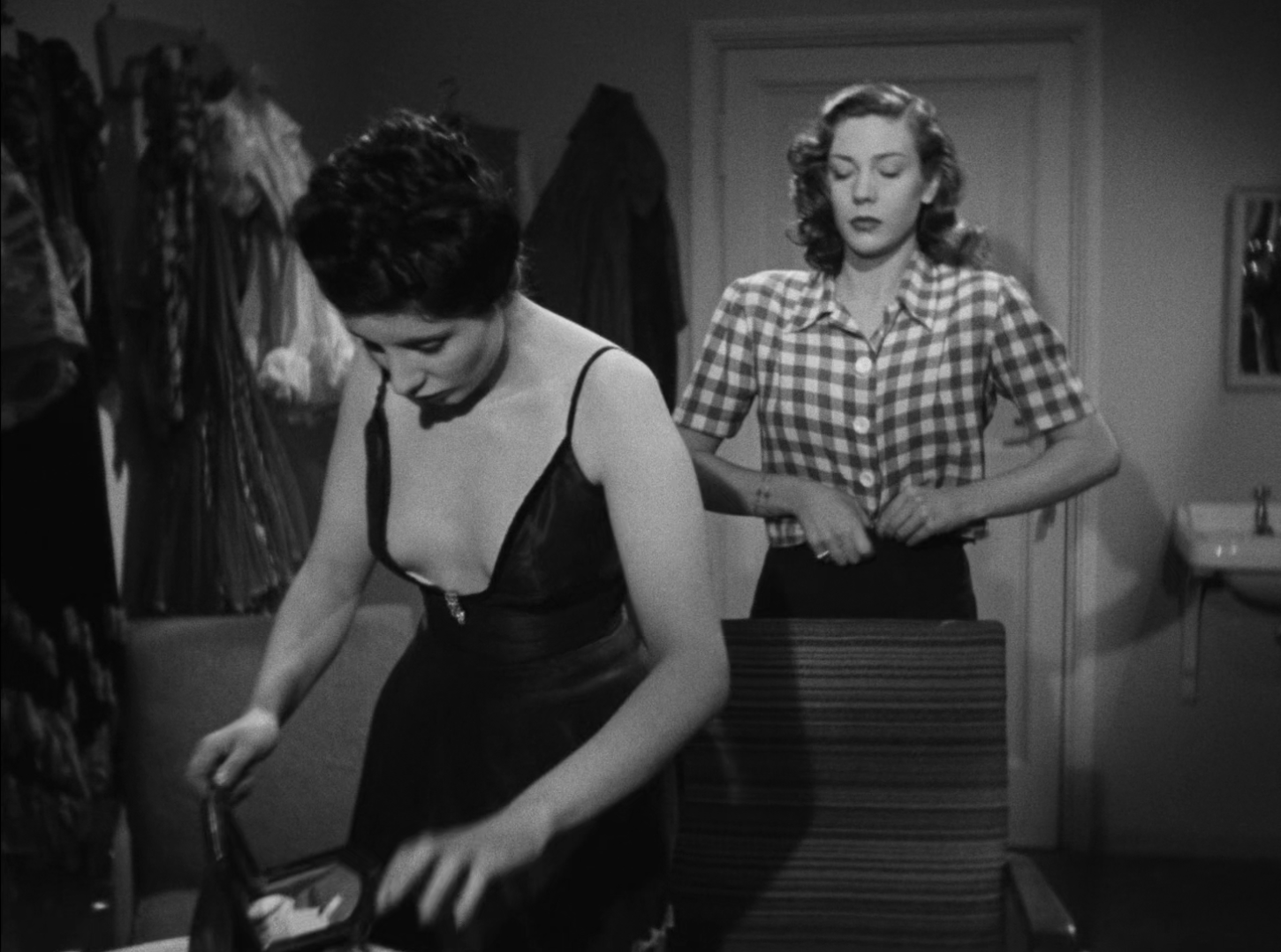
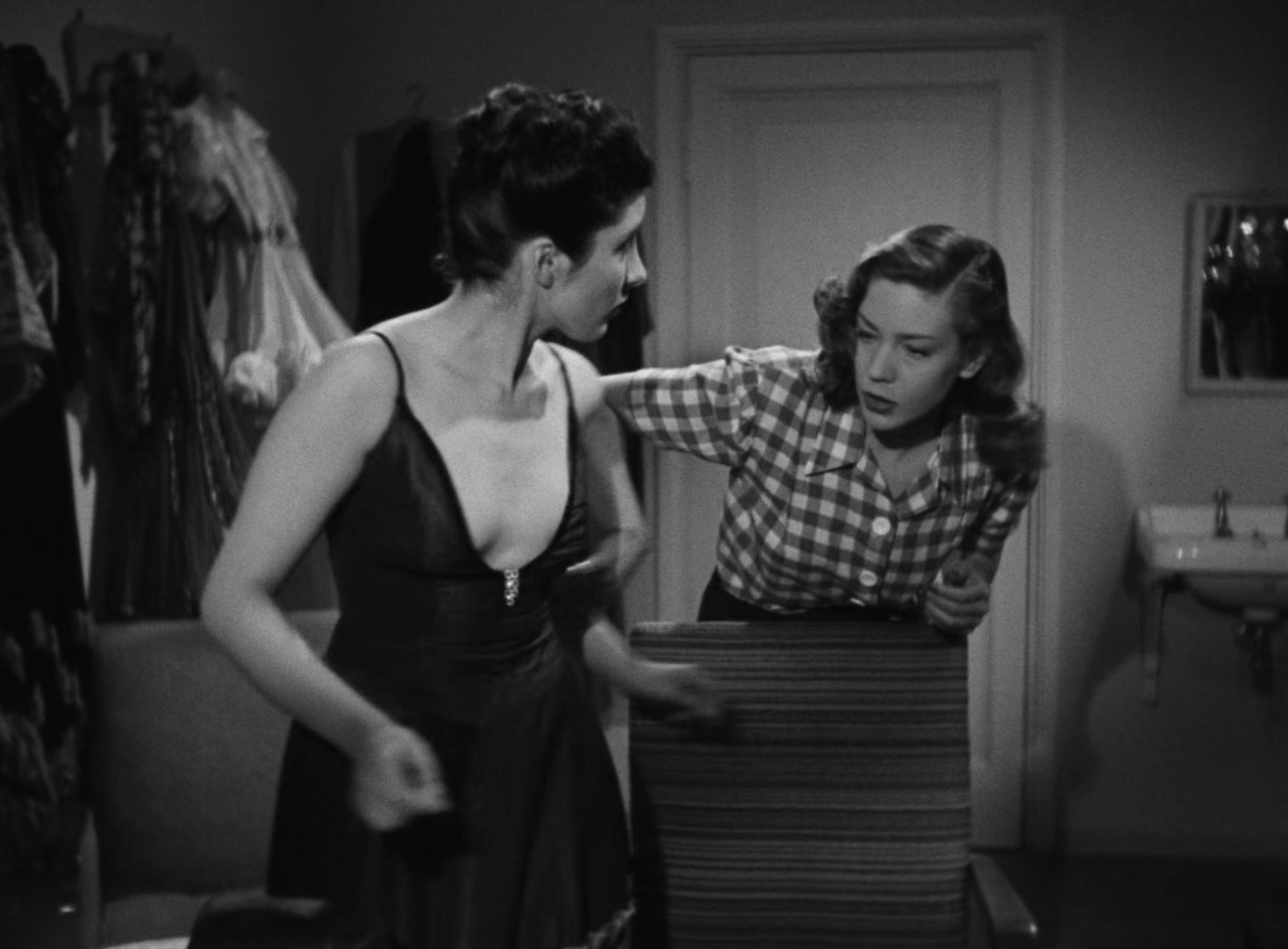
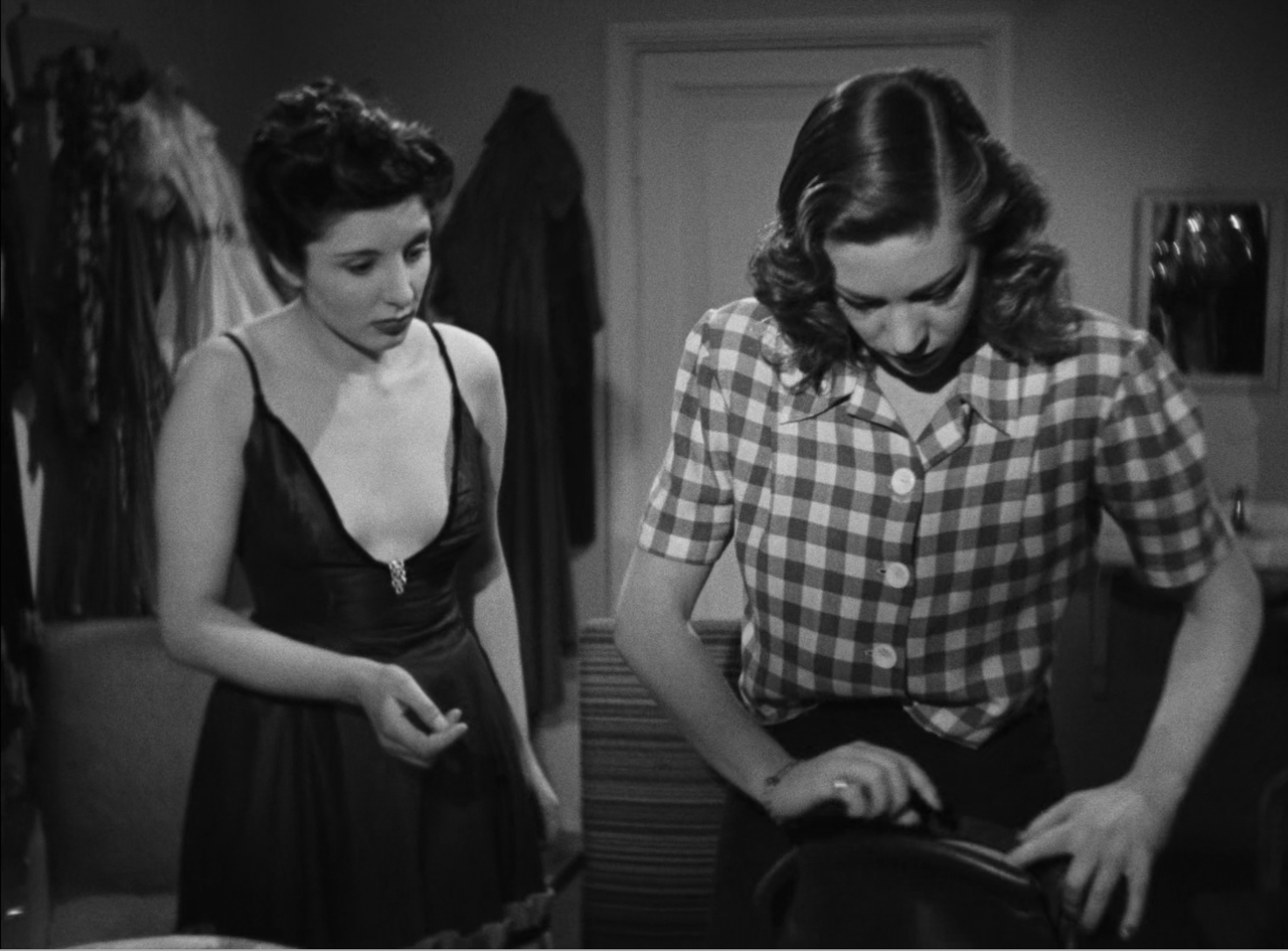
Lauretta si avvicina alla toletta e comincia a cercare nella borsa di Marina. Quando Marina se ne accorge, afferra il braccio della sua amica per fermarla.
"Cosa cerchi?" chiede.
"Una sigaretta!"
"Te la do io".
"Va bene!" risponde Lauretta, un po' scioccata dalla reazione dell'amica.
Lauretta walks over to the dressing table and starts to look through Marina’s purse. When Marina notices, she grabs her friend’s arm to stop her.
“What are you looking for?” she demands.
“A cigarette!”
“I’ll get you one.”
“Fine!” replies Lauretta, a little shocked by her friend’s reaction.
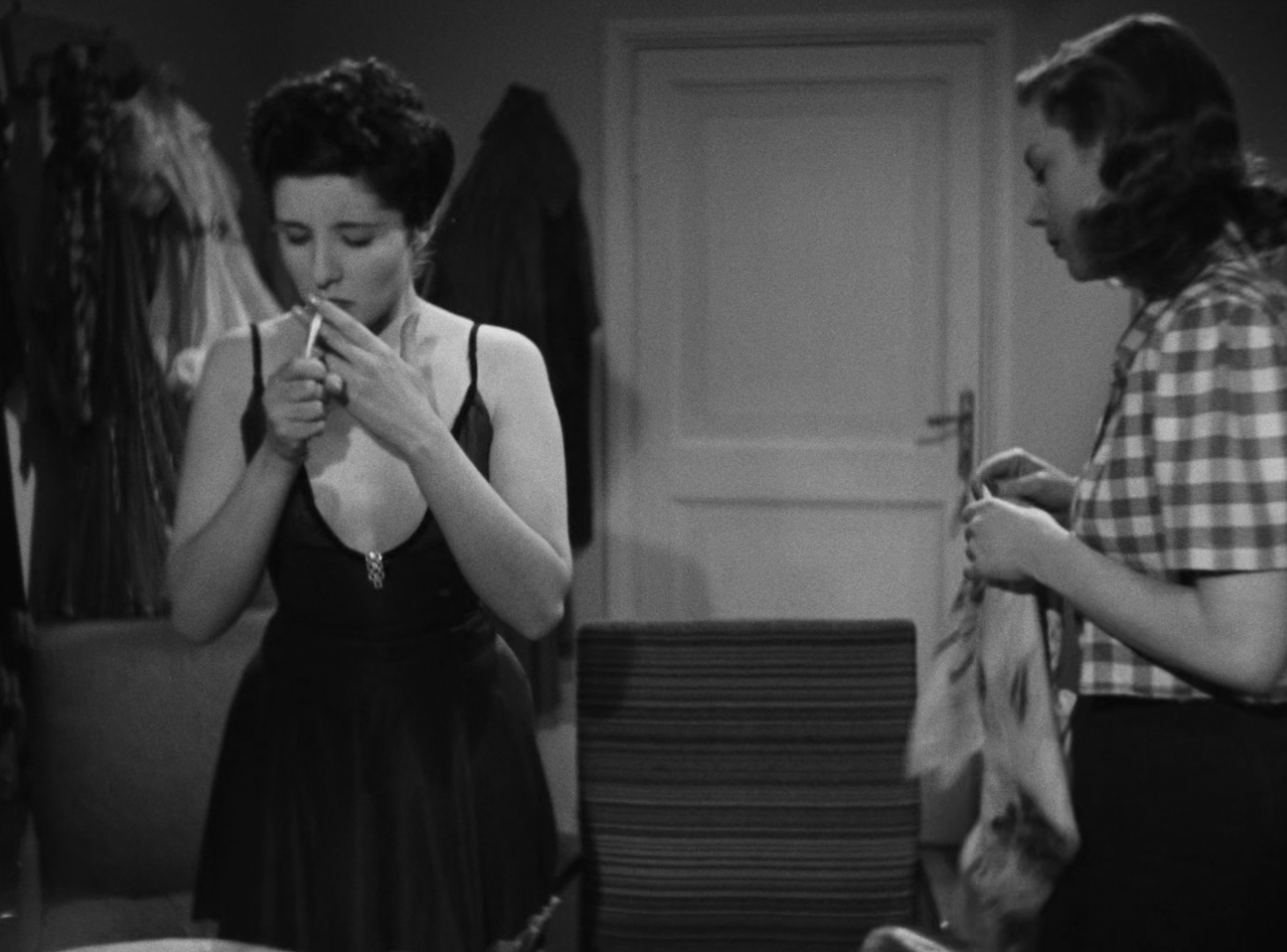
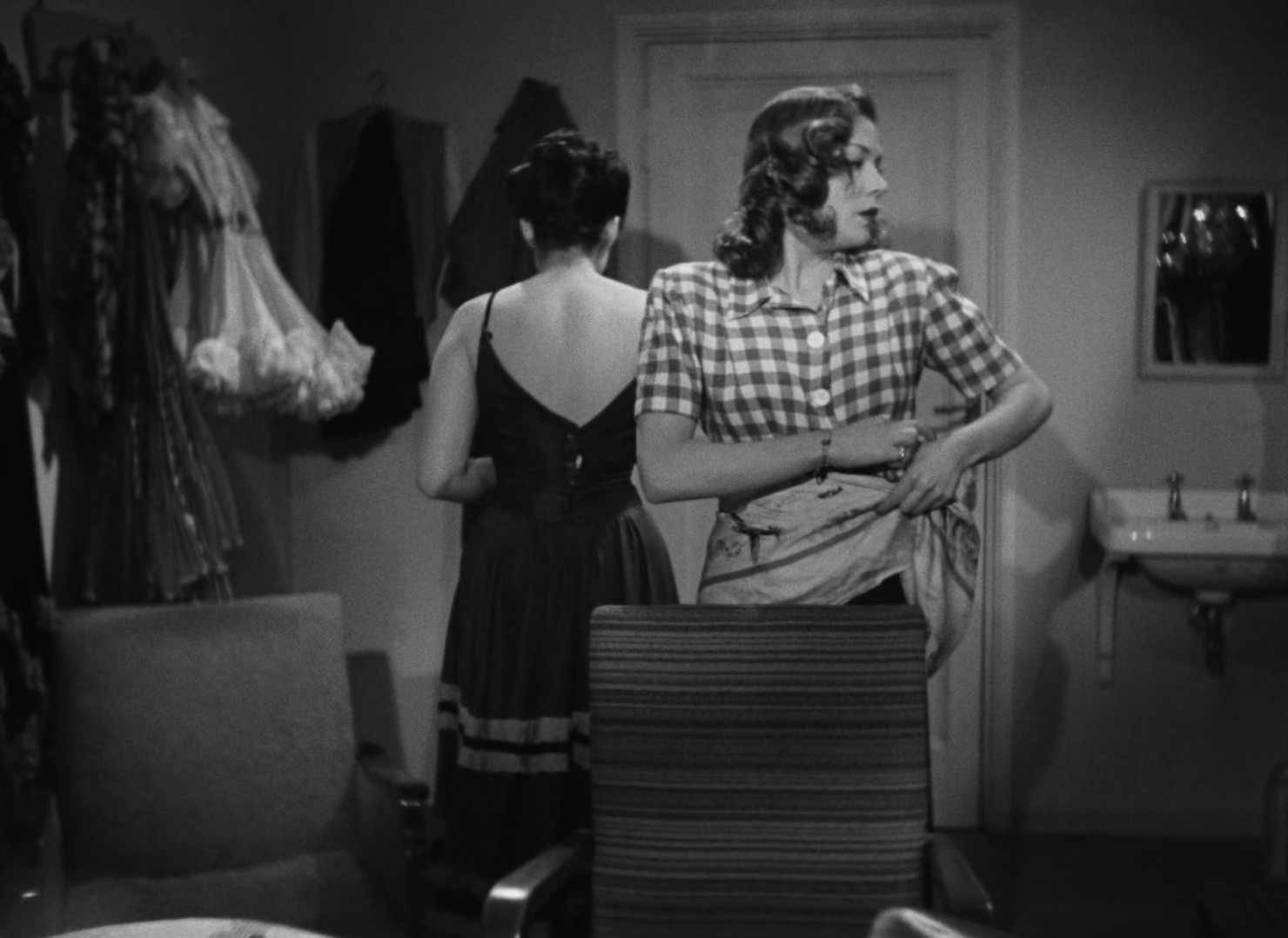
Lauretta prende la sigaretta e l'accende.
“Quand'è venuto?” chiede Marina.
“Chi?”
“Giorgio”.
“Stamattina presto, ero da vestire”.
Mentre Marina si sta aggiustando uno scialle intorno alla vita, bussano alla porta: “Signorina Mari! Tocca a lei!”
Lauretta takes the cigarette and lights it.
“When did he come by?” asks Marina.
“Who?”
“Giorgio.”
“Early this morning. I was about to get dressed.”
As Marina is adjusting a shawl around her waist, a knock comes at the door: “Miss Mari, you’re on!”
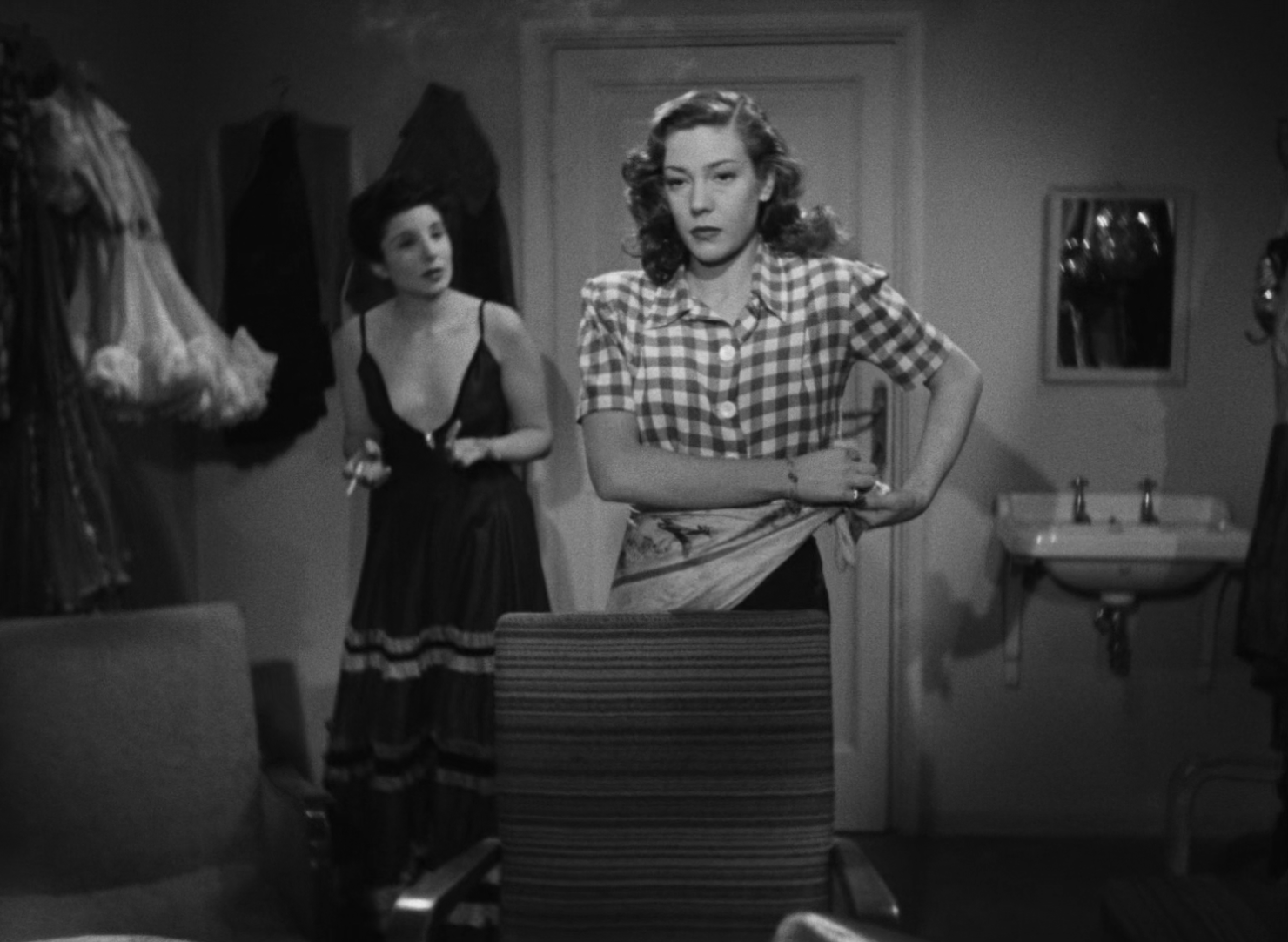
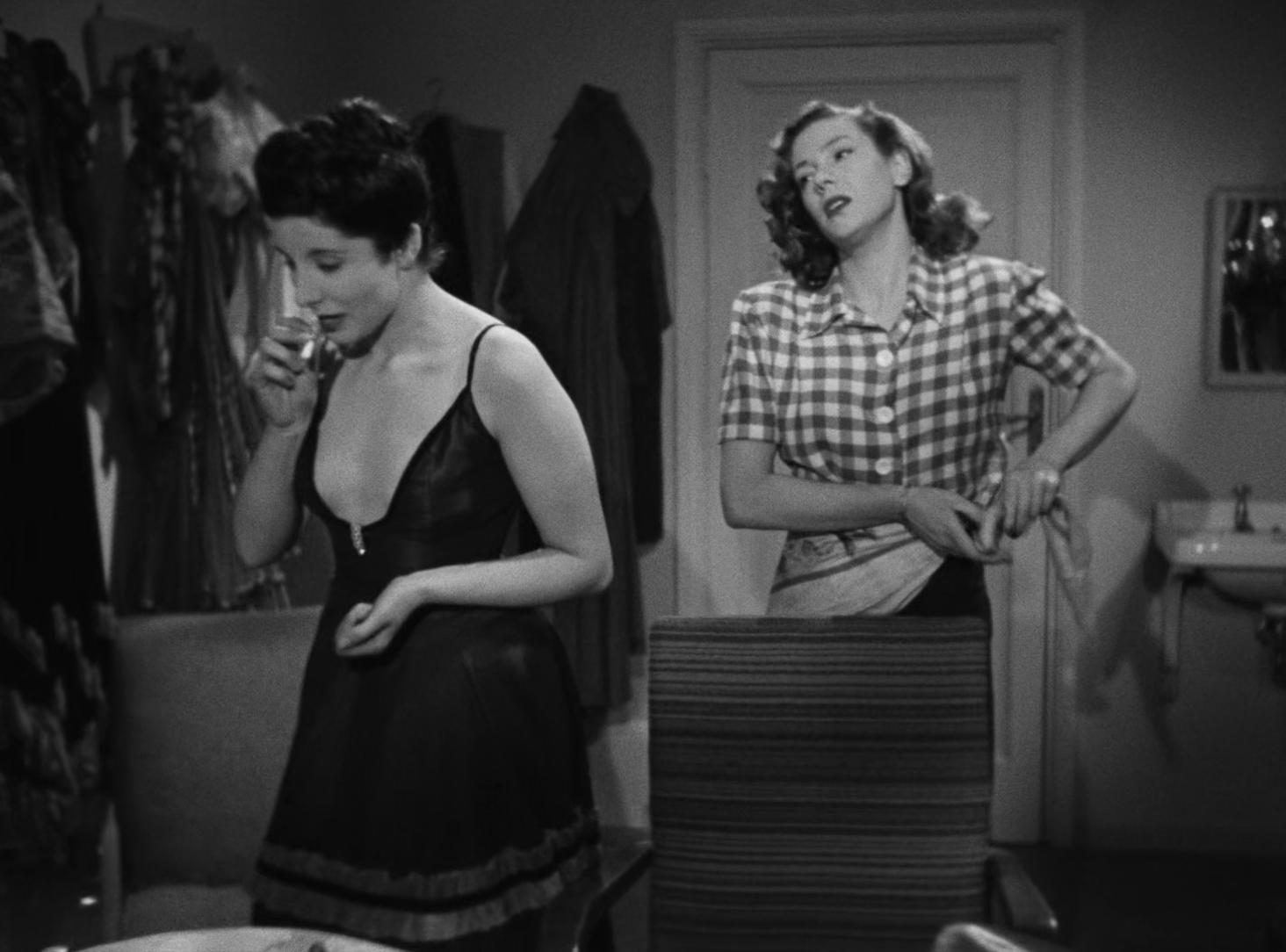
“Io non capisco” – dice Lauretta – “Sì, è simpatico, non dico di no…”
“Mi fai la cortesia di non occupartene?”
“Per me, figurati. Finché sei contenta tu!”
“I don’t get it,” says Lauretta. “Yes, he’s nice, I don’t say he isn’t...”
“Would you kindly stay out of it?”
“It’s nothing to me, imagine. As long as you’re happy!”
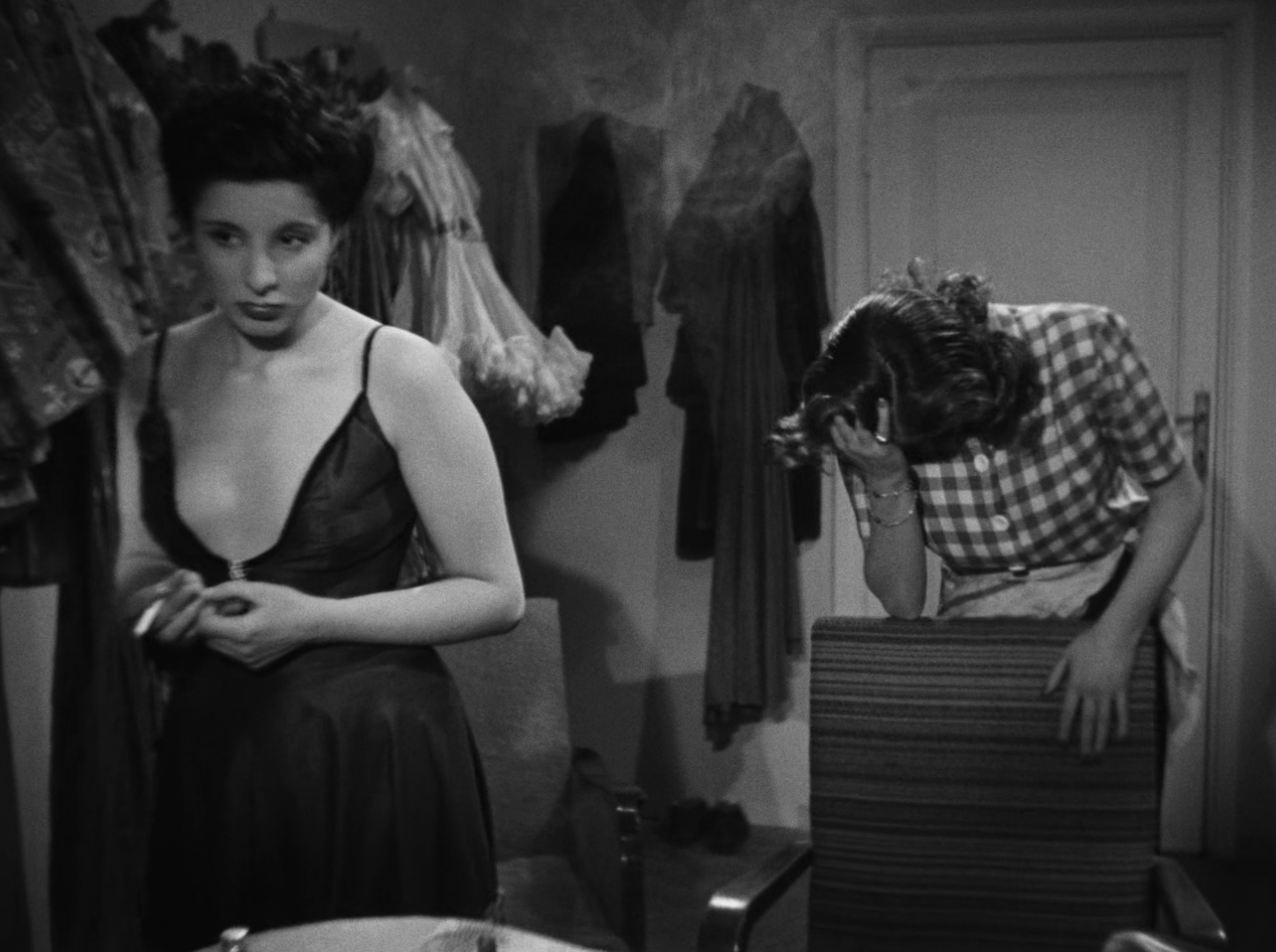
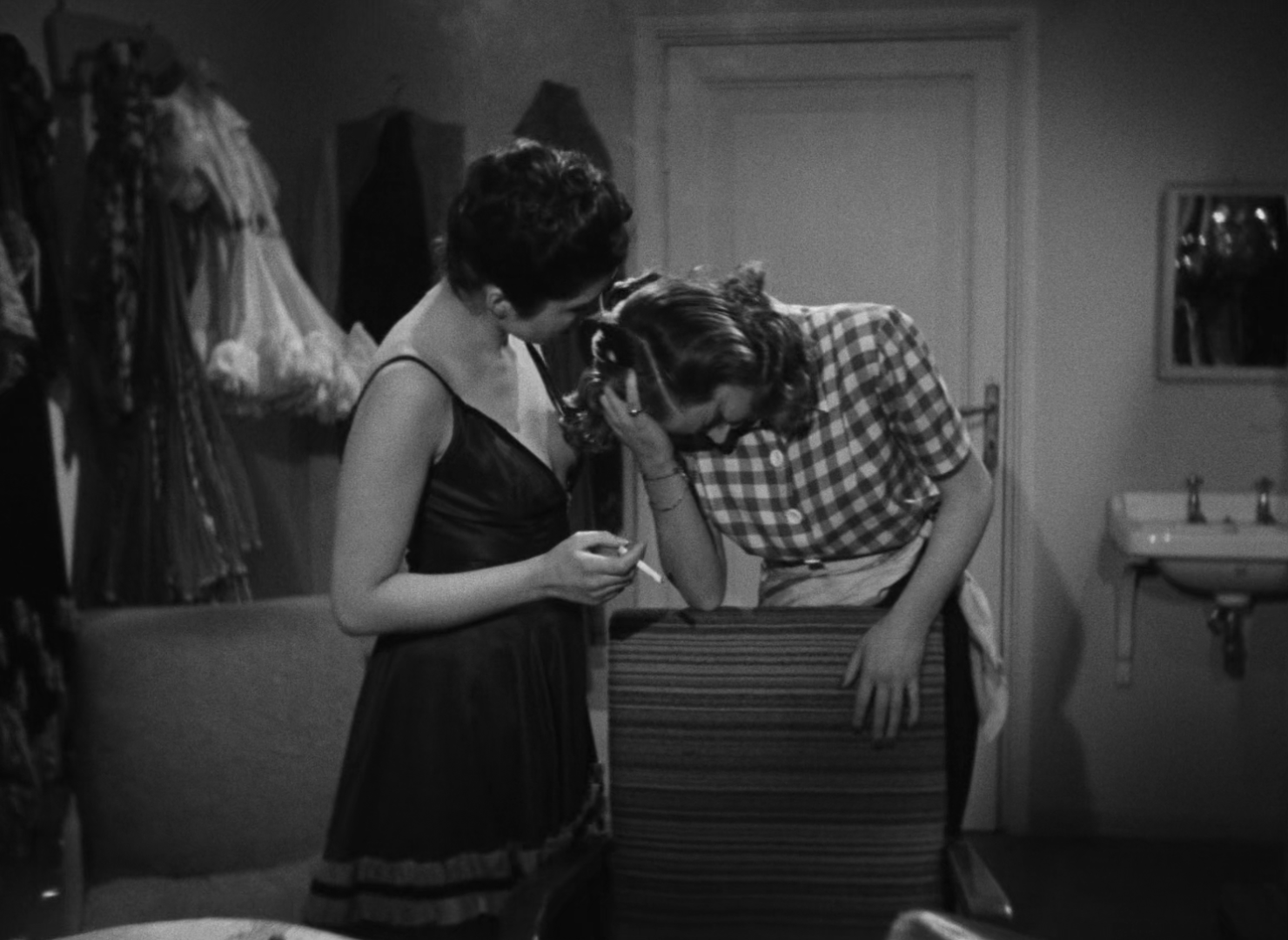
Marina perde improvvisamente le forze, appoggiandosi a una sedia e sostenendosi la fronte con la mano.
“Ti senti male?” chiede Lauretta, mettendo la mano sulla testa di Marina.
“No, non è niente”.
Marina suddenly loses her strength, leaning over a chair and supporting her forehead with her hand.
“Do you feel sick?” asks Lauretta, placing her hand on Marina’s head.
“No, it’s nothing.”
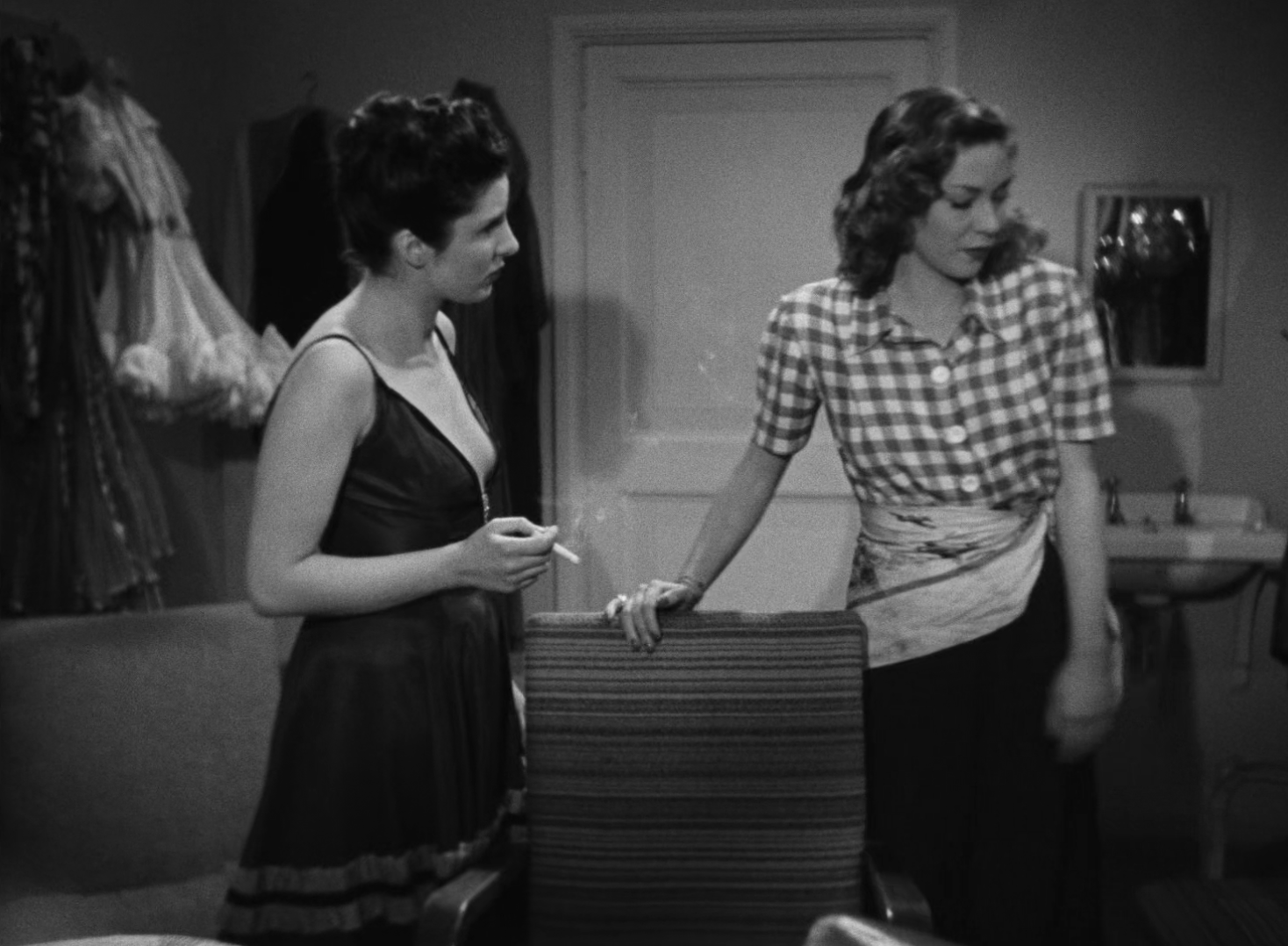
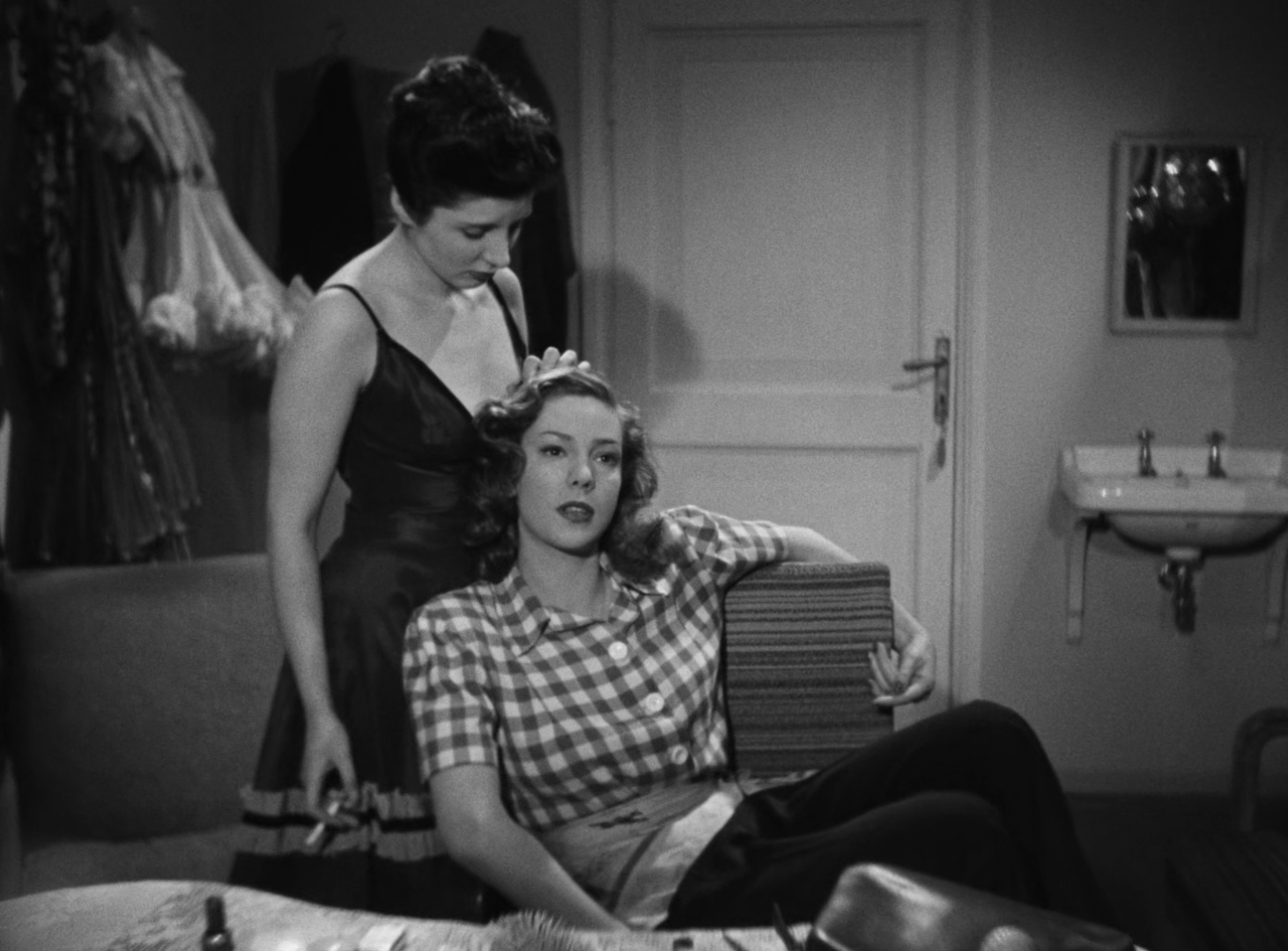
Ma poi Lauretta capisce: “Marina... di nuovo? Lo sai che ti fa male!”
“Sciocchezze!” risponde Marina, di nuovo seduta alla toletta. “Ci sono tante cose che ci fanno male, eppure le facciamo lo stesso”.
Lauretta passa la mano affettuosamente tra i capelli di Marina.
But then Lauretta understands: “Marina… again? You know it’s bad for you!”
“Nonsense,” replies Marina, sitting at the dressing table again. “Lots of things are bad for us, but we do them anyway.”
Lauretta runs her hand affectionately through Marina’s hair.
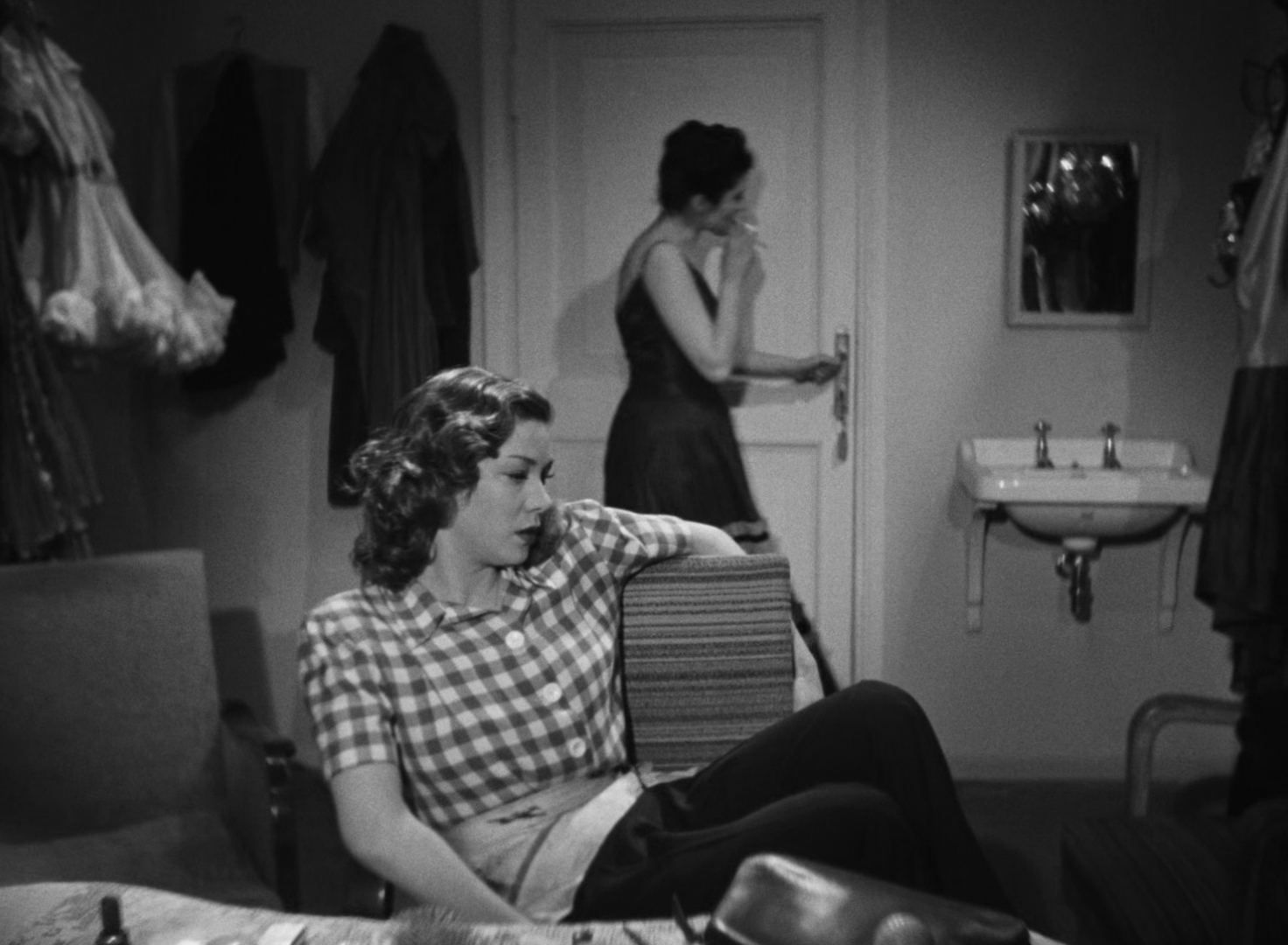

Un'altra bussata manda Lauretta alla porta, mentre Marina dice stancamente: "Vengo!”
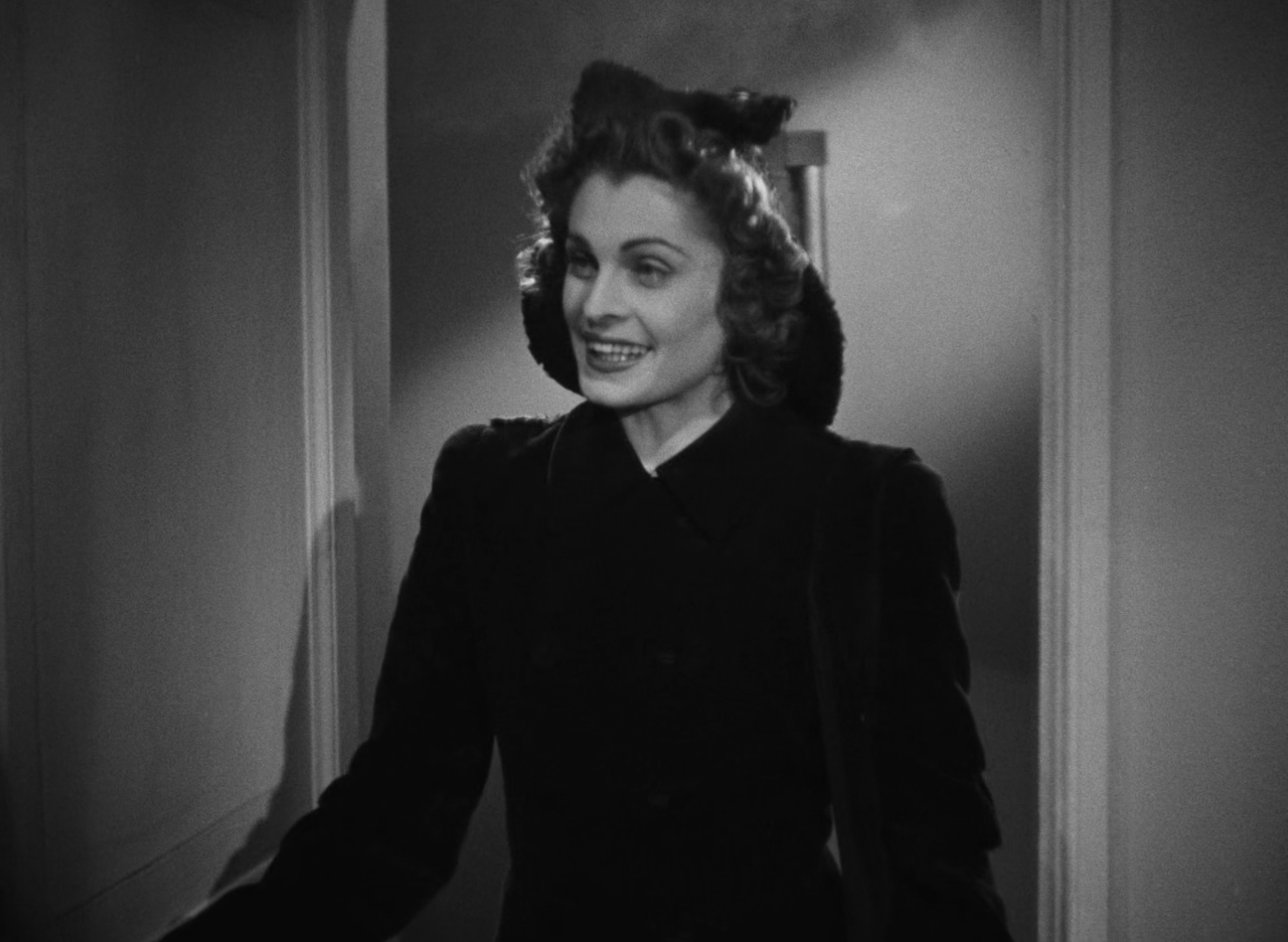
Lauretta apre la porta a una donna elegante, con cappotto e cappello scuri. Quando vede Marina, mostra un sorriso grazioso. "Buonasera. Come stai?”
Another knock sends Lauretta to the door, as Marina says wearily, “I’m coming!”
Lauretta opens the door to an elegant woman in dark coat and hat. When she sees Marina, she breaks into a gracious smile. “Good evening. How are you?”
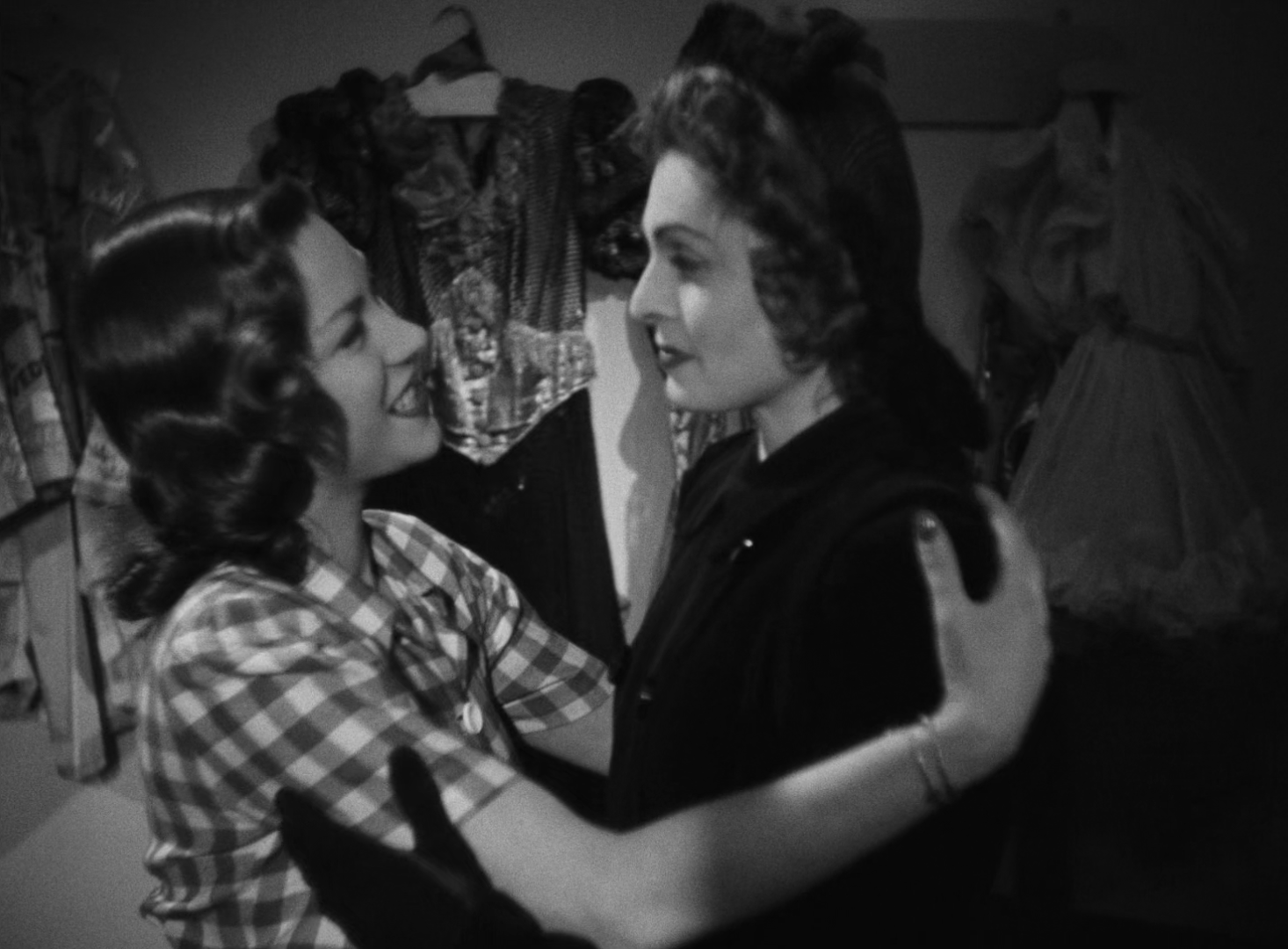
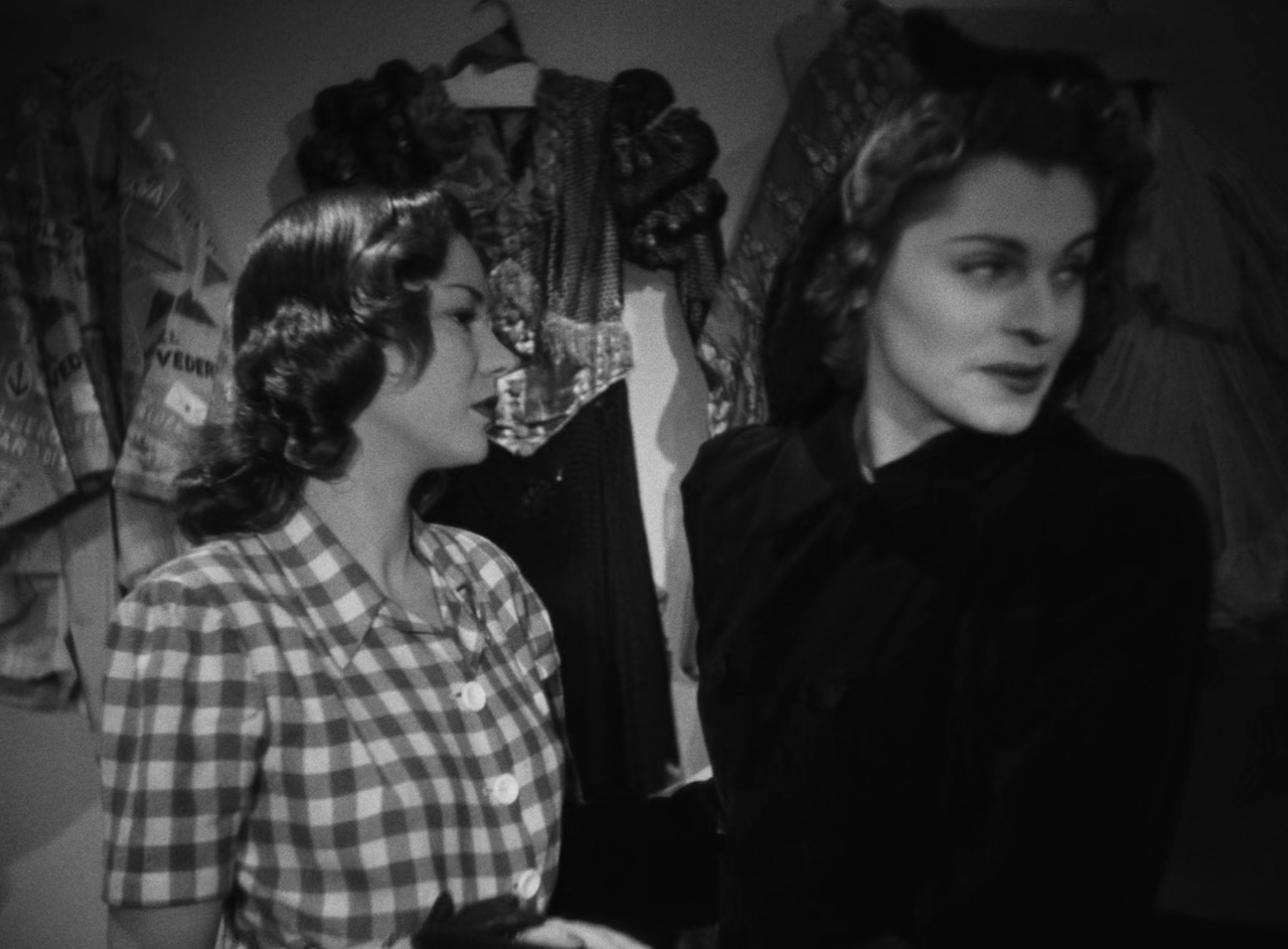
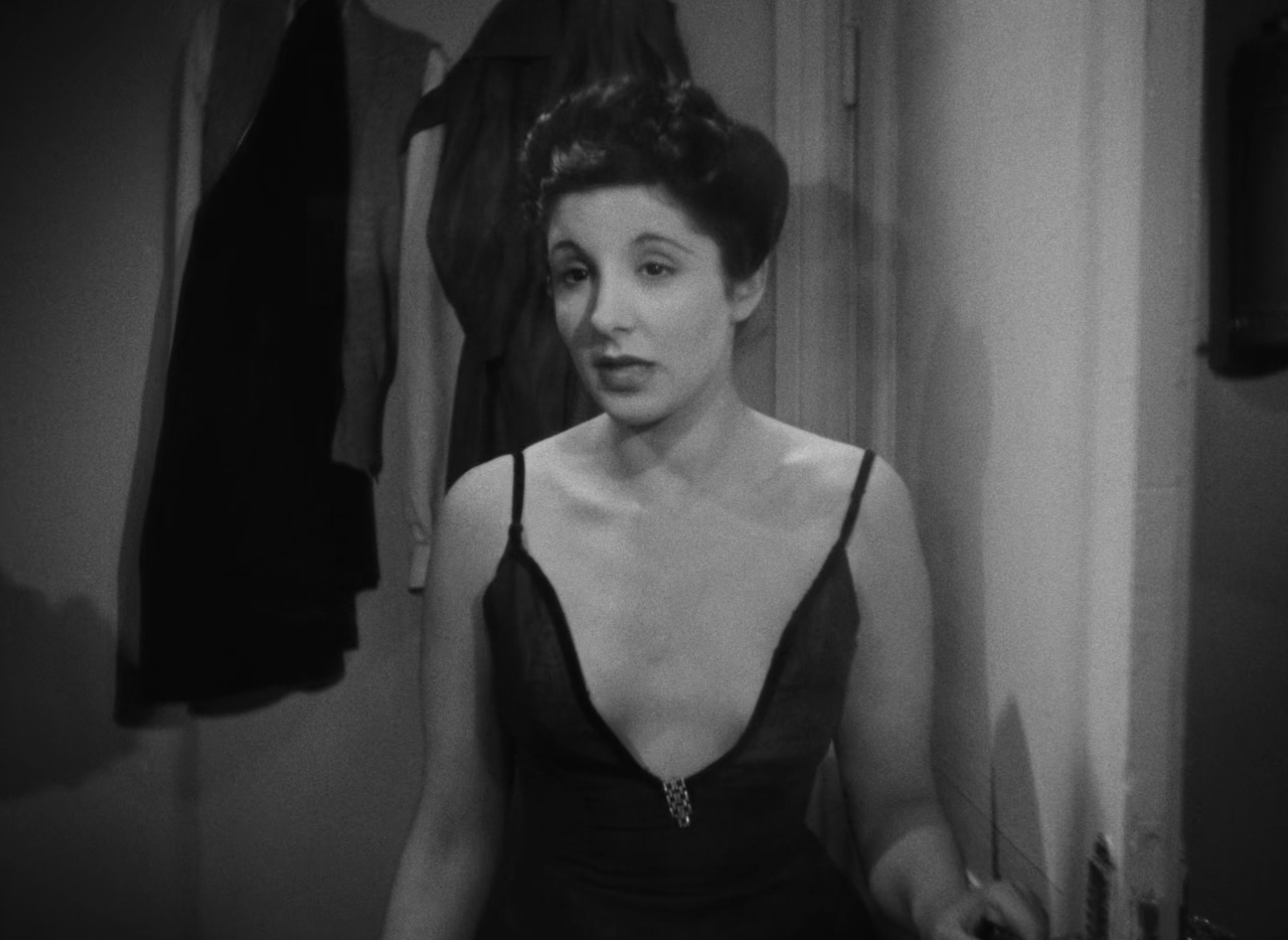
Marina si precipita ad abbracciarla. Il suo guanto nero si appoggia sul braccio bianco e nudo di Marina.
Marina risponde: “Bene, e lei? Ma come è bella questa sera! Ma già, lei è sempre così chic!”
Lauretta dice da fuori campo: “Beh, allora io me ne vado”.
"Ah, Lauretta", mormora la donna, con poco interesse.
“Cerca di sbrigarti!” – dice Lauretta a Marina. – “Sennò lo sentirai il direttore”. Se ne va.
Marina rushes to embrace her. Her black glove rests on Marina's bare white arm.
Marina replies, “Fine, and you? How beautiful you look tonight! But of course, you always look so chic!”
Lauretta says from off-screen, “Well, I’ll be going.”
“Ah, Lauretta,” the woman murmurs, with little interest.
“Try and hurry,” Lauretta tells Marina. “Or you will hear from the boss.” She leaves.
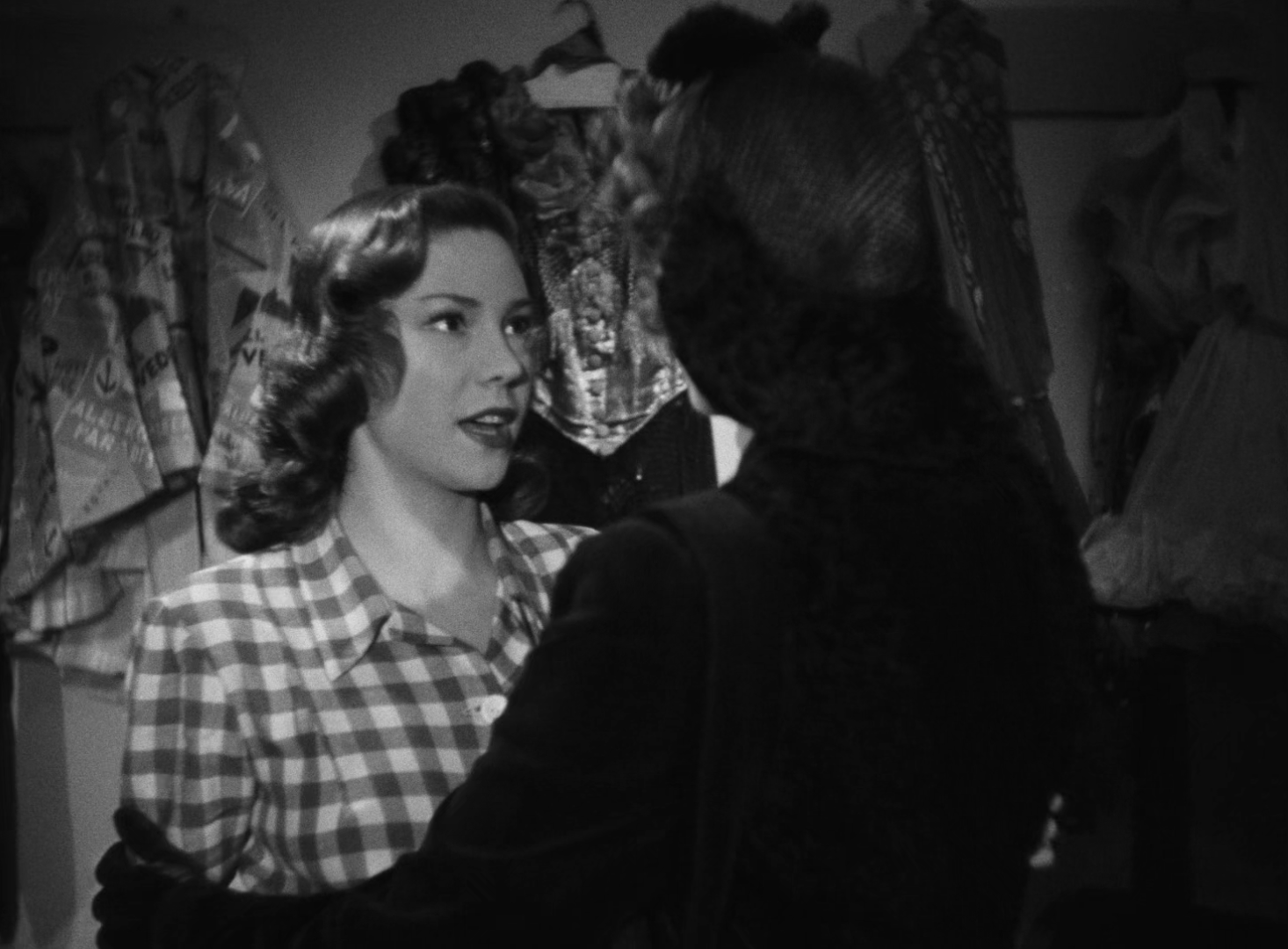
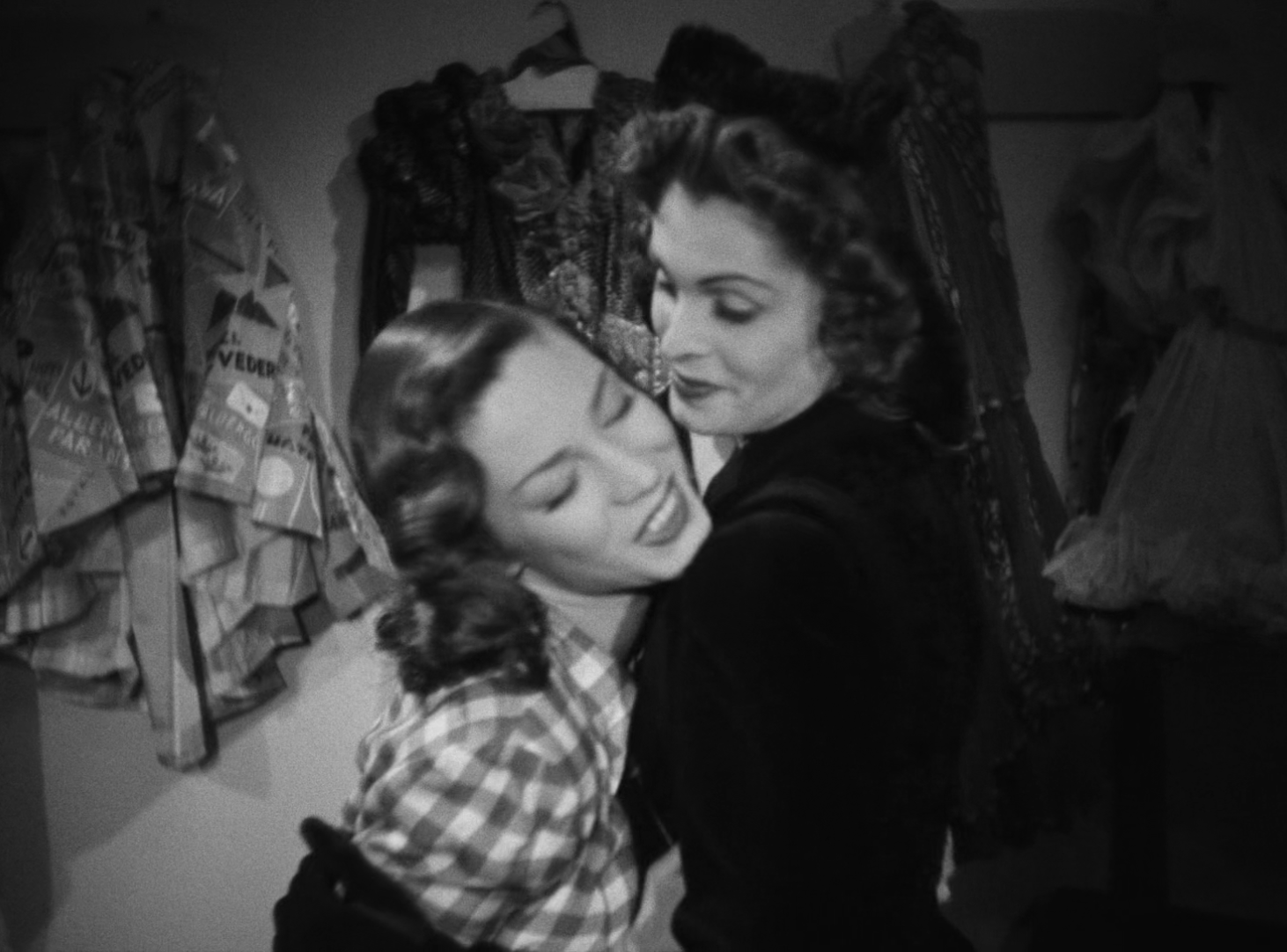
“Mi scusi. Devo andare”, dice Marina.
“Sì, cara”, dice la donna, la sua mano ancora sul braccio di Marina.
“Hai trovato la cosa?” chiede Marina.
“Sì”.
“Oh, che amore!” Marina la abbraccia di nuovo, sorridendo con sollievo.
“Excuse me. I have to go,” Marina says.
“Yes, dear,” says the woman, her hand still on Marina’s arm.
“Did you find some?” Marina asks.
“Yes.”
“You’re a darling!” Marina embraces her again, smiling with relief.
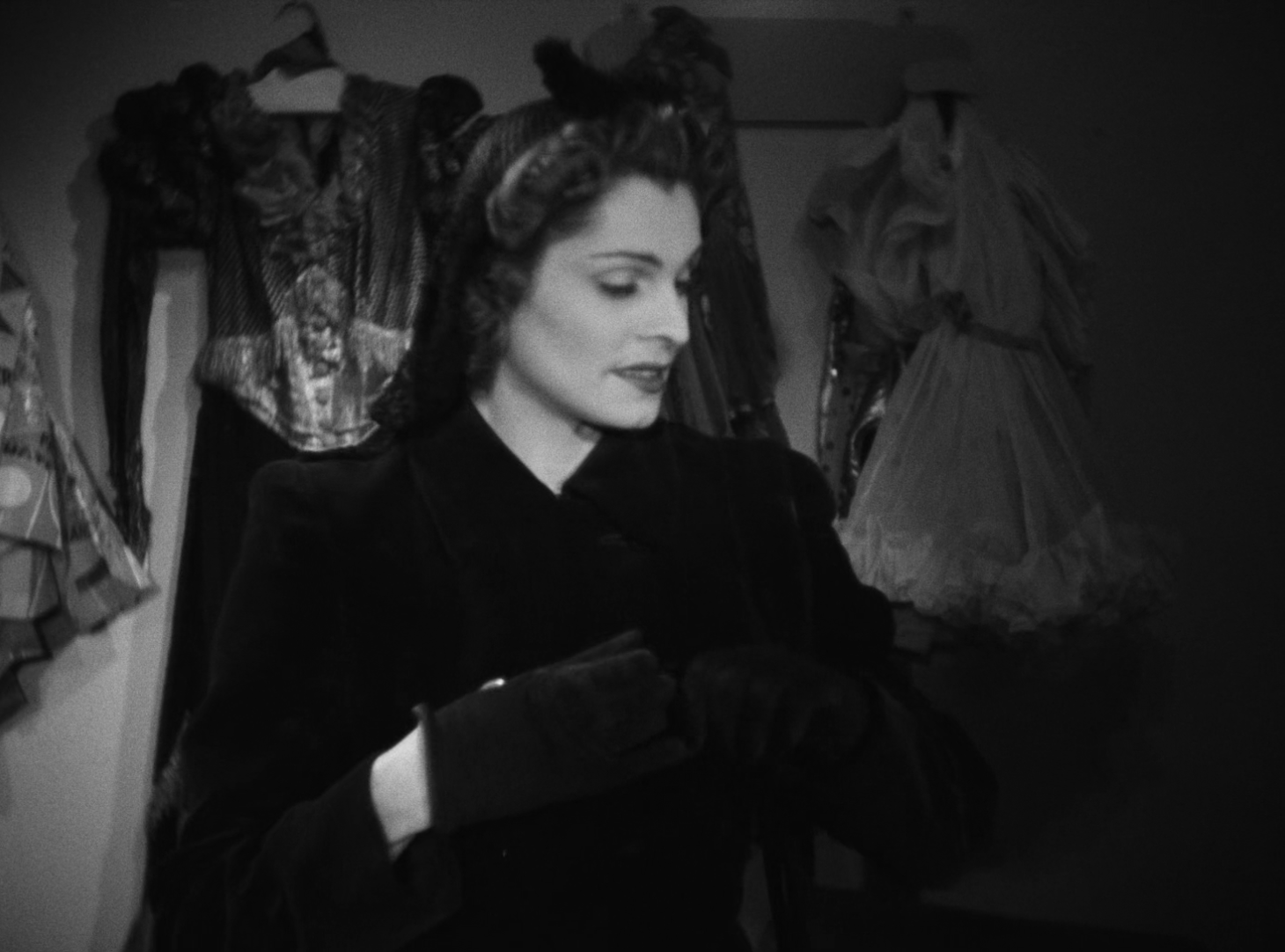
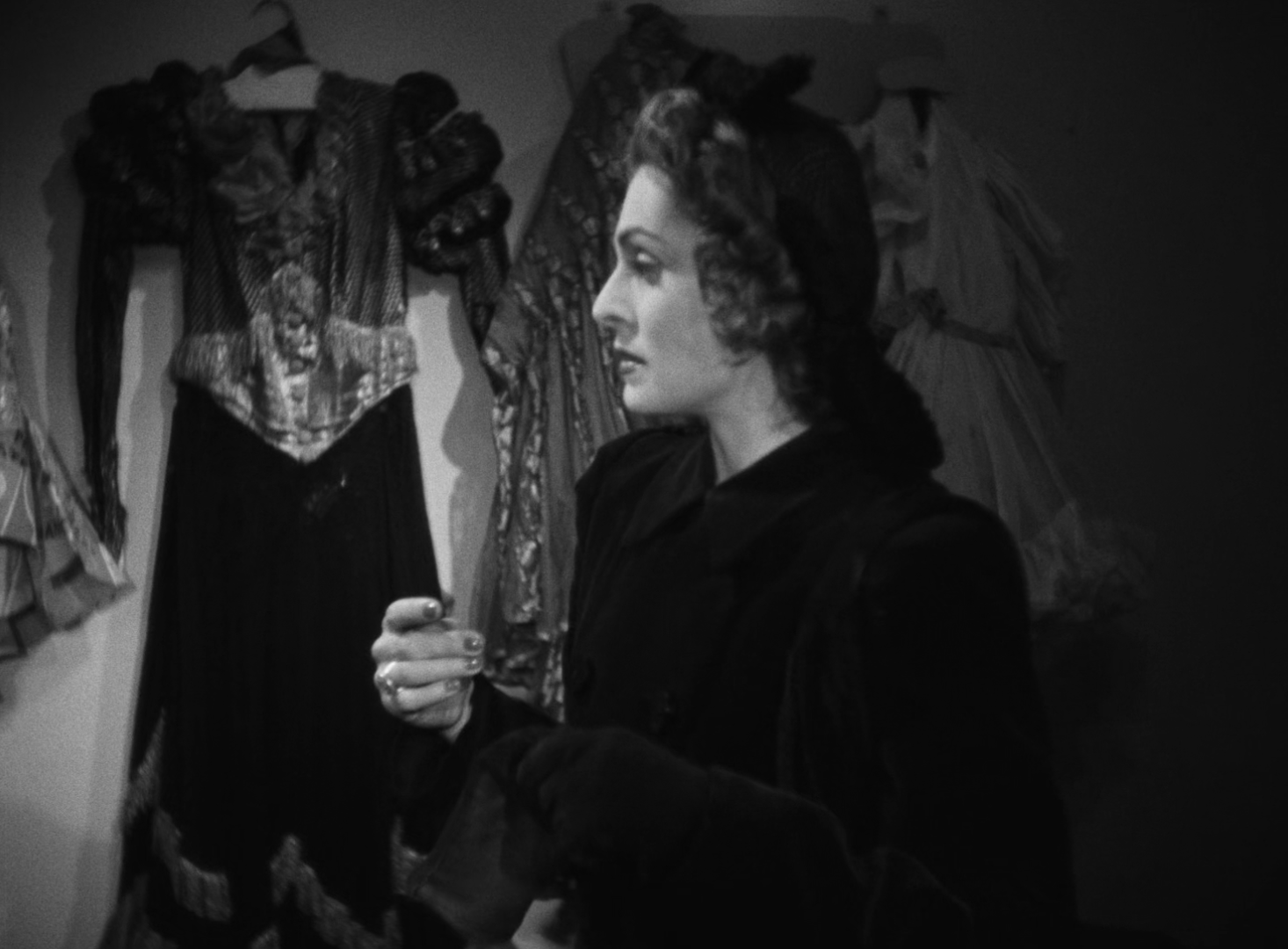
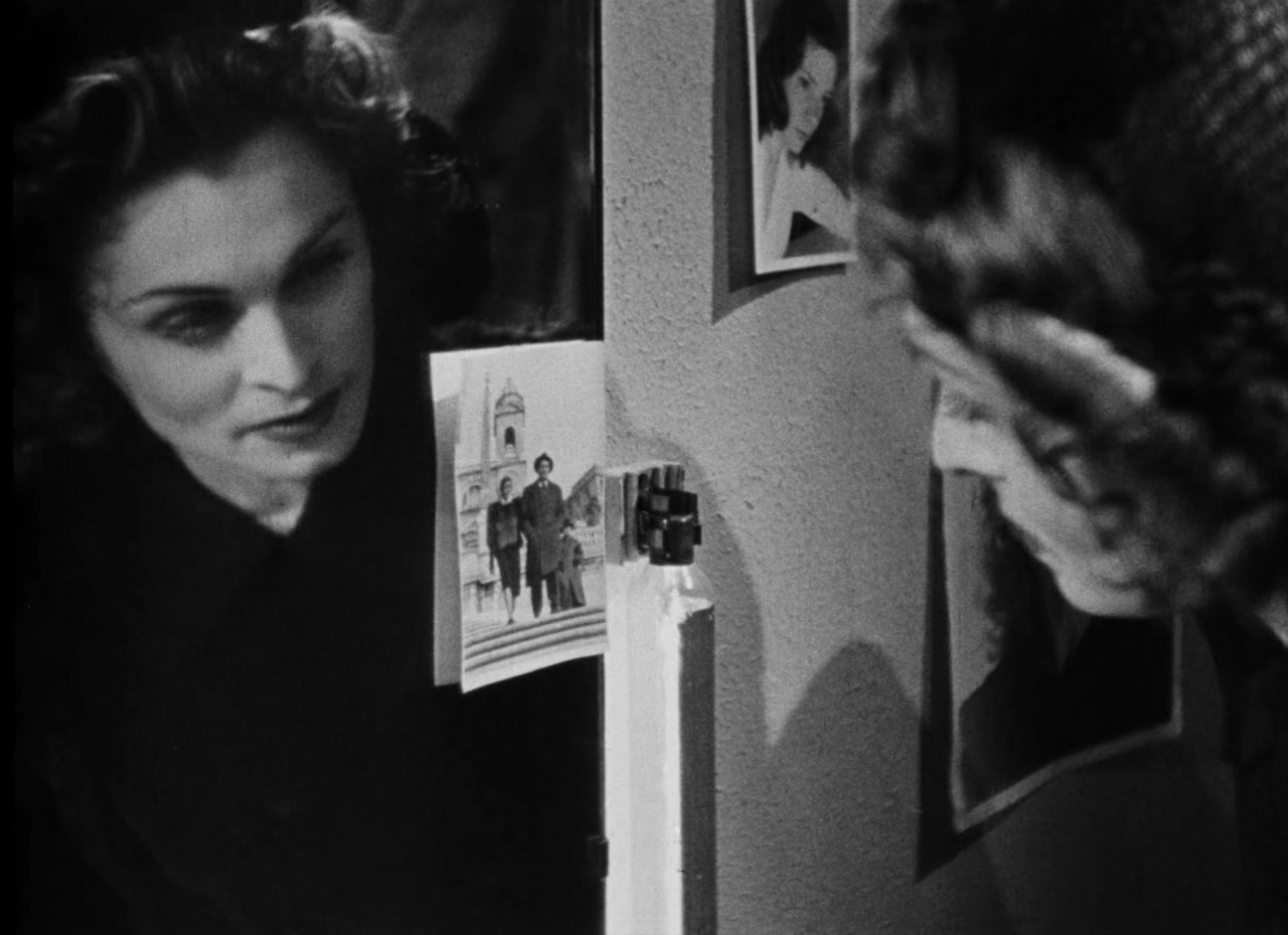
Da sola nel camerino, la donna si toglie un guanto e procede a curiosare in giro, fermandosi a una fotografia di Manfredi e Marina. Lo stesso ritratto l'abbiamo visto prima, nell'ufficio di Bergmann. La macchina da presa si sofferma su di lei mentre lo guarda con intenso interesse.
Alone in the dressing room, the woman takes off a glove and proceeds to snoop around, stopping at a photograph of Manfredi and Marina. We saw the same portrait earlier in Bergmann’s office. The camera lingers on her as she looks at it with intense interest.
FINE PARTE 6
Ecco the link to Parte 7 of this cineracconto! Subscribe to receive a weekly email newsletter with links to all our new posts.