Regia: Roberto Rossellini, 1945
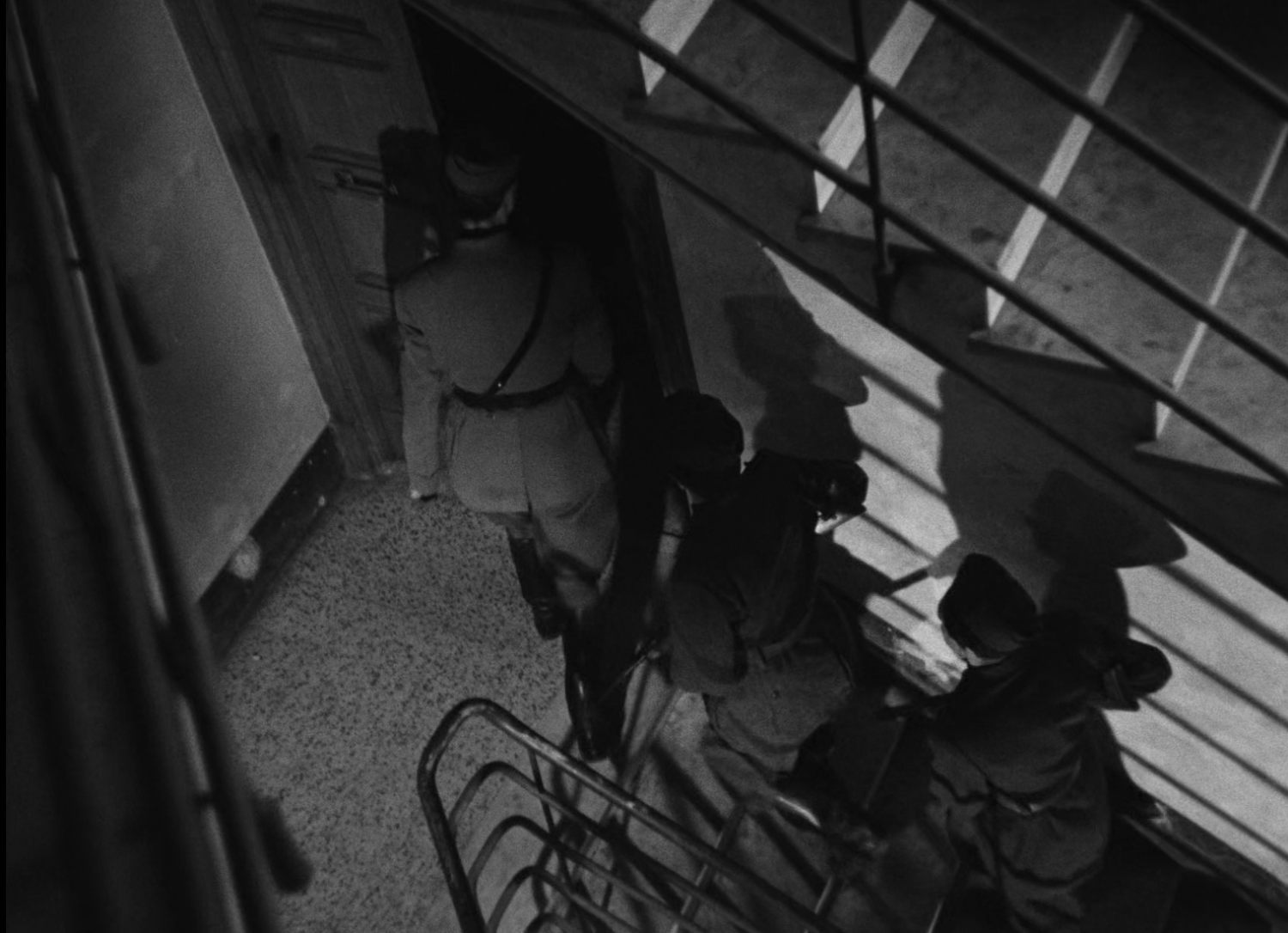
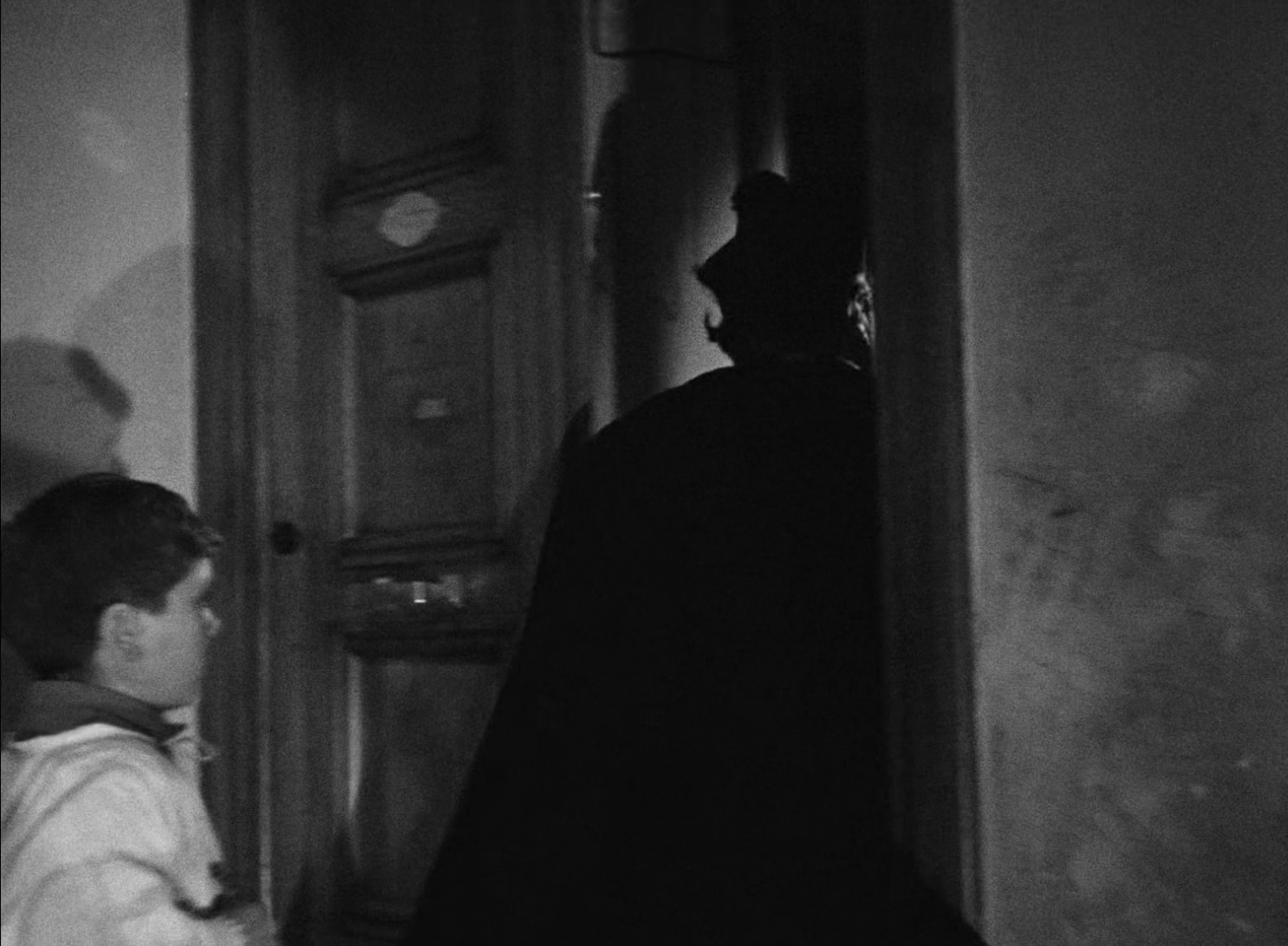
I soldati vanno porta a porta alla ricerca del fragile anziano, non del tutto convinti che esista. Si avvicinano sempre di più all'appartamento di Pina. Ma Don Pietro e Marcello riescono a entrare appena in tempo.
The soldiers are going door to door in search of the frail old man, not entirely convinced that he exists. They move closer and closer to Pina’s apartment. But Don Pietro and Marcello make it inside just in time.
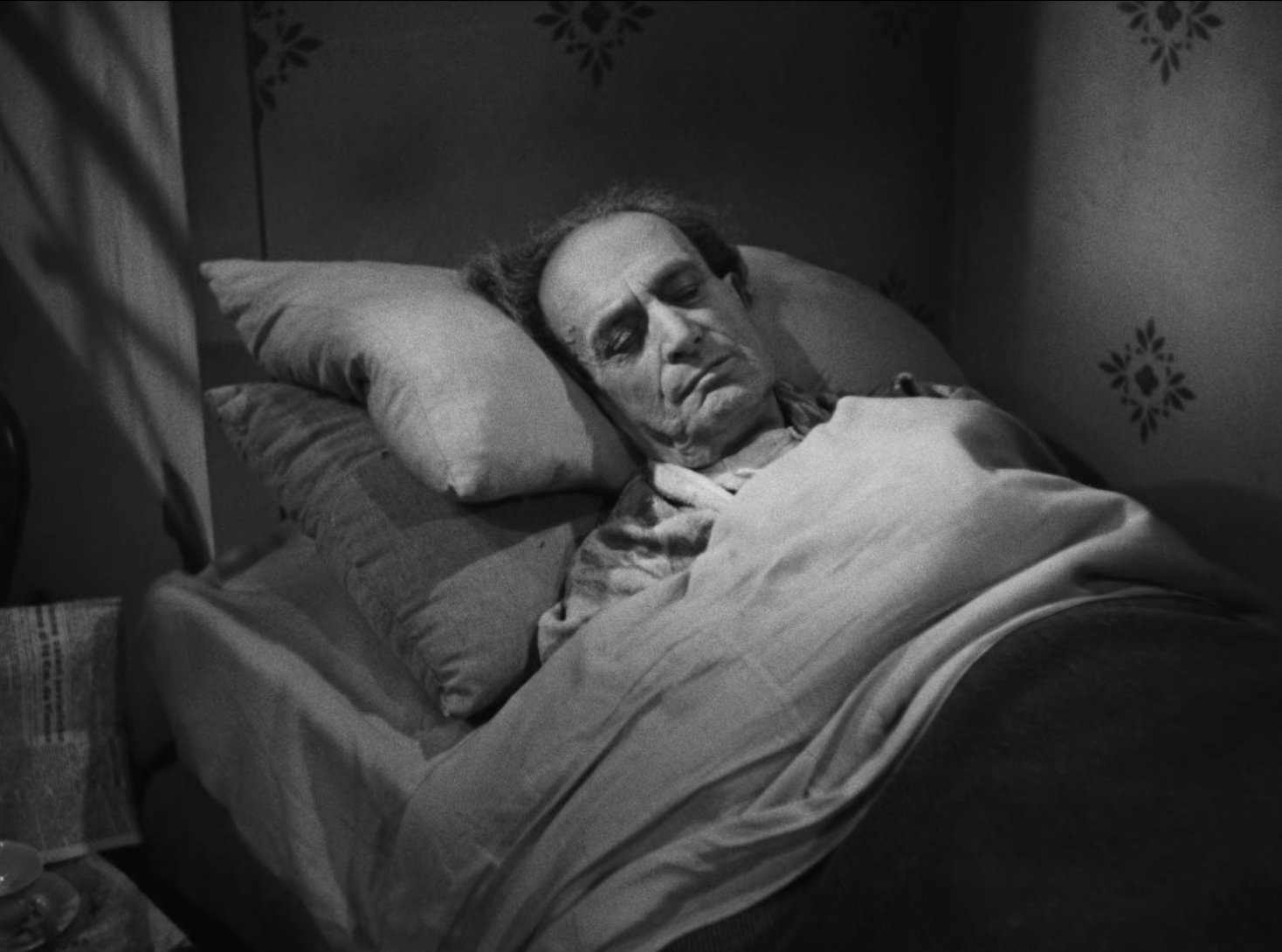
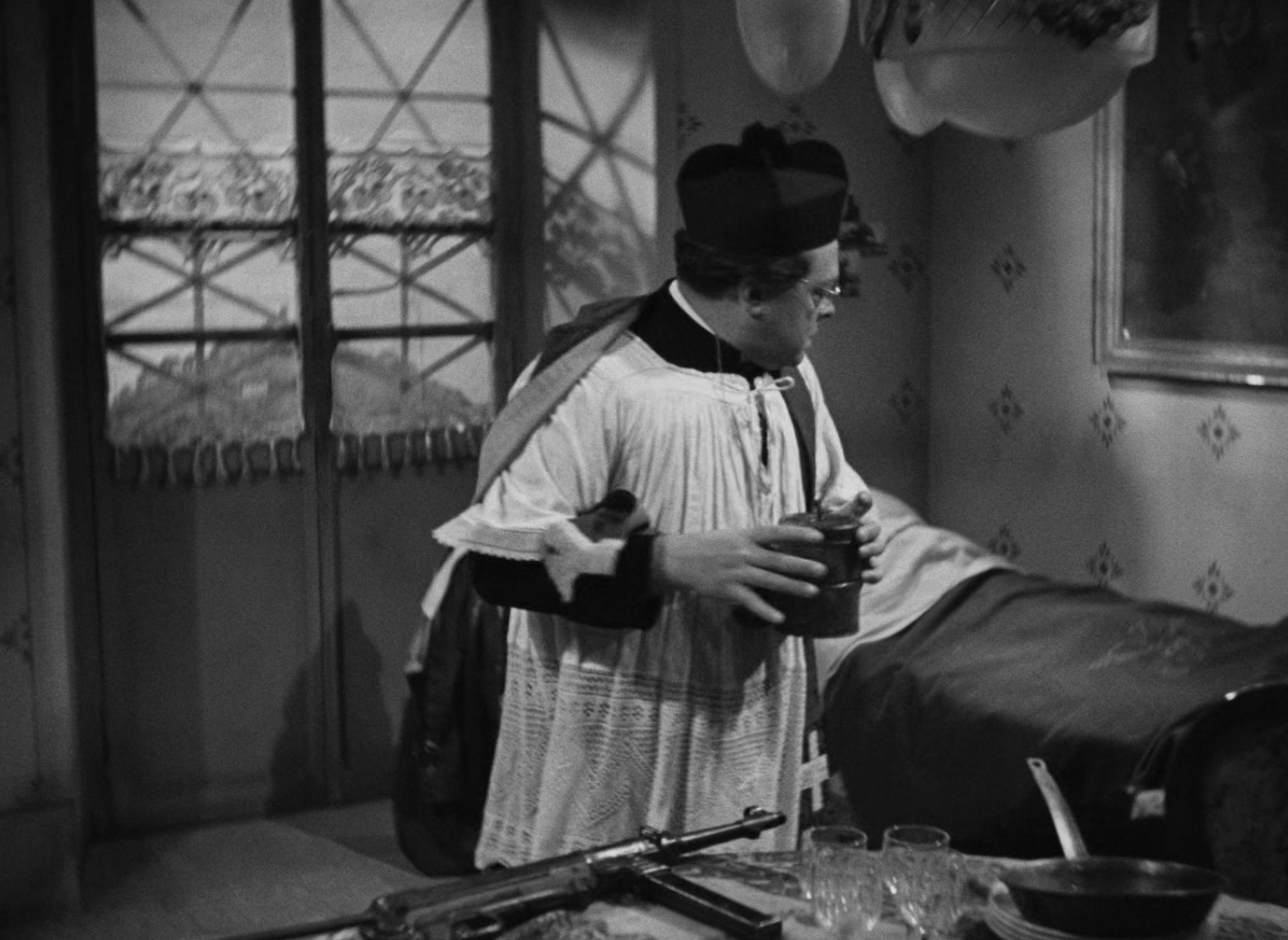

Trovano il nonno che dorme tranquillamente nel suo letto nell’angolo. Don Pietro infila il fucile e la bomba di Romoletto sotto la coperta.
They find the grandfather sleeping peacefully in his corner bed. Don Pietro tucks the rifle and Romoletto’s bomb under the blanket.
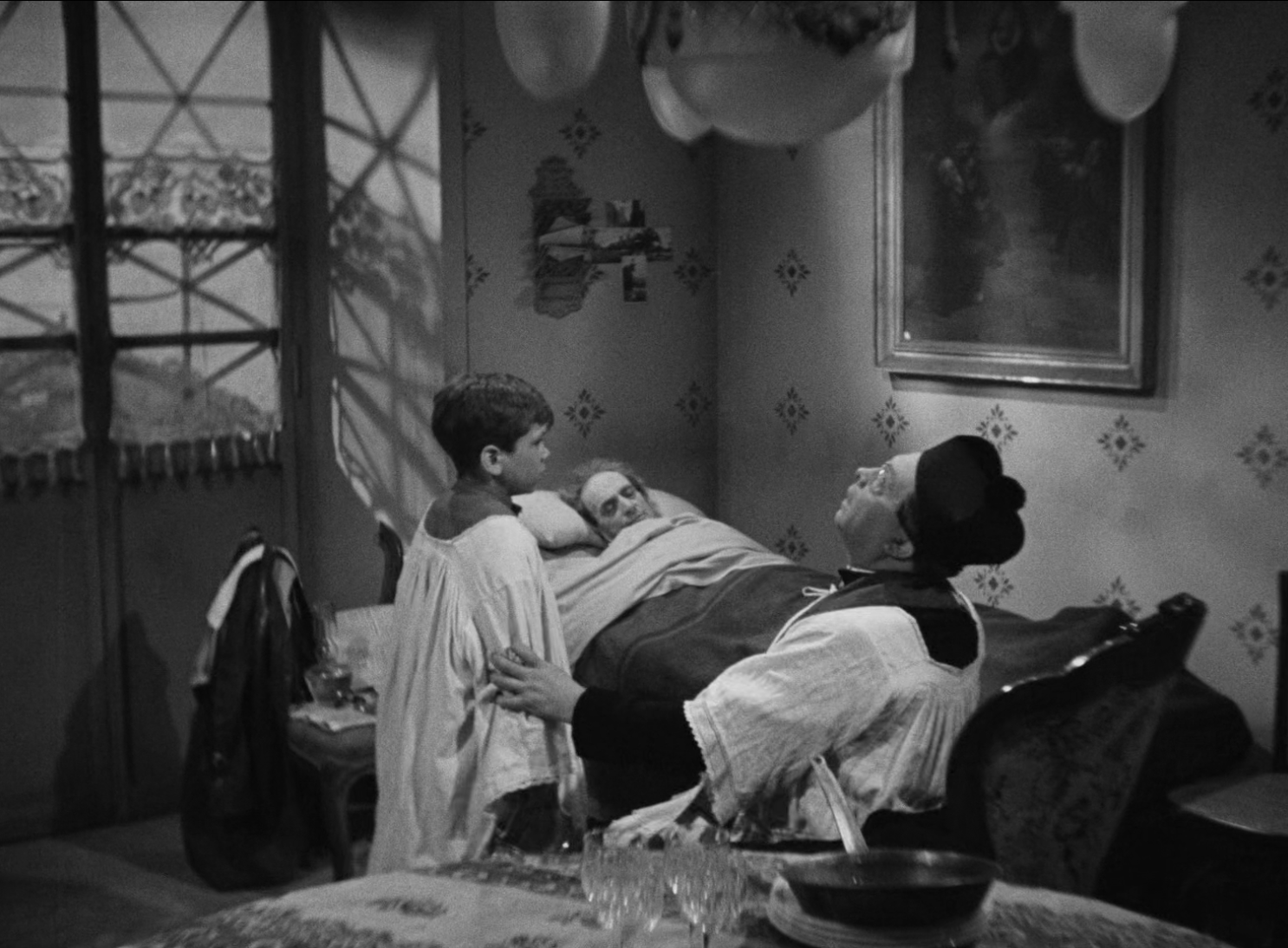
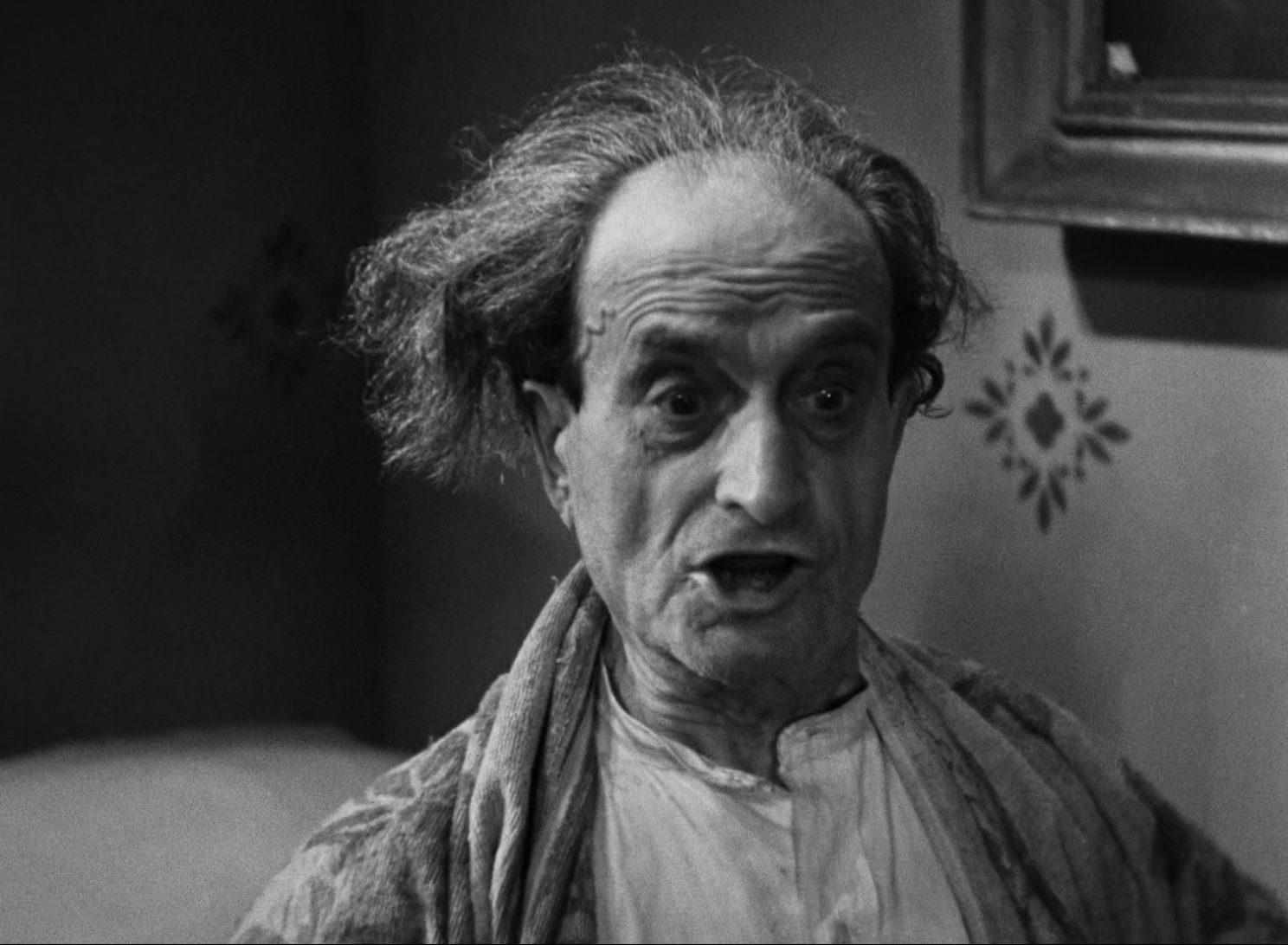
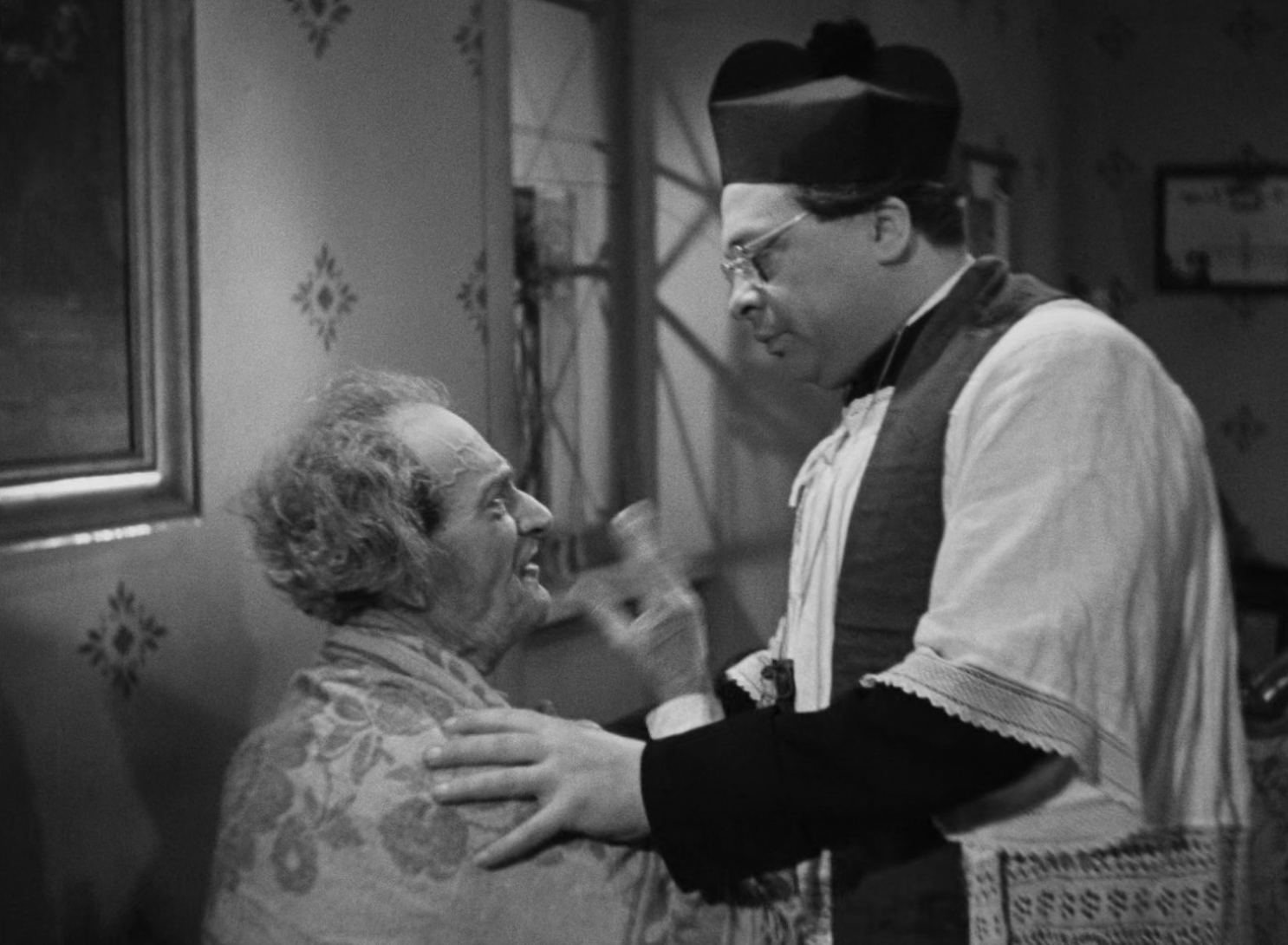
Senza fiato, don Pietro si siede accanto al letto proprio quando l'uomo si sveglia, indignato per aver trovato lì un prete.
“Ma che fate qui? Io sto bene!” esclama.
Don Pietro gli dice di sdraiarsi e di fingere di essere malato, ma l'uomo non è pronto per l'estrema unzione.
"Voglio campare cent'anni!" insiste.
Il prete spiega: "Stanno arrivando!”
“Ma chi?”
“I tedeschi!"
Out of breath, Don Pietro sits by the bed just as the man wakes up, outraged to find a priest there.
“But what are you doing here? I’m perfectly fine!” he exclaims.
Don Pietro tells him to lie down and pretend he’s sick, but the man is not ready for his last rites. “I want to live one hundred years!” he insists.
The priest explains, “They're coming!”
“Who?”
“The Germans!”
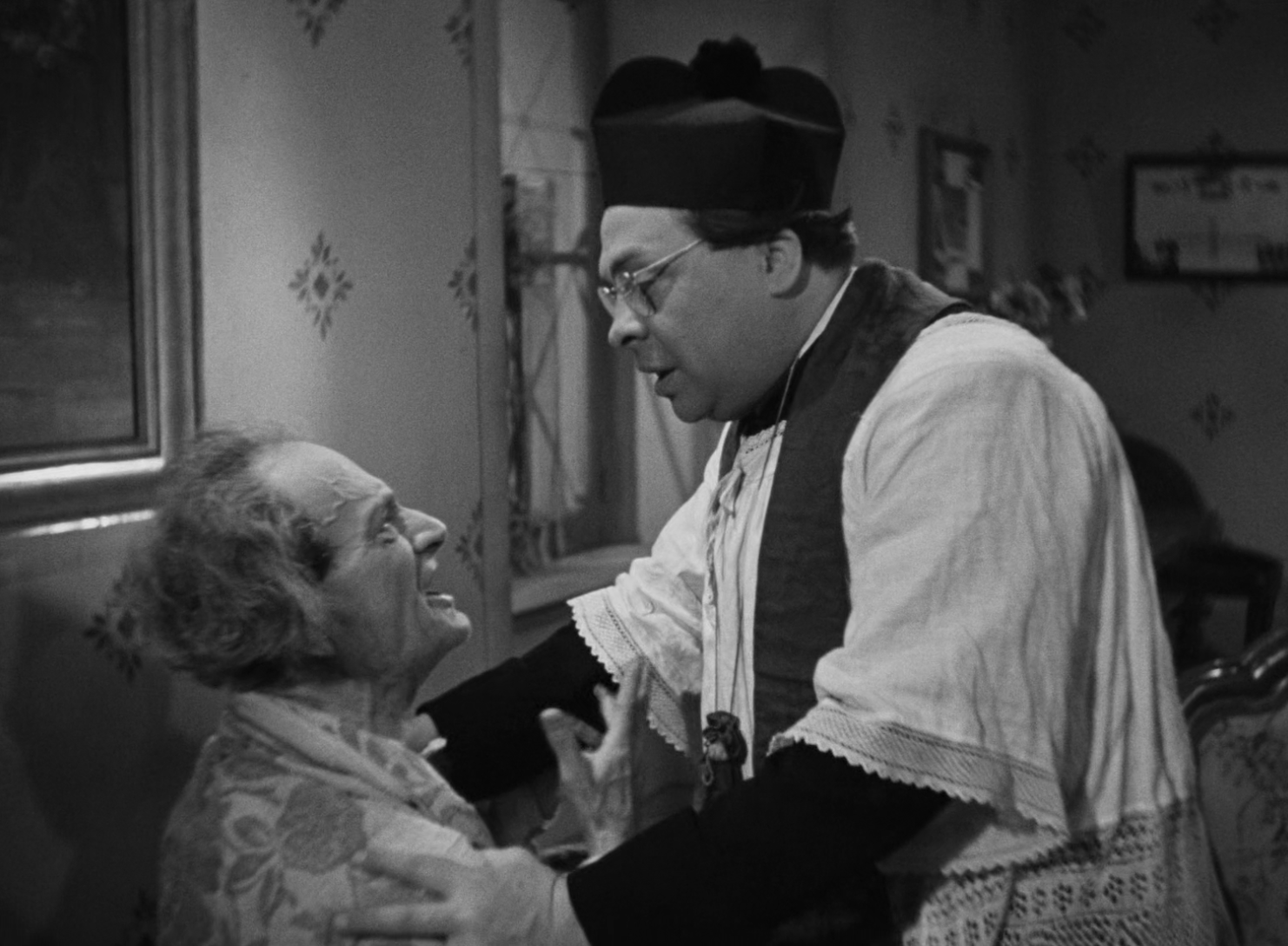
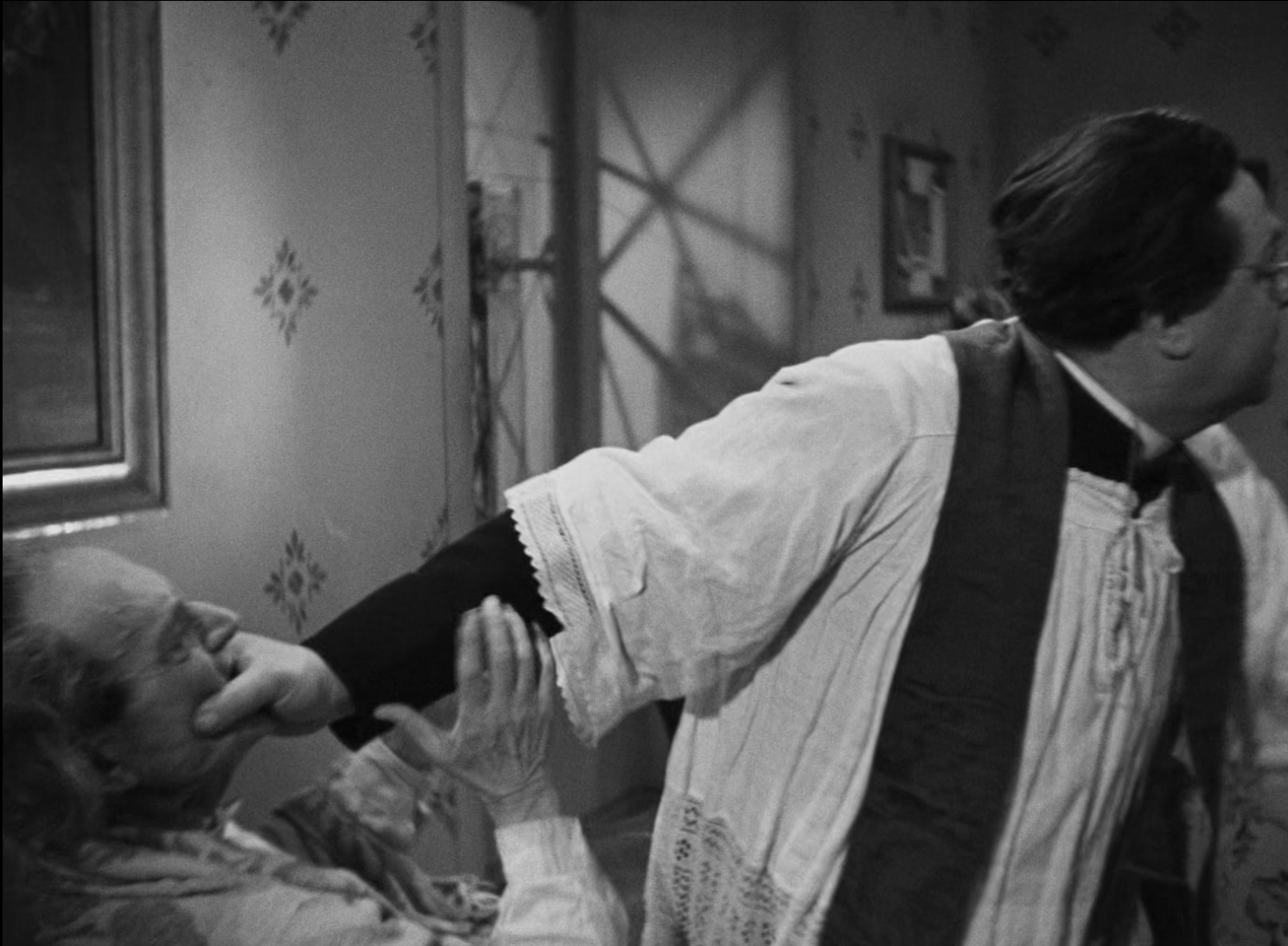
“Ma io me ne frego* dei tedeschi e dei fascisti!”
Don Pietro mette la mano sulla bocca dell'uomo. A Marcello dice: "Dammi –"
*Anche se il nonno non usa la frase in questo modo, "me ne frego" era un'iconica frase fascista.
“I don’t give a damn* about the Germans and the Fascists!”
Don Pietro puts his hand over the man’s mouth. To Marcello, he says, “Give me –”
*Though the grandfather is not using the phrase in this way, “me ne frego” (I don’t give a damn) was an iconic fascist phrase.
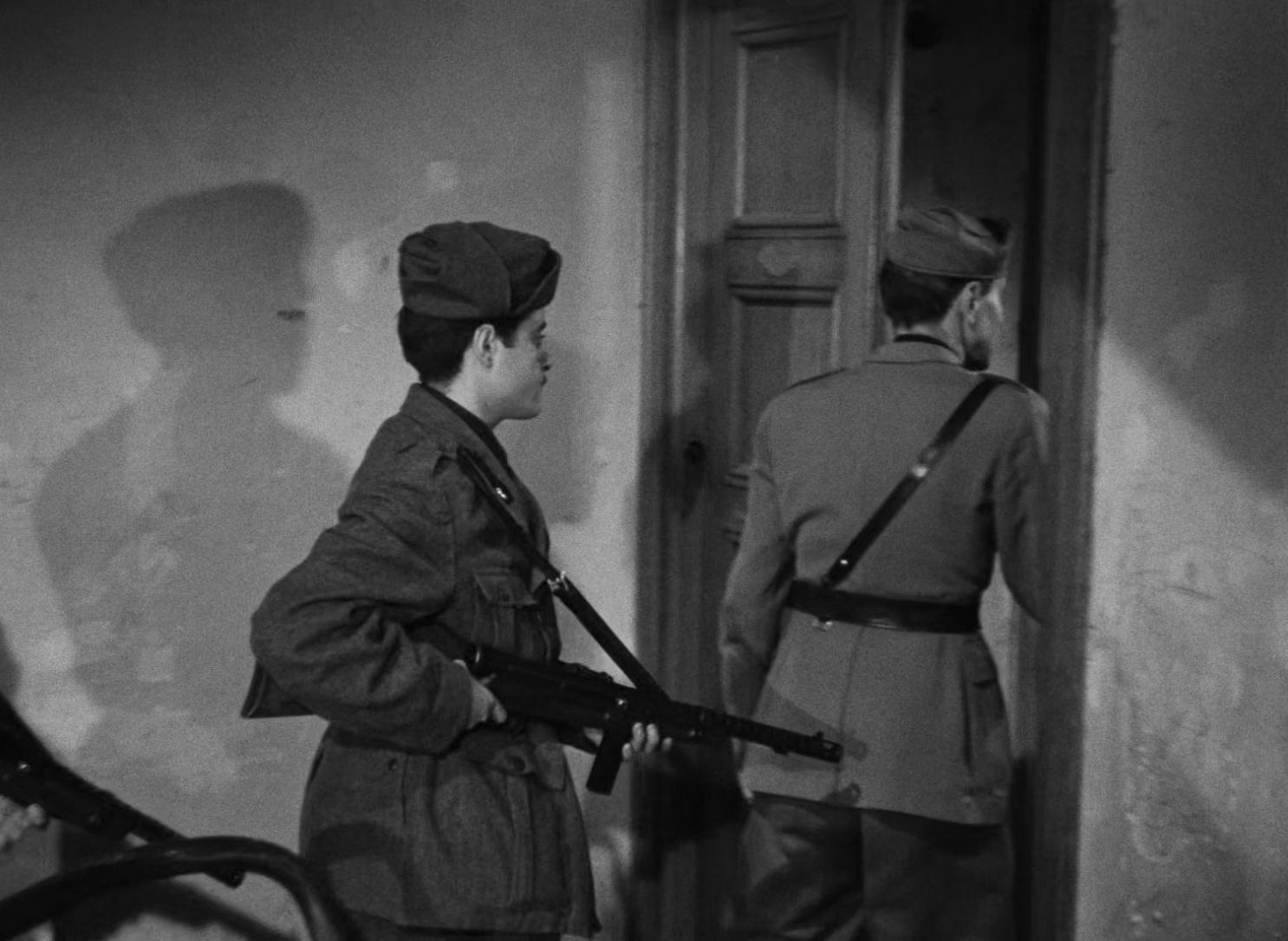
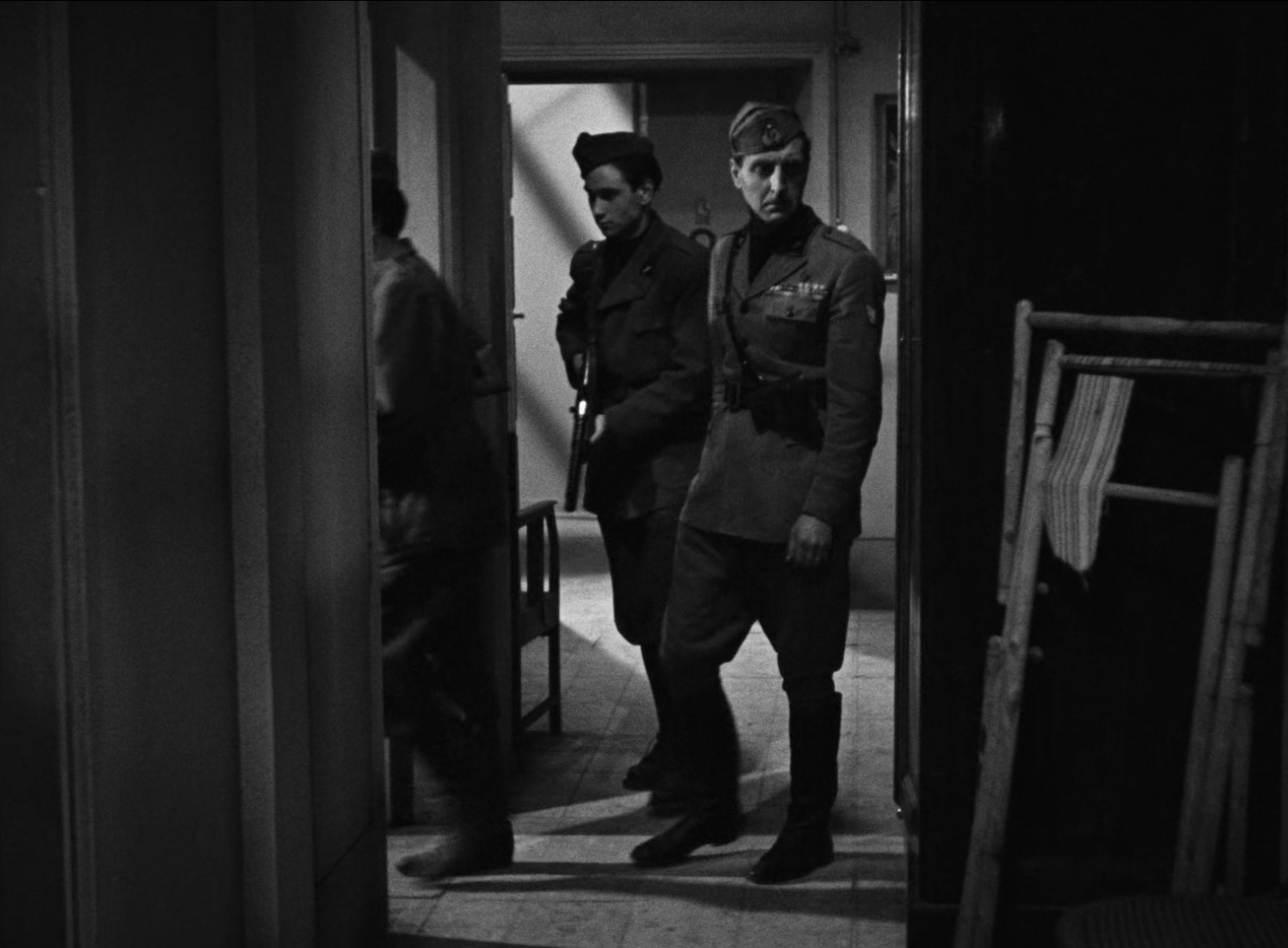
Estratti i fucili, i soldati arrivano a casa di Pina. Suona una musica di suspense. Entrano dalla porta aperta.
Rifles drawn, the soldiers arrive at Pina’s place. Suspenseful music plays. They walk in through the open door.
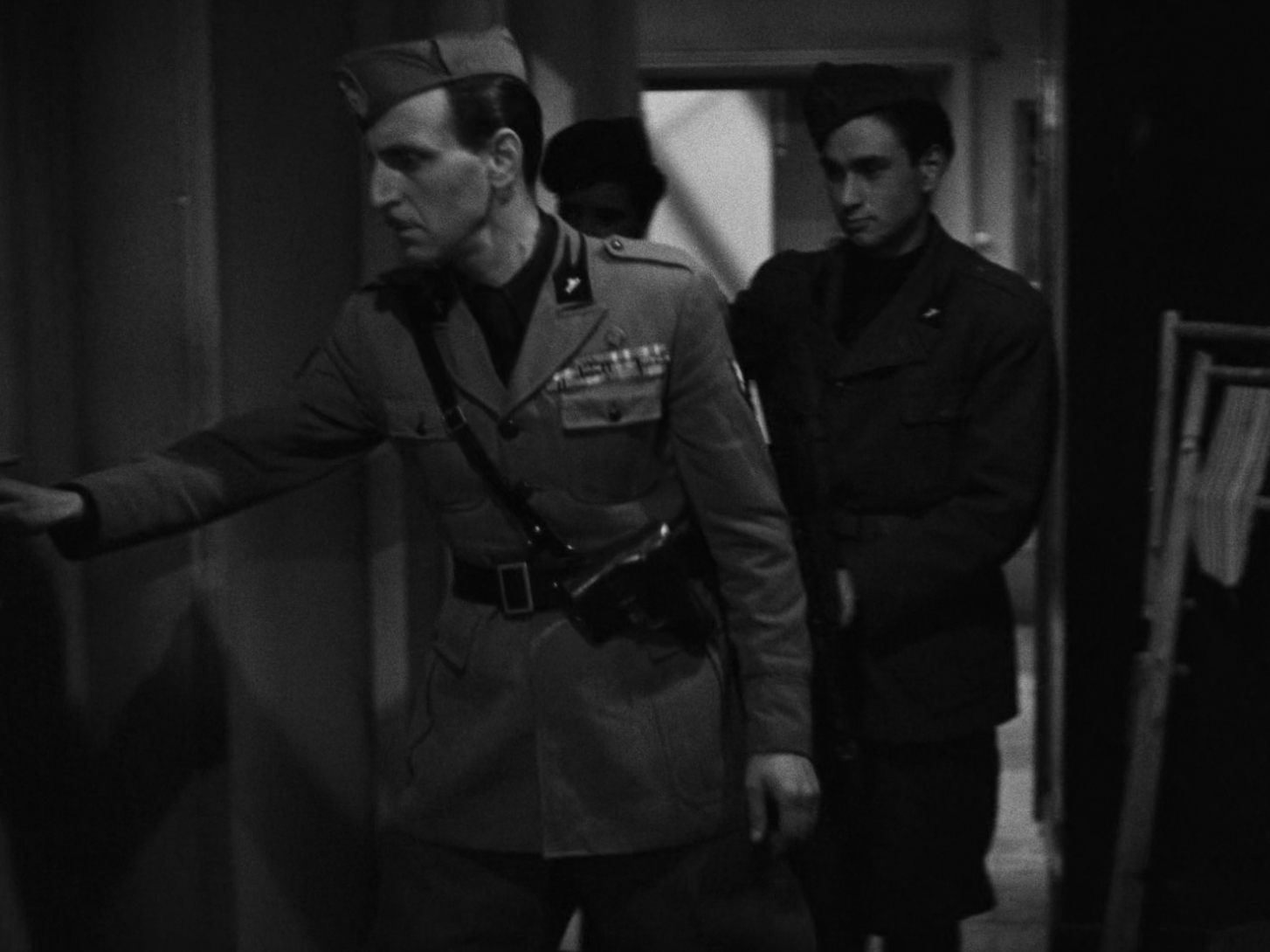
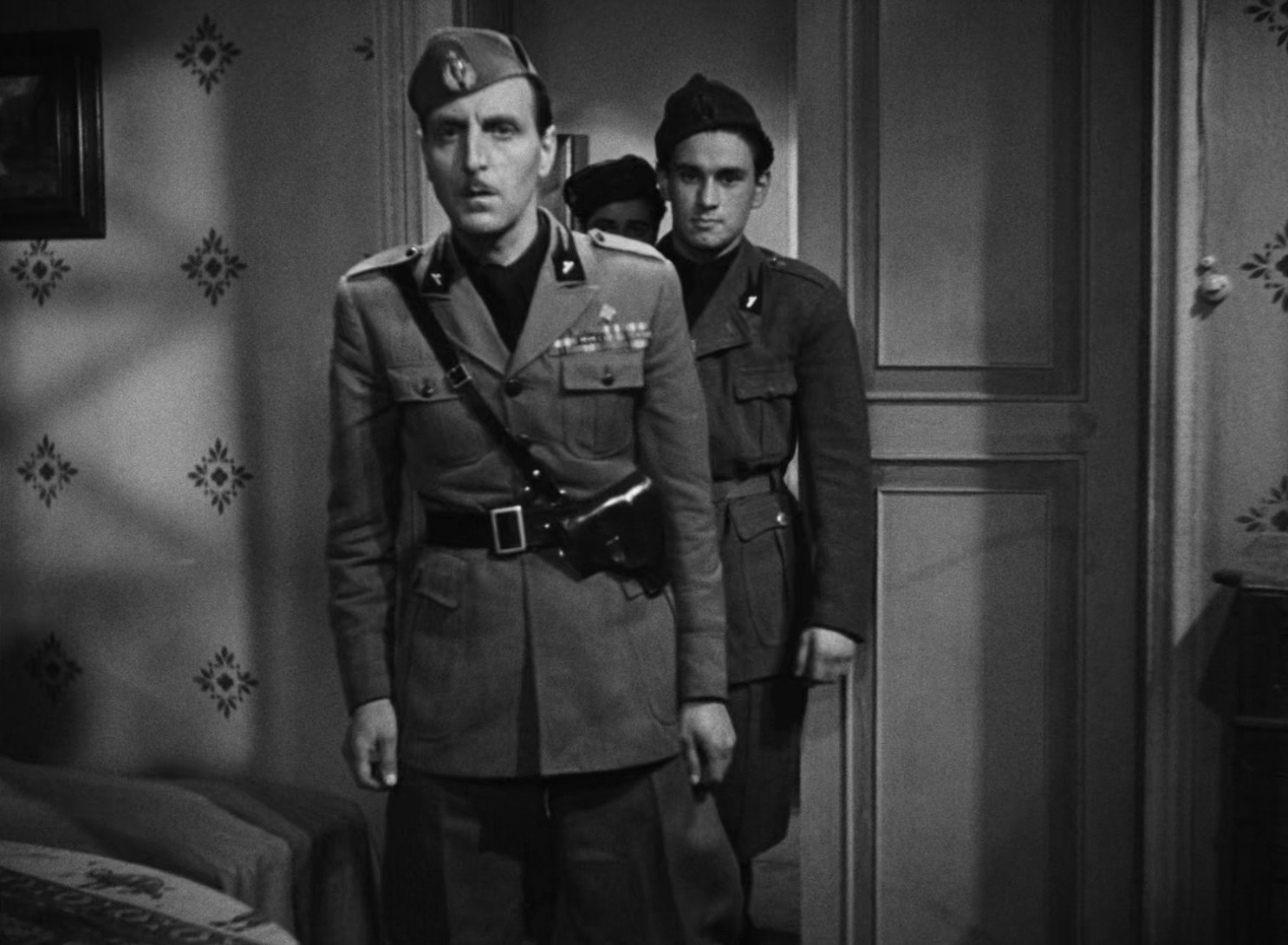
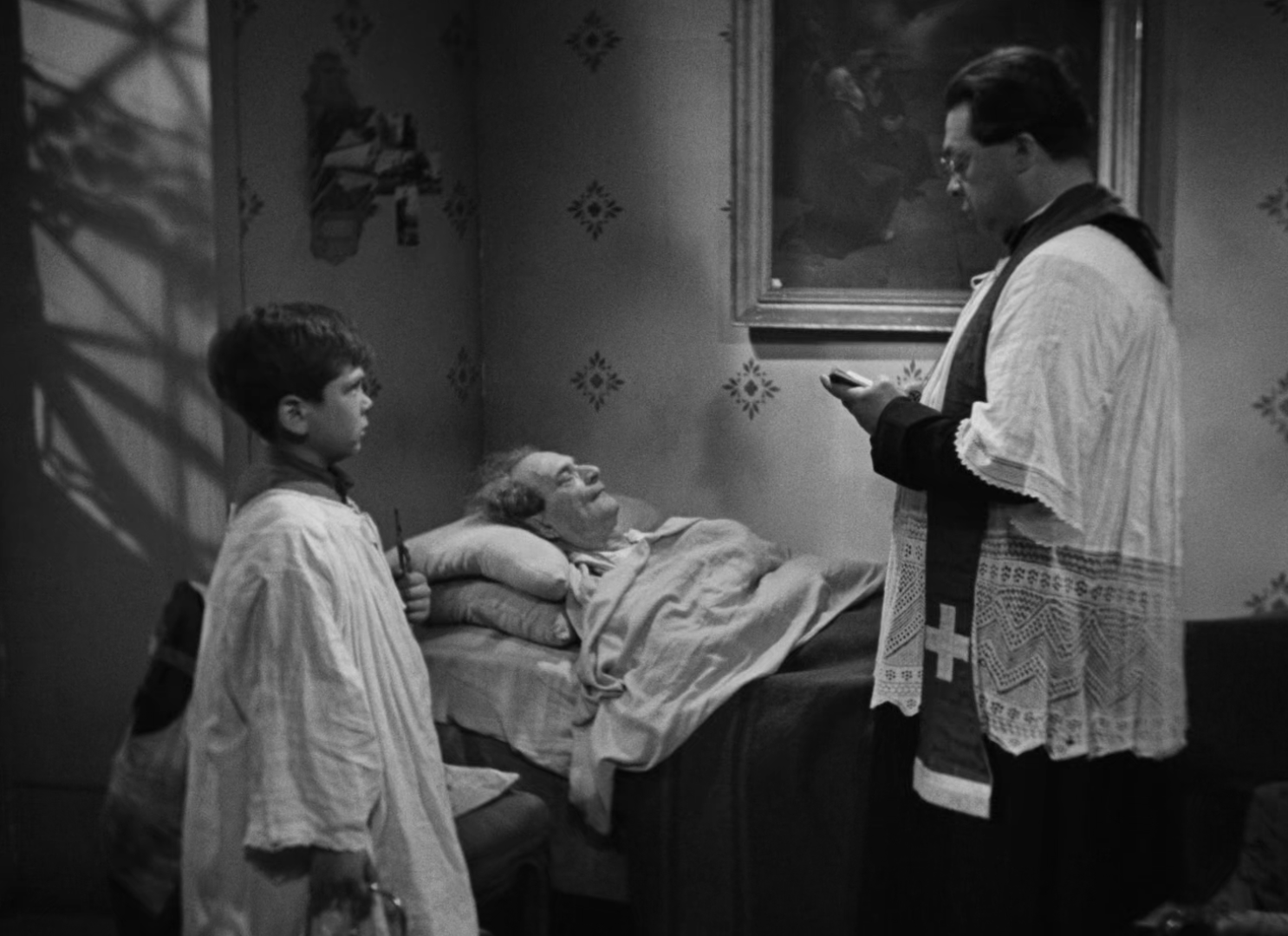
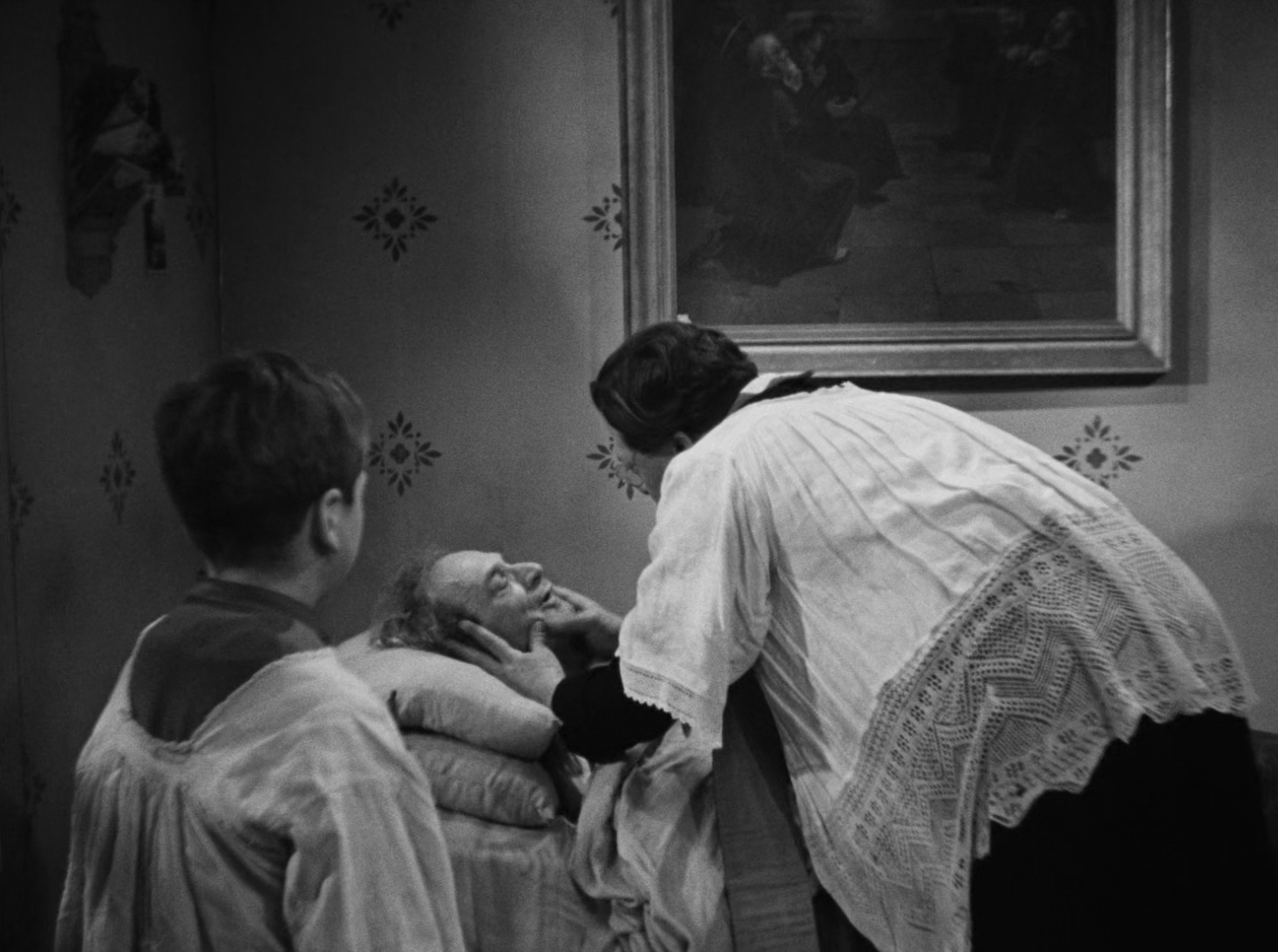
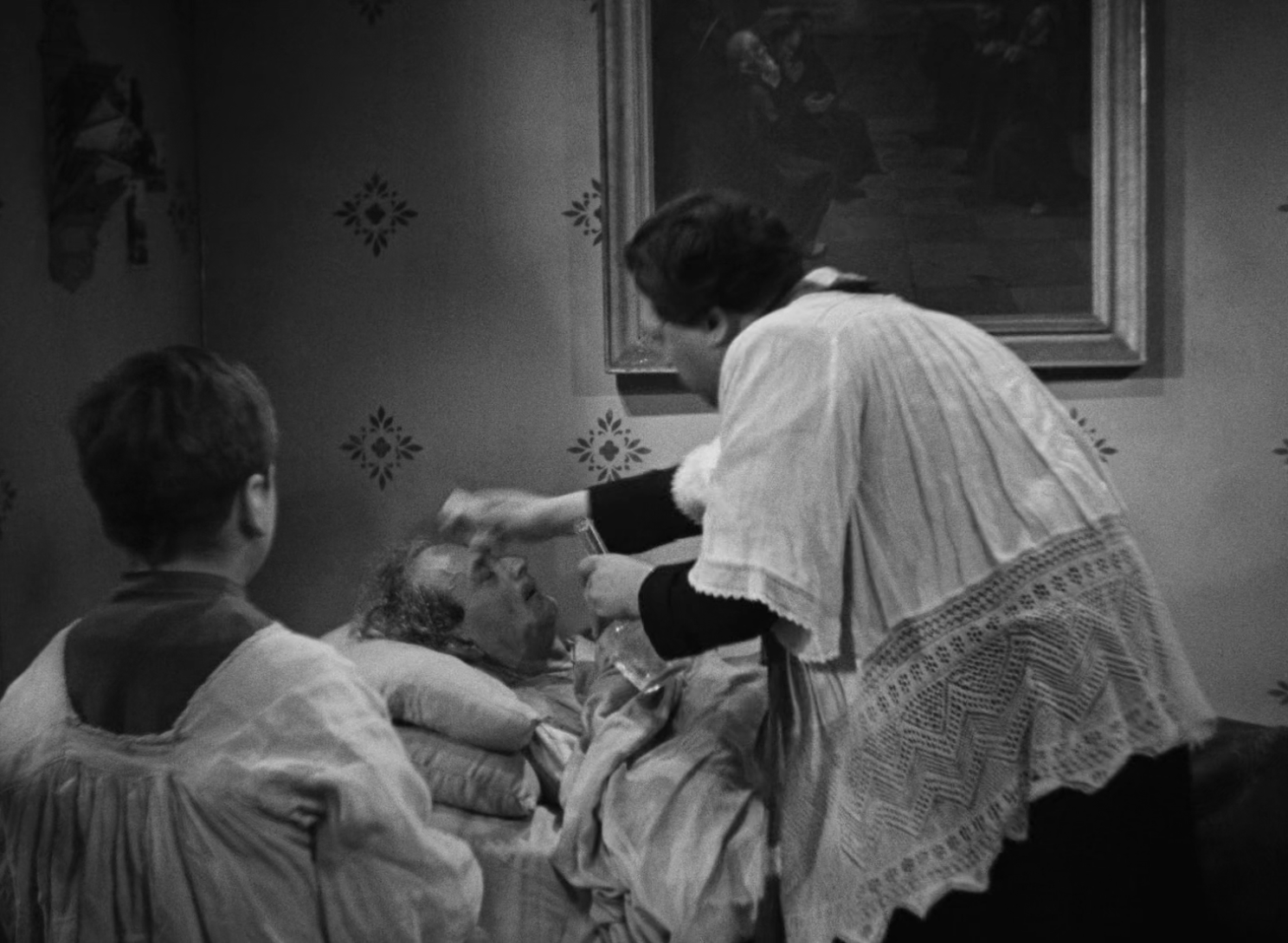
Sentendo una voce, la seguono e trovano Don Pietro che dà l'estrema unzione al nonno, che giace a letto, con gli occhi chiusi, privo di sensi.
Hearing a voice, they follow it and find Don Pietro giving last rites to the grandfather, who lies in bed, eyes closed, out cold.
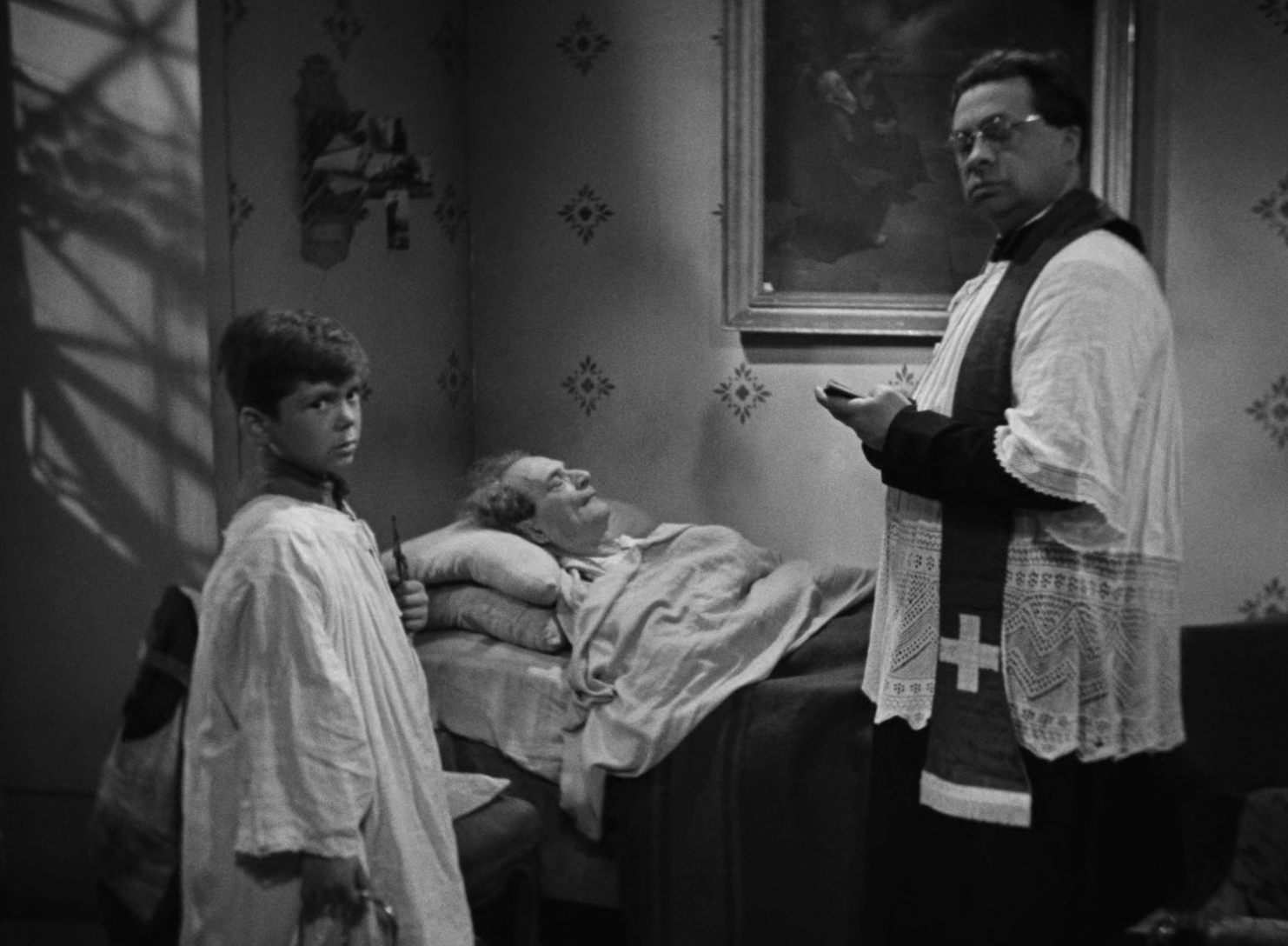
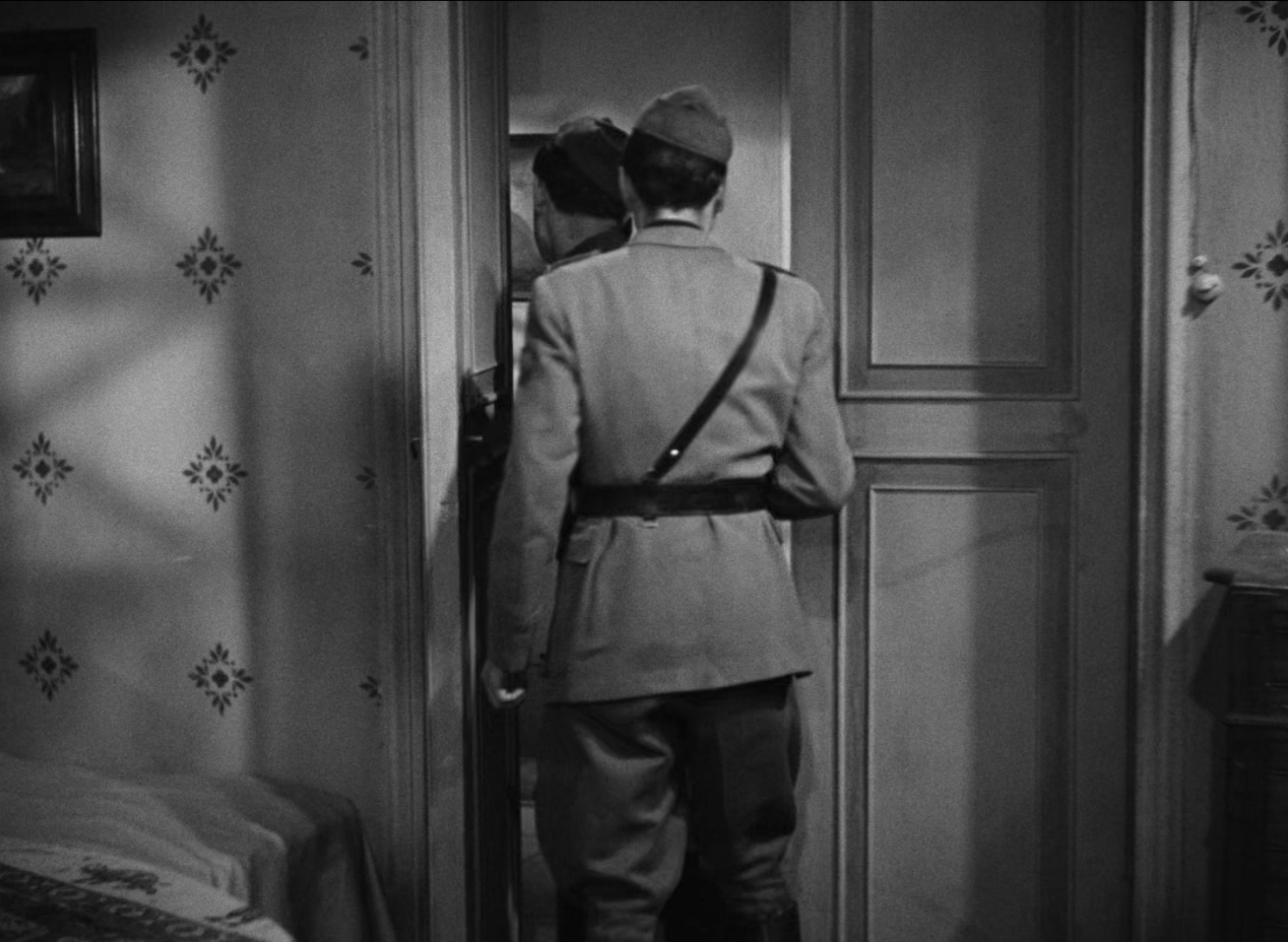
Il prete guarda gli uomini, annuisce e poi continua la sua preghiera. I soldati se ne vanno.
The priest looks over at the men, nods and then continues his prayer. The soldiers leave.
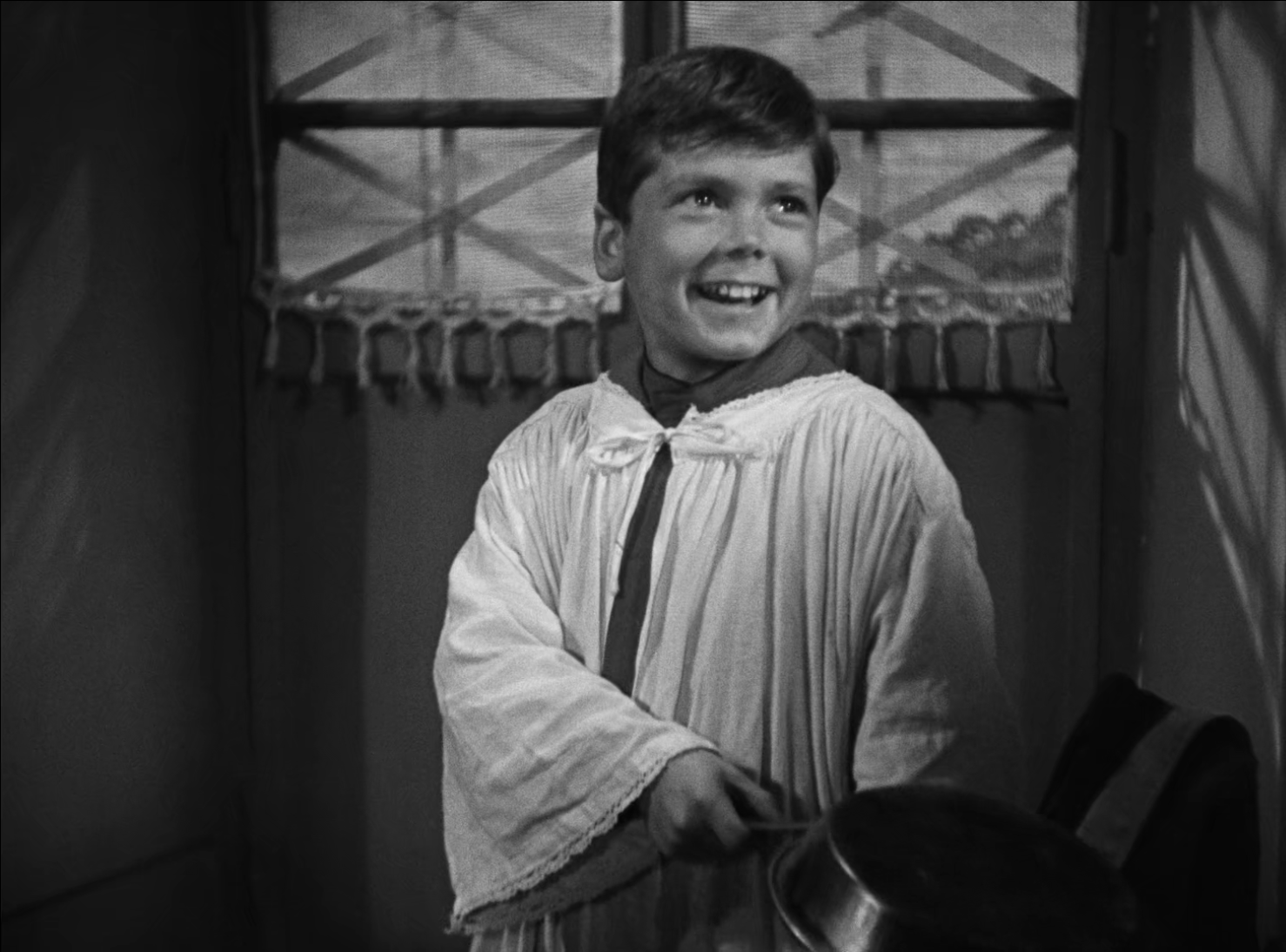
Appena la porta si chiude, don Pietro si china e cerca di rianimare l’anziano. Marcello prende una padella. "All'anima, Don Pietro, che padellata che gli ha dato!" esclama, con un sorriso compiaciuto.
As soon as the door closes, Don Pietro leans over and tries to revive the old man. Marcello picks up a frying pan. “Wow, Don Pietro, you really let him have it!” he exclaims, with a delighted smile.
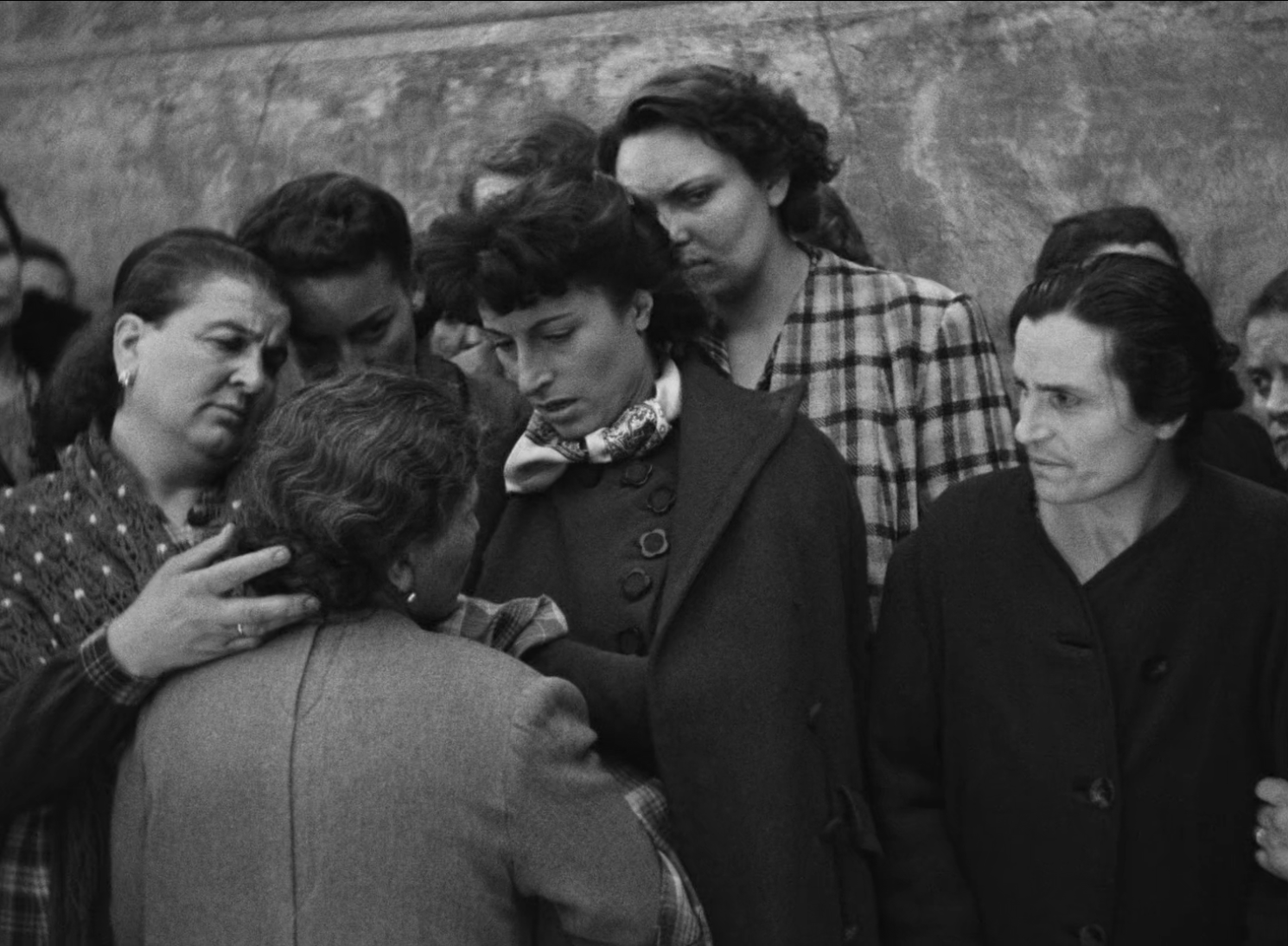
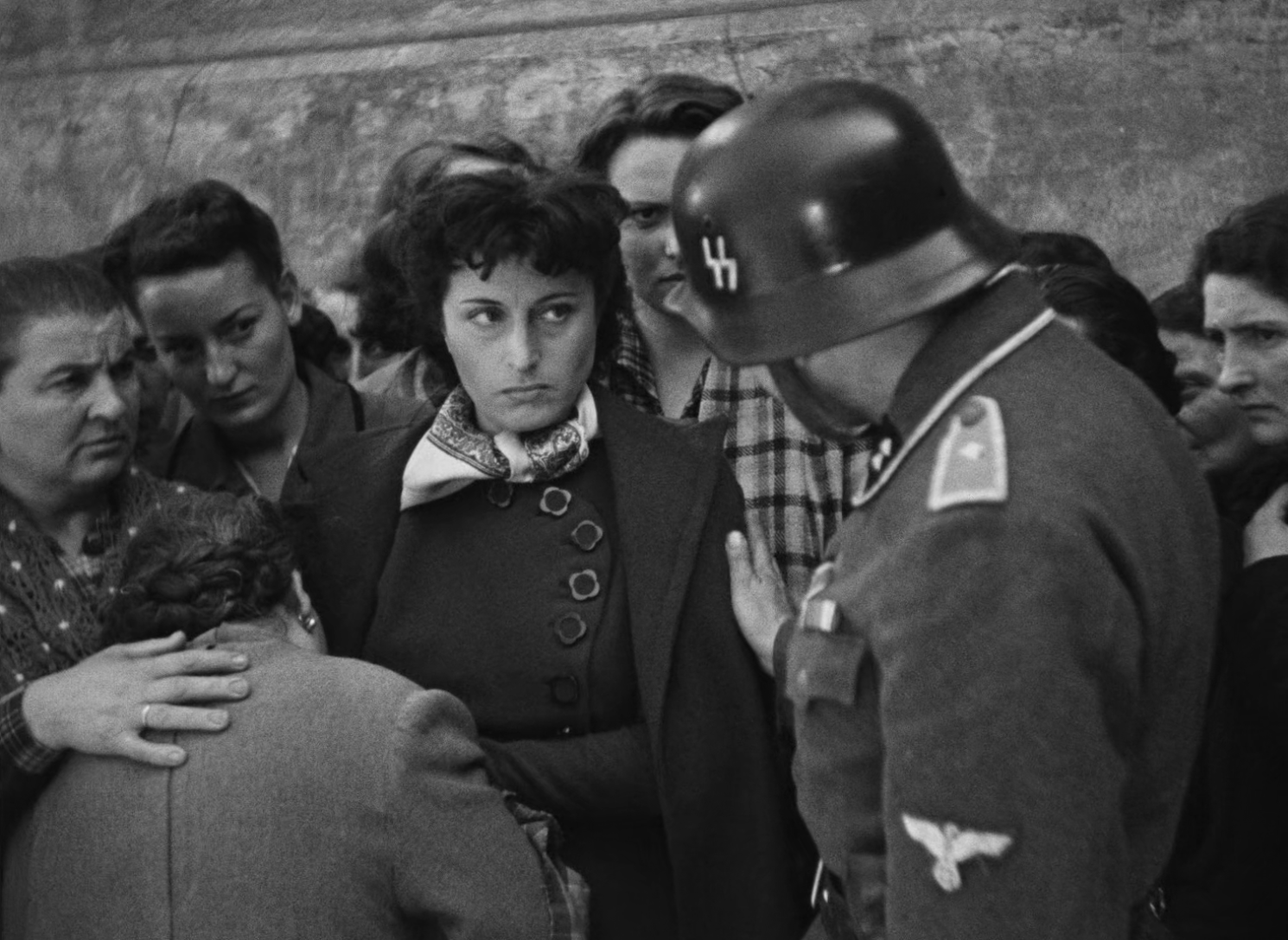
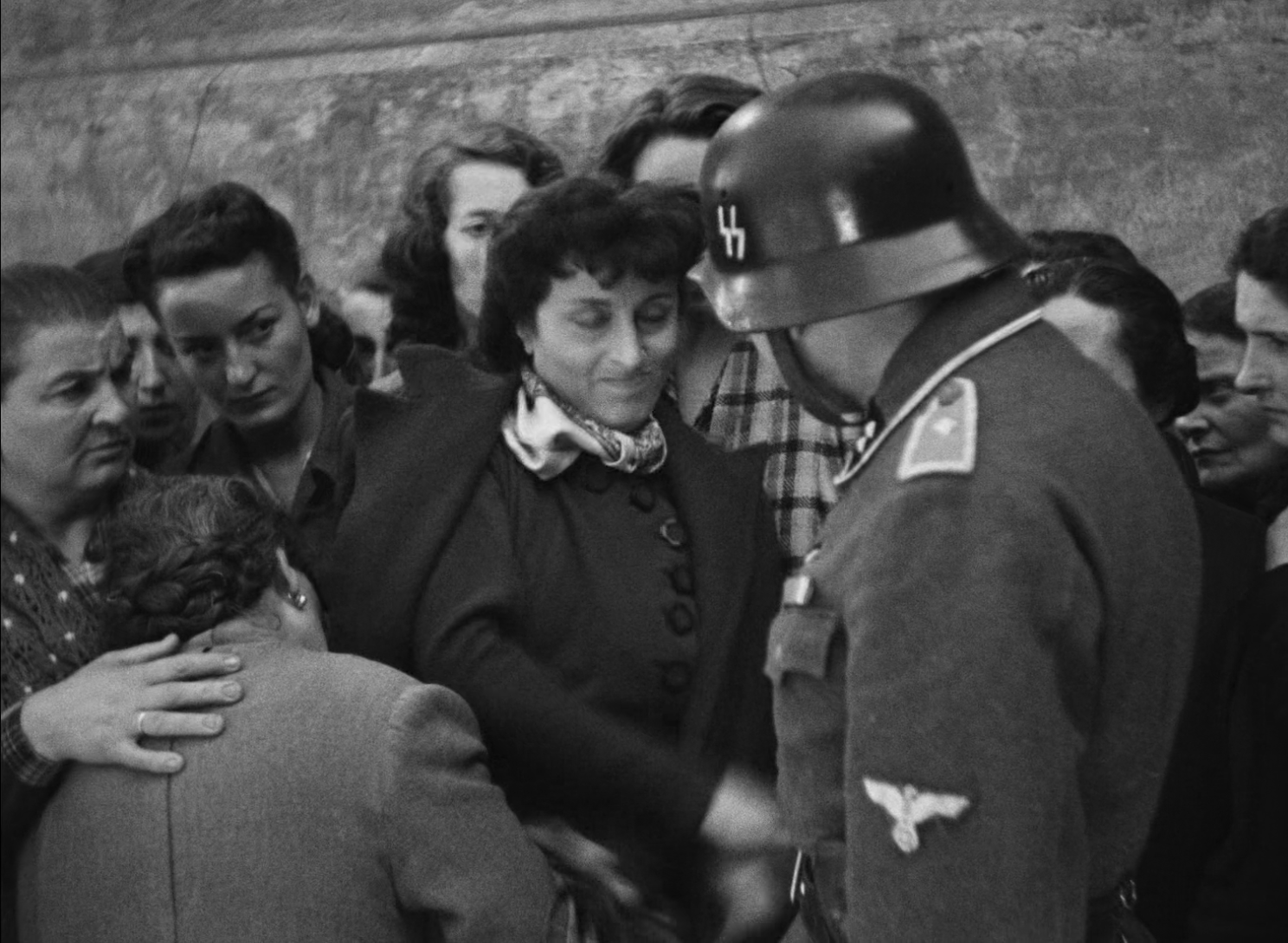
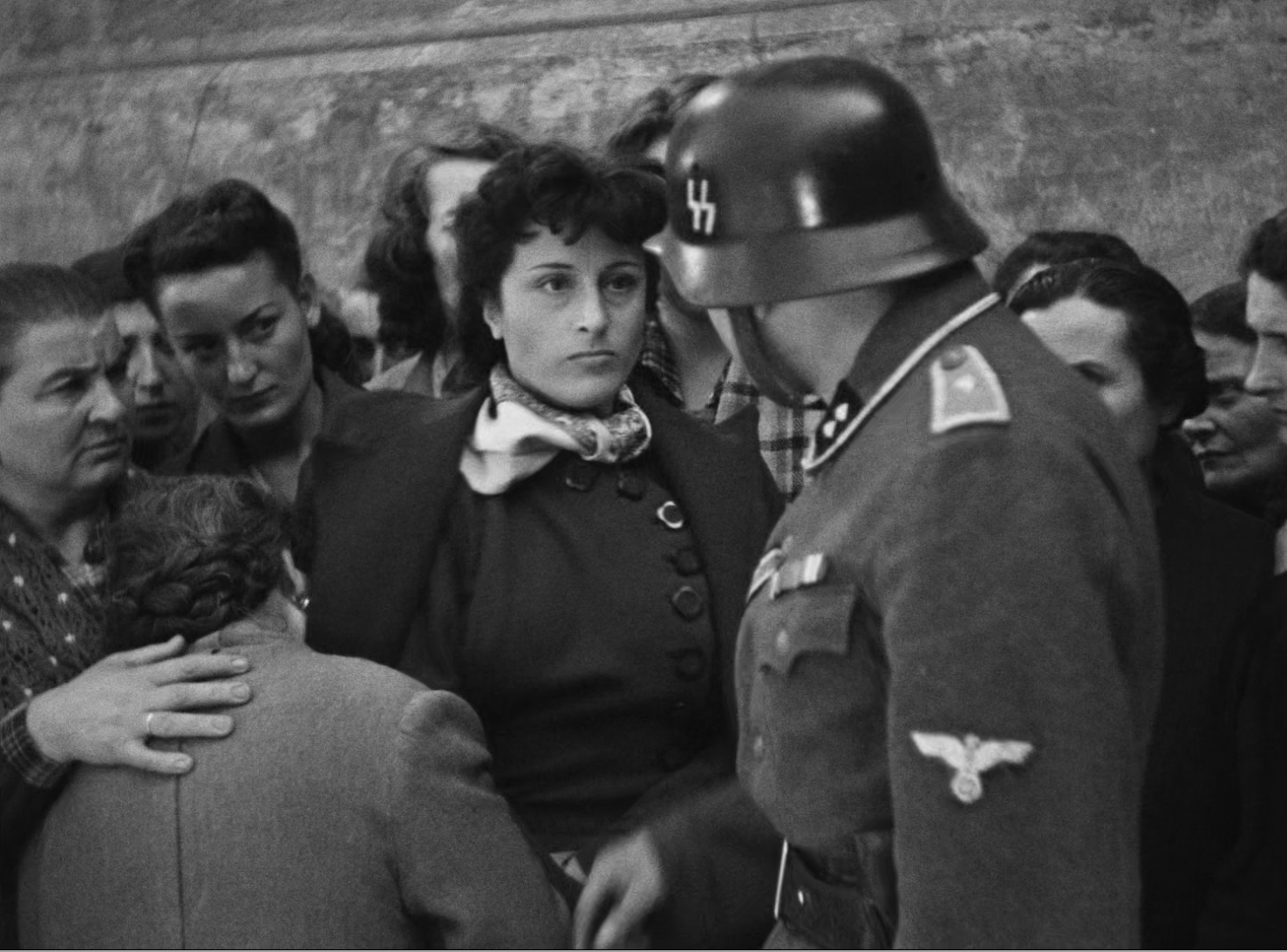
Fuori, Pina e le altre donne stanno ancora confortando la madre di Giorgio. Pina lancia uno sguardo truce a un uomo delle SS con l’elmetto che cammina avanti e indietro davanti a lei.
"Hai degli occhi così belli", le dice lui in tedesco, accarezzandole il braccio. Lei gli schiaffeggia la mano.
Outside, Pina and the other women are still comforting Giorgio’s mother. Pina glares at a helmeted SS man who walks back and forth in front of her.
“You have such pretty eyes,” he tells her in German, stroking her arm. She slaps his hand away.
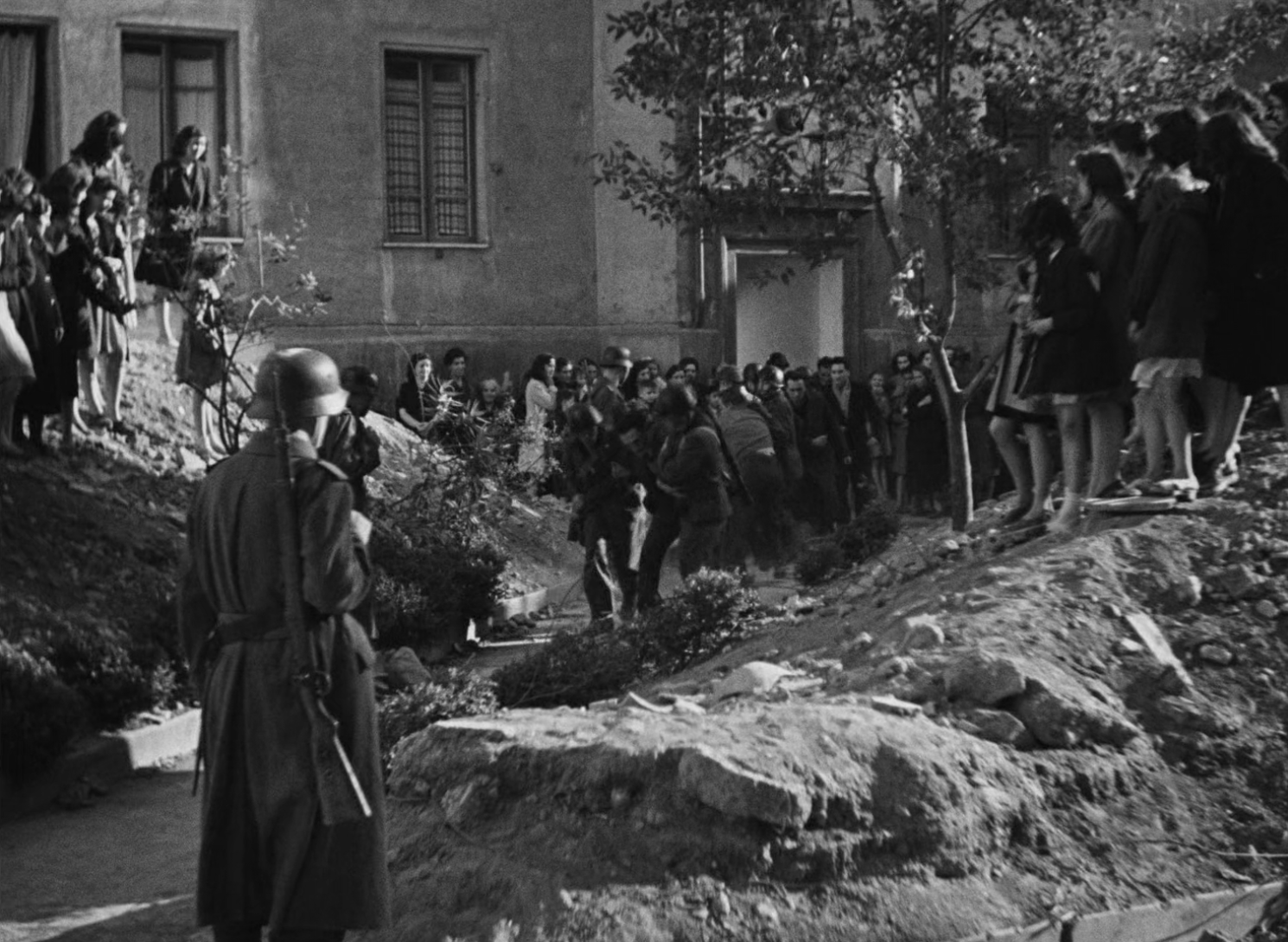
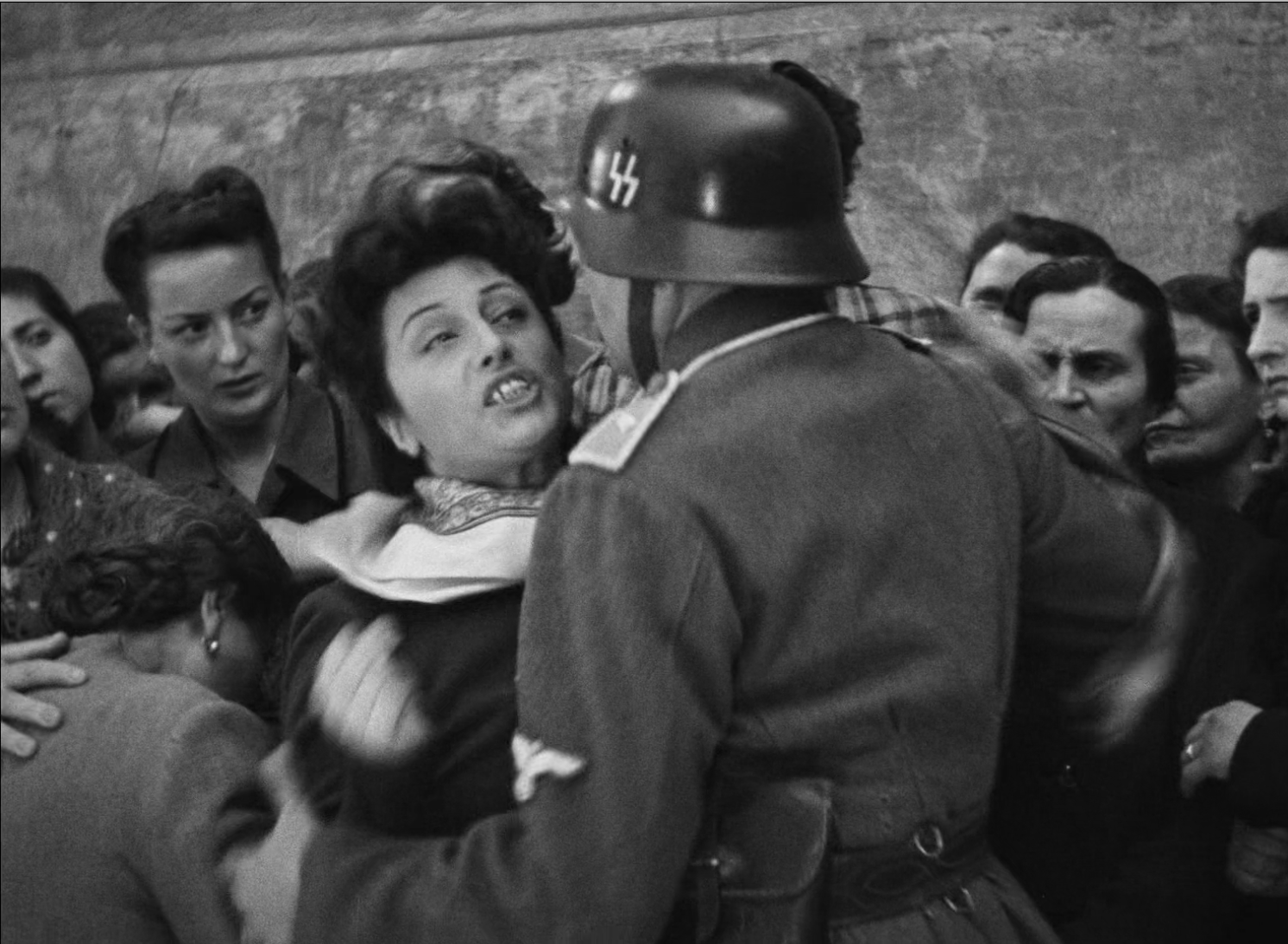
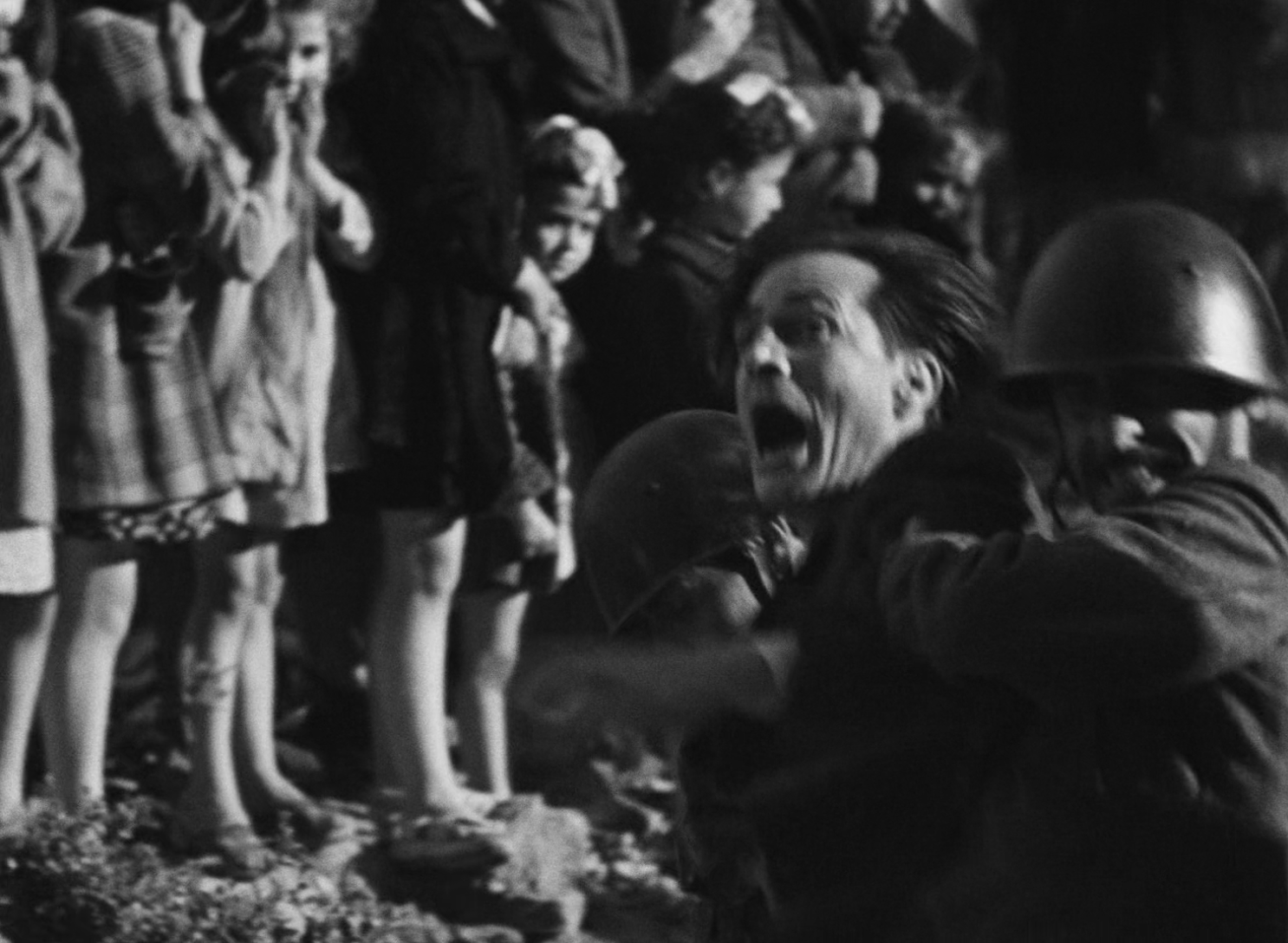
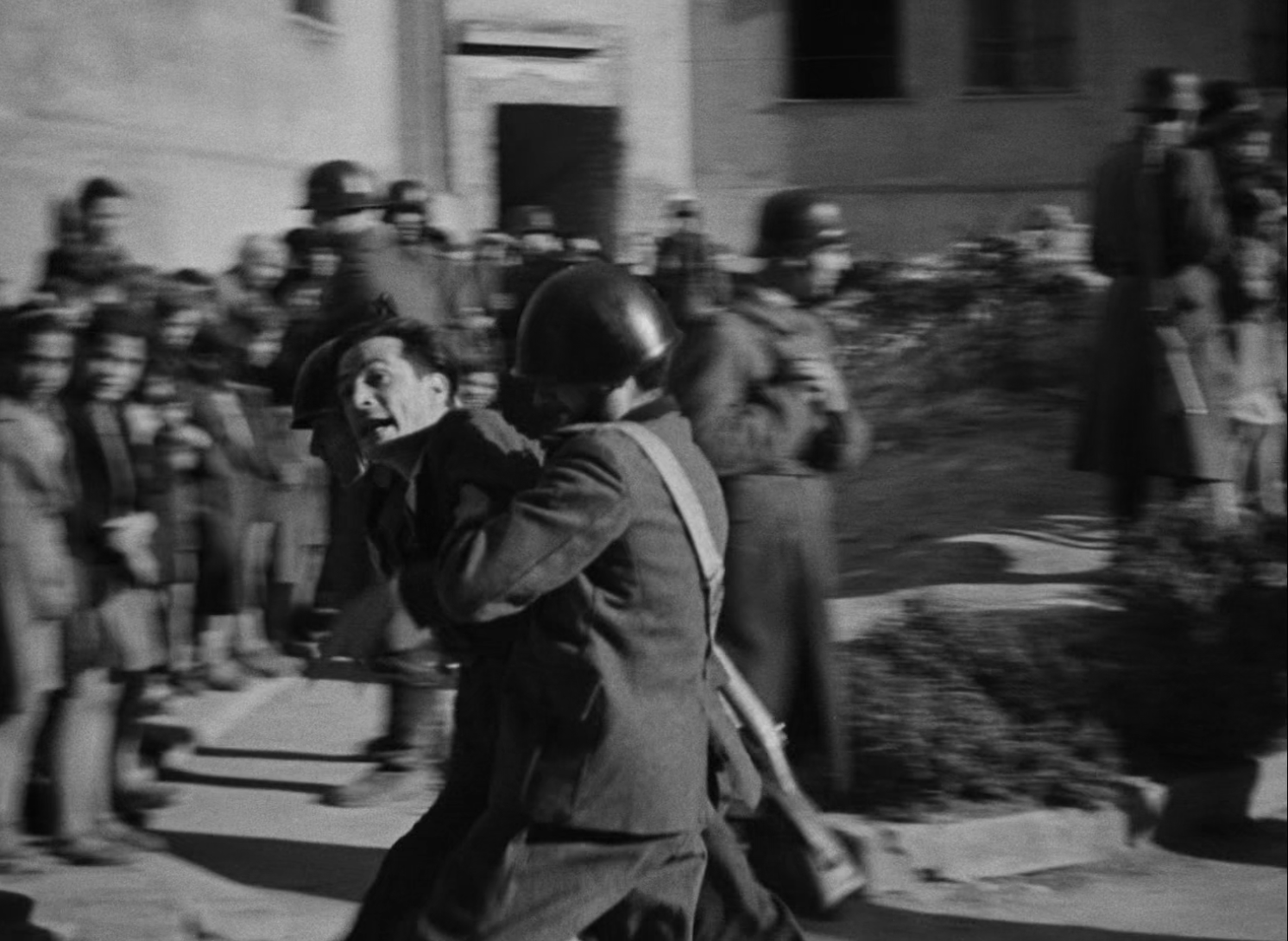
Proprio in quel momento, i soldati trascinano Francesco fuori dall'edificio. Vedendolo, Pina grida: "Francesco!” Cerca di correre da lui, ma l’uomo delle SS le blocca il cammino. "Pina!" – urla Francesco – "Pina!"
Just then, soldiers drag Francesco out of the building. Seeing him, Pina calls out, “Francesco!” She tries to run to him, but the SS man blocks her path. “Pina!” Francesco yells. “Pina!”
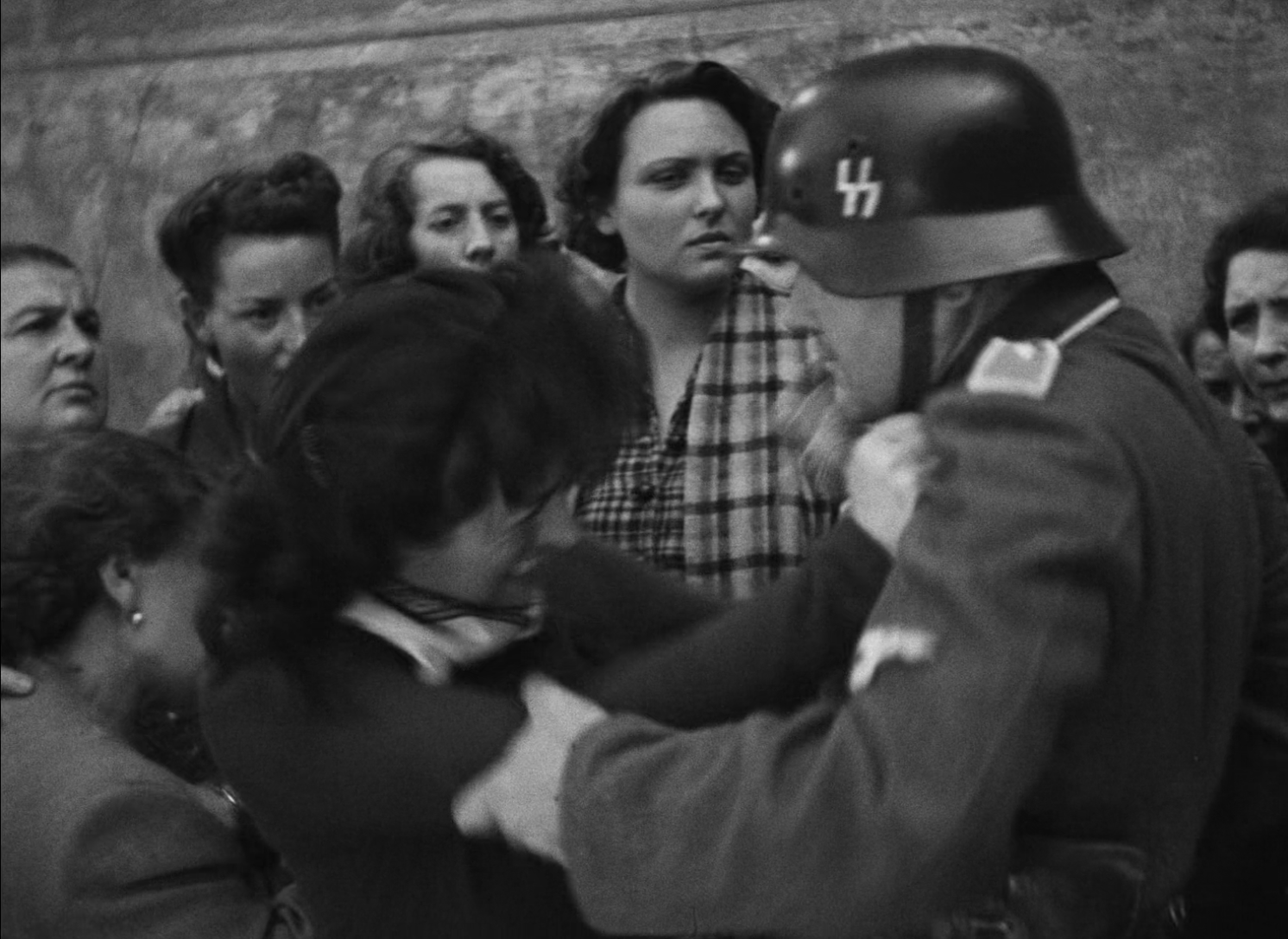
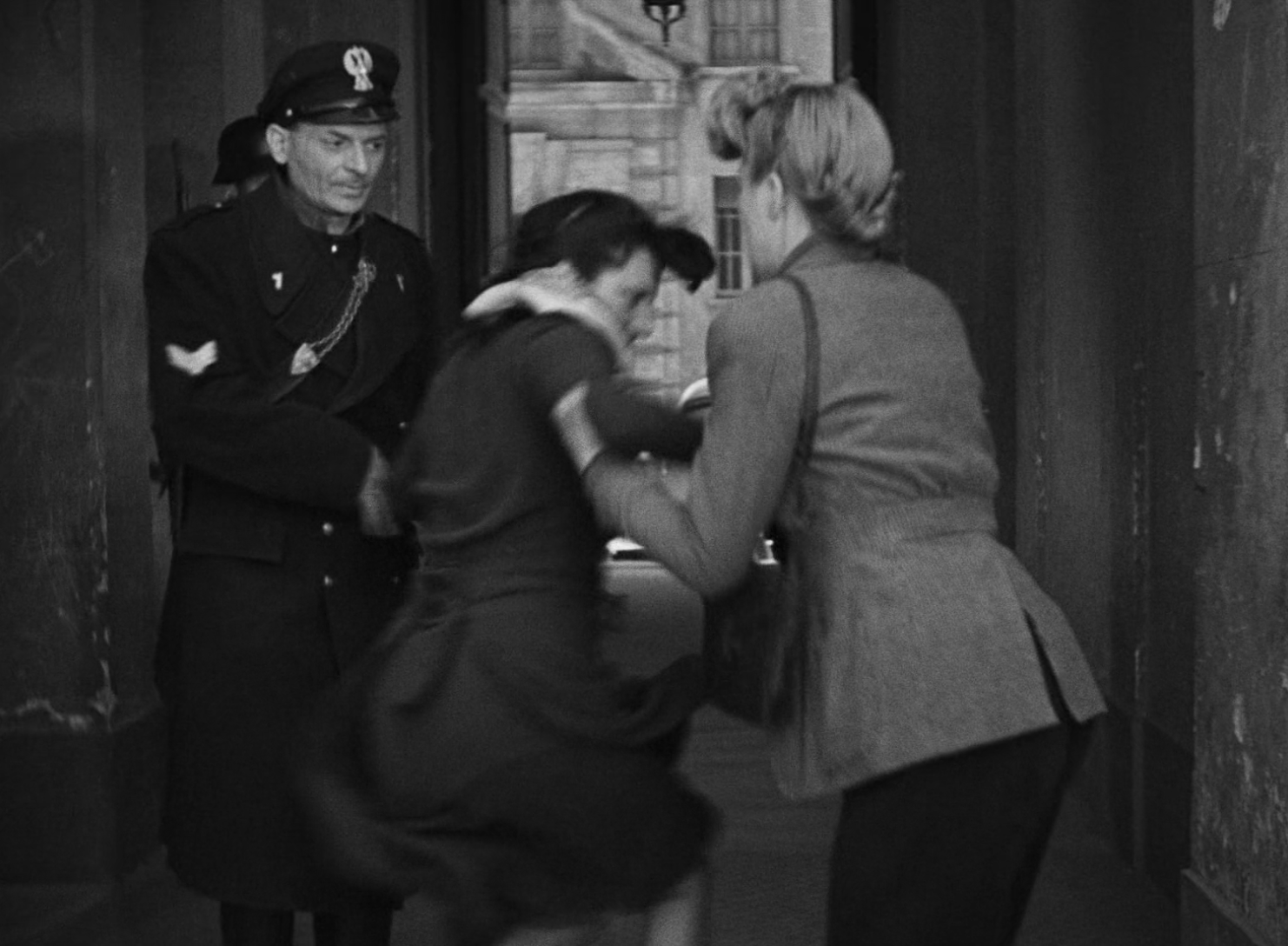
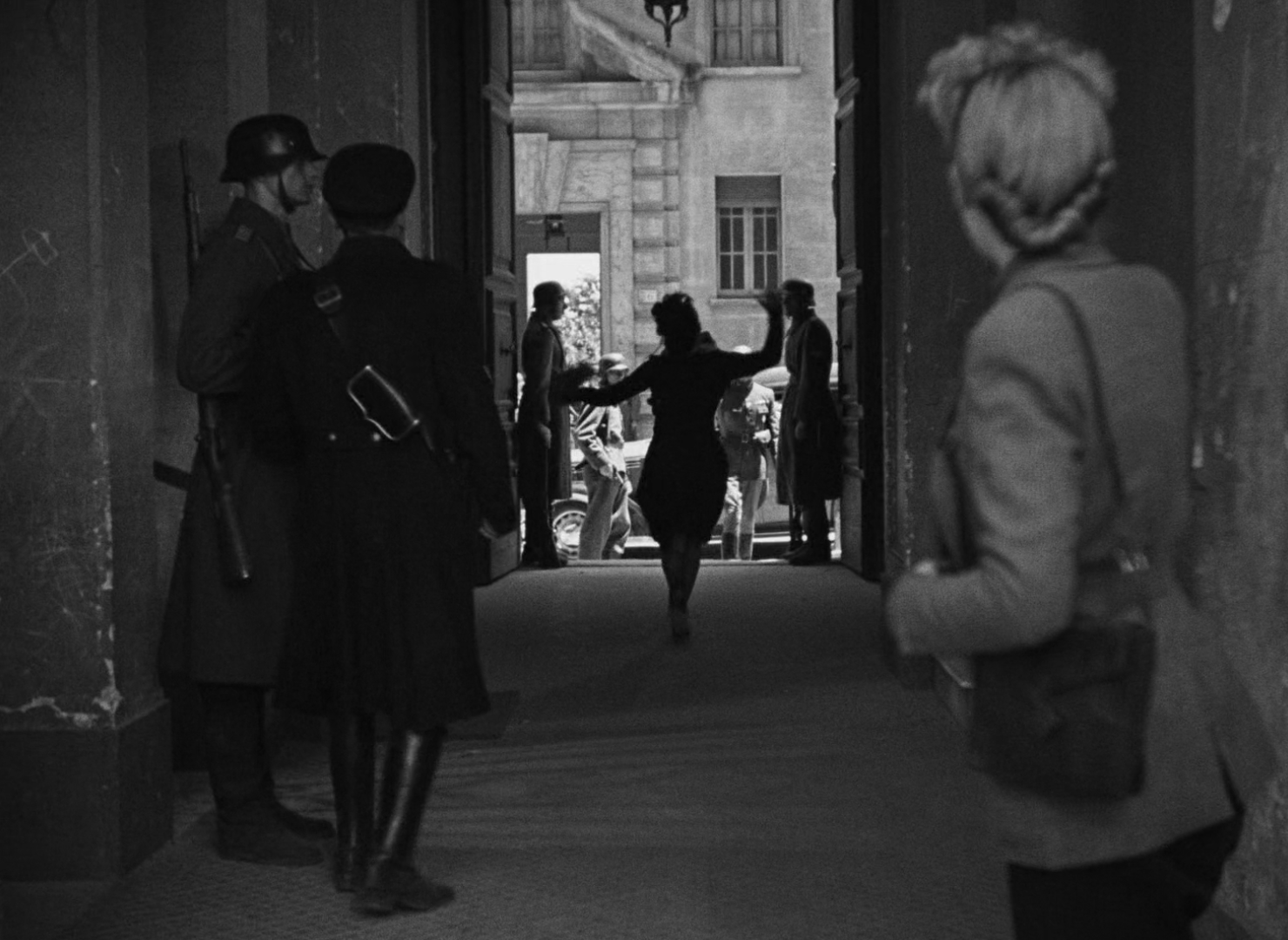
I soldati trascinano via Francesco. Pina si libera e respinge una donna che stava facendo da interprete. In sagoma, la vediamo Pina che corre attraverso il vicolo buio verso la strada.
The soldiers drag Francesco away. Pina breaks free and fends off a woman who has been interpreting. In silhouette, we see her run through the dark passageway toward the street.
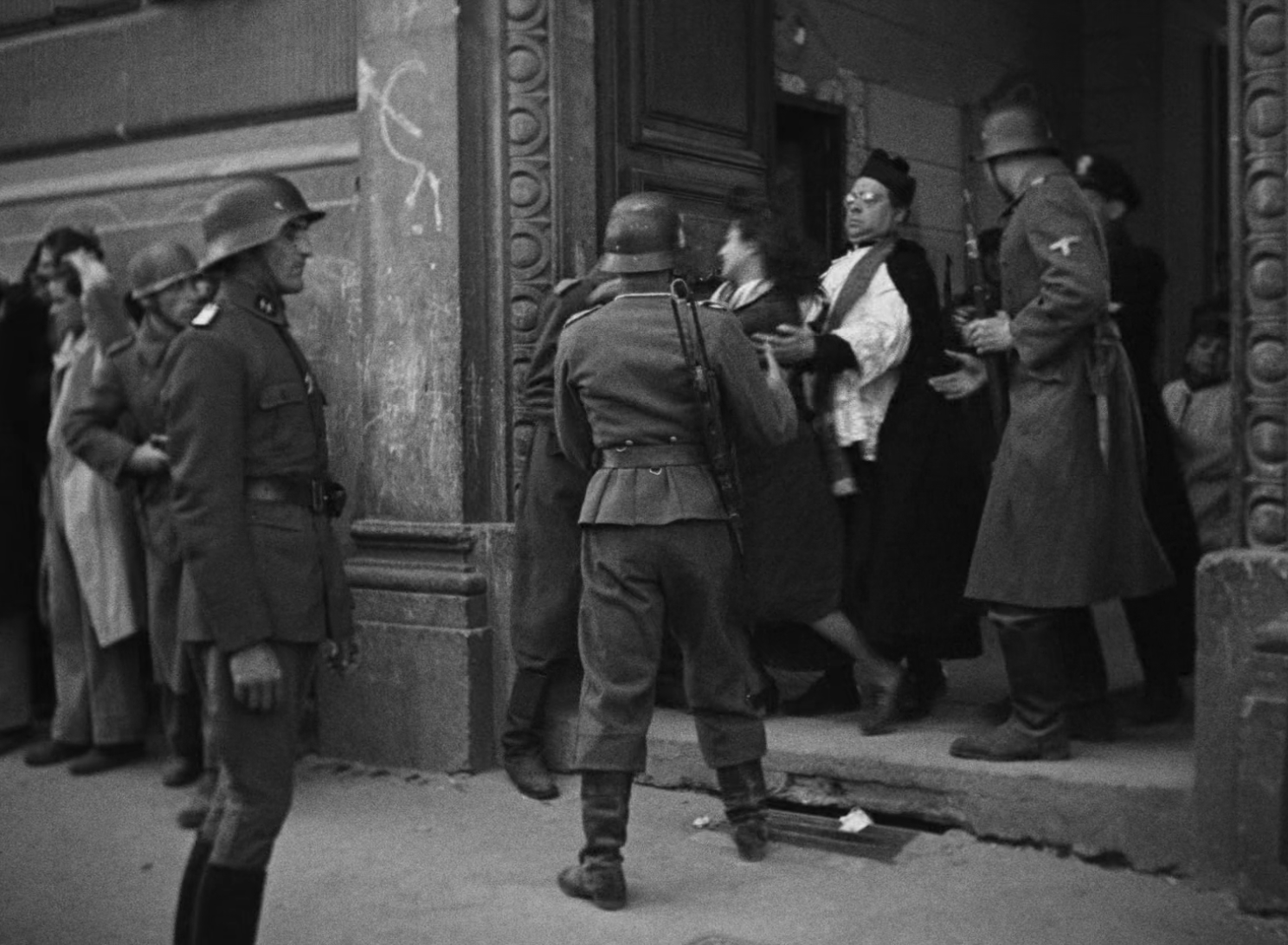
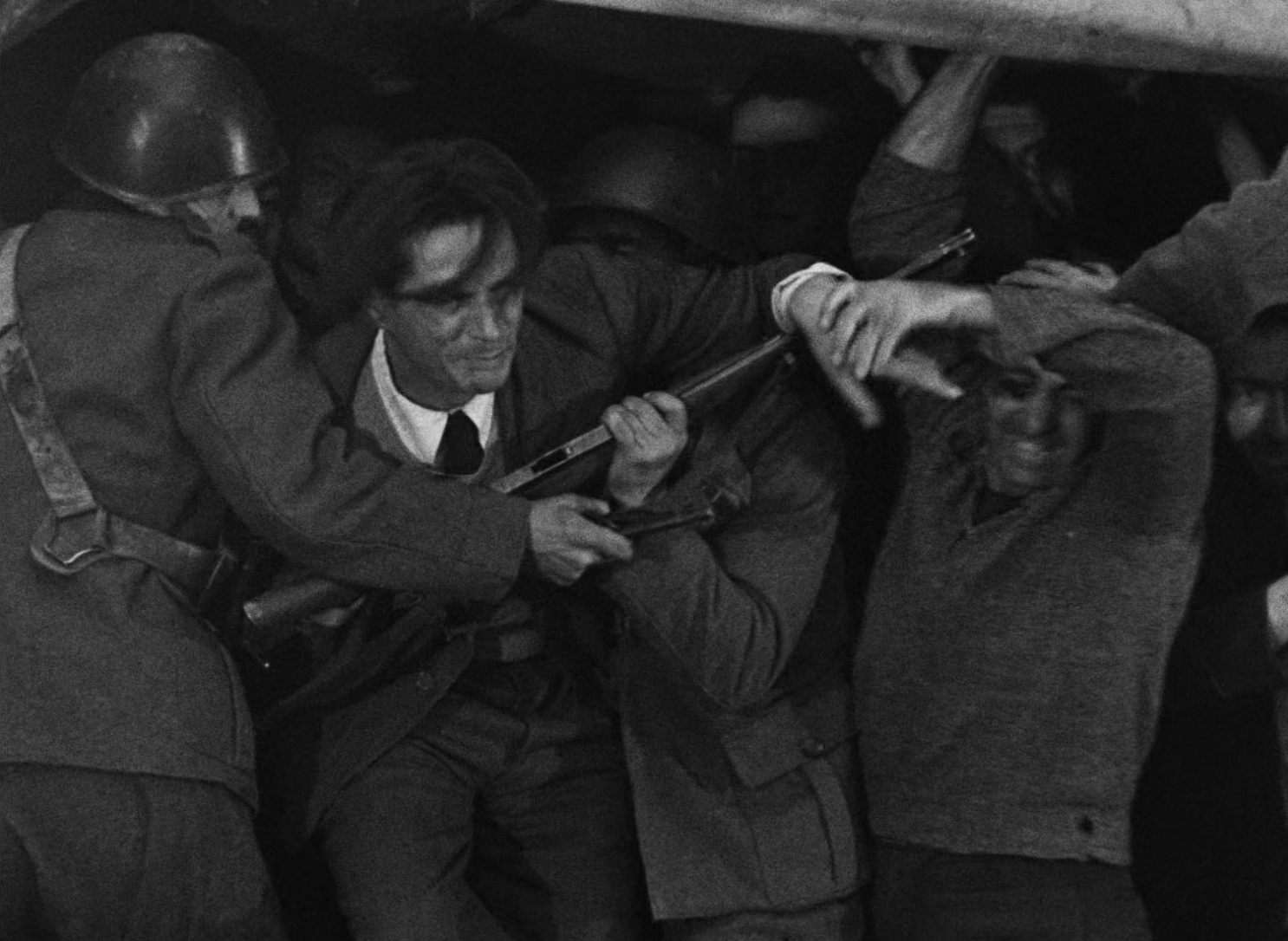
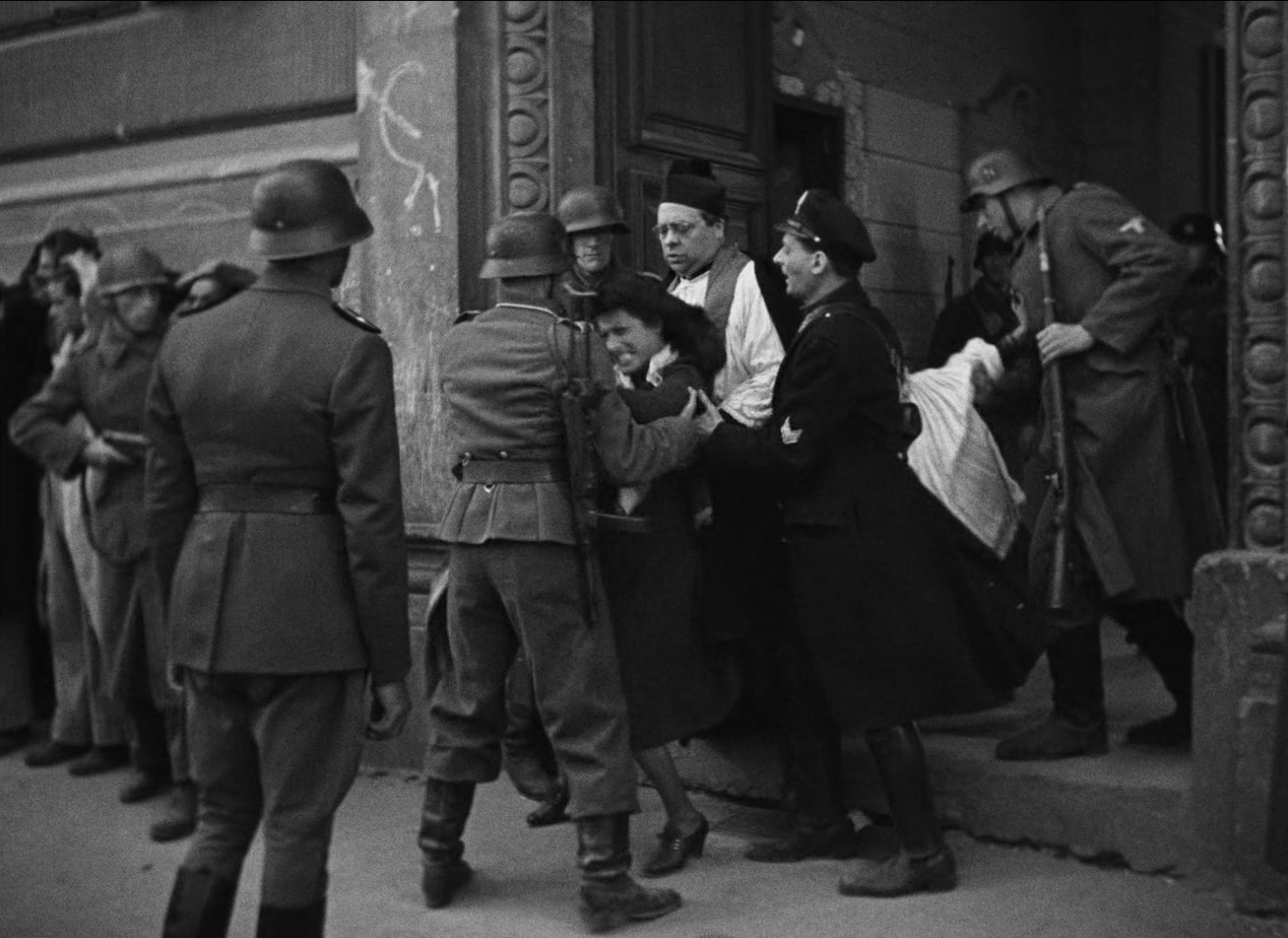
Mentre emerge dal vicolo, i soldati e anche Don Pietro cercano di fermarla. Francesco è stato caricato sul retro di un camion, che si allontana. Lui cerca disperatamente di fuggire, mentre Pina lotta per raggiungerlo.
As she emerges from the passageway, soldiers and even Don Pietro try to stop her. Francesco has been loaded in the back of a truck, which pulls away. He tries desperately to escape, as Pina struggles to reach him.
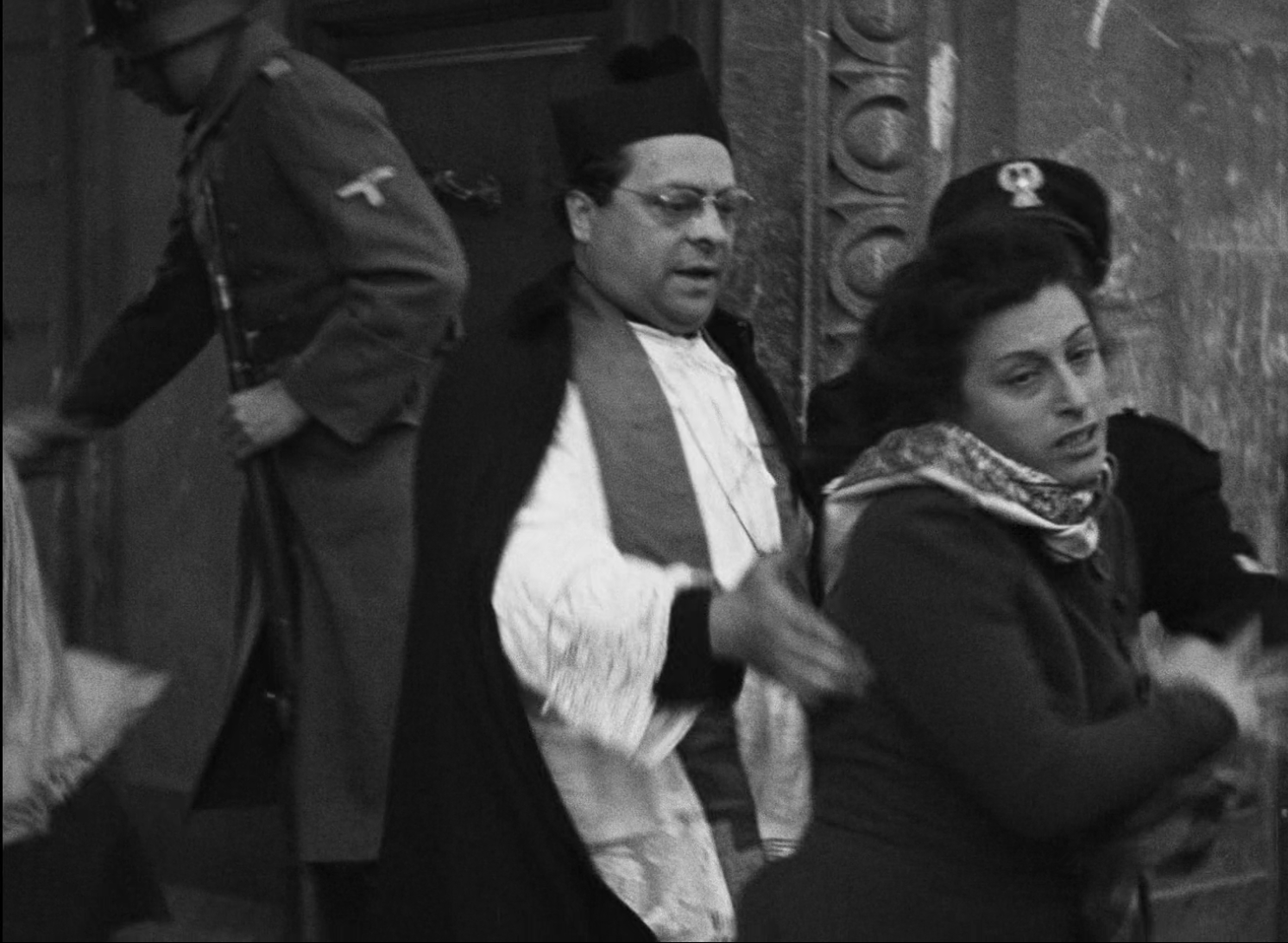
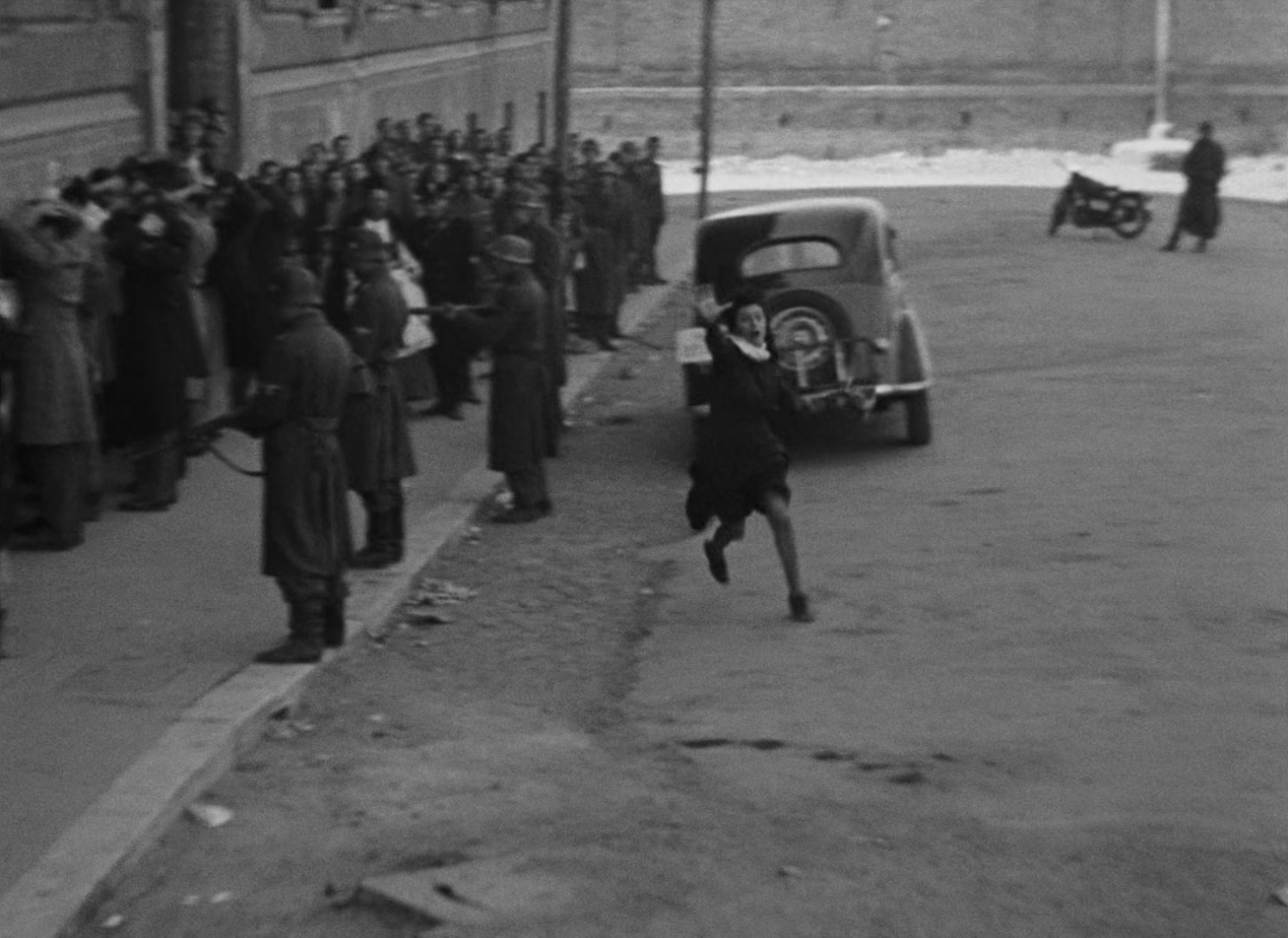
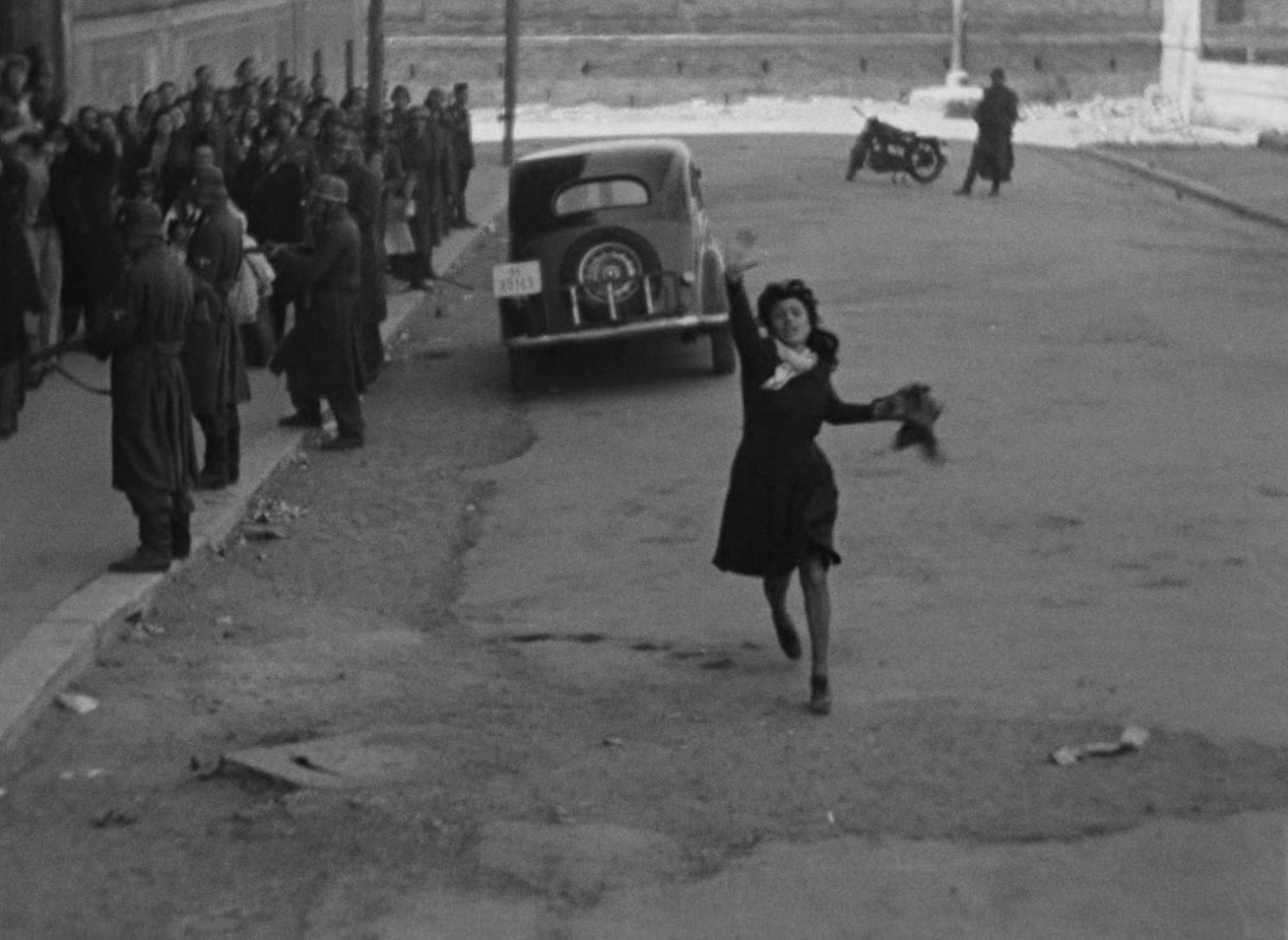
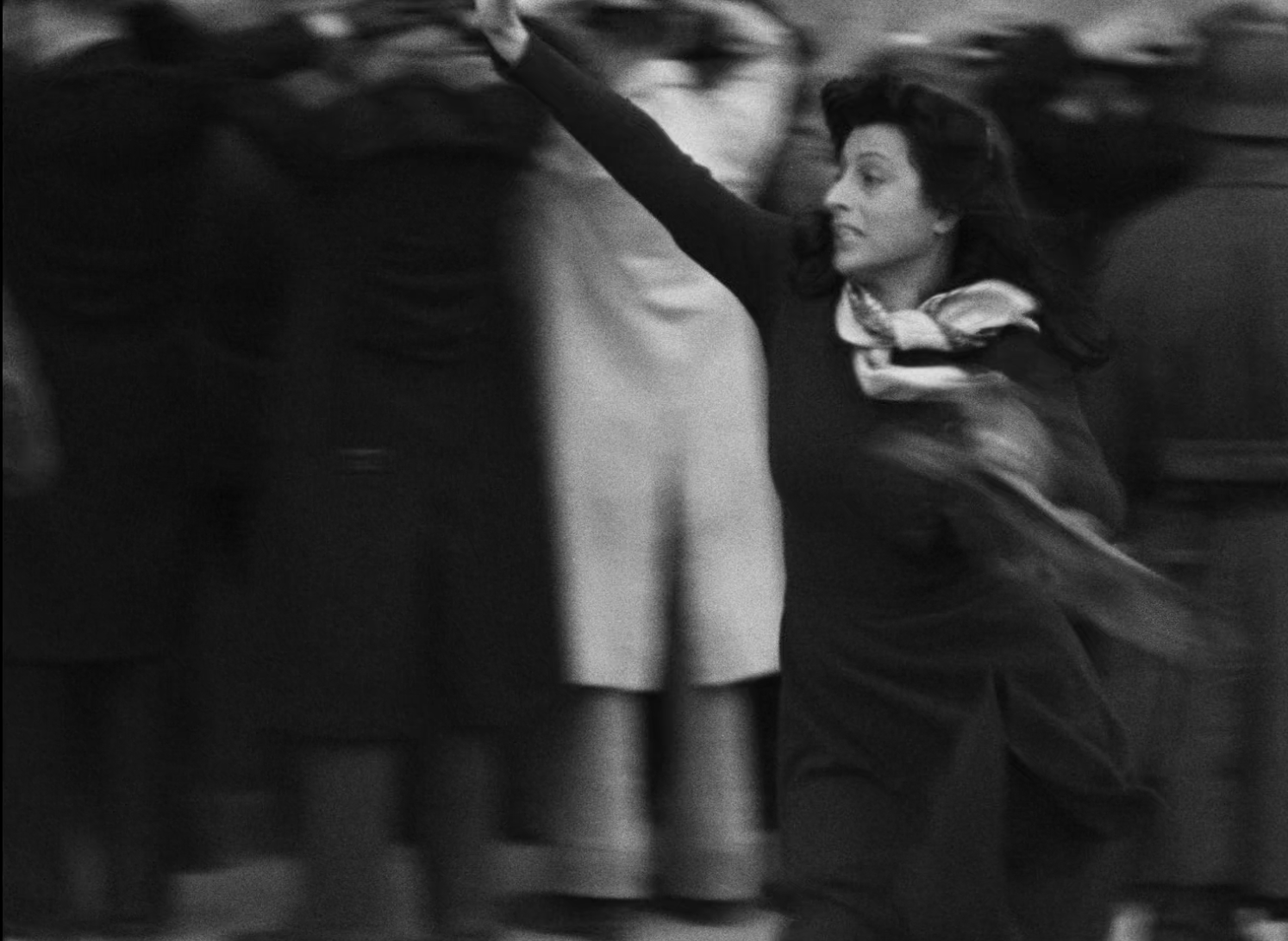
Pina si libera dalla presa di Don Pietro e si precipita in strada, con il braccio steso verso Francesco. In un'inquadratura iconica, lei corre lungo il centro della strada, con un braccio alzato, la sciarpa a quadri stretta nell'altro, con una grande massa di figure scure in alto a sinistra, un'auto solitaria parcheggiata dietro di lei e un soldato e una moto sul retro.
Insegue il camion, chiamando il nome di Francesco ancora e ancora.
Pina breaks free from Don Pietro’s grasp and rushes into the street, arm outstretched toward Francesco. In an iconic shot, she runs down the center of the street, one arm raised, plaid scarf clutched tight in the other, with a great mass of dark figures at the upper left, a lone car parked behind her and a soldier and motorcycle at the back.
She chases the truck, calling Francesco’s name over and over.
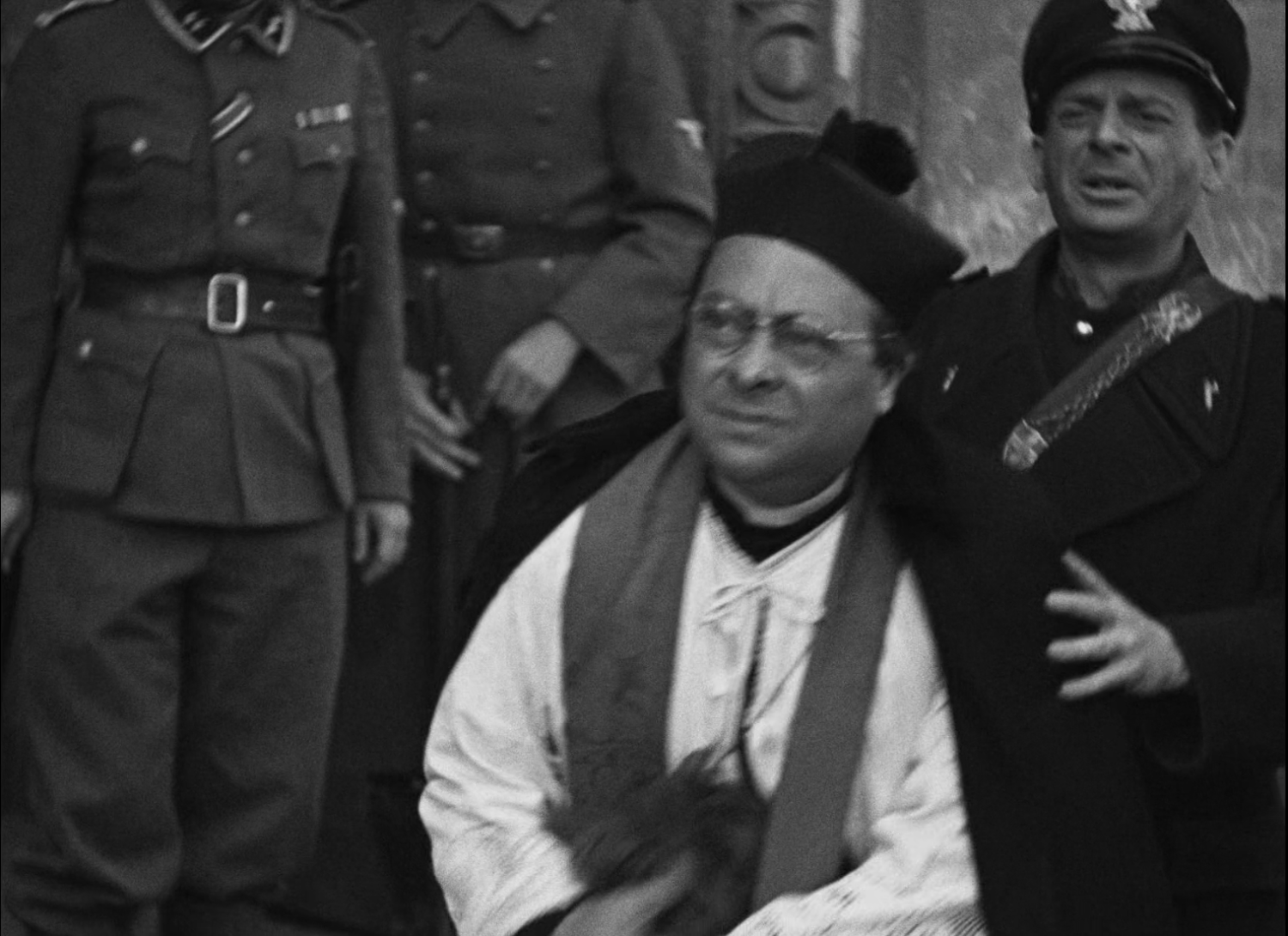
Tra la folla, Don Pietro la guarda, con le braccia attorno a Marcello.
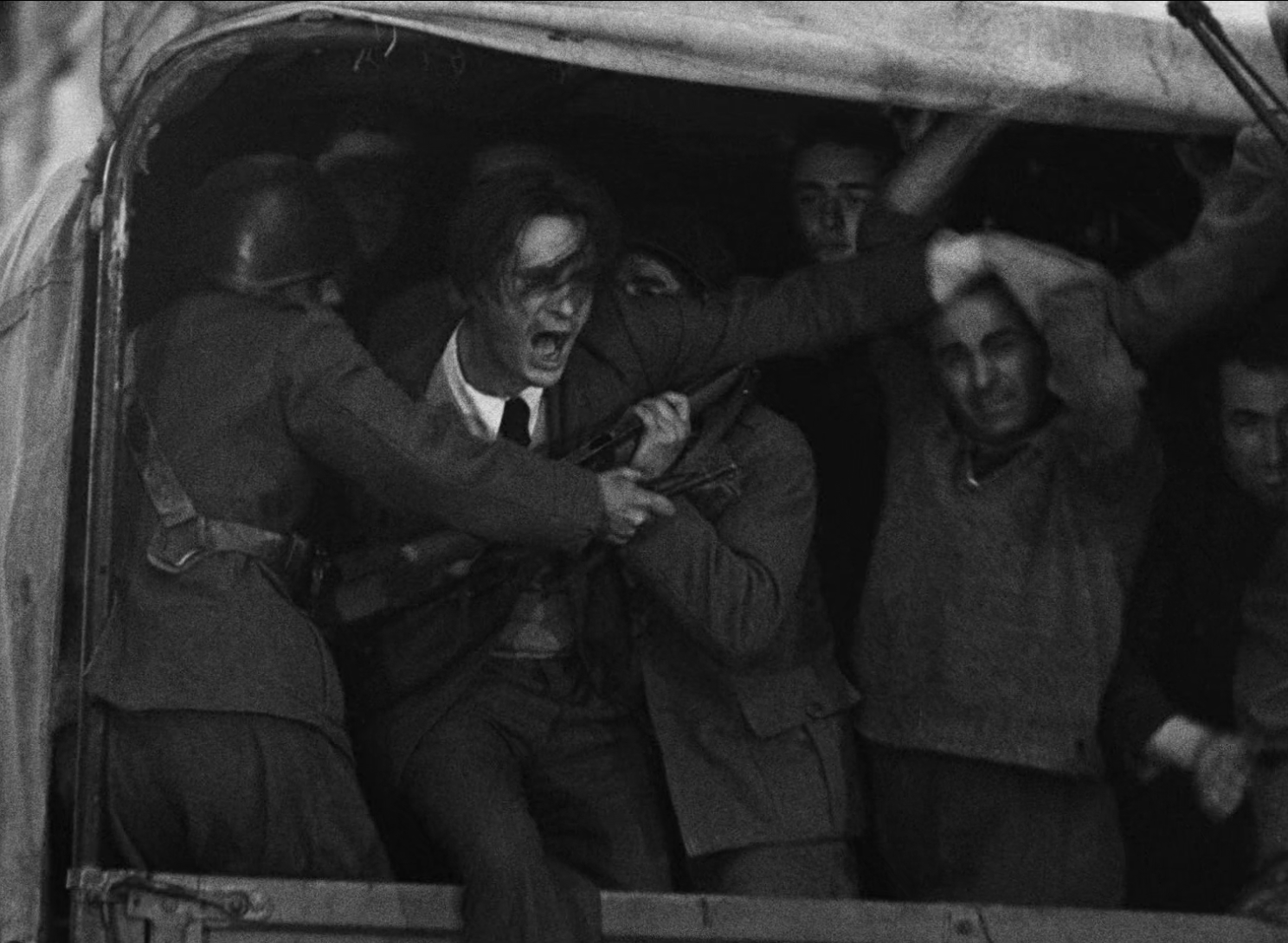
Francesco, urlando, con i capelli sul viso, ha una gamba fuori dal camion.
In the crowd, Don Pietro watches her, his arms around Marcello.
Francesco, yelling, hair across his face, has one leg out of the truck.
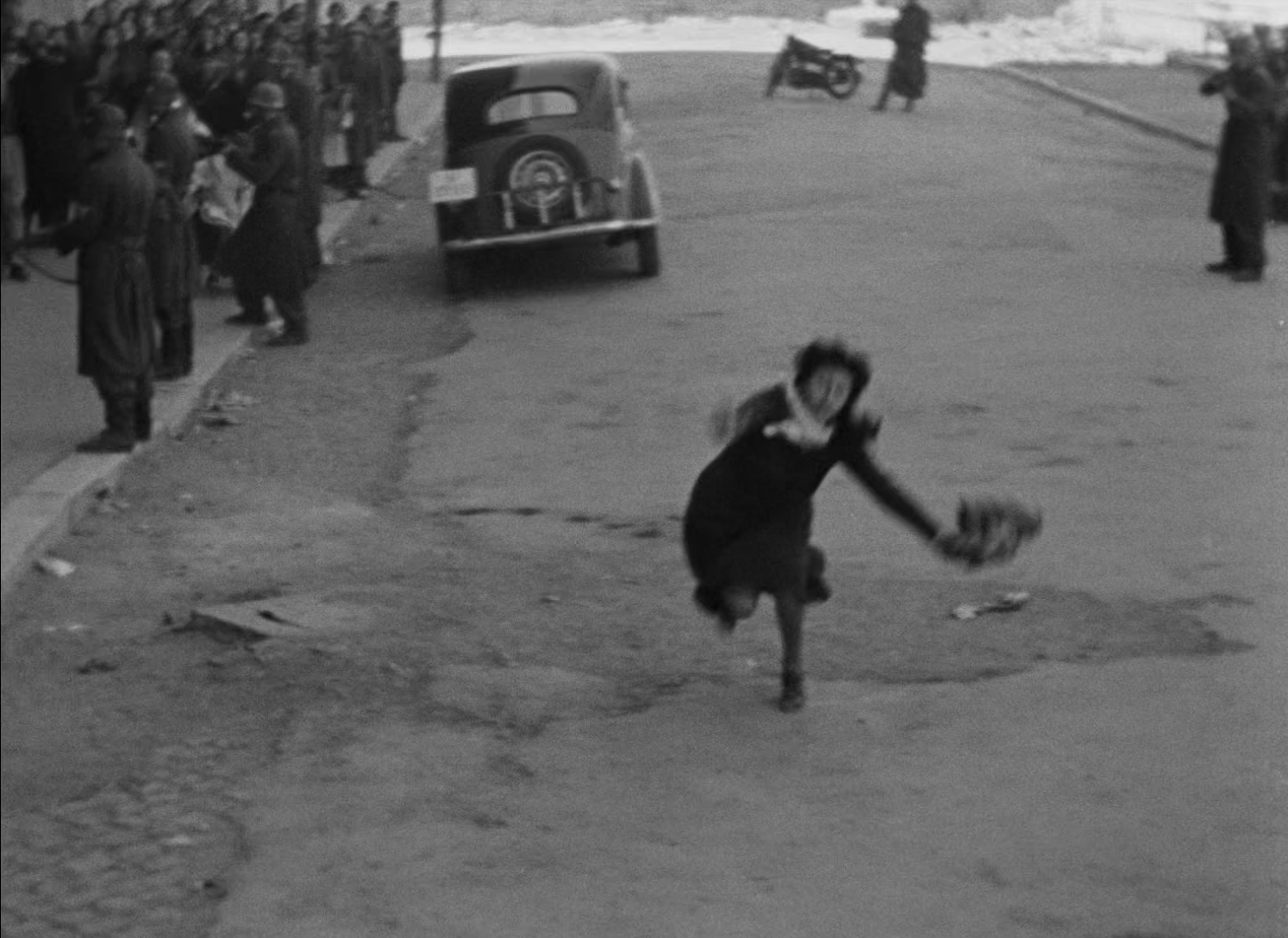
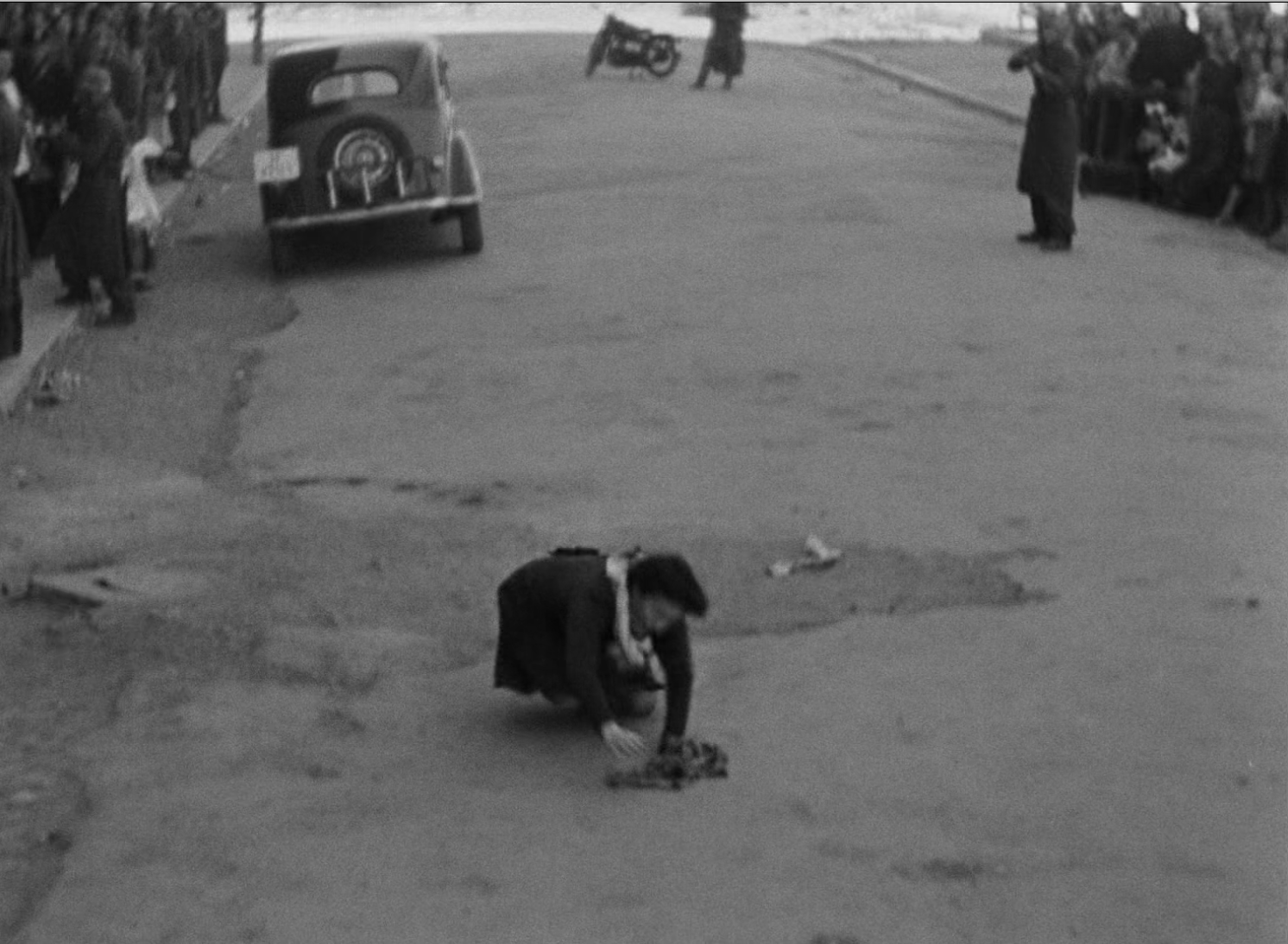
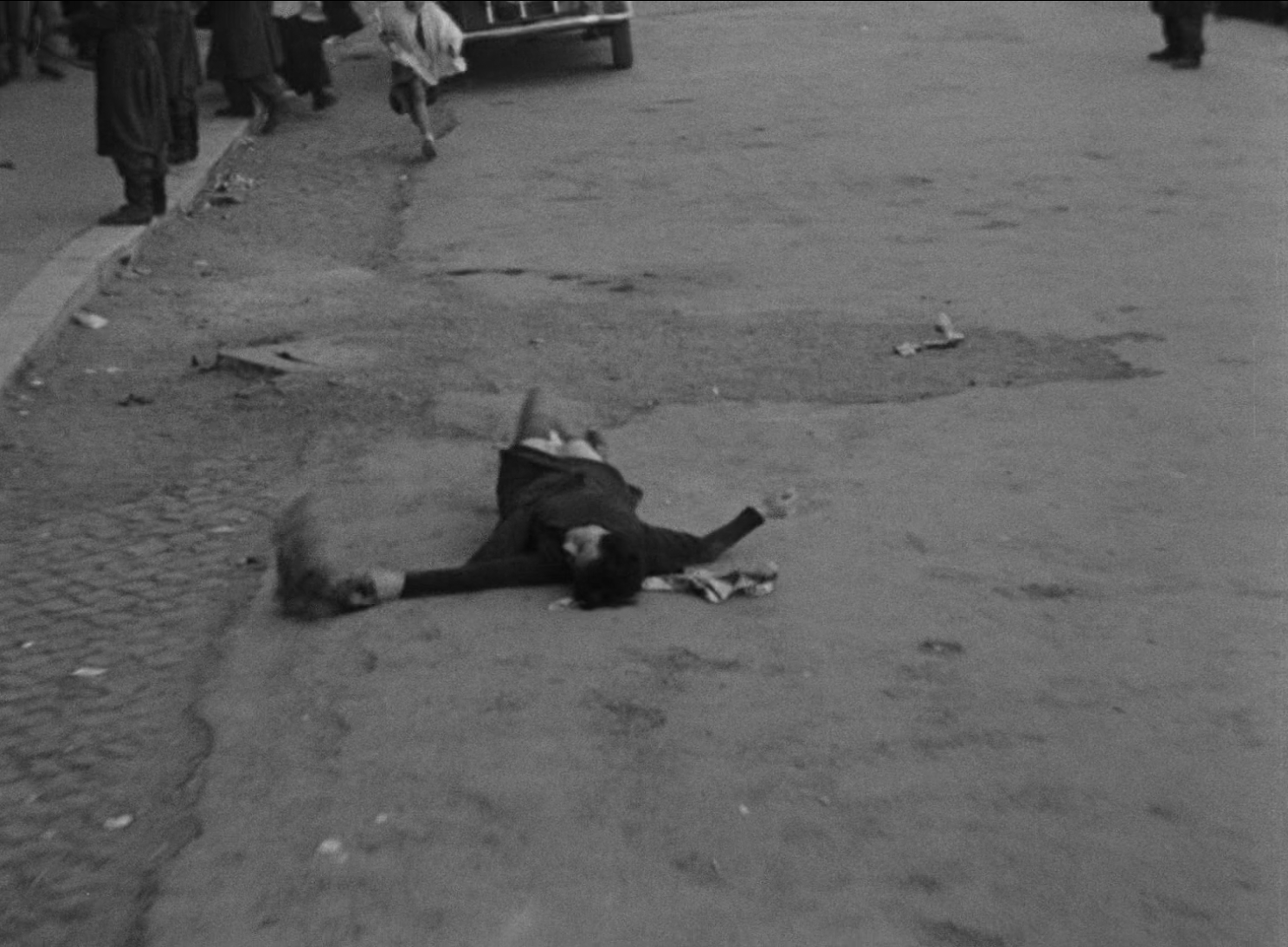
Improvvisamente risuonano degli spari e Pina cade distesa per strada. Giace sulla schiena, con le braccia aperte, immobile. La vediamo in un campo lungo, dal punto di vista di Francesco.
Suddenly gunshots ring out and Pina falls sprawling in the street. She lies flat on her back, arms outstretched, motionless. We see her in a long shot from Francesco's point of view.
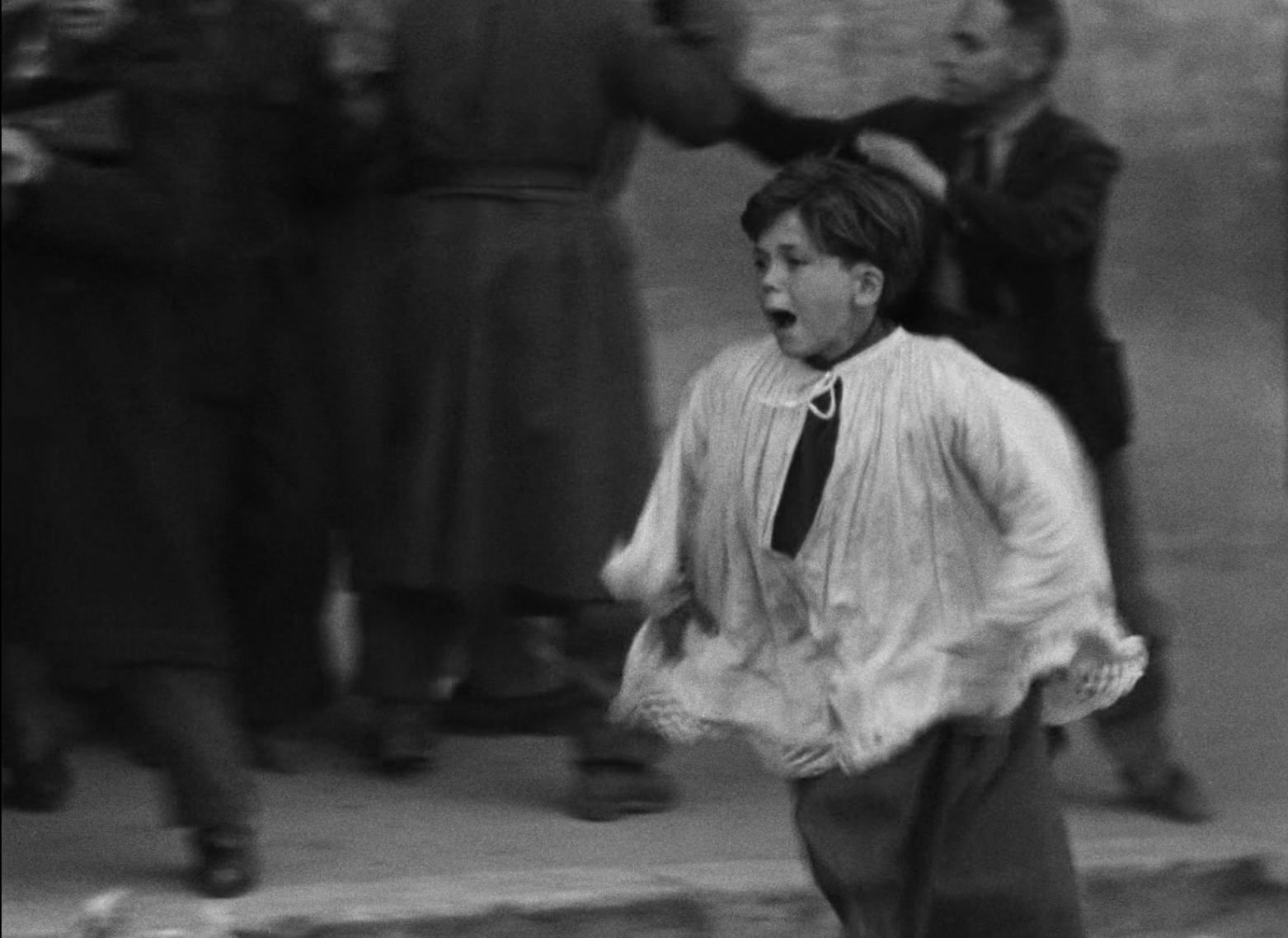
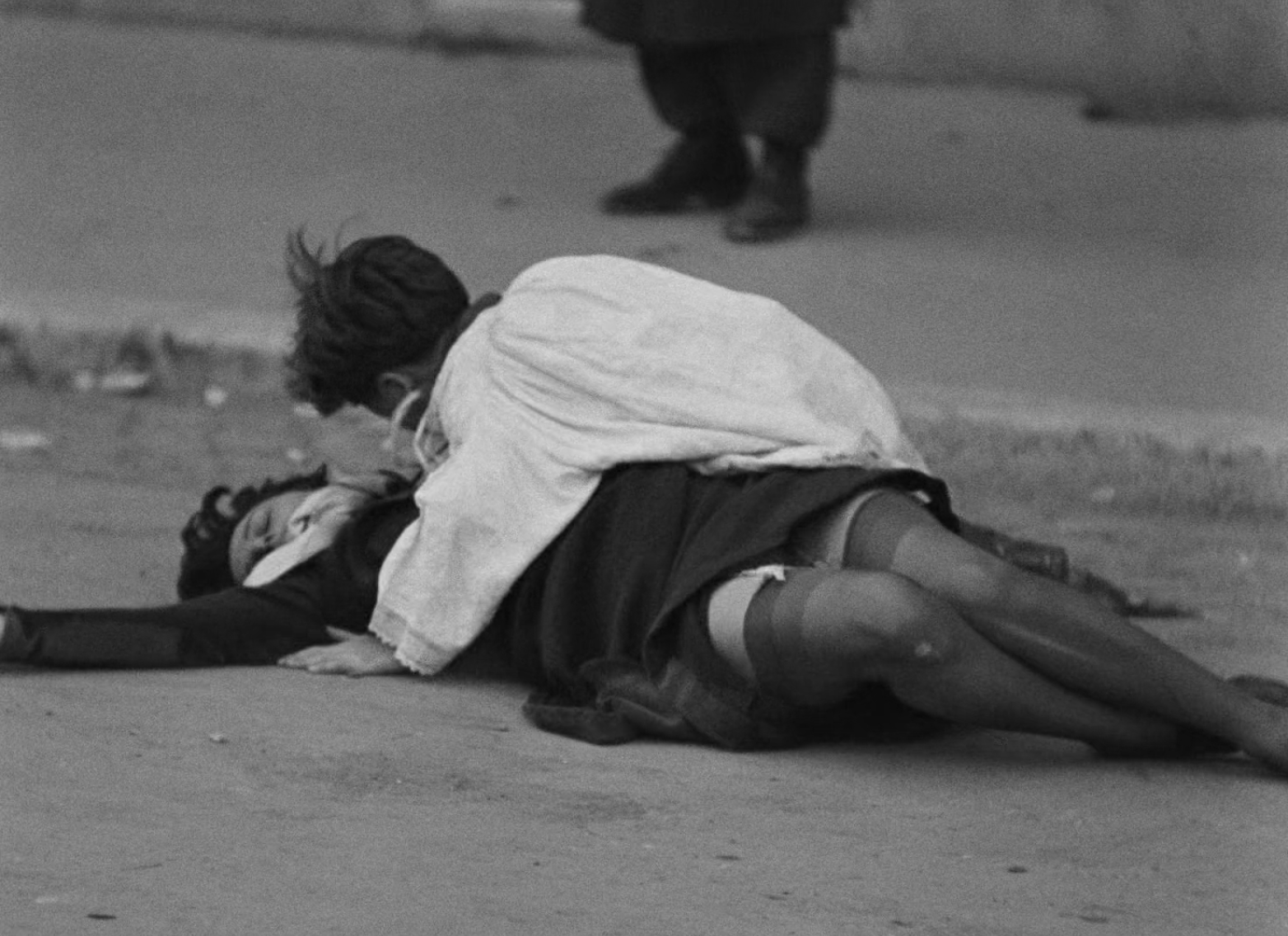
Ancora vestito con la sua cotta bianca da chierichetto, Marcello corre da lei, urlando: "Mamma!” Si china su di lei. La gonna di Pina è alzata sulle cosce, mostrando le cime dei collant e le giarrettiere.
Still dressed in his white altar boy cassock, Marcello runs to her, screaming, “Mama!” He leans over her. Pina’s skirt is high on her thighs, exposing her stocking tops and garters.
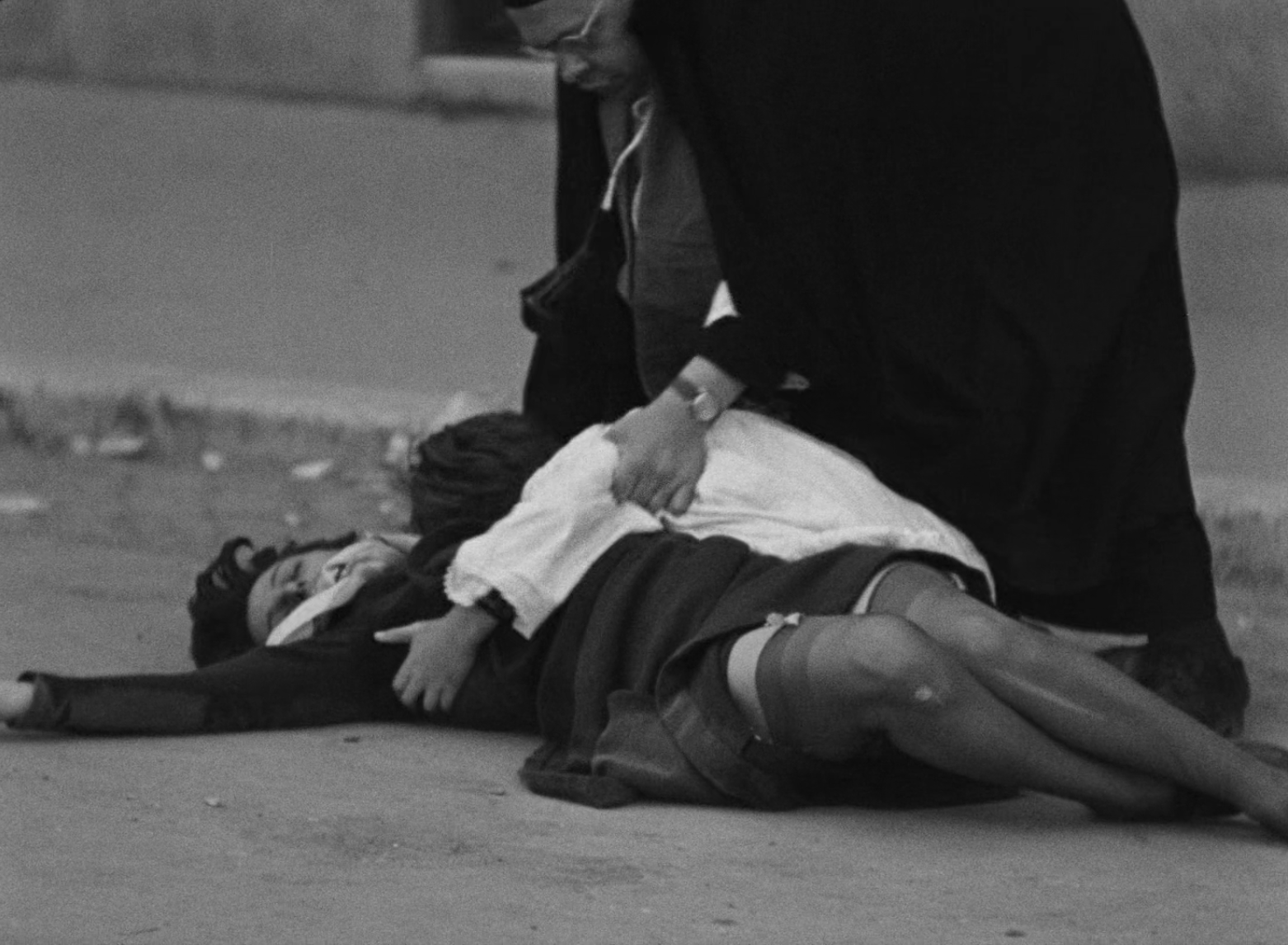
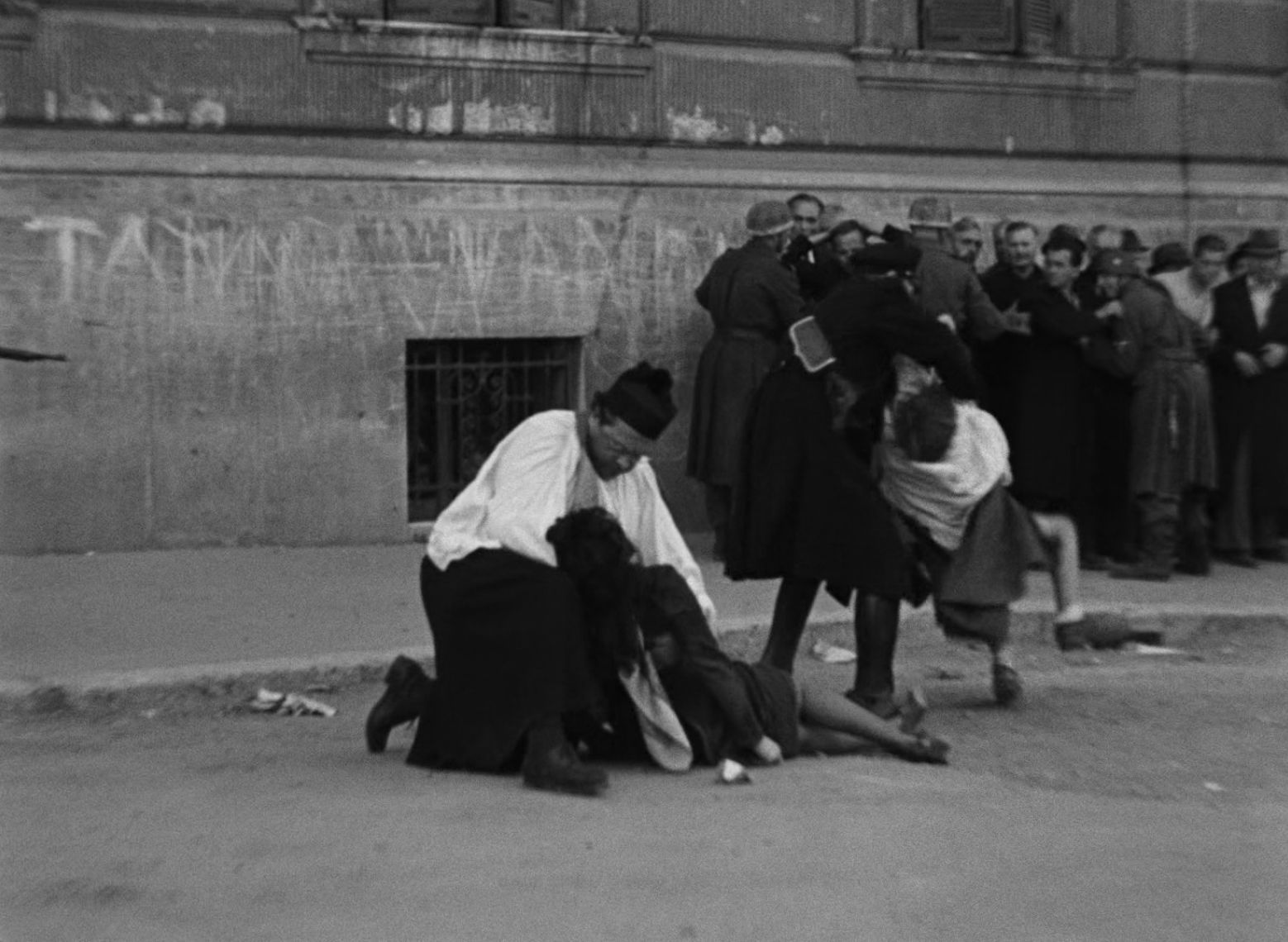
Don Pietro tira via il ragazzo isterico. Il brigadiere cerca di trattenerlo mentre lui chiama inconsolabilmente sua madre. I soldati trattengono la folla.
Don Pietro pulls the hysterical boy away. The police sergeant tries to restrain him as he calls inconsolably for his mother. Soldiers hold back the crowd.

Don Pietro tiene Pina tra le braccia, la testa di lei all'indietro, gli occhi chiusi, i capelli sciolti. La sua cotta bianca contrasta con l’abito scuro di lei. La posa assomiglia a una pietà.
Don Pietro holds Pina in his arms, her head back, eyes closed, her hair loose. His white cassock contrasts starkly with her dark dress. The pose looks like a pietà.
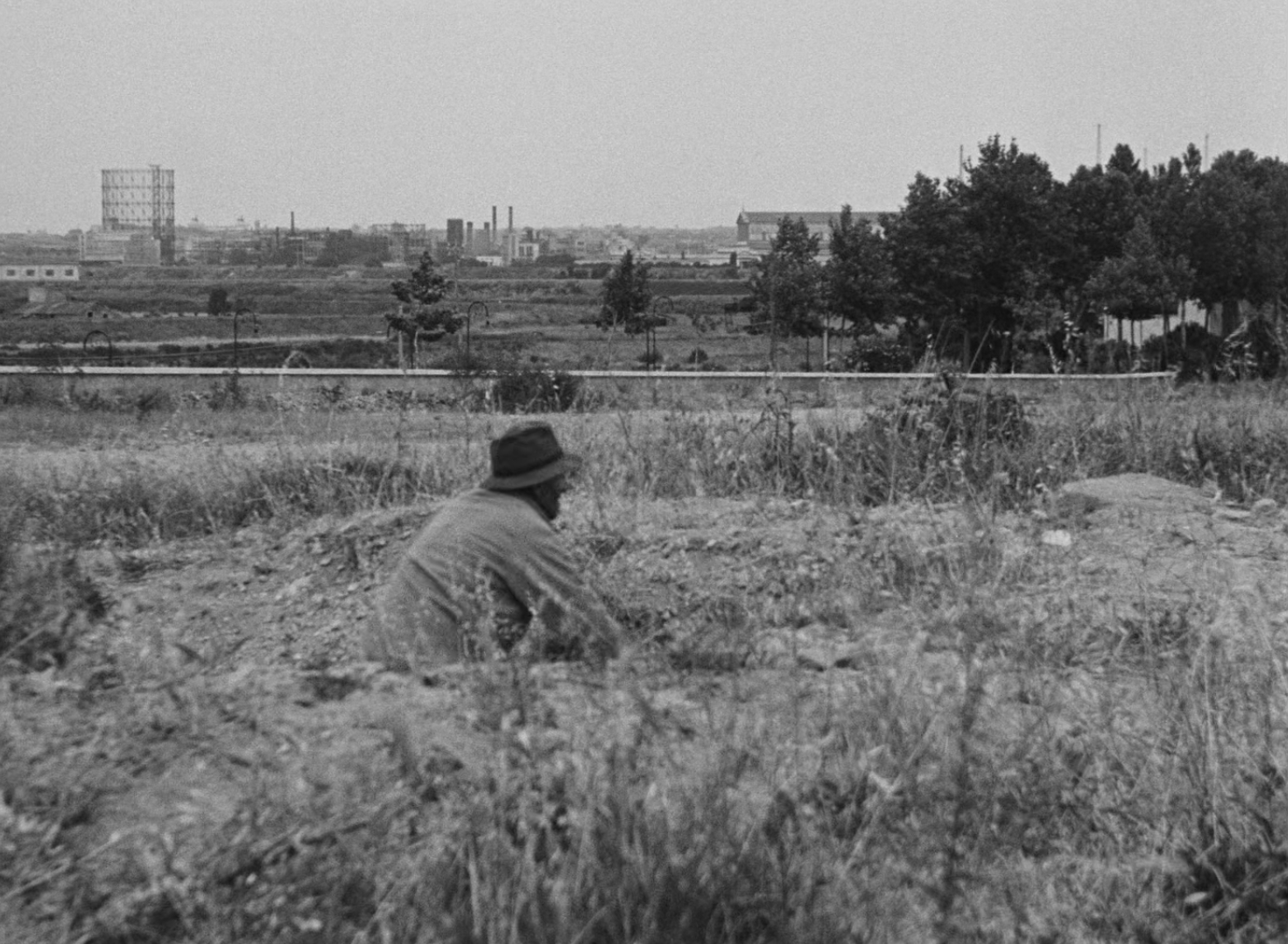
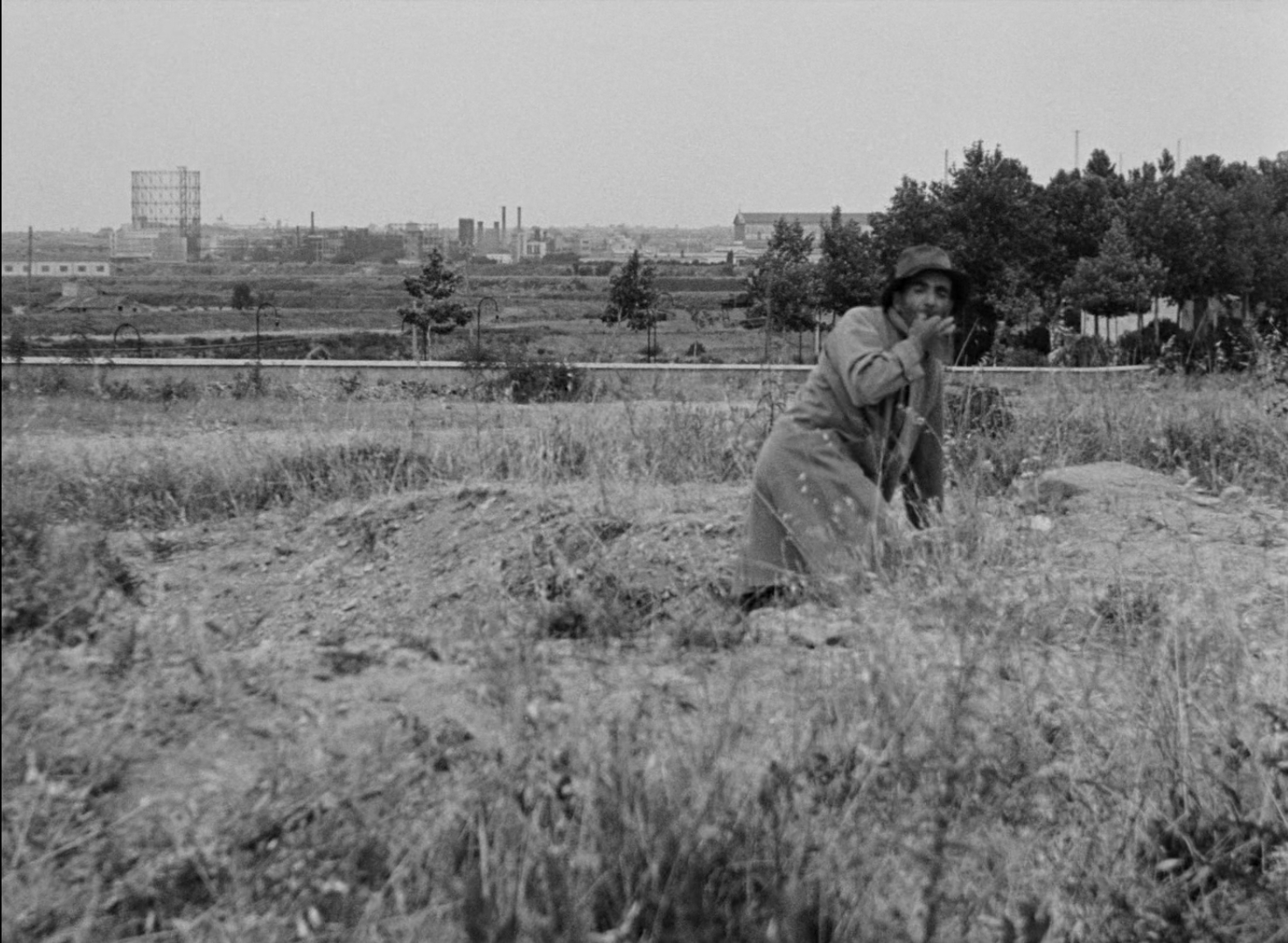
Vicino alla ferrovia, un uomo emerge dalla macchia non lontano dalla strada, proprio mentre arriva il convoglio che trasporta Francesco e gli altri italiani imprigionati. L'uomo si gira e fa un fischio acuto.
Near the railway yards, a man emerges from the scrubland not far from the road, just as the convoy carrying Francesco and the other imprisoned Italians comes along. The man turns and gives a shrill whistle.
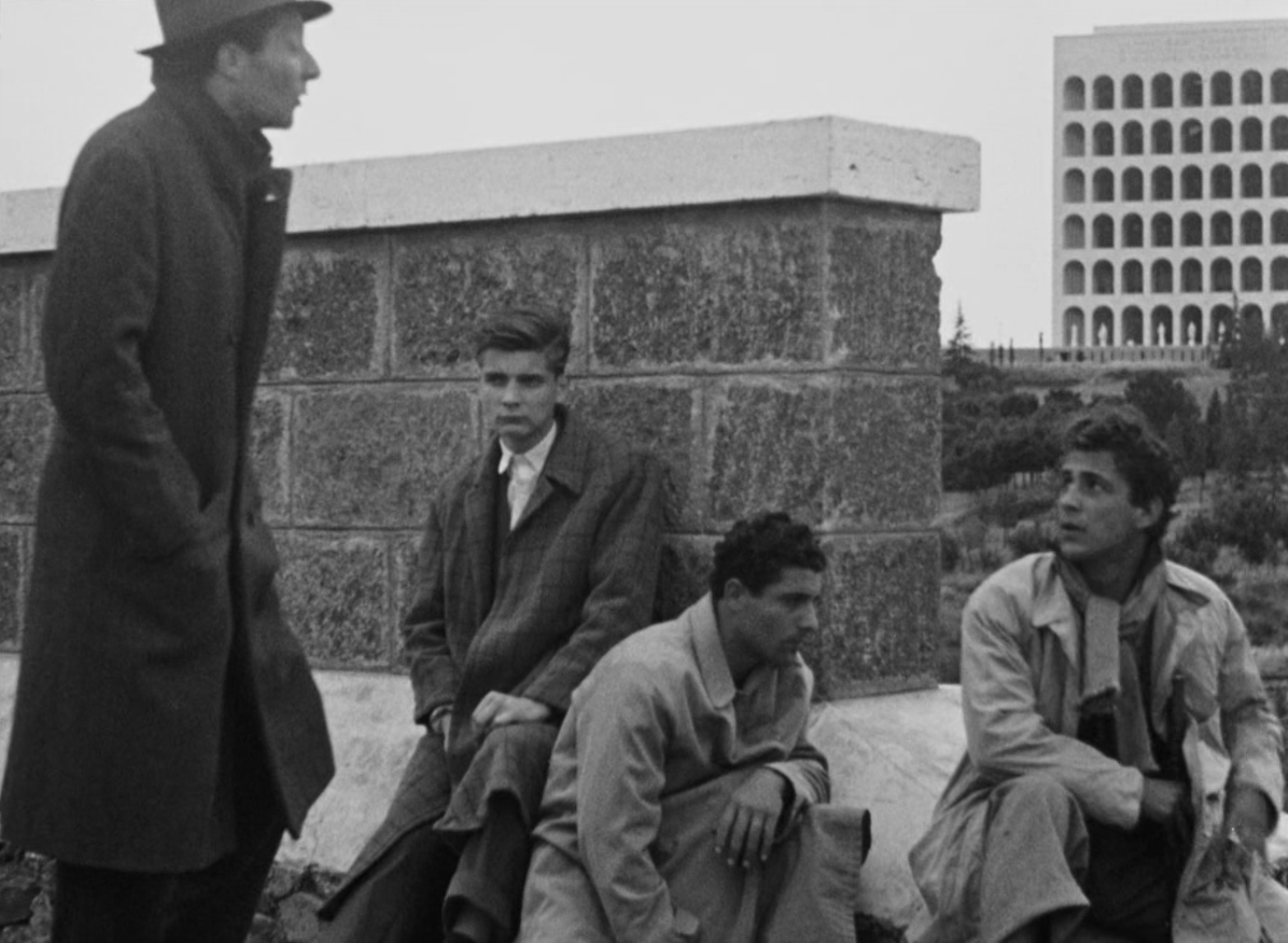
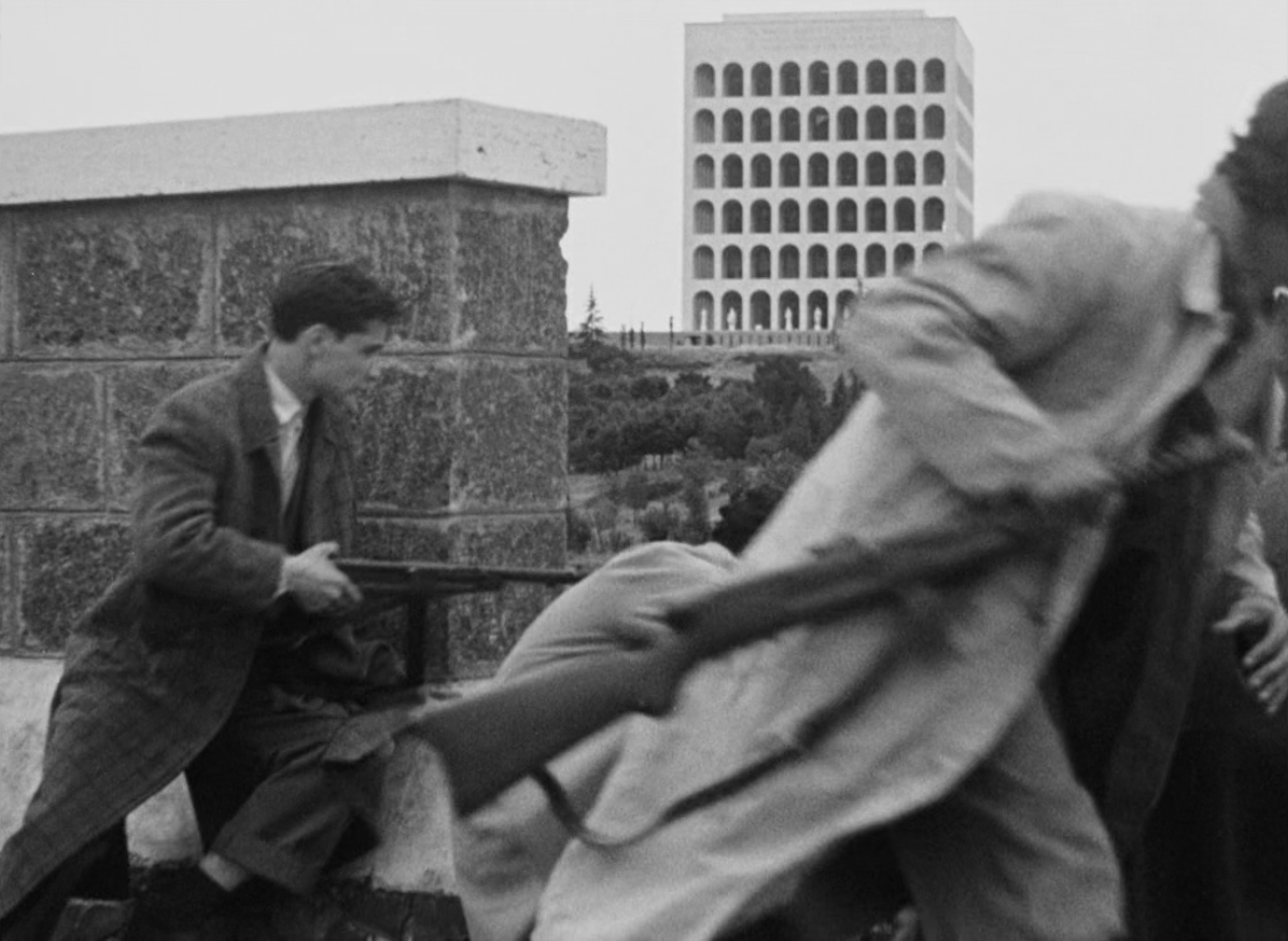
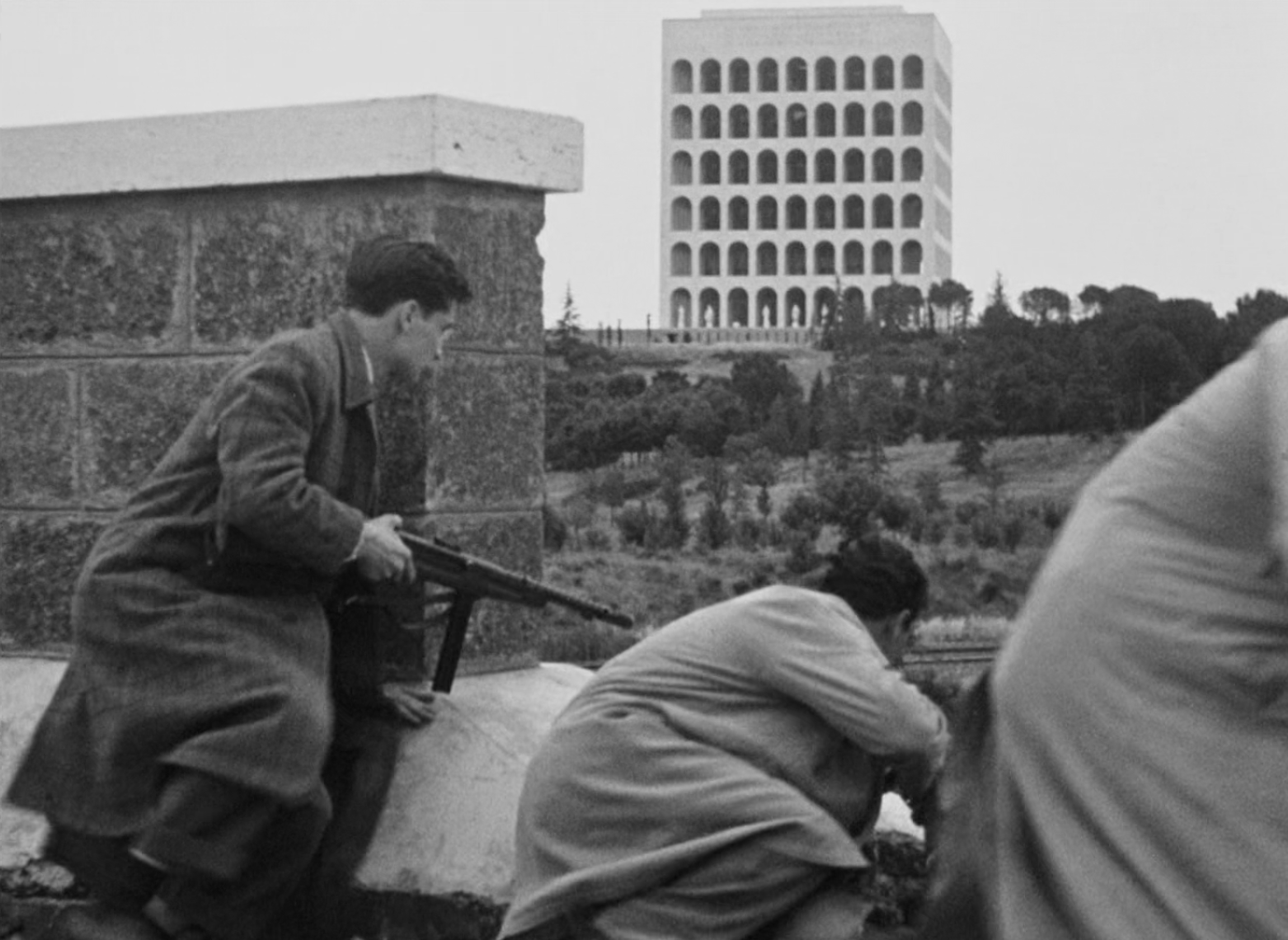
Aspettando con pochi altri, Manfredi dice: “Eccoli, pronti!” Mentre un uomo fischia in risposta, tutti prendono i fucili. “Attenti quando sono alla svolta. Mirate agli autisti”. Prendono le loro posizioni.
Waiting with a few others, Manfredi says, “There they are, get ready!” As one man whistles a reply, they all pick up their rifles. “Watch for when they round the bend. Aim for the drivers.” They take up their positions.
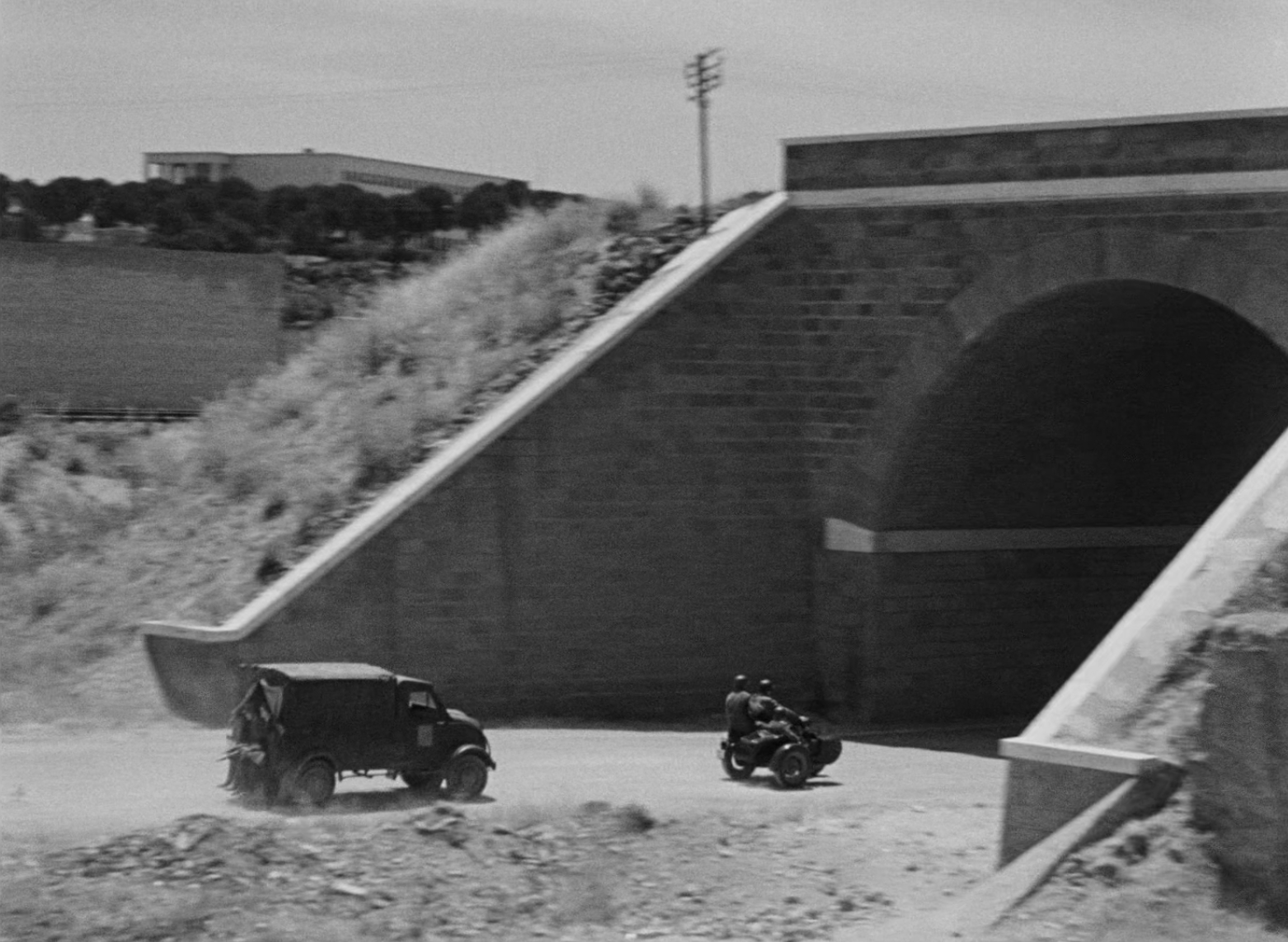
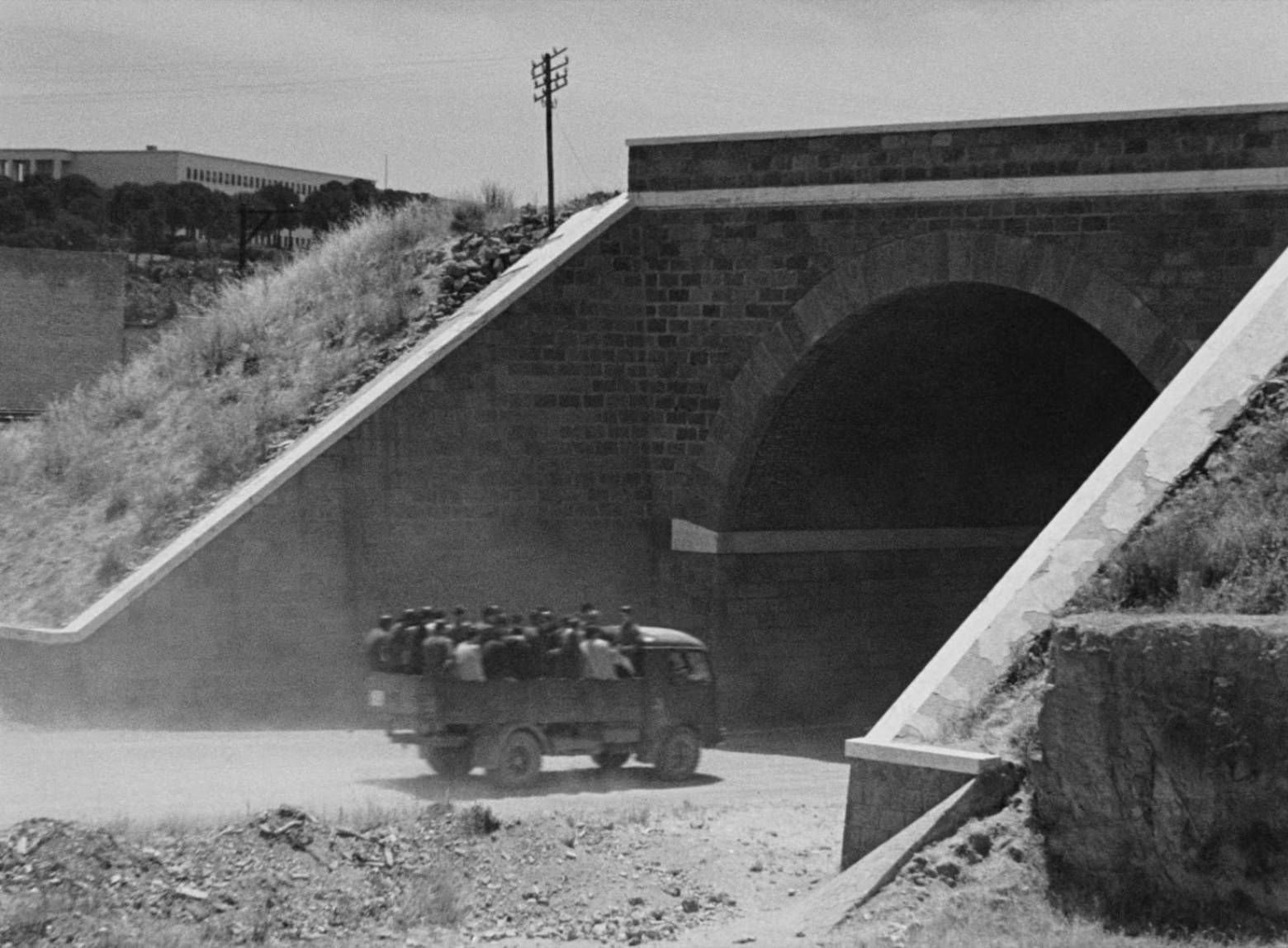
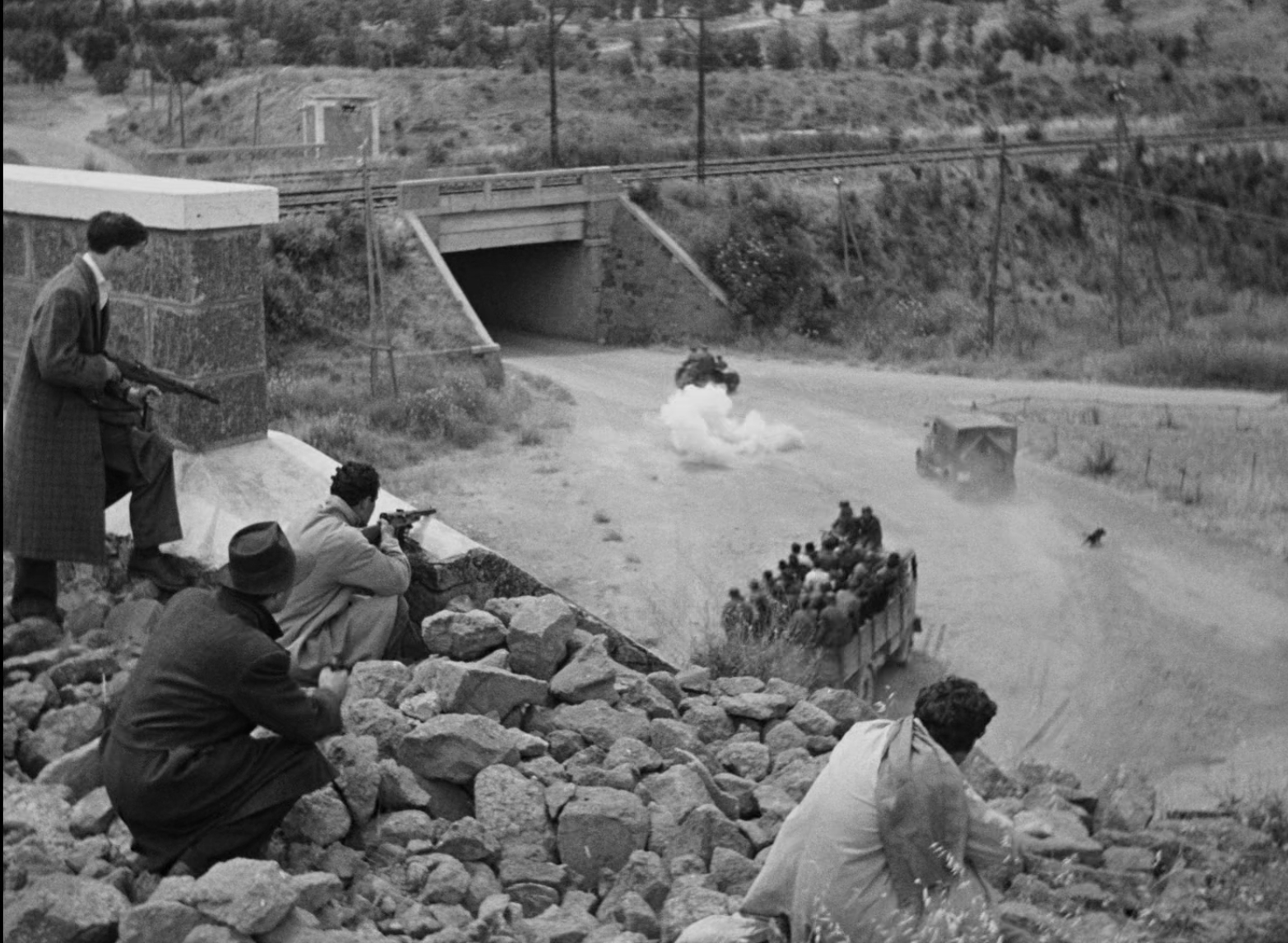
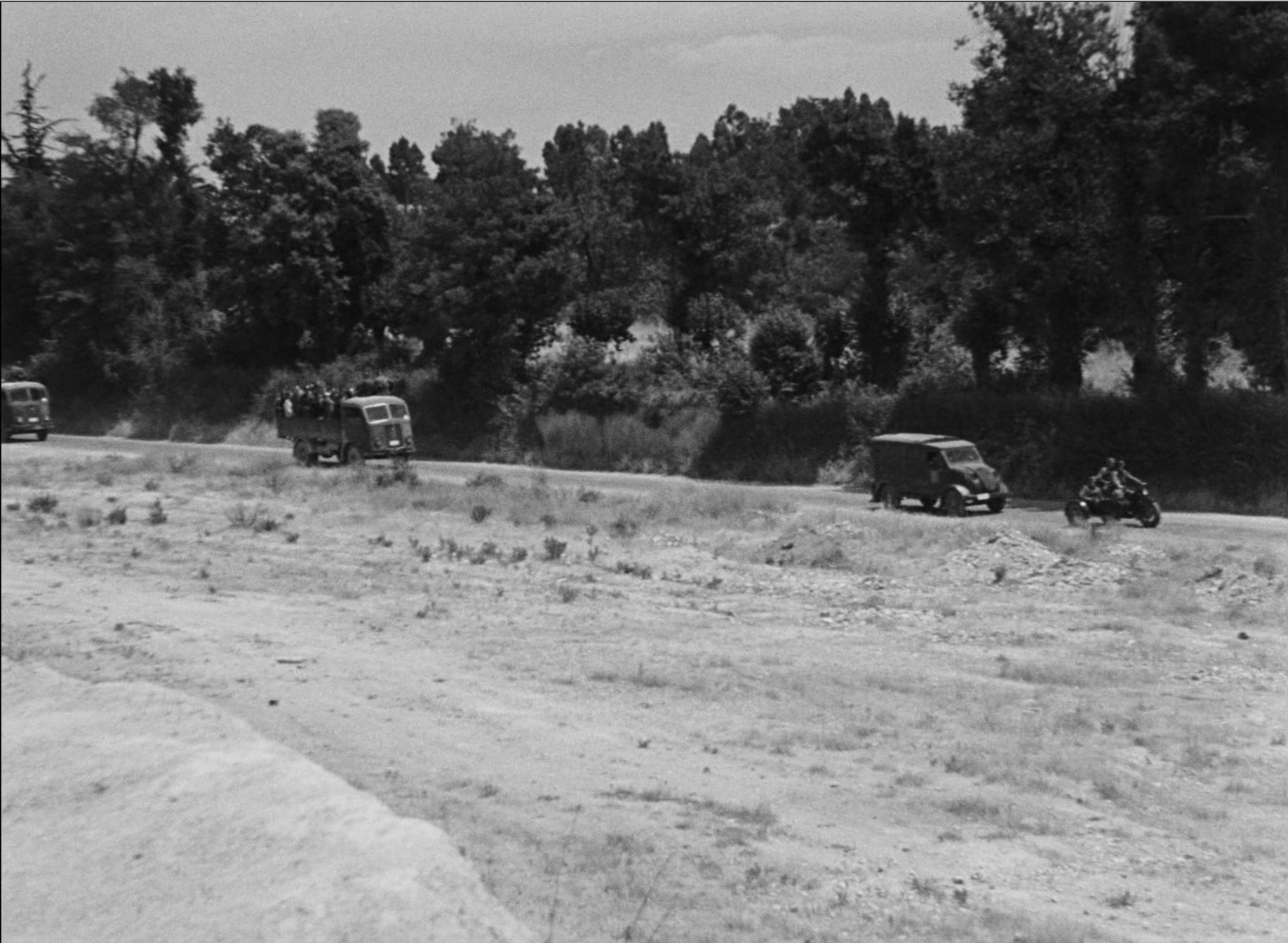
Guidati da una moto, i camion che trasportano i prigionieri vanno sotto un cavalcavia. Quando ricompaiono, i partigiani, nascosti dietro le rocce, cominciano a sparare.
Led by a motorcycle, the trucks carrying the prisoners go under an overpass. When they reappear, the partisans, hidden behind the rocks, begin to fire.
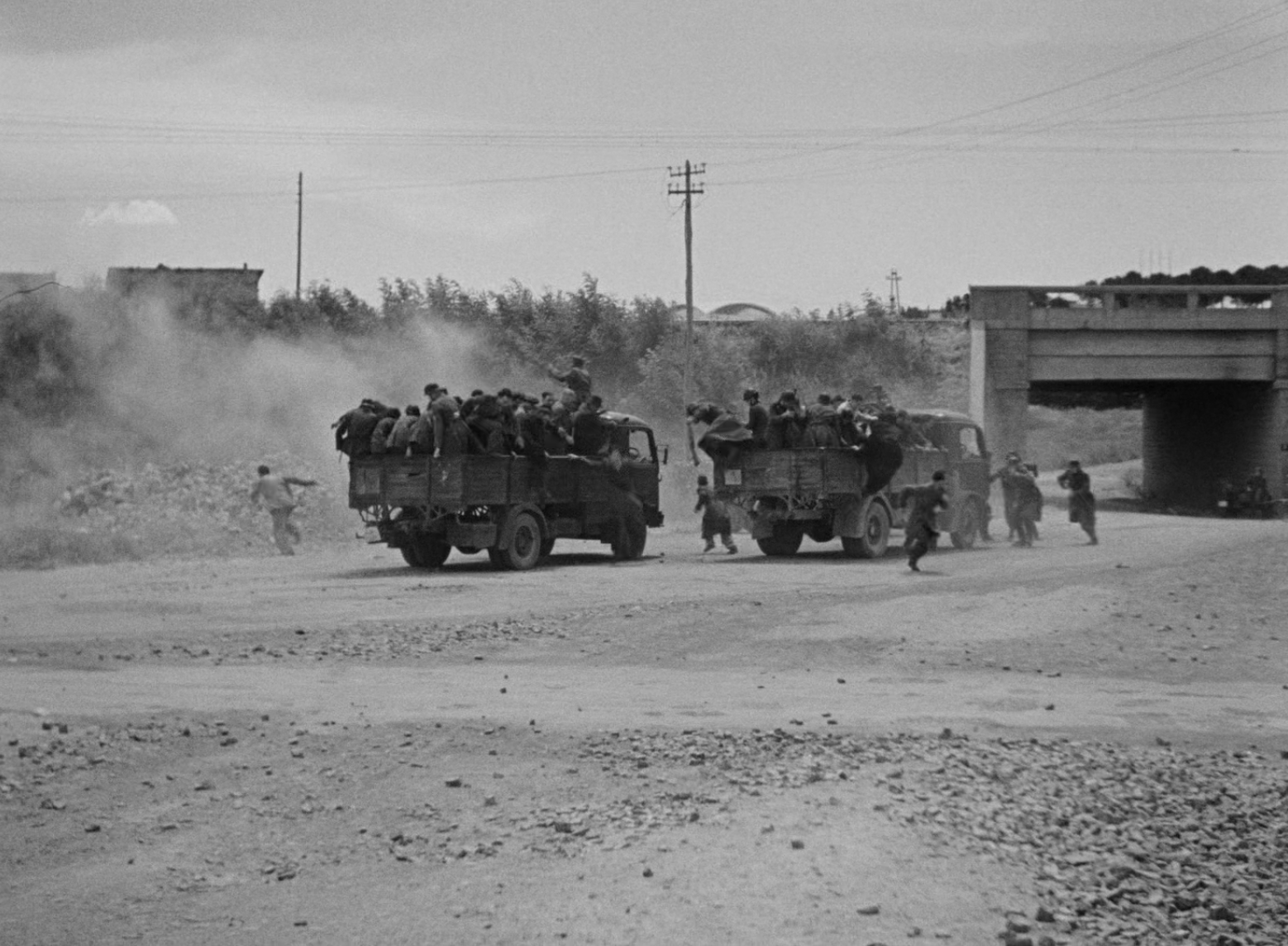
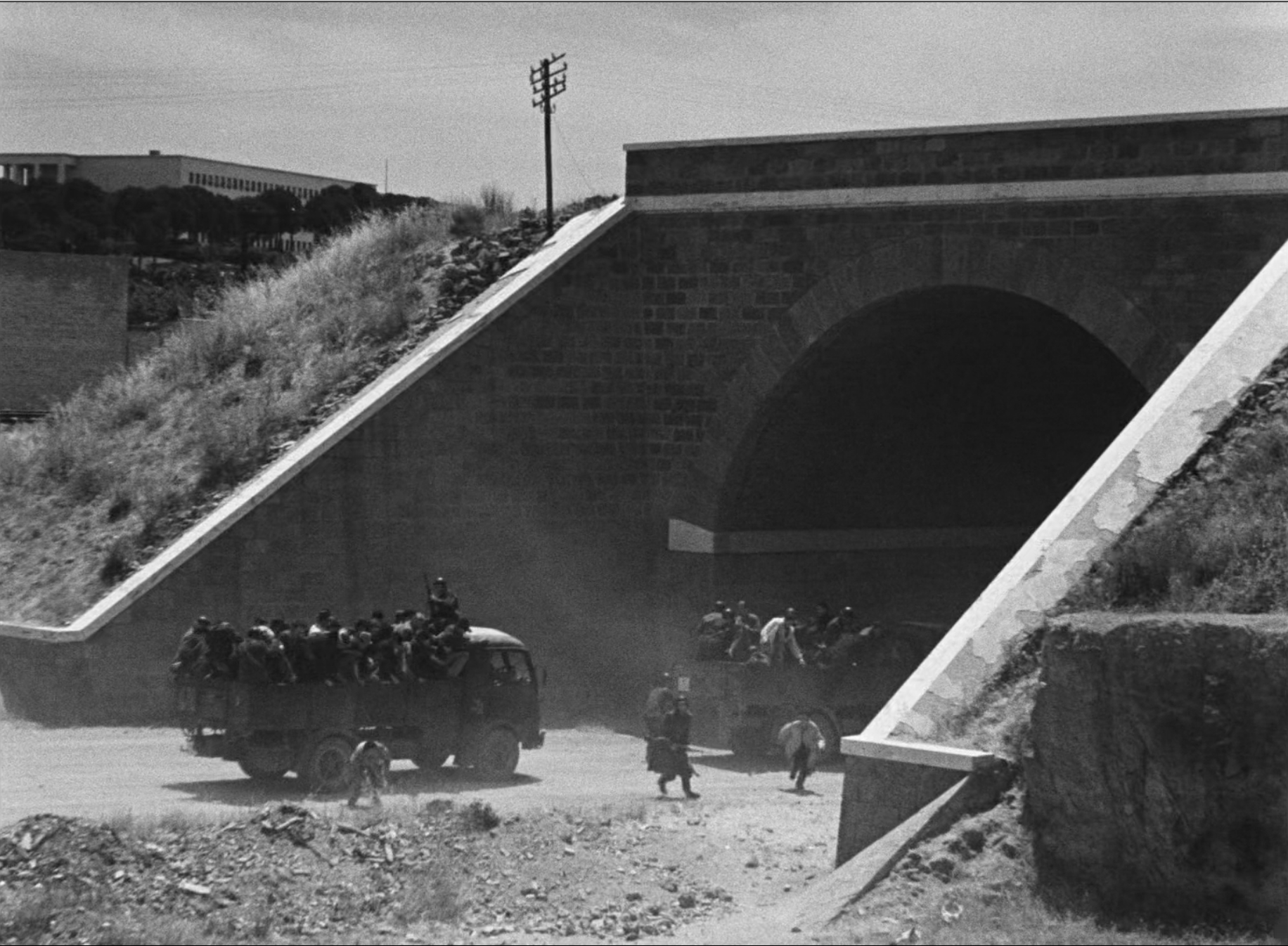
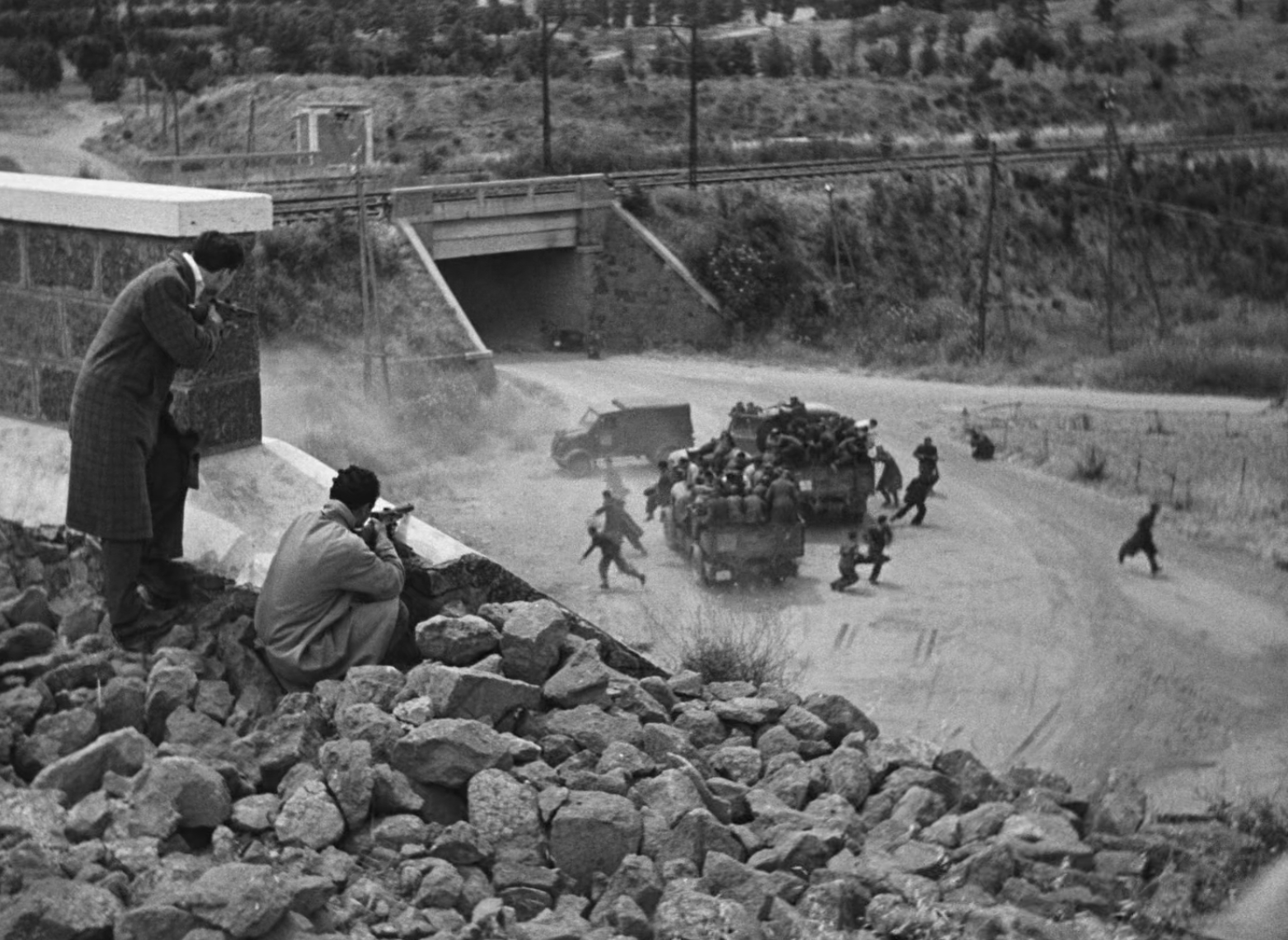
I camion si fermano e i prigionieri saltano giù.
The trucks come to a halt, and the captives jump off.
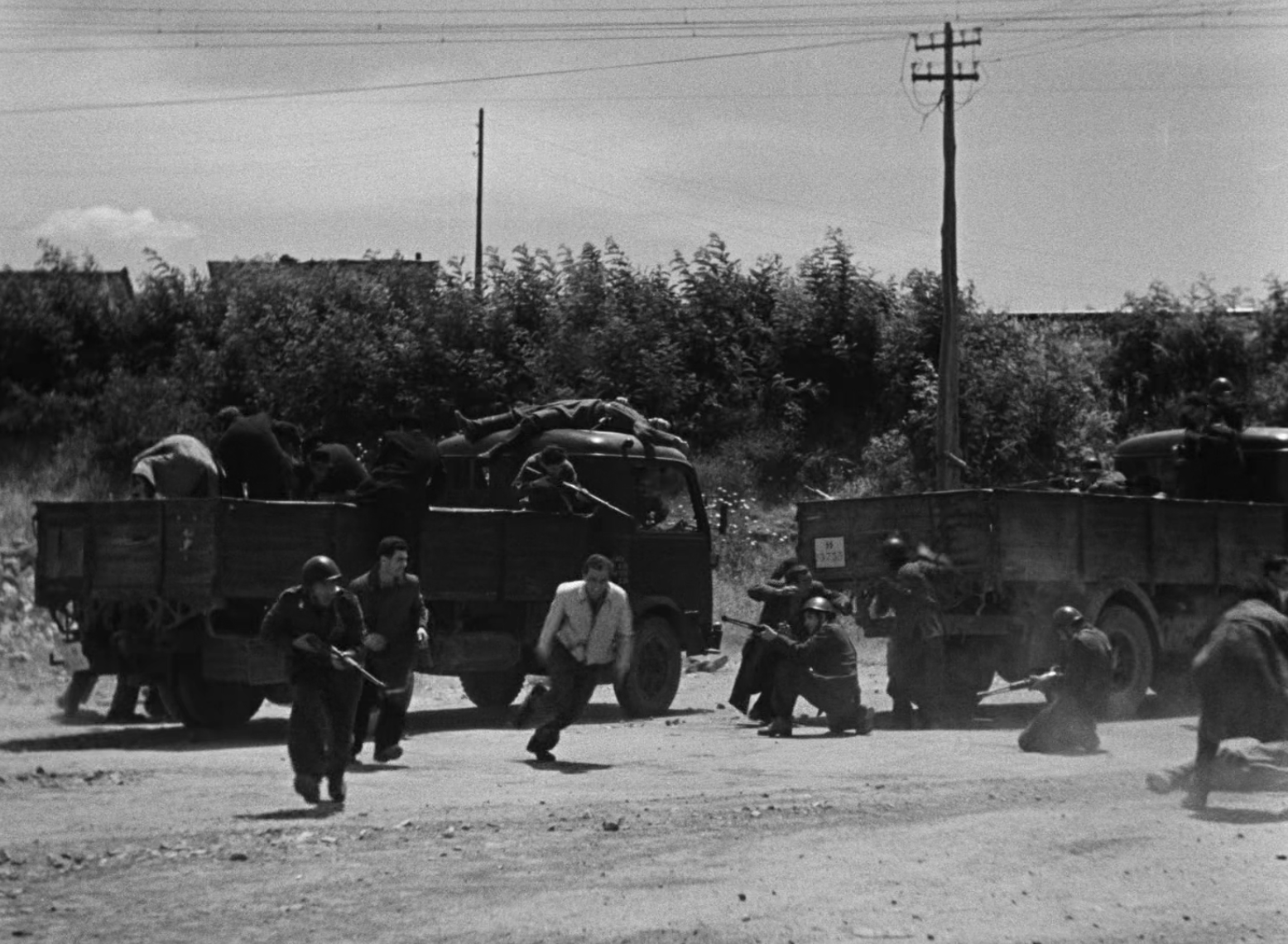
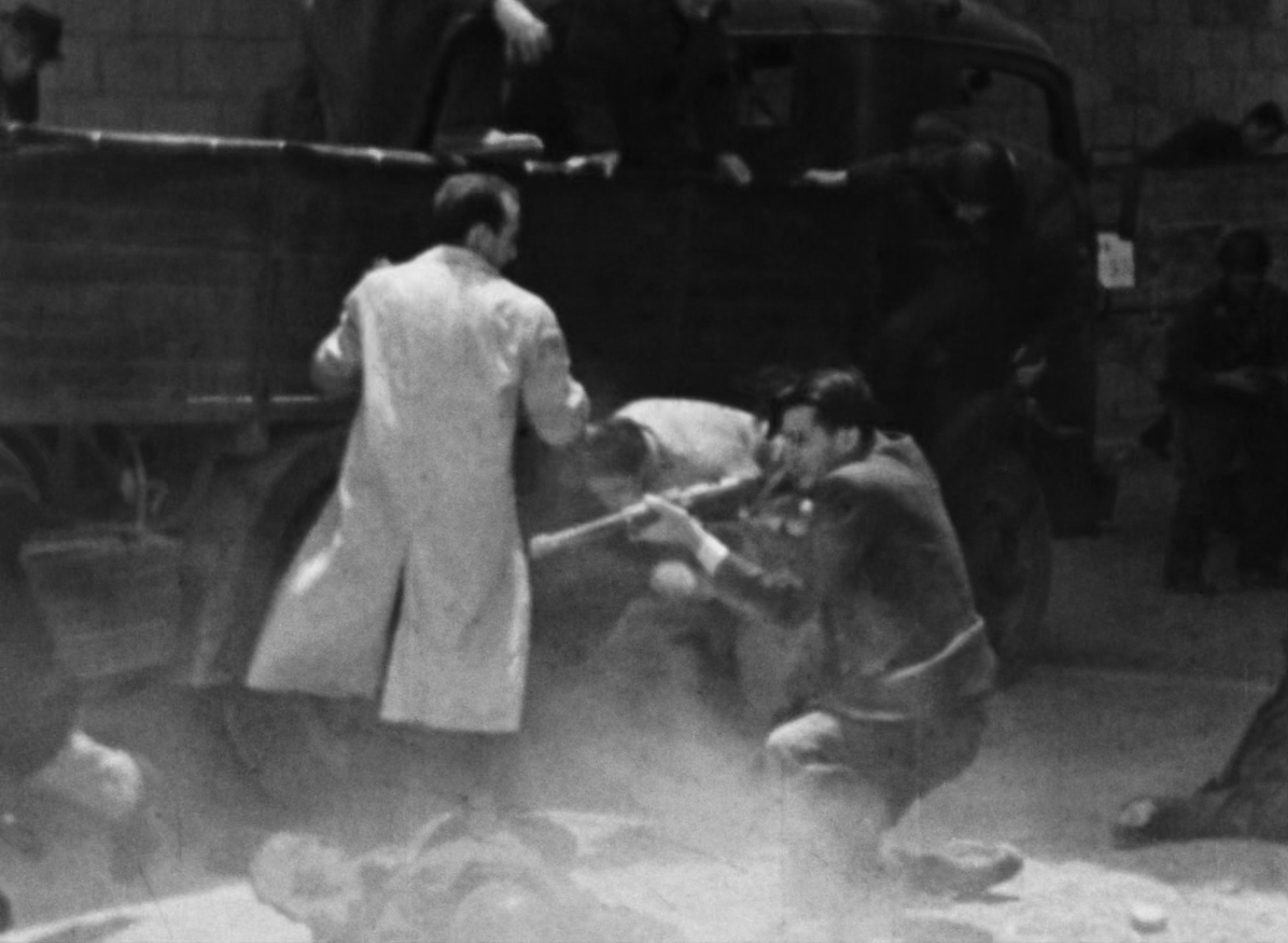
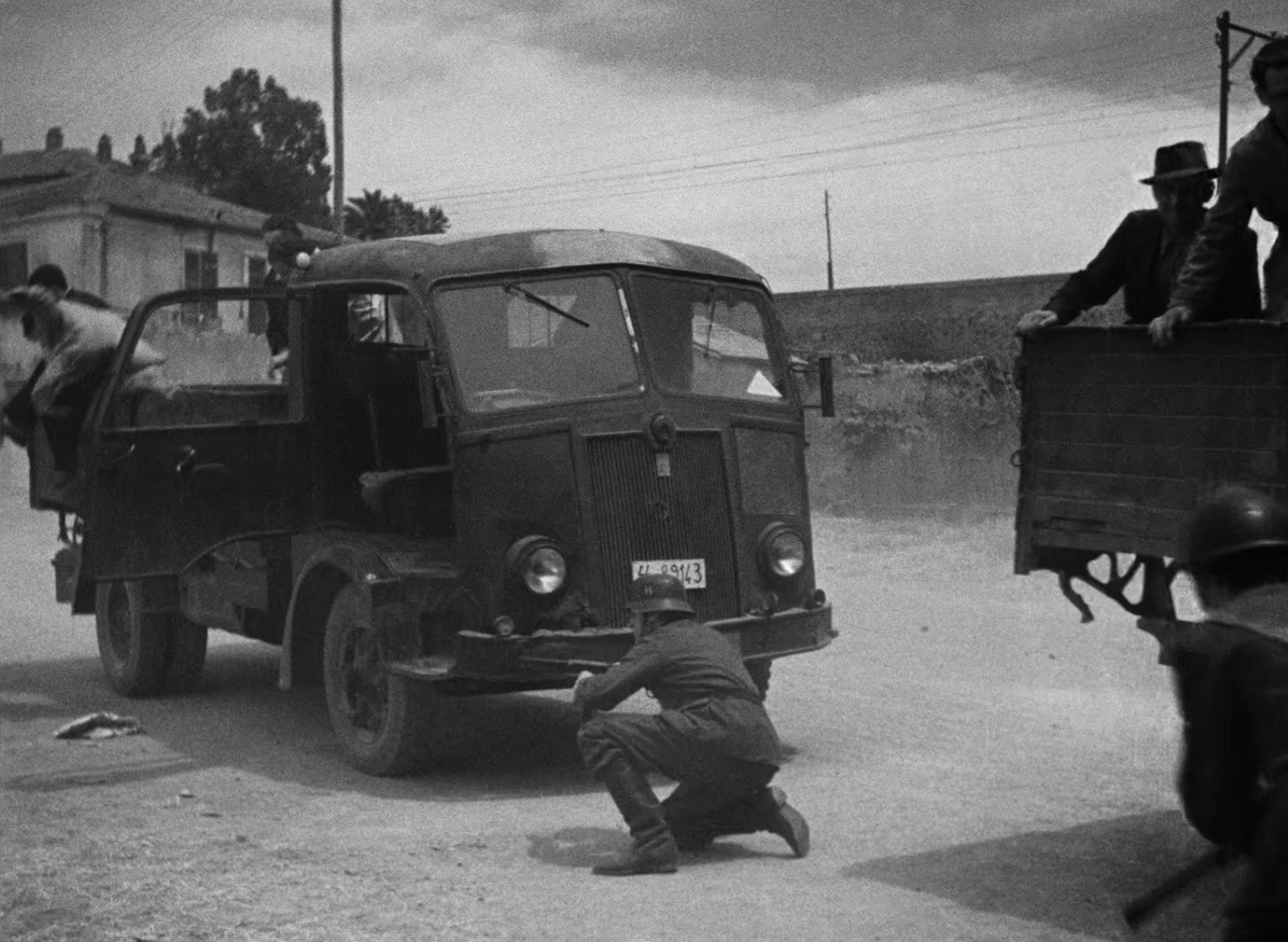
Alcuni scappano via; altri, tra cui Francesco, afferrano i fucili dei soldati feriti e cominciano a sparare sui tedeschi.
Some run away; others, Francesco among them, grab the rifles of injured soldiers and begin firing on the Germans.
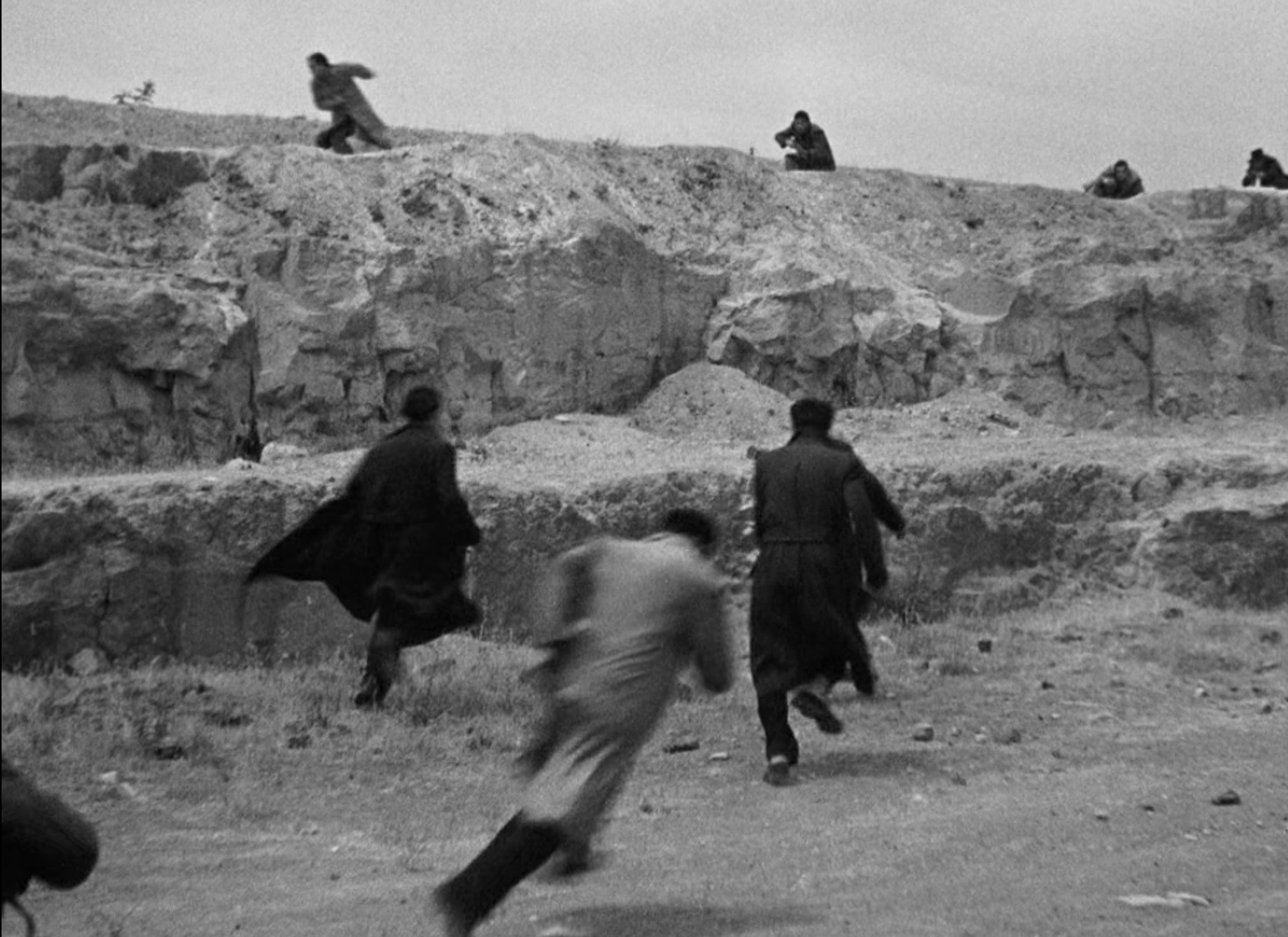
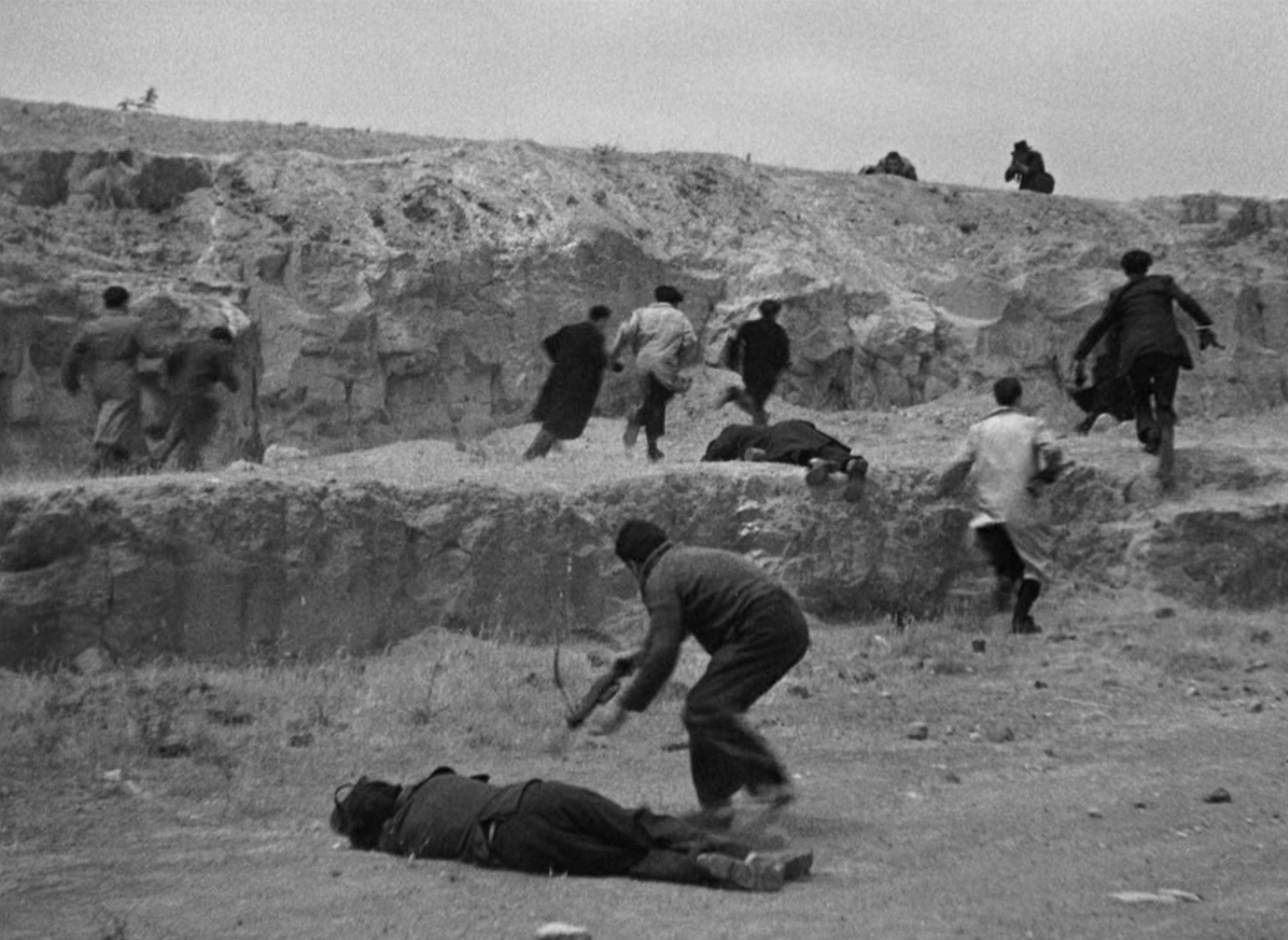
Alcuni dei prigionieri italiani riescono a superare la collina per mettersi in sicurezza, prendendo le armi dei tedeschi. Ma i corpi dei loro compagni morti giacciono sul lato della strada.
Some of the Italian prisoners make it over the hill to safety, taking the Germans’ guns. But the bodies of their dead comrades lie by the roadside.
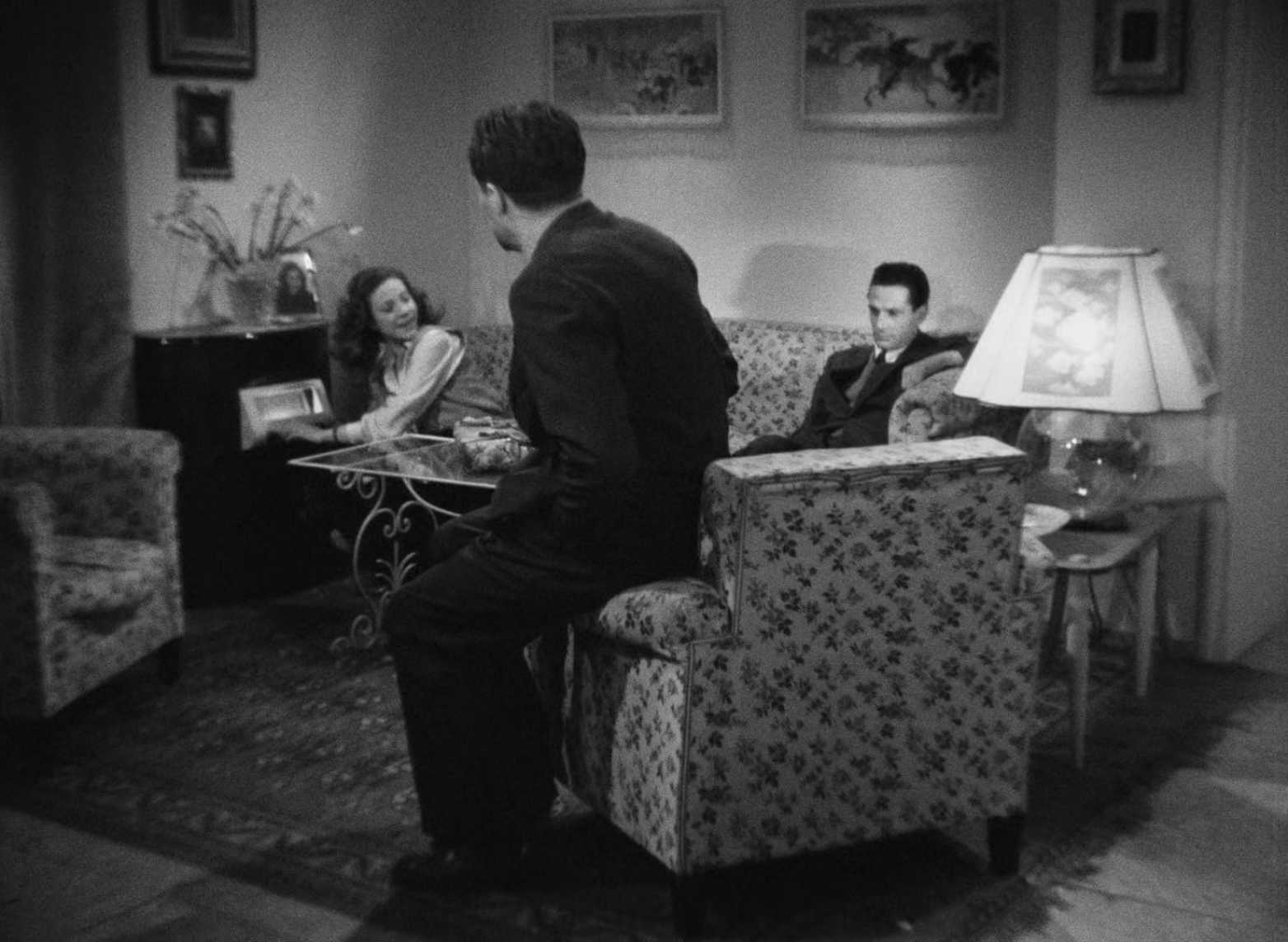
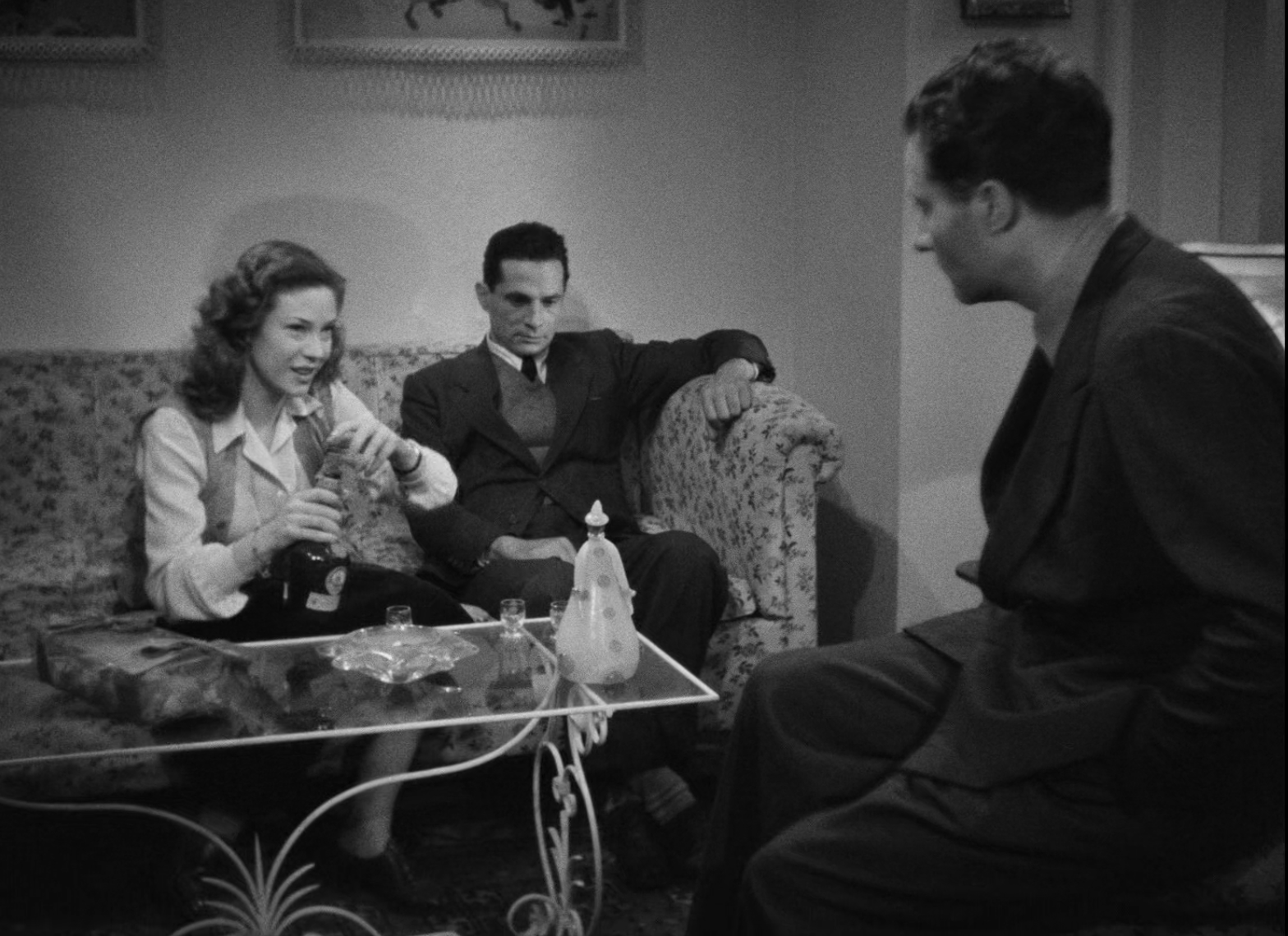
È sera. Manfredi e Francesco passano la notte nell'appartamento di Marina. Lei ha insistito per ospitarli entrambi. Notiamo i mobili nuovi e la radio.
“A quest'ora c'è sempre una stazione americana che trasmette jazz”, dice lei allegramente. Gli uomini siedono in modo cupo mentre lei mette su un po' di musica veloce da ballo.
“Ragazzi, ce lo facciamo un goccetto?” Animata come l’ospite di una festa, Marina si siede accanto a Francesco e sorride. “Mi hanno regalato questa bottiglia di kummel”.* Un tedesco, ovviamente. “Ci scaldiamo un po’”.
*Il kummel è un liquore tedesco.
It’s evening. Manfredi and Francesco are spending the night at Marina’s apartment. She had insisted on hosting them. We notice the new furniture and the radio.
“There’s always an American station playing jazz at this hour,” Marina says cheerfully. The men sit somberly as she turns on some fast dance music.
“Shall we have a little sip, boys?” Animated as a hostess at a party, Marina sits down next to Francesco and smiles. “This kummel* was a gift.” From a German, obviously. “It will warm us up.”
*Kummel is a German liqueur.
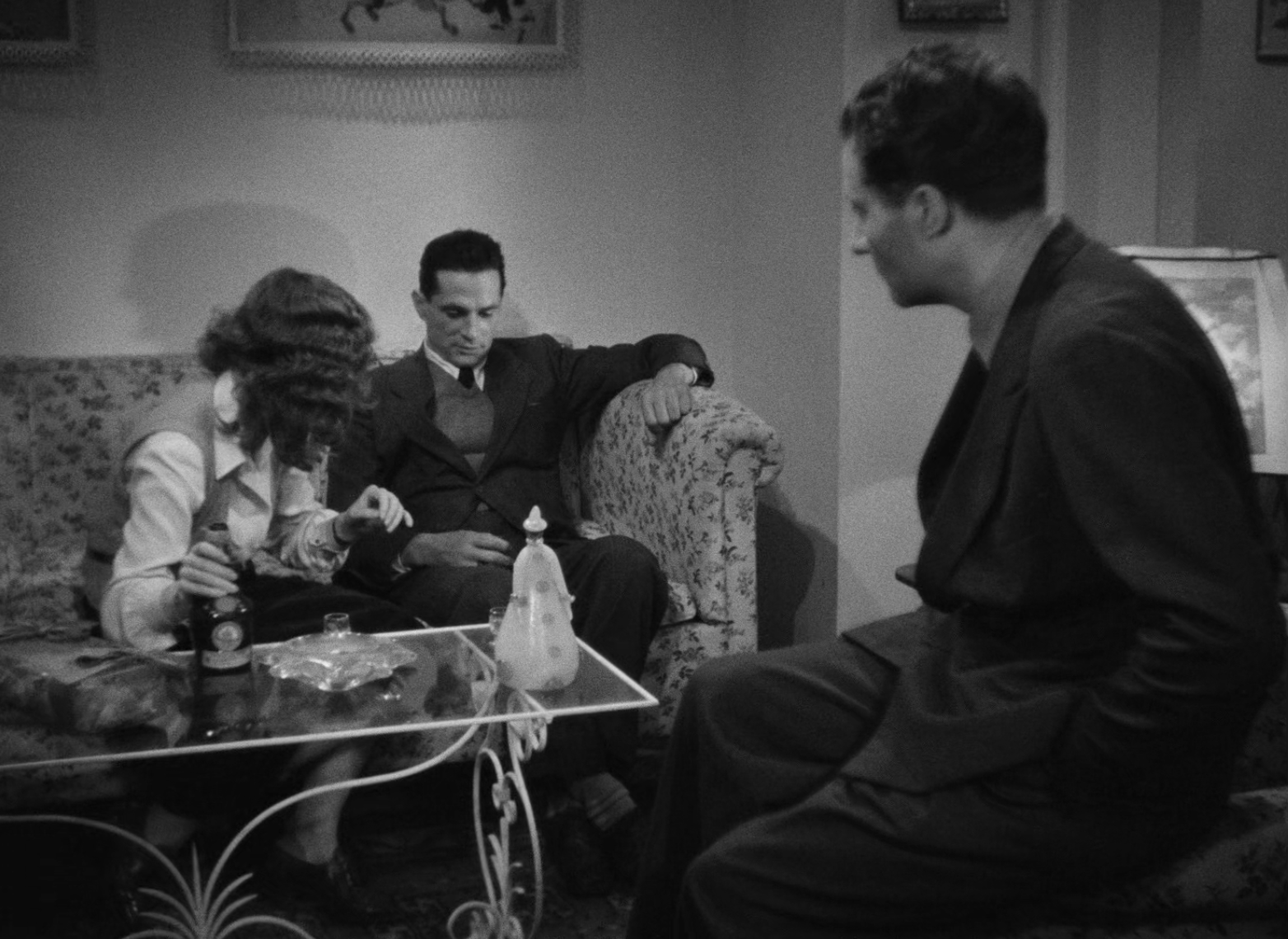
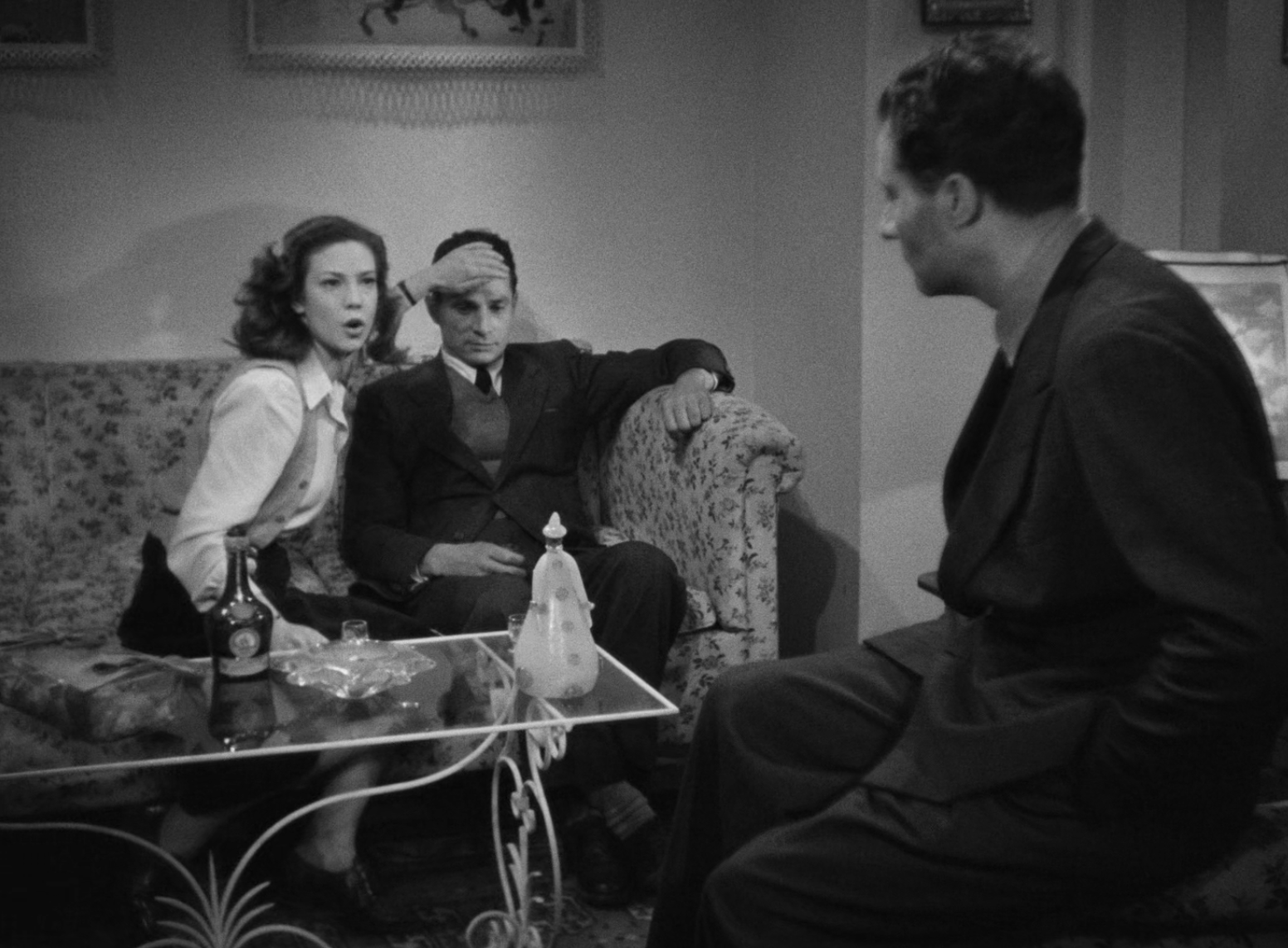
Finalmente si accorge che Francesco sembra abbattuto. "Non si sente bene?" Gli mette una mano sulla fronte. "Ma lei ha la febbre!" Si rivolge a Manfredi. “Senti, Giorgio, come bruccia!”
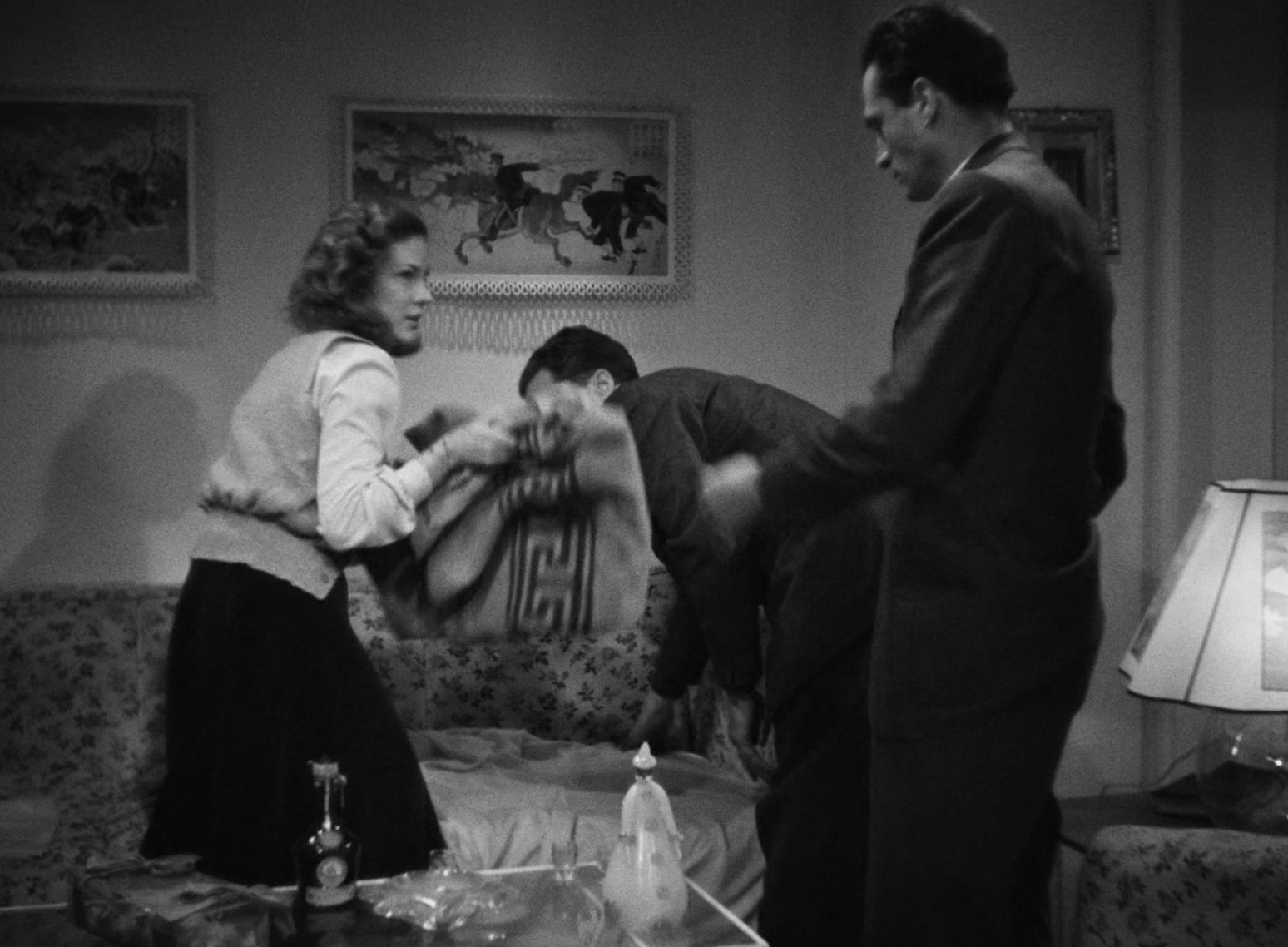
Manfredi e Marina sistemano il divano per Francesco, mentre la musica frenetica continua a suonare e Marina chiacchiera inconsapevolmente.
Finally she notices that Francesco looks downcast. “Don’t you feel well?” She puts her hand on his forehead. “You have a fever!” She turns to Manfredi. “Feel, Giorgio, he’s burning up.”
Manfredi and Marina make up the sofa for Francesco, as the frenetic music continues to play and Marina chatters obliviously.
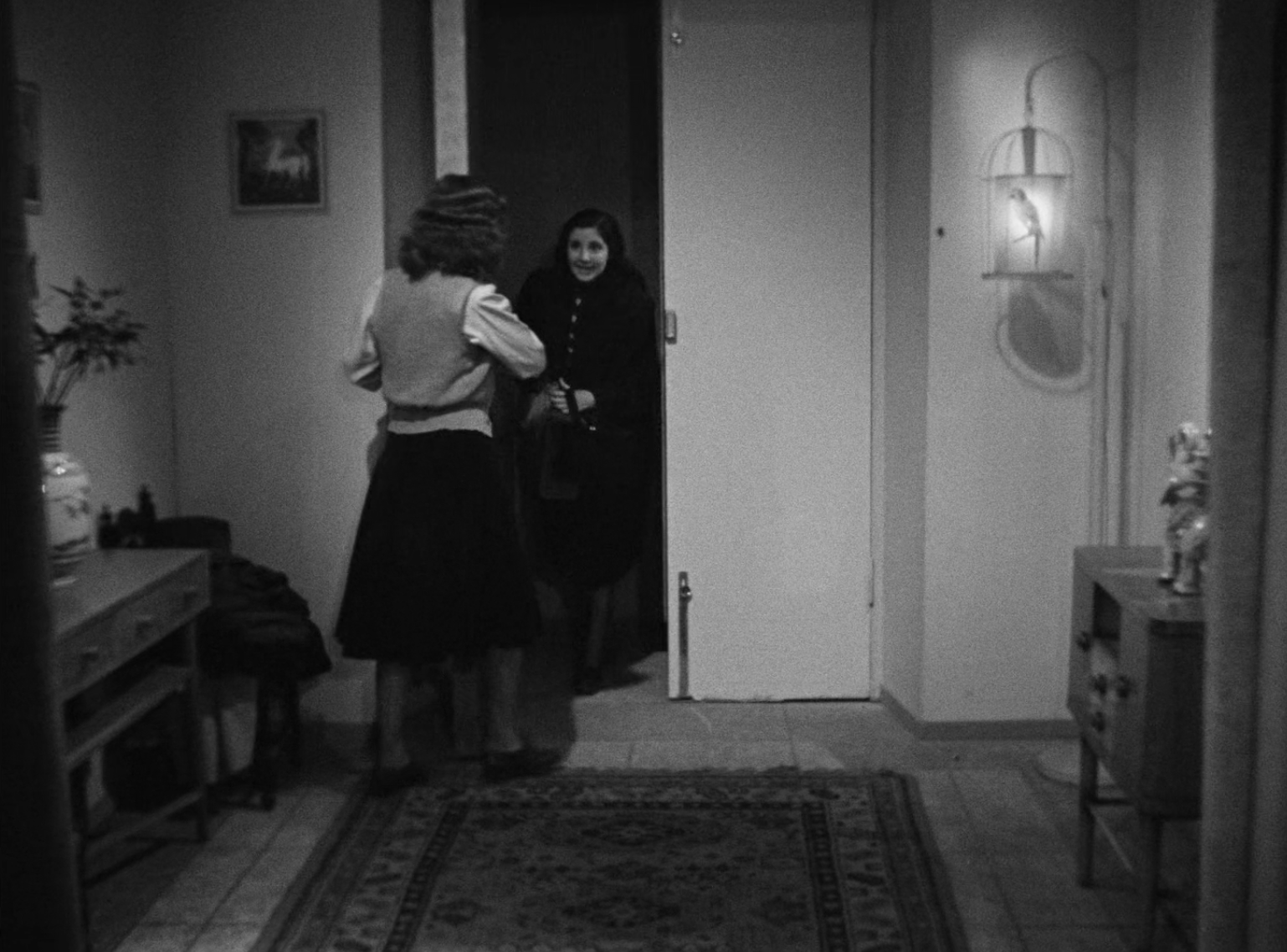
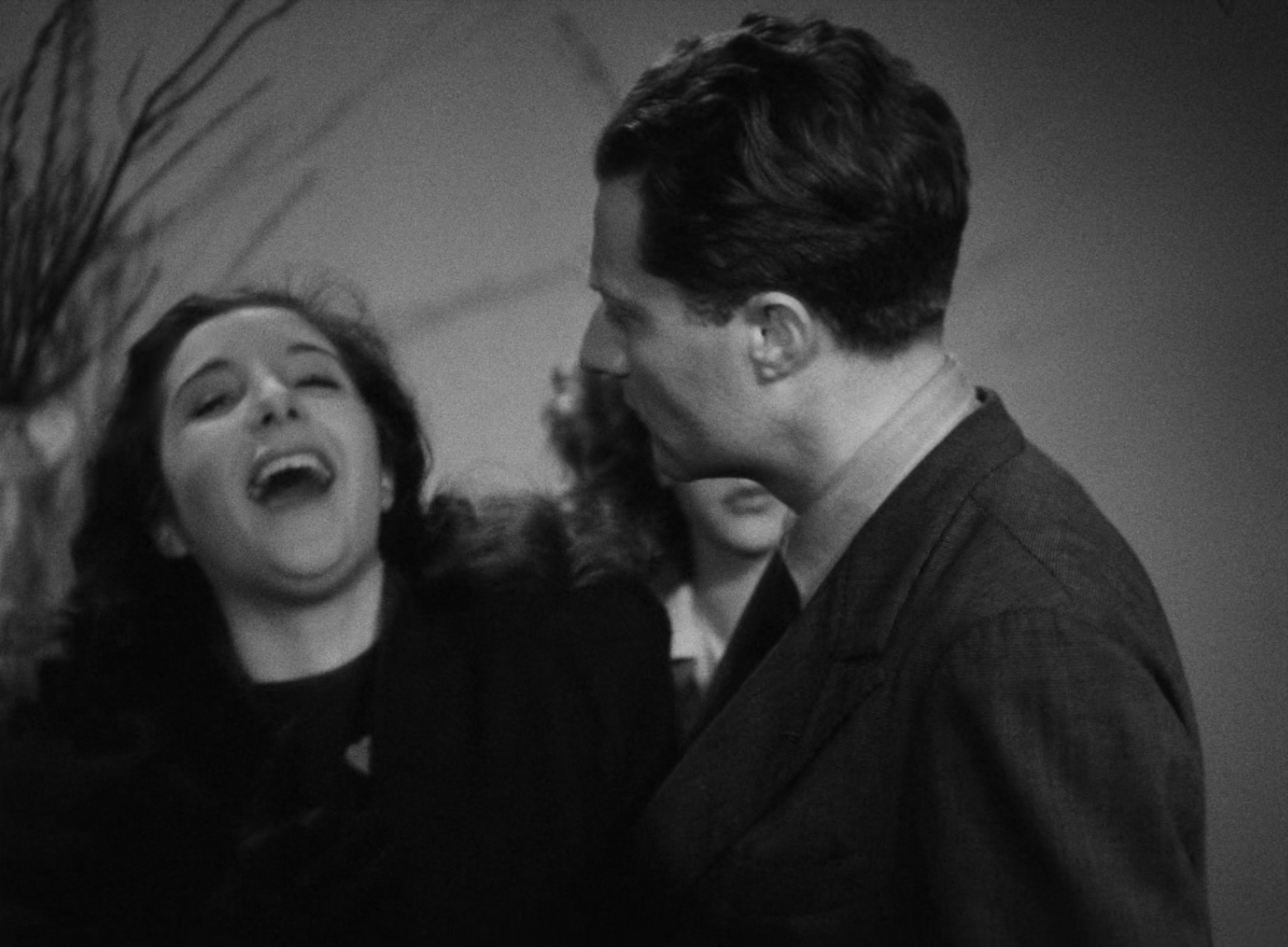
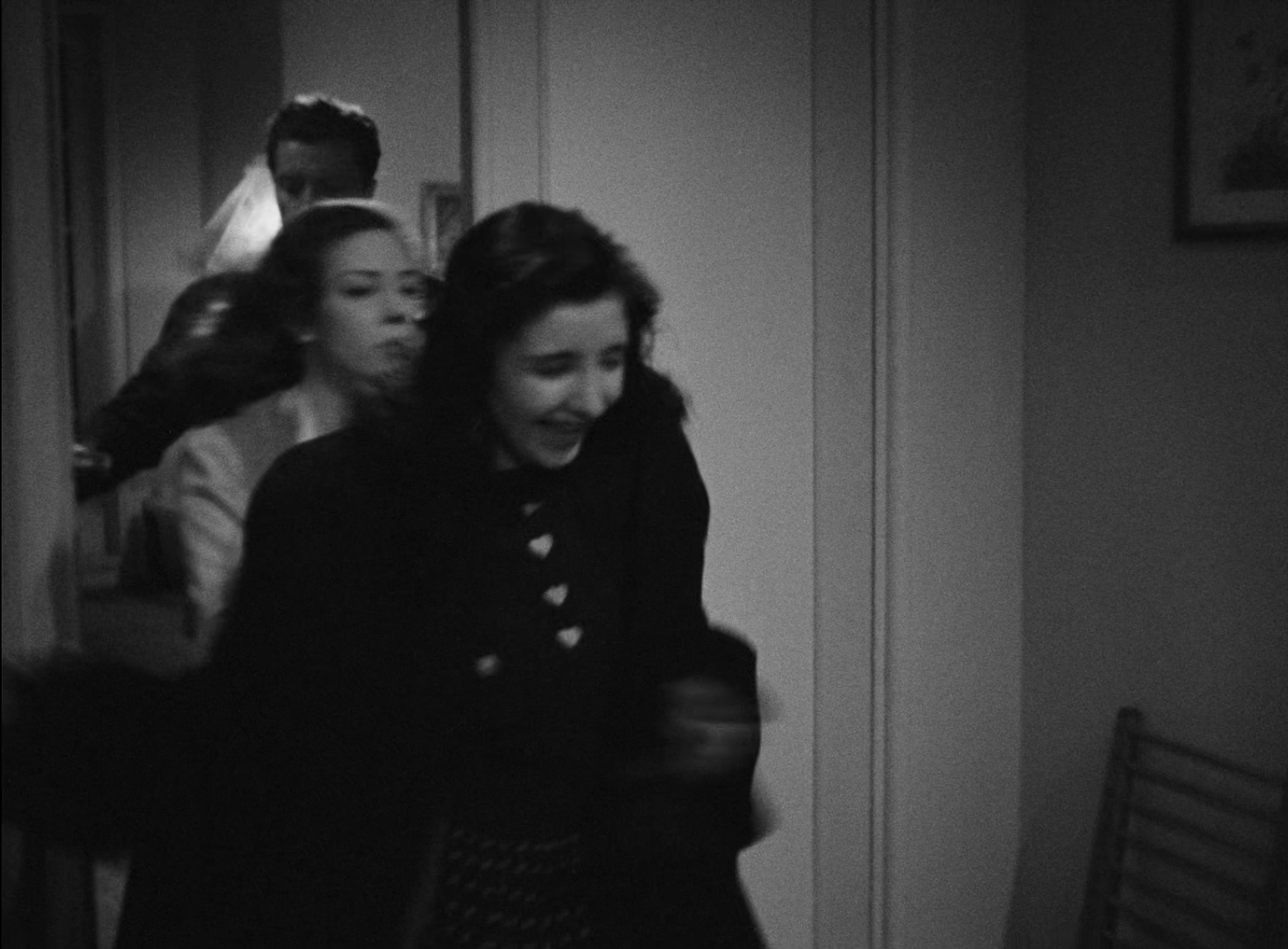
Suona il campanello e Lauretta è alla porta. "Ciao, tesoro", dice, sembrando piuttosto ubriaca. "Hai visto che sono venuta!”
Salutando i due uomini, lei commenta che Pina deve aver buttato fuori Francesco la prima notte di nozze. Sembra non sapere che sua sorella è morta.
The doorbell rings, and Lauretta is at the door. “Hello, sweetie,” she says, seeming quite drunk. “You see, I did come!”
Greeting the two men, she comments that Pina must have thrown Francesco out on their wedding night. She seems not to know that her sister is dead.
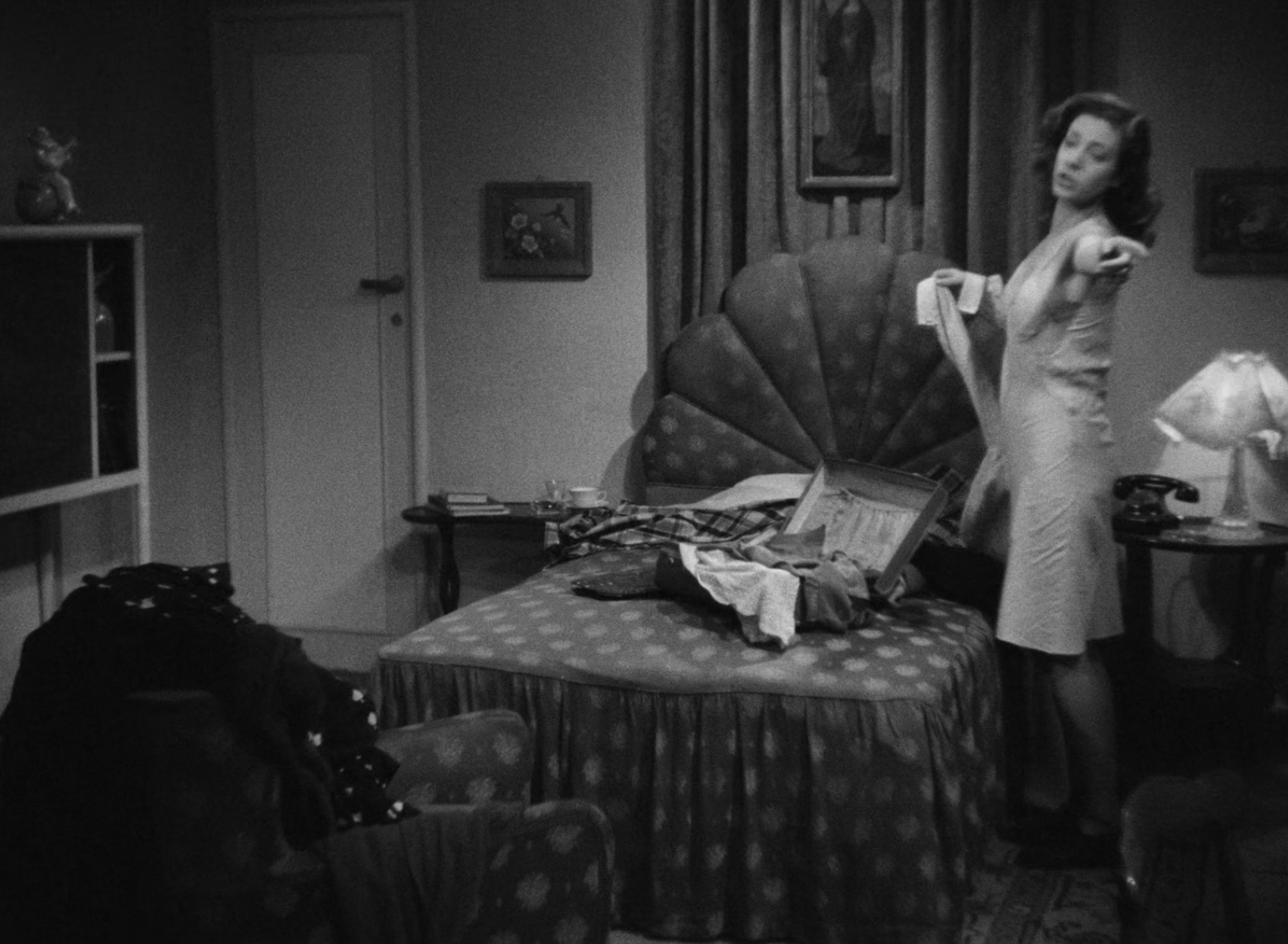
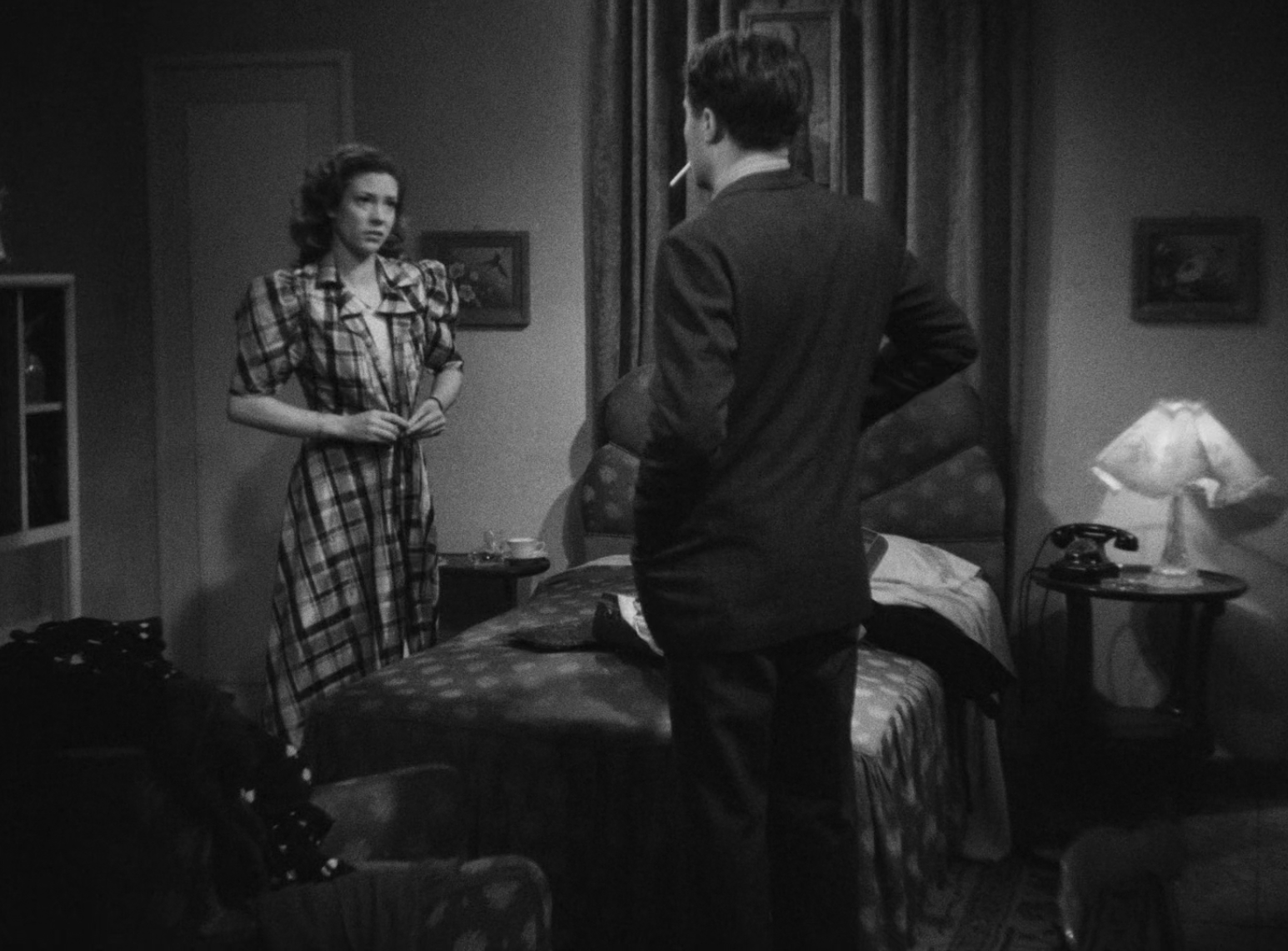
Poco dopo, mentre Marina si cambia in camera da letto, Manfredi va a prendere un'aspirina per Francesco.
“Ci mancava quella stupida!” – dice lei, riferendosi a Lauretta – “E adesso come si fa? Dove dormi tu?”
“Non ti preoccupare. Mi sistemerò di là su una poltrona”.
A little later, as Marina is changing in the bedroom, Manfredi goes in to get an aspirin for Francesco.
“That idiot is just what we needed!” she says, referring to Lauretta. “Now, what will we do? Where will you sleep?”
“Don’t worry. I’ll settle in in the other room, in an armchair.”
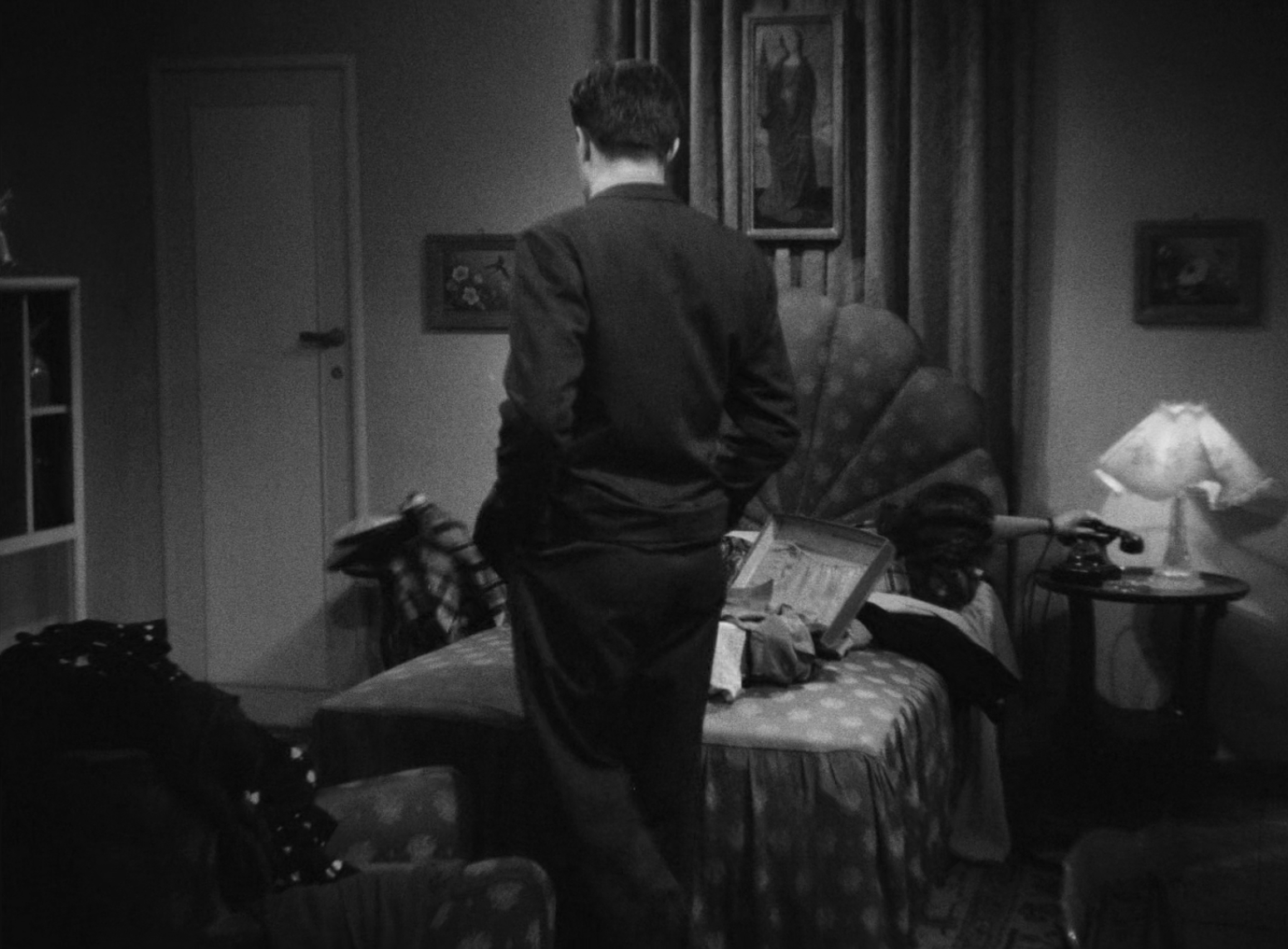
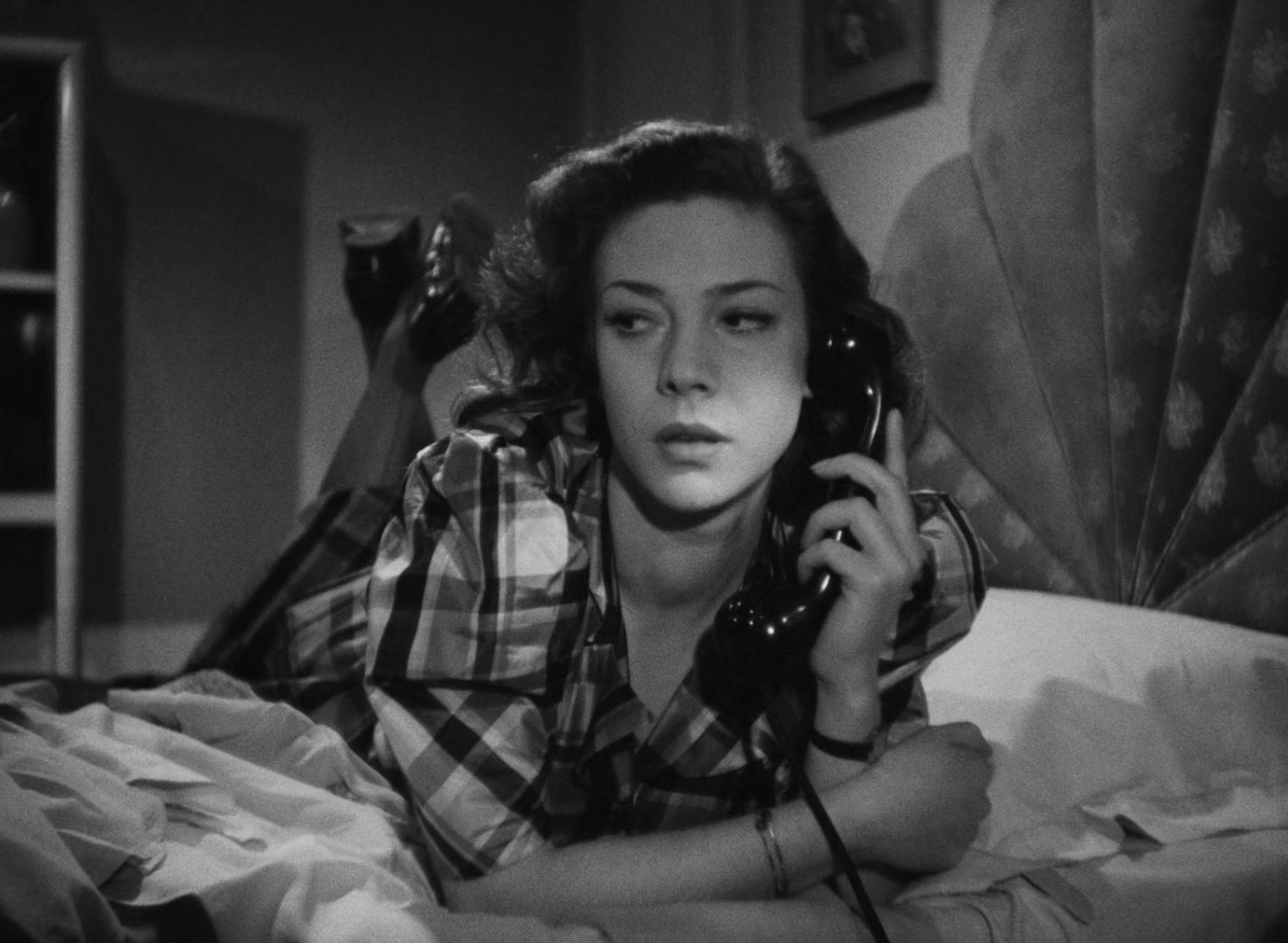
Il telefono squilla, e Marina si distende sul letto per rispondere. "Ah, è lei. Buona sera".
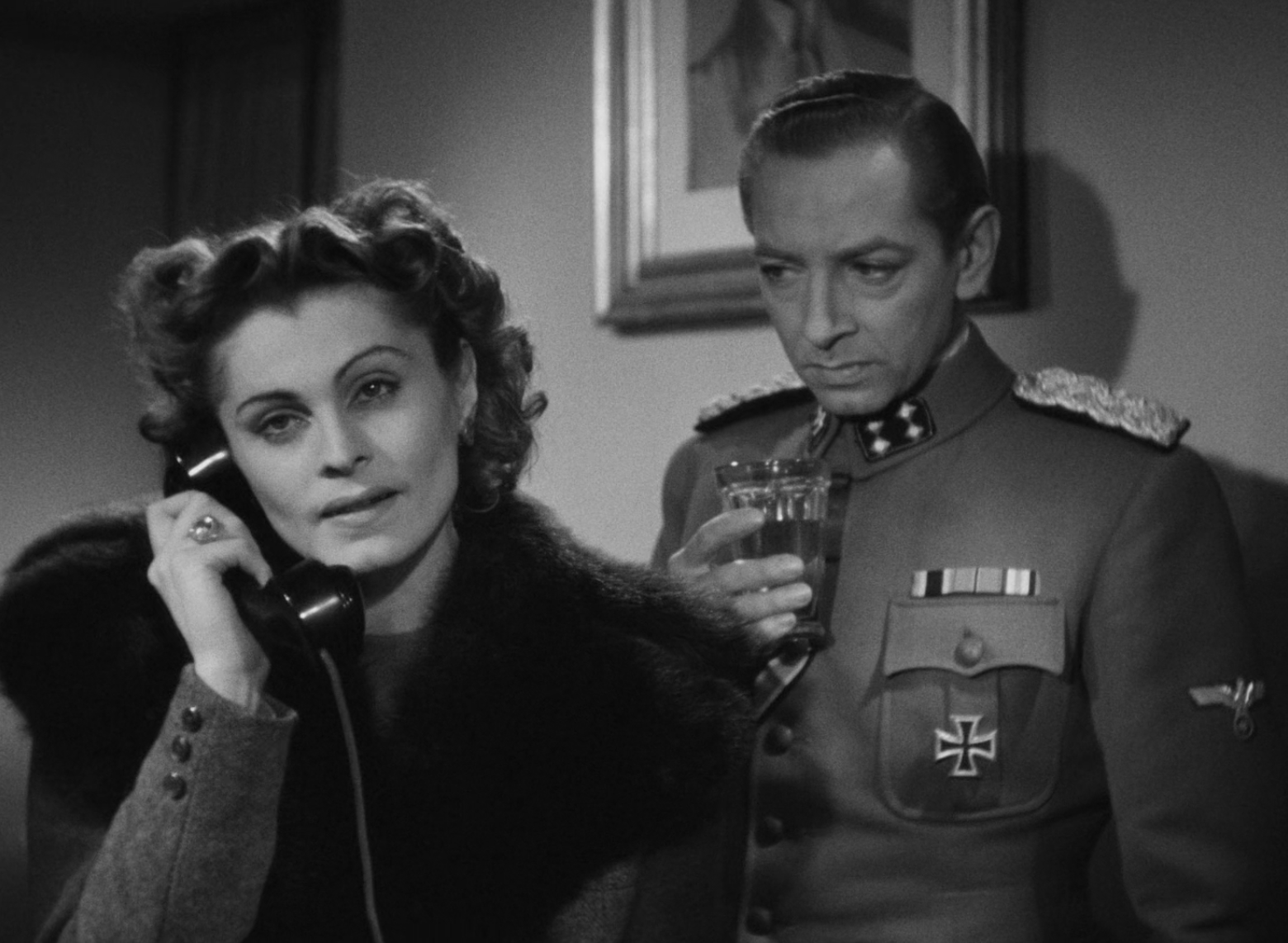
Vediamo che è Ingrid, con il suo trucco pesante. Il Maggiore è in piedi dietro di lei, con una birra in mano. Ascolta con attenzione. "Come stai, cara? Aspettavo la tua telefonata". C'è una pausa. "Come mai non sei sola?" Un'altra pausa.
"L'hai visto? È lì?" Di nuovo una pausa, e poi, con tono deluso: "Ah, la piccola Lauretta".
"È venuta ad abitare da me per qualche giorno”.
The phone rings, and Marina sprawls over the bed to answer. “Oh, it’s you. Good evening.”
We see that it’s Ingrid, with her heavy make-up. The Major stands behind her, holding a beer. He listens intently. “How are you, sweetheart? I’ve been waiting for your call.” There’s a pause. “How come you’re not alone?” Another pause.
“Have you seen him? Is he there?” Again a pause, and then, in a disappointed tone, “Oh, little Lauretta.”
“She came to stay with me for a few days.”
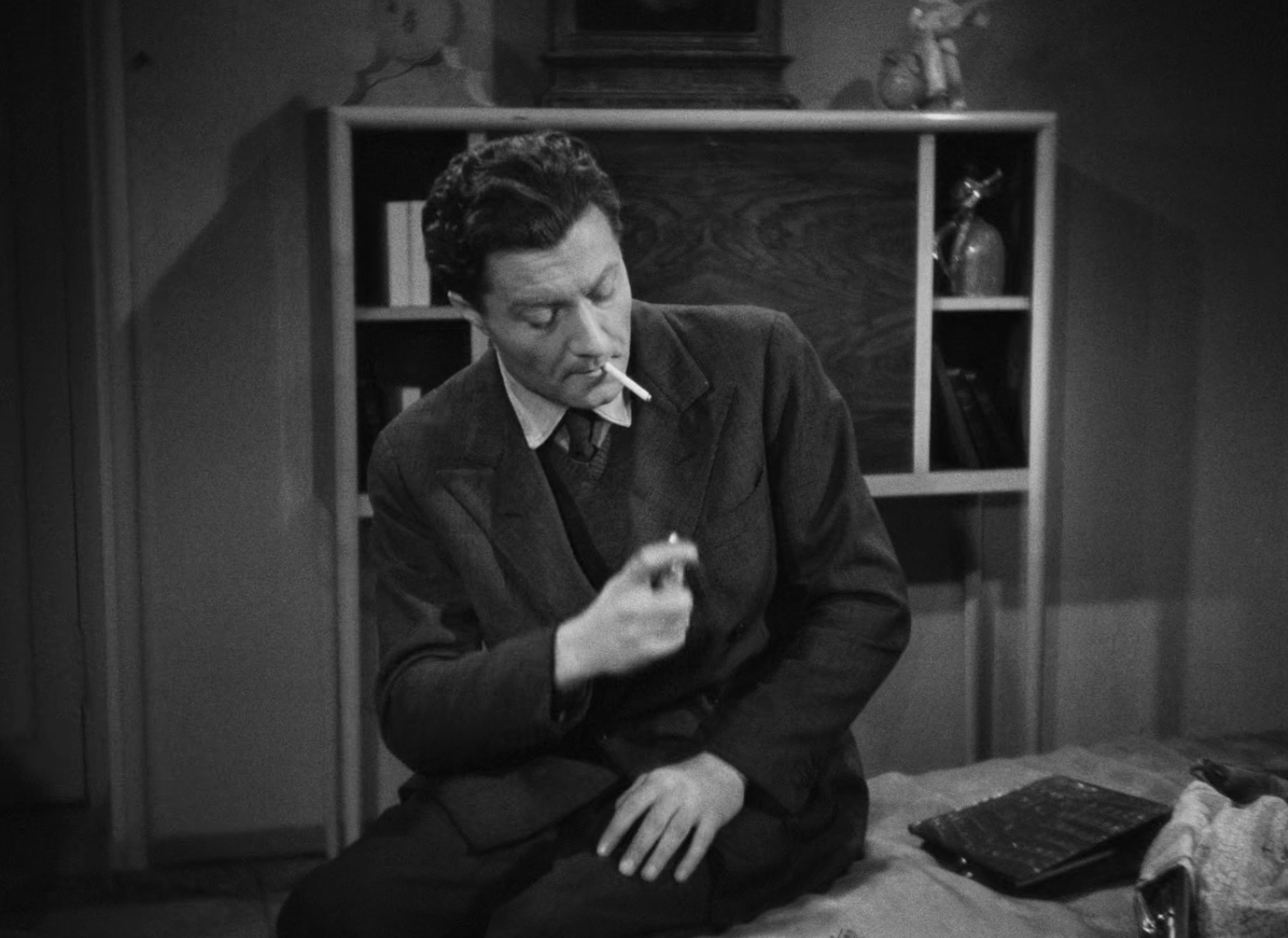
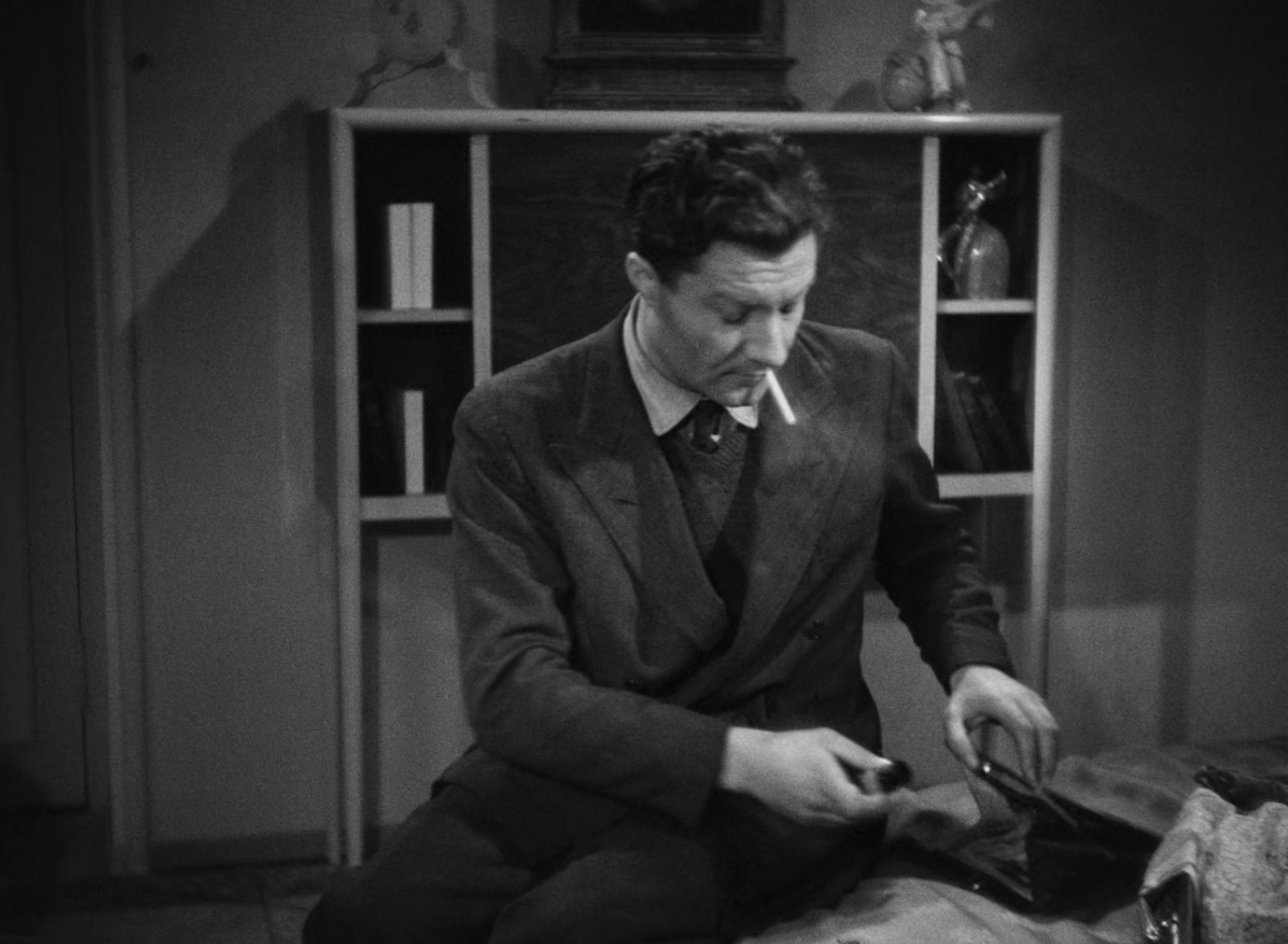
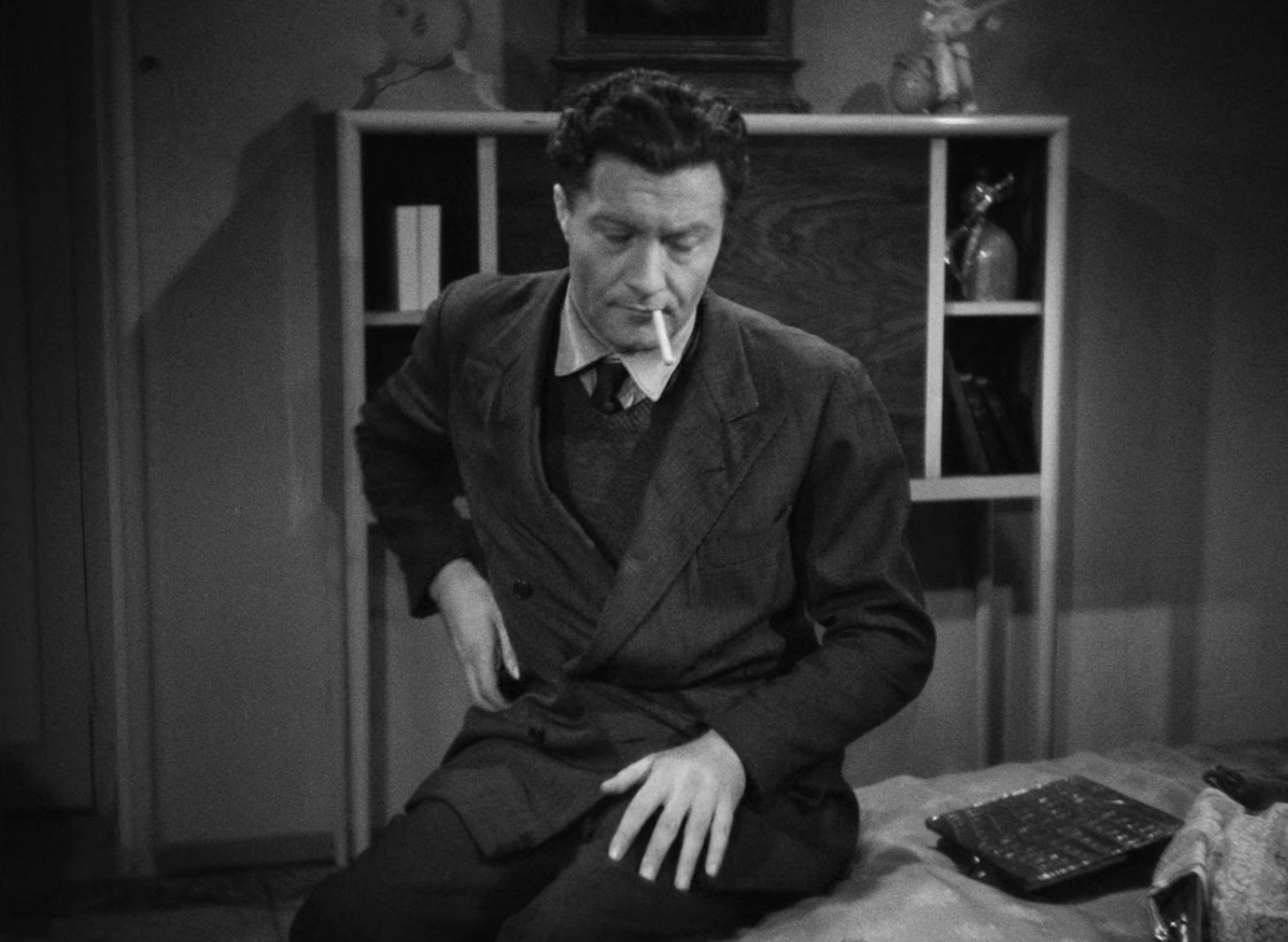
Mentre Marina parla, Manfredi, una sigaretta tra le labbra, prende un accendino dalla borsa di lei. Rimettendolo a posto, nota un flacone di un farmaco con un'etichetta con su scritto ‘cocaina’. Esamina la bottiglietta, poi se la mette in tasca.
While Marina is talking, Manfredi, a cigarette in his lips, takes a lighter from her purse. Putting it back, he notices a medicine bottle with a label marked cocaine. He examines the bottle, then puts it in his pocket.
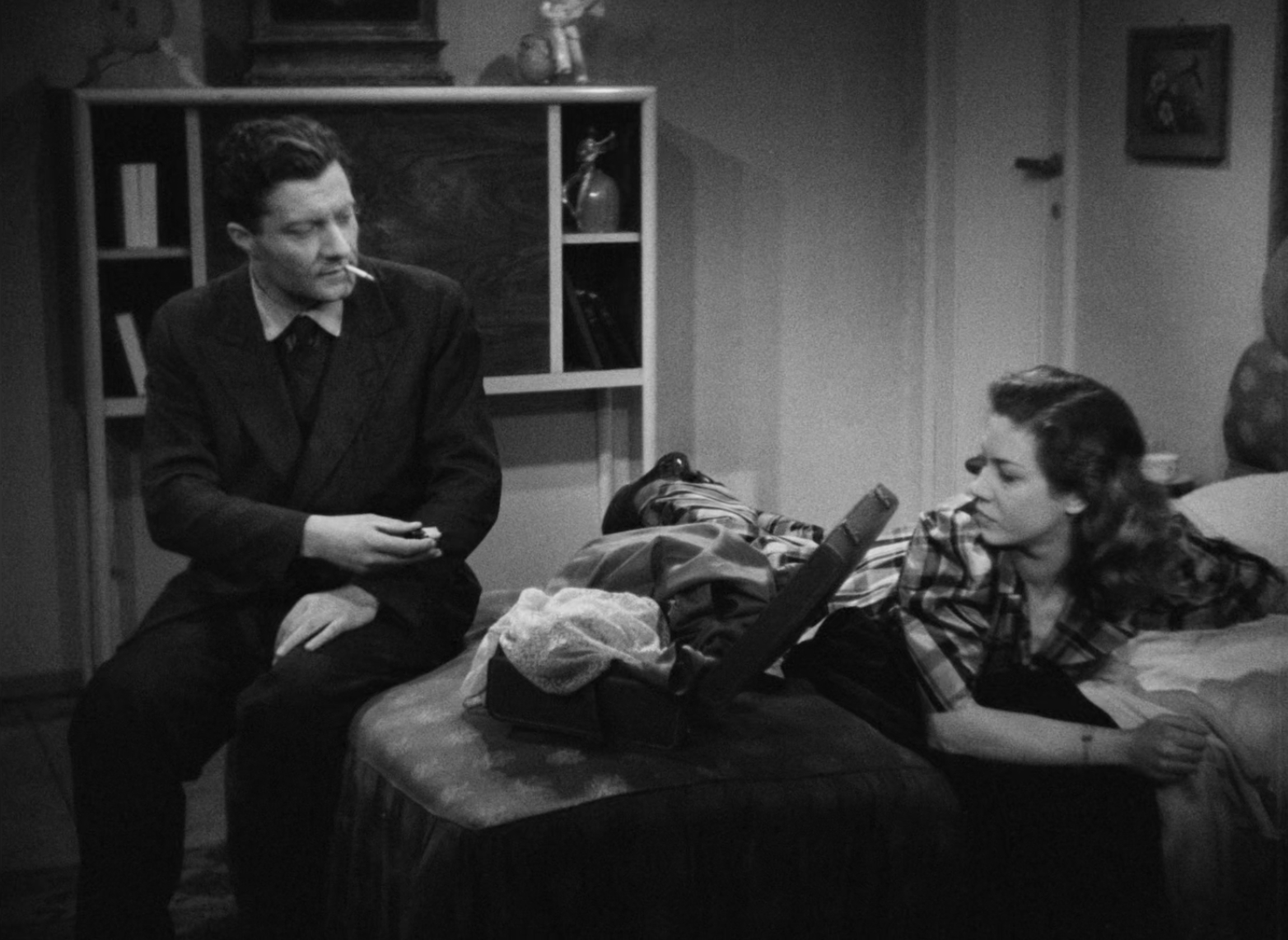
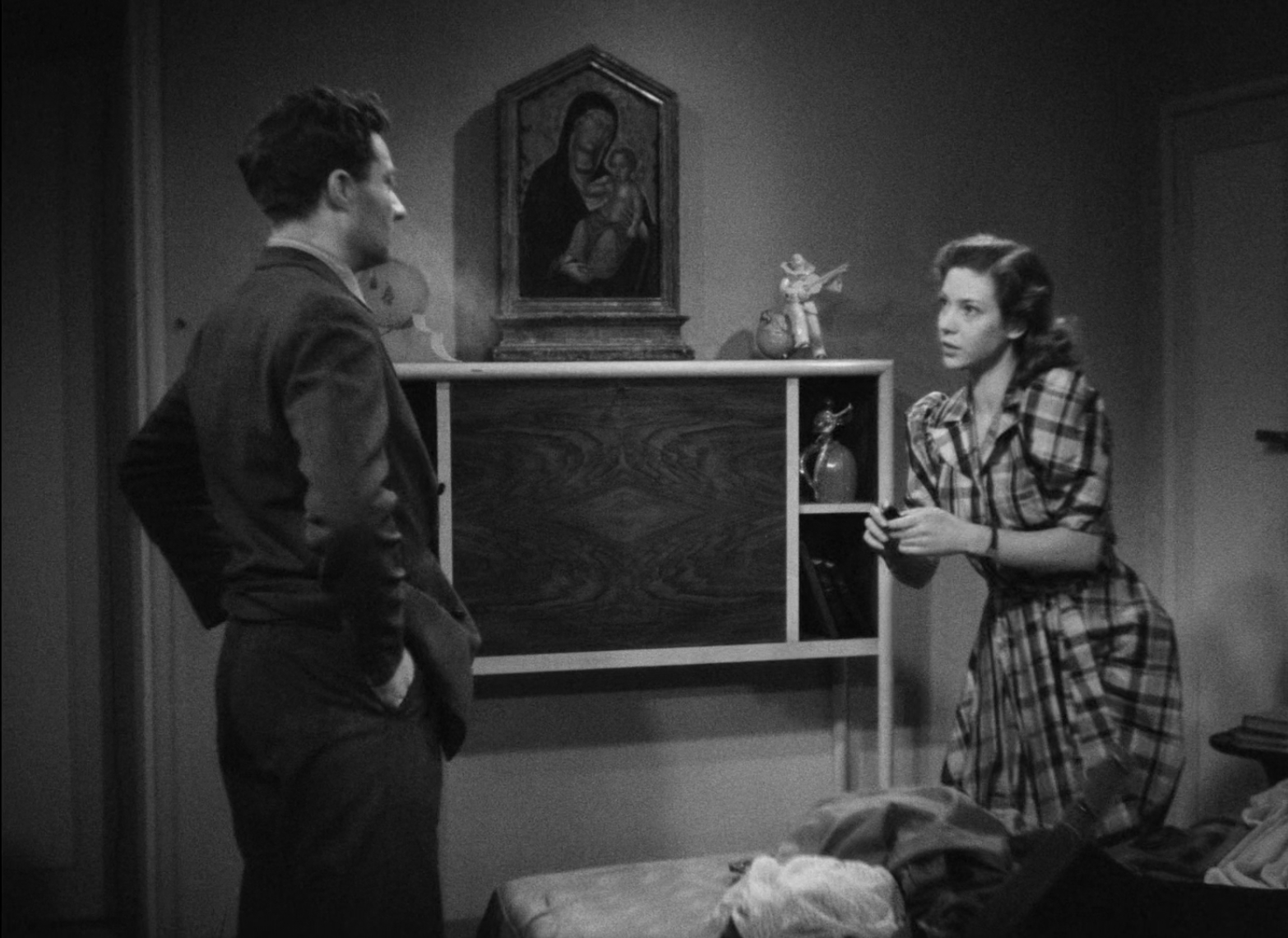
Alla fine della telefonata, le chiede: “Come mai hai questa roba in borsetta?”
Manfredi non crede alla sua storia su un mal di denti e litigano. Alla fine, lui le dice che è libera di fare quello che vuole. “Non ho nessun diritto su di te. Chi sono io? Uno che è passato per un momento nella tua vita…”
“Stavi per dire uno dei tanti!”
“Non l'ho detto”.
“Ma lo hai pensato!”
At the end of the phone call, he asks her, “Why do you have this stuff in your purse?”
Manfredi doesn’t believe her story about a toothache, and they argue. Finally, he tells her she is free to do what she wants. “I don’t have any rights over you. Who am I? I’m just someone who has passed through your life for a moment.”
“You were about to say one of the many!”
“I didn’t say that.”
“But you thought it!”
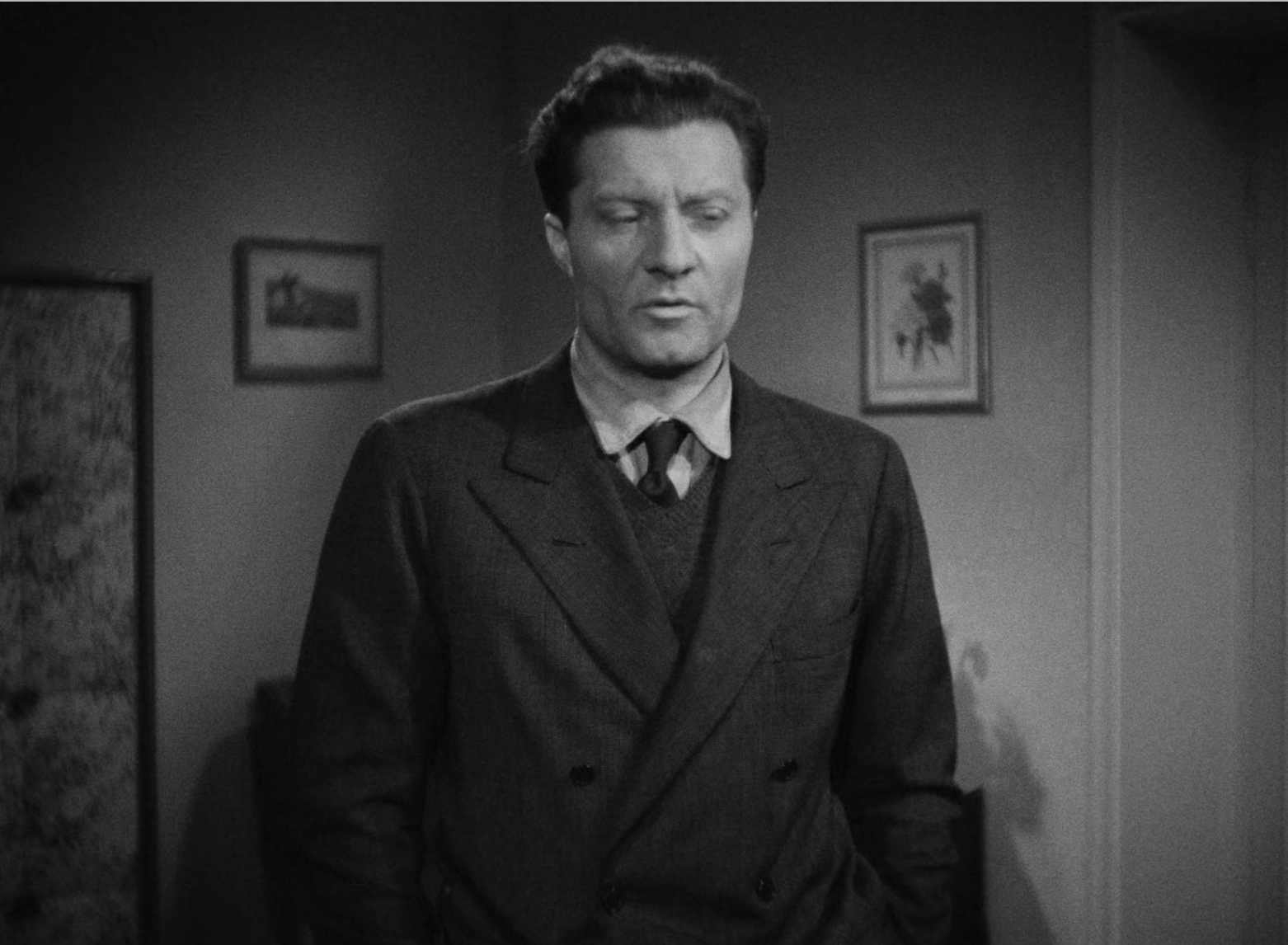
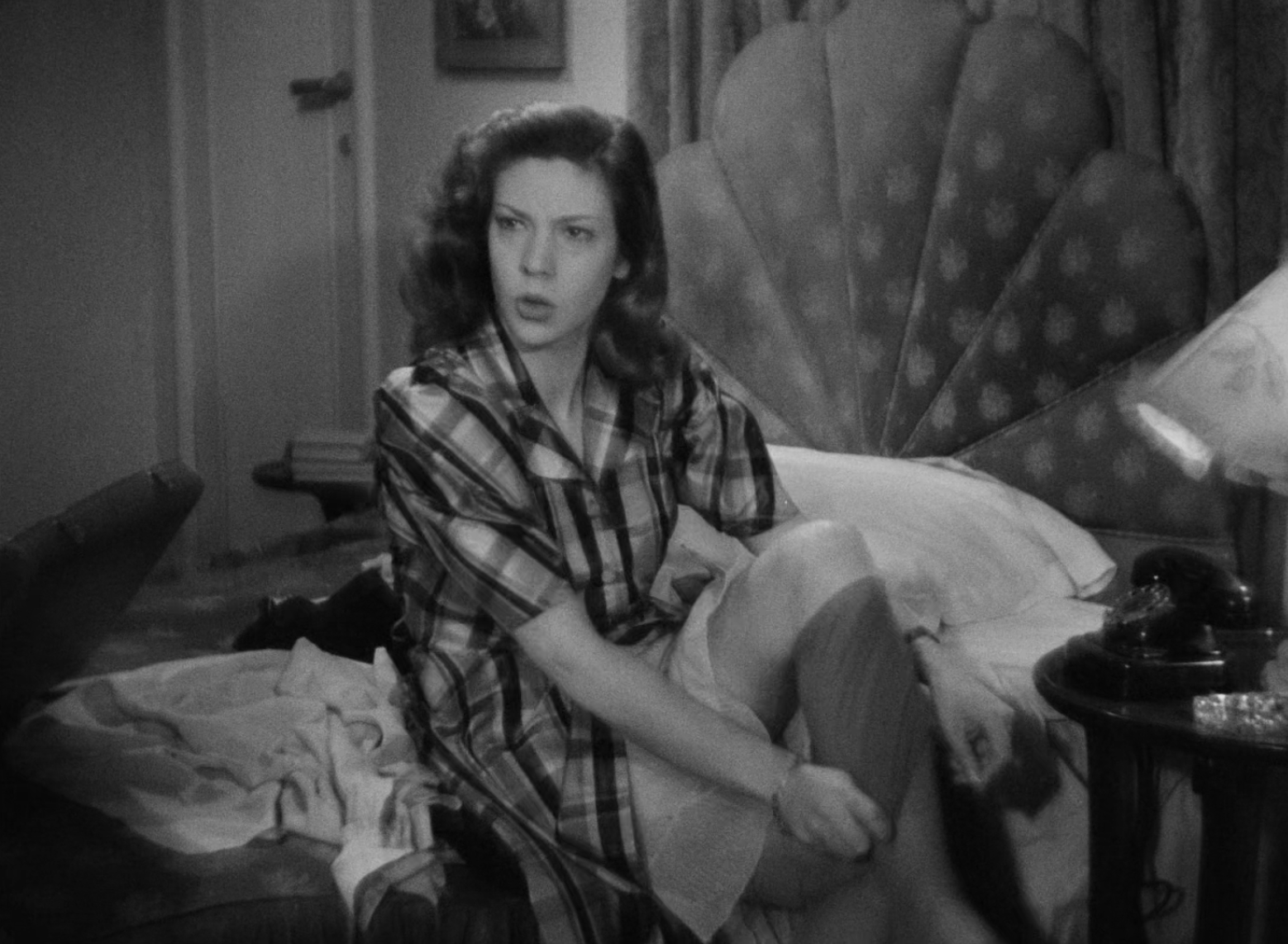
“Sì! Ho avuto degli amanti! Cosa dovevo fare? Con che cosa credi che abbia comprato questi mobili, i miei vestiti, tutto? Con la mia paga? La mia paga mi basta per le calze e le sigarette!
Mi la sono cavata come fanno tutte! È la vita”.
“La vita è come vogliamo che sia”.
“Parole! La vita è una cosa brutta, sporca! Io la conosco la miseria e mi fa paura. Forse avrei potuto sposare un guidatore di tram e ora morirei di fame. Io, i miei figli e lui”.
“Povera Marina. Tu credi che la felicità consista nell'avere una casa elegante, dei bei vestiti, una cameriera e degli amanti ricchi?”
“Yes! I’ve had lovers. What was I supposed to do? How do you think I bought all this furniture, my clothes, everything? With my pay? My pay is barely enough for stockings and cigarettes! I’ve gotten by like every other woman. That’s life.”
“Life’s the way we want it to be.”
“Words! Life is ugly, filthy. I know what poverty is, and it scares me. Maybe I could have married a streetcar driver and I would be starving to death now with him and our children.”
“Poor Marina. You think happiness consists of having a fancy apartment, nice clothes, a maid, and rich lovers?”
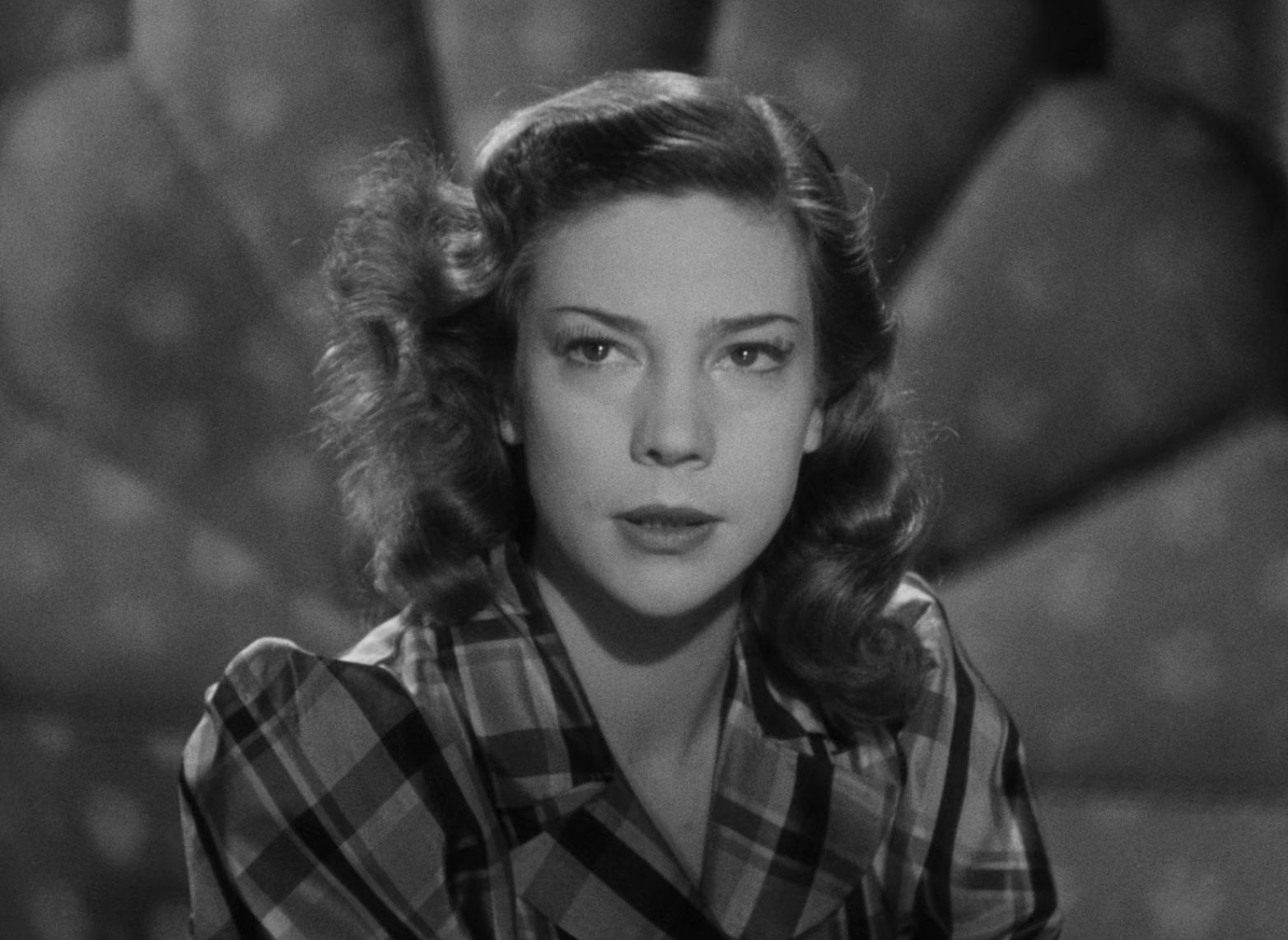
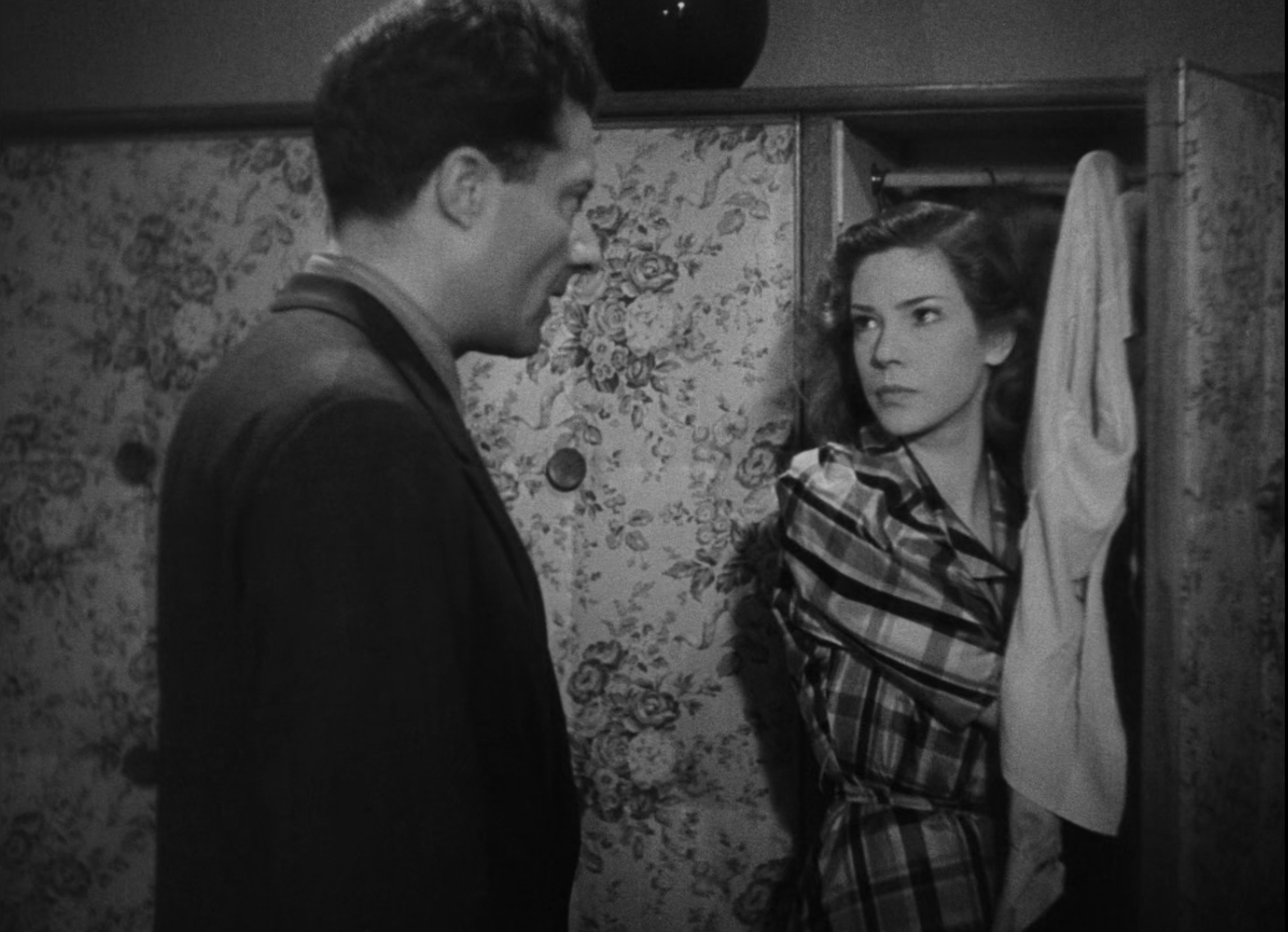
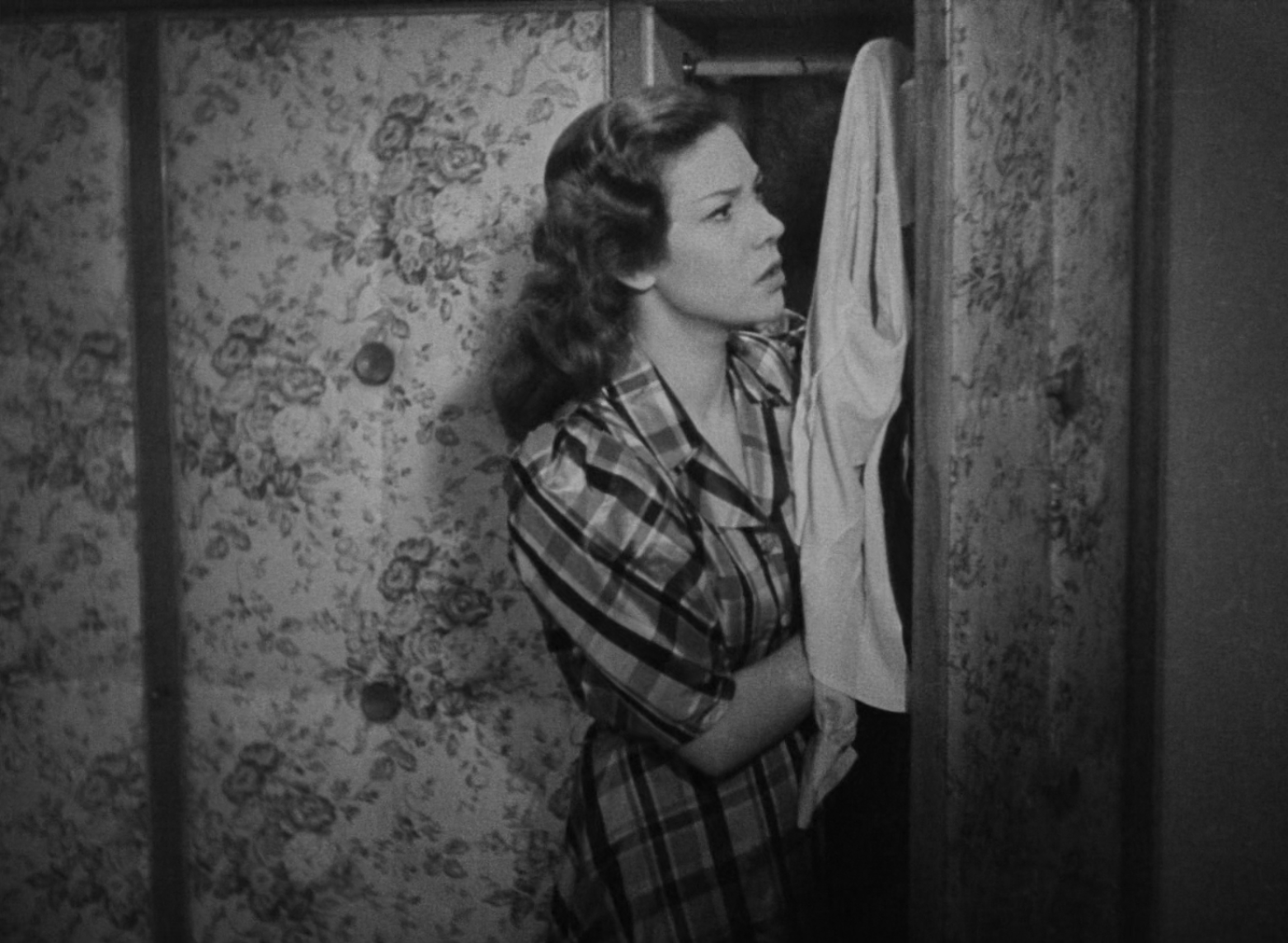
“Se tu mi avessi veramente amata, mi avresti cambiata! Ma già, tu sei come tutti gli altri – anzi peggio! Perché almeno gli altri non mi fanno i sermoni!”
“Hai ragione. Scusami”.
Lui lascia la stanza.
"Giorgio!" mormora lei. Ma se n'è andato.
“If you’d really loved me, you’d have changed me. But you’re just like all the others – even worse. At least they don’t give me sermons.”
“You're right. Forgive me.”
He leaves the room.
“Giorgio!” she murmurs. But he is gone.
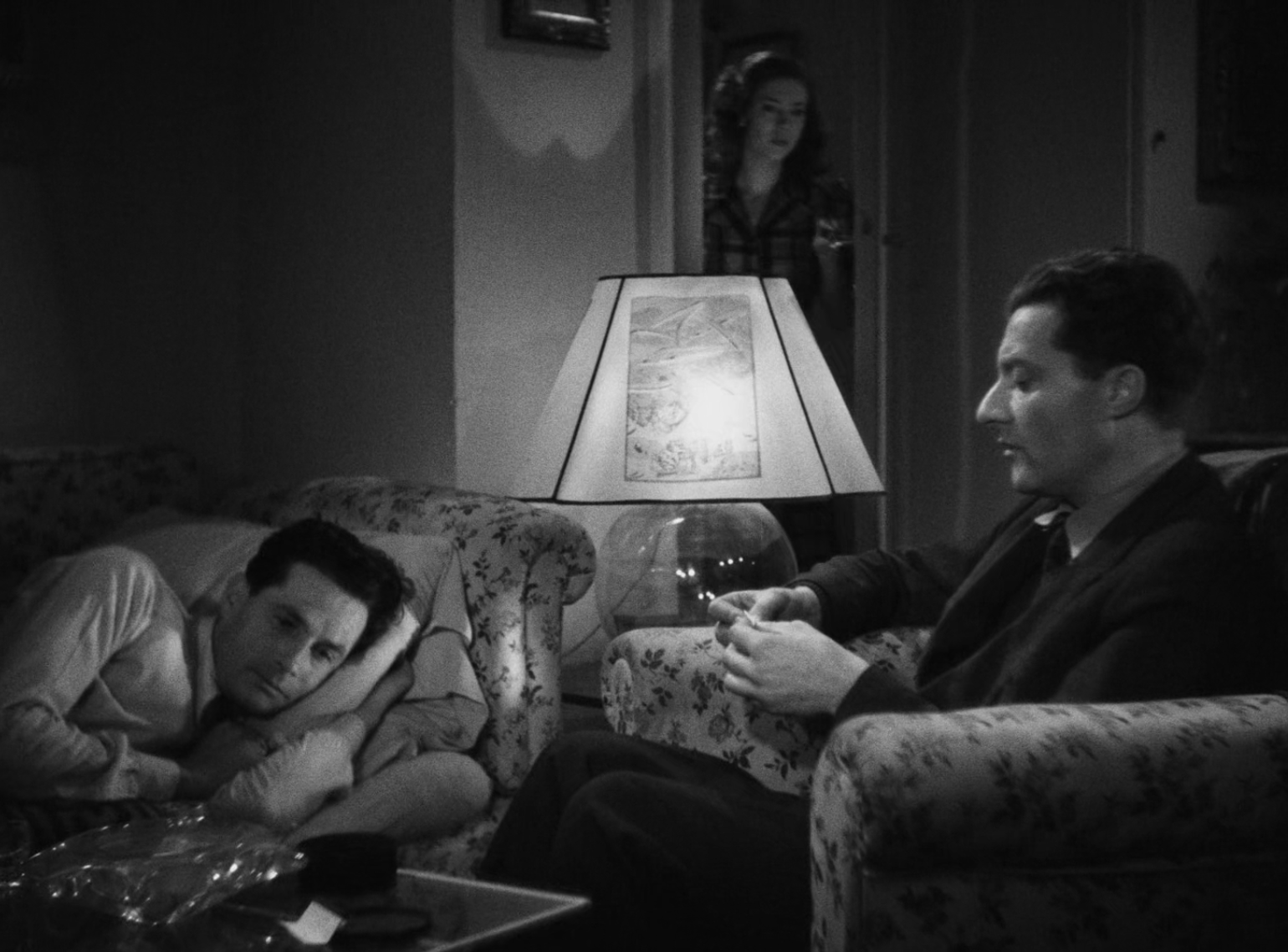
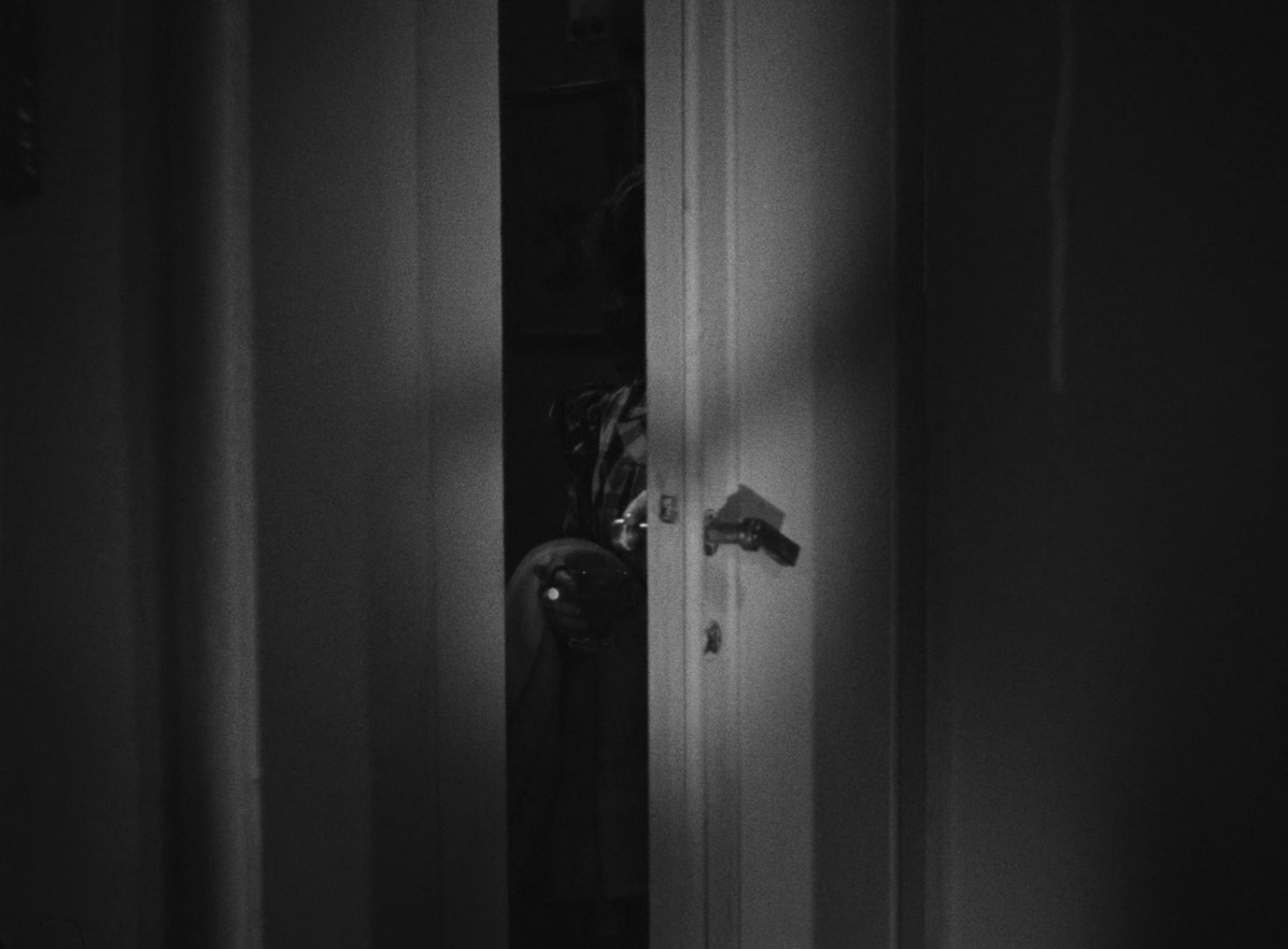
Nell'altra stanza, i due uomini parlano silenziosamente nell'oscurità. Marina apre la porta, proprio mentre Manfredi dice: “Domani andremo da Don Pietro. Mi aveva offerto di nascondermi per qualche tempo in un convento. Ci andremo insieme”. Lei chiude silenziosamente la porta.
Francesco risponde: “Io no. Non potrei. Adesso bisogna che lavori più di prima. Lei è morta”.
In the other room, the two men talk quietly in the darkness. Marina opens the door, just as Manfredi is saying, “We’ll see Don Pietro tomorrow. He offered to hide me in a monastery for a while. We’ll go together.” She silently closes the door.
Francesco replies, “Not me. I couldn’t. Now I have to work harder than before. She’s dead.”
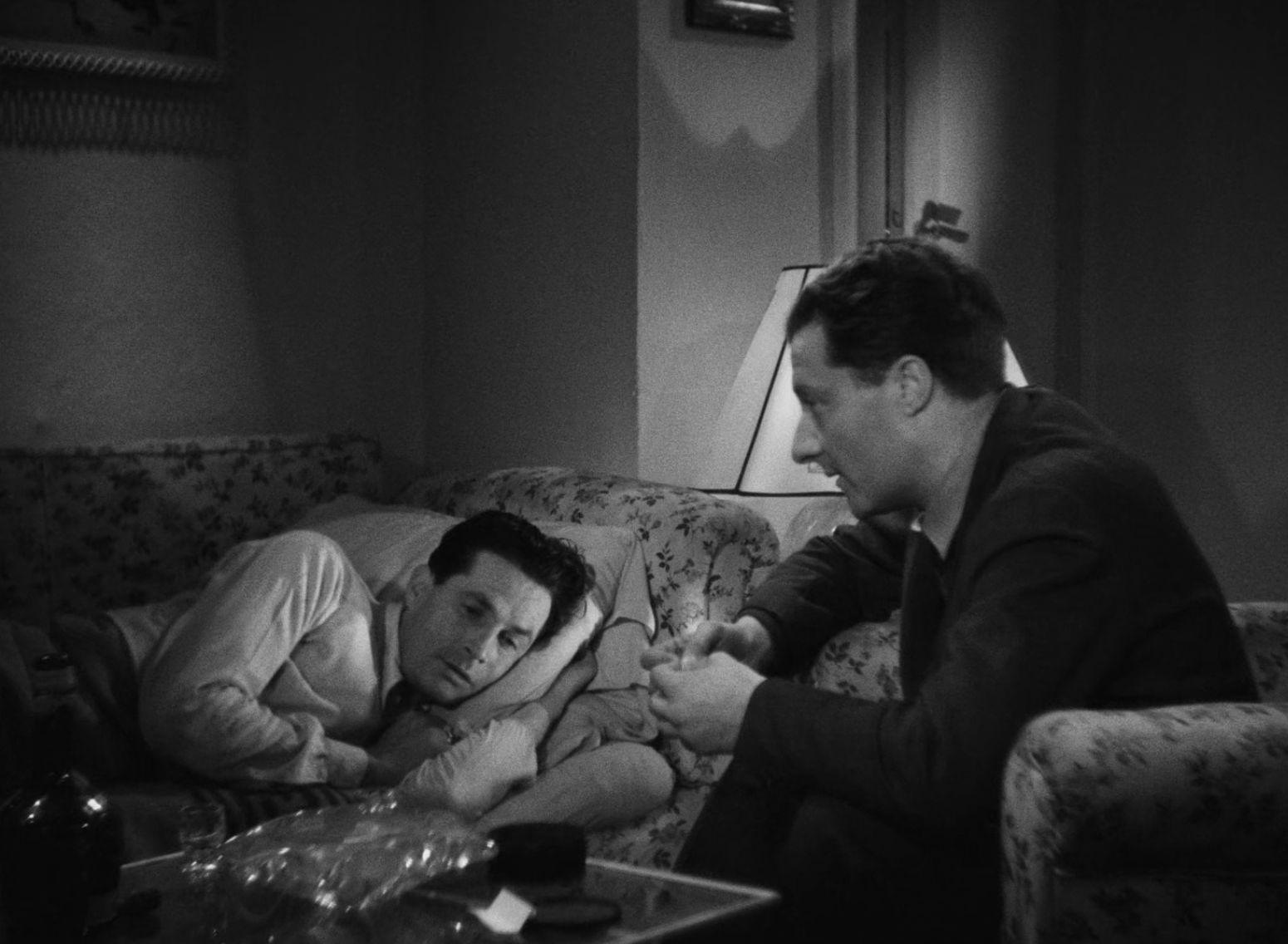
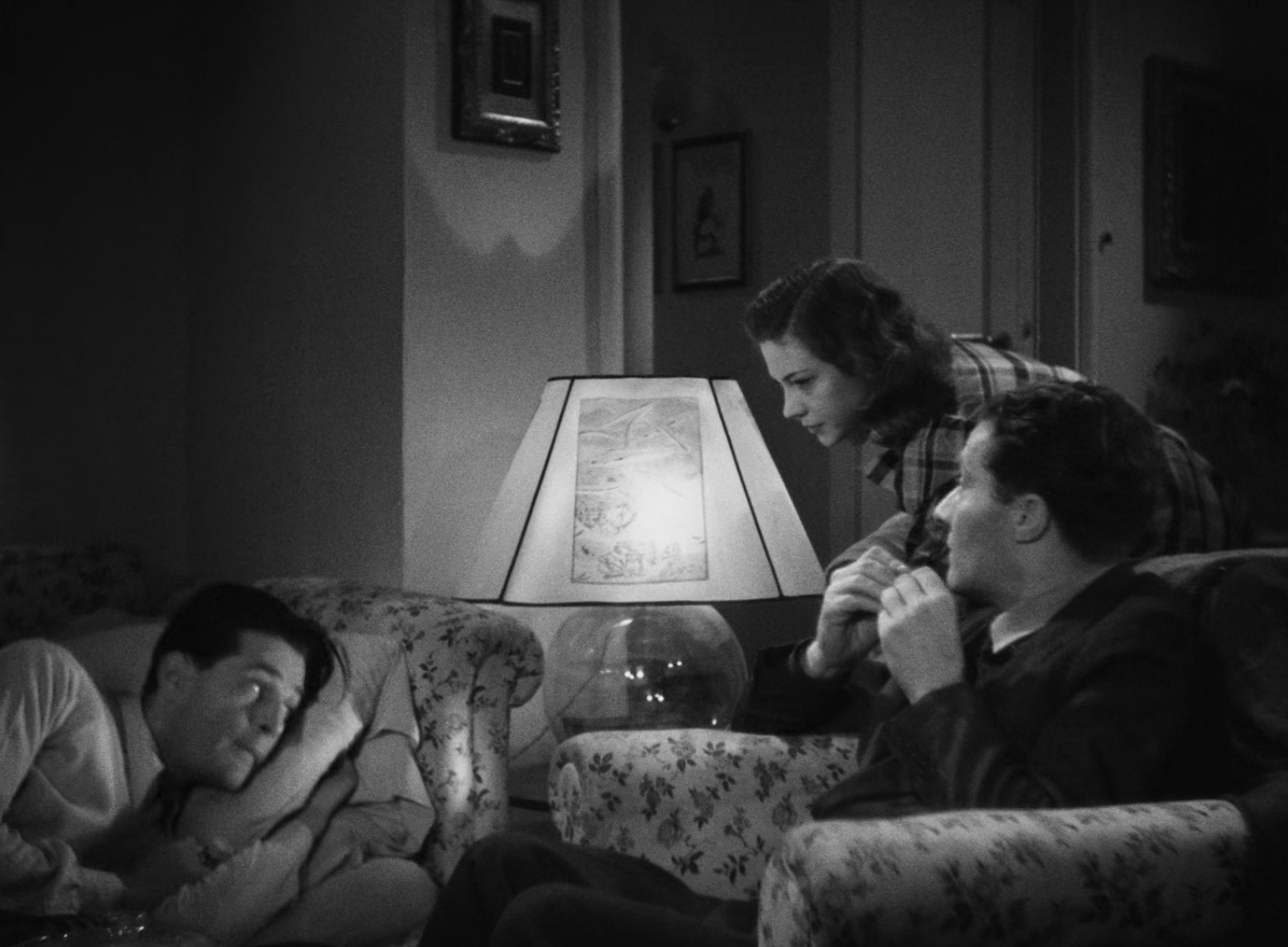
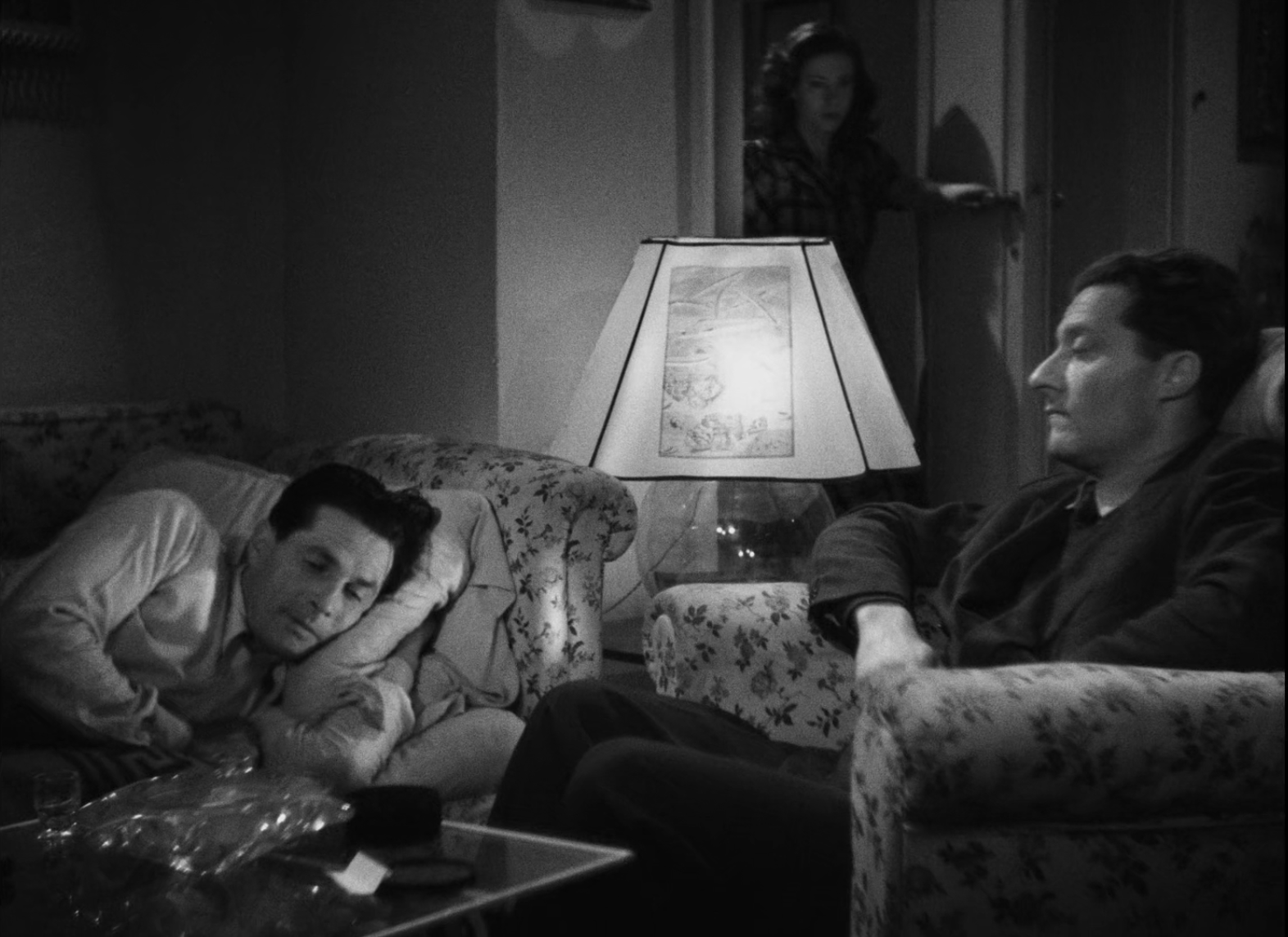
“Sì, ti capisco. Ma in questo momento tu sei esasperato. Commetteresti delle imprudenze. La tua attività sarebbe più dannosa che utile. Non aver paura di non arrivare in tempo. La battaglia è lunga”.
Marina entra con le coperte per Manfredi. “Ho portato l'aspirina”, dice a Francesco. Mentre le danno la buonanotte, Manfredi la guarda a malapena.
“Yes, I understand. But you’re upset right now. You might act rashly. Your activity might do more harm than good. Don’t be afraid that time will run out. It’ll be a long fight.”
Marina enters with blankets for Manfredi. “I brought your aspirin,” she says to Francesco. As they say goodnight, Manfredi barely looks at her.
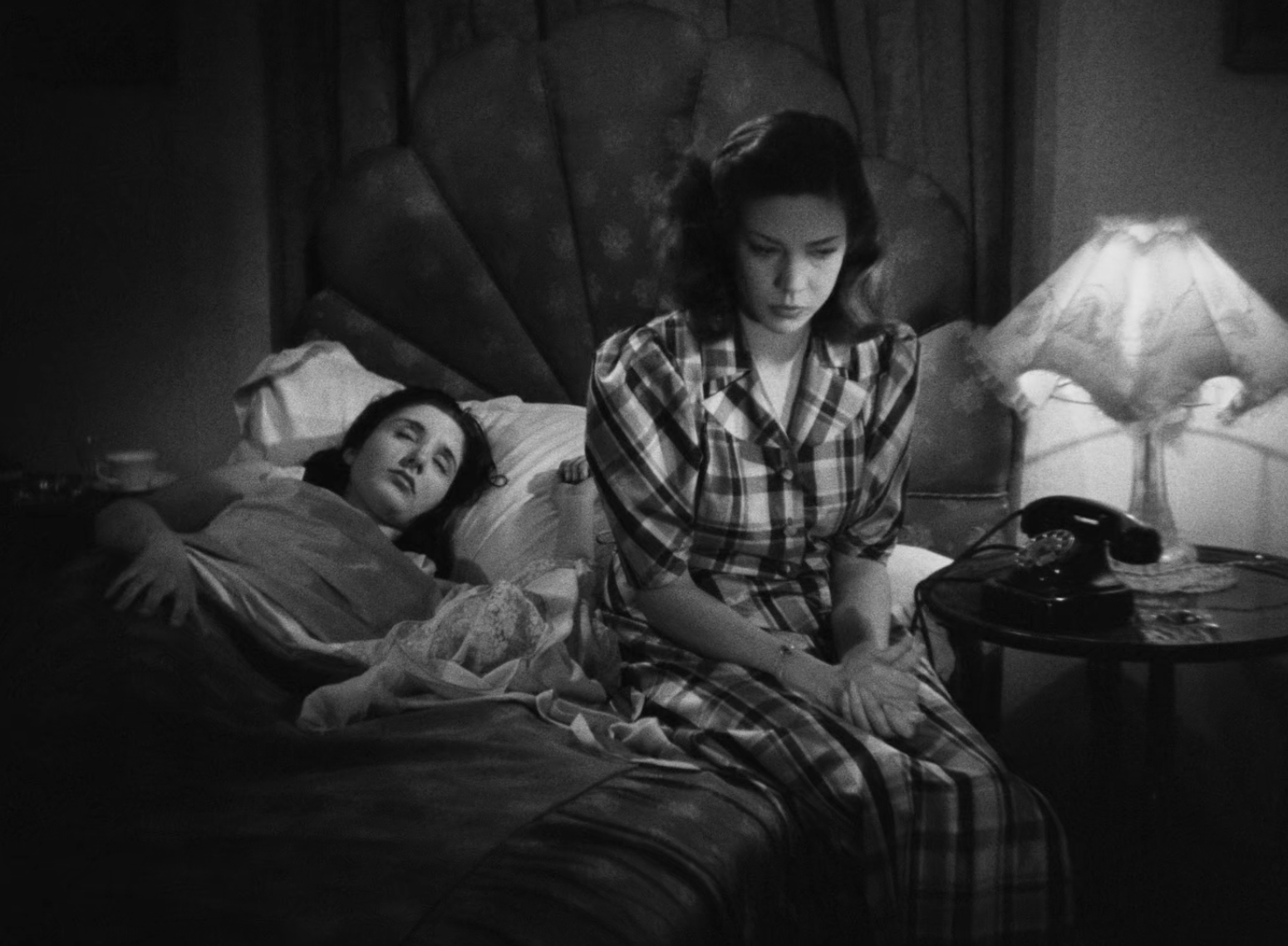
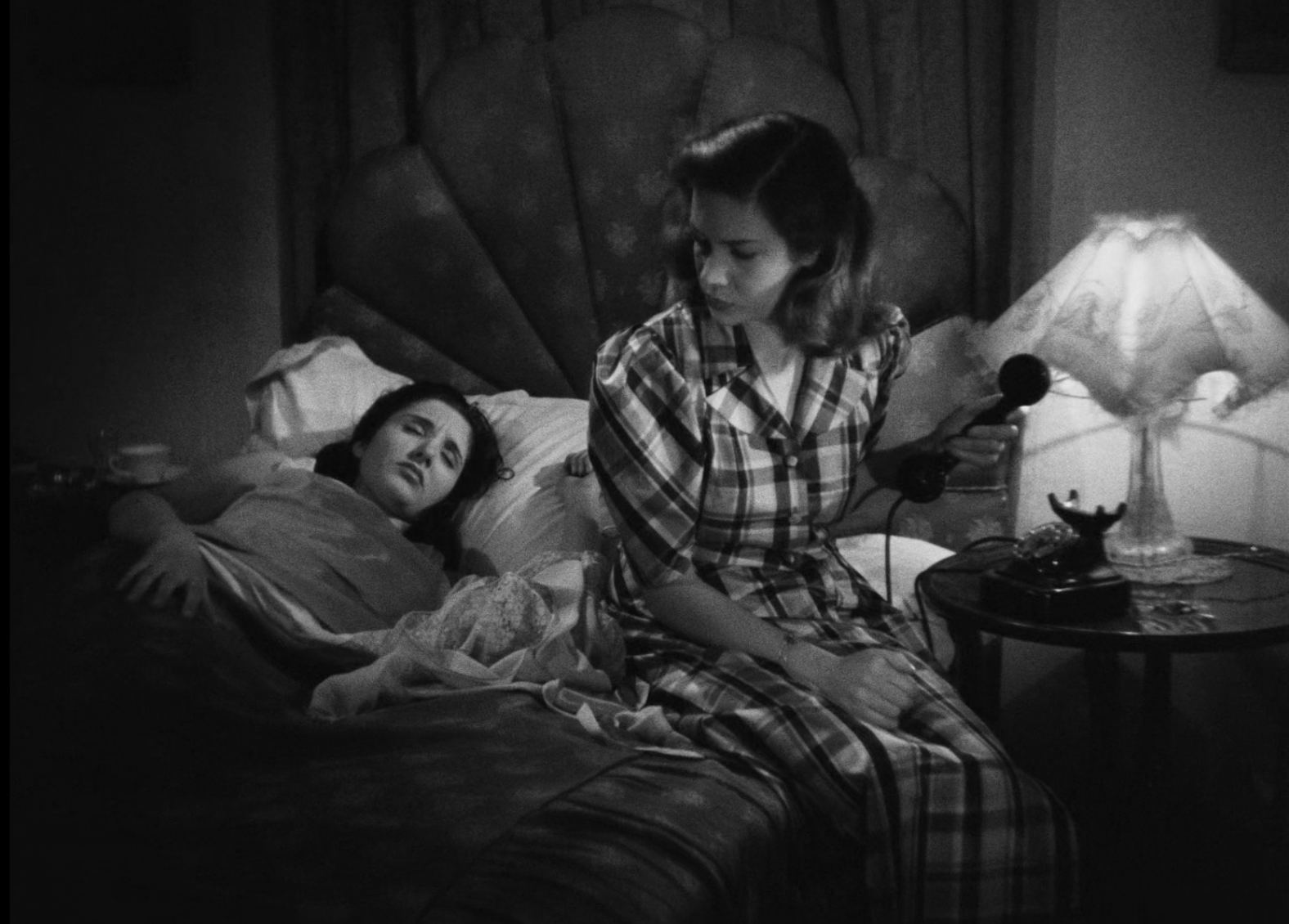
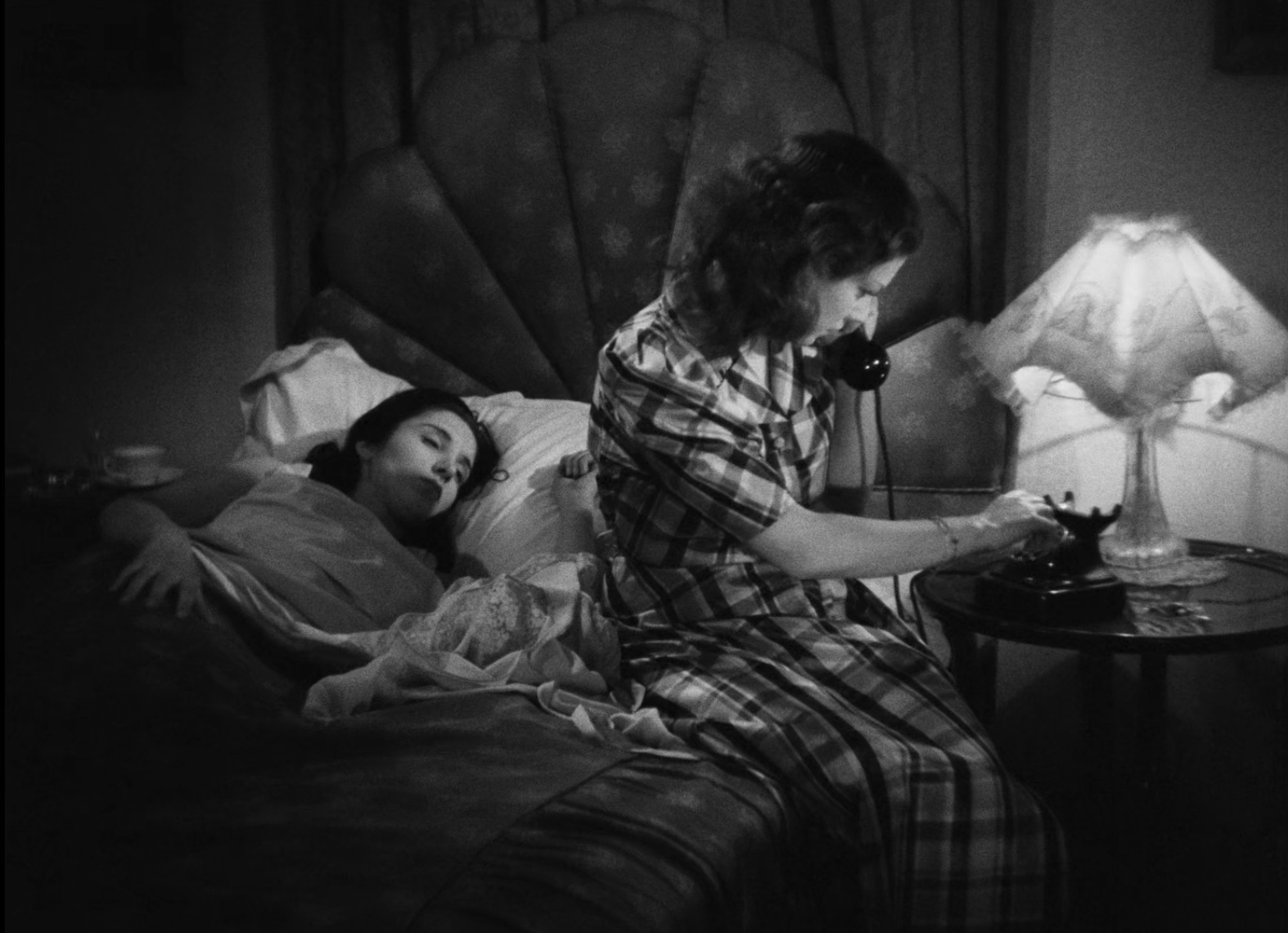
Marina si siede sul bordo del suo letto, dove Lauretta giace in un torpore di ubriachezza. Prende il telefono e fa un numero.
Marina sits on the edge of her bed, where Lauretta lies in a drunken stupor. She picks up the phone and dials.
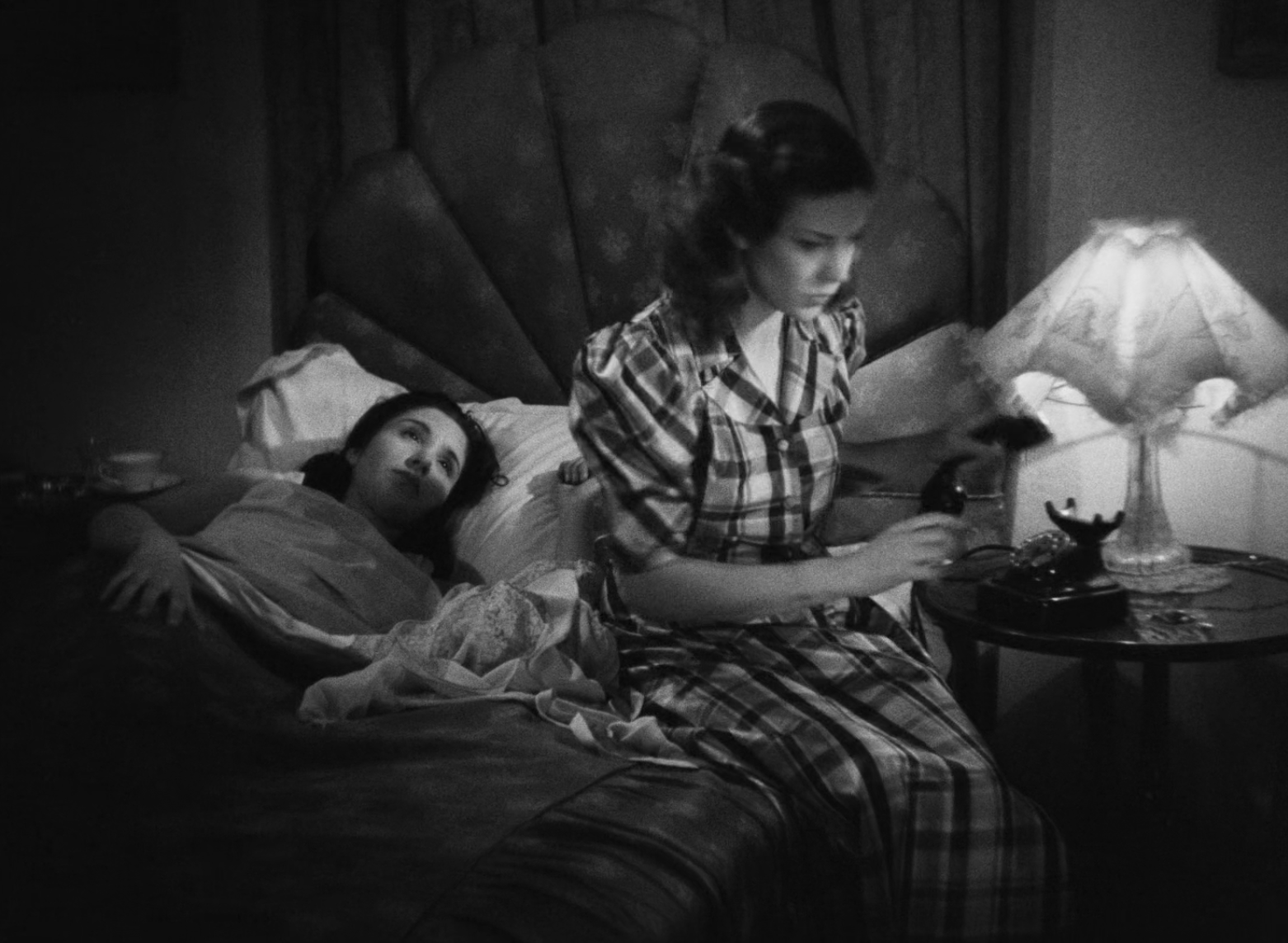
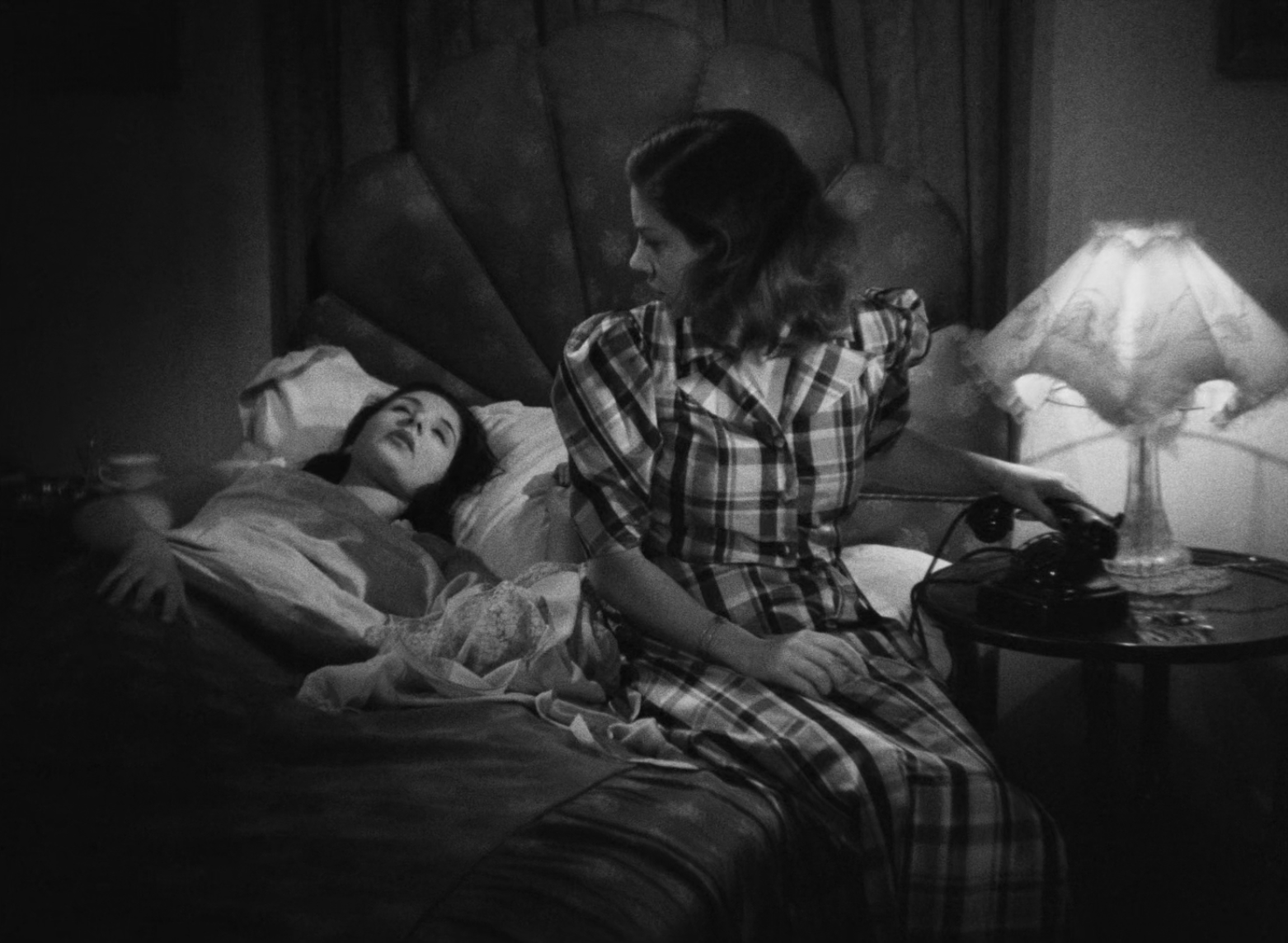
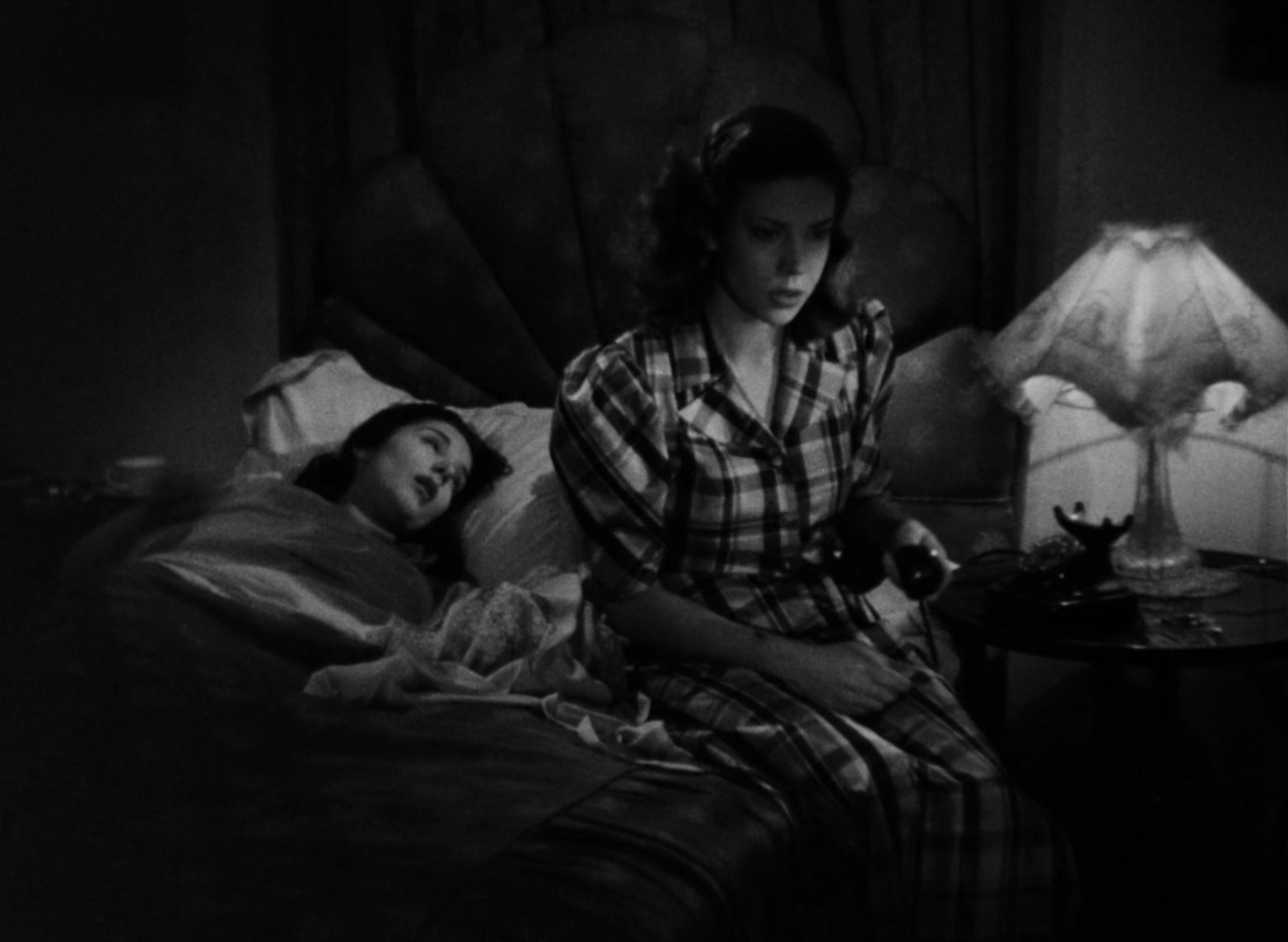
Proprio allora Lauretta si sveglia e chiama il suo nome.
"Che vuoi?"
"Sai, forse ha ragione Manfredi. Siamo delle stupide".
"Stai zitta! Dormi", risponde Marina abbassando il telefono in grembo, mentre lo schermo si oscura.
Just then Lauretta wakes up and calls her name.
“What do you want?”
“You know, maybe Manfredi’s right. We’re idiots.”
“Shut up! Go to sleep,” Marina answers, lowering the phone to her lap as the screen goes dark.
FINE PARTE 10
Ecco the link to Parte 11 of this cineracconto! Subscribe to receive a weekly email newsletter with links to all our new posts.