Regia / Director: Mario Monicelli, 1960
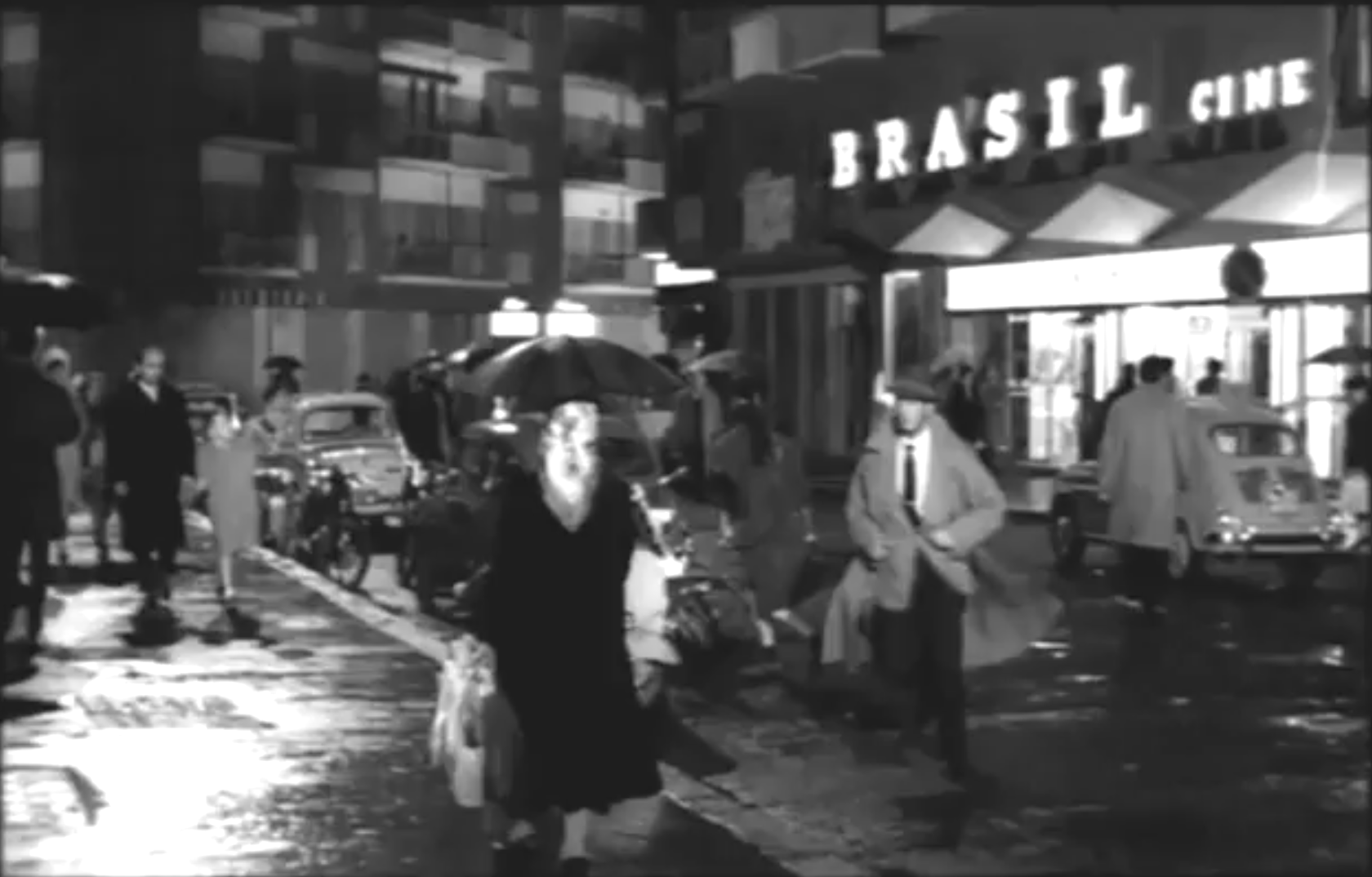
In un’inquadratura esterna, fuori dal teatro Brasil, vediamo una donna sotto un ombrello nero. Un grande bagliore di luce viene riflesso dalla strada bagnata.
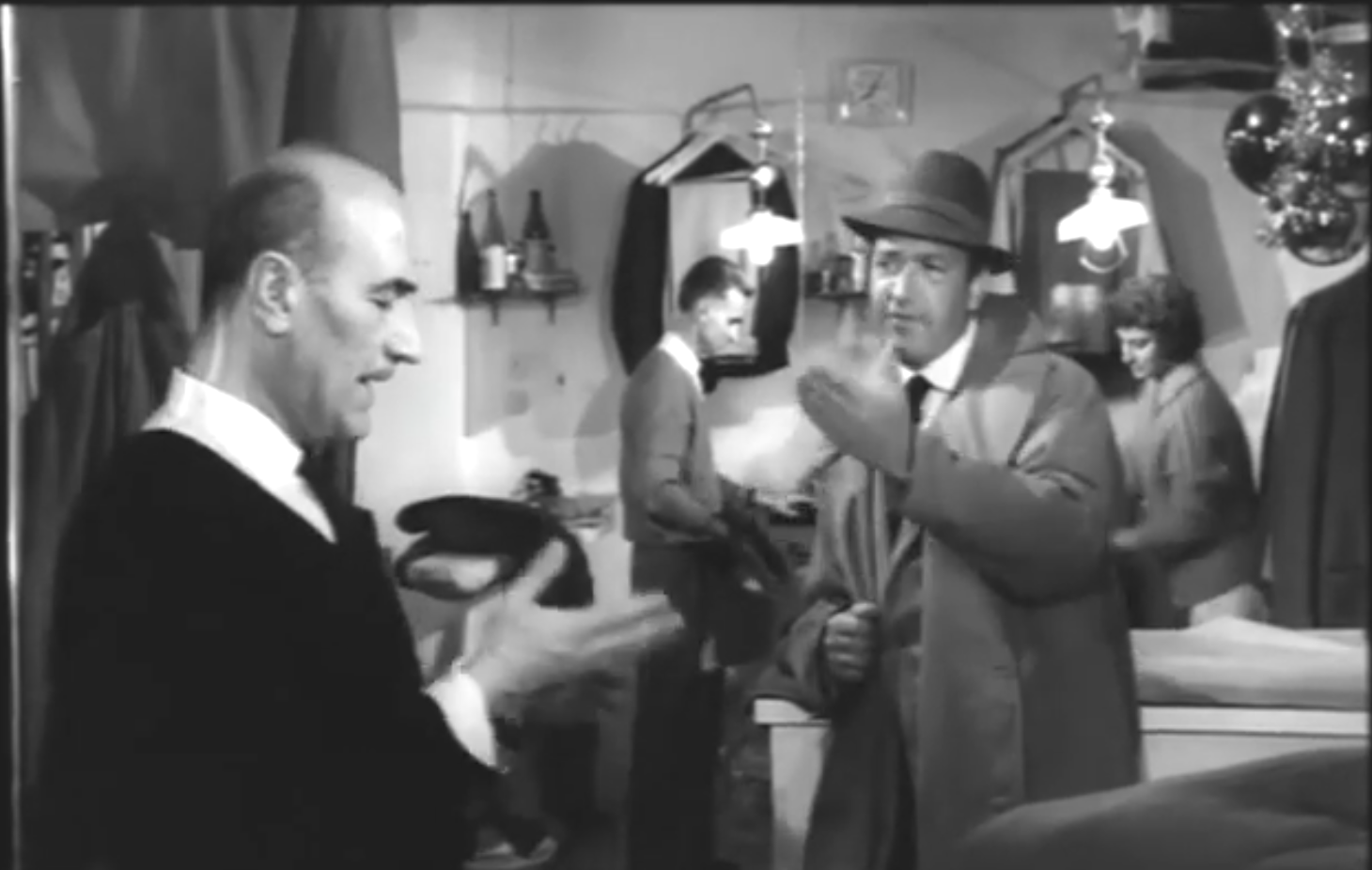
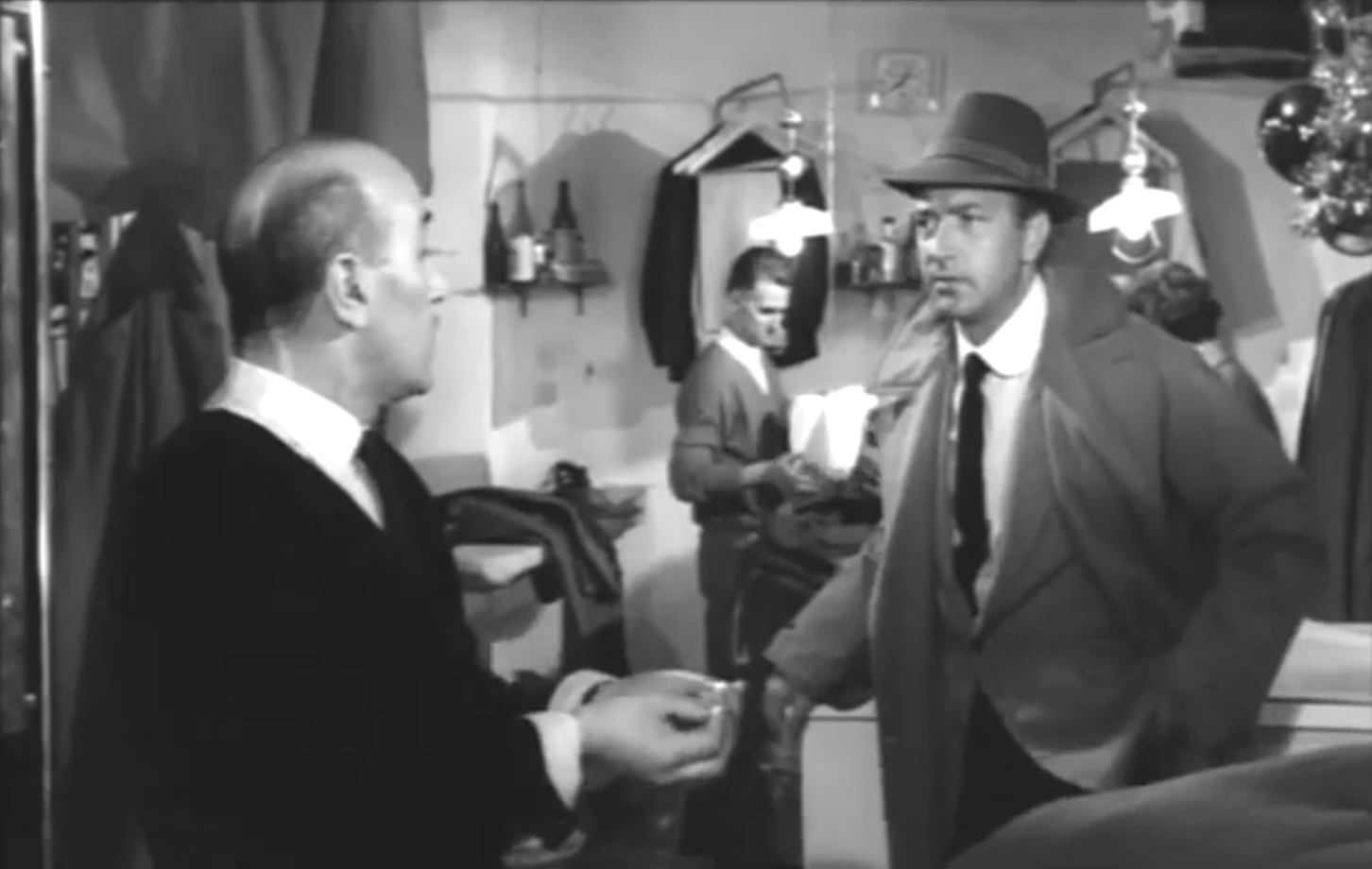
Un uomo che indossa un fedora e un trench (Alberto De Amicis) corre in una lavanderia a secco e affronta l'uomo che lavora lì, chiedendo in tono accusatorio, "Colombini, hai fatto il conto?"
Colombini (Peppino De Martino), composto e calvo, risponde: "Che conto?"
"Ci ho pensato mentre aspettavo il filobus: quanti siamo a cena?"
"Beh, facile" – risponde Colombini e inizia a contare – "Io, tu..."
In an exterior shot, outside the Brasil theater, we see a woman under a black umbrella. A great glare of light is reflected from the wet street.
A man wearing a fedora and trench coat runs into a dry cleaners and confronts the man working there, asking accusingly, “Colombini, did you keep count?”
Colombini, dignified and bald, responds, “What count?”
“I thought of it while I was waiting for the trolley: how many are we for dinner?”
“Well, easy,” answers Colombini and he begins to count, “Me, you…”
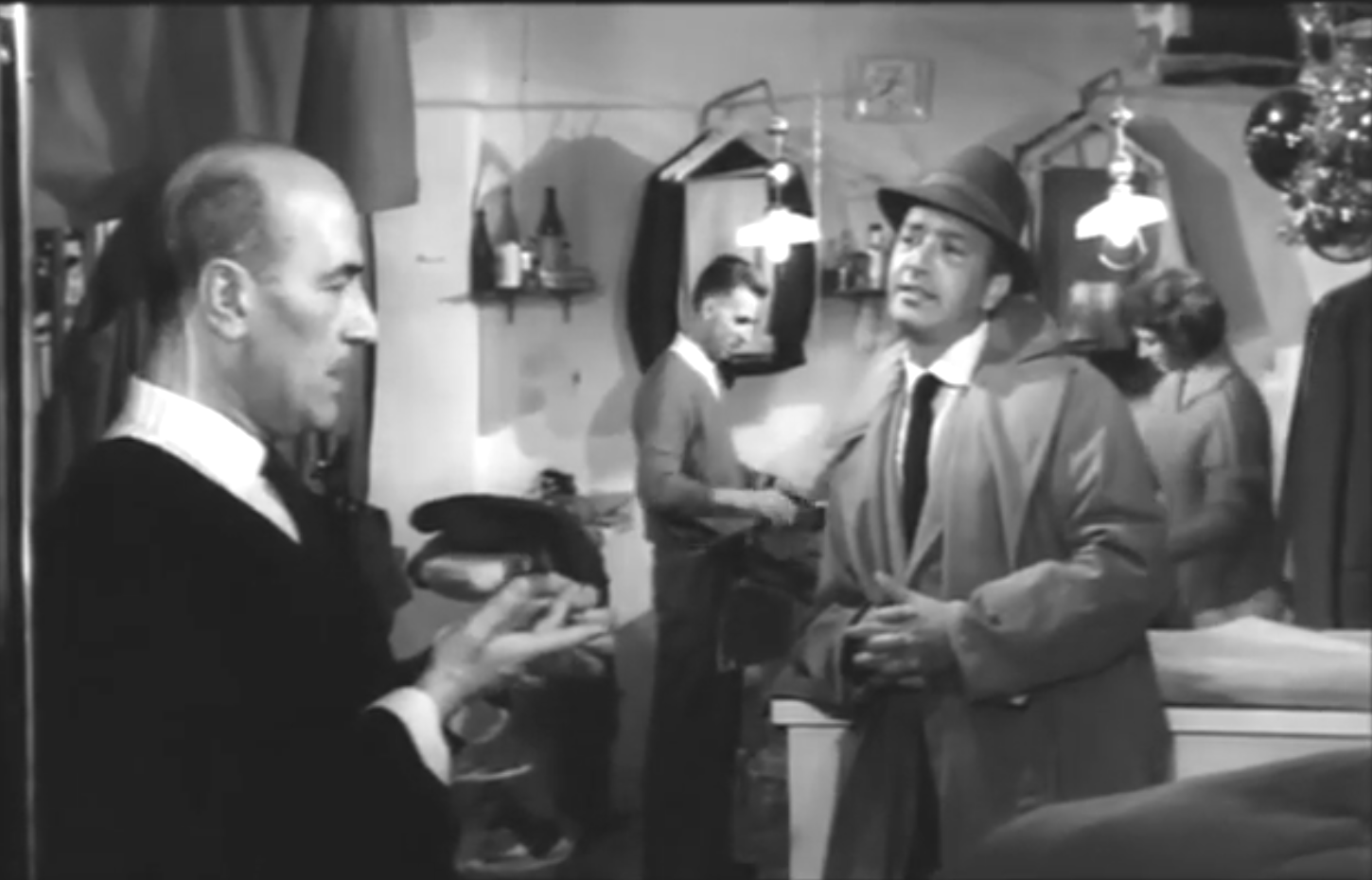
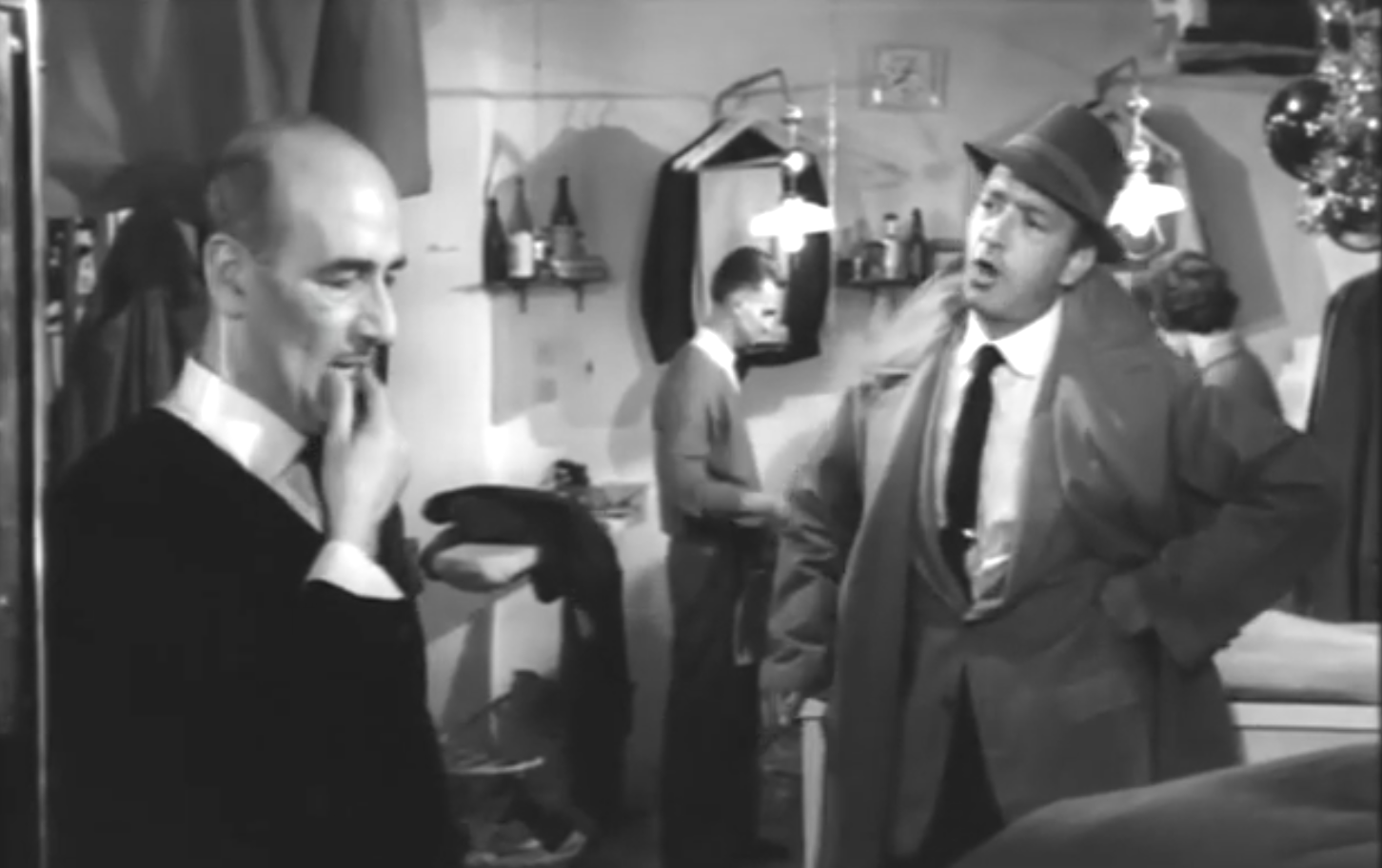
Tra loro due, contando sulle dita, dicono i nomi. Sullo sfondo, i dipendenti stanno lavorando. Colombini sta arrivando alla fine: "Giovanni, Pennellone e Neri". È allora che si rende conto: "Tredici!”
Between the two of them – counting on their fingers – they call out the names. In the background, employees are working. Colombini is getting to the end: “Giovanni, Pennellone and Neri.” That’s when he realizes: “Thirteen!”
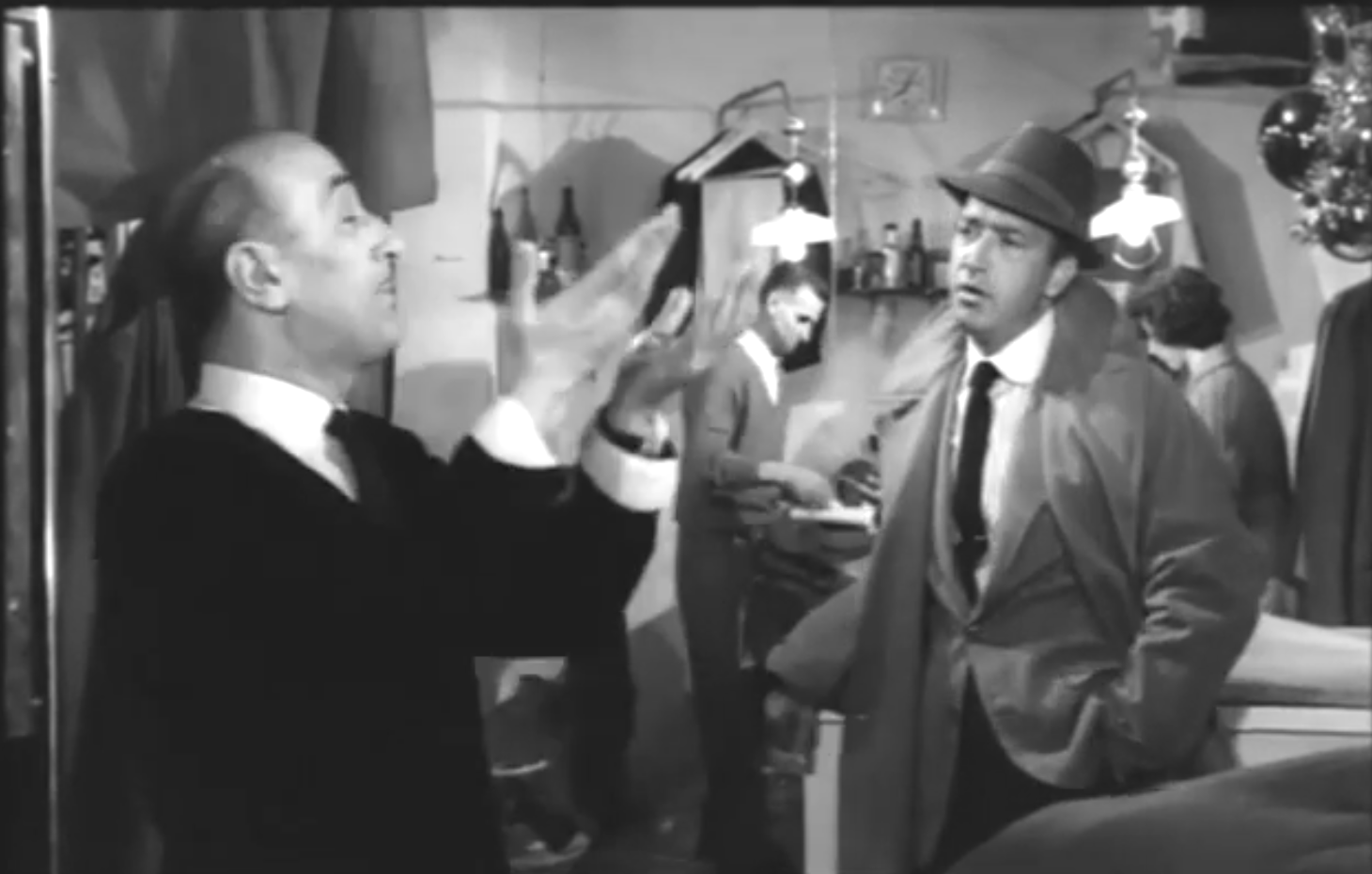
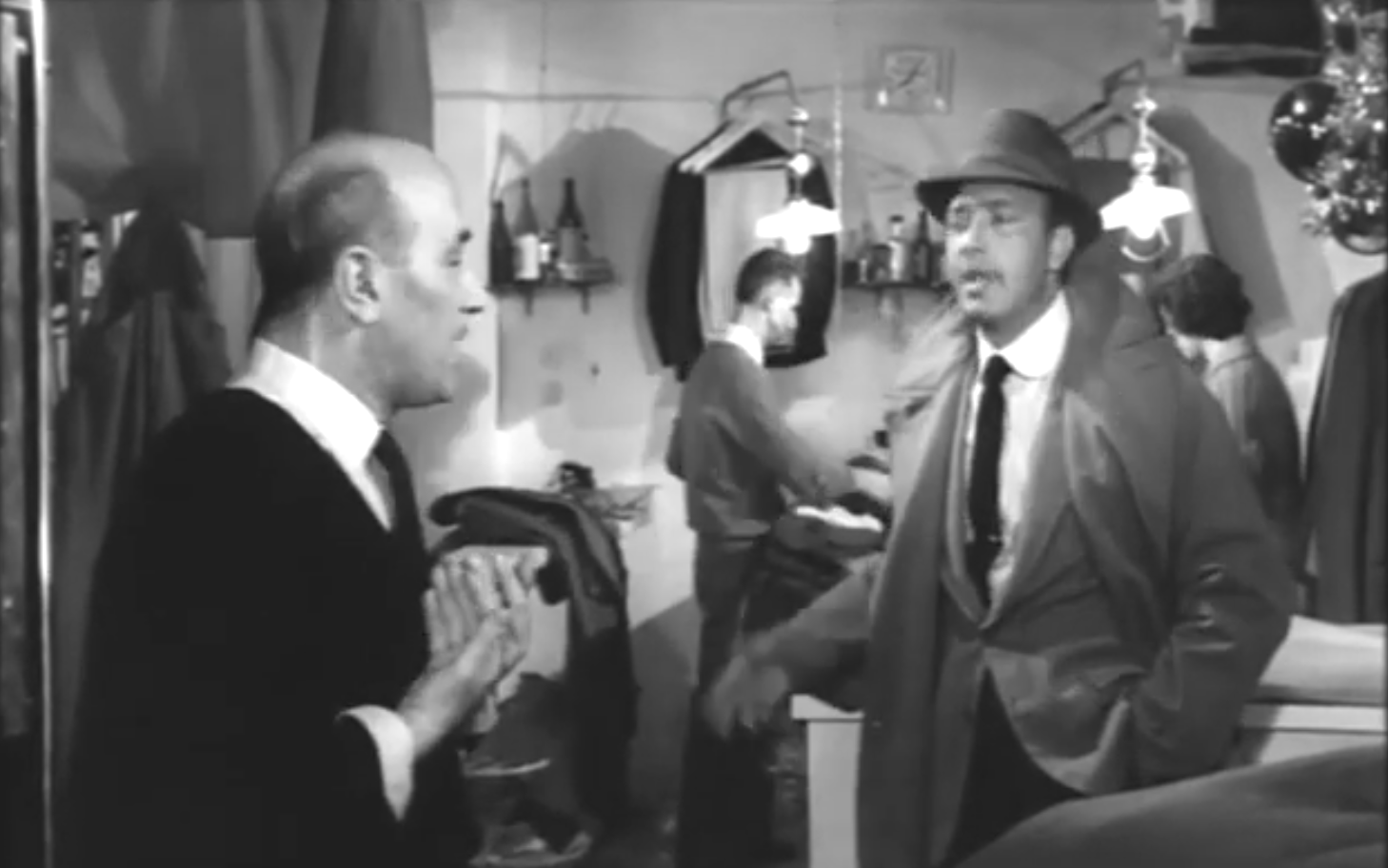
"Eh già! La cena dell’ultimo dell’anno in tredici!” Poi l’uomo imita l’amico per accusarlo: “'Ci penso io! Organizzo io!’ Uno stupido come te non può organizzare!"
Colombini si difende, parlando eloquentemente con le mani. “Beh, mi sono sbagliato! Perfino i preti commettono errori, no?"
Impazientemente il suo amico dice: "Allora, dimmi che facciamo".
“Exactly! New Year’s Eve dinner for thirteen!” Then the man accuses his friend by imitating him: “‘I’ll take care of it! I’ll organize it.’ An idiot like you can’t plan anything!”
Colombini defends himself, speaking eloquently with his hands. “Well, I made a mistake! Even priests make mistakes, don’t they?”
Impatiently, his friend says, “Then tell me what we do.”
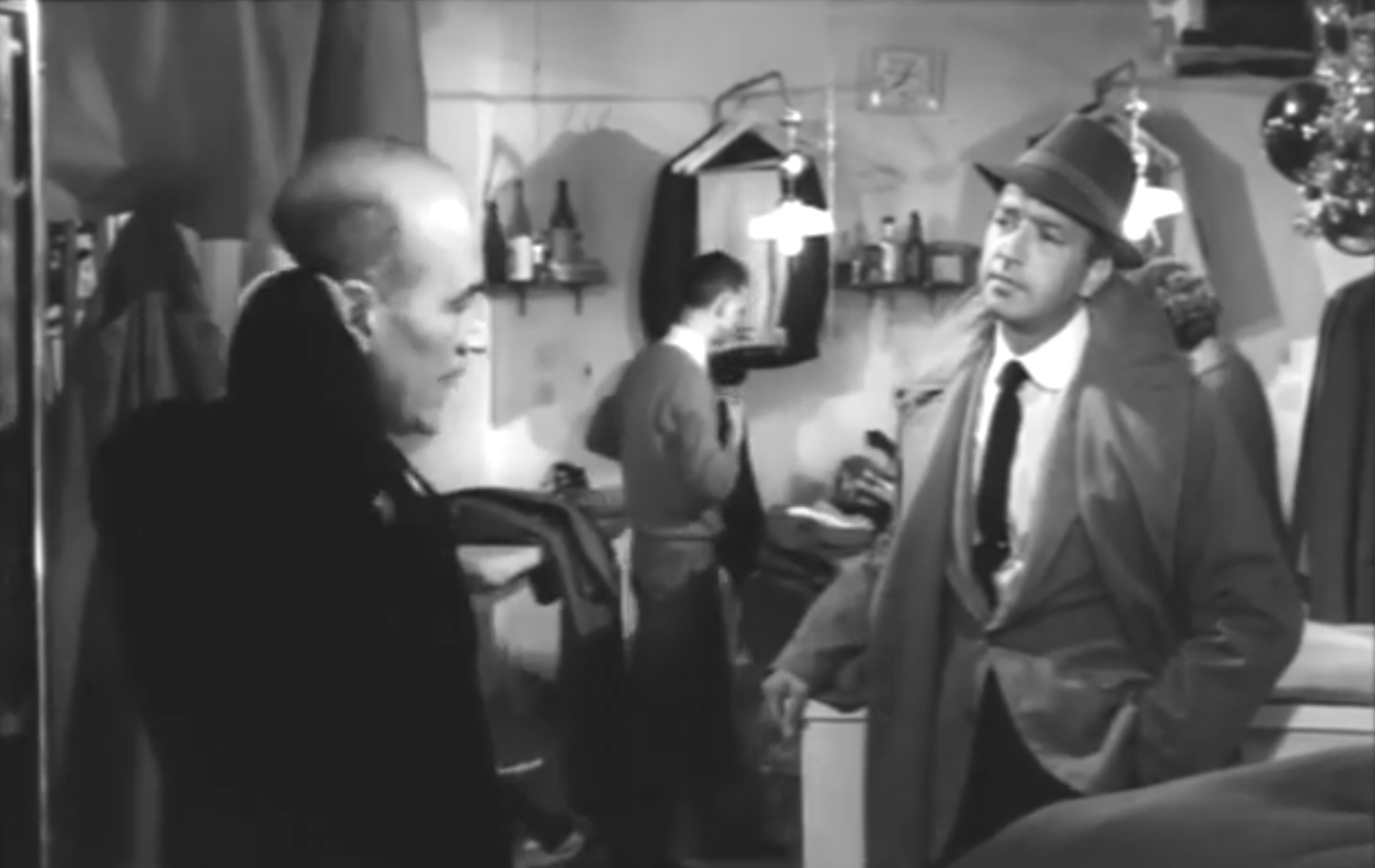
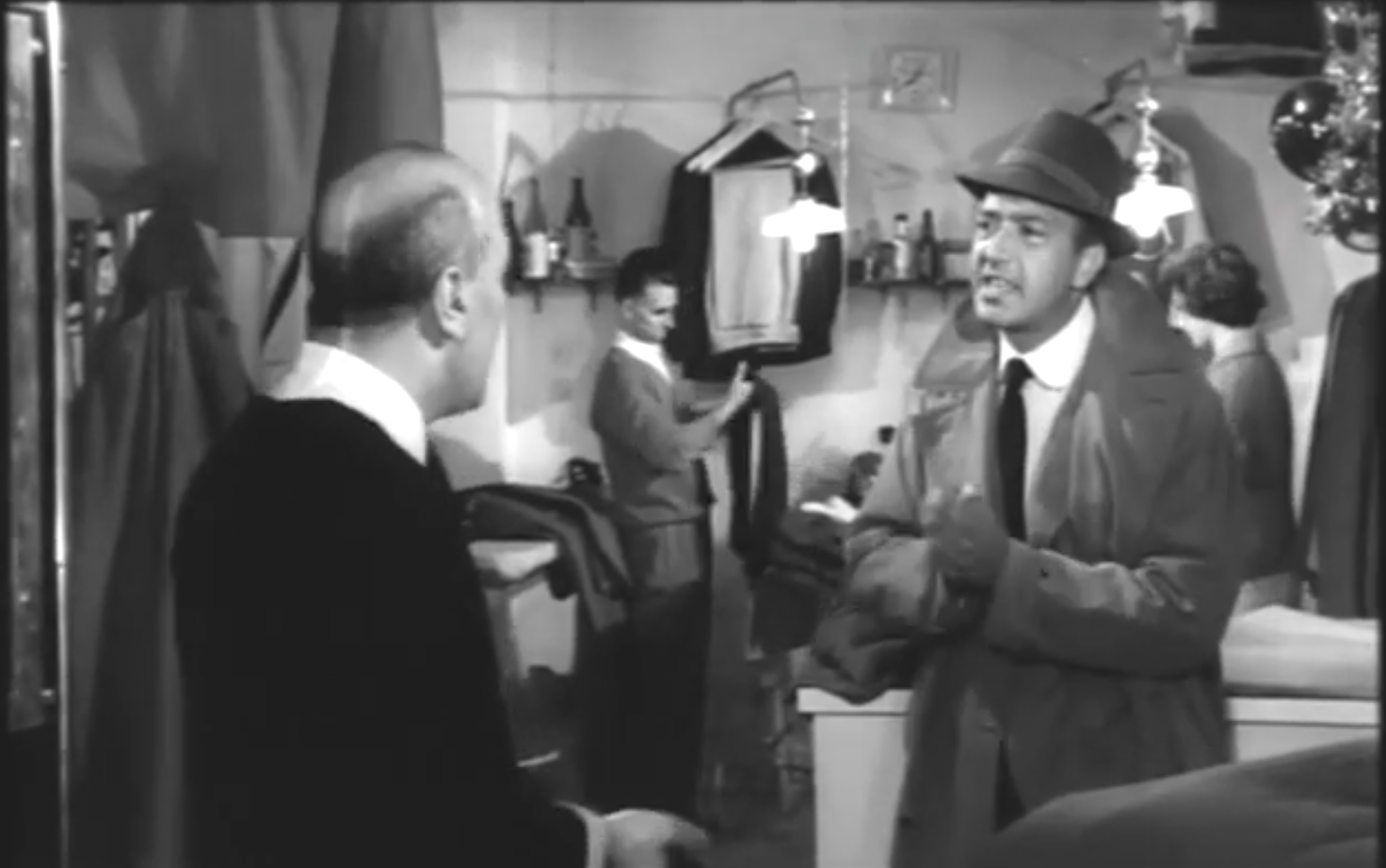
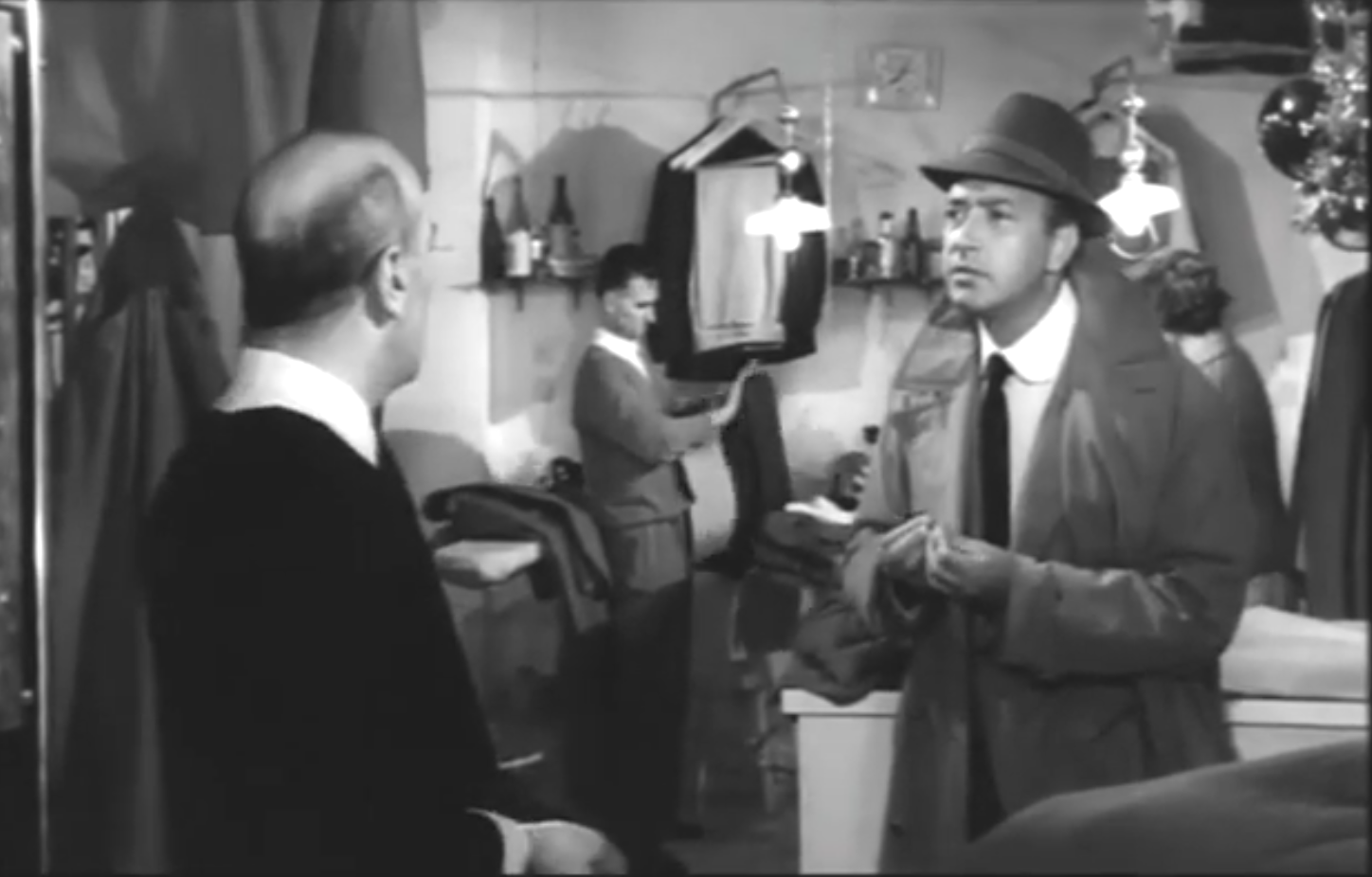
Colombini dice: "Rimediamo in qualche modo. Troveremo un'anima buona che viene a fare il quattordicesimo".
Con i suoi gesti, l'uomo protesta: “A quest'ora? Sono le otto passate, chi vuoi trovare?"
Disperati, invitano un dipendente, ma lui li respinge e se ne va.
Colombini says, “We’ll fix things up somehow. We’ll find a kind soul to be the fourteenth.”
With his own gestures, the man protests, “At this hour? It’s after eight o’clock, who do you expect to find?”
Desperate, they invite an employee, but he rebuffs them and takes off.
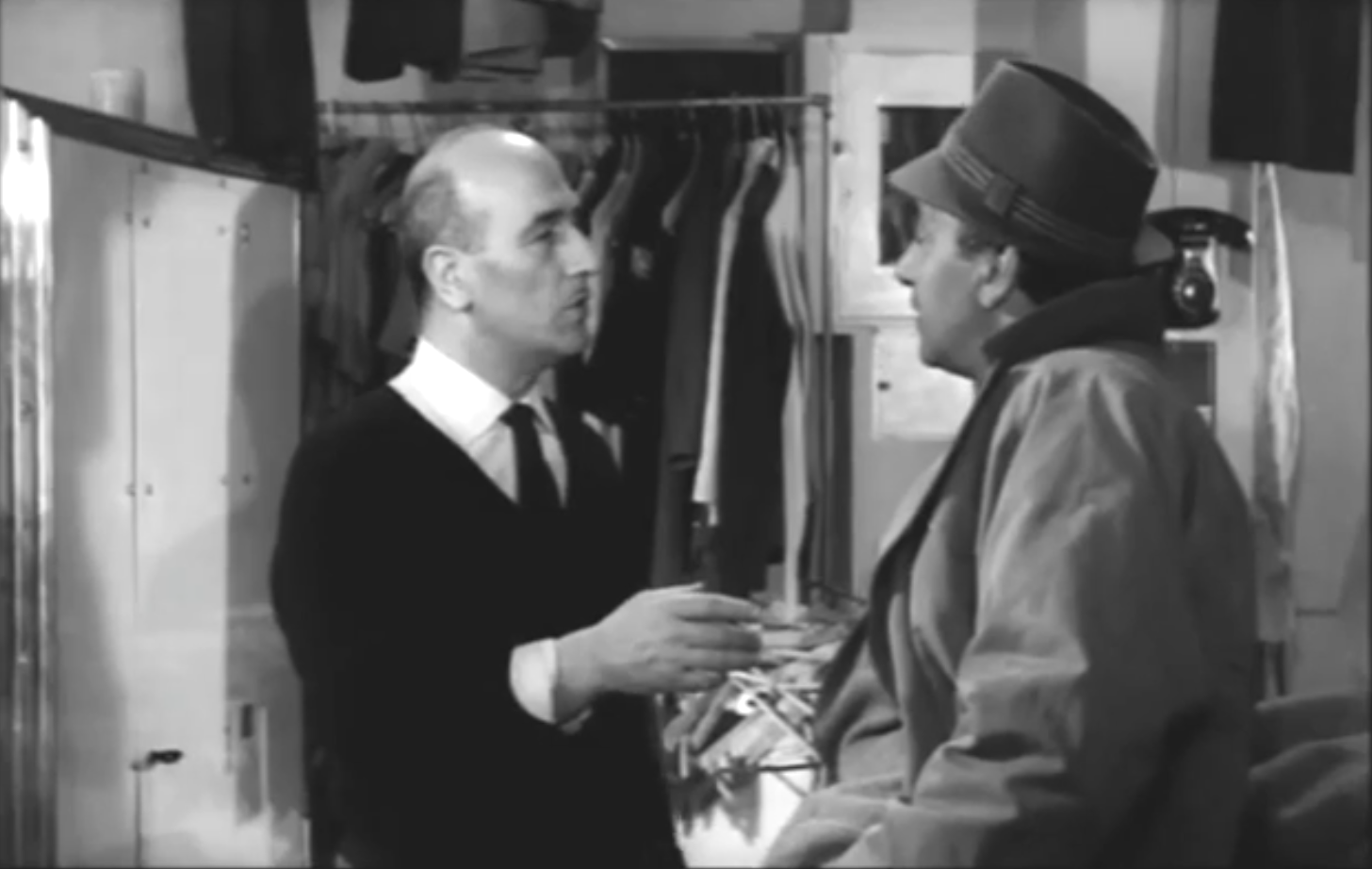
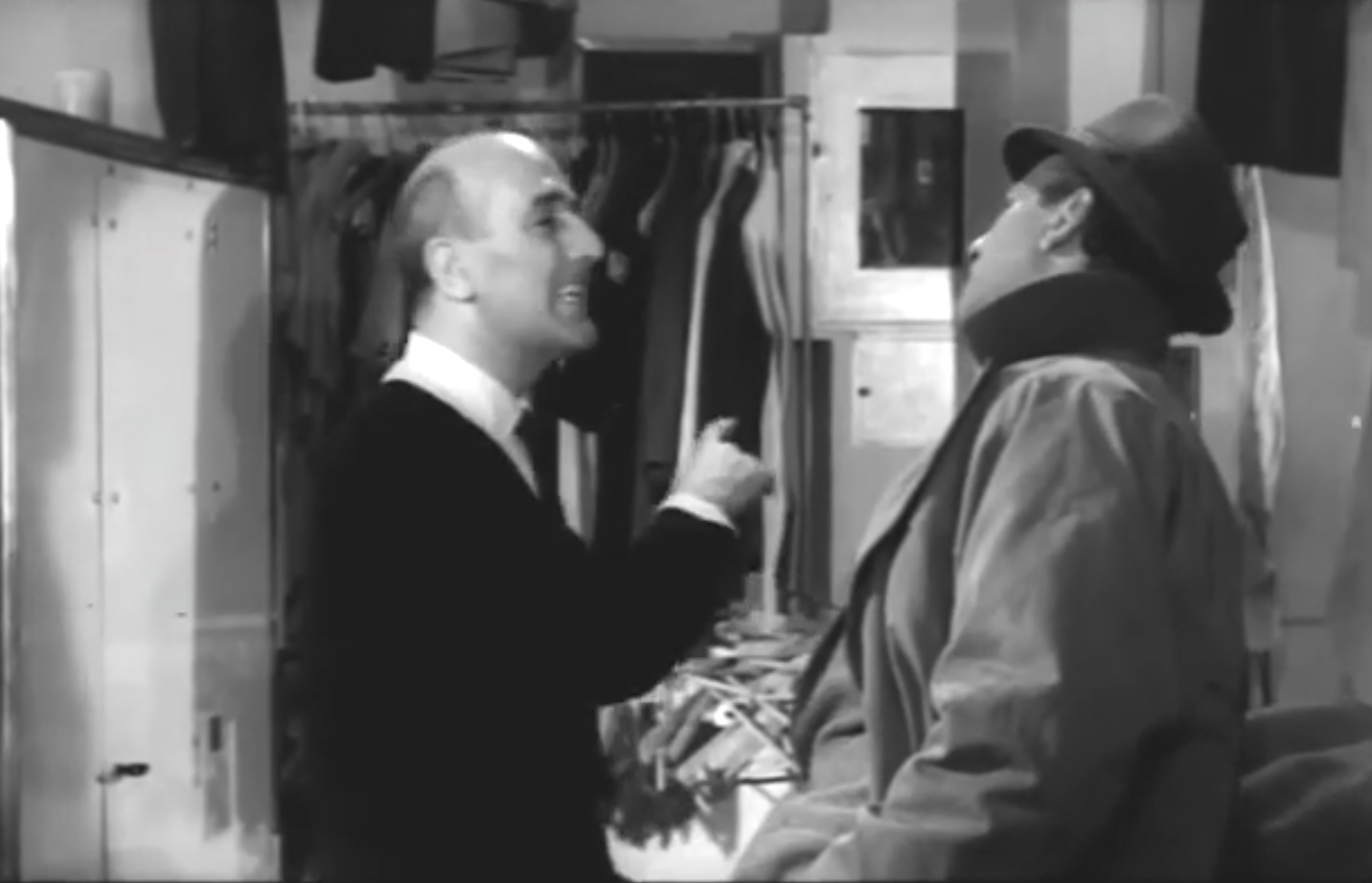
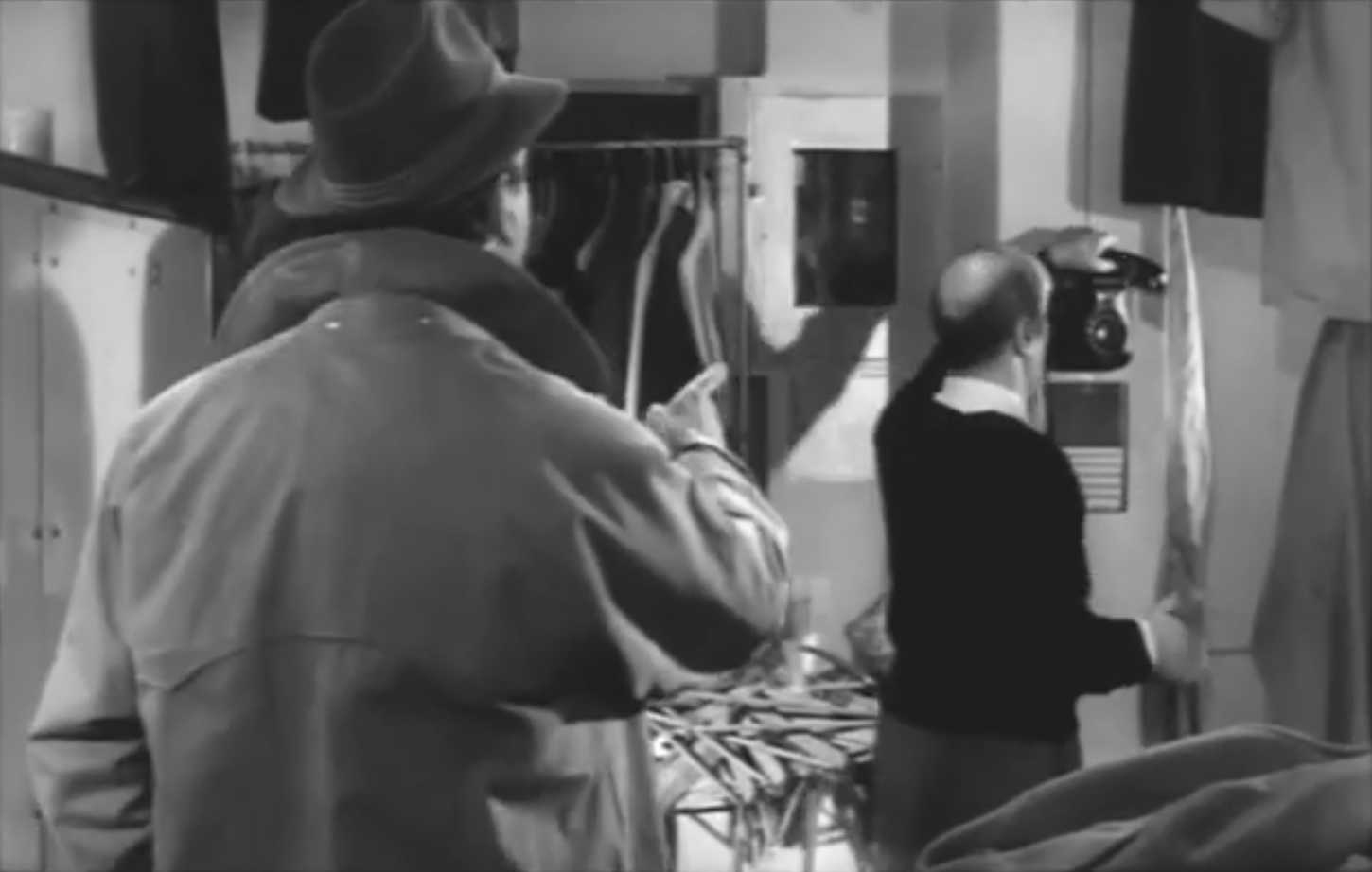
Quindi, con uno sguardo di trionfo, Colombini dice: “Mi viene un'idea. Se chiamiamo Tortorella?"
"E chi è?"
“Come ‘chi è’? Tortorella! Gioia, no? Quella è sempre vigile, sempre disponibile. Vado a telefonare a Mimì che la vede a Cinecittà.*
“Ma dille di portare la sua quota! Io non pago un centesimo per lei!"
*Cinecittà è il principale studio cinematografico italiano. Costruito durante il periodo fascista e localizzato a Roma, lo studio è stato bombardato dagli Alleati durante la guerra, è stato utilizzato come campo profughi dopo la guerra, e infine è stato ricostruito ed è ancora oggi utilizzato come studio cinematografico, museo e archivio.
Then, with a look of triumph, Colombini says, “I’m getting an idea. How about calling Tortorella?”
“Who’s that?”
“What do you mean ‘who’s that’? Tortorella! Gioia, right? She’s always up for something to do, always available. I’ll go call Mimì because she sees her at Cinecittà.”
“But tell her she has to pay her own way! I won’t pay a penny for her!”
*Cinecitta is the major Italian film studio. Constructed during the fascist period and located in Rome, the studio was bombed by the Allies during the war, served as a displaced persons camp after the war, and finally was rebuilt and is still in use today as a film studio, distributor, museum, and archive.
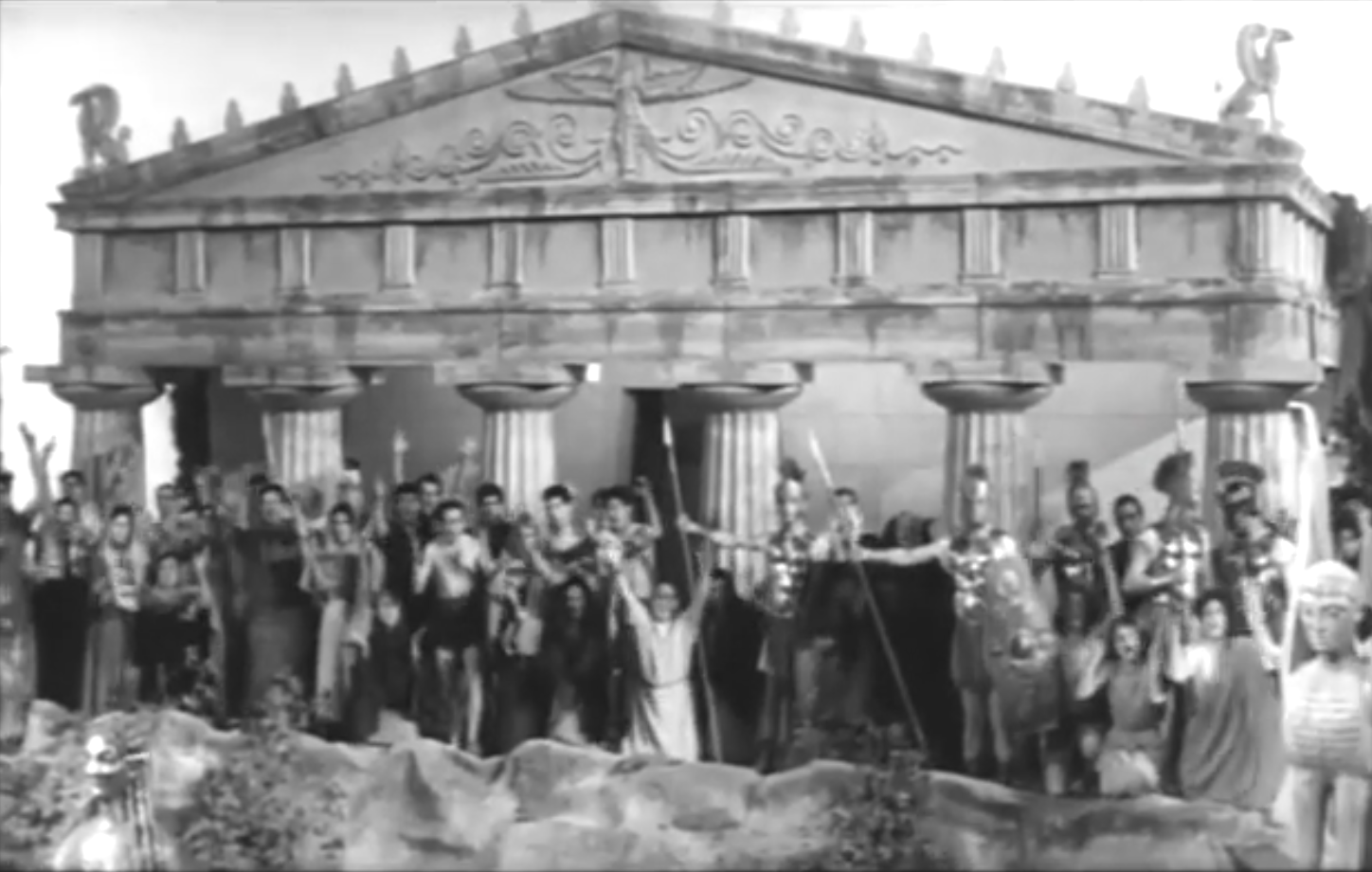
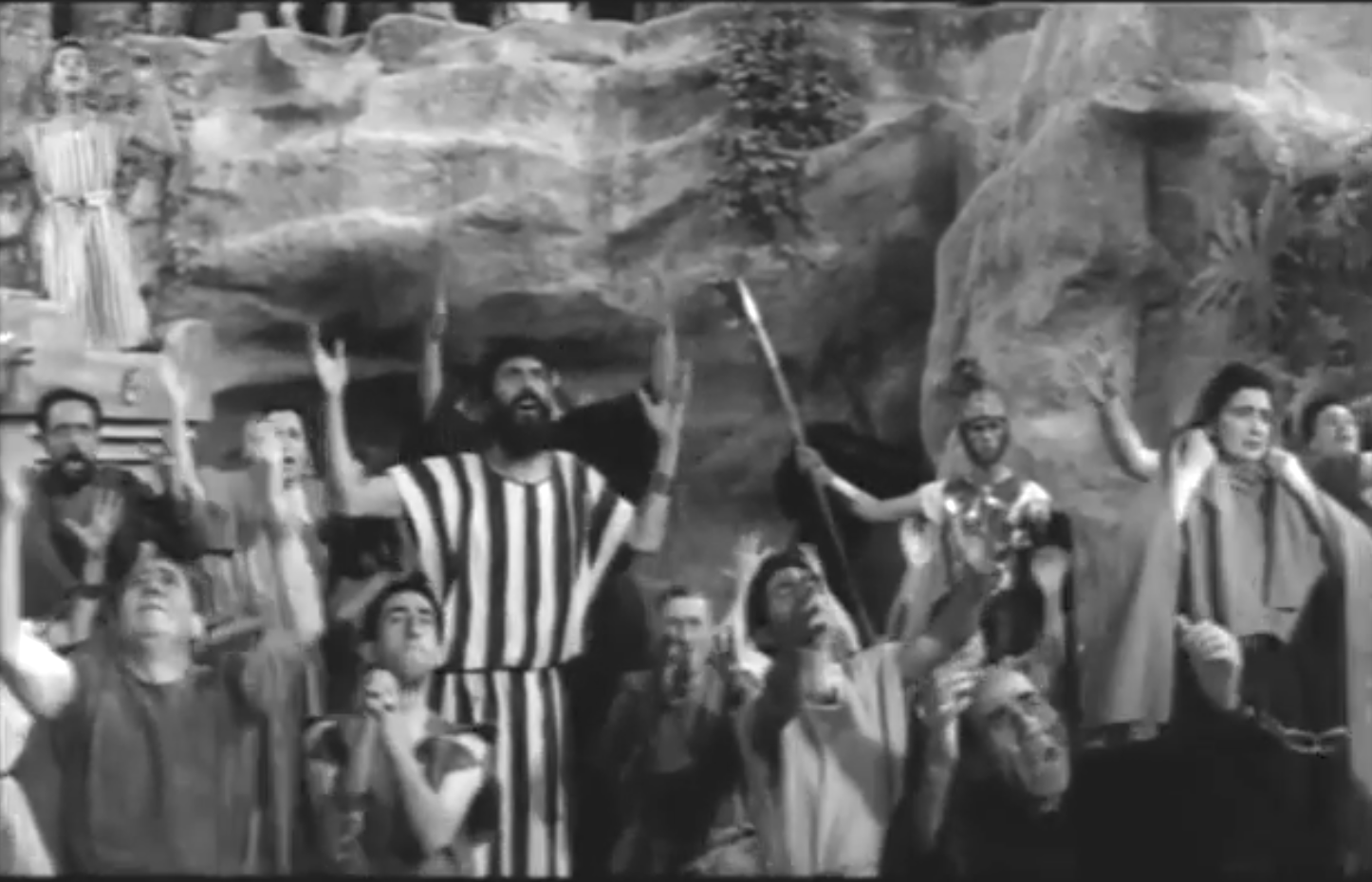
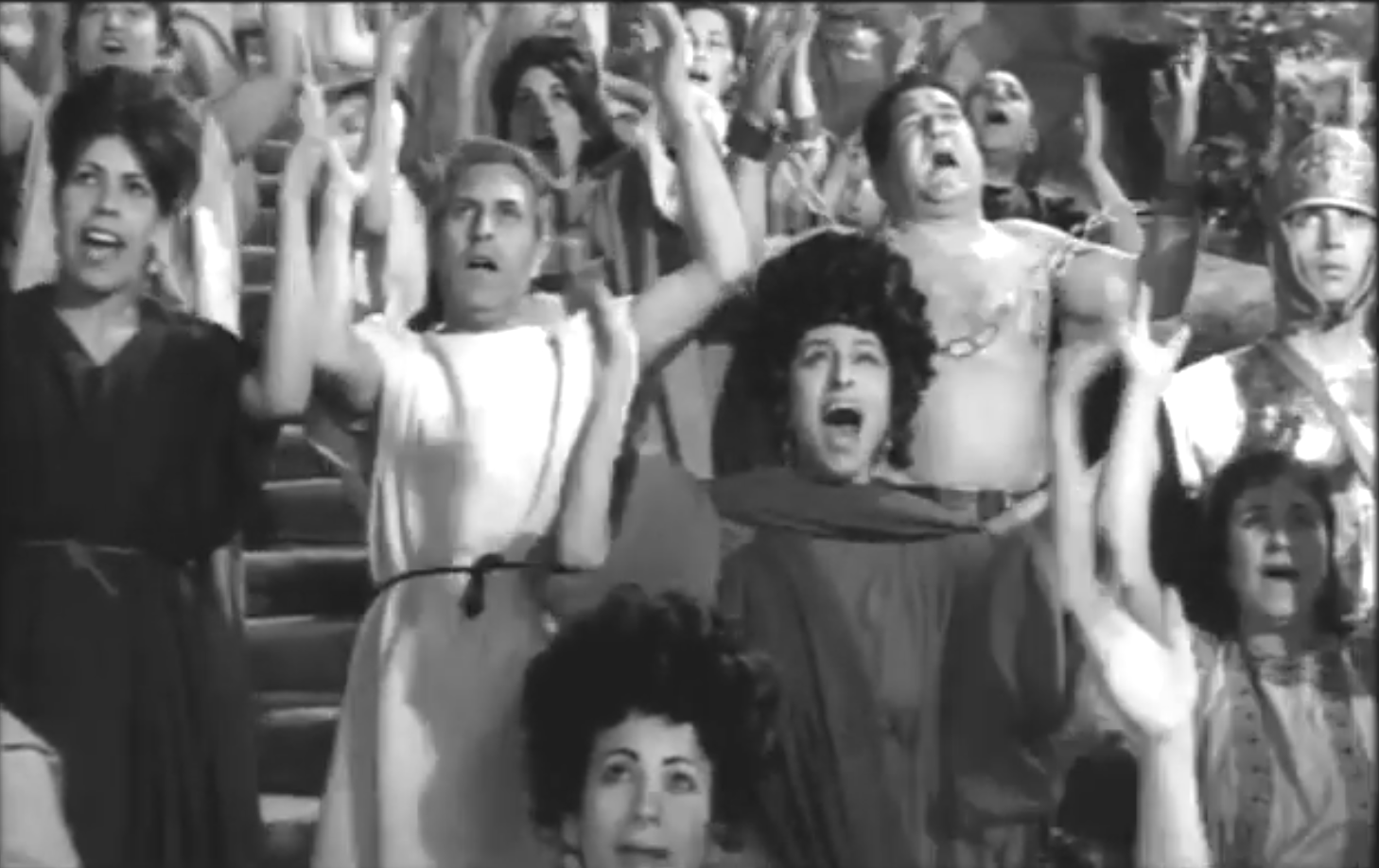
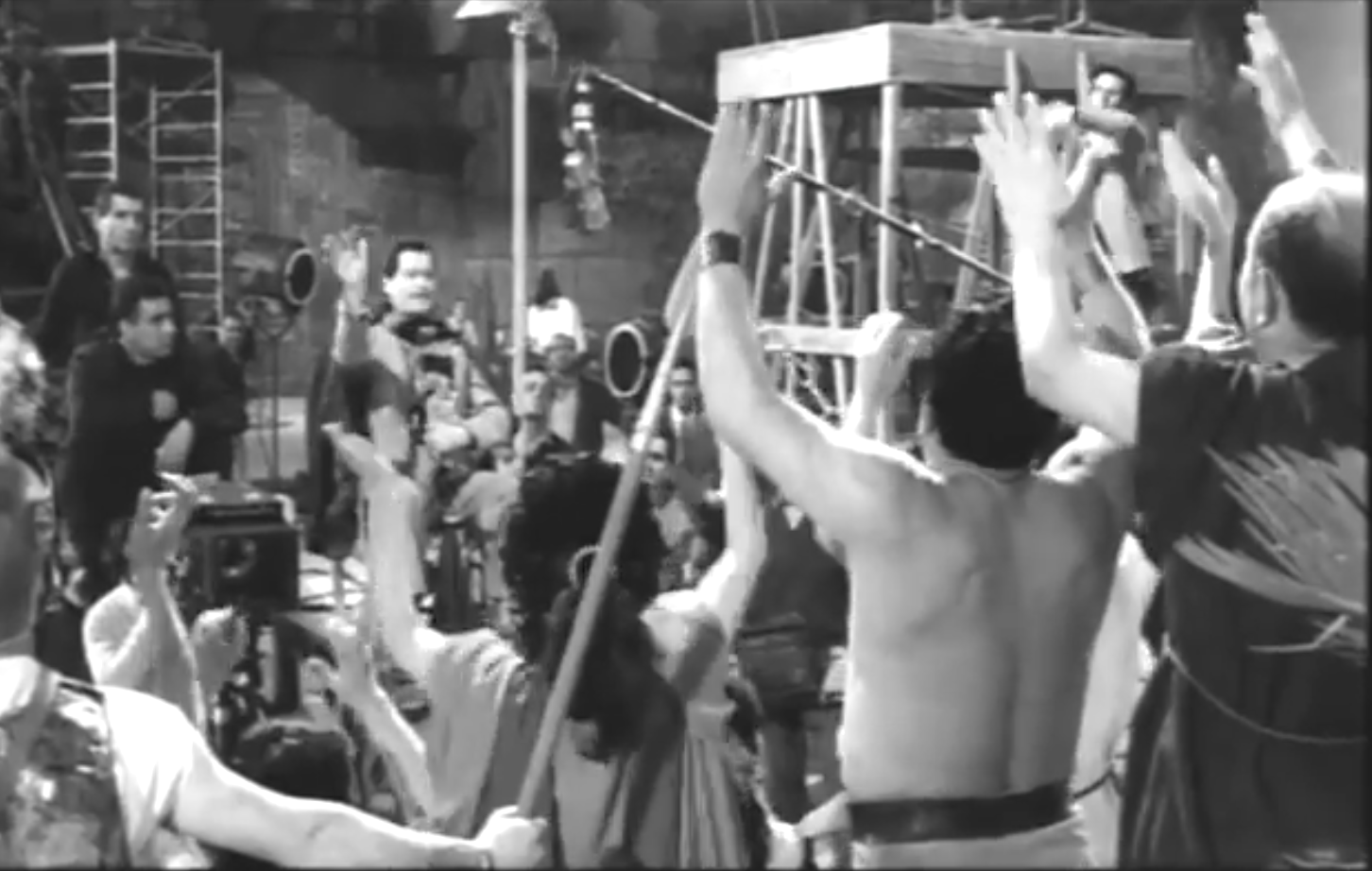
Taglio agli studi di Cinecittà, dove si sta girando un'epica religiosa. La macchina da presa fa una panoramica tra una folla di antichi romani, alcuni in catene.
Sollevano le braccia e gridano in coro: "È un miracolo! Un miracolo!"
Ed ecco Gioia (Anna Magnani), davanti, con indosso una tunica scura e un'enorme parrucca nera. A bocca aperta, sta gridando a squarciagola. Sarà forse solo una comparsa, ma sta dando tutto ciò che ha.
Cut to Cinecittà studios, where a religious epic is being shot. The camera pans through a crowd of ancient Romans, some in chains.
They hold up their arms and chant: “It’s a miracle! A miracle!”
And there is Gioia (Anna Magnani), in front, wearing a dark tunic and an enormous black wig. Mouth wide open, she’s shouting for all she’s worth. She may just be an extra, but she’s giving it all she’s got.
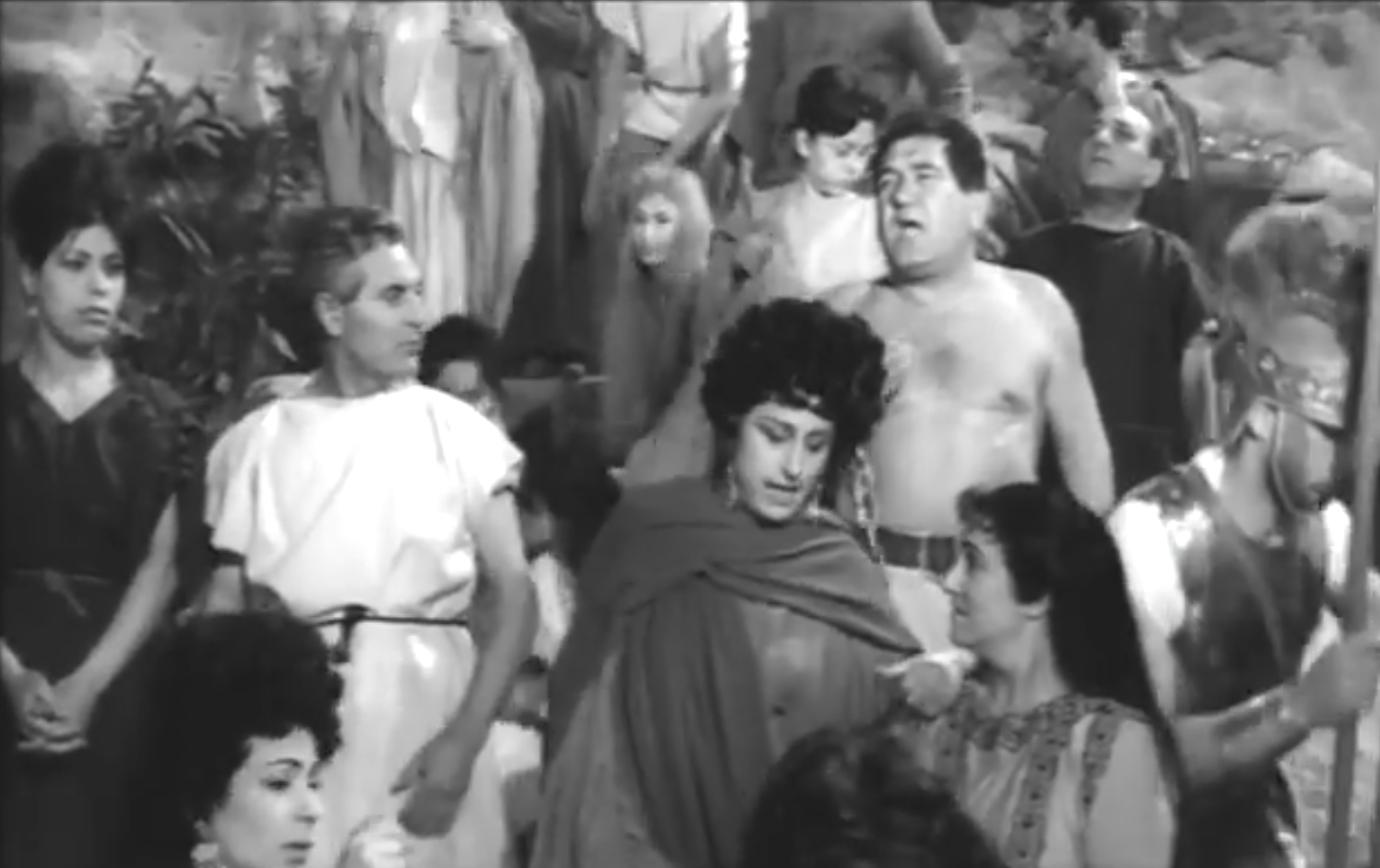
Il regista urla: "Stop!"
Mentre lui urla le indicazioni, Gioia brontola: "Queste maledette scarpe!"
Il regista ordina: “Pediconi, togli il terzo da sinistra! Ti pare che abbia la faccia da miracolato?"
The director yells, “Cut!”
As he calls out directions, Gioia mutters, “These damn shoes!”
The director orders, “Pediconi, take out the third from the left! Does it look to you like he’s seen a miracle?” [Literal translation: Does it seem to you that he has a miracle face?]
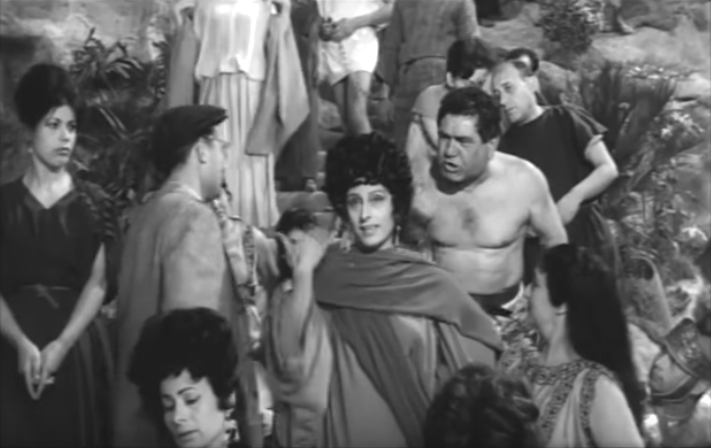
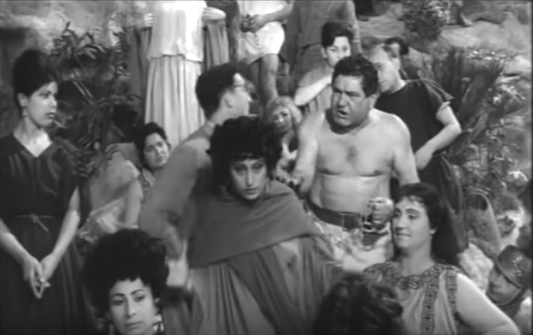
"Io?" chiede incredulo un uomo a petto nudo, in catene. Ha la corporatura di un pugile fuori forma.
“Ha ragione il dottore*. Questa è una scena mistica”, commenta Gioia con la comparsa accanto a lei. Quindi si rivolge direttamente al regista, indicando l’uomo: "Questo è stato pure segnalato dalla polizia, dottore!"
L'uomo le risponde indignato: “Tortorella, ti segnalo io! Se non ti fai i fatti tuoi un giorno o l’altro ti dò un cazzotto in testa!" Lei gli fa un gesto sprezzante e lui la spinge per assicurarsi che lei abbia capito.
*”Dottore” si può usare in Italia come termine di rispetto.
“Me?” asks a bare-chested man in chains, disbelieving. He has the build of an out-of-shape boxer.
“The doctor* is right. This is a mystic scene,” comments Gioia to the extra beside her. Then she addresses the director directly, pointing to the man, “He even got warned by the police, sir!”
The man answers her indignantly, “Tortorella, I’m warning you! If you don’t mind your own business, one of these days I’ll slug you in the head!” She gestures dismissively to him, and he shoves her to make sure she got the point.
*“Doctor” may be used in Italy as a term of respect.
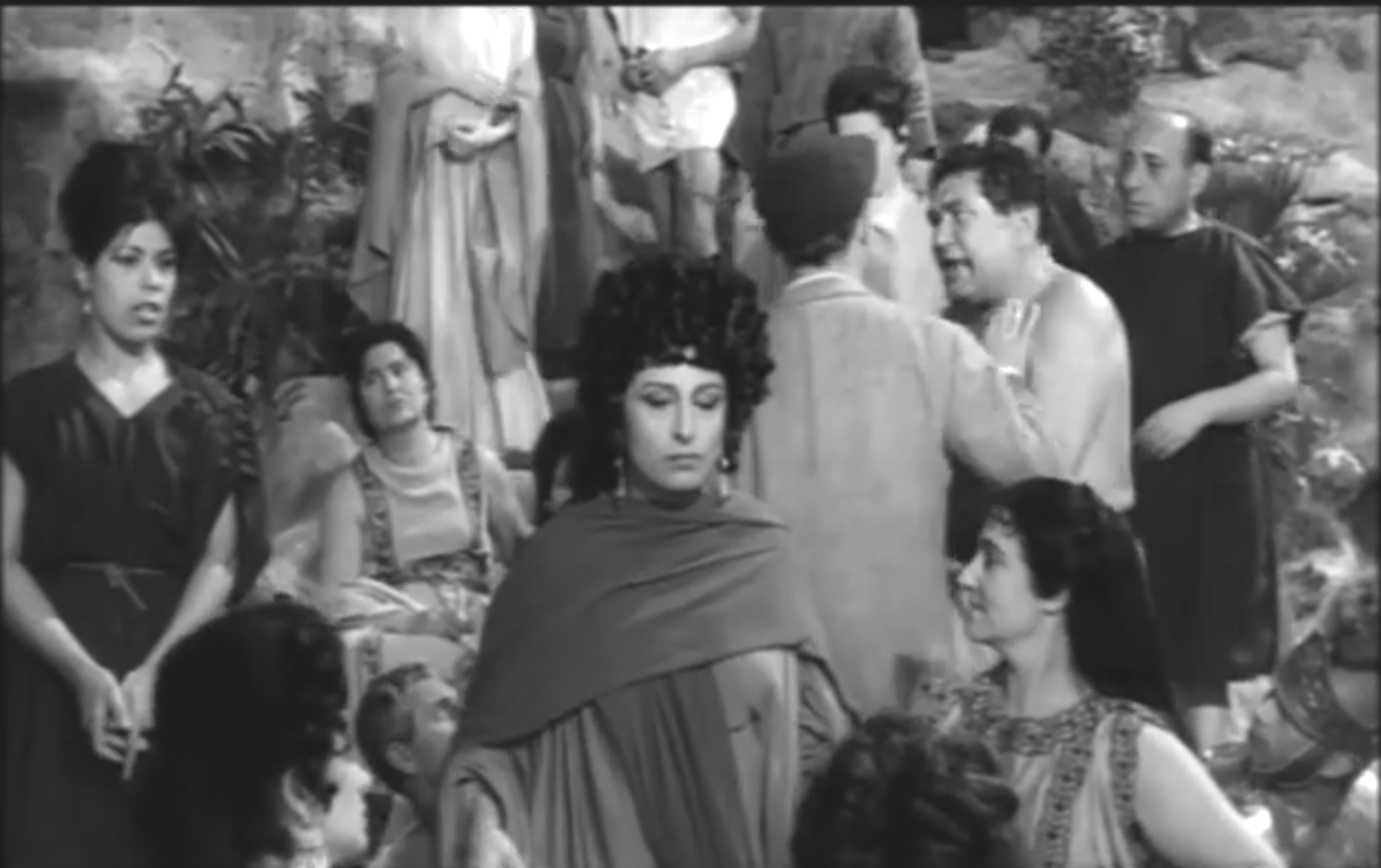
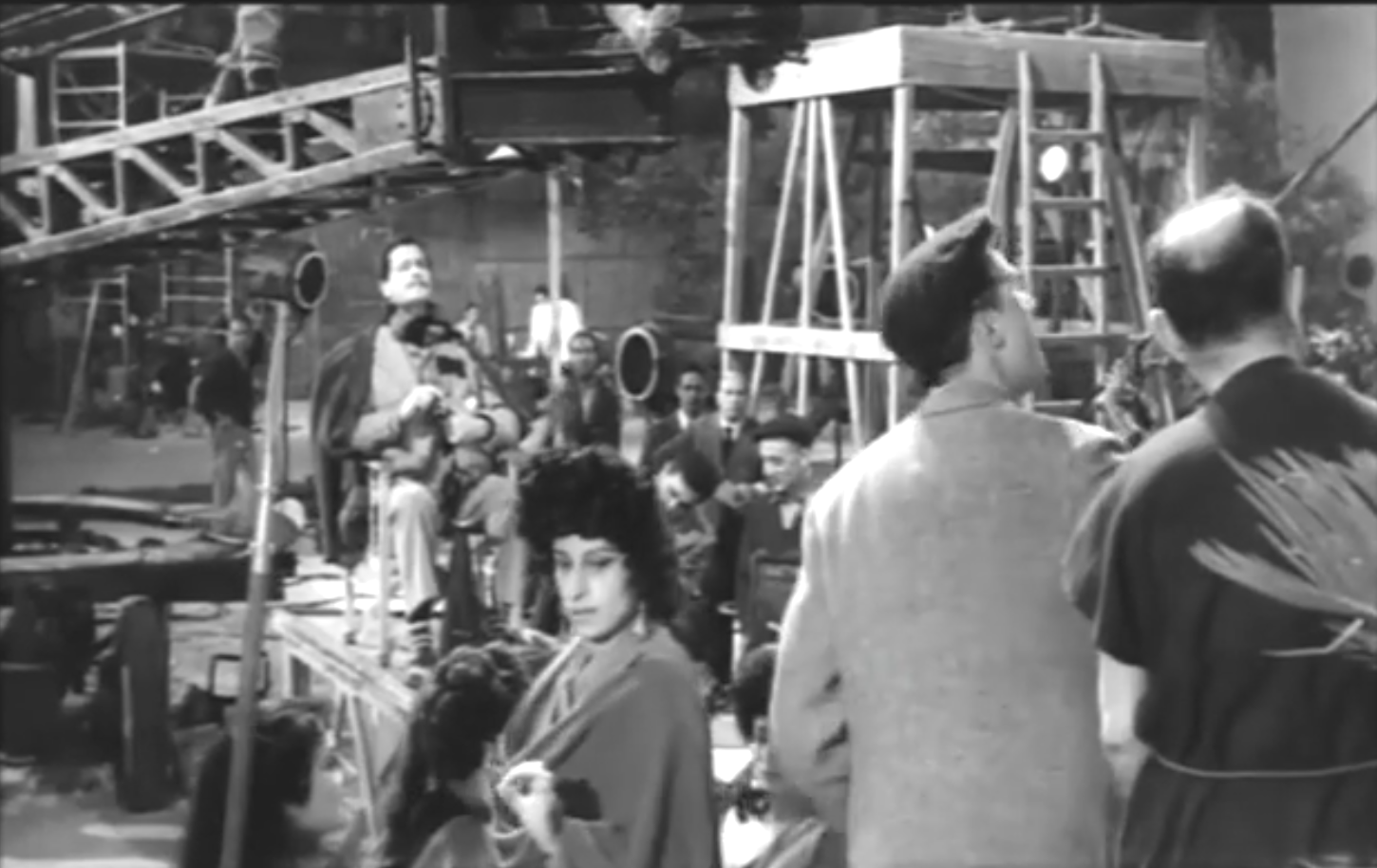
Pediconi – che è l’aiuto regista – dice all'uomo: "Dai, dai, stai zitto! Ha ragione Tortorella”.
"Sì, ha sempre ragione!" protesta l'uomo, ritirandosi.
Mentre il regista e le comparse osservano, Pediconi aggiunge: “E tutti voi fate come Tortorella che ce la mette tutta! In piedi! Pronti!"
Pediconi – who is the assistant director – tells the man, “Come on, come on, shut up! Tortorella is right.”
“Yeah, she’s always right!” the man protests, retreating.
As the director and the extras look on, Pediconi adds, “And you all, do like Tortorella does – she gives her all! Stand up! Ready!”
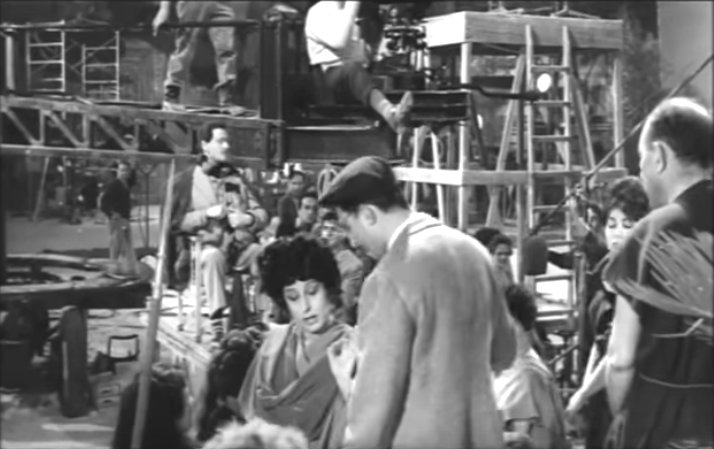
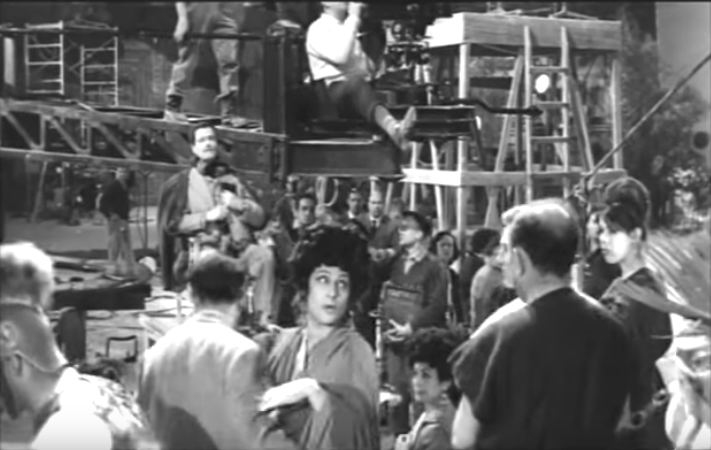
Ma Gioia non ha finito di dare i suoi suggerimenti: "Ma le mani quello deve tenerle a posto!" Pediconi la ignora; passa indifferente senza nemmeno uno sguardo nella sua direzione.
But Gioia is not finished giving her suggestions: “But that guy has to keep his hands in place!” Pediconi ignores her; he walks away without even a glance in her direction.
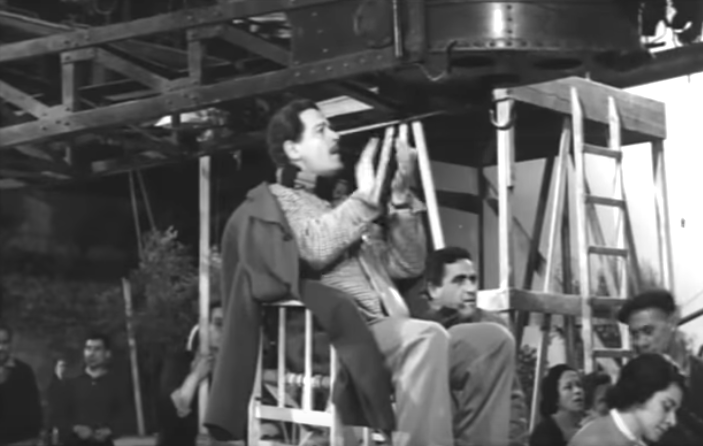
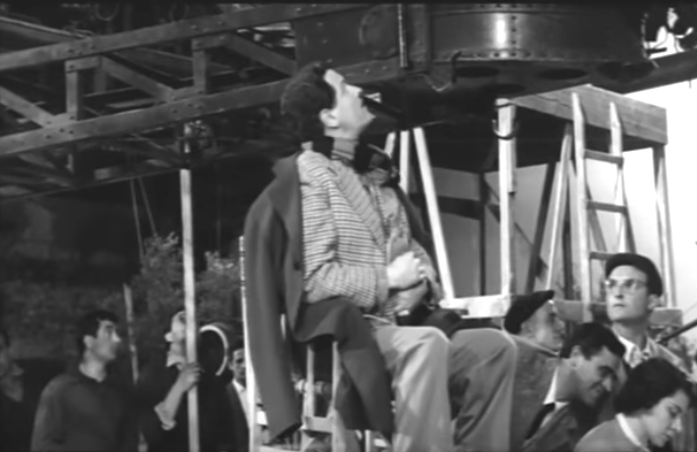
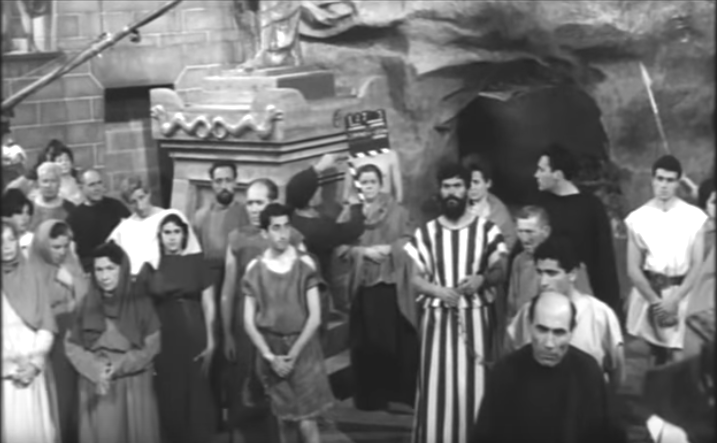
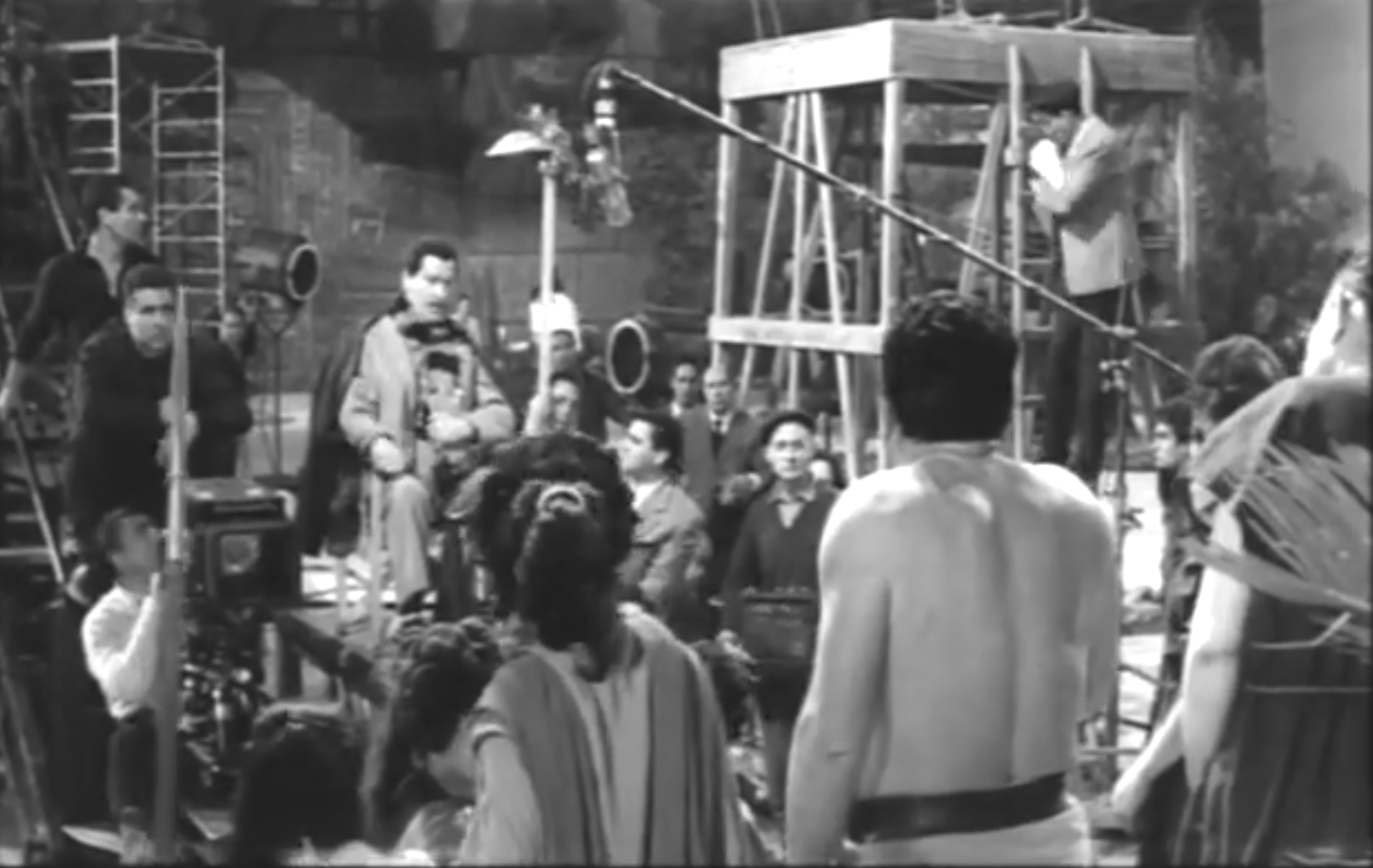
Nel sua sedia alta, il regista batte le mani ed esclama: "Forza, che è tardi! Dopo questa inquadratura, andremo tutti a casa a bere lo spumante. Pronti allora? Attenti agli orologi da polso! Pronti?" Non sarebbe bello far apparire l’occasionale orologio del XX secolo in questa epica romana.
Guardando l'operatore della macchina da presa, ordina: "Motore! Ciak!” L'uomo che tiene in mano il ciak urla "Centoventisette, terza*!"
*Questo è il terzo ciak – la terza volta che girano la 127ma scena.
In his high chair, the director claps his hands and calls out, “Let’s go, it’s late. After this shot, we’ll all go home to have some bubbly. Ready then? Look out for the wristwatches! Ready?” It wouldn’t do to have the odd 20th century timepiece show up in this Roman epic.
Looking at the camera operator, he orders, “Action! Clapperboard!” The man holding the clapperboard calls out “One hundred twenty seven, third!”*
*This is the third take – the third time they’re shooting the 127th scene.
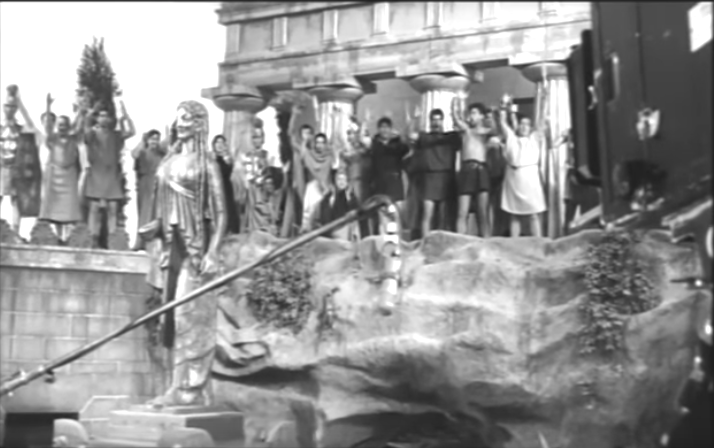
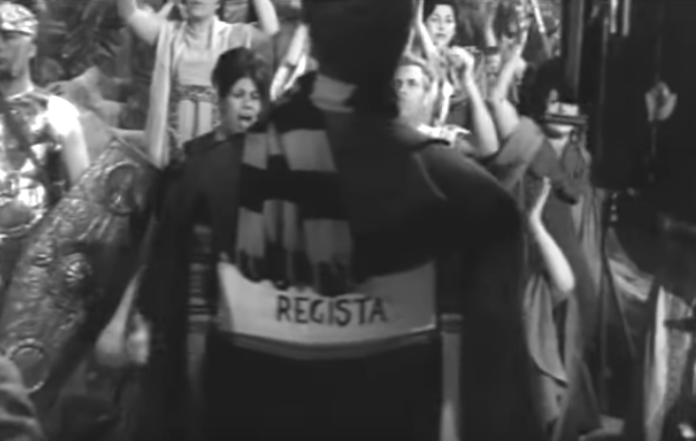
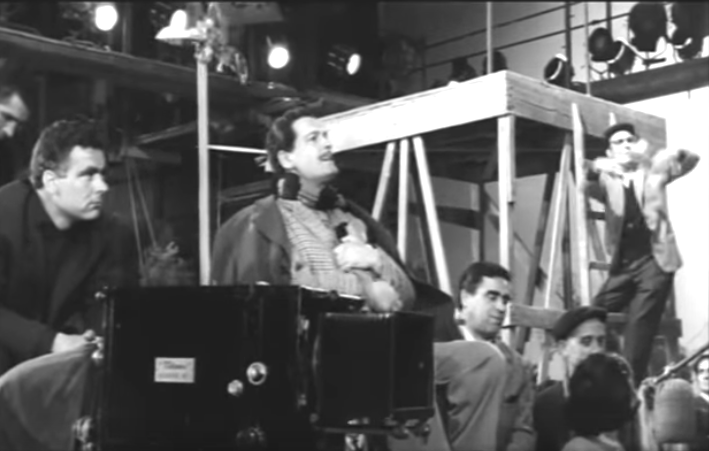
Il regista urla "Azione!" Qui è dove siamo entrati: gli antichi romani alzano le mani e gridano: "Miracolo! Miracolo!” Vediamo la giraffa e la macchina da presa che fa una panoramica. Alla fine, il regista dice: "Stop! Va bene! Ci vediamo domani”.
The director calls, “Action!” This is where we came in: the ancient Romans raise their hands and yell, “Miracle! Miracle!” We see the boom and the panning camera. Finally, the director says, “Stop! Okay. See you all tomorrow.”
FINE PARTE 2
Ecco Parte 3 of this cineracconto! Subscribe to receive a weekly email newsletter with links to all our new posts.