Regia: Mario Monicelli (1960)
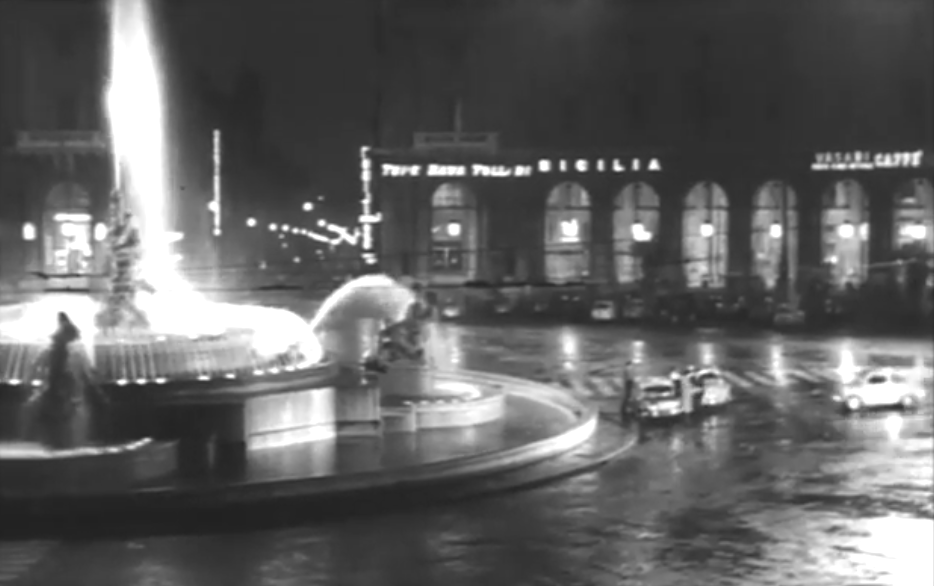
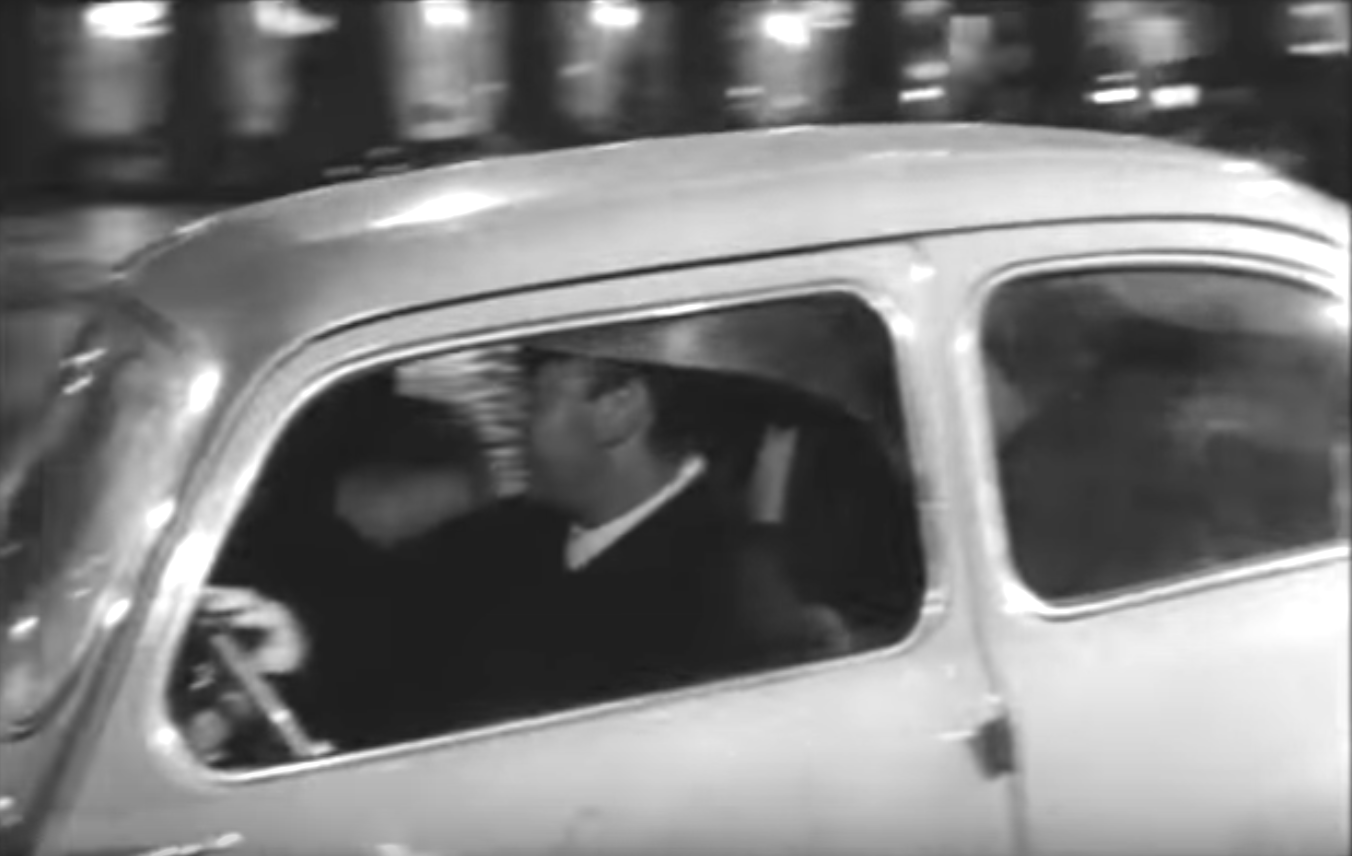
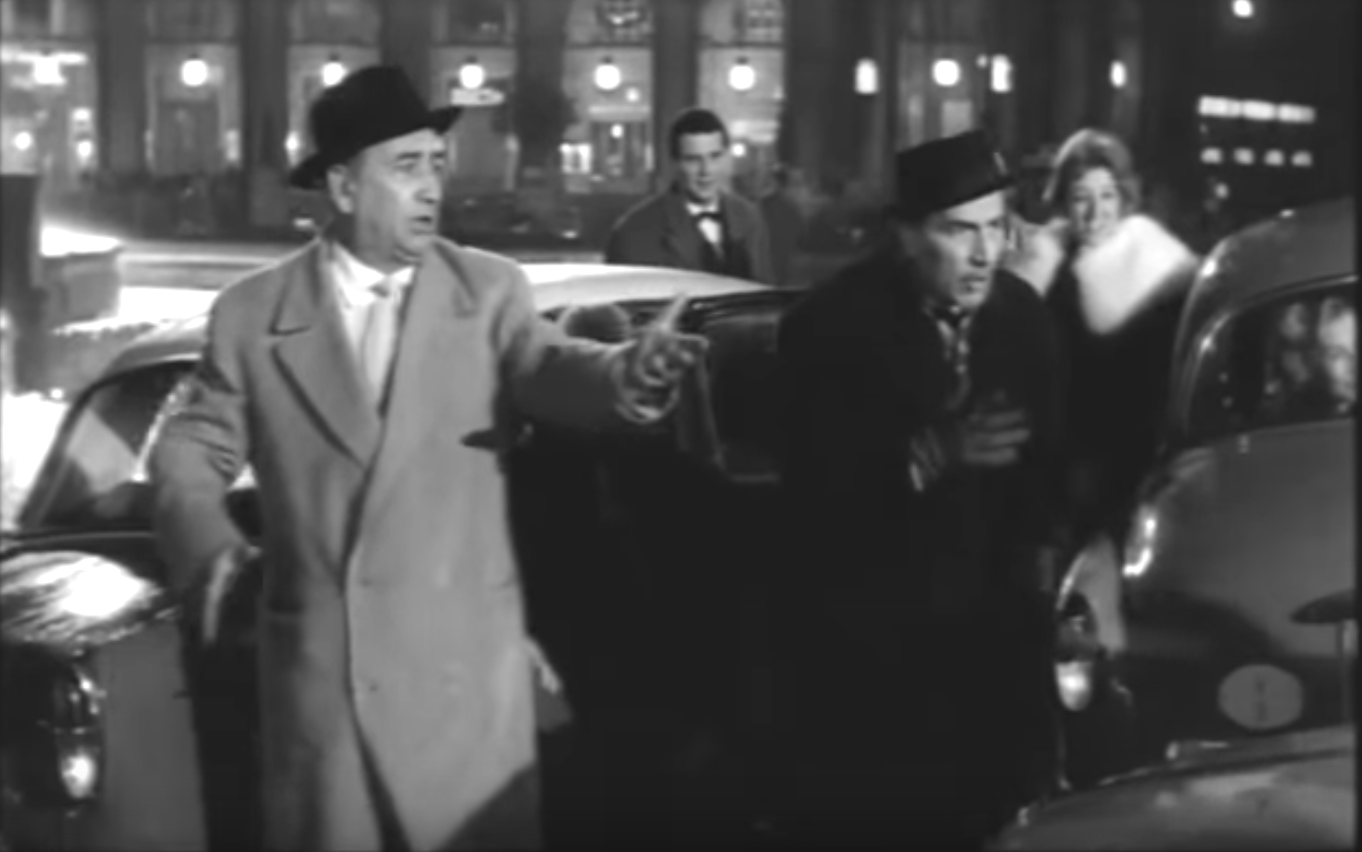
Colombini e i suoi amici sono alla Fontana dell'Esedra. Una piccola macchina piena di gente arriva stridendo e si ferma improvvisamente proprio davanti a loro, quasi li investe. Escono Mimì e altri, in mezzo a un coro di indignazione: "Sei matto?!" "Vuoi ucciderci proprio alla vigilia di Capodanno?!"
Colombini and his friends are at the Esedra Fountain. A little car jammed with people comes screeching up and pulls to a sudden stop right in front of them, almost running them over. Mimì and others climb out, amid a chorus of outrage: “Are you crazy?!” “Want to kill us right on New Year’s Eve?!”
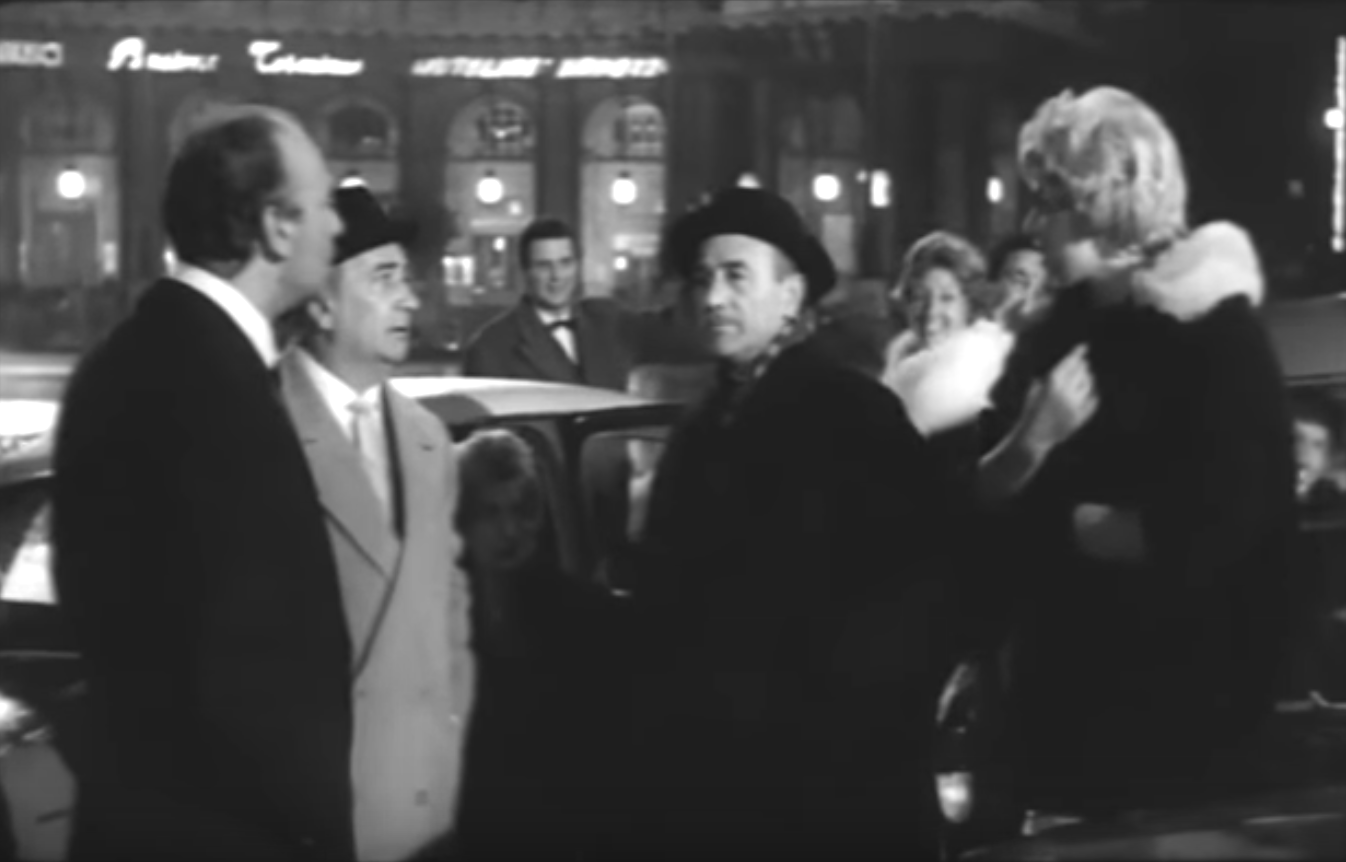
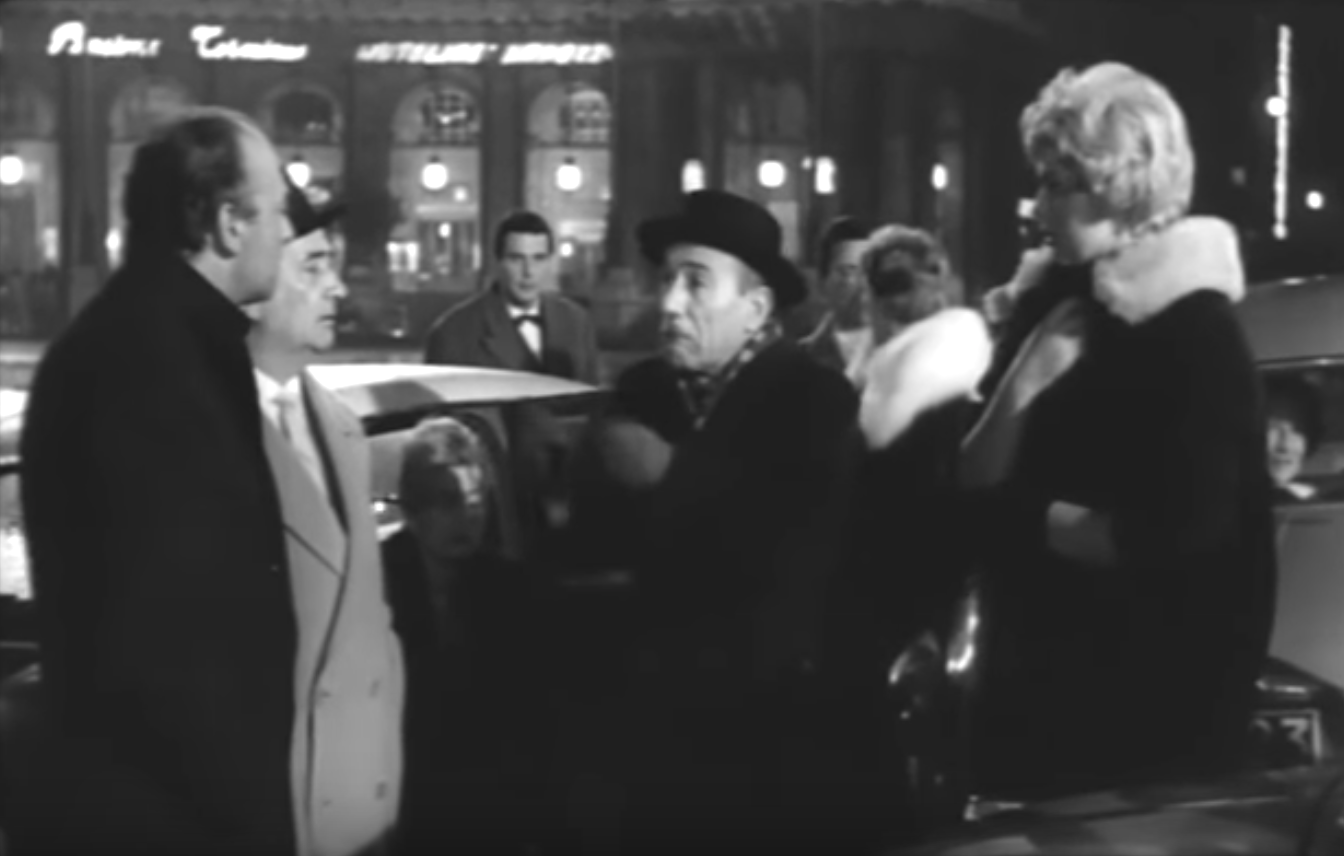
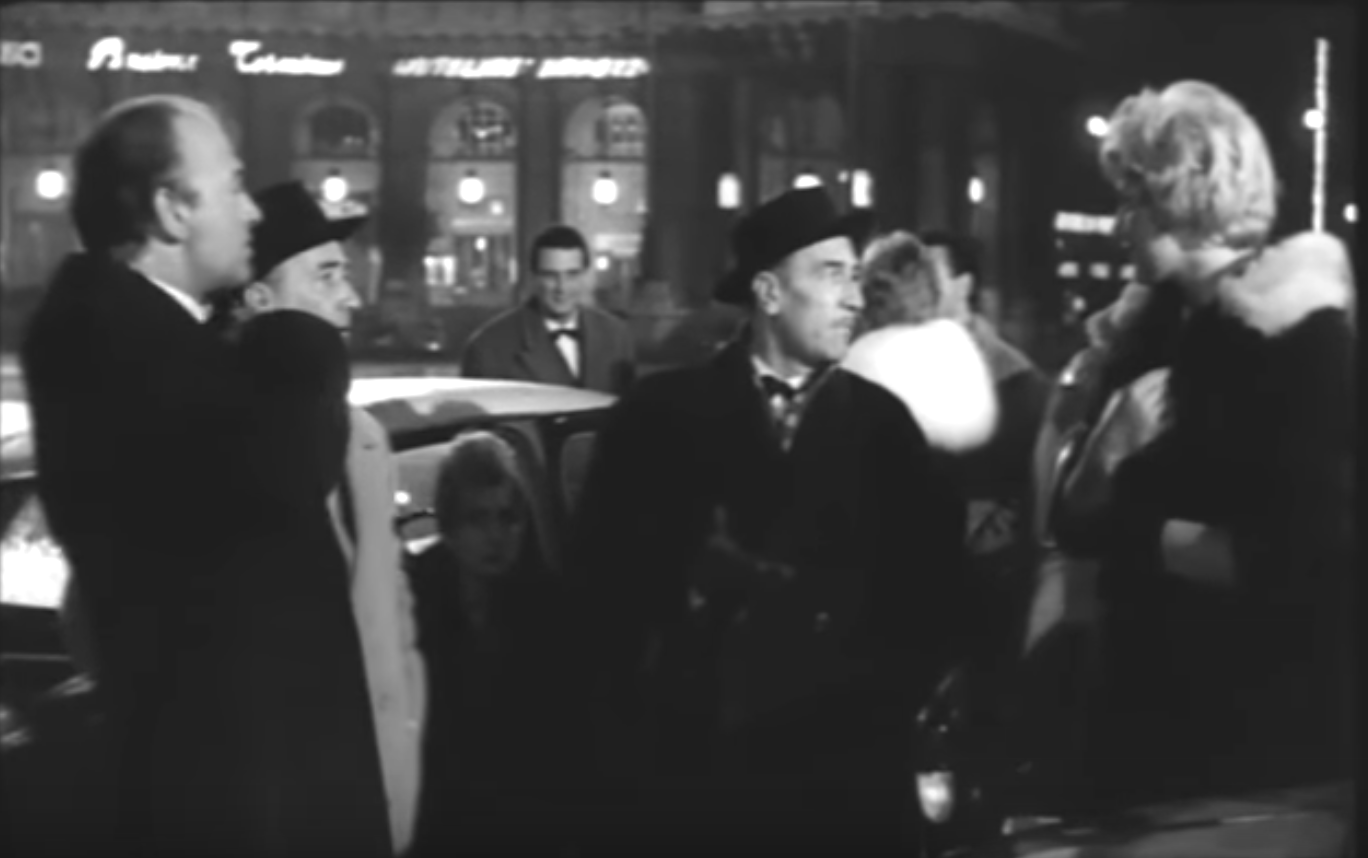
Ci sono cattive notizie: "Siamo tredici!"
"Perché?" – chiede Mimì –"Tortorella ha detto che viene".
Colombini spiega: “Sì, ma non viene Amapola”.
Il suo amico lo rimprovera di nuovo: “Colombini! Mannaggia a te e a quando ti do retta! Non avresti dovuto invitare Tortorella!"
Colombini si difende: “Ma che dici? Se non mi avessi dato fastidio, non le avrei telefonato".
There’s bad news: “We’re thirteen!”
“Why?” asks Mimì. “Tortorella said she would come.”
Colombini explains, “Yes, but Amapola is not.”
His friend scolds him again, “Colombini! Damn you and damn me when I listen to you! You shouldn’t have invited Tortorella!”
Colombini defends himself, “What are you saying? If you hadn’t nagged me, I wouldn’t have called her.”
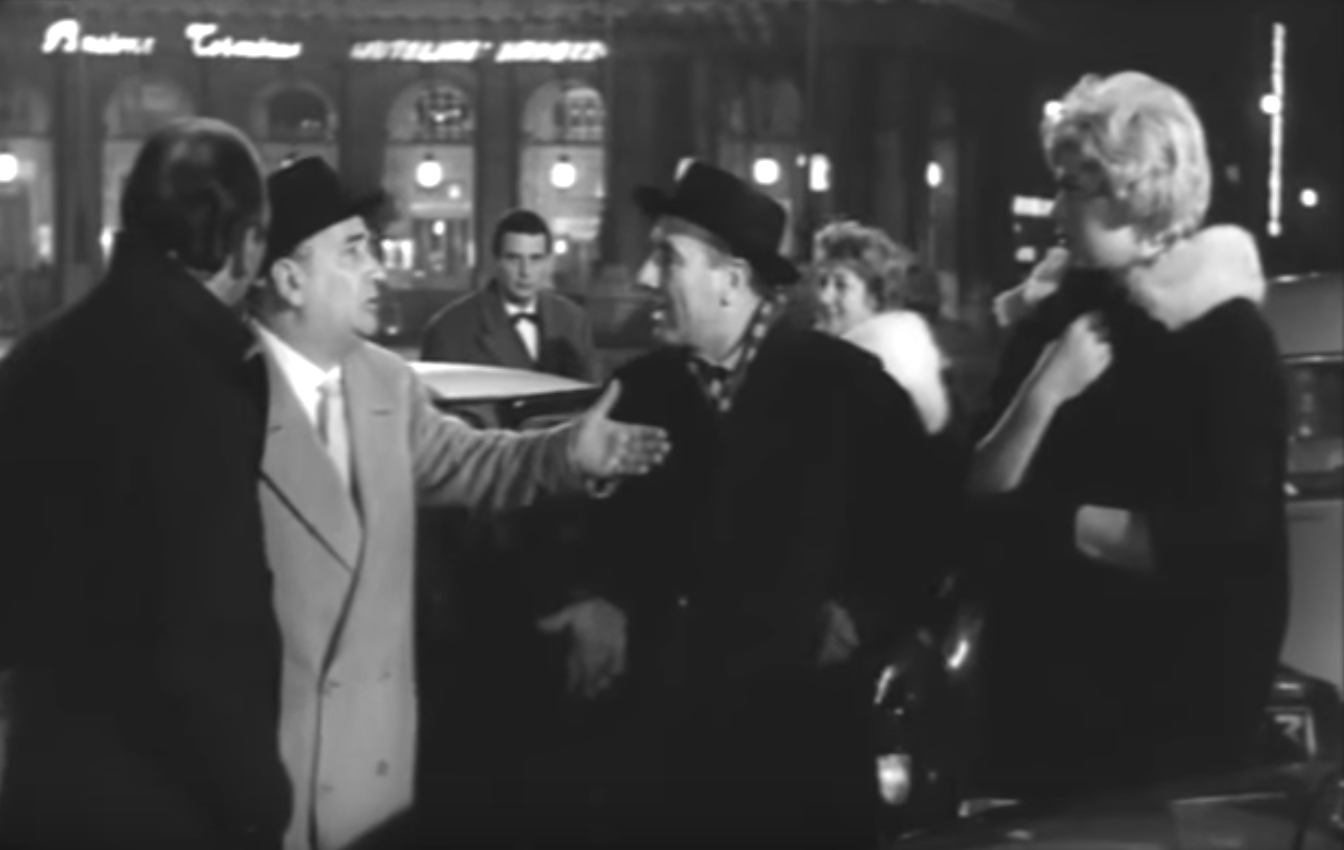
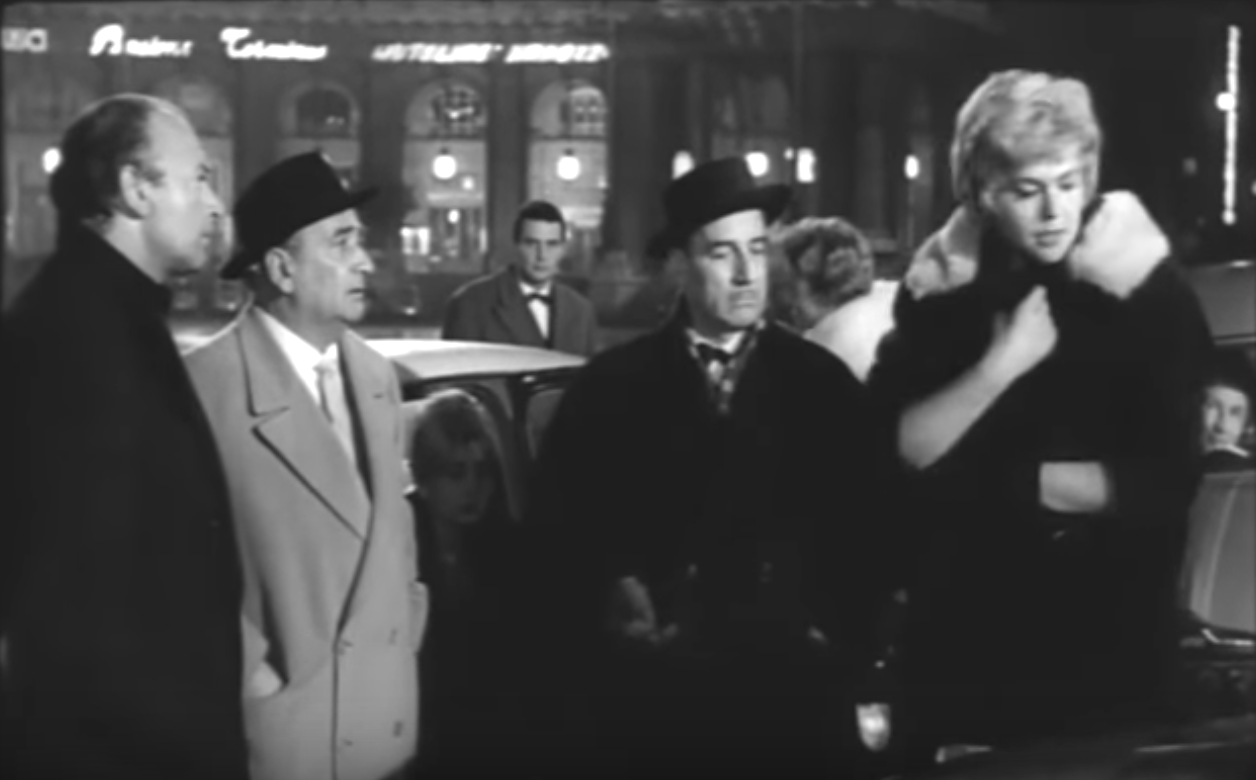
Un uomo in piedi tra loro interrompe il litigio. “Va bene, Tortorella rimane a casa. Mimì, vai a telefonarle".
"Ma tu sei matto! A quest’ora? Avreste dovuto pensarci prima!"
A man standing between them interrupts their bickering. “Alright, Tortorella will stay home. Mimì, go phone her.”
“Are you crazy? At this hour? You guys should have thought of it before.”
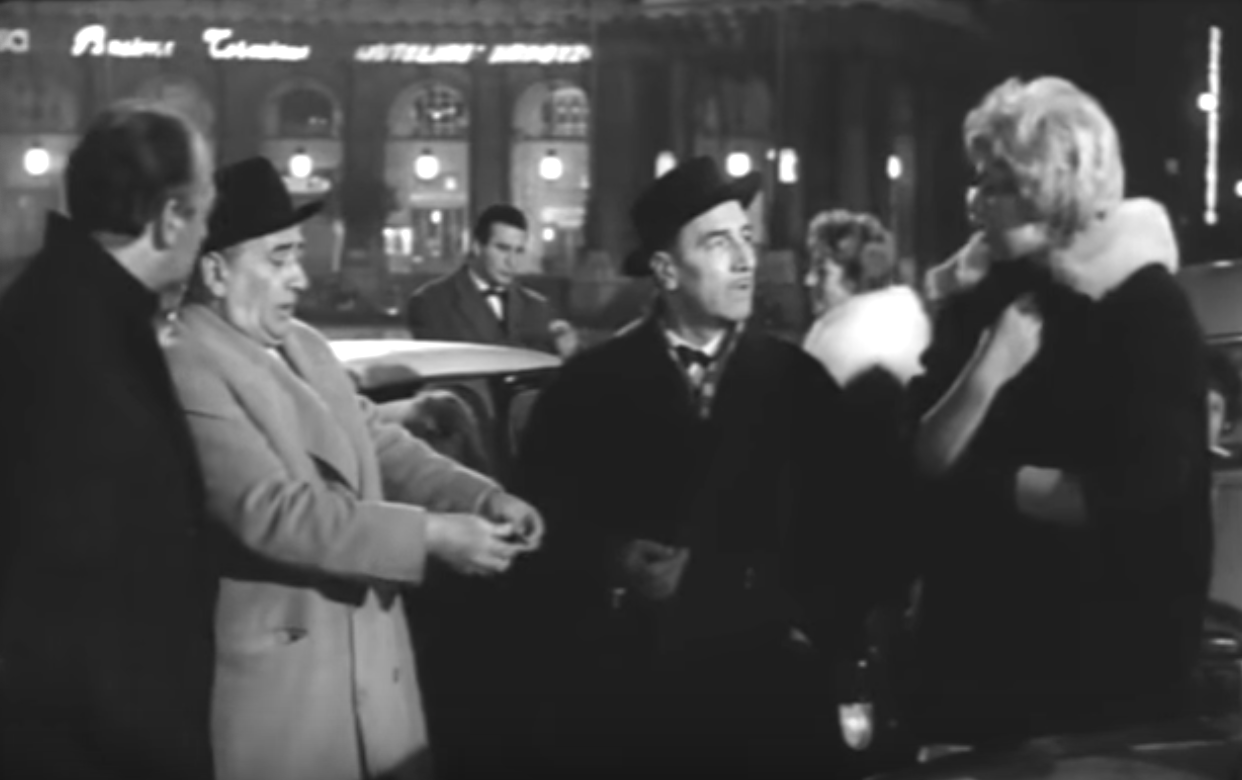
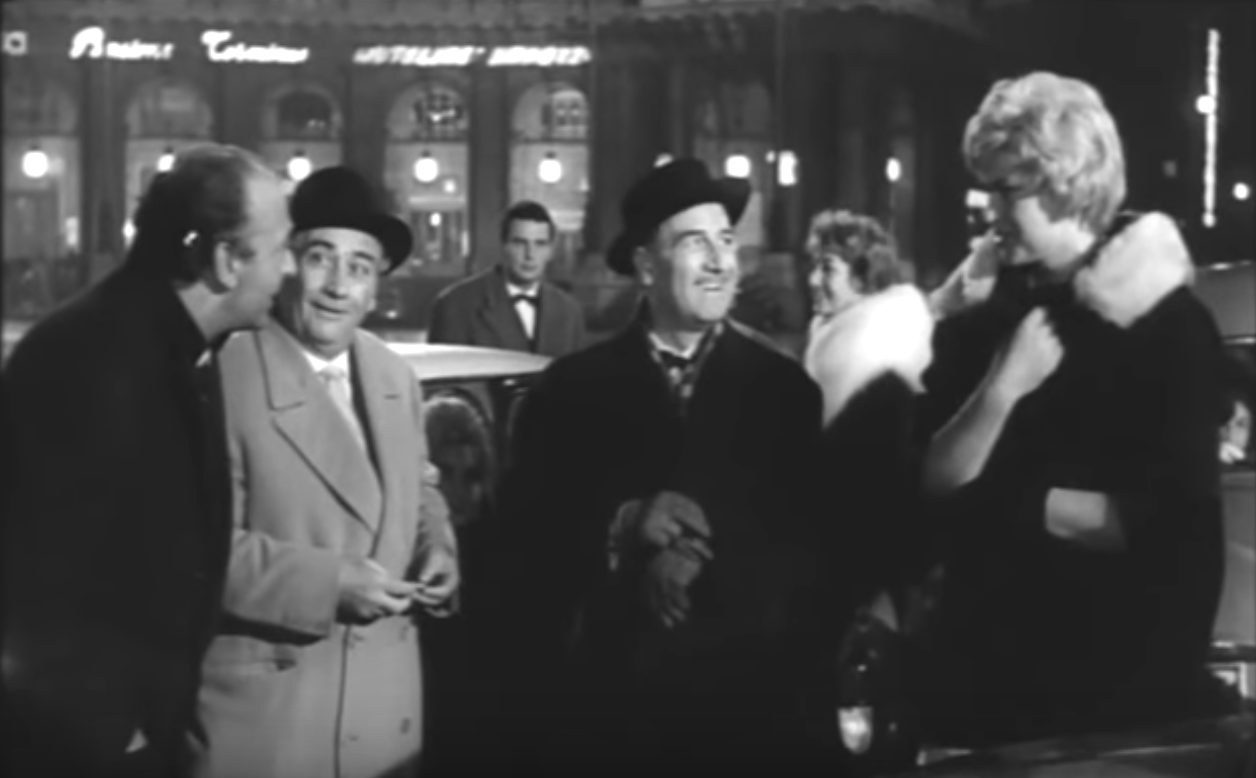
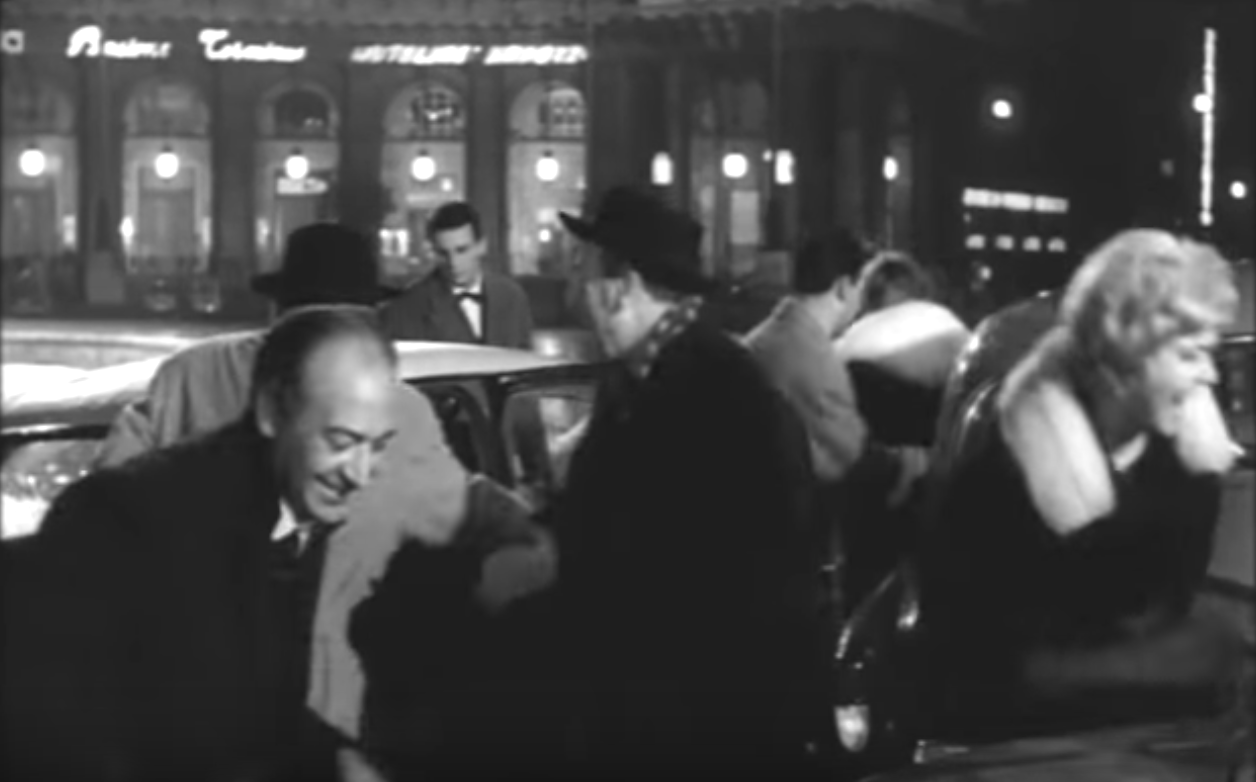
Colombini ha un'idea. Chiede: "Che ora è?"
L'uomo dice: "Sono quasi le dieci e cinque".
“Dieci e cinque...” riflette Colombini.
I suoi amici lo capiscono. "Le dieci sono passate. Sai cosa c'è?"
Si guardano l'un l'altro, poi all'improvviso lo capiscono tutti. Corrono come pazzi alle loro macchine, ridendo. "Andiamo!" "Sbrighiamoci!" “Via!”
Le tre macchine girano intorno alla fontana e poi se ne vanno via come lepri.
Colombini has an idea. He asks, “What time is it?”
The man says, “It’s almost five past ten.”
“Five past ten...” muses Colombini.
His friends get it. “So it’s past ten. You know what?”
They look from side to side at each other, then suddenly they all get it. They make a mad dash for their cars, laughing. “Let’s go!” “Let’s hurry!” “Out of here!”
The three cars circle around the fountain and then take off like bats out of hell.*
*The Italian is “took off like hares.”
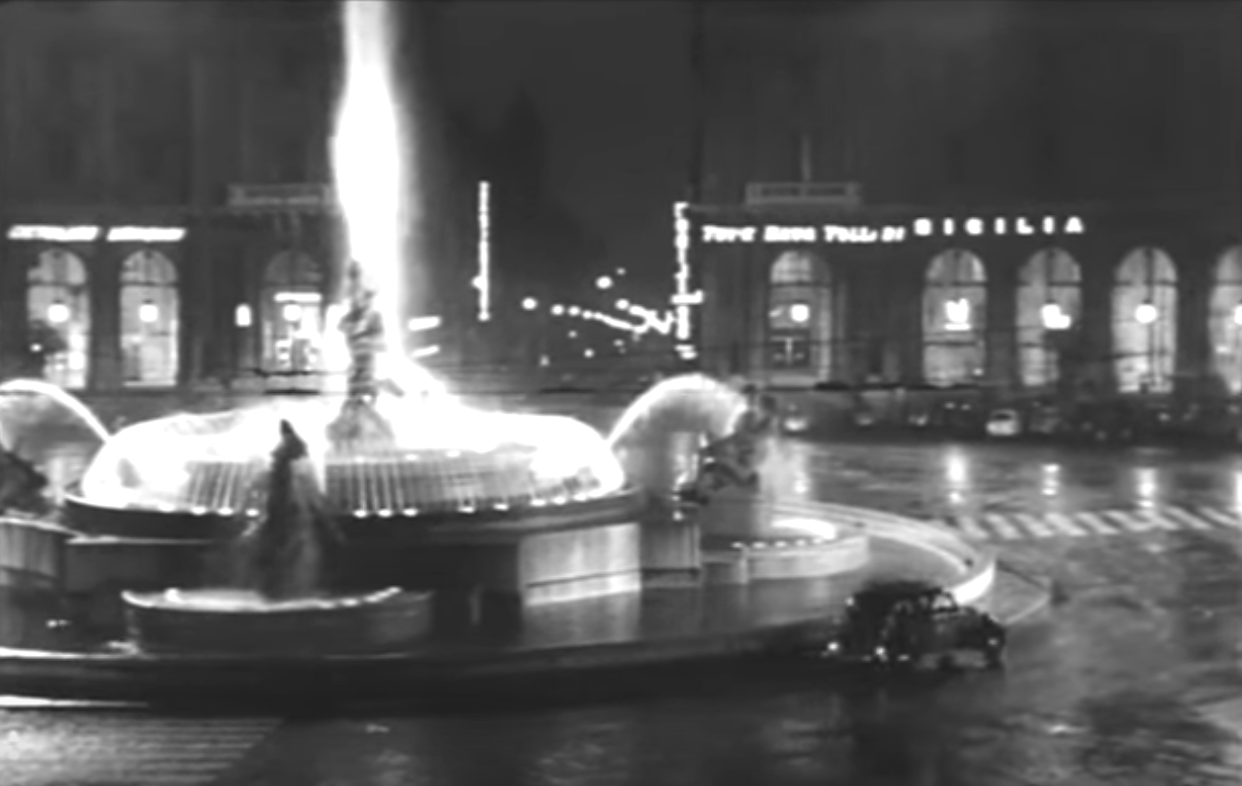
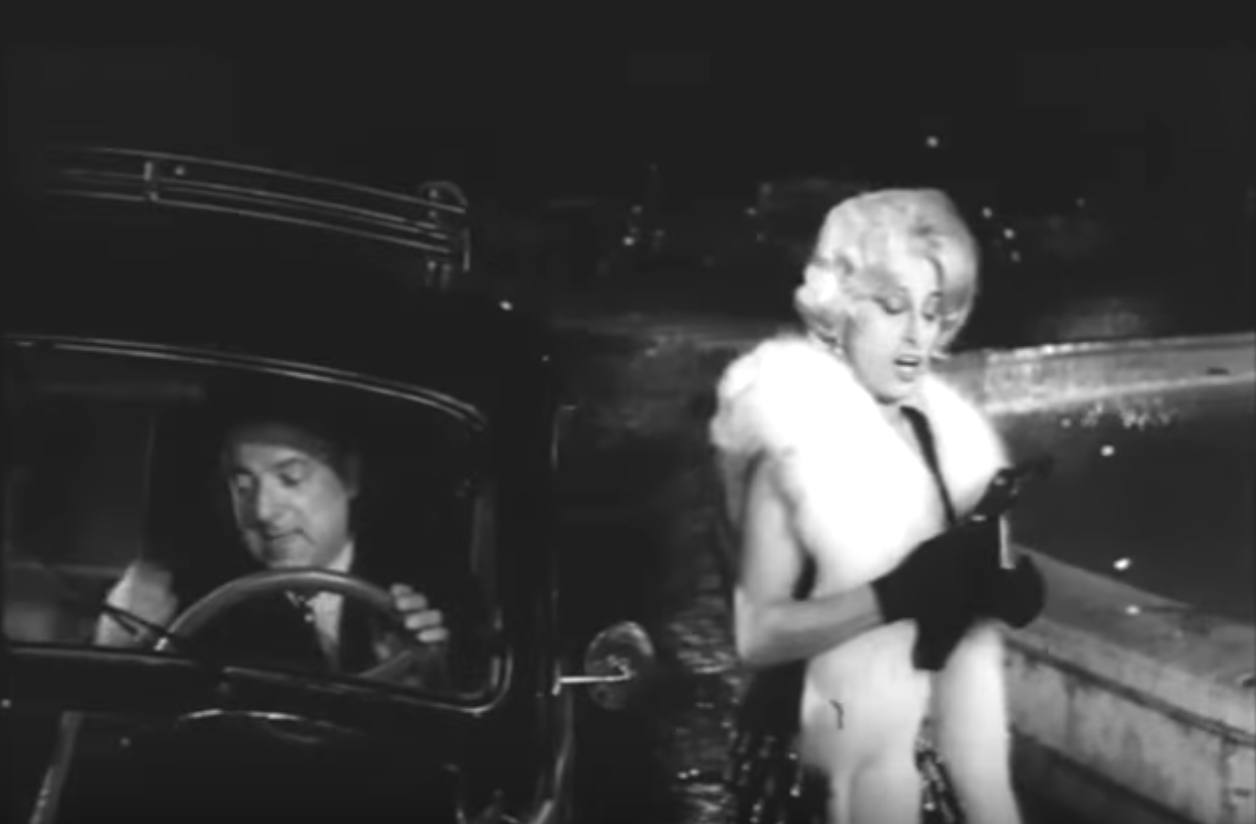
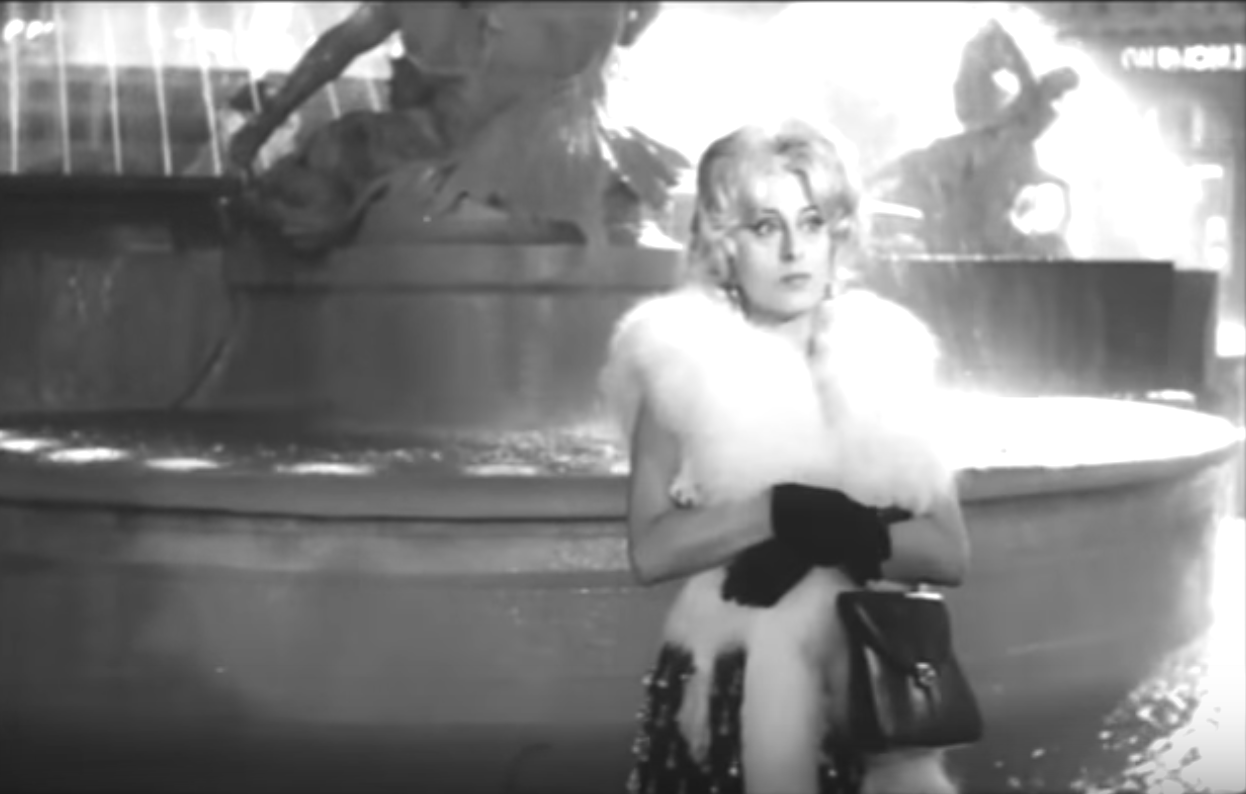
Mentre si allontanano dalla fontana, Gioia arriva sul suo taxi.
Quando esce dall'auto, vediamo che i suoi capelli sono biondi: ha davvero fatto qualcosa di nuovo su se stessa per il nuovo anno!
Cammina vicino alla fontana, guarda nella borsetta, aggiusta la sua elegante pelliccia bianca. Poi si guarda intorno, le spalle alla fontana, le mani incrociate, in attesa. È una vista solitaria.
As they leave the fountain, Gioia arrives in her taxi.
When she gets out of the car, we see that her hair is blonde: she really has done something new with herself for the New Year!
She walks by the fountain, looks in her purse, adjusts her elegant white fur. Then she looks around, her back to the fountain, hands crossed, waiting. It’s a lonely sight.
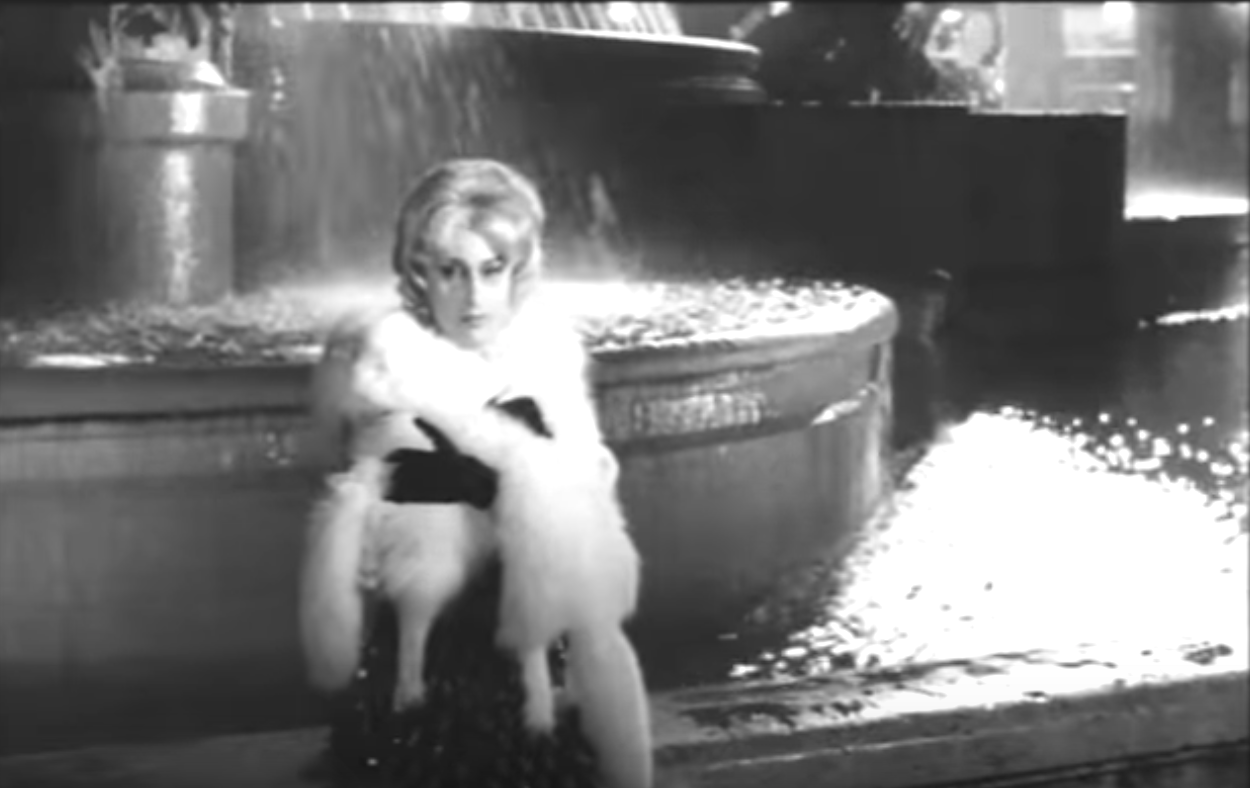
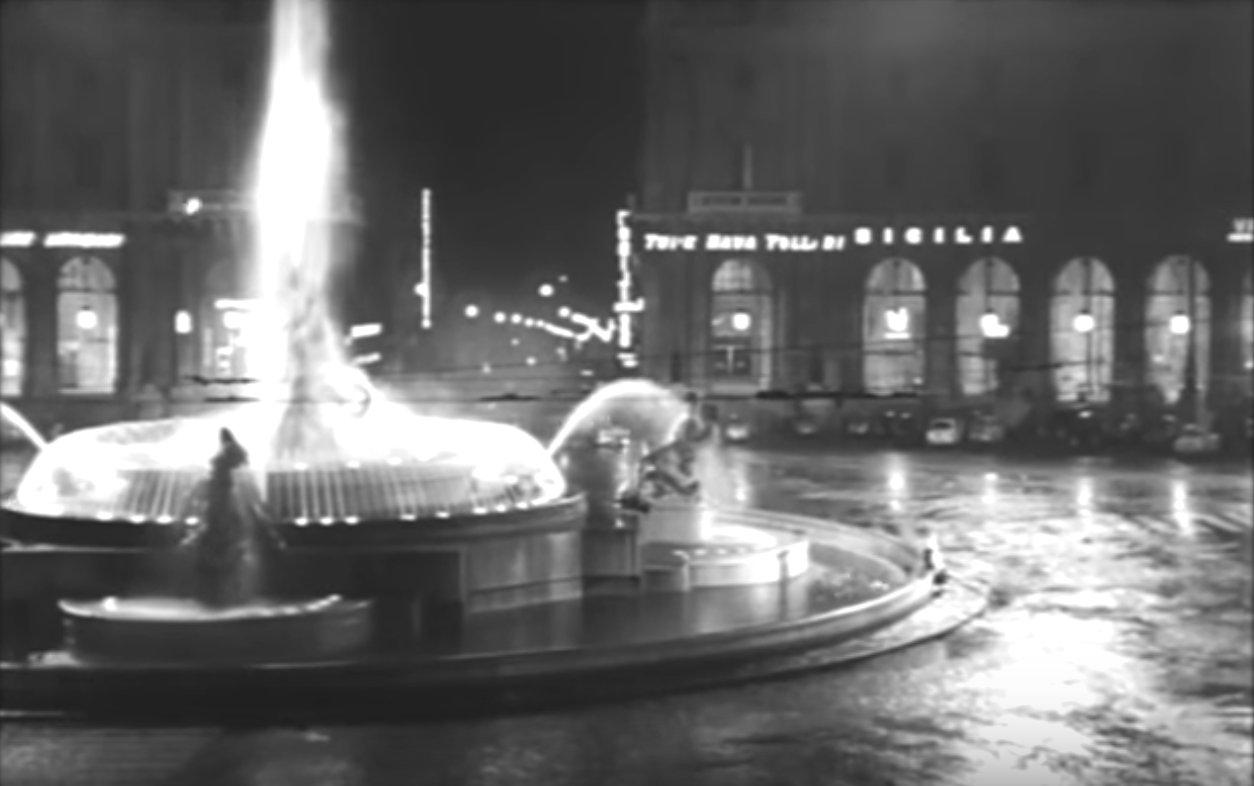
Quindi si siede, sconsolata, mormorando: "Se avessi sbagliato fontana?" In un campo lungo, vediamo il flusso d'acqua brillante della fontana, il bagliore riflesso dalla strada e le lettere al neon della città sullo sfondo. Lei è l'unica figura in vista.
She sits down, disconsolate, muttering, “What if I’m at the wrong fountain?” In a long shot, we see the fountain’s bright stream of water, the reflected glare from the street, and the neon letters of the city in the background. She’s the only figure in sight.
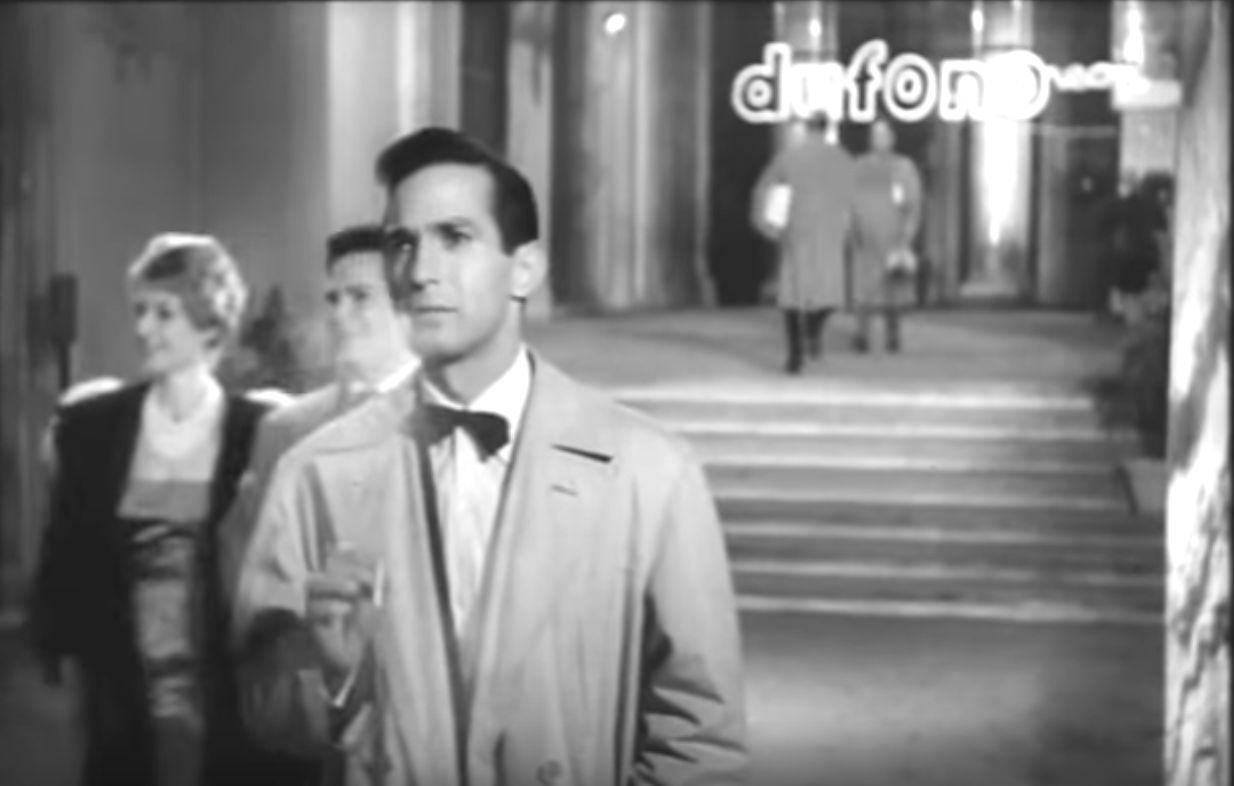
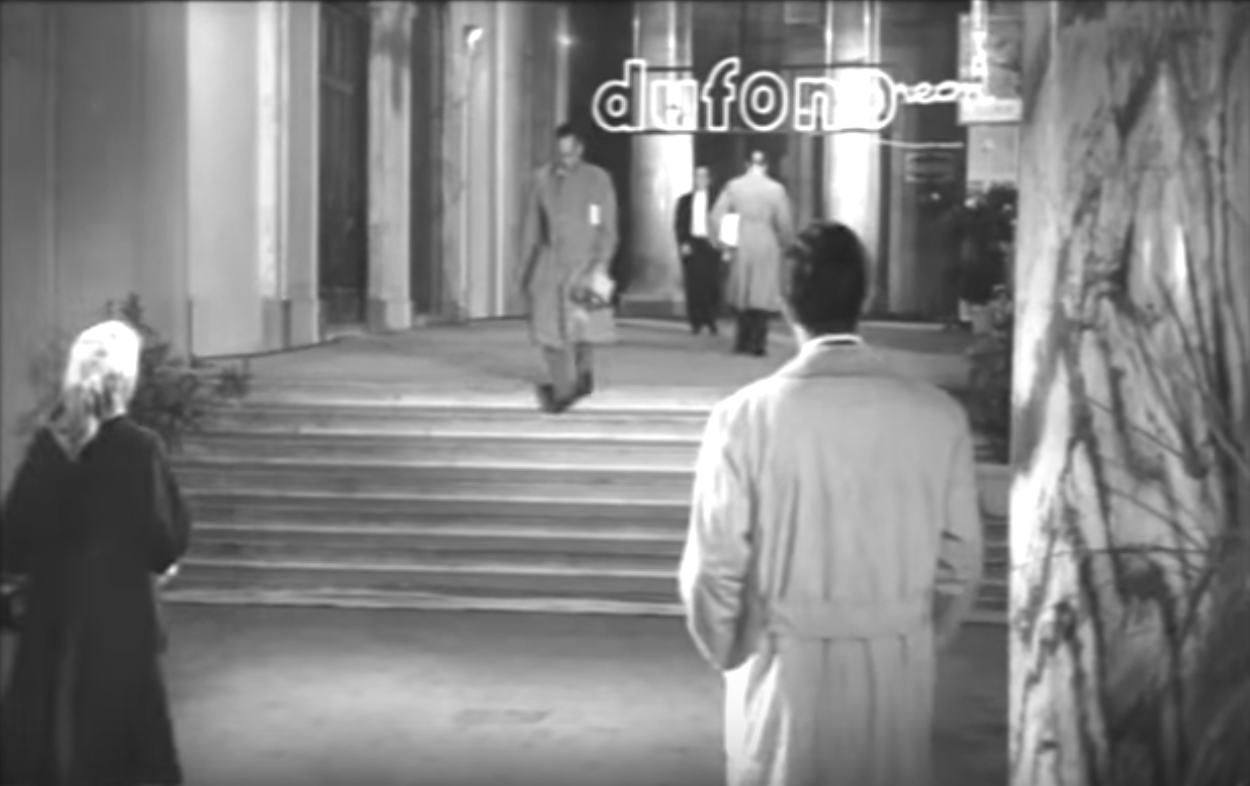
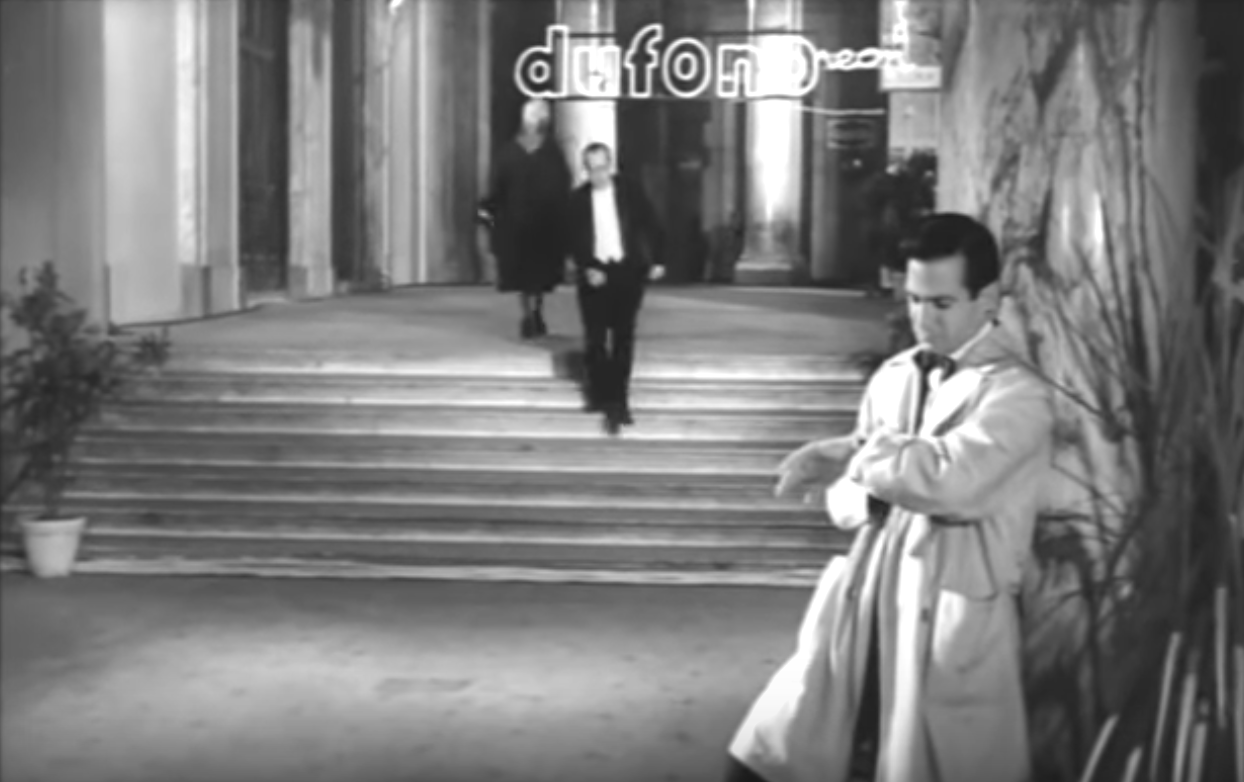
Nel frattempo, anche Lello sta aspettando. Aspetta il suo complice. Guardandosi intorno, butta via la sigaretta. Mentre controlla l'orologio, vediamo Umberto che cammina giù per le scale dietro di lui, con indosso uno smoking.
Meanwhile, Lello is also waiting. Waiting for his accomplice. Looking around, he tosses his cigarette away. As he’s checking his watch, we see Umberto walking down the stairs behind him, wearing a tuxedo.
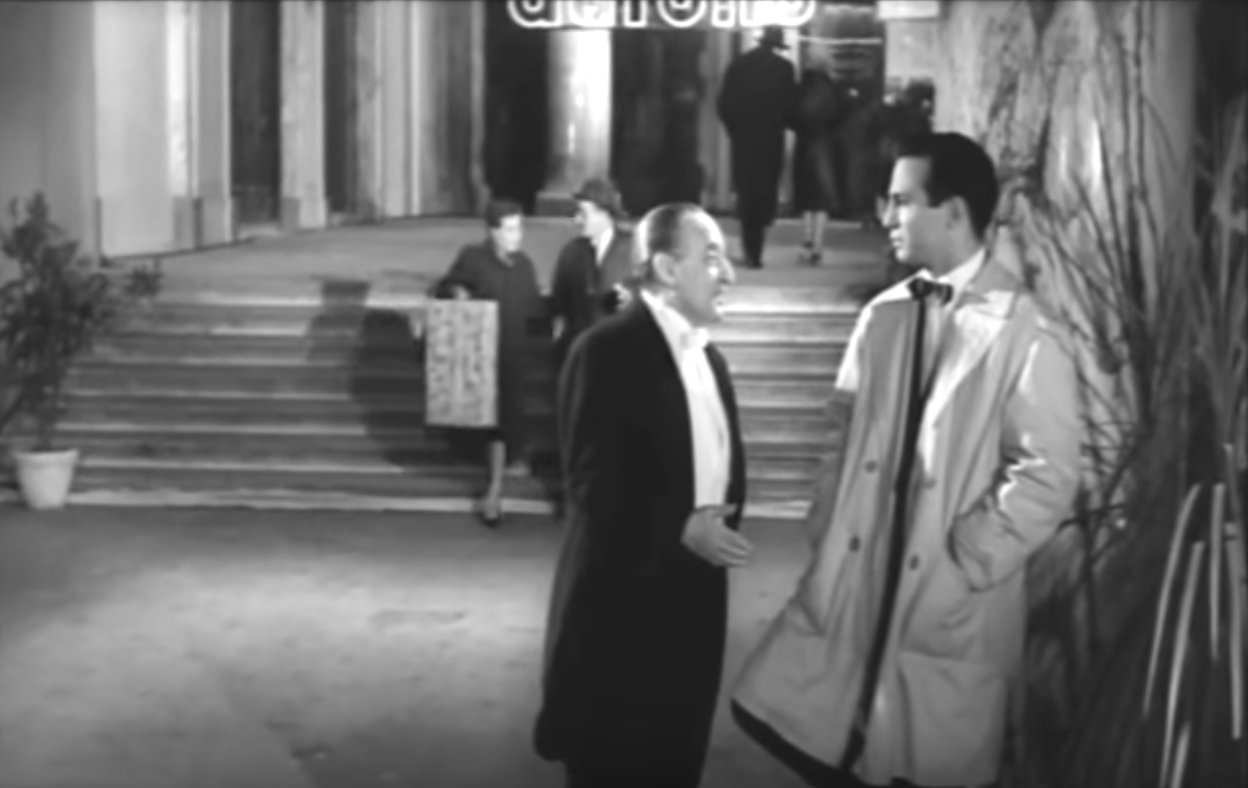
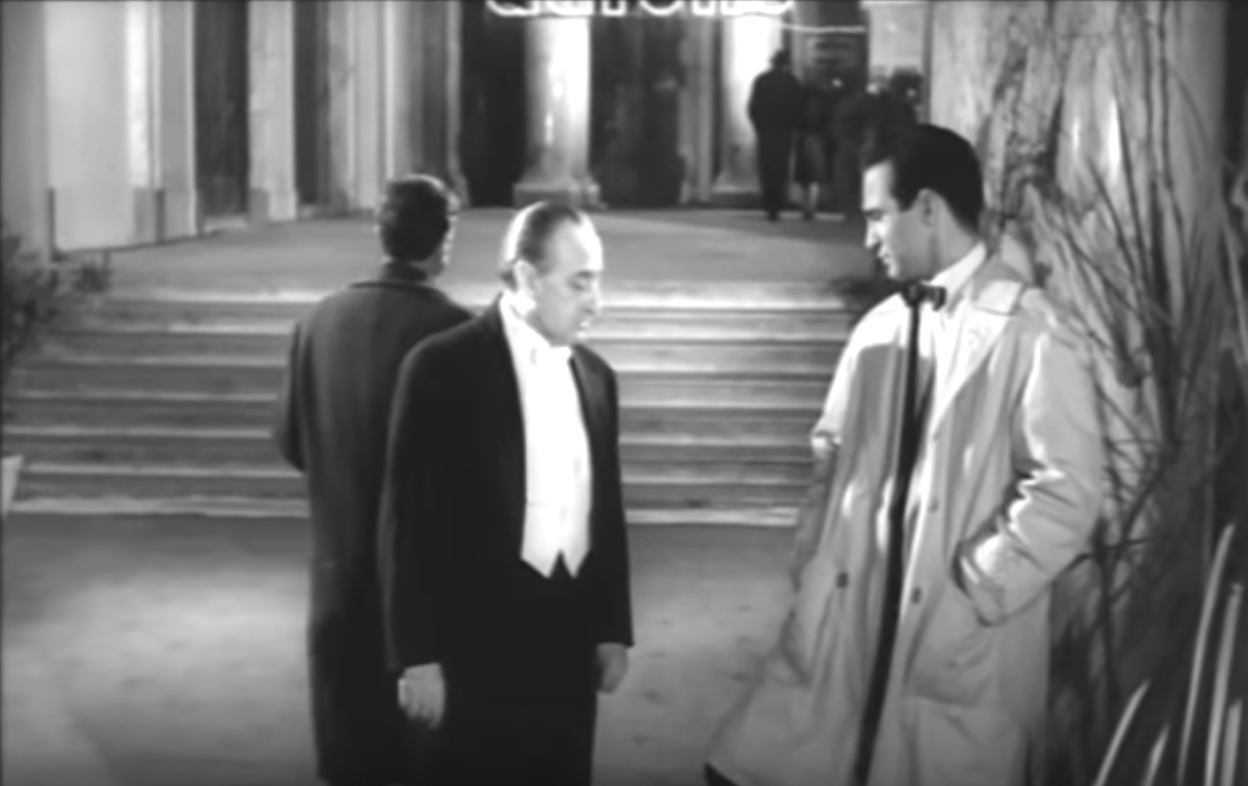
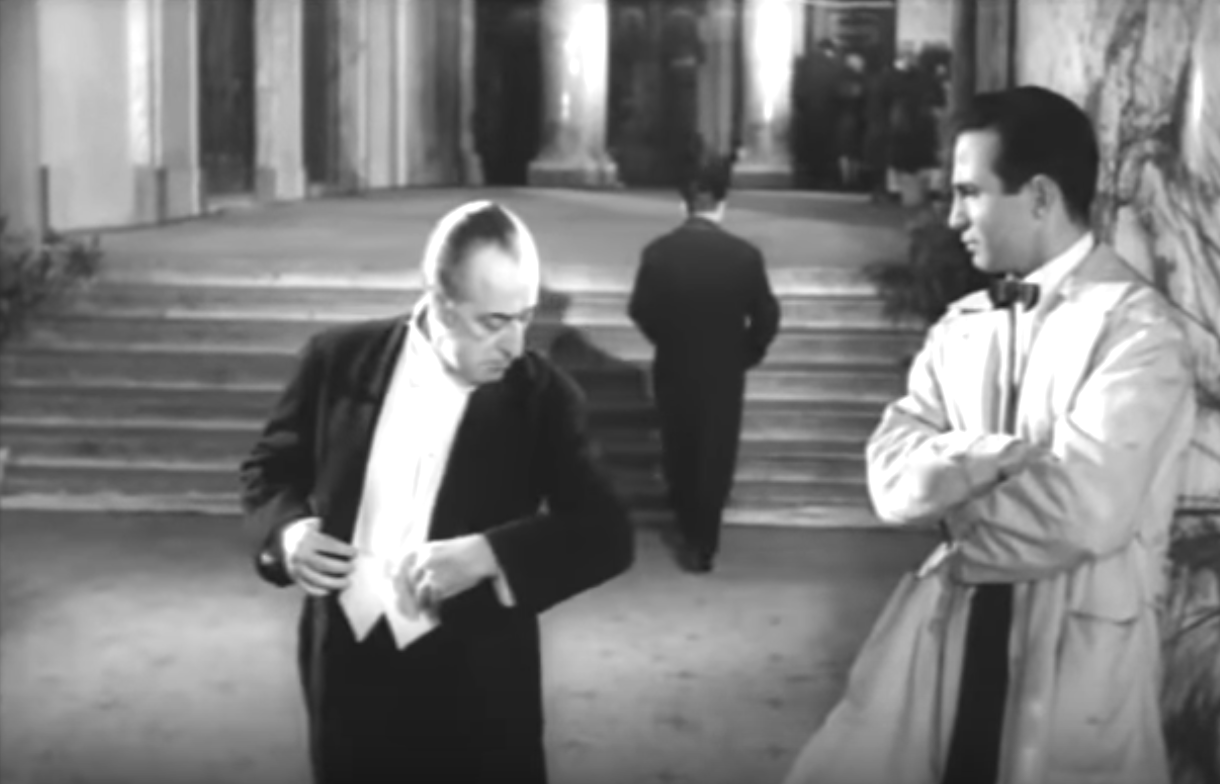
Dice a Lello: "Buonasera, e scusi il ritardo".
Lello non dice una sola parola. Lo guarda dalla testa ai piedi. Confuso, Umberto stesso si guarda dalla testa ai piedi per vedere qual è il problema. Una macchia? Una tarmatura?
He says to Lello, “Good evening, and I’m sorry about the delay.”
Lello doesn’t say a word. He looks him up and down. Confused, Umberto then looks himself up and down to see what the problem is. A stain? A moth hole?
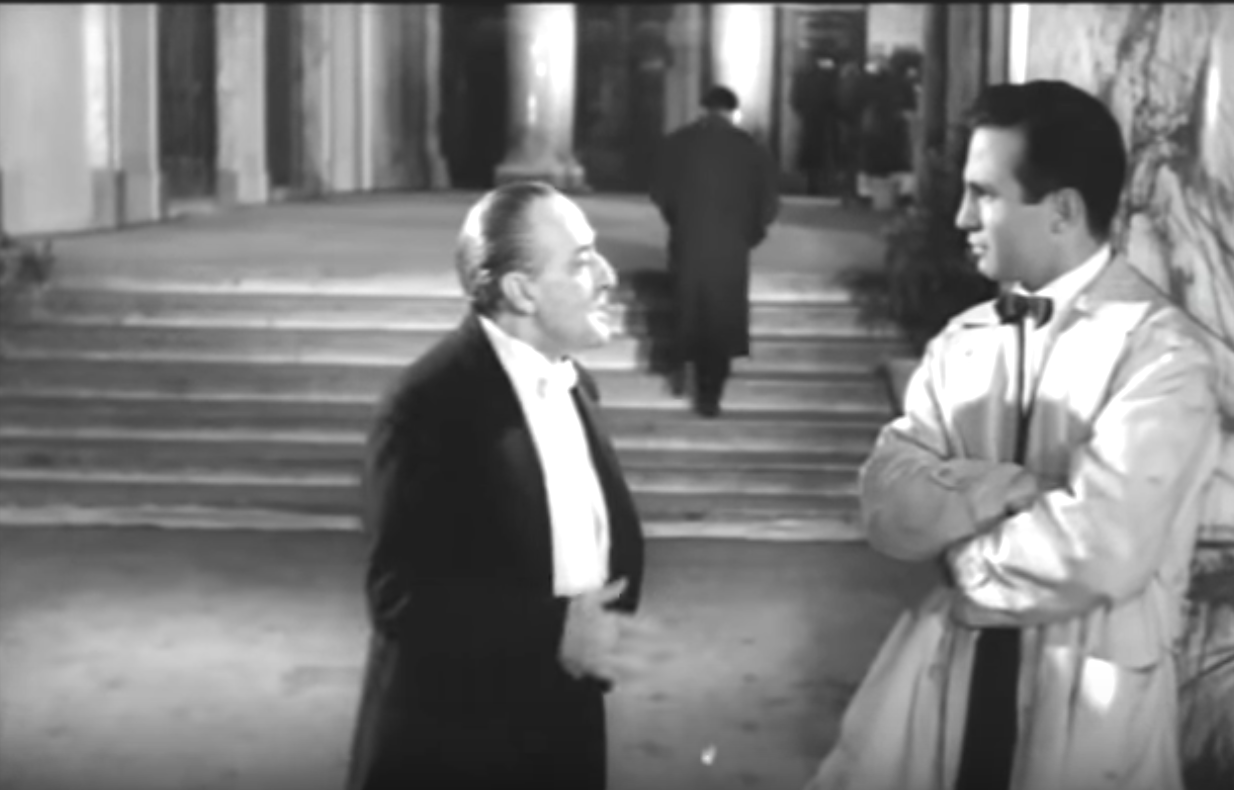
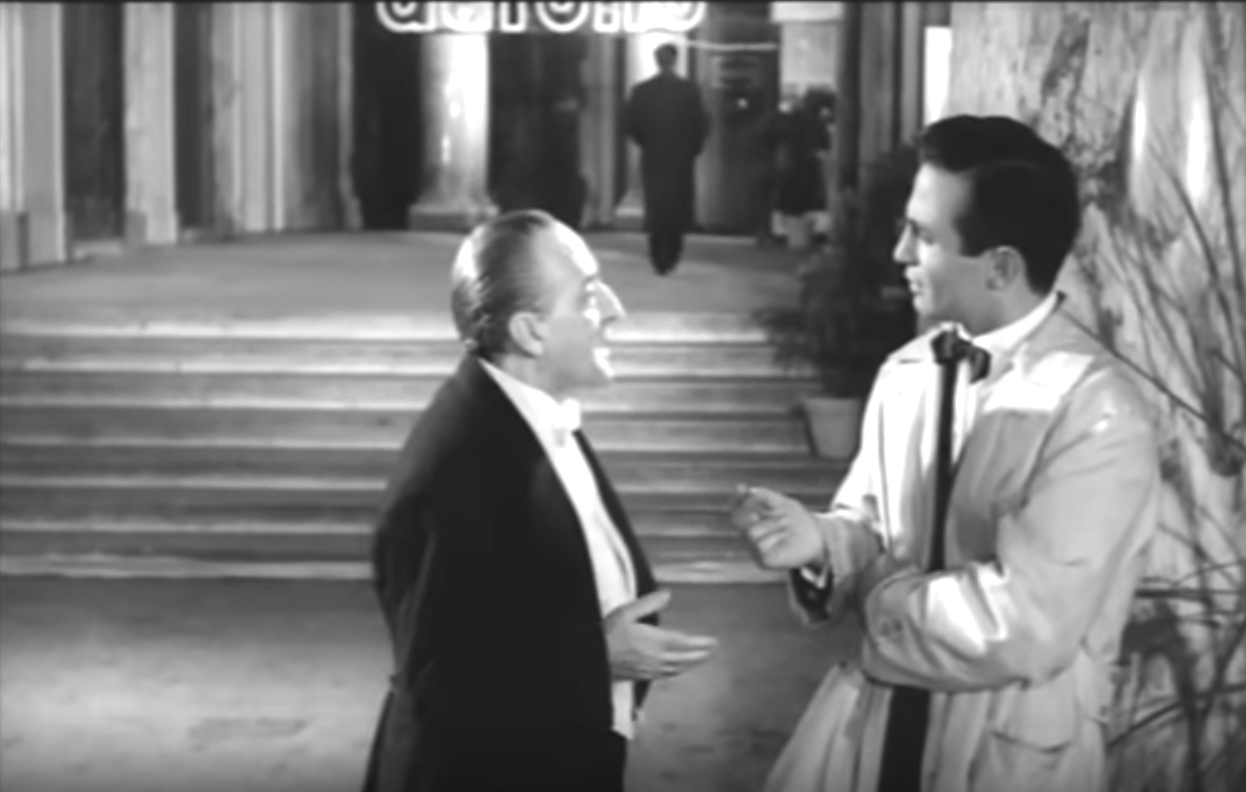
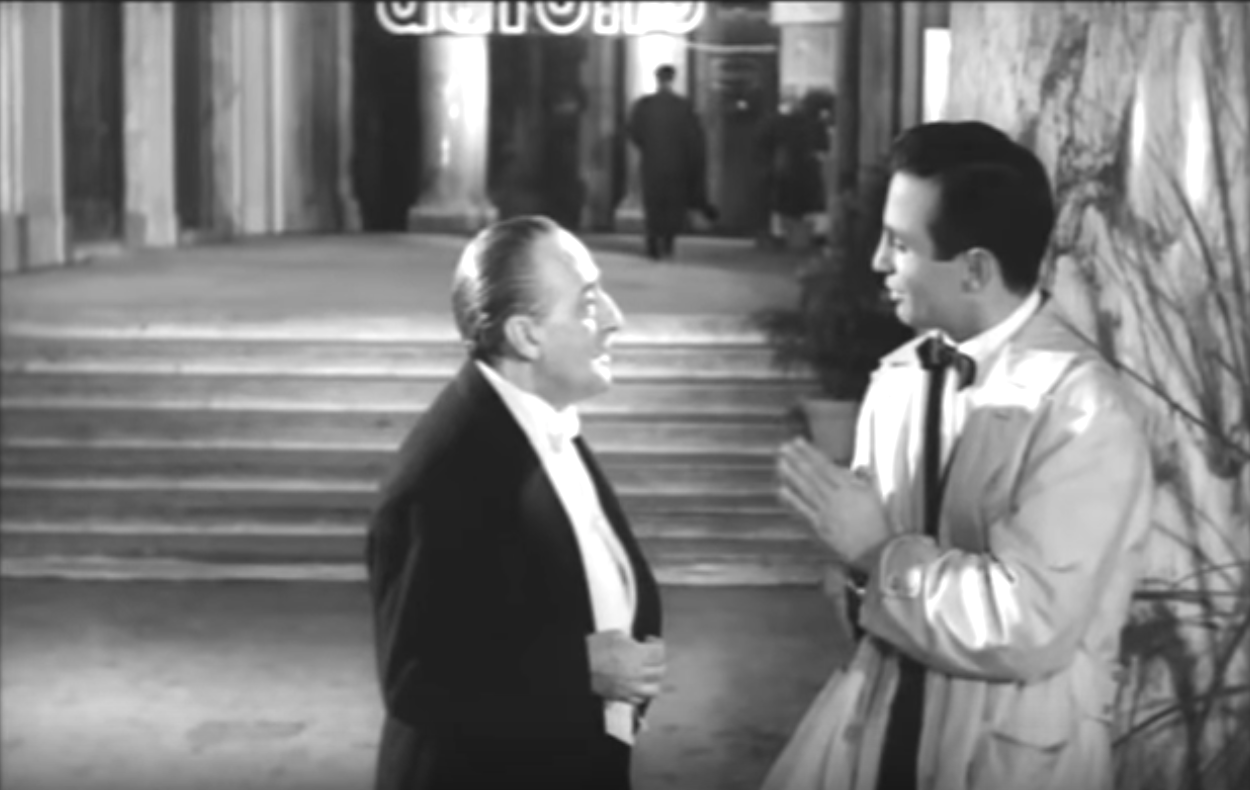
"Ma, mi scusi, lei è Lello?" chiede lui. Usa il lei formale anche se stanno per essere complici in un crimine.
Lello fa un gesto disgustato verso lo smoking: "Ma che ti sei messo?" Lui non segue le formalità; usa l’informale tu.
"Perché?"
"Ma come? Non ti vedi?" risponde Lello, con mani giunte come in preghiera, ma muovendole su e giù: il gesto italiano per dire ‘ma che diavolo?!’. "Mi chiedi pure perché?"
“But, excuse me, are you Lello?” he asks. He uses the formal lei even though they are about to be partners in crime.
Lello gestures at the tuxedo in disgust: “But what are you wearing?” He doesn’t stand on ceremony; he uses the informal tu.
“Why?”
“What do you mean ‘why’? Don’t you see yourself?” Lello answers, hands together as if in prayer, but moving them up and down: the Italian gesture for ‘what the hell?!’. “And you still ask why?”
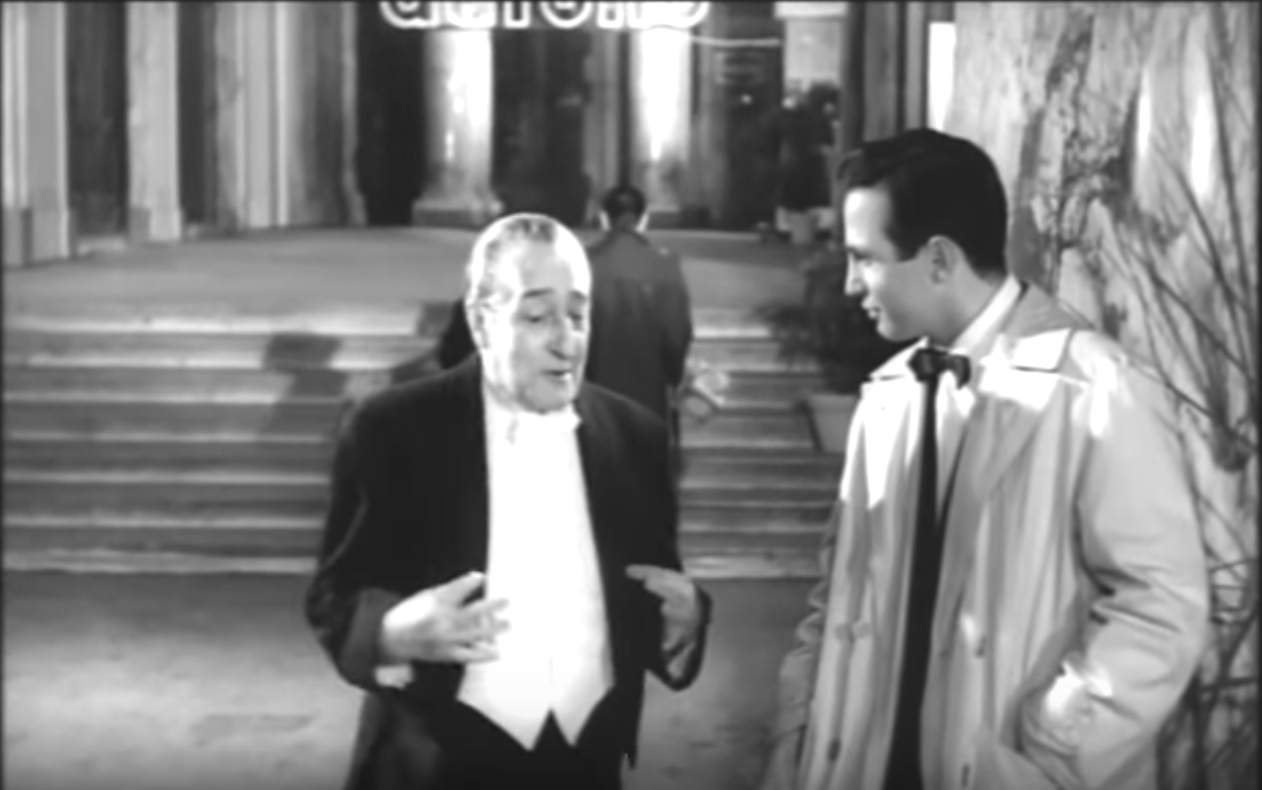
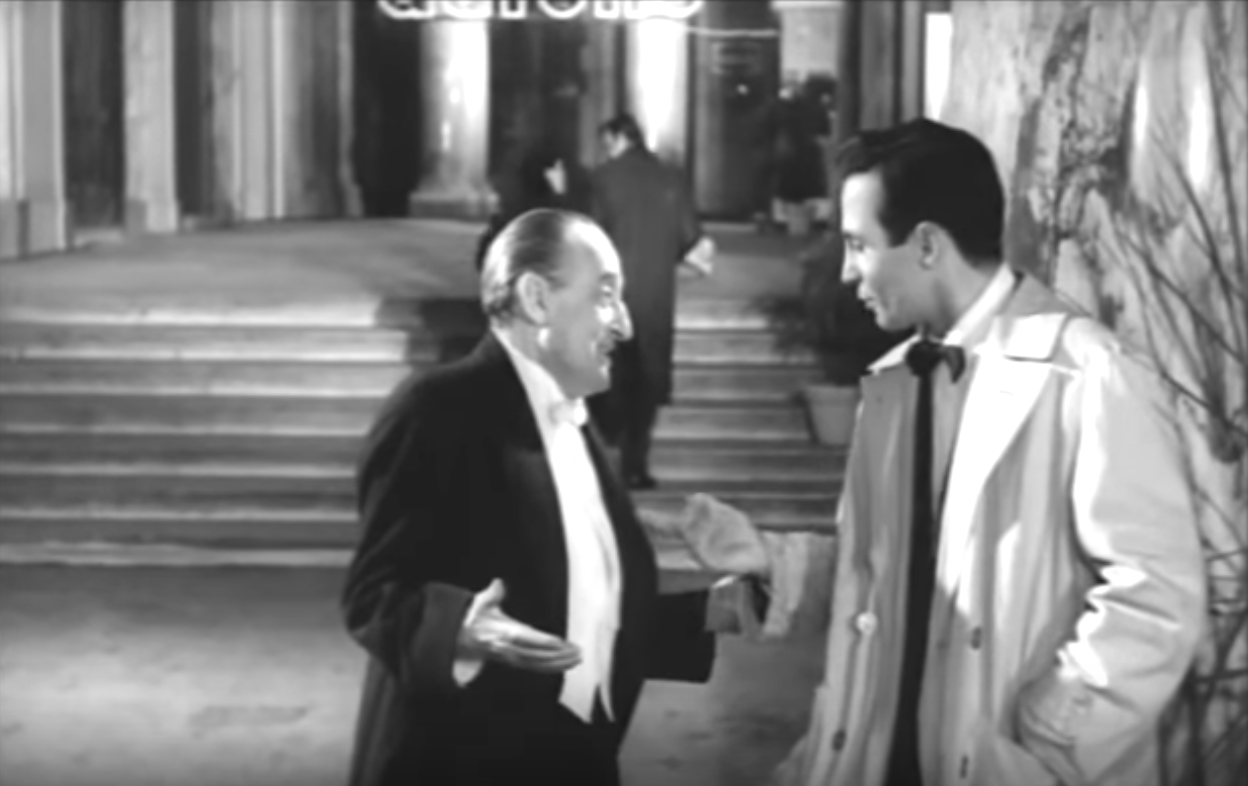
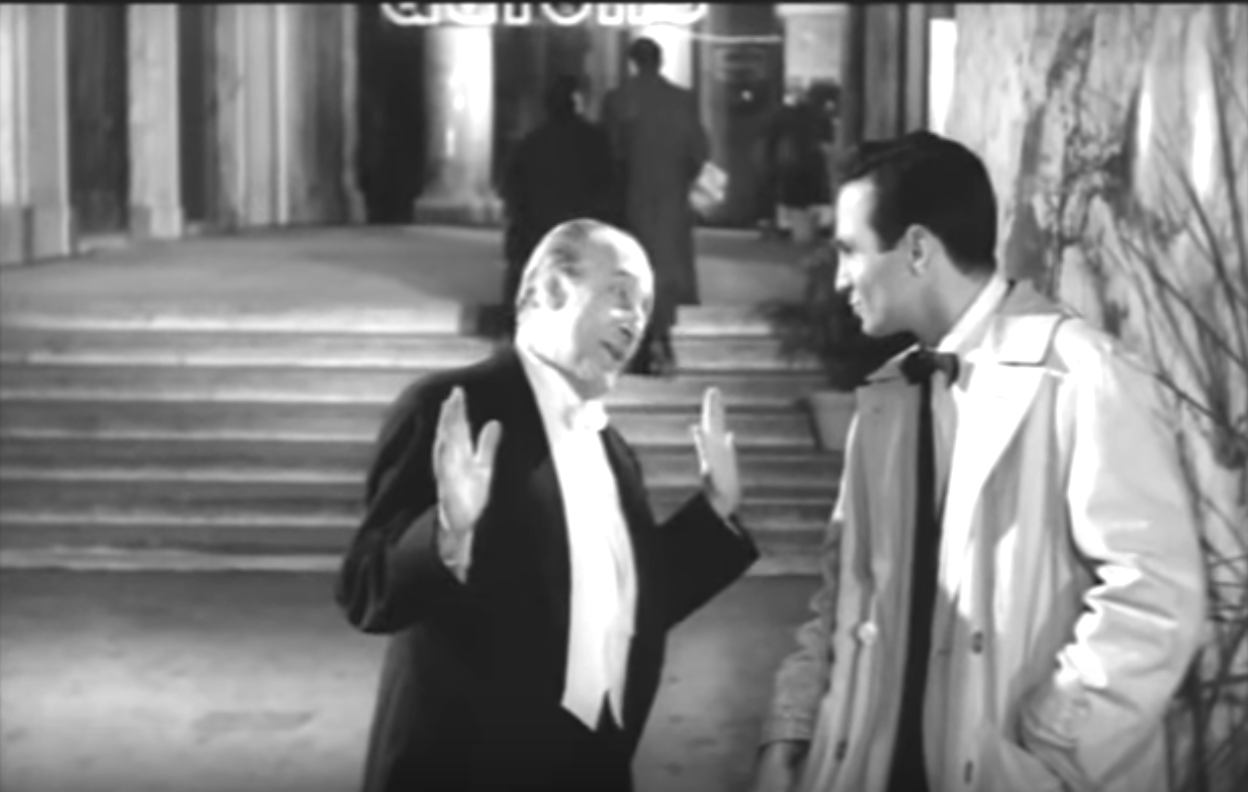
“Certo che dico perché! Spizzico, quando mi ha telefonato, mi ha detto di mettermi un abito da sera. E questo cos'è?" chiede con orgoglio.
"Un cameriere mi pari!"
"Eh, no, no! Caro amico mio!" Umberto alza le mani. "Un vero signore, per fare spicco in una grande serata, si mette il frac".
“Of course I ask why! When Spizzico called me, he said to wear black tie. And what’s this?” he asks, proudly.
“A waiter, you look like to me!”
“Oh, no, no! My dear friend!” Umberto lifts up his hands. “Sir, a real gentleman – to be noticed at a grand evening – wears a tux.”
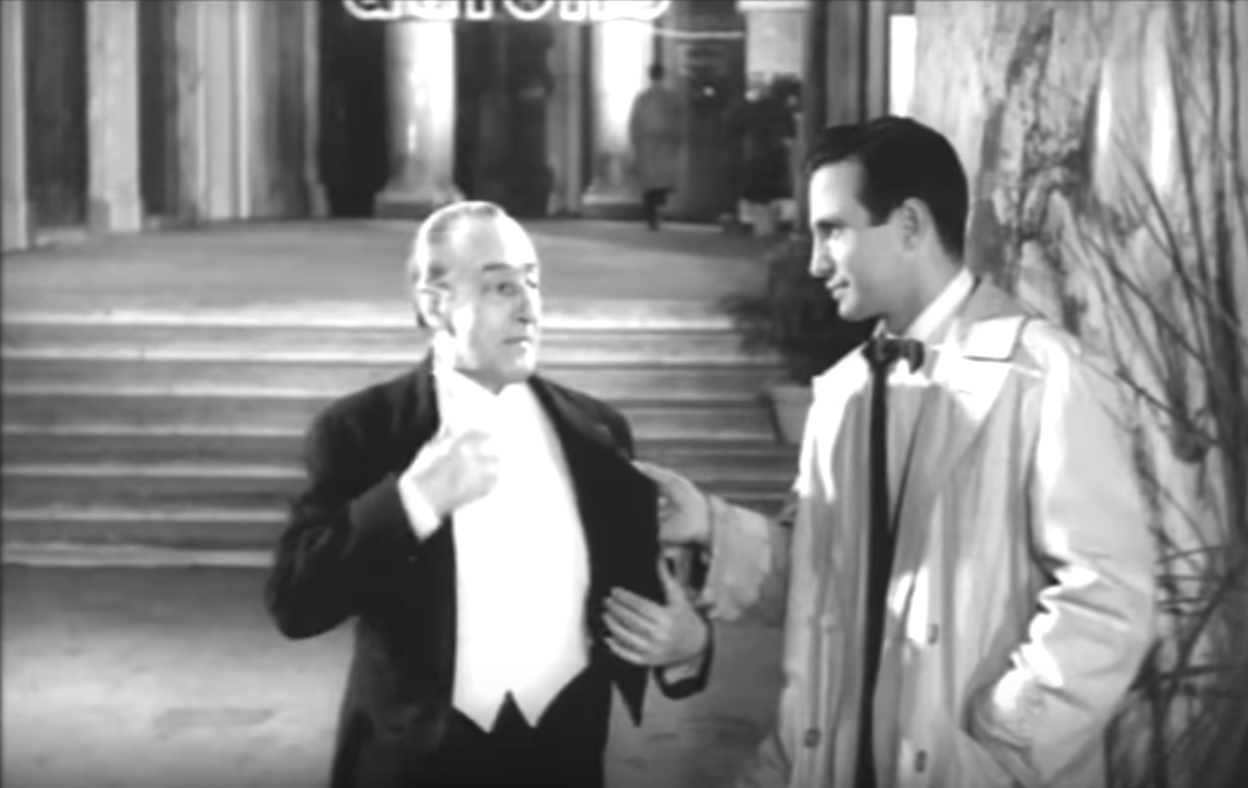
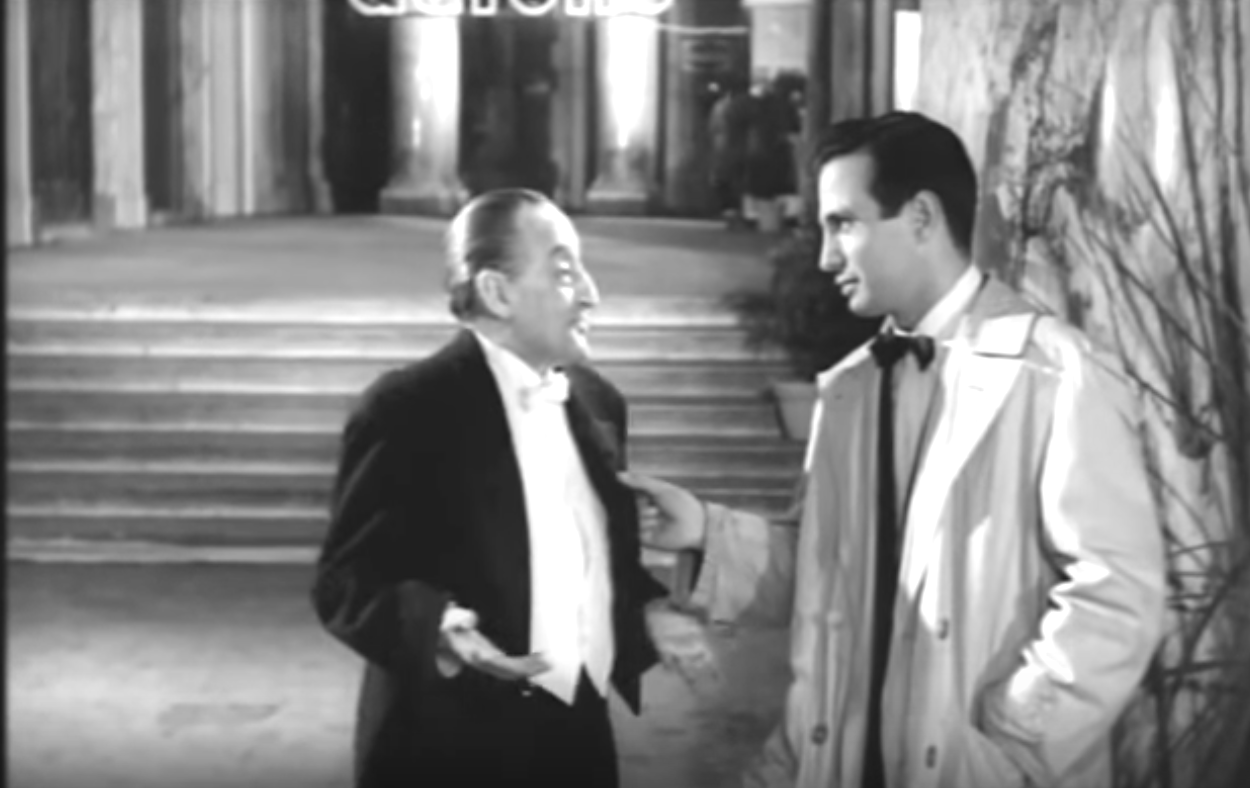
Lello, il borseggiatore, cerca di spiegare la natura dell’impresa della serata e la sua opinione dell'abbigliamento appropriato per una serata elegante. "A parte il fatto che non devi fare spicco, più passi inosservato meglio è. Un vero signore va in giro senza cappotto?"
"Ce l’ho, ma è marrone. E poi, sul frac stona. In questo modo, sembro un signore che è appena sceso dalla macchina", spiega Umberto. La luce splende dai suoi capelli brillantinati e accuratamente pettinati.
Lello, the pickpocket, explains the nature of the evening’s endeavor and his view of the proper attire for a fancy evening out. “Aside from the fact that you should not stand out – the more unnoticed you are, the better. – Does a real gentleman go out without a coat?”
“I’ve got one, but it’s brown. And so, with the tux it doesn’t look right. This way, I look like a gentleman that’s just gotten out of his car,” Umberto explains. The light gleams from his carefully brilliantined back hair.
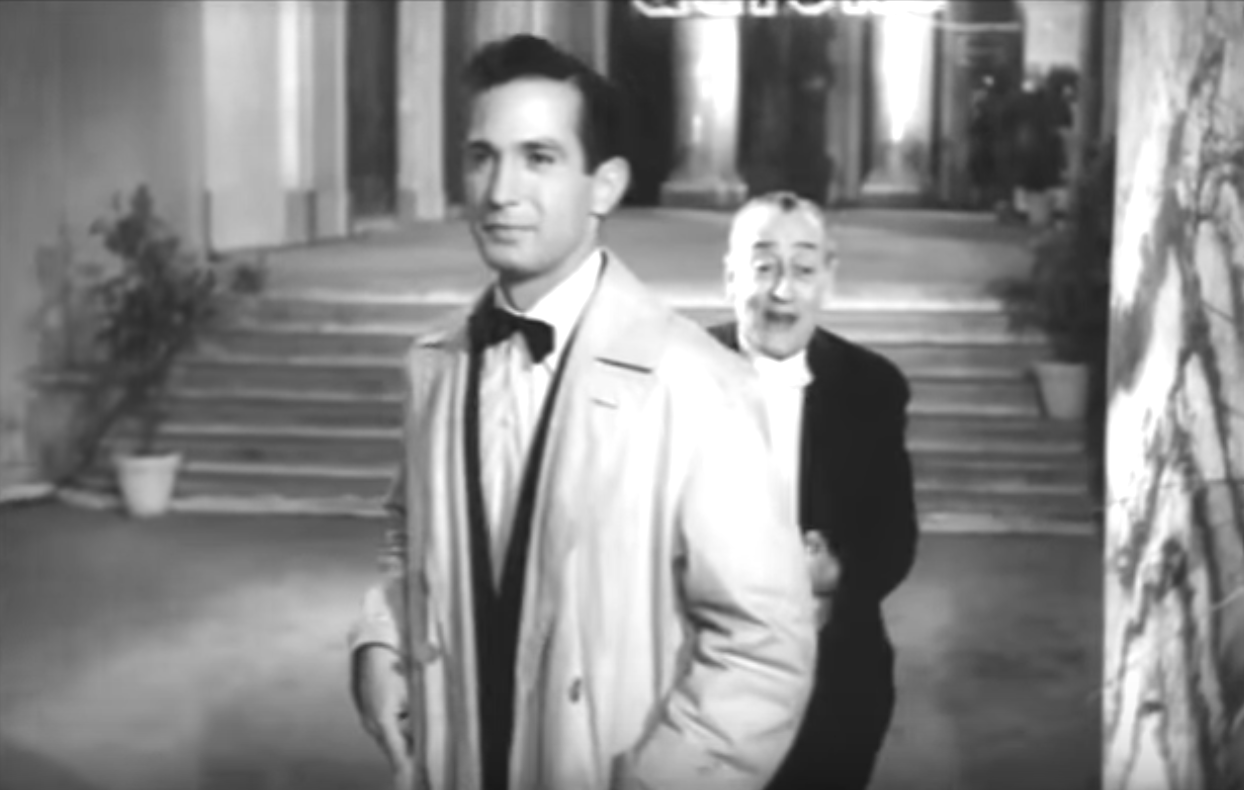
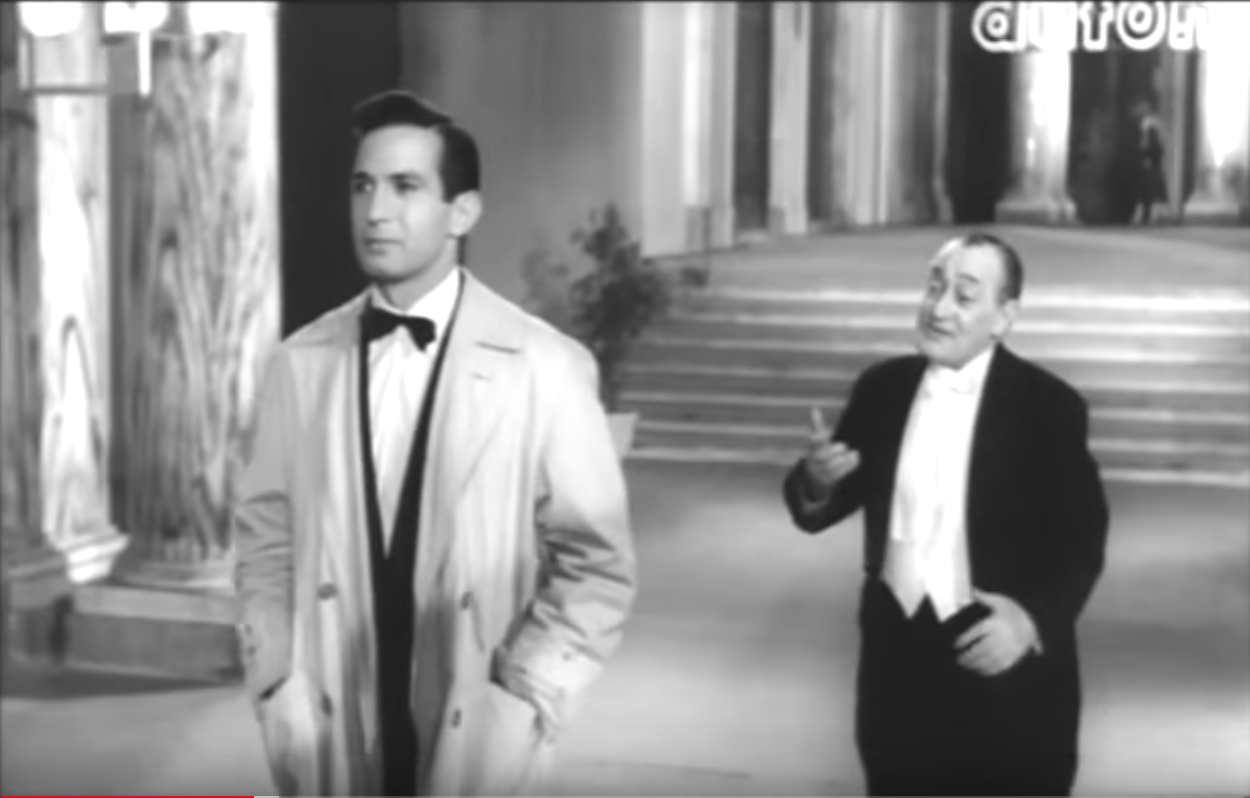
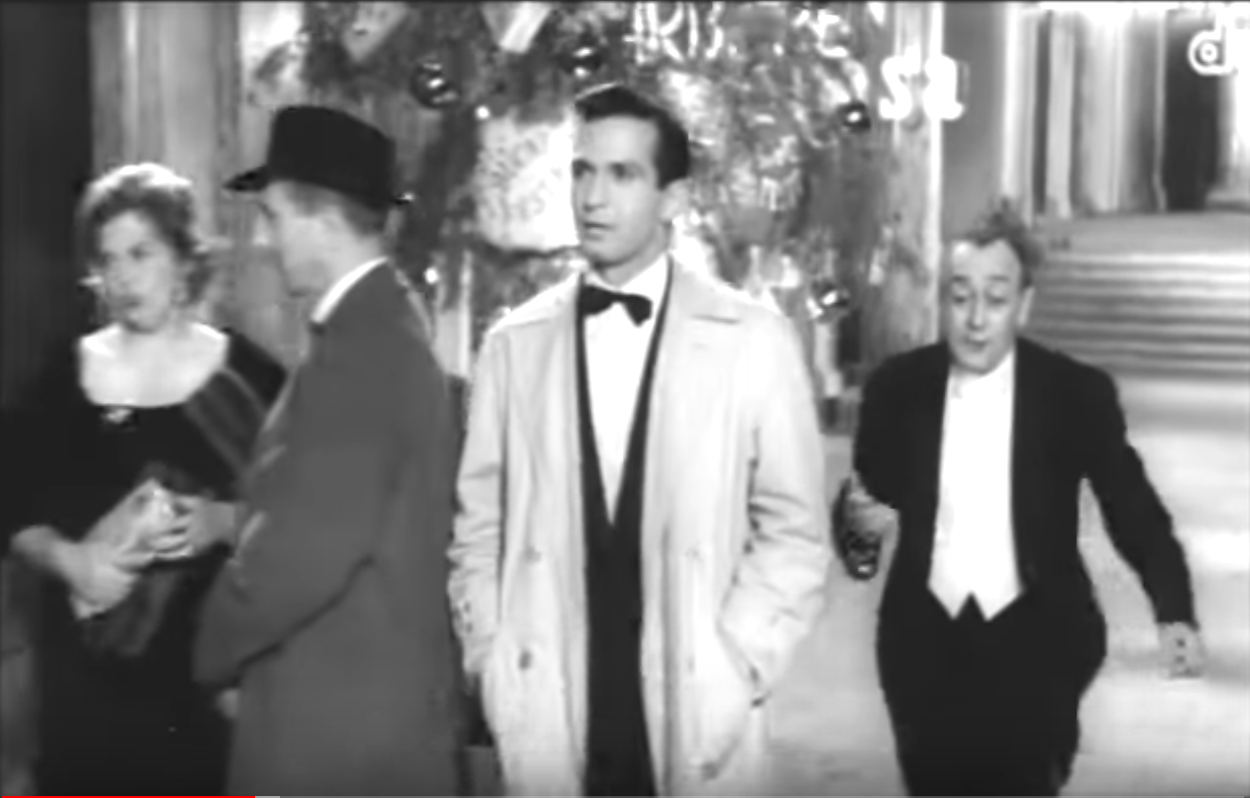
Lello si allontana e Umberto lo segue, commentando: "Lasciati servire,* io conosco tutti i trucchi i trucchi dell’abbigliamento maschile!"
È così basso che deve correre per tenere il passo con i lunghi passi di Lello.
*Una frase romana.
Lello walks away and Umberto follows, remarking, “Trust me*, I know all the tricks of men’s clothing!”
He is so short that he has to scamper so as to keep up with Lello’s long steps.
*A Roman phrase.
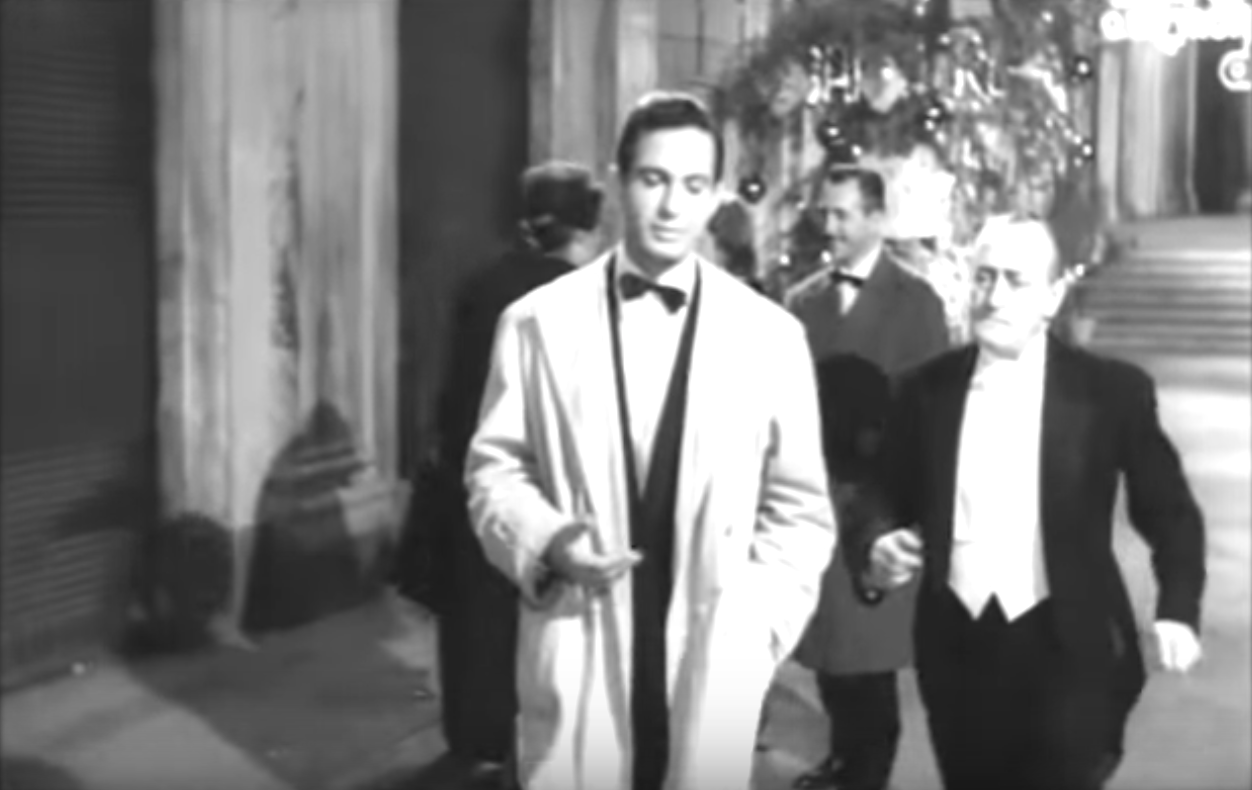
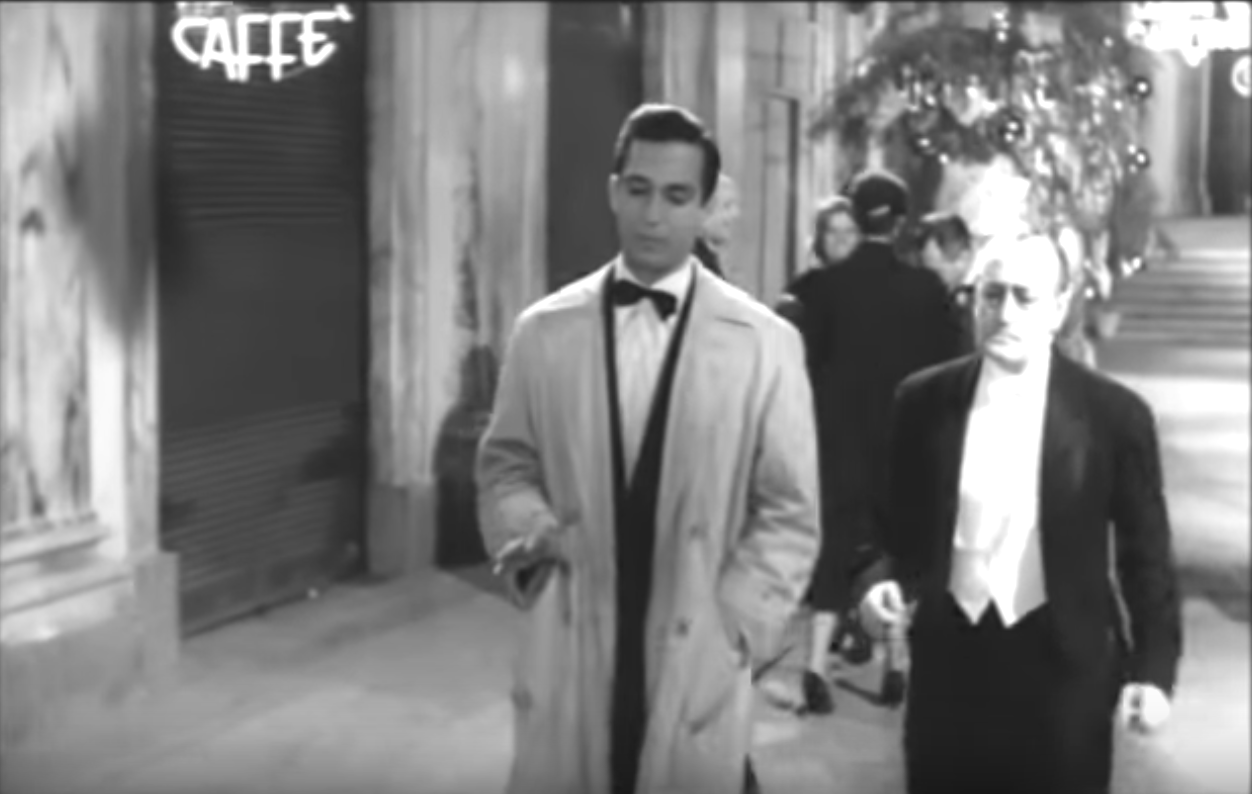
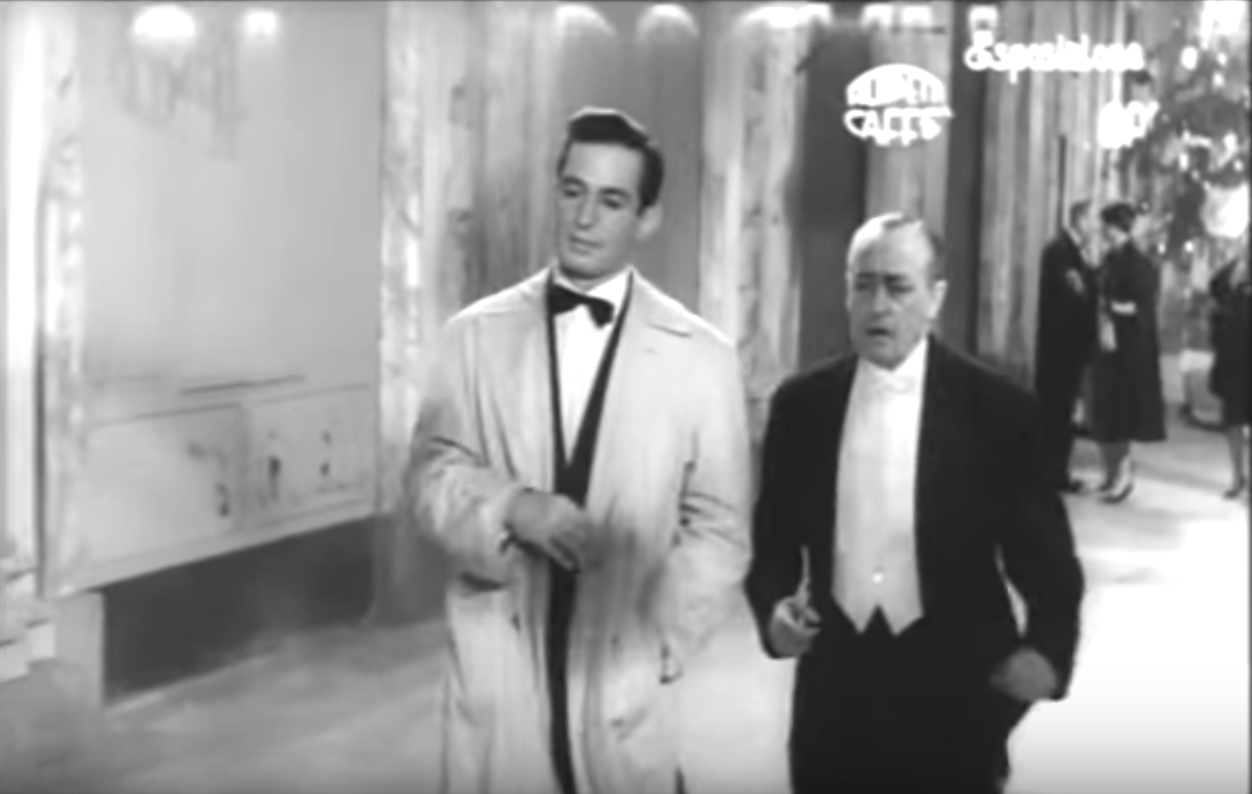
Senza voltarsi, Lello chiede: “Lo sai quello che devi fare?”
"Ho un’idea generale.".
"Ti devi tenere sempre a portata di mano, ma senza mostrare che siamo insieme".
In qualche modo, Lello cammina a un ritmo normale, completamente a suo agio, mentre Umberto praticamente corre per tenersi al passo.
Without turning around, Lello asks, “Do you know what to do?”
“I’ve got the general idea.”
“You must stay close at hand, but without showing that we’re together.”
Somehow, Lello is walking at a normal pace, completely at his ease, while Umberto is practically running to keep up with him.
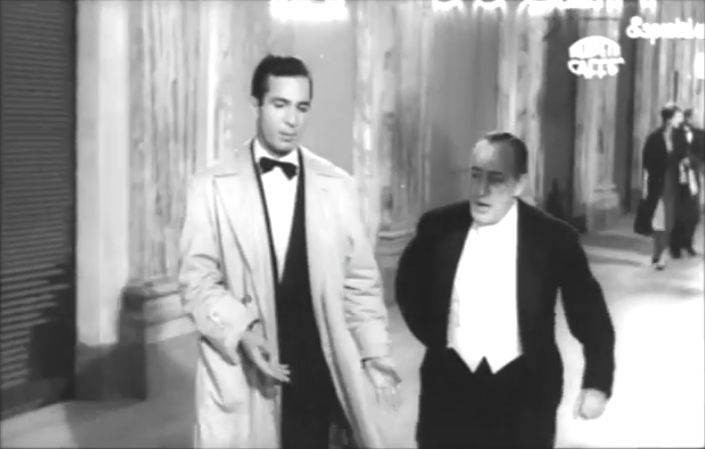
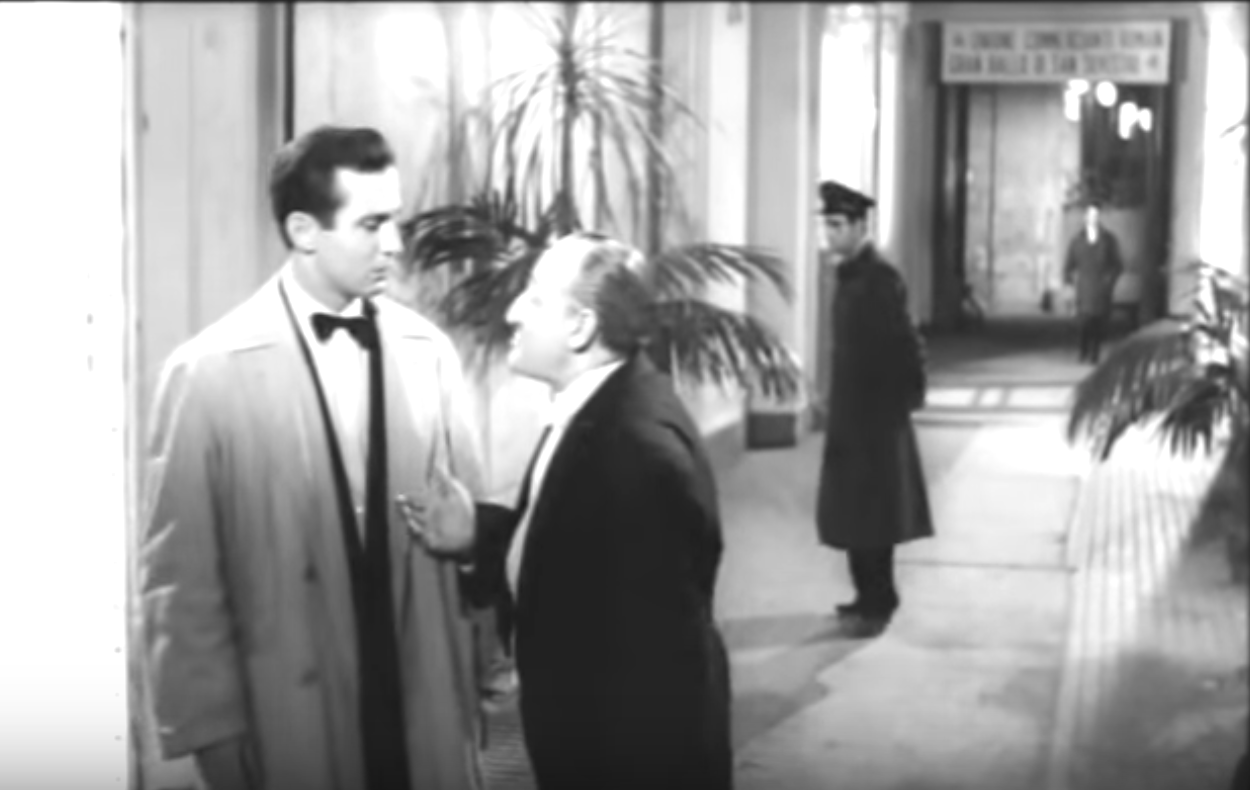
Lello si lamenta: “Appena prendo qualcosa, te lo metto in tasca. Ma tu le tasche non ce l’hai! Come fai?"
"Tutto a posto! Ho una tasca segreta! Questo frac io lo usavo quando facevo l’aiuto del mago Castelli”. È lo smoking di un numero di magia! Quindi cerca di chiarire il suo incarico. "Dunque, io lascio subito il locale e ti aspetto fuori, dico bene?"
Lello complains, “As soon as I take something, I put it into your pocket. But you have no pockets! How are you going to do it?”
“It’s all right! I have a secret pocket! I used this tux when I worked as the assistant of the magician Castelli.” It's the tux from a magic act! Then he tries to clarify his assignment. “So, I’ll leave the place right away and wait for you outside, do I have it right?”
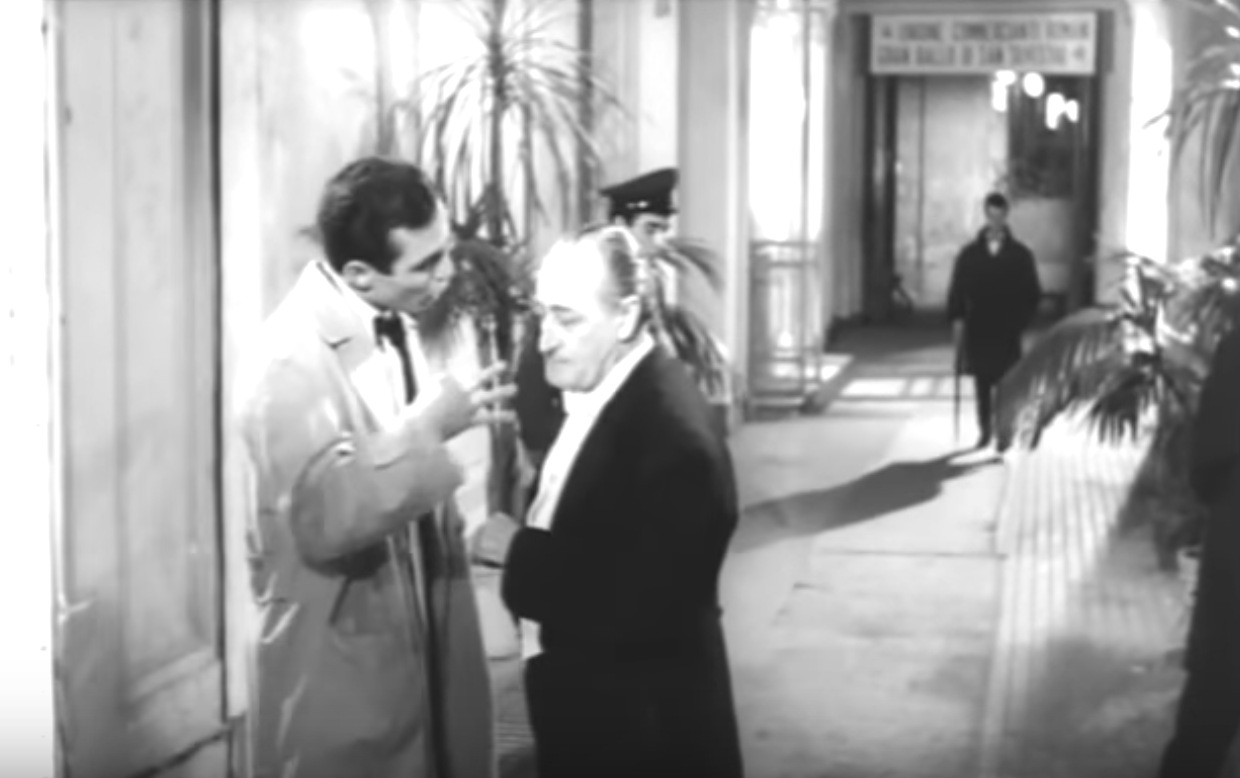
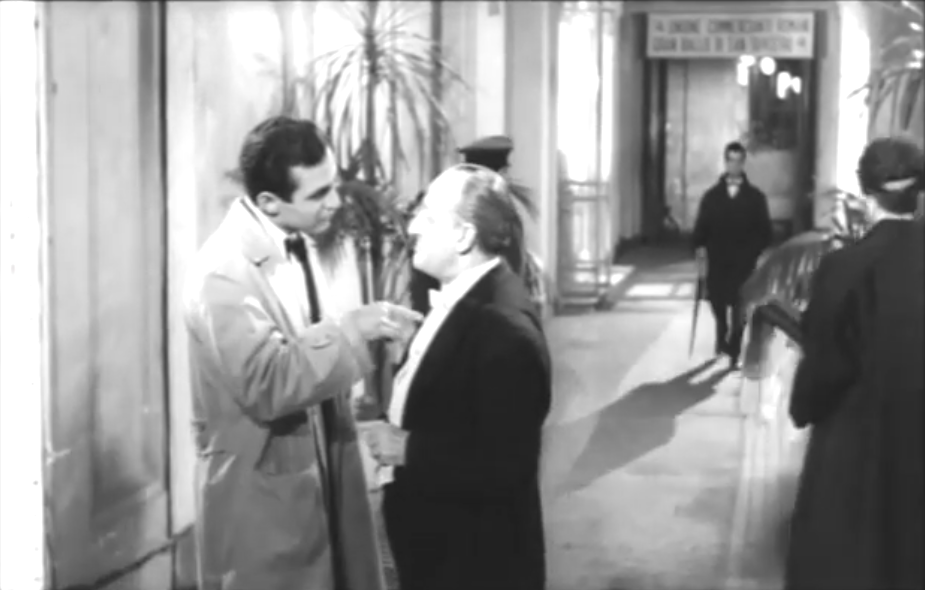
Hanno smesso di camminare. Impaziente, Lello tocca il petto di Umberto con il dito. "No, non dici bene per niente! Vai al bagno e metti la roba nella cassetta dell'acqua. Hai capito? E poi torni da me”.
They’ve stopped walking. Impatiently, Lello pokes his finger into Umberto’s chest. “No, you don’t have it right at all! Go to the bathroom and hide the objects in the toilet tank. Got it? Then come back to me.”
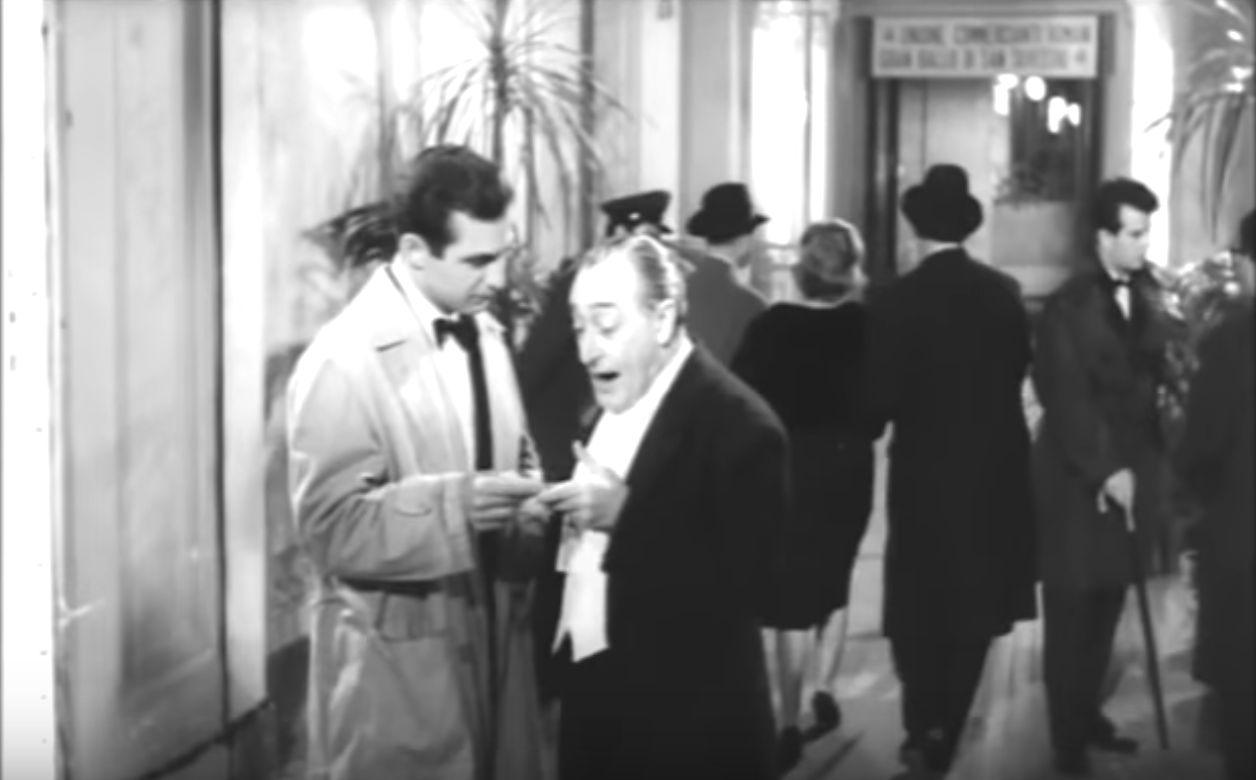
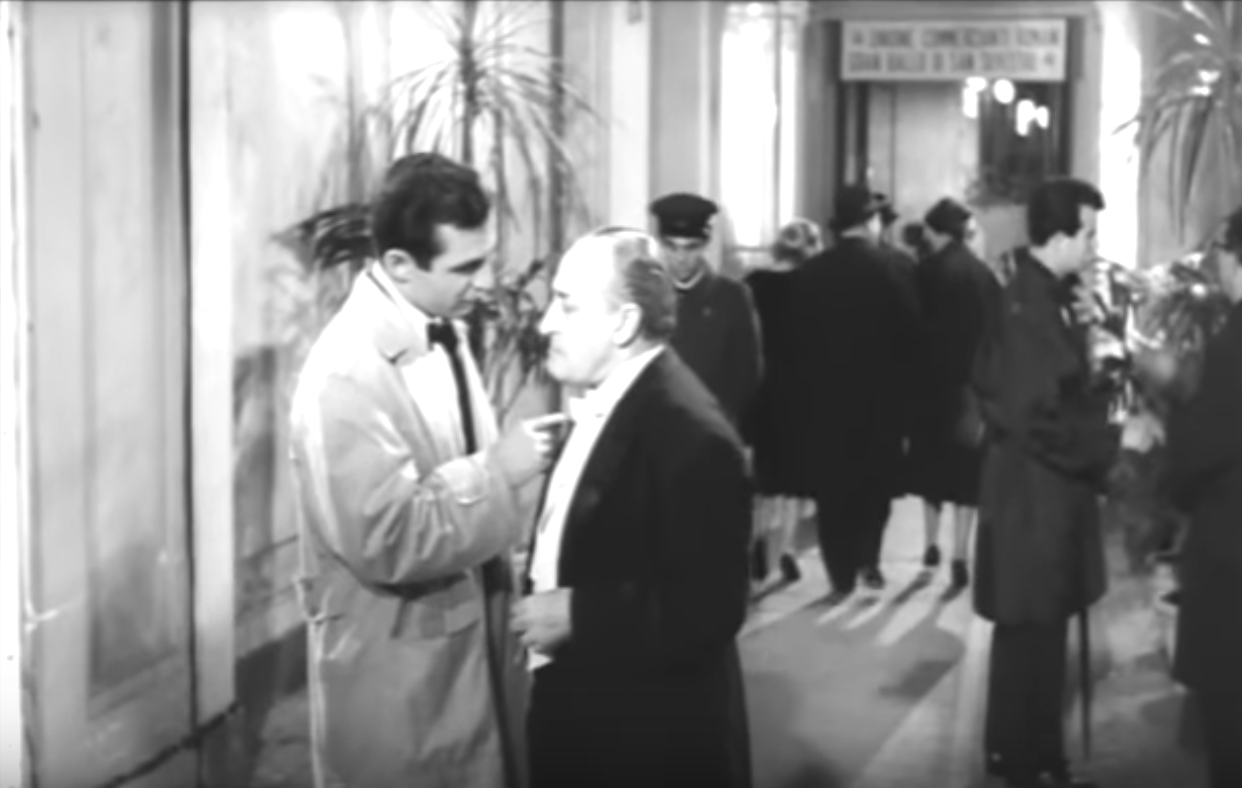
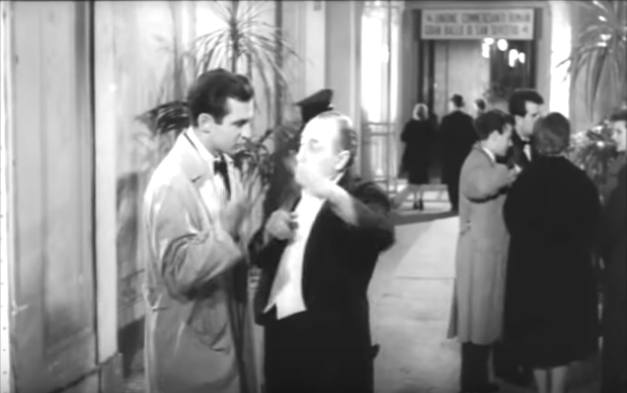
Umberto è impressionato quando Lello gli consegna un biglietto per l'evento della notte: "Ah, bravo! Hai pensato a tutto!”
"Io vado avanti. Tu entri tra cinque minuti e vai alla terza colonna” – lo istruisce Lello – “Resta lì finché io non ti faccio segno. Tra cinque minuti. L’orologio c’è l’hai?"
"No".
Lello colpisce Umberto bruscamente, gli dice di contare fino a cinquecento e se ne va.
Umberto is impressed when Lello hands him a ticket to the night’s event: “Oh, great! You’ve thought of everything!”
“I’m going ahead. In five minutes, come in and go to the third pillar,” Lello instructs him. “Stay there until I signal you. After five minutes. You got a watch?”
“No.”
Lello smacks Umberto brusquely, tells him to count to five hundred, and walks away.
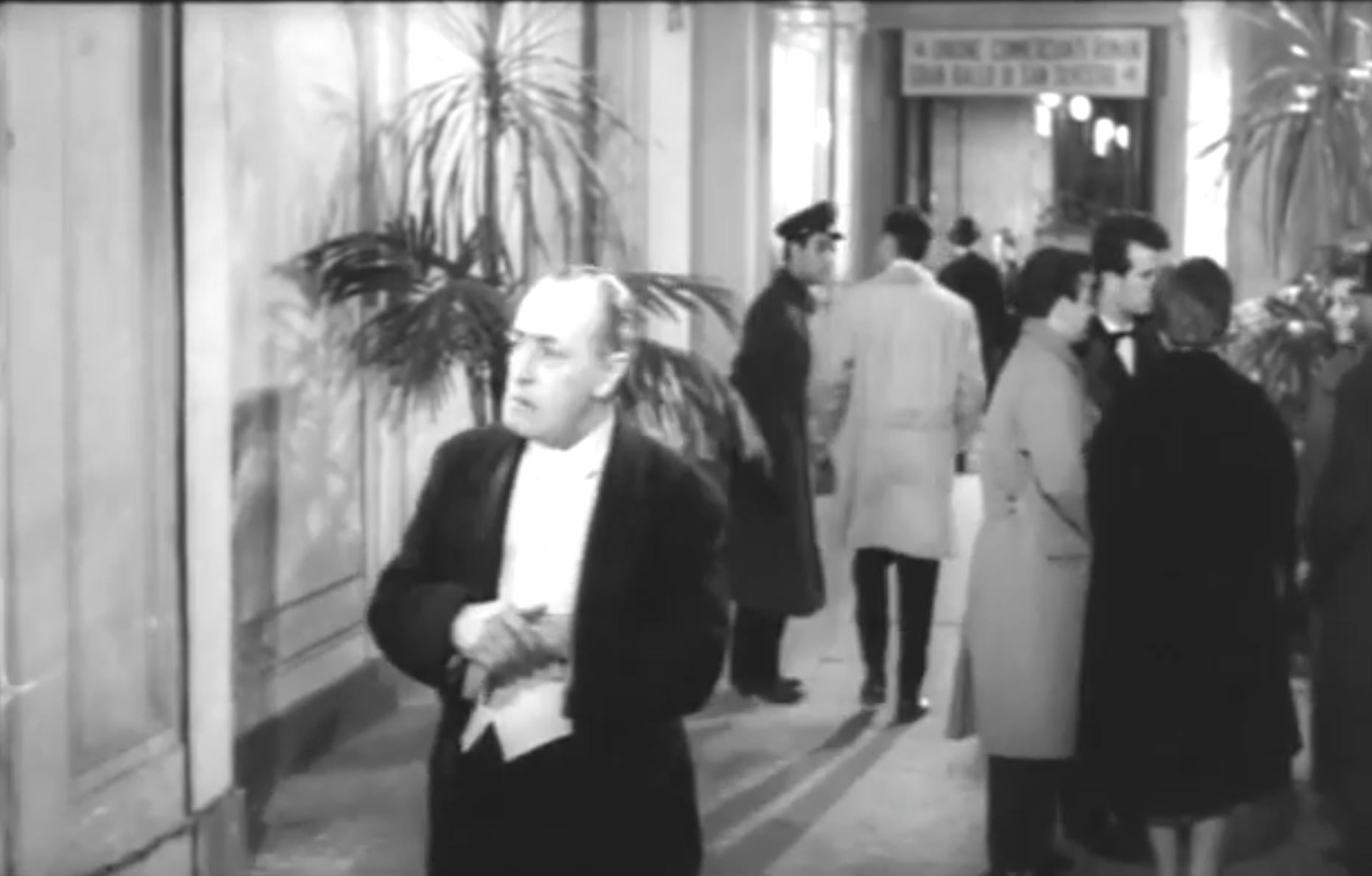
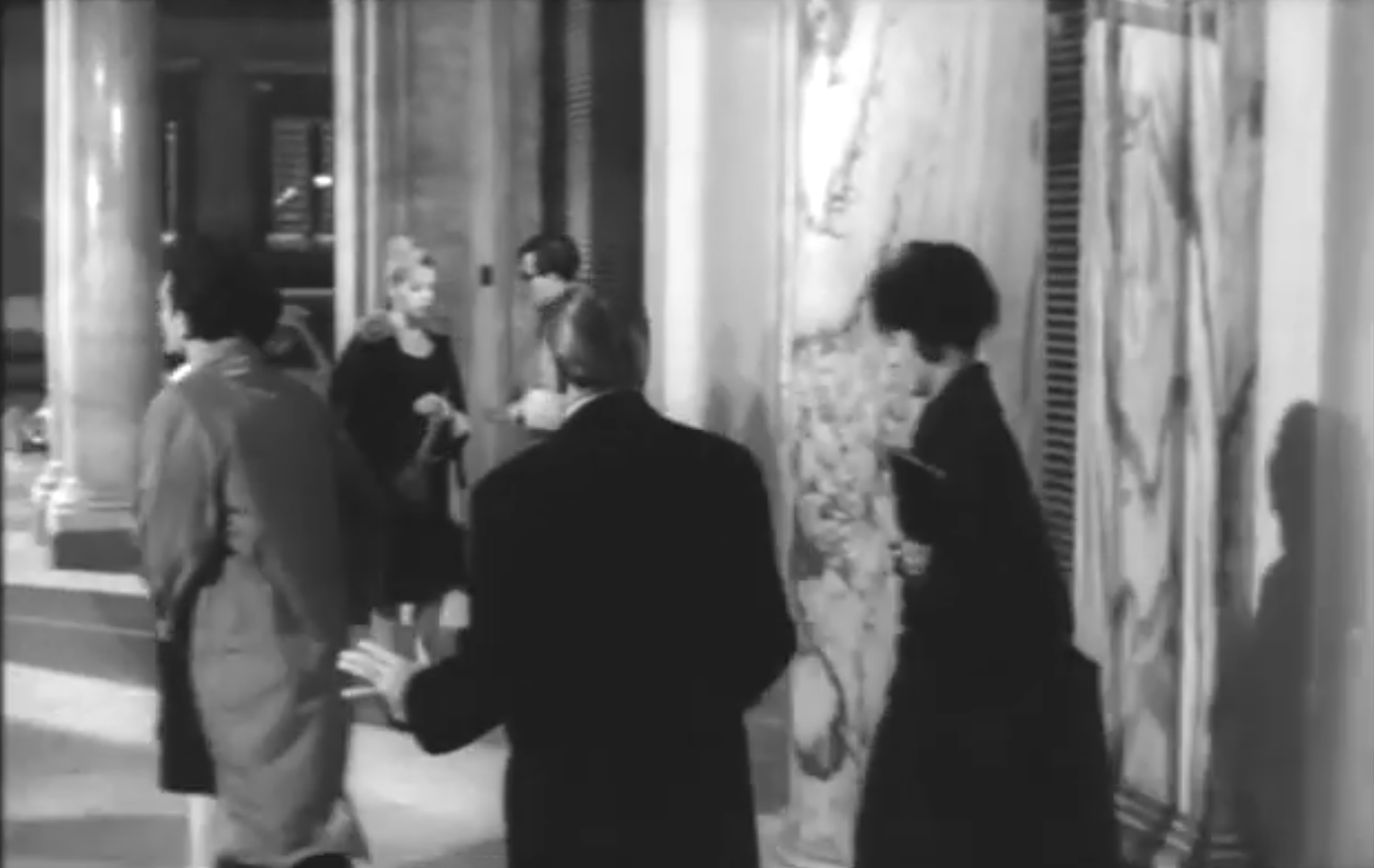
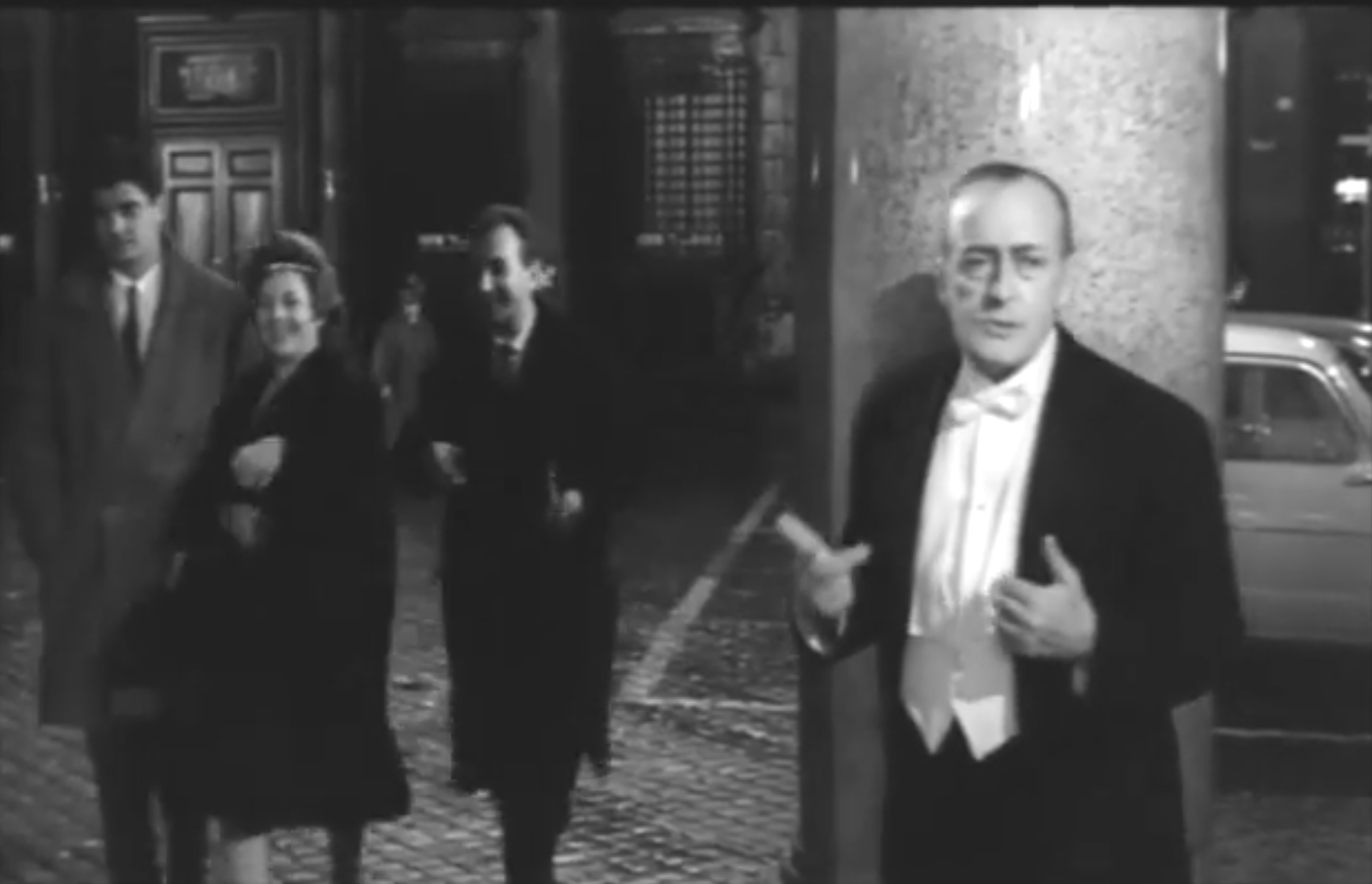
Umberto si strofina la mano dove Lello lo ha colpito. "E che modi!" borbotta e inizia a contare – sulle sue dita, apparentemente un motivo del film ormai. Cammina in giro continuando a contare. I partecipanti alla festa in abbigliamento formale gli passano accanto.
Umberto rubs his hand where Lello smacked him. “What manners!” he mutters, and starts counting – on his fingers, seemingly a motif of the film by now. He walks around keeping on counting. Partygoers in formalwear stream past him.
FINE PARTE 5
Ecco Parte 6 of this cineracconto! Subscribe to receive a weekly email newsletter with links to all our new posts.