Regia / Director: Pietro Germi, 1950
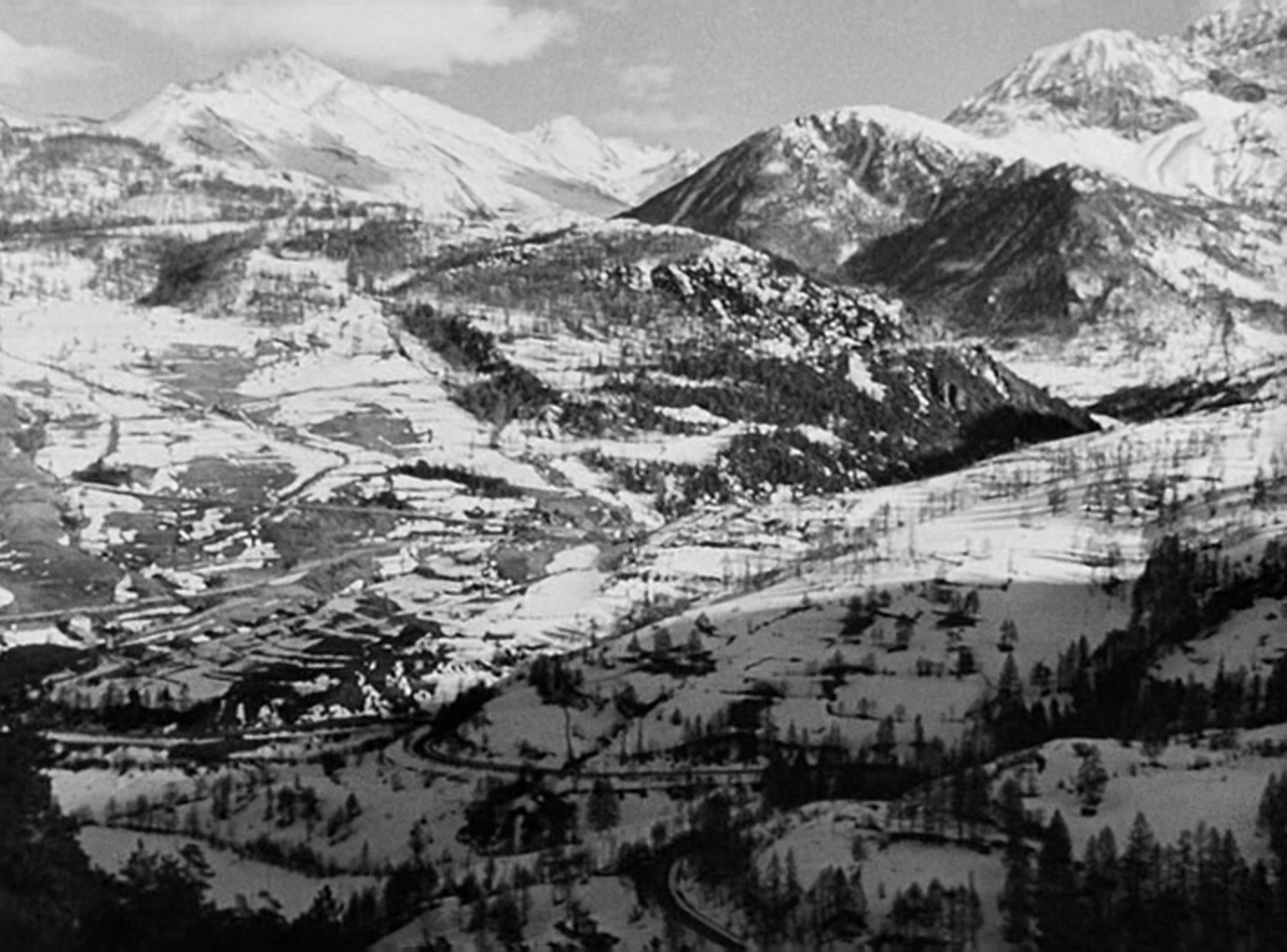
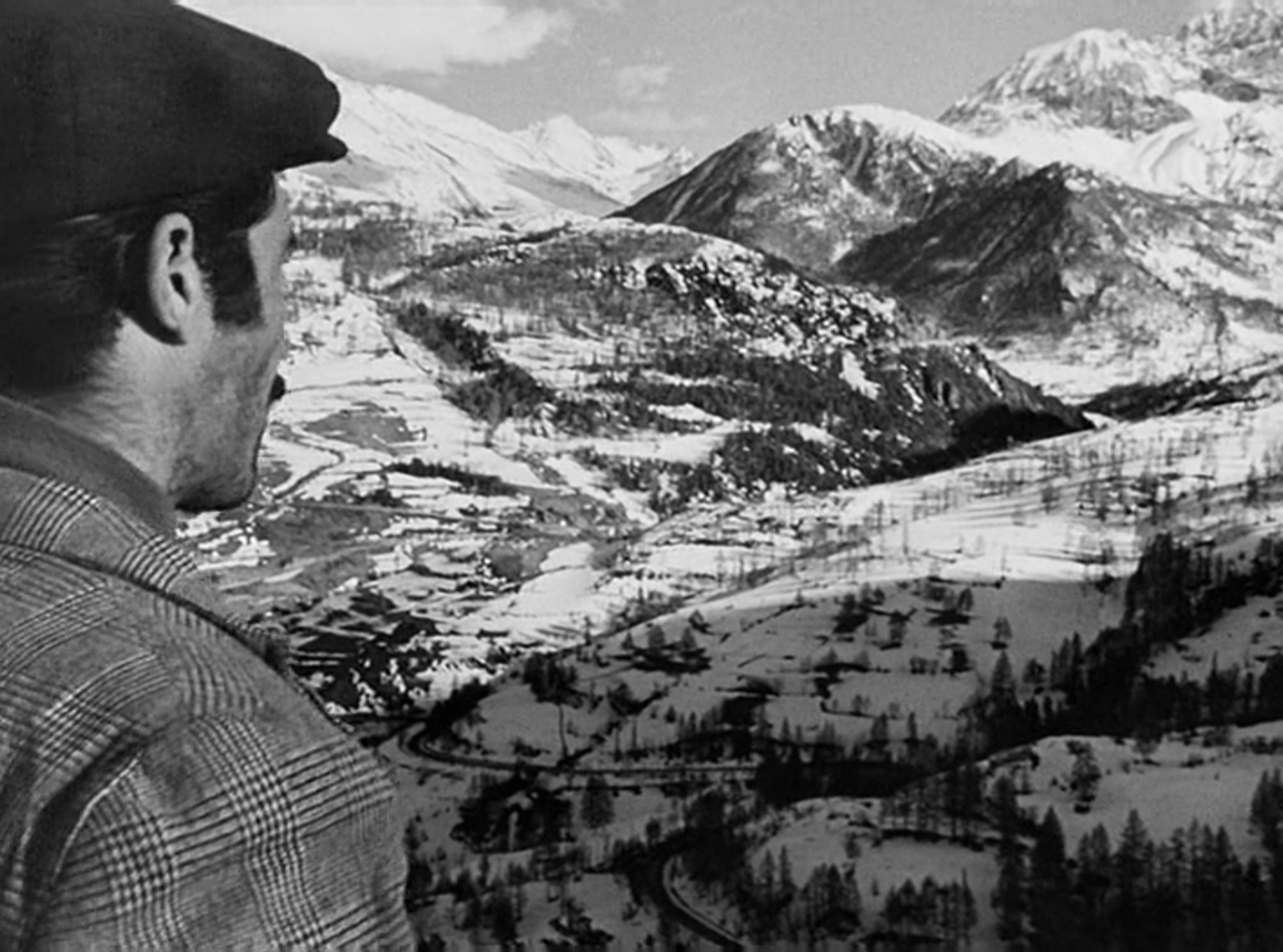
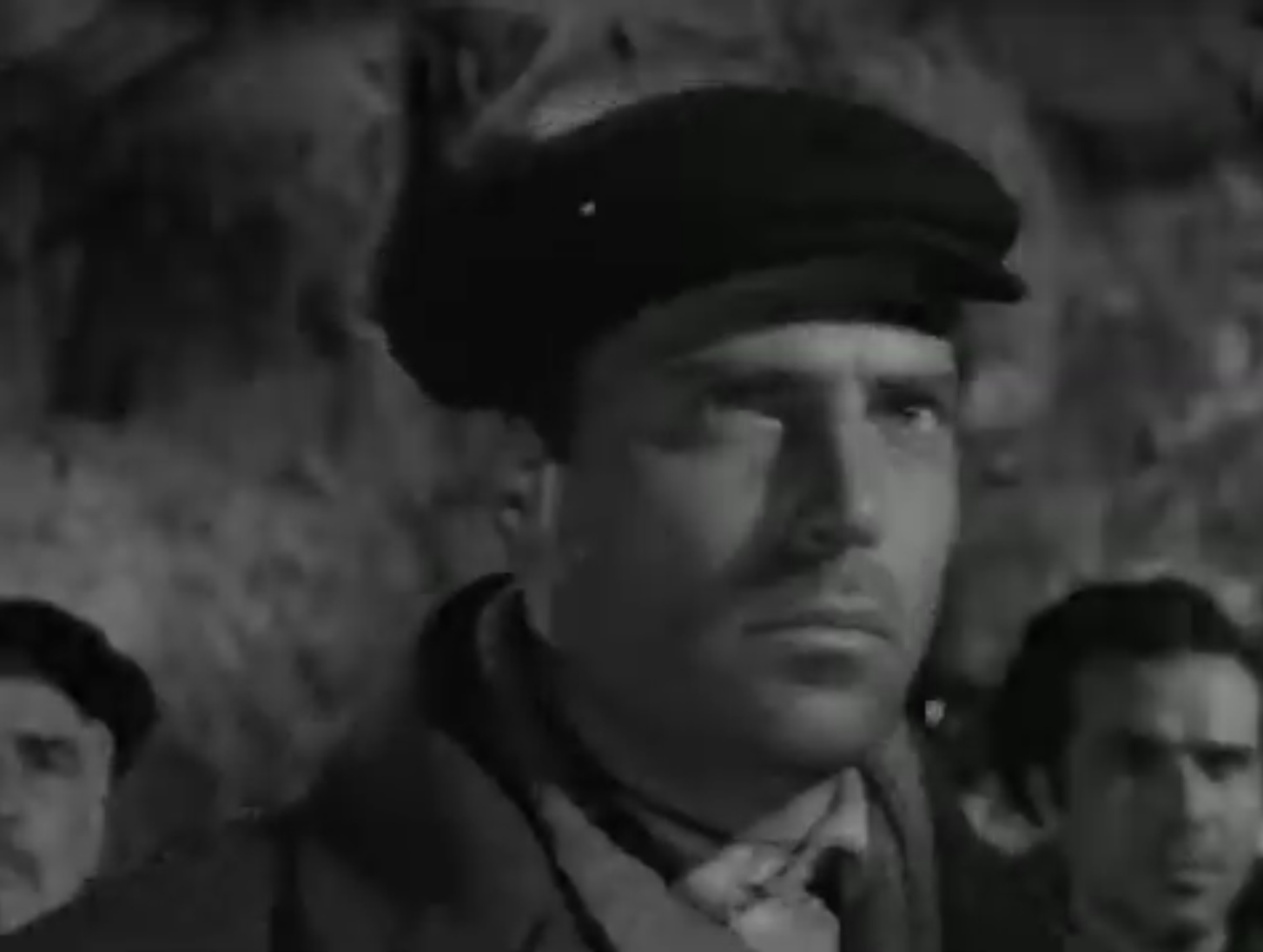
Dall'alto vediamo un paesaggio montuoso, cosparso di neve e abeti. Mentre una musica orchestrale agitata risuona in sottofondo, Vanni entra nell'inquadratura, indossa la sua coppola.
From high above, we see a mountainous landscape, dusted with snow and fir trees. As agitated orchestral music stirs on the soundtrack, Vanni steps into the frame, wearing his Sicilian cap.
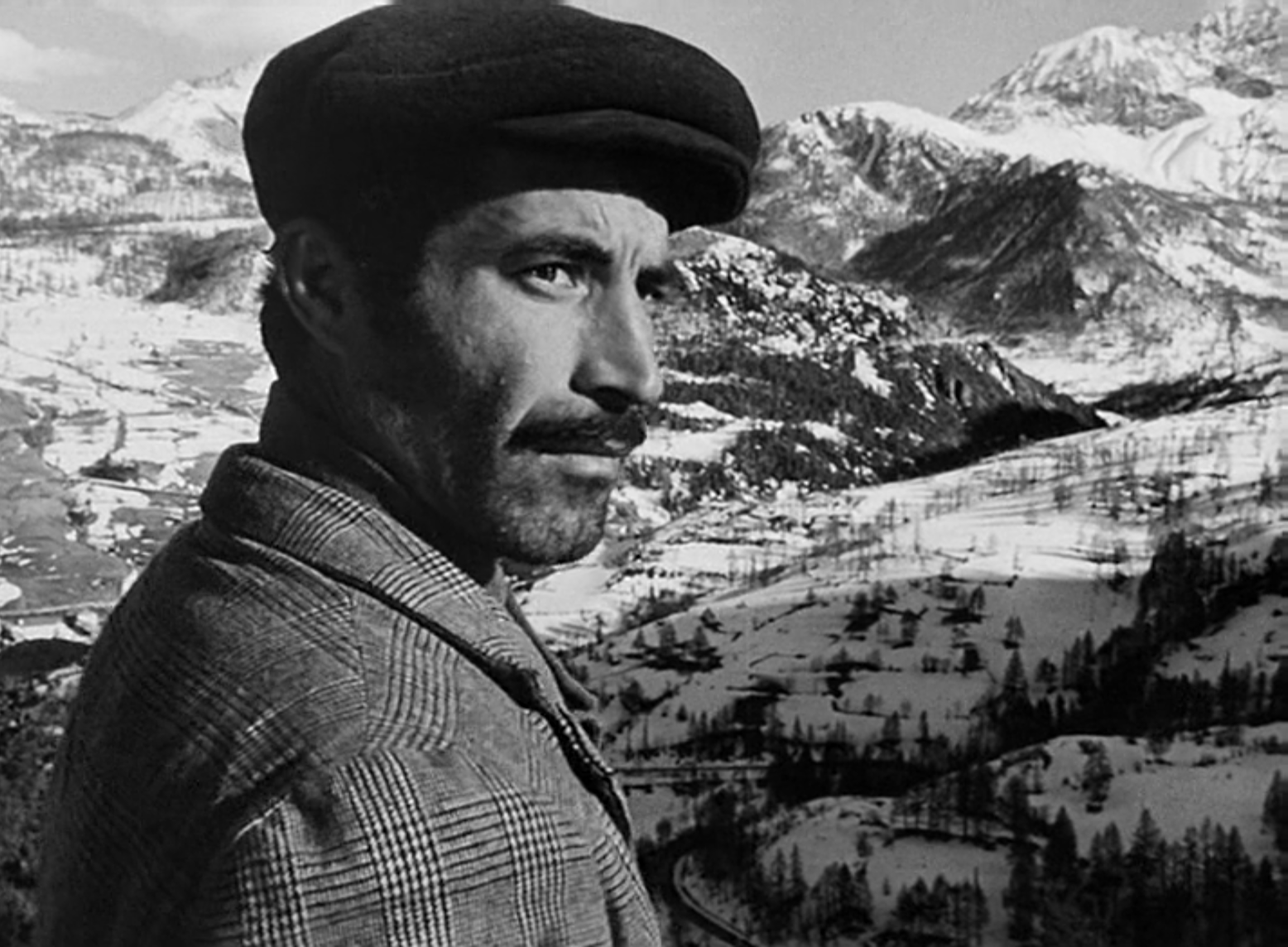
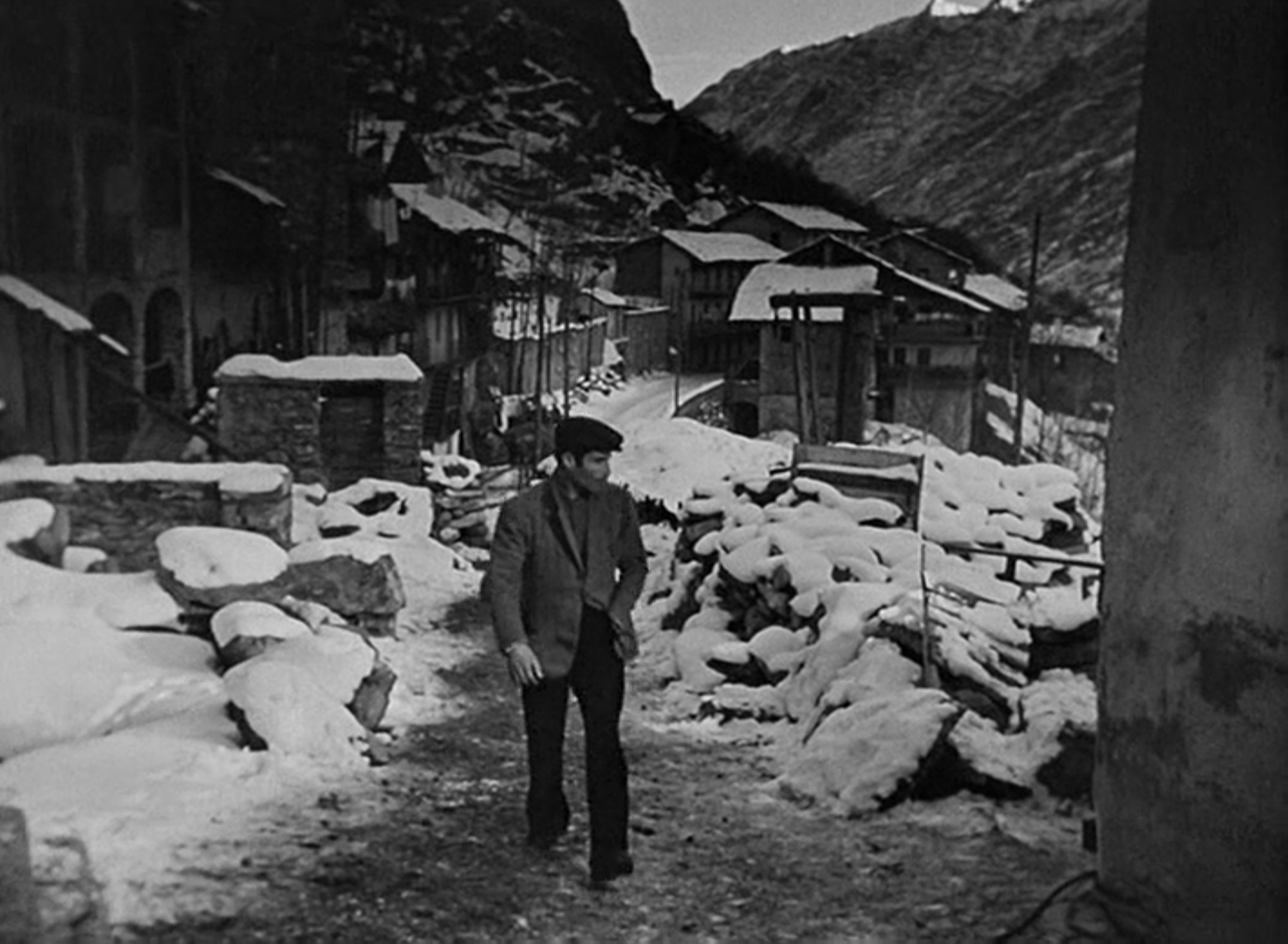
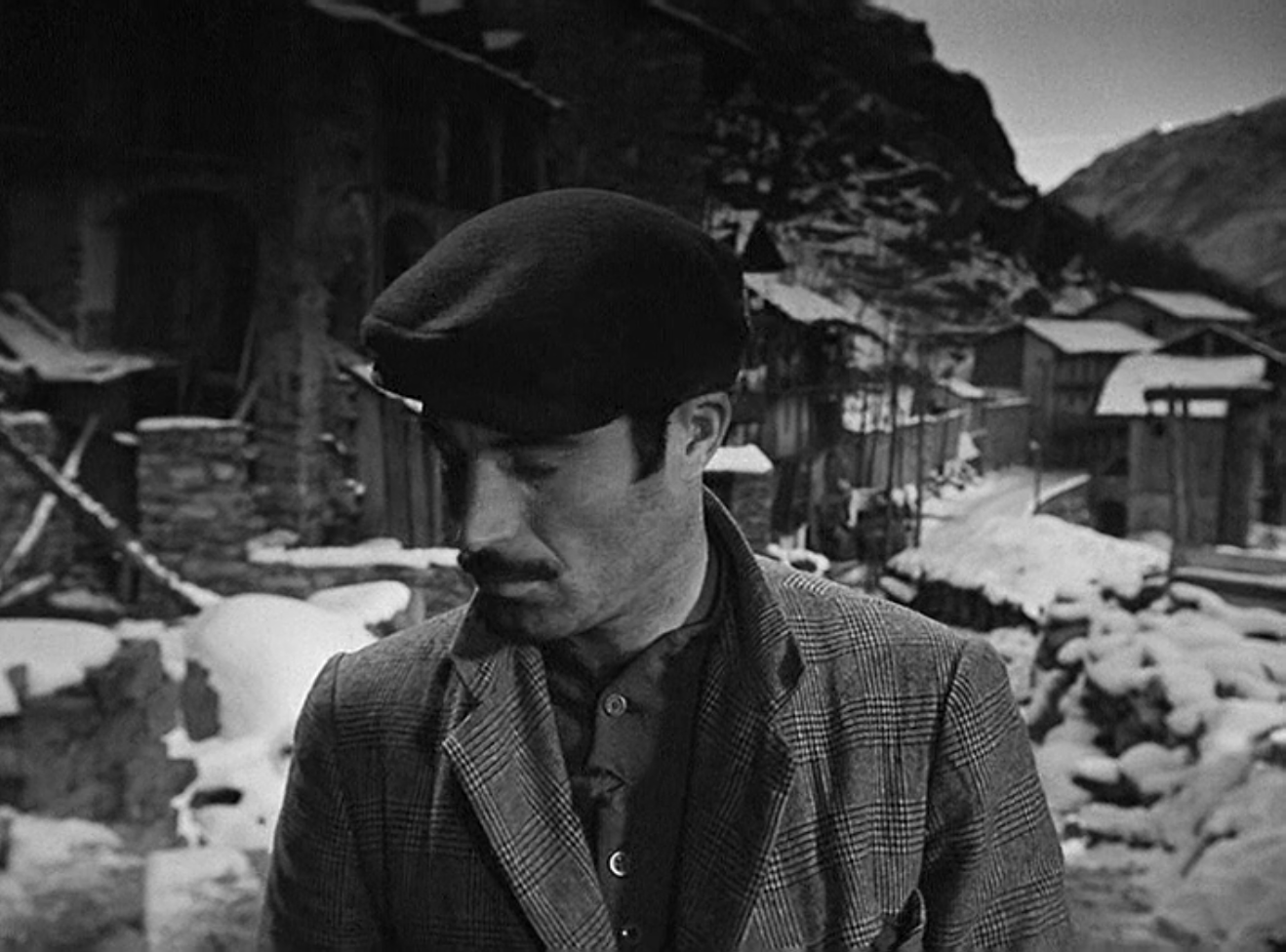
Si gira in modo che possiamo vedere il suo volto, poi inizia a camminare. Lo vediamo attraversare un villaggio, dove il terreno e i tetti sono ricoperti di neve.
He turns so that we can see his face, and then starts walking. We see him pass through a village, where the ground and the roofs are coated with snow.
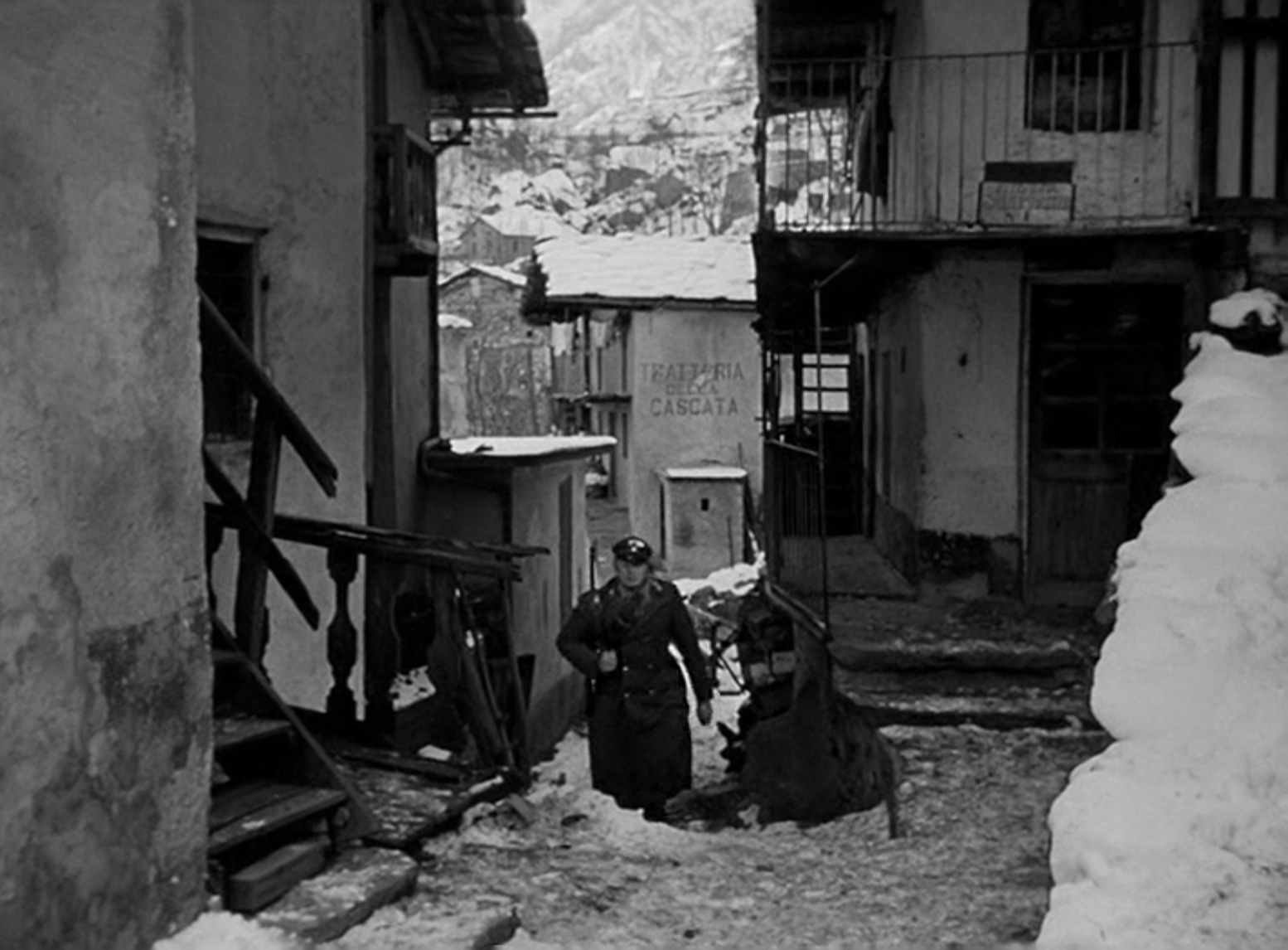
Vanni si ferma quando si avvicina un carabiniere con il fucile in spalla. Dietro di lui, una scritta su un muro bianco identifica la Trattoria della Cascata.
Vanni pauses as a carabiniere approaches, rifle slung over his shoulder. Behind him, lettering on a white wall identifies the Trattoria of the Waterfall.


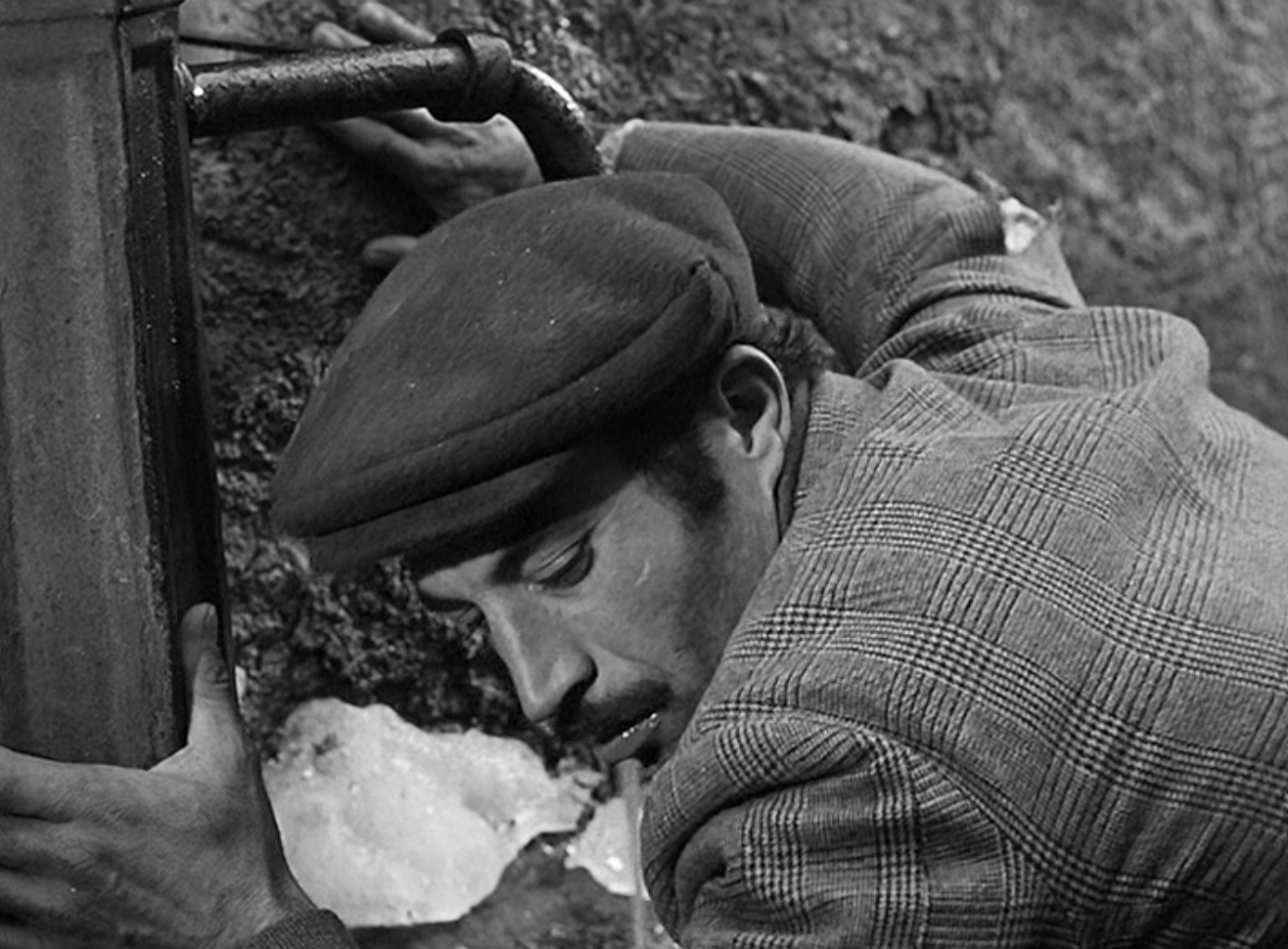
Vanni si china rapidamente per bere da una fontana, un semplice tubo di metallo che spunta dal muro. Notiamo lo squarcio nella sua manica.
Vanni quickly bends to drink from a fountain, a simple metal pipe emerging from the wall. We see the rip in his sleeve.

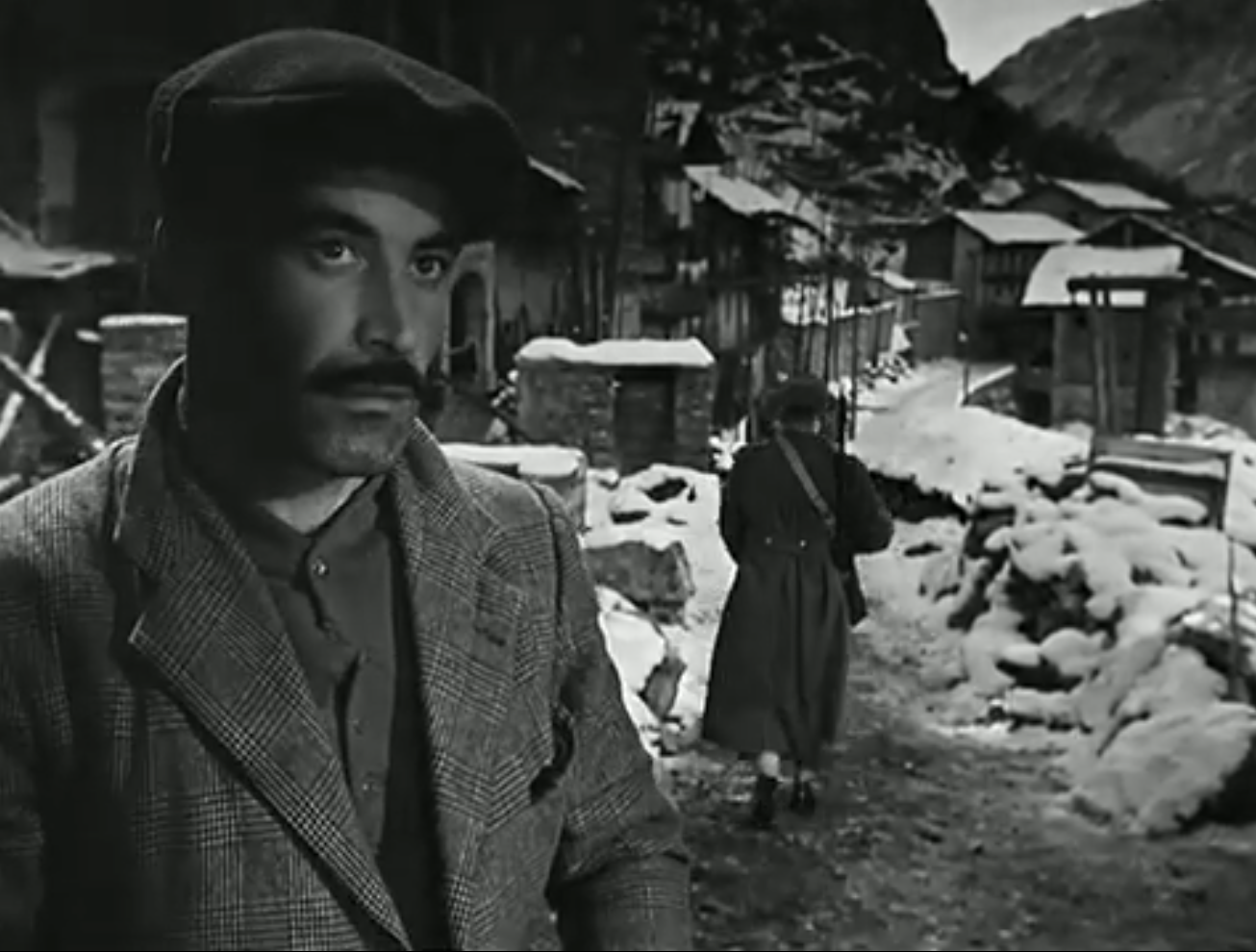
Il carabiniere passa senza notare Vanni, e lui, con un mezzo sorriso, prosegue per la sua strada.
The carabiniere passes without noticing Vanni, who, with a half-smile, goes on his way.
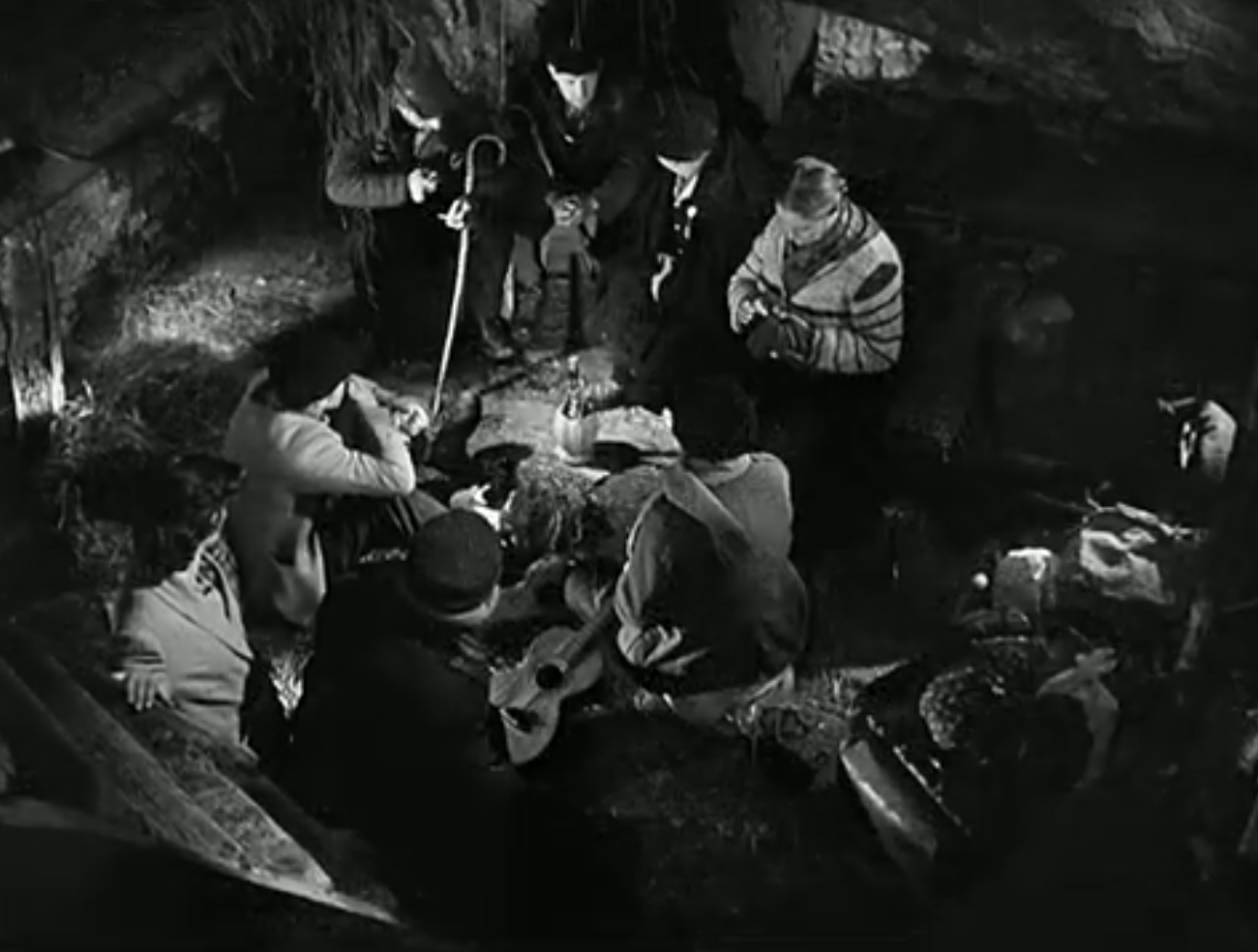
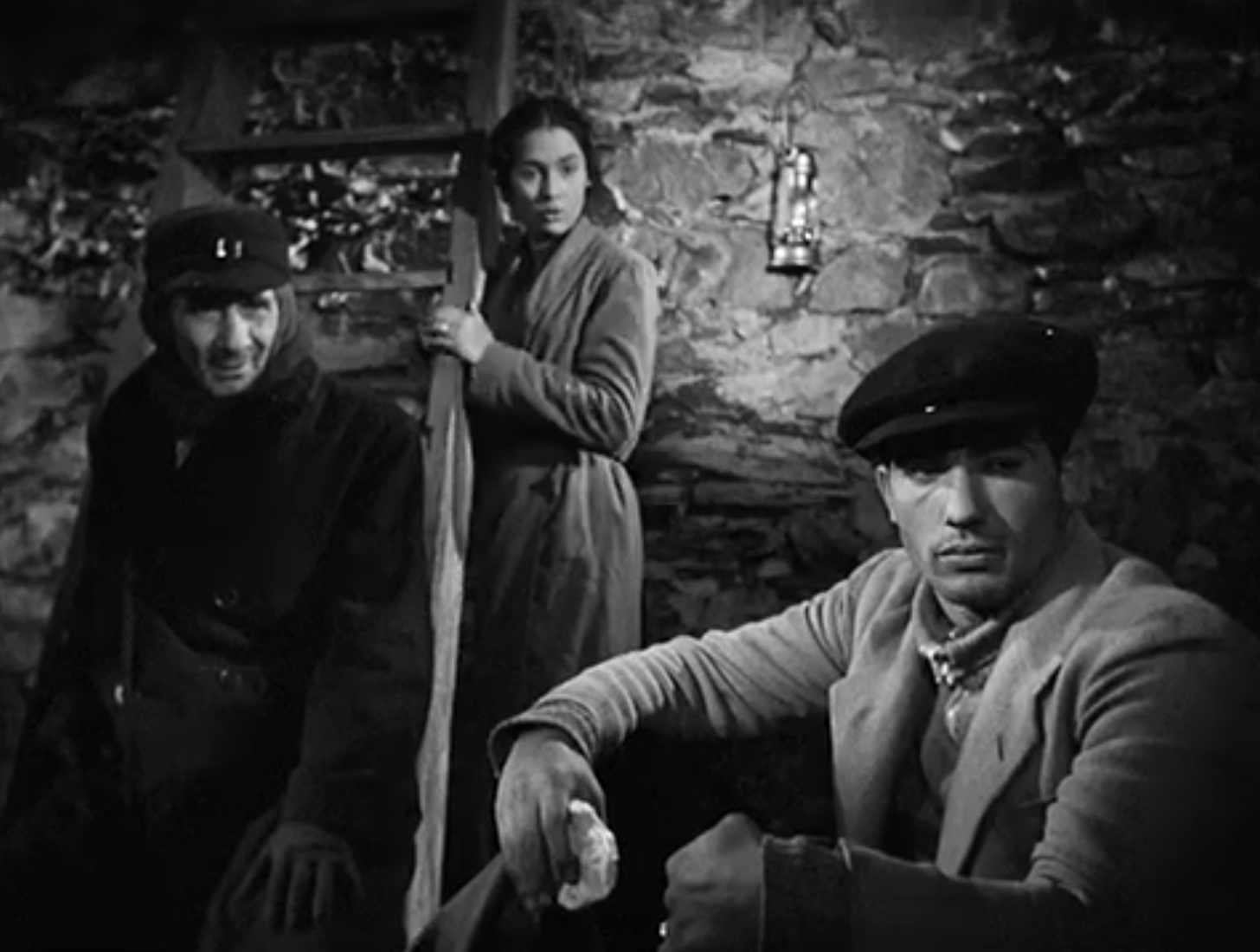
Dall'alto, vediamo i siciliani riuniti in un interno buio.
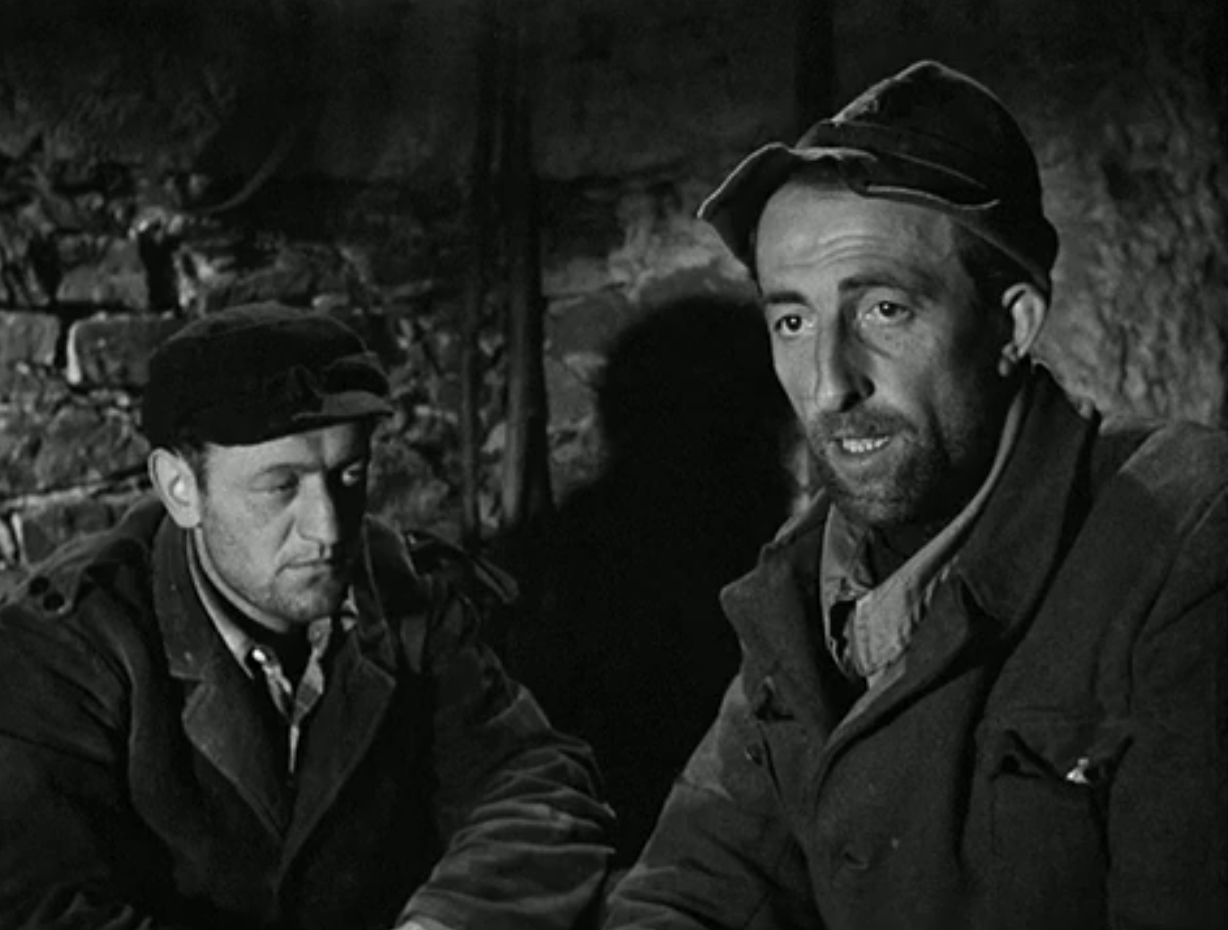
“A Chambéry c'è un certo signor Berardo", dice un uomo con un forte accento veneto. “Lui ci porta alle miniere di Lille, che si trova dall'altra parte della Francia”.
From above, we see the Sicilians gathered in a shadowy interior.
“In Chambèry, there is a Mr. Berardo,” says a man with a strong Veneto accent. “He'll take us to the mines in Lille, which is on the other side of France.”
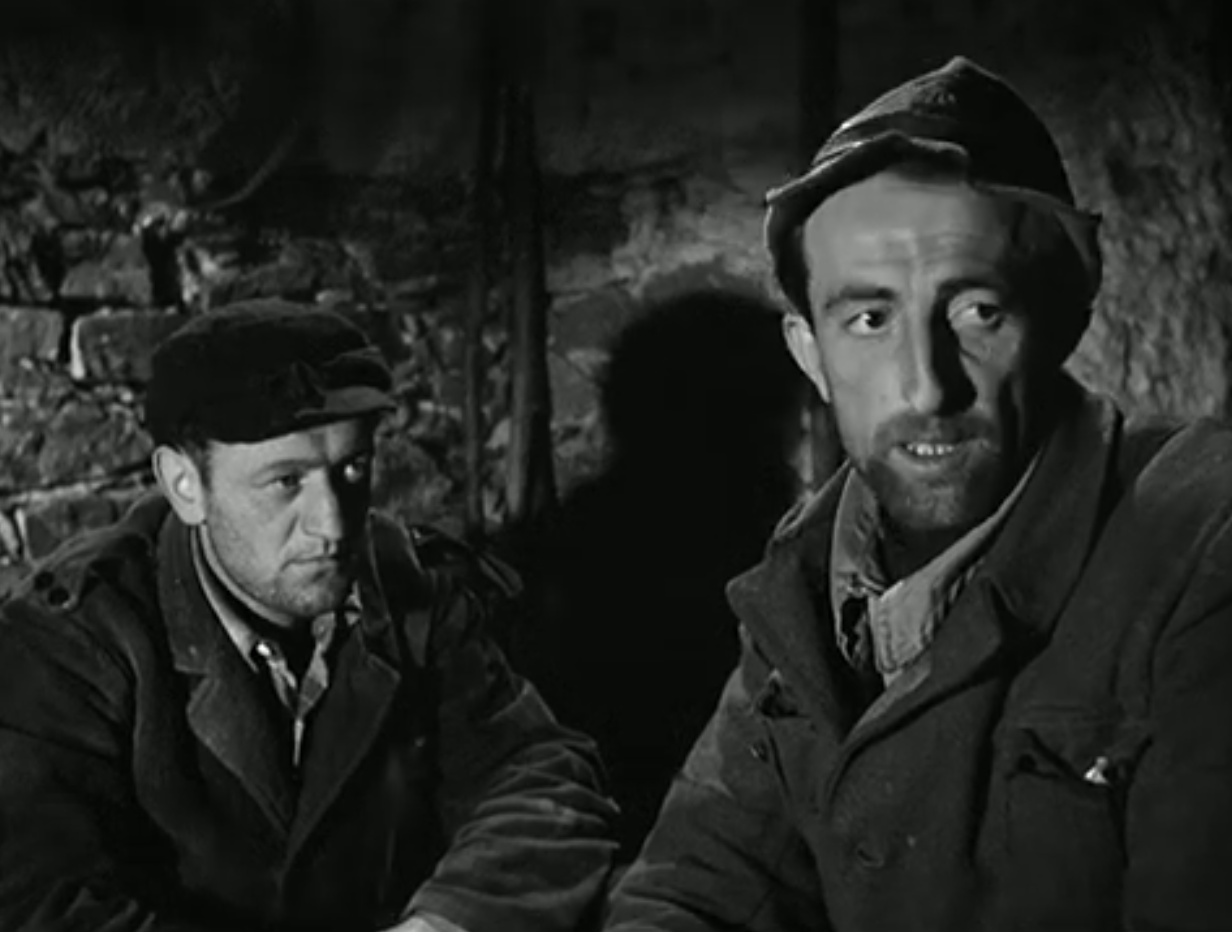
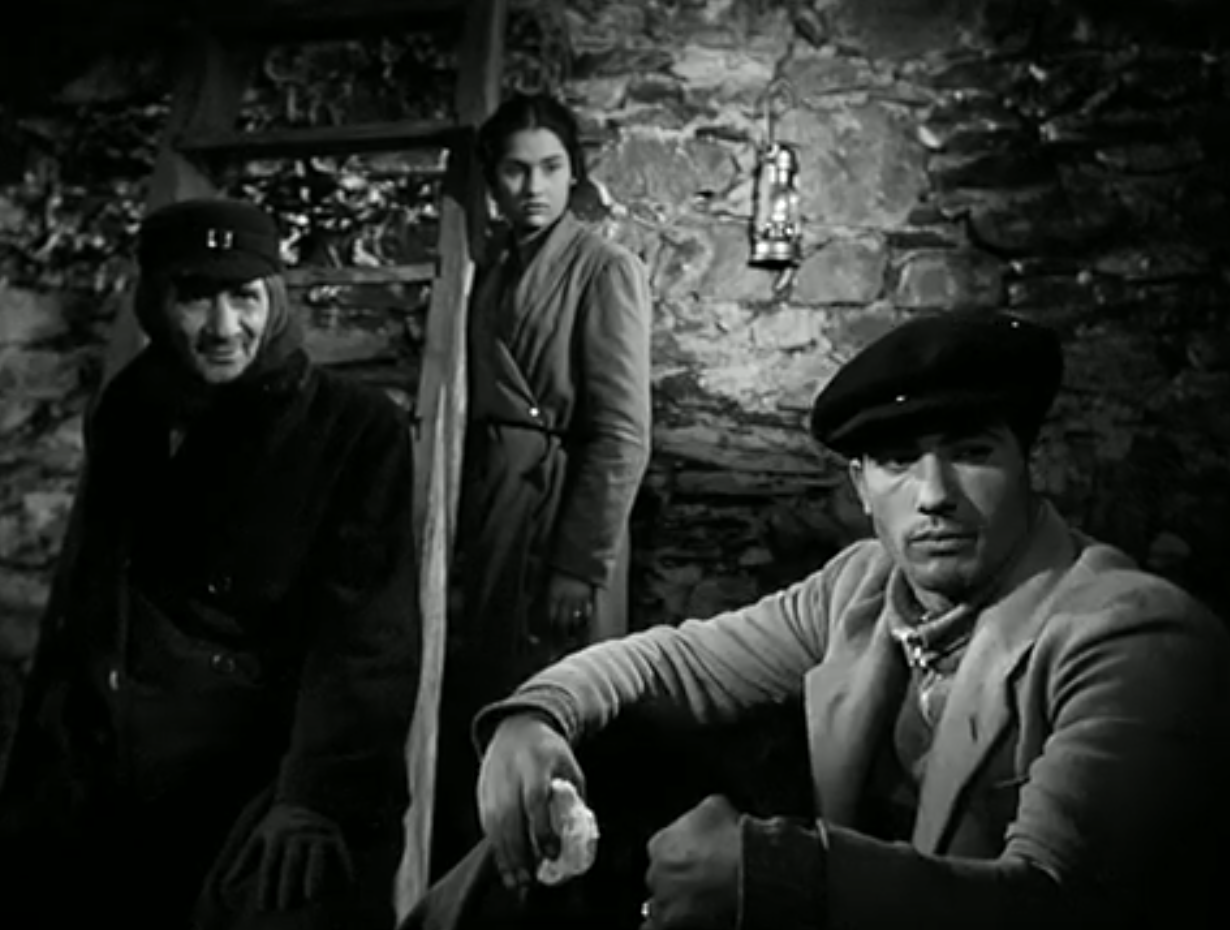
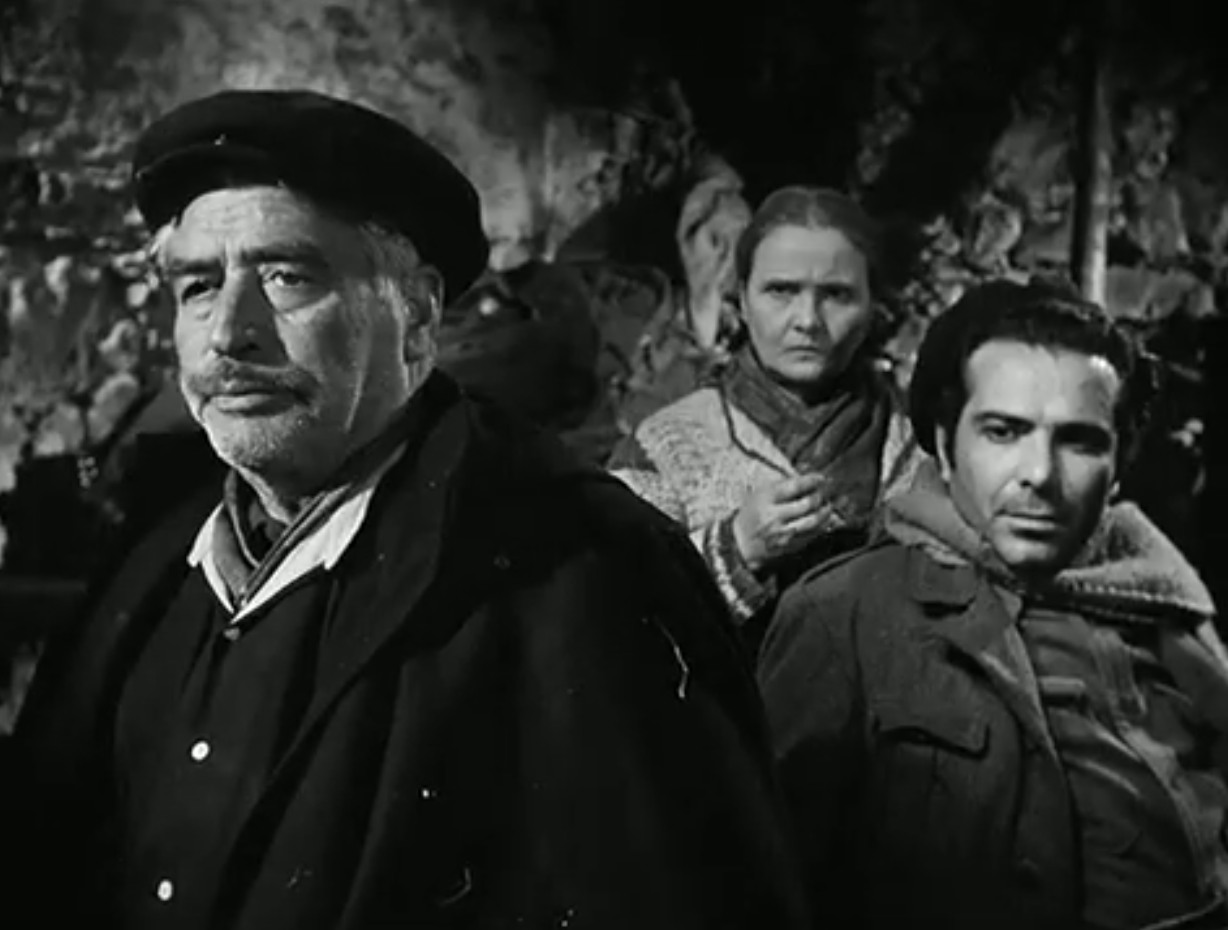
“Il contratto ce lo fa appena arriviamo a Chambéry". I siciliani sono vigili ma impassibili. “Voi che siete minatori di zolfo, vi ingaggiano subito. Carbone, zolfo, tutte miniere sono”.*
*Infatti, nel Dopoguerra, i minatori italiani sono stati accolti dai paesi dell'Europa occidentale, tra cui la Francia, che avevano scarsità di manodopera per le loro miniere.
“We’ll sign the contract as soon as we get to Chambèry.” The Sicilians are watchful but inexpressive. “You’re sulfur miners, they’ll hire you right away. Coal, sulfur, they are all kinds of mines.”*
*In fact, during the postwar period, Italian miners were welcomed by western European countries, including France, which were short of labor for their mines.
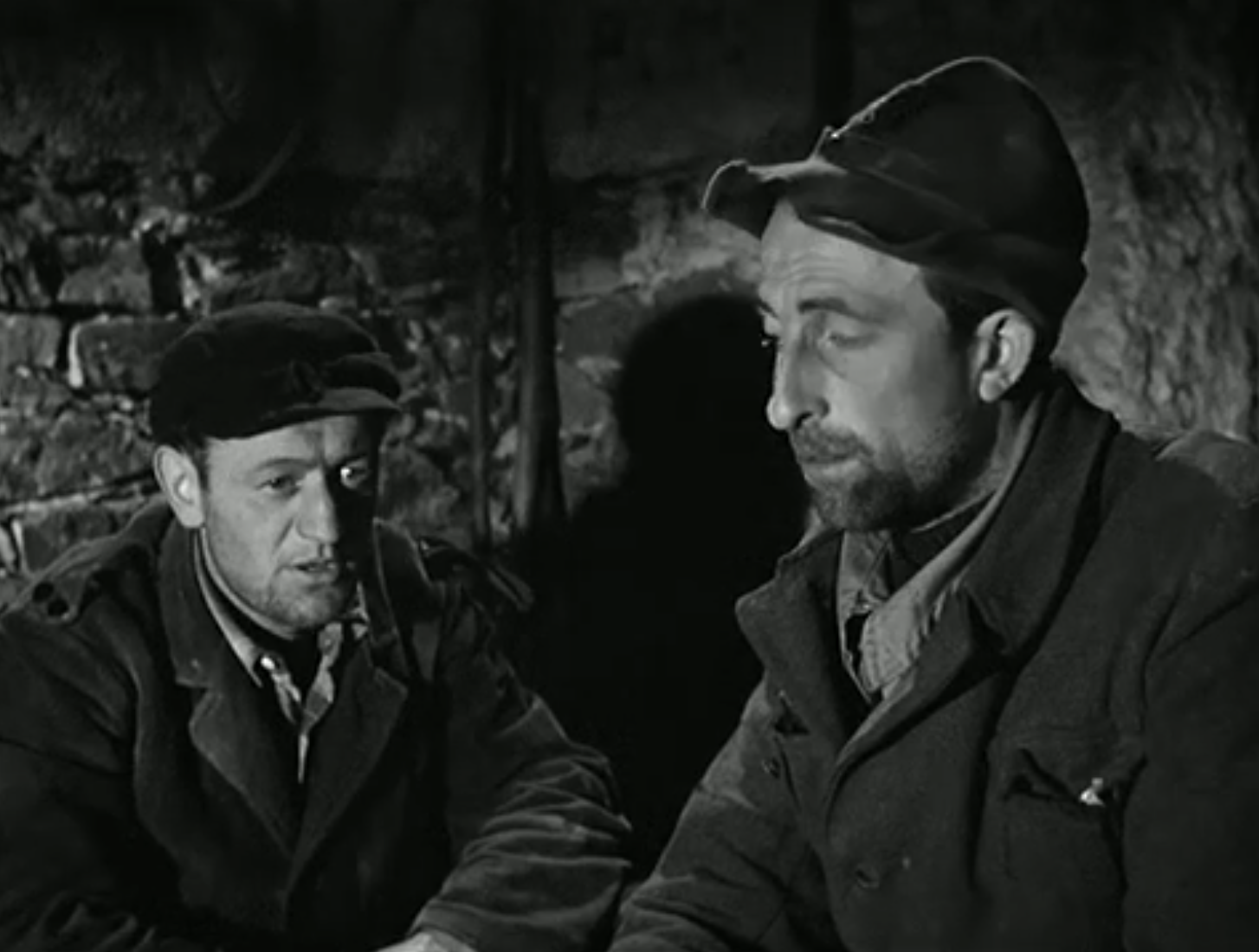
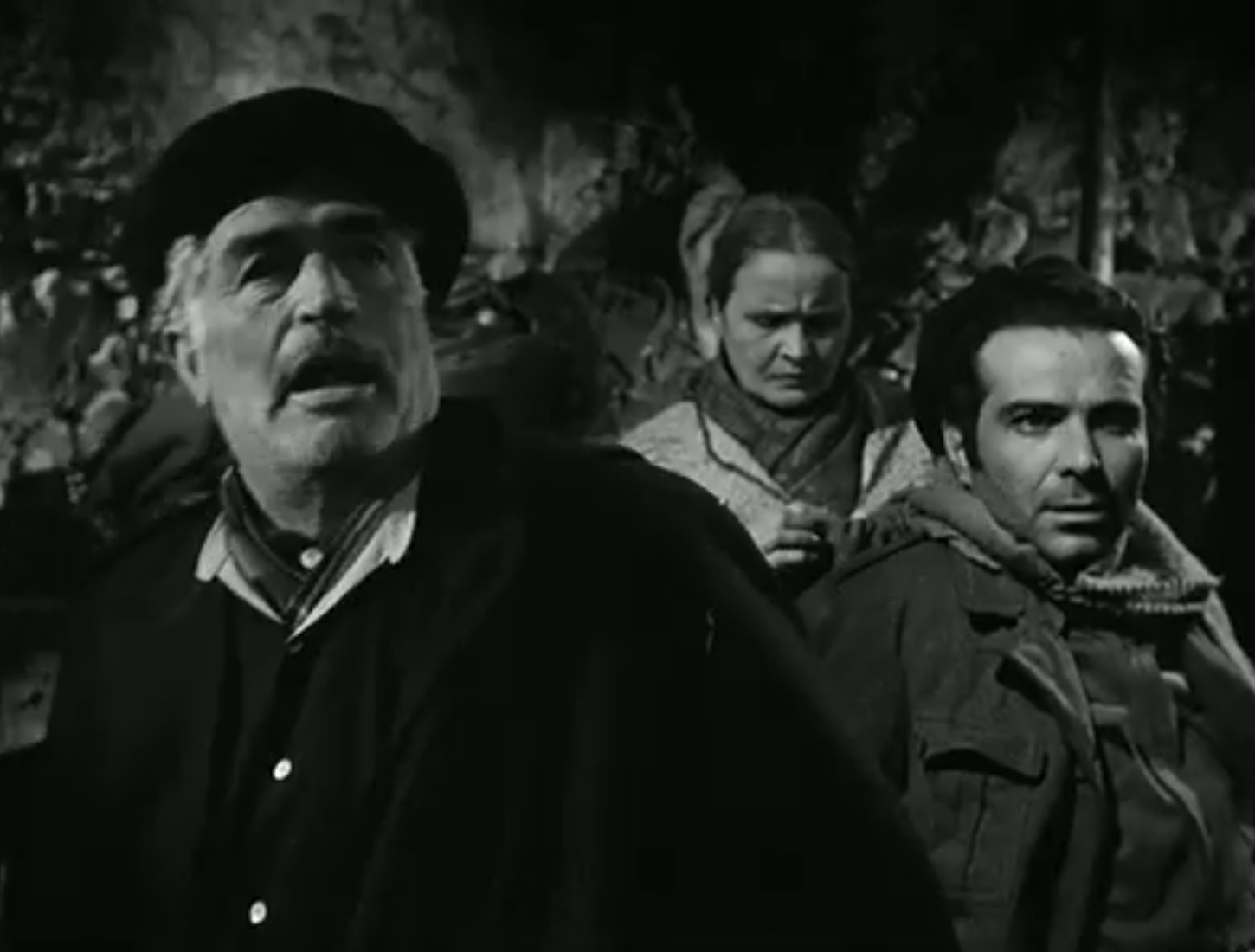
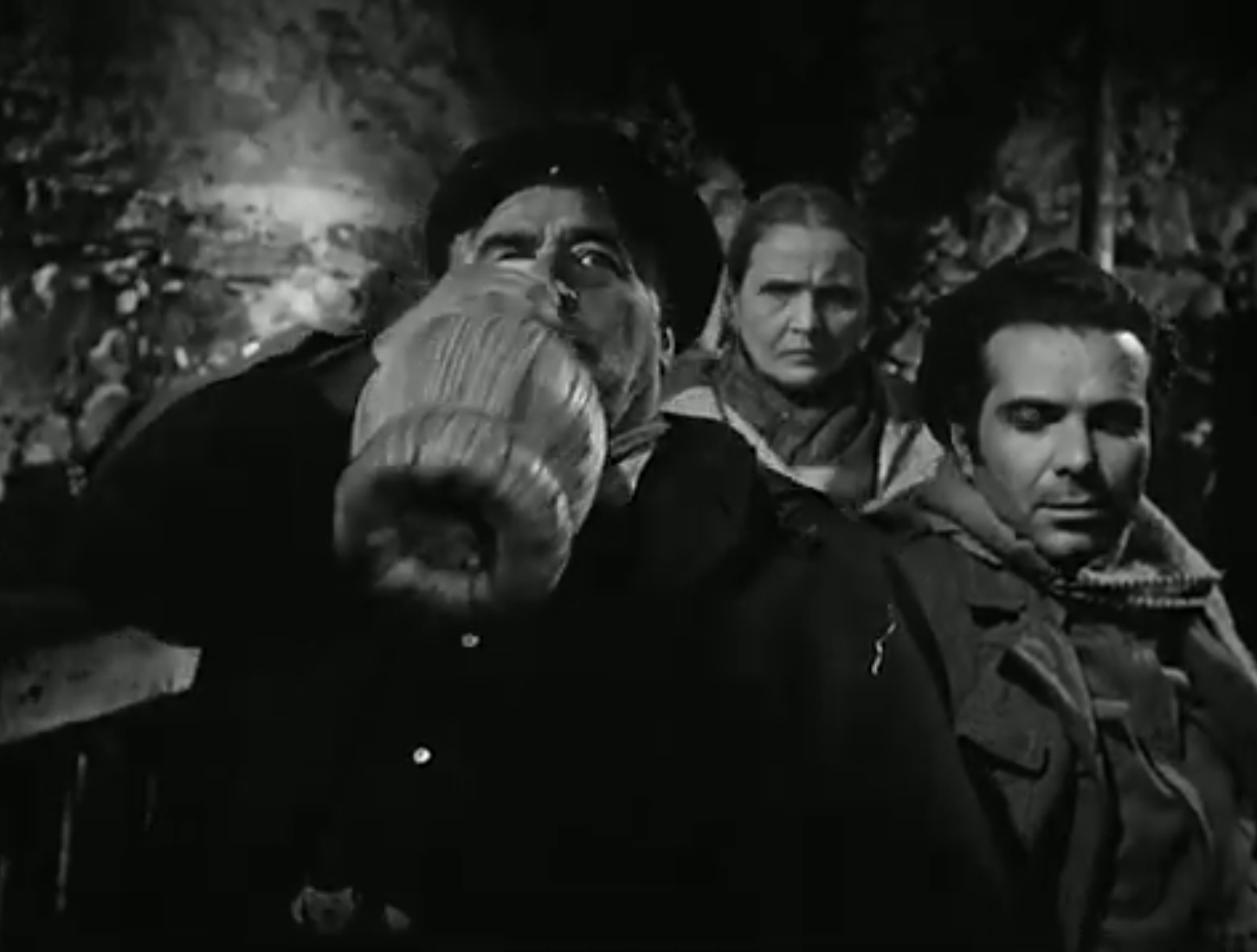
"Cercano la manodopera" – dice il secondo uomo, anche lui con un forte accento veneto* – "Ne hanno bisogno e pagano bene. Si tratta di quarantamila franchi al mese, che sarebbero ottantamila dei nostri".
“Ottantamila!" esclama Rosa.
"Ma questa è l'America,** altro che la Francia!" dice Misciu, bevendo un sorso di vino da una bottiglia.
*Negli anni '50 anche il Veneto era una regione povera e la gente emigrava. Lo sviluppo industriale è arrivato tra gli anni ‘60 e ‘70, soprattutto con le esportazioni verso la Germania.
**La frase idiomatica “trovare l’America” significa avere un grande successo, oppure ottenere una posizione privilegiata o vantaggiosa. É come “to hit the jackpot” in inglese. Quindi, qui Misciu fa un gioco di parole che non può davvero essere tradotto.
“They’re looking for workers,” says the second man, also with a strong Veneto accent. “They need them and they pay well. That’s forty thousand francs per month, which would be eighty thousand lira.”
“Eighty thousand!” exclaims Rosa.
“But this is America,** not France!” says Misciu, taking a drink of wine from a bottle.
*In the 1950s, Veneto was also a poor region and people emigrated. Industrial development came between the 1960s and 1970s, especially with exports to Germany.
**The idiomatic phrase “to find America” means to have a big success, or to obtain a privileged or advantageous position. It’s like “to hit the jackpot” in English. So here, Misciu is doing a play on words that can’t really be translated.
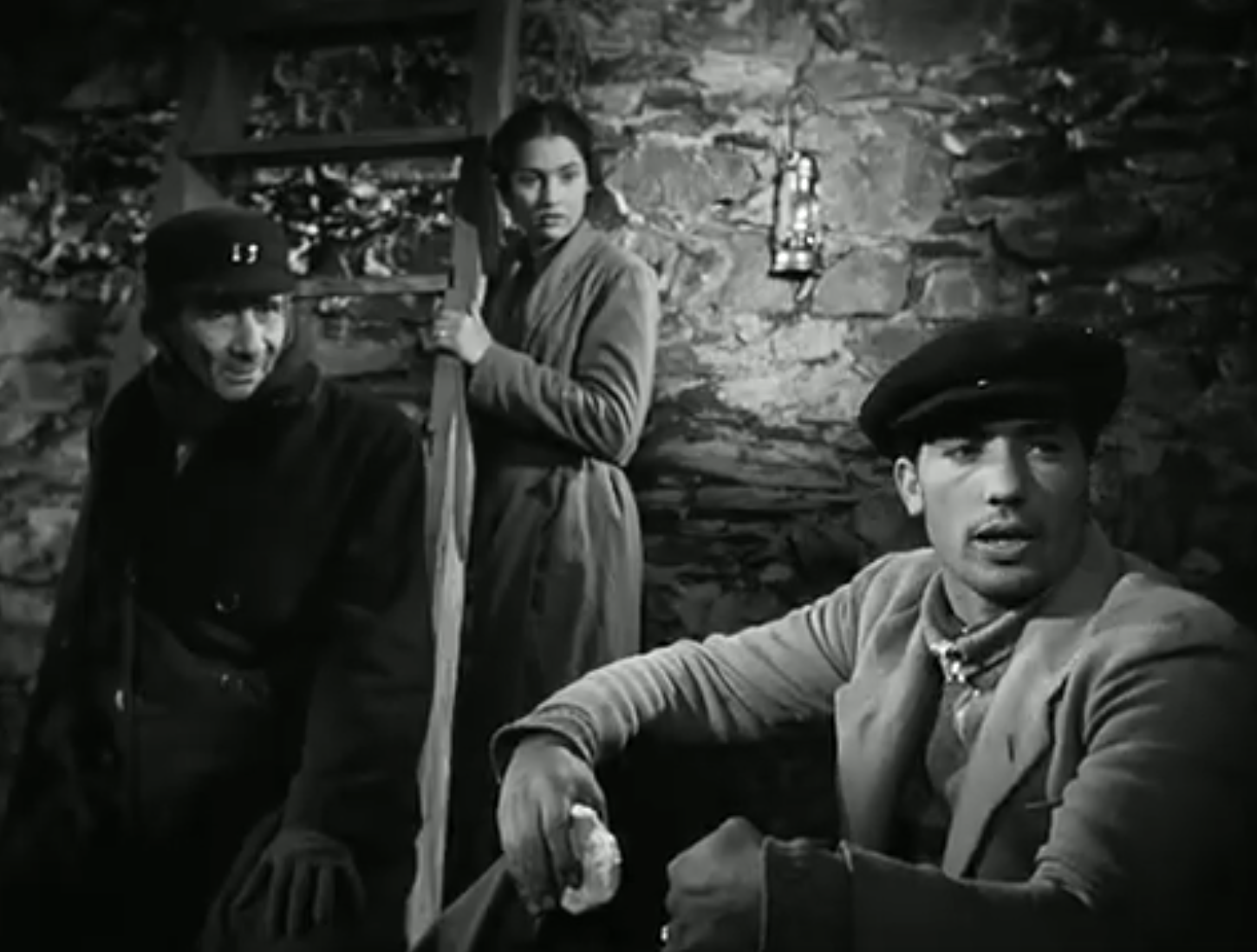

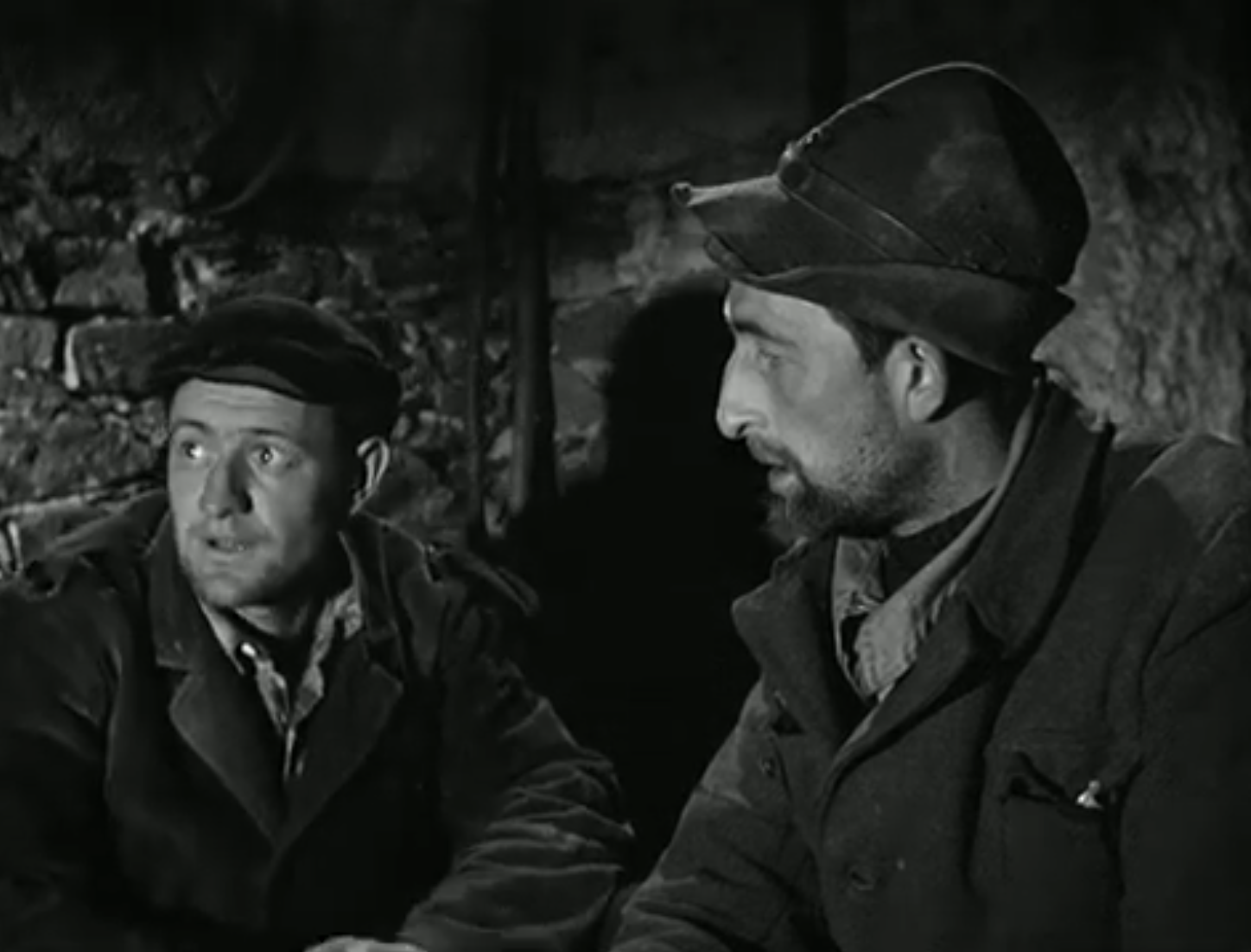
Luca chiede: “E chi vi porta dall'altra parte?”
“Nessuno, andiamo da soli. Non abbiamo soldi per una guida. Lui conosce bene la strada”. Indica con il pollice il secondo uomo.
“Domani andiamo alla baita Col Ferret e poi si fa il gran passo.”*
*Il Col Ferret è un valico montano tra l'Italia e la Svizzera. Da lì, i migranti avrebbero proseguito verso la Francia.
Luca asks, “Who’s taking you to the other side?”
“No one, we’re going by ourselves. We don’t have any money for a guide. He knows the way well.” He gestures with his thumb at the second man.
“Tomorrow we’ll head to the Col Ferret lodge and then we’ll go across the great pass.”*
*Col Ferret is a mountain pass between Italy and Switzerland. From there, the migrants would walk on to France.

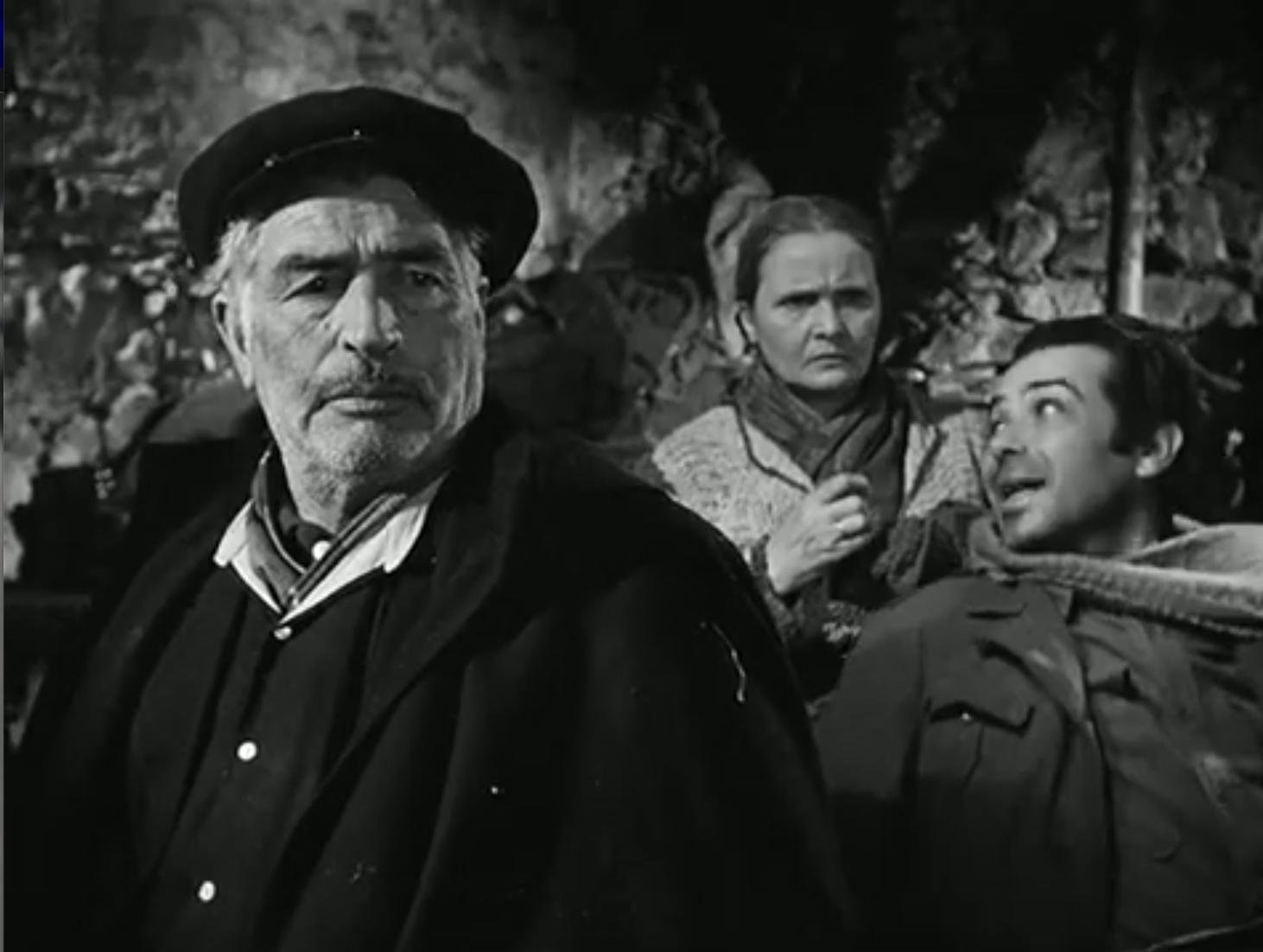
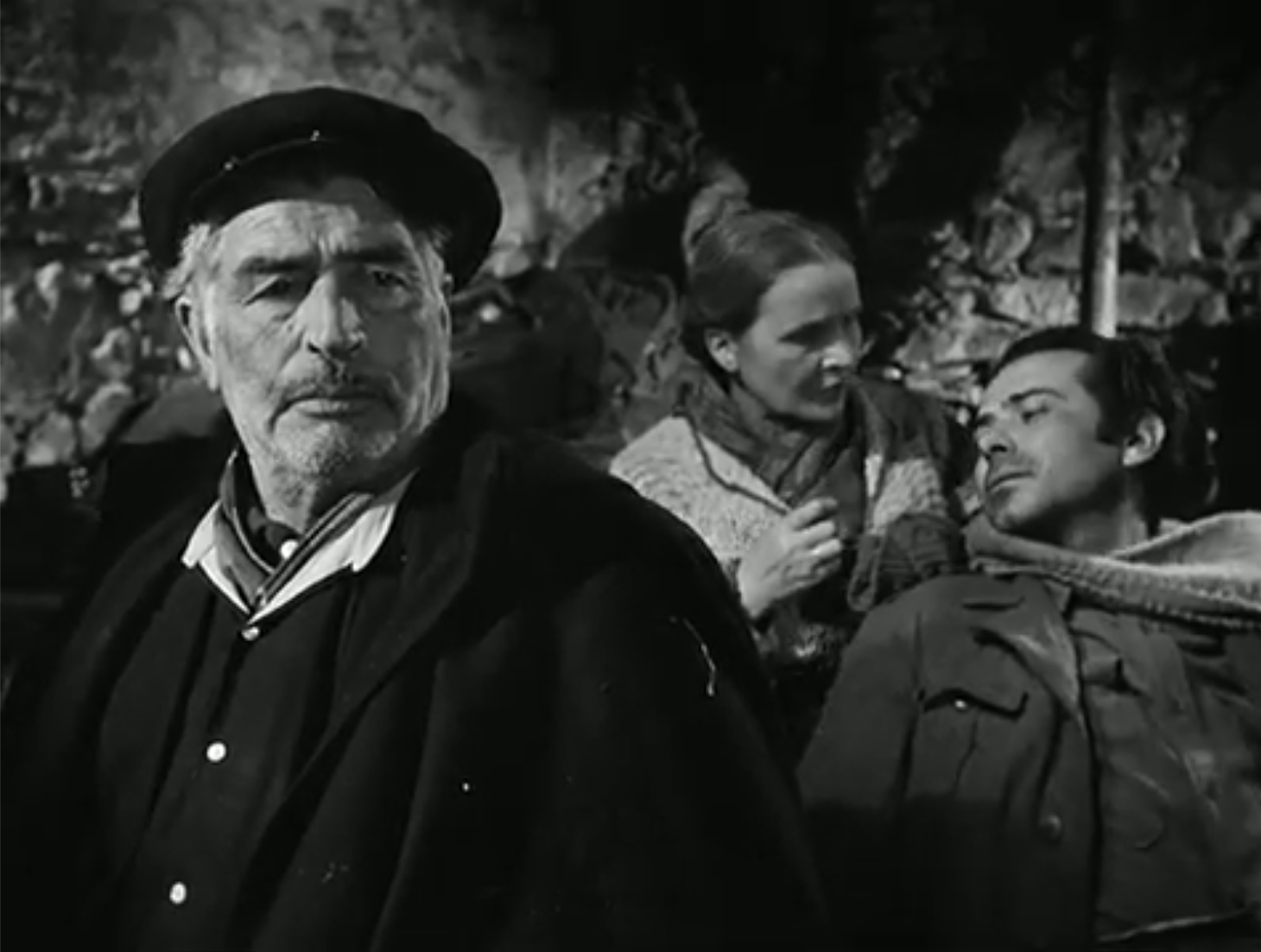
“Dobbiamo partire anche noi”, dice Luca.Brasi dice:
“Bisogna andarsene: ottantamila!”La moglie di Misciu
è d'accordo. “Qui ci prende la polizia!”
“We have to leave, too," says Luca.
Brasi says, “We have to go: eighty thousand!”
Misciu’s wife agrees. “The police will catch us here!”
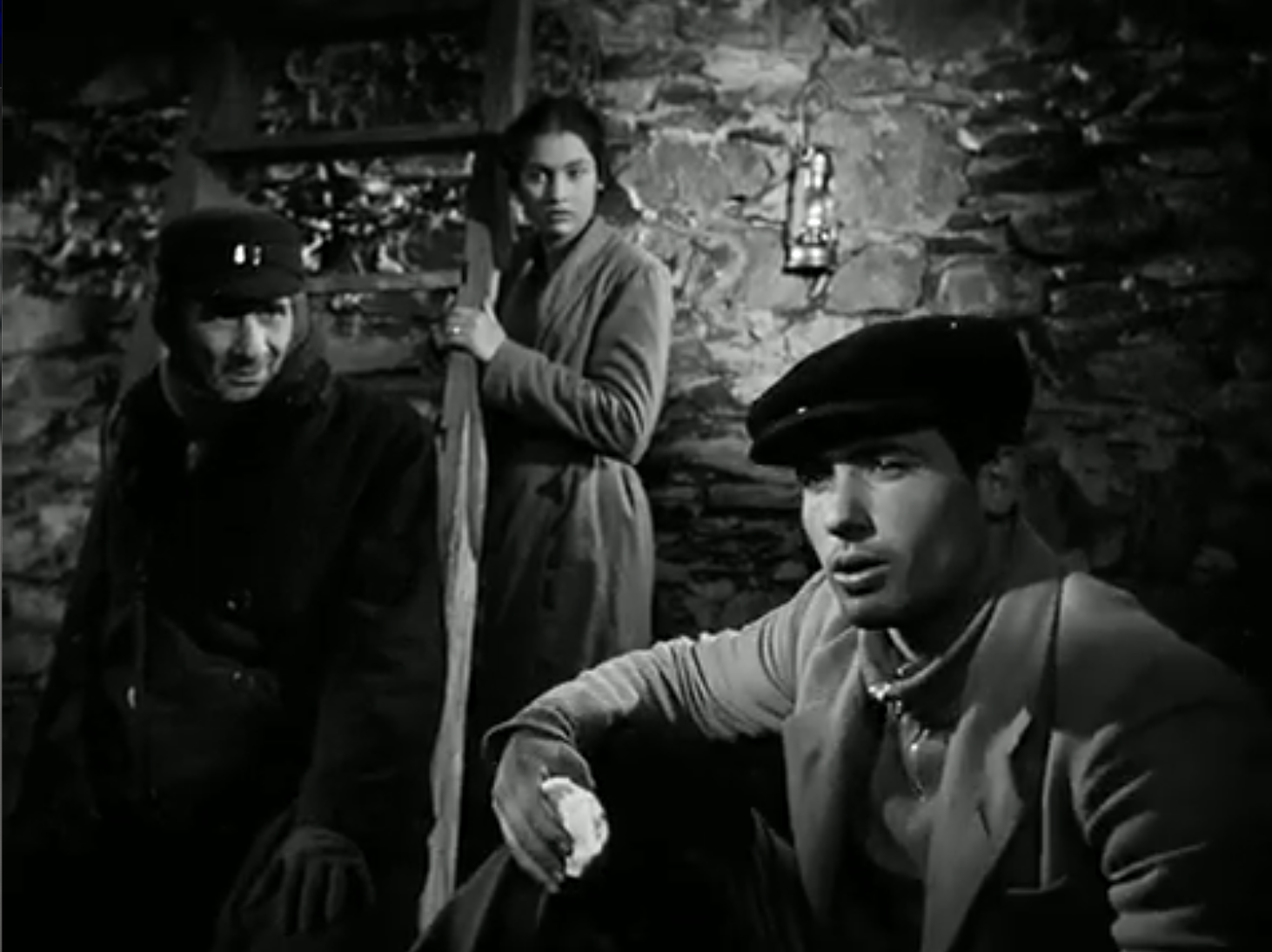
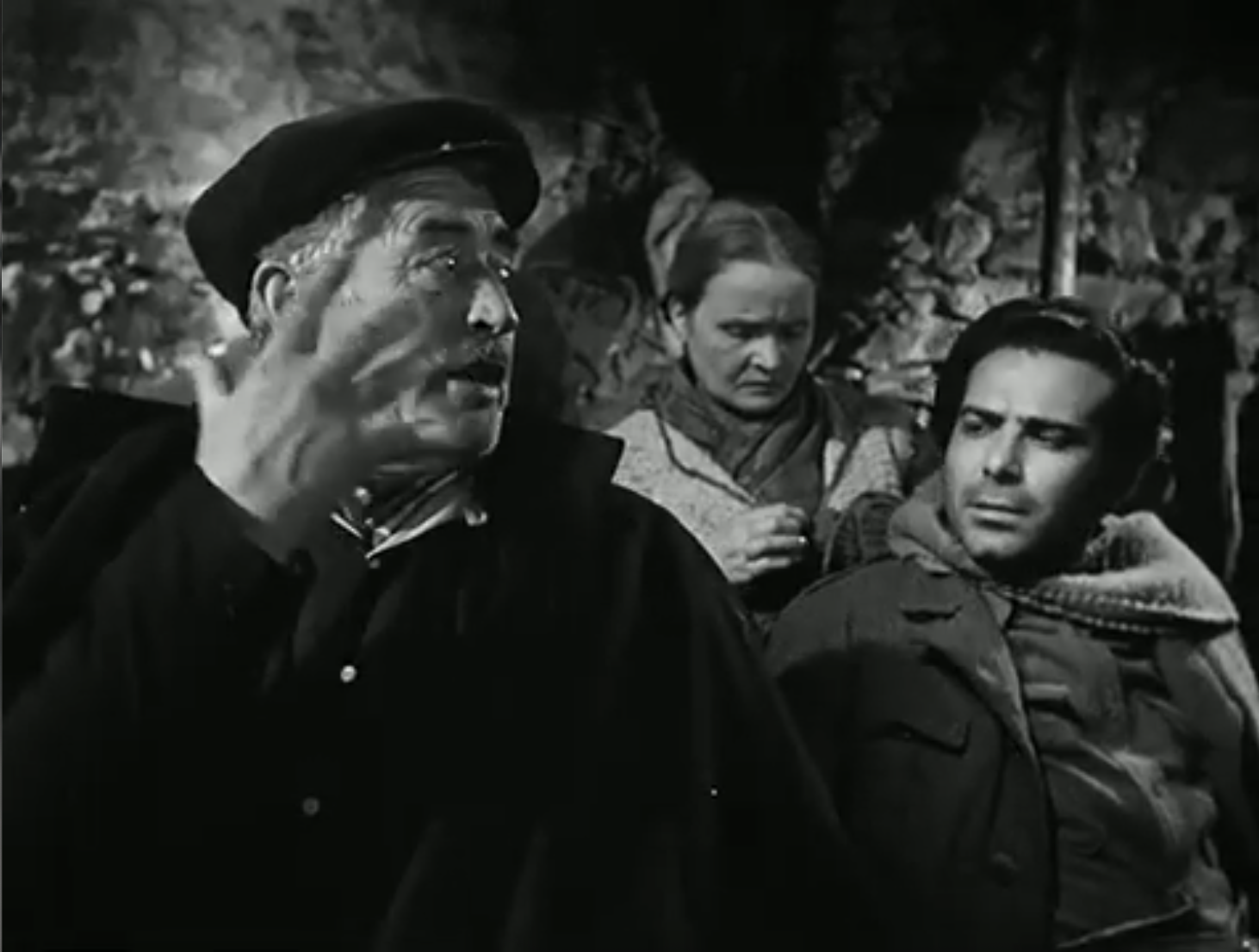
Luca insiste: “Ma è la nostra fortuna!”
Misciu: “Ottantamila!!”
Luca insists, “But that would be a godsend!”
Misciu: “Eighty thousand!!”
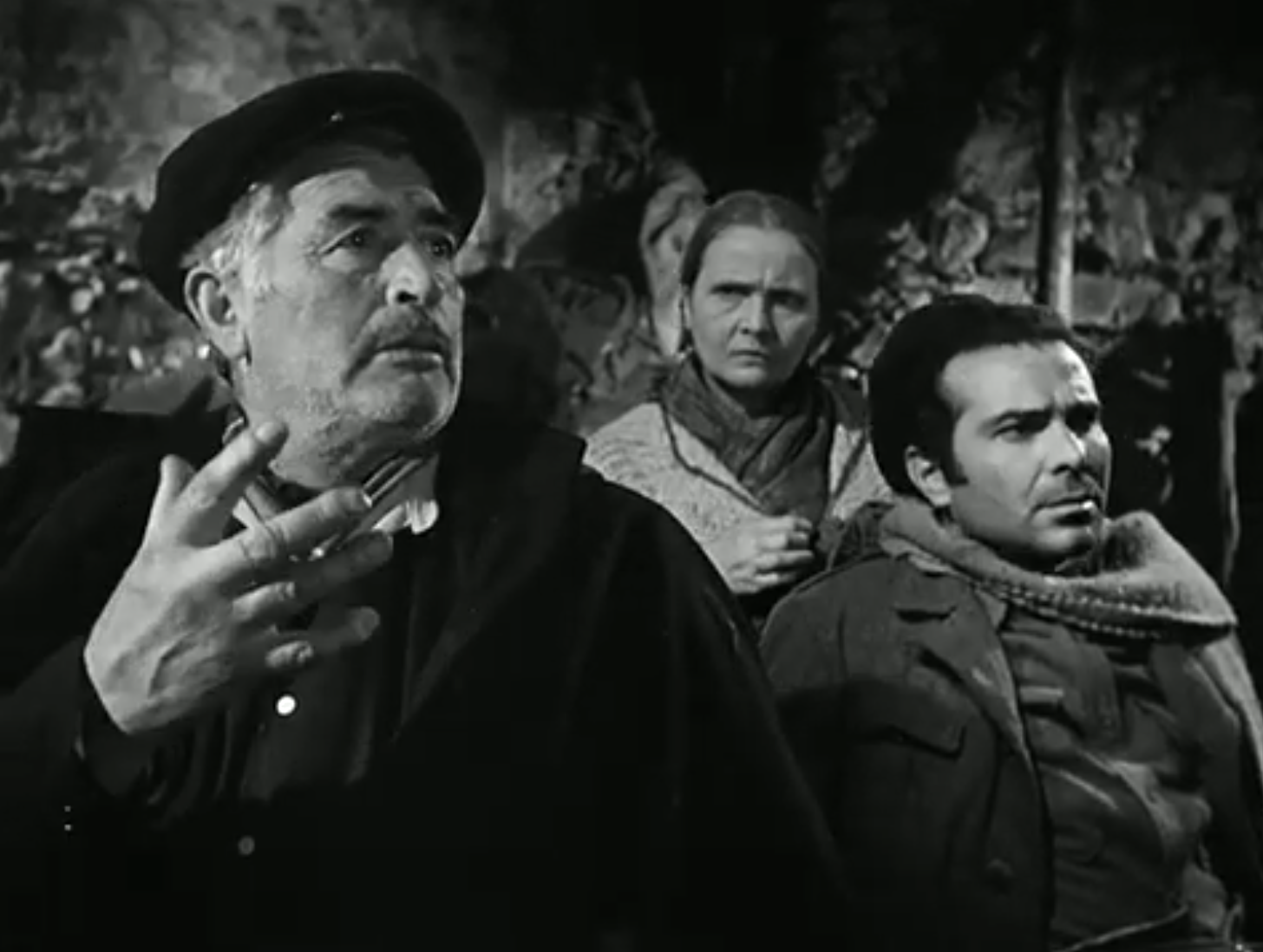
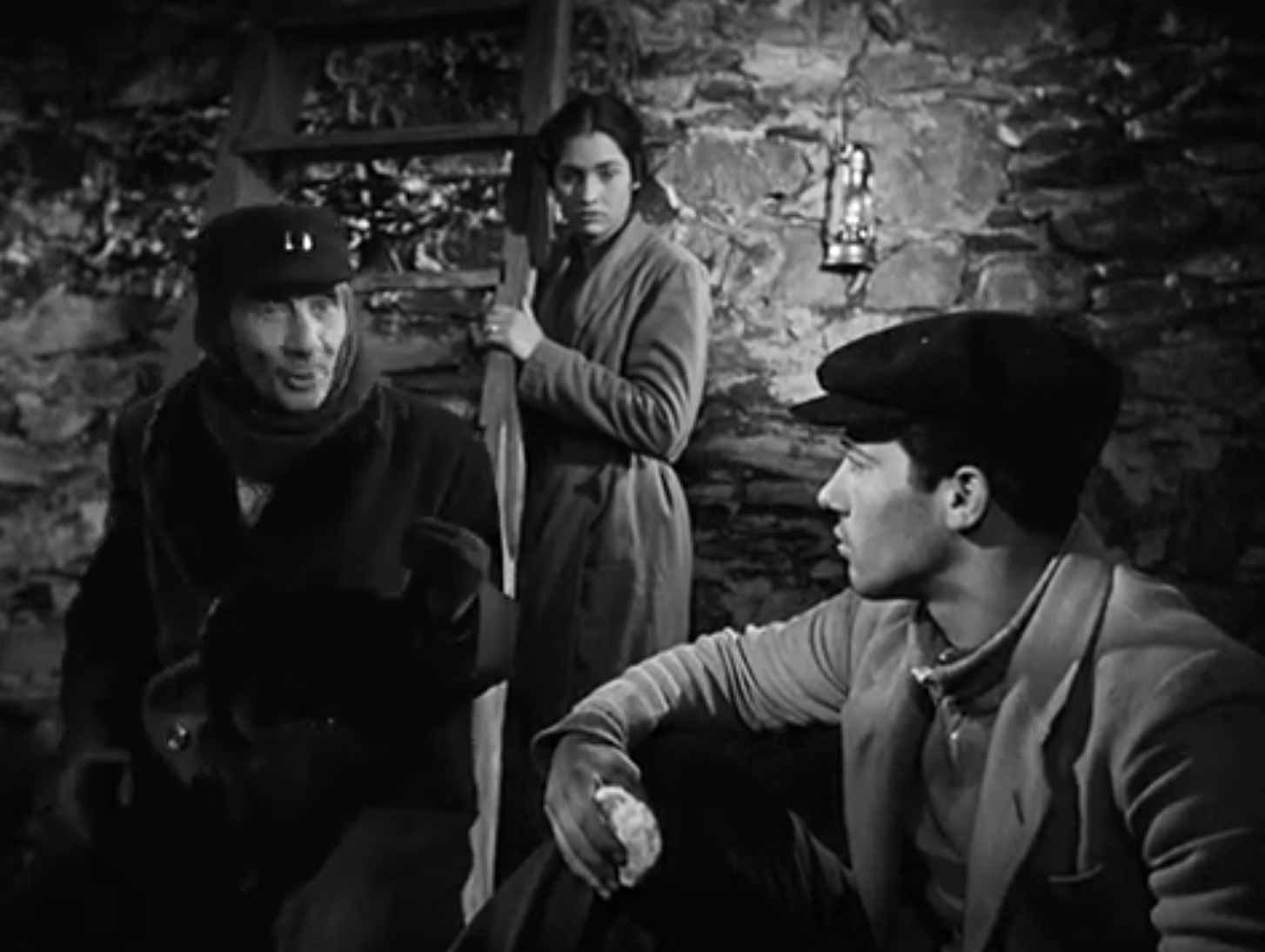
“Un momento”, dice il Ragioniere, avvolto in guanti, sciarpa, cappello e cappotto pesante. “Aspettate, sentite. Un giorno ancora, solo un giorno. Se Saro domani non arriva, partiamo tutti”.
“Ma loro partono domattina”, protesta Brasi.
“Un giorno solo. Non si può lasciare indietro Saro così”.
“Just a moment,” says the Accountant, wrapped in gloves, scarf, hat, and heavy coat. “Wait, listen. One more day, only one day. If Saro doesn’t get here by tomorrow, we’ll all leave.”
“But they’re leaving tomorrow morning,” Brasi protests.
“Just one more day. We can’t leave Saro behind like that.”
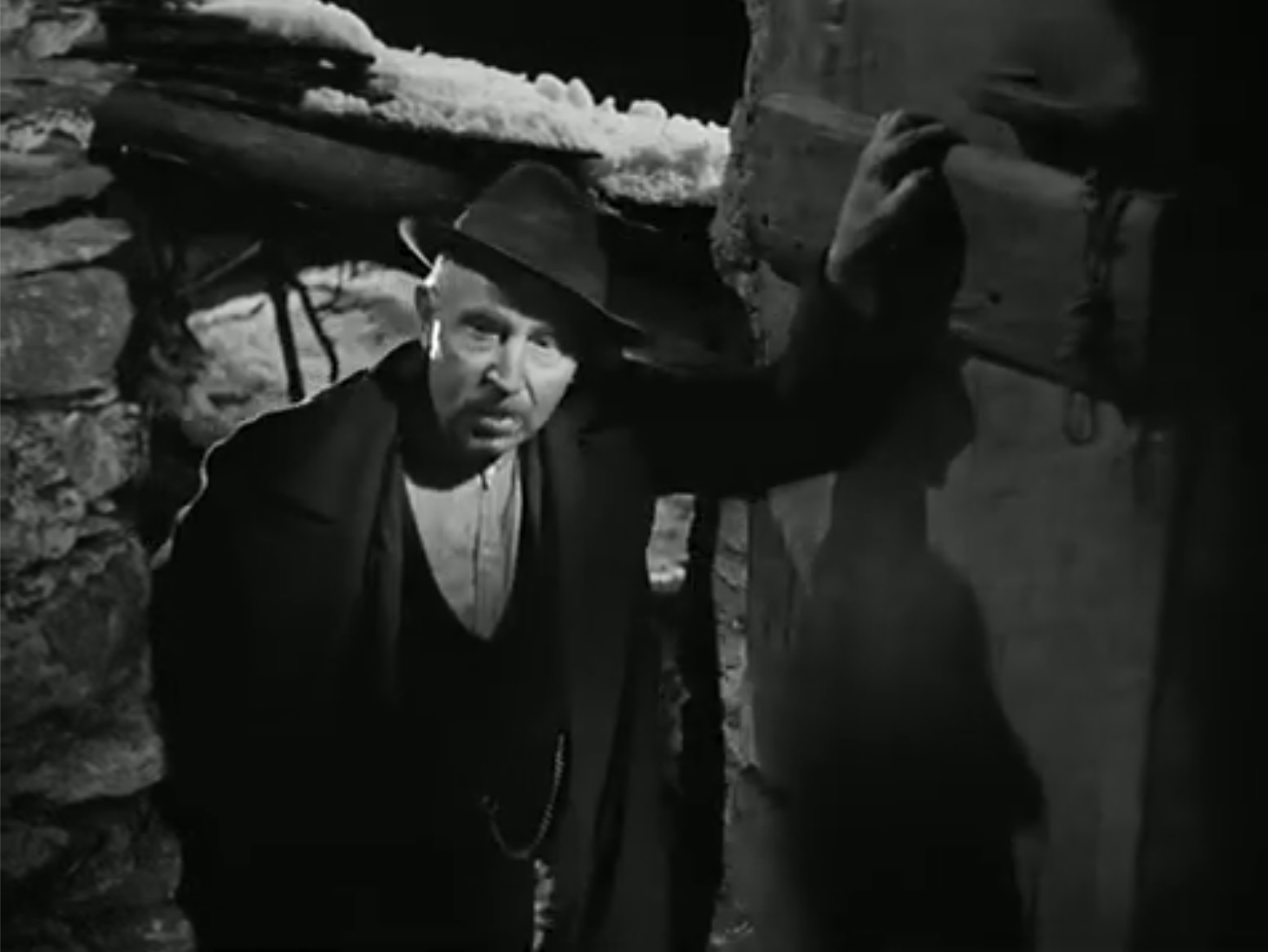
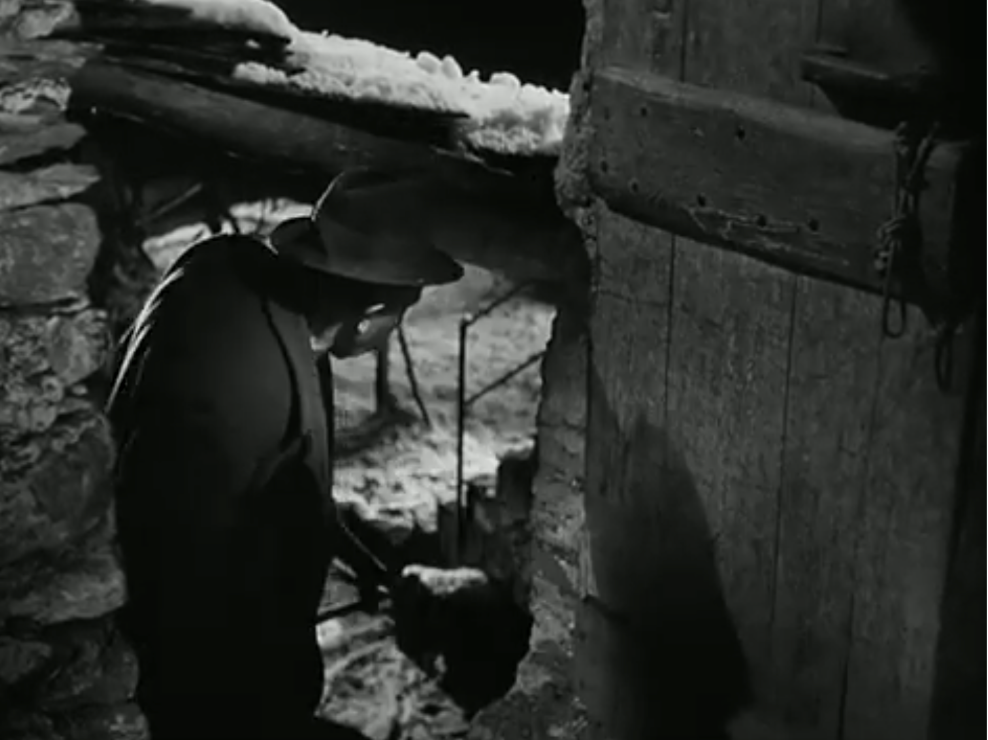
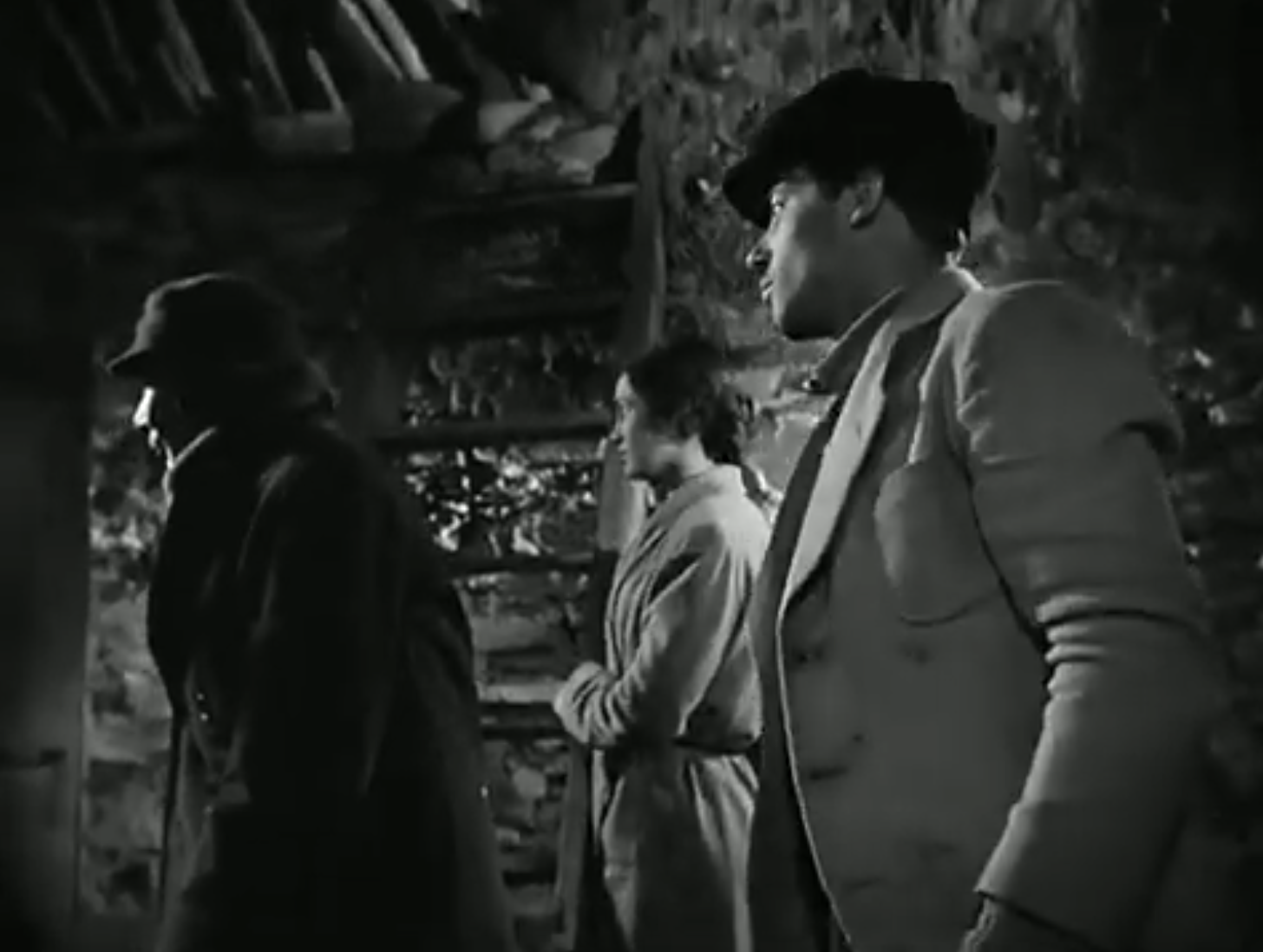
Dalla porta del rifugio, un uomo urla: “Ehi, gente! È arrivato un altro siciliano“. Vediamo il manto bianco della neve fuori. ”Vieni su, moro”.*
“Saro!" esclama il Ragioniere fuori campo.
I siciliani si alzano in piedi e restano in attesa.
*In italiano, moro significa moresco. I Mori erano musulmani nordafricani, quindi si tratta di un riferimento al colore scuro della pelle. In Italia, dare soprannomi basati sulle caratteristiche personali non è raro e può non essere considerato offensivo.
From the doorway of the cottage, a man yells, “Hey, people! Another Sicilian has arrived.” We see the white covering of snow outside. “Come on up, dark guy.”*
“Saro!” exclaims the Accountant from off-screen.
The Sicilians stand and wait in expectation.
*In Italian, moro means Moor. The Moors were North African Muslims and so it’s a reference to dark skin coloration. In Italy, nicknaming by personal characteristics is not uncommon and may not be considered insulting.

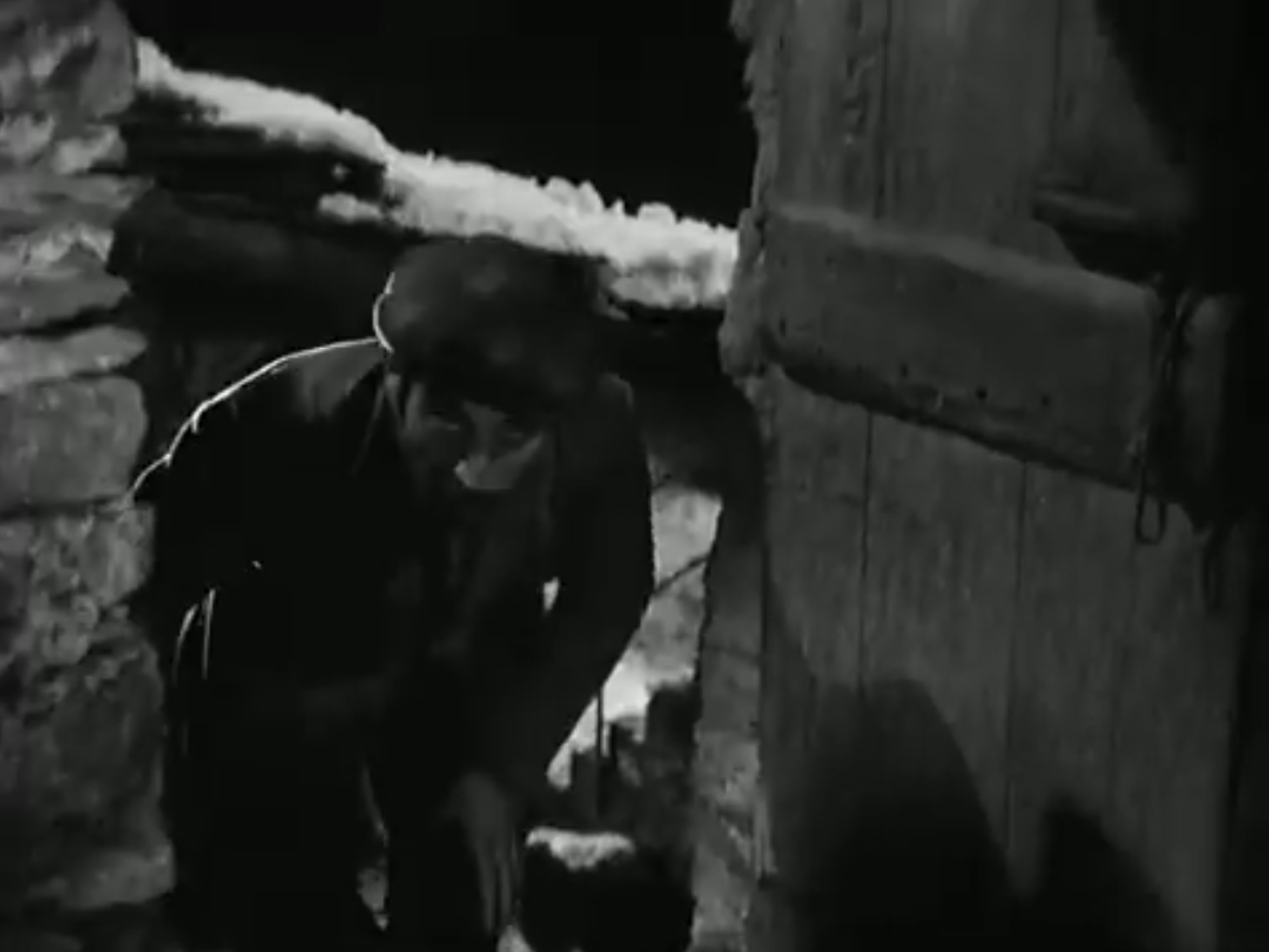

Ma è Vanni che appare.
But it is Vanni who appears.
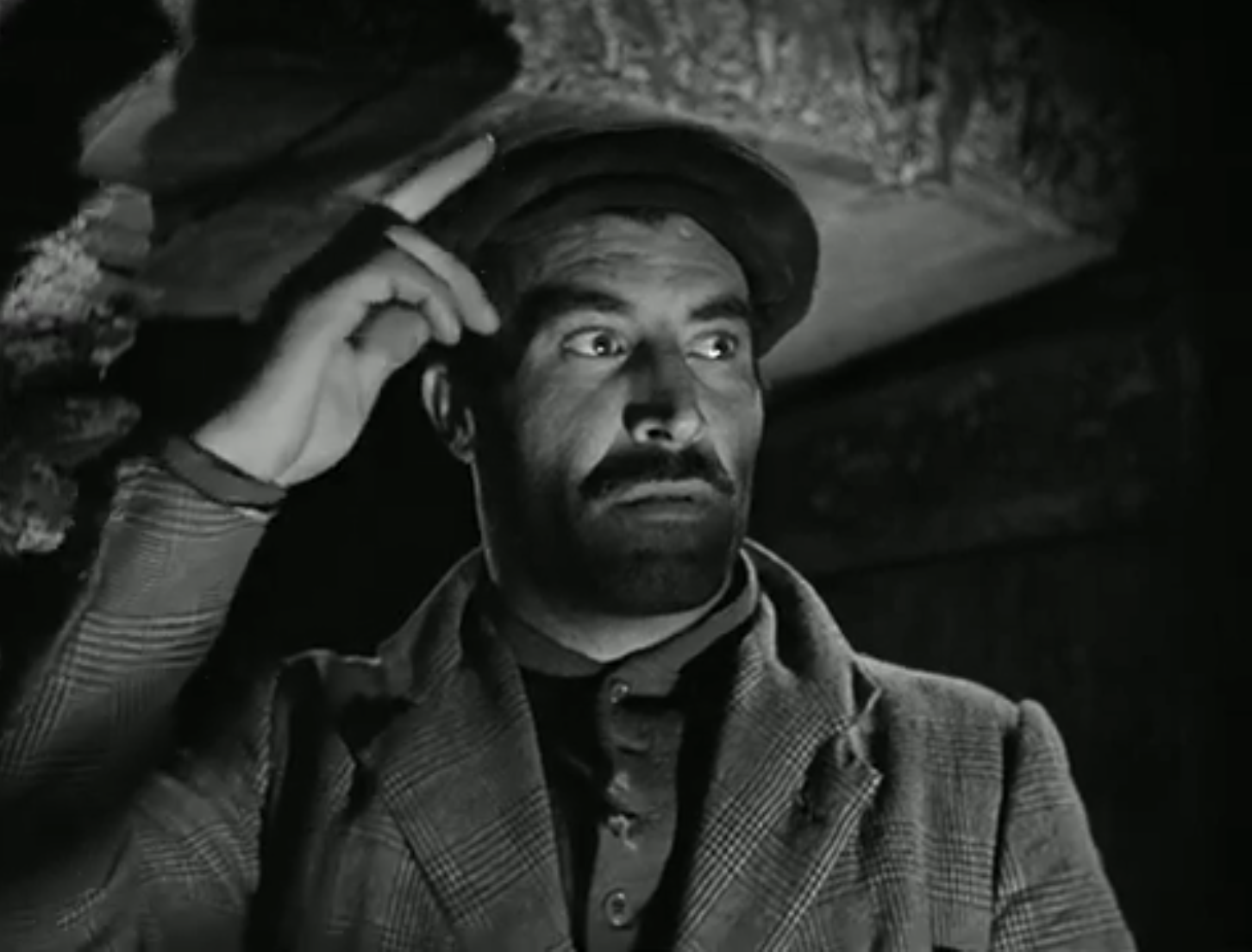

“Felice sera a tutta la compagnia”. Fa un piccolo saluto, guardandosi intorno. “Da mangiare!”
“Good evening to the whole crew.” He gives a little salute, looking around. “Something to eat!”
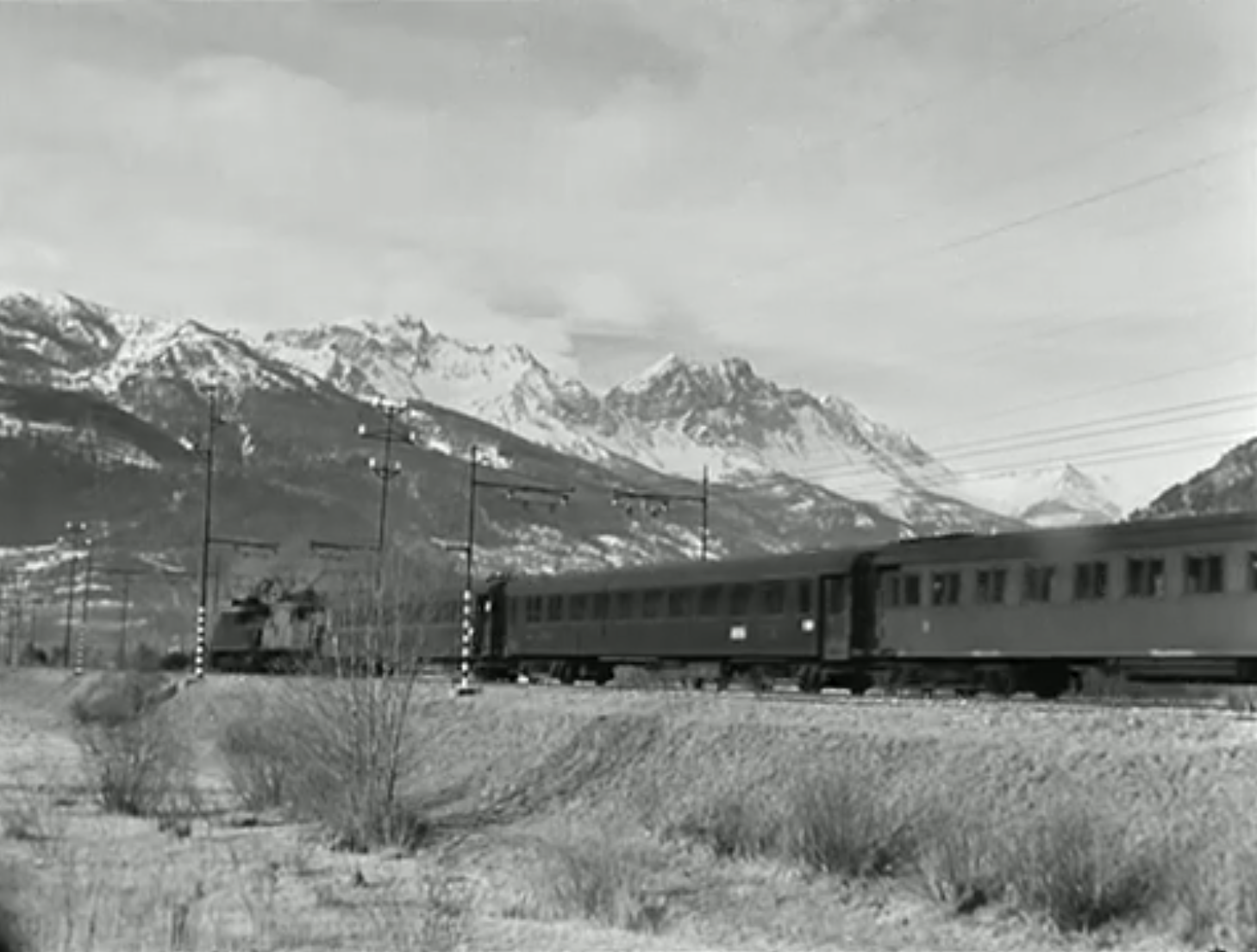
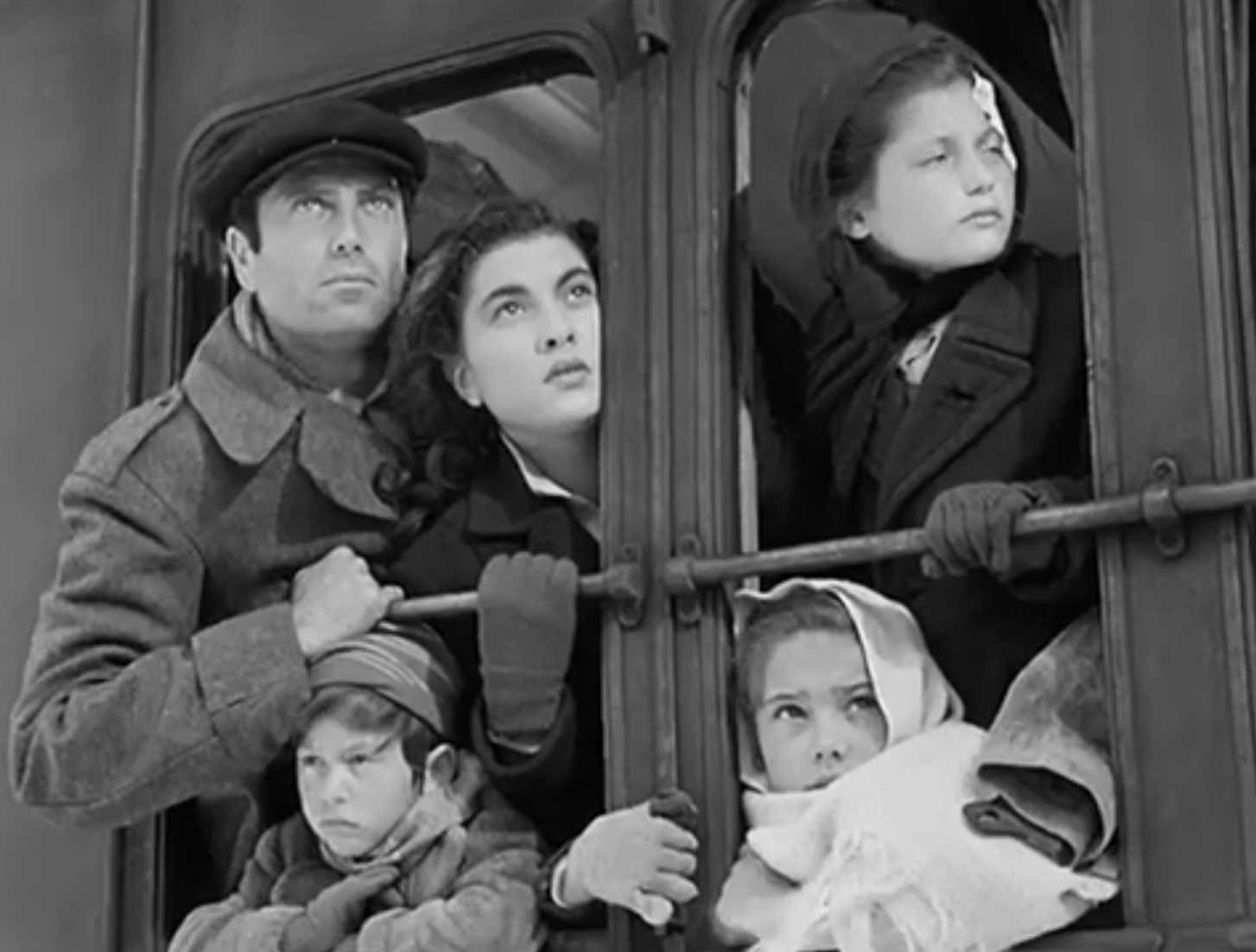
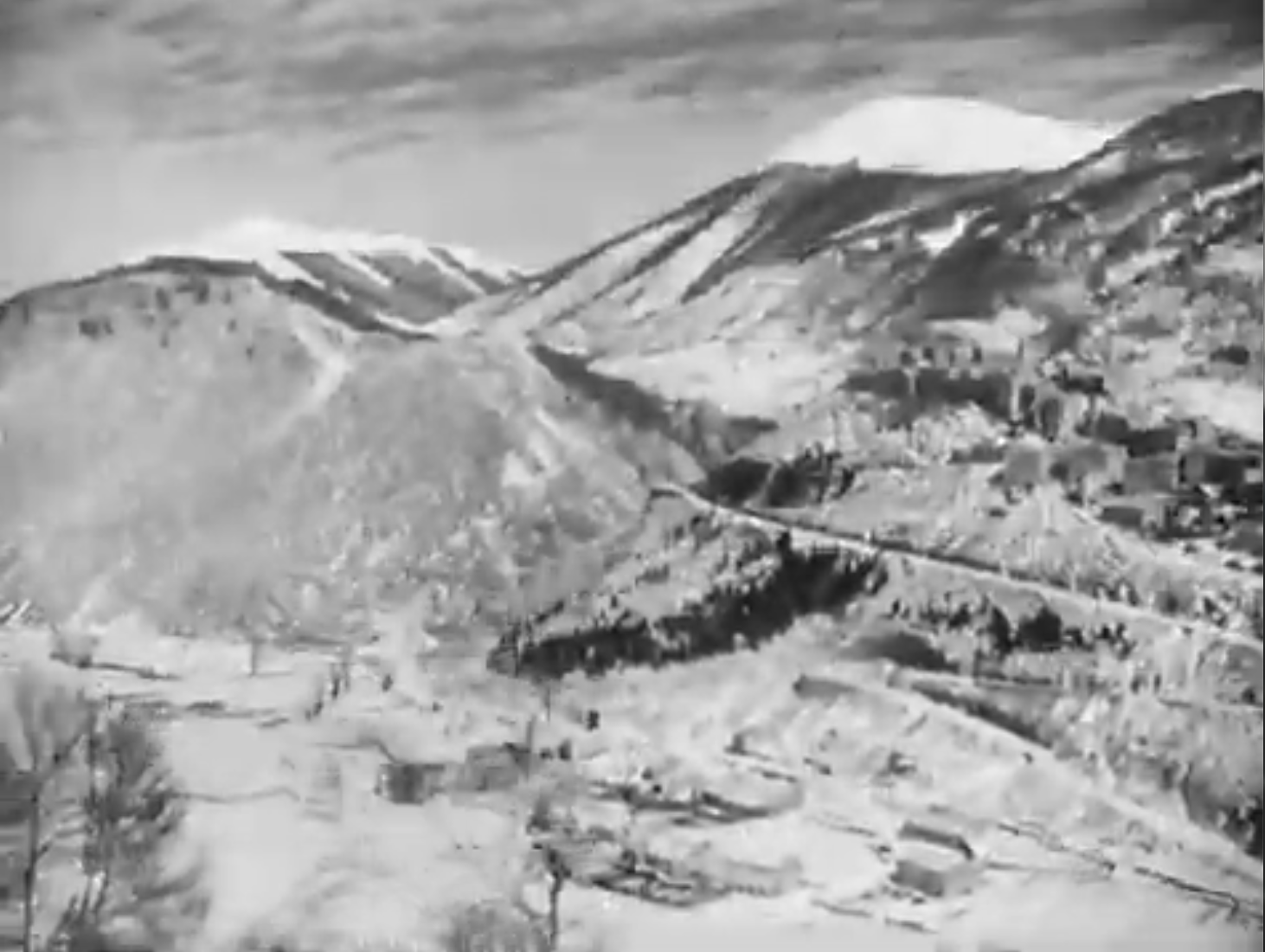
La scena si sposta su un treno sotto le montagne innevate: le Alpi. In primo piano, Saro, i suoi figli e Barbara guardano fuori dal finestrino il terreno aspro.
The scene shifts to a train beneath snowy mountains: the Alps. In close-up, Saro, his children, and Barbara look out from a window at the rugged terrain.
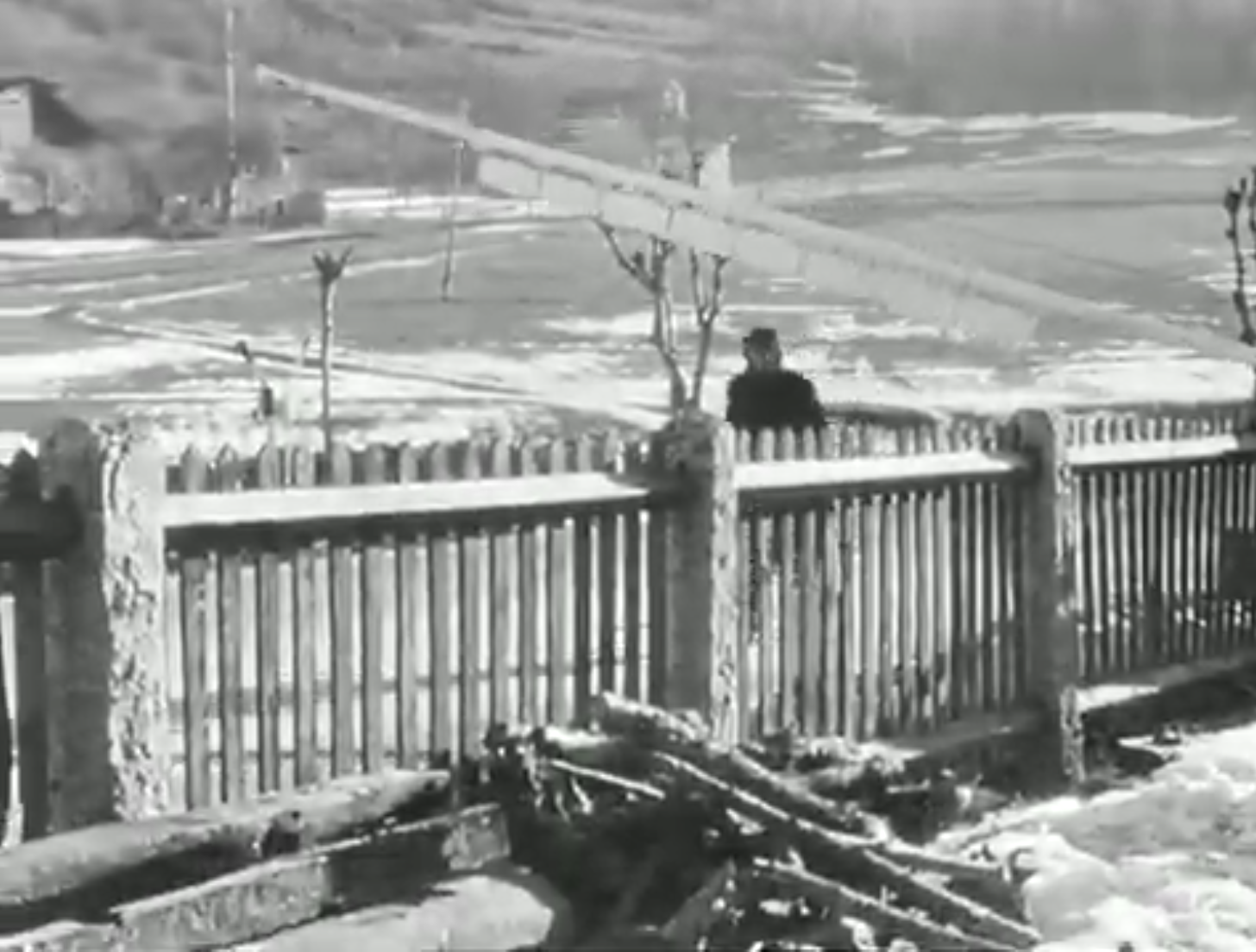
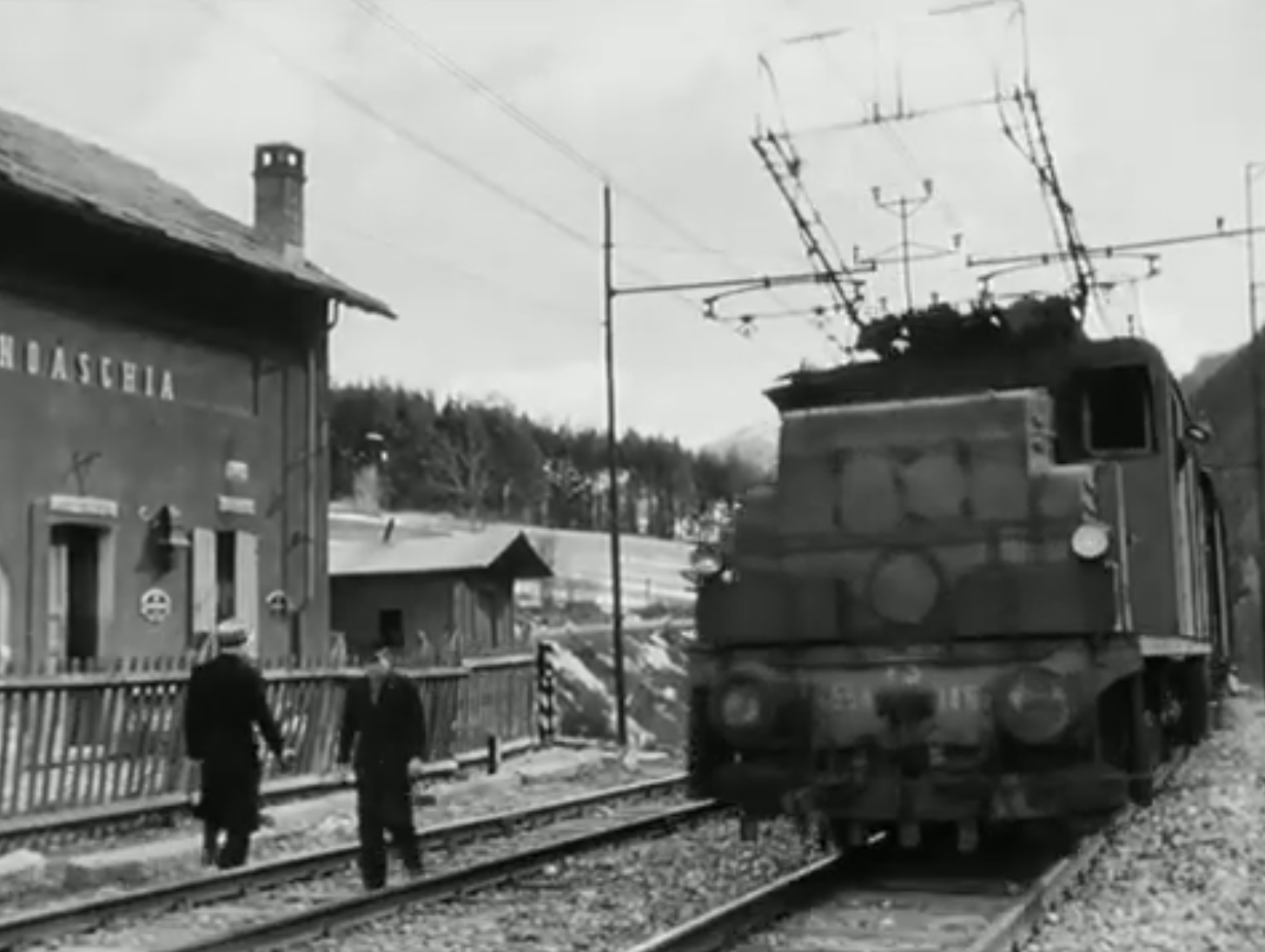
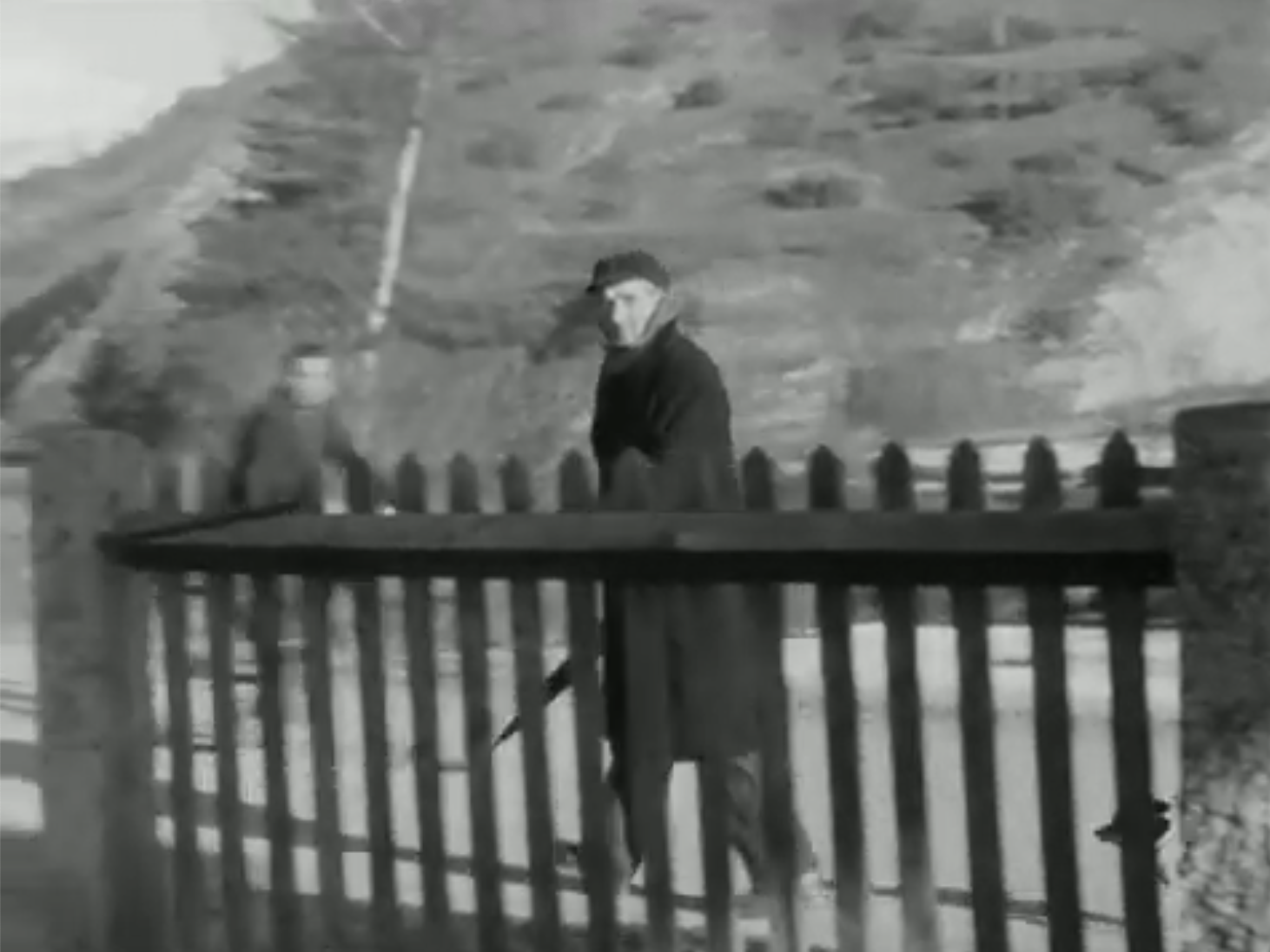
Quando il treno arriva in stazione, il Ragioniere sta lì con il suo cane nelle vicinanze. Guarda oltre la recinzione.
When the train pulls into the station, the Accountant is there with his dog nearby. He looks over the fence.


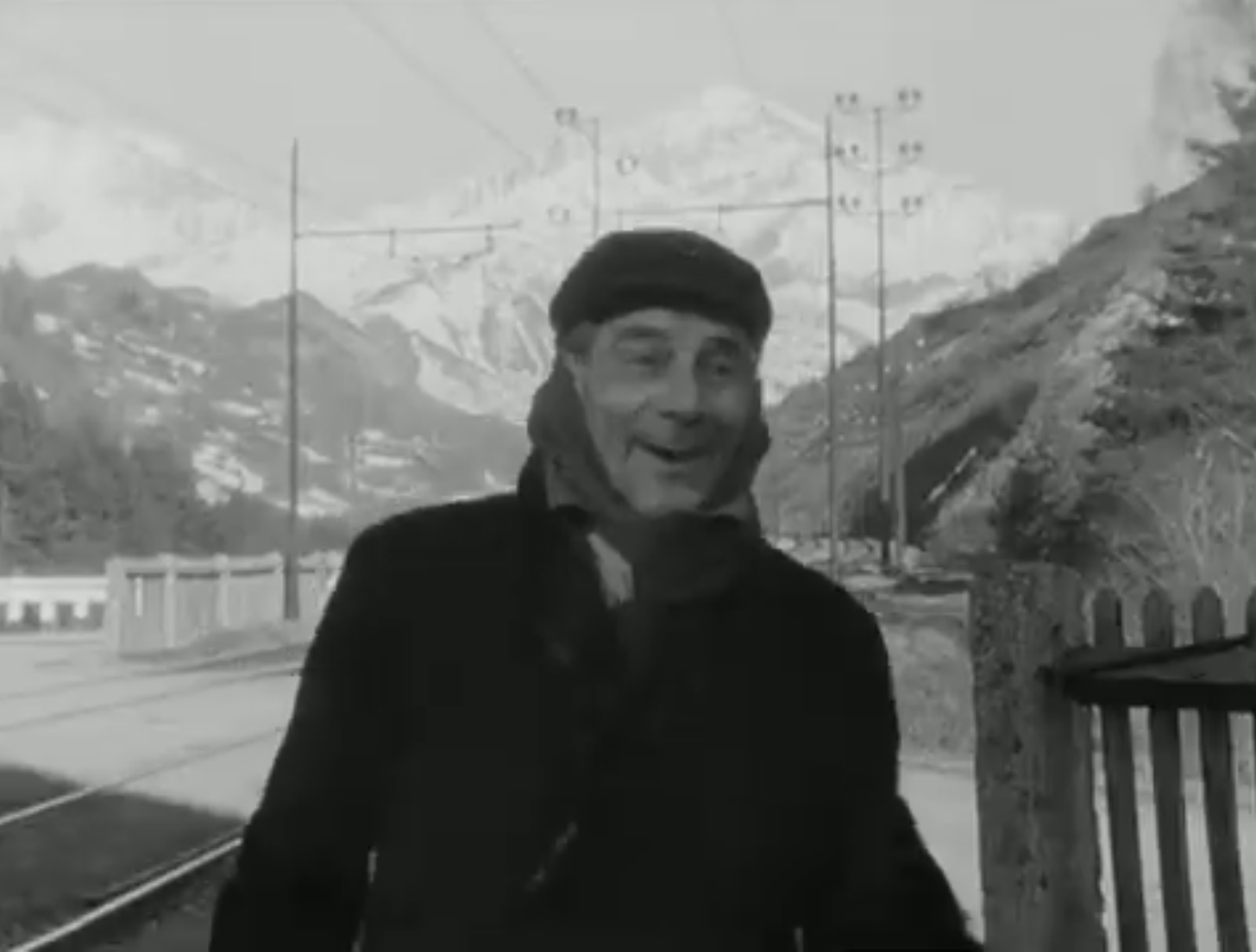
Il cane abbaia riconoscendo Saro che scende dal treno.
“Saro!” esclama gioiosamente il Ragioniere.
The dog barks recognizing Saro who steps off the train.
“Saro!” exclaims the Accountant joyfully.
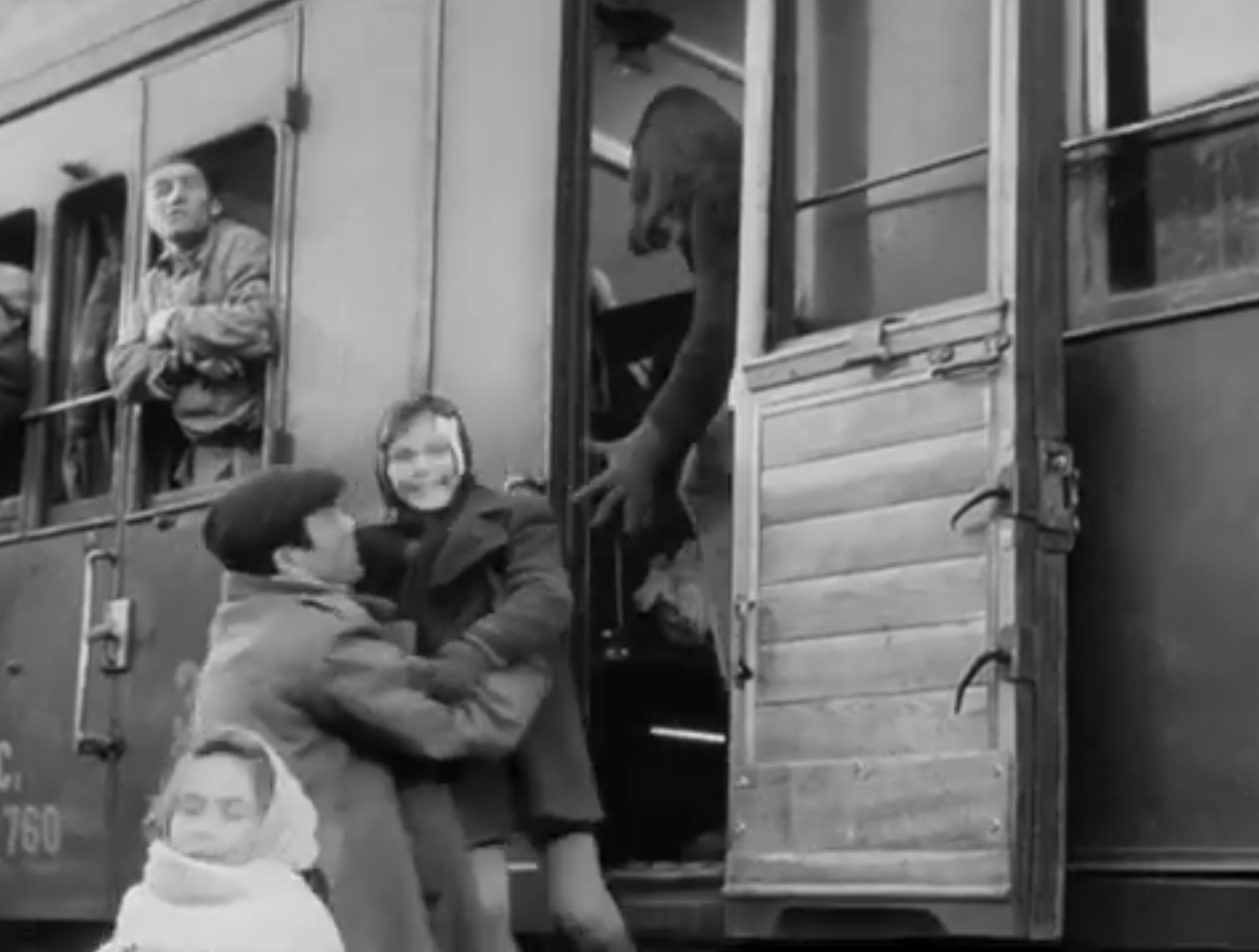
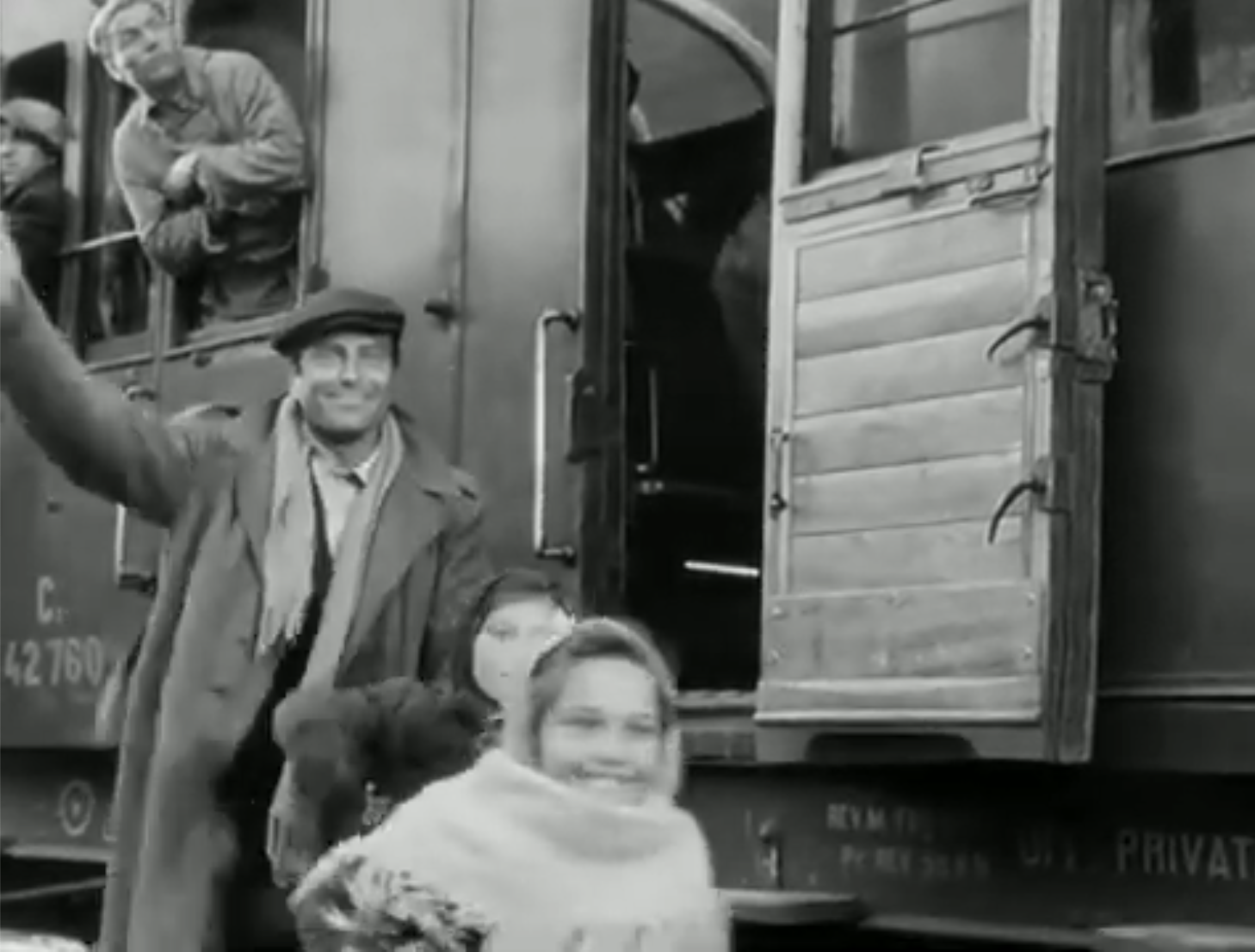
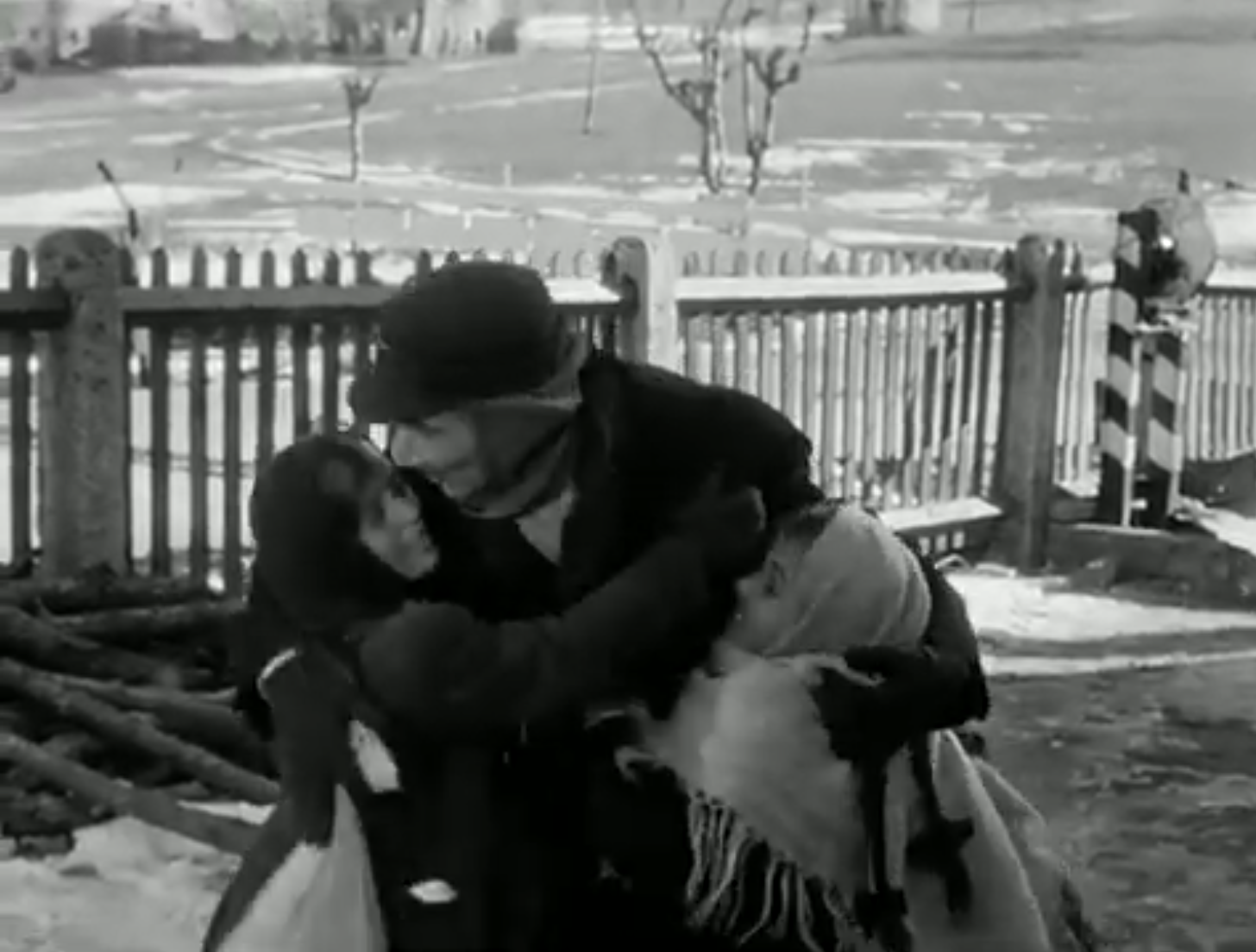
Mentre Saro aiuta Michelina a scendere, lei esclama: “Papà, il Ragioniere!” Saro lo saluta con la mano, sorridendo.
Il Ragioniere abbraccia le bambine. “Diodata! Michelina!”
As Saro helps Michelina off, she exclaims, “Daddy, the Accountant!” Saro waves to him, smiling.
The Accountant hugs the children. “Diodata! Michelina!”

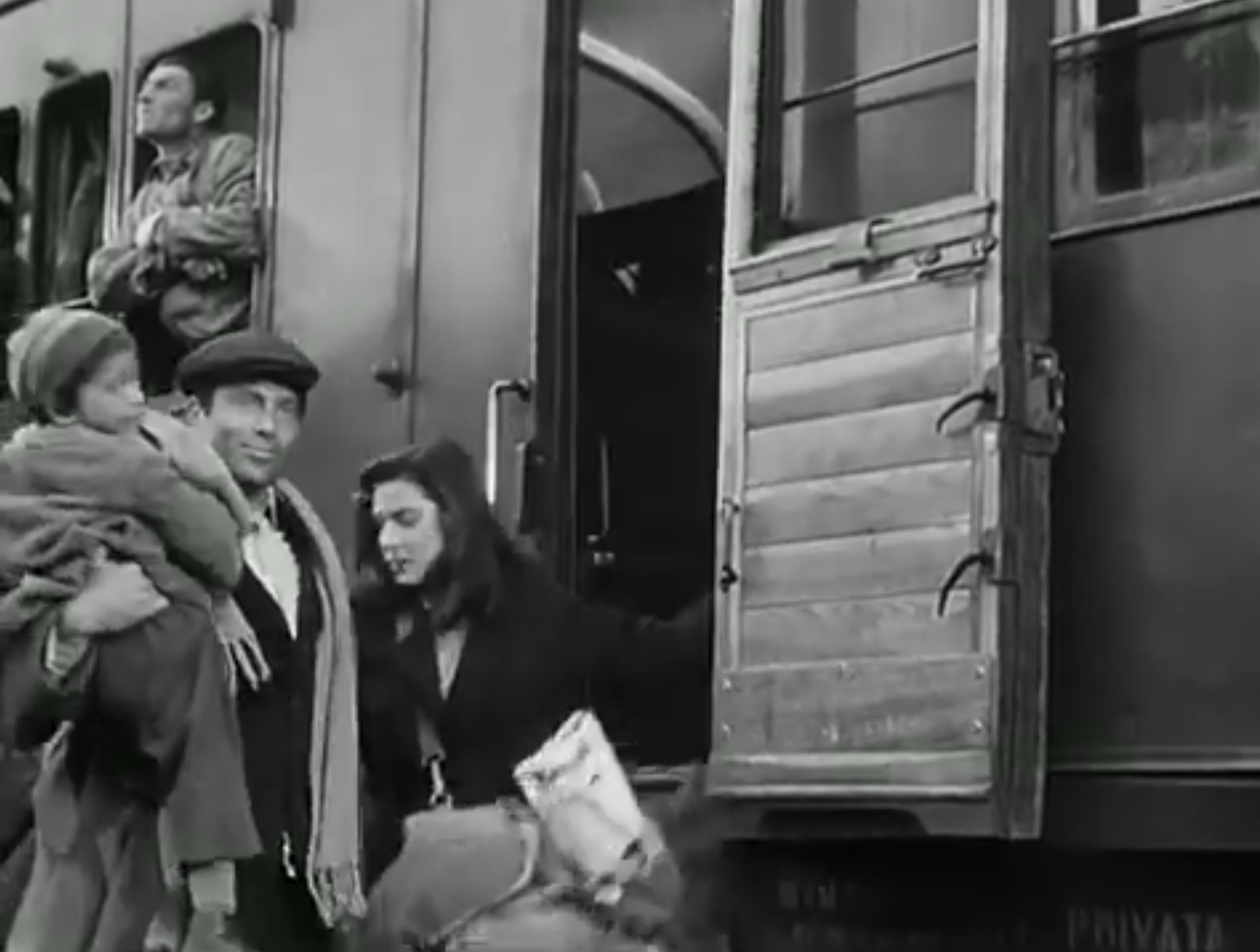
Barbara scende, per una volta sembra felice!
Barbara gets off, looking happy for once!
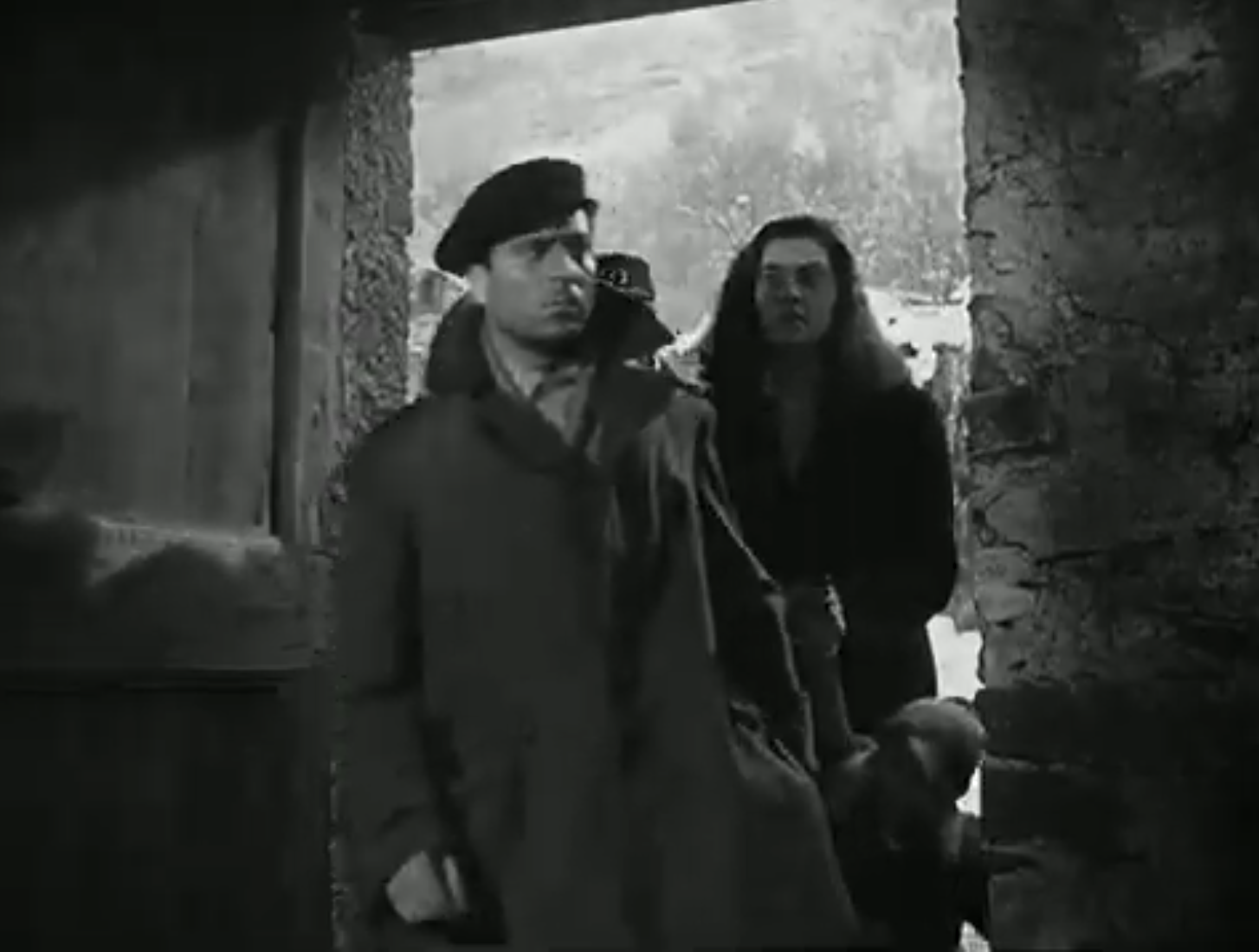
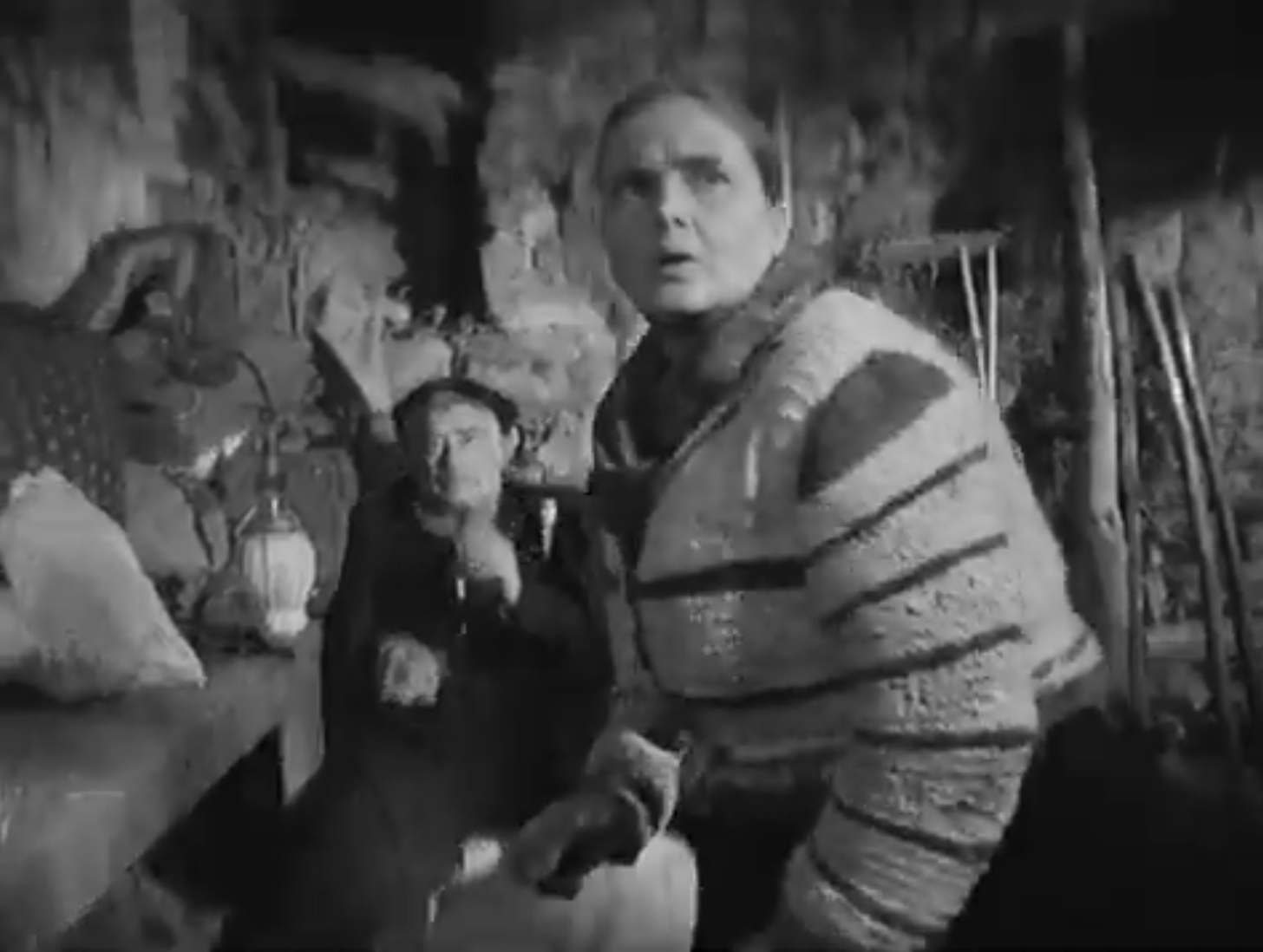
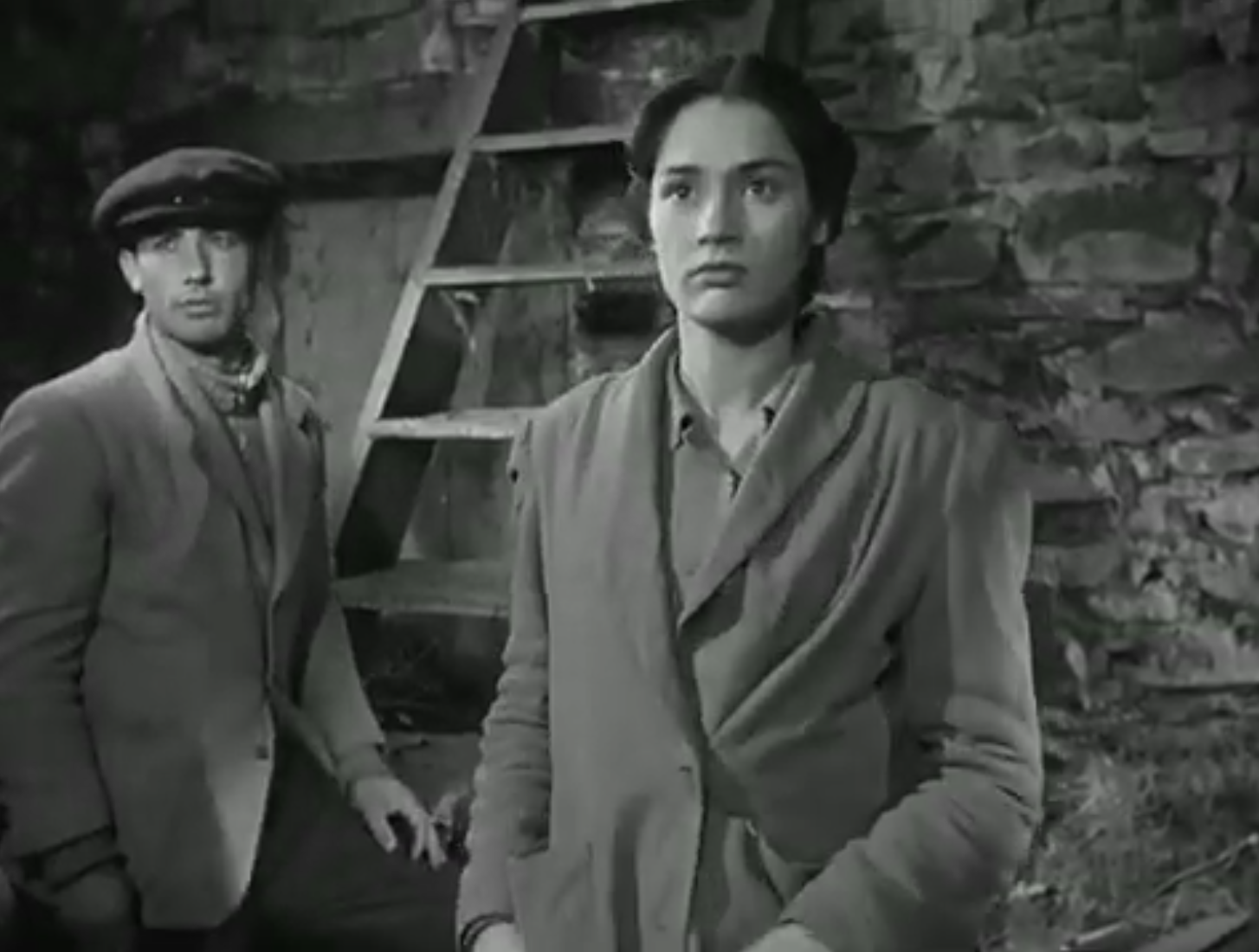
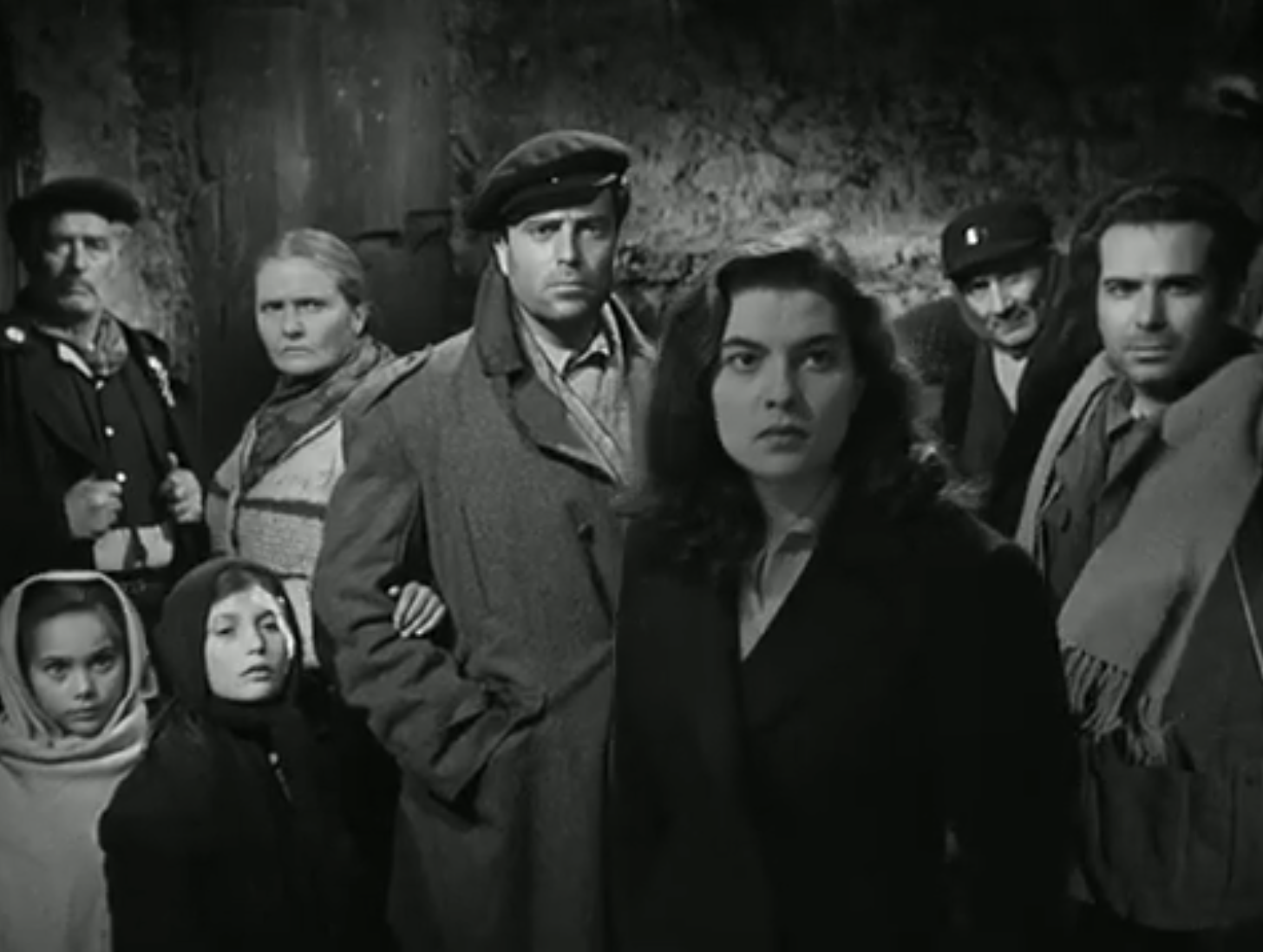
La famiglia entra nel rifugio e viene accolta dagli sguardi scioccati dei siciliani quando vedono Barbara.
The family walks into the cottage, greeted by the shocked expressions of the Sicilians when they see Barbara.
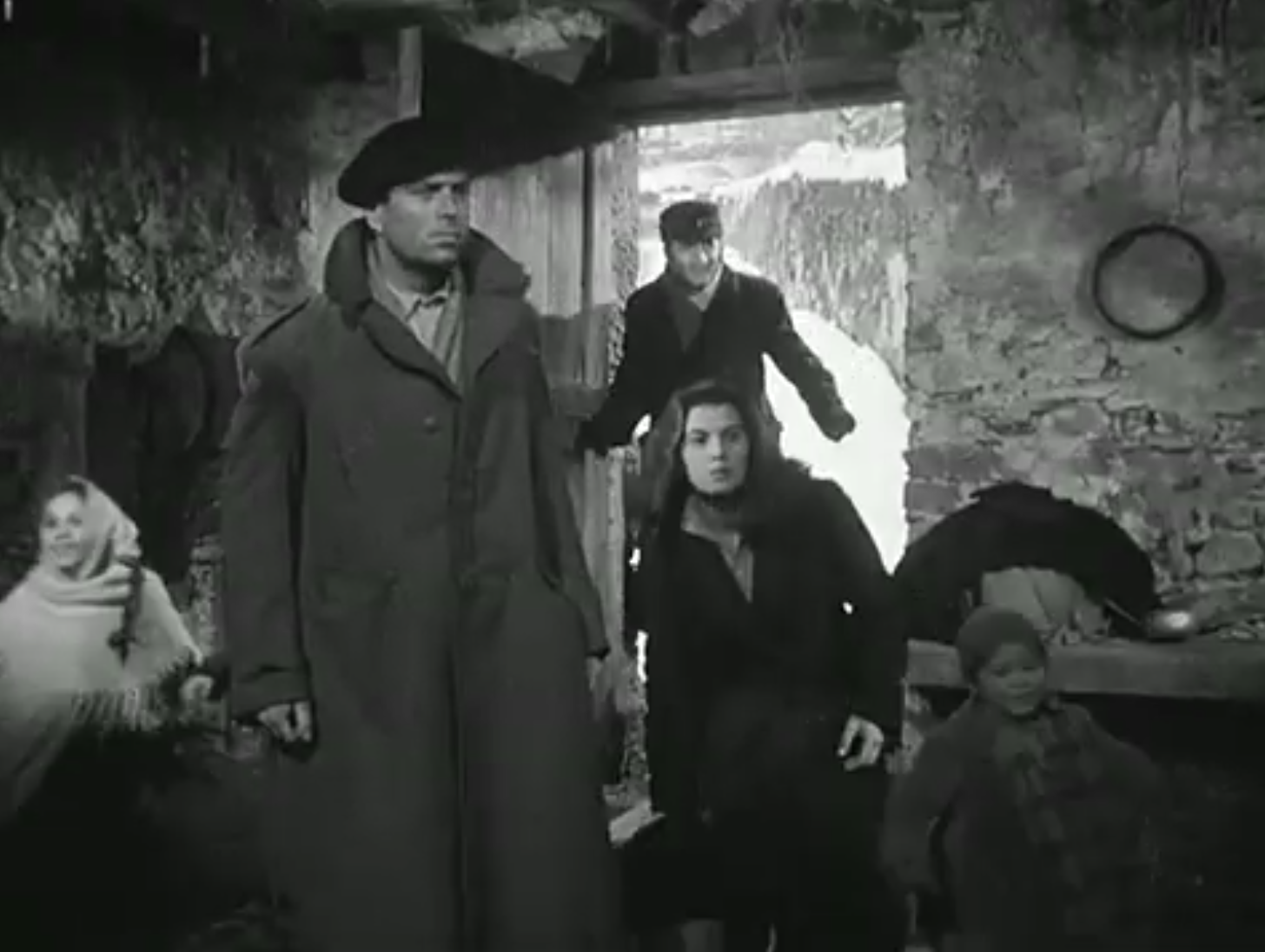
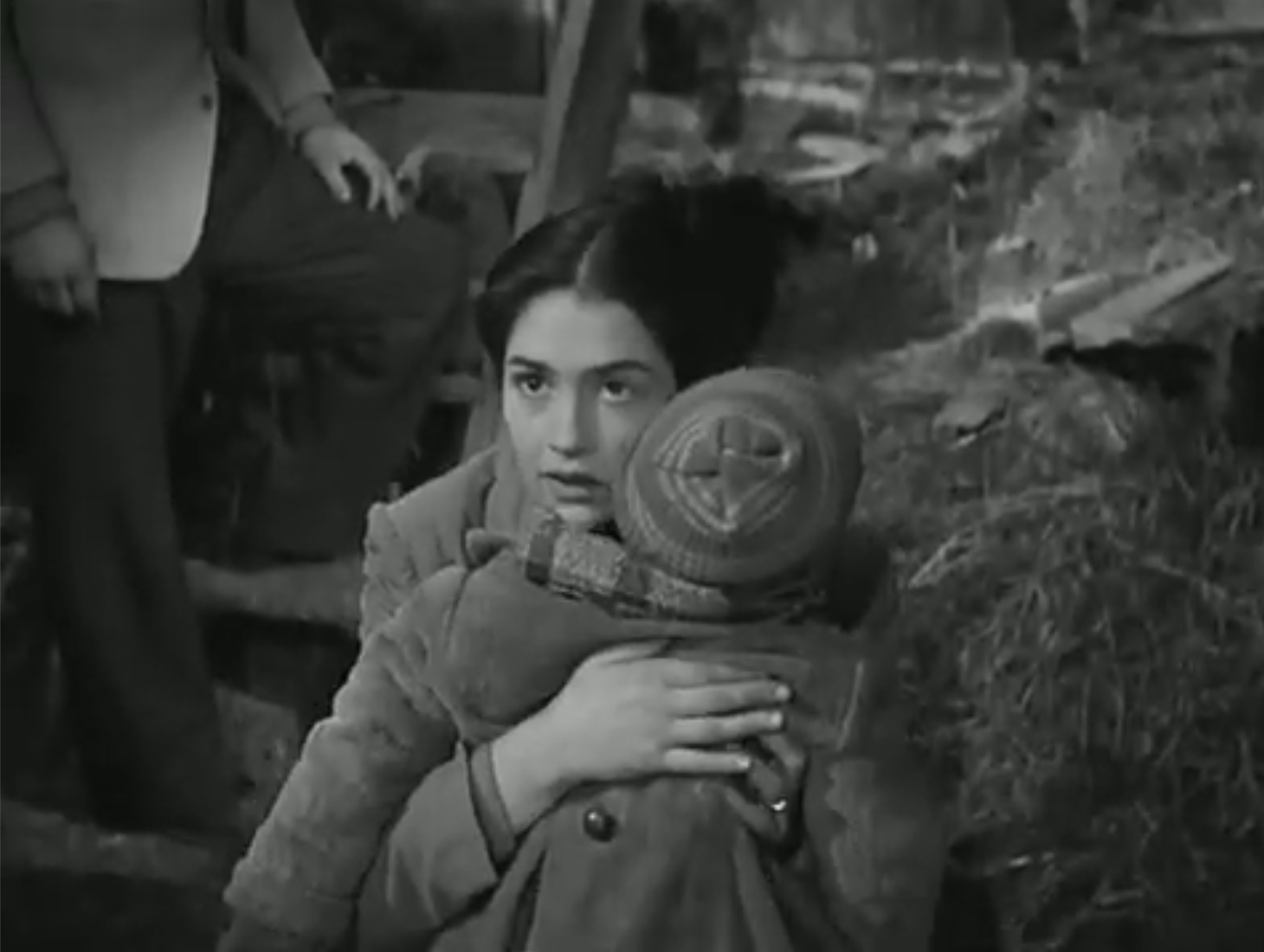
Buda corre tra le braccia di Rosa. Lei guarda oltre la spalla del bambino incredula.
Buda runs into Rosa’s arms. She looks over the boy’s shoulder in disbelief.
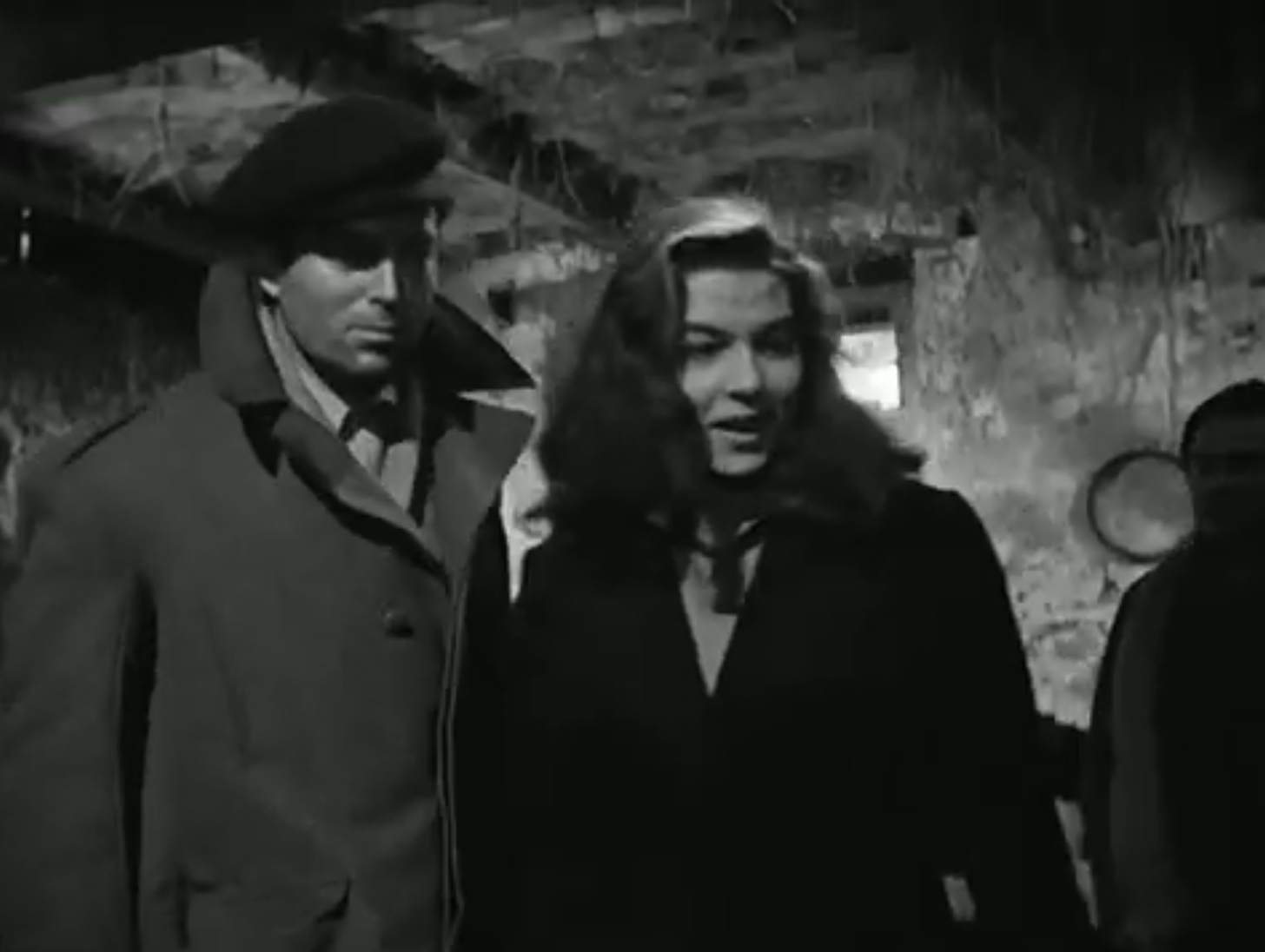
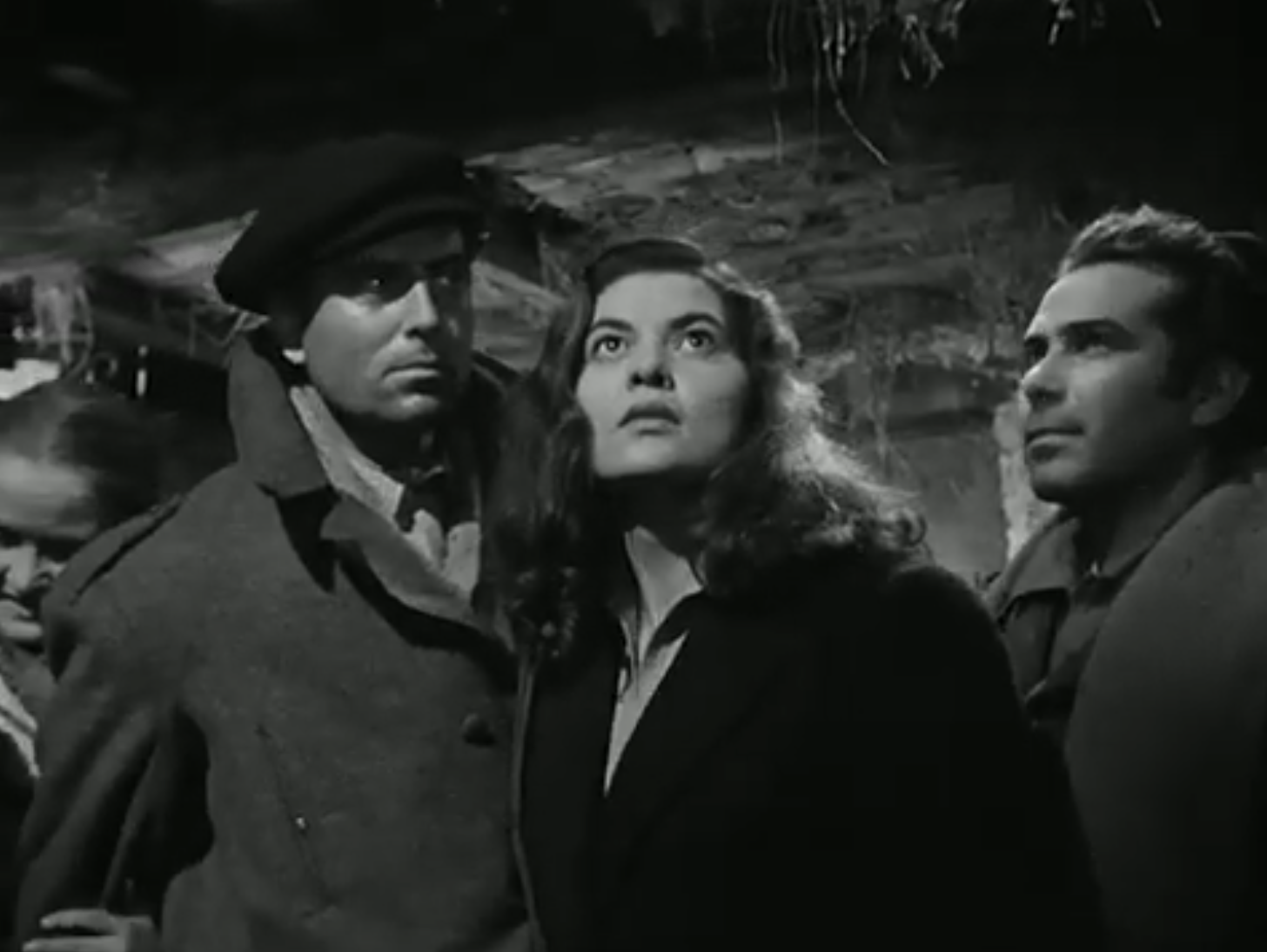

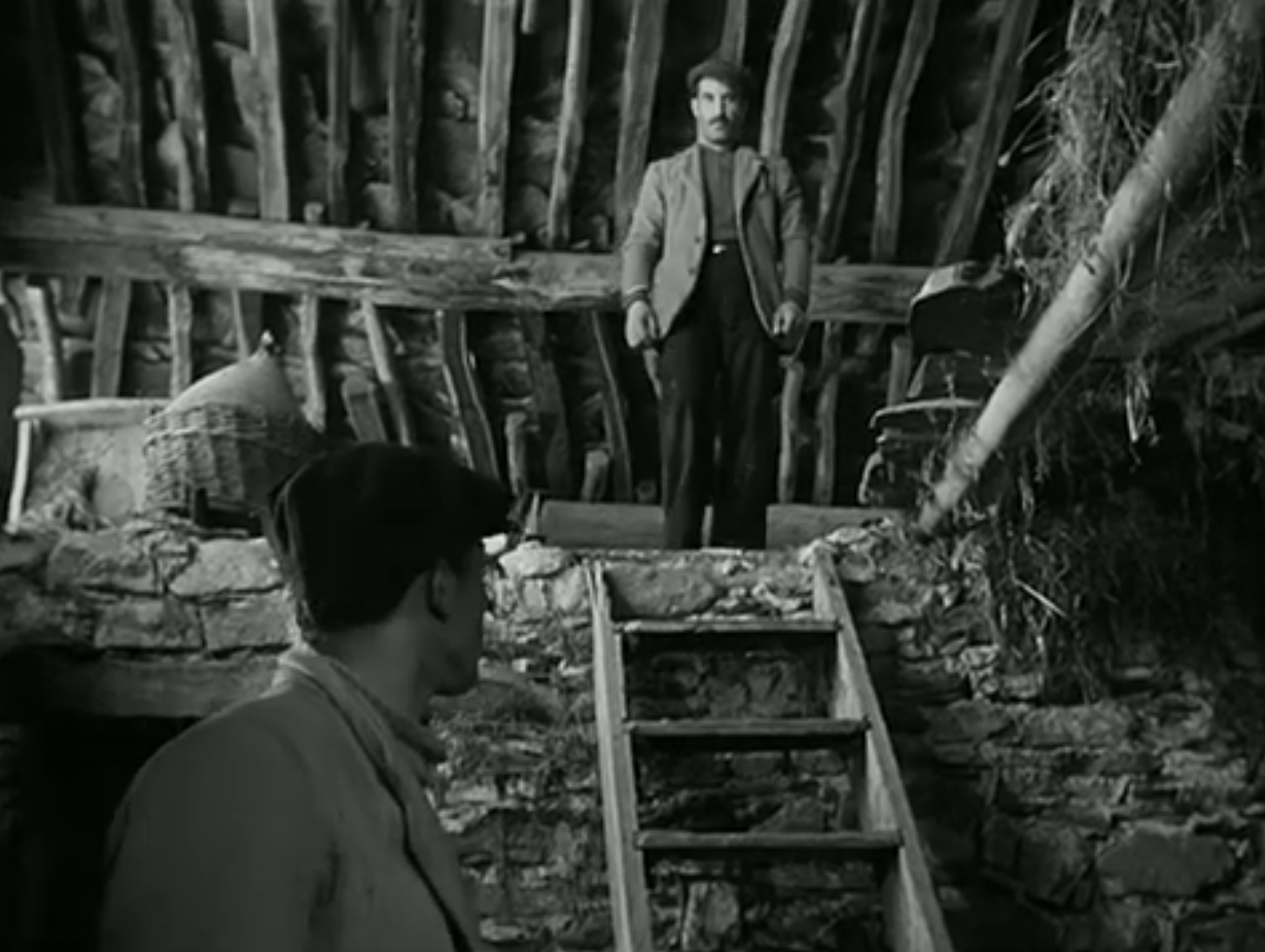
“Rosa!” esclama Barbara con un sorriso. Ma poi alza lo sguardo. Rosa e Luca seguono il suo sguardo.
Vanni appare nella soffitta sopra di loro, annunciato da una musica minacciosa, che rapidamente si dissolve.
“Rosa!” Barbara exclaims, with a smile. But then she looks up. Rosa and Luca follow her gaze.
Vanni appears in the loft above, announced by ominous music, which quickly falls away.
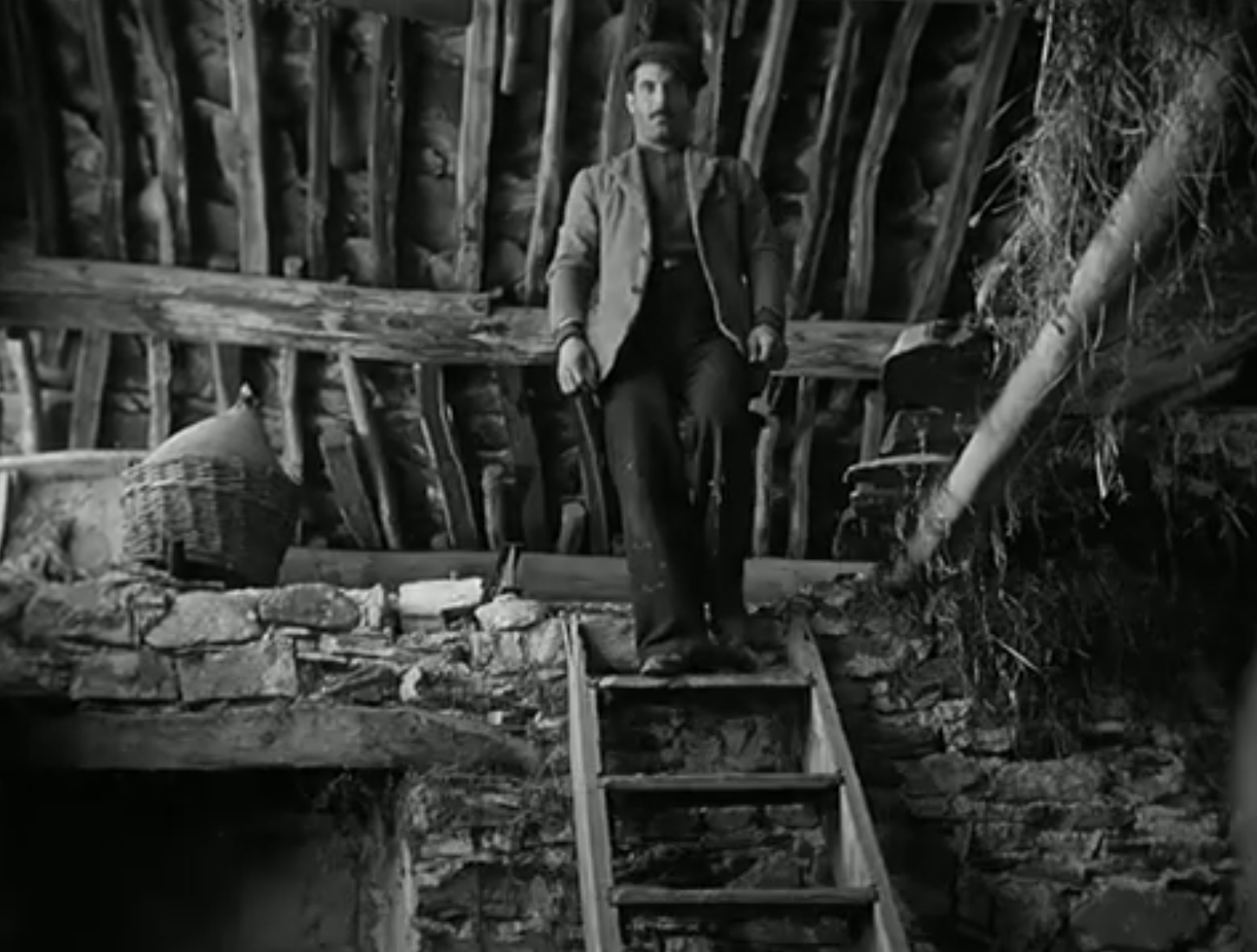
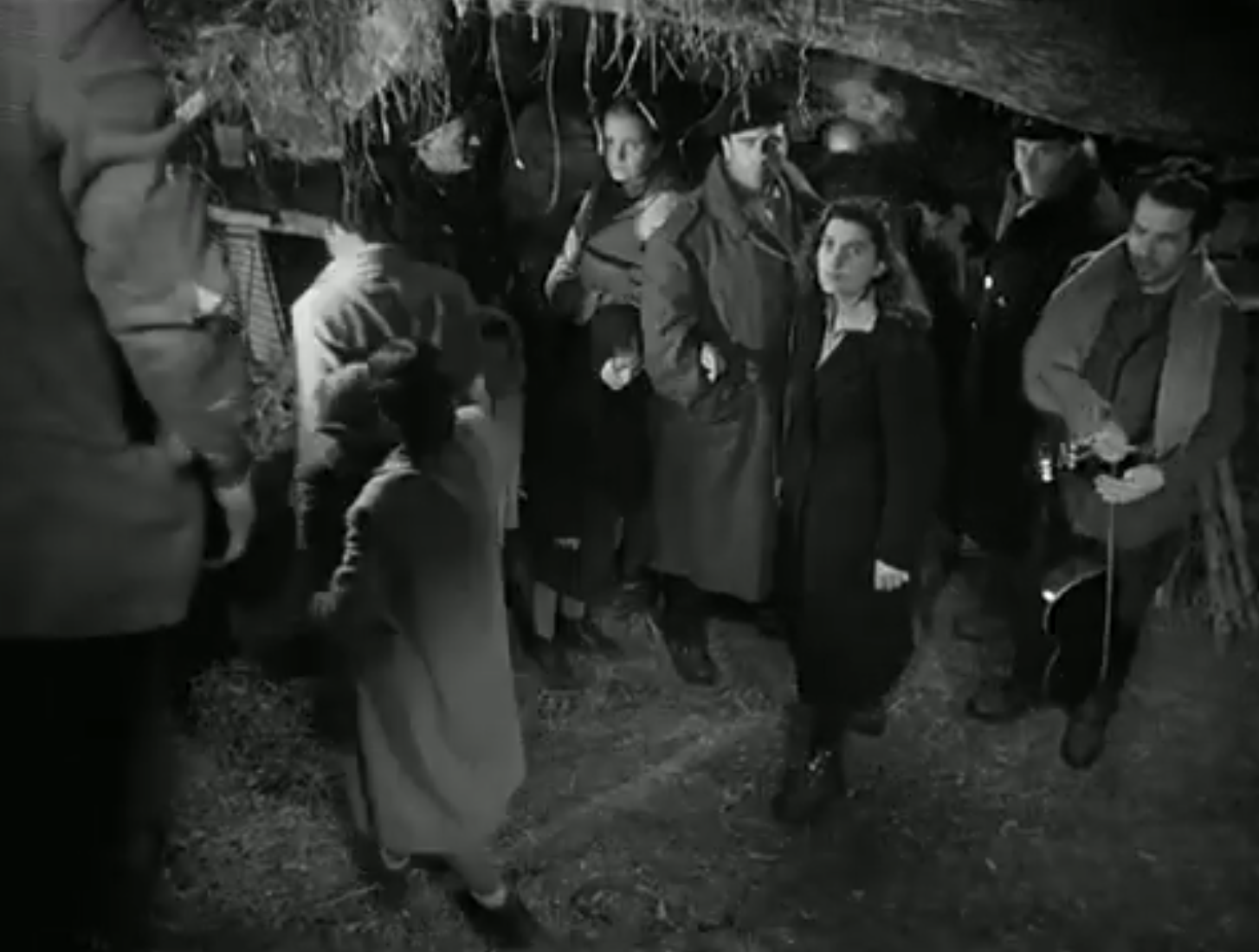
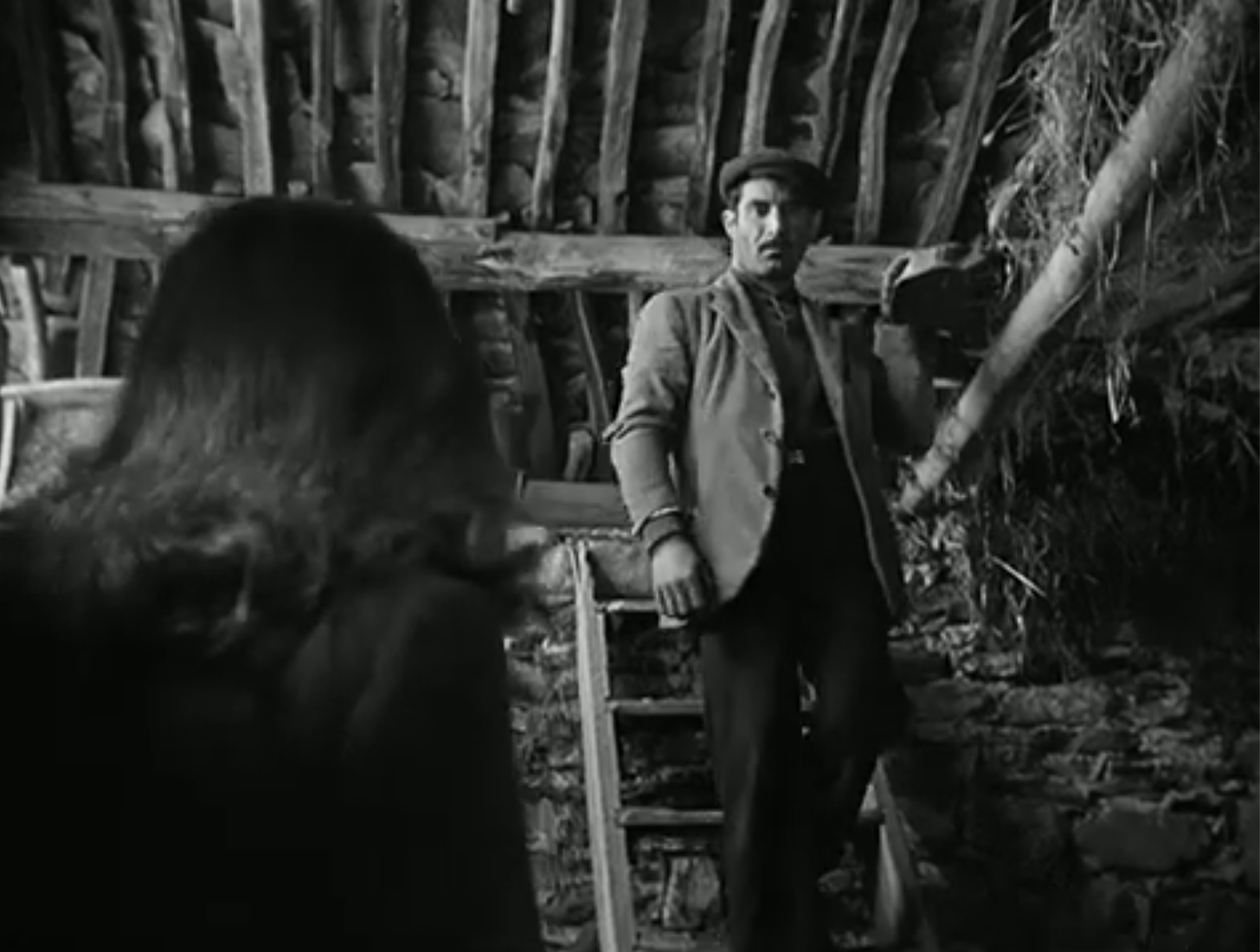
Mentre Vanni scende lentamente, sentiamo solo il suono dei suoi tacchi sulle scale di legno.
Barbara fa un passo avanti: “Vanni!”
As Vanni walks slowly down, we hear only the sound of his heels on the wooden stairs.
Barbara takes one step forward: “Vanni!”
FINE PARTE 22
Ecco Parte 23 of this cineracconto! Subscribe to receive a weekly email newsletter with links to all our new posts.