Regia / Director: Pietro Germi, 1950
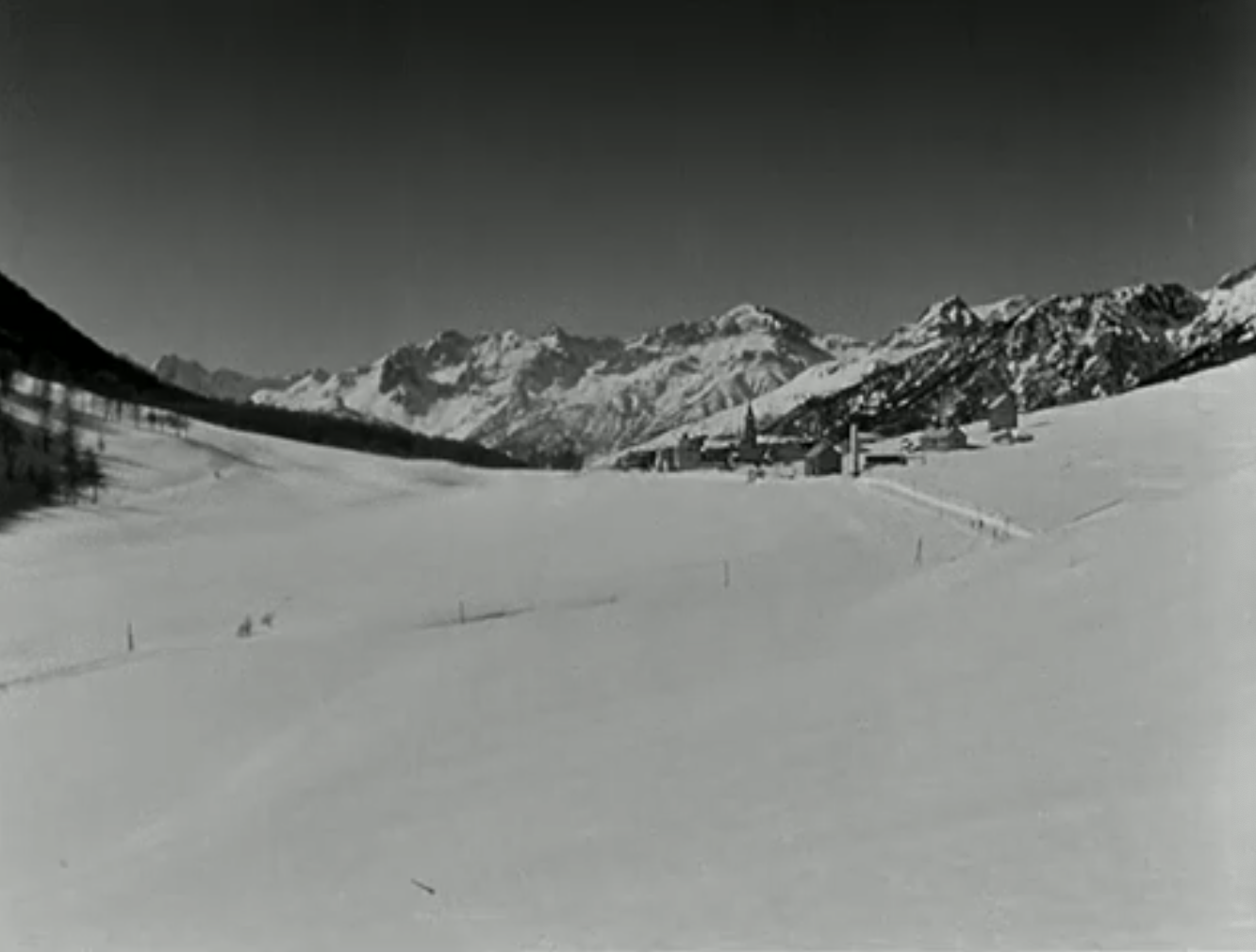

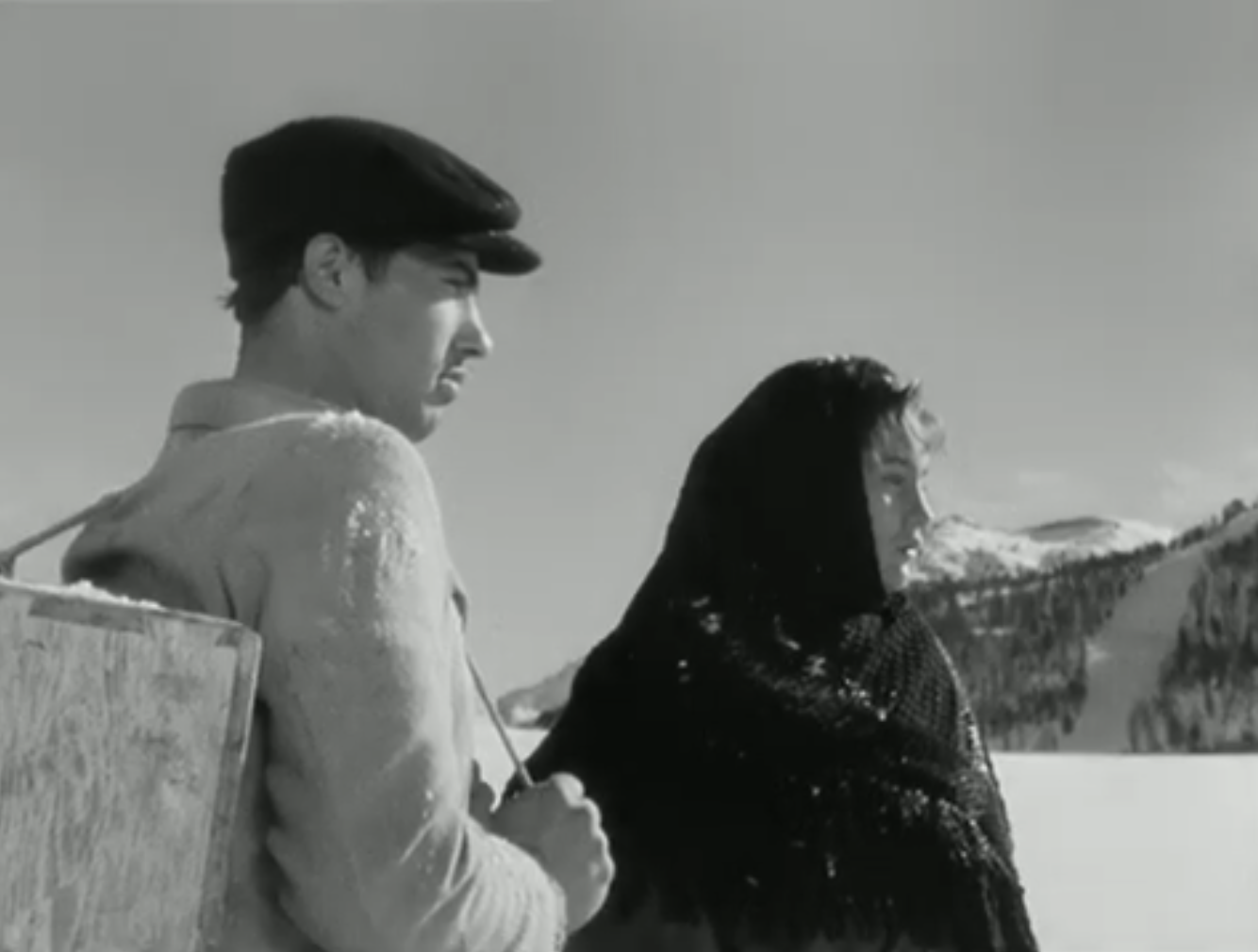
Il sole splende pacificamente sulla neve. Ecco che arrivano i viaggiatori, con i loro abiti macchiati di bianco.
Mentre camminano, una voce* inizia a parlare: “La tempesta è passata”.
*In realtà, Pietro Germi, il regista.
The sun shines peacefully on the snow. Here come the travelers, their clothes flecked with white.
As they walk on, a voice* begins to speak: “The storm passed.”
*In fact, Pietro Germi, the director.
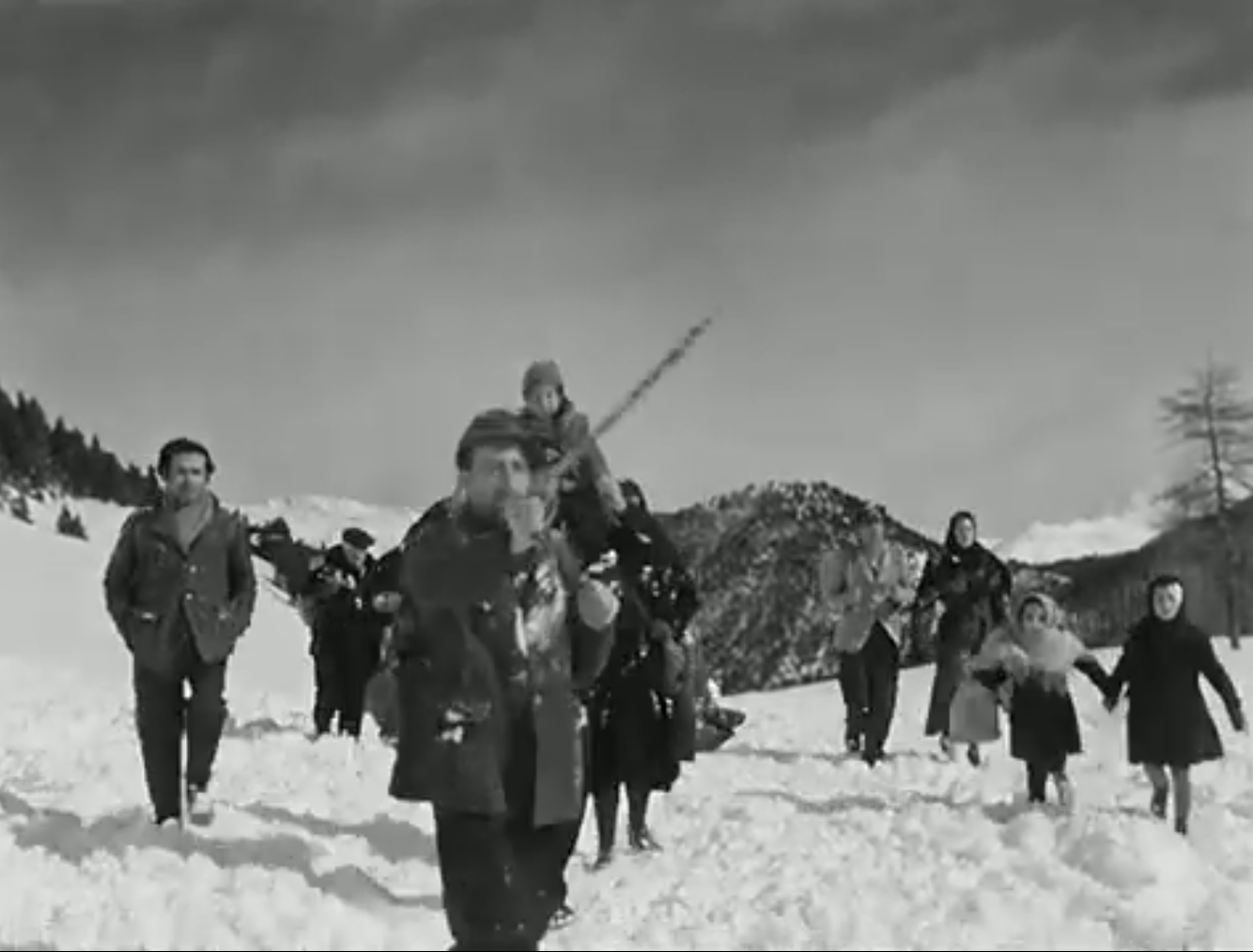

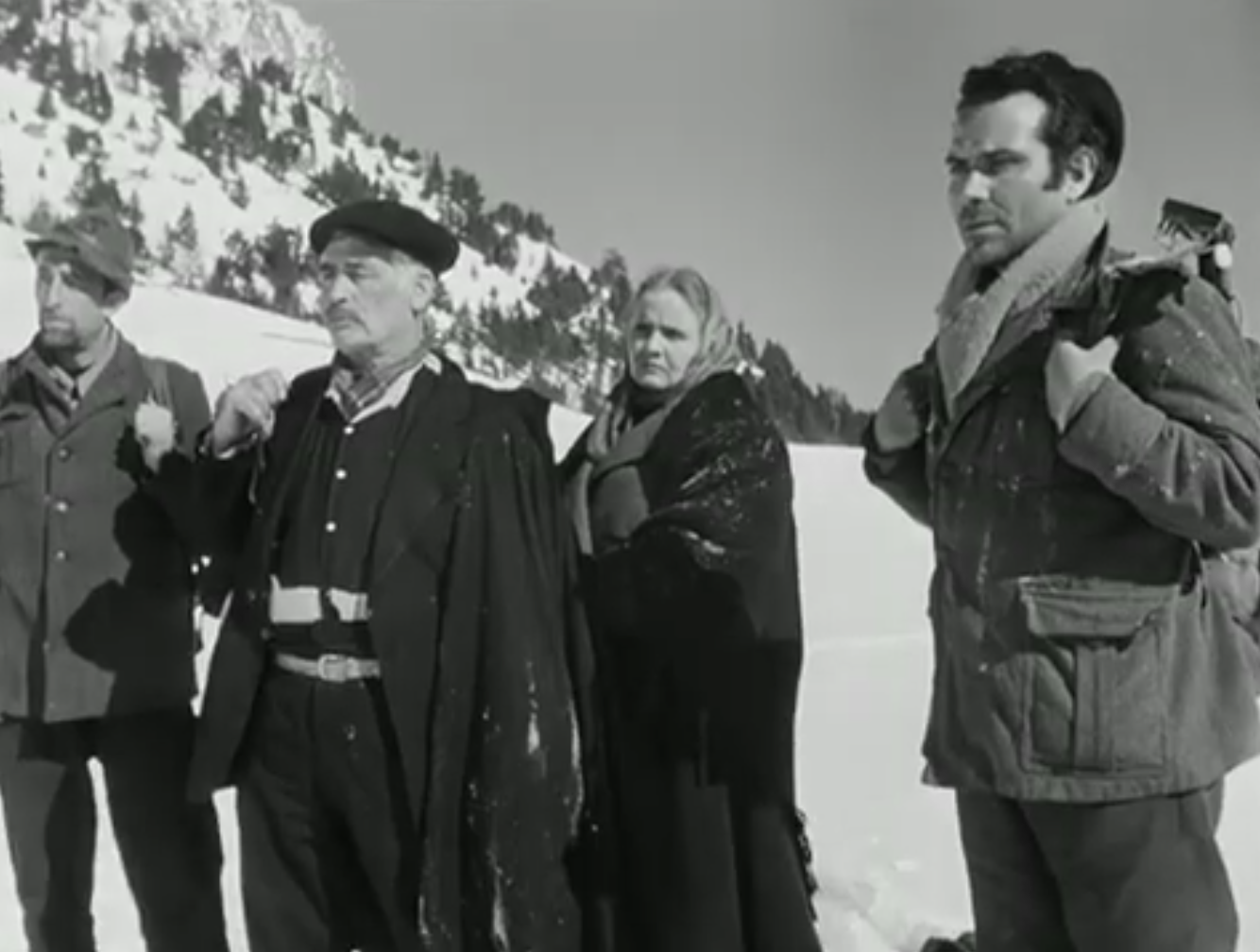
Un veneto indica la strada con il suo bastone.
“Erano esausti, ma il loro passo era vivace. Davanti a loro non c'era più l’aspra, paurosa montagna, ma un facile e aperto declivio…”
A Venetian points the way with his cane.
“They were exhausted, but they had a lively pace. There was no harsh, frightening mountain in front of them any longer, but an easy and open slope…”
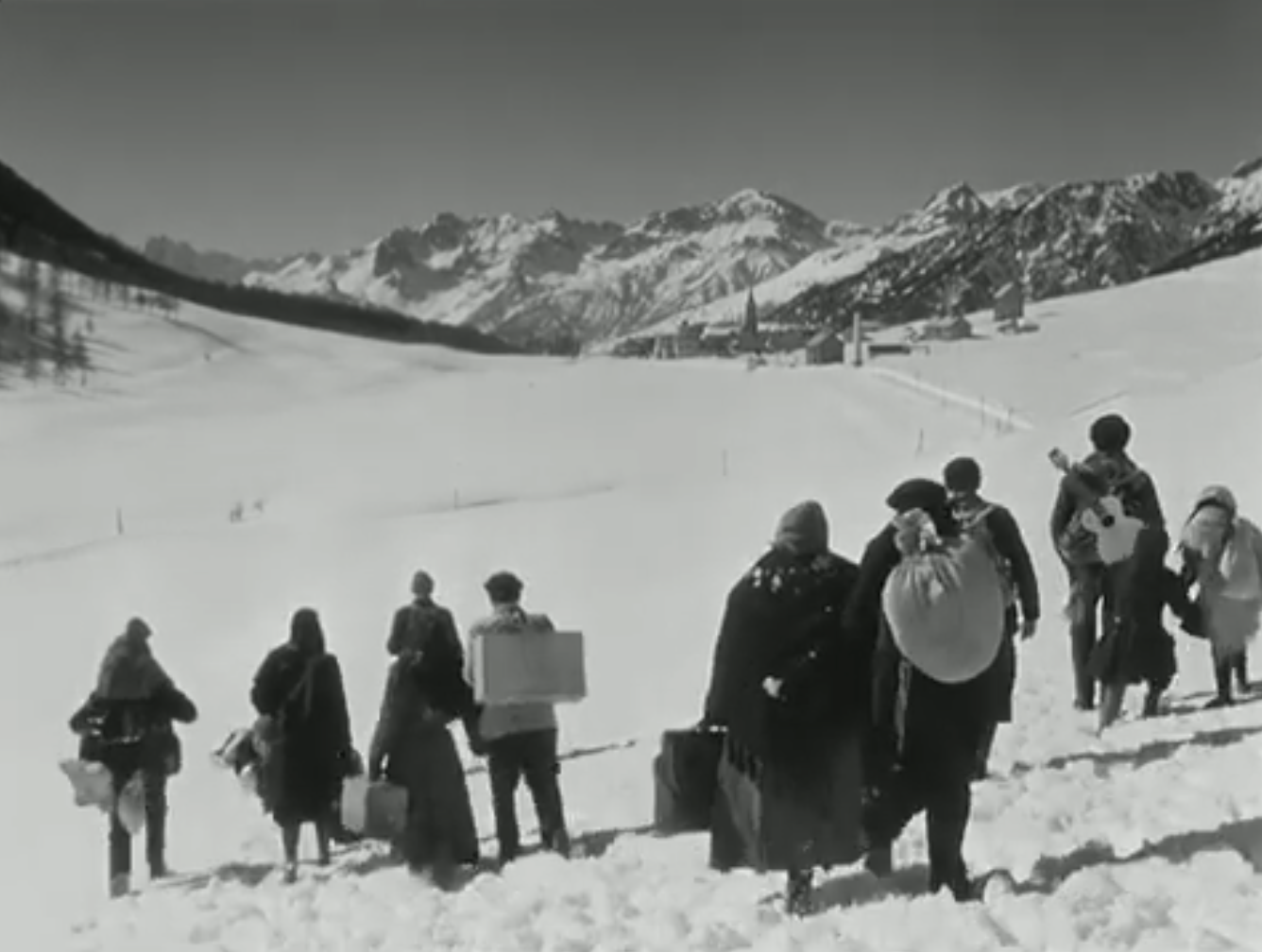
“... dove la loro speranza e le loro illusioni scivolavano dolcemente – la Francia!”
“… where their hopes and illusions slipped gently – France!”
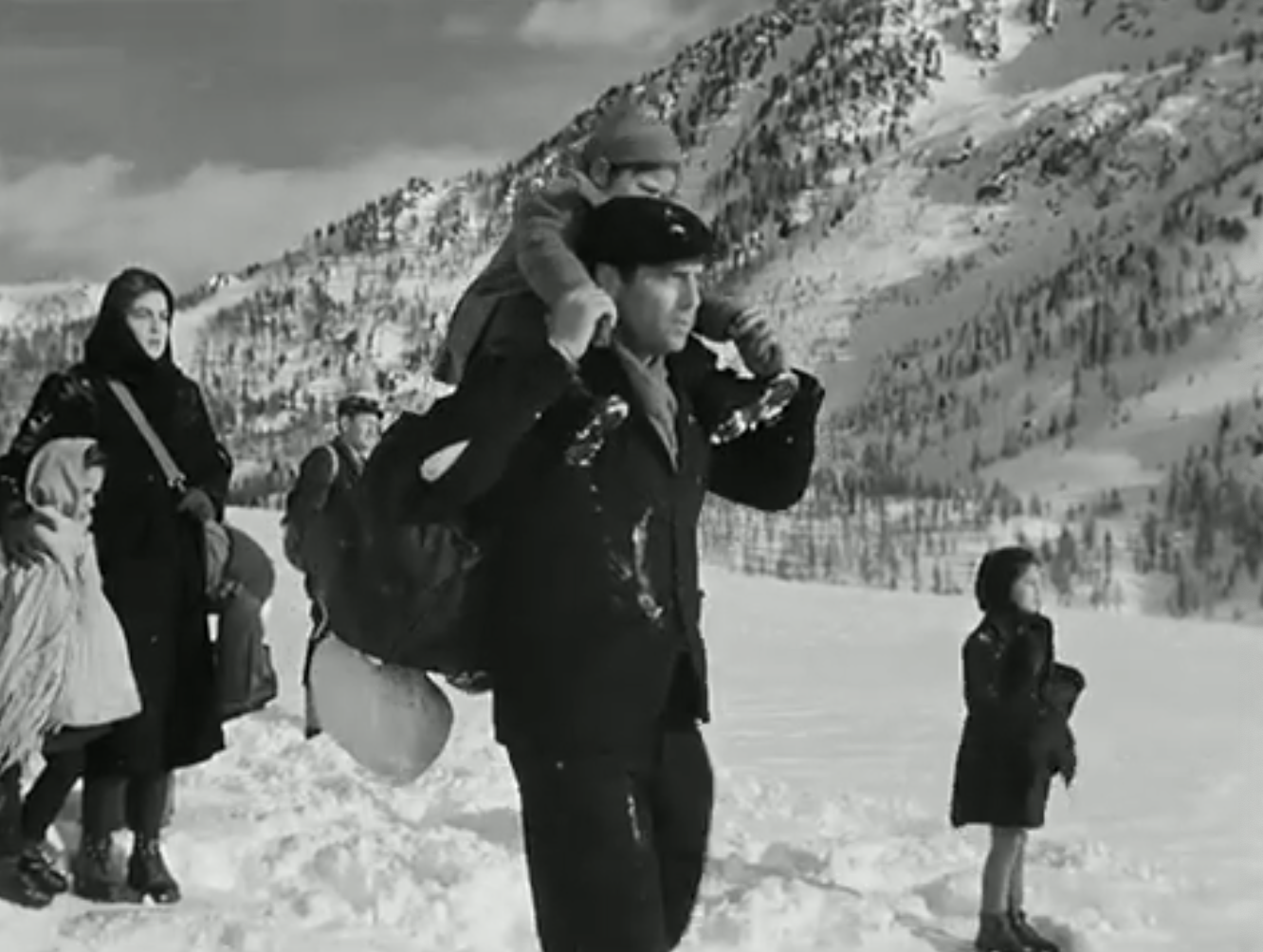
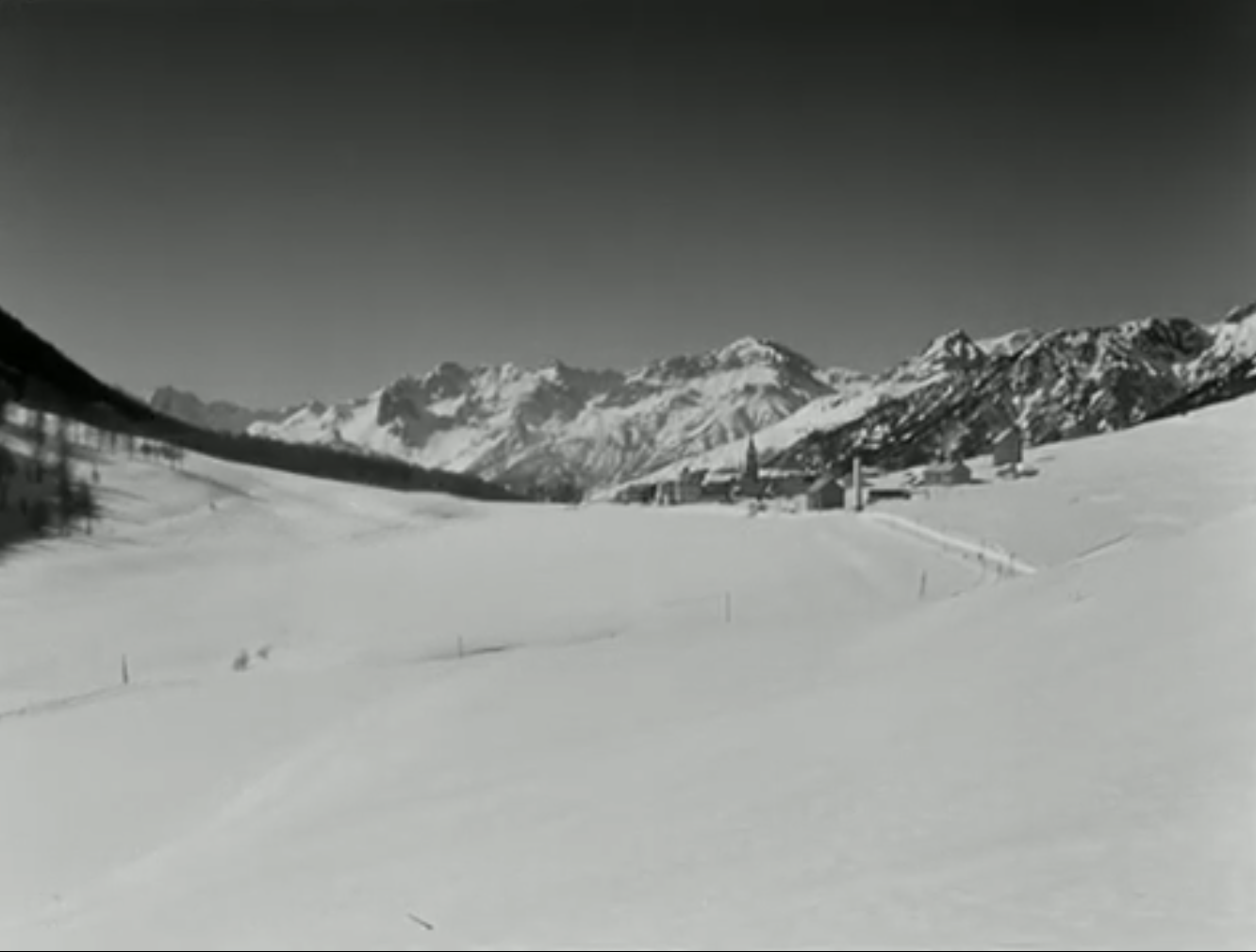
“E mentre la guardavano, il loro pensiero andava con tenerezza al bianco paese di Sicilia, ai luoghi, alle cose e alle persone care che avevano abbandonato per sempre…”
“And while they looked at it, their tender thoughts turned to their white village in Sicily, to the places, the things and the beloved ones that they had left behind forever…”
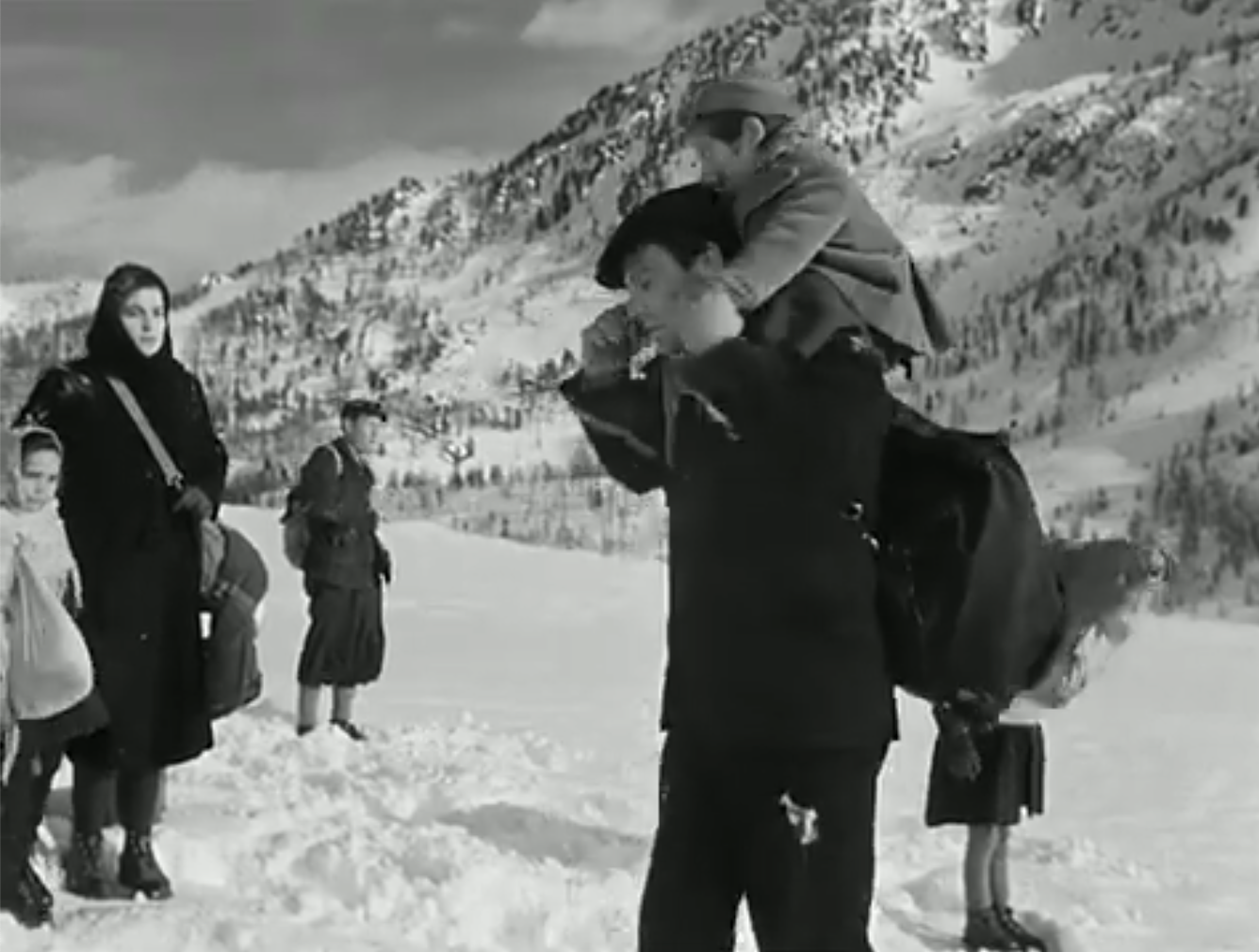
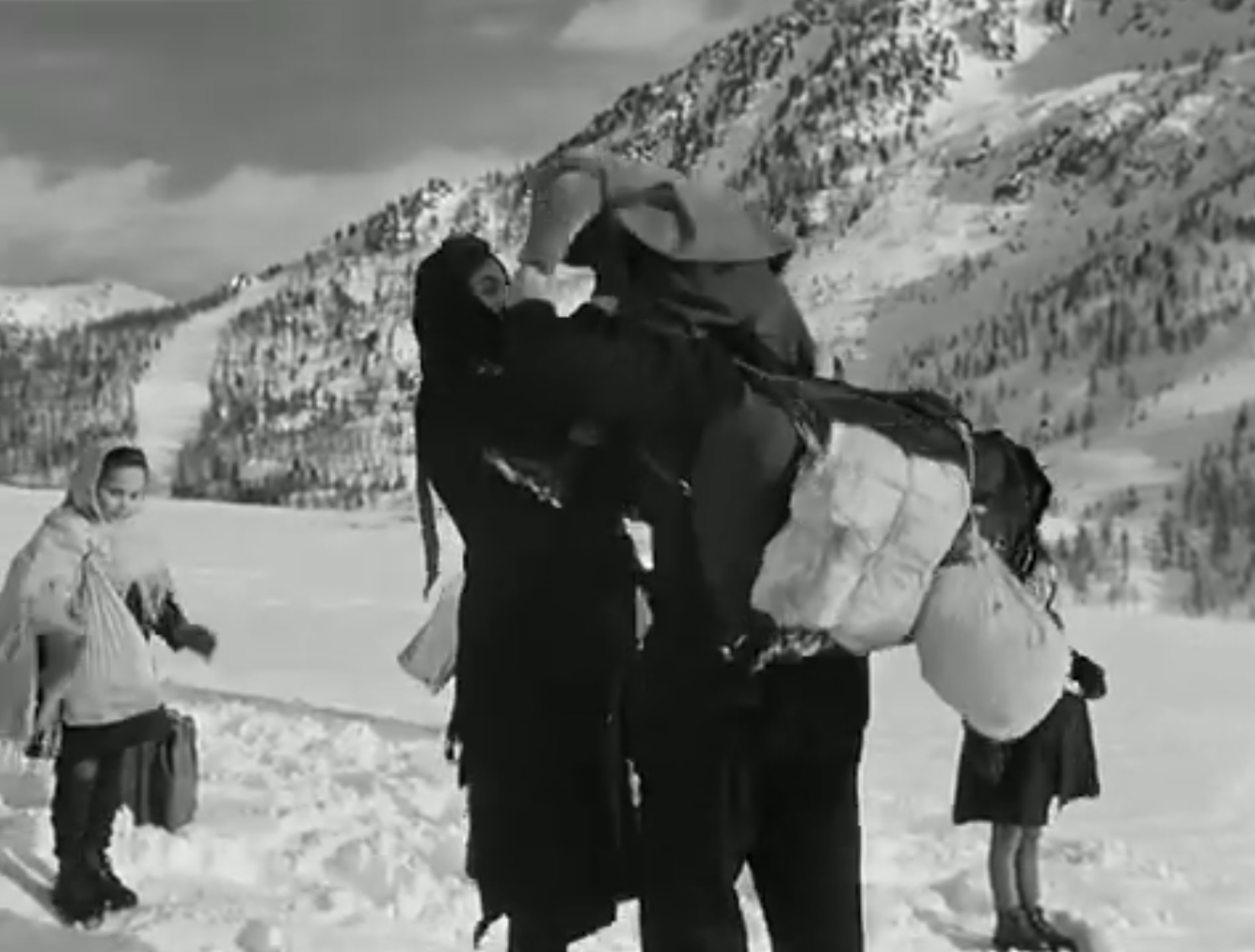
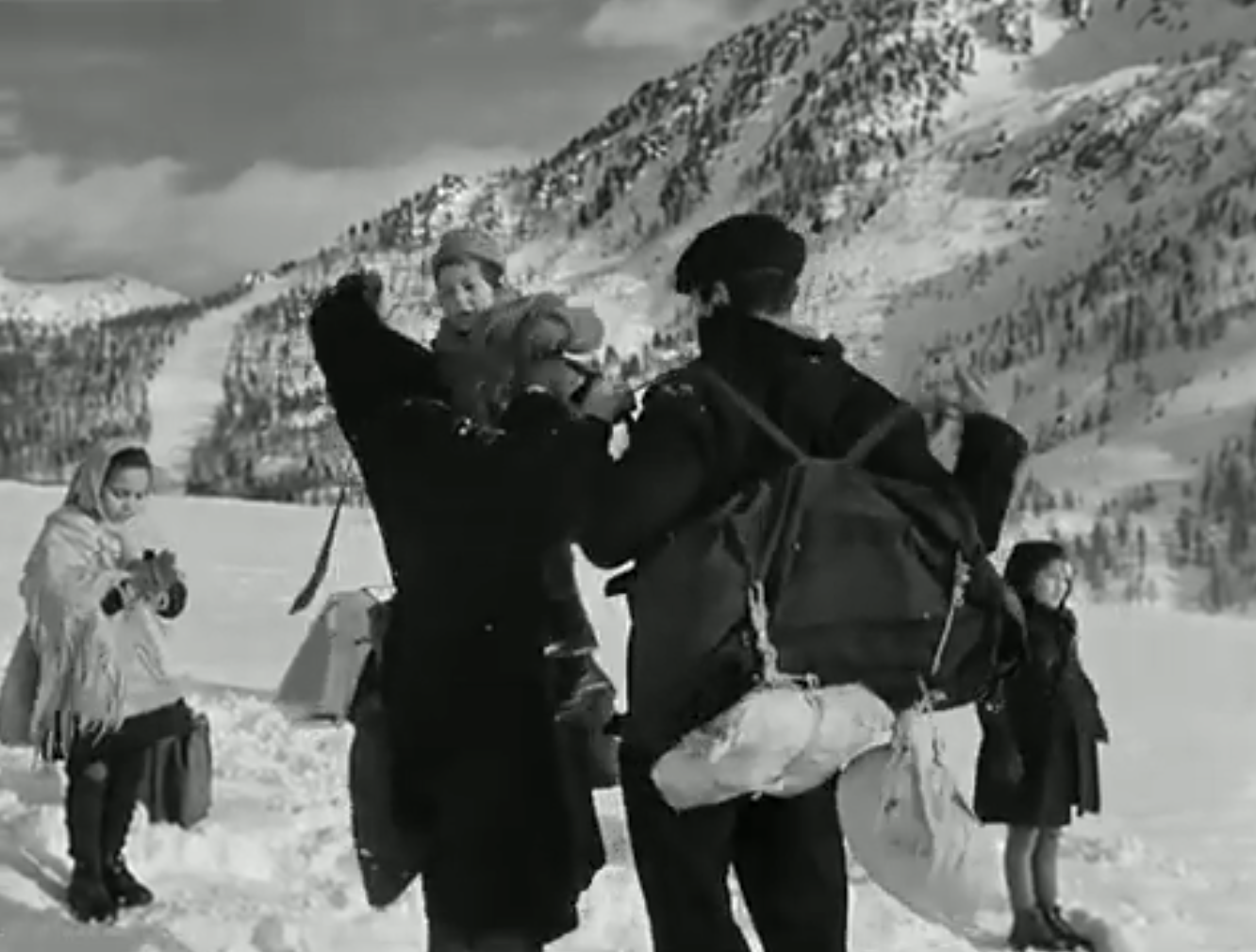
“… ma soprattutto ai compagni che avevano perduto lungo il cammino. A Lorenza, persa e sola nella grande città. Ad Antonio, il quale tutti ormai avevano perdonato”.
“… but most of all, to their companions, lost along the way. To Lorenza, lost and alone in the big city. To Antonio, whom everybody had forgiven by now.”
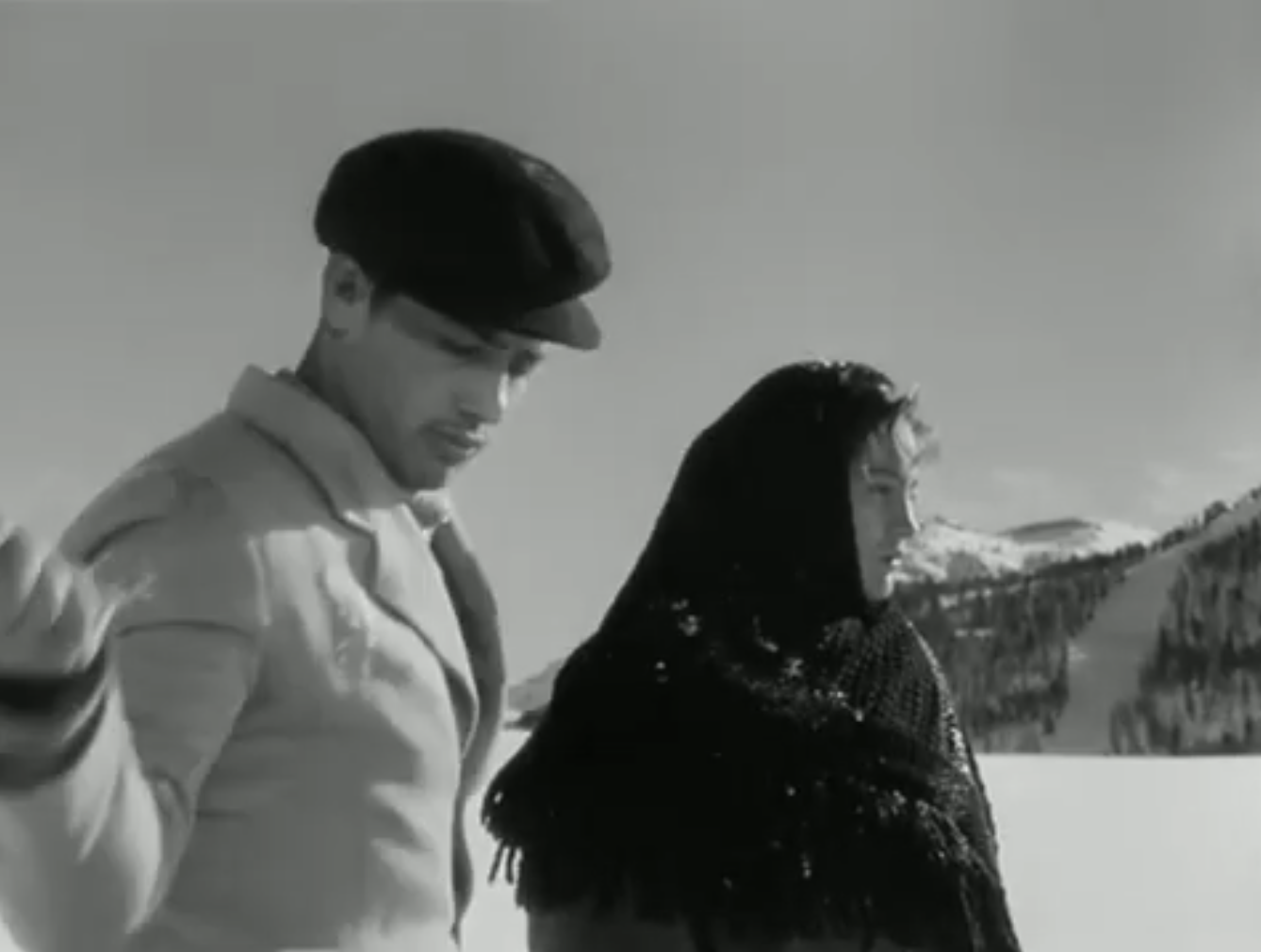

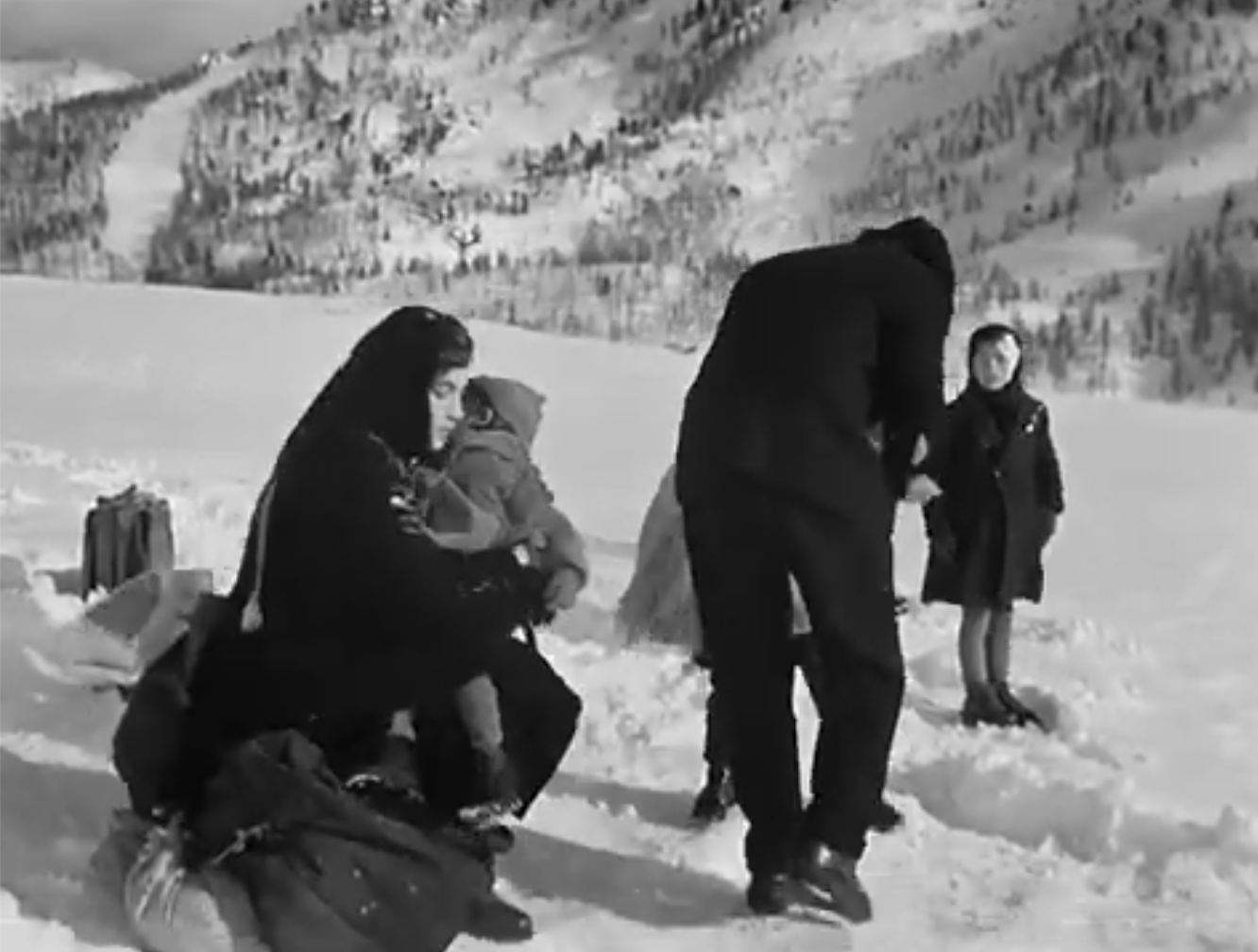
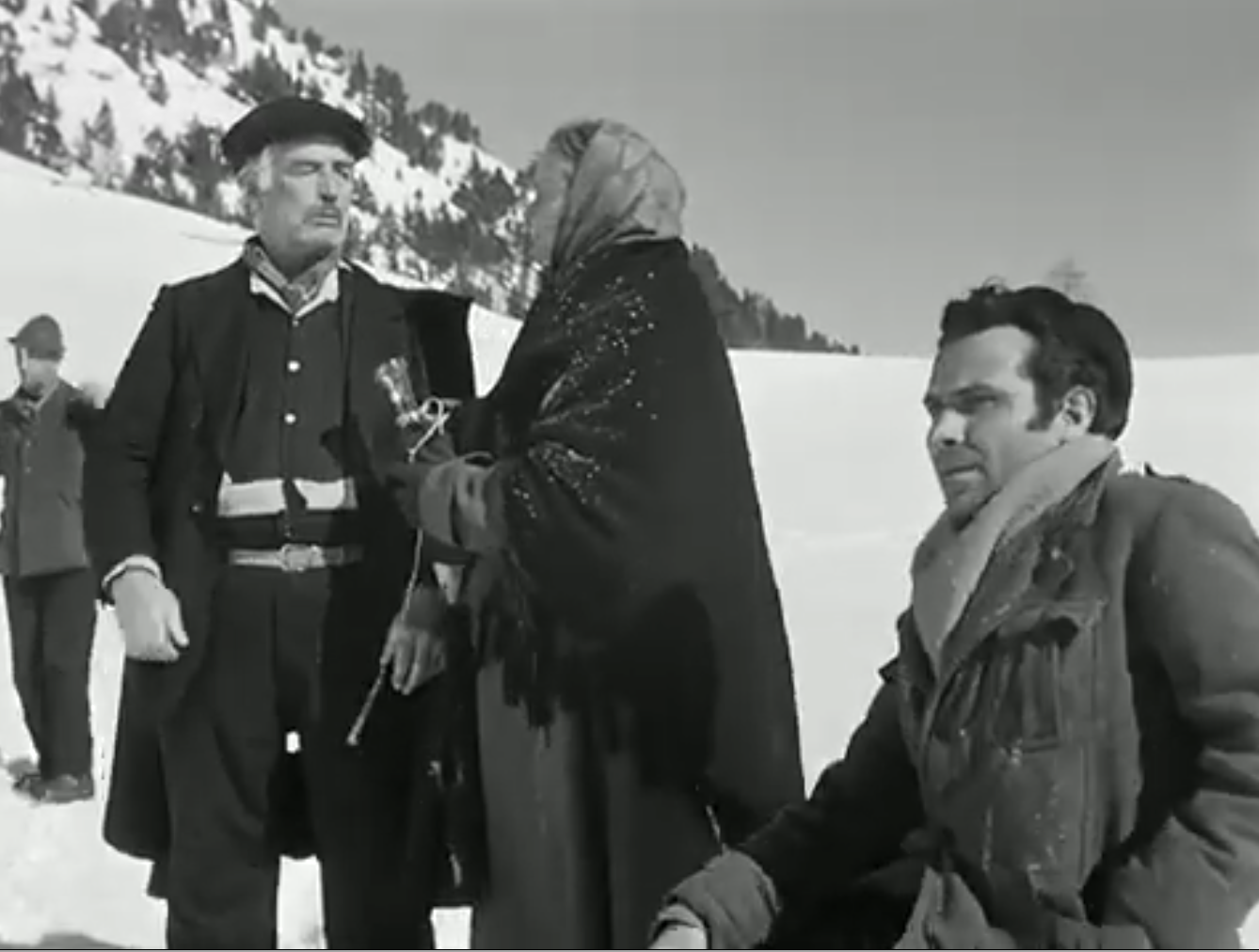
Il gruppo si prepara ad attraversare il confine.
“A Mommino, che non avrebbe più cantato le sue canzoni. A Nanni, che li aveva lasciati gridando: ‘Salutatemi la Francia!’”
The group gets ready to cross the border.
“To Mommino, who would no longer sing his songs. To Nanni, who had left them, shouting: ‘Say hello to France for me!’”

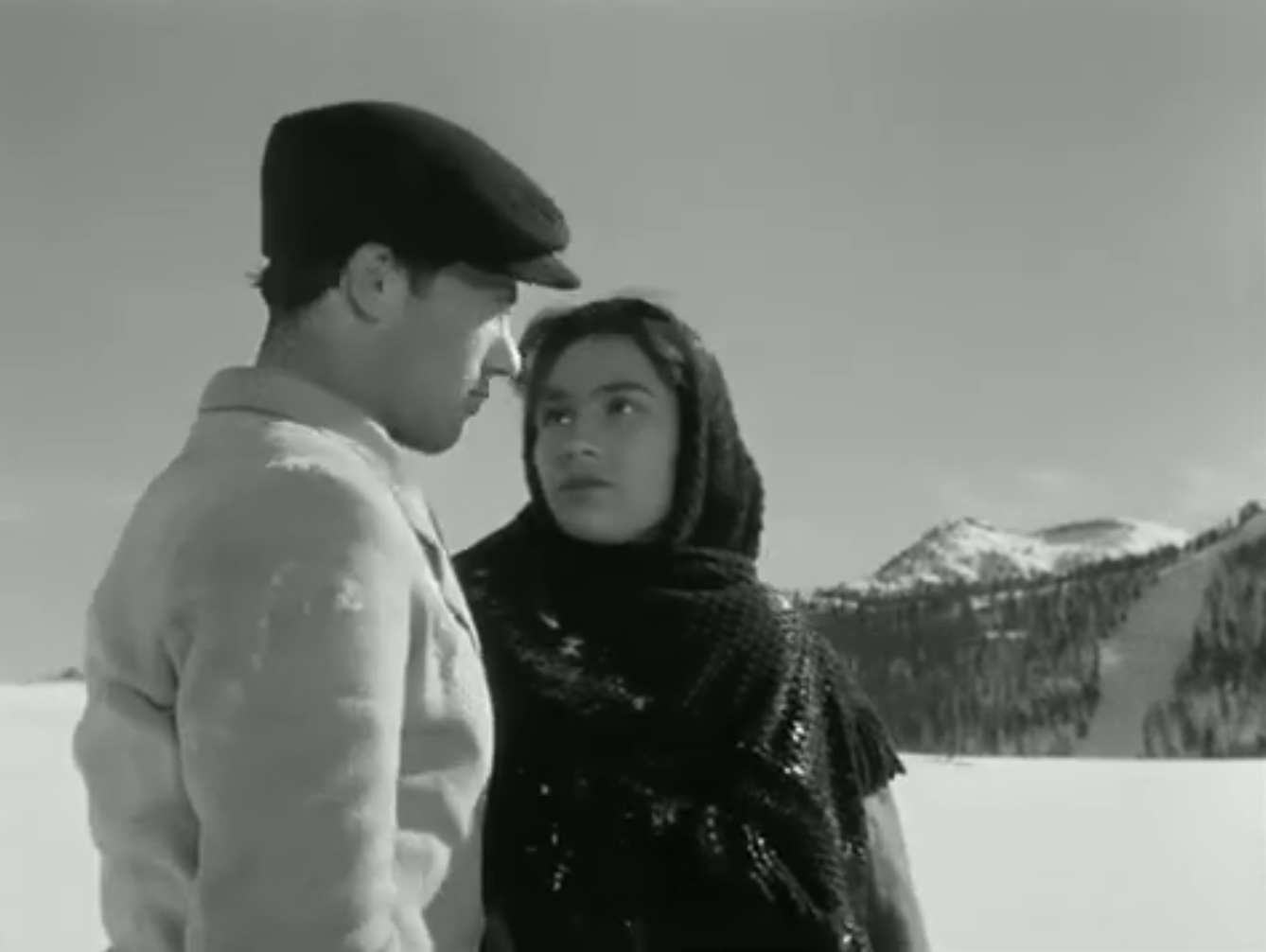
"Al Ragioniere Carmelo, ora sepolto nella neve, che aveva risposto a Nanni con voce rotta: ‘Ci rivedremo, ci rivedremo’. Loro non vedranno più il buon Carmelo”.
“To accountant Carmelo, now buried in the snow, who had answered Nanni in a broken voice: ‘We’ll meet again, we’ll meet again.’ They won’t ever see the good Carmelo again.”
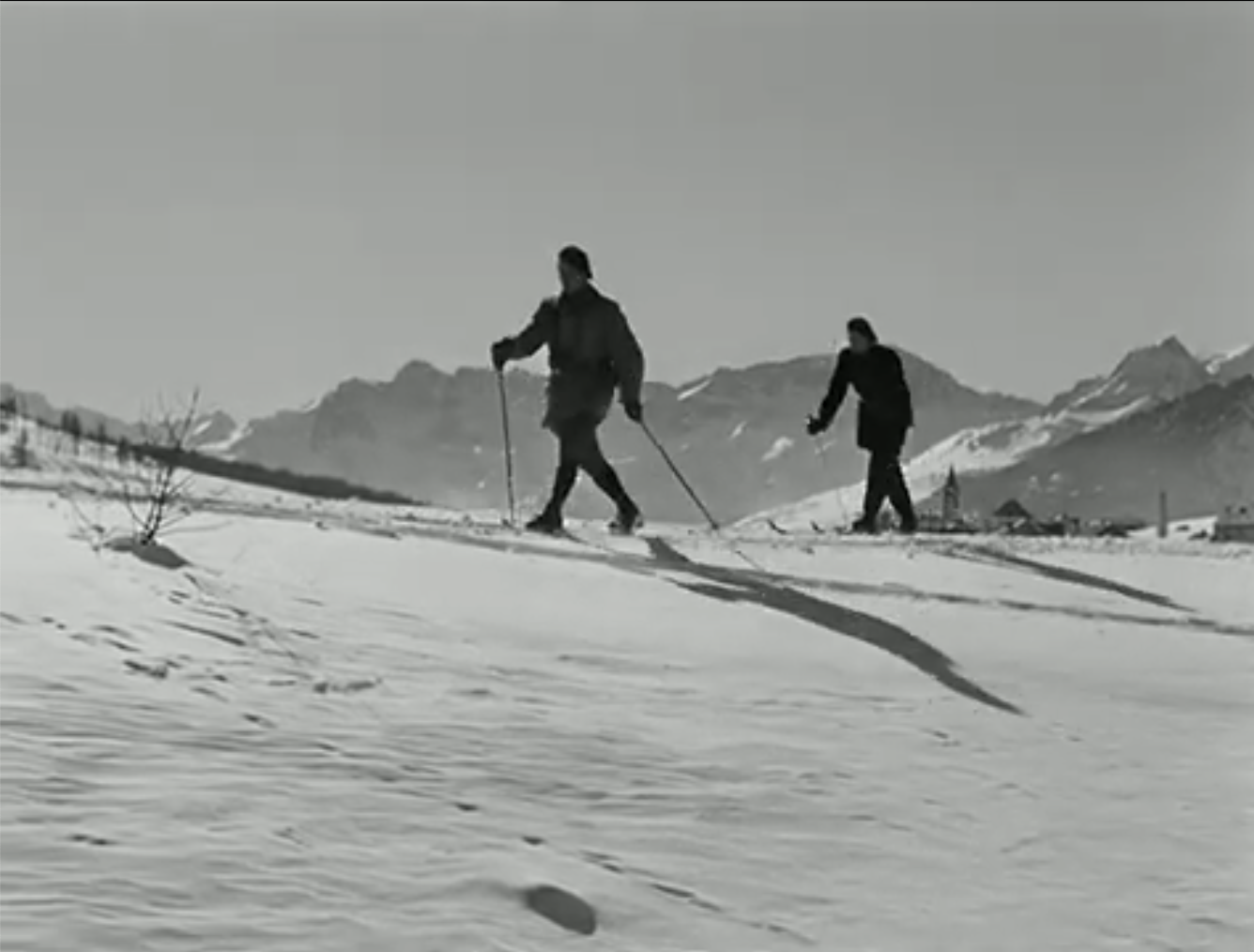
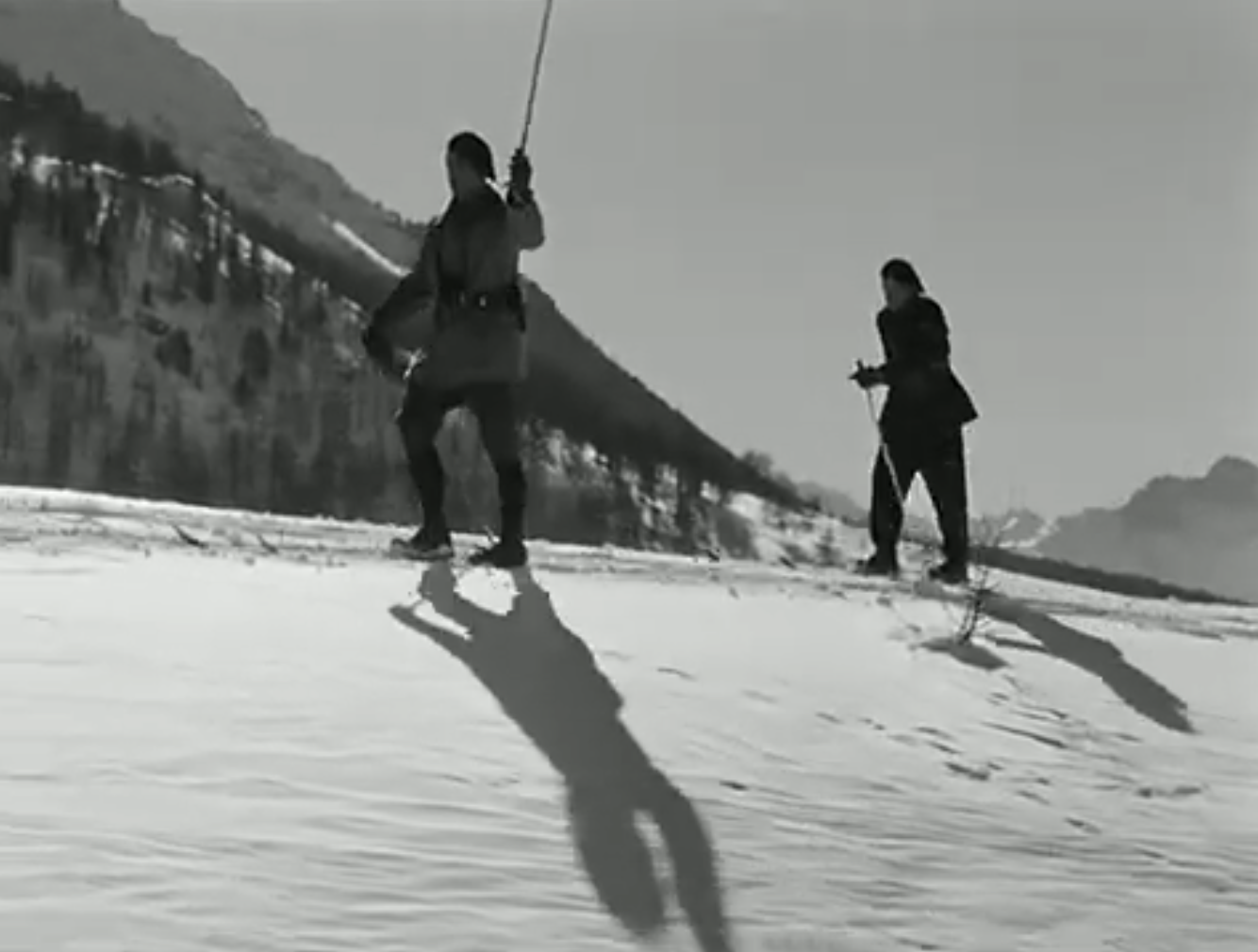
In cima a un pendio compaiono due agenti della polizia di frontiera con gli sci ai piedi.
Il narratore continua: “Lungo i confini troverete sempre i soldati, soldati dell’una e dell’altra parte. Con diverse uniformi e differente linguaggio”.
At the top of a rise, two border patrol agents appear, wearing skis.
The narrator continues: “You will always find soldiers along the borders, soldiers from both sides. With different uniforms and different languages.”
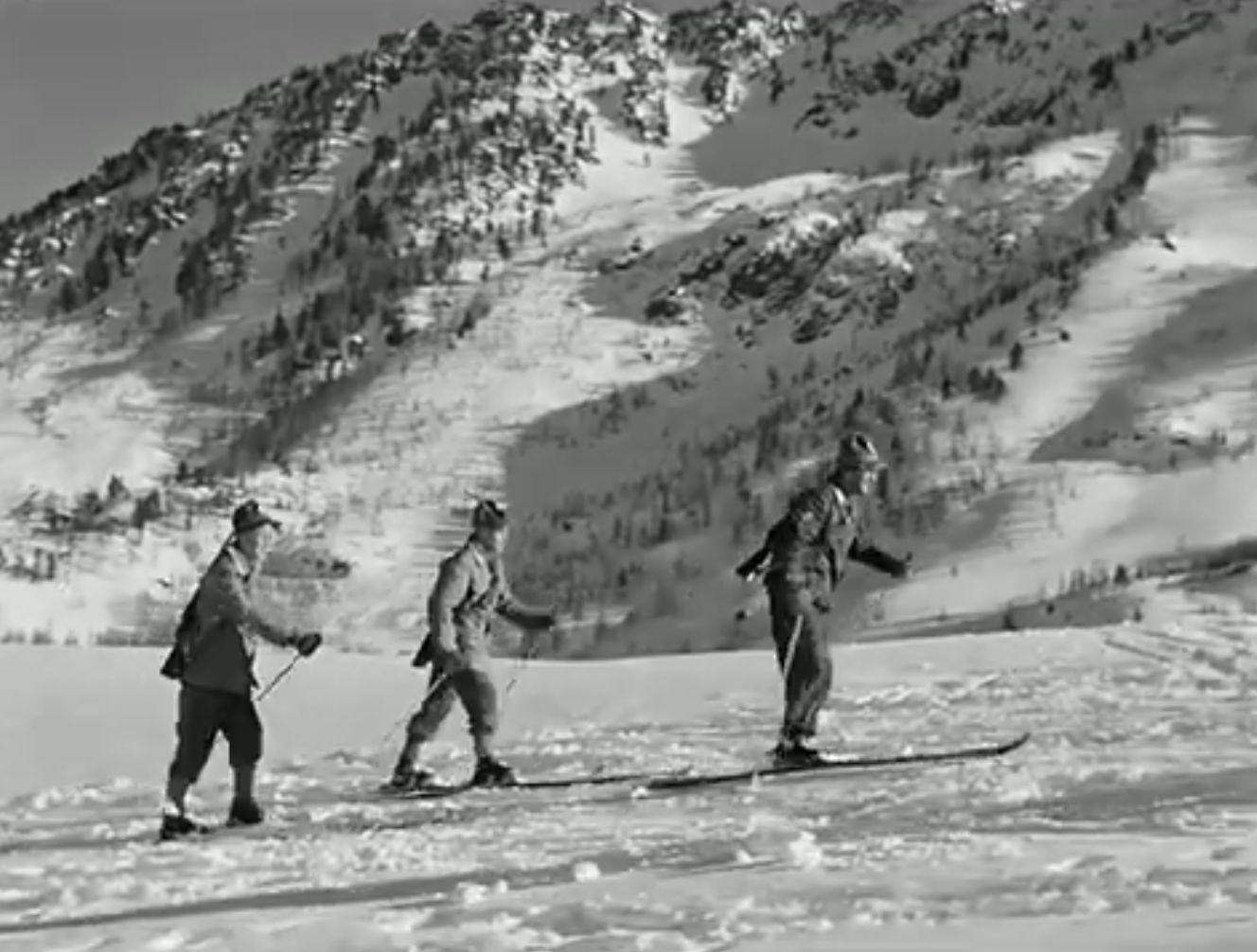
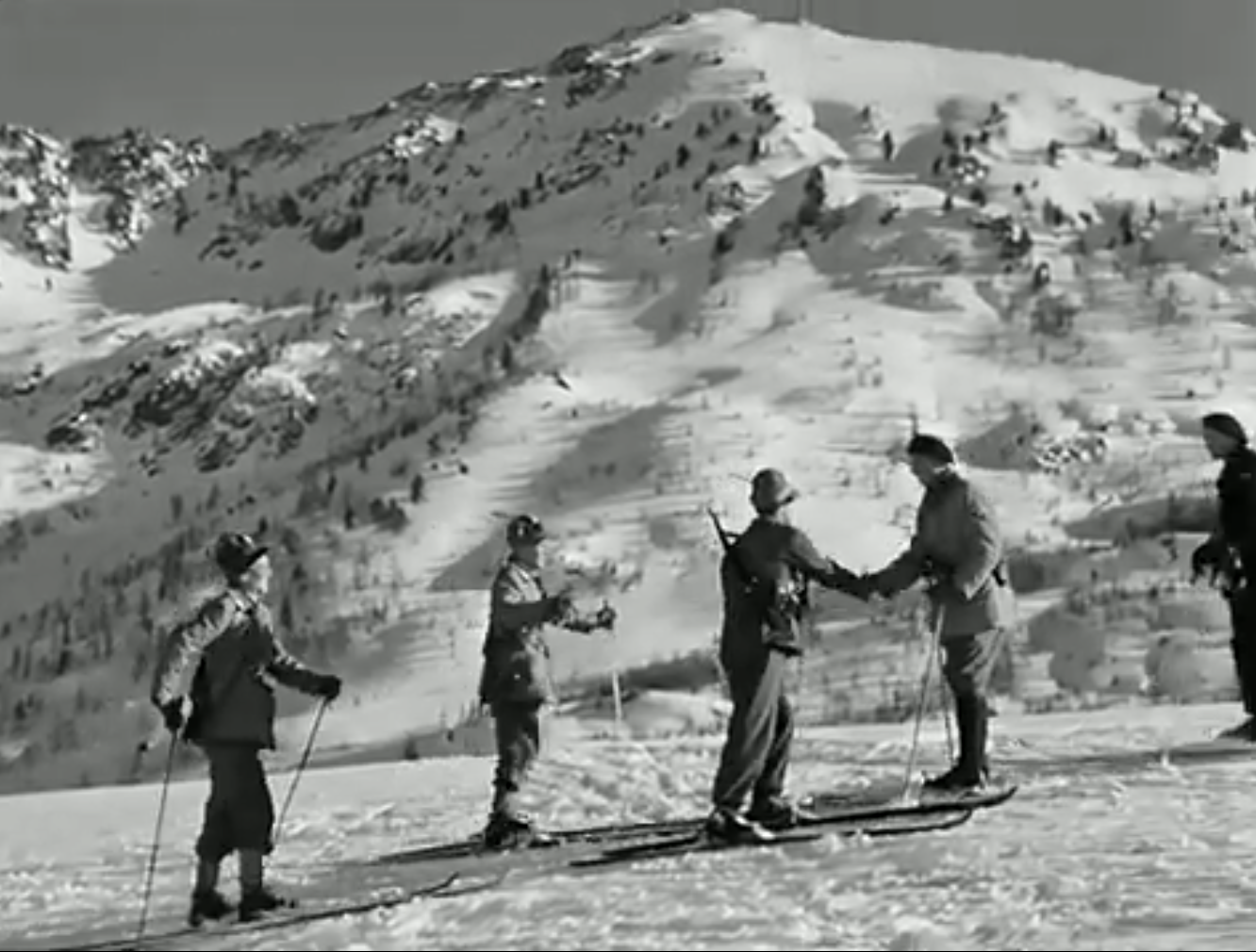
Dall'altra direzione, tre guardie di frontiera alpine svizzere si avvicinano con gli sci.
“Ma quassù, dove la solitudine è grande, gli uomini sono meno soli e certamente più vicini che per le strade e nei caffè delle nostre città…”
From the other direction, three Swiss Alpine border guards approach on skis.
“But up here, where solitude is great, men are less alone and certainly closer to each other than people on the streets and in cafes of our cities...”
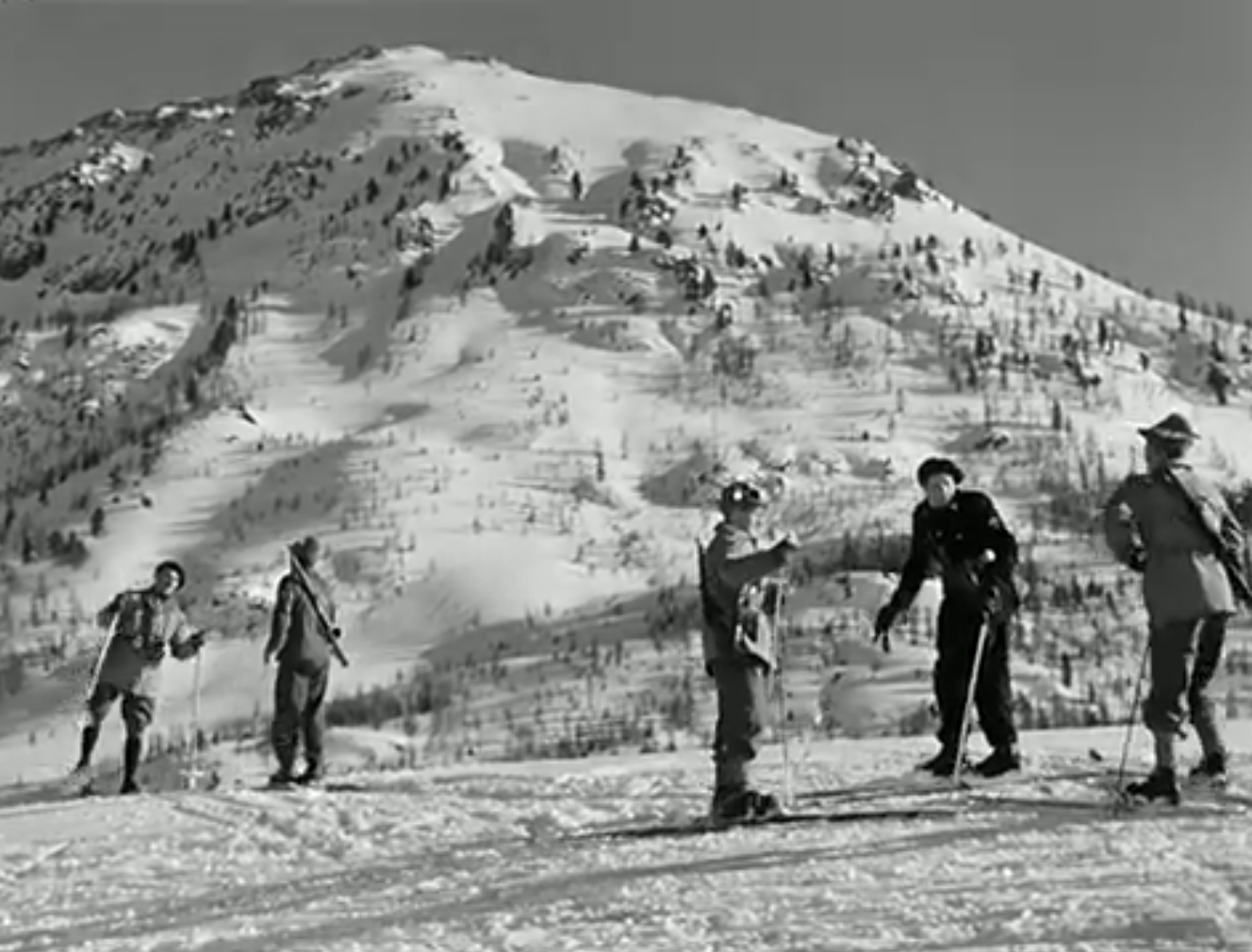

Le due squadre di guardie di frontiera si stringono la mano.
“... dove la gente si urta e si mescola nella folla senza guardarsi in faccia”.
The two teams of border guards shake hands.
“... where they bump into each other and blend into the crowd without even looking at each other.”
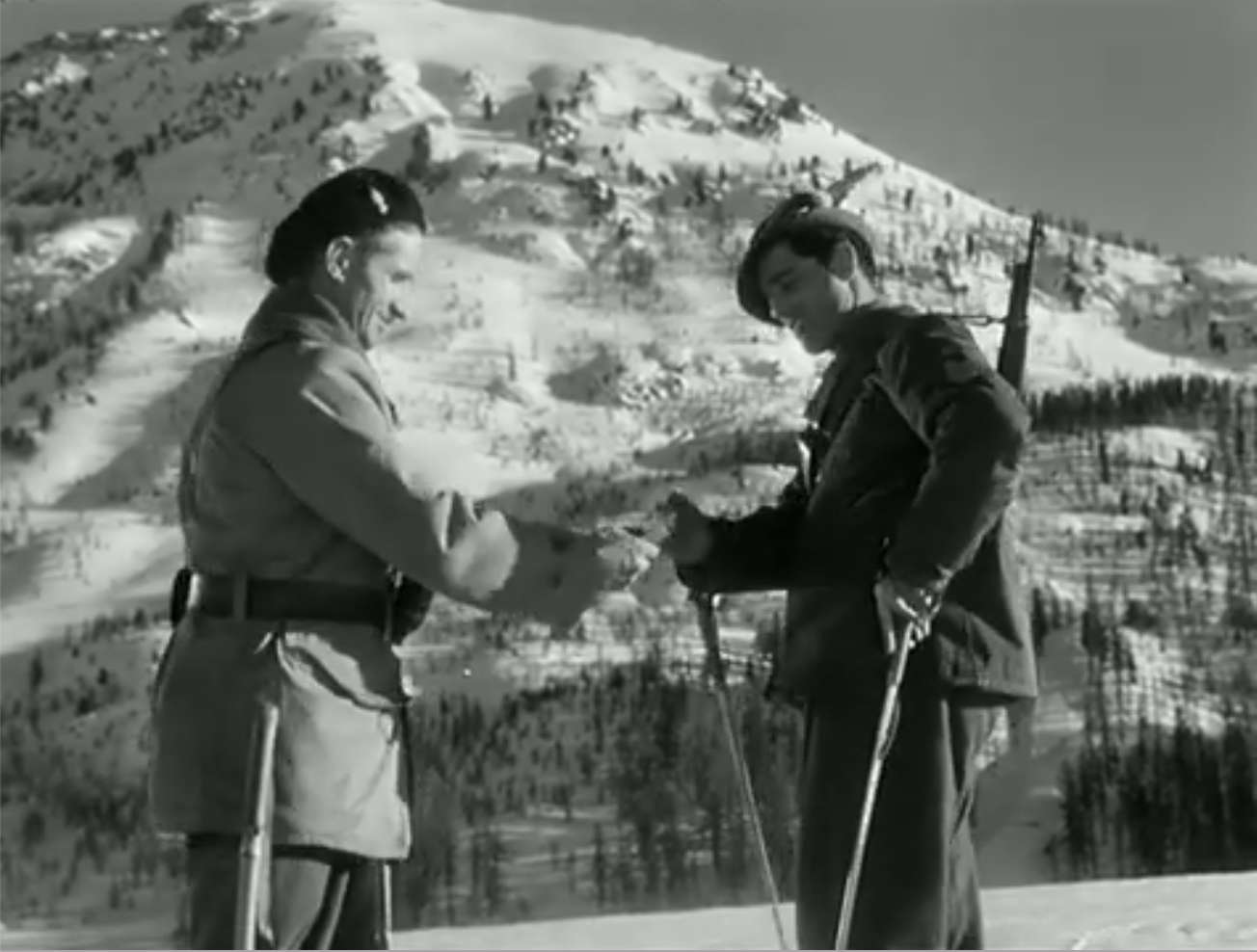
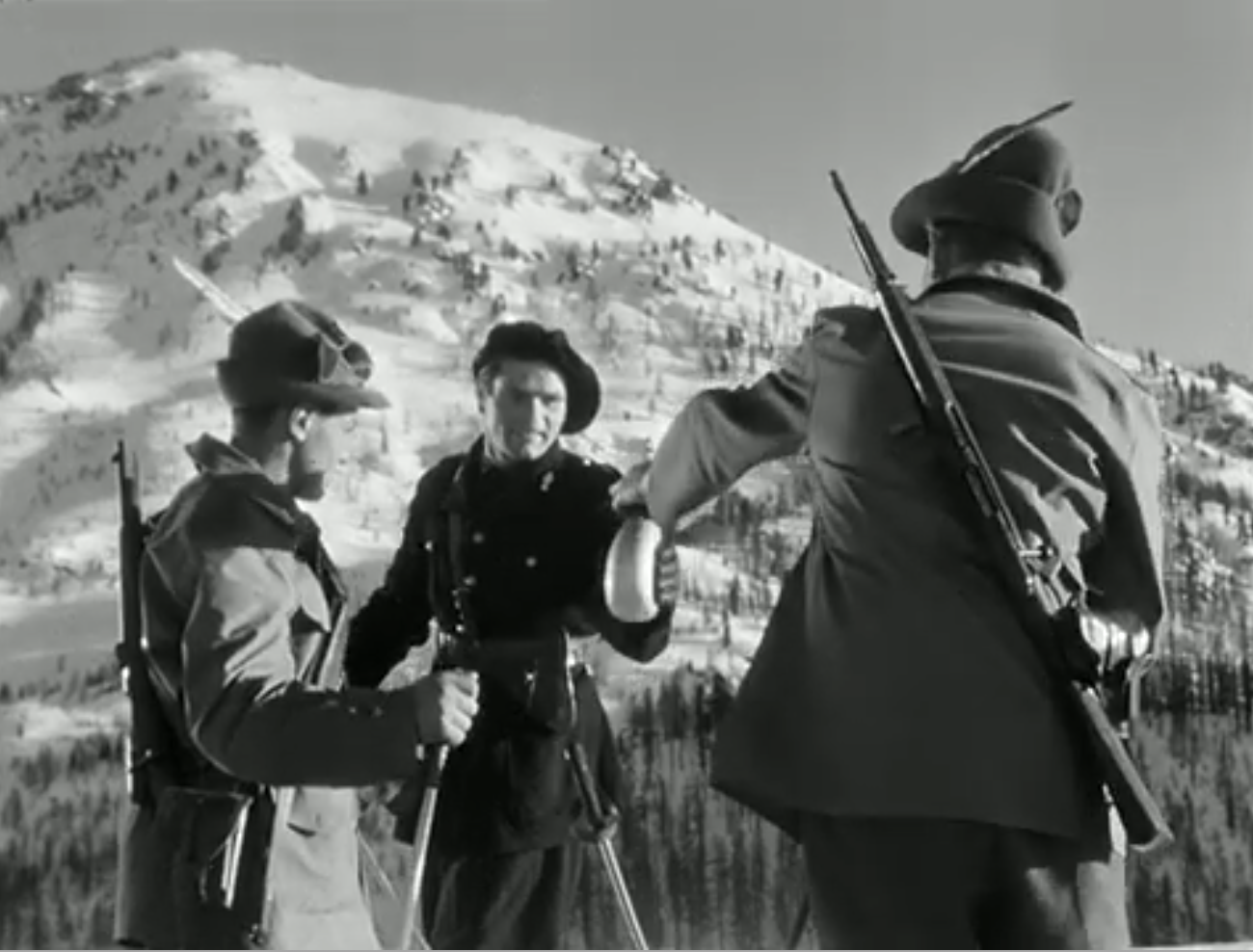
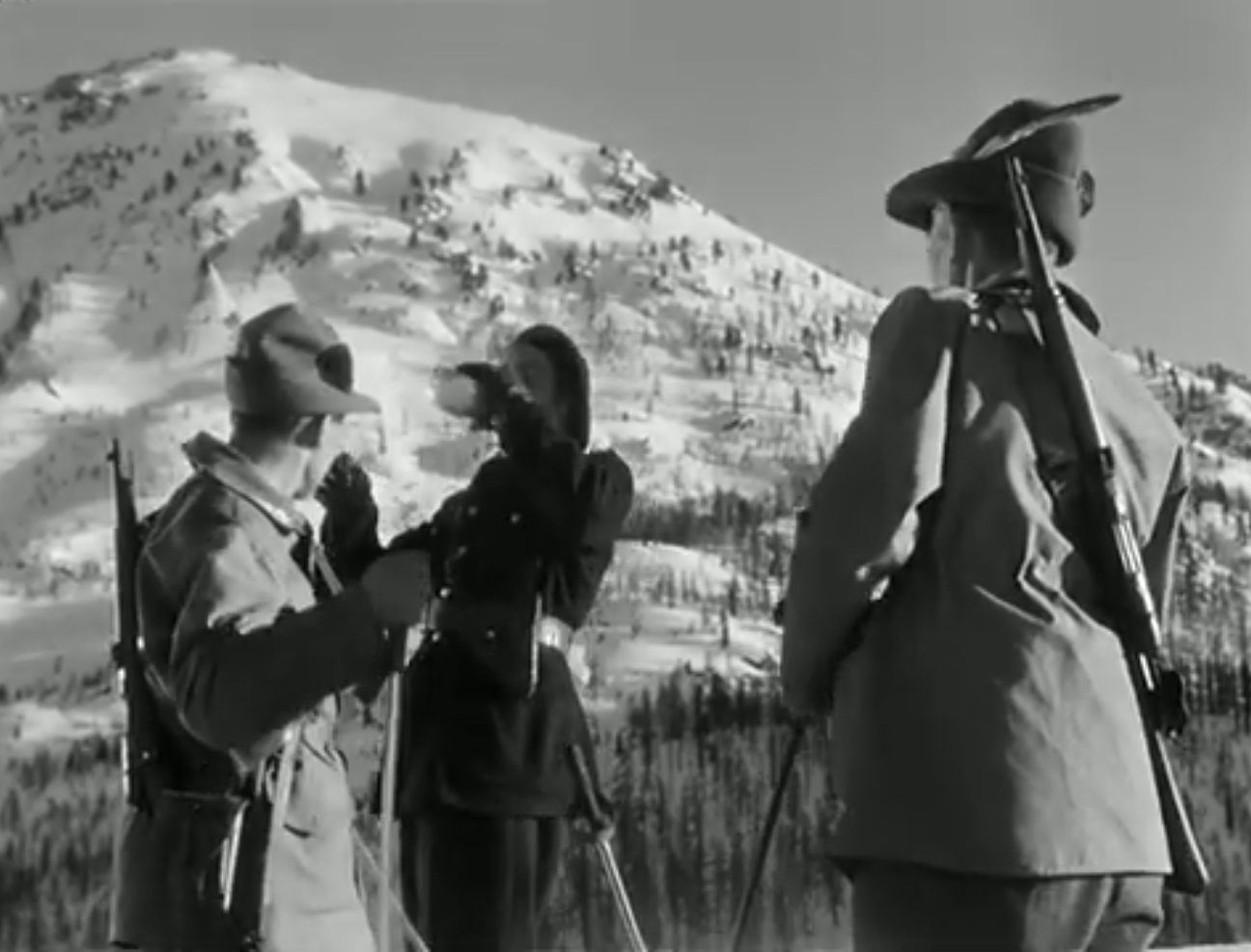
“Lo scambio di una sigaretta, l'offerta di un sorso di vino sono qui segni del calore umano. I confini sono sulle mappe, ma non ci sono confini su questa Terra”.
“The exchange of a cigarette, the offer of a drink of wine here are the signs of human warmth. Borders are on maps, but there aren’t borders on this Earth.”

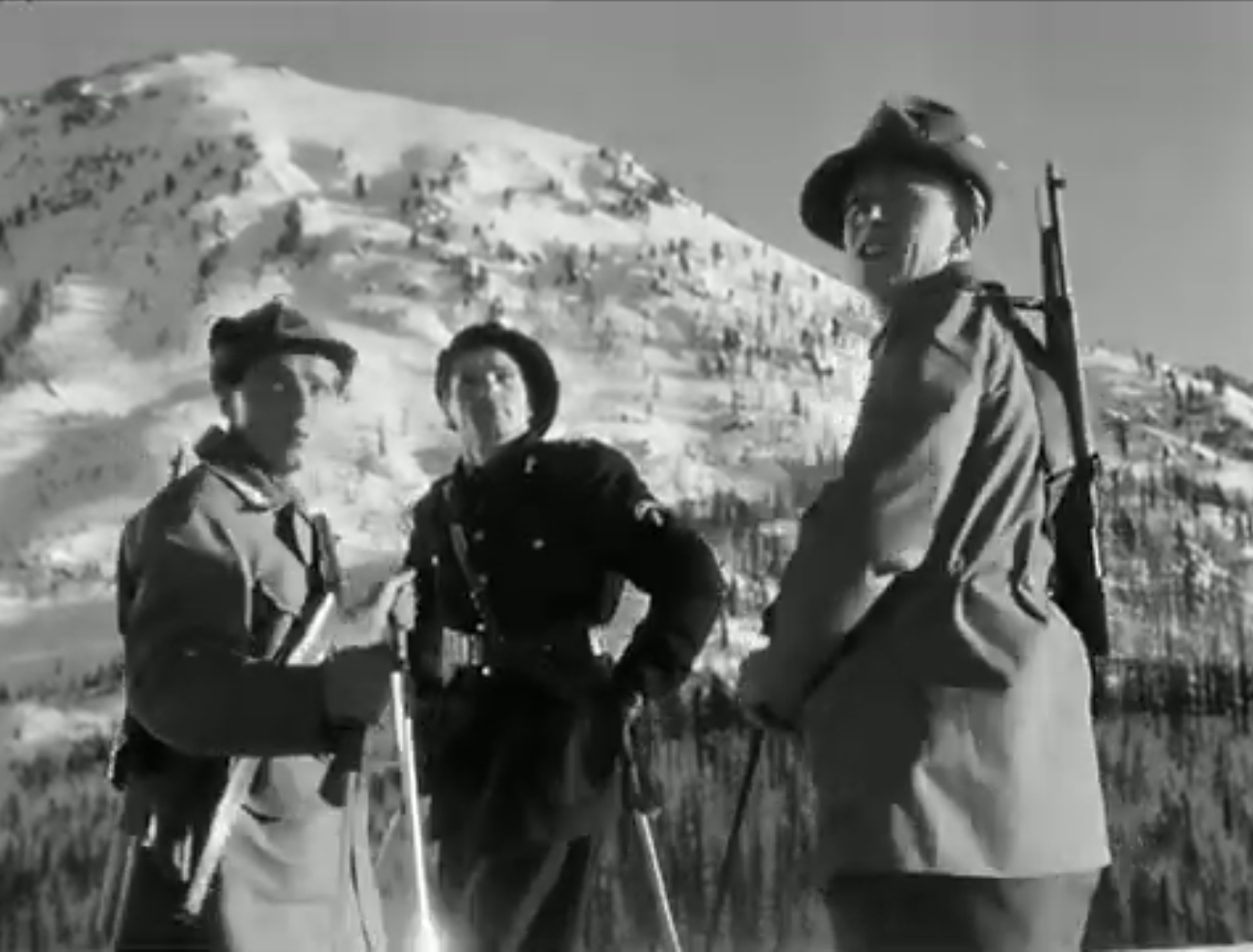
Una sesta guardia all'orizzonte grida: “Ehi!” Gli altri alzano lo sguardo.
A sixth guard at the horizon calls out, “Hey!” The others look up.
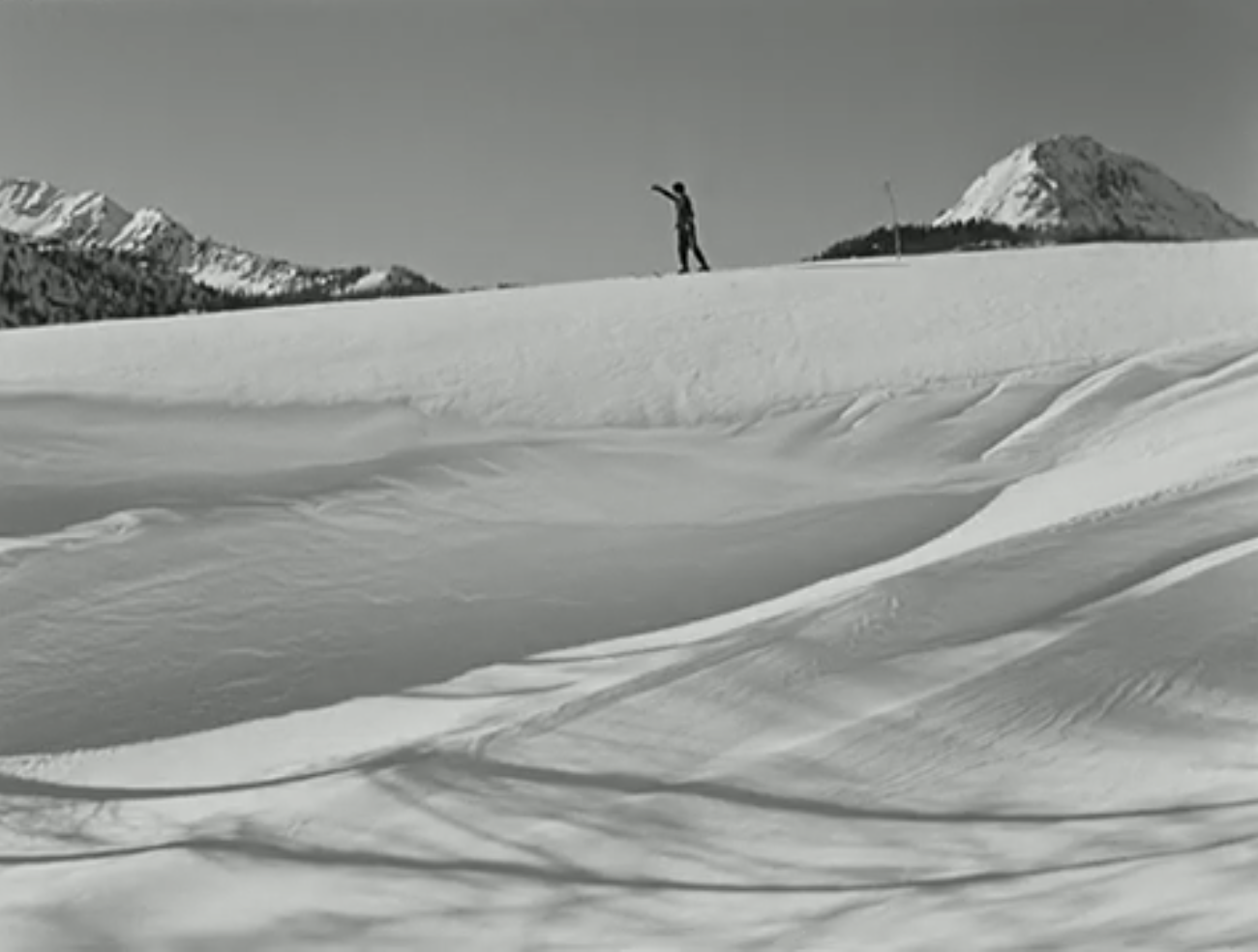

Lui urla loro in francese: “C'è qualcuno là in fondo!”
Le guardie partono con gli sci.
He yells to them in French: “Somebody’s down there!”
The guards take off on their skis.
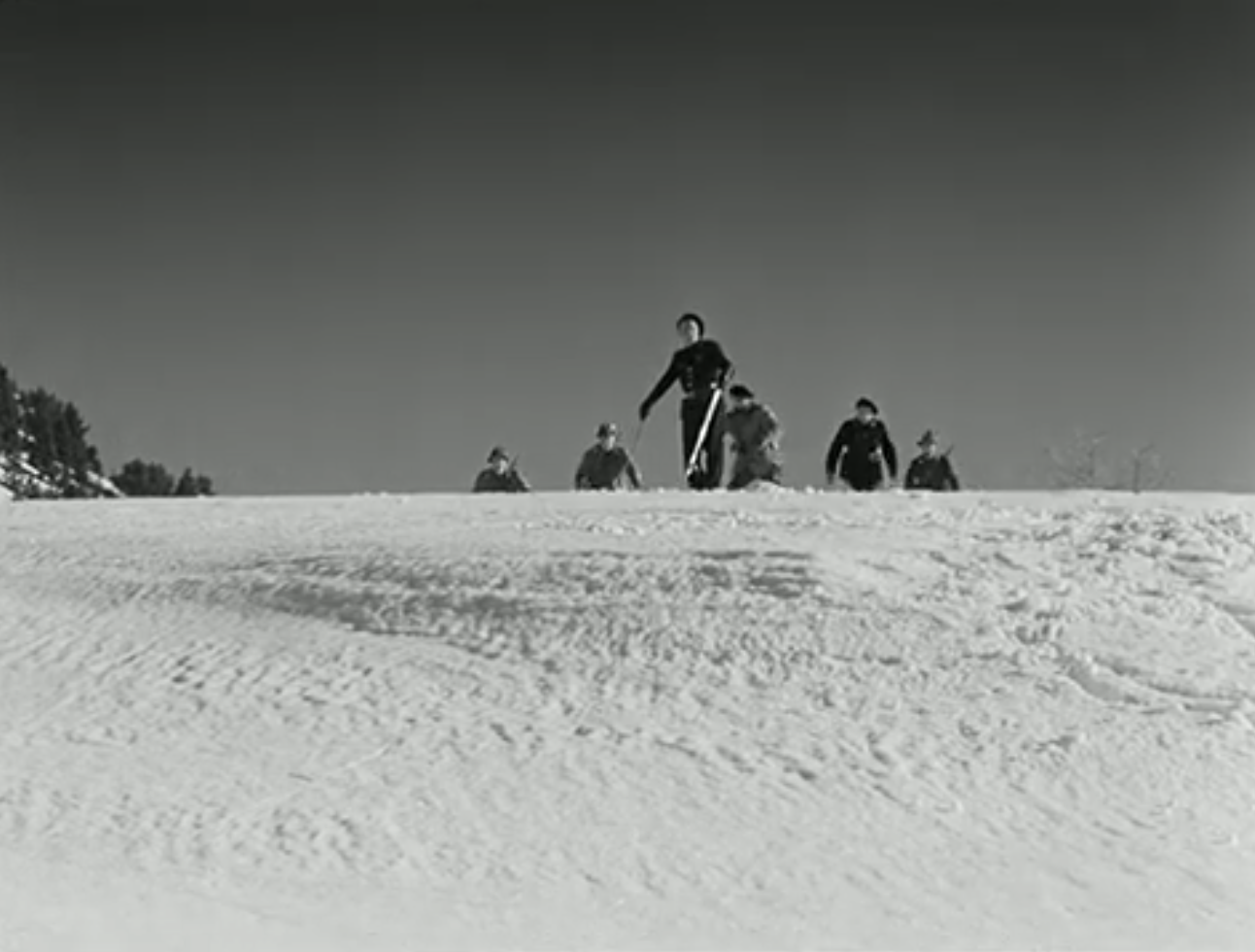
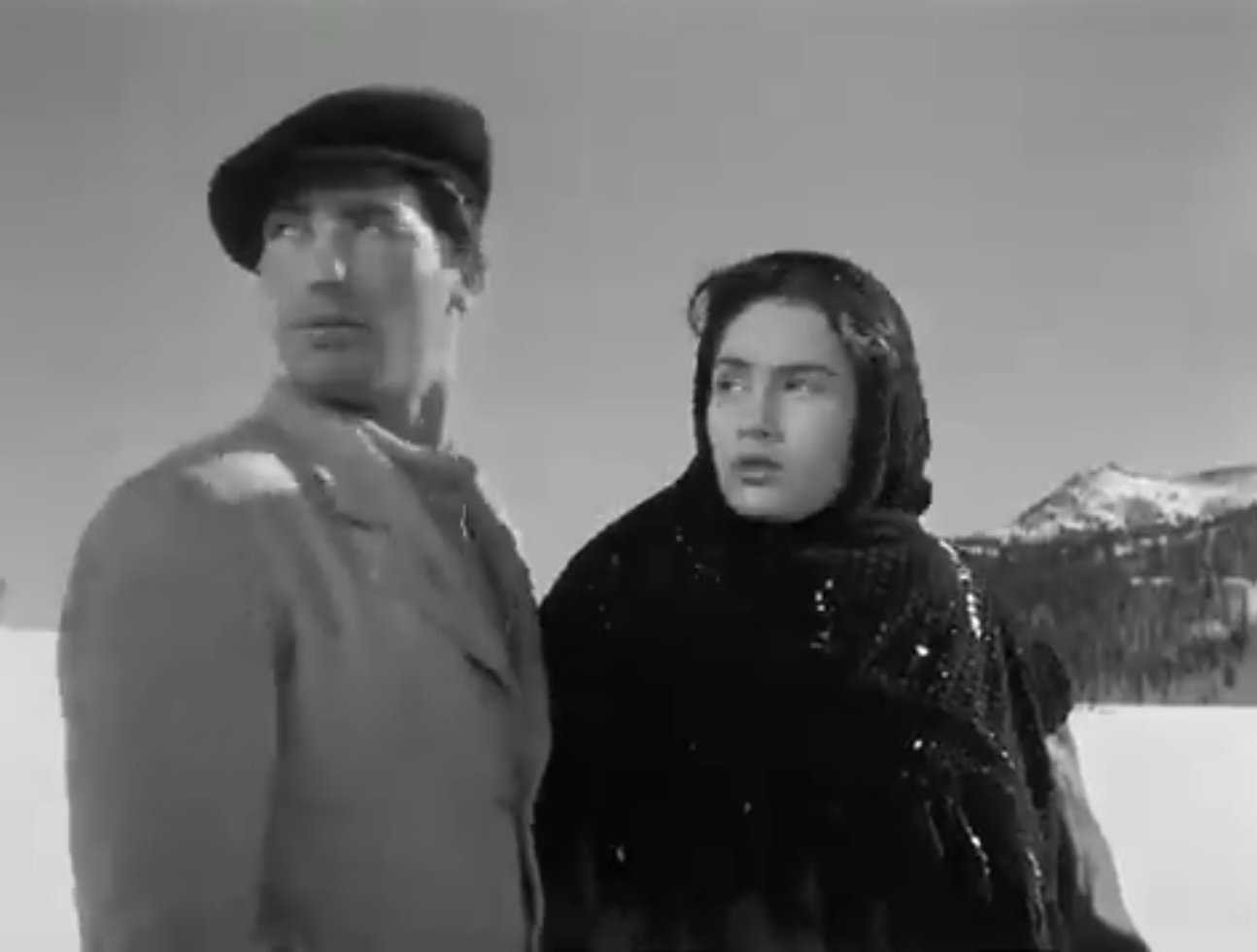
Luca e Rosa vedono le guardie arrivare dalla cresta.
Luca and Rosa see the guards coming over the ridge.


Gli altri guardano, allarmati.
The others look over, alarmed.
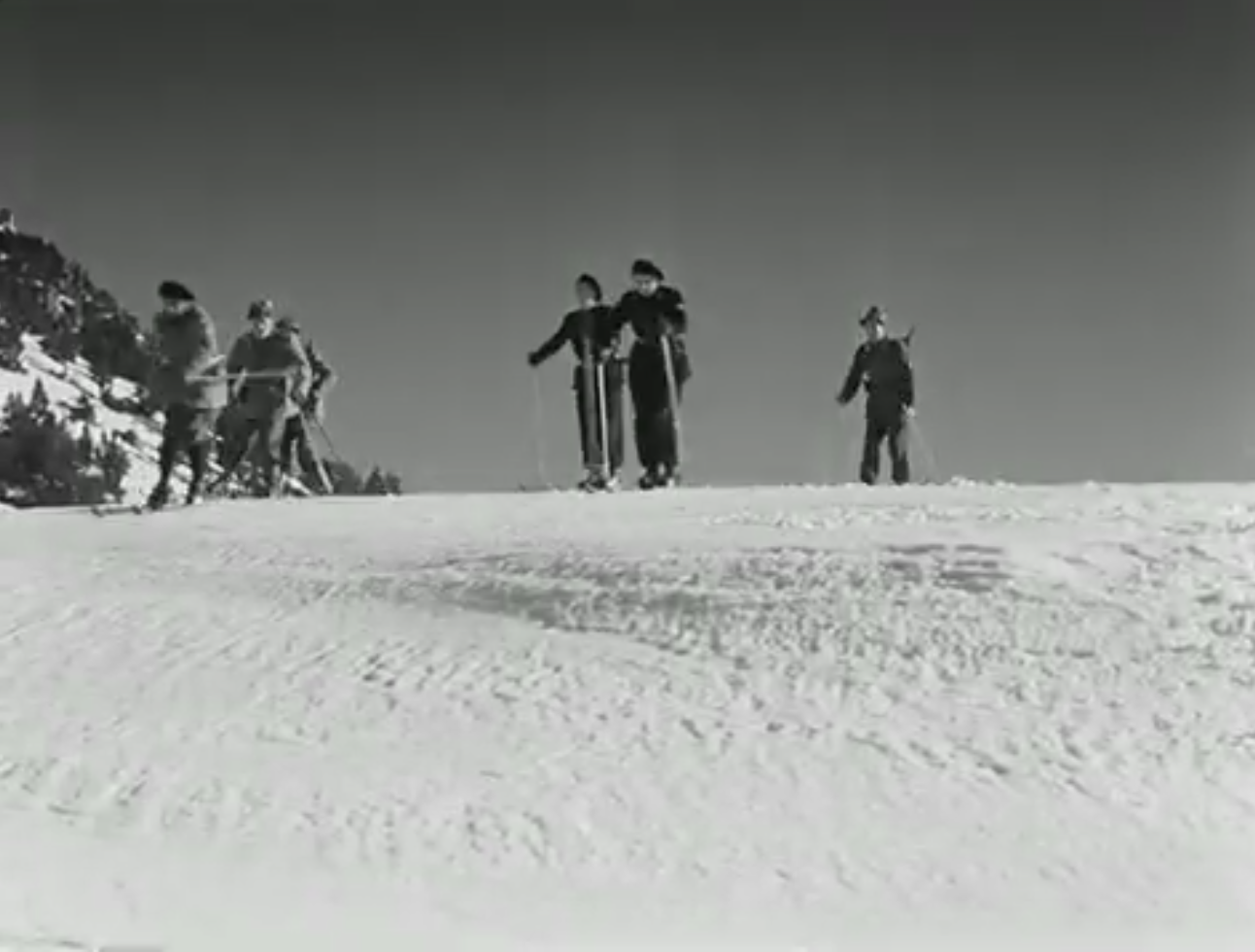
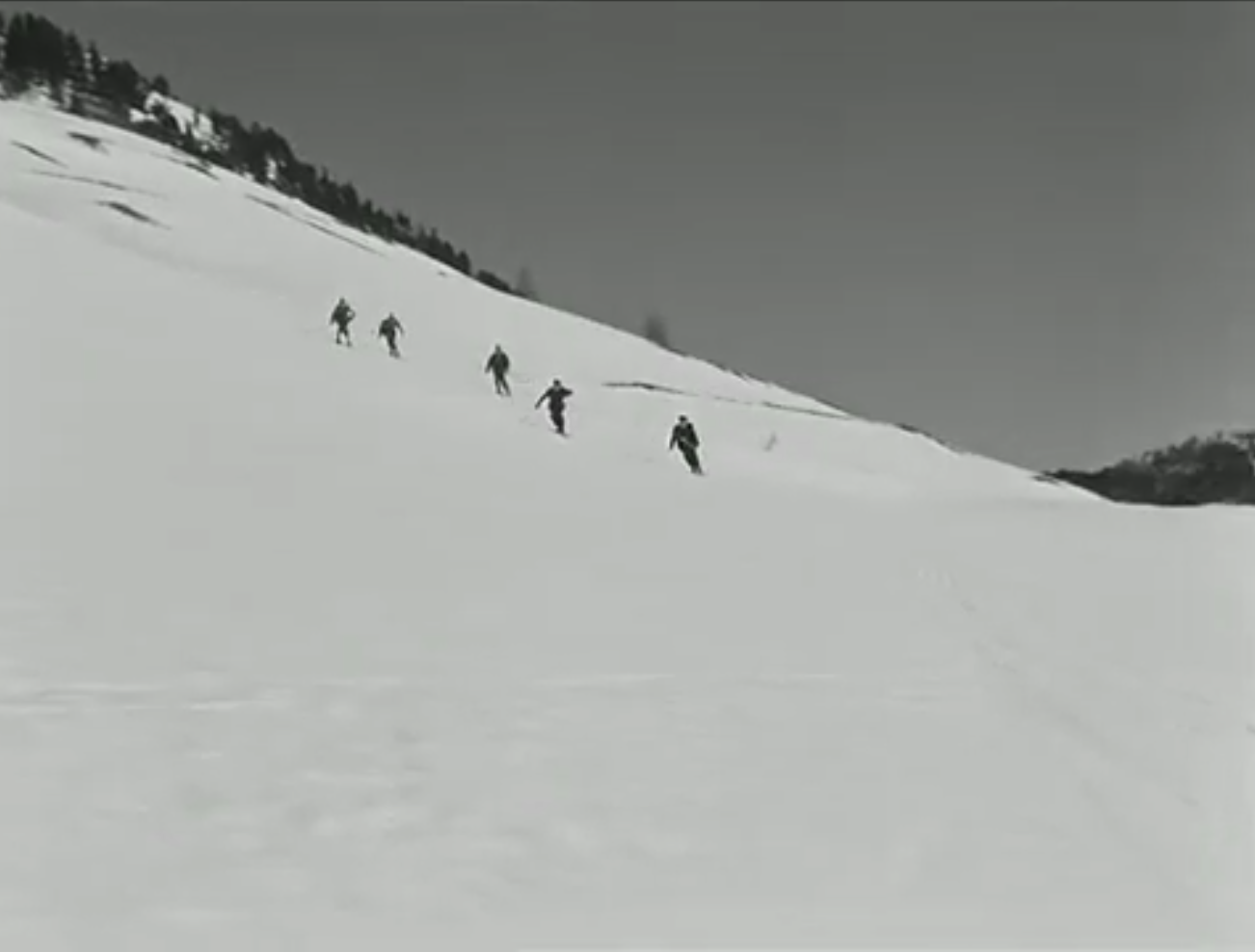

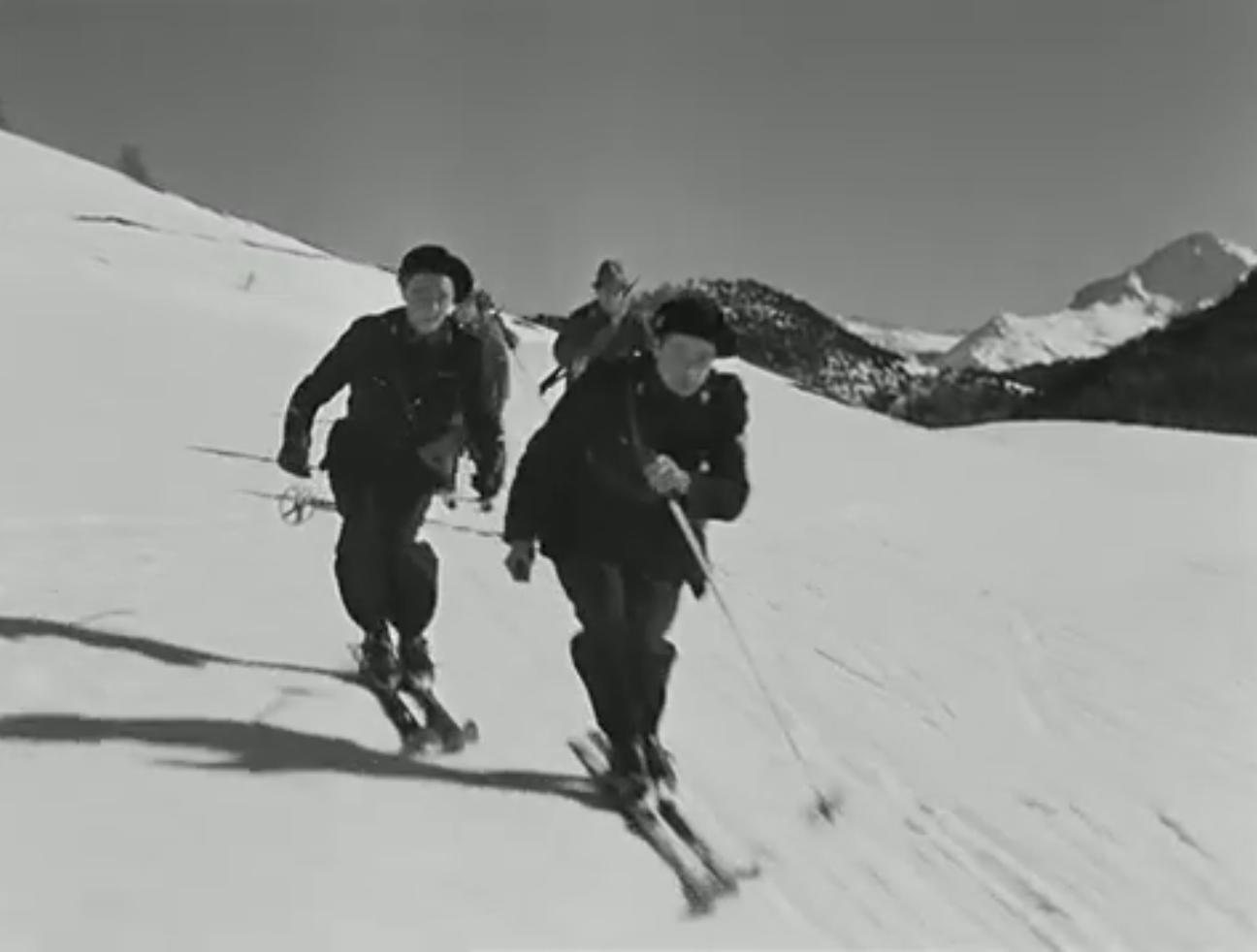
Le guardie sciano con grazia lungo il pendio, mentre…
The guards ski gracefully downhill, while…
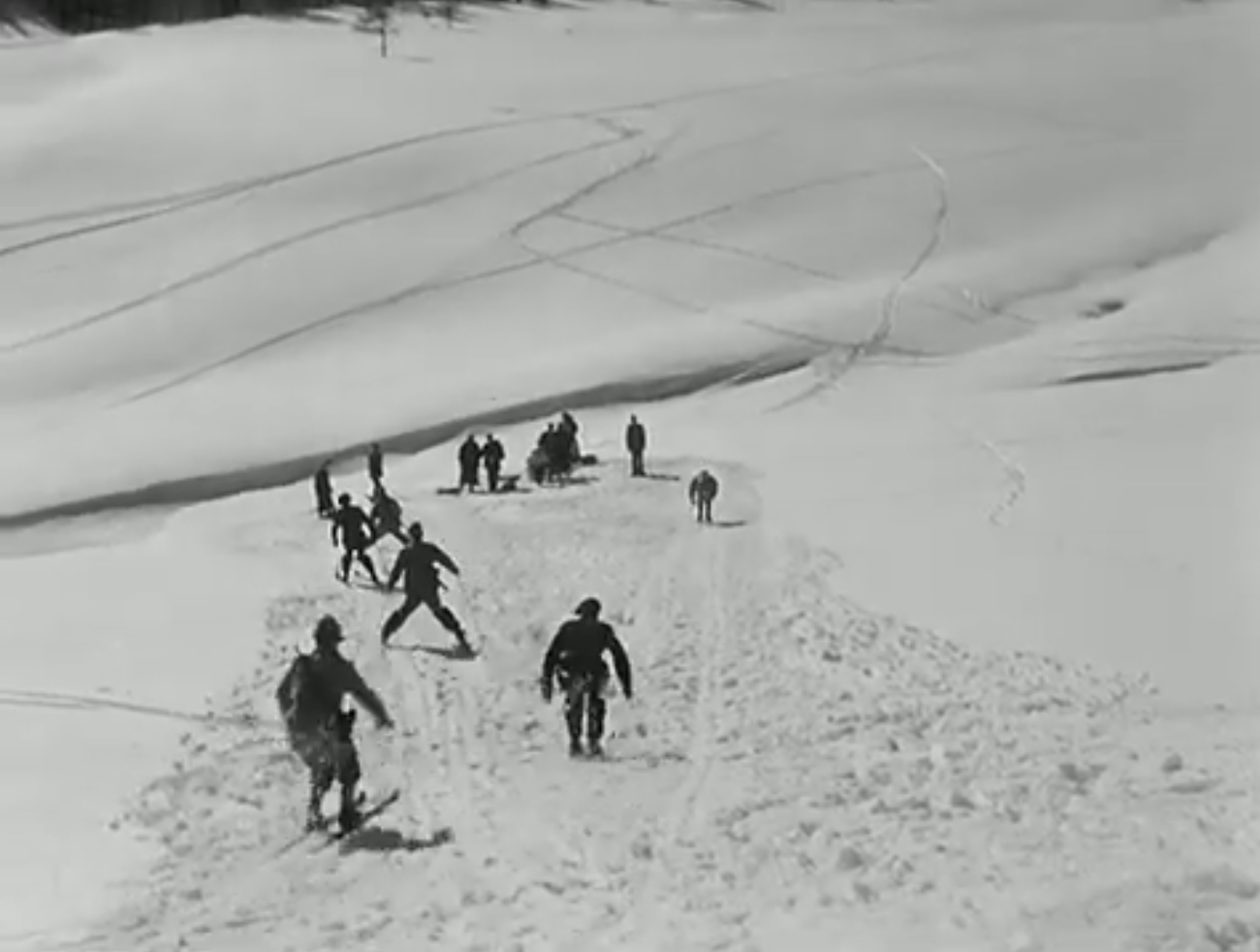
... i viaggiatori aspettano in silenzio.
… the travelers wait silently.
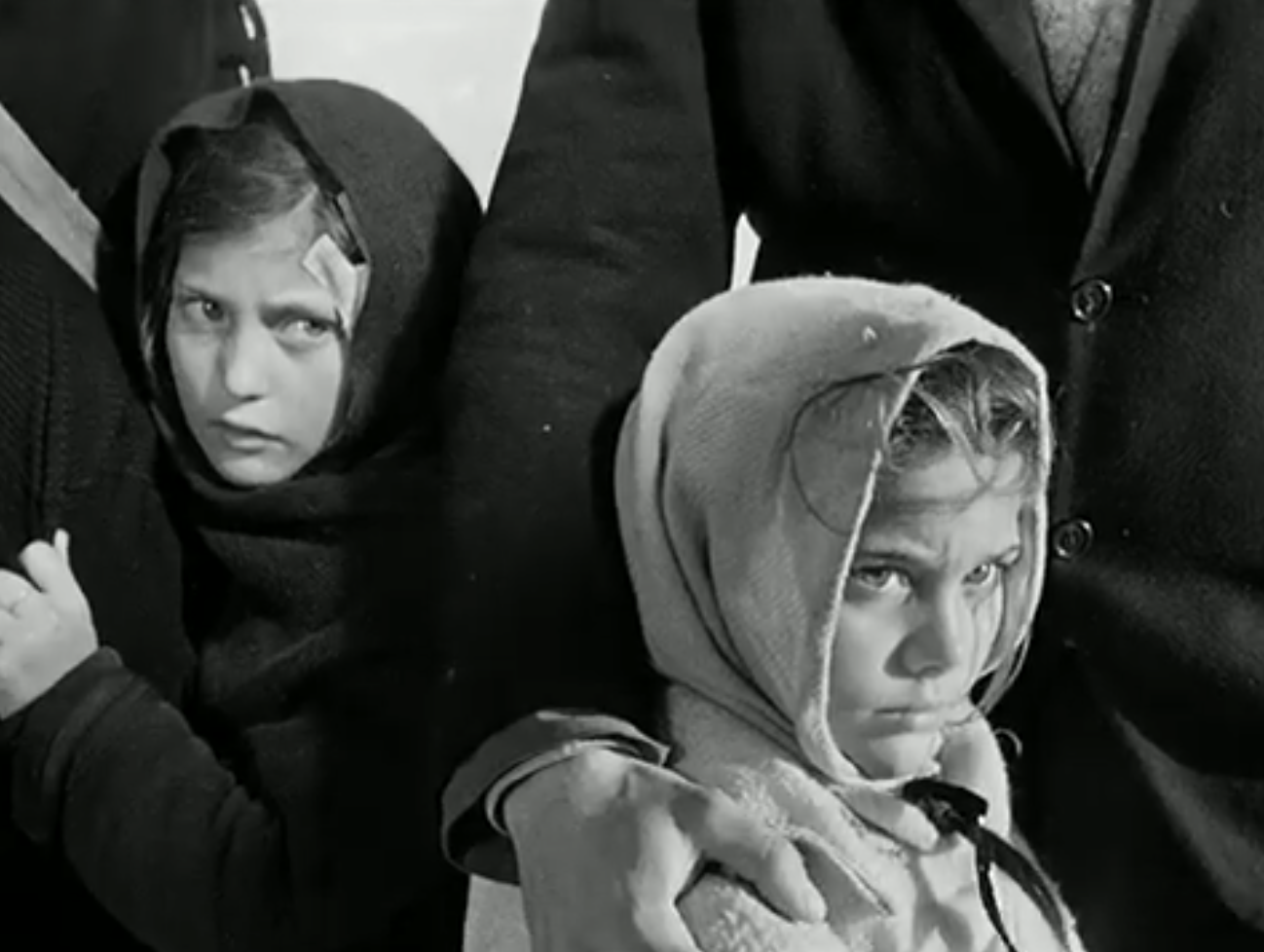
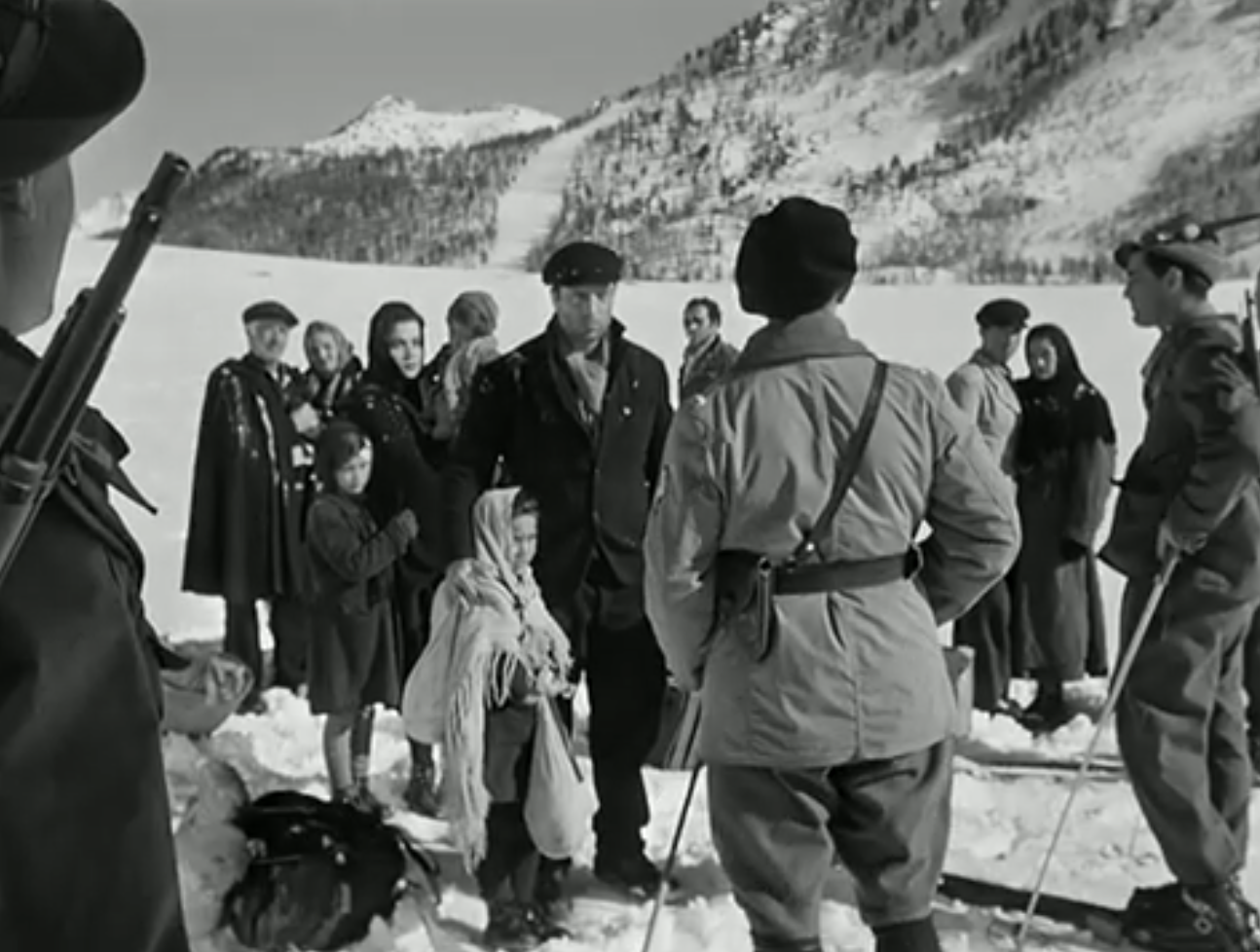
Le bambine di Saro fissano le guardie.
Una guardia con un berretto dice in francese: “Allora, niente passaporti, eh?”
Saro’s girls stare at the guards.
A guard wearing a beret says in French, “So, no passports, huh?”
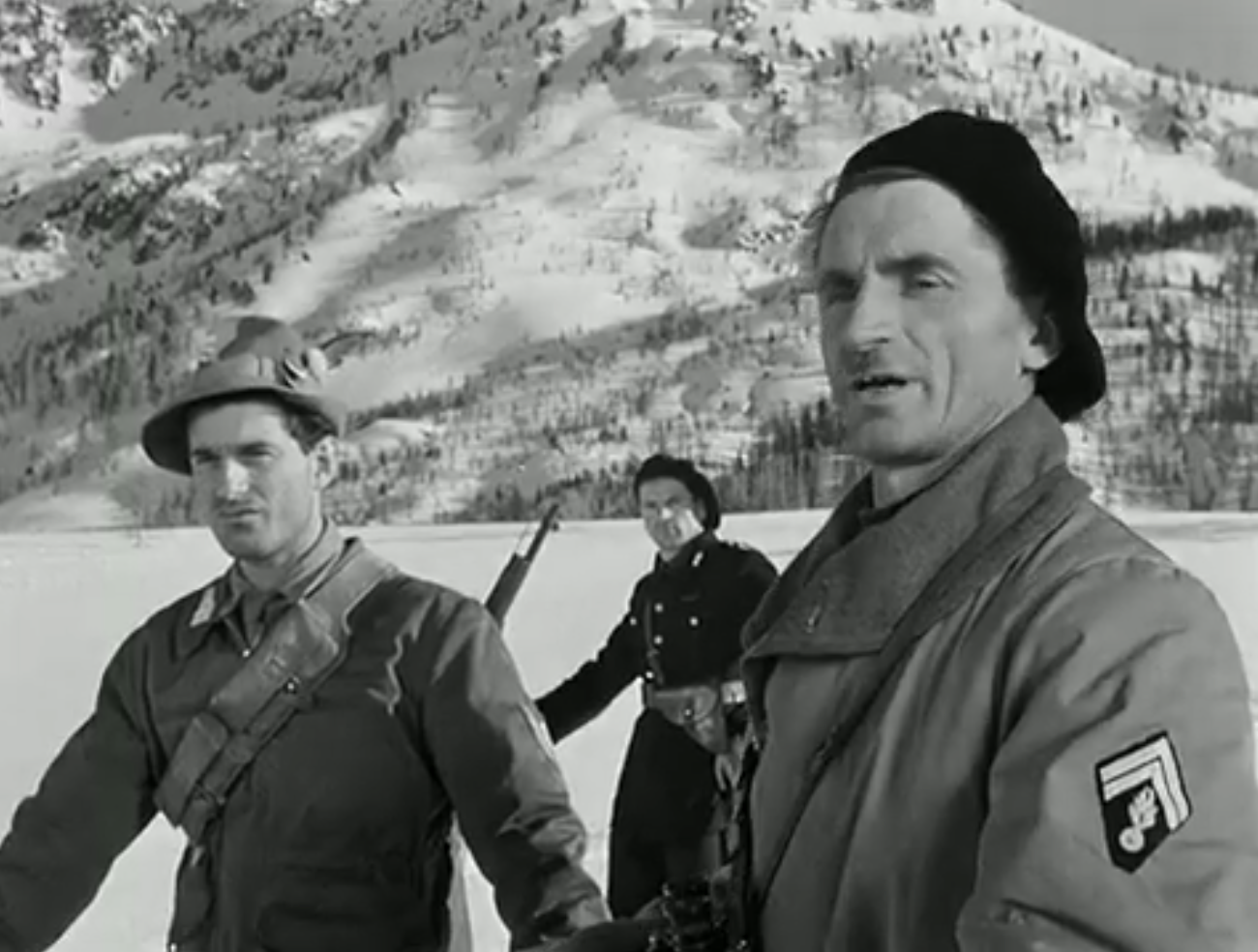
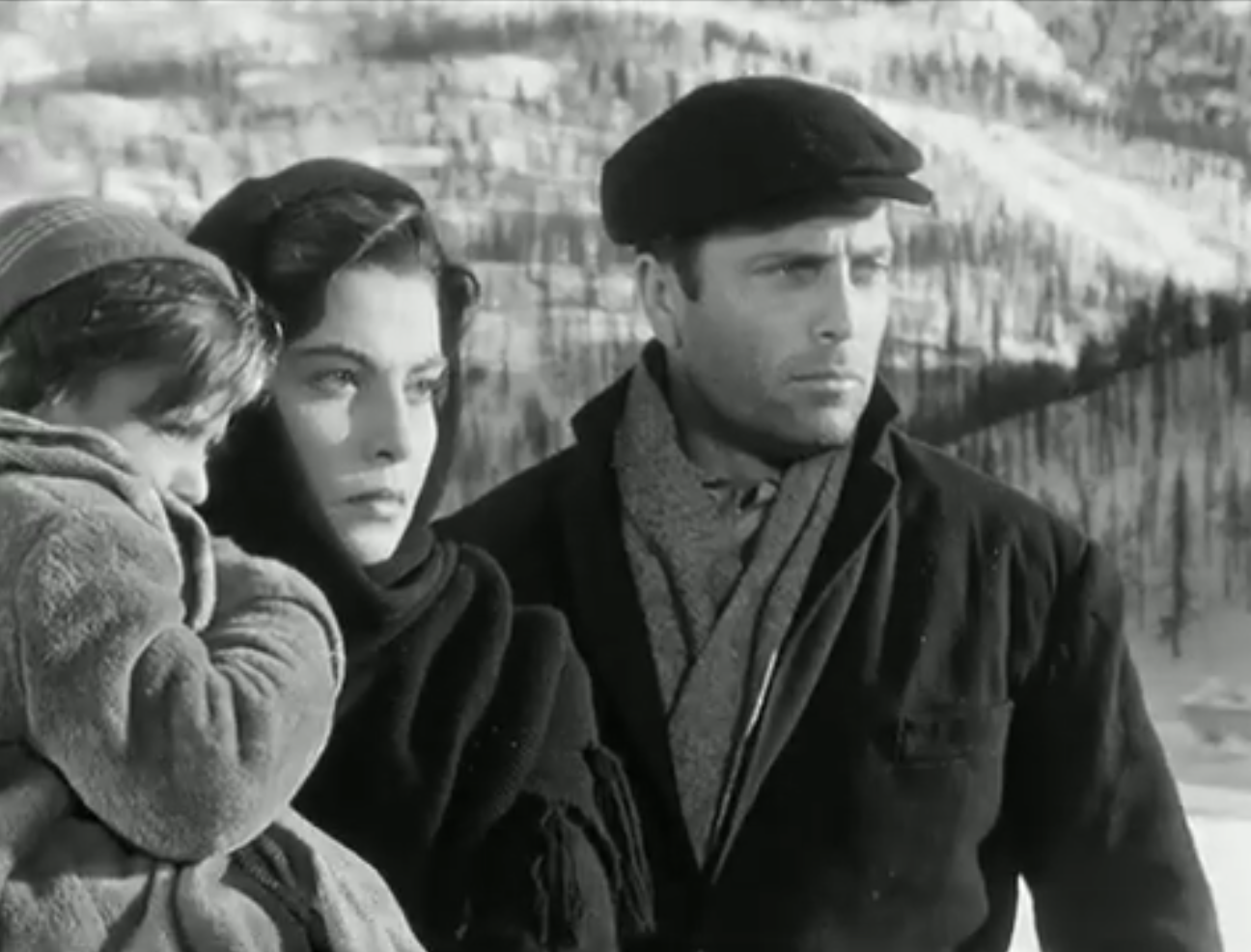
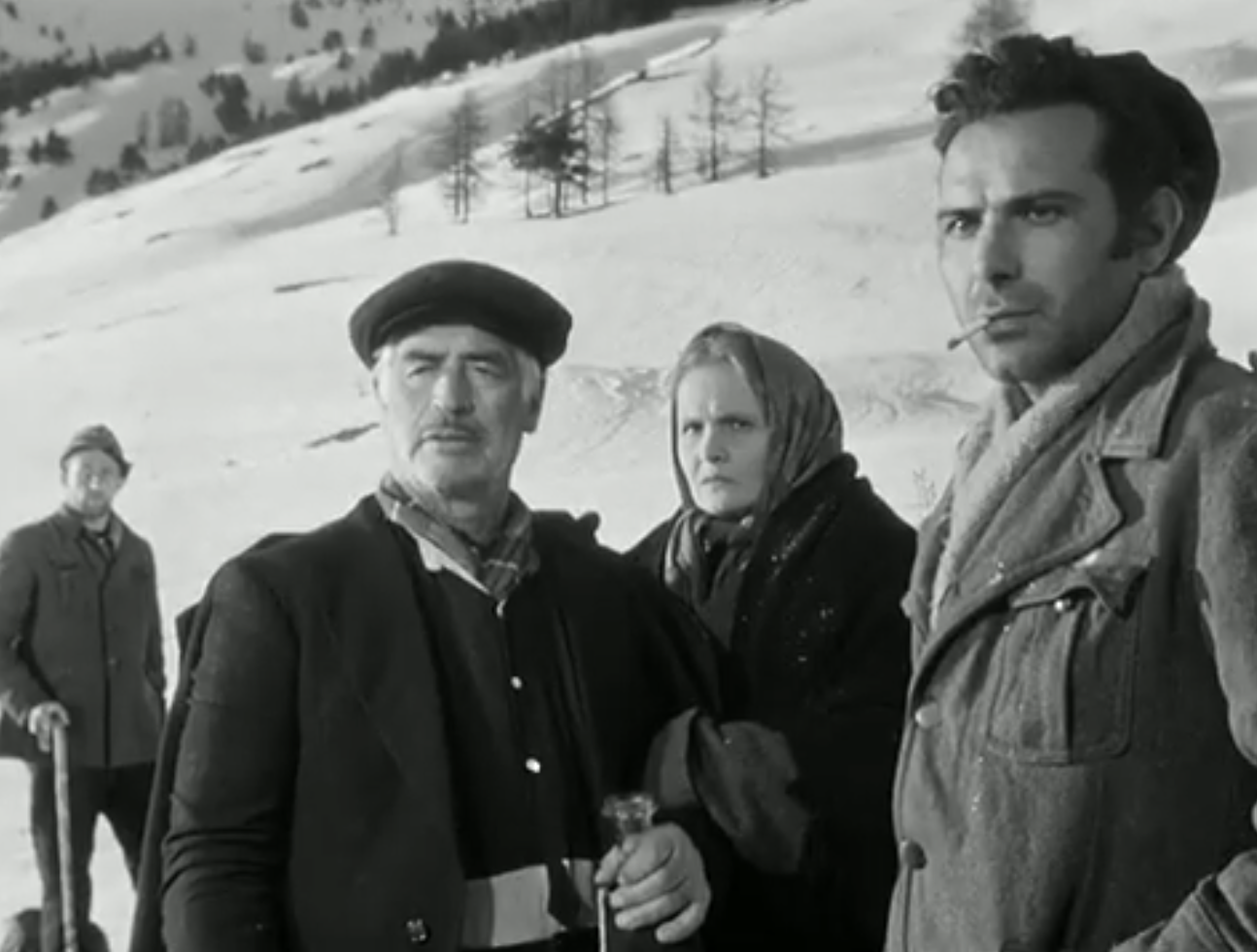
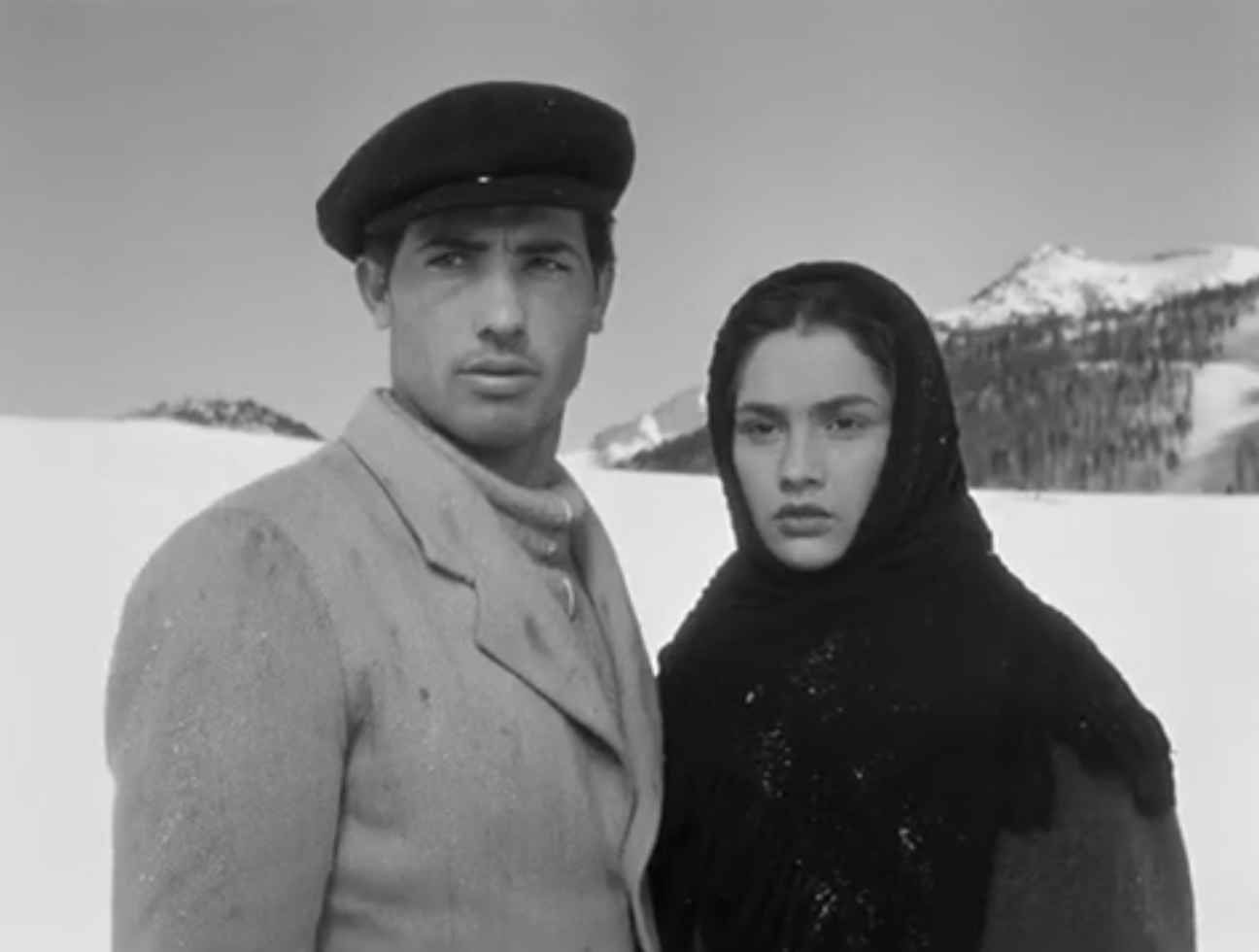
“Da dove venite?” chiede.
I siciliani non dicono nulla.
“Where do you come from?” he asks.
The Sicilians say nothing.
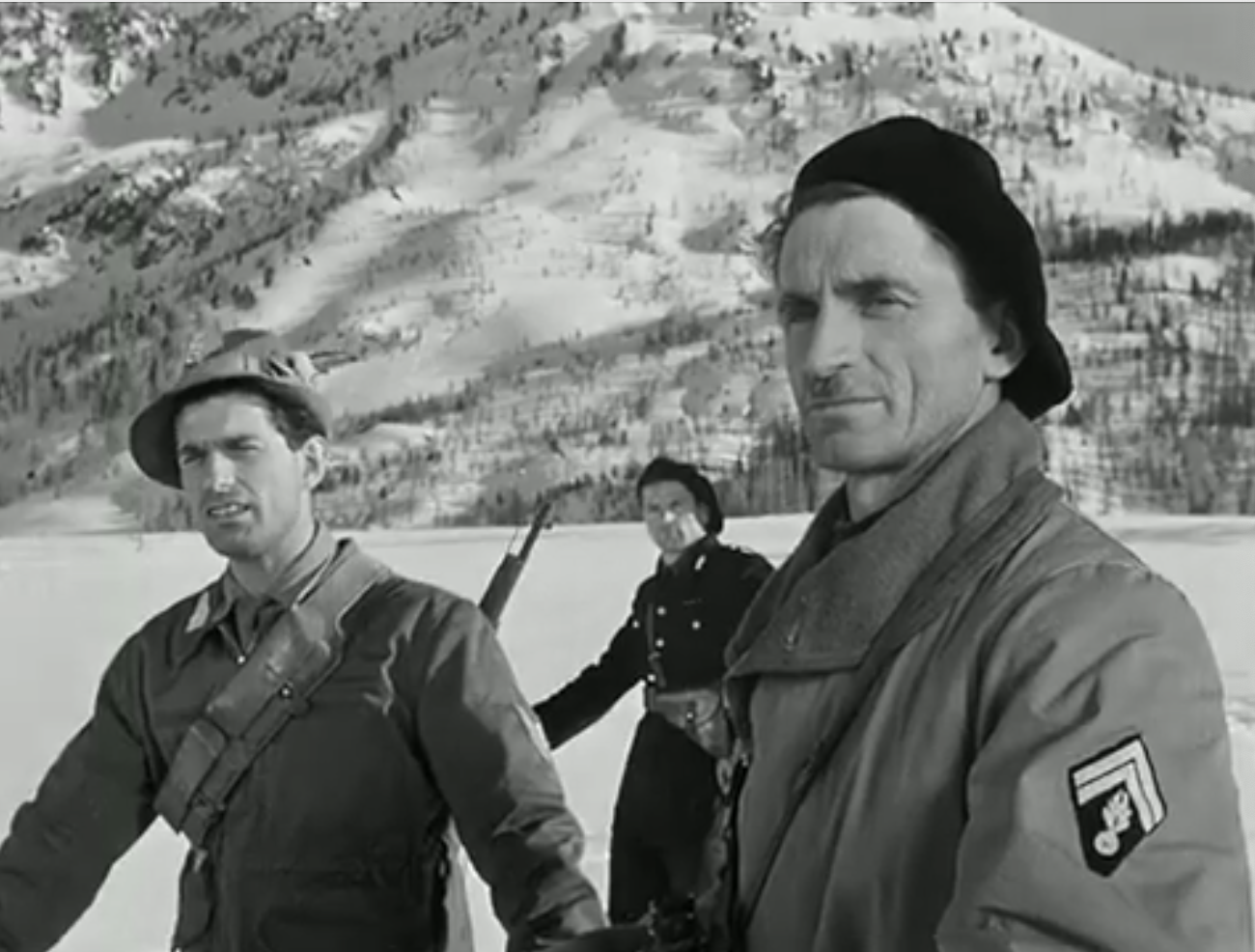
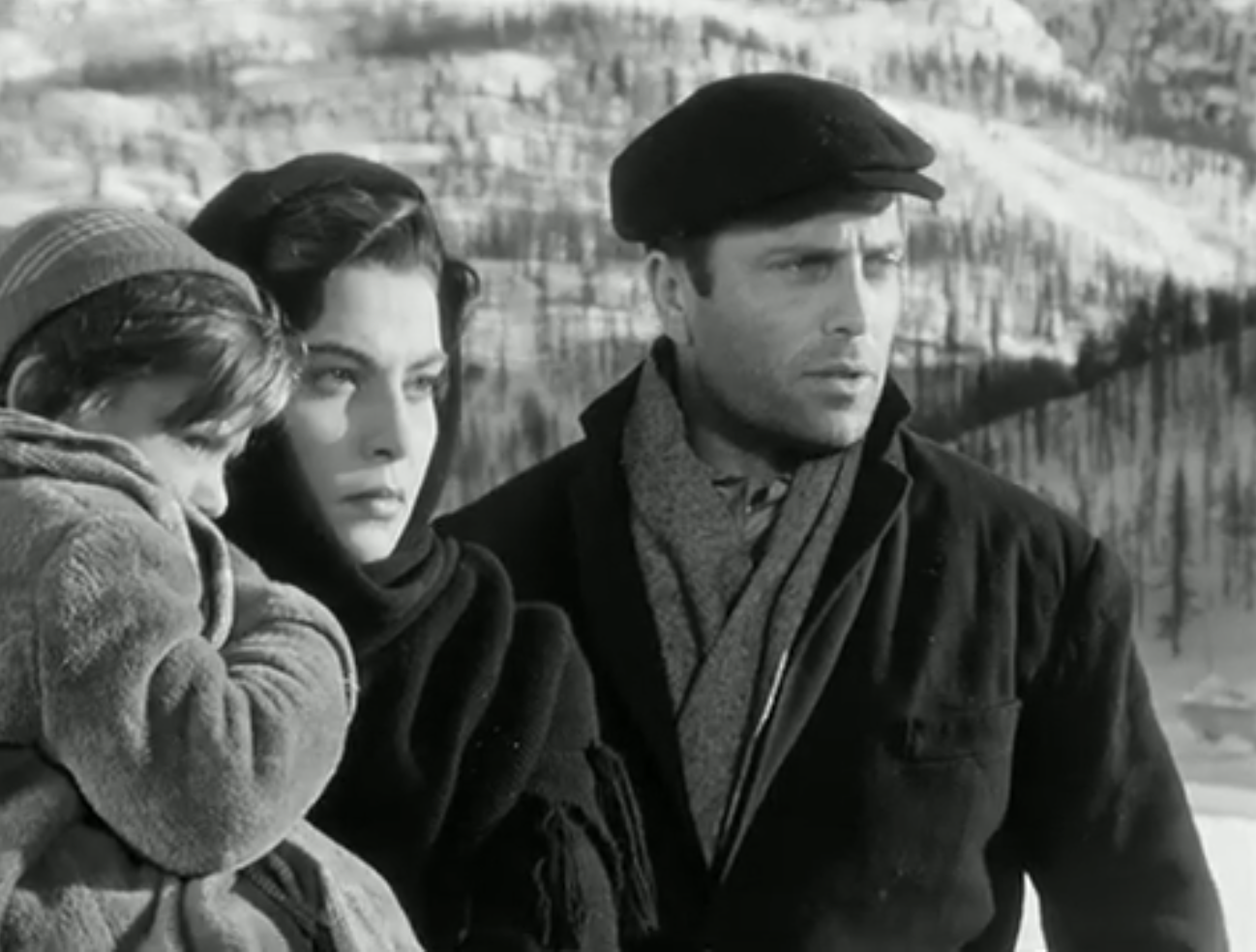
Una guardia svizzera ripete, in italiano: “Da dove venite?”
“Dalla Sicilia”, risponde Saro.
A Swiss guard repeats, in Italian, “Where are you from?”
“From Sicily," replies Saro.
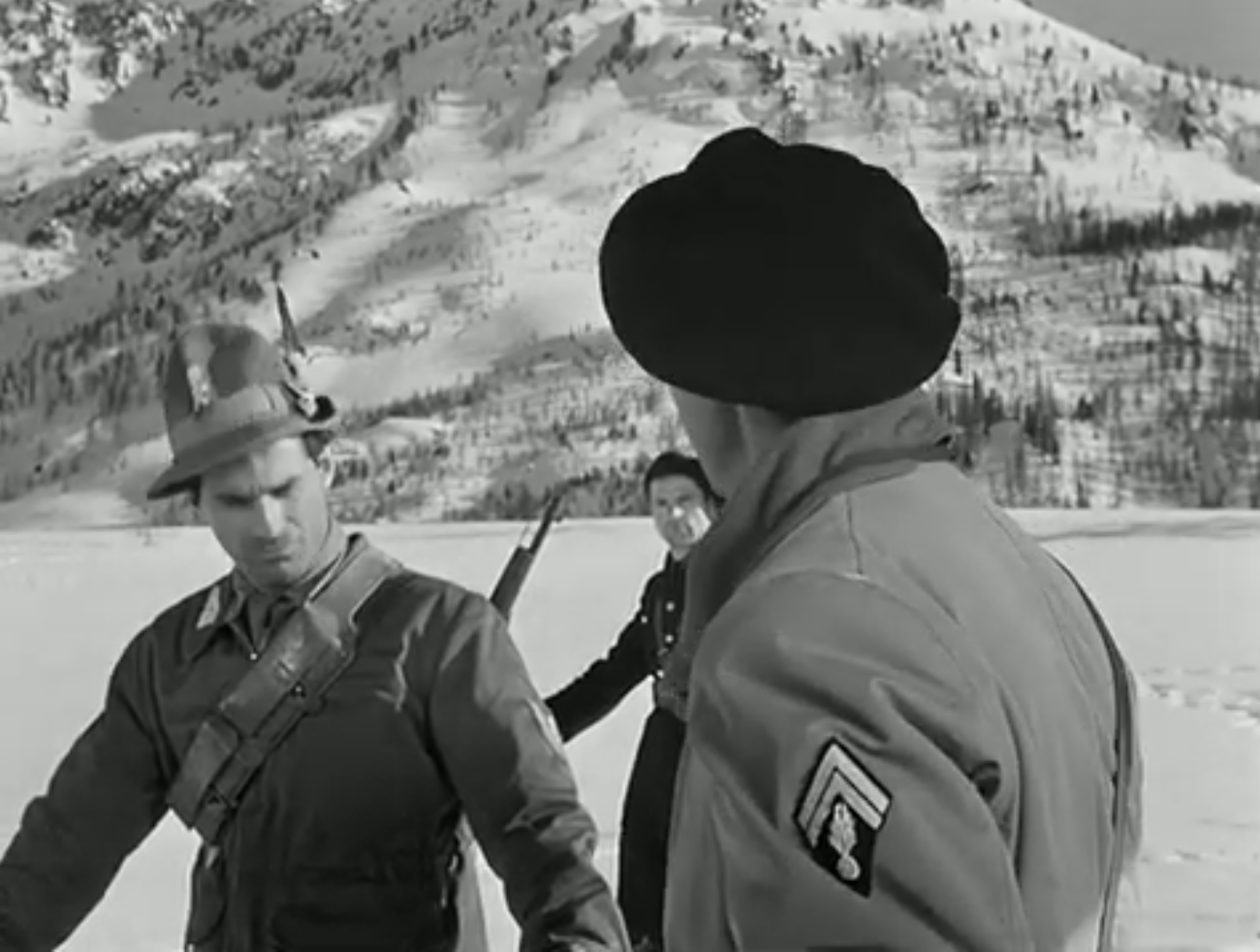
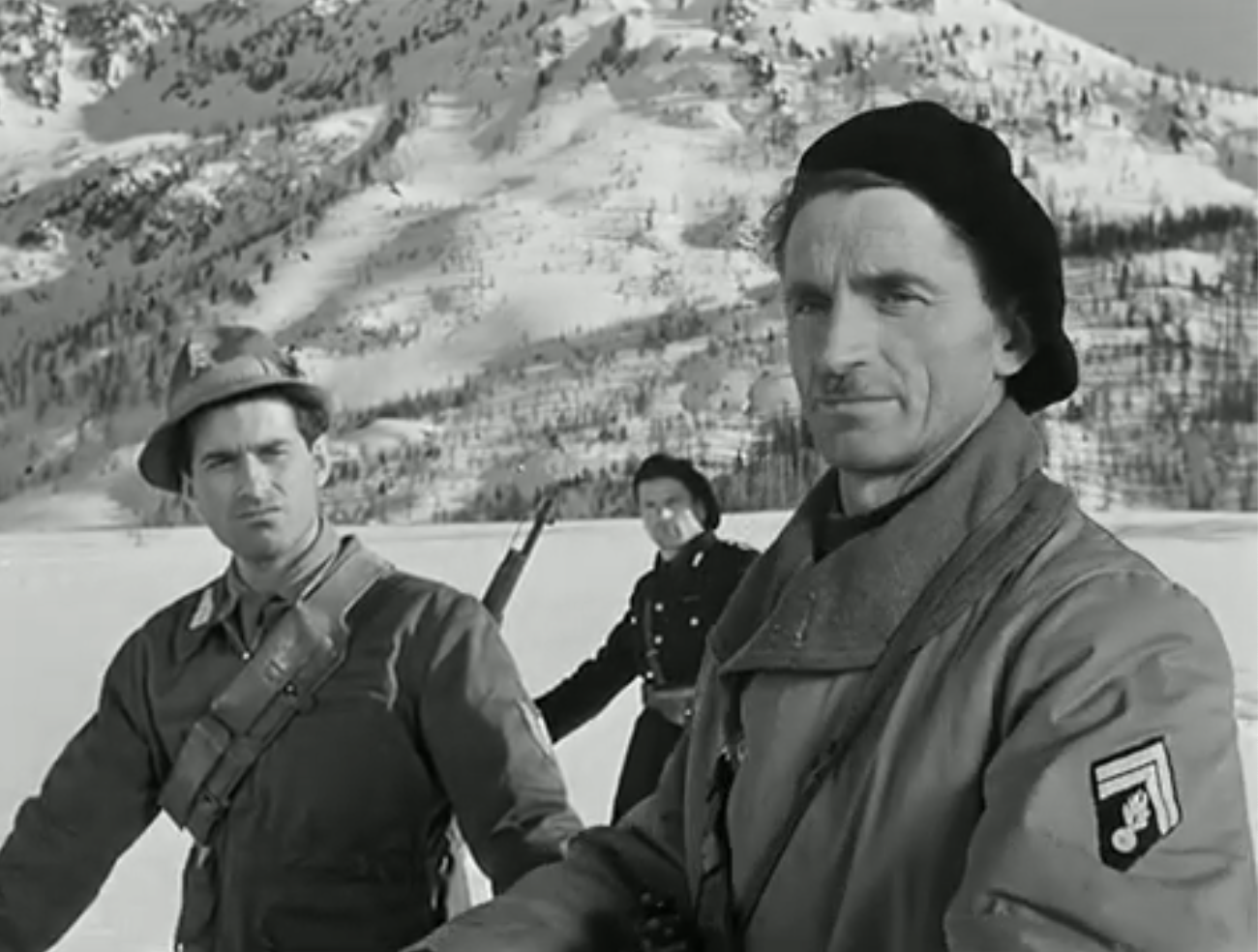
Sbalordito, il soldato francese chiede alla guardia alpina, “Dalla Sicilia?!” Quando la guardia annuisce, il francese si volta verso i viaggiatori con un leggero sorriso di apprezzamento.
Stunned, the French soldier asks the Alpine guard, “From Sicily?!" When the guard nods, the Frenchman looks back at the travellers with a slight smile of appreciation.
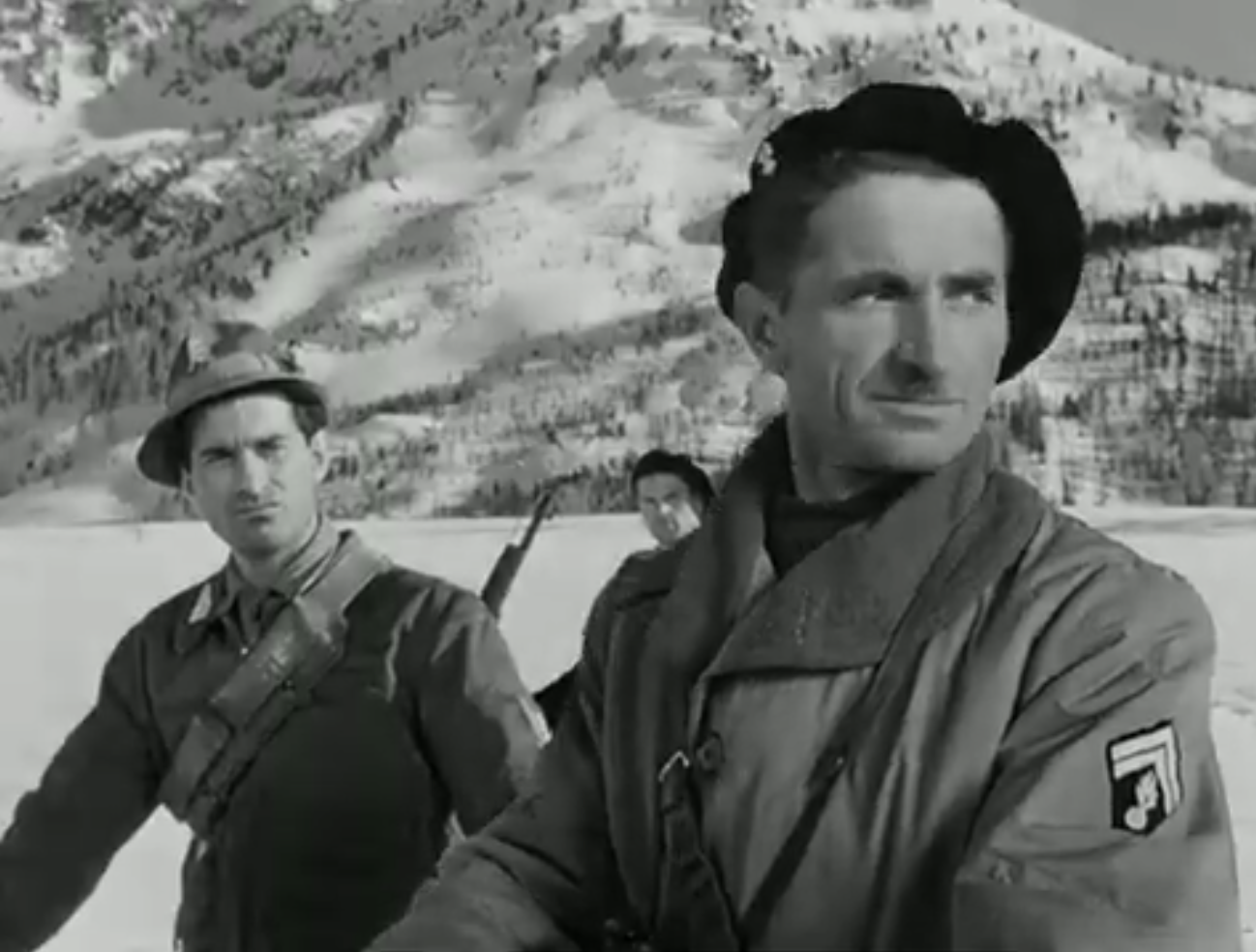
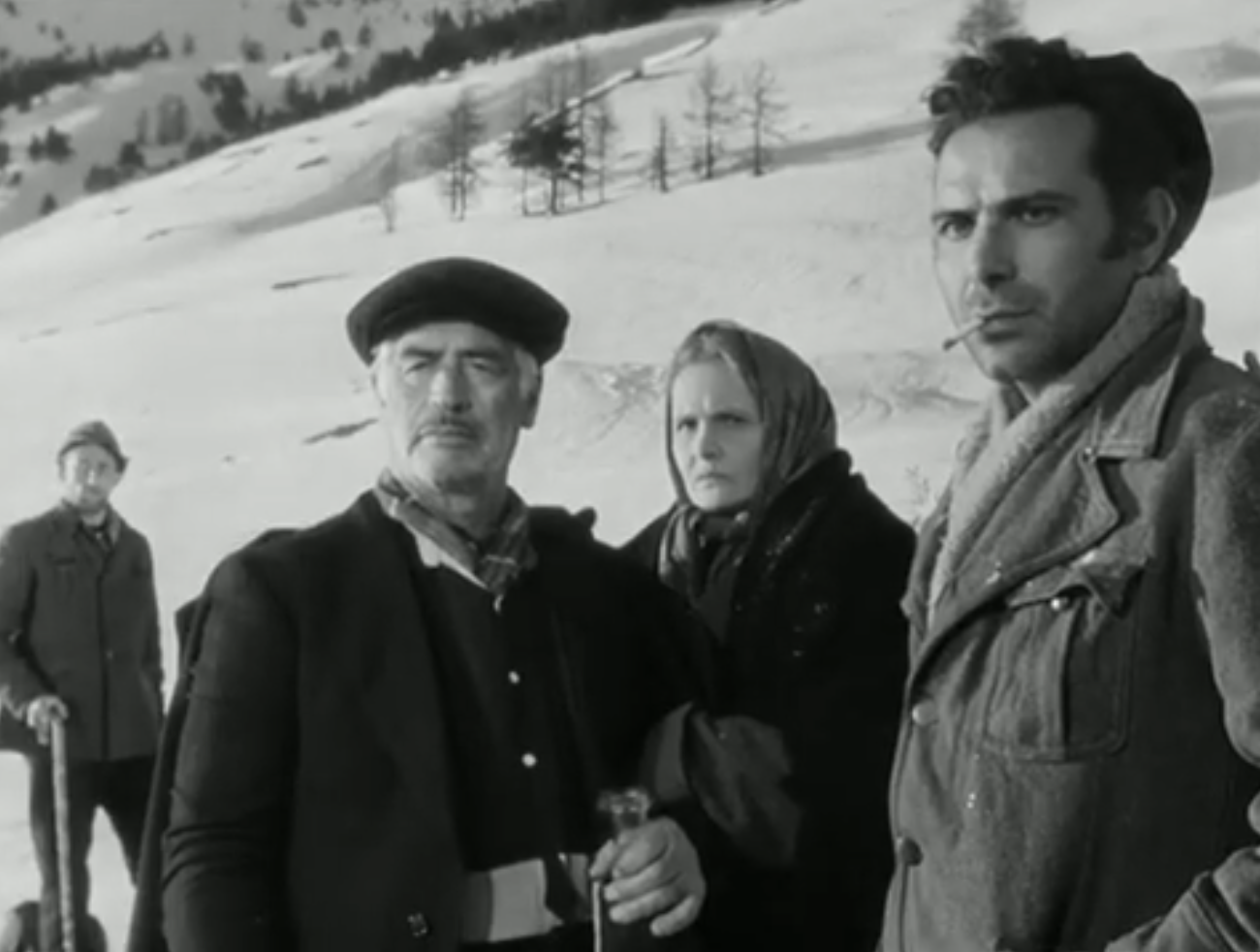
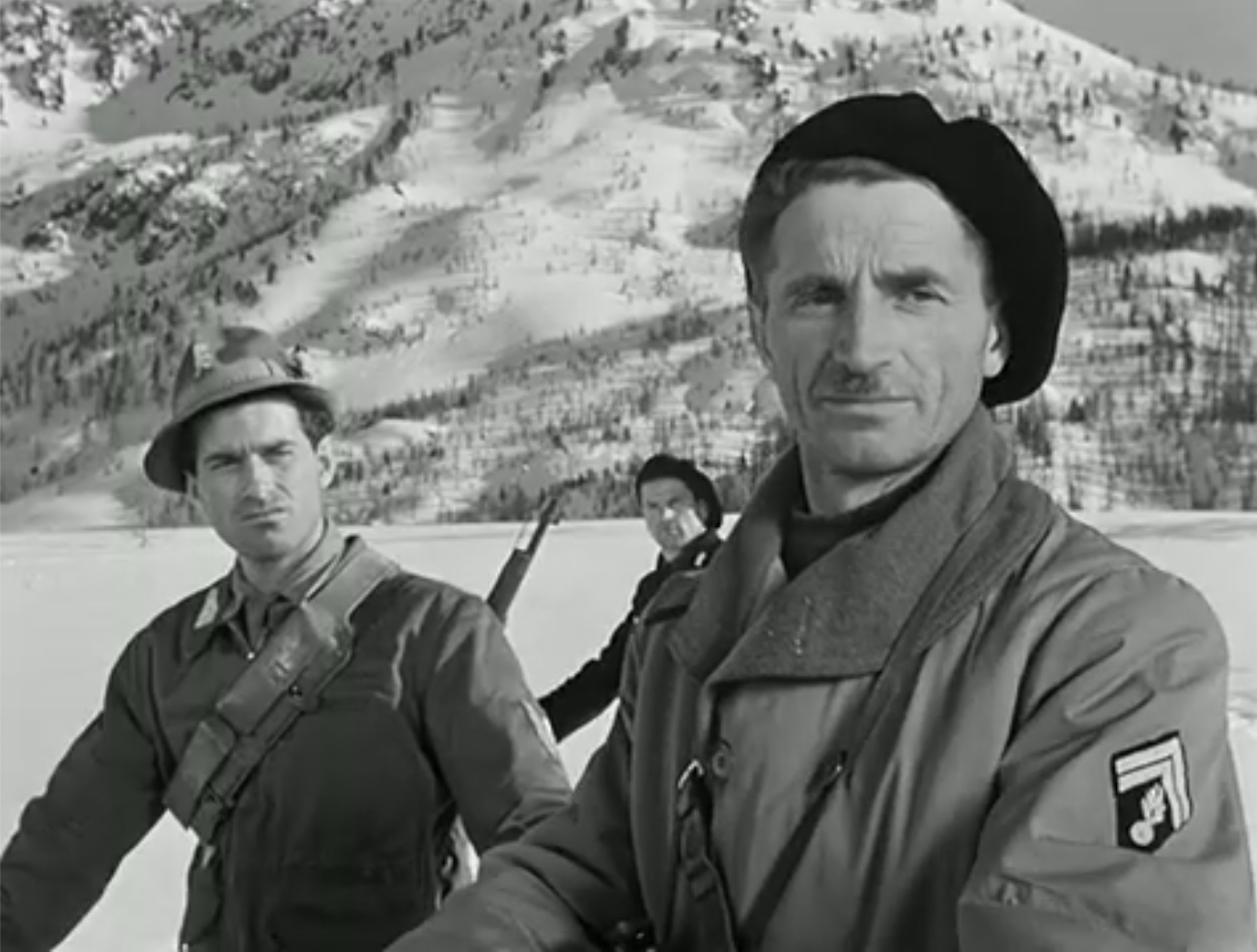
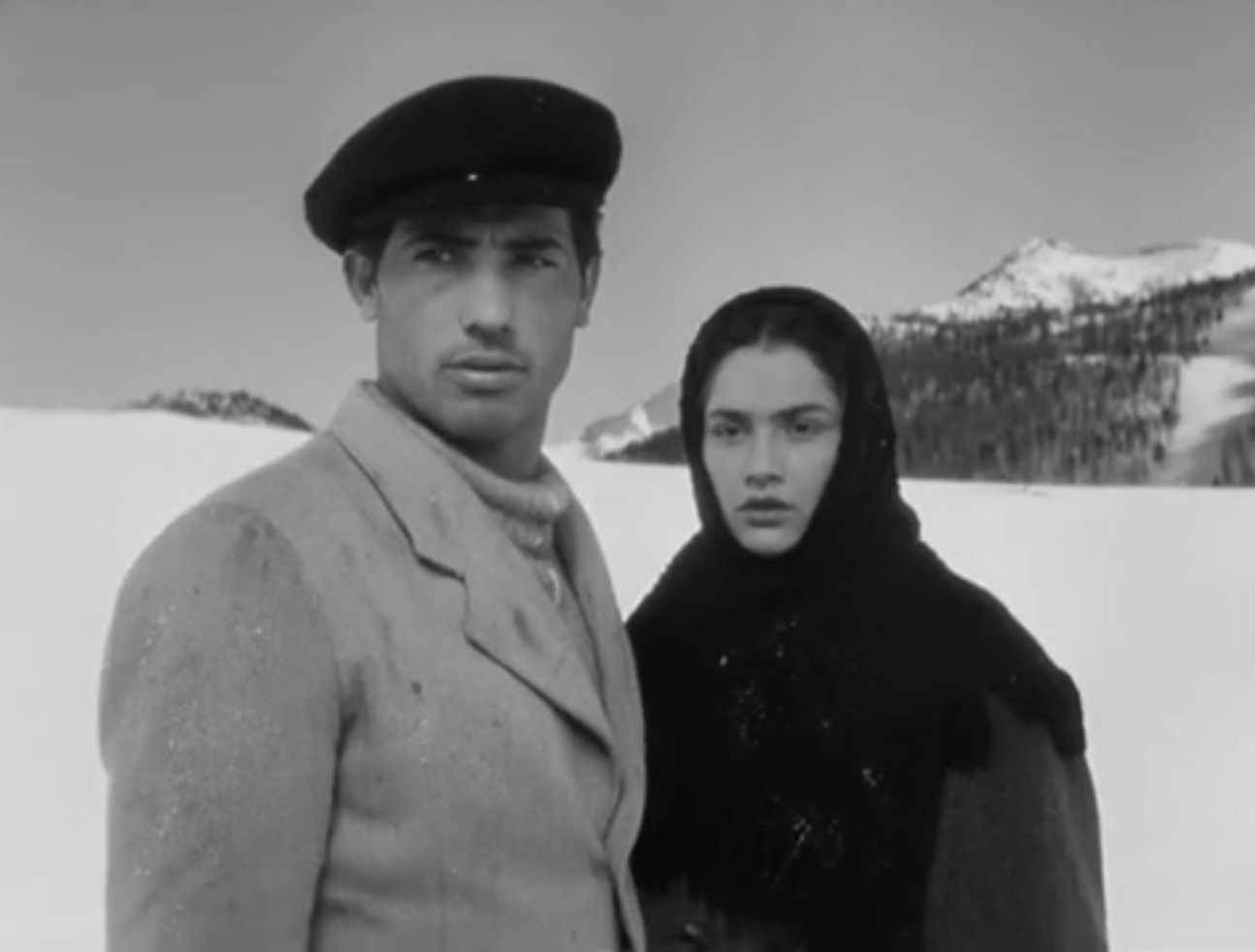
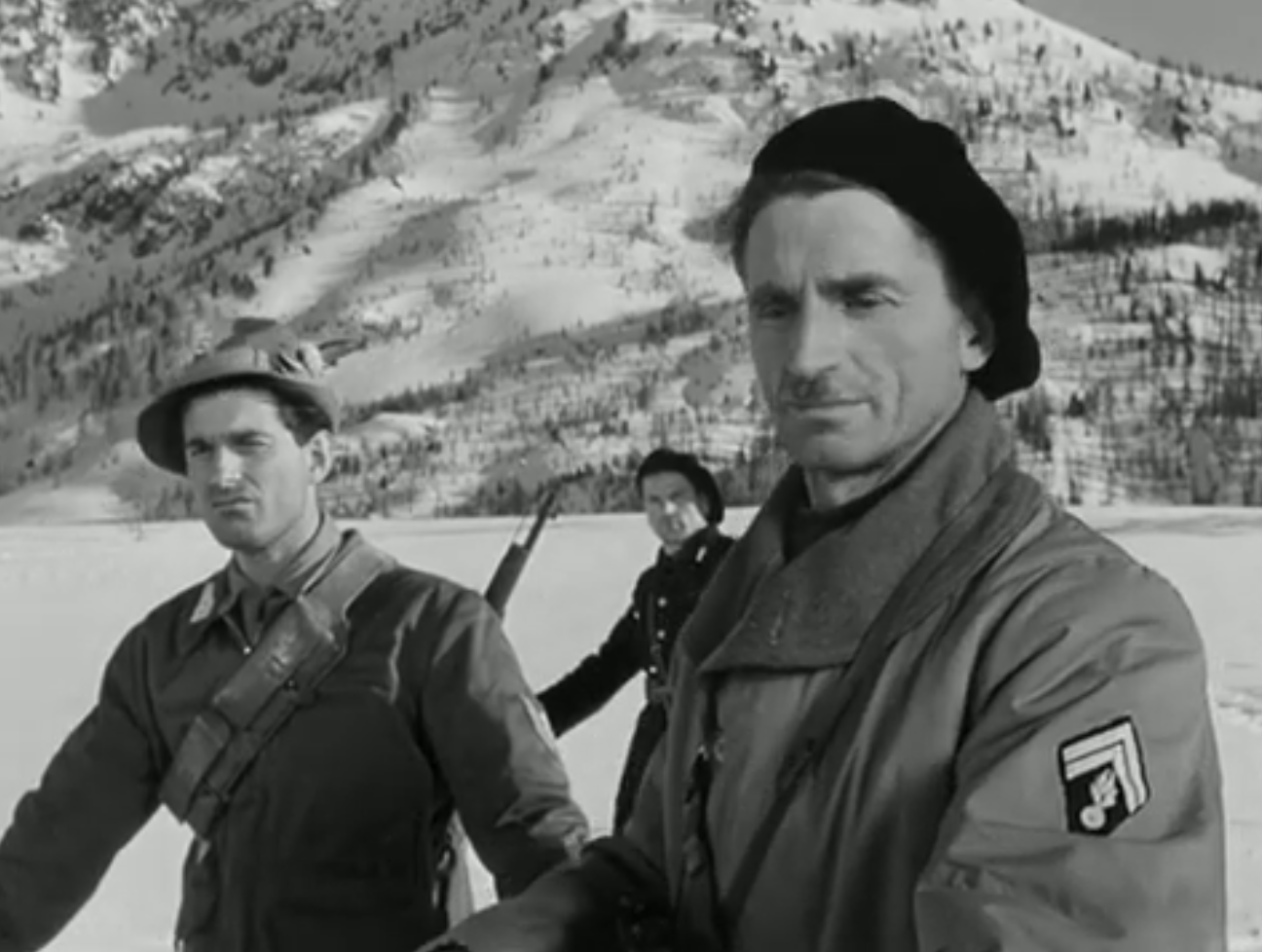
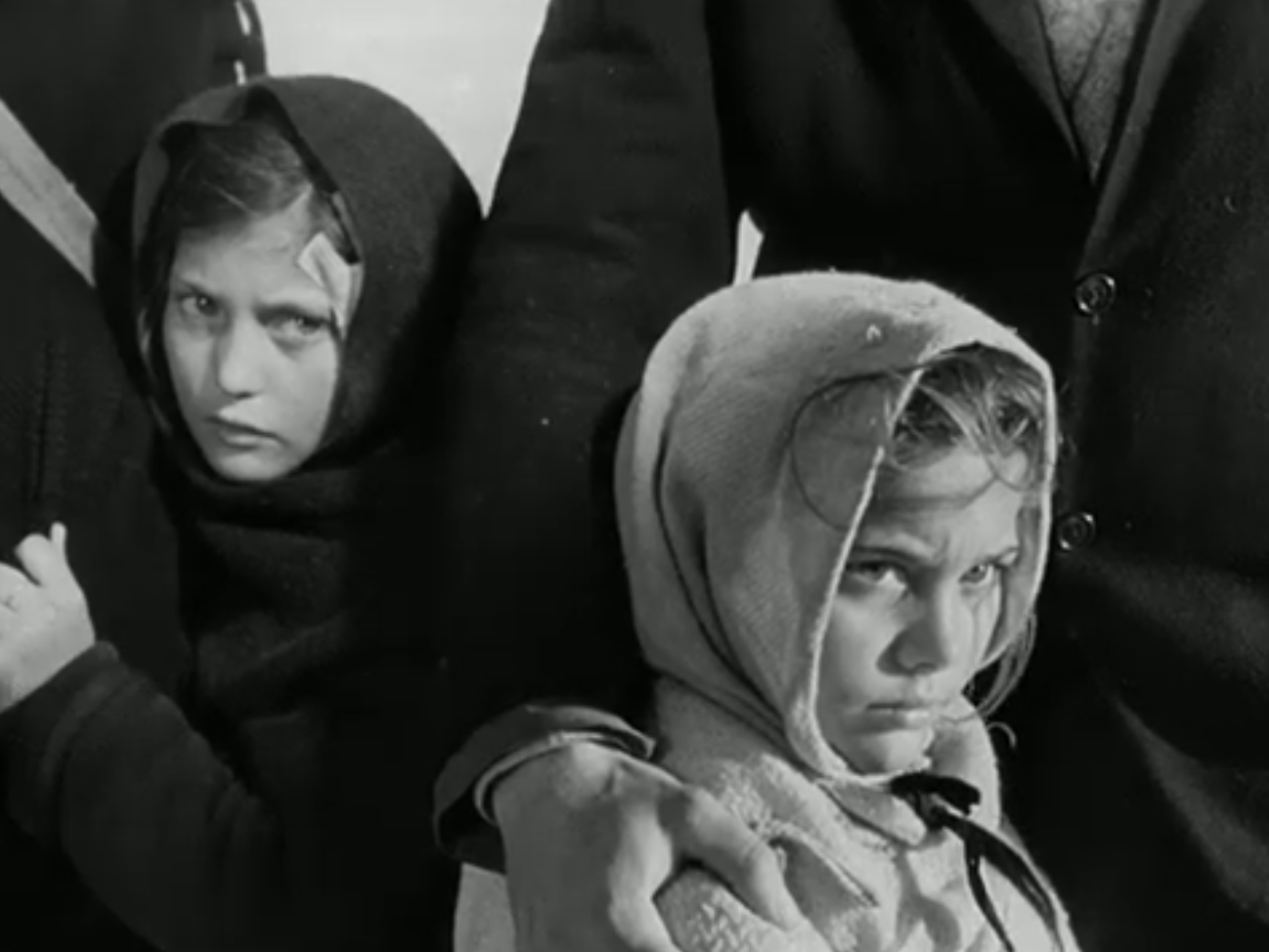
La macchina da presa ci mostra a turno gli emigranti e le guardie, mentre si guardano a vicenda.
The camera shows us the emigrants and the guards in turn, as they eye one another.
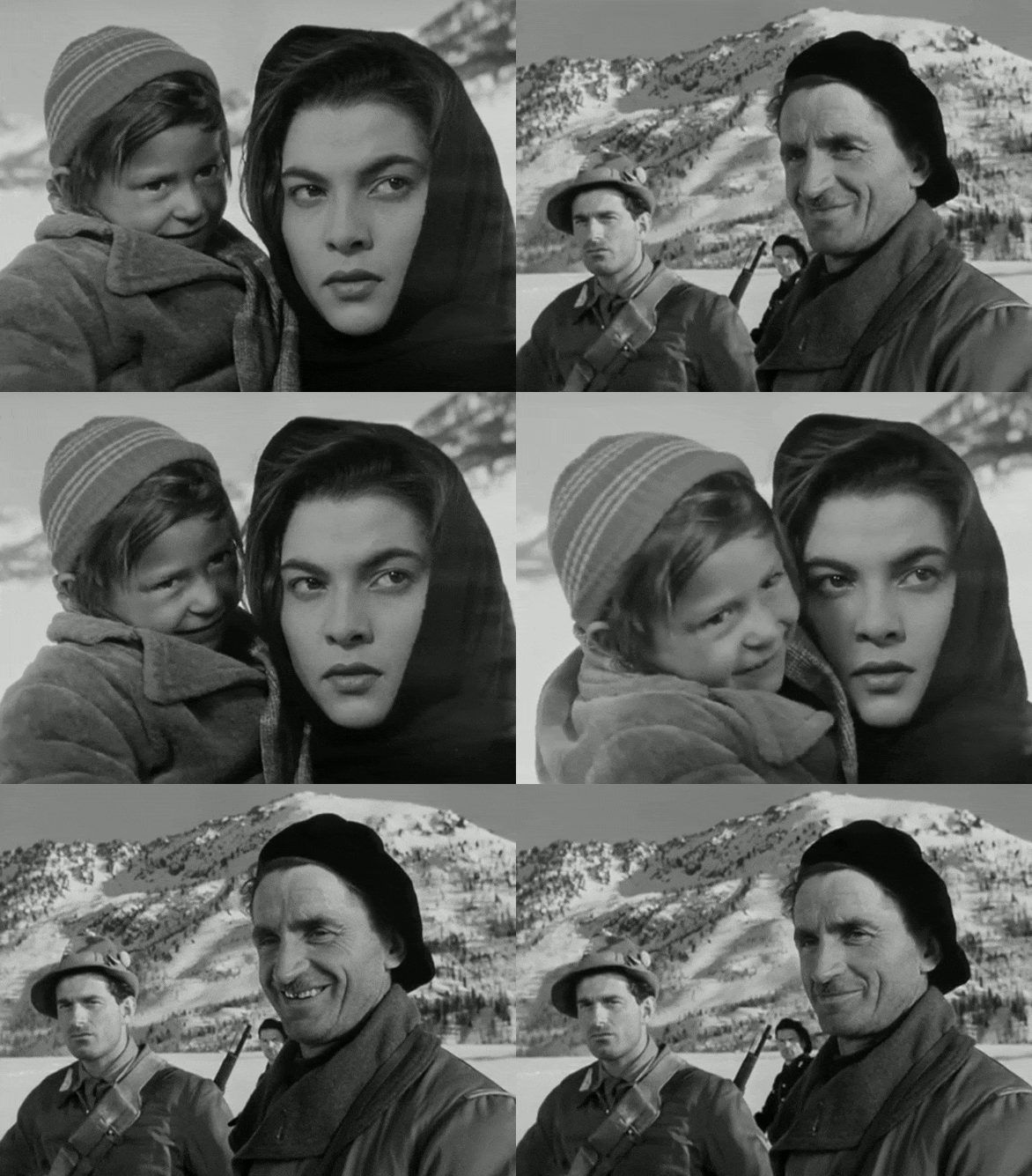
Barbara tiene in braccio Buda, che sorride alla guardia francese. Lui ricambia il sorriso, disarmato e felice.
Barbara is holding Buda, who smiles at the French guard. He smiles back, disarmed and delighted.
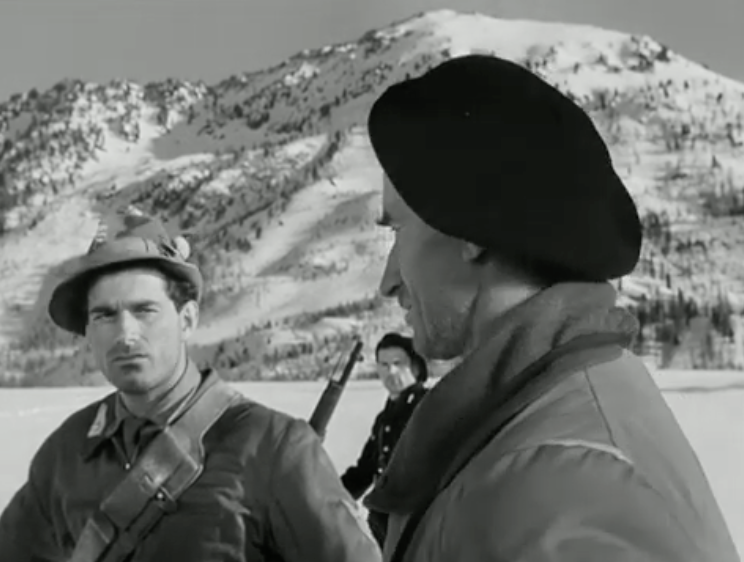
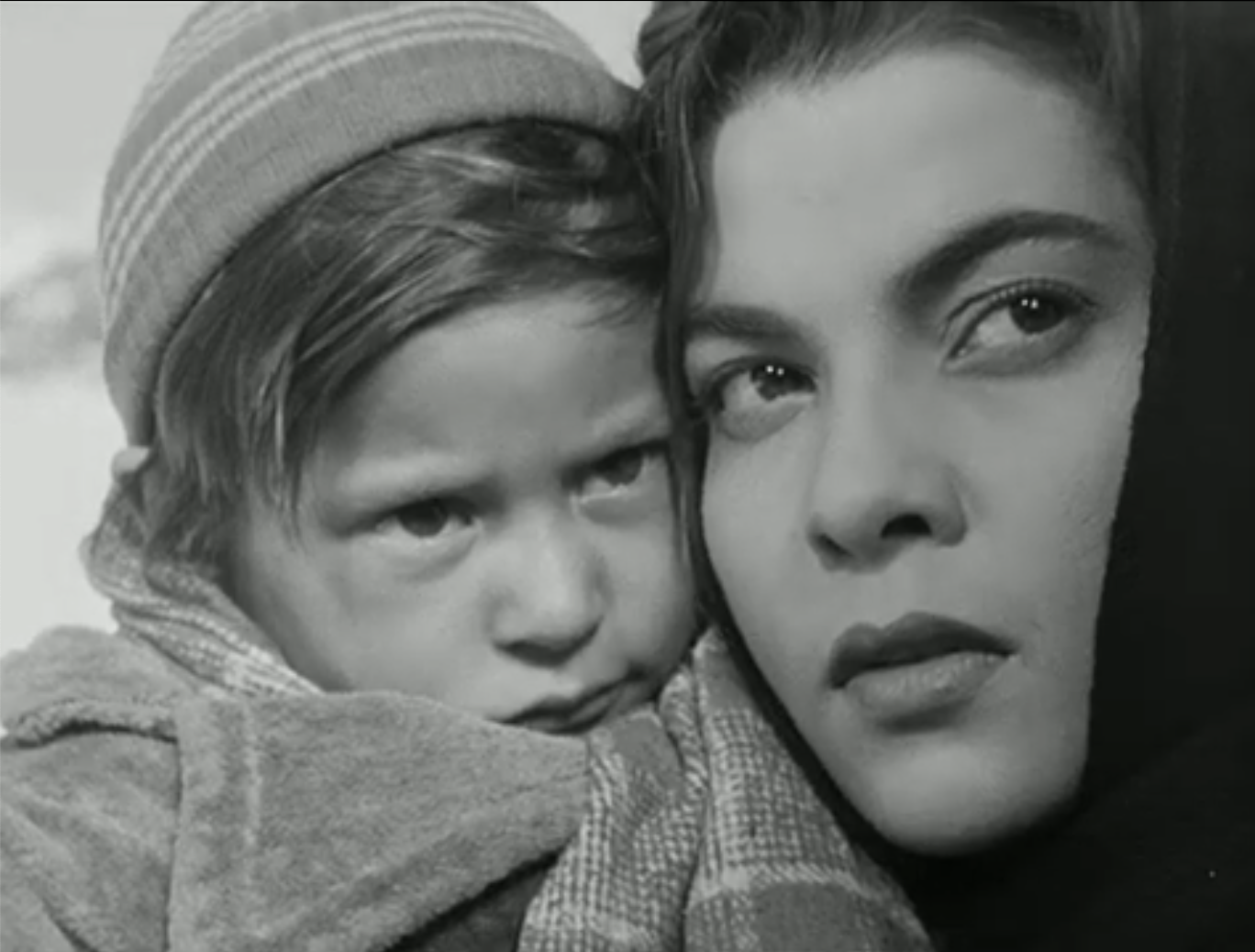
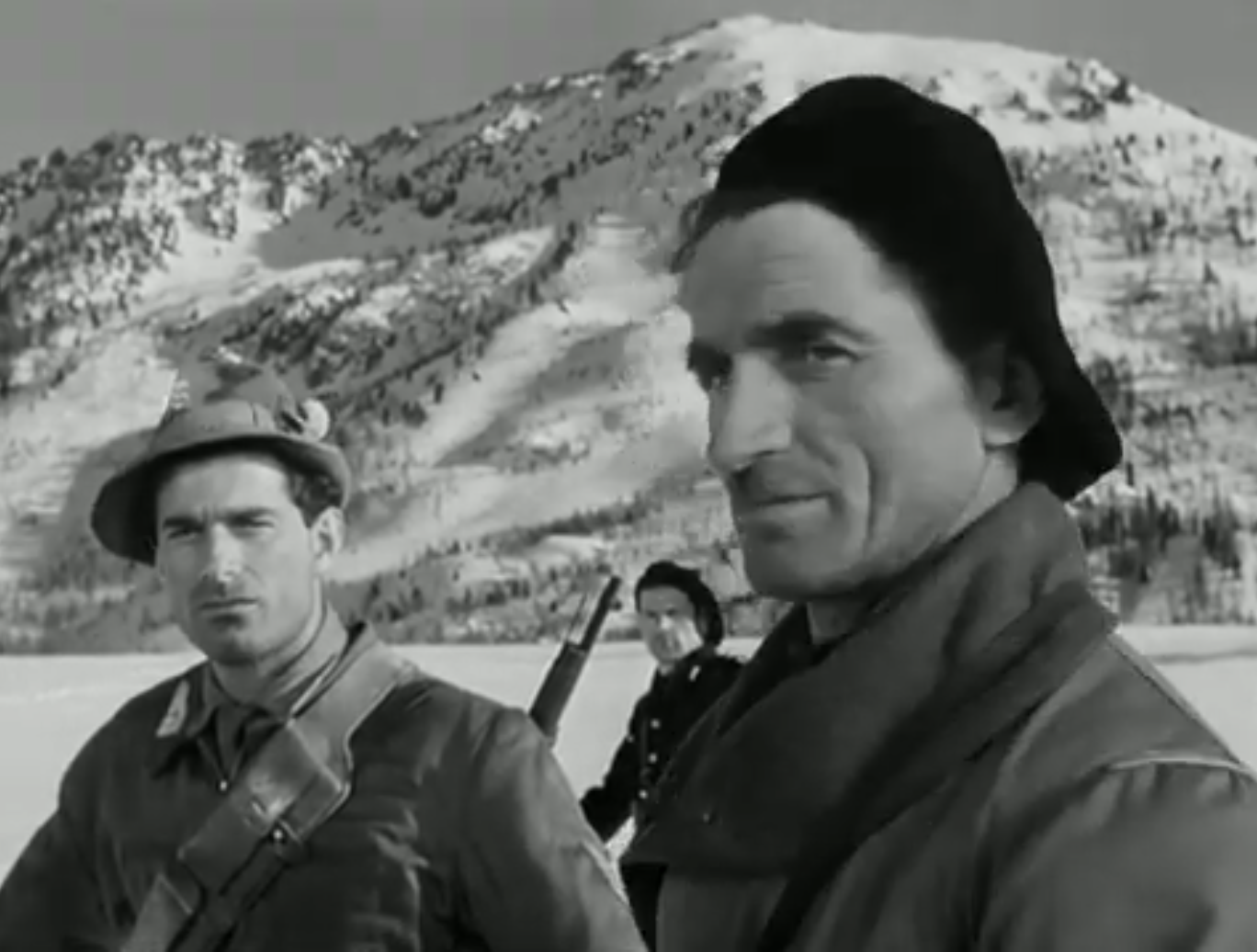
Poi guarda i suoi compagni. Vediamo Buda in primo piano, vicino alla guancia di Barbara. La guardia francese, il più anziano del gruppo, riflette.
Then he looks over at his companions. We see Buda in extreme close-up, at Barbara’s cheek. The French guard, the oldest of the group, considers.
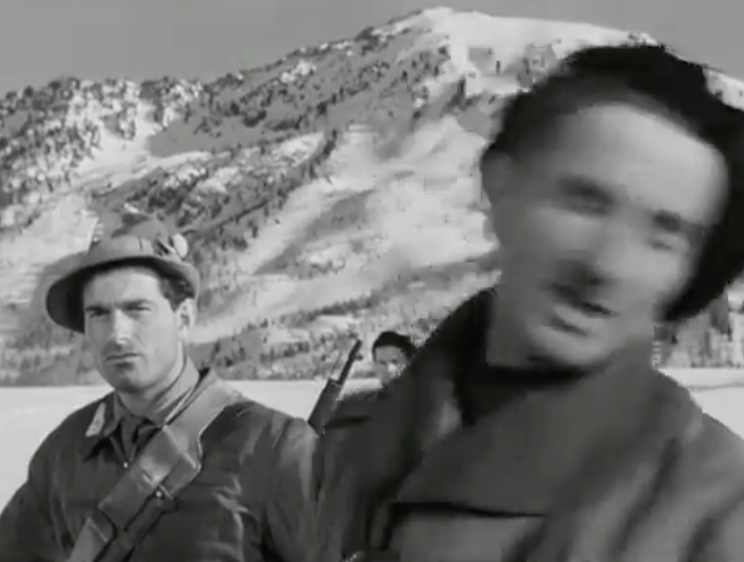

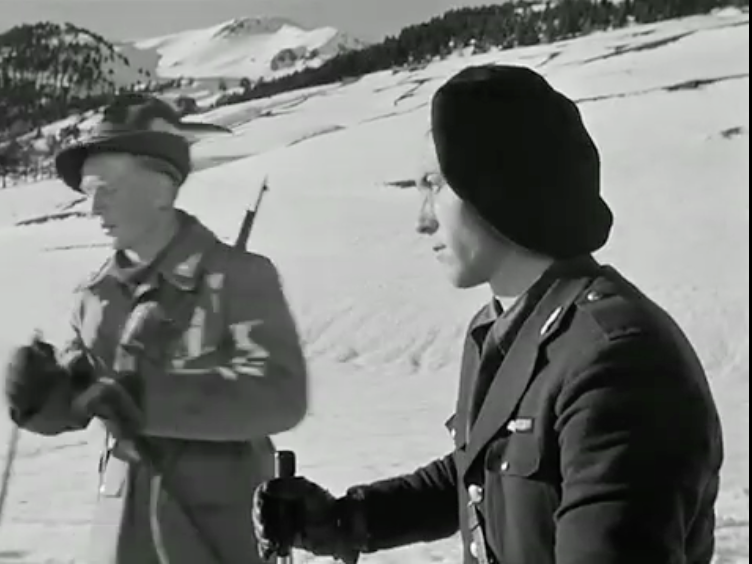

All'improvviso, si volta, gridando: “Andiamo!” Si allontanano, lasciando i siciliani liberi di entrare in Francia.
Abruptly, he turns, calling out, “Let’s go!” They take off, leaving the Sicilians free to enter France.


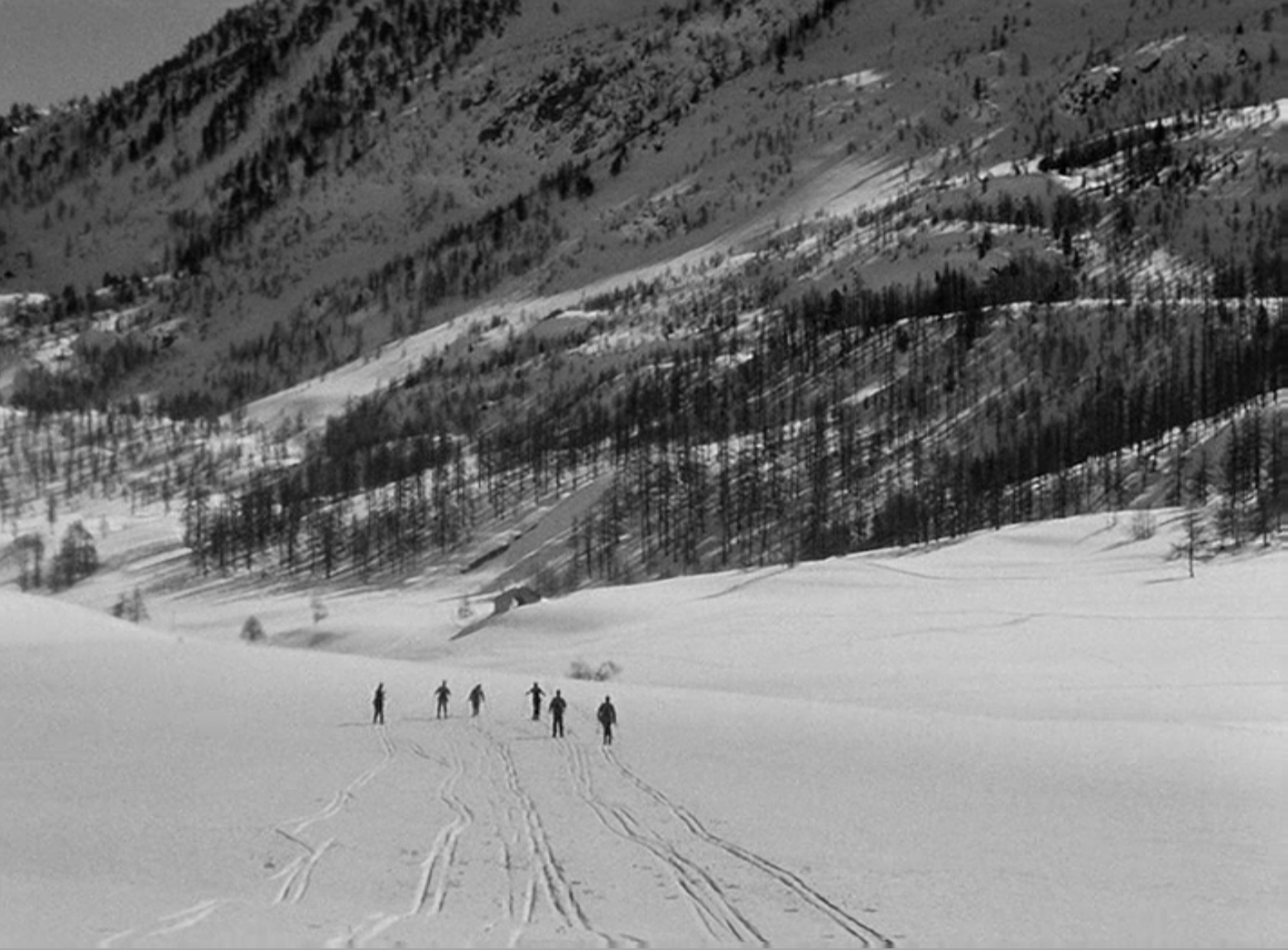
I viaggiatori guardano senza espressione mentre le guardie si allontanano sciando.
The travelers watch without expression as the guards ski away.

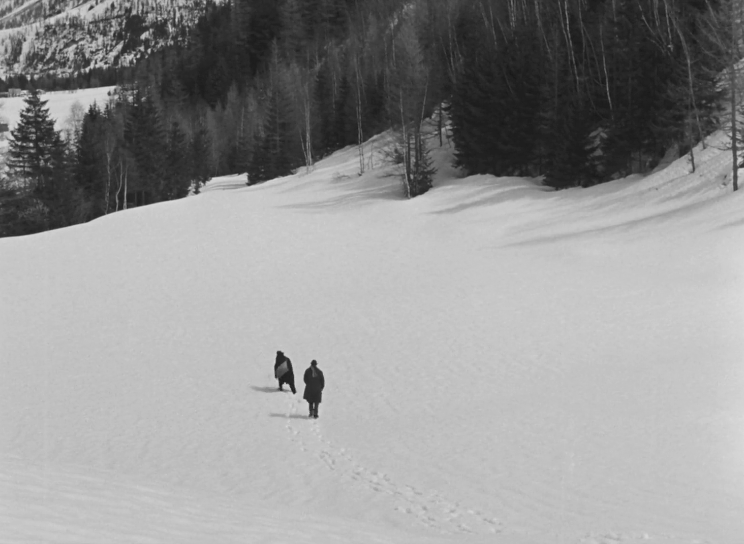
Queste immagini ricordano la scena finale di La Grande Illusione /La Grande Illusion (Jean Renoir, 1937). In quel caso, le guardie di frontiera naziste si ritirano dopo che i prigionieri di guerra francesi fuggiti hanno attraversato il confine e sono al sicuro in Svizzera. Tuttavia, queste immagini della fuga attraverso le montagne innevate verso la libertà trasmettono la stessa sensazione.
These images bring to mind the final scene of The Grand Illusion / La Grande Illusion. In that case, Nazi border guards retreat after the escaped French POWs have crossed the border and are safe in Switzerland. Still, these images of the escape across snow-covered mountains to freedom convey the same feeling.
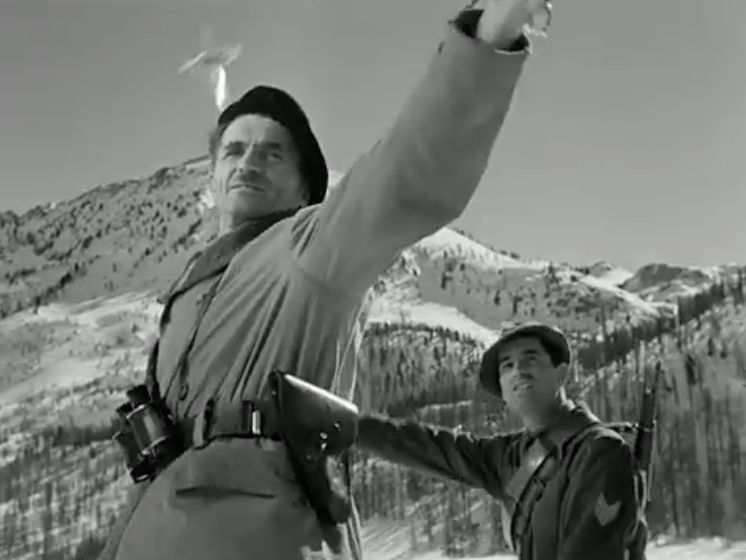
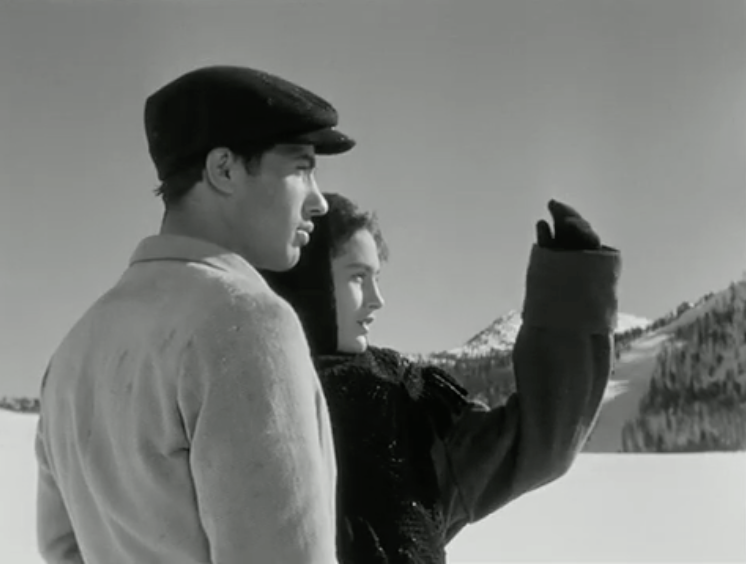
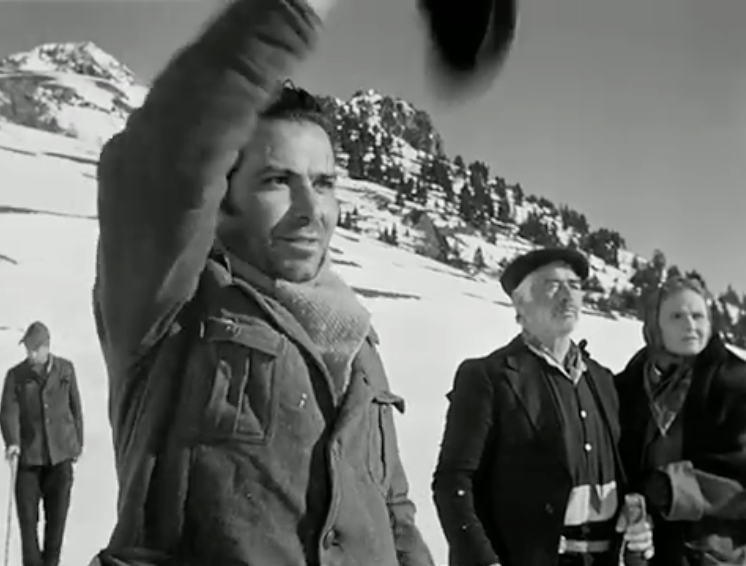

Le guardie di frontiera si voltano e salutano con la mano. Rosa e Brasi ricambiano il saluto.
The border guards turn back and wave. Rosa and Brasi return the greeting.
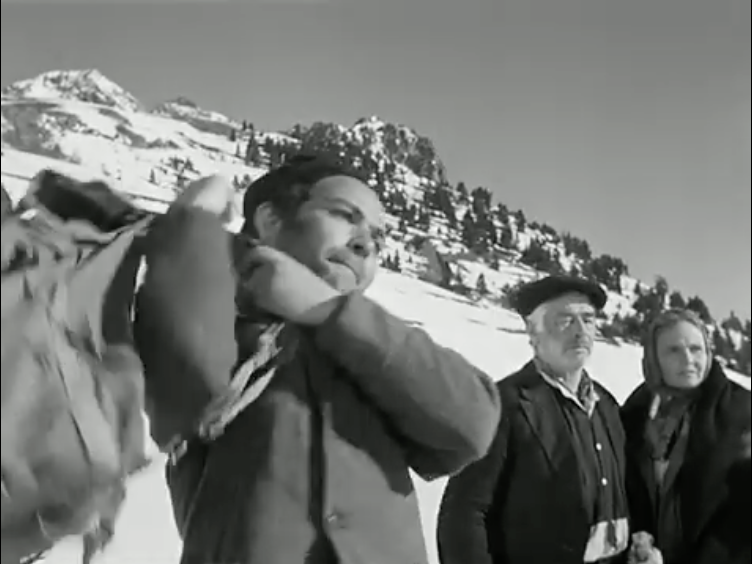

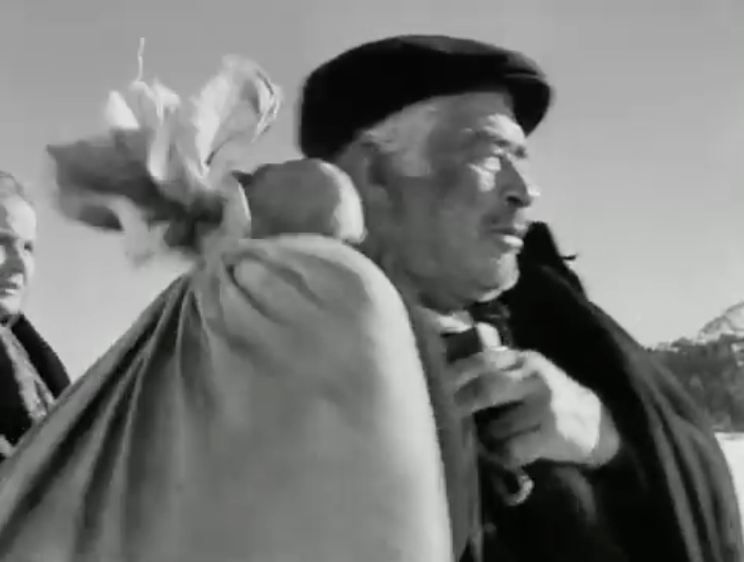

I viaggiatori prendono i loro zaini e i loro bambini...
The travellers pick up their packs and their children…
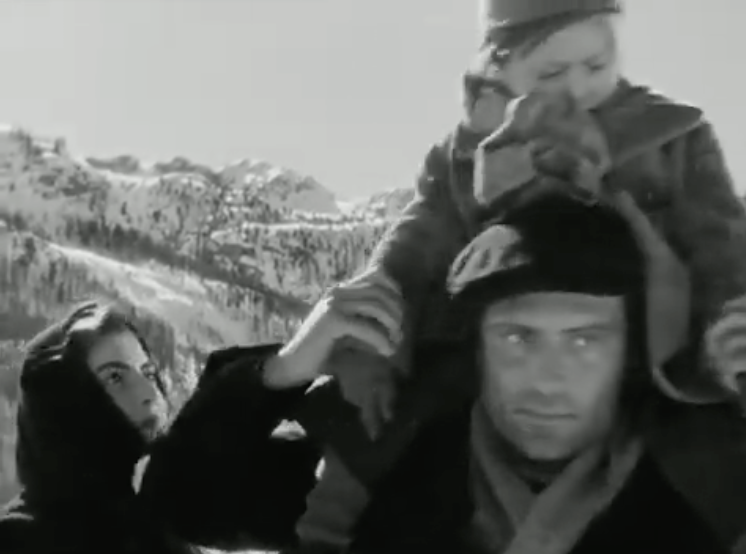

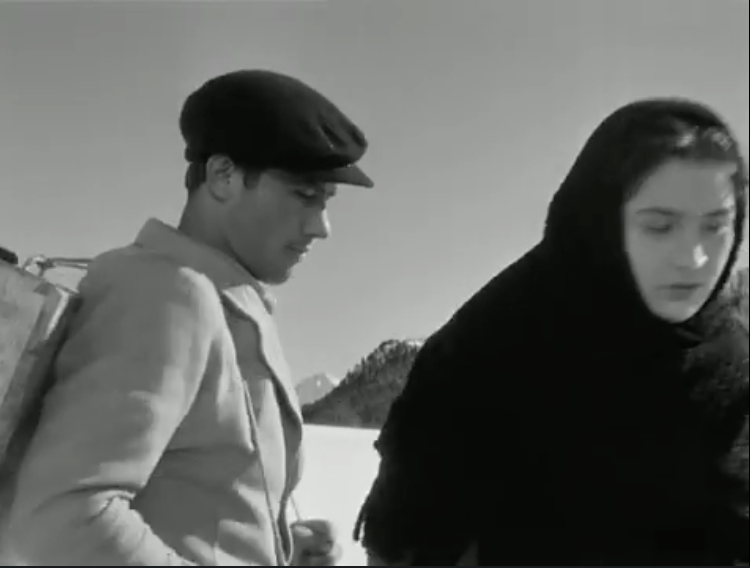
… e si rimettono in cammino.
… and they set off again on their way.
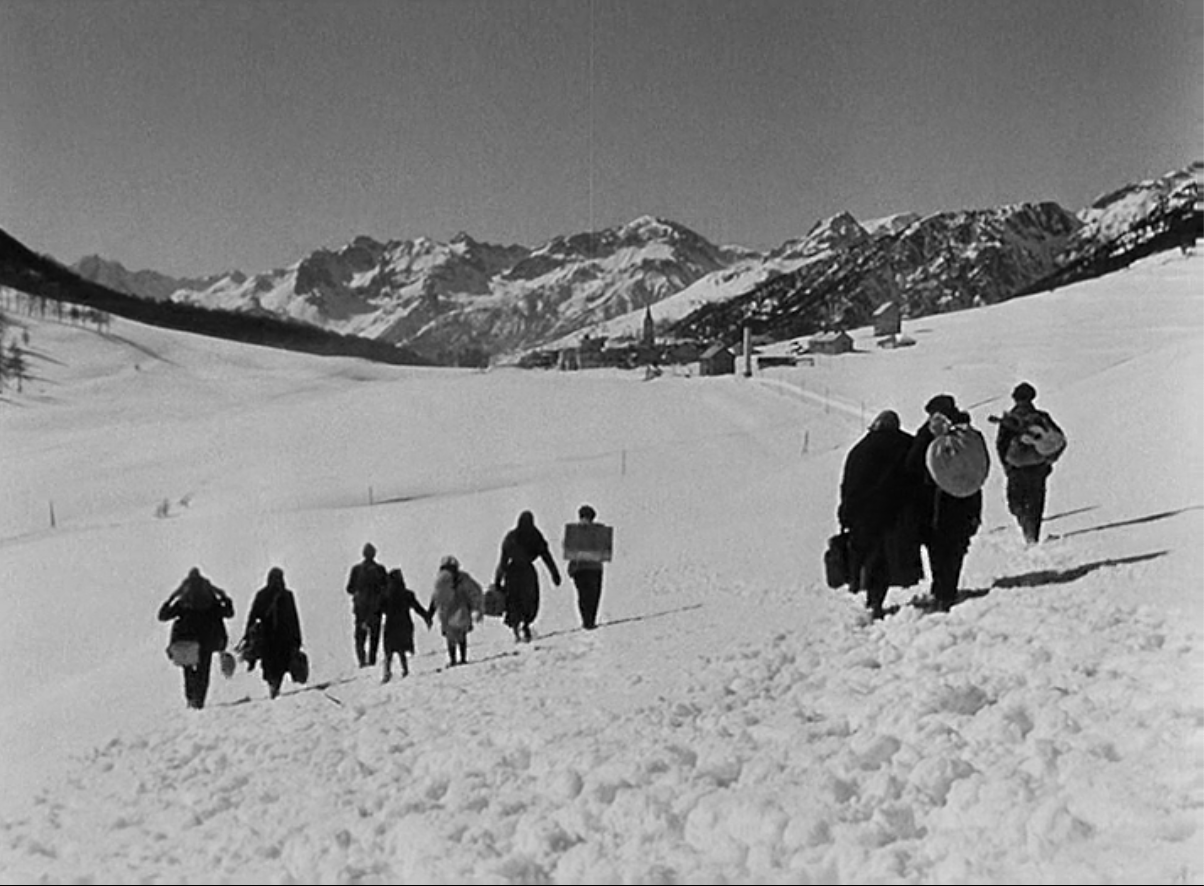

Mentre il gruppo avanza sulla neve verso le cime lontane, sentiamo di nuovo gli uomini del villaggio cantare Vitti Na' Crozza…
As the group goes forward across the snow toward the distant peaks, we hear again the men back in the village singing Vitti Na’ Crozza...
FINE PARTE 26
This is the final episode of this cineracconto. Our next film is Riso amaro / Bitter Rice (Giuseppe De Santis, 1949). Subscribe to receive a weekly email newsletter with links to all our new posts.