Regia / Director: Giuseppe De Santis, 1949
Soggetto / Story: Giuseppe De Santis, Carlo Lizzani, Gianni Puccini
Sceneggiatura / Screenplay: Corrado Alvaro, Giuseppe De Santis, Carlo Lizzani, Carlo Musso, Ivo Perilli, Gianni Puccini, and Mario Monicelli (consulente alla sceneggiatura, non accreditato/ script consultant, uncredited)
Fotografia / Cinematography: Otello Martelli
Colonna sonora / Music: Goffredo Petrassi

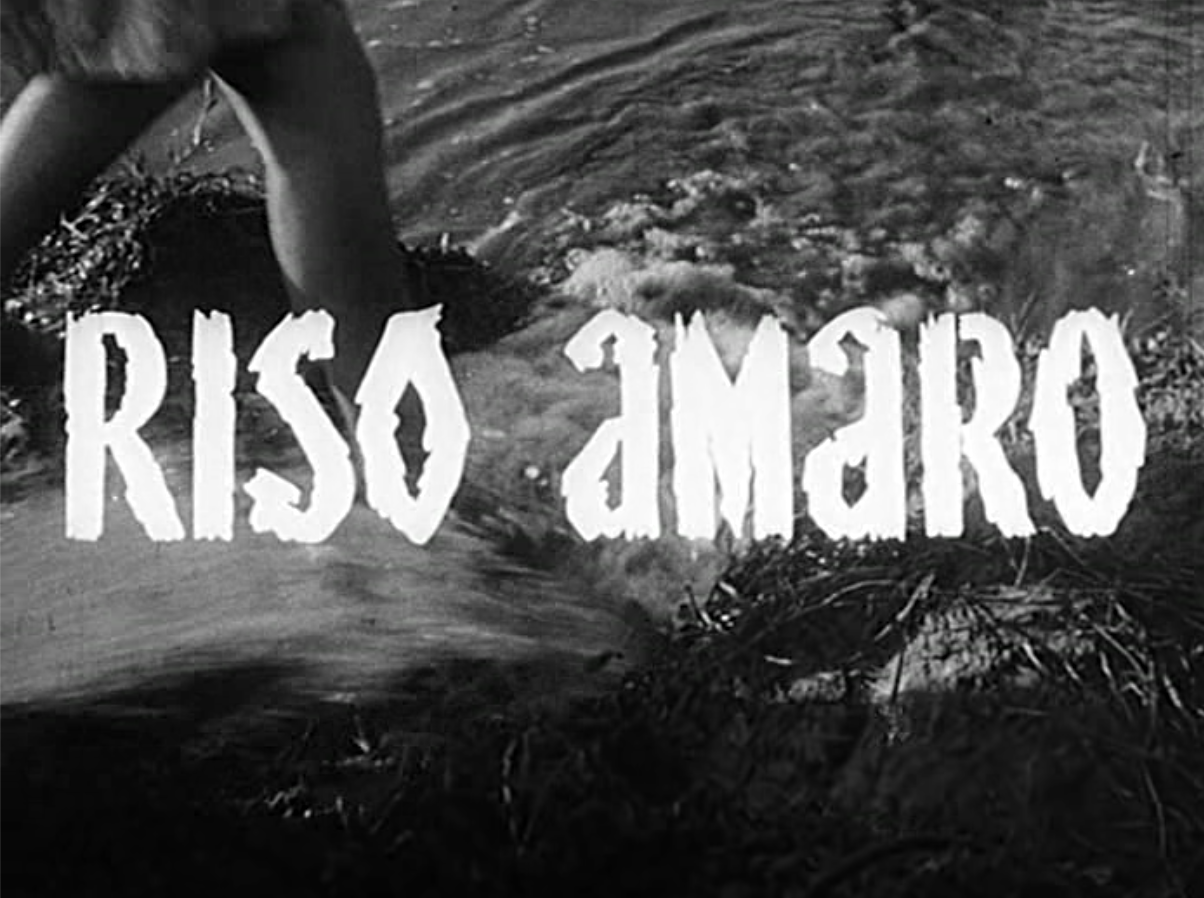
Il titolo di apertura appare su un fiume che scorre. Una donna entra in acqua tenendo la gonna alzata, seguita da altre donne.
Una musica drammatica suona in sottofondo.*
*Da notare che le musiche sono state curate da Goffredo Petrassi, il maestro di Ennio Morricone! Quando gli è stato chiesto cosa ne pensasse della collaborazione tra compositore e regista nella musica da film, ha risposto: “È un modo di lavorare del tutto anti-artistico”. Sebbene abbia composto lui stesso le colonne sonore di sei lungometraggi, almeno ai primi tempi non aveva alcun rispetto per la musica da film. Per approfondire questo affascinante argomento, si veda il documentario Ennio (Giuseppe Tornatore, 2021).
The opening title appears over a rushing river. A woman steps into the water, holding up her skirt, followed by several more. Dramatic music plays on the soundtrack.*
*Note that the music director, Goffredo Petrassi, was Ennio Morricone’s teacher! When asked what he thought about the collaboration between composer and director in film music, he replied, “It's a completely anti-artistic way of working.” Though he scored six feature films himself, at least in the early days, he didn’t respect film music. For more on this fascinating question, see the documentary Ennio: The Maestro.
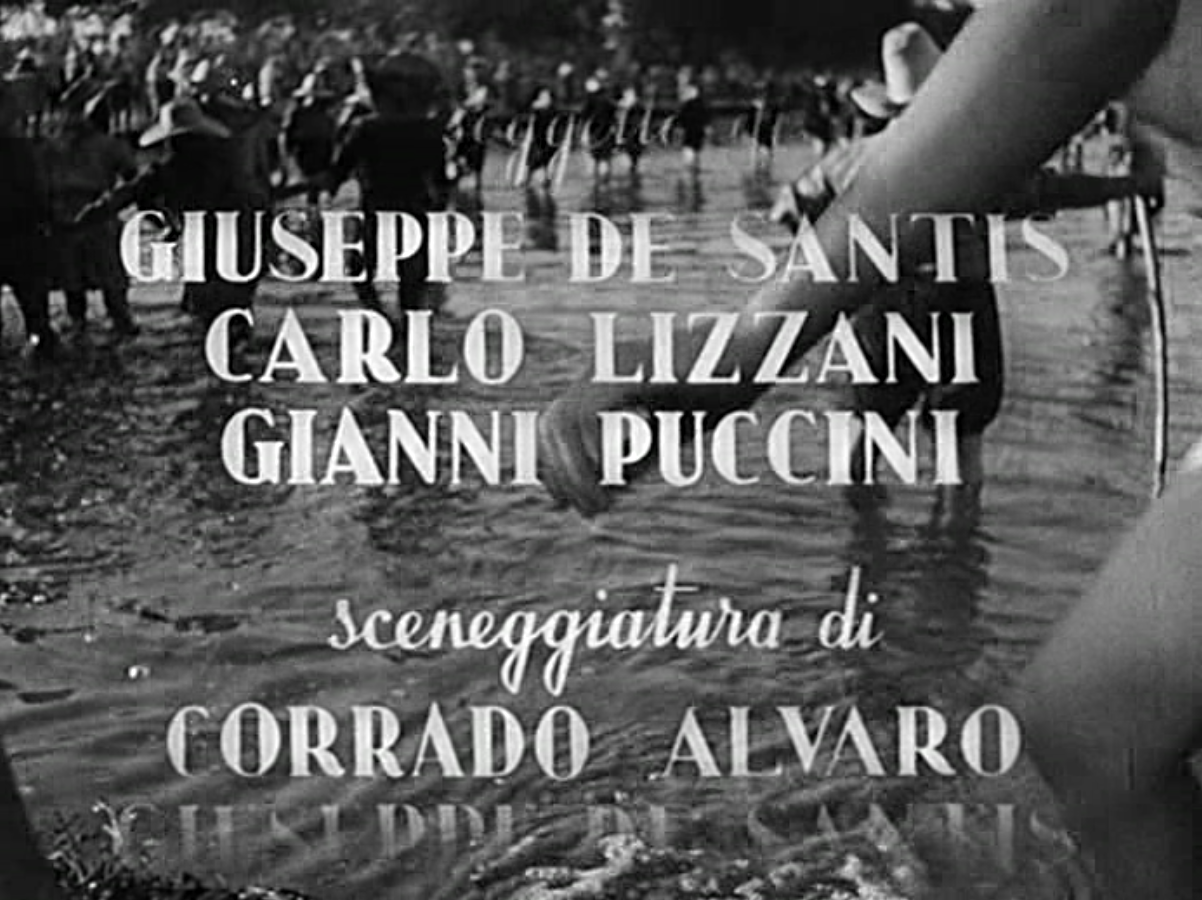

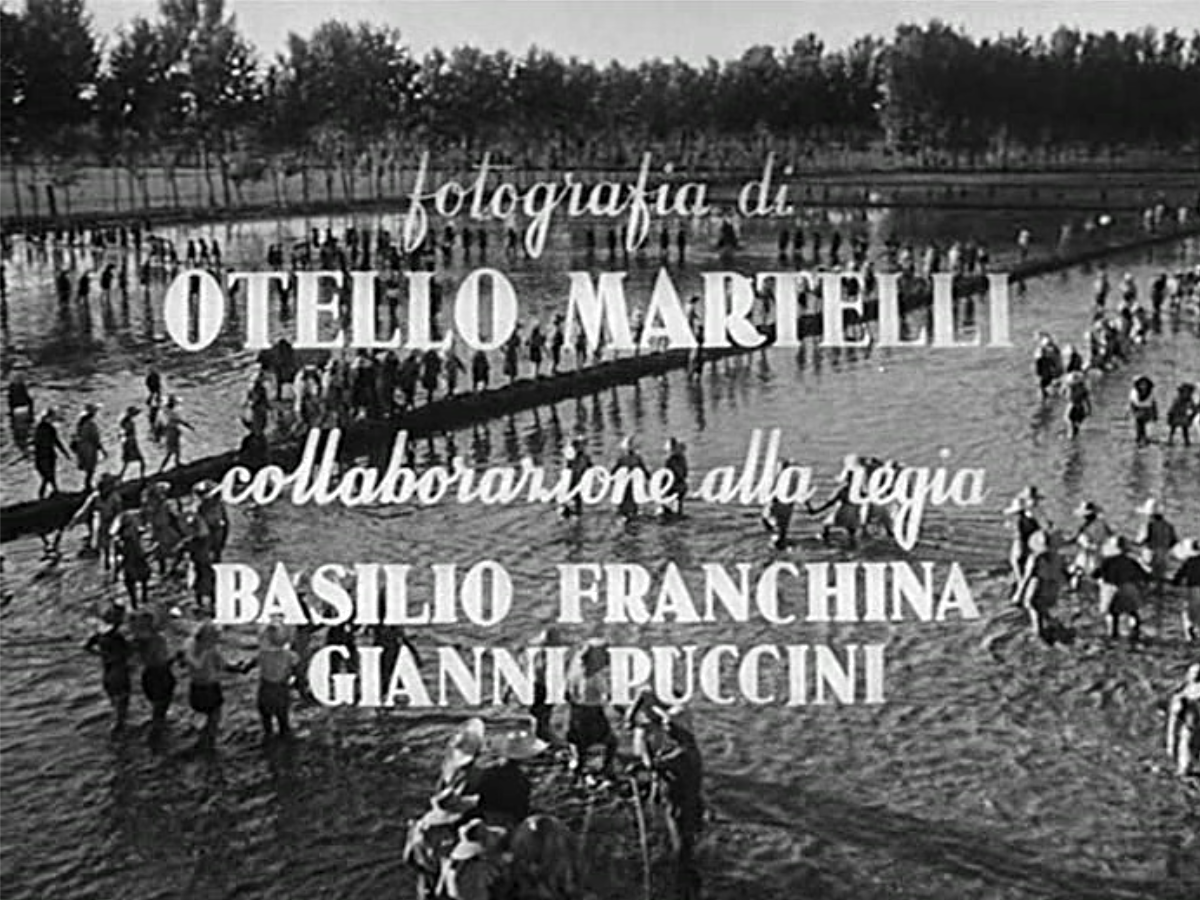
Sempre più figure si aggiungono, e la macchina da presa si allontana per rivelare gruppi di persone che entrano nel fiume Po, a braccetto.
More and more figures step in, and the camera pulls back to reveal groups of people wading in the Po River, arm in arm.
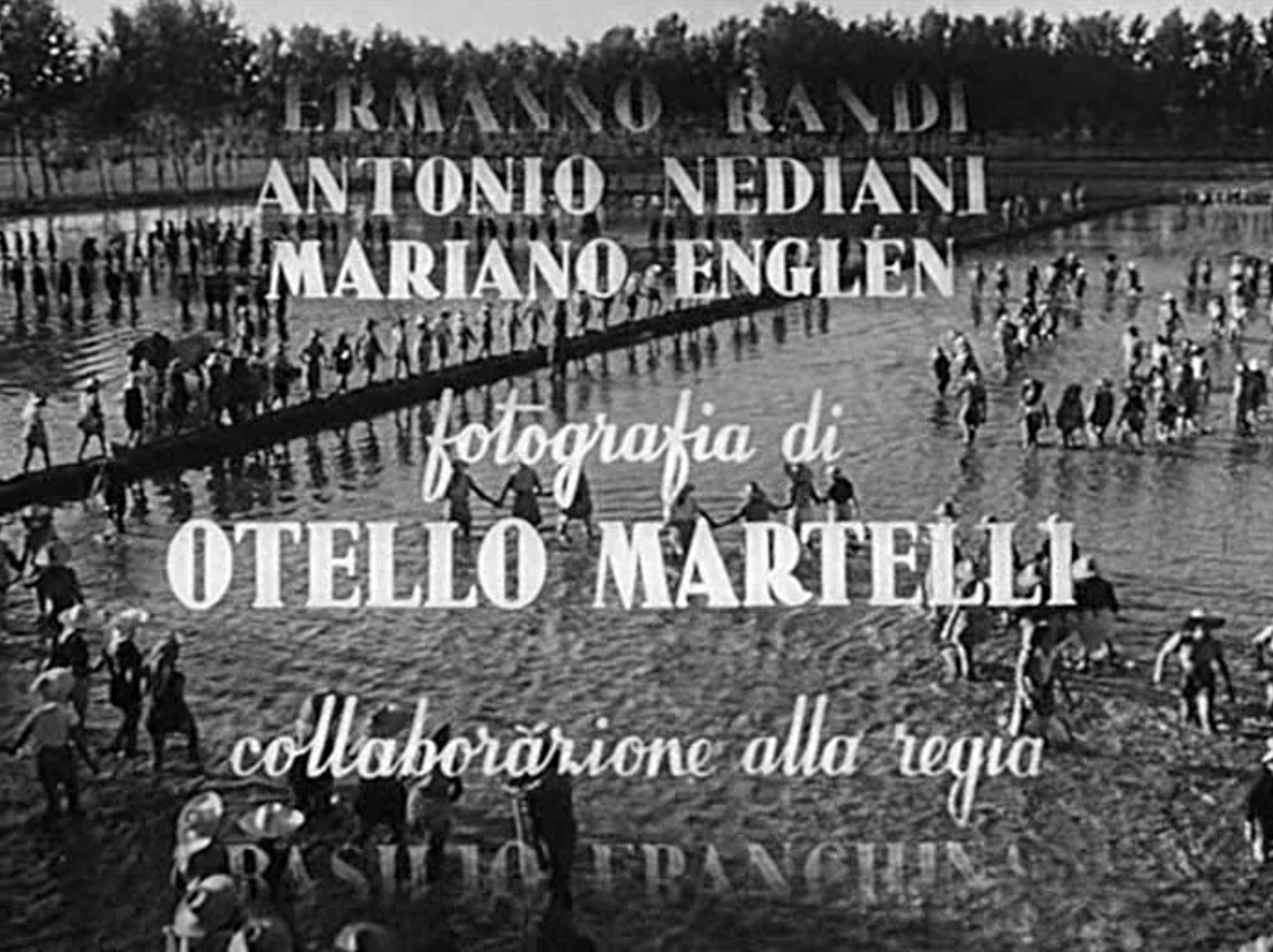
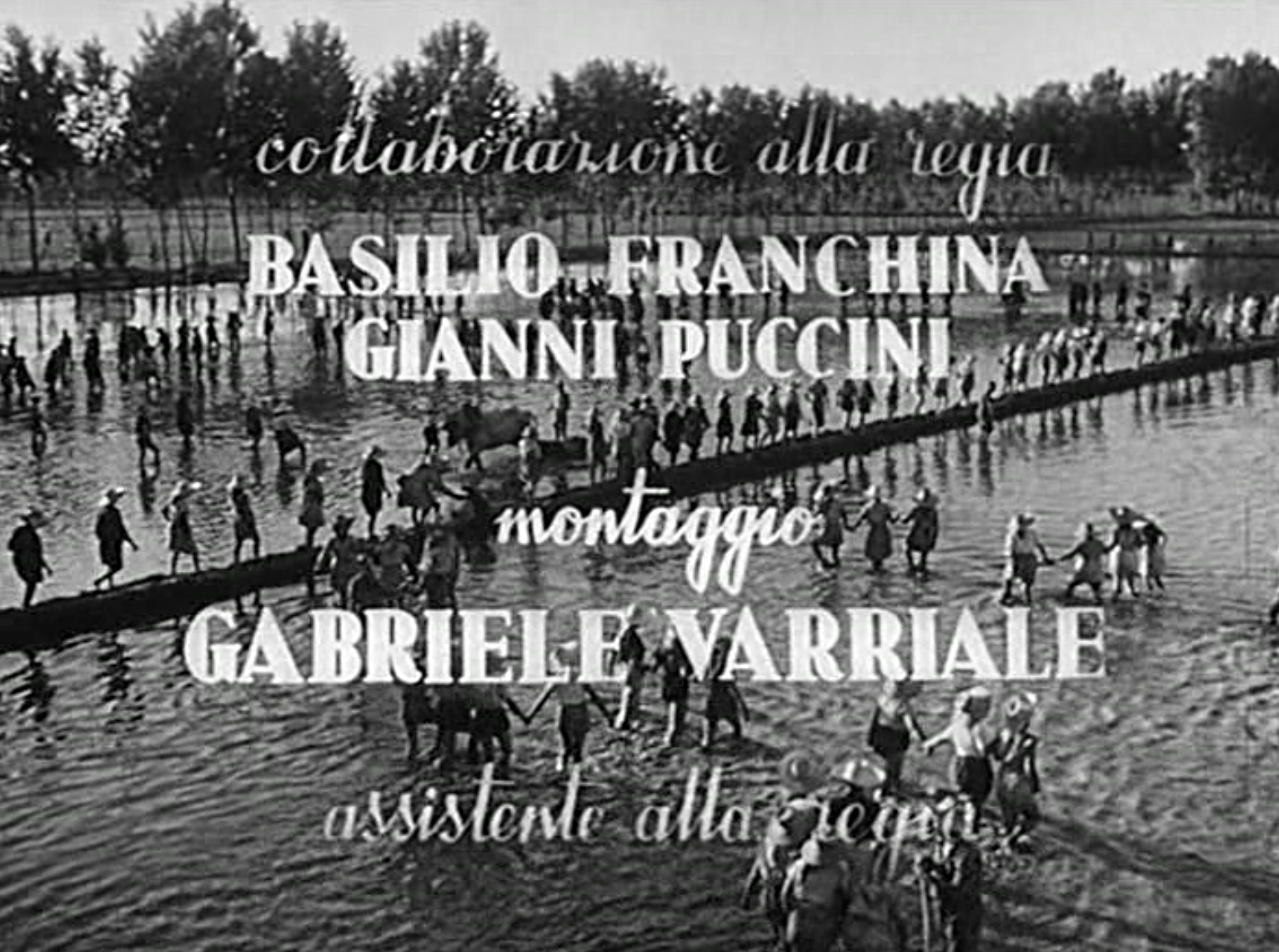
Sono lavoratrici nelle risaie, con cappelli di paglia a tesa larga.
They’re workers in the rice fields, wearing wide-brimmed straw hats.
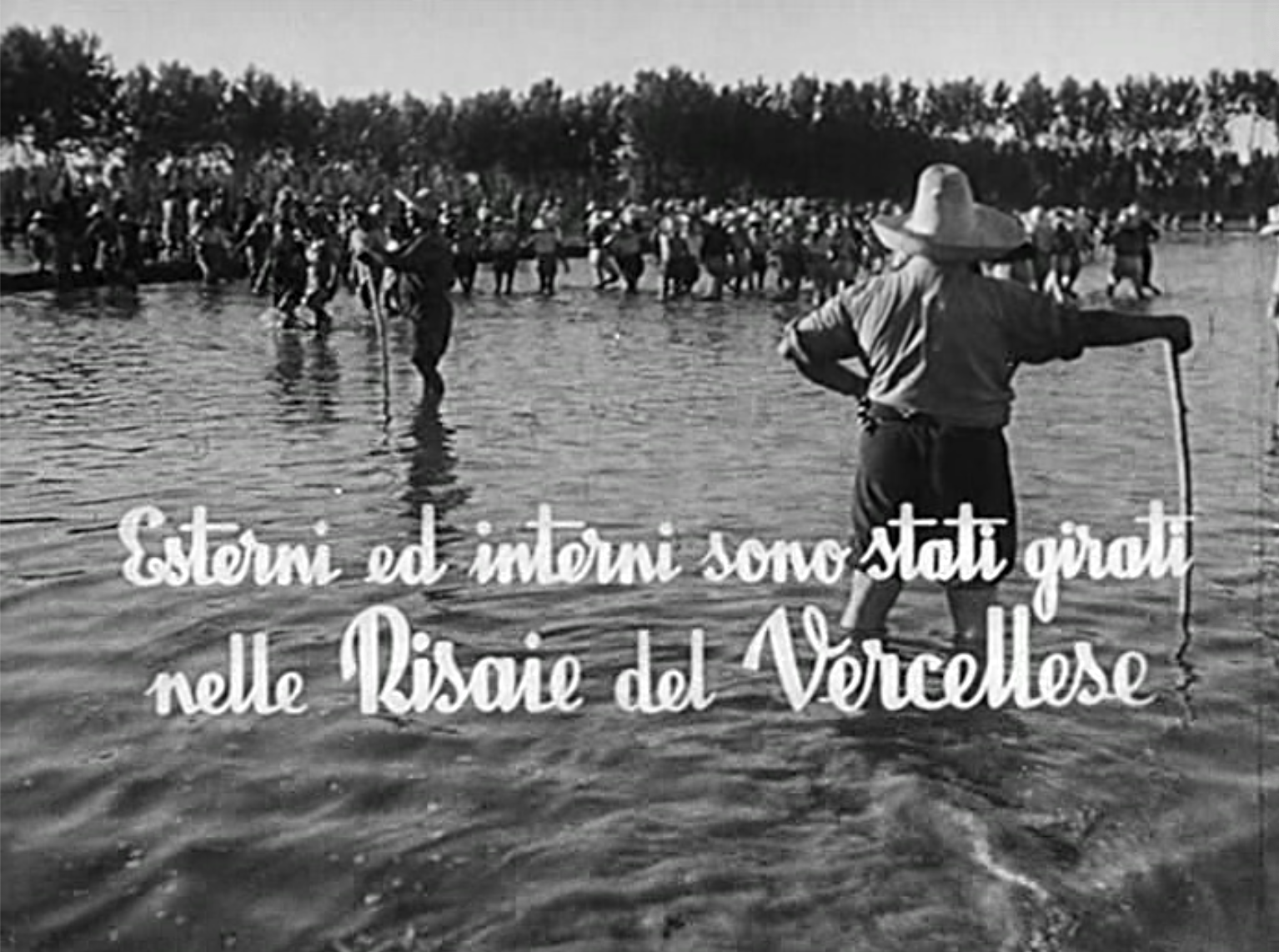
Con i pantaloni arrotolati sopra le ginocchia, un uomo appoggiato a un alto bastone sembra essere un caposquadra. Un titolo dice: “Esterni e interni sono stati girati nelle risaie del Vercellese”.
Pants rolled up over his knees, a man leaning on a tall stick seems to be a foreman. A title says, “External and internal scenes were filmed in the rice paddies of Vercelli.”


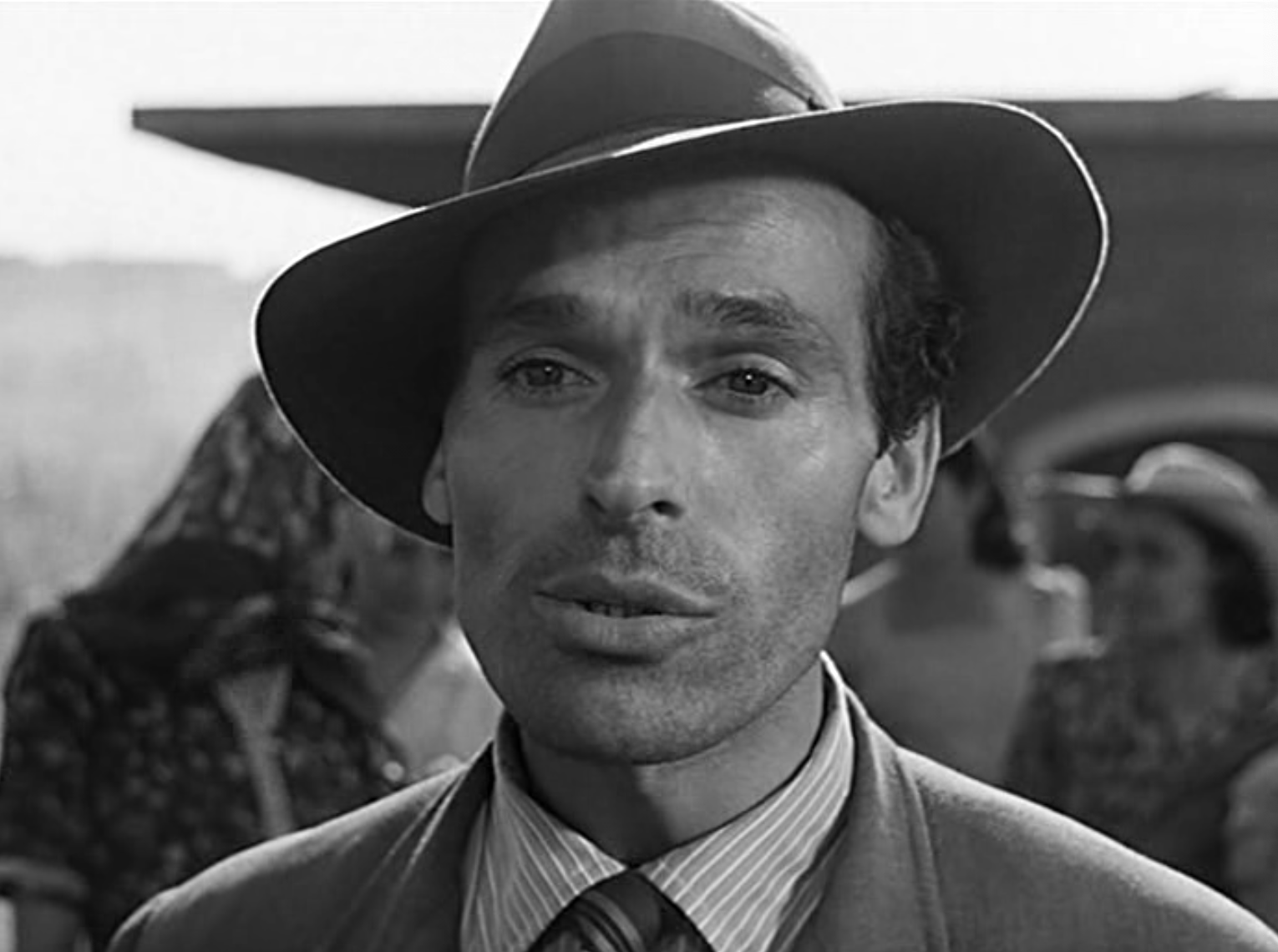
In un primo piano, un uomo (Attilio Dottesio, non accreditato*), con un borsalino inclinato su un lato, dice: "Sono alcuni secoli nell’Italia settentrionale che si coltiva il riso, come in Cina, come in India. Cresce su un'immensa pianura che copre le province di Pavia, di Novara e di Vercelli. Su questa pianura, hanno impresso segni incancellabili milioni e milioni di mani di donne. E l’hanno frugata e assestata per quattrocento, cinquecento anni".
*Doppiato da Emilio Cigoli.
In close-up, a man (Attilio Dottesio, uncredited*) with a fedora tipped to one side, says, “Rice has been grown in Northern Italy for a few centuries, as in China, as in India. It grows on an immense plain, covering the provinces of Pavia, Novara, and Vercelli. On this plain, millions and millions of women’s hands have left indelible marks. They have foraged and tended it for four hundred, five hundred years.”
*Dubbed by Emilio Cigoli.
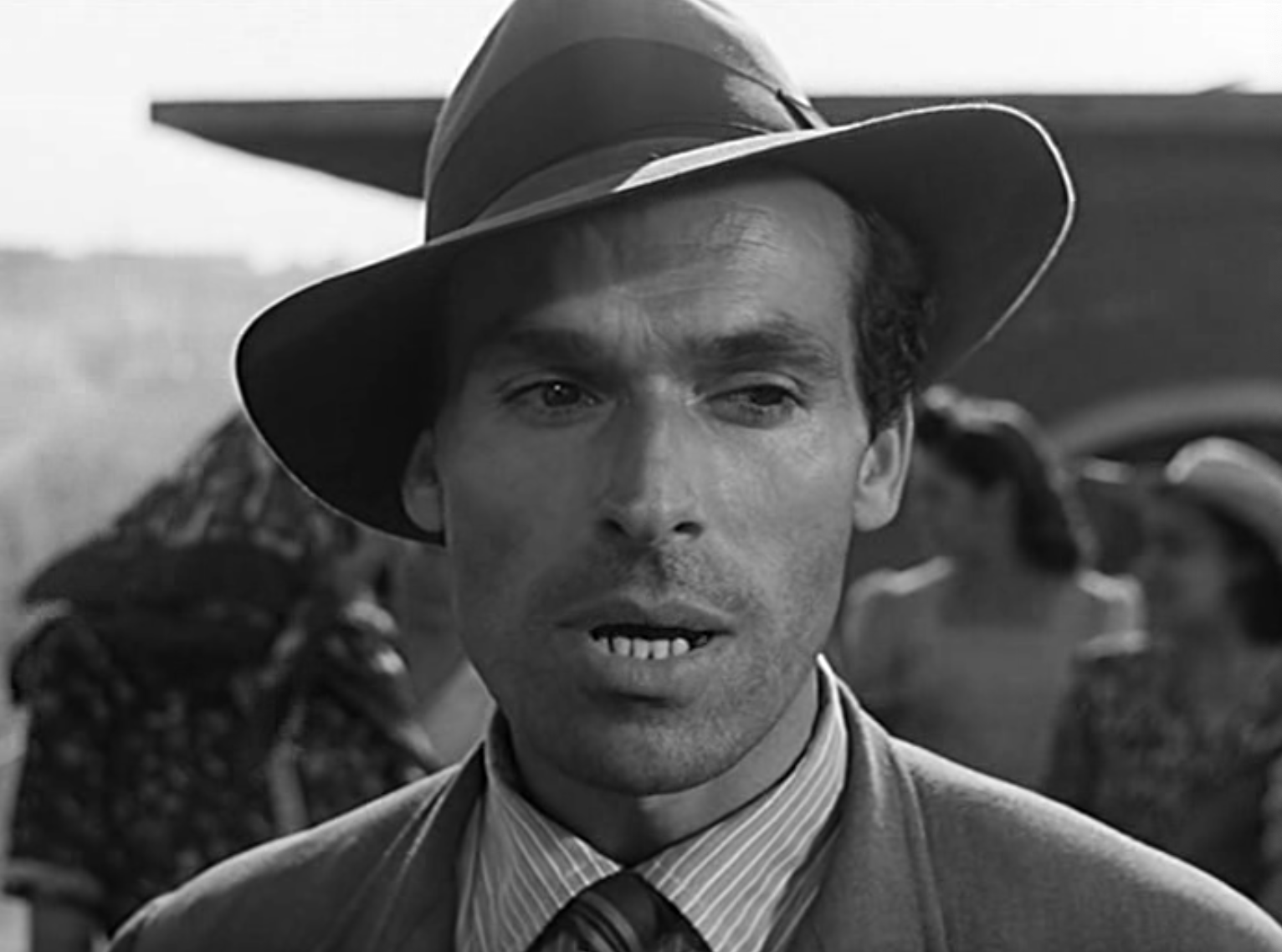

Ci sono dietro di lui delle donne, fuori fuoco. "È un lavoro duro e immutabile. Le gambe nell'acqua, la schiena curva con il sole a picco sulla testa".
Women stand behind him, out of focus. “It is hard and unchanging work. Legs in the water, back bent with the sun blazing overhead.”
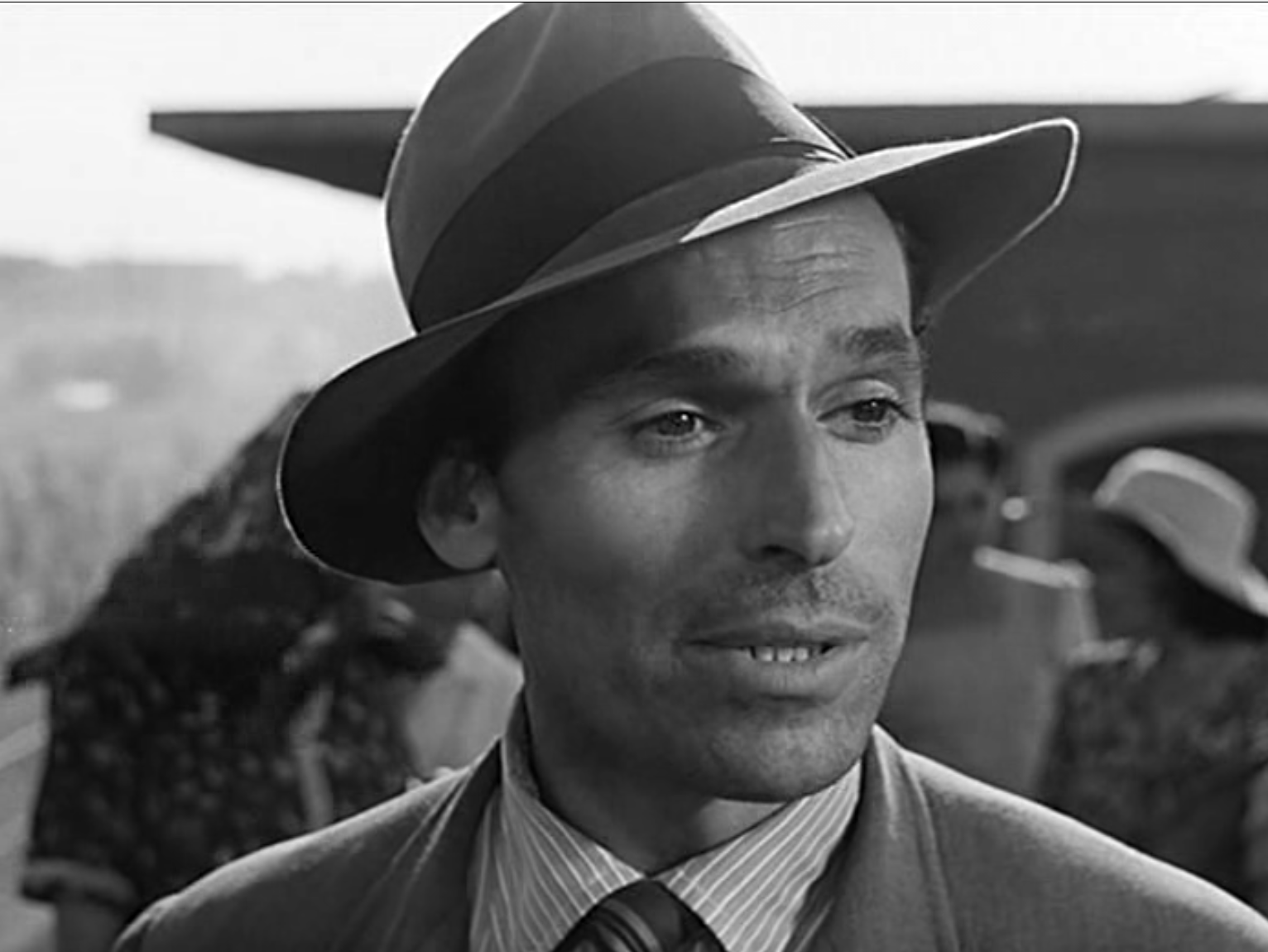
"Eppure, soltanto le donne possono compierlo. Occorrono mani delicate e veloci, le stesse mani che pazientemente infilano l’ago e cullano i neonati".
“And yet, only women can do it. It takes delicate and quick hands, the same hands that patiently thread a needle and cradle newborn babies.”
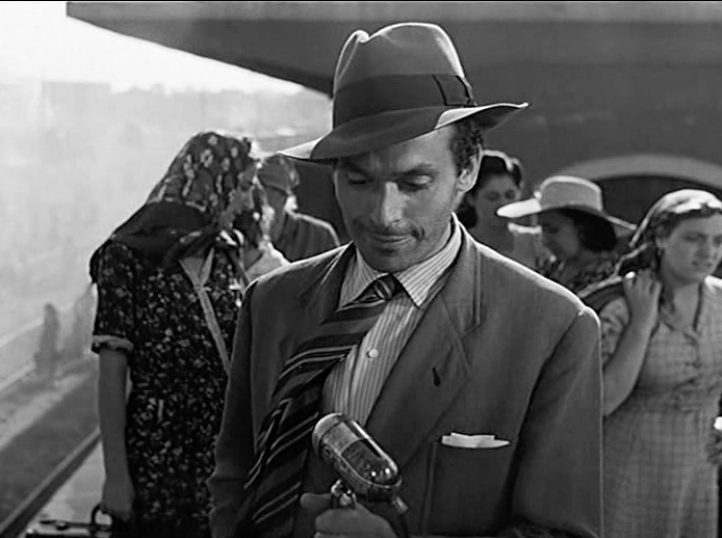
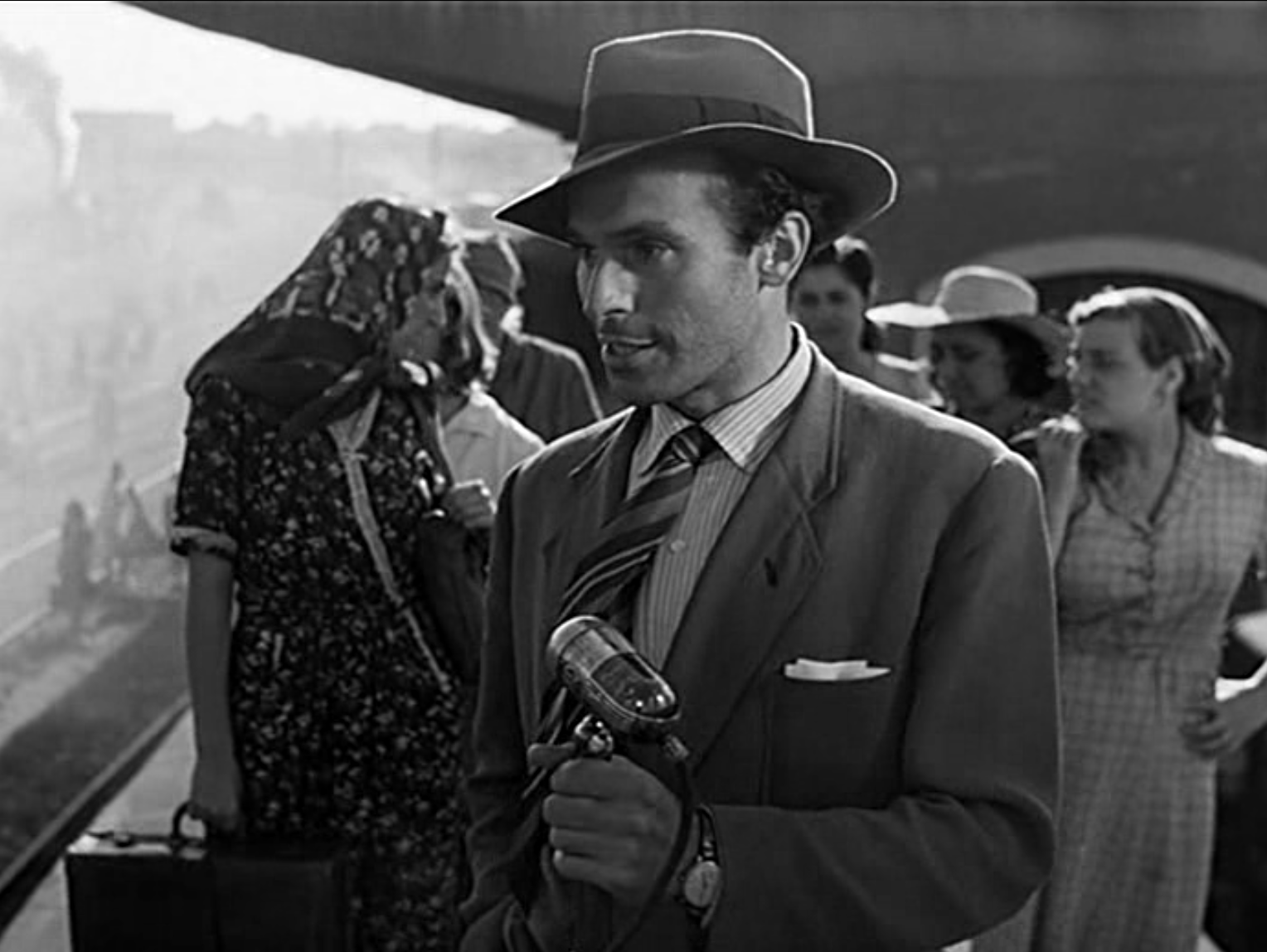
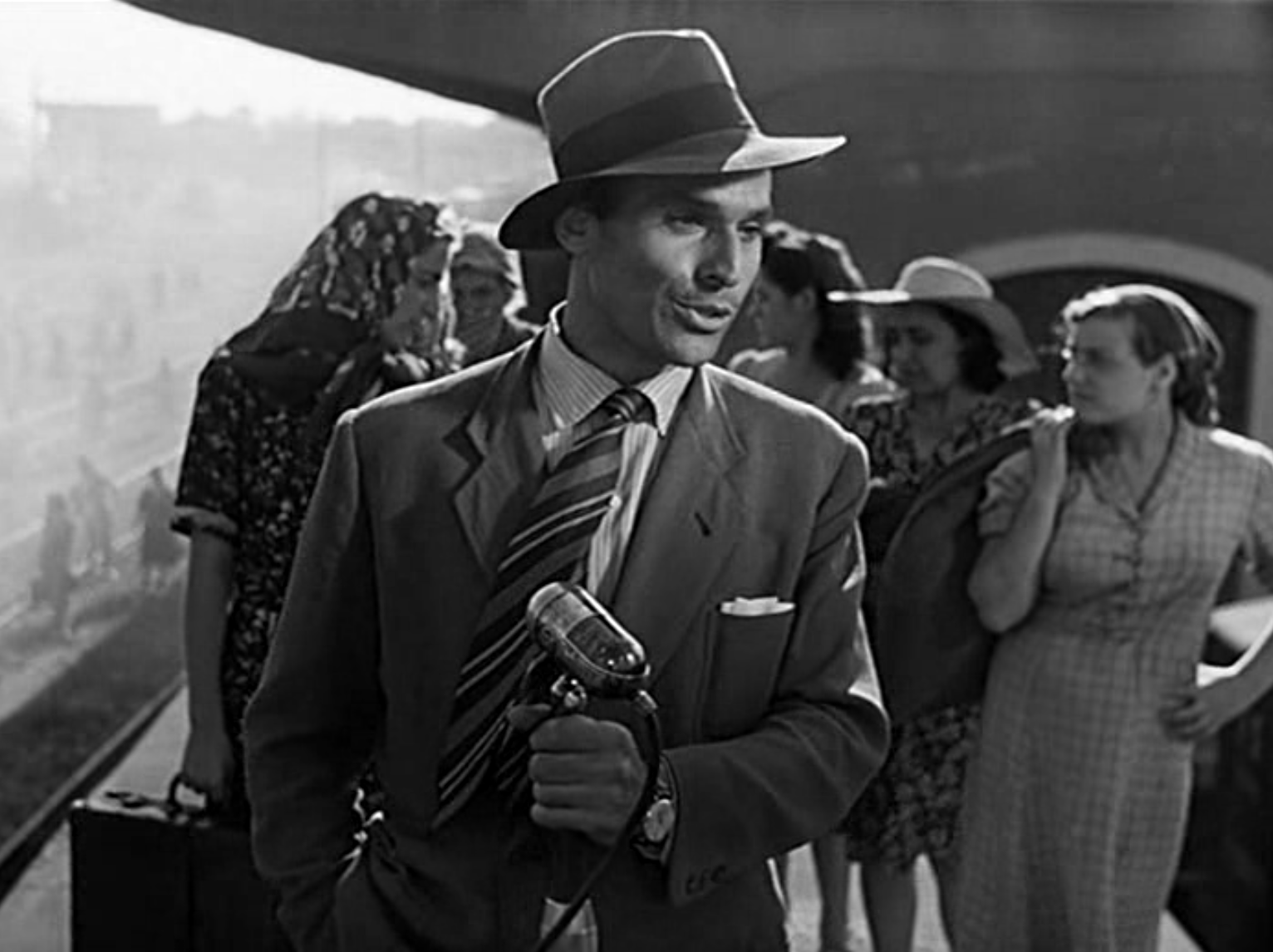
La macchina da presa si allontana e le donne dietro di lui vengono messe a fuoco. Vediamo che lui sta parlando in un microfono. “Qui parla Radio Torino”.
The camera pulls back and the women behind him come into focus. We see that he’s speaking into a microphone. “This is Radio Turin speaking.”
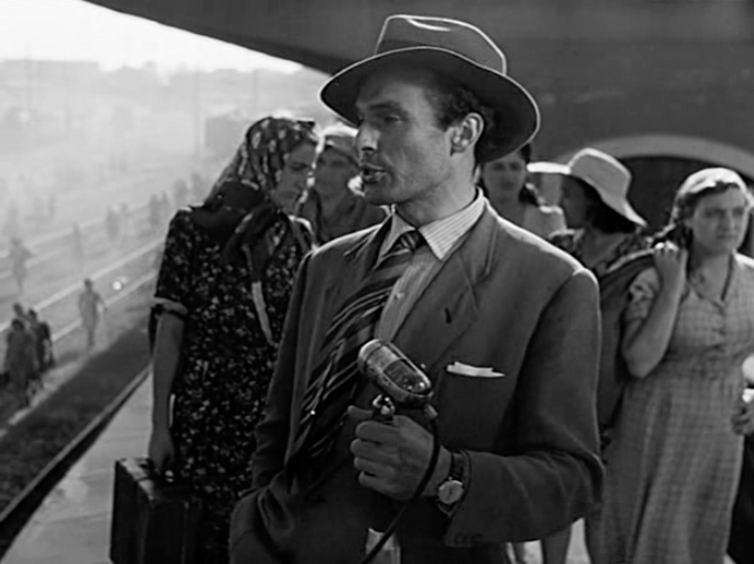
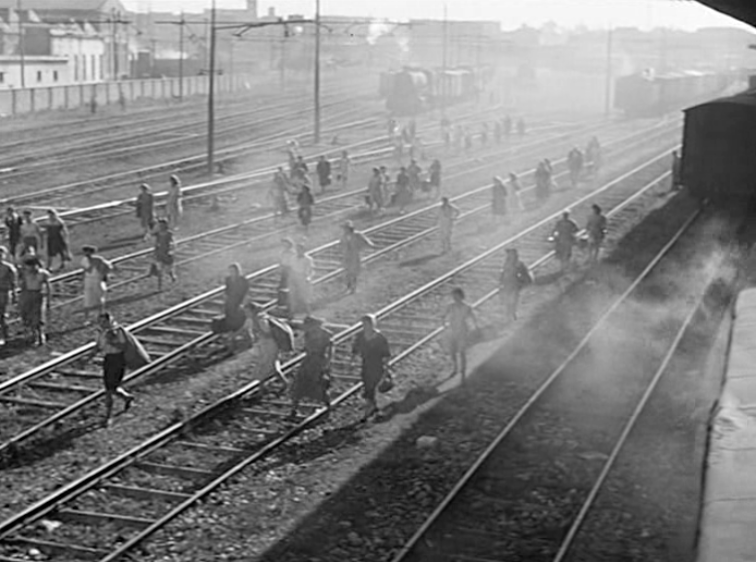
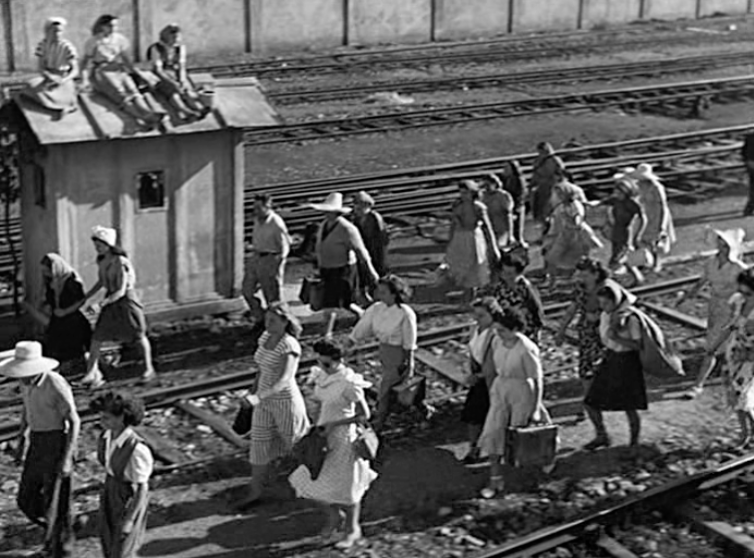
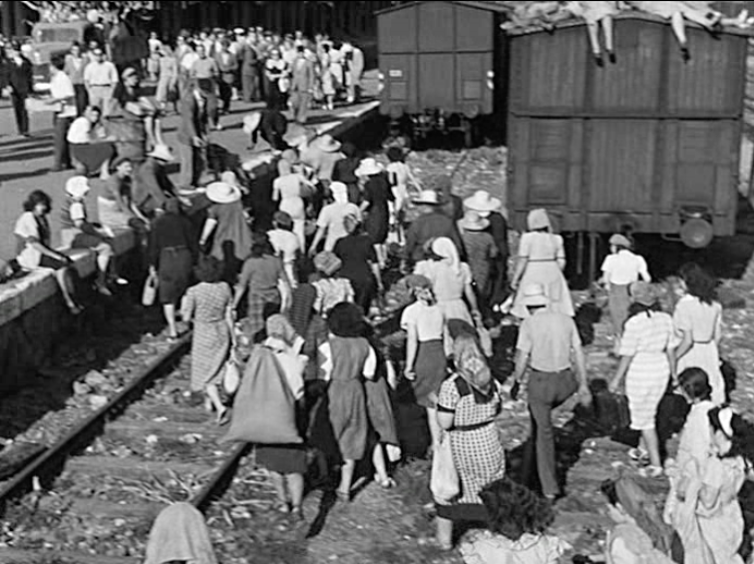
"Oggi offriremo ai nostri ascoltatori un programma eccezionale. Ci troviamo fra i treni che trasportano le mondine sui luoghi di lavoro". La macchina da presa fa una panoramica fino alle donne (e alcuni uomini) che camminano lungo i binari del treno, cantando in armonia. "Ogni anno, ai primi di maggio, le mondine partono verso la pianura del riso. Vengono da ogni parte d’Italia. È una mobilitazione di donne di tutte le età e di tutti i mestieri. Contadine in maggioranza, ma anche operaie, commesse, sarte, dattilografe. La stagione di monda dura quaranta giorni. E sono quaranta giorni di grandi fatiche”.
“We are offering an extraordinary show to the listeners today. We’re standing among the trains that transport the rice workers to their workplaces.” The camera pans over to women (and a few men) walking along the train tracks, singing in harmony. “Every year in early May, the rice workers leave for the rice plains. They come from all over Italy. It’s a mobilization of women of all ages and all occupations. Peasants mostly, but also factory workers, saleswomen, seamstresses, typists. The rice harvesting season lasts forty days. And they are forty days of hard work.”
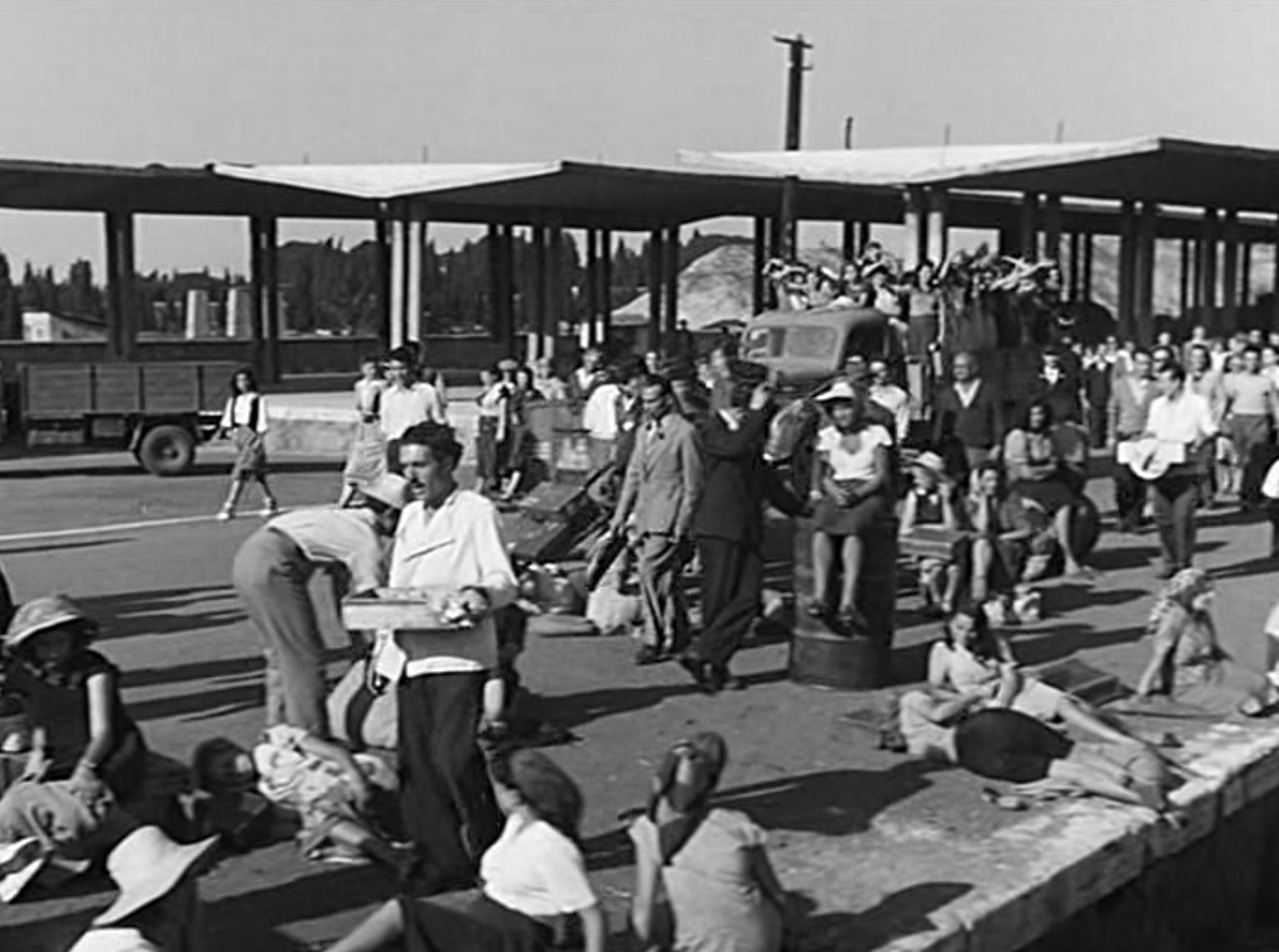
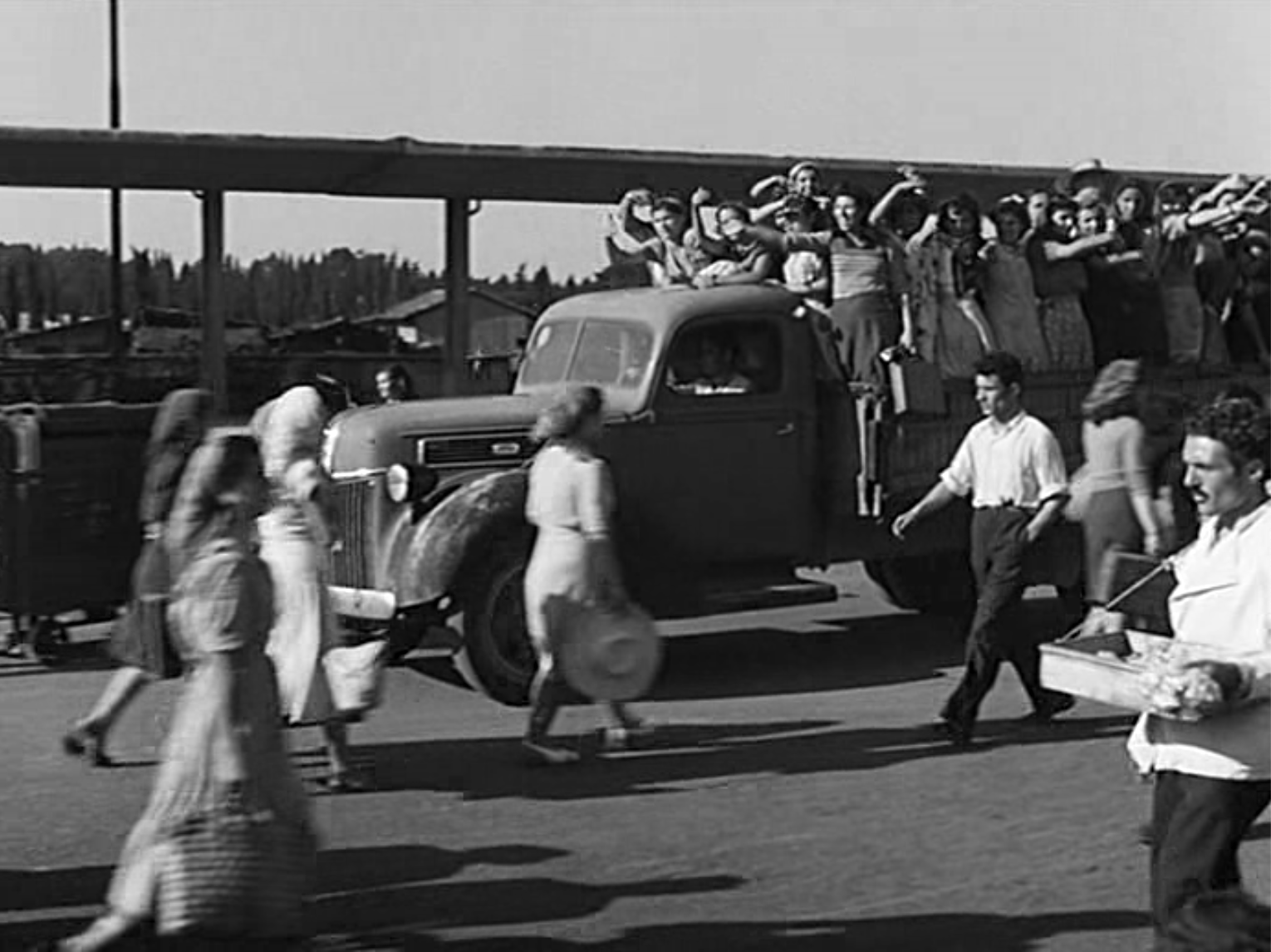
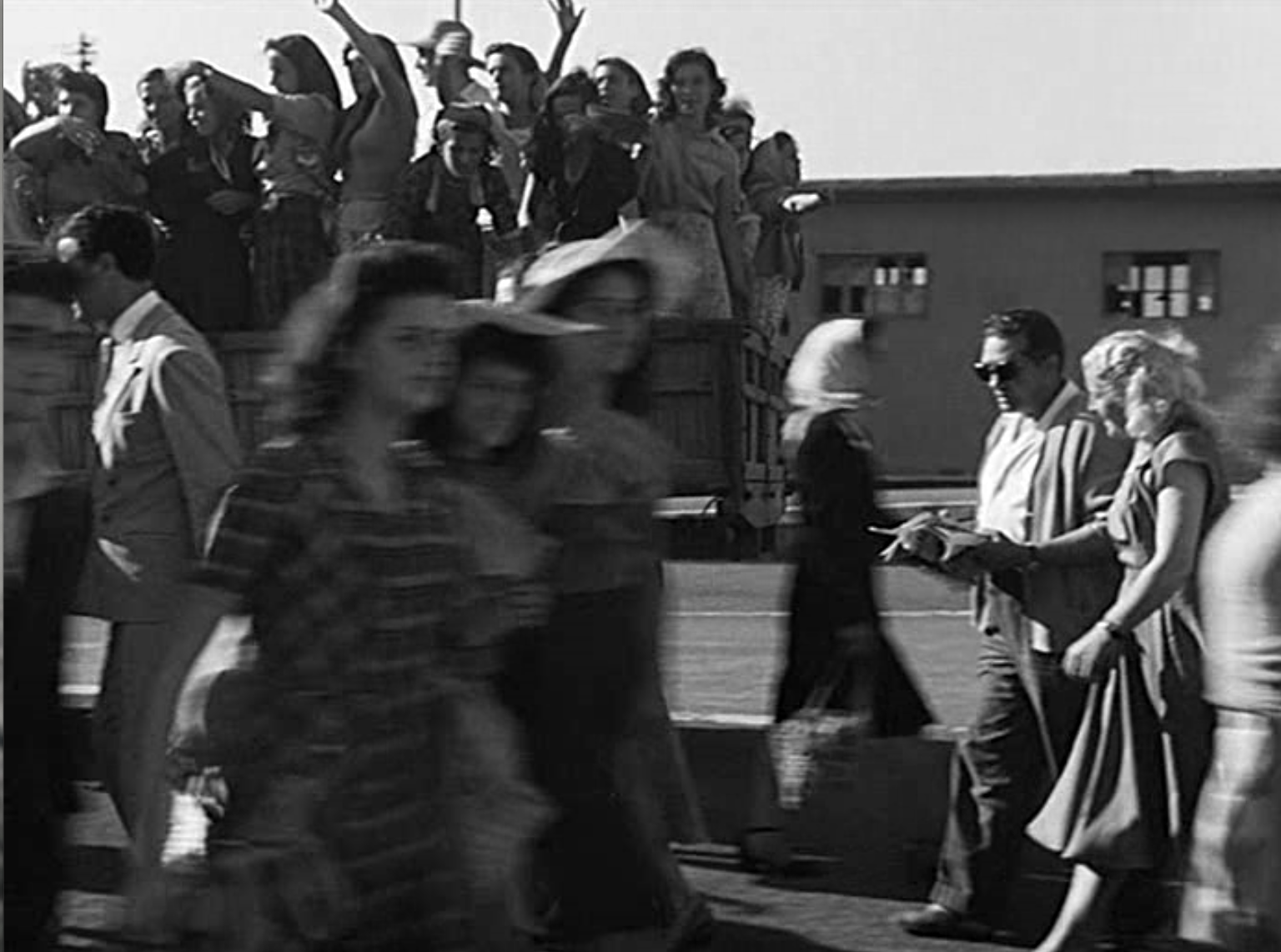
La macchina da presa continua a fare una panoramica. Alcune donne riposano sulla banchina della stazione, mentre altre arrivano sul retro di un camion. Le donne salutano con la mano mentre il camion attraversa l'inquadratura.
Il canto corale continua:
Se vedessi le mondine!
Quando arrivano alla stazione,
dal mormorio che fanno!*
*Il resto della canzone non è così entusiasmante:
Loro hanno la faccia lunga e pallida
che non si riesce nemmeno a guardare.
Gli fanno male le gambe
e hanno il sedere tutto magro.
The camera is still panning. Some women rest on the train platform, as more arrive in the back of a truck. The women wave as the truck crosses the frame.
The choral singing continues:
If you saw the rice workers!
When they arrive at the station,
from the murmur they carry with them!*
*The rest of the song is not so enthusiastic:
They have long, pale faces
that you can't even look at.
Their legs ache
and their behinds are all skinny.
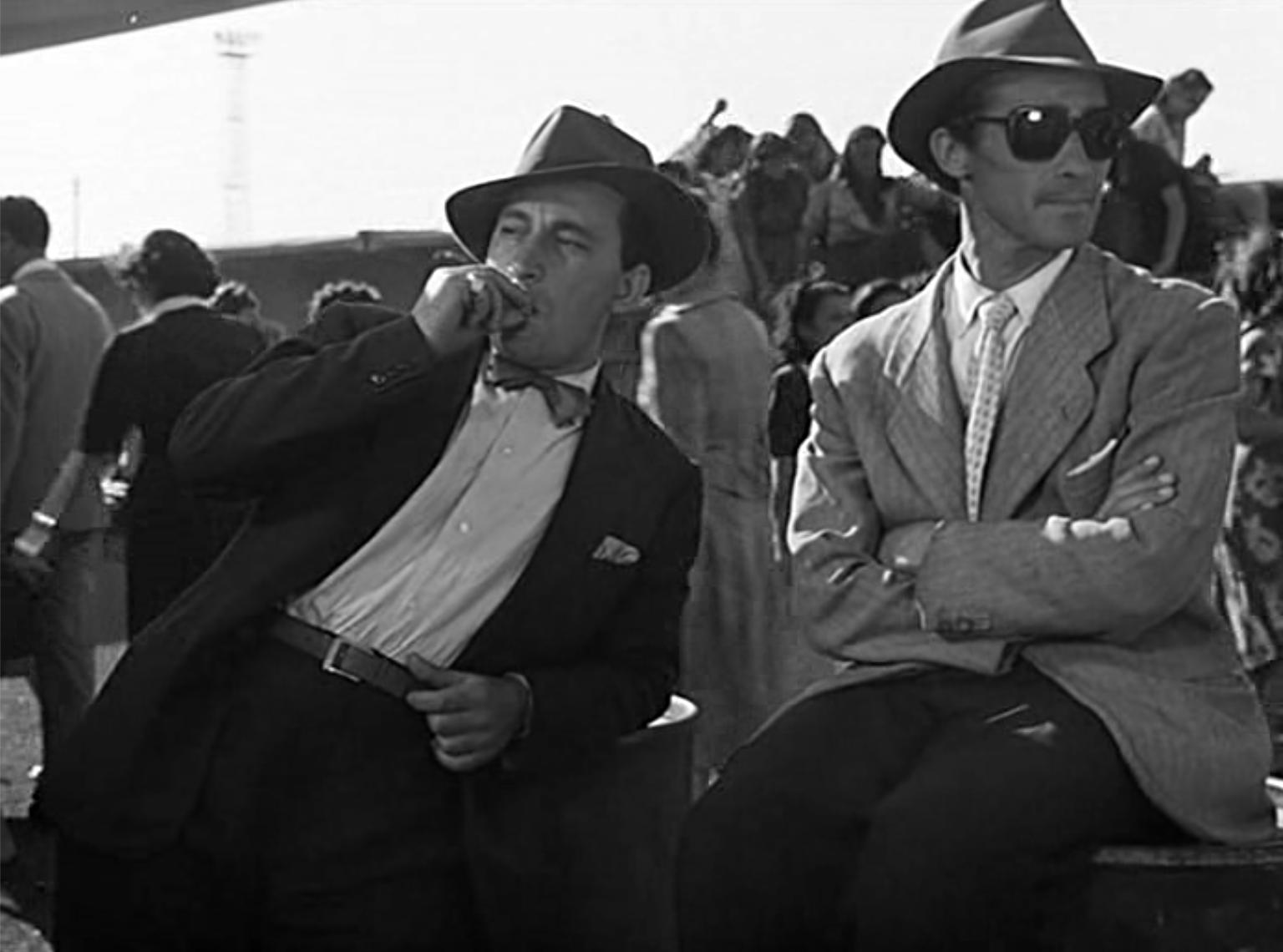

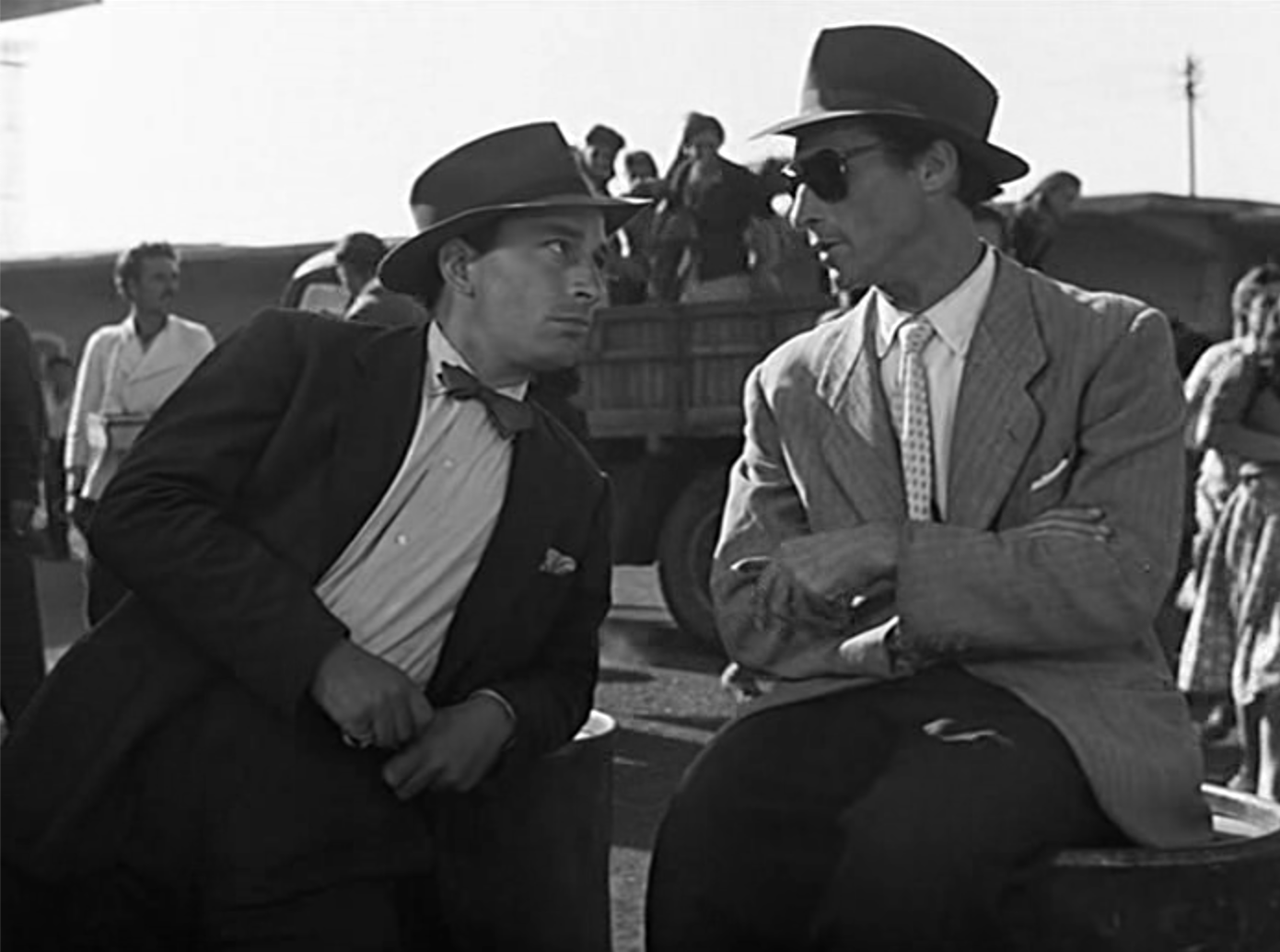
La macchina da presa si ferma su due uomini in completo e fedora. Uno si guarda intorno tra la folla di donne, l'altro controlla l'orologio. “Speriamo che non ci scappi, con questa confusione”.
“Quanta grazia di Dio!”*
“Chi sorveglia il sottopassaggio e l'ingresso?”
“Ehm, Donadio e Bonfiglio”.
*Questa frase non è realmente traducibile. Letteralmente, “Quanta grazia di Dio!”, è usata per esprimere meraviglia per l'abbondanza di qualcosa di bello – in questo caso, le tante belle donne che passano.
The camera comes to rest on two men in suits and fedoras. One is looking around at the crowd of women, the other checks his watch. “Let’s hope he doesn’t get away in this chaos.”
“So many beautiful women! Thank you, God!”*
“Who’s monitoring the underpass and the entrance?”
“Um, Donadio and Bonfiglio.”
*This phrase is not really translatable. Literally, ““So many blessings from God!”, it’s used to express wonder at the abundance of something wonderful – in this case, the many beautiful women walking by.

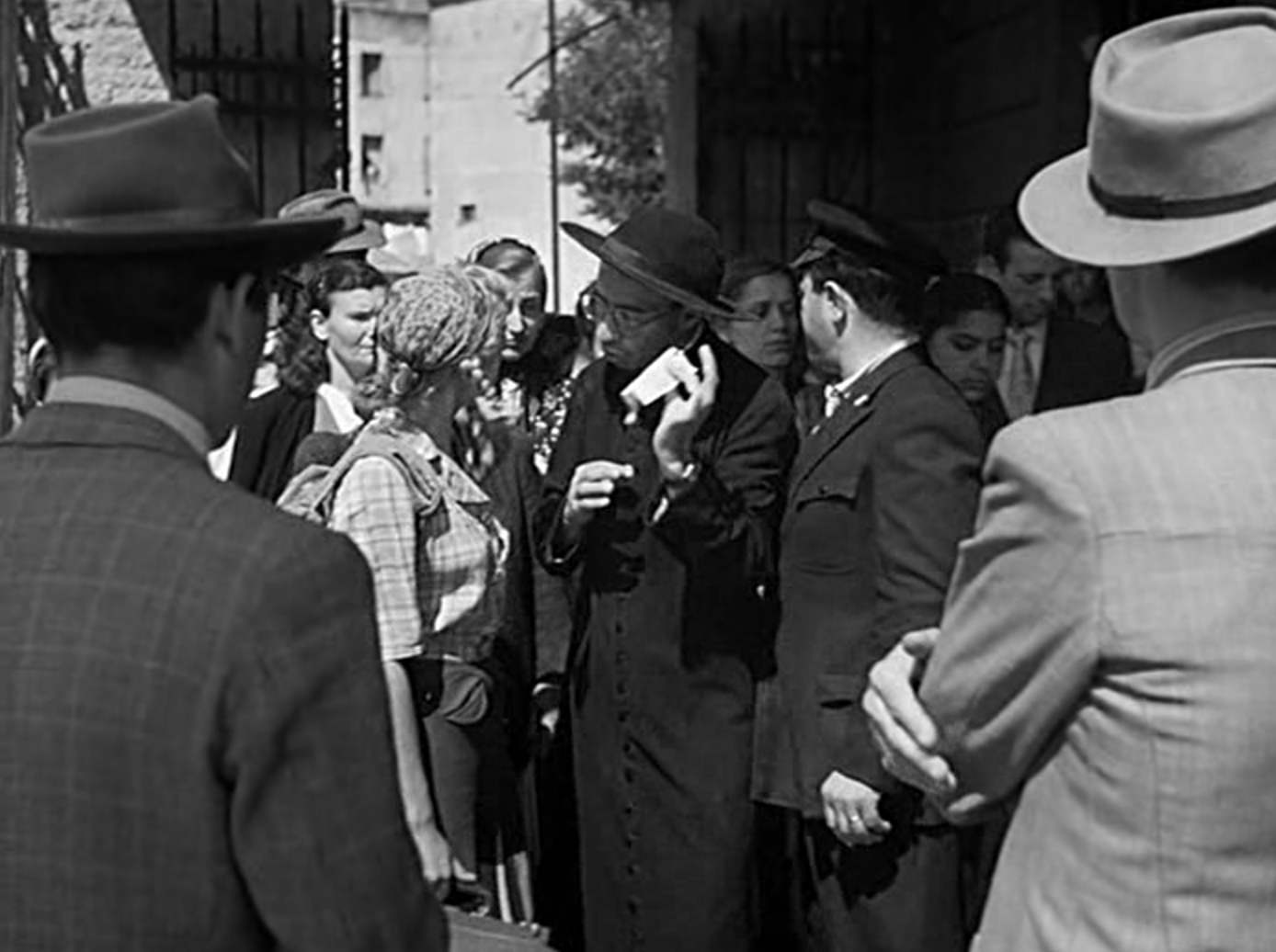
All'ingresso, un addetto delle ferrovie sta contando i biglietti, mentre due uomini con cappelli fedora osservano. “Sono quattordici, Reverendo”.
“Sì, esatto”, risponde il sacerdote.
Amelia (Lia Corelli), una ragazza con trecce bionde, grida al suo gruppo: “Andiamo! Forza!”
At the entrance, a railroad clerk is counting tickets, as two men in fedoras look on. “That’s fourteen, Father.”
“Yes, exactly,” the priest replies.
Amelia, a girl in blond braids, calls out to her group, “Let’s go! Come on!”

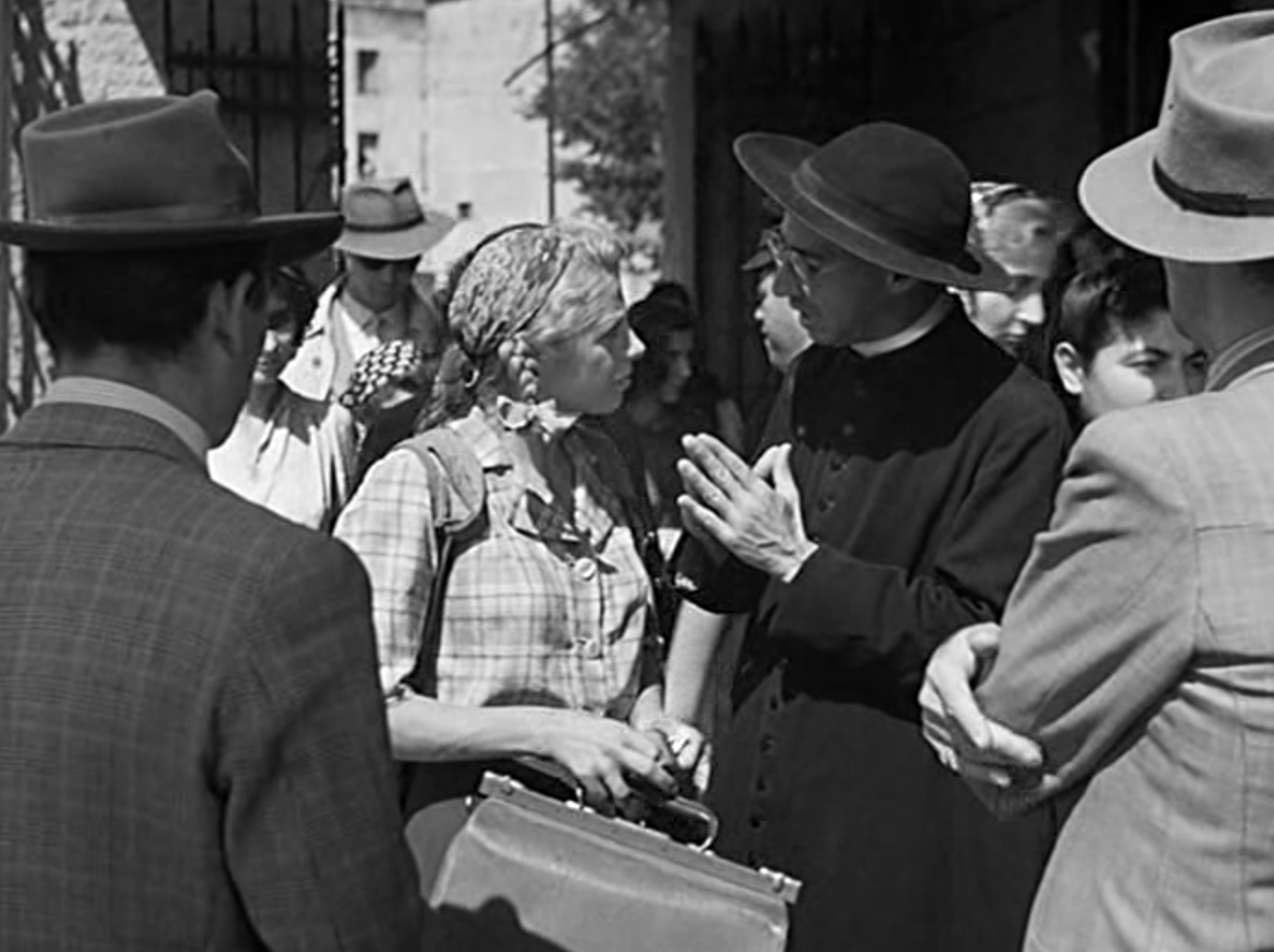
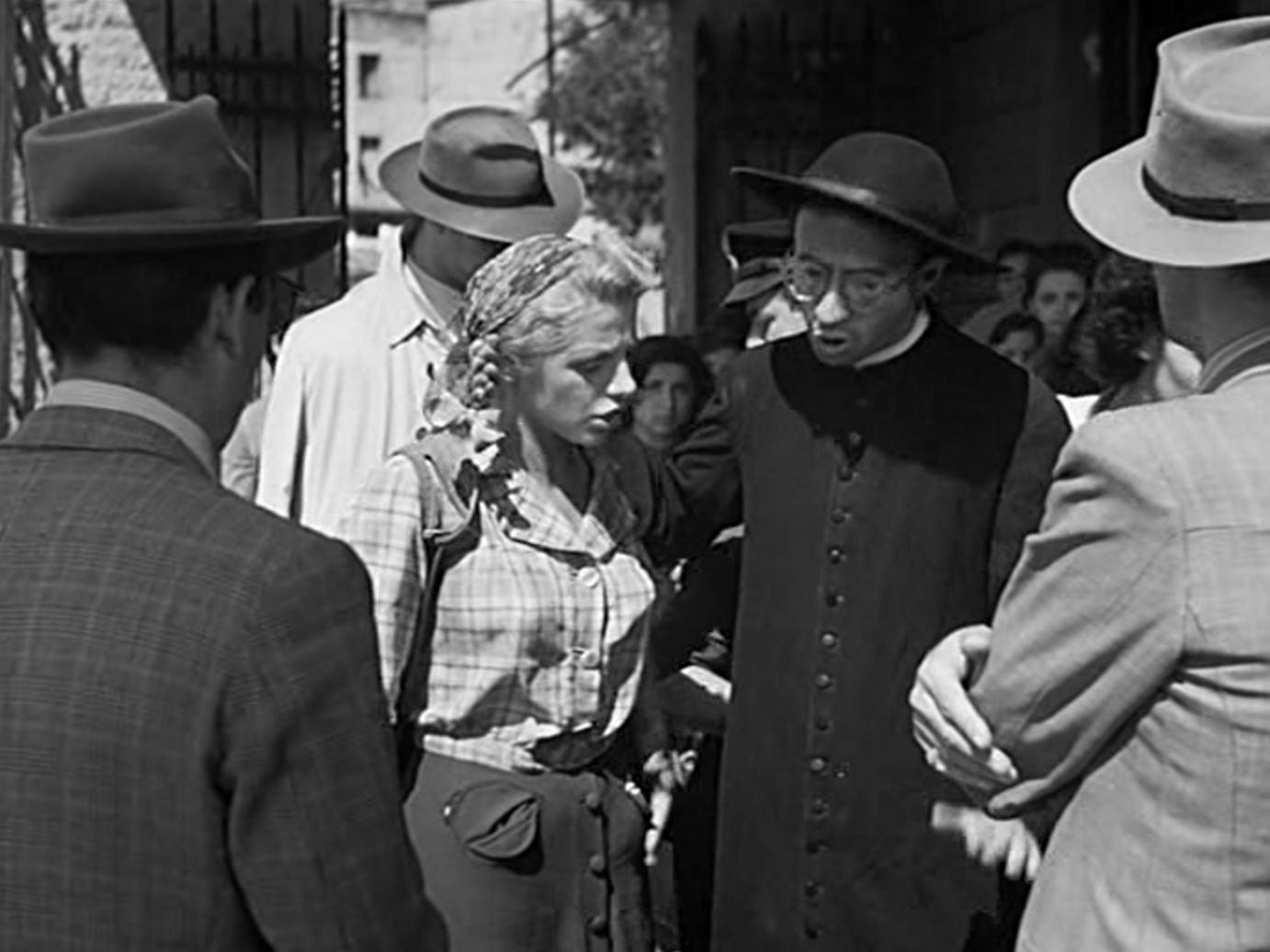
Il prete le porge i biglietti. Fa un gesto con le mani giunte. "Conto su di te, Amelia. State unite e in guardia con tutta la confusione che c'è".
"Tranquillo, Reverendo".
The priest hands her the tickets. He gestures, palms pressed together. “I’m relying on you, Amelia. Take care and stay together and be careful with this crowd.”
“Don’t worry, Father.”
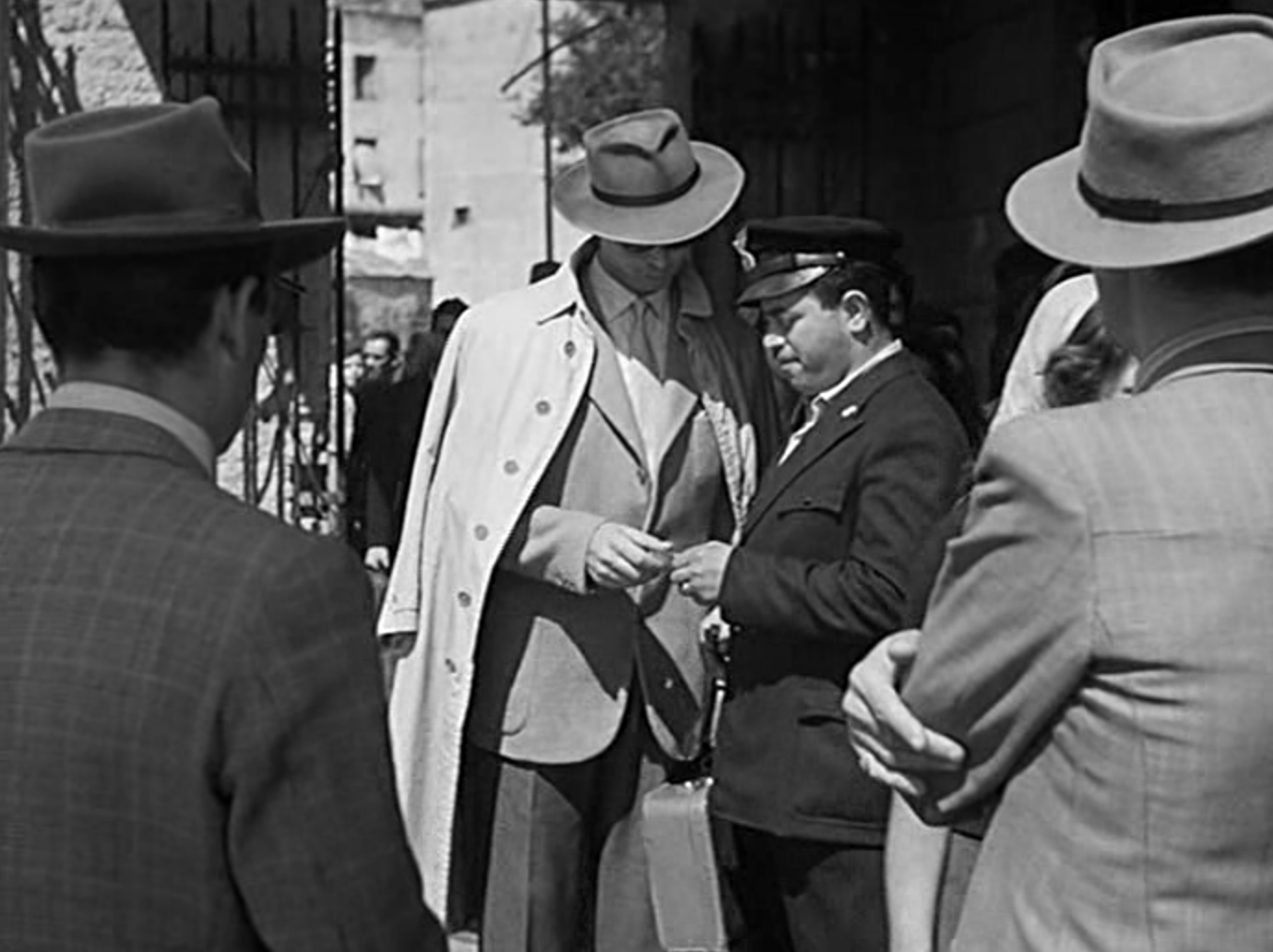

Poi, un uomo con occhiali scuri e un trench sulle spalle consegna il suo biglietto all'addetto.
Le figure che lo aspettavano lo affrontano. “Polizia, favorisca i documenti”.
Next, a man in dark glasses, with a trenchcoat thrown over his shoulders, hands the clerk his ticket.
The figures who were waiting for him confront him. “Police, your documents, please.”
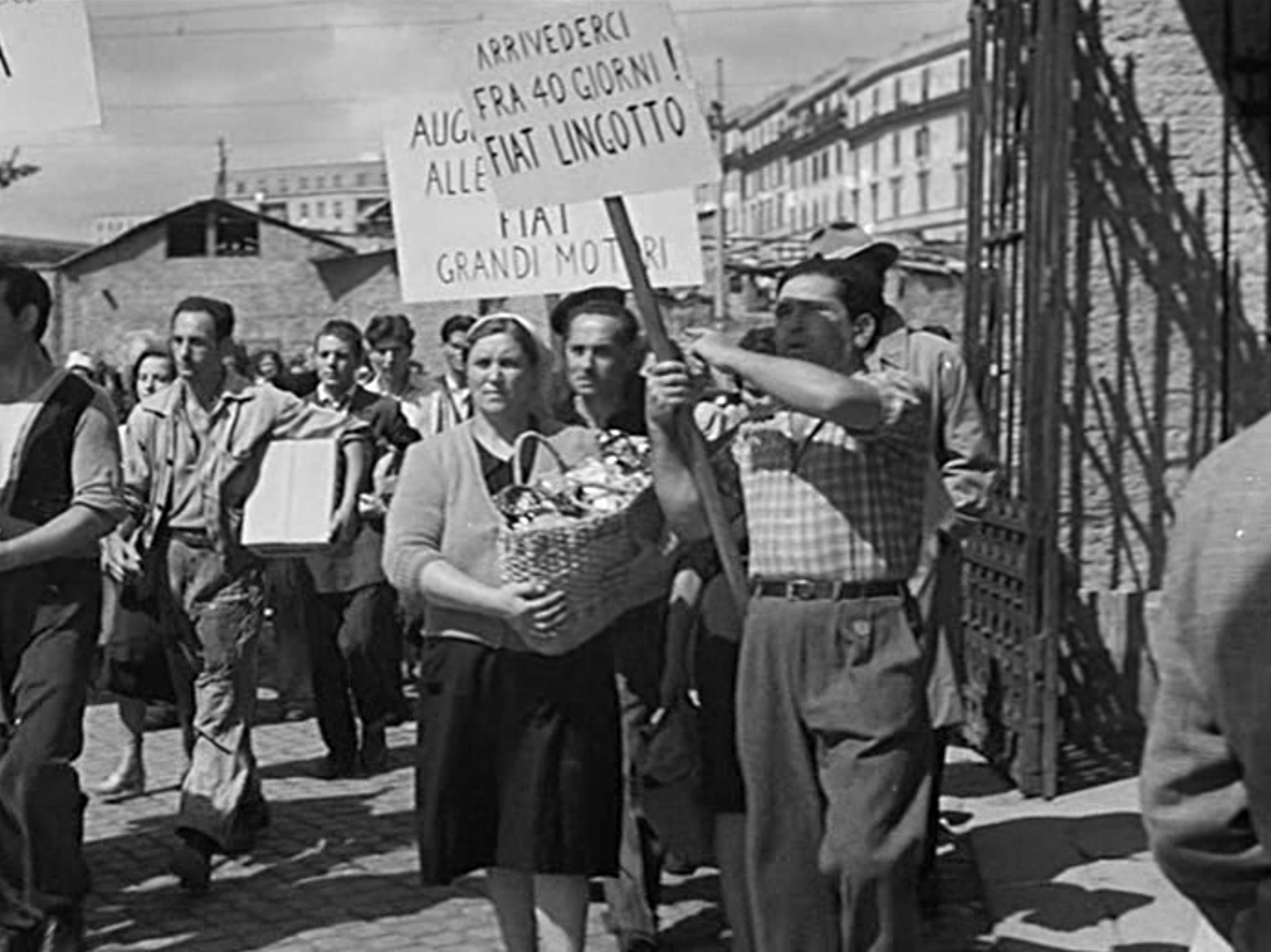
Si avvicina un altro gruppo. Un cartello recita: “Arrivederci fra quaranta giorni! Fiat Lingotto”.* Sono operai in partenza per la raccolta del riso. L'uomo con il cartello indica: "È il binario sei!”
*Un tempo uno stabilimento Fiat di Torino, il Lingotto è oggi un centro commerciale.
Another group approaches. A sign says, “See you in forty days! Fiat Lingotto.”* They’re workers off to harvest rice. The man with the sign points: “Platform six!”
*Once a Turin Fiat plant, Lingotto is now a shopping mall.
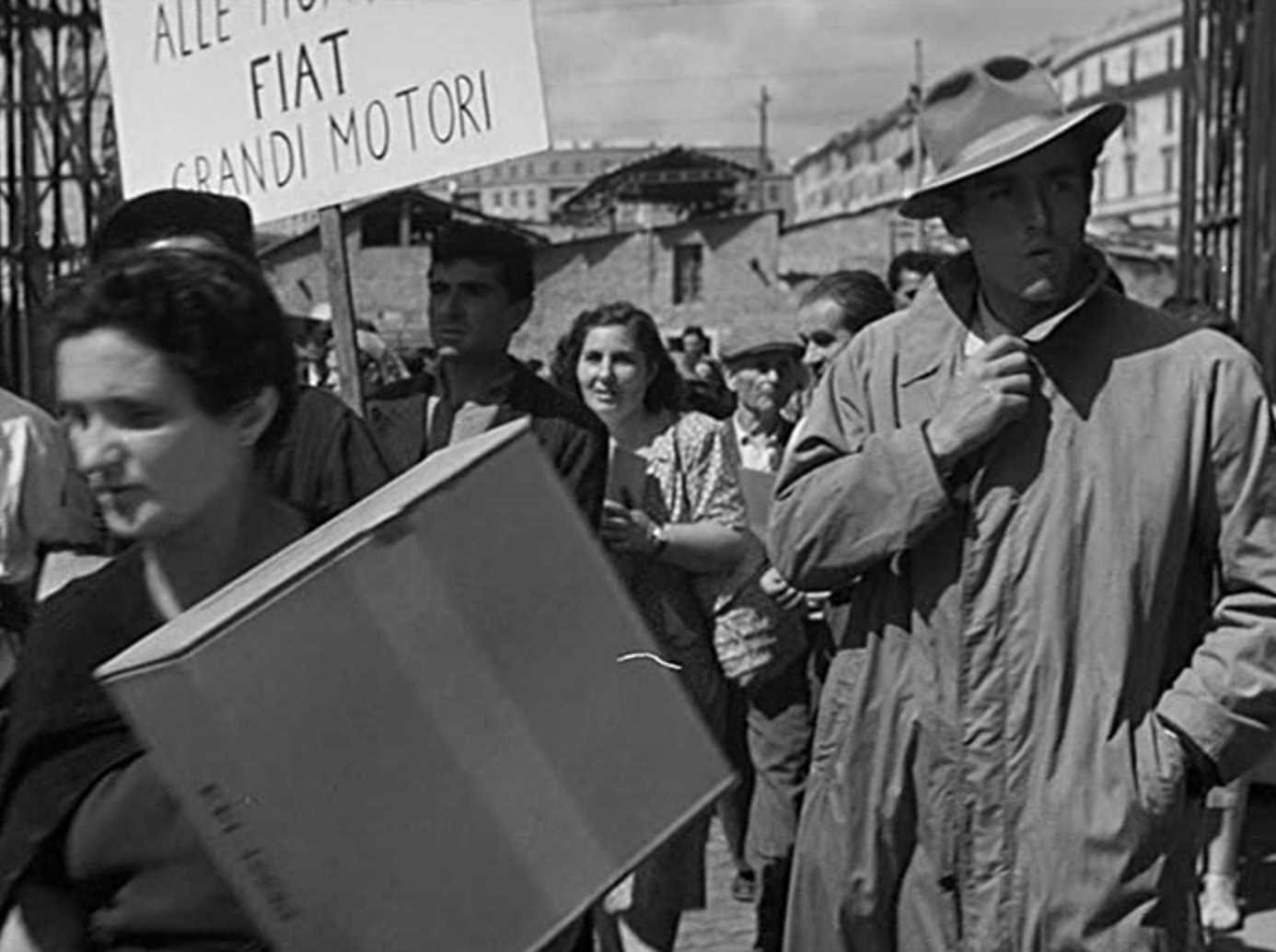
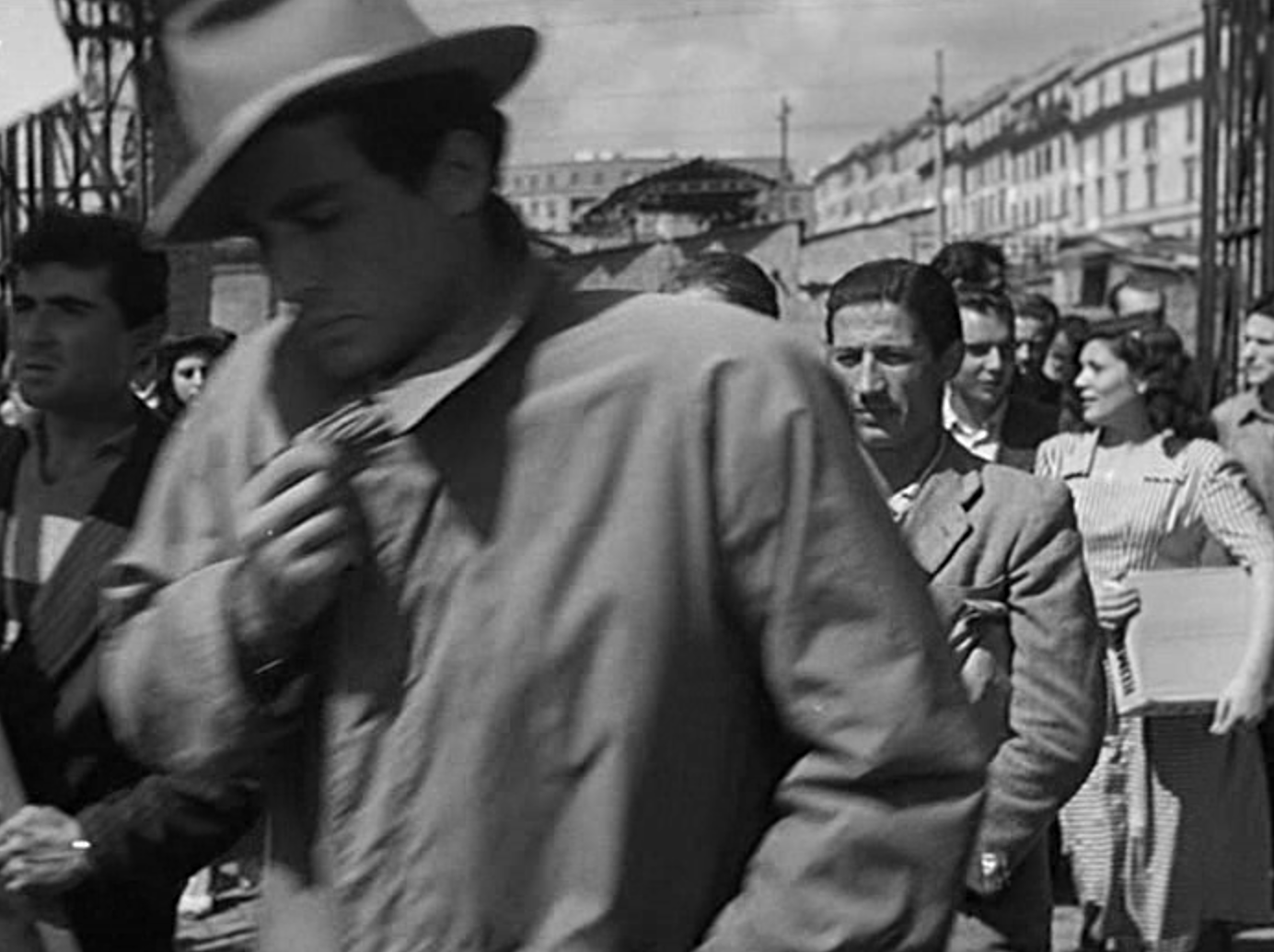
Tra la folla, un uomo con un trench sgualcito cerca di passare inosservato. Si tratta di Walter Granata (Vittorio Gassman); lo rivedremo più avanti.
In the crowd, a man in a crumpled trenchcoat is trying to pass unnoticed. This is Walter Granata; we’ll be seeing more of him.
FINE PARTE 1
Ecco Parte 2 of this cineracconto! Subscribe to receive a weekly email newsletter with links to all our new posts.
NOTES ABOUT THE TRANSLATION:
The Italian text of this cineracconto (photo-story) about Riso amaro has been carefully designed as a tool for language learning – and film appreciation. Descriptions of scenes, comments on photography, and background notes are crafted with the objective of giving readers an appreciation of the film, its themes, and the appropriate cultural and historical context.
We have changed most of the dialect to standard Italian. For example we’ve translated the Piemontese dialect song lyrics from “Sa vedessi i mondarisi” into standard Italian. (The title becomes,“Se vedessi le mondine.”)
We’ve made some changes in the original battute (lines) in order to make the cineracconto accessible to a wide range of language learners. This normally means using more basic vocabulary and grammar.
However, we sometimes do include a more advanced word or a grammatical structure, if it is the best choice or will be of value to a learner. And we occasionally maintain phrasing that is not so easily translatable, if the Italian is common and useful to the language learner. For example in Parte 1, one of the police officers, looking over all the beautiful women, says, “Quanta grazia di Dio!” Not having the space constraint of subtitles, we’ve given a rather complete interpretation of the phrase (literally, “So many blessings from God!”) to convey his meaning as clearly as possible: “So many beautiful women! Thank you, God!”
Where words are old-fashioned, or otherwise not so useful, we may adapt them. In Parte 6, for example, the word the foreman uses for the straw beds – “i pagliericci” – is not common, so we’ve changed it to “letti di paglia.” This gives the reader a chance to work with the language, rather than just learning a new word of dubious value.
In general, we aim to make the two languages parallel in structure, so that the text will be clearer to lower level B2 readers. However, where the differences could be instructive, we maintain them. For example, in Parte 5, we translate “Indossano l'uniforme e portano degli zaini” with the fluid English sentence “They’re in uniform, carrying backpacks,” rather than “They’re in uniform and carry backpacks.” These types of translations aren’t difficult to follow and are instructive as to Italian syntax.
For a simpler example, also from Parte 5: “Tieni, prendi!” we translate as “Here, take this.” The reader sees that, unlike in English, the object isn’t necessary in Italian.
We generally minimize the uses of the congiuntivo, but do keep it in if it’s easy to understand and instructive. For example, in Parte 7, Beppe says, “Come se fosse facile!” [As if it were easy!] That’s a good, basic sentence in the congiuntivo. Likewise, also from Parte 7: “Sembra che abbiano deciso di mandare via quelle senza contratto sindacale.” [It looks like they’ve decided to send home the ones who don’t have a union contract.]
We occasionally modify the translation slightly to provide a clearer grammatical example. For example, in Parte 6, when Marco asks Silvana where she’s from, the actual line is “Di Ferrara” [from Ferrara]. We have written it as “Sono di Ferrara” [I’m from Ferrara], just to provide a more complete grammatical example.
If a character speaks a word imported from English, we use instead the common Italian equivalent, where one exists.
Since our format change in September 2021, we’re focused less on building vocabulary and more on ensuring a satisfying reading experience for the language learner. We’re in the process of reformatting the past cineracconti, in chronological order, beginning with the most recent. Currently, the oldest cineracconto in the new format is Le notti di Cabiria. Readers interested in a more challenging read and in vocabulary-building may look at the earlier cineracconti, where new words are marked in bold, a complete vocabulary list is provided at the end, and the English translation is in a separate PDF and not side-by-side with the Italian. See, for example, the bottom of Parte 1 of Rocco e i suoi fratelli.
Unlike subtitlers, we have the luxury of space and can include all the words we want. Note that our transcriptions do not follow the English subtitles, which are often inaccurate, and not only for reasons of space. Either from inattention or an excess of creativity, the dialogue may be totally transformed in the subtitles. Our Italian text generally reflects the exact words spoken by the actors (with the exceptions noted above). Consequently, the cineracconti will assist readers as they watch the film, even with the subtitles off.
There is often more than one correct way to translate a particular word or phrase. Context is everything, and we – as language teachers and language learners – have made careful choices, based on the goals of our work here at Li conoscevo bene.
BLOG TRANSLATION OVERVIEW: The first cineracconti in this series (up to Risate di Gioia, April 2020) are at a more advanced intermediate (B2) level. The later cineracconti (starting with Roma città aperta, September 2021) are at a lower intermediate (B2) level. To see the more advanced cineracconti, please go to the blog Welcome page: the Italian movies are posted on top. There is also a list in the right hand column mid-way down the page; that includes both Italian and international films.
We love language and we sometimes spend a very long time debating the best way to translate a particular word or phrase. We’d be very happy to hear your thoughts about our translations. Write to us at info@liconoscevobene.net!