Regia / Director: Giuseppe De Santis, 1949

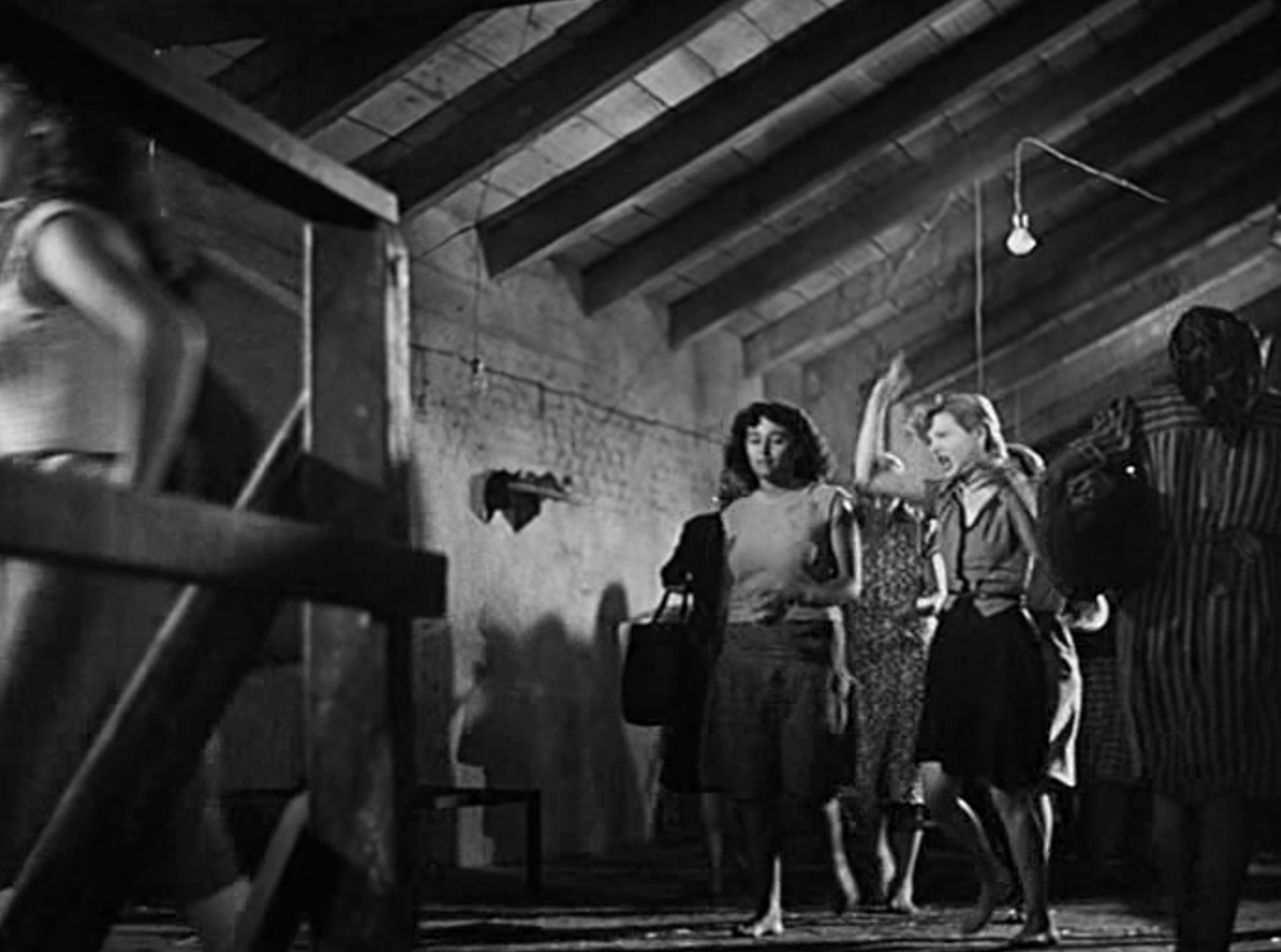
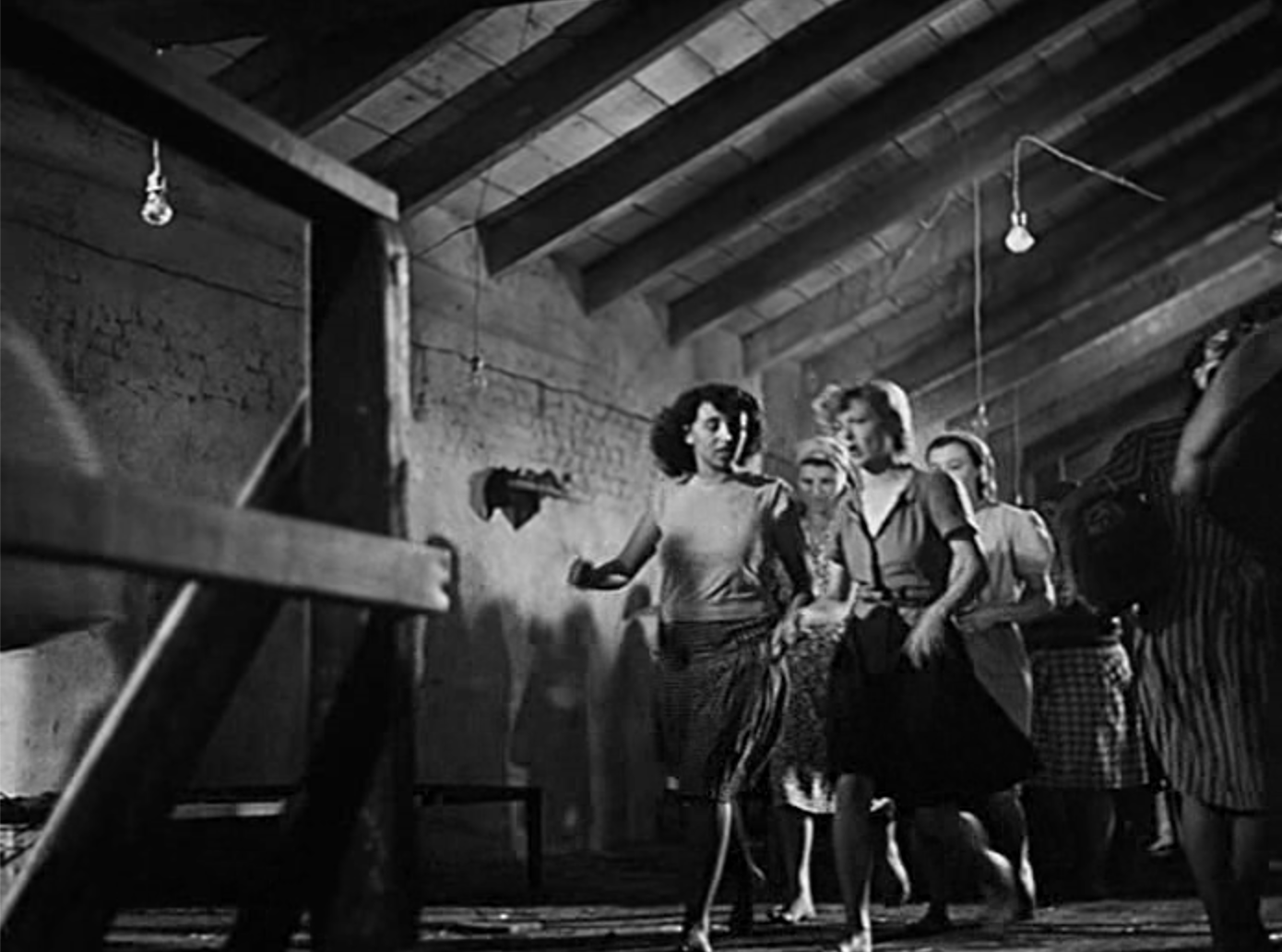
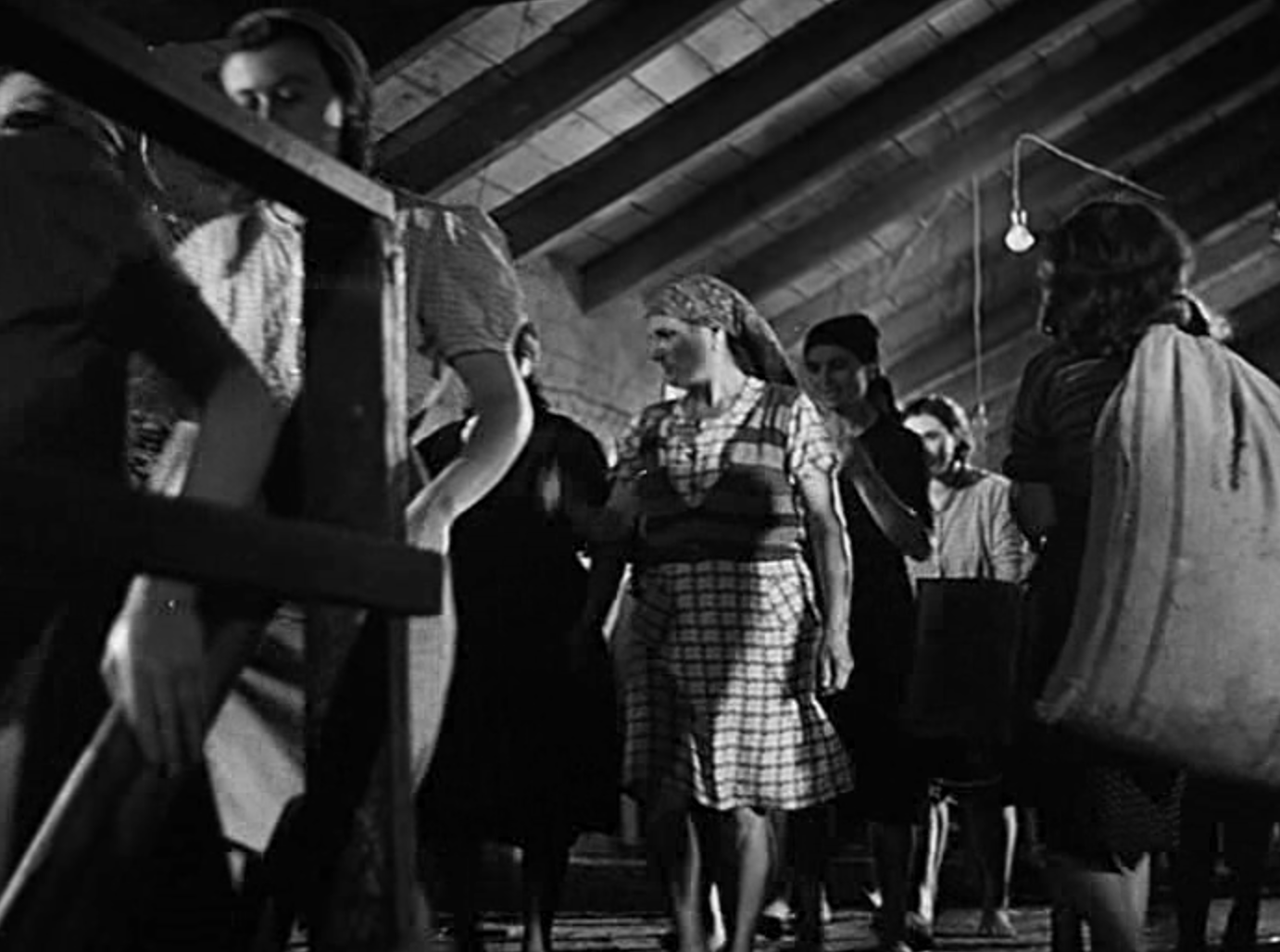
La collana è sparita, ma le altre donne hanno altre preoccupazioni, camminano e parlano animatamente.
The necklace is gone, but the other women have different concerns, walking and talking heatedly.
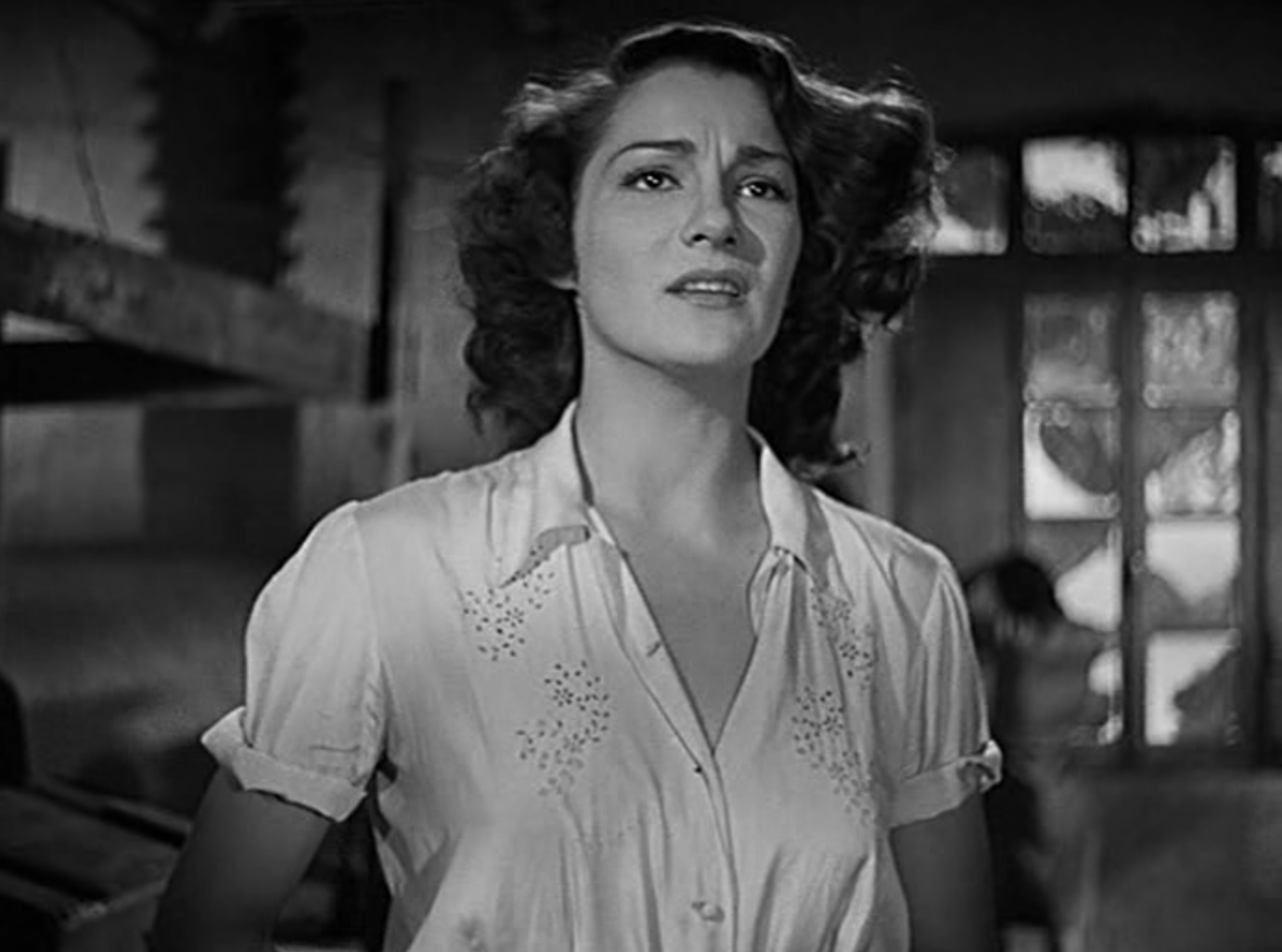
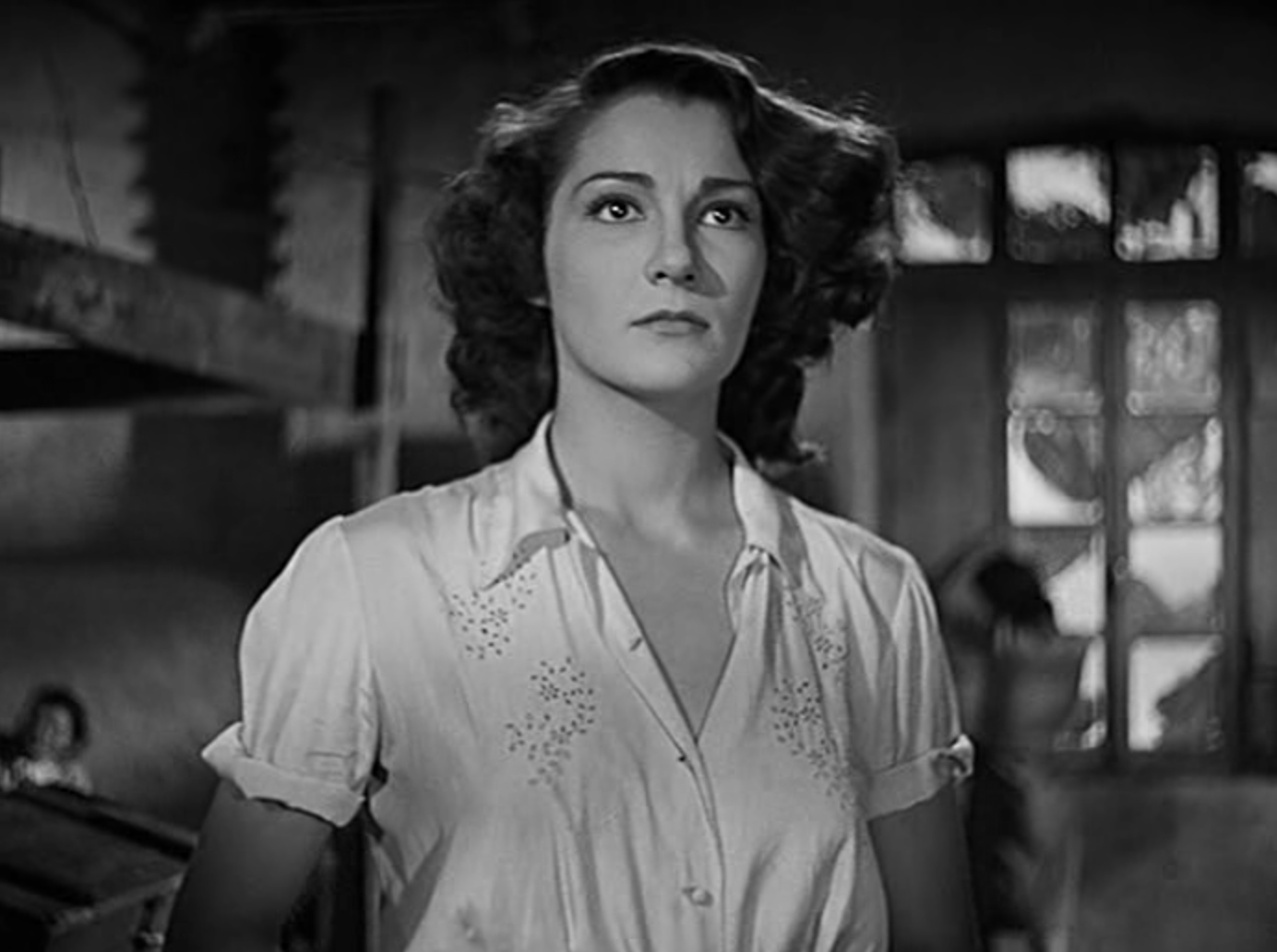
Francesca chiede: “Che succede?”
“Sembra che abbiano deciso di mandare via quelle senza contratto sindacale”.
Francesca asks, “What’s going on?”
“It looks like they’ve decided to send home the ones who don’t have a union contract.”
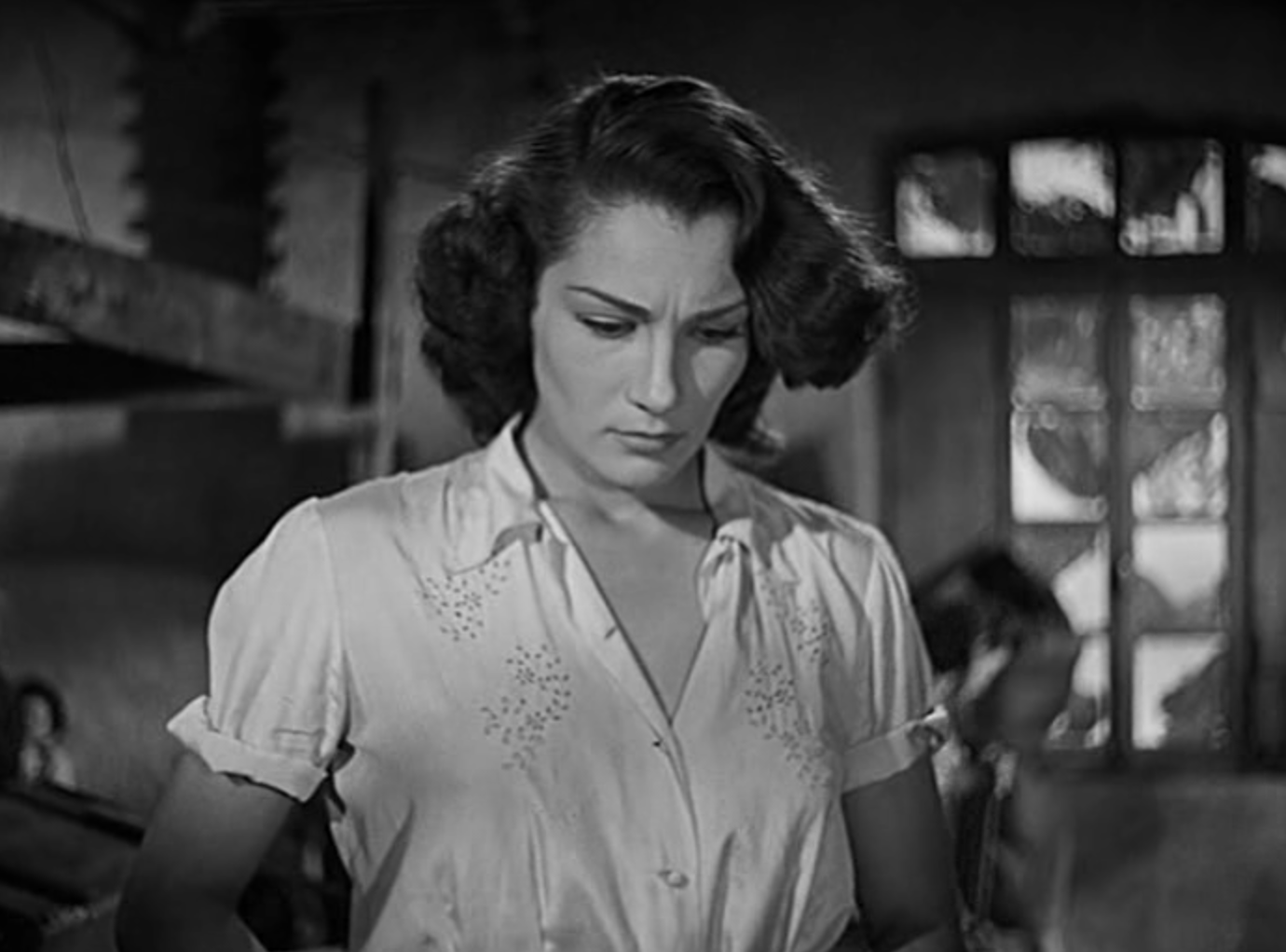
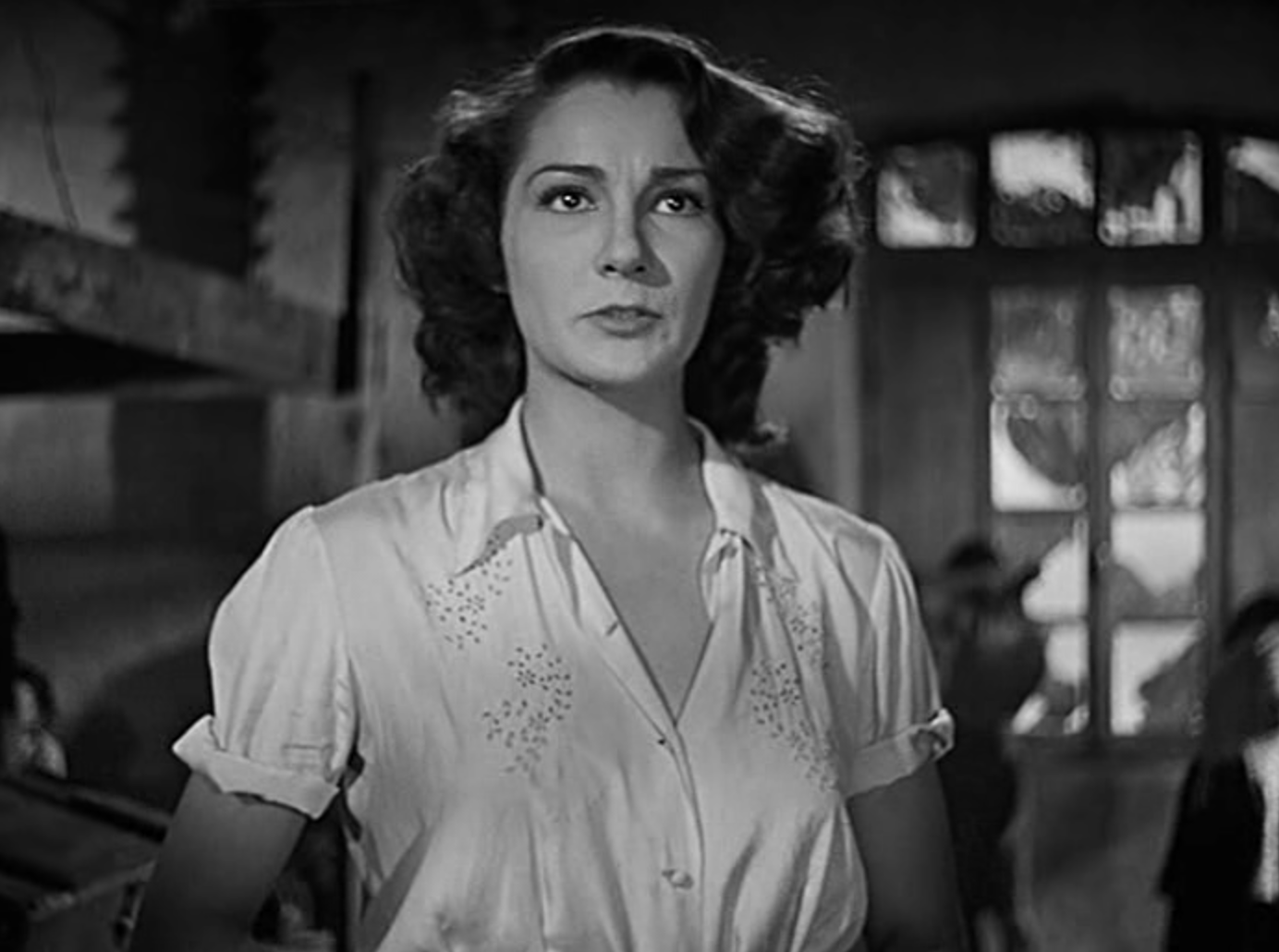
Un'altra voce aggiunge: "Io dico sempre che non vale la pena venire in risaia senza le carte in regola".
Francesca sembra sbalordita, pensierosa. Poi: "No! Non possono mandarci via".
Another voice adds, “I always say it’s not worth it to come to the rice field without your papers in order.”
Francesca looks stunned, pensive. Then: “No! They can’t send us away.”
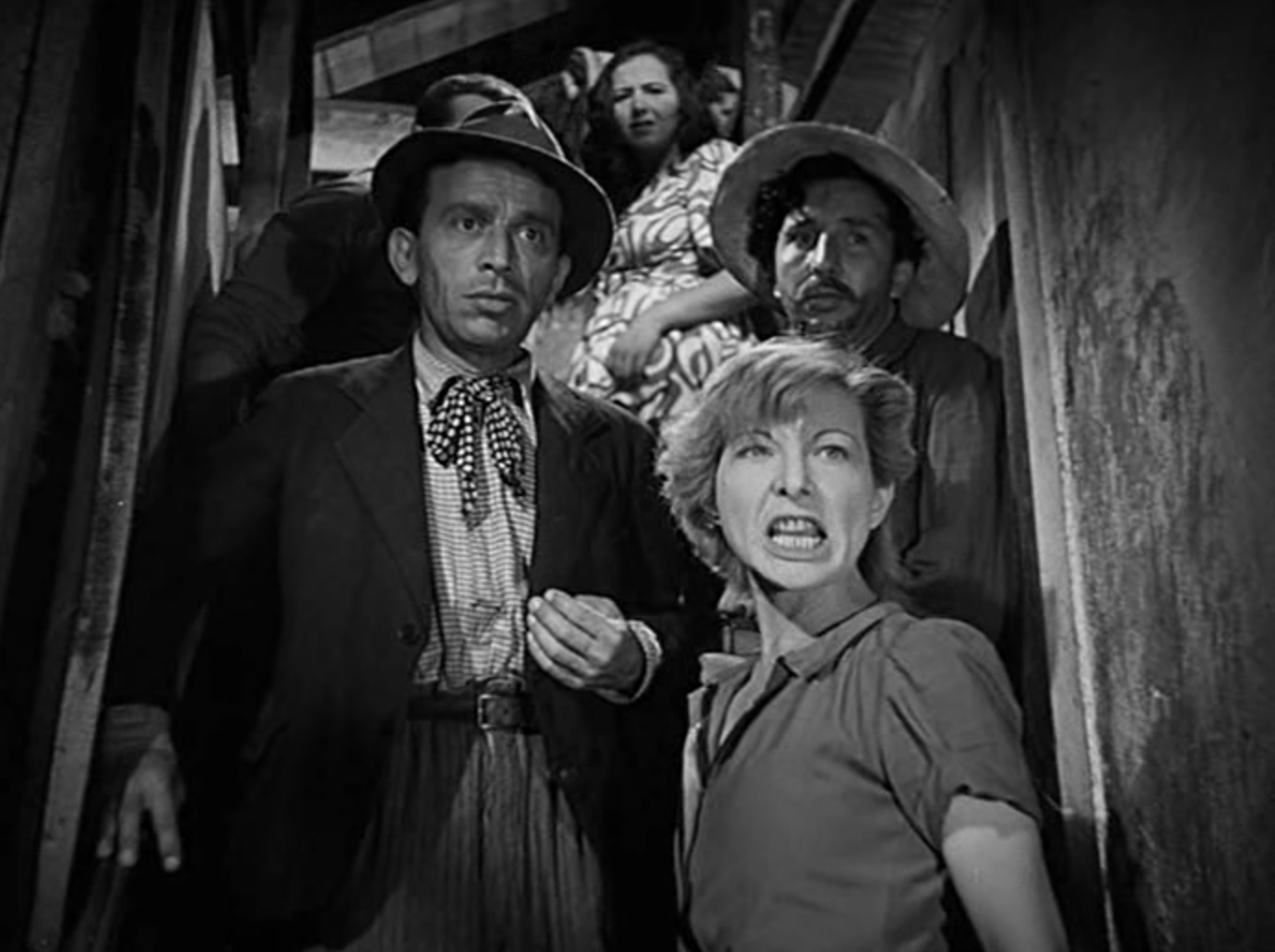
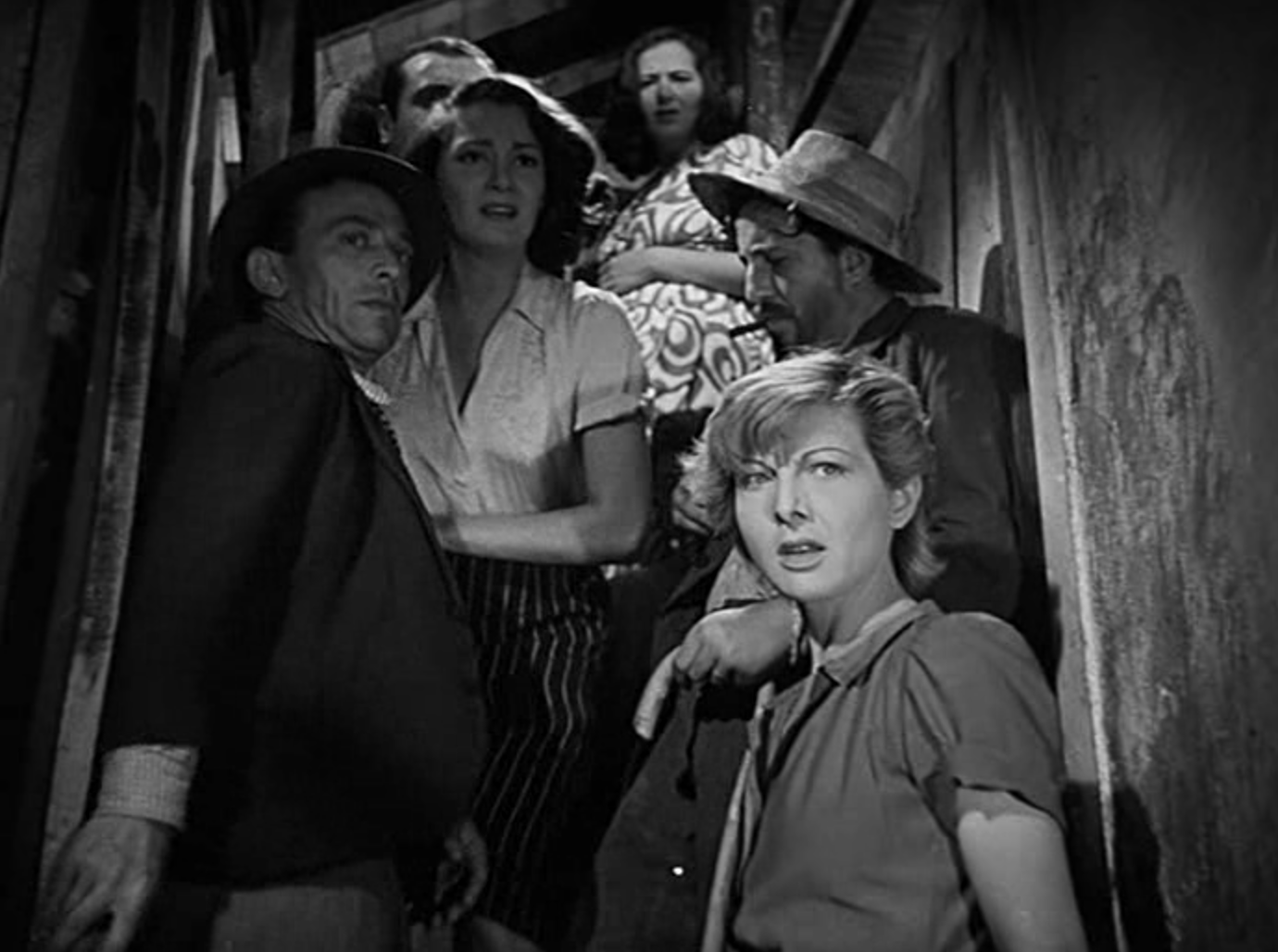
Da una bella inquadratura delle lavoratrici e dei caporali ammassati sulle scale, Celeste dice: “È un'ingiustizia! Siamo qui per lavorare, mica per rubare!”
Il supervisore risponde affabilmente: “Lasciatemi parlare”.
From a beautiful shot of the workers and middlemen crowded on the stairs, Celeste says, “It’s not fair! We’re here to work, not to steal!"
The supervisor responds affably: “Let me speak.”
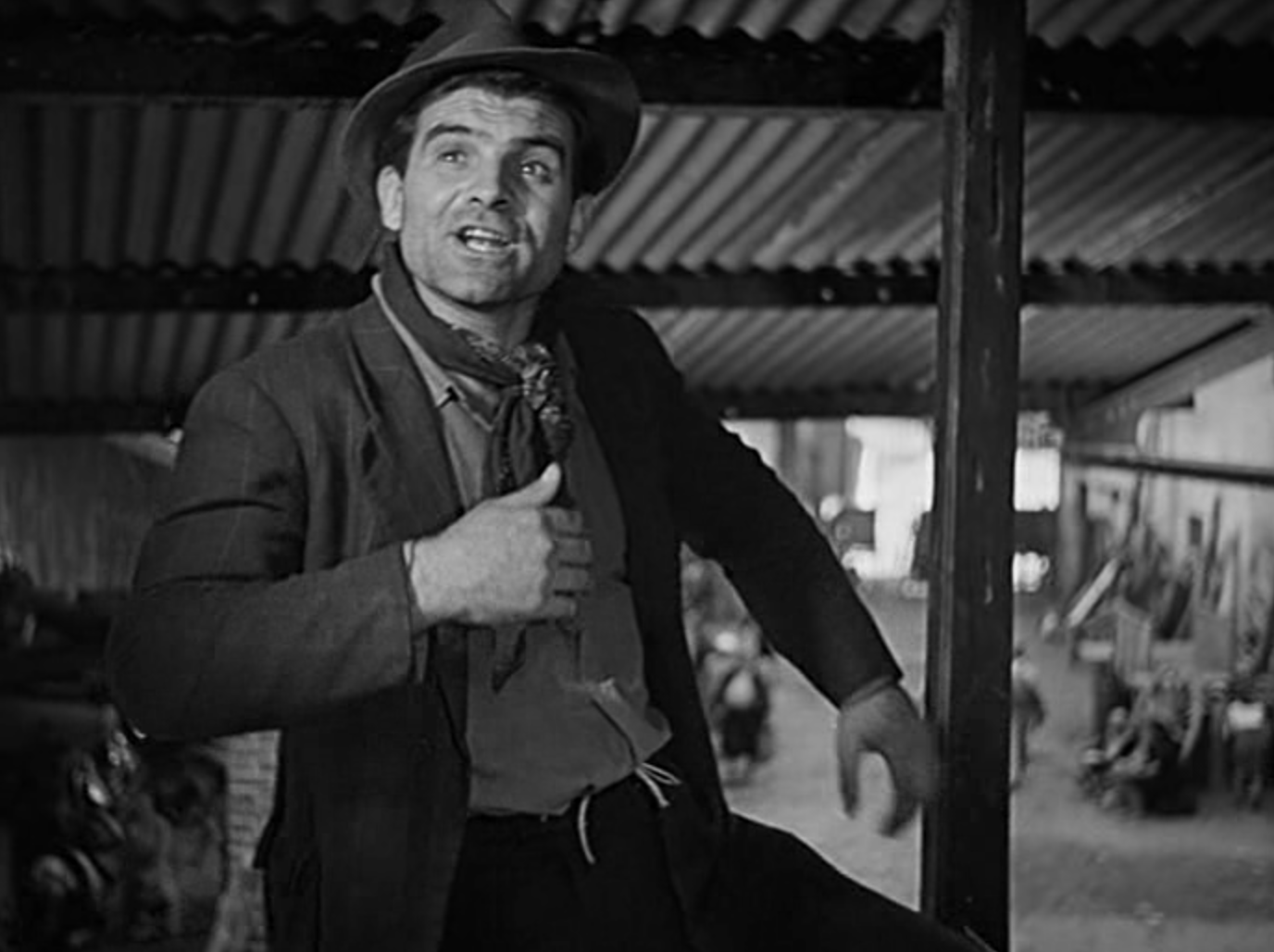
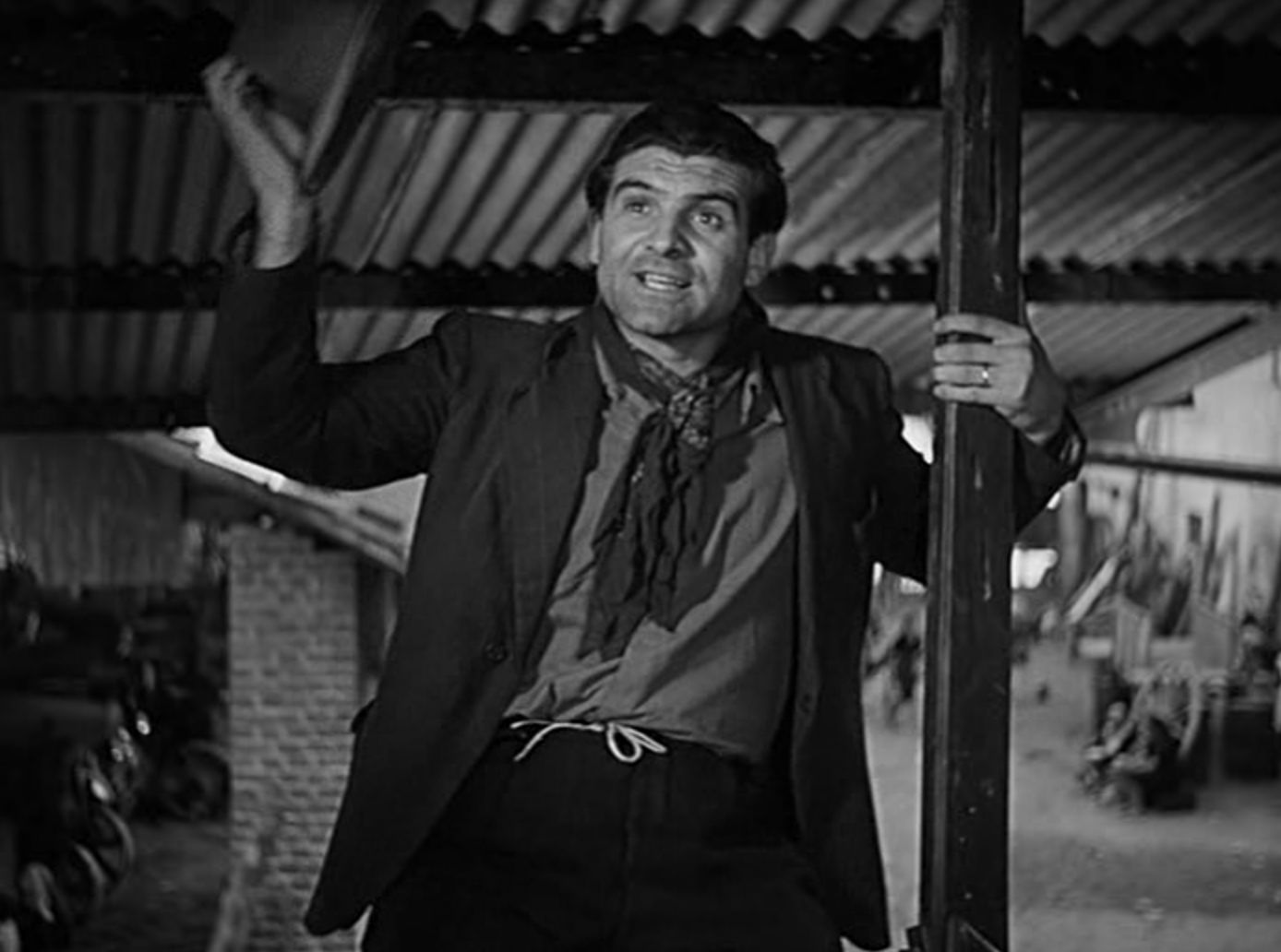
Lui si siede. "Per me, io vi farei lavorare tutte. Ma è un ordine del padrone” – si toglie il cappello in segno di rispetto – “e anche lui non ha tutti i torti. C'è di mezzo il sindacato".
Francesca si sta facendo strada verso la parte anteriore.
He sits. “If it were up to me, I’d let you all work. But it's the boss’s orders.” He takes off his hat in a sign of respect – “and he’s not entirely wrong either. The union is involved.”
Francesca is making her way to the front.
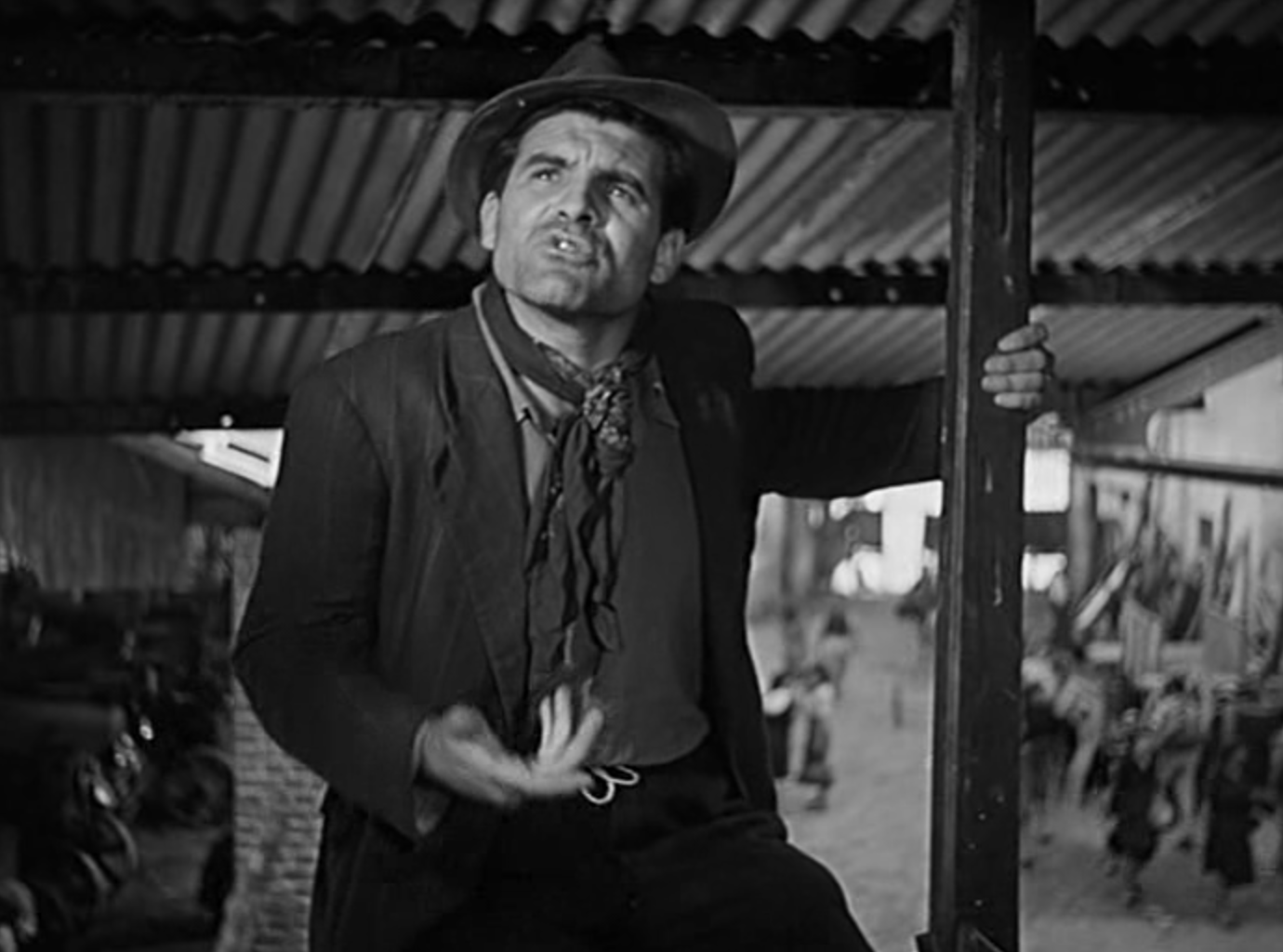
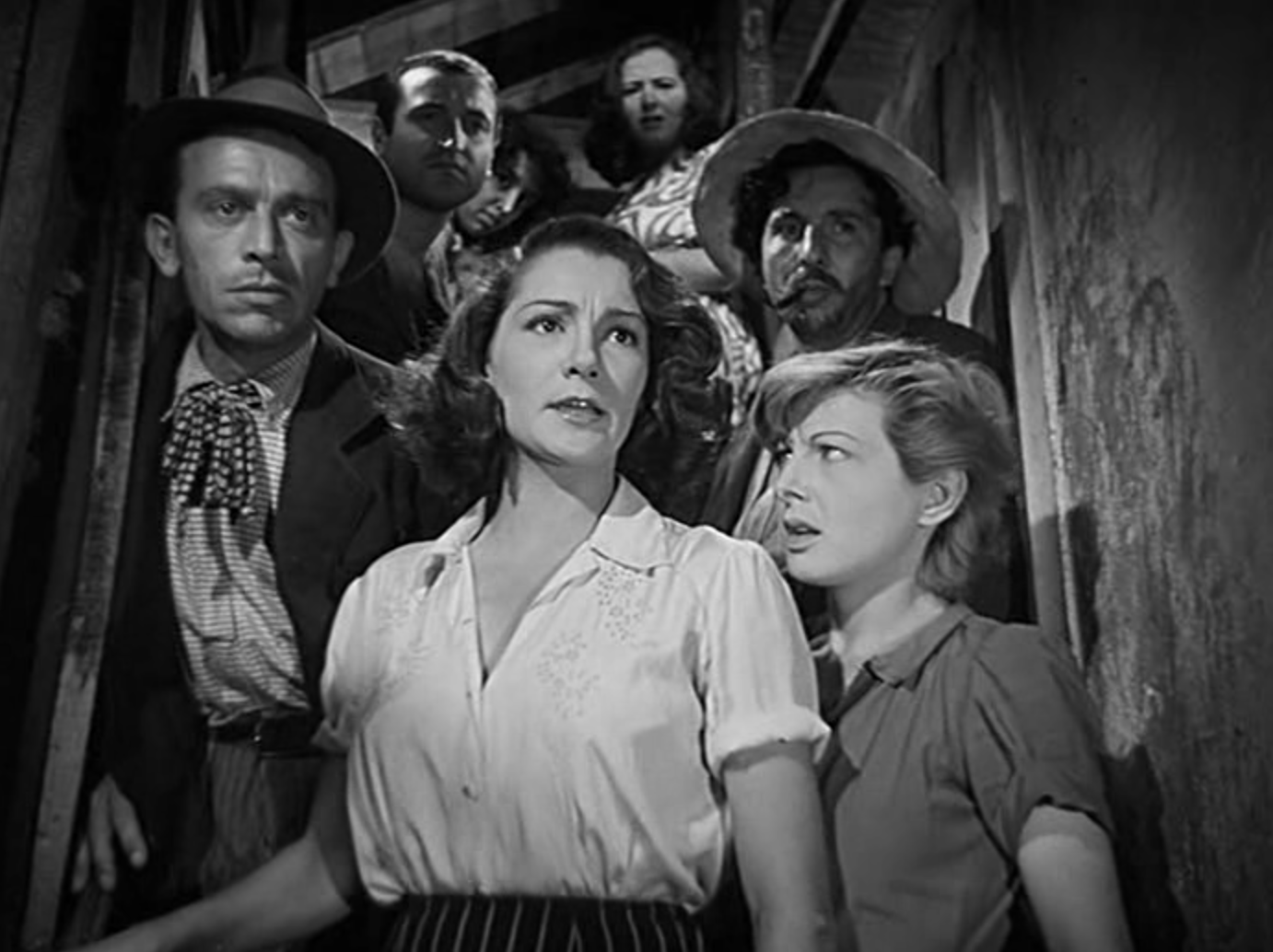
“Potrebbero fare un'ispezione, e allora?” chiede il supervisore.
Francesca protesta: “Vogliamo restare qui. Non riuscirete a mandarci via”.
“They could conduct an inspection, then what?" the supervisor asks.
Francesca protests: “We want to stay here. You can’t send us away.”
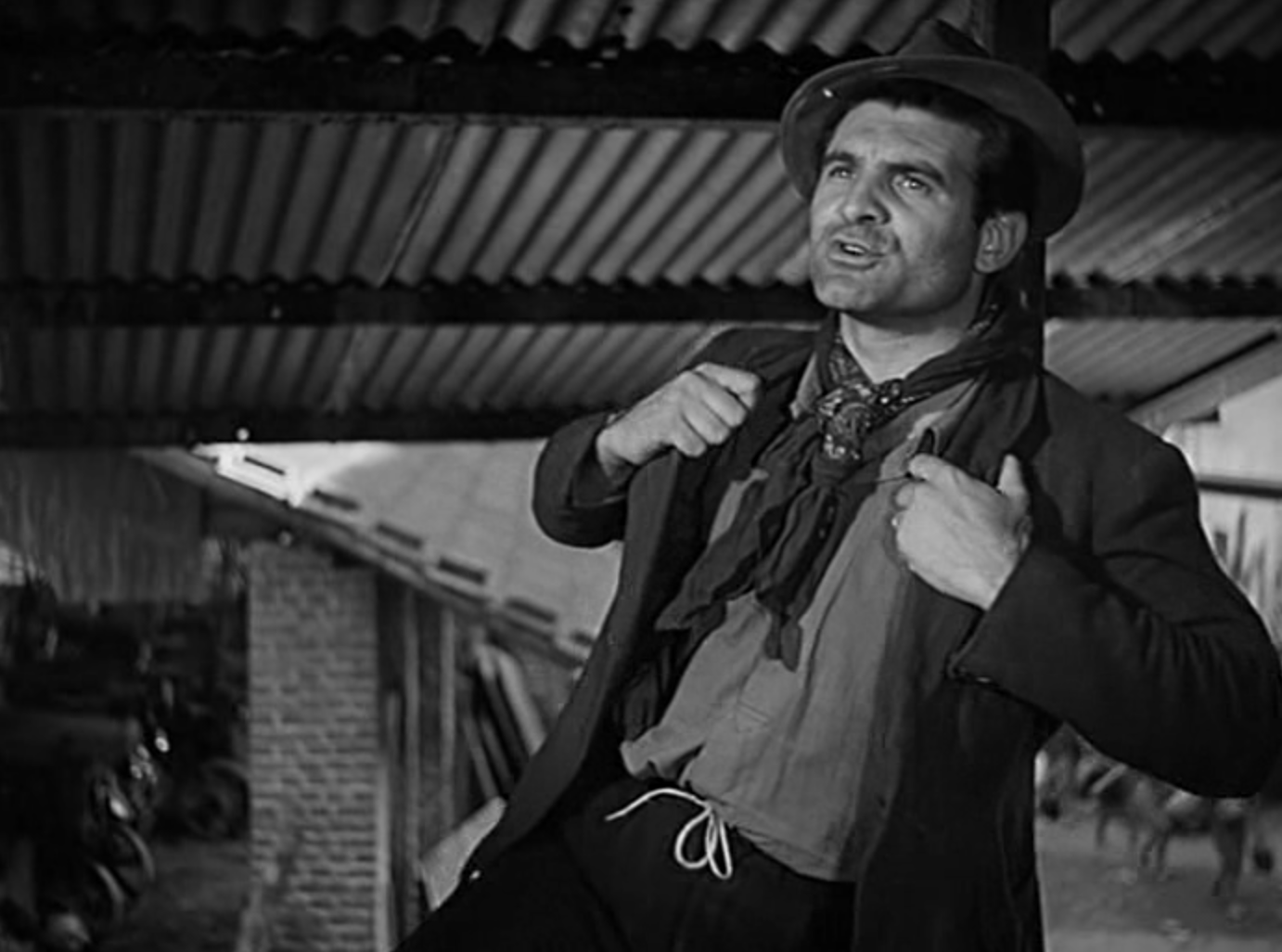
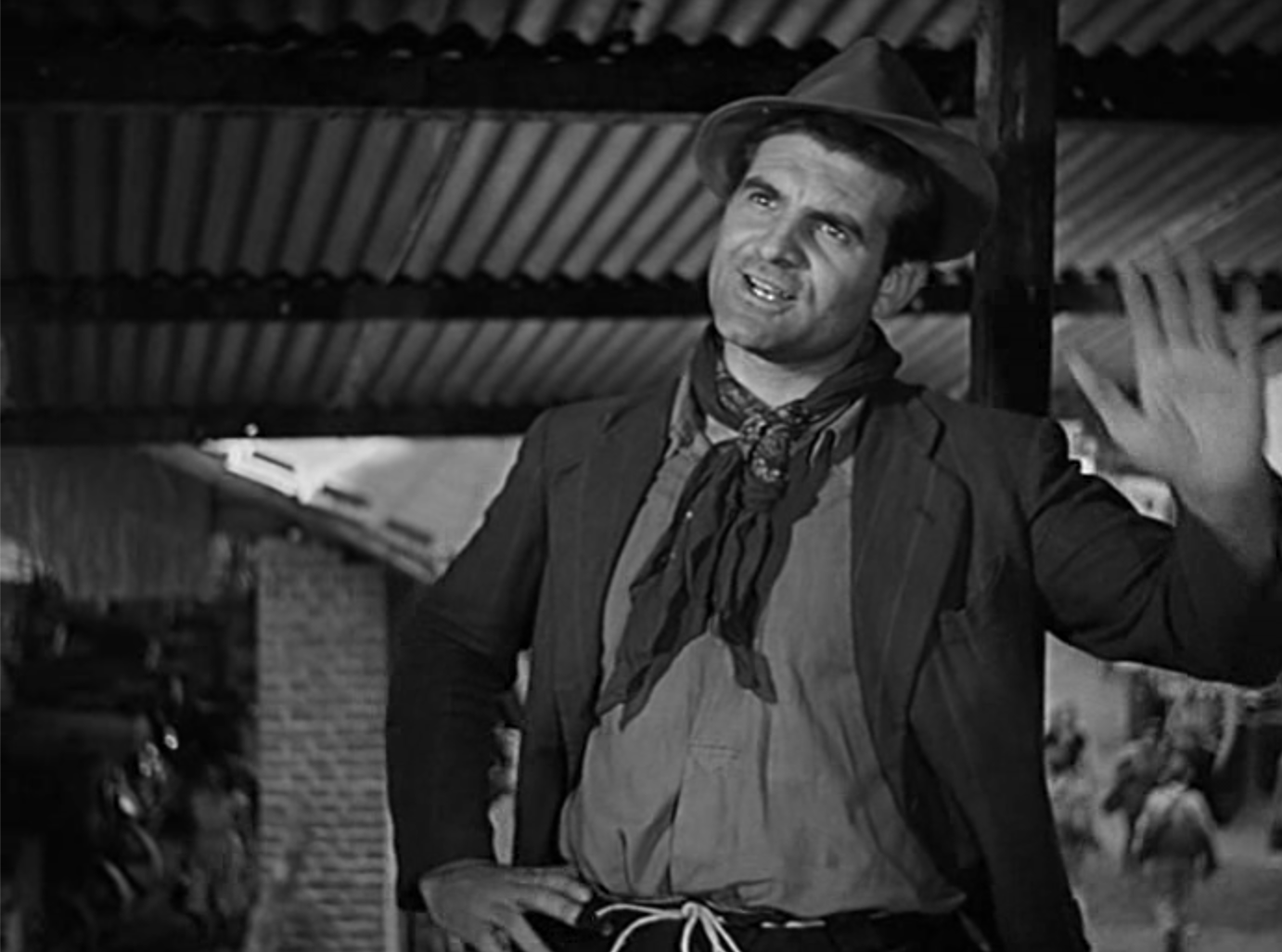
“Io semplicemente riferisco gli ordini: senza contratto, niente lavoro”. Con le mani sui baveri, a suo agio, è incorniciato da una colonna di mattoni e dal soffitto ondulato.
“I’m just passing along the orders: no contract; no job.” Hands on lapels, at ease, he’s framed by a brick column and the corrugated ceiling.
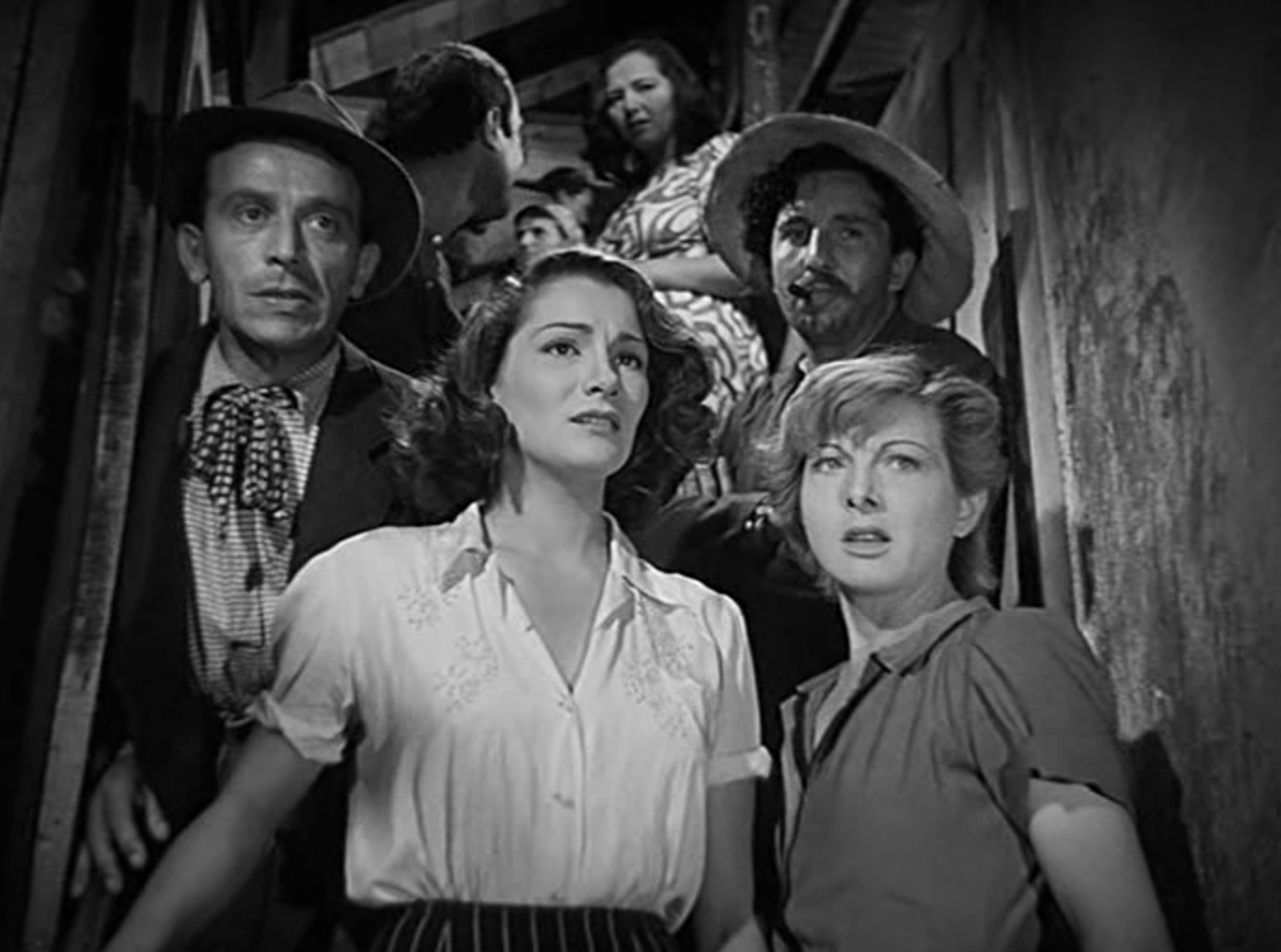
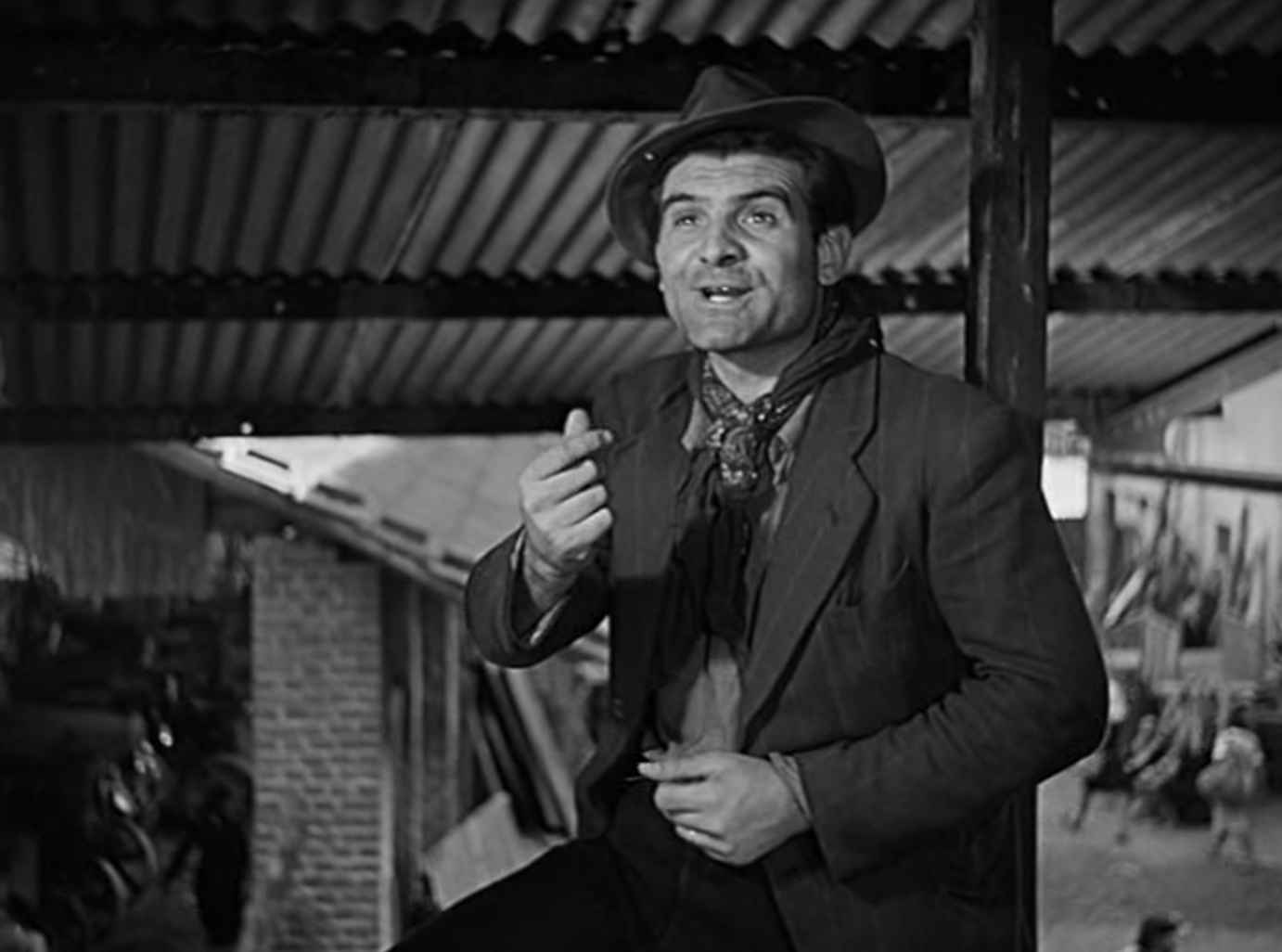
I suoi ascoltatori non trovano conforto nelle sue parole.
“Vi pagheranno il viaggio di ritorno e anche una giornata di paga. Un'intera giornata ciascuno, eh?” Sorridendo, strofina il pollice contro l'indice, il gesto che indica il denaro.
His listeners find no comfort in his words.
“They’ll pay for your return trip, and also a day’s pay. A full day for each of you, eh?” Smiling, he rubs thumb against forefinger, the gesture for money.
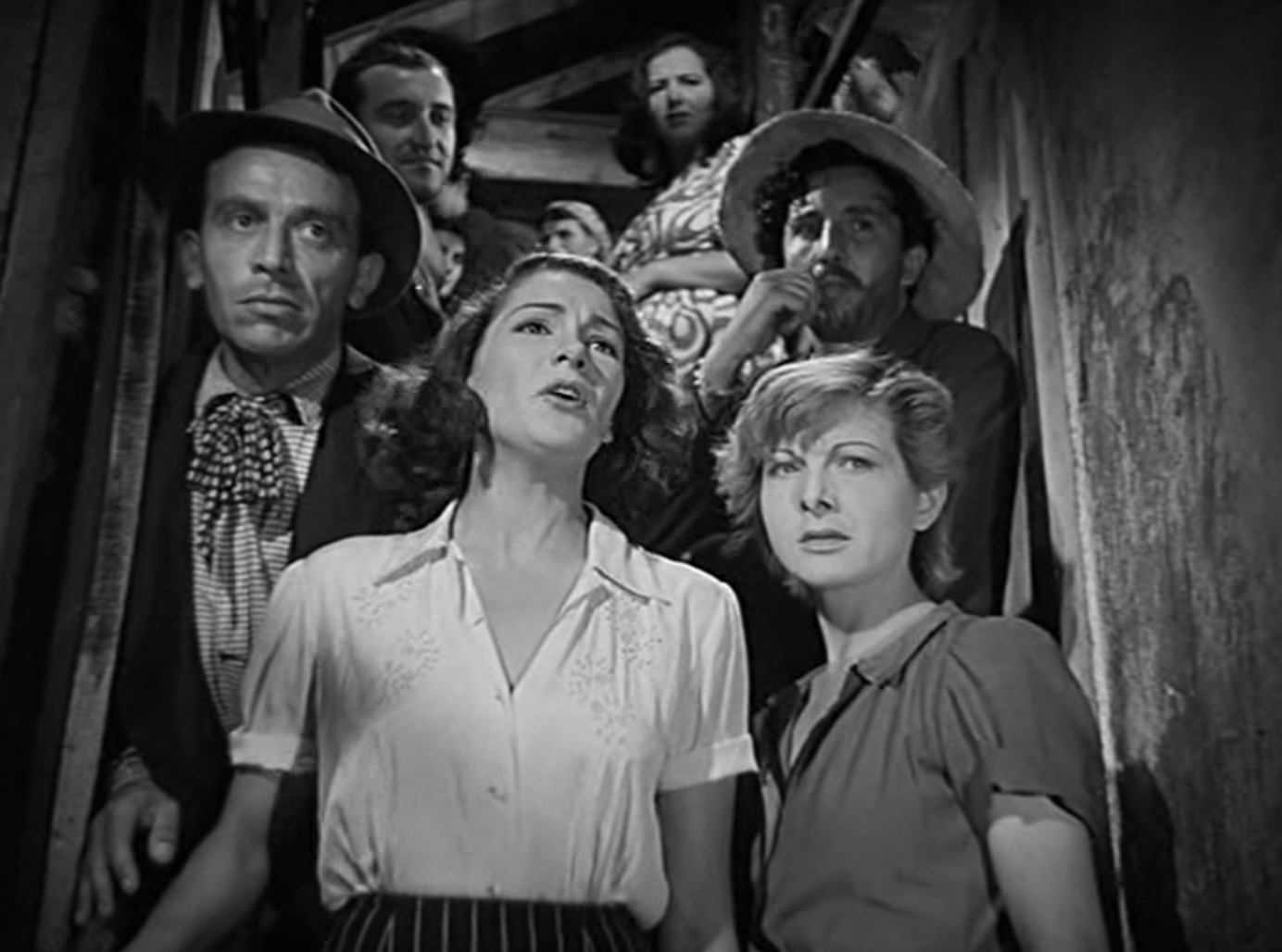
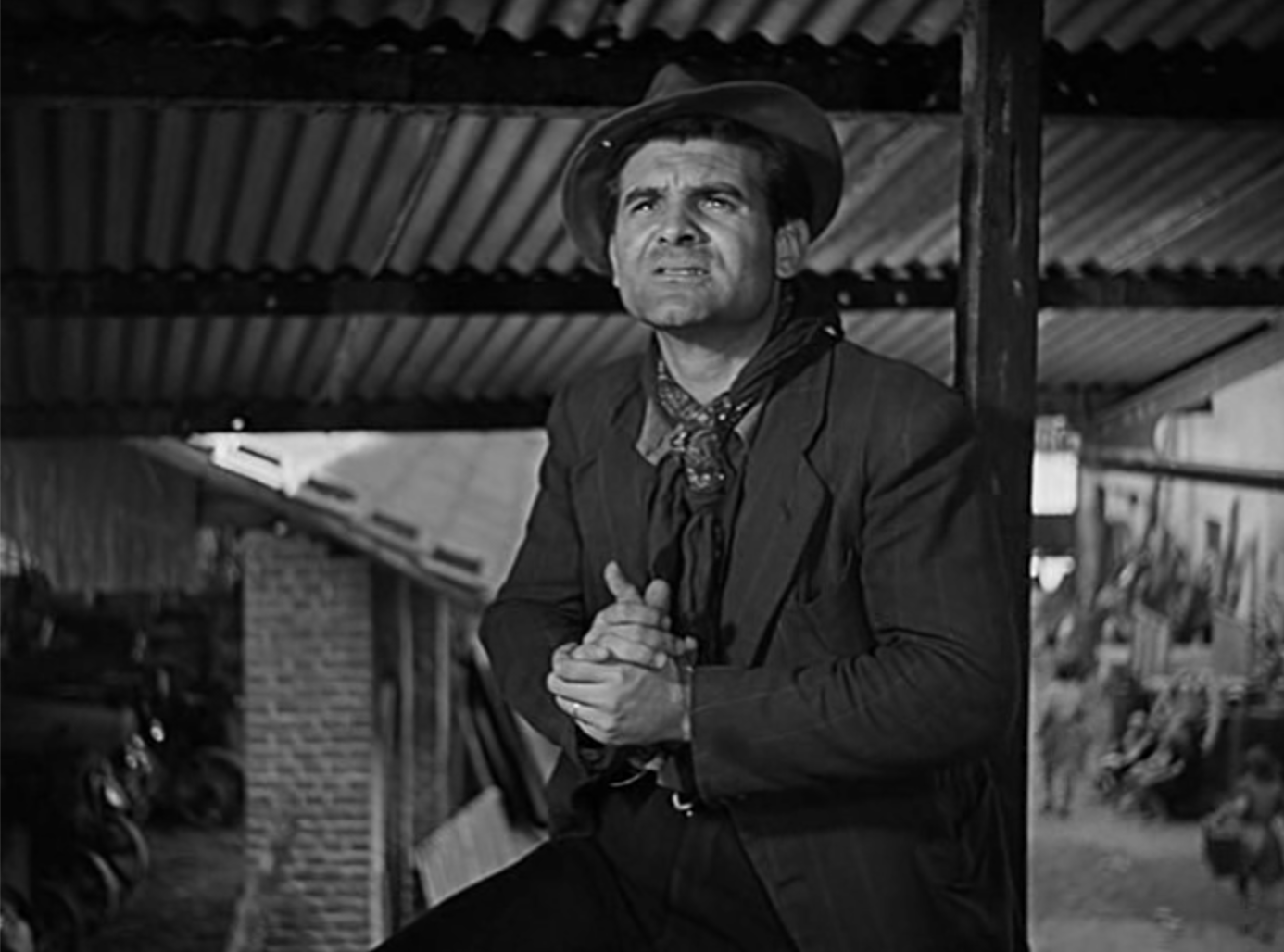
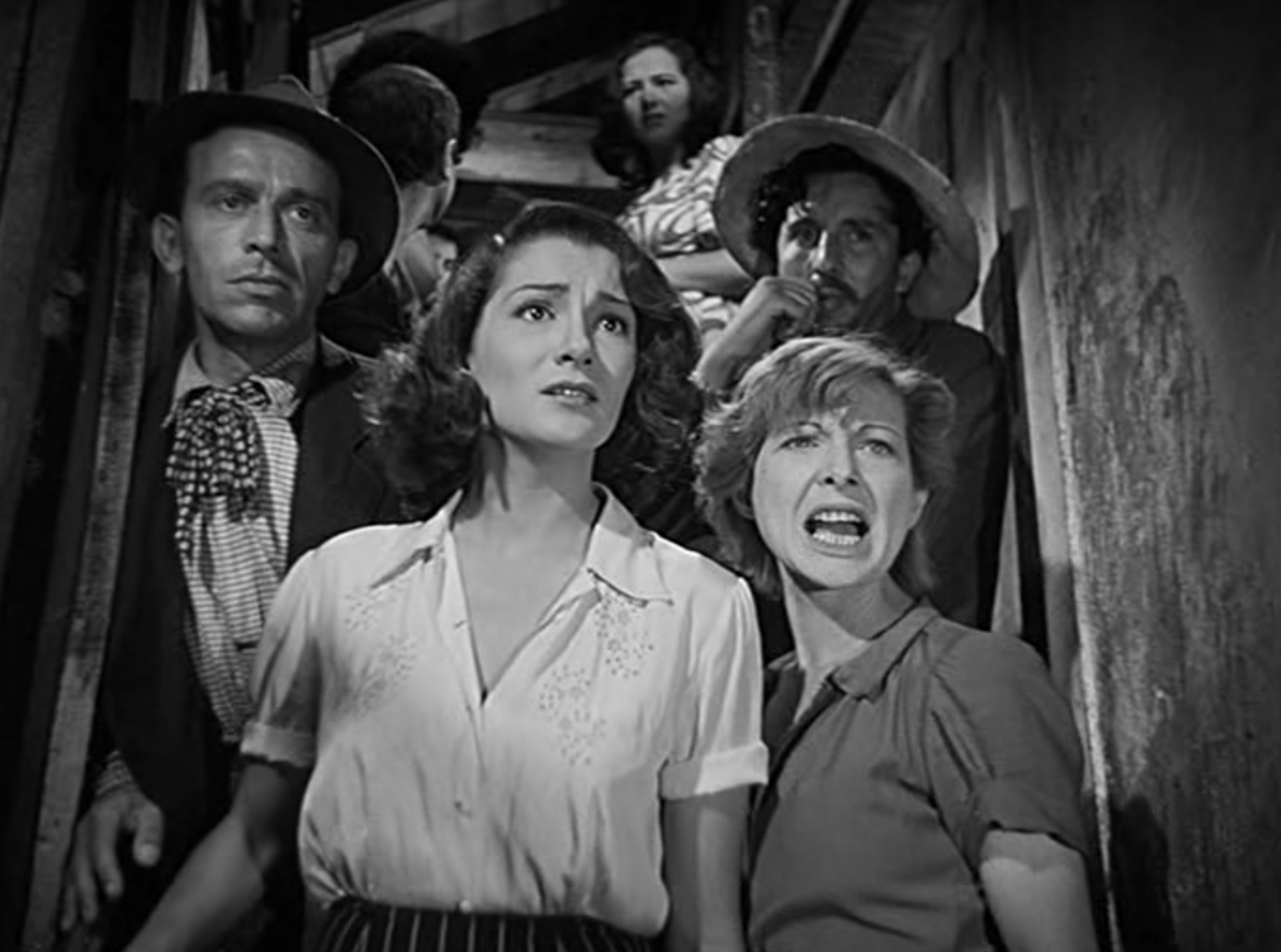
Francesca scuote la testa. "Ma non vogliamo la carità" – lo supplica – "Vogliamo soltanto restare qui e lavorare come tutte le altre".
Celeste aggiunge: "Siamo cristiane anche noi".*
*Da notare l'uso della parola italiana “cristiano-cristiana” per indicare “essere umano”.
Francesca shakes her head. “But we don’t want charity.” She implores him, “All we want is to stay here and work like all the others.”
Celeste adds, “We’re humans, too.”*
*Note the use of the Italian word for “Christian" to mean “human being."
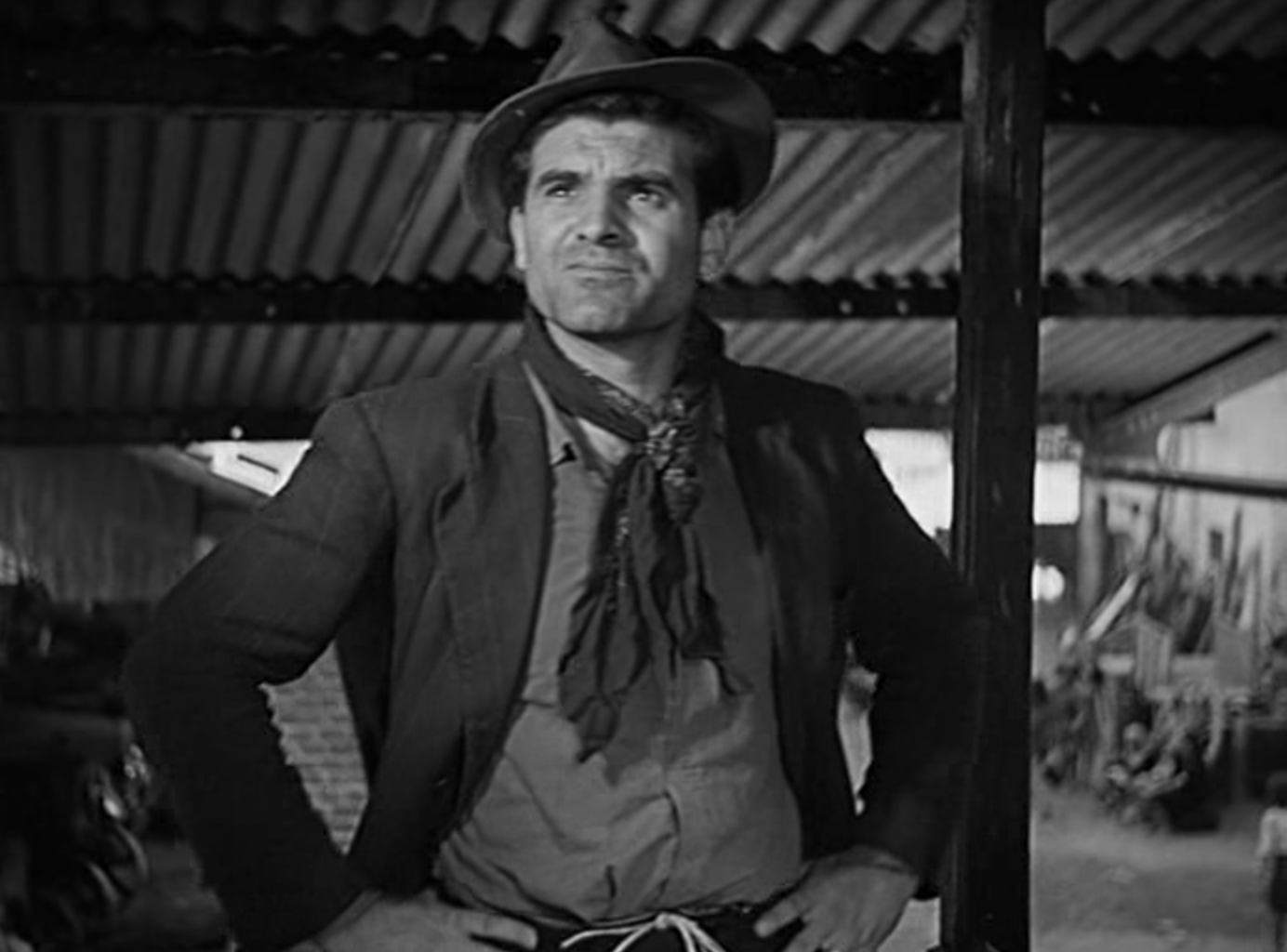
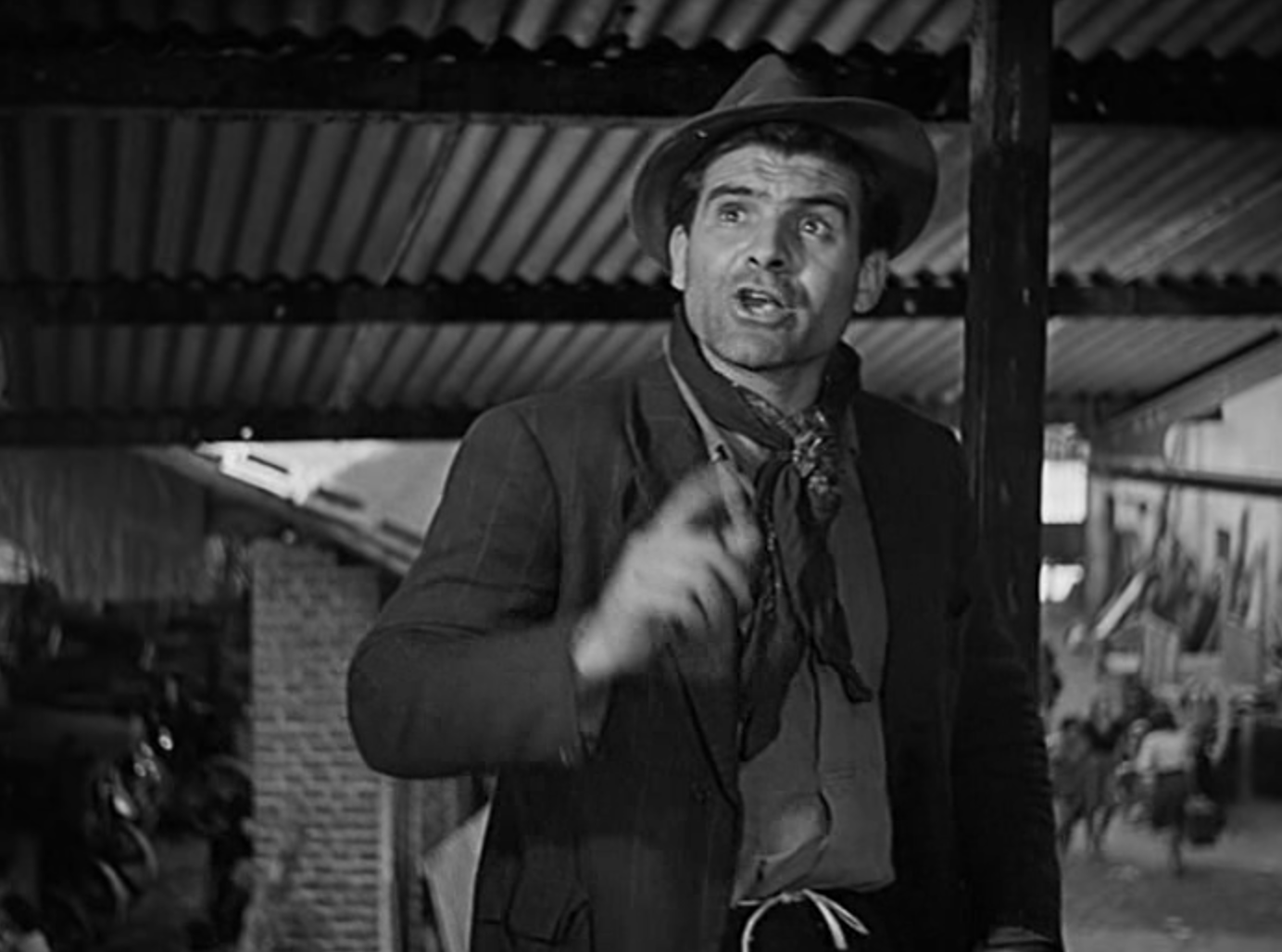
Il supervisore si alza in piedi. “Basta!” Con le mani sui fianchi, dice: “Fate le valigie! E saranno guai se domani vi trovo ancora qui!”
La folla reagisce con forti proteste.
The supervisor stands up. “That’s enough!” With hands on hips, he says, “Pack up! And there will be problems for you if you’re here tomorrow!”
The crowd reacts with loud complaints.
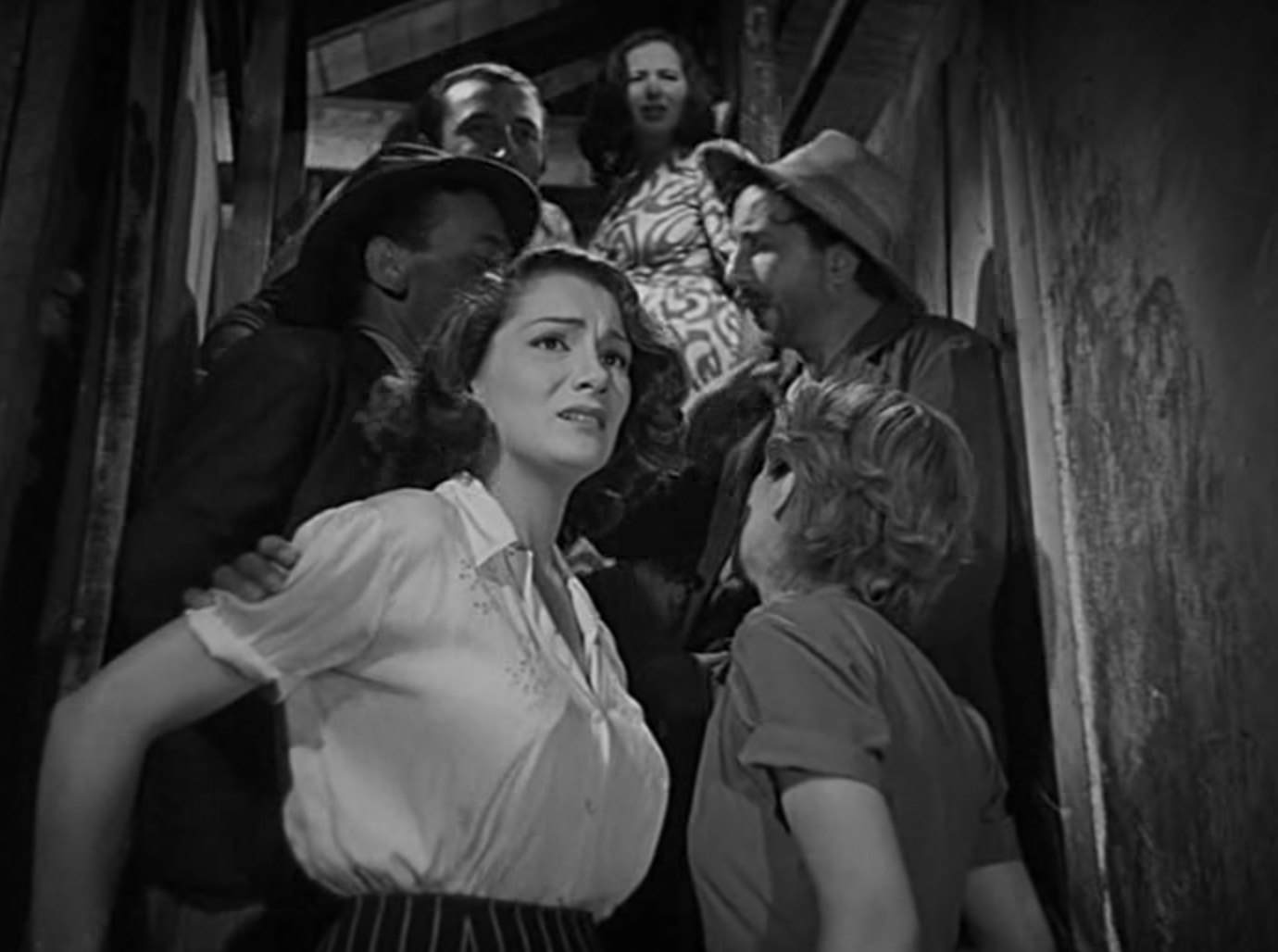
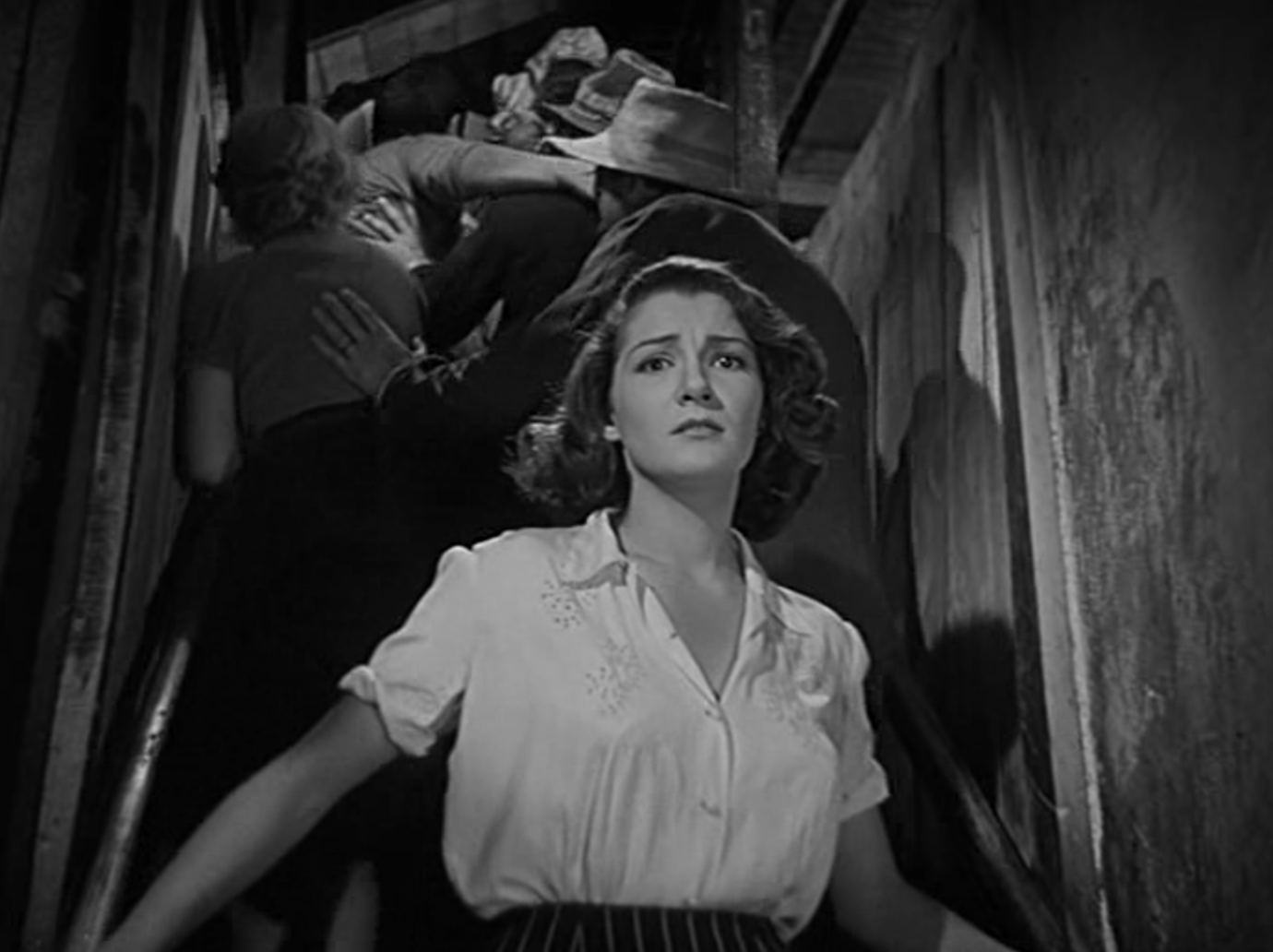
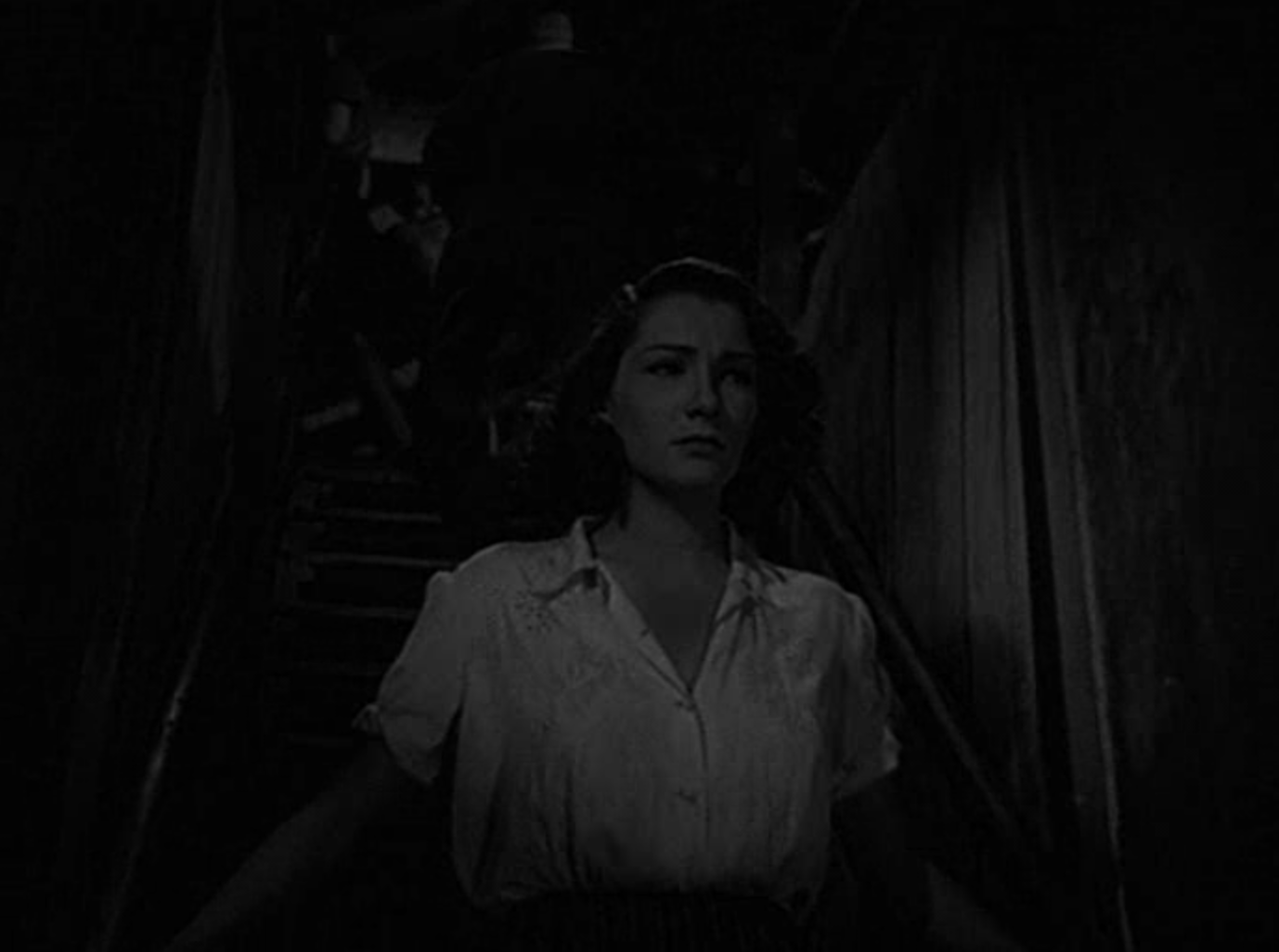
Aristide mette una mano sulla spalla di Francesca. "Basta parlare! Calmatevi, ragazze!"
Le lavoratrici risalgono le scale discutendo animatamente, lasciando Francesca sconvolta sull'ultimo gradino mentre lo schermo diventa nero.
Aristide puts his hand on Francesca’s shoulder. “Enough with the talk! Calm down, girls!”
The workers climb back up the stairs, in loud discussion, leaving Francesca, distraught, on the bottom step as the screen goes dark.
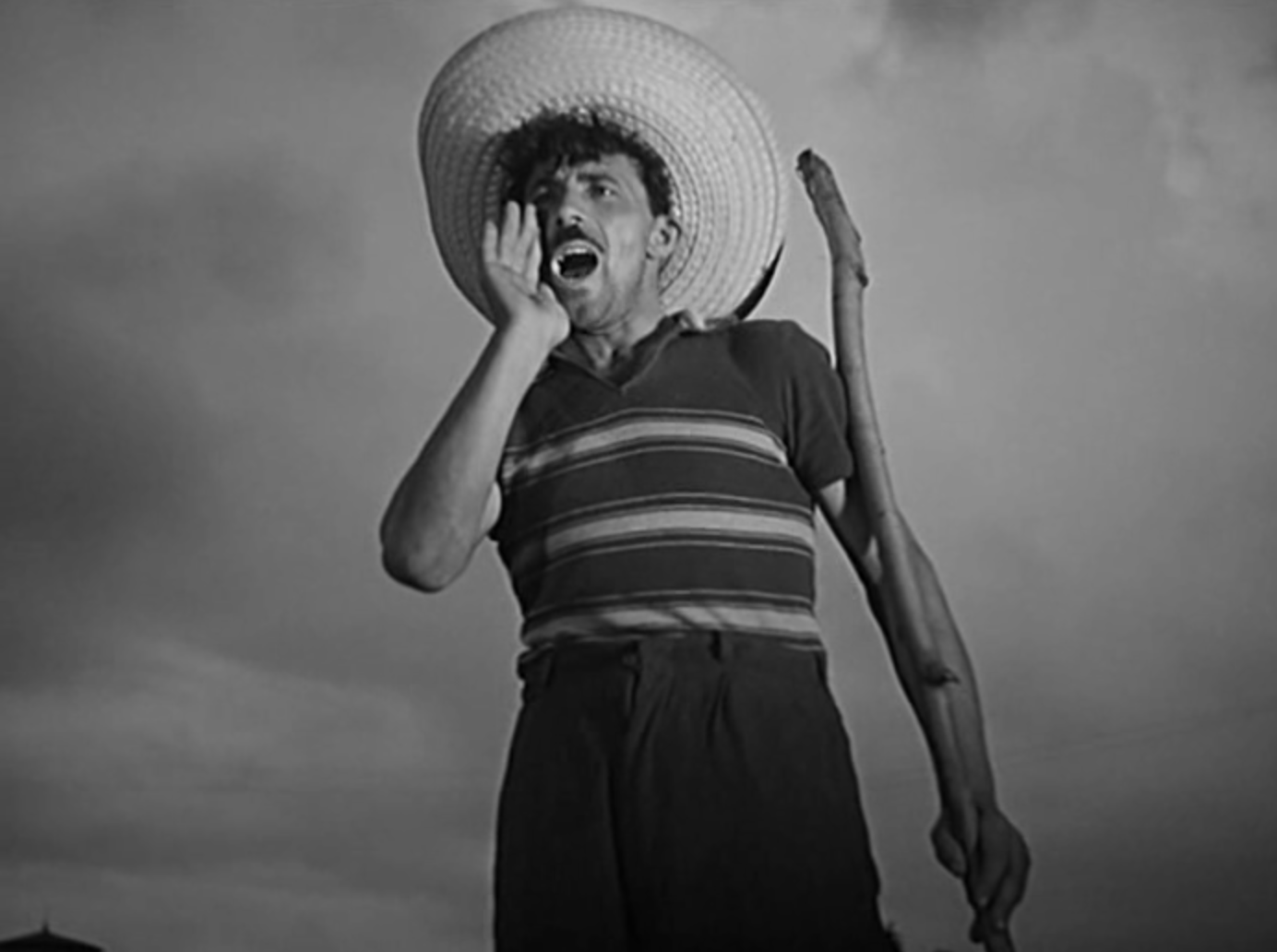
La mattina seguente, nei campi di riso, un caposquadra con un cappello di paglia grida: “Tutte le donne alla monda!”
Out on the rice field the next morning, a foreman in a straw hat yells, “All women to the picking!”
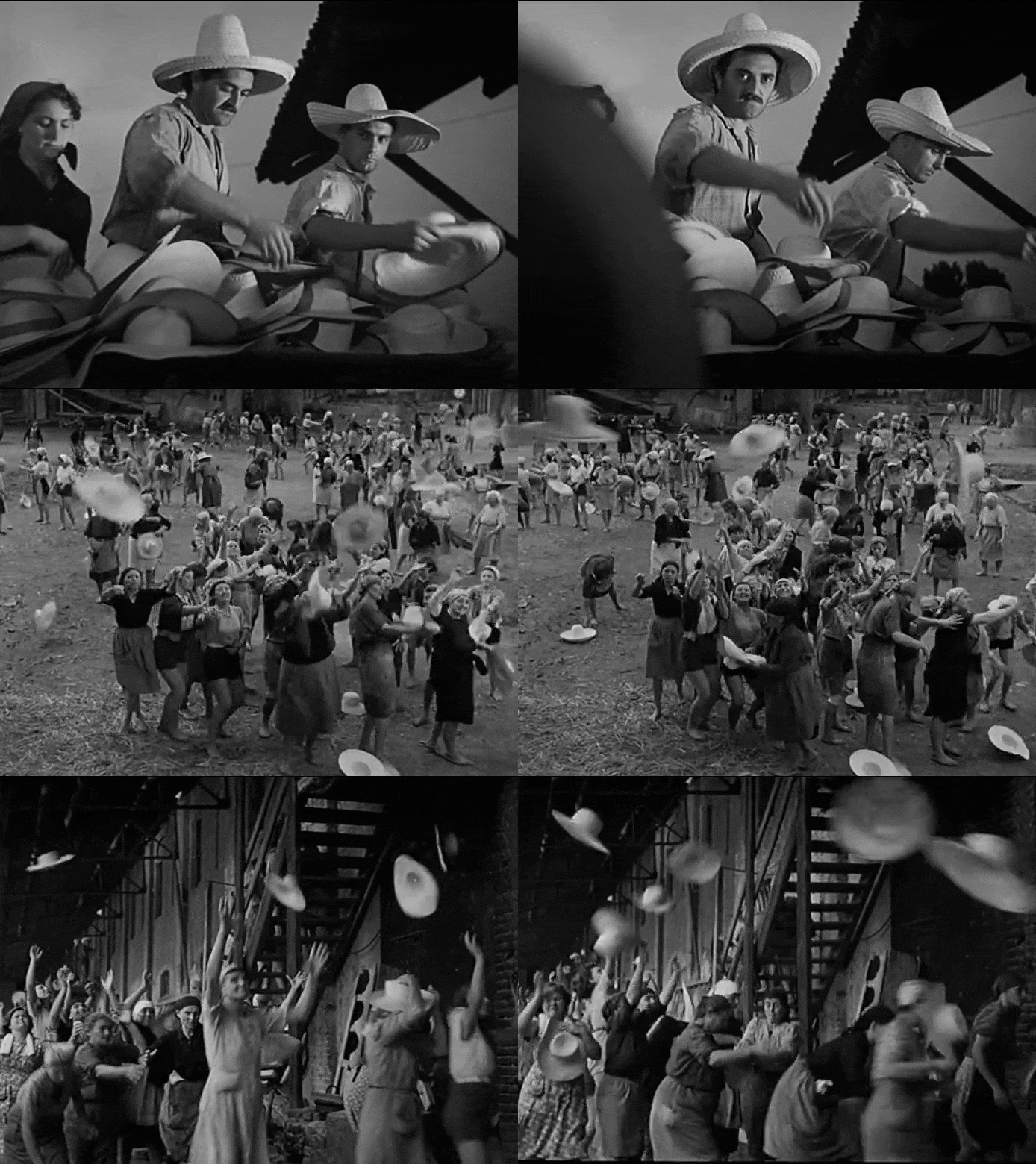
Altri lavoratori lanciano cappelli di paglia alle donne, che si allungano per prenderli, intonando una canzone tradizionale:
Alla mattina alle ore cinque
la caporala ci viene a svegliar:
“Coraggio ragazze, che andiamo sul riso”
e tutto il giorno ci fanno trottar.*
Il canto gioioso, i cappelli che volano nell'aria, le braccia delle donne che si agitano: è una scena festosa, carica di energia.
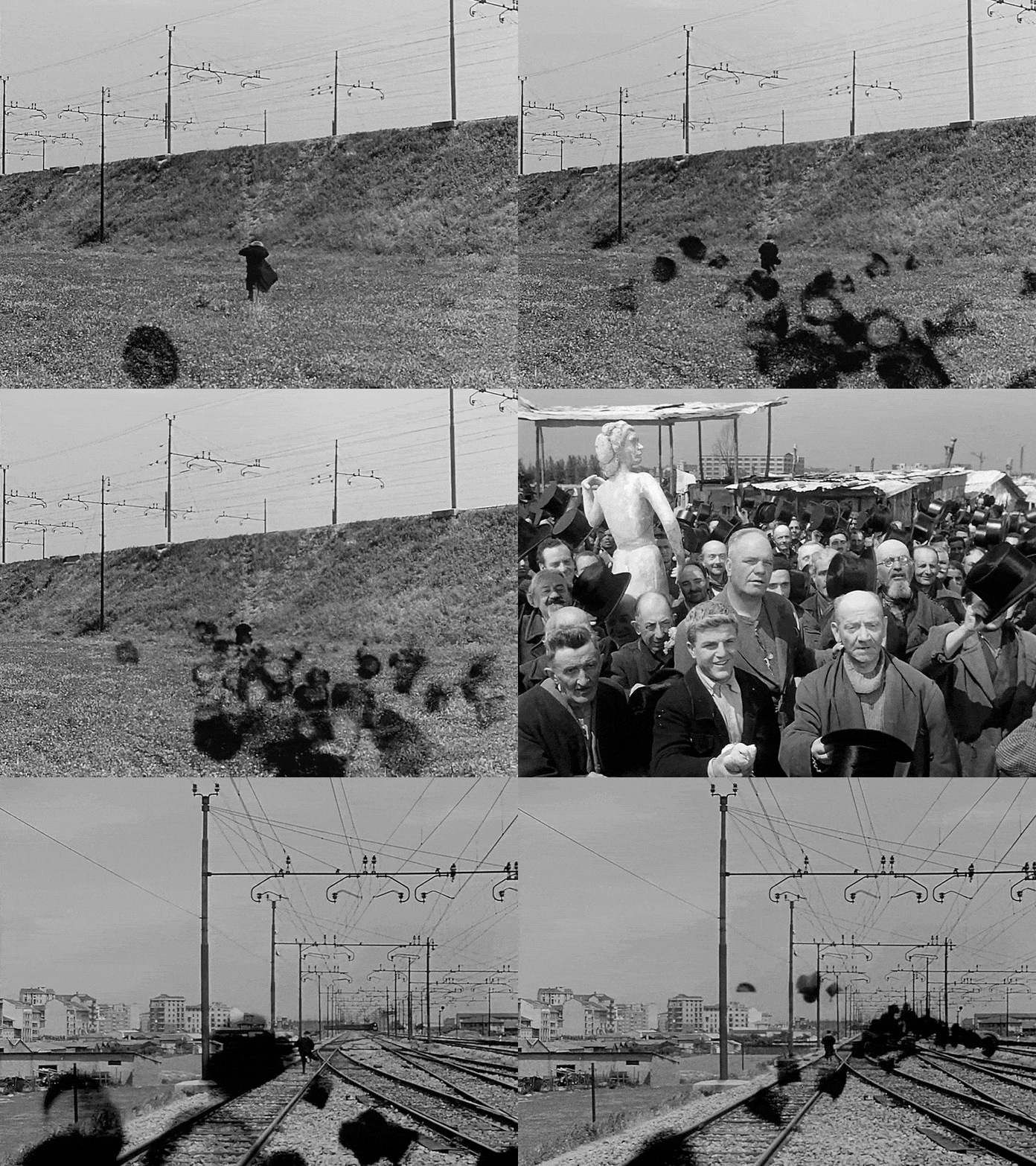
I cappelli di paglia che volano creano un interessante contrasto con i cappelli a cilindro di Miracolo a Milano (Vittorio De Sica, 1951), che prendono vita propria e cacciano il malvagio Rappi dalla baraccopoli.
*Qui, significativamente, la parola “trottare” – come per i cavalli – è la loro parola per indicare un lavoro rapido ed efficiente.
Other workers toss straw hats out to the women, who reach up to catch them, breaking out into a traditional song:
At five o'clock in the morning,
the forewoman comes to wake us up:
“Come on, girls, let's go to the rice fields,”
and they make us work all day long.*
The joyous singing, the hats flying through the air, the women’s waving arms: it’s a festive scene, charged with energy.
The flying straw hats make an interesting contrast with the top hats in Miracle in Milan that take on a life of their own, chasing the villainous Rappi away from the shantytown.
*Here, tellingly, the word “trot” – as for horses – is their word for quick, efficient work.
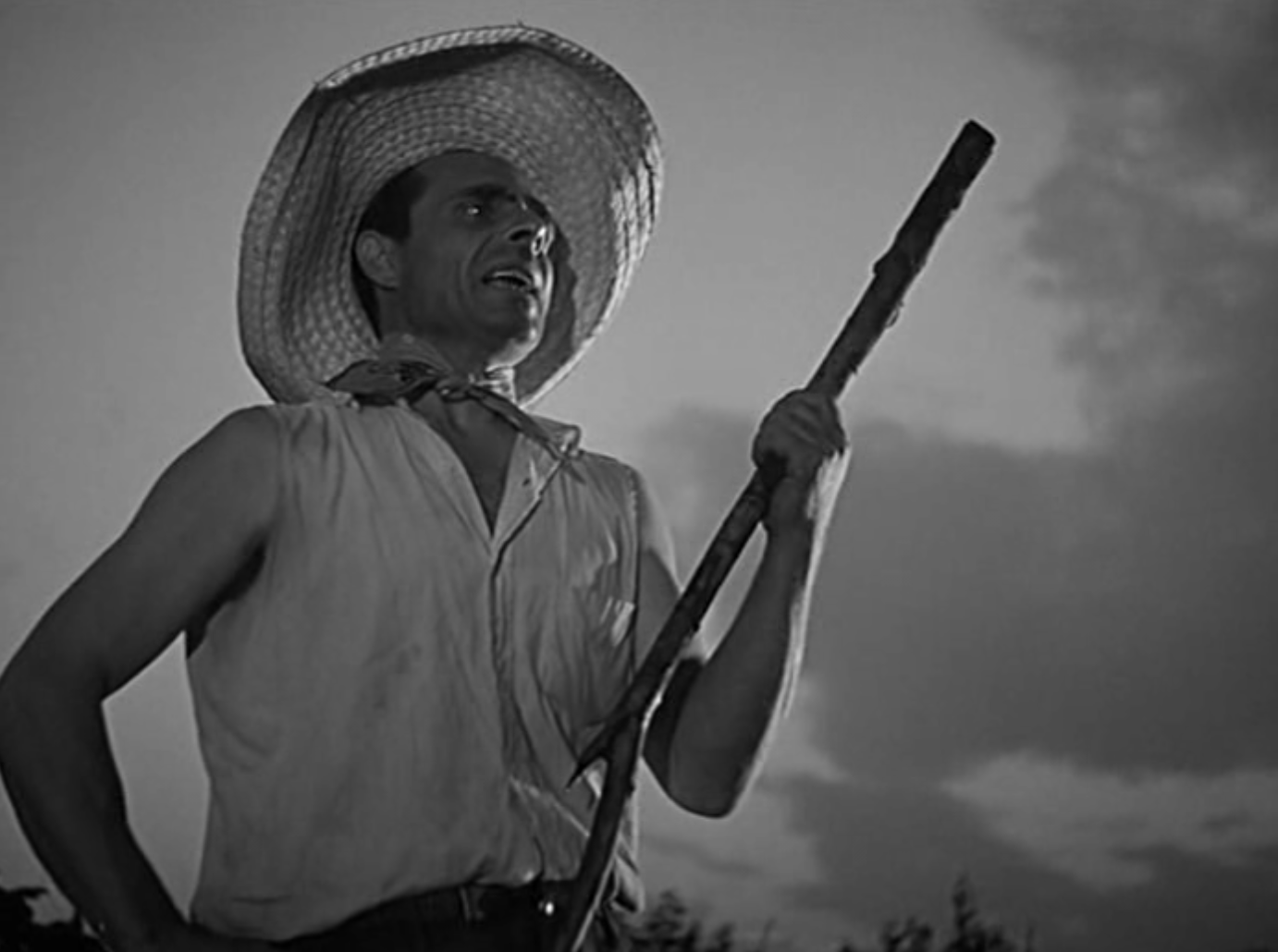
Un altro caposquadra dà le istruzioni: “Le ragazze giovani alla pianta, quelle vecchie alla monda!”
Another foreman calls out the instruction: “The young women to planting; the old ones to picking!”
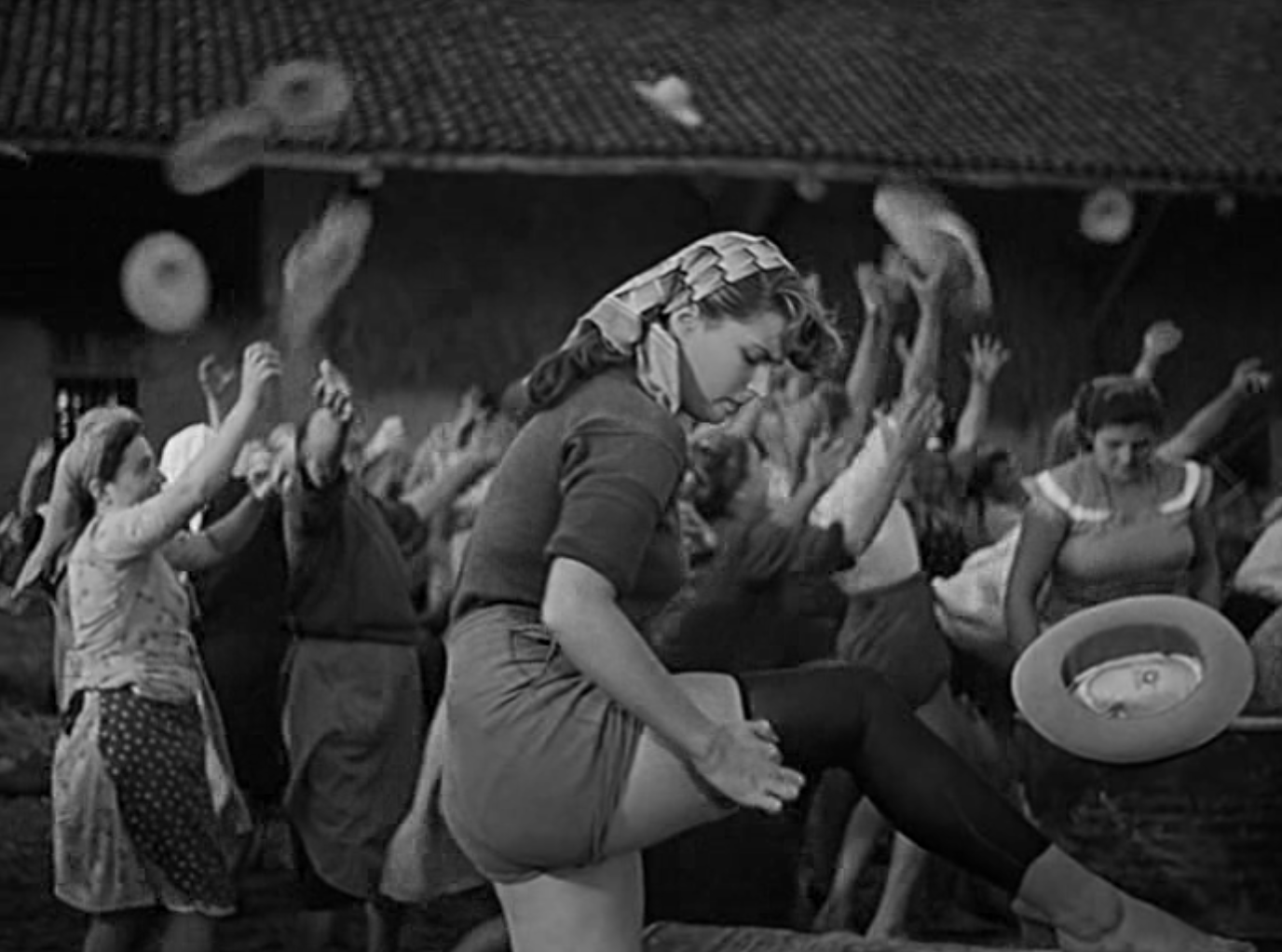
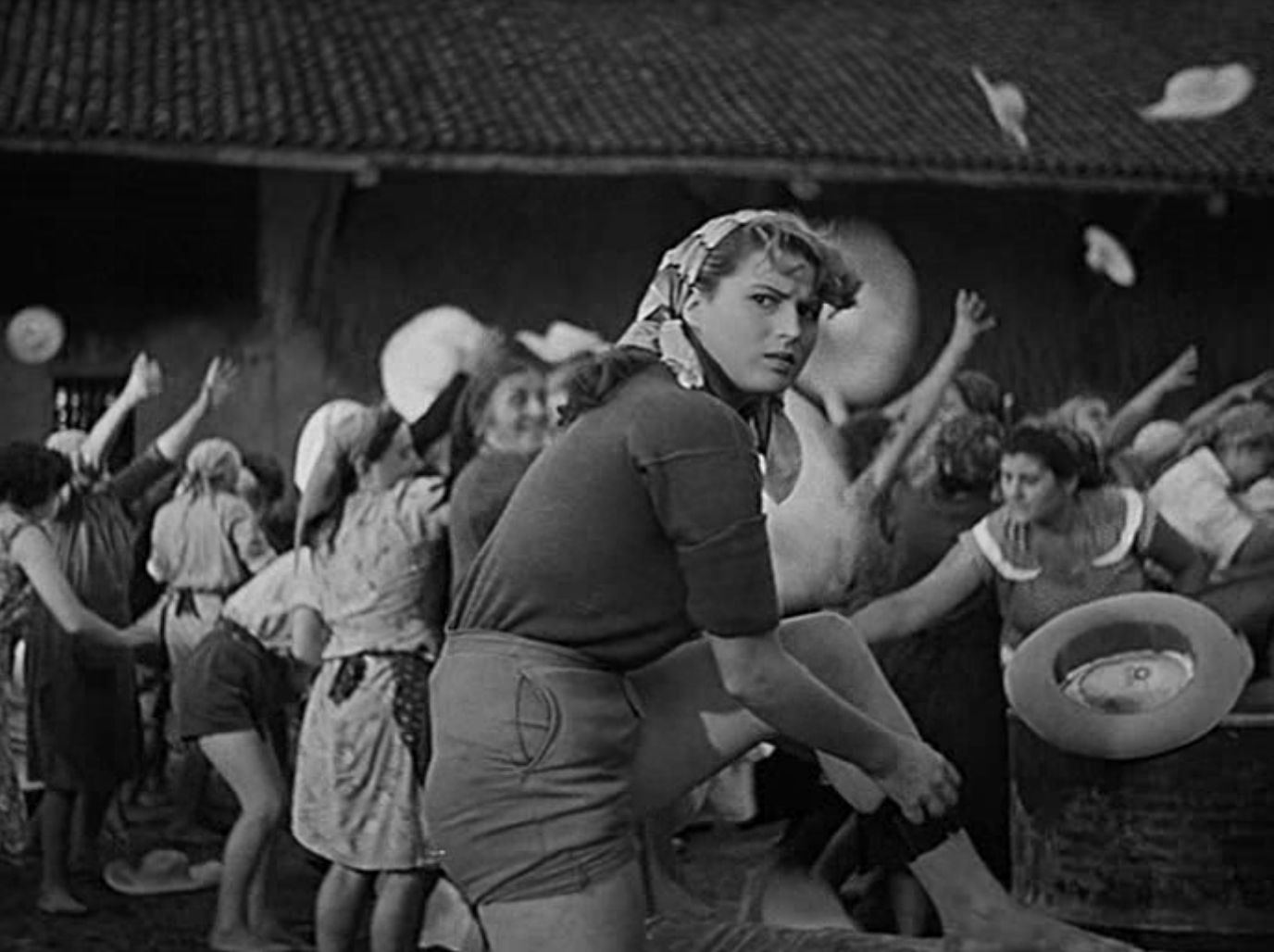
Vediamo Silvana, con una maglietta a maniche corte e pantaloncini molto corti, che si arrotola le calze. Ha un'espressione accigliata, ma la macchina da presa adotta lo sguardo maschile*, sessualizzando la posa.
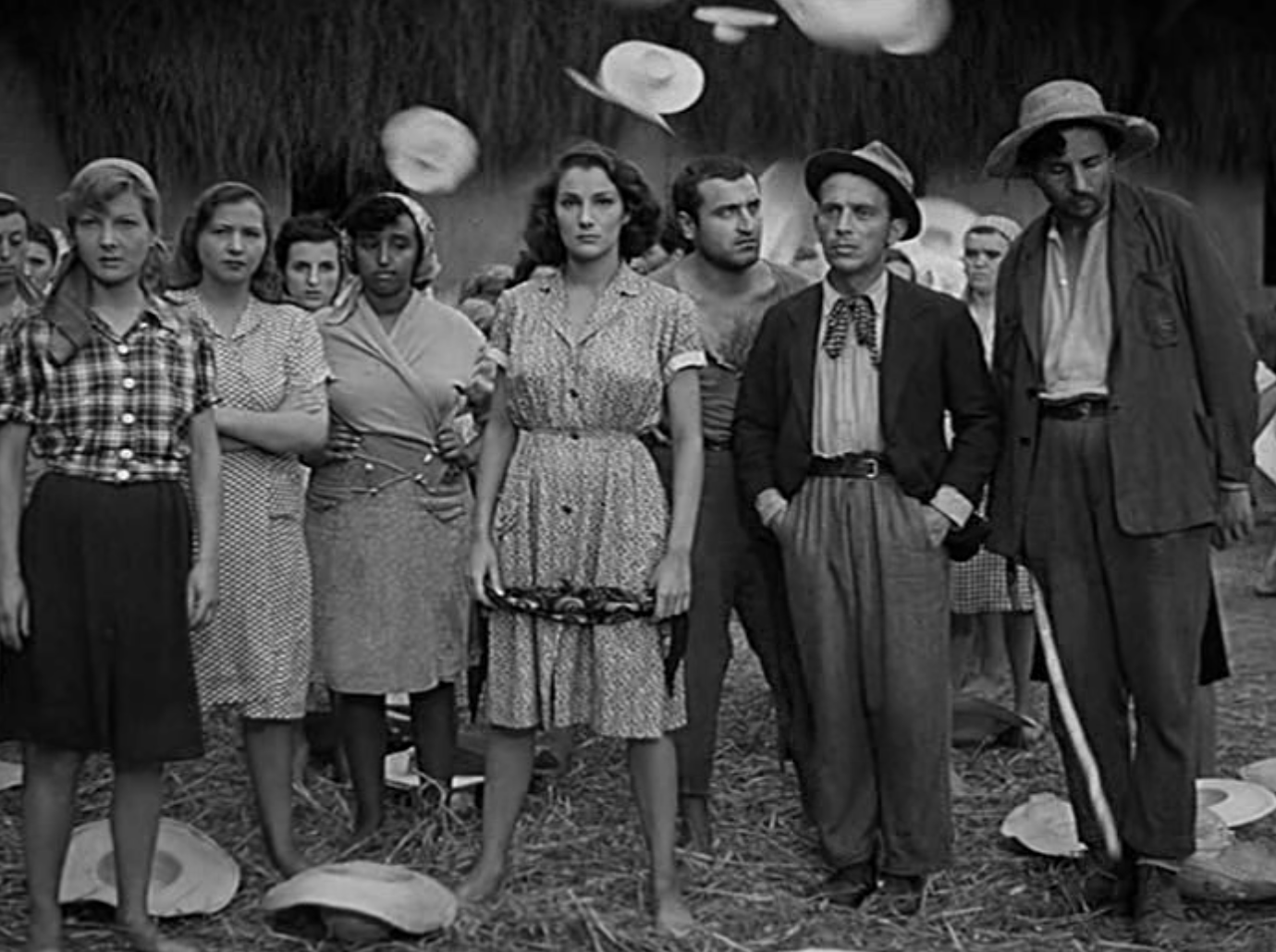
Alzando lo sguardo, lei vede Francesca, sprezzante e a piedi nudi. Accanto a lei altre lavoratrici senza contratto e i caporali.
*Lo sguardo maschile: termine cinematografico che descrive la ripresa dei corpi delle donne come oggetti sessuali per il piacere visivo degli uomini eterosessuali.
We see Silvana, in a short-sleeved shirt and very short shorts, rolling up her stockings. She’s scowling, but the camera adopts the male gaze,* sexualizing the pose.
Looking up, she sees Francesca, barefoot and defiant. Next to her the other uncontracted workers and the middlemen.
*Male gaze: a cinematic term that describes the filming of women’s bodies as sexual objects for the viewing pleasure of heterosexual men.
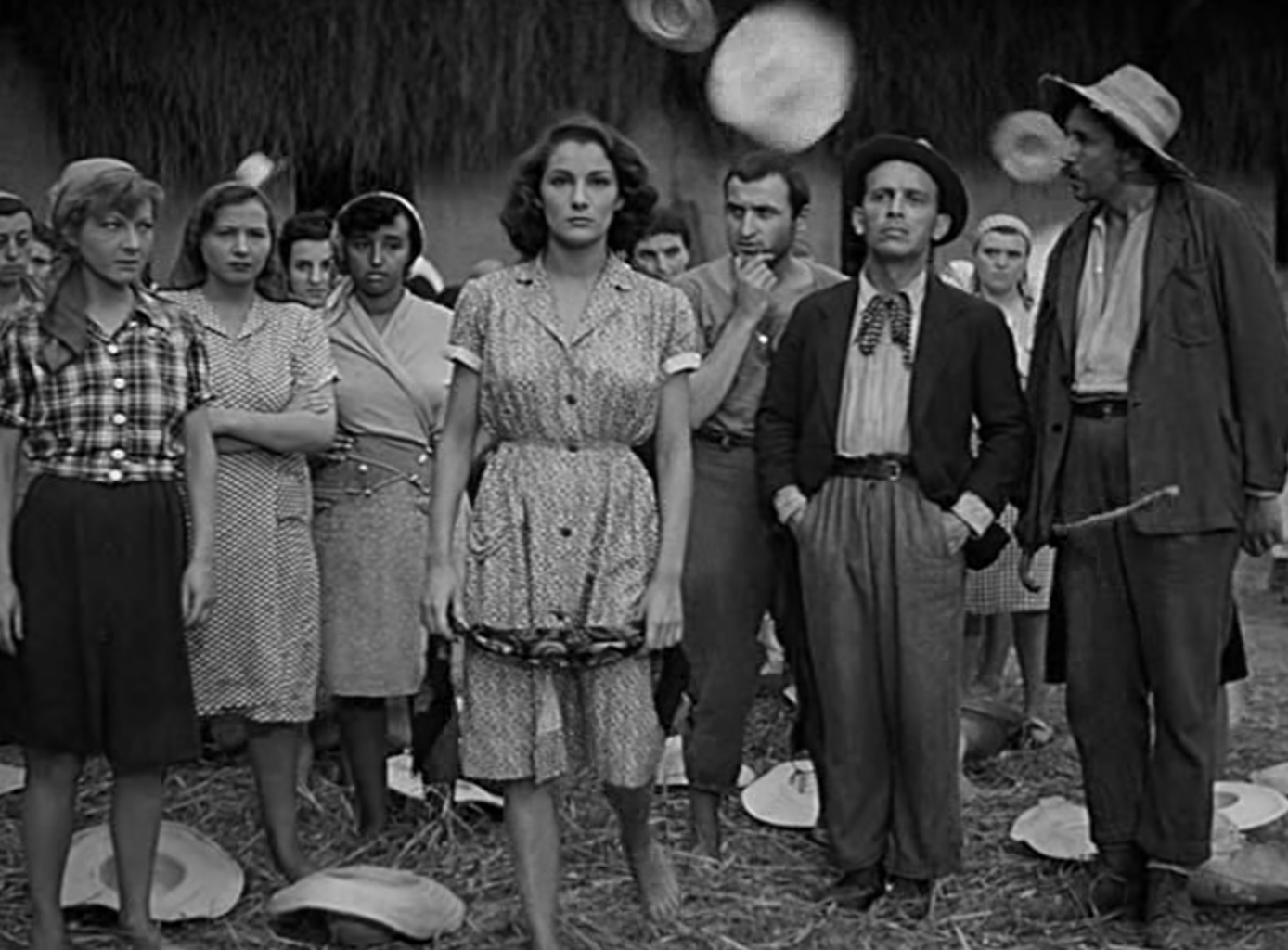
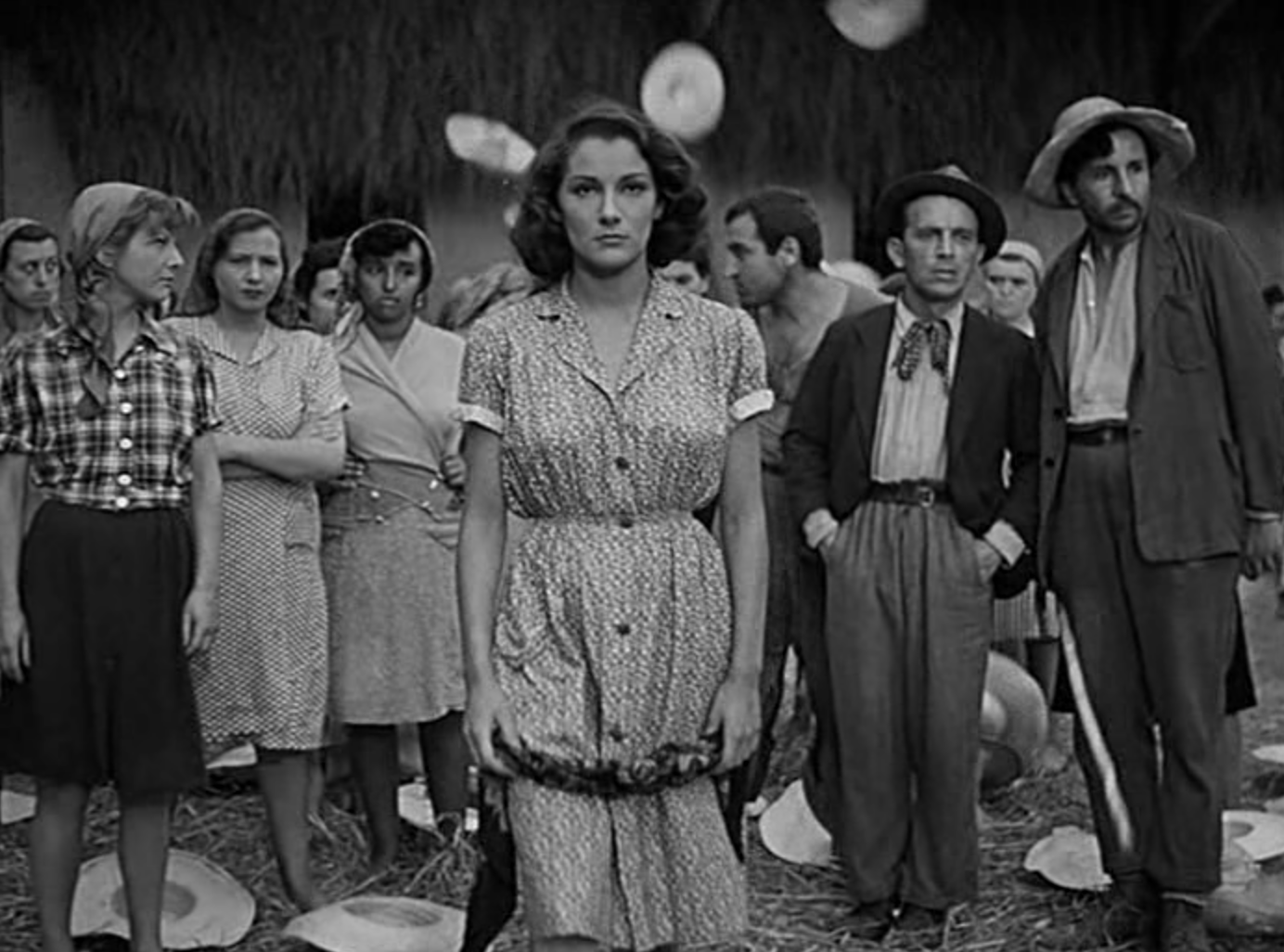
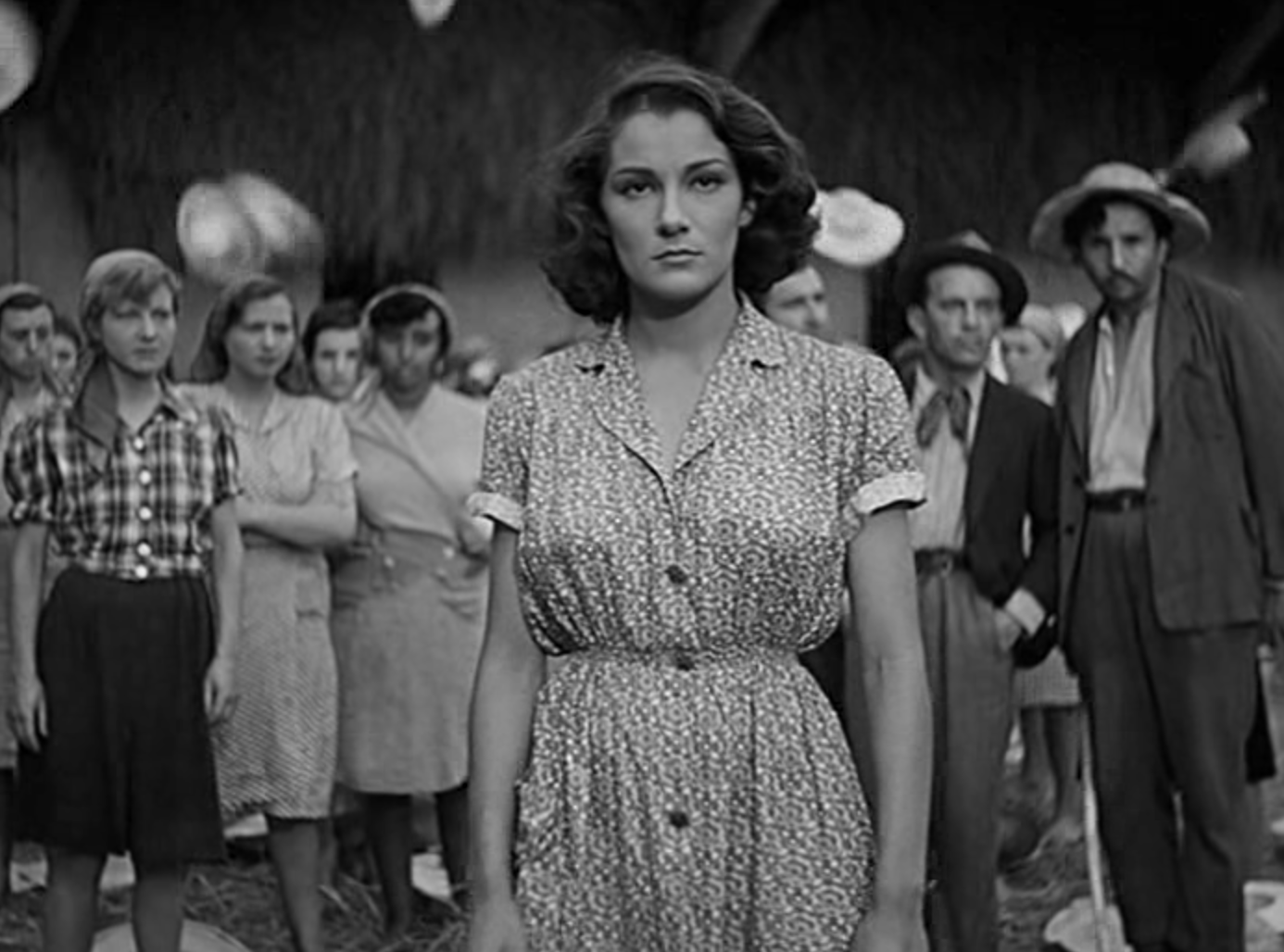
Mentre il canto continua, Francesca avanza lentamente, con i cappelli che danzano nell'aria dietro di lei.
As the singing continues, Francesca steps forward slowly, hats dancing in the air behind her.
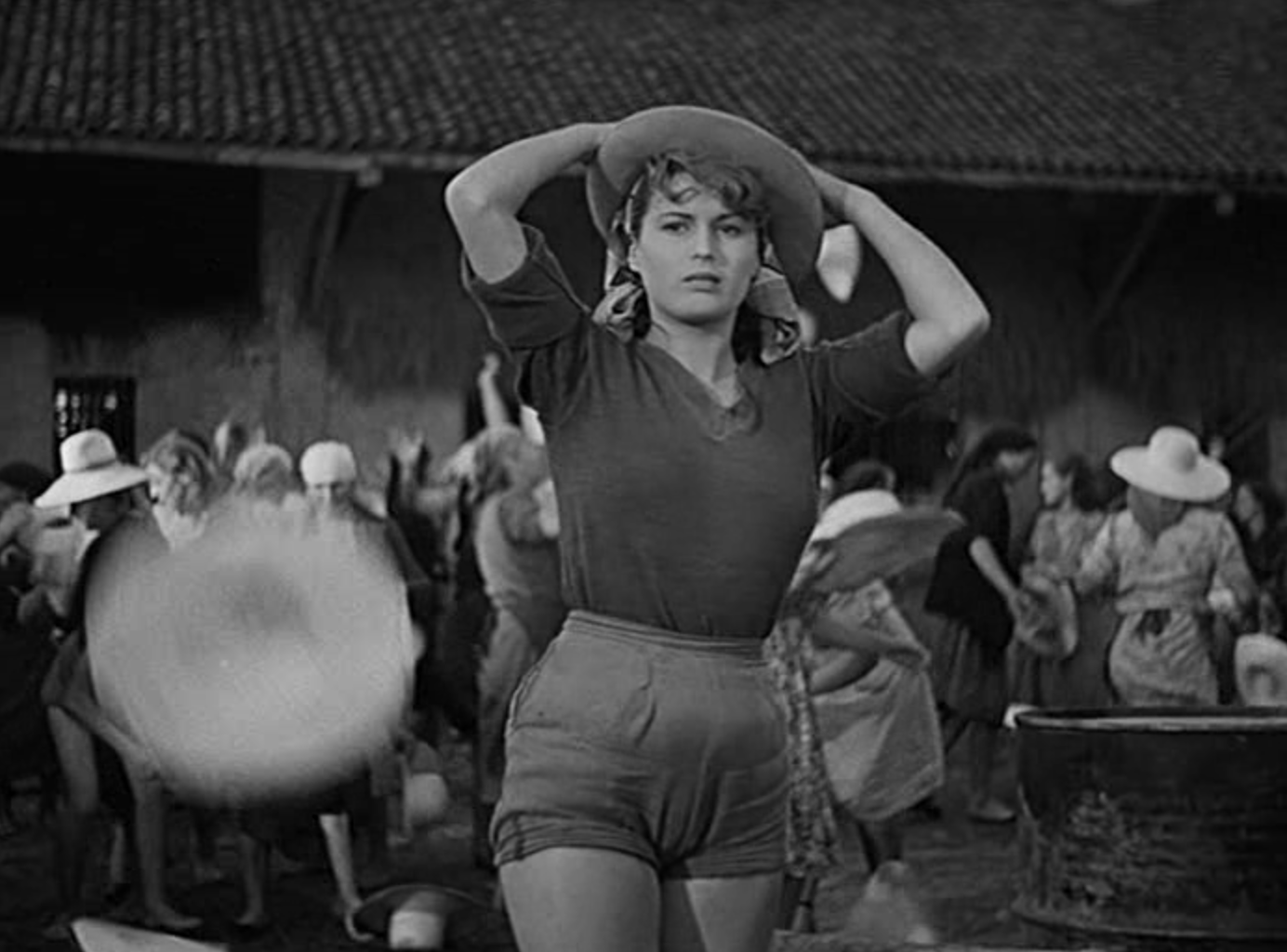

Silvana indossa un cappello, con le braccia sopra la testa. Fa un passo avanti. Questa è la posa sensuale iconica del cinema neorealista.
Silvana puts on a hat, arms above her head. She takes a step forward. This is the iconic sensual pose of neorealist film.
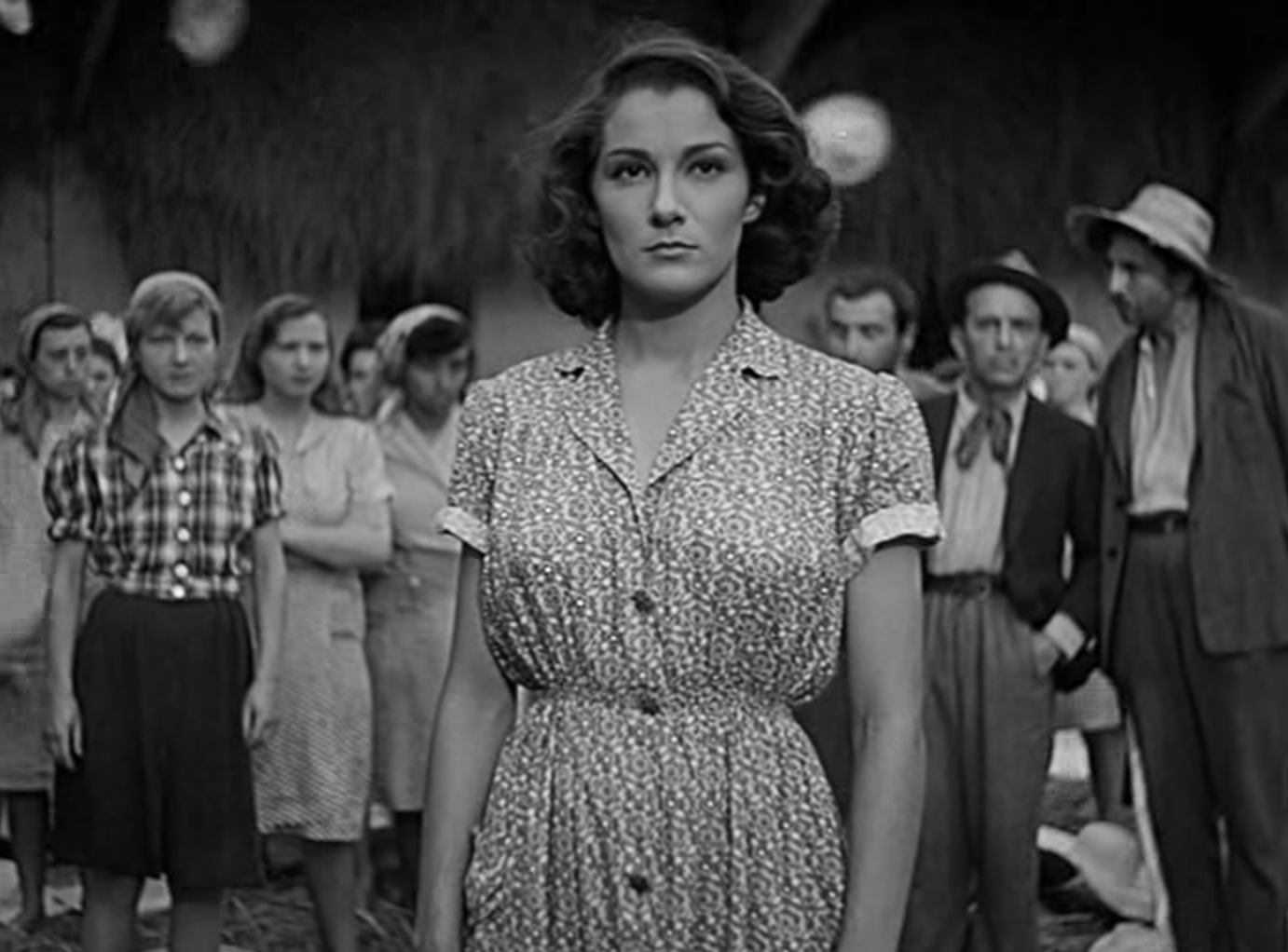
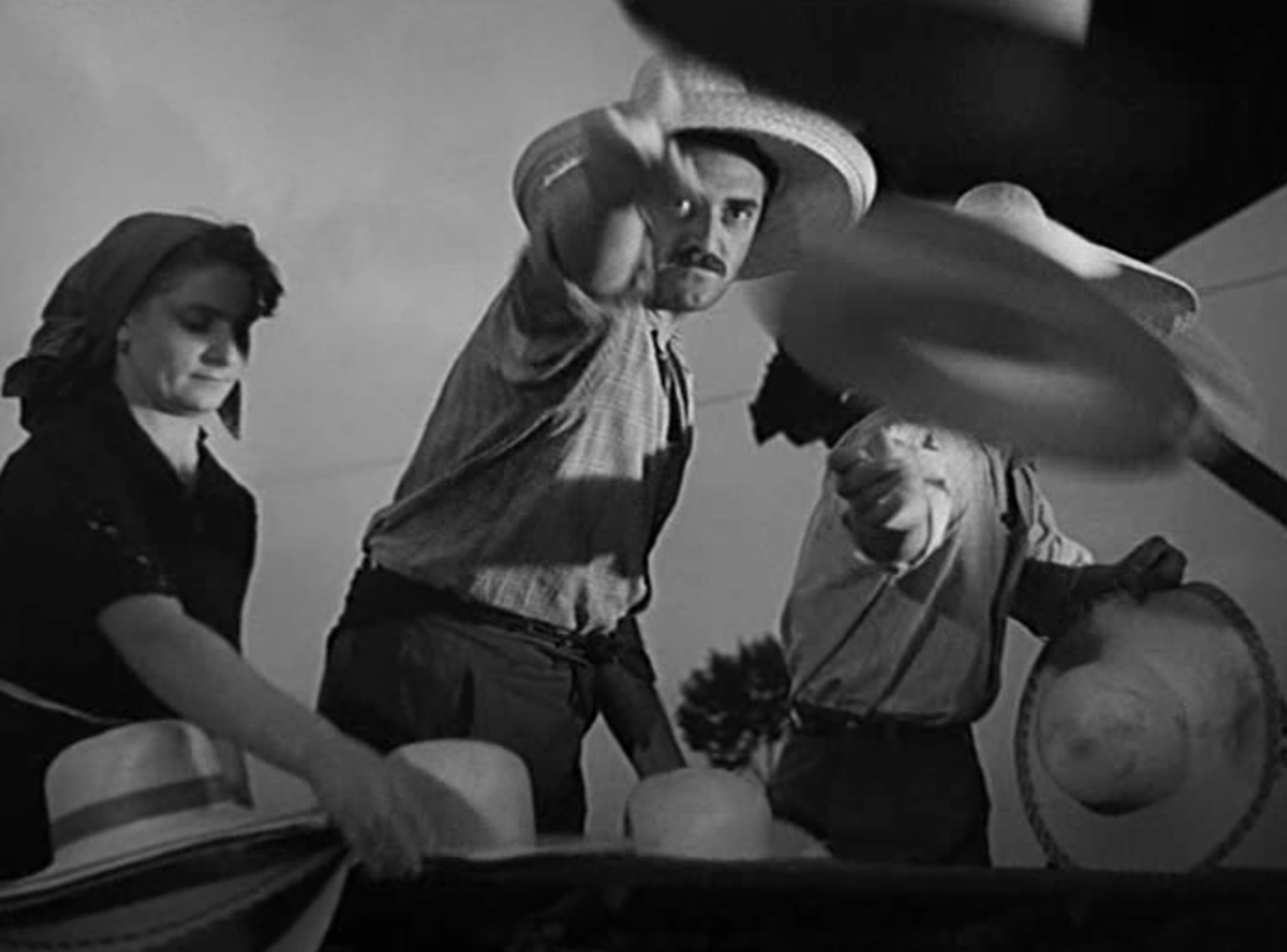
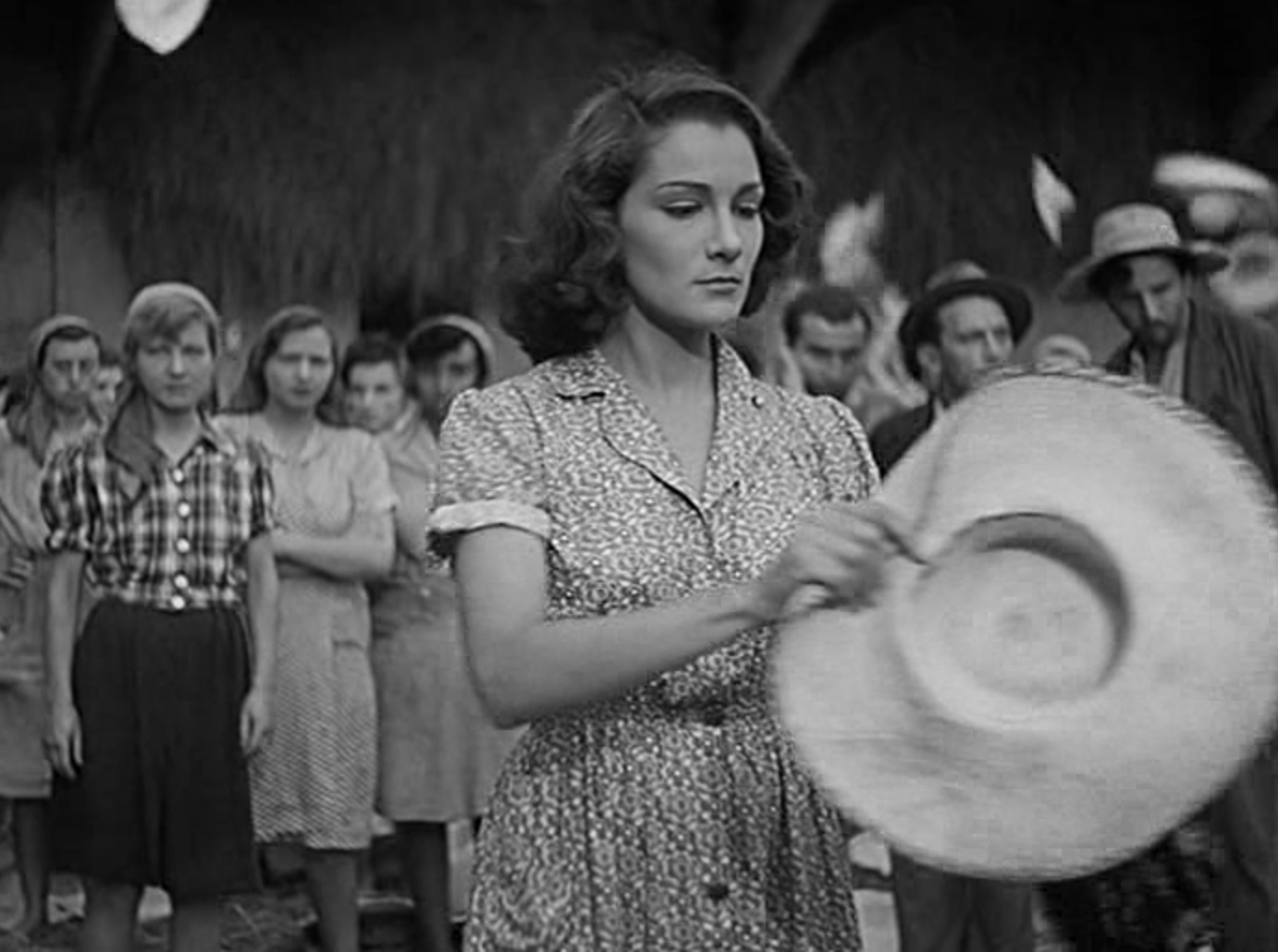
Francesca la fissa con espressione impassibile. Afferra uno dei cappelli volanti.
Francesca stares at her, stone-faced. She catches one of the flying hats.
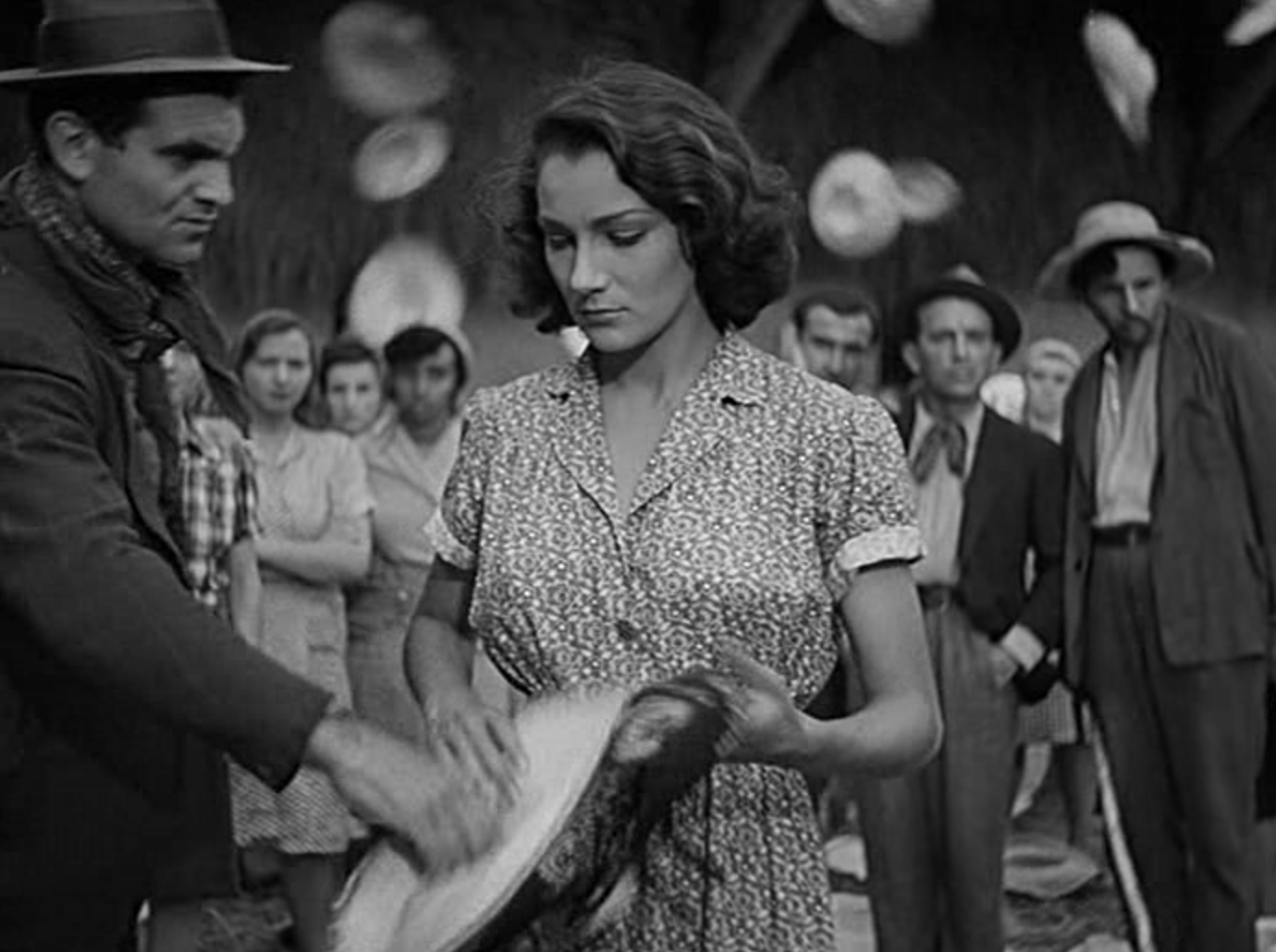
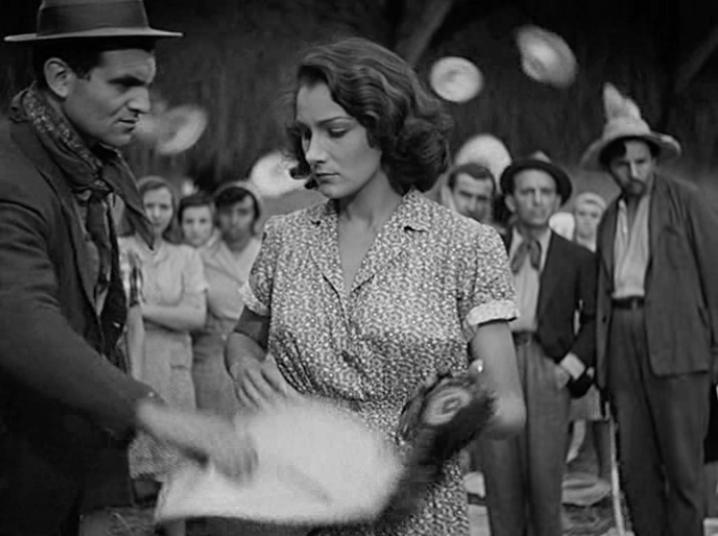
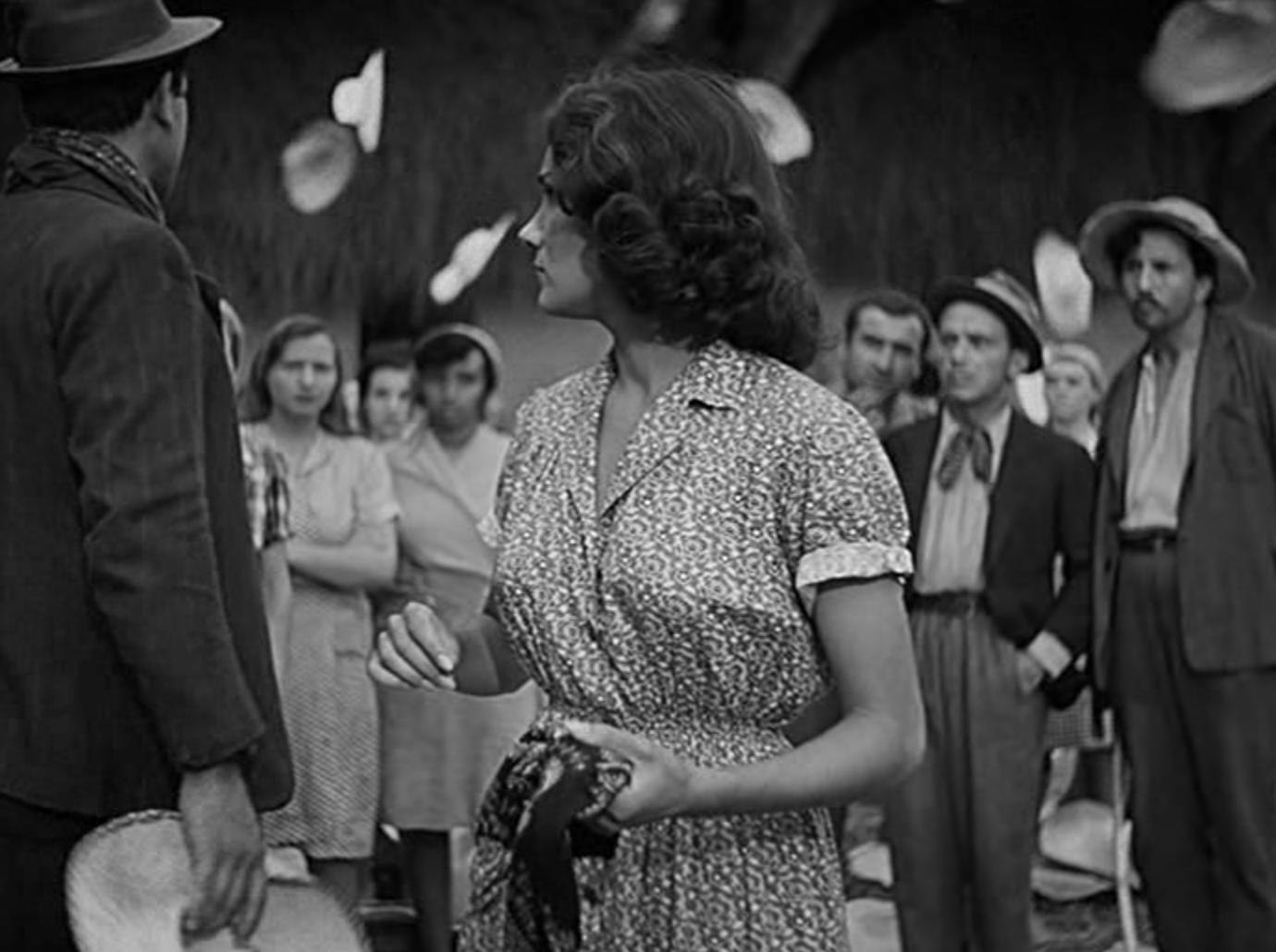
“Che ci fai ancora qui?!” Il supervisore le afferra il cappello. Guarda la folla delle lavoratrici senza contratto. “Volete capirlo o no?! Sui campi non ci potete andare!”
“What are you still doing here?!” The supervisor grabs her hat. He looks at the crowd of uncontracted workers. “Won’t you understand?! You may not enter the fields.”
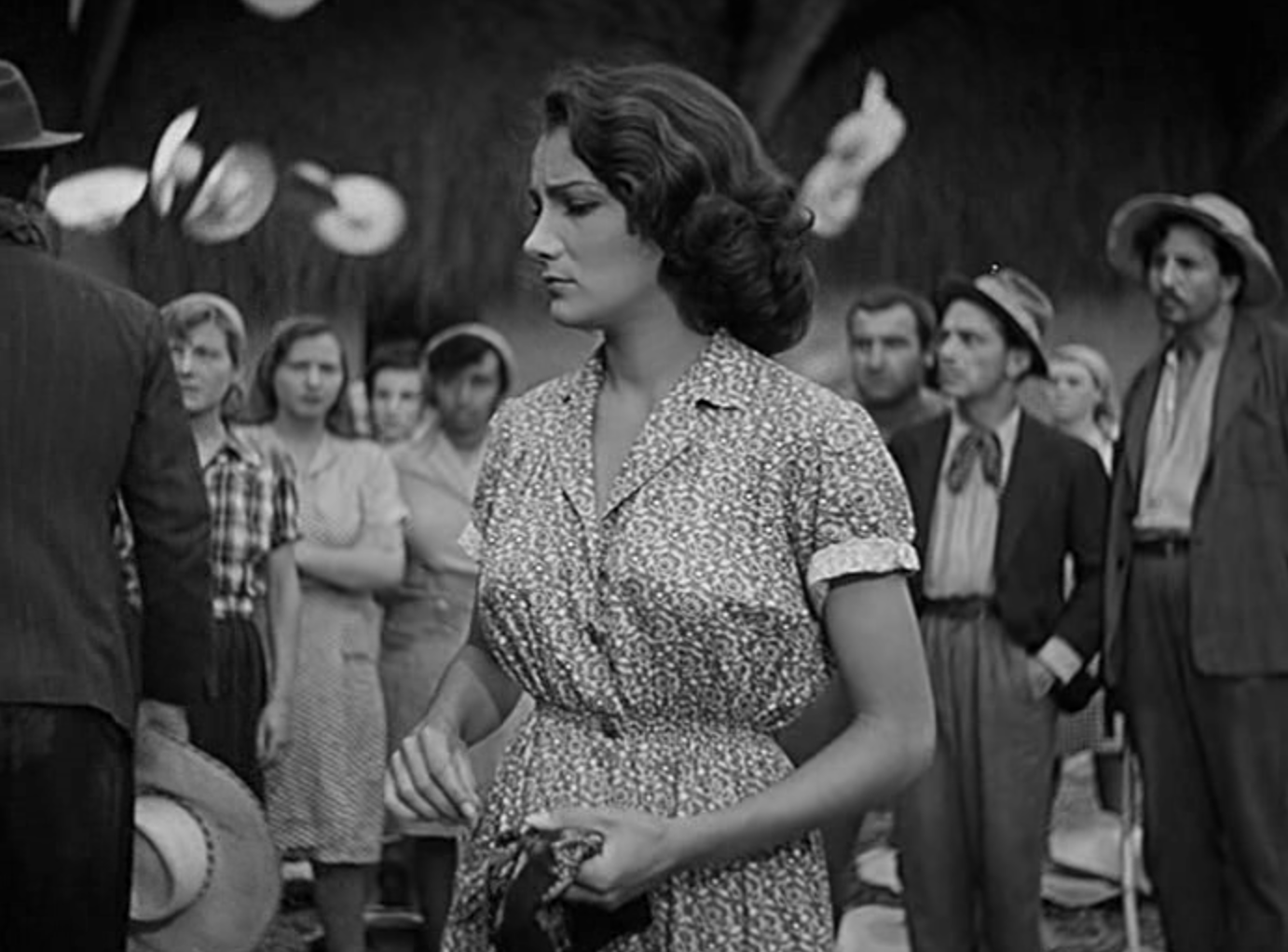

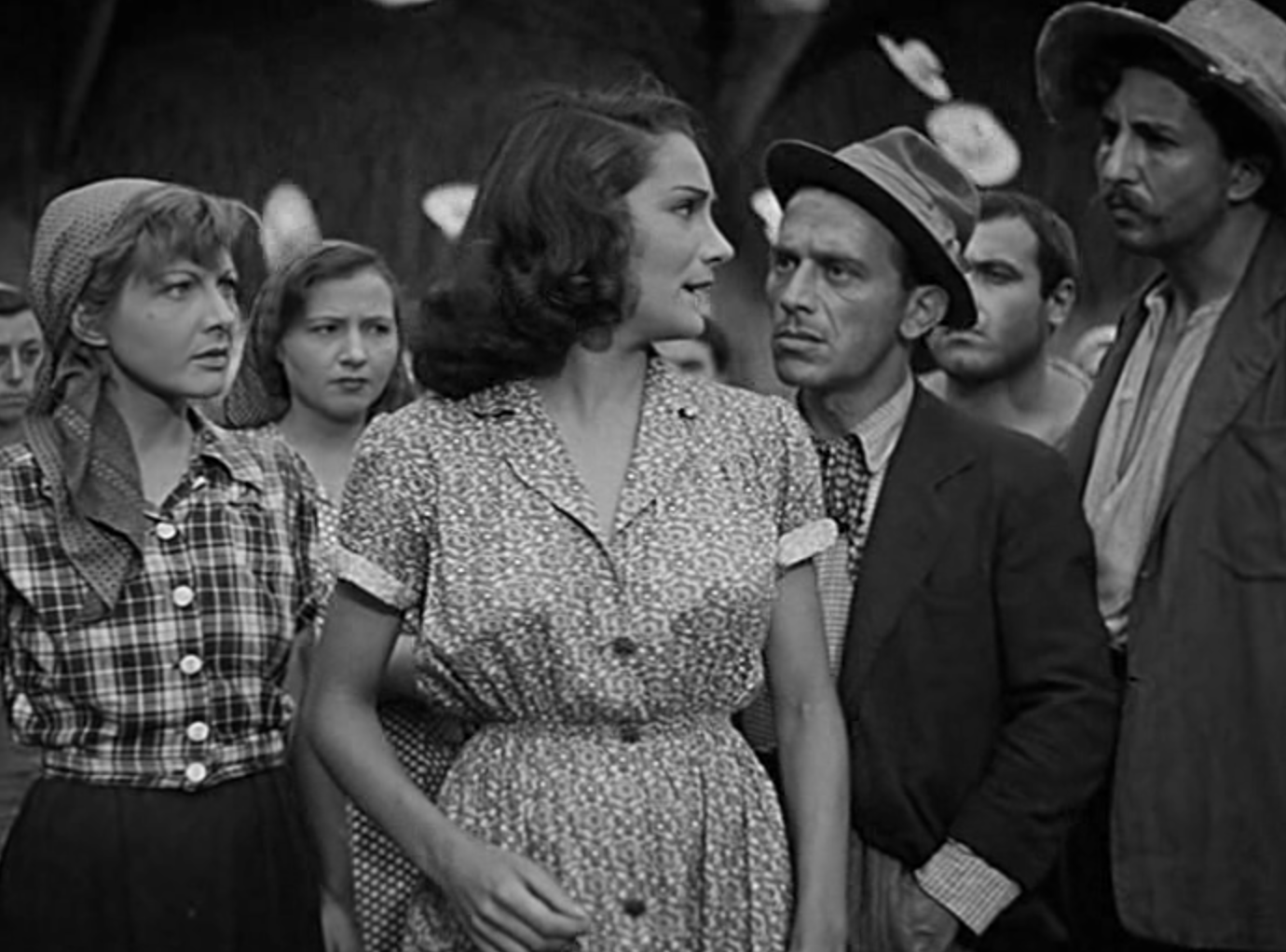
Mentre lui se ne va, la folla si raduna intorno a Francesca. Lei chiede loro: “Cosa volete fare? Potremmo girare tutta la risaia, ma sarebbe inutile”. Si rivolge ai caporali: “Ormai è troppo tardi per trovare lavoro”.
As he leaves, the crowd gathers around Francesca. She asks them, “What do you want to do? We could go around all over the rice field, but it would do no good.” She turns to the middlemen. “Now it’s too late to find work.”
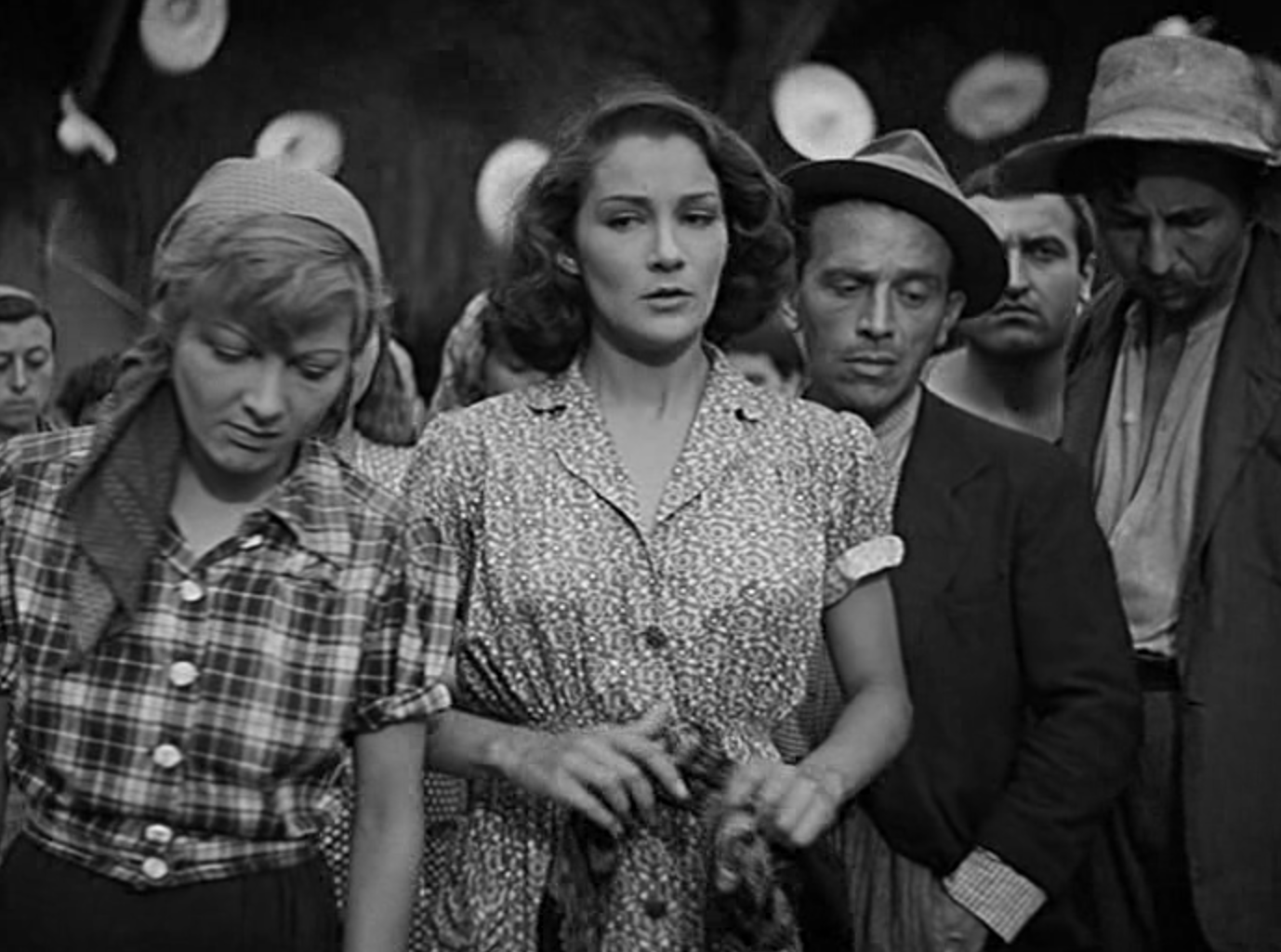
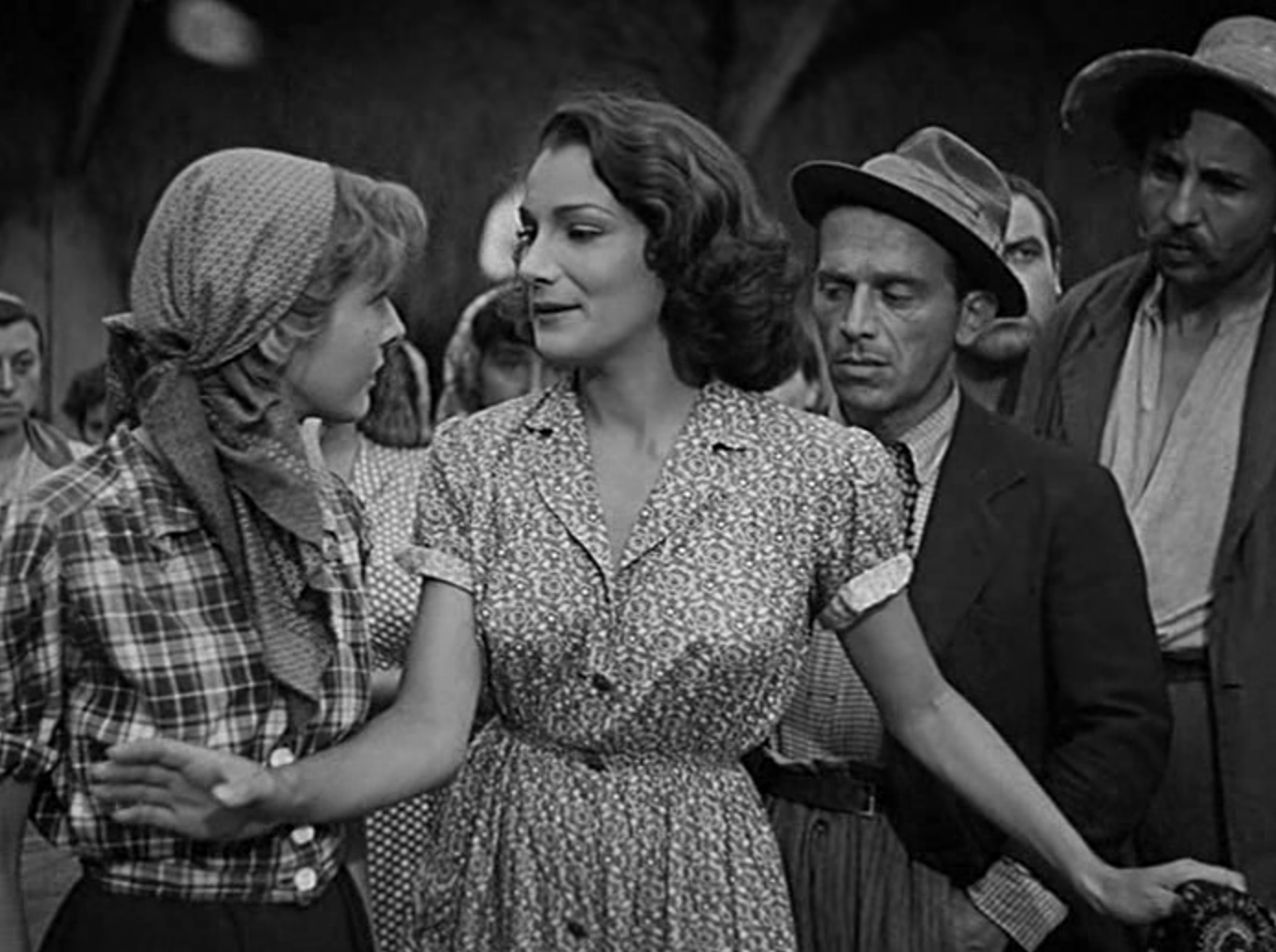
Riflette per un attimo. “Aspettate!” Apre le braccia, con un sorriso improvviso.
She thinks for a moment. “Wait!” She spreads her arms, with a sudden smile.
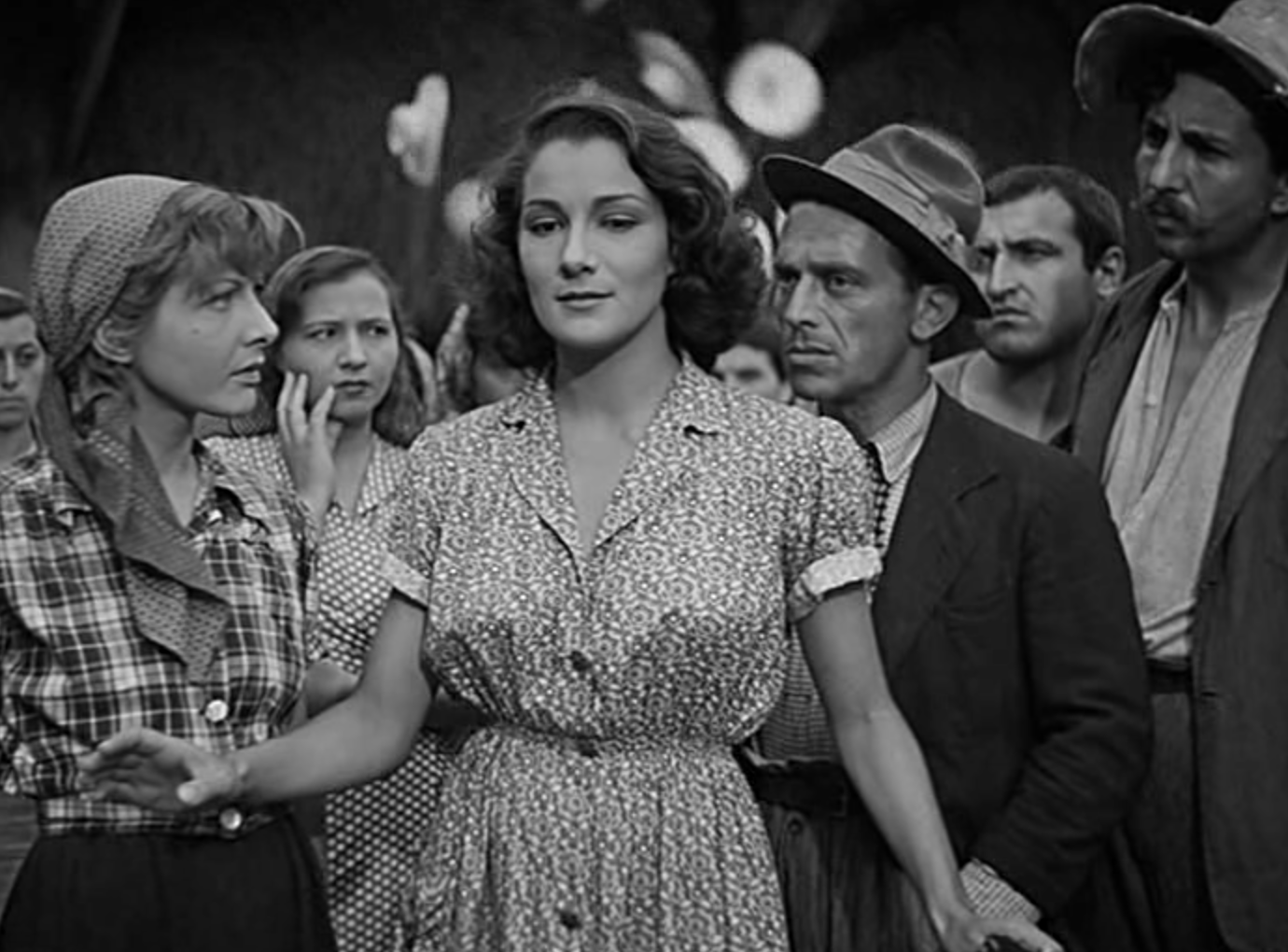
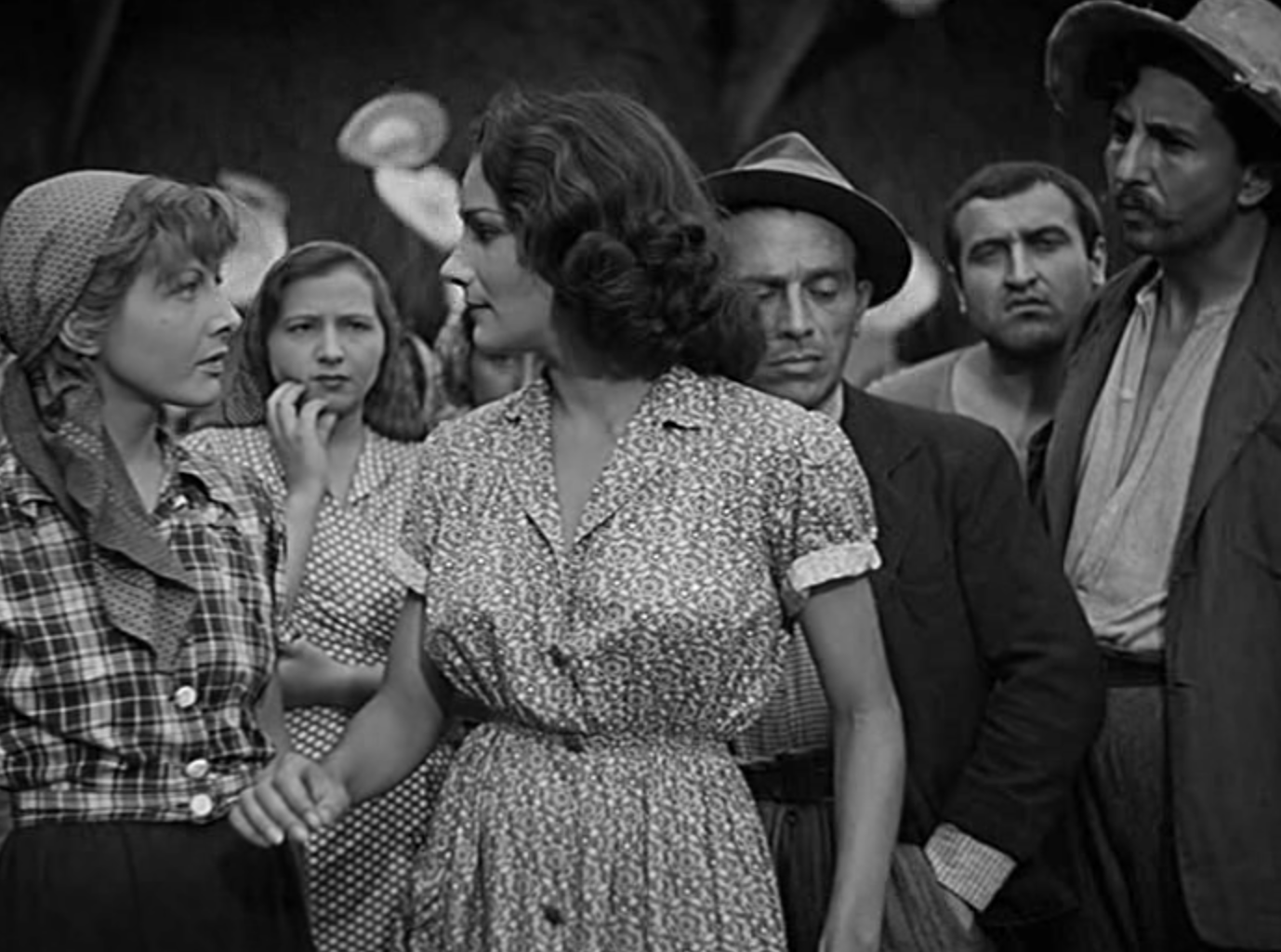
"Ma se riusciamo a metterci in mezzo alle regolari… siamo a posto". Annuisce con sicurezza.
“If we can blend in with the regulars, we’ll be all right.” She nods confidently.
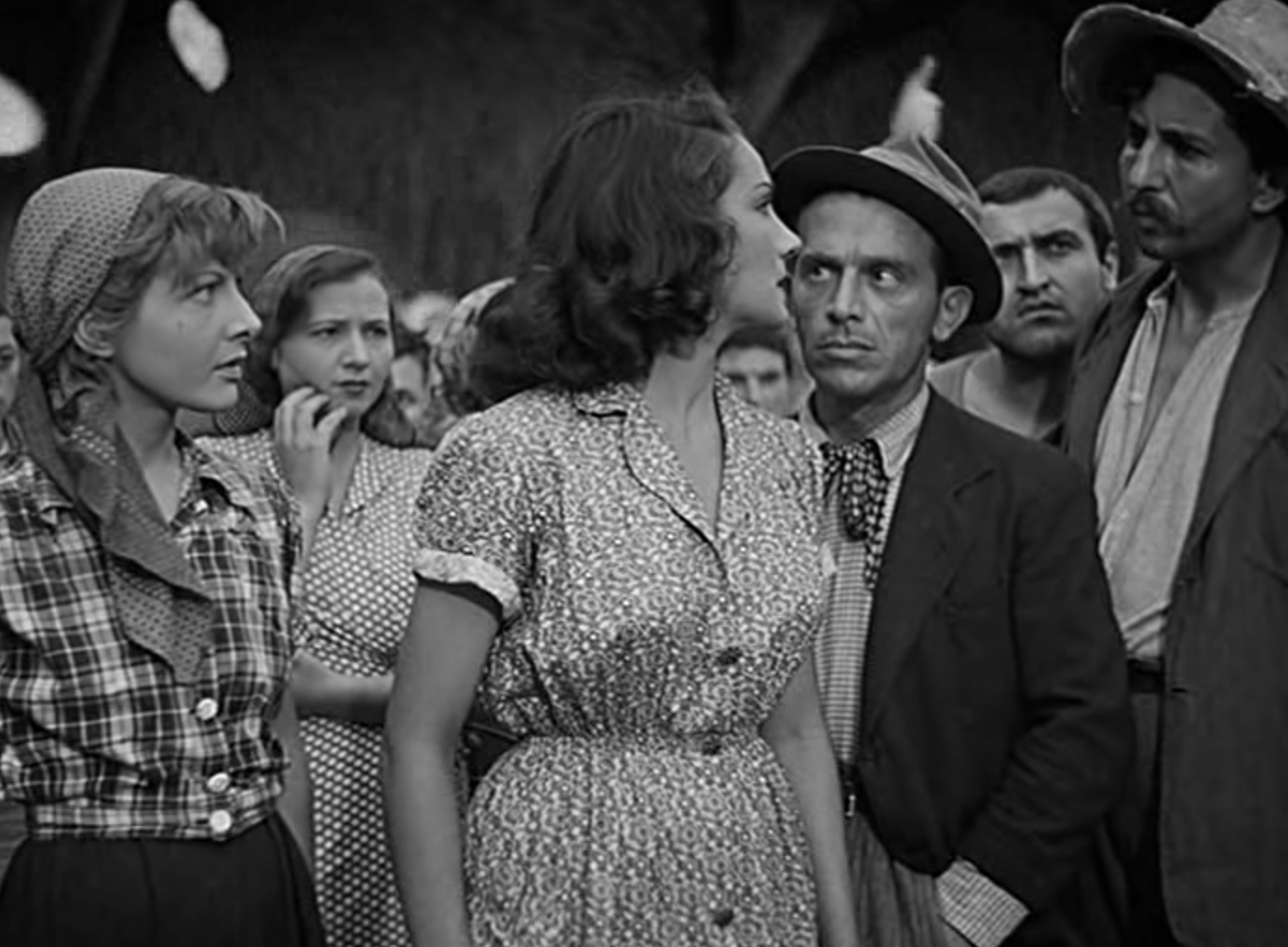
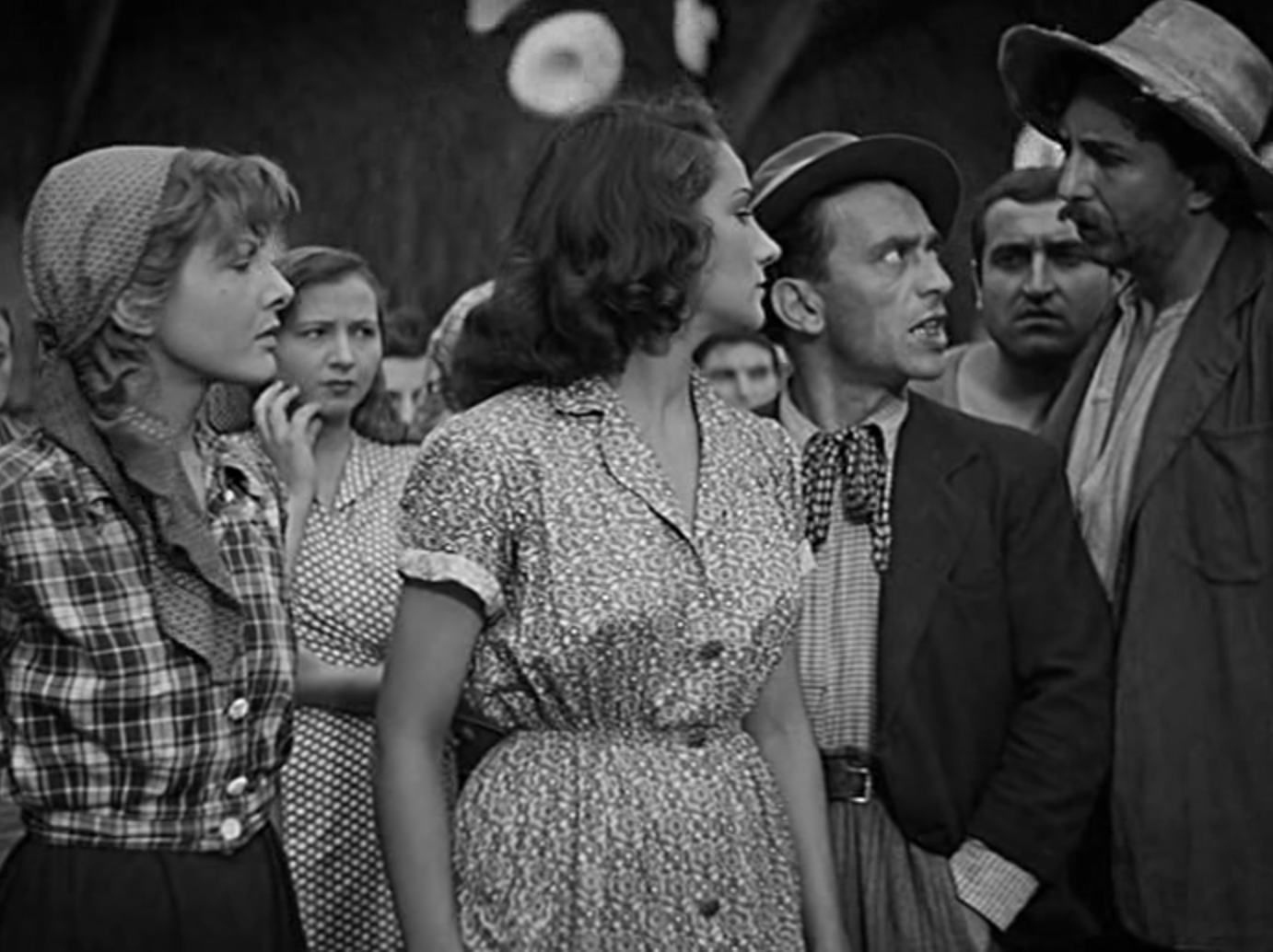
Si rivolge ai caporali. "Forza, vediamo se siete capaci di farci restare".
"Come se fosse facile", brontola Beppe.
"Stai zitto!" sbotta Aristide.
She turns to the middlemen. “Come on, let’s see if you’re up to the task of getting them to keep us on.”
“As if it were easy,” Beppe grumbles.
“You shut up!” snaps Aristide.
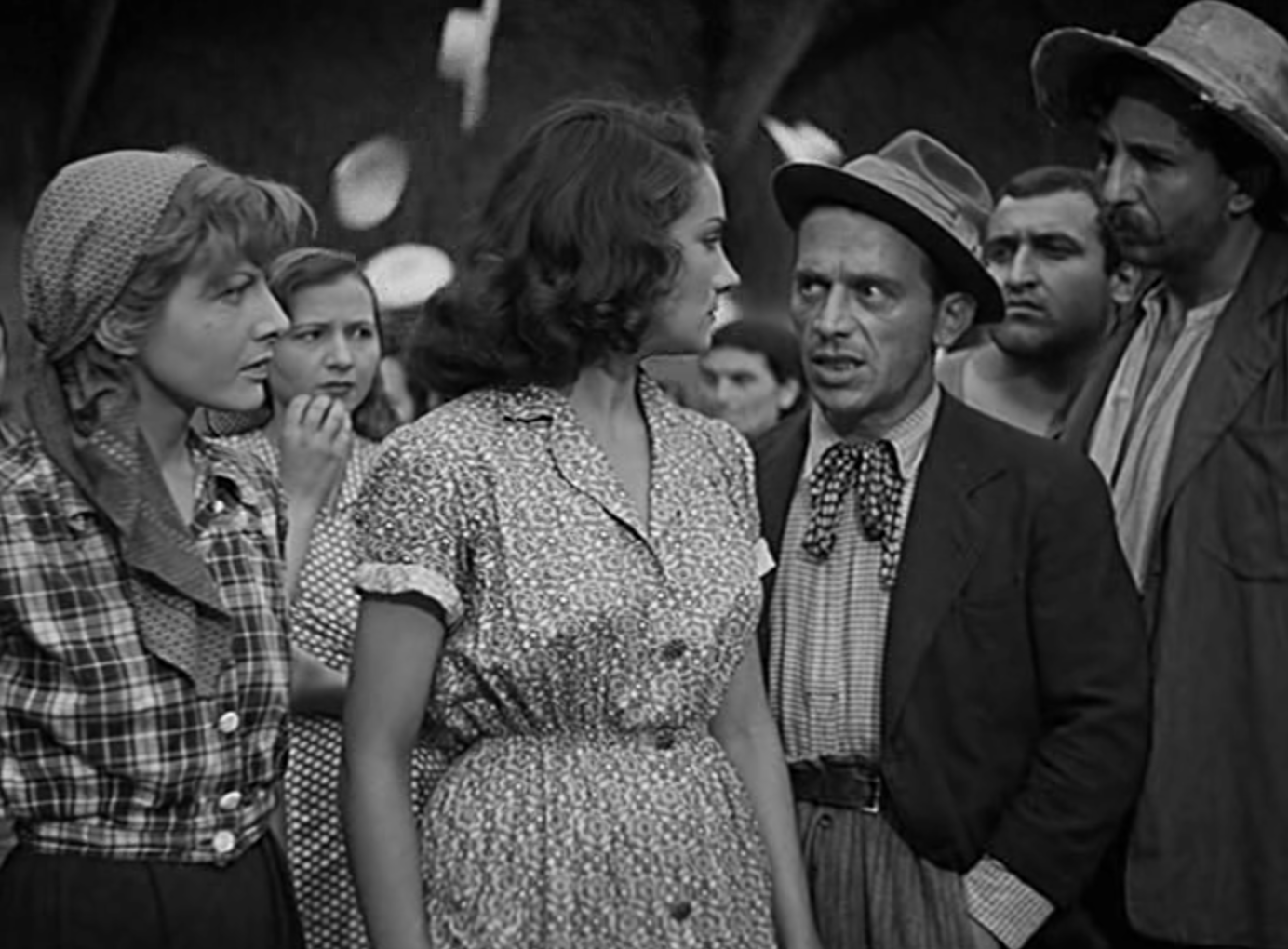
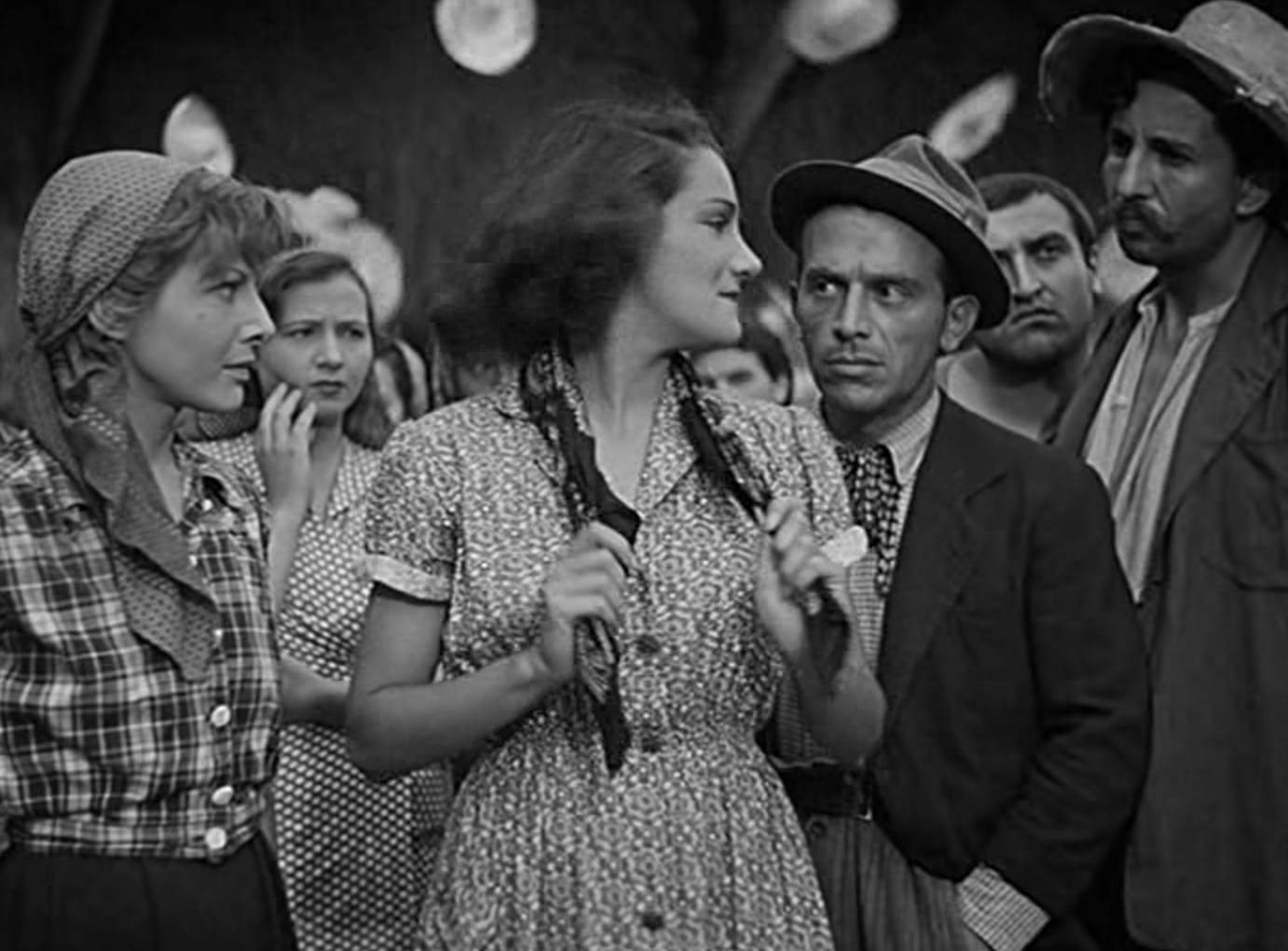
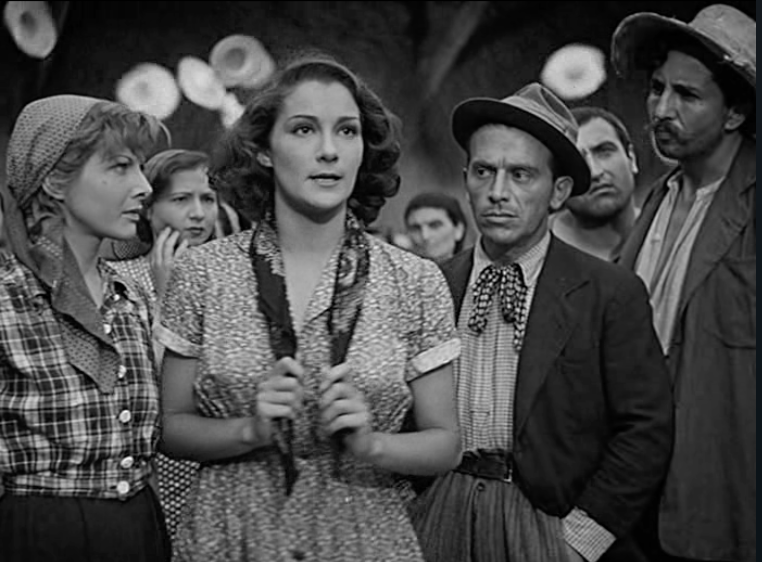
Con le mani in tasca e l'espressione accigliata, dice a Francesca: "Credi che mi piaccia l'idea di perdere la vostra percentuale?"
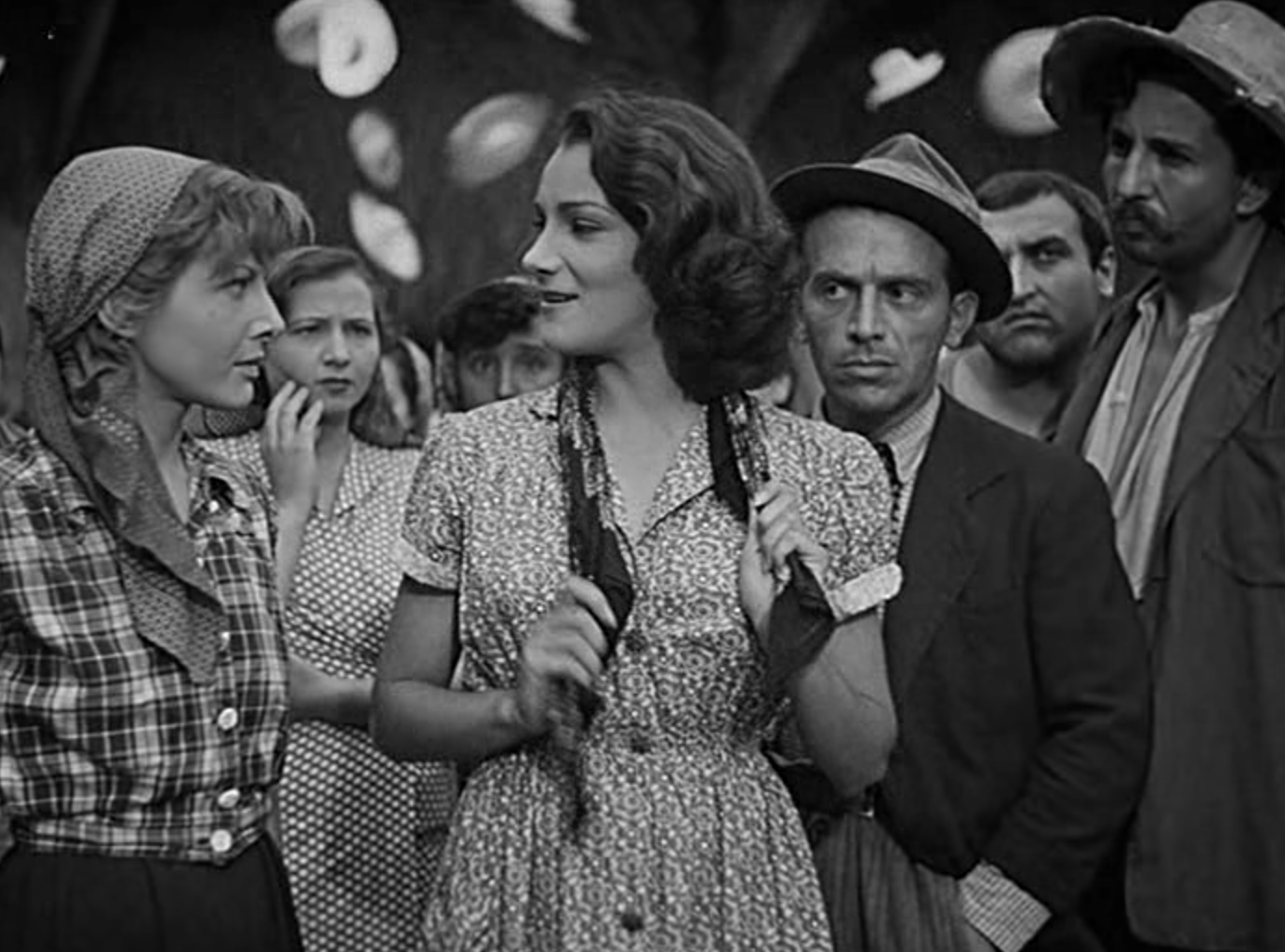
Lei si mette la sciarpa al collo. "Coraggio, allora!" – dice – "Che aspettiamo?"
Hands in pockets, frowning, he tells Francesca, “Do you think I like the idea of losing my cut of your pay?"
She puts her scarf around her neck. “Come on, then!” she says. “What are we waiting for?”
FINE PARTE 7
Ecco Parte 8 of this cineracconto! Subscribe to receive a weekly email newsletter with links to all our new posts.