Regia / Director: Giuseppe De Santis, 1949
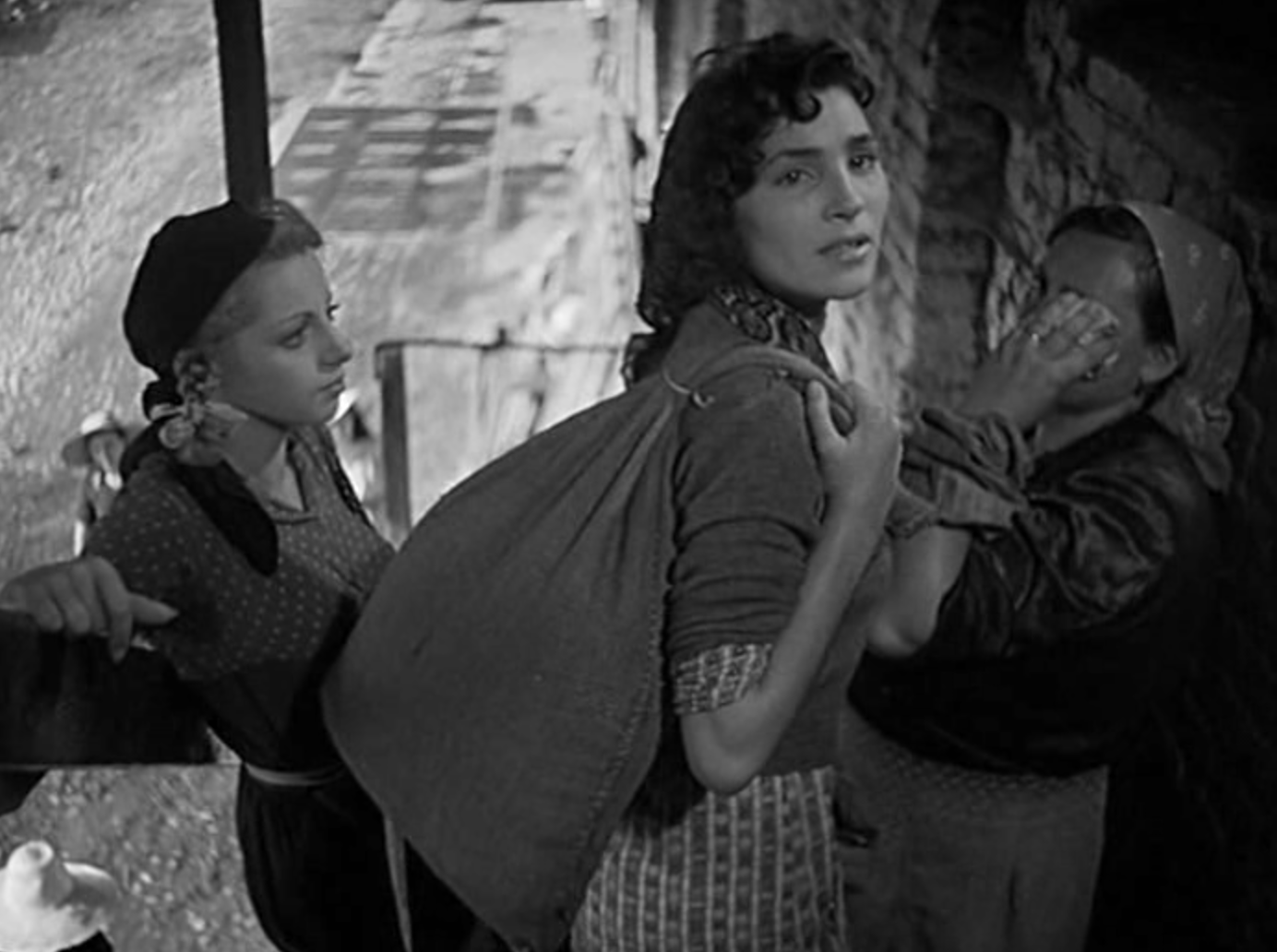
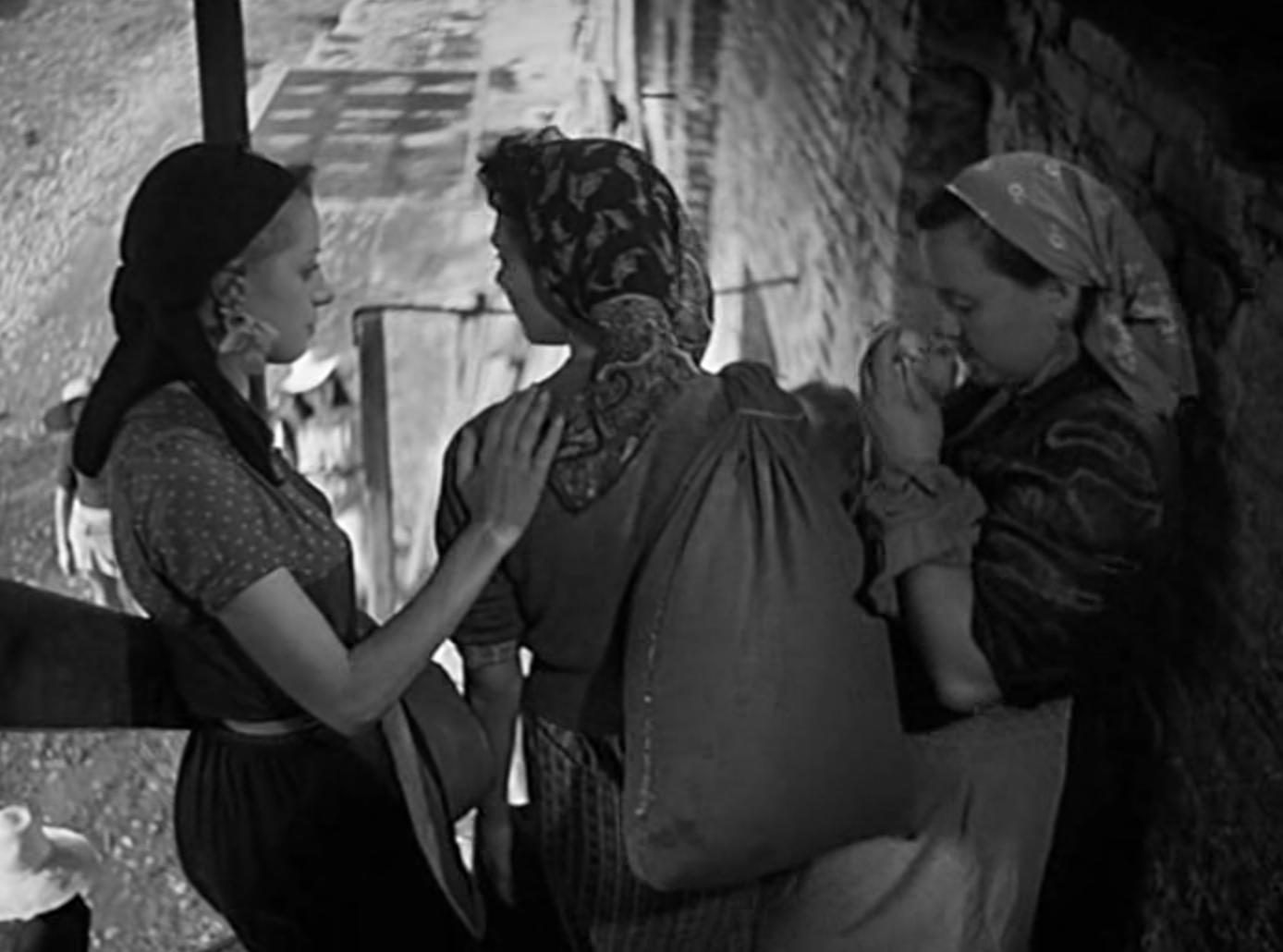
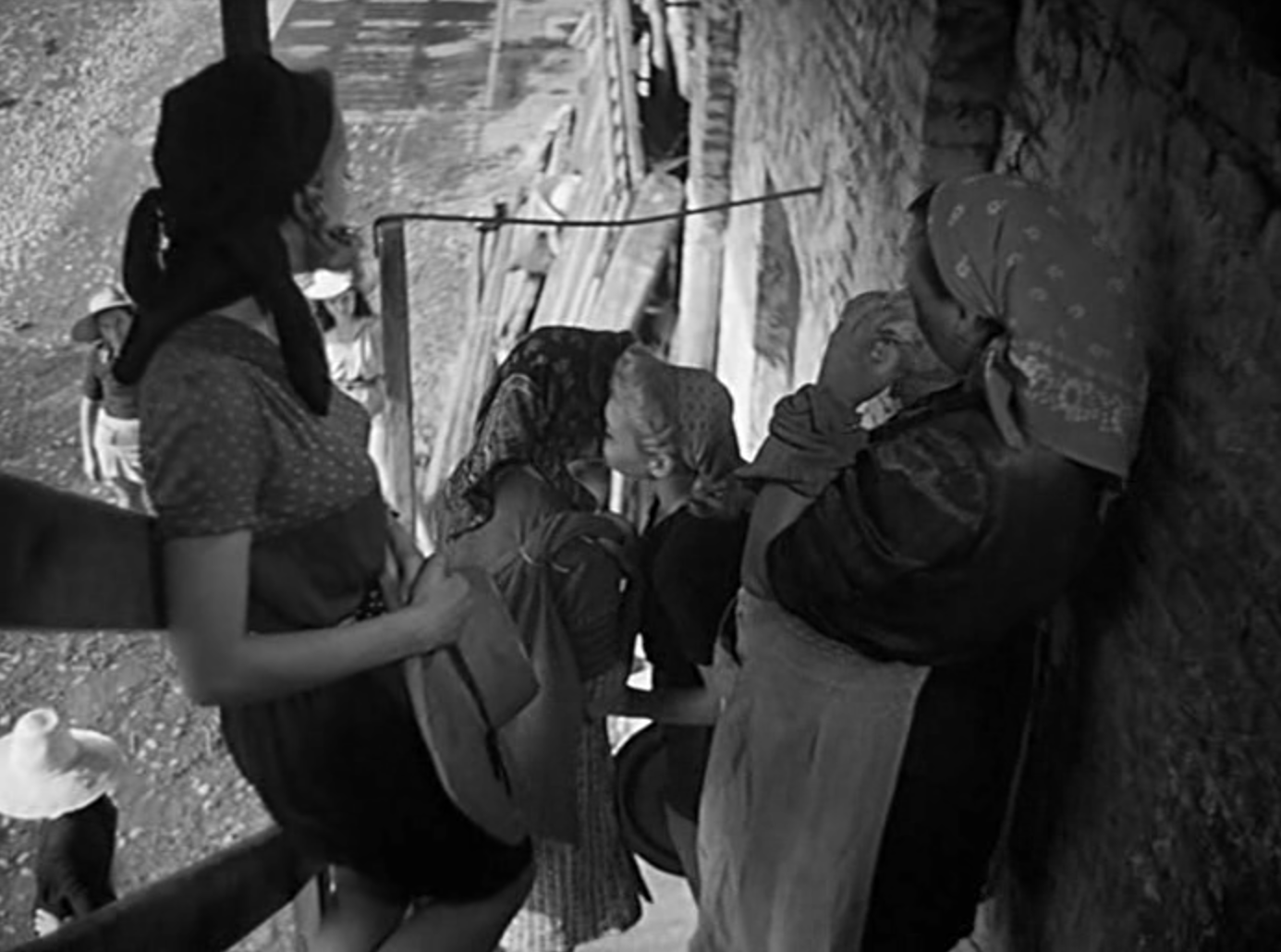
La pioggia è cessata. Gabriella, con la borsa in spalla, se ne sta andando. Gianna le dà un bacio. Andreina si asciuga le lacrime.
Non vediamo alcuna traccia di un bambino.
The rain has stopped. Gabriella, bag slung over her shoulder, is leaving. Gianna gives her a kiss. Andreina is wiping away tears.
We don’t see any evidence of a baby.
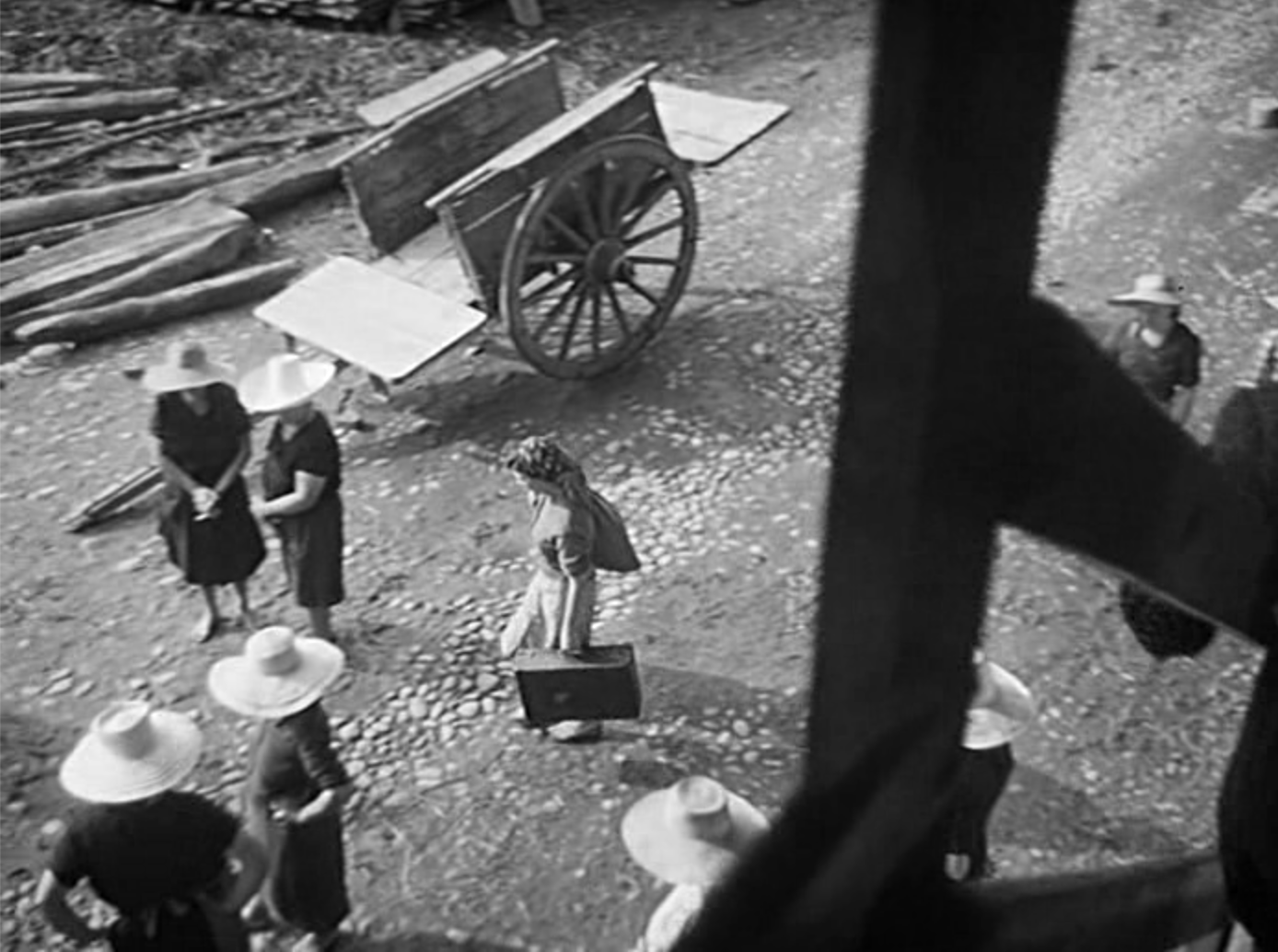
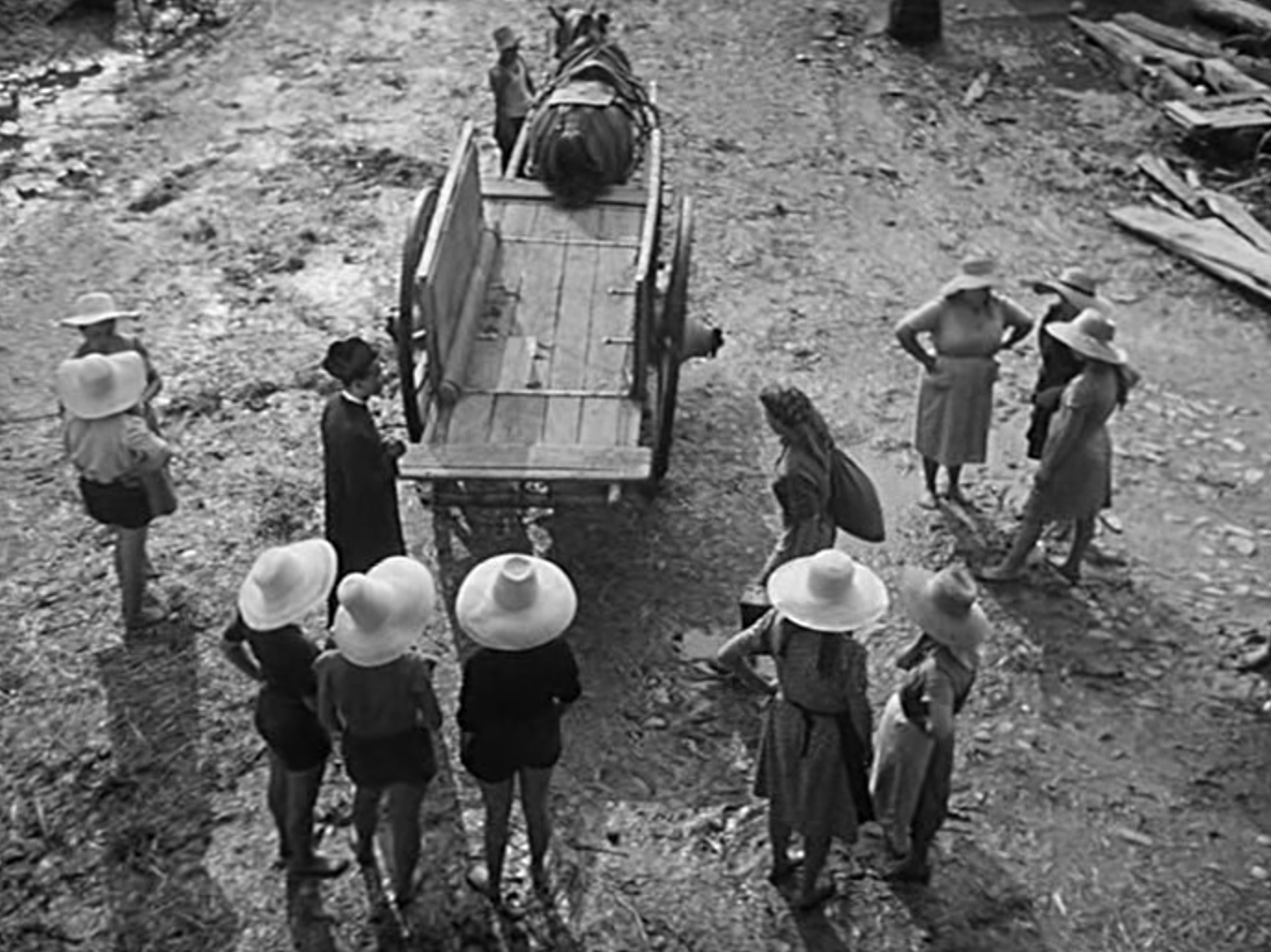
Giù nel cortile, un prete aspetta Gabriella vicino a un carro trainato da cavalli. Le donne stanno in piedi formando un ampio arco, con in testa i loro cappelli di paglia.
Down in the courtyard, a priest awaits Gabriella near a horse-drawn cart. Women stand in a loose arc, wearing their straw hats.
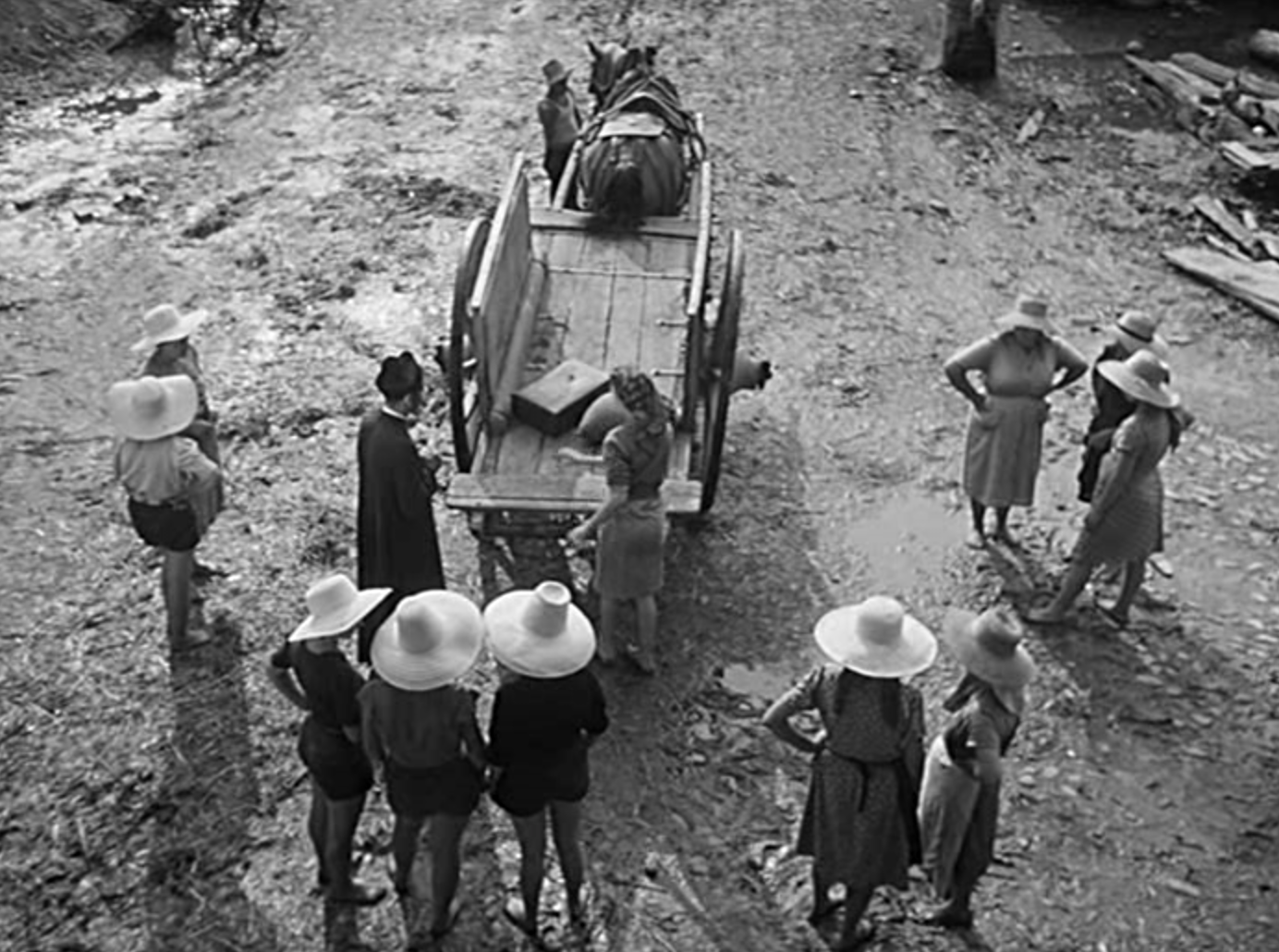
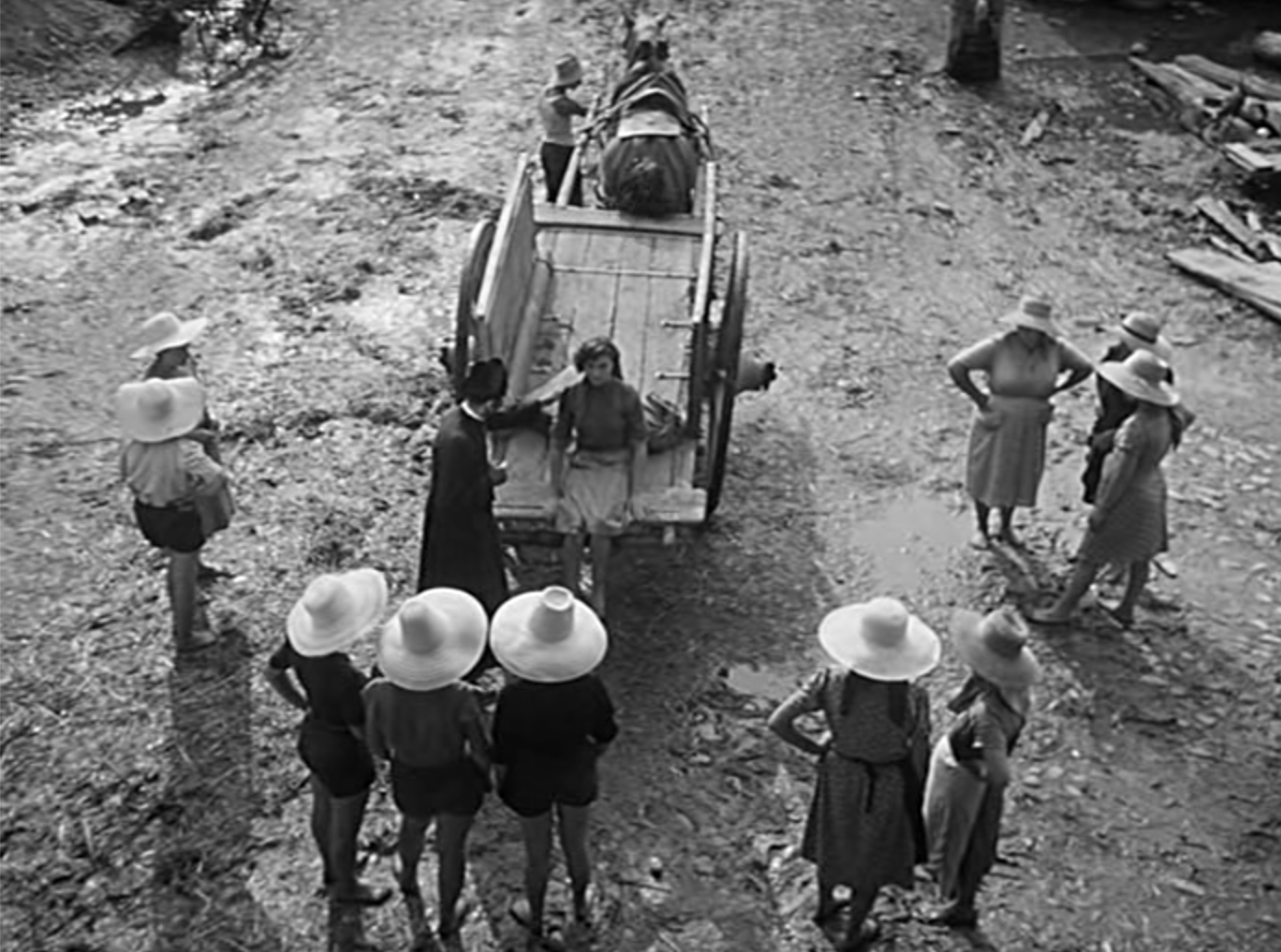
Gabriella appoggia il sacco di riso e la piccola valigia e si siede sul retro del carro vuoto, rivolta verso l'esterno. Il prete le dà una pacca sulla spalla.
Gabriella sets down her bag of rice and small suitcase and sits at the rear of the empty cart, facing outward. The priest pats her shoulder.
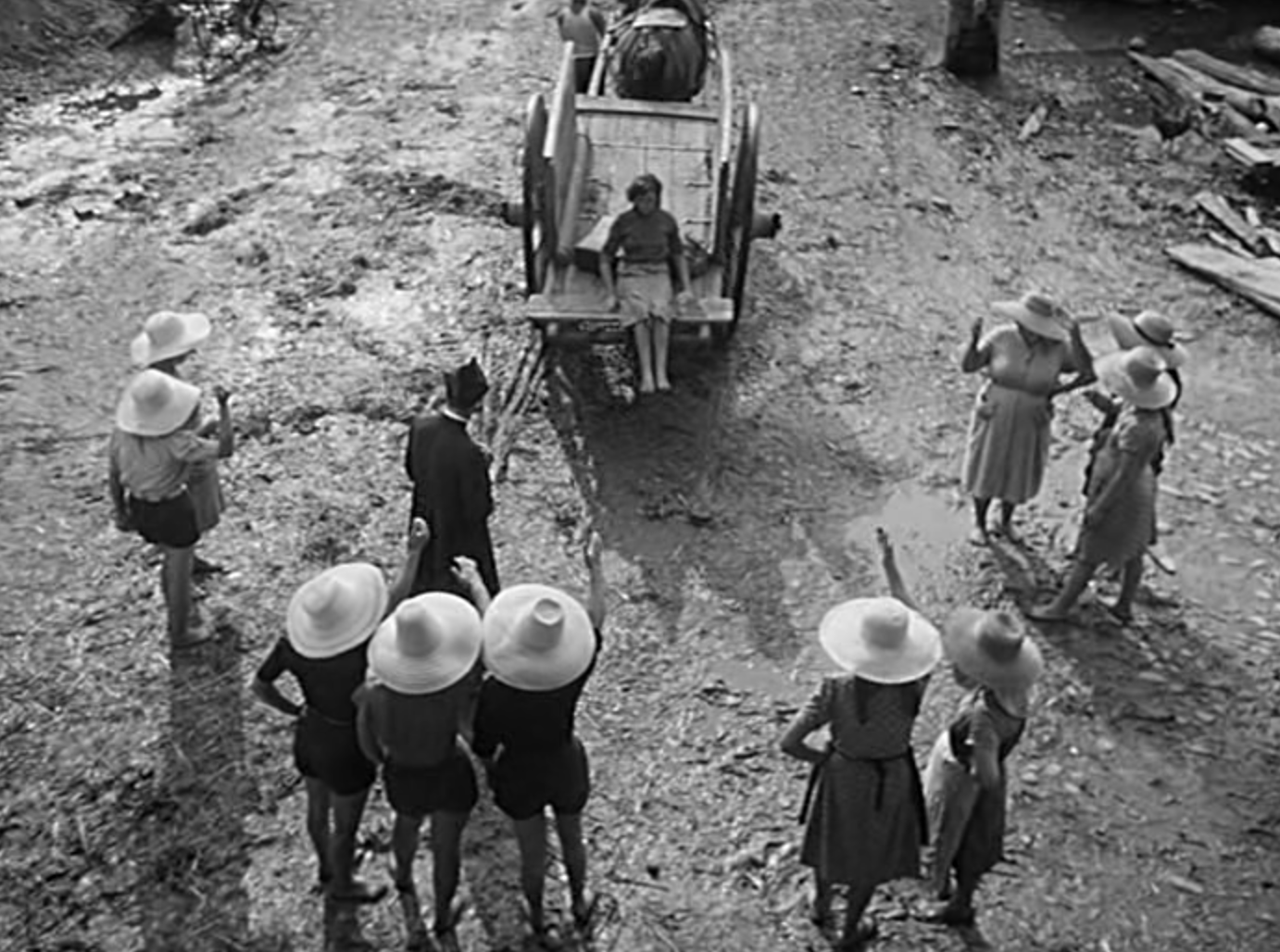
Mentre il carro si allontana, le donne salutano con la mano.
As the wagon pulls away, the women wave goodbye.
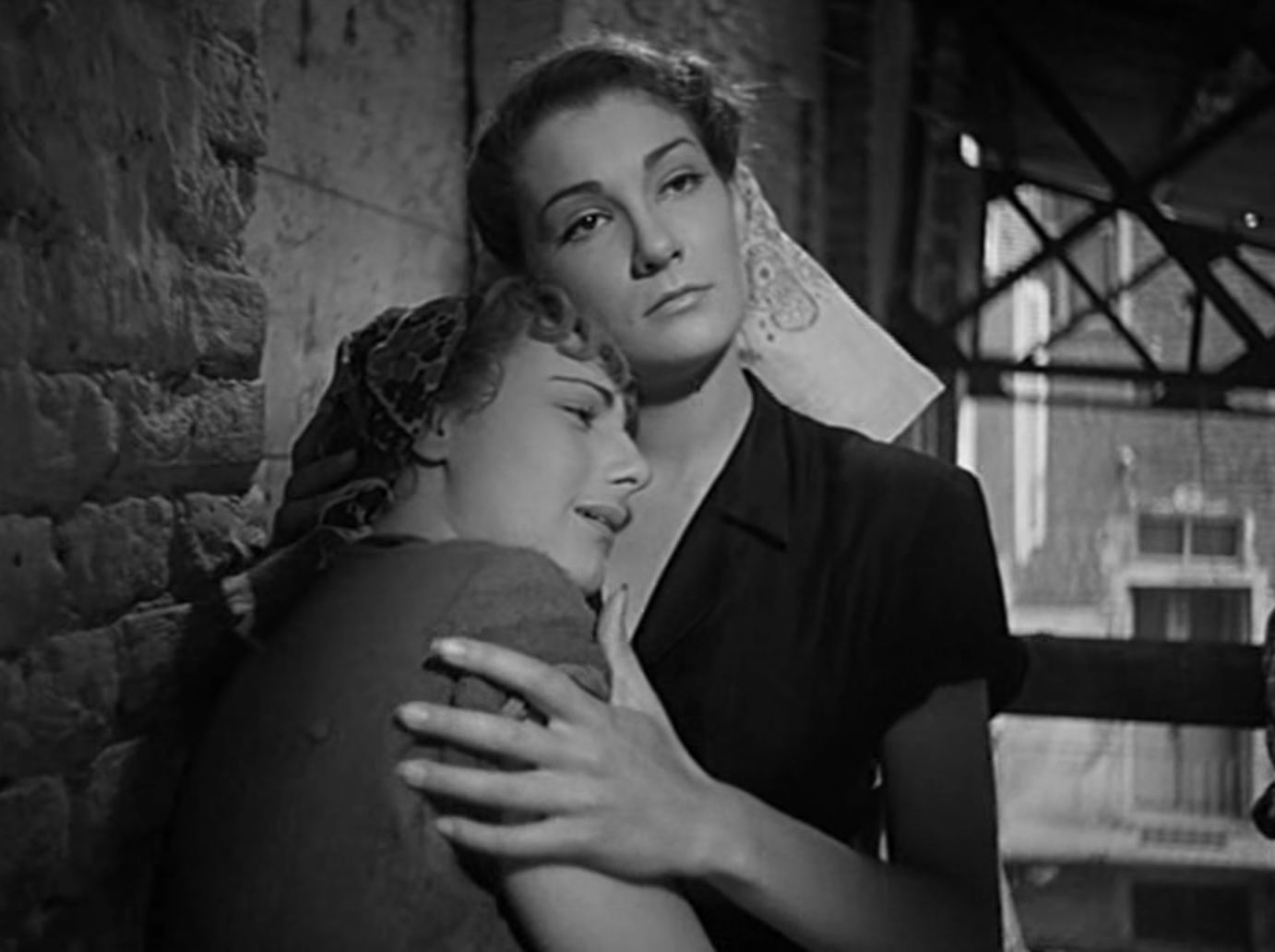
All'interno del dormitorio, Anna piange sulla spalla di Francesca.
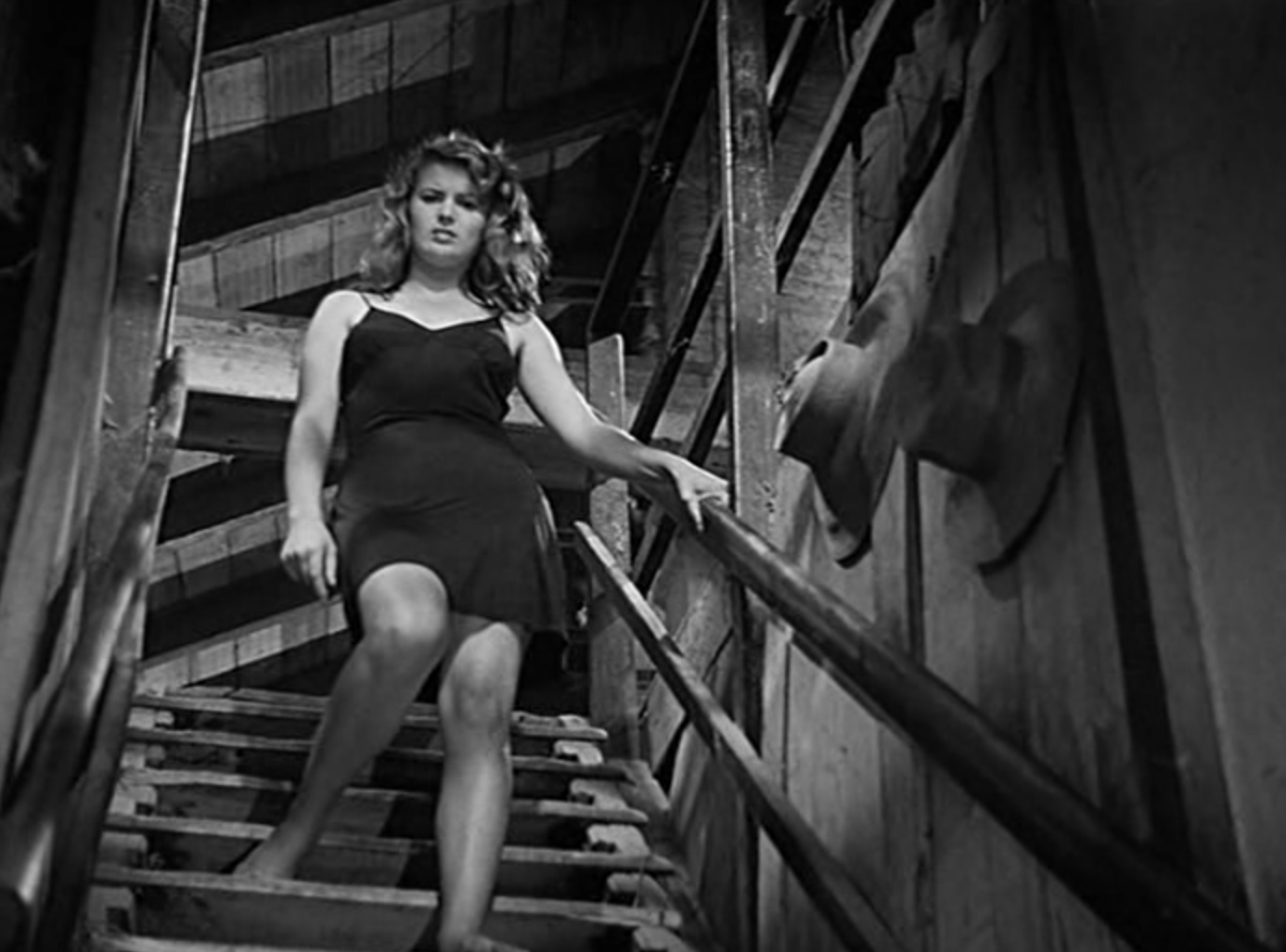
Silvana guarda dall'alto delle scale.
Inside the dormitory, Anna cries on Francesca’s shoulder.
Silvana looks down from the top of the stairs.
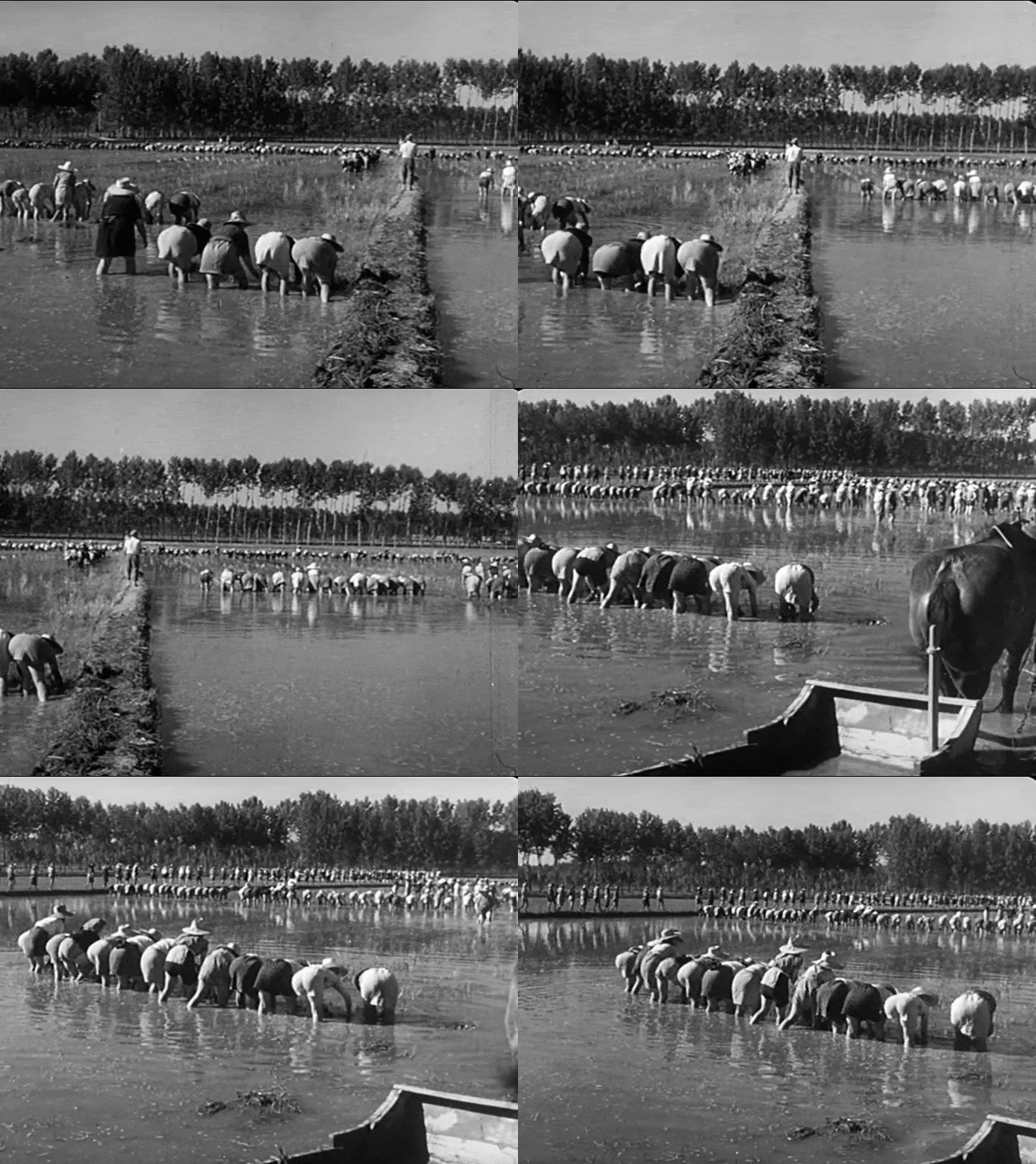
Una dissolvenza ci porta alle risaie. La macchina da presa inquadra le lunghe file di donne, chine e con l'acqua fino alle ginocchia. Un caposquadra sta in piedi all’asciutto. Un cavallo scuote furiosamente la coda.
A dissolve brings us to the rice fields. The camera pans along the long lines of women, stooping and up to their knees in water. A foreman stands on dry land. A horse furiously shakes its tail.
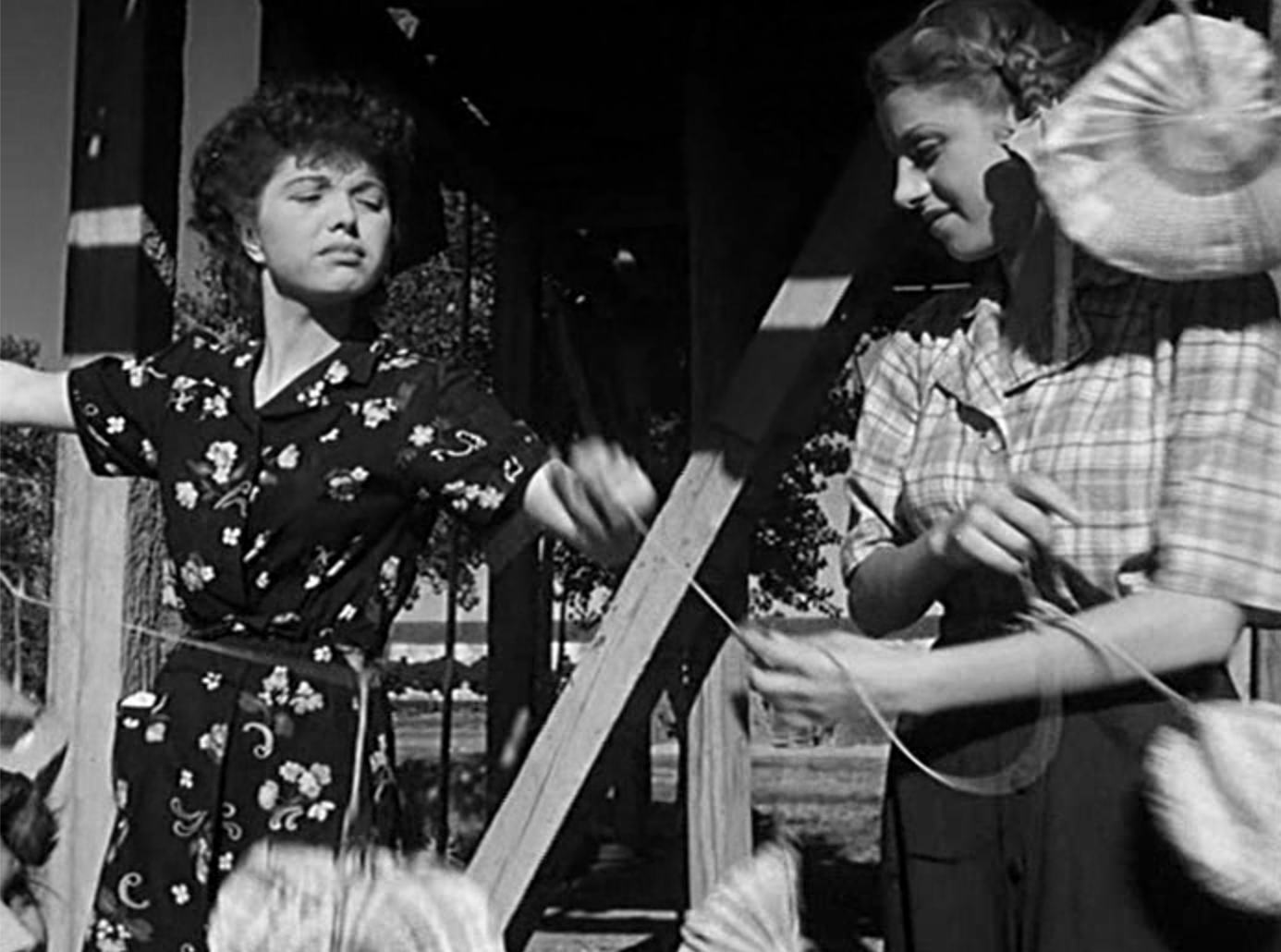
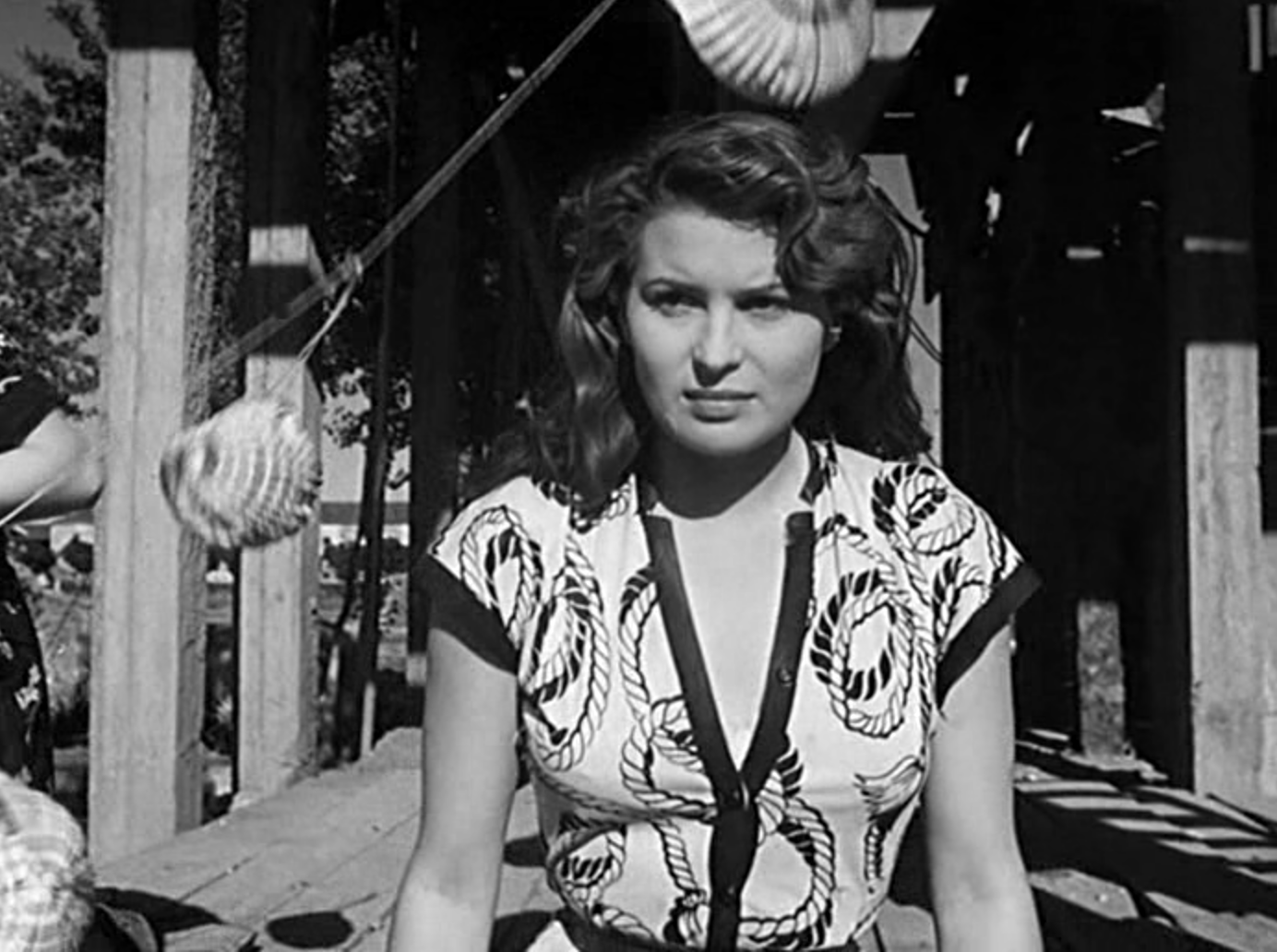
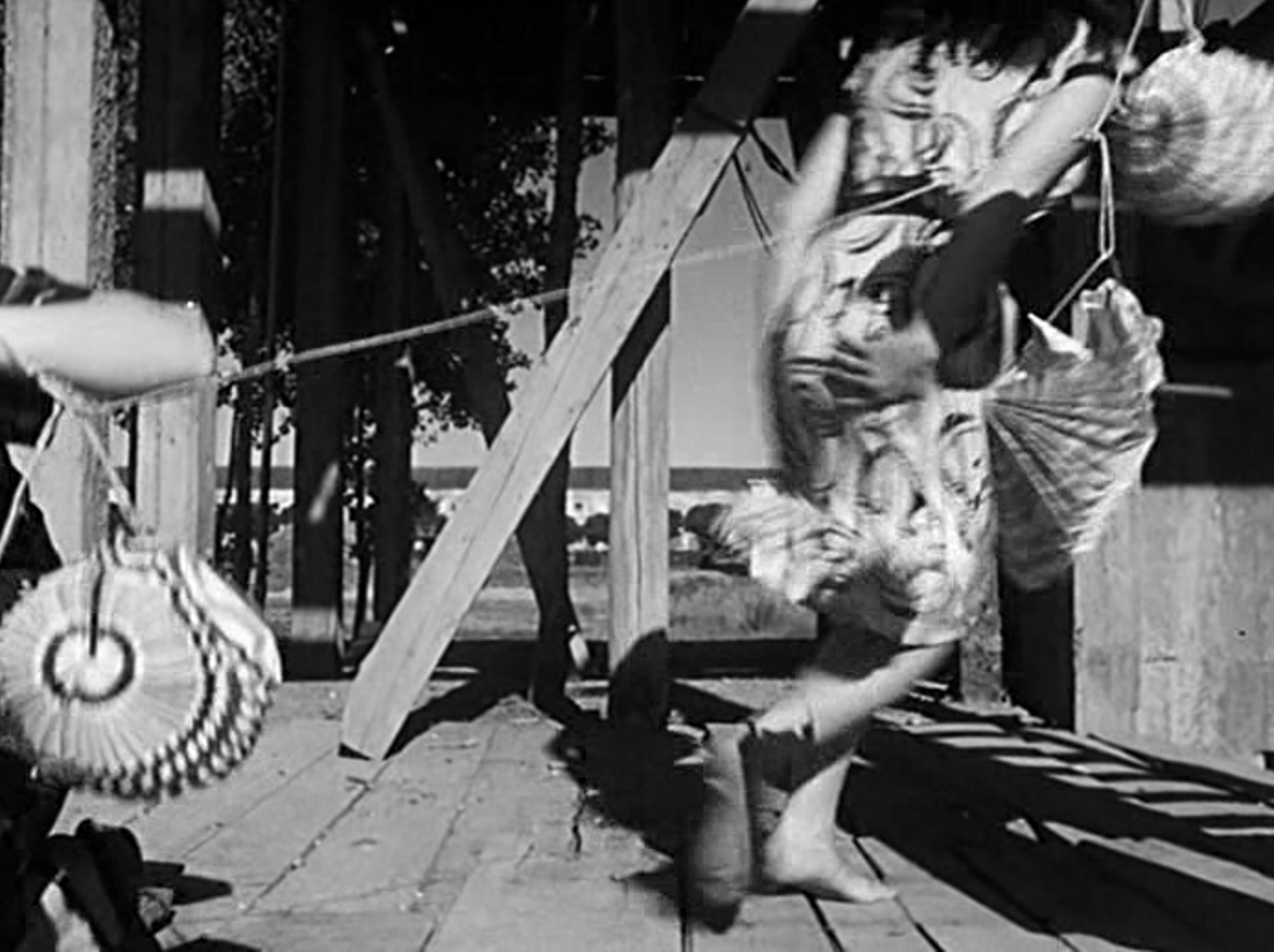
Una giornata di sole: le donne appendono le decorazioni per la festa di addio. La raccolta del riso è terminata.
Silvana è seduta da sola.
“Non c'è nulla di meglio che il ballo", dice una donna.
"Finché si è giovani", risponde un’altra.
"Io andrò alle feste anche da vecchia".
Silvana si alza e se ne va.
A sunny day: women hang decorations for the farewell party. The rice harvest is over.
Silvana sits alone.
A woman says, “There’s nothing better than dancing.”
“As long as you’re young,” responds another.
“I’ll go to parties even when I’m old.”
Silvana stands and walks away.
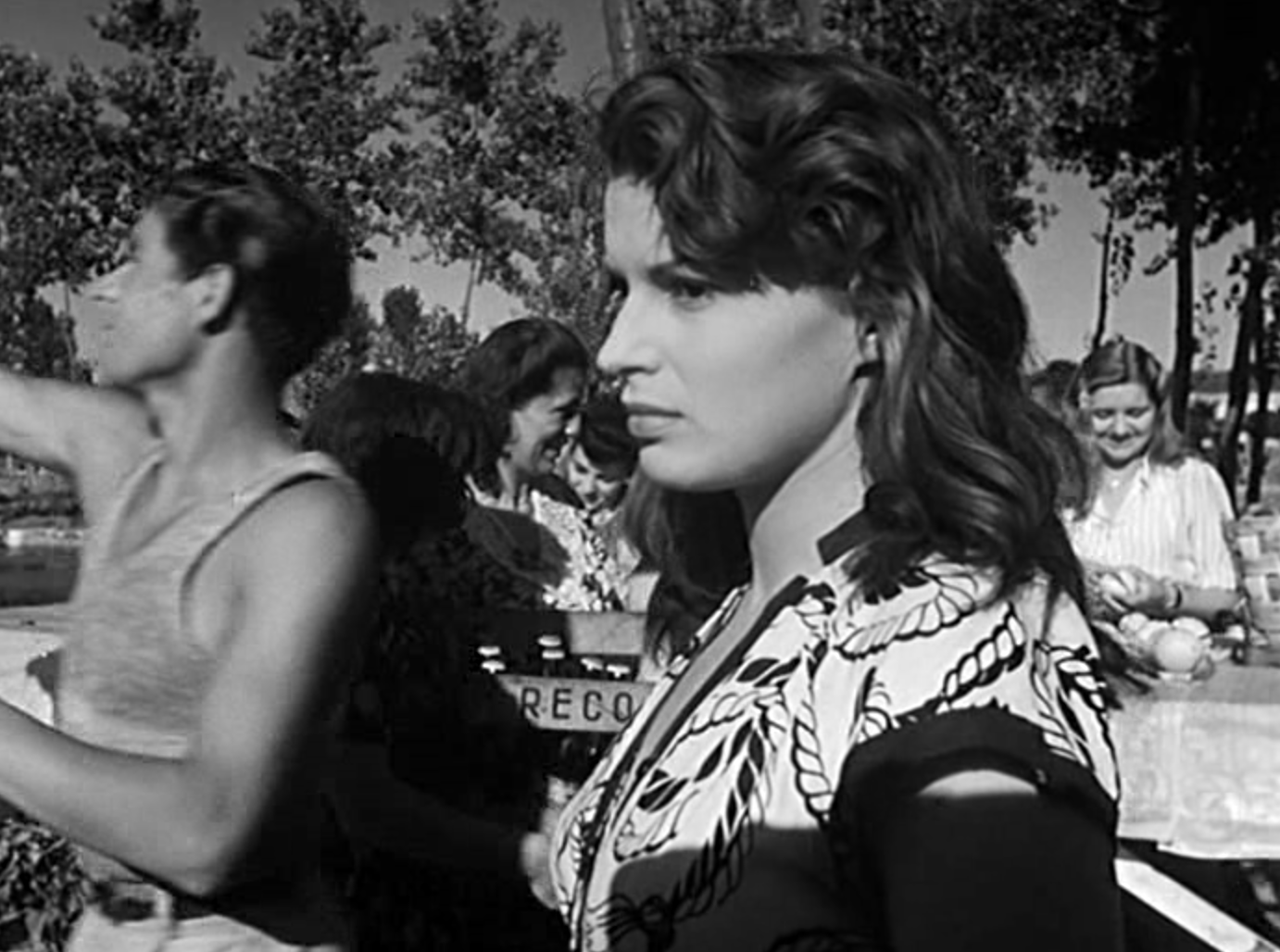
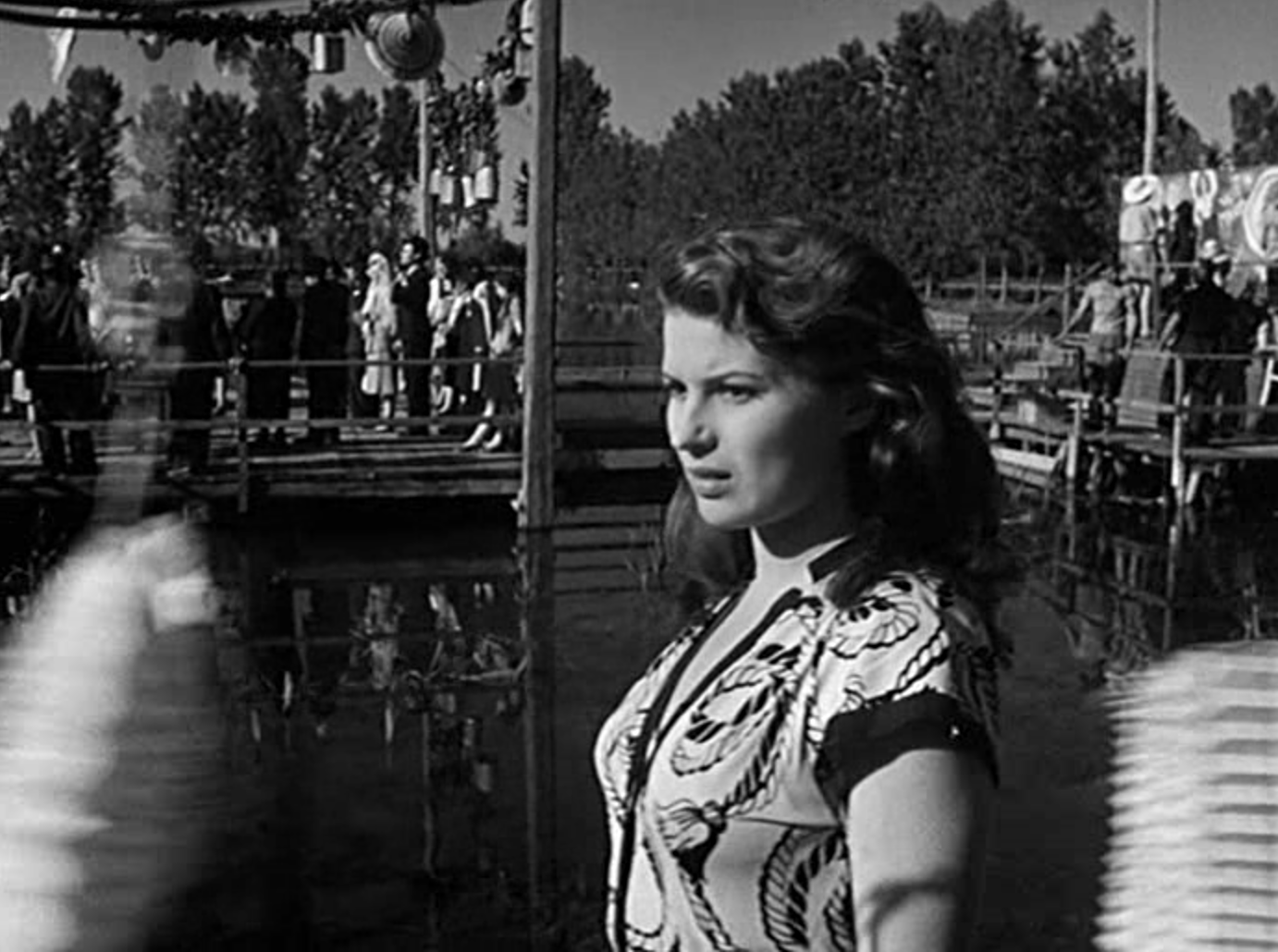
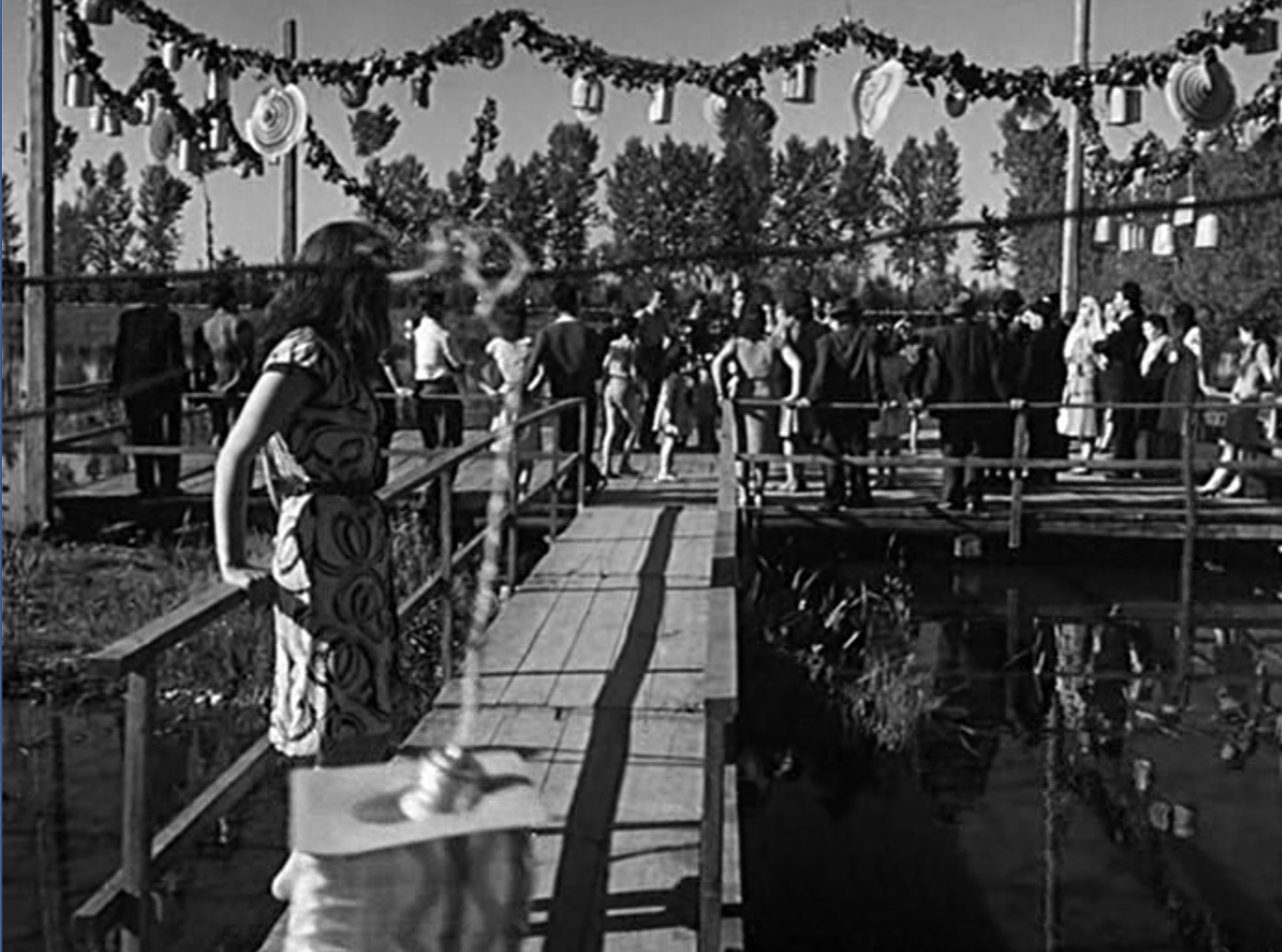
Cammina per il terreno, fermandosi infine ad appoggiarsi al corrimano per guardare il matrimonio di Gianna. Gli sposi sono riflessi nell'acqua.
She walks through the grounds, stopping at last to lean against a railing and watch Gianna’s wedding. The bride and groom are reflected in the water.
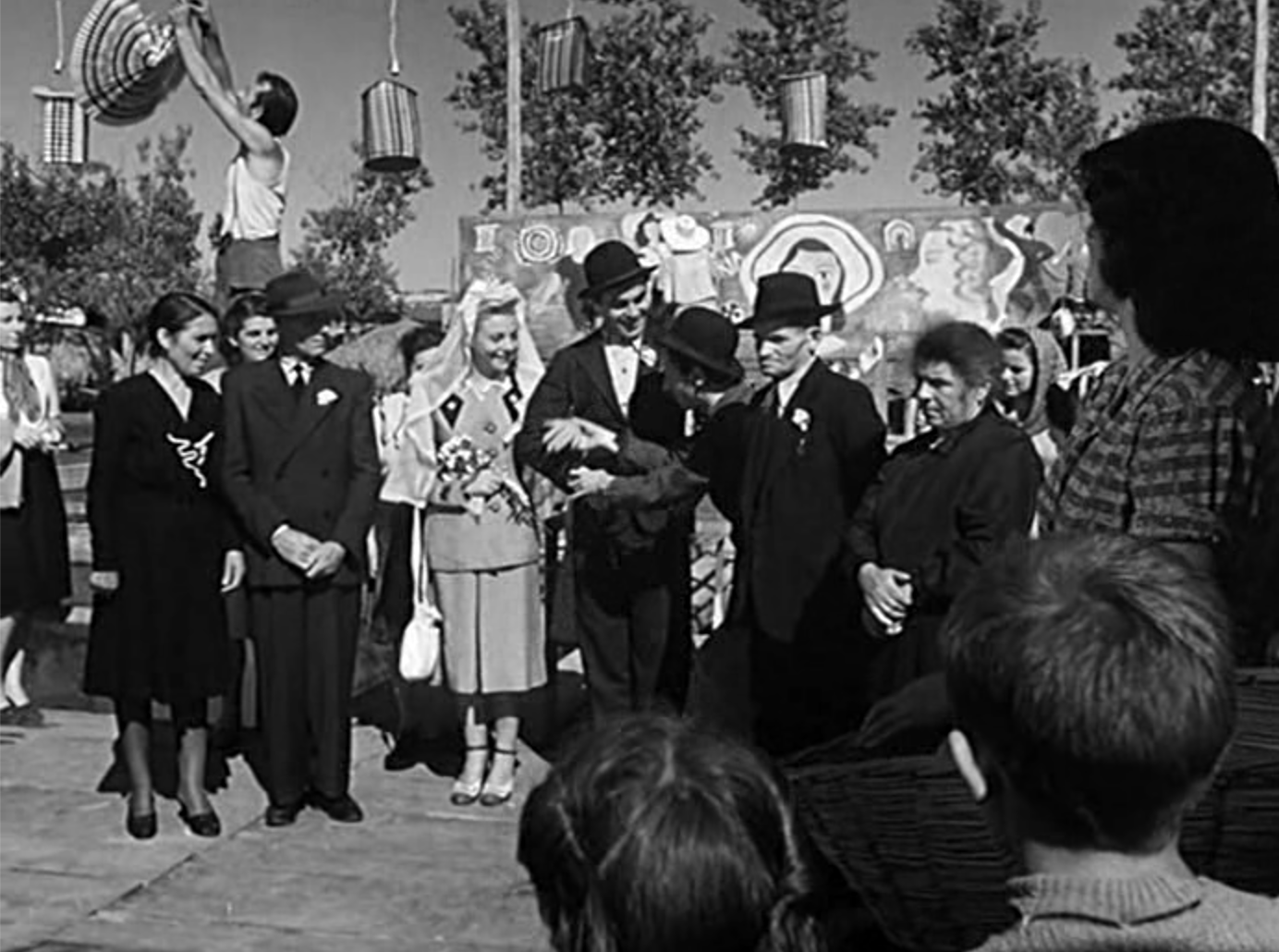
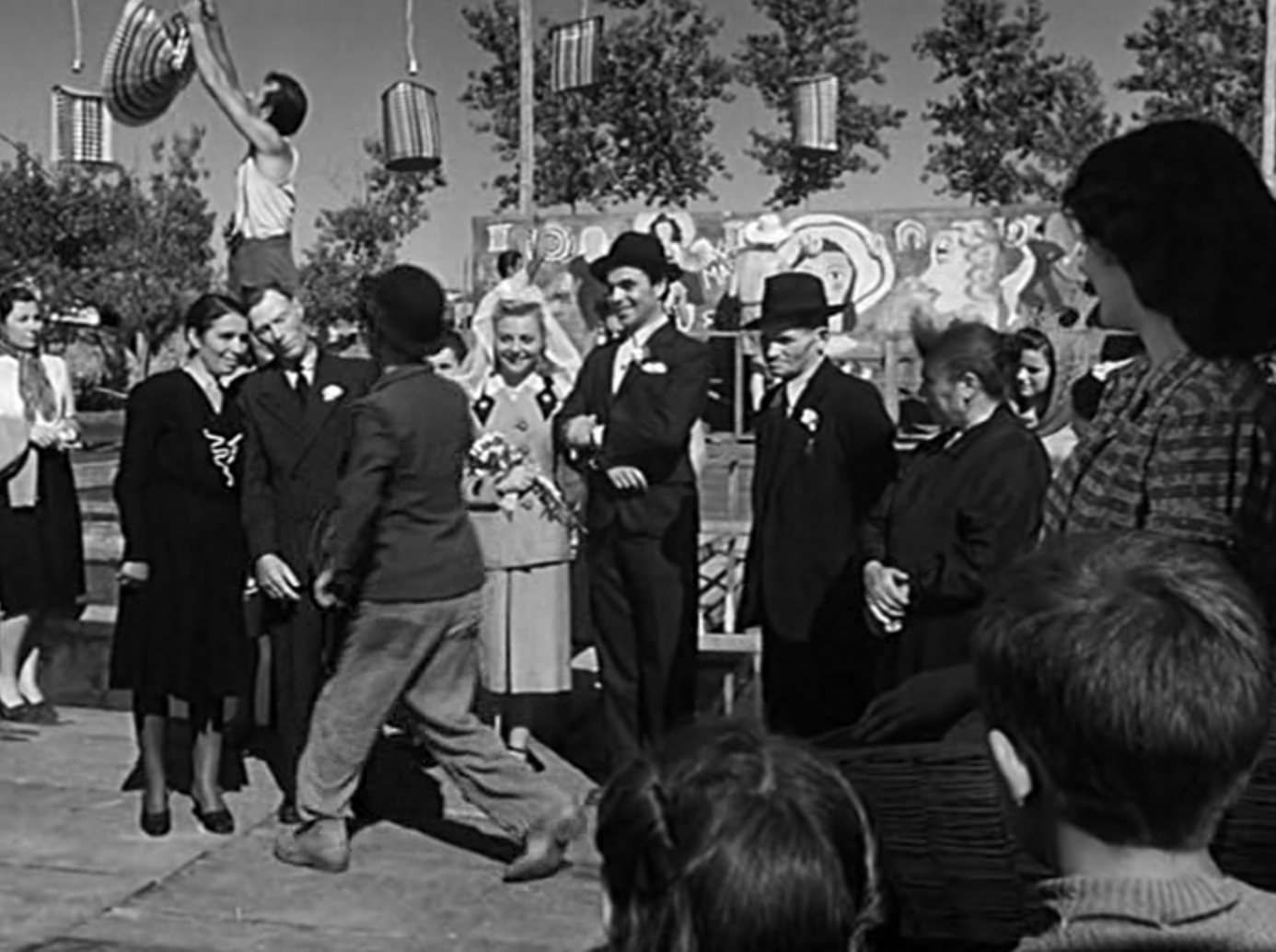
Mascheroni sta facendo delle fotografie. “Bella!” – dice – “La sposa è bellissima”.
Toglie il cappello al padre della sposa e avvicina due teste: “Papà e mamma? Stupendi!”
Sullo sfondo, un murale mostra delle mondine con i loro grandi cappelli per il sole.
Mascheroni is taking photographs. “Beautiful!” he says. “The bride is lovely.”
He removes the father’s hat of the father of the bride and leans two heads together: “Papa and mama? Wonderful!”
In the background, a mural shows rice workers in their big sunhats.
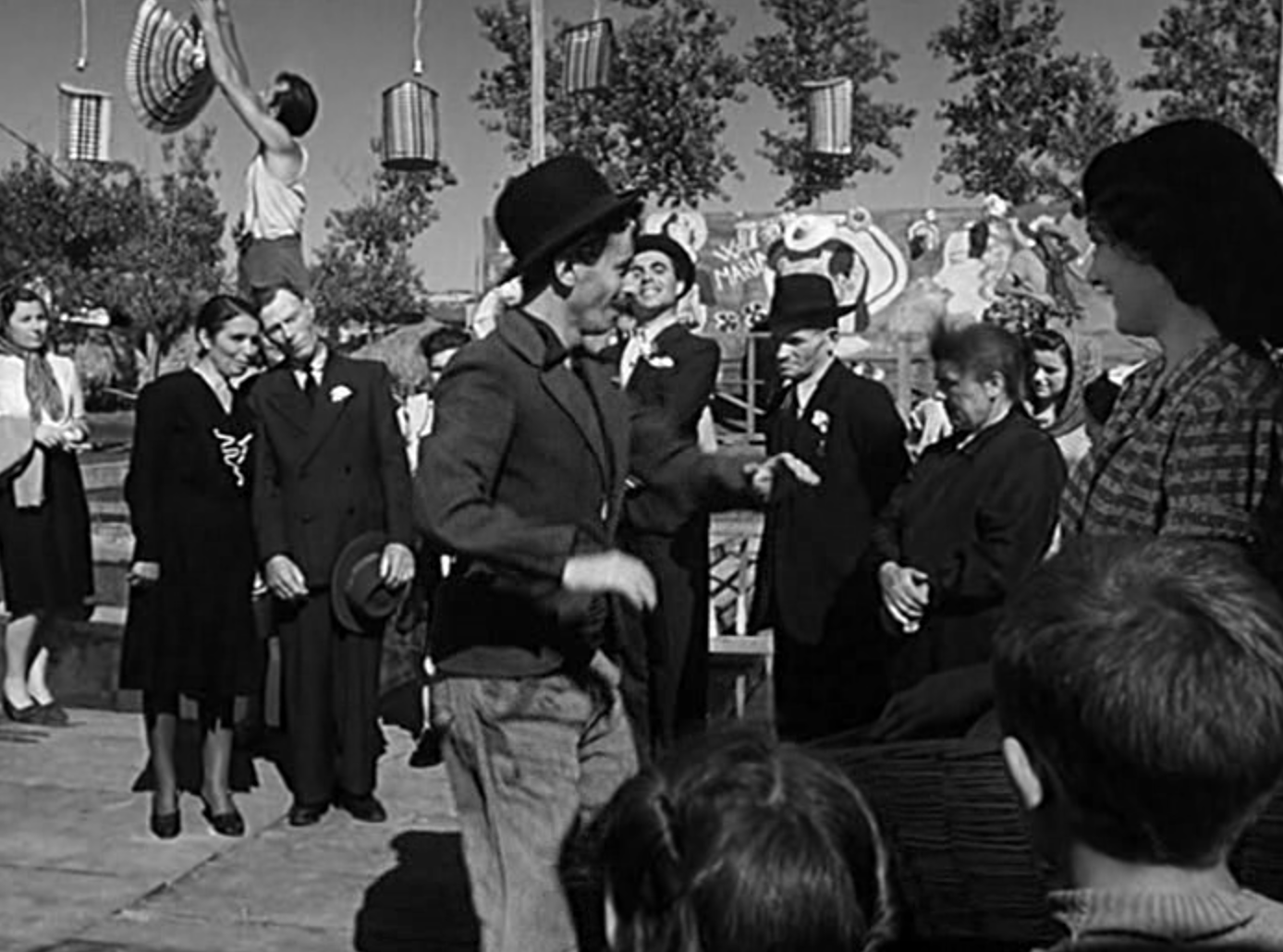
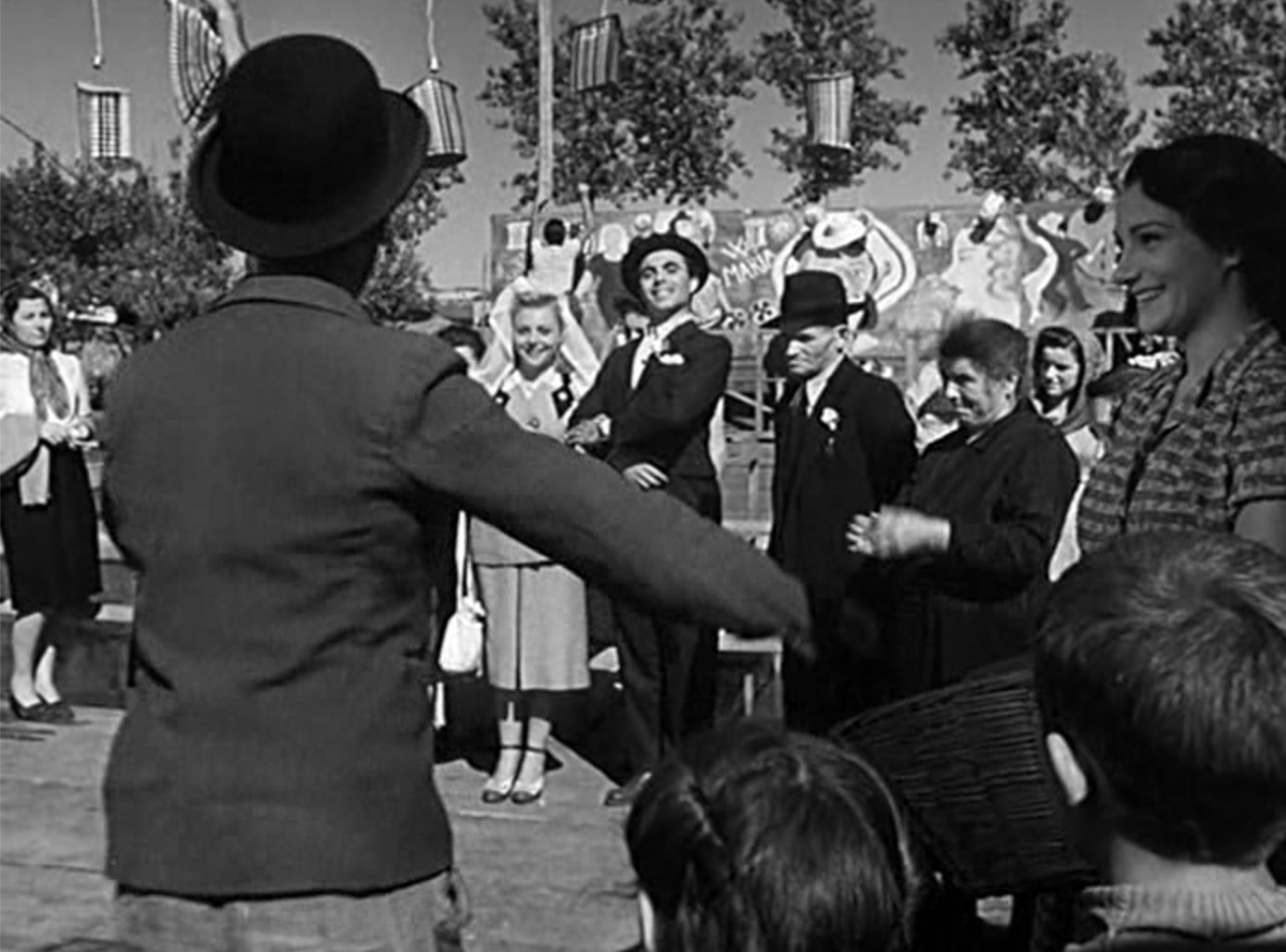
Mascheroni fa un passo indietro, pieno di energia. "Stupendi! Sarà la foto più bella della stagione! Forza!"
Dietro di loro, un uomo in canottiera è in piedi su un tavolo e appende decorazioni festive.
Mascheroni steps back, full of energy. “Wonderful! It’s going to be the best photo of the season! Come on!”
Behind them, a man in an undershirt stands on a table, hanging festive decorations.
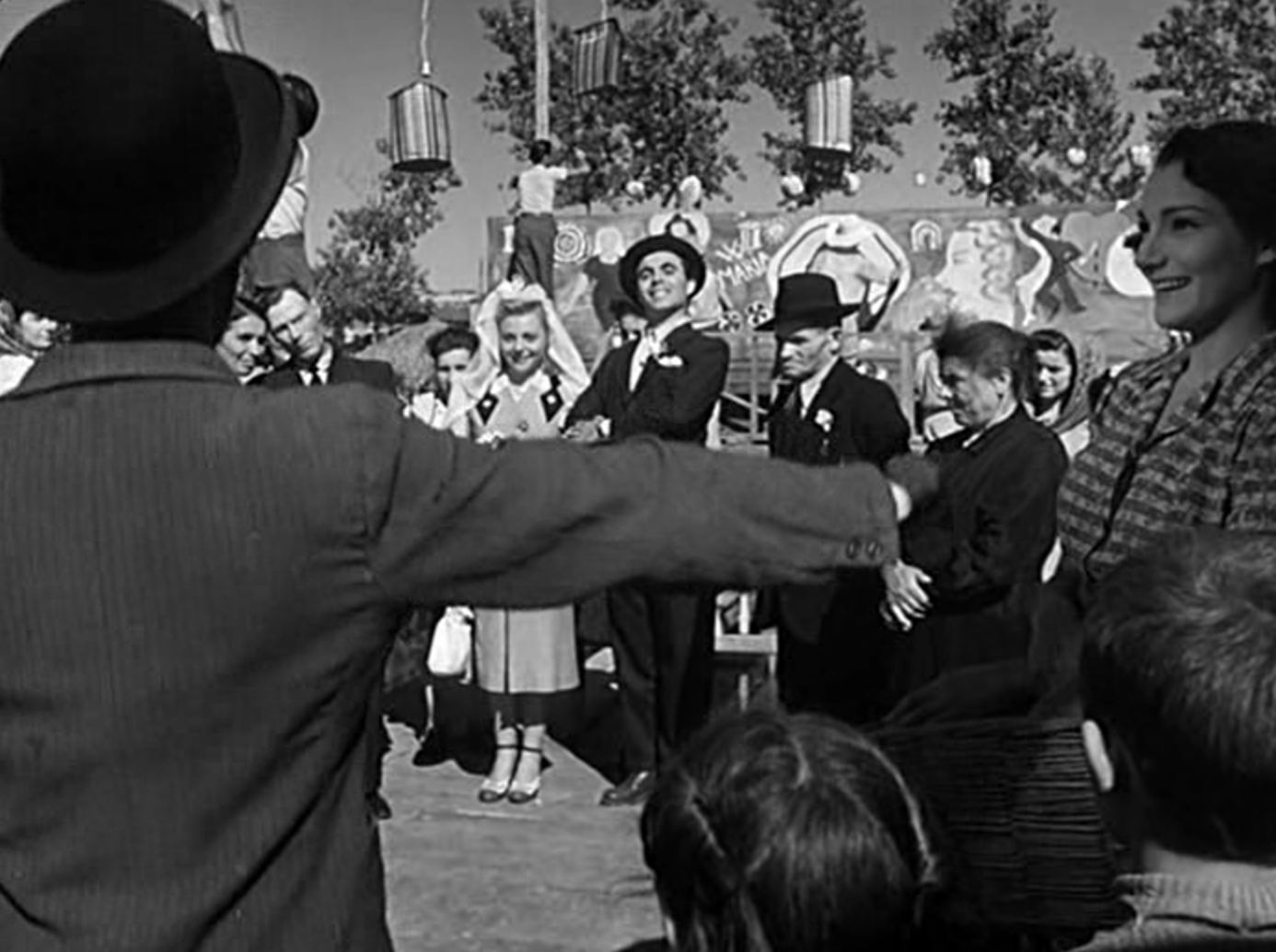
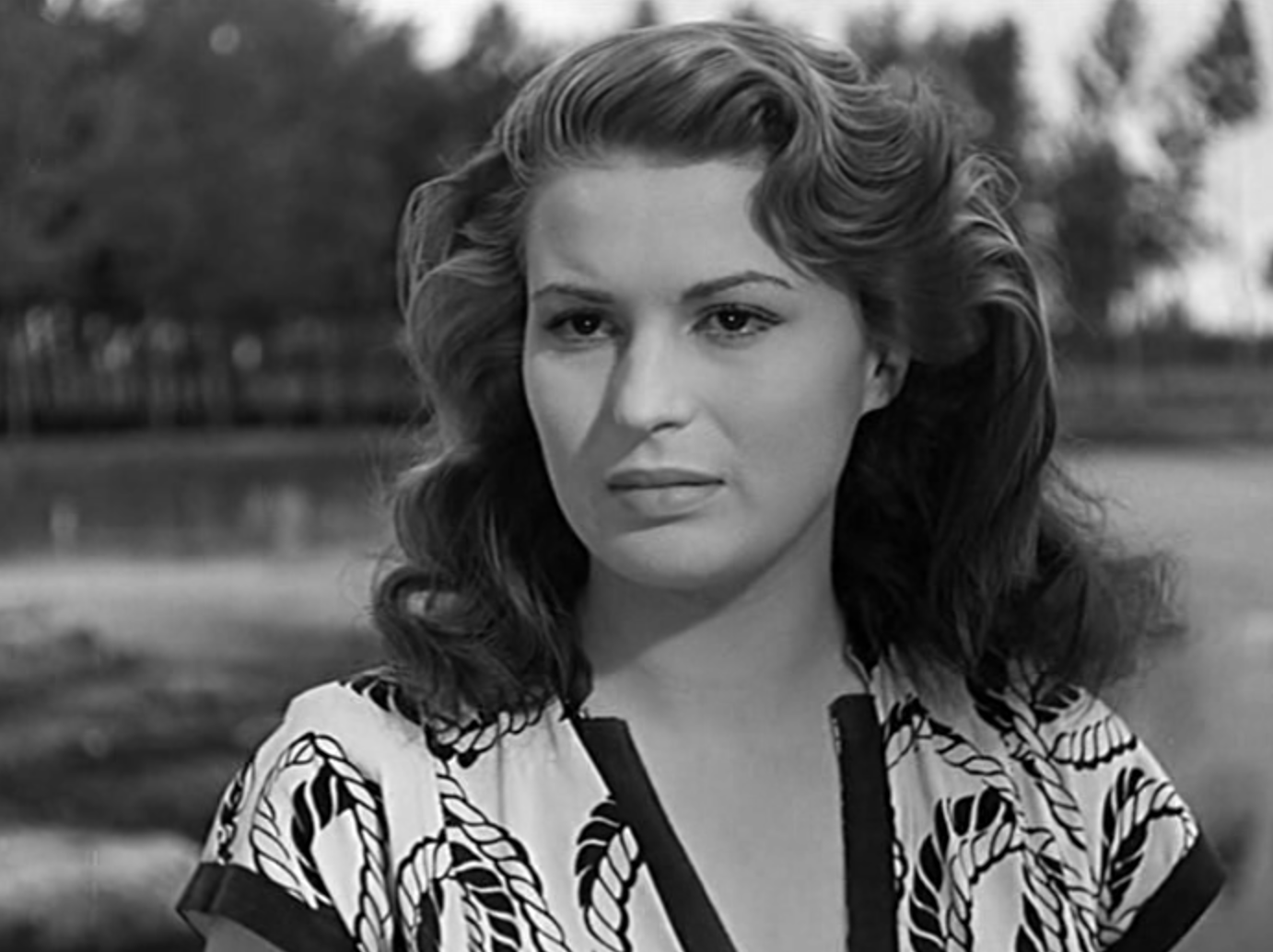
“Pronti!? Attenti che esce l'uccellino!” Silvana osserva da lontano, impassibile. “Fatto!”
”ReadyI Watch out, the birdie is coming out!” Silvana watches from afar, unmoved. “Done!”
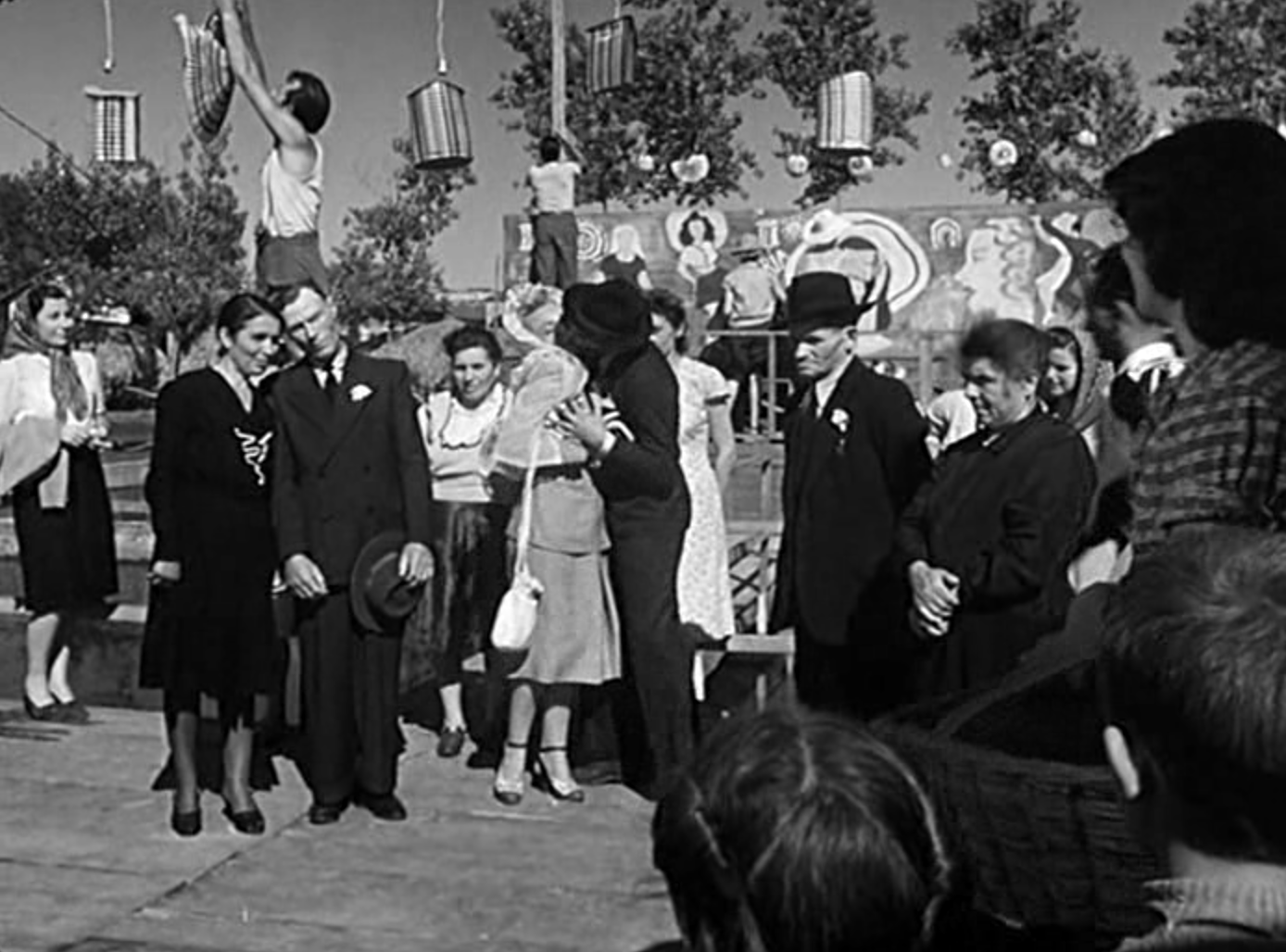
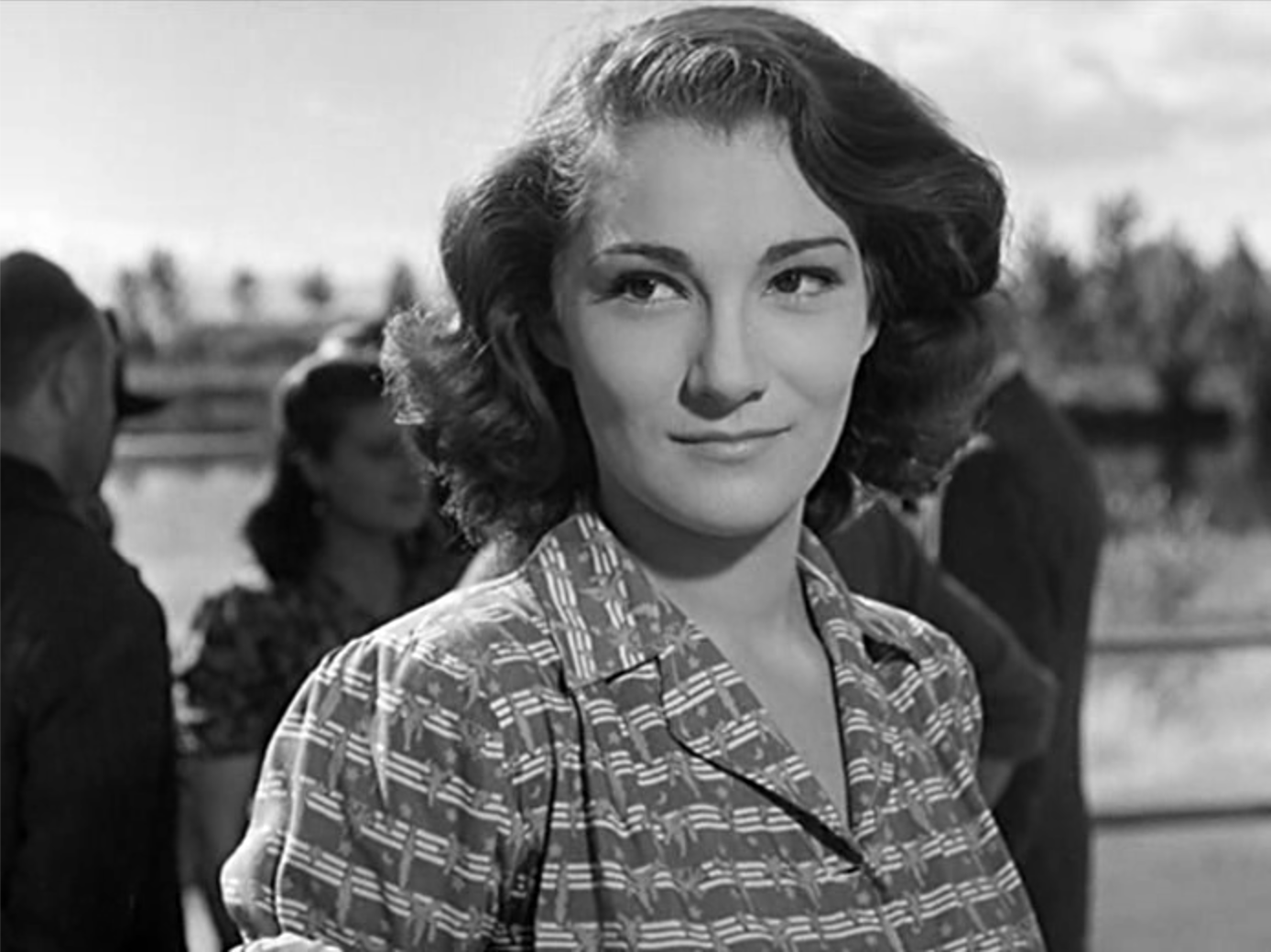
Tutti applaudono quando gli sposi si baciano. I genitori della sposa mantengono ancora la posa che Mascheroni ha fatto loro assumere, con le teste vicine.
In un primo piano, Francesca ha un sorriso sereno.
Everyone cheers when the bride and groom kiss. The bride’s parents still hold the pose that Mascheroni gave them, heads together.
In a close-up, Francesca has a quiet smile.
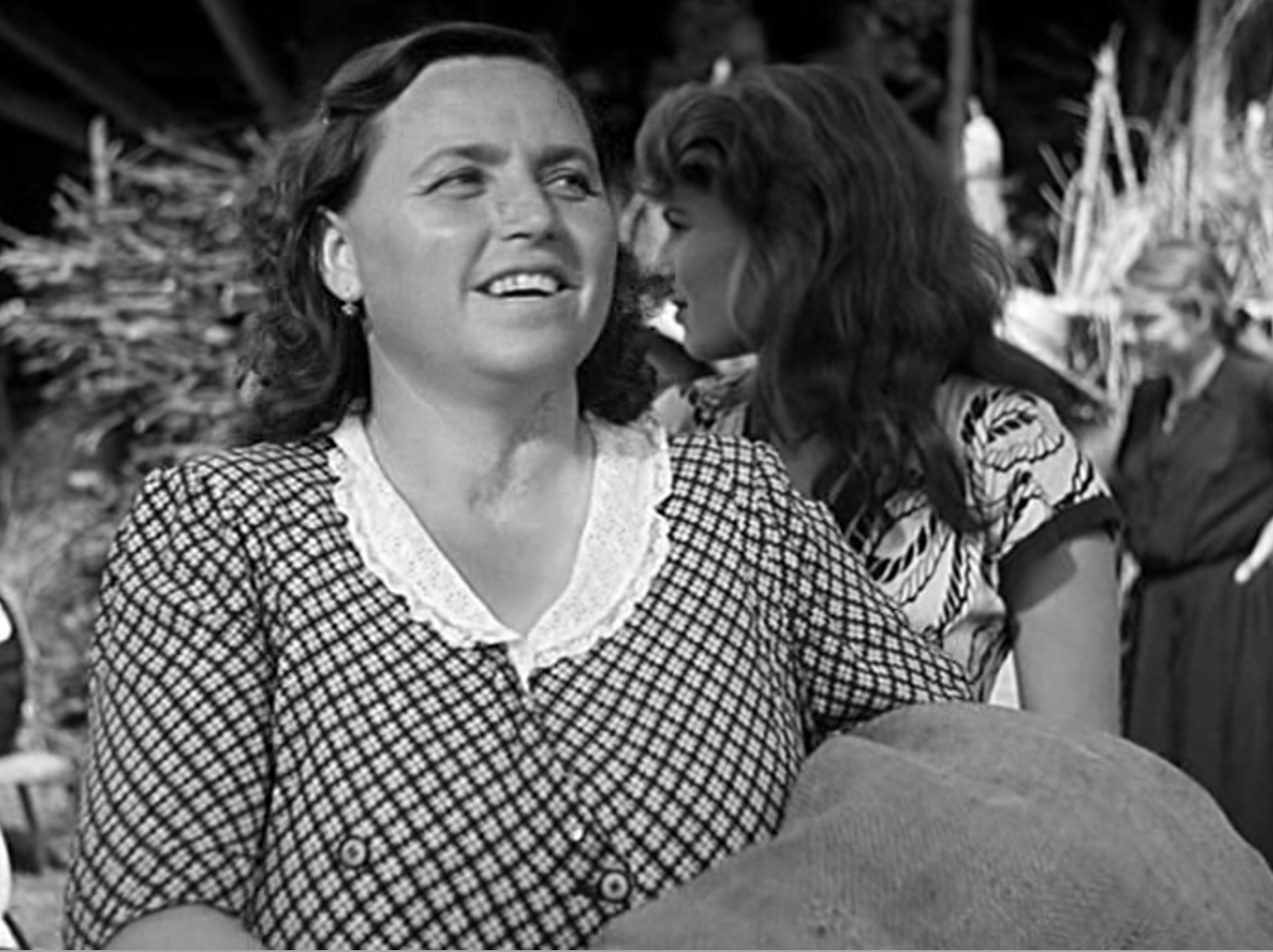
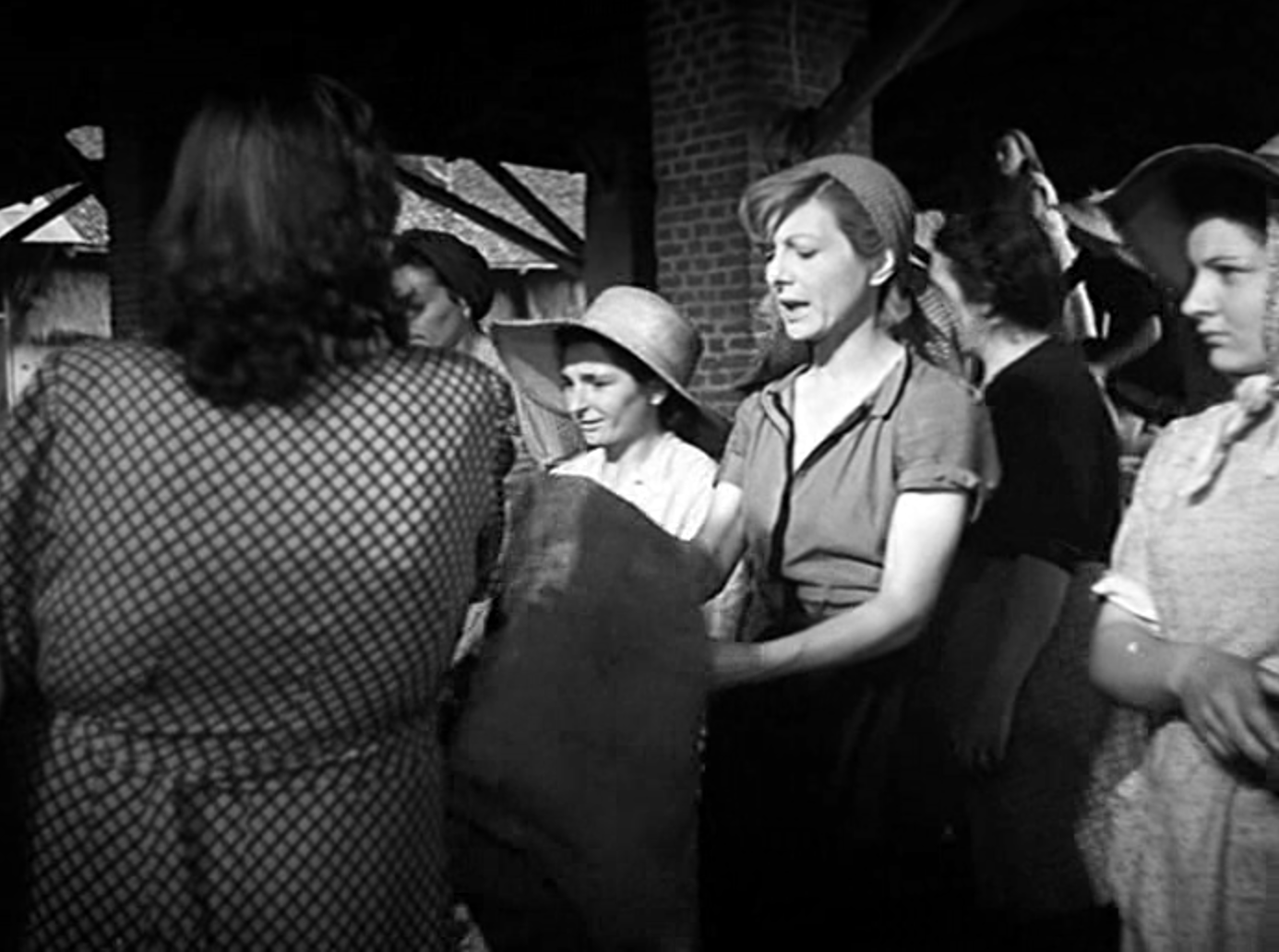
Al magazzino, Andreina dice: "Forza, ragazze! Tutte in fila! Adesso distribuisco i sacchi per il riso".
Prendendo un sacco, Celeste dice: "Non entrano mica quaranta chili di riso qui".
"Ci sono entrati tutti gli anni!" risponde Andreina, senza fermarsi.
At the warehouse, Andreina says, “Come on, girls! Everyone, line up! I’m giving out the rice bags now.”
Taking a bag, Celeste says, “There’s no way ninety pounds of rice will fit in here.”
“They do every year,” Andreina replies, without stopping.
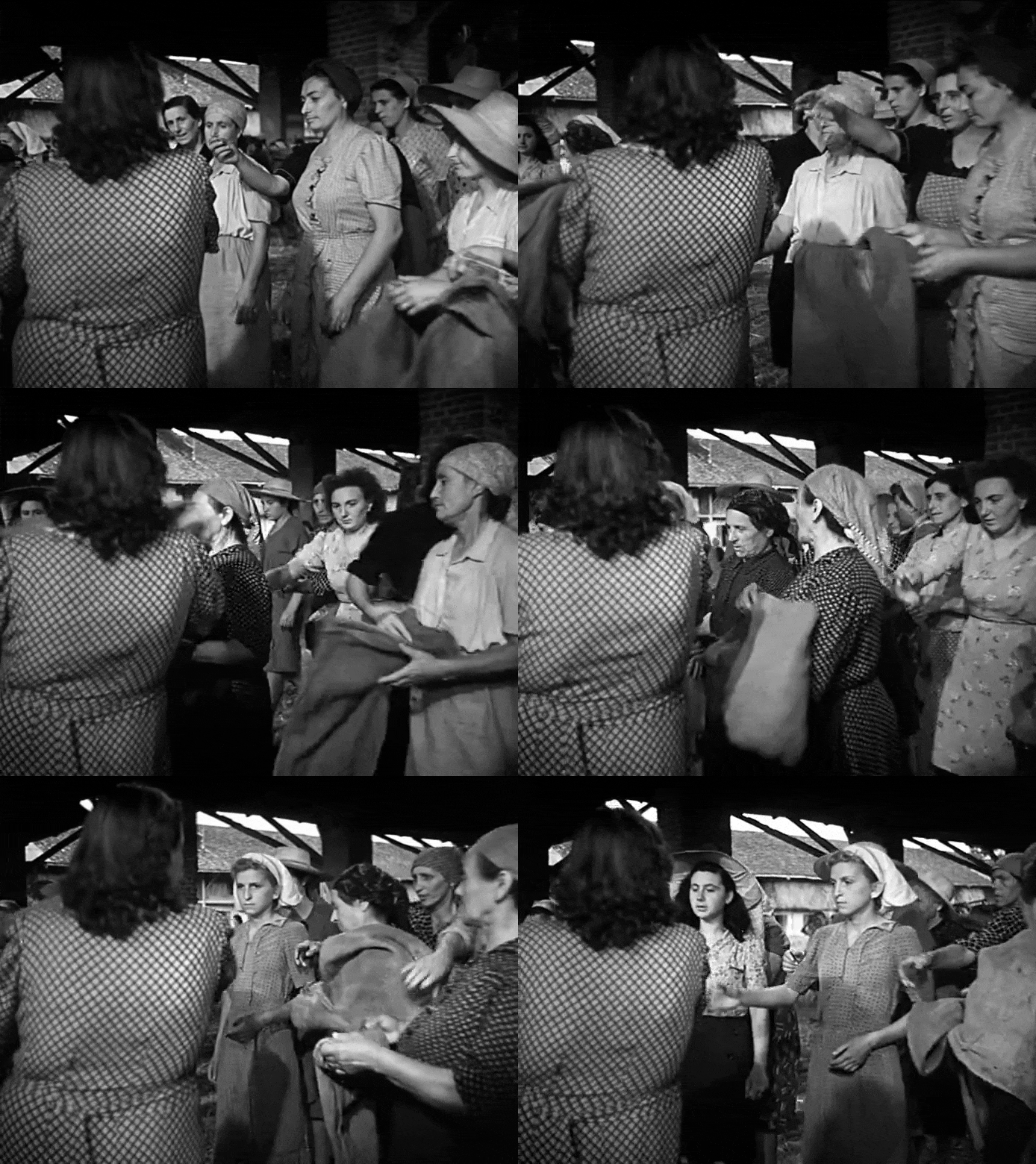
Andreina si sposta lungo la fila distribuendo i sacchetti.
Una donna chiede: "Quando danno il riso?"
"Domani mattina, prima di partire".
Andreina moves down the line giving out the bags.
A woman asks, “When are they giving out the rice?”
“Tomorrow morning, before we leave.”
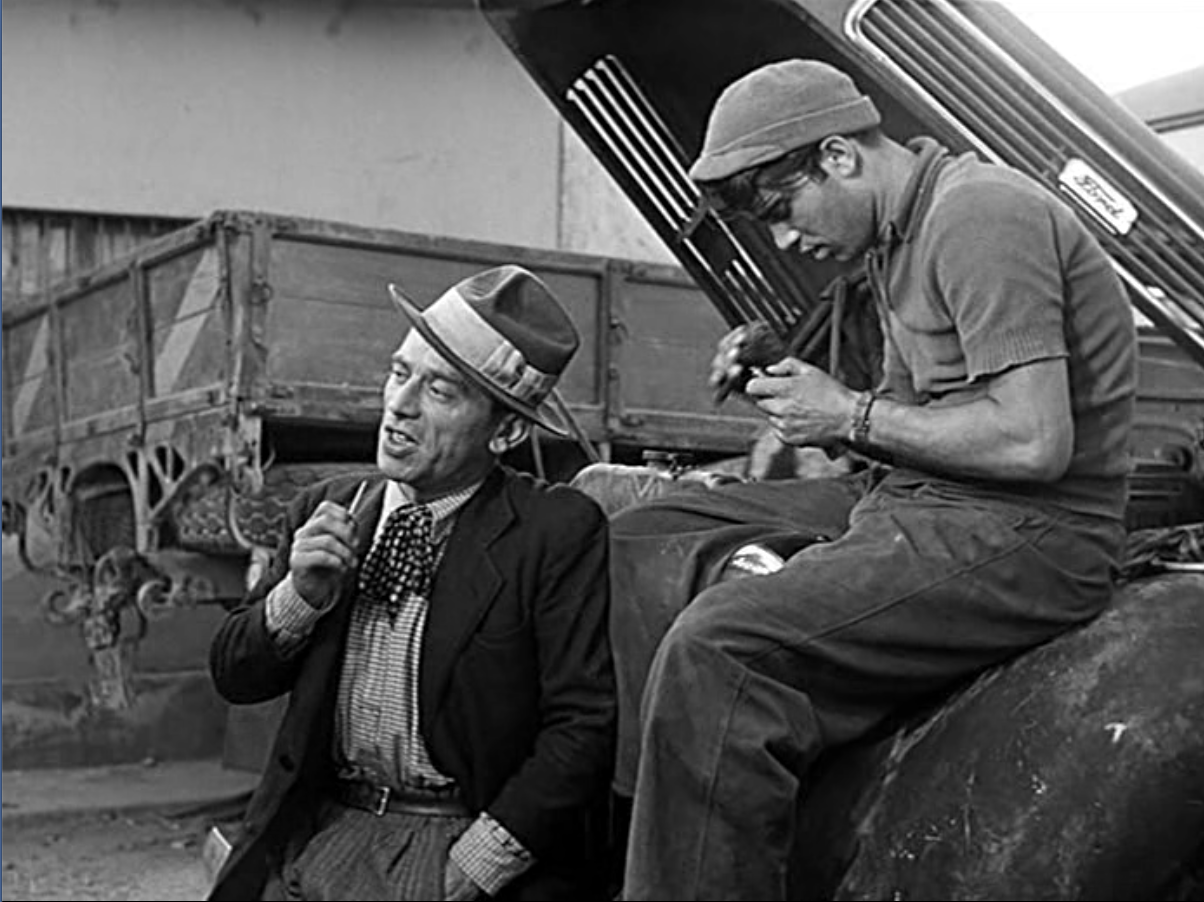
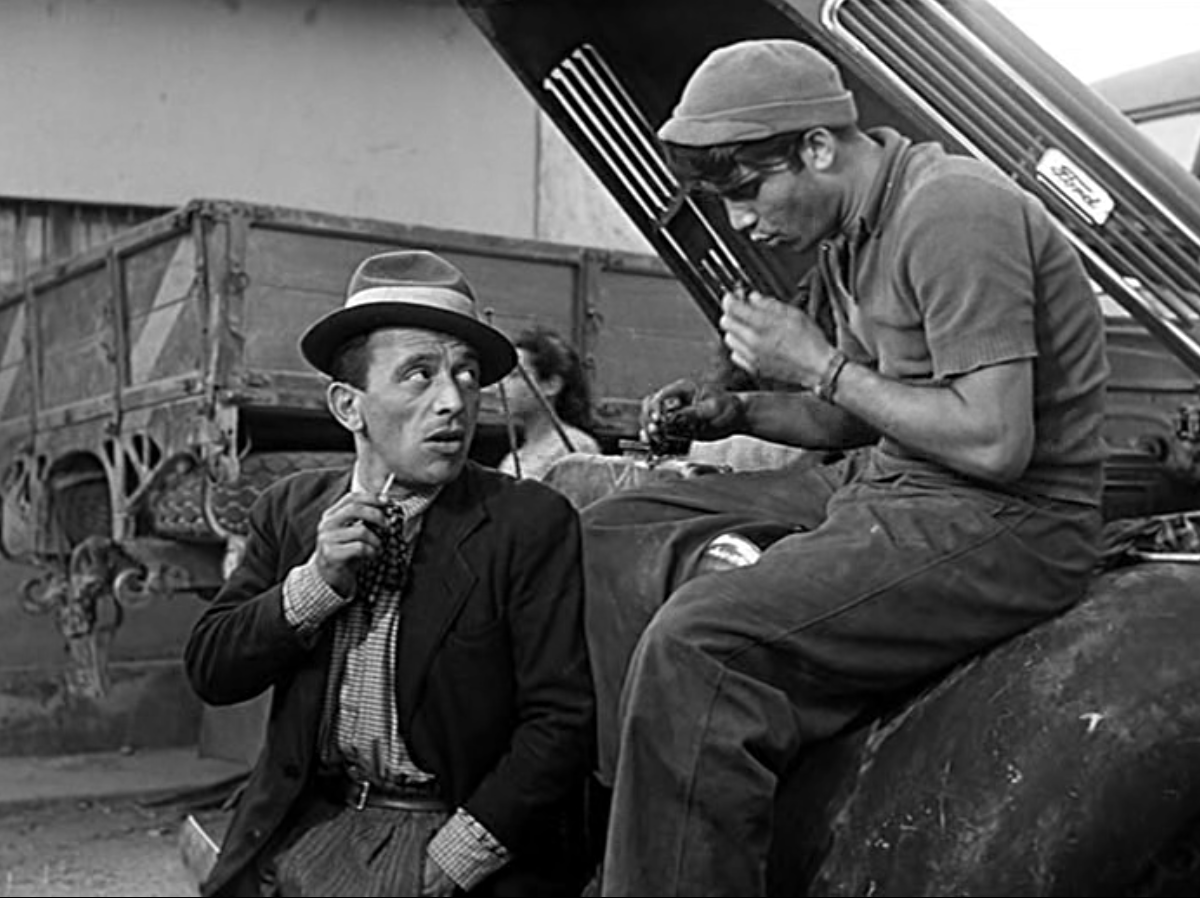
Un giovane con un berretto di lana è seduto sul faro di un camion Ford. Aristide, giocando con uno stuzzicadenti, dice: "Siete arrivati in anticipo". Come al solito, lui indossa un cappello fedora e un fazzoletto a quadri. "Sareste potuti arrivare domani mattina".
"Volevi divertirti da solo questa sera, eh?"
Tornando al punto: "Ma lasciate soli i camion quando andate alla festa?"
“E chi li toccherebbe?"
“Certo, chi li tocca?”
A young man in a knitted cap sits on the headlight of a Ford truck. Aristide, toying with a toothpick, says, “You came early.” As usual, he wears a fedora and a checked neckerchief. “You could have come tomorrow morning."
“You wanted to have all the fun tonight on your own, right?”
Returning to his point: “Are you going to leave the trucks alone when you go to the party?”
“Who would touch them?”
“Right, who would touch them?”
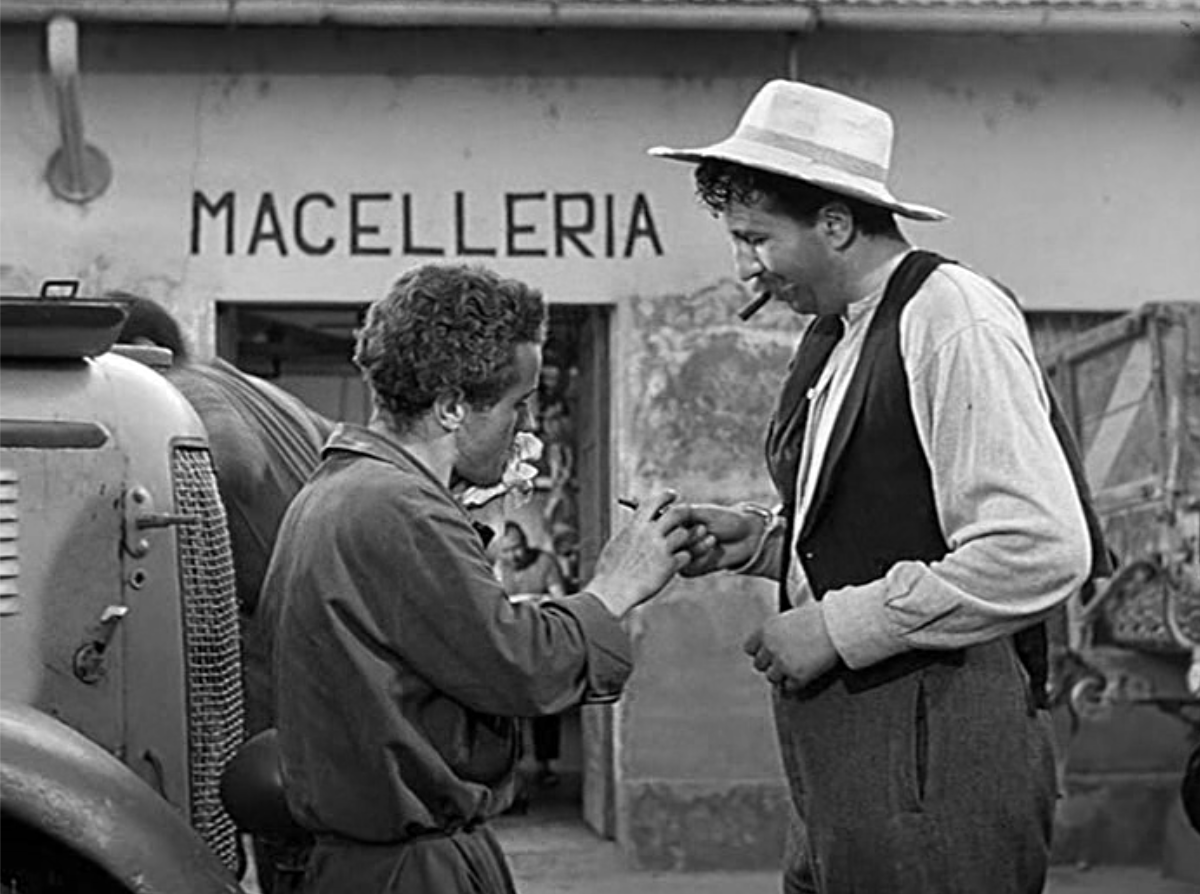
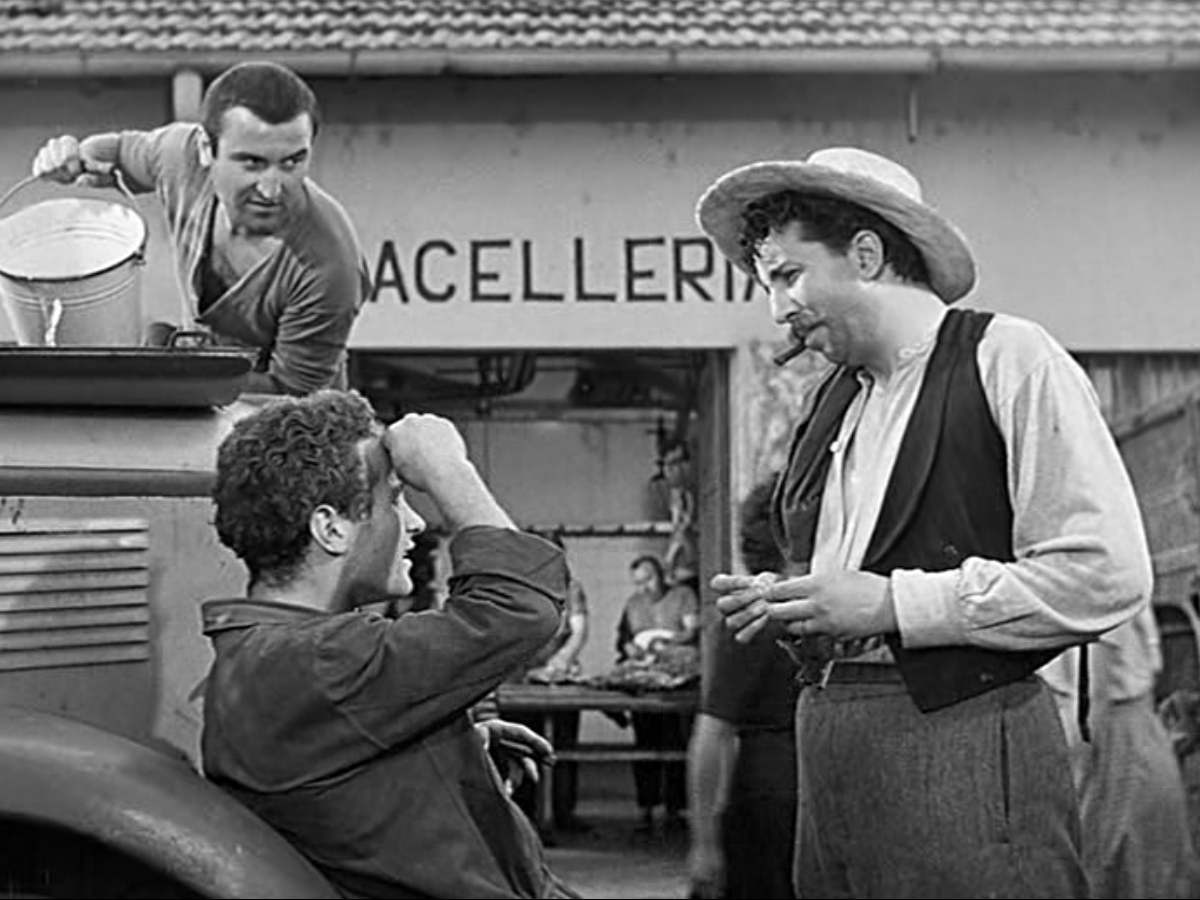
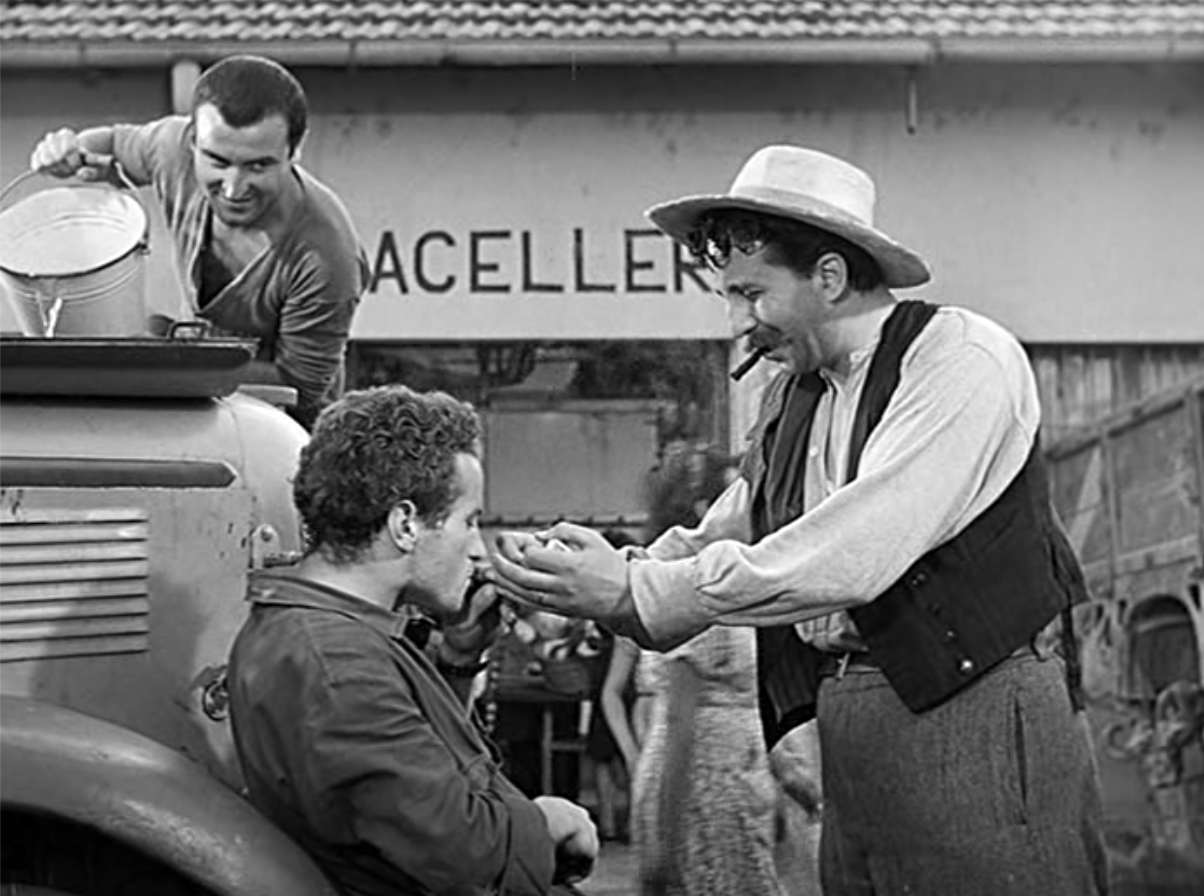
"Ti va un sigaro?" Beppe, amico di Aristide, porge un sigaro a un altro autista. "Di’ un po’... Con un carico di benzina, quanta strada può fare un camion come questo? Duecento chilometri?"
"Ma sei matto?" L'uomo si dà qualche pacca sulla fronte con la mano, un gesto italiano che significa “pazzo”. “Almeno cinquecento. C'è un serbatoio in più lì dentro".
”Incredibile. Ti va di fare una bevuta tutti insieme stasera?’
"Perché no?" Beppe accende il sigaro dell'autista, sorridendo.
Il cartello sul muro recita "MACELLERIA", il che forse è un sottile presagio.
“Would you like a cigar?” Beppe, Aristide’s crony, hands a cigar to another driver. “Tell me… How far can a truck like this go with one load of gas? One hundred and thirty miles?”
“Are you crazy?” The man hits his forehead with his hand a few times, an Italian gesture that means “crazy.” “At least three hundred. There’s an extra tank in there.”
“Amazing. Would you like to go for a drink together tonight?”
“Why not?” Beppe lights the driver’s cigar, grinning.
The sign on the wall says, BUTCHER’S SHOP which perhaps is subtle foreshadowing.
FINE PARTE 22
Ecco Parte 23 of this cineracconto! Subscribe to receive a weekly email newsletter with links to all our new posts.