Regia / Director: Giuseppe De Santis, 1949
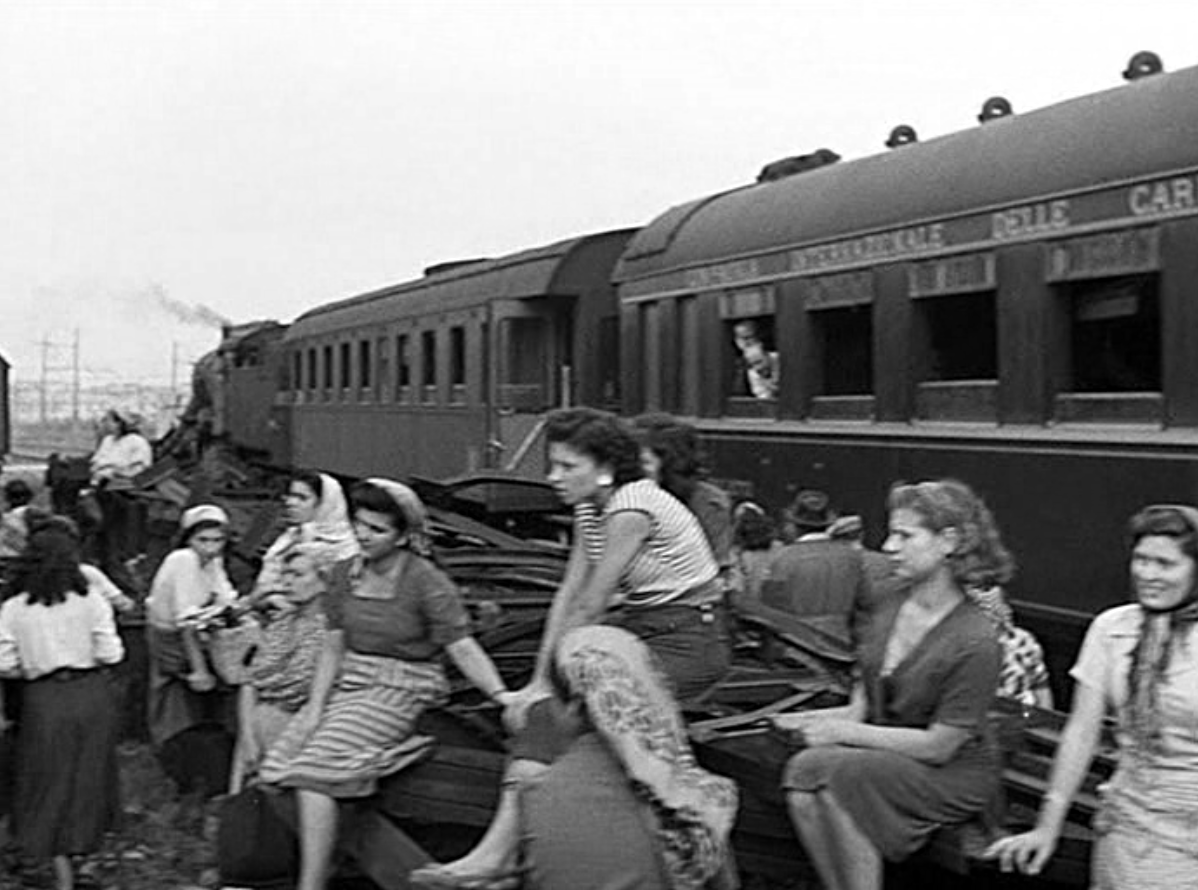
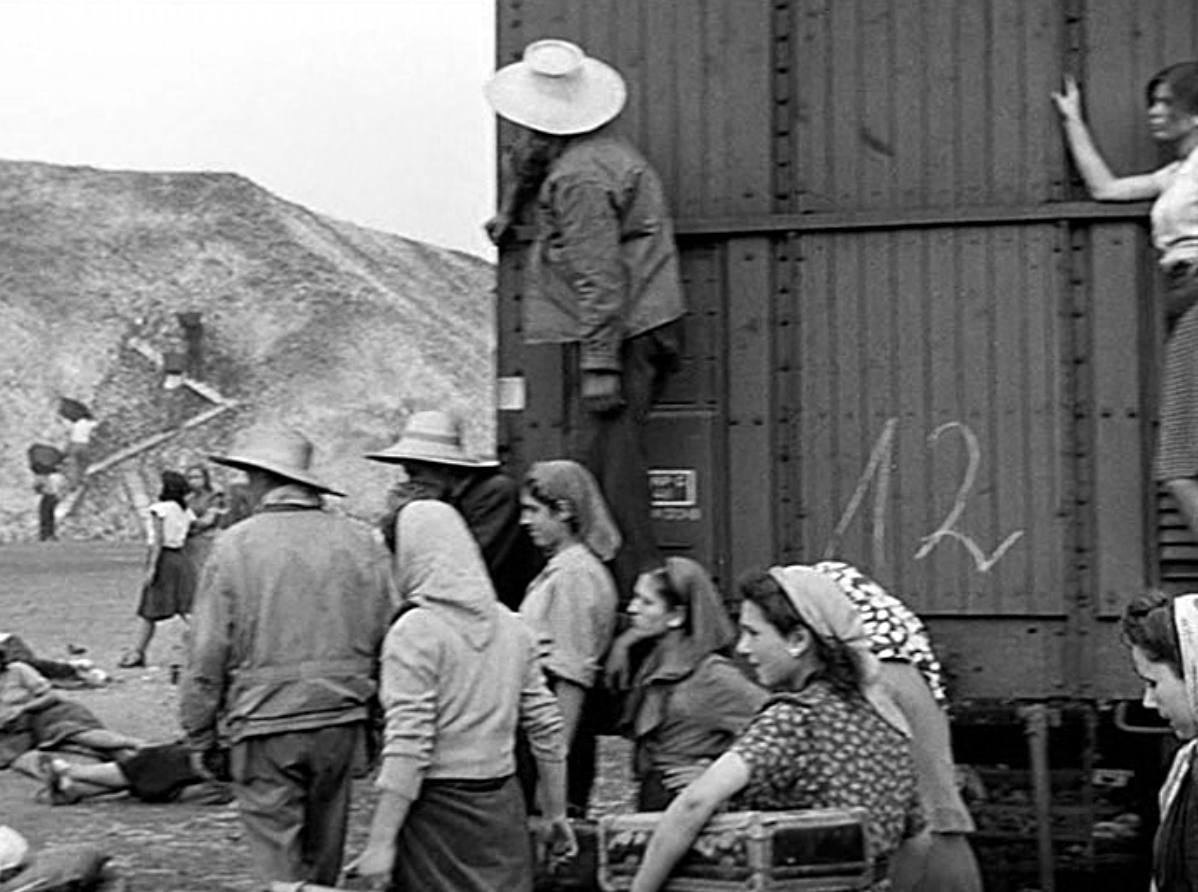
Tutti sul treno e nella stazione ferroviaria stanno guardando la stessa cosa.
Everyone on the train and in the railyard is looking at the same thing.
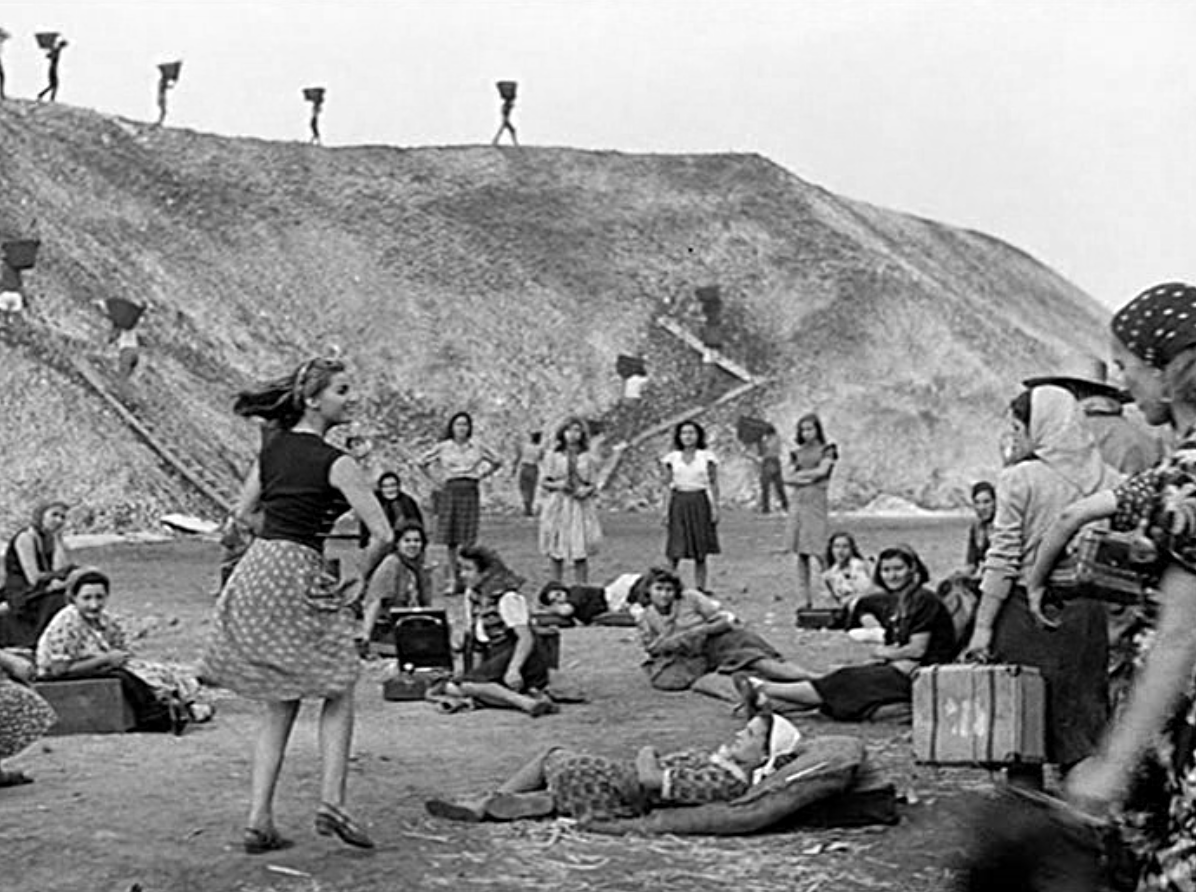
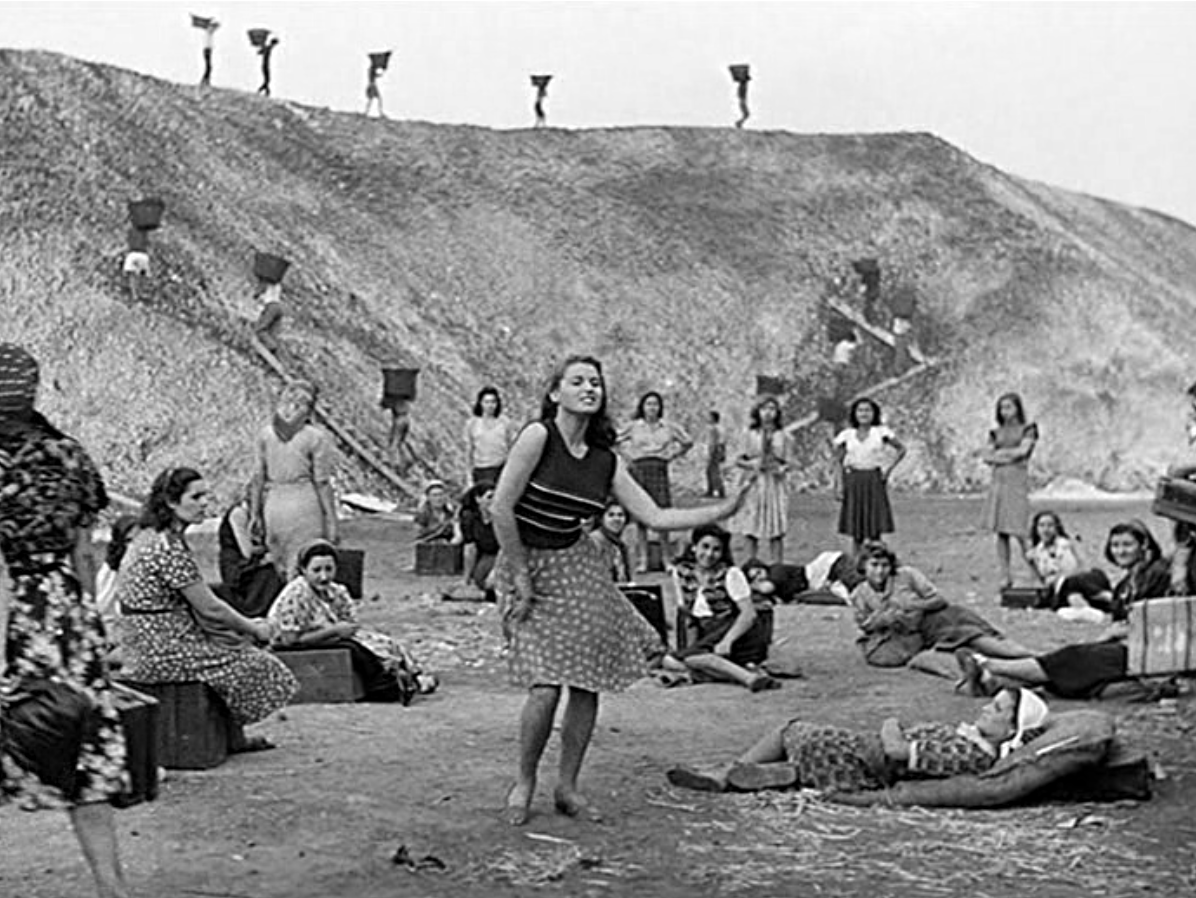
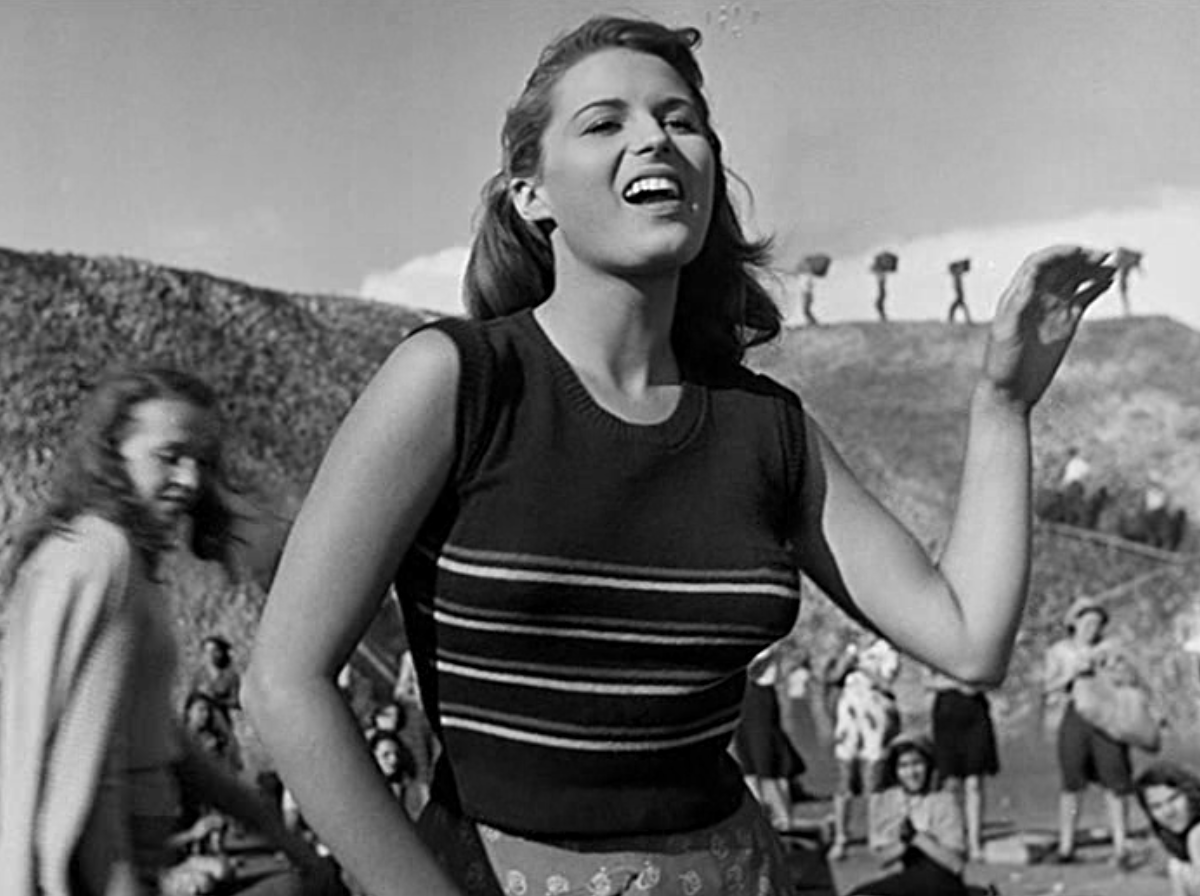
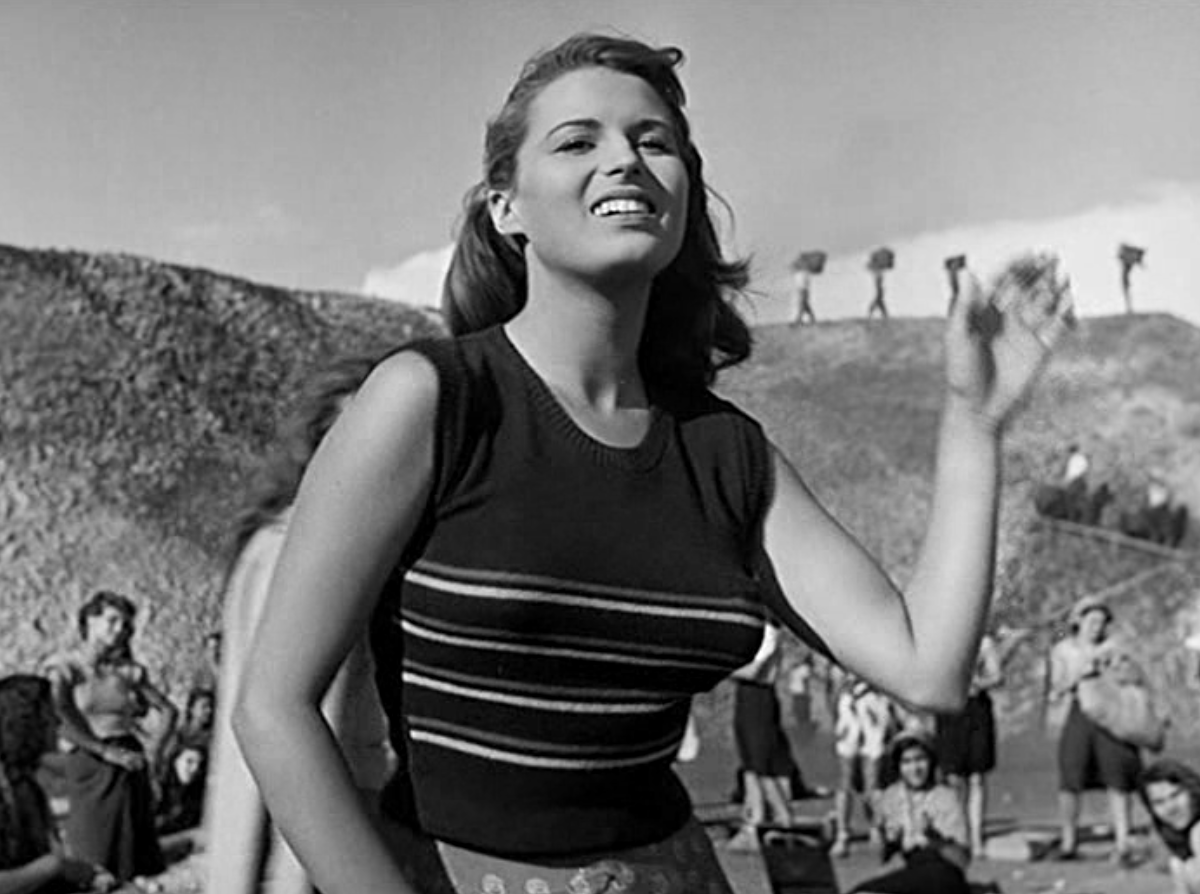
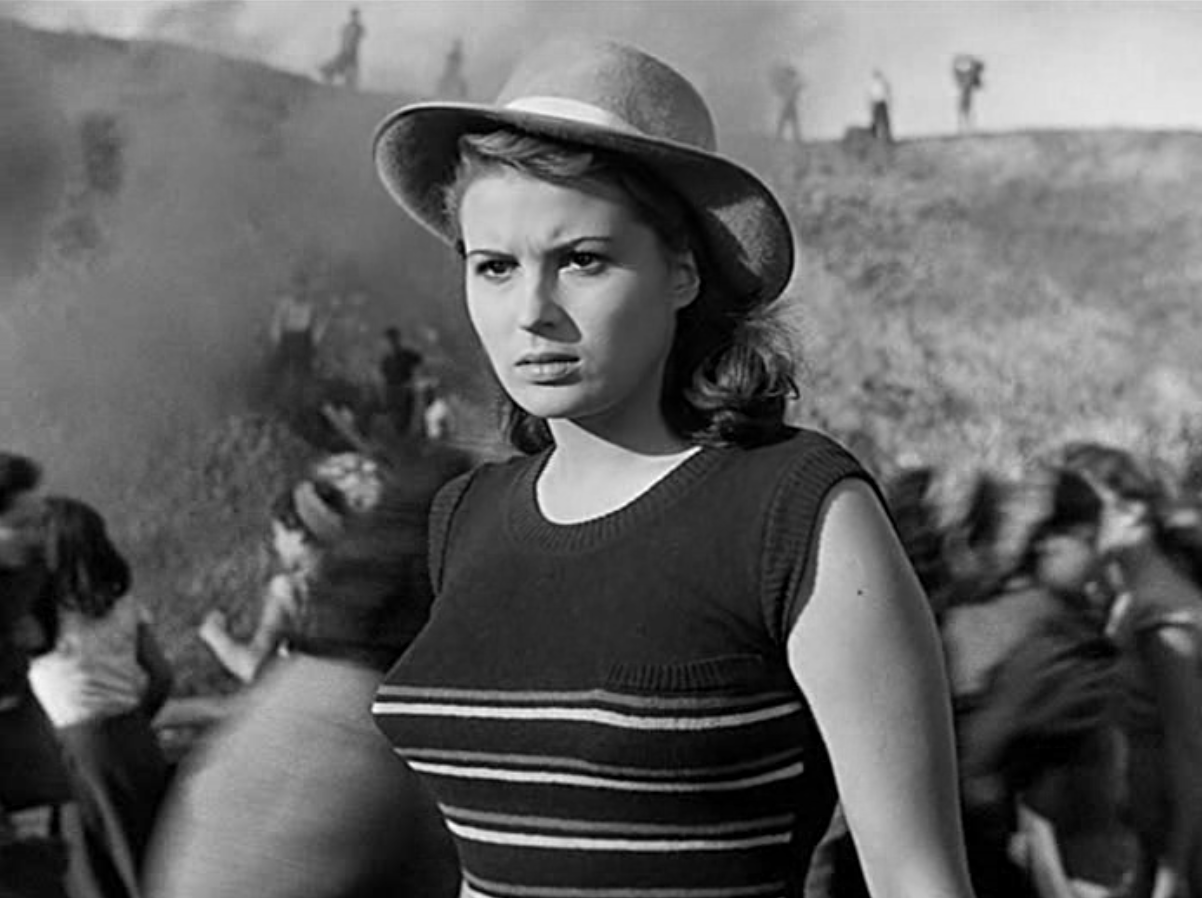
È una donna con un gilet e una gonna corta – Silvana (Silvana Mangano*) – che balla al ritmo della musica big band.
*Doppiata da Lydia Simoneschi.
It’s a woman in a tight sleeveless sweater and short skirt – Silvana (Silvana Mangano*) – dancing to big band music.
*Dubbed by Lydia Simoneschi.
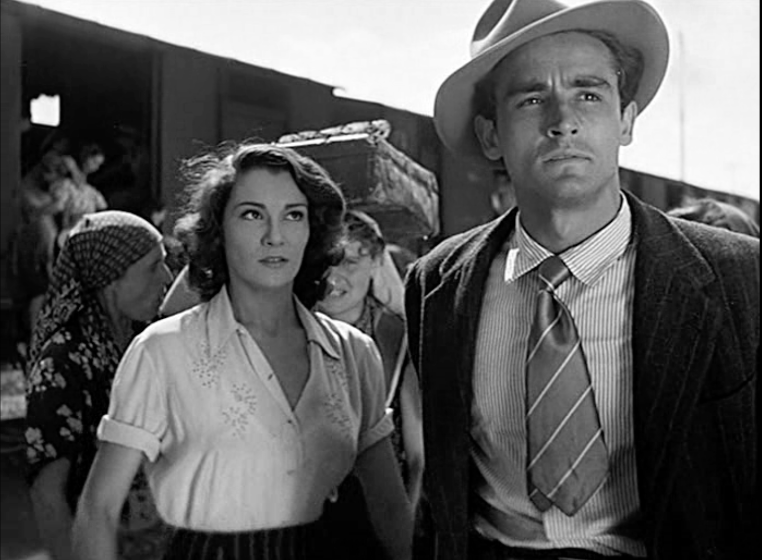
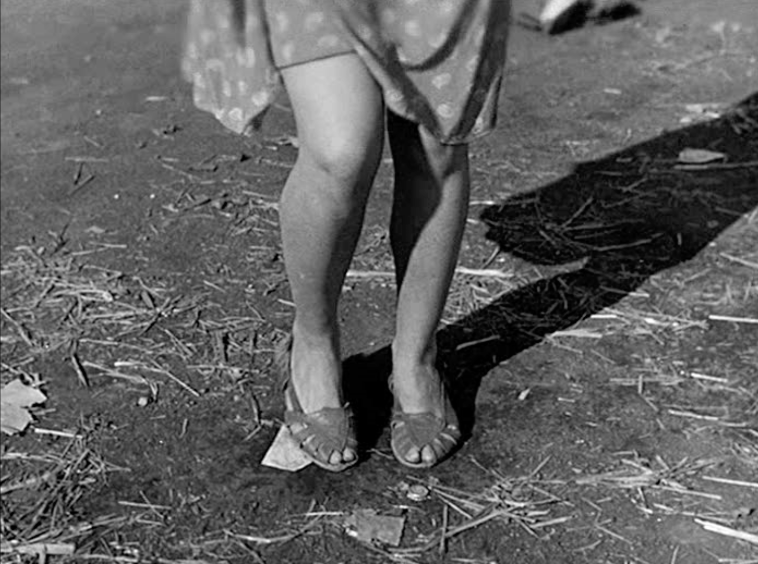
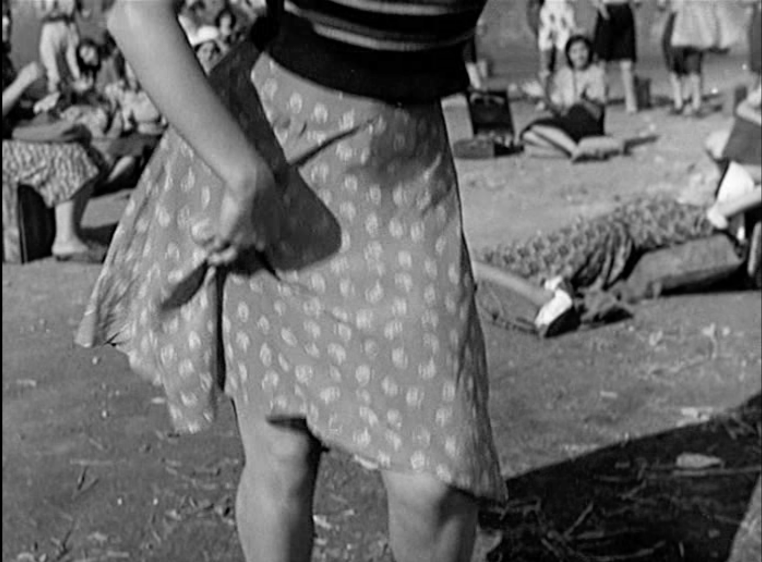
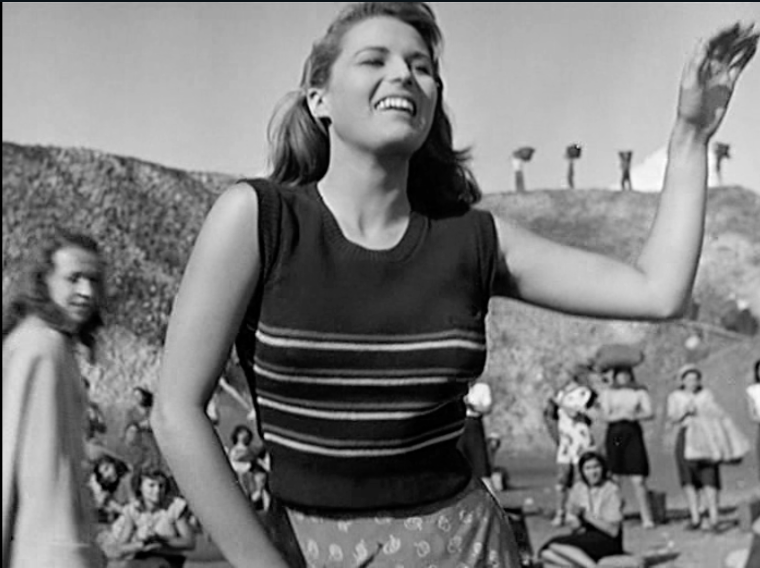
Granata la vede. Anche Francesca se ne accorge. La macchina da presa, imitando lo sguardo di Granata, si sposta lentamente sulle gambe di Silvana, sulle ginocchia e sui fianchi che ondeggiano al ritmo del boogie-woogie. Sorridente e masticando una gomma, potrebbe essere una ragazza pon pon.
Granata sees her. Francesca notices, too. The camera, mimicking Granata’s eye, moves slowly up Silvana’s legs, knees and hips swaying to the boogie-woogie tune. Smiling and chewing gum, she could be a cheerleader.
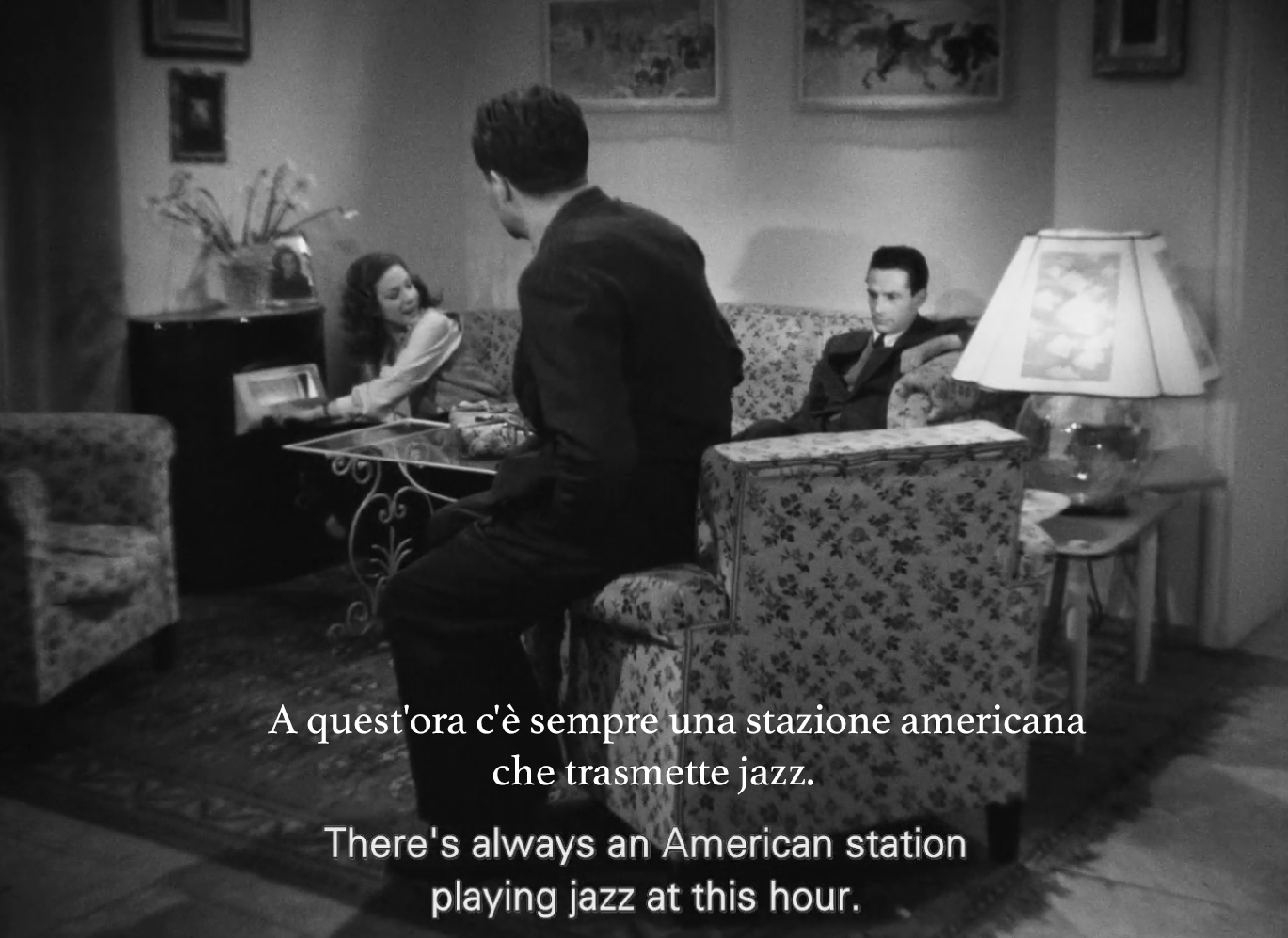
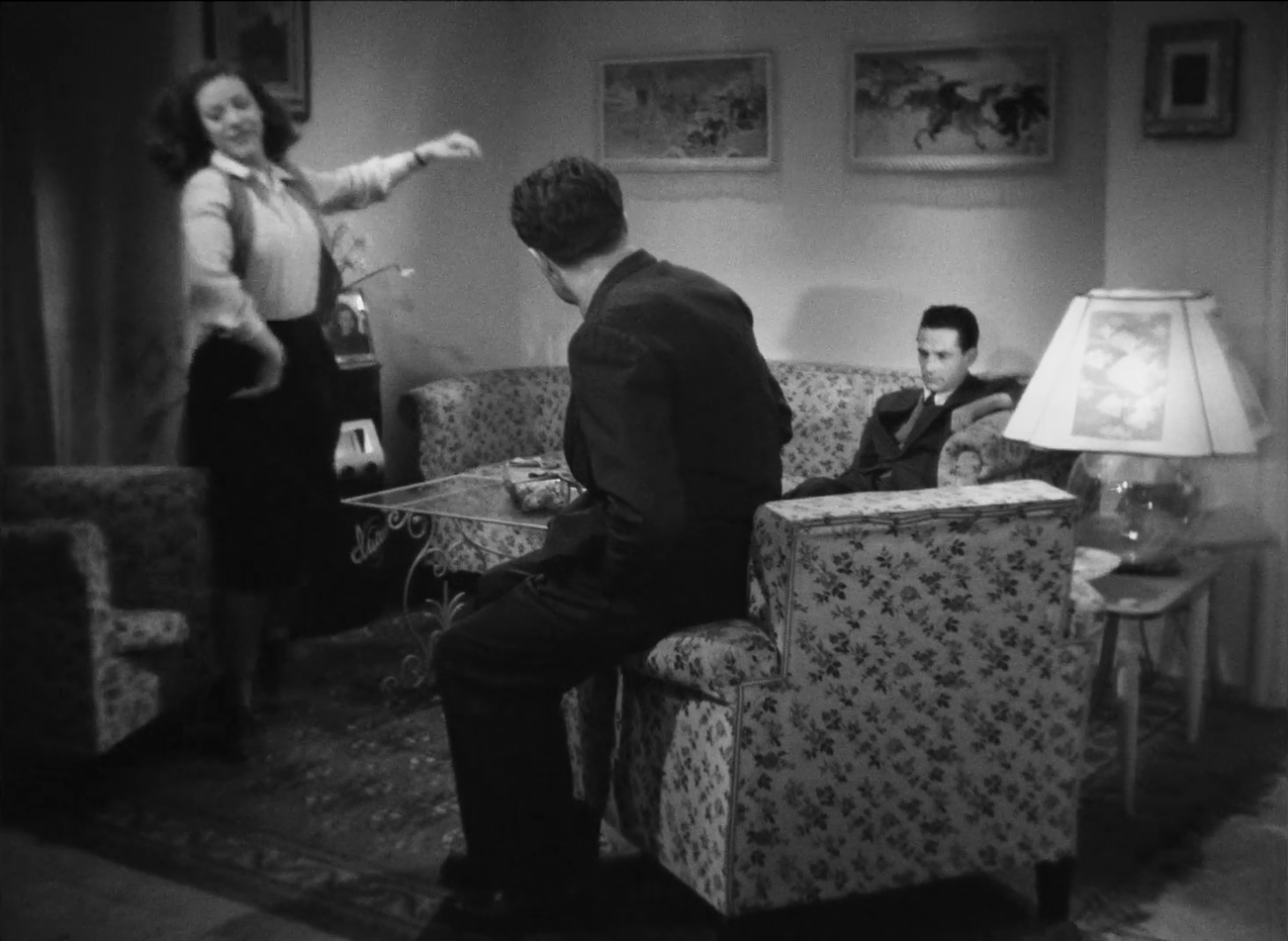
L'uso del boogie-woogie da parte di De Santis come motivo di espressione sensuale e gioiosa contrasta con l'interpretazione di Roberto Rossellini in Roma città aperta (1945). Marina ha un appartamento con mobili nuovi e persino un telefono, grazie agli occupanti tedeschi; un nazista la corteggia e le fornisce cocaina. Rossellini guarda con disprezzo al jazz e alla cultura aliena che rappresenta, associandolo alla decadenza. Più tardi, per ripicca, Marina consegna il suo amante ai nazisti, che lo torturano a morte.
De Santis’s use of the boogie-woogie as a motif for sensuous, joyous freedom of expression contrasts with Roberto Rossellini’s interpretation in Rome, Open City (1945). Marina has an apartment with new furniture, even a telephone, thanks to the German occupiers; a Nazi is grooming her and supplying her with cocaine. Rossellini views jazz and the alien culture it represents with disdain; he links it to decadence. Later, out of pique, Marina betrays her lover to the Nazis, who torture him to death.
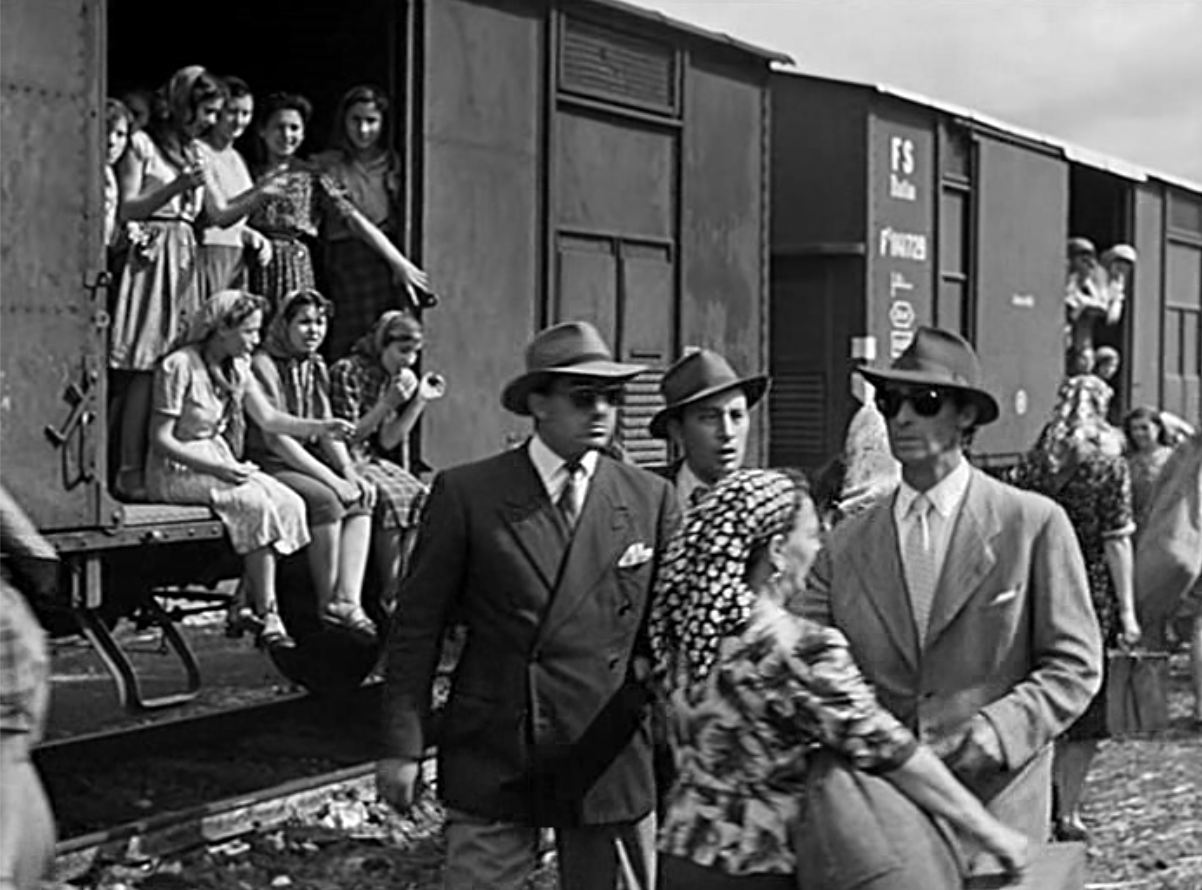
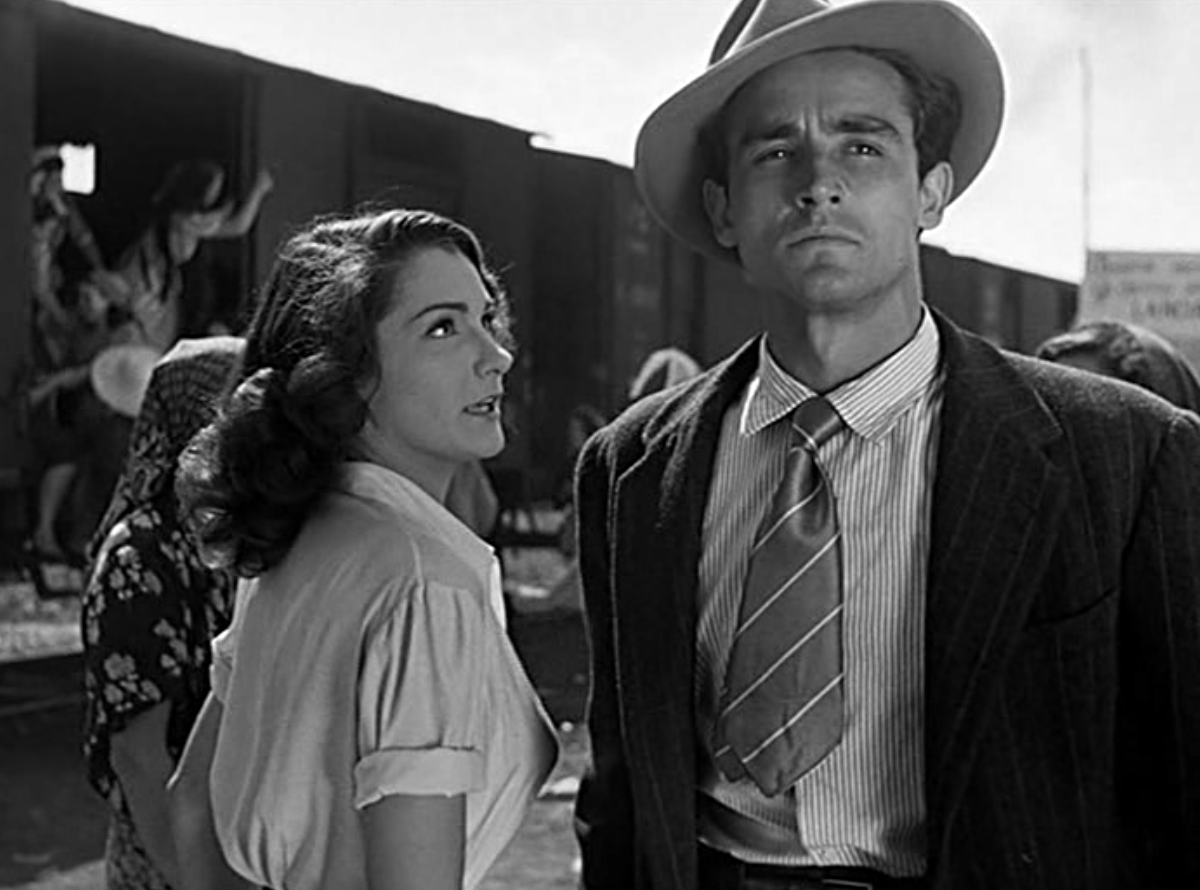
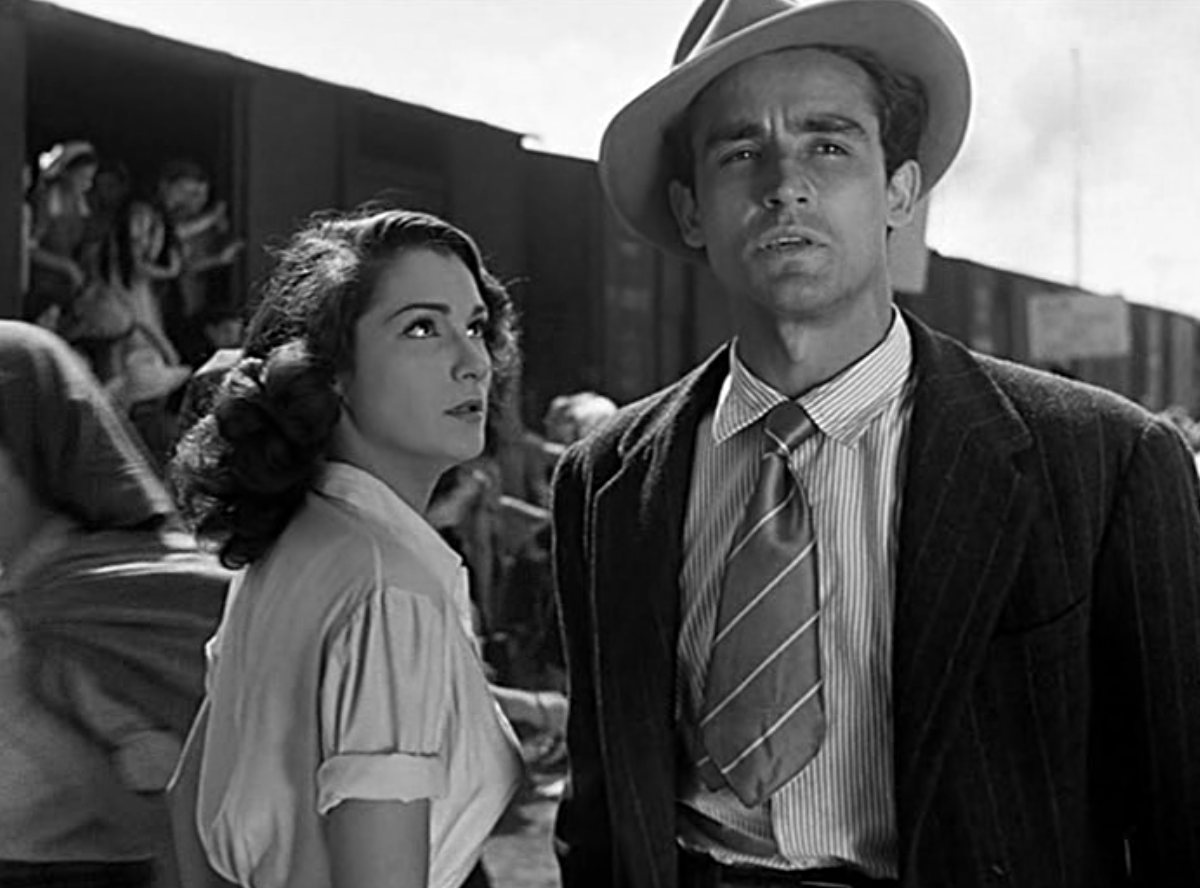
Francesca dice: “Ne stanno arrivando due. E allora che si fa?”
“Se succede qualcosa, mischiati alle mondine” – risponde Granata, continuando a fissare Silvana – “Non badare a me. Me la caverò”.
Francesca says, “Two of them are coming. So what do we do?”
“If something happens, mingle with the rice workers,” Granata replies, still gazing at Silvana. “Don’t worry about me. I’ll get by.”
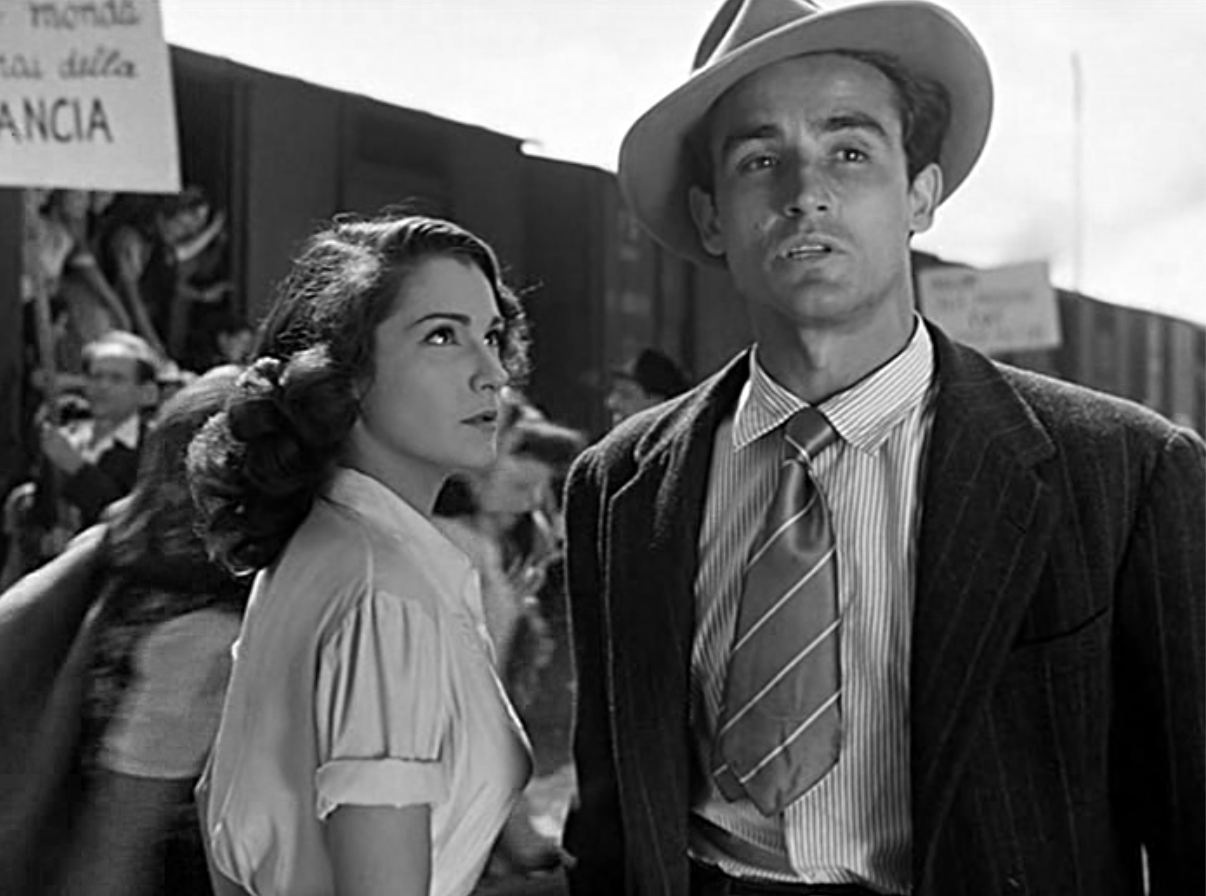
“Tieni tu la roba, sempre addosso” – Francesca annuisce. – “Vale milioni, lo sai”. Ma gli occhi di lui sono su Silvana.
“Keep the stuff with you, always on your person,” Francesca nods. “It’s worth millions, you know.” But his eyes are on Silvana.
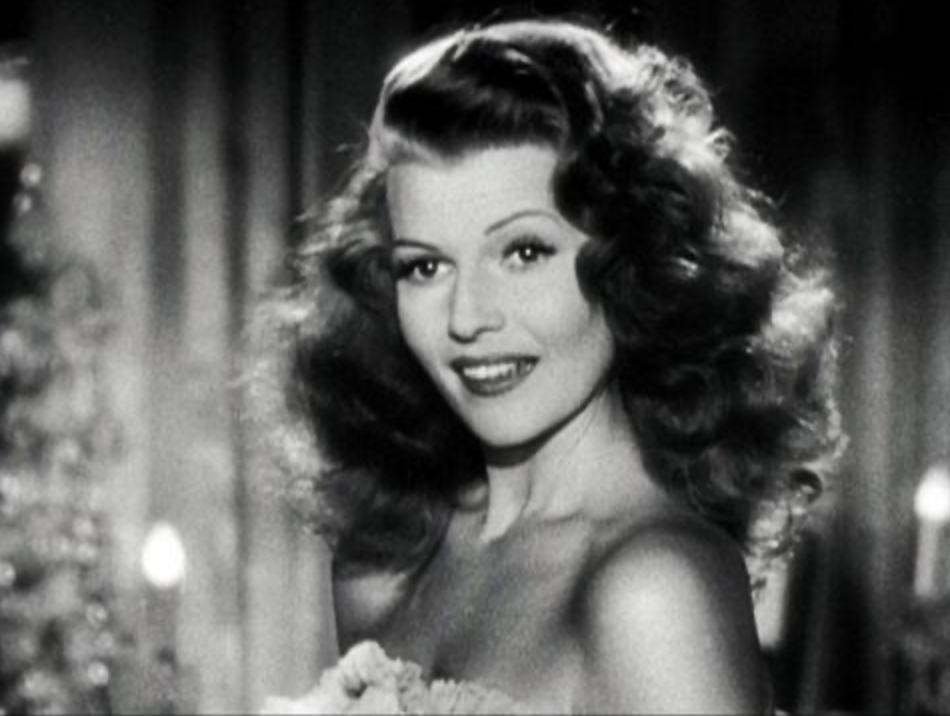
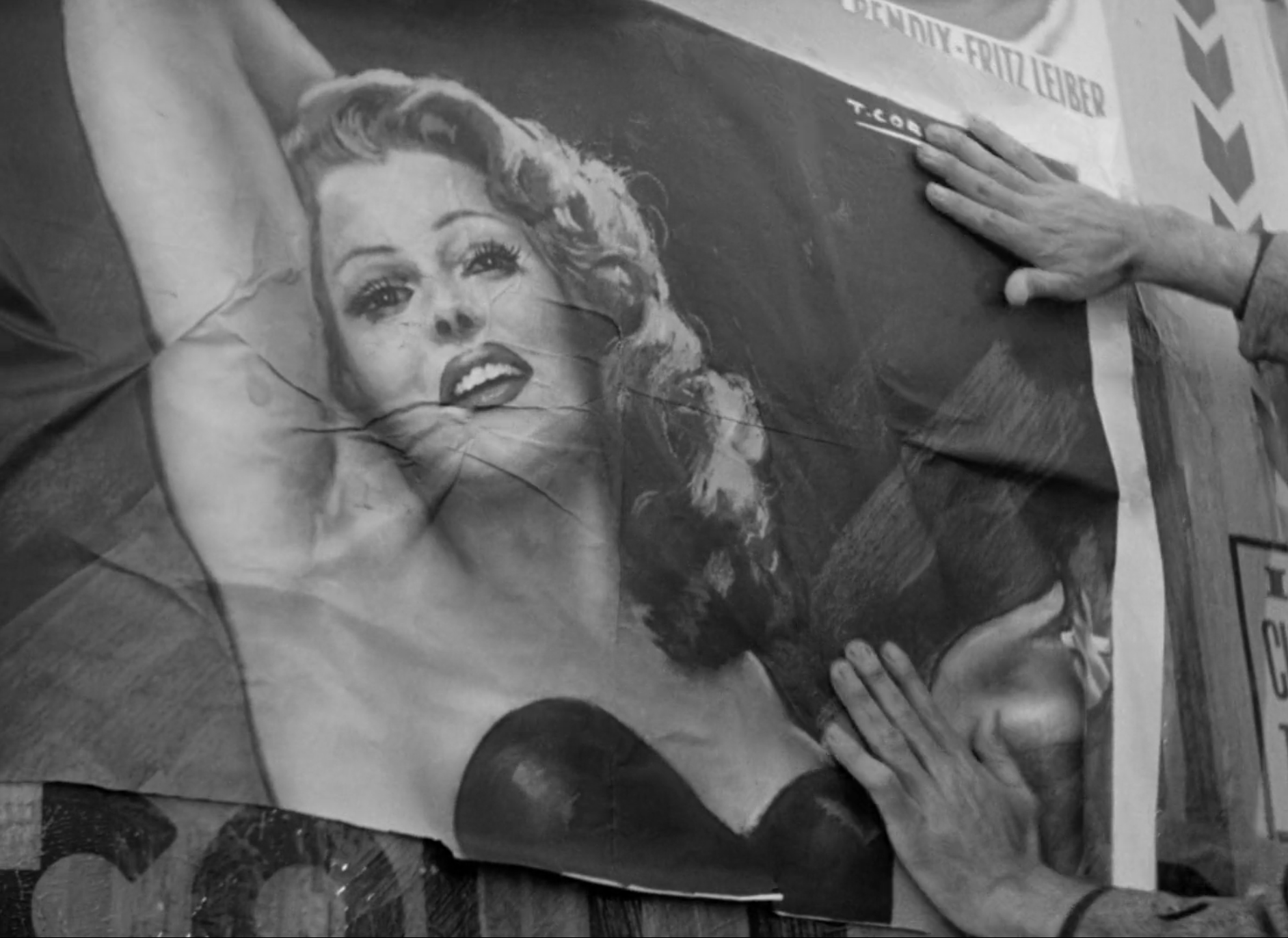
Si dice che il regista De Santis abbia scelto Mangano con l'idea di trovare la nuova Rita Hayworth, una stella di Hollywood con una formazione da ballerina. La vediamo sopra in Gilda (Charles Vidor, 1946) e nell'iconico poster di Tito Corbella da Ladri di biciclette (Vittorio De Sica, 1948).
Supposedly, director De Santis cast Mangano with the idea of finding the next Rita Hayworth, a Hollywood star trained as a dancer. We see her above in Gilda and in the iconic poster by Tito Corbella from Bicycle Thieves.
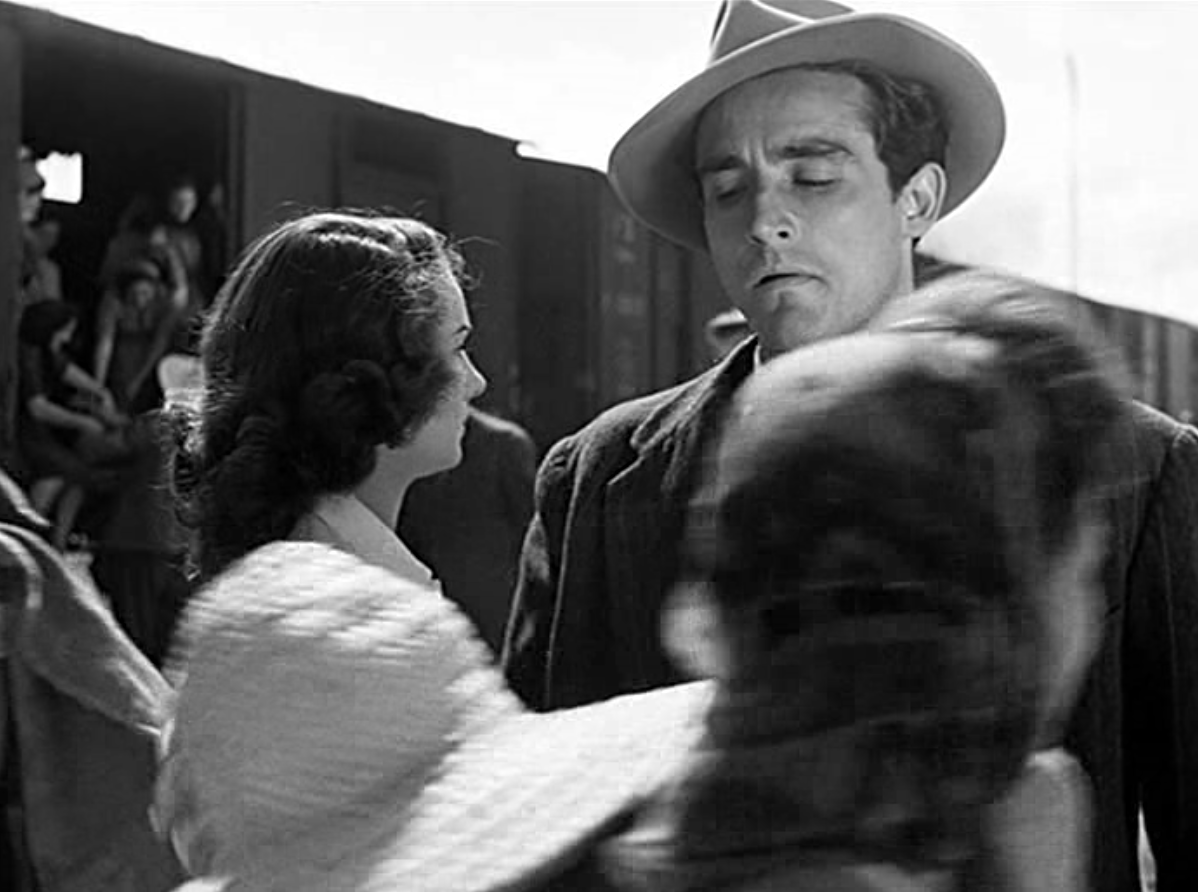
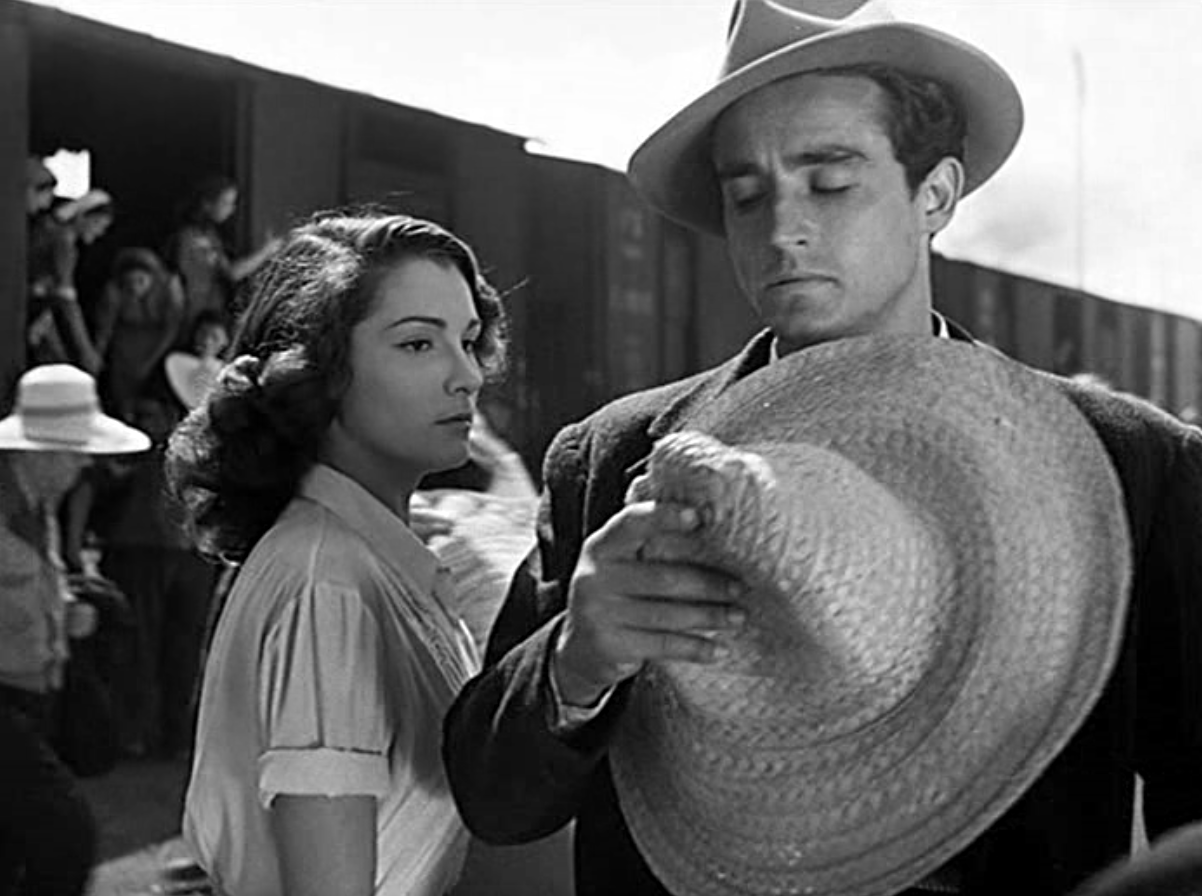
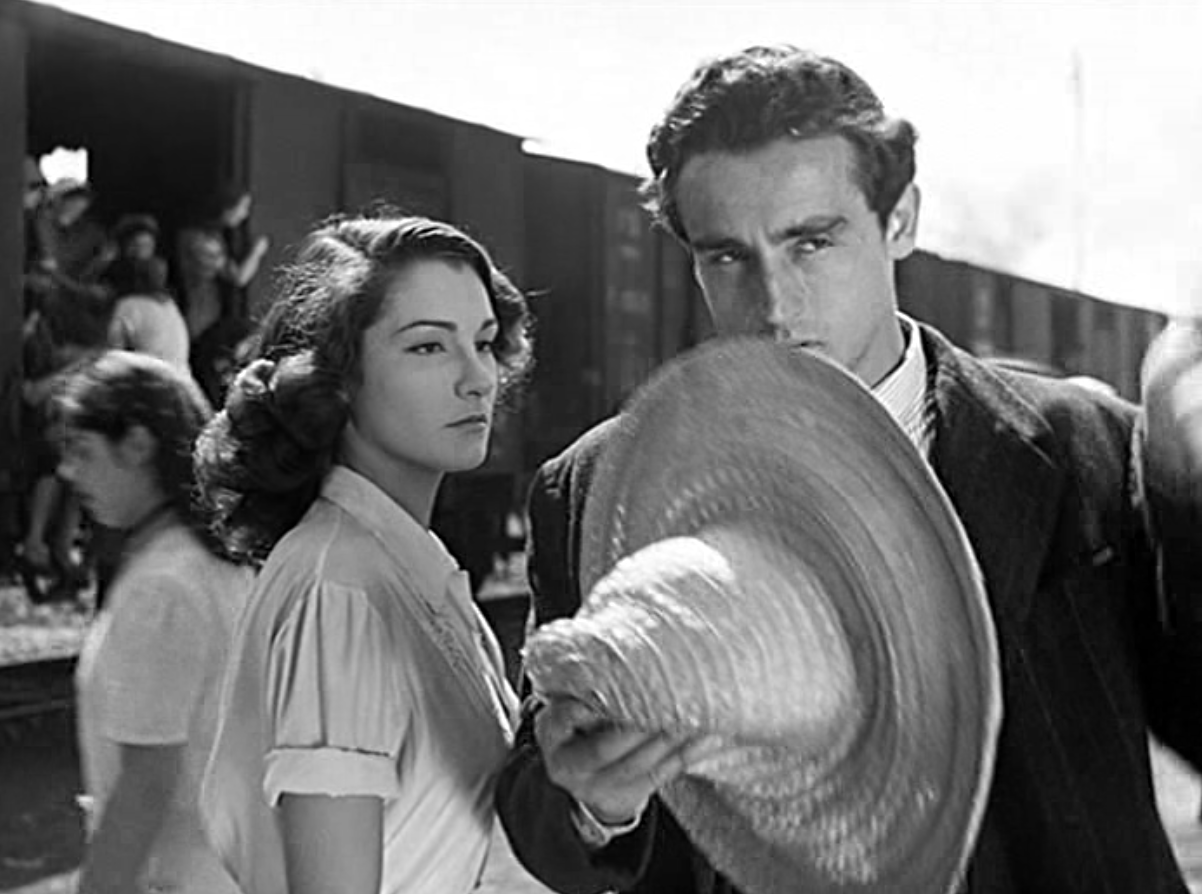
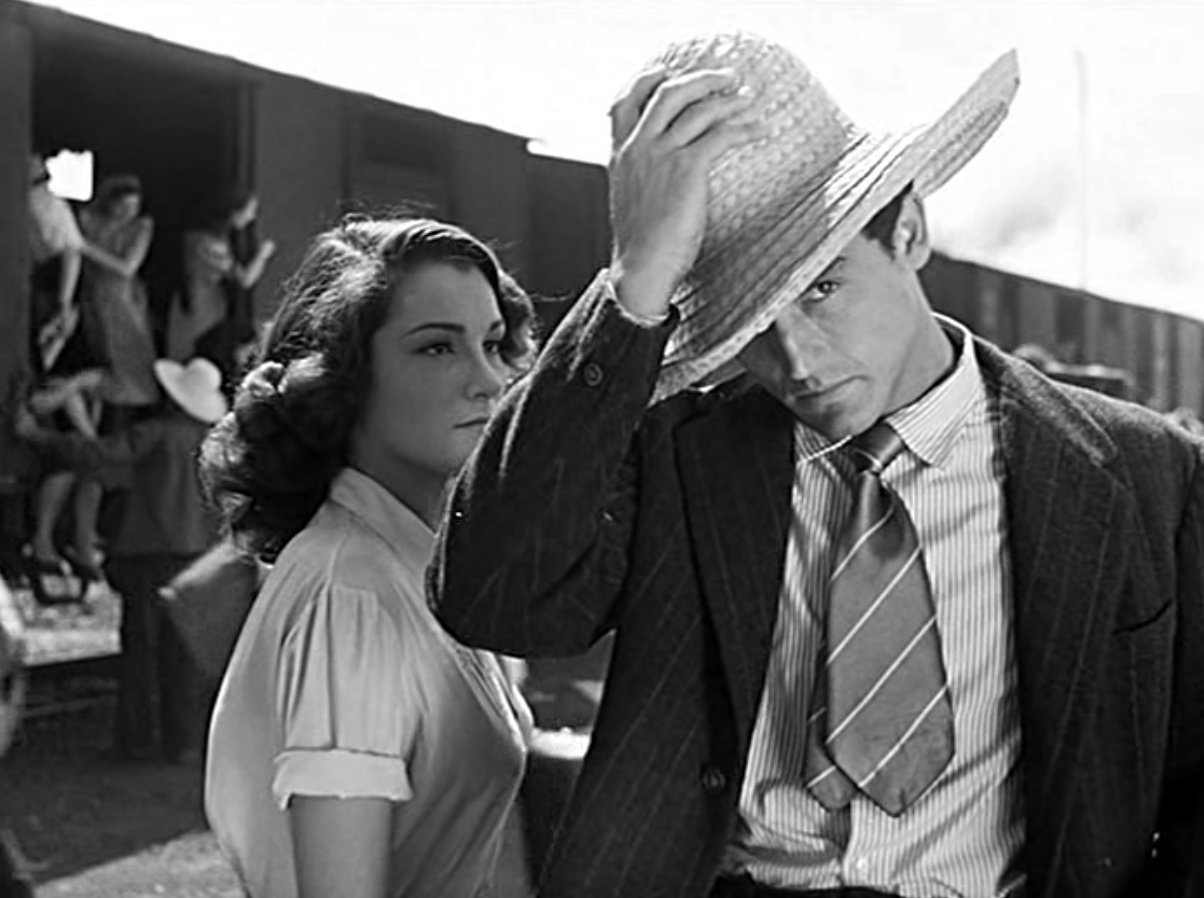
Granata strappa un cappello di paglia a una passante e se lo mette in testa, ha gli occhi ancora incollati a Silvana.
Granata snatches a straw hat from a passerby and puts it on, his eyes still glued to Silvana.
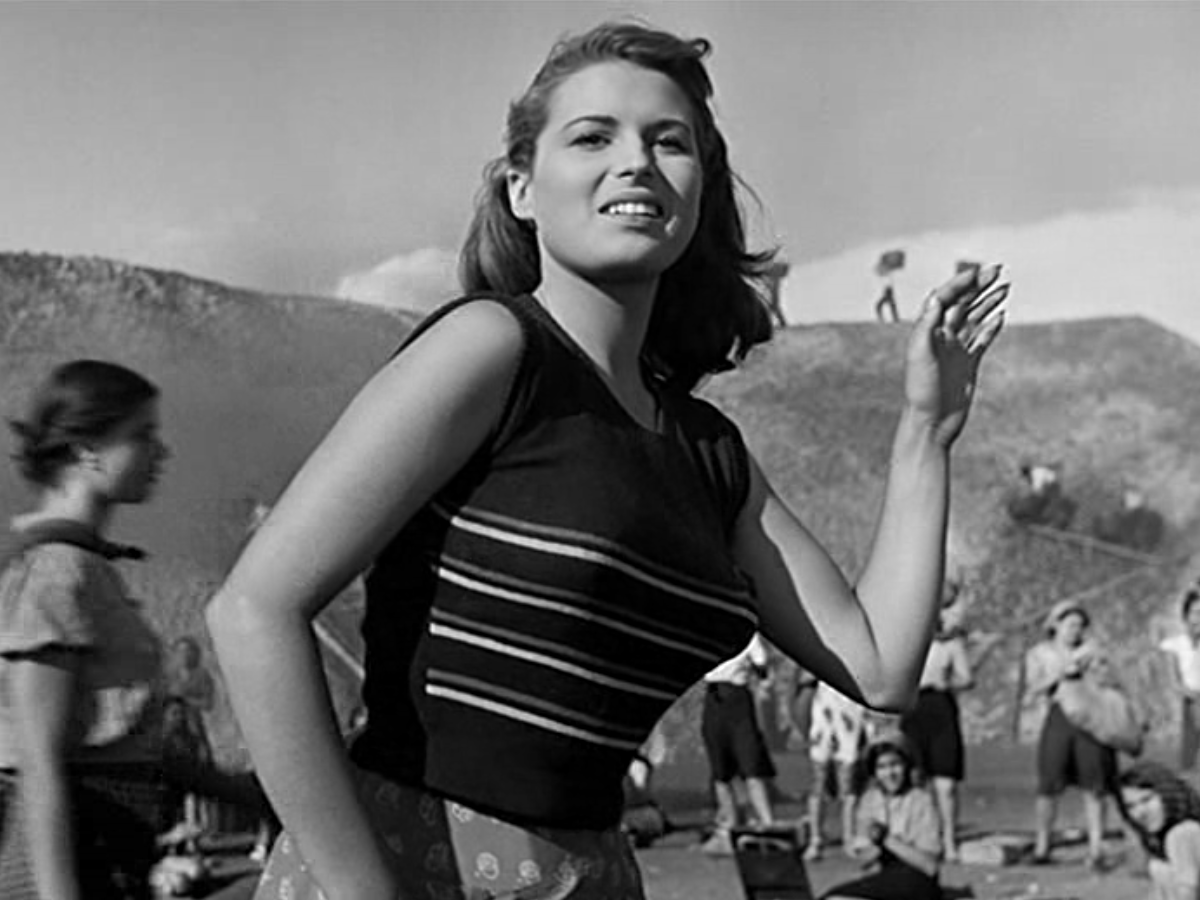
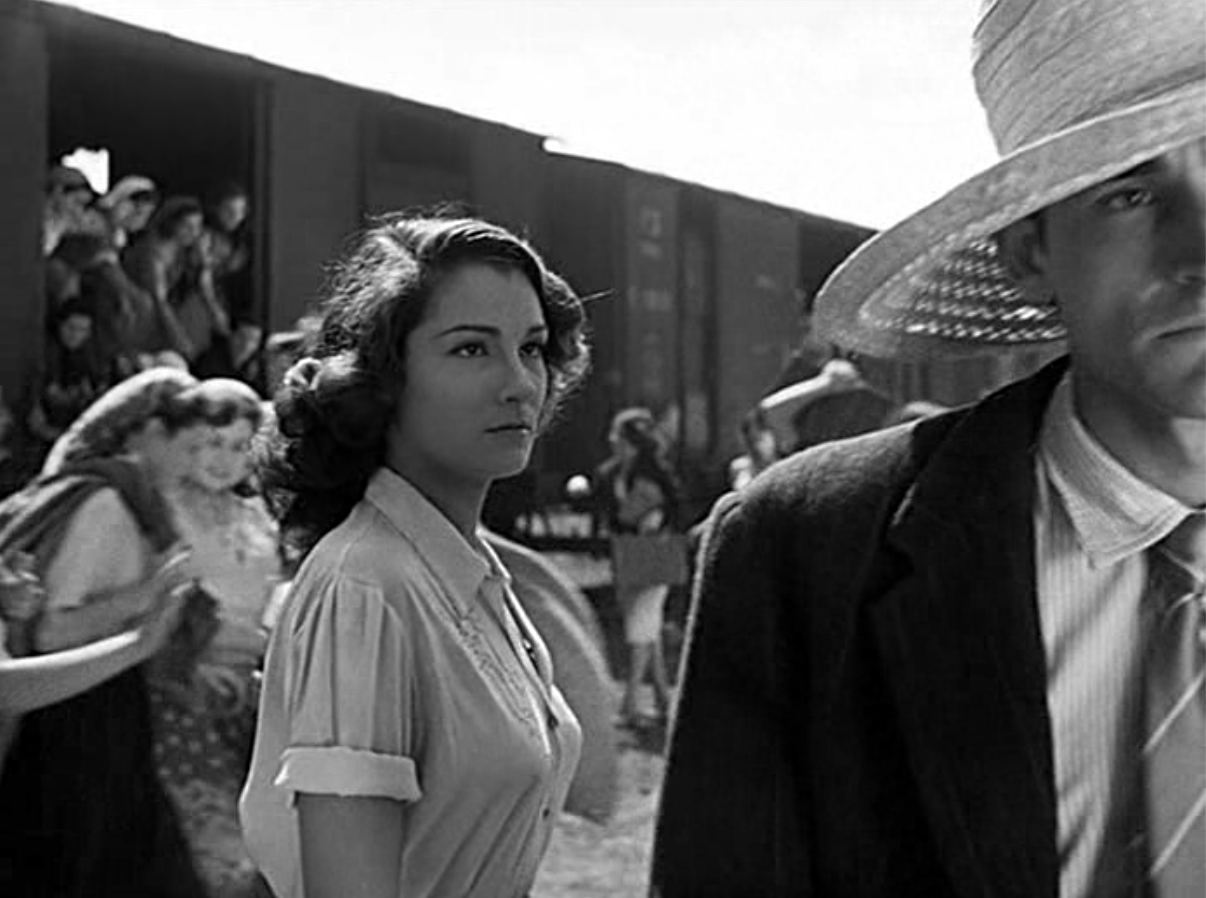
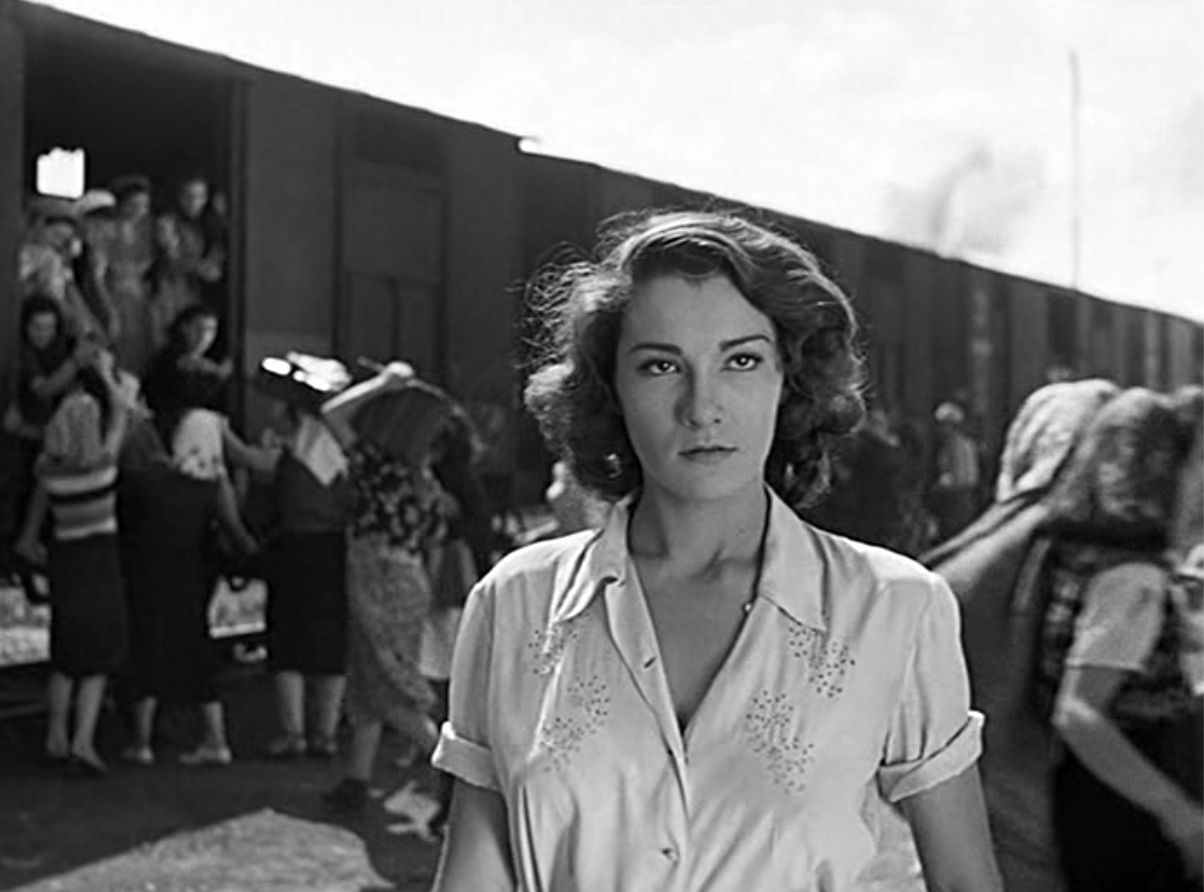
Lei incrocia il suo sguardo, sorridendo. Lui cammina verso di lei, saltellando a tempo di musica, mentre Francesca osserva.
She meets his gaze, smiling. He walks towards her, bouncing in time to the music, as Francesca watches.
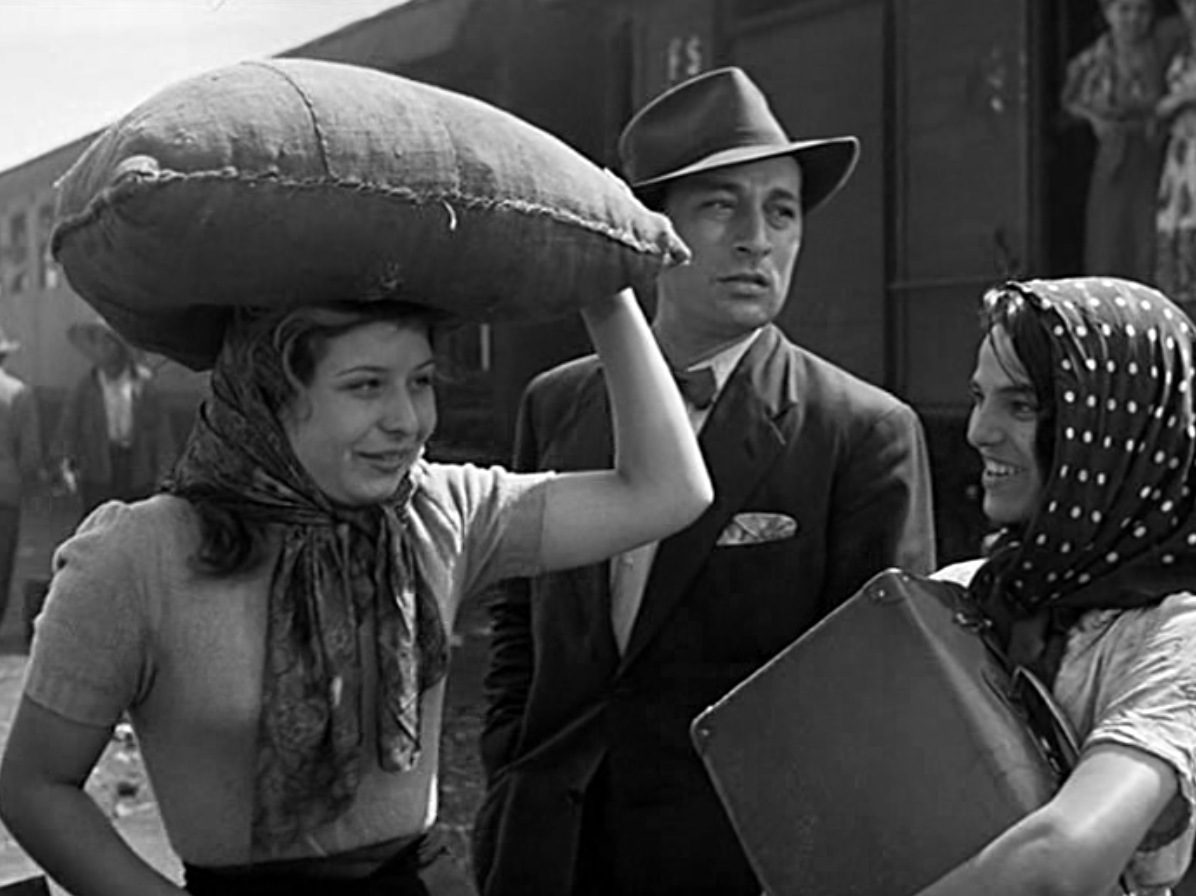
Una donna italiana con un sacco in testa si muove a ritmo di musica mentre la polizia si fa strada tra la folla.
An Italian woman carrying a sack on her head gyrates to the music as the police move through the crowd.
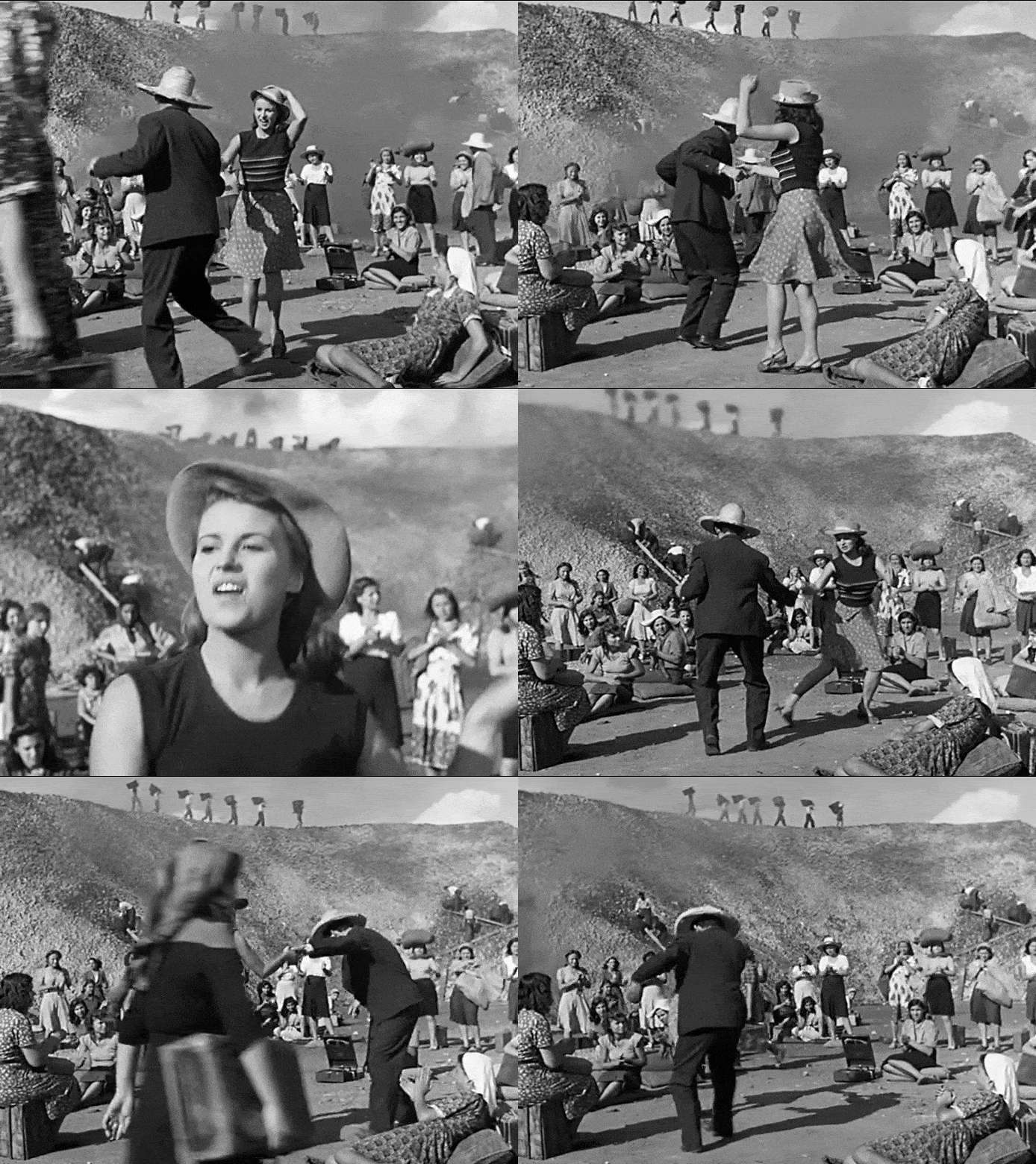
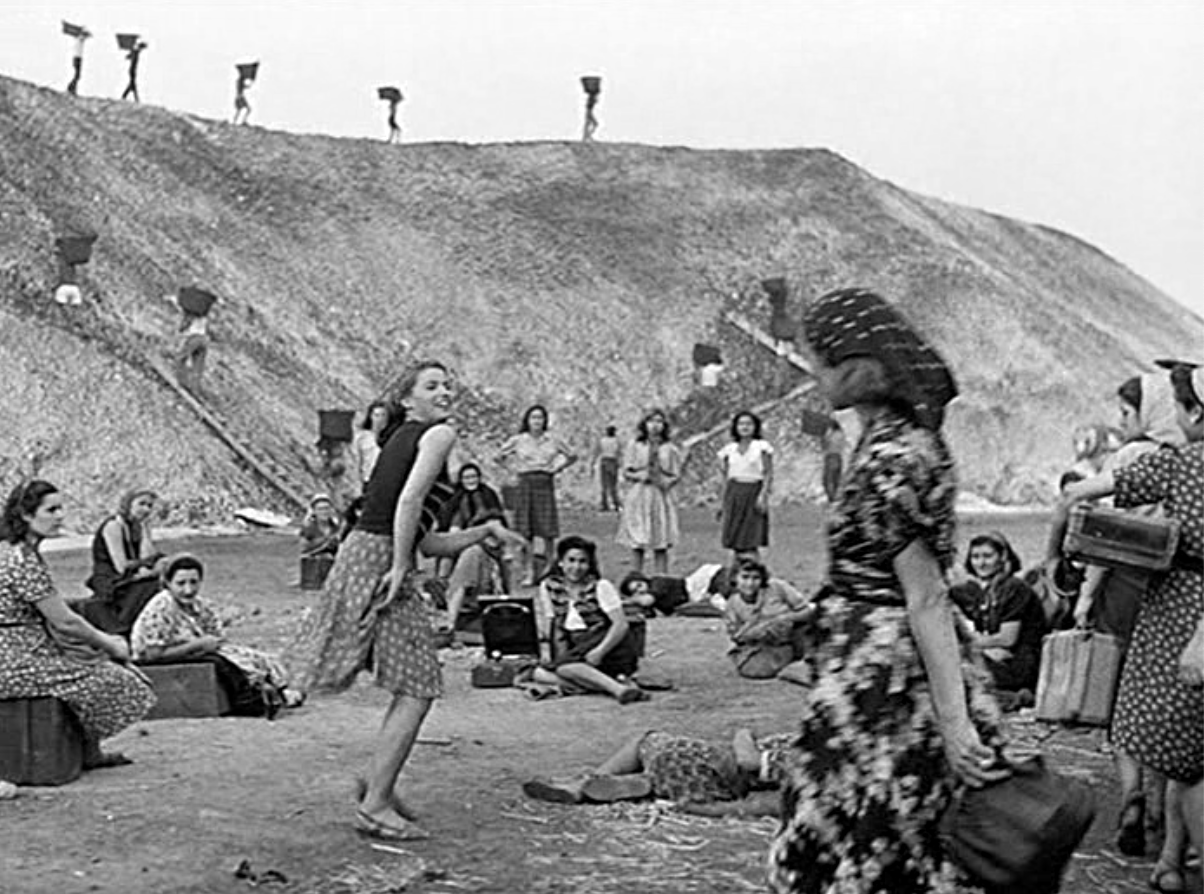
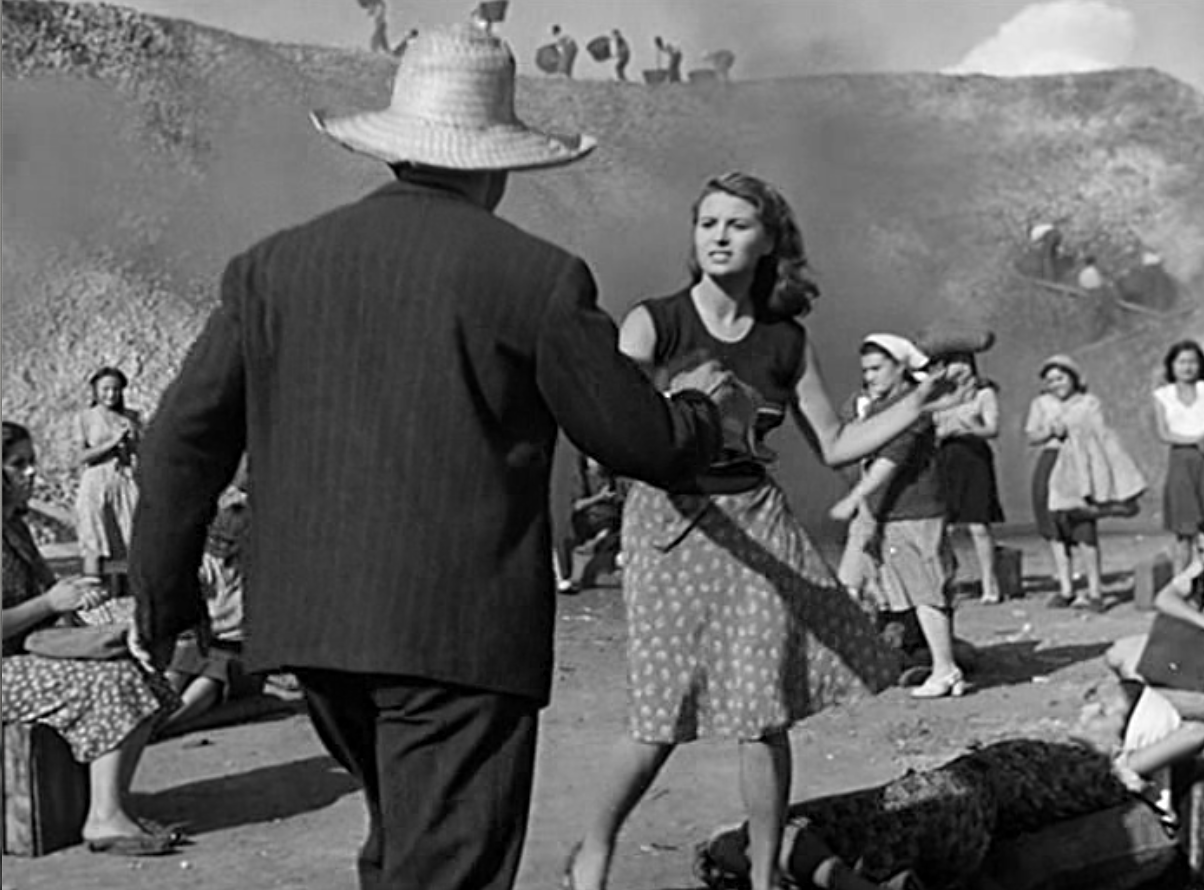
Granata e Silvana ballano; lei indossa il fedora di lui. Sullo sfondo, una fila di operai trasporta con grazia dei carichi lungo il crinale.
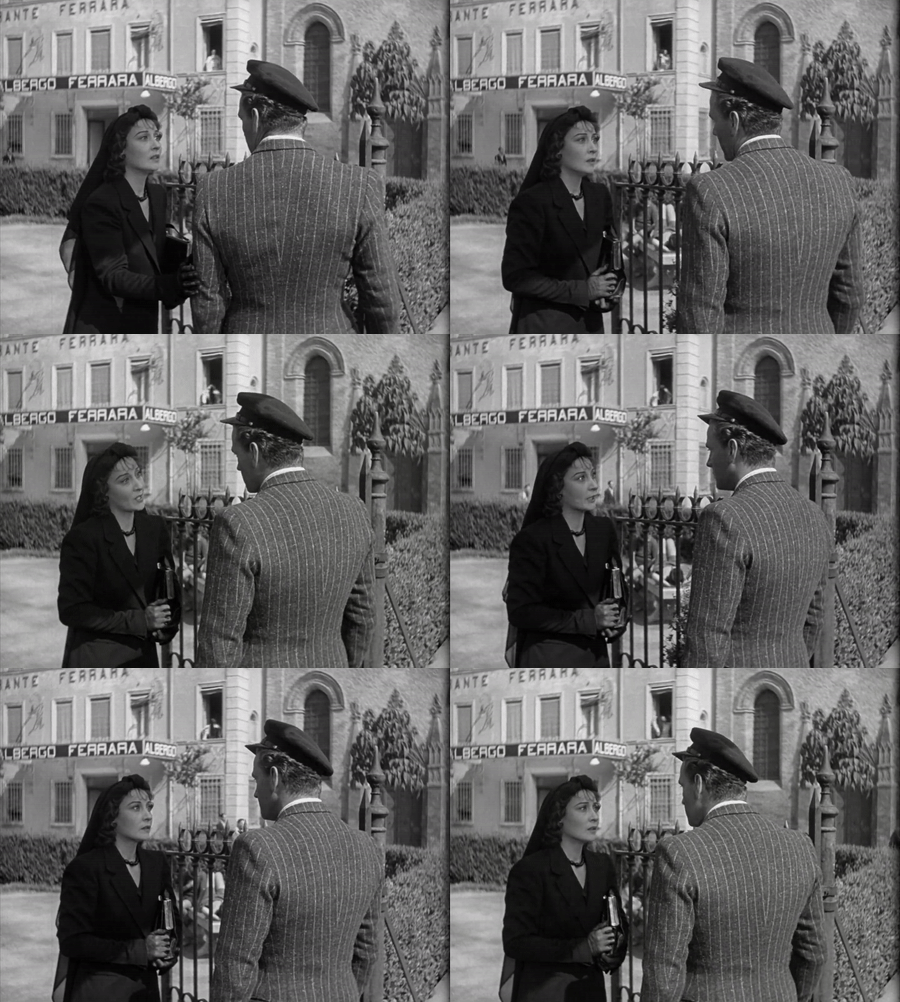
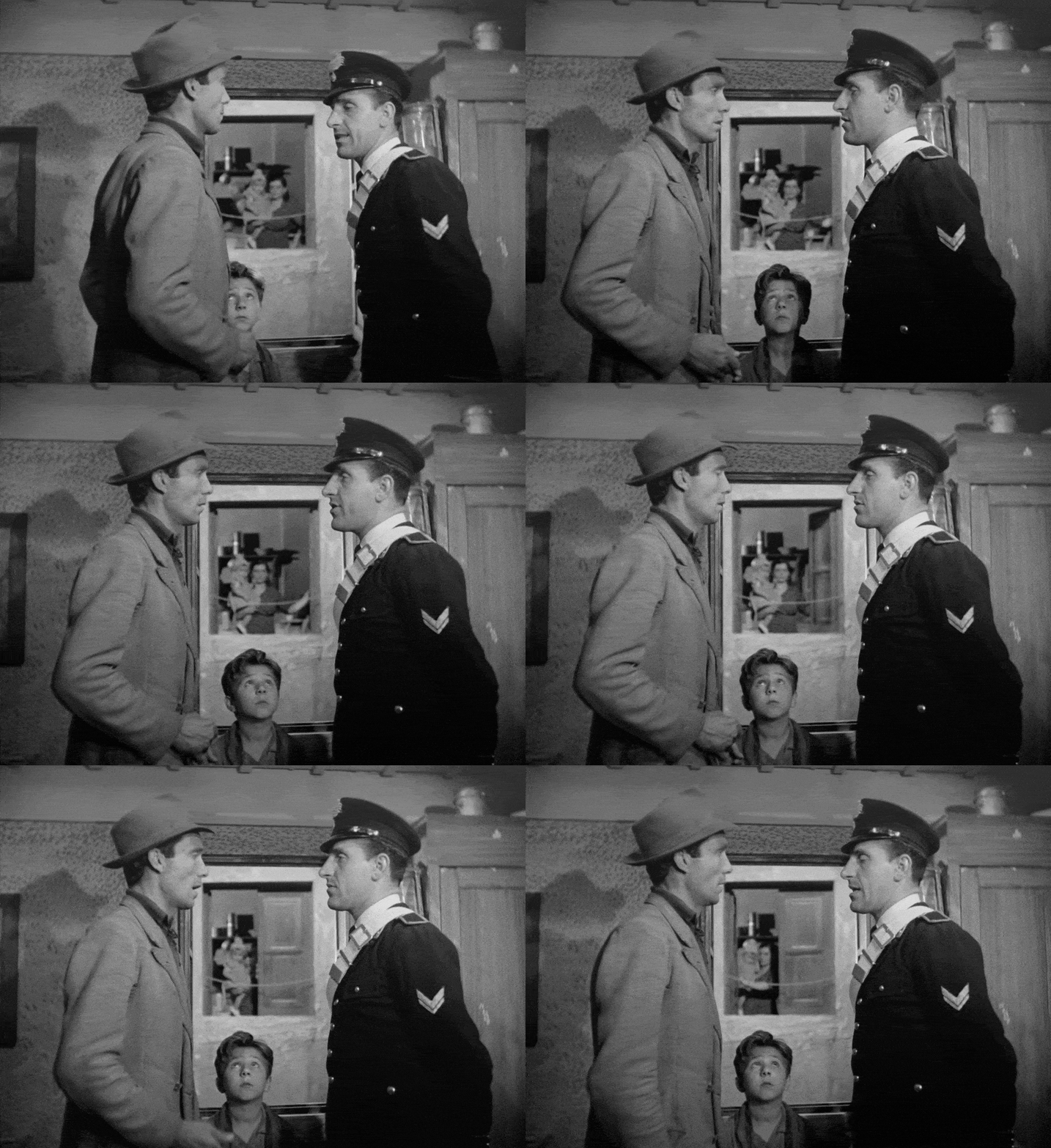
Questo delizioso dettaglio ci ricorda due momenti simili: la donna alla finestra che si spazzola i capelli mentre Giovanna e Gino discutono in Ossessione (Luchino Visconti, 1943); e la donna con un bambino in braccio dietro Antonio e il poliziotto in Ladri di biciclette (Vittorio De Sica, 1948).
Granata and Silvana dance; she’s wearing his fedora. In the rear, a line of laborers carry burdens gracefully across the ridge.
This exquisite detail reminds us of two similar moments: the woman in the window brushing her hair while Giovanna and Gino argue in Ossessione; and the woman holding a baby behind Antonio and the policeman in Bicycle Thieves.
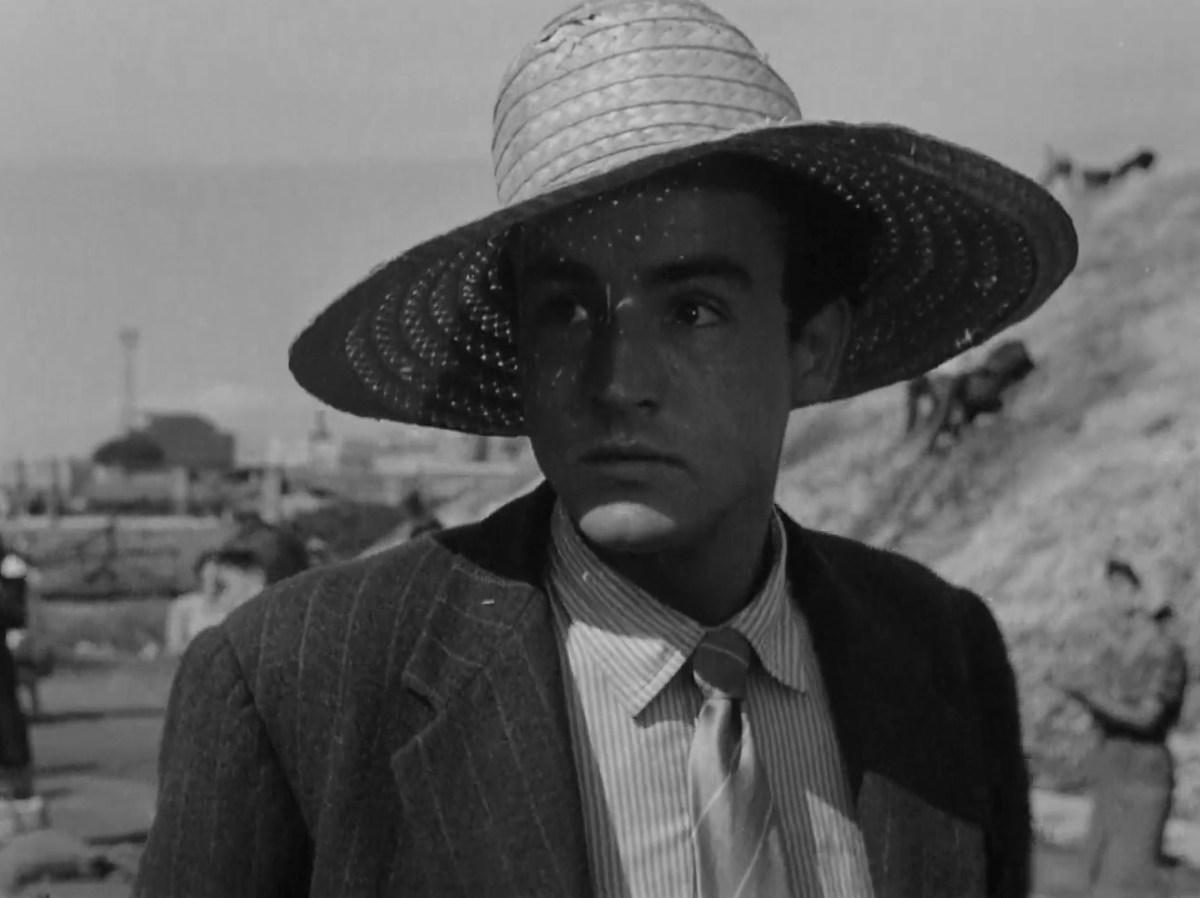
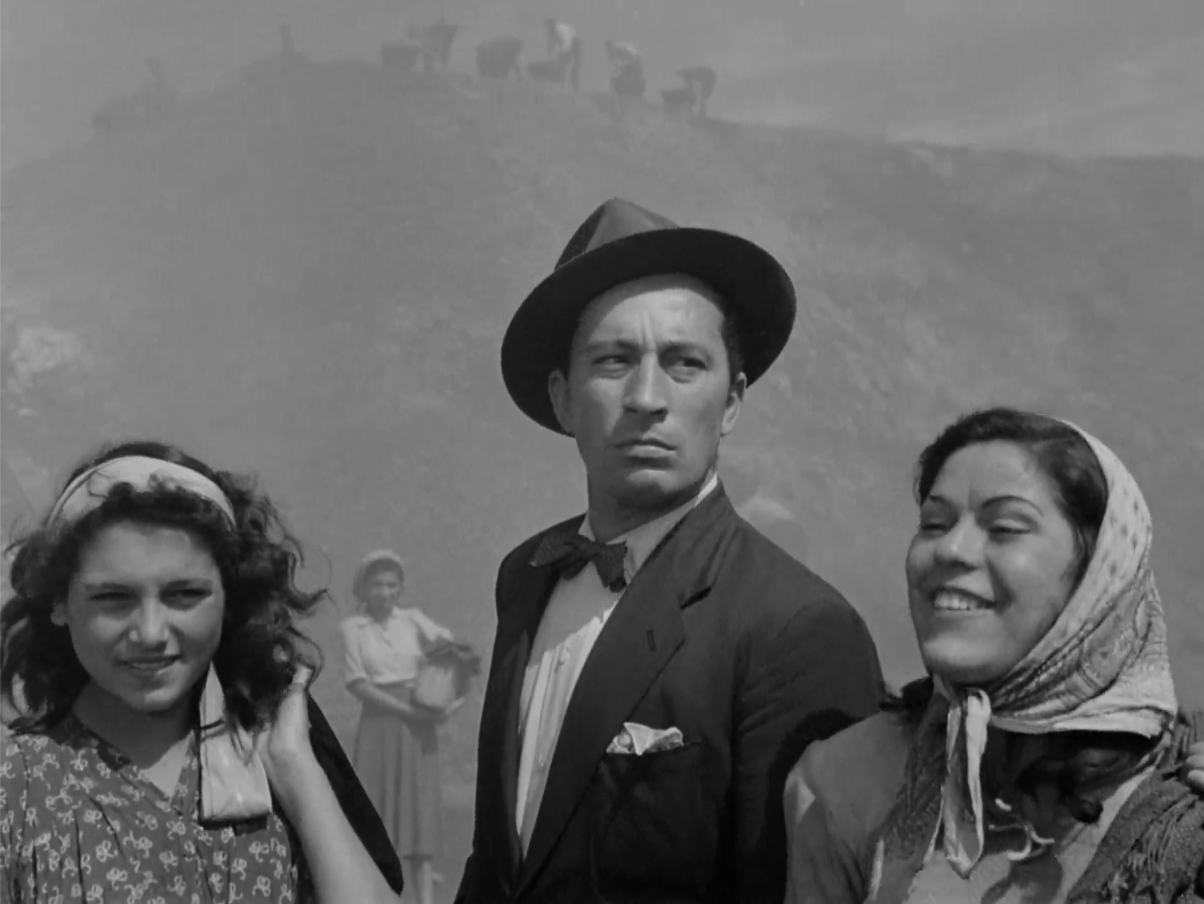
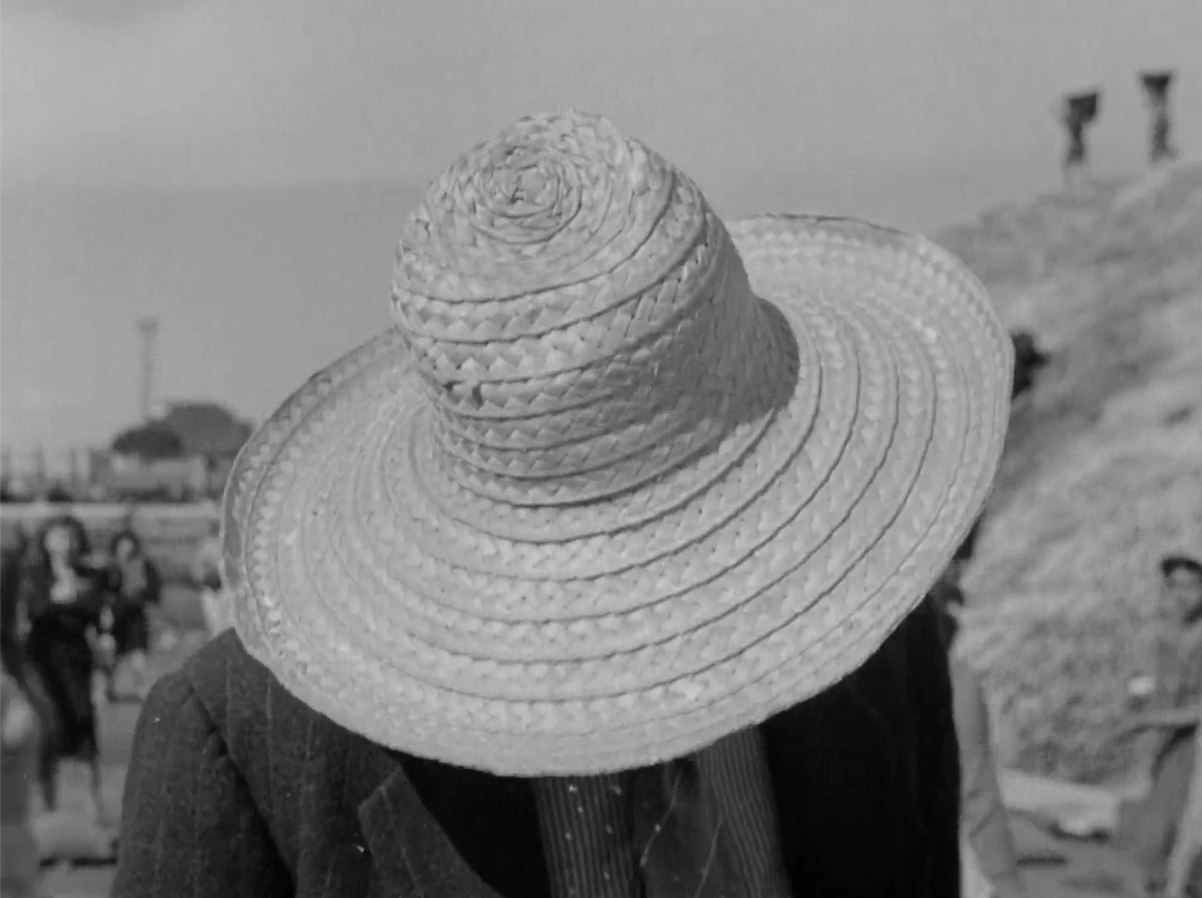
La tesa del cappello di Granata gli ombreggia il viso. Notando un poliziotto, abbassa la testa.
The brim of Granata’s hat shadows his face. Noticing a policeman, he lowers his head.
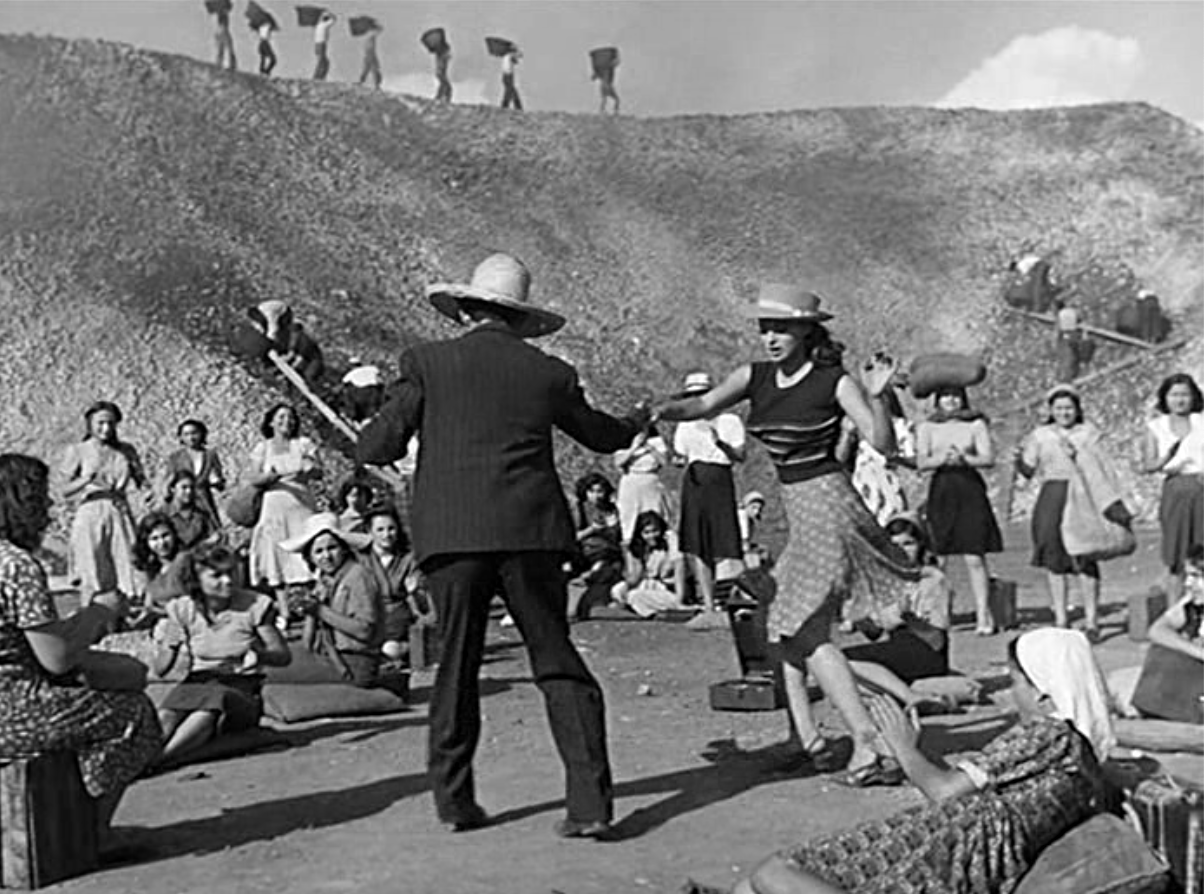
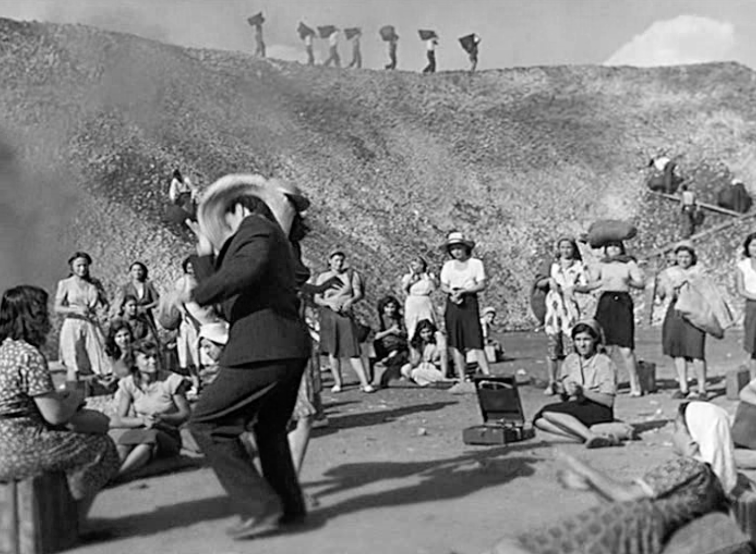
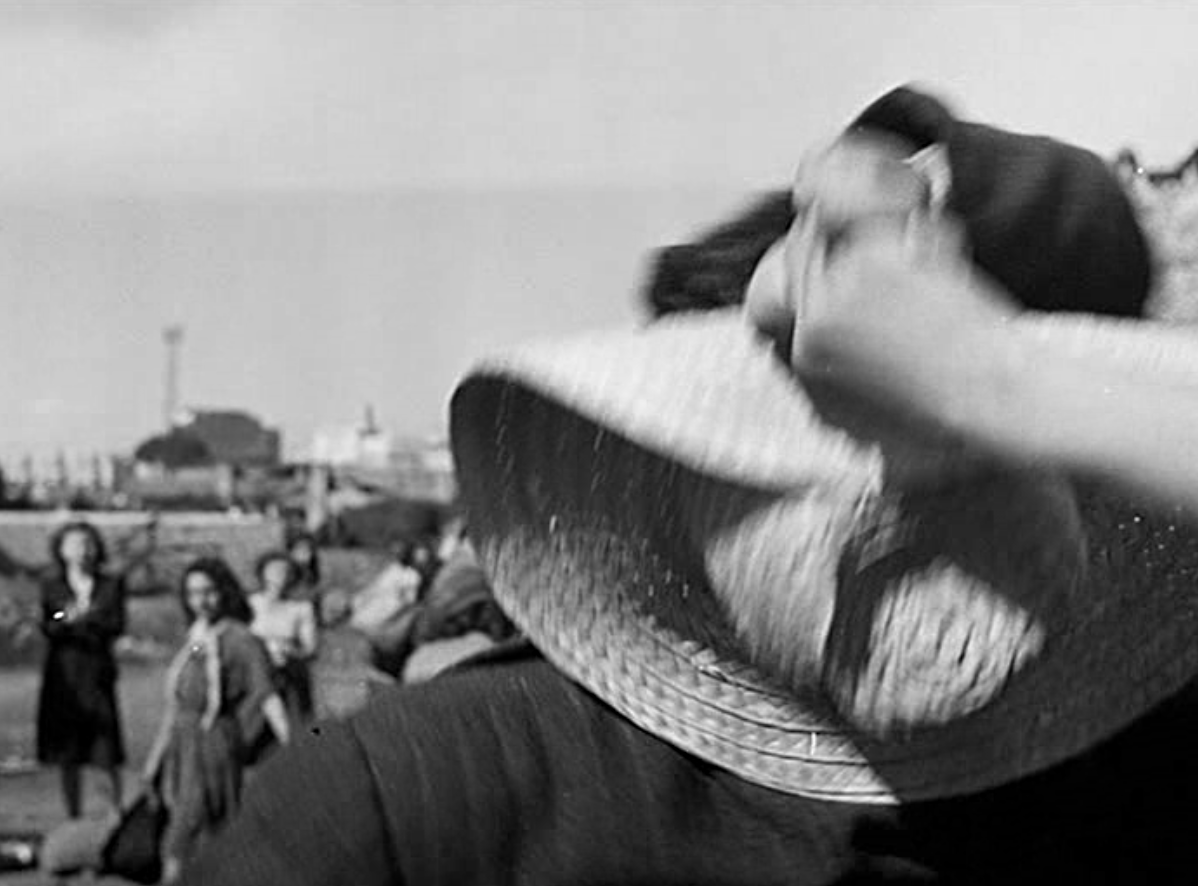
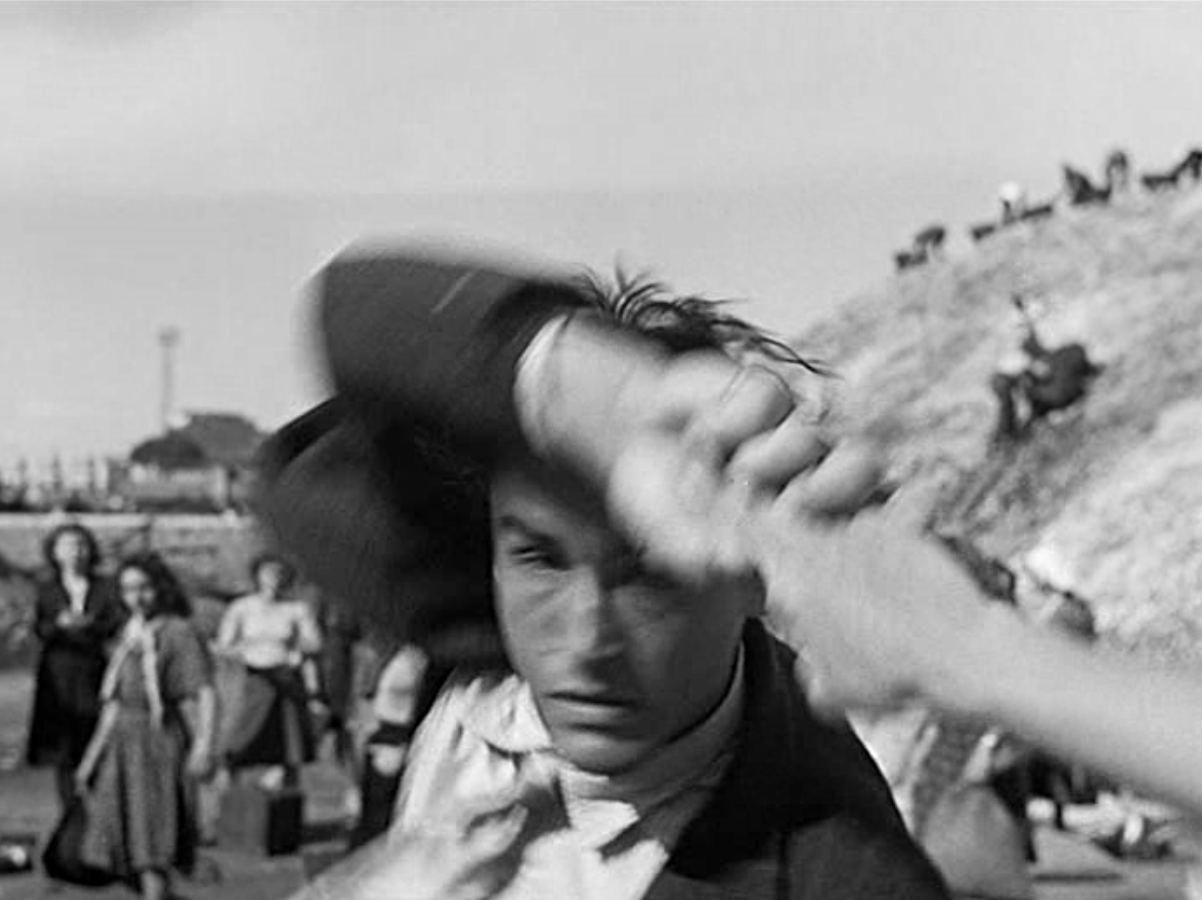
Ma poi, mentre balla, il braccio di Granata fa cadere il cappello.
But then, as he dances, Granata’s arm dislodges the hat.
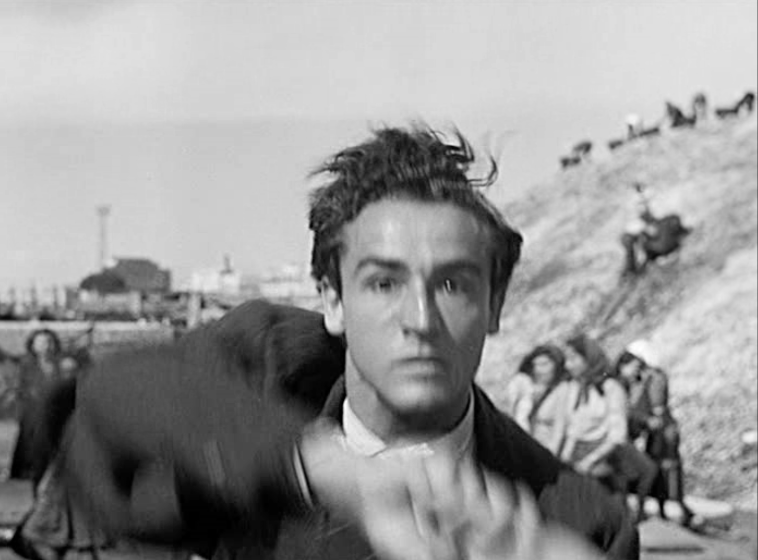
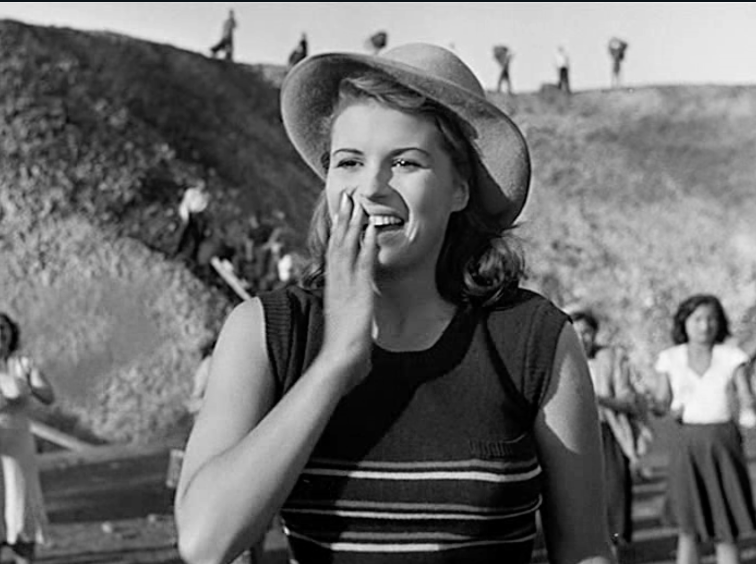
Silvana ride dell'espressione scioccata di Granata.
Silvana laughs at Granata’s shocked expression.
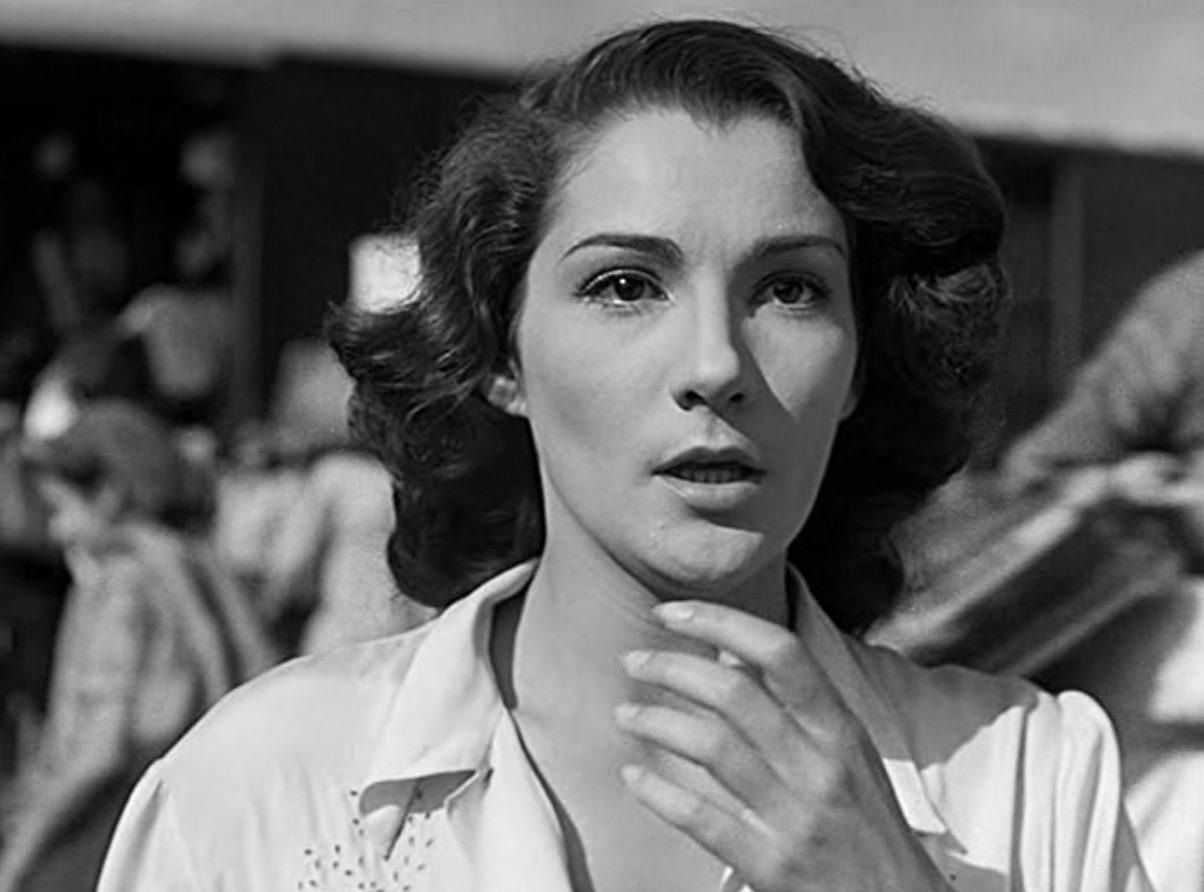
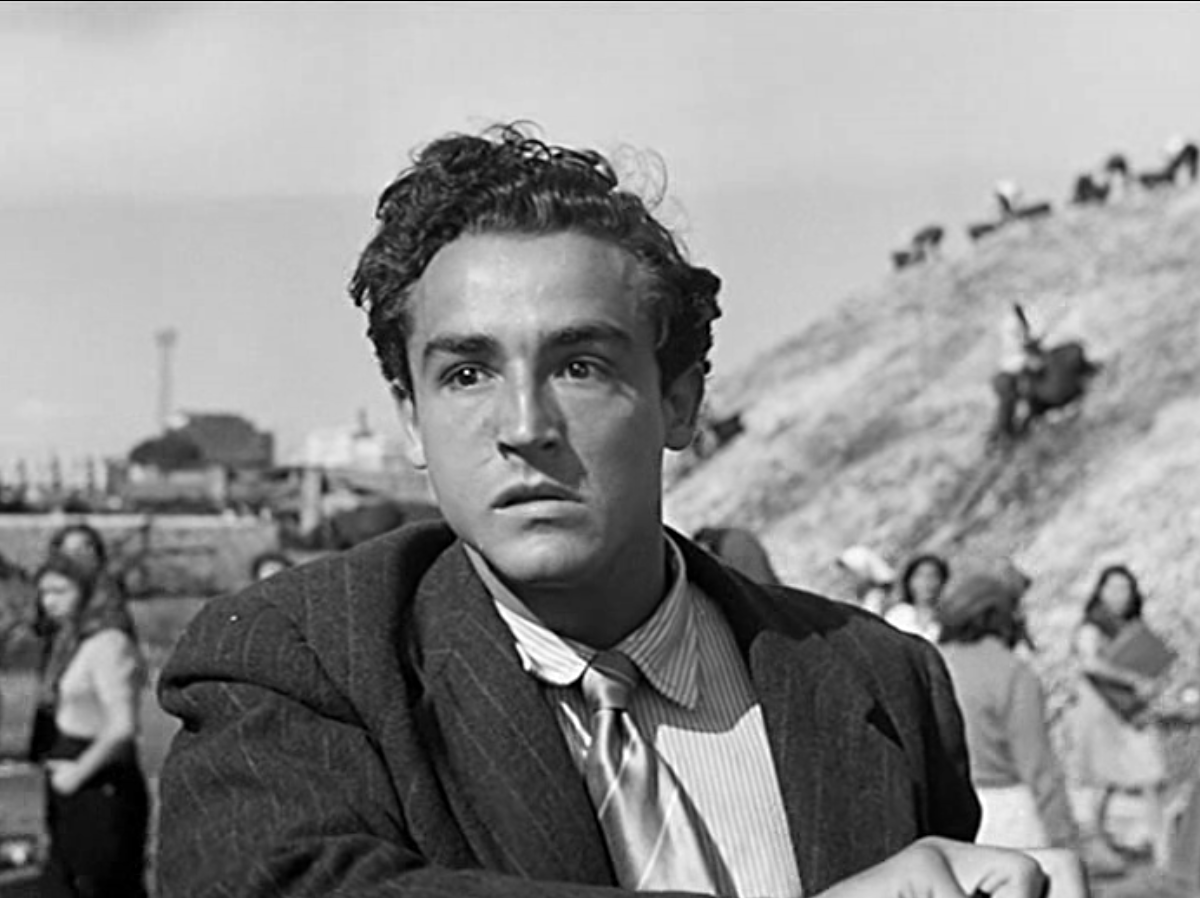
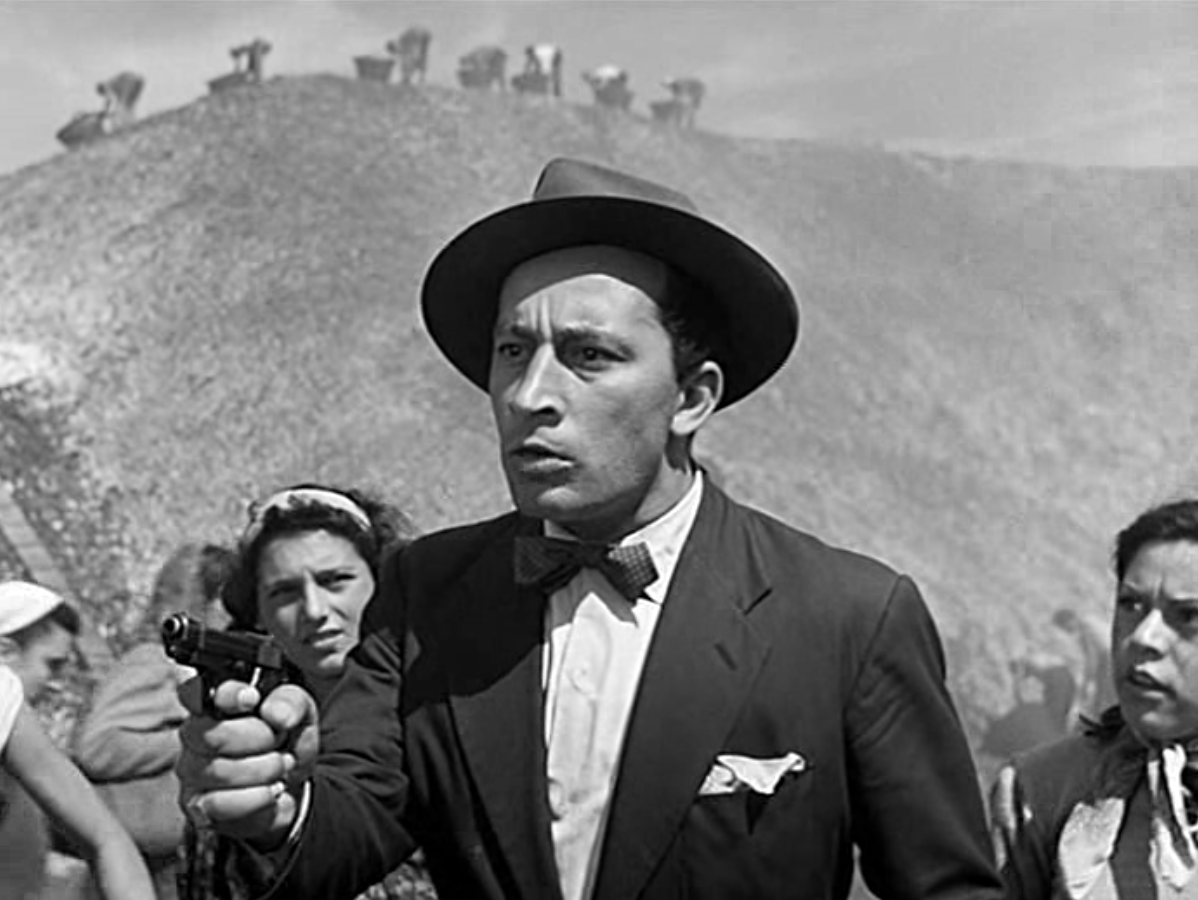
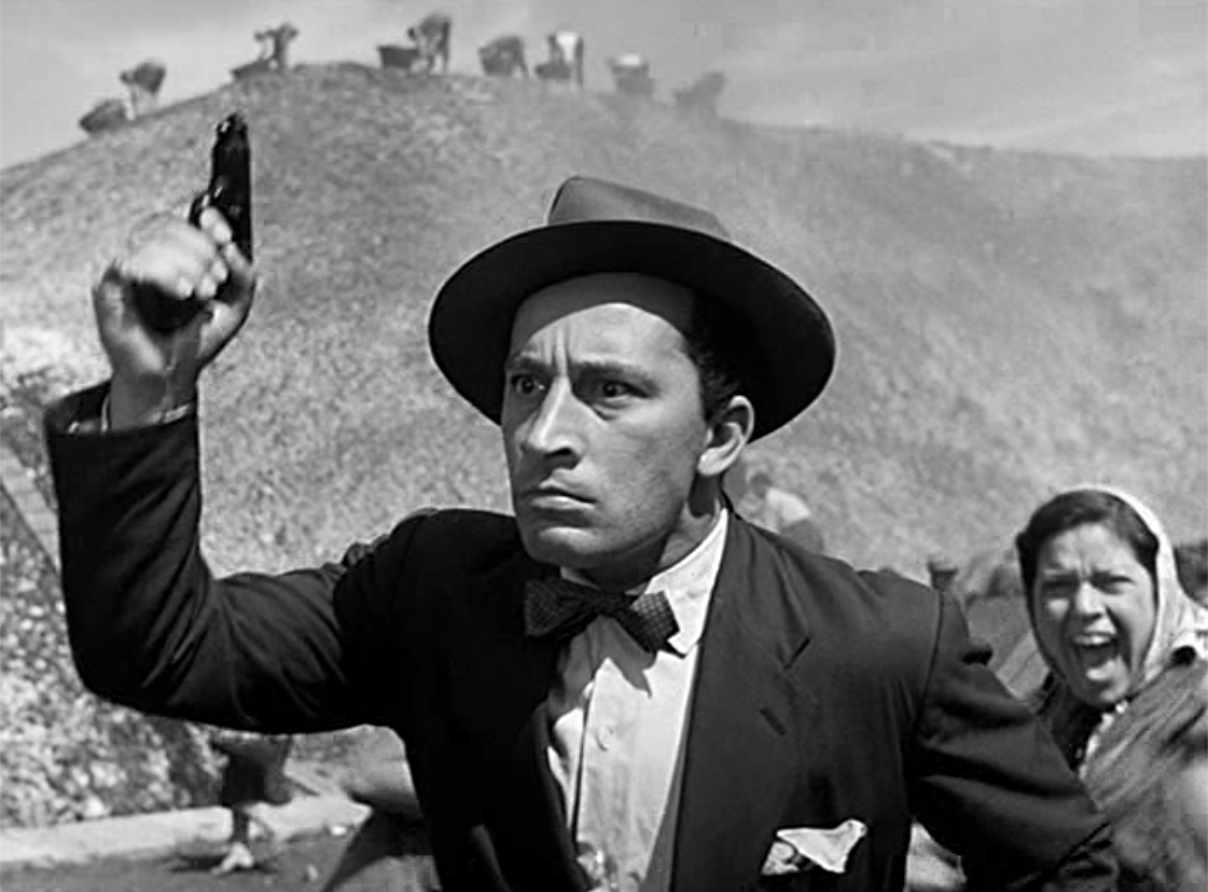
Francesca osserva, inorridita. Vedendo Granata, il poliziotto estrae la pistola. “Fermo o sparo!”
Francesca observes, horrified. Seeing Granata, the policeman pulls out his pistol. “Stop or I’ll shoot!”
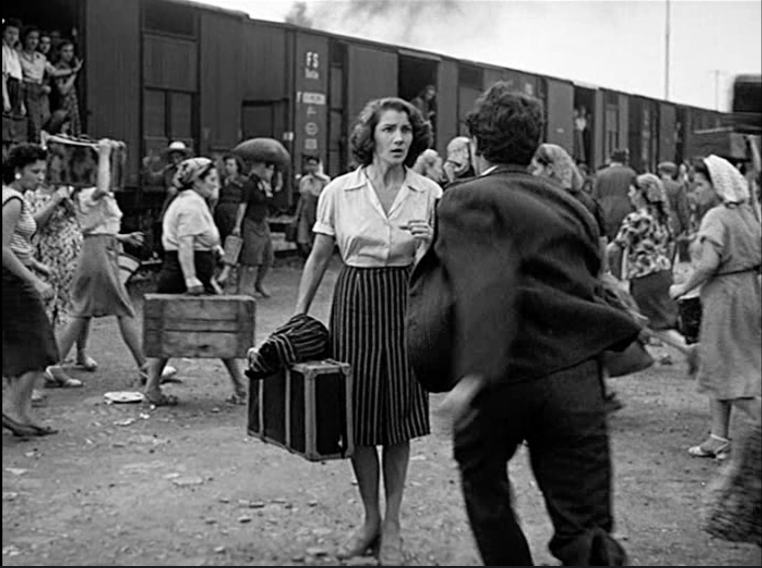
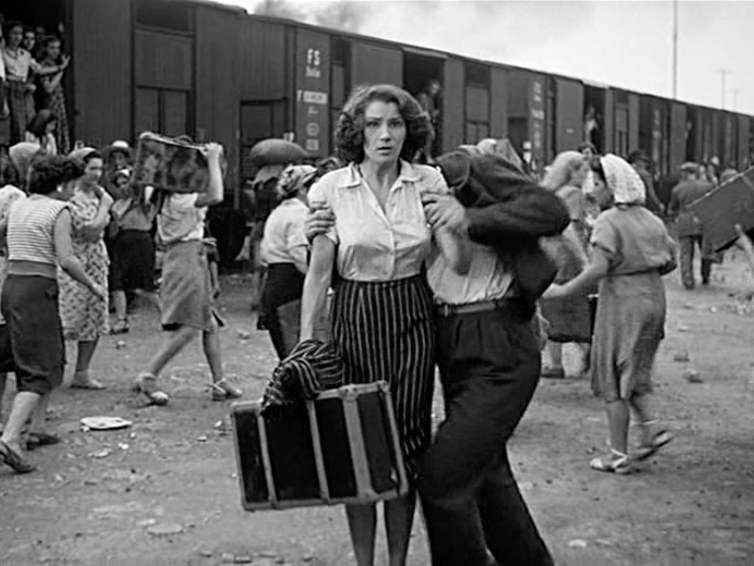
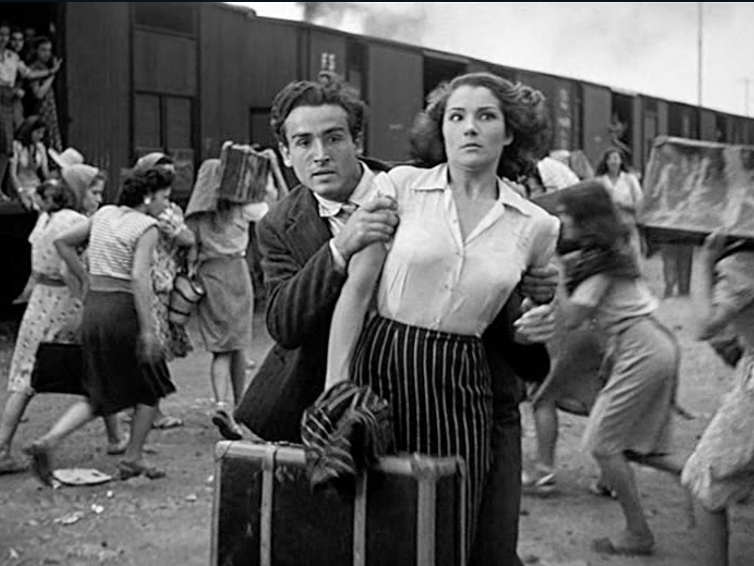
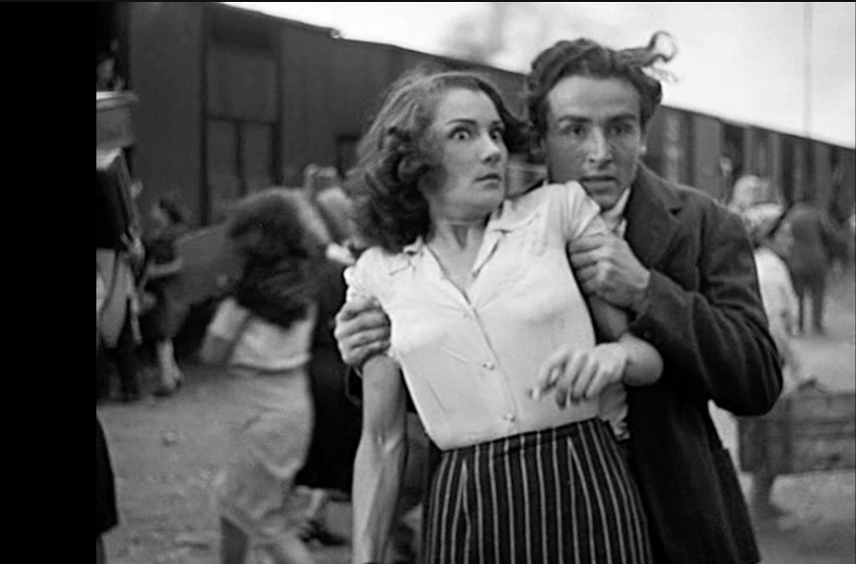
Granata corre e usa Francesca come scudo, che rimane immobile per il terrore.
Granata runs and uses Francesca as a shield, as she freezes in terror.
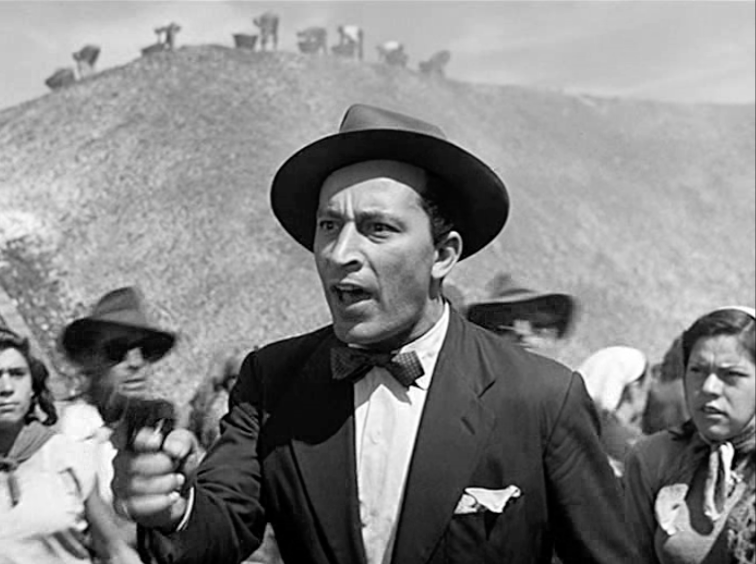
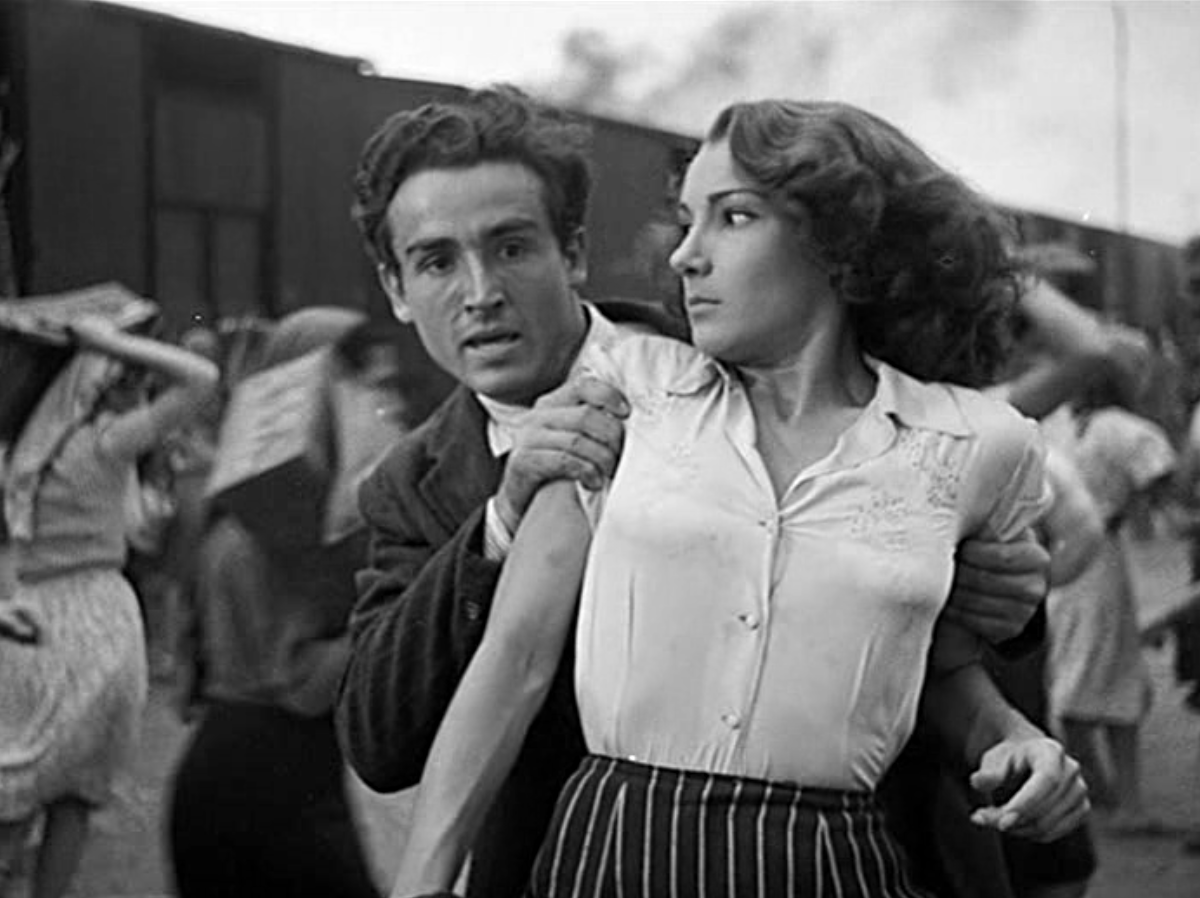
Il poliziotto urla: “Levati di mezzo tu, stupida!” Il vivace boogie-woogie continua a suonare.
“Mescolati alle mondine” – ripete Granata – “Vai con loro e aspettami”.
Silvana osserva.
The policeman yells, “Get out of the way, you idiot!” The lively boogie-woogie still plays.
“Mingle with the rice workers,” Granata repeats. “Go with them and wait for me.”
Silvana watches.
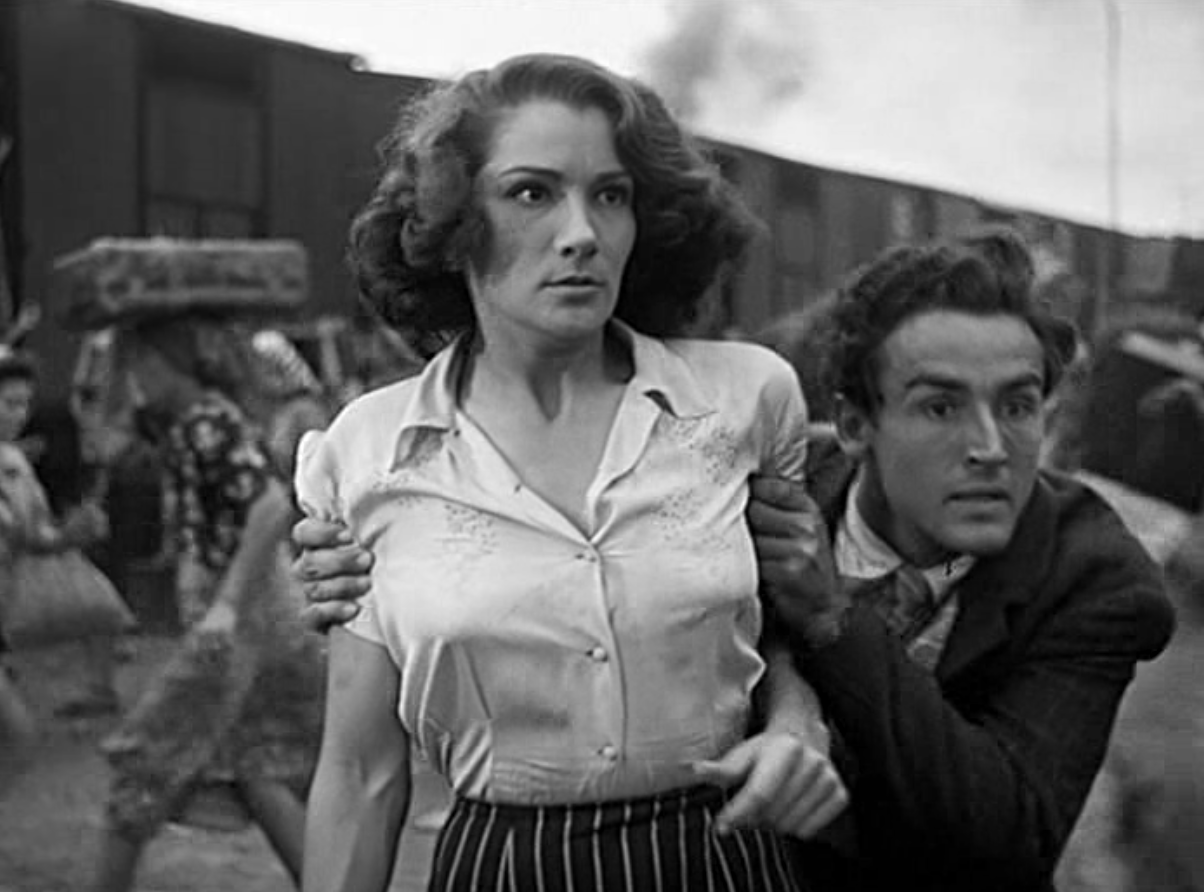
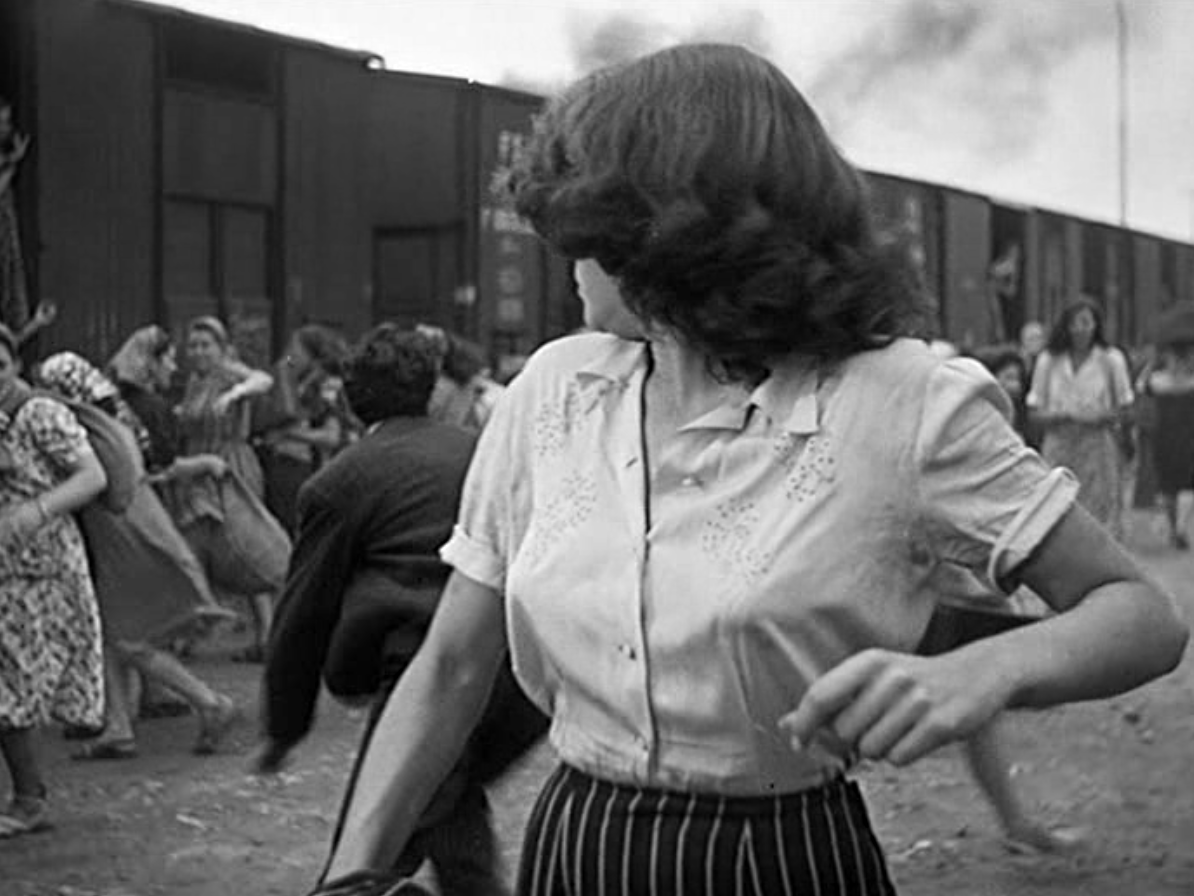
Dopo aver liberato Francesca, Granata si dà alla fuga.
Releasing Francesca, Granata makes a run for it.
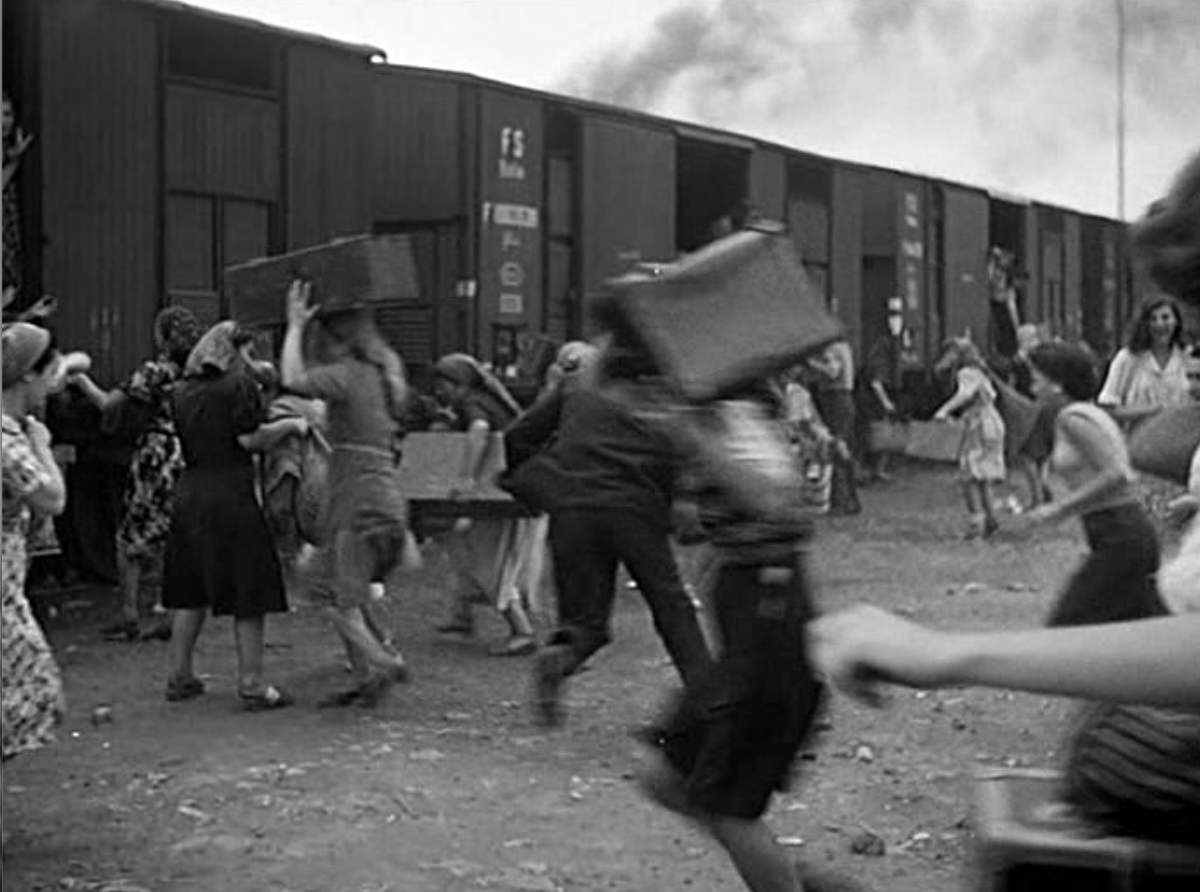
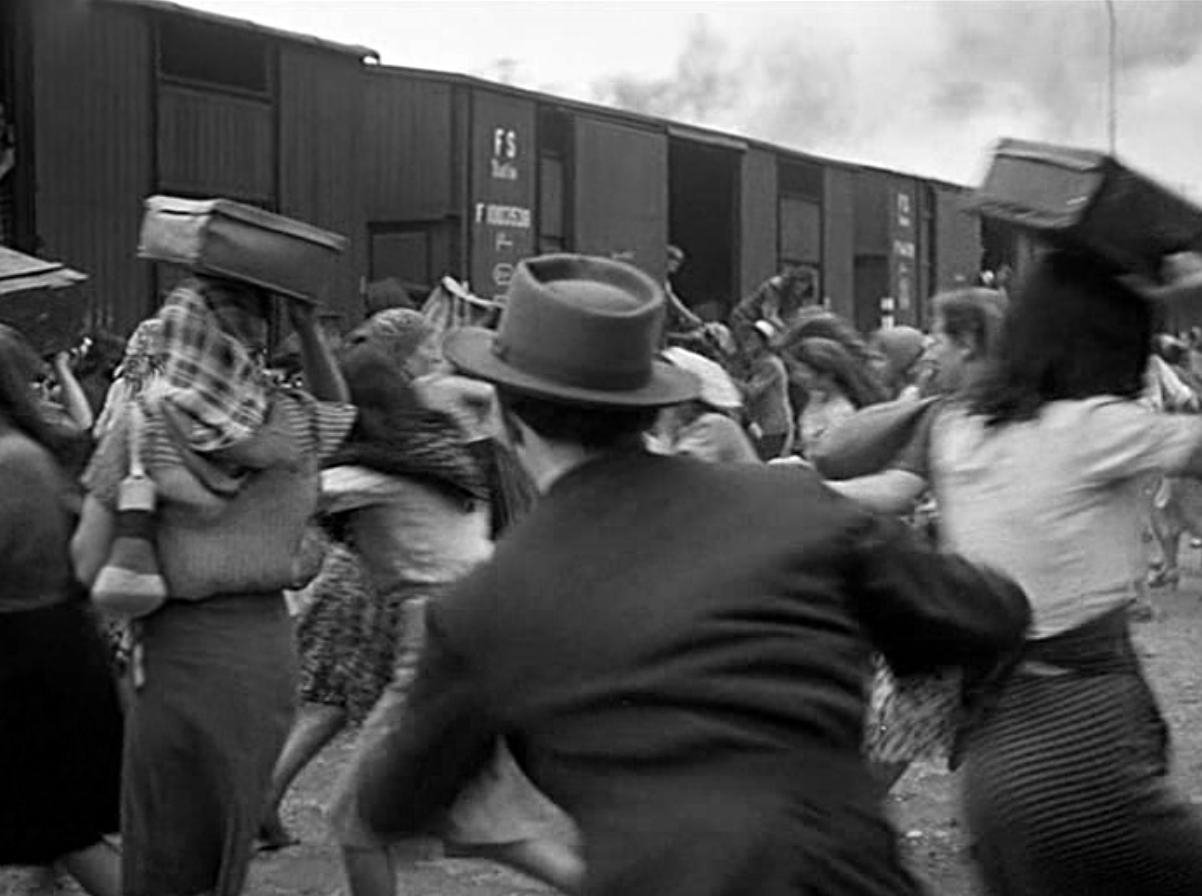
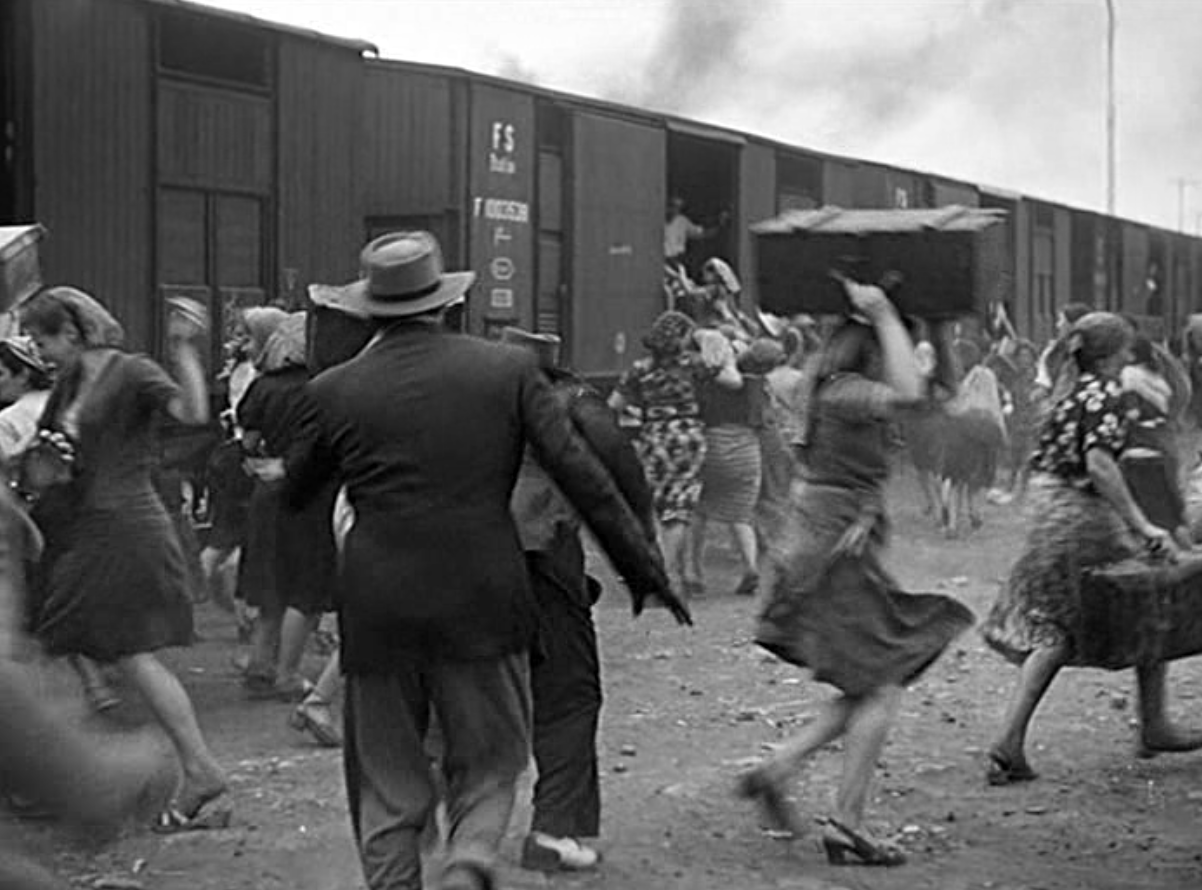
L'agente spara in aria e la folla si disperde. Le donne corrono con le valigie sulla testa.
The officer shoots into the air and the crowd scatters. Women run with suitcases on their heads.
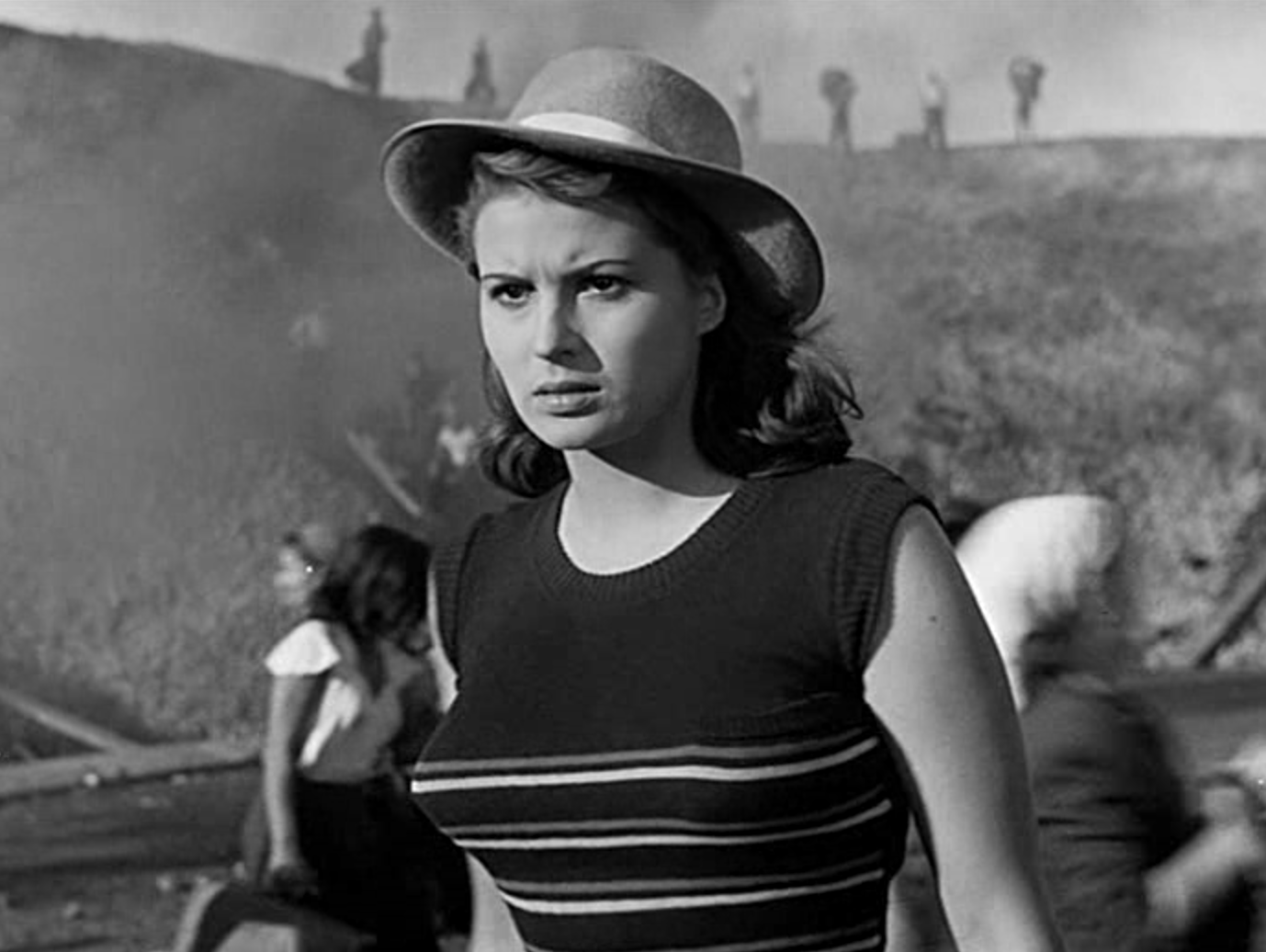
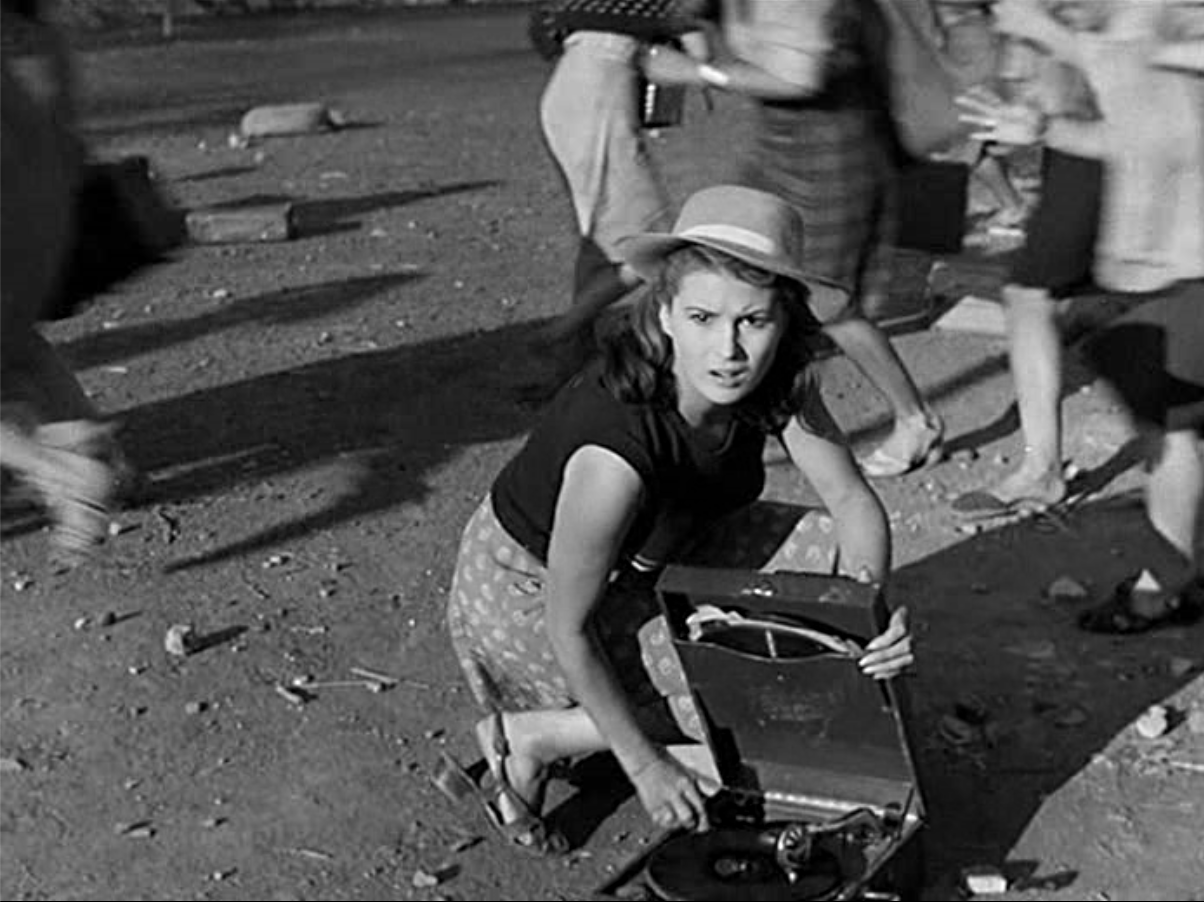
Silvana, pensierosa, ripone il suo giradischi.
Silvana, pensive, packs up her record player.
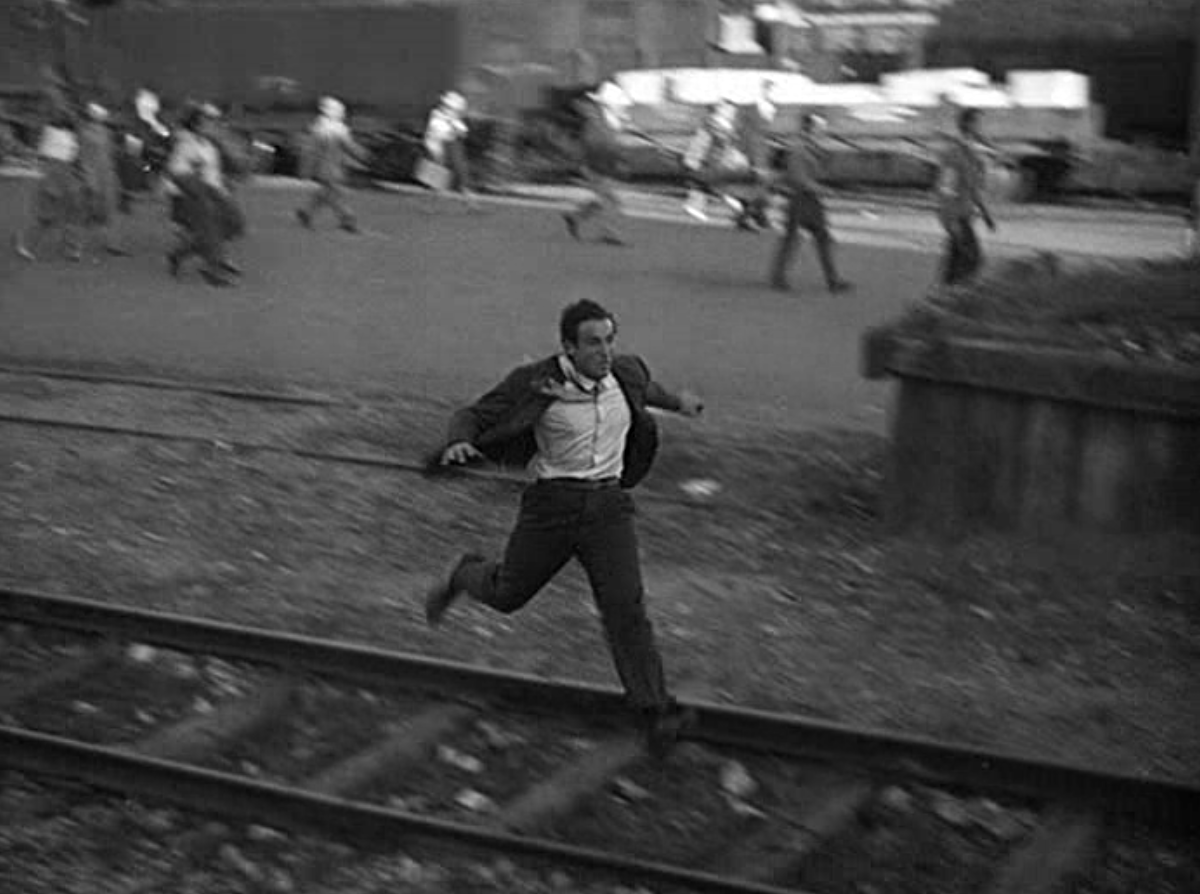
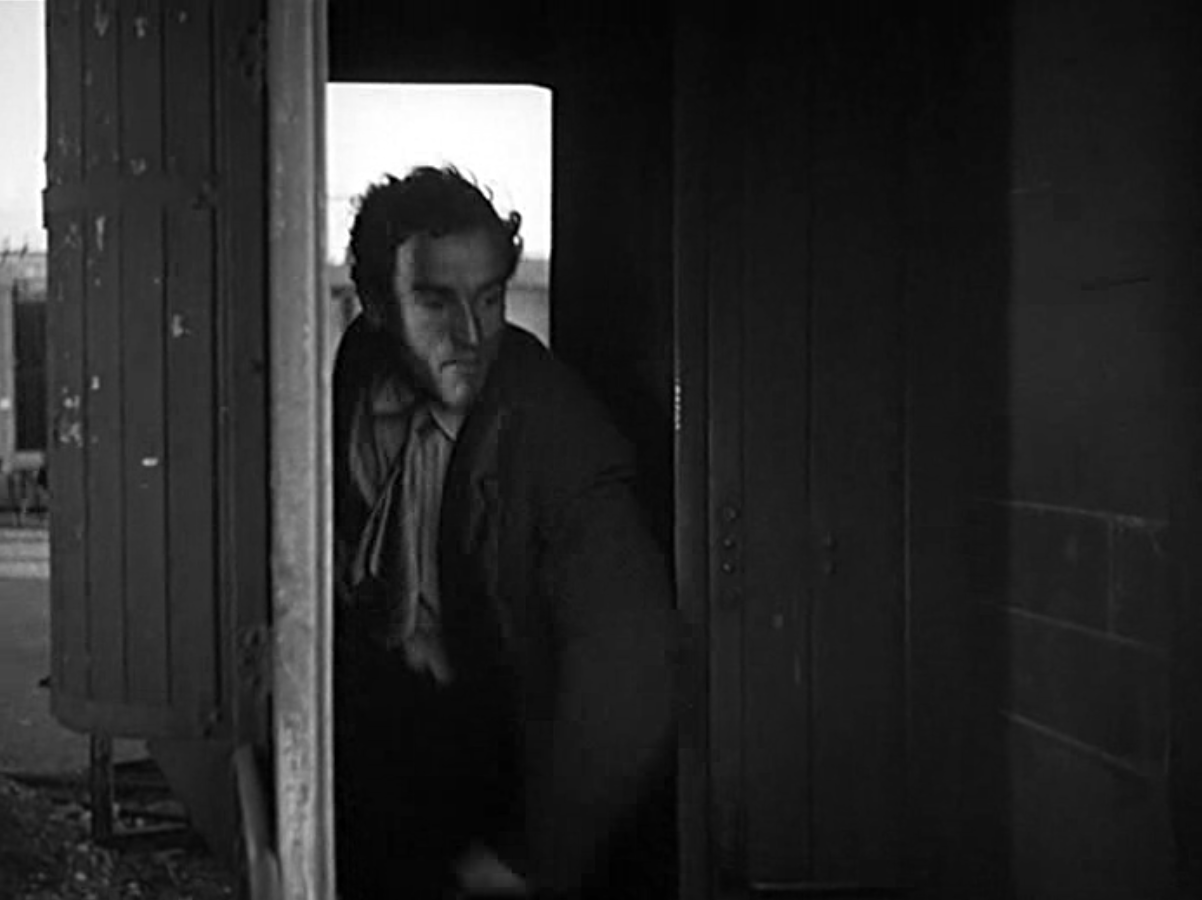
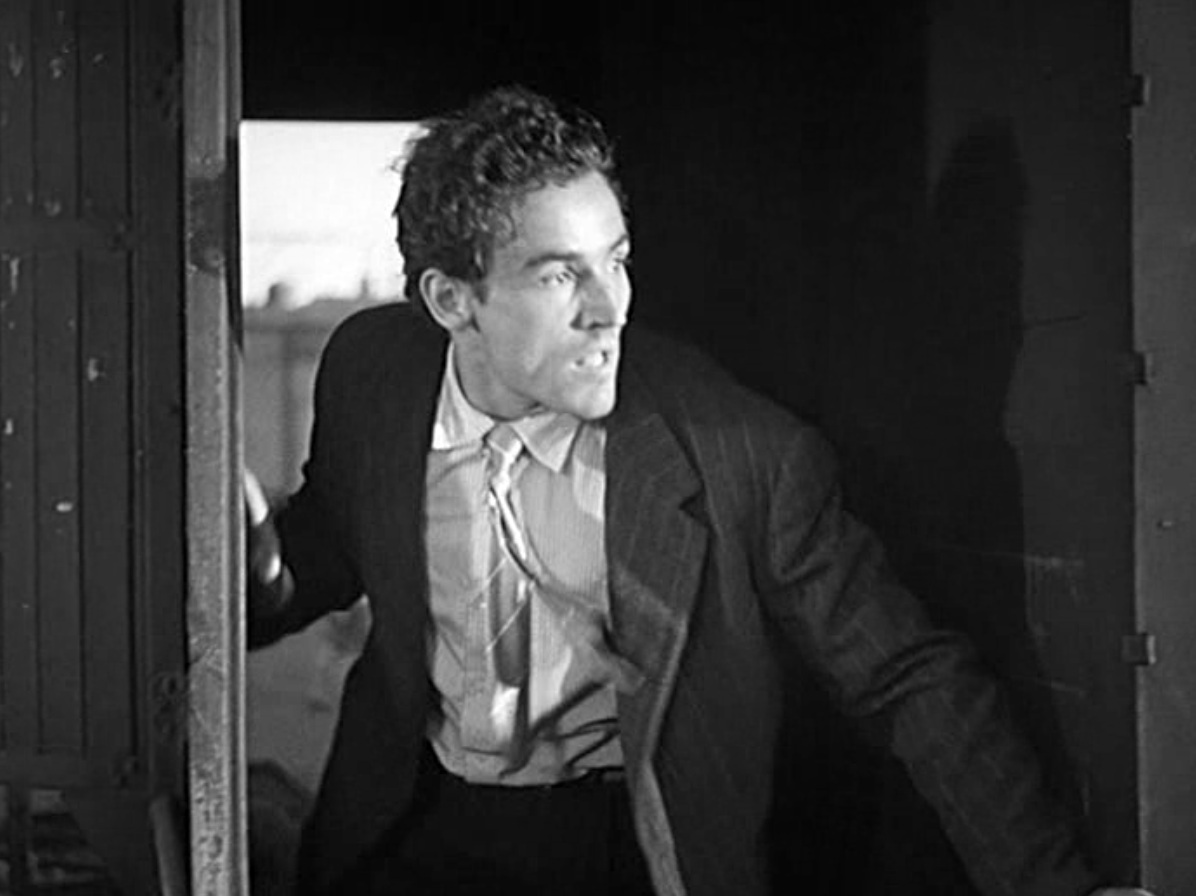
Granata runs full speed onto a train.
Granata corre a tutta velocità su un treno.
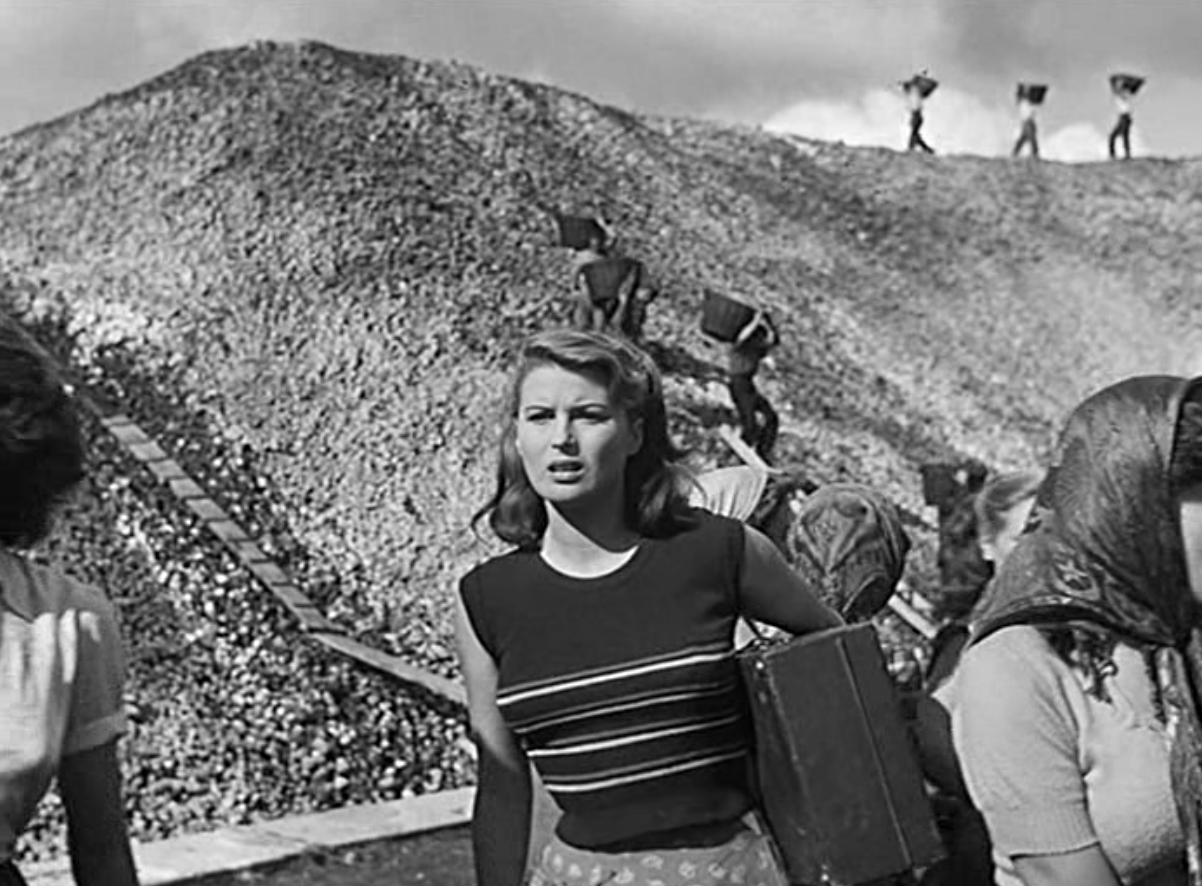
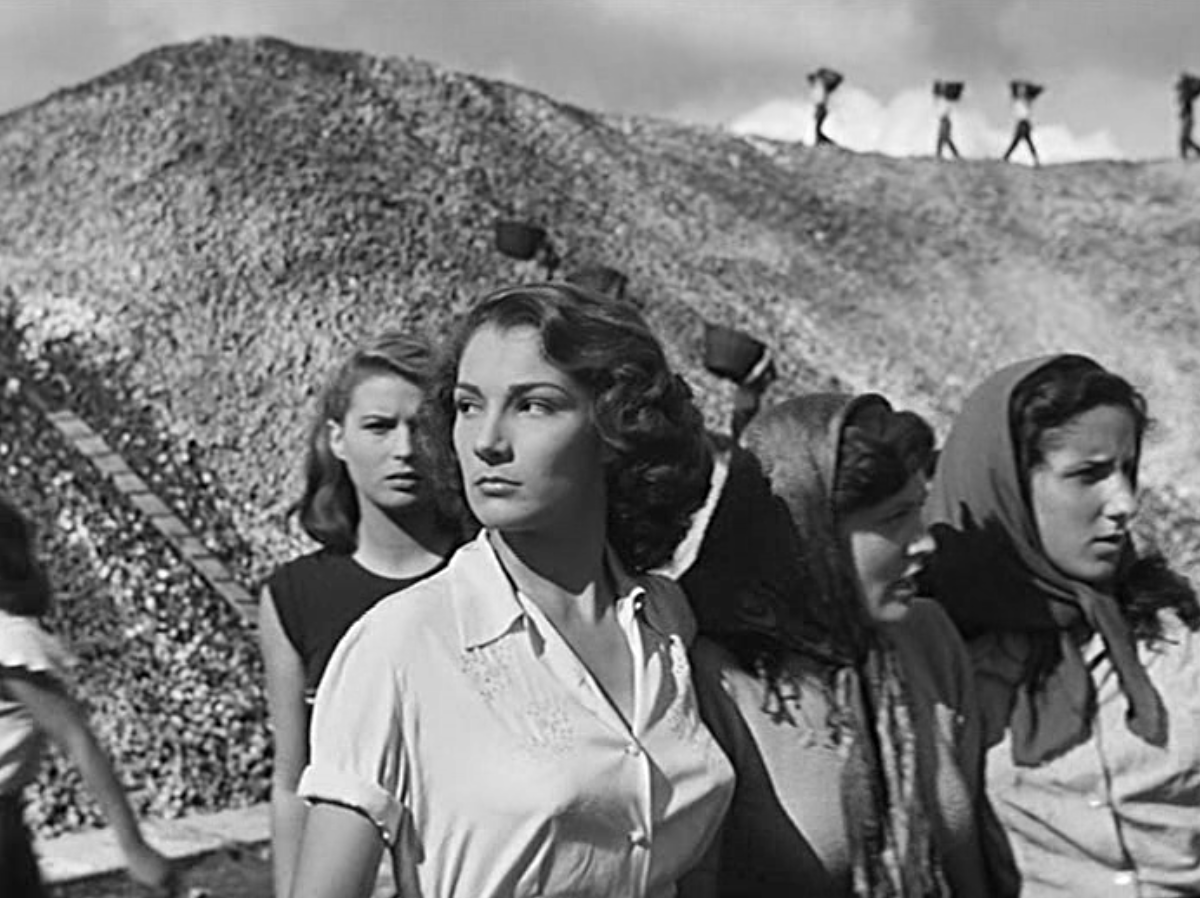
L'attenzione di Silvana si posa su Francesca.
Silvana’s attention lands on Francesca.
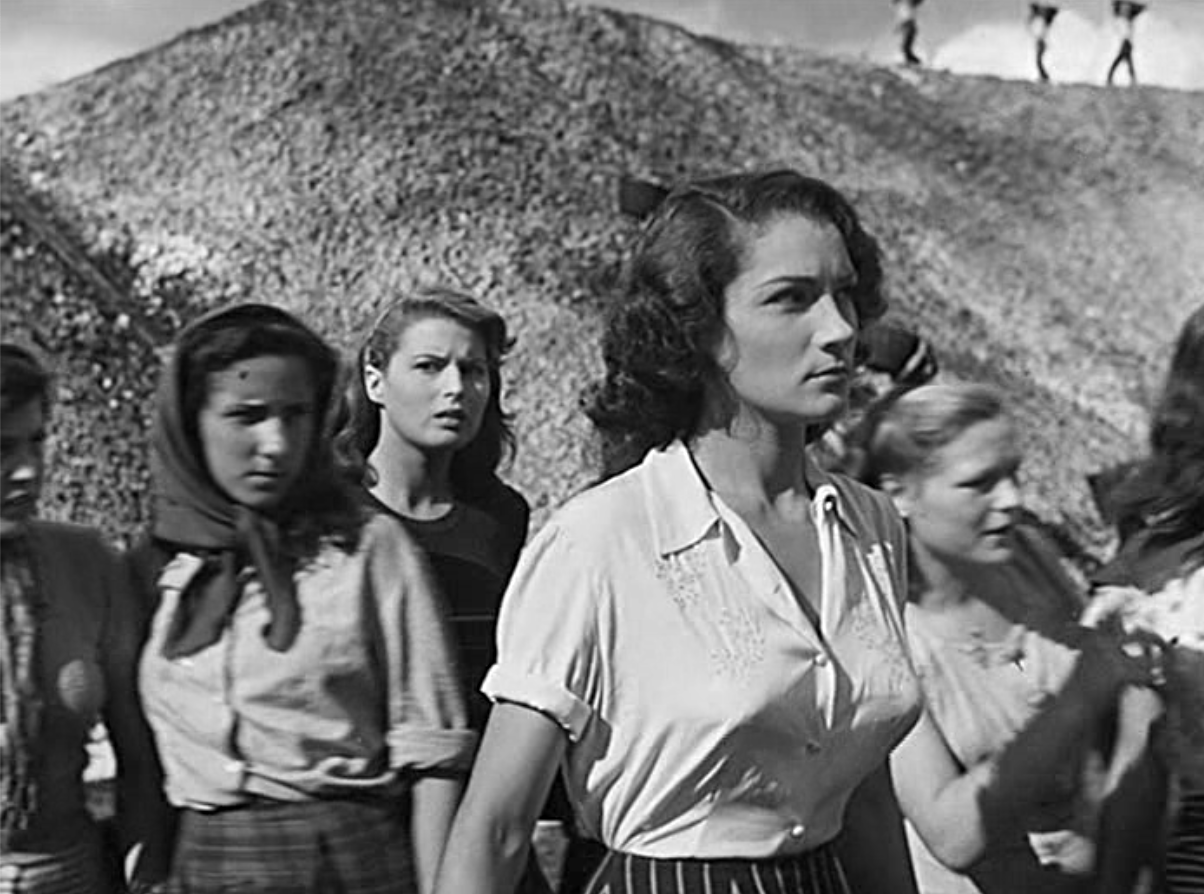
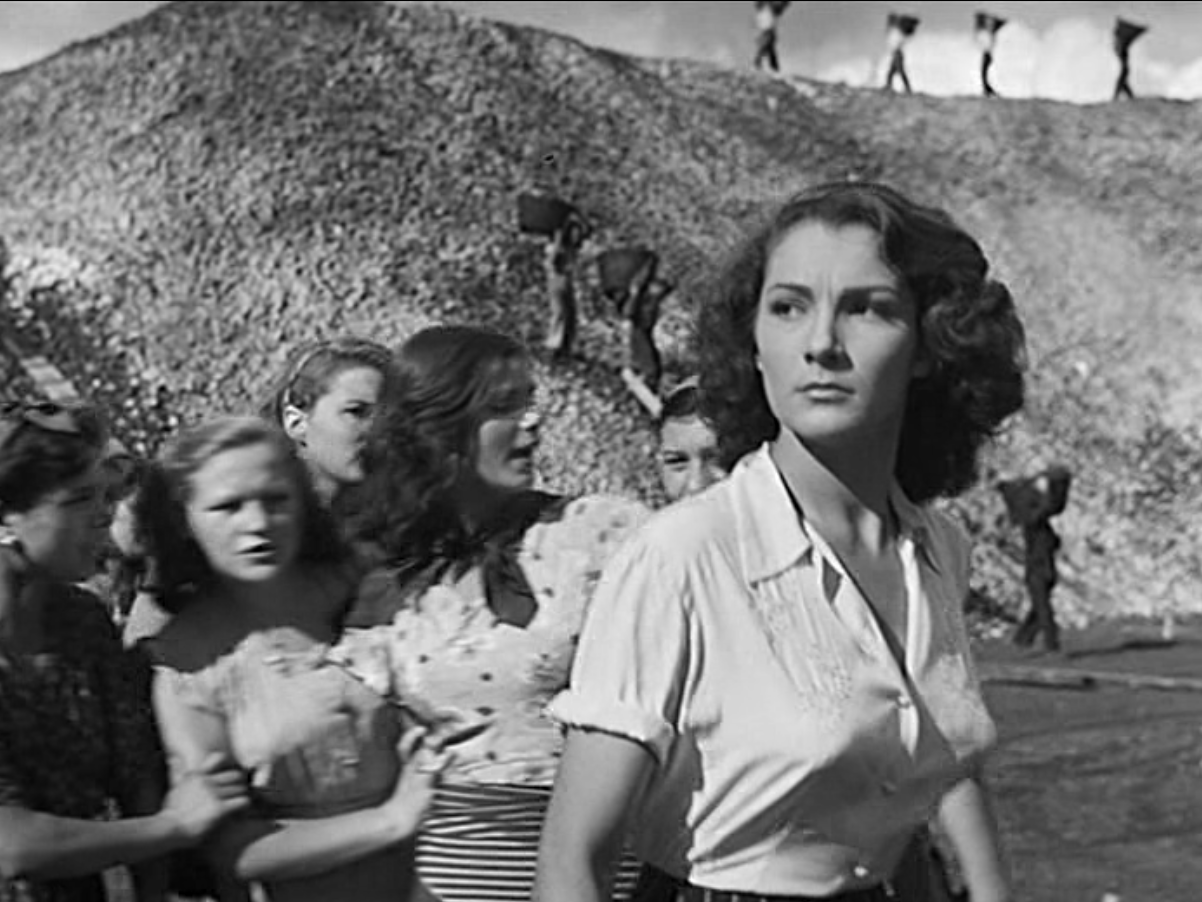
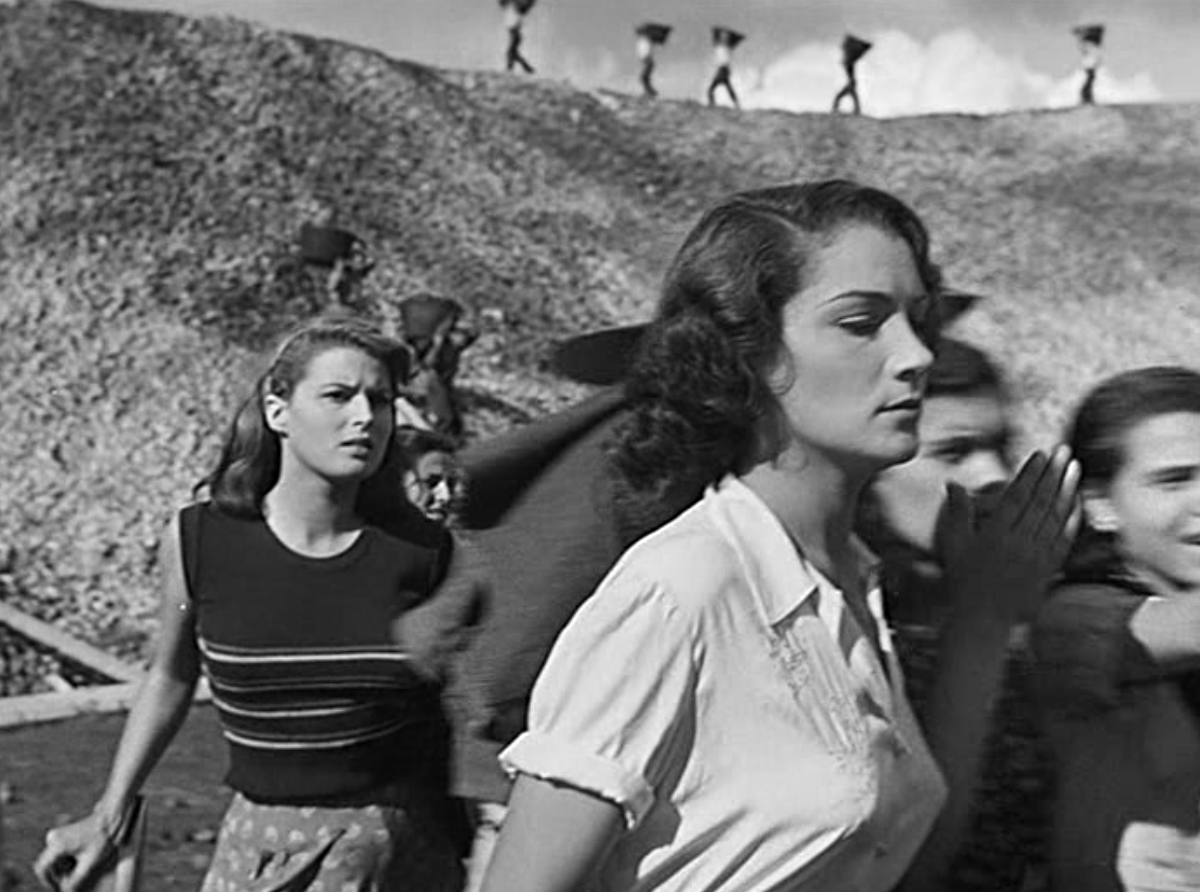
In una carrellata, Francesca attraversa la folla, seguita da Silvana. Le passanti chiacchierano.
“Hai visto?”
“Era un delinquente”.
“Un bel giovane, così elegante!”
“Che cosa ha fatto?”
In a tracking shot, Francesca walks through the crowd, with Silvana following. Passersby chatter.
“Did you see that?”
“He was a criminal.”
“Such a handsome, refined young man.”
“What did he do?”
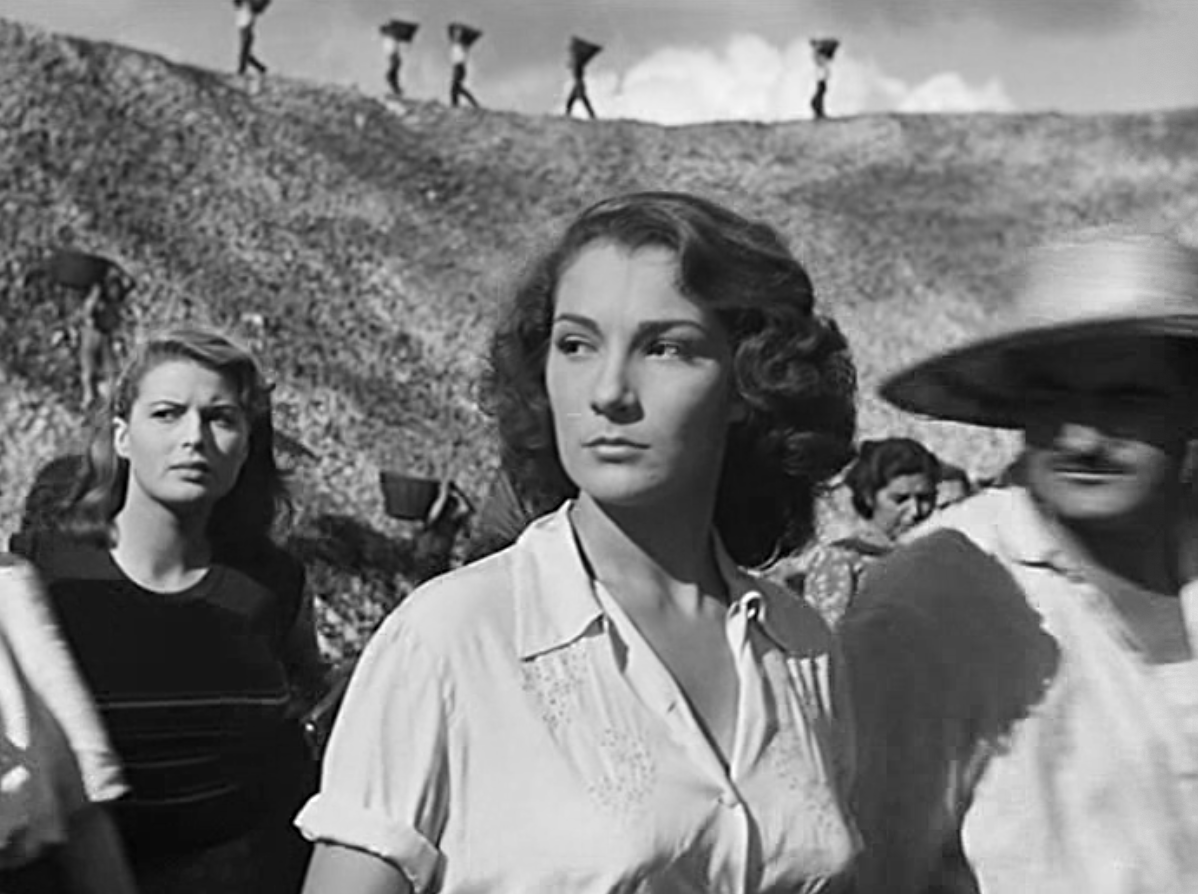
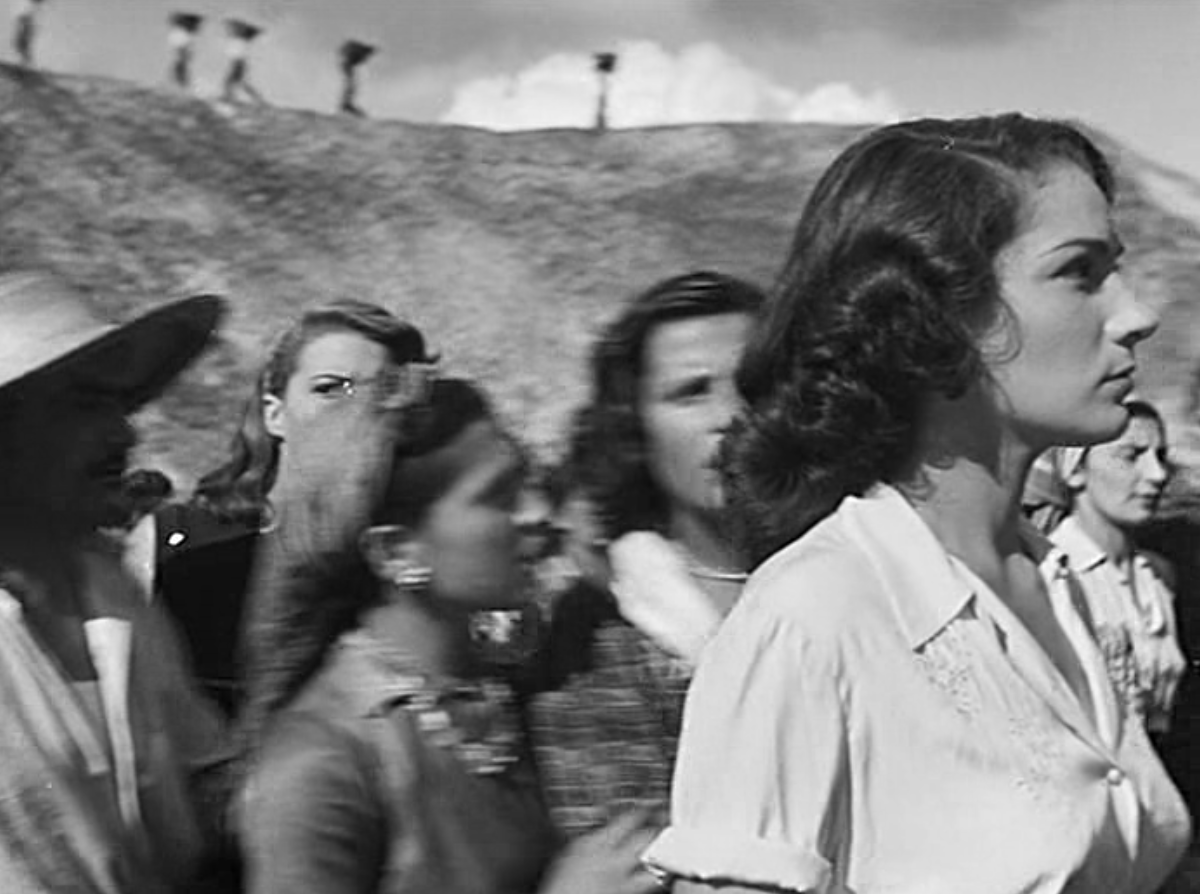
“He stole from the cash register at the bar.”
“No way! He must have made a hit on a luxury train!”
Up on the ridge, the men still carry packages on their shoulders.
“Ha rubato la cassa dal bar!”
“Macché! Avrà fatto un colpo su un treno di lusso!”
Sulla cresta, gli uomini continuano a trasportare i pacchi sulle spalle.
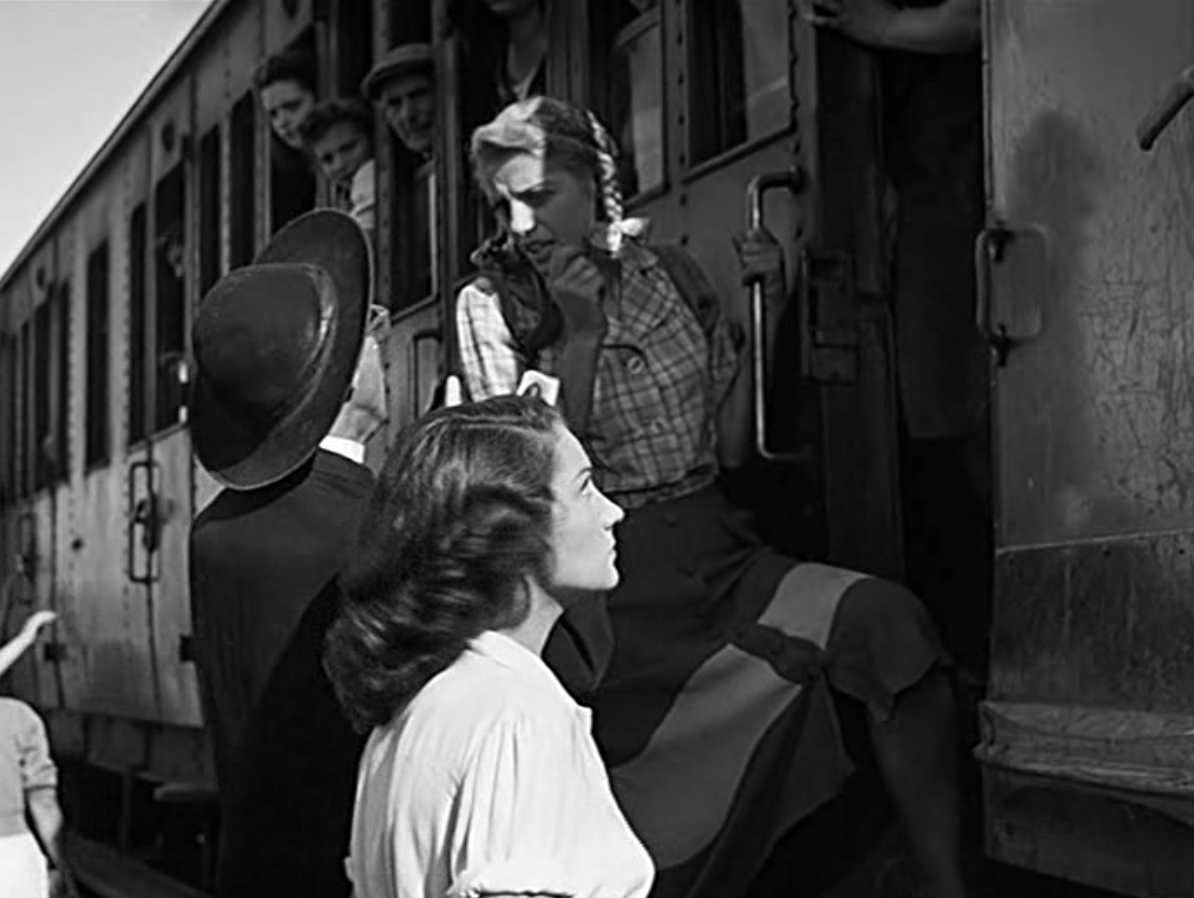
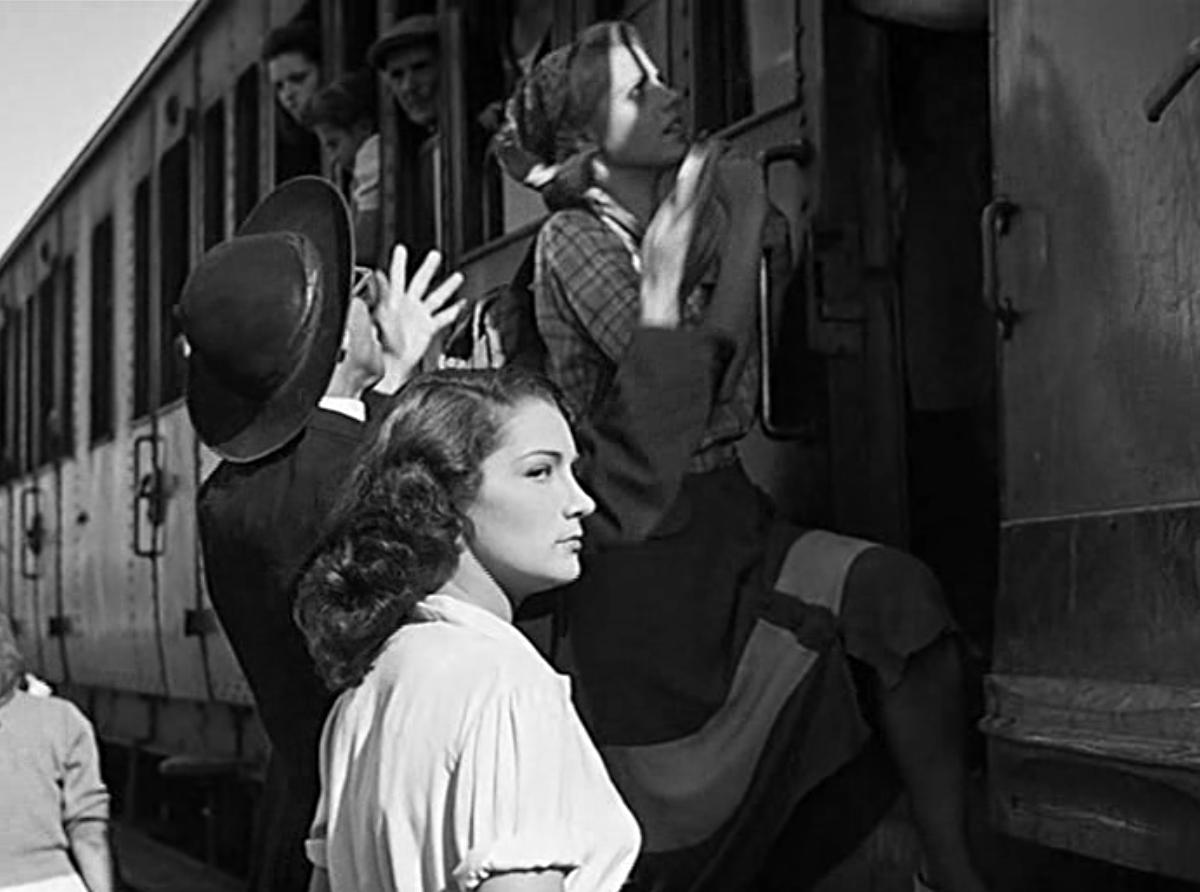
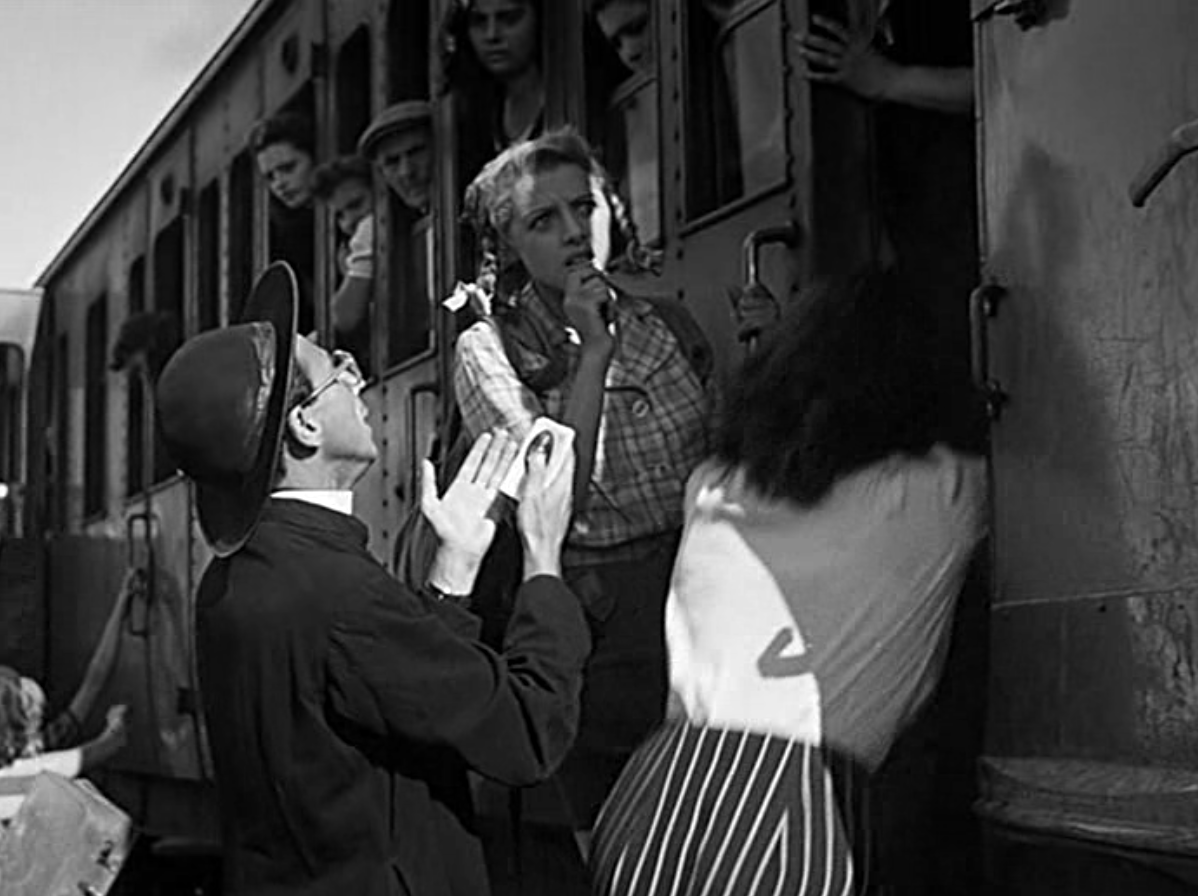
Francesca arriva al treno mentre Amelia, la ragazza con le trecce bionde, chiede: “Cosa è successo, Reverendo?”
“Su, su, figliola” – risponde il sacerdote – “Sono cose che non vi riguardano!” Con uno sguardo diffidente, Francesca sale a bordo.
Ragazze, state attente! Mi raccomando!”
Francesca arrives at the train as Amelia, the girl with blond braids, asks, “What happened, Reverend?”
“Get on, my child,” replies the priest. “It’s none of your business.” With a wary look, Francesca gets on board. “Girls, be careful! Please!”
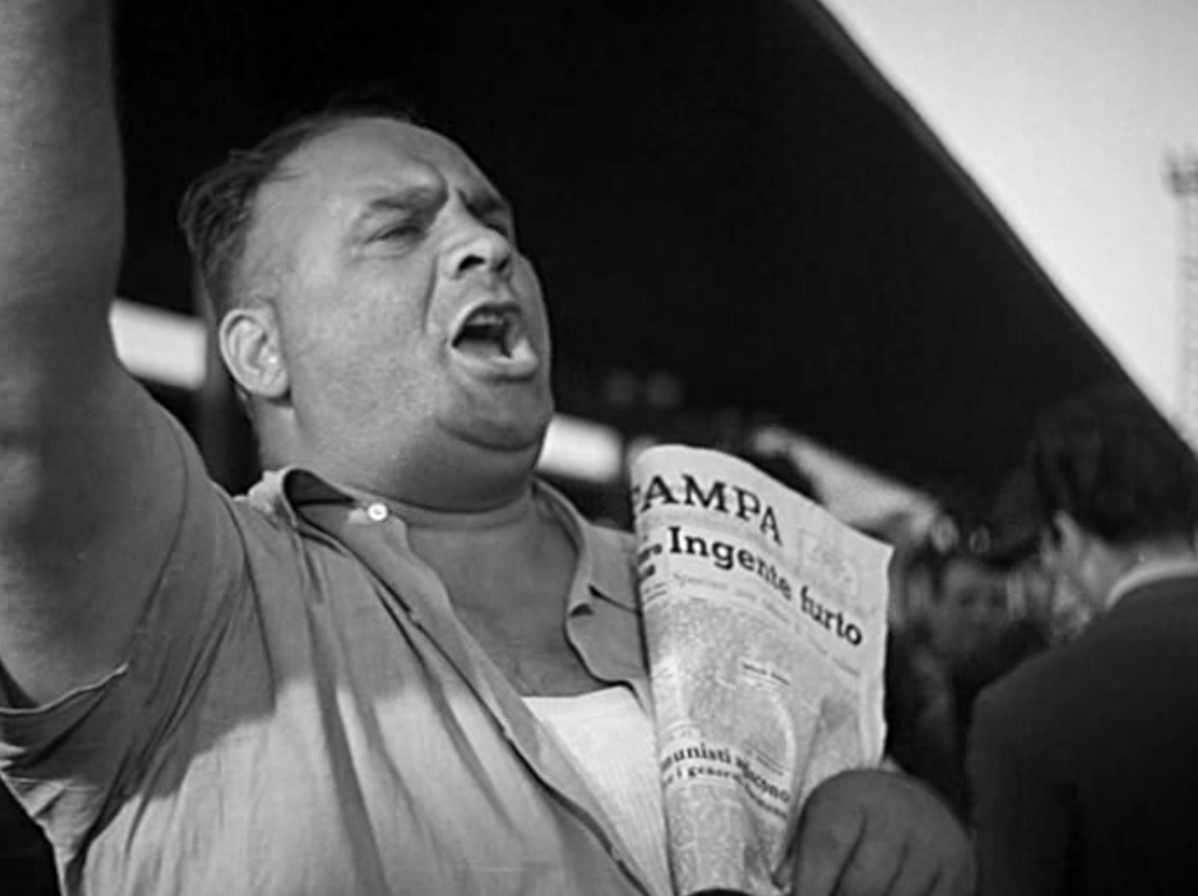
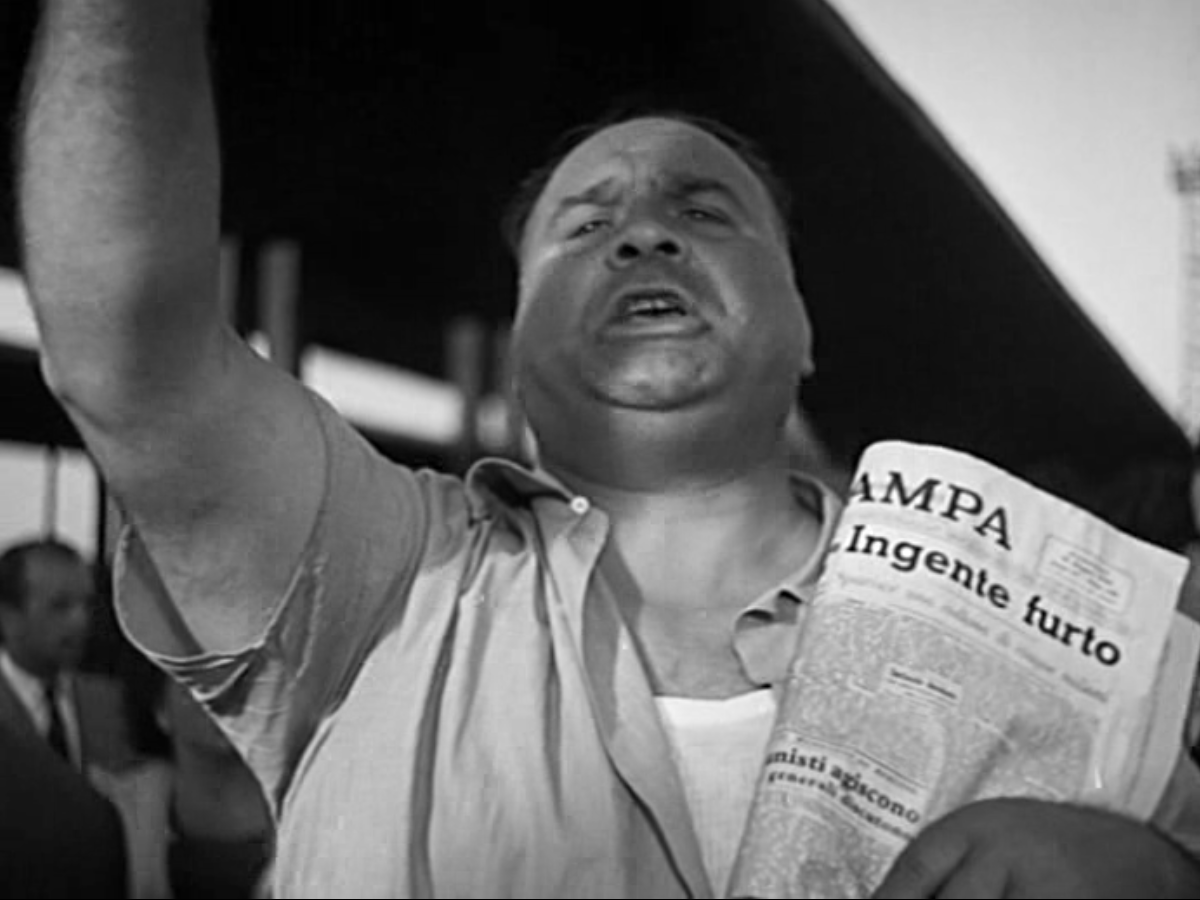
Al binario, un uomo vende giornali. Grida: “Cinque milioni di gioielli rubati questa notte al Grand Hotel!” Il titolo recita: “Ingente furto”.
On the platform, a man is hawking newspapers. He shouts, “Jewels worth five million stolen last night at the Grand Hotel!” The headline reads: “Major Theft.”
FINE PARTE 3
Ecco Parte 4 of this cineracconto! Subscribe to receive a weekly email newsletter with links to all our new posts.