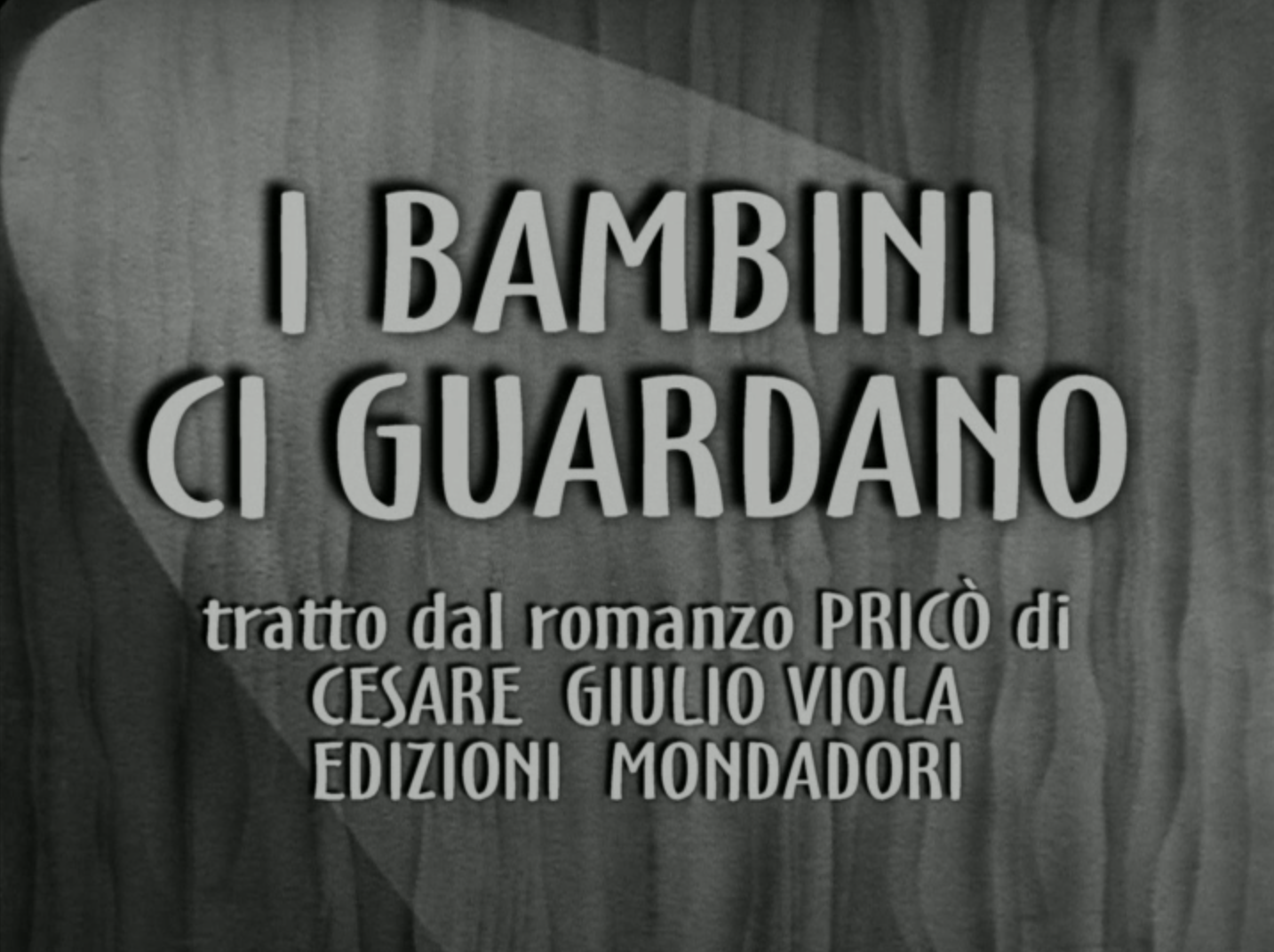
Regia / Director: Vittorio De Sica, 1944
Soggetto / Story: Pricò – Cesare Giulio Viola, 1924
Sceneggiatura / Screenplay: Cesare Zavattini, Cesare Giulio Viola, Margherita Maglione, Adolfo Franci, Gherardo Gherardi
Fotografia / Cinematography: Giuseppe Caracciolo, Romolo Garroni
Colonna sonora / Music: Renzo Rossellini
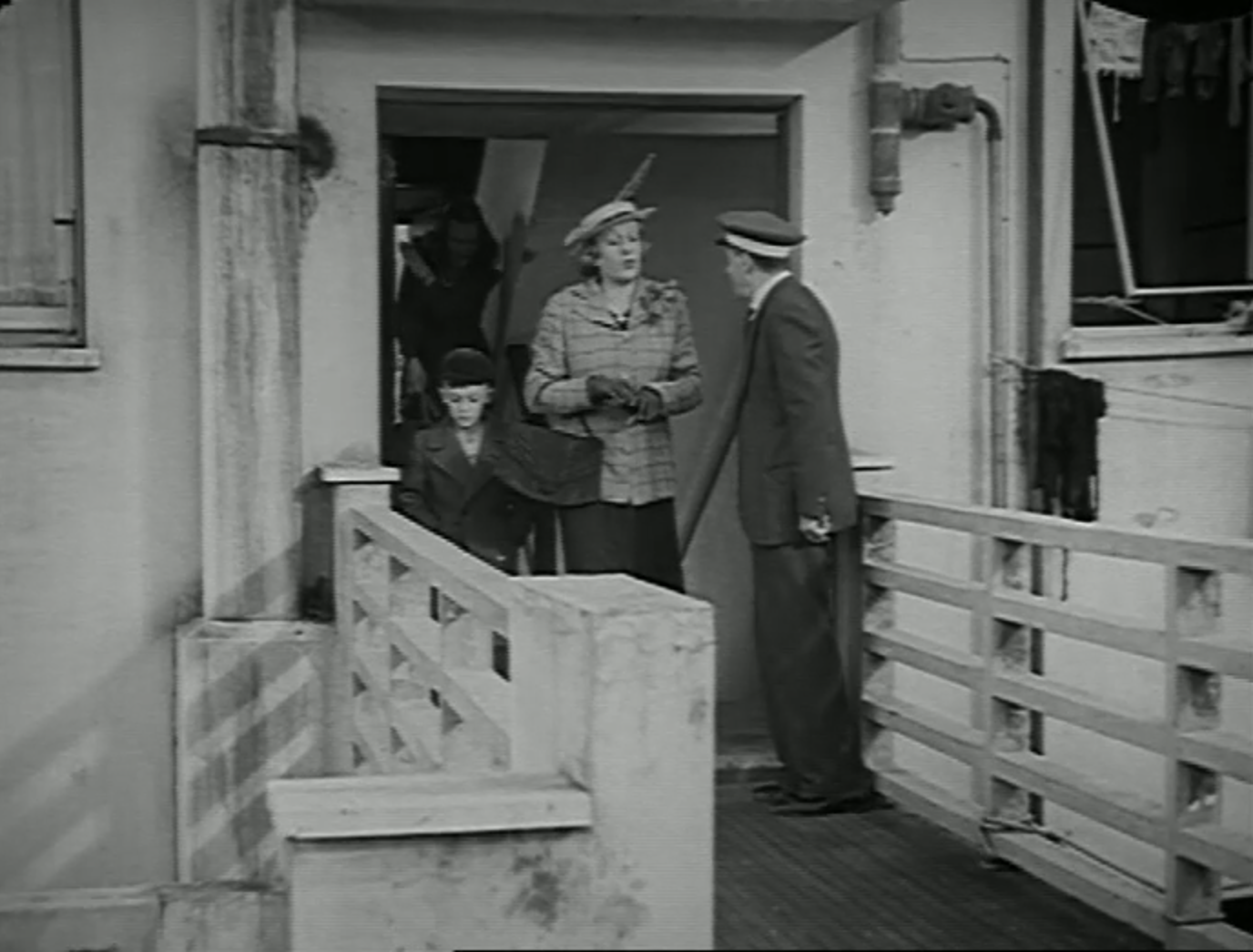
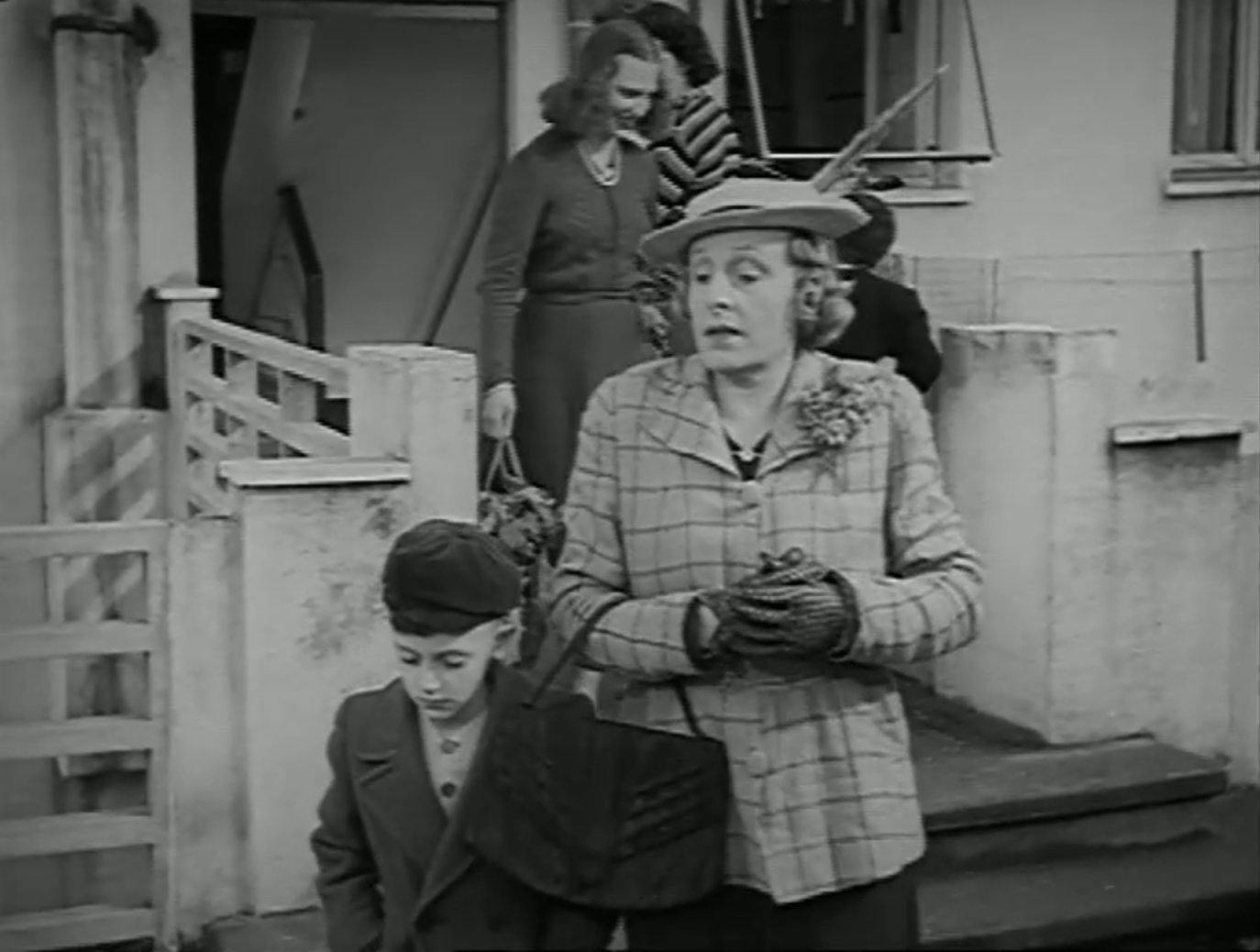
"Buongiorno, Signora Resta", dice il portiere mentre una donna con cappello e guanti (Tecla Scarano) se ne va con aria altezzosa, seguita da un bambino con il berretto.
“Good morning, Signora Resta,” says the doorman, as a woman in hat and gloves is leaving, nose in the air, followed by a boy in a cap.
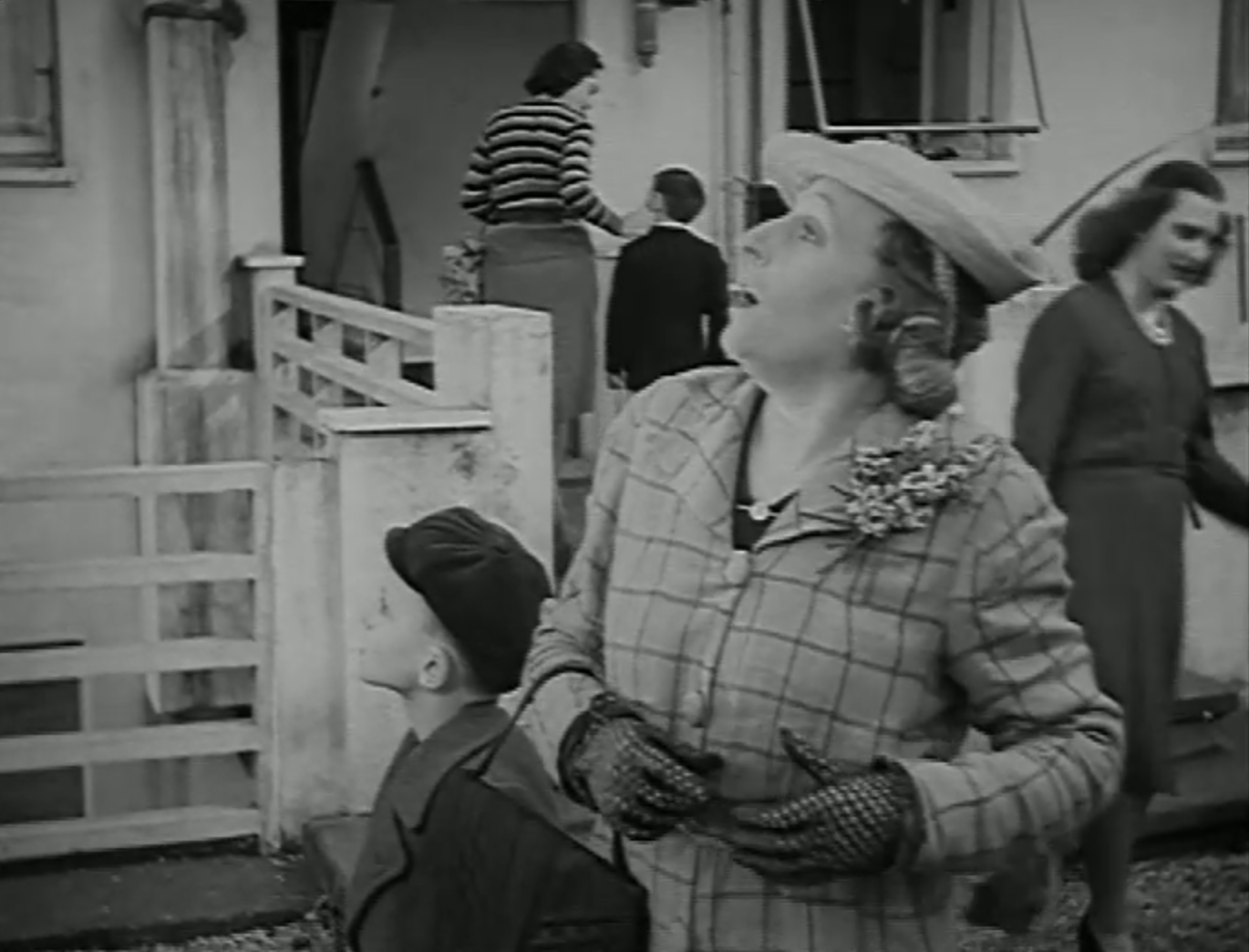
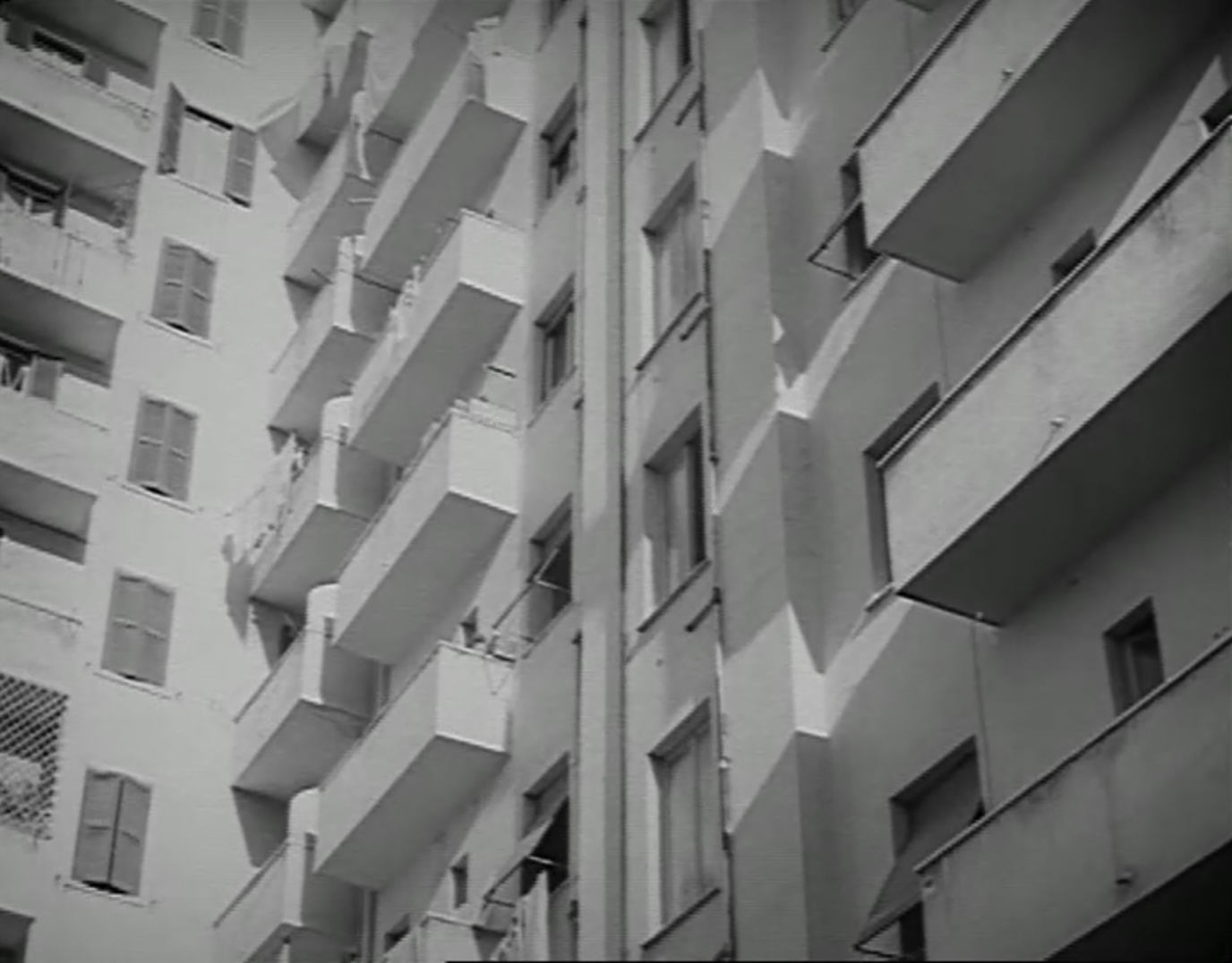
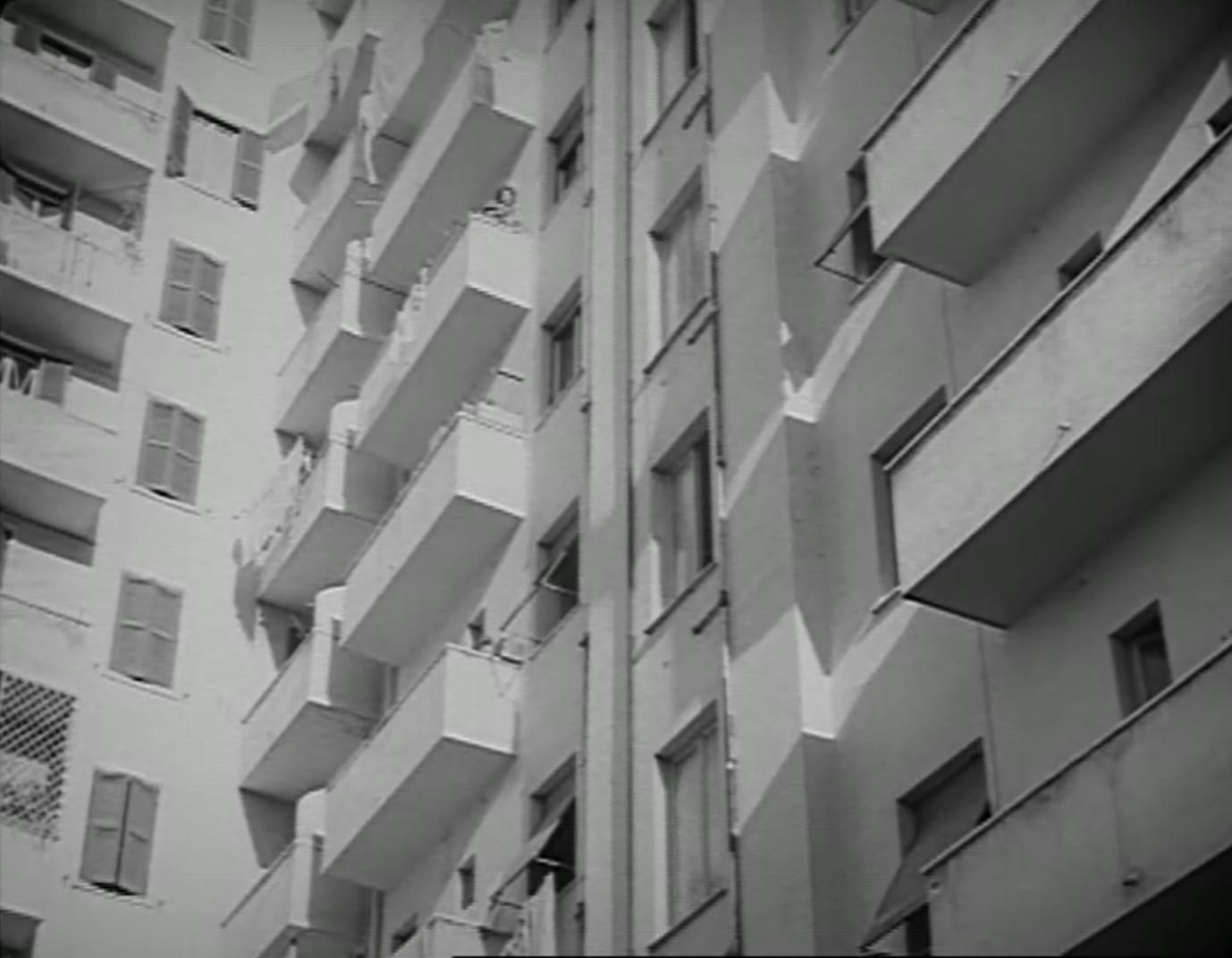
Si rivolge verso un balcone: "Signora Nina! Signora Nina!"
Si affaccia una testa: "Mamma non vuole andare al cinema".
Poi una donna si sporge dalla finestra. "Mi dispiace non averla avvisata. Preferisco portare Pricò a prendere un po' d'aria fresca".
"Va bene. Buona giornata".
She calls up to a balcony, “Signora Nina! Signora Nina!”
A head peeks out: “Mommy doesn’t want to go to the movies.”
Then a woman leans out the window. “I’m sorry I didn’t let you know. I’d rather take Pricò out for a little fresh air.”
“Very well. Have a nice day.”
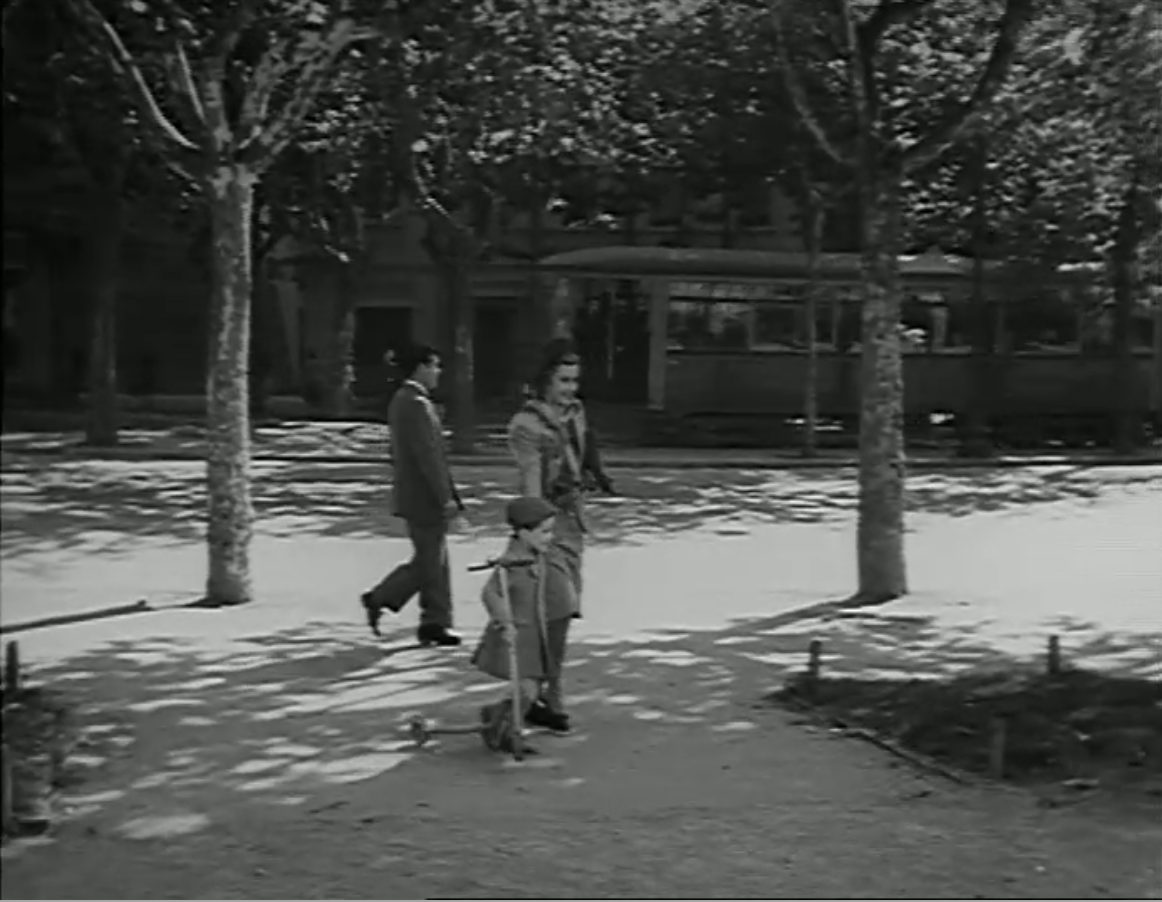
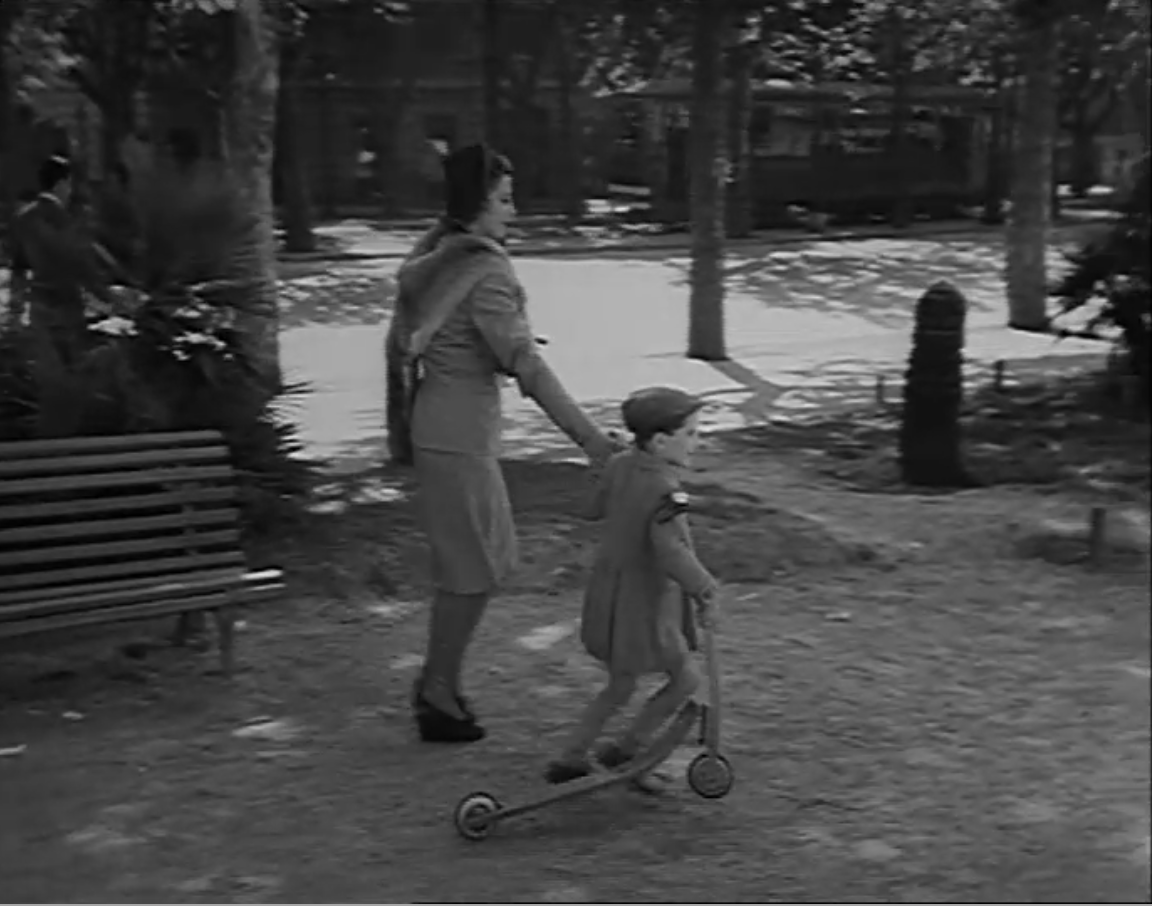
Vediamo Pricò (Luciano De Ambrosis) al Parco della Resistenza dell'Otto Settembre di Roma con la mamma, Nina (Isa Pola), che indossa una stola di pelliccia. Lui sta spingendo un monopattino.
We see Pricò in Rome’s Parco della Resistenza dell'Otto Settembre with his mother, Nina, who wears a fur stole. He’s pushing a scooter.
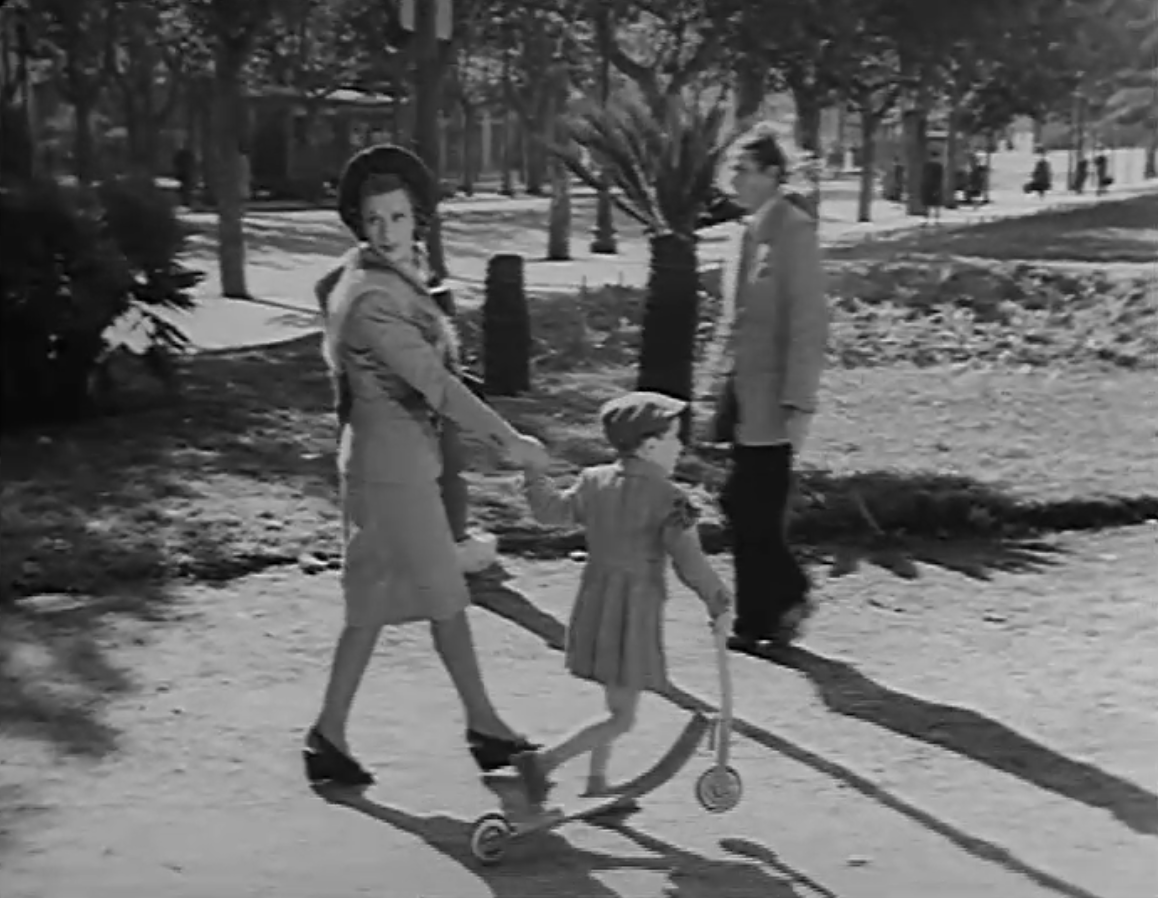
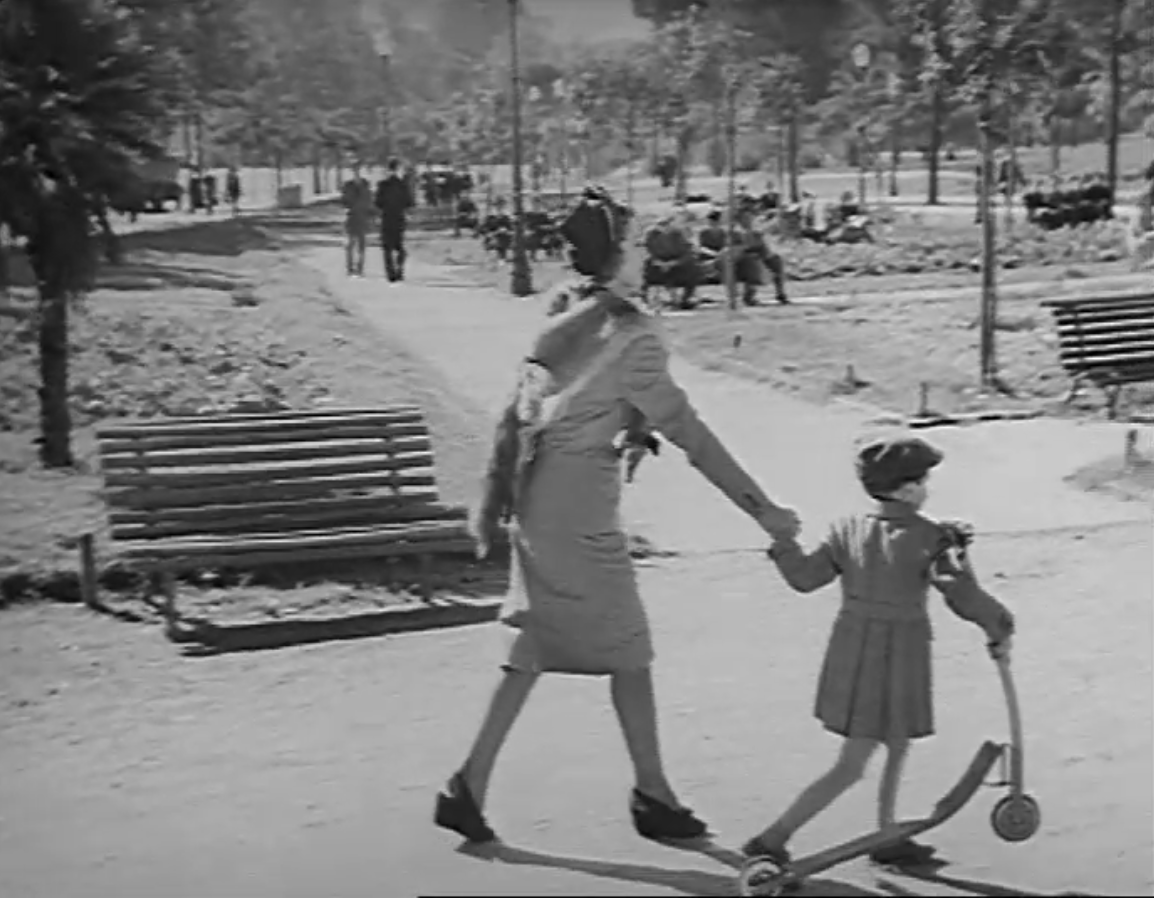
Mentre Pricò trascina con sé sua madre, lei gira la testa, come se stesse cercando qualcosa.
Da fuori campo, una voce con un accento romagnolo dice: "Ho saputo che viene tutte le sere a fare la serenata sotto le finestre della Signorina Gabriella, cioè la mia fidanzata". È la voce di un burattino.
As Pricò pulls his mother along, she turns her head, as if looking for something.
From off-screen, a voice with a Romagna accent says, “I heard that he comes every evening to serenade beneath the window of Signorina Gabriella, who is my fiancée.” It's the voice of a puppet.
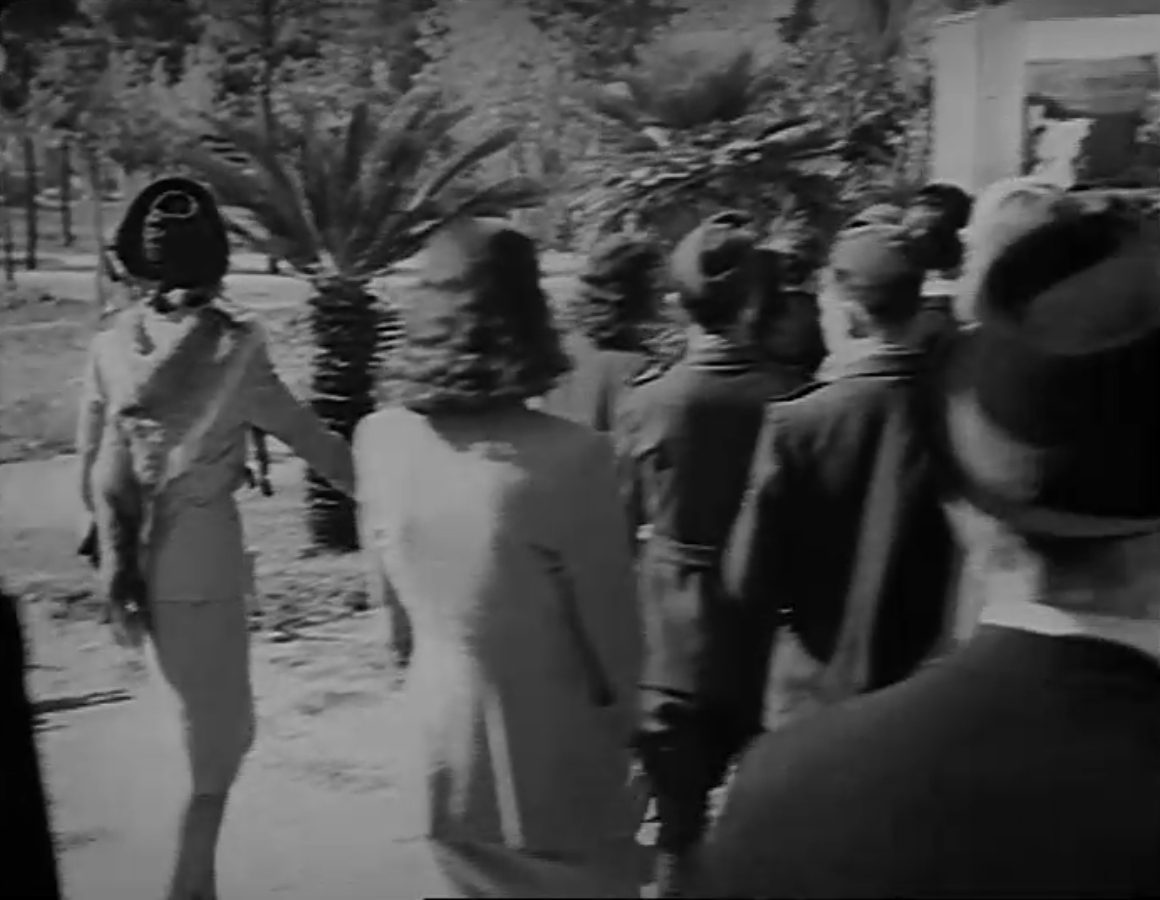
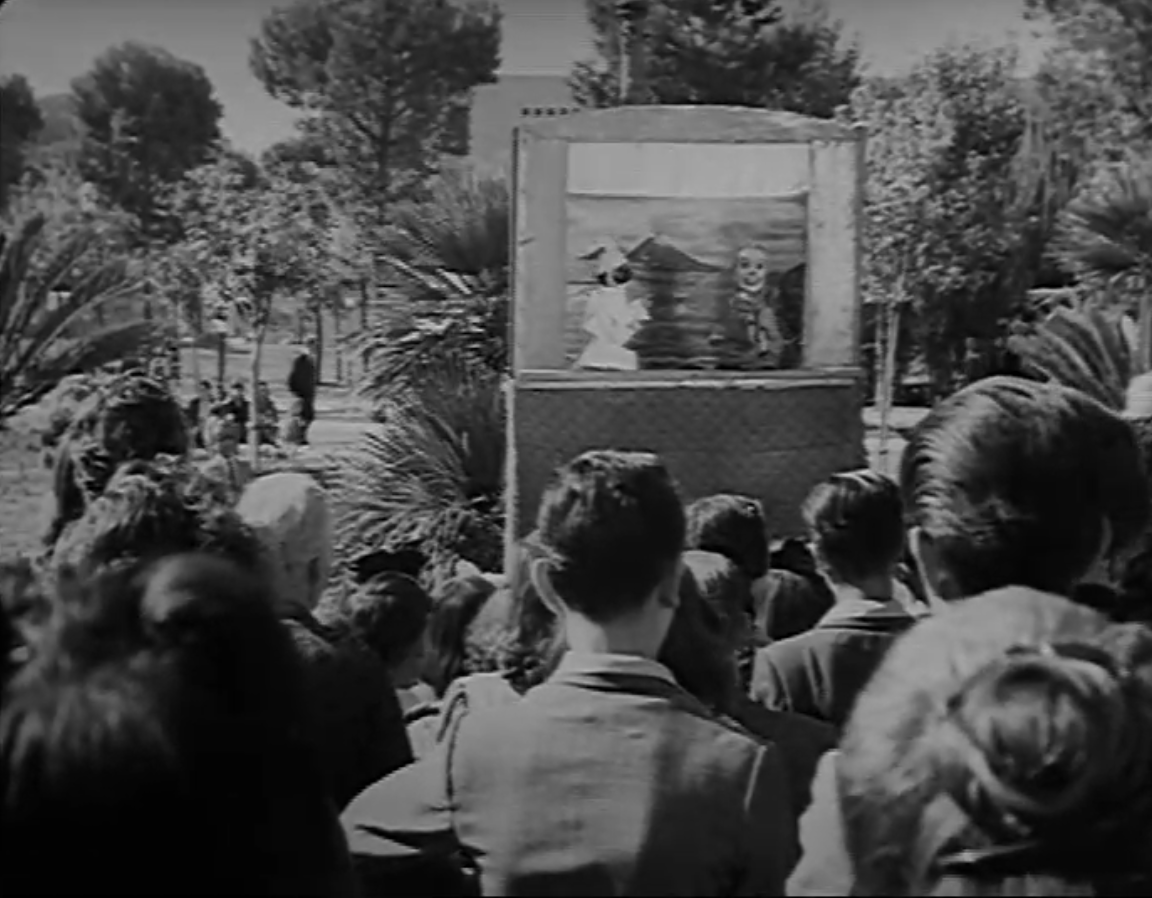
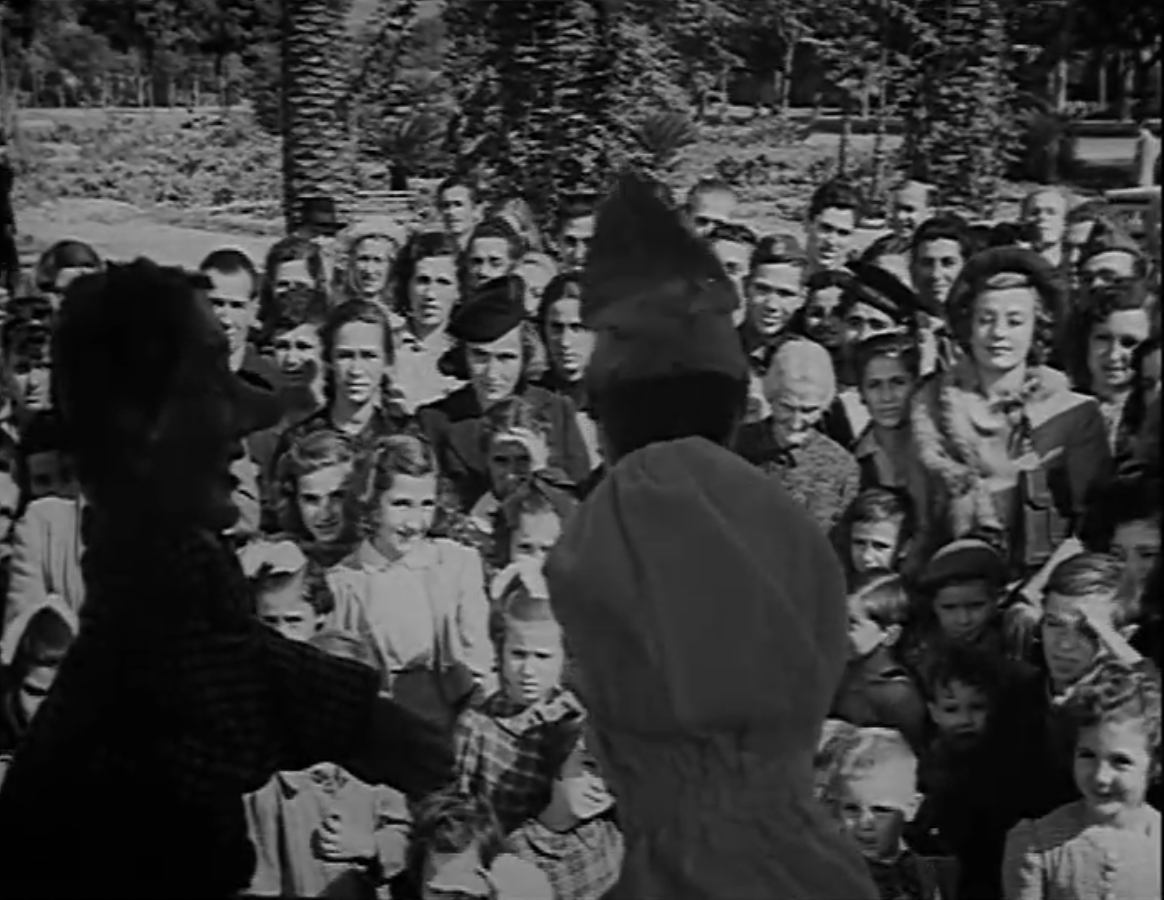
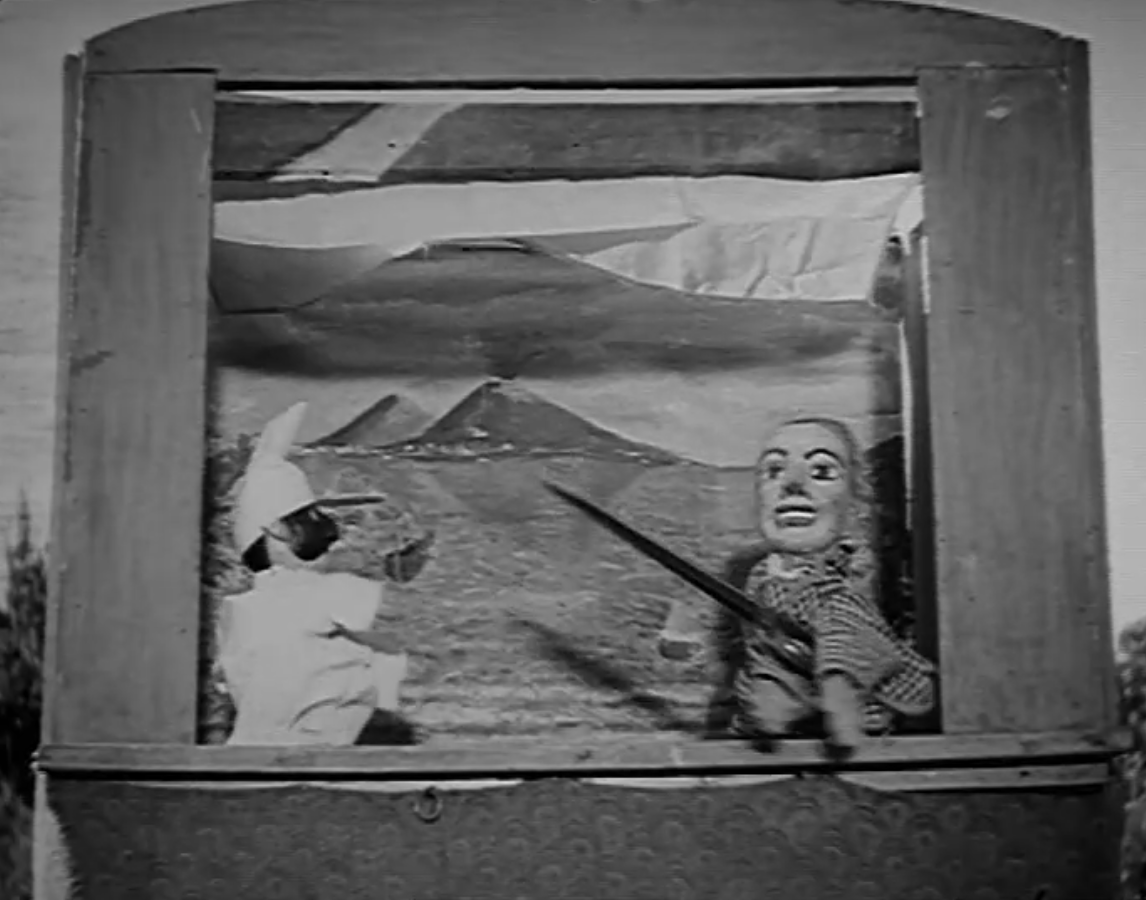
Una folla sta assistendo a uno spettacolo di burattini.
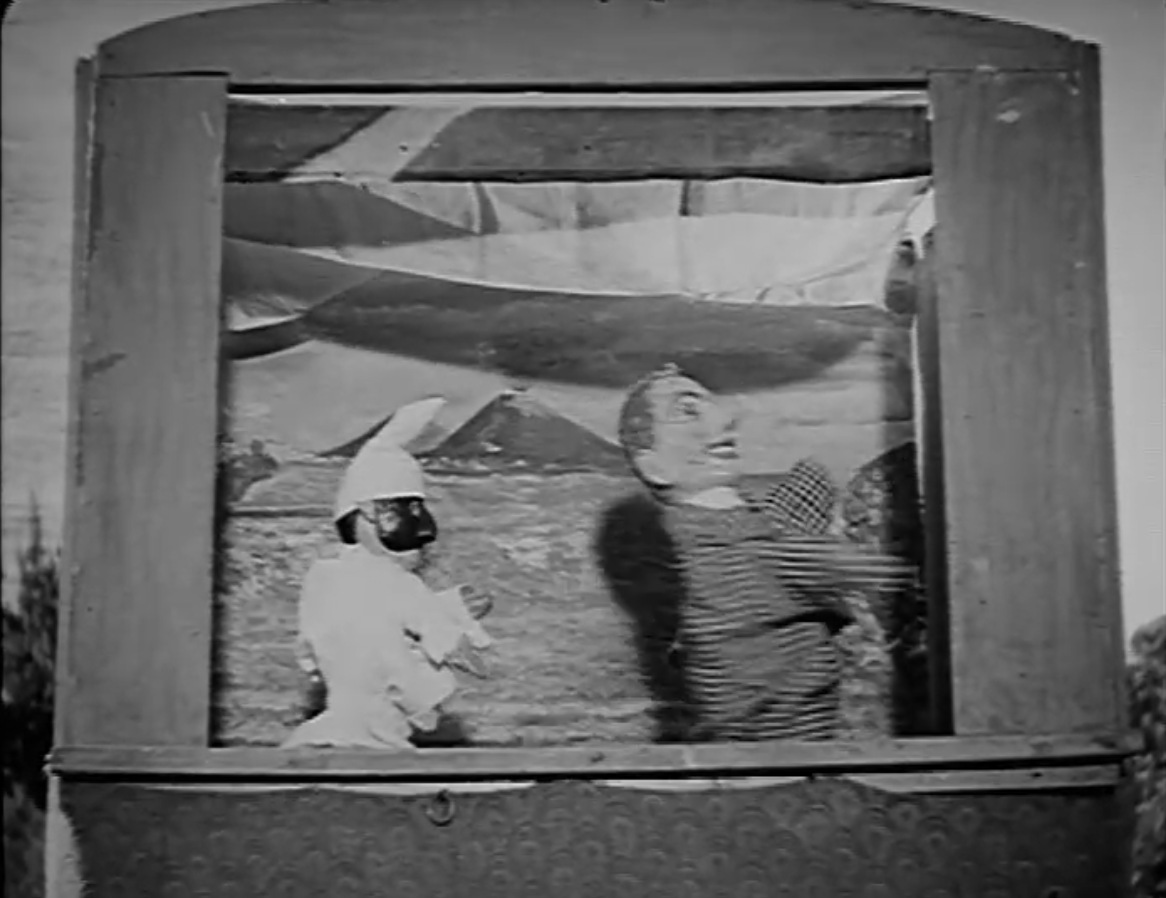
In napoletano, Pulcinella*, il burattino vestito di bianco dice: "Gabriella fa l’amore con me".
Il primo burattino lo contraddice: "Fa l’amore con me!"
Pulcinella dice "Va bene, fa l’amore con tutti e due. Beh, non possiamo sposarla ‘in-trammi’”.**
“Ci sposiamo in autobus!”
La folla ride.
*Pulcinella è un burattino molto popolare, le cui origini risalgono alla commedia dell’arte del XVII secolo. A seconda della storia, assume caratteristiche diverse: furbo o cooperativo. Sempre vestito di bianco e con una maschera nera, Pulcinella rappresenta il tipico popolano napoletano che sa cavarsela in ogni situazione e ne esce vincitore, con il sorriso sulle labbra.
**Si tratta di un gioco di parole: il burattino dice “in-trammi”, intendendo “entrambi”, ma l’altro burattino lo interpreta come “in tram”.
A crowd is watching a puppet show.
In Naples dialect, Pulcinella*, the puppet dressed in white says: “Gabriella makes love with me.”
The first puppet disagrees: “She makes love with me!”
Pulcinella says, “Fine, she makes love with both of us. Well, we can’t both marry her.”**
“We’ll get married on the bus!”
The crowd laughs.
*Pulcinella is a very popular puppet whose origins date back to the 17th century commedia dell’arte. Depending upon the story, he takes on different characteristics – cunning or helpful. Always dressed in white and wearing a black mask, Pulcinella represents the typical Neapolitan commoner who knows how to get by in any situation and comes out on top, with a smile on his face.
**This is a play on words, with the puppet saying “in-trammi” by which he means “entrambi” [both], but which the other puppet interprets as “on a tram.”
In una inquadratura dalla prospettiva dei burattini, vediamo Nina con la sua stola.
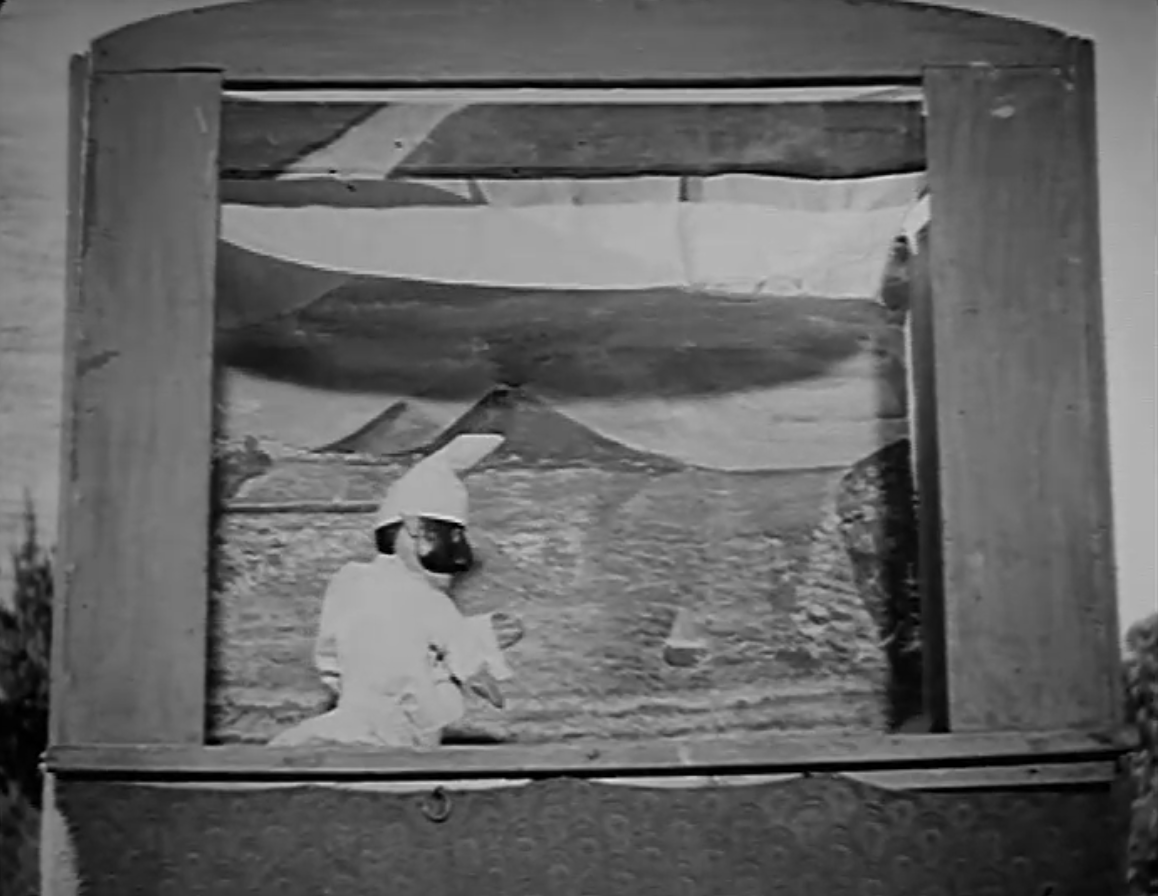
Dice Pulcinella: "Quindi uno dei due deve andare all’altro mondo”.
"Buon viaggio!”
"È quello che vedremo".
Pulcinella colpisce il suo rivale, che cade a terra. Ed è così che ci viene presentato il tema del nostro film.
In a shot from the puppets' perspective, we notice Nina and her stole.
Pulcinella says, “Then one of us is headed for the other world.”
“Bon voyage!”
“We’ll see.”
Pulcinella hits his rival, who falls down. And so we are introduced to the theme of our film.
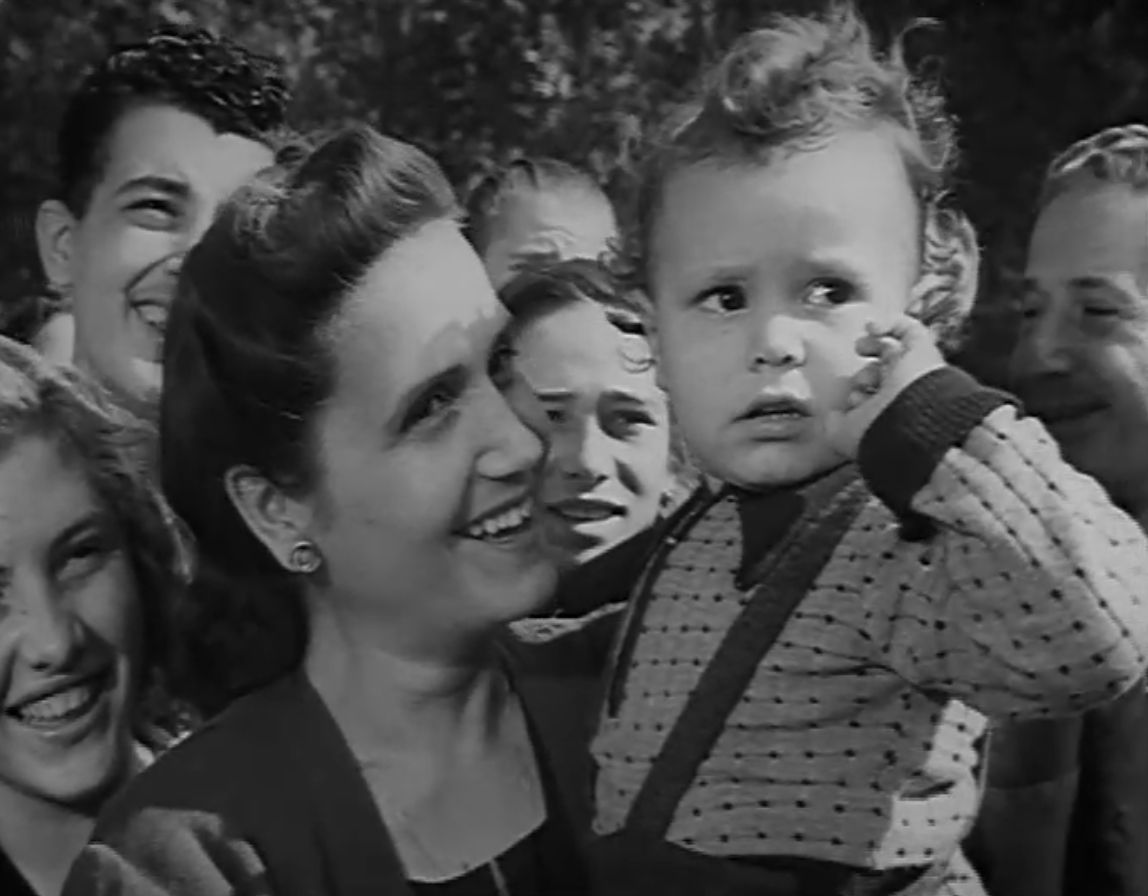
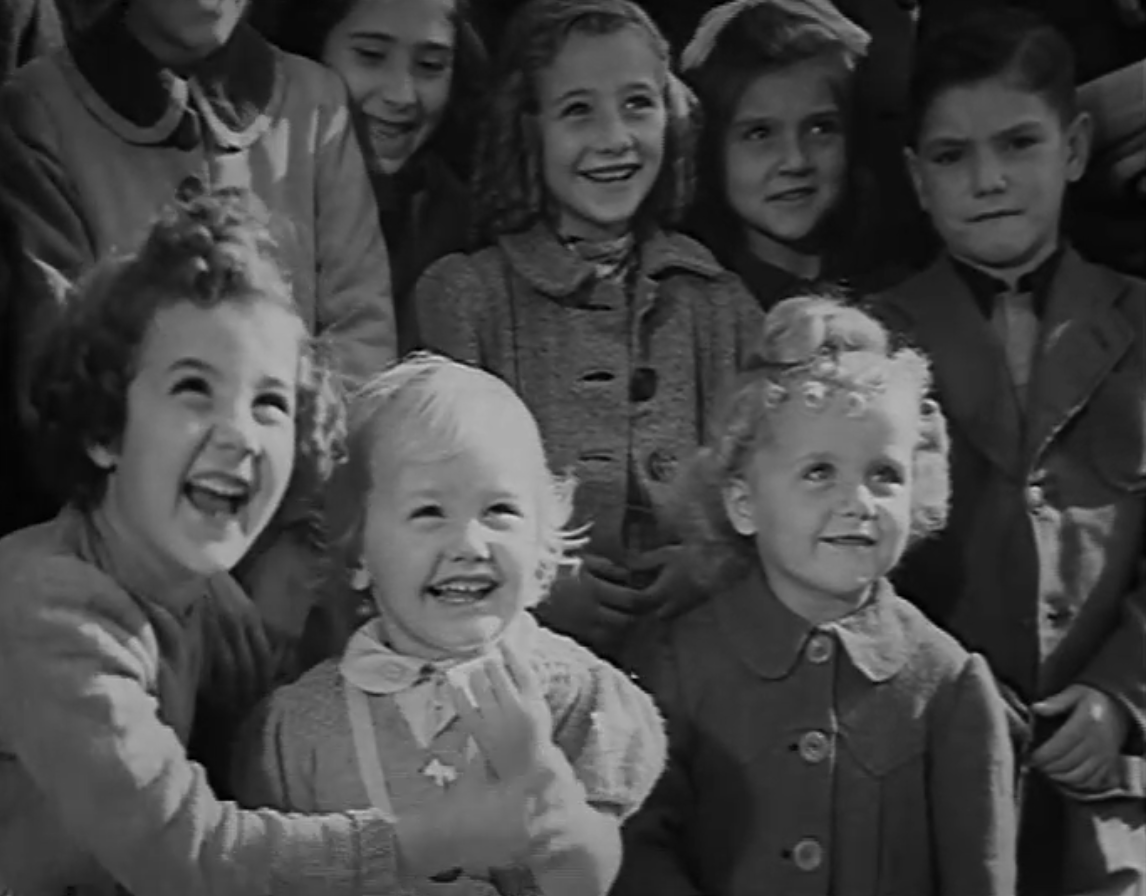
Un bambino dai capelli ricci sembra preoccupato per quanto sta accadendo, ma gli altri bambini sono entusiasti.
Il burattino caduto si rialza e colpisce l’altro. "In guardia! Prendine una!"
"Mannaggia!"
A curly-haired child looks worried about this development, but other children are delighted.
The fallen puppet stands up and hits the other. “En garde! Take that!”
“Darn you!”
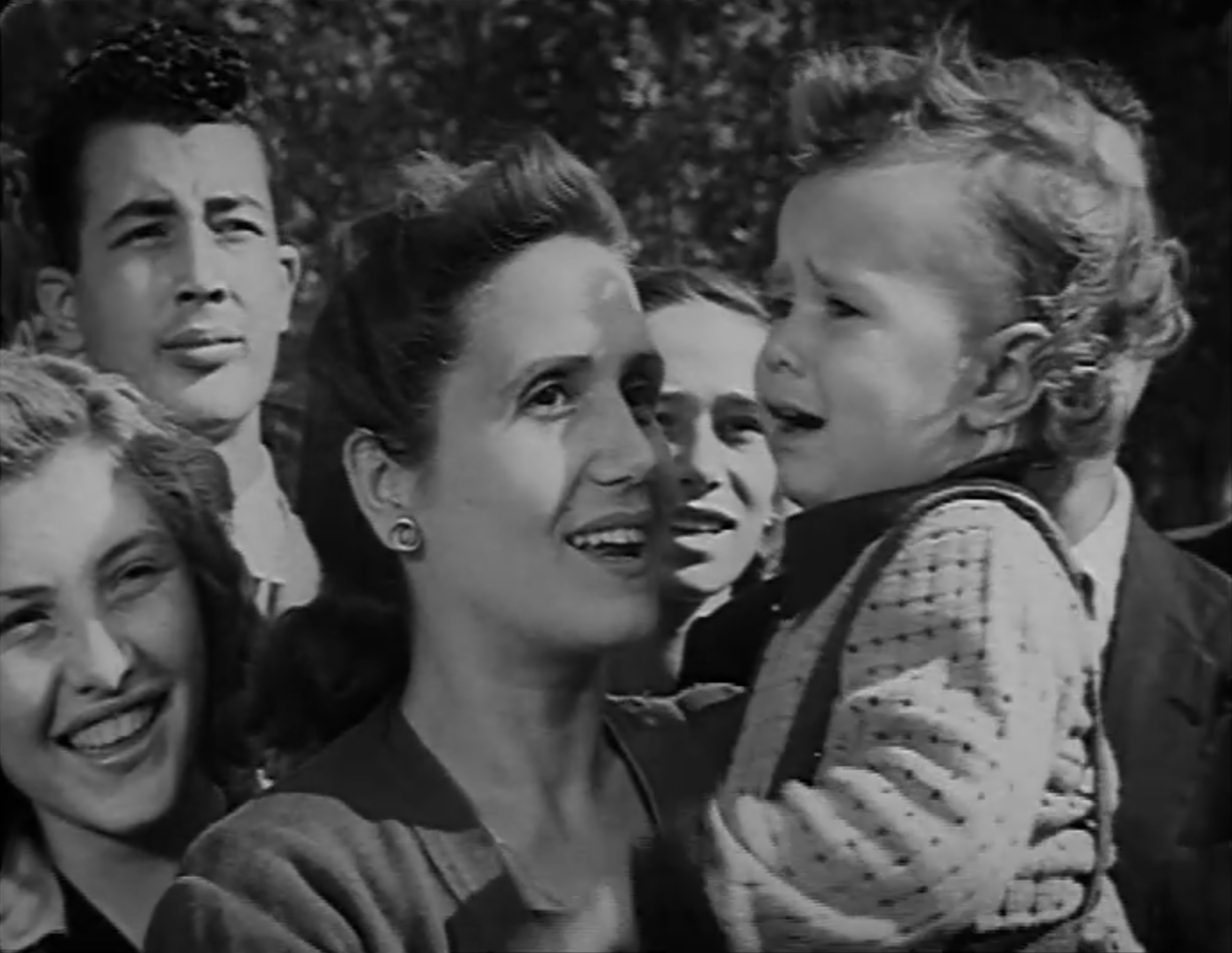
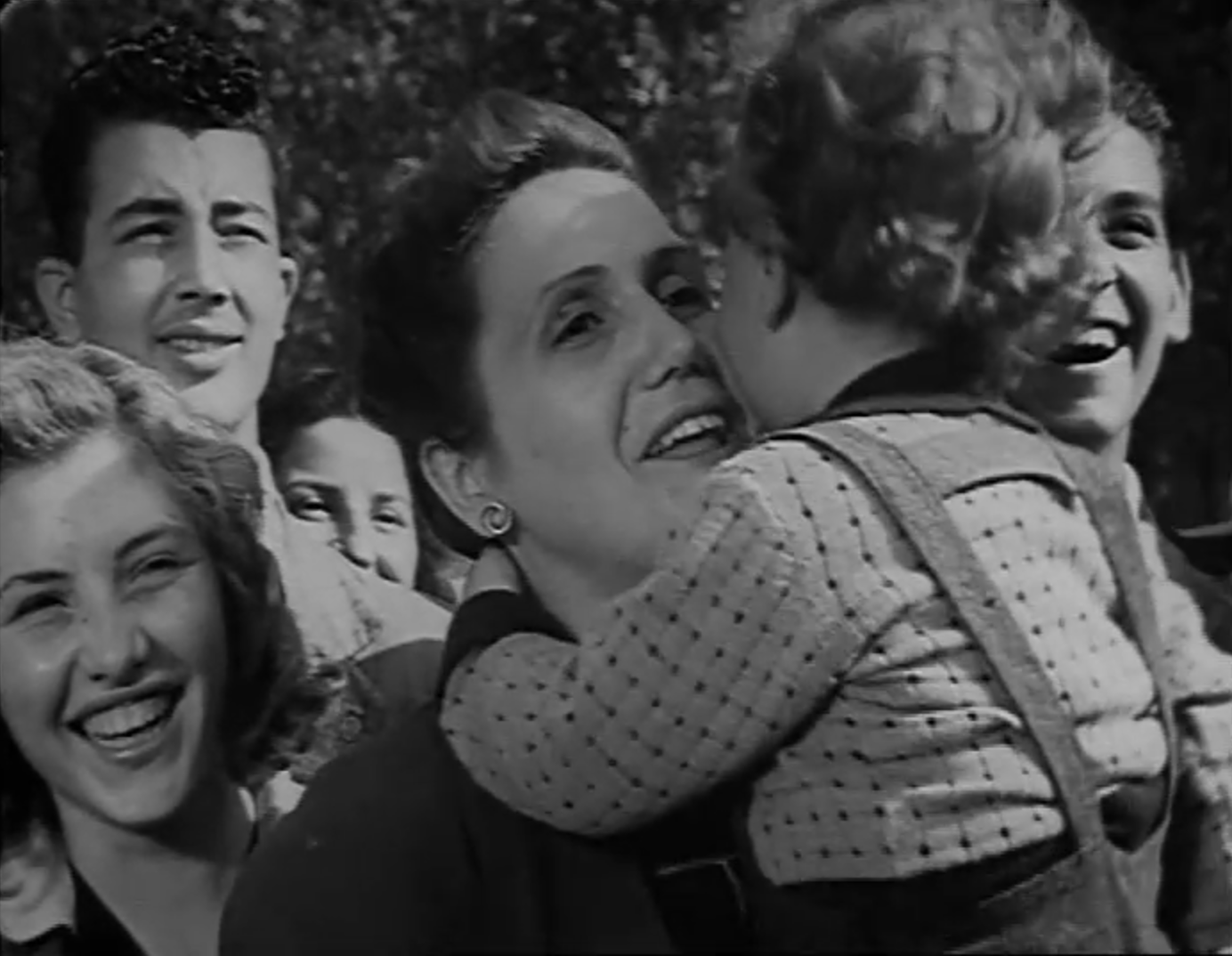
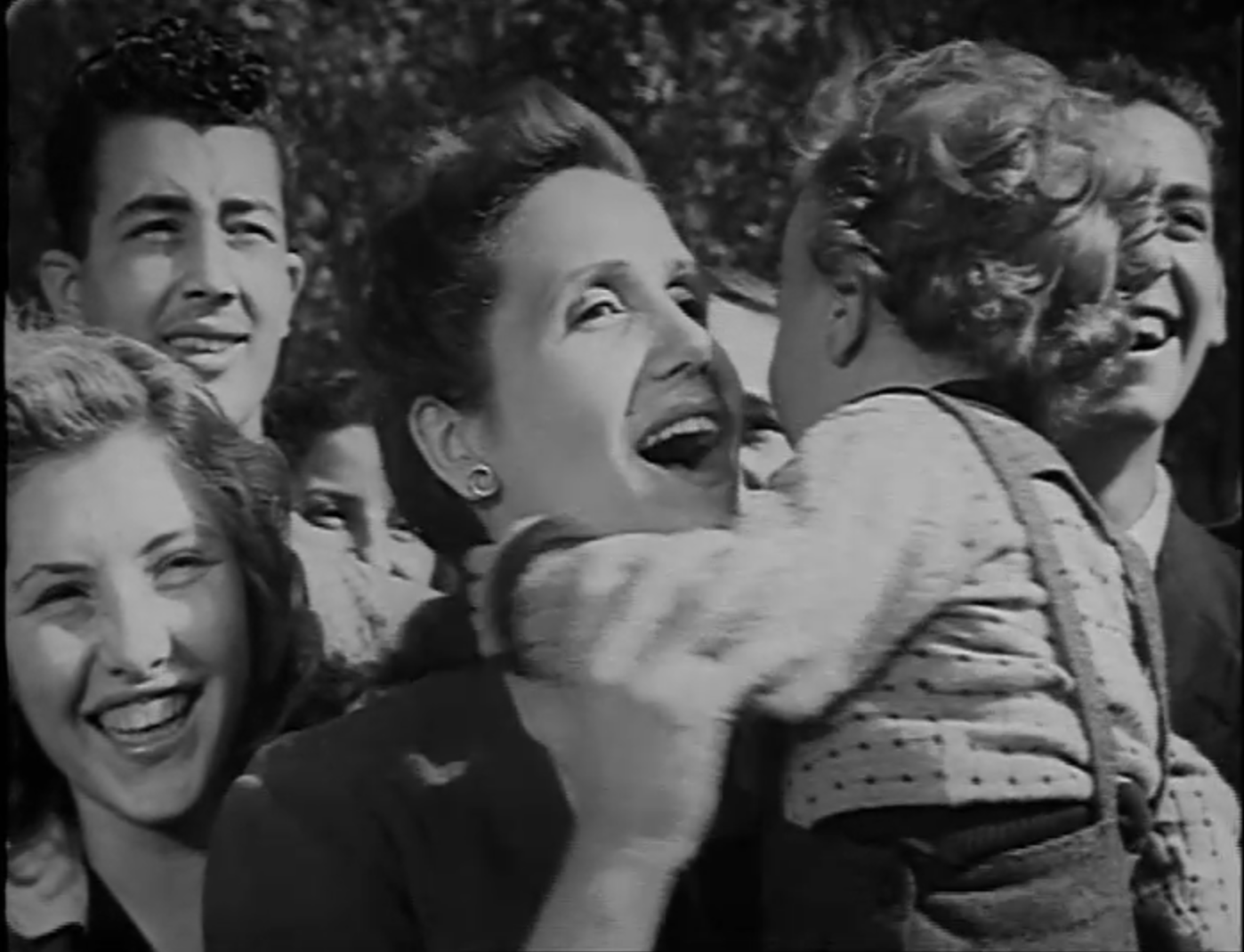
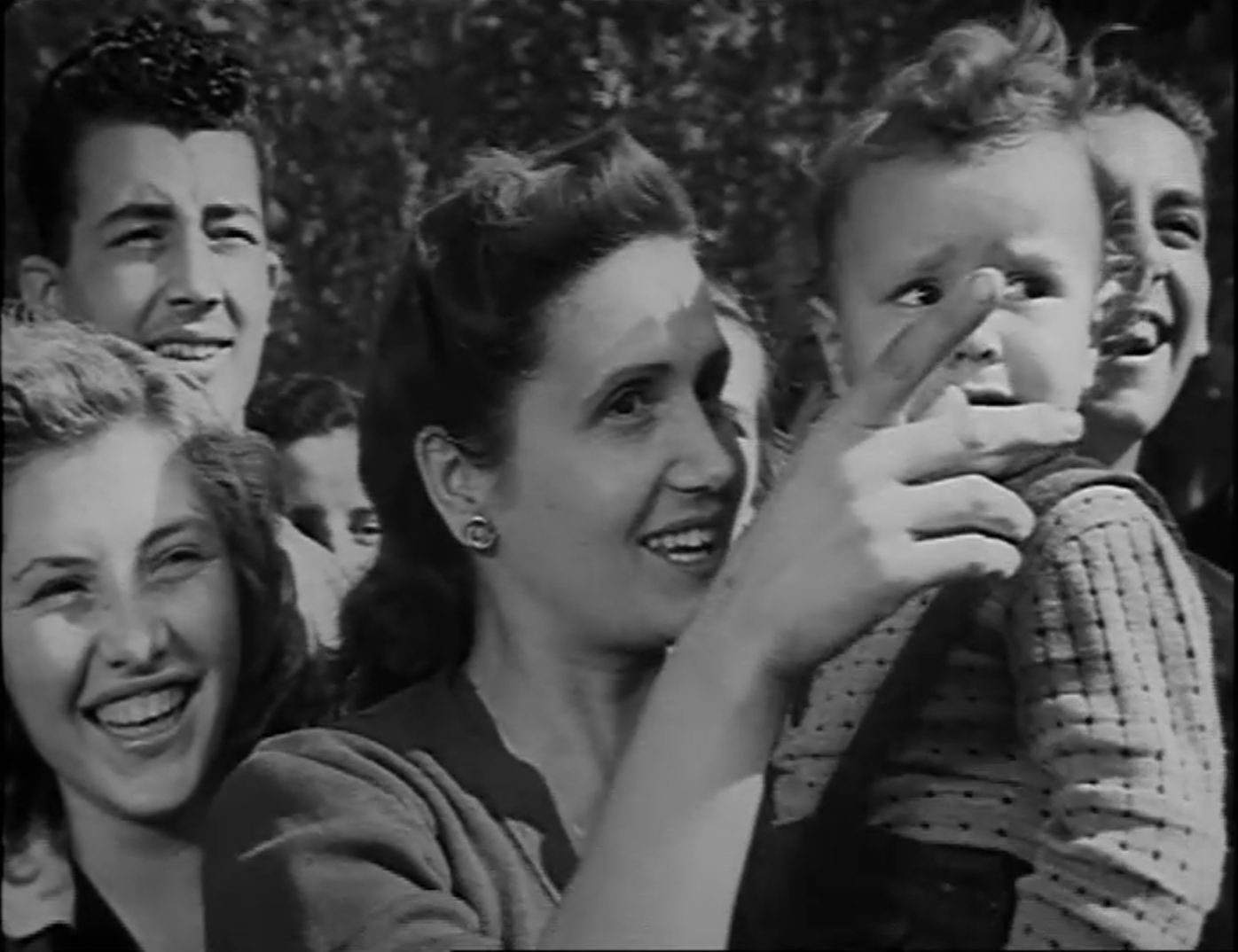
Il bambino dai capelli ricci inizia a piangere e distoglie lo sguardo. “Mamma!”
Ma sua madre lo prende per un braccio e fa in modo che guardi. “No, no, guarda! Vedi?”
The little curly-haired boy starts crying and looks away. “Mommy!”
But his mother takes his arm and turns him so that he’ll watch. “No, no, watch! See?”
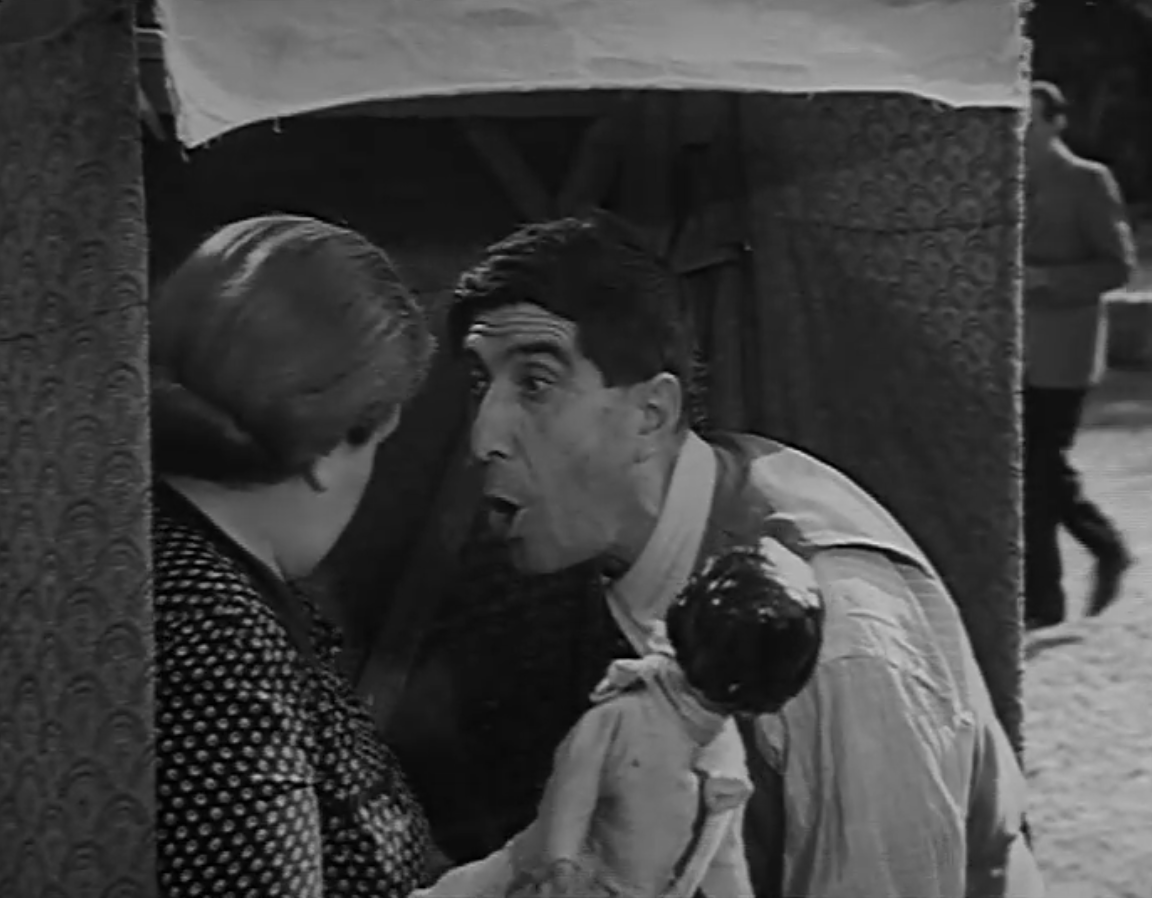
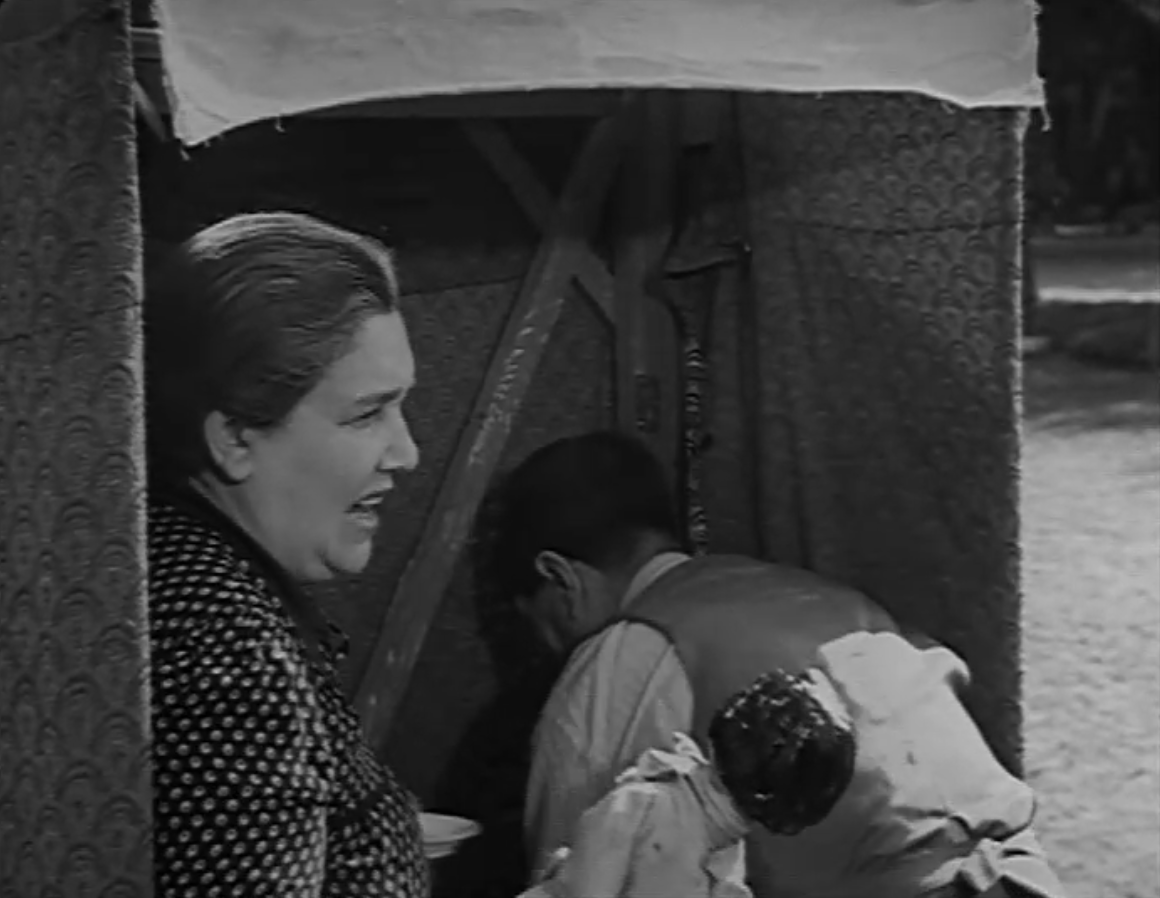
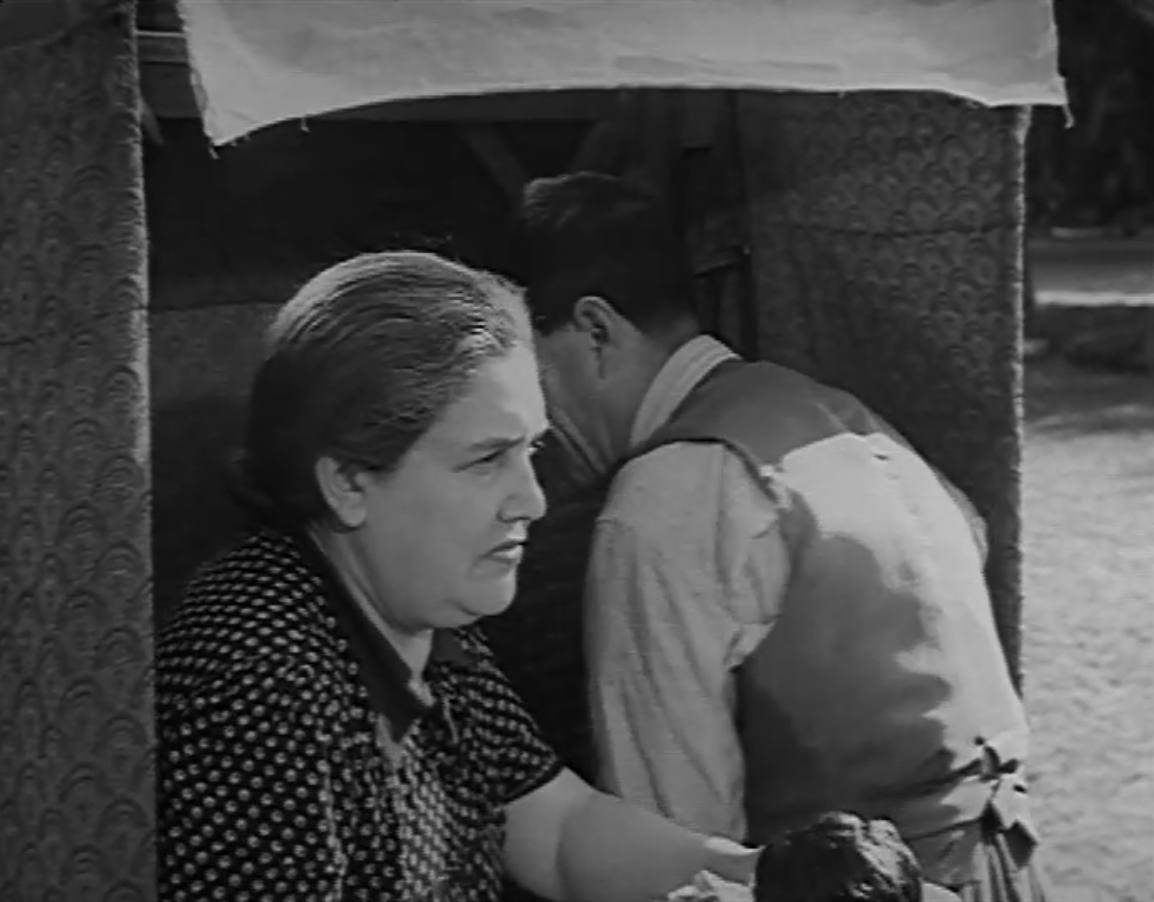
Dietro le quinte, un burattinaio esclama: "I soldi!"
Con un sussurro urgente, l’altra burattinaia chiama: "Maria!" Una bambina si avvicina e prende un piatto, mentre la madre la esorta: "Vai, stupida!"
Backstage, a puppeteer says, “The money!”
In an urgent whisper, the other puppeteer calls, “Maria!” A child comes and takes a dish, as her mother urges, “Get going, stupid girl!”
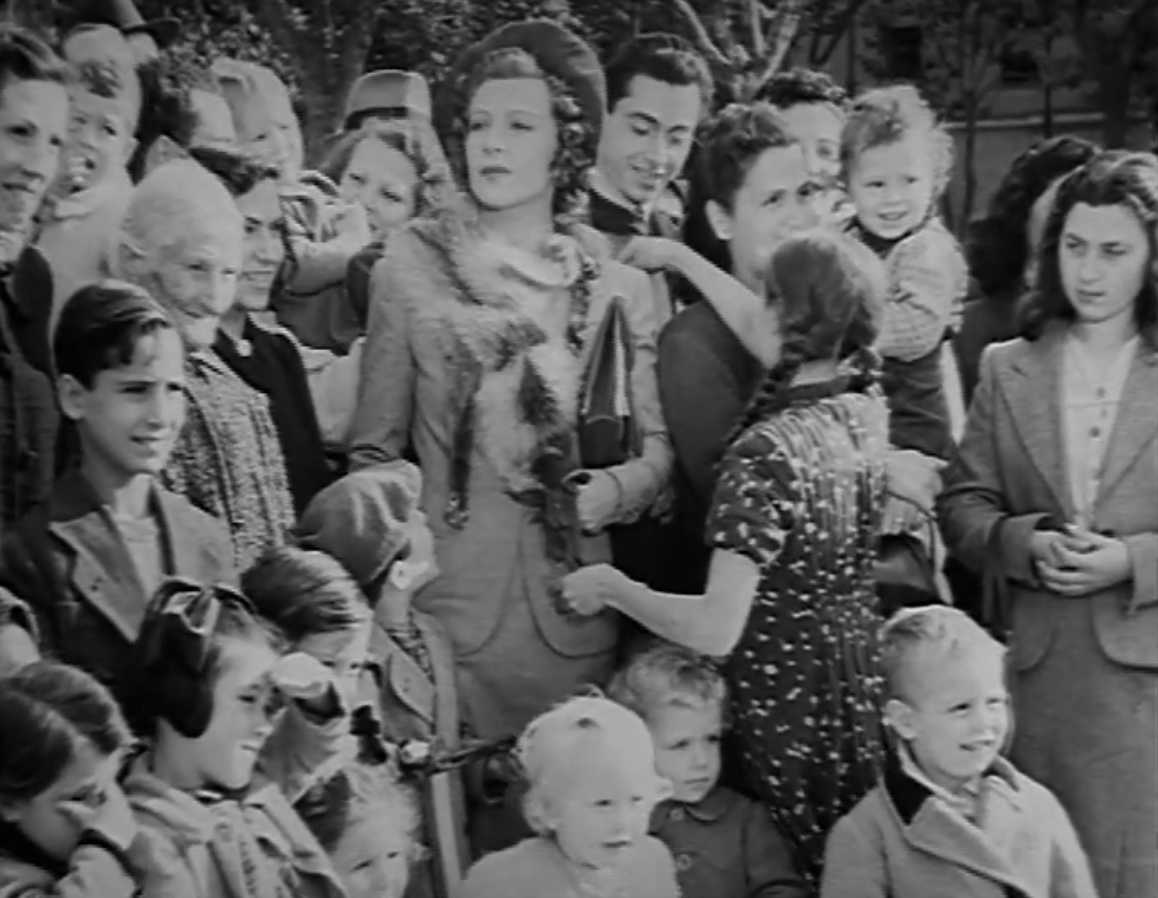
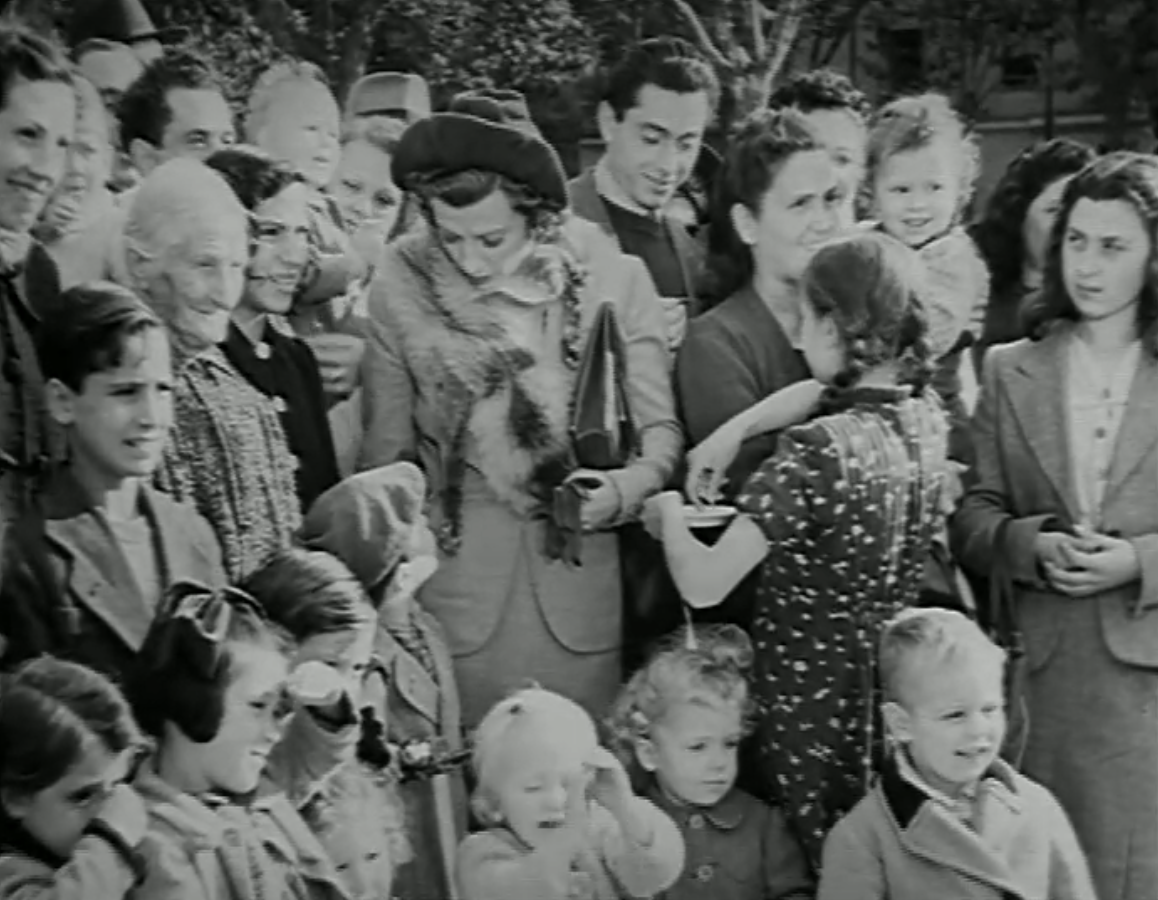
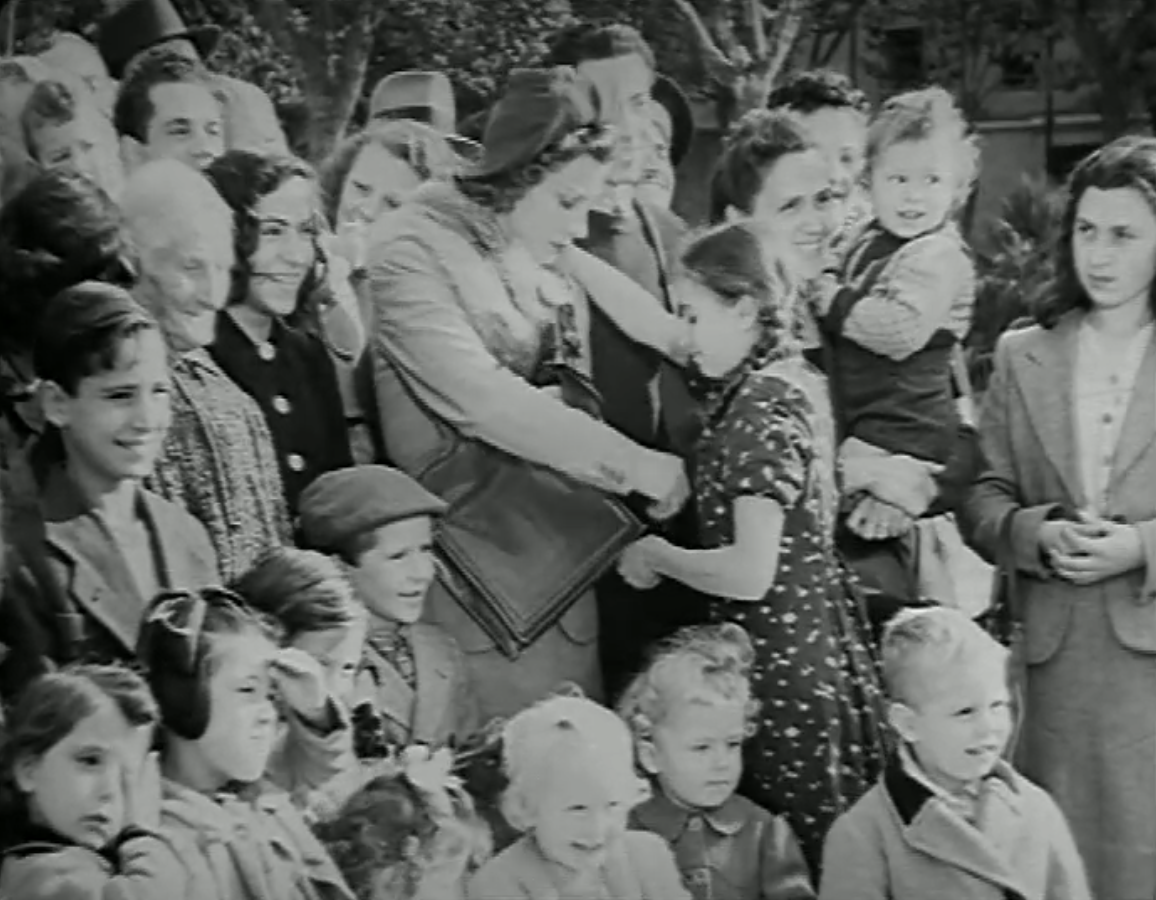
Tra il pubblico, Maria si avvicina a Nina, che continua a guardarsi intorno distrattamente.
"Mamma", dice Pricò.
"Che vuoi, Pricò?"
“I soldi”.
Lei apre la borsa e mette dei soldi nel piatto.
Pricò è affascinato dallo spettacolo.
In the audience, Maria approaches Nina, who is still distractedly looking around.
“Mommy,” says Pricò.
“What do you want, Pricò?”
“The money.”
She opens her purse and puts some money into the dish.
Pricò is fascinated by the show.
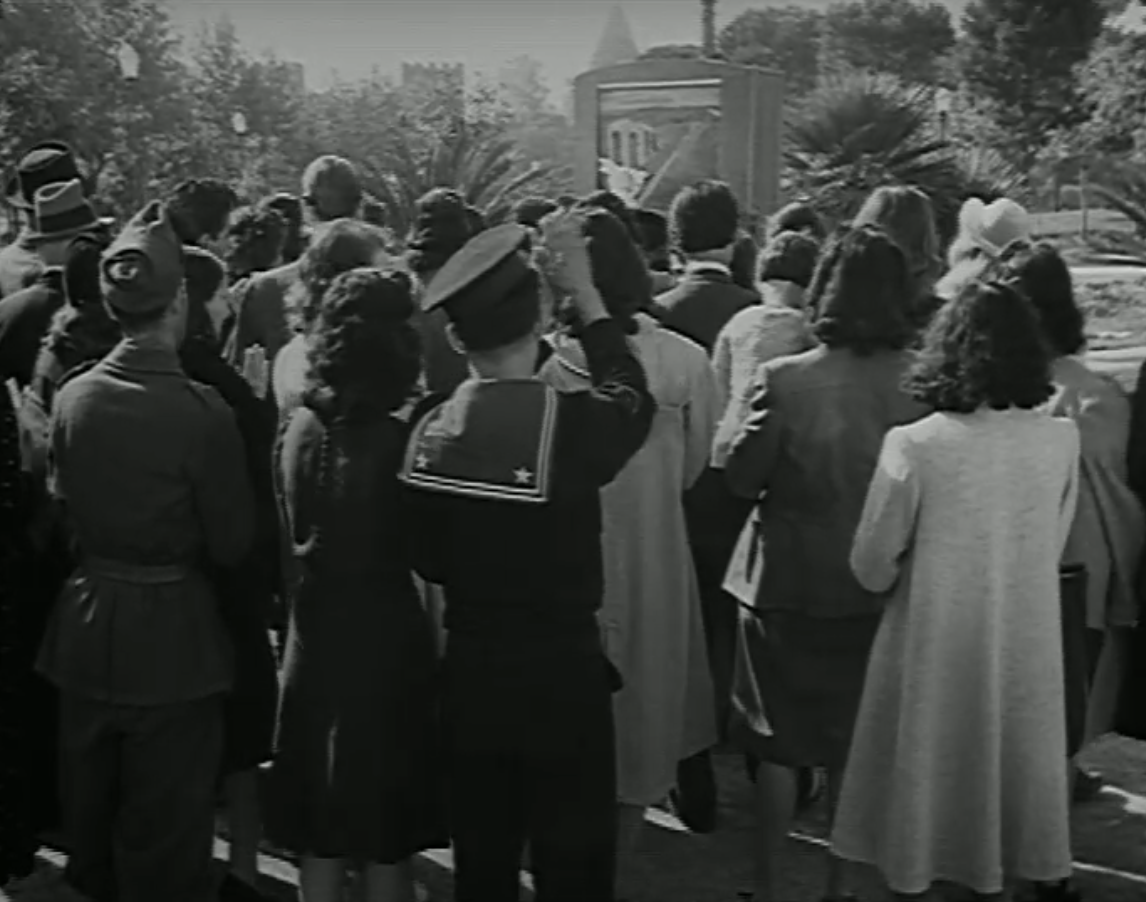
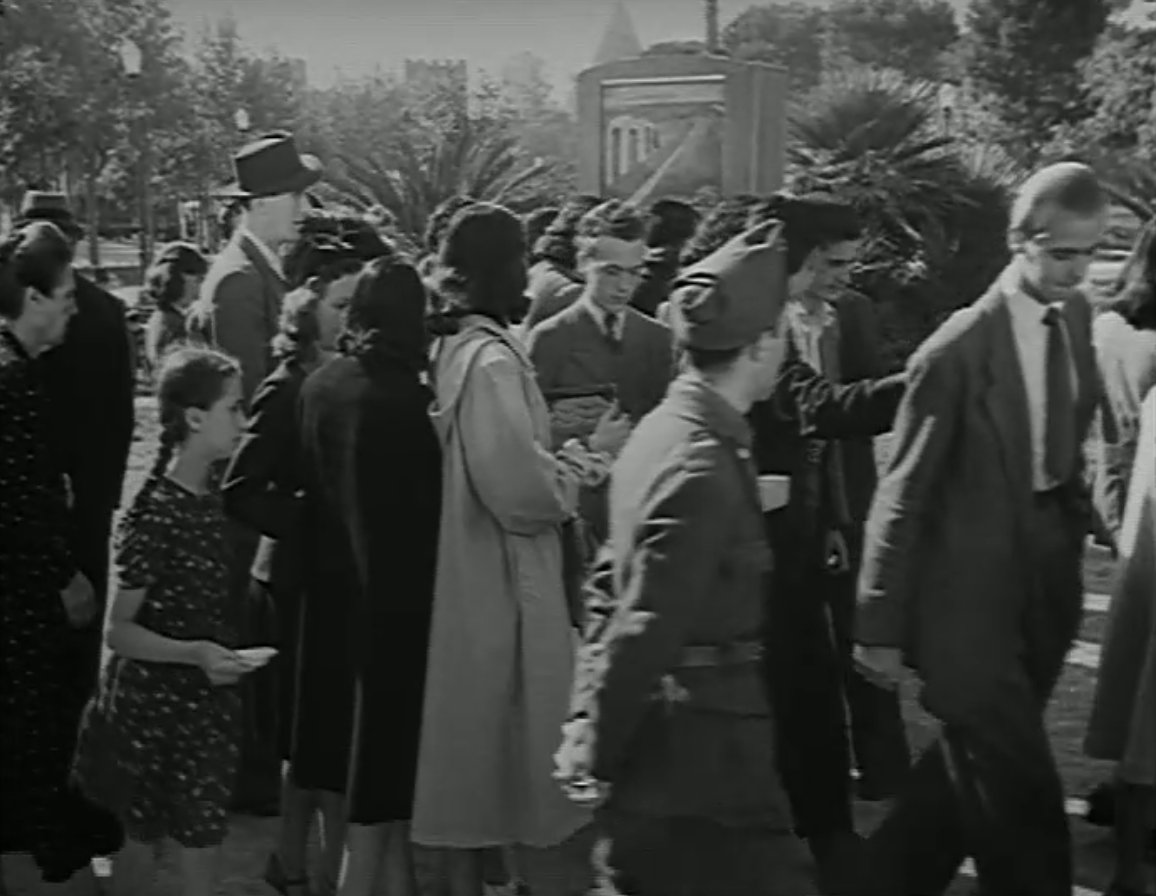
Quando lo spettacolo finisce, il pubblico applaude prima di disperdersi.
When the show ends, the audience applauds before dispersing.
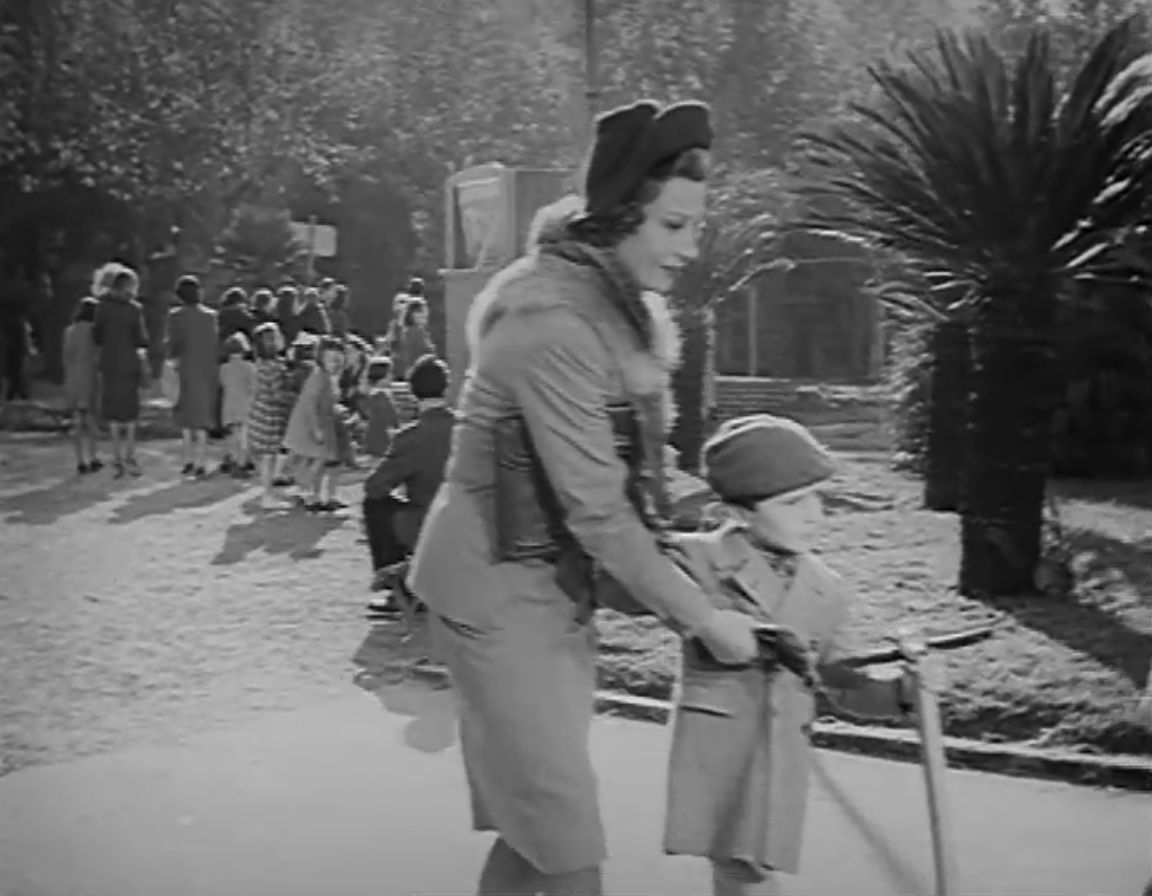
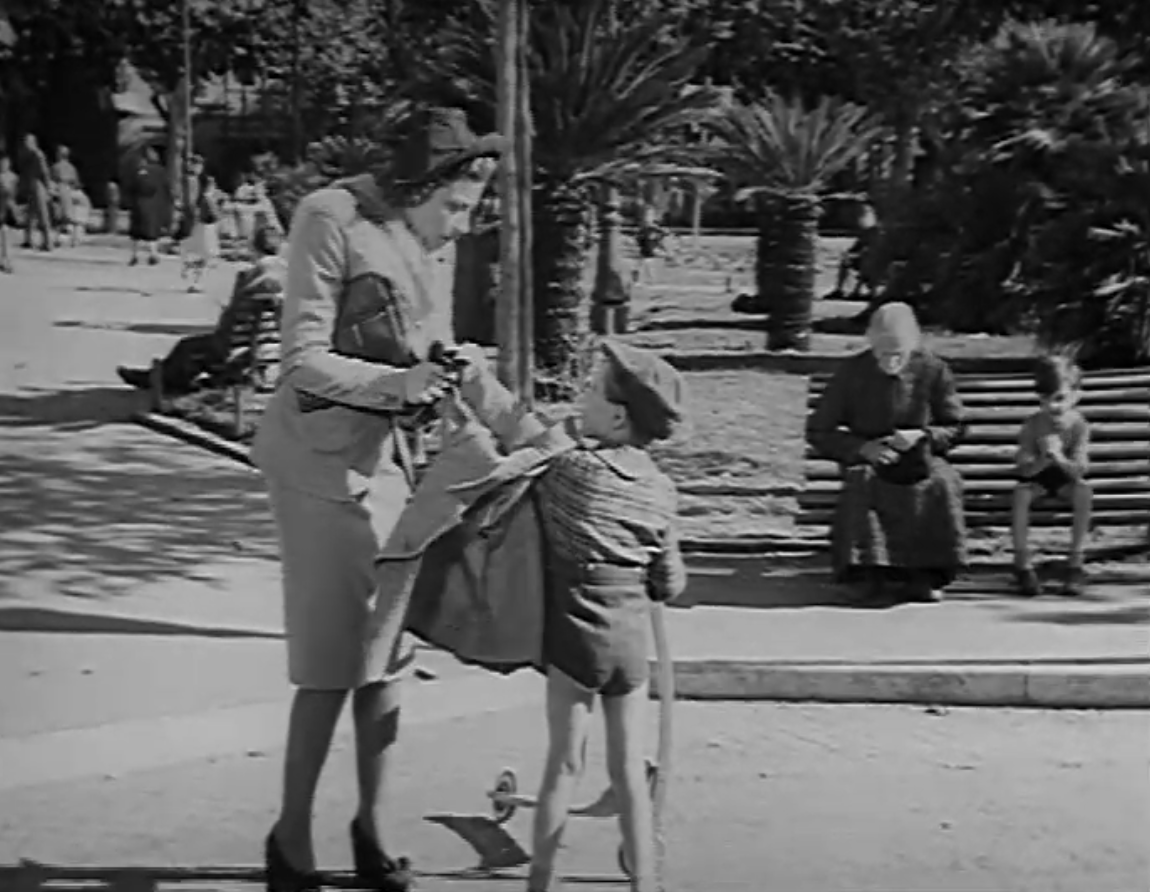
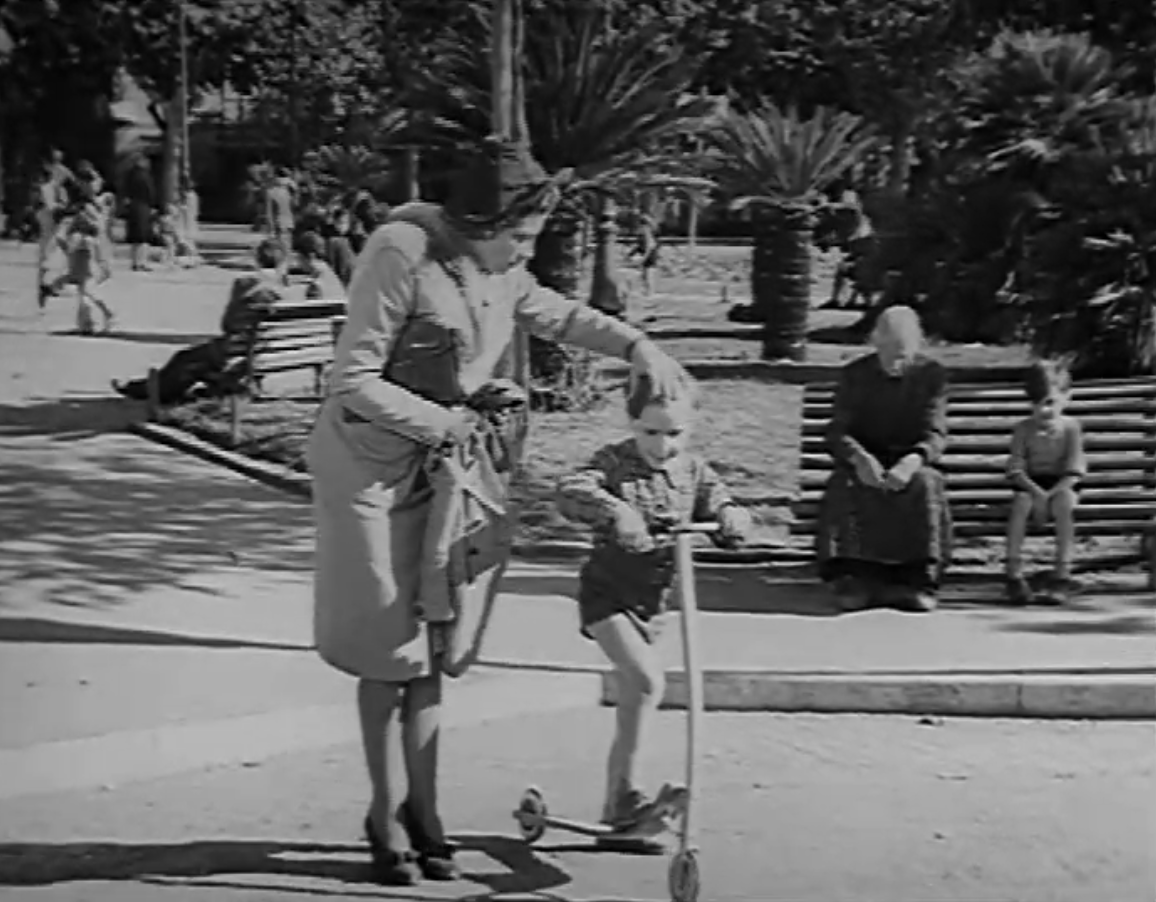
Nina toglie il cappotto a Pricò. "Ecco. Fai un giro, ma stai attento a non farti male, eh?" Gli toglie il berretto e gli liscia i capelli mentre lui sale sul monopattino.
Nina takes off Pricò’s coat. “There you go. Go for a spin, but be careful not to get hurt, okay?” Removing his cap, she smooths his hair as he gets on his scooter.
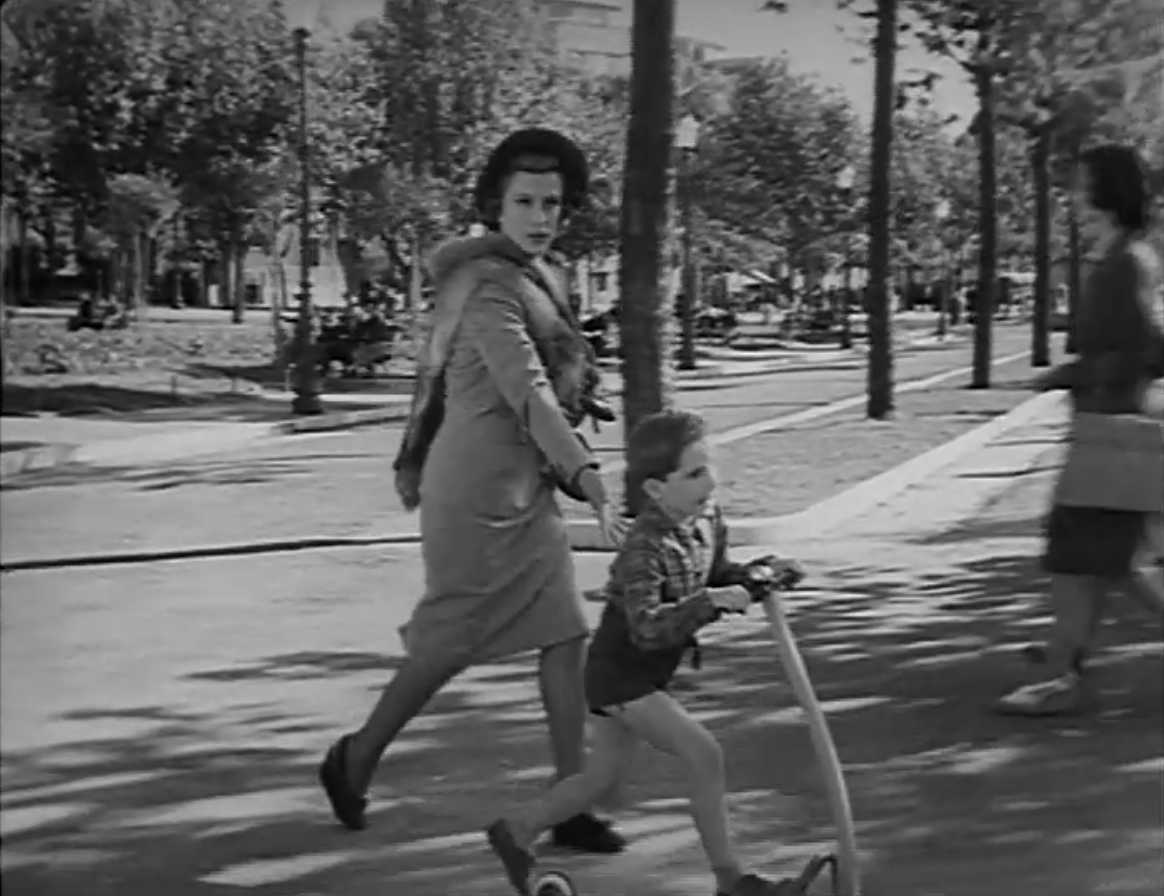
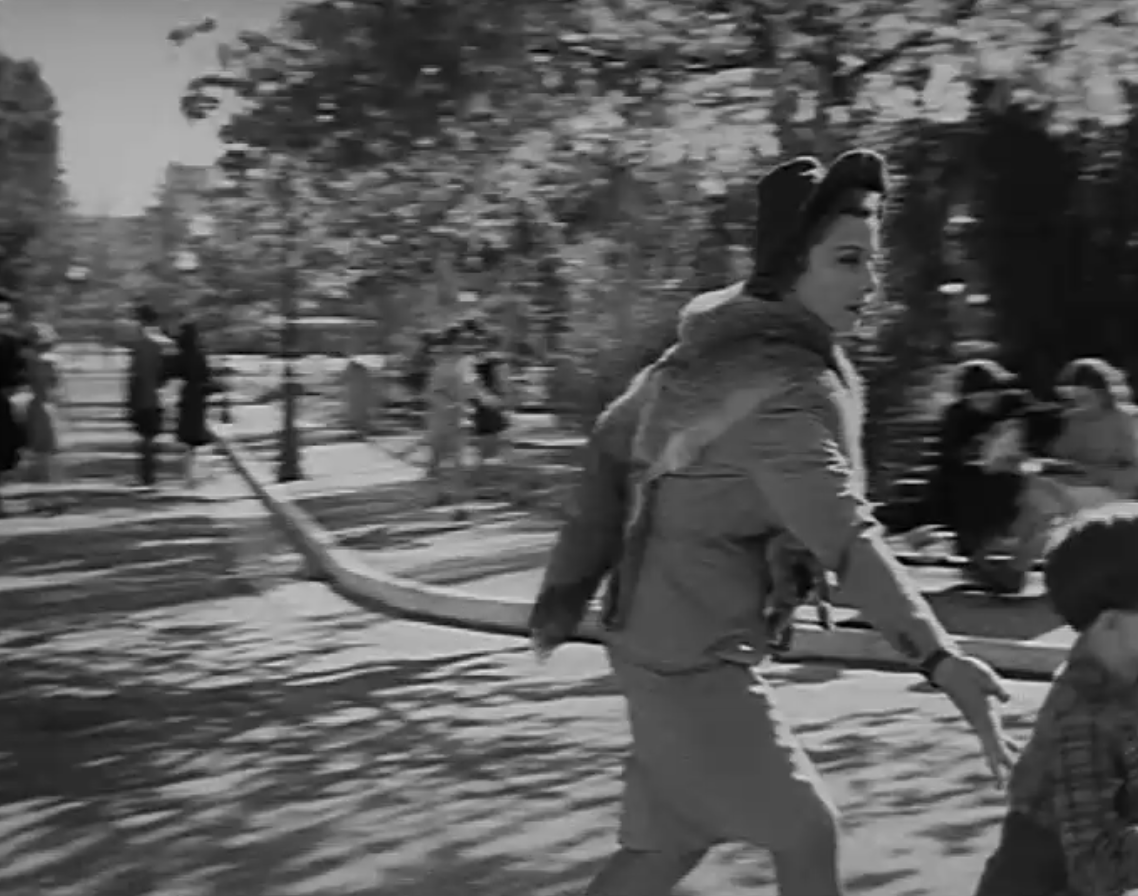
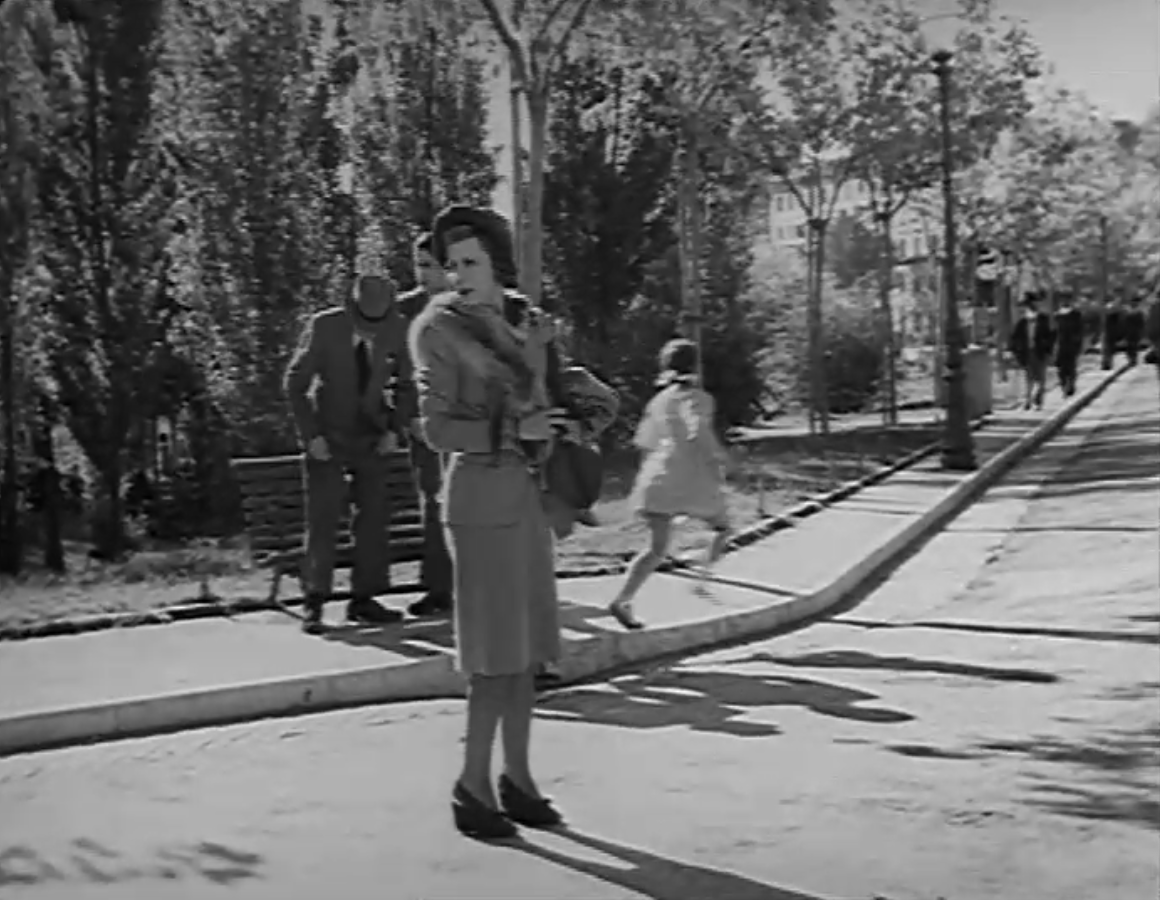
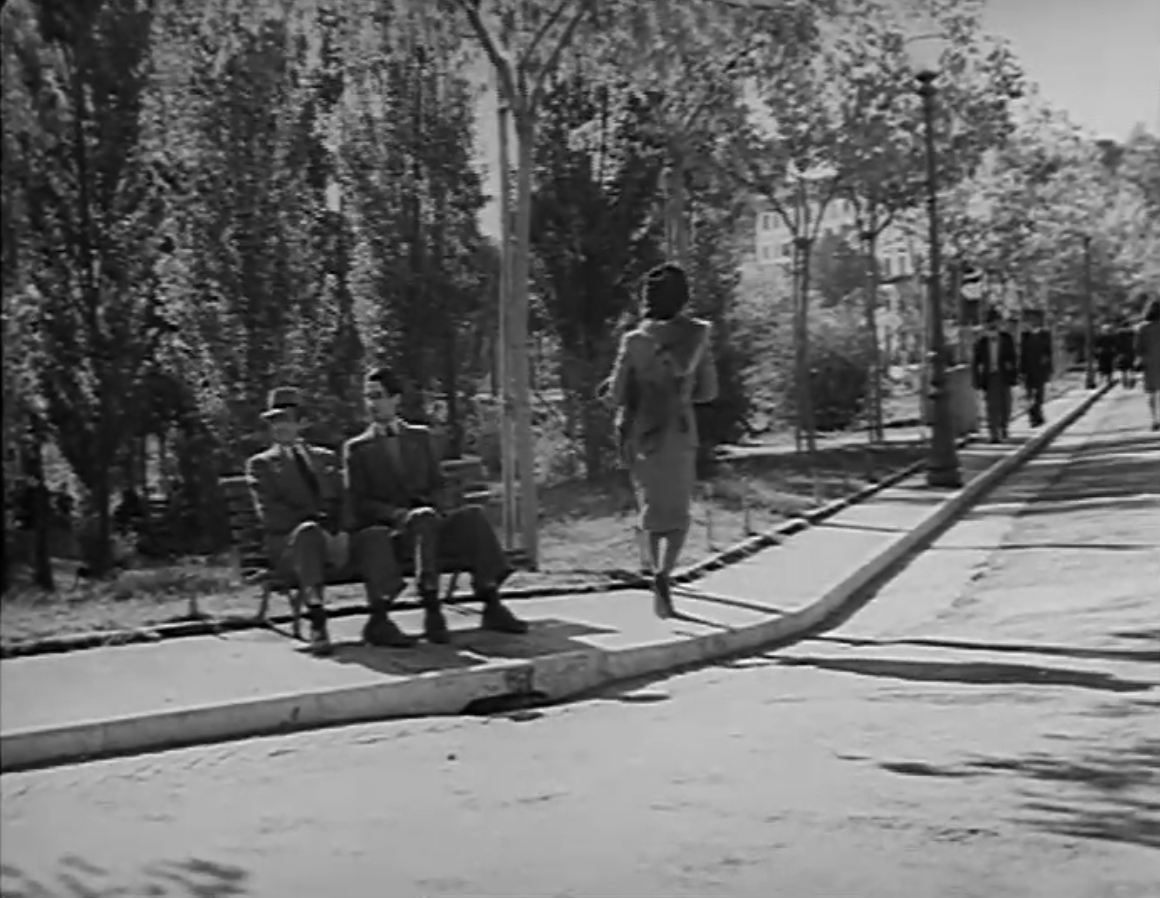
Una volta che lui se n'è andato, Nina prende una direzione diversa.
When he has gone, Nina sets off in a different direction.
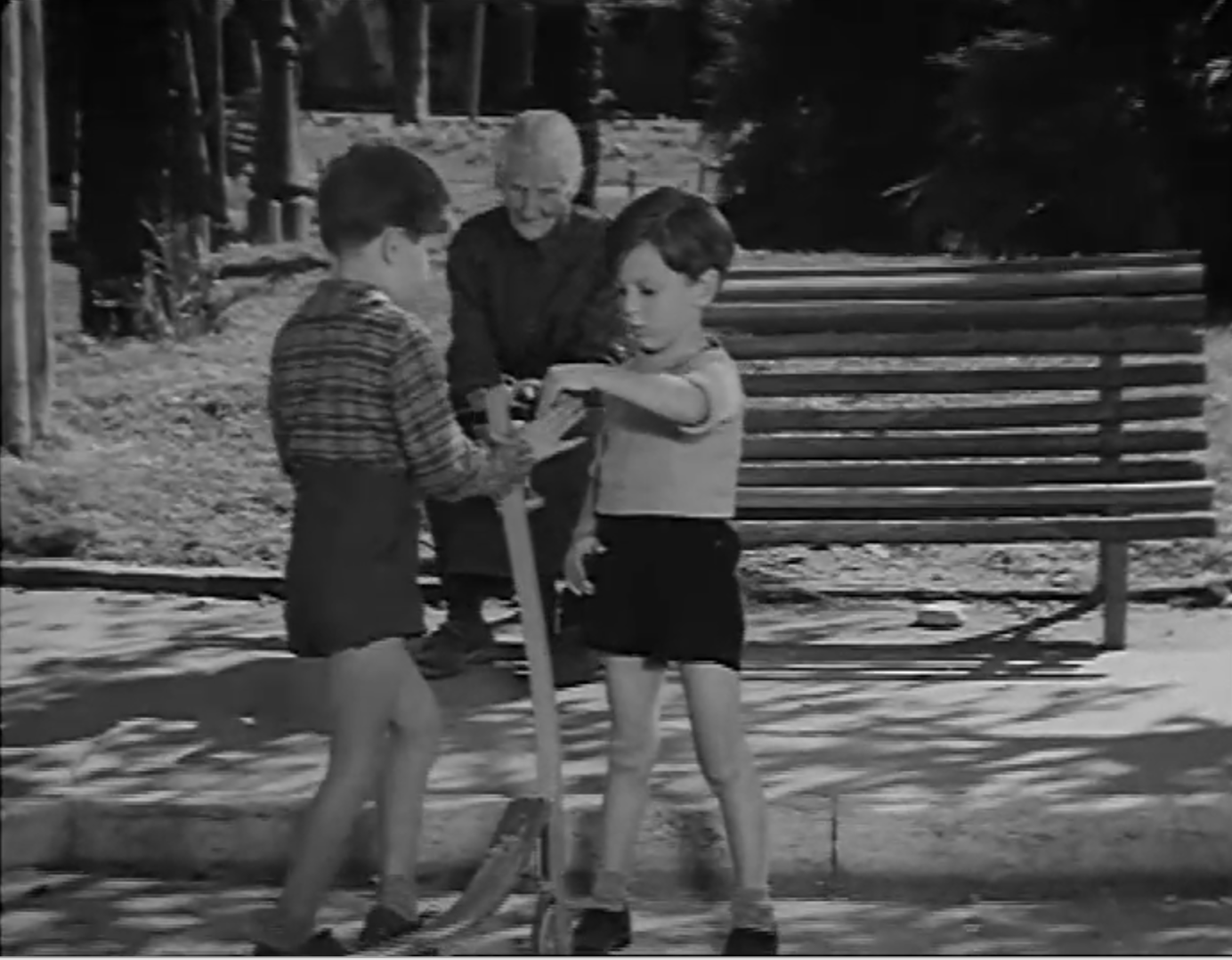
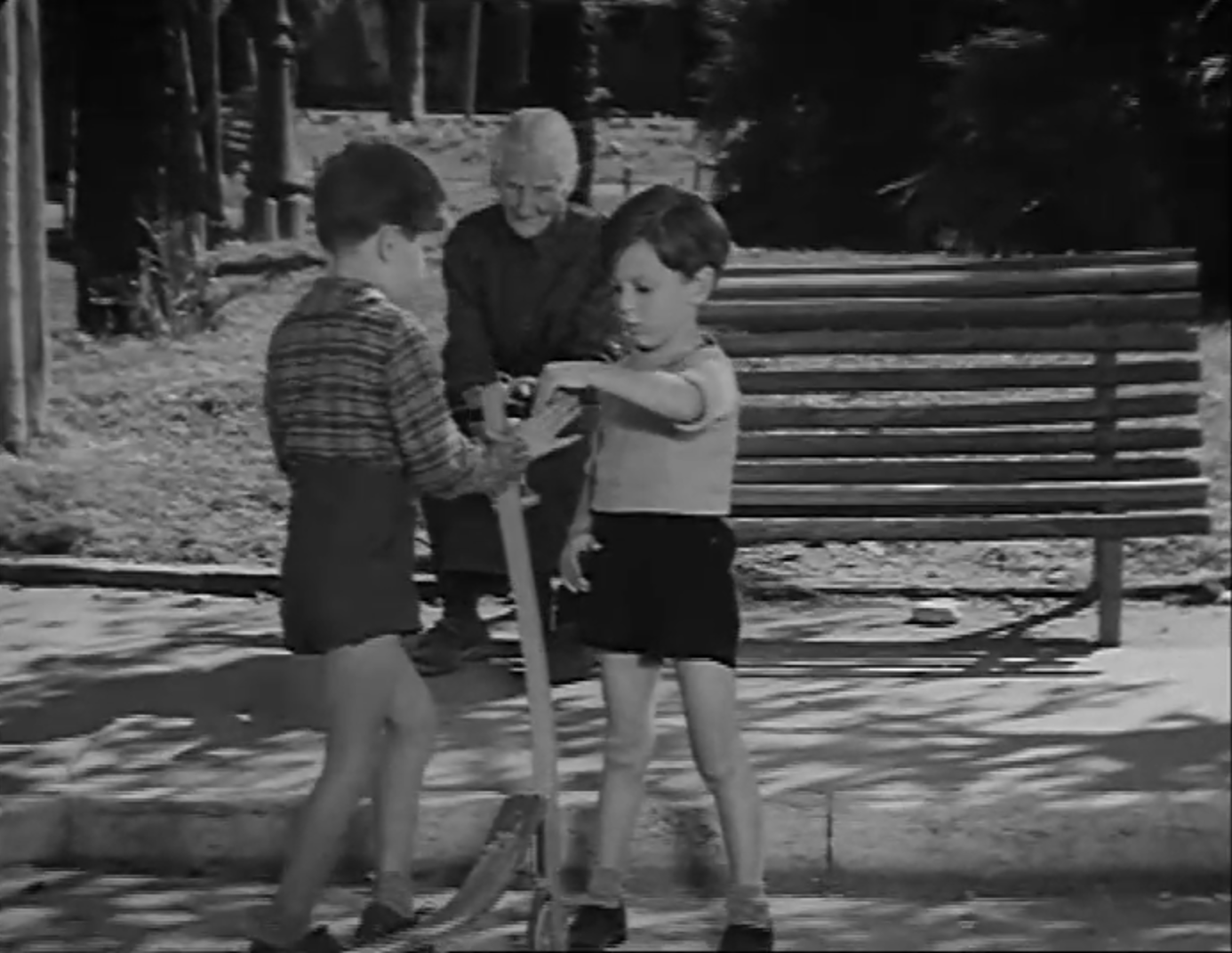
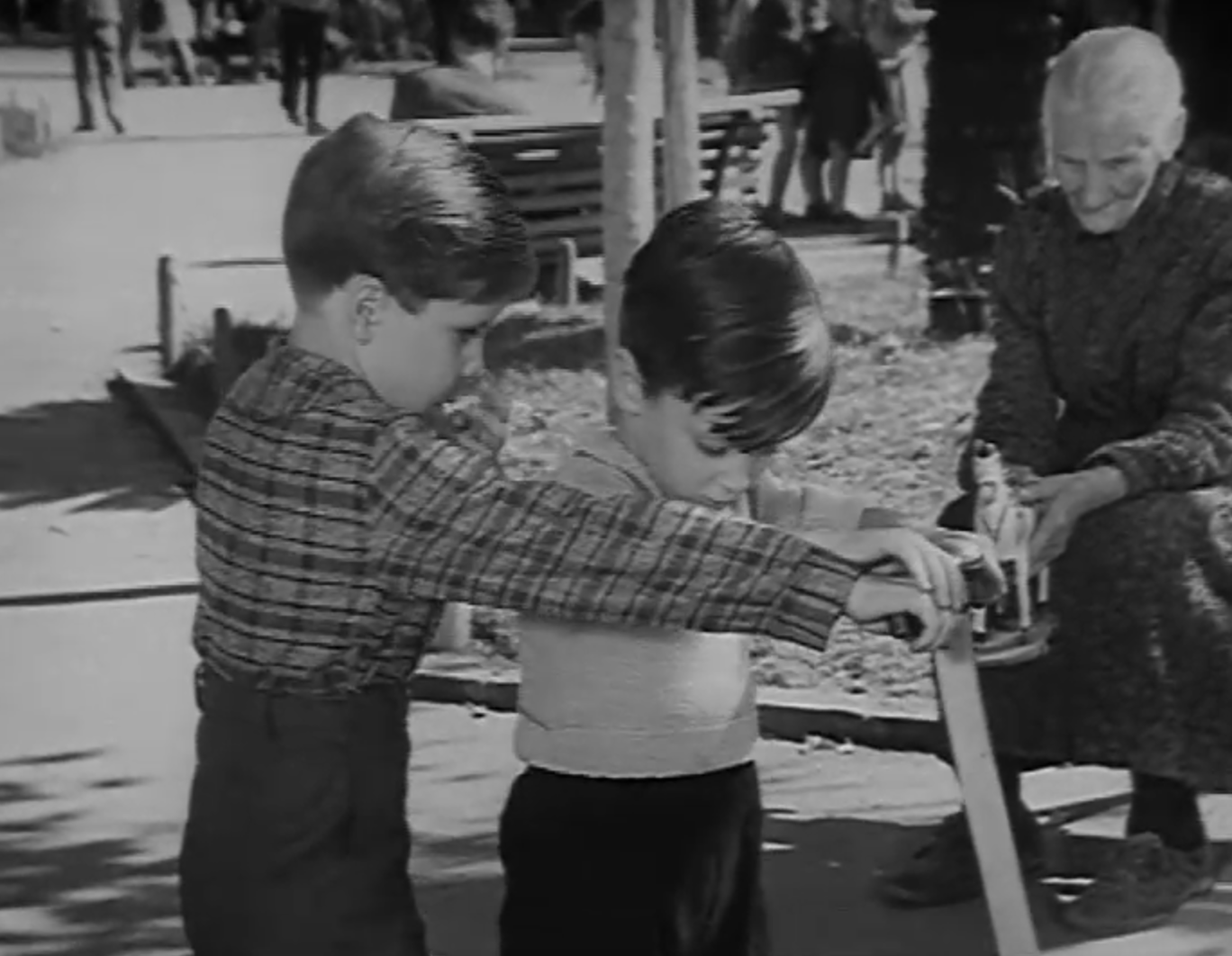
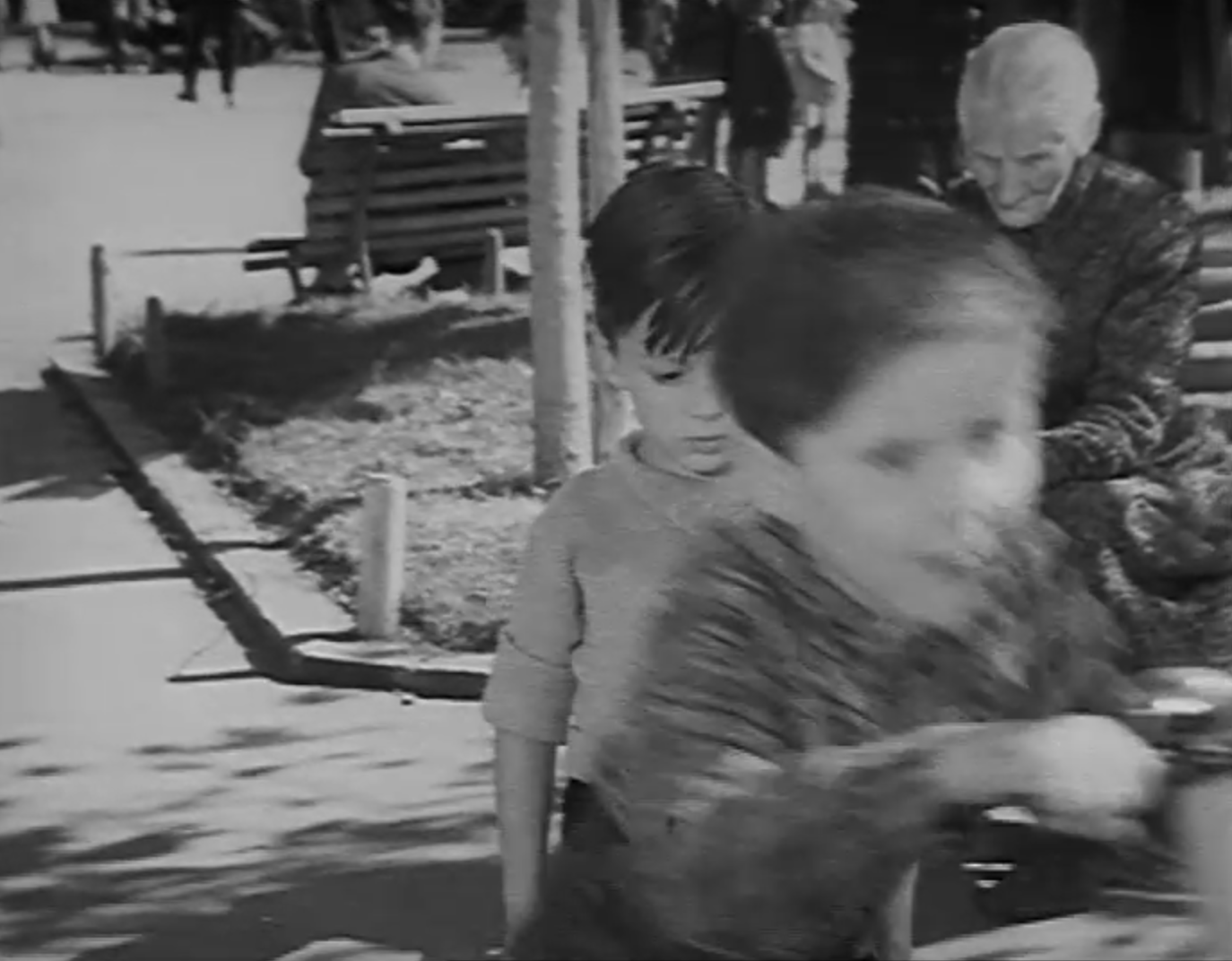
Sotto lo sguardo di una signora dai capelli bianchi, Pricò incontra un altro bambino, che suona il campanello del monopattino.
"Mi fai fare un giro?"
"No".
"Mi fai mettere il piede?"
"Sì, solo il piede". Glielo porge. Poi: "Basta!" e se ne va.
As a white-haired woman looks on, Pricò meets another little boy, who rings the scooter’s bell.
“Will you let me go for a ride?”
“No.”
“Will you let me put my foot on it?”
“Yes, just your foot.” He hands it over. Then: “That’s enough!” and off he goes.
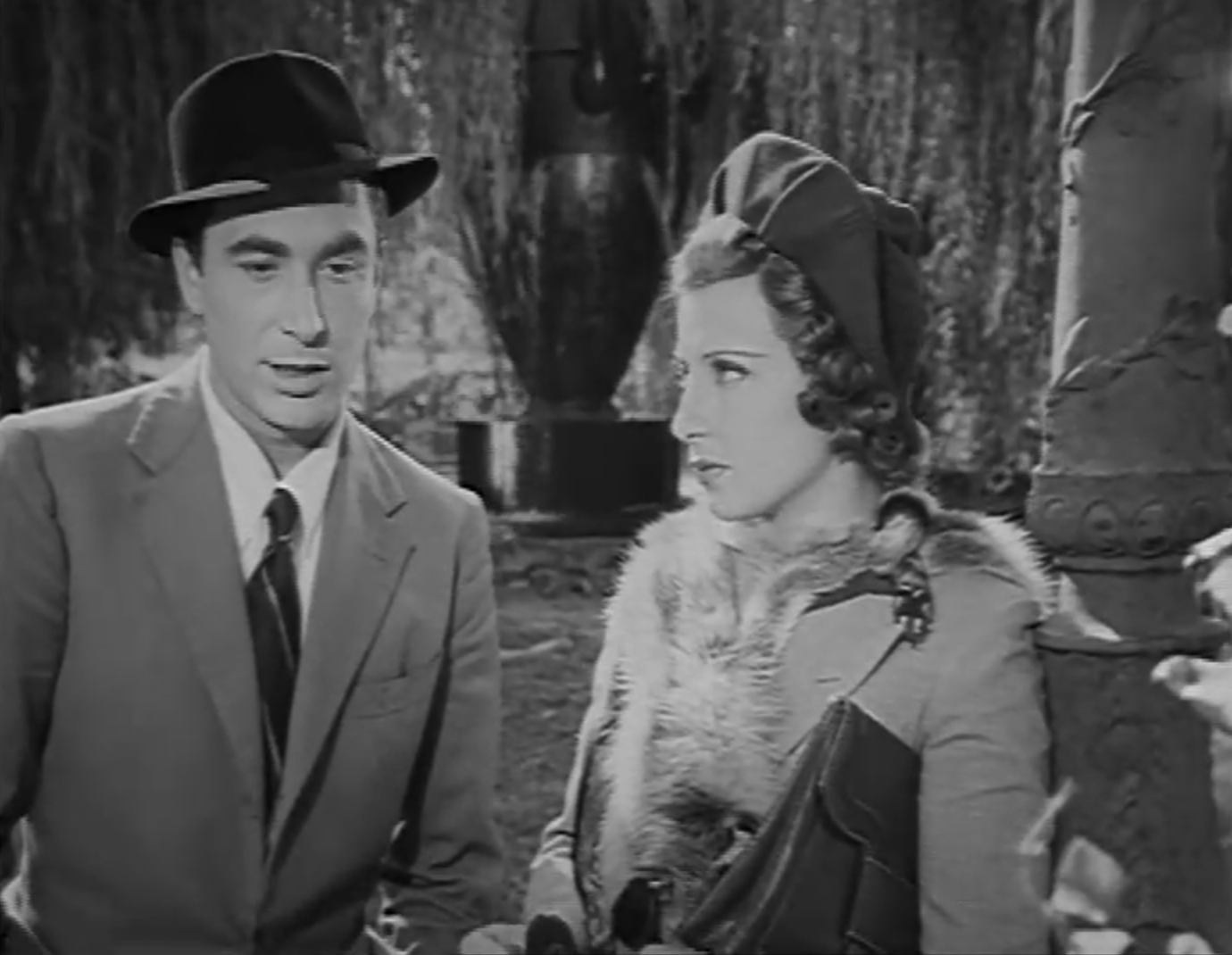
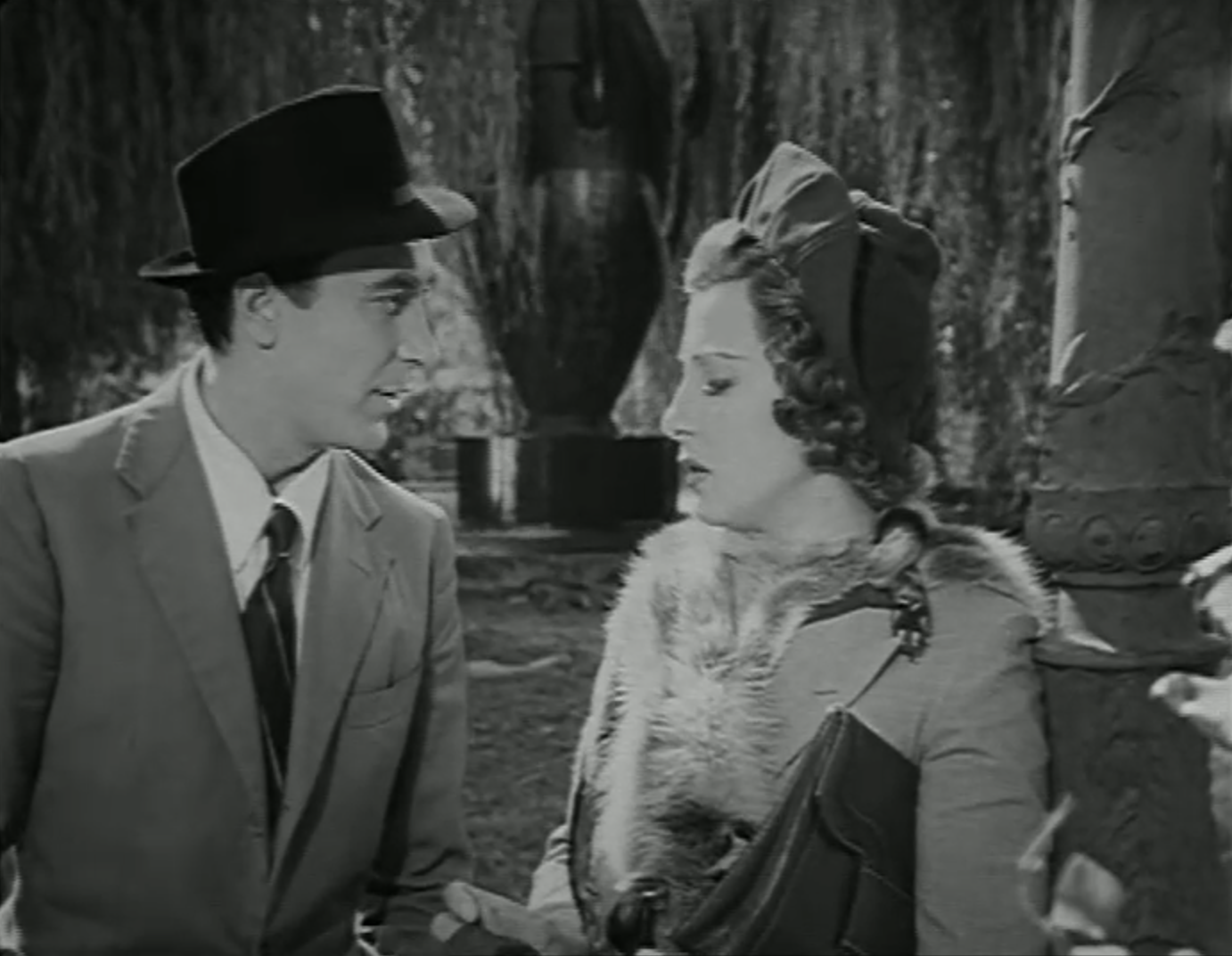
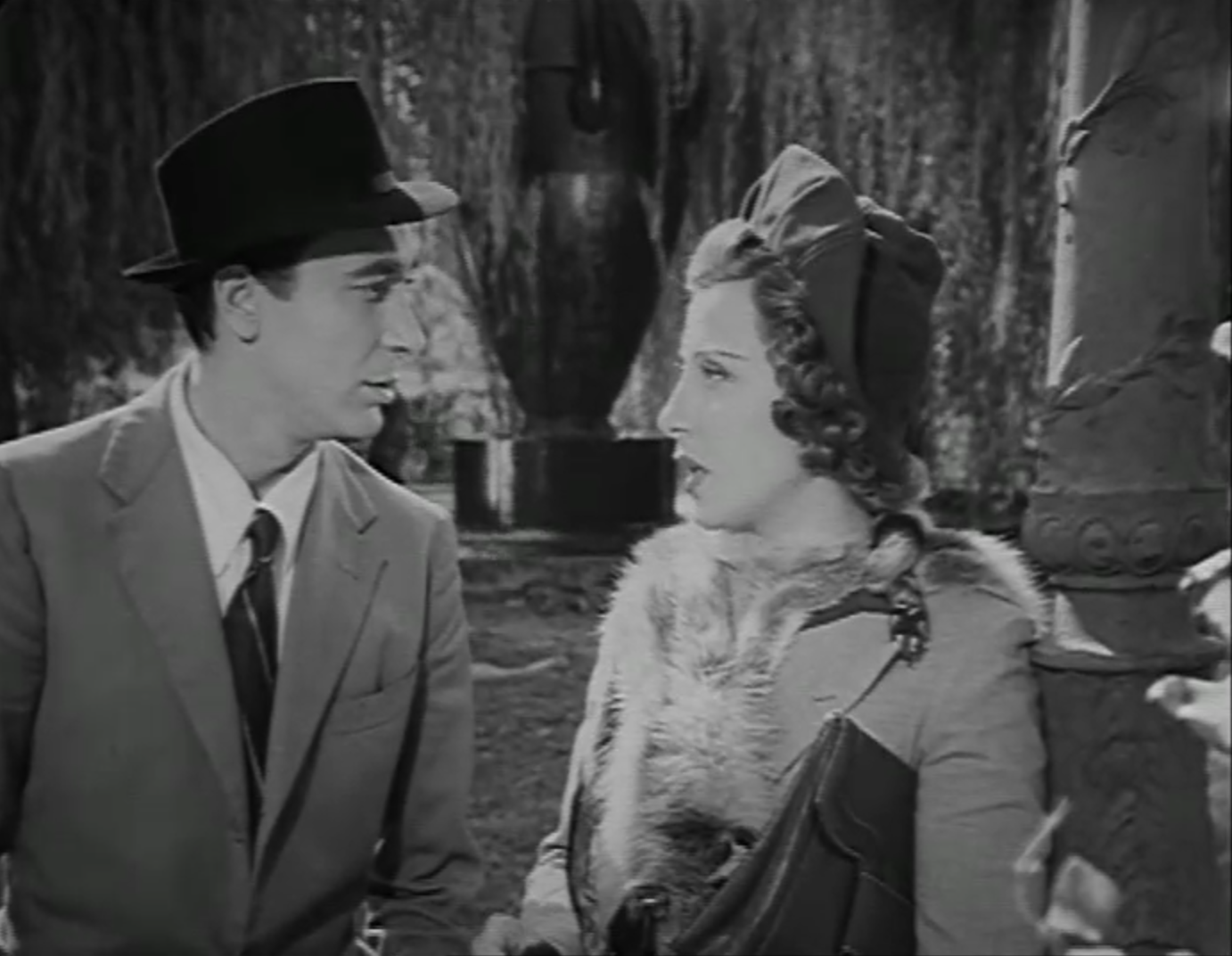
Nina, nel frattempo, ha incontrato un uomo in giacca e con un cappello fedora: Roberto (Adriano Rimoldi).
"Vedi" – dice lui – "non mi riesce più di venire a casa tua". Lei abbassa lo sguardo. "Come potrei vederti vicino a lui? E, d’altra parte, così io non resisto".
"E io? Come resisto, Roberto?"
"Senti, Nina, tu puoi fare a meno di me?"
Nina, meanwhile, has met a man in a suit and fedora: Roberto.
“You see,” he says, “I can’t bring myself to come to your house anymore.” She looks down. “How could I bear to see you with him? And, on the other hand, I can’t take it this way either.”
“What about me? How can I take it, Roberto?”
“Listen, Nina, can you live without me?”
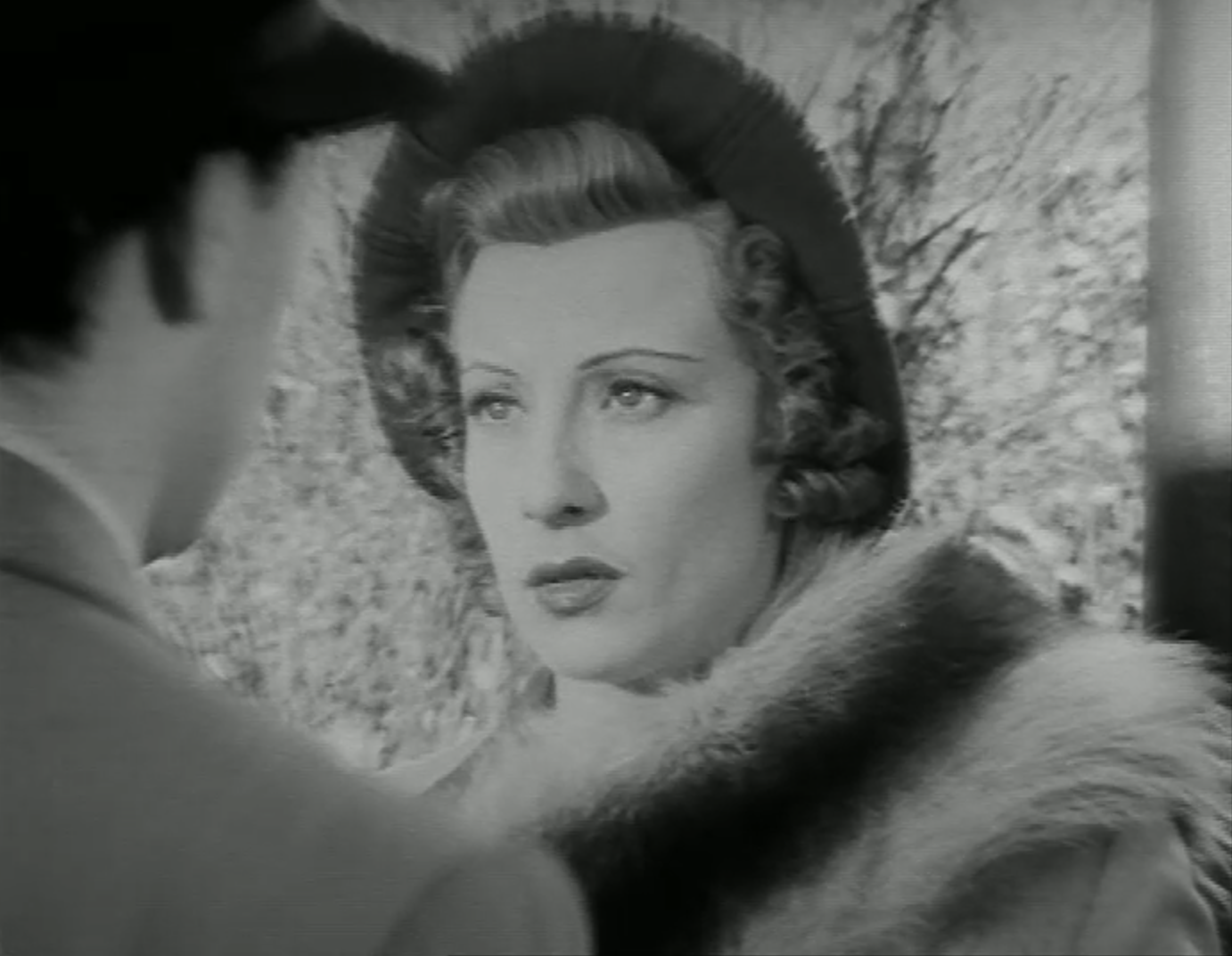
In primo piano, lei risponde: "No".
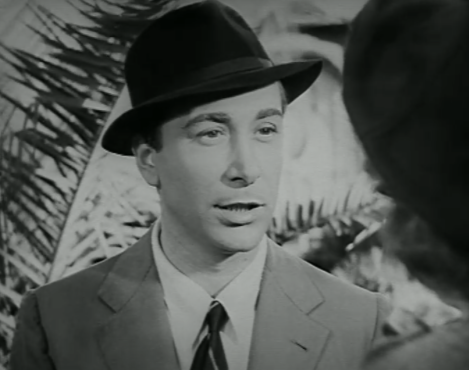
Anche lui in primo piano, Roberto risponde: "E nemmeno io di te". Fa una pausa. "E allora, che cosa aspettiamo?"
In close-up, she answers, “No.”
Also in close-up, Roberto responds, “I can’t live without you either.” He pauses. “And so, what are we waiting for?”
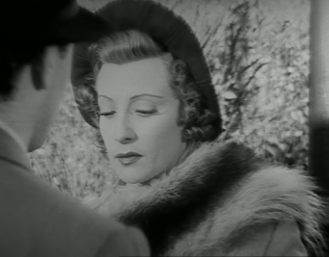
"Ma Roberto, non dobbiamo decidere oggi".
"Oggi, Nina". Lei distoglie lo sguardo. “Ho avuto il posto a Genova e parto stanotte. Ho già preso i biglietti. Anche per te".
“But Roberto, we don’t have to decide today.”
“Today, Nina.” She looks away. “I got a job in Genoa. I’m leaving tonight. I already got tickets. For you, too.”
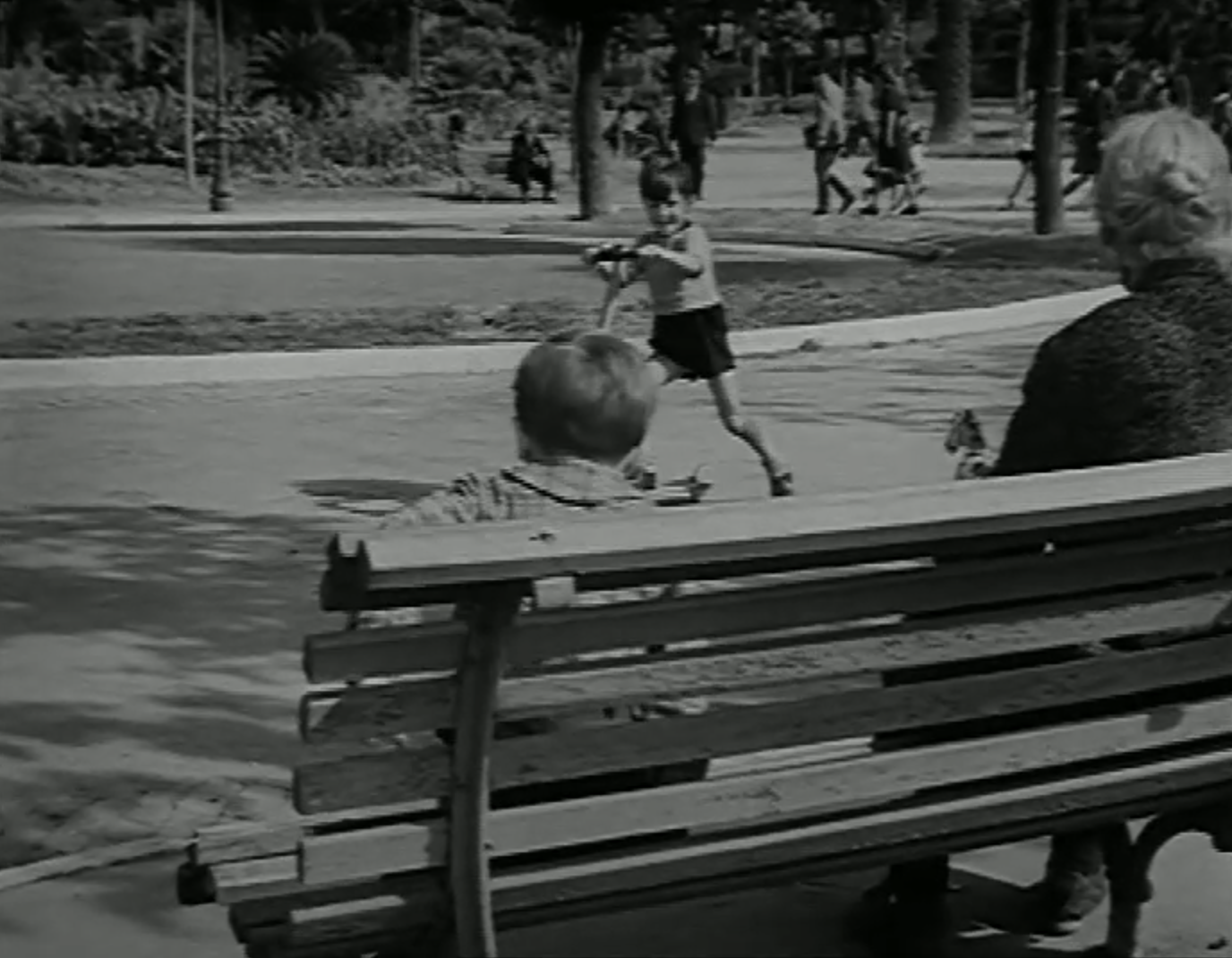
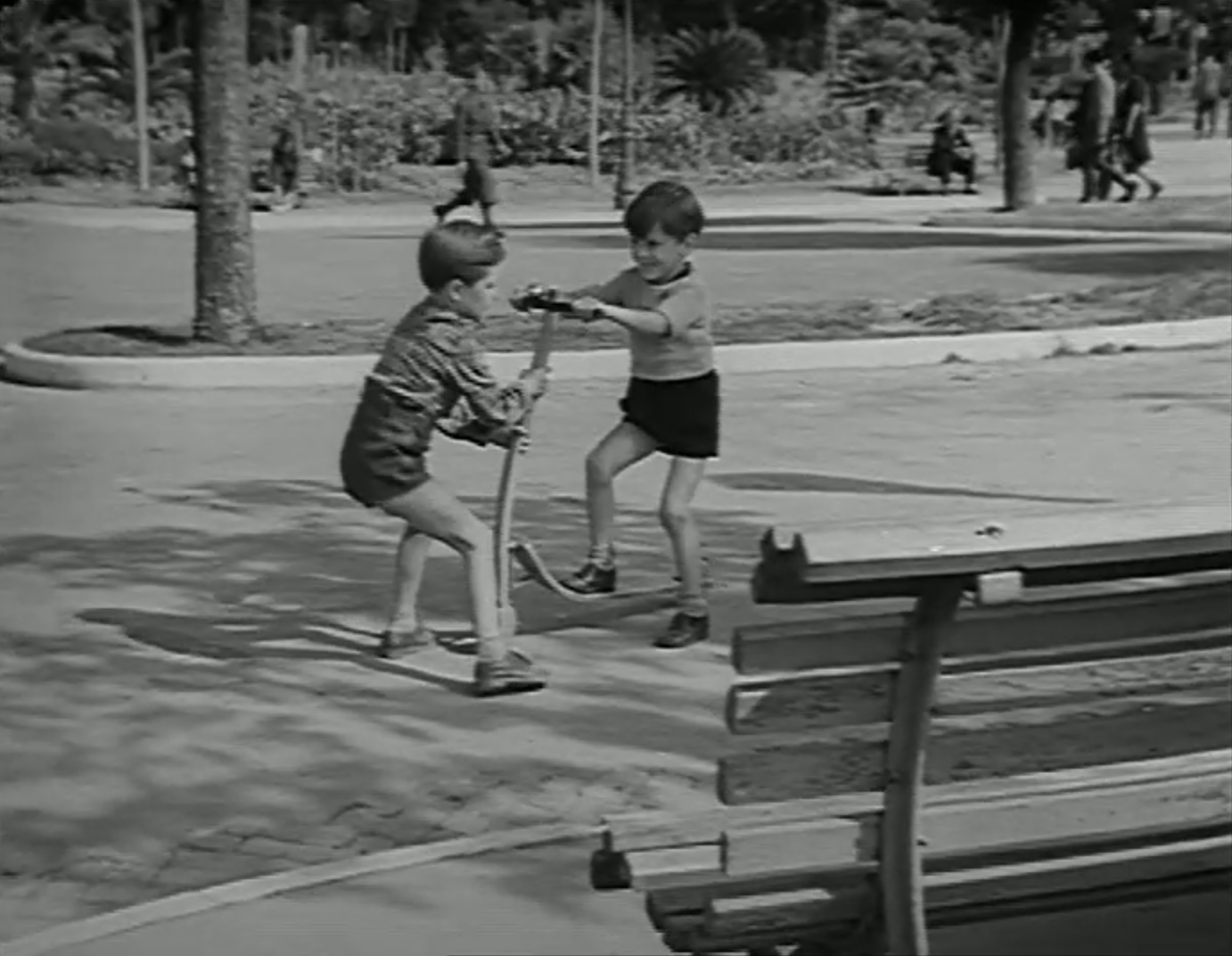
Pricò aspetta su una panchina con la donna anziana mentre l'altro bambino va sul monopattino. Poi si avvicina e glielo riprende.
Pricò waits on the bench with the elderly woman while the other boy rides his scooter. Then he steps over and takes it back.
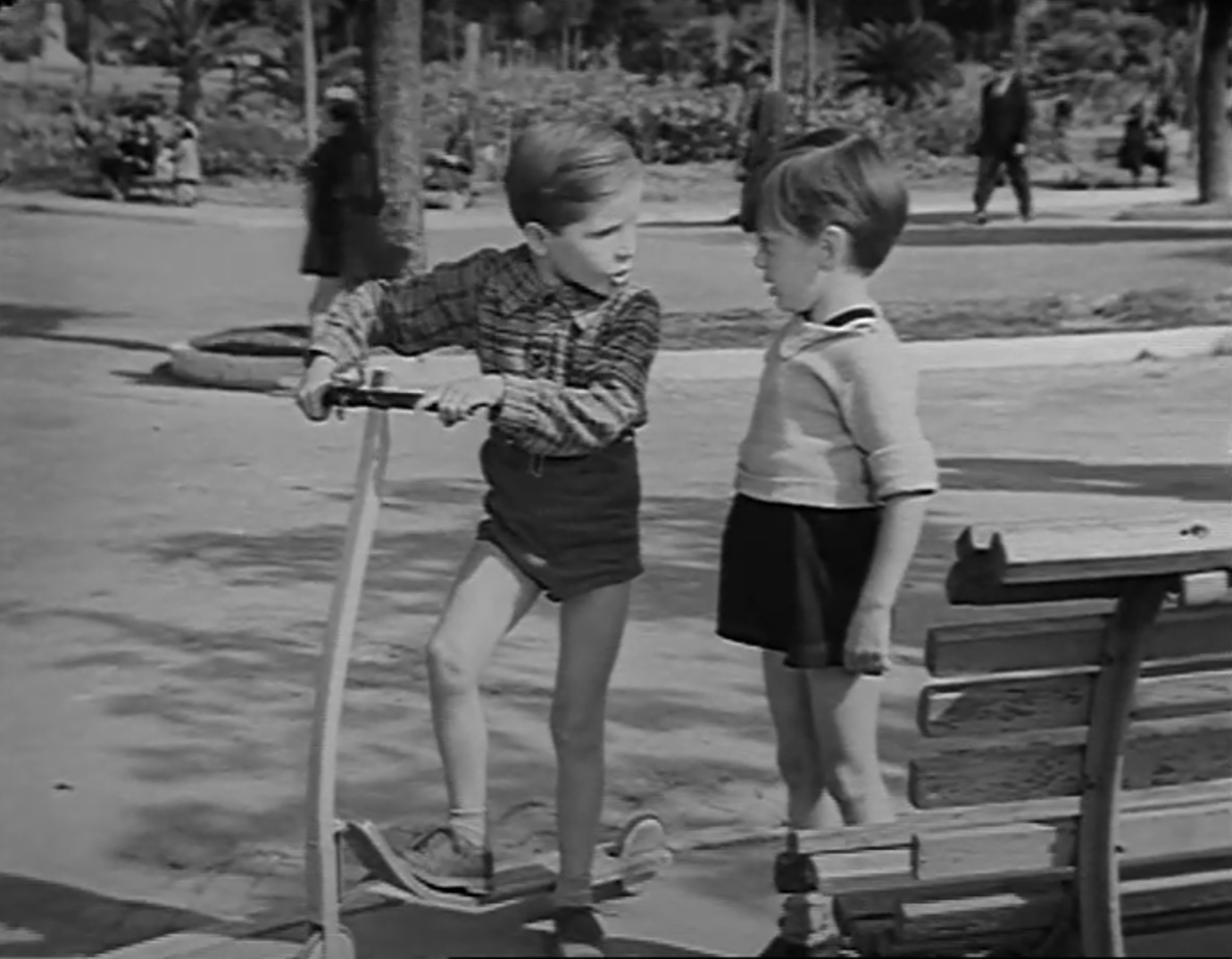
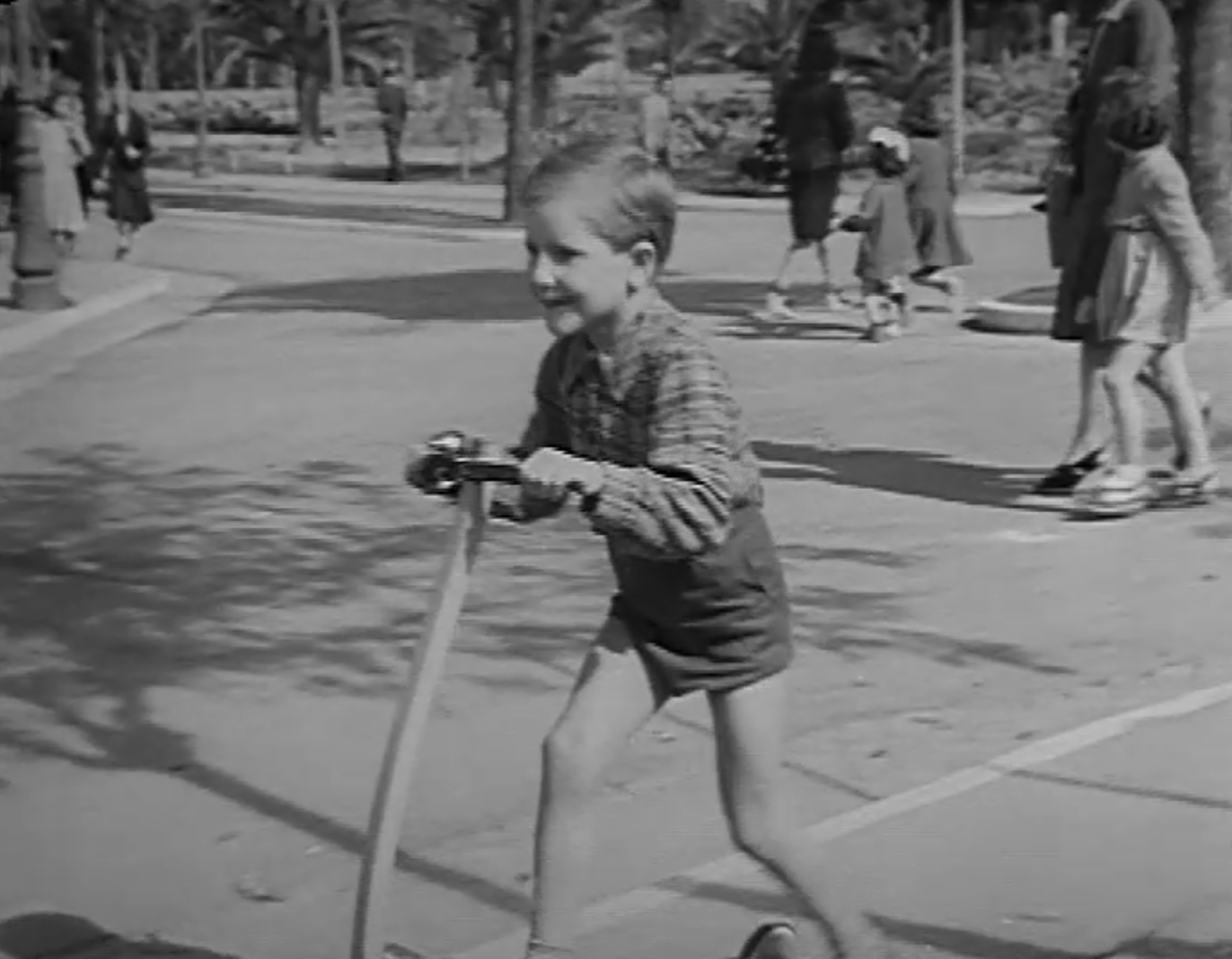
Il bambino chiede: "Ritorni domani?"
"No, domani vado al cinema". Si spinge con il piede e se ne va allegramente.
The boy asks, “Will you be here tomorrow?”
“No, I’m going to the movies tomorrow." He pushes off with his foot and rides happily away.
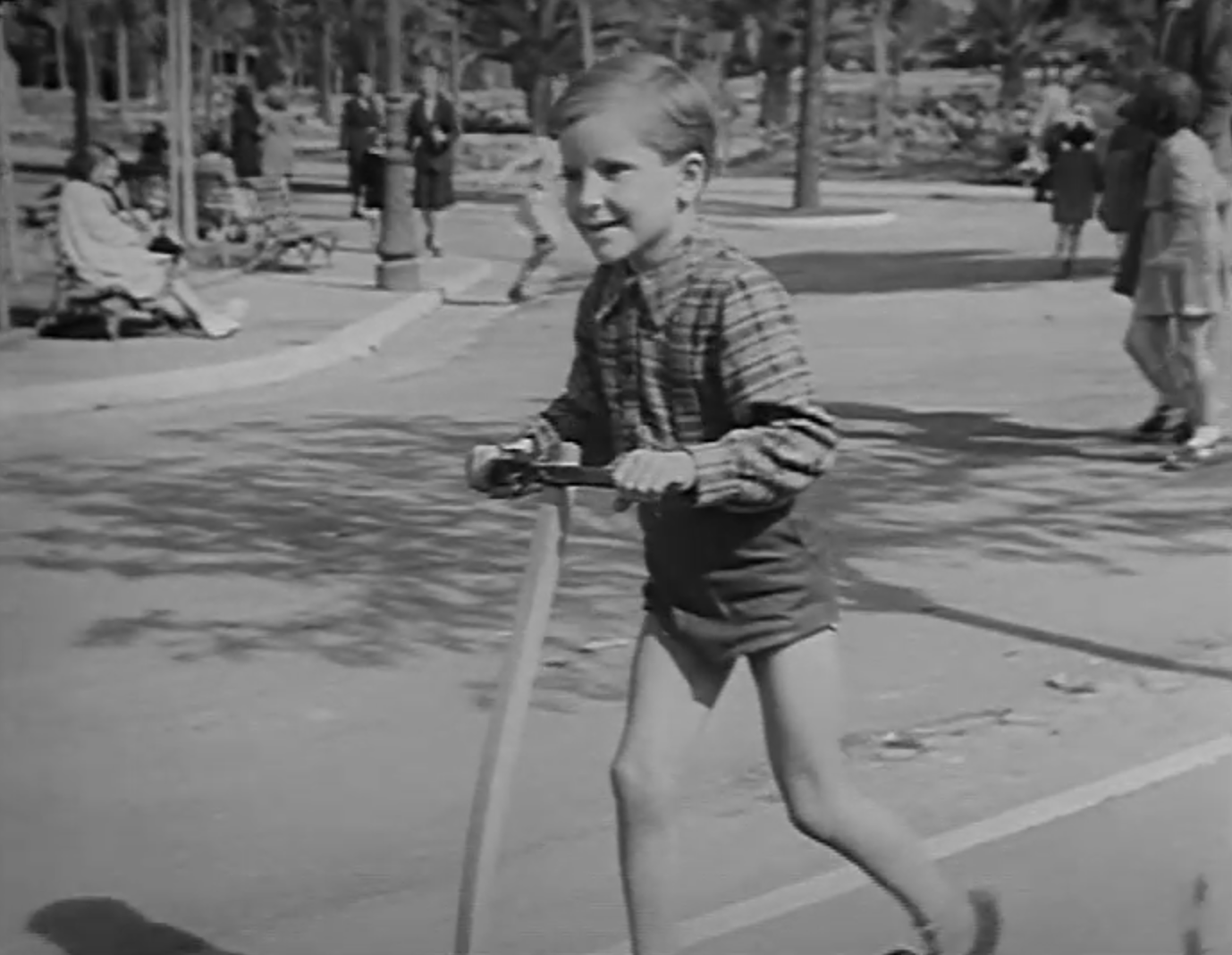
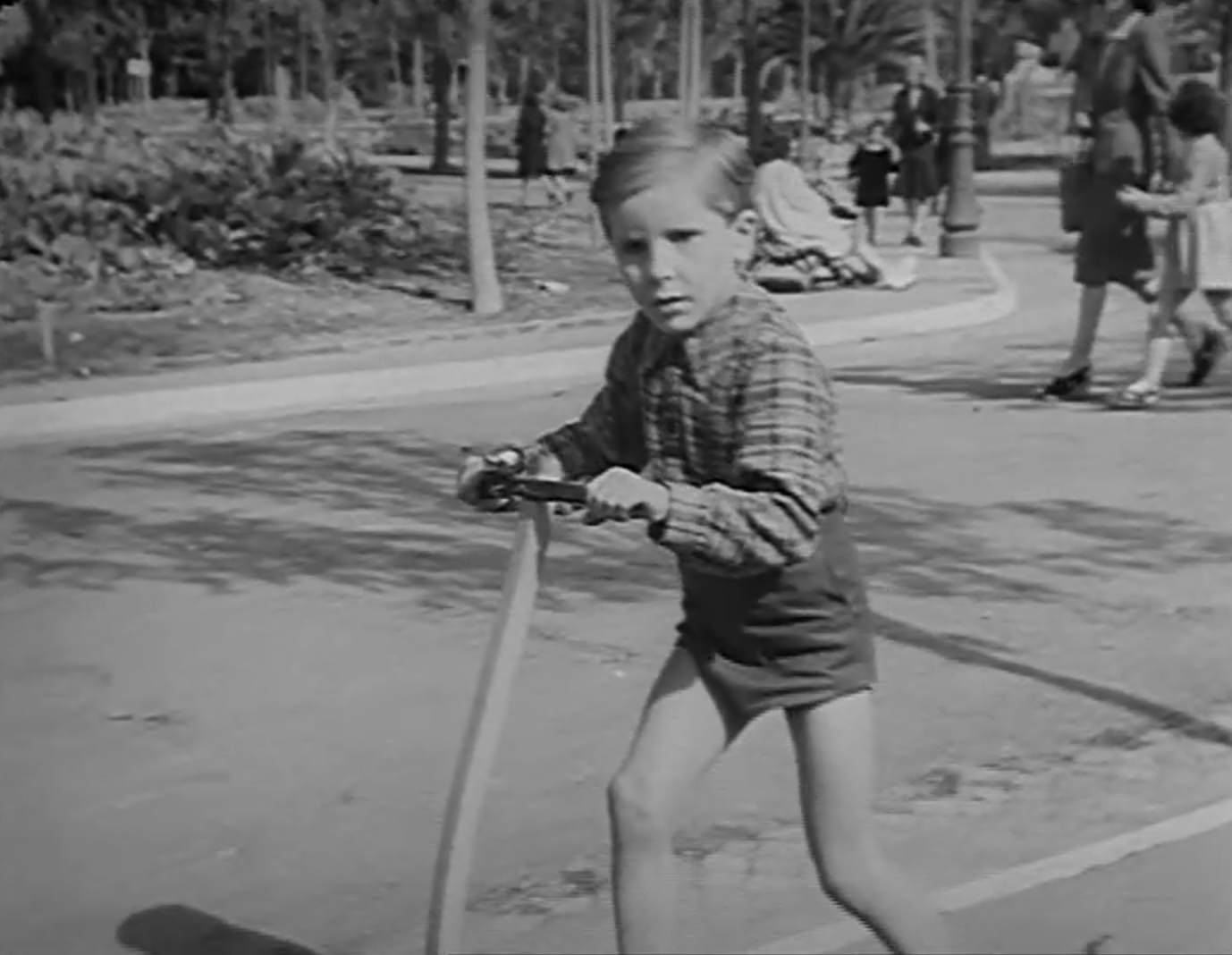
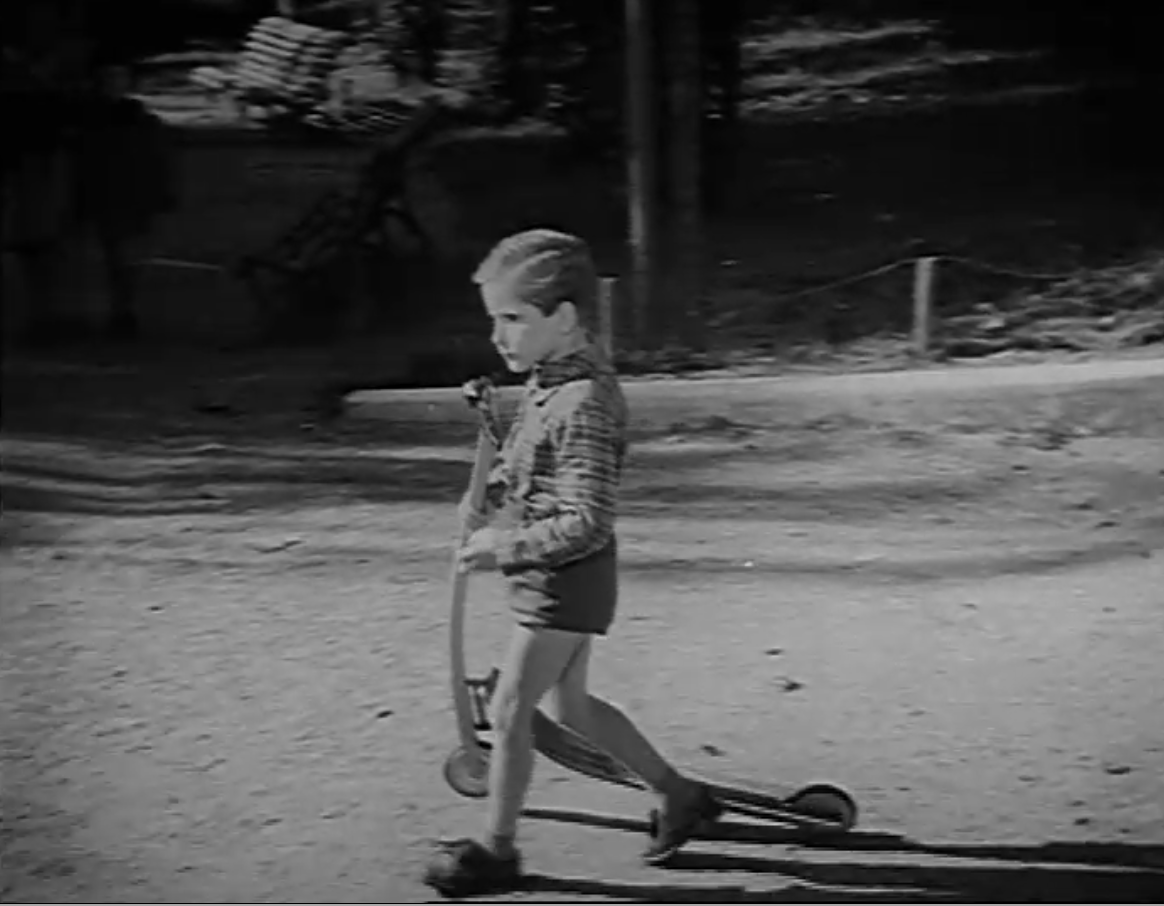
Mentre va tranquillamente, qualcosa attira la sua attenzione. Aggrotta le sopracciglia e rallenta.
As he coasts along, something catches his eye. He frowns and slows down.
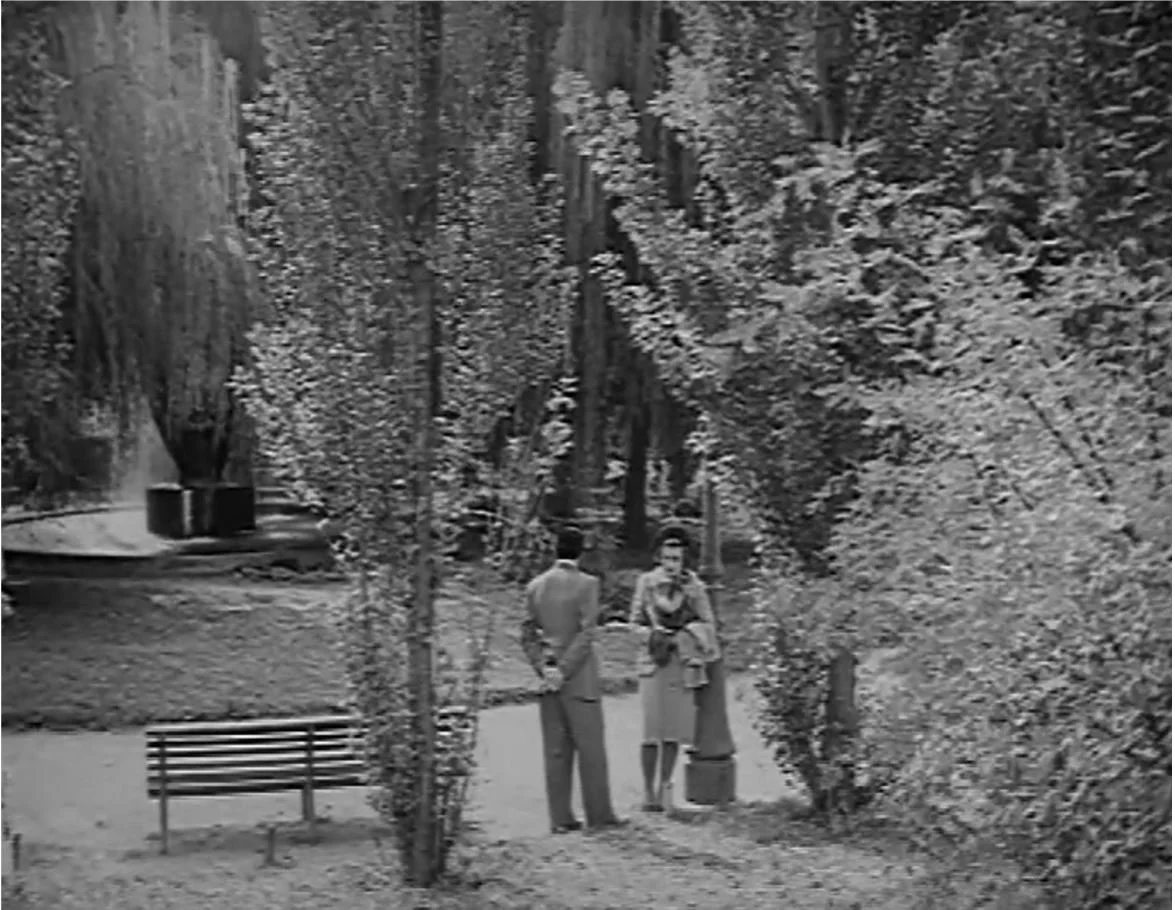
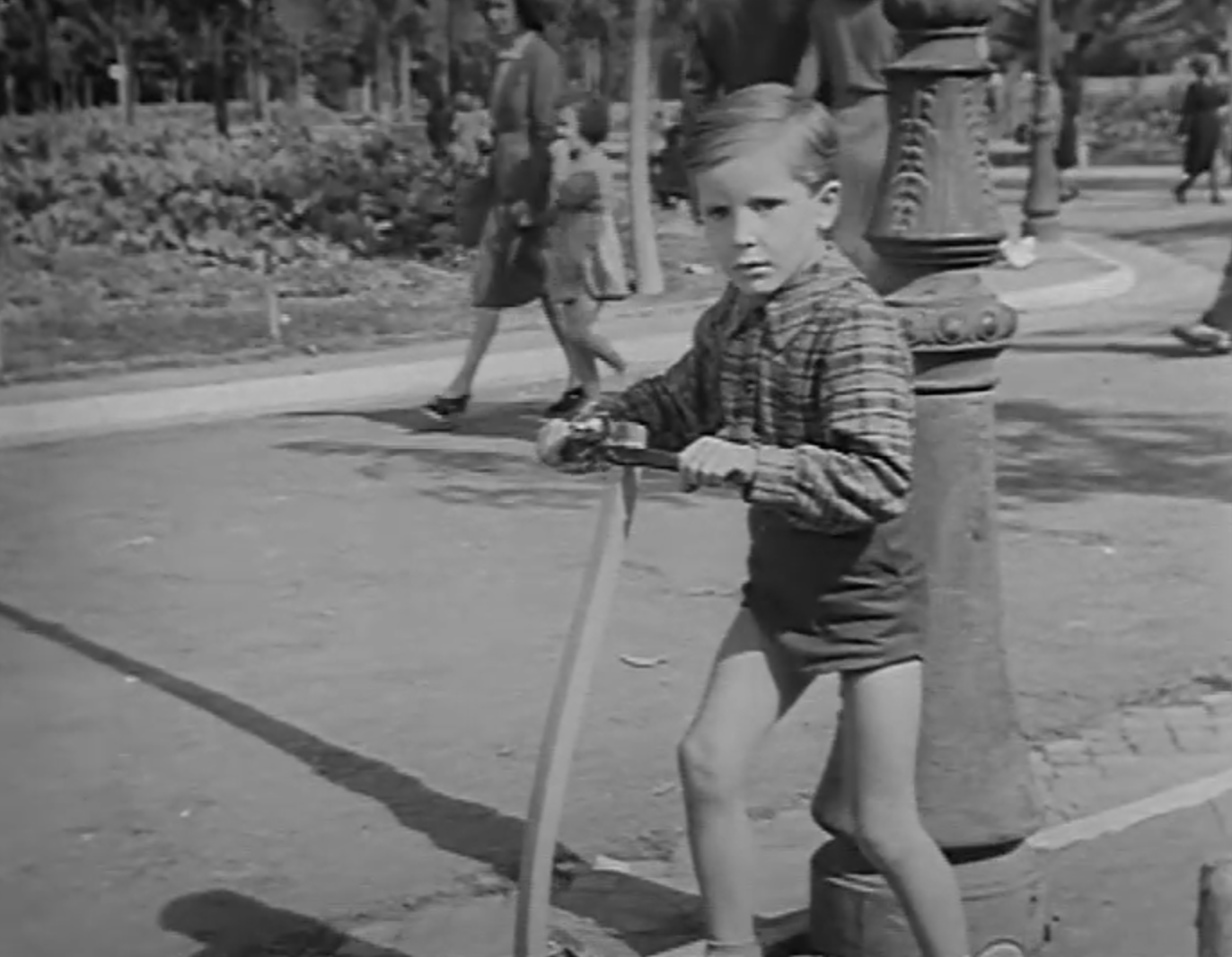
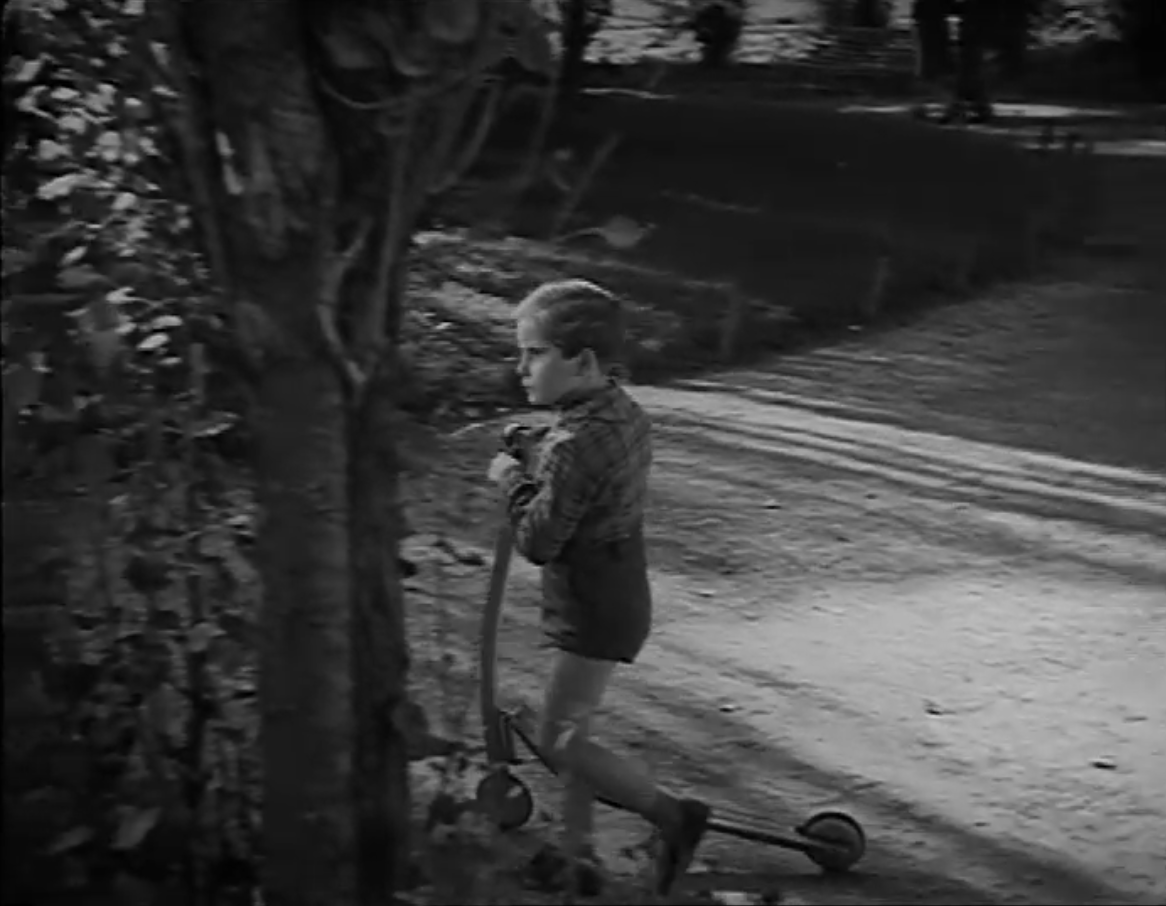
Pricò vede sua madre in lontananza con un uomo, sotto un arco di foglie. Li osserva.
Pricò sees his mother in the distance with a man, under an arch of foliage. He watches them.
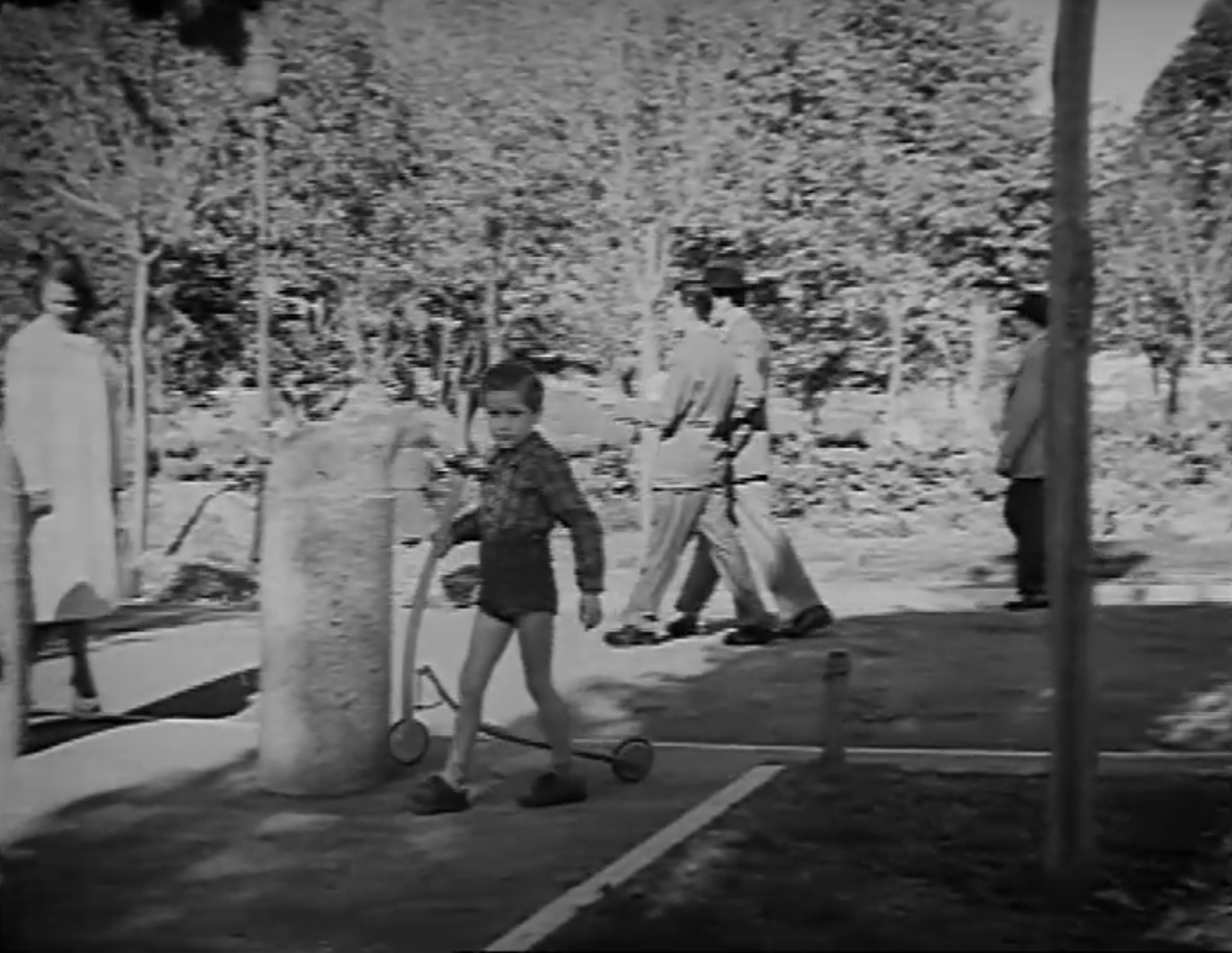
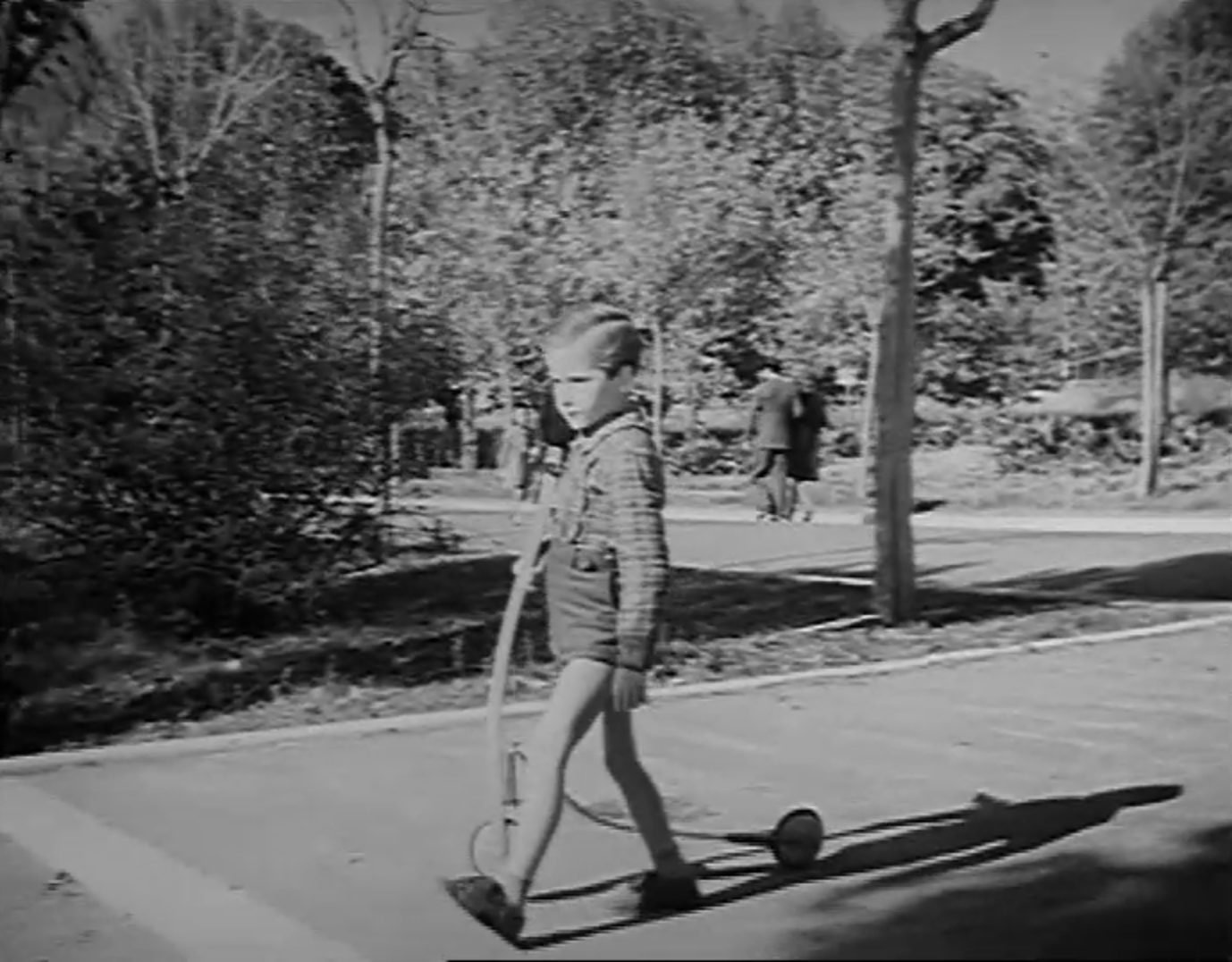
Si sente il brusio dei passanti mentre Pricò inizia a camminare verso sua madre, trascinandosi dietro il monopattino.
We hear the chatter of passers-by as Pricò begins to walk toward his mother, dragging his scooter.
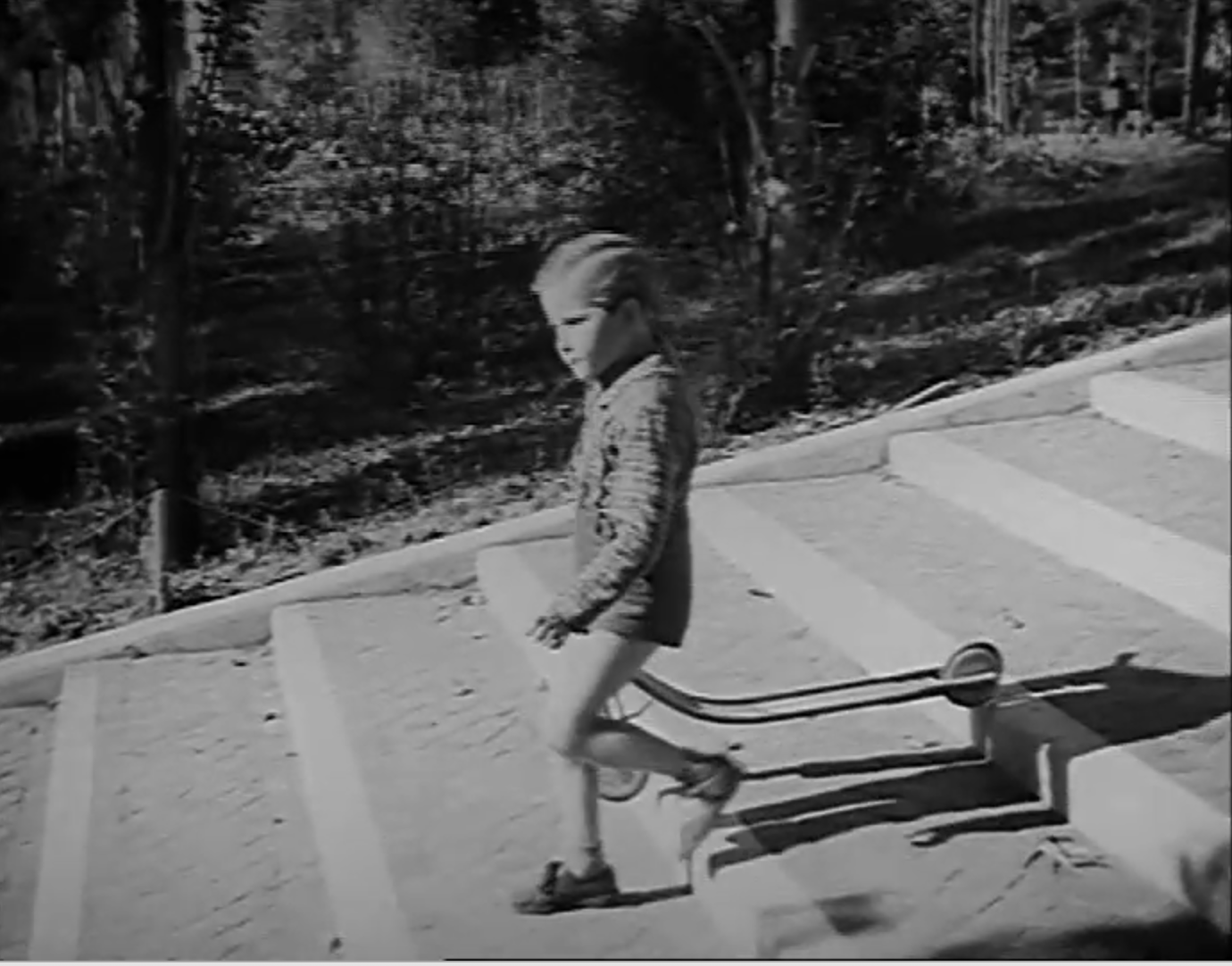
Con un rumore metallico, trascina il monopattino giù per una scalinata. Sotto la luce accecante del sole, proietta una lunga ombra sui gradini poco profondi.
He pulls the scooter, with a clatter, down a staircase. In the dazzling sunlight, he casts a long shadow on the shallow steps.
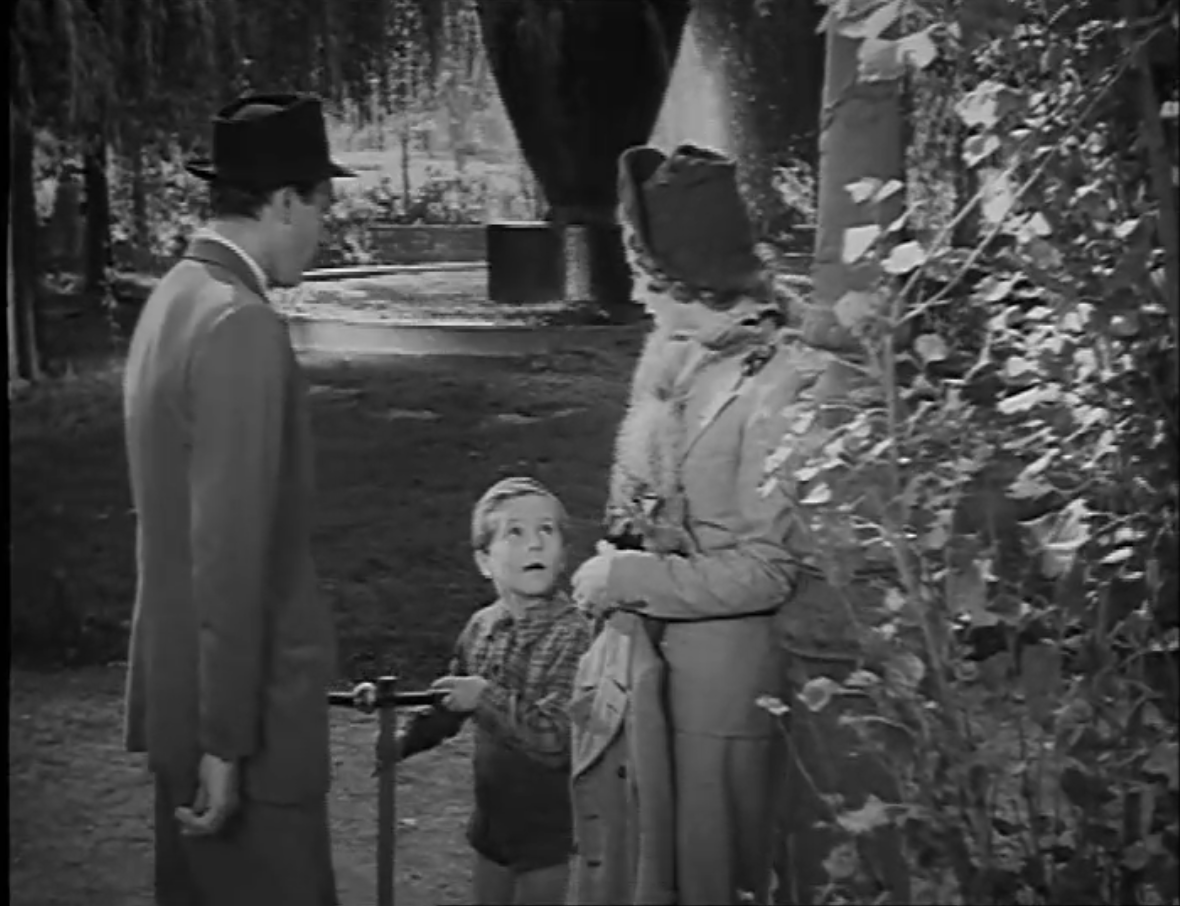
Mentre si avvicina, l'uomo dice: "Un po' di coraggio. Non ci vuole altro".
Pricò si ferma e alza lo sguardo: "Mamma".
As he approaches, the man says, “A little courage. That's all it takes.”
Pricò stops and looks up: “Mamma.”
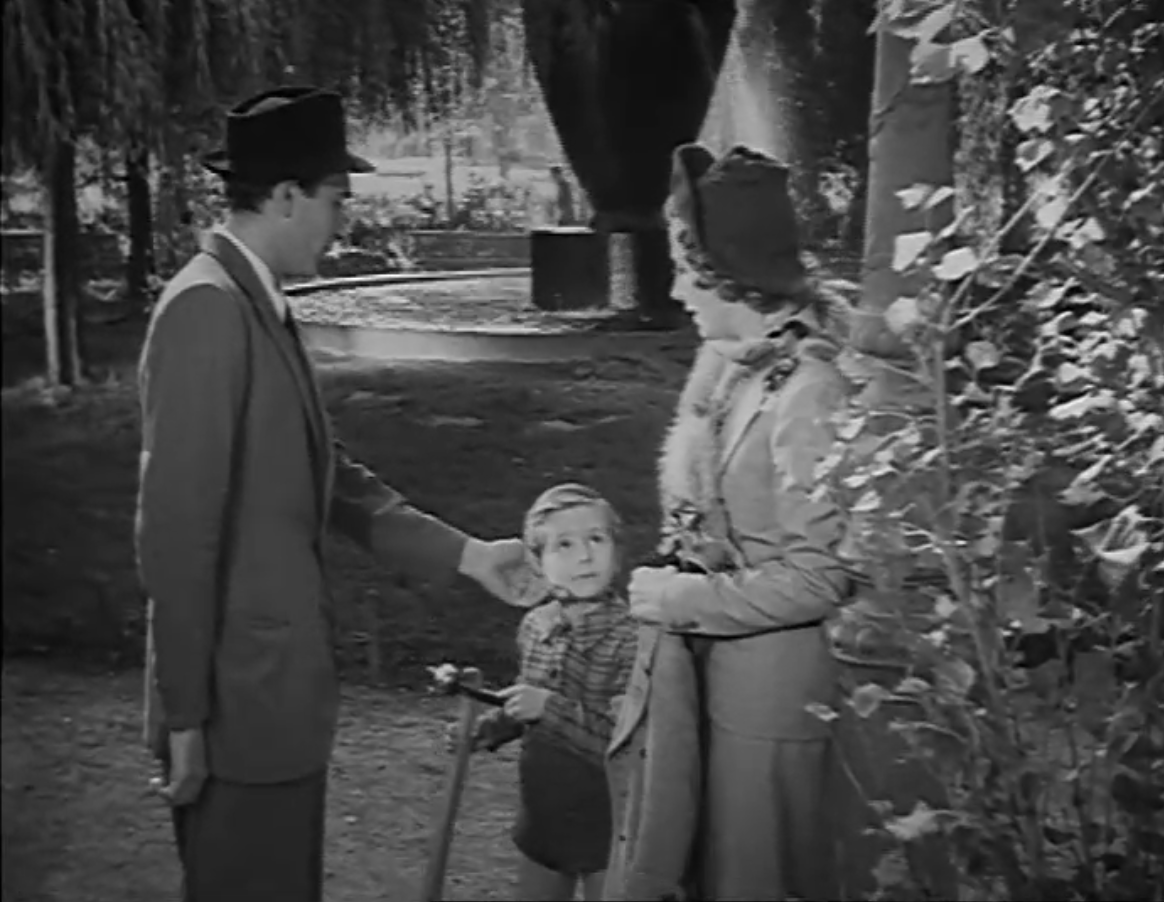
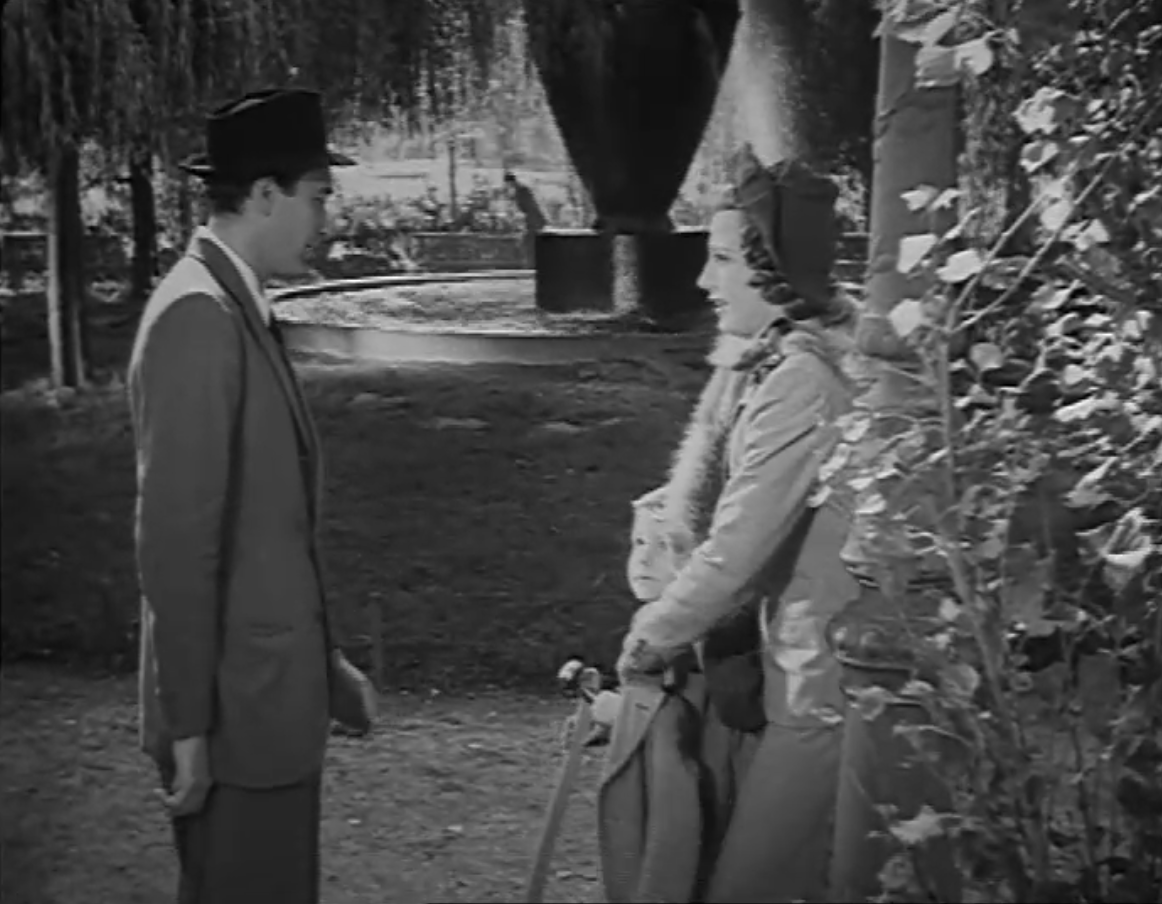
"Buongiorno, Pricò", dice Roberto, allungando una mano per toccargli la guancia. Pricò si avvicina di più alla mamma.
“Good morning, Pricò,” says Roberto, reaching out to touch his cheek. Pricò moves closer to his mother.
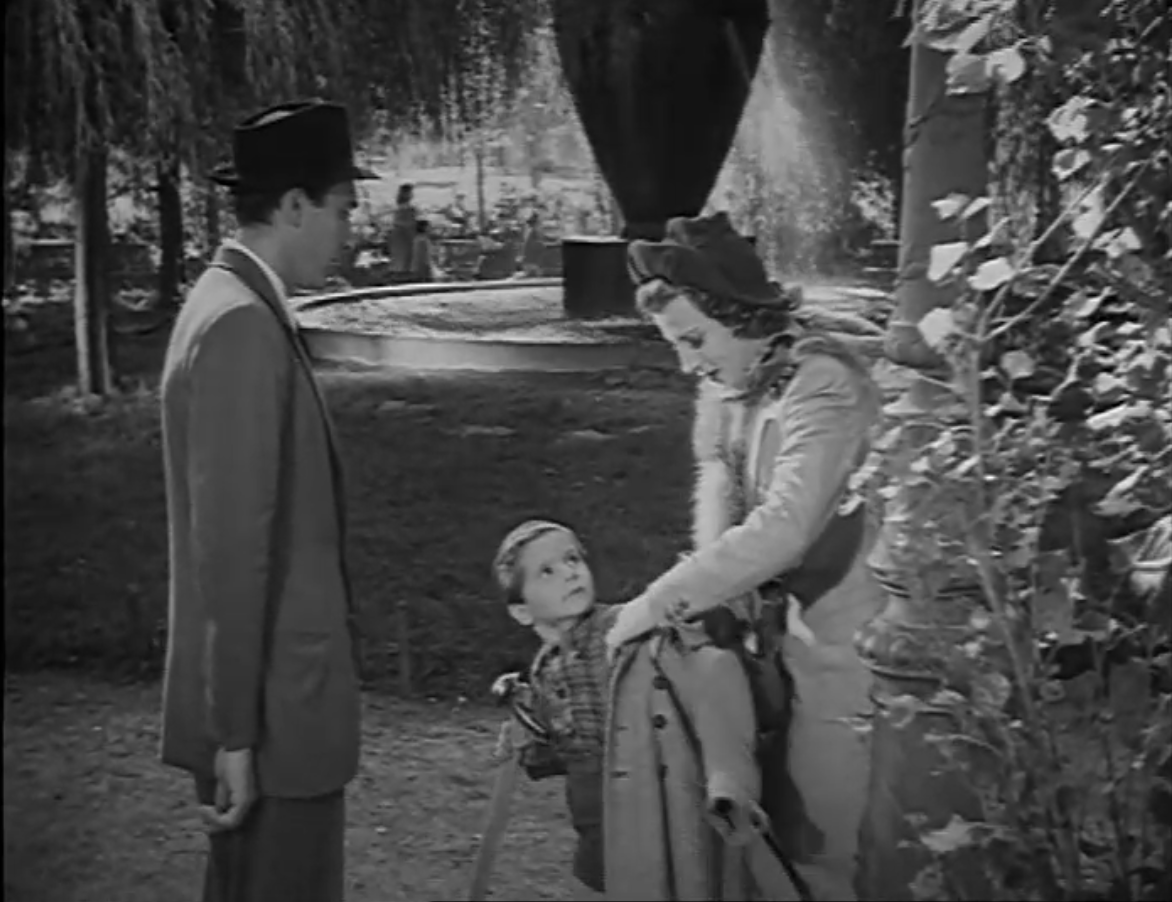
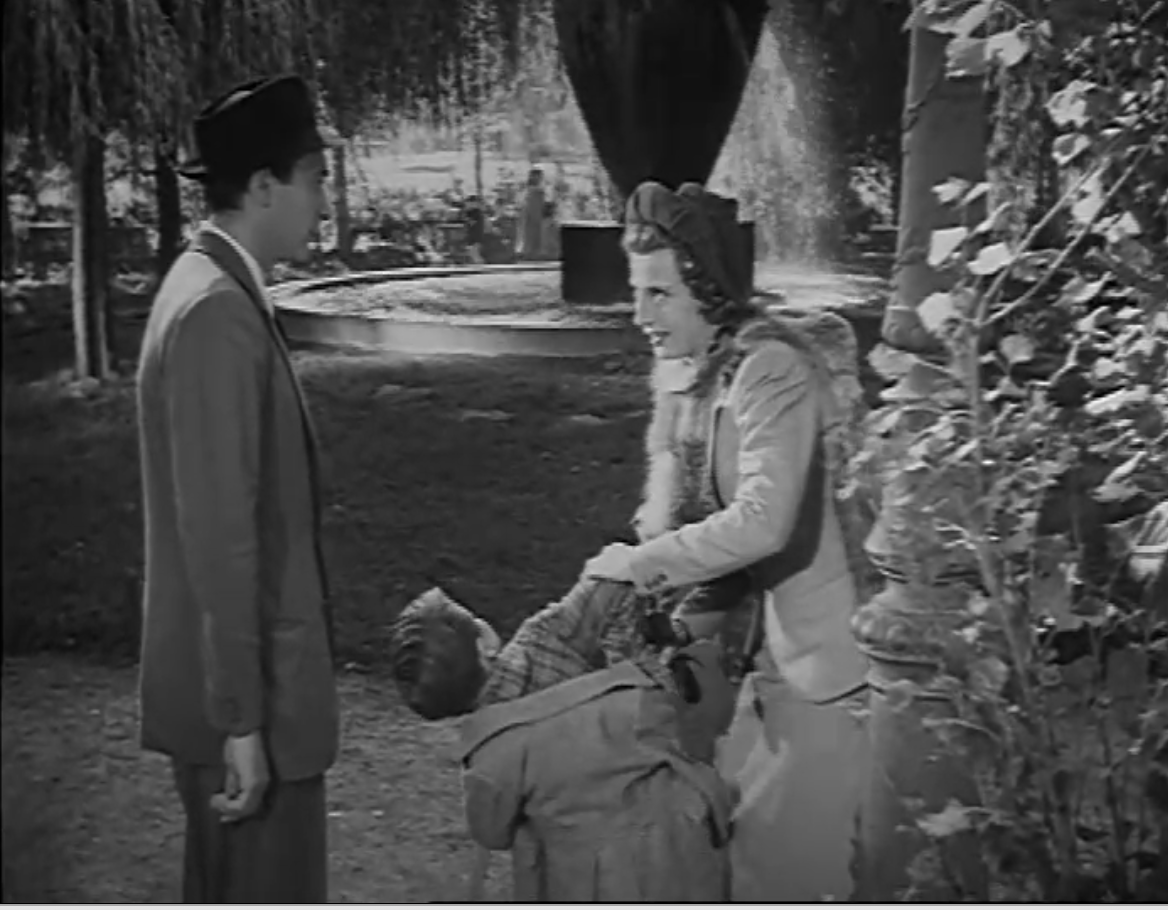
Nina si china per mettere il cappotto a Pricò e dice: "Allora, io la ringrazio molto, signor Roberto. Ci scusi, è tardi". Il bambino la osserva attentamente.
Nina bends to put on Pricò’s coat, saying, “So, thank you very much, Signor Roberto. Excuse us, it’s late.” The child watches her closely.
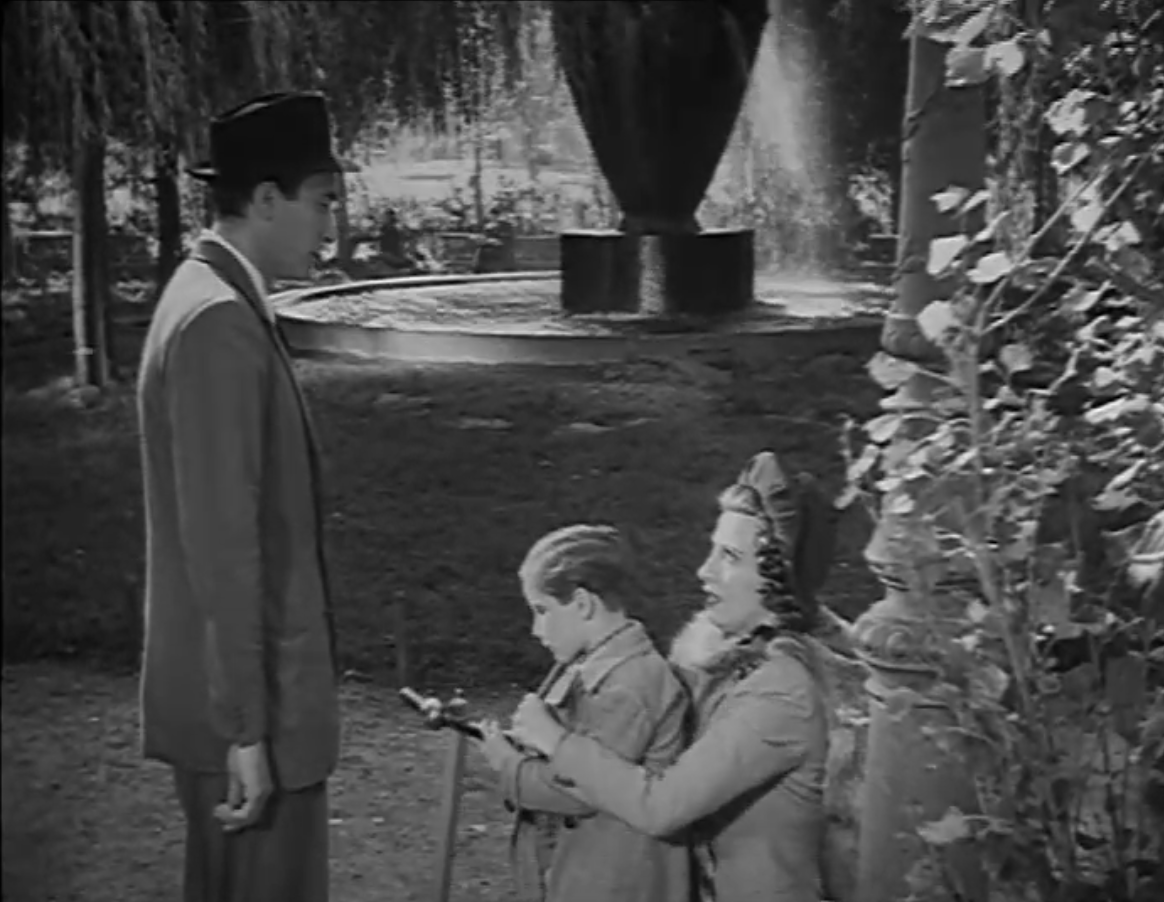
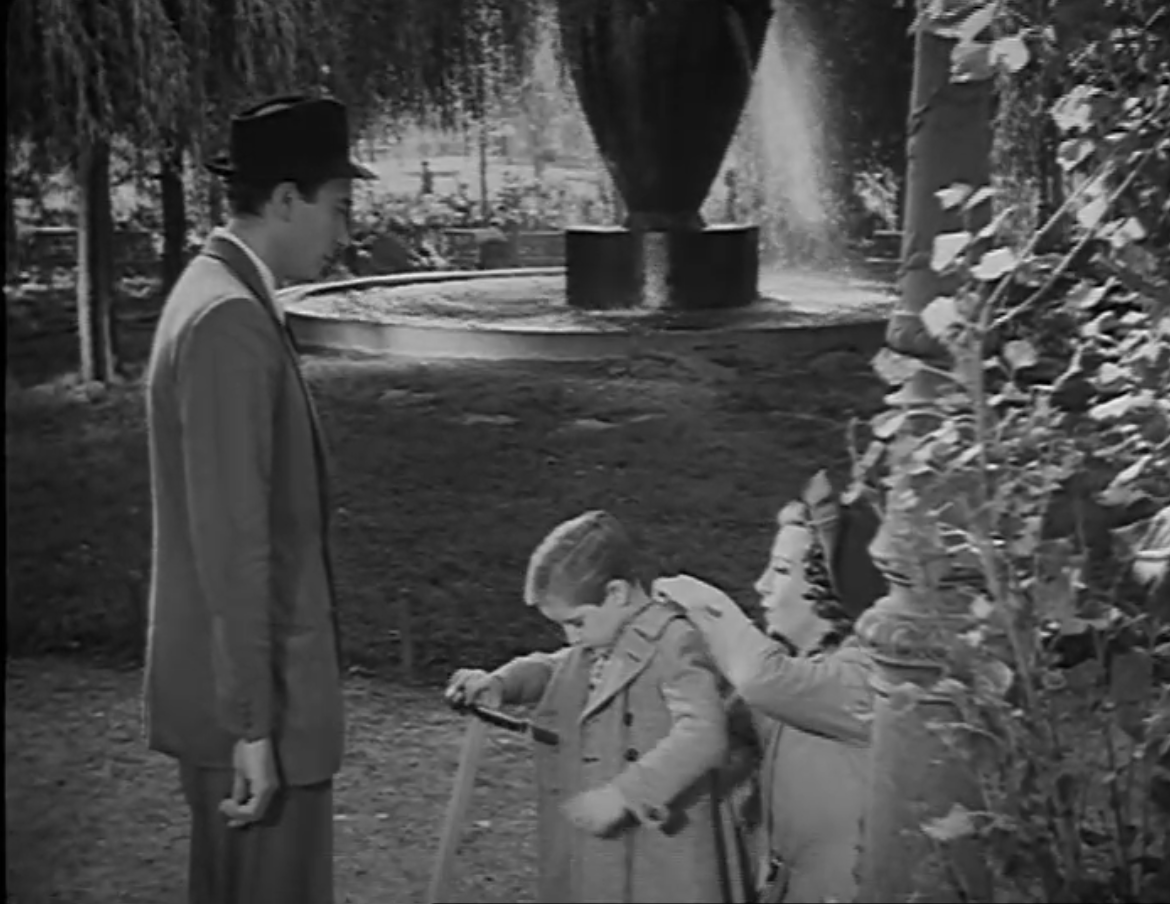
Lei si inginocchia per sistemare il cappotto. "Noi dobbiamo tornare a casa. Tanto tanto piacere di averla incontrata".
She kneels down, adjusting the coat. “We have to go home. It was such a great pleasure running into you.”
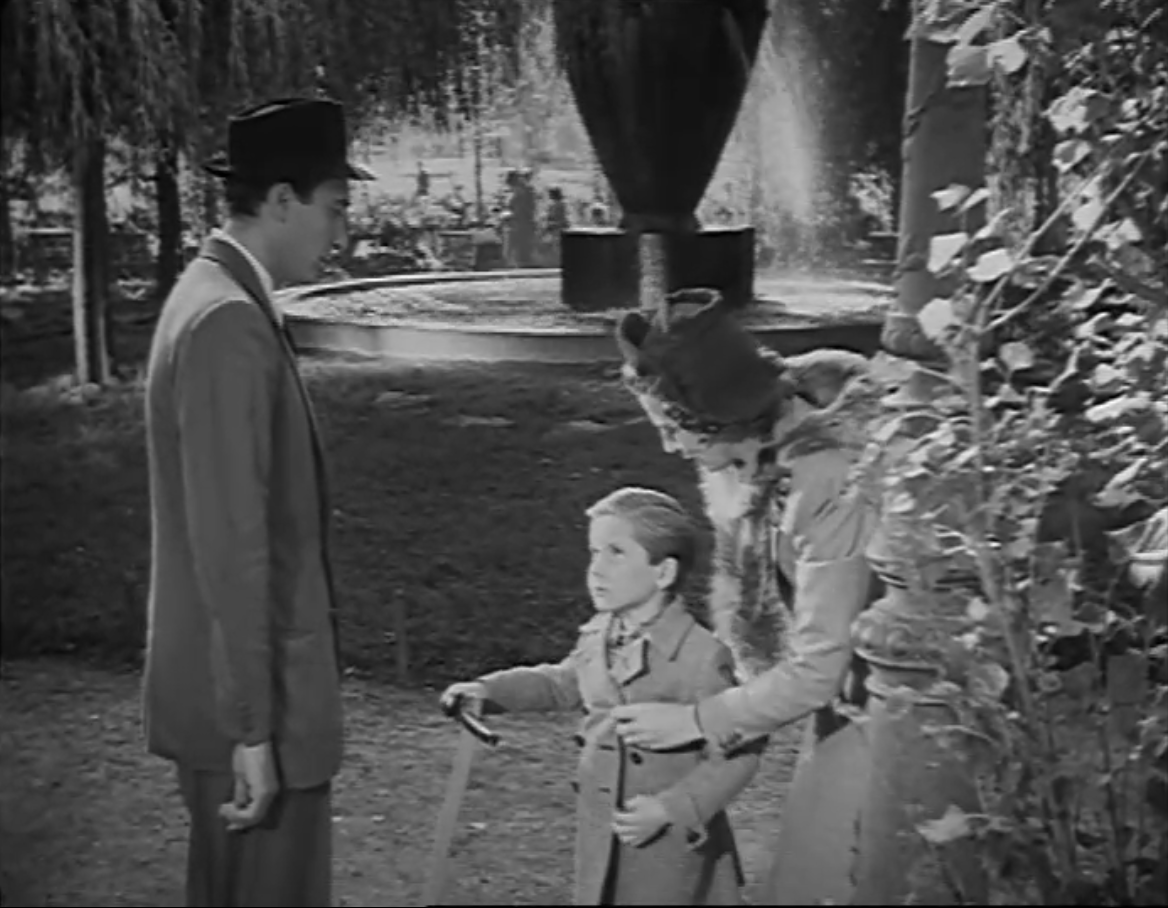
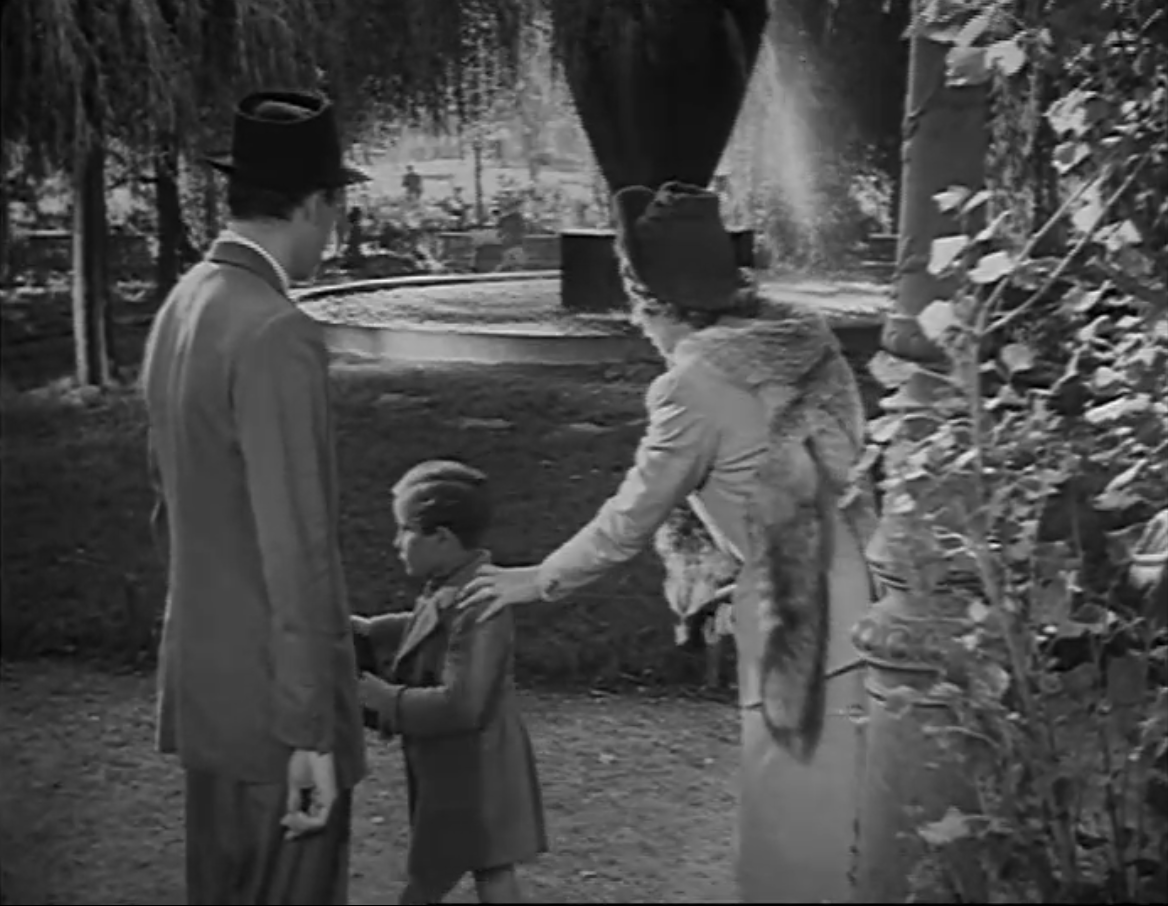
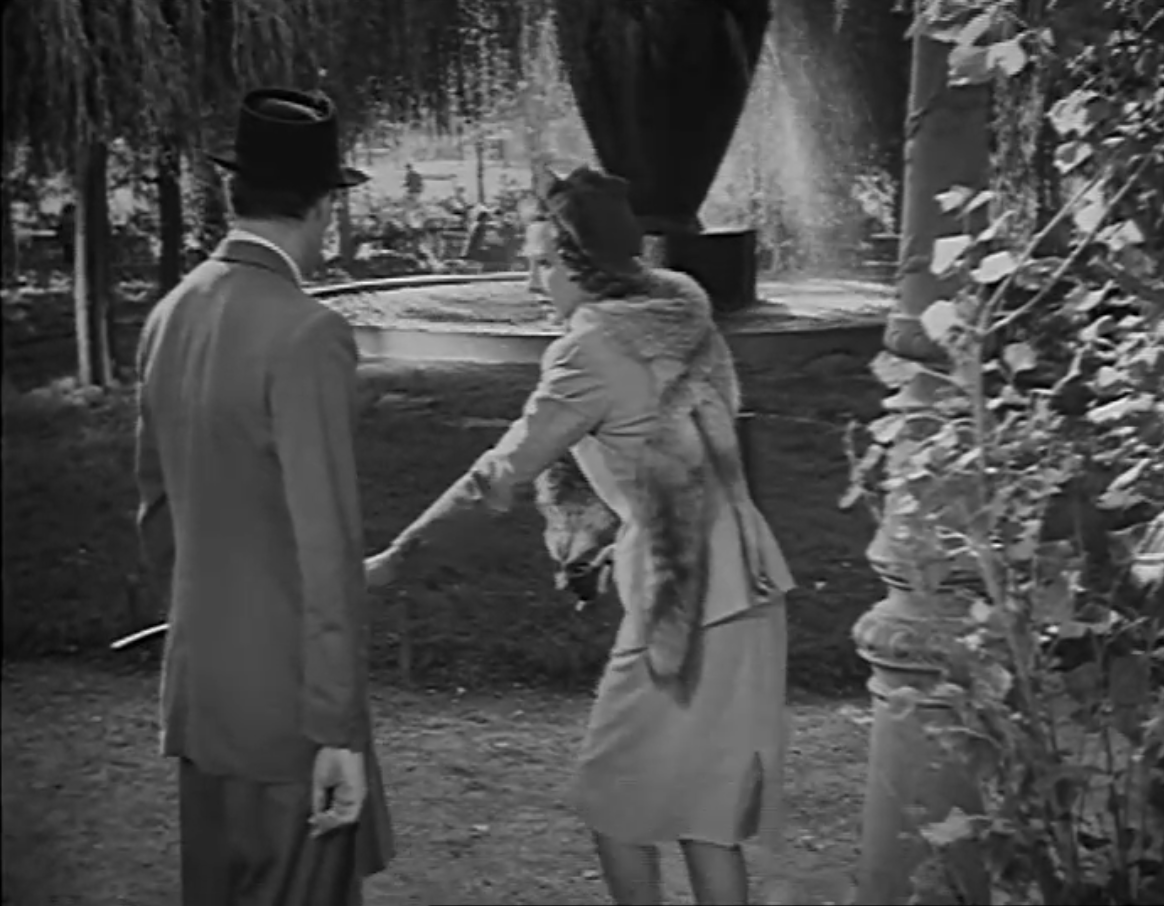
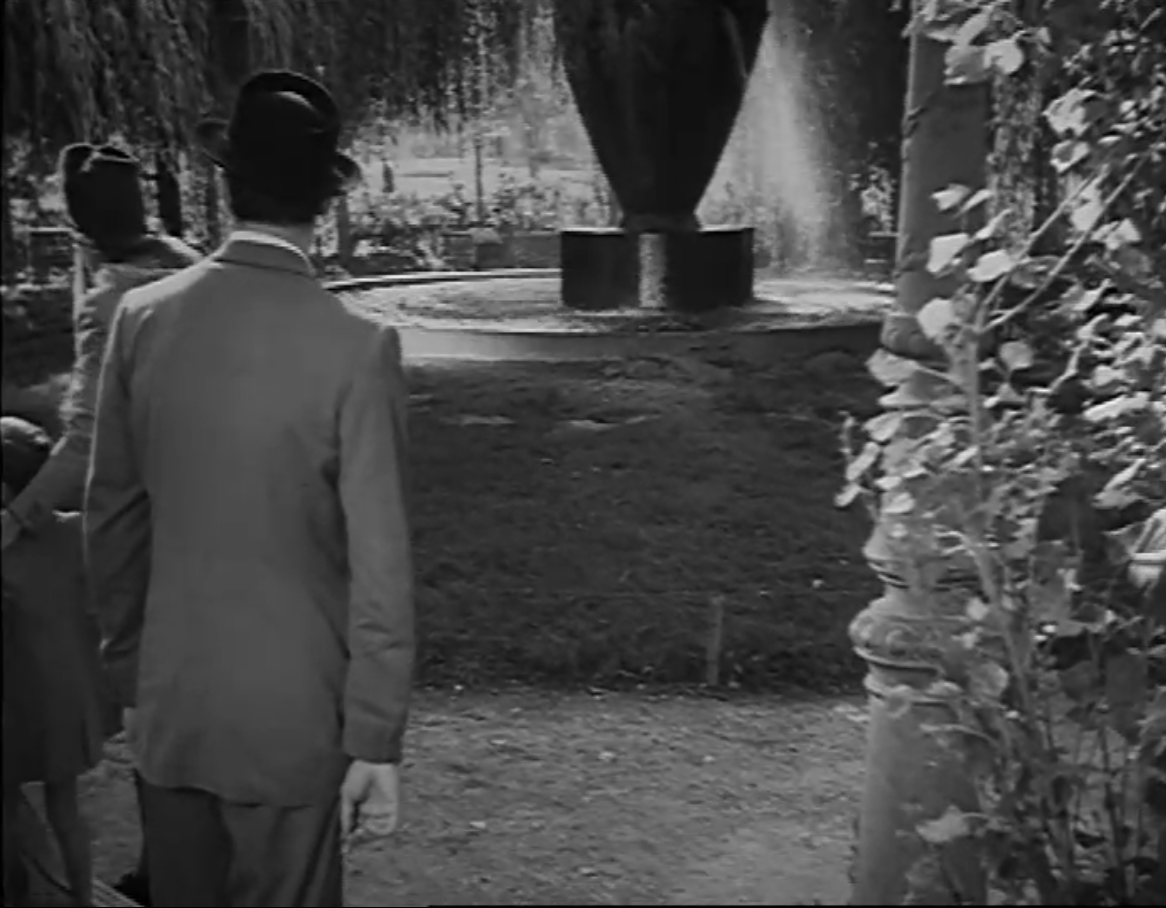
Lei si alza: "Pricò, saluta il signor Roberto". Pricò alza lo sguardo, ma non dice nulla. Lei gli mette una mano sulla spalla e – dopo aver lanciato un'occhiata a Roberto – se ne va.
She stands: “Pricò, say good-bye to Signor Roberto.” Pricò looks up, but says nothing. She puts her hand on his shoulder and – with a glance at Roberto – she walks away.
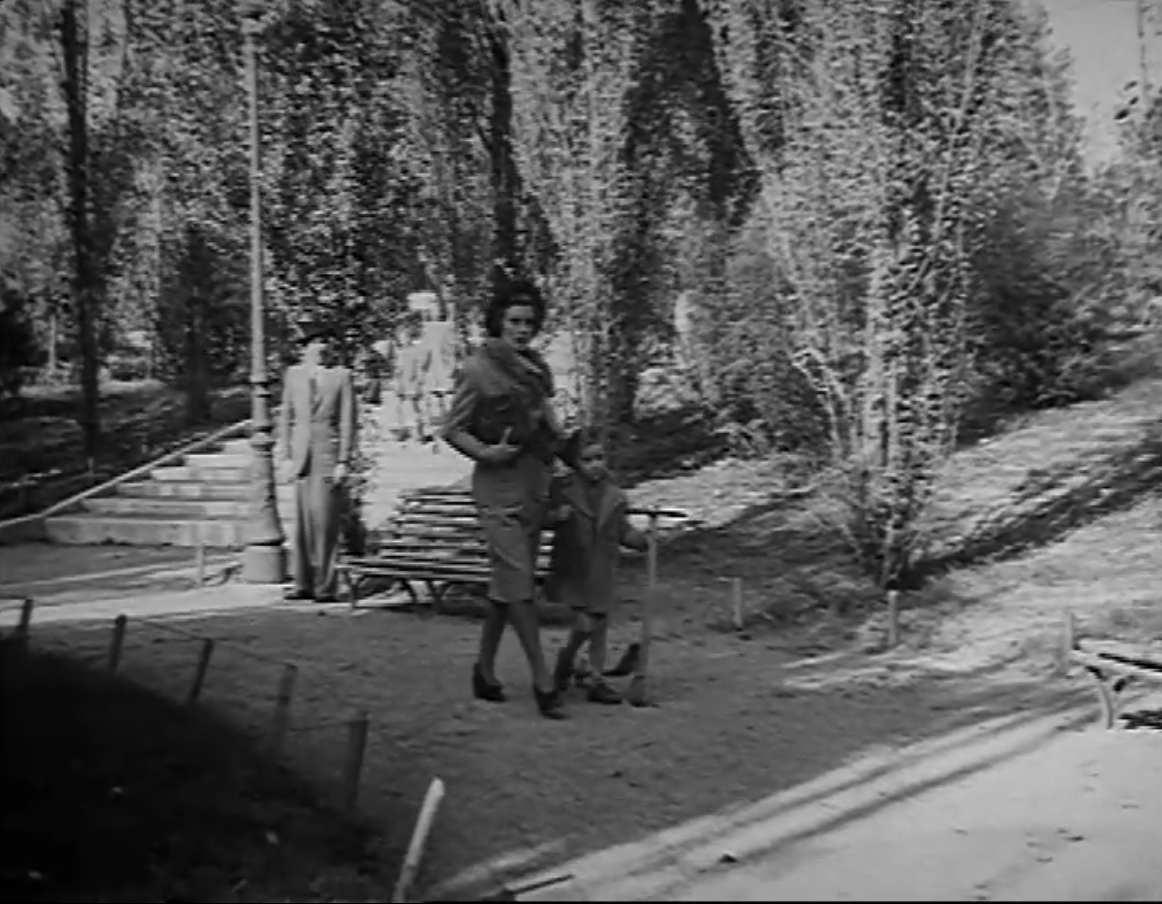
In un campo lungo, vediamo Roberto, avvolto dalla luce, che guarda Nina e Pricò, che si trovano nell'ombra. Le forti linee verticali dell'inquadratura – gli alberi, il lampione – sottolineano la rigidità del portamento degli adulti.
In a long shot, we see Roberto, enveloped in light, gazing after Nina and Pricò, who are in shadow. The strong verticals in the shot – the trees, the lamp post – emphasize the stiffness of the adults’ bearing.
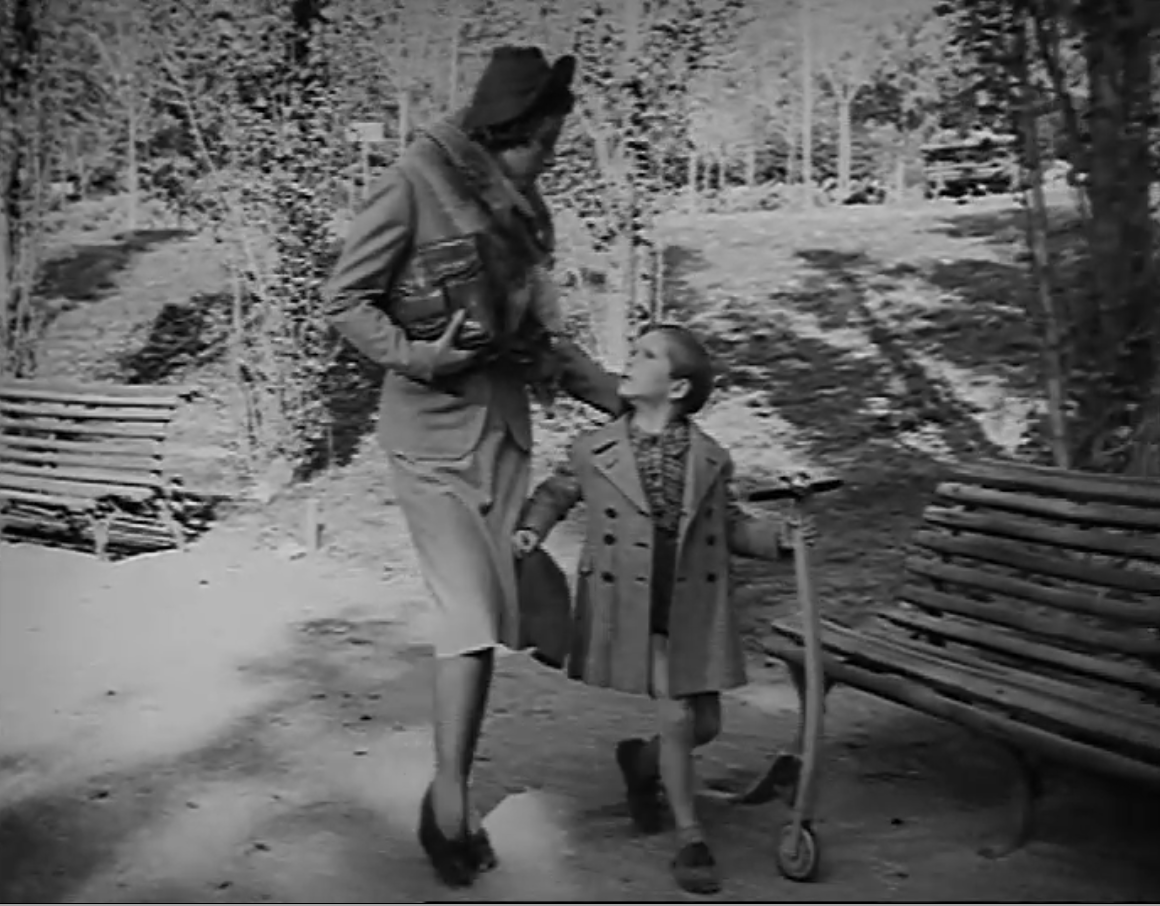
Pricò alza lo sguardo. "Mamma, piangi?"
"No, perché dovrei?"
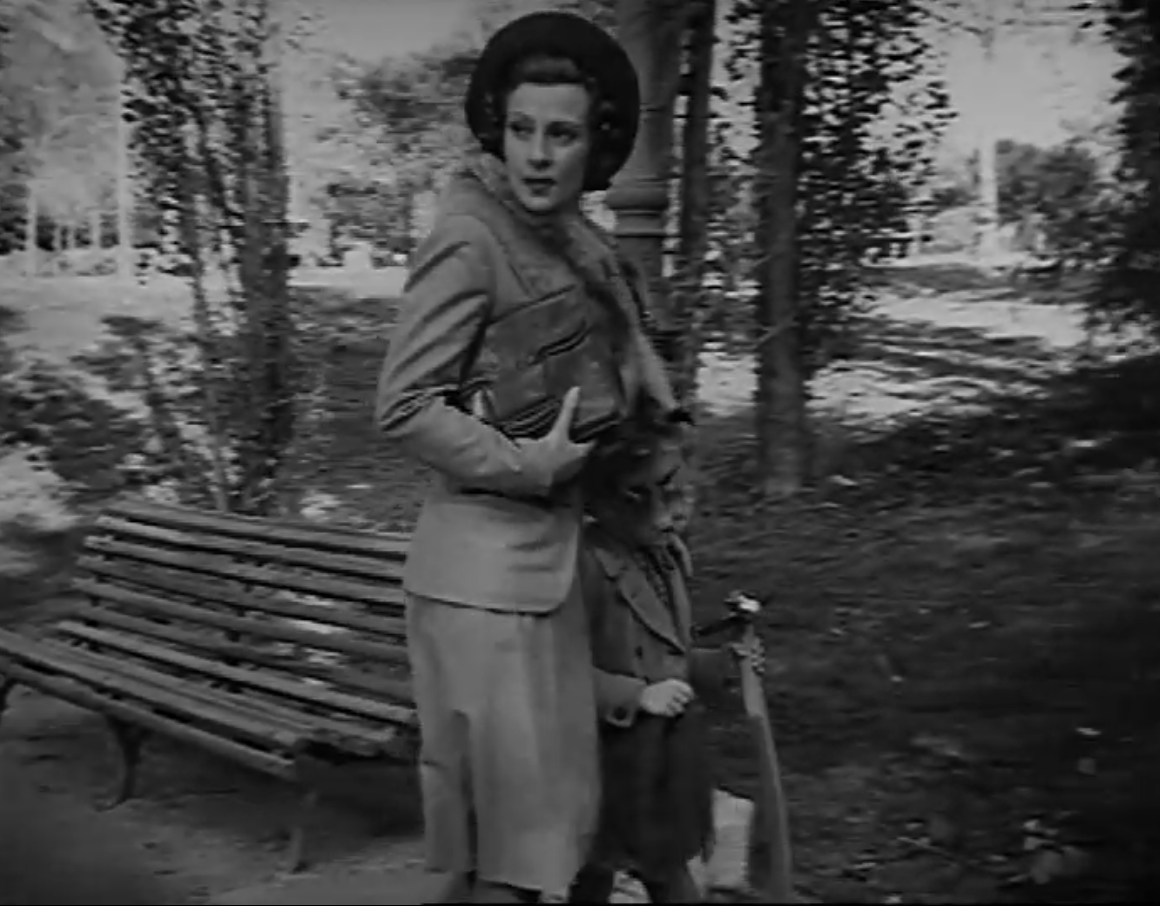
Lei si volta per guardare di nuovo Roberto mentre si allontanano.
Pricò looks up. “Mommy, are you crying?”
“No, why would I be?”
She gazes back towards Roberto as they walk away.
FINE PARTE 1
Ecco Parte 2 of this cineracconto! Subscribe to receive a weekly email newsletter with links to all our new posts.
NOTES ABOUT THE TRANSLATION:
The Italian text of this cineracconto (photo-story) about I bambini ci guardano has been carefully designed as a tool for language learning – and film appreciation. Descriptions of scenes, comments on photography, and background notes are crafted with the objective of giving readers an appreciation of the film, its themes, and the appropriate cultural and historical context.
We have changed most of the Rome dialect to standard Italian. However, we keep the dialect occasionally for flavor, with an explanatory footnote. For example, in Parte 4, we left unchanged the lyrics to the well-known Roman song, “Com'è bello far l'amore quanno è sera” [How lovely it is to make love in the evening], where “quanno” is romanesco for “quando” [when].
We’ve made some changes in the original battute (lines) in order to make the cineracconto accessible to a wide range of language learners. This normally means using more basic vocabulary and grammar. However, we sometimes do include a more advanced word or a grammatical structure, if it is the best choice or will be of value to a learner. And we occasionally maintain phrasing that is not so easily translatable, if the Italian is common and useful to the language learner. In Parte 2, during the condominium meeting, a resident addresses the chair as “Cavaliere,” a common honorific. We keep the term, explaining the meaning in a footnote, and offer “sir” as a very approximate English equivalent. In Parte 4, however, we took “Commendatore” – another common honorific – unchanged into the English version, since the aunt’s visitor was known by that title even in the credits.
Also in Parte 4, when Pricò’s aunt brings him into the work room, she tells her employees, "Ragazze, fatelo giocare". There’s no easy way to translate this: basically, the aunt is telling the women to make sure that the little boy is comfortable and entertained. Because that “fare” structure is so common, however, we’ve kept the exact line in Italian and translated it as “Girls, make sure he plays.”
As an example of simplified vocabulary, we’ve changed Prico’s plea to his mother in Parte 6, "Levati il cappello," to use the word language learners might be more familiar with: “Togliti il cappello." [Take your hat off.]
Where numerical information would be easier to understand if converted, we do so, for example in Parte 7 translating “19 kilos” as “42 pounds.”
In general, we aim to make the two languages parallel in structure, so that the text will be clearer to lower level B2 readers. However, where the differences could be instructive, we maintain them. Likewise, where the English translation simply doesn’t sound right, we’ll adapt it, rather than change the Italian line. In Parte 6, Nina says, "È Papà che non vuole". The English needs an object, so we’ve added, “It’s Daddy who doesn’t want me to stay.”
While we generally minimize the use of the congiuntivo, it does appear in contexts where it's easy to understand and instructive. For example, in Parte 1, we’ve written, “Ma sua madre lo prende per un braccio e fa in modo che guardi. [But his mother takes his arm and turns him so that he’ll watch.] This moment is important to the theme of the film: a child forced to watch the conflict between his parents. The congiuntivo is unavoidable here, but we’ve adopted a simple form. Likewise, a simple use of the congiuntivo appears in Parte 6 when Andrea tells Nina: "Ma voglio che tu sappia che questo disgraziato ha permesso che tu rimanessi in casa soltanto per lui". [“But I want you to know that this wretched man is letting you stay only for him.”]
Even with these changes, the dialogue in our cineracconti can be a more accurate reflection of the dialogue as you watch the film than the English subtitles. This is partly because we have the luxury of space and can include a complete transcription of what the characters actually say. But it’s also because we’ve corrected creative re-writes and subtitle errors. For example, in Parte 7, Nina says, "Grazie, è troppo bello". The English subtitle is “Thank you, but it’s too nice,” but in fact the line actually means “Thank you, it’s so nice.” Consequently, the cineracconti will assist readers as they watch the film. (For a fun read about the complexities of subtitling, see our post “Writing Subtitles: Tips for Non-Professionals.” It’s full of bloopers, many from films that we've covered in our cineracconti.)
Since our format change in April 2020, we’re focused less on building vocabulary and more on ensuring a satisfying reading experience for the language learner. We’re in the process of reformatting the past cineracconti, in chronological order, beginning with the most recent. Currently, the oldest cineracconto in the new format is Risate di Gioia. Readers interested in a more challenging read and in vocabulary-building may look at the earlier cineracconti, where new words are marked in bold, a complete vocabulary list is provided at the end, and the English translation is in a separate PDF and not side-by-side with the Italian. See, for example, the bottom of Parte 1 of Rocco e i suoi fratelli.
There is often more than one correct way to translate a particular word or phrase. Context is everything, and we – as language teachers and language learners – have made careful choices, based on the goals of our work here at Li conoscevo bene.
BLOG TRANSLATION OVERVIEW: The earliest cineracconti in this series are at a more advanced intermediate (B2) level. The later cineracconti (starting with Risate di Gioia, April 2020) are at a lower intermediate (B2) level. To see the more advanced cineracconti, please go to the blog Welcome page: the Italian movies are posted on top with thumbnails. There is also a list in the right-hand column mid-way down the page; that includes both Italian and international films.
We love language and we sometimes spend a very long time debating the best way to translate a particular word or phrase. We’d be very happy to hear your thoughts about our translations. Write to blog author Judy Cohen at judycohen.iknewthemwell@gmail.com!