Regia / Director: Vittorio De Sica, 1944
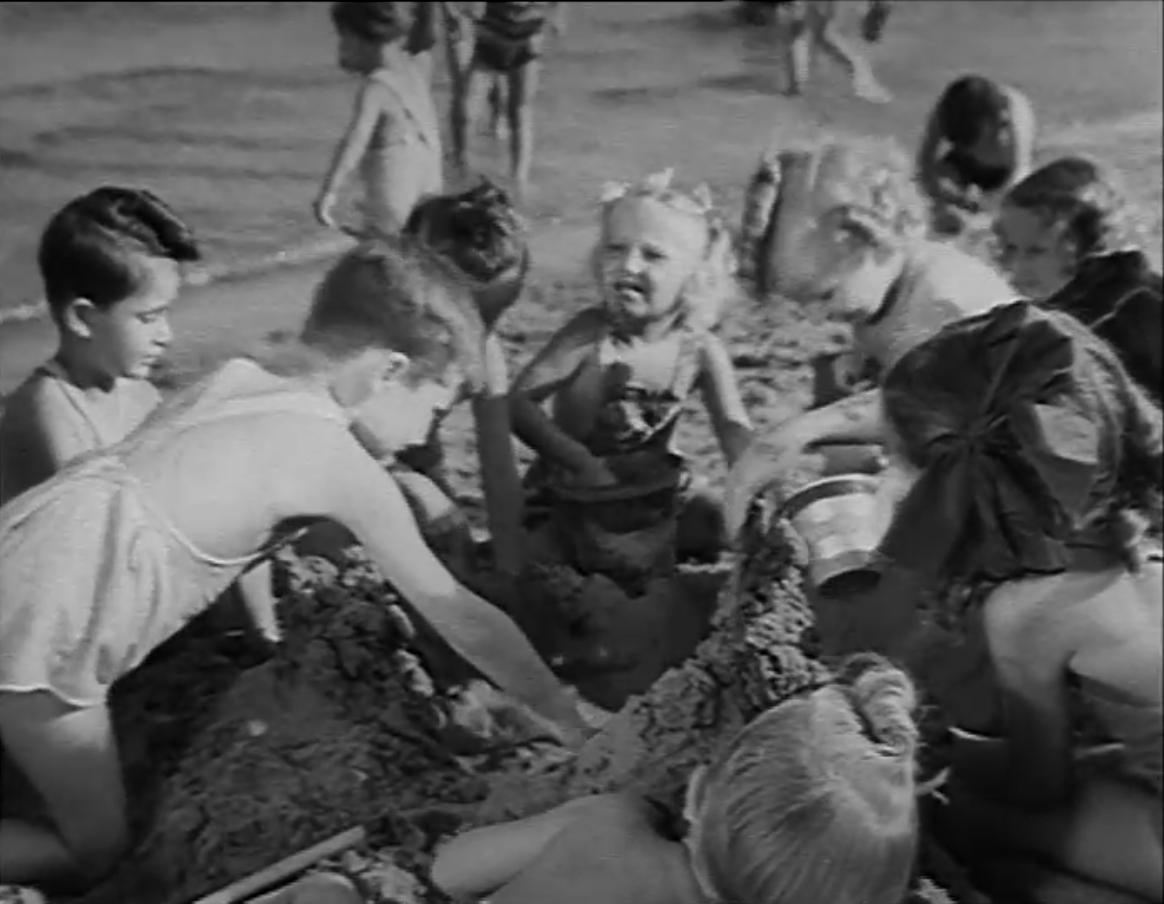
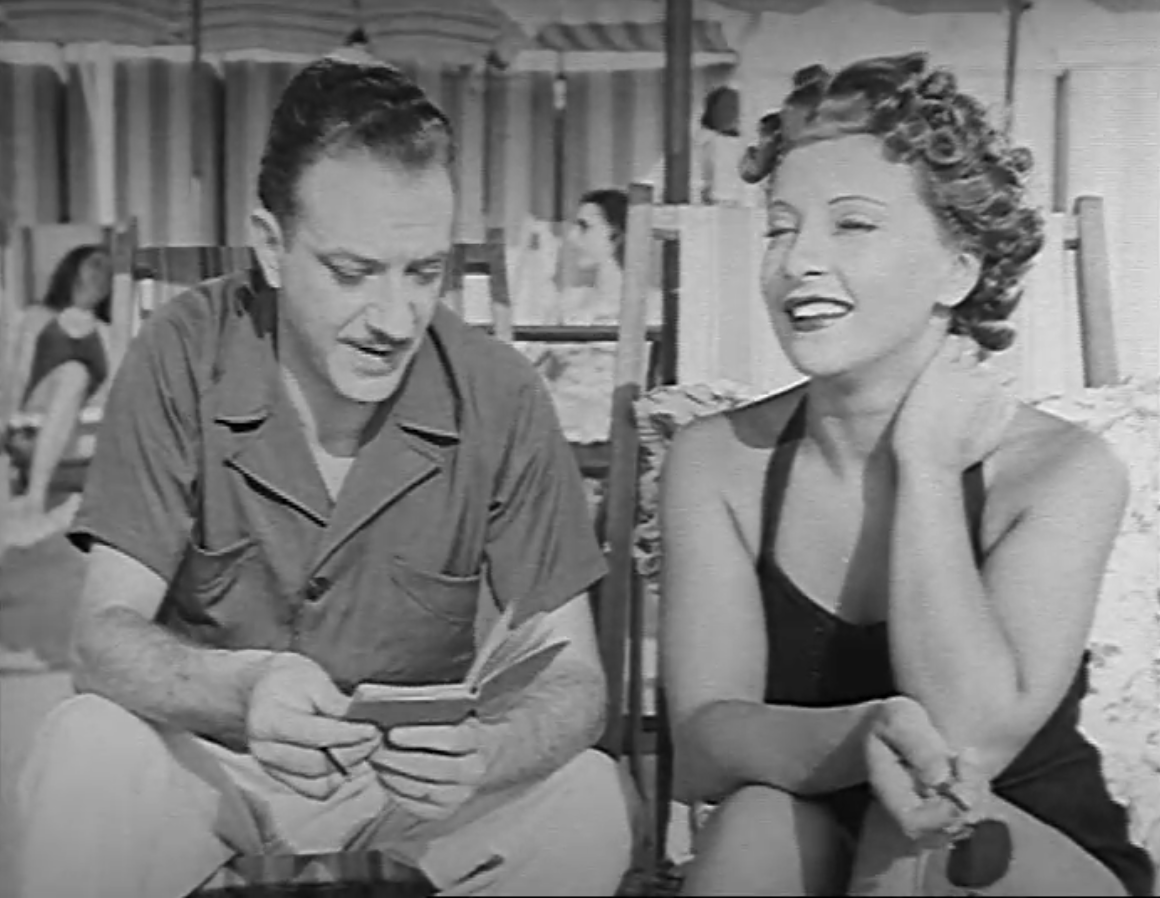
In spiaggia, dei bambini giocano allegramente sulla sabbia. Nina osserva sorridendo Pricò che si diverte. Accanto a lei, Andrea esamina il suo taccuino tascabile.
At the beach, children are playing happily in the sand. Smiling, Nina watches Pricò have fun. Beside her, Andrea examines his pocket notebook.
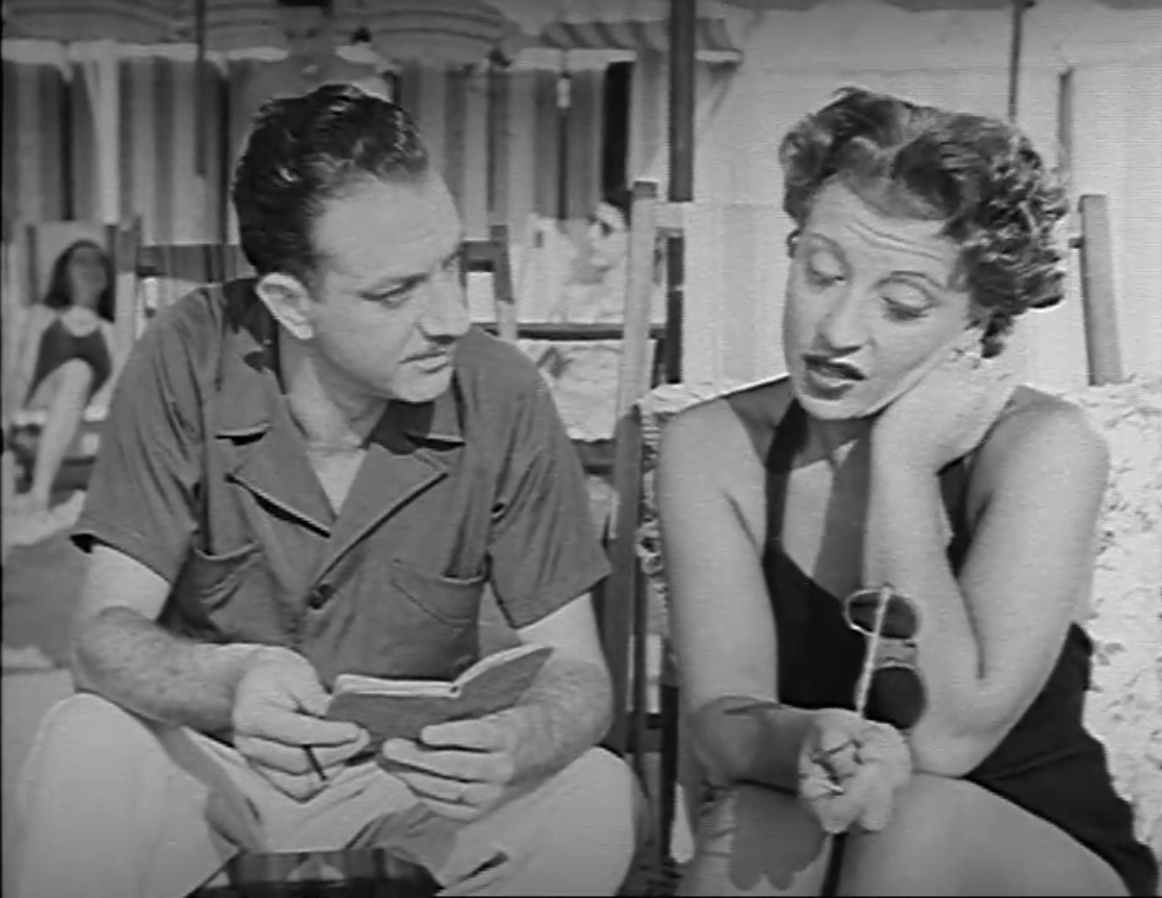
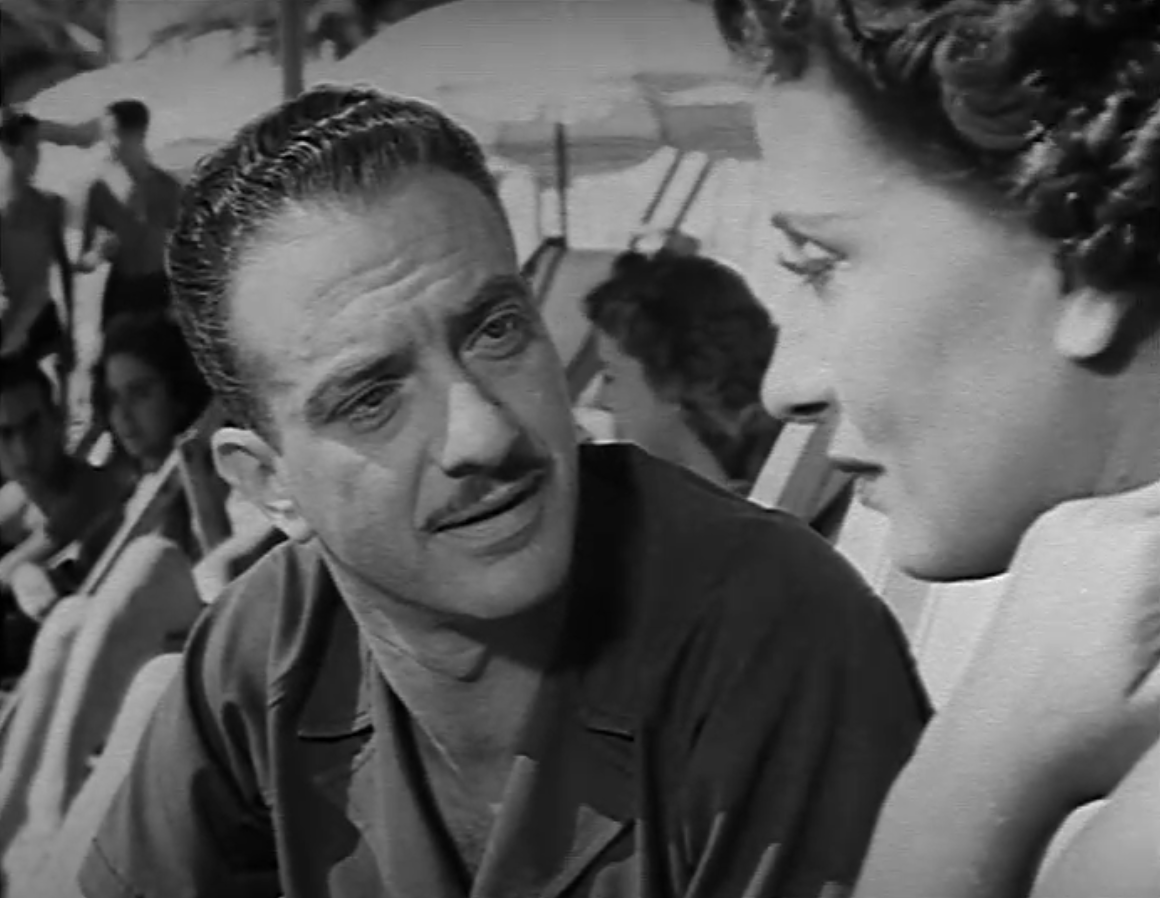
"A conti fatti" – dice – "tu e il bambino qualche altro giorno vi potreste fermare”.
"No… hai già speso tanto".
"E che c’entra? Tu sei stata bene. È questo l’importante". La guarda con tenerezza. "Io me ne vado domani. Voi mi raggiungerete più tardi".
“All things considered,” he says, “you and the little boy could stay on a few more days.”
“No… you’ve already spent so much.”
“So what? You’ve enjoyed yourself. That’s what matters.” He looks at her tenderly. “I’m leaving tomorrow. You two will join me later.”
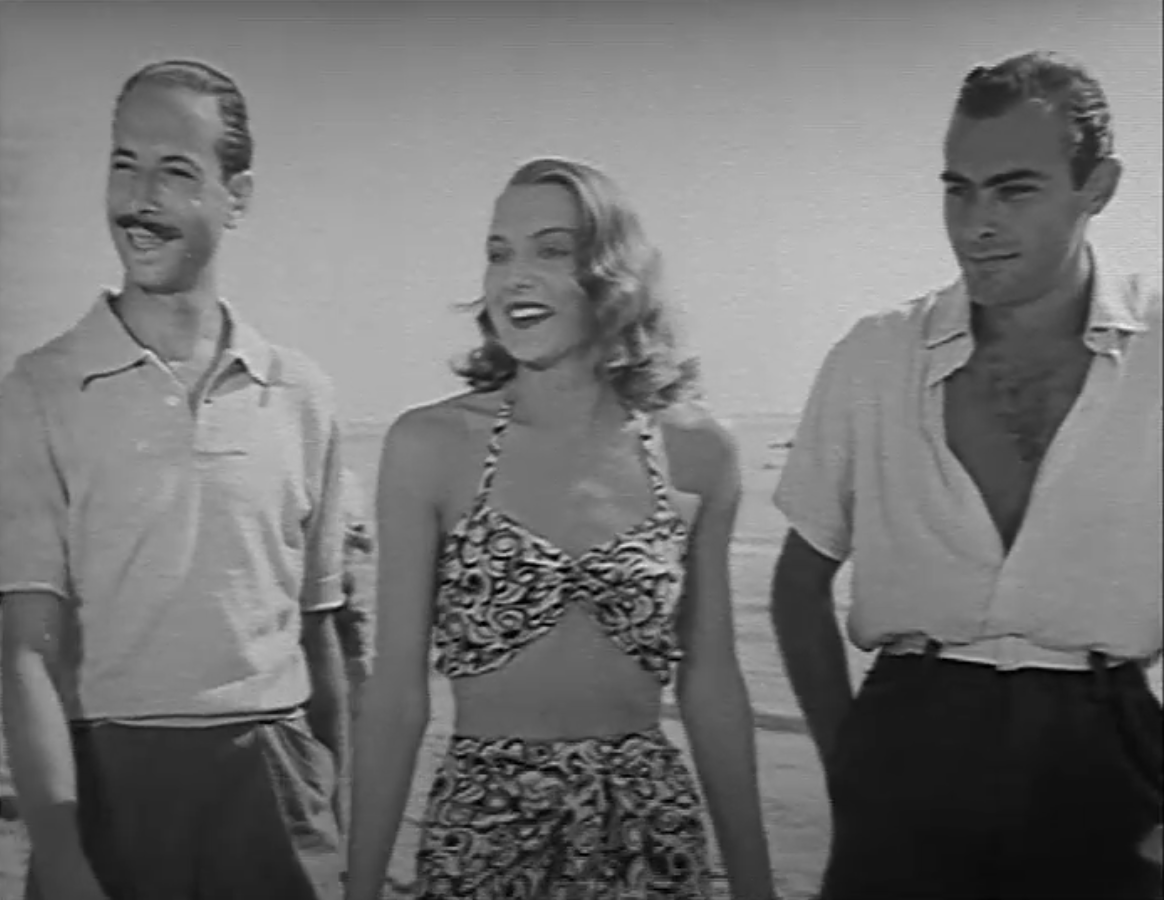
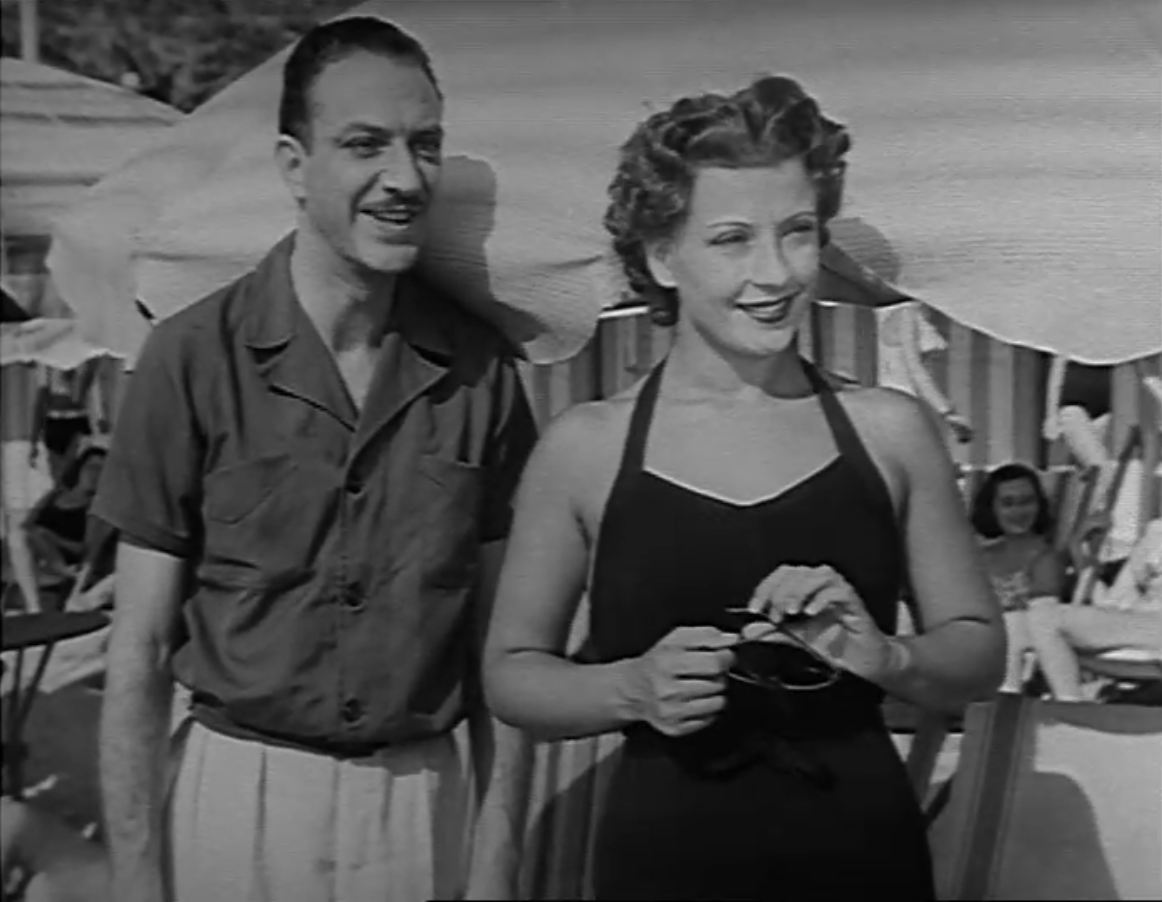
Il trio che hanno già incontrato – Dada e i suoi due compagni, così sicuri di sé – passa loro accanto. "Oh!" esclama Dada. "I due inseparabili".
Andrea e Nina si alzano in piedi, con aria compiaciuta. Lui risponde: "Domani purtroppo si separano".
The trio they’ve already met – Dada and her two self-assured male companions – stroll by. “Oh!” Dada exclaims. “The inseparable pair.”
Andrea and Nina stand up, looking pleased. He replies, “Tomorrow, unfortunately, they will be separating.”
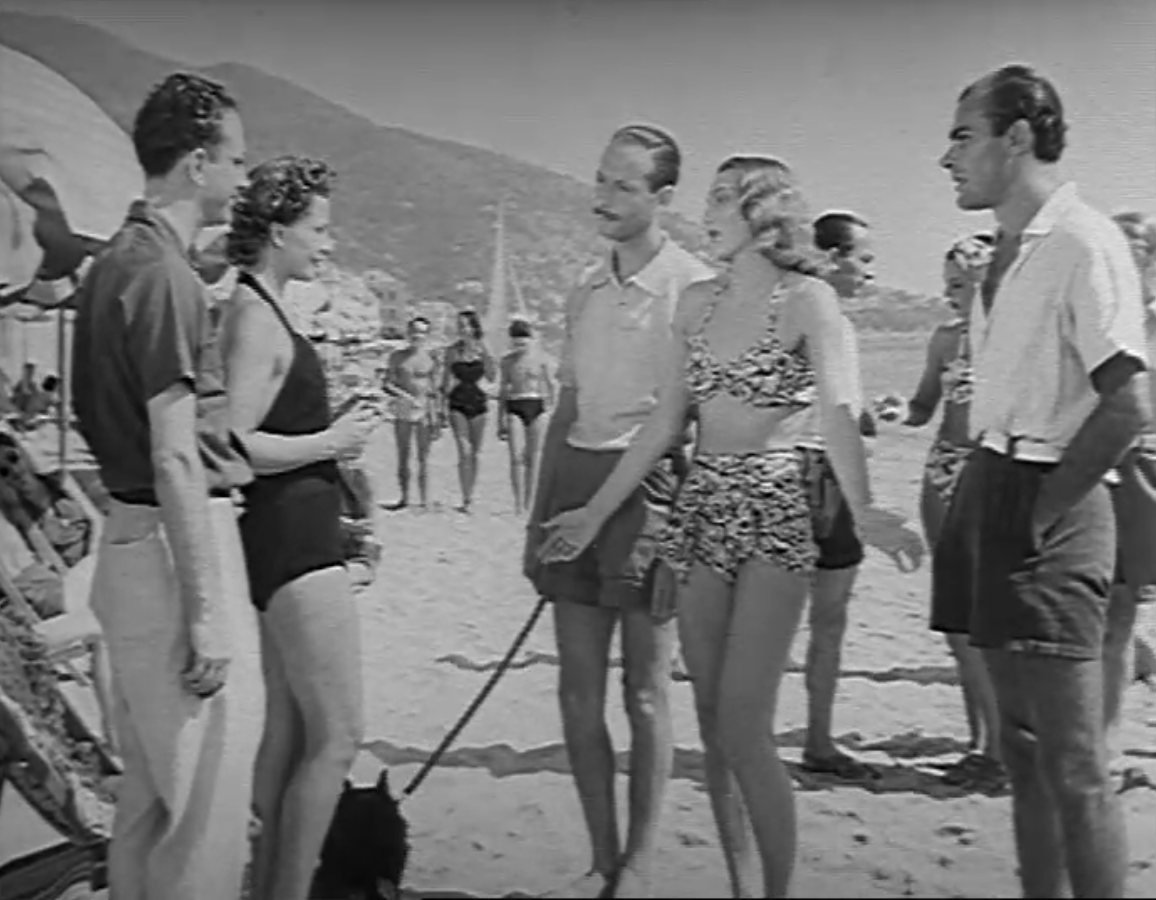
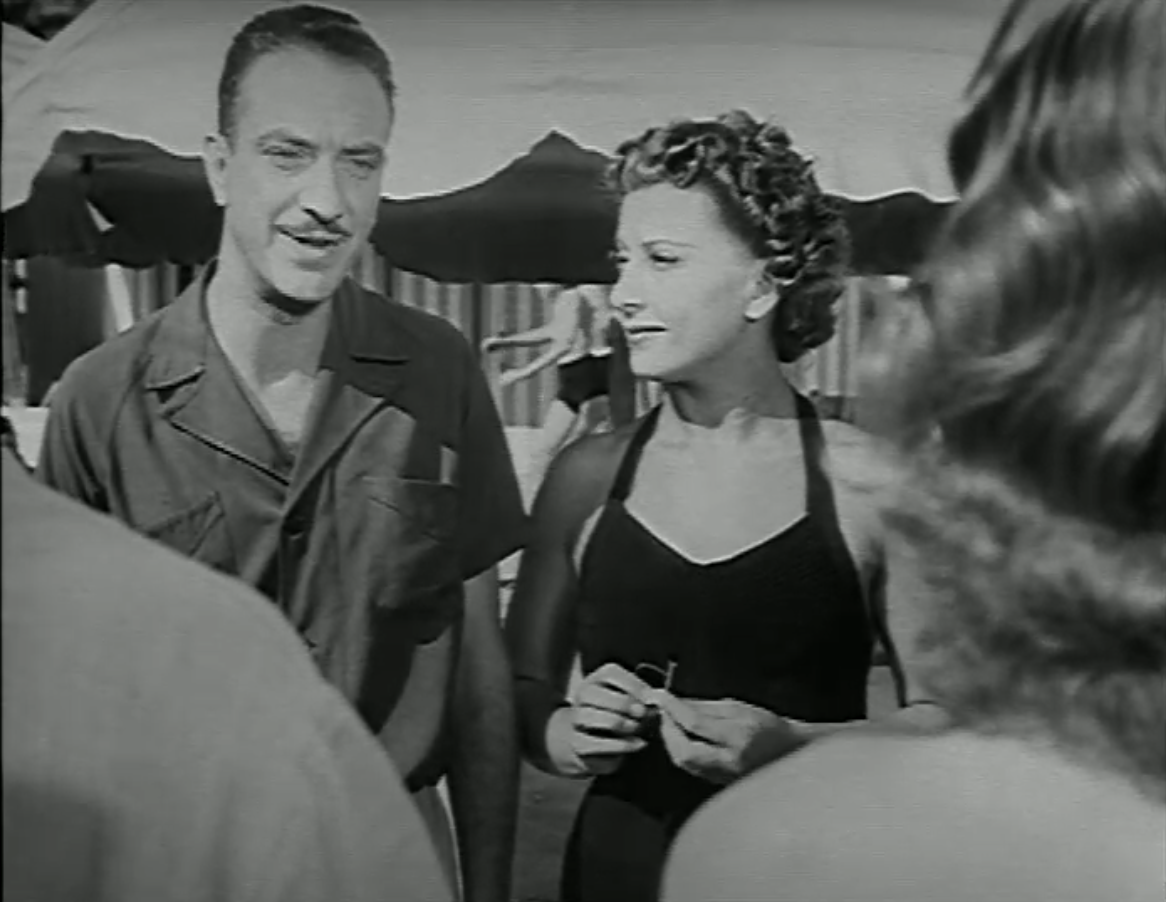
"Ma queste sono cose che non si fanno", protesta Dada, gesticolando con entrambe le braccia. "Un vero tradimento! Ci abbandonate così, all’improvviso?"
"Il dovere chiama. Restano mia moglie e il bambino". Nina lo guarda con gratitudine.
“But these are things that shouldn’t happen,” Dada protests, gesturing with both arms. “A real betrayal! You’re abandoning us this way, suddenly?”
“Duty calls. My wife and the little boy are staying.” Nina looks at him appreciatively.
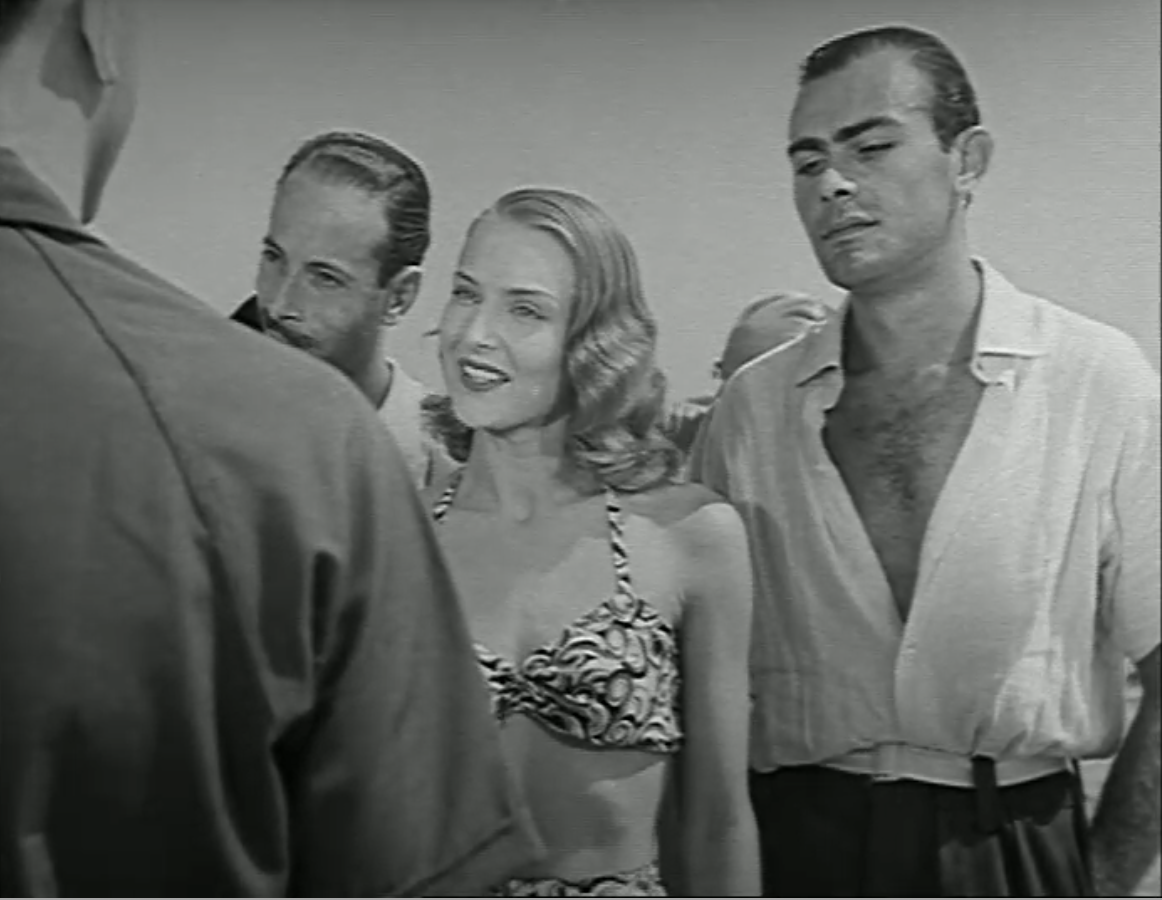
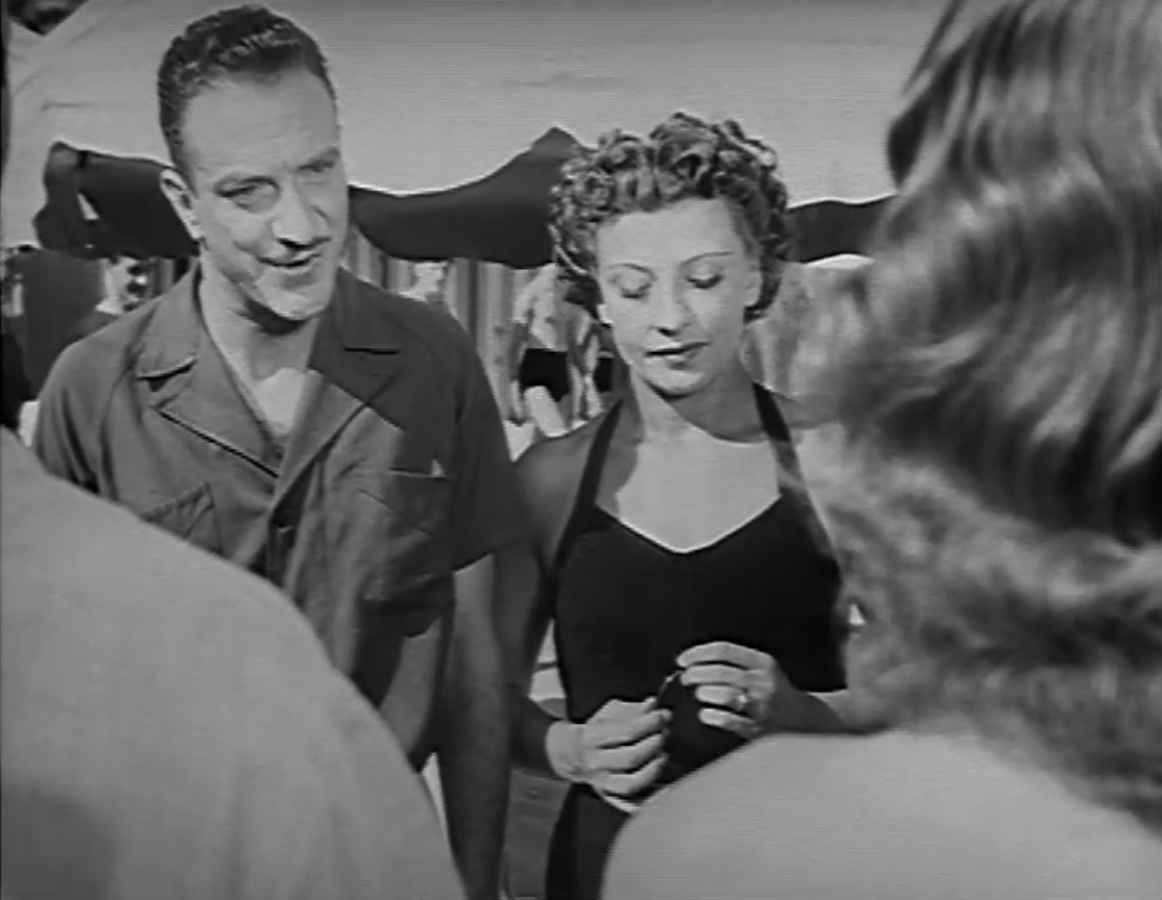
"Oh, la signora rimane? Allora ci permettete di prenderla sotto la nostra tutela?"
"Molto gentile, signora. Sono onoratissimo". Nina abbassa lo sguardo, scontenta.
“Oh, madam is staying? Will you allow us to take her under our care?”
“That’s very kind of you. I’m truly honored.” Nina lowers her gaze, displeased.
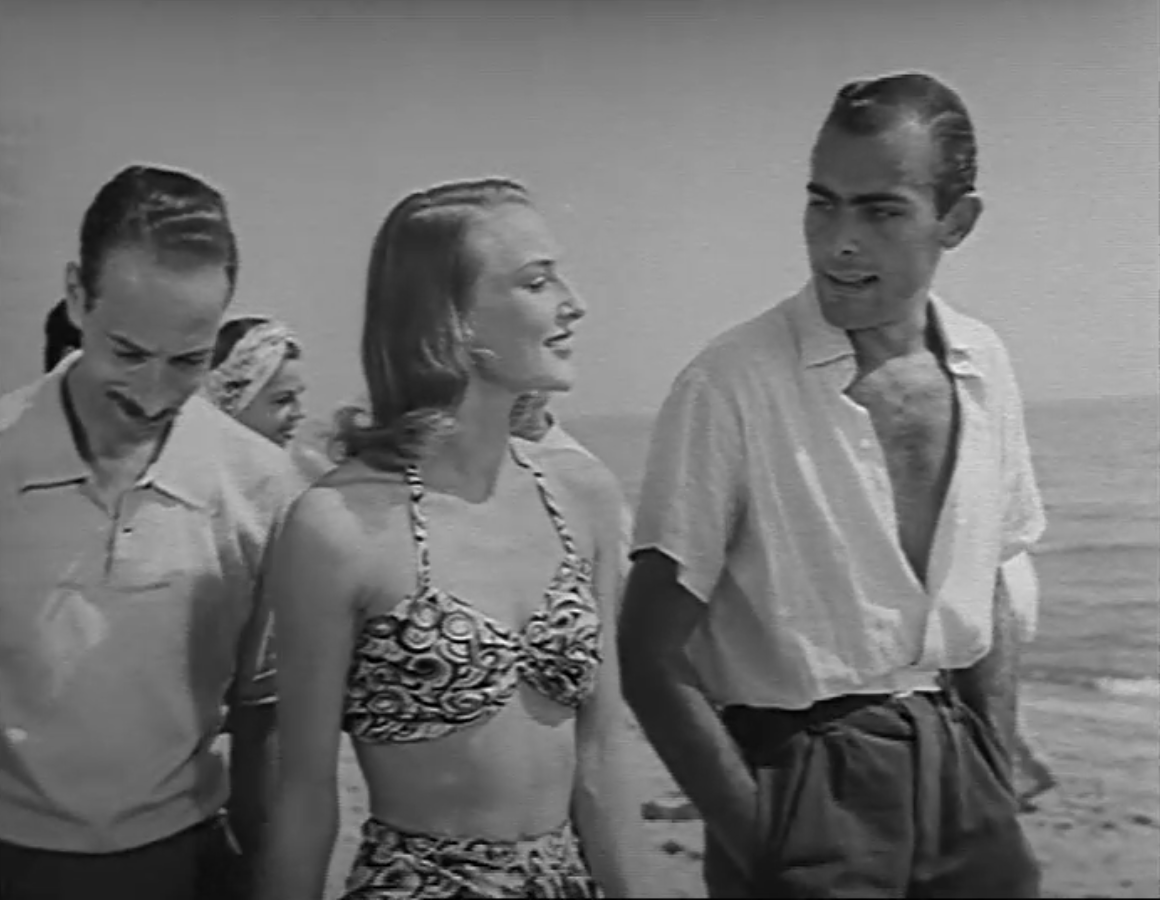
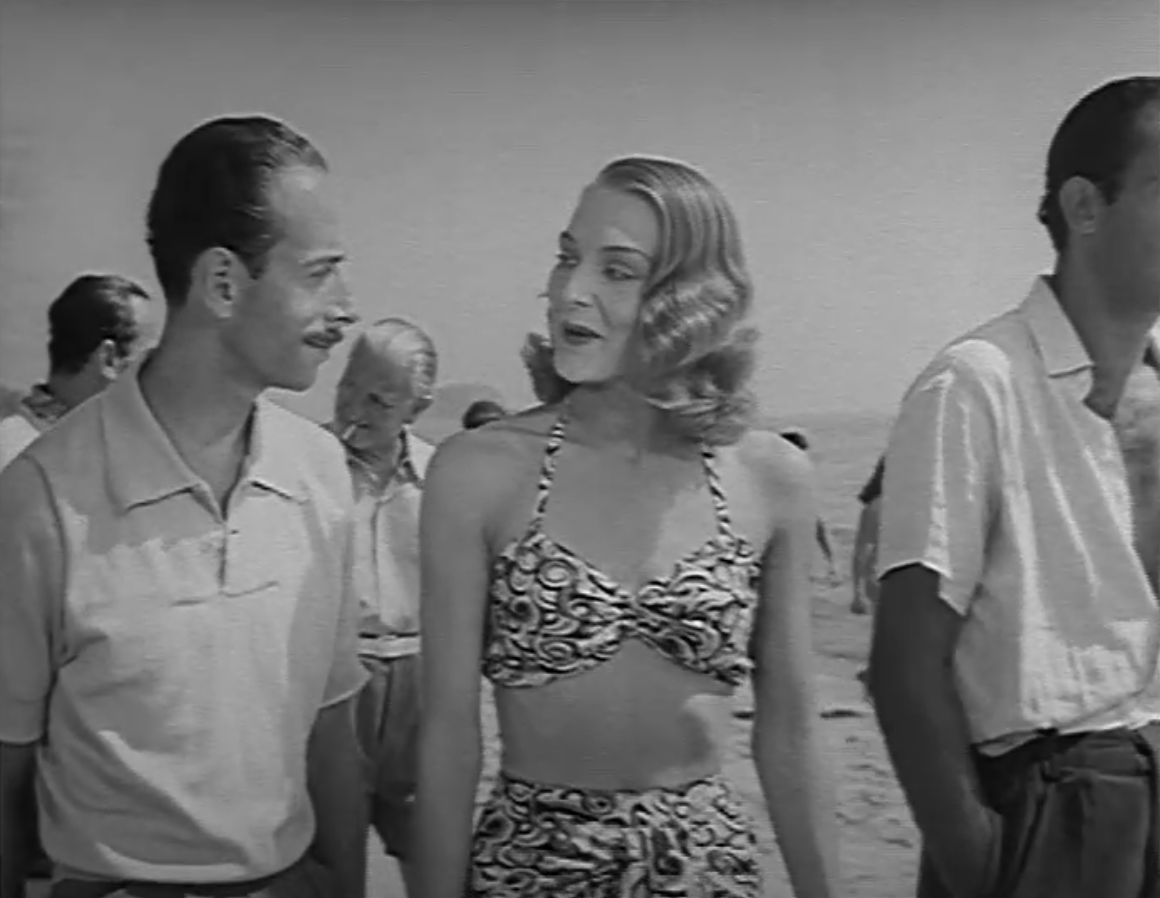
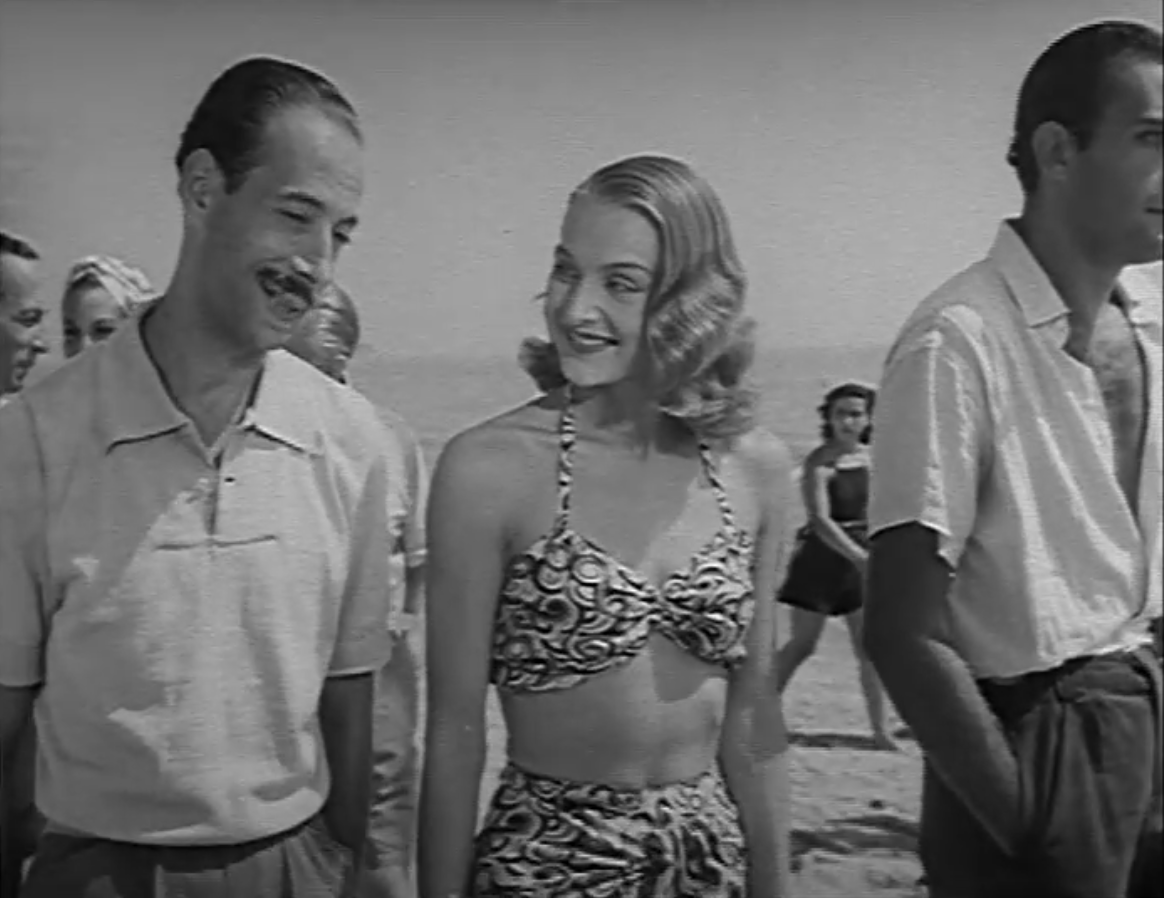
Mentre proseguono, Bepi dice: "Dada, che mania hai di affezionarti a certa gente!"
"Non per me, non per me". Guarda con aria furba Claudio. "Ma bisogna pensare agli amici qualche volta".
"Lei è molto carina", ammette lui.
As they walk on, Bepi says, “Dada, you sure do have a crazy habit of getting attached to certain people!”
“Not for me, not for me.” She looks slyly at Claudio. “But one must think of one’s friends once in a while.”
“She’s very pretty,” he concedes.
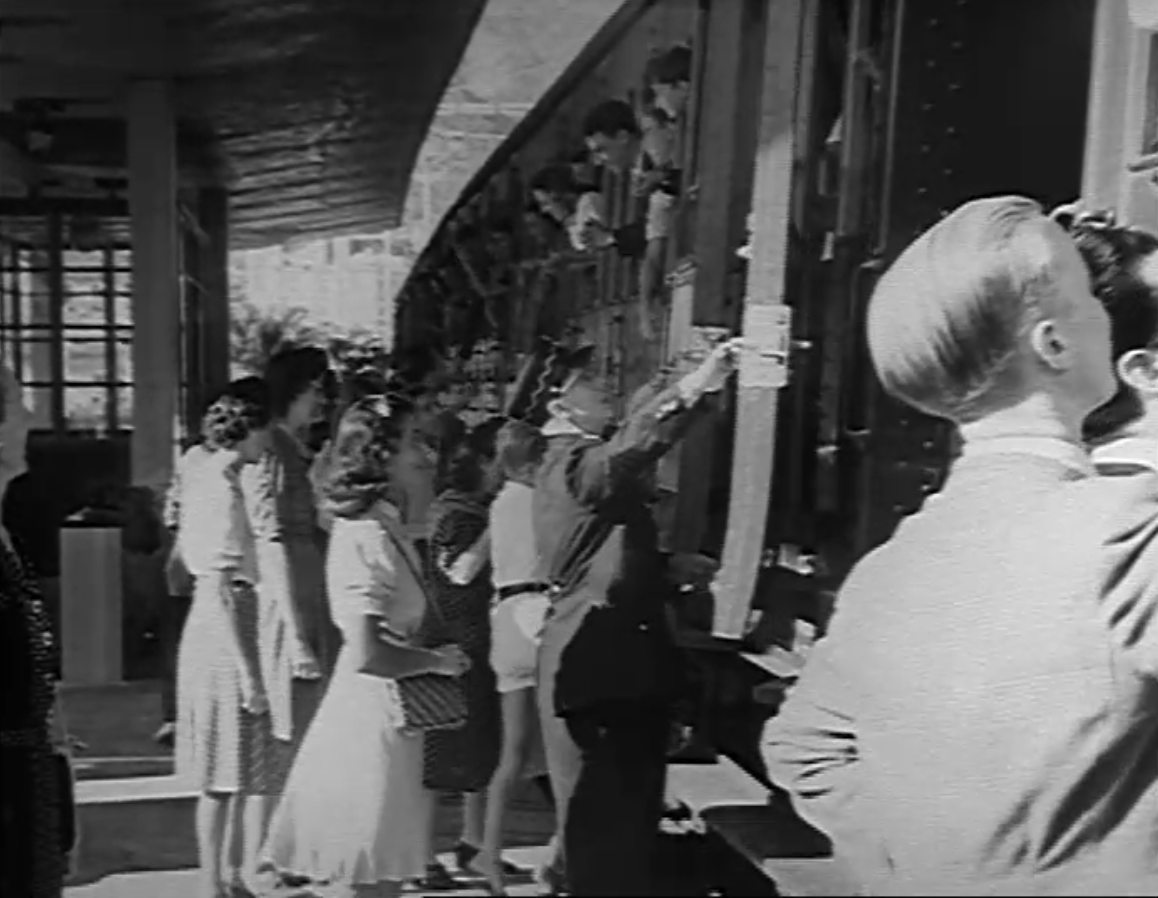
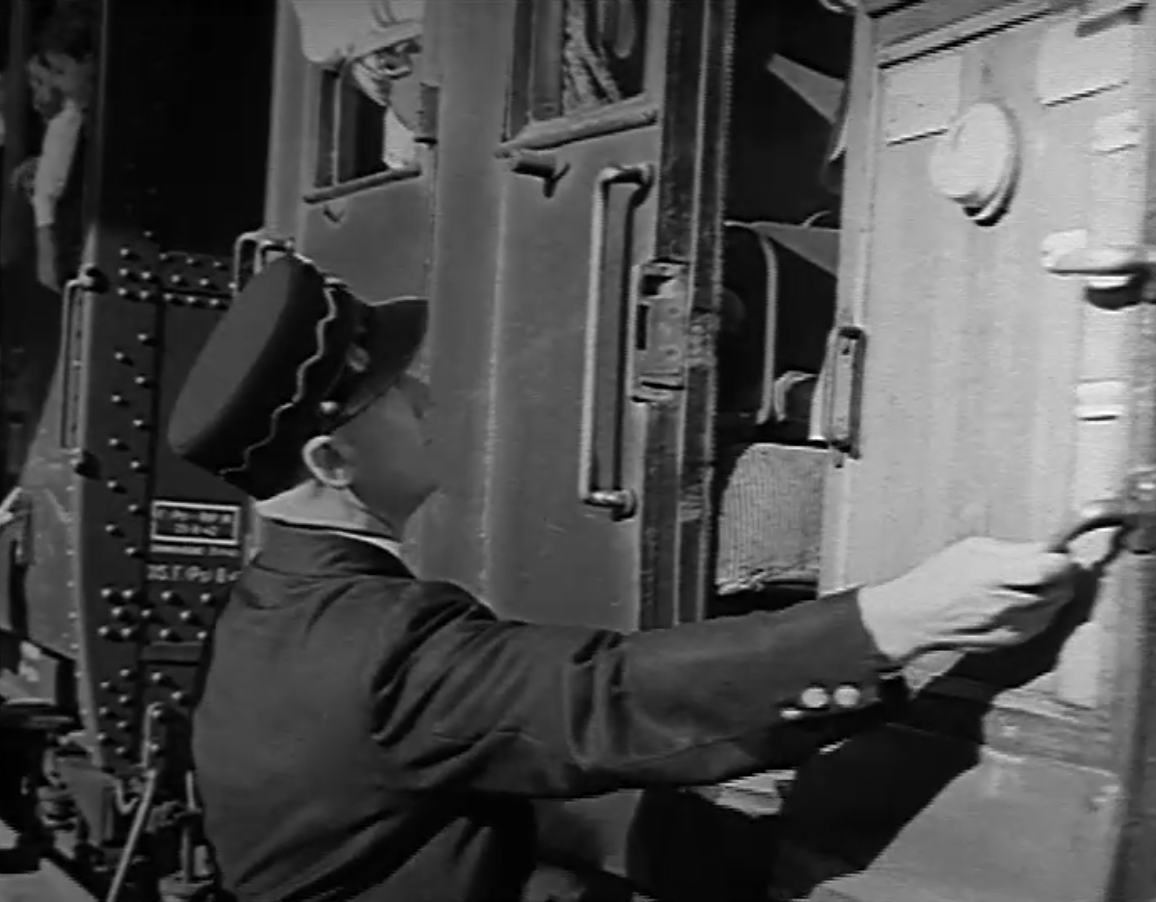
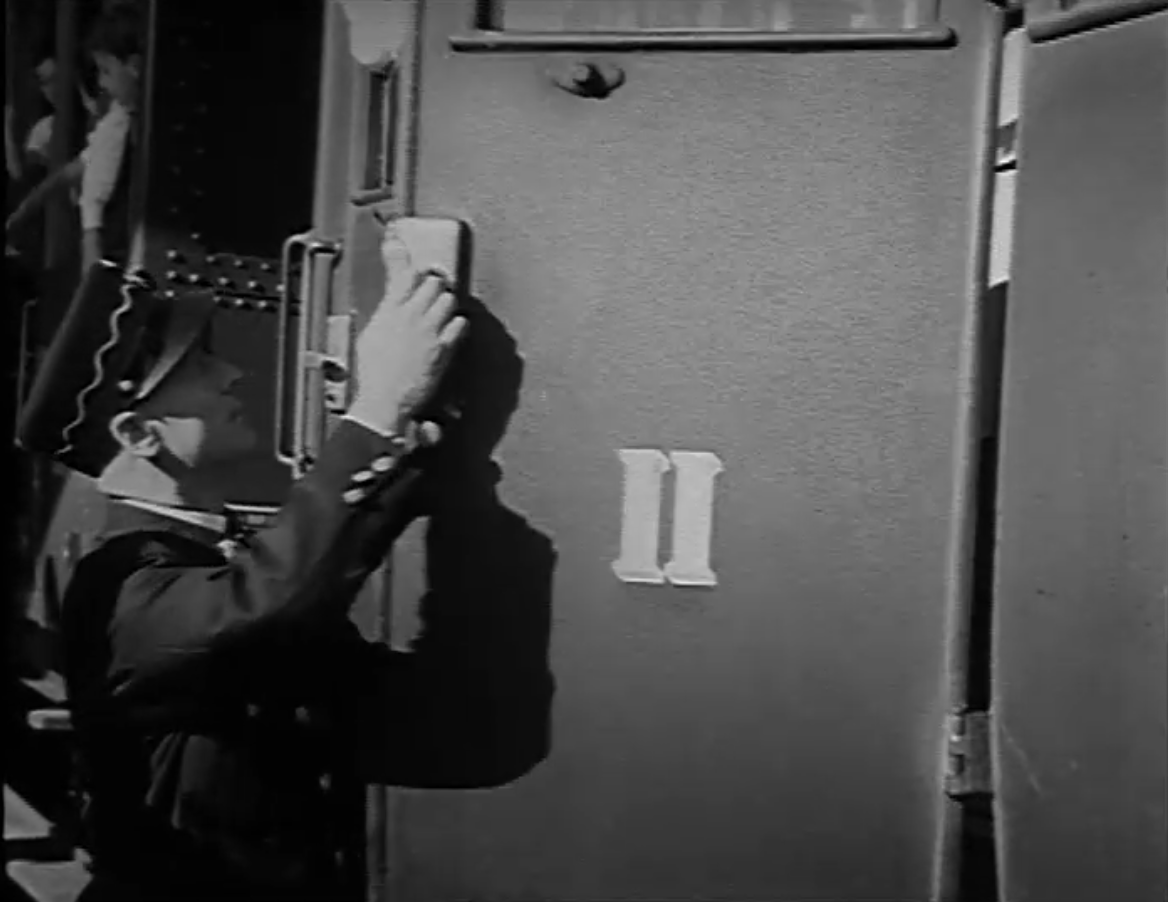
Alla stazione ferroviaria, il controllore cammina lungo la fila di vagoni, chiudendo le porte. “Attenzione alle mani!” Una fila di persone si ammassa sul bordo della banchina, ognuno con lo sguardo rivolto verso un volto che si affaccia da un finestrino aperto.
At the train station, the conductor walks down the row of cars, closing the doors. “Watch your hands!” A line of people crowds the edge of the platform, each one looking at a face peering out of an open window.
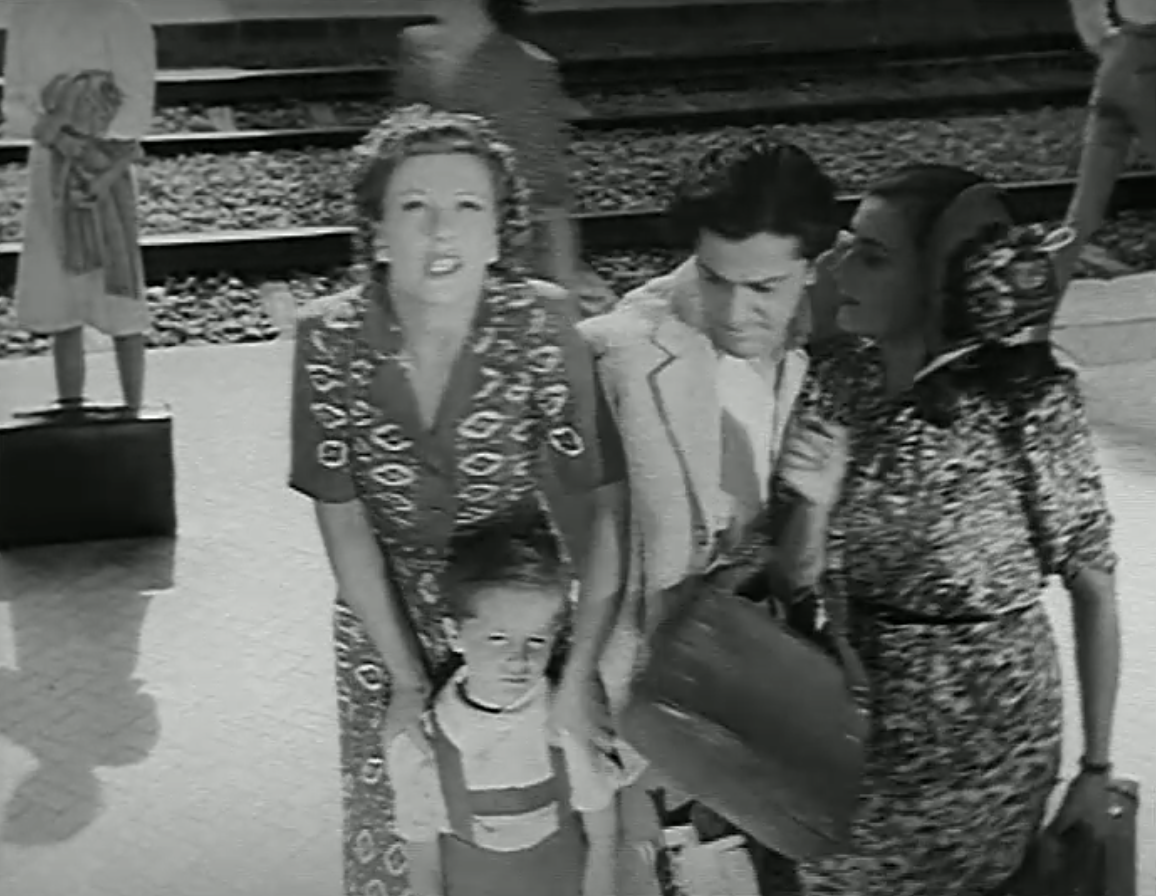
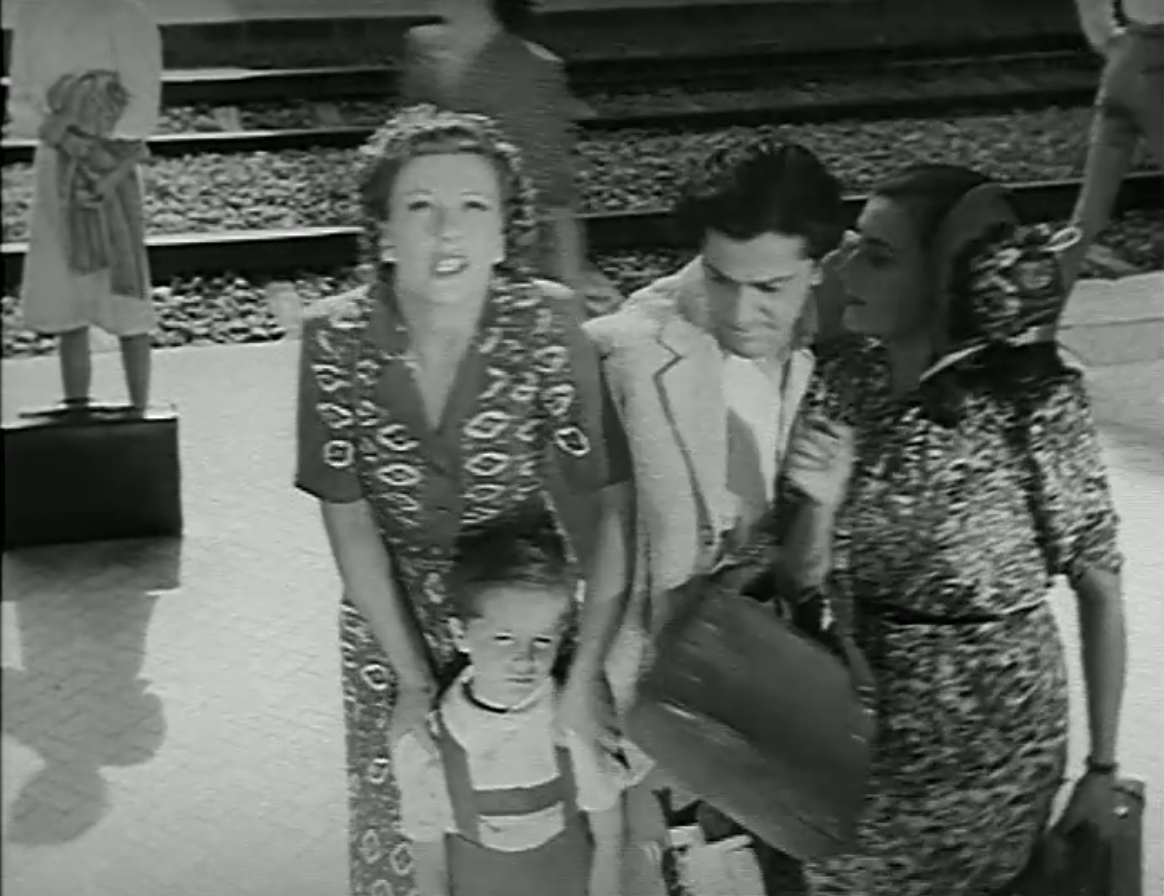
Nina ha le mani sulle spalle di Pricò. Andrea si sporge e dice: "Ho dimenticato di dare la mancia al portiere. Pensaci tu. Una trentina di lire basteranno".
Ma sì!"
Nina has her hands on Pricò’s shoulders. Andrea leans out, saying, “I forgot to tip the doorman. You take care of it. About thirty lira will be enough.”
“Of course!”
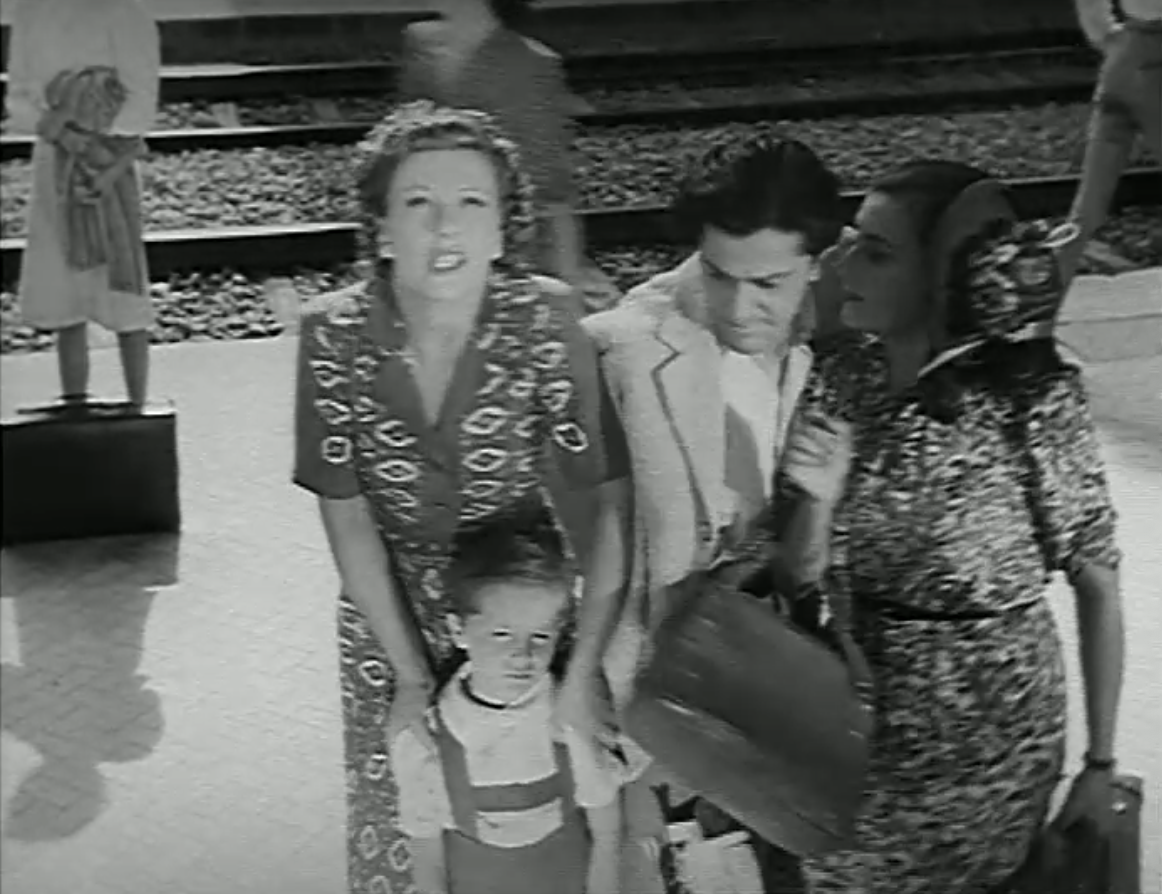
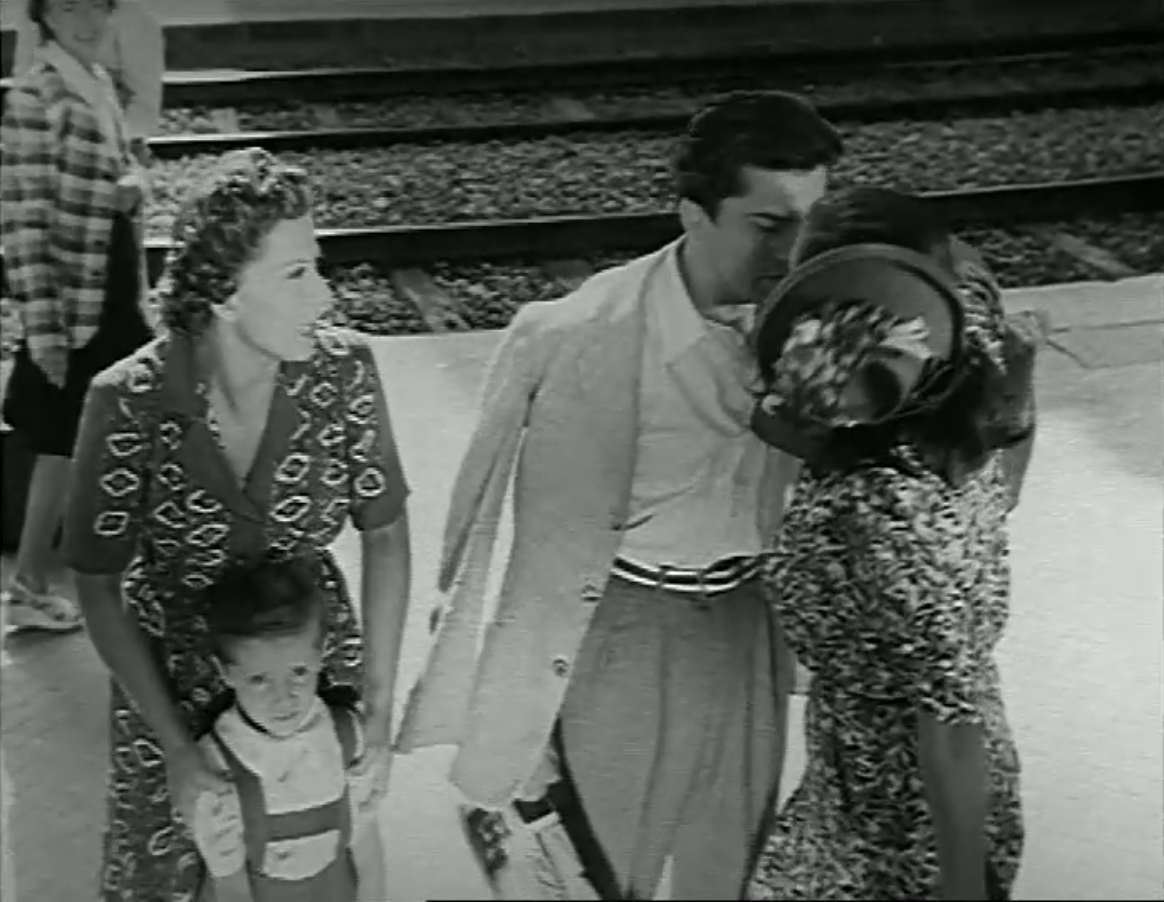
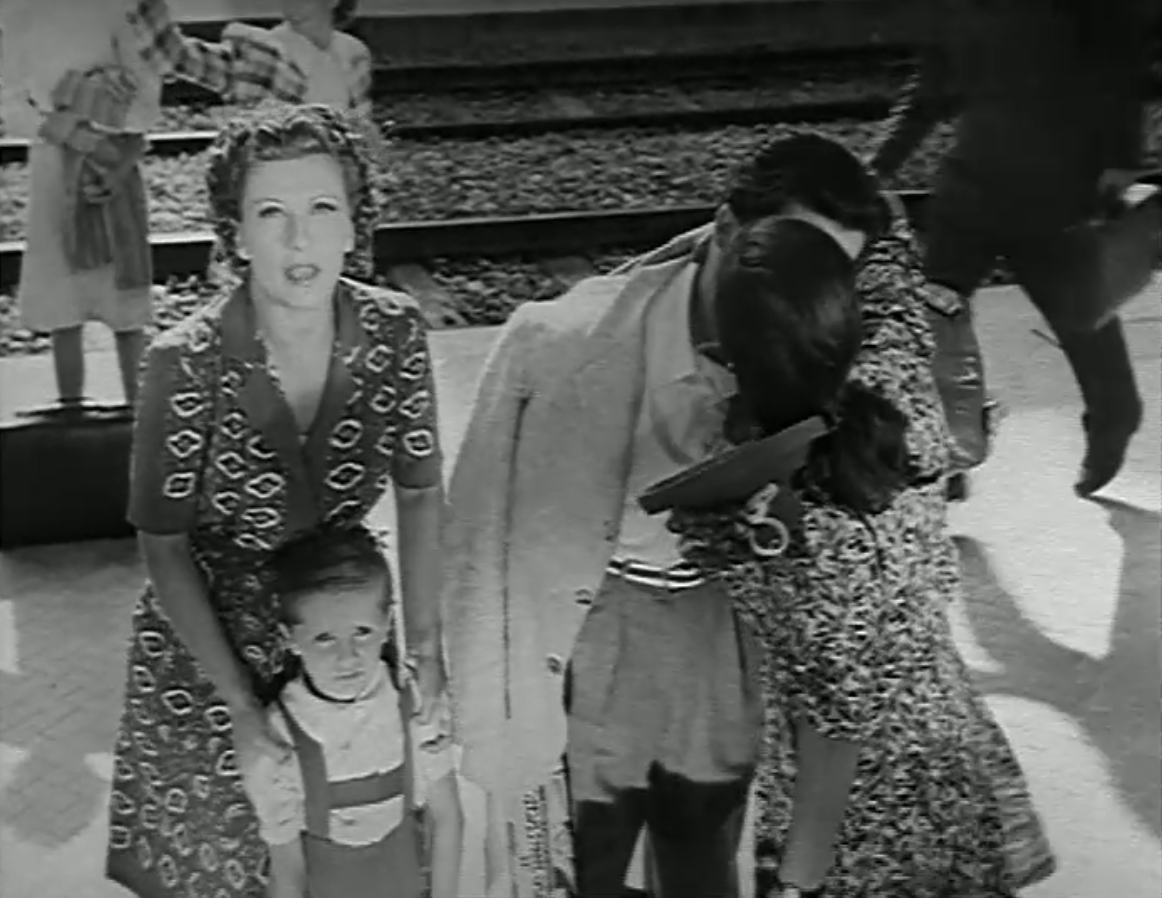
Lei viene spintonata da una coppia che corre per prendere il treno. I due si fermano e si baciano appassionatamente proprio accanto a lei.
Imperturbabile, Nina continua: "Guarda se Agnese ha messo la naftalina alla mia pelliccia".
Pricò sembra paralizzato dall'incertezza.
She’s jostled by a couple running for the train. They stop and kiss passionately right at her side.
Unfazed, Nina continues, “Check to see if Agnese has put my fur in moth balls.”
Pricò seems paralyzed by uncertainty.
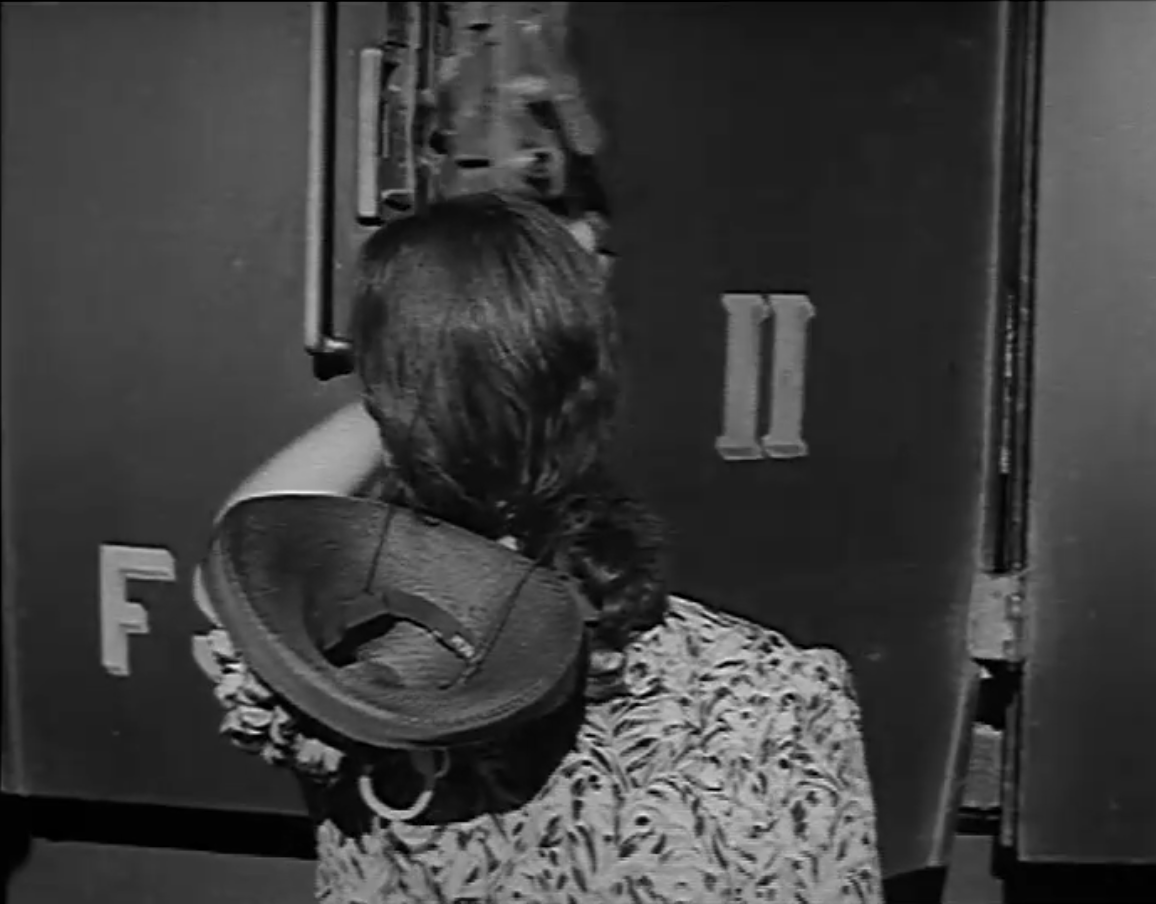
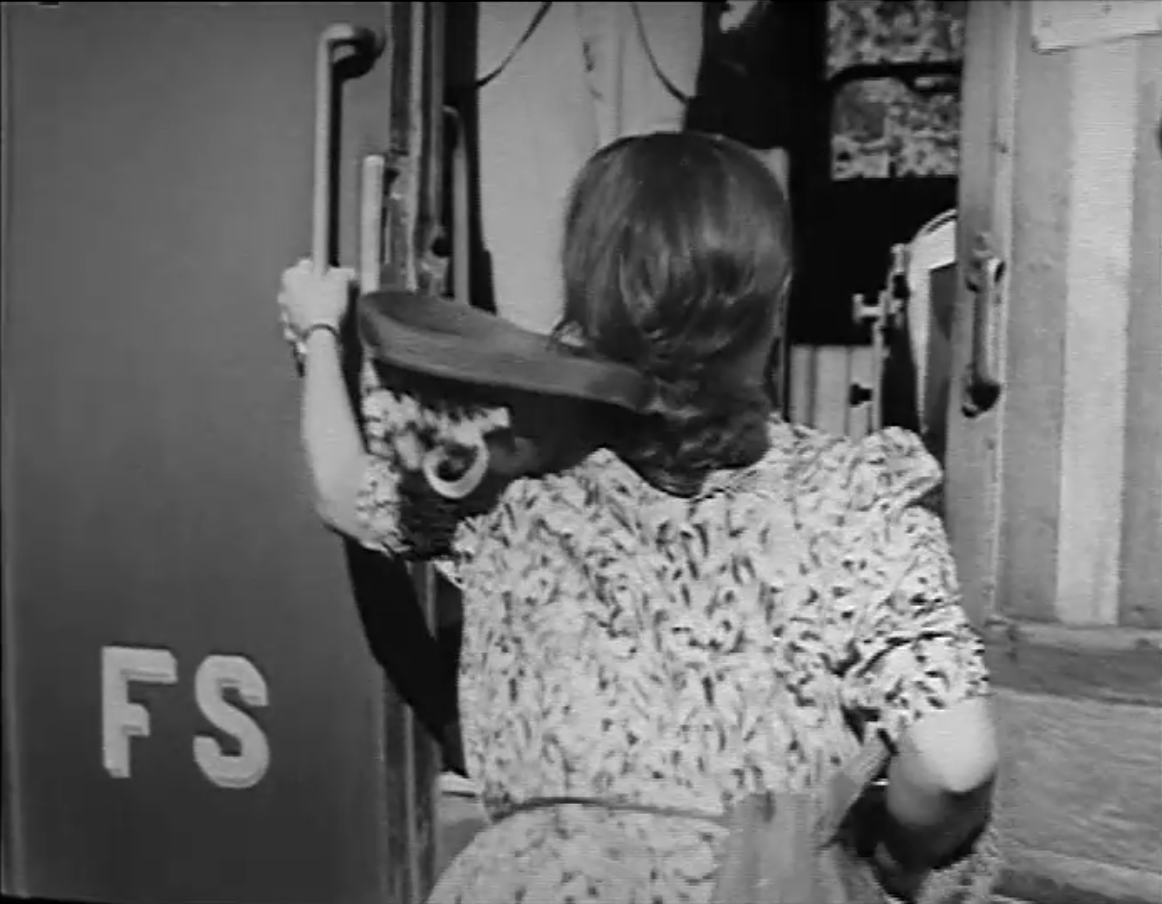
"Ci penso io. E tu, Pricò, fai da cavaliere a mamma, eh? Ti do questo incarico". Mentre lui parla, la donna sale sul treno.
“I’ll take care of it. And you, Pricò, be a gentleman with mommy, okay? I’m assigning this task to you.” While he’s talking, the woman climbs onto the train.
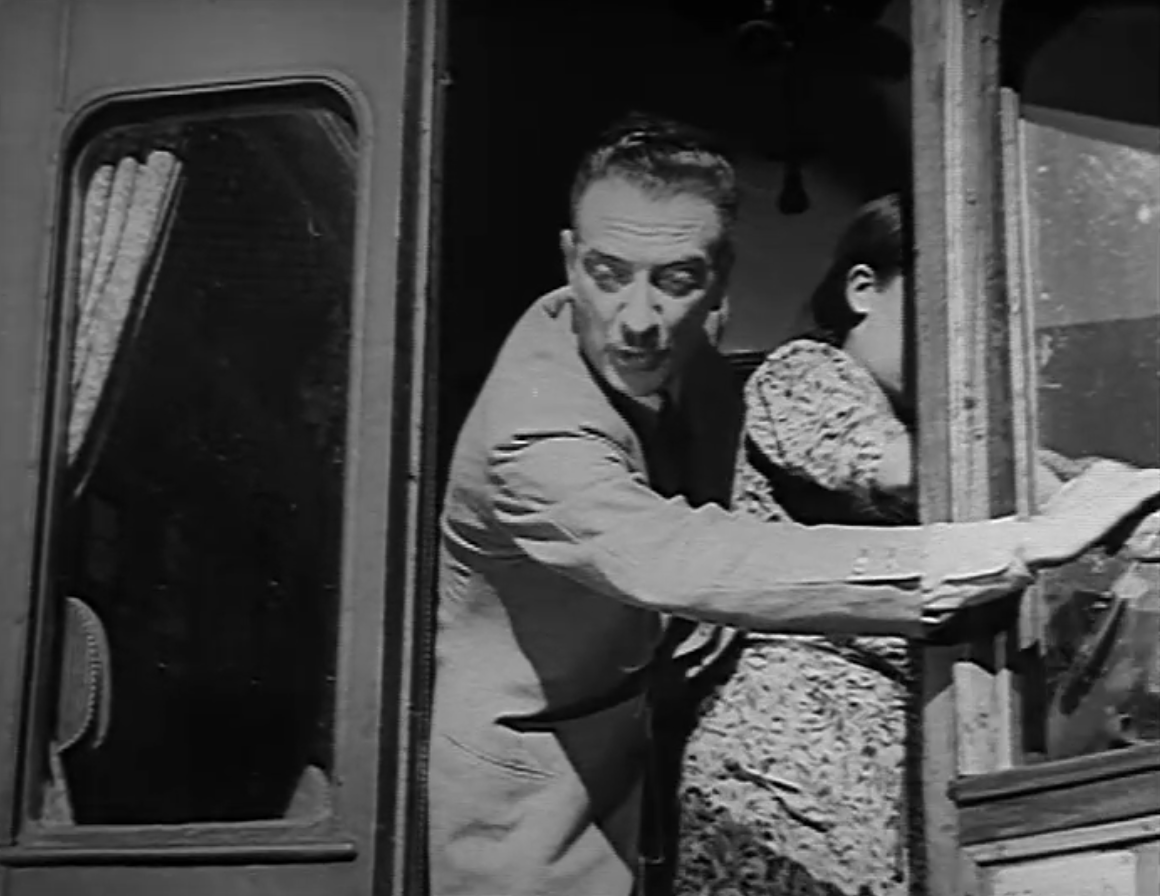
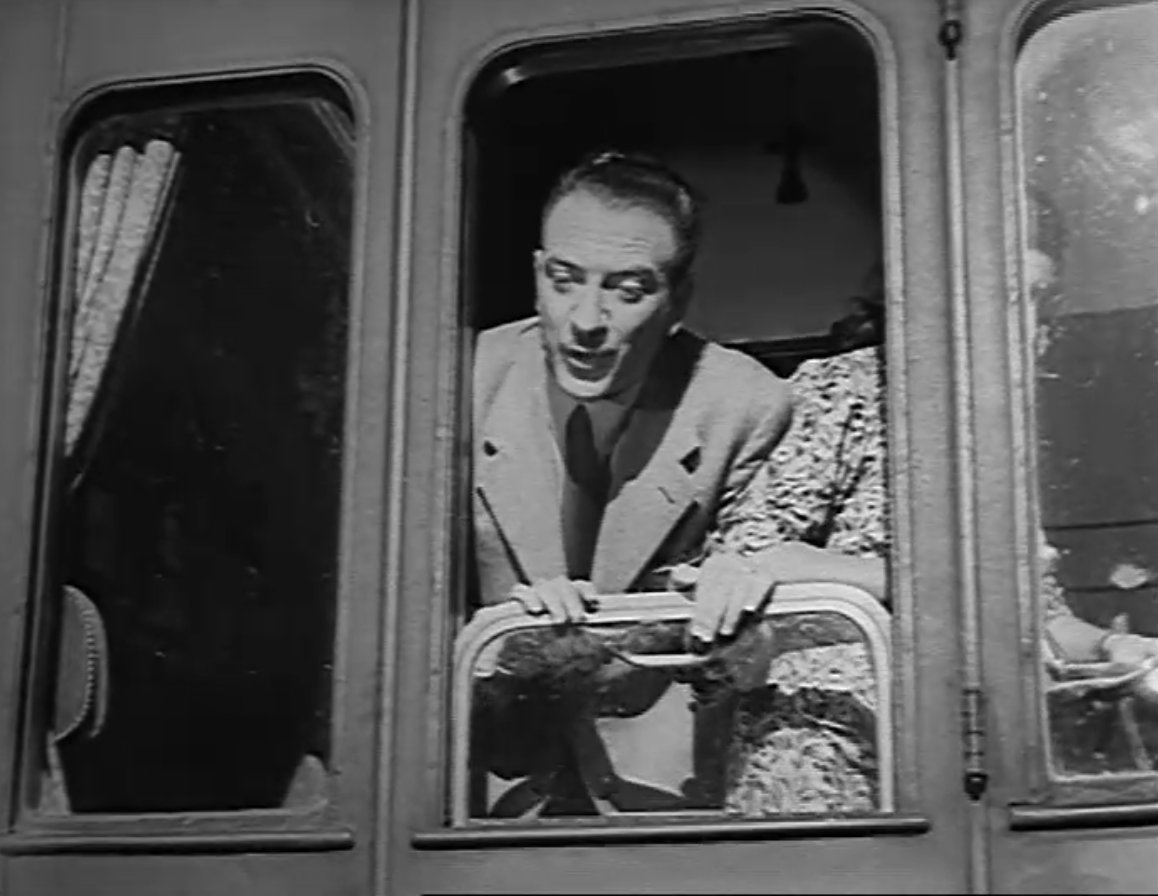
Lei lascia la porta aperta. Andrea la chiude senza protestare e dice a Pricò: "Falle fare la sua bella passeggiata, che riposi dopo colazione. Qualche sera, portala al cinema. Insomma, come ci fossi io. Io non lascio qui un bambino, vero? Lascio un ometto”.
She leaves the door open. Andrea closes it without complaint and tells Pricò, “Make sure she takes her nice walks, that she rests after breakfast. Some evenings, take her to the movies. In other words, as if I were here. I’m not leaving a little boy behind, right? I’m leaving a little man.”
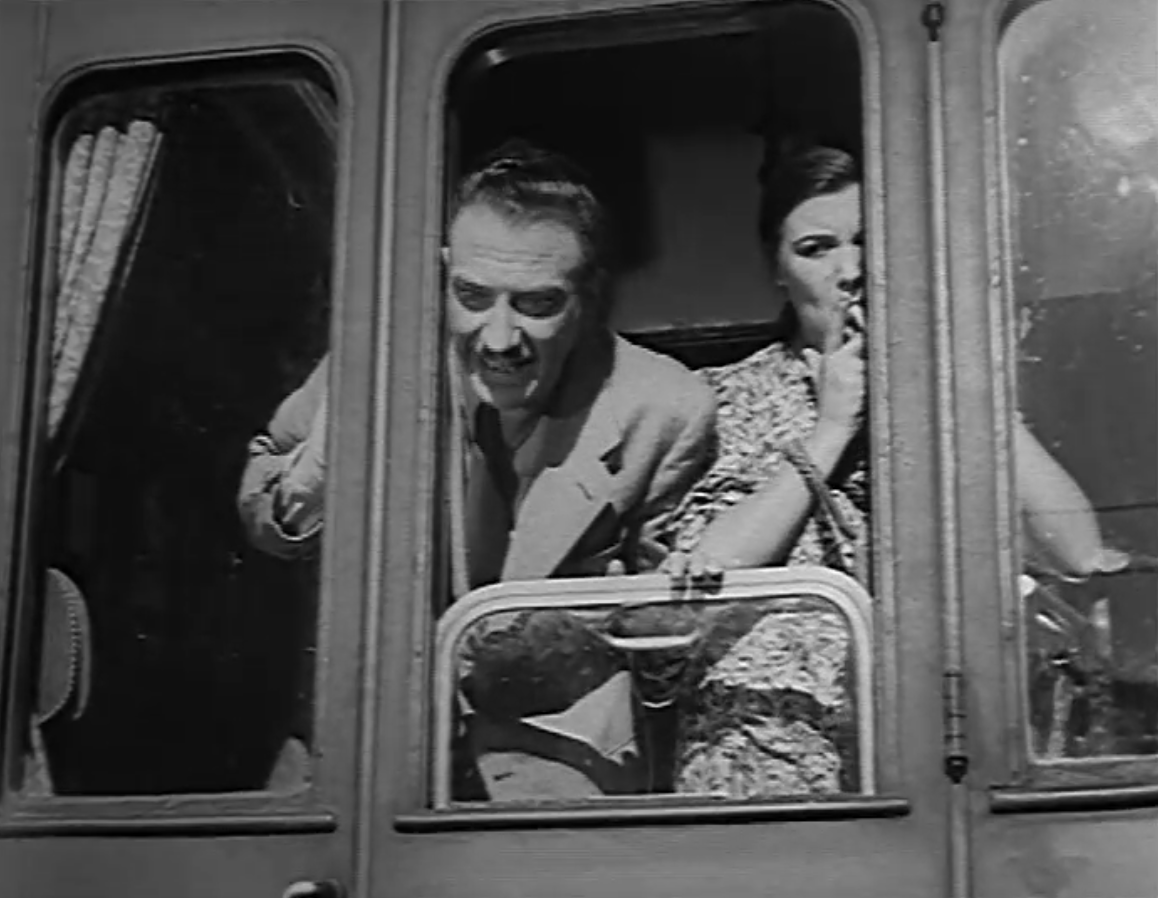
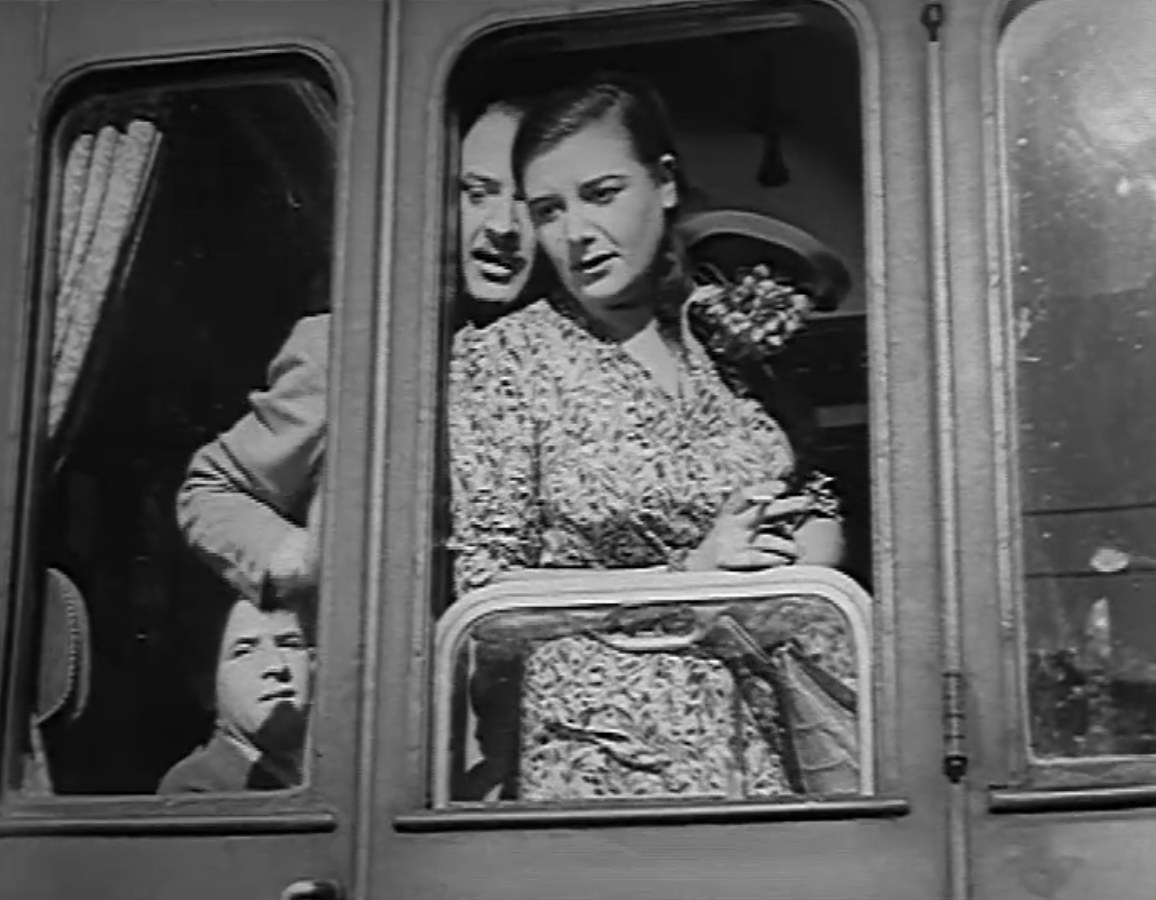
Accendendosi una sigaretta, la donna spinge da parte Andrea. "Addio, caro" – grida dall’alto – "Pensami".
Lighting a cigarette, the woman shoves Andrea aside. “Goodbye, darling,” she calls down. “Think of me.”
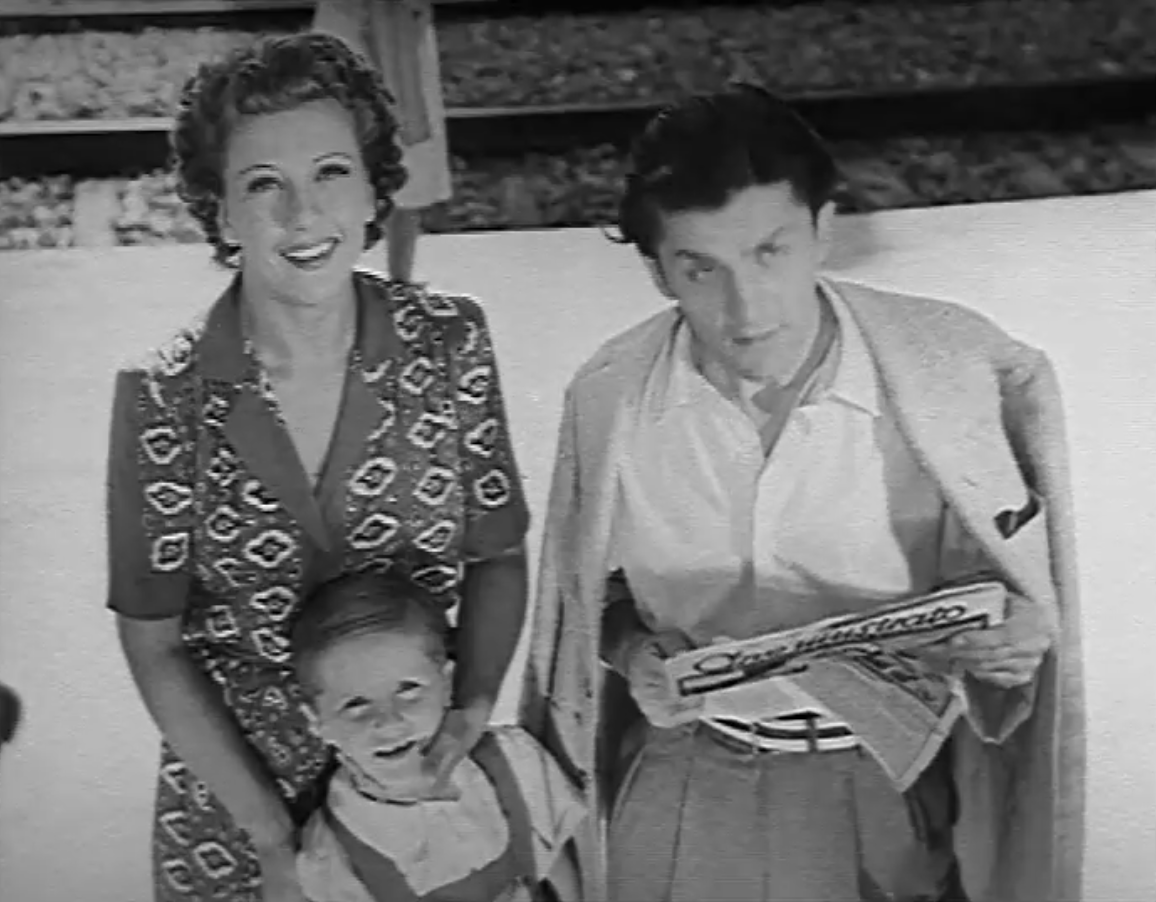
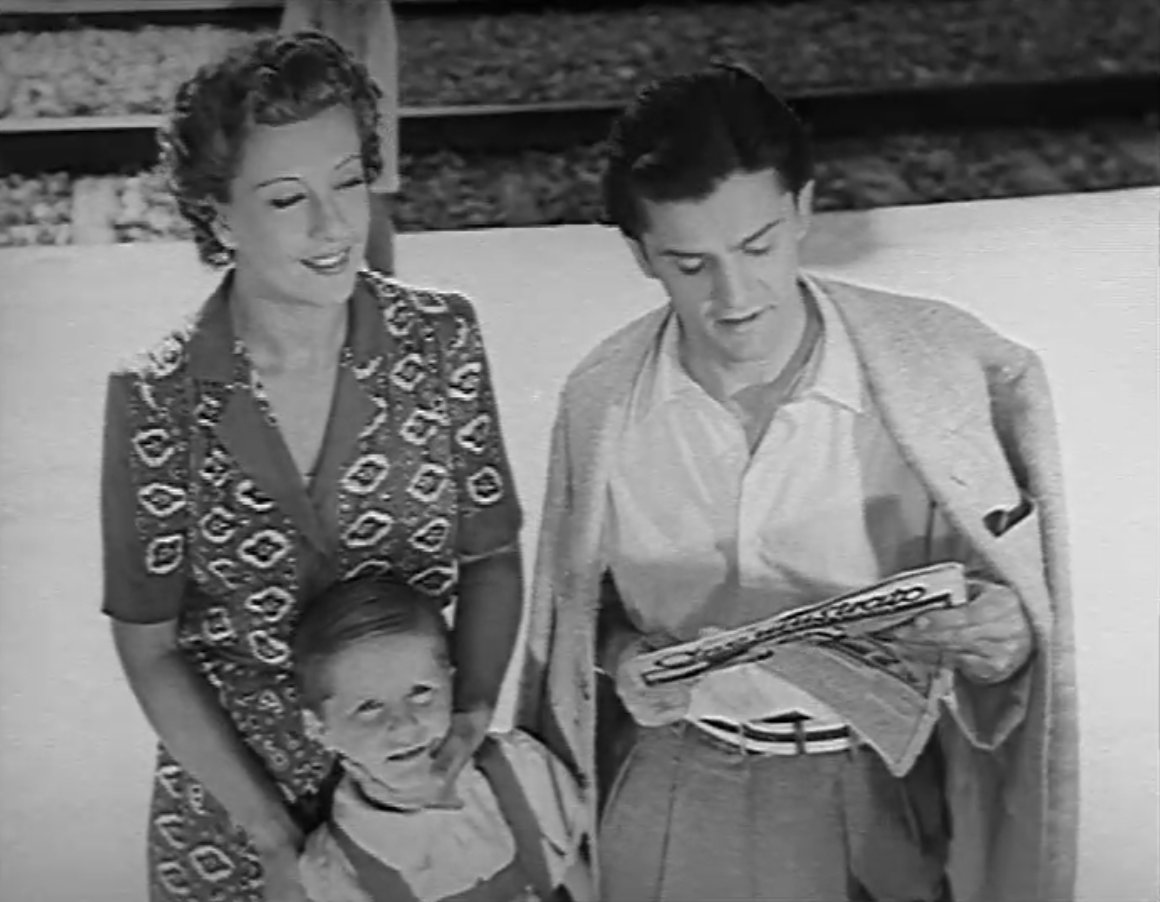
Lui alza lo sguardo dal giornale per un attimo. "Sì, certamente", risponde, riportando lo sguardo sulla pagina.
He looks up from his newspaper for a moment. “Yes, of course,” he replies, gaze returning to the page.
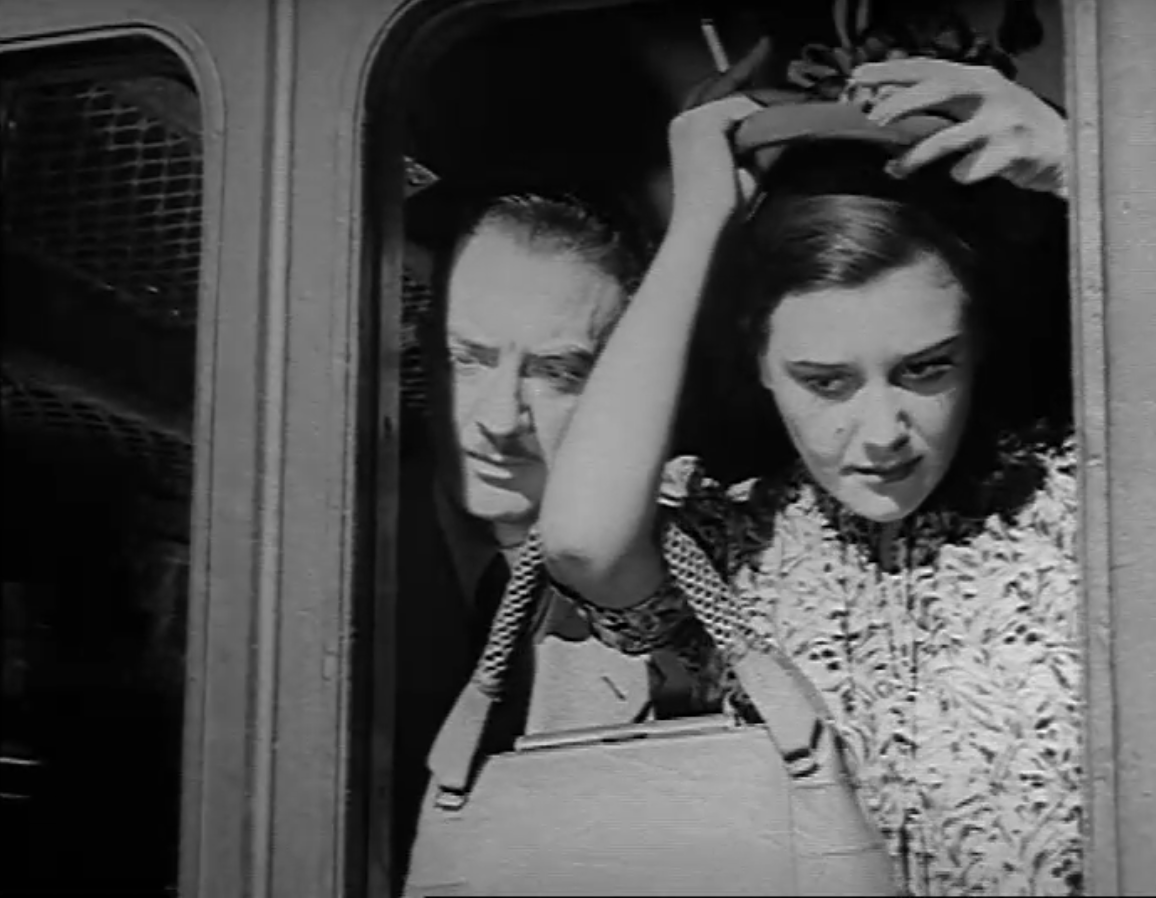
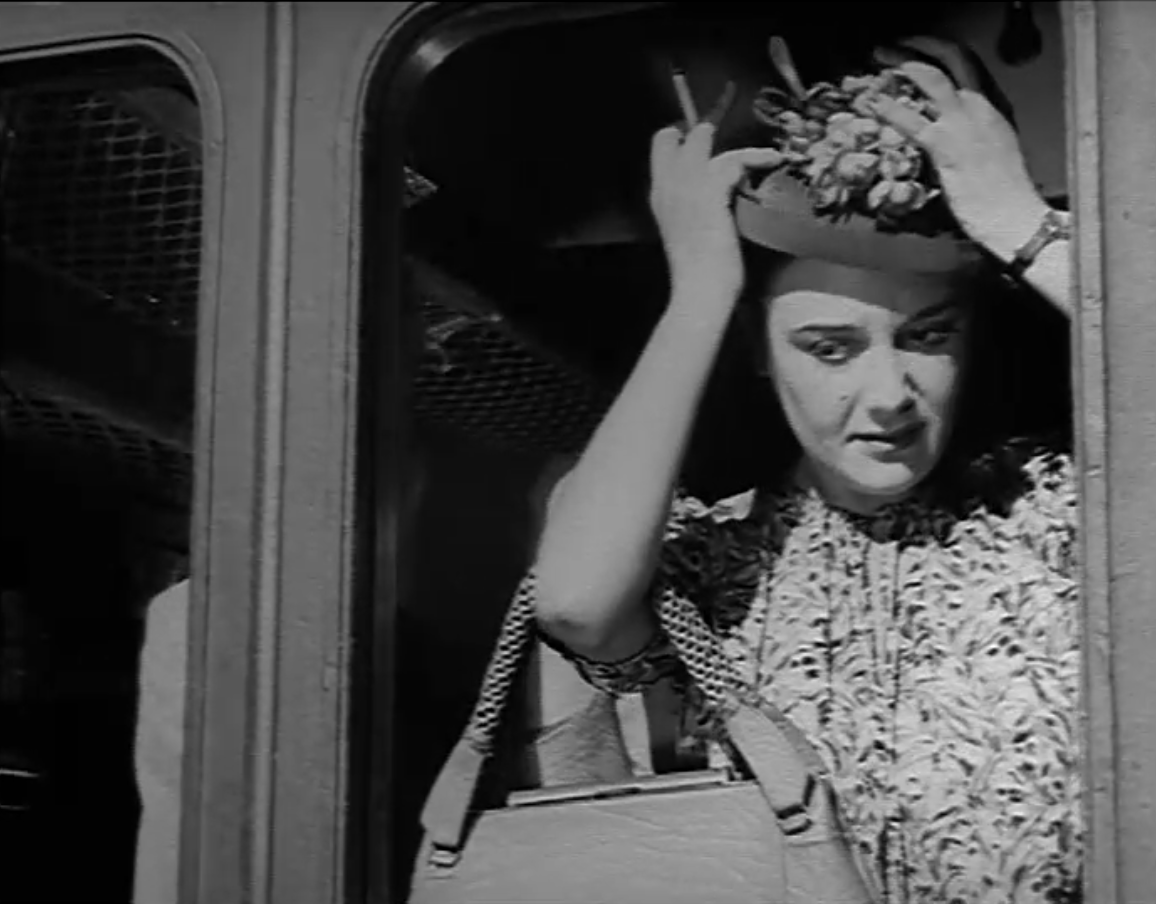
Lei si mette il cappello, spintonando Andrea con il gomito. "Mi scriverai?" gli chiede.
She puts on her hat, elbowing Andrea aside. “Will you write to me?” she asks him.
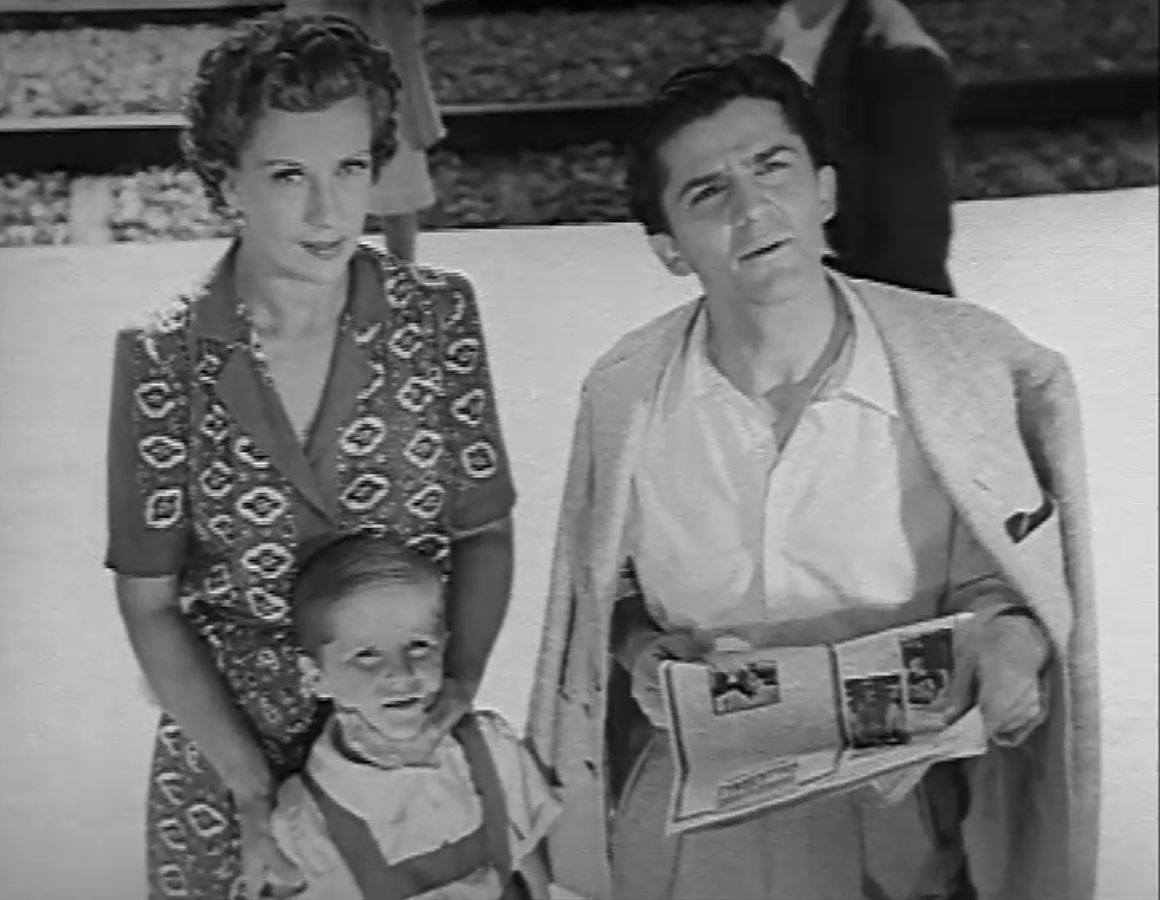
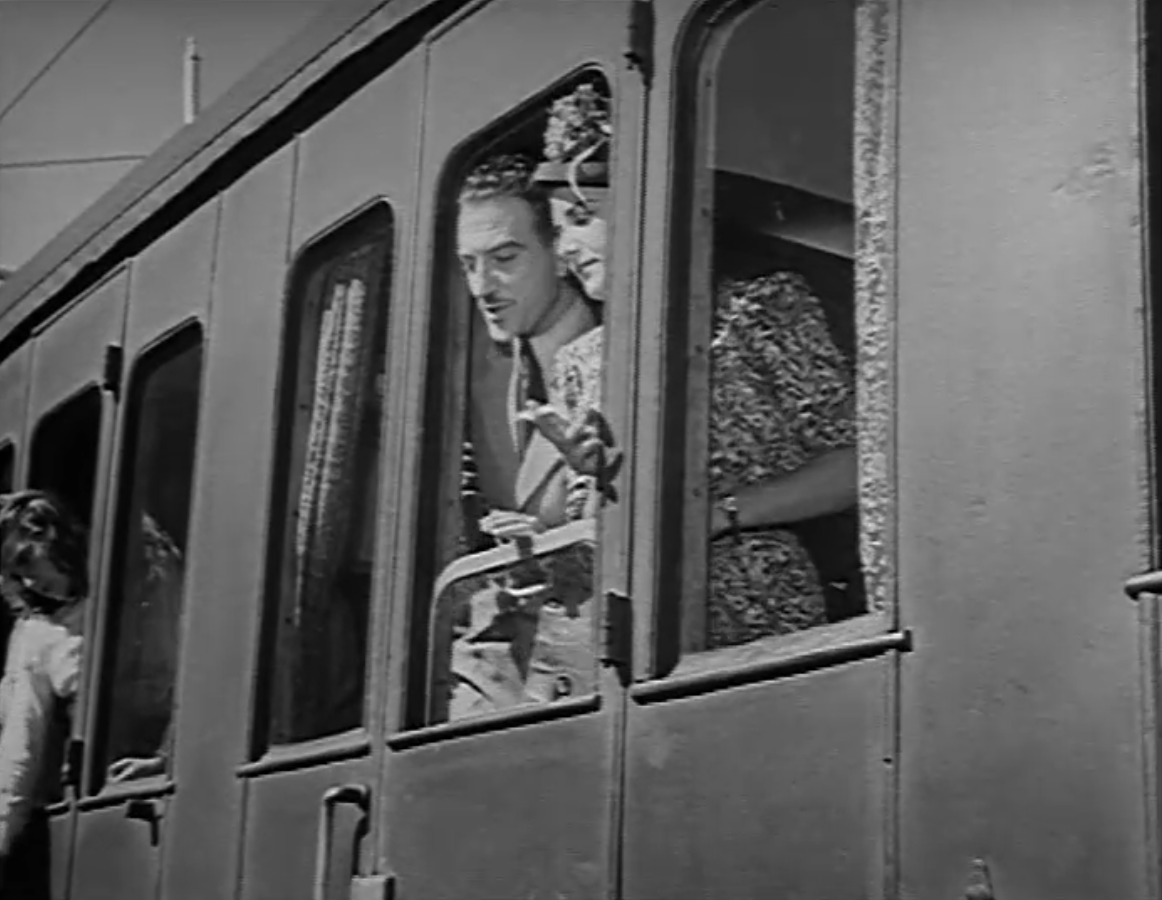
L’uomo alza di nuovo lo sguardo, con una domanda a sua volta. "Quanto tempo ti fermi a Savona?"
"Quindici giorni".
"Permettete, signorina?" dice Andrea, spingendola da parte.
The man looks up again, with a question of his own. “How long will you be in Savona?”
“Fifteen days.”
“Excuse me, miss,” Andrea says, nudging her aside.
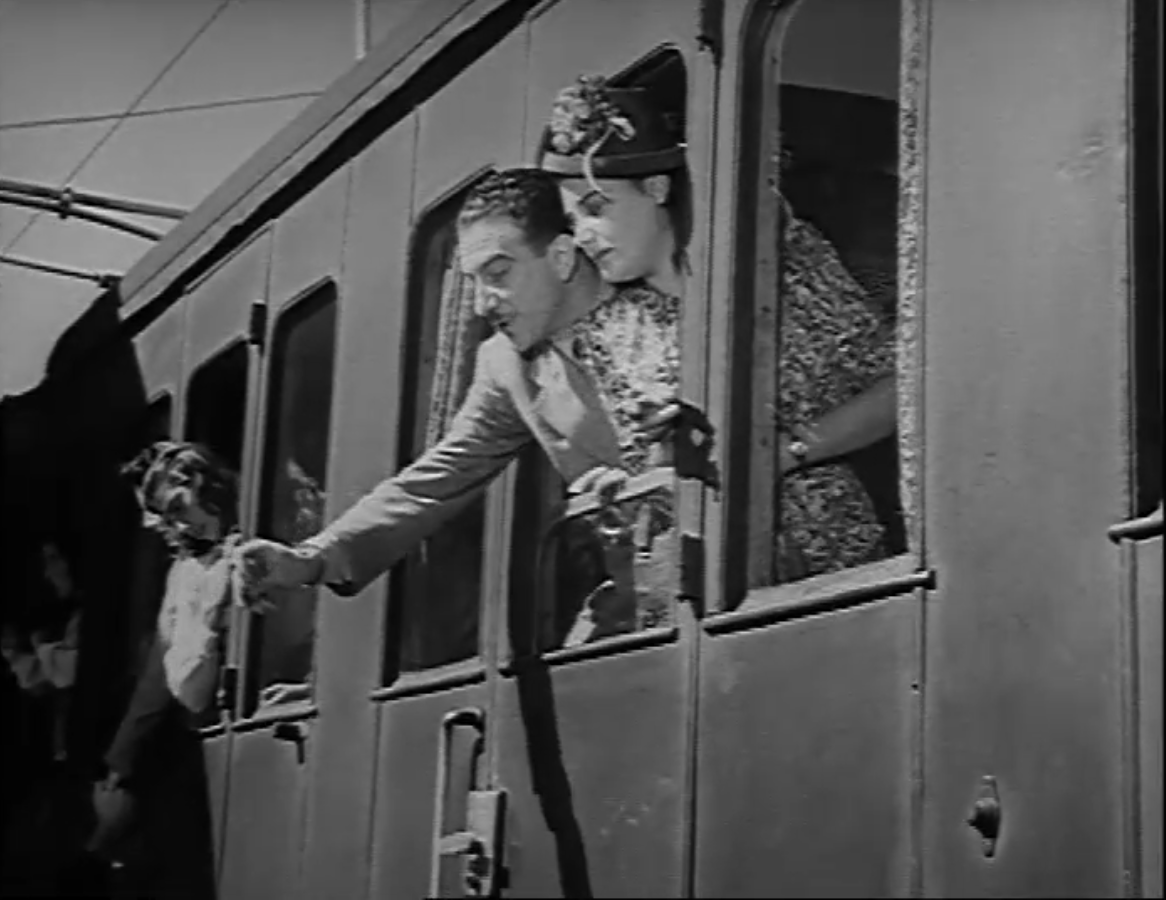
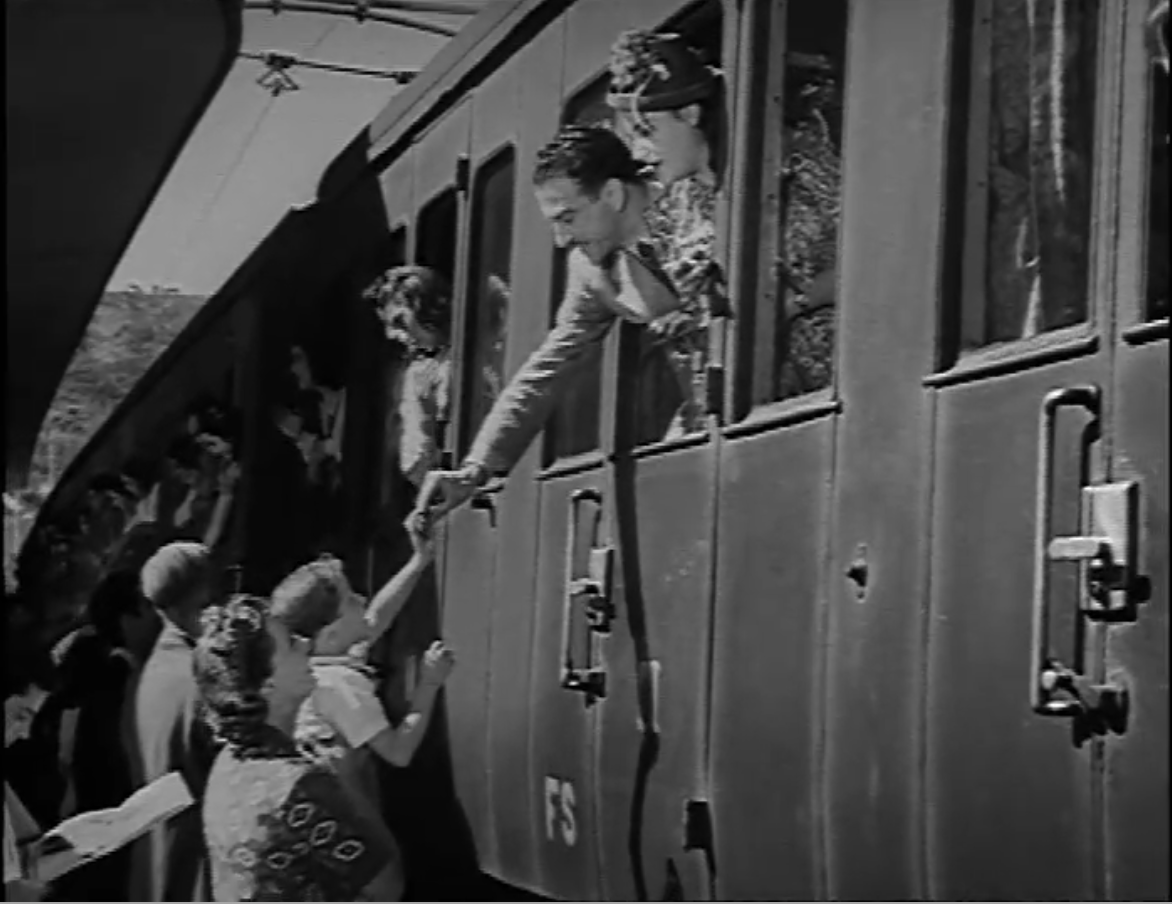
Lui si sporge in fuori e allunga il braccio. "Pricò, senti, queste sono dieci lire per le piccole spese". Nina solleva il bambino per fargli prendere le banconote.
He leans out and extends his arm. “Pricò, listen, here are ten lira for your little expenses.” Nina lifts the boy up to take the bills.
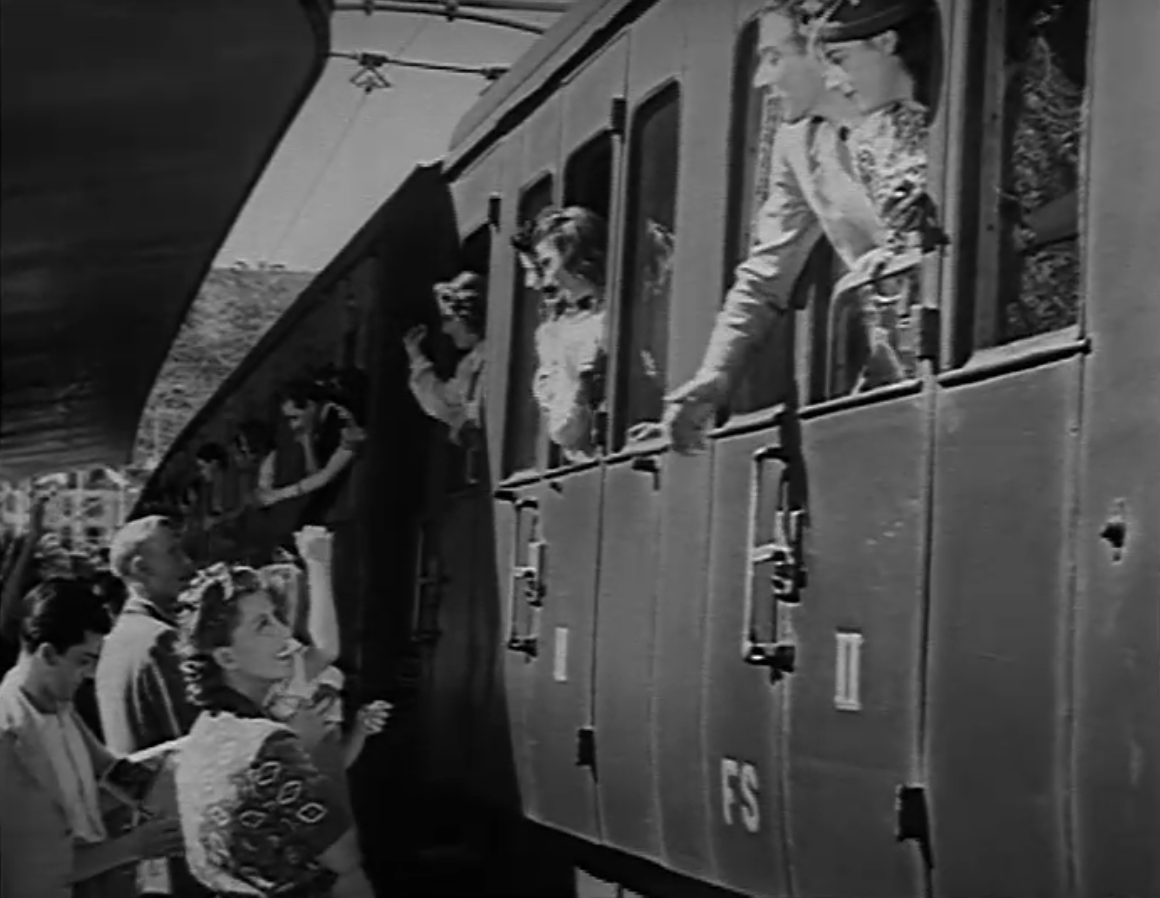
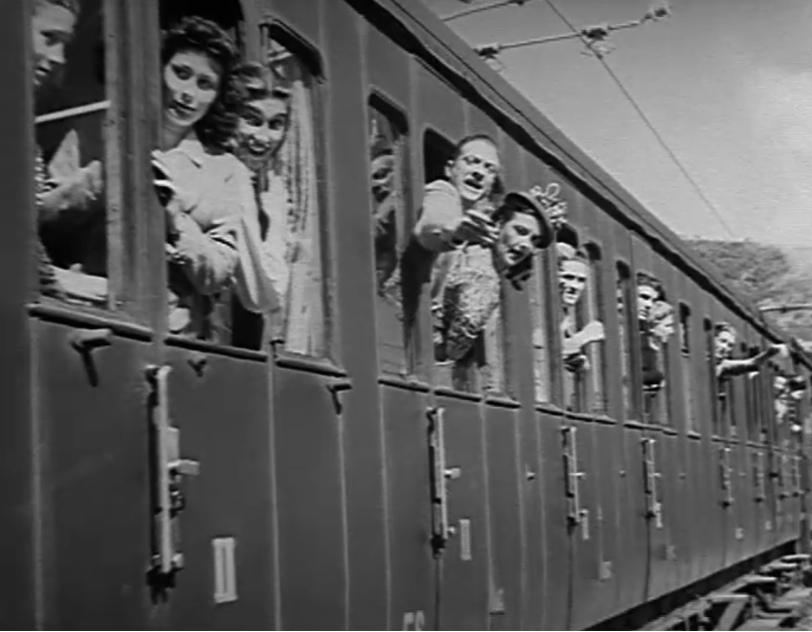
Addossandosi ad Andrea, la donna continua: "Fallo per me, non tornare più là". Il suo fidanzato continua a leggere il giornale.
Mentre il treno inizia a muoversi, Andrea e la donna si sporgono dal finestrino, guardandosi indietro.
"Ciao, Nina! Pricò, fai il bravo!"
Pressed close to Andrea, the woman continues, “For my sake, don’t go there again.” Her beau is still looking at his paper.
As the train starts to move, Andrea and the woman lean out, looking back.
“Bye, Nina! Pricò, be a good boy!”
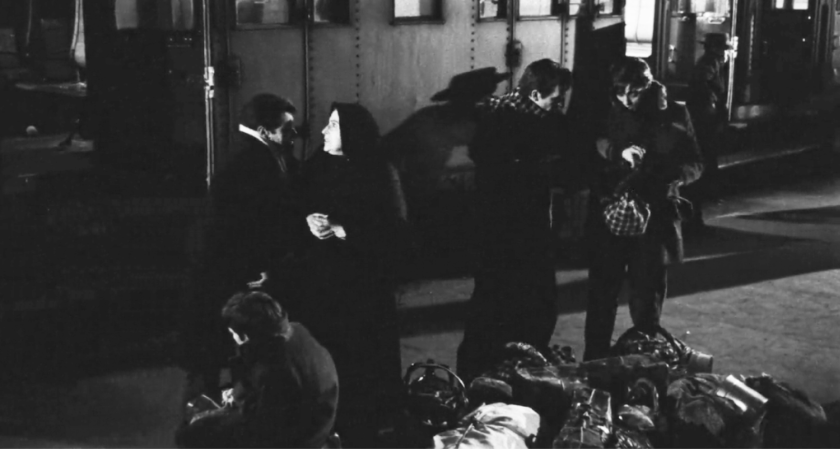
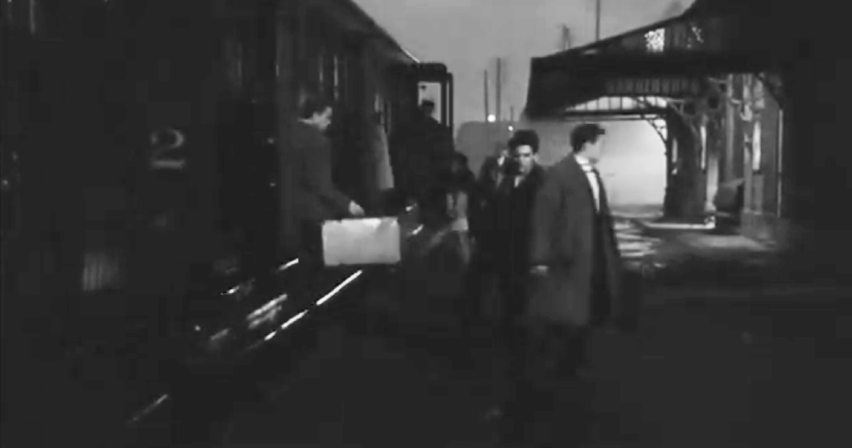
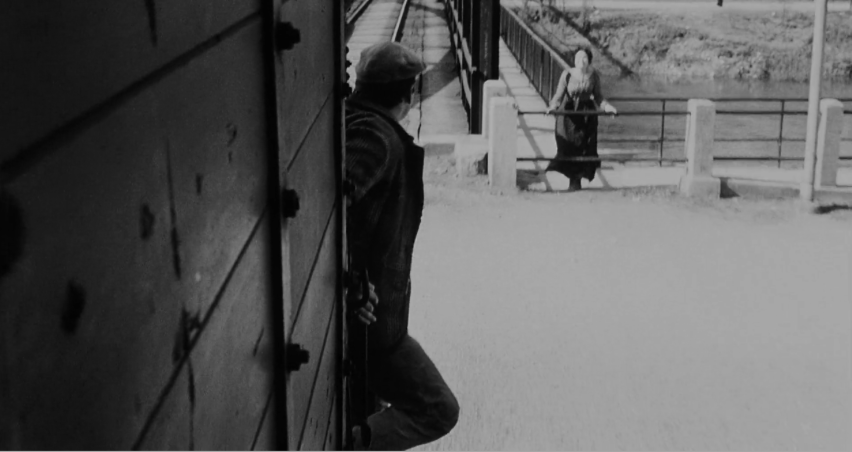
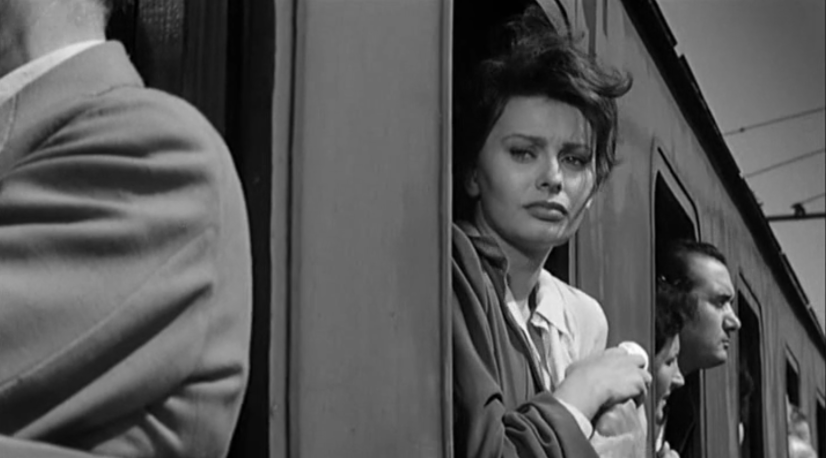
Guardando i film classici e del dopoguerra, lo spettatore potrebbe dedurre che gli italiani fossero sempre in movimento; spesso li vediamo salutare dal finestrino mentre partono. In alcuni film, ovviamente, un viaggio in treno è solo un viaggio in treno. Ma possiamo individuare due grandi categorie in cui il viaggio assume un significato più profondo.
In molti casi, i migranti economici sono alla ricerca di una vita migliore e si dirigono dal sud dell’Italia verso il nord o all’estero, come in Il cammino della speranza e Riso amaro (i nostri due precedenti cineracconti) e anche in Rocco e i suoi fratelli e La ragazza in vetrina. In I bambini ci guardano, il viaggio di Andrea, dalla spiaggia alla città, appartiene a una categoria diversa, in cui la partenza rappresenta una frattura nella vita di una persona, forse presagio di una tragedia. Salvatore in I Compagni fugge dalla polizia verso una destinazione sconosciuta e un futuro incerto. In La Ciociara, la partenza di Cesira ha conseguenze devastanti per lei e per sua figlia.
Watching classic and post-war films, a viewer might surmise that Italians were always in motion; often, we see them waving from windows as they depart. In some films, of course, a train trip is just a train trip. But we can identify two broad categories where the journey means something more.
In many cases, economic migrants are looking for a better life, heading from the south of Italy to the north or abroad, as in The Path of Hope and Bitter Rice (our previous two photo-stories) and also in Rocco and His Brothers and Girl in the Window. In The Children Are Watching Us, Andrea’s journey, from the beach to the city belongs to a different category, where the departure represents a rupture in someone’s life, perhaps foreshadowing disaster. Salvatore in The Organizer flees the police for parts unknown and an uncertain future. In Two Women, Cesira’s departure has a life-shattering outcome for her and her daughter.
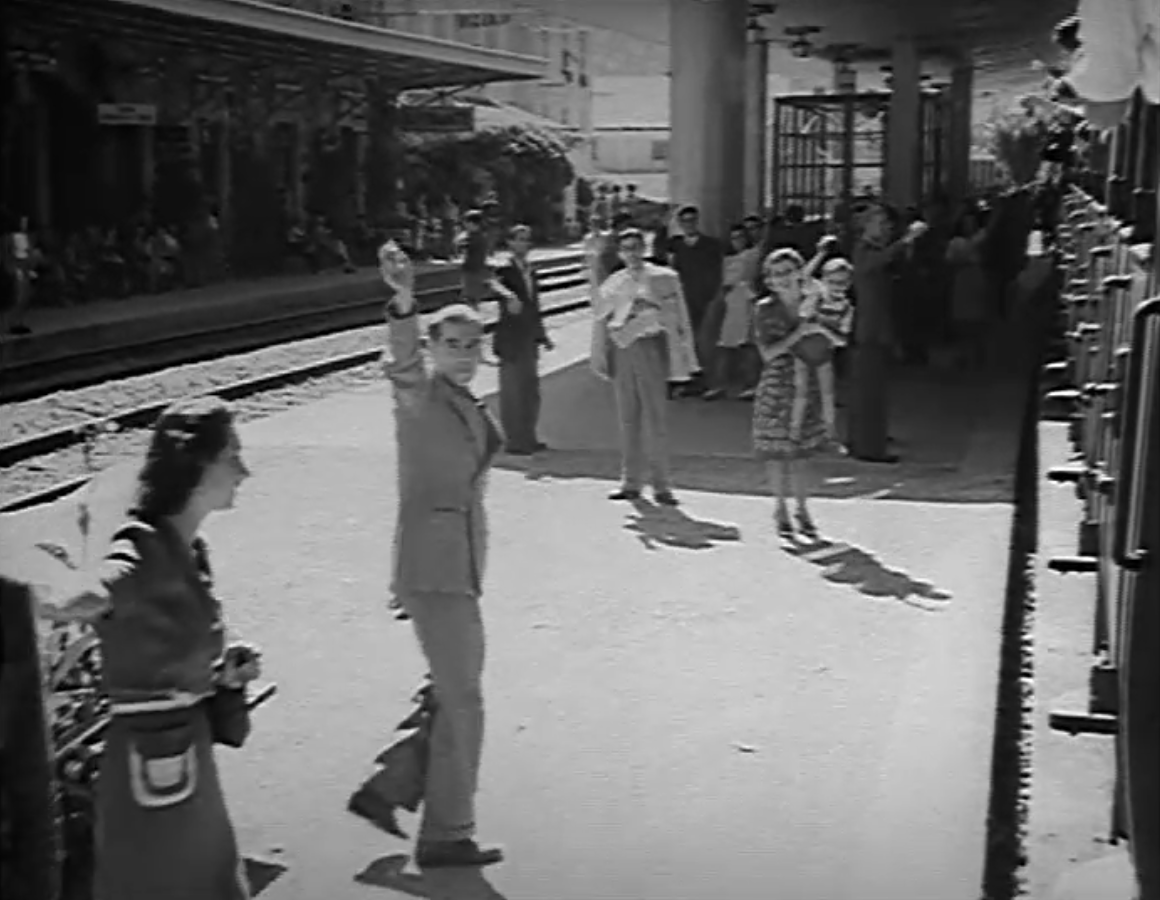
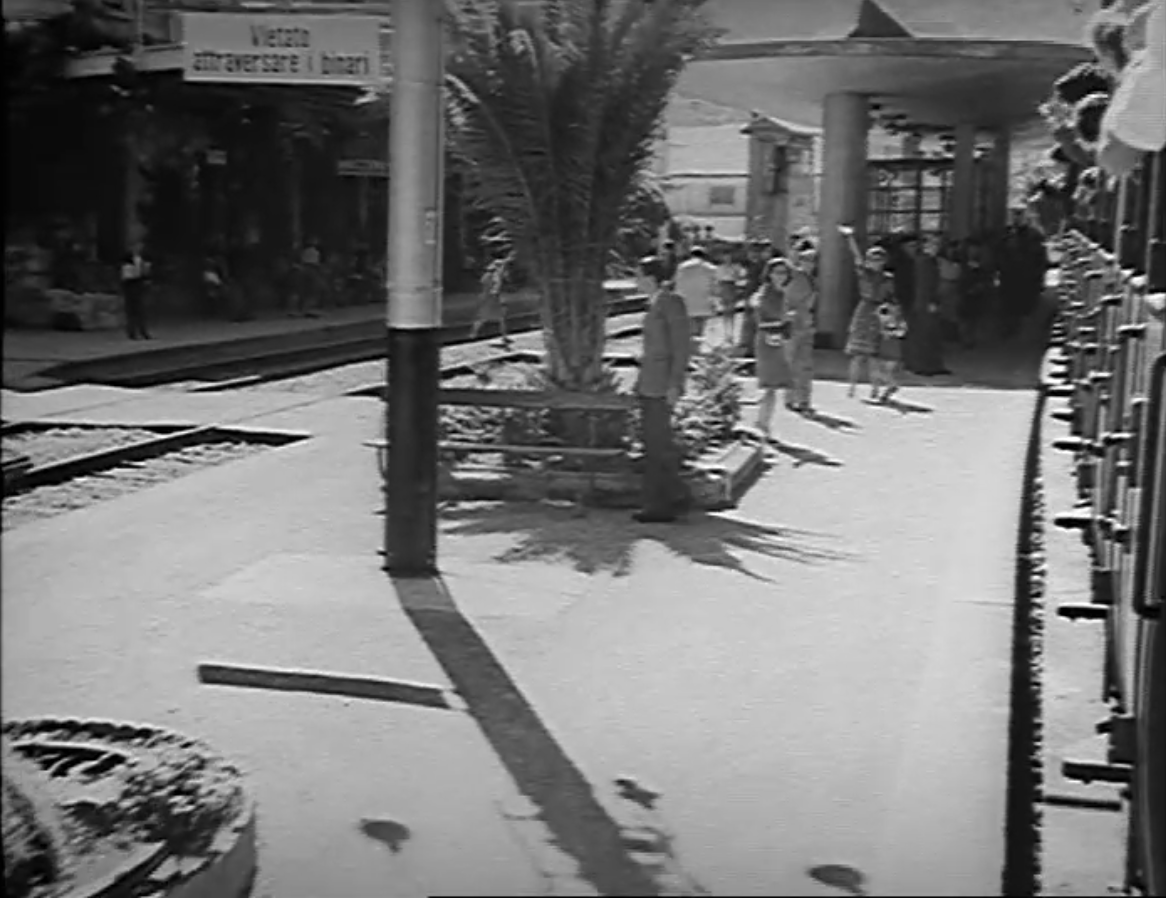
Tra le braccia di Nina, Pricò saluta Andrea con la mano mentre il treno lo porta via. Poi Nina mette giù Pricò e saluta anche lei con la mano. Dietro di loro, il fidanzato abbassa lo sguardo sul giornale e se ne va.
In Nina’s arms, Pricò waves to Andrea as the train takes him away. Then Nina sets Pricò down and waves, too. Behind them, the boyfriend looks down at his newspaper and walks away.
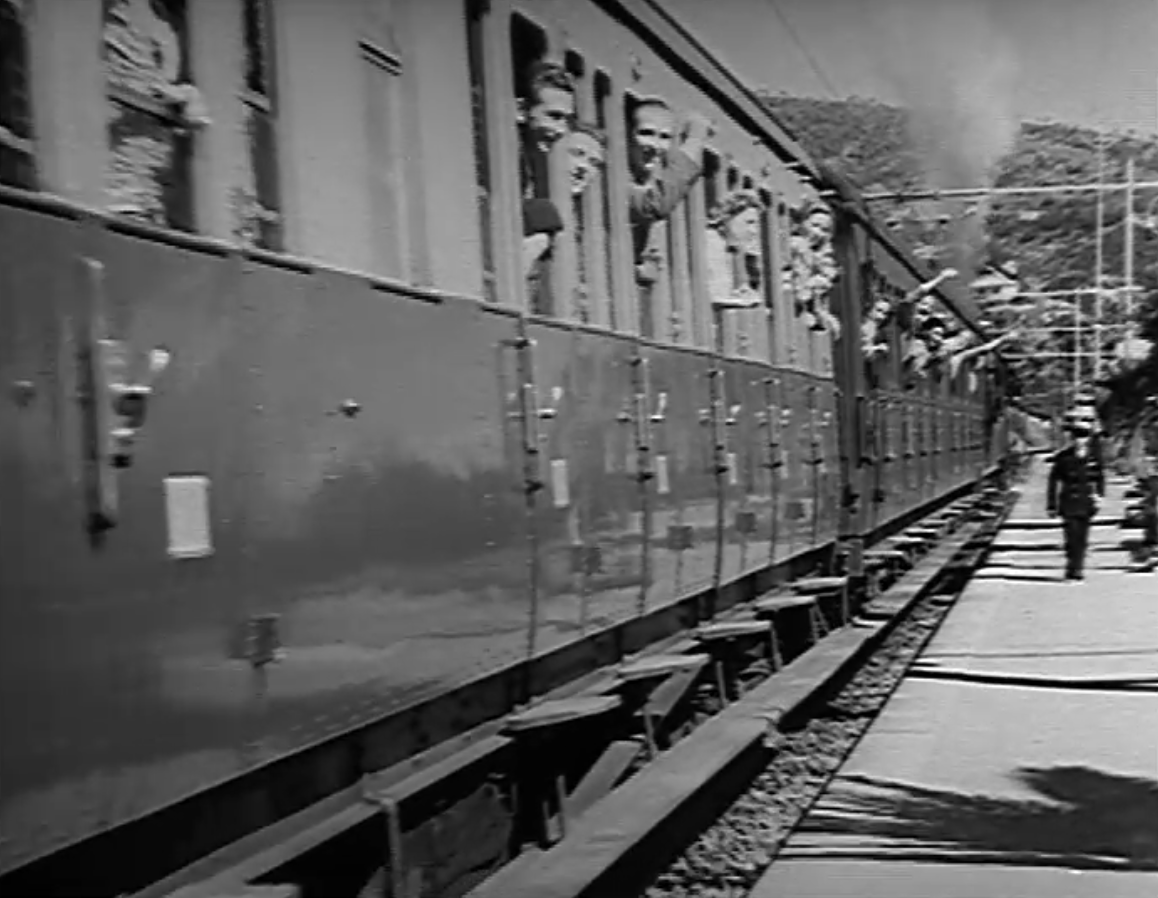
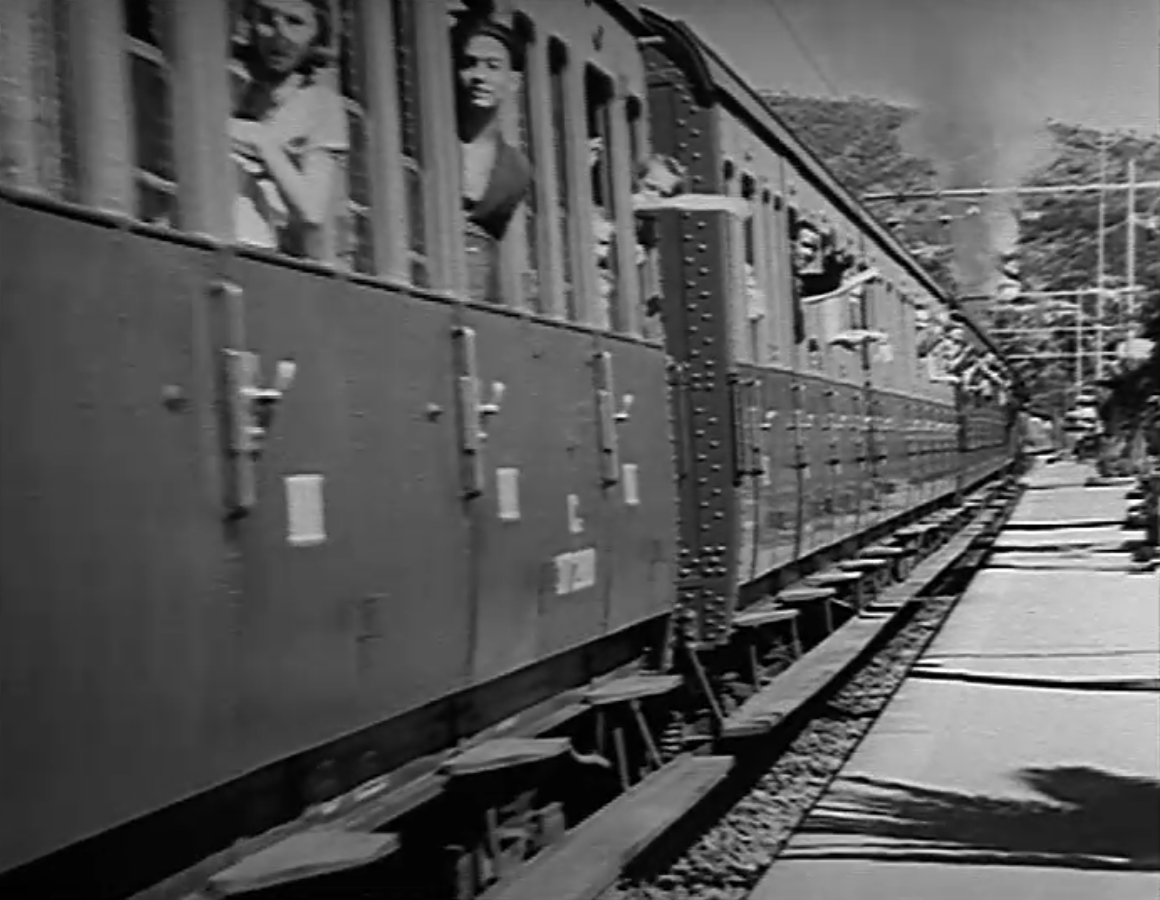
Andrea non smetterà di salutare con la mano finché sua moglie e suo figlio non saranno fuori dalla sua vista.
Andrea won’t stop waving until his wife and child are out of sight.
FINE PARTE 10
Ecco Parte 11 of this cineracconto! Subscribe to receive a weekly email newsletter with links to all our new posts.