Regia / Director: Paolo Taviani and Vittorio Taviani, 1977
Soggetto / Story: Gavino Ledda tratto dal suo libro di memorie / from his memoir, 1975
Sceneggiatura / Screenplay: I fratelli Taviani / The Taviani brothers
Fotografia / Cinematography: Mario Masini
Colonna sonora / Music: Egisto Macchi
Mentre scorrono i titoli di testa, si sentono dei bambini cantare lettere dell’alfabeto in ripetizione corale. I titoli indicano che il film è liberamente tratto da Padre padrone* di Gavino Ledda, con sceneggiatura e regia di Paolo e Vittorio Taviani.
*Padre padrone: L'educazione di un pastore (1975) è un'opera autobiografica. Realizzato per la RAI (Radiotelevisione Italiana), il film ha vinto la Palma d’Oro al Festival di Cannes del 1977, con grande sorpresa di tutti, compresi i registi. Roberto Rossellini, che era a capo della giuria, è stato fonte d’ispirazione per i fratelli Taviani all'inizio della loro carriera cinematografica, ma come si può vedere in questo film, i due registi hanno forgiato uno stile tutto loro.
As the opening titles roll, we hear children singing alphabet letters in choral repetition. The titles state that the movie is loosely based upon Padre padrone* by Gavino Ledda, with screenplay and direction by Paolo and Vittorio Taviani.
*Padre padrone: L'educazione di un pastore (1975) is a memoir. Created for RAI TV (Radiotelevisione Italiana), the film won the Palme d'Or at the 1977 Cannes Film Festival, to the surprise of everyone, including the directors. Roberto Rossellini, who headed the jury, was a source of inspiration for the Taviani brothers in their early film career, but as you can see in this film, the two directors forged a style all their own.
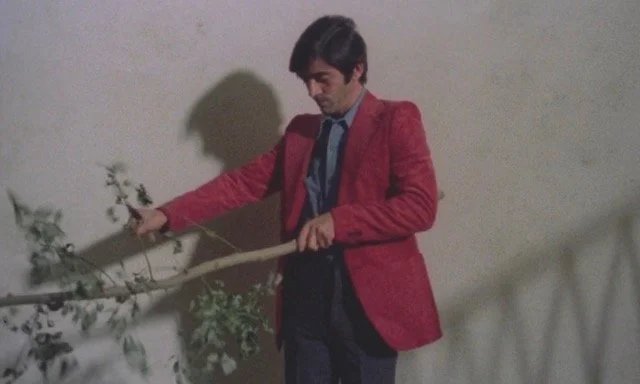
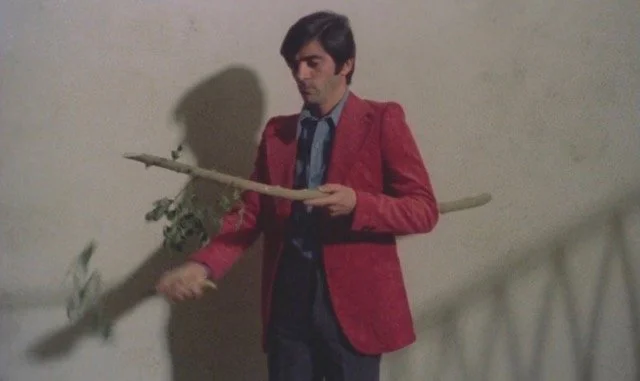
Il canto si ferma e osserviamo un uomo con un blazer rosso che spoglia un ramo delle sue foglie. Una voce fuori campo spiega: "Questo è Gavino Ledda, trentacinque anni. Fino ai diciotto un pastore analfabeta. Oggi un linguista e autore di successo. Il libro racconta la sua vita".
The singing stops and we watch a man in a red blazer stripping a branch of its leaves. A voiceover explains: “This is Gavino Ledda, age thirty-five. Up to eighteen, an illiterate shepherd. Today, a linguist and successful author. The book tells the story of his life.”
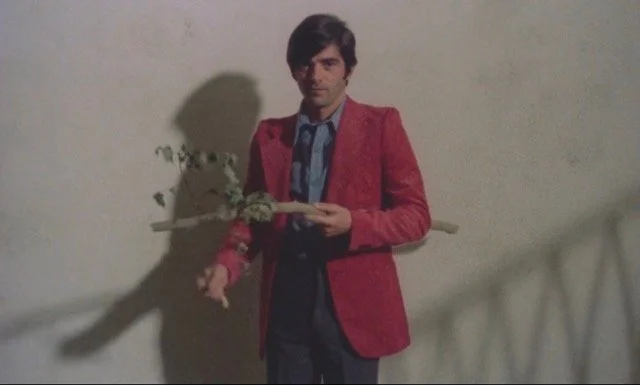
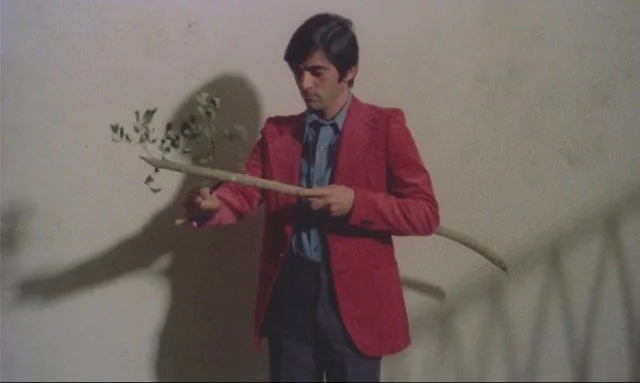
“Questo film si ispira liberamente al libro”. Ledda guarda brevemente verso la macchina da presa prima di tornare al suo compito.
“This film is loosely based on the book.” Ledda looks briefly into the camera before returning to his task.
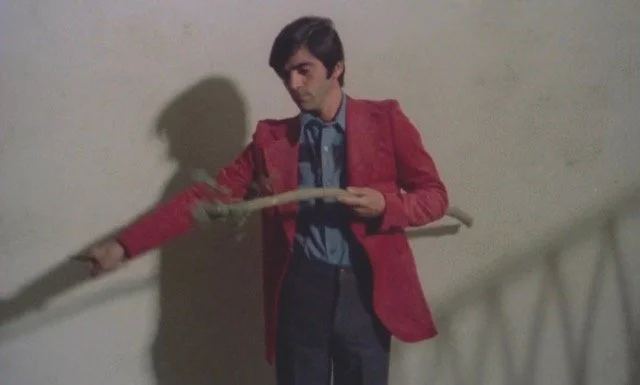
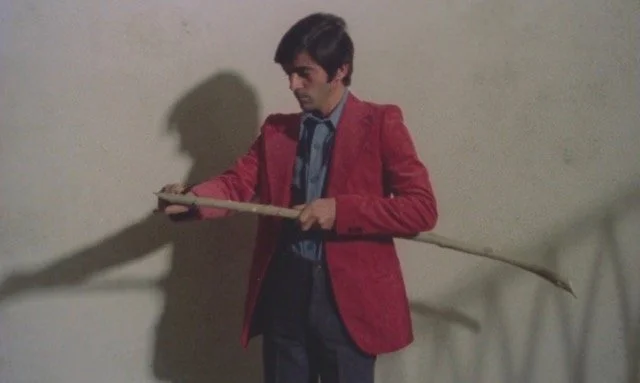
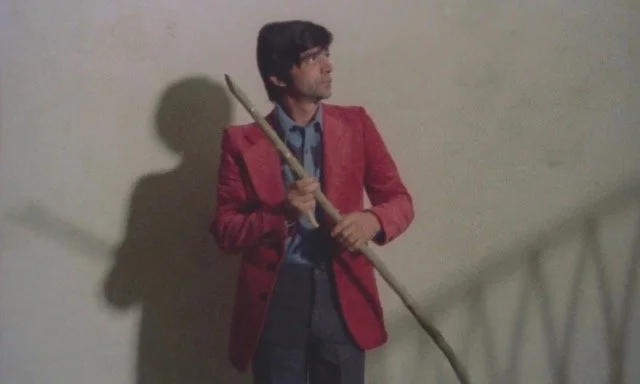
"La storia inizia in una scuola elementare di un paese della Sardegna dove Gavino frequenta la prima classe". Il bastone è ormai spoglio. Ledda guarda alla sua sinistra.
“The story begins in an elementary school in a Sardinian village, where Gavino is in first grade.” The stick is now leafless. Ledda looks to his left.
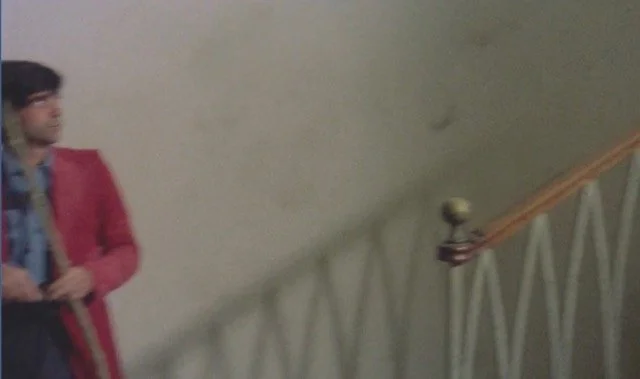
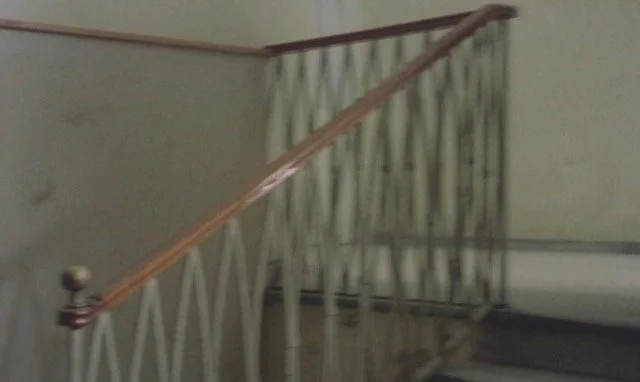
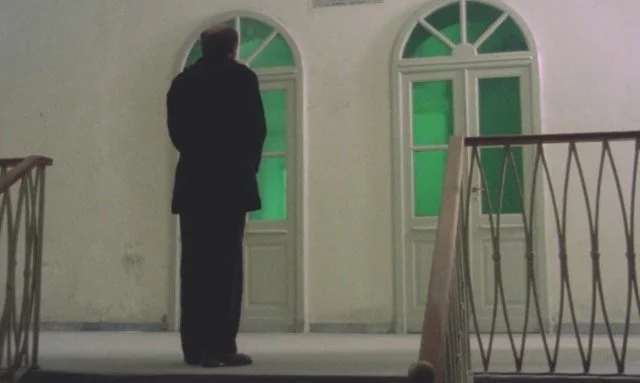
"Un mattino di novembre, il padre è piombato in municipio, dove alcune stanze erano usate come aule scolastiche".
La macchina da presa segue lo sguardo di Ledda verso la cima delle scale, dove un uomo vestito di nero si trova di fronte a due porte chiuse: è suo padre.
“One November morning, his father stormed into the City Hall, where some rooms were used as schoolrooms.”
The camera follows Ledda’s gaze to the top of the stairs, where a man dressed in black faces two sets of closed doors: it’s his father.
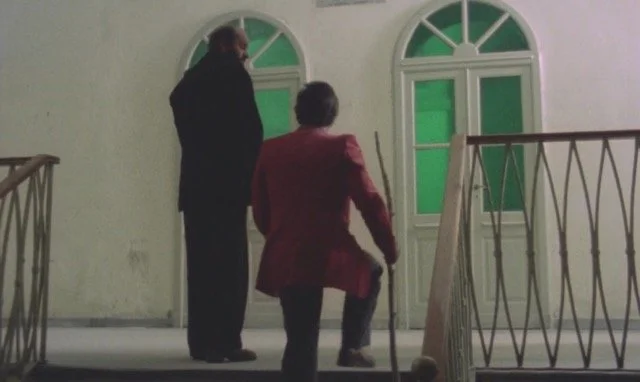
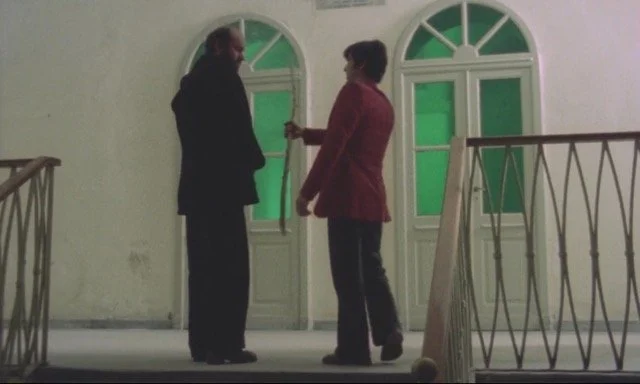
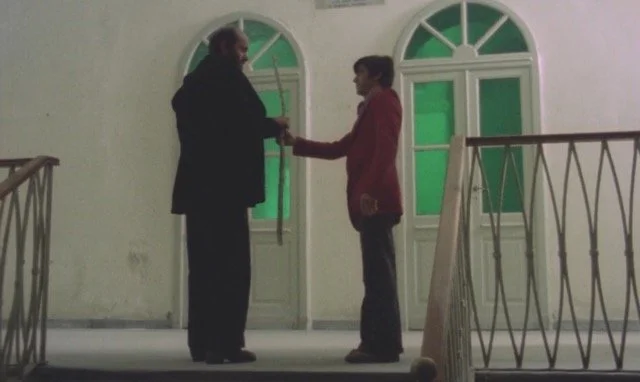
Ledda sale le scale e porge il bastone all’uomo, dicendo: "Mio padre aveva anche questo".
Efisio, suo padre (Omero Antonutti), prende il bastone. "Sì, grazie".
Ledda climbs the stairs and hands the stick to the man, saying, “My father also had this.”
Efisio, his father, accepts the stick. “Yes, thank you.”
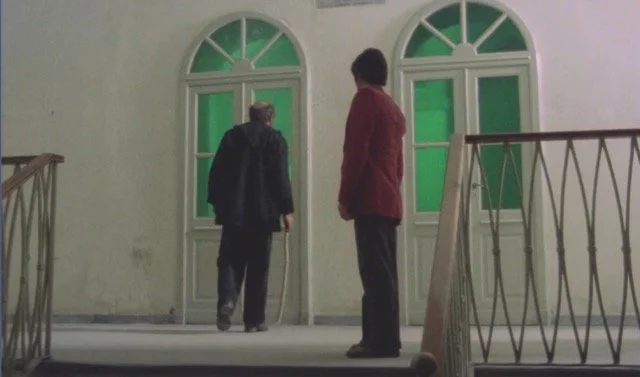
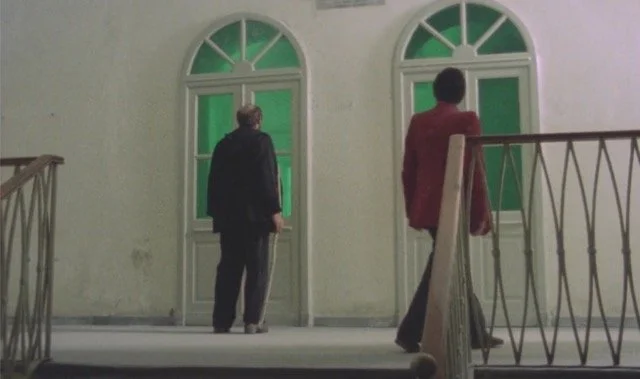
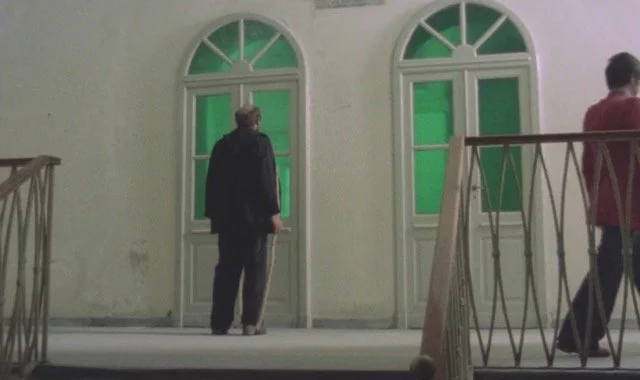
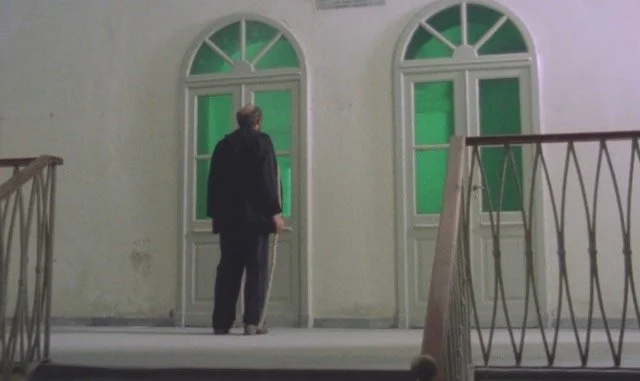
Si avvicina a una delle porte e Ledda esce di scena. Sentiamo di nuovo i bambini cantare.
He walks to one of the doors and Ledda leaves the scene. We hear children singing again.
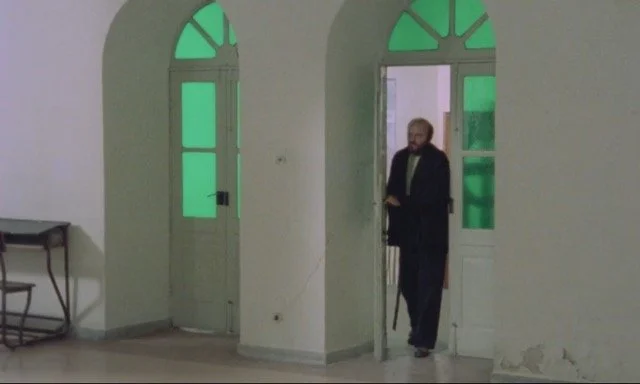
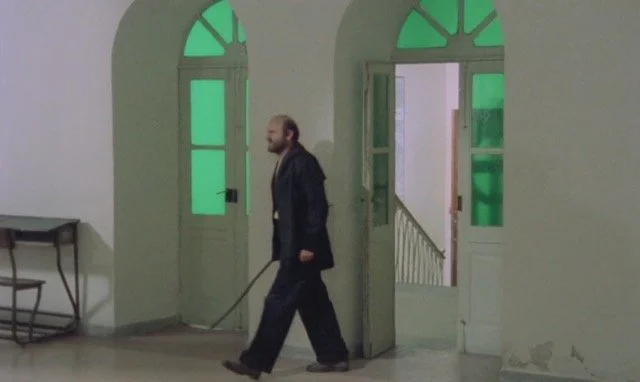
Dall’interno dell’aula vediamo entrare Padre con il bastone in mano. "Signora maestra" – dice, camminando a passo svelto – "Sono venuto a riprenderlo. Mi serve per governare le pecore".
From inside the classroom, we see Father enter, carrying the stick. “Signora Schoolteacher,” he says, walking briskly. “I’ve come to get him. I need him to tend the sheep.”
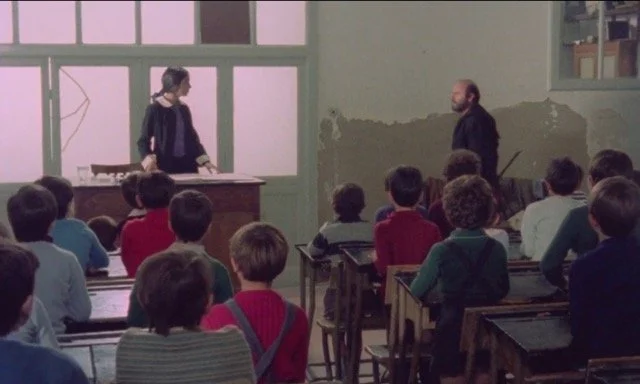
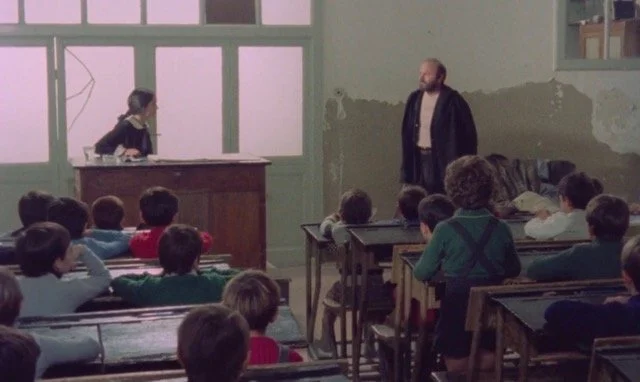
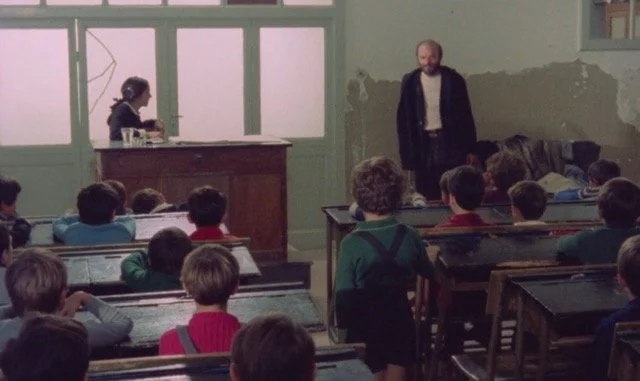
Fila dopo fila, i bambini – tutti maschi – si alzano in piedi e smettono di cantare mentre Padre si avvicina alla maestra. Notiamo la pittura scrostata sulla parete.
Lei fa cenno agli alunni di sedersi, lasciando in piedi un solo bambino. “Mi serve per governare e custodire le pecore. È mio".
Gavino si fa avanti tra i banchi.
Row by row, the children – all boys – stand and stop singing as Father approaches the teacher. We note the peeling paint on the wall.
She gestures to the students to sit, leaving only one boy standing. “I need him to herd and tend the sheep. He’s mine.”
Gavino steps forward from between the desks.
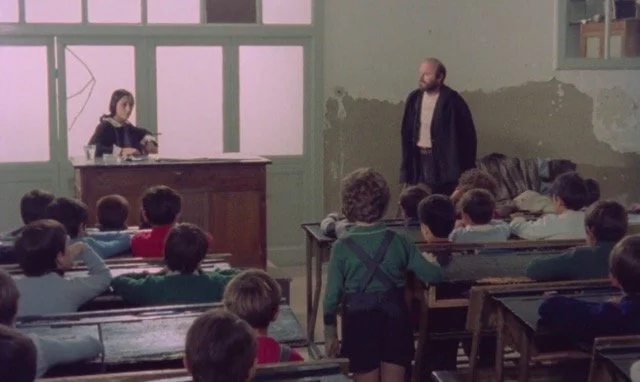
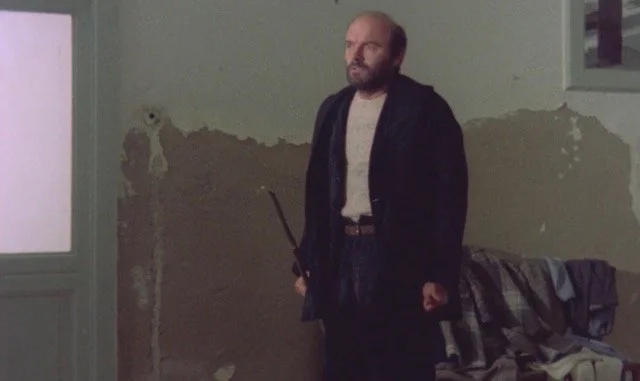
"Io sono solo. Non posso lasciare il gregge quando vengo in paese a vendere il latte, o quando raccolgo il grano, o poto la vigna. I soldi che guadagno dal grano, dalle patate e dal latte bastano appena per comprare i vestiti e le cose che noi pastori non produciamo. Ecco".
“I’m alone. I can’t leave the flock when I come to town to sell milk or when I harvest the wheat or prune the vineyard. The money I make from the wheat, the potatoes, and the milk is barely enough for clothing and the things that we shepherds don’t produce. There you have it.”
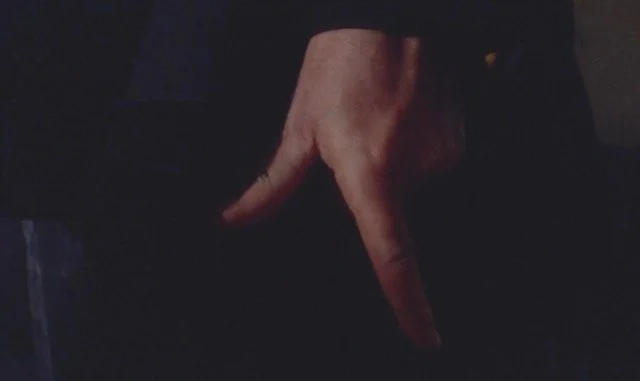
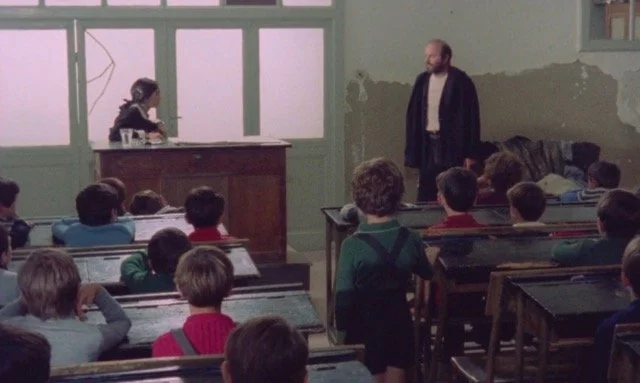
"Secondo". Lo vediamo contare con la mano. "Ho lasciato sole le mie bestie per venire qua. Le volpi o i banditi le prenderanno. Gavino le deve guardare".
La maestra ride. "Gavino contro i banditi? Non ha ancora messo nemmeno le penne!"
Arrabbiato, Padre risponde: "Che ne sai tu della pastorizia? I pastori volano tutti senza ali".
“Second.” We see his hand counting it off. “I left my animals alone to come here. Foxes and bandits will take them. Gavino has to watch them.”
The teacher laughs. “Gavino against bandits? He hasn’t even grown feathers yet.”
Angrily, Father replies, “What do you know about shepherding? Shepherds all fly without wings.”
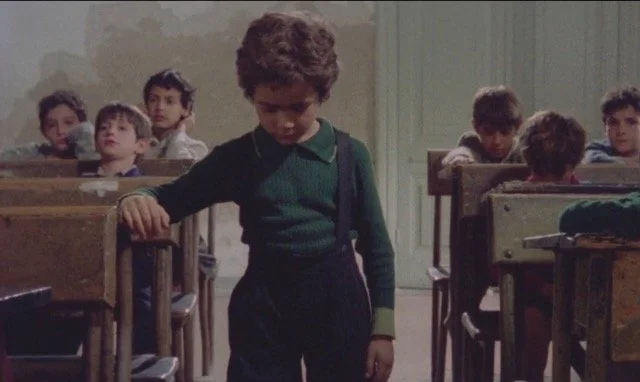
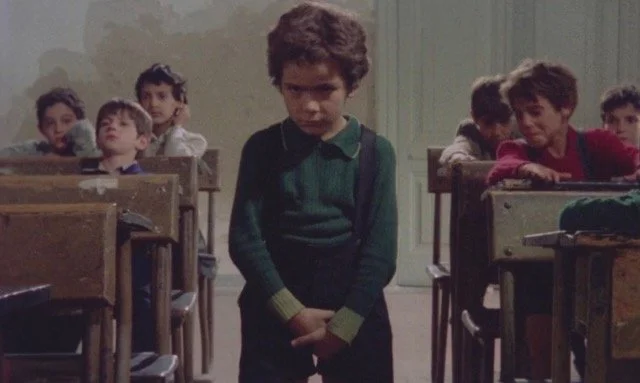
Padre guarda suo figlio. "Gavino non sarà il primo né l’ultimo a prendere la licenza elementare a diciotto anni – come me". Gavino (Fabrizio Forte) abbassa lo sguardo, portandosi le mani sul cavallo dei pantaloni, poi guarda di nuovo suo padre. "Che vuole questo governo da me?"
Father looks at his son. “Gavino won’t be the first or the last to get his elementary school certificate when he’s eighteen – like me.” Gavino looks down, placing his hands on his crotch, then looks again at his father. “What does this government want from me?”
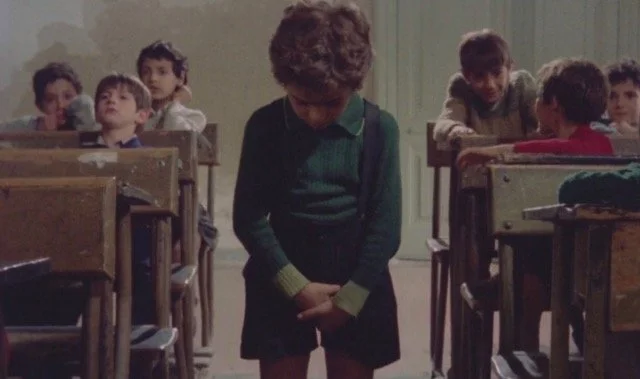
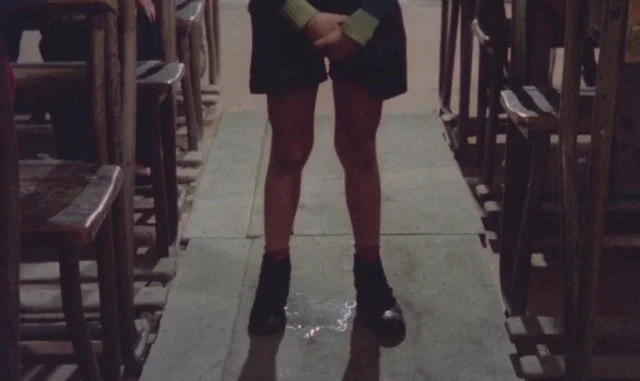
Alcuni bambini guardano Gavino e ridono. "Che per mandare lui a scuola gli altri figli muoiano di fame?" Gavino abbassa di nuovo lo sguardo: il pavimento sotto di lui è bagnato. Si è fatto la pipì addosso. "Il ragazzo è mio. Me lo prendo e lo uso perché non posso farne a meno".
Some boys look over at Gavino and laugh. “That to send him to school, my other children die of hunger?” Gavino looks down again: the floor is wet beneath him. He’s peed in his pants. “The boy is mine. I’m taking him and using him because I can’t do without him.”
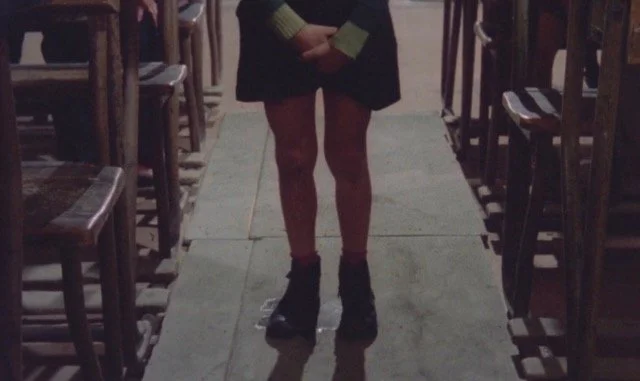
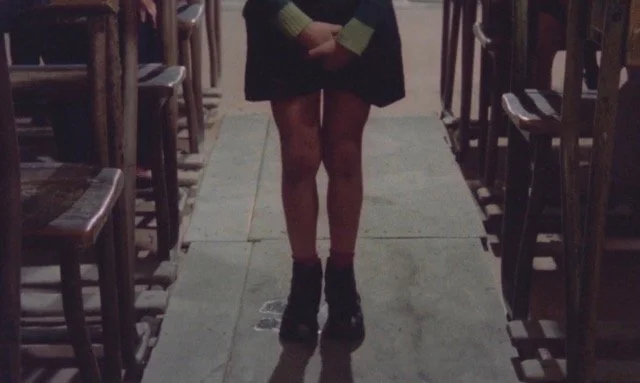
La macchina da presa rimane puntata sui piedi di Gavino, che si muovono a disagio. “Mi sento tranquillo io. È la legge che non si sente tranquilla”.
The camera stays focused on Gavino’s feet, shifting uncomfortably. “I feel at peace. It’s the law that doesn’t feel at peace.”
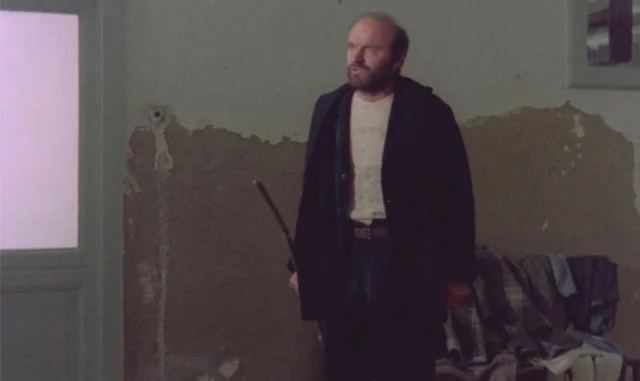
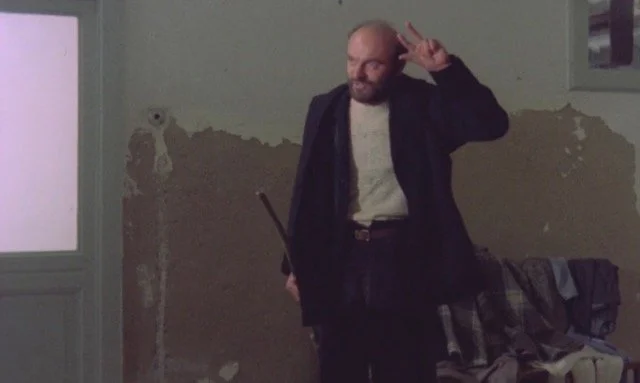
Padre conclude la sua invettiva: "La legge vuole rendere la scuola obbligatoria, mentre la povertà, quella è obbligatoria! E questo era il mio terzo argomento che volevo dire!" Alza tre dita.
Father concludes his rant: “The law wants to make school compulsory, while poverty, that’s compulsory! And that was my third point that I wanted to make!” He holds up three fingers.
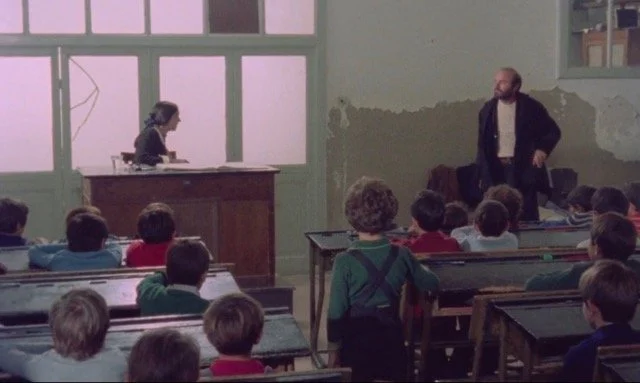
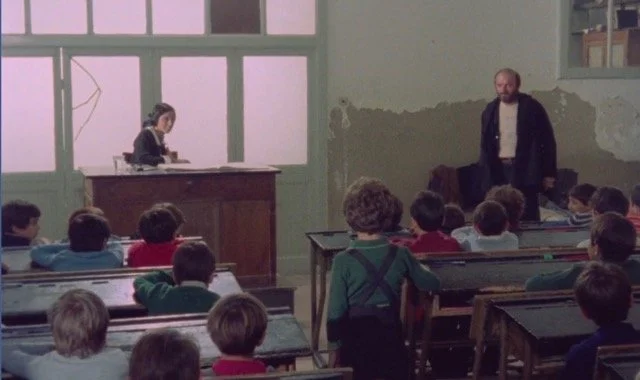
La maestra ride di nuovo. "Non glielo do". Guarda Gavino.
"Andiamo", dice Padre.
The teacher laughs again. “I’m not giving him to you.” She looks at Gavino.
“Let’s go,” says Father.
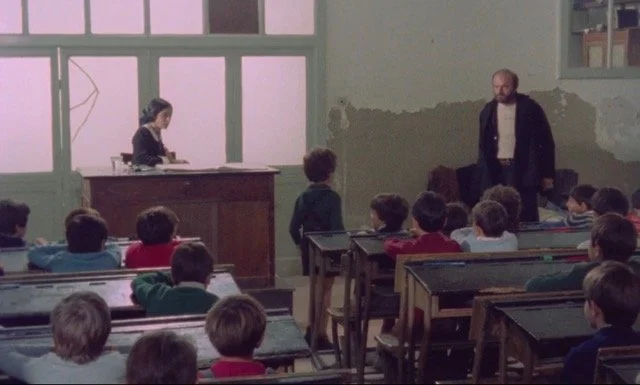
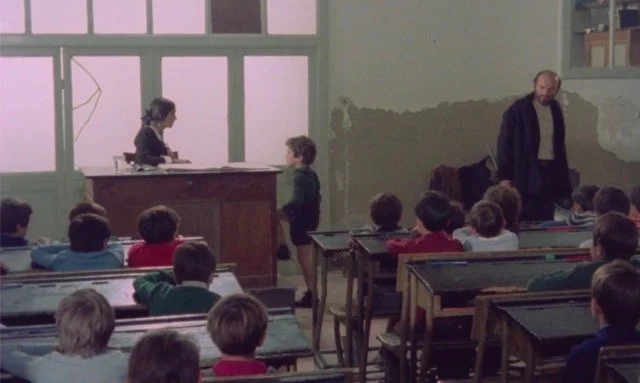
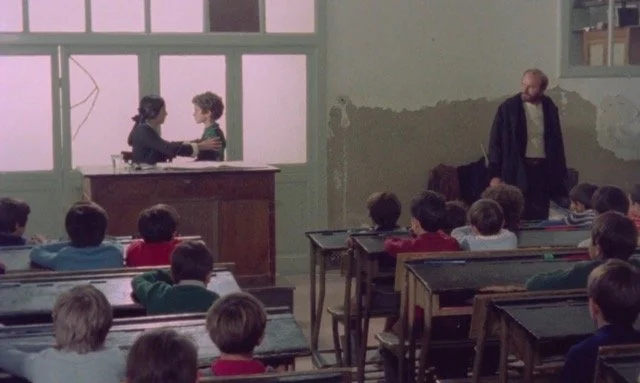
Gavino si avvicina alla cattedra. Sta guardando suo padre, ma sale sulla piattaforma rialzata, dove la maestra gli posa le mani sulle spalle.
Gavino walks towards the teacher’s desk. He’s looking at his father, but steps onto the raised platform, where the teacher puts her hands on his shoulders.
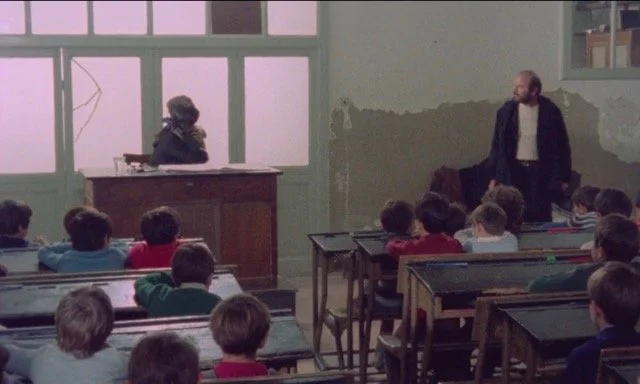
Lei abbraccia Gavino, sussurrandogli qualcosa all'orecchio, sotto lo sguardo di Padre.
She embraces Gavino, whispering to him, as Father looks on.
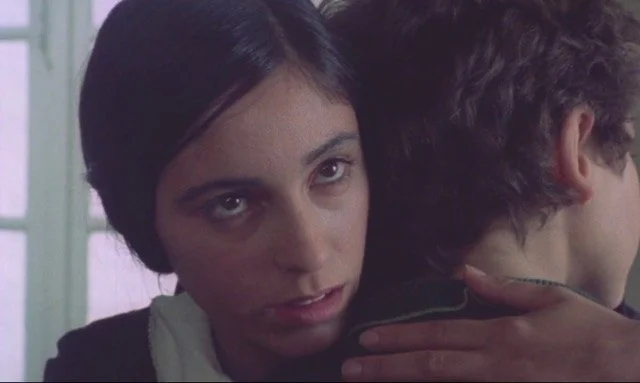
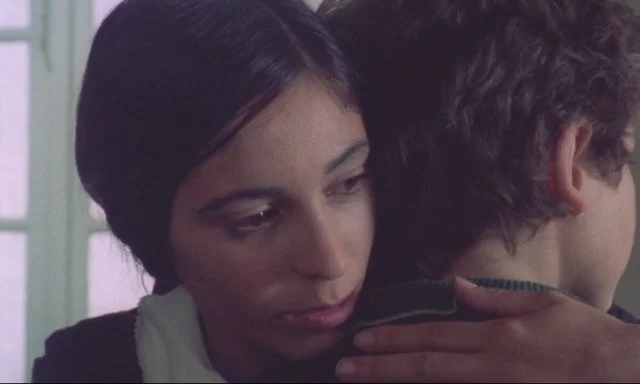
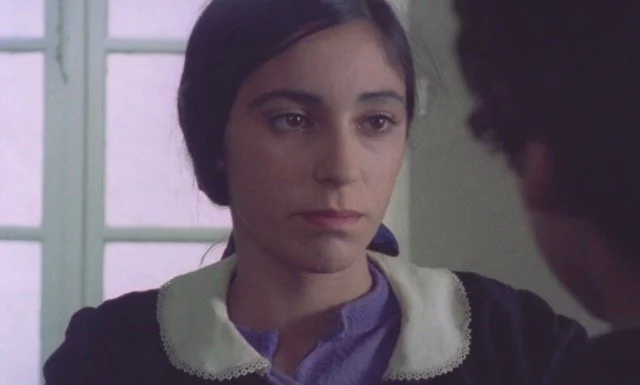
La vediamo in primo piano: "Guadagnerai i tuoi soldi prima di tutti i tuoi amici. E diventerai un pastore bravissimo". Lei lo lascia andare e lui indietreggia.
We see her in close-up: “You’ll earn your money before all your friends. You’ll be a wonderful shepherd.” She releases him and he steps back.
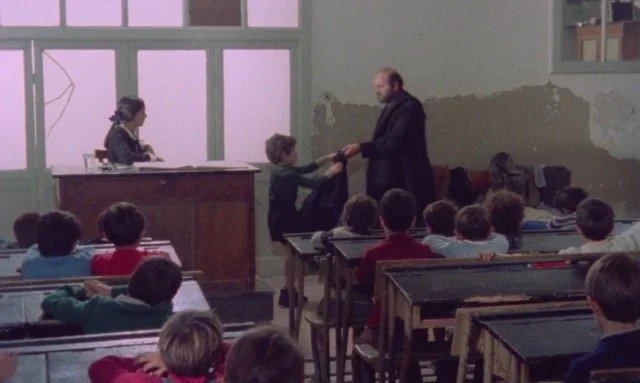
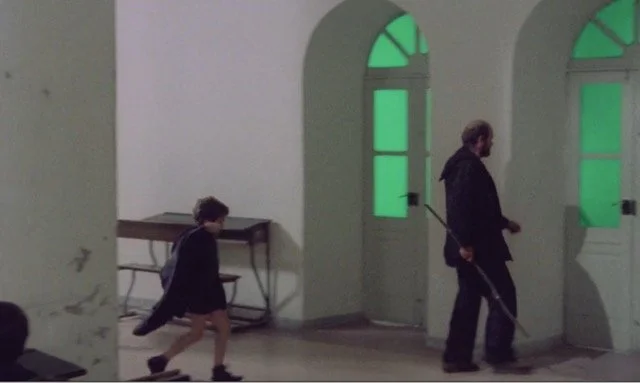
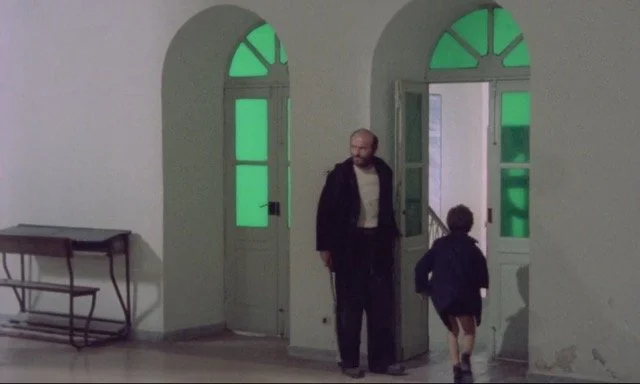
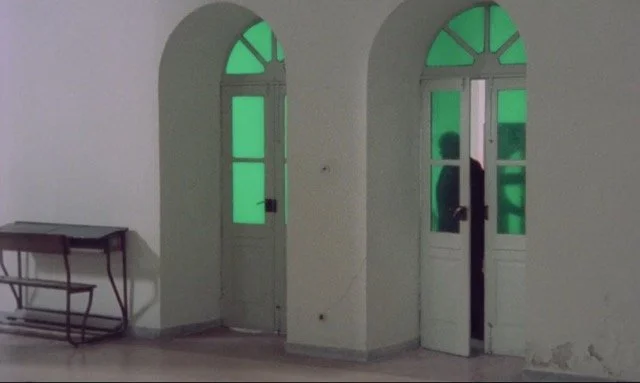
Padre porge a Gavino il cappotto e si dirige a grandi passi verso le porte. Gavino corre per stargli dietro. "Buongiorno", dice Padre, tenendo aperta una porta. La chiude dietro di loro.
Father hands Gavino his coat, and strides toward the doors. Gavino runs to keep up. “Good day,” Father says, holding open a door. He closes it behind them.
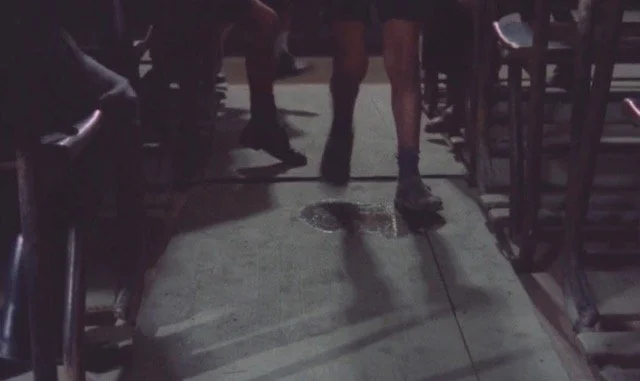
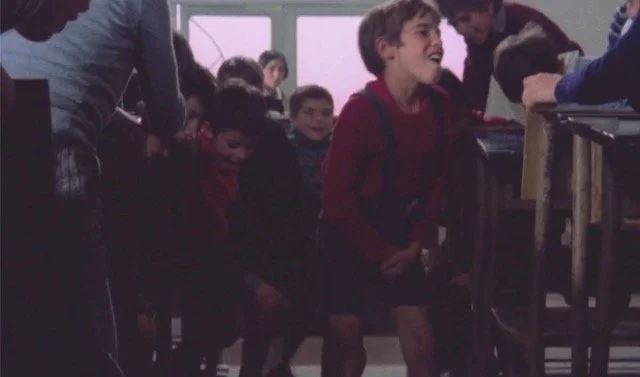
I bambini iniziano a urlare e a ridere. Un bambino con un maglione rosso batte allegramente i piedi sulla pozza di pipí dove prima si trovava Gavino.
The children start yelling and laughing. A boy in a red sweater stomps gleefully in the puddle of pee where Gavino stood.
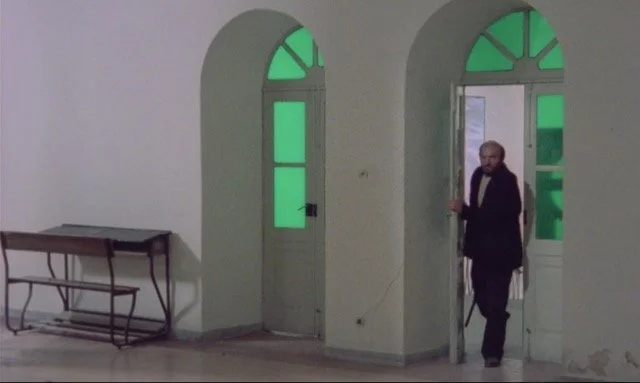
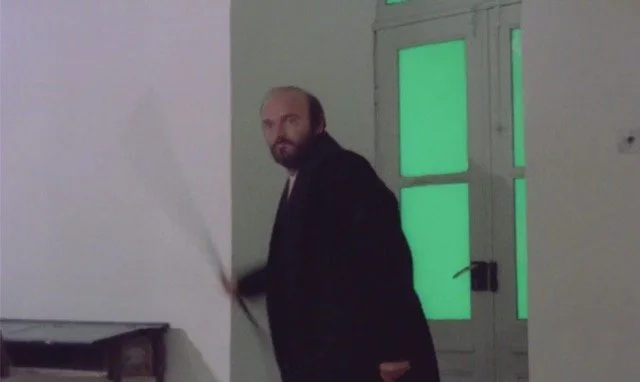
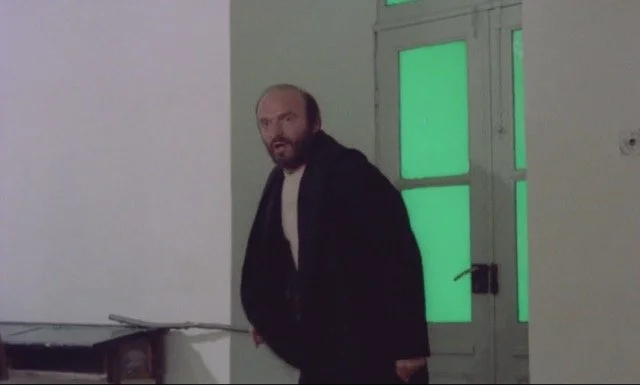
All’improvviso, Padre rientra in classe, agitando il bastone. "Guai a chi ride di Gavino!" urla, ma il trambusto continua. Padre sbatte il bastone su un banco. "Mani sul banco!" Sentiamo le mani posarsi con un forte tonfo.
Suddenly, Father comes back into the classroom, waving his stick. “Woe to anyone who laughs at Gavino!” he yells, but the uproar continues. Father slams his stick down on a desk. “Hands on your desk!” We hear the hands land with a loud thud.
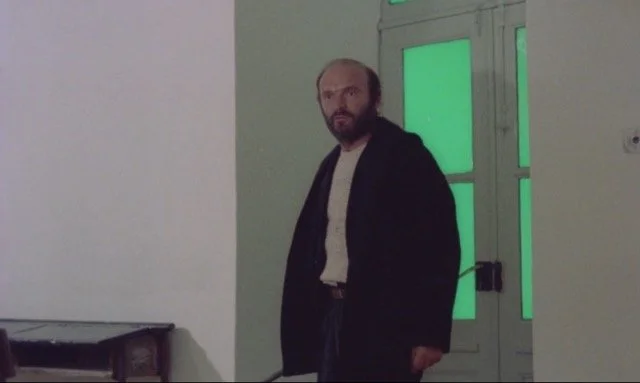
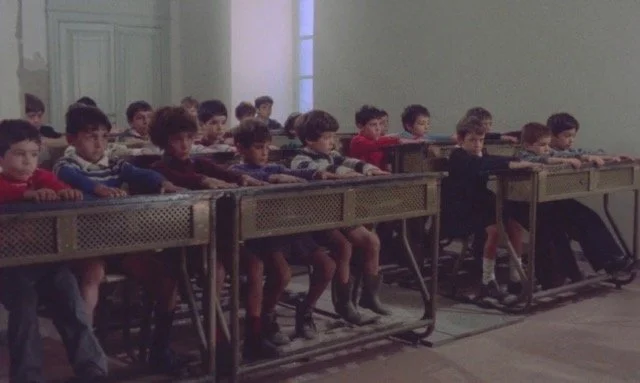
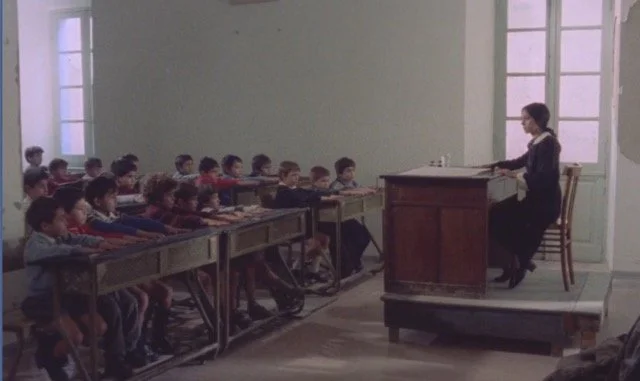
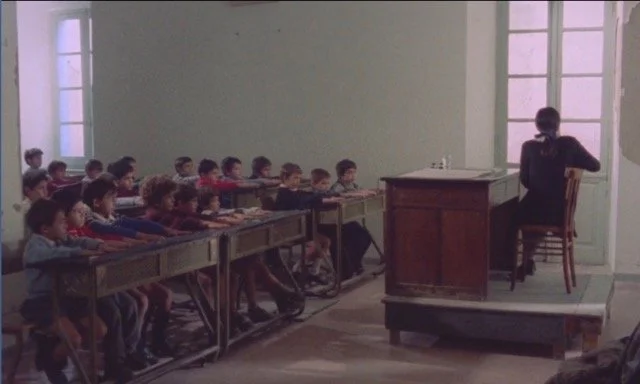
“Oggi tocca a Gavino… domani toccherà a voi”.
I bambini stanno seduti con le braccia distese, in un silenzio impaurito.
Si sente sbattere la porta.
La maestra è silenziosa. Si volta verso la finestra.
“Today it’s Gavino’s turn… tomorrow it will be yours.”
The boys sit with their arms extended, in frightened silence.
We hear the door slam.
The teacher is silent. She turns to the window.
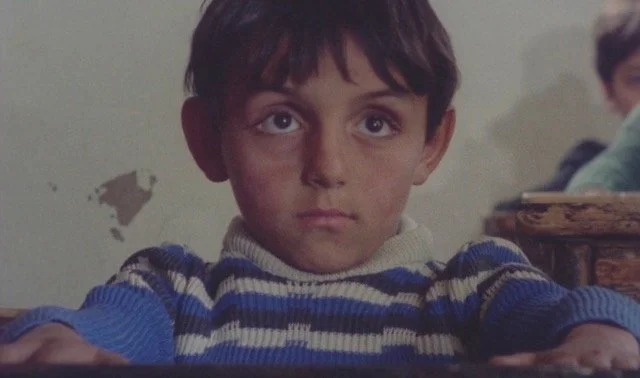
La macchina da presa inquadra un ragazzo con un maglione a righe. Sentiamo i suoi pensieri. "Non è vero. A me non toccherà come a Gavino. Mamma me l’ha giurato. Siamo ricchi noi. Abbiamo persino due vacche!"
The camera focuses on a boy in a striped sweater. We hear his thoughts. “It’s not true. It won’t happen to me the way it happened to Gavino. Mama swore to me. We’re rich. We even have two cows!”
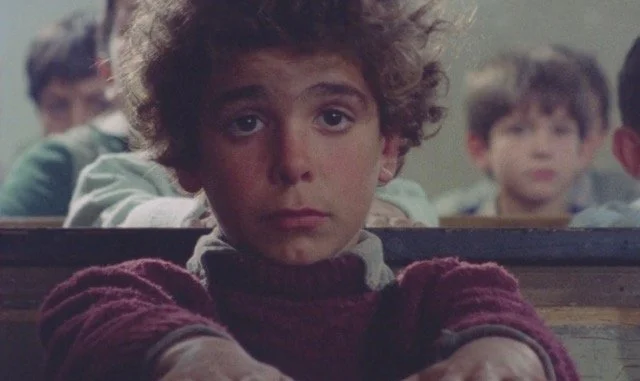
Un bambino dai capelli arruffati pensa: "Oh Dio, ti prego, fa’ che papà muoia e io ti obbedirò per sempre. Basta un calcio dell'asino in pancia o forse in fronte, così muore subito e neanche se ne accorge".
A boy with wild hair thinks, “Oh God, please make Papa die and I’ll obey you forever. All it takes is a kick from the donkey in the stomach, or maybe in the forehead, that way he’ll die right away and won’t realize it.”
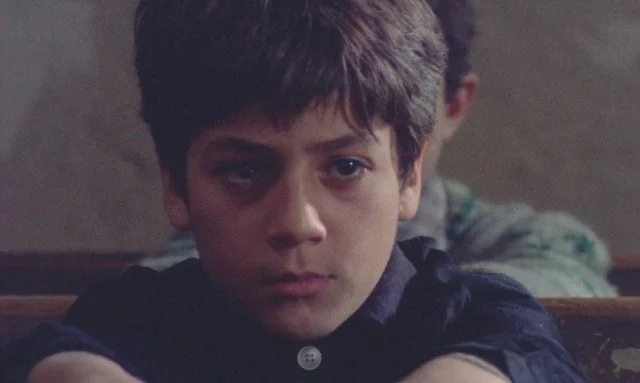
Un altro bambino: "Prima tocca a mio fratello. Ha dieci mesi di più, quindi tocca a lui andare in montagna. Anche se è più basso, è più anziano. Tocca a lui".
Another boy: “It’s my brother’s turn first. He’s ten months older, so he should go to the mountain. Even though he’s shorter, he’s older. It’s his turn.”
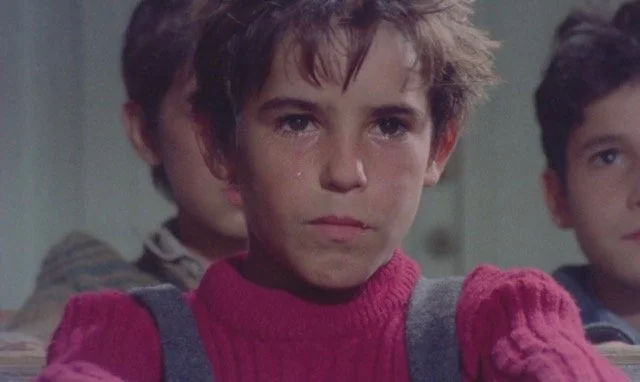
Al bambino con il maglione rosso scorrono le lacrime lungo il viso. "Quando torno a casa, metto una sedia sotto la finestra" – pensa, tirando su col naso– "Ci salgo sopra e mi butto. Lo farò quando tutti saranno a tavola, così tutti mi vedranno e mamma cercherà di fermarmi".
The boy in the red sweater has tears running down his face. “When I get home, I’ll put a chair under the window,” he thinks sniffling. “I’ll climb on it and then leap off. I’ll do it when everyone is at the table, so that everyone will see me and Mommy will try to stop me.”
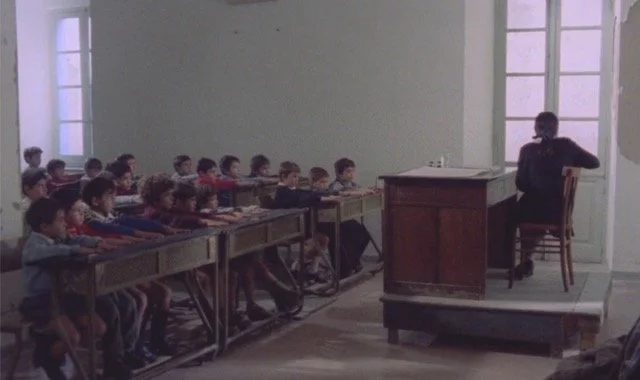
In un campo lungo, vediamo le file di banchi e la maestra ancora rivolta verso la finestra. I bambini hanno la bocca chiusa, ma sentiamo una cacofonia di voci, il clamore dei loro pensieri disperati.
In a long shot, we see the rows of desks and the teacher still turned to the window. The children’s mouths are closed, but we hear a cacophony of voices, the clamor of their desperate thoughts.
FINE PARTE 1
Parte 2 of this cineracconto will be posted on Saturday, November 14. Subscribe to receive a weekly email newsletter with links to all our new posts.
NOTES ABOUT THE TRANSLATION:
The Italian text of this cineracconto (photo-story) based on Padre Padrone has been carefully designed as a tool for language learning – and film appreciation. Descriptions of scenes, comments on photography, and background notes are chosen to give readers an appreciation of the film, its themes, and the relevant cultural and historical context.
The filmmakers have implemented some neorealist approaches. However, even though the film is very much about language, most of the dialogue is spoken in standard, modern Italian, not in the Sardinian language nor in its Logudorese dialect, which Gavino Ledda spoke in his youth.
We’ve made some changes in the original battute (lines) in order to make the cineracconto accessible to a wide range of language learners. This normally means using more basic vocabulary and grammar.
Because of the agricultural setting, there are naturally more words than usual in this cineracconto that aren’t in readers’ standard vocabulary. We have made a few changes for clarity, for example, in parte 3, changing “serpe” to “serpente” for “snake”. We’ve kept others such as “le bestie” (farm animals), which we translate within dialogue simply as “animals.”
For example, in Parte 2, Padre's original line is, “Lo hai visto passando.” [“You saw it as we were walking by.”] We’ve adjusted Padre’s line in Italian to “Lo hai visto mentre stavamo passando" in order to make the meaning clearer, with a smoother read for lower-level learners.
On the other hand, for some sentences, we maintain phrasing that is not so easily translatable, or whose structure is not exactly parallel, if the Italian is common and particularly useful to the language learner. In these cases, it’s more helpful for learners to see the difference between the English and Italian versions. For example, the impersonal in Italian doesn’t translate exactly into English, and in any case, the rendering is not parallel. So, for example in Parte 1, when translating the sentence, “Mentre scorrono i titoli di testa, si sentono dei bambini cantare…,” we’ve used the common English equivalent of the impersonal: “As the opening titles roll, we hear children singing…” (Of course, it could also be translated as “children’s singing is heard” or “one hears children singing.” Our choice reflects our spectator-centric writing style.)
Likewise, in Parte 2, we haven’t tried to create parallelism when translating “Bussano alla porta.” Our version is: “There’s a knock at the door.”
Also in Parte 2, when describing Gavino and his mother, the Italian text says, “...lui le afferra il polso e glielo morde.” By contrast, the English says, “...he grabs her wrist and bites it.” In English, there’s no place for the pronoun “glielo,” a second reference to “her.” In such cases, it’s useful for learners to see where the structure is not parallel.
While we generally minimize the use of the congiuntivo, it does appear in contexts where it's easy to understand and instructive.
Even with these changes, the dialogue in our cineracconti can be a more accurate reflection of the dialogue as you watch the film than the English subtitles. This is partly because we have the luxury of space and can include a complete transcription of what the characters actually say. But it’s also because we’ve corrected creative re-writes and subtitle errors.
(For a fun read about the complexities of subtitling, see our post Writing Subtitles: Tips for Non-Professionals. We present copious examples of bloopers, many from films that we've covered in our cineracconti.)
Since our format change in April 2020, we’re focused less on building vocabulary and more on ensuring a smooth, satisfying reading experience for the language learner. We’re in the process of reformatting the past cineracconti, in chronological order, beginning with the most recent. Currently, the oldest cineracconto in the new format is Risate di Gioia. Readers interested in a more challenging read and in vocabulary-building may look at the earlier cineracconti, where new words are marked in bold, a complete vocabulary list is provided at the end, and the English translation is in a separate PDF and not side-by-side with the Italian. See, for example, the bottom of Parte 1 of Rocco e i suoi fratelli.
There is often more than one correct way to translate a particular word or phrase. Context is everything, and we – as language teachers and language learners – have made careful choices, based on the goals of our work here at Li conoscevo bene.
BLOG TRANSLATION OVERVIEW: The earliest cineracconti in this series are at a more advanced intermediate (B2) level. The later cineracconti (starting with Risate di Gioia, April 2020) are at a lower intermediate (B2) level. To see the more advanced cineracconti, please go to the blog Welcome page: the Italian movies are posted on top with thumbnails. There is also a list in the right-hand column mid-way down the page; that includes both Italian and international films in alphabetical order.
We love language and we sometimes spend a very long time debating the best way to translate a particular word or phrase. We’d be very happy to hear your thoughts about our translations. Write to blog creator Judy Cohen at judycohen.iknewthemwell@gmail.com.