Regia / Director: Paolo Taviani and Vittorio Taviani, 1977
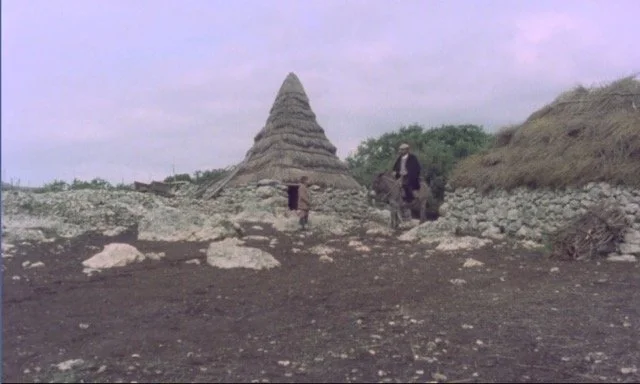
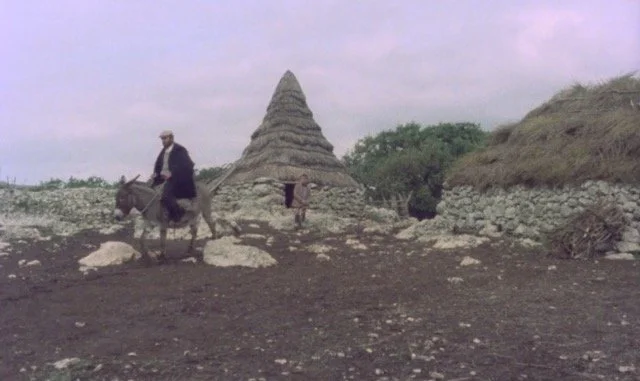
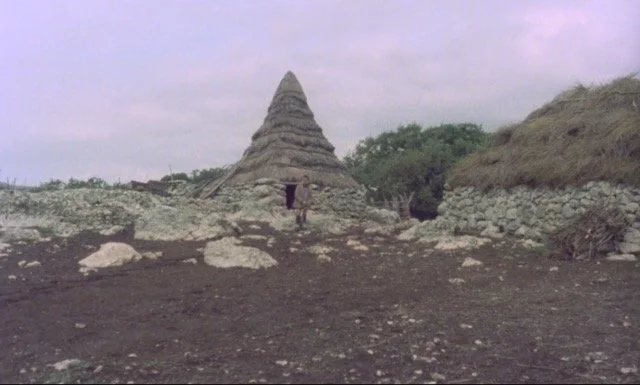
Mentre Gavino sta davanti alla pinnetta, Padre si avvicina sull’asino. “Non mettere il naso fuori dall’ovile”, avverte lui, e prosegue per la sua strada.
As Gavino stands in front of the hut, Father approaches on the donkey. “Don’t stick your nose out of this pen,” he warns, and goes on his way.
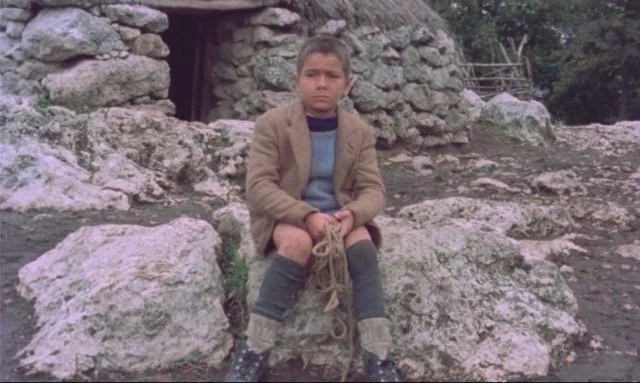
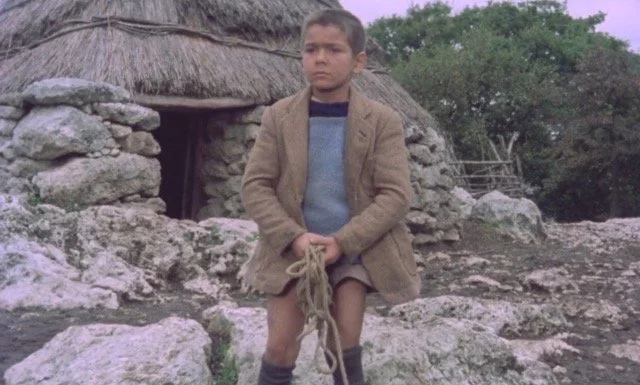
Gavino è seduto con la corda in mano. Si alza in piedi e guarda in lontananza.
Gavino sits holding the rope. He stands, gazing into the distance.
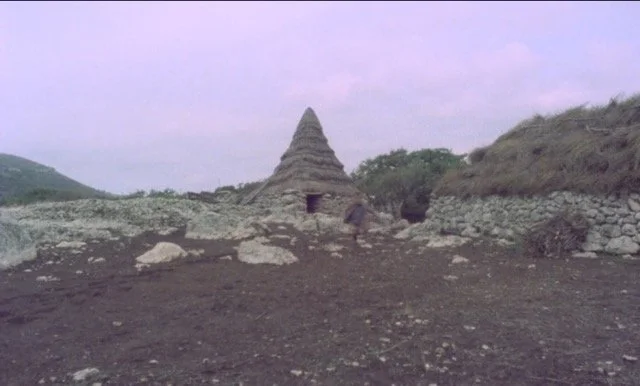
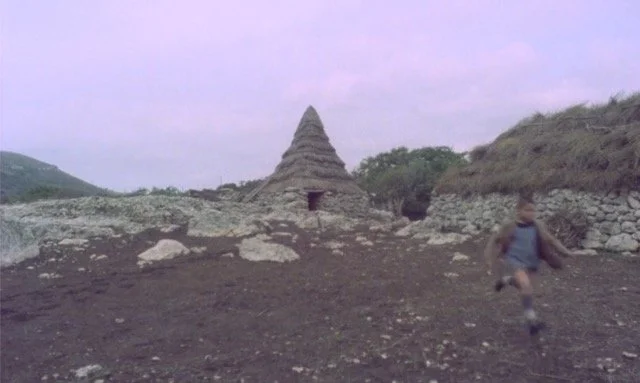
All’improvviso, getta via la corda e scappa.
Suddenly, he tosses the rope aside and runs.
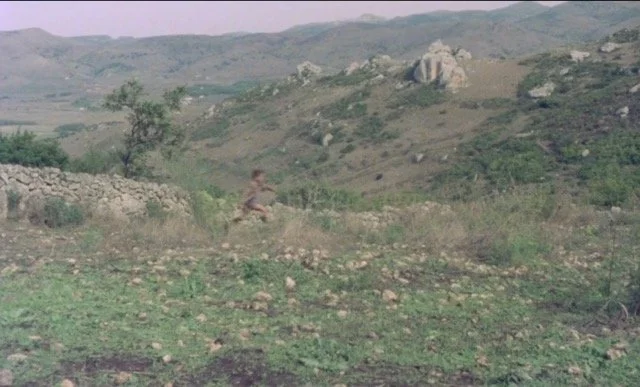
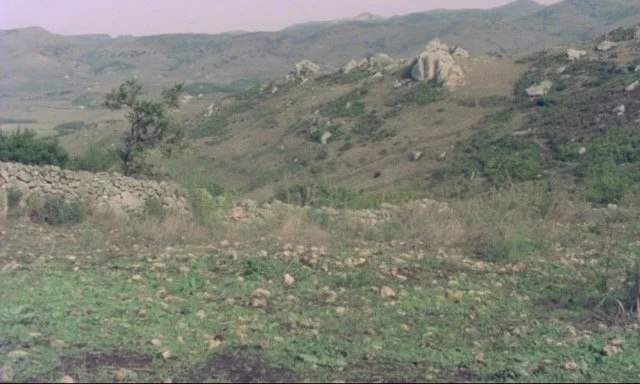
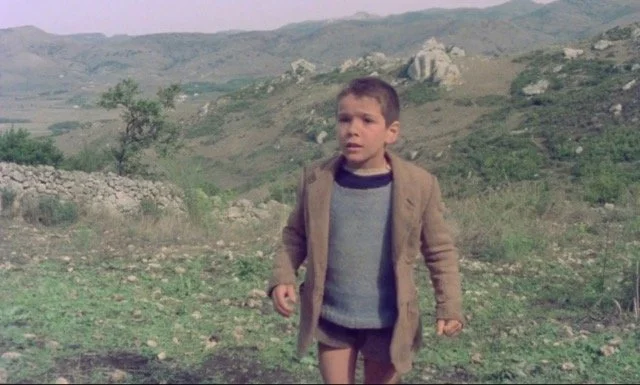
La macchina da presa rimane fissa mentre lui corre attraverso il paesaggio roccioso, fino a uscire dall’inquadratura. Si sente di nuovo il rintocco e lui si ferma. “Antonio!” dice a bassa voce.
The camera remains still as he runs across the rocky landscape, finally leaving the frame. We hear the chime again, and he stops. “Antonio!” he says quietly.
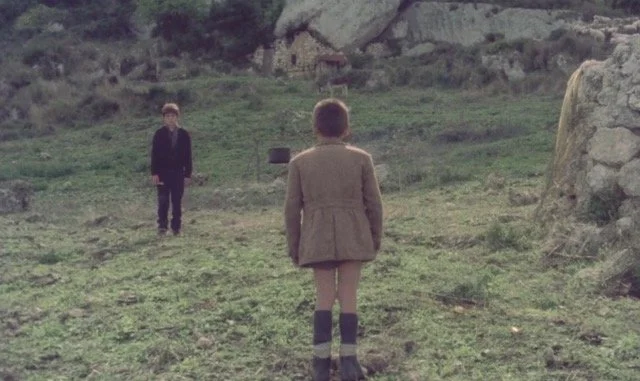
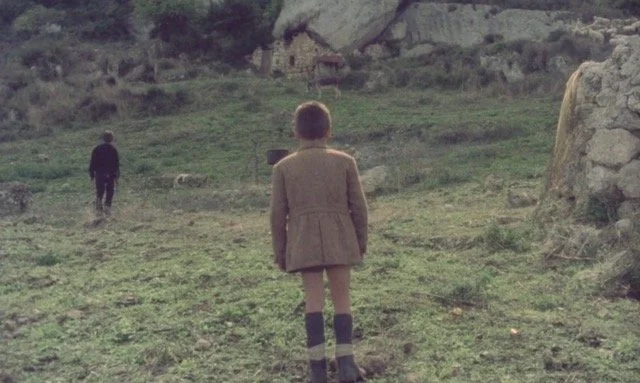
I due ragazzi stanno immobili, con le braccia lungo i fianchi. Antonio grida: "Vai via!" e se ne va.
The two boys stand motionless, arms by their side. Antonio yells, “Get out of here!” and walks away.
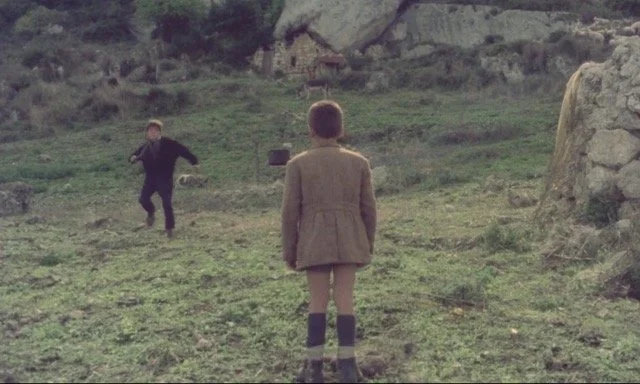
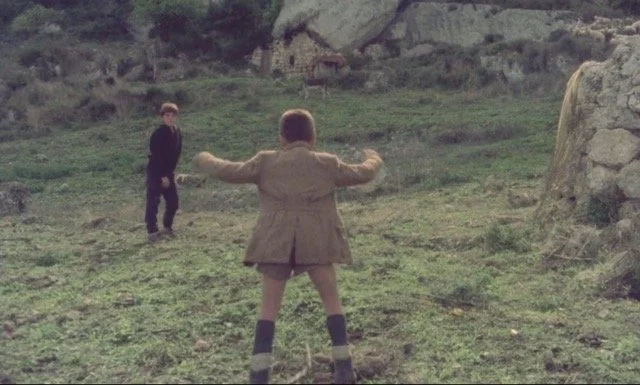
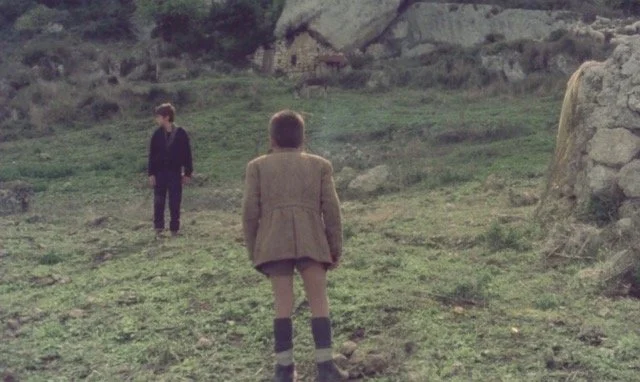
Poi prende un bastone e lo lancia contro Gavino. Il bastone cade ai suoi piedi. “Vai via! Non devo far avvicinare nessuno!”
“Stai zitto o ci sentono”.
Then he picks up a stick, and throws it at Gavino. The stick lands at his feet. “Go away! I can’t allow anyone to get near!”
“Shut up or they’ll hear us.”
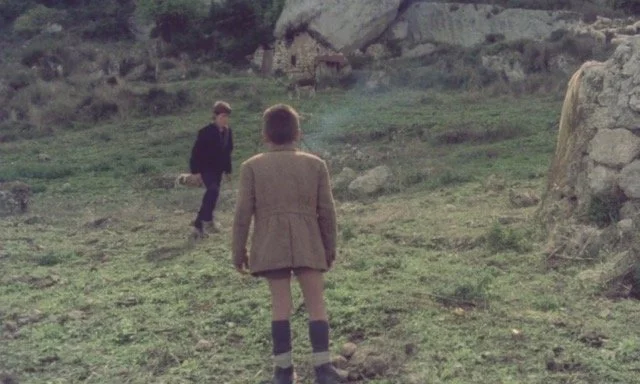
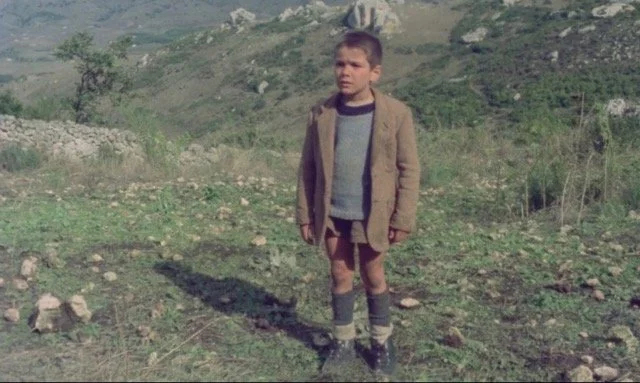
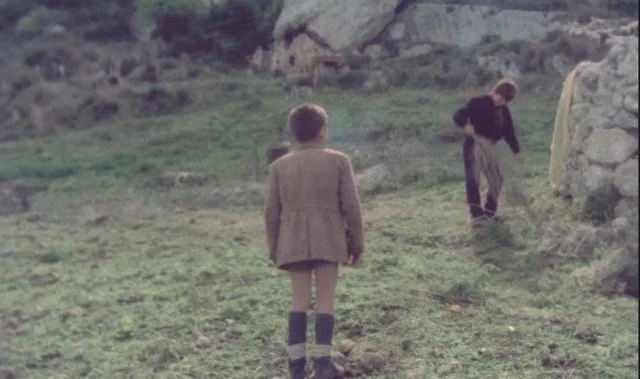
Antonio avverte: “Se ci scopre mio padre, guarda che mi fa”. Prende un ramo.
Antonio warns, “If my father catches us, look what he’ll do to me.” He picks up a tree limb.
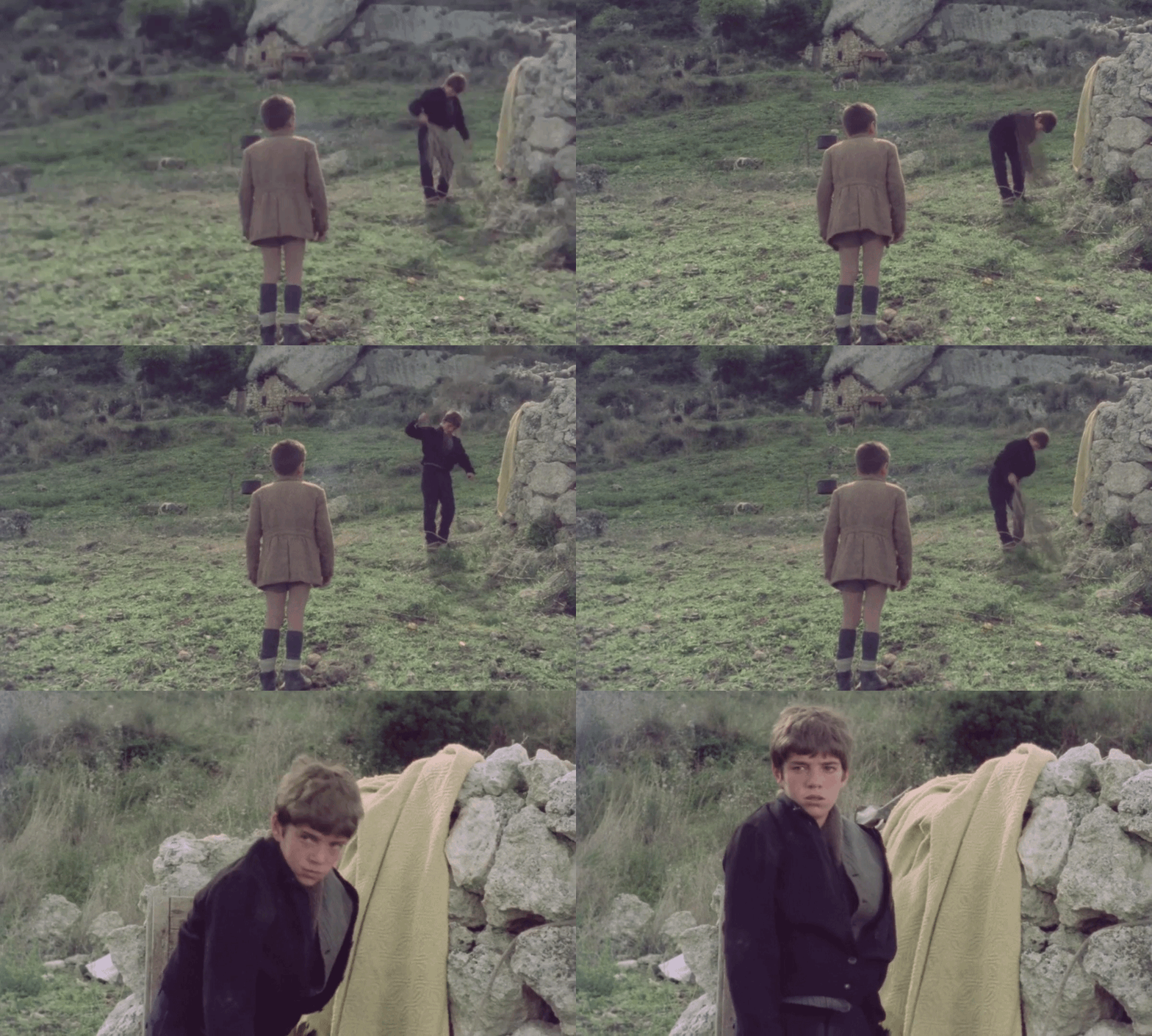
Mentre Antonio colpisce il terreno, Gavino lo segue dondolandosi in avanti. Antonio si ferma e guarda Gavino.
As Antonio hits the ground, Gavino follows him rocking forward. Antonio stops and looks at Gavino.
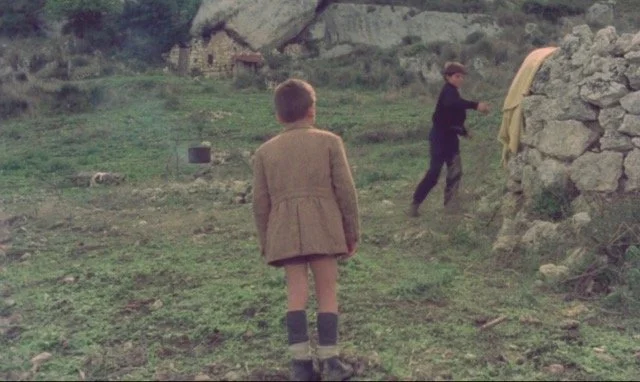
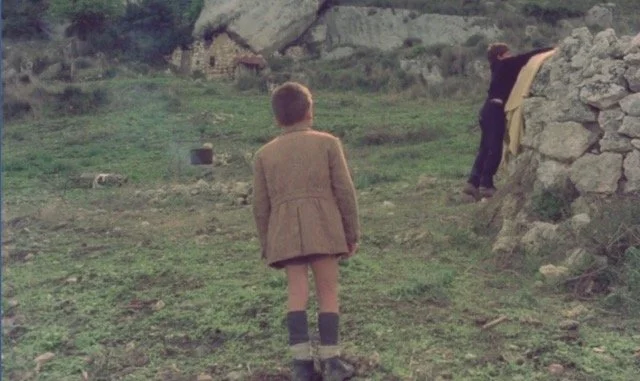
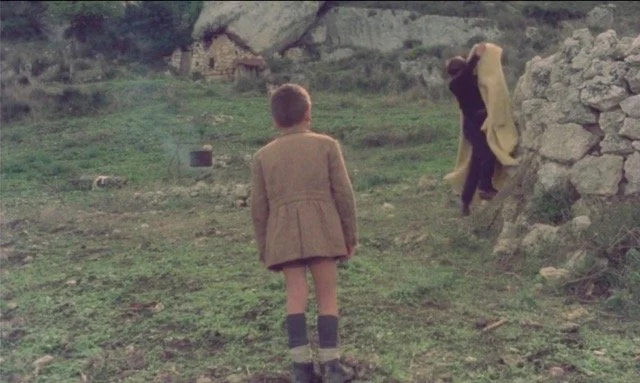
Antonio posa il ramo e prende una coperta appoggiata su un muretto roccioso.
Antonio puts down the bough and picks up a blanket draped over a rock wall.
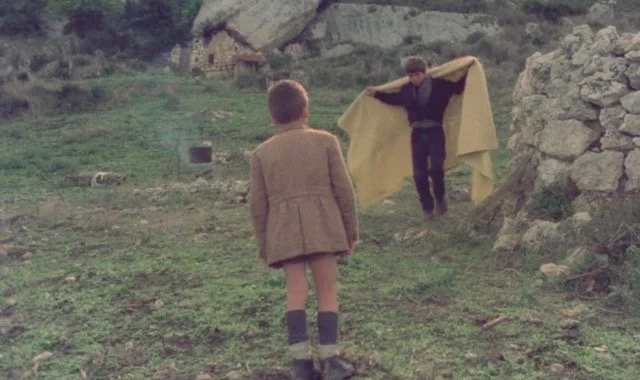
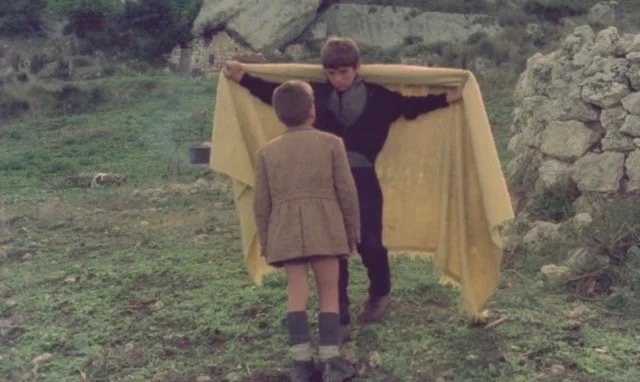
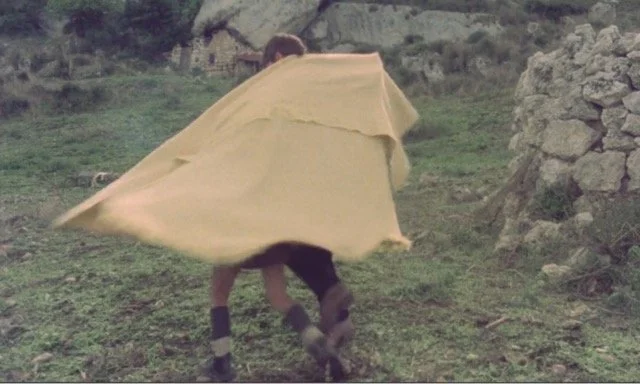
Con la coperta sulle spalle, si avvicina a Gavino. Si ferma un attimo, poi la avvolge bruscamente attorno a entrambi.
With the blanket over his shoulders, he approaches Gavino. He pauses, a moment then abruptly wraps it around them both.
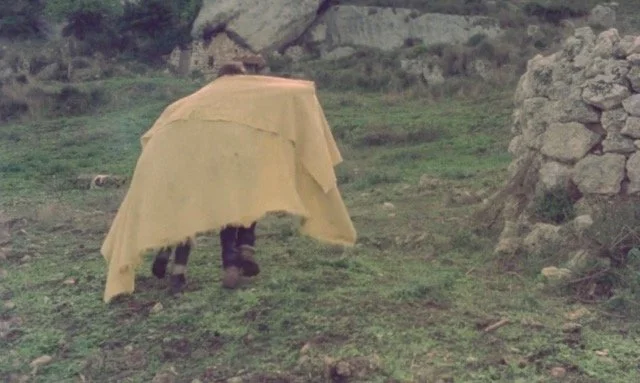
Si allontanano sotto la coperta, l’uno al passo dell’altro.
They walk off under the blanket, in step with each other.
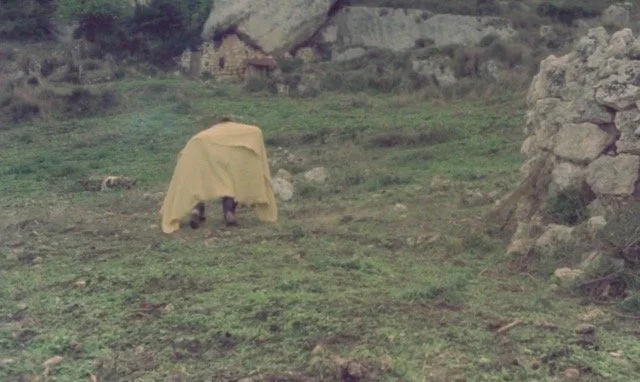
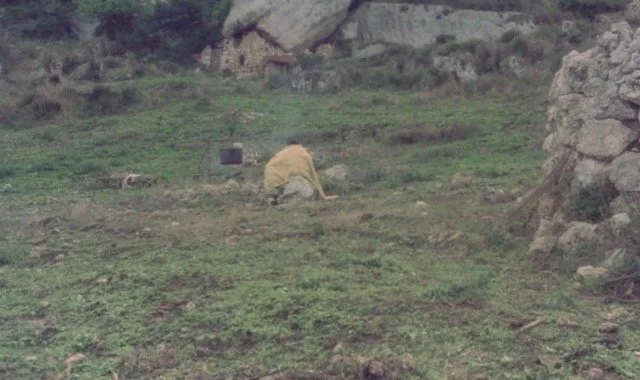
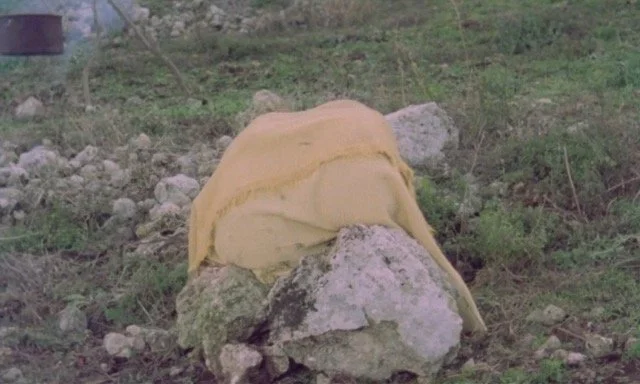
Si siedono su un masso, sussurrando e ridacchiando.
They sit on a boulder, whispering and giggling.
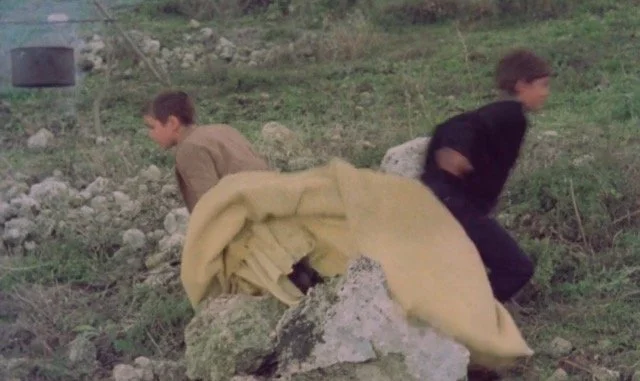
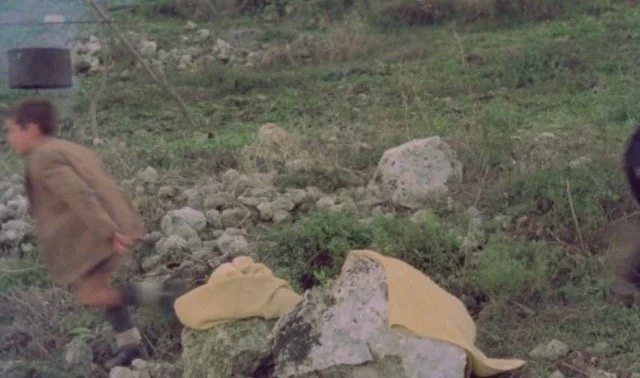
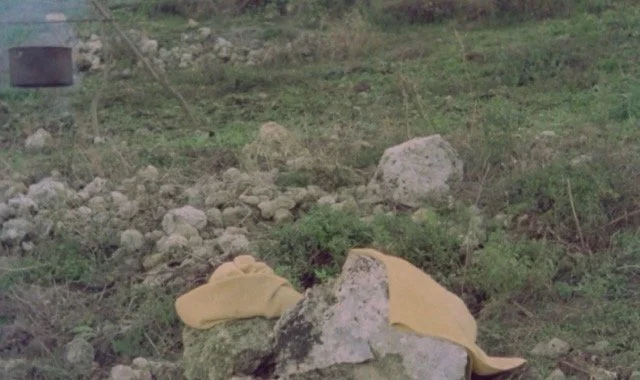
All’improvviso l'abbaiare di un cane, i ragazzi saltano in piedi e tornano ai loro posti, abbandonando la coperta.
At the sudden bark of a dog, the boys spring up and return to their places, abandoning the blanket.
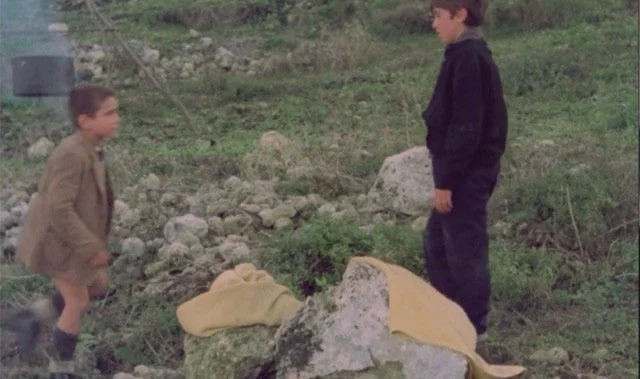
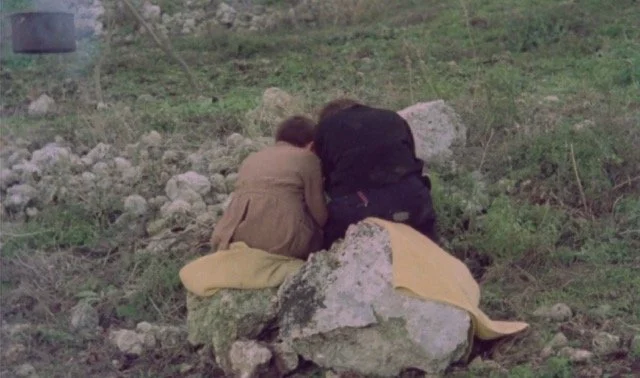
Falso allarme! Tornano al loro masso e continuano a parlare, curvi, con le teste vicine.
False alarm! They return to their rock and continue talking, hunched over, heads together.
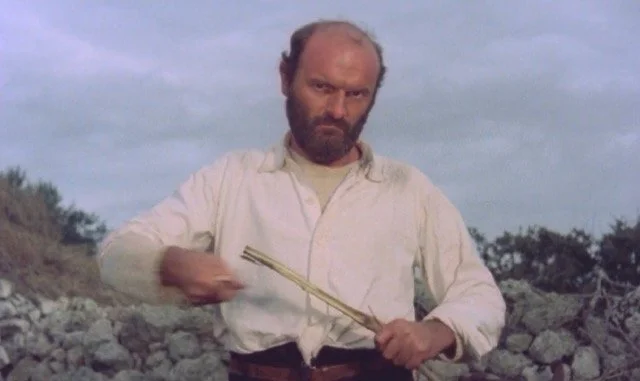
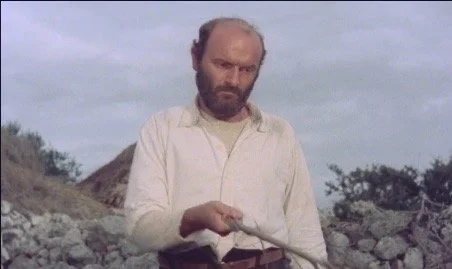
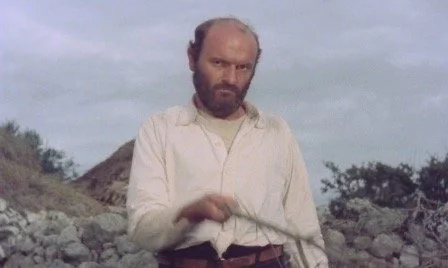
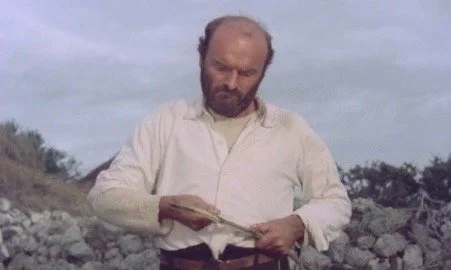
Padre tiene in mano un ramoscello e lo spoglia, proprio come ha fatto il vero Gavino all’inizio del film. Lo agita, decide che bisogna lavorarci ancora un po’ e continua a spogliarlo.
Father holds a twig and strips it, much as the real-life Gavino did at the outset of the film. He shakes it, decides that it needs a little more more work, and continues stripping.
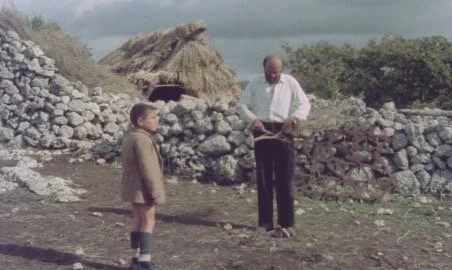
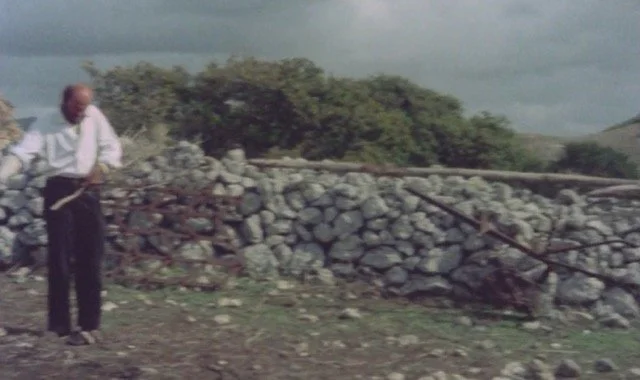
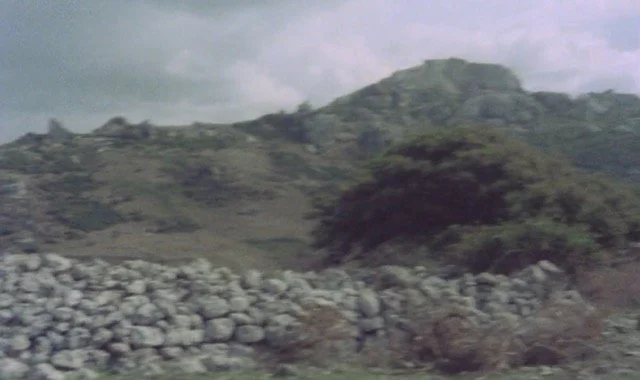
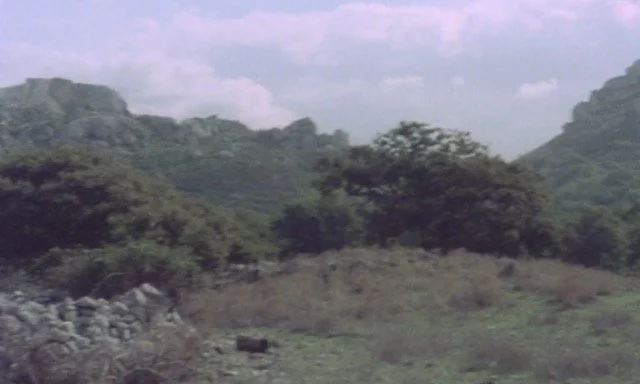
Vediamo Gavino che osserva suo padre, mentre Antonio urla da fuori campo: “È stato Gavino!” Gavino si volta a guardare.
La macchina da presa fa una panoramica lungo il muretto roccioso e si ferma su un paesaggio sereno: alberi e nuvole rosa.
We see Gavino watching his father, while Antonio yells from off-screen: “It was Gavino!” Gavino turns to look.
The camera pans along the rock wall and stops at a tranquil landscape: trees and pink clouds.
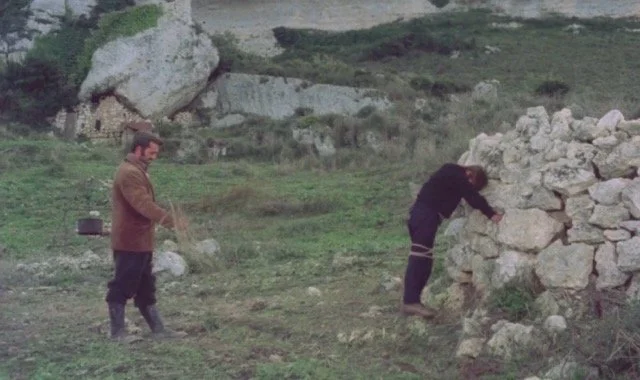
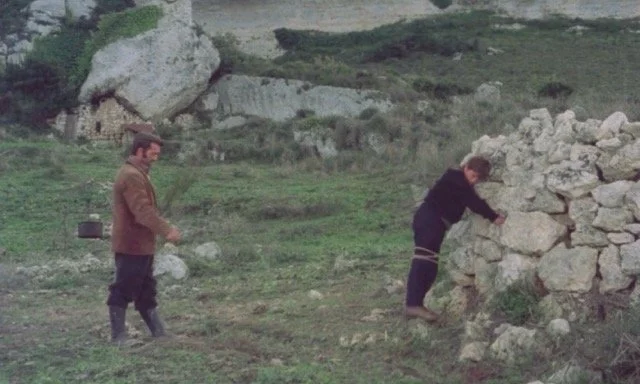
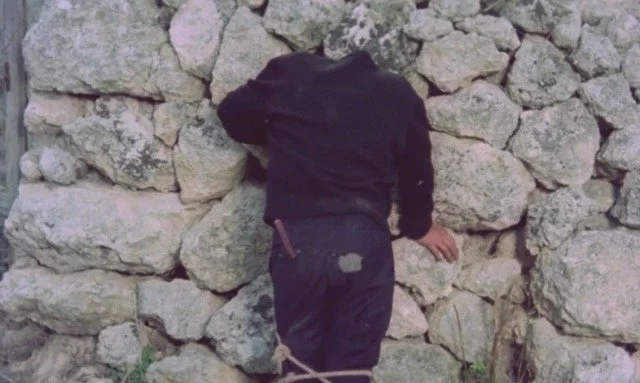
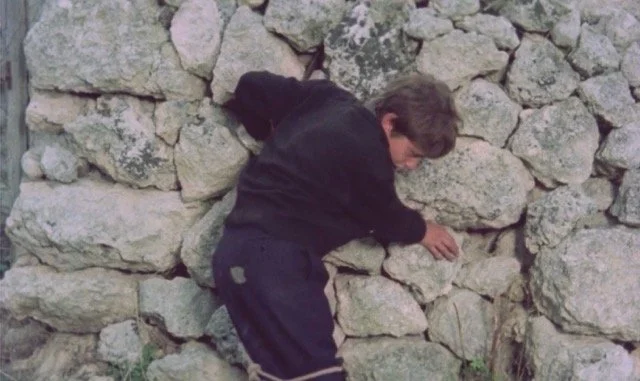
Antonio è appoggiato al muro, mentre suo padre, proprio come quello di Gavino, prepara con calma una frusta. Antonio ha le gambe legate. "È stato Gavino!" ripete, singhiozzando. "È stato Gavino!"
Antonio is leaning against the wall, while his father, like Galvino’s, calmly prepares a switch. Antonio’s legs are tied. “It was Gavino!” he repeats, sobbing. “It was Gavino!”
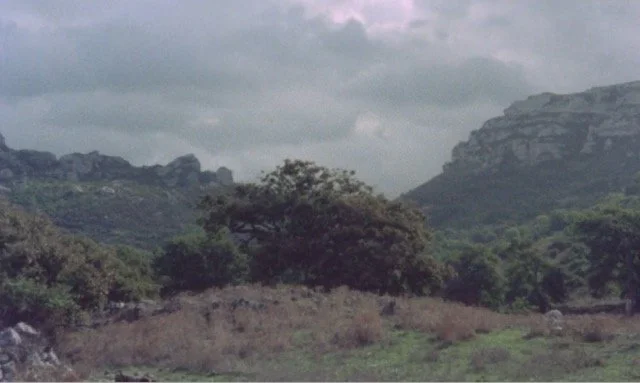
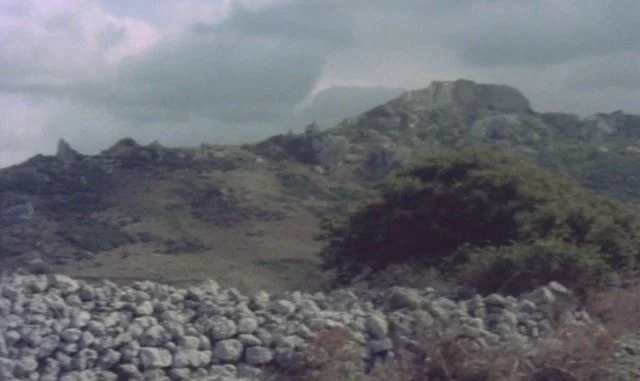
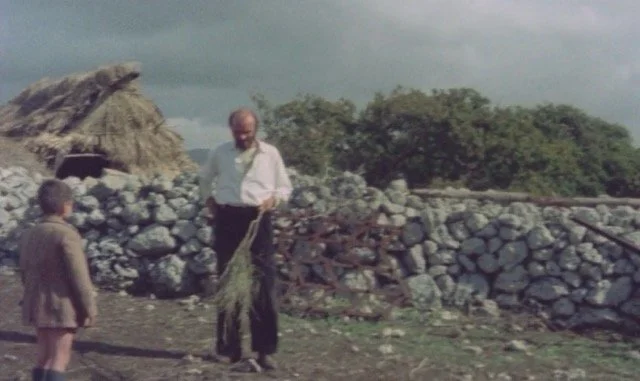
La macchina da presa rifà una panoramica fino a Gavino. Padre si infila il coltello in tasca e afferra con fermezza il ramo.
The camera pans back to Gavino. Father puts his knife in his pocket and takes a firm grip of the bough.
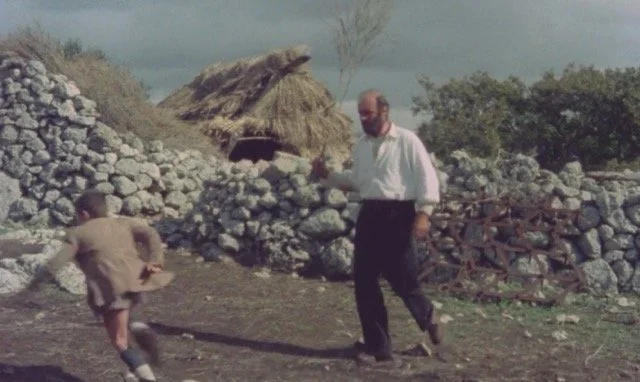
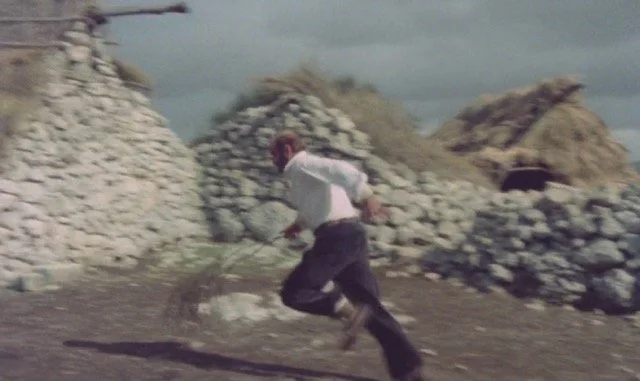
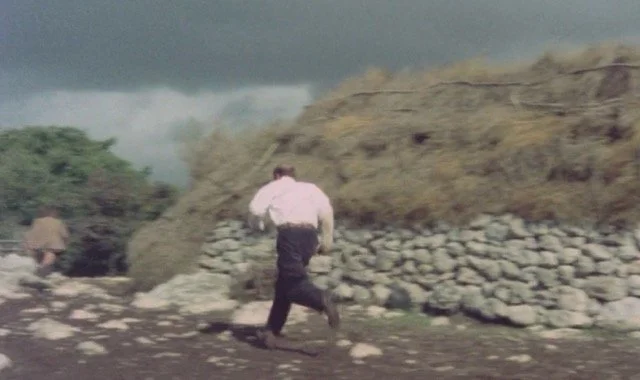
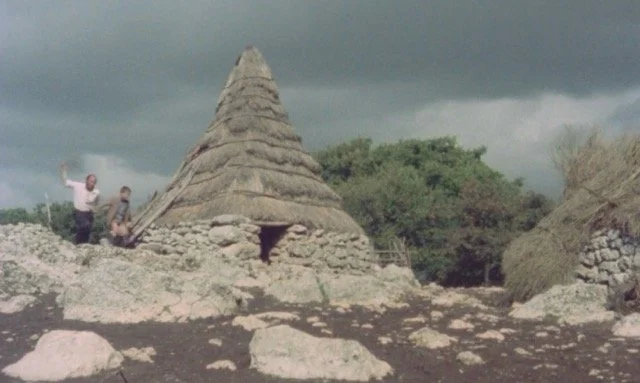
Gavino scappa e Padre lo insegue intorno alla pinnetta, colpendolo con il ramo.
Gavino makes a run for it, and Father chases him around the hut, whipping him with the bough.
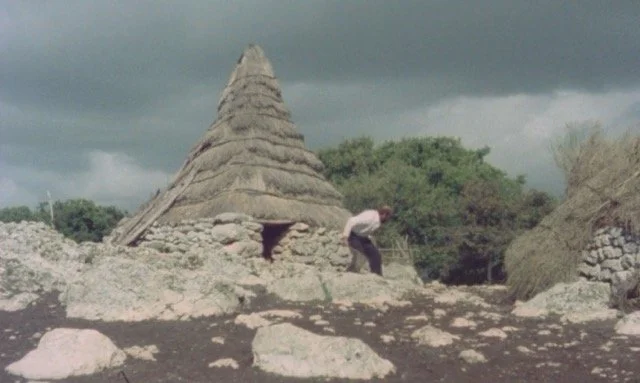
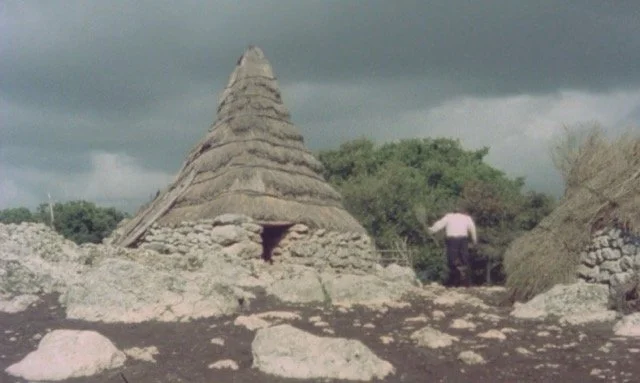
Davanti alla pinnetta, Padre si ferma un attimo e raccoglie un secondo ramo.
In front of the hut, Father stops for a second and picks up a second branch.
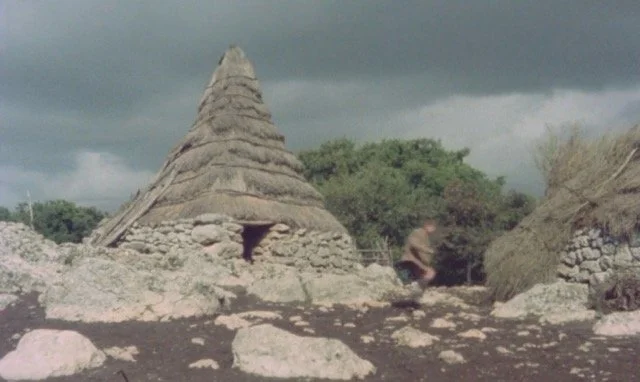
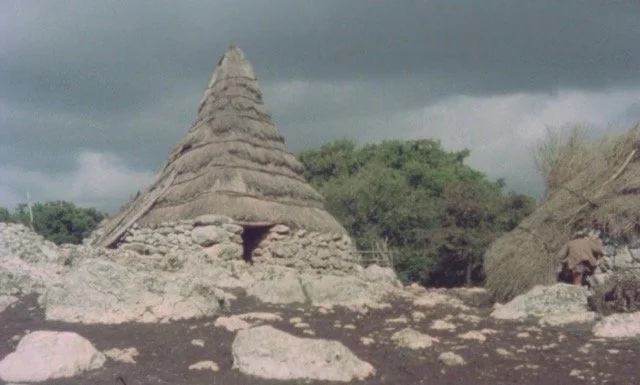
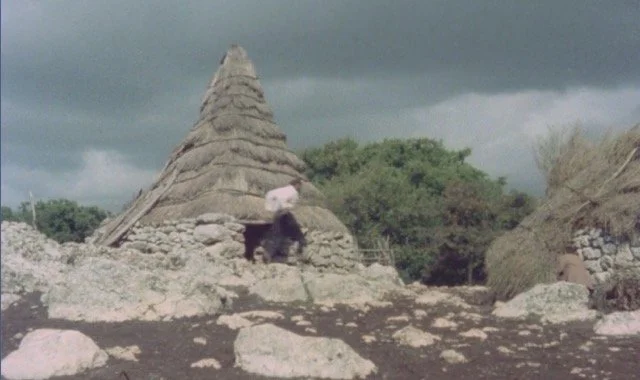
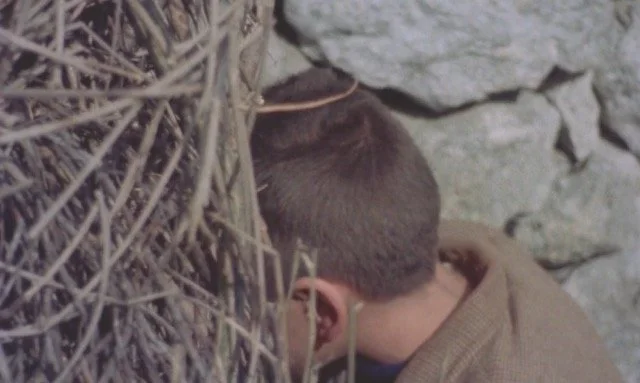
Gavino passa di corsa per nascondersi dietro un alto mucchio di rami. Padre non lo vede. Il bambino nasconde il viso nel mucchio, respirando affannosamente.
Gavino runs past to hide behind a tall bundle of sticks. Father doesn’t see him. The boy hides his face in the bundle, breathing heavily.
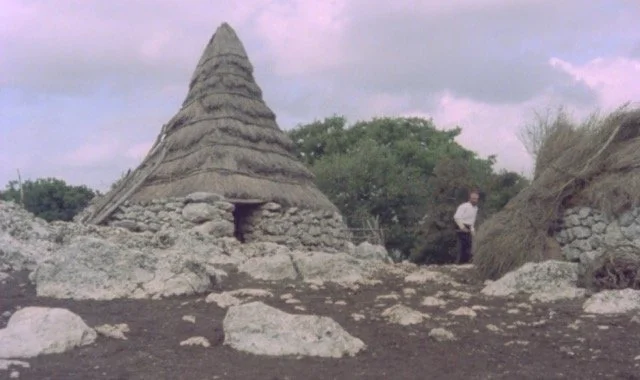
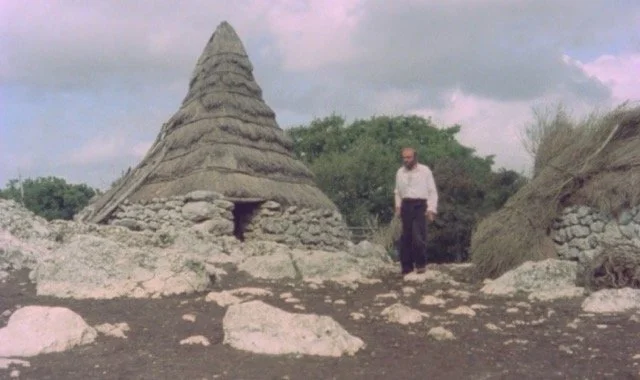
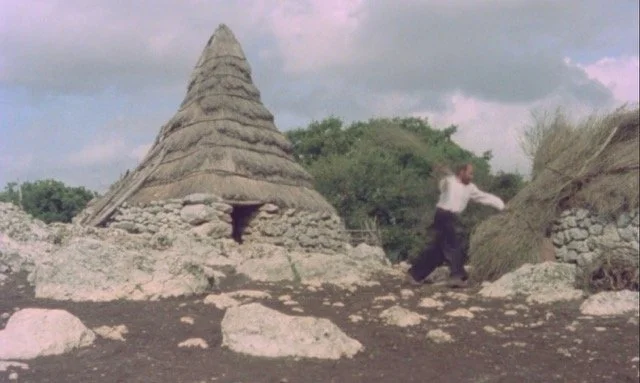
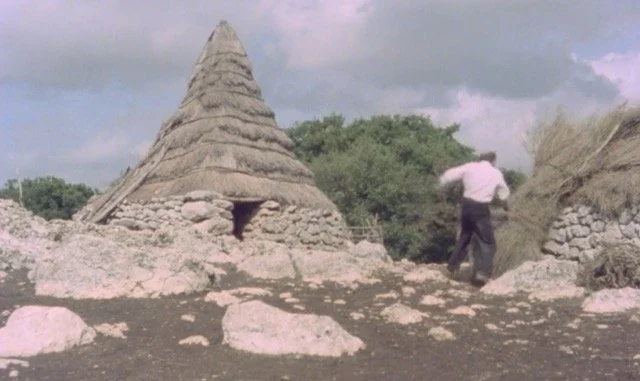
Padre si ferma e ascolta. Quando sente il respiro di Gavino, si precipita da lui per picchiarlo.
Father stops and listens. When he hears Gavino breathing, he rushes over to him to beat him.
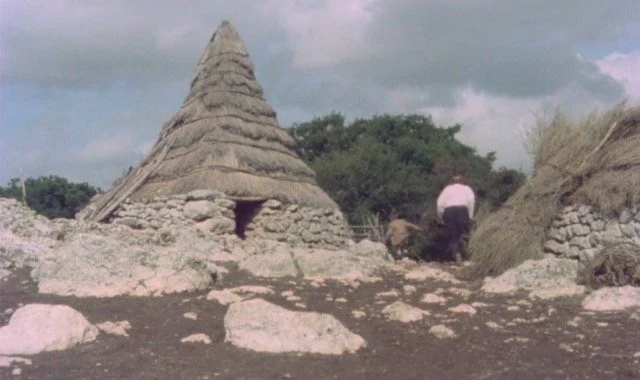
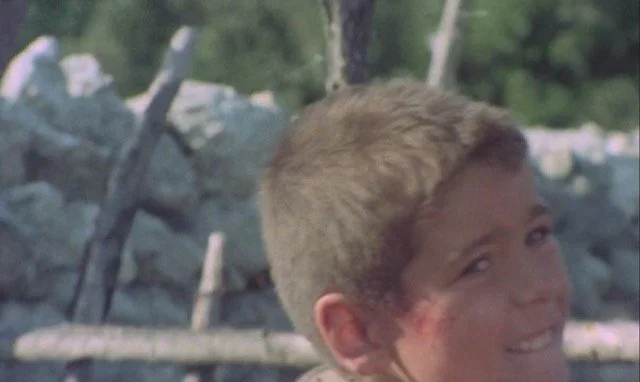
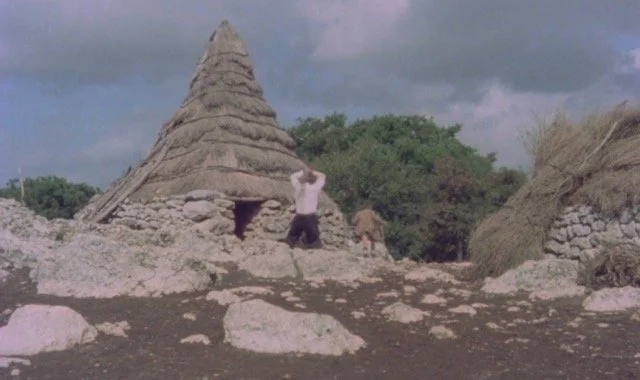
Ma Gavino riesce a scappare. Un breve primo piano ci mostra i graffi sanguinanti sul suo viso.
But Gavino escapes. A brief close-up shows us the bloody scratches on his face.
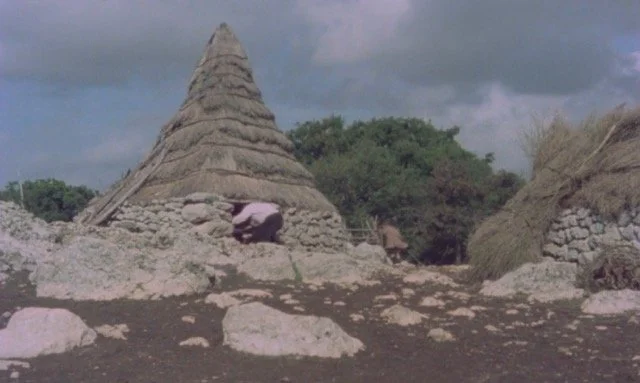
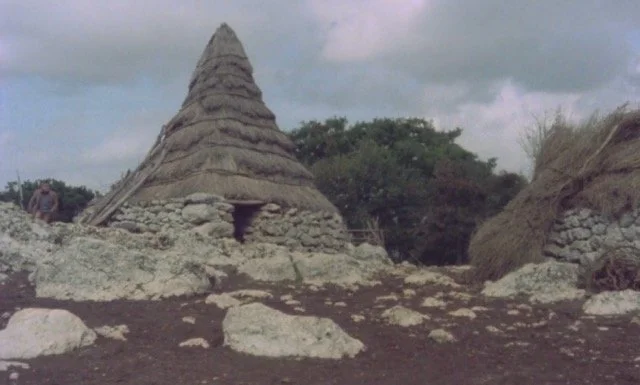
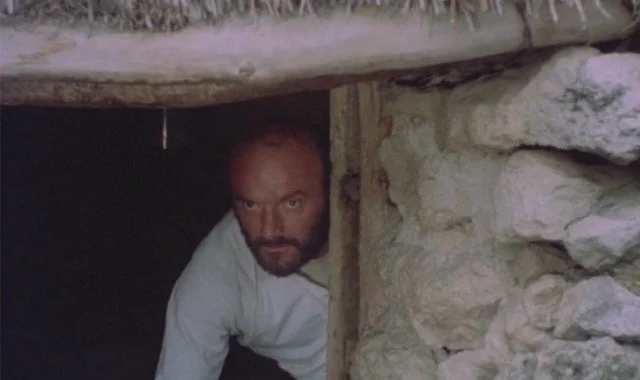
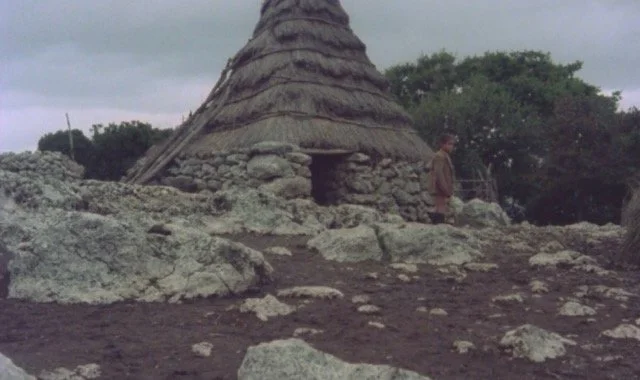
Padre si nasconde nella pinnetta e aspetta. Quando Gavino torna, scruta il paesaggio alla ricerca di suo padre. Il vento agita le foglie, sospirando.
Father hides in the hut and waits. When Gavino returns, he scans the landscape for his father. The wind stirs the leaves, sighing.
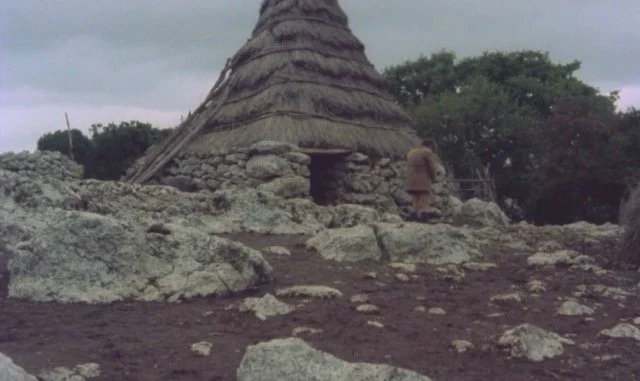
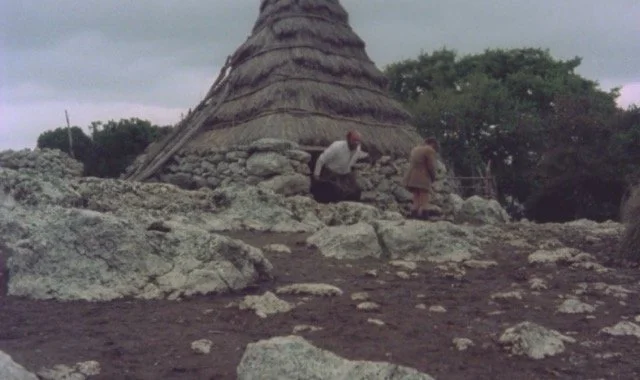
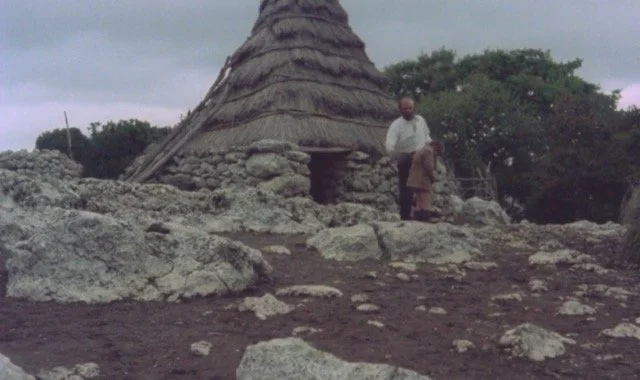
Gavino china il capo e piange. Padre esce di nascosto dalla pinnetta, solleva il ramo e colpisce Gavino.
Gavino bows his head and weeps. Father comes stealthily out of the hut, raises the bough, and strikes Gavino.
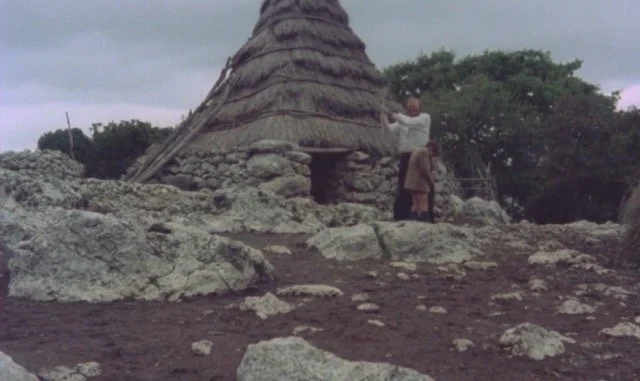
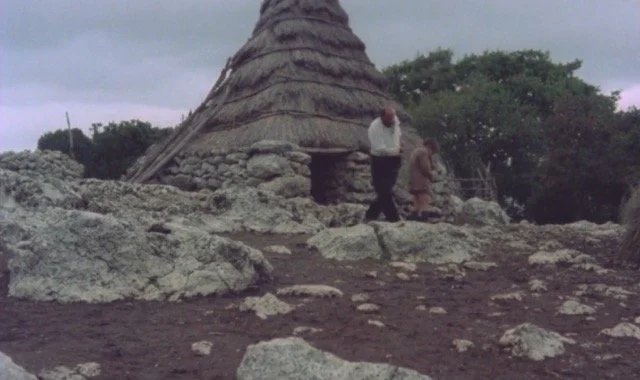
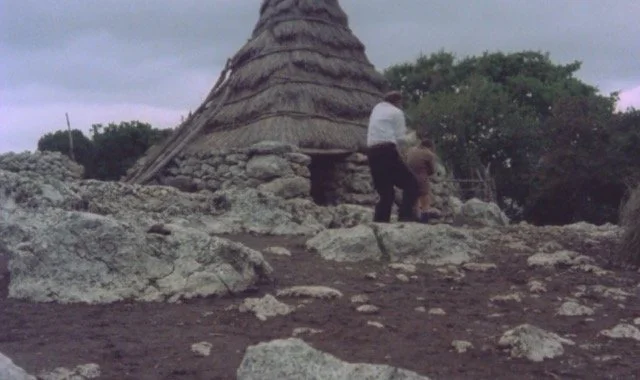
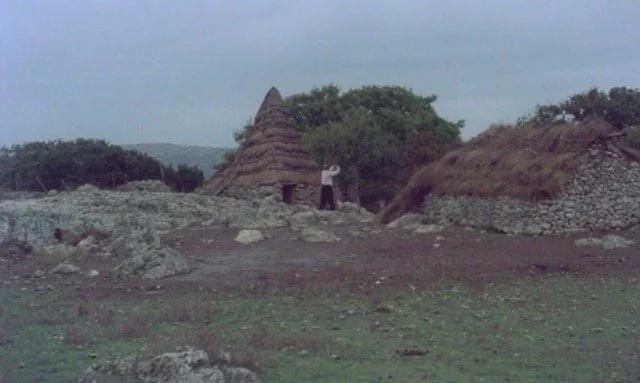
Padre picchia il figlio con tutta la forza che ha. Gavino sta immobile, piagnucolando. Il rumore dei colpi ricorda quasi il fruscio delle foglie mosse dal vento.
Father beats his son with all his might. Gavino stands still, whimpering. The sound of the strikes is almost like the sighing of the leaves in the wind.
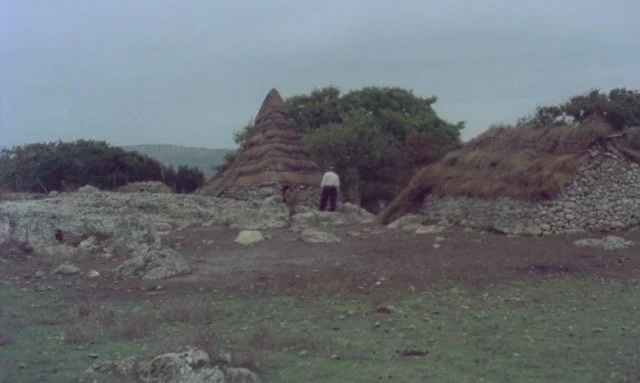
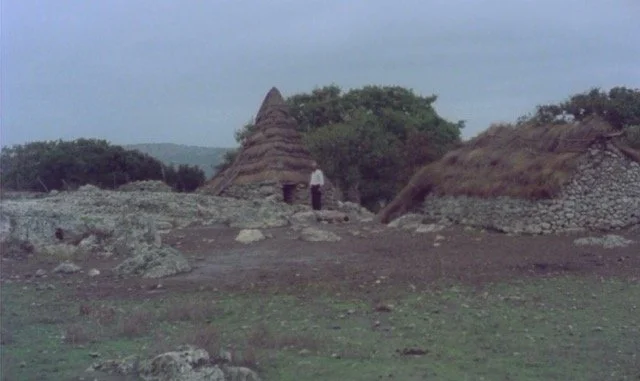
Alla fine, Gavino lancia un grido e Padre si ferma. Il bambino fa qualche passo e crolla a terra.
Finally, Gavino cries out, and Father stops. The boy walks a few steps and collapses on the ground.
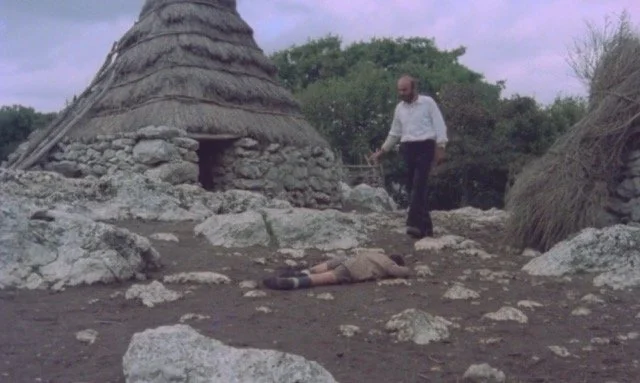
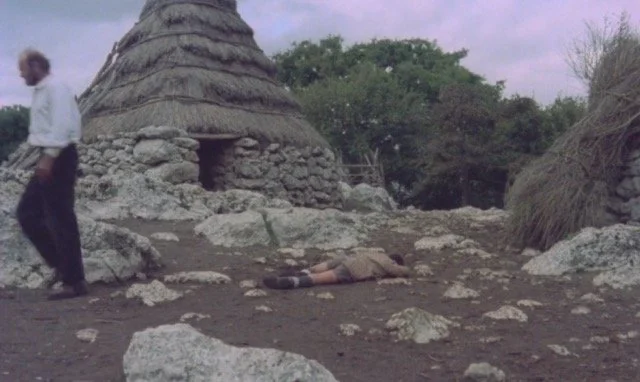
Padre lascia cadere il ramo e se ne va.
Father drops the bough and walks away.
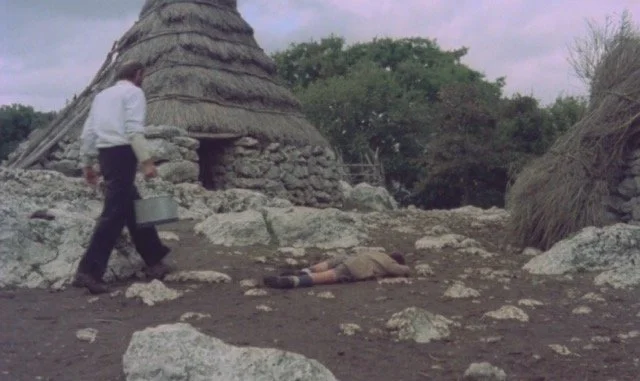
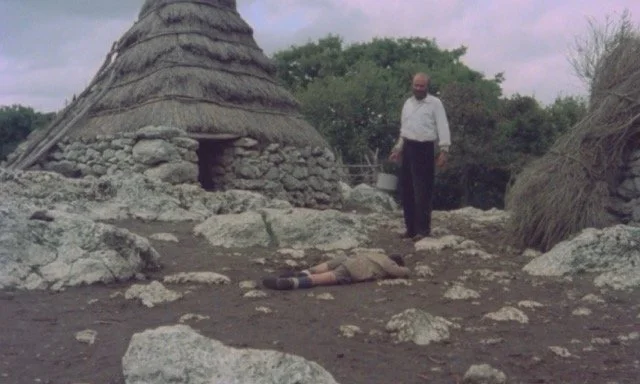
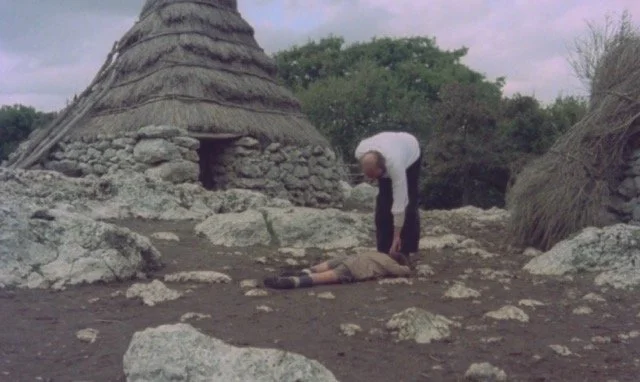
Torna con un secchio di metallo. “Prendi l’altro secchio”, dice a Gavino, che giace immobile. Padre tocca la testa di Gavino. “Gavino.” Ma l’unico movimento è quello del vento tra gli alberi.
He comes back with a metal bucket. “Get the other bucket,” he tells Gavino, who lies inert. He touches Gavino’s head. “Gavino.” But the only motion is the wind in the trees.
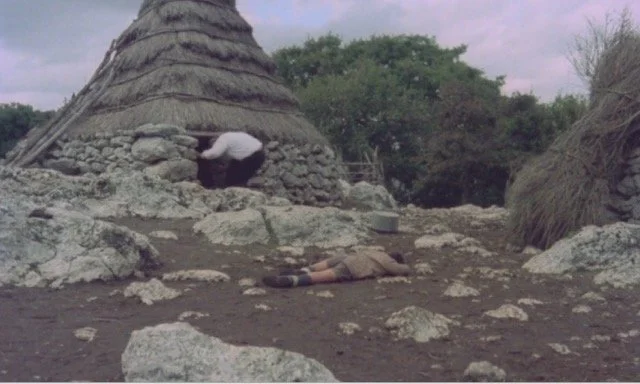
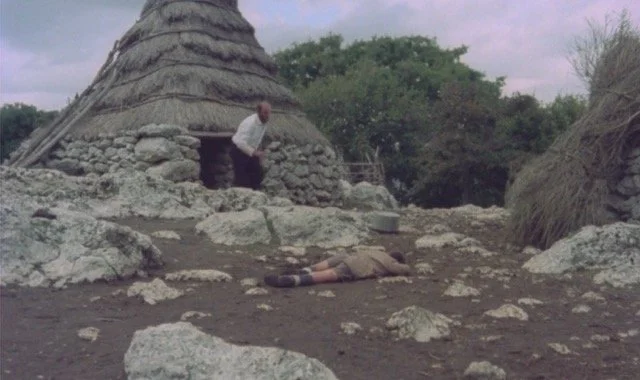
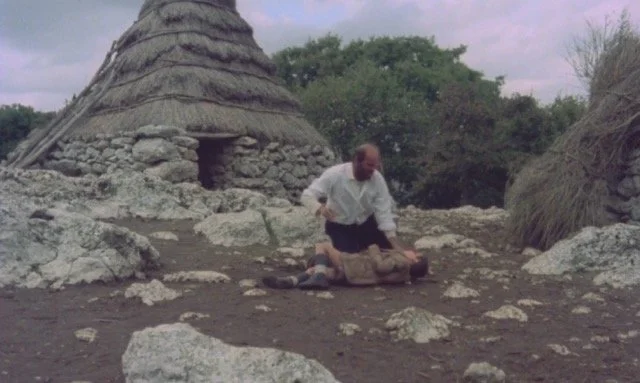
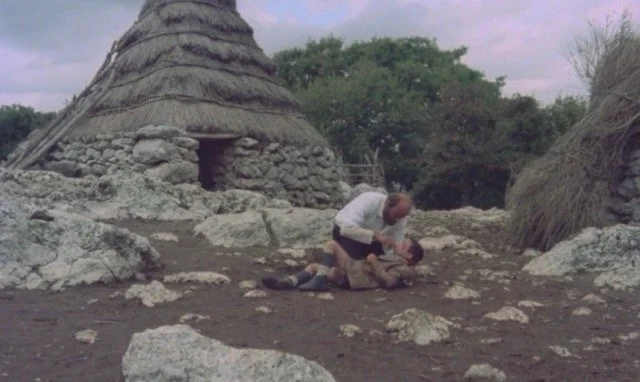
Padre va alla pinnetta e torna con un bicchiere d’acqua. Inginocchiandosi, capovolge il bambino e gli avvicina il bicchiere alle labbra. “Gavino”. Ma lui non beve. “Gavino… Gavino…”
Father goes to the hut and returns with a glass of water. Kneeling, he turns the boy over, and puts the cup to his lips. “Gavino.” But he doesn’t drink. “Gavino… Gavino…”
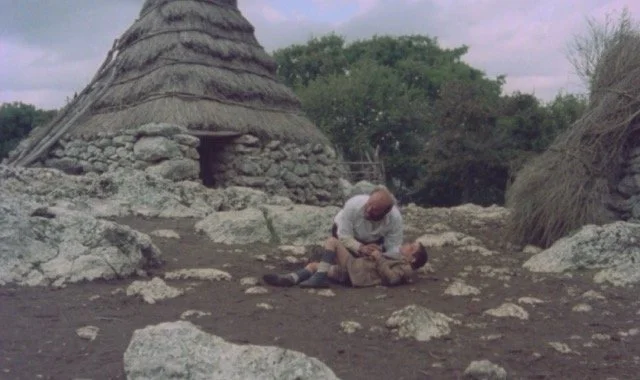
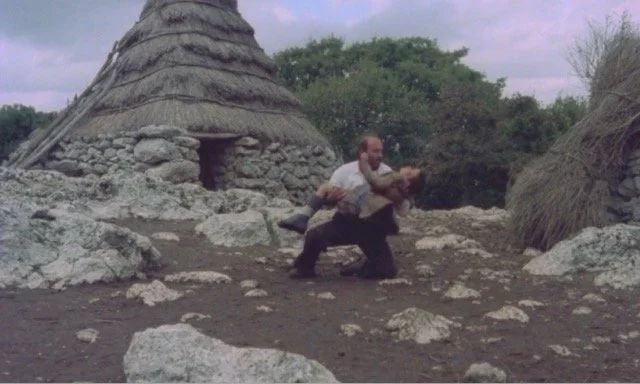
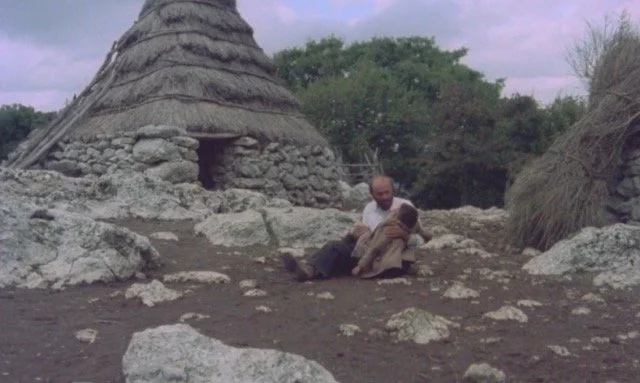
Padre gira la testa e grida: “Giovanni!” Comincia ad alzarsi, con Gavino in braccio, ma si risiede quando il bambino grida. “Non ti muovo” – gli promette Padre – “Non ti muovo”.
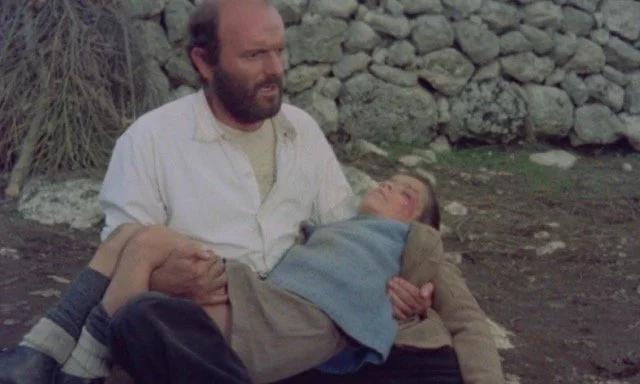
Father turns his head and yells, “Giovanni!” He begins to stand, with Gavino in his arms, but sits back down when the boy cries out. “I won’t move you,” Father promises him. “I won’t move you.”
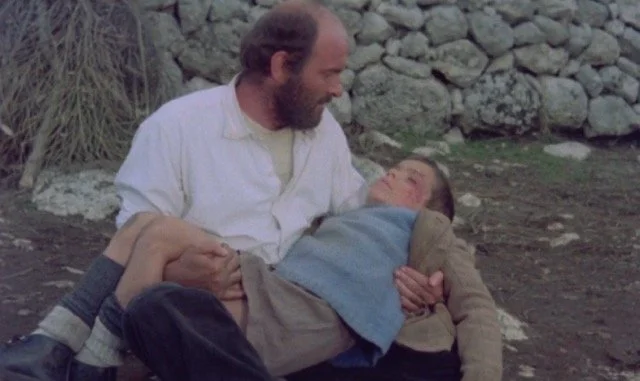
In primo piano, Padre tiene Gavino tra le braccia come nella Pietà di Michelangelo, una posa classica che esprime dolore e lutto, in cui Maria culla il corpo di Gesù dopo la sua crocifissione.
In close-up, Father holds Gavino in his arms in the manner of Michelangelo’s Pietà, a classic pose of sorrow and grief in which Mary cradles the body of Jesus after his crucifixion.
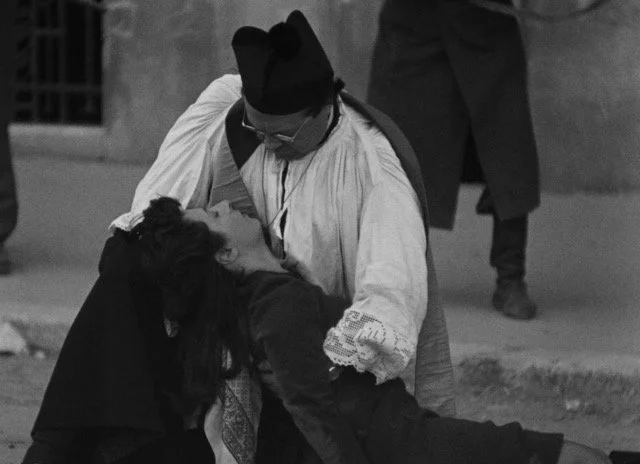
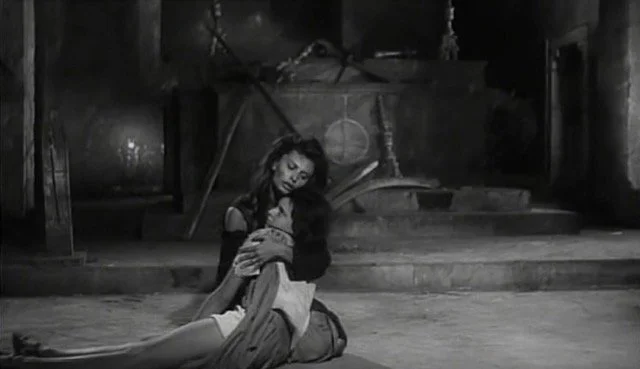
Tra i numerosi film in cui è apparsa questa posa, ne abbiamo trattati due sul blog. In Roma, città aperta (Roberto Rossellini, 1945, a sinistra nell’immagine sopra), Don Pietro stringe tra le braccia Pina dopo che lei è stata uccisa dai fucili dei tedeschi. In La Ciociara (Vittorio De Sica, 1960, a destra), Cesira, distrutta dal dolore, culla tra le braccia la figlia Rosetta dopo che entrambe sono state violentate da soldati marocchini sotto il comando francese durante le Marocchinate.
Among the many films where this pose has appeared, we’ve covered two on the blog. In Rome: Open City (on the left above), Don Pietro holds Pina in his arms after she’s been shot and killed by the Germans. In Two Women (on the right), Cesira, grief-stricken, cradles her daughter Rosetta in her arms after both have been raped by Moroccan soldiers under French command during the Marocchinate.
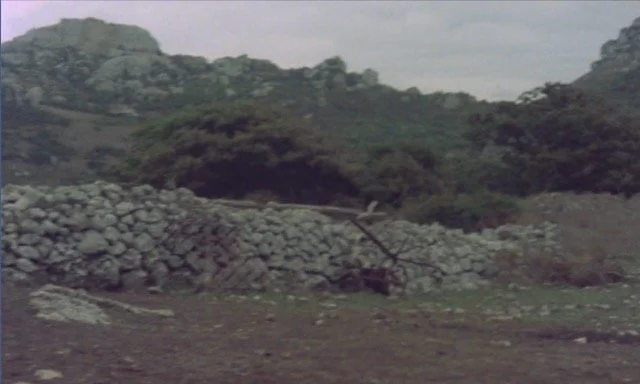
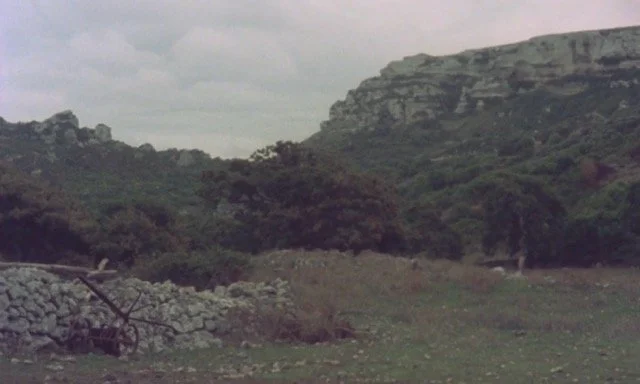
Padre intona un canto funebre dal suono antico. Altre voci maschili si uniscono a lui. La macchina da presa fa una rapida panoramica sul paesaggio aspro, guardando verso un altopiano. Le voci continuano il loro lento lamento.
Father begins an ancient-sounding chant of mourning. Other male voices join in. The camera pans quickly to the harsh landscape, looking toward a rocky plateau. The voices continue their slow lament.
FINE PARTE 4
Ecco Parte 5 of this cineracconto! Subscribe to receive a weekly email newsletter with links to all our new posts.