Regia: Roberto Rossellini, 1945
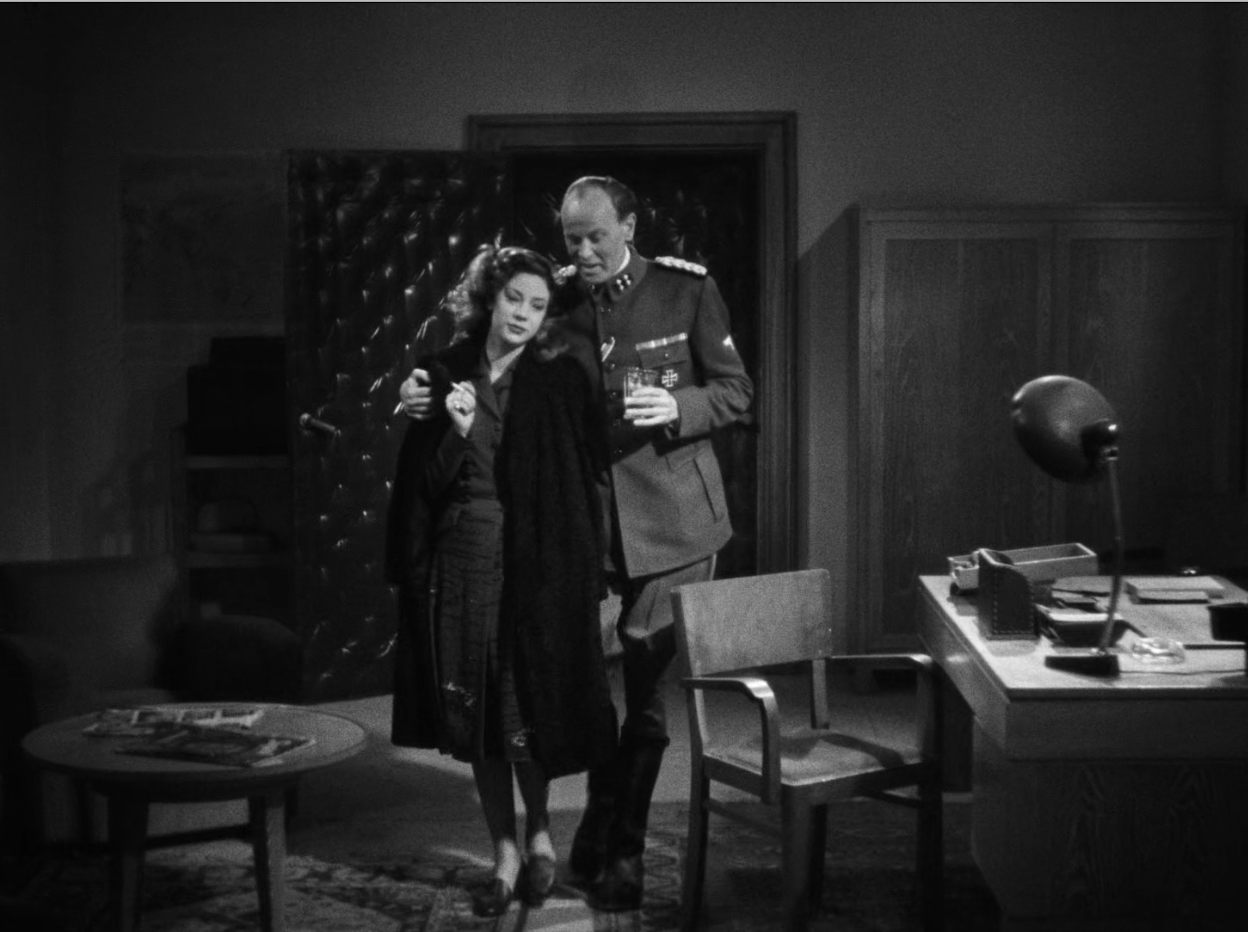
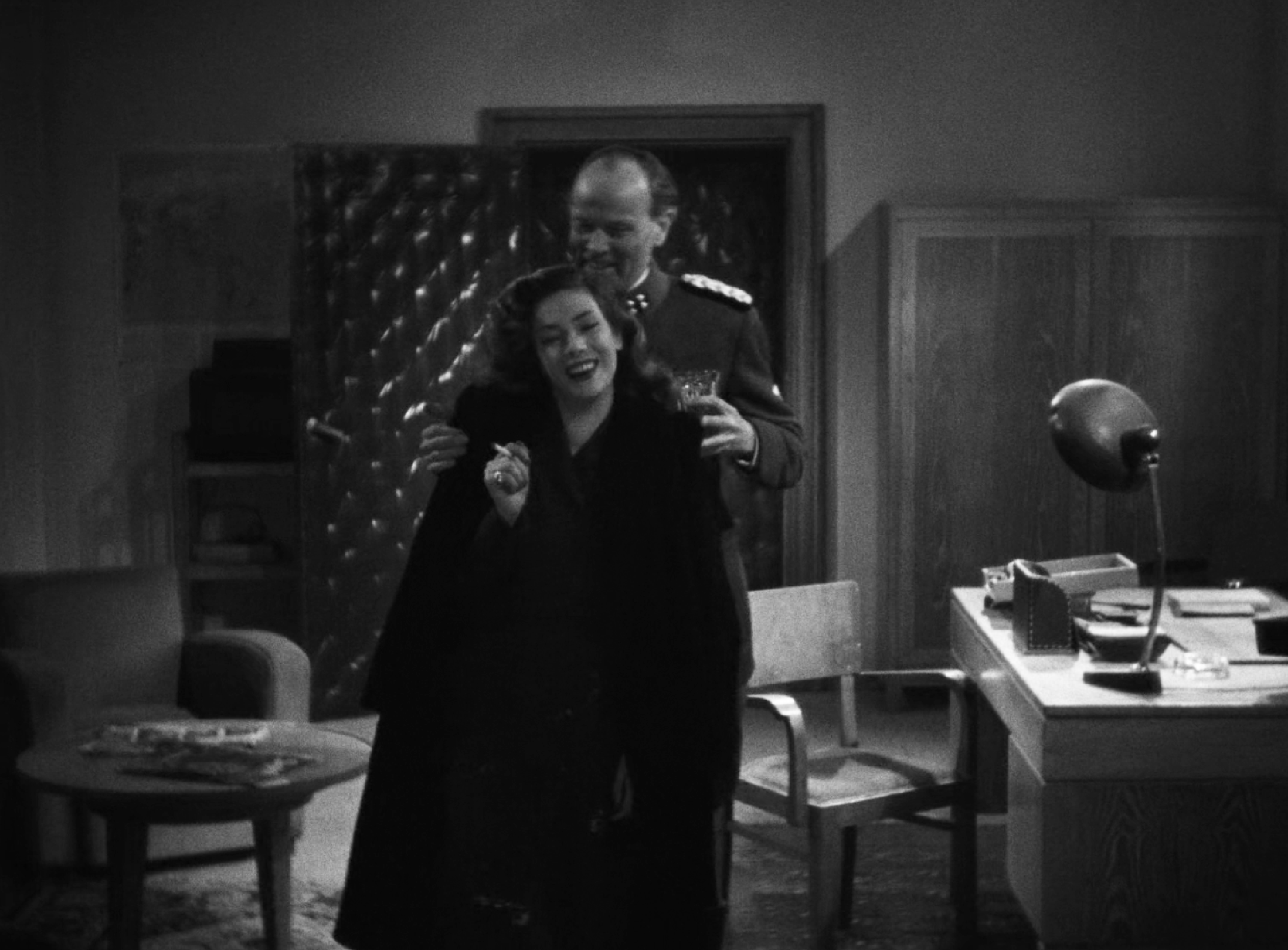
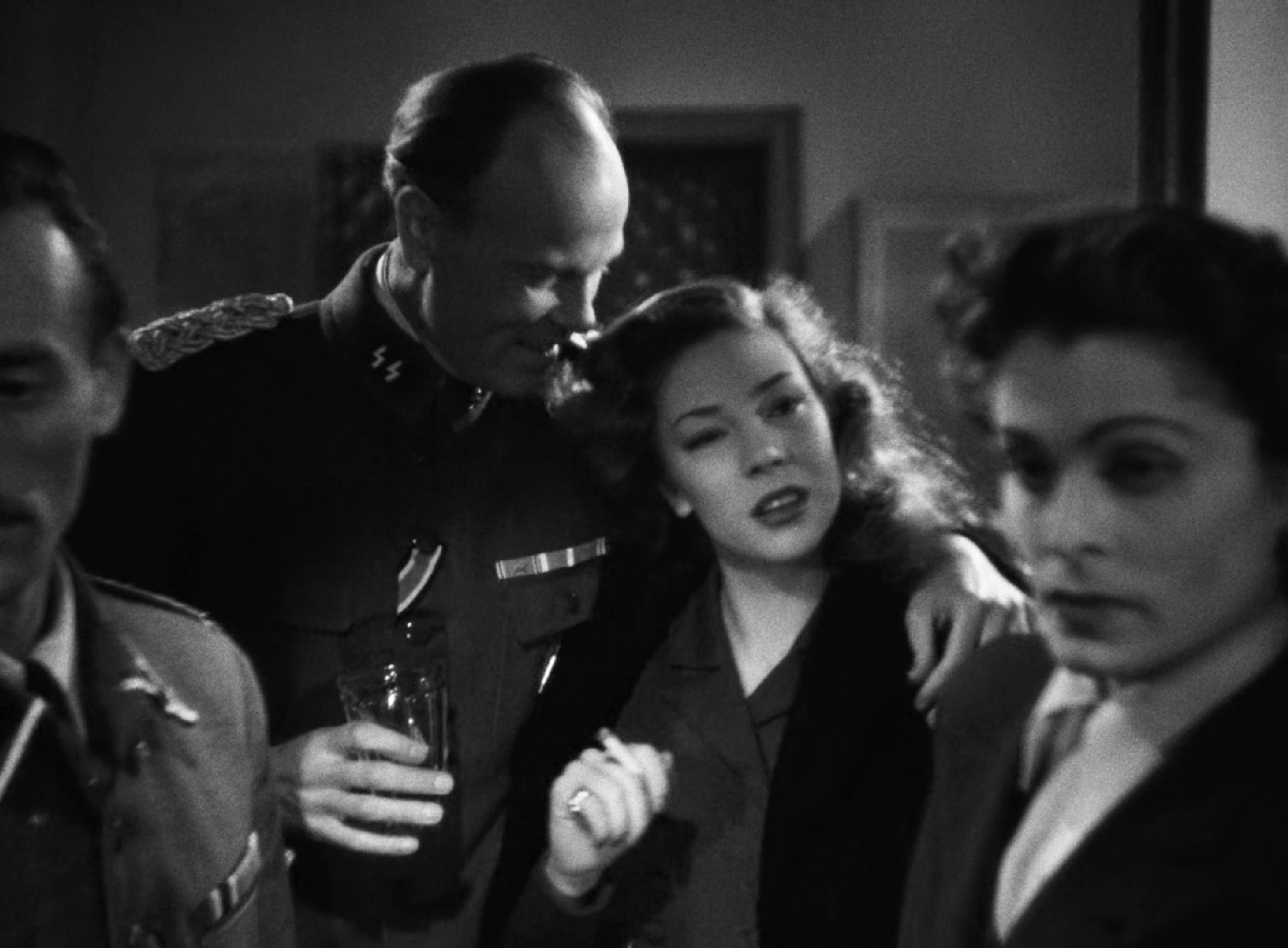
Hartmann porta Marina nell'ufficio del maggiore, ha una mano sulla spalla di lei e un bicchiere di liquore nell’altra. Ridendo e flirtando, si dirigono verso il lato opposto, verso la stanza delle torture.
Hartmann brings Marina into the Major’s office, with one hand on her shoulder and a glass of liquor in the other. Laughing and flirting, they cross to the far side, to the torture room.
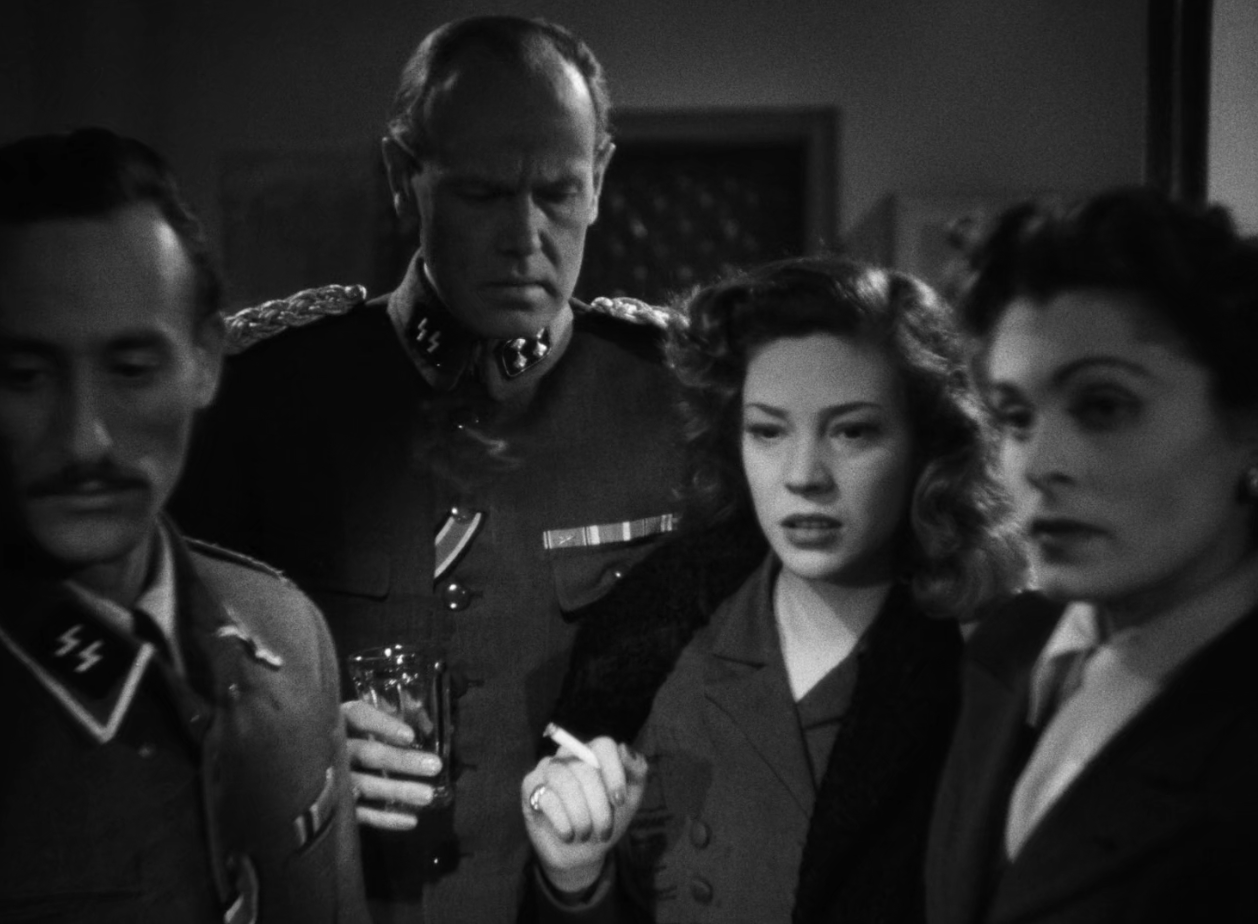
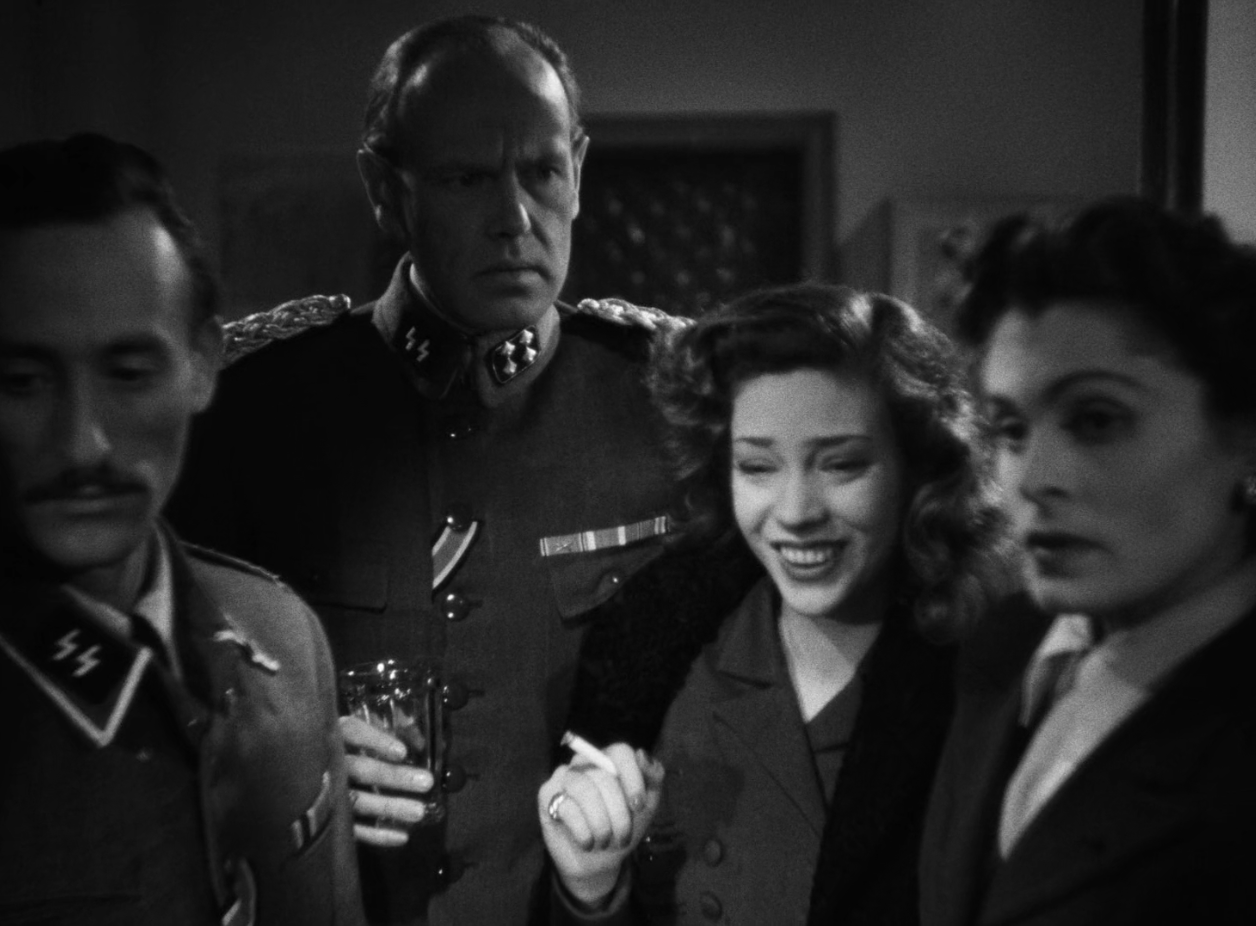
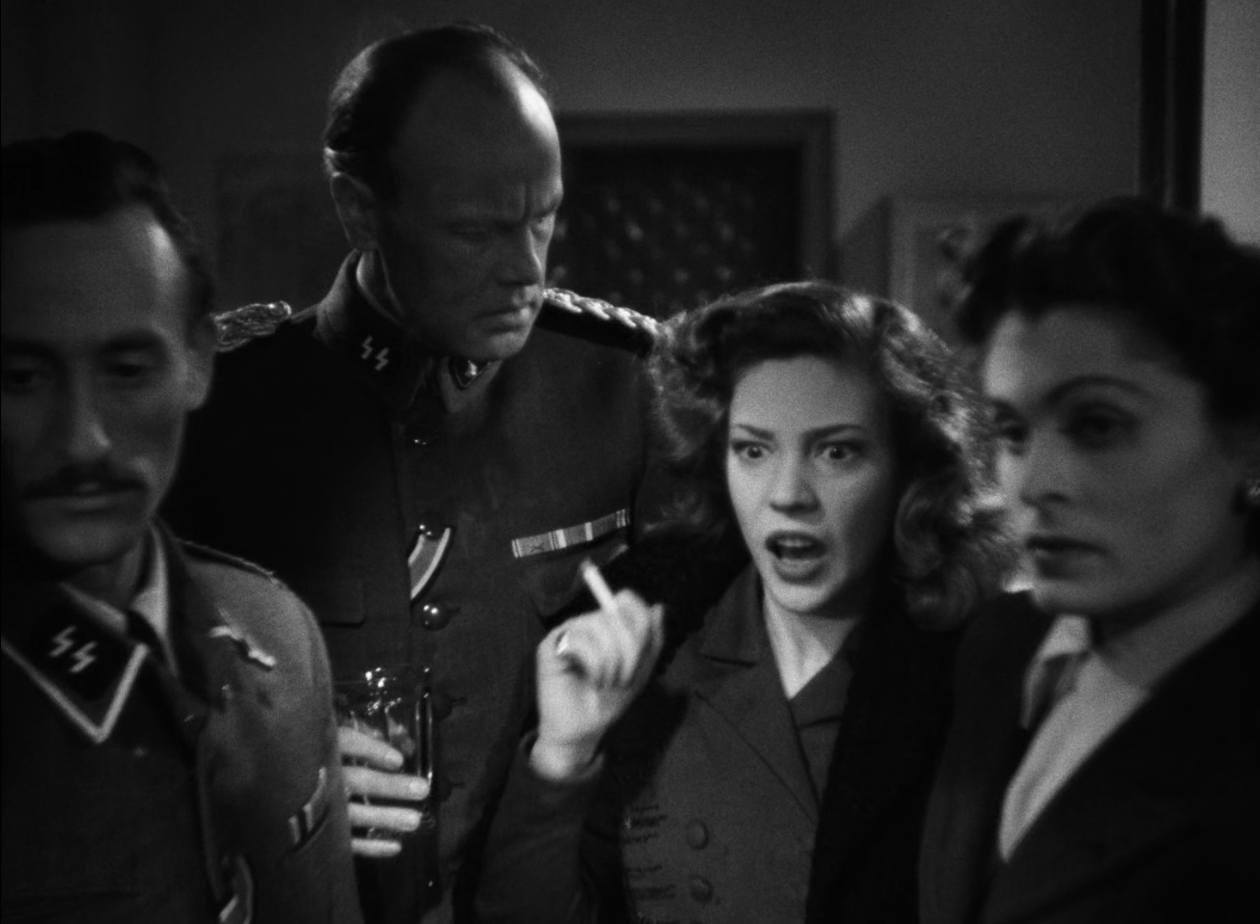
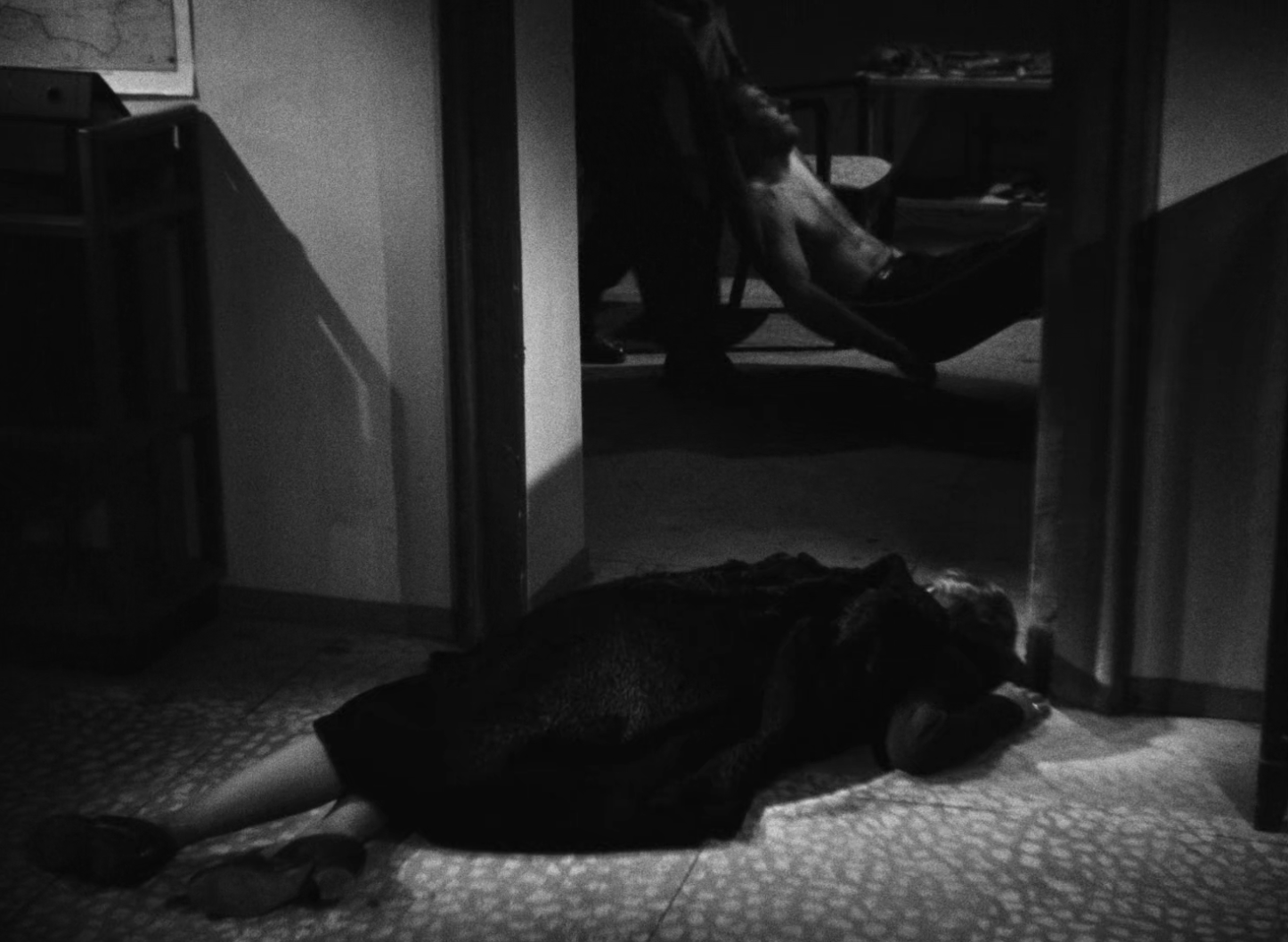
Sigaretta in mano, Marina vede il suo amante, Manfredi, mentre Don Pietro prega sul suo cadavere. All'inizio, stordita dalle droghe, non capisce. Ridacchia. Poi uno sguardo di orrore le compare in viso.
Cigarette in hand, Marina sees her lover, Manfredi, as Don Pietro prays over his dead body. At first, in her drugged state, she doesn’t understand. She giggles. Then a look of horror comes over her face.
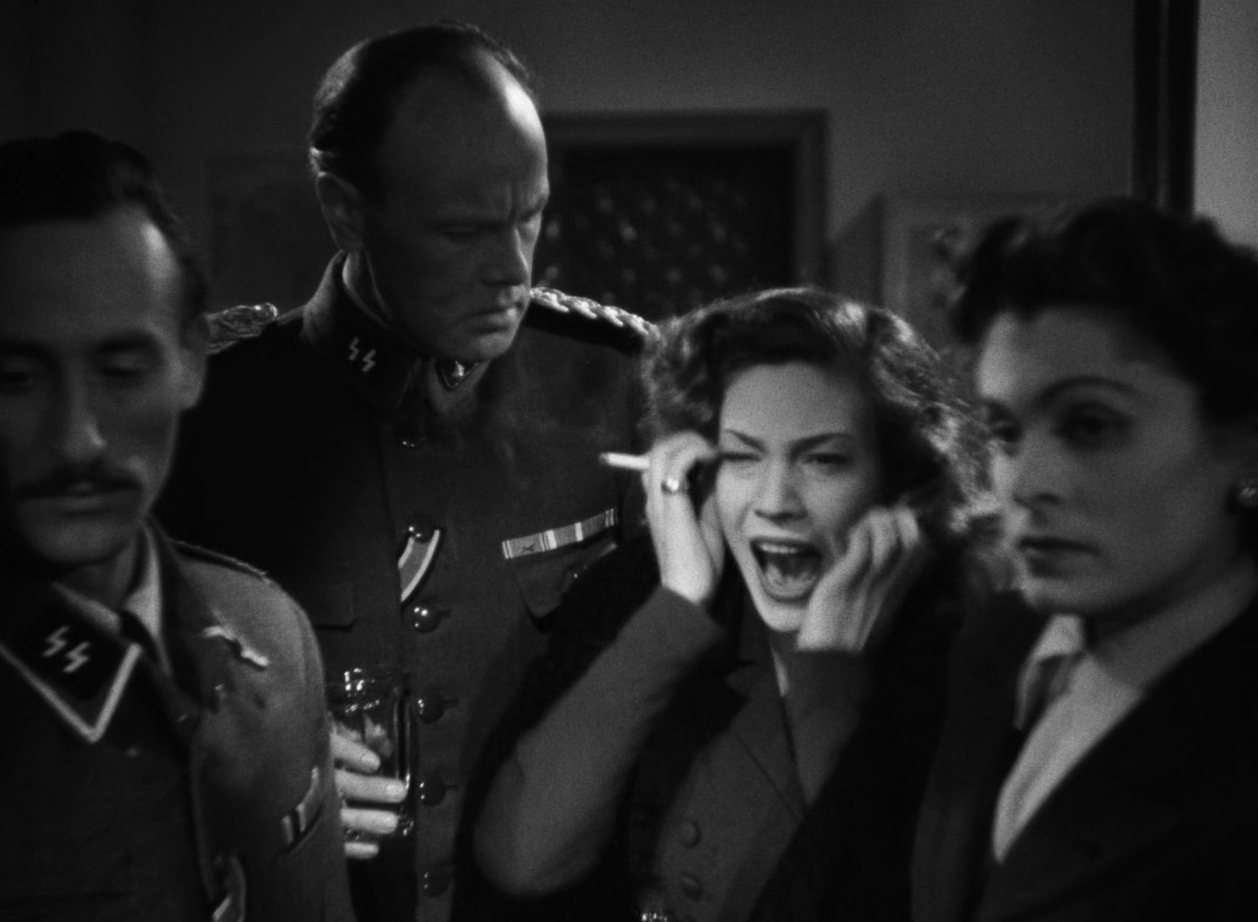
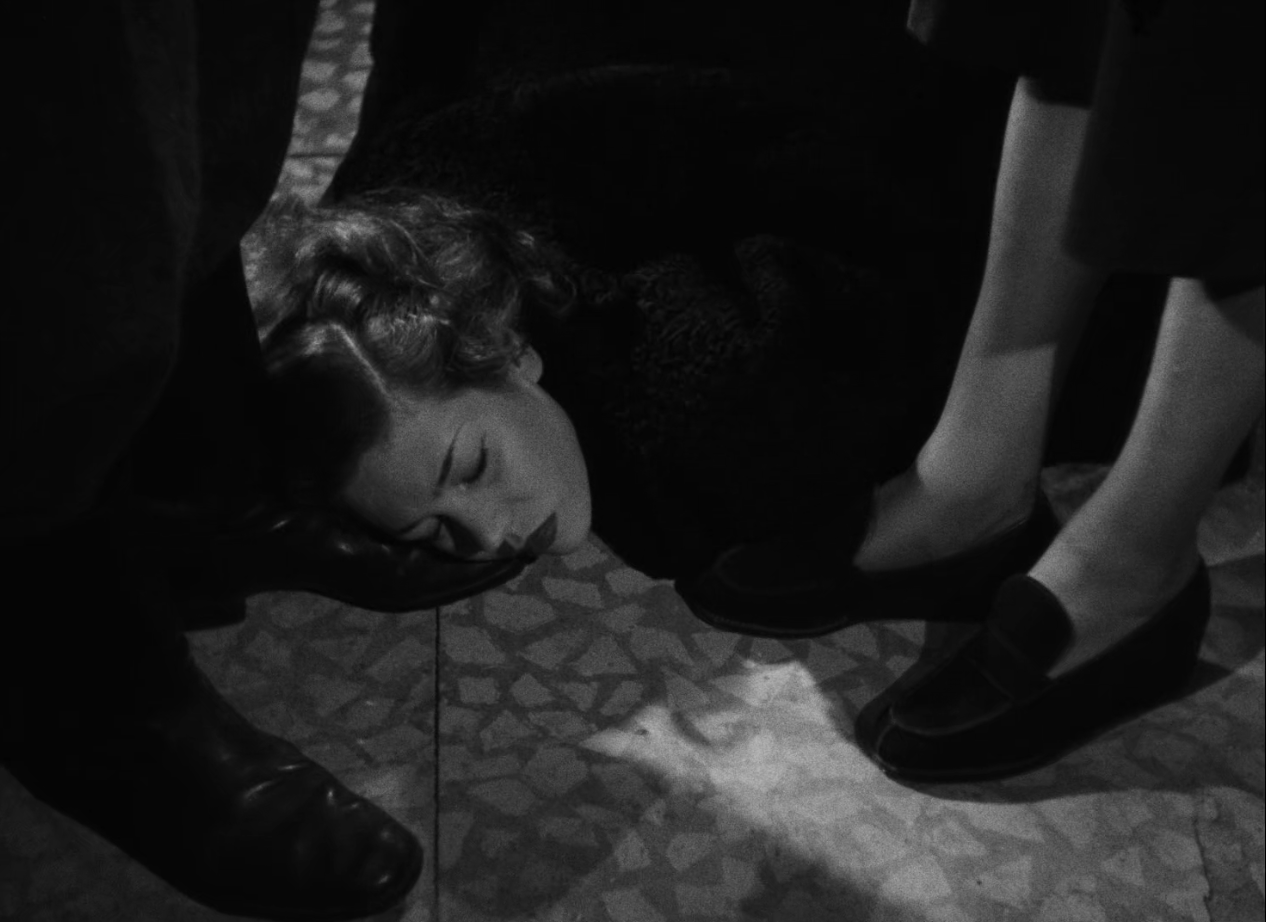
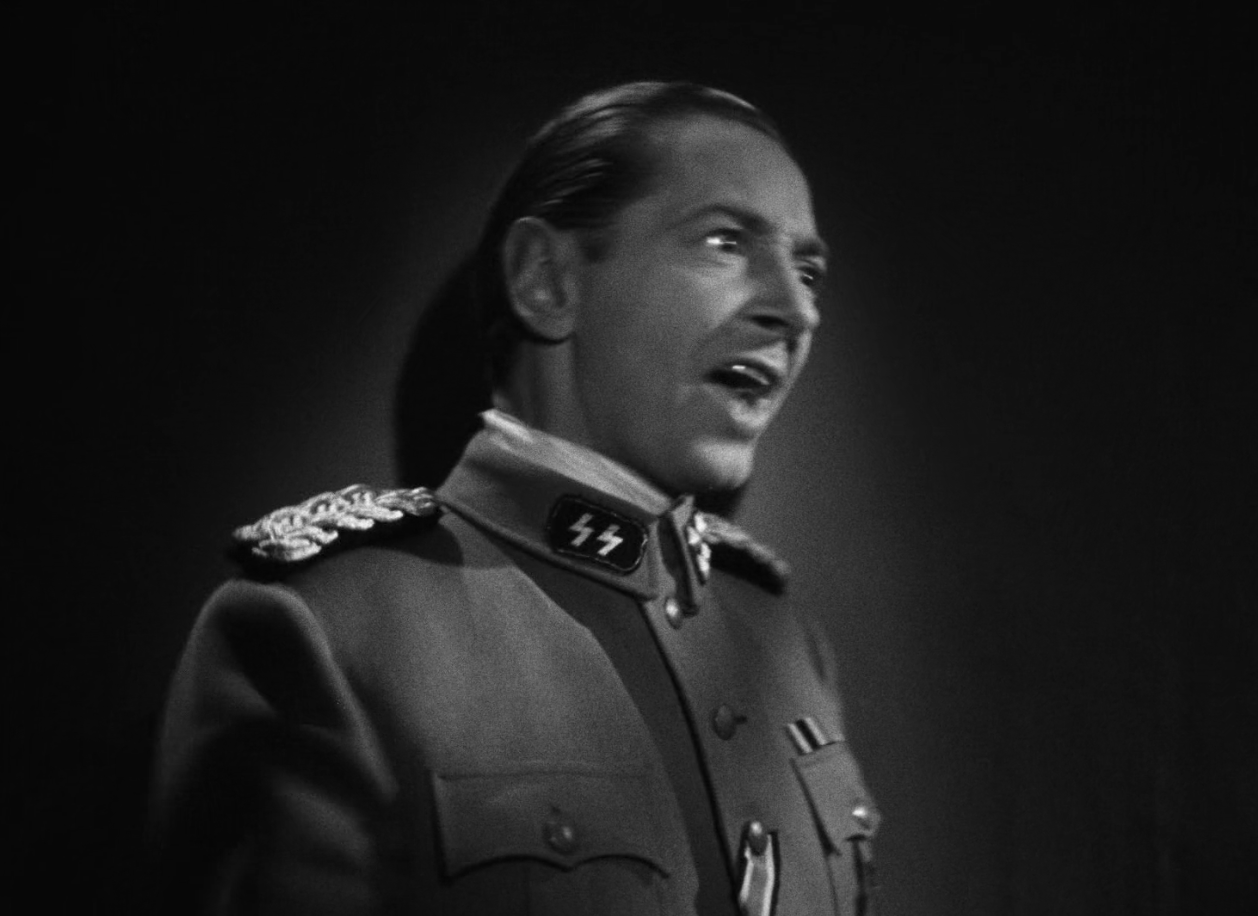
Urla, poi cade a terra priva di sensi. Infuriato, Bergmann urla: "Fuori! Fuori! Riportate il prete!"
She screams, then falls unconscious to the floor. Enraged, Bergmann yells, “Out! Out! Take the priest back!”
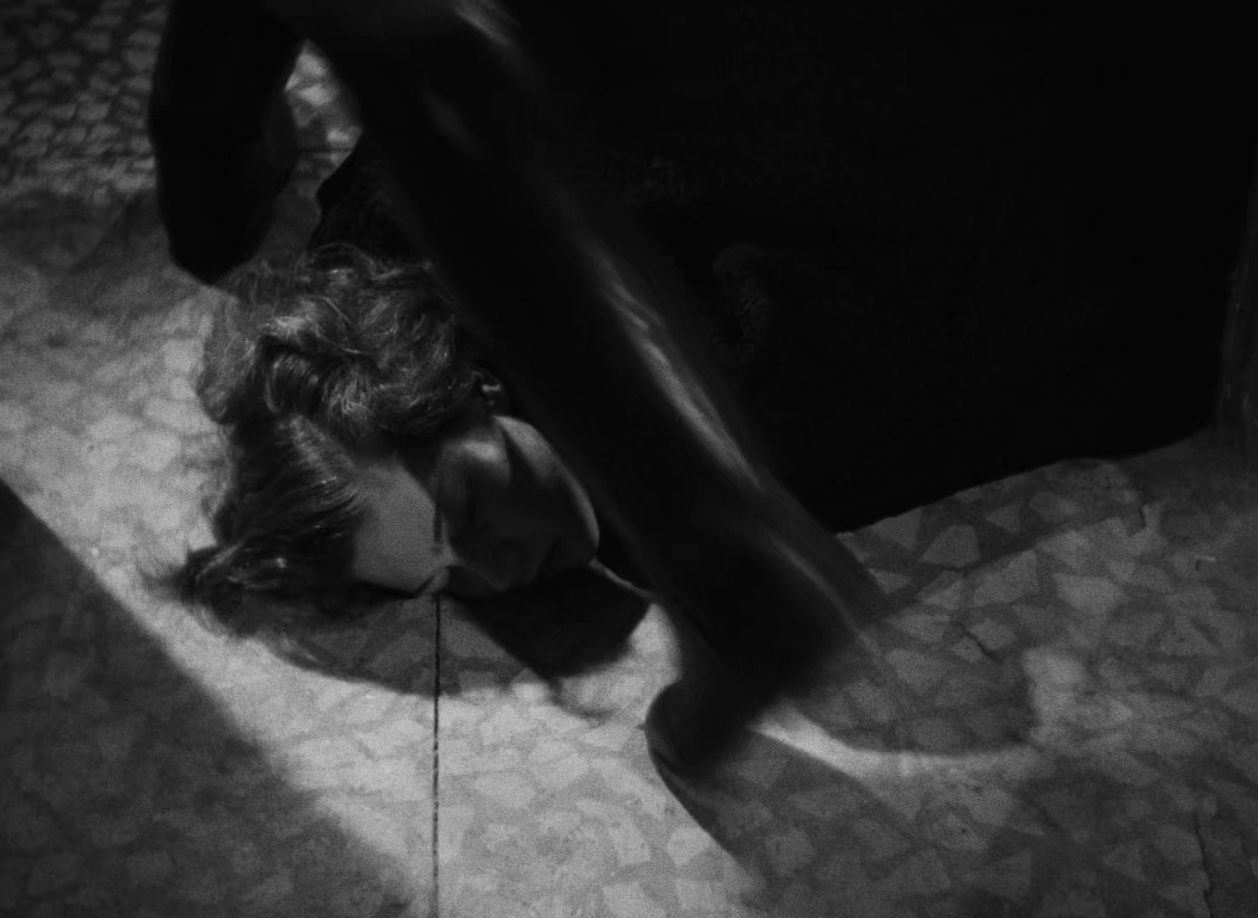
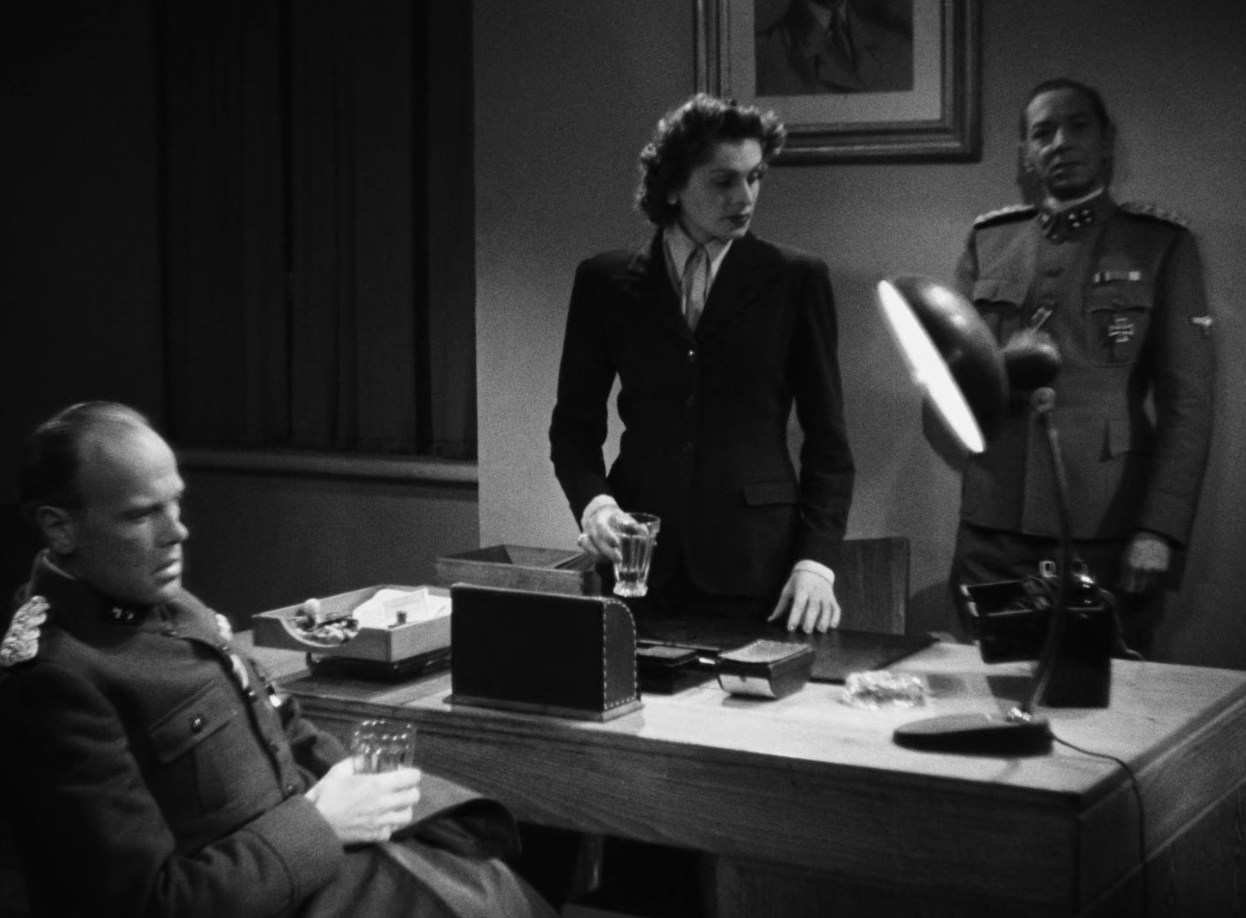
Passando sul corpo inerte di Marina, i tedeschi tornano nell'ufficio di Bergmann.
"Stupidi italiani!" – si lamenta – "Maledizione! Abbiamo fallito. Quel maledetto prete mi ha fatto agitare".
Stepping over Marina’s inert body, the Germans return to Bergmann’s office.
“Stupid Italians!” he complains. “Dammit! We failed. That damned priest got me flustered.”
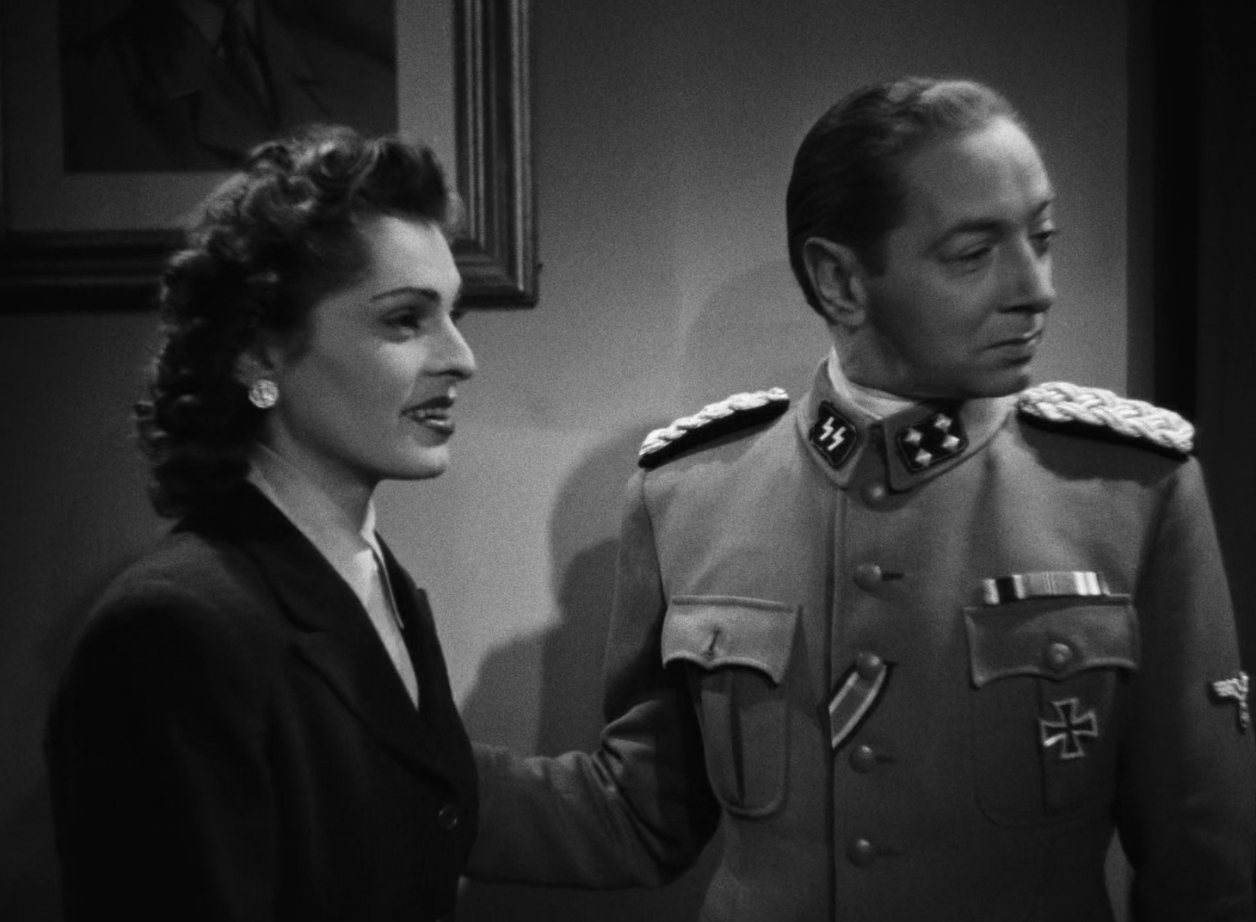
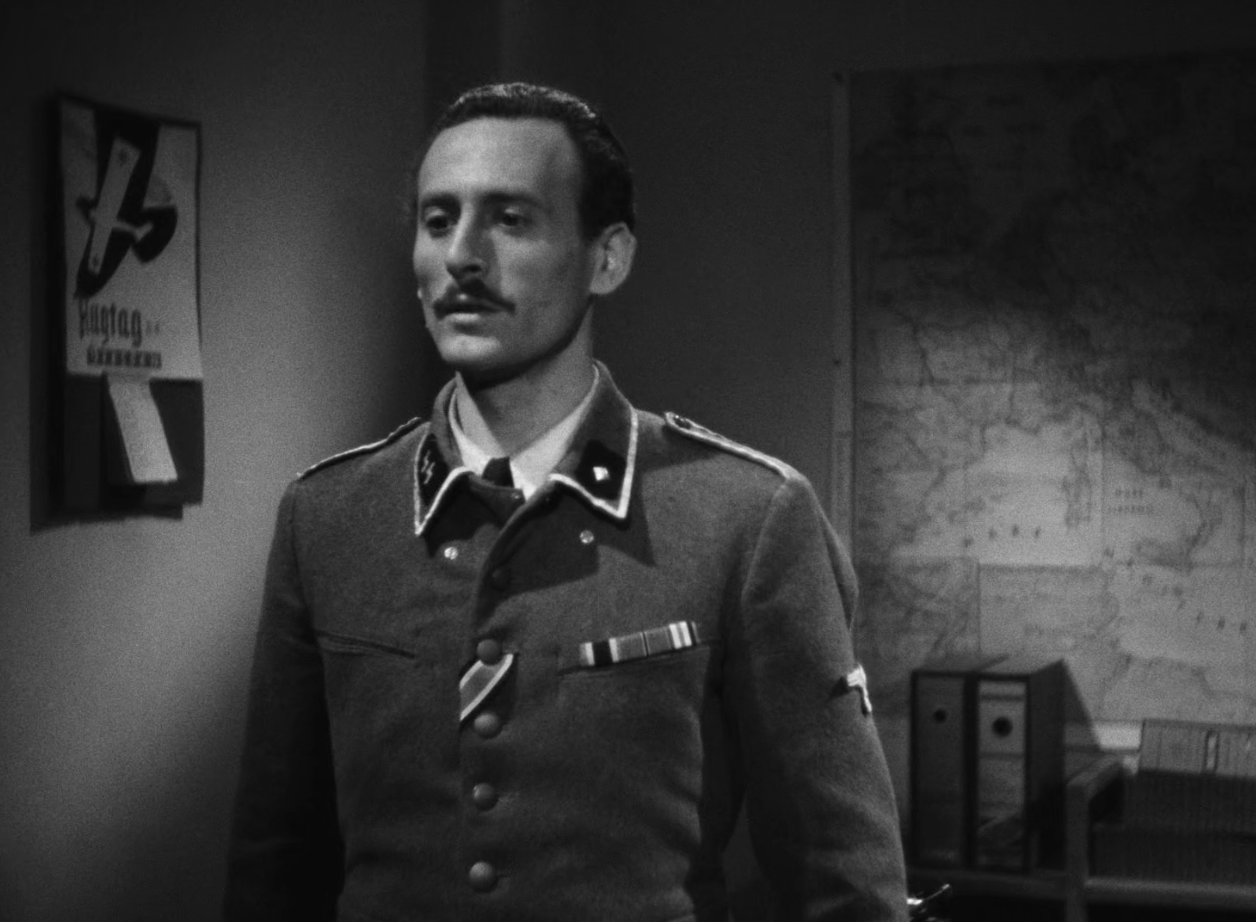
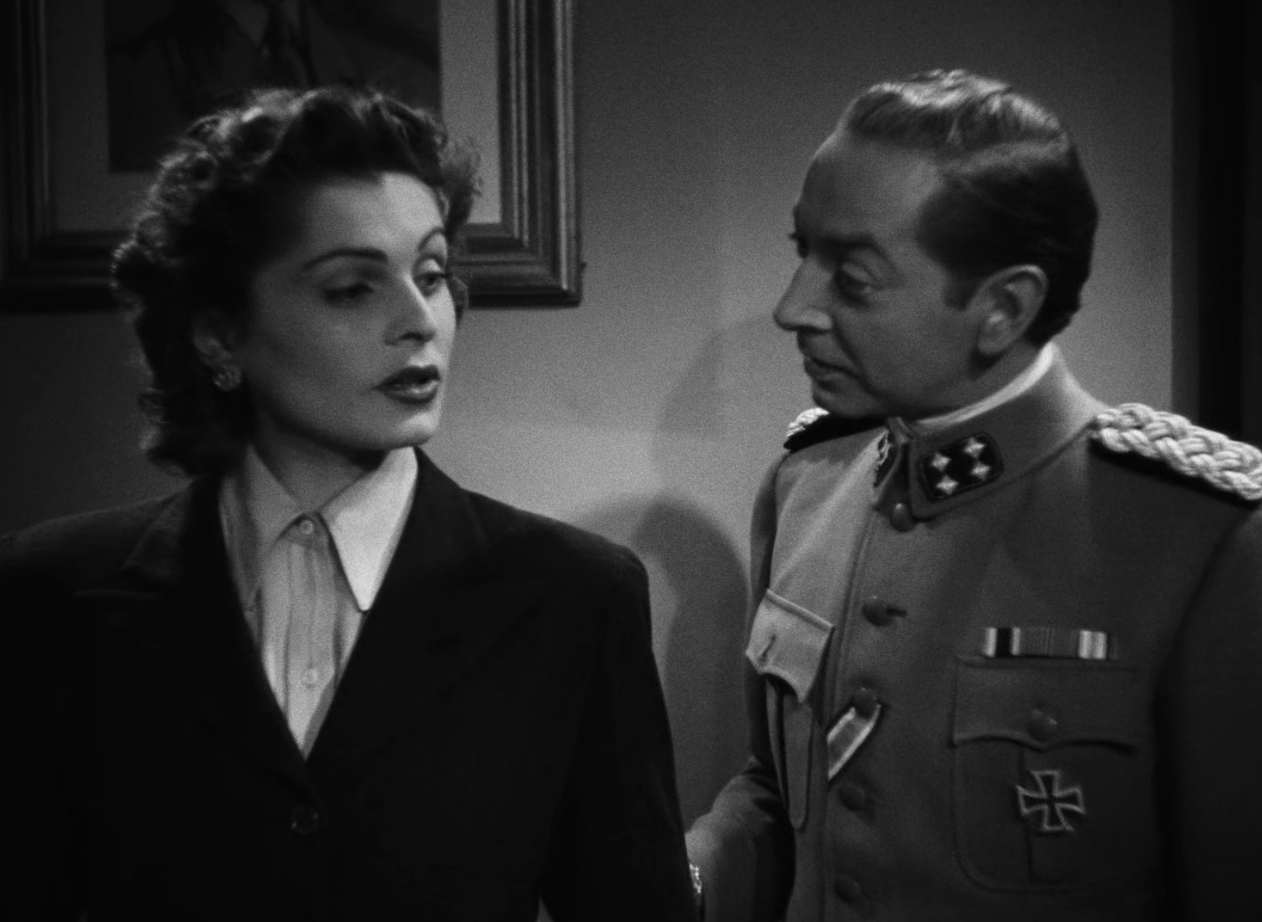
Entra Krammer. "Il rapporto, signore?"
"Ah, sì... Causa della morte: infarto".
Ingrid ride.
"E la giovane donna, signore?"
"Dipende dalla signora”.
Ingrid dice: "Rinchiudila un po' e poi..."
Krammer comes in. “The report, sir?”
“Ah, yes... Cause of death: heart attack.”
Ingrid laughs.
“And the young woman, sir?”
“That’s up to the lady.”
Ingrid says, “Lock her up a while and then…”
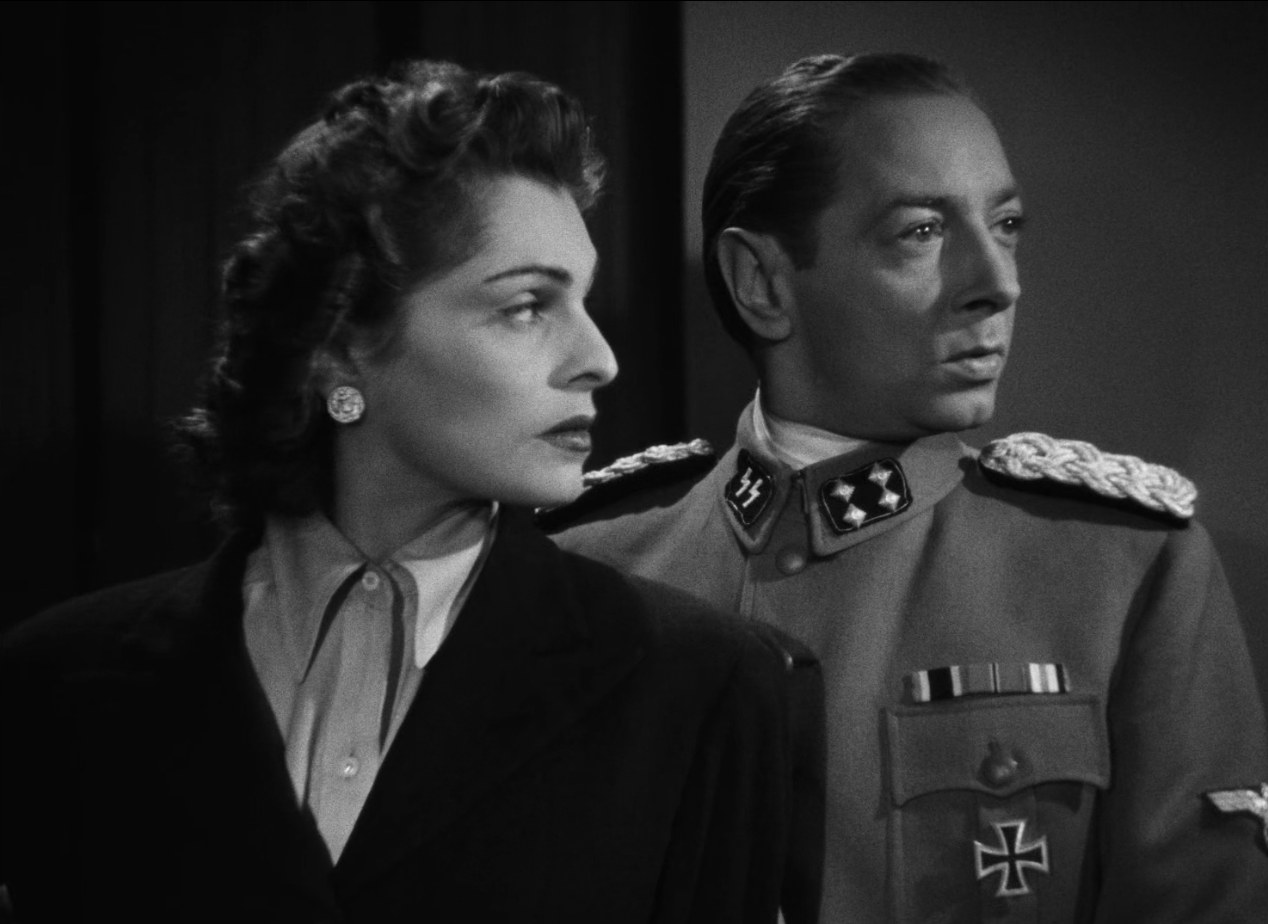
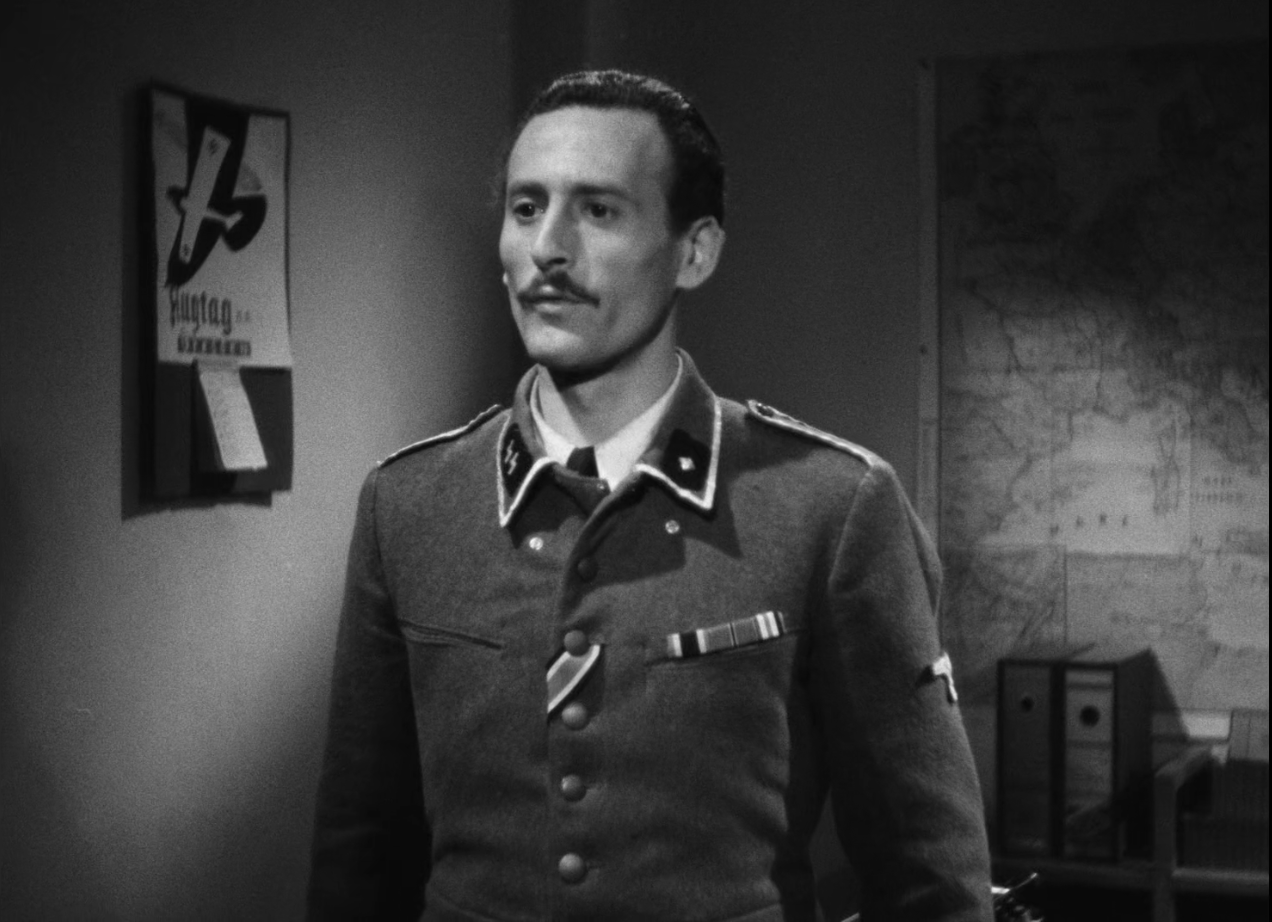
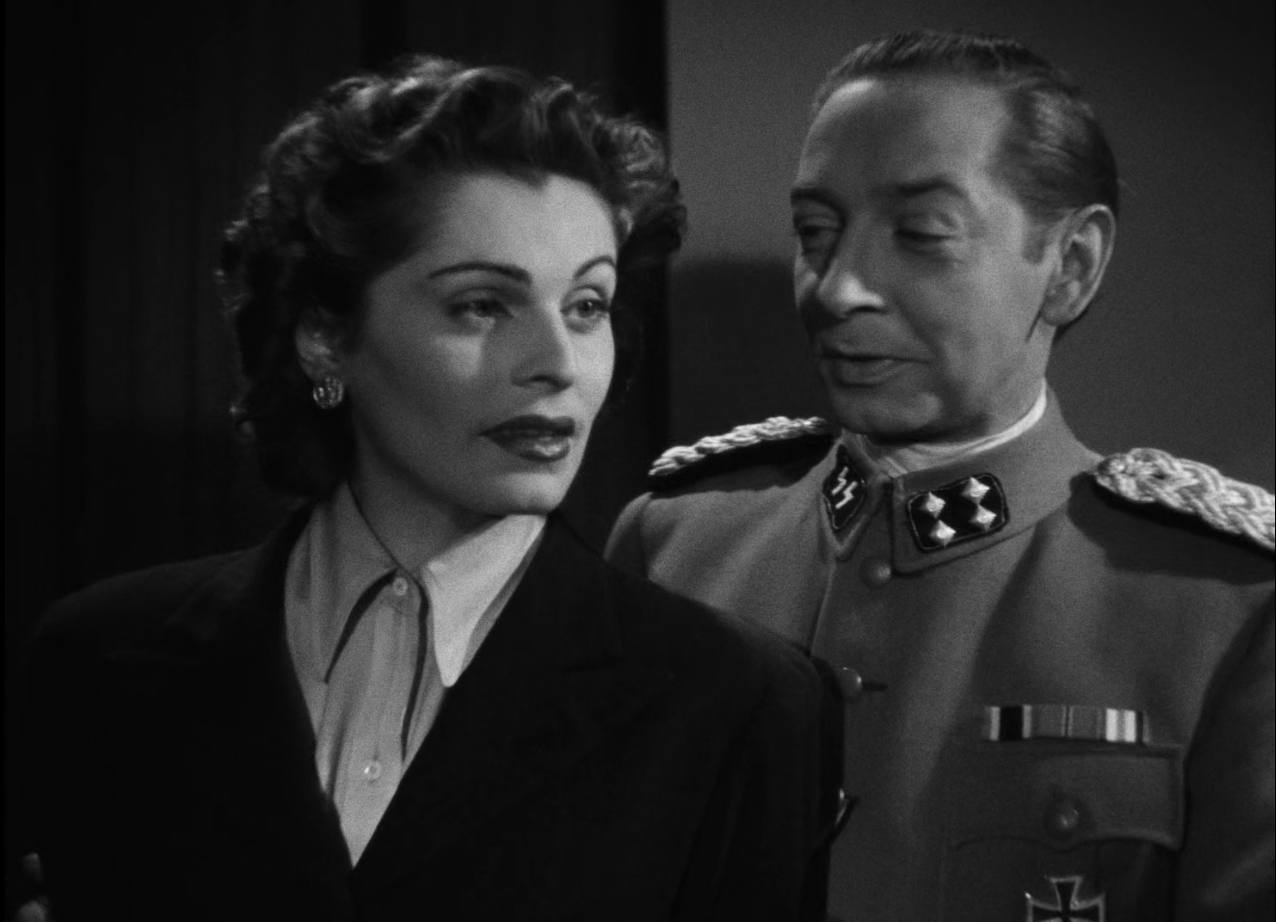
"Signore, che nome devo scrivere? Manfredi o Ferraris?" Ha menzionato l'attuale pseudonimo del combattente della resistenza, oltre al suo vero nome.
Bergmann opta per il nome sul passaporto falso: "Nessuno dei due. Giovanni Episcopo. Altrimenti creiamo un altro martire, e loro ne hanno già in abbondanza".
“Sir, what name shall I put down? Manfredi or Ferraris?” He has mentioned the resistance fighter’s current alias, as well as his real name.
Bergmann opts for the name on the fake passport: “Neither. Giovanni Episcopo. Else we create another martyr, and they already have plenty.”
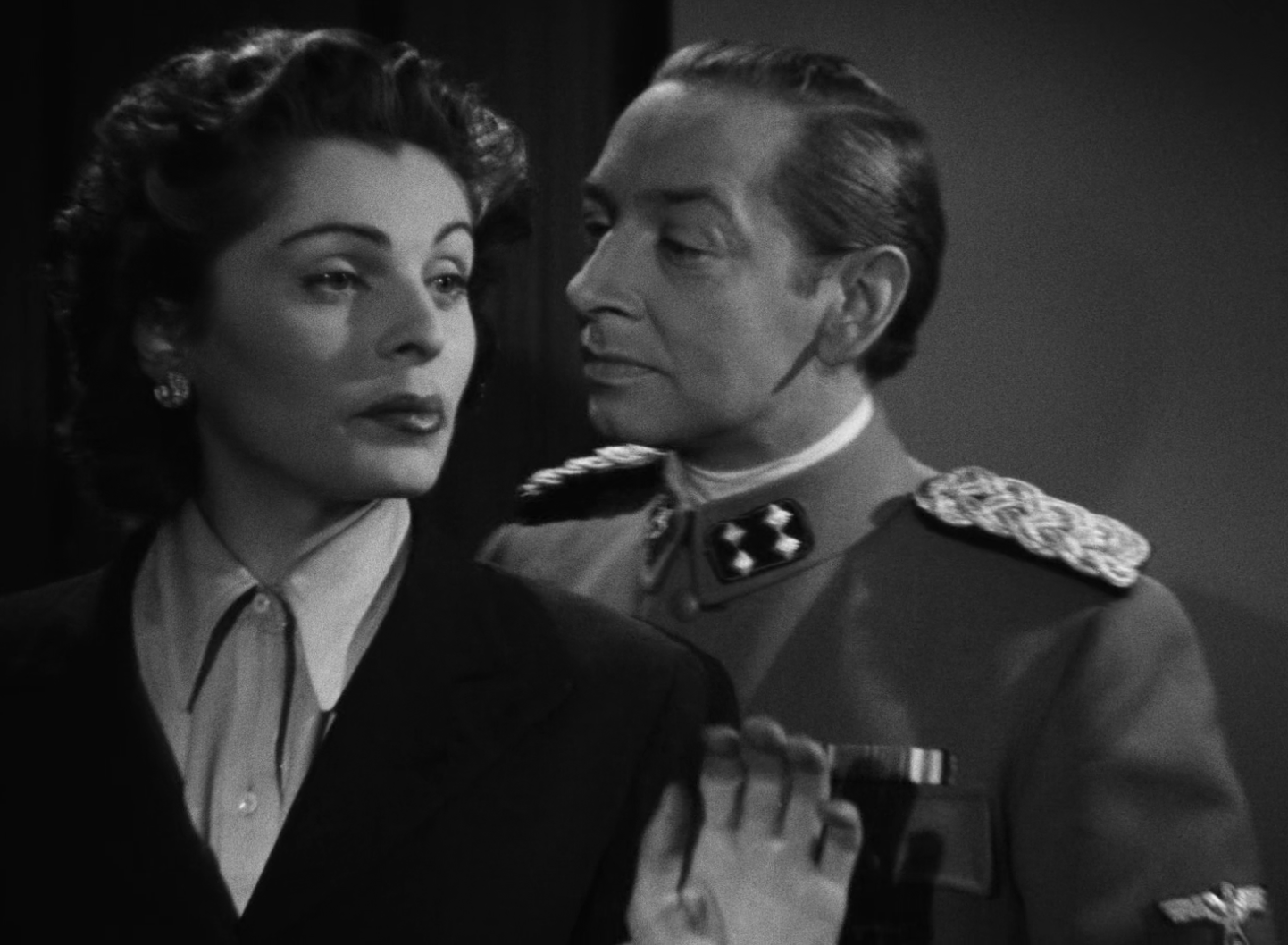
Guardando Marina, Ingrid dice: "Solo un momento!”
Looking over at Marina, Ingrid says, “Just a moment!”
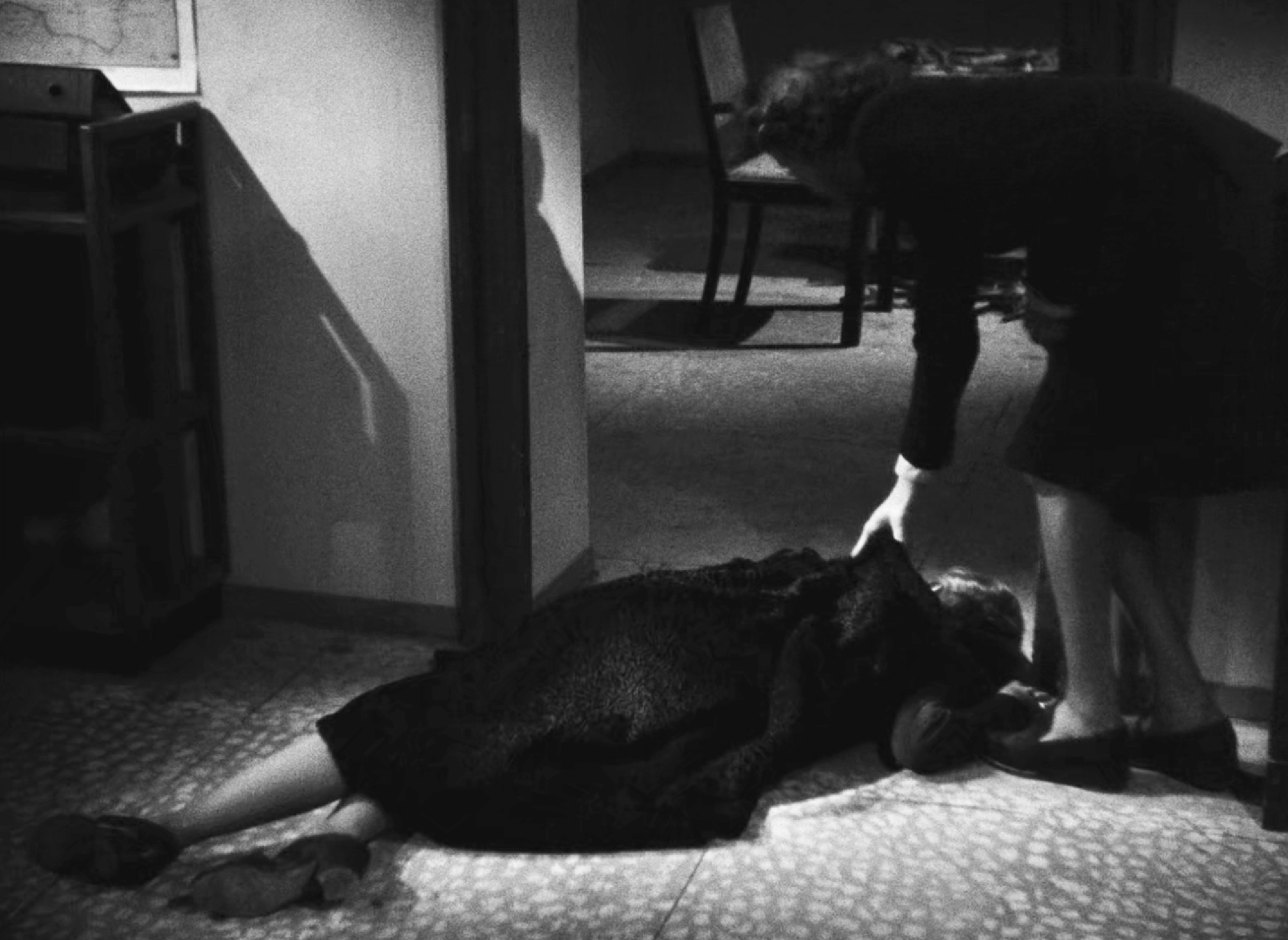
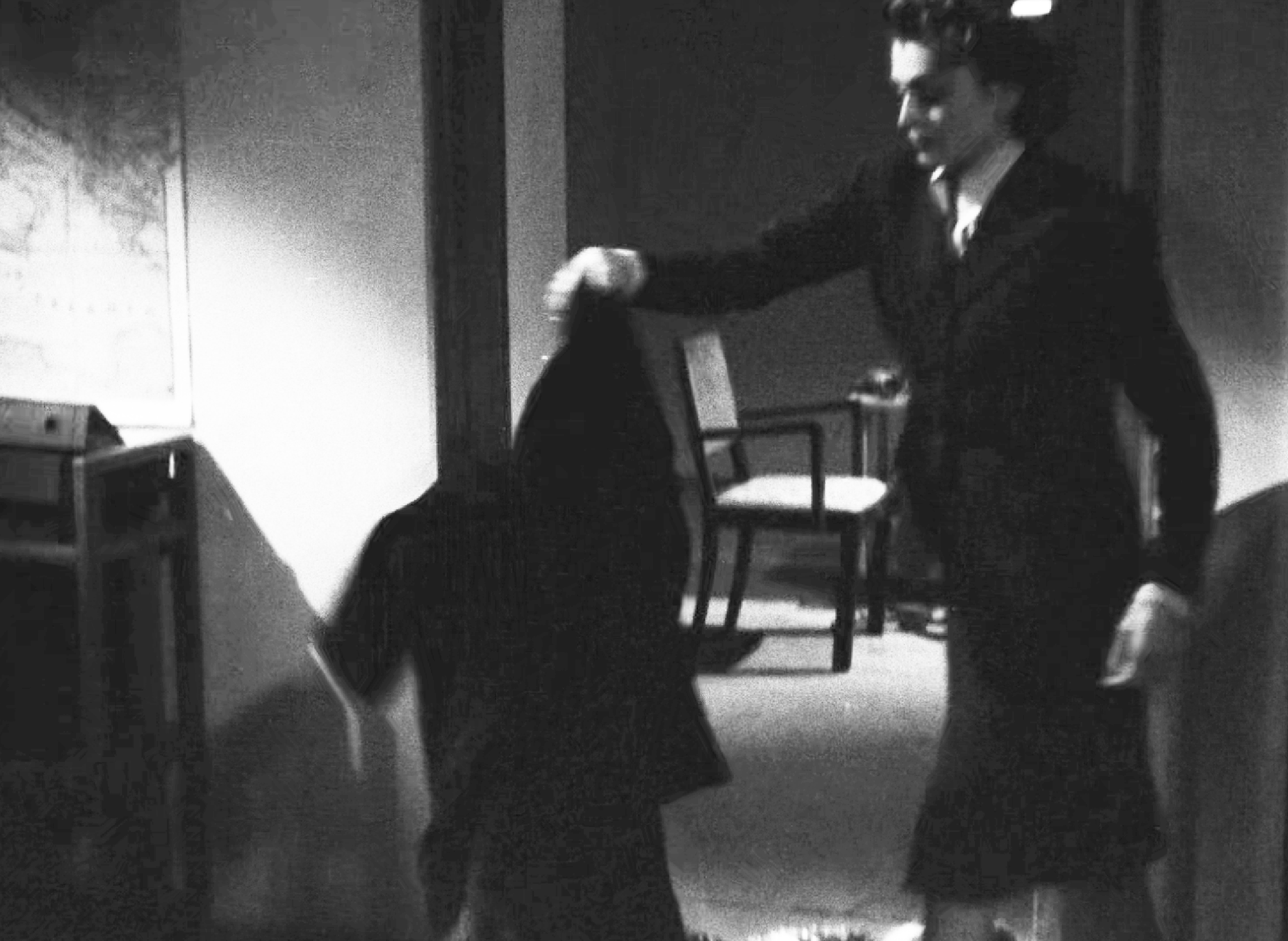
Si avvicina a Marina e si china per recuperare il cappotto. Lo scuote leggermente. "Per la prossima volta", spiega.
She walks over to Marina, and bends down to retrieve the coat. She shakes it slightly. “For next time,” she explains.
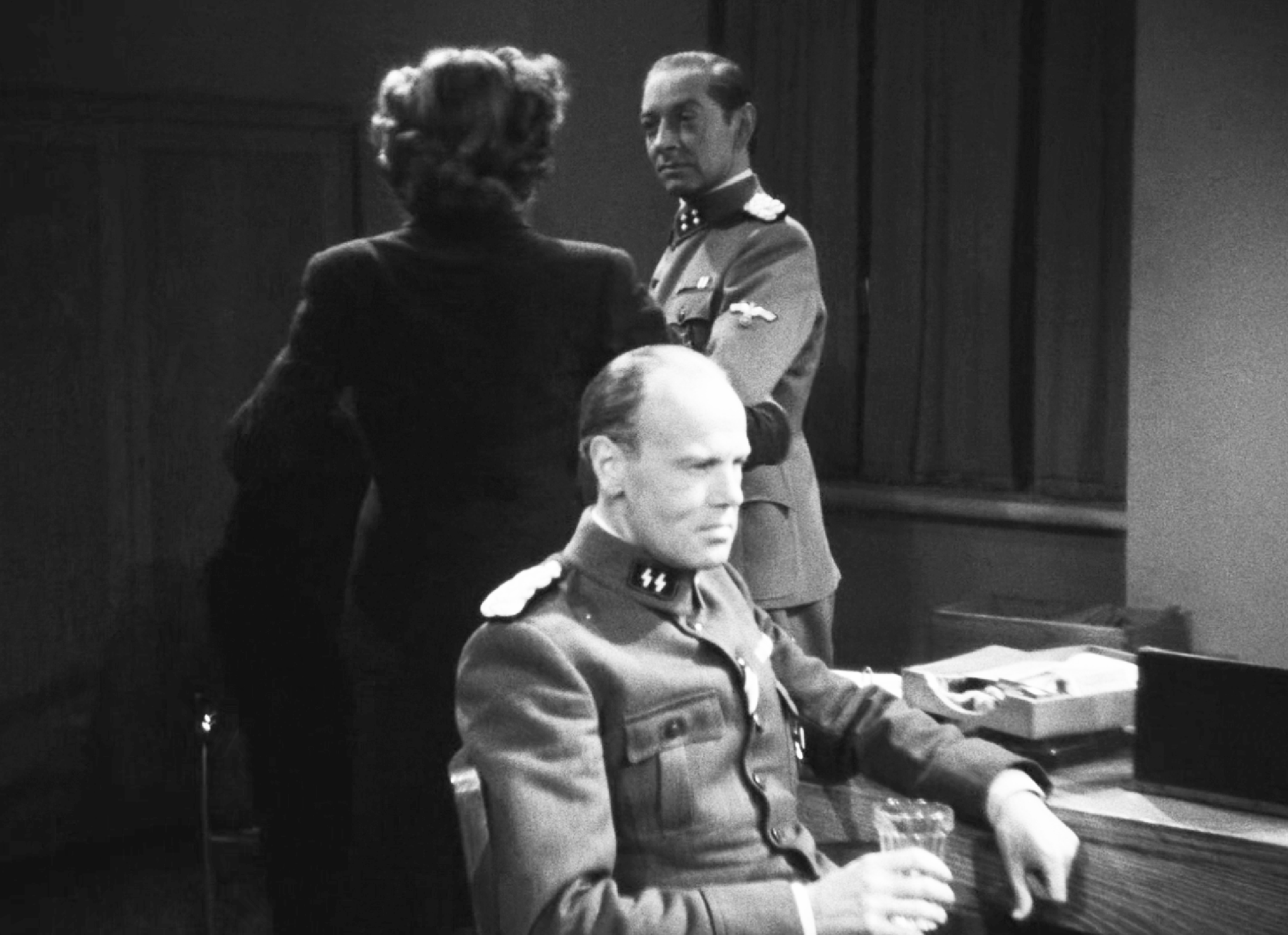
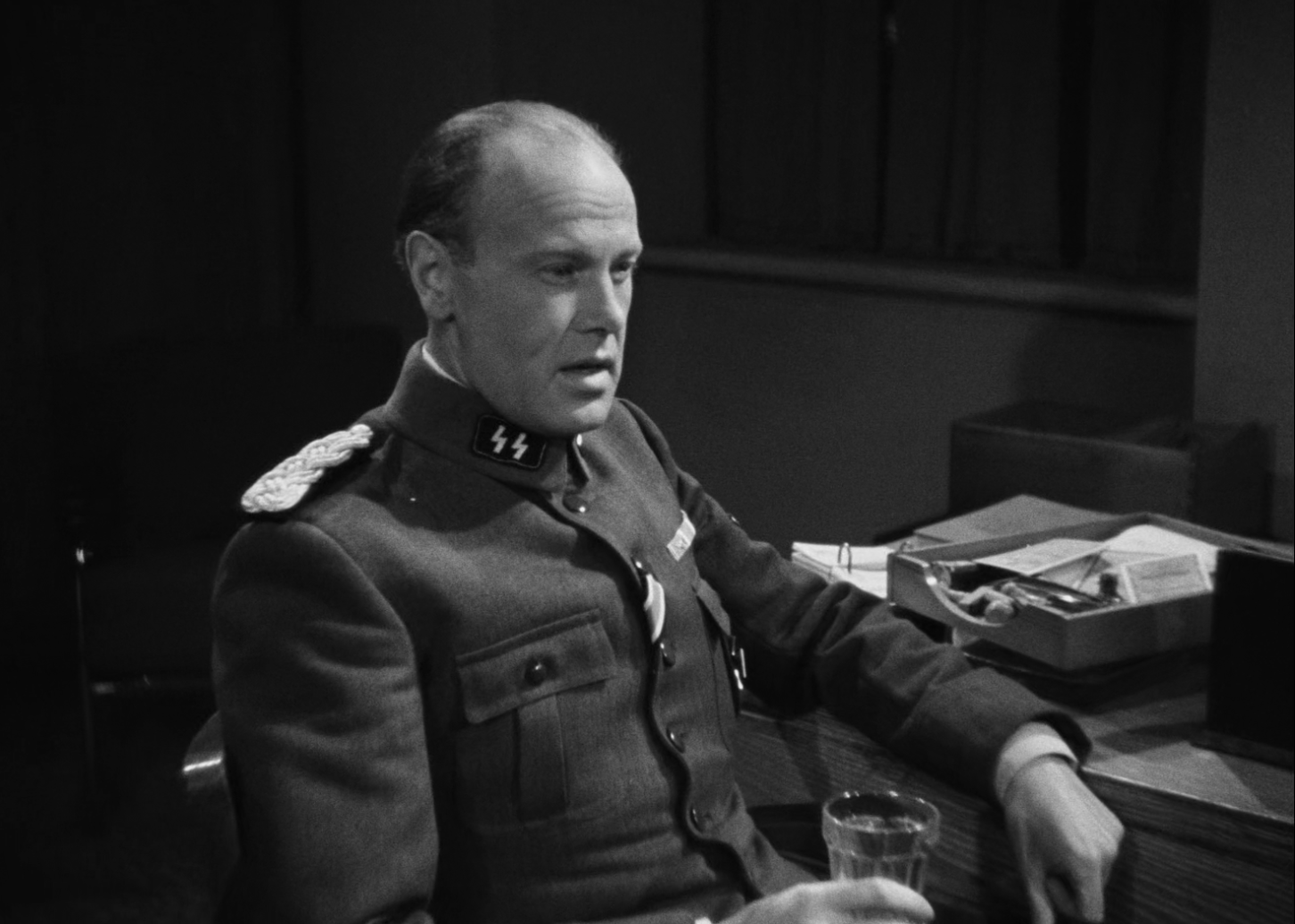
Ingrid e Bergmann lasciano l'ufficio a braccetto. Mentre escono, Hartmann scuote la testa e borbotta ironicamente: "Siamo una razza superiore..."
Ingrid and Bergmann leave the office arm in arm. As they exit, Hartmann shakes his head and mutters ironically, ‘“We are a master race…”
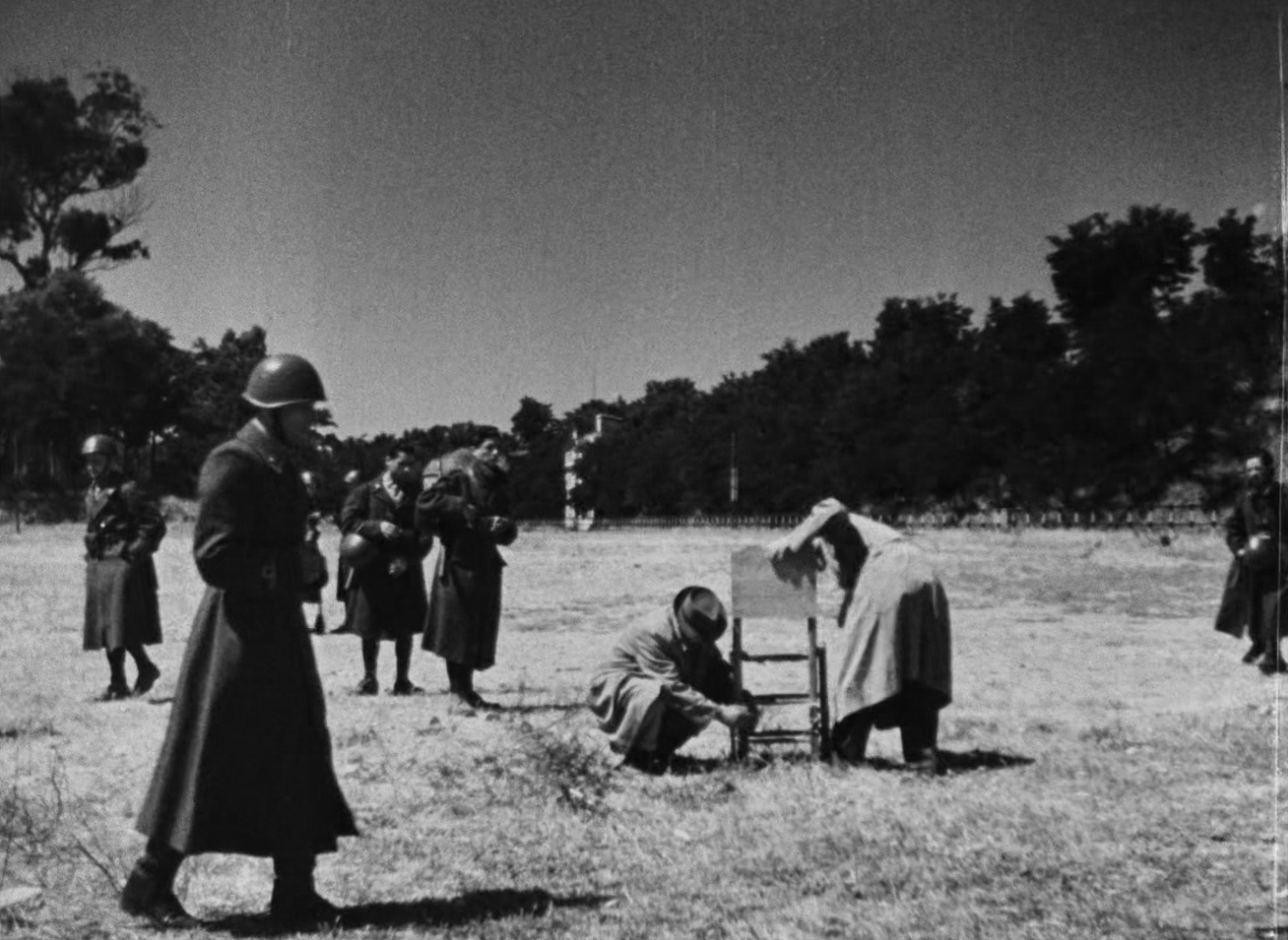
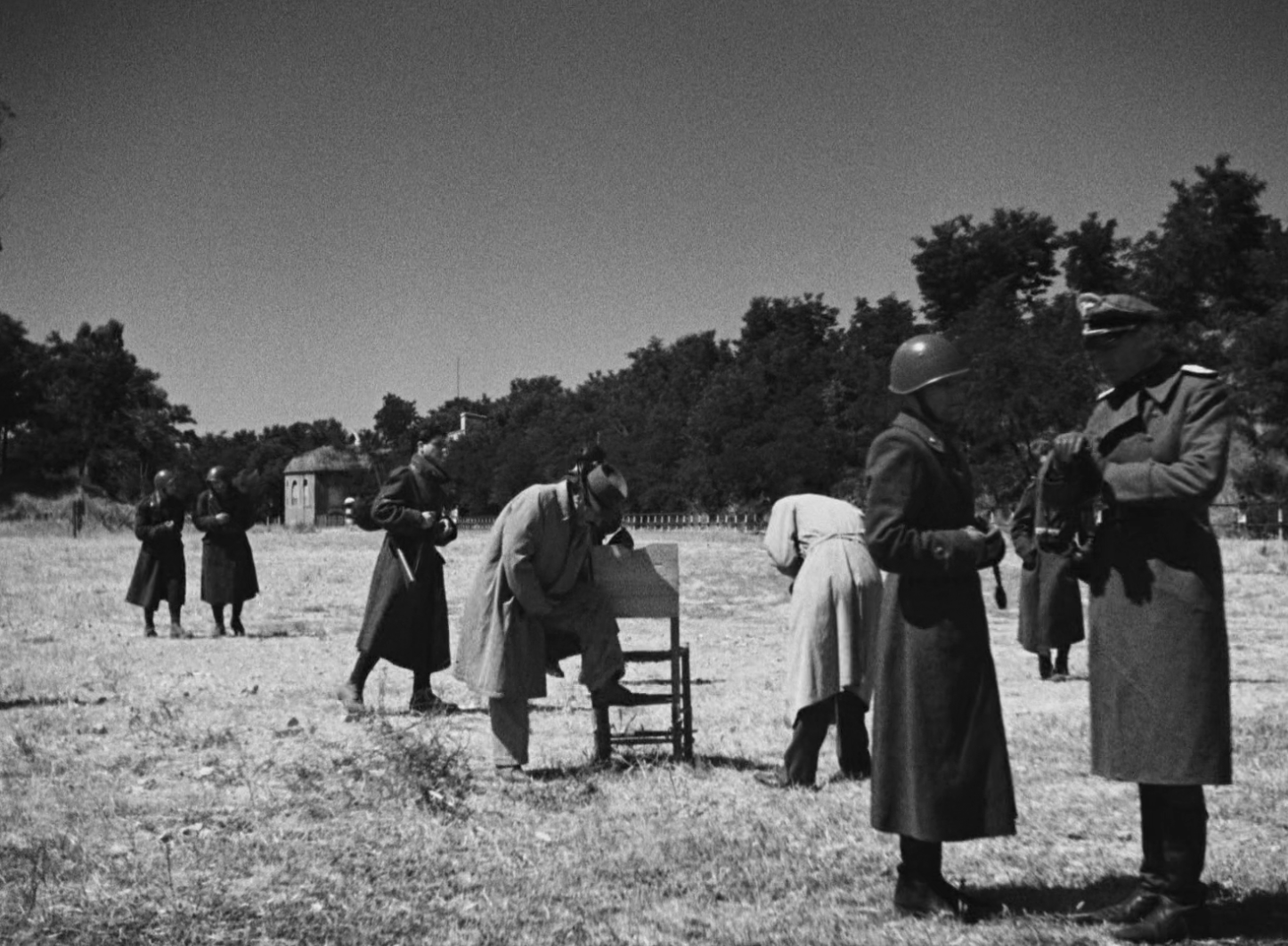
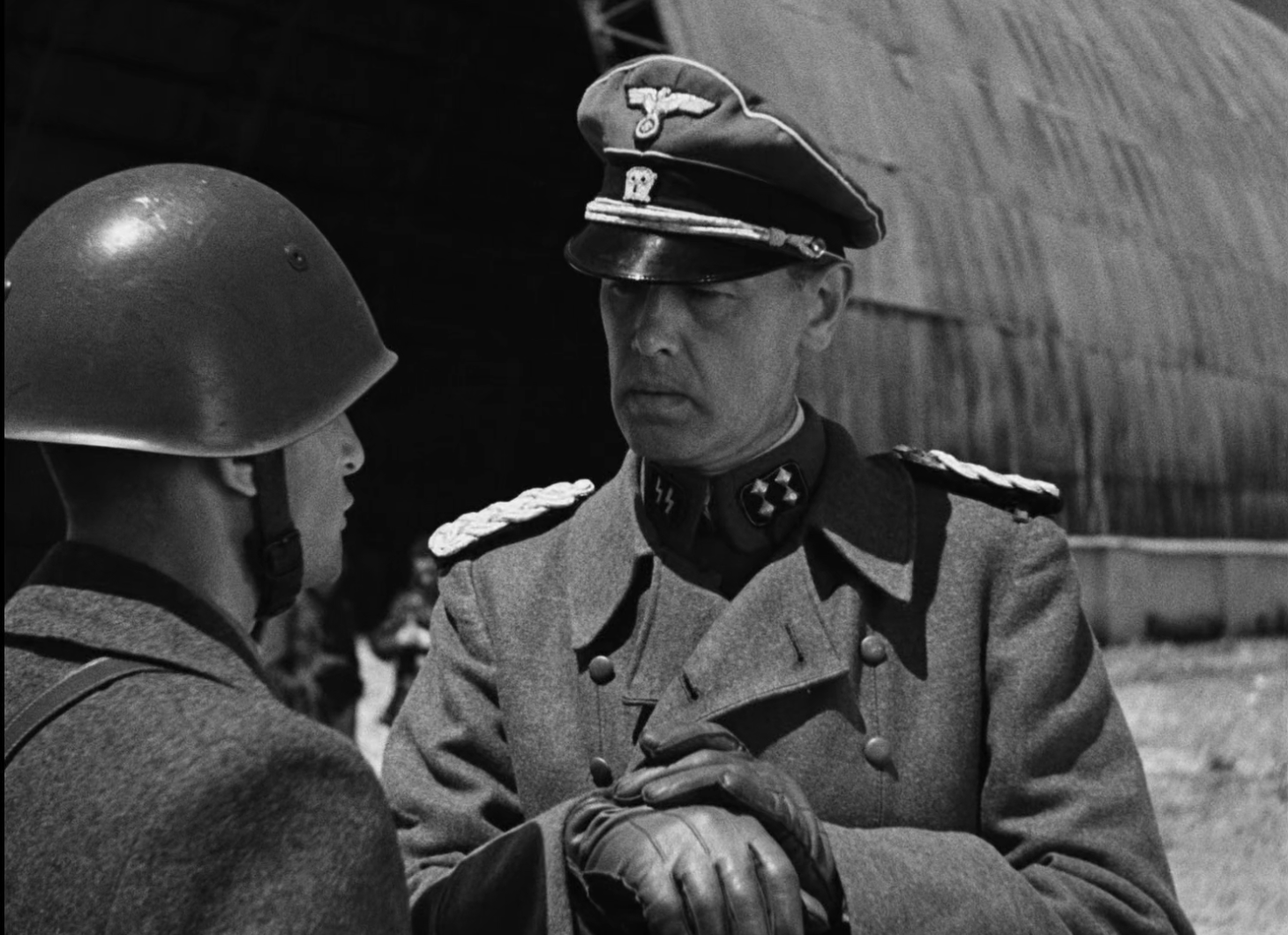
Sotto un cielo soleggiato, in un campo aperto delimitato da alberi, due uomini in trench di colore chiaro e fedora sistemano una semplice sedia di legno. Soldati italiani gironzolano, mentre tamburi suonano minacciosamente in sottofondo.
Hartmann chiede a un soldato: “Che ora fa lei?”
“Le otto e quattordici”.
“Esatto. Sono in ritardo”.
Under a sunny sky, in an open field bordered by trees, two men in light-colored trench coats and fedoras set up a plain wooden chair. Italian soldiers mill about, as drums sound ominously in the background.
Hartmann asks a soldier, “What time do you have?”
“Eight fourteen.”
“Exactly. They’re late.”
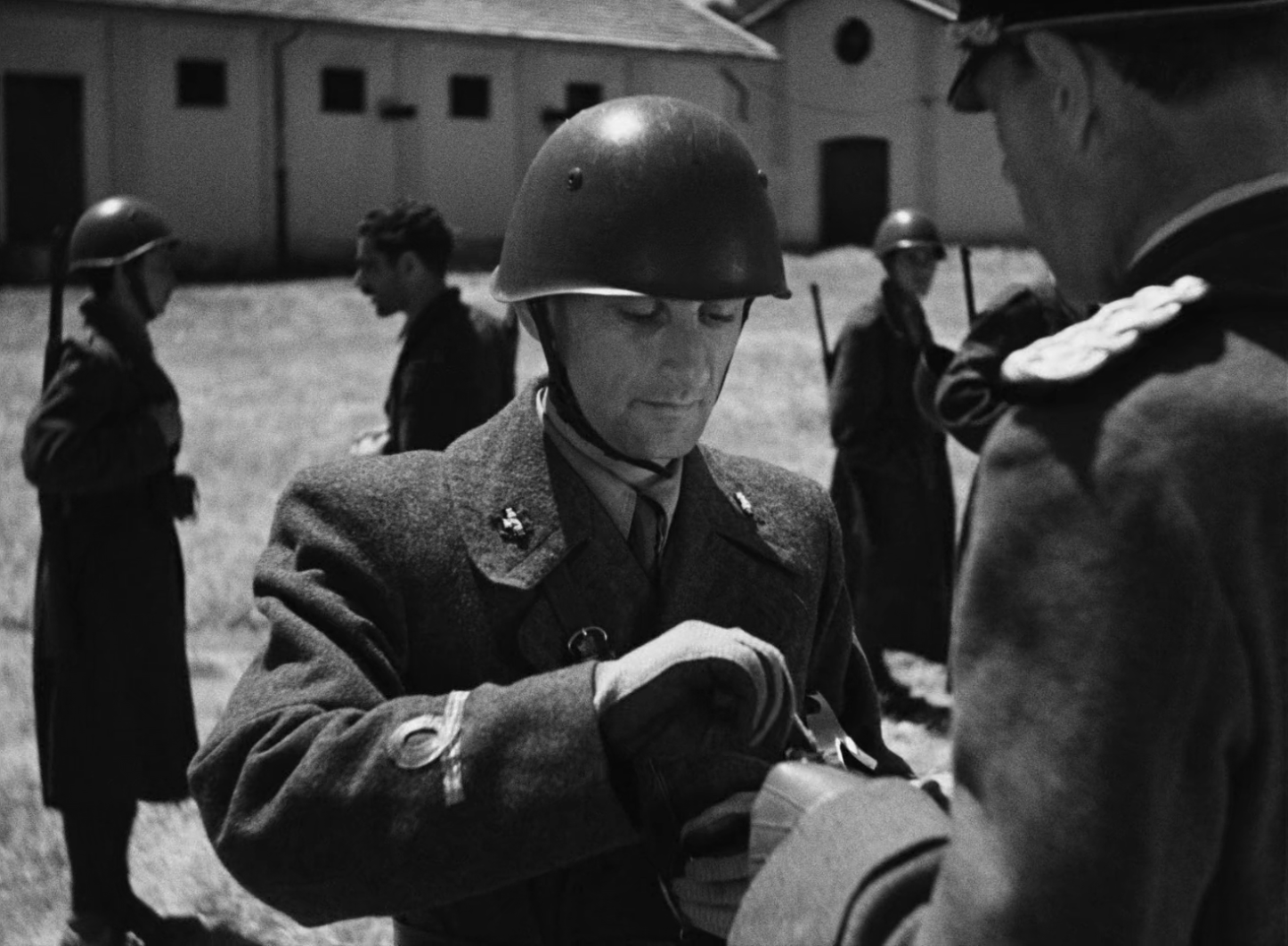
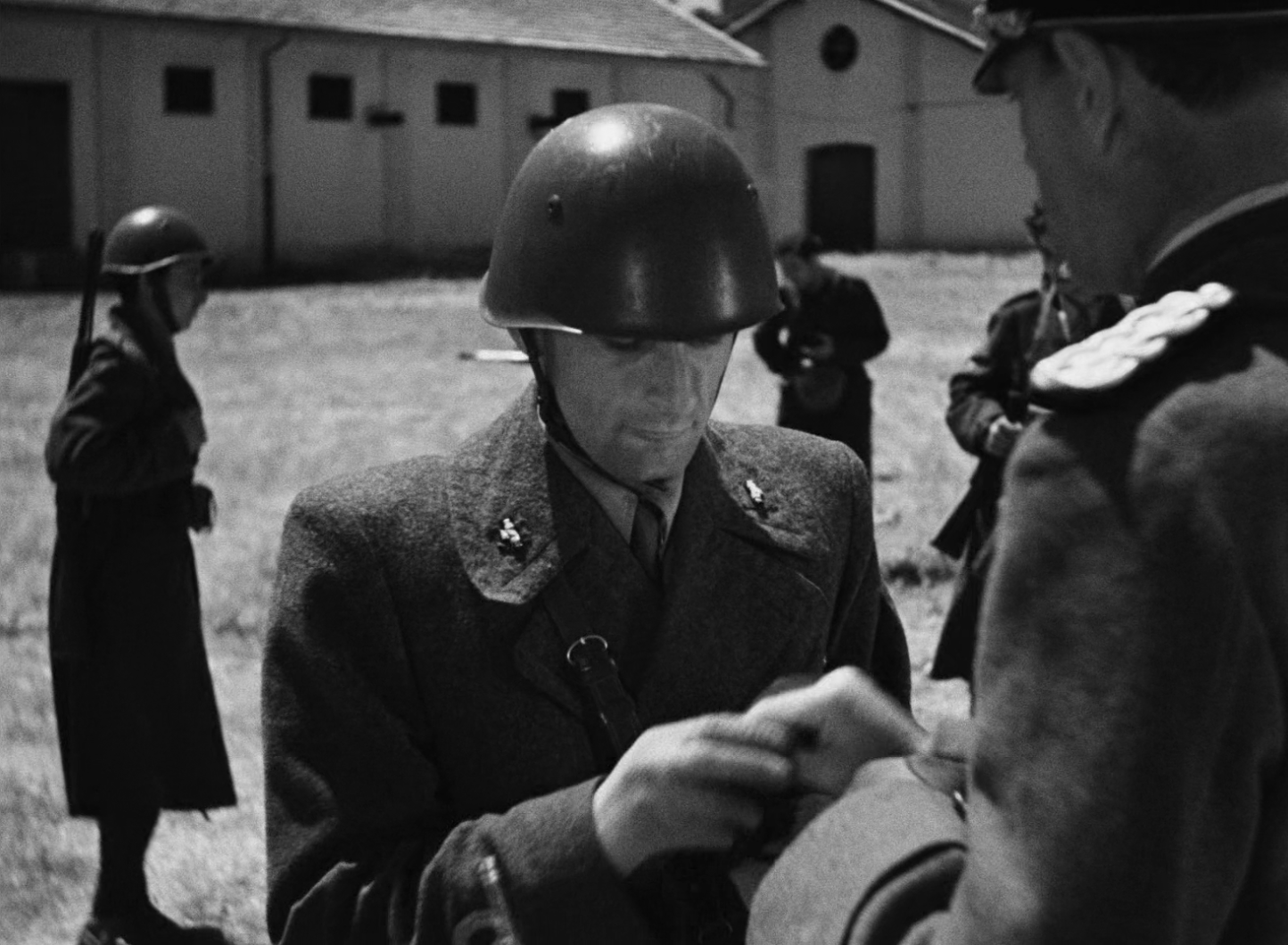
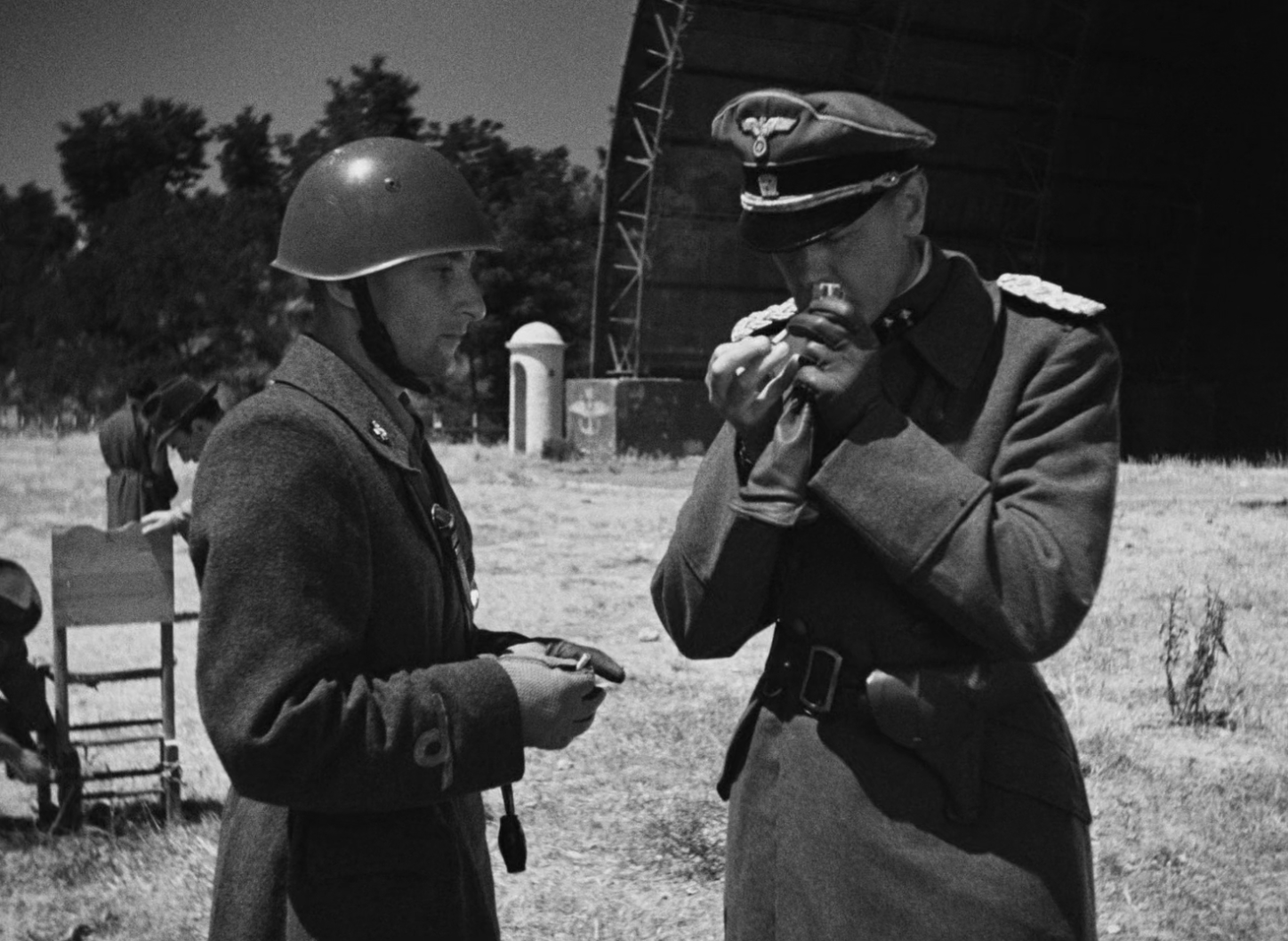
Offre al soldato una sigaretta, poi chiede un fiammifero. Ma il soldato fatica ad aprire il pacchetto e Hartmann glielo strappa via e si accende la sigaretta da solo.
He offers the soldier a cigarette, then asks for a match. But the soldier struggles with opening the package and Hartmann snatches it away and lights his cigarette himself.
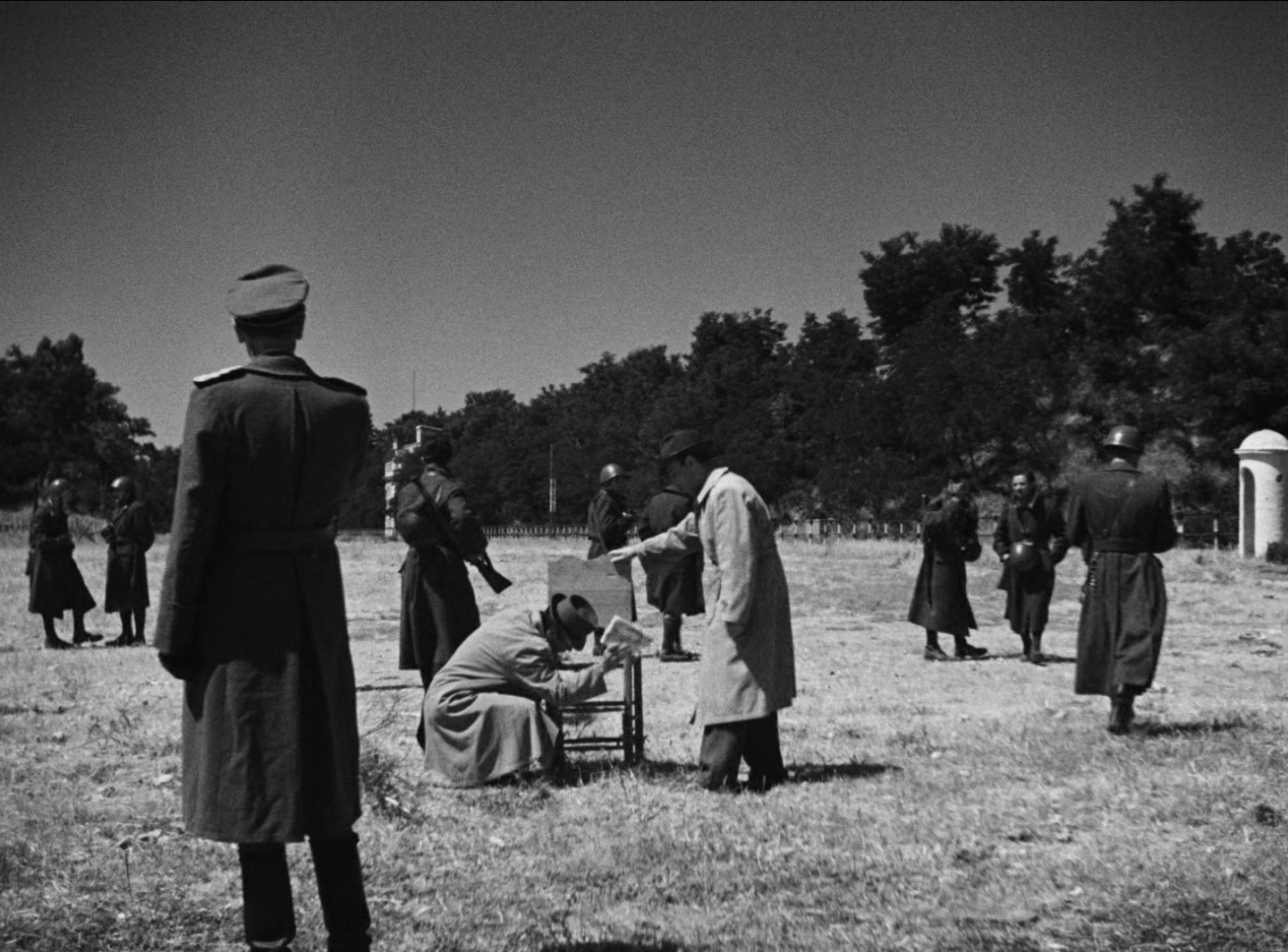
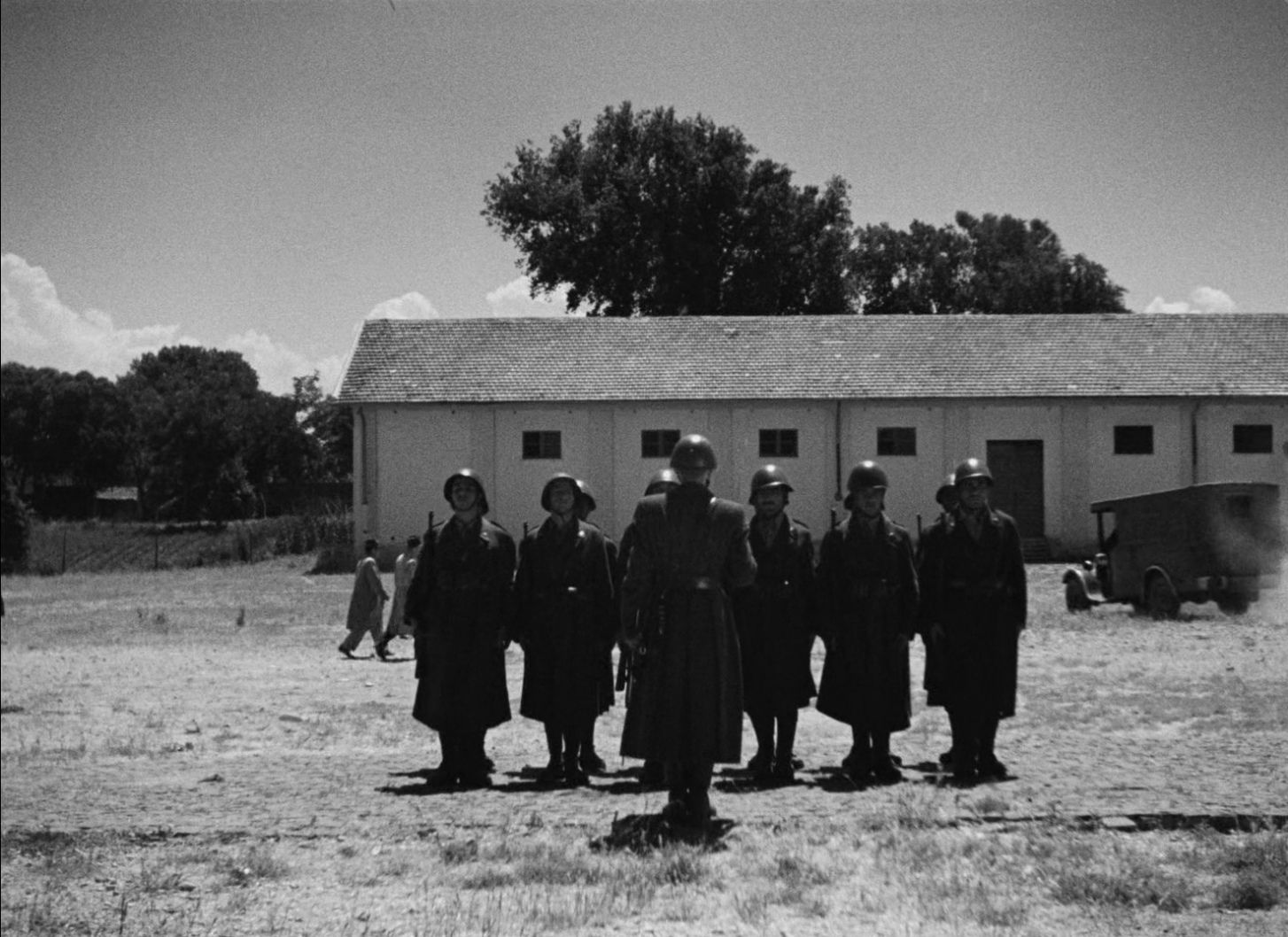
"Adunata!" ordina qualcuno.
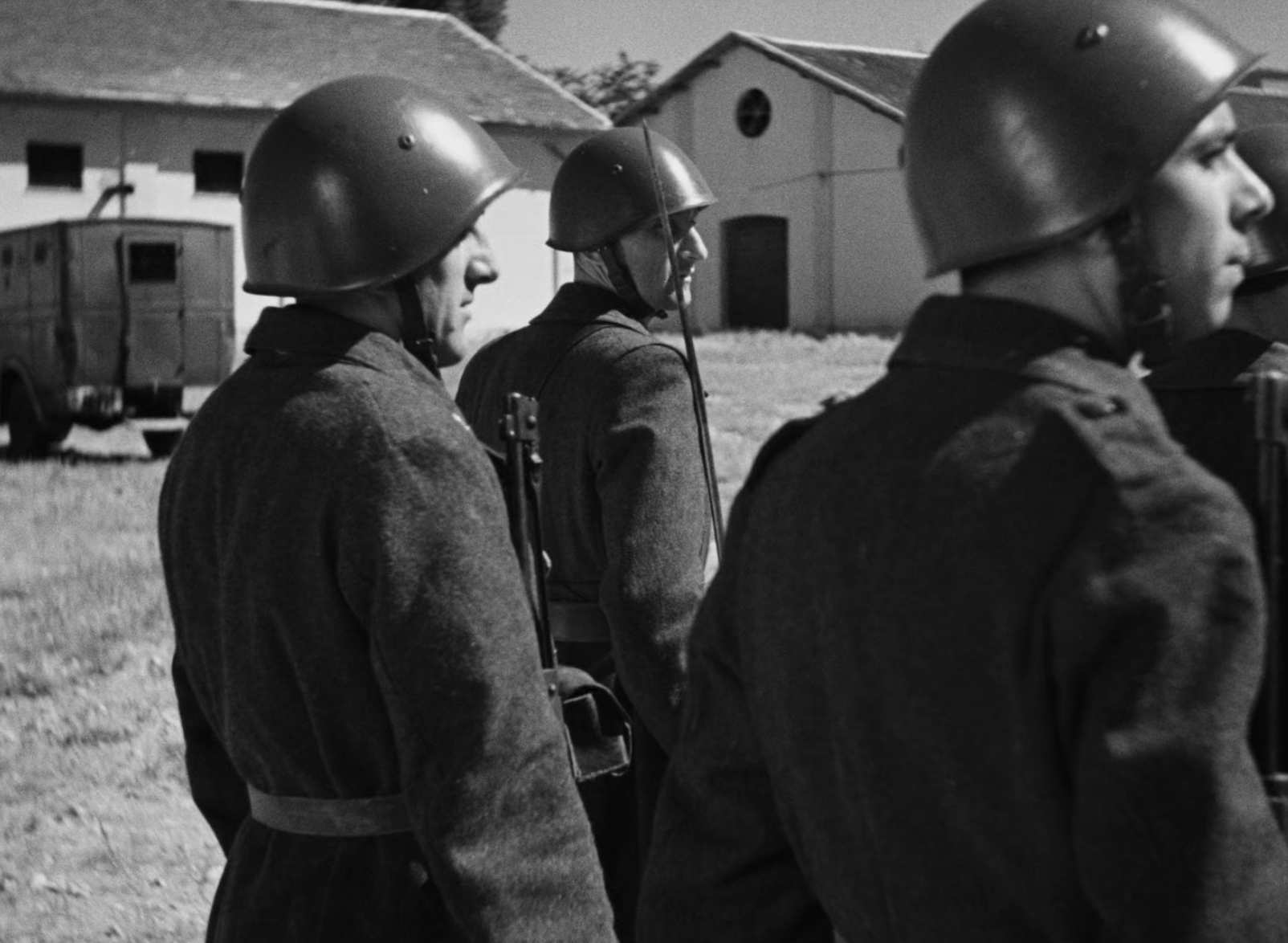
"Pronti!" grida un italiano, e gli uomini si mettono in formazione. "Attenti!" Un camion si ferma dietro di loro. L'inquadratura è composta con cura, uno studio in contrasti: luce e ombra, l'ordine dei soldati e la vaga bellezza di nuvole e alberi frondosi.
“Assemble!” someone orders.
“Get ready!” yells an Italian, and the men get into formation. “Attention!” A truck pulls up behind them. The shot is carefully composed, a study in contrasts: light and shadow, the order of the soldiers and the loose beauty of clouds and leafy trees.
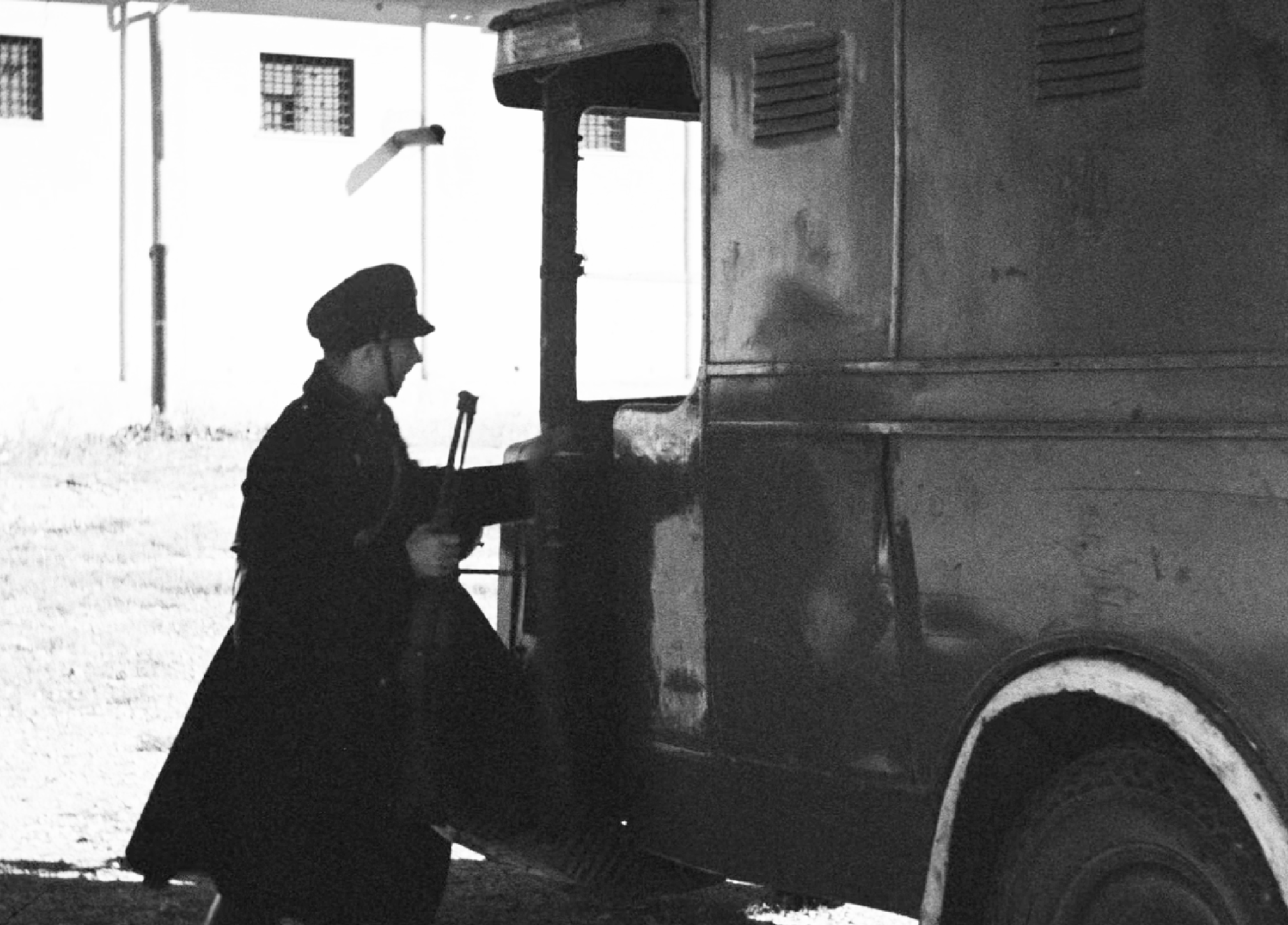
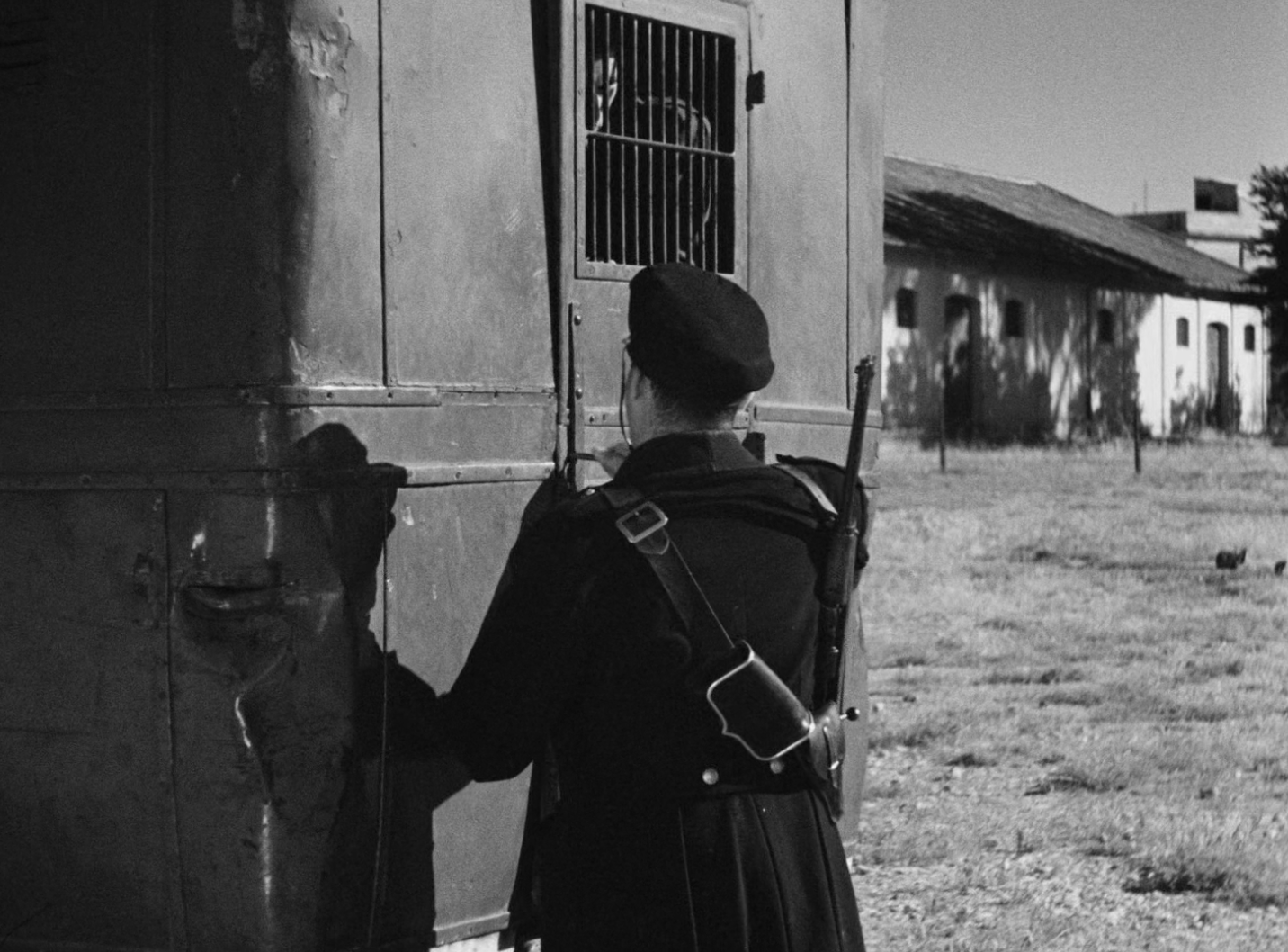
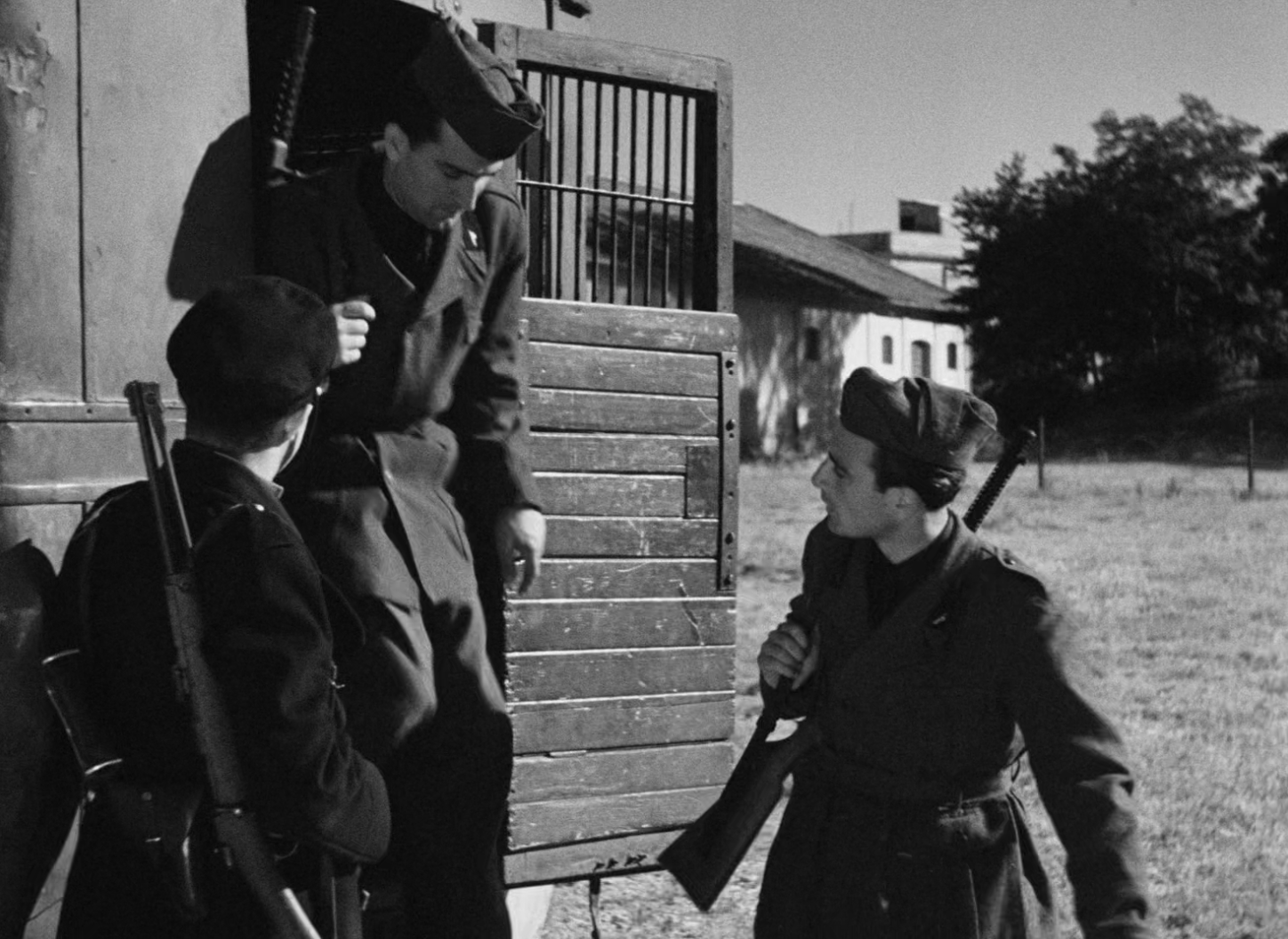
L'autista salta fuori e corre ad aprire la porta sul retro, che ha una piccola finestra con le sbarre. Due soldati smontano.
The driver hops out and runs to unlock the back door, which has a small barred window. Two soldiers climb out.
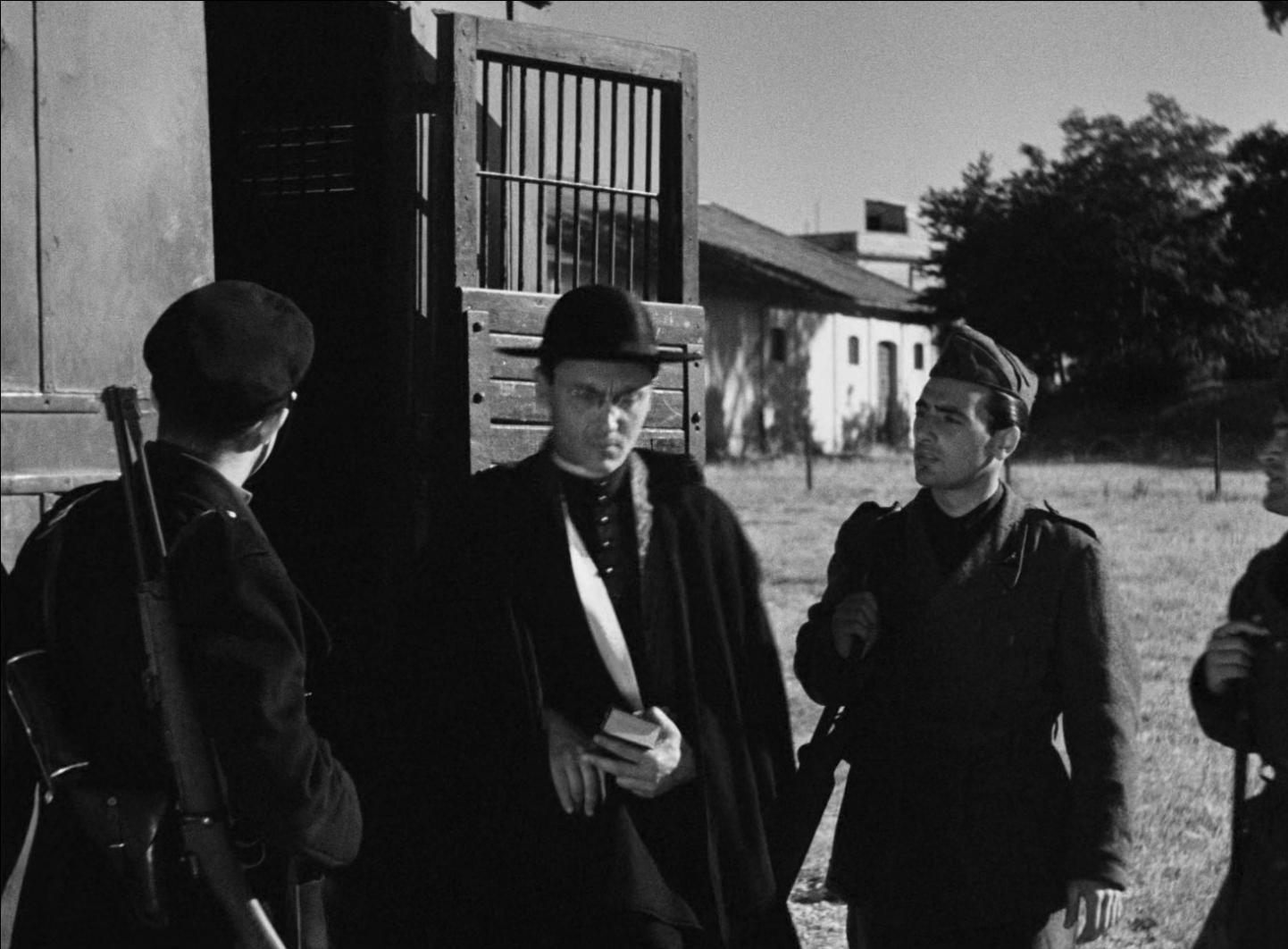
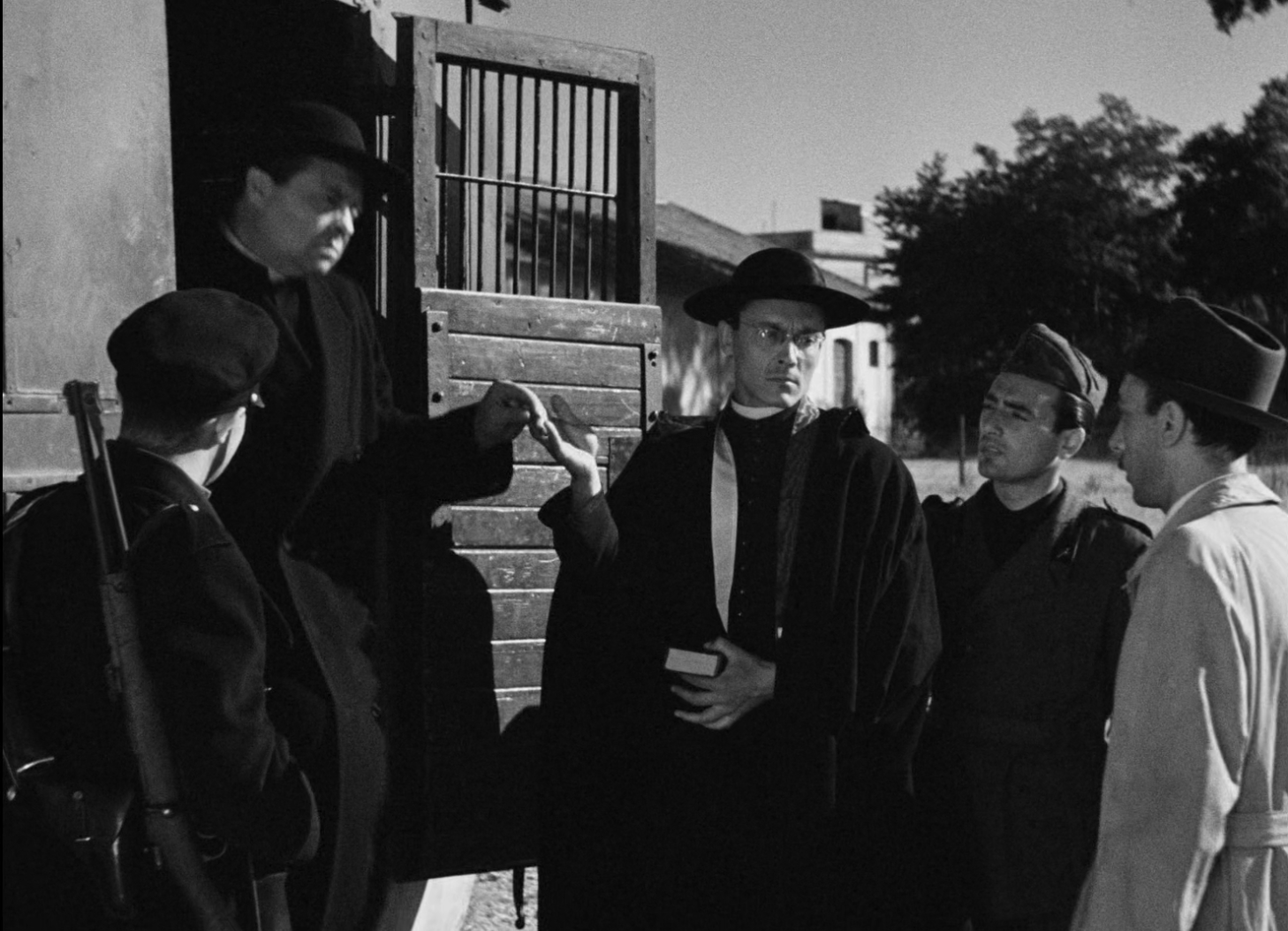
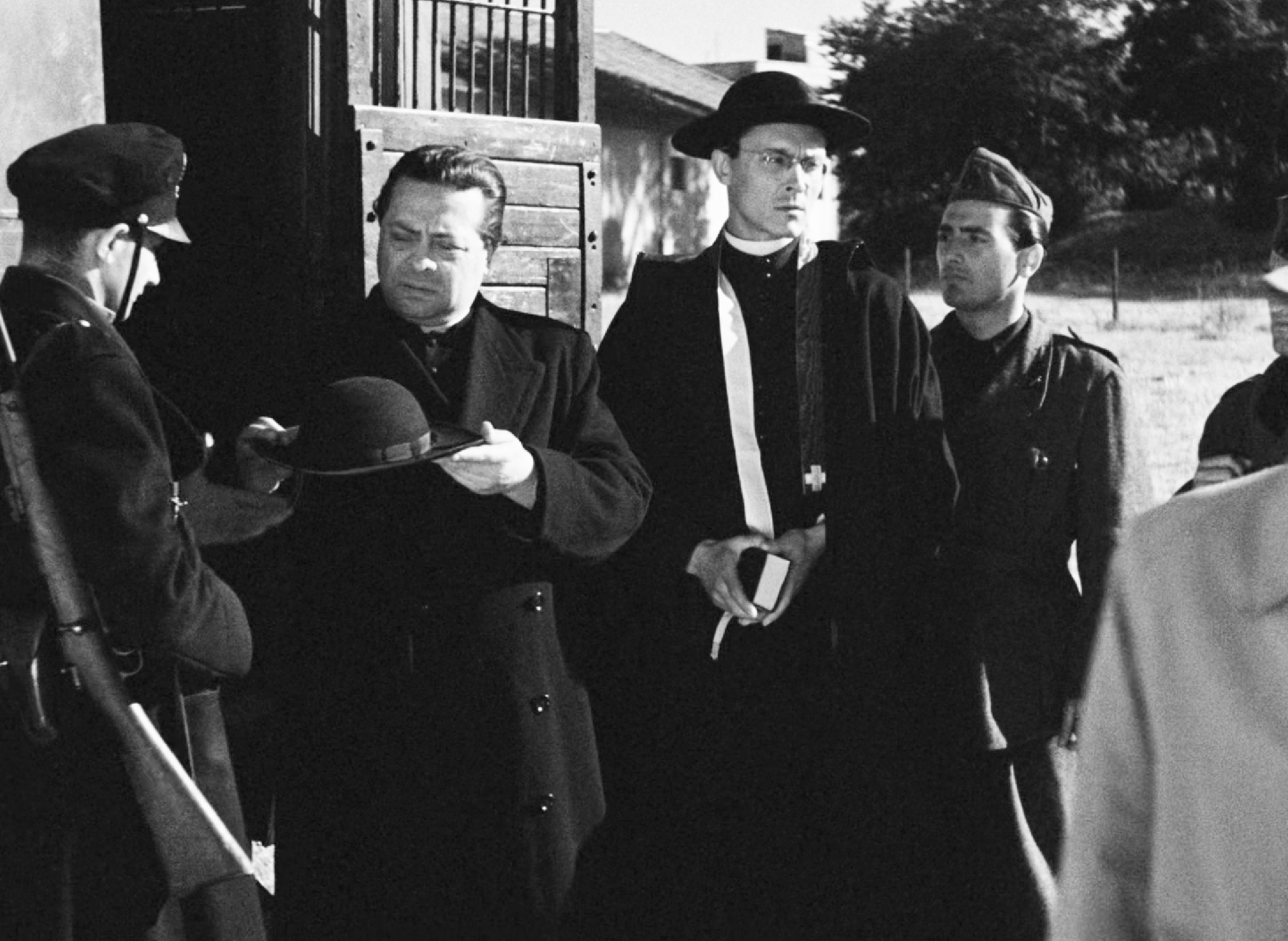
Poi un giovane prete appare e allunga una mano verso il camion. Prendendola, Don Pietro scende.
"Il cappello, Don Pietro", dice il prete.
"Ah, sì". Lui se lo toglie e lo dà a un soldato italiano.
Next, a young priest appears and extends a hand toward the truck. Taking it, Don Pietro steps down.
“Your hat, Don Pietro,” the priest says.
“Oh, yes.” He removes it and gives it to an Italian soldier.
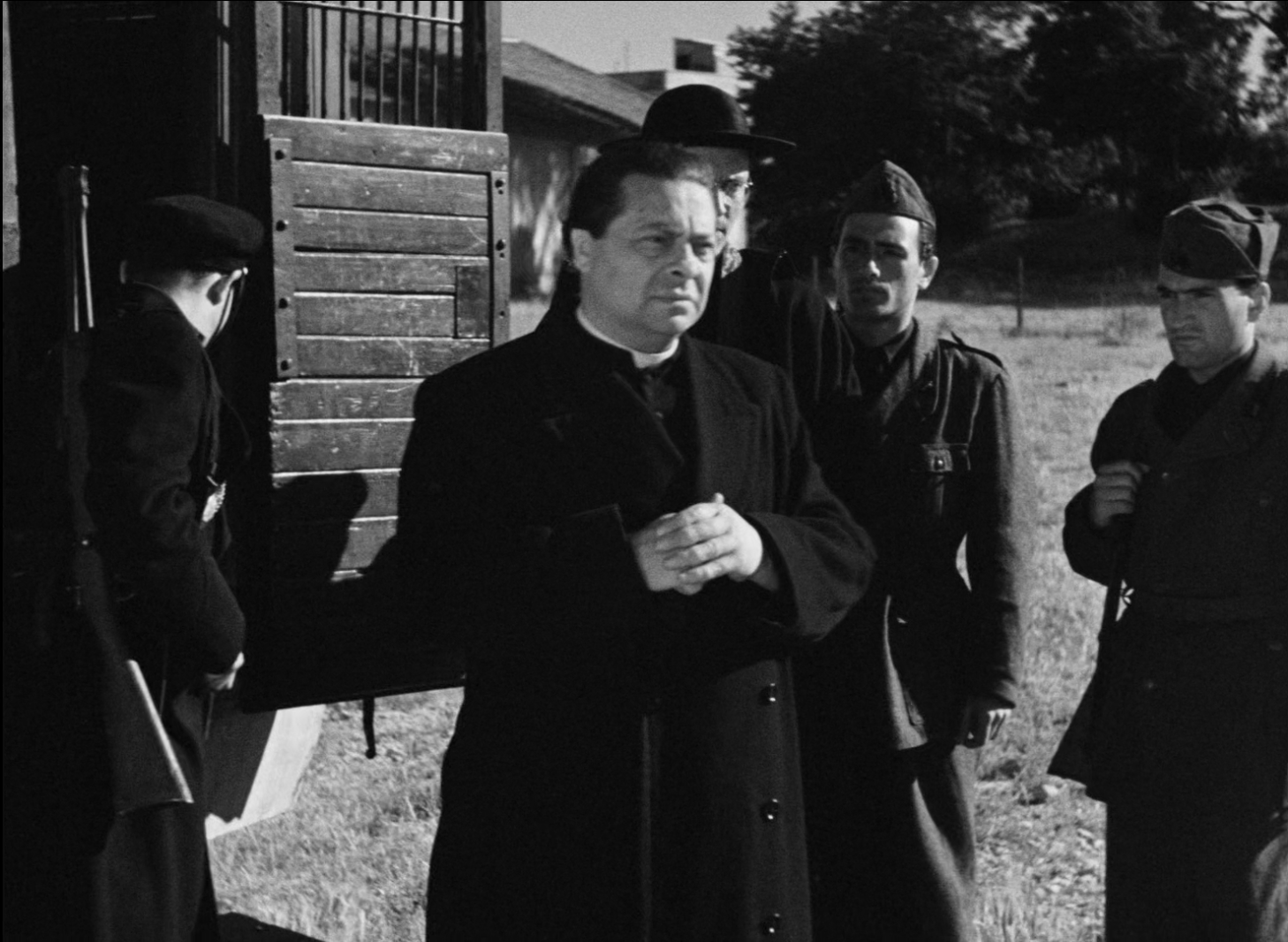
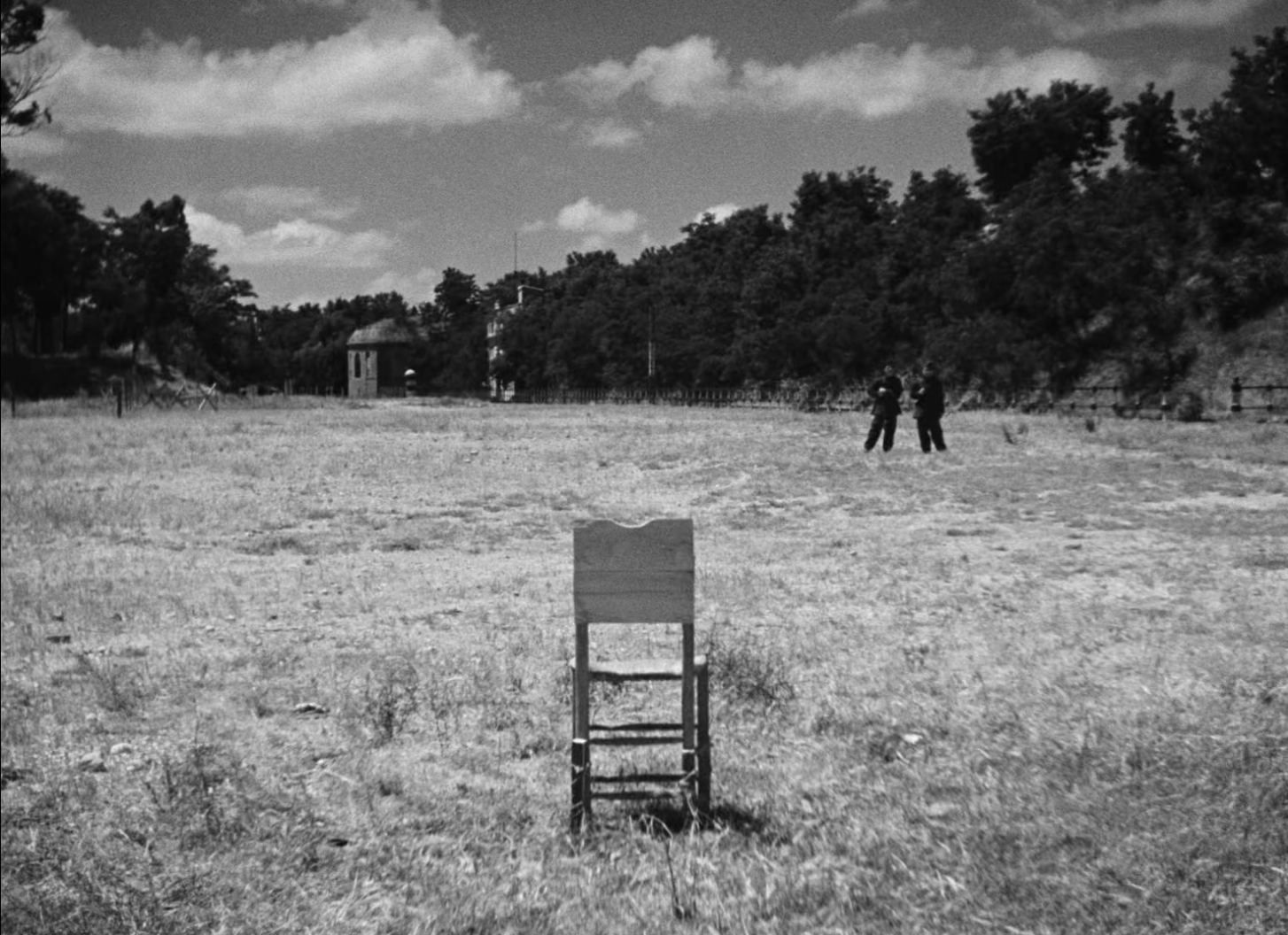
Mani giunte sul petto, Don Pietro si dirige verso la sedia dove incontrerà la sua morte.
Hands folded over his chest, Don Pietro steps toward the chair where he will meet his death.
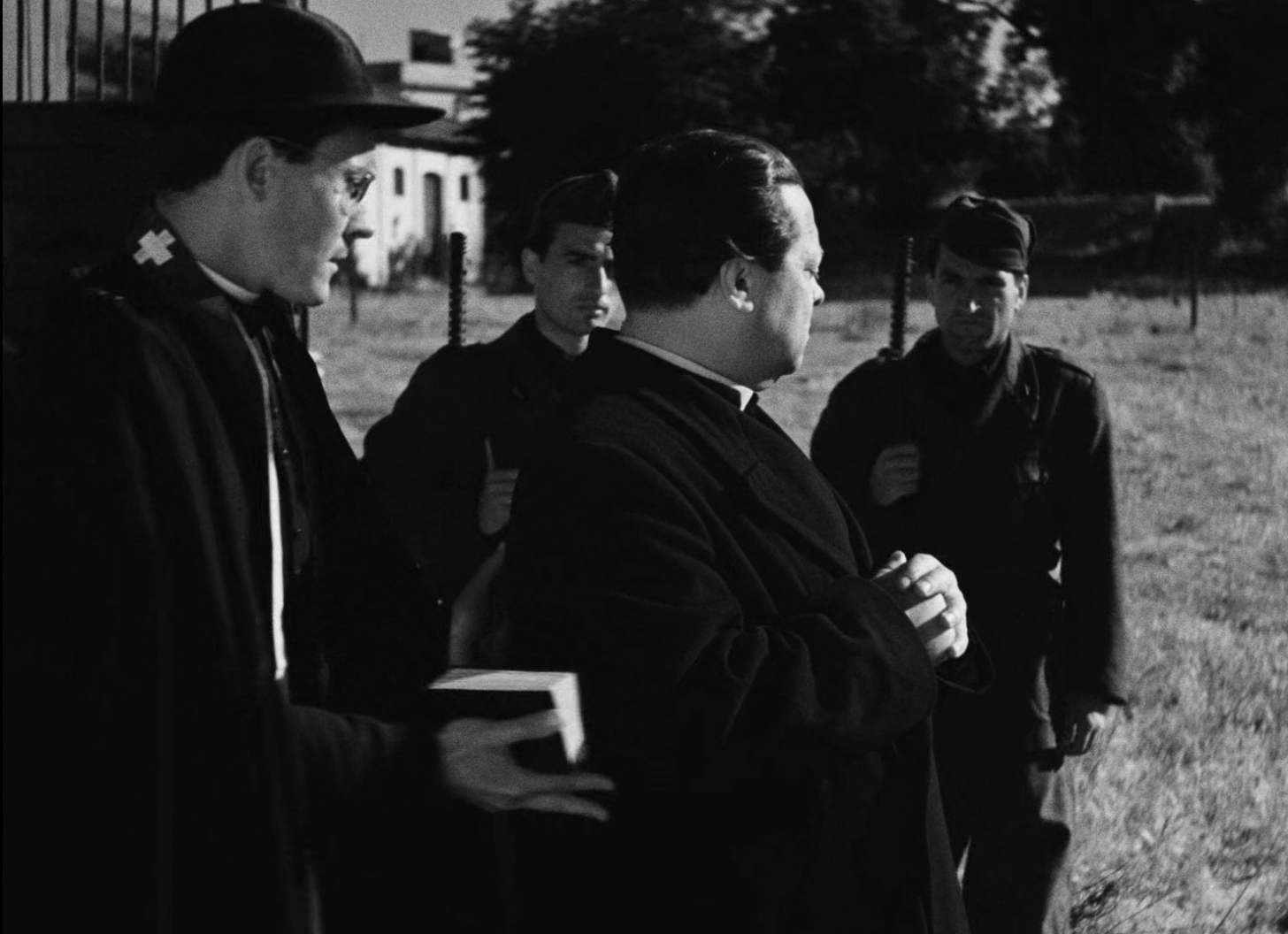
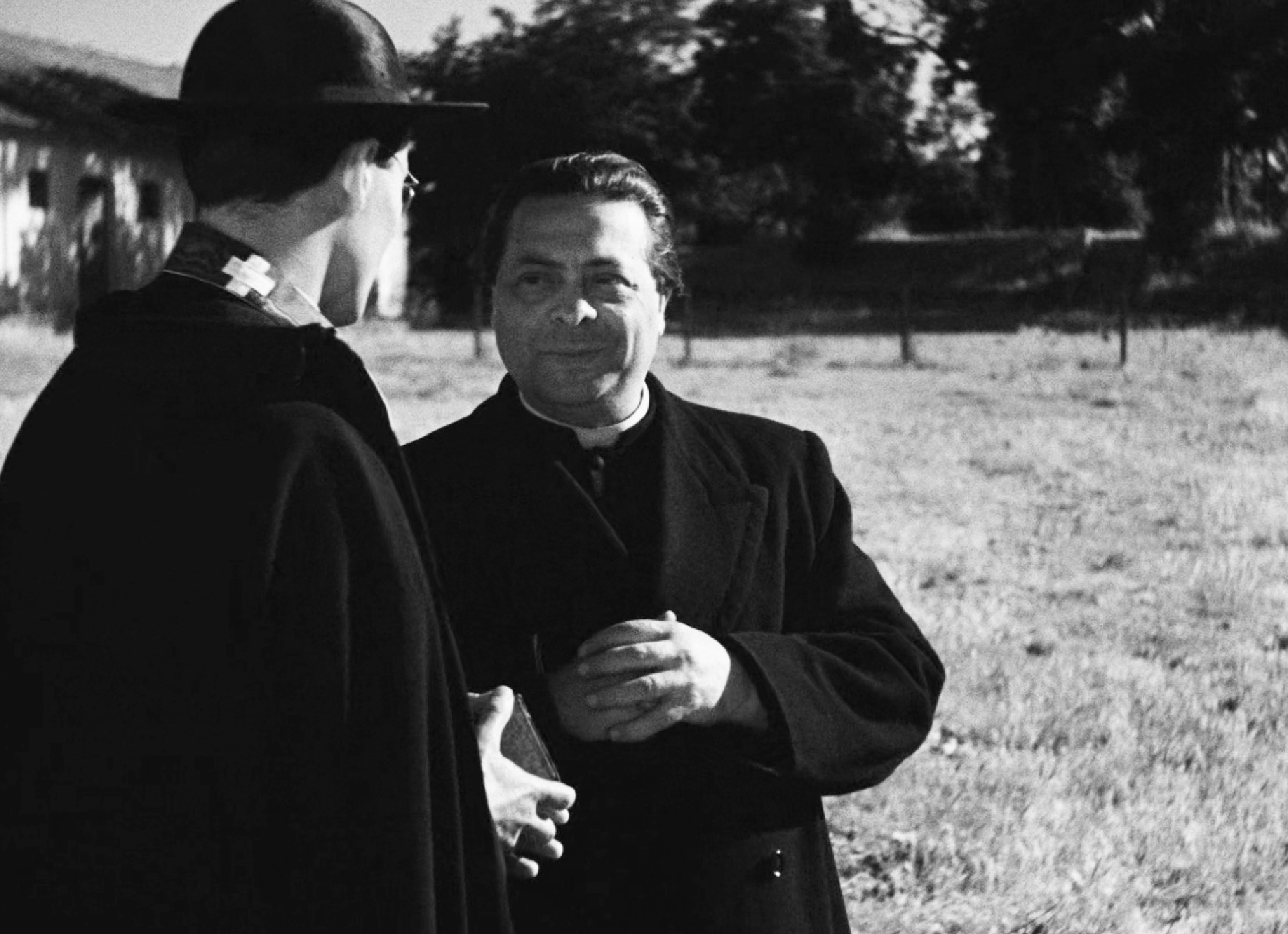
Si ferma un attimo e il giovane prete gli prende il braccio. “Venga. Coraggio”.
Con le sopracciglia alzate, Don Pietro risponde: "Oh, non è difficile morire bene. Difficile è vivere bene". Sorride.
He pauses for a moment and the young priest takes his arm. “Come. Be brave.”
With raised eyebrows, Don Pietro replies, “Oh, it's not hard to die well. What’s hard is to live well.” He smiles.
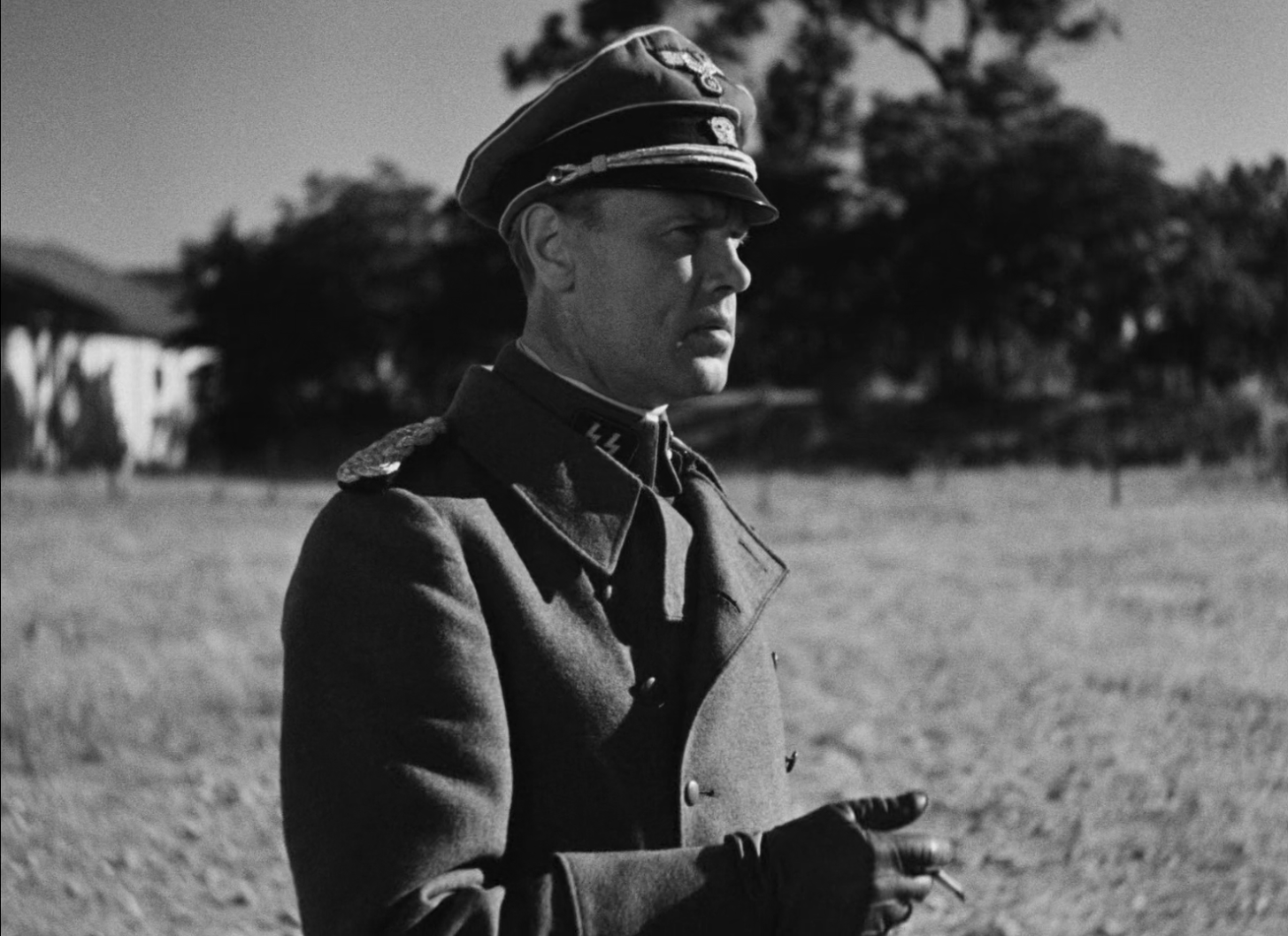
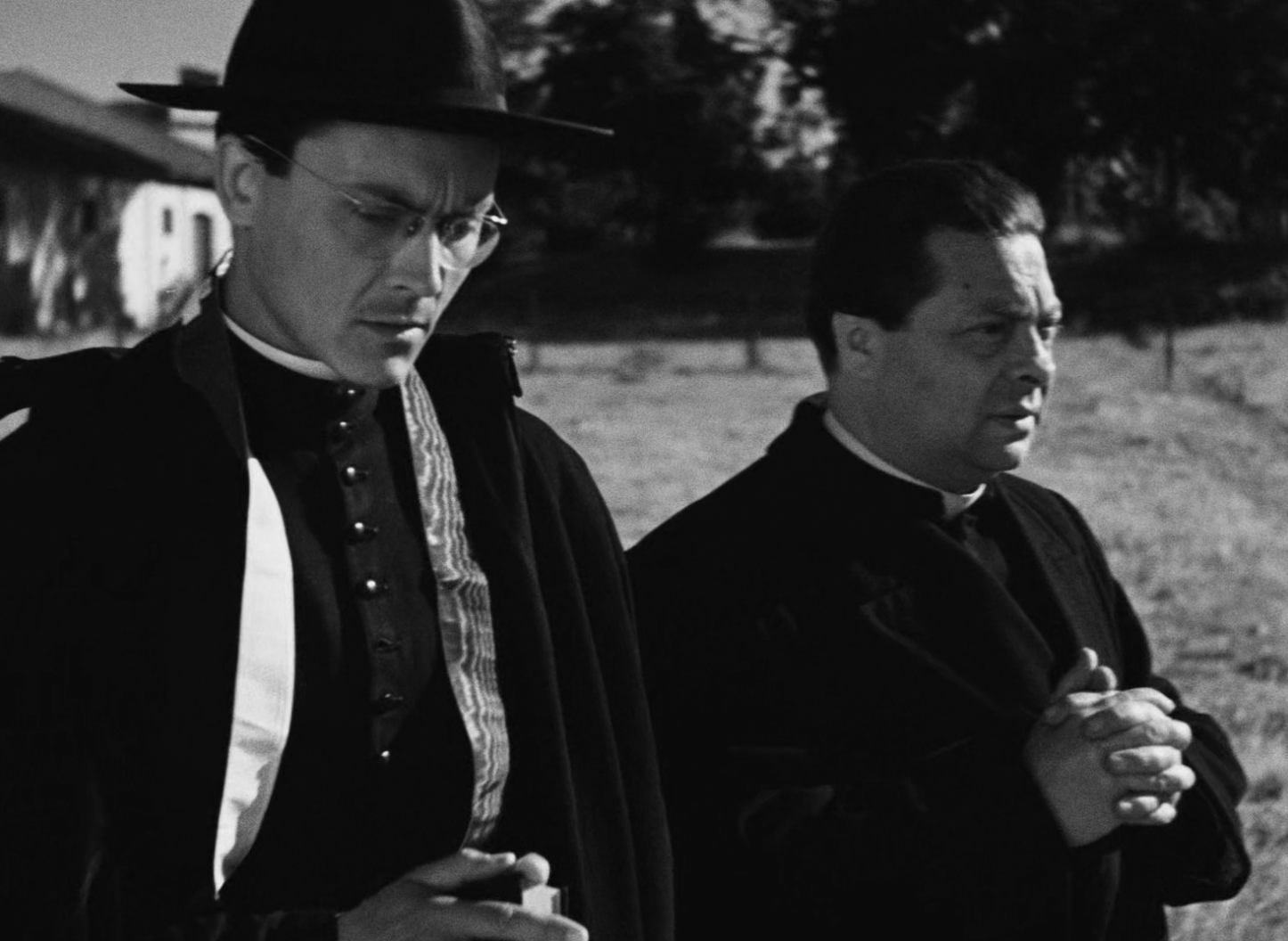
Mentre Hartmann guarda, i due preti camminano verso la sedia. Il compagno di Don Pietro mormora una preghiera in latino.
As Hartmann watches, the two priests walk towards the chair. Don Pietro’s companion murmurs a prayer in Latin.
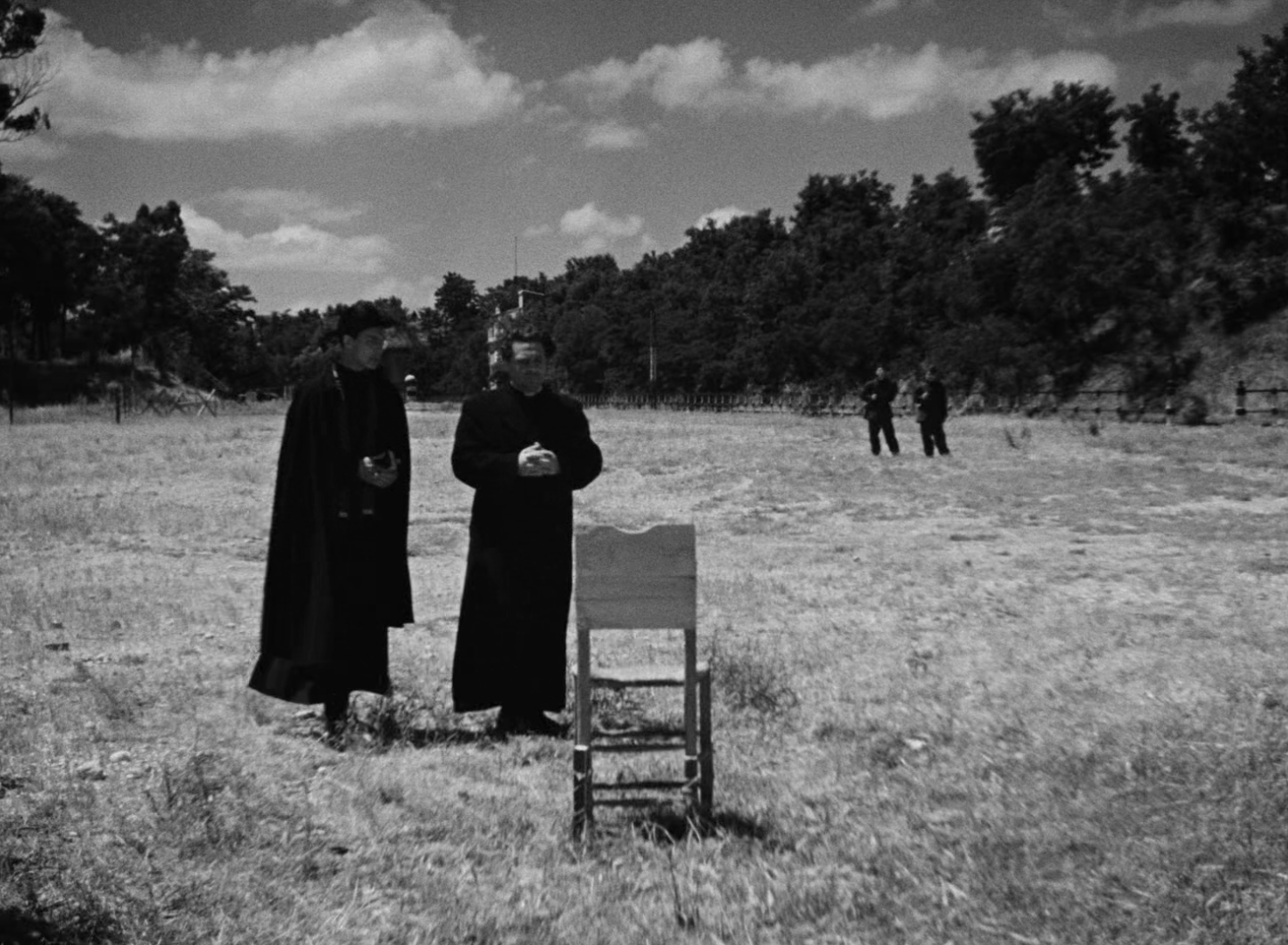
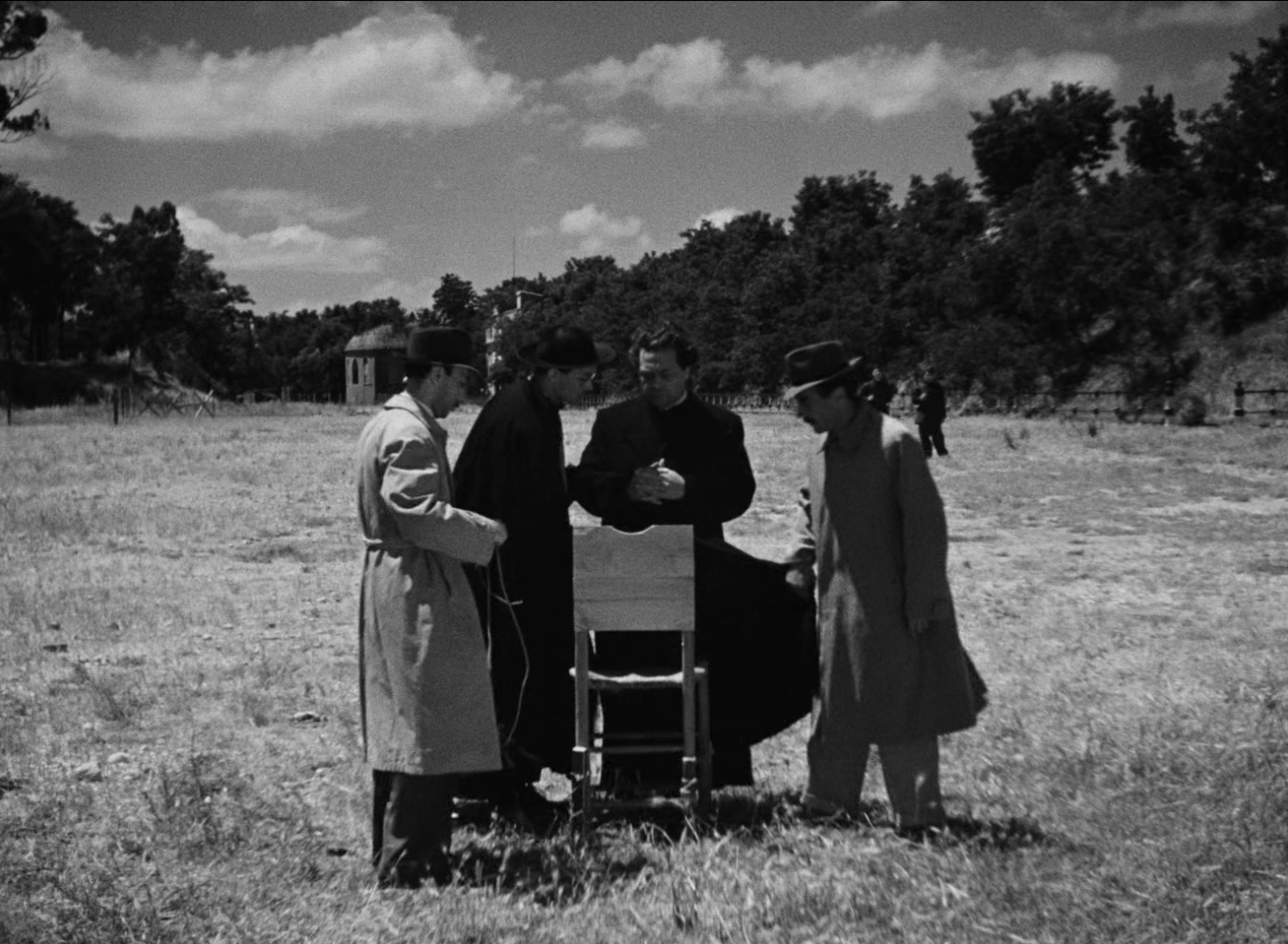
Alla sedia, Don Pietro si siede, appoggiando il mento in un incavo nella parte superiore dello schienale. Gli uomini in trench lo legano per non farlo cadere dopo che sarà colpito.
At the chair, Don Pietro sits down, resting his chin in a hollow at the top of the backrest. The men in trench coats tie him down so that he won’t fall after he’s hit.
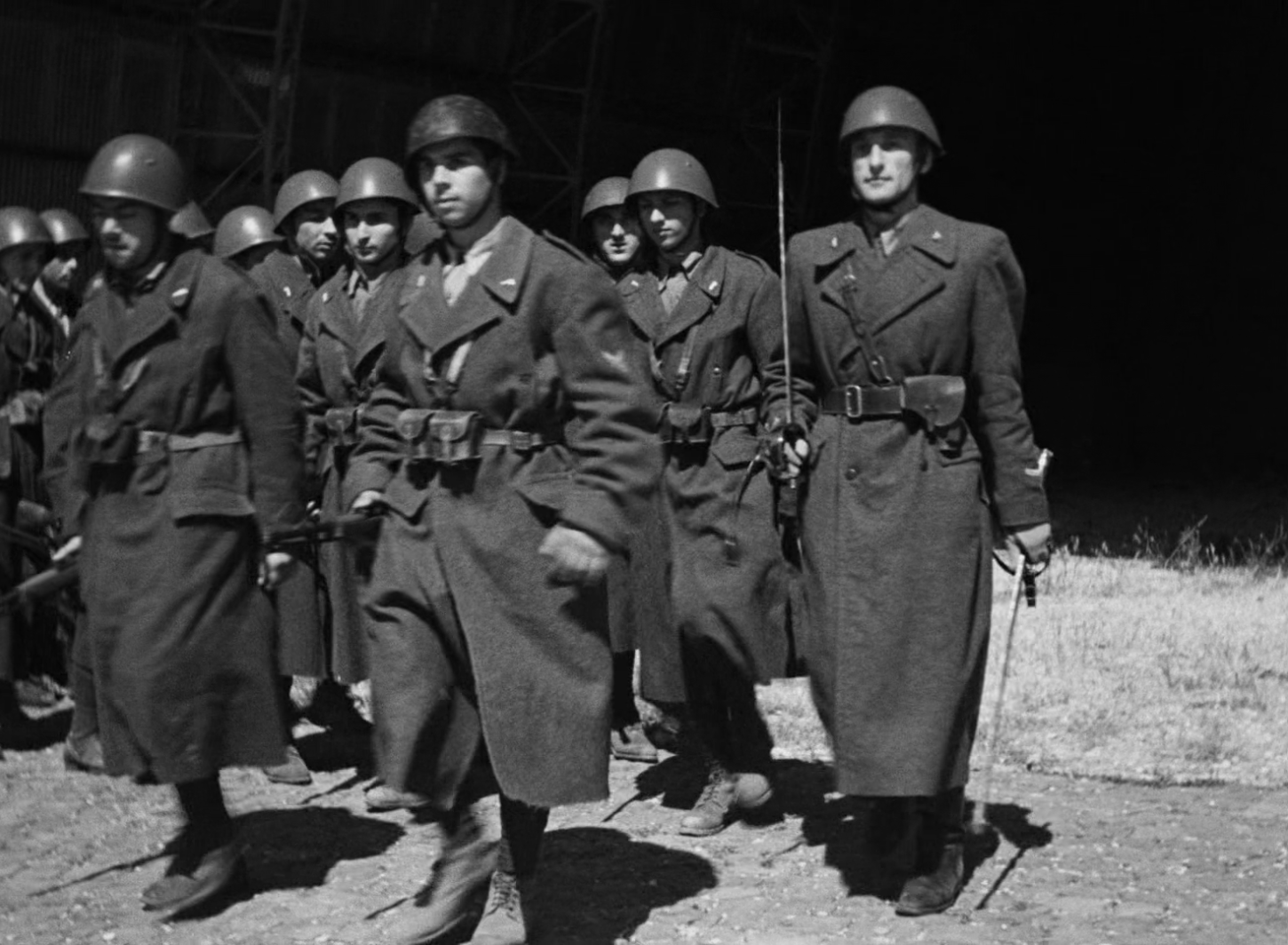
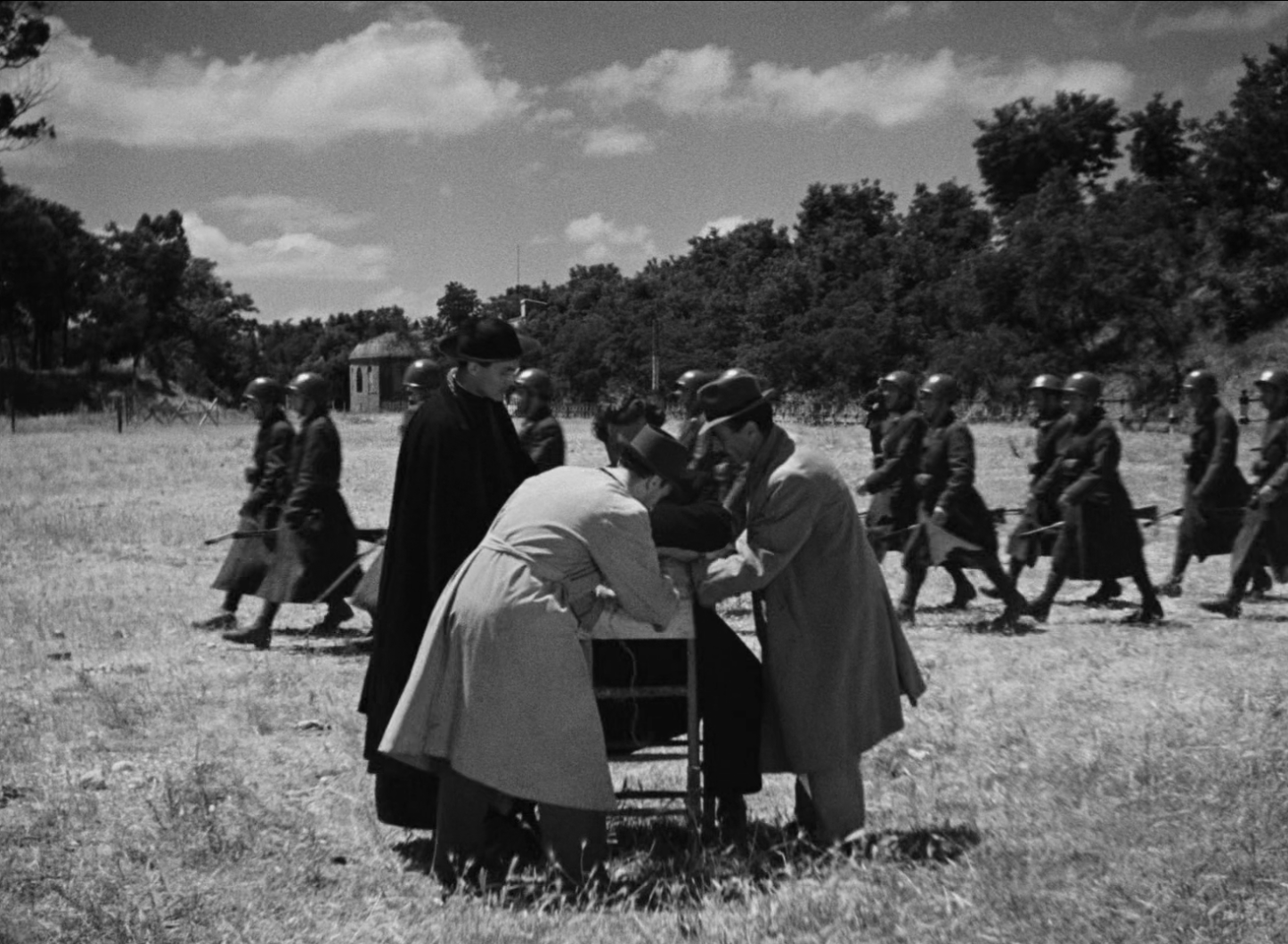
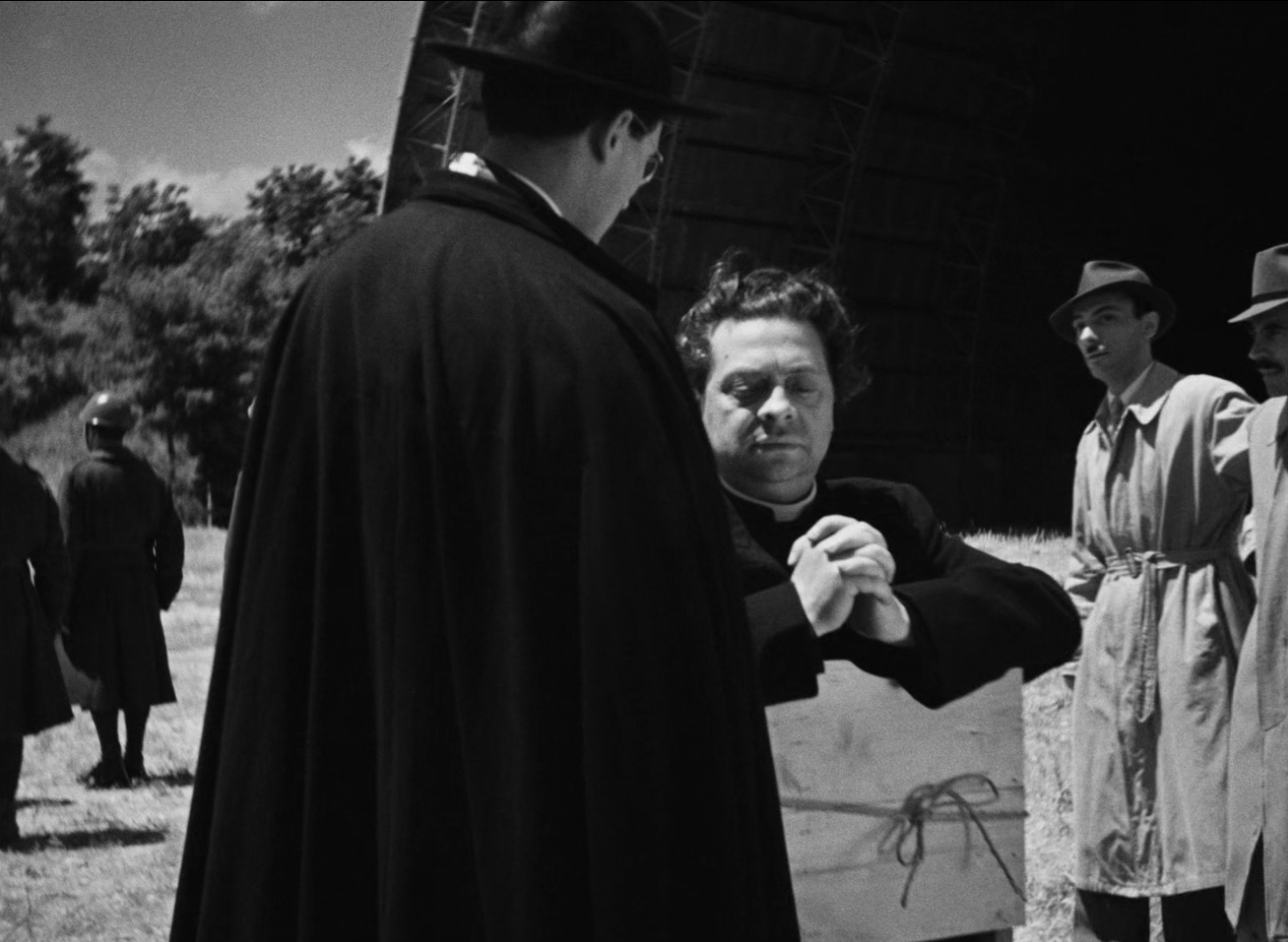
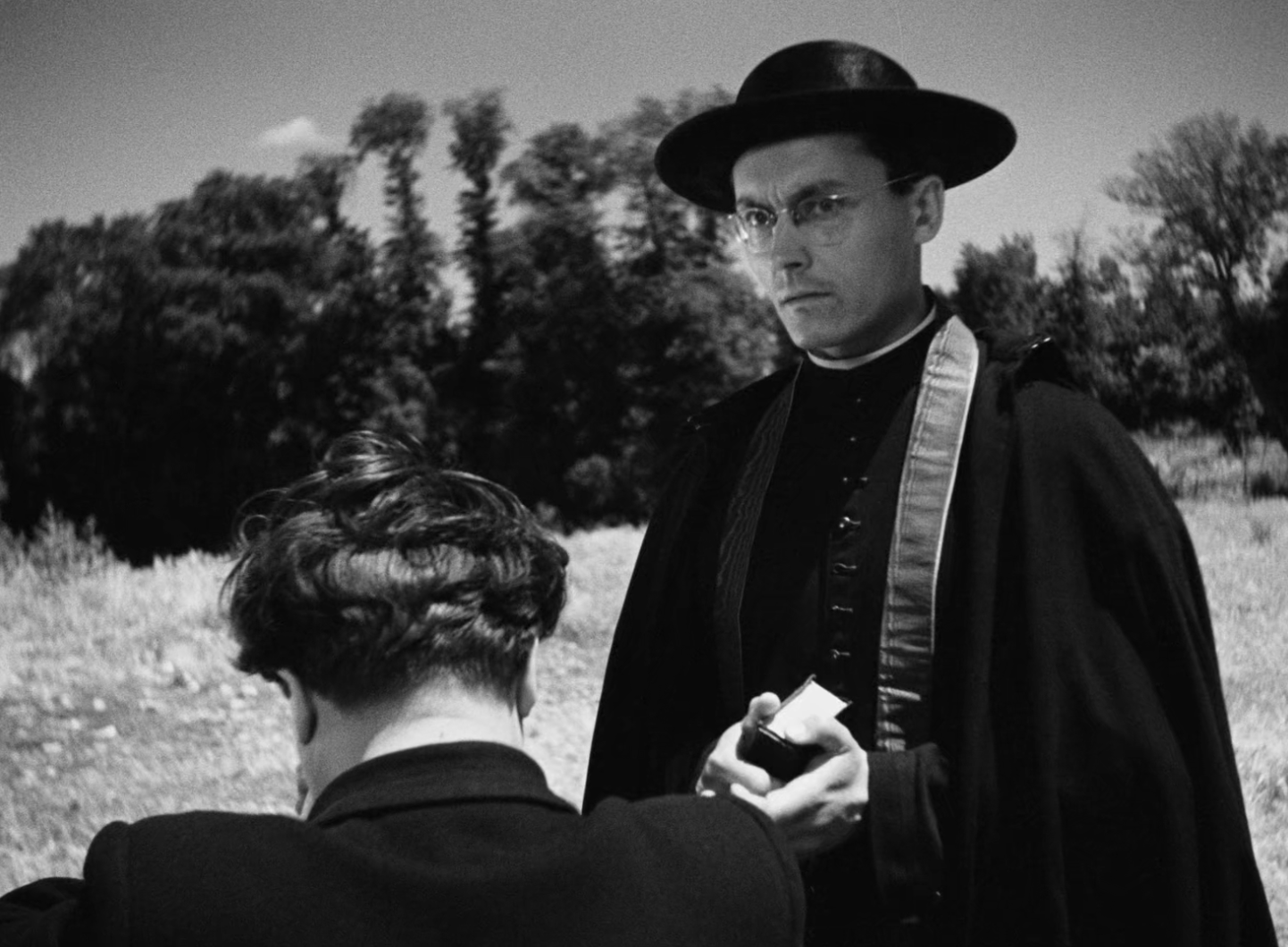
Marciando in formazione, i soldati italiani si sistemano in una linea retta, come plotone d'esecuzione. Don Pietro si siede con calma, con le mani giunte in preghiera, mentre gli uomini continuano i loro preparativi. Finalmente uno fa segno al prete in piedi che è ora di andare via.
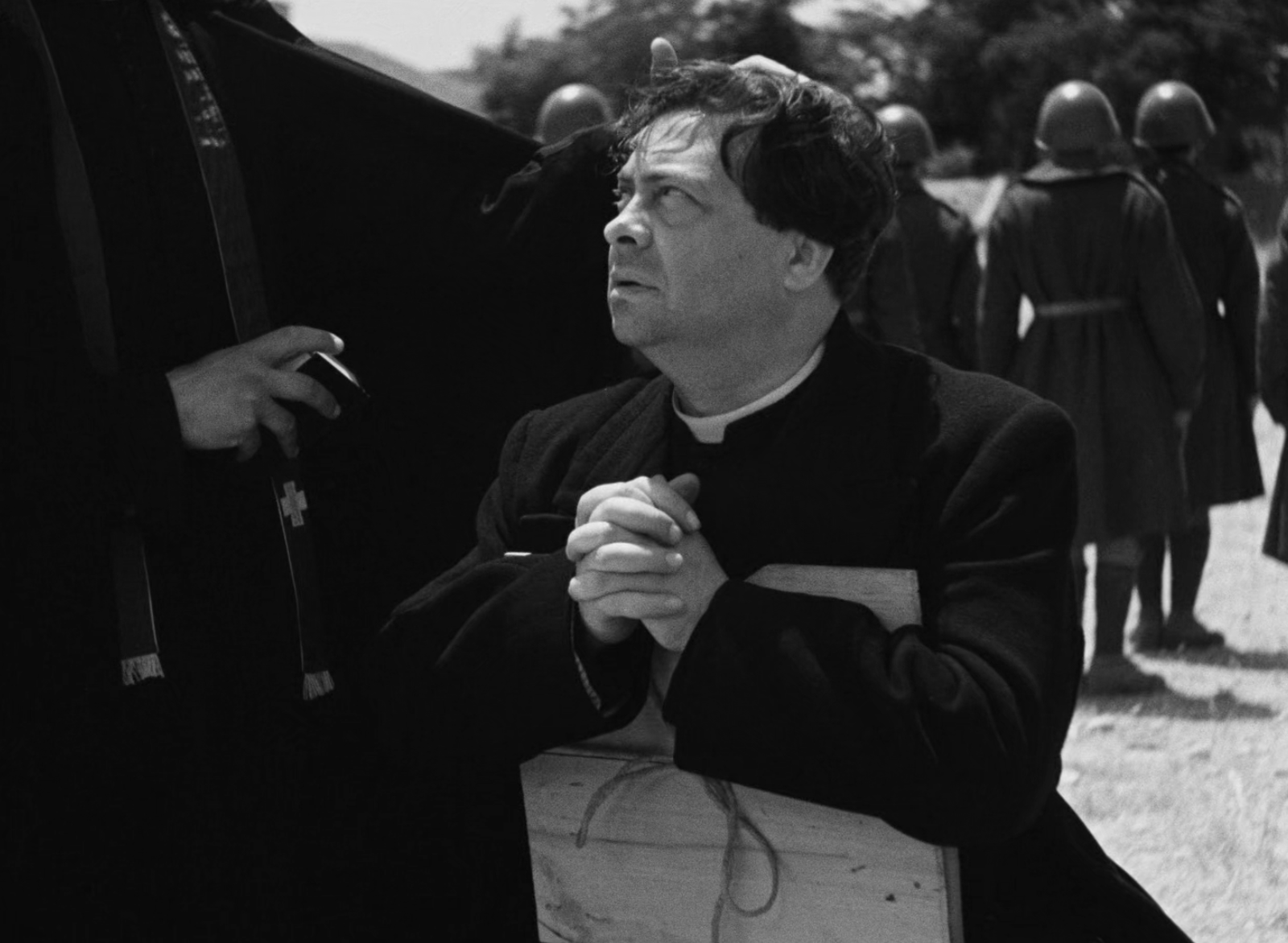
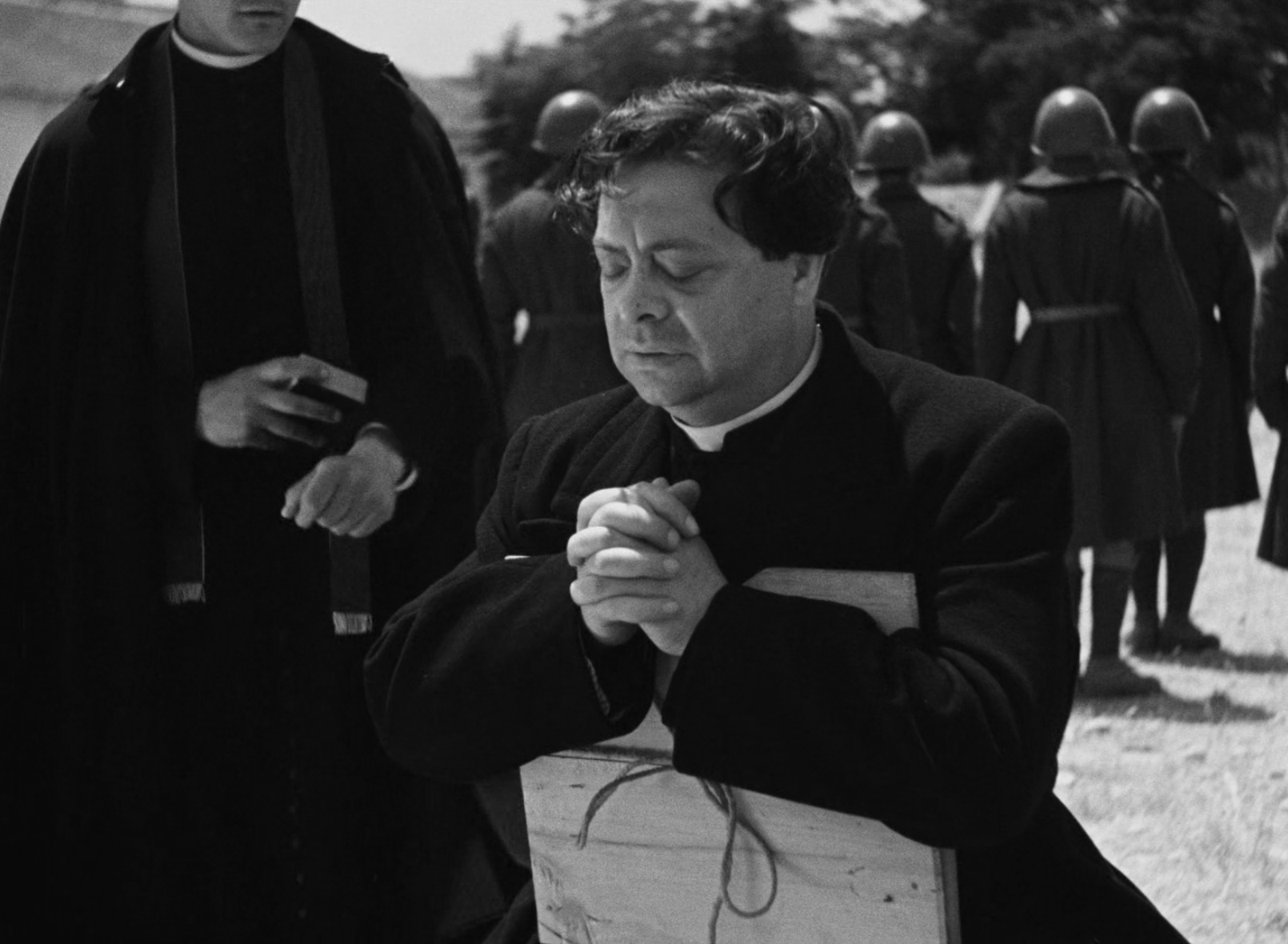
Marching in formation, the Italian soldiers arrange themselves in a straight line, as the firing squad. Don Pietro sits calmly, his hands folded in prayer, as the men continue their preparations. At last, one signals to the standing priest that it’s time to leave.
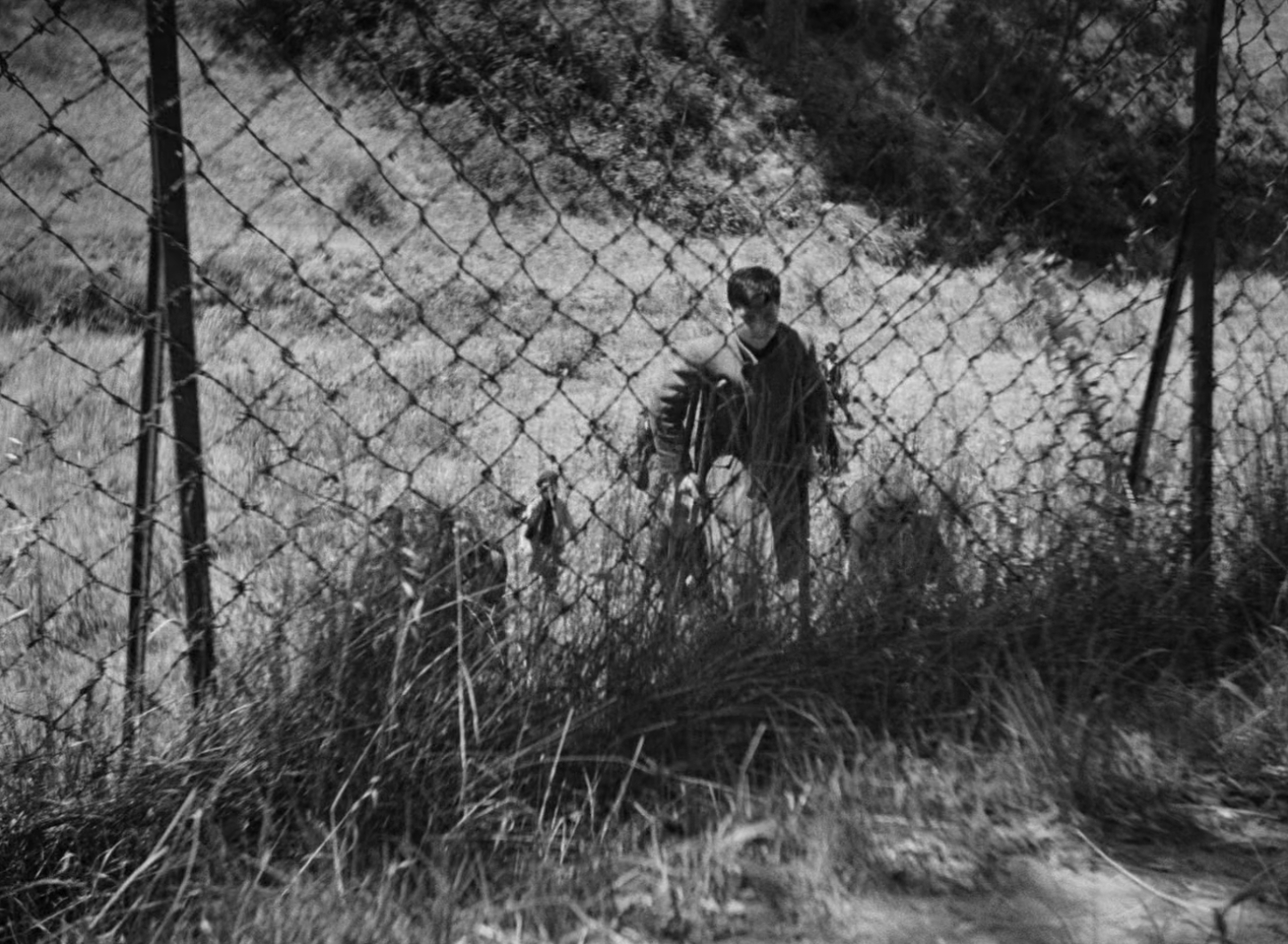
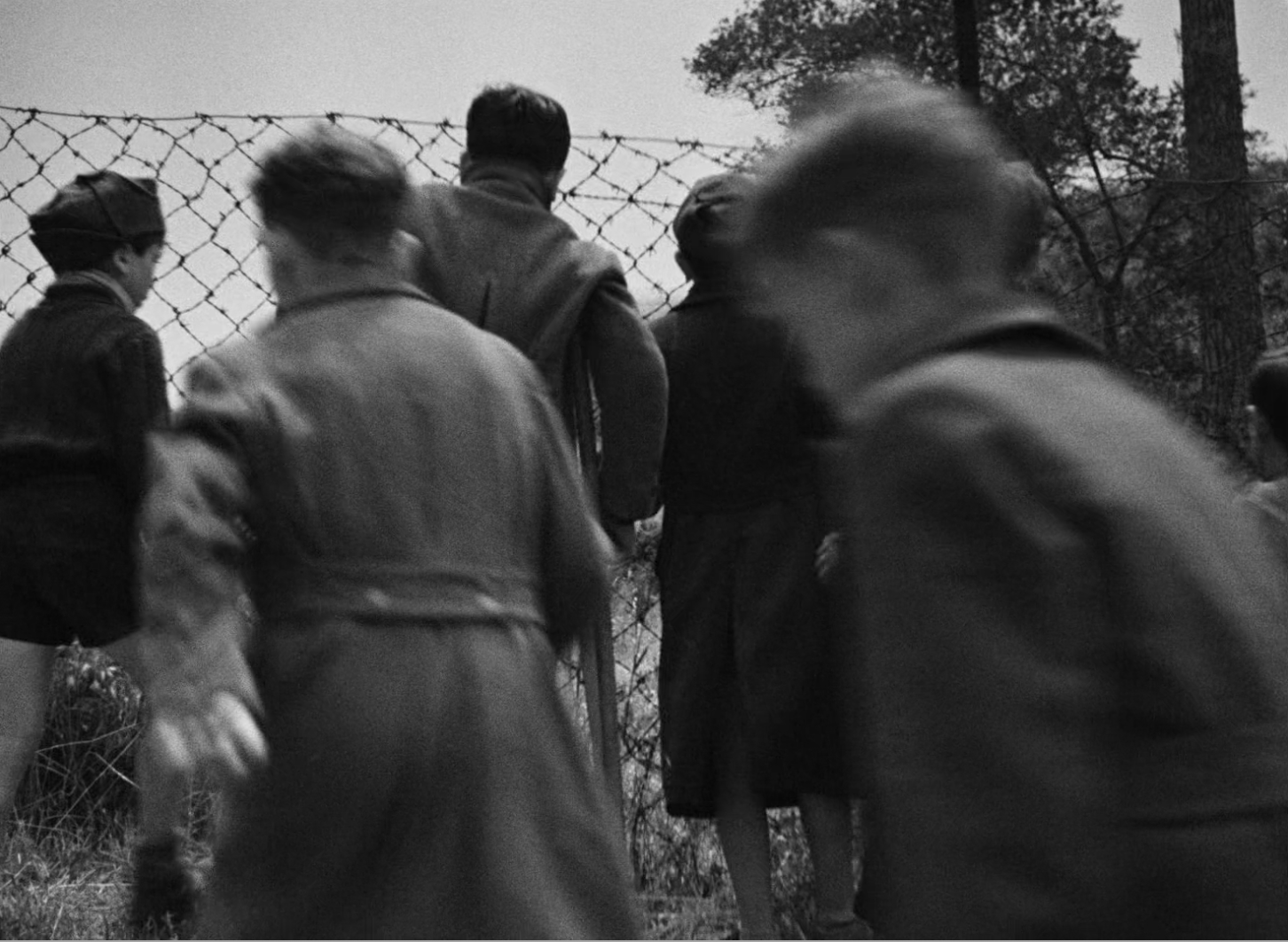
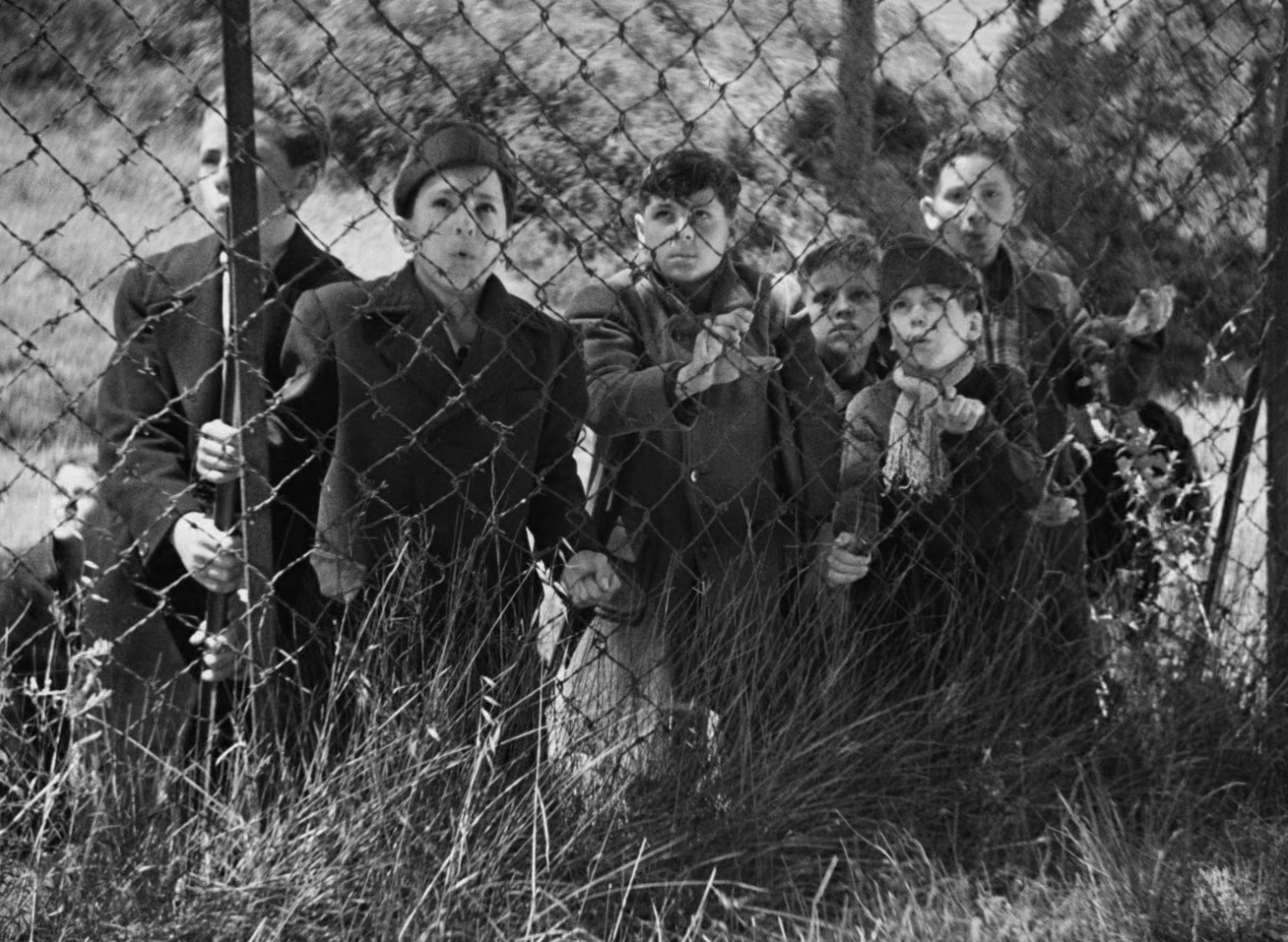
Alla recinzione metallica sul lato del campo si stanno raccogliendo i ragazzi del gruppo di Romoletto. Stanno in piedi, con le dita aggrappate alla recinzione, e fischiano. Faranno compagnia a Don Pietro mentre muore.
At the chain-link fence by the side of the field, the boys in Romoletto’s group are gathering. They stand, fingers interlaced in the fence, and whistle. They will keep Don Pietro company as he dies.
I soldati italiani guardano i bambini, con espressioni turbate.
Prima di allontanarsi, il prete passa la mano sulla testa di Don Pietro, consolandolo. Don Pietro, legato alla sedia, china il capo in preghiera.
The Italian soldiers look over at the children, with troubled expressions.
Before he steps away, the priest runs his hand over Don Pietro’s head, comforting him. Don Pietro, tethered to the chair, bows his head in prayer.
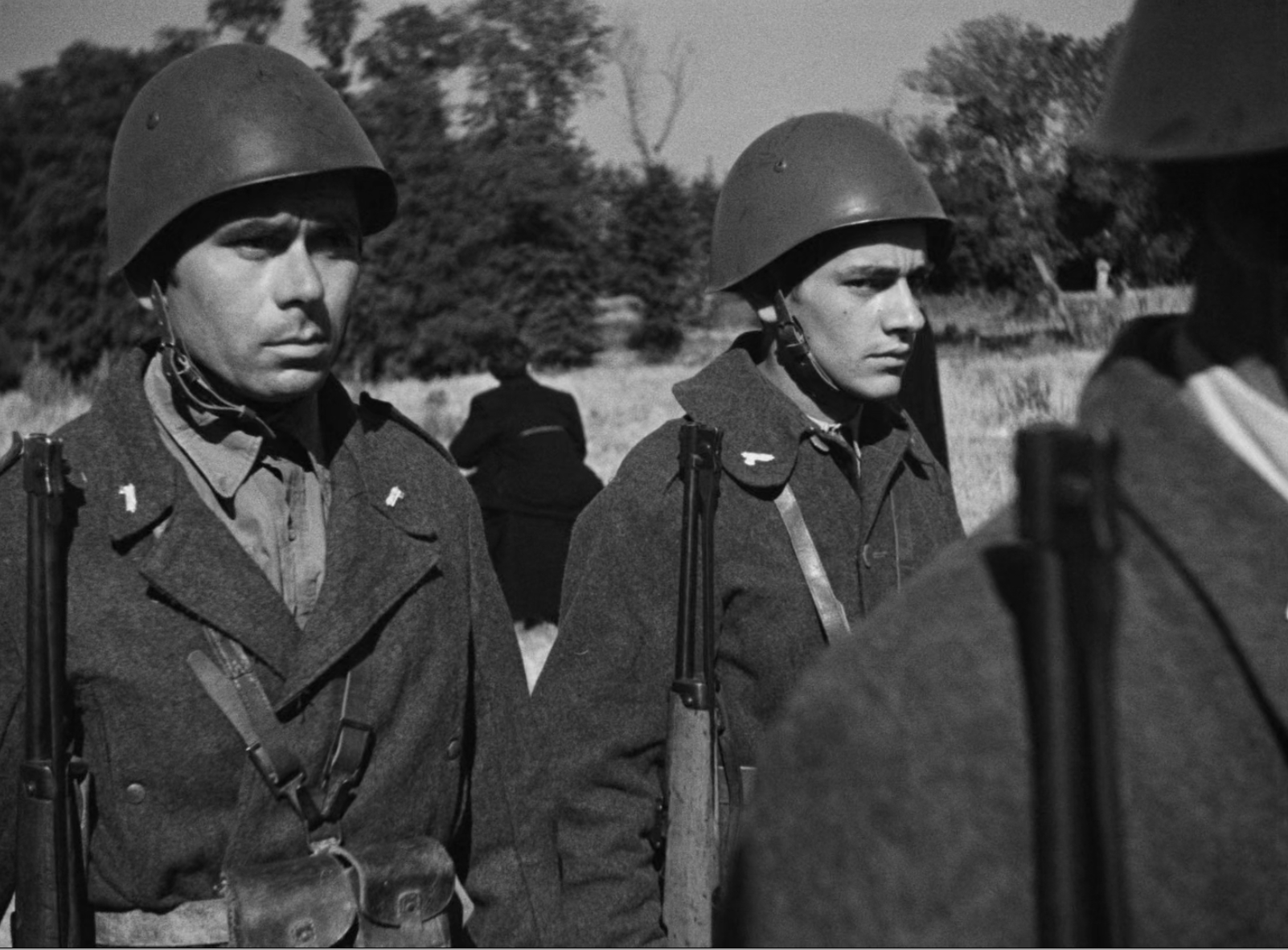
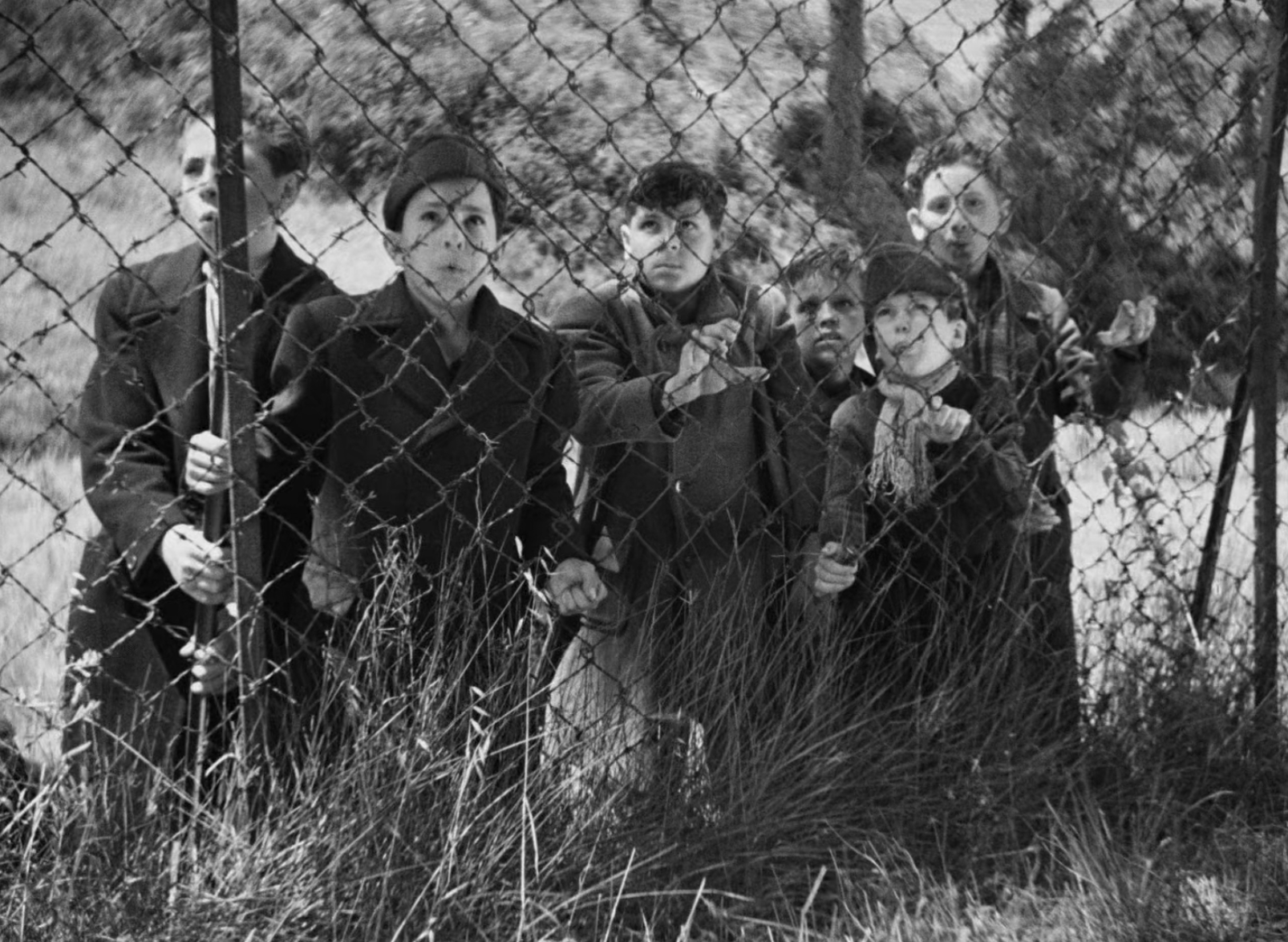
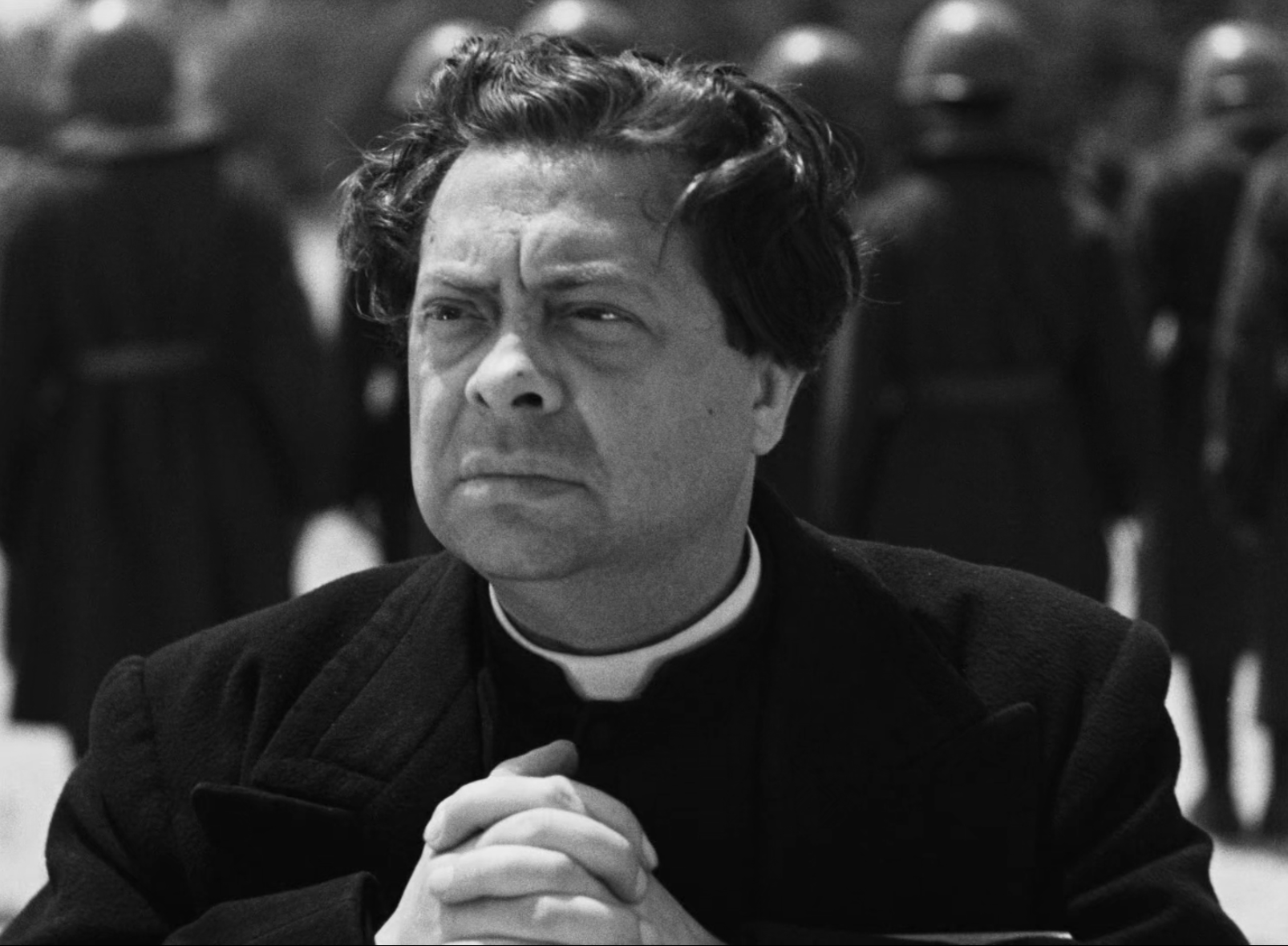
I ragazzi continuano a fischiare, turbando i soldati.
Finalmente Don Pietro si accorge del fischio e alza la testa per guardare.
The boys continue their whistling, unsettling the soldiers.
At last, Don Pietro notices the whistling and lifts his head to look.
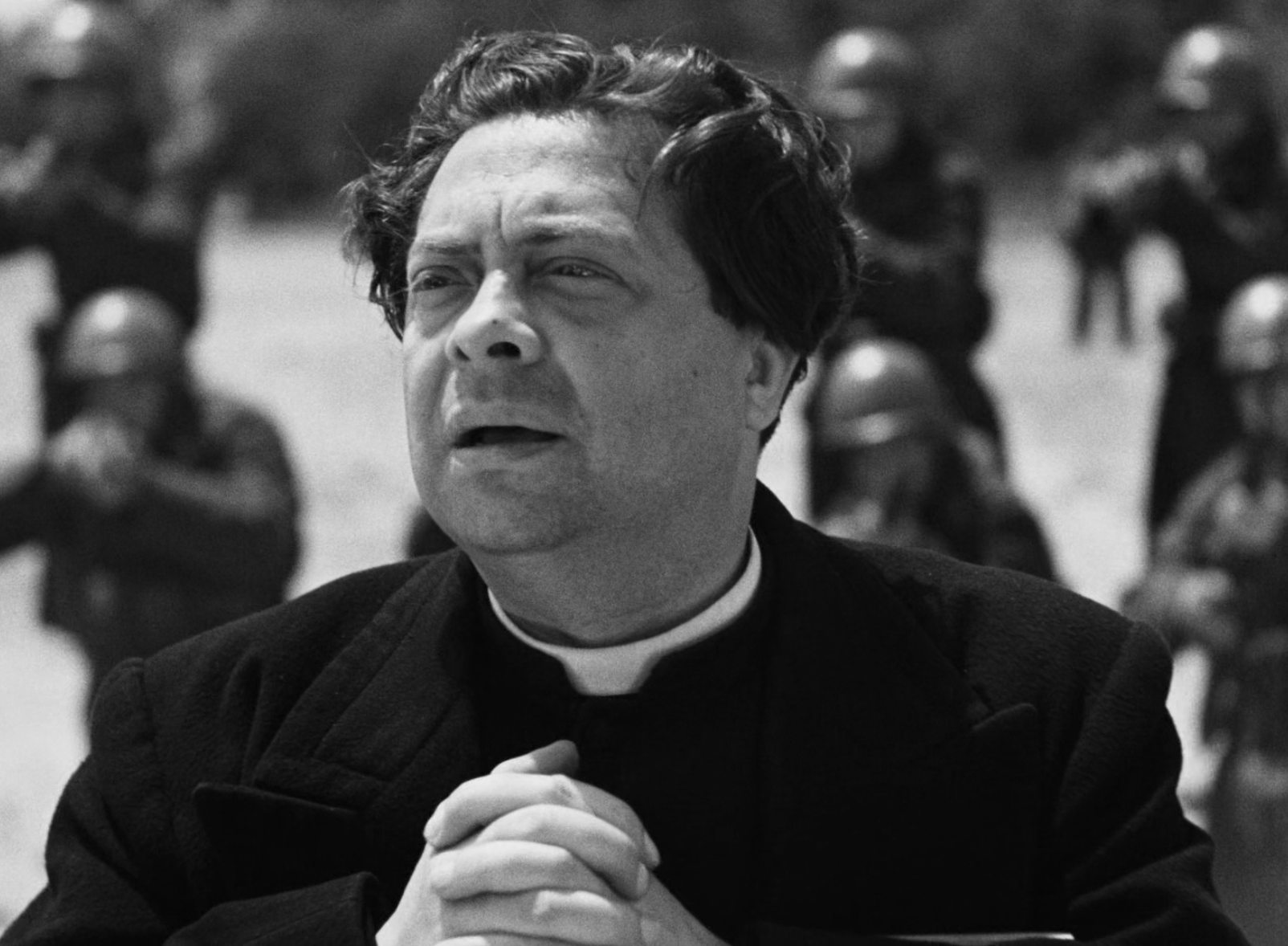
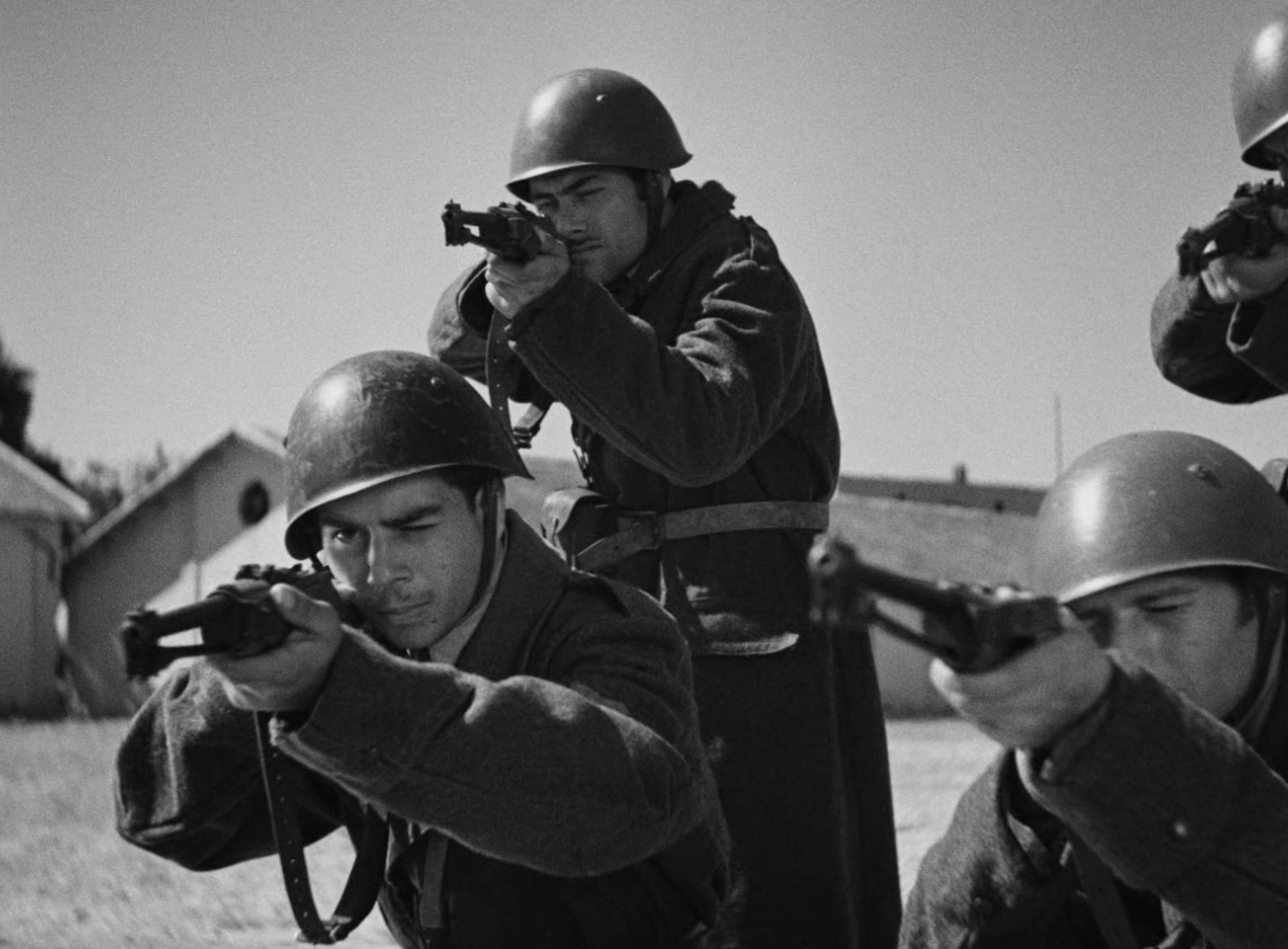
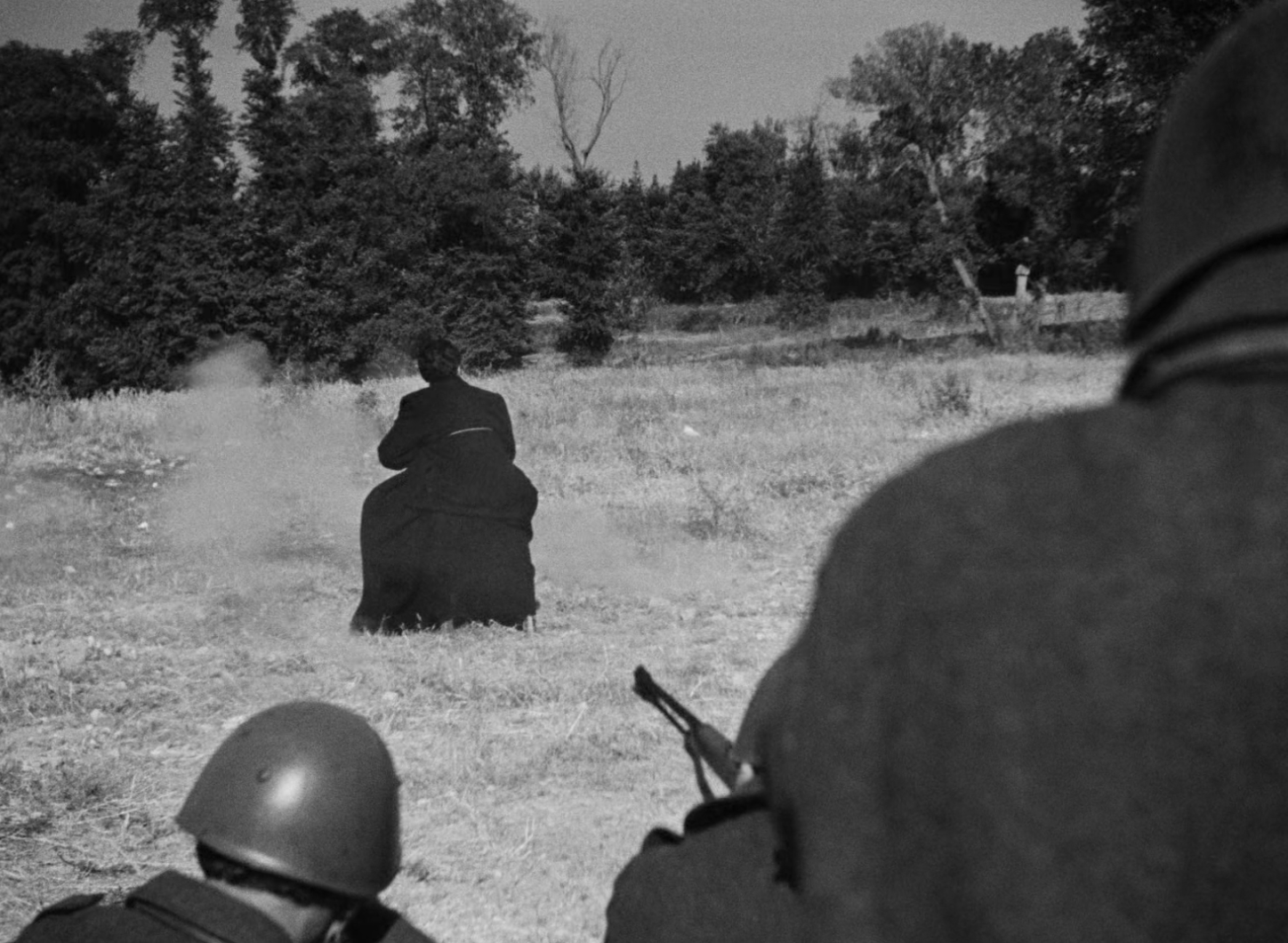
Il plotone d'esecuzione prende la mira, la prima fila in ginocchio, la fila dietro in piedi. Al segnale, sparano, ma con i fucili puntati a terra.
The firing squad takes aim, the front row kneeling, the back row standing. At the signal, they fire, but with their rifles pointed at the ground.
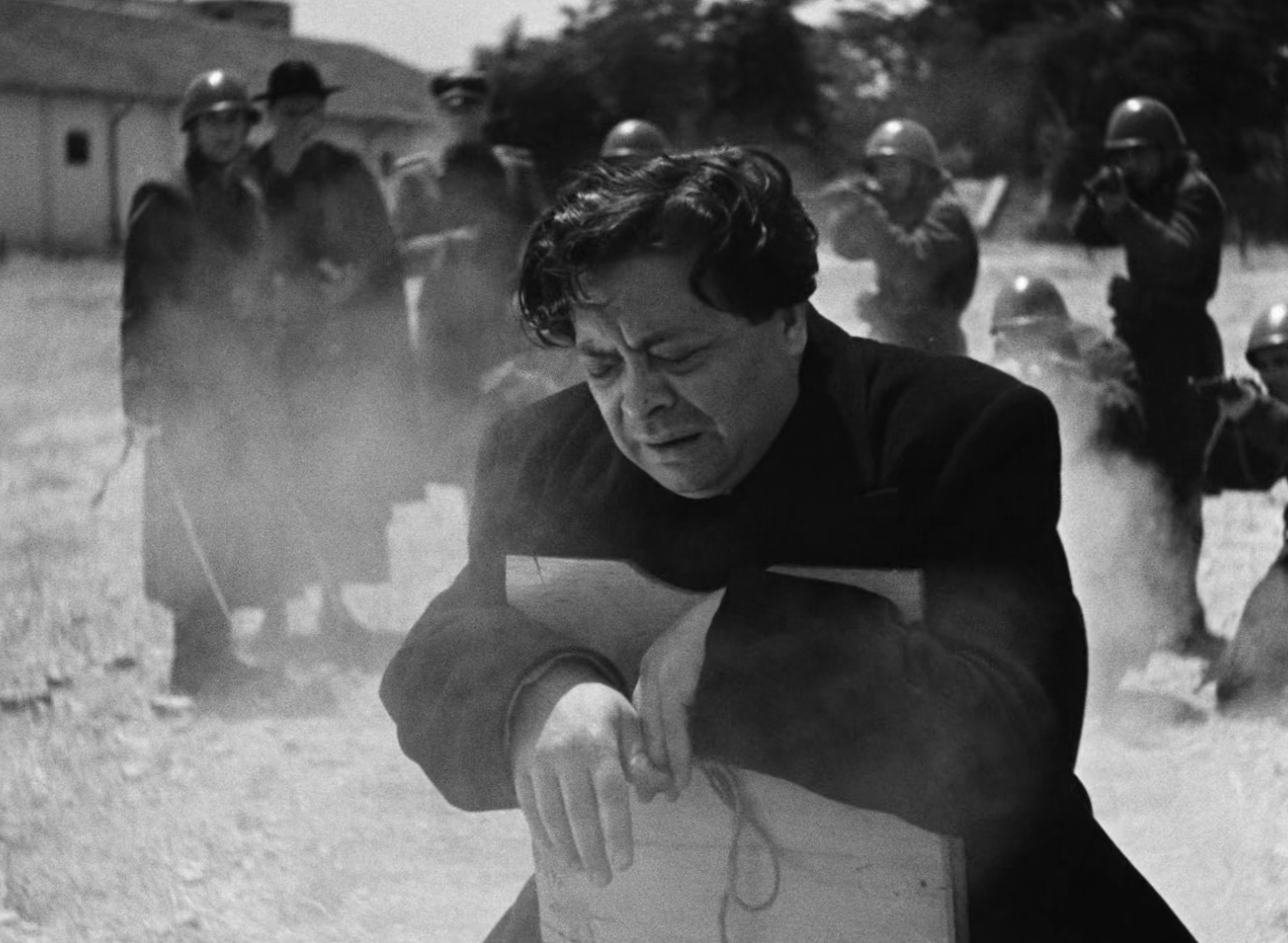
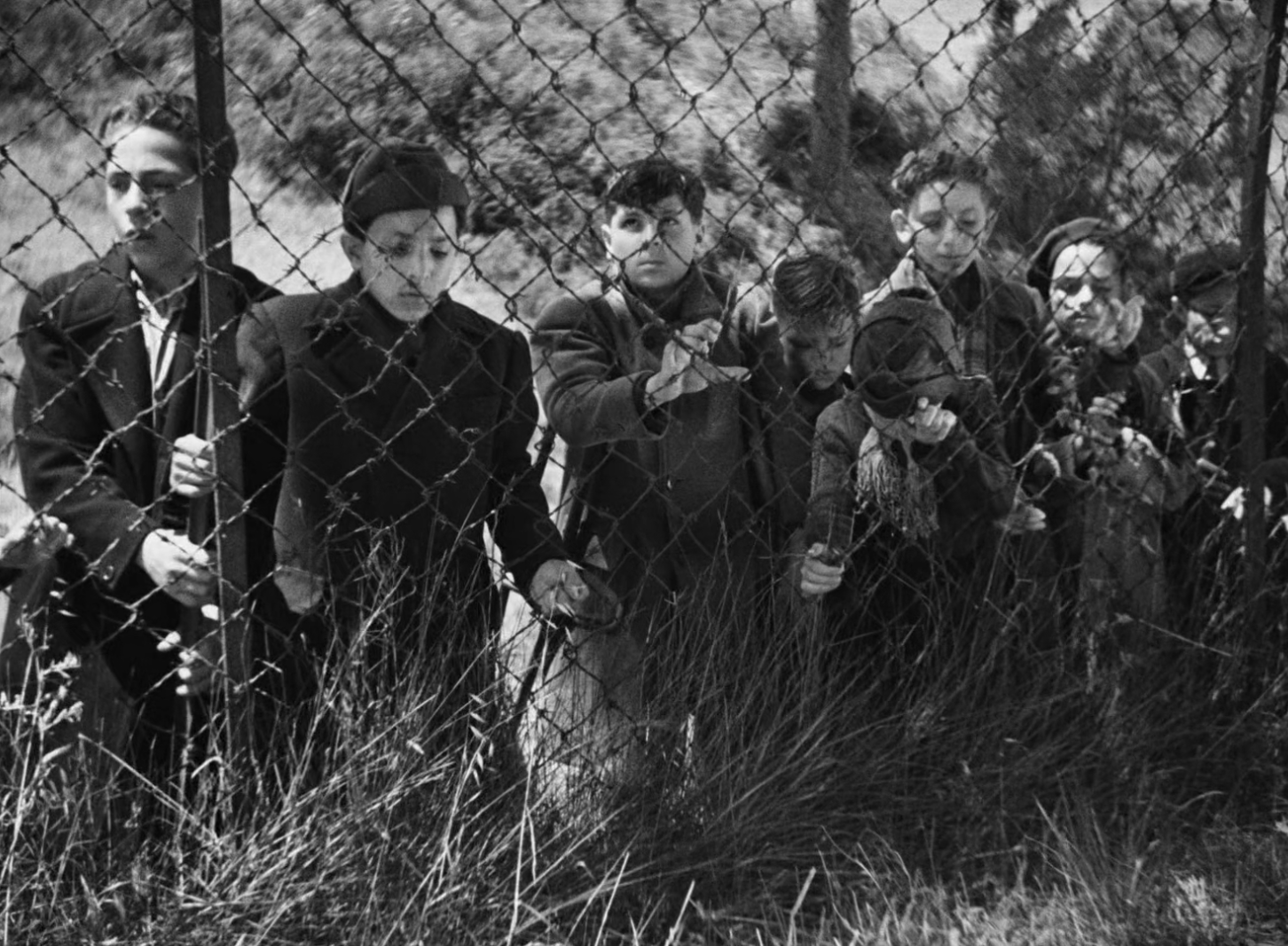
Don Pietro si fa piccolo. I ragazzi guardano in basso.
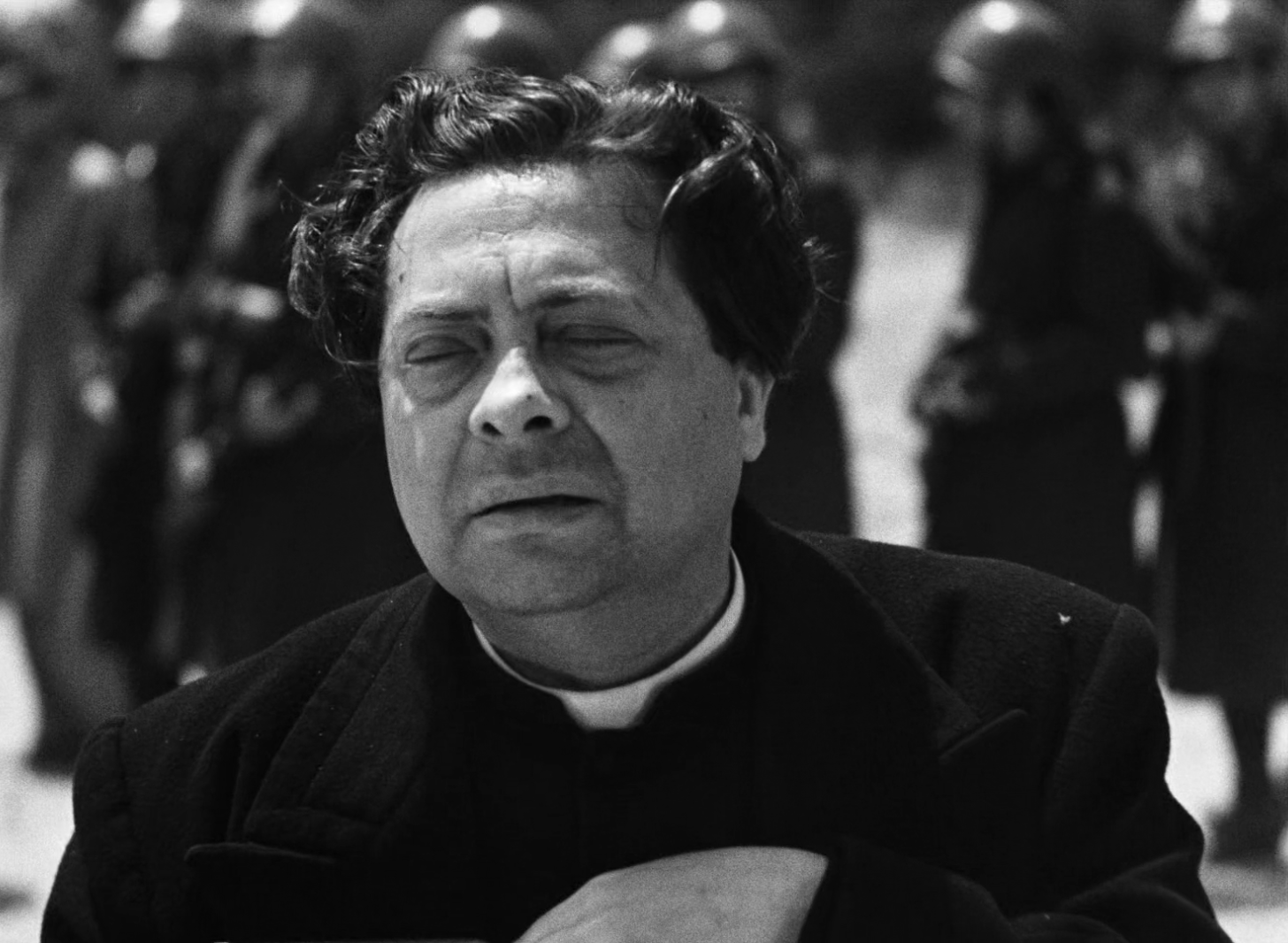
Ma gli italiani – bravi cattolici – non possono permettersi di sparare a un prete. Lui si rimette seduto, occhi chiusi, composto.
Don Pietro cringes. The boys look down.
But the Italians – good Catholics – could not let themselves shoot a priest. He sits up, eyes closed, composed.
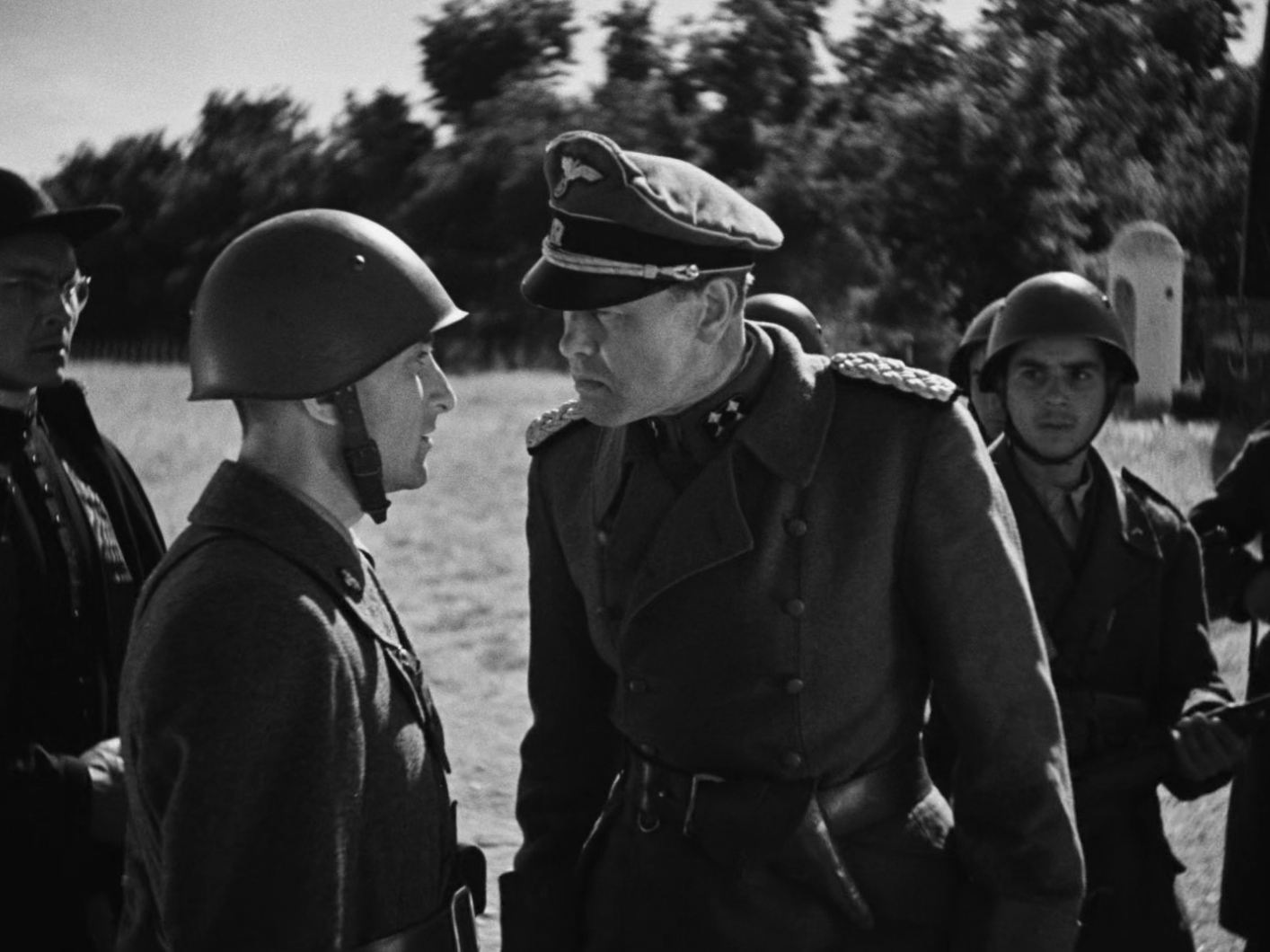
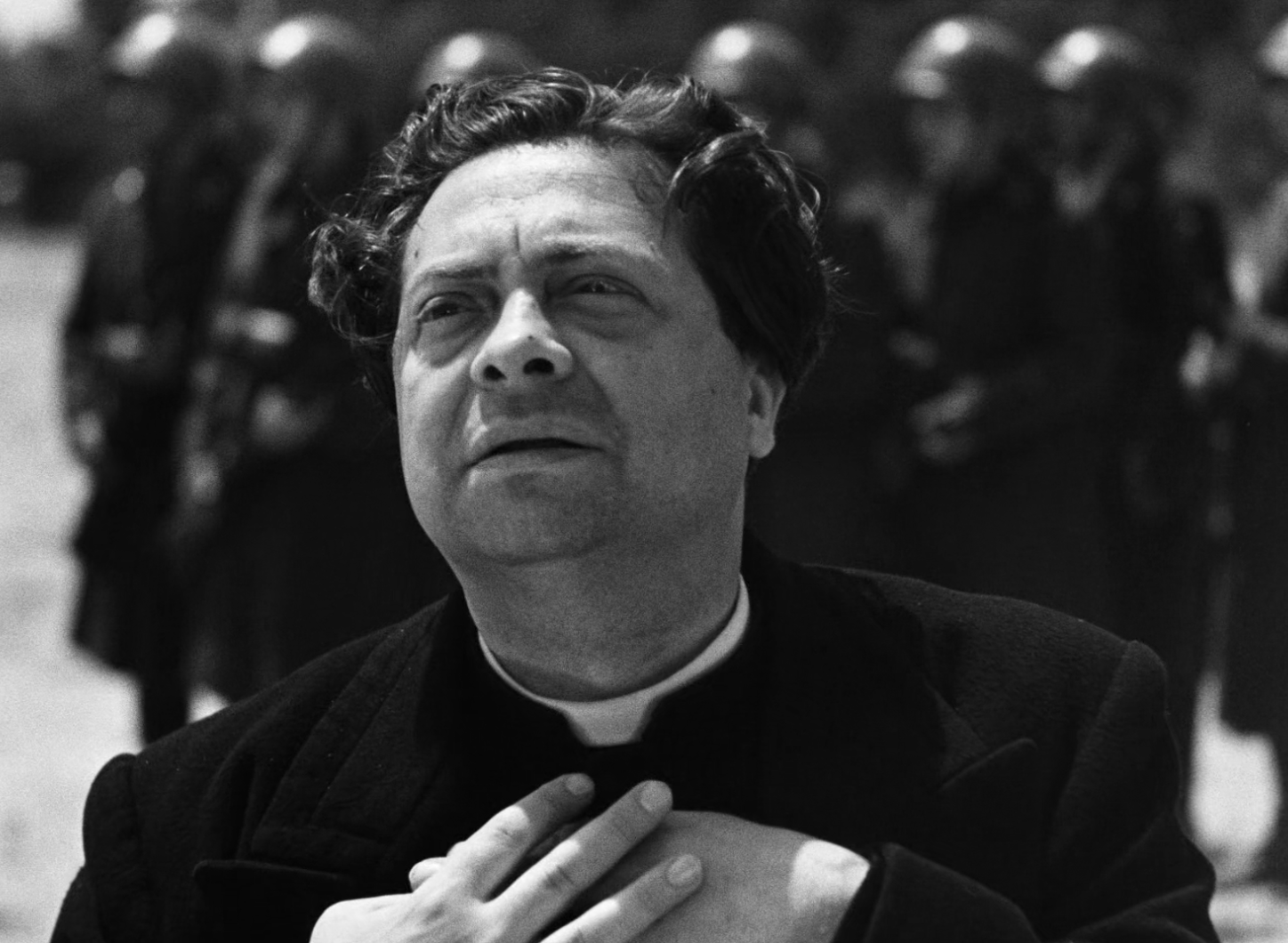
Hartmann è furioso. I suoi dubbi della sera prima sono lontani dalla sua mente. "Fate fuoco!" dice al capo della squadra.
Don Pietro guarda il cielo e mormora: "Dio, perdona loro".
Hartmann is furious. His misgivings of the night before are far from his mind. “Fire!” he tells the head of the squad.
Don Pietro looks up at the heavens and murmurs, “God, forgive them.”
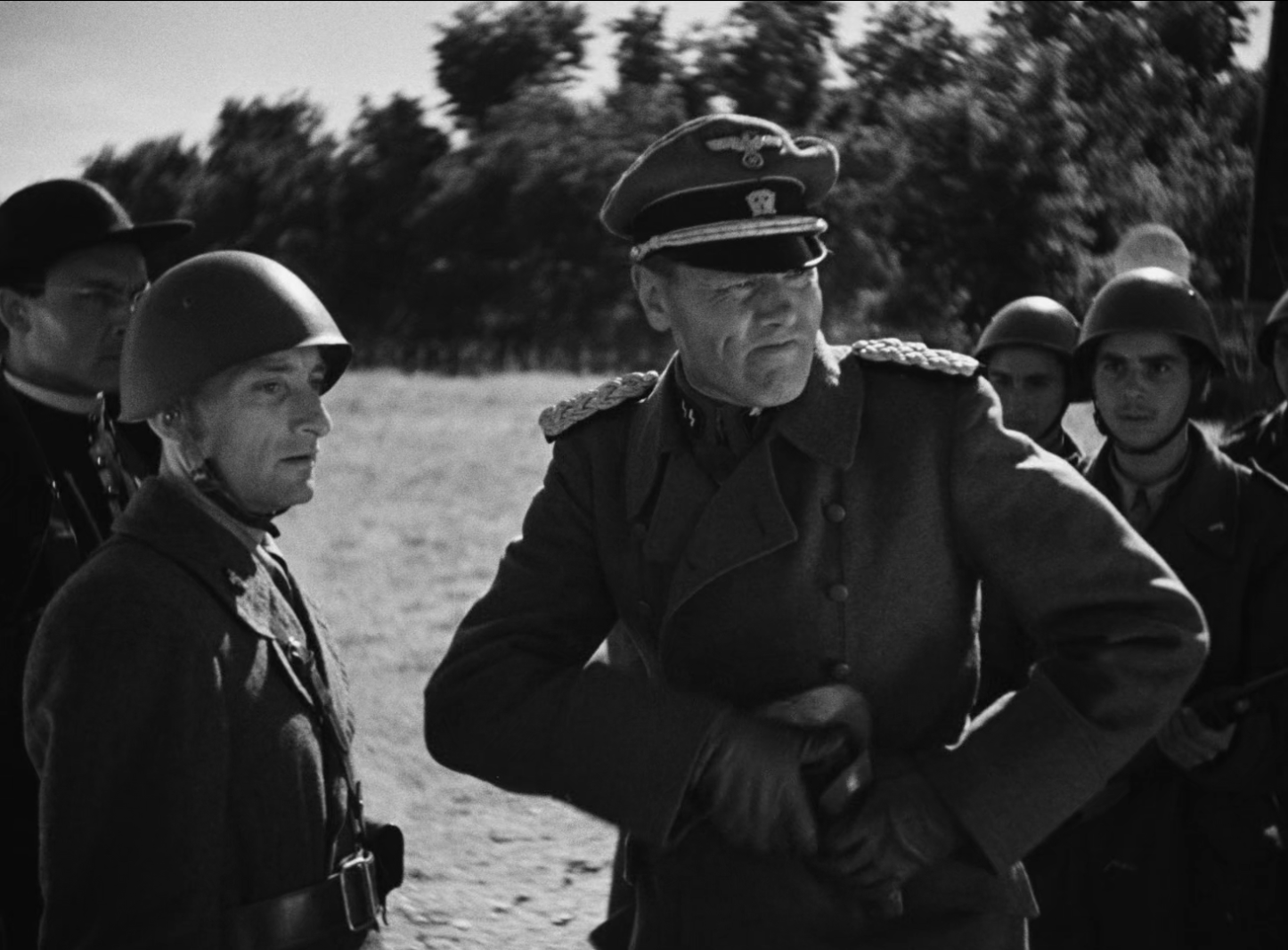
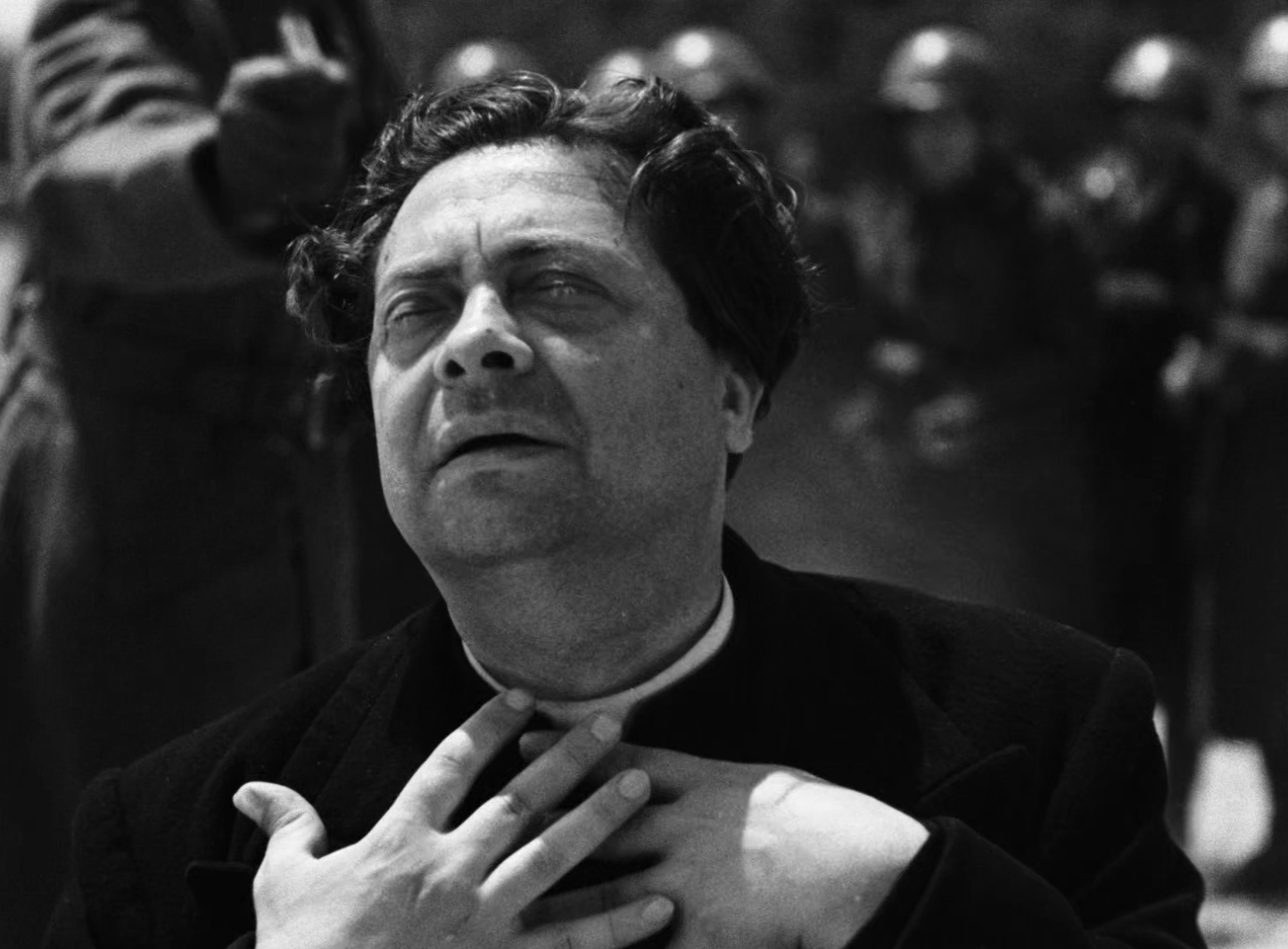
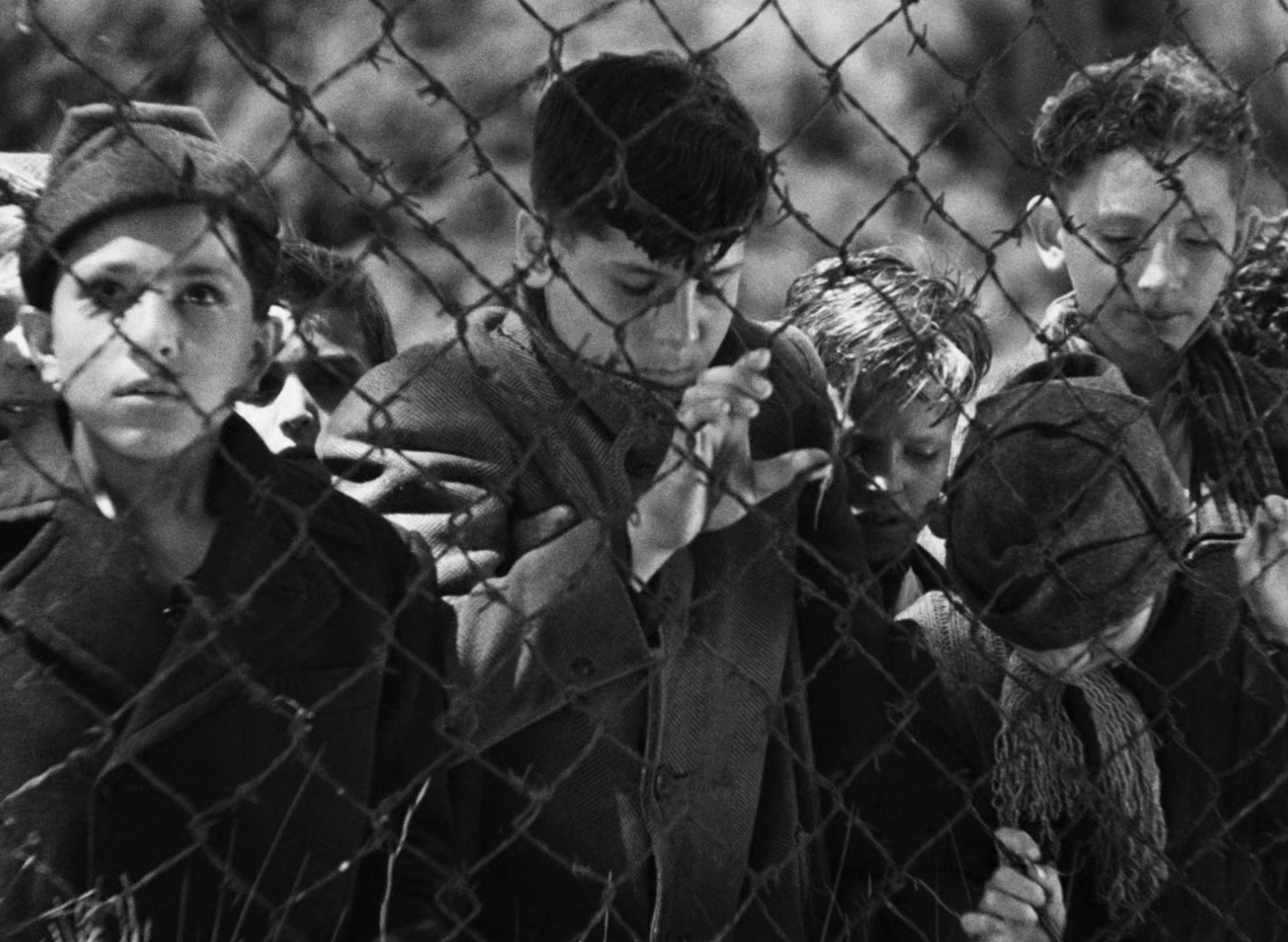
"Fuoco! Finitela subito!" ordina di nuovo Hartmann, in tedesco.
Poi tira fuori la sua pistola, avanza a passosvelto verso Don Pietro e gli spara in testa. Con quel colpo, i ragazzi volgono lo sguardo verso il basso con dolore.
“Fire! End this now!” Hartmann orders again, in German.
Then he pulls out his pistol, strides briskly over to Don Pietro and shoots him in the head. With that shot, the boys turn their gaze downward in sorrow.
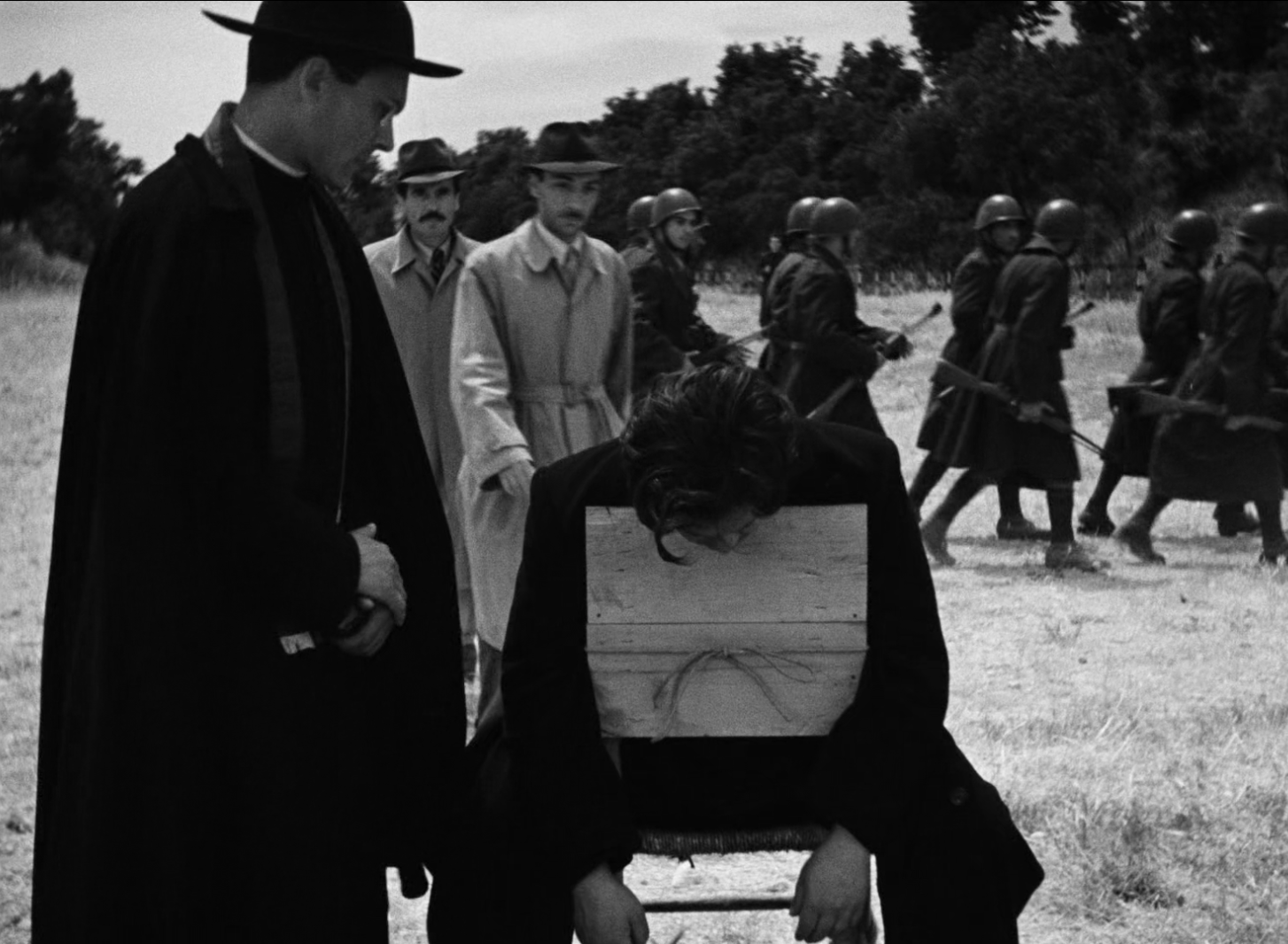
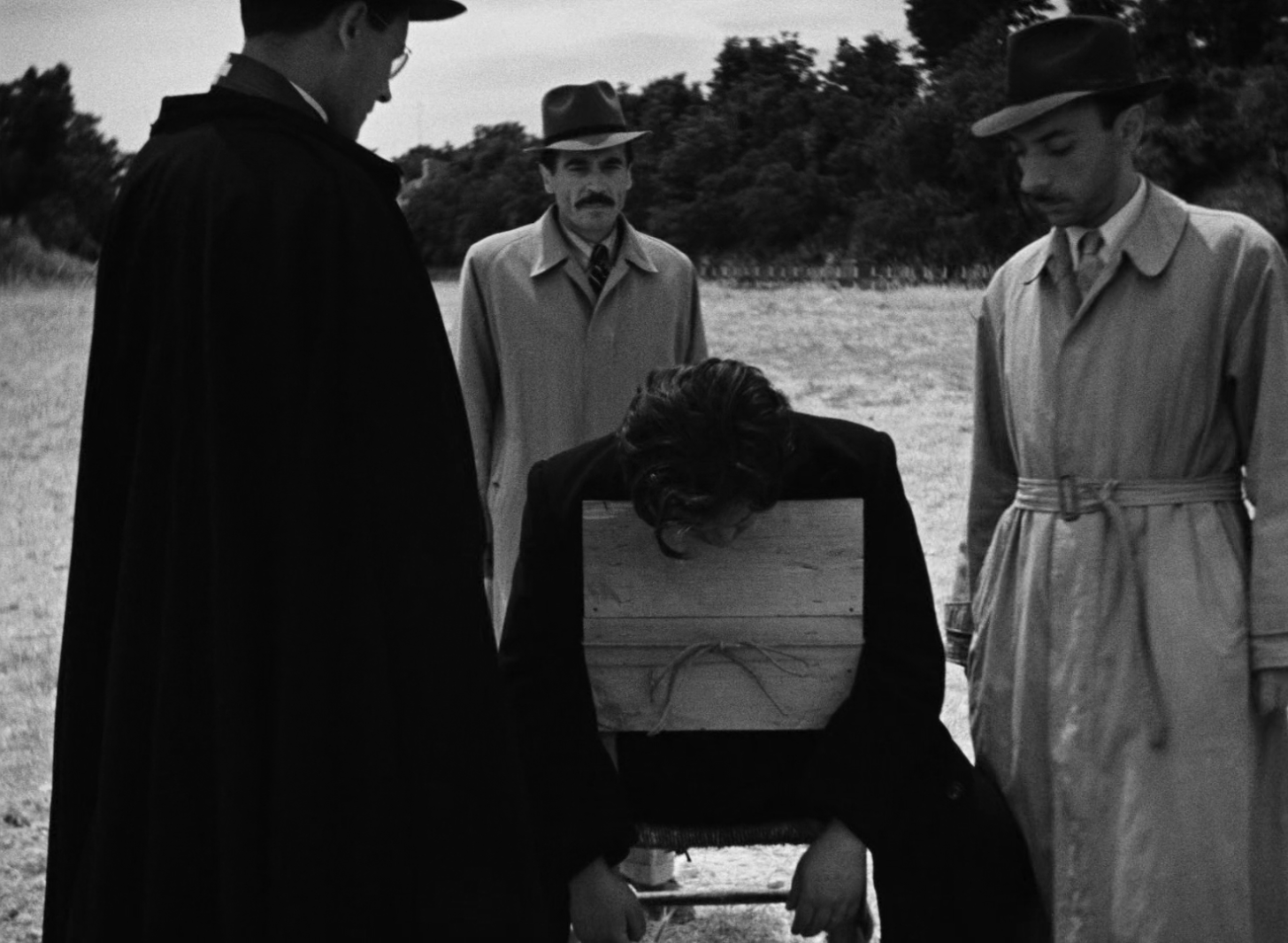
Il prete si avvicina a Don Pietro, che è abbandonato sulla sedia, con le braccia abbandonate ai suoi fianchi. Mentre il plotone d'esecuzione esce marciando dal campo, gli uomini in trench si avvicinano ad esaminare il corpo.
The priest approaches Don Pietro, who is slumped over the chair, arms limp at his sides. As the firing squad marches off the field, the men in trench coats come closer to examine the body.
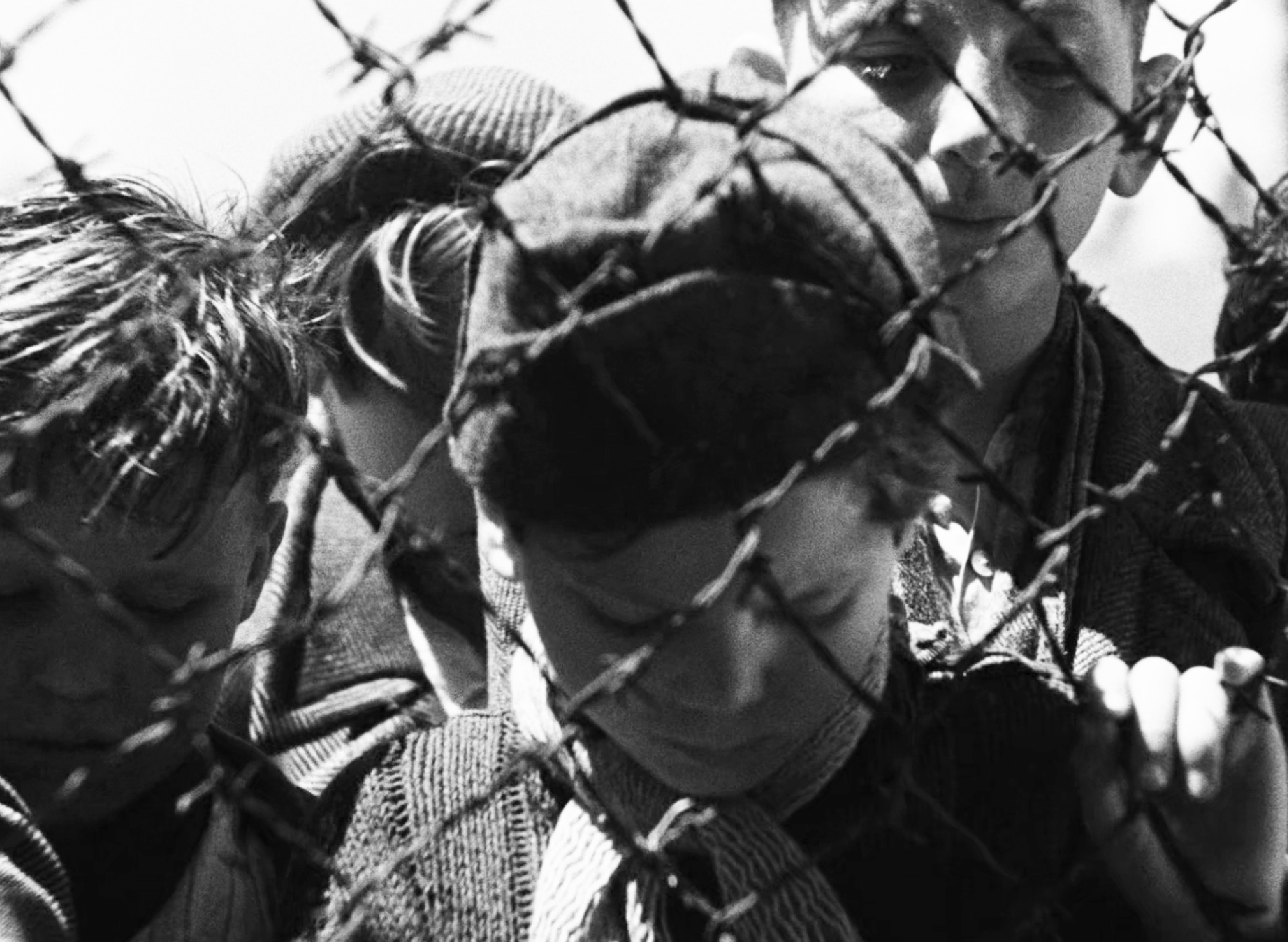
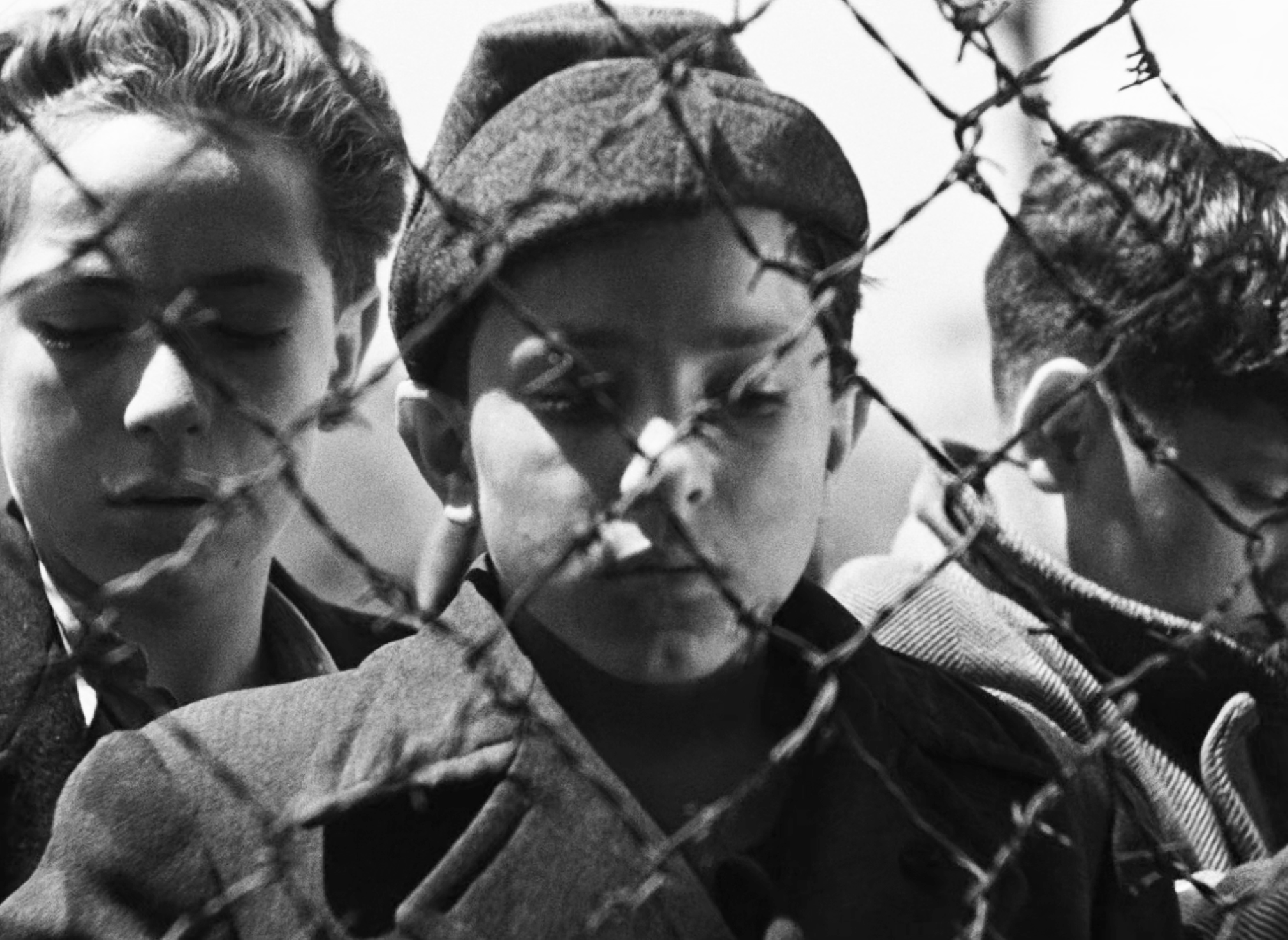
In primo piano, vediamo i ragazzi al recinto, addolorati per il prete.
In close-up, we see boys at the fence, grieving for the priest.
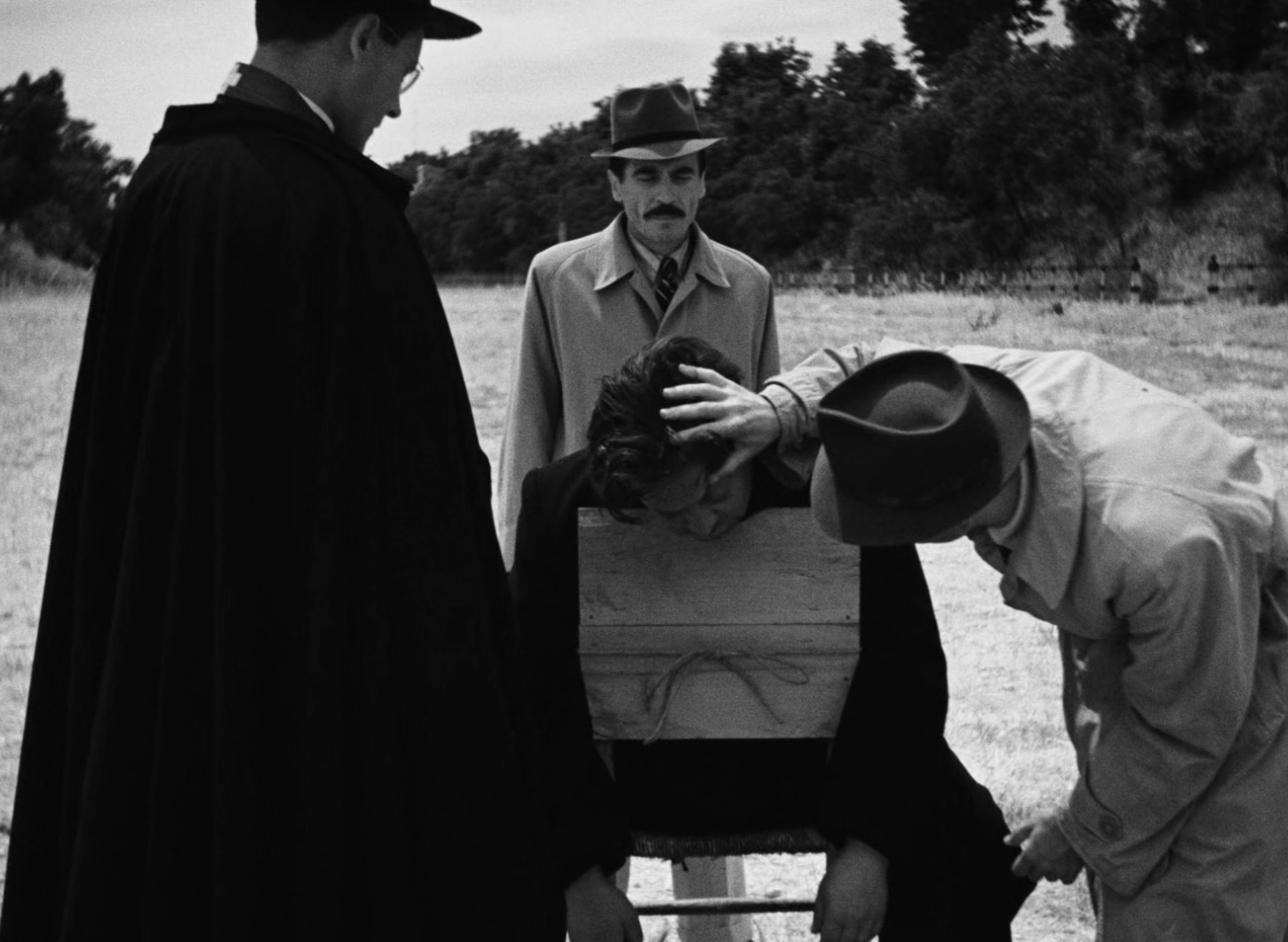
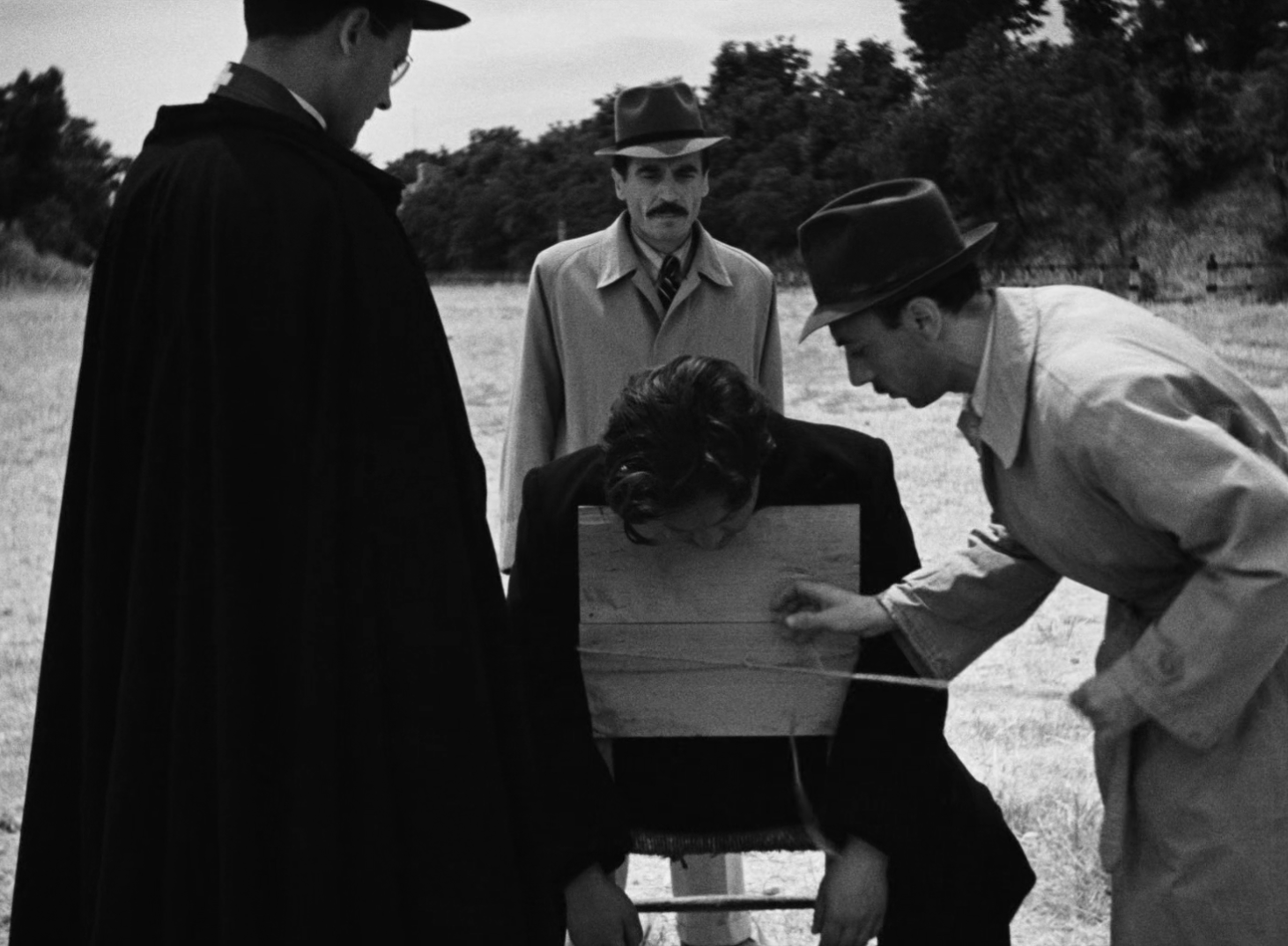
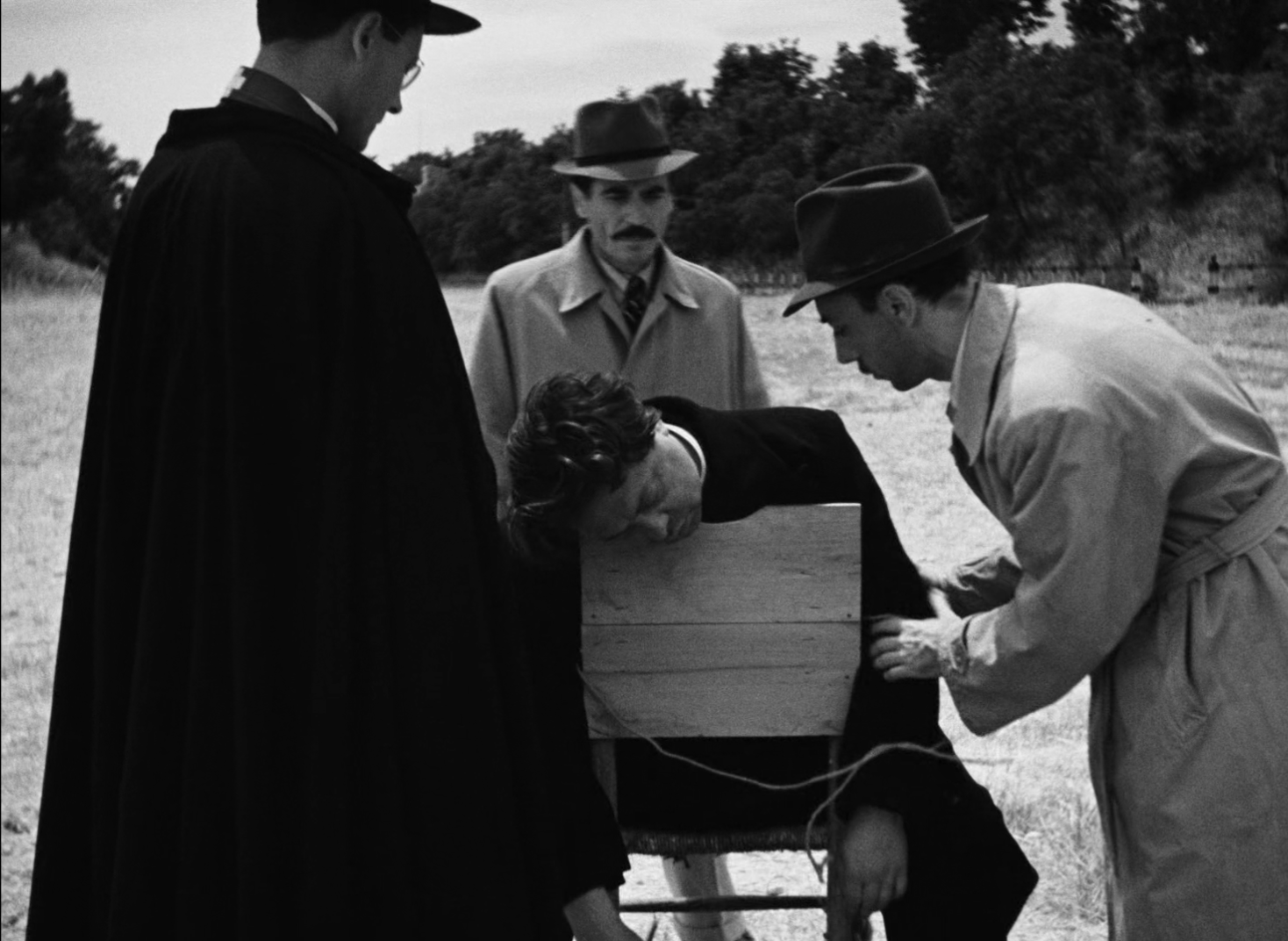
Quando la corda viene sciolta, il corpo di Don Pietro si appoggia pesantemente su un lato. È morto.
When the cord is untied, Don Pietro’s body leans heavily to one side. He is dead.
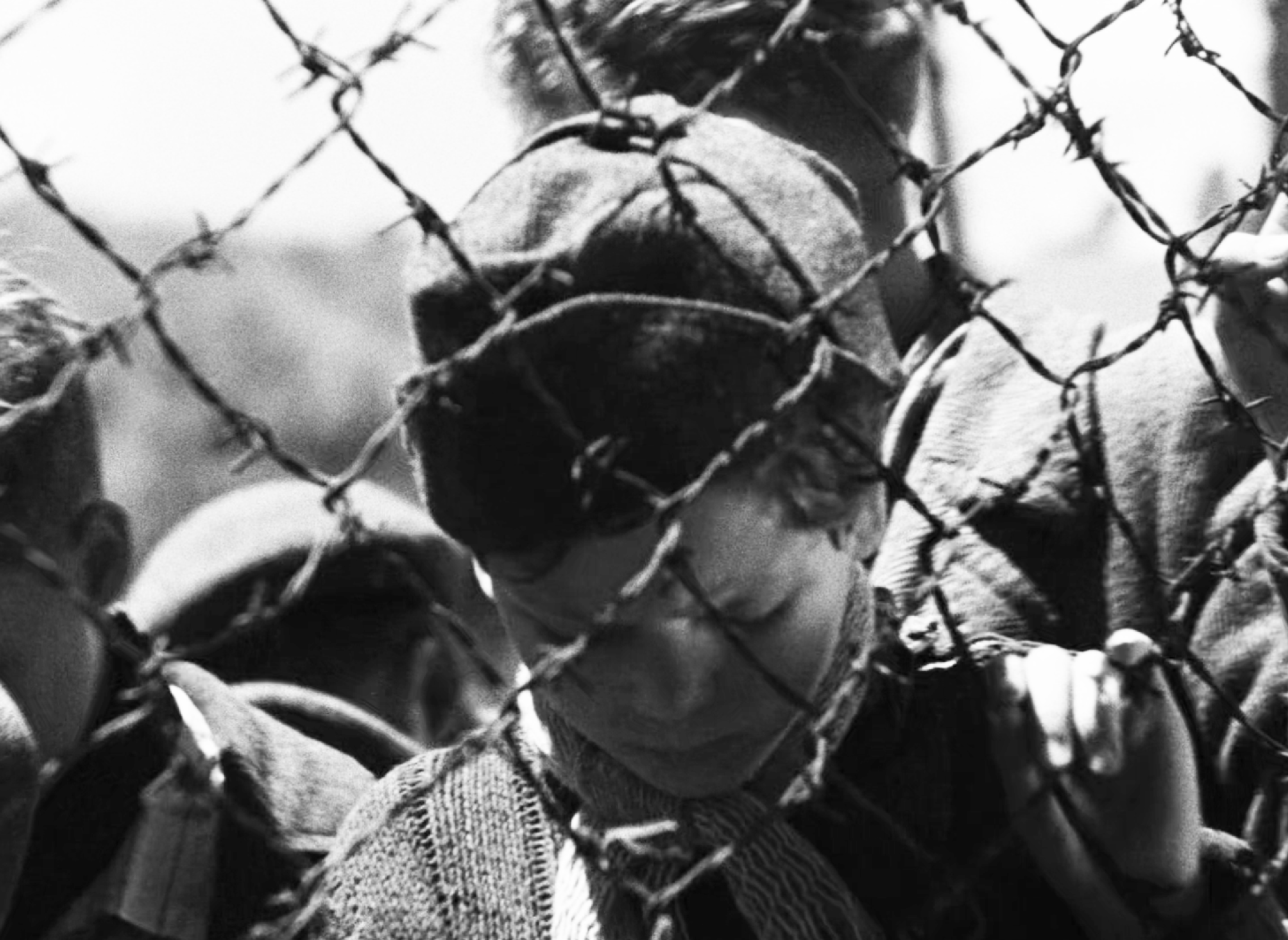
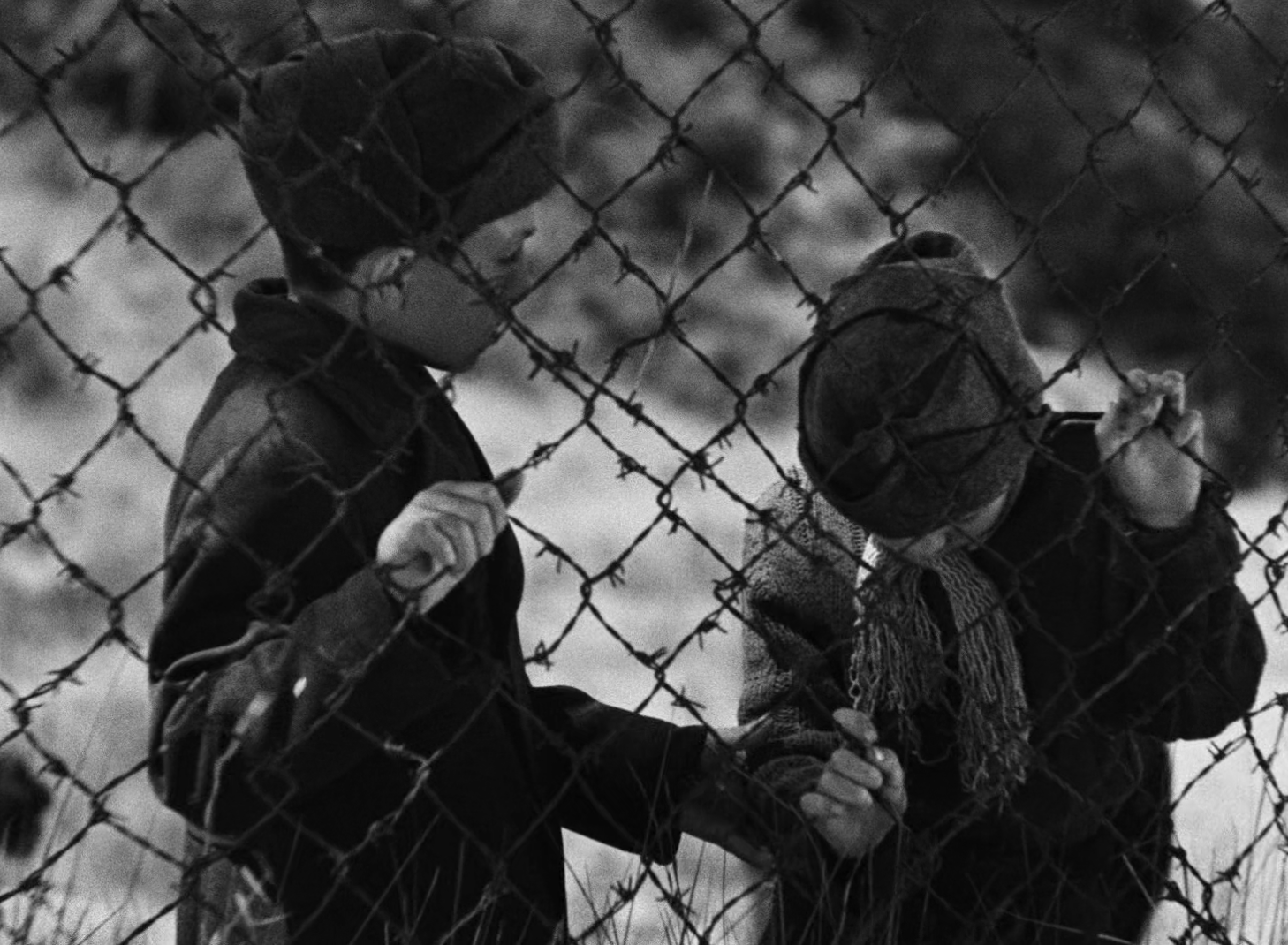
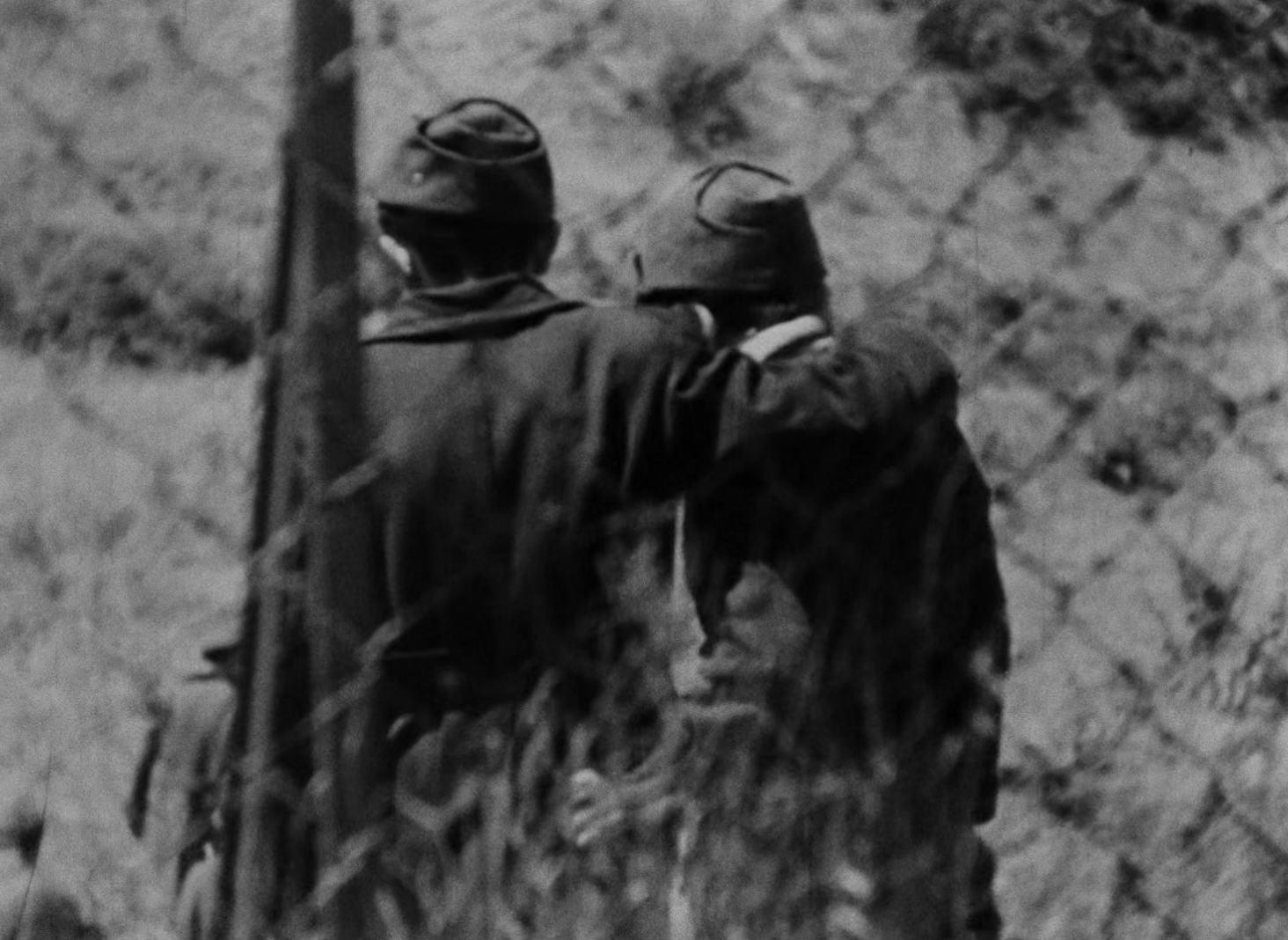
I ragazzi cominciano ad andarsene. Marcello si trattiene, ma un altro ragazzo gli toglie delicatamente la mano dal recinto. I due bambini si sostengono l'un l'altro e si allontanano, mentre una musica commovente comincia a suonare.
The boys start to leave. Marcello lingers, but another boy gently removes his hand from the fence. Supporting one another, the two children walk away, as stirring music begins to play.
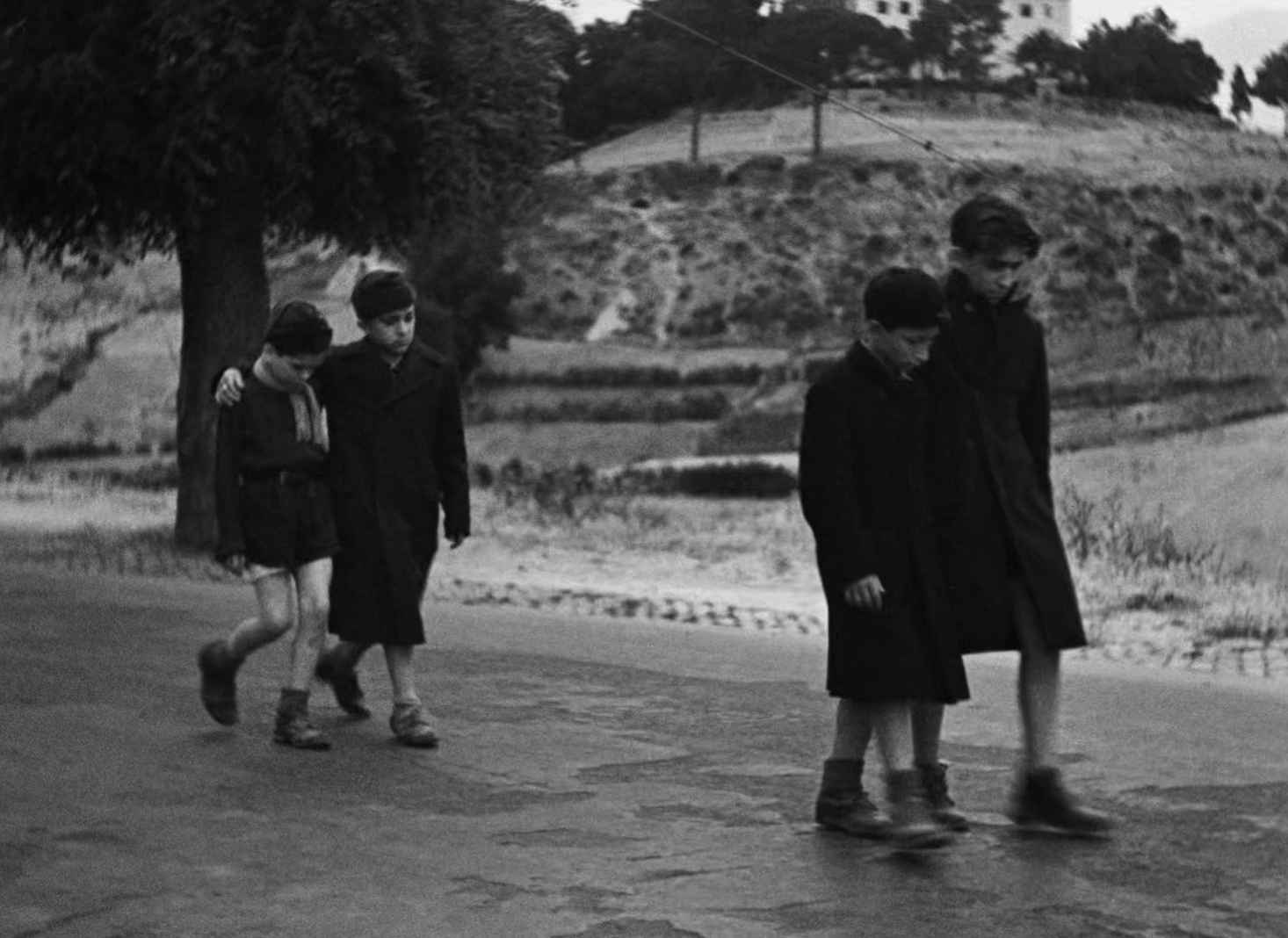
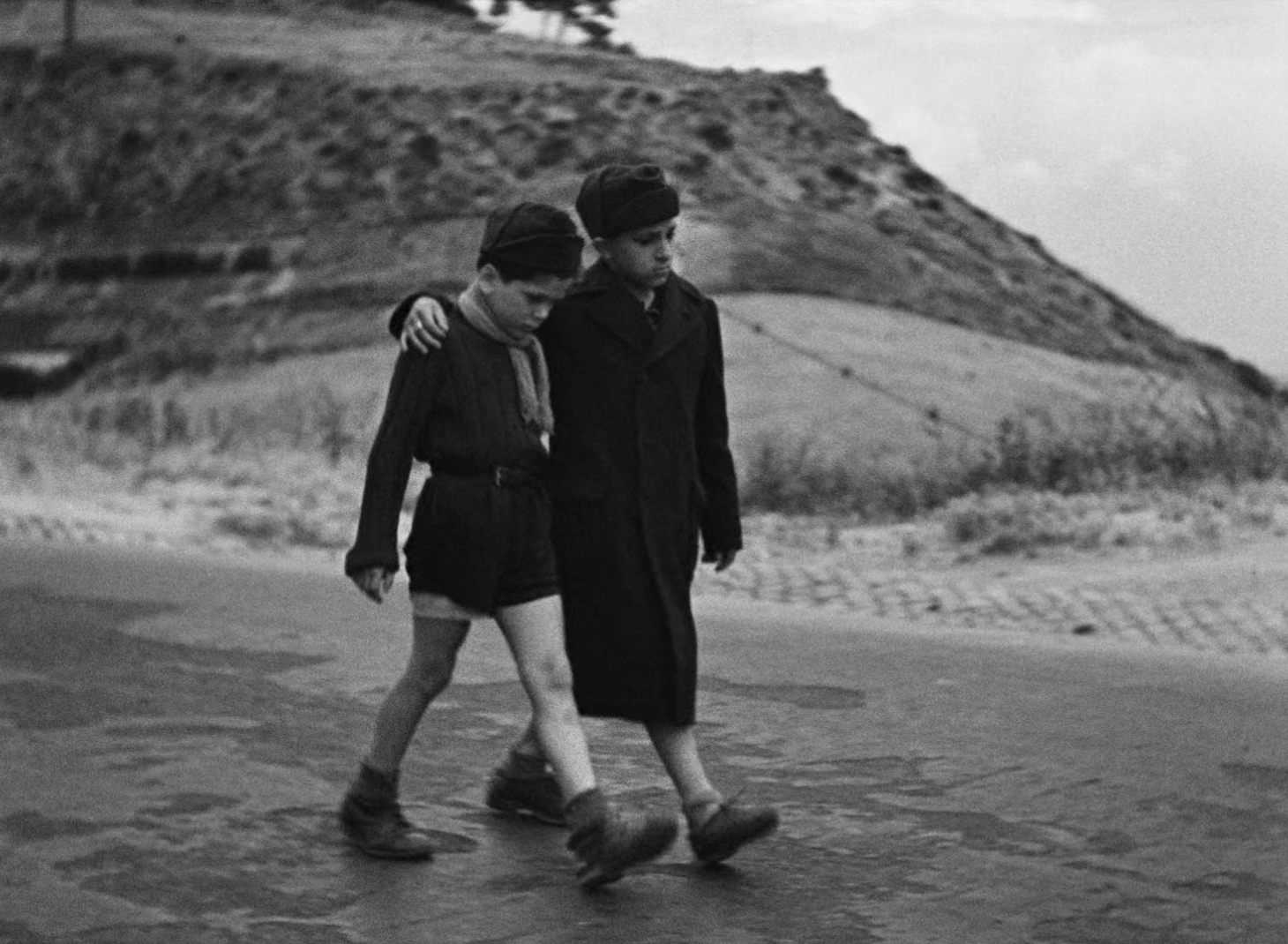
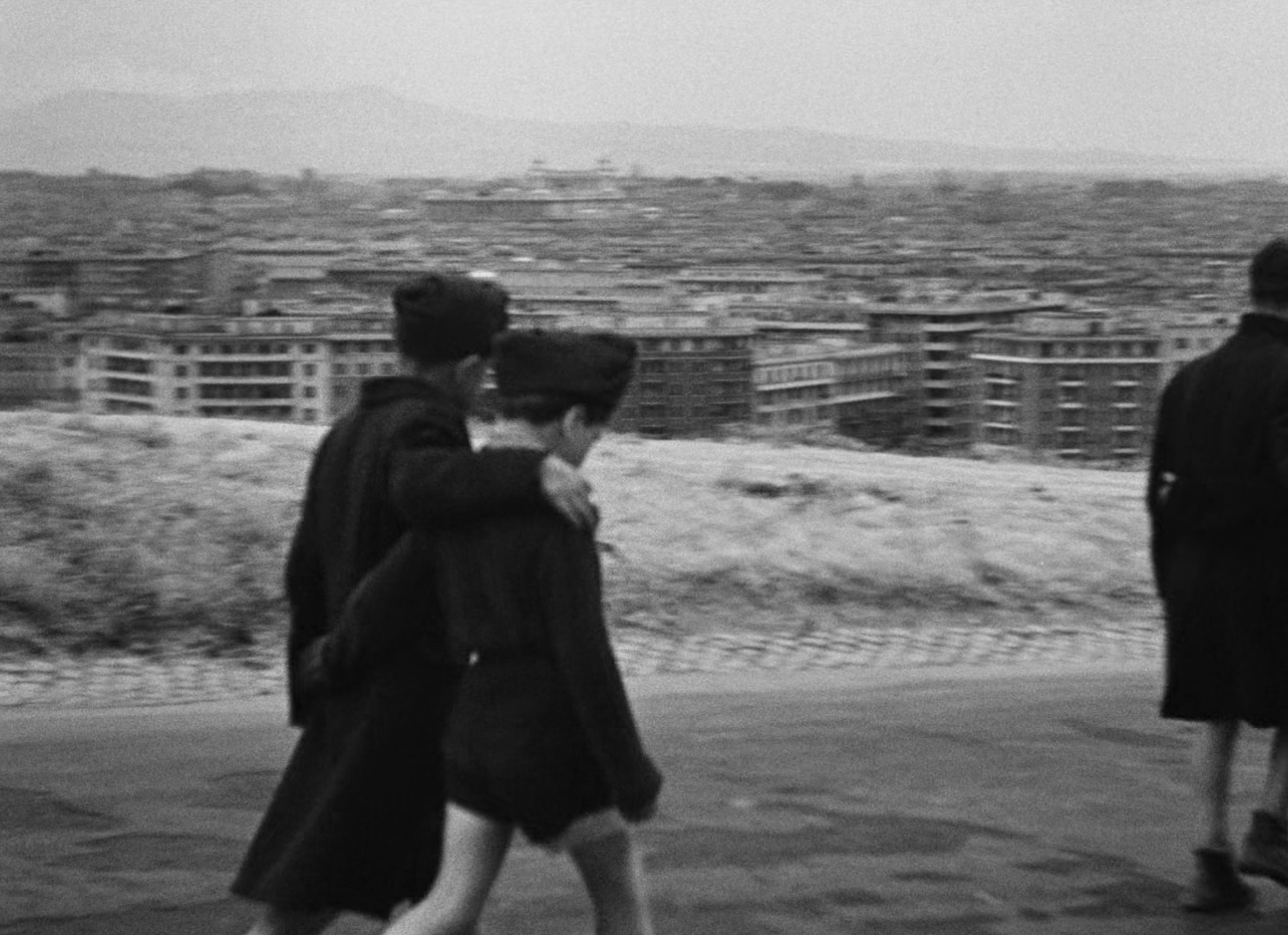
A due a due, braccia attorno alle spalle dell'altro, i ragazzi tornano verso la città. Le loro gambe magre escono dai pantaloni corti. I loro calzini si afflosciano intorno alle caviglie. Hanno già sopportato più di quanto un bambino dovrebbe sopportare ed è chiaro a noi, come deve esserlo per loro, che li aspettano altri traumi.
Two by two, arms around each other’s shoulders, the boys walk back toward the city. Their skinny legs stick out of their short pants. Their socks sag around their ankles. They have already endured more than any child should have to and it’s clear to us, as it must be to them, that more trauma awaits them.
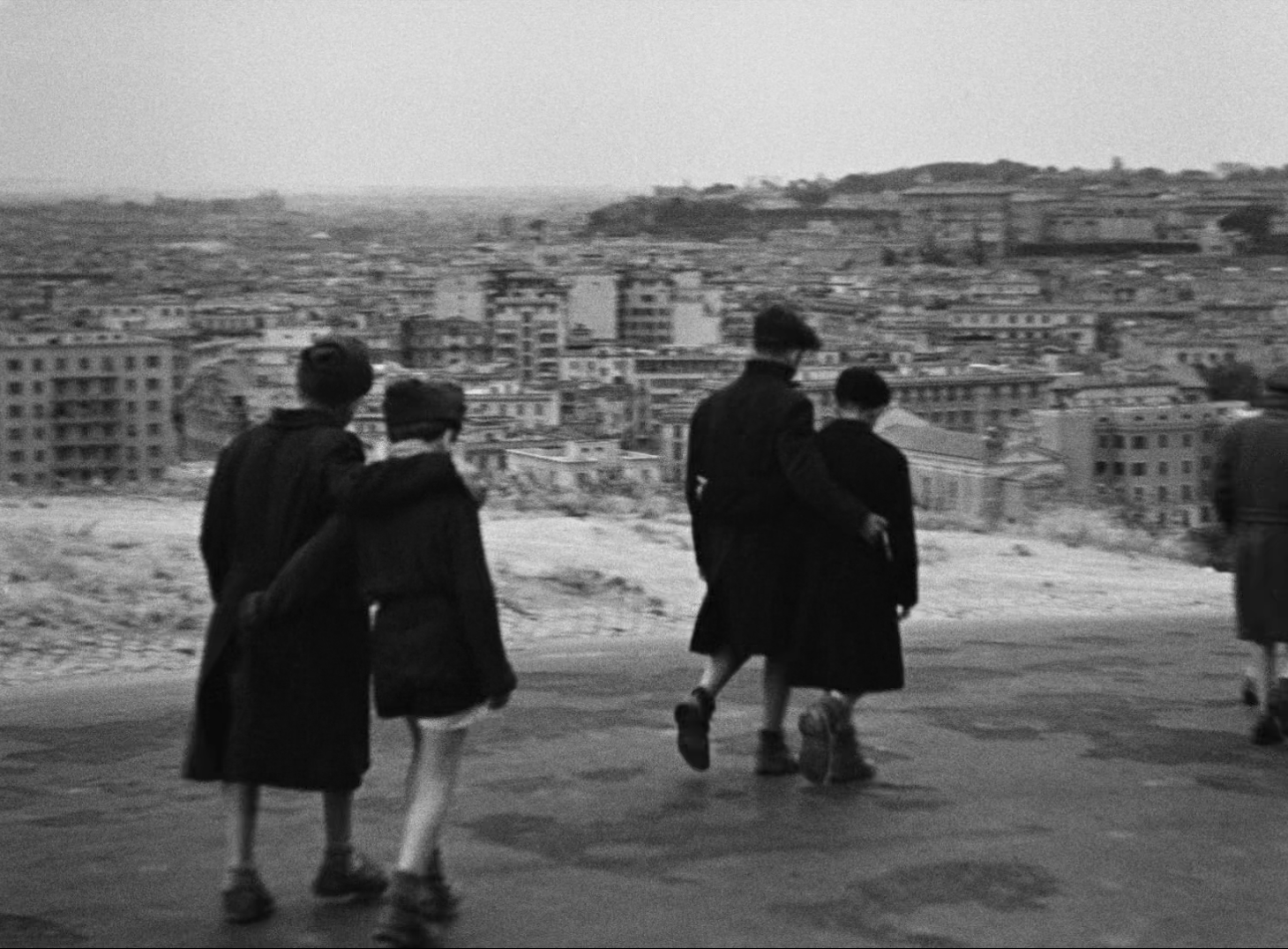
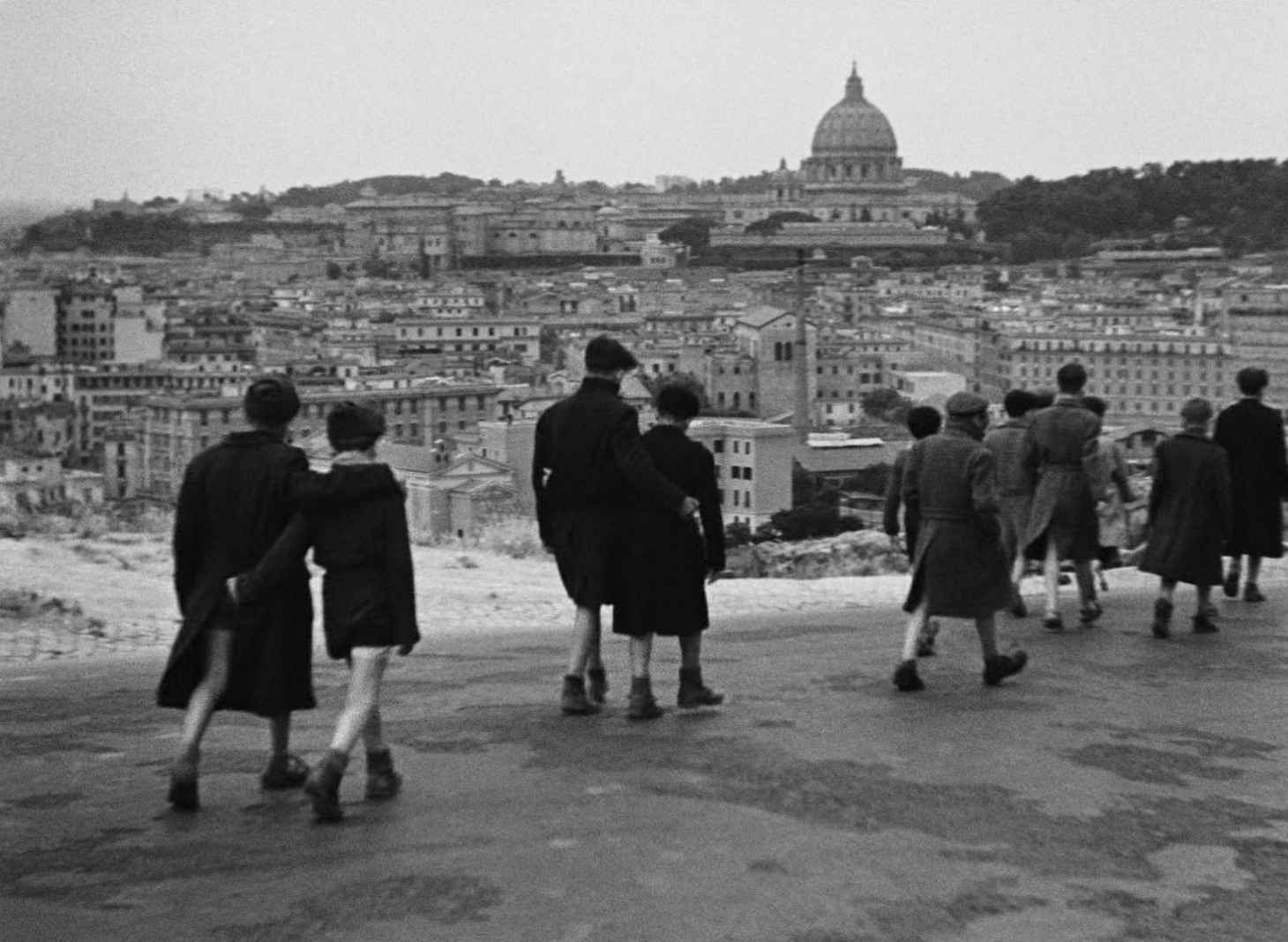
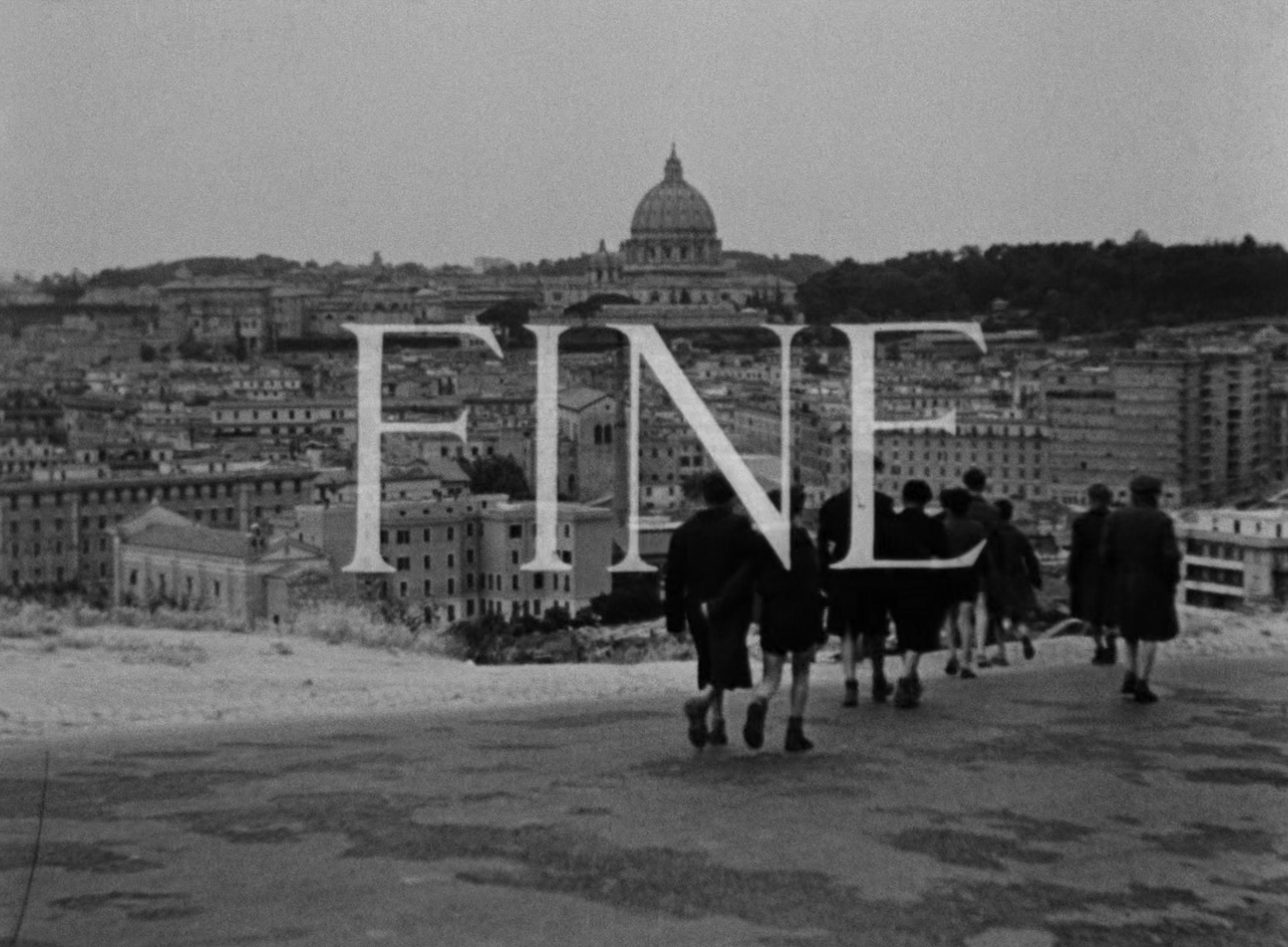
Mentre camminano, vediamo il panorama di Roma: il lato opposto a quello che ha aperto il film. Il paesaggio urbano si estende sotto la cupola della Basilica di San Pietro.
Camminando con tristezza ma con orgoglio, questi ragazzi esausti, indomiti e coraggiosi, guidati da Romoletto, sono il futuro di Roma.
As they walk, we see the panorama of Rome: the opposite side from the view that opened the film. The urban landscape spreads out below the dome of Saint Peter’s Basilica.
Walking sadly but proudly, these weary, indomitable, brave boys, led by Romoletto, are the future of Rome.
FINE PARTE 13
This is the final installment. TheVertigo grammar exercises based on the film are attached below. Subscribe to receive a weekly email newsletter with links to all our new posts.
VERTIGO A. Le immagini iconiche: Congiunzioni e Io ti salverò! Answer sheet
VERTIGO B. Le immagini iconiche: Participi passati e avere o essere e Io ti salverò! Answer sheet
VERTIGO C. Le immagini iconiche: Bene, bravo, bello, buono e Io ti salverò! Answer sheet
VERTIGO D. Le immagini iconiche: Preposizioni e Io ti salverò! Answer sheet
Normally we include a link to an article about our film, here at the the bottom of the final installment, to provide readers with more background, since we just tell the story of the film. We were not able to find an article in English that talked about the fascinating historical context of Roma città aperta, and so we are providing an excerpt from “Rome Open City (Roma città aperta)” by David Forgacs, a monograph published by the British Film Institute (BFI), London, 2000. The book is not expensive, and we highly recommend it to anyone interested in learning more about the making of this film, its historical basis and its place in the pantheon of neorealist cinema. (Please order through your local bookshop.)